
A leafy driveway can make arriving home feel cooler, quieter, and more welcoming. The best tree canopy driveway ideas combine suitable trees with a practical surface, thoughtful spacing, defined borders, and landscaping that remains attractive beneath filtered shade. Whether you prefer a formal allée, a relaxed woodland lane, or a compact suburban entrance, plan around each tree’s mature crown and root system rather than its nursery size. This helps preserve vehicle clearance, pavement stability, and balanced proportions as the landscape develops. Tree-lined approaches have long been used to turn functional driveways into memorable arrival experiences. () The complete designs below pair different tree types, driveway materials, layouts, and house styles to inspire 20 Tree Canopy Driveway Ideas.

1. Oak Tree Canopy Gravel Driveway
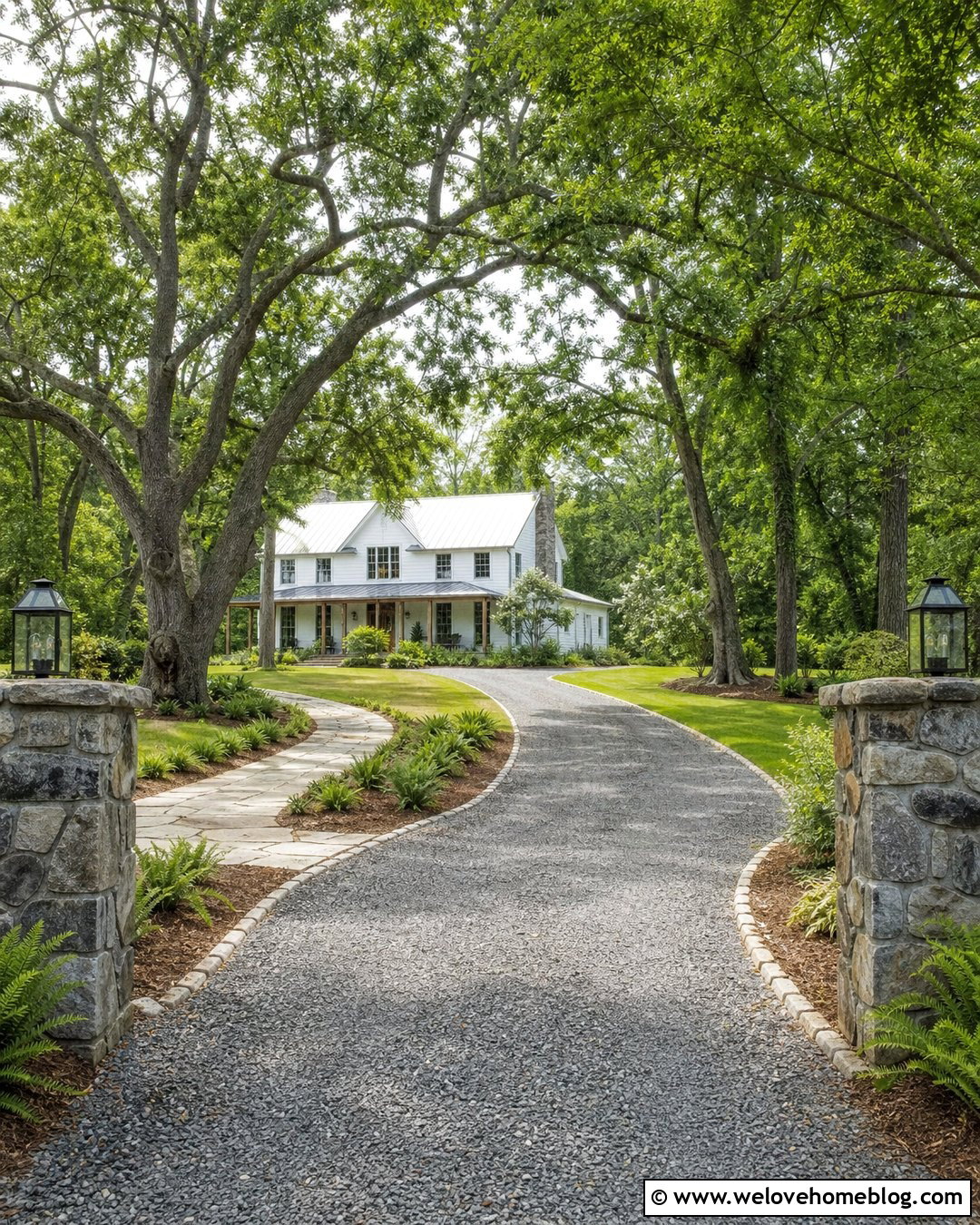
Mature oak branches create a broad green ceiling that feels especially natural above a long gravel driveway. Use compacted gray crushed stone for the main surface, then add cobblestone edging to prevent loose material from spreading into the lawn. A gently curved layout makes the property feel larger because the house appears gradually through the trees. Plant native ferns, woodland sedges, and shade-tolerant shrubs beneath the canopy instead of struggling turf. Keep the trunks well back from the driving area so expanding roots and branches have room to develop. At the entrance, simple stone pillars can repeat the colors in the gravel. This complete look works beautifully with a traditional farmhouse, country home, or rustic craftsman surrounded by an established landscape.
2. Maple Tree Canopy Asphalt Driveway
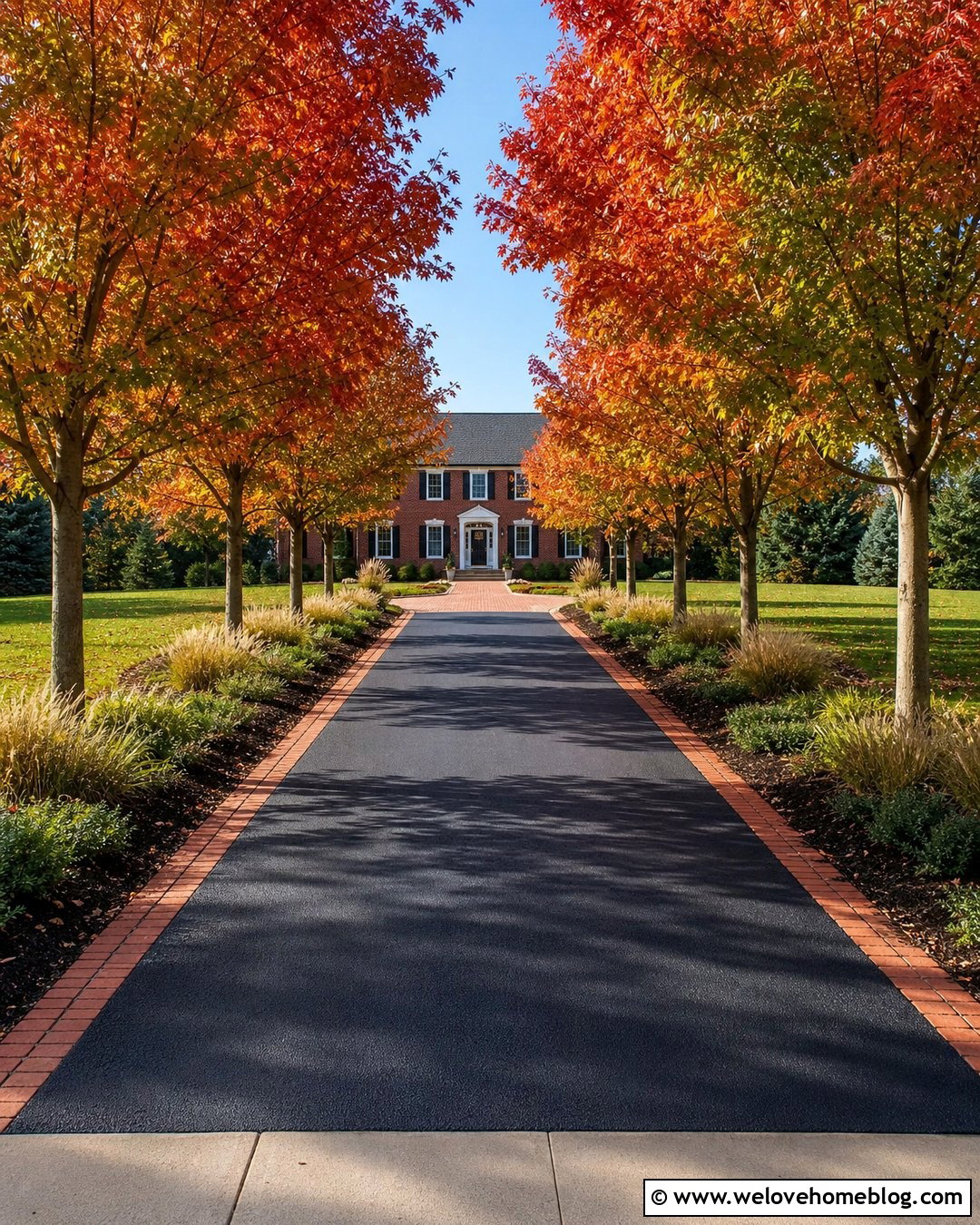
Can a black asphalt driveway feel soft and inviting? Rows of maples can completely change its character by adding dappled summer shade and strong seasonal color. Choose a straight layout for a clean sightline toward a Colonial or Cape Cod home. A narrow clay brick ribbon along both sides brings warmth to the dark pavement and creates a neat transition into planting beds. Beneath the trees, use mulch, low ornamental grasses, and shade-tolerant ground cover for an easy-care border. Evenly spaced trunks give the driveway a formal rhythm without making it look overly grand. Before planting, check the mature size and regional suitability of the selected maple. Thoughtful spacing is essential because driveway trees may look sparse while young but expand considerably over time.
3. Live Oak Tree Canopy Circular Driveway
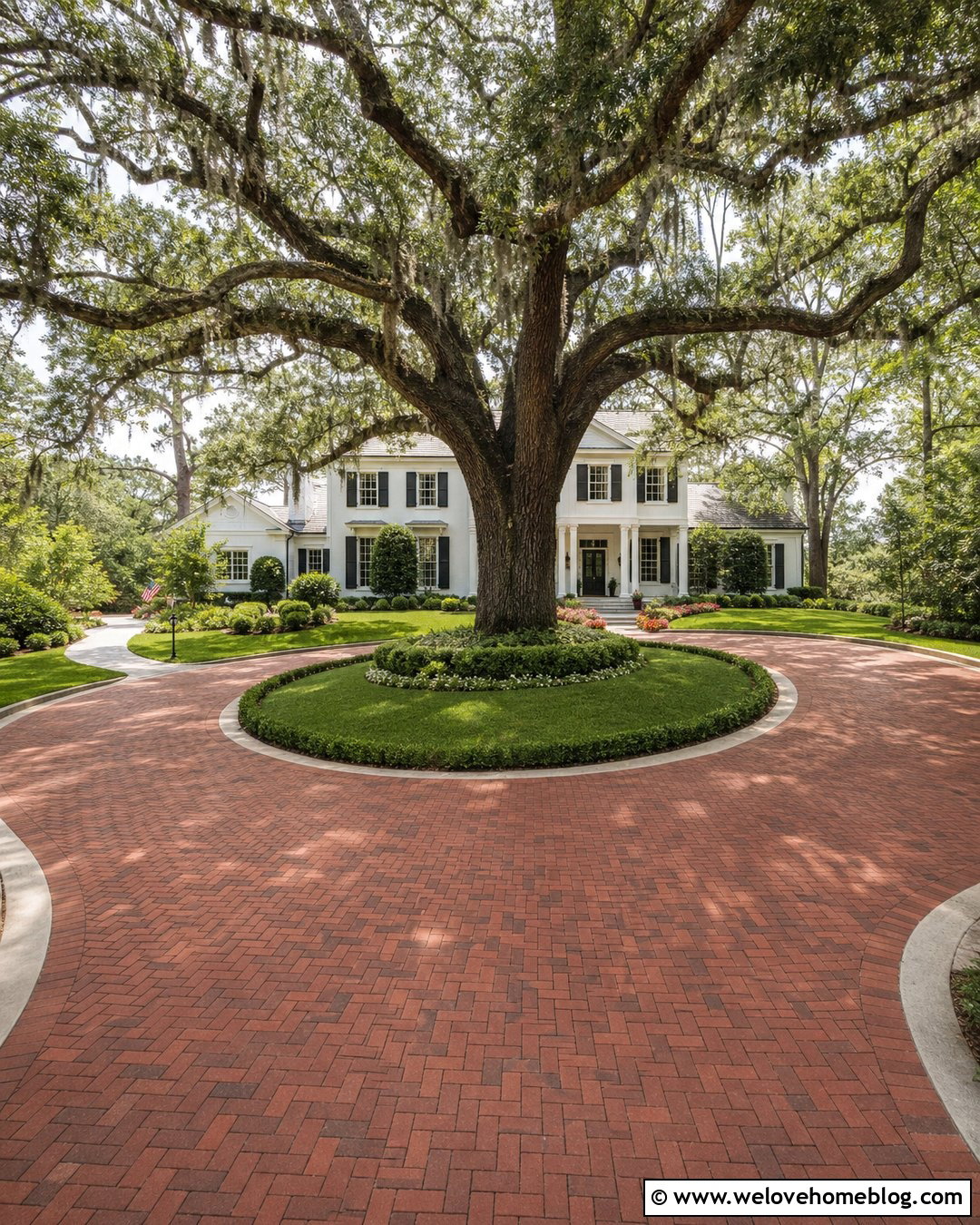
A circular driveway beneath spreading live oaks creates an impressive Southern entrance without relying on complicated decoration. Clay brick pavers laid in a herringbone pattern suit the sweeping shape and complement the textured trunks. Preserve a generous central lawn island containing one established oak, layered evergreen shrubs, and a curved stone walkway to the front porch. Additional trees around the outer edge can gradually connect their branches overhead. Use wide planting areas rather than tight tree wells, and avoid unnecessarily raising soil around existing trunks. Low cast-stone curbing keeps the paver edges crisp while protecting beds from tires. This design feels appropriate for a brick Georgian, Southern Colonial, or French-inspired home. The combination of warm masonry, deep shade, and an open center makes the entire arrival feel established and balanced.
4. Birch Tree Canopy Concrete Driveway
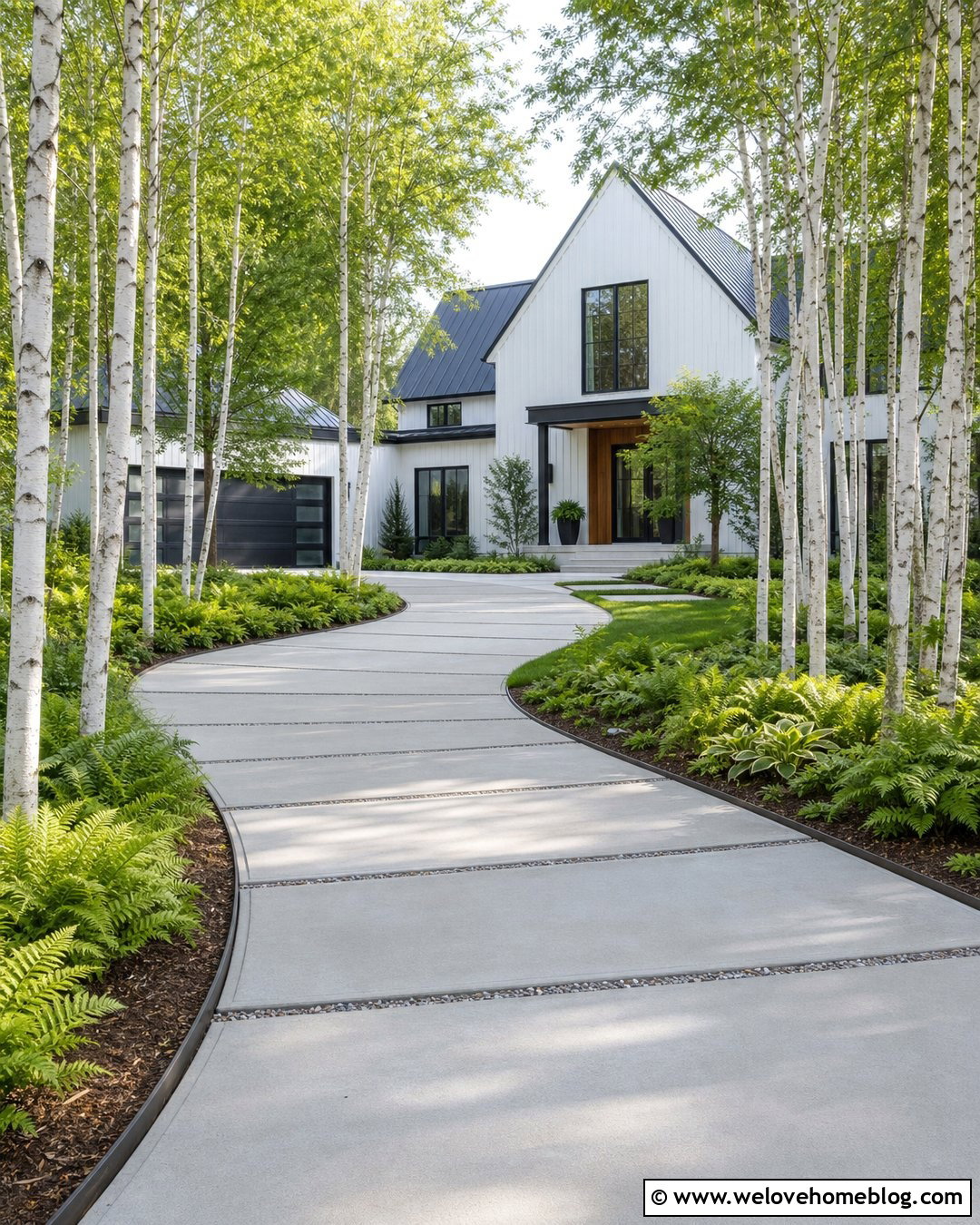
White-barked birches brighten a shaded driveway and provide a lighter alternative to a dense woodland tunnel. Pair them with pale gray poured concrete divided into large rectangular sections. Narrow gravel joints soften the surface and improve its visual connection to the landscape. A slightly curved driveway works well because clustered birches look more natural when their placement is staggered rather than perfectly symmetrical. Underplant with ferns, hostas, sedges, and low woodland ground covers suited to local conditions. Dark steel edging gives the planting beds a clean boundary without competing with the trunks. This combination complements Scandinavian, contemporary, and light-colored craftsman homes. Because birches vary in climate tolerance and growing requirements, select a locally appropriate species and provide enough root space beyond the driveway foundation.
5. Honey Locust Tree Canopy Paver Driveway
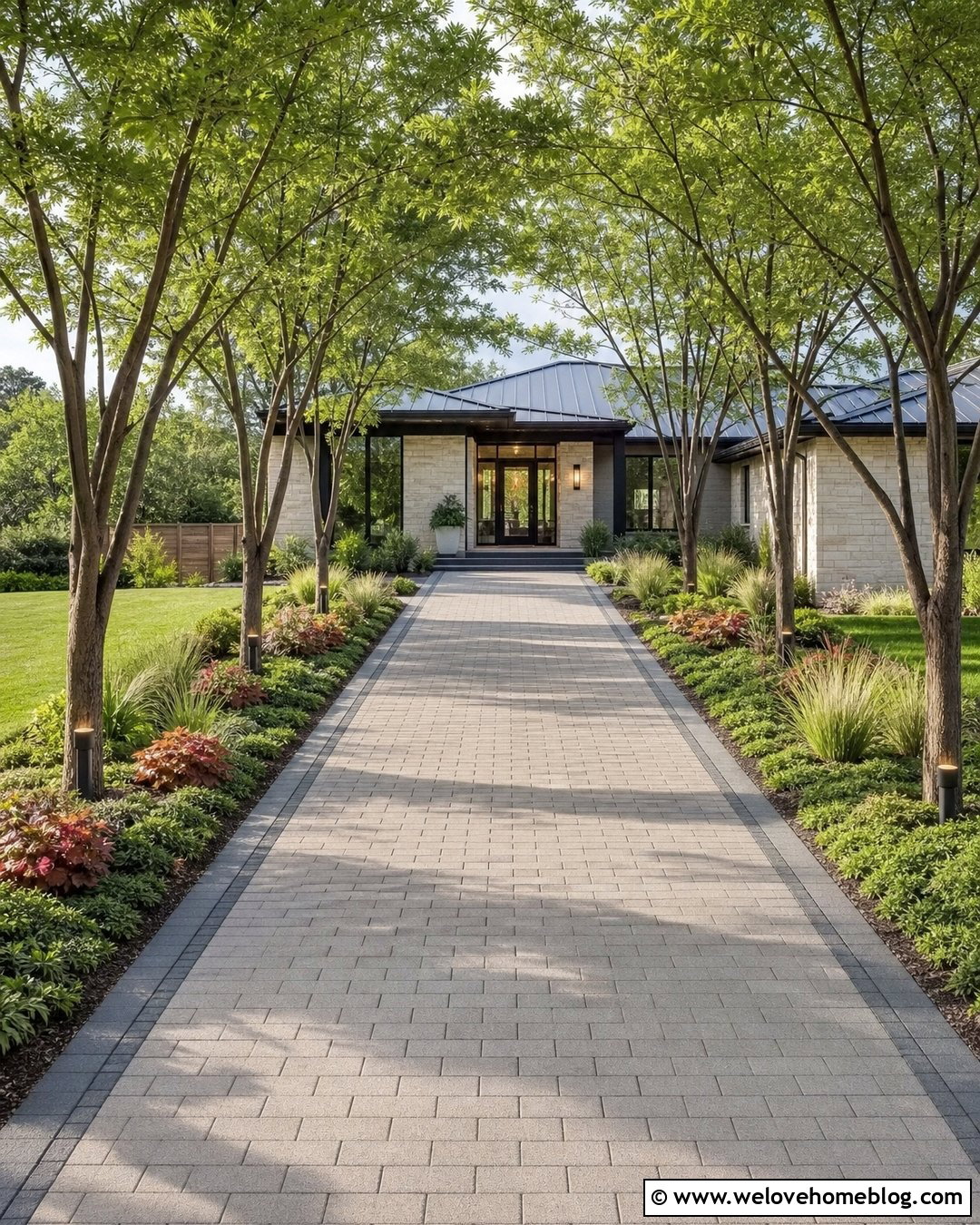
Filtered light passing through honey locust foliage can keep a driveway bright while still producing a recognizable overhead canopy. Use permeable concrete pavers in a warm gray tone, arranged in a running-bond pattern over a properly designed base. The small openings and fine-textured leaves create a visually light setting that suits a modern ranch home. Keep the driveway straight, with broad planting strips on each side and matching tree spacing for an orderly appearance. Low grasses, coral bells, and spreading ground covers can fill the beds without hiding the trunks. A charcoal paver border defines the driving lane and coordinates with modern window frames. Add discreet low-voltage uplights near selected trees, positioned so fixtures remain protected from tires and maintenance equipment. The result is polished, airy, and comfortably shaded.
6. Elm Tree Canopy Curved Gravel Driveway
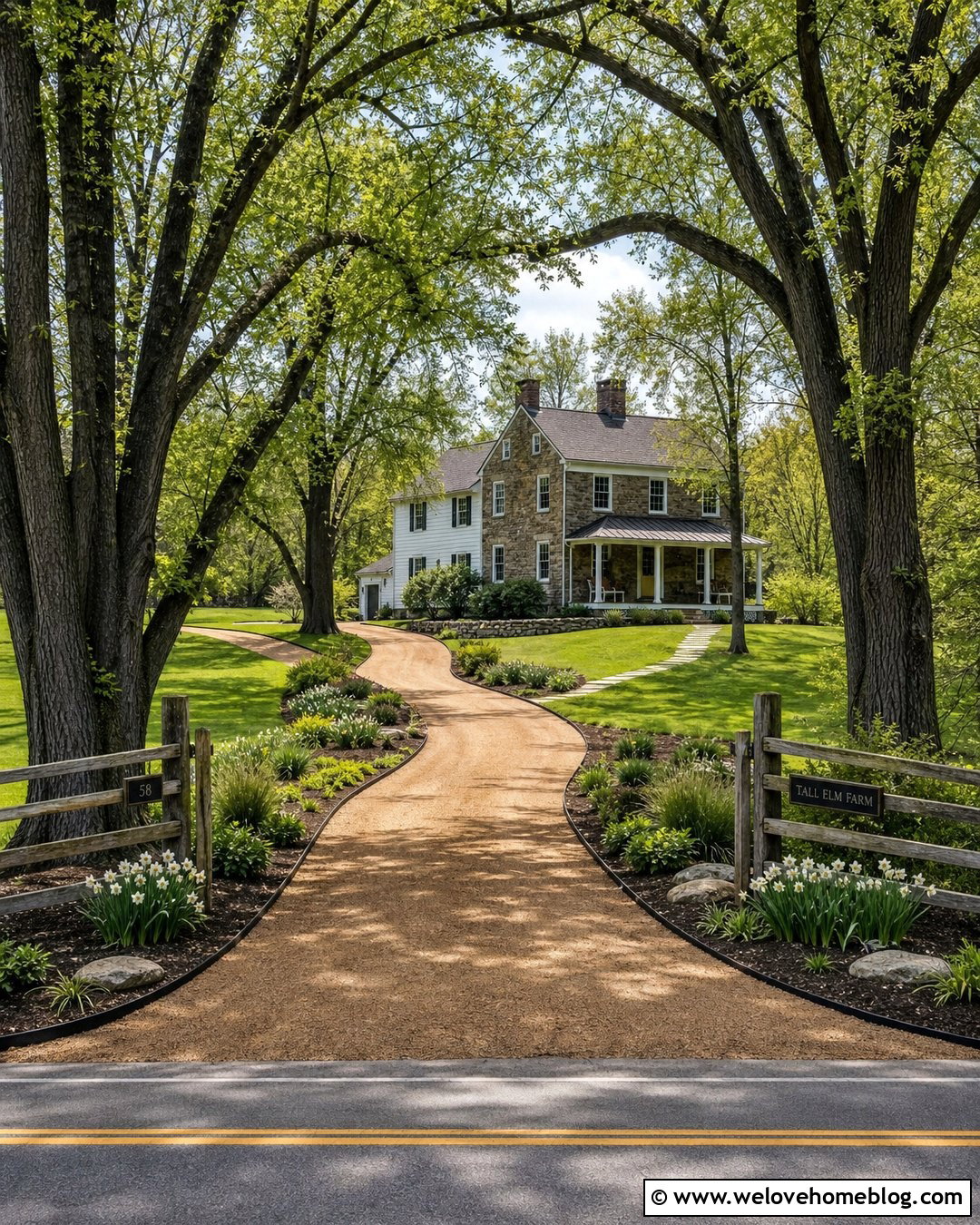
A curved gravel lane under arching elms can capture the relaxed feeling of an old country property. Choose tan crushed gravel with a firm compacted base and steel edging that follows every bend cleanly. Rather than placing every tree in a rigid line, use consistent but slightly staggered spacing to create a more natural woodland effect. Wide mulch beds beneath the canopy can contain native grasses, spring bulbs, and durable shade plants. A split-rail fence near the entrance reinforces the rural character without blocking the view toward the house. This design works especially well for a restored farmhouse or barn-style residence. Choose elm cultivars recommended for your area, and establish a long-term pruning plan so low limbs do not reduce vehicle clearance as the canopy matures.
7. Sycamore Tree Canopy Cobblestone Driveway
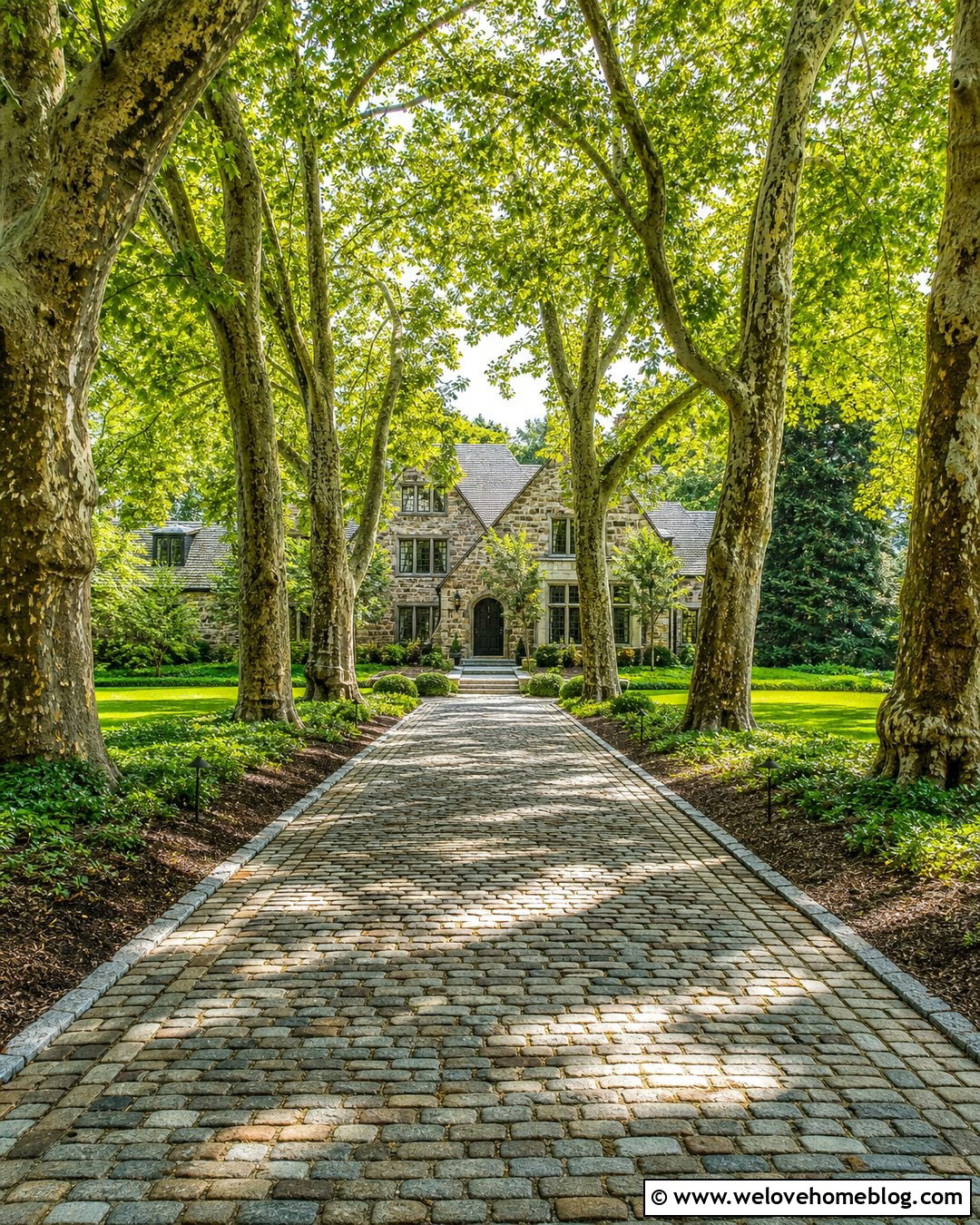
Large sycamores bring dramatic trunks, broad leaves, and strong scale to an expansive residential approach. Their visual weight pairs naturally with full-bed cobblestone in mixed gray and brown tones. A long, straight layout creates a formal axis toward a stone manor, Tudor home, or substantial traditional residence. Install flush stone curbs along the driveway, then use broad lawn panels around the trees to keep the composition simple. Where grass performs poorly beneath heavy shade, replace it with generous sweeps of woodland ground cover and leaf mulch. The driveway should be wide enough for comfortable daily use without forcing pavement close to the trunks. Because this is a large-scale design, the distance between trees, pavement, buildings, and utility lines should be planned around mature dimensions, not the initial planting size.
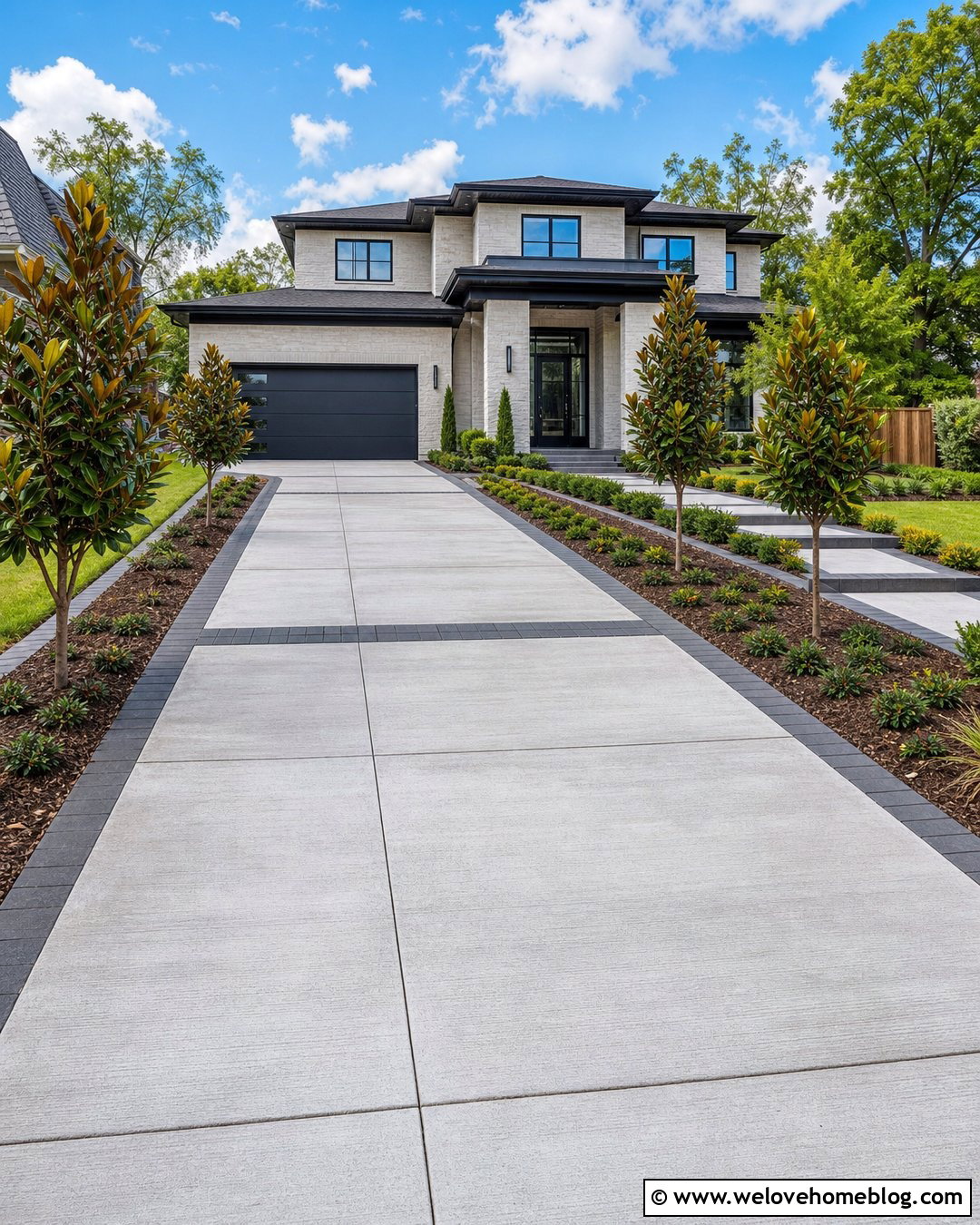
8. Magnolia Tree Canopy Concrete Driveway
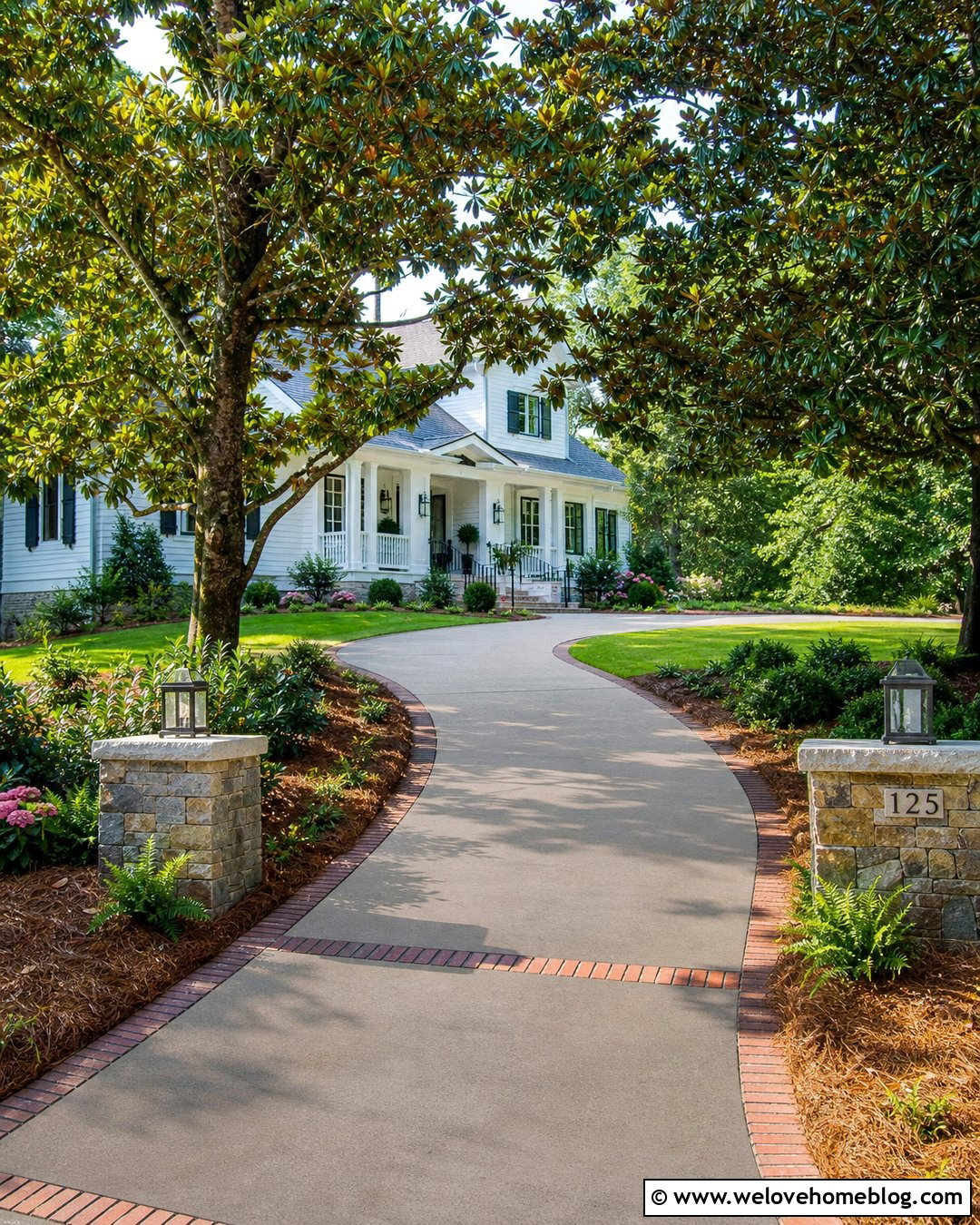
Magnolias can soften a concrete driveway with glossy foliage, sculptural branching, and an elegant flowering season. Use warm gray brushed concrete for a gently sweeping driveway leading to a white-painted Southern farmhouse. A thin border of tumbled brick introduces color while matching porch steps or foundation details. Position magnolias in wide planting beds along both sides, allowing their lower branches to frame the approach without obstructing visibility. Beneath them, use simple evergreen ground covers, low ferns, and pine-straw mulch for a cohesive regional look. Small stone address pillars can mark the entrance without competing with the trees. This driveway will feel fuller and more enclosed as the crowns mature, so allow generous setbacks and preserve clear areas near road intersections, walkways, and garage turning zones.
9. Cherry Tree Canopy Brick Paver Driveway
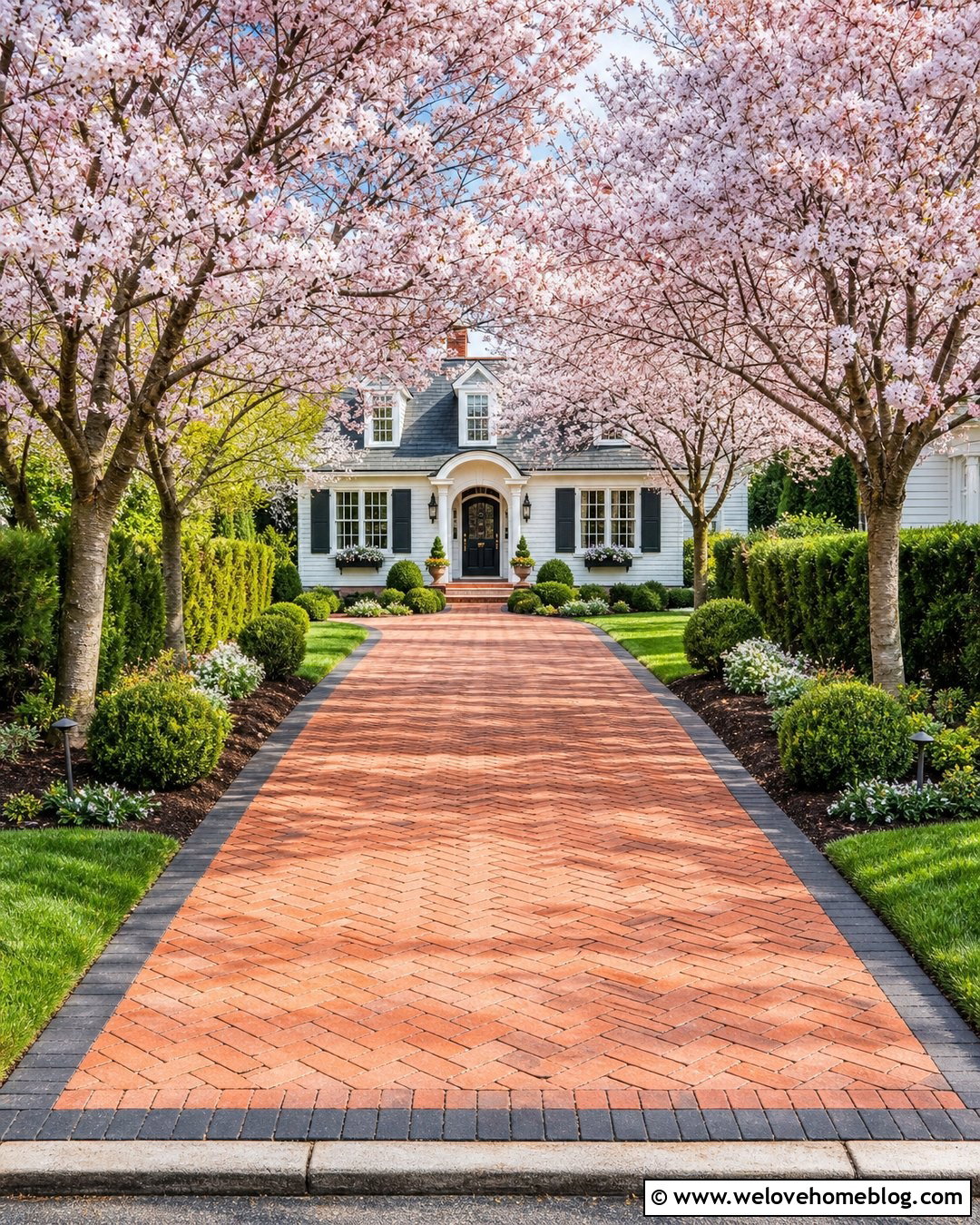
A driveway lined with flowering cherry trees delivers a memorable spring entrance while remaining attractive during the rest of the year. Pair the trees with soft red clay brick pavers in a herringbone layout and a charcoal soldier-course border. A straight driveway gives the repeated trunks and flowering crowns a formal, photograph-ready appearance. Keep the planting beneath them restrained with clipped evergreen shrubs, dark mulch, and narrow strips of lawn. This prevents seasonal blossoms from competing with too many additional colors. At the house, repeat the brick in a front walkway leading toward a traditional porch. Flowering trees can provide seasonal changes in color and canopy character, making the driveway feel different throughout the year. () Select a locally suitable cherry with manageable mature dimensions and good disease resistance.


10. Cypress Tree Canopy Gravel Driveway
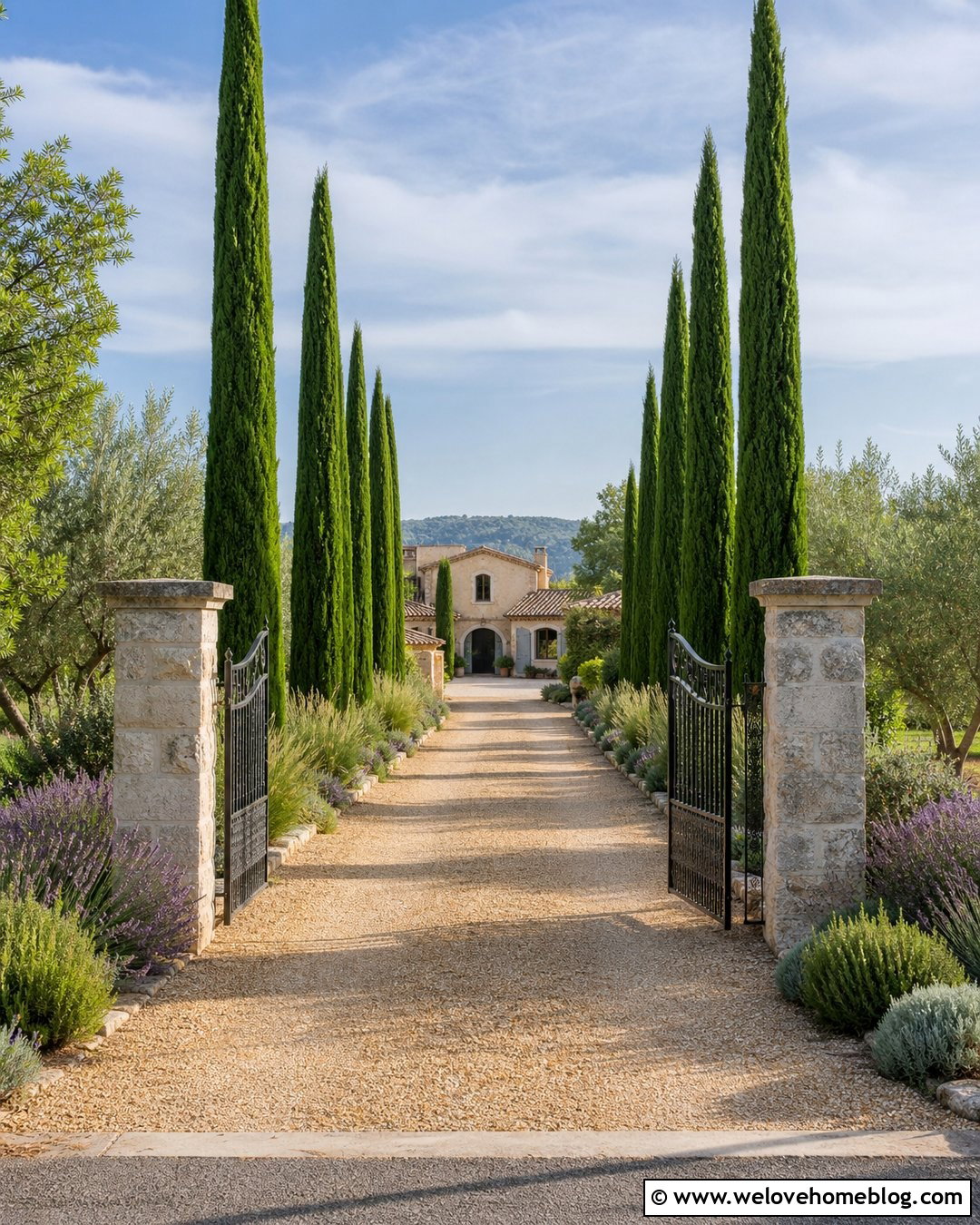
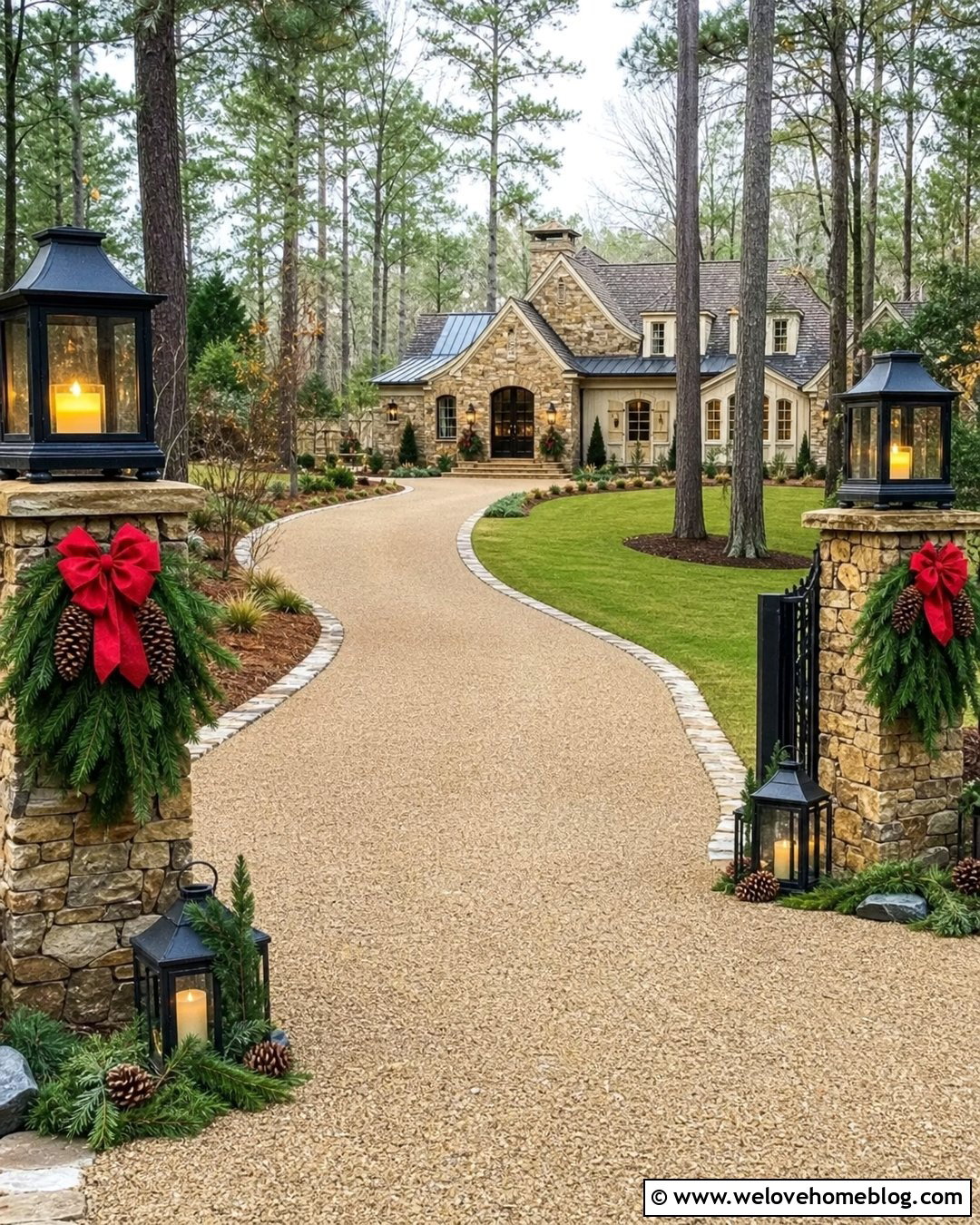
Cypress trees create a tall, architectural corridor that works well where a broad, low canopy would overwhelm the available space. Use warm beige gravel for a straight driveway leading to a stucco Mediterranean or Spanish-style home. Install weathered limestone edging to hold the aggregate in place and connect the driveway to matching entrance pillars. Repeated cypress trees along the outer beds establish height and rhythm, while olive-toned shrubs, lavender, ornamental grasses, and low ground covers add texture closer to the pavement. Although upright cypress trees produce more of a green colonnade than a deeply arching tunnel, their crowns still enclose and frame the approach. Finish the design with a simple wrought-iron gate positioned far enough inside the property to provide a safe vehicle waiting area.
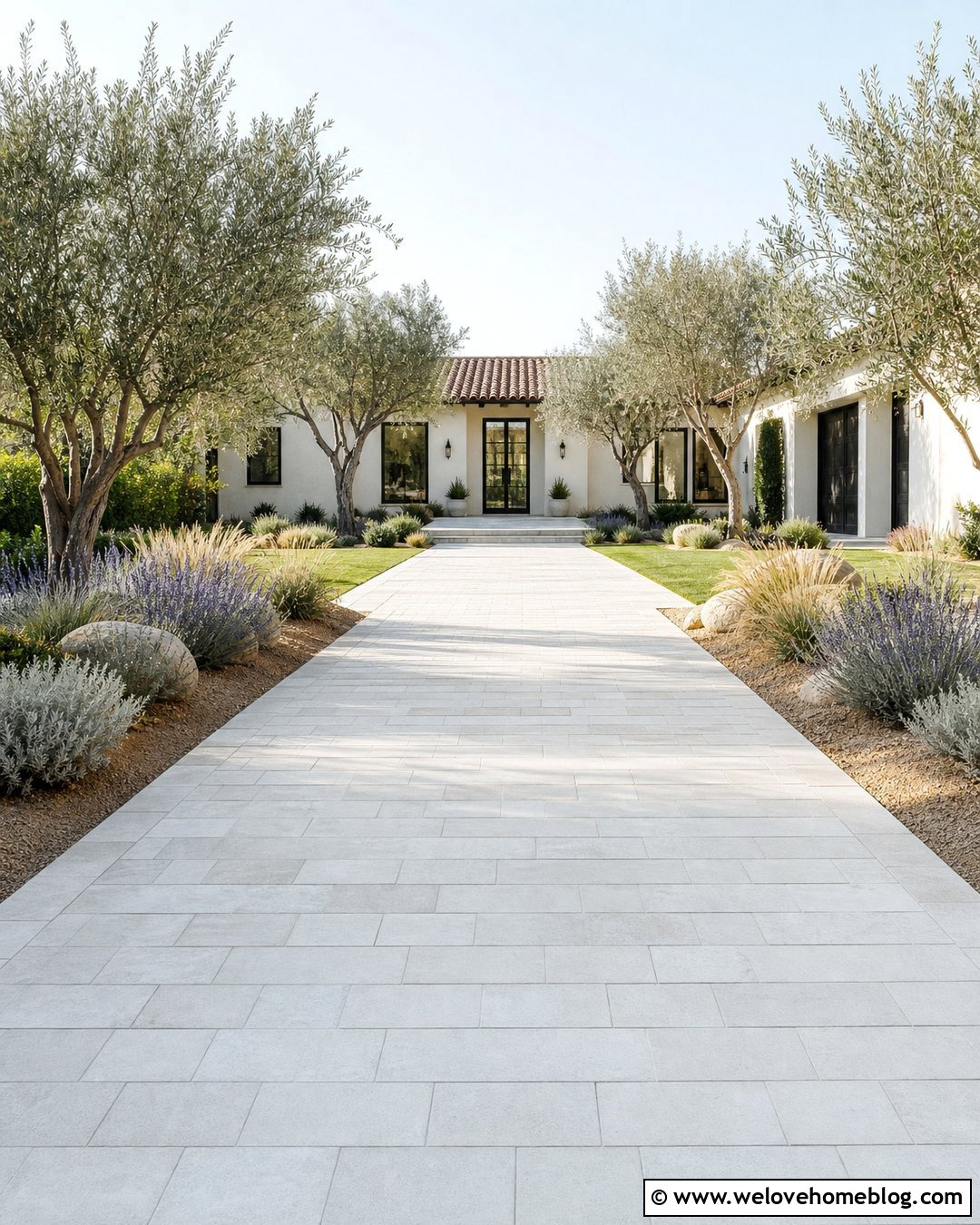
11. Olive Tree Canopy Decomposed Granite Driveway
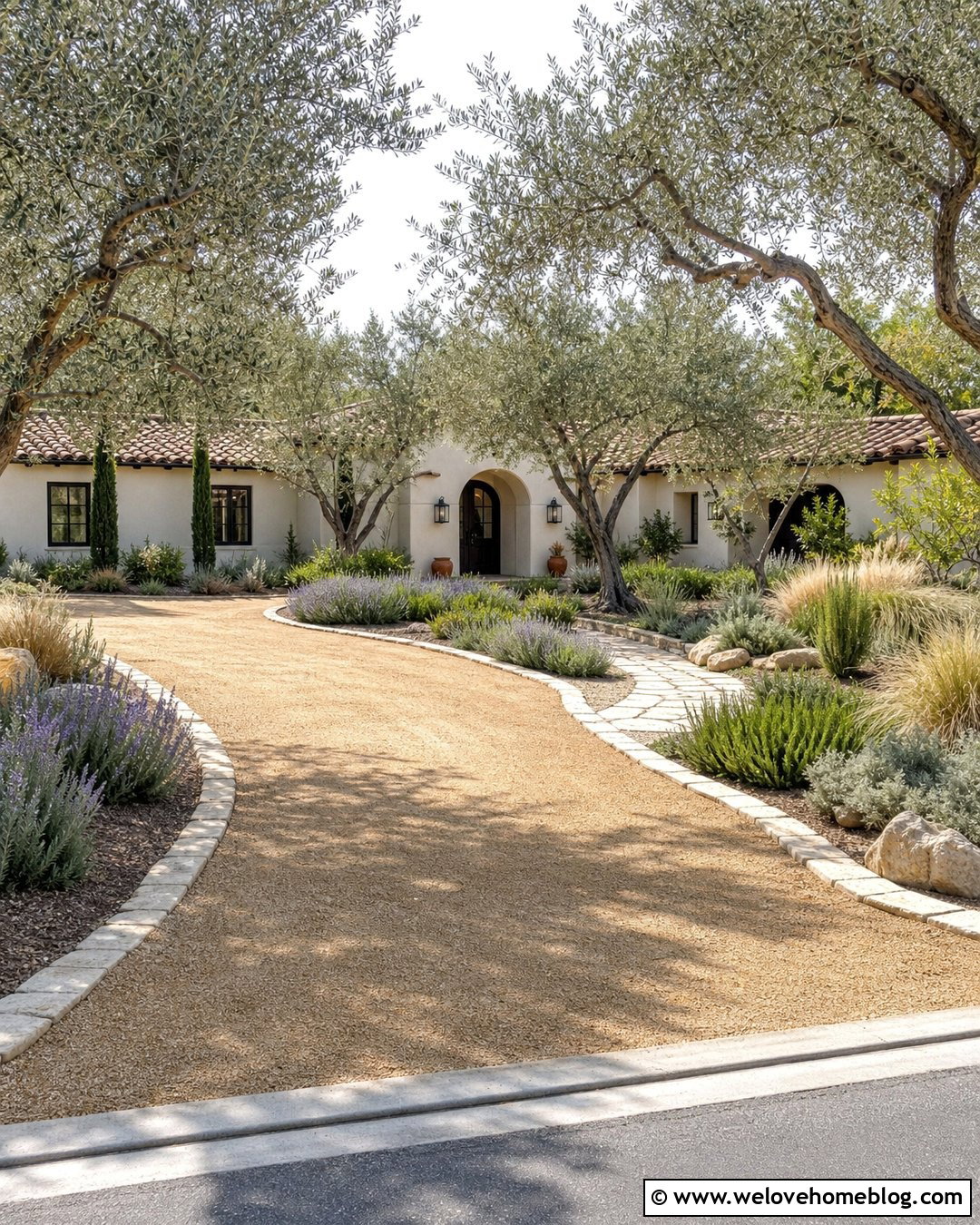
Silvery olive foliage looks especially striking above a warm decomposed granite driveway. Choose stabilized golden-tan material for a firm surface, then define the edges with pale limestone set nearly flush with the drive. A curved layout suits the informal branching of olive trees and reveals a low stucco home gradually. Plant rosemary, lavender, sage, and drought-tolerant grasses in broad beds between the trees, leaving open soil around the trunks. A matching limestone walkway can branch from the driveway toward an arched front entrance. This complete design has a dry, sun-washed character, but it should only be used where climate and local growing conditions support olives. Regular pruning can raise the crowns enough for vehicles while preserving their sculptural shape. Keep irrigation directed away from the driveway base.
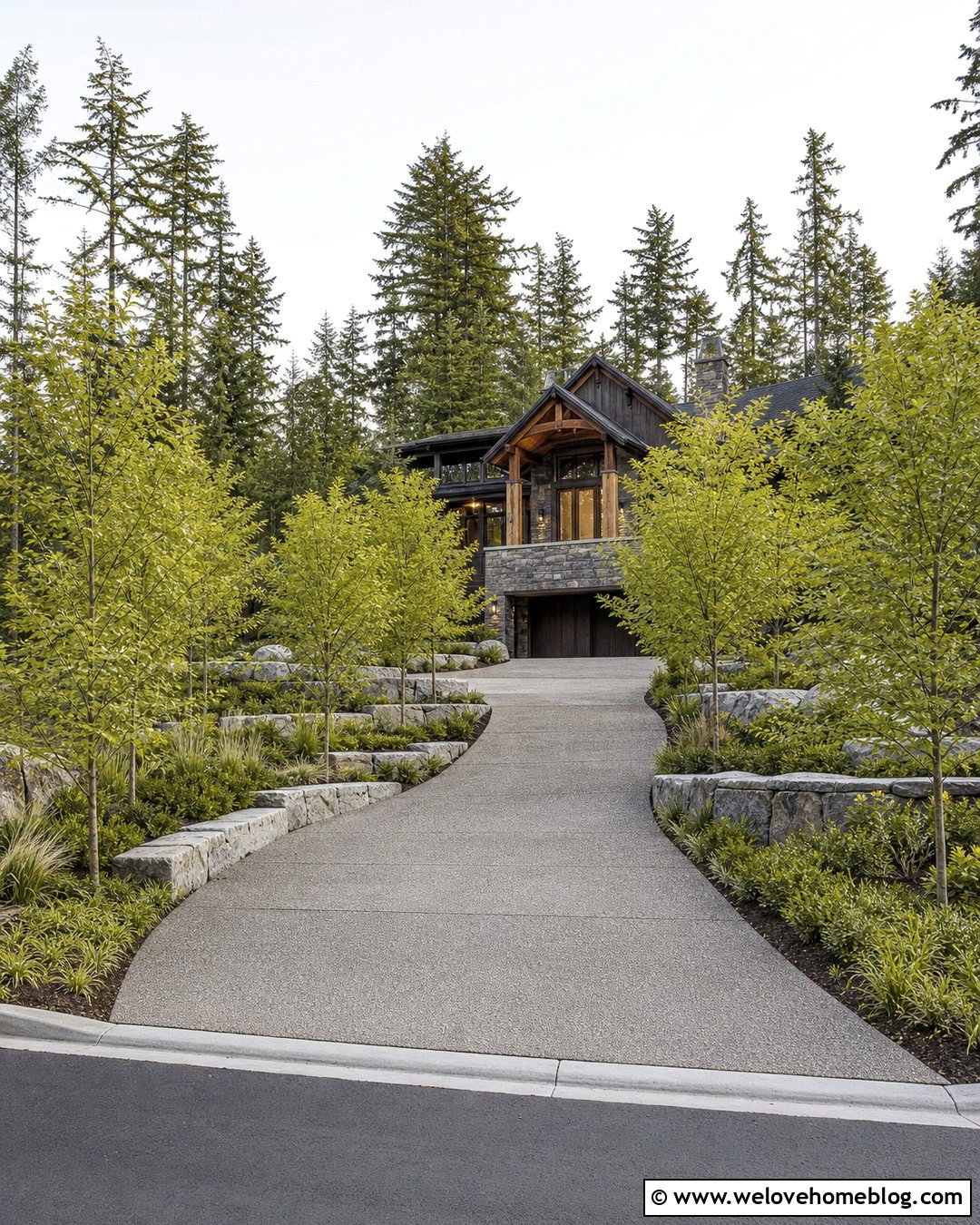
12. Pine Tree Canopy Asphalt Driveway
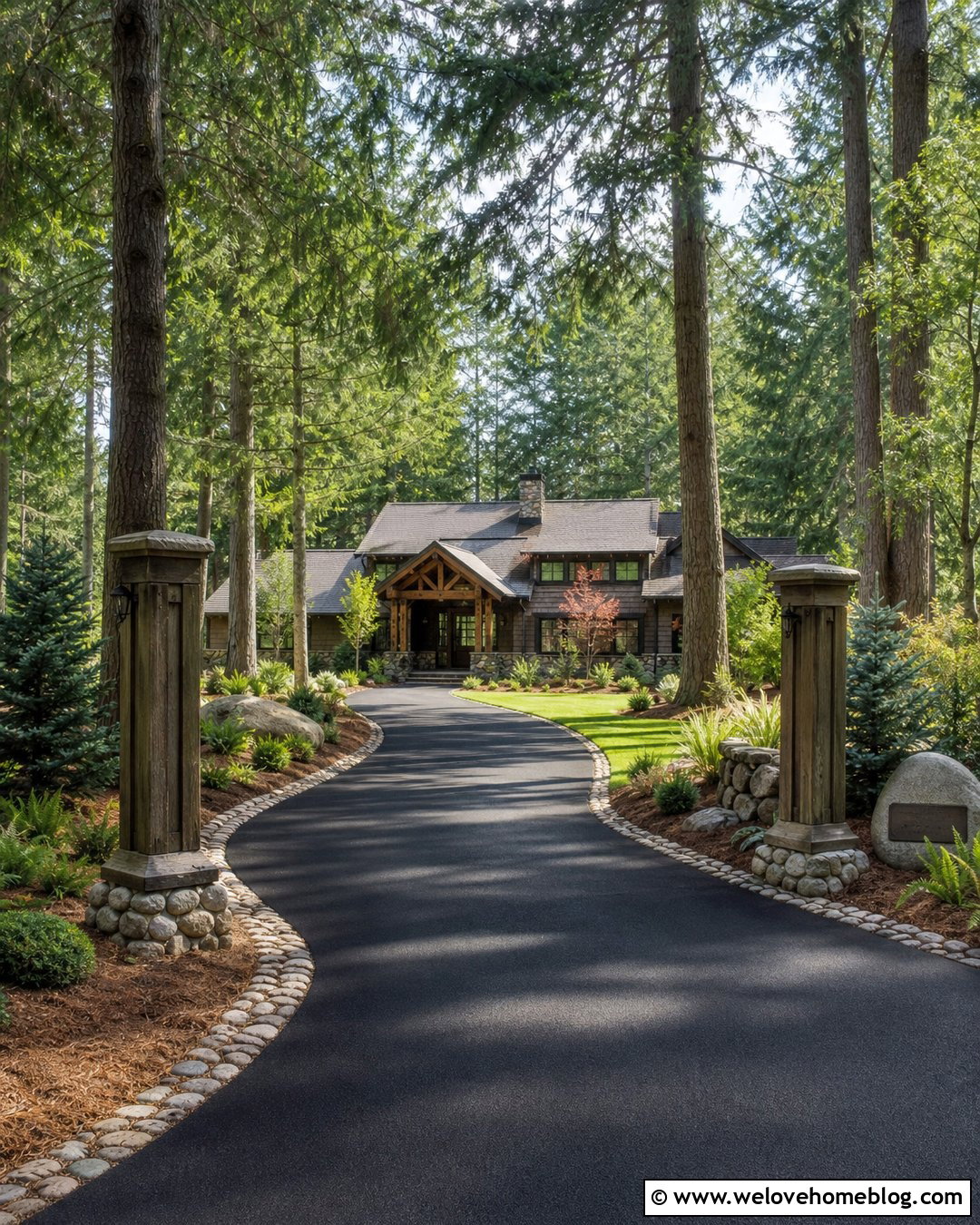
Tall pines can turn a simple asphalt driveway into an evergreen woodland approach that feels private throughout the year. Use smooth black asphalt with a rugged granite cobblestone border to give the surface a finished edge. A long, gently winding layout fits naturally between existing trees and prevents the view from feeling too rigid. Add broad beds of pine-straw mulch, native evergreen shrubs, ferns, and shade-tolerant grasses instead of narrow foundation-style borders. Rustic timber entrance posts and a small stone address marker reinforce the woodland setting. This design suits a mountain home, lakeside cabin, or craftsman residence with natural siding. Keep branches pruned for safe overhead clearance, and maintain open sightlines where the driveway meets the street. Proper drainage also helps prevent water and fallen needles from collecting along pavement edges.
13. Dogwood Tree Canopy Brick Driveway
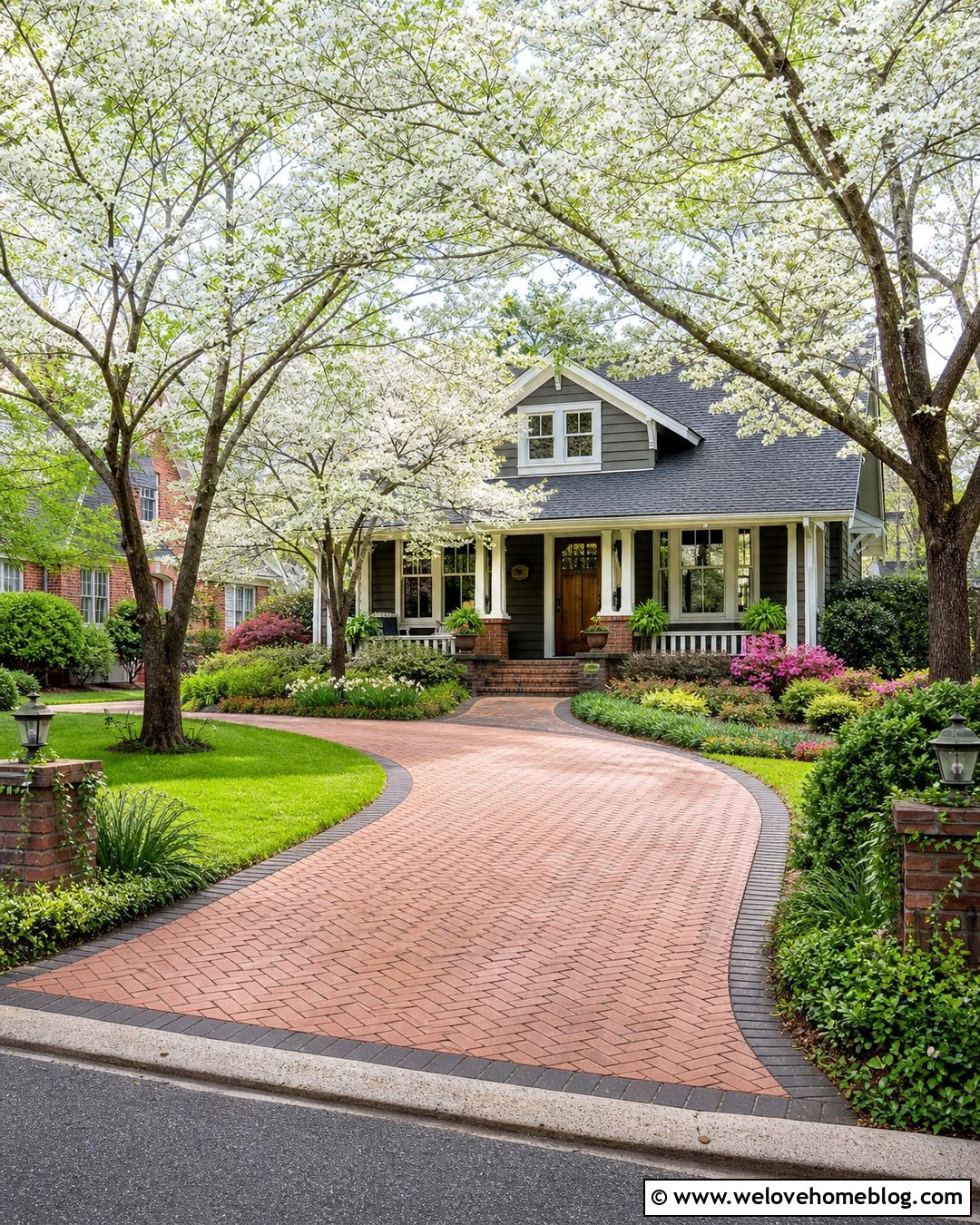
For a shorter suburban driveway, dogwoods provide layered branches and spring flowers without requiring the monumental scale of oaks or sycamores. Use muted red brick pavers in a basketweave pattern, bordered by a narrow course of darker brick. Arrange dogwoods in staggered beds on both sides so their crowns visually overlap as they mature. Shade-tolerant azaleas, ferns, and low evergreen ground covers create a complete understory while preserving an open view of the trunks. A gently curved walkway can connect the driveway to a craftsman porch without crossing the main parking area. This look works best when the planting feels garden-like rather than rigidly formal. Choose dogwoods adapted to local soil, climate, and sunlight, then provide sufficient bed width so roots are not trapped between pavement and foundations.
14. Redbud Tree Canopy Exposed Aggregate Driveway
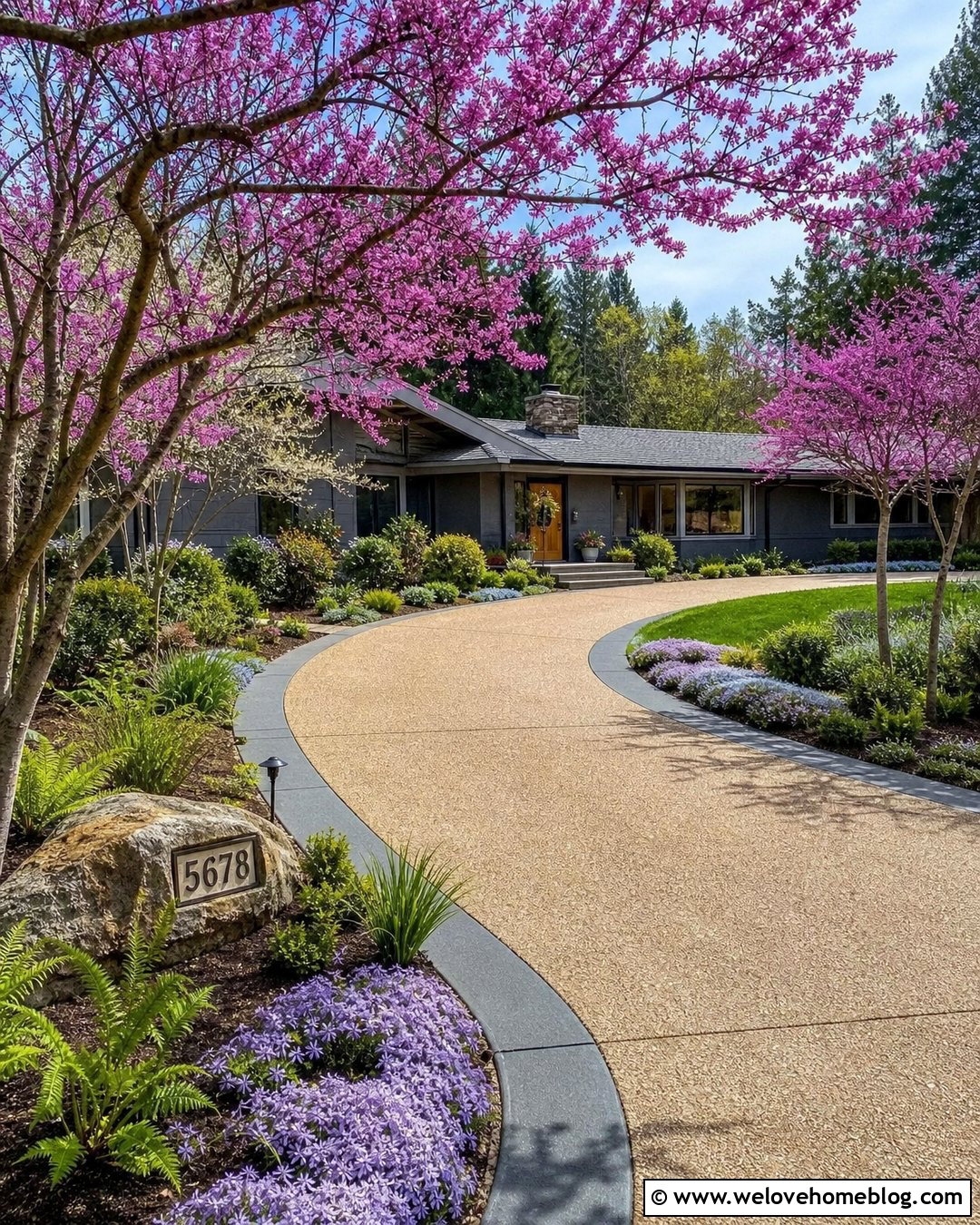
Pink spring flowers make redbuds an appealing choice for a friendly, moderately scaled driveway canopy. Pair them with warm exposed aggregate concrete containing tan and gray stone, then add a smooth charcoal concrete band along the perimeter. A softly curved driveway helps the multi-trunk trees feel integrated into the front garden rather than arranged like street trees. Underplant with woodland phlox, sedges, ferns, and low shrubs that continue the layered effect after flowering ends. A small boulder address marker at the entrance introduces another natural texture. The design complements craftsman, cottage, and updated ranch homes. Redbuds generally create a lighter canopy than major shade trees, making them useful where the house should remain visible from the curb. Maintain clear sightlines and remove branches that begin extending into vehicle space.


15. Willow Tree Canopy Resin-Bound Driveway
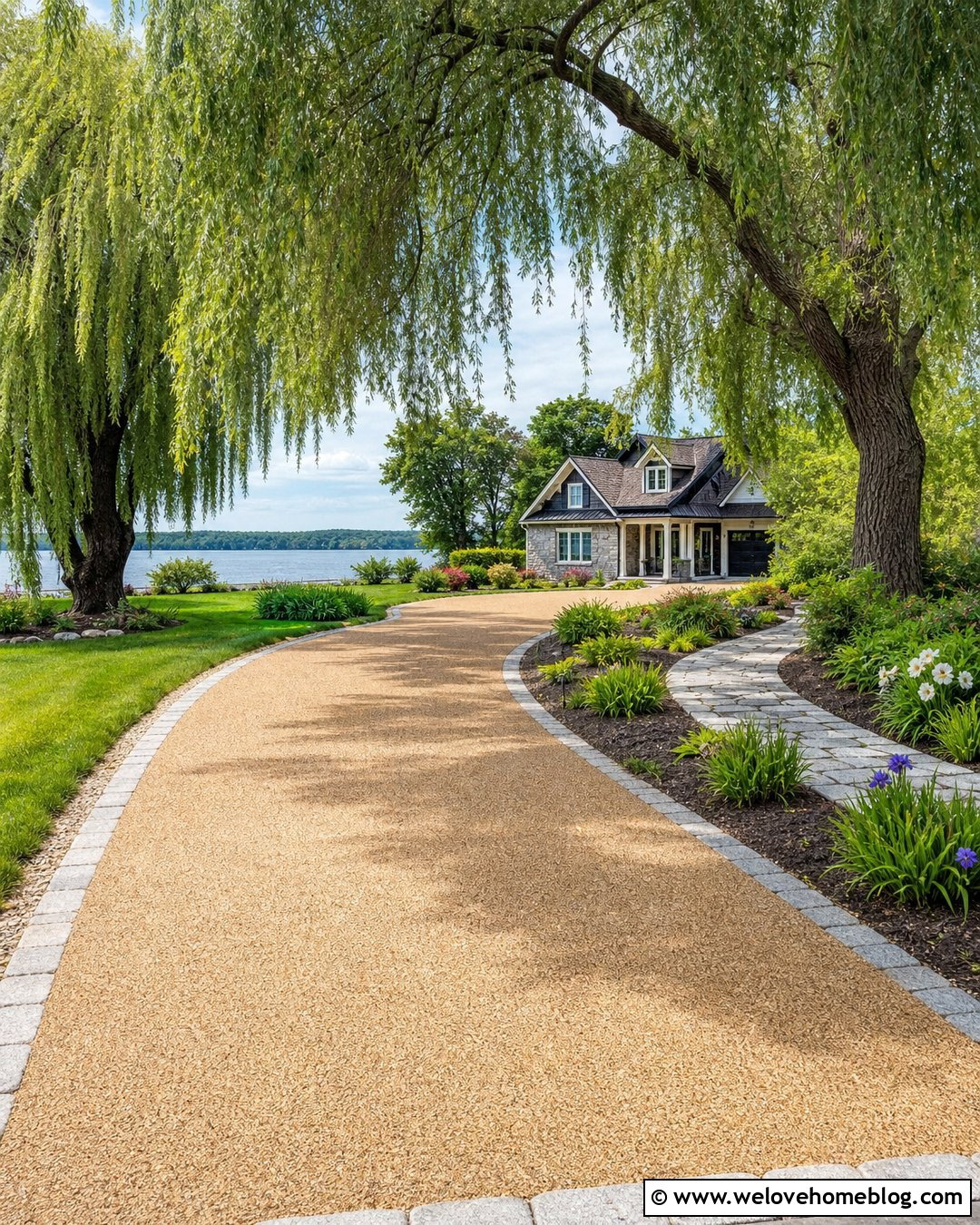
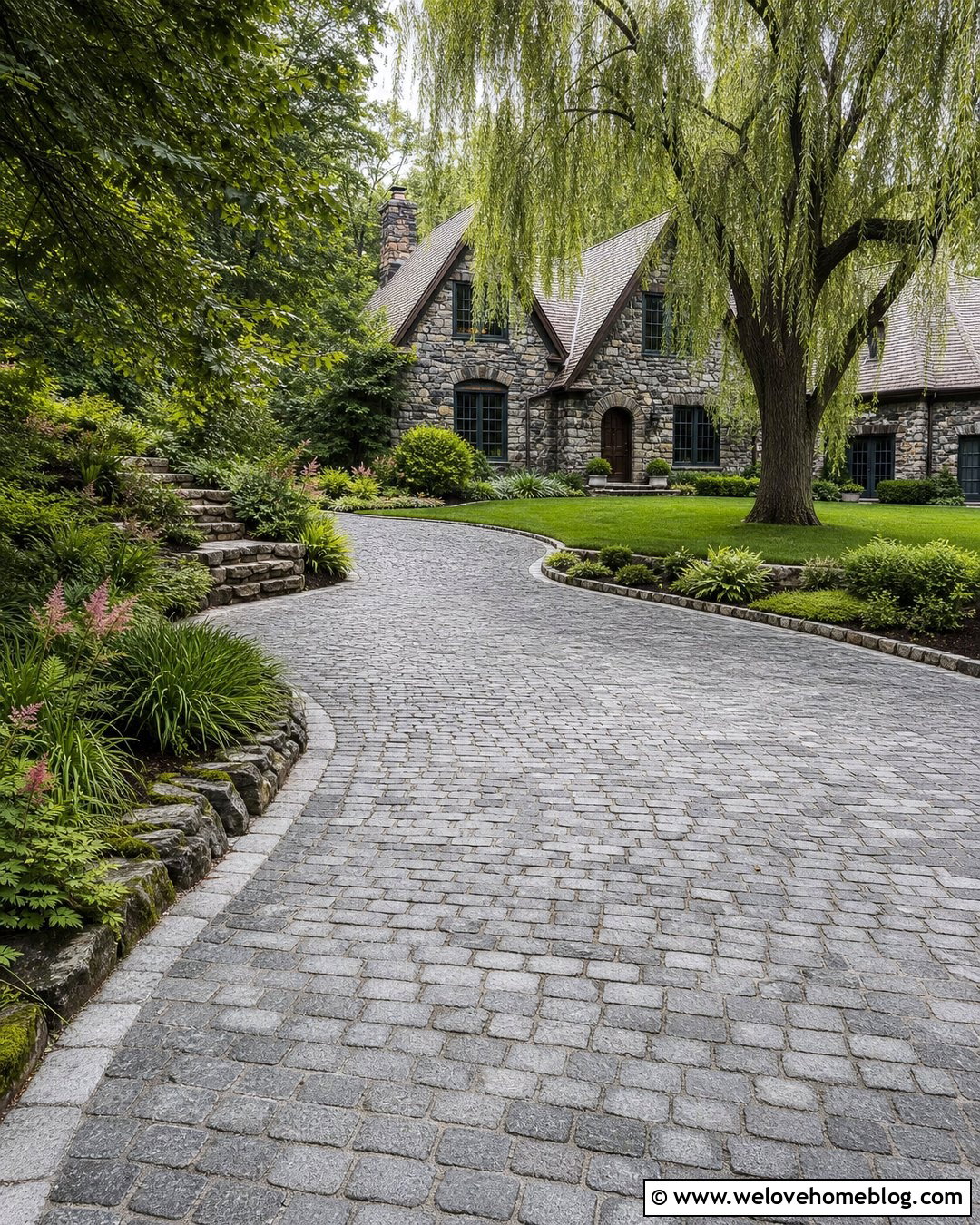
Sweeping willow branches can create an exceptionally soft canopy, but this look needs a spacious property and careful placement. Use honey-colored resin-bound gravel for a smooth, visually natural driveway that curves toward a country cottage or lakeside home. Border the surface with granite setts and wide moisture-tolerant planting beds containing sedges, irises, and low shrubs. Position willows far beyond the driveway edge, drainage system, utilities, and building foundations so their mature roots and crowns have substantial room. The branches can then frame the approach without constantly brushing vehicles. A simple timber footbridge or stone walkway near the front garden can repeat the relaxed landscape character. Consult a local arborist before committing to this design because willow selection, water availability, setbacks, and long-term maintenance can strongly affect its practicality.
16. Plane Tree Canopy Concrete Paver Driveway
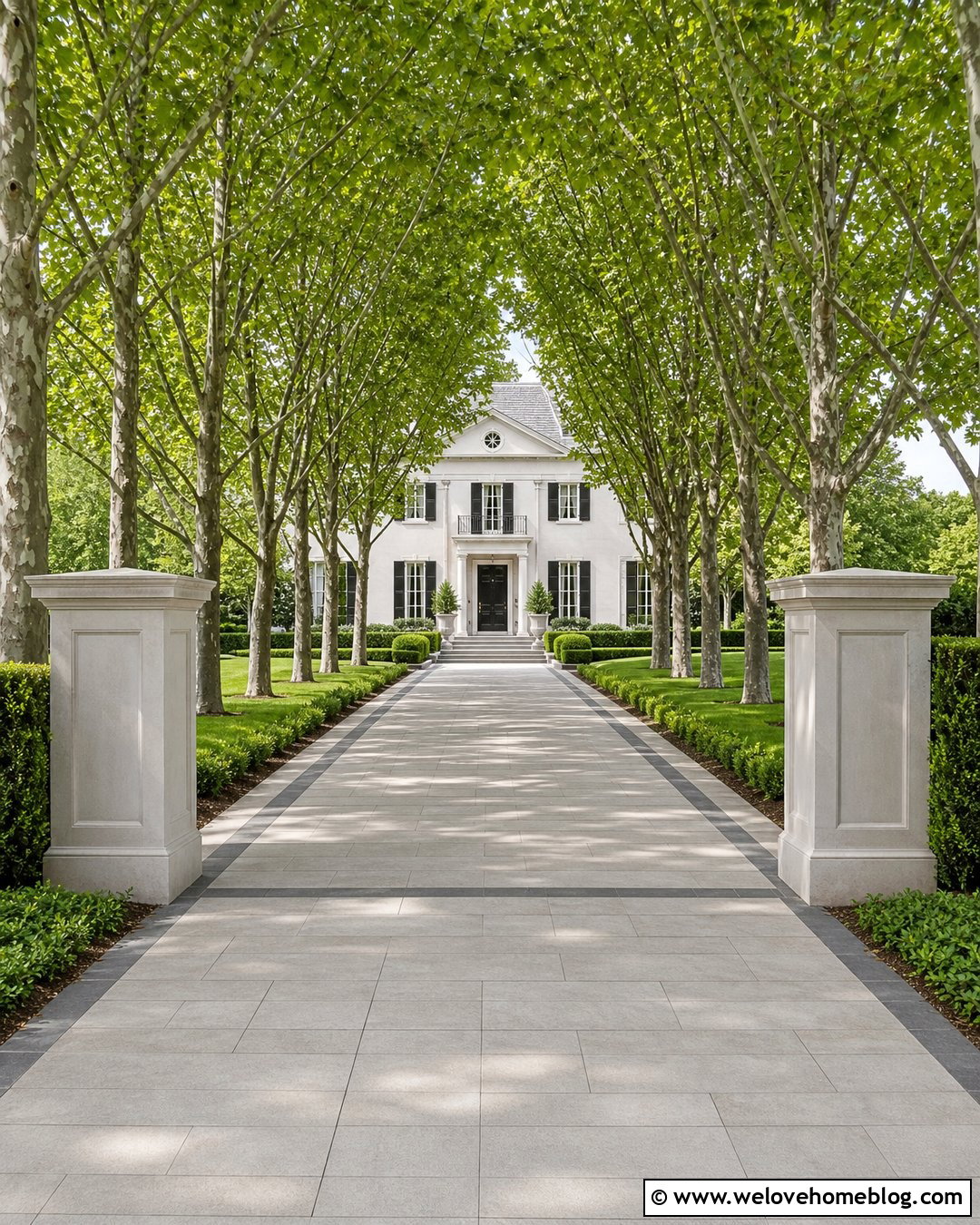
A formal row of plane trees can create a strong overhead framework for a symmetrical home. Install large-format concrete pavers in a light greige tone, using a darker gray paver ribbon to outline the straight driveway. Keep the trees evenly spaced within broad lawn or ground-cover panels, and align their trunks with major architectural features such as windows, columns, or the central entrance. Clipped hedges can run behind the trees, adding structure without narrowing the driving surface. At the curb, square masonry pillars establish a clear beginning to the tree-lined approach. This design fits French-inspired, Georgian, and contemporary classical homes. Regular professional pruning can maintain consistent crowns and suitable clearance. However, enough space must remain between the trunks and hardscape to accommodate mature growth and routine driveway maintenance.
17. Mixed Native Tree Canopy Permeable Driveway
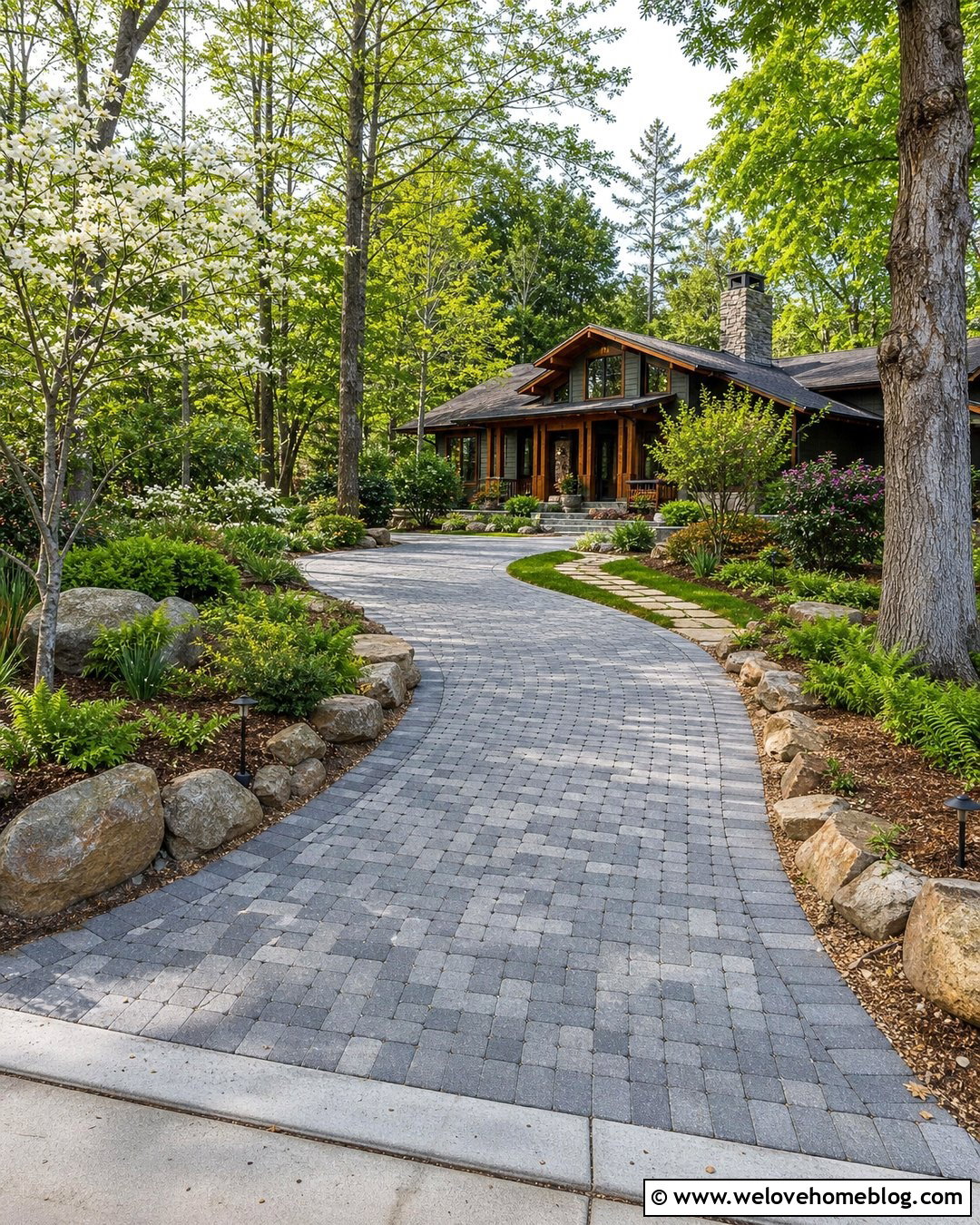
Not every tree canopy needs matching rows. A mixed native planting can create a more resilient, woodland-style driveway with varied foliage, branching, and seasonal interest. Use permeable interlocking concrete pavers in a mottled gray finish for a gently curving layout. Select a coordinated group of locally appropriate canopy and understory trees rather than collecting unrelated specimens. Arrange larger trees farther from the pavement and smaller flowering trees near the entrance or house. Native shrubs, sedges, ferns, and leaf mulch can connect the layers into one continuous landscape. Use natural stone edging only where the planting beds need stronger definition. This approach suits contemporary craftsman, woodland modern, and eco-conscious homes. A landscape professional can help match the species to local soils, rainfall, utilities, mature spacing, and expected maintenance.
18. Existing Tree Canopy Gravel Driveway
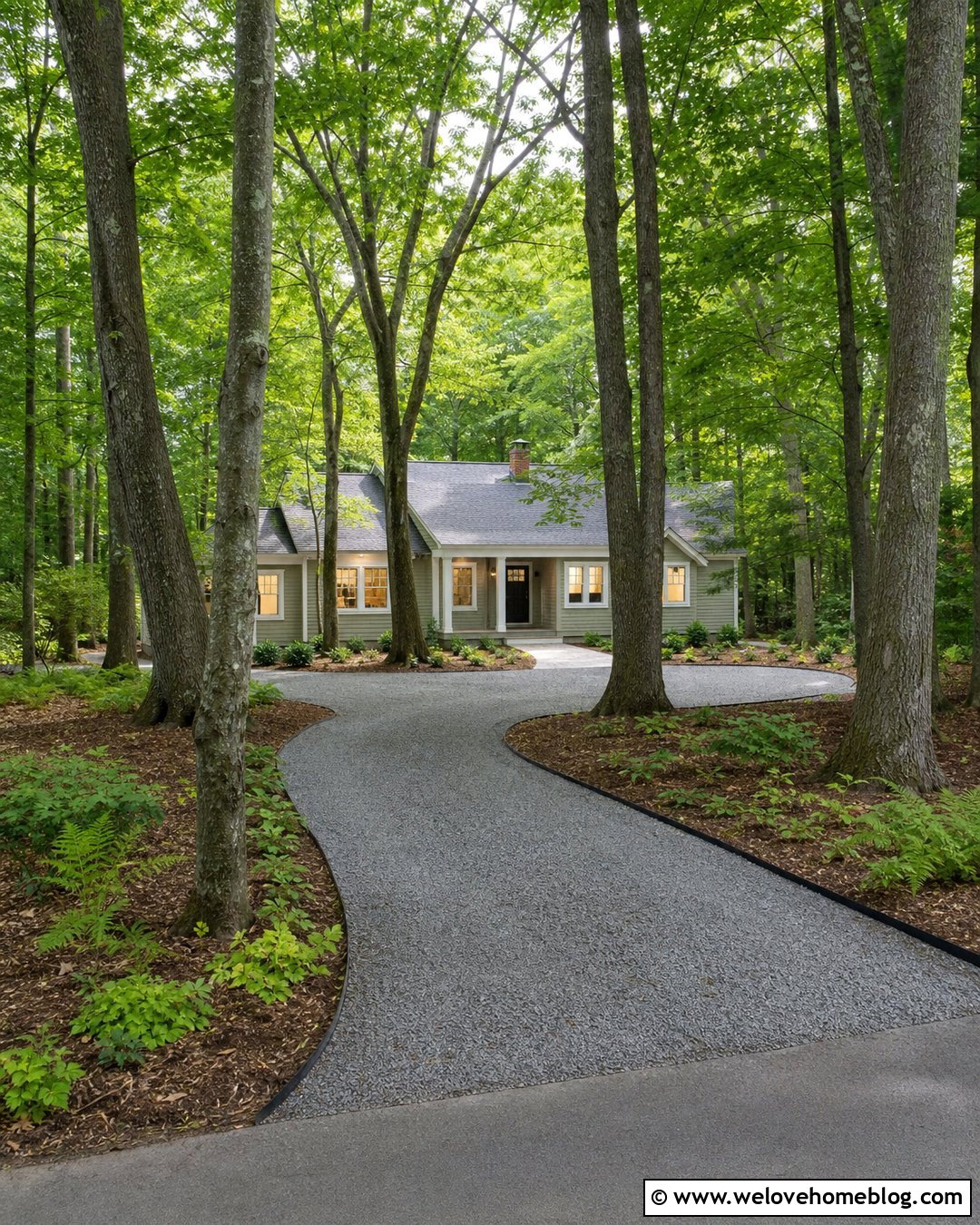
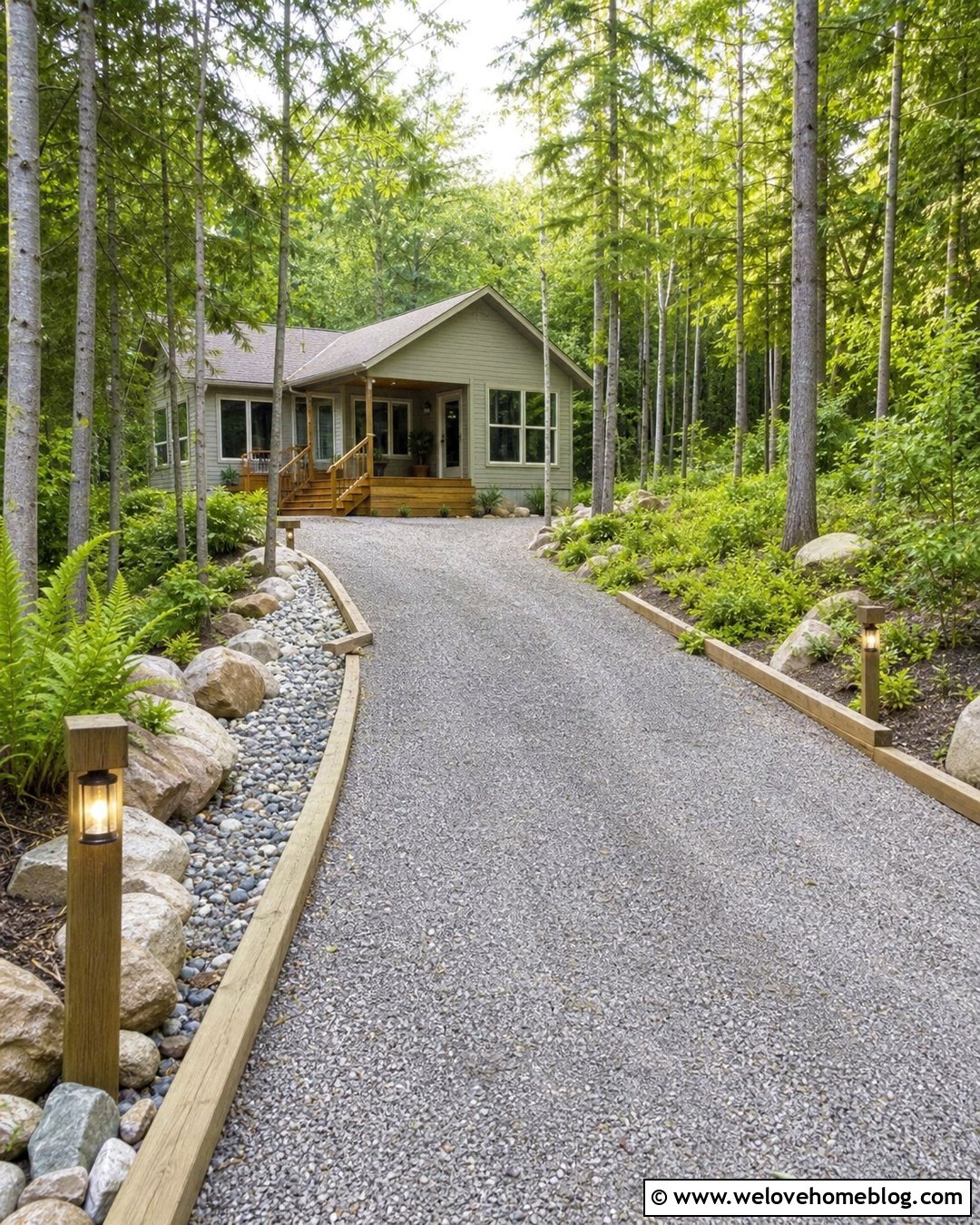
An established tree canopy is worth treating as the starting point rather than an obstacle. A compacted fine gravel driveway can weave between mature trunks with fewer harsh visual lines than a broad concrete slab. Choose medium-gray crushed stone and contain it with flexible steel edging that follows the natural route. Avoid changing soil levels around the trunks or cutting major roots simply to make the driveway perfectly straight. Instead, use slight curves, widened passing points, and a carefully positioned parking court near the house. Woodland ground covers and mulch can fill shaded areas where lawn has become thin. This solution works well around older cottages, renovated ranch homes, and forested properties. Before rebuilding the driveway, involve an arborist and qualified contractor so construction access, drainage, excavation, and root protection are coordinated.
19. Modern Farmhouse Tree Canopy Asphalt Driveway
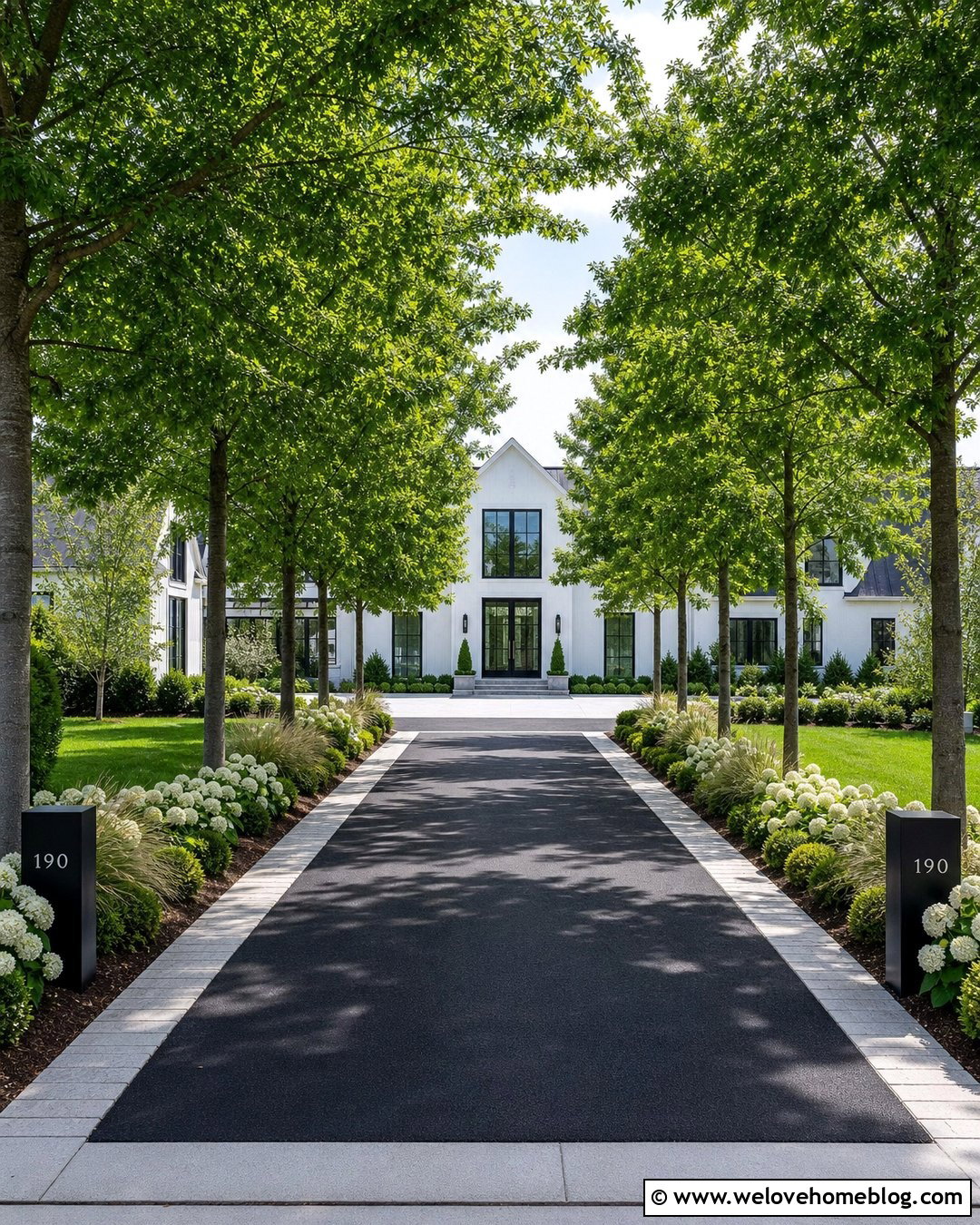
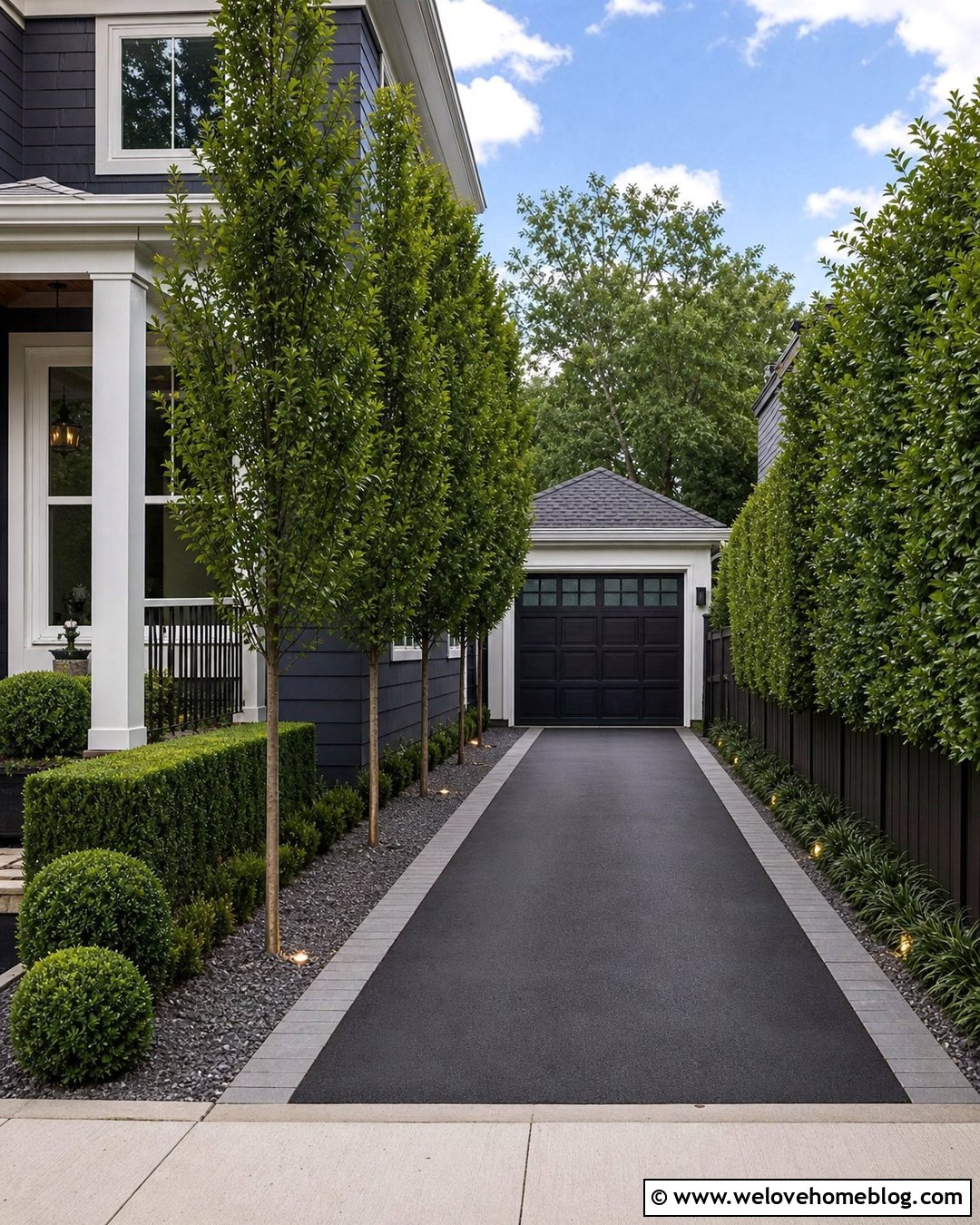
A modern farmhouse can handle a dark driveway when the surrounding planting keeps the approach green and open. Use deep black asphalt in a straight layout with a double border of light concrete pavers. Plant broad-canopied native trees at regular intervals on both sides, leaving generous lawn panels between the pavement and trunks. The strong contrast between black asphalt, white siding, and fresh foliage creates a clean curb view. Add simple rectangular planting beds near the house with hydrangeas, ornamental grasses, and low evergreen shrubs. Black metal address pillars at the entrance can echo the windows and porch lighting. Avoid filling the entire route with decorative objects. The repeated trees, crisp border, and uncluttered surface should provide most of the visual impact while creating a comfortable sense of arrival.
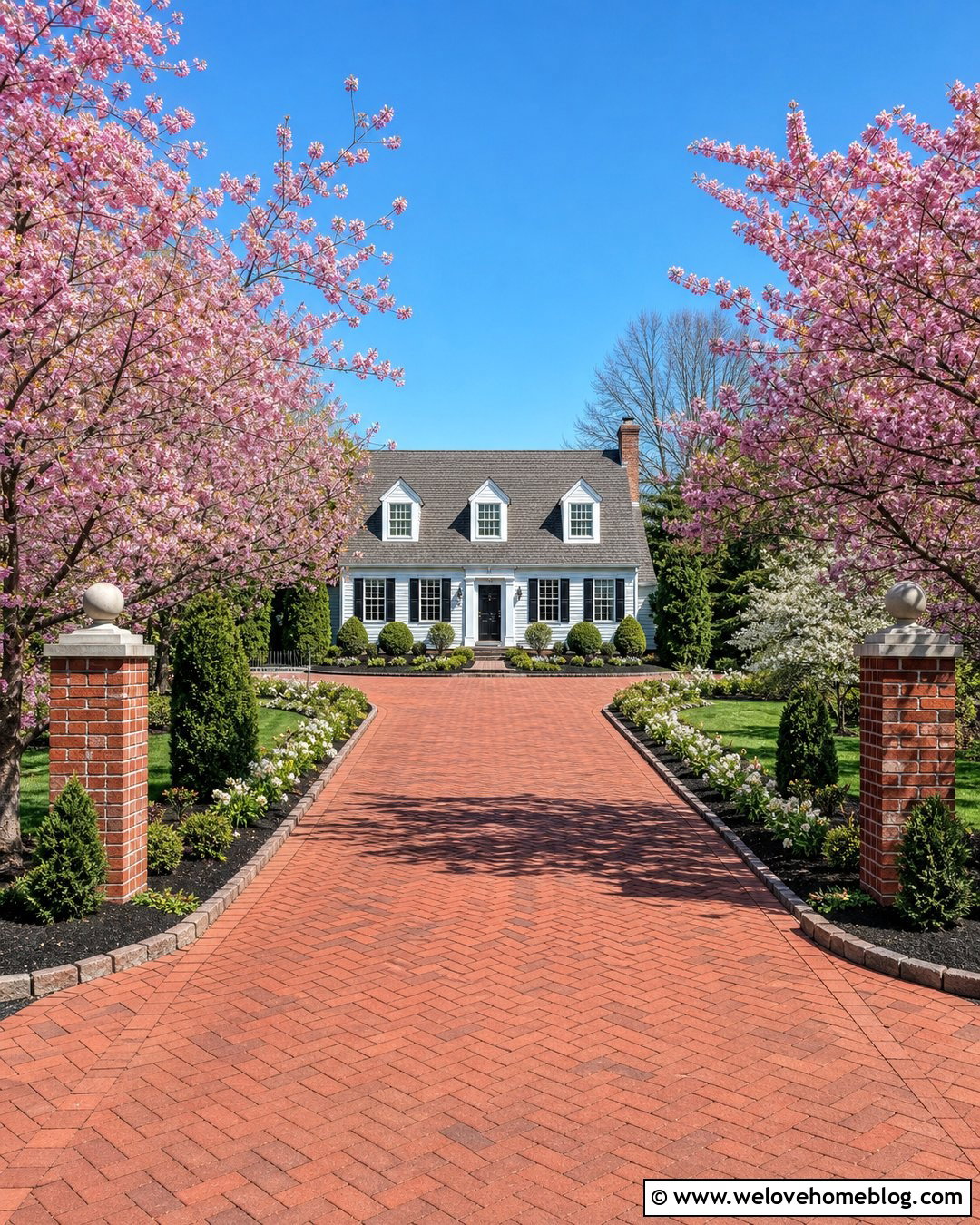
20. Serviceberry Tree Canopy Paver Driveway
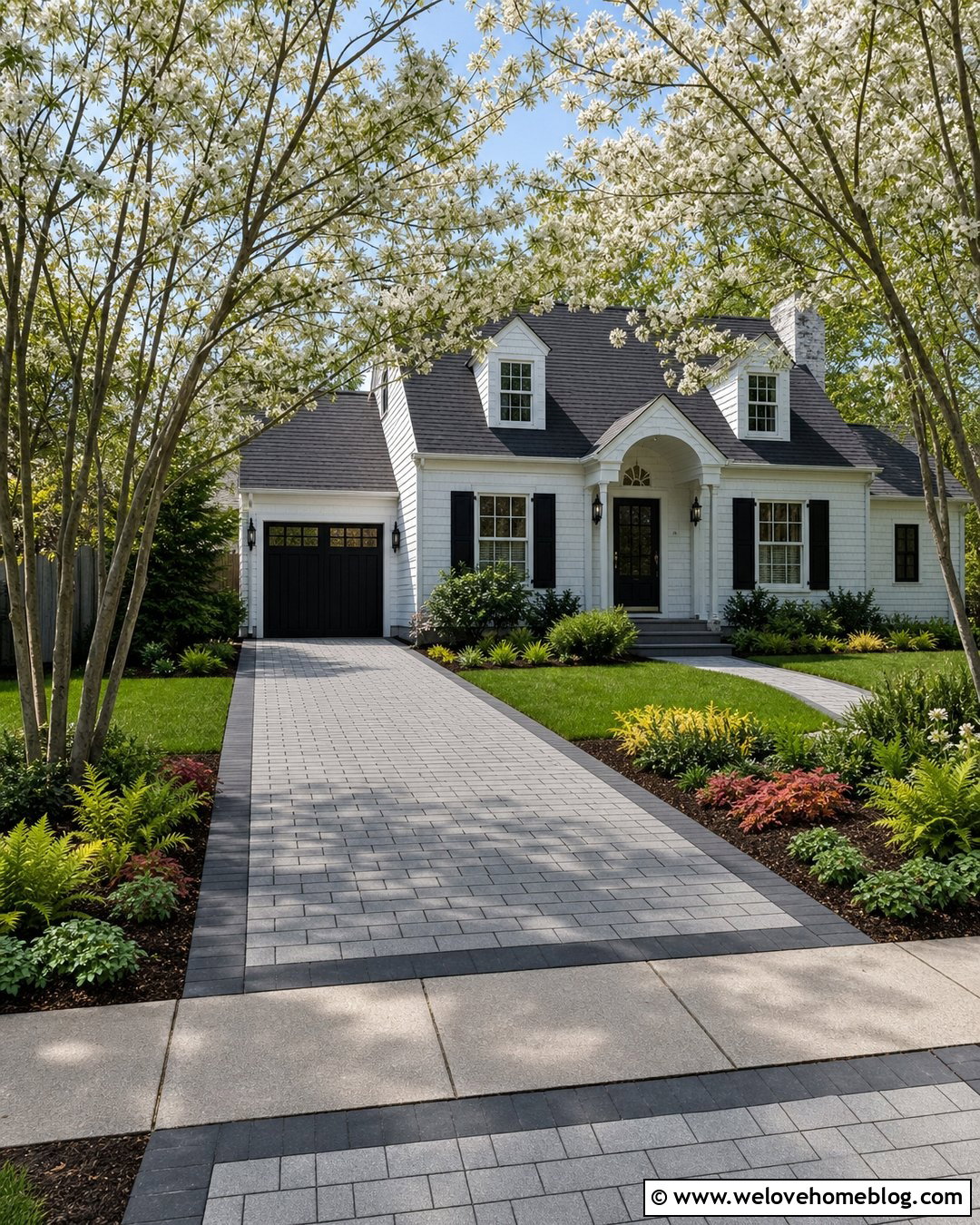
Serviceberries can bring flowers, foliage, and delicate branching to a compact front yard where massive shade trees would be out of proportion. Use medium-gray concrete pavers in a running-bond pattern for a short straight driveway leading to a Cape Cod or cottage-style home. Place multi-stem serviceberries in generous corner beds rather than squeezing them along every inch of pavement. Their crowns can frame the driveway and partially overlap without forming an overly dark tunnel. Add low ferns, coral bells, sedges, and evergreen ground cover beneath them. A charcoal paver border and matching front walkway keep the small landscape organized. Select a serviceberry suited to your region and available space. Careful pruning should preserve its natural shape while maintaining visibility around the sidewalk, garage, and street entrance.
Conclusion:
Successful tree canopy driveway ideas treat the pavement, trees, borders, understory plants, and house as one connected landscape. Begin by evaluating the driveway’s length, width, drainage, sunlight, utilities, and turning requirements. Then select trees for local conditions and their mature dimensions, not simply their appearance at the garden center. Broad oaks can transform a long country lane, while dogwoods, redbuds, or serviceberries may fit smaller suburban properties more comfortably. Gravel, asphalt, brick, concrete, and permeable pavers can all work when their colors and edges support the surrounding landscape. With safe setbacks, healthy root space, and ongoing pruning, these 20 Tree Canopy Driveway Ideas can create a distinctive entrance that improves naturally over time.

Related posts:



Leave a Reply