
These 20 Driveway Tree Planting Ideas show how trees can turn a basic parking area into a welcoming part of your landscape. The best designs consider the driveway surface, layout, edging, planting beds, and architecture as one complete look. Tree placement also matters. Mature height, canopy width, root space, overhead utilities, visibility, and winter salt exposure should all influence your plan. Choosing the right tree for the available growing space helps protect both the plants and nearby pavement. () Whether you have a narrow suburban entrance, a sweeping country lane, or a compact front yard, thoughtful planting can add shade, privacy, seasonal color, and structure. Use the complete designs below to explore 20 Driveway Tree Planting Ideas.

1. Tree-Lined Gravel Driveway
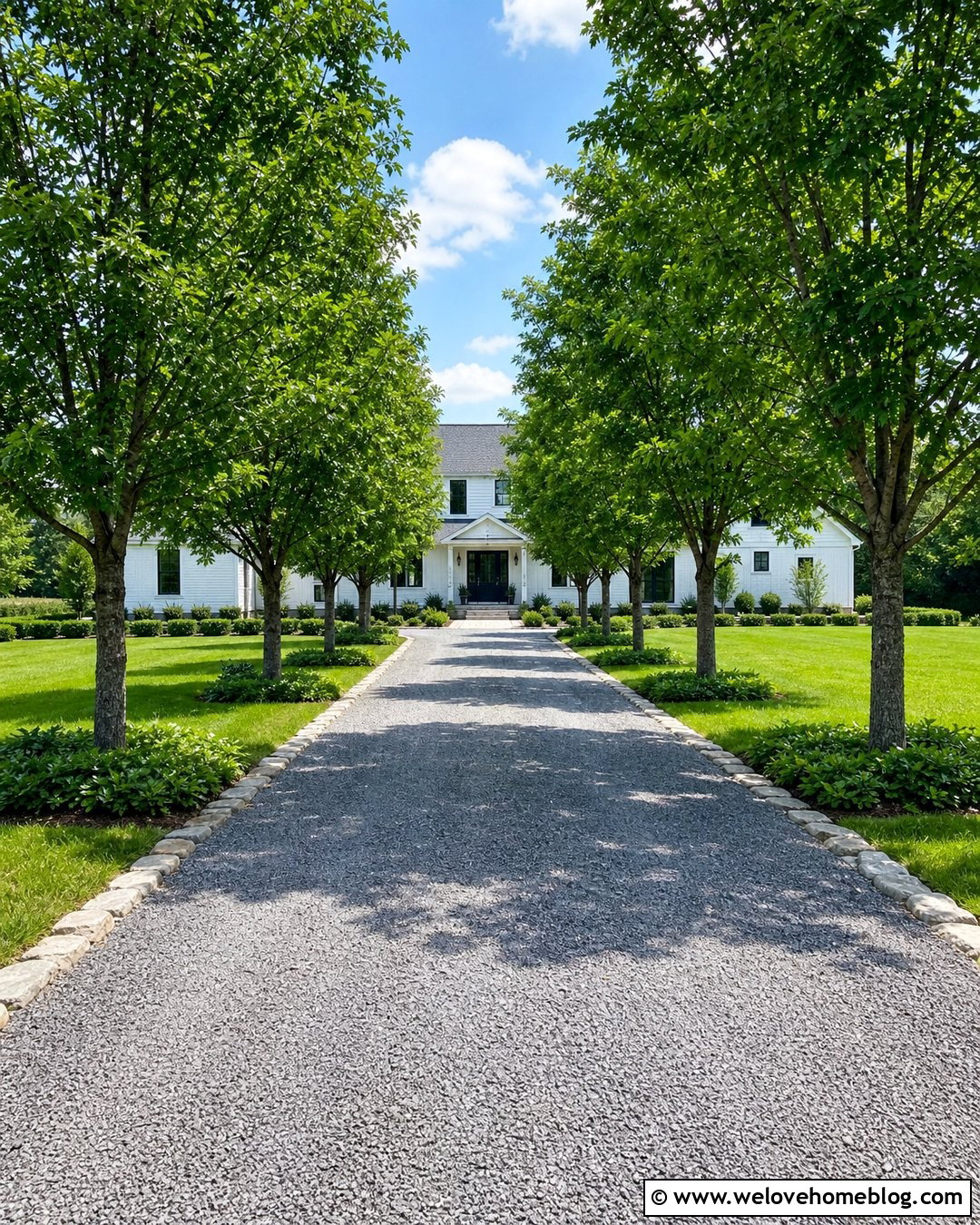
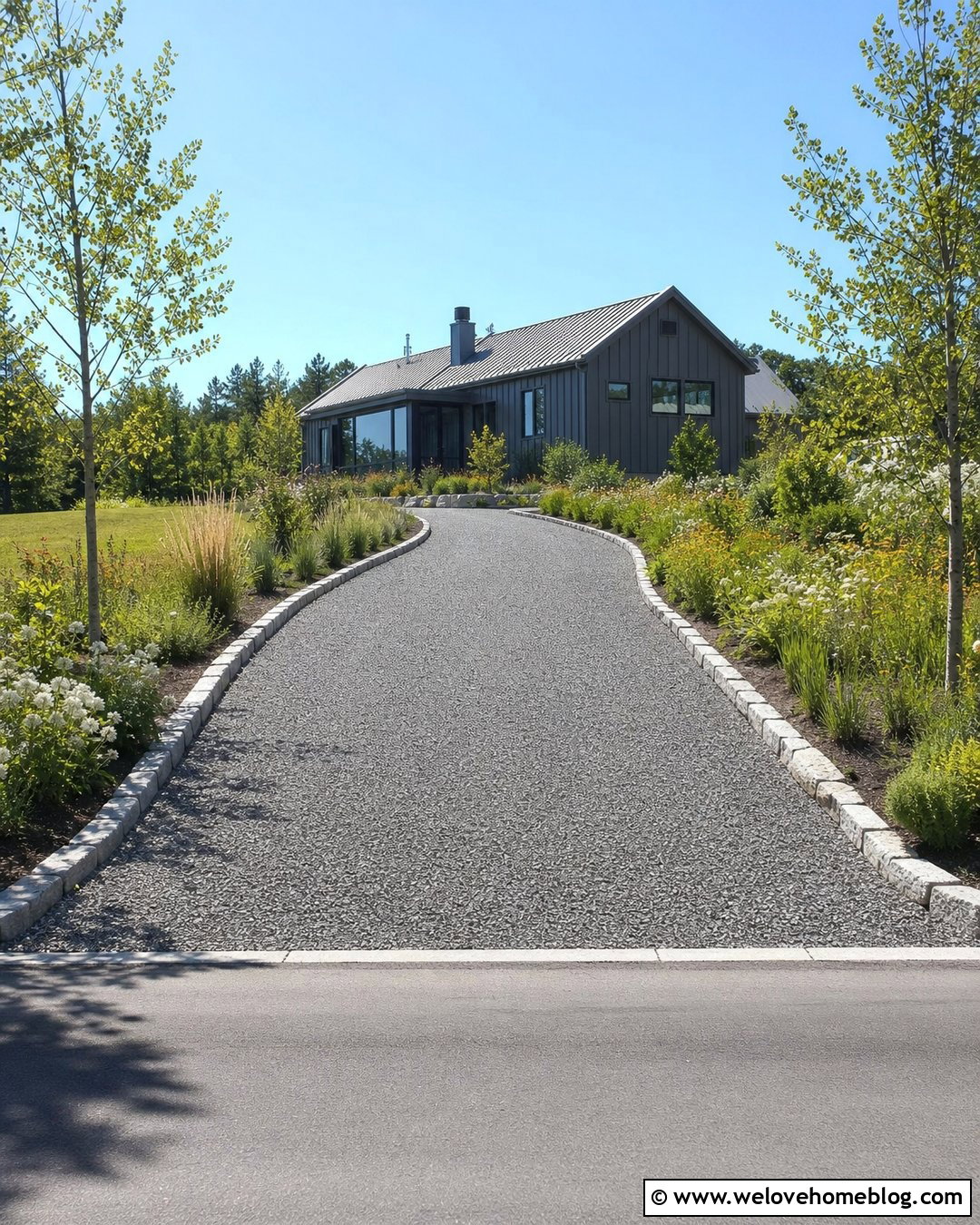
A long gravel driveway feels more established when evenly spaced trees define both sides of the approach. Use compacted gray crushed gravel for a firm driving surface, then add cobblestone edging to keep loose stones inside the driveway. Plant medium or large deciduous trees in broad lawn strips beyond the edging, allowing enough room for their mature canopies and roots. A simple row creates strong symmetry, while slightly wider spacing keeps the entrance open and sunny. Low ground cover around each tree can reduce trimming and visually connect the planting. This complete look works especially well with farmhouses, country homes, and traditional brick houses. Keep branches pruned above the driving area, and maintain clear sightlines where the driveway meets the street.
2. Curved Driveway With Flowering Trees
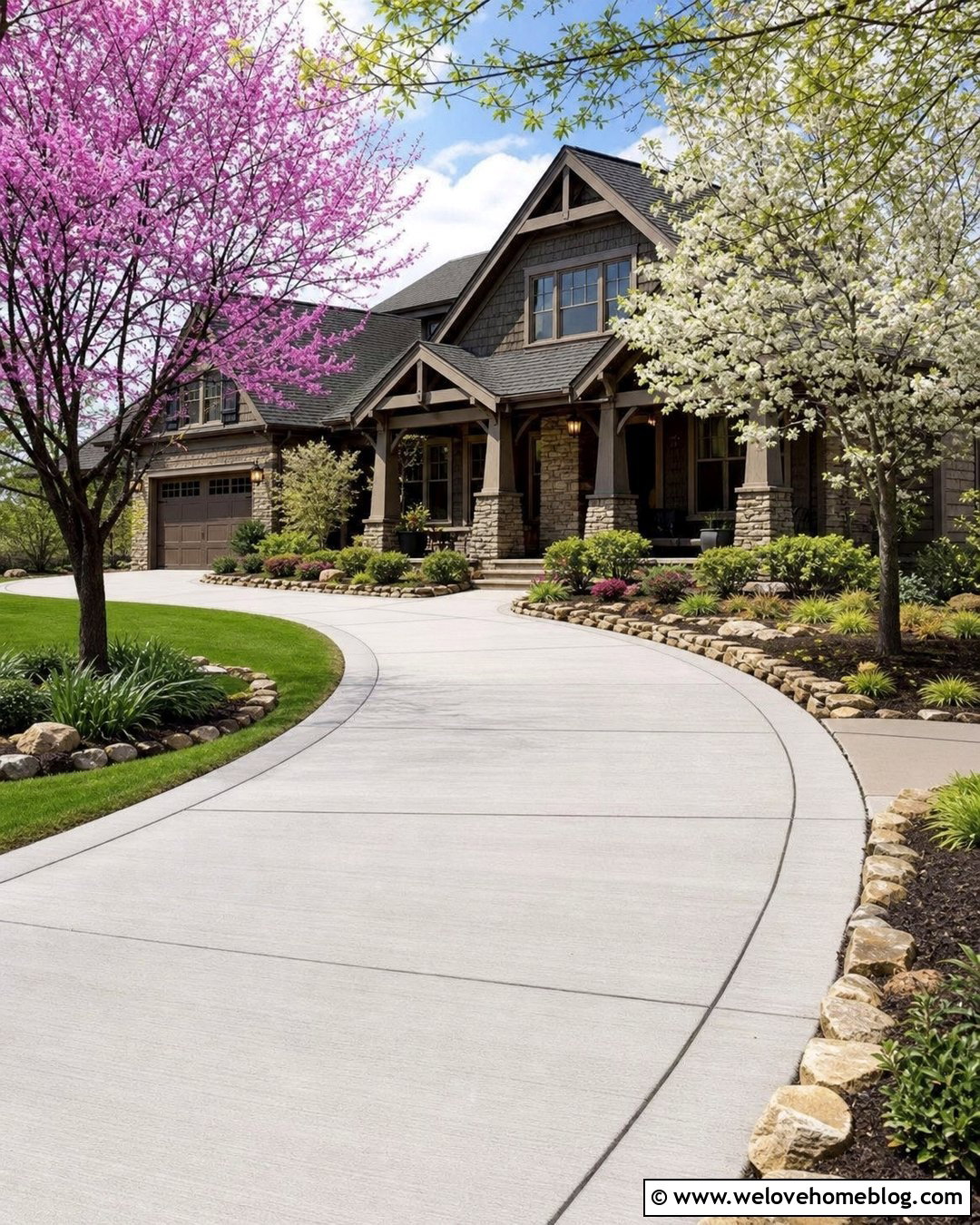
Imagine following a gentle curve framed by spring blossoms rather than driving toward the house in a straight line. A light-gray poured concrete driveway provides a clean foundation for flowering trees planted along the outside bend. Create wide, sweeping beds with natural stone edging, shredded mulch, low evergreen shrubs, and drifts of perennials. Redbuds, flowering dogwoods, serviceberries, and other regionally suitable trees can introduce color without forming an overwhelmingly heavy canopy. Select species based on your climate, soil, sun exposure, and available width. Keep the inside curve relatively open so drivers can see approaching vehicles and pedestrians. This flowing design complements Craftsman homes and cottage-inspired houses because the soft planting balances the solid concrete surface and emphasizes the driveway’s graceful shape.
3. Small Driveway With Ornamental Trees
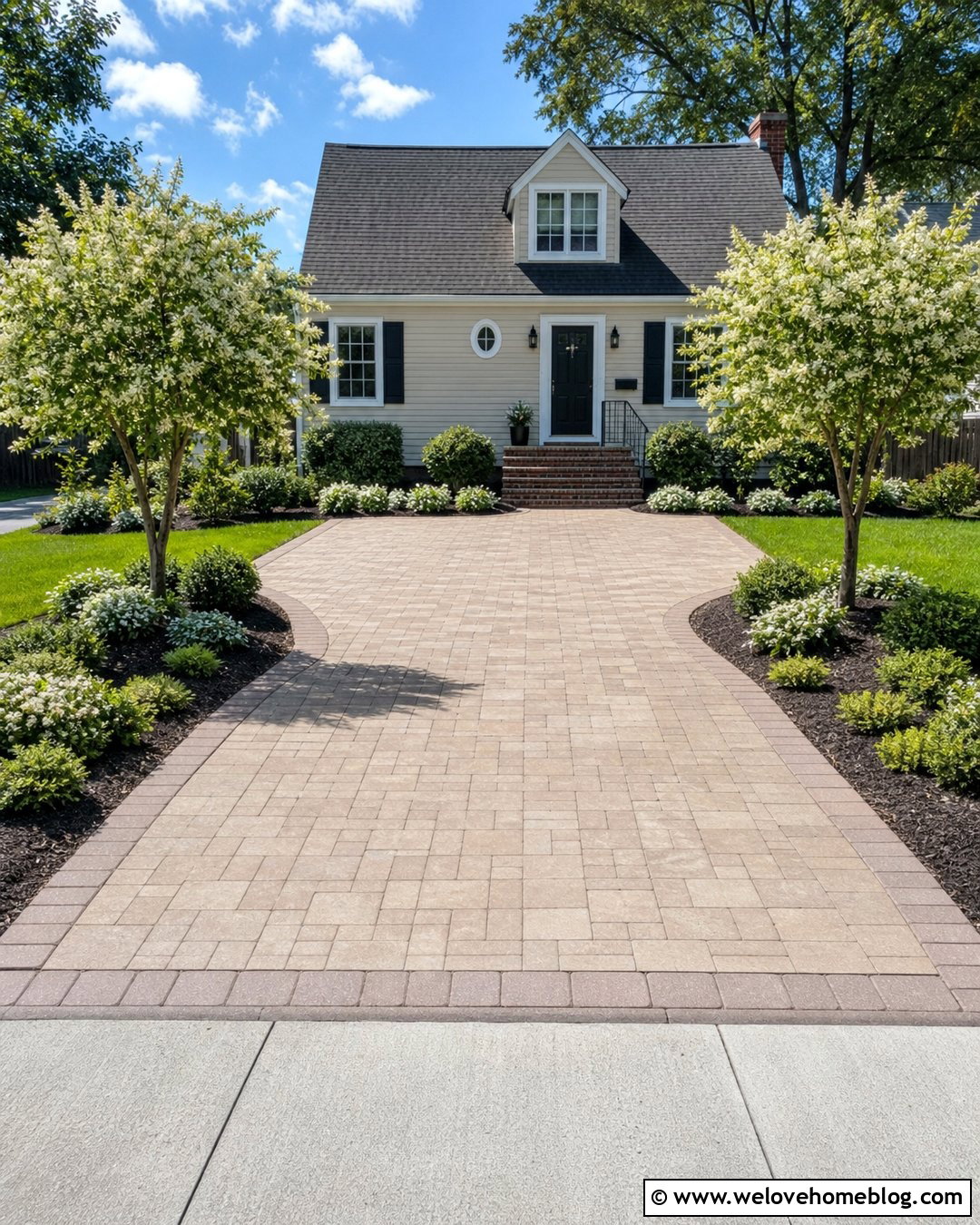
Limited front-yard space does not mean you have to skip trees altogether. A short driveway made from warm beige concrete pavers can support one compact ornamental tree on each side, provided the planting beds are generously sized. Use matching paver edging around crescent-shaped beds to repeat the driveway material and make the layout feel intentional. Choose small trees with manageable mature dimensions, attractive branching, and seasonal interest. Underplant them with low shrubs and ground covers that will not block visibility or spill into parking space. Place taller plants closer to the house and keep the street end simple. This balanced arrangement frames a bungalow or Cape Cod home without crowding it. It also leaves enough open pavement for doors, bins, deliveries, and everyday vehicle movement.
4. Narrow Driveway With Columnar Trees
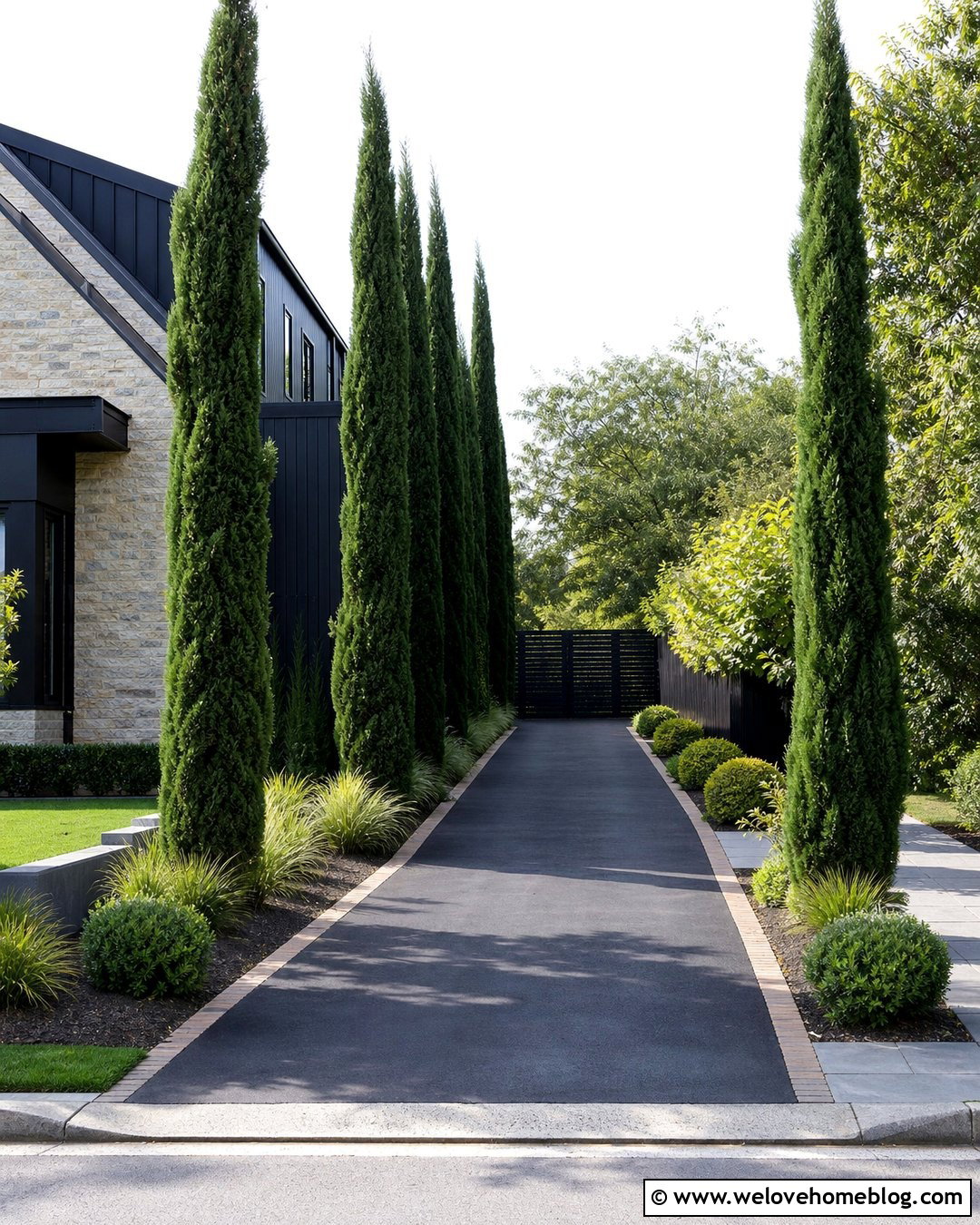
What can you plant when the driveway has length but very little usable width? Columnar trees offer a practical answer because their upright form creates height without sending broad branches across the driving lane. Pair a straight black asphalt driveway with a slim clay brick border and narrow mulched beds. Plant the trees at consistent intervals, but calculate spacing from their mature width rather than their nursery size. Low ornamental grasses can fill the gaps while preserving a clean vertical appearance. This combination suits urban homes, narrow side driveways, and contemporary properties where every foot matters. Avoid placing trees where trunks could interfere with open car doors or utility access. The dark asphalt, red brick ribbon, and structured green planting produce a polished entrance with a surprisingly small footprint.
5. Evergreen Trees Along A Driveway
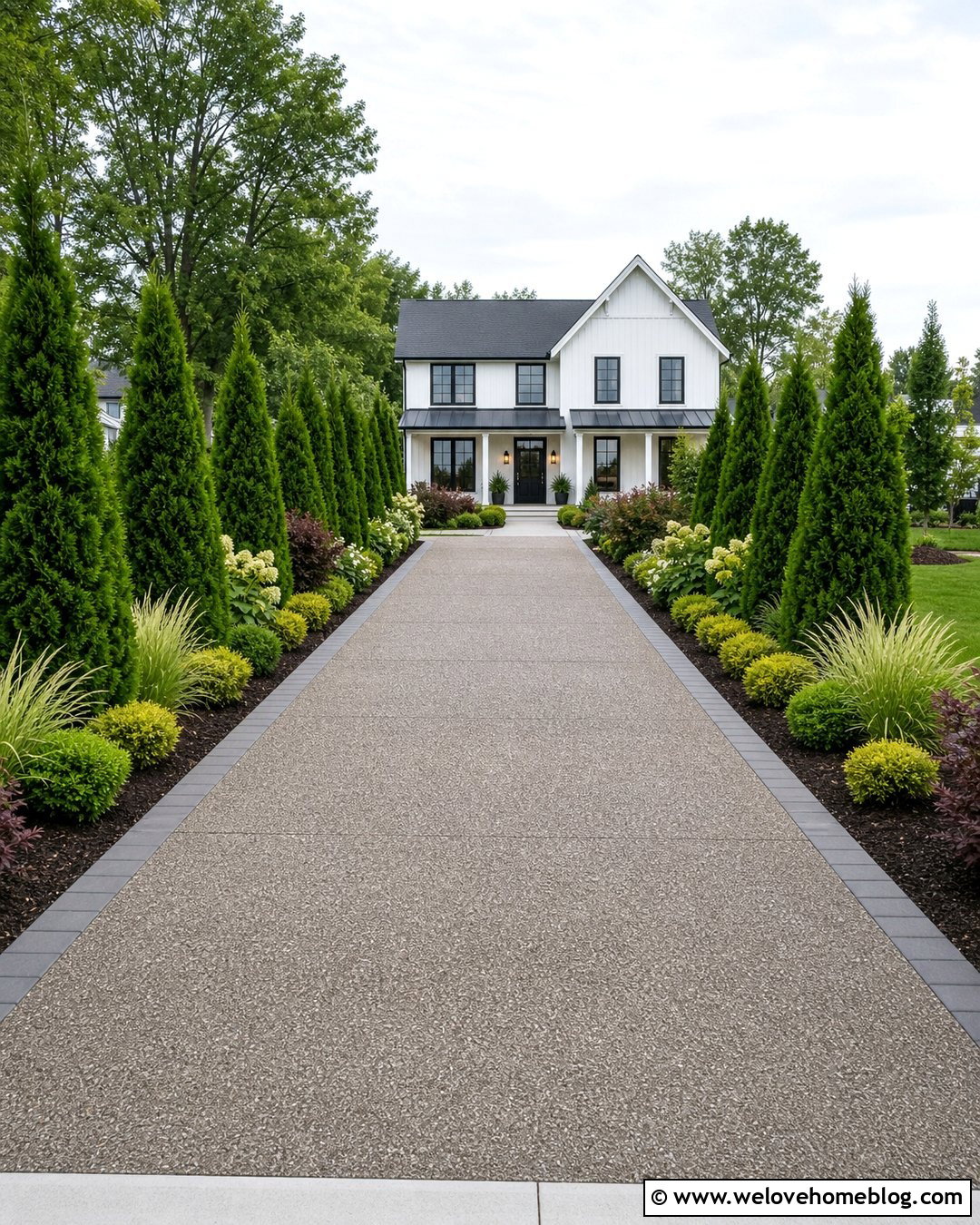
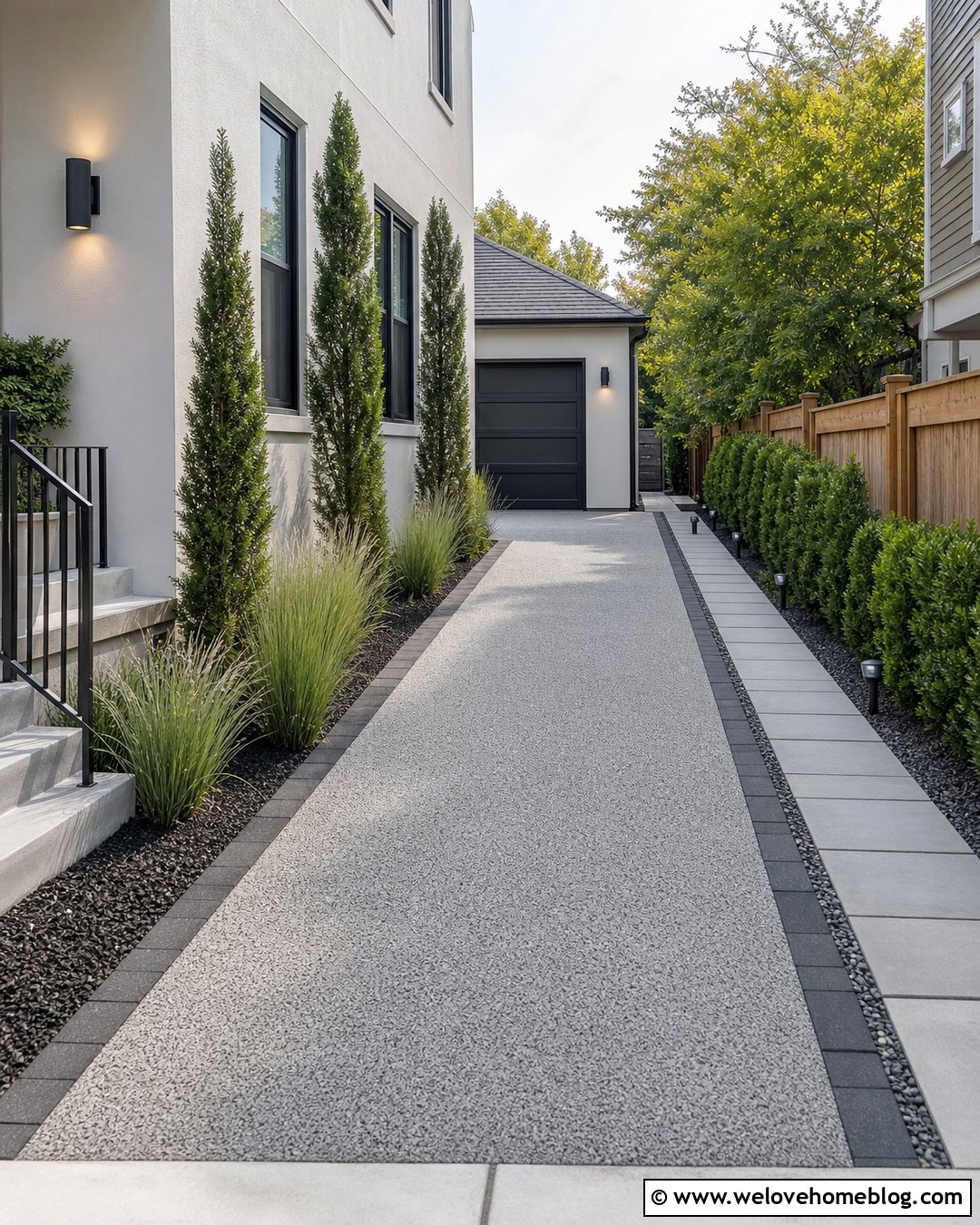
Evergreen trees can give a driveway year-round structure, especially when privacy is a priority. Start with a straight exposed-aggregate concrete driveway and create deep planting strips beyond a contrasting charcoal paver edge. Rather than forming a solid wall, stagger compact evergreen trees with enough space for air movement and mature growth. Add deciduous shrubs and ornamental grasses in front to soften the lower edge. In snowy regions, position sensitive evergreens away from areas receiving salty runoff or road spray, because deicing salt can damage roots and foliage. () This layered arrangement works beautifully beside a modern farmhouse or ranch home. It screens neighboring yards while keeping the entrance welcoming. Maintain a visible opening near the street and avoid allowing branches to narrow the usable driveway width.
6. Native Trees Beside A Driveway
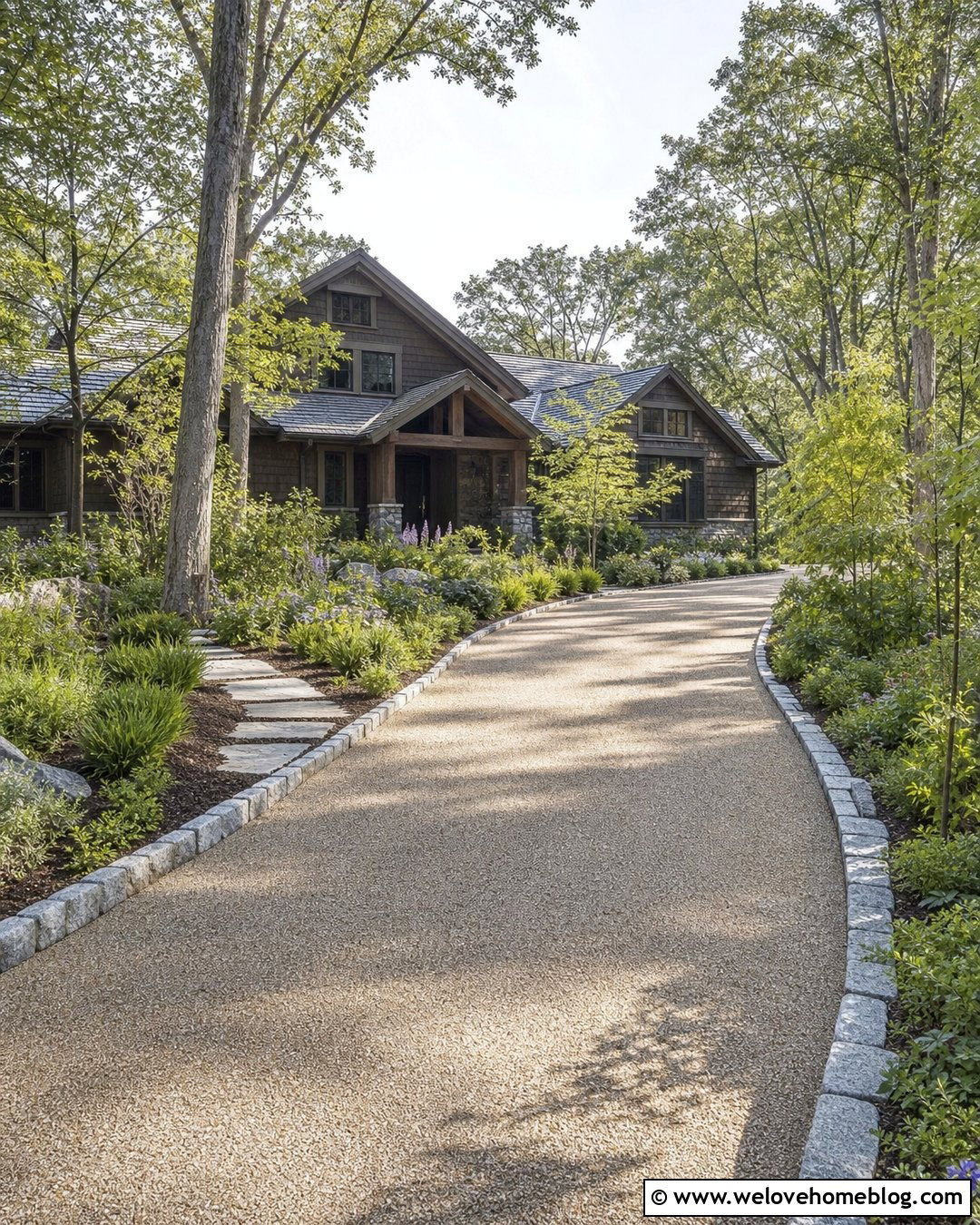
A native tree border can make the driveway feel connected to the wider landscape rather than added on top of it. Use tan resin-bound gravel for a smooth, natural-looking surface, then frame it with weathered stone curbing and broad mixed planting beds. Choose locally native trees suited to the property’s soil, moisture, sunlight, and climate. Instead of planting only one species, combine compatible canopy and understory trees for a more relaxed woodland effect. Native shrubs, sedges, grasses, and flowering perennials can complete the lower layers. Keep the plants closest to the pavement short and place larger forms farther back. This design is particularly effective around rustic Craftsman houses and wooded suburban lots. The result feels informal, environmentally appropriate, and visually rich throughout the changing seasons.
7. Maple Trees Along A Driveway
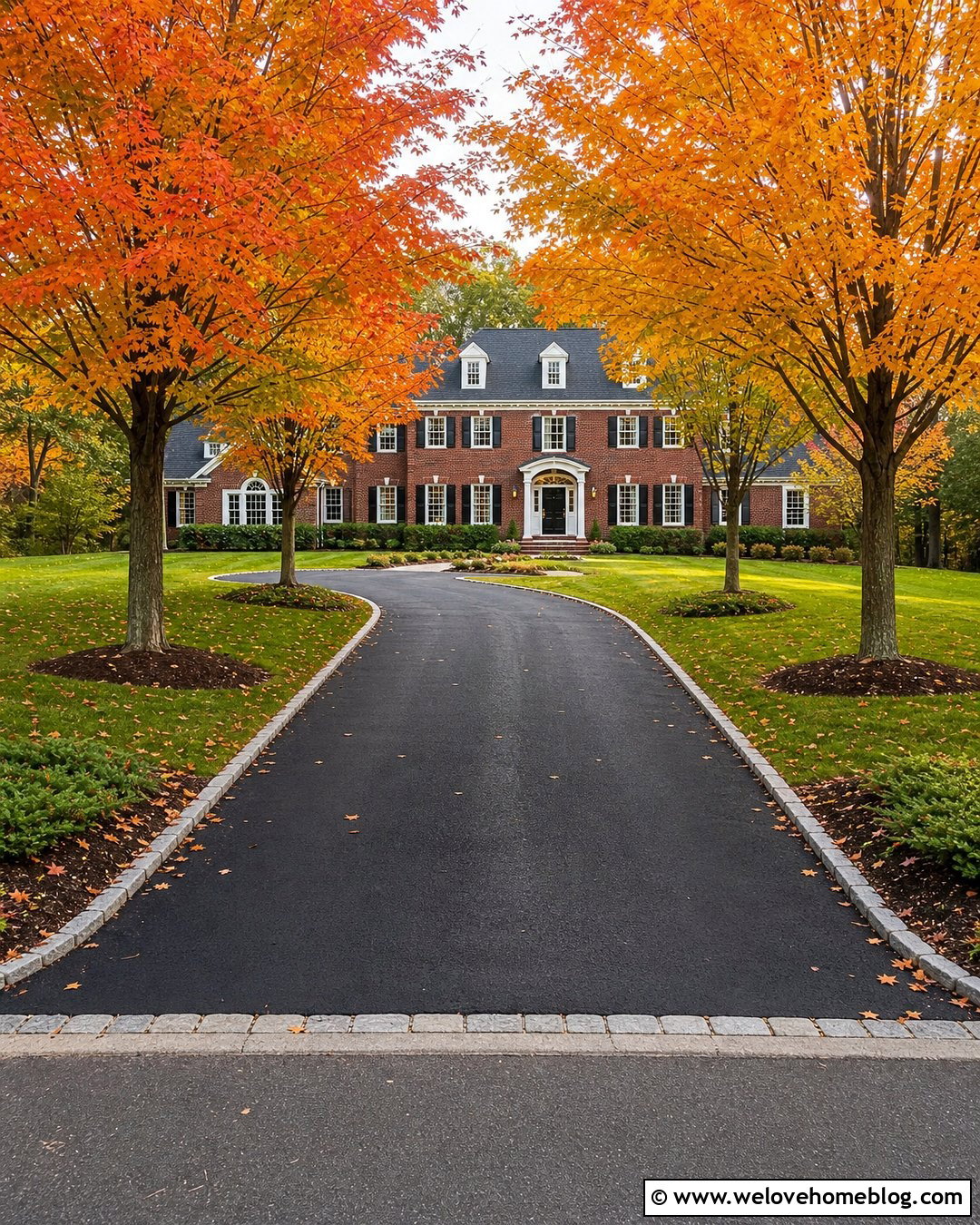
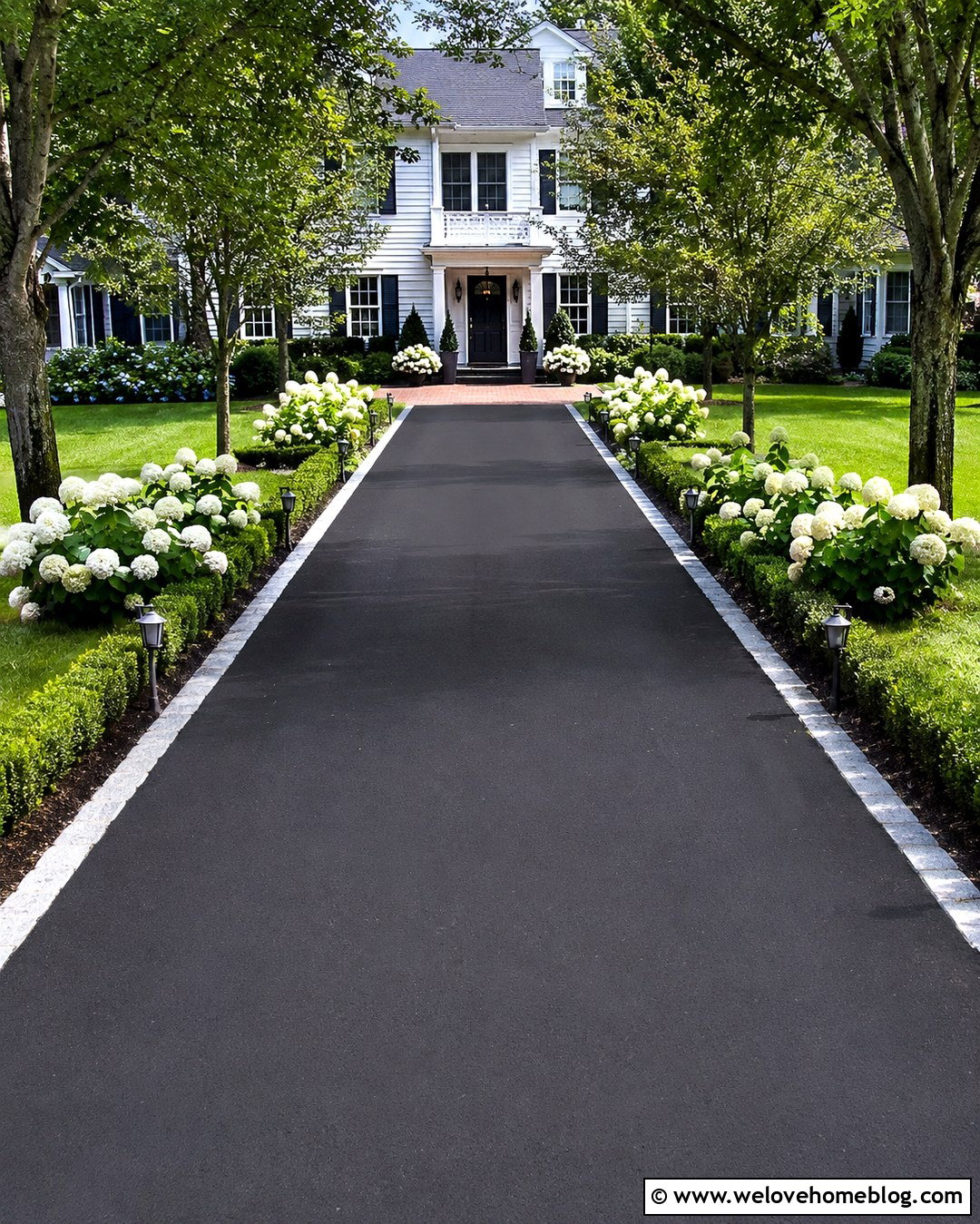
Maple trees can create a strong seasonal driveway feature when they are given enough open soil and selected carefully for the site. Pair a broad, gently curved asphalt driveway with granite block edging and wide lawn strips on both sides. Plant suitable maples far enough from the pavement to accommodate their mature trunks, roots, and canopies. A formal row produces a grand approach, while loose clusters create a more natural suburban appearance. Add simple mulched circles or connected planting beds beneath the trees to protect trunks from lawn equipment. Before choosing a variety, check its mature size and regional performance. This design looks especially attractive with a brick Colonial home, where the dark driveway, gray edging, green summer foliage, and bright autumn color create a classic four-season entrance.
8. Crape Myrtle Driveway Planting
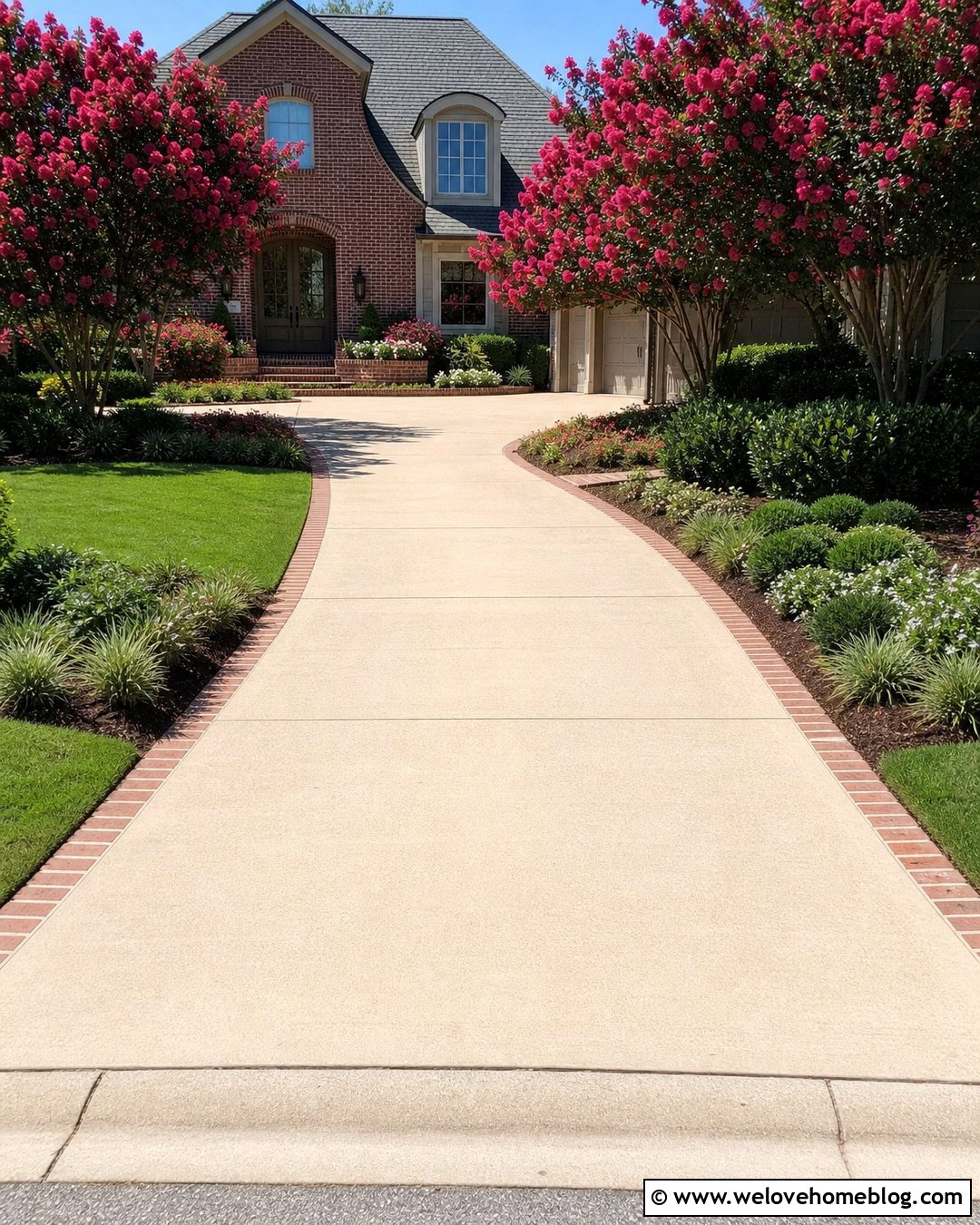
In warm climates, crape myrtles can bring repeated color and sculptural trunks to a sunny driveway. Use a pale sand-colored concrete driveway with a subtle broom finish and red clay brick ribbons along both edges. Plant crape myrtles in generous beds containing drought-conscious grasses, compact evergreen shrubs, and flowering ground covers. Repeating one variety creates a coordinated canopy, while alternating complementary colors can feel more relaxed. Choose cultivars whose mature height fits nearby power lines and the scale of the house. Avoid severe topping; allow the trees to develop attractive natural branching instead. This complete look suits Southern brick homes, coastal cottages, and light stucco houses. The pale pavement reflects the bright setting, while the planted borders keep the driveway from appearing wide, hot, or visually bare.
9. Birch Trees Around A Circular Driveway
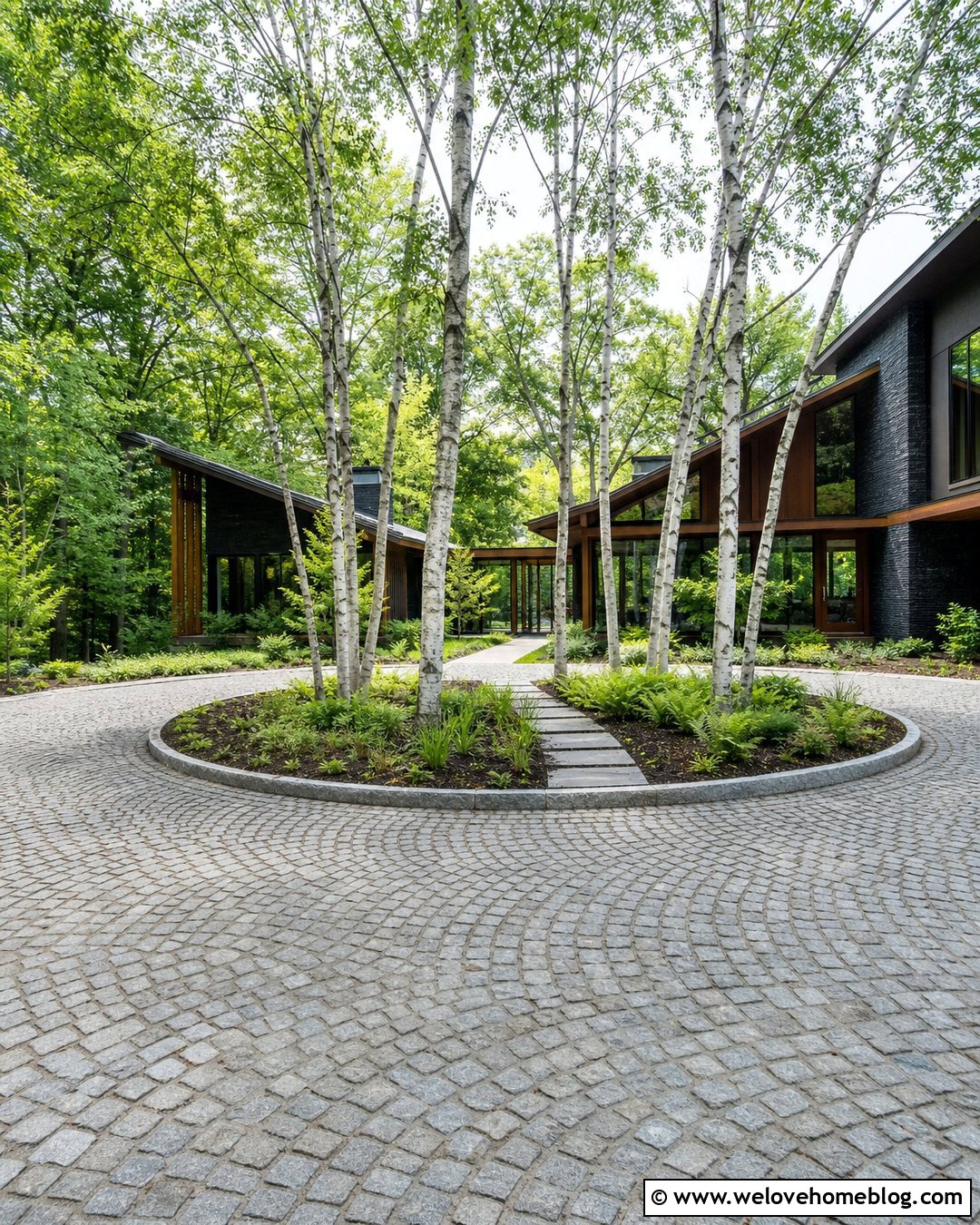
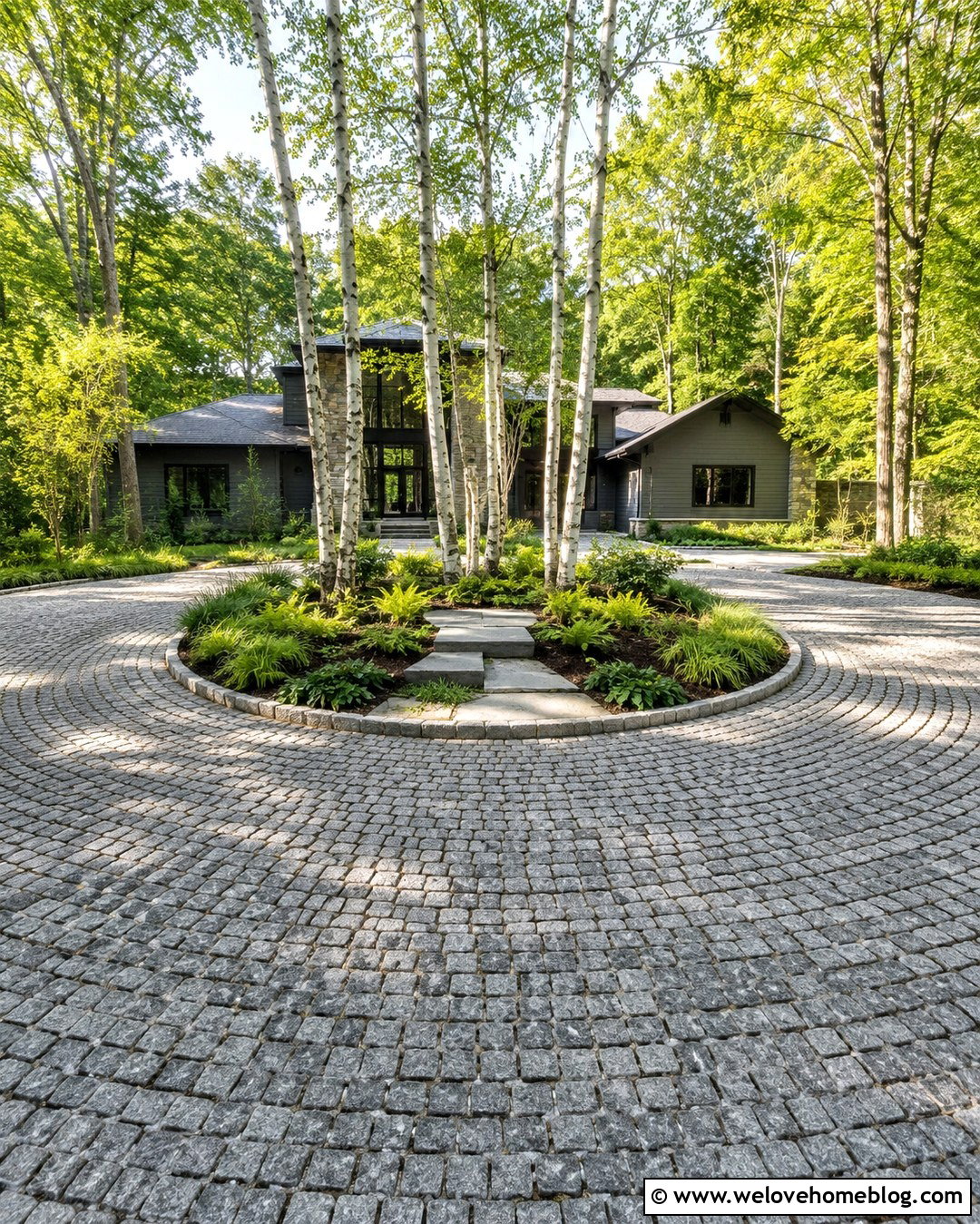
Clusters of birch can soften a circular driveway without hiding its practical turning layout. Create the drive with small gray cobblestones laid in a fan pattern and use a low granite curb around the central island. Plant several birches as an airy group within the island rather than arranging individual trunks at equal intervals. Complete the bed with ferns, shade-tolerant ground cover, ornamental grasses, and a broad mulch layer. Additional birch clusters can appear near the outer curve if the yard provides enough growing room. Their light trunks contrast beautifully with dark pavement and a contemporary woodland home. Keep the island planting low near vehicle sightlines. A simple walkway crossing the outer border should remain clearly visible, giving visitors a direct and comfortable route to the front door.
10. Olive Tree Driveway Border
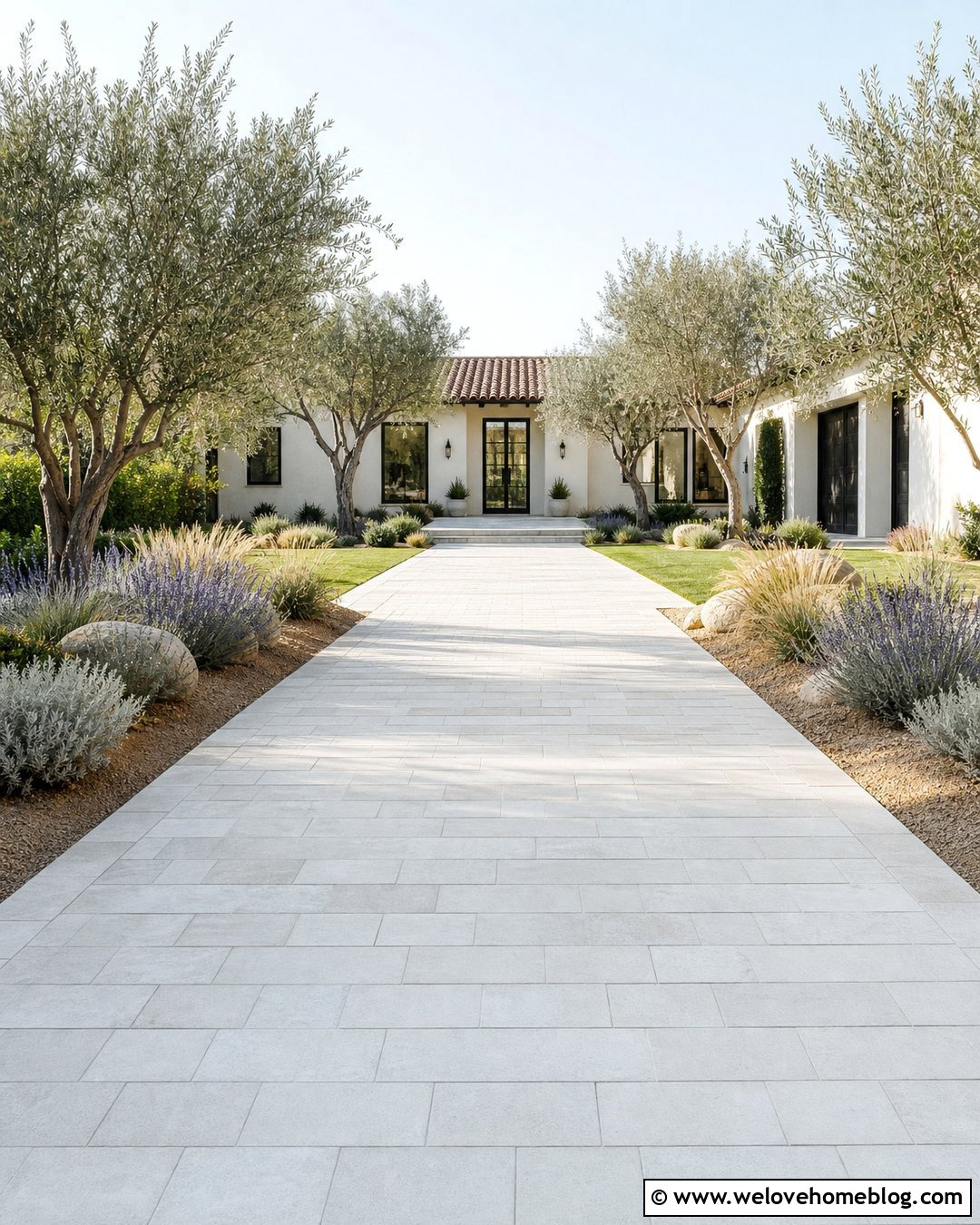
A warm, dry landscape can support an elegant olive tree border when the climate and local conditions are suitable. Pair pale limestone-look concrete pavers with straight, neatly defined edges and large beds of decomposed granite. Plant olive trees at relaxed intervals rather than forcing them into a rigid avenue. Lavender, rosemary-like shrubs, ornamental grasses, and low silver-leaved plants can visually connect the trees to the driveway. A stucco house with a tile roof completes the Mediterranean influence, but the layout should remain practical for a US residential setting. Use drip irrigation within the planting areas and keep wet soil away from the pavement base. The muted green foliage, light pavers, and warm gravel create a bright entrance that feels cohesive, water-conscious, and welcoming instead of overly formal.
11. Magnolia Trees Beside A Brick Driveway
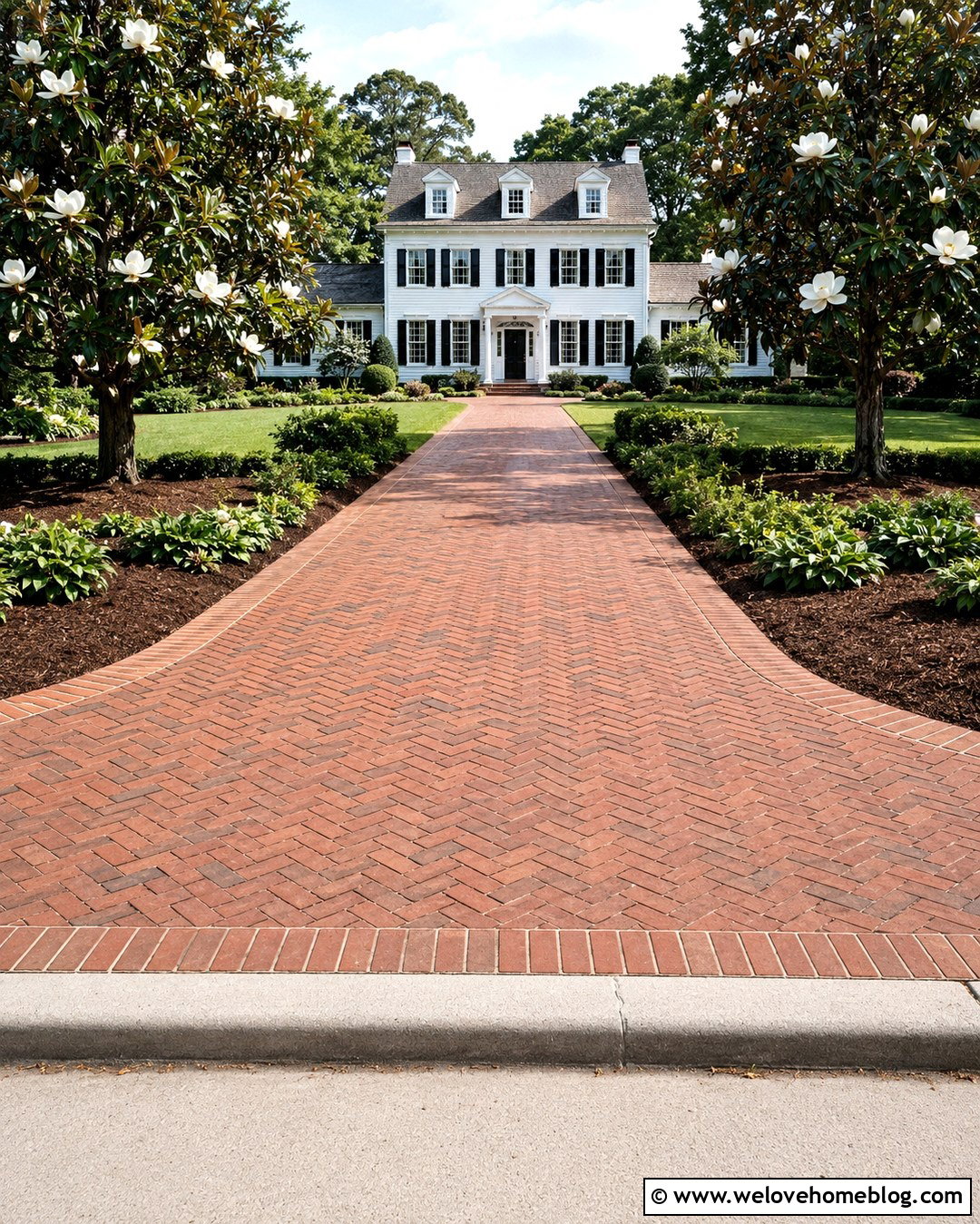
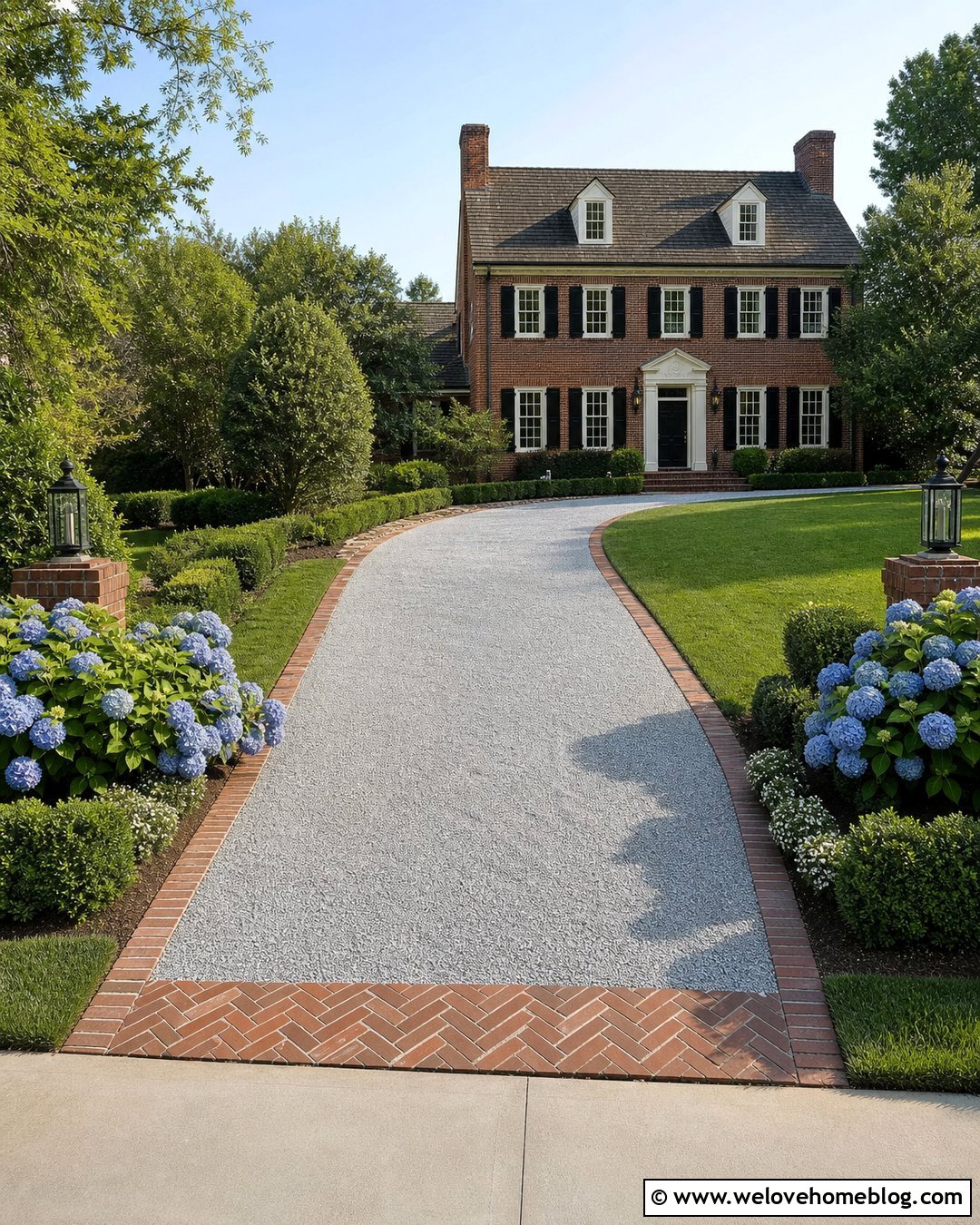
A brick driveway and magnolia planting create a traditional entrance with strong color and texture. Lay clay brick pavers in a herringbone pattern, then define the edges with a soldier-course brick border. Plant magnolias in wide curved beds rather than narrow strips immediately beside the paving. Their mature canopy size should guide both placement and variety selection. Use evergreen shrubs, shade-tolerant perennials, and a clean mulch layer beneath the trees to form a finished landscape. White flowering varieties look especially striking against red brick, although suitability varies by region. This complete design works well with Colonial, Georgian, and Southern-style homes. Regularly remove fallen plant material from the driving surface, keep lower branches clear of vehicles, and preserve an open view toward the street and front walkway.
12. Redbud Trees Along A Paver Driveway
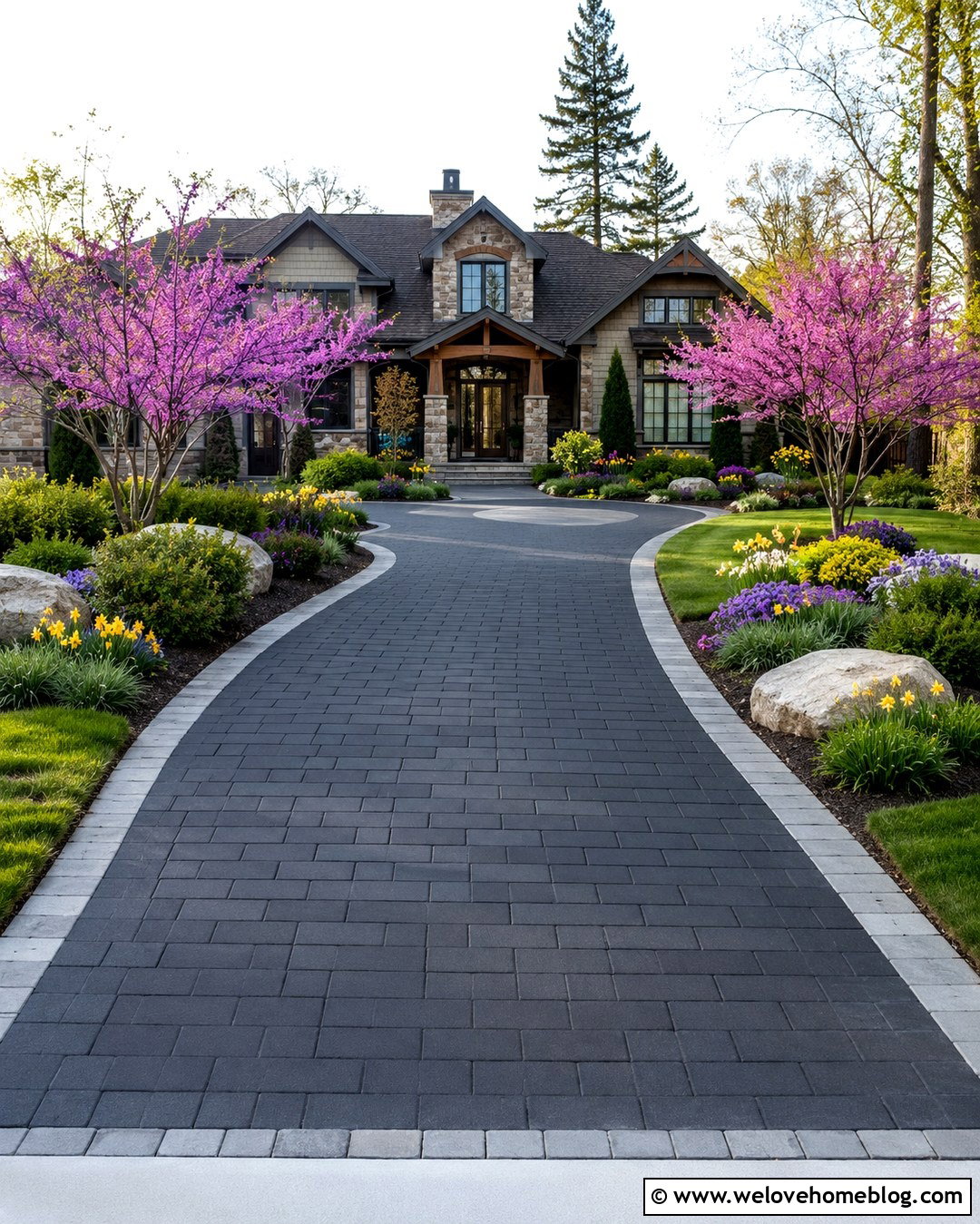
Redbuds can introduce spring color to a driveway without creating the scale of a massive shade-tree avenue. Begin with charcoal concrete pavers in a running-bond pattern and add a lighter gray paver ribbon along each side. Plant redbuds in broad asymmetrical beds that follow a gently curved driveway. Combine them with evergreen shrubs, native grasses, bulbs, and flowering perennials for interest after the trees finish blooming. Several trees placed in loose groups often look more natural than a perfectly matched row. Their placement should leave room for mature branching while keeping the pavement and walkway clear. This design suits Craftsman houses, stone-front homes, and updated ranch properties. The dark driveway makes flowers and fresh foliage stand out, while the layered beds provide year-round structure and soften the hardscape.
13. Dogwood Trees Along A Concrete Driveway
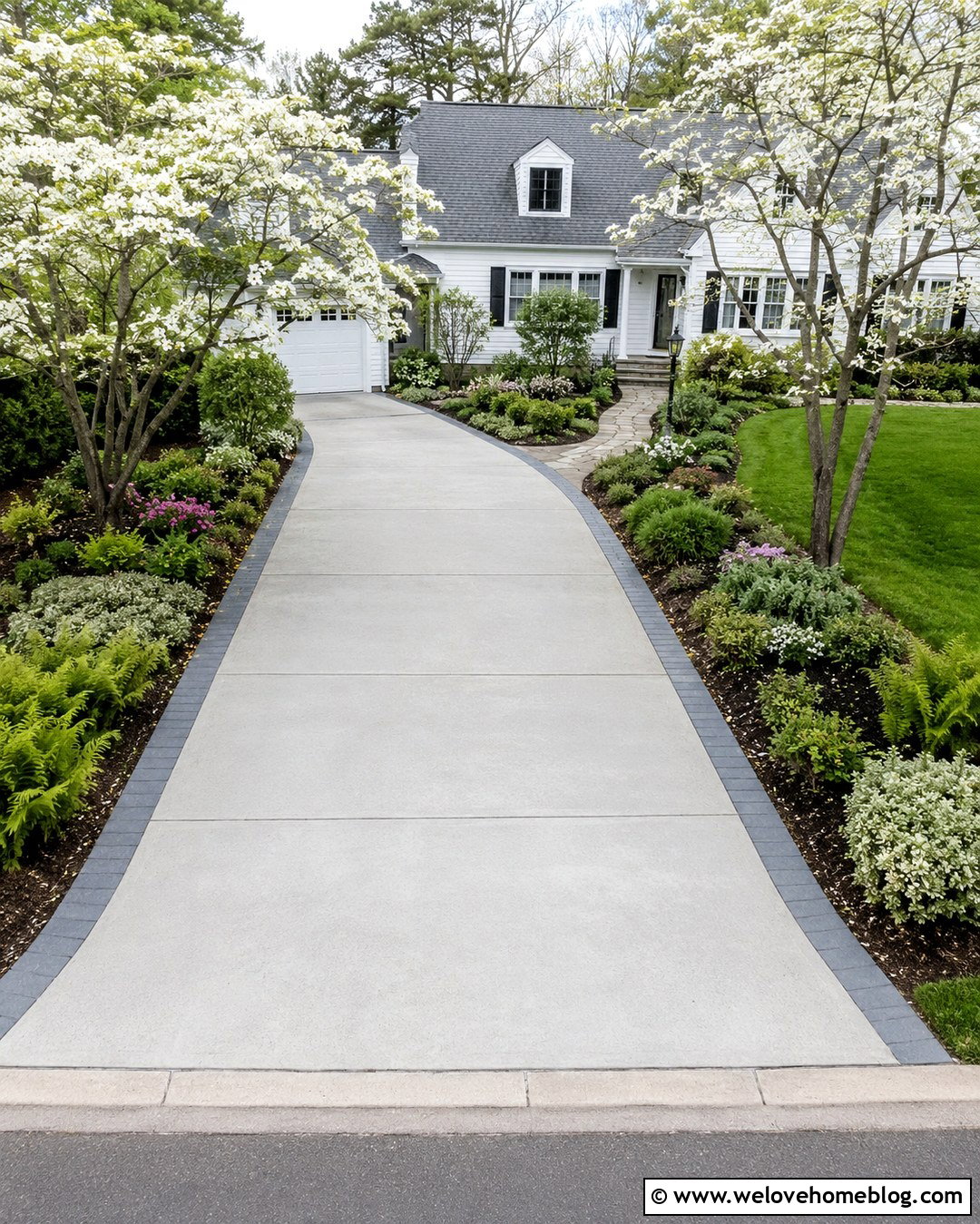
A clean concrete driveway becomes more inviting when dogwoods are integrated into layered planting beds. Use light-gray poured concrete with narrow control joints and a dark charcoal paver border. Place the trees in wide beds where they receive conditions appropriate for the selected species and have room to reach mature size. Surround them with evergreen shrubs, ferns, ground covers, and restrained groups of seasonal flowers. A staggered arrangement feels natural and avoids creating a tunnel along a short suburban driveway. Repeat one or two underplanting varieties to keep the design organized. This combination works beautifully with a white Colonial or Cape Cod house. The simple pavement provides a neutral background, while spring flowers, summer foliage, autumn color, and branching silhouettes keep the driveway landscape interesting throughout the year.
14. Palm Trees Along A Driveway
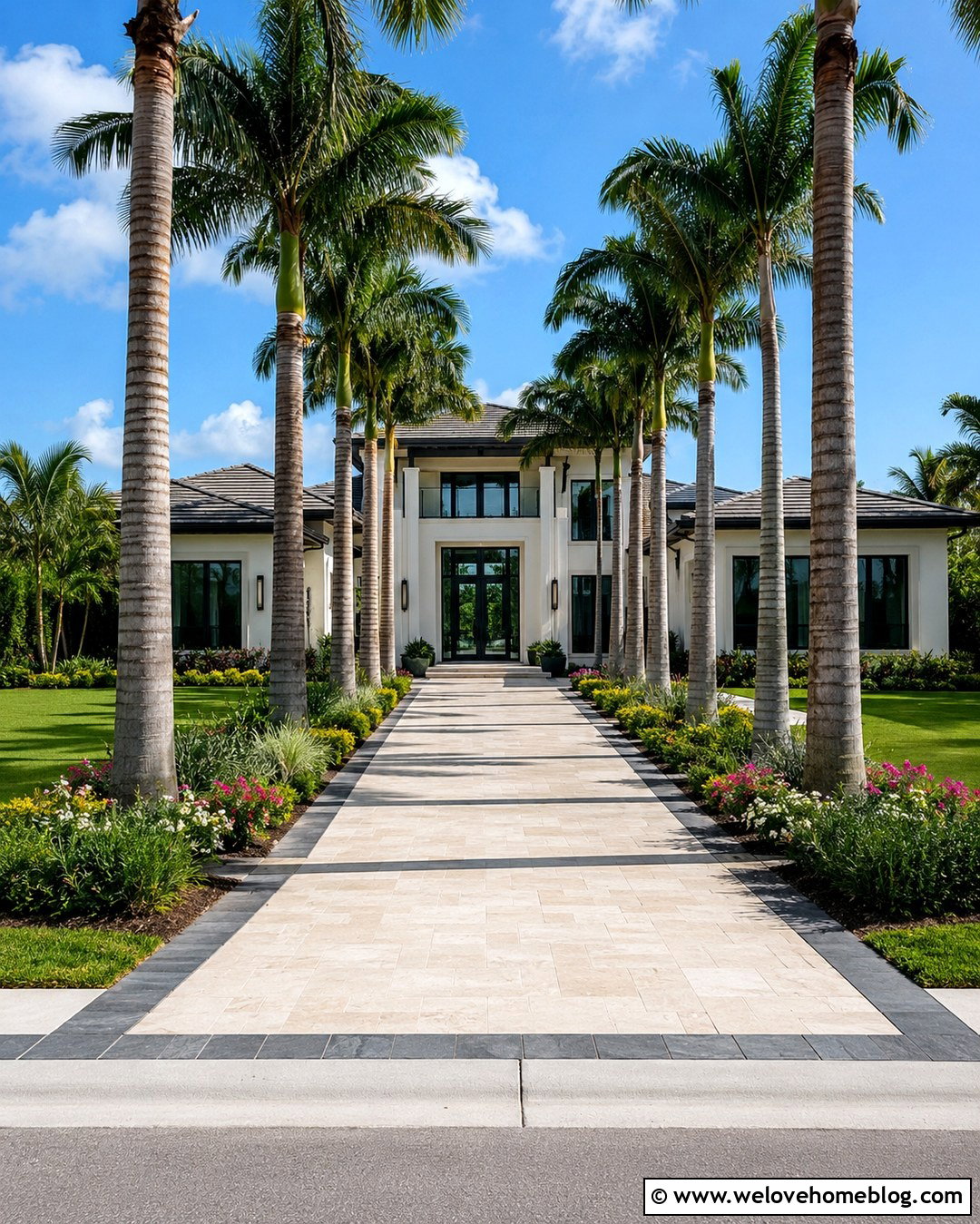
Tall palms can turn a warm-climate driveway into a distinctive approach, but spacing and scale determine whether the result feels impressive or cramped. Use a wide straight driveway made from cream-colored concrete pavers with a textured finish. Add darker paver bands at the edges to define the driving area. Plant matching palms in deep lawn strips or raised beds beyond those borders, leaving the trunks visible and uncluttered. Low tropical shrubs, grasses, and colorful ground covers can provide a second planting layer without obstructing the driveway. This layout suits coastal modern houses, Florida ranch homes, and light stucco architecture. Avoid placing large fronds over roofs, utilities, or frequently used parking spaces. The repeated trunks create rhythm, while the bright pavers keep the overall entrance open and crisp.
15. Oak Trees Along A Long Driveway
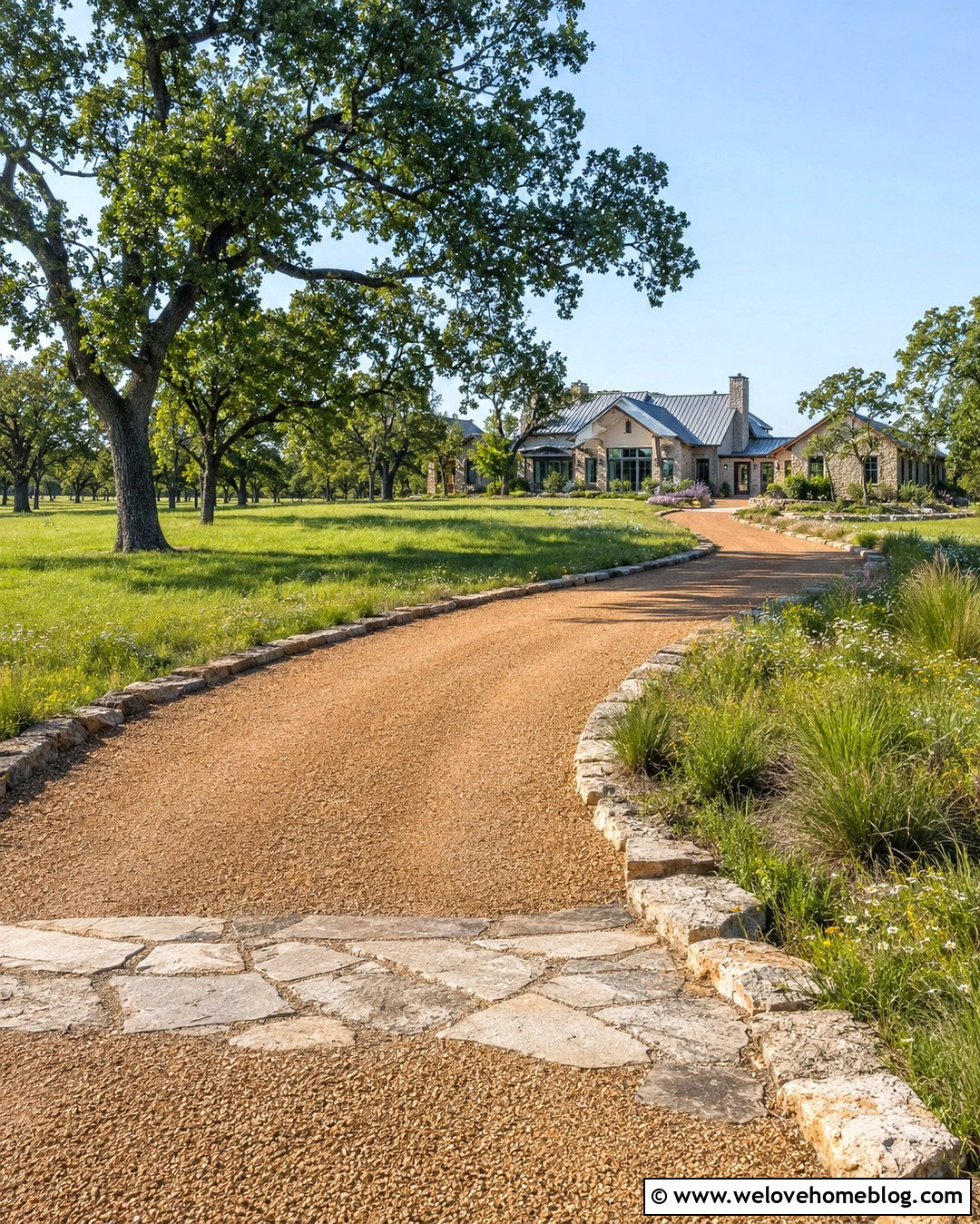
Few driveway plantings feel more established than a long approach framed by mature oaks. Because these trees eventually require substantial canopy and root space, this design is best for large country properties. Use warm brown crushed gravel for a broad, gently curving driveway, contained by flush steel edging or rough-cut stone. Plant suitable oak species in expansive lawn areas well beyond the gravel edge. Space them according to mature dimensions rather than the immediate effect of young nursery trees. Native meadow planting between selected trees can reduce the need for continuous lawn and create a relaxed estate setting. The road should curve around planting zones instead of passing close to trunks. A traditional farmhouse or country house at the end completes this strong, natural, and long-lasting landscape composition.
16. Fruit Trees Beside A Farmhouse Driveway
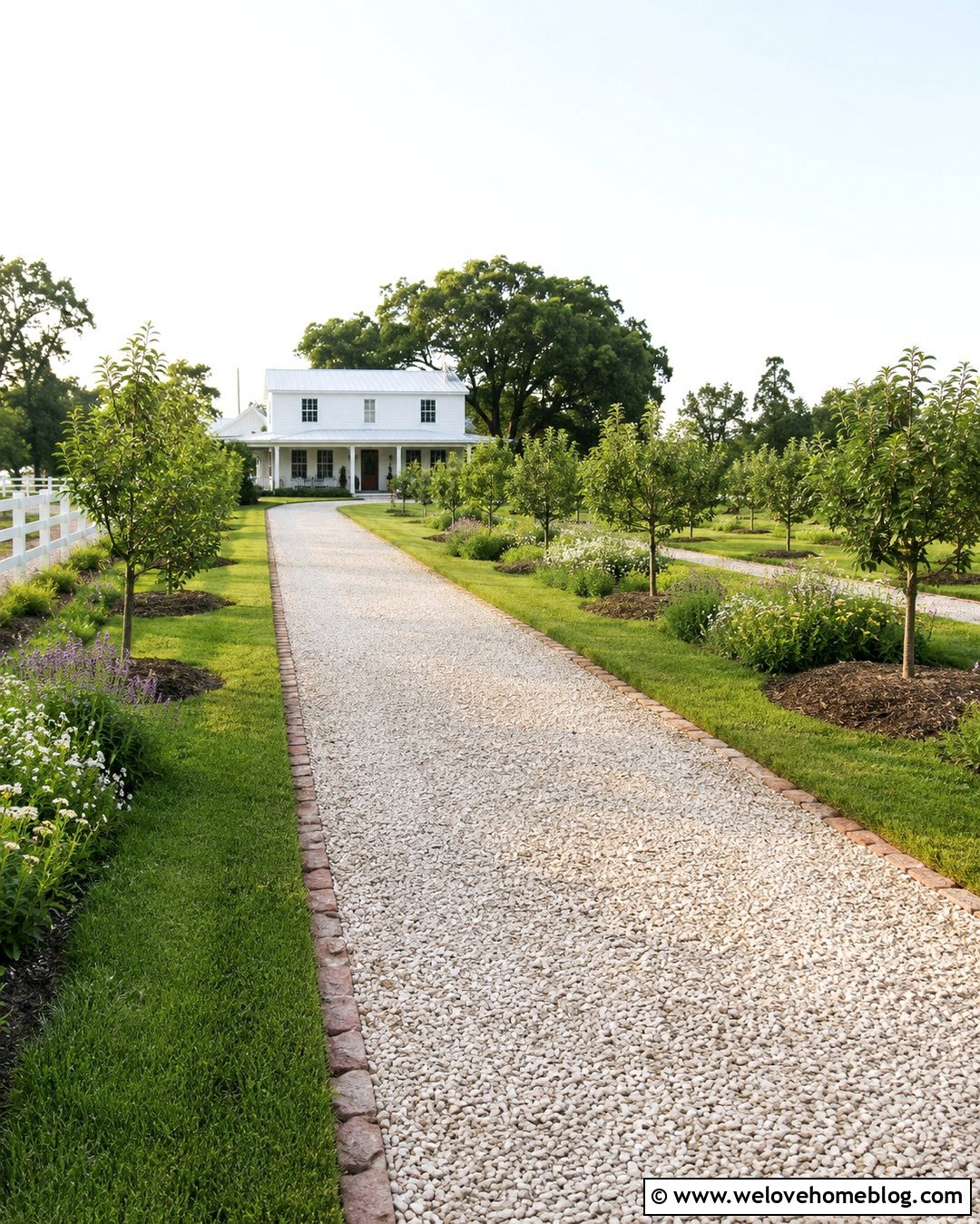
Fruit trees can complement a farmhouse driveway when they are planted in accessible orchard beds rather than directly over parking areas. Pair a pale pea gravel driveway with reclaimed brick edging and a straight approach leading toward a porch. Arrange small fruit trees in informal rows beyond strips of lawn or flowering meadow. This setback helps keep falling fruit and routine maintenance away from the primary driving surface. Add simple mulch rings, low herbs, pollinator-friendly flowers, and a gravel walkway for harvesting access. Choose tree types that perform well in your growing region and consider the pruning, watering, and cleanup they require. White fencing can visually connect the miniature orchard to the farmhouse. The finished driveway feels productive and welcoming while remaining organized enough for everyday use.
17. Japanese Maple Near A Driveway
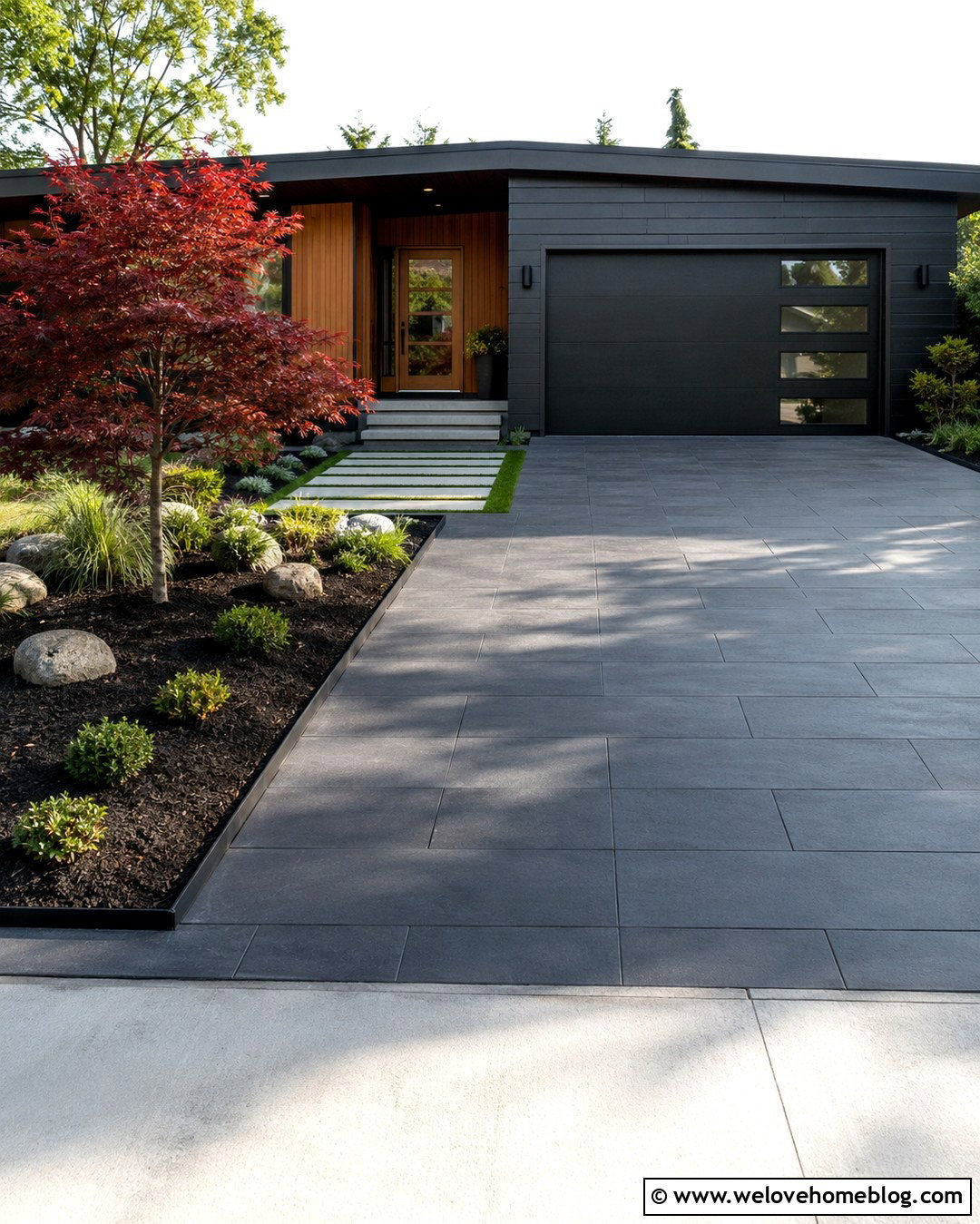
One carefully positioned Japanese maple can become the focal point of a compact driveway landscape. Use large-format charcoal porcelain pavers for a short, straight driveway leading to a modern or midcentury home. Create a wide offset planting bed near the house, where the tree can be admired without interfering with vehicle doors or the street view. Frame the bed with a flush steel edge, dark mulch, rounded stones, evergreen ground cover, and a few structured grasses. Select a cultivar suited to the available space, local climate, light, and wind exposure. Rather than repeating the tree on both sides, balance it with lower shrubs across the driveway. The asymmetrical arrangement highlights the tree’s shape while keeping the overall entrance clean, spacious, and easy to maintain.
18. Mixed Trees Along A Driveway
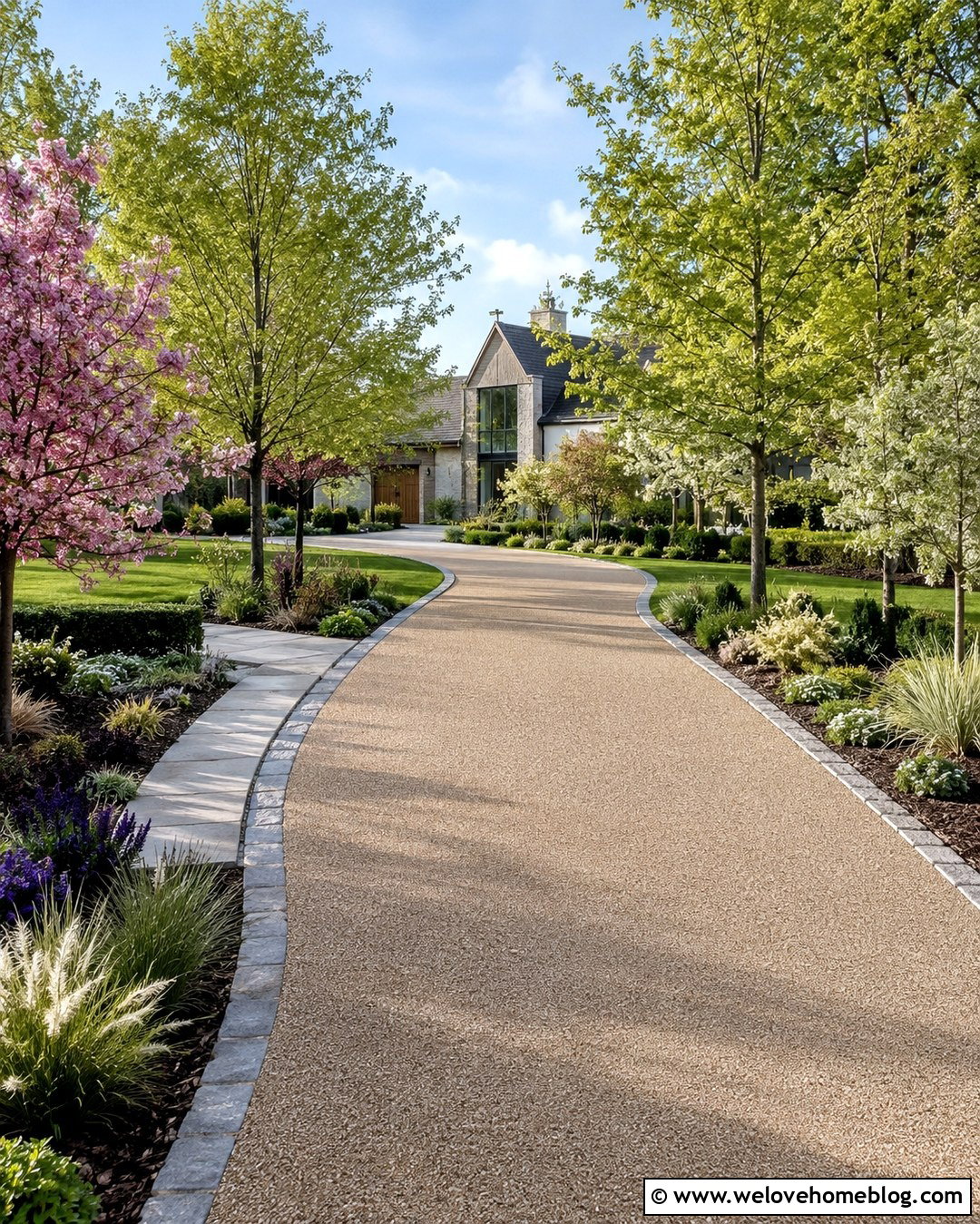
Using several tree types can give a long driveway changing color, texture, and canopy height throughout the year. Start with a buff-colored resin-bound gravel surface and define the edges with narrow granite setts. Arrange compatible trees in loose groups on both sides, combining carefully selected canopy trees with smaller flowering or ornamental trees. Repetition is still important, so use each type more than once instead of adding many unrelated specimens. Connect the groups with broad beds of shrubs, grasses, ground covers, and seasonal perennials. This layered plan works well around contemporary country homes because it feels natural without becoming untidy. Check every tree’s mature scale and growing needs before finalizing placement. Keeping the street entrance and tight curves open will preserve visibility and simplify vehicle movement.
19. Circular Driveway Tree Island
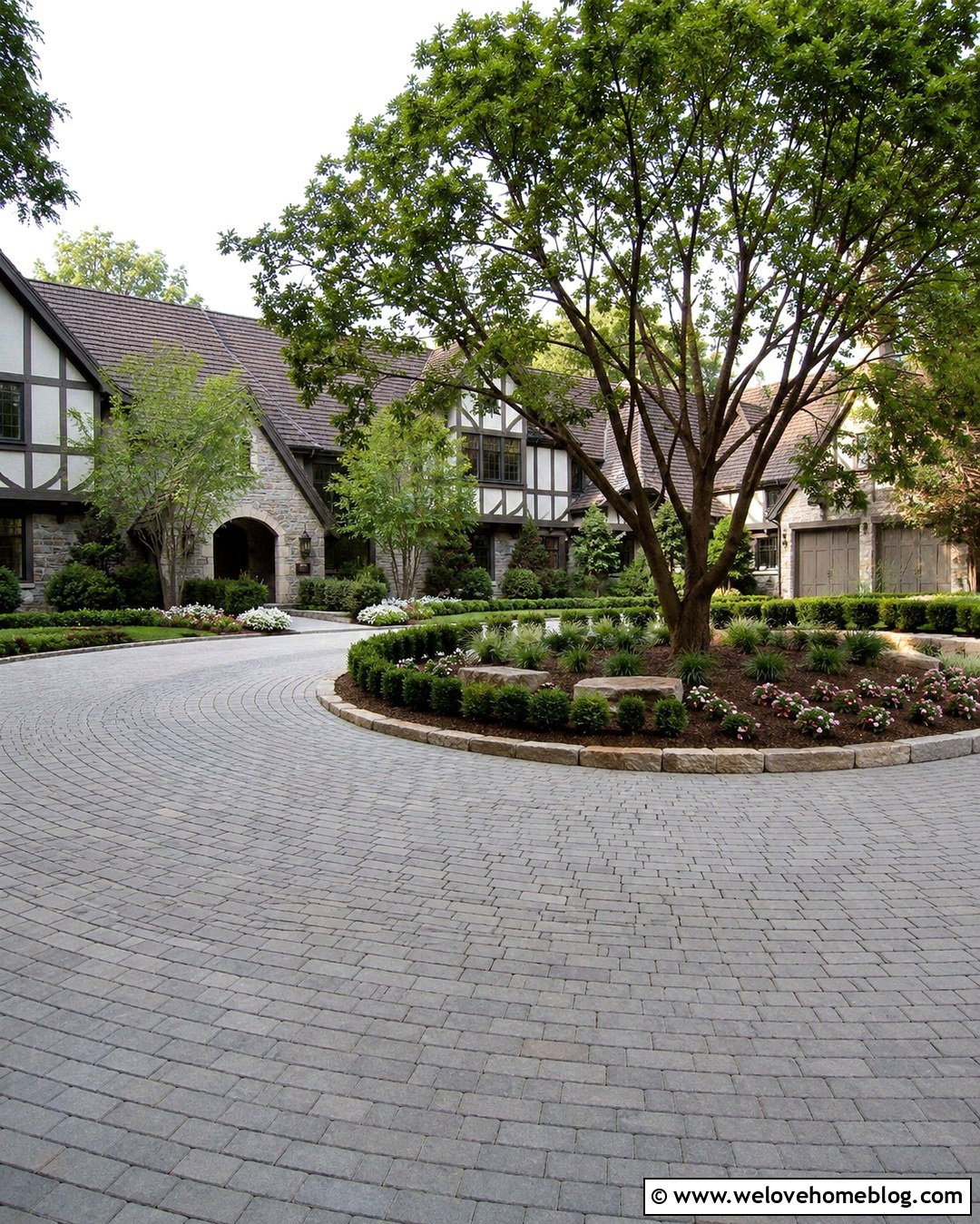
A tree-planted center island gives a circular driveway an obvious focal point while reinforcing the flow of traffic. Construct the driveway from warm gray interlocking concrete pavers laid in a curved pattern. Edge the island with a raised natural stone curb, then place one broad-canopied ornamental tree slightly off center. Surround it with low shrubs, ornamental grasses, flowering ground cover, and mulch, keeping plants shortest beside the driveway. A narrow stepping-stone path can provide maintenance access without dividing the bed visually. Repeat a few island plants in beds near the house so the landscape feels connected. This arrangement suits large ranch, Tudor, and traditional suburban homes. Landscape lighting may highlight the trunk, but fixtures should remain low and should not distract drivers or overpower the entrance.
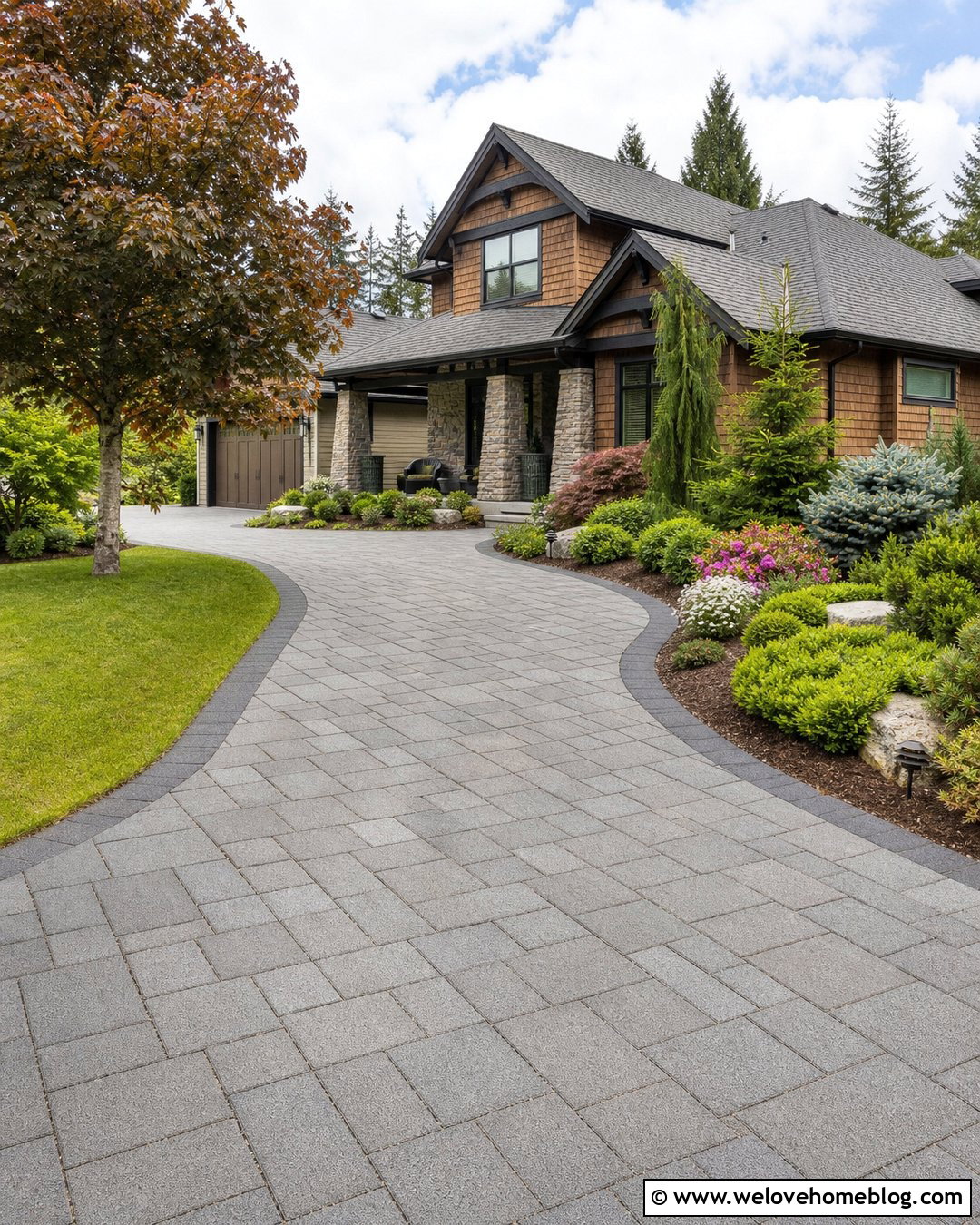
20. Driveway Entrance Trees With Gate
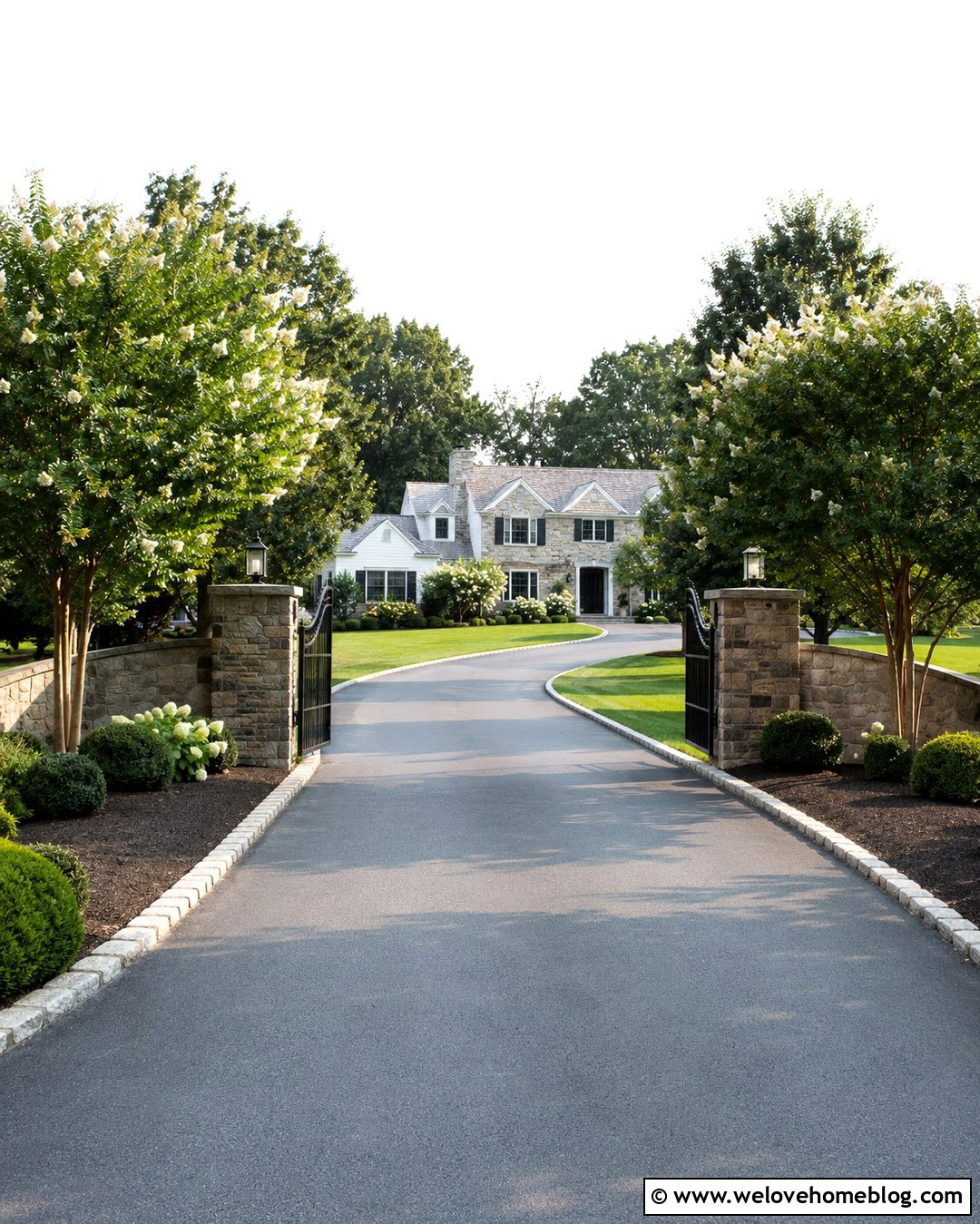
Matching trees can frame a driveway gate and make the property entrance visible from the street. Use a dark gray asphalt driveway with a curved approach, granite cobblestone edging, and stone gate pillars. Plant one tree beyond each pillar in large mulched beds, positioning trunks where mature branches will not obstruct the gate, address sign, lighting, or driver sightlines. Low evergreen shrubs and ornamental grasses can connect the trees to the pillars without hiding architectural details. Repeat the same stone around nearby beds for a unified finish. Before planting, account for underground utilities, overhead lines, mature root spread, and the space needed for vehicles to wait safely. () This complete design creates an attractive transition from the public street to a private home.
Conclusion:
Successful 20 Driveway Tree Planting Ideas combine attractive trees with practical spacing, durable surfaces, clear borders, and layered landscaping. Start by measuring the available soil area and identifying utilities, drainage patterns, sunlight, and winter salt exposure. Then choose trees for their mature size and local growing requirements, not simply their appearance at the nursery. Allow safe space around pavement, gates, walkways, and parking areas. A formal row can strengthen a long entrance, while clusters and single focal trees often suit smaller yards. Whether you prefer flowering ornamentals, native trees, evergreens, or a mixed canopy, designing the entire driveway as one landscape will produce better curb appeal and healthier planting.

Related posts:
Leave a Reply