
Magnolia trees can turn an ordinary driveway into a graceful, welcoming approach filled with structure, shade, and seasonal color. The best **Magnolia Tree Driveway Ideas** treat the driveway and landscape as one complete design. The paving material, driveway shape, tree placement, borders, lighting, and house architecture should all feel connected. Large Southern magnolias can anchor spacious properties, while compact varieties such as Little Gem, star, and saucer magnolias fit smaller front yards. Proper spacing is especially important because the canopy and root system need room to mature without interfering with pavement, visibility, or garage access. Whether your home is traditional, modern, rustic, or coastal, the following complete driveway looks offer practical inspiration. Explore these **20 Magnolia Tree Driveway Ideas**.
1. Southern Magnolia Gravel Driveway
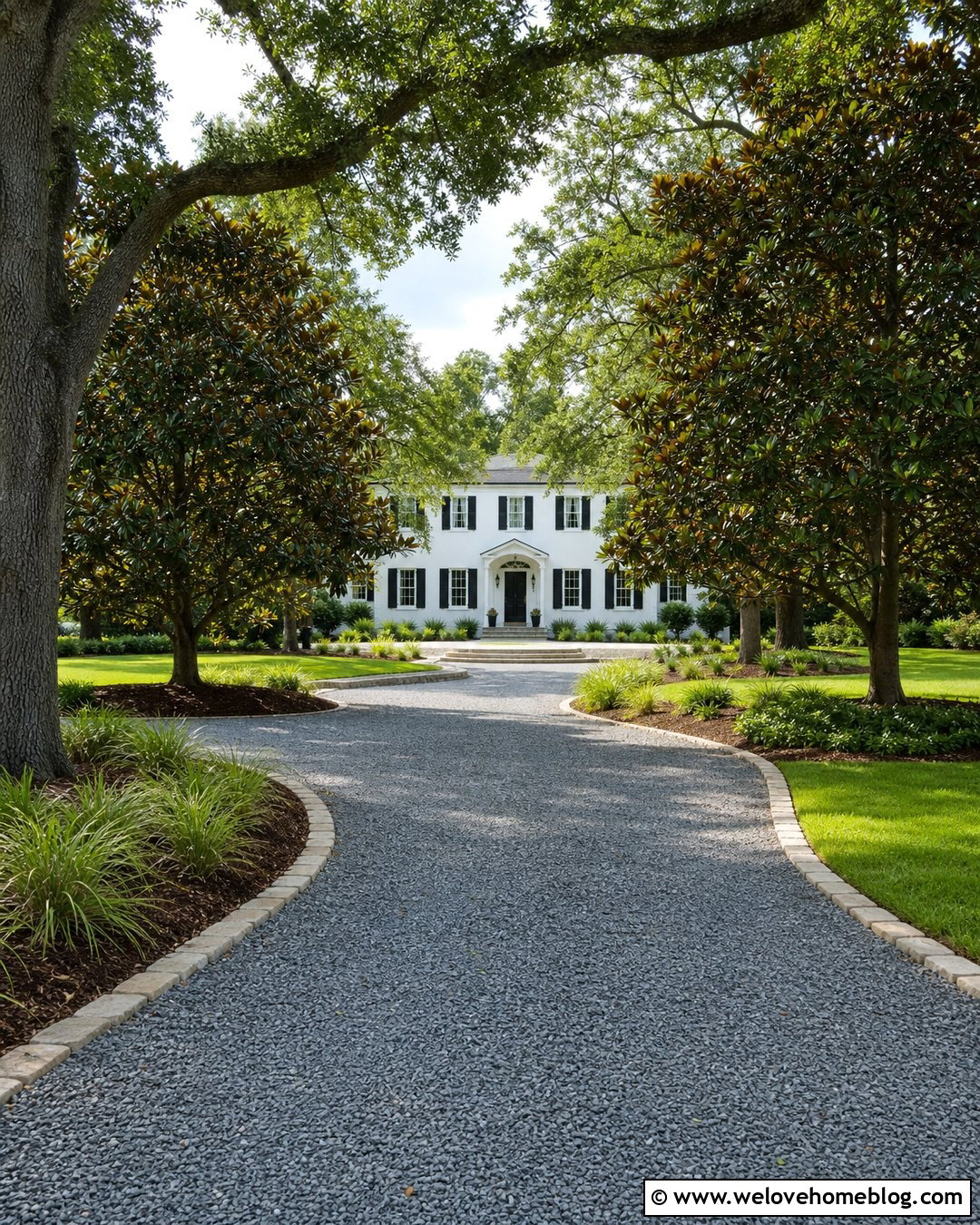
A broad gravel driveway feels especially natural beneath the glossy foliage of mature Southern magnolias. Use compacted gray gravel with fines so the surface remains firm and does not scatter as easily. A gently curved layout lets the trees frame the approach without creating a rigid tunnel. Edge the gravel with warm cobblestones to contain loose material and create a polished transition into the lawn. Wide mulched planting beds around the magnolias protect the trunk area while making fallen leaves and flower petals less noticeable. Add shade-tolerant ground covers near the outer canopy and low ornamental grasses closer to the street. This complete look works beautifully with a traditional Southern, Georgian, or painted-brick home on a spacious lot.
2. Little Gem Magnolia Concrete Driveway
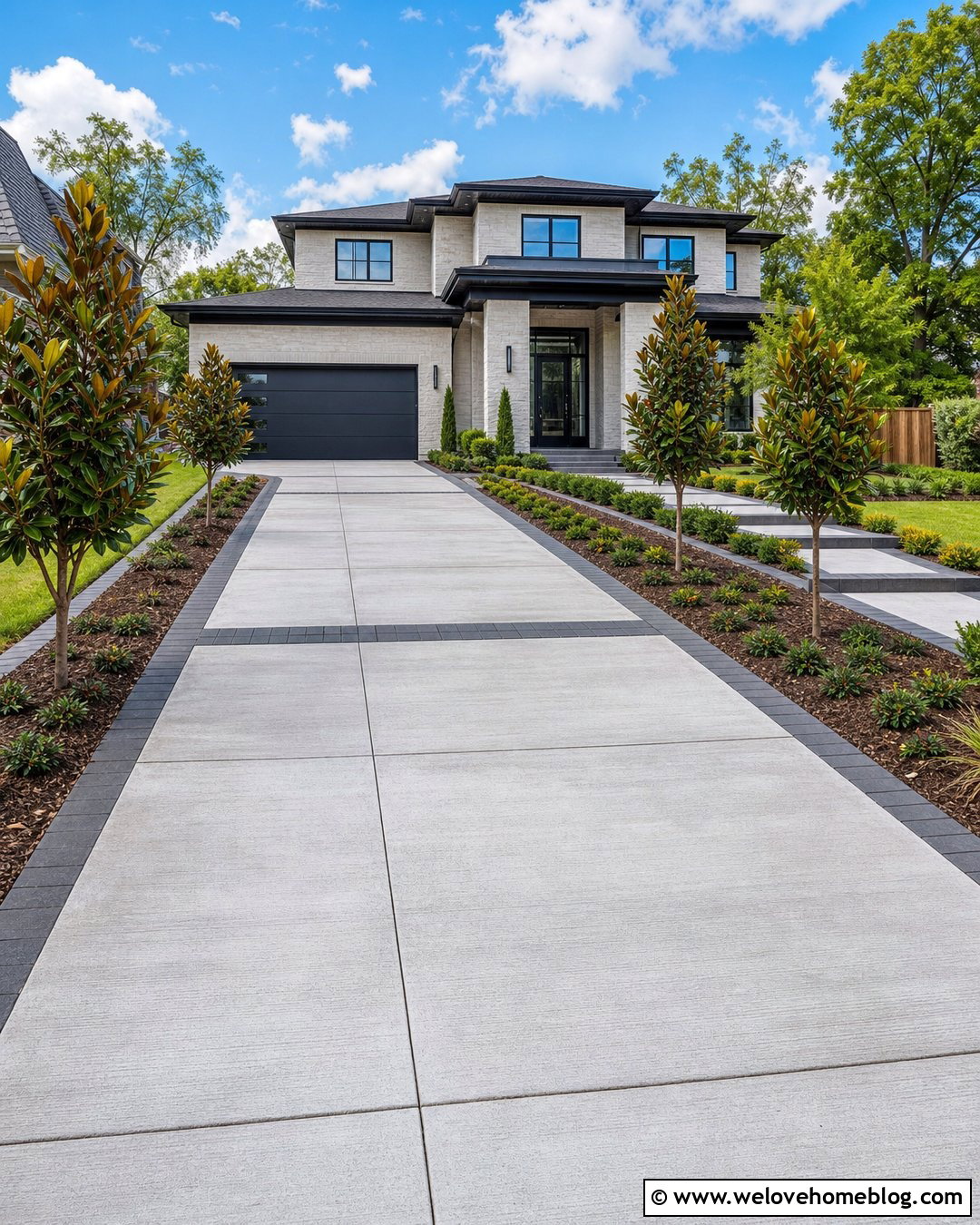
Could a smaller front yard still have the refined presence of magnolias? A straight, light-gray poured concrete driveway lined with Little Gem magnolias offers a practical solution. These compact evergreen trees provide glossy foliage and creamy flowers without visually overwhelming a modest property. Plant them in rectangular beds set back from the pavement, allowing enough space for their mature growth. Dark charcoal paver ribbons along both sides sharpen the driveway outline and complement a modern white or gray house. Beneath the trees, use pine bark mulch with simple groupings of liriope, dwarf mondo grass, or another locally suitable ground cover. Keep the planting low near the sidewalk and street so drivers retain clear visibility when entering or leaving the property.
3. Saucer Magnolia Paver Driveway
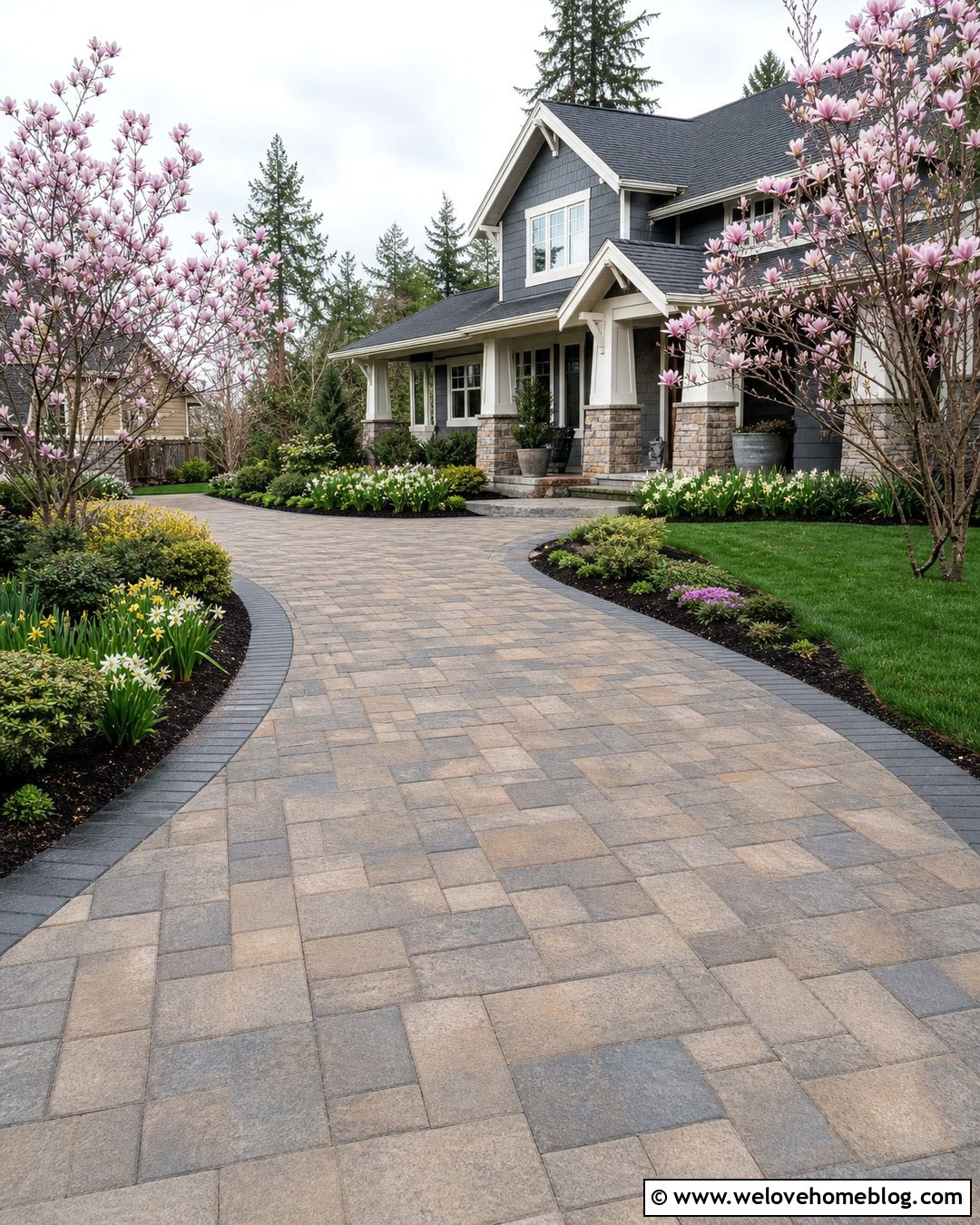
Soft pink saucer magnolia flowers create a striking spring backdrop for a warm paver driveway. Choose blended tan and charcoal concrete pavers in a running-bond pattern, then arrange the driveway in a gentle curve toward a Craftsman home. A contrasting charcoal soldier-course border gives the paving a finished edge while helping define nearby planting beds. Place one saucer magnolia on each side of the wider entrance, far enough from the pavement to accommodate mature branching. Underplant the trees with evergreen shrubs, spring bulbs, and a clean layer of dark mulch. Because saucer magnolias lose their leaves, nearby evergreen plants help preserve structure during winter. The combination feels colorful and approachable without making the driveway landscaping appear overly formal or crowded.
4. Star Magnolia Brick Driveway
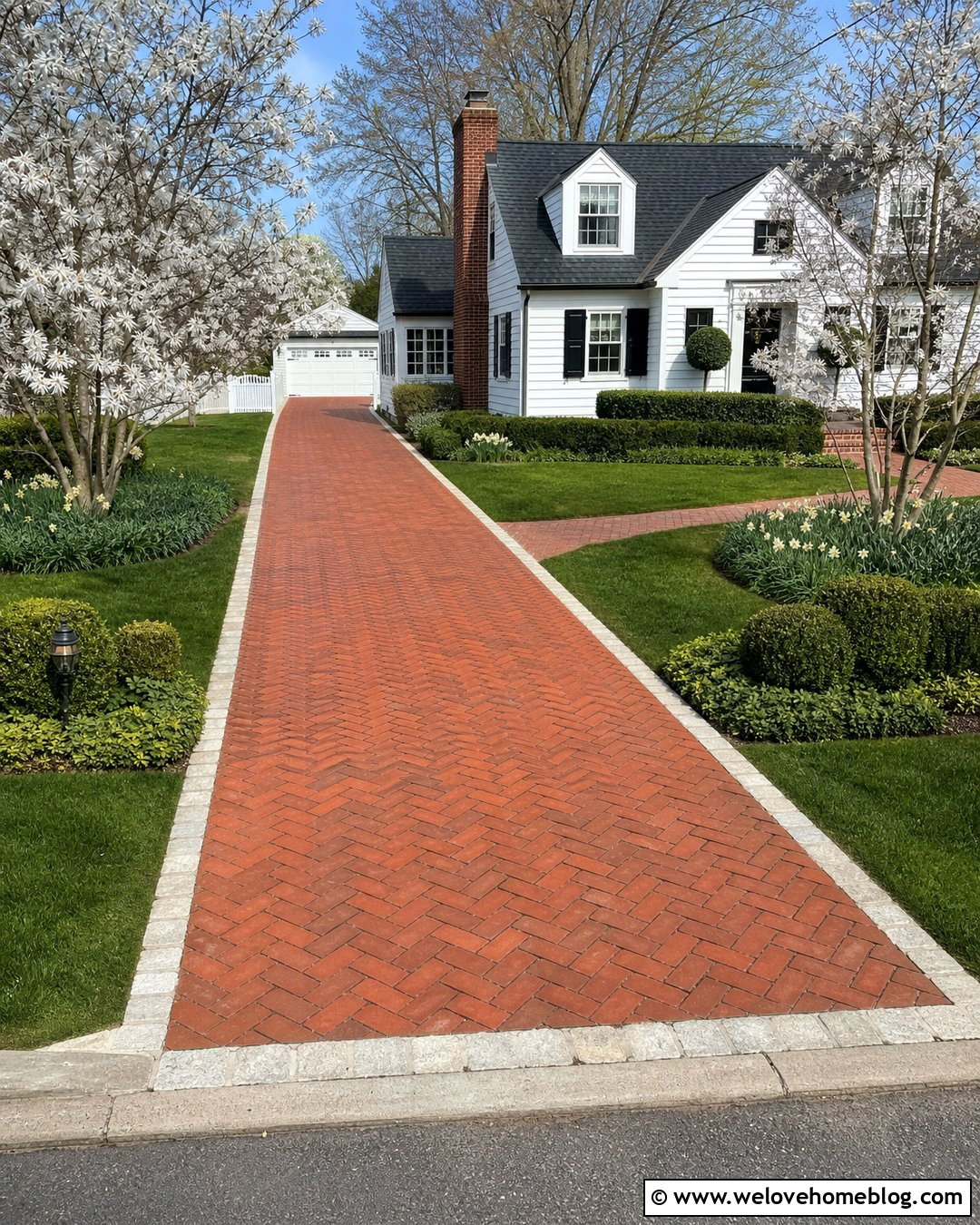
White star magnolia flowers pair beautifully with the rich color of a classic brick driveway. For a balanced look, use red clay brick pavers in a herringbone pattern with a straight layout leading to a Cape Cod home. Position compact star magnolias in matching lawn islands near the driveway entrance, where their branching forms can be appreciated from the curb. A narrow limestone border separates the bricks from low beds filled with boxwood, daffodils, and soft green ground cover. Keep the plants beneath each tree simple so they do not compete with the spring flowers. This design works particularly well where the house has white siding, dark shutters, and brick details. Regular sweeping will keep fallen petals and small leaves from collecting between the pavers.
5. Magnolia-Lined Long Driveway
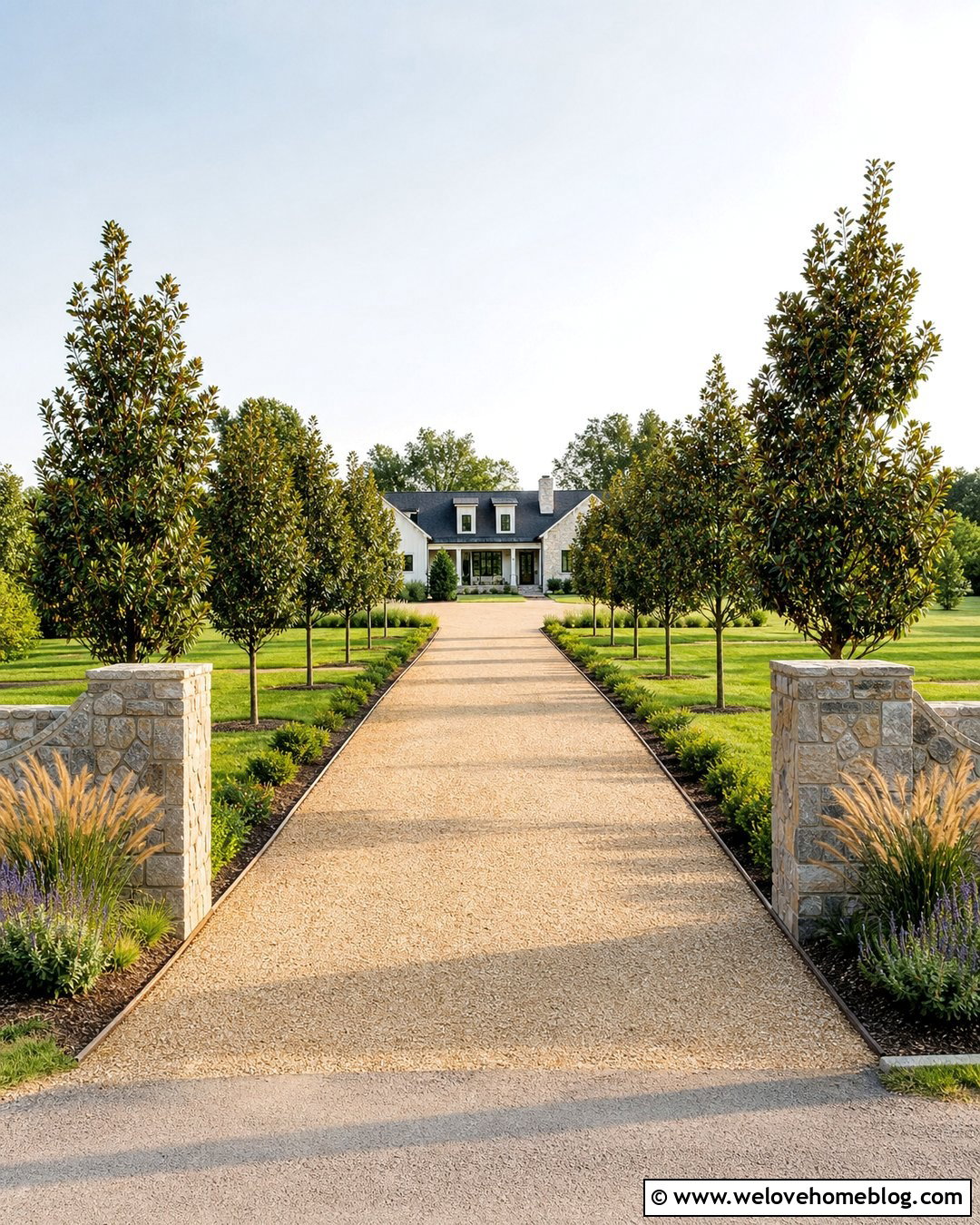
A long driveway becomes a memorable arrival when magnolias repeat along both sides at measured intervals. Use warm beige crushed stone for a relaxed country surface, with steel edging that keeps the lines clean without drawing attention. Alternating compact evergreen magnolias with open stretches of lawn prevents the route from feeling dark or enclosed. The trees should be positioned according to their mature canopy width rather than their size at planting. Finish the entrance with low natural-stone walls, simple pillars, and layered beds of ornamental grass and flowering perennials. Near the house, widen the driveway into a practical parking court edged with the same gravel. This rhythmic layout suits a country home, farmhouse, or large ranch property where the driveway can be viewed as part of the landscape.
6. Magnolia Circular Driveway
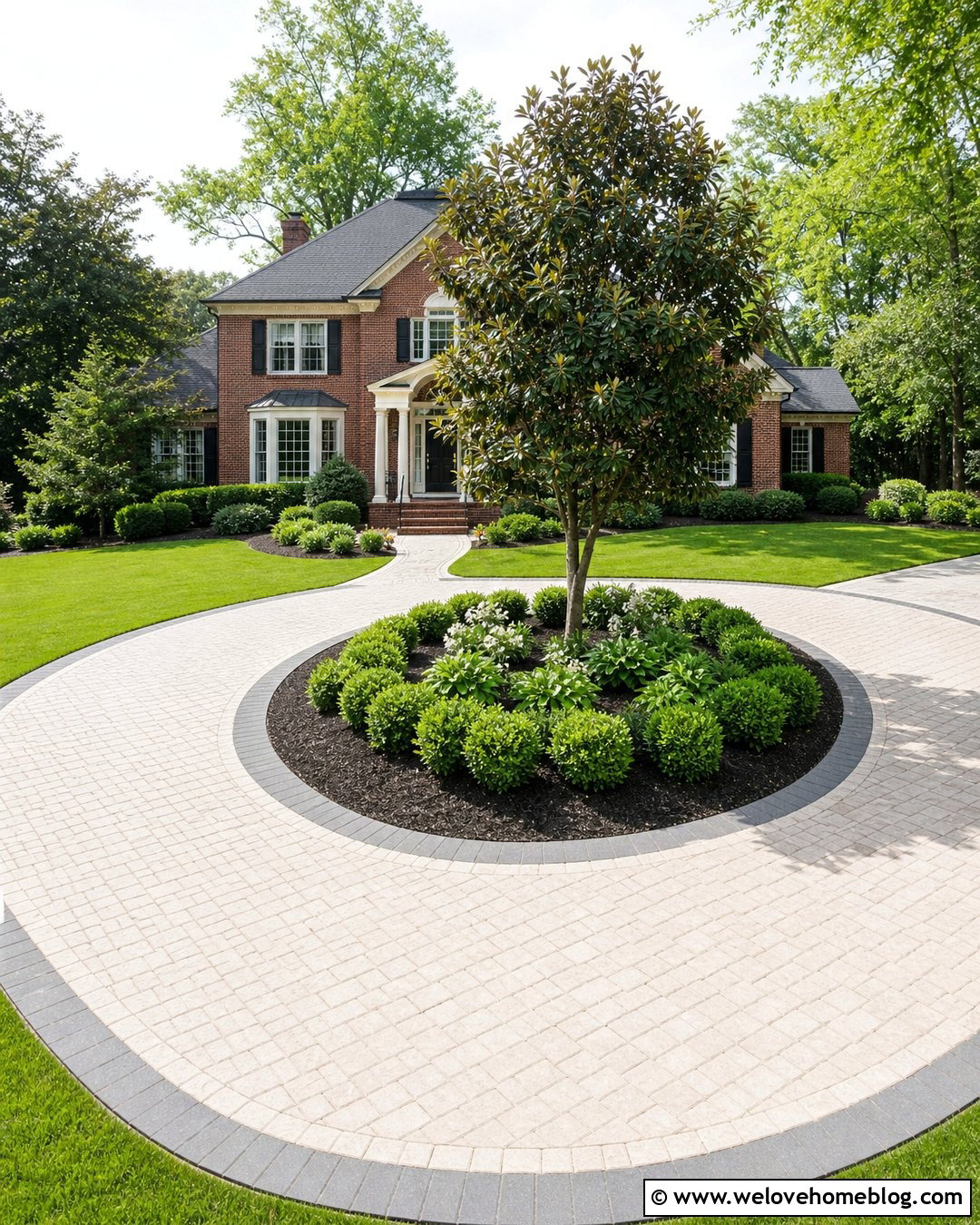
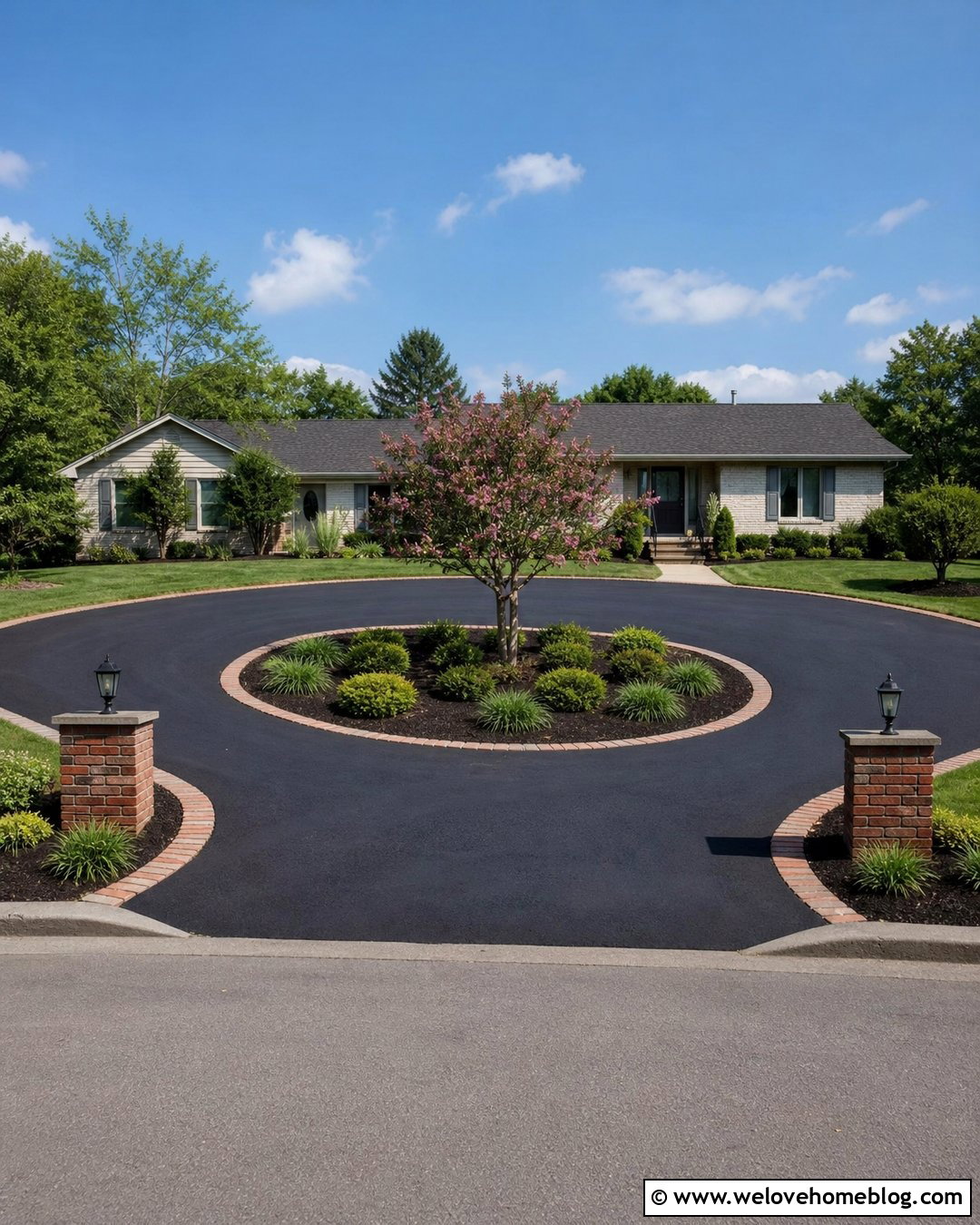
A circular driveway offers an ideal place to feature a magnolia as a central landscape focal point. Build the drive with cream-colored concrete pavers arranged around a generous planted island. A mature-size-appropriate magnolia can sit slightly off-center, leaving room for a curved walkway and layered planting beneath the canopy. Surround the tree with dark mulch, low evergreen shrubs, and sweeping groups of shade-tolerant perennials. Use a charcoal paver border around both sides of the driveway to reinforce the circular shape. The island should remain open enough to preserve visibility across the drive, especially near the entrance. This complete design gives a colonial or traditional brick home a stately appearance while providing convenient vehicle movement, guest drop-off space, and a clear sense of arrival.
7. Magnolia Curved Asphalt Driveway
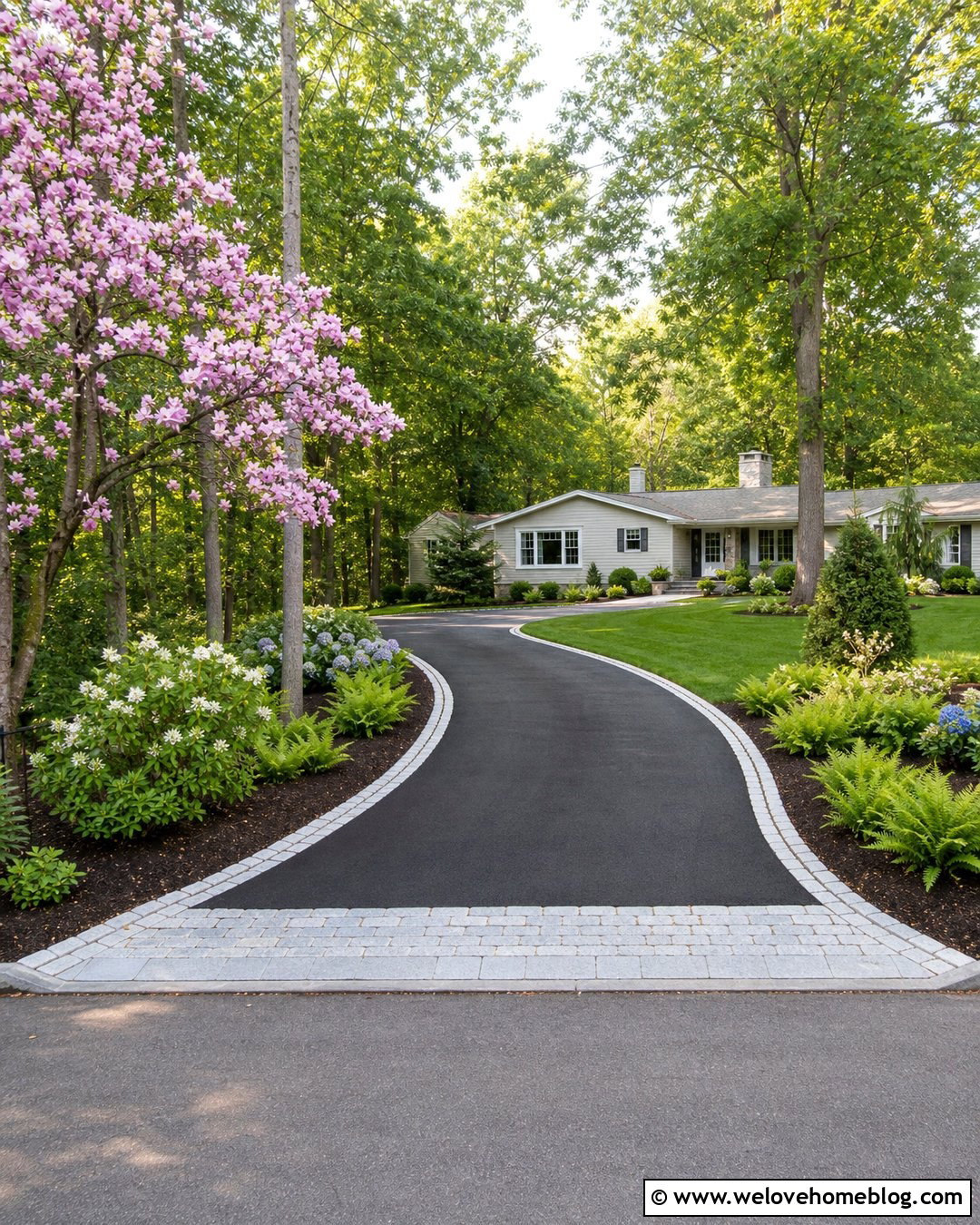
Black asphalt can look surprisingly elegant when softened by flowering magnolias and thoughtfully designed borders. Shape the driveway into a broad curve that reveals the house gradually rather than running directly from the street to the garage. Add a double row of light-gray granite setts along each edge to create contrast and contain the asphalt visually. Plant magnolias on the outside of the curve, where their canopies can mature without narrowing the driving area. Sweeping mulch beds filled with ferns, hydrangeas, and low evergreen shrubs connect the trees to the surrounding lawn. Keep branches pruned only as needed for safe clearance, avoiding unnecessary shaping. The dark surface, pale edging, and spring flowers create a complete driveway look suited to a wooded ranch or updated traditional home.
8. Magnolia Cobblestone Driveway
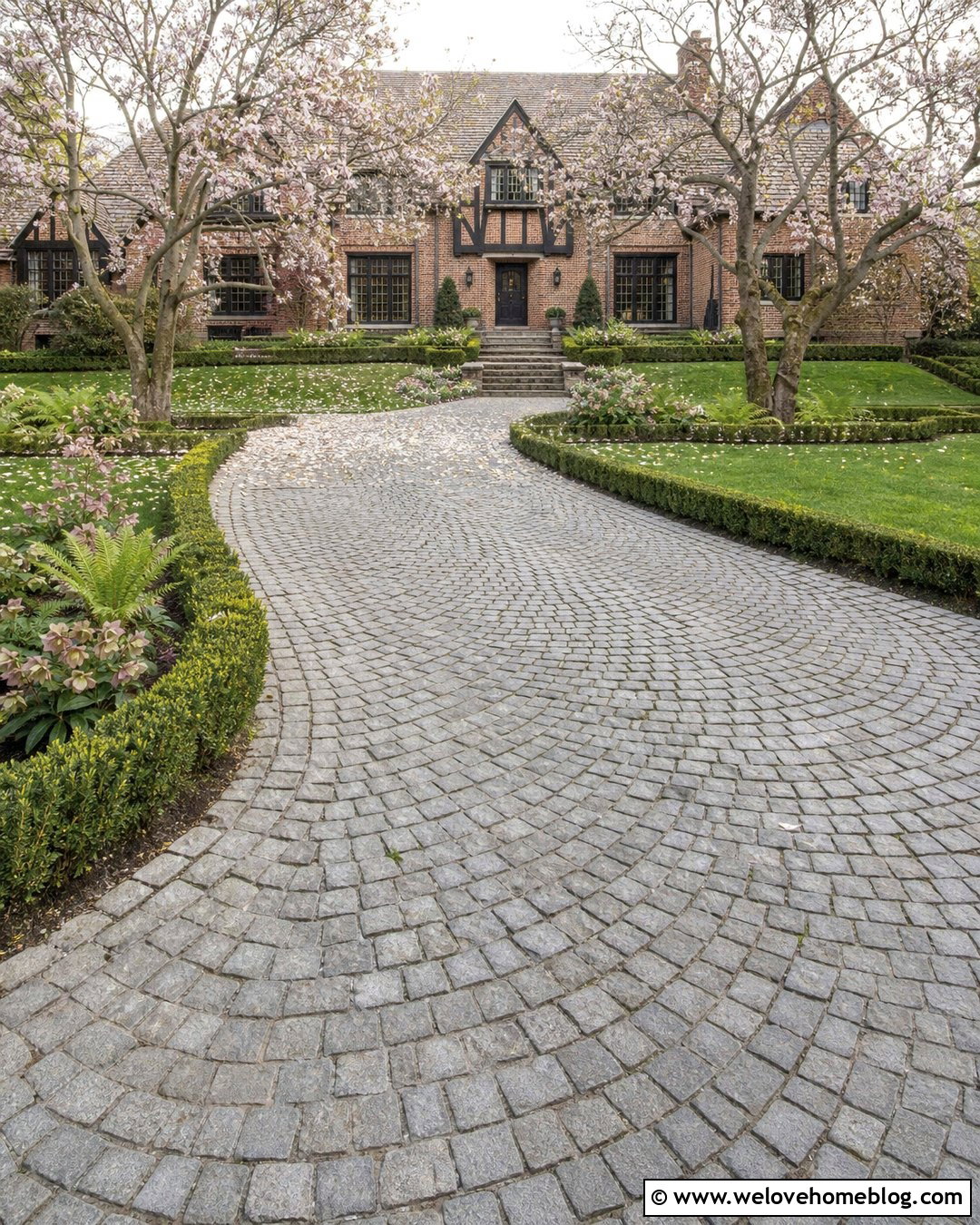
A cobblestone driveway and mature magnolia trees create a substantial, established appearance that suits an older property. Use weathered gray cobblestones in a fan or irregular running pattern across a wide, gently curved drive. Position the magnolias within large lawn panels rather than tight planting pockets, giving their roots and branches more breathing room. Low clipped hedges can outline the outer driveway while remaining well away from the trunks. Add broad stone steps and a matching walkway leading from the parking area to a Tudor or historic brick house. Subtle planting beds with hellebores, ferns, and spring bulbs provide color beneath the canopy. Because cobblestone has a strong texture, keep the remaining landscaping controlled and repeat only a few plant varieties throughout the design.
9. Magnolia Resin-Bound Driveway
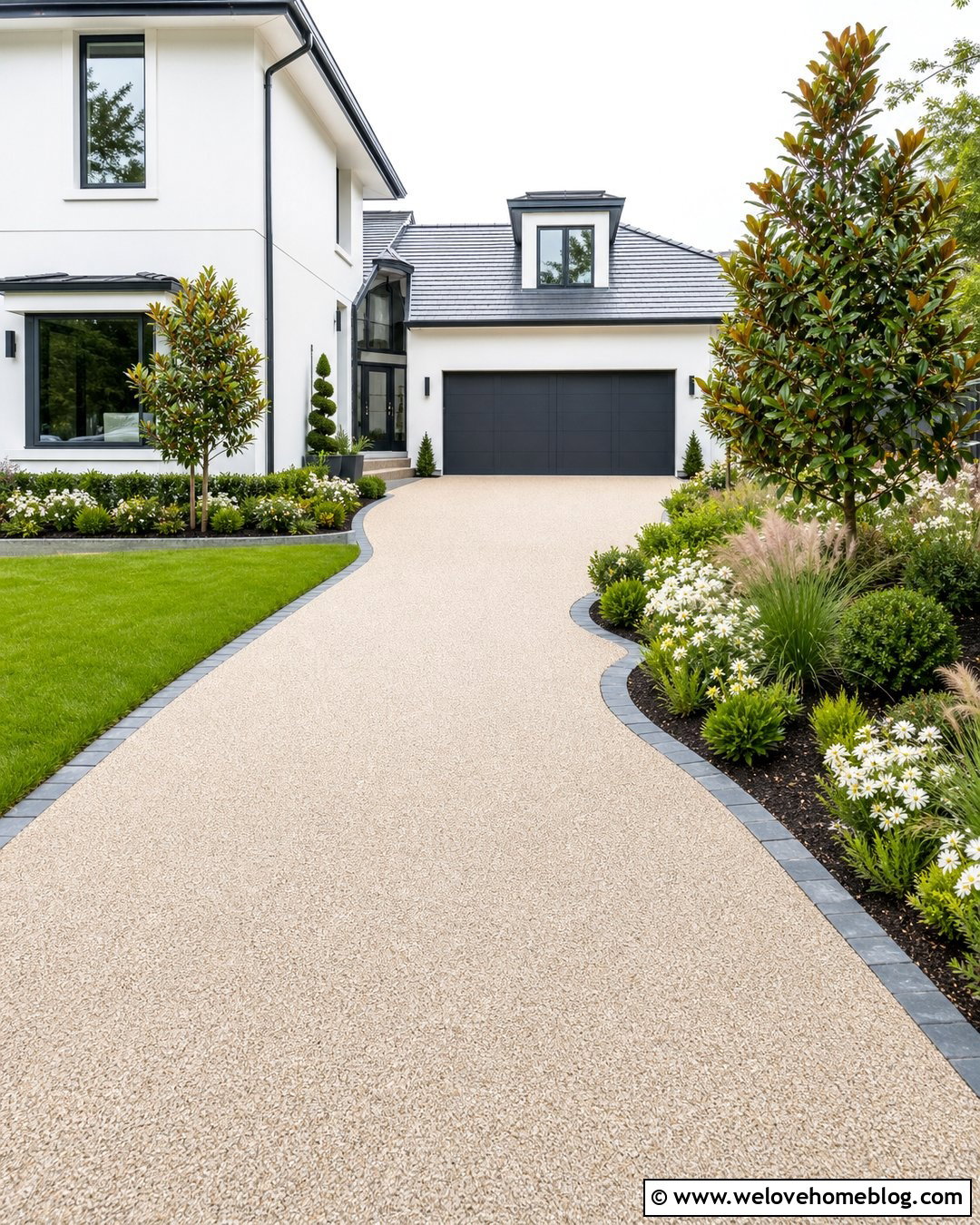
For a clean contemporary approach, combine compact magnolias with a pale resin-bound gravel driveway. The smooth-looking, permeable-style surface provides the visual warmth of small stones without the loose appearance of traditional gravel. Use a straight driveway with softly rounded planting beds cut into each side near the house. Charcoal granite borders create crisp definition and coordinate with dark window frames on a modern exterior. Plant upright Little Gem or another regionally appropriate compact magnolia as repeated accents, leaving adequate space between the trees and paving. Fill the beds with white flowering perennials, clipped evergreen mounds, and ornamental grasses. The restrained palette keeps attention on the magnolia foliage and flowers. Confirm local installation, drainage, and base requirements before choosing this surface for an established tree area.
10. Magnolia Farmhouse Driveway
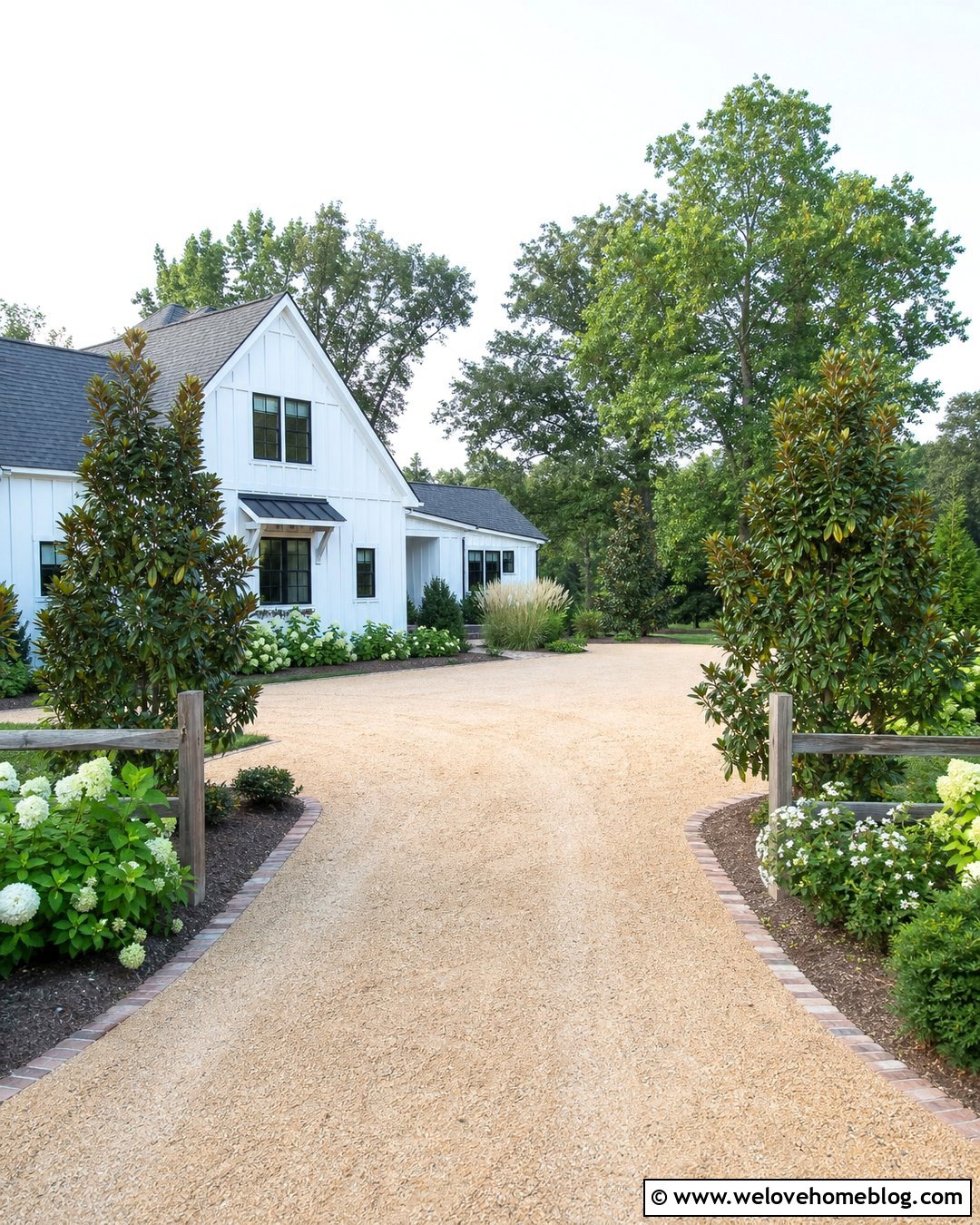
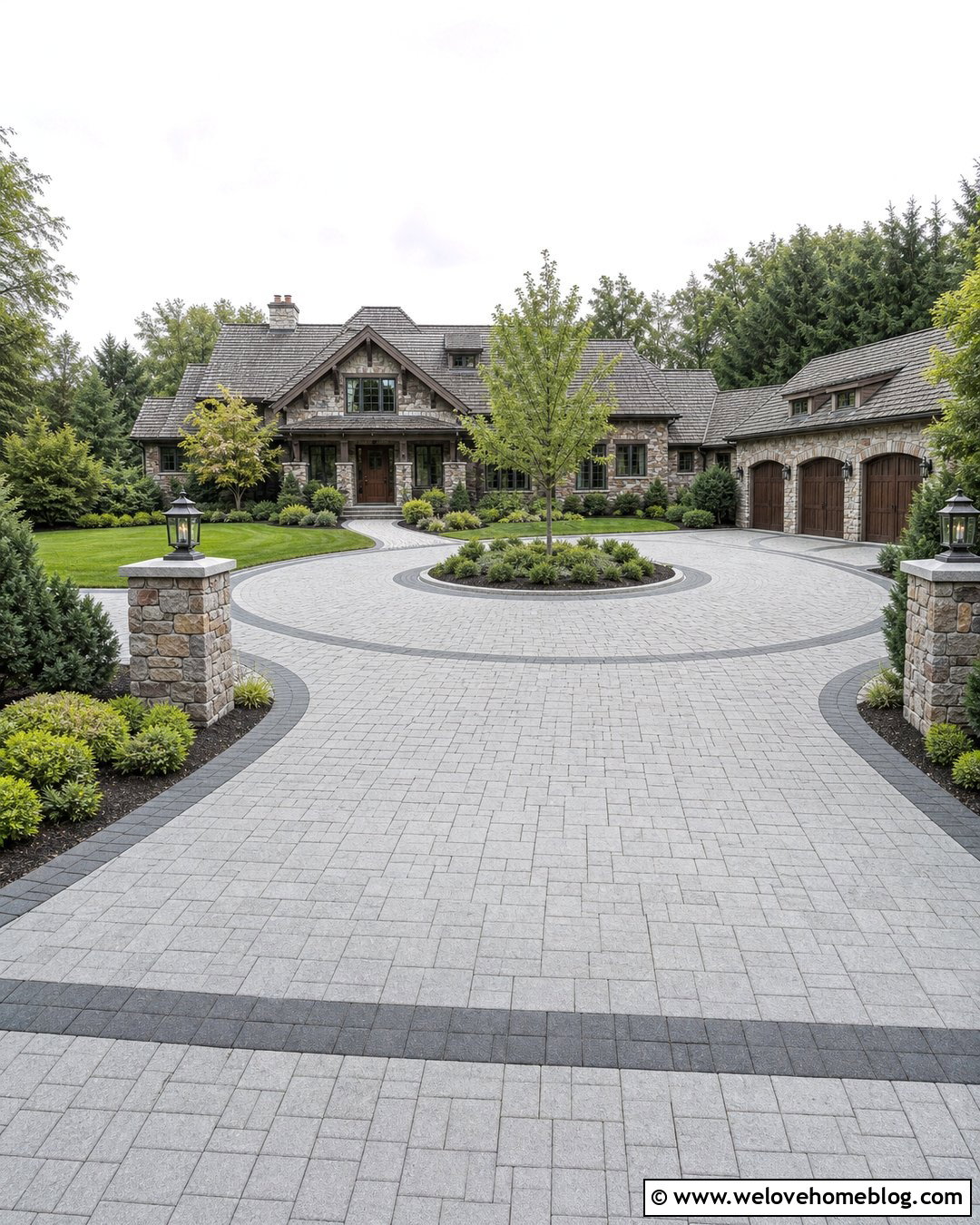
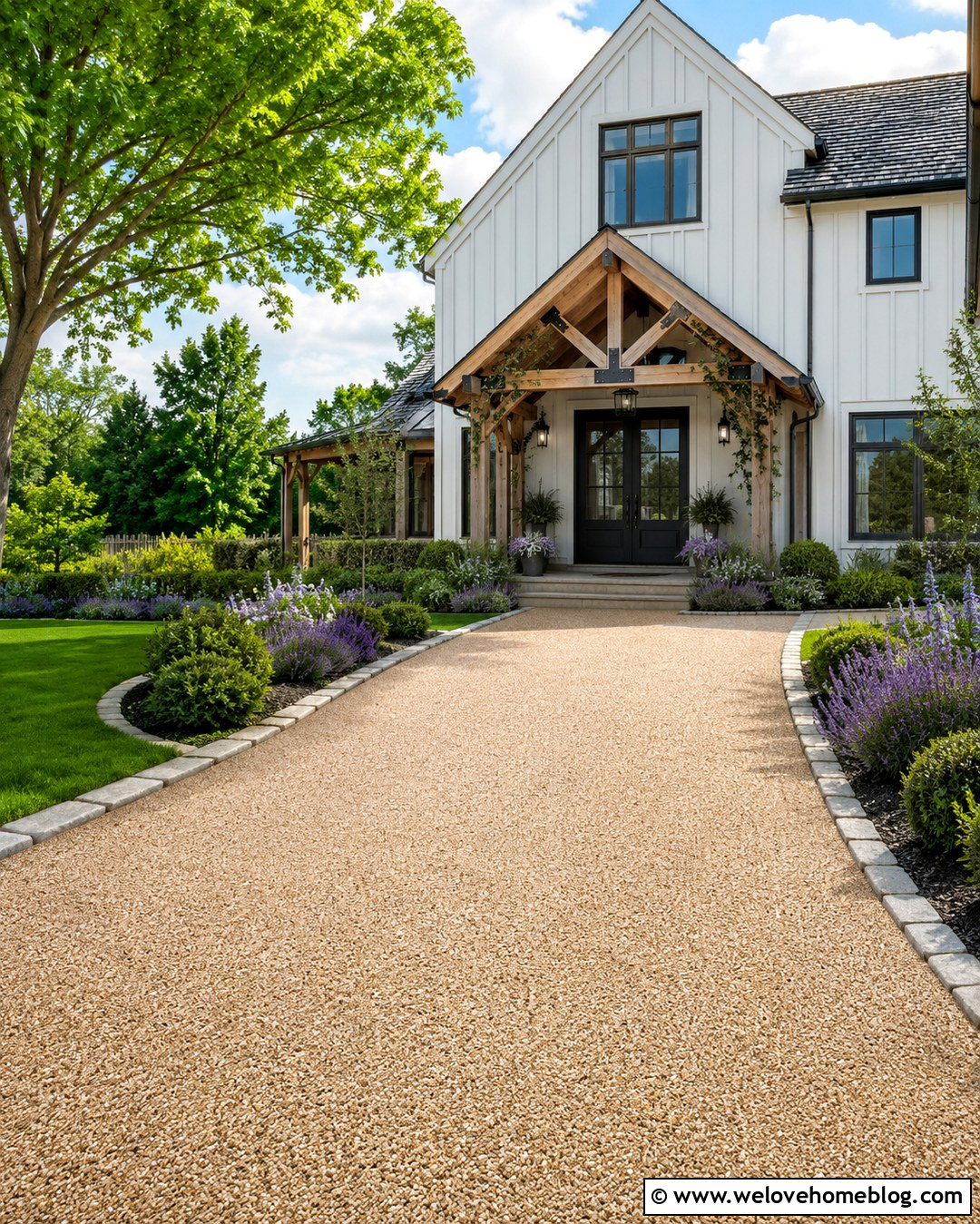
Magnolias bring softness and Southern character to a modern farmhouse driveway. Start with compacted buff gravel in a wide straight layout that opens into a parking court beside the house. Use reclaimed-looking brick as a border and repeat it in the front walkway for a coordinated finish. Plant two Little Gem magnolias near the entrance, followed by larger Southern magnolias farther inside the property where more growing space is available. Deep planting beds can combine hydrangeas, white roses, ornamental grasses, and dark bark mulch. A split-rail fence along one side adds rural structure without blocking views of the trees. Against white board-and-batten siding and a dark roof, the green magnolia foliage creates strong contrast while the gravel and brick maintain a warm, welcoming farmhouse atmosphere.
11. Magnolia Colonial Driveway
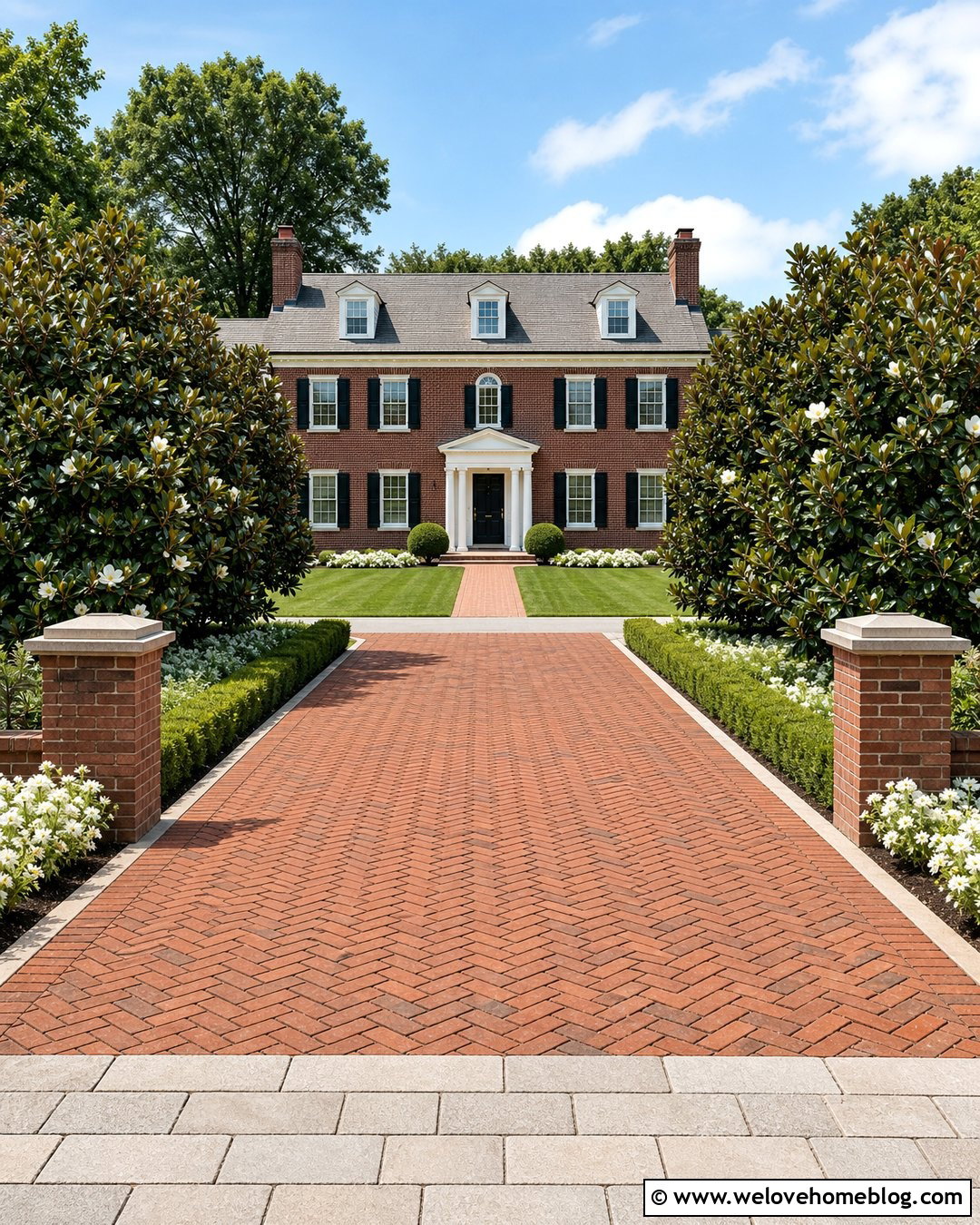
Symmetry gives a colonial driveway its calm and ordered appearance. Use red clay brick pavers in a traditional herringbone pattern, arranged in a straight line toward a centered garage or side parking court. Matching magnolias placed in broad planting beds on both sides can reinforce the balanced architecture without standing too close to the pavement. Add low boxwood hedges around the outer bed edges and plant white annuals or perennials inside for seasonal contrast. A narrow stone apron at the street protects the brick transition and makes the entrance more noticeable. Black lantern-style fixtures can be installed on simple brick pillars without competing with the trees. The finished driveway should feel formal but not crowded, with clear sight lines, generous lawn areas, and enough space for every magnolia to mature naturally.
12. Magnolia Modern Driveway
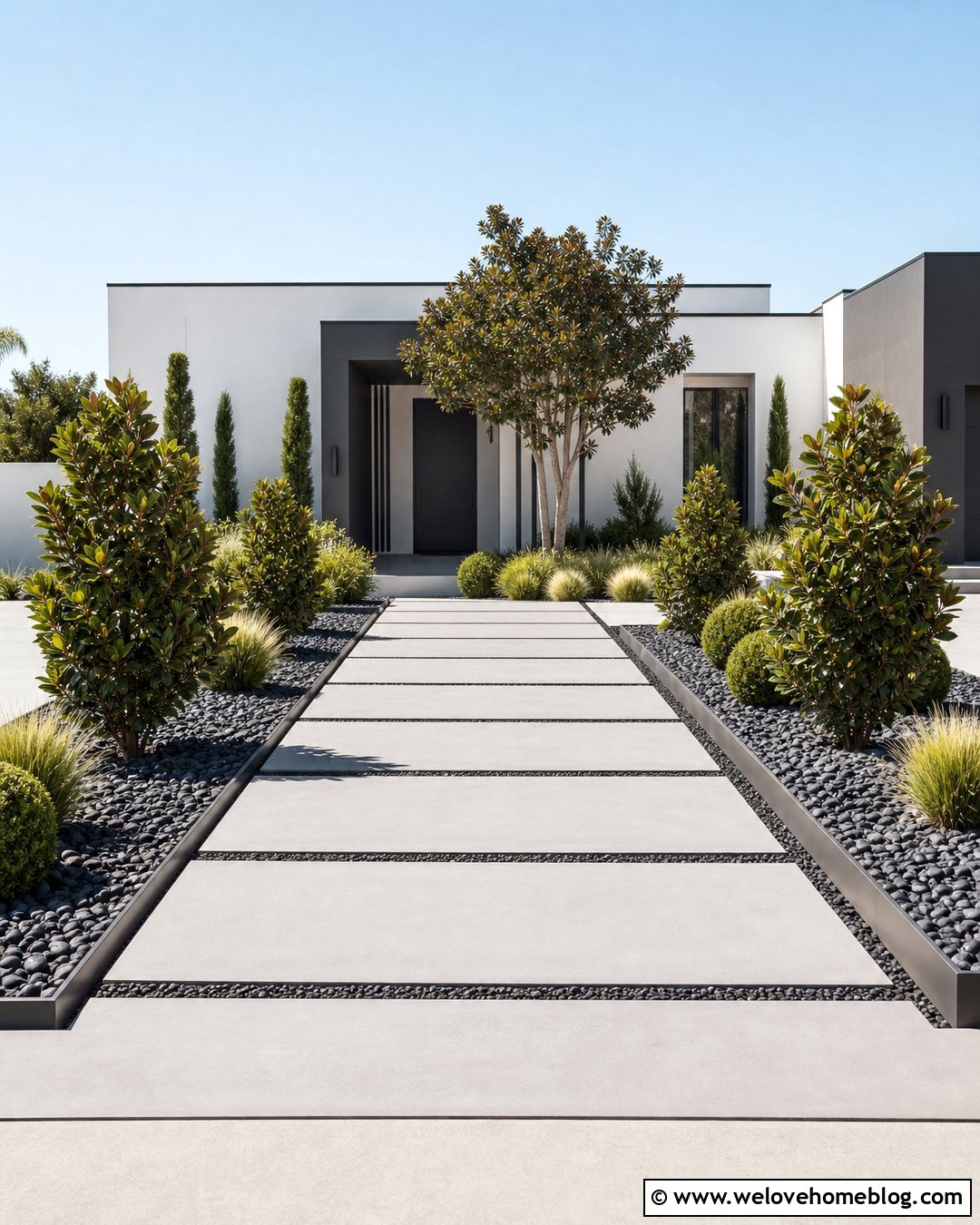
Magnolia trees can soften modern architecture without weakening its clean lines. Create a driveway from large-format light-gray concrete pavers separated by narrow bands of dark gravel. A straight or slightly offset layout works well with a flat-roofed home and an asymmetrical garage. Plant compact evergreen magnolias in long rectangular beds positioned beside, rather than directly against, the paved surface. Use steel edging, black river rock, ornamental grasses, and low sculptural shrubs to maintain a restrained landscape. One larger magnolia can anchor the front corner of the house, visually connecting the driveway to the entrance walkway. Avoid tightly pruning every tree into the same shape. Their natural branching provides a welcome contrast to the geometric paving, crisp planting beds, and simple facade while preserving a polished contemporary appearance.
13. Magnolia Driveway Entrance
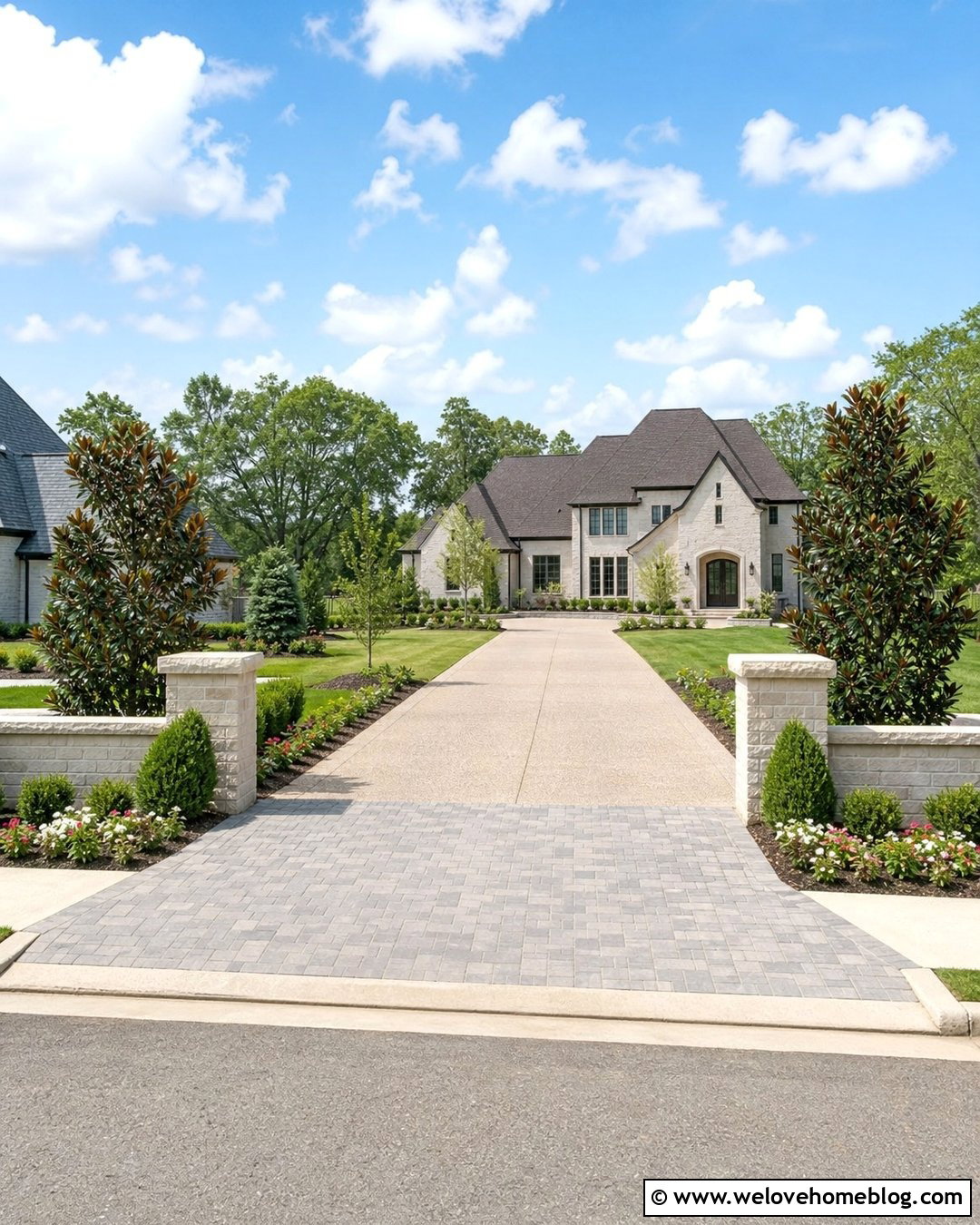
The driveway entrance creates the first impression, so magnolias should frame it without hiding traffic or pedestrians. Build a wide entrance apron from warm gray concrete pavers and connect it to a straight exposed-aggregate driveway. Place matching compact magnolias behind low stone walls on both sides, keeping the trees and walls outside required visibility areas. Curved planting beds can contain evergreen shrubs, seasonal flowers, and low ground cover that will not block the view toward the street. Use limestone-capped pillars with understated lighting to make the entrance easy to identify. Repeat the stone around the house foundation or front walkway for a connected design. This complete layout is suitable for a large suburban home where an attractive gateway is desired without installing a visually heavy or highly ornamental gate.
14. Magnolia Driveway Island
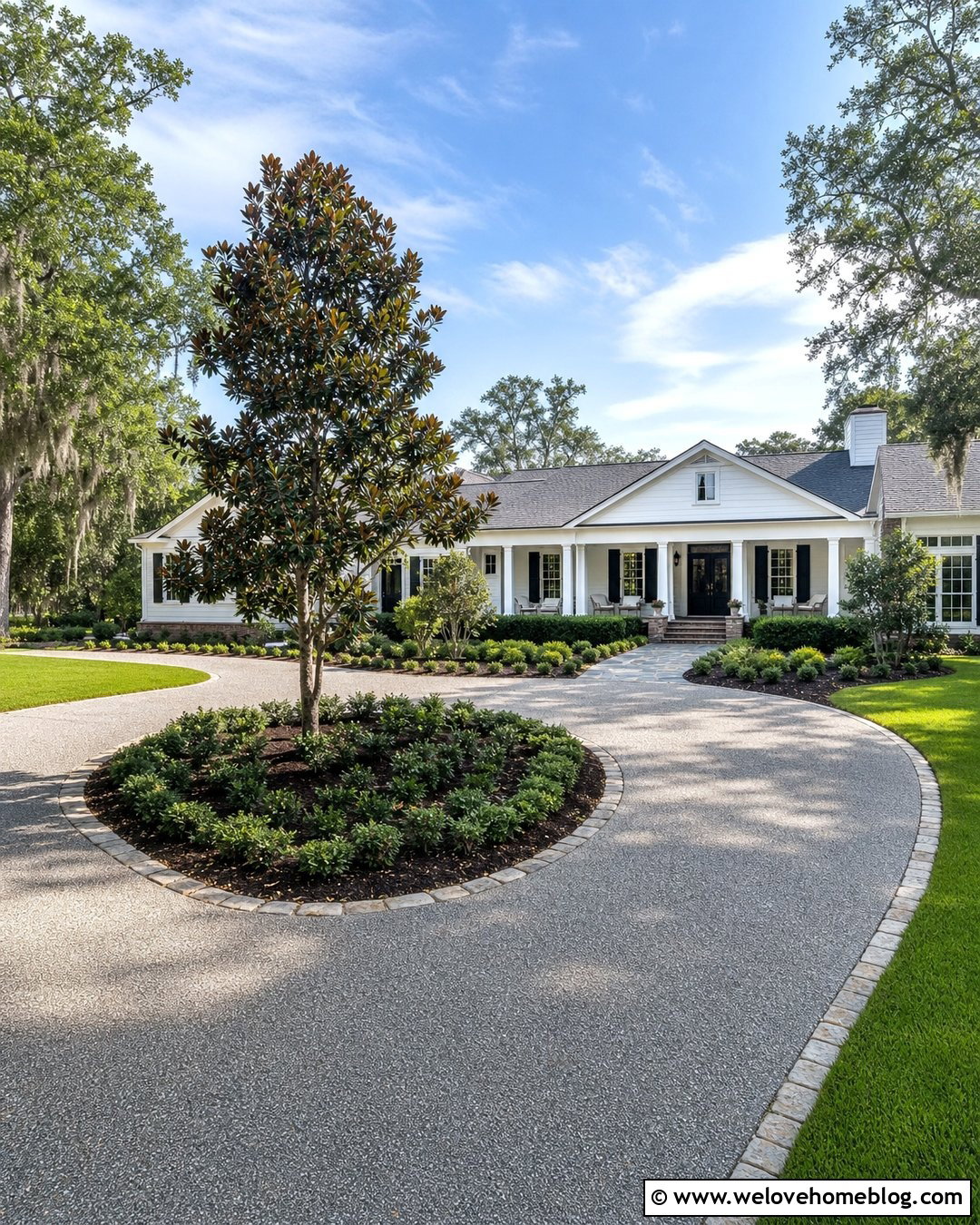
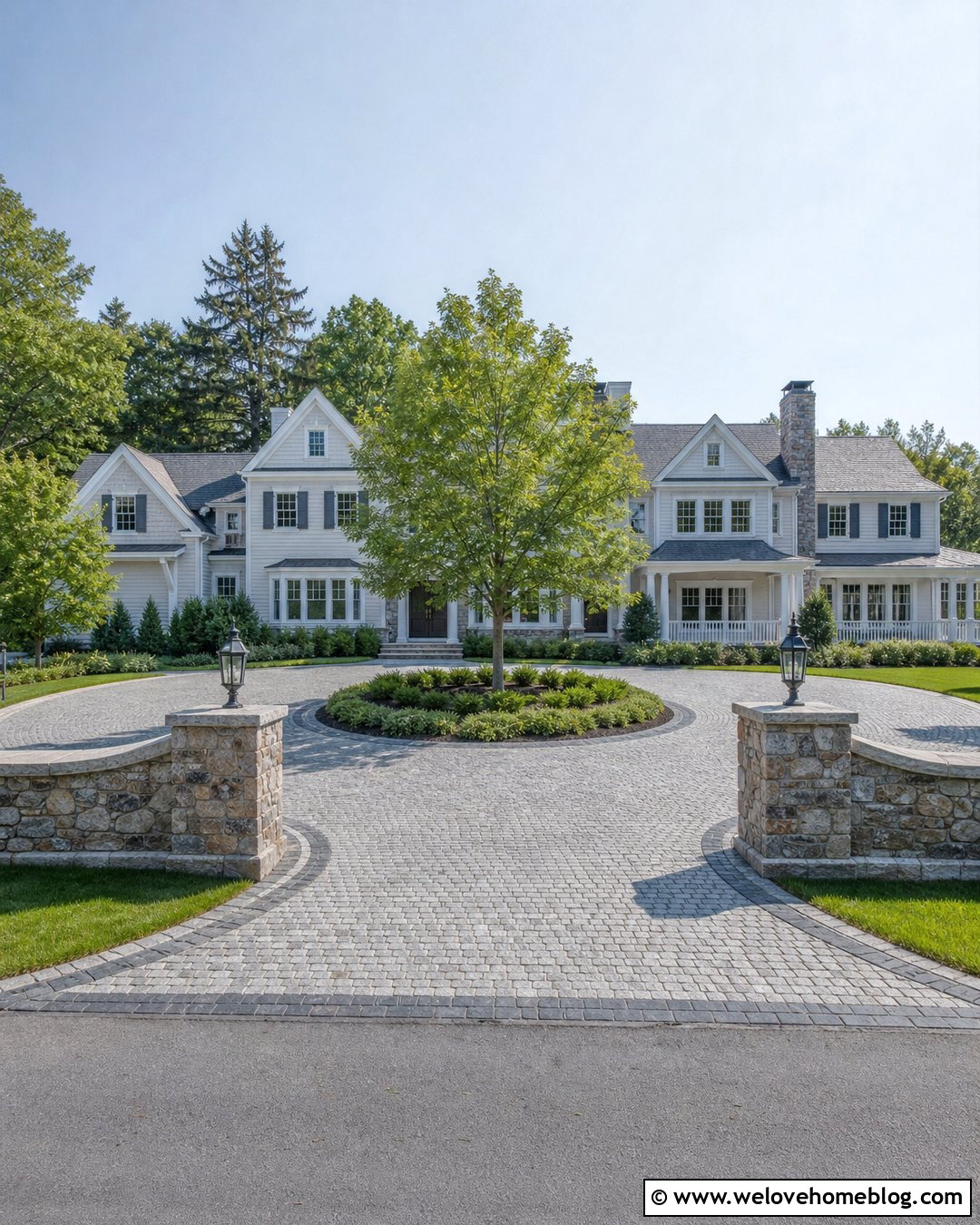
A driveway island can solve a large area of empty pavement while giving a magnolia a prominent location. Use medium-gray exposed-aggregate concrete for a horseshoe driveway wrapping around an oval planting island. Place the magnolia away from the tightest vehicle turning area and size the island generously for future growth. A low cobblestone curb protects the soil from tires while following the driveway’s curves. Under the tree, spread mulch broadly and add simple rings of low-growing evergreen plants near the island edge. Avoid piling soil or mulch against the trunk. A short flagstone path through one side of the island can connect the driveway to the front porch. This practical arrangement brings shade, seasonal flowers, and landscape depth to a ranch, traditional, or Southern-inspired house.
15. Magnolia Driveway With Stone Borders
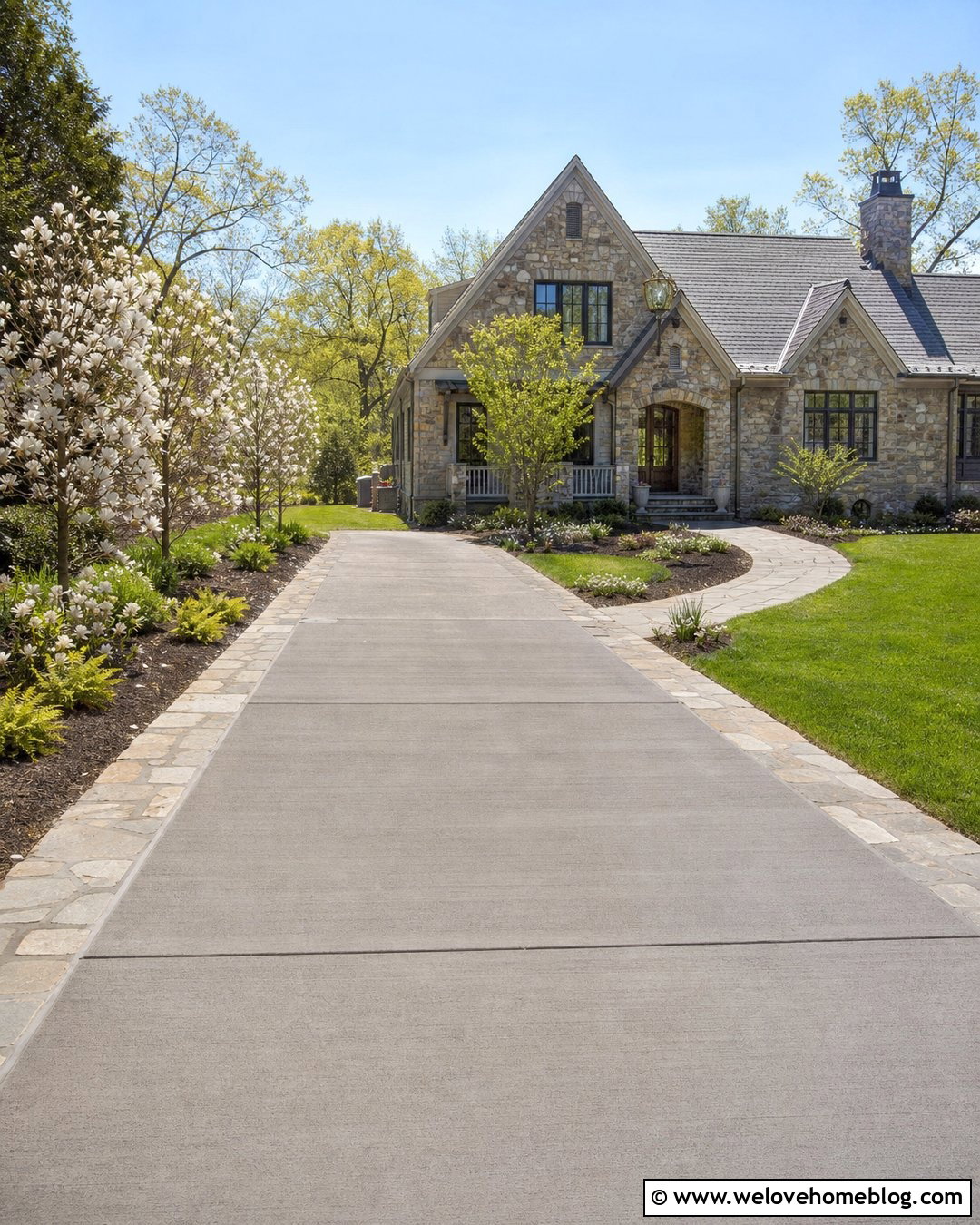
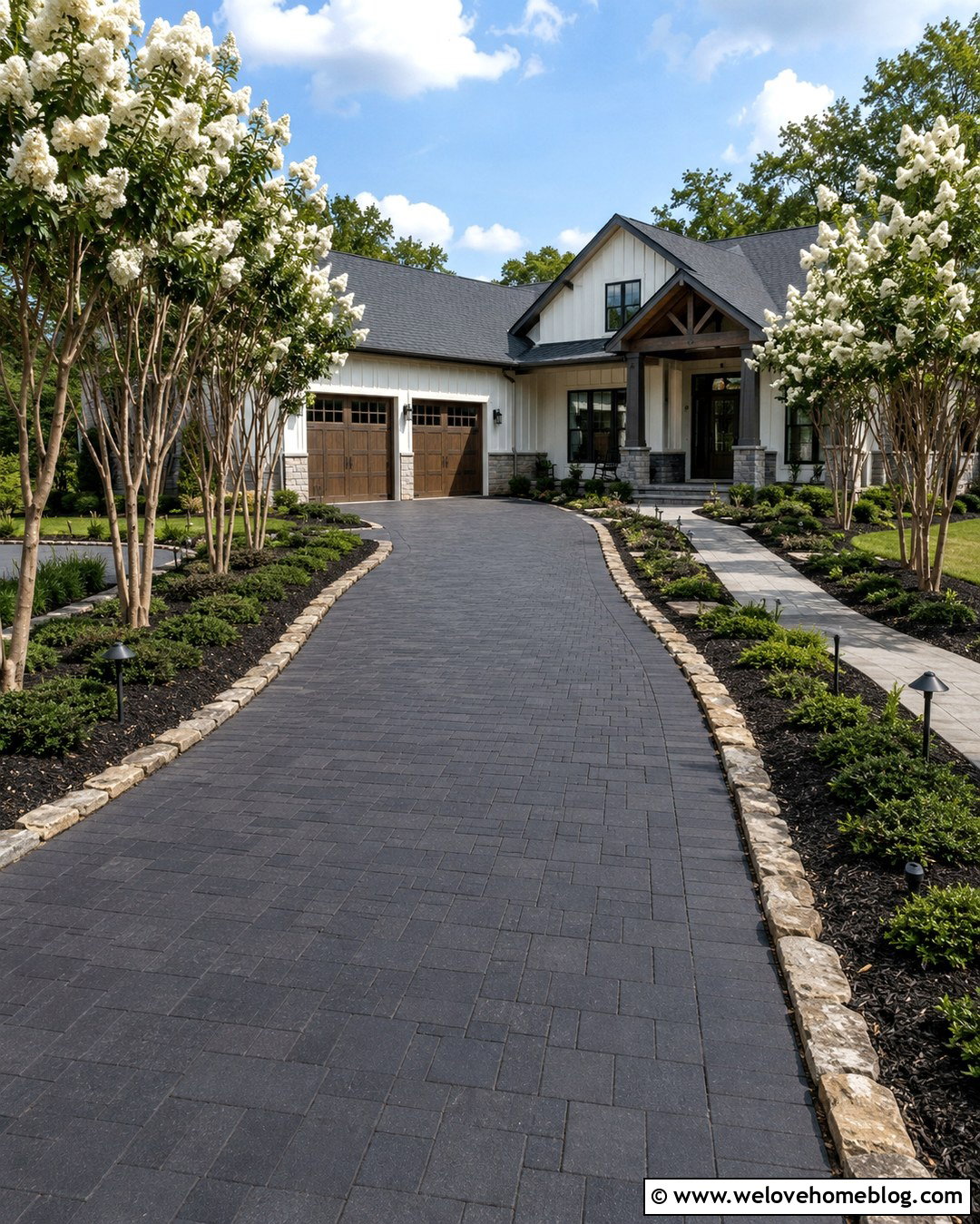
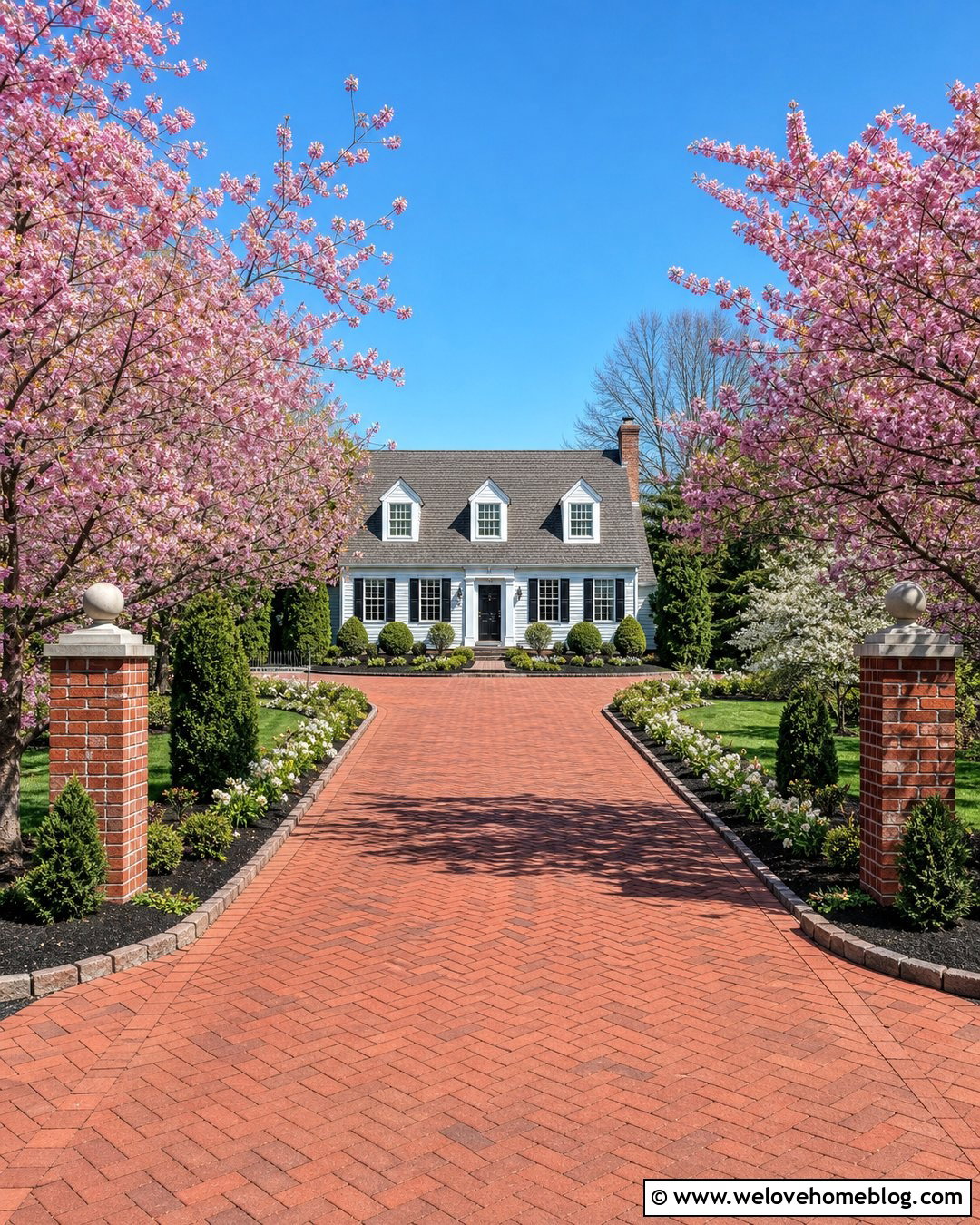
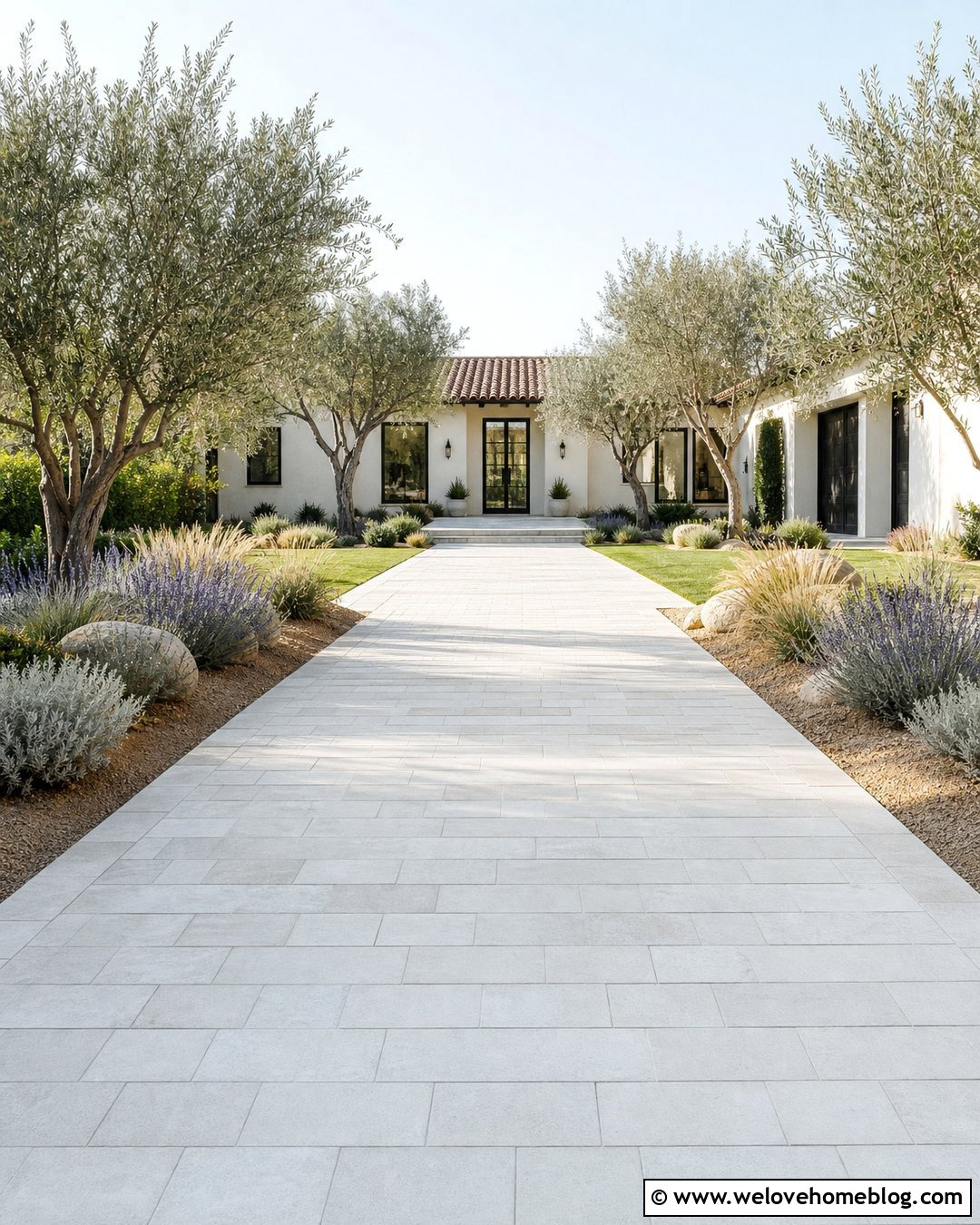
Natural-stone borders help a magnolia driveway feel connected to the surrounding landscape. Choose warm gray poured concrete with a lightly broomed finish for a durable straight driveway. Along each side, install a broad ribbon of irregular fieldstone set flush with the pavement so the edge remains easy to maintain. Plant saucer or star magnolias in staggered beds beyond the stone border, creating a less formal composition than matching rows. Combine them with flowering shrubs, ferns, bulbs, and open sections of lawn. The stone can continue into a curved front walkway or low retaining wall near the house. This repeated material keeps the design cohesive. It works especially well with a Craftsman home, stone cottage, or wooded property where rigid brick borders might appear too formal.
16. Magnolia Driveway With Low Planting Beds
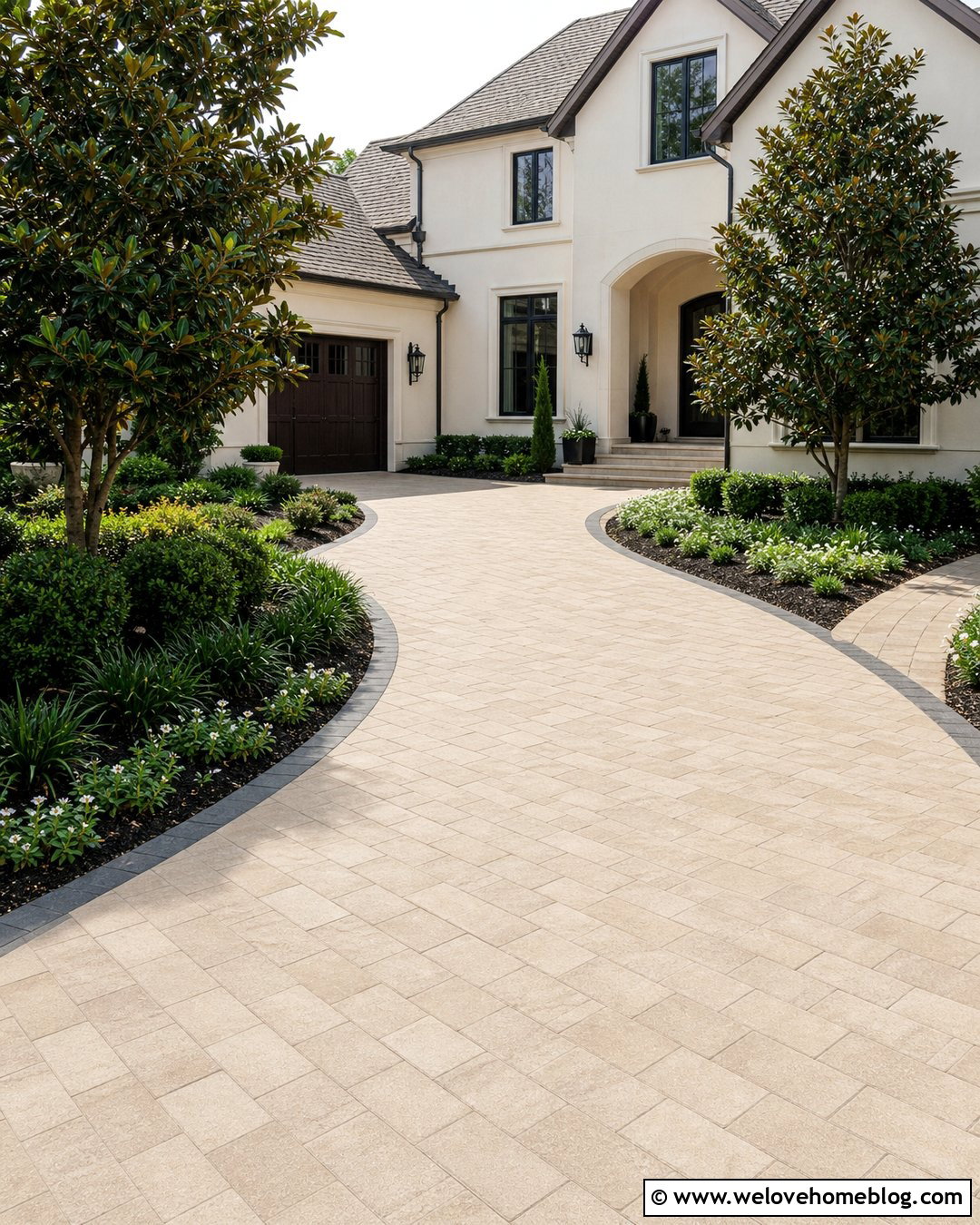
Low planting beds allow magnolia flowers and foliage to remain the strongest landscape feature. Use tan concrete pavers in a simple running-bond pattern for a curved driveway leading to a cream stucco home. Plant two medium-size magnolias in wide beds near the midpoint of the approach rather than directly beside the garage. Around them, use a limited palette of dwarf evergreen shrubs, liriope, flowering ground cover, and spring bulbs. Keep plants shorter near pavement corners and walkway crossings. A dark brown steel edge separates the beds from the lawn while disappearing into the design. Mulch should cover exposed soil but remain clear of the trunks. The result feels full and established without requiring tall shrubs that could crowd cars, hide the driveway shape, or compete with the magnolias.
17. Magnolia Driveway With Landscape Lighting
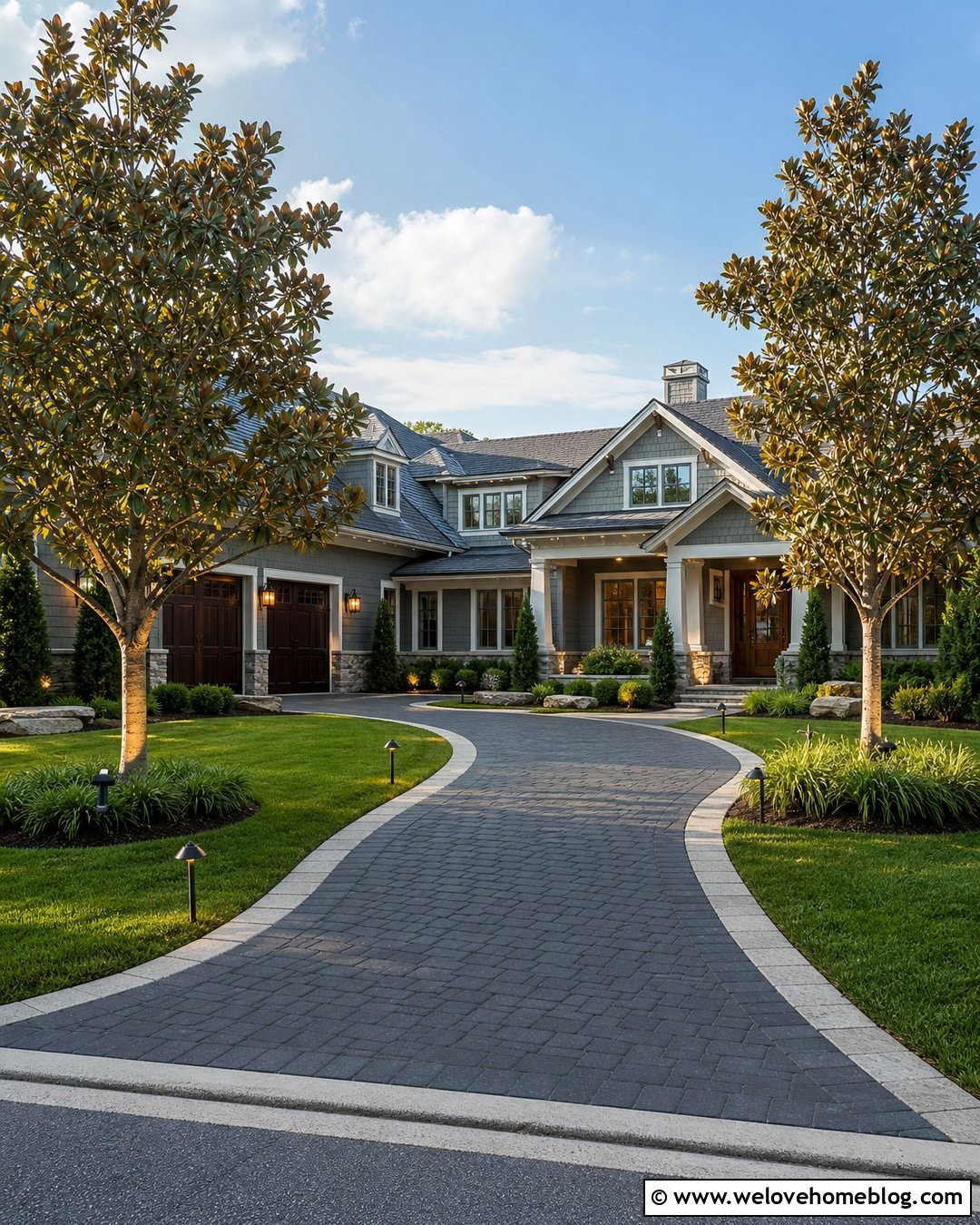
Well-positioned lighting can highlight magnolia trees while also defining the driveway edge. Begin with charcoal interlocking concrete pavers arranged in a sweeping curved layout. Border the paving with light granite blocks so the driving route remains clear during the day. Install low shielded path lights at measured intervals within the outer planting beds, directing illumination toward the driveway rather than into drivers’ eyes. Select uplights carefully to reveal the branching and glossy foliage of feature magnolias without producing harsh glare toward windows. During daylight, the fixtures should disappear among evergreen shrubs, ornamental grasses, and dark mulch. Continue the same lighting along the walkway to a contemporary Craftsman home. A professional lighting plan can balance visibility, tree health, neighbor comfort, and attractive nighttime curb appeal.
18. Magnolia Driveway With Gate And Pillars
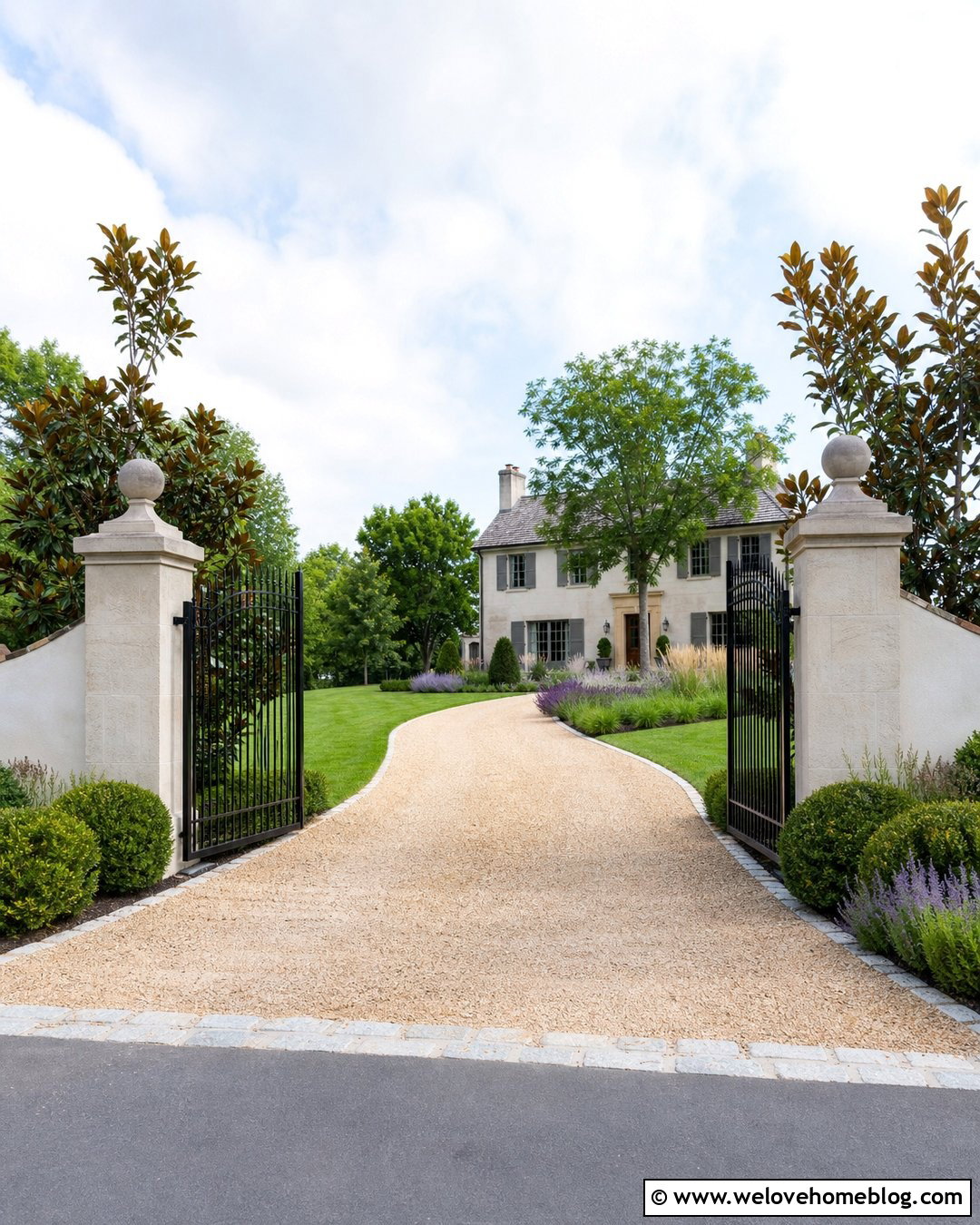
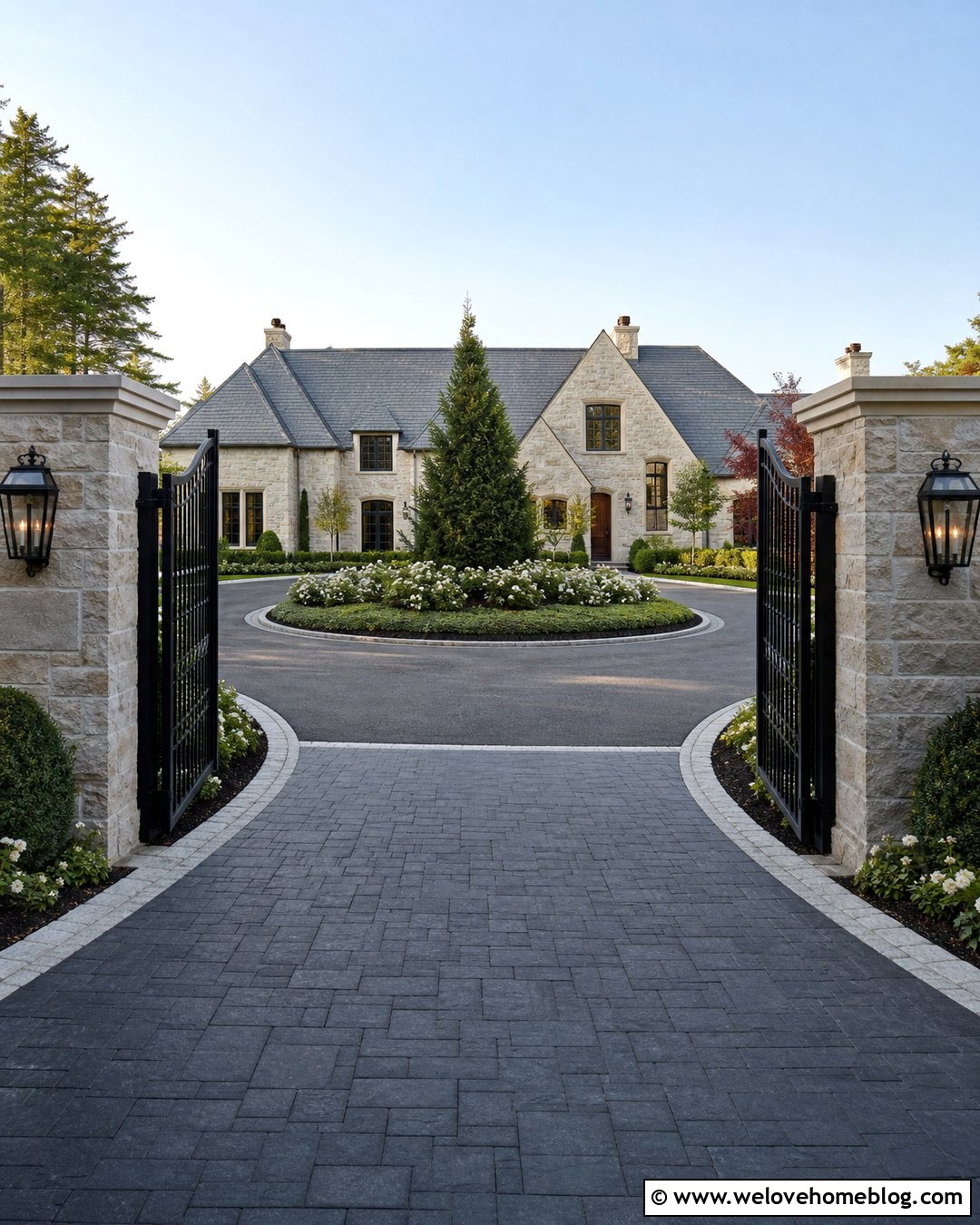
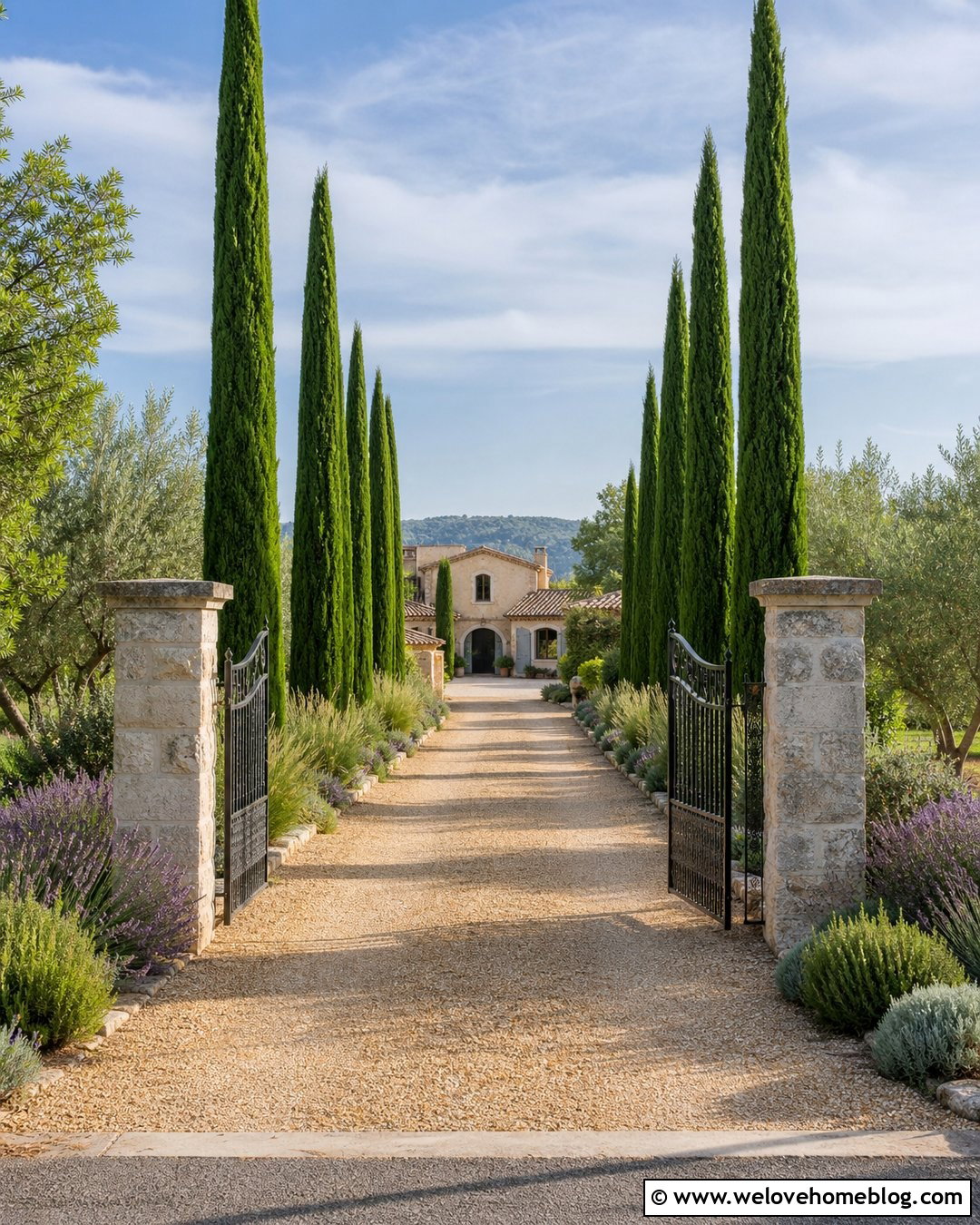
A gated driveway feels welcoming rather than severe when magnolias soften the entrance architecture. Use tan crushed gravel for a long, gently curved drive leading to a country estate or traditional stucco house. At the street, install simple limestone pillars and an open black metal gate that allows views into the property. Place Little Gem magnolias behind the pillars, leaving clearance for the gate movement, underground equipment, and mature tree growth. Low lavender-colored perennials, clipped shrubs, and ornamental grasses can fill the entrance beds without obstructing visibility. Edge the gravel with matching limestone setts, then repeat that material around the pillars and front walkway. The coordinated surfaces, plants, and entrance details produce a substantial look while keeping the magnolias integrated into the entire driveway rather than treated as isolated decorations.
19. Magnolia Driveway For A Small Front Yard
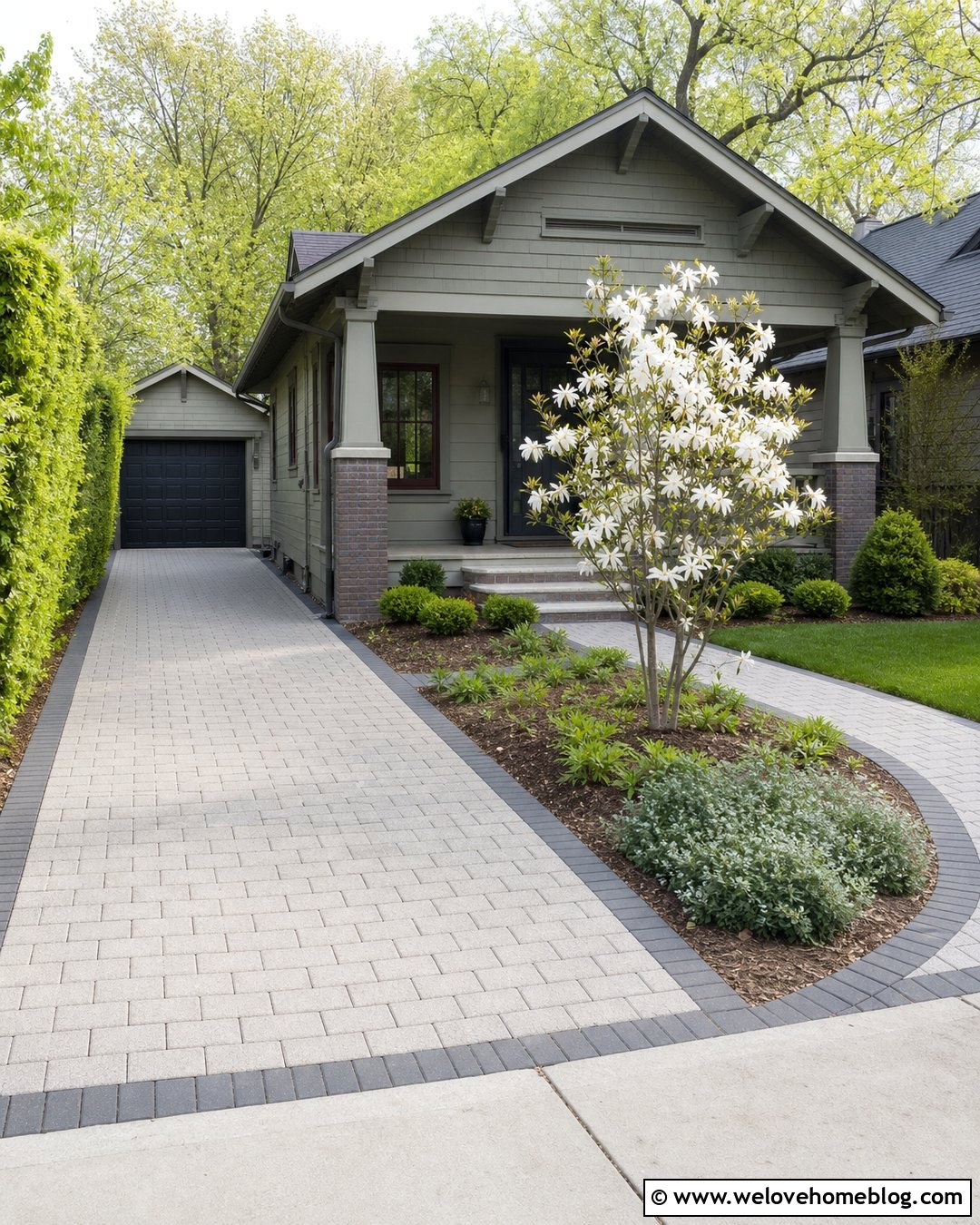
A compact driveway needs careful tree selection and a simple material palette. Use pale gray permeable concrete pavers for a straight single-car driveway beside a small bungalow or cottage. A compact star magnolia can sit in a curved corner bed near the front lawn, where it adds spring flowers without forming a dense evergreen wall. On the opposite side, use a narrow planting strip with dwarf shrubs and ground cover to balance the tree. Dark brick edging defines both the driveway and matching walkway, making the limited space feel organized. Avoid placing the magnolia where branches could interfere with garage access or street visibility. By using one well-positioned tree, low planting, and consistent paving, the front yard gains personality without feeling smaller, darker, or difficult to navigate.
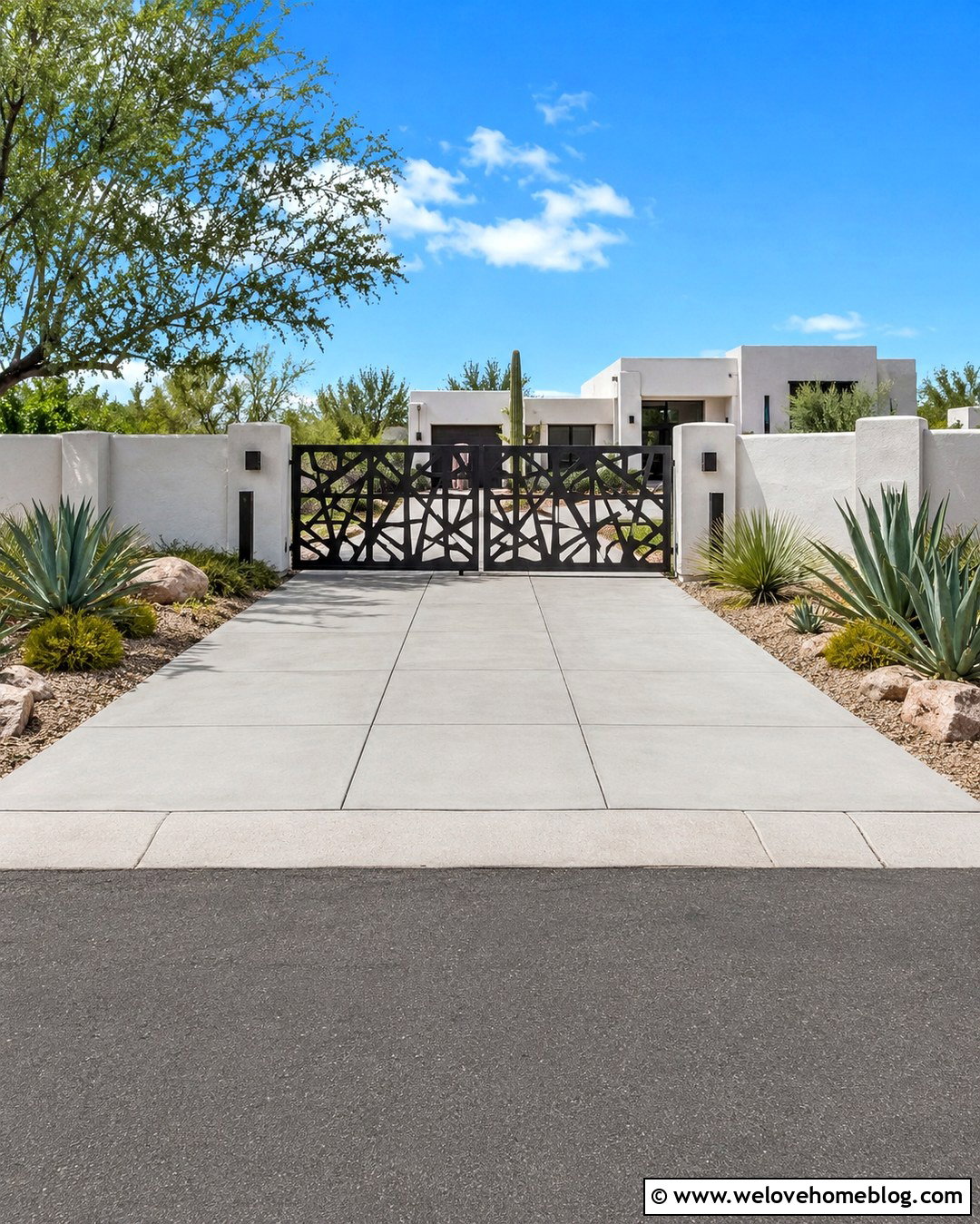
20. Mature Magnolia Driveway Renovation
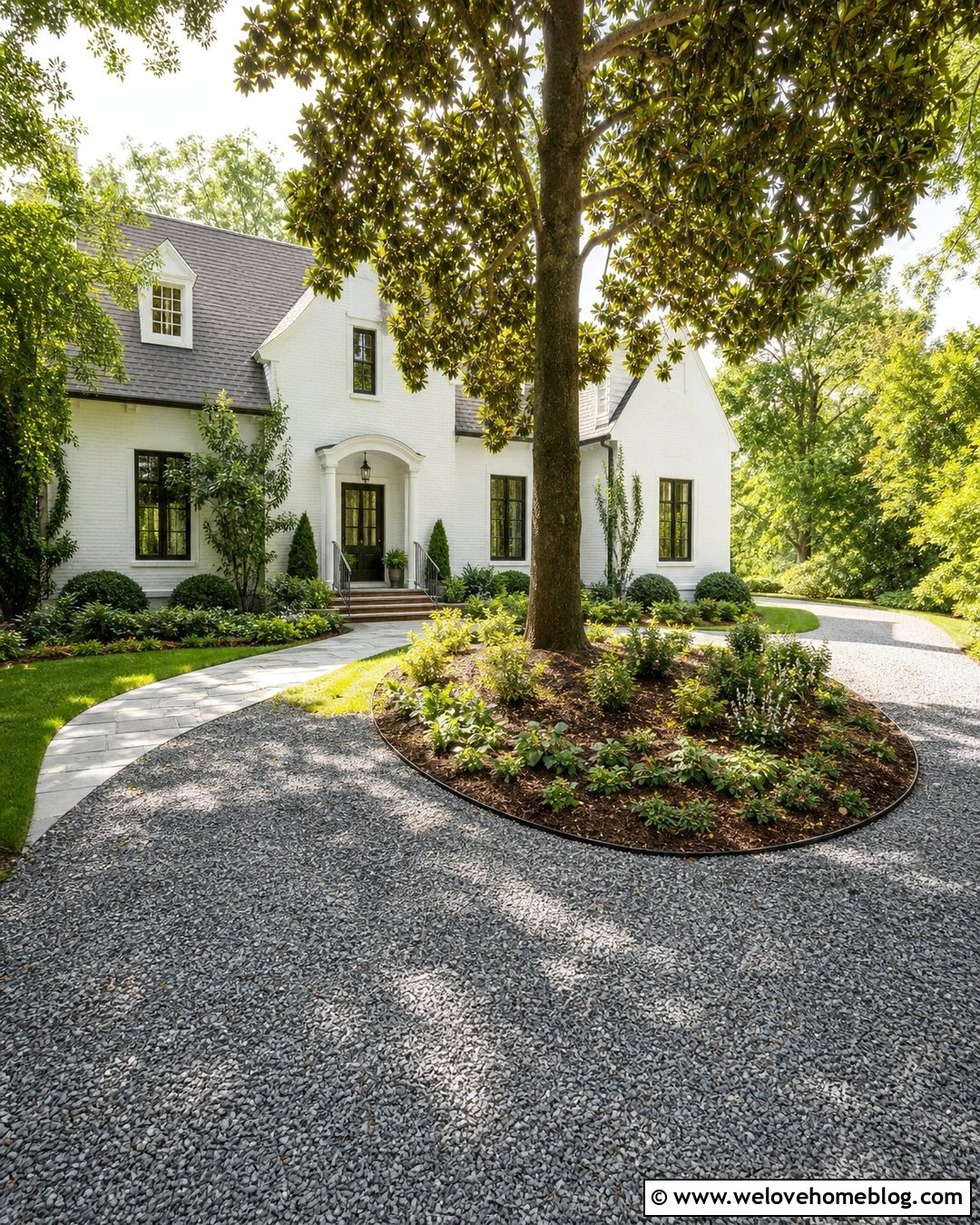
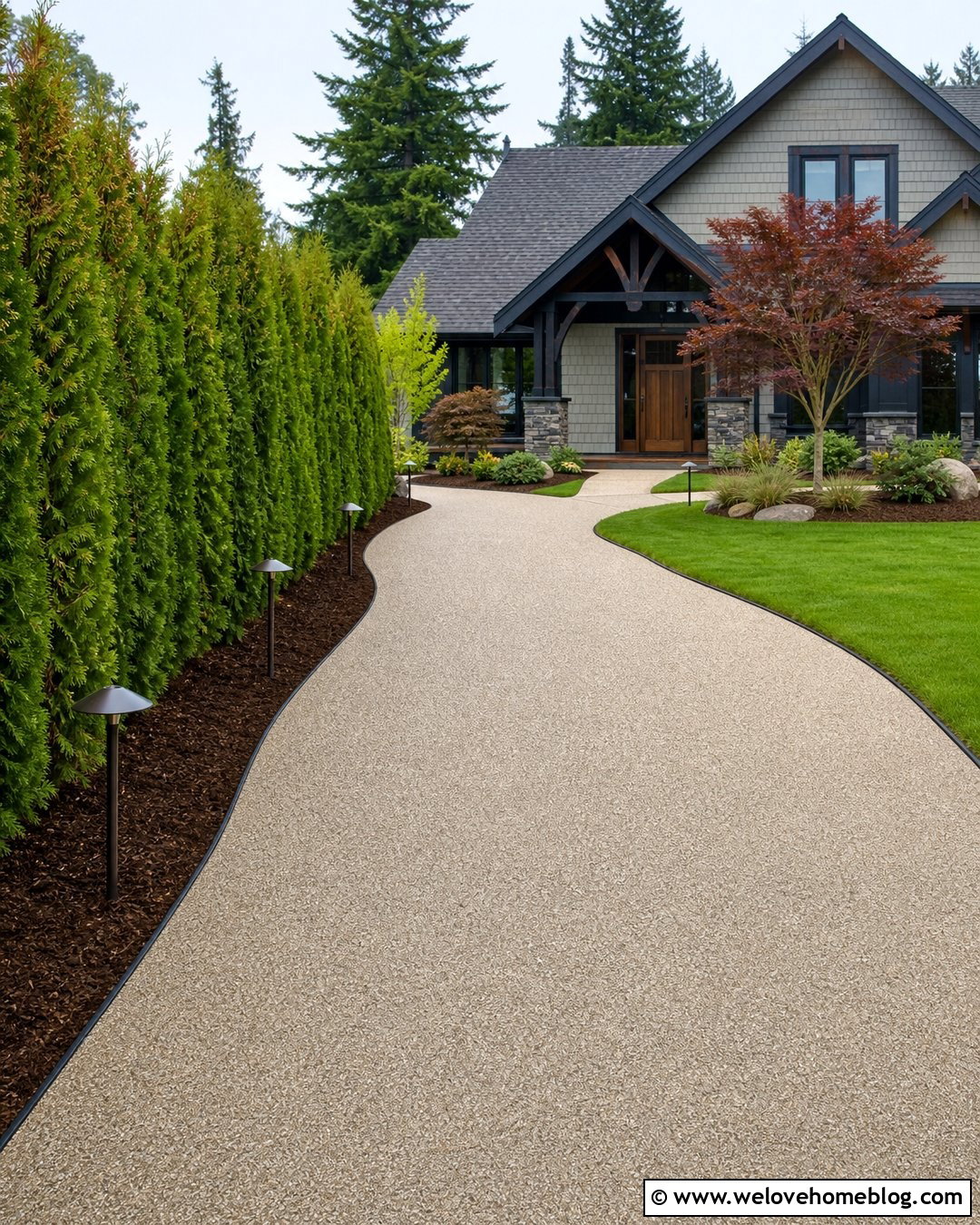
Renovating around an established magnolia requires a tree-first approach. Rather than automatically widening or deeply excavating beside the trunk, have the tree and planned work evaluated before construction begins. A permeable paver or compacted decorative gravel driveway may create a softer visual transition than a broad new concrete slab, depending on site conditions. Shape the drive to follow the existing landscape and preserve a generous mulched area beneath the canopy. Use flexible steel edging instead of a deep masonry border close to major roots. Add shade-tolerant plants near the outer planting zone and keep heavy construction equipment away from protected soil. The finished driveway can still look intentional, with a curved layout, coordinated walkway, and clean borders that celebrate the mature magnolia as the property’s main feature.
Conclusion:
The most successful **20 Magnolia Tree Driveway Ideas** combine beauty with realistic planning for tree growth, vehicle movement, drainage, and maintenance. Choose the magnolia variety according to the available space and local growing conditions, not simply its size at the nursery. Then coordinate the tree with a driveway surface, shape, border, and planting palette that complements the house. Large Southern magnolias suit generous lawns and long approaches, while compact varieties work better near smaller driveways. If mature trees already exist, protect their roots and soil during renovation. With thoughtful spacing and consistent materials, magnolias can make the entire route from the curb to the front door feel greener, softer, and more welcoming.

Related posts:
Leave a Reply