
A well-planned driveway roundabout can turn an ordinary front yard into a polished, practical entrance. It creates smoother vehicle movement, reduces awkward reversing, and gives the landscape a strong central focal point. The best layouts balance the driveway surface, turning space, center island, borders, drainage, walkways, and house architecture. Some designs feel formal and symmetrical, while others use loose curves and natural planting for a relaxed look. Materials also shape the mood, from classic brick and cobblestone to affordable gravel, durable asphalt, and modern concrete. Whether you have a compact suburban lot or a wide country property, these complete designs offer useful inspiration. Explore these **25 driveway roundabout ideas** to find a layout that fits your home.

1. Gravel Driveway Roundabout With a Tree Island
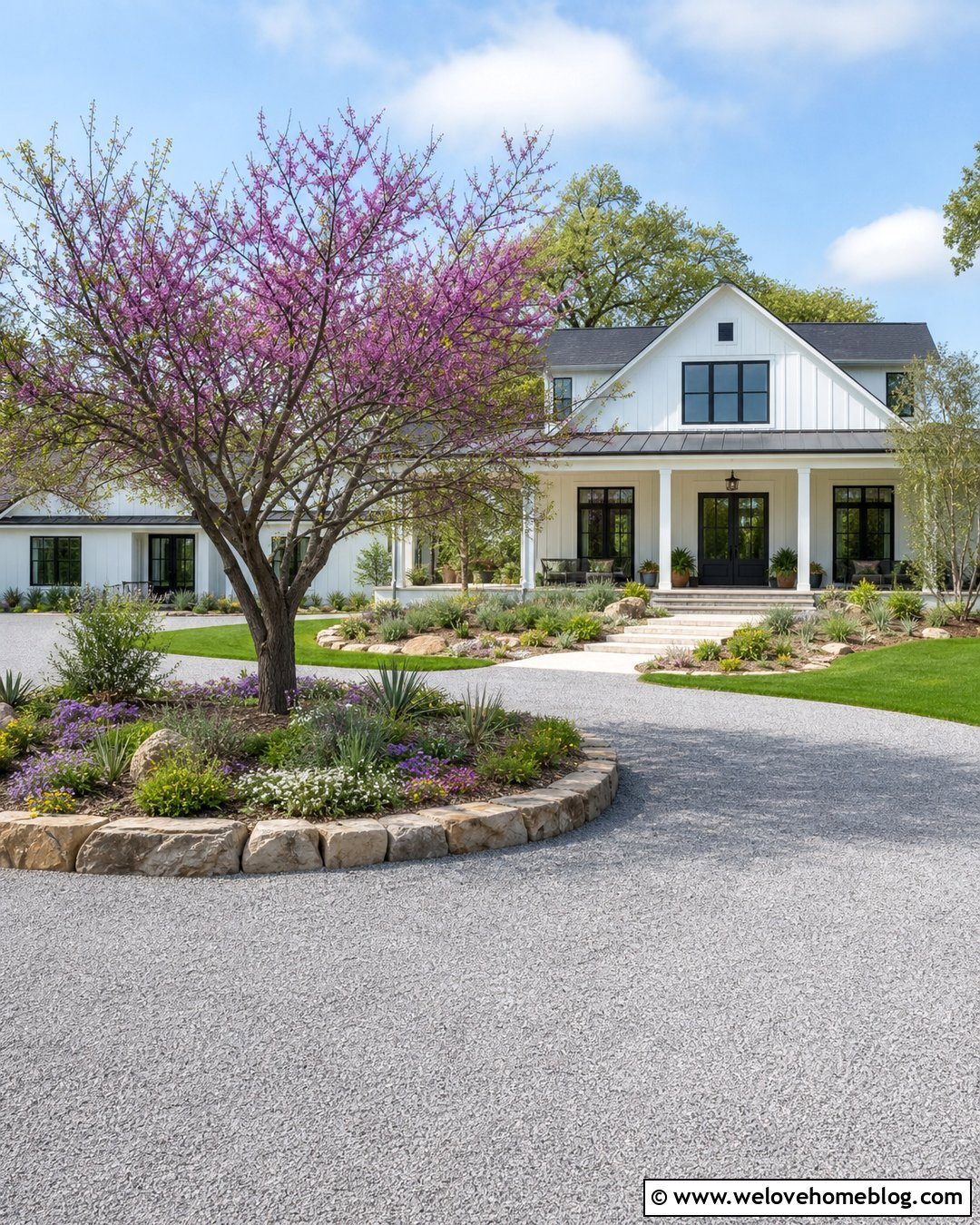
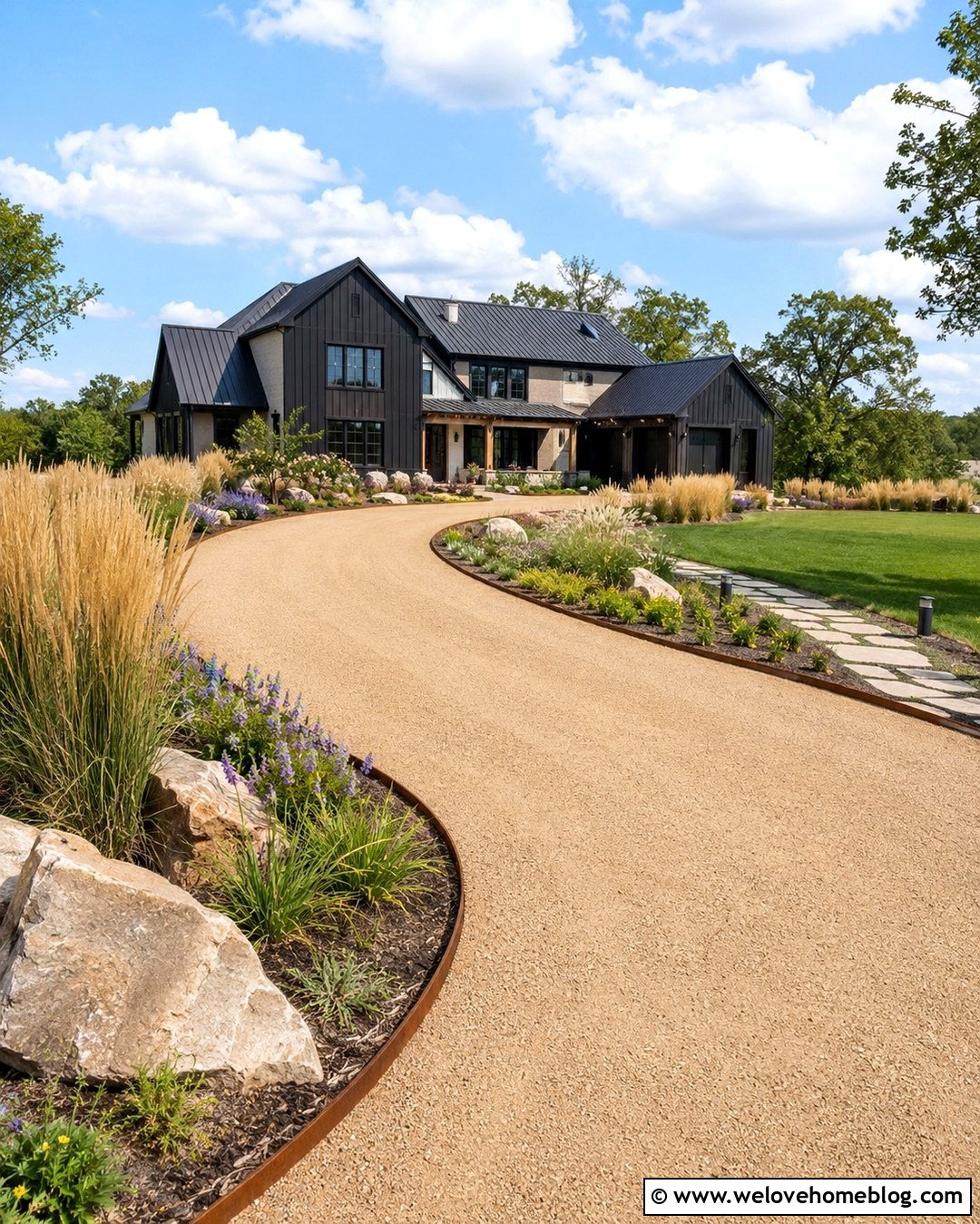
Loose gray gravel gives a driveway roundabout a relaxed character that suits farmhouse, ranch, and country homes. Shape the driving lane around a broad circular island edged with chunky fieldstone. A single ornamental tree can anchor the middle without making the space feel crowded. Redbud, serviceberry, or crape myrtle provides seasonal color while maintaining a manageable size. Underplant the tree with low ground cover and drought-tolerant perennials that will not spill into the vehicle path. A compacted crushed-stone base helps prevent ruts, while gravel stabilizer grids can improve traction. Continue the fieldstone around nearby planting beds to connect the roundabout with the larger yard. The finished entrance feels natural, practical, and thoughtfully integrated.
2. Concrete Driveway Roundabout With a Fountain
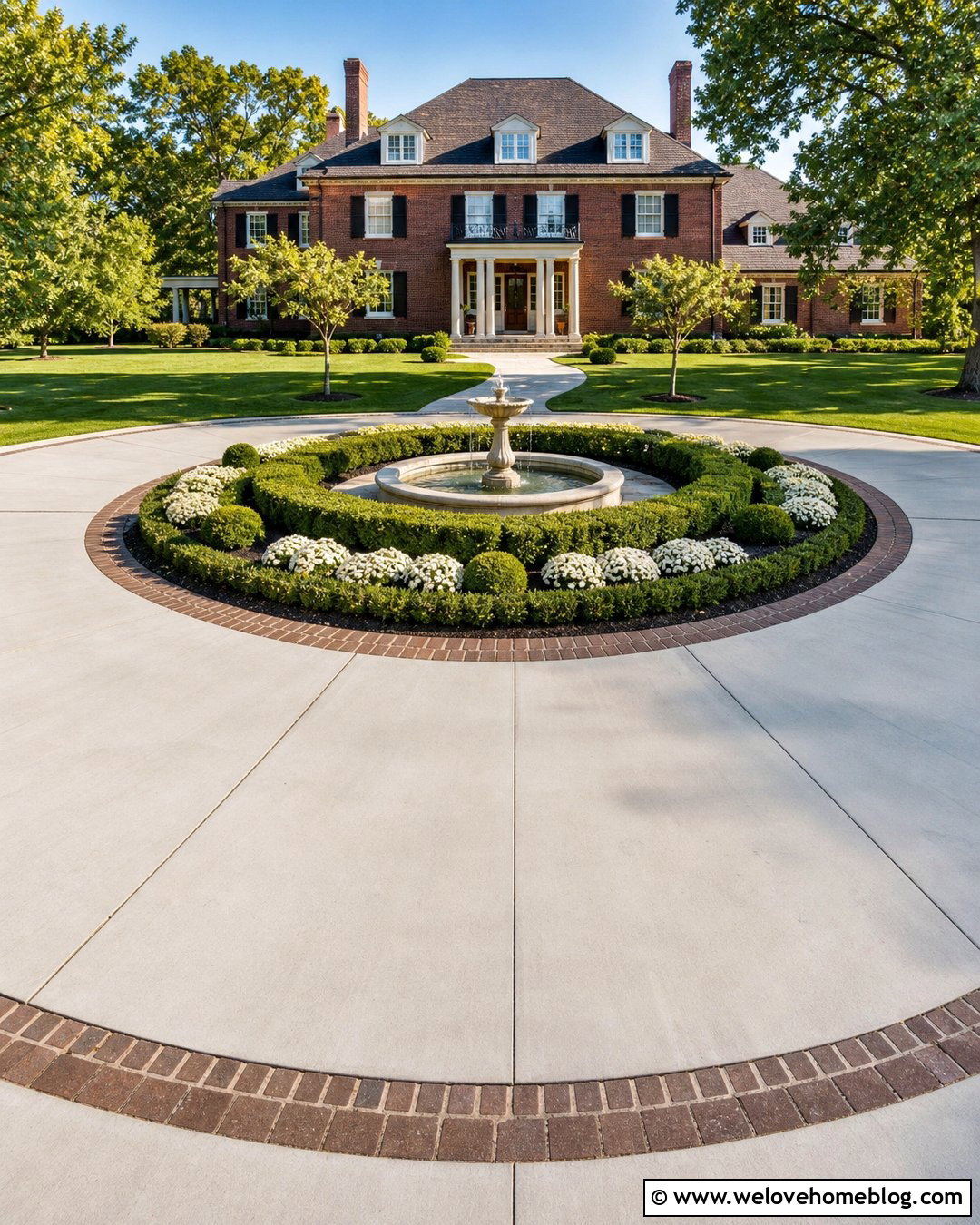
Smooth poured concrete creates a clean foundation for a formal driveway roundabout centered on a fountain. Choose a wide circular lane with gently curved entry and exit points so vehicles can move comfortably around the feature. A low stone fountain adds movement and sound without hiding the front door. Surround it with clipped boxwood, white flowers, and dark mulch for a crisp, symmetrical appearance. Saw-cut control joints can follow the circle and make the concrete look more intentional. A contrasting paver band around the island defines the edge and protects the planting bed. Keep the fountain scaled to the house rather than oversized. This complete arrangement works especially well with brick colonial, Georgian, and traditional stone homes.
3. Brick Driveway Roundabout With Boxwood Landscaping
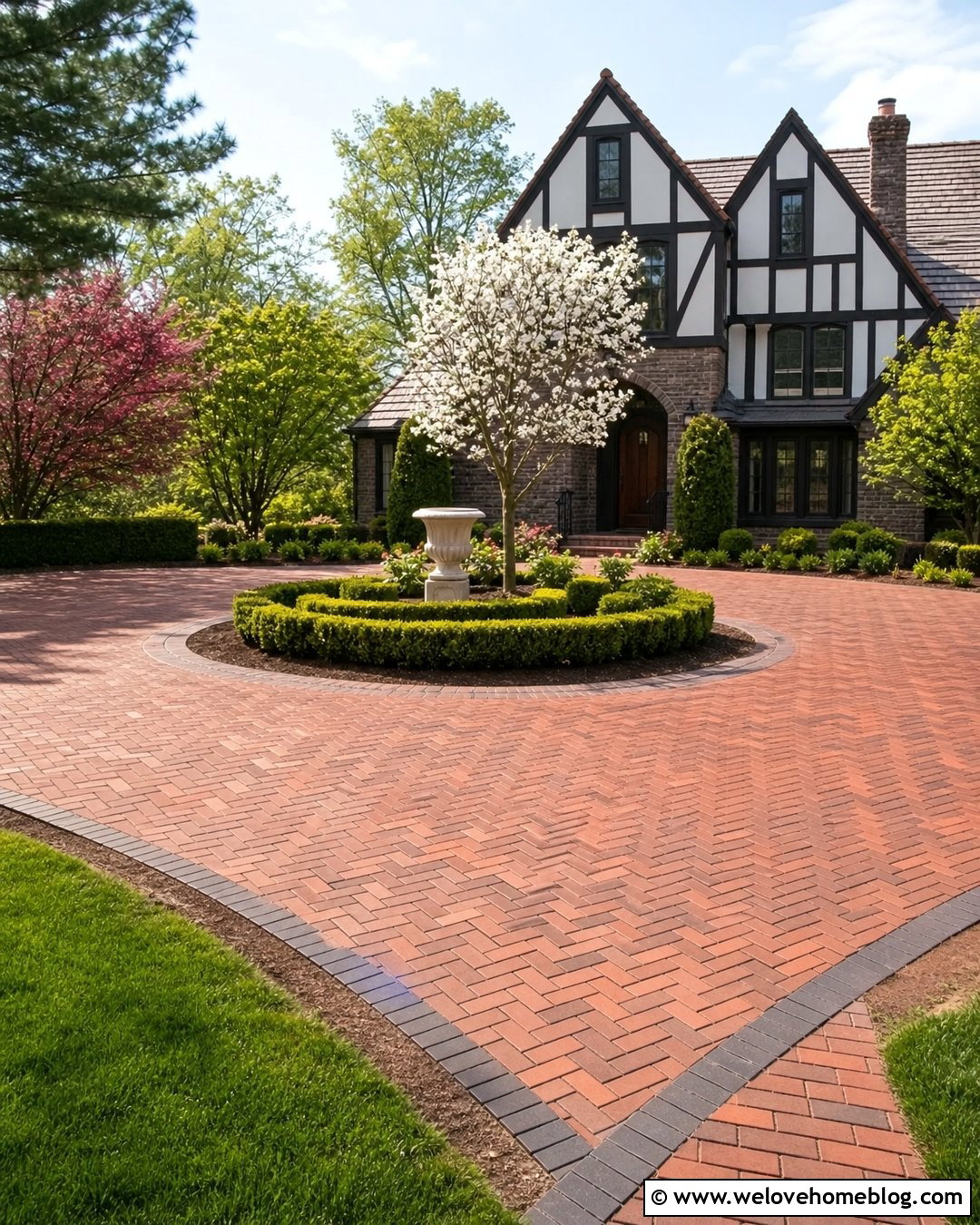
Warm clay brick pavers make a driveway roundabout feel established and inviting. A herringbone pattern adds visual interest and handles the curved circulation lane better than long, uninterrupted rows. Border the pavement with a darker soldier-course band to create a tidy outline. Inside the roundabout, use low boxwood hedges arranged in rings around a small flowering tree or simple stone urn. The greenery softens the brick while preserving clear views across the front yard. Matching brick steps or a walkway can connect the roundabout to the main entrance. Proper edge restraints are important because turning vehicles place pressure on curved paver edges. This balanced look complements colonial, Tudor, and traditional red-brick houses beautifully.
4. Asphalt Driveway Roundabout With a Paver Border
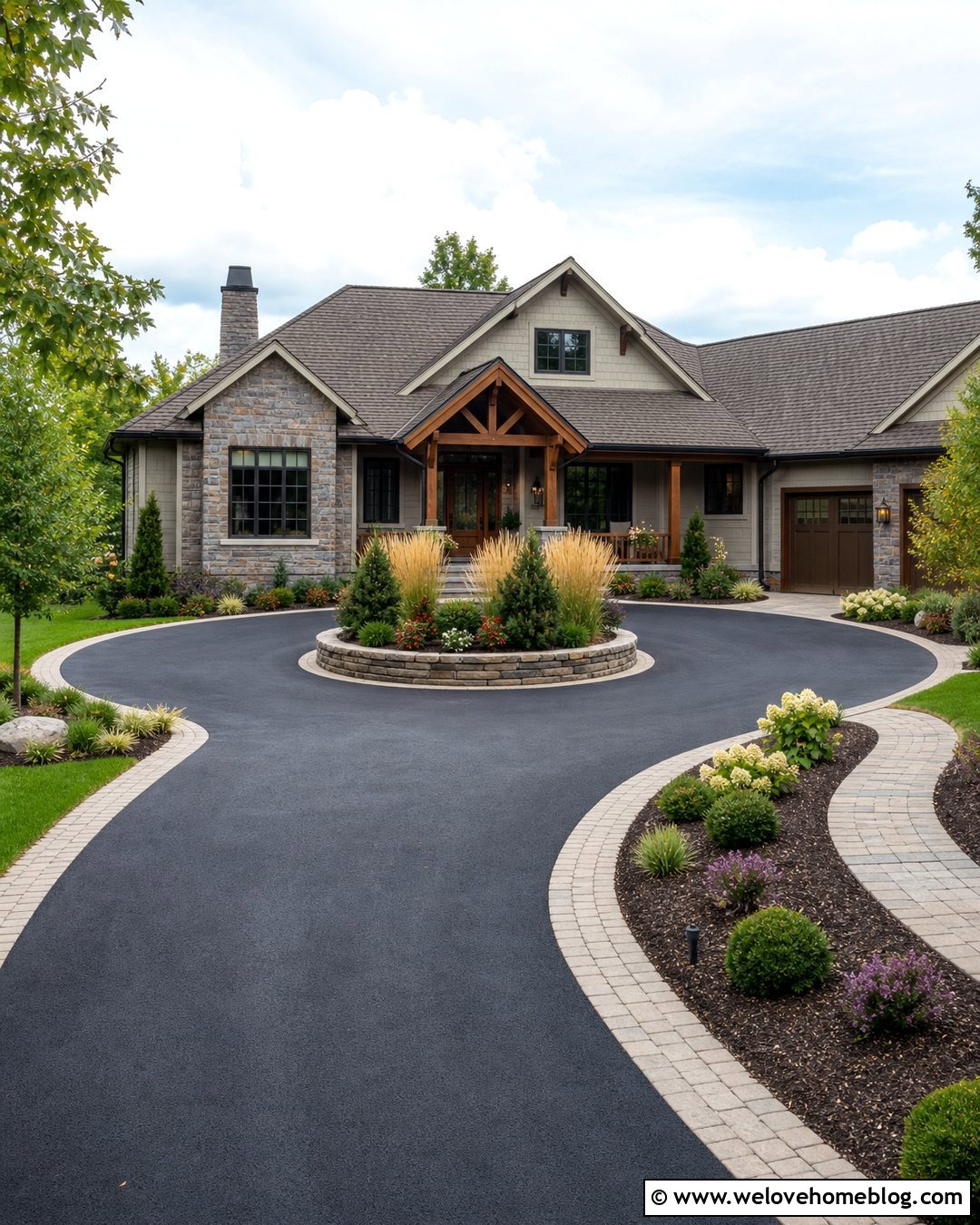
Black asphalt offers a practical surface for a large driveway roundabout, but thoughtful borders prevent it from looking plain. Frame both sides of the curved lane with warm tan or charcoal concrete pavers. The contrasting bands sharpen the circular shape and create a finished transition to the lawn. Build a raised center island with a natural stone retaining edge, layered evergreen shrubs, ornamental grasses, and seasonal flowers. The planting should remain low near the entry and exit for comfortable visibility. A curved walkway from the inner island is usually unnecessary, so connect the house using a separate path along the outside edge. This durable combination works well for busy family homes, long driveways, and properties that receive frequent deliveries.
5. Cobblestone Driveway Roundabout With a Garden Island
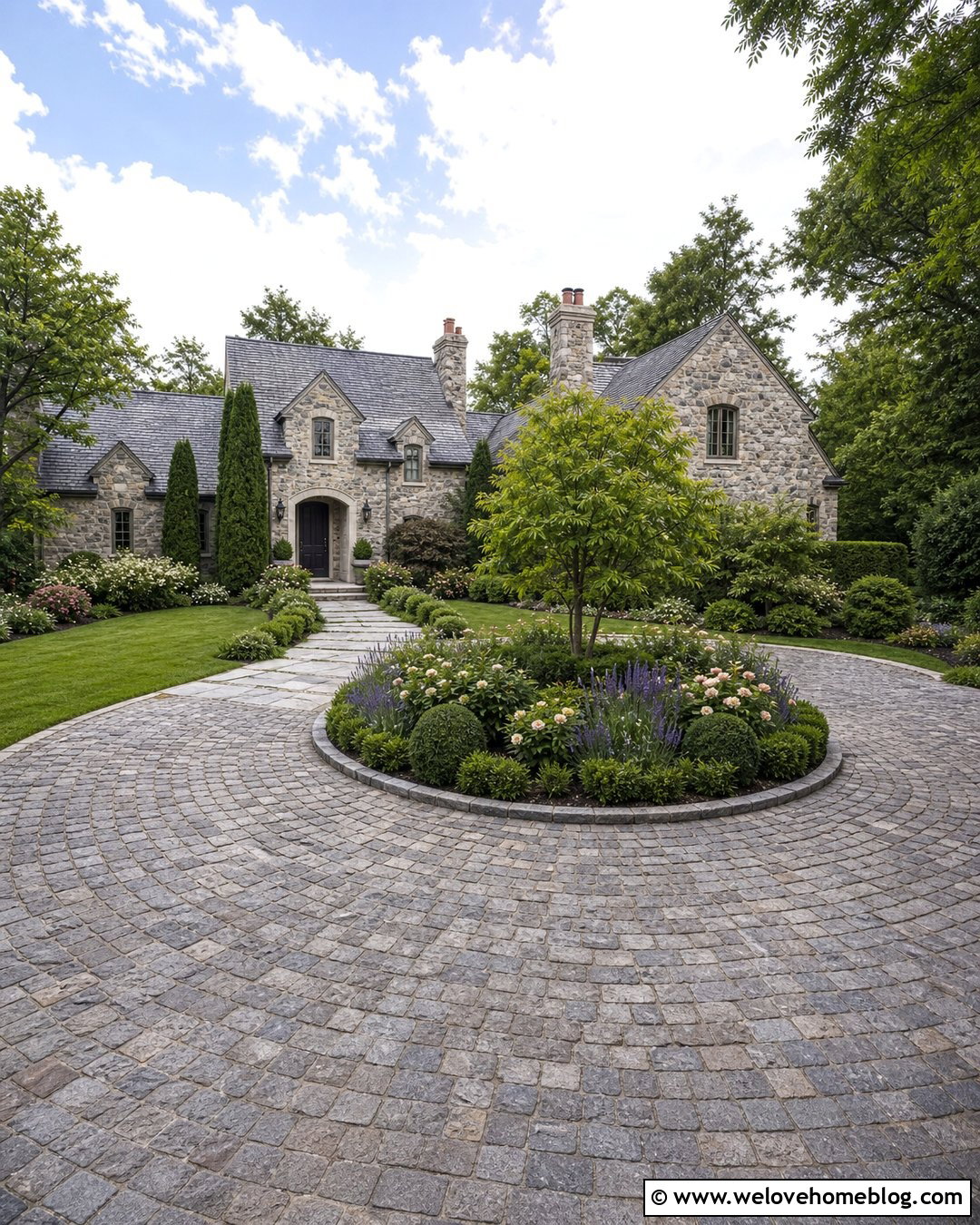
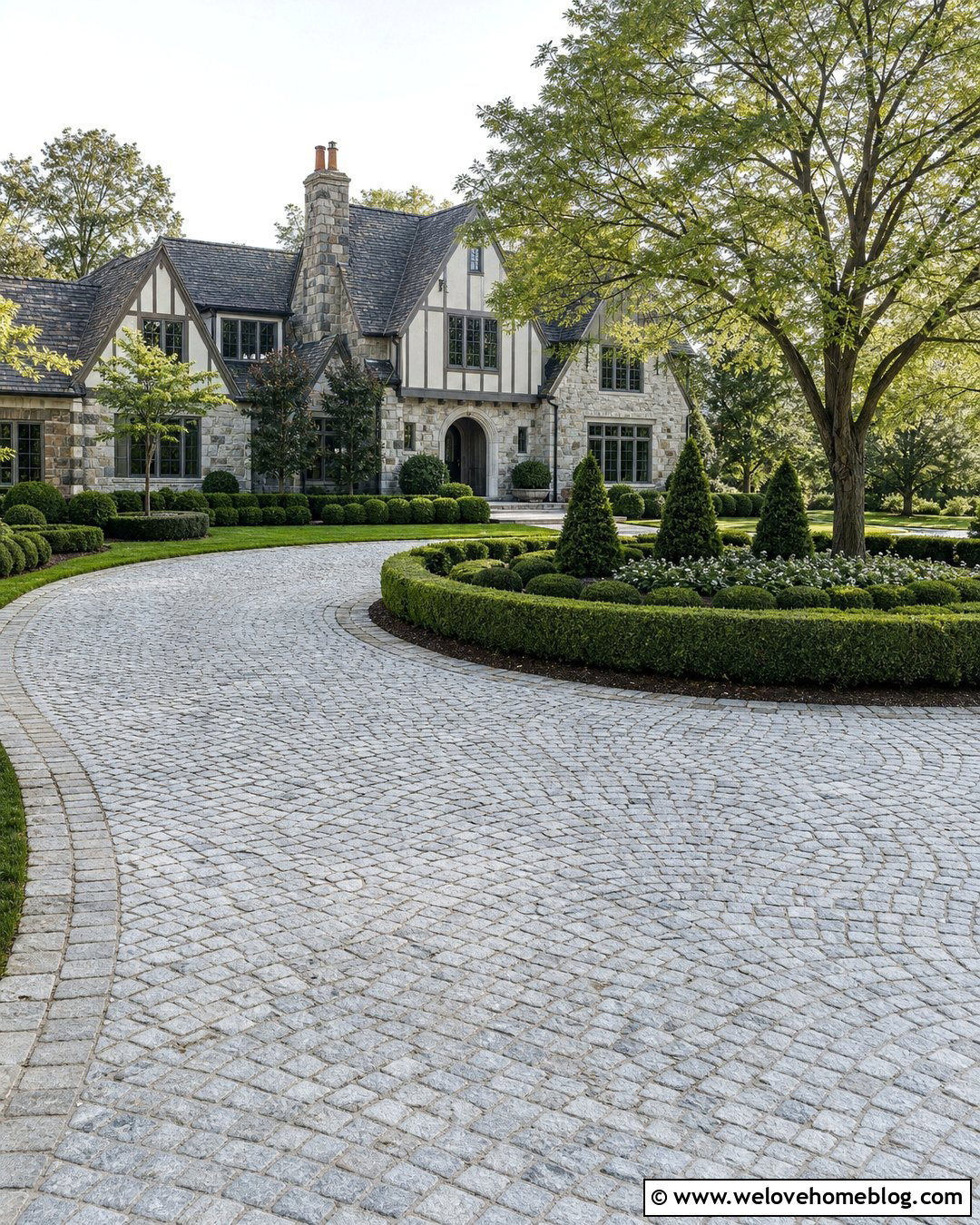
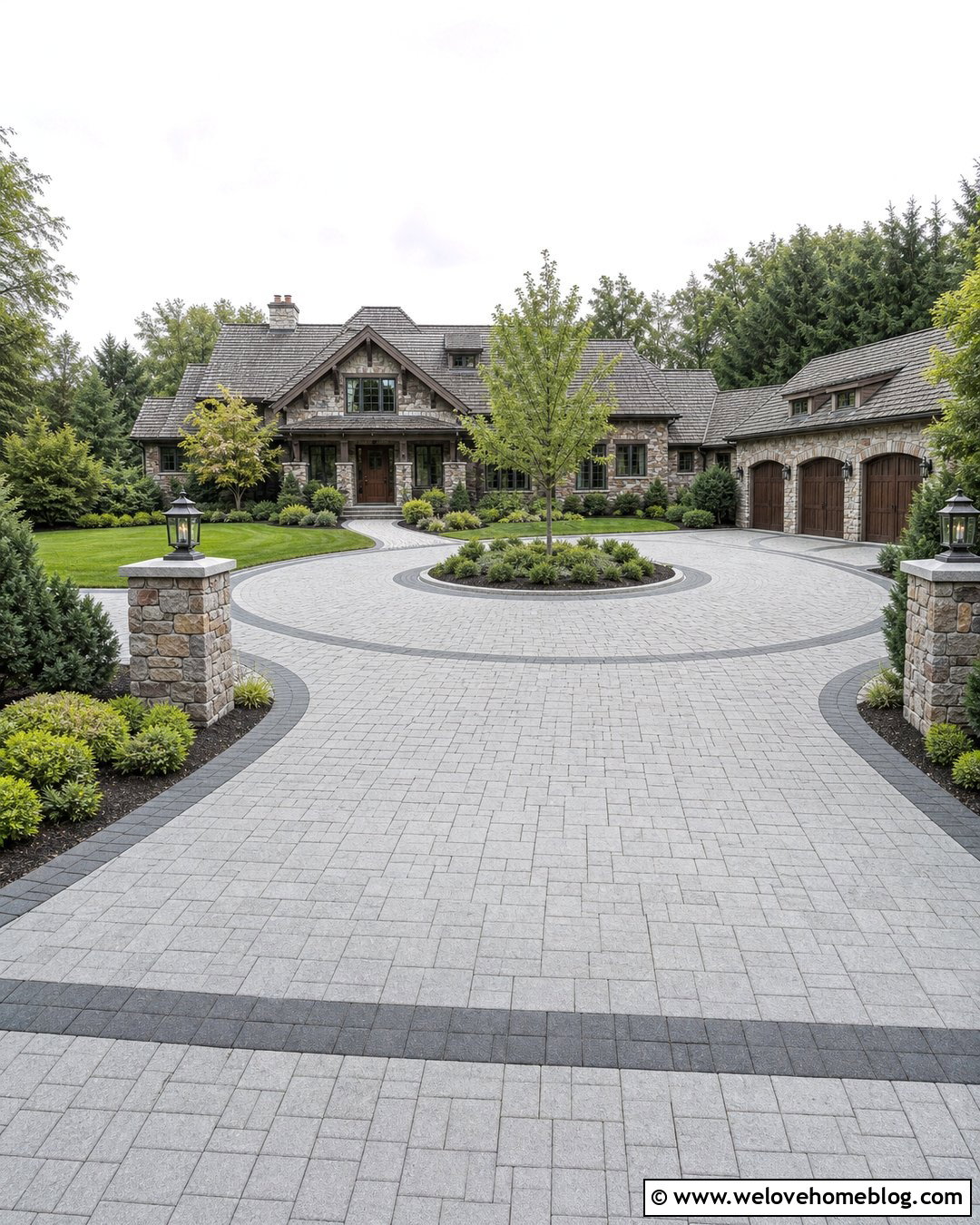
Cobblestone brings rich texture and old-world character to a residential driveway roundabout. Use full cobbles across the circular lane for a historic estate appearance, or reserve them for borders if a smoother driving surface is preferred. A generous center island filled with roses, lavender, clipped evergreens, and a small specimen tree balances the weight of the stone. Curved granite curbing keeps soil away from the driveway and follows the roundabout’s shape precisely. Add a wide stone walkway from the drop-off area to the front steps. The house should remain visible above the planting, so place taller shrubs toward the middle. This complete design feels especially appropriate beside European-inspired, Tudor, French country, and traditional stone homes.
6. Modern Driveway Roundabout With Concrete Pavers
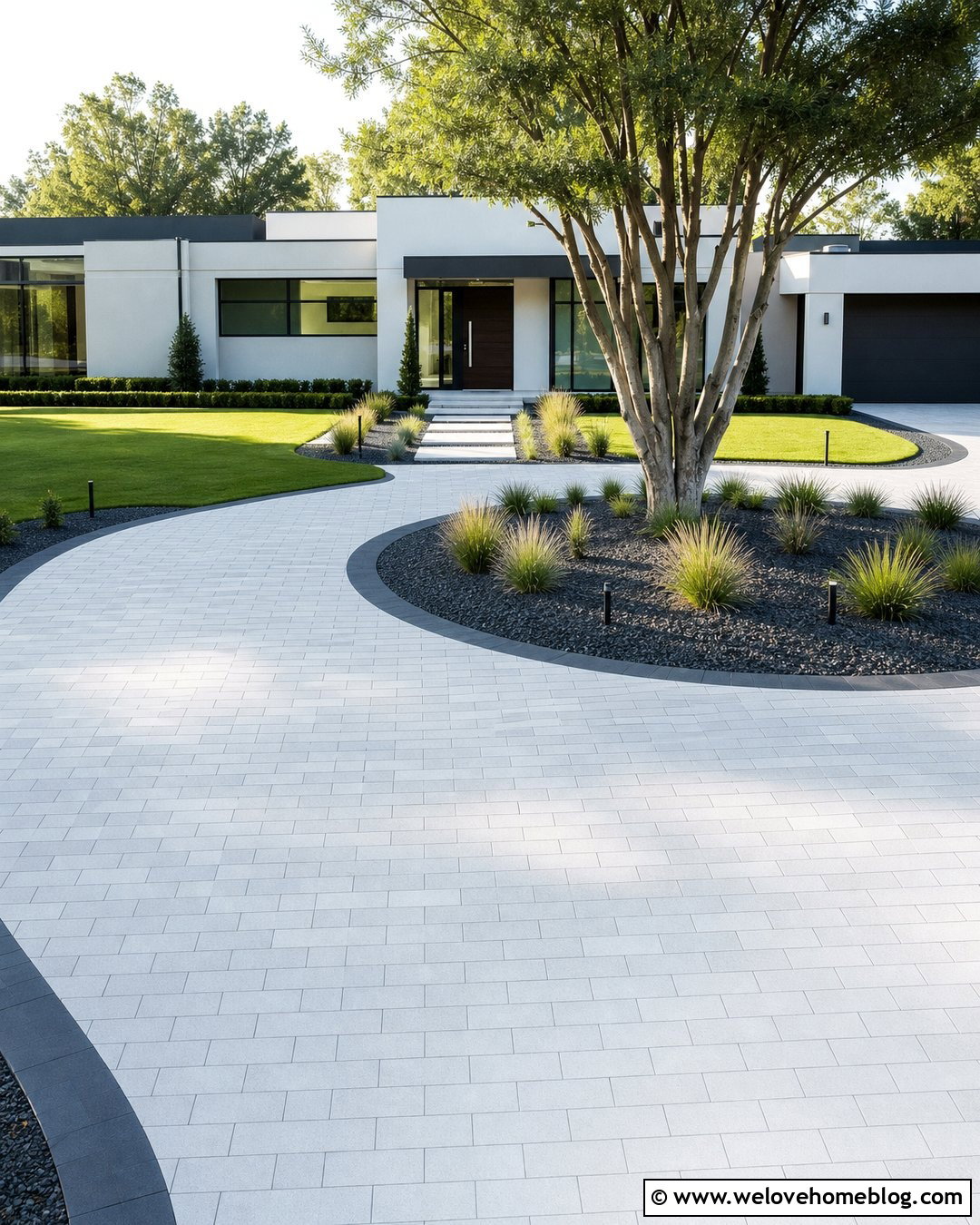
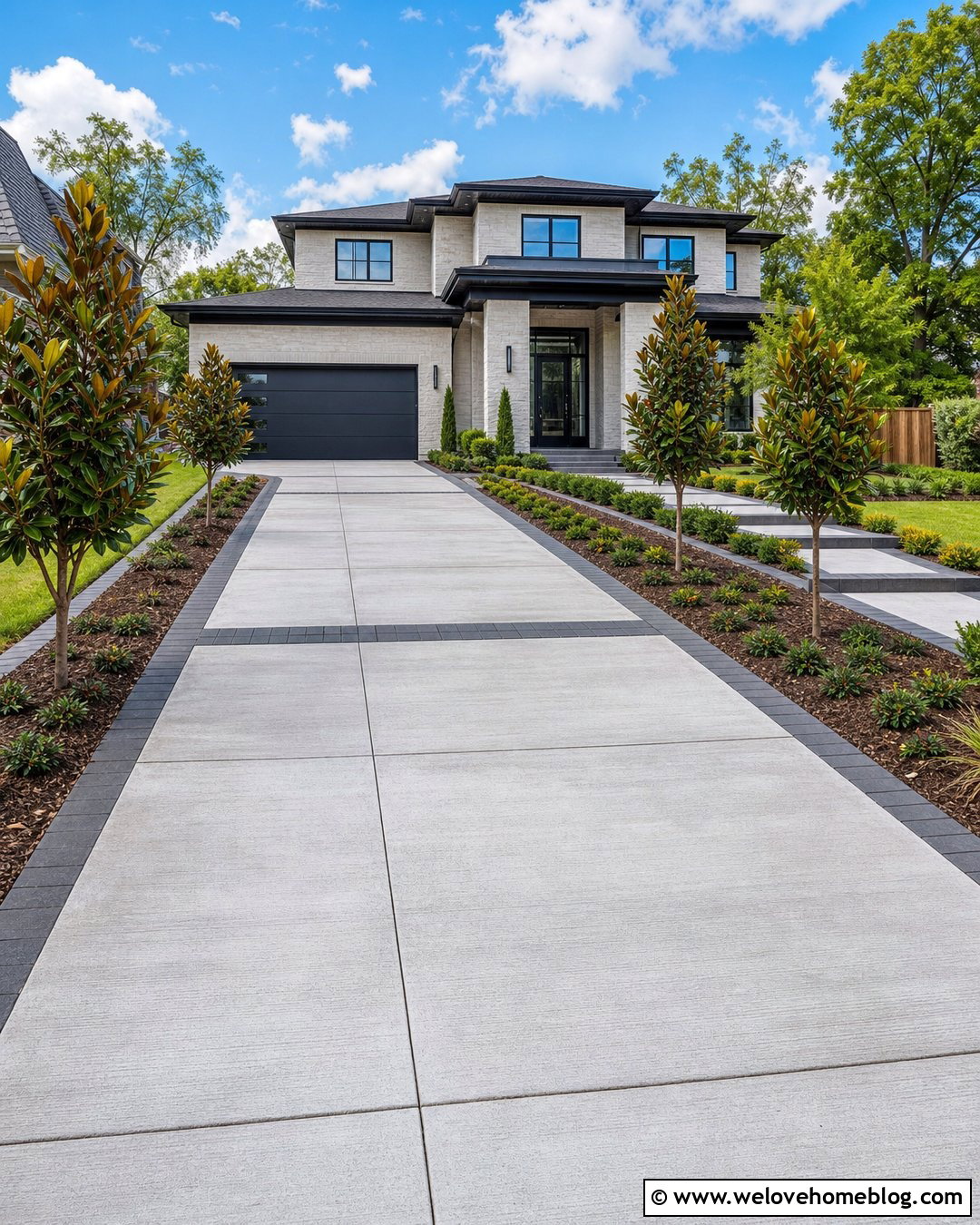
Large-format concrete pavers can give a driveway roundabout a modern, uncluttered appearance. Choose rectangular pavers in soft gray, arranged in a running bond that follows the direction of travel. A narrow charcoal border emphasizes the circle without adding excessive decoration. Keep the center island simple with a sculptural multi-trunk tree, dark gravel, and grouped ornamental grasses. Straight concrete stepping pads can form a walkway toward a modern front entrance. Low-profile bollard lights around the outer landscape provide gentle illumination without filling the island with fixtures. Crisp lawn edges and restrained planting allow the geometry to stand out. This approach works best when the paver colors coordinate with the home’s siding, roof, window frames, or stone accents.
7. Pea Gravel Driveway Roundabout With Brick Edging
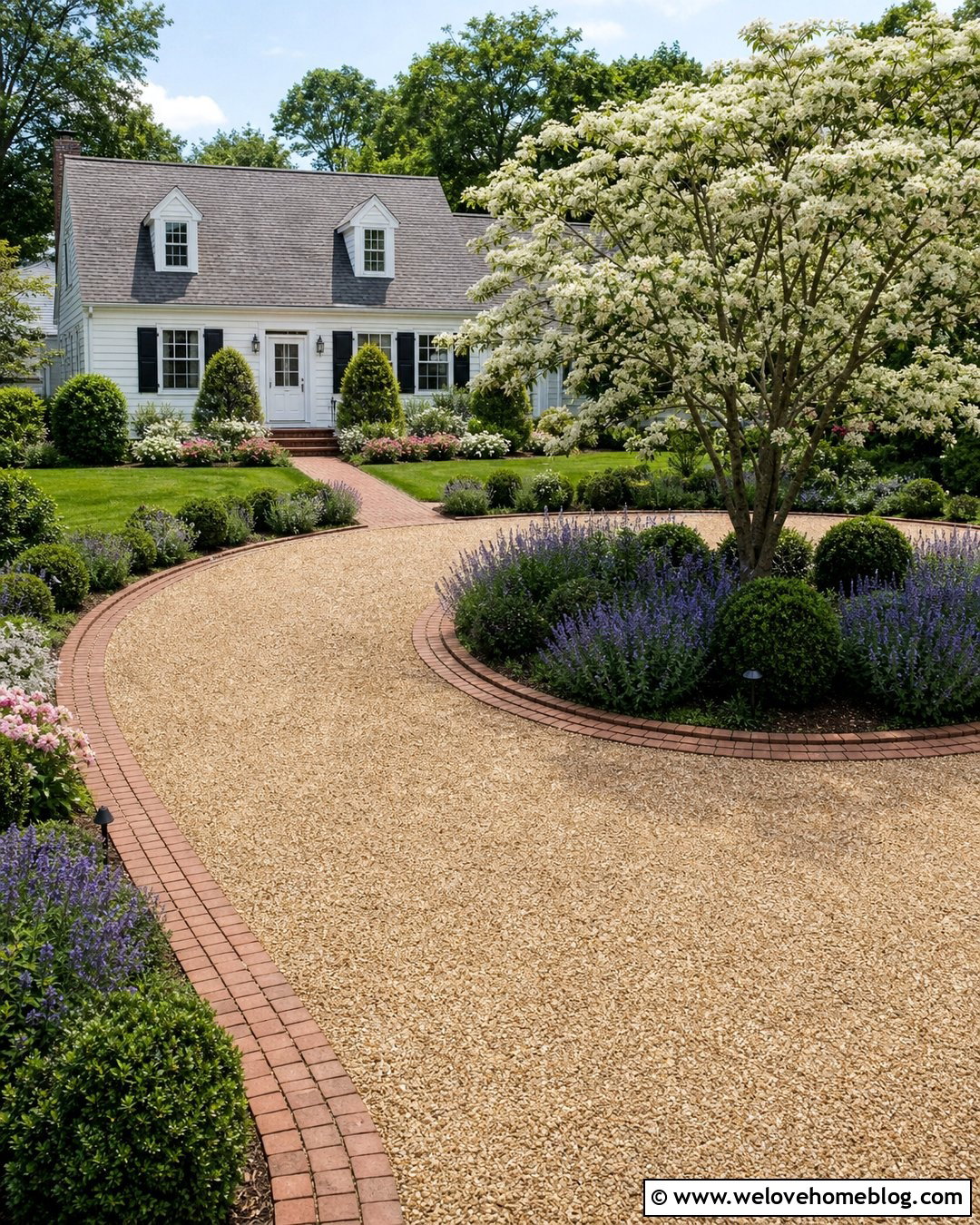
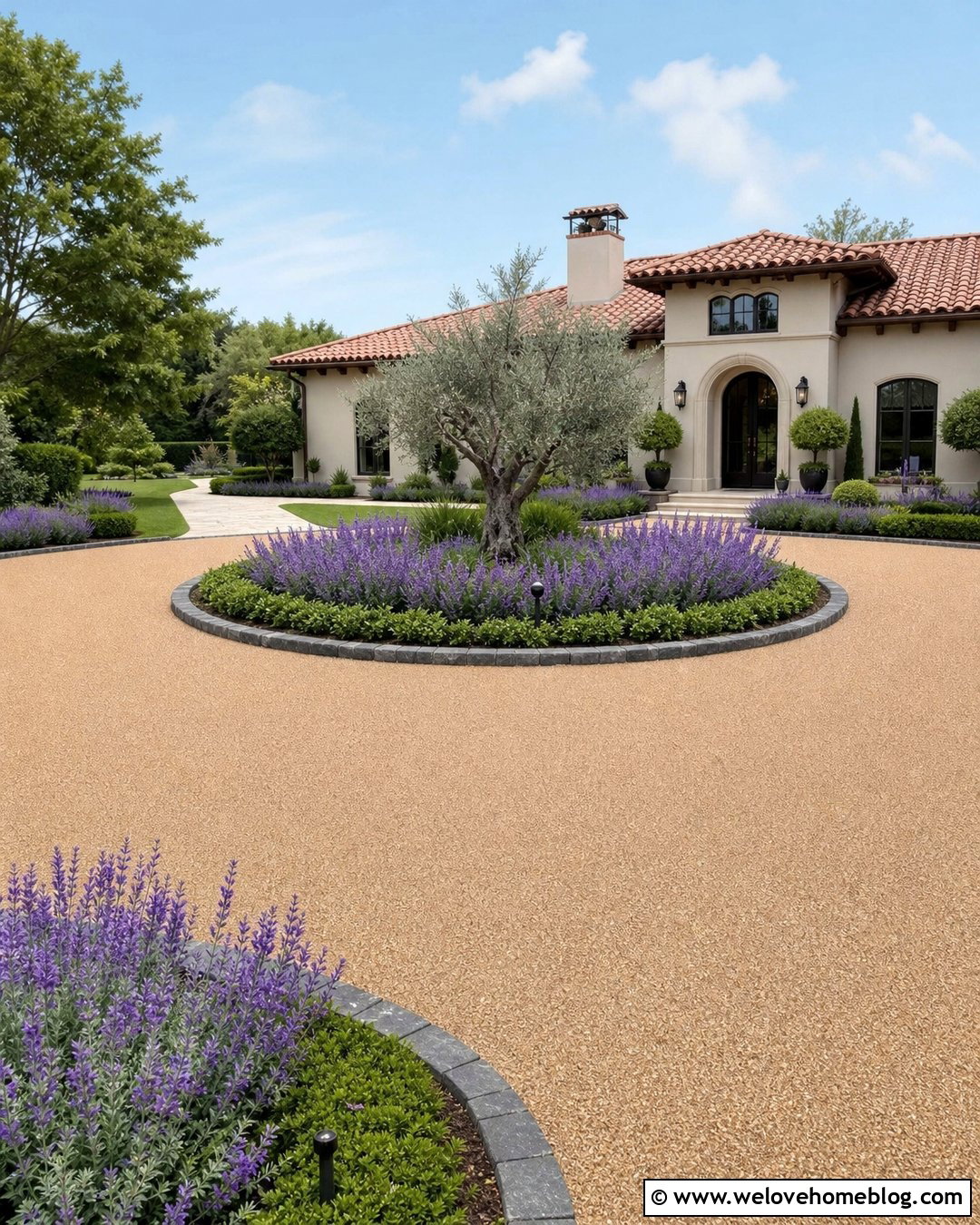
Golden pea gravel creates a softer, brighter driveway roundabout than standard gray crushed stone. It looks particularly welcoming beside a white farmhouse, cottage, or Cape Cod home. Contain the loose material with red clay brick laid in a sturdy double-row border. A slightly raised center island can feature a flowering dogwood surrounded by lavender, catmint, and compact evergreen shrubs. Because rounded pea gravel can shift, install it over a well-compacted base and consider cellular stabilization beneath high-traffic areas. Use matching brick for the walkway leading from the inner drop-off point to the porch. The combination of warm gravel, traditional brick, and colorful planting produces a casual entrance that still feels organized and complete.
8. Exposed Aggregate Driveway Roundabout With Stone Columns
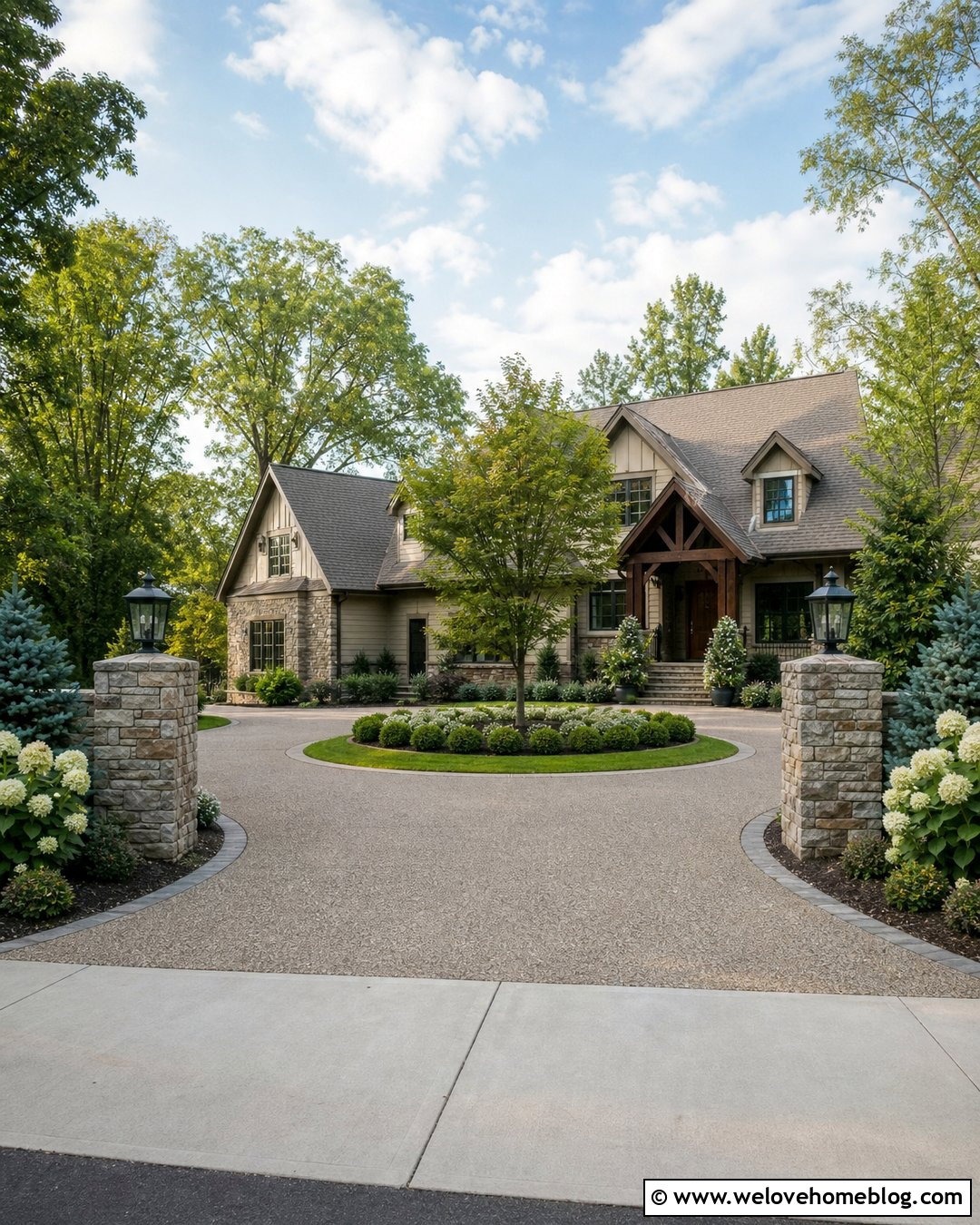
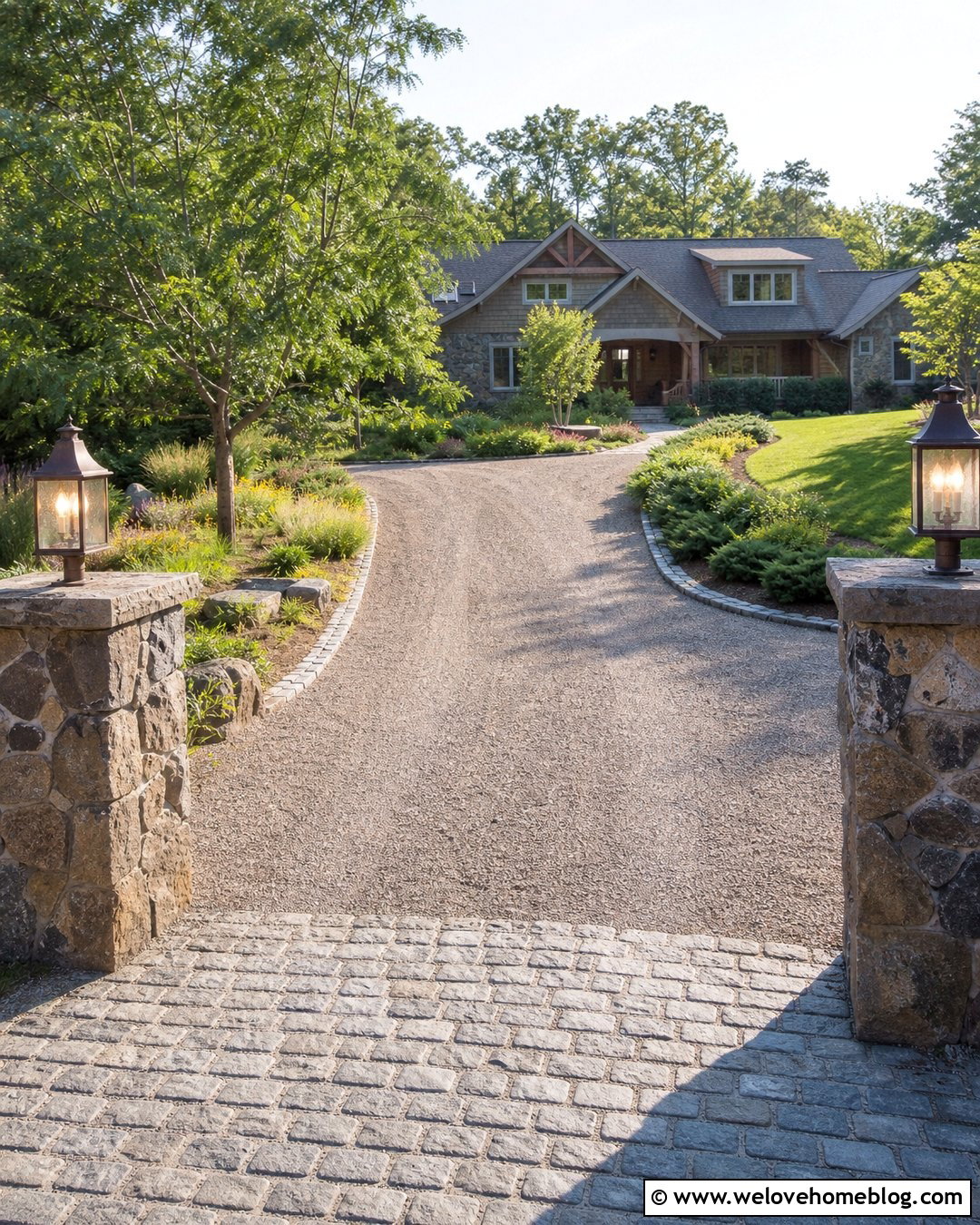
An exposed aggregate driveway roundabout combines dependable performance with a textured, upscale finish. Select an aggregate blend containing beige, gray, and brown stone so the surface coordinates with natural masonry. Mark the entrance using substantial stone columns positioned beyond the turning path. Low walls can extend from the columns into curved planting beds filled with hydrangeas, dwarf evergreens, and spreading ground cover. In the center island, repeat the same stone around a mounded lawn and one carefully placed ornamental tree. A smooth concrete apron at the street creates a clean transition and helps contain the decorative finish. This coordinated design suits craftsman, mountain, ranch, and transitional homes with visible stonework on the facade.
9. Resin-Bound Driveway Roundabout With Low Planting
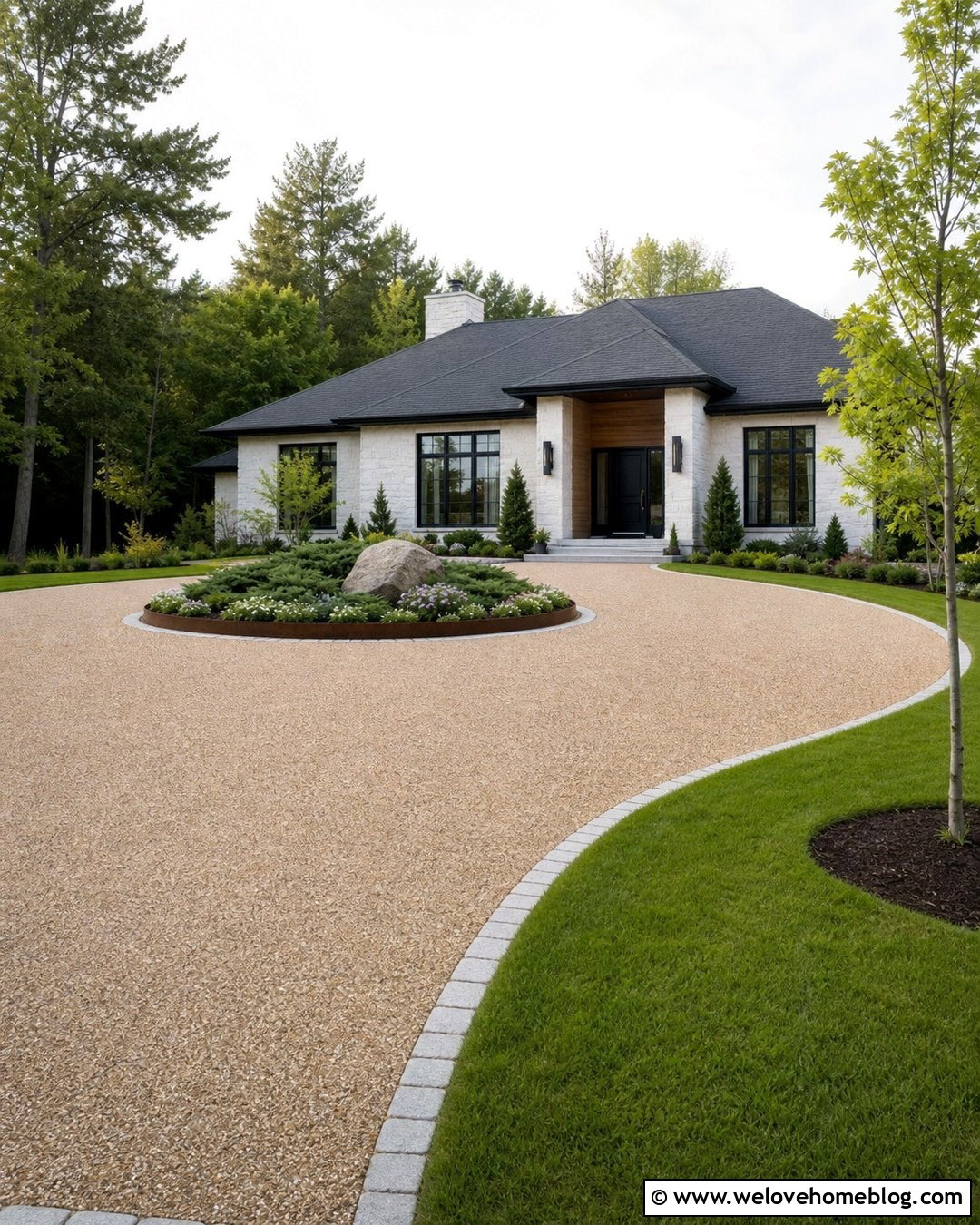
A resin-bound gravel surface delivers the natural appearance of small stone with a smoother, more controlled finish. Use a warm buff or light gray mixture across the entire driveway roundabout, then outline it with slim granite setts. The center island can remain minimal, combining a low evergreen mound, flowering ground cover, and one sculptural boulder. This keeps the front elevation open and makes the roundabout suitable for a modern or updated suburban home. Repeat the resin surface on the pedestrian path for a seamless connection to the entrance. Curved steel edging can separate surrounding beds from the lawn. The limited palette allows the material, circular layout, and architecture to work together without making the front yard feel overly decorated.
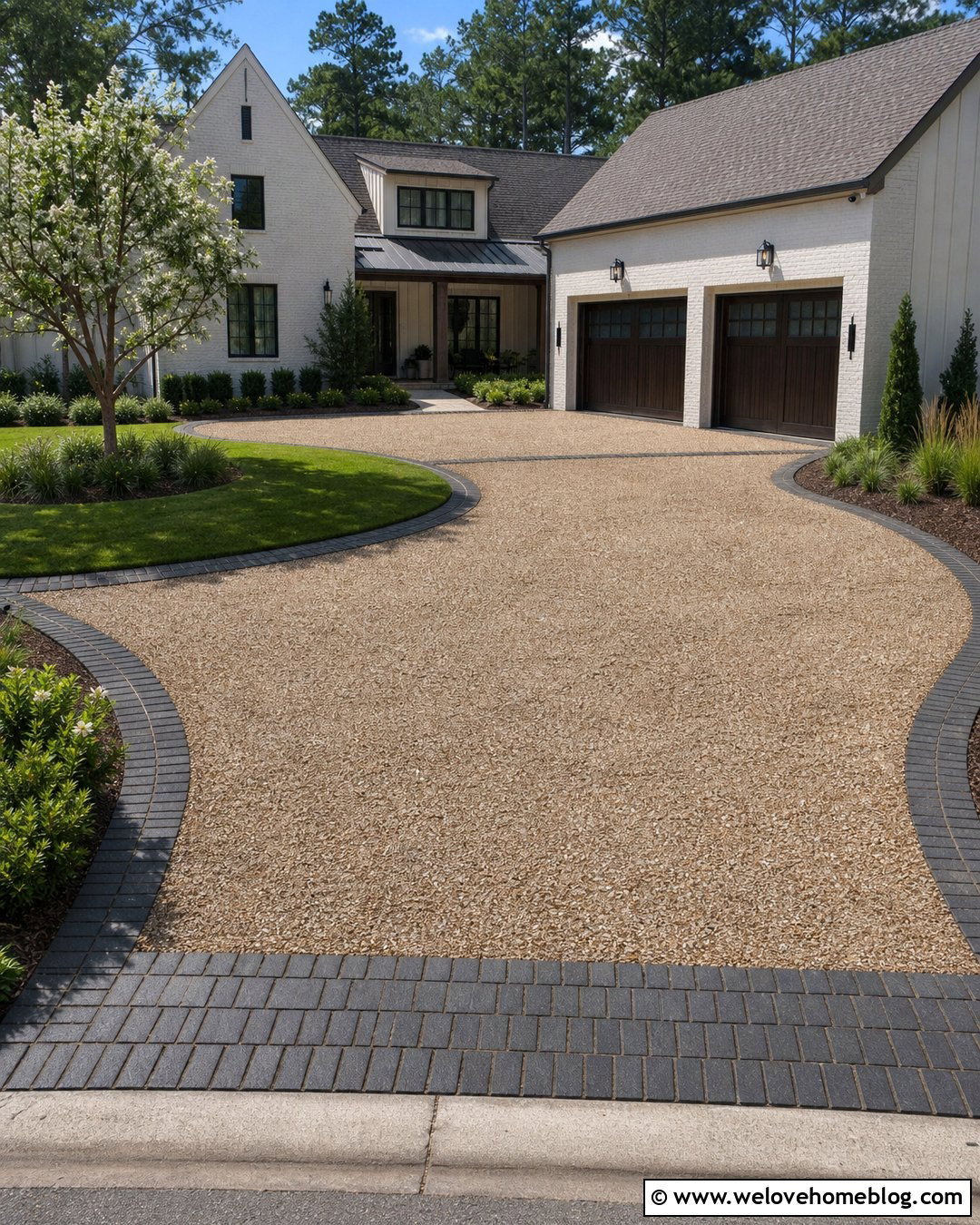
10. Small Driveway Roundabout With a Mountable Center
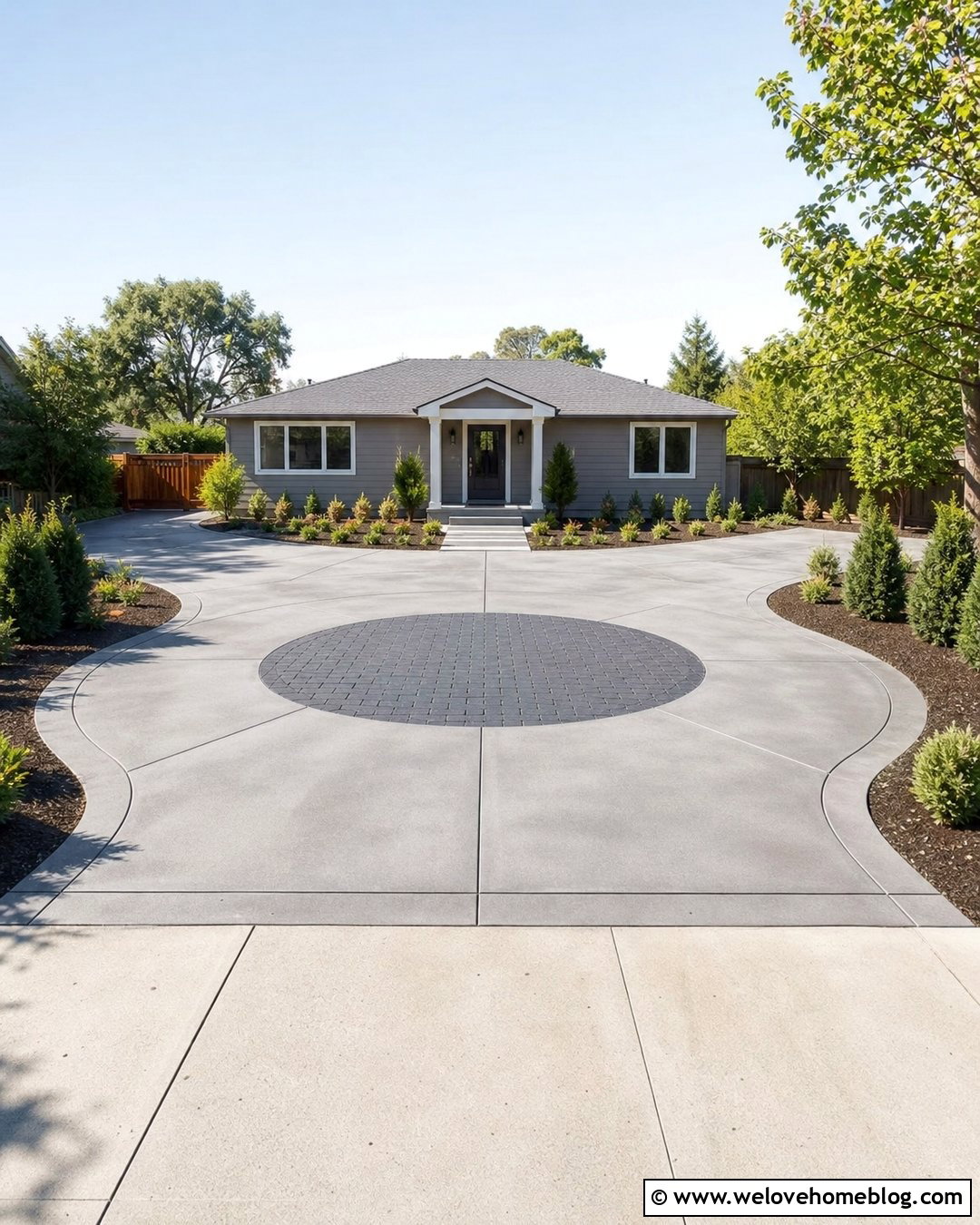
Limited front-yard space does not always rule out a driveway roundabout. A compact design can use a low, mountable center made from textured concrete or contrasting pavers. Everyday vehicles circulate around it, while longer vehicles can carefully track over part of the center when necessary. Surround the feature with a charcoal asphalt or gray concrete driving surface and a simple flush border. Keep landscaping outside the circle, using narrow beds, upright shrubs, and a clear walkway to the porch. Since the center must remain usable, avoid planters, trees, lights, or decorative objects on it. This practical configuration gives a smaller suburban property better turning flexibility without sacrificing large amounts of lawn or creating a visually heavy island.
11. Large Driveway Roundabout With a Lawn Island
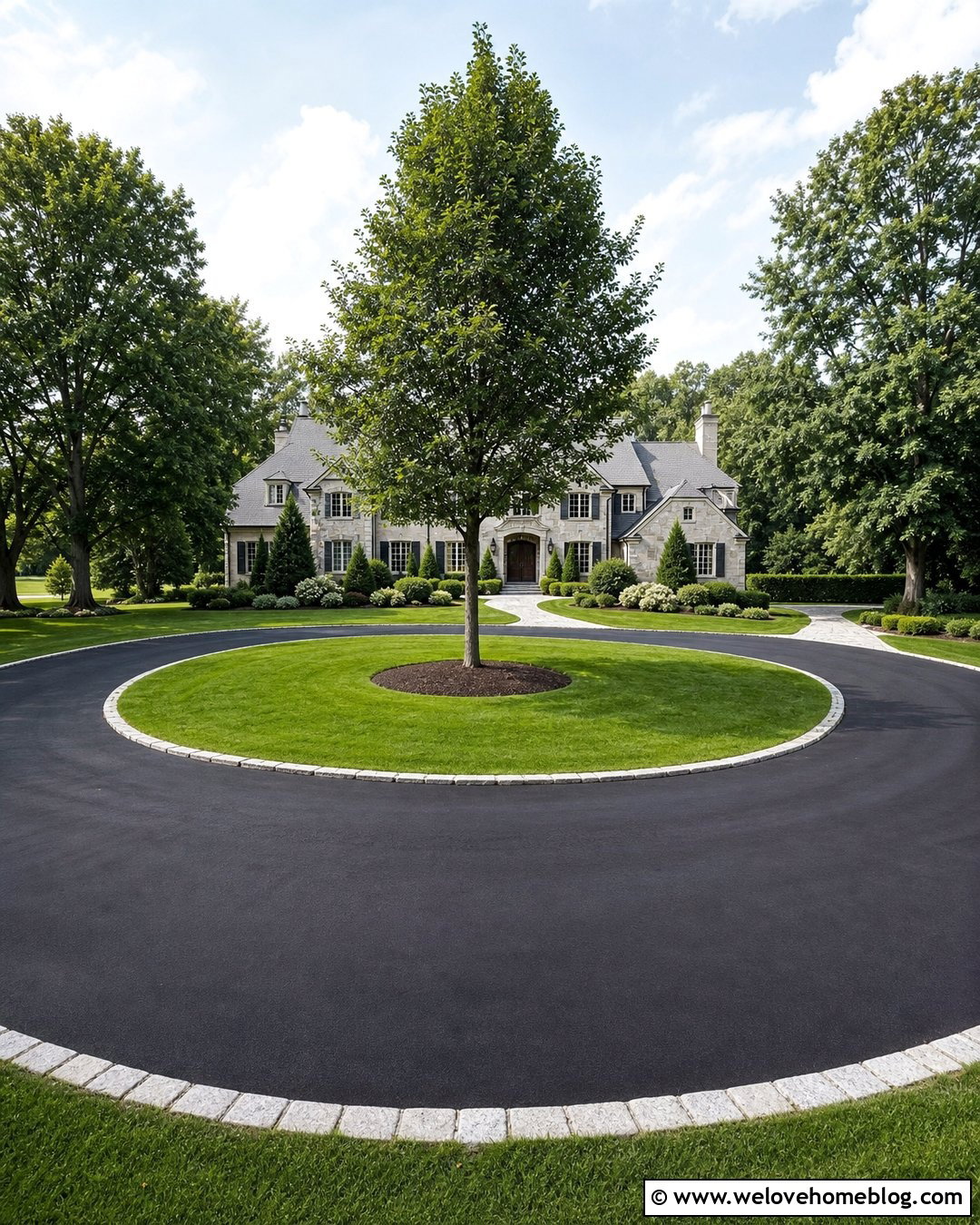
On a spacious property, a broad lawn island can make the driveway roundabout feel like part of the landscape rather than an oversized paved area. Use smooth asphalt, concrete, or stabilized gravel for the circulating lane and edge it with flush granite curbing. The center can be mostly grass with a mature shade tree placed away from important views. A narrow ring of mulch protects the trunk and simplifies mowing. Add layered planting near the house instead of filling the island with many decorative features. The open grass provides visual breathing room and creates an elegant foreground for a large home. A separate curved walkway should guide visitors from a convenient drop-off point to the front entrance without forcing them across the island.
12. Driveway Roundabout With a Native Plant Garden
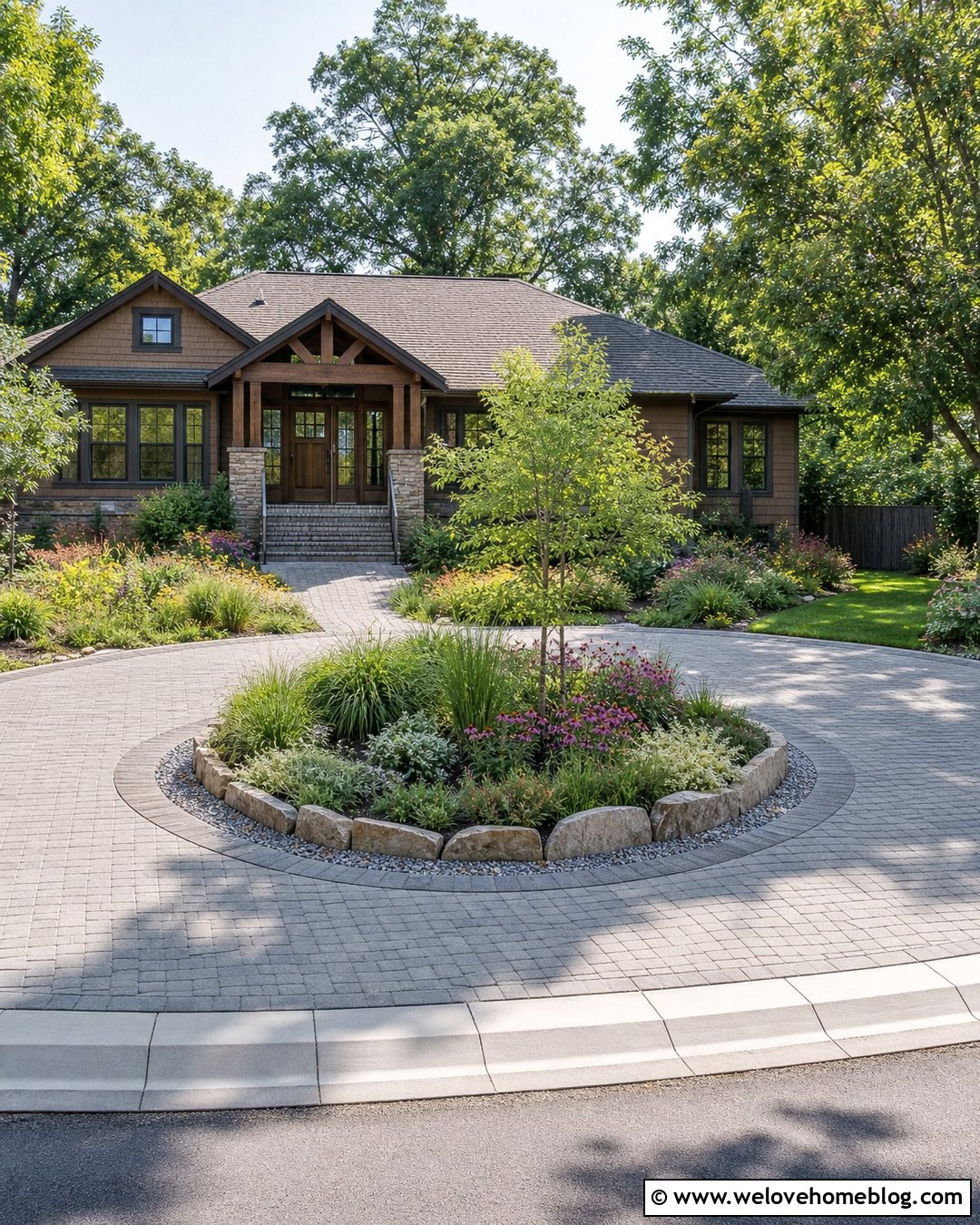
A native plant garden can transform the center of a driveway roundabout into a colorful, lower-input landscape. Pair a permeable gray paver lane with a stone-edged island containing plants suited to the local climate and soil. Arrange taller grasses and flowering perennials toward the center, then use shorter ground covers around the perimeter. Repeating a limited selection in generous groups creates a cleaner result than mixing many individual varieties. A small native tree can provide height, habitat, and seasonal interest. Add a thin gravel maintenance strip inside the curb to keep foliage away from vehicle tires. The surrounding yard should repeat a few island plants so the roundabout feels connected to the property rather than becoming an isolated garden circle.
13. Driveway Roundabout With a Japanese Maple Island
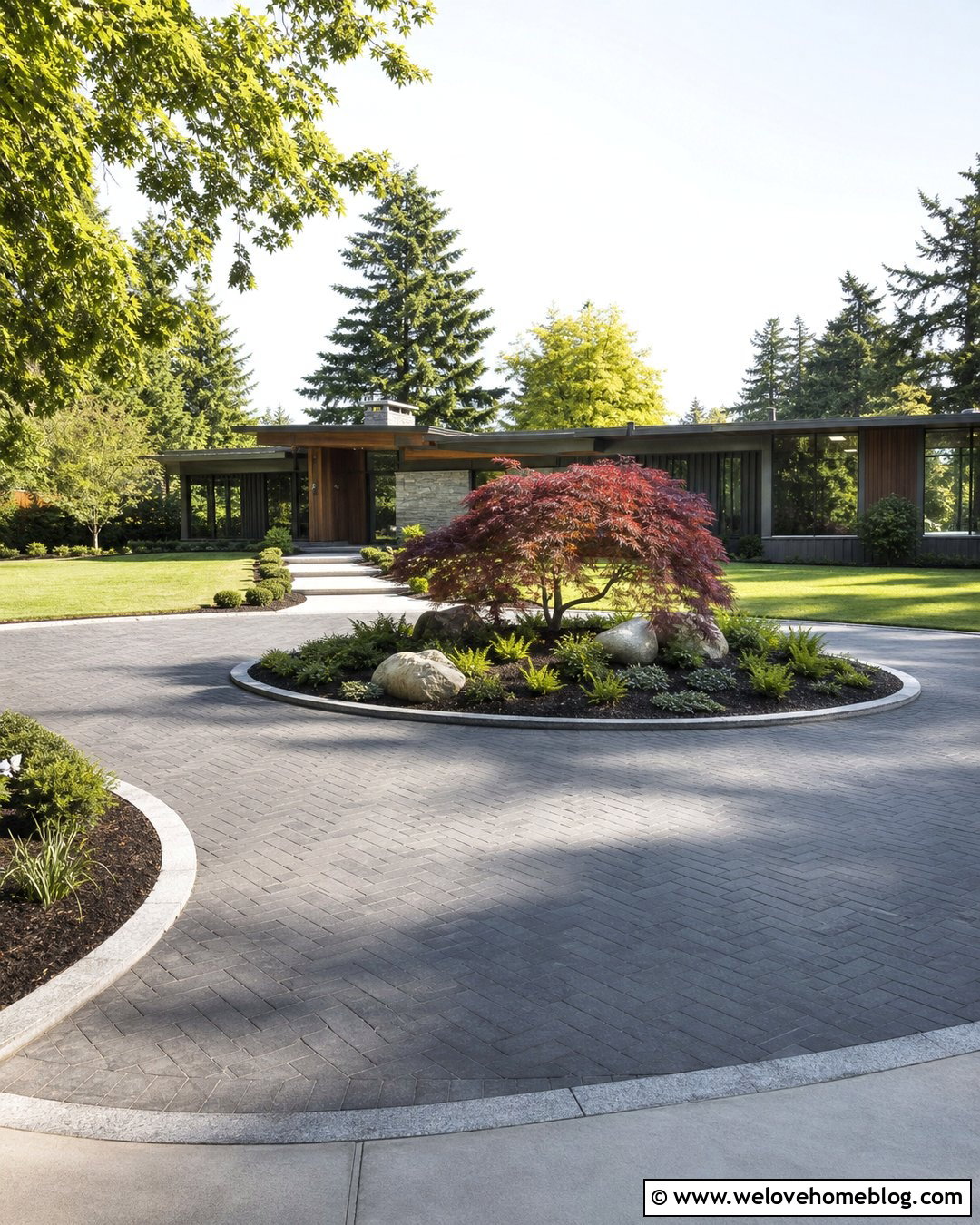
The delicate shape and changing color of a Japanese maple make it a beautiful focal point for a sheltered driveway roundabout. Pair the tree with a charcoal concrete paver surface and a low border of smooth gray stone. Inside the island, use dark mulch, compact ferns, shade-tolerant ground cover, and several carefully positioned boulders. Keep the composition asymmetrical but balanced, allowing open space around the trunk so its branching form remains visible. Soft curves in the outer planting beds can echo the roundabout without looking overly formal. This design is most successful where the tree receives suitable light and protection from harsh conditions. It complements contemporary, craftsman, Asian-influenced, and understated midcentury homes.
14. Driveway Roundabout With a Flagpole Center
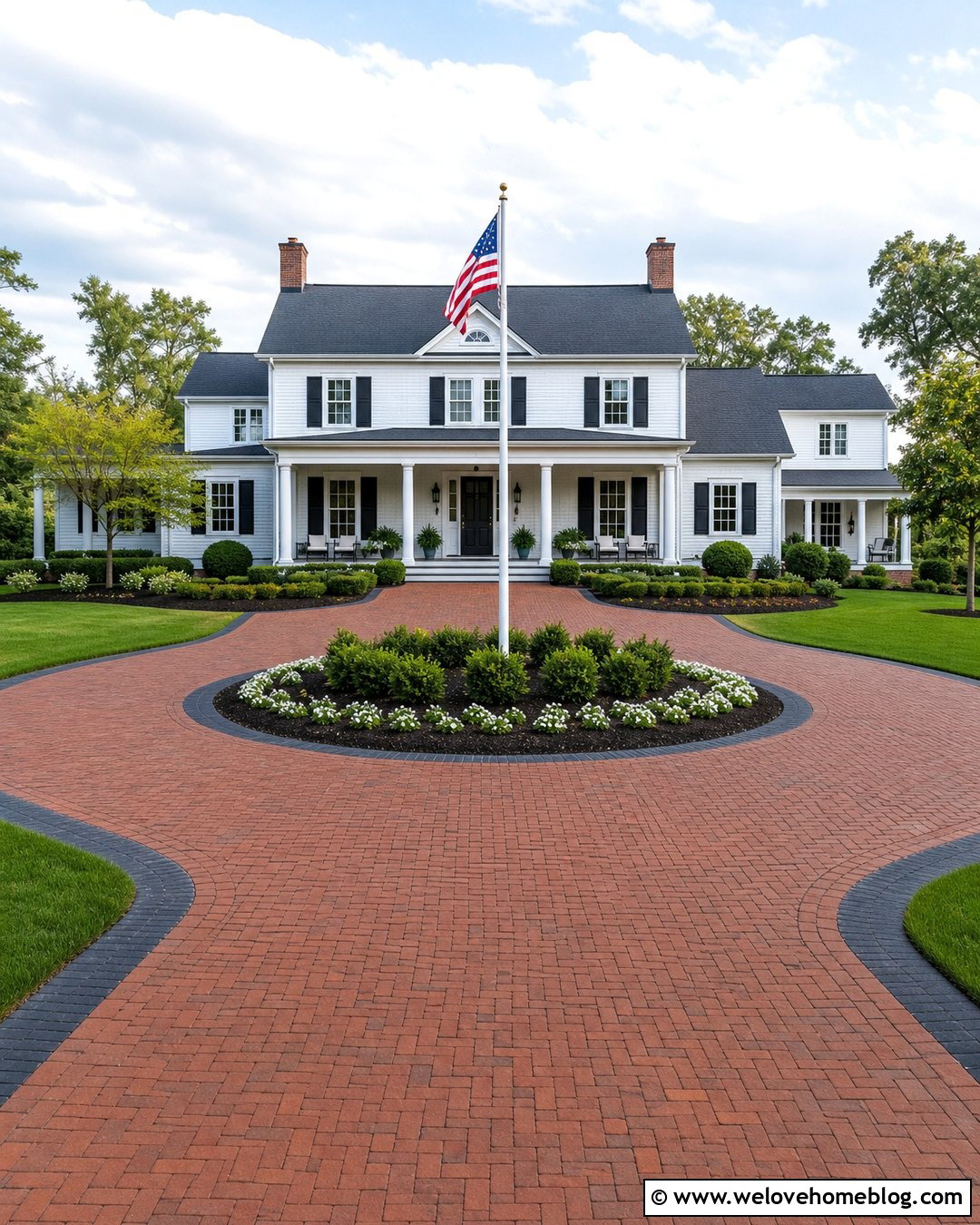
A flagpole can provide a strong vertical feature in the middle of a broad driveway roundabout when it is carefully scaled and positioned. Surround the base with a simple circular bed of low evergreen shrubs, seasonal flowers, and dark mulch. A red brick or warm concrete paver driveway creates a traditional backdrop, while a contrasting soldier-course border reinforces the round shape. Install lighting and pole hardware neatly so cords and fixtures do not clutter the island. The front walkway can begin at a widened drop-off zone along the inner curve and lead directly toward the porch. Avoid tall shrubs that compete with the flagpole or hide the house. This organized arrangement suits colonial, ranch, farmhouse, and civic-inspired residential architecture.
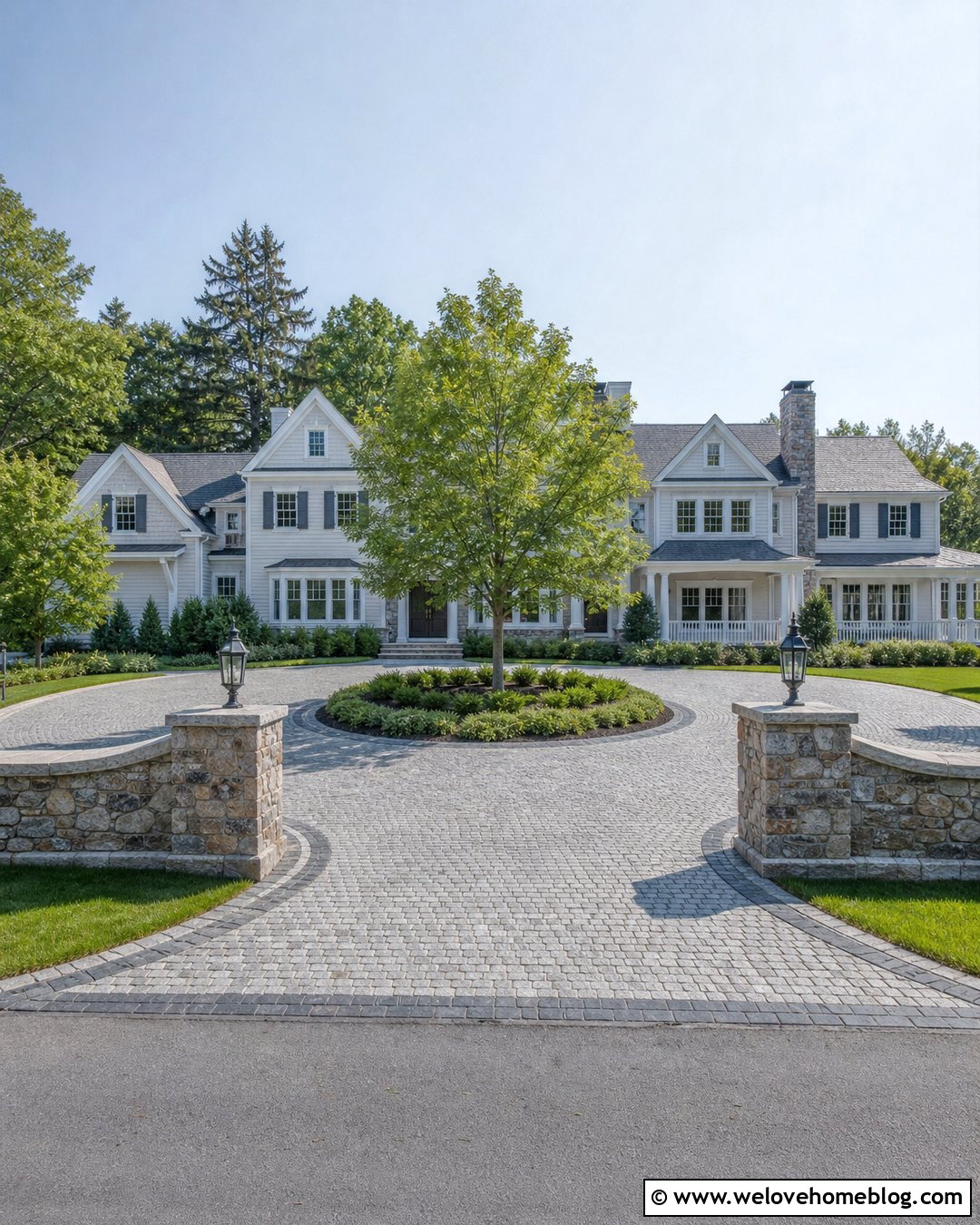
15. Driveway Roundabout With a Stone Address Sign
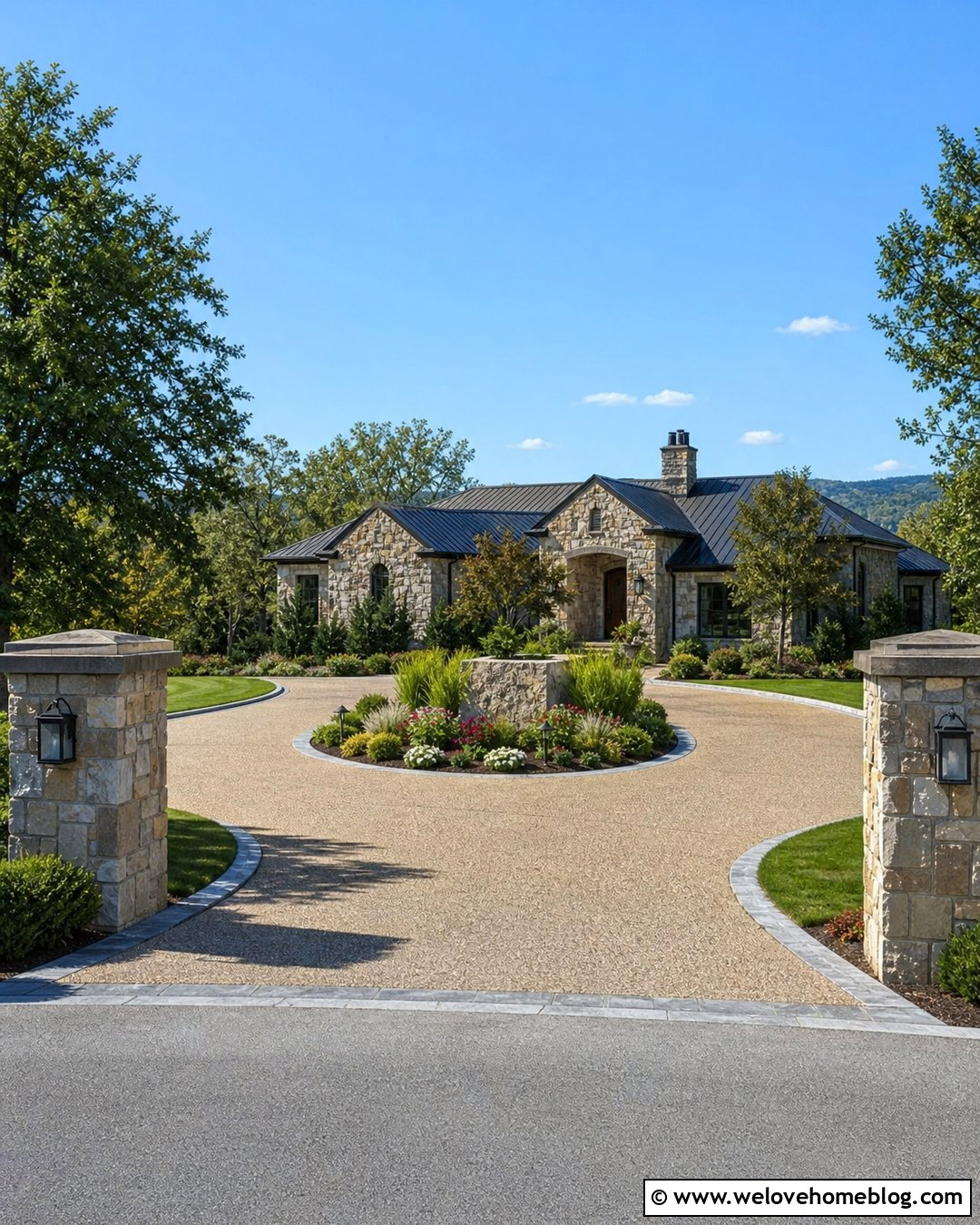
A masonry address sign turns the center island into a useful marker as well as a landscape focal point. Build a low natural stone or brick sign that matches materials already used on the house. Position it so visitors can read it from the approach without blocking important views around the driveway roundabout. A light concrete surface or buff resin-bound gravel makes darker masonry stand out. Frame the sign with compact shrubs, ornamental grasses, and seasonal flowers that remain below its face. Low-voltage lighting can illuminate the numbers evenly after sunset. Repeat the sign’s masonry in the driveway border or entrance columns. This cohesive design is especially helpful on deep lots where the home’s address is difficult to see from the road.
16. Driveway Roundabout With a Dry Creek Island
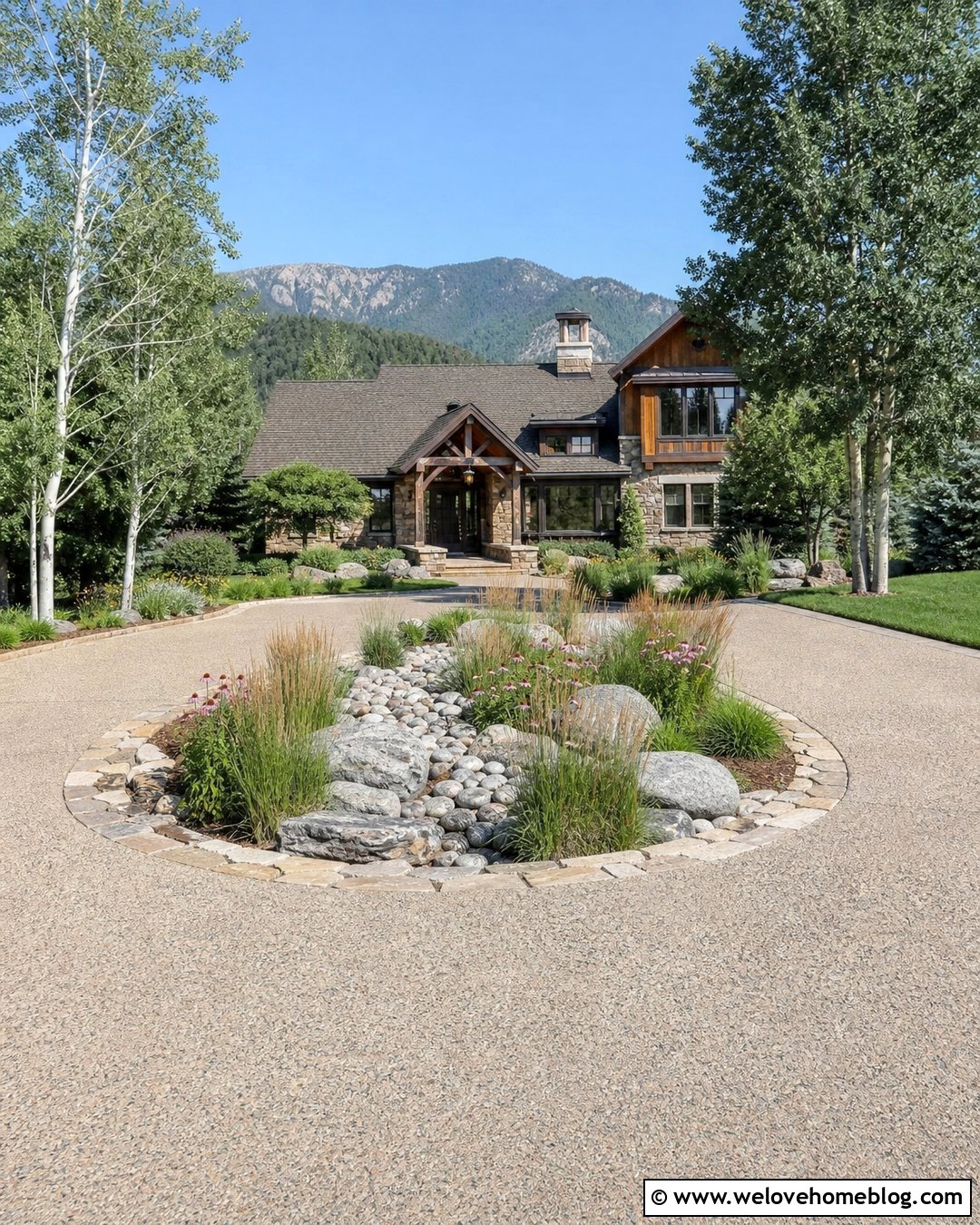
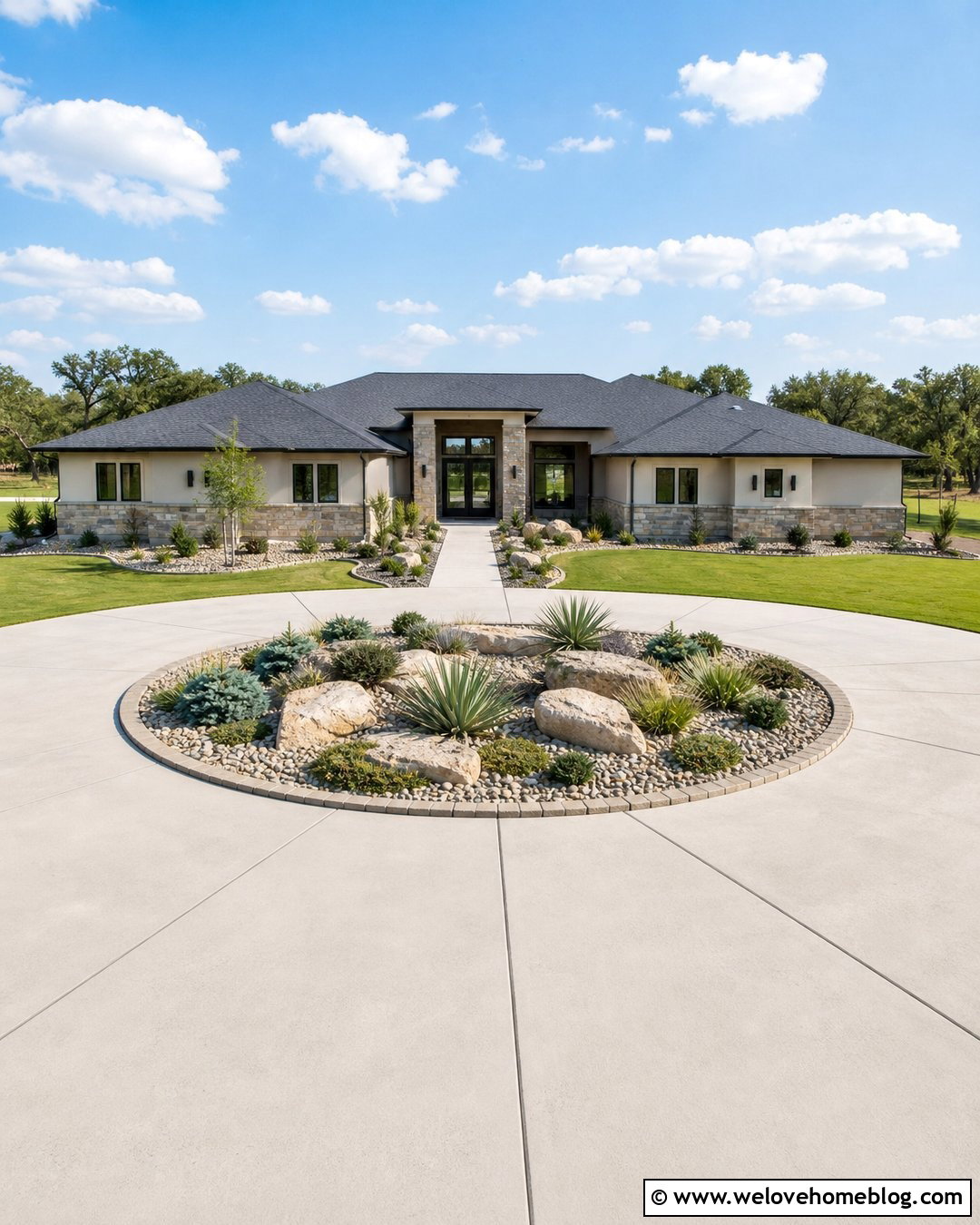
A dry creek landscape gives a driveway roundabout a natural look while visually referencing stormwater movement. Use exposed aggregate concrete for the driving lane and outline the island with weathered fieldstone. Through the center, arrange a shallow ribbon of rounded river rock, larger boulders, and drought-tolerant grasses. A small bridge-style walkway should only be added if pedestrians genuinely need to cross the island. Otherwise, keep the feature purely decorative and direct foot traffic around the outside. Planting pockets can hold sedges, coneflowers, creeping ground cover, and compact shrubs suited to the site. Repeating river rock near downspouts or outer beds helps unify the yard. The result complements rustic ranch, craftsman, desert-modern, and mountain-inspired homes.
17. Driveway Roundabout With Hydrangea Landscaping
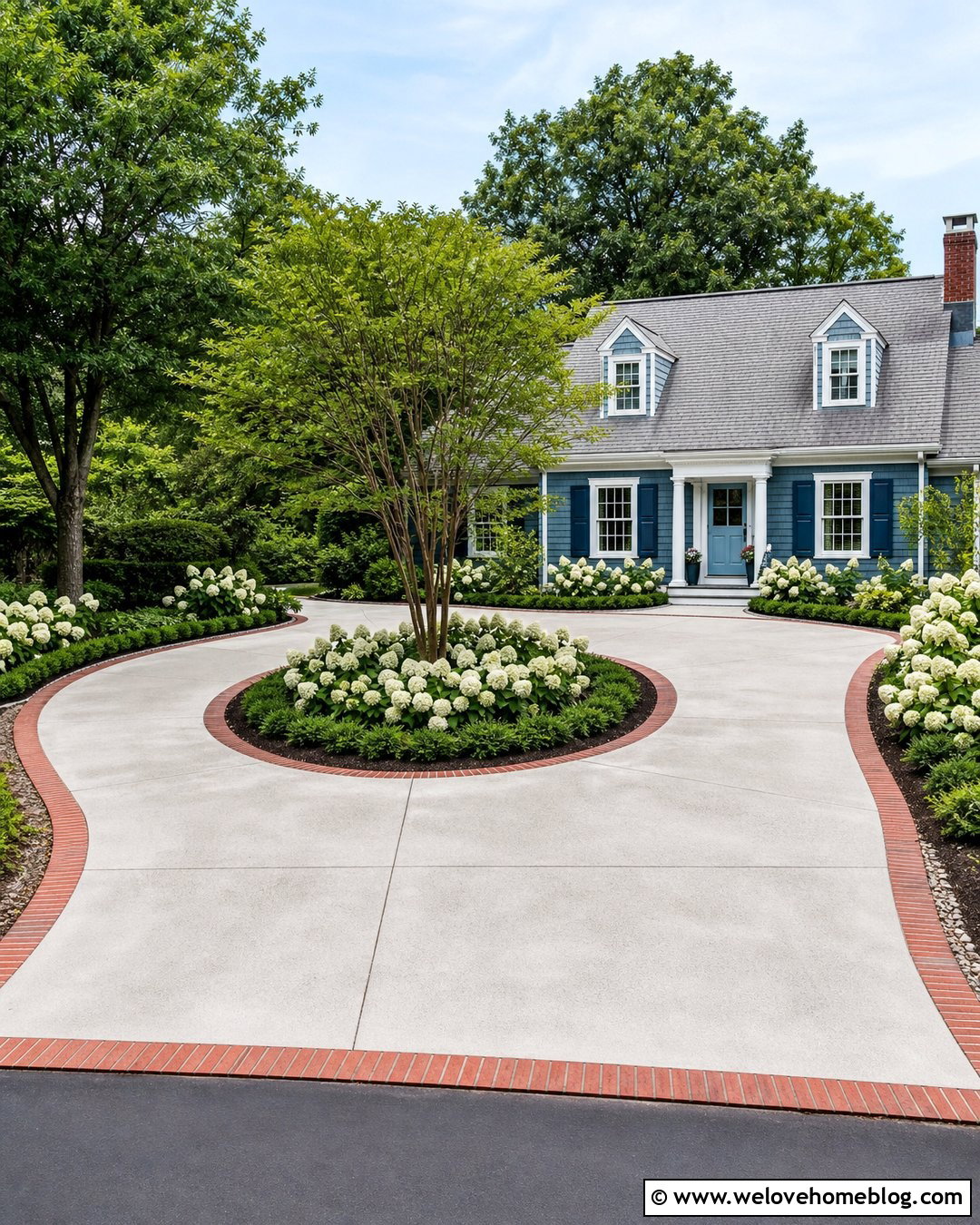
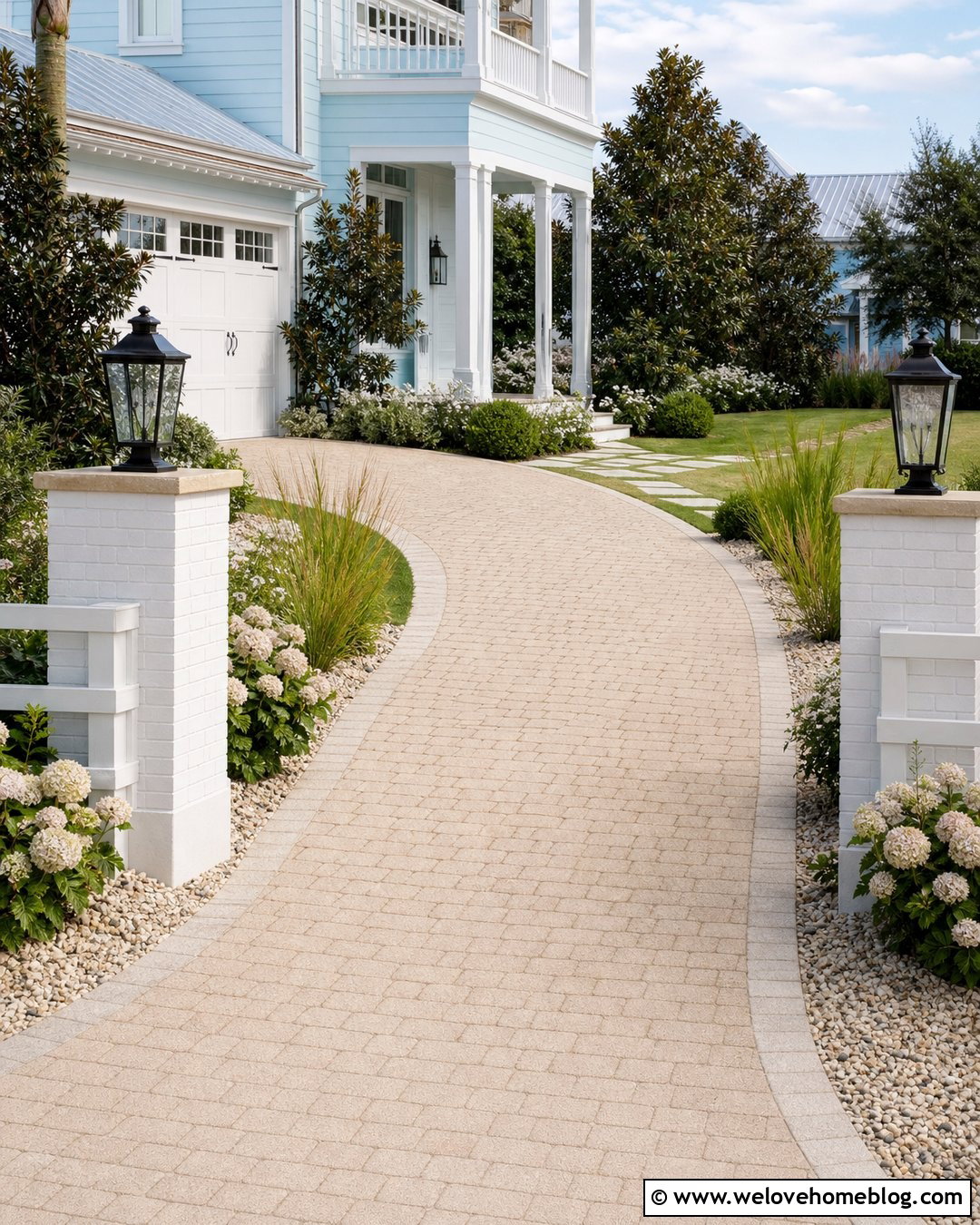
Large hydrangea blooms can soften the hard edges of a driveway roundabout and create a welcoming seasonal display. Pair them with a light gray concrete driveway, curved brick edging, and a central lawn or mulched island. Arrange compact hydrangea varieties in a broad ring, leaving lower planting near the entrance and exit. Add a small multi-stem tree in the center if the island is large enough to support layered heights. Evergreen ground cover can maintain structure when the hydrangeas are not blooming. Continue several hydrangeas along the foundation or front walkway so the island connects visually with the house. This lush combination looks natural beside Cape Cod, cottage, colonial, and modern farmhouse exteriors with white, blue, gray, or red-brick facades.
18. Driveway Roundabout With Ornamental Grasses
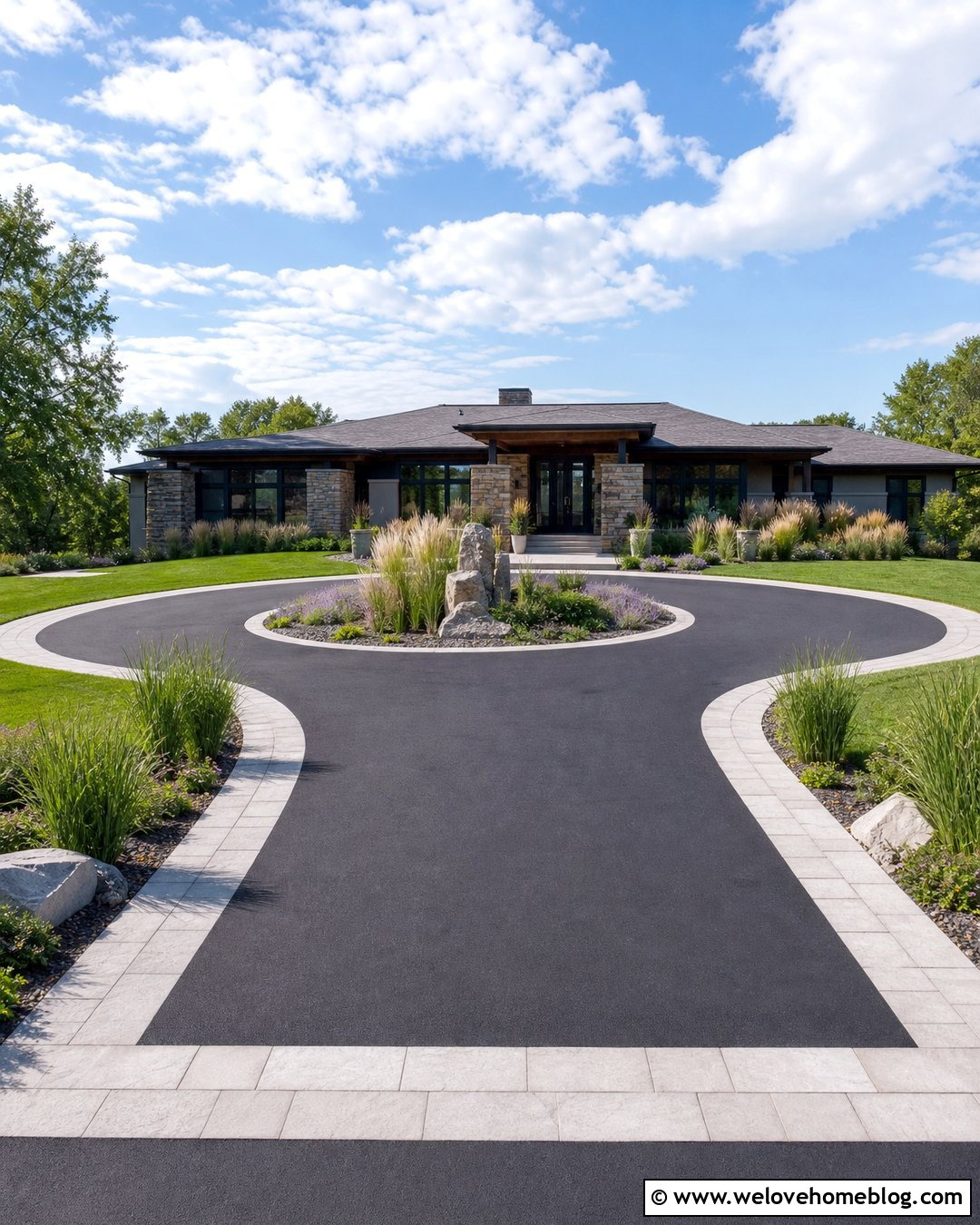
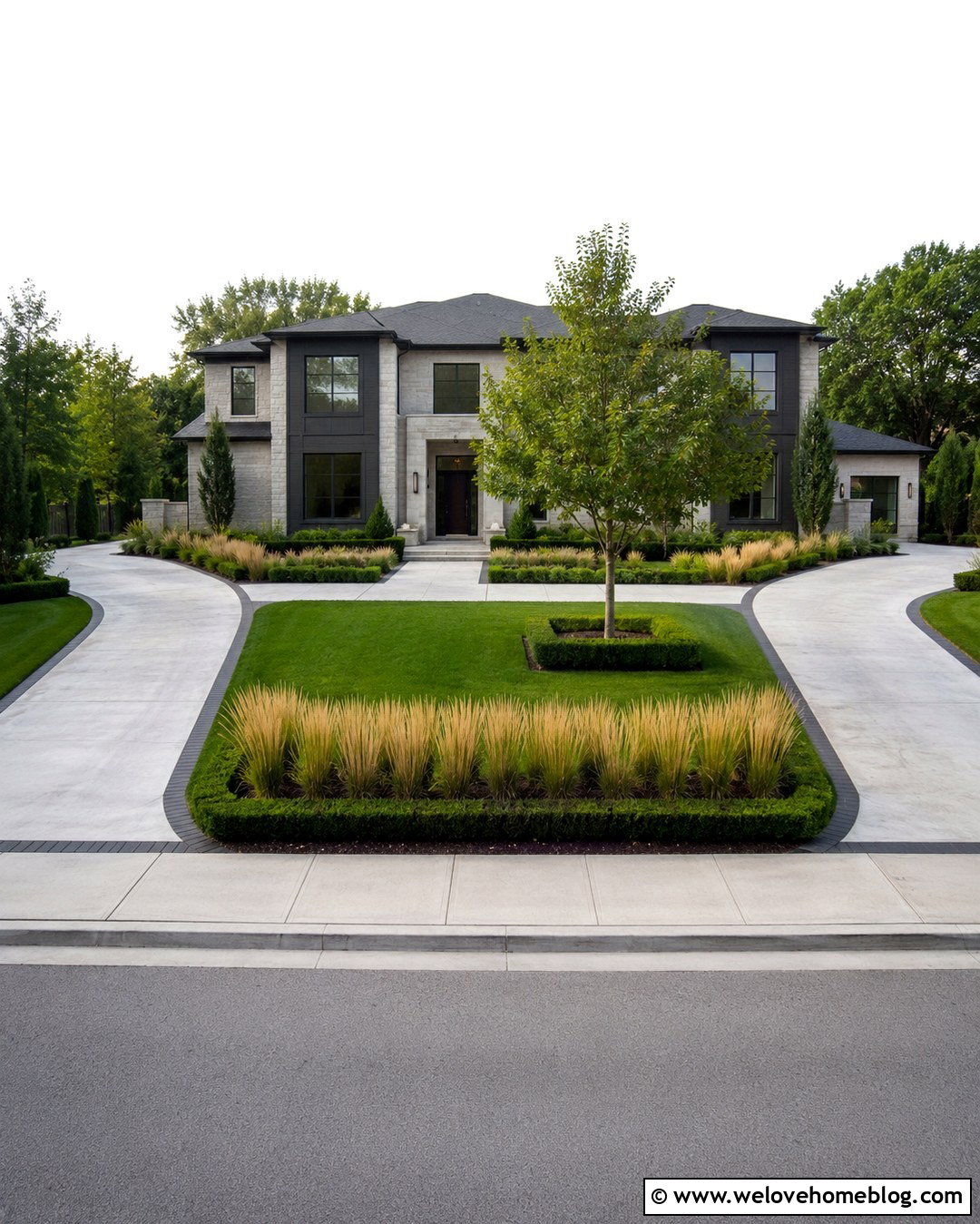
Ornamental grasses bring movement and texture to the center of a contemporary driveway roundabout. Surround the island with smooth black asphalt and a wide border of pale concrete pavers for strong contrast. Plant grasses in repeated sweeps rather than a scattered mix, using shorter varieties at the perimeter and taller groups near the middle. Include low flowering perennials or gravel mulch to fill spaces between the clumps. A few upright boulders can add structure during winter. Make sure mature foliage will not lean into the vehicle lane or conceal the driveway’s edges. This low-fuss composition looks especially effective with modern ranch, prairie, minimalist, and industrial-inspired homes. Matching grass beds near the entrance can tie the entire approach together.
19. Driveway Roundabout With a Raised Stone Island
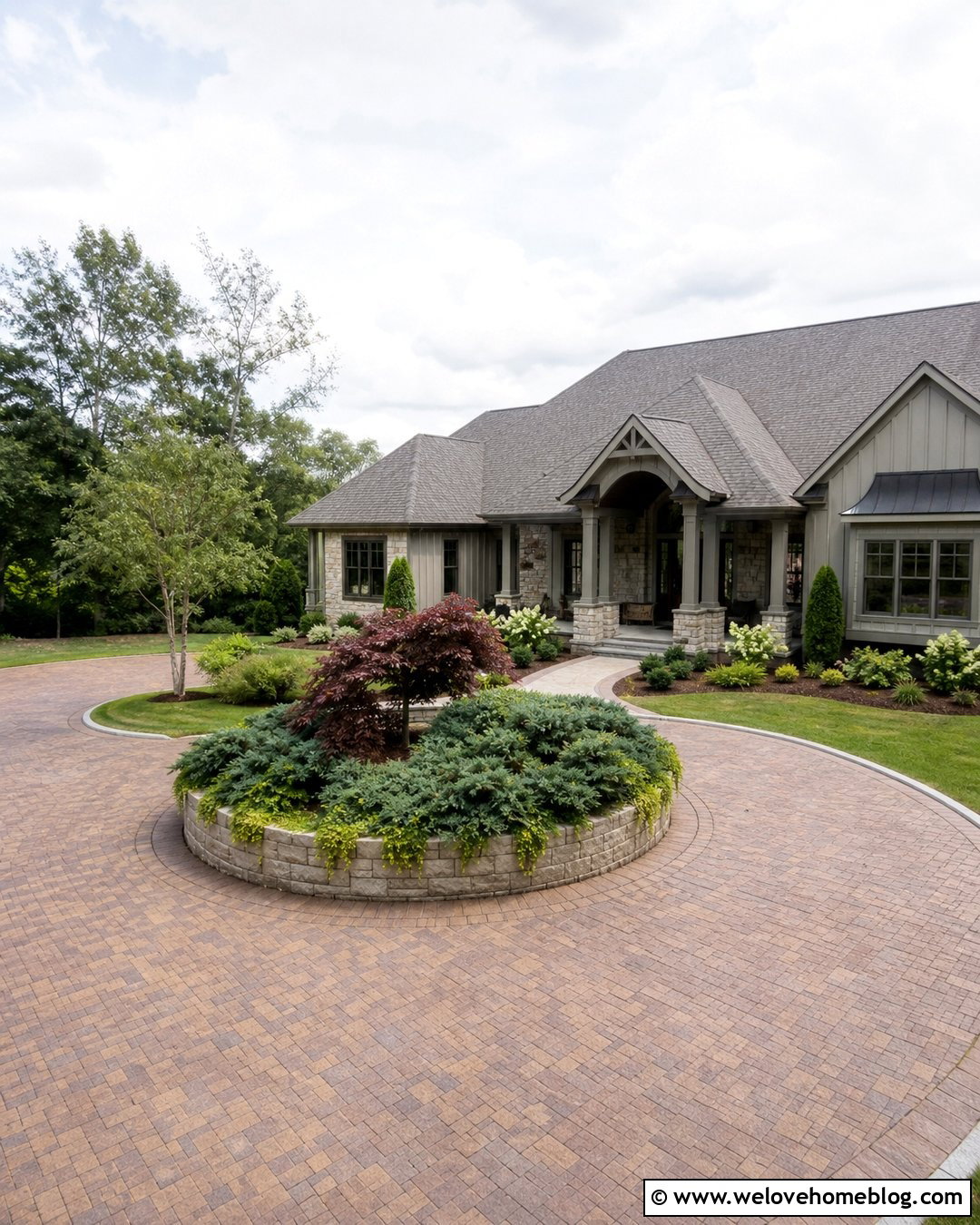
A raised center island adds definition to a driveway roundabout and can manage a gentle change in grade. Construct the island with a low retaining wall made from cut limestone, stacked fieldstone, or matching concrete blocks. Keep the wall height modest so passengers can still see the driveway edge when maneuvering. Fill the center with well-draining soil, a small ornamental tree, spreading evergreens, and cascading ground cover that softens the masonry. Clay brick pavers or exposed aggregate concrete provide a durable surrounding surface. Integrate drainage openings where needed so water does not collect against the wall. Repeating the same stone on porch columns, steps, or outer planting beds creates a polished design that appears planned with the house.
20. Driveway Roundabout With a Seasonal Flower Display
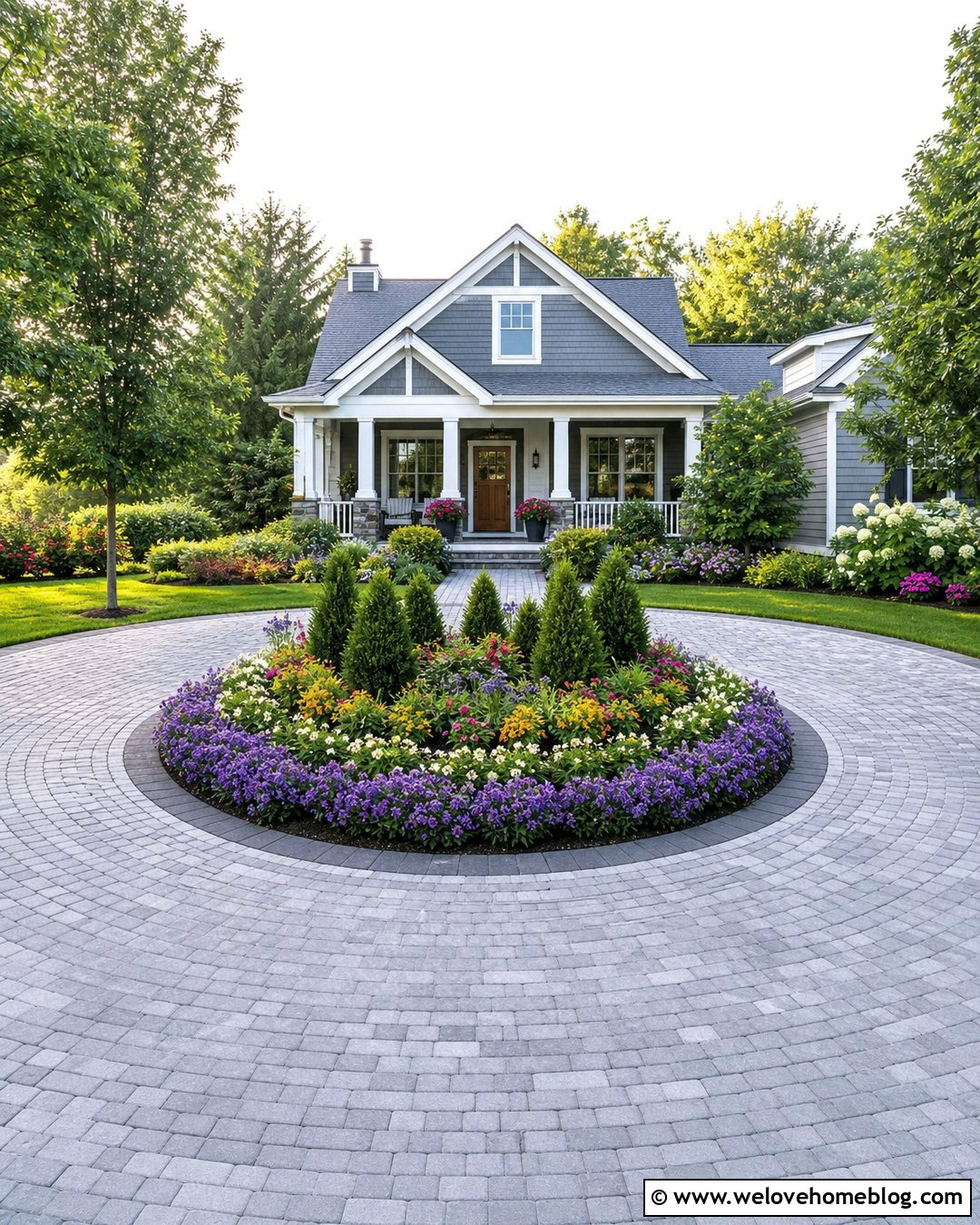
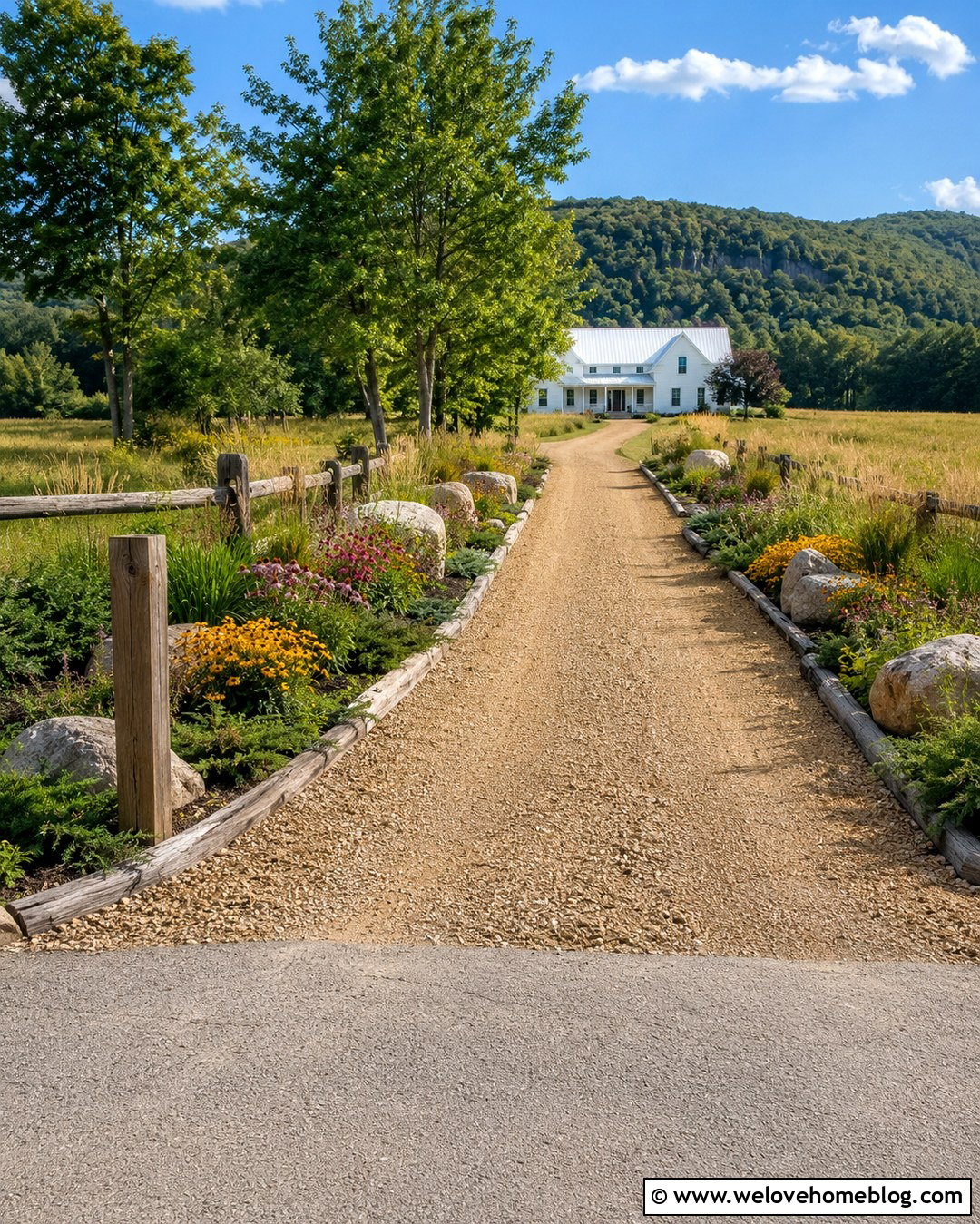
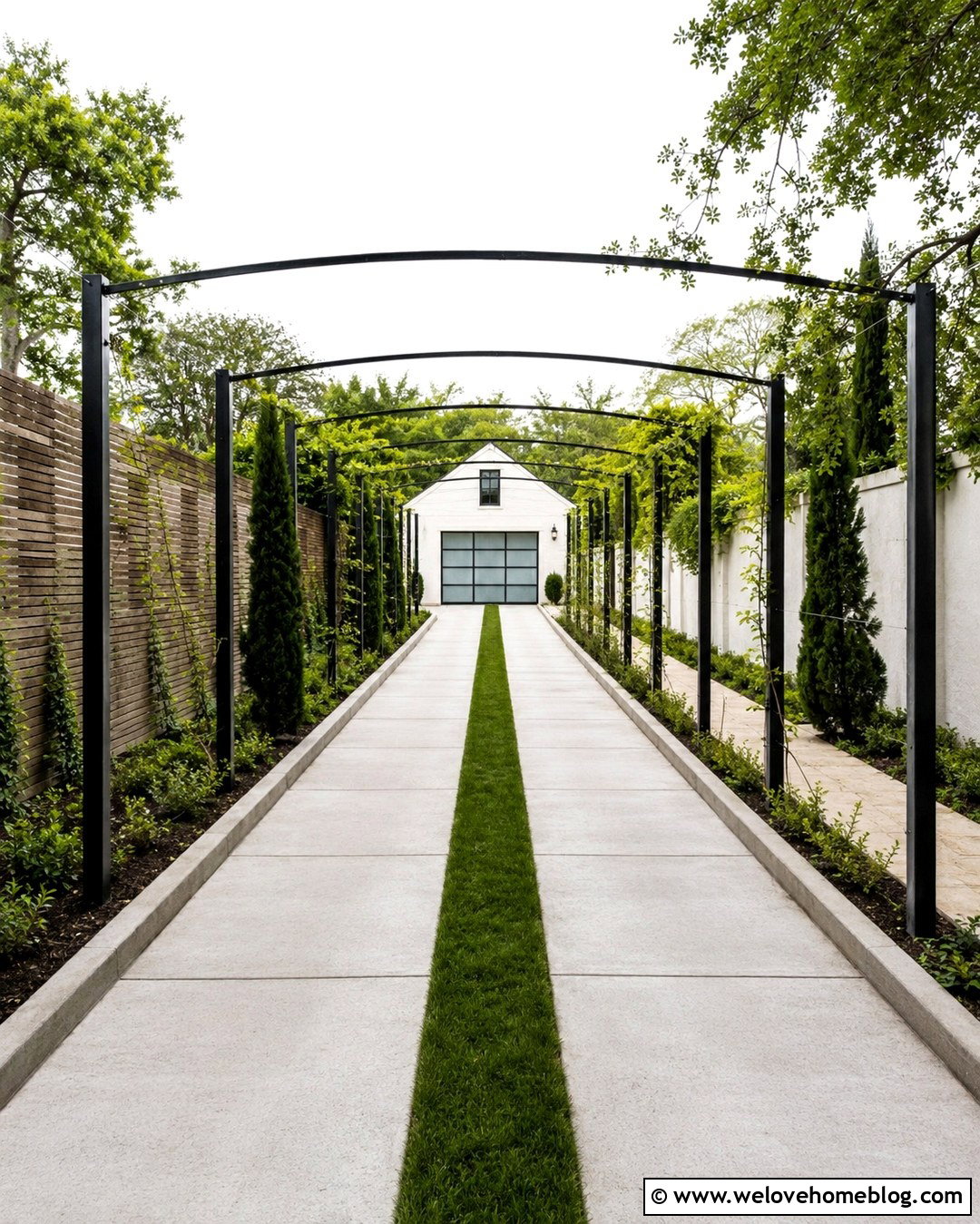
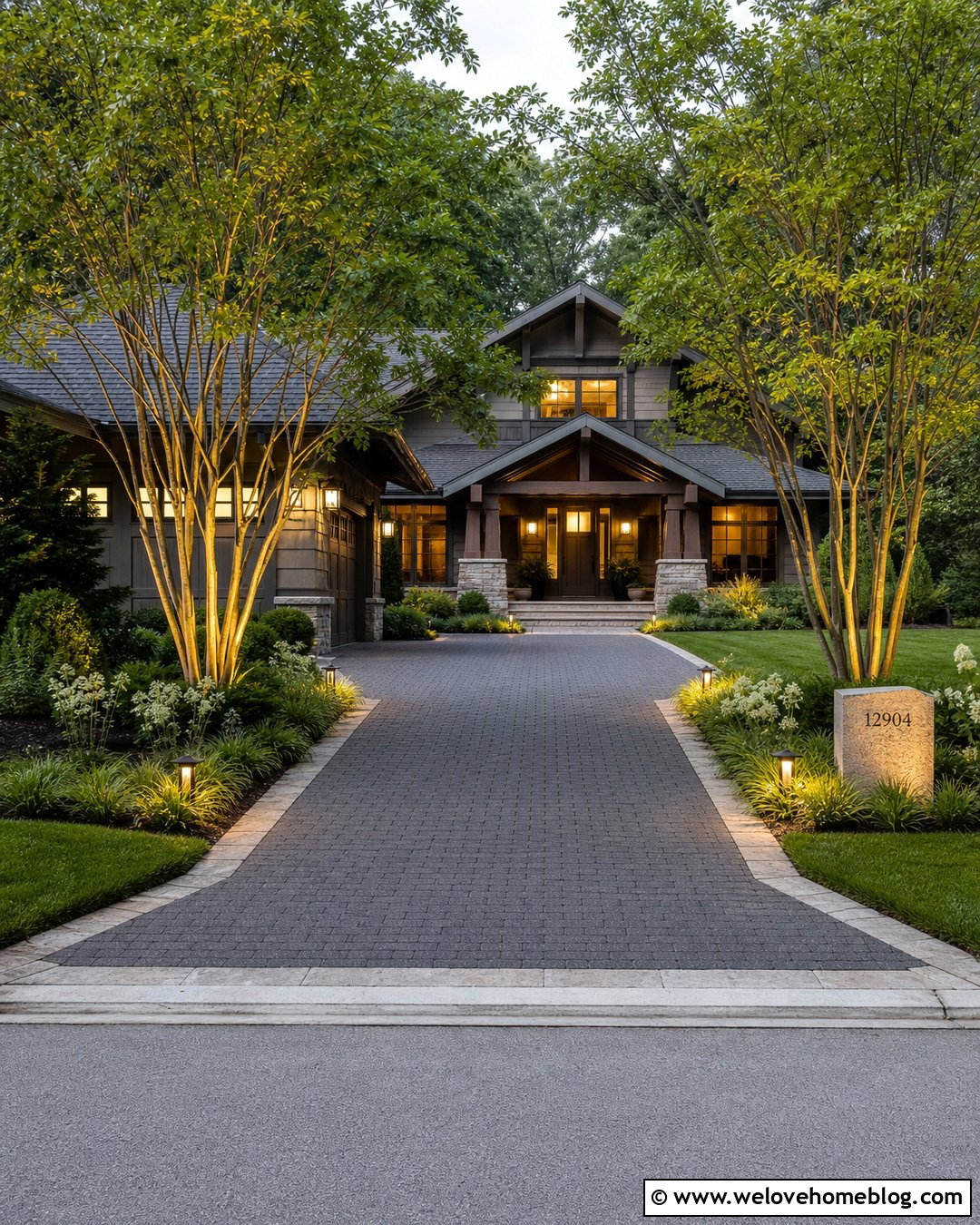
A circular flower bed can make the driveway roundabout the brightest feature of the front yard. Use neutral gray interlocking pavers for the driving surface so changing flower colors remain the focus. Edge the island with a low charcoal curb and organize plants in broad concentric bands. Place compact evergreen shrubs in the center for year-round structure, then surround them with bulbs, annuals, and long-blooming perennials. Limiting each ring to one or two colors creates a stronger view from the street. Include a narrow mulch or gravel strip along the curb to simplify maintenance. Coordinate the flower palette with porch containers and foundation beds. This cheerful layout suits cottages, bungalows, traditional suburban homes, and colorful modern farmhouses.
21. Driveway Roundabout With a Minimalist Gravel Island
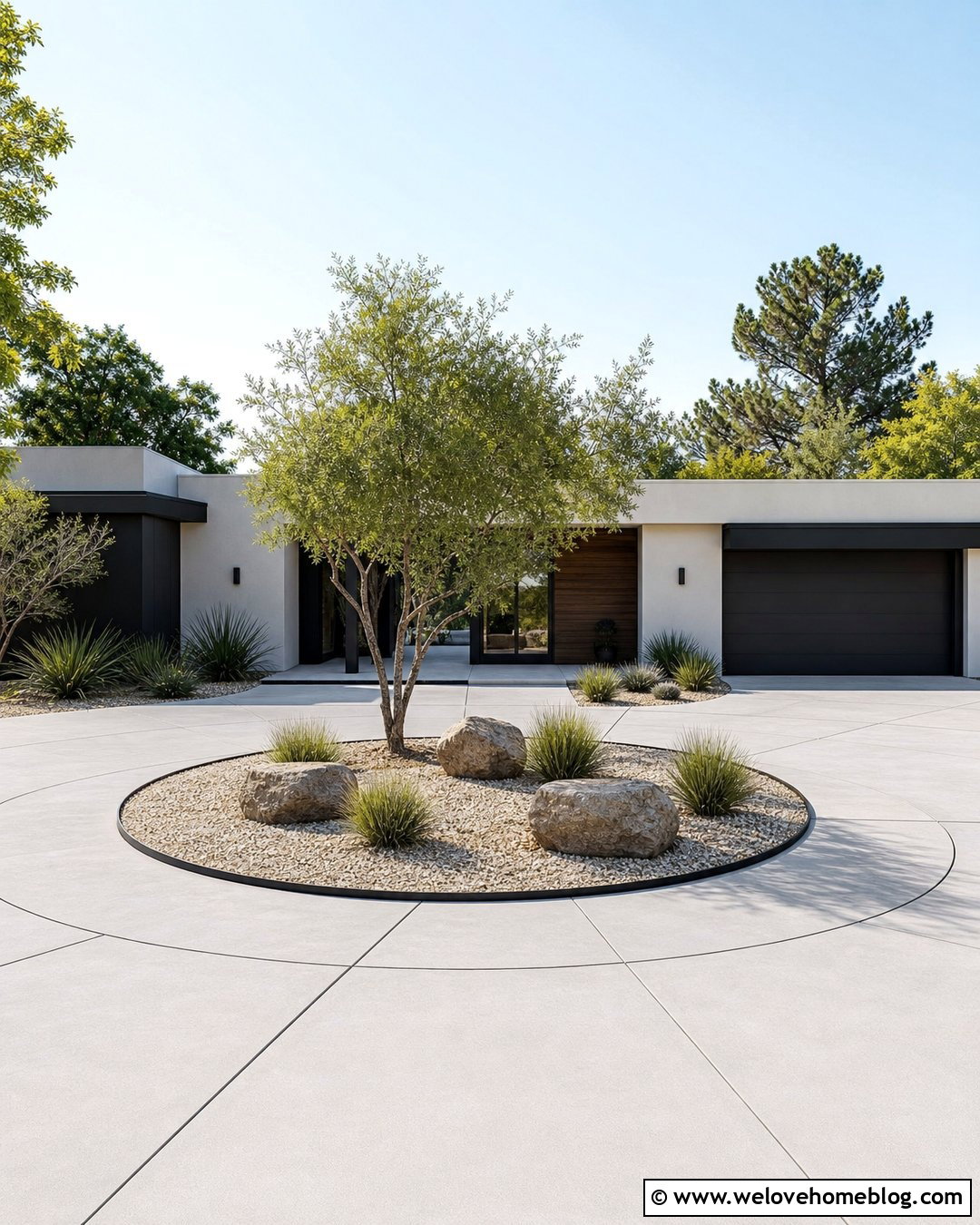
Not every driveway roundabout needs dense planting. A minimalist center island can combine pale crushed granite, three sculptural boulders, and a single architectural tree. Surround it with smooth poured concrete divided by radial control joints that emphasize the circular movement. A slim steel or dark granite border keeps the gravel contained and creates a precise edge. Select one restrained ground cover or a few tufts of ornamental grass rather than filling every open area. Continue the same gravel into narrow beds near the house for consistency. This design offers strong curb appeal while reducing the visual clutter of a complicated garden. It works particularly well with flat-roof modern homes, updated ranch houses, and simple stucco facades.
22. Driveway Roundabout With a Farmhouse Windmill
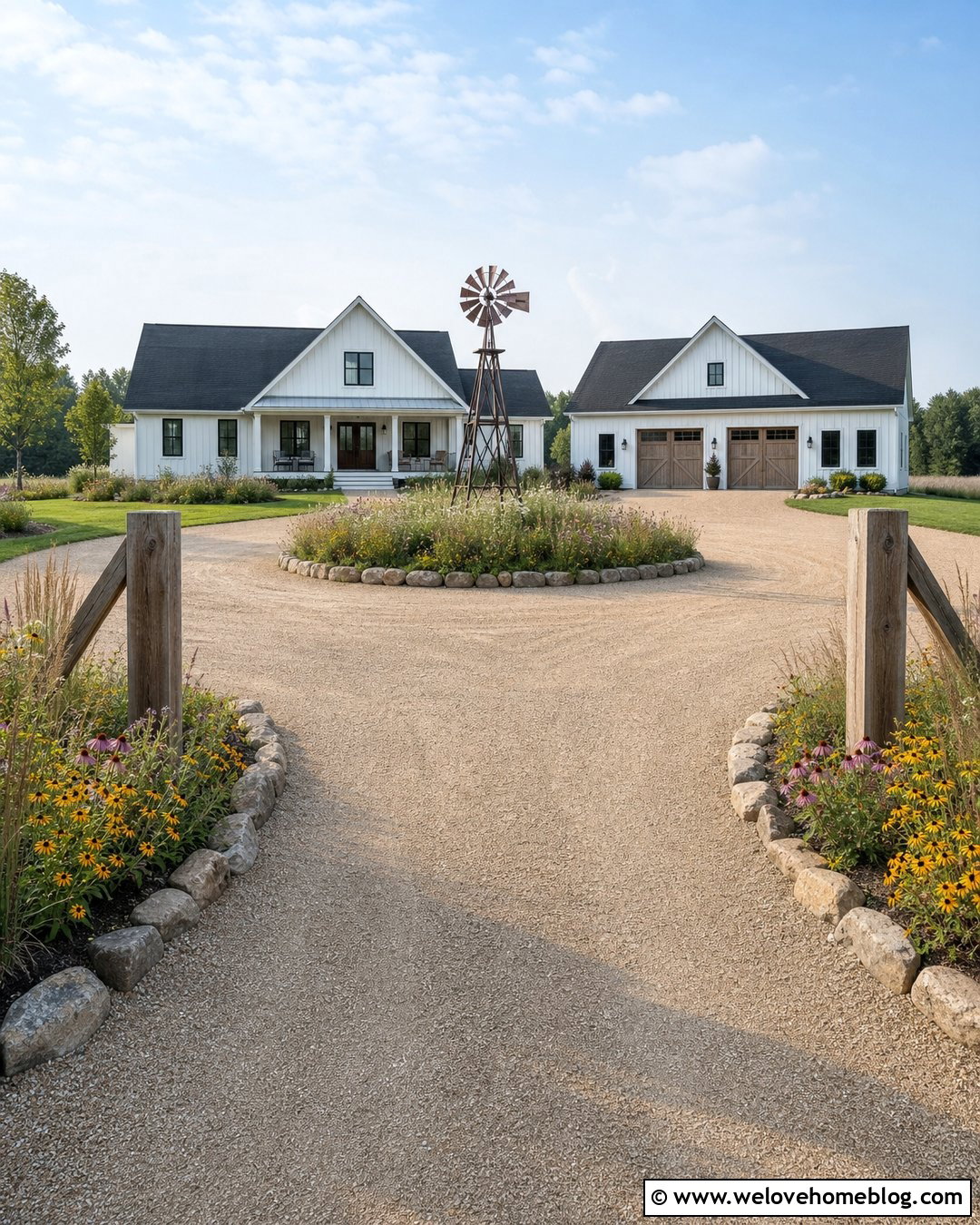
A small decorative windmill can give a country driveway roundabout an identifiable farmhouse focal point without overwhelming the yard. Place it in a wide center island surrounded by meadow grasses, black-eyed Susans, coneflowers, and weathered fieldstone edging. A tan crushed-gravel driveway supports the rural character, while stabilized edges help keep the material contained. Use timber posts or simple stone pillars at the entrance rather than ornate gates. The windmill should be appropriately sized for a residence and positioned far enough from the driving lane to avoid overhanging parts. Repeat the wildflower planting along the outer approach. Against a white farmhouse, barn-style garage, or rustic ranch home, the entire entrance feels casual, cohesive, and connected to its setting.
23. Driveway Roundabout With a Split Garage Approach
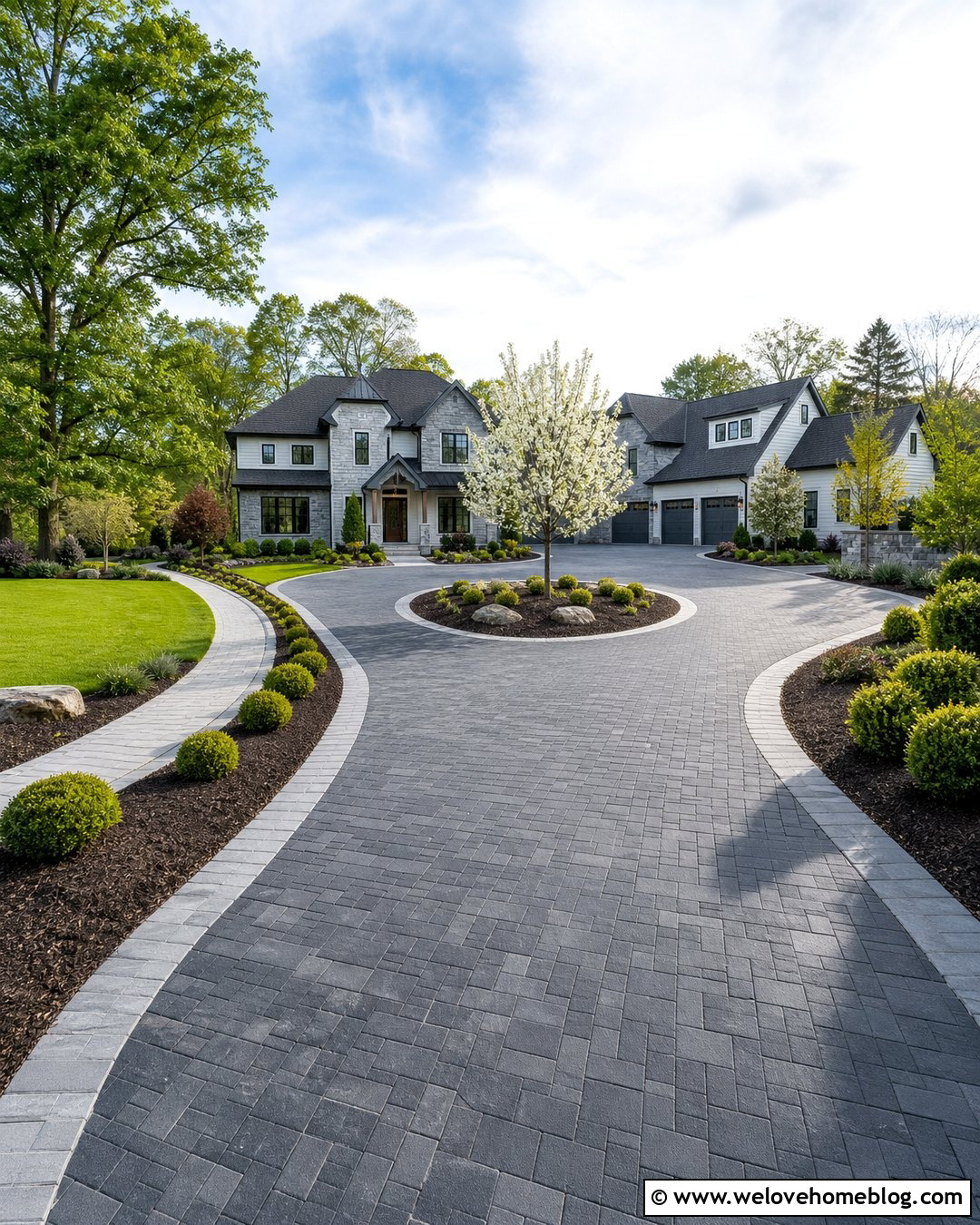
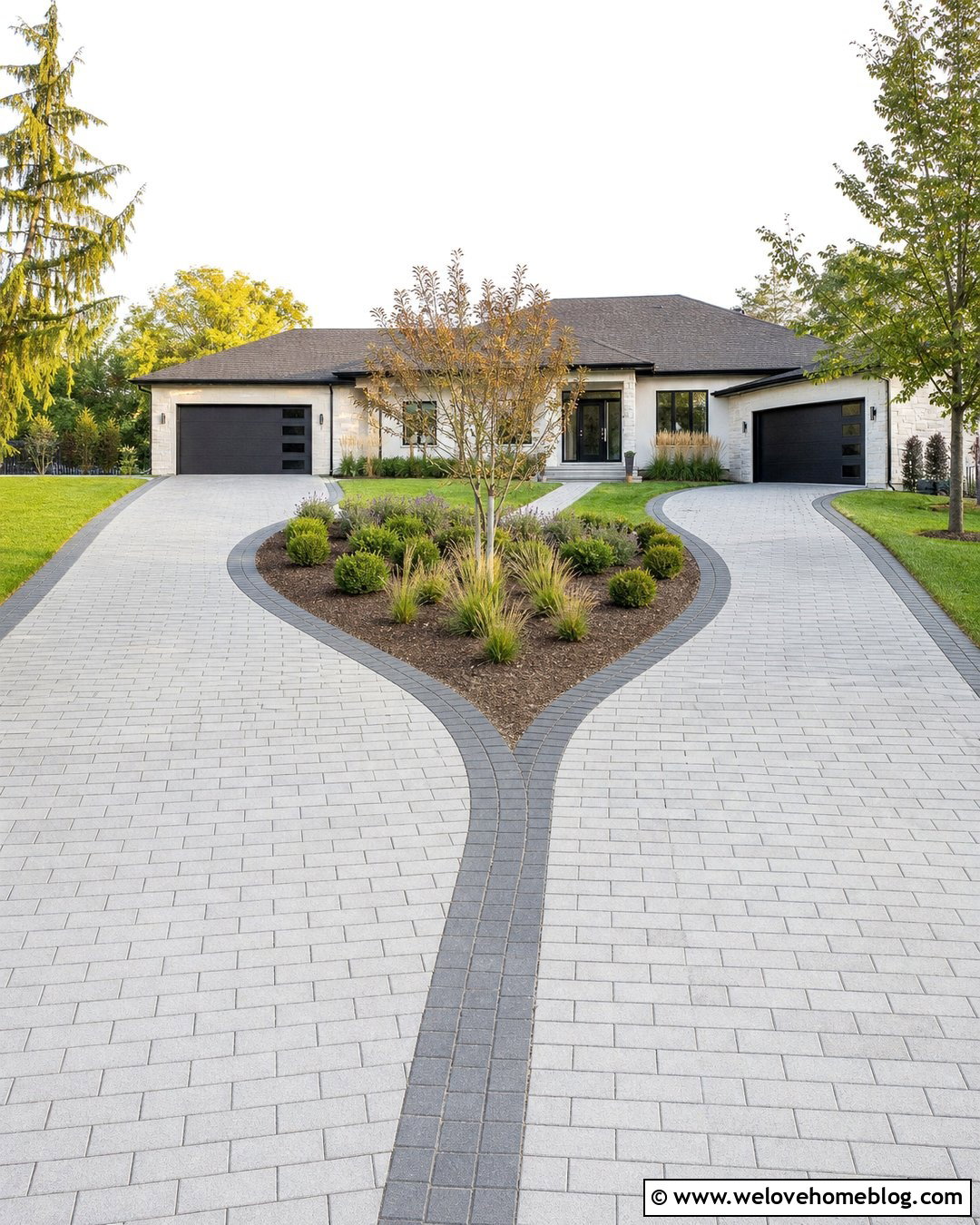
A split layout allows the driveway roundabout to serve the front entrance and multiple garage bays without creating confusing vehicle paths. Use interlocking concrete pavers throughout the circle, then extend matching branches toward an attached garage and a side parking area. Different border colors can subtly identify each route while keeping the surface unified. In the middle, create a low landscaped island with a flowering tree, clipped shrubs, and broad mulch areas. Add a clearly visible walkway from the visitor drop-off zone to the front door. Keep garage-bound traffic away from the pedestrian path whenever possible. This functional design works well for wide suburban lots, multigenerational homes, and properties with detached garages, workshops, or secondary residential buildings.
24. Driveway Roundabout With a Gated Entrance
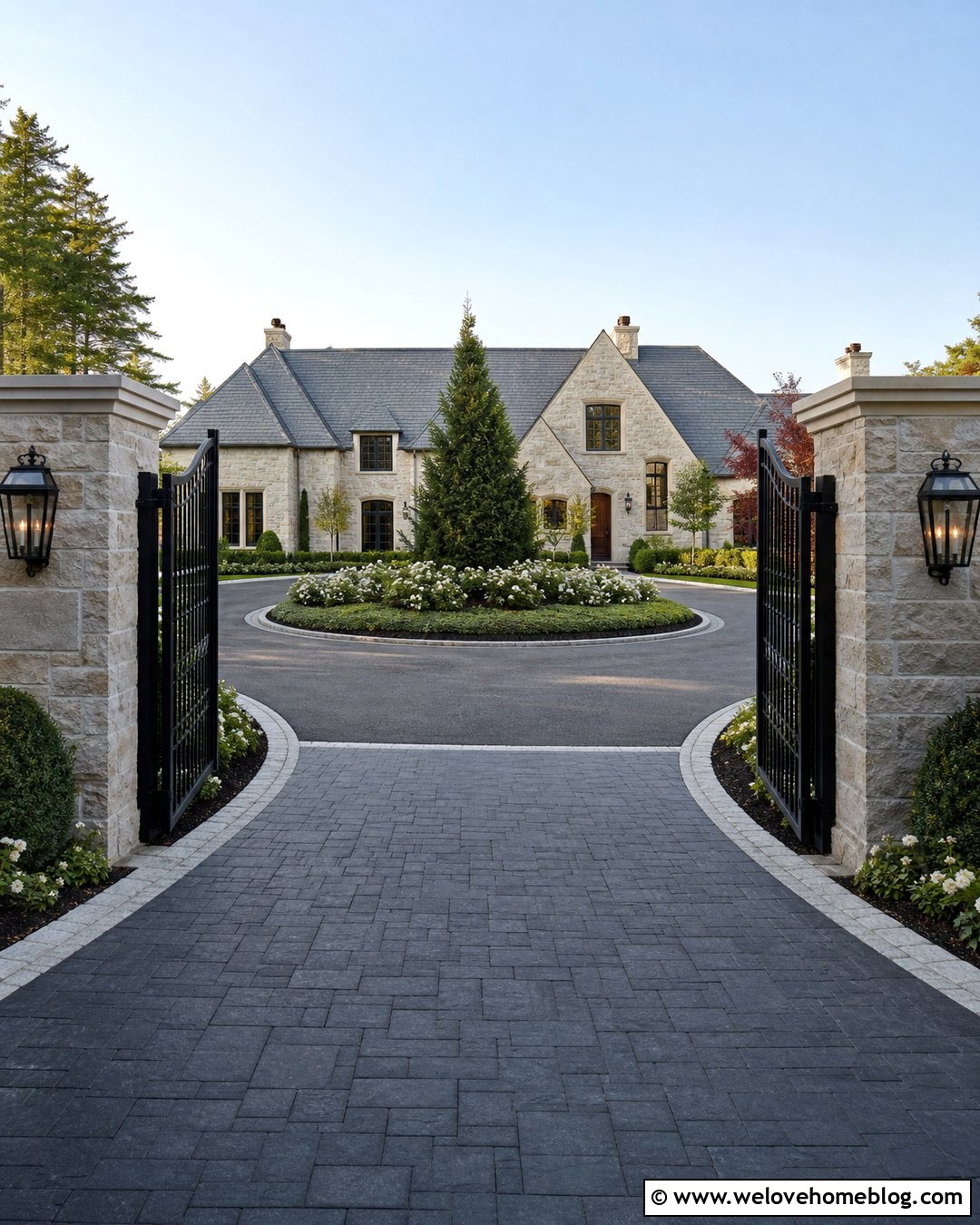
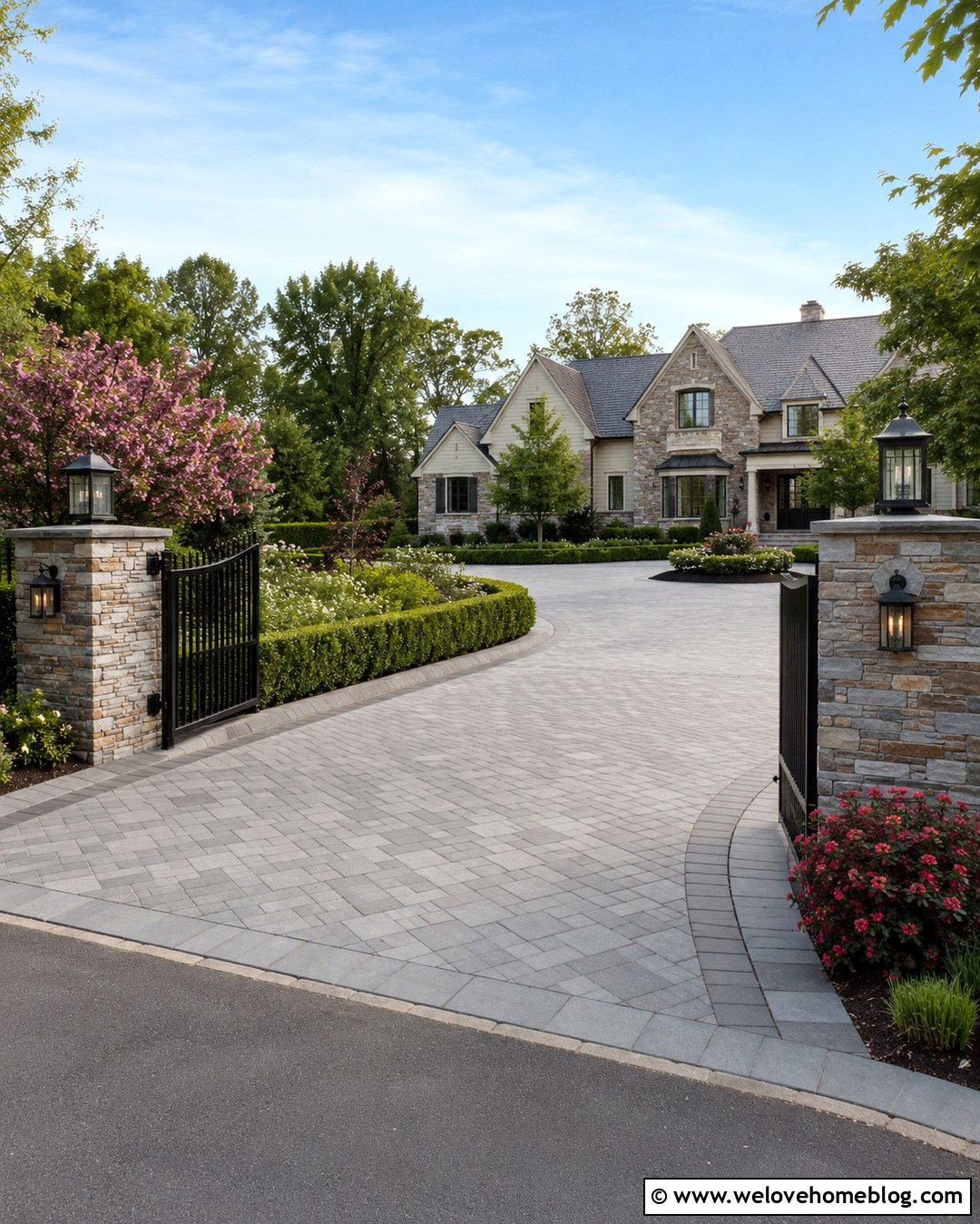
A gated driveway roundabout creates a layered arrival sequence for a larger property. Position the gate well before the circular vehicle area so a waiting car can clear the street and enter safely when the gate opens. Continue a dark asphalt or stone paver driveway toward a landscaped roundabout near the house. Match the gate columns to the island edging using brick, limestone, or natural fieldstone. The center can feature a specimen evergreen, low flowering shrubs, and neatly trimmed ground cover. Curved beds along the approach soften the long drive and guide attention toward the home. Repeating metal details on lighting, railings, and the gate creates continuity. This complete composition feels secure and elegant without relying on excessive ornament.
25. Driveway Roundabout With a Covered Drop-Off
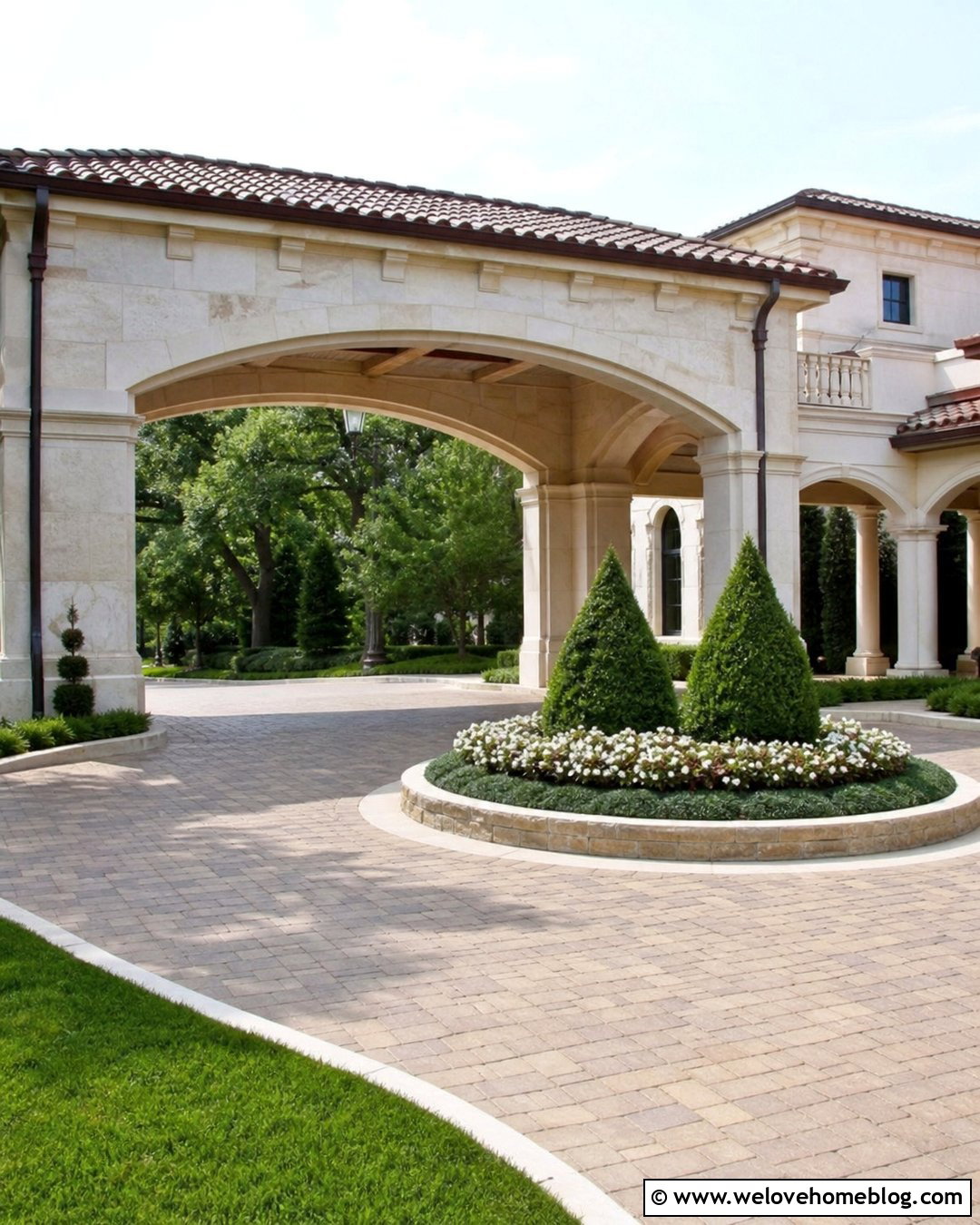
A covered drop-off makes a driveway roundabout especially convenient during rain, snow, or intense sun. Design the circular lane to pass beneath a porte cochere attached to the house or connected by a short covered walkway. Durable concrete pavers, clay brick, or textured poured concrete can define the driving surface beneath the structure. The center island should remain low and refined, using clipped evergreens, seasonal flowers, and a simple stone curb. Place exterior lighting where it clearly reveals columns, steps, and pavement transitions. The covered area needs generous clearance while maintaining the architectural proportions of the home. This polished layout suits traditional estates, Mediterranean houses, large farmhouses, and luxury homes with a prominent front entrance.
Conclusion:
The strongest **25 driveway roundabout ideas** combine easy vehicle circulation with a center feature that belongs naturally in the landscape. Start by choosing a surface that fits your budget, climate, maintenance preferences, and house architecture. Then coordinate the island border, planting, walkway, lighting, and entrance details. Keep sightlines open and make sure mature trees or shrubs will not crowd the driving lane. Gravel and asphalt offer practical flexibility, while pavers, brick, cobblestone, and decorative concrete create a more detailed finish. Whether you prefer a fountain, tree, lawn, native garden, or minimalist gravel island, treating every component as one complete design will produce a more attractive and functional entrance.

Related posts:
Leave a Reply