
Rock can make a driveway entrance feel grounded, polished, and connected to the surrounding landscape. The best 20 Rock Entrance Driveway Ideas combine the driveway surface, approach, stonework, plants, and house architecture as one complete design. Natural boulders suit rustic homes, while cut-stone pillars bring structure to traditional and modern properties. River rock beds, low retaining walls, address stones, gates, and lighting can add character without crowding the vehicle path. Scale matters, so stone features should look substantial beside a wide driveway while preserving visibility and turning space. Colors should also coordinate with the home’s roof, siding, masonry, or trim. Explore these 20 Rock Entrance Driveway Ideas to find a welcoming look that works for your property.

1. Gravel Driveway With Boulder Entrance
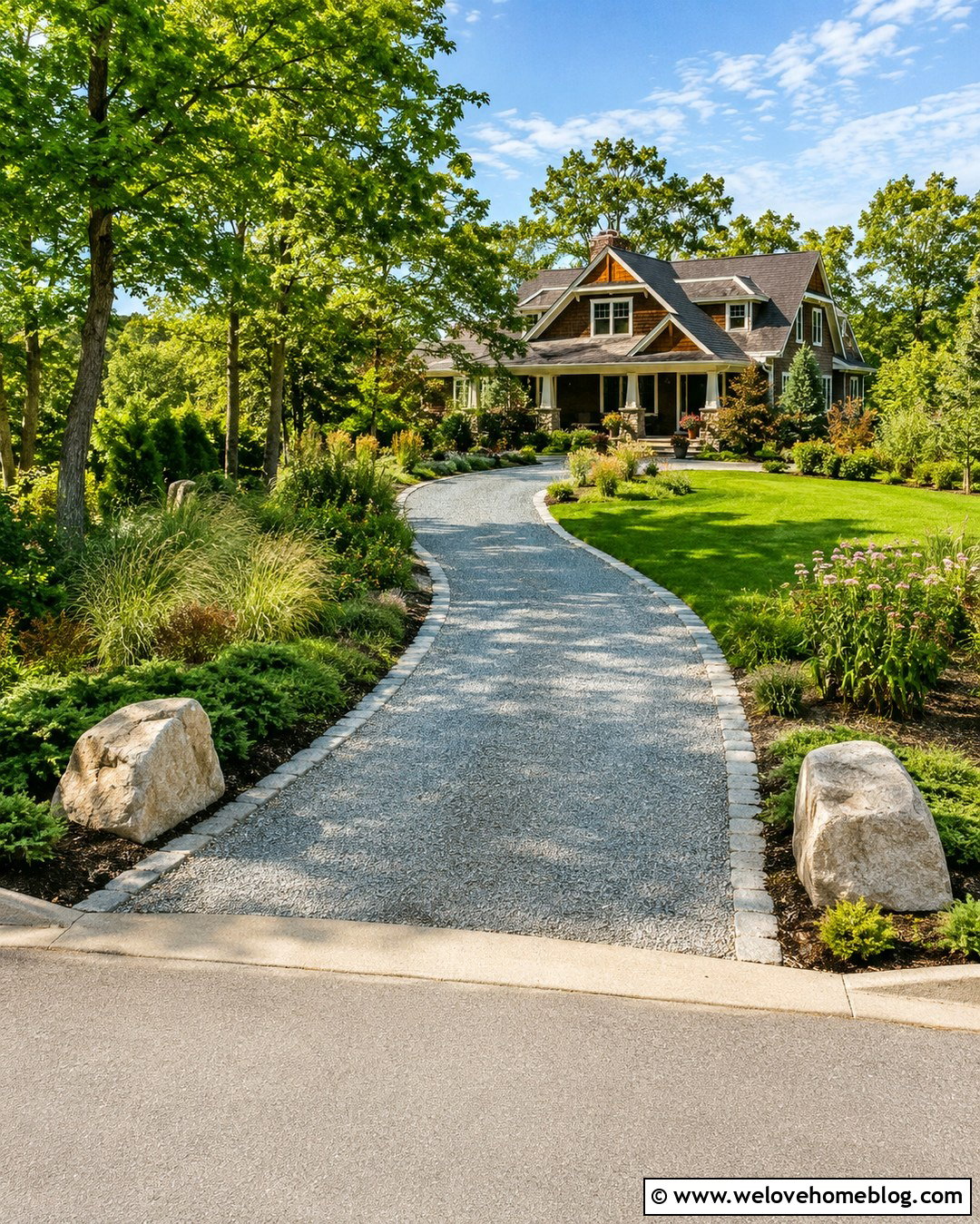
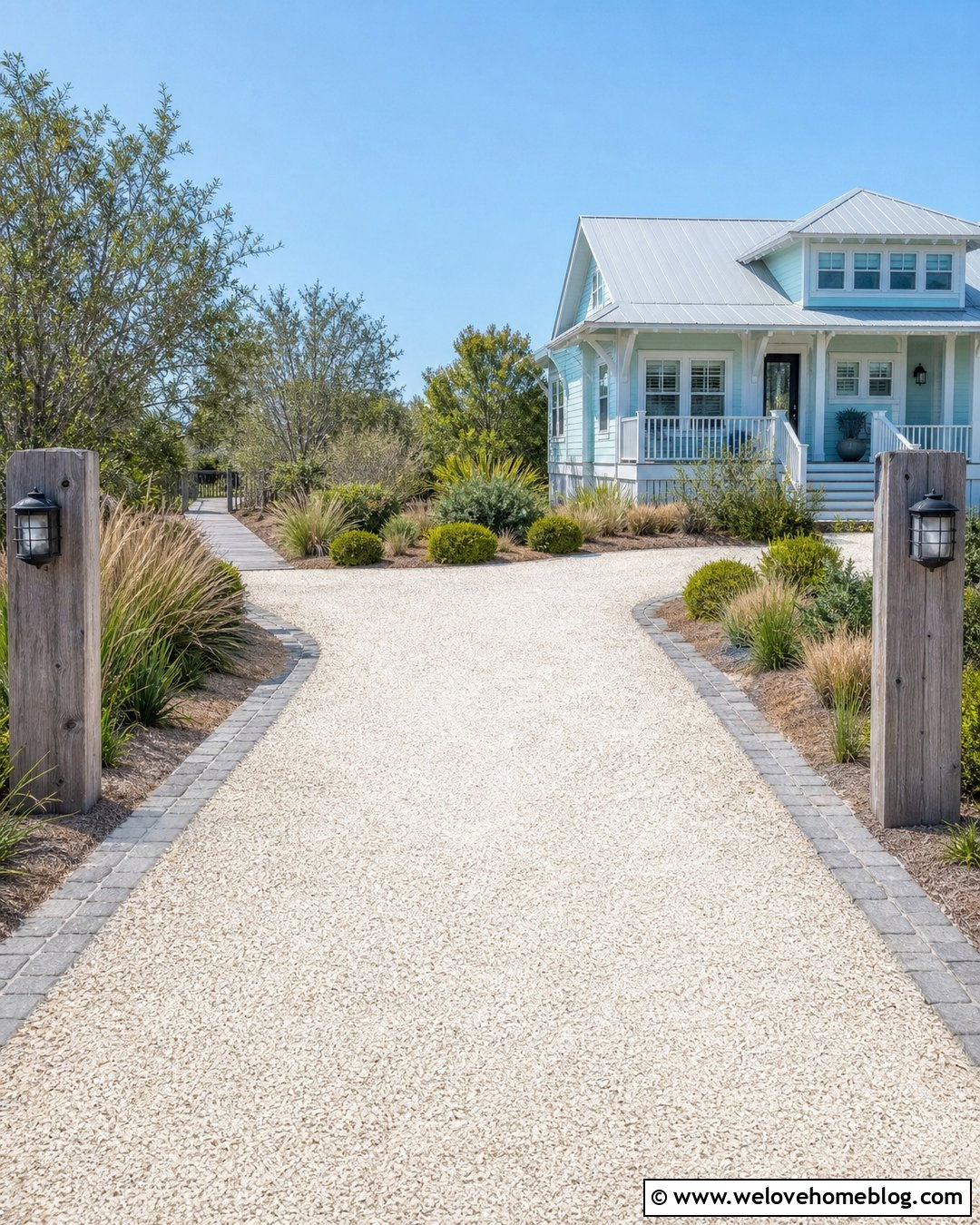
A pale crushed-stone driveway framed by two substantial boulders creates a relaxed entrance that feels established rather than overdesigned. Use a gently curved layout so the driveway disappears slightly behind layered planting beds before reaching a ranch or Craftsman home. Set the largest boulders back from the driving surface, then surround them with smaller companion rocks, ornamental grasses, creeping juniper, and flowering perennials. Steel or cobblestone edging can keep loose gravel from spreading into the beds. Choose boulders with colors that echo the home’s foundation or chimney for a connected appearance. This design works especially well on broad, informal properties where a traditional columned entrance might feel too formal or visually heavy.
2. Asphalt Driveway With Stone Pillars
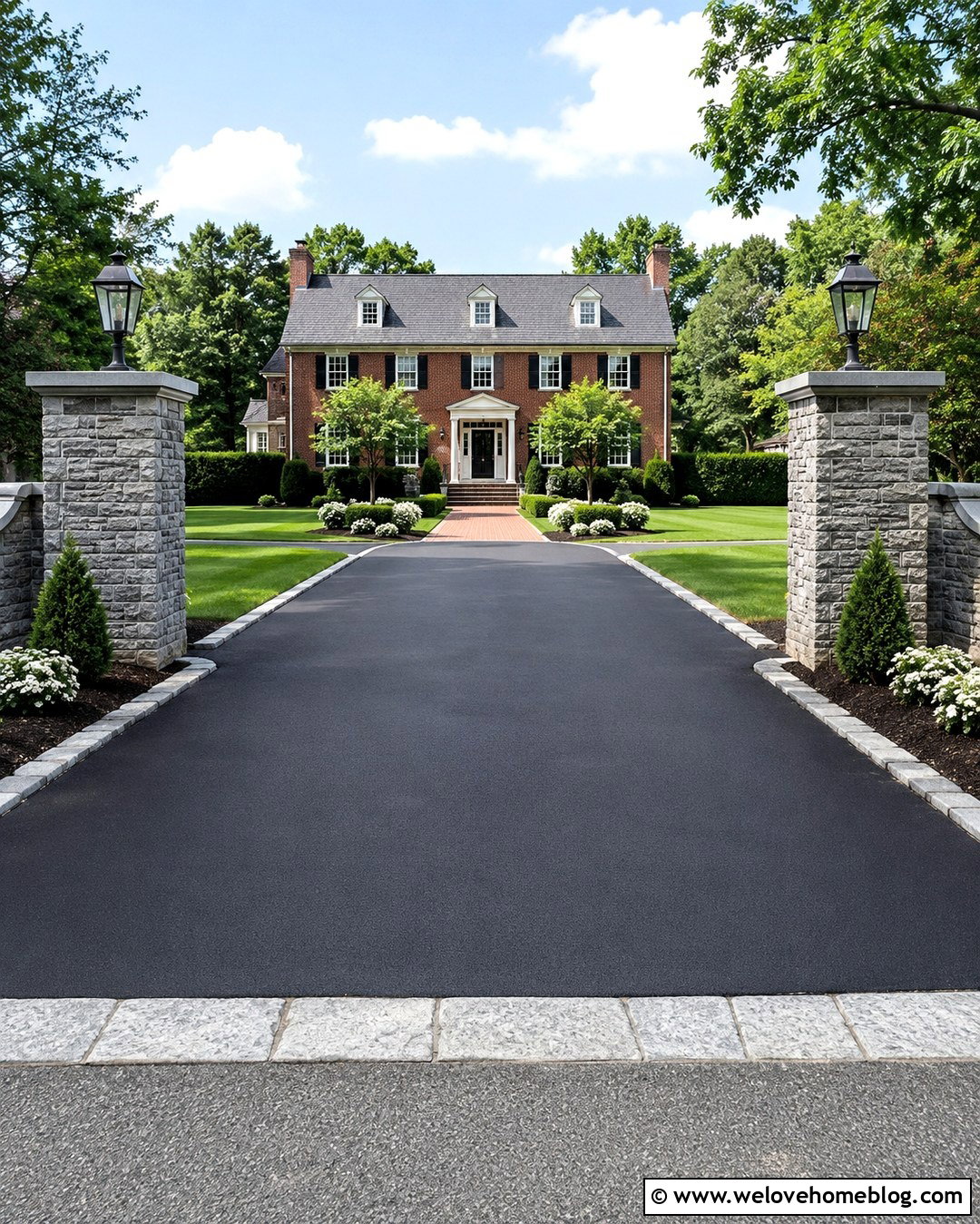
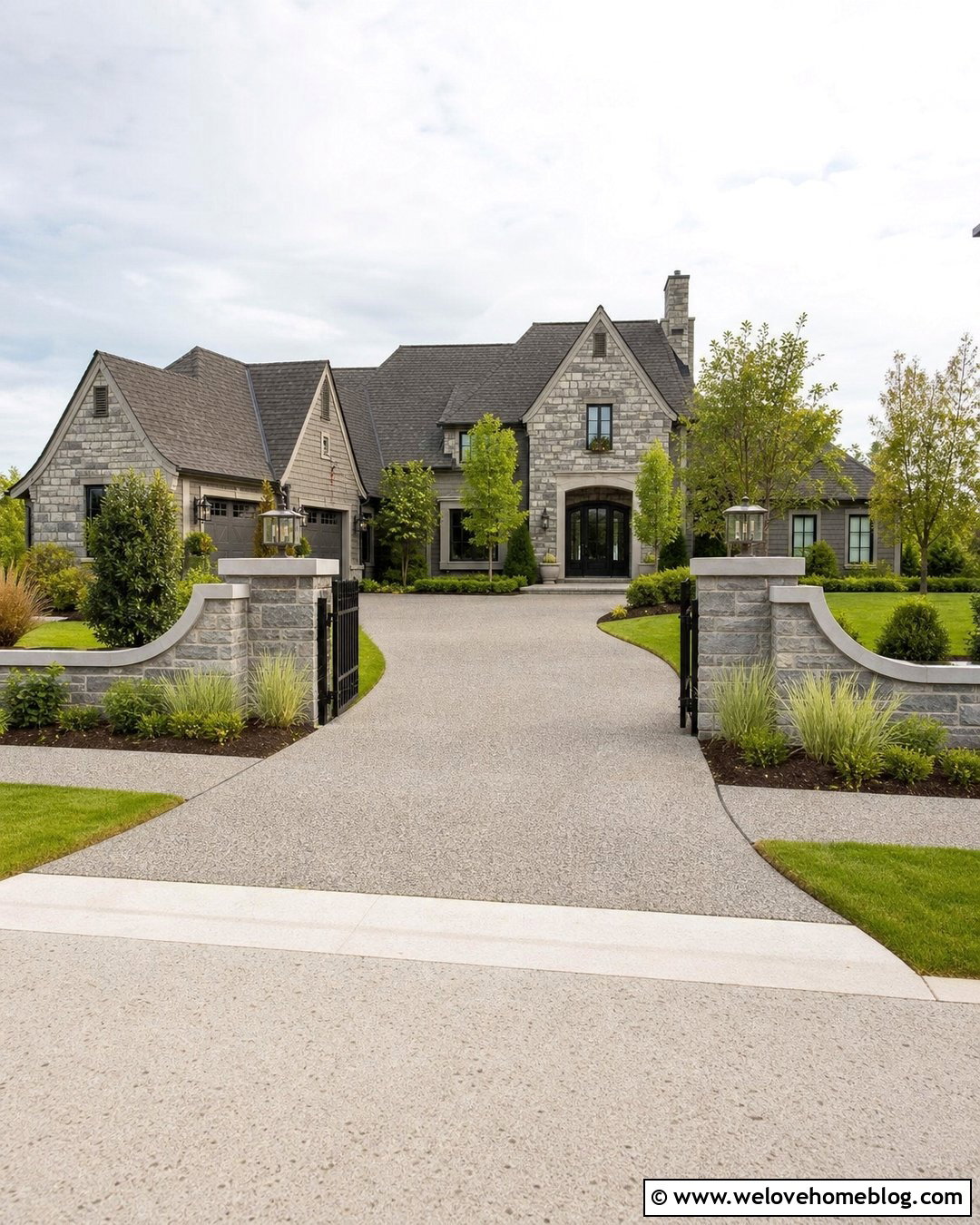
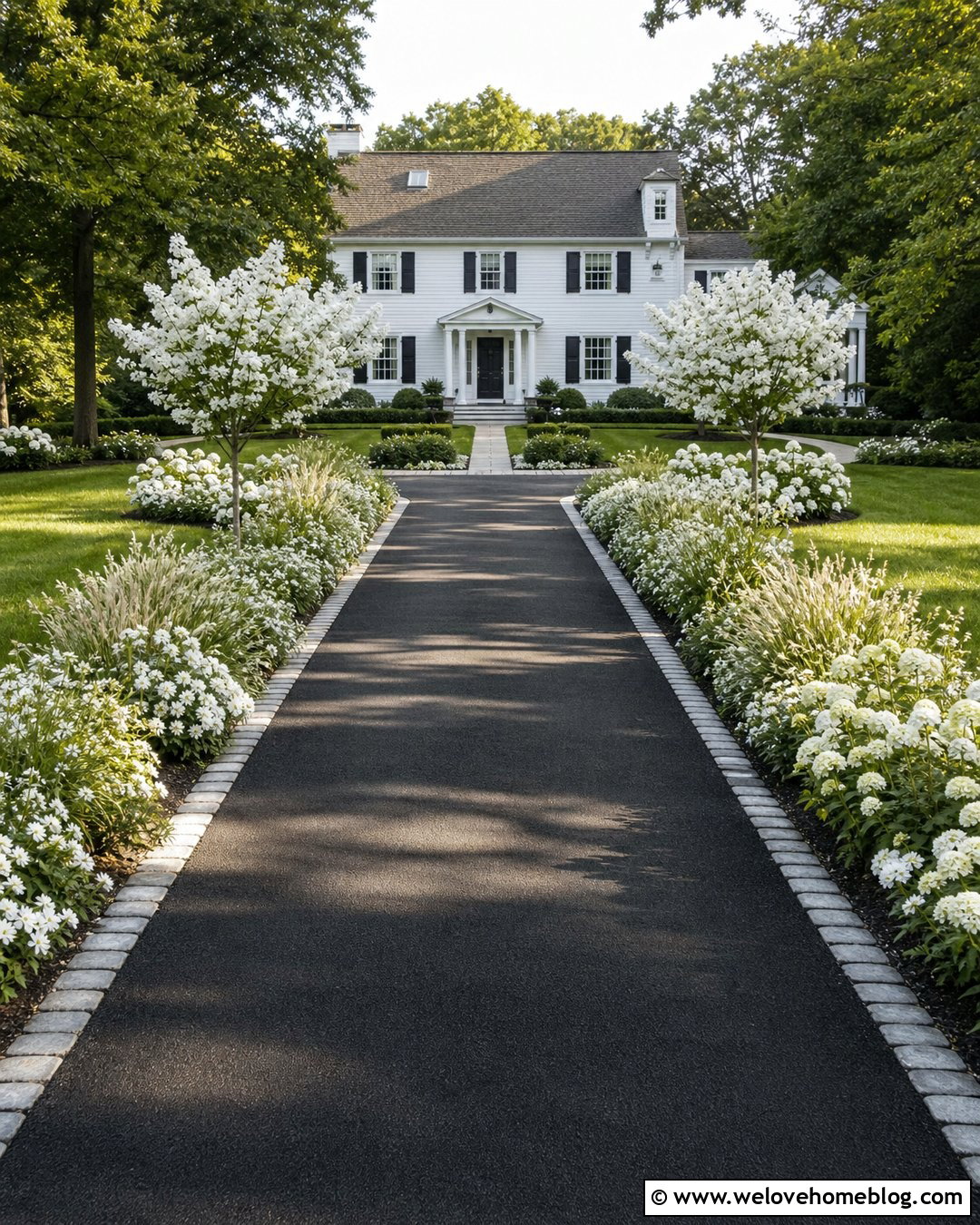
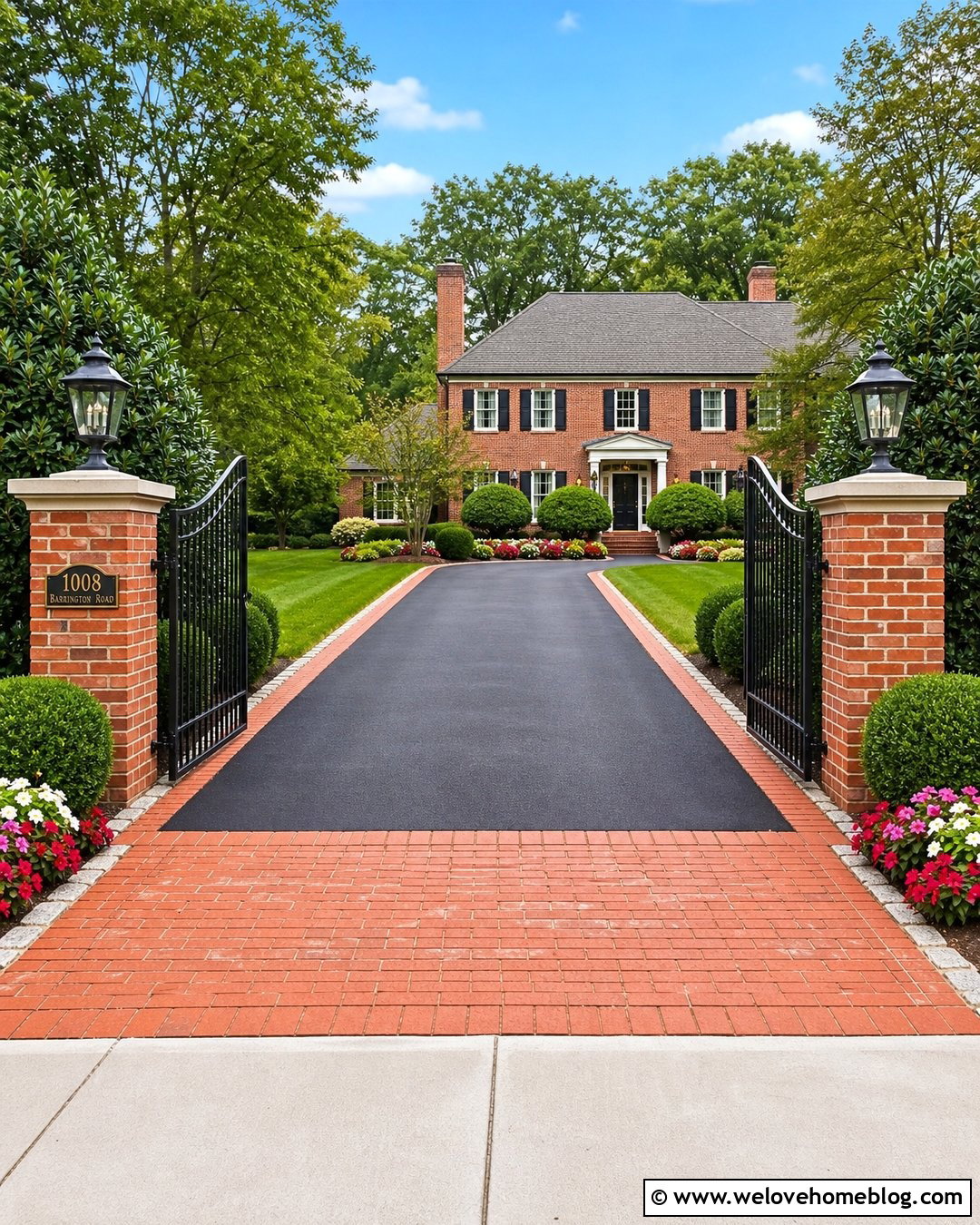
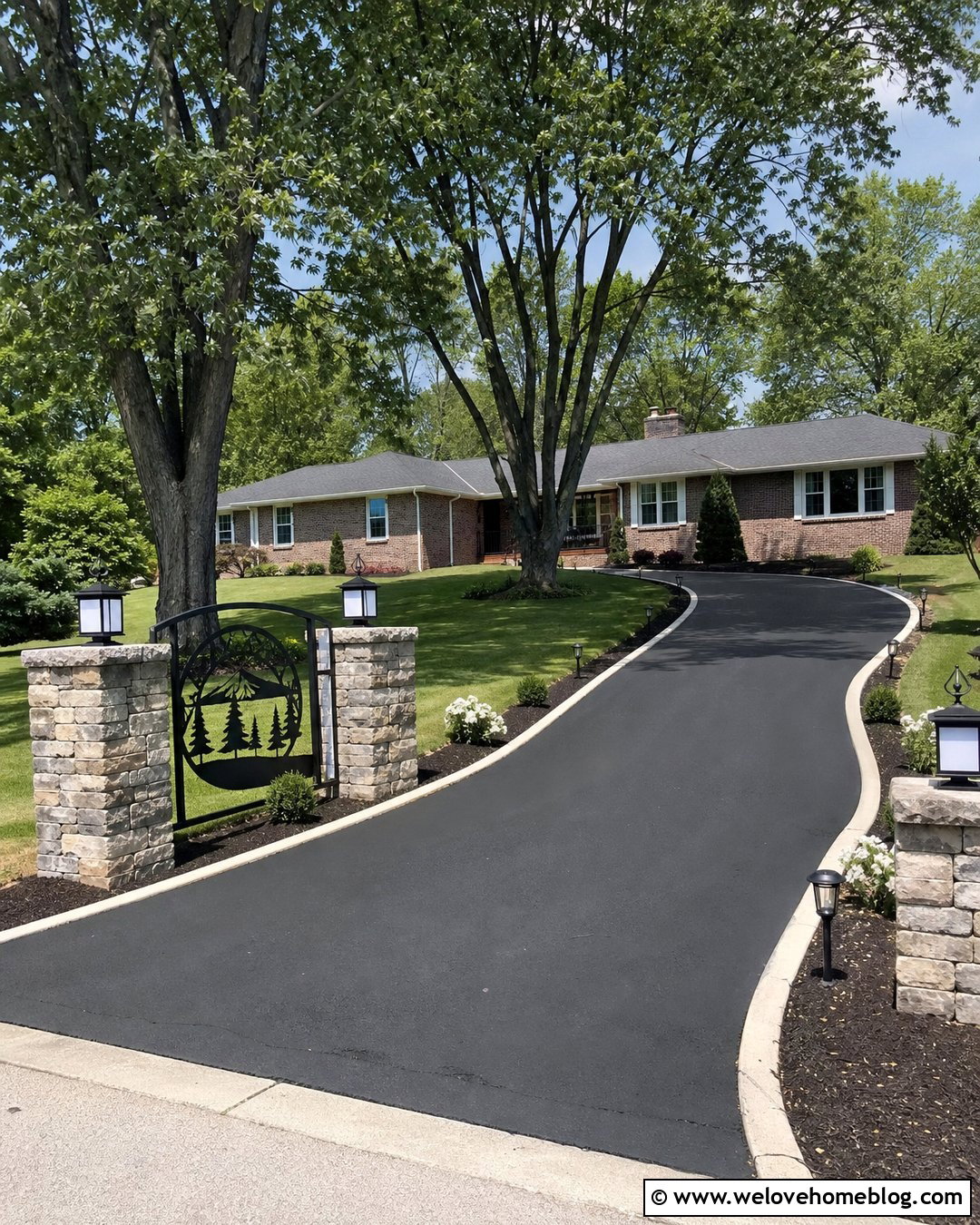
Smooth black asphalt gains architectural presence when the entrance is marked by matching natural-stone pillars. Build the pillars with gray ledgestone, fieldstone, or another material already found on the house. A straight driveway emphasizes symmetry, making this arrangement a strong match for Colonial, Georgian, and traditional brick homes. Low stone walls can extend from each pillar and gradually step down toward planted beds. Add compact evergreens and soft flowering shrubs to prevent the masonry from looking severe. Simple lanterns placed on the pillar caps provide a finished focal point, even during the day. Leave generous clearance between pillars so delivery trucks, trailers, and maintenance vehicles can enter without bringing tires too close to the stonework.
3. Concrete Driveway With River Rock Beds
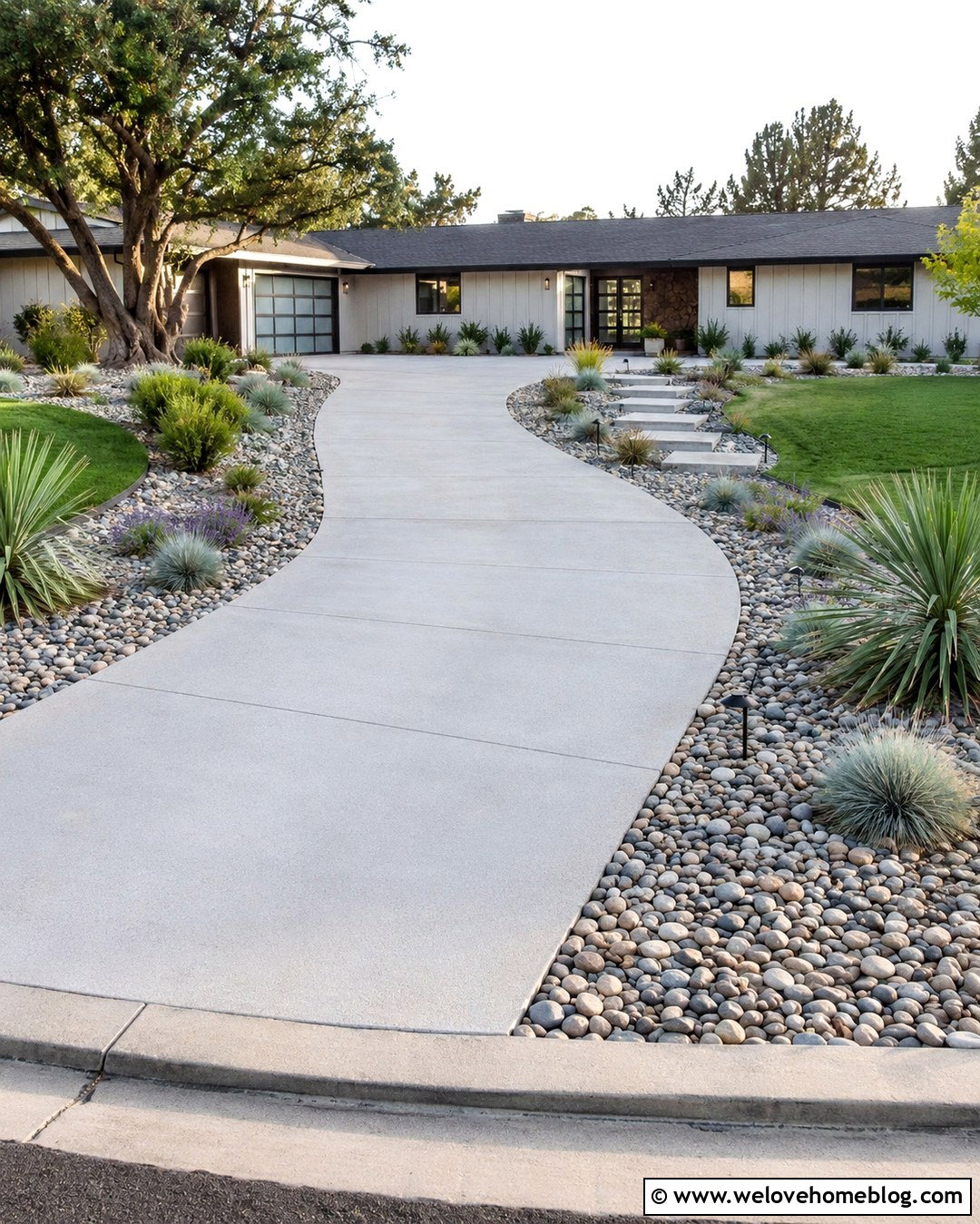
Do you want a rock entrance that feels clean rather than rugged? Pair a light gray poured-concrete driveway with sweeping river rock beds on both sides of the entrance. Smooth stones in mixed gray, tan, and charcoal shades create a soft transition between the hard surface and surrounding lawn. A subtle curved approach makes the rock beds appear wider from the street and gives the entrance a more welcoming flow. Add clusters of dwarf grasses, yucca, blue fescue, and low evergreen shrubs for texture without blocking visibility. Flush metal edging keeps the river rock contained. This complete look suits midcentury, contemporary, and updated ranch houses because the simple material palette feels modern while retaining a natural connection to the yard.
4. Paver Driveway With Fieldstone Columns
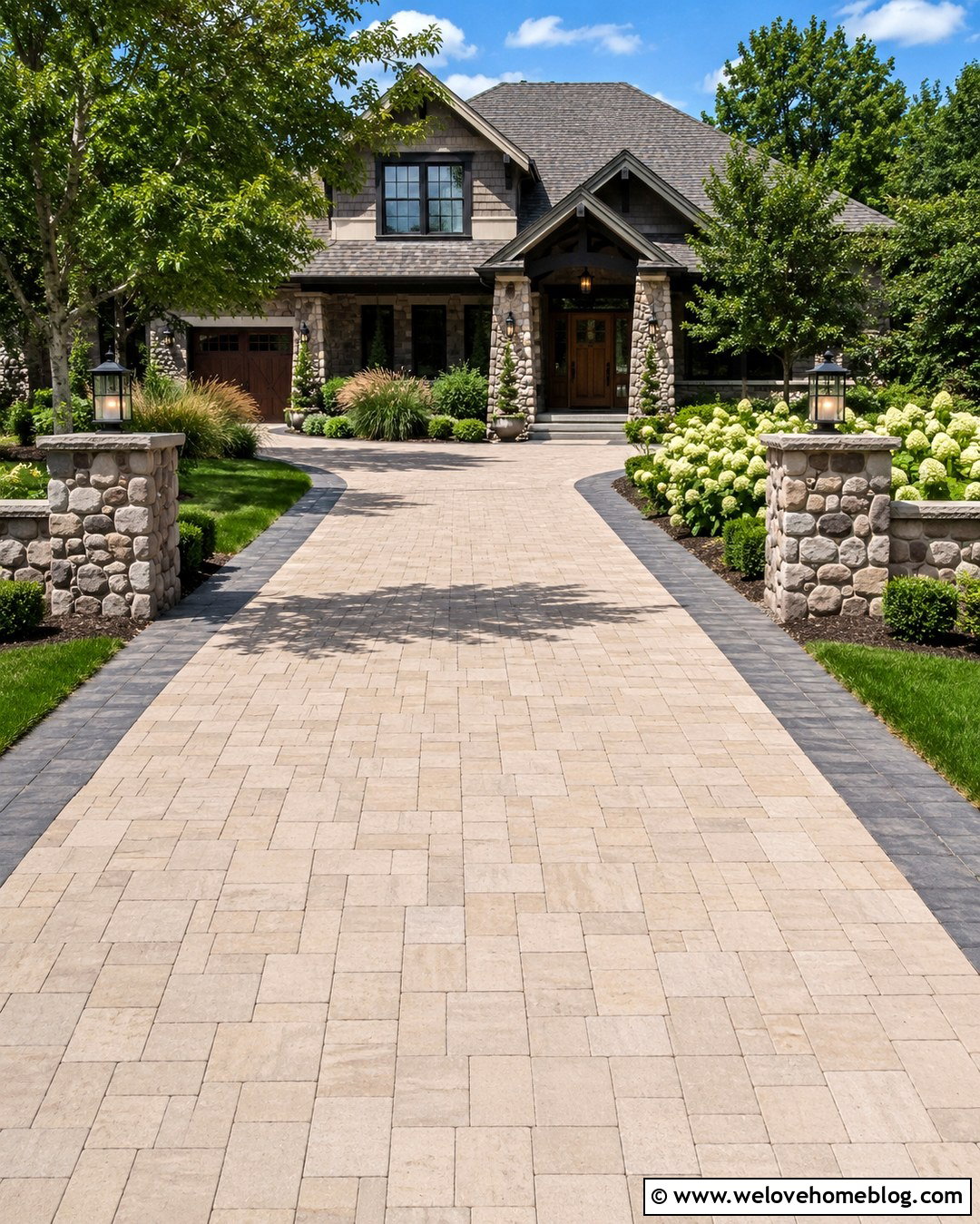
Warm concrete pavers laid in a running-bond or ashlar pattern look especially inviting between rugged fieldstone columns. Select pavers in muted beige, brown, and charcoal tones that relate to the irregular stone without competing with it. A straight or slightly flared entrance gives drivers comfortable access before narrowing toward the house. Connect the columns to short fieldstone walls, then soften both ends with hydrangeas, boxwood, and ornamental grasses. Matching paver bands can define the driveway edges and reinforce the formal layout. This design complements Craftsman homes, stone cottages, and traditional suburban houses. For a polished finish, use broad stone caps on the columns and repeat the same cap material on nearby walls or mailbox supports.
5. Curved Driveway With Large Landscape Rocks
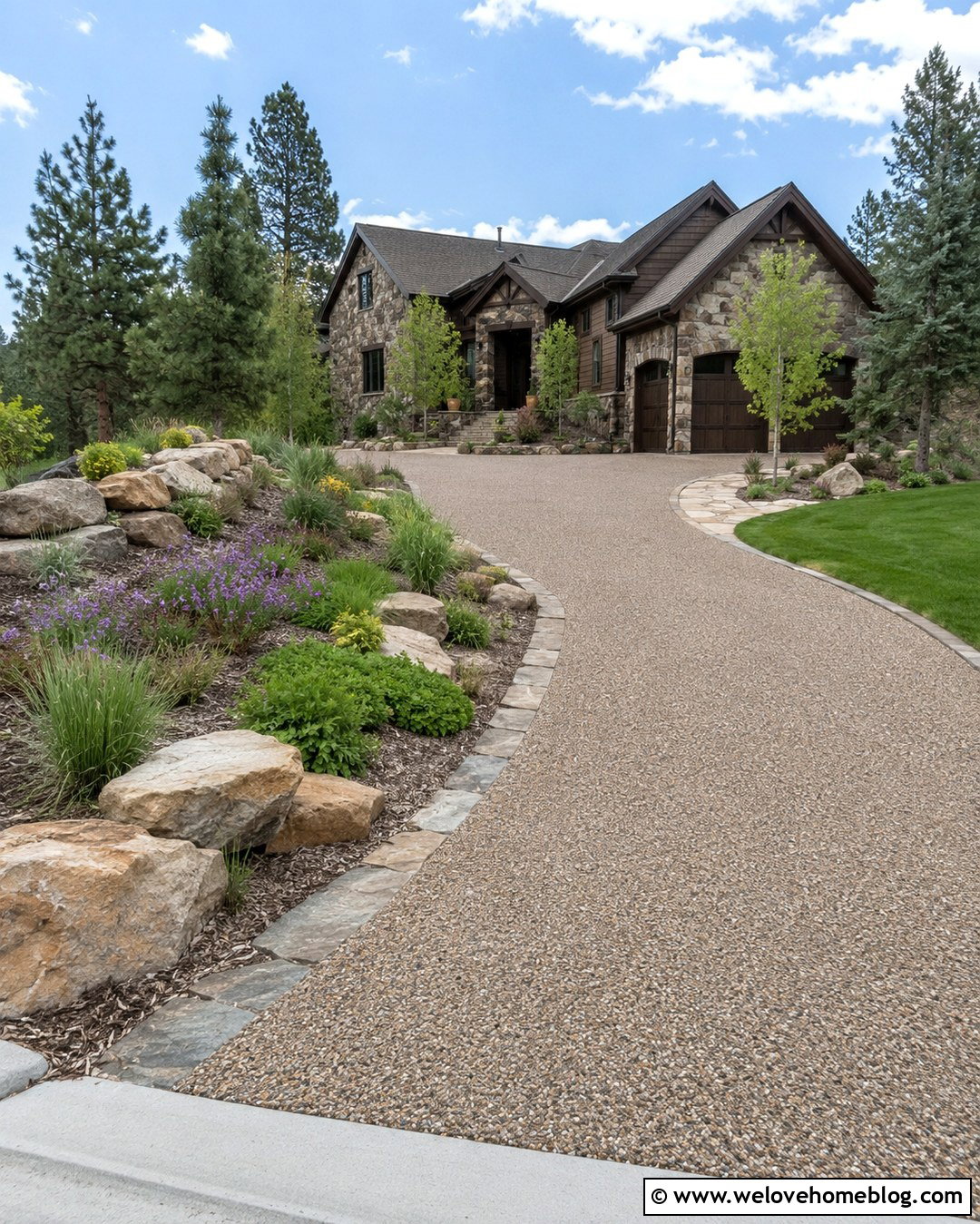
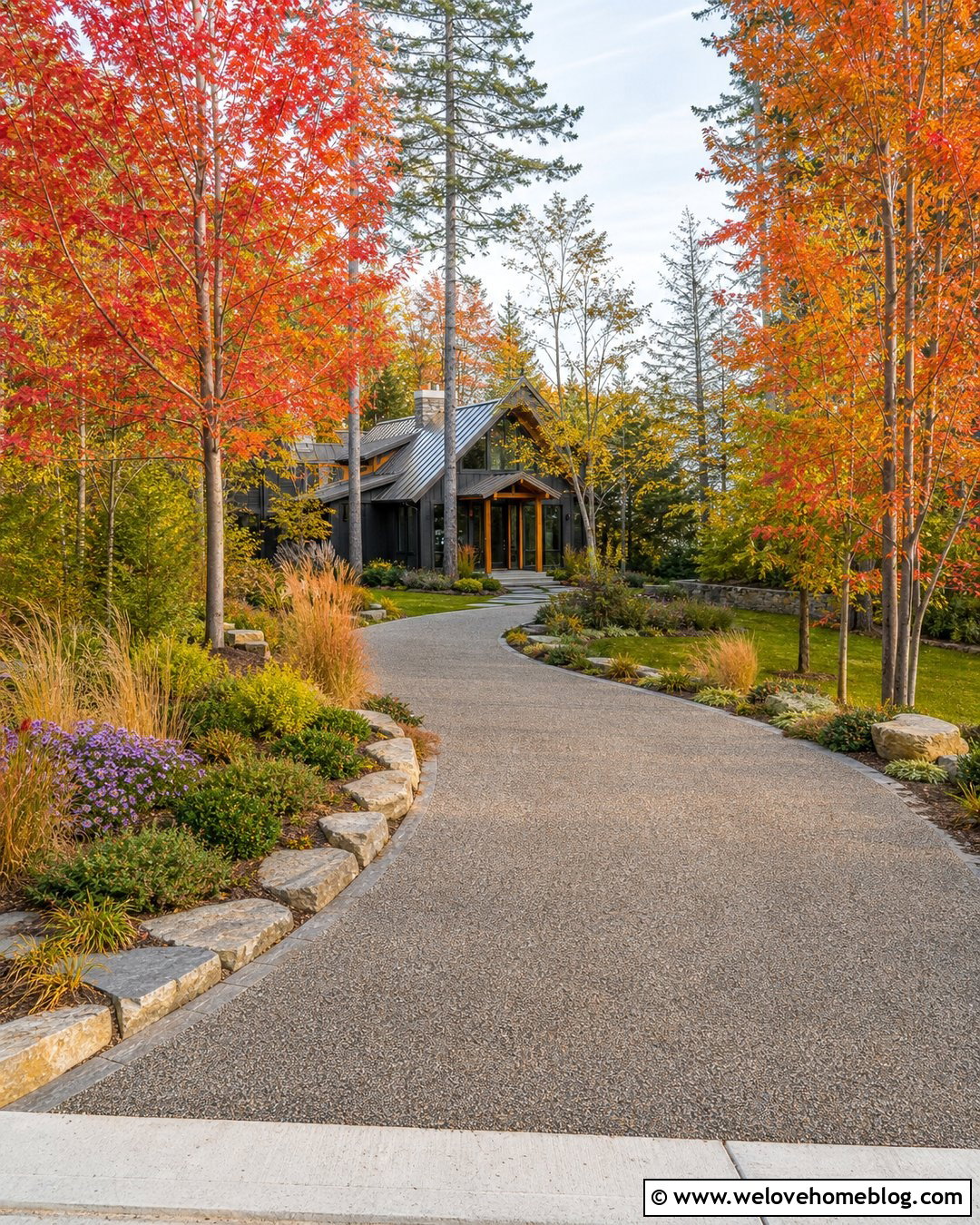
A curved driveway becomes more memorable when large landscape rocks guide the approach without forming a rigid border. Begin with a warm-toned gravel or exposed-aggregate surface, then arrange boulders in staggered groups along the outside curve. Partially bury each rock so it appears naturally settled into the ground. Fill the spaces with native grasses, flowering ground covers, and compact shrubs rather than placing rocks in an even row. A few smaller stones can continue the composition toward the home, creating visual movement. This informal treatment fits country houses, mountain homes, and wooded properties. Keep the inside curve relatively open to protect sightlines, while using the larger outside planting bed to create depth and a stronger street-facing entrance.
6. Circular Driveway With Rock Garden Island
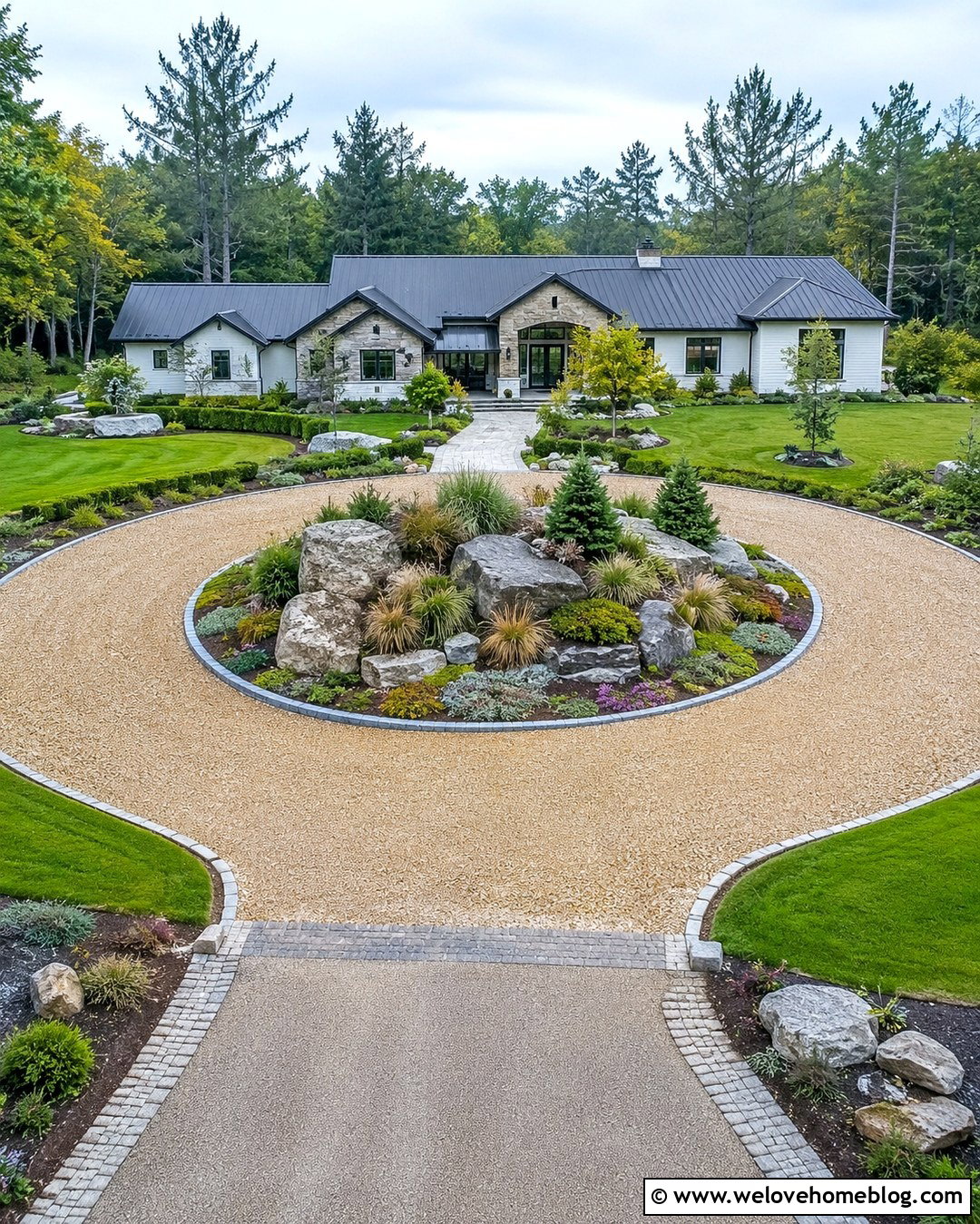
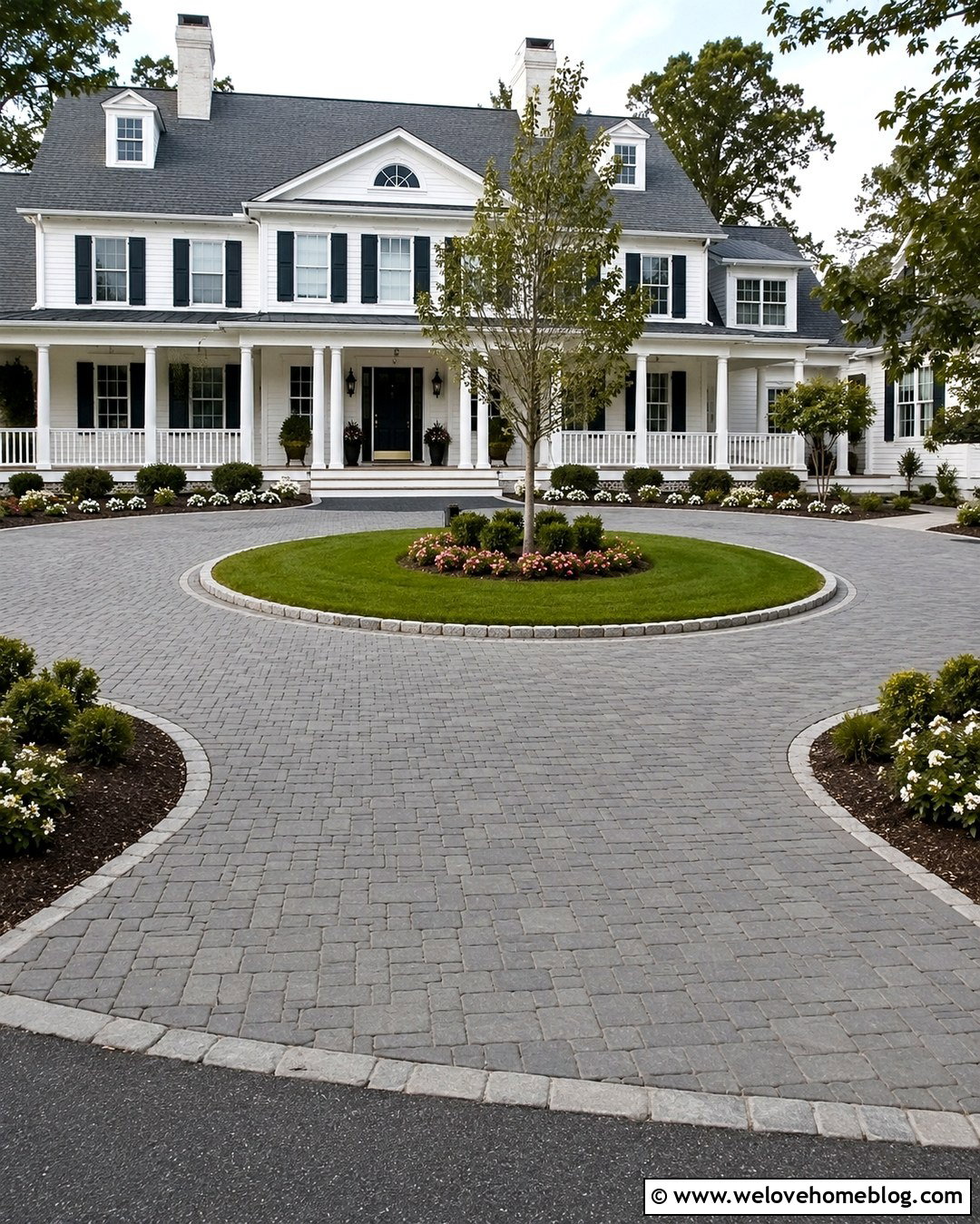
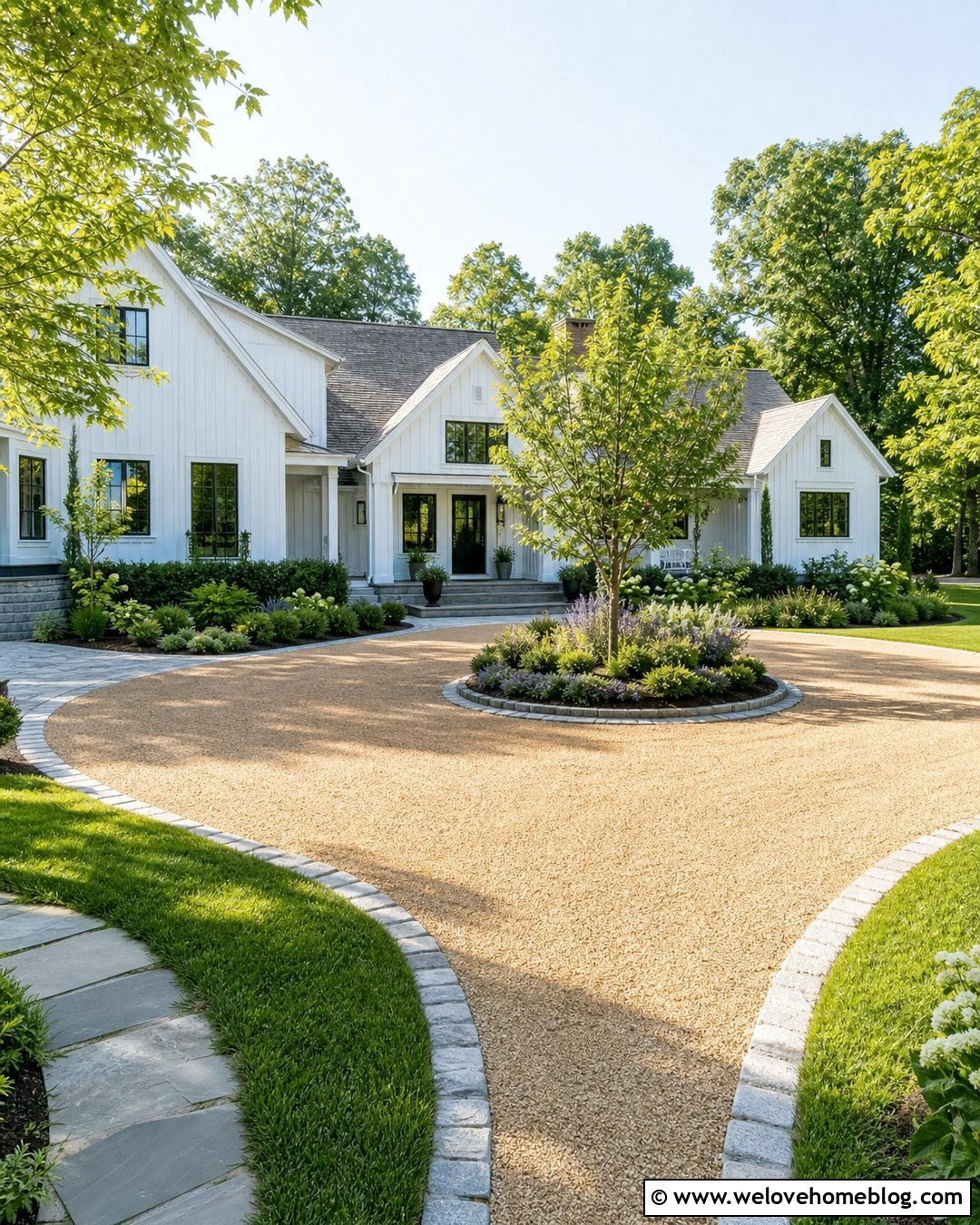
A circular driveway provides the perfect framework for a central rock garden that visitors see immediately upon arrival. Use tan pea gravel, gray concrete pavers, or exposed aggregate around an oval island filled with layered boulders and drought-tolerant plants. Position the tallest rock slightly off-center instead of creating a perfectly symmetrical mound. Low grasses, creeping thyme, sedum, and compact evergreens can soften the stone while keeping the house visible. Define the island with a cobblestone or granite curb that prevents driveway material from entering the bed. This arrangement suits larger ranch, contemporary, and Southwestern homes. Repeating one or two smaller boulders near the street entrance connects the central island to the rest of the driveway landscape.
7. Driveway Entrance With Dry Stack Stone Walls
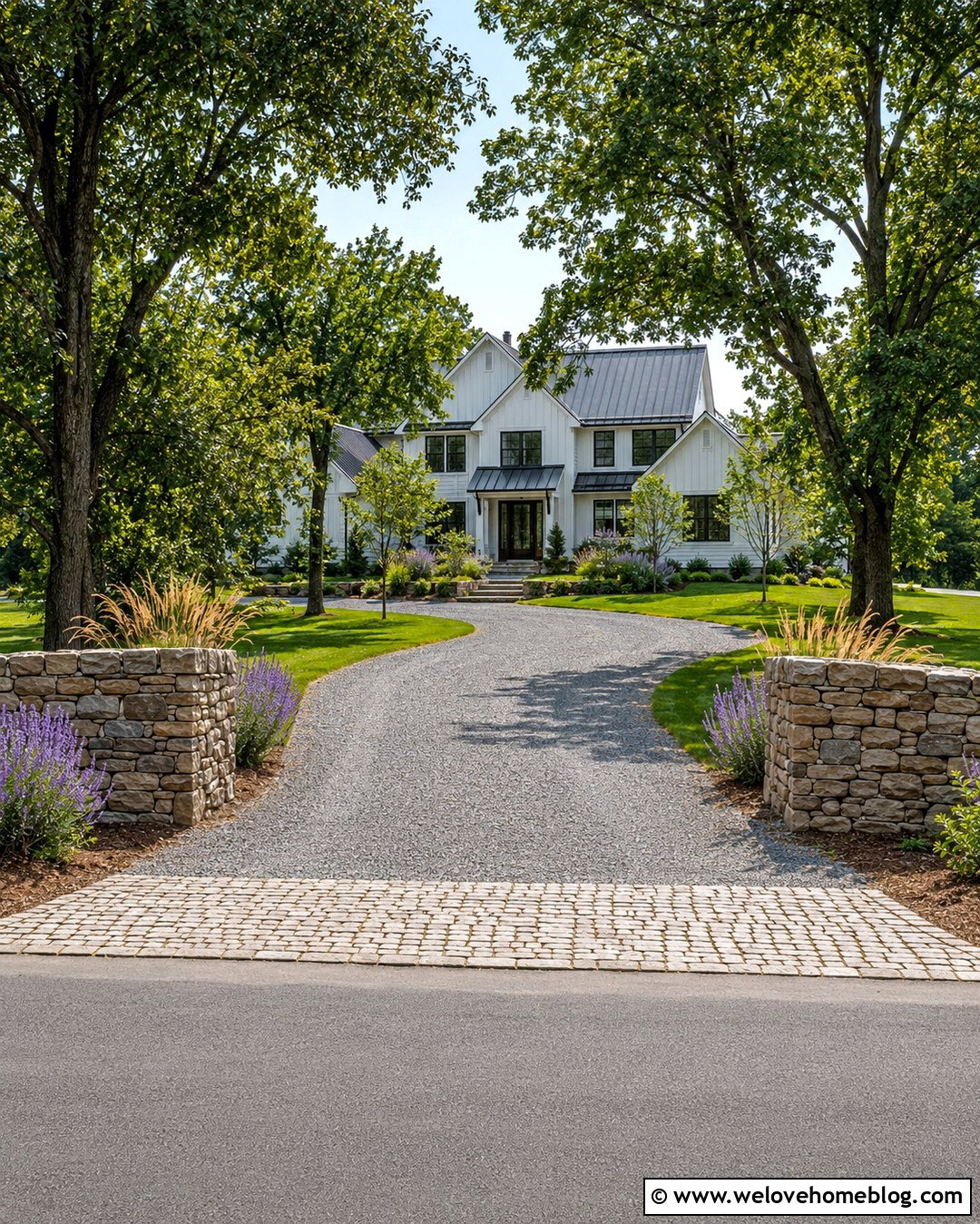
Low dry-stack stone walls can turn a basic driveway opening into a substantial, welcoming gateway. They look particularly natural beside a crushed-granite driveway with a straight entrance that gently curves toward a farmhouse or country home. Start each wall higher near the driveway and taper it toward the lawn, creating a relaxed transition instead of an abrupt stopping point. Irregular fieldstone in gray, buff, and warm brown provides an aged appearance. Plant lavender, catmint, salvia, or native grasses behind the walls so foliage spills lightly over the edges. A stone or brick apron at the road can reduce the visual contrast between loose gravel and pavement. Keep the walls low enough to preserve clear views when leaving the property.
8. Modern Driveway With Gabion Rock Walls
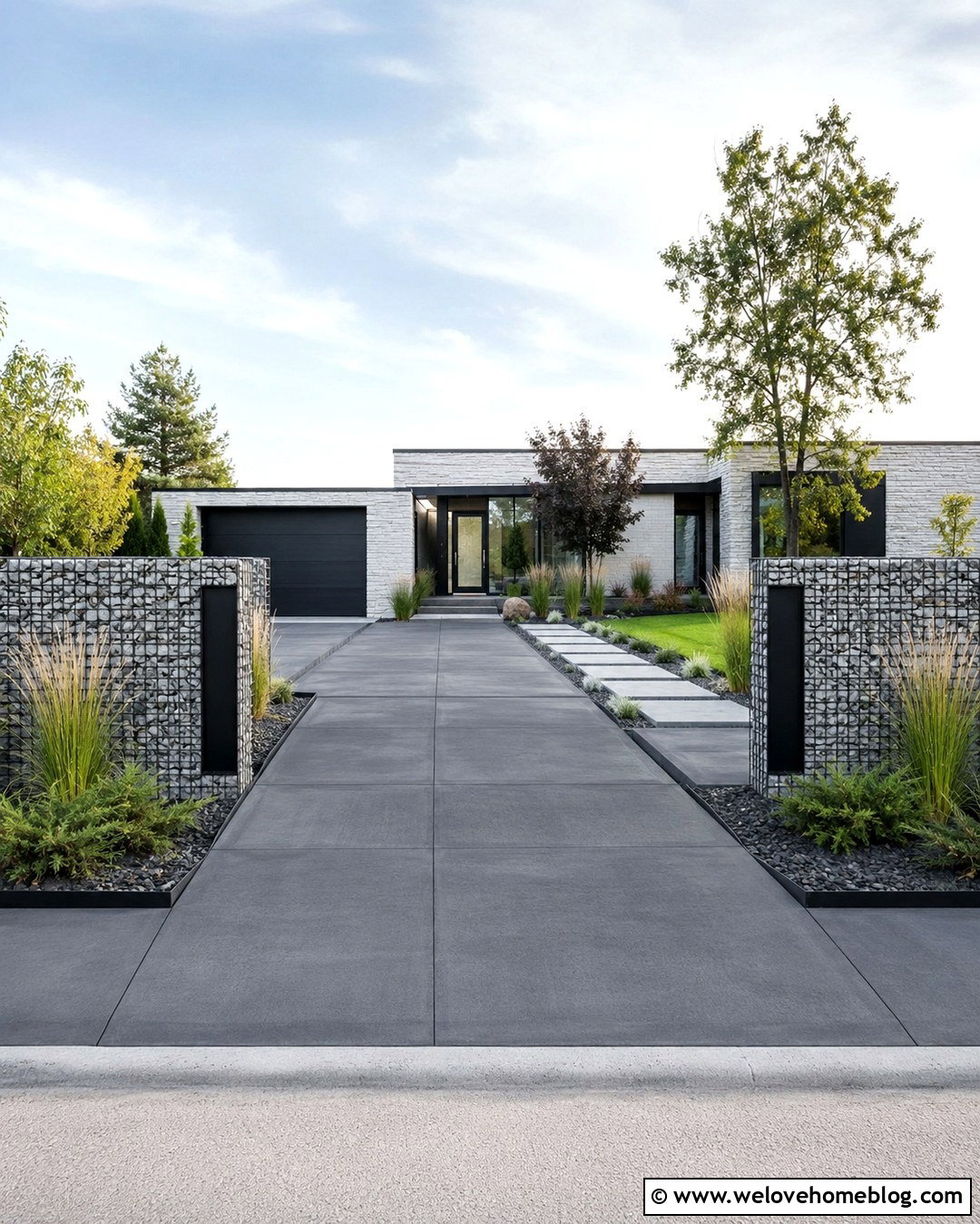
Gabion walls offer a sharp, contemporary way to feature rock at a driveway entrance. Fill rectangular steel cages with uniform gray granite, dark basalt, or pale limestone, then place one streamlined wall on each side of a charcoal concrete driveway. A straight layout reinforces the geometry and works well with a flat-roofed modern house. Integrate a slim address panel or horizontal light into one gabion wall instead of adding a separate sign. Sparse planting keeps the composition calm, so use sculptural grasses, low junipers, or neatly spaced agave where the climate allows. Black metal edging and broad concrete walkway slabs can complete the entrance. The combination feels bold and structured while still displaying the varied texture of natural stone.
9. Driveway Entrance With Address Boulder
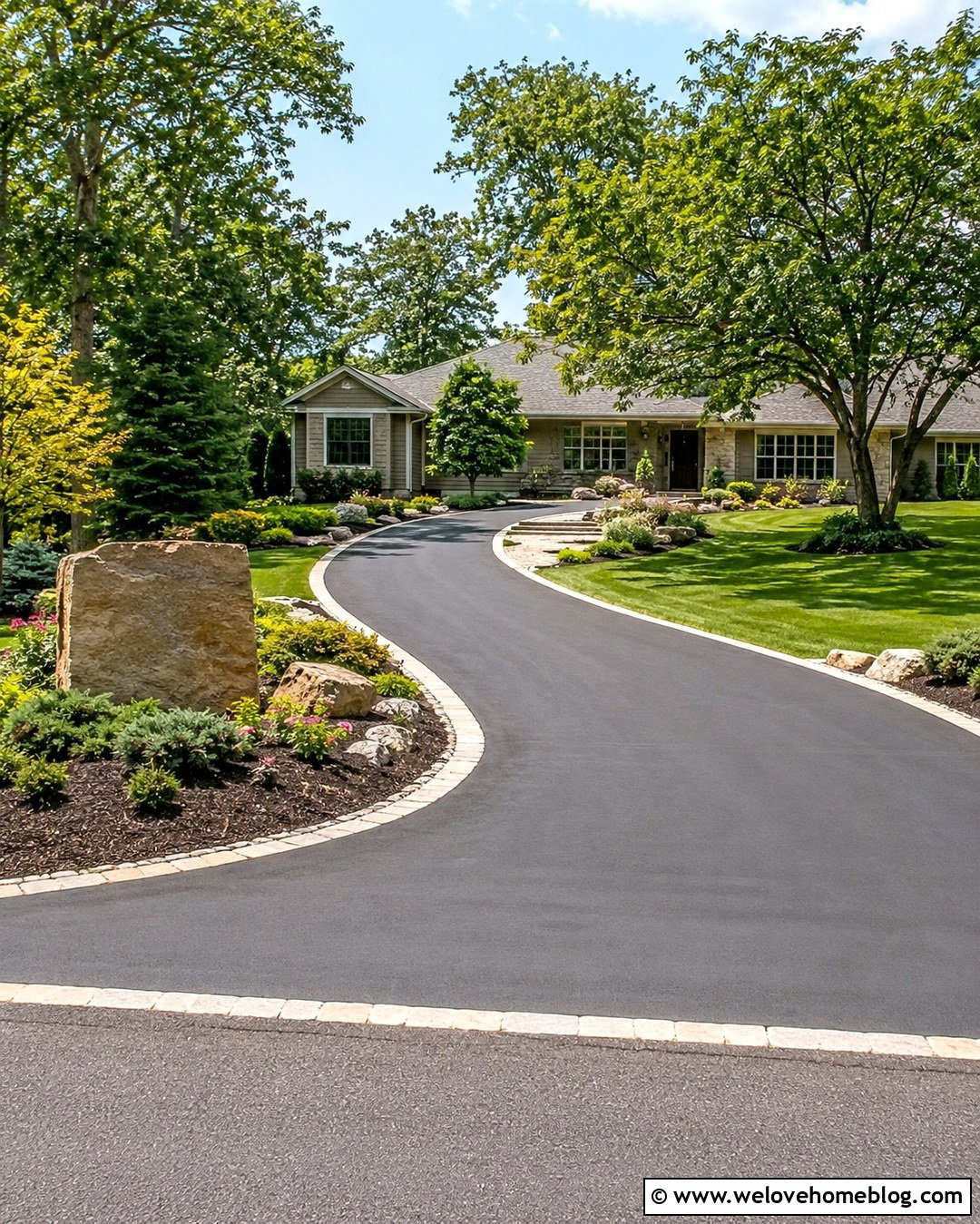
One large address boulder can provide a clear focal point without requiring columns, walls, or a gate. Place a flat-faced granite or sandstone boulder in a broad planting bed beside a light gravel or dark asphalt driveway. The rock should face approaching traffic while remaining comfortably outside the vehicle path. Surround its base with smaller stones, evergreen ground covers, and low seasonal flowers so the address remains easy to see. A gently flared driveway entrance gives the feature more breathing room and creates a balanced street view. This option works with ranch, cabin, farmhouse, and transitional homes. Repeat the boulder’s color in a cobblestone apron, walkway border, or foundation planting bed to make the marker feel integrated rather than randomly placed.
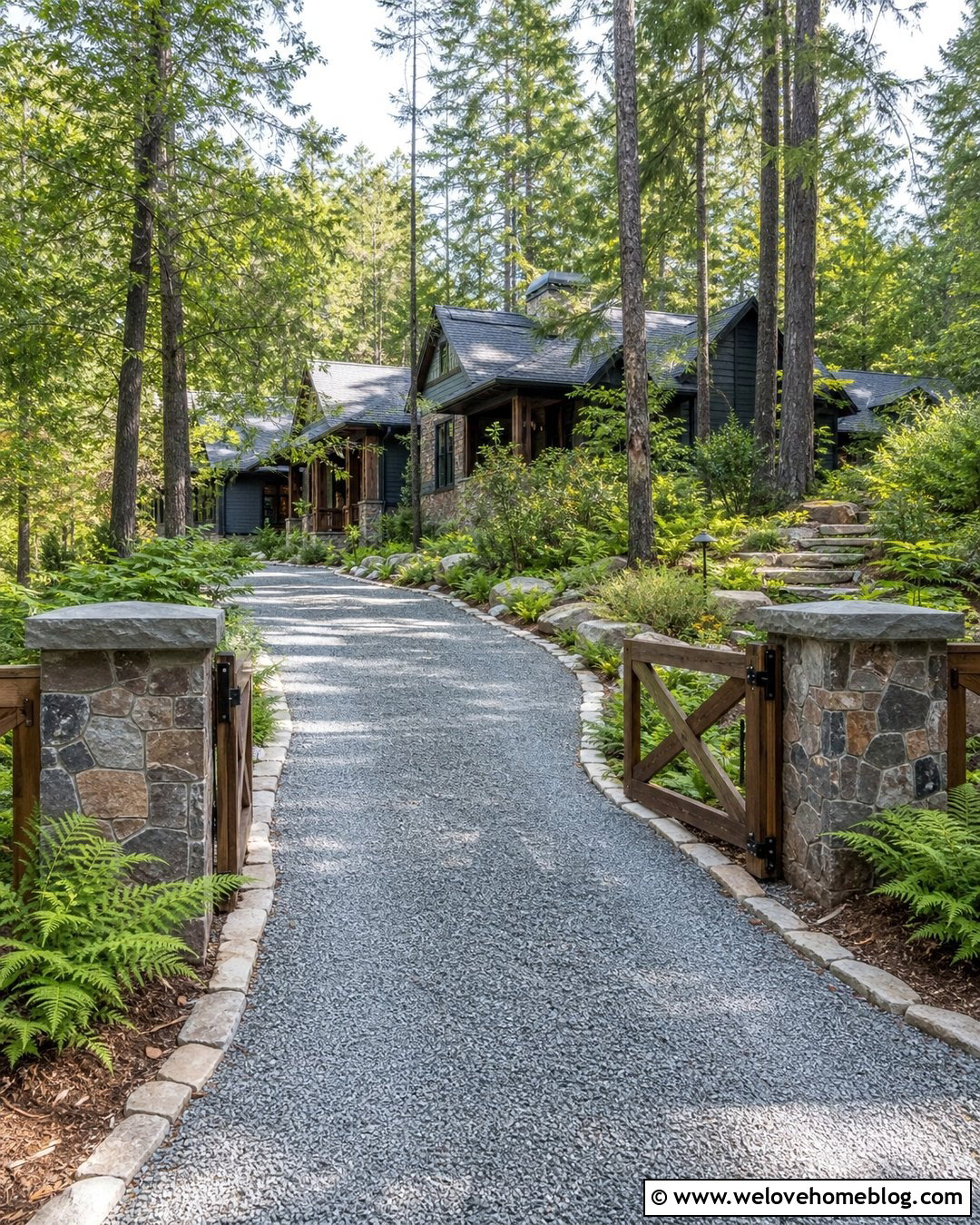
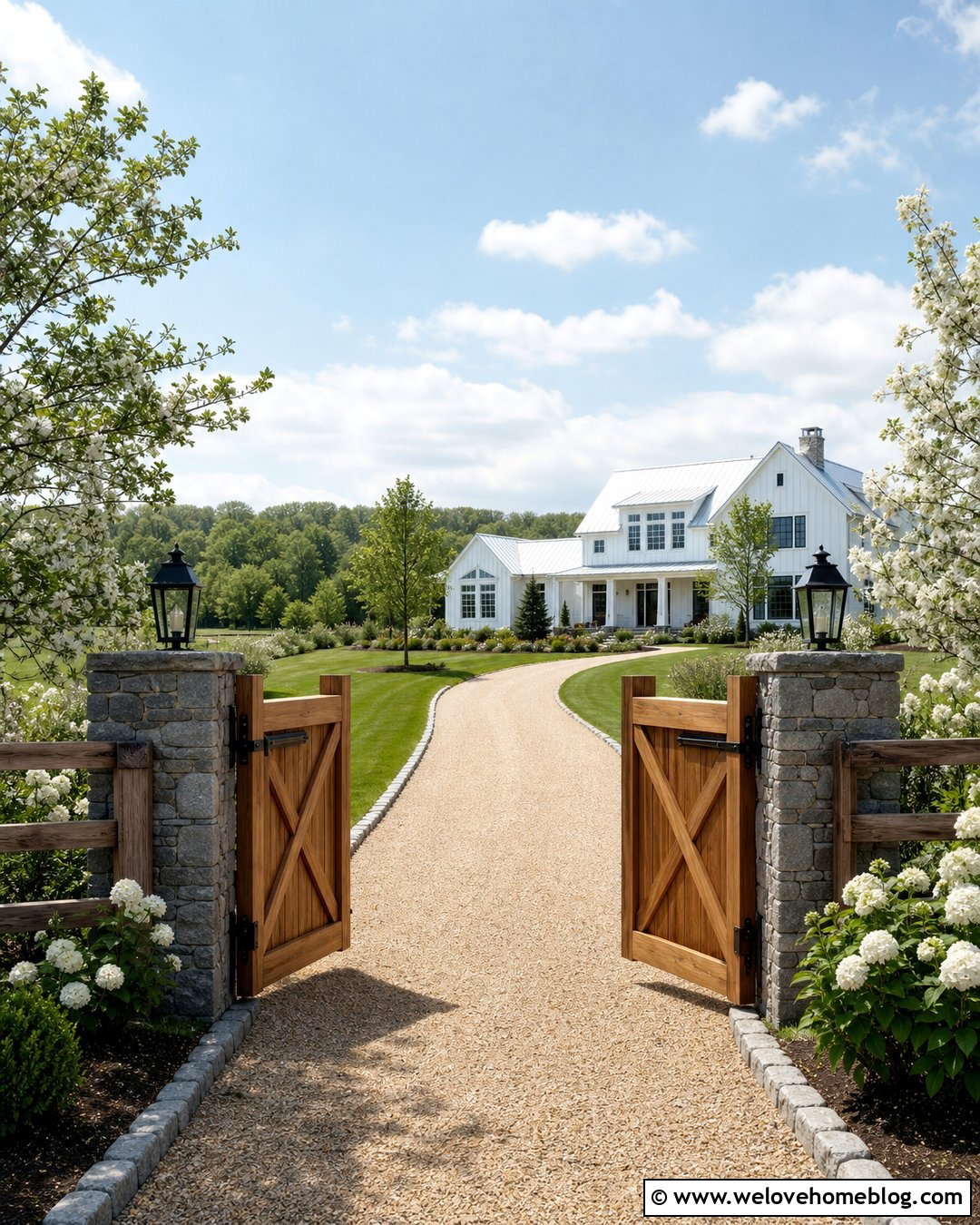
10. Driveway Gate With Rock Pillars
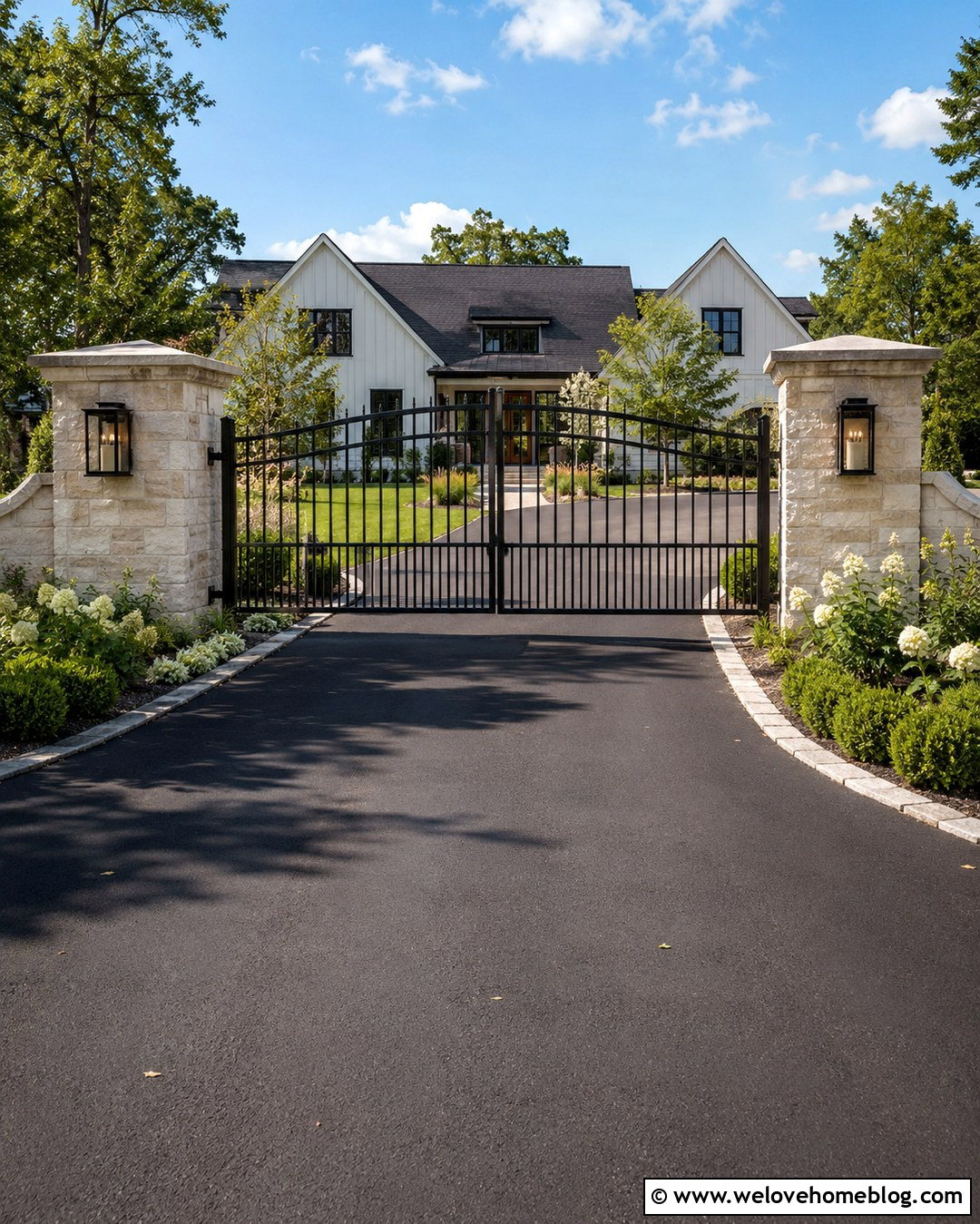
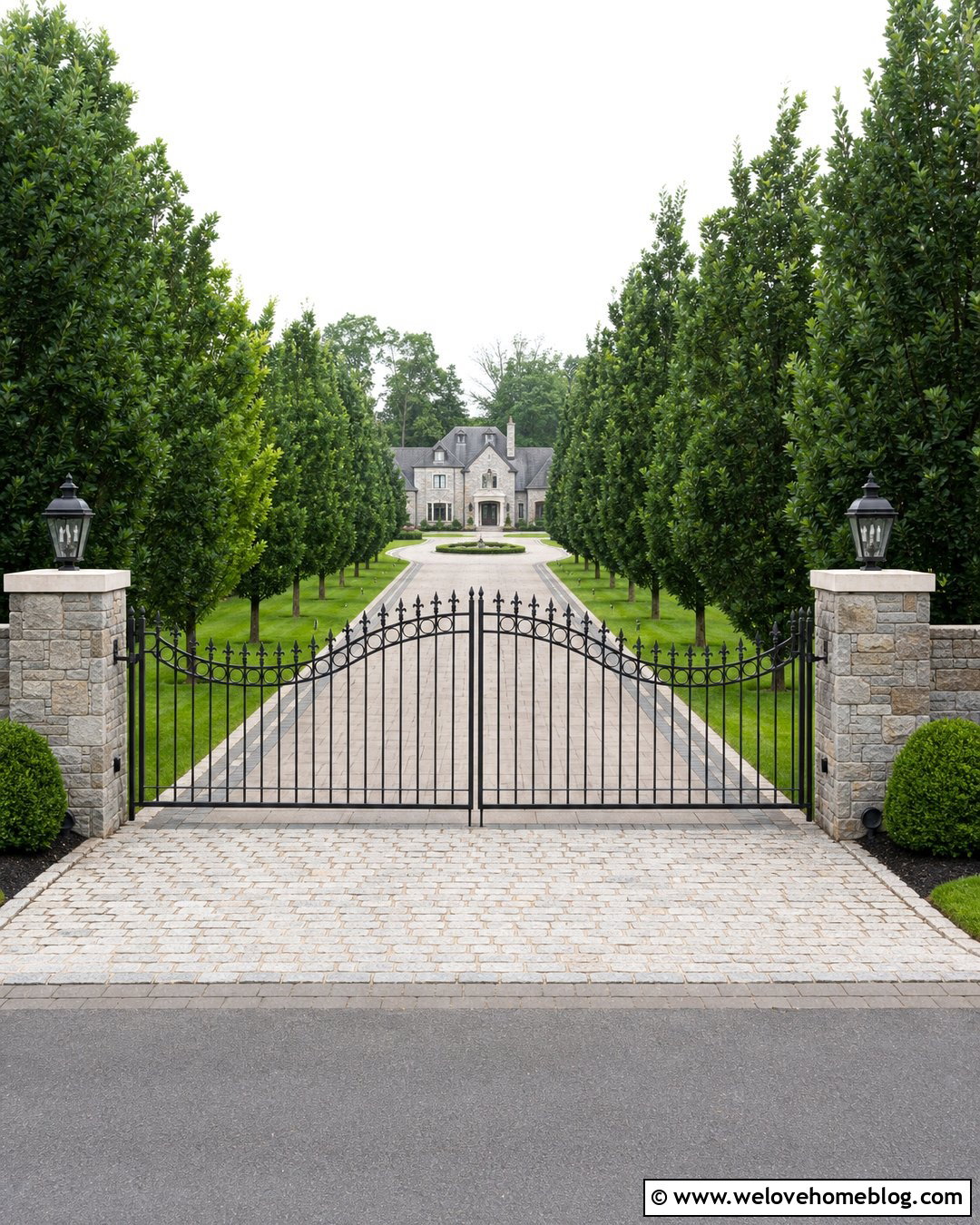
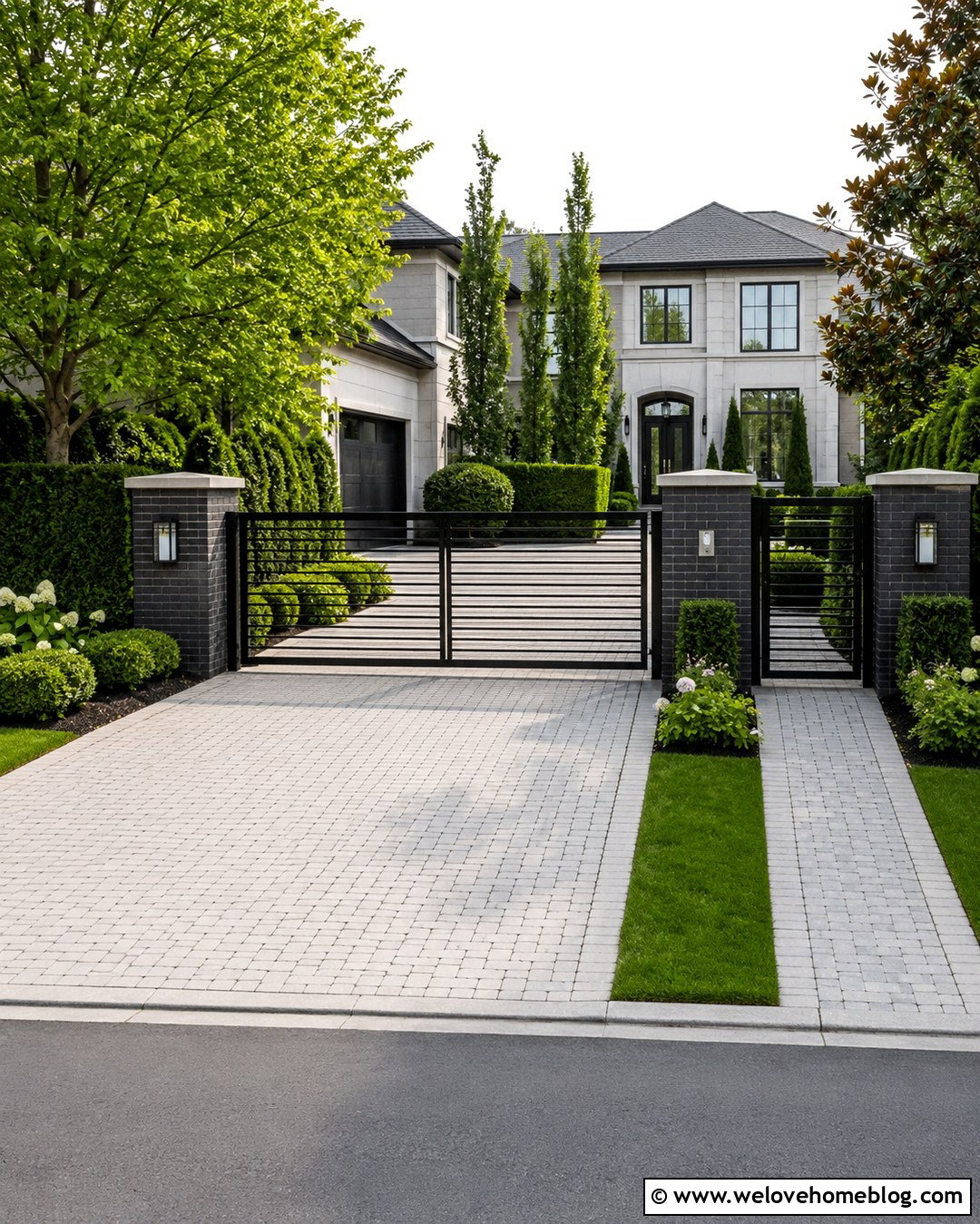
A driveway gate feels more permanent when supported by broad rock pillars that relate to the home’s architecture. Pair square-cut limestone or ledgestone columns with a dark metal gate and a smooth asphalt, paver, or concrete approach. Set the gate far enough inside the property to create a practical stopping area off the street. Low curved walls can extend from the pillars and frame beds of boxwood, ornamental grasses, and flowering shrubs. For a modern farmhouse, choose simplified stonework and a straight horizontal gate. A traditional home may suit an arched metal gate with capped fieldstone columns. Keep the stone palette limited to two or three tones, allowing the gate and driveway surface to remain visually distinct and easy to read.
11. Farmhouse Driveway With Split Rail And Rocks
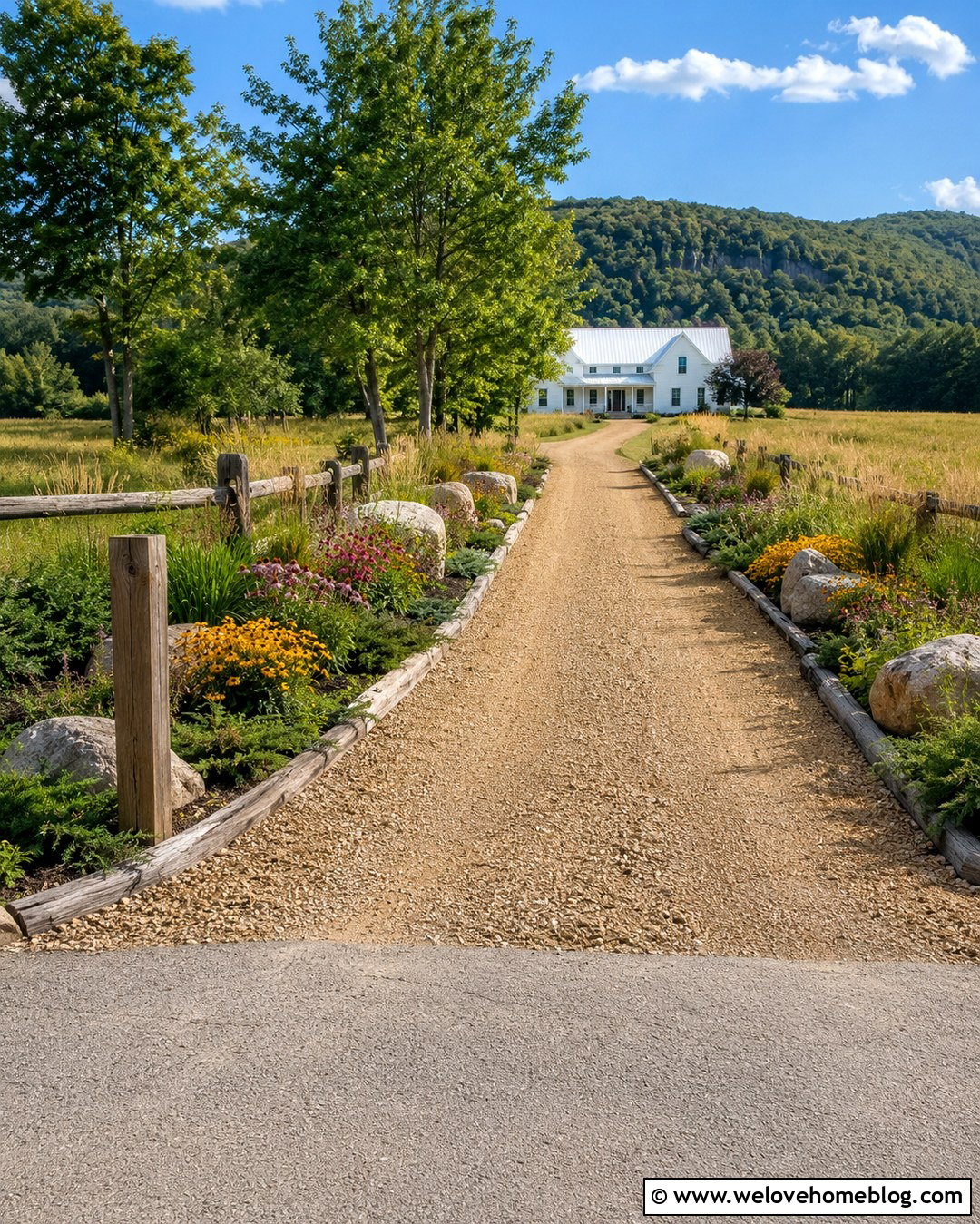
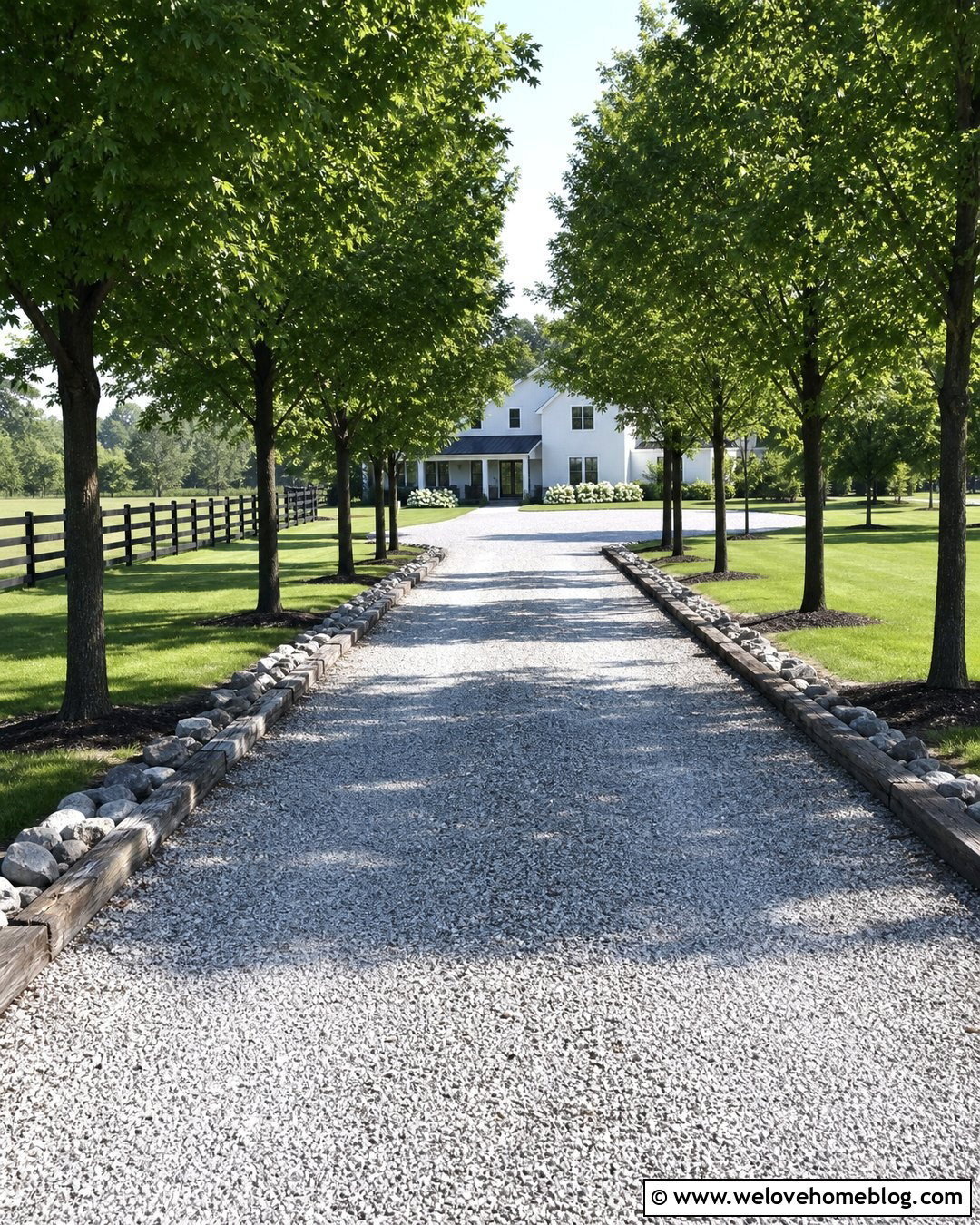
Picture a long gravel driveway beginning between weathered split-rail fences, informal boulder groupings, and meadow-style plants. This complete entrance creates rural character without the cost or visual weight of full masonry columns. Use compacted gray or tan crushed stone for the driveway and install substantial timber or stone edging near the road where gravel is most likely to spread. Position native fieldstones at the fence ends, partially burying them among switchgrass, coneflowers, black-eyed Susans, and low juniper. Continue the fence several yards along each side to guide the eye toward a modern or traditional farmhouse. A simple wood address post can coordinate with the rails. Leave planting loose and layered, but maintain a clean, wide opening for everyday access.
12. Desert Driveway With Boulders And Gravel
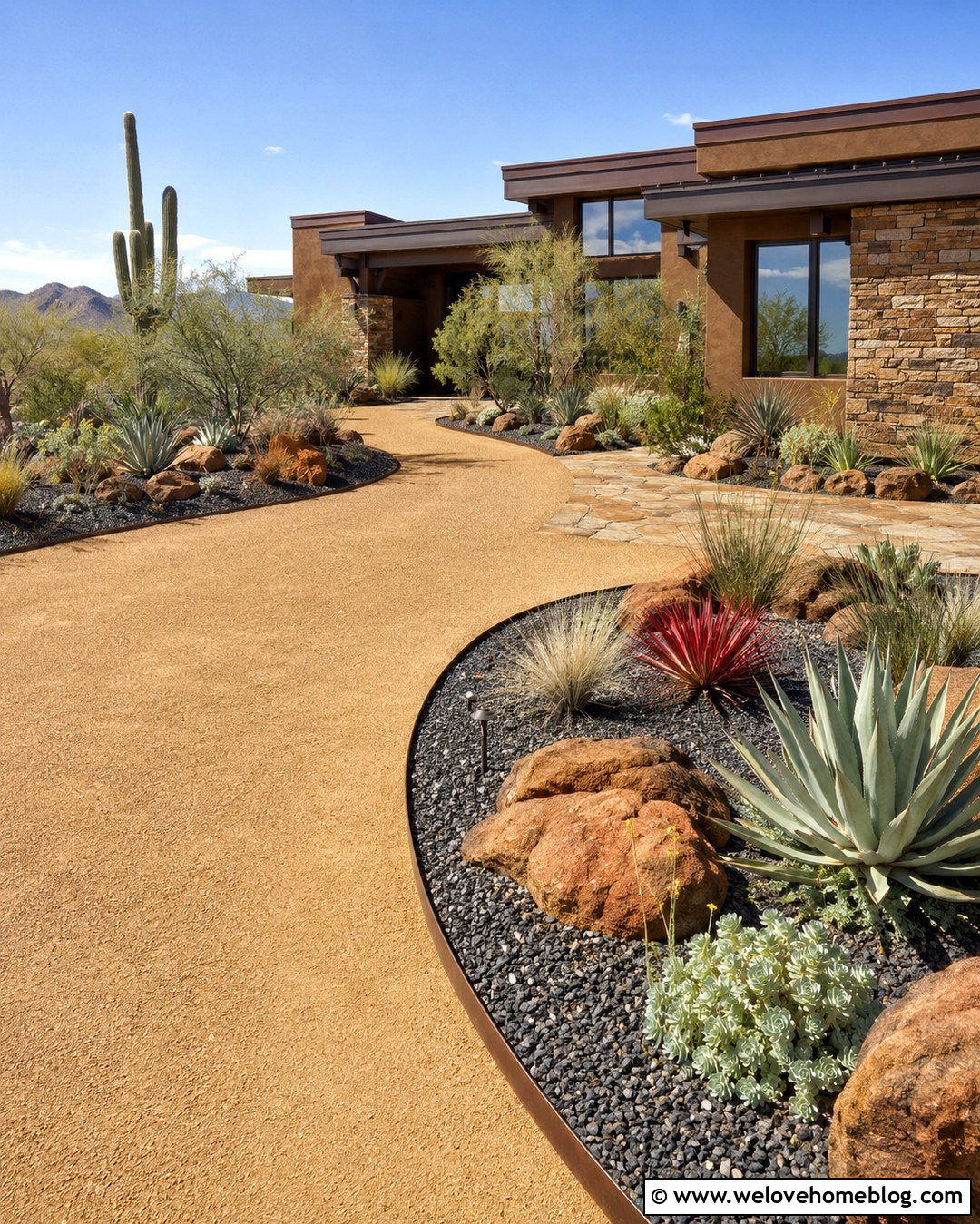
In a dry landscape, boulders can anchor the entire entrance while reducing the need for broad lawn areas. Use a warm decomposed-granite driveway with a gentle curve leading toward a Southwestern, adobe, or desert-modern home. Arrange rust, buff, or charcoal boulders in asymmetrical groups beside the opening, leaving pockets for agave, red yucca, desert spoon, and airy ornamental grasses. Smaller gravel in a contrasting shade can define the planting beds without introducing mulch. Add a low steel edge or stone curb to separate the driving surface from decorative rock. The strongest compositions use a few large boulders instead of many small scattered stones. This creates a cleaner entrance, highlights plant forms, and visually connects the driveway to the surrounding terrain.
13. Wooded Driveway With Mossy Fieldstone
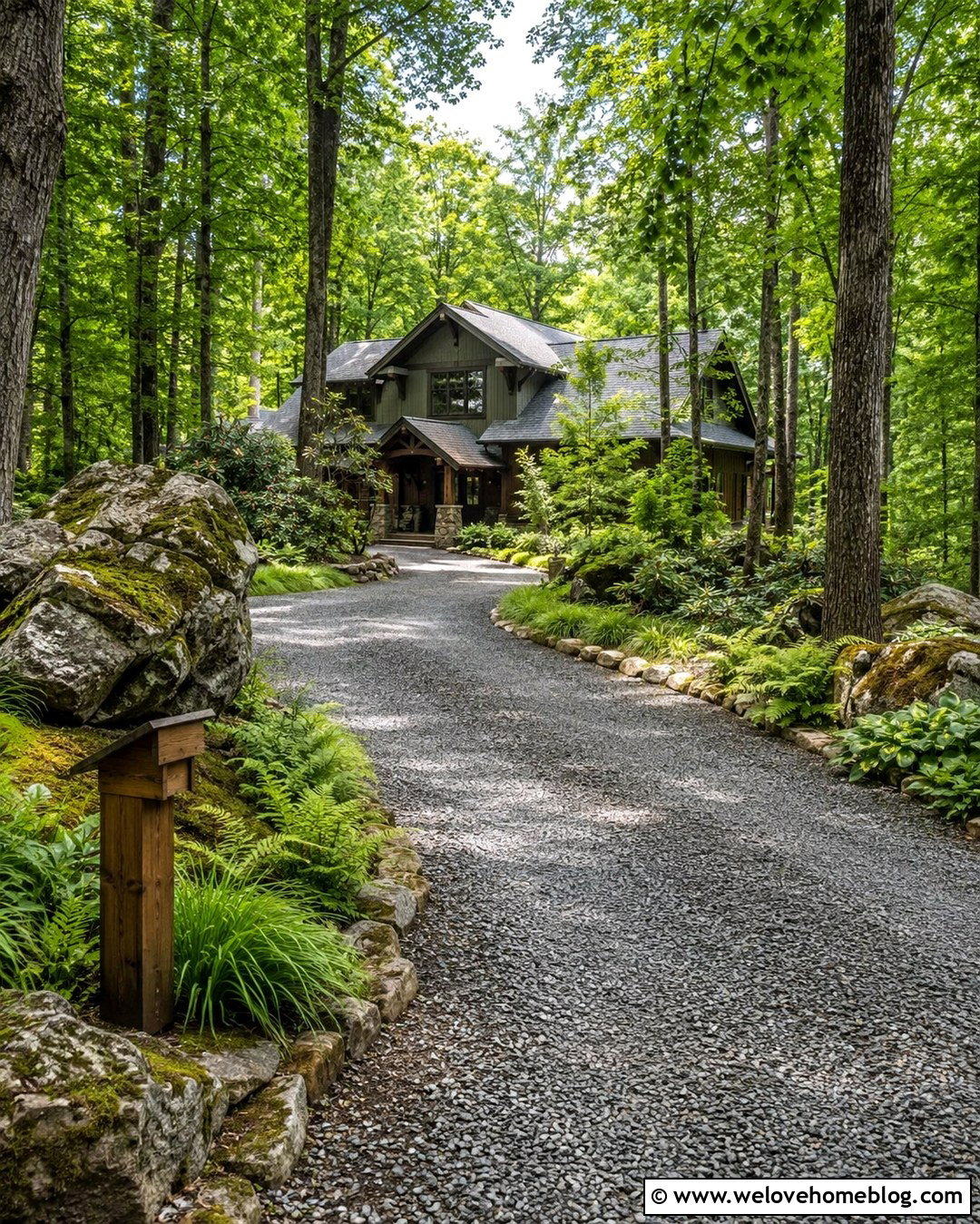
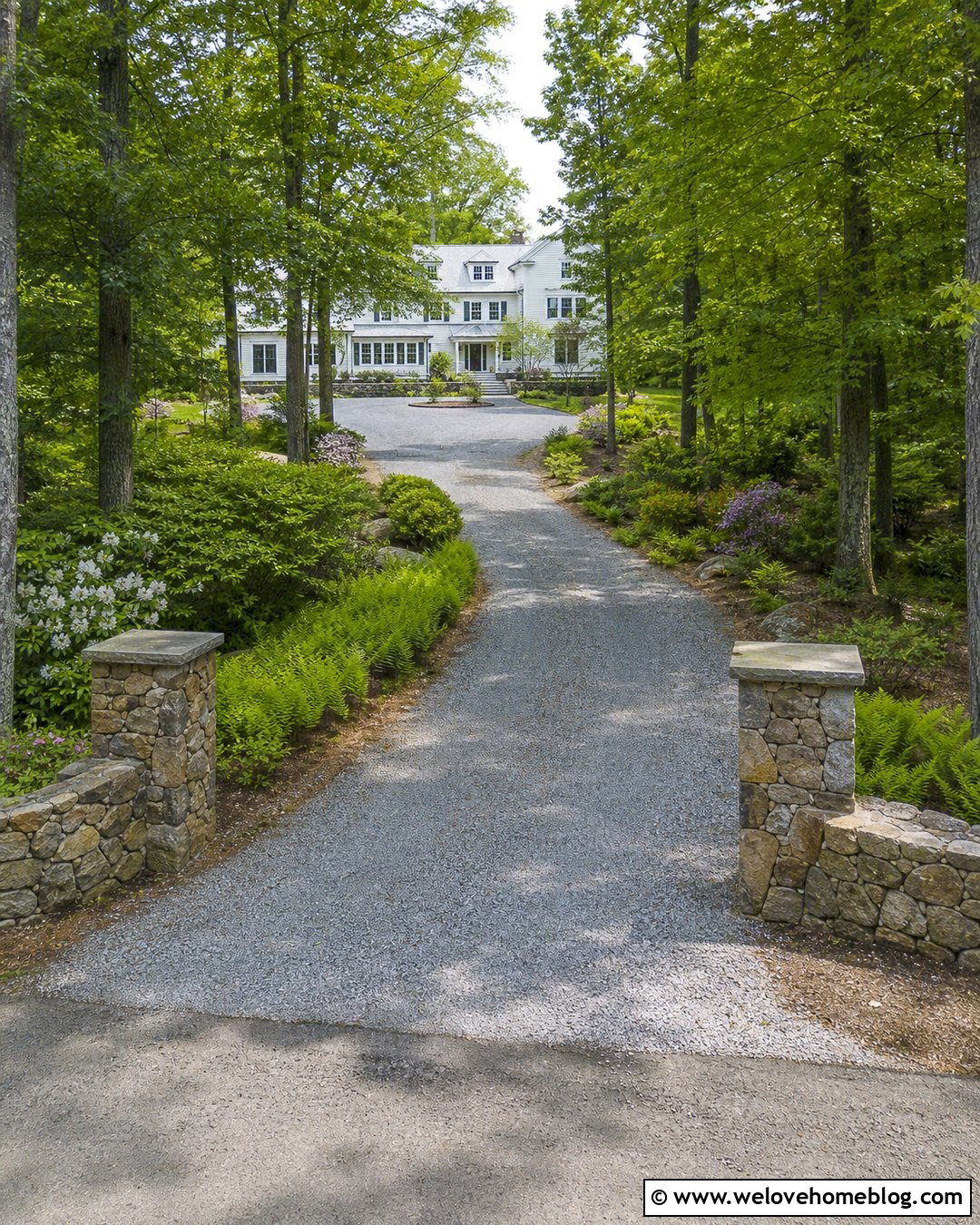
A wooded entrance should feel like a natural opening in the landscape rather than a formal break in it. Choose a dark gray gravel driveway that curves gradually between native trees and beds of mossy fieldstone. Irregular rocks can form low clusters near the road and continue sporadically along the approach, guiding the eye without creating a hard boundary. Add ferns, hostas, woodland sedges, rhododendrons, and shade-tolerant ground covers around the stones. A simple timber address marker or understated stone pillar fits better than bright masonry. Ensure branches and shrubs remain trimmed around the entrance for clear visibility. This layered design complements cabins, Craftsman houses, and contemporary woodland homes while preserving the shaded, quiet character of the property.
14. Sloped Driveway With Boulder Retaining Walls
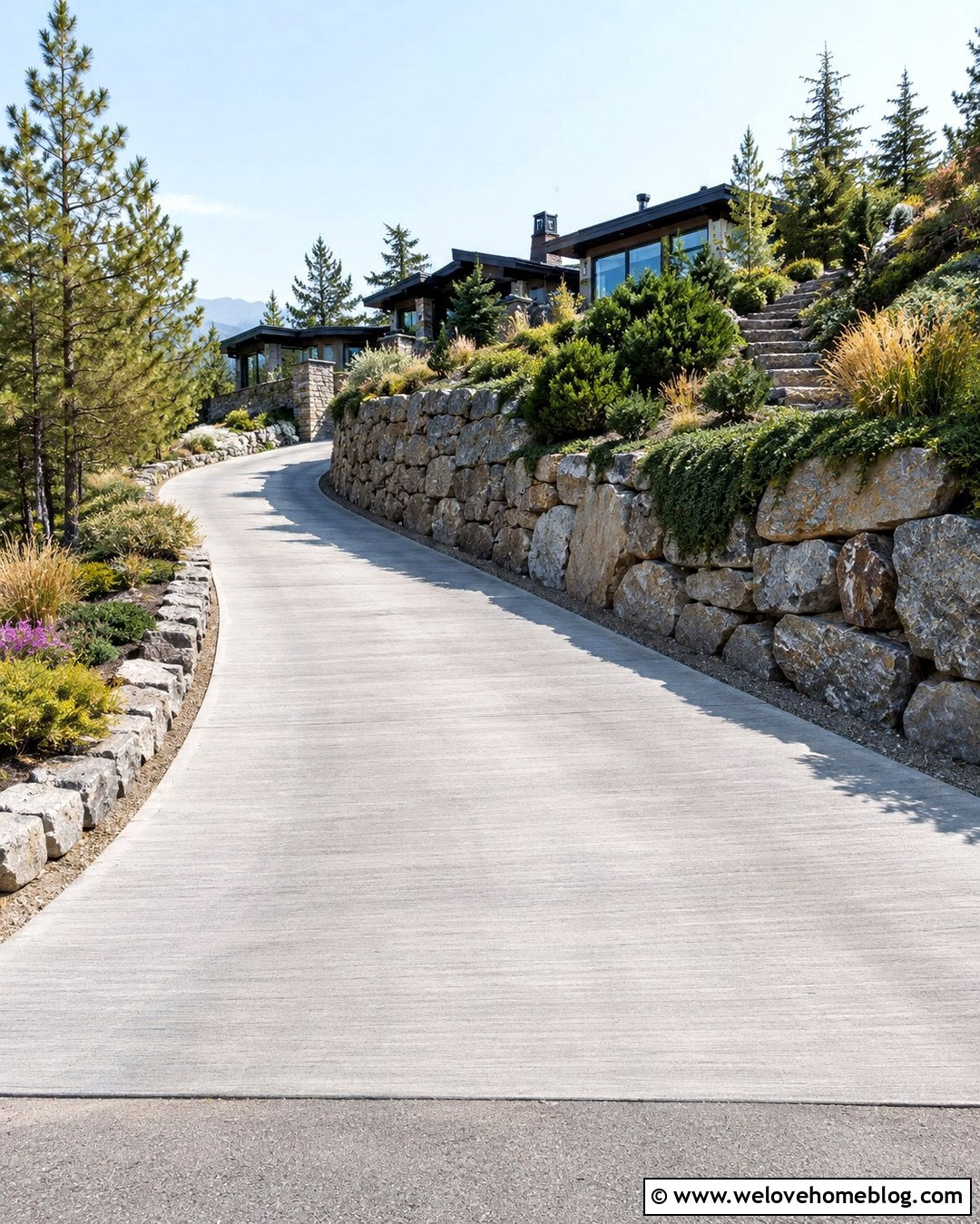
A sloped entrance often needs stronger visual support, and a boulder retaining wall can make the grade change look intentional. Pair a broom-finished concrete or compacted gravel driveway with large, angular rocks stacked along the uphill side. Use stones of varied sizes, placing the heaviest pieces near the base and softening the upper edge with trailing ground covers and sturdy shrubs. On the opposite side, create a lower planting bed to keep the entrance open and balanced. A curved alignment can reduce the driveway’s severe appearance as it climbs toward a hillside home. Coordinate the boulders with natural stone on the foundation or front steps. Proper drainage and professional placement are especially important where the wall holds back significant soil or sits near vehicles.
15. Driveway Entrance With Rock Creek Bed
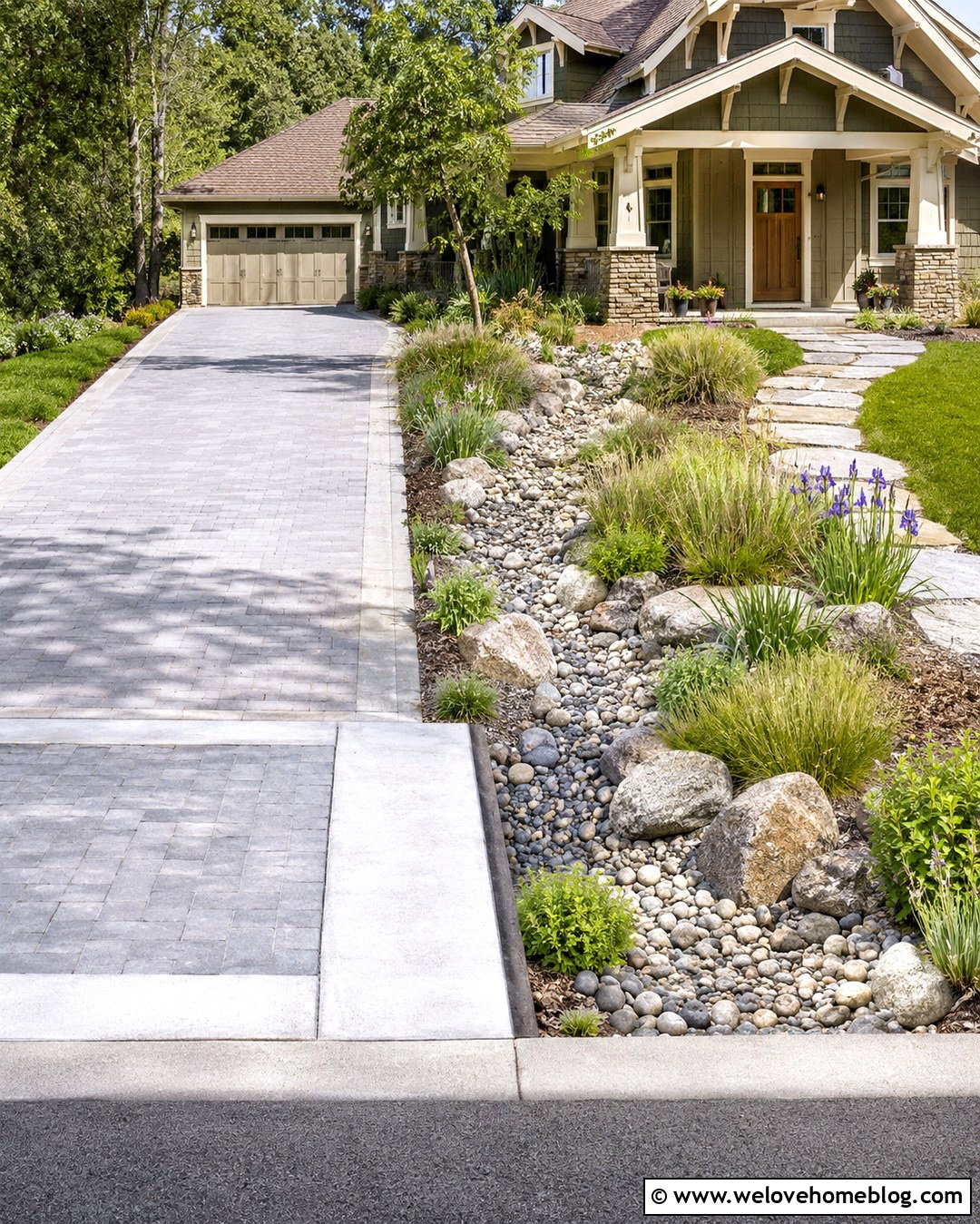
A dry creek bed can manage the visual transition between a driveway, drainage area, and front-yard landscape. Run a shallow ribbon of mixed river rock beneath or beside a concrete culvert at the entrance, then curve it naturally into the yard. A pale concrete, asphalt, or paver driveway provides a crisp contrast against rounded gray and tan stones. Use larger rocks along bends and smaller gravel through the center to imitate the structure of a real streambed. Native grasses, iris, sedges, and moisture-tolerant shrubs can soften the banks. A small stone bridge effect at the driveway crossing adds character without narrowing the surface. This design works well for rural, Craftsman, and naturalistic homes where drainage features need to look attractive from the street.
16. Brick Driveway With Limestone Entrance Walls
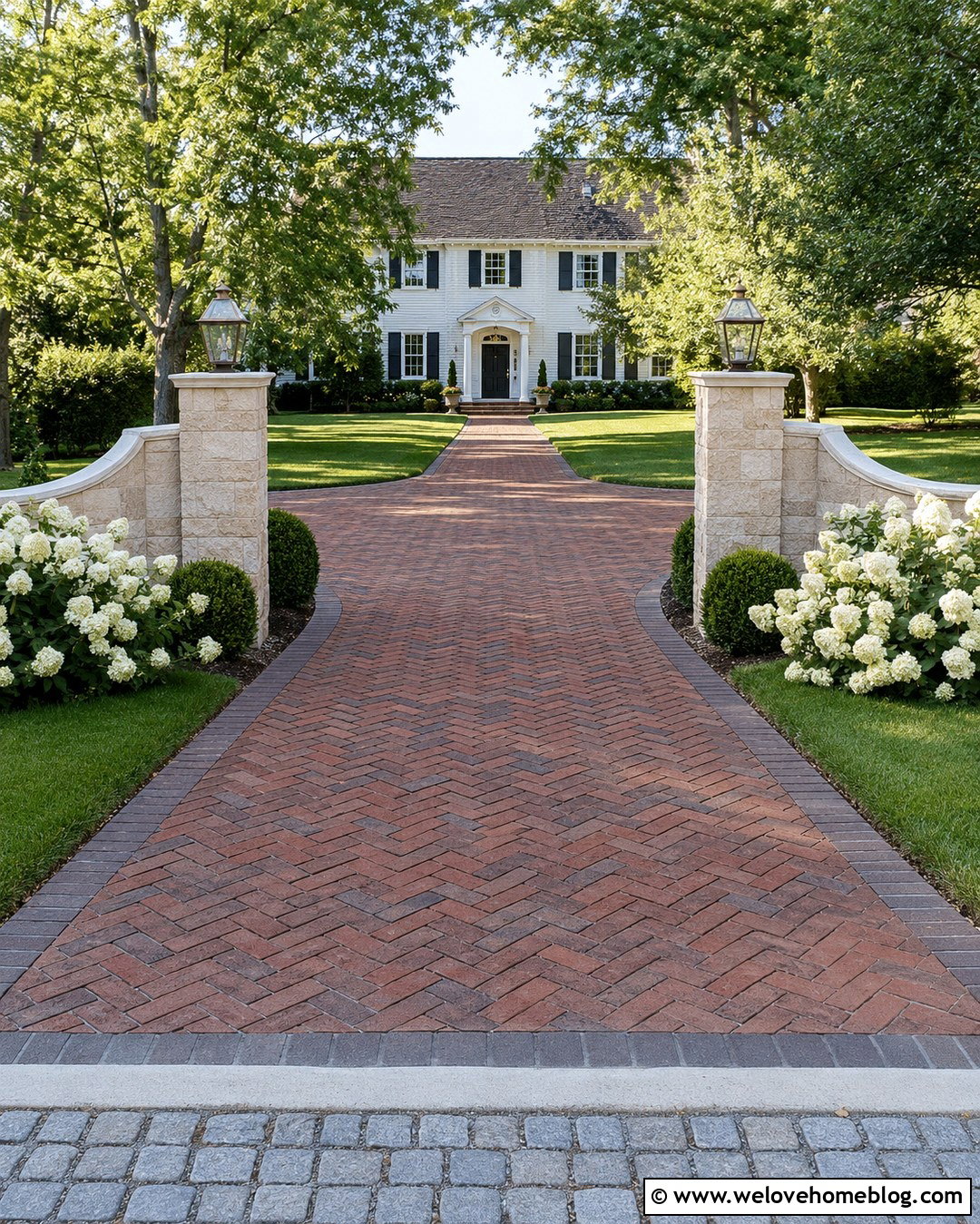
Red or brown clay brick pavers create a warm, traditional approach when paired with pale limestone entrance walls. Lay the driveway in a herringbone pattern for visual movement and use a darker brick soldier course around the edges. Short limestone walls can curve outward at the road, producing a generous flared entrance that feels elegant but not enclosed. Add clipped boxwood, white flowering shrubs, and a small ornamental tree behind each wall. Limestone caps with simple lanterns give the masonry a finished appearance. This complete design is especially suited to Colonial, Tudor, and traditional brick houses. Limit the surrounding materials so the brick pattern remains clear, and repeat the limestone on front steps, porch details, or garden borders for architectural continuity.
17. Cobblestone Driveway With Granite Entrance Posts
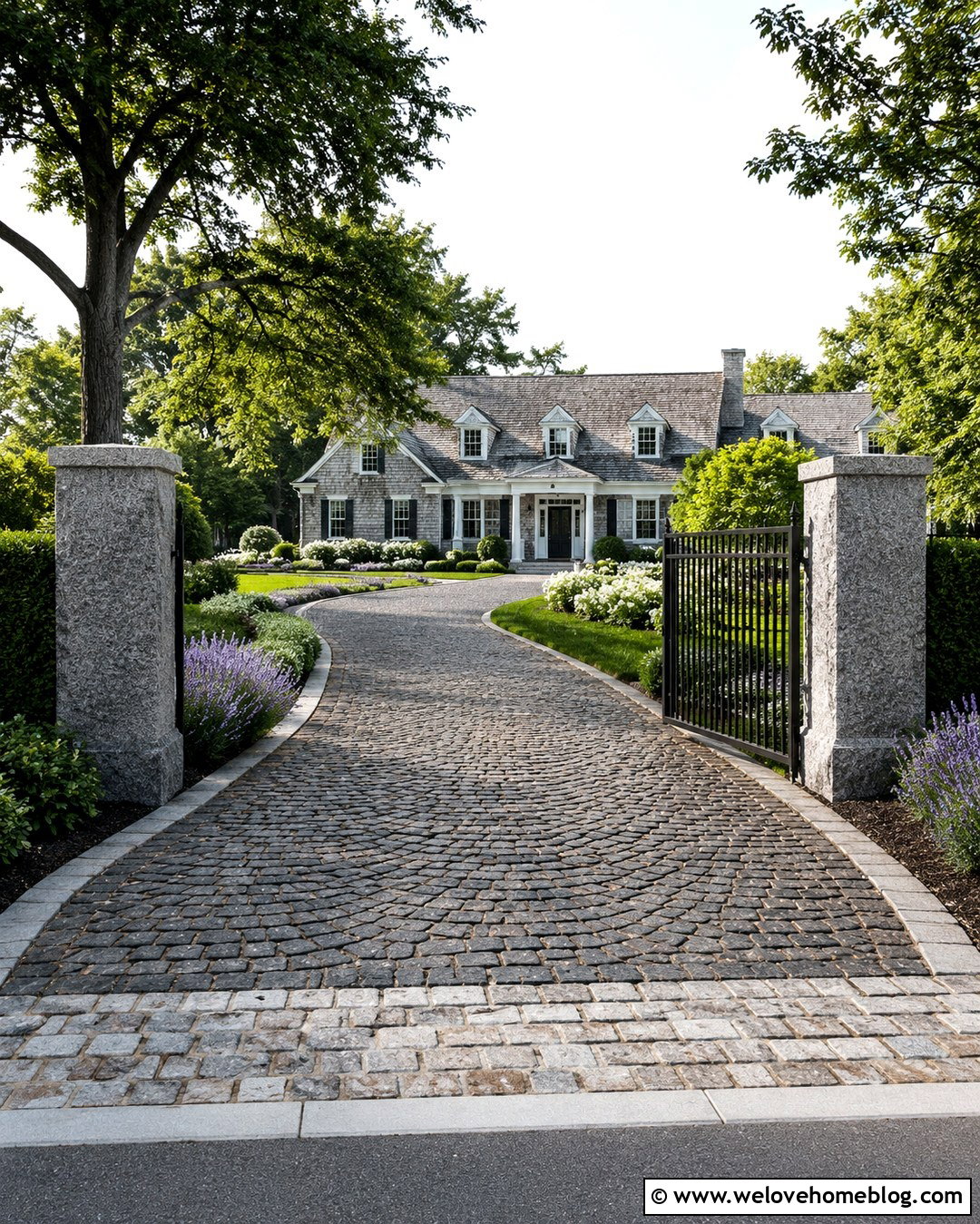
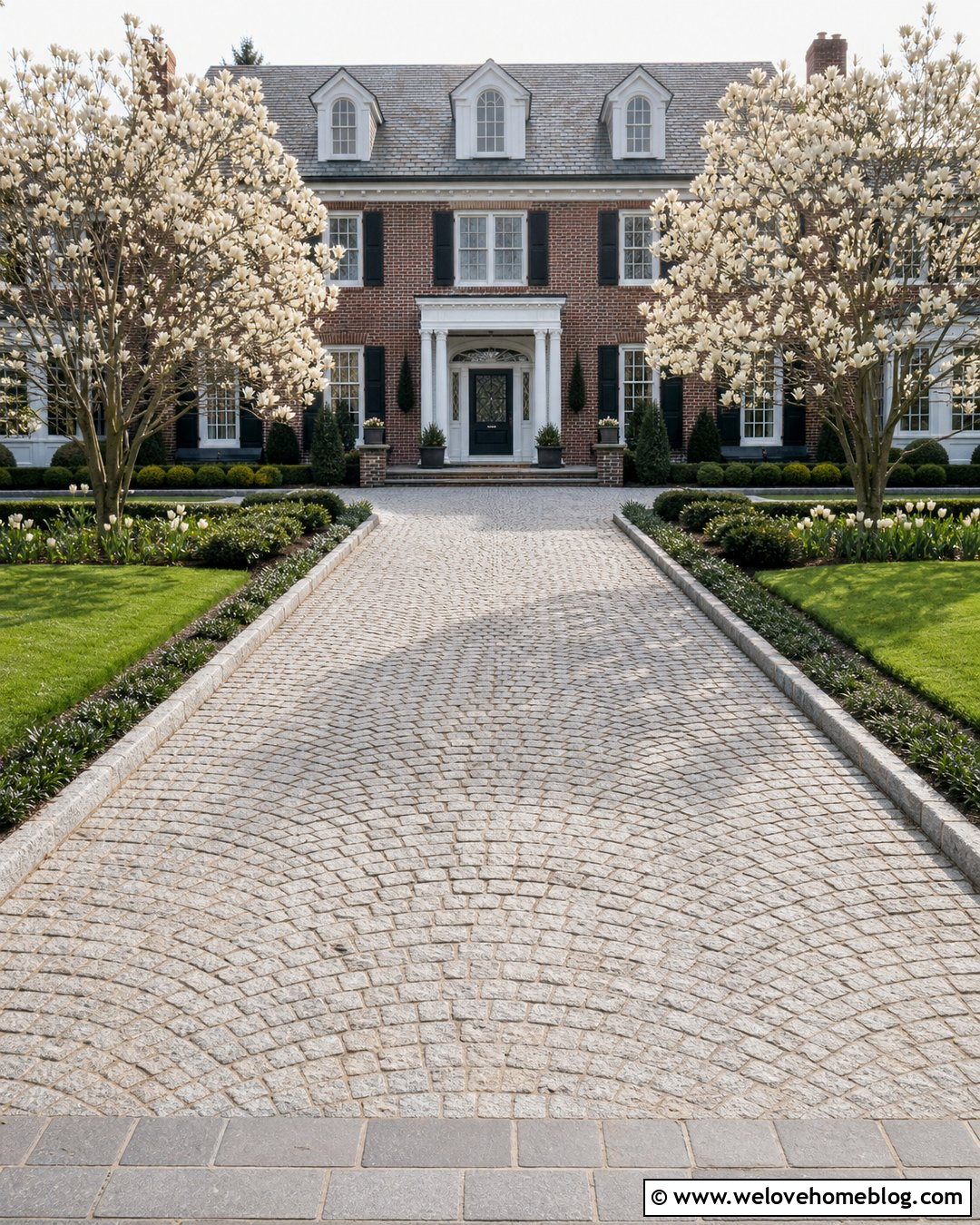
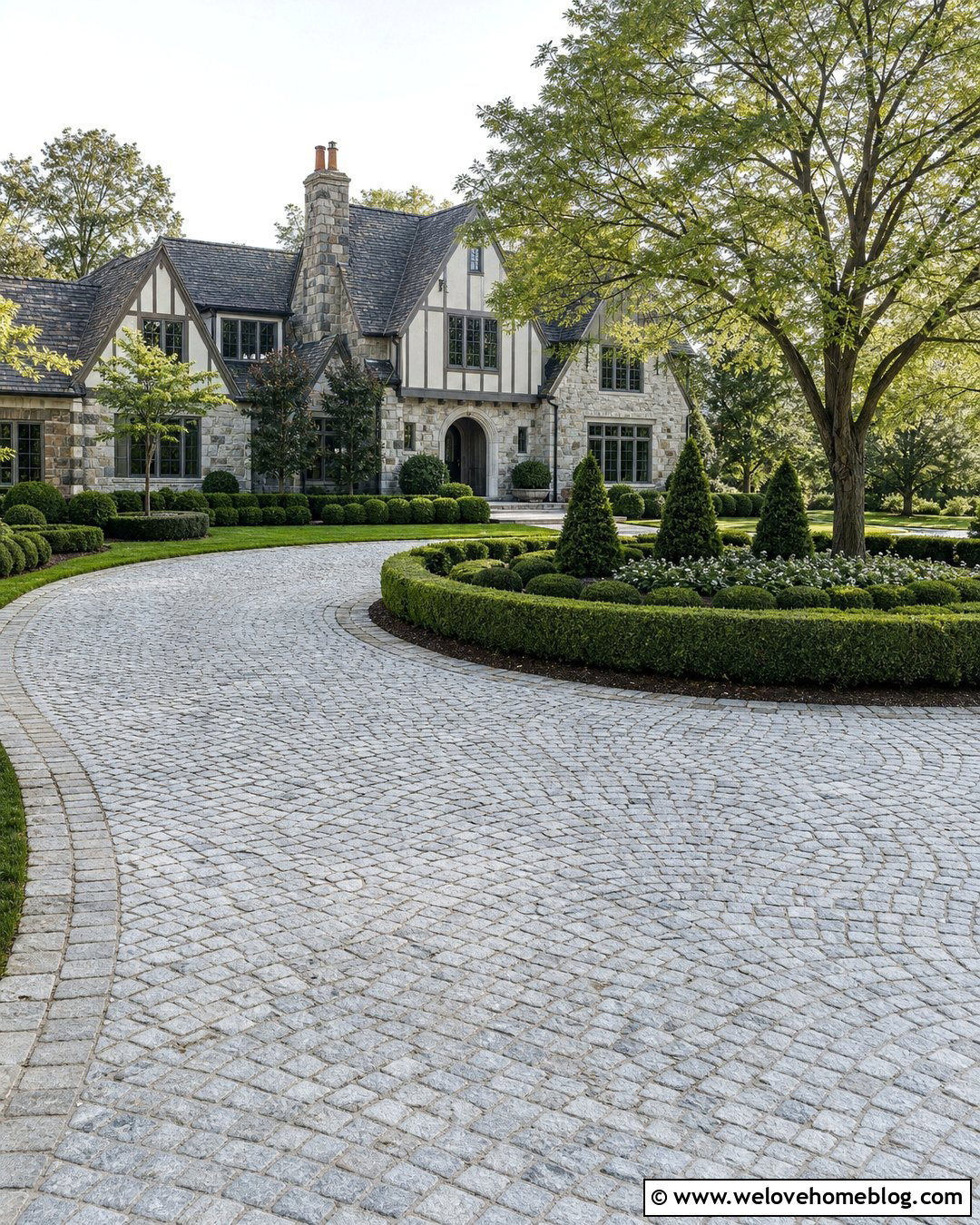
A cobblestone driveway naturally supports a strong rock entrance because the surface already has rich texture and depth. Mark the opening with tall granite posts, then allow the driveway to curve gently toward a Cape Cod, European-inspired, or traditional stone house. Choose cobbles in blended charcoal, gray, and muted brown, using flatter stones in the main driving lanes for a more even appearance. Low hedges, lavender, and white flowering perennials can frame the entrance without hiding the posts. Add understated metal lanterns or a simple wood gate if more definition is needed. Granite curbing along the driveway creates a durable visual edge. The result feels established and refined, particularly when the post dimensions are scaled appropriately to the driveway’s width.
18. Small Driveway Entrance With River Rock Borders
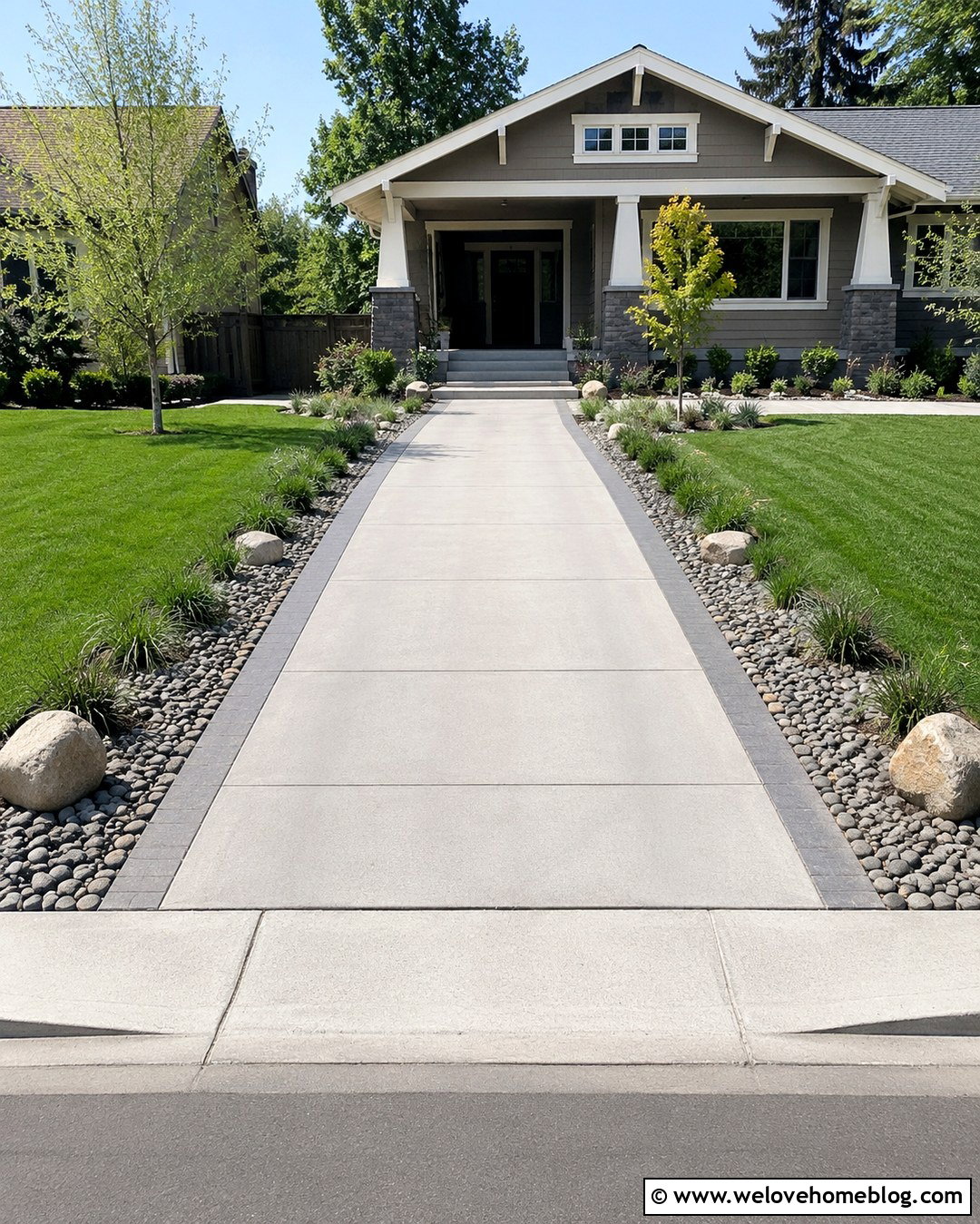
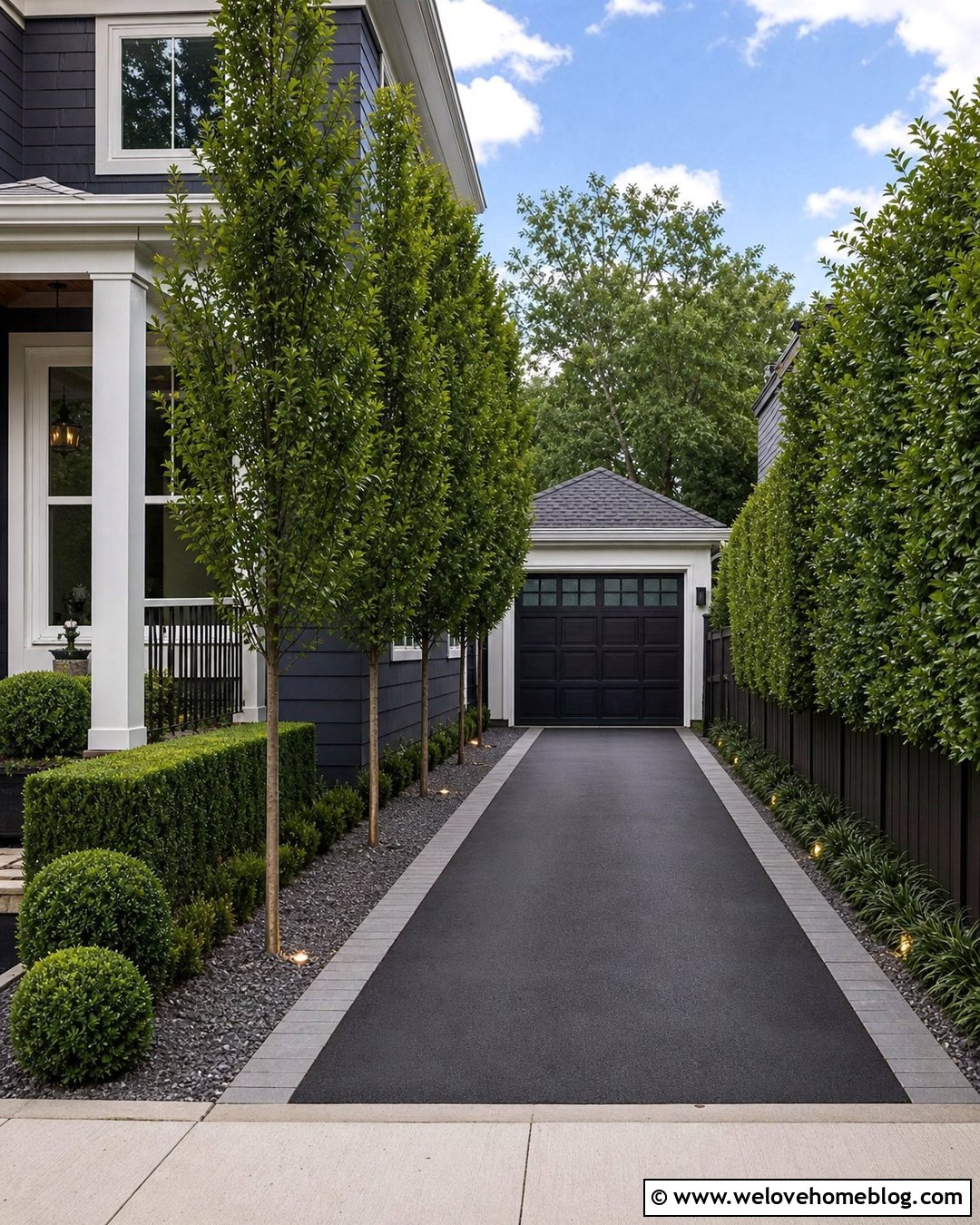
Even a narrow suburban driveway can feature rock without losing valuable driving space. Use smooth poured concrete for the surface and create slim river rock borders that widen only near the street. Mixed gray pebbles, compact grasses, dwarf shrubs, and one small accent boulder on each side provide texture while maintaining an uncluttered opening. A straight layout keeps parking simple, while a narrow paver ribbon separates the concrete from the rock beds. Choose plants that remain low and compact so they do not spill into the tire path. This treatment works well beside bungalow, ranch, and small Craftsman homes. Matching the river rock to the roof or siding undertones helps the modest entrance feel coordinated, spacious, and deliberately designed rather than crowded with unrelated features.
19. Driveway Entrance With Rock Lighting
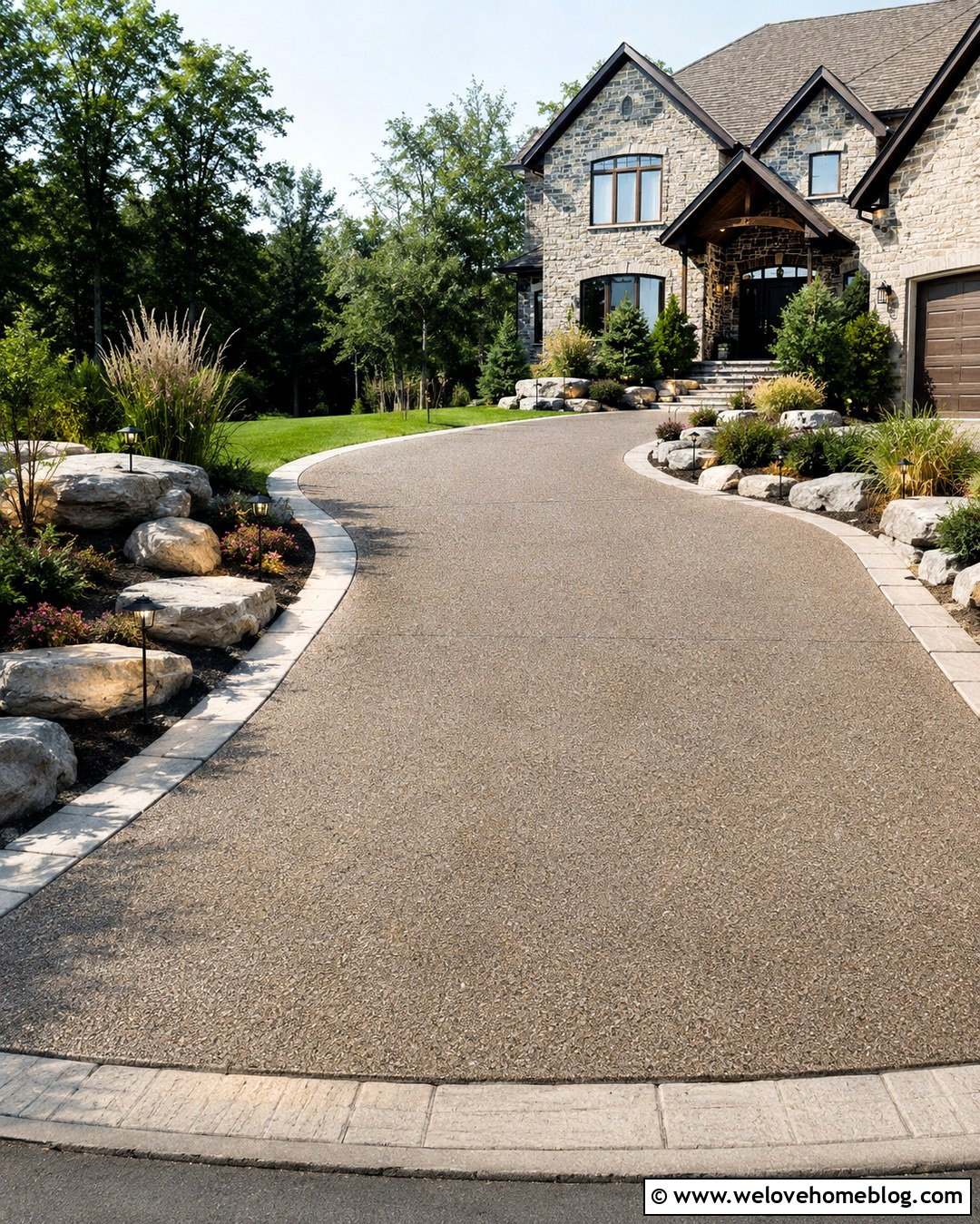
Rock lighting works best when the fixtures disappear and the stone remains the visual focus. Frame a curved exposed-aggregate driveway with two layered boulder beds, then place low-voltage lights between selected rocks rather than lining the entrance like a runway. During daylight, the entrance reads as a natural landscape of stone, ornamental grasses, compact evergreens, and flowering ground covers. After dark, controlled beams can reveal the boulders’ texture and clarify the driveway edges. Choose fixture finishes that blend with the rocks or soil. A few lights near an address stone and entrance curve are usually more attractive than many evenly spaced units. Keep fixtures outside turning areas and aim them carefully to avoid glare for drivers, neighbors, and people approaching from the road.
20. Horseshoe Driveway With Stone Entrance Walls
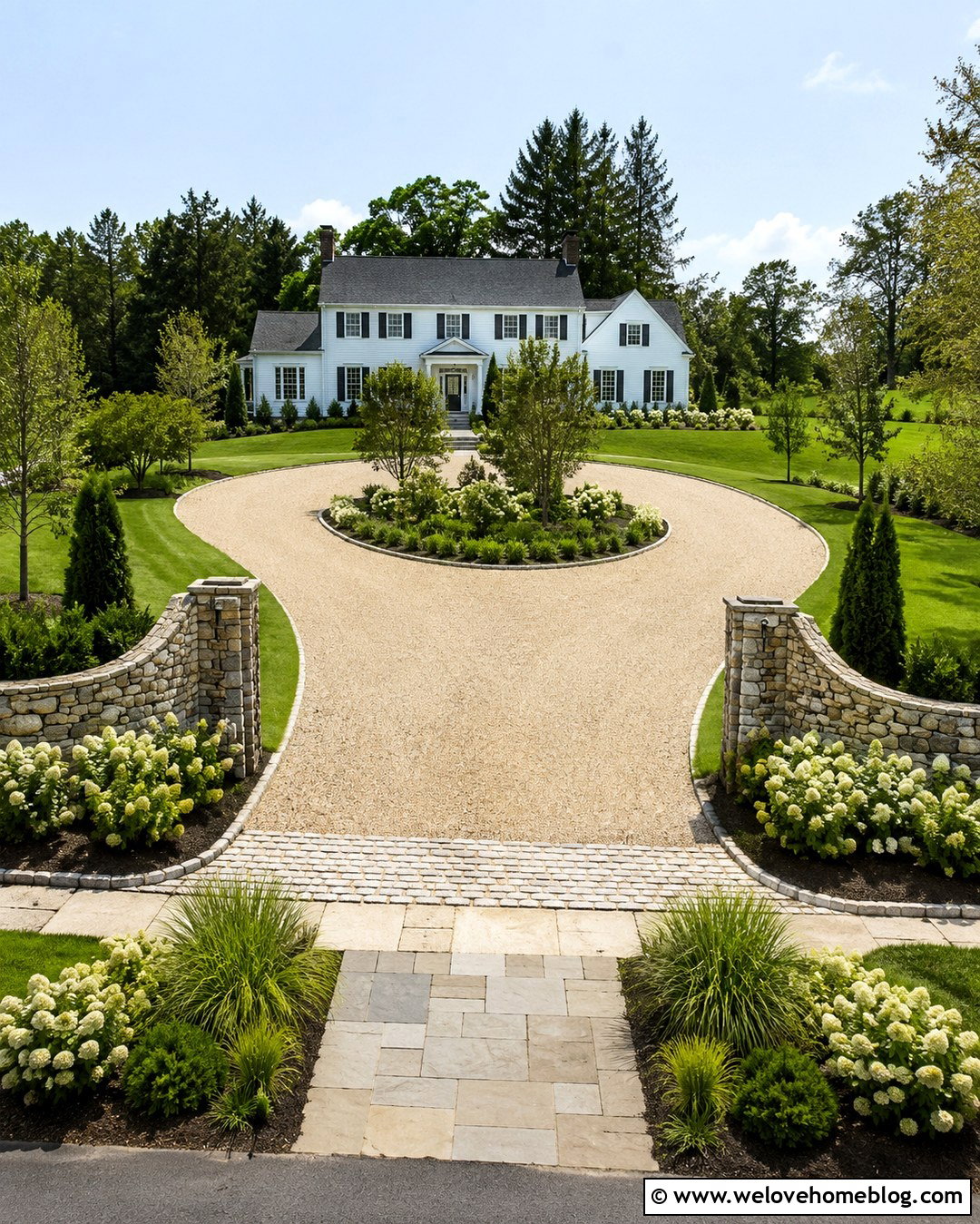
A horseshoe driveway can support a substantial rock entrance because it has separate entry and exit points. Use light crushed gravel or warm concrete pavers for the sweeping layout, then mark both openings with matching low fieldstone walls. Continue the same stone around a landscaped center lawn or oval garden to unify the design. Small trees, hydrangeas, evergreen shrubs, and layered grasses can soften the masonry while maintaining visibility across the property. Instead of four tall pillars, use gently curved walls with slightly raised ends for a more open appearance. This arrangement complements Colonial, estate, farmhouse, and large ranch homes. Matching stone at both openings makes the driveway easy to understand from the street and creates a balanced frame around the entire front yard.
Conclusion:
The most successful rock entrance balances natural texture with safe access, clear visibility, and the architecture of the home. Boulders bring an informal, organic quality, while stone pillars and low walls provide greater structure. River rock beds, address stones, gabions, lighting, and dry creek features offer additional ways to personalize the approach. Before choosing materials, consider the driveway’s width, slope, drainage, turning needs, and surrounding plant palette. Use fewer substantial rocks rather than many scattered pieces, and repeat key colors elsewhere in the landscape. Whether your property is small, wooded, rural, modern, or formal, these 20 Rock Entrance Driveway Ideas can help create a cohesive and welcoming first impression.

Related posts:
Leave a Reply