
A well-designed driveway entrance sets the tone for the entire property, and natural stone can make that first impression feel established, welcoming, and connected to the landscape. These 20 Driveway Entrance With Boulders Ideas explore complete entrance designs rather than isolated rock placements. You will find gravel, concrete, asphalt, paver, and resin-bound surfaces paired with boulders, practical borders, layered plantings, lighting, signs, and gates. The designs suit everything from wooded cabins and country homes to desert properties and modern suburban houses. When planning, select stone colors that complement the home and keep boulders clear of driving lanes, drainage paths, utilities, and road sightlines. Use these 20 Driveway Entrance With Boulders Ideas to create an entrance that looks natural, balanced, and intentional.
1. Gravel Driveway Entrance With Granite Boulders
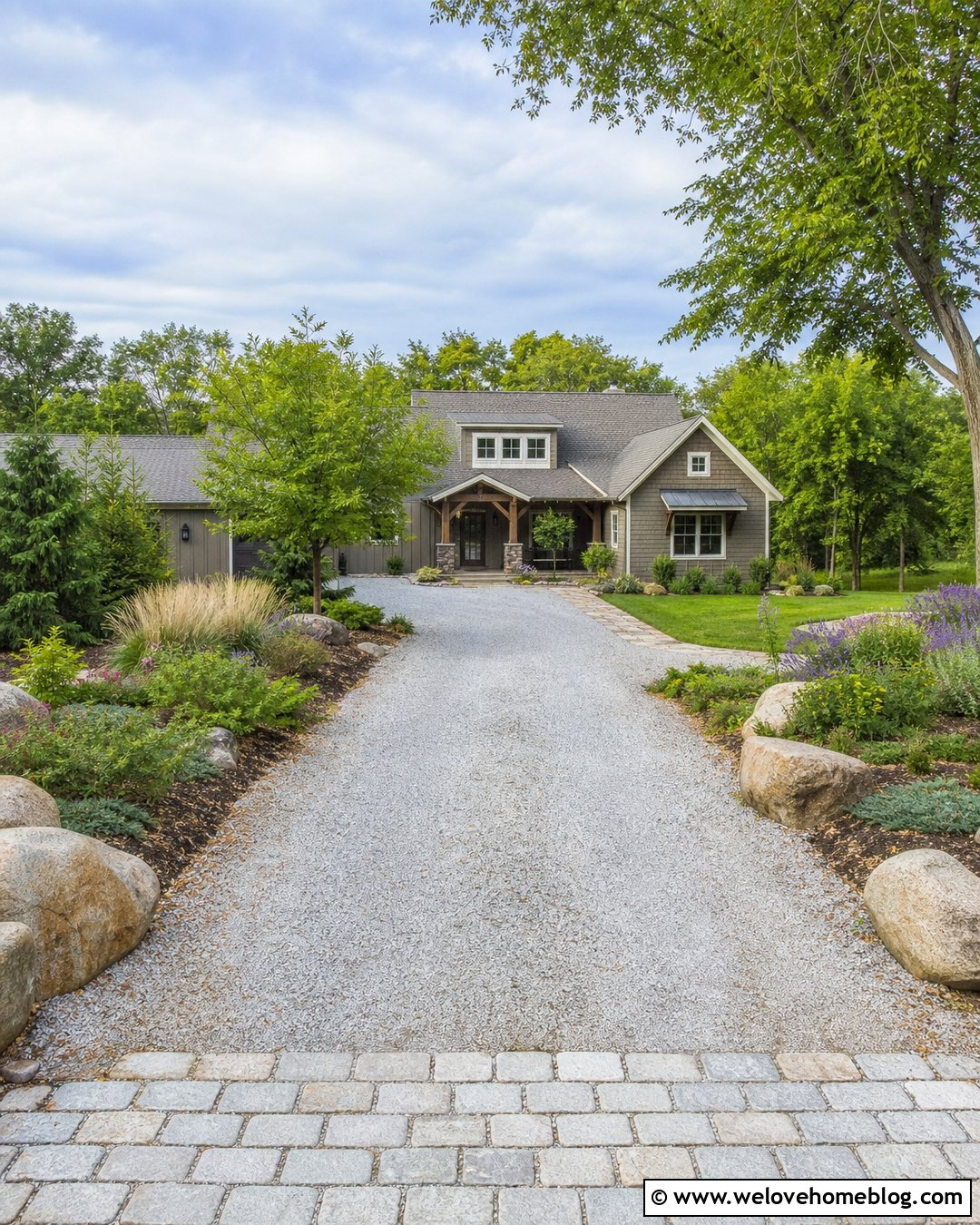
A pale gravel driveway framed by weathered granite boulders creates a relaxed entrance that works especially well with country homes and wooded properties. Choose angular crushed gravel in warm gray or tan so tires maintain better contact than they would on loose, rounded stone. Position one large boulder and two smaller companions on each side rather than using perfectly matched pairs. This creates a more natural composition. Partially bury the stones so they look grounded instead of placed on top of the lawn. Add native grasses, low junipers, and flowering perennials around their bases. A cobblestone apron where the gravel meets the road gives the entrance a finished edge and helps keep loose material farther inside the property.
2. Concrete Driveway Entrance With Boulder Planting Beds
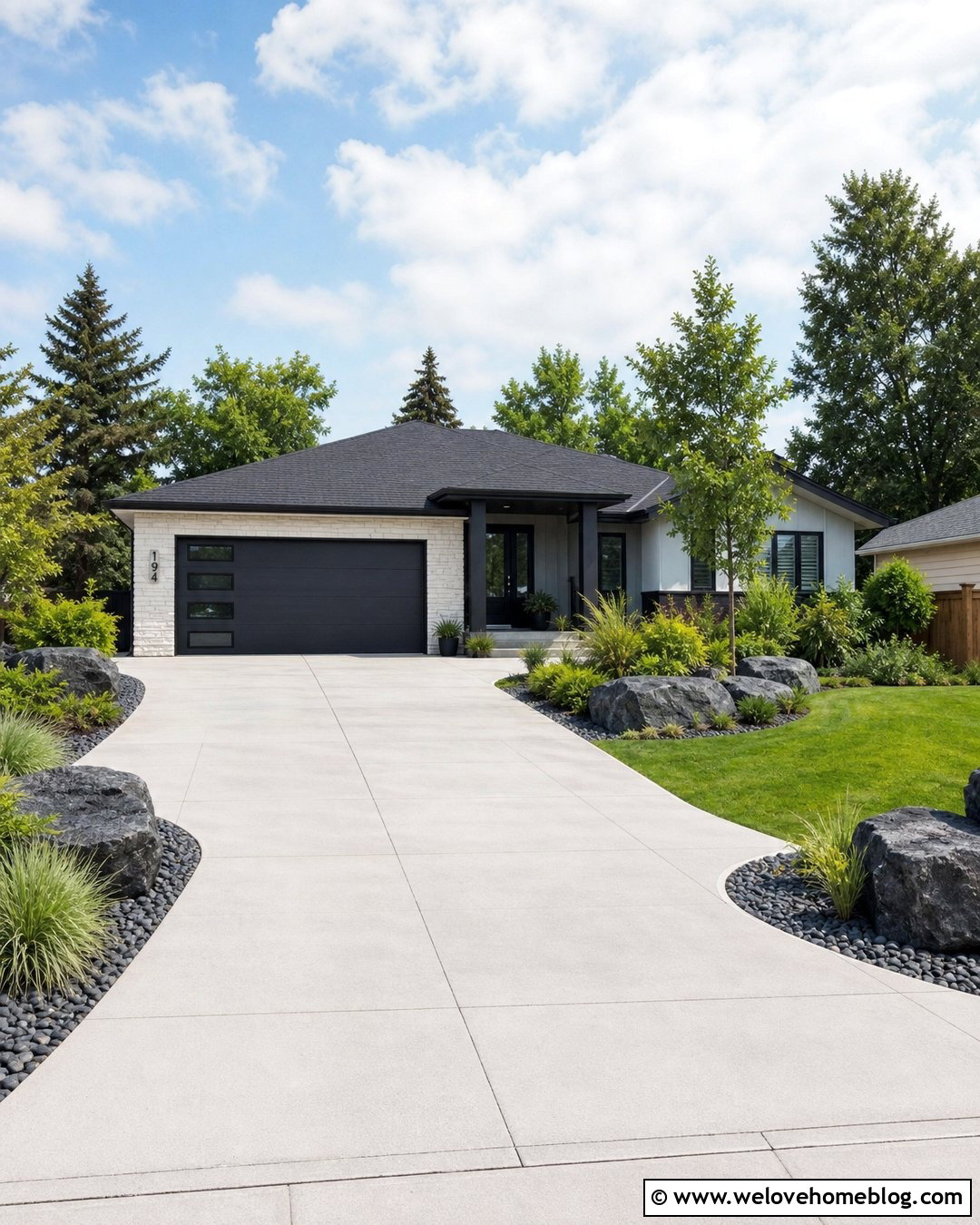
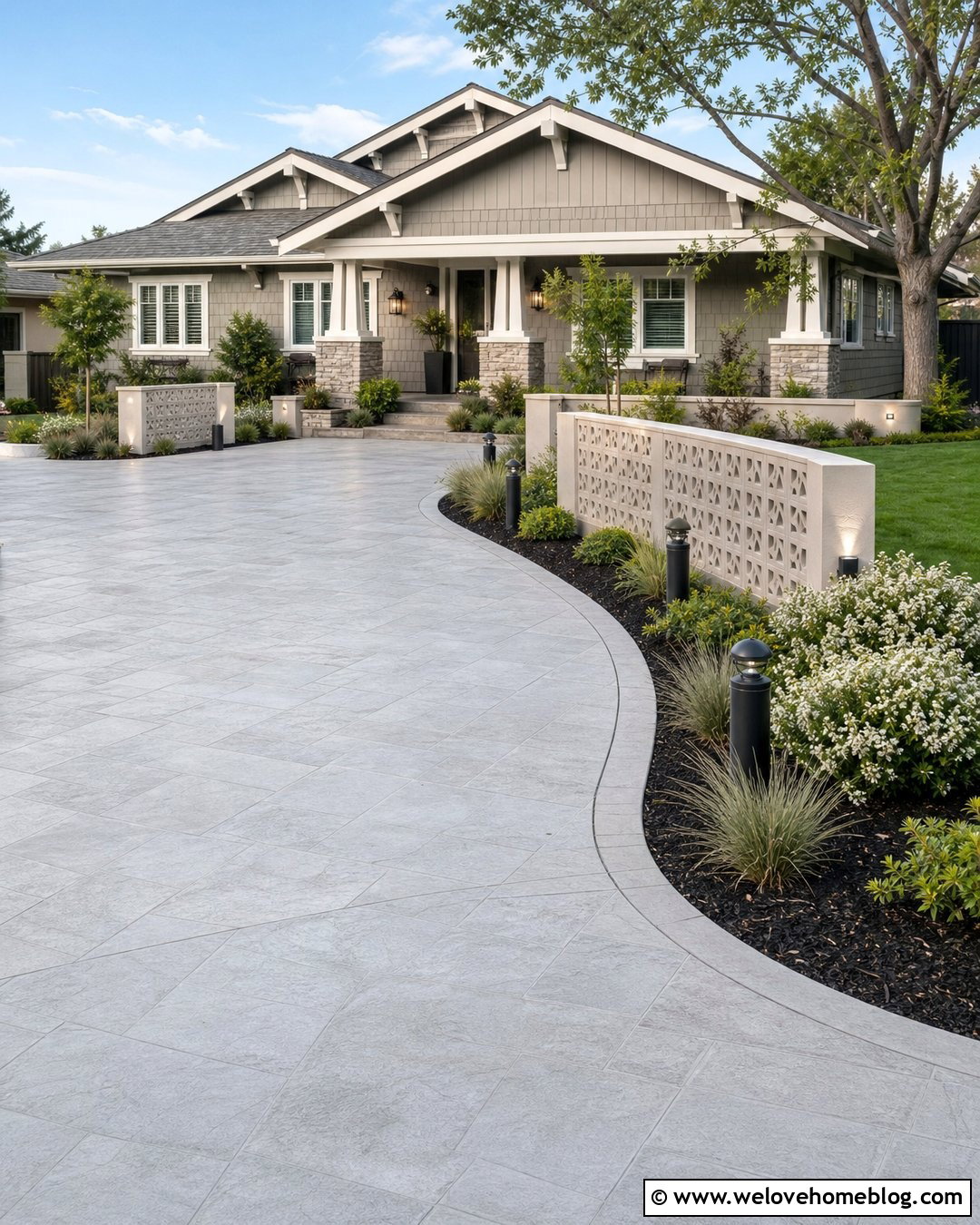
Clean concrete and rugged boulders create an attractive contrast without making the entrance feel overly formal. Use light gray poured concrete with subtle saw-cut joints, then build wide planting beds around large charcoal or brown boulders on both sides. Curved bed lines soften the straight driveway and provide enough room for layered shrubs, ornamental grasses, and spreading ground covers. Keep the tallest plants behind the rocks so drivers have clear views of the street. A narrow band of dark river rock between the concrete and planting beds can catch soil and visually connect the boulders. This complete design suits a craftsman or contemporary ranch home because it combines practical paving with natural texture and restrained landscaping.
3. Asphalt Driveway Entrance With Fieldstone Boulders
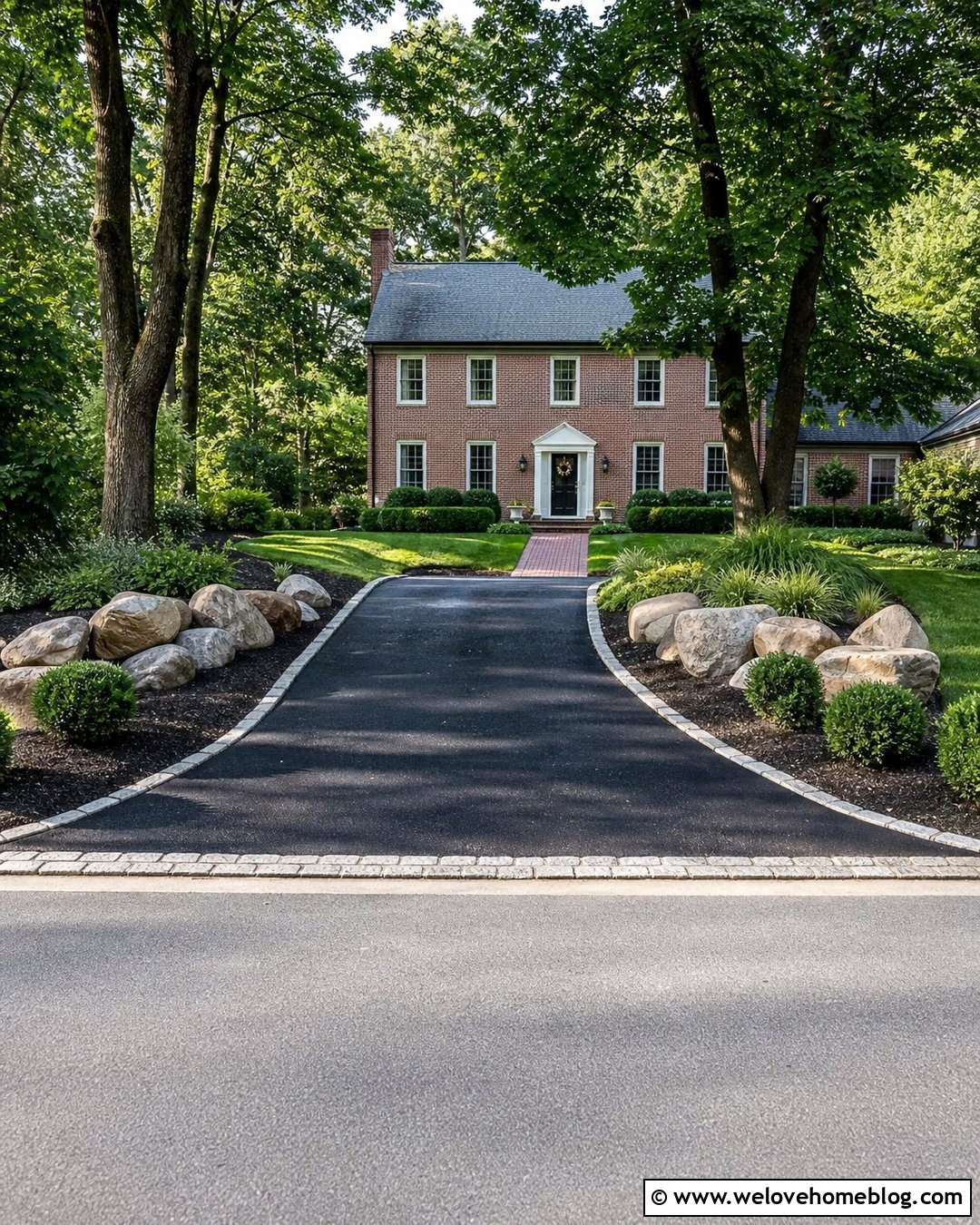
Black asphalt becomes far more welcoming when its entrance is balanced with warm fieldstone boulders and generous greenery. Create a slightly flared driveway opening so vehicles can turn in comfortably, then place irregular brown and gray boulders beyond the pavement edges. Avoid lining them up like barriers. Instead, arrange each side as a loose cluster with one dominant rock and several smaller stones. Surround the groupings with mulch, low evergreen shrubs, and soft ornamental grasses. A short Belgian block border protects the asphalt edge and introduces another natural material. This combination is ideal for traditional suburban houses, colonial homes, and properties with long driveways. The dark paving also makes lighter rocks and fresh green foliage stand out from the street.
4. Curved Driveway Entrance With Mossy Boulders
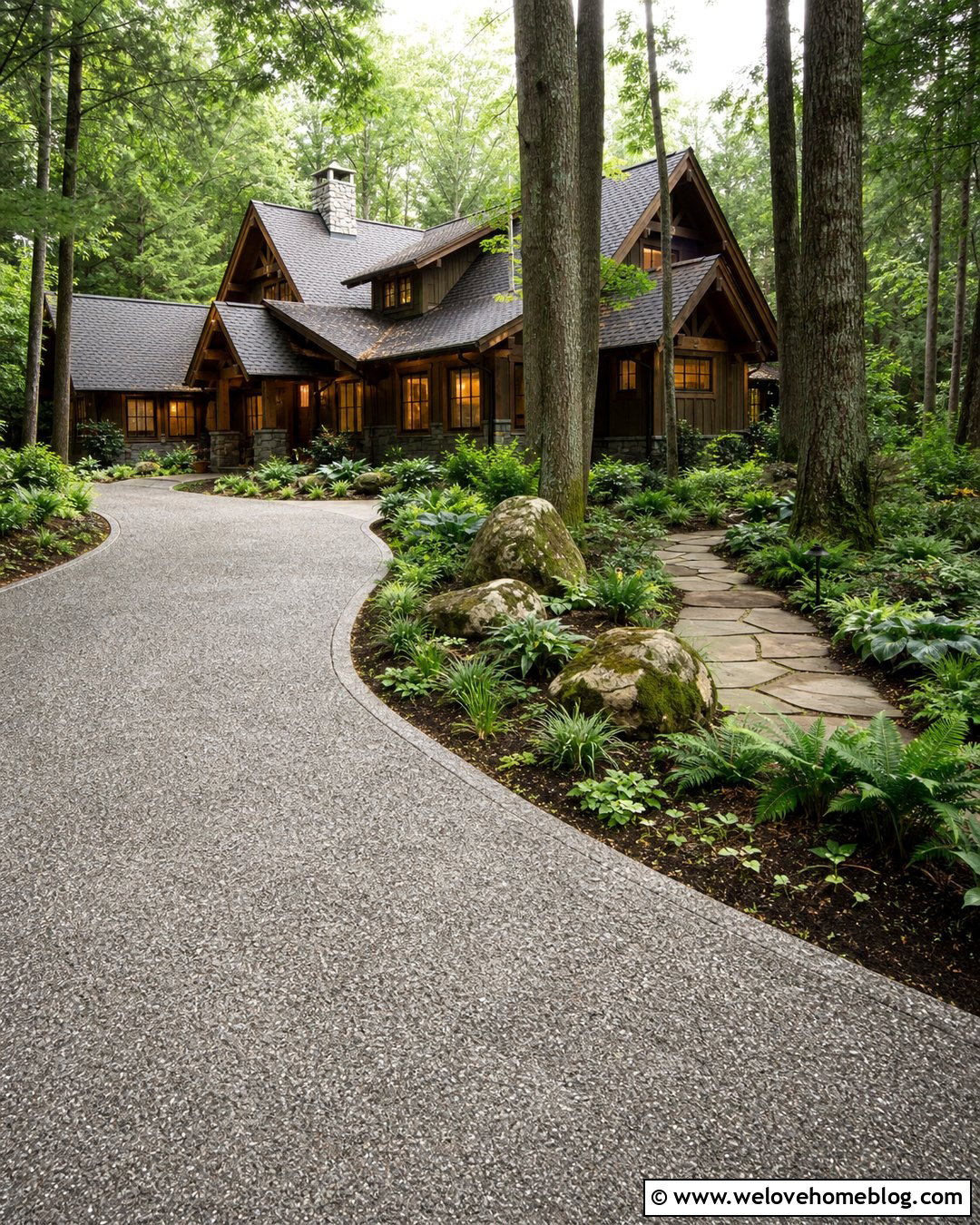
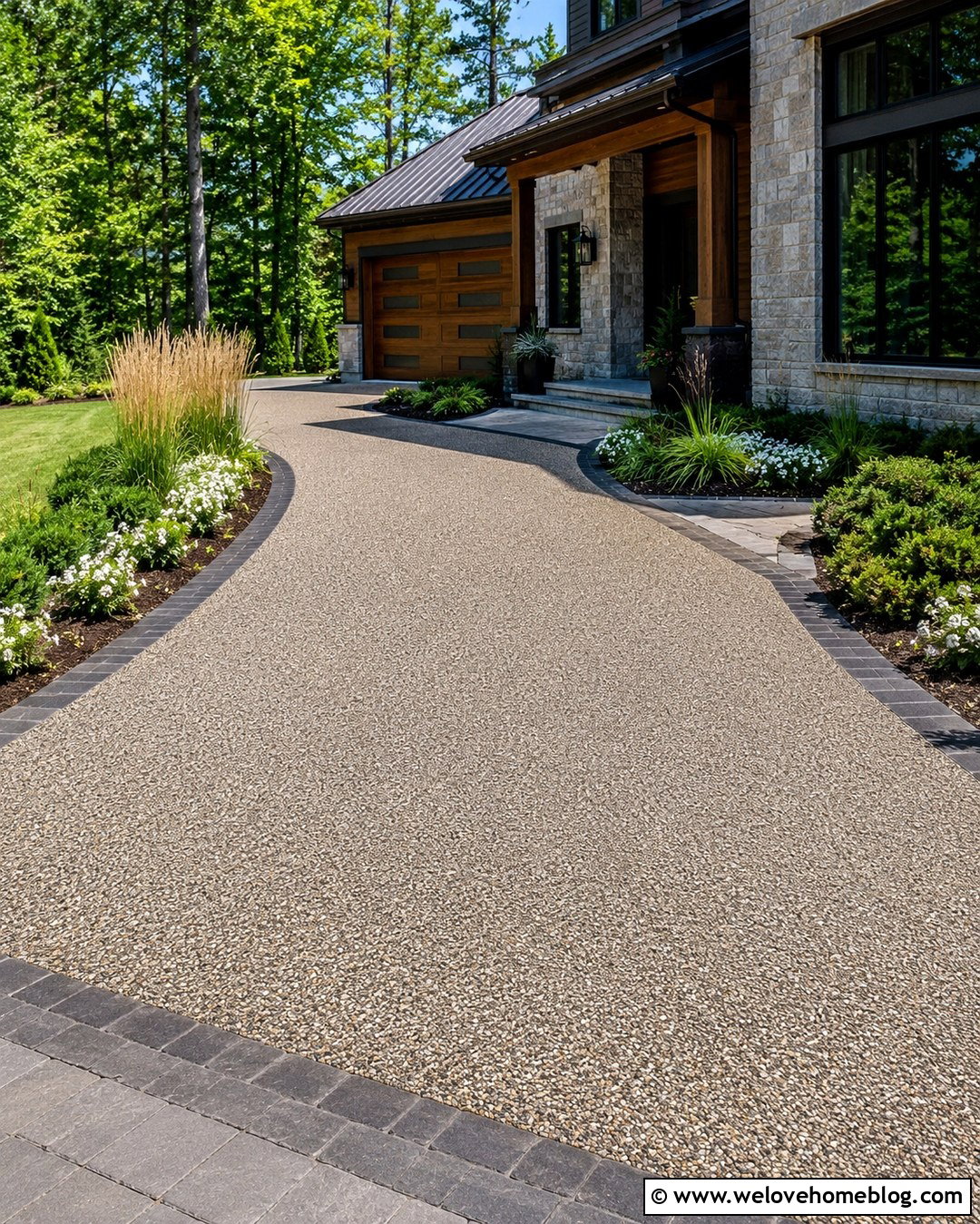
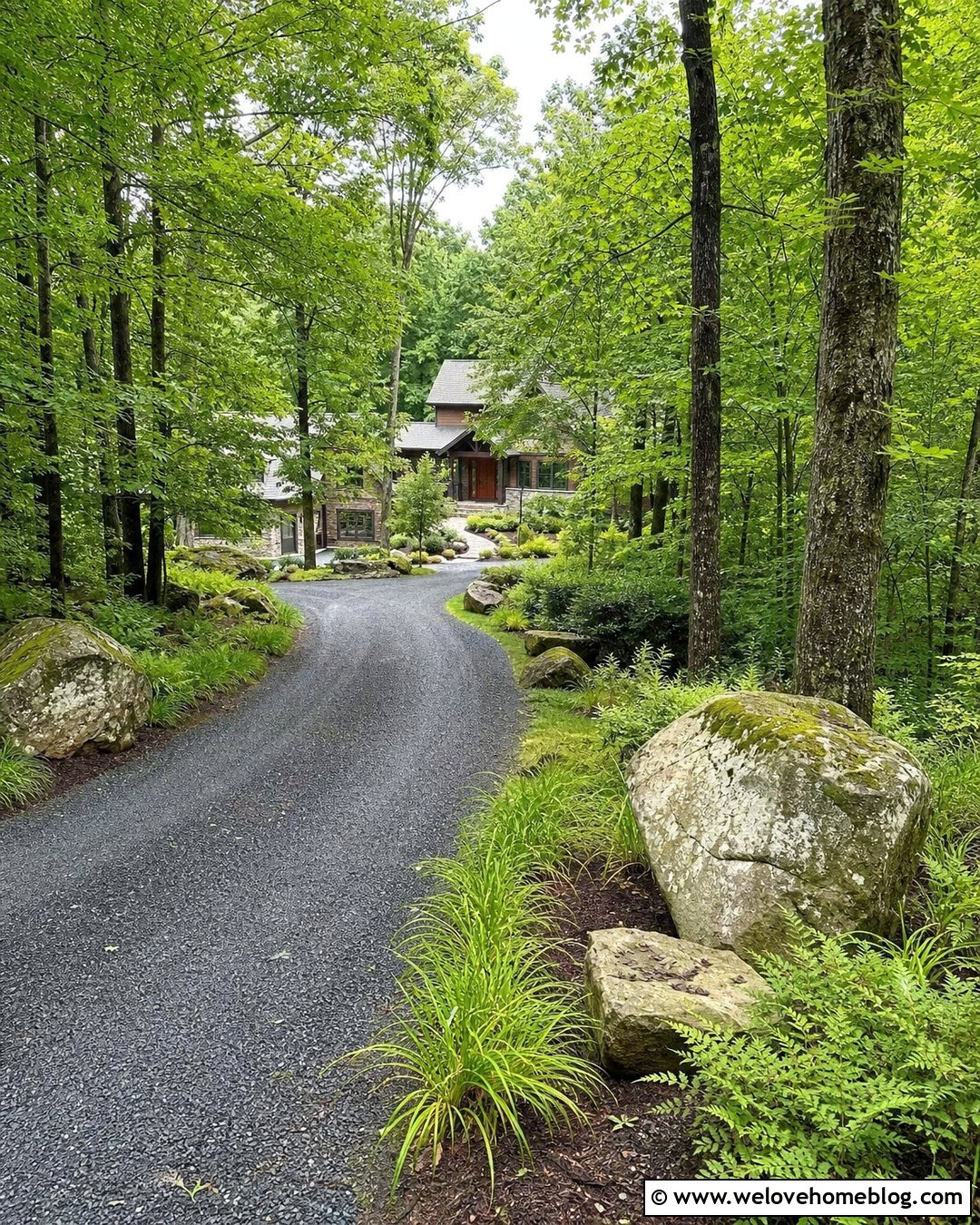
Imagine a driveway disappearing gently behind trees instead of running directly toward the house. A curved entrance with mossy boulders creates that inviting sense of discovery. Use compacted gray gravel or exposed aggregate concrete for the surface, following a broad curve that is easy to navigate. Place weathered boulders along the outside of the bend, where they can visually guide the eye without narrowing the driving area. Ferns, woodland sedges, hostas, and native ground covers help the stones blend into a shaded setting. Keep plantings lower near the road and gradually increase their height farther inside. A simple stone walkway branching toward the front door can repeat the boulder colors and connect the entire wooded entrance design.
5. Modern Driveway Entrance With Black Boulders
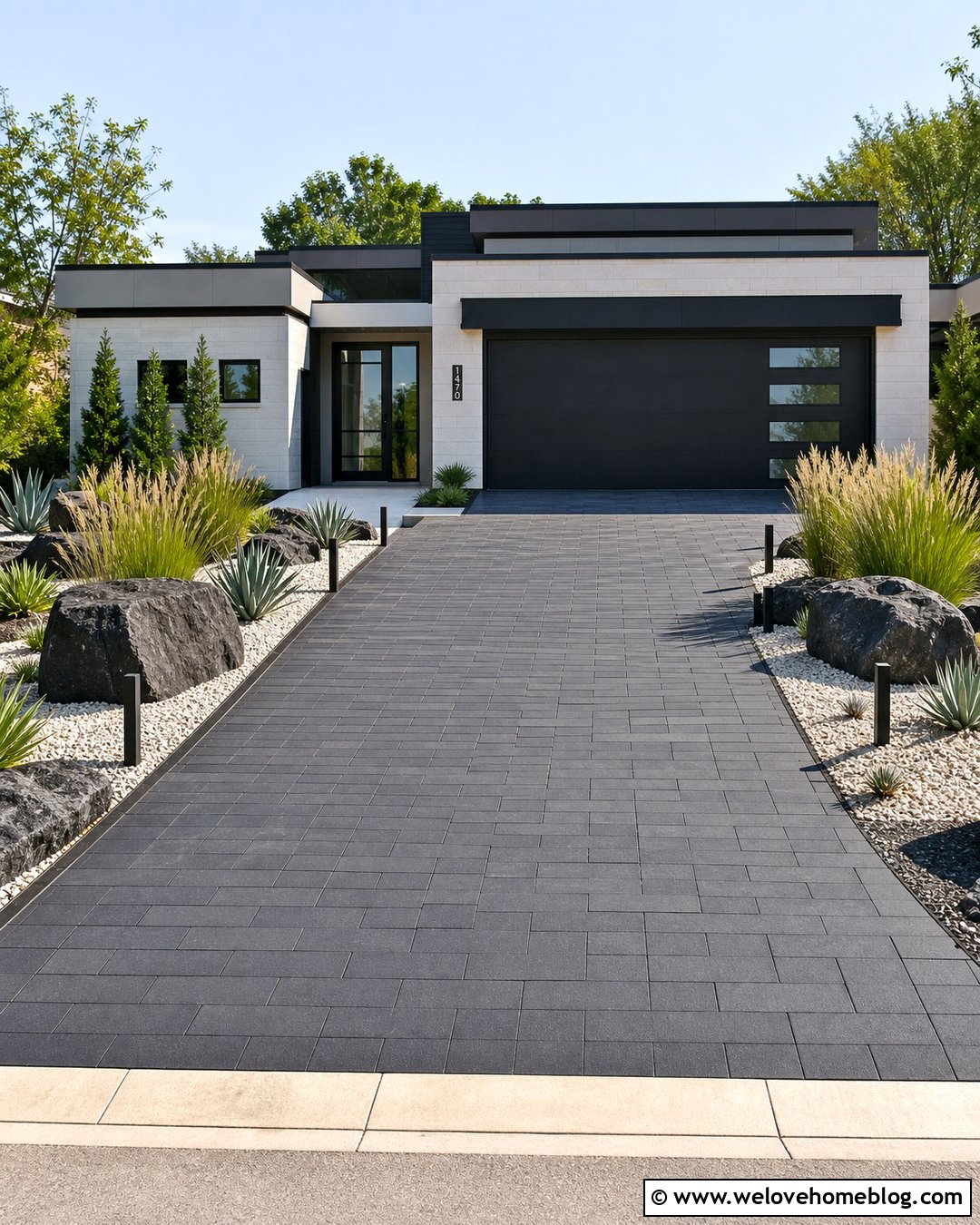
A modern home benefits from a driveway entrance with strong geometry and a limited material palette. Pair smooth charcoal concrete pavers with large black basalt boulders set inside rectangular gravel beds. The stones should have bold, sculptural shapes, but their placement should remain simple. One substantial boulder on one side and a group of two on the other creates balanced asymmetry. Use pale crushed stone around the rocks for contrast, then add upright ornamental grasses, compact evergreens, and architectural agaves where the climate allows. Slim black bollard lights can repeat the dark tones without competing with the stone. Straight steel edging keeps every transition crisp. The result feels contemporary while the natural boulders prevent the entrance from appearing cold or unfinished.
6. Farmhouse Driveway Entrance With Limestone Boulders
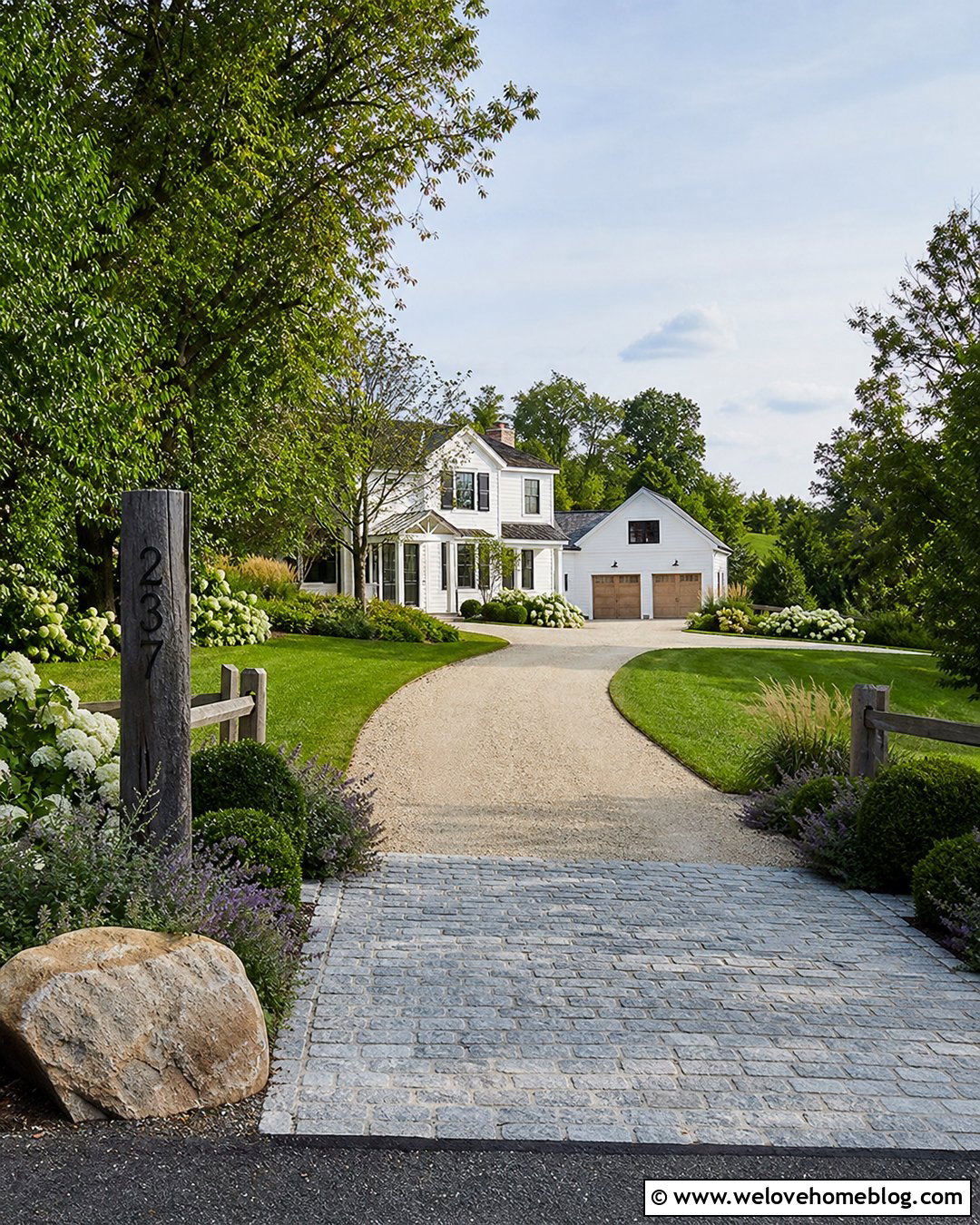
Warm limestone boulders pair naturally with a modern farmhouse, especially when the driveway uses cream gravel or light exposed aggregate. Flank the entrance with broad, informal planting beds instead of rigid stone columns. Large buff-colored boulders can anchor each bed, while smaller rocks extend the arrangement toward a split-rail fence. Add hydrangeas, panicle grasses, catmint, and compact boxwoods for a mix of softness and structure. A reclaimed timber address post can sit behind one boulder cluster where it remains visible from the road. Use brick or cobblestone at the driveway apron to create a durable transition from the street. This entrance feels substantial but still relaxed, making it a good match for white siding, black windows, and natural wood details.
7. Desert Driveway Entrance With Sandstone Boulders
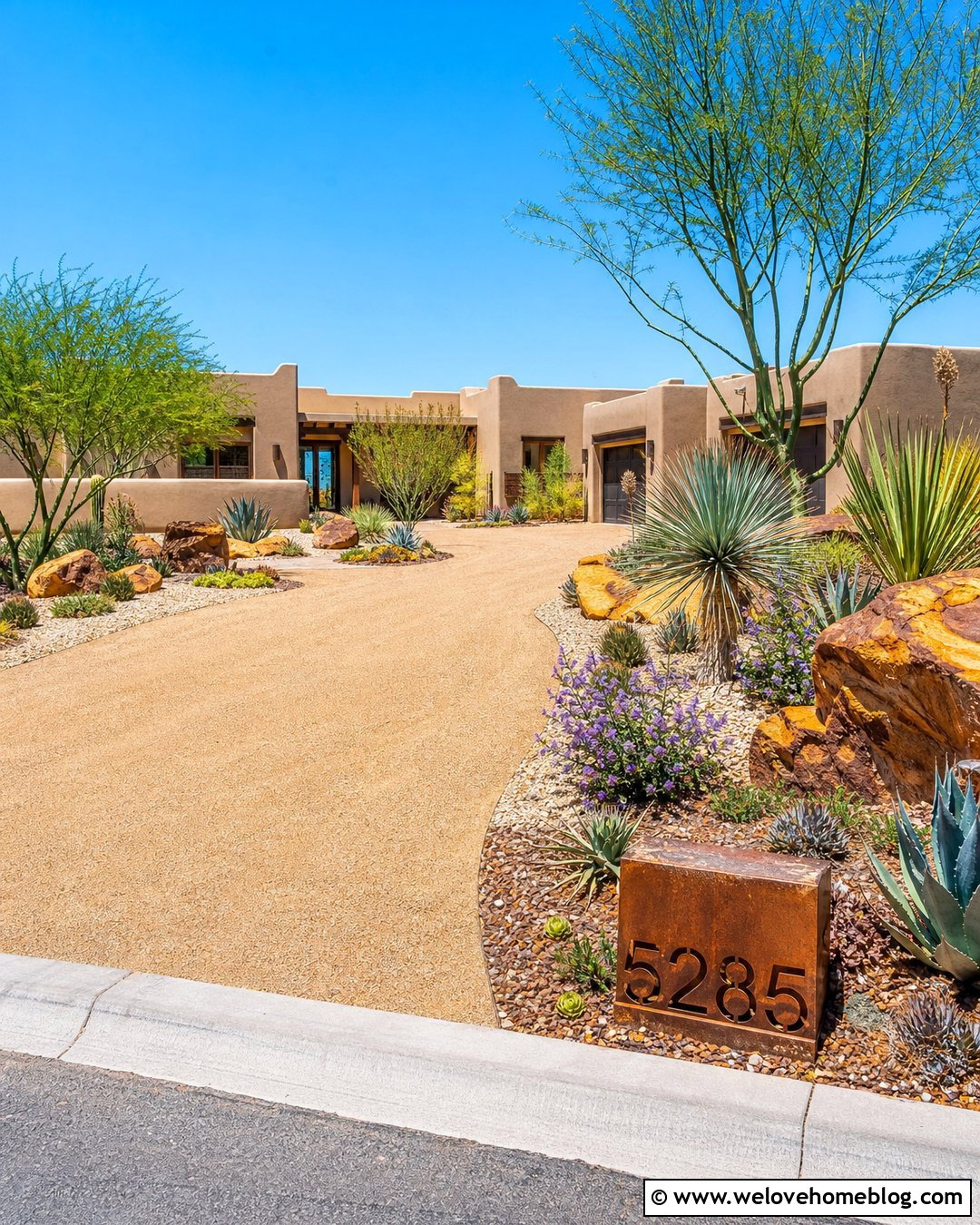
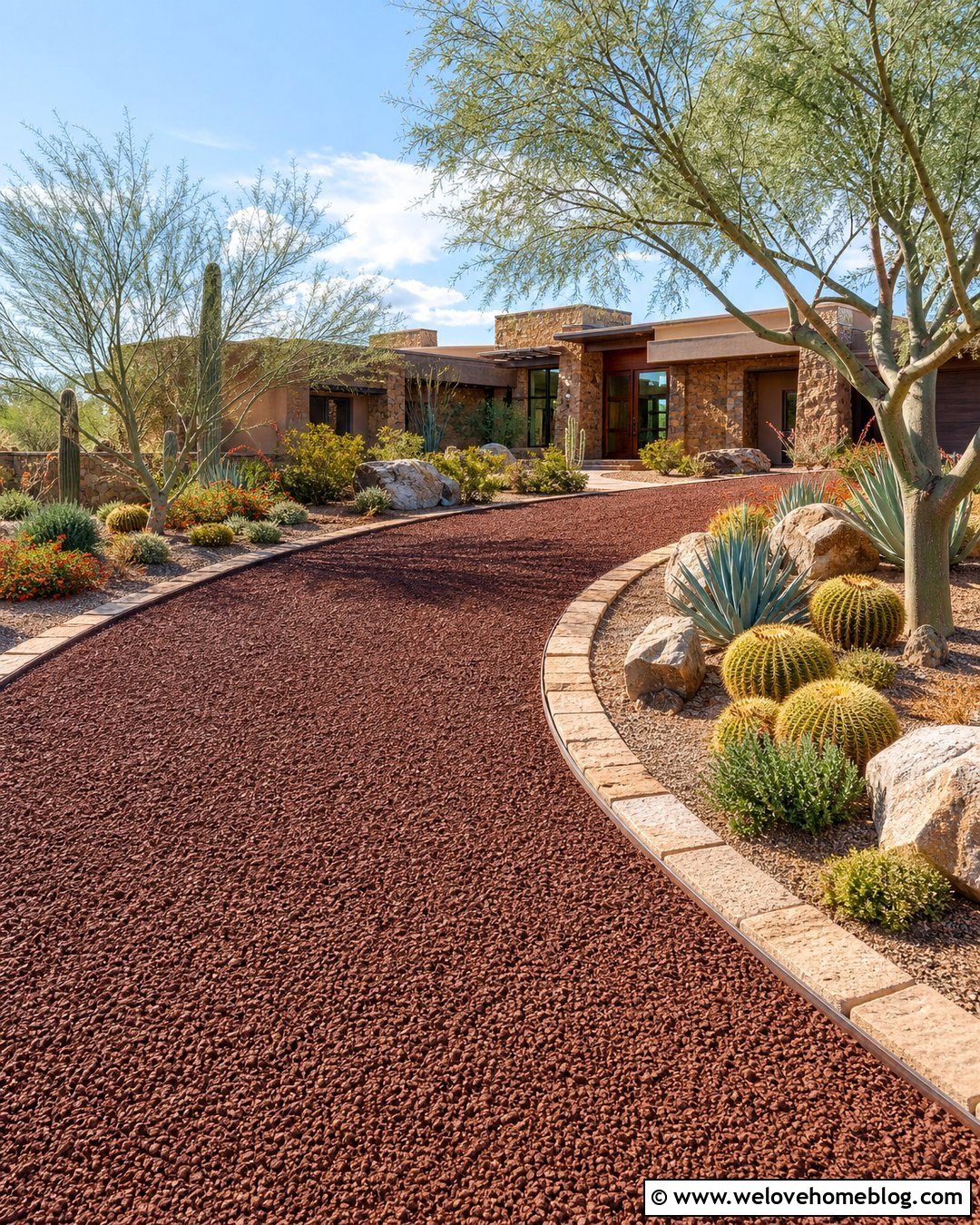
In a dry landscape, sandstone boulders can make the driveway feel like a natural extension of the surrounding terrain. Choose a warm tan decomposed granite surface and shape the entrance with a gentle flare. Place rust, gold, and brown boulders in staggered clusters rather than matching groups. Each cluster can include agaves, yuccas, desert spoon, flowering penstemon, and low mounds of drought-tolerant ground cover. Use smaller gravel in a complementary color to cover exposed soil and clearly define the planting beds. A weathered steel address marker adds a modern detail without overpowering the rocks. Keep thorny plants and tall forms away from vehicle doors and sightlines. The finished entrance suits adobe, Southwestern, and desert-modern homes beautifully.
8. Circular Driveway Entrance With Matching Boulders
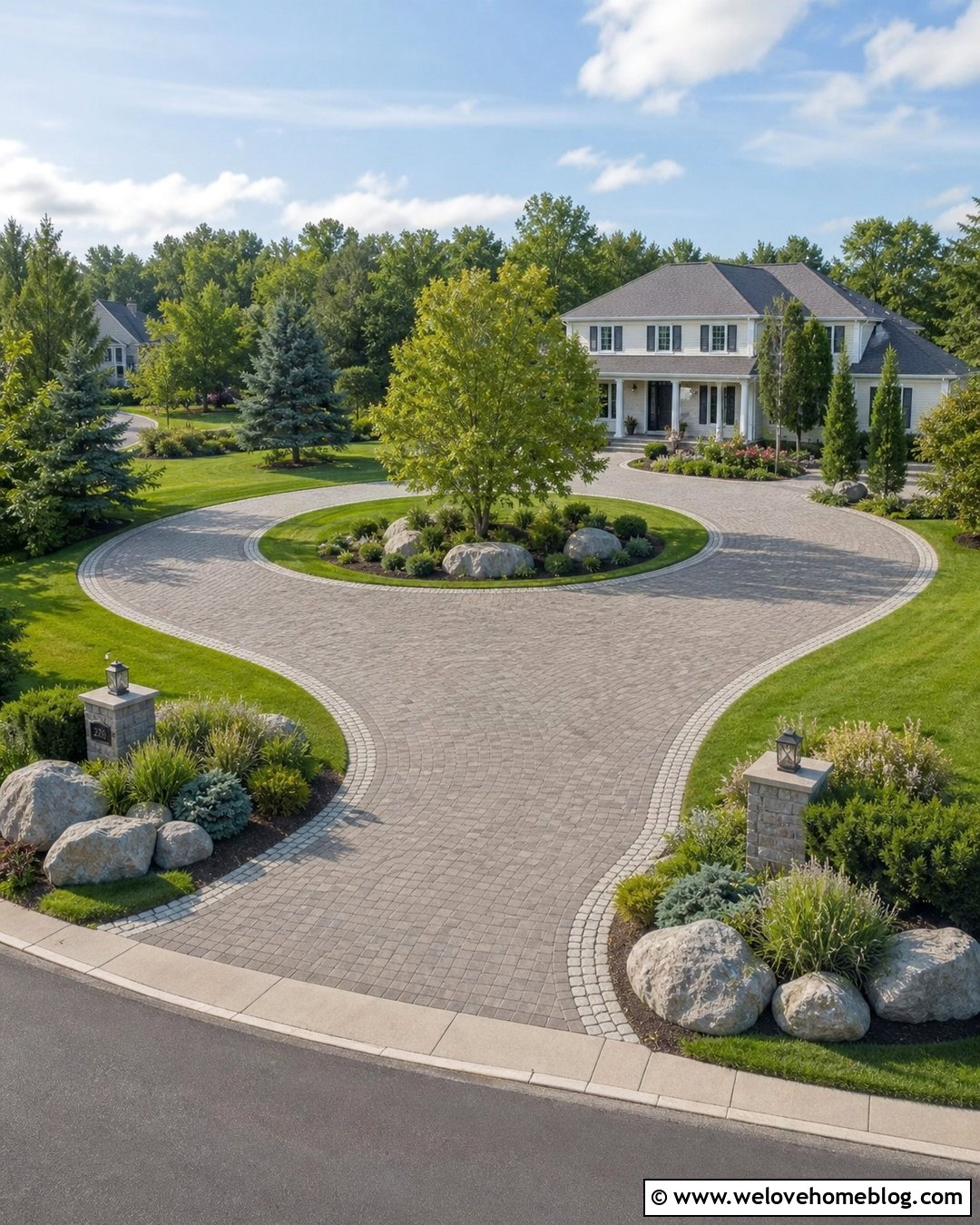
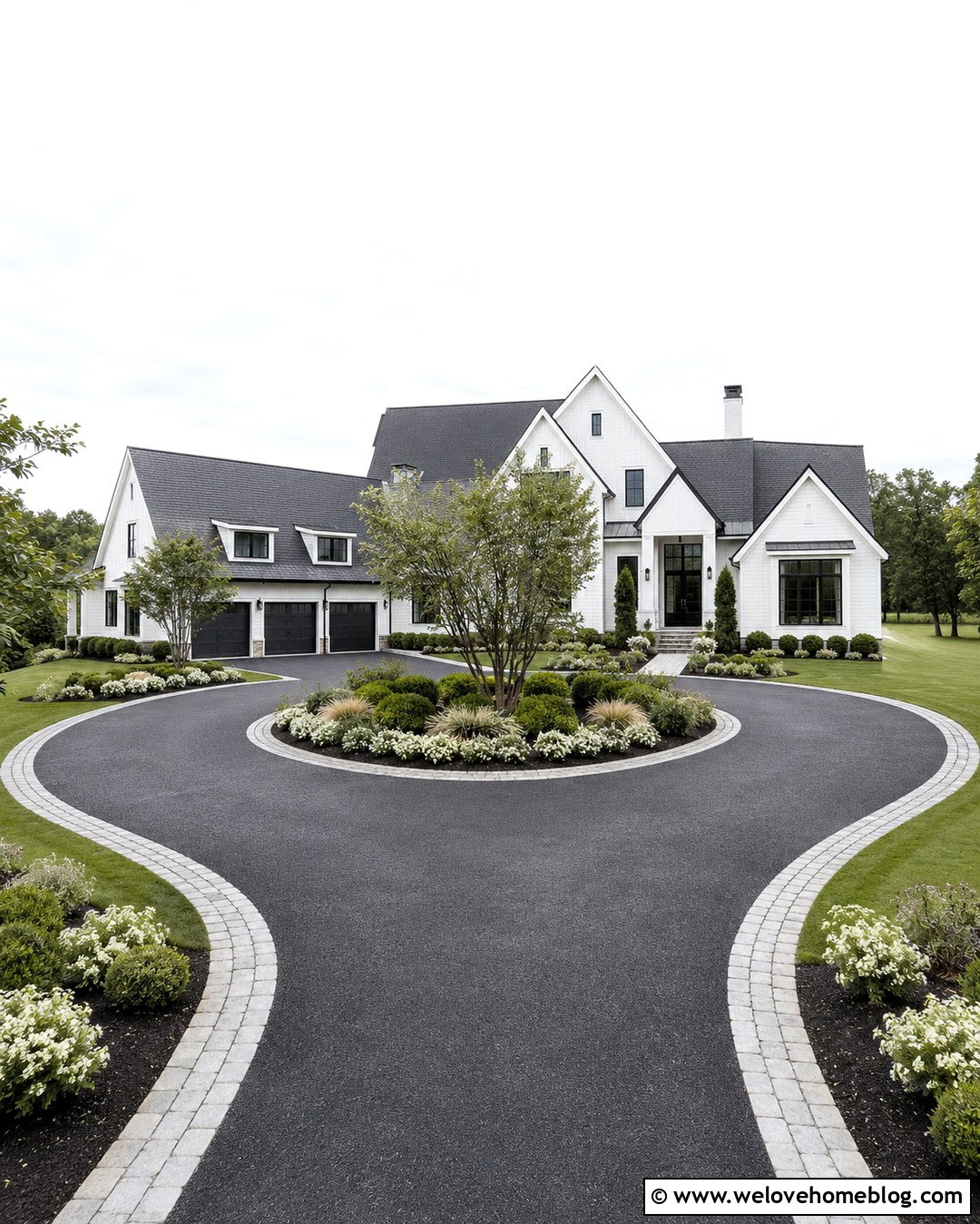
A circular driveway has two street connections, so repeating boulder materials helps both entrances feel like parts of one design. Use warm gray pavers or light crushed stone across the circular layout, then position similar granite boulder groupings at each opening. The arrangements do not need to be identical, but they should share color, scale, and planting. Low evergreen shrubs, flowering grasses, and spreading perennials provide continuity without blocking views across the road. A matching cobblestone border can trace the driveway and define the center island. Inside that island, repeat one or two smaller boulders near a specimen tree. This coordinated approach creates an elegant arrival sequence while keeping the circular driveway practical, open, and visually connected to the house.
9. Sloped Driveway Entrance With Boulder Retaining Walls
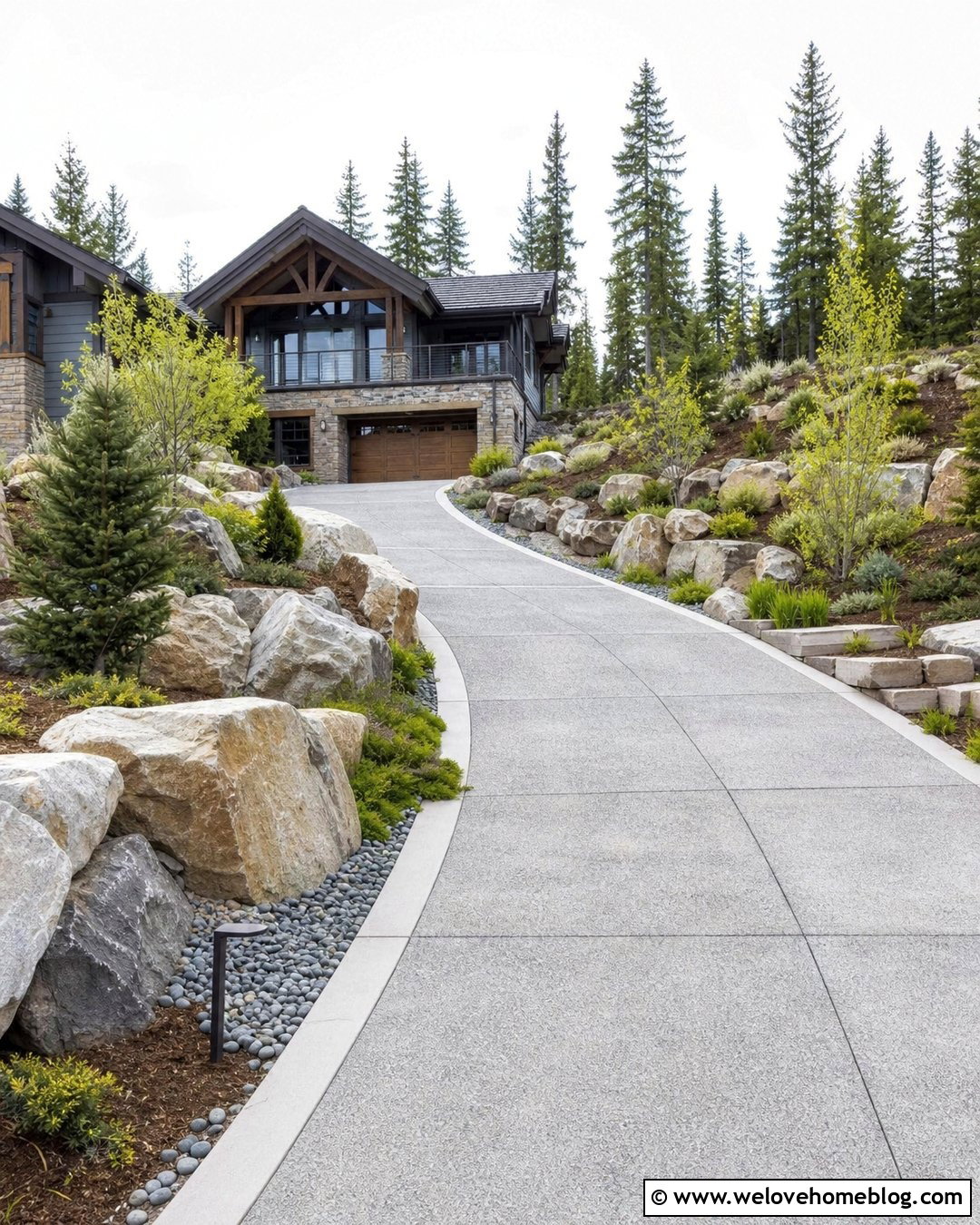
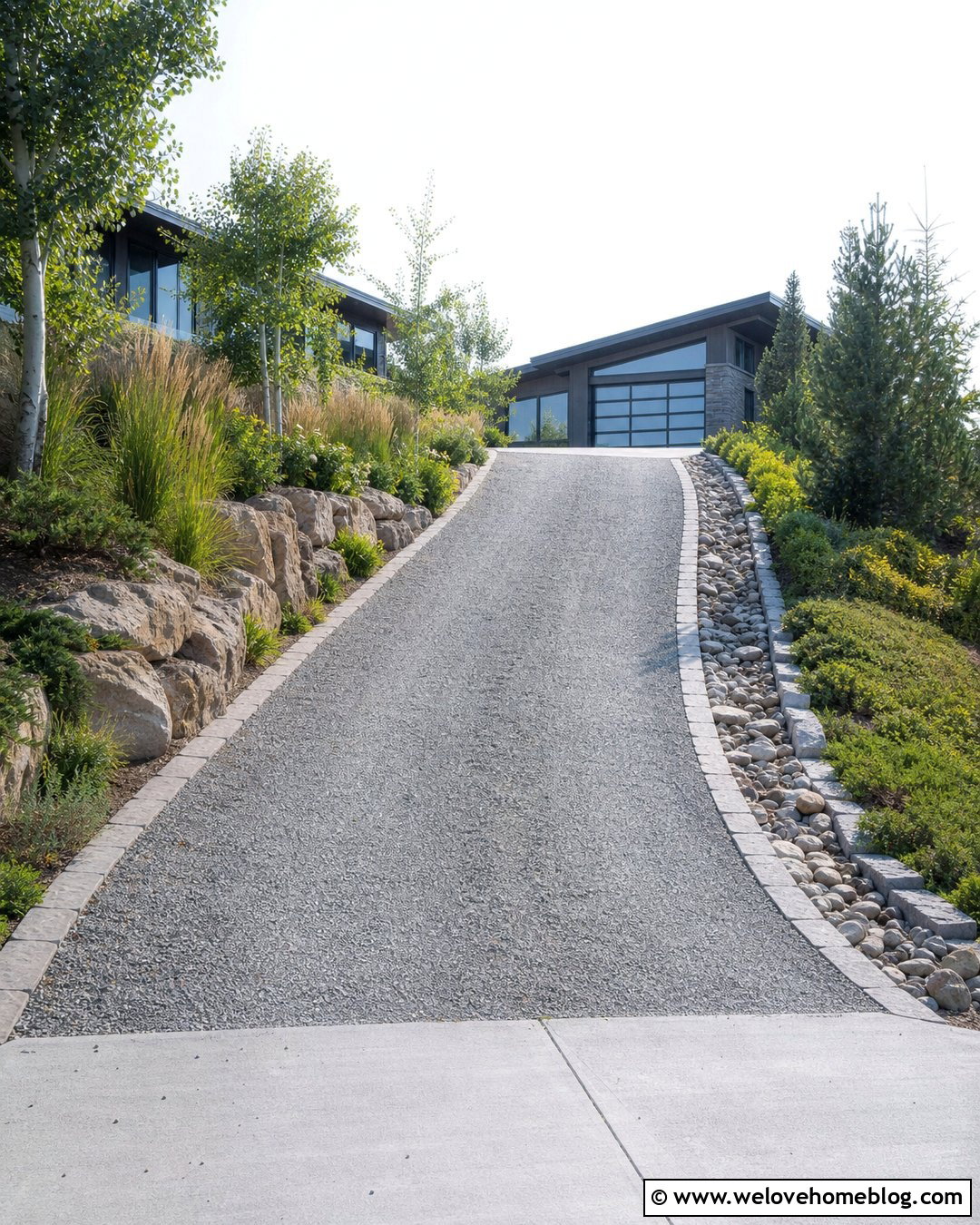
A sloped entrance often needs more than decorative stone placement. Low boulder retaining walls can hold planted banks while making the driveway feel integrated into the hillside. Pair textured poured concrete or asphalt with large angular stones that suit the property’s natural geology. Build the boulder arrangement in graduated layers, placing larger pieces near the bottom and smaller stones higher on the slope. Leave planting pockets for creeping juniper, sedges, low shrubs, and erosion-resistant ground covers. The wall should remain well outside the vehicle path, with proper drainage planned behind and beneath it. Because these stones are extremely heavy and may support soil, professional design and installation are important. The completed entrance feels stable, natural, and appropriate for mountain or hillside homes.
10. Wooded Driveway Entrance With Natural Boulder Clusters
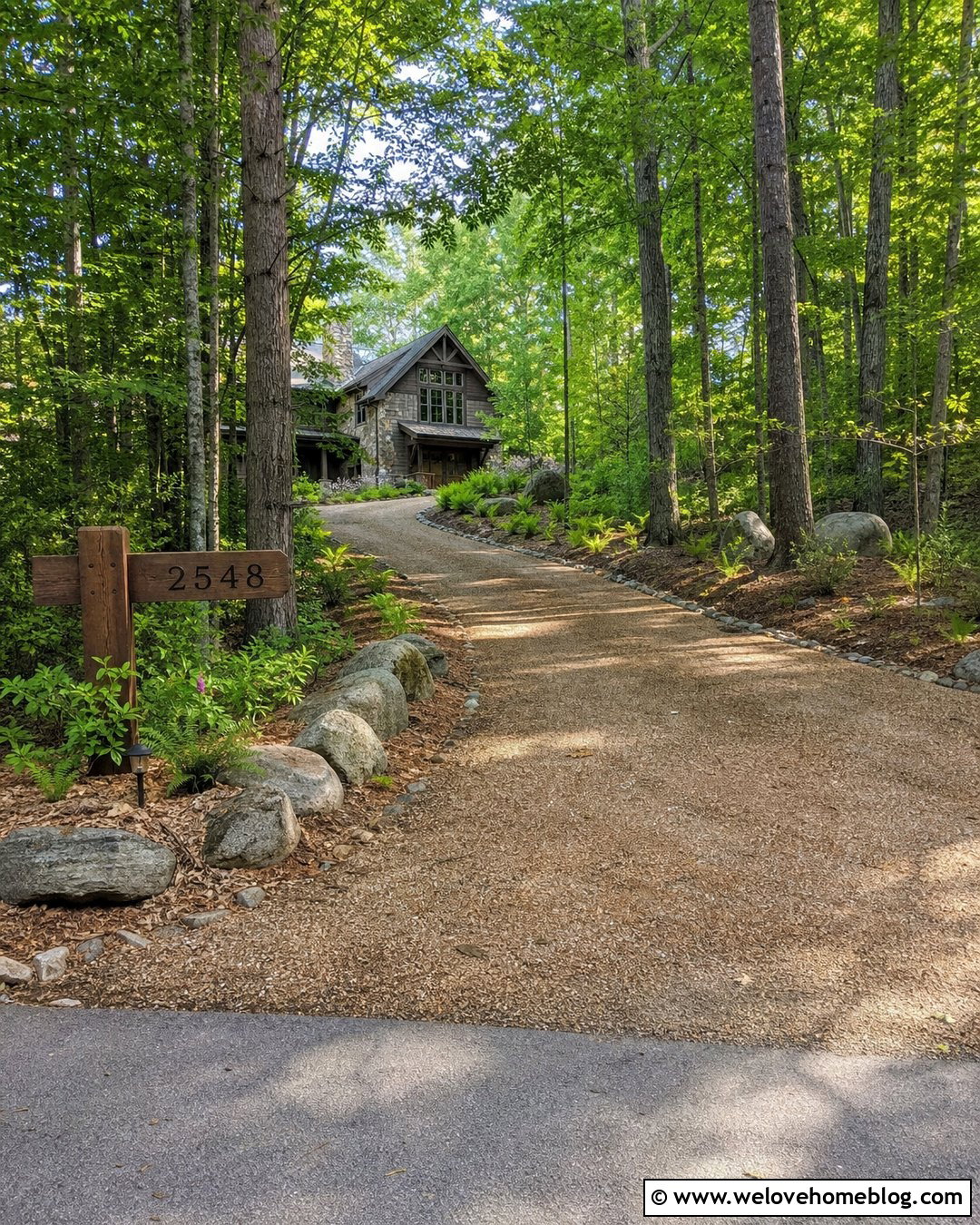
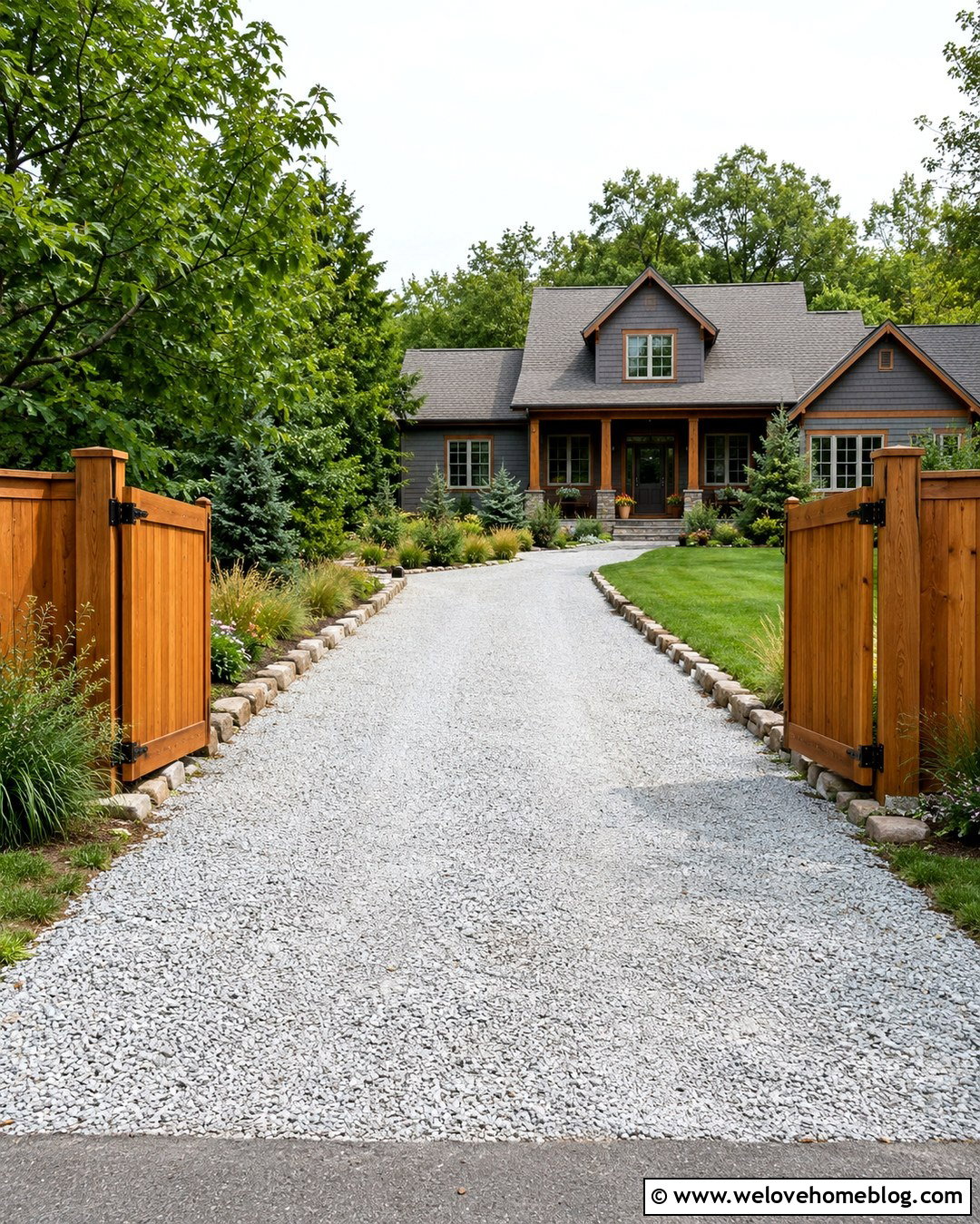
A wooded property looks best when the driveway entrance respects the irregular character of the site. Use brown crushed gravel for a straight or gently winding drive, then arrange native boulders among existing trees. Avoid clearing every plant around the rocks. Instead, preserve leaf litter, ferns, woodland grasses, and small shrubs so the boulders appear to emerge from the ground. Three-stone clusters with varied heights look more natural than a continuous row. A rustic timber address sign can be placed behind the largest grouping, illuminated by a discreet low-voltage fixture. Line the driveway with a subtle fieldstone edge only where gravel containment is needed. This low-key entrance works beautifully for cabins, craftsman homes, and secluded country houses.
11. Driveway Entrance With Boulders And Ornamental Grasses
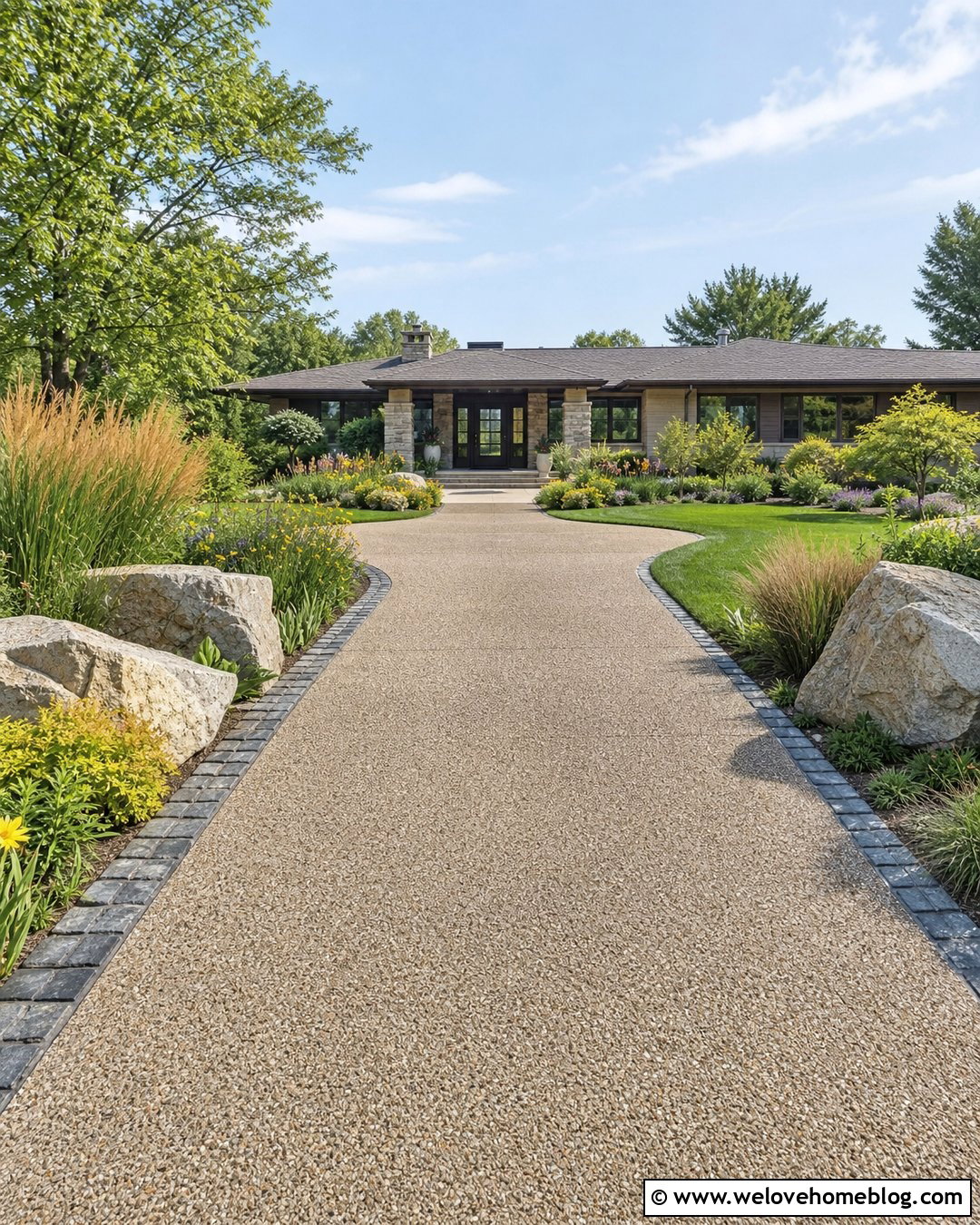
Ornamental grasses soften the mass of large boulders and add movement around a driveway entrance. Begin with an exposed aggregate driveway that contains warm stone tones, then build deep beds on both sides of the opening. Use one or two substantial granite boulders in each bed, setting them low enough to appear naturally embedded. Plant upright grasses behind the stones and shorter varieties around their edges. Add low flowering perennials to introduce seasonal color without creating a busy look. A dark cobblestone ribbon can separate the aggregate from the beds and repeat the gray tones in the boulders. Keep grasses trimmed back from road views and driveway corners. This arrangement complements prairie, ranch, craftsman, and modern farmhouse architecture.
12. Driveway Entrance With Boulders And Native Plants
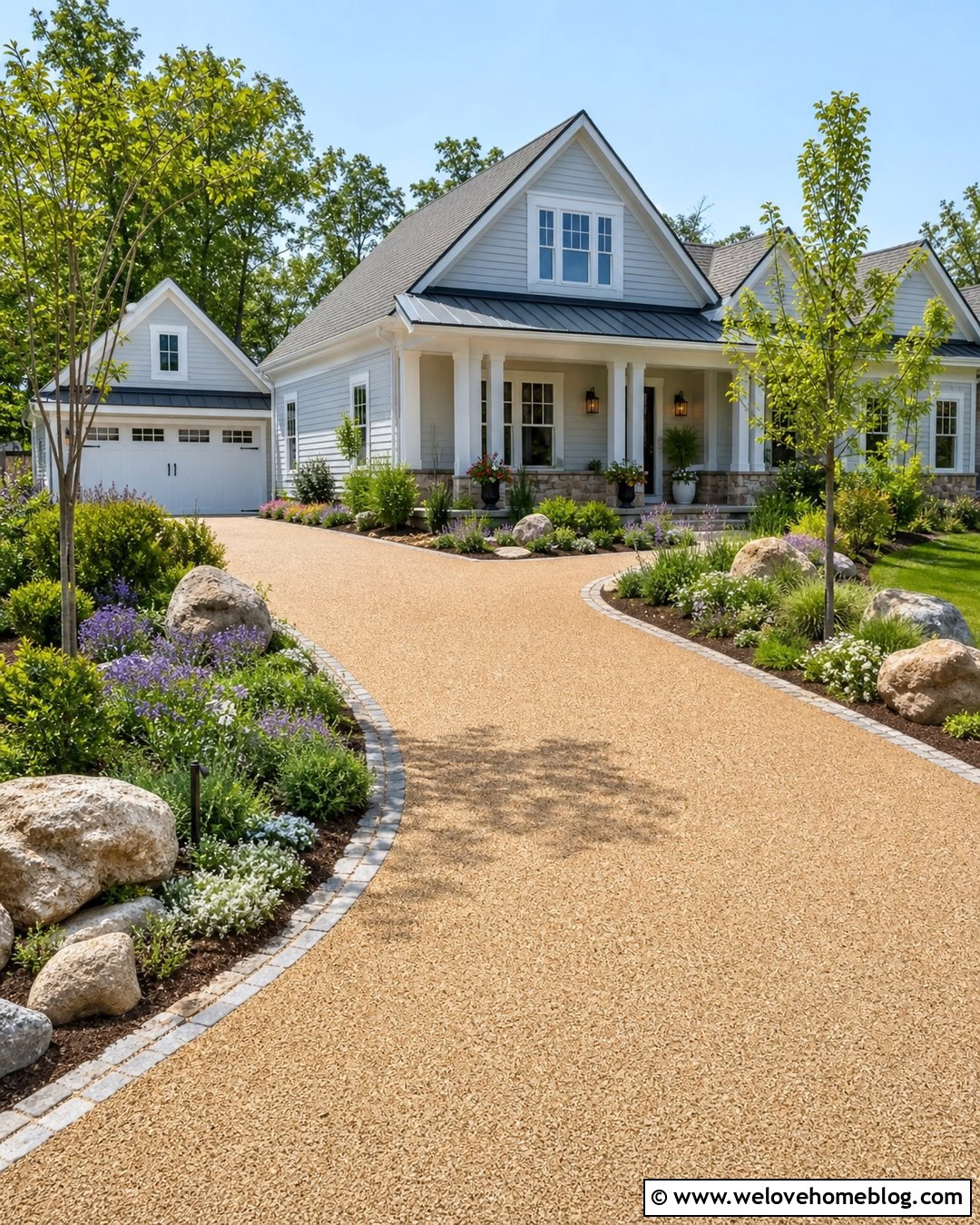
Would you like an entrance that feels connected to the region rather than copied from a generic landscape plan? Pair locally appropriate boulders with native plants selected for the property’s light, soil, and moisture conditions. A permeable gravel or resin-bound gravel driveway provides a simple backdrop for the naturalistic beds. Arrange boulders in uneven groups, leaving wide pockets for flowering perennials, compact shrubs, grasses, and ground covers. Repeat a small selection of plants across both sides for unity. Avoid placing tall growth where it could hide approaching vehicles, cyclists, or pedestrians. Stone edging can define the beds without making them appear formal. This complete design offers changing texture and color while complementing cottages, ranch homes, and contemporary houses.
13. Driveway Entrance With Boulder Address Sign
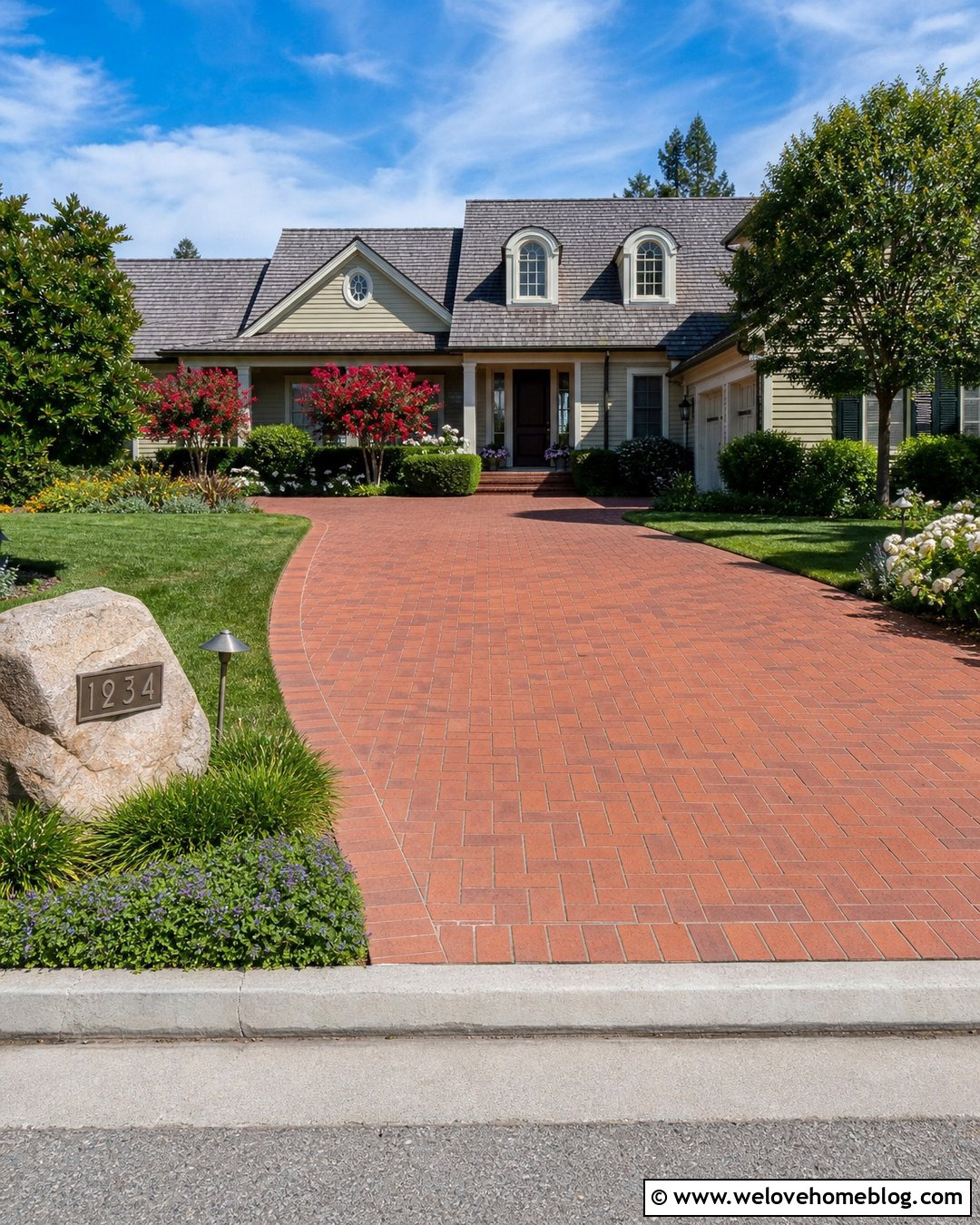
A boulder address sign turns a practical marker into part of the landscaping. Select one broad-faced stone that suits the color of the house, then position it in a planting bed several feet beyond the pavement edge. Pair it with a straight brick paver or concrete driveway and a clean stone border. The address can be mounted on a separate metal plaque attached professionally to the rock, keeping the numbers simple and highly legible. Surround the boulder with low plants so foliage does not cover the sign. Creeping ground covers, dwarf grasses, and compact flowering shrubs work well. Add a small shielded light for visibility after dark. Before placement, confirm that the sign remains outside utility areas, easements, and required road clearances.
14. Driveway Entrance With Boulders And Lighting
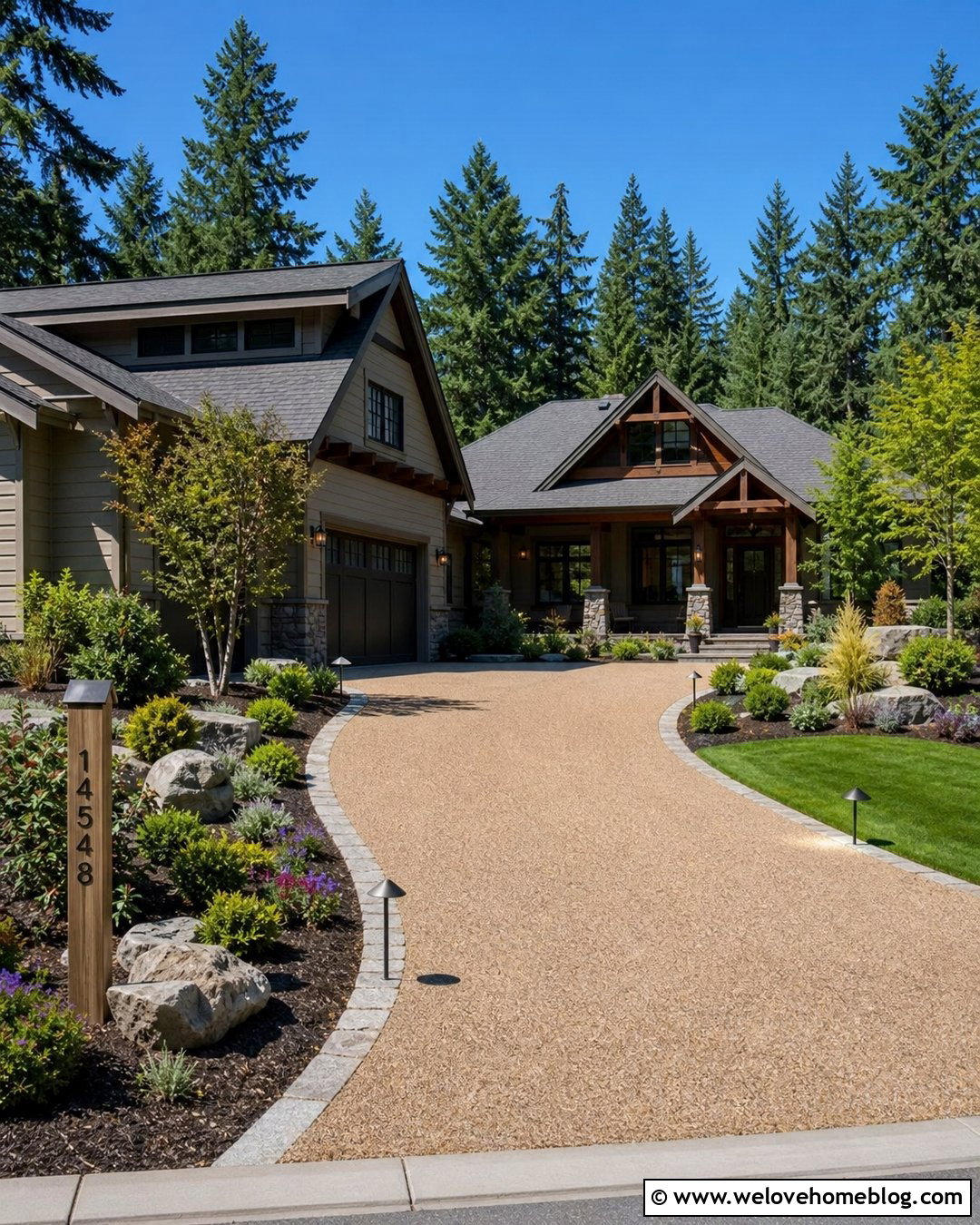
Carefully placed lighting allows a boulder entrance to remain useful and attractive after sunset without turning the landscape into a bright display. Start with a curved resin-bound gravel driveway bordered by natural stone. Arrange granite boulders inside mulched planting beds, then position small shielded uplights near selected rocks. Aim the fixtures across the textured surfaces rather than directly toward the road or neighboring windows. Low path lights can mark the driveway edge, while a brighter fixture identifies the address sign or gate controls. During the day, evergreen shrubs, grasses, and ground covers keep the beds looking complete. Choose fixture finishes that blend with the rocks or house trim. The overall layout should emphasize safe navigation while maintaining a calm, uncluttered entrance.
15. Driveway Entrance With Boulder Pillars And Gate
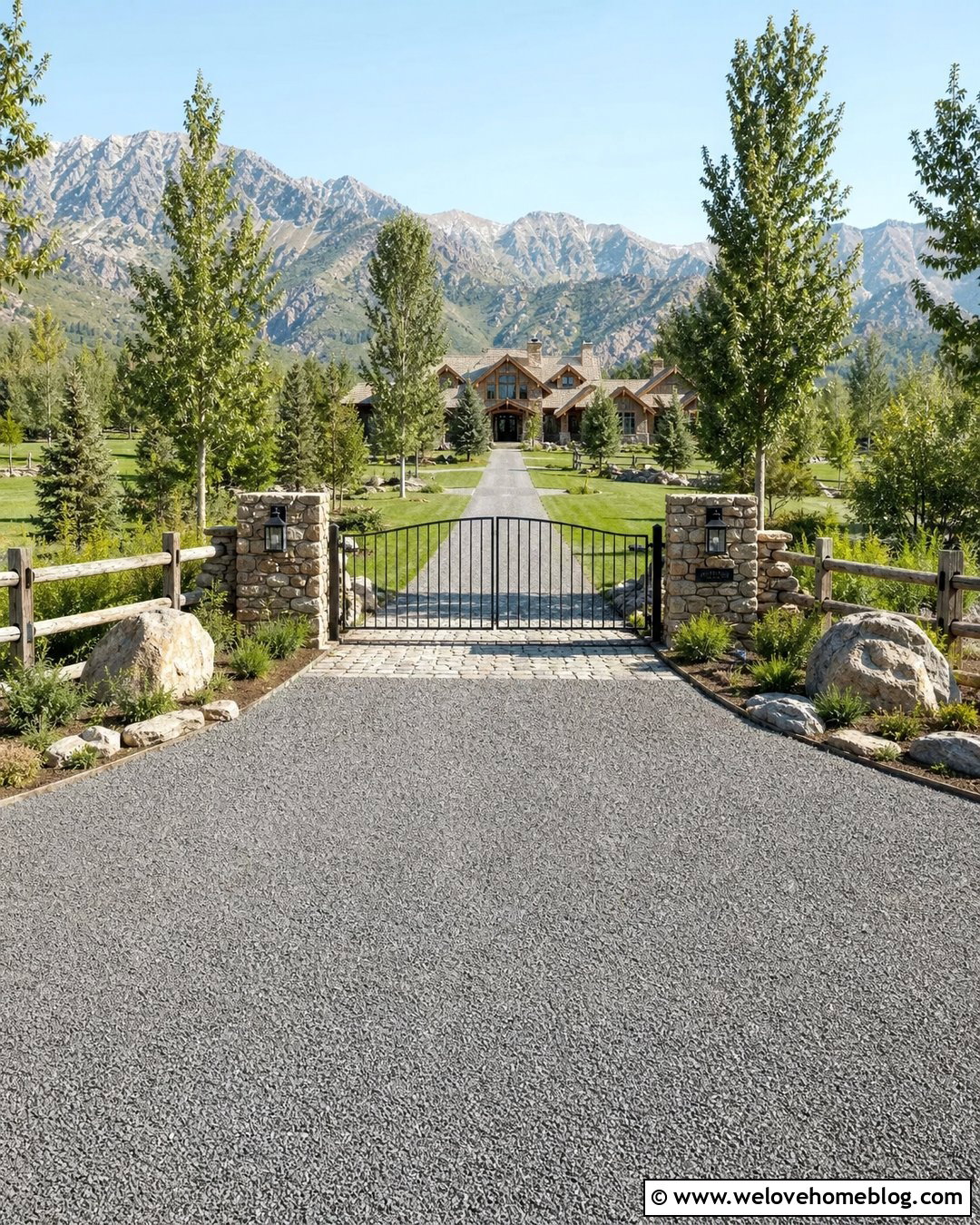
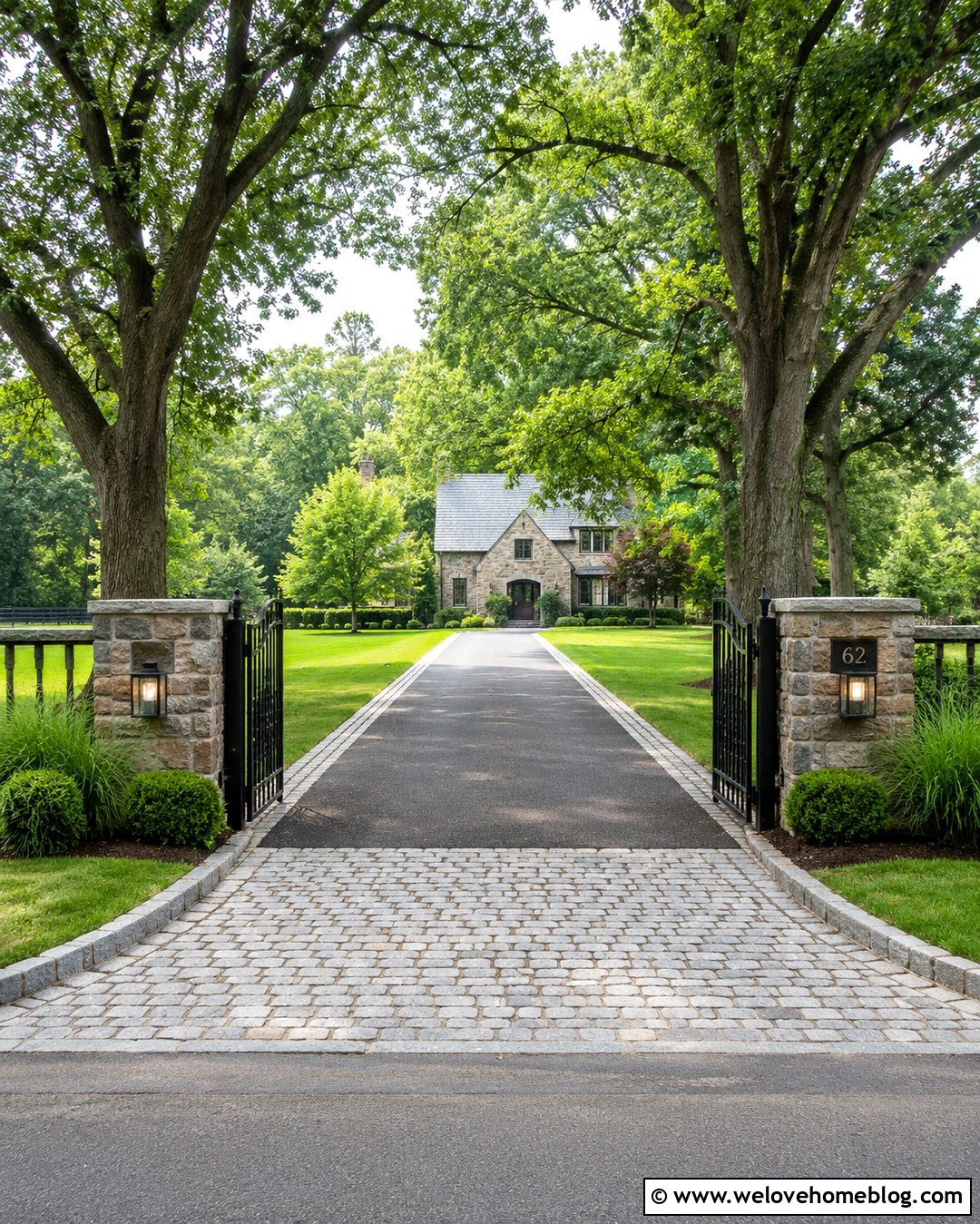
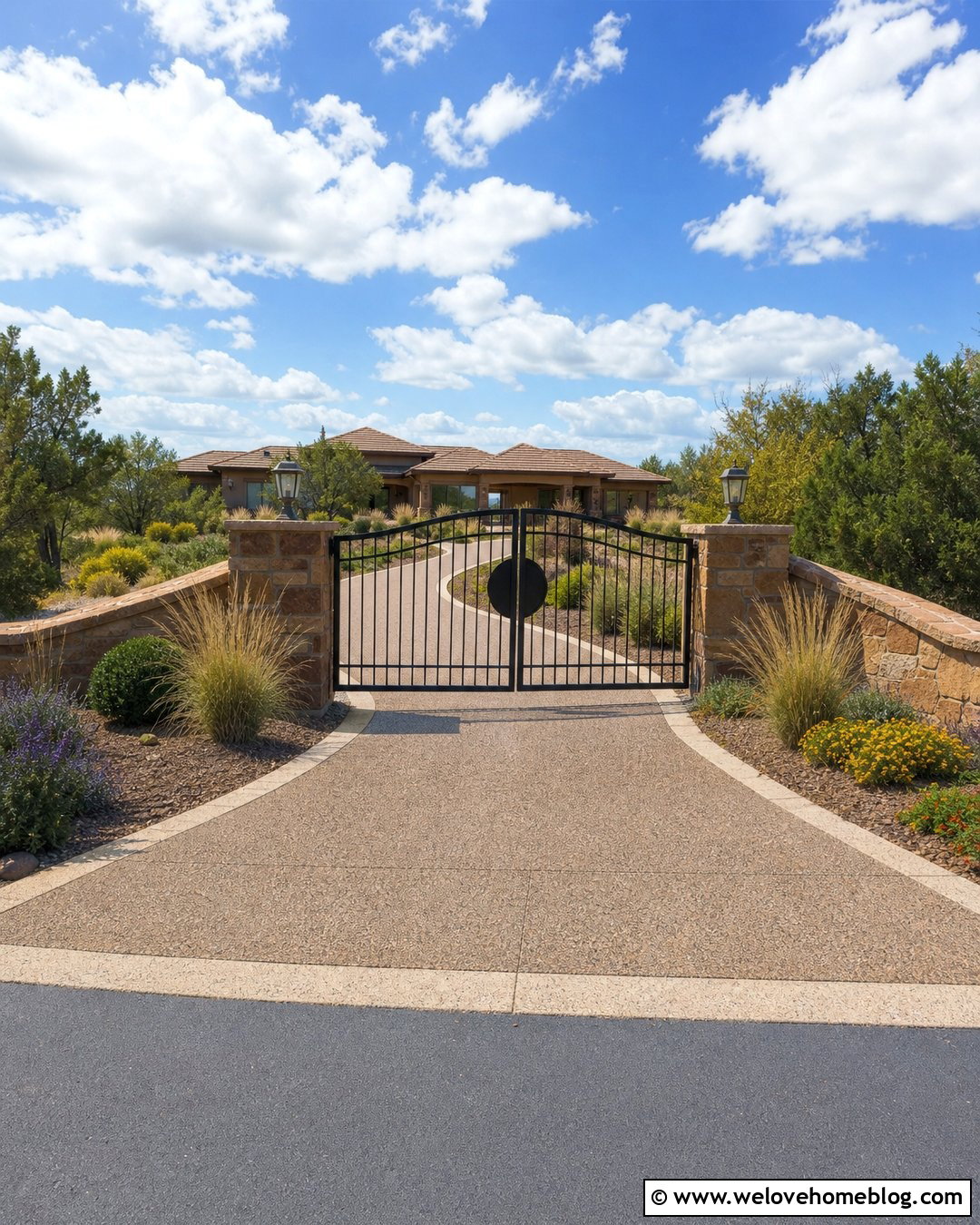
Boulders can support the visual presence of a driveway gate without pretending to be formal masonry columns. Pair a wide gravel driveway with a simple black metal or wood gate set between professionally engineered stone pillars. Build the pillars from stacked boulders or large natural stone blocks that coordinate with separate boulder clusters in the nearby beds. Keep mechanical equipment accessible and provide enough clearance for the gate to operate safely. Native shrubs, grasses, and a split-rail fence can extend the entrance into the wider landscape. A cobblestone apron beneath the gate creates a stable, finished threshold. This complete look is especially effective for ranch, mountain, and large country properties where conventional brick pillars might feel too polished or urban.
16. Small Driveway Entrance With One Large Boulder
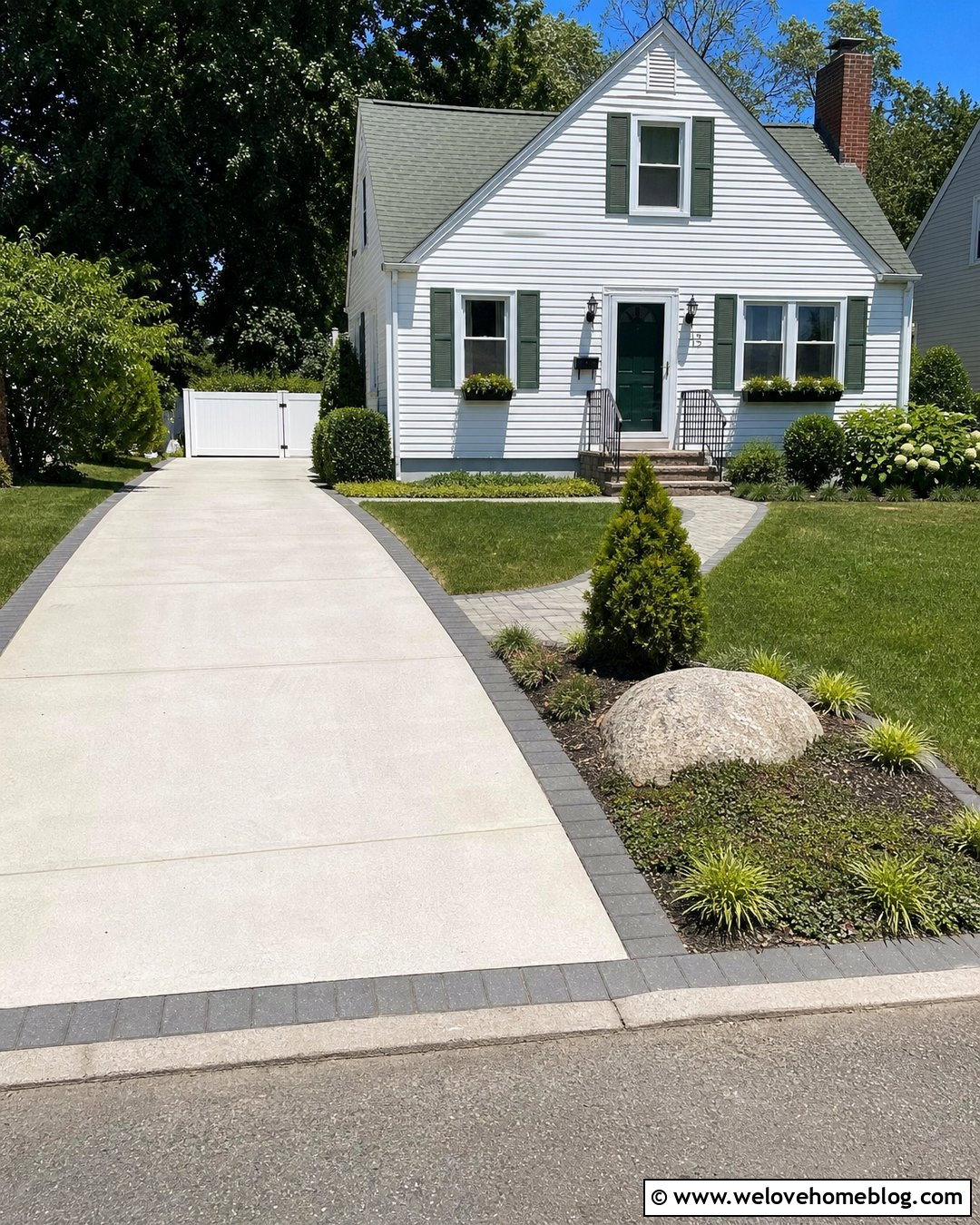
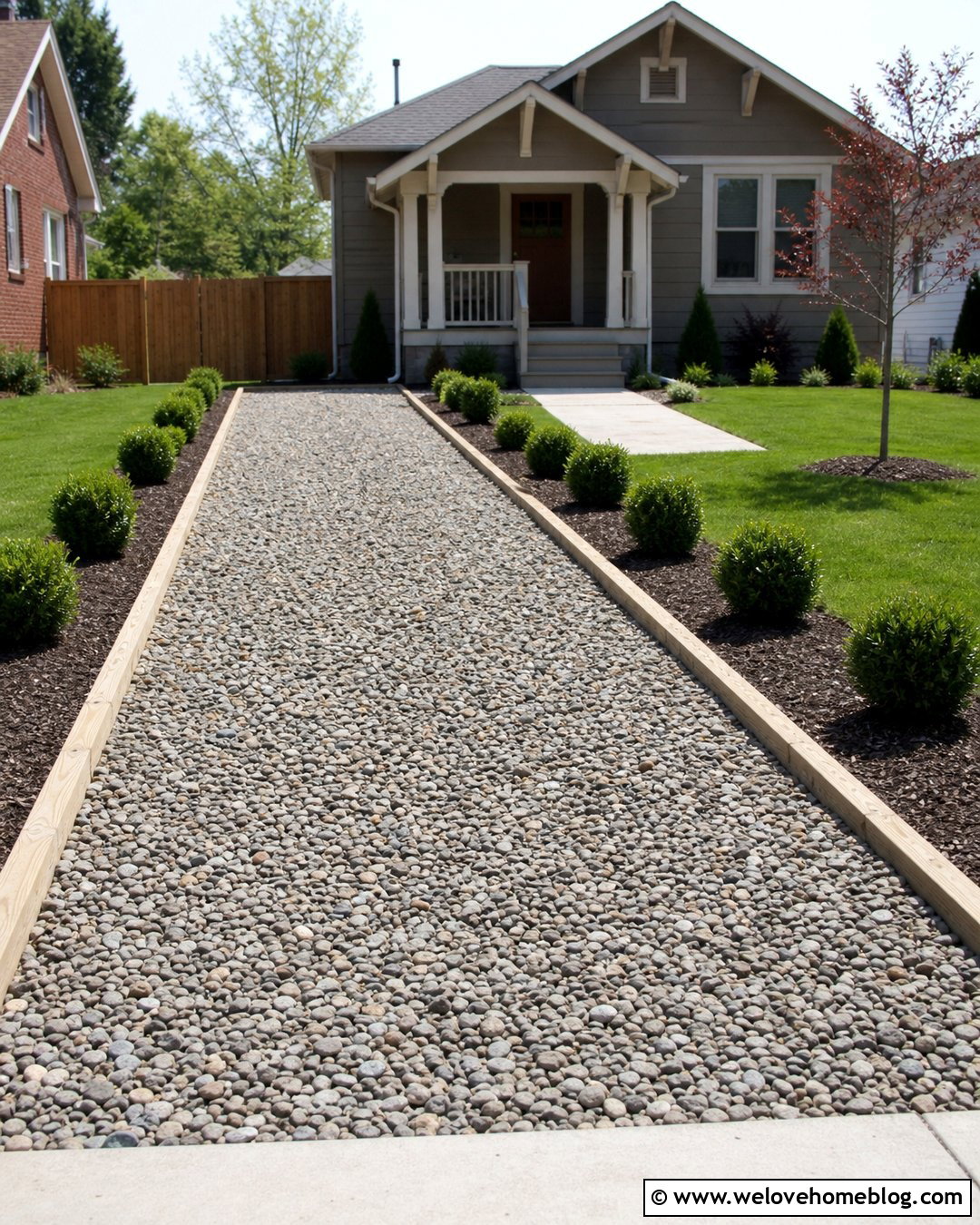
A compact front yard does not need multiple massive rocks to create an effective entrance. One carefully selected boulder can anchor a narrow driveway without crowding the lawn. Pair a straight light gray concrete driveway with a slim planting bed on the more visible side. Set a medium-scale granite boulder partially into the soil, then surround it with low grasses, creeping ground cover, and one compact evergreen shrub. Continue a narrow paver border along the concrete to connect the feature with the house walkway. Keep the opposite side simple with lawn or a low hedge, preserving space for doors and turning movements. This restrained arrangement provides a clear focal point while fitting comfortably beside a bungalow, Cape Cod, or small suburban home.
17. Rustic Driveway Entrance With Boulder And Timber Edging
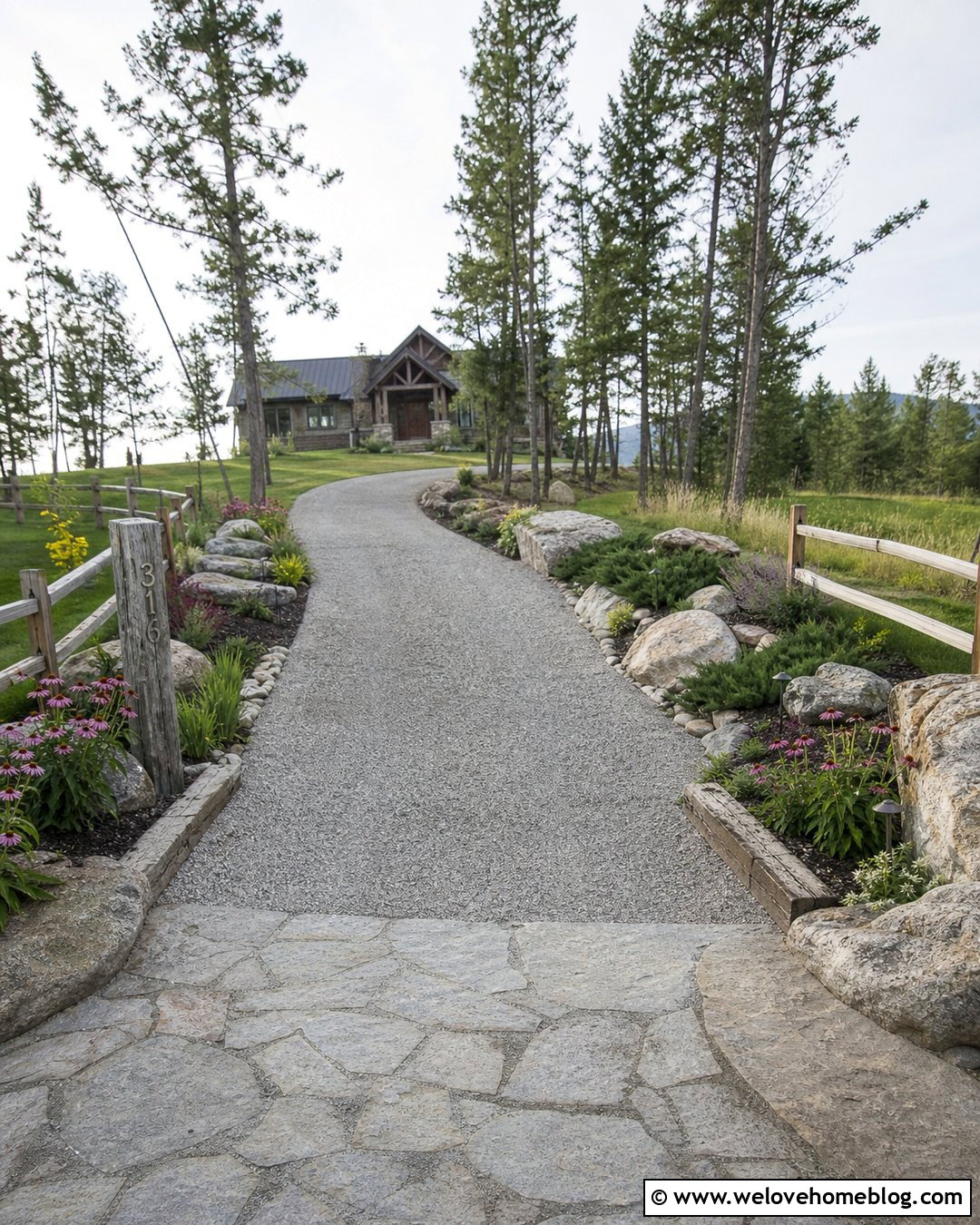
Rough stone and timber create a relaxed entrance for cabins, ranch houses, and rural homes. Use compacted pea gravel or crushed granite for a gently curved driveway, containing the loose surface with heavy timber edging set outside the main tire path. At the road, place several weathered boulders in broad planting beds that merge with a split-rail fence. Repeat the timber through a simple overhead-free gate or address post so the materials feel coordinated. Native grasses, coneflowers, low junipers, and small flowering shrubs add color without making the entrance formal. Partially bury the boulders and vary their spacing to avoid a lined-up appearance. A short stone apron can reduce gravel movement and provide a more defined transition at the roadway.
18. Coastal Driveway Entrance With Rounded Boulders
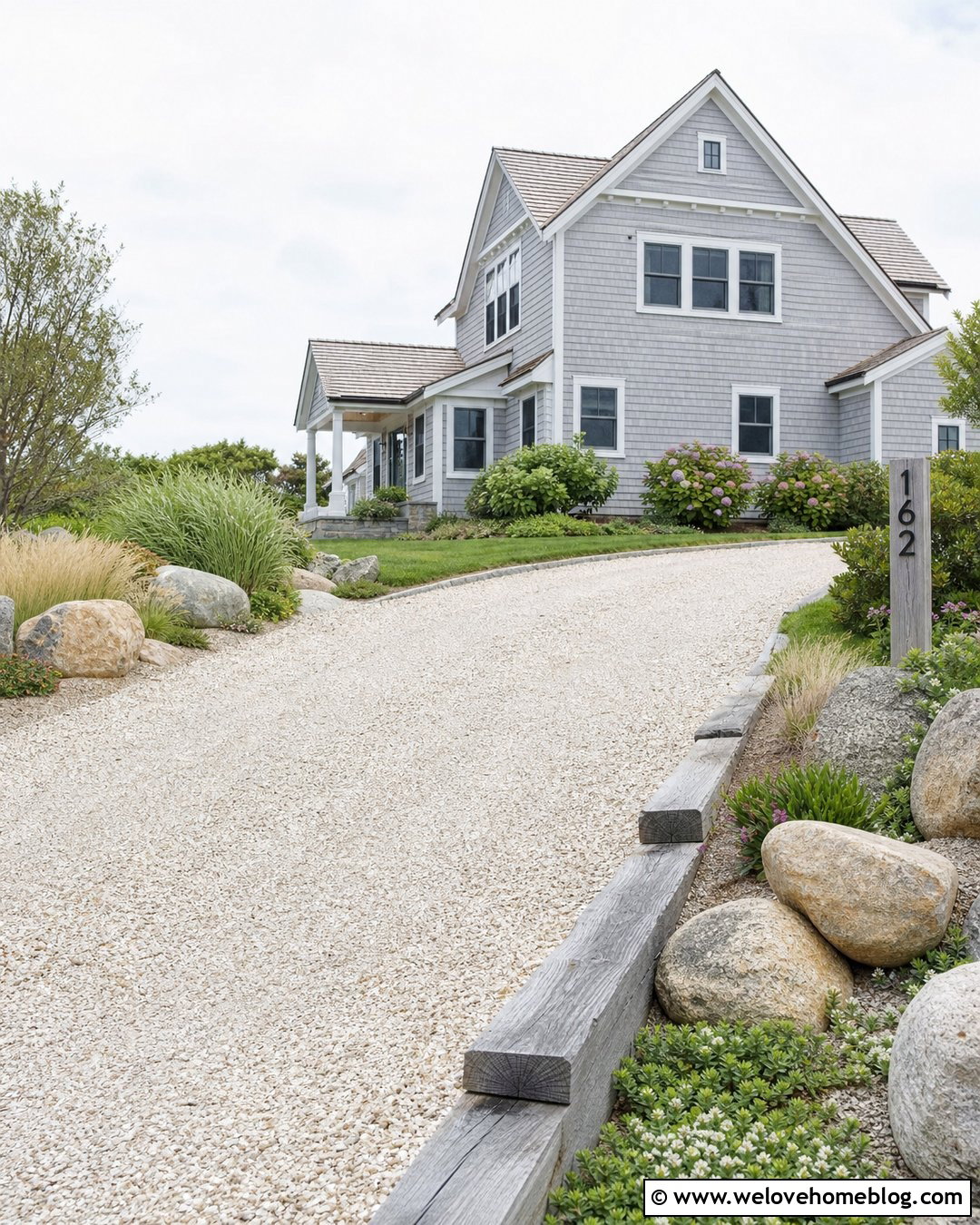
A coastal entrance can use rounded boulders without looking like an artificial riverbed. Choose soft gray and weathered tan stones, then place them in groups beside a pale shell gravel or light resin-bound gravel driveway. A gently curving layout works well because it echoes the relaxed shape of the planting beds. Add beach grass, low evergreen shrubs, hydrangeas, and salt-tolerant ground covers suited to the local conditions. Weathered timber edging and a simple cedar address post reinforce the coastal palette. Avoid surrounding the large boulders with too many small, uniformly rounded pebbles. A mix of ground cover and coarse gravel looks more natural. This bright, informal entrance complements shingle-style houses, coastal cottages, and light-painted Cape Cod homes.
19. Brick Driveway Entrance With Granite Boulders
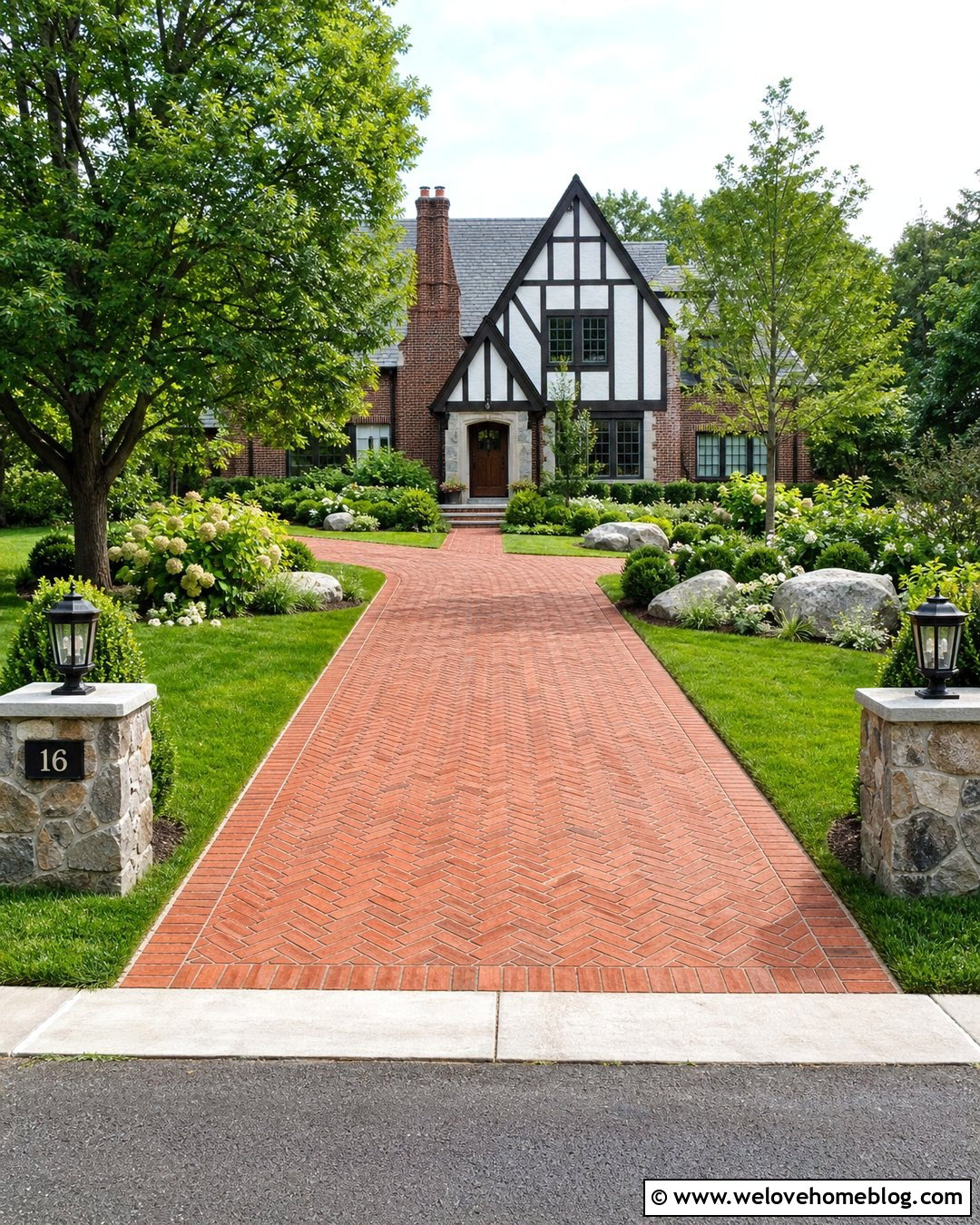
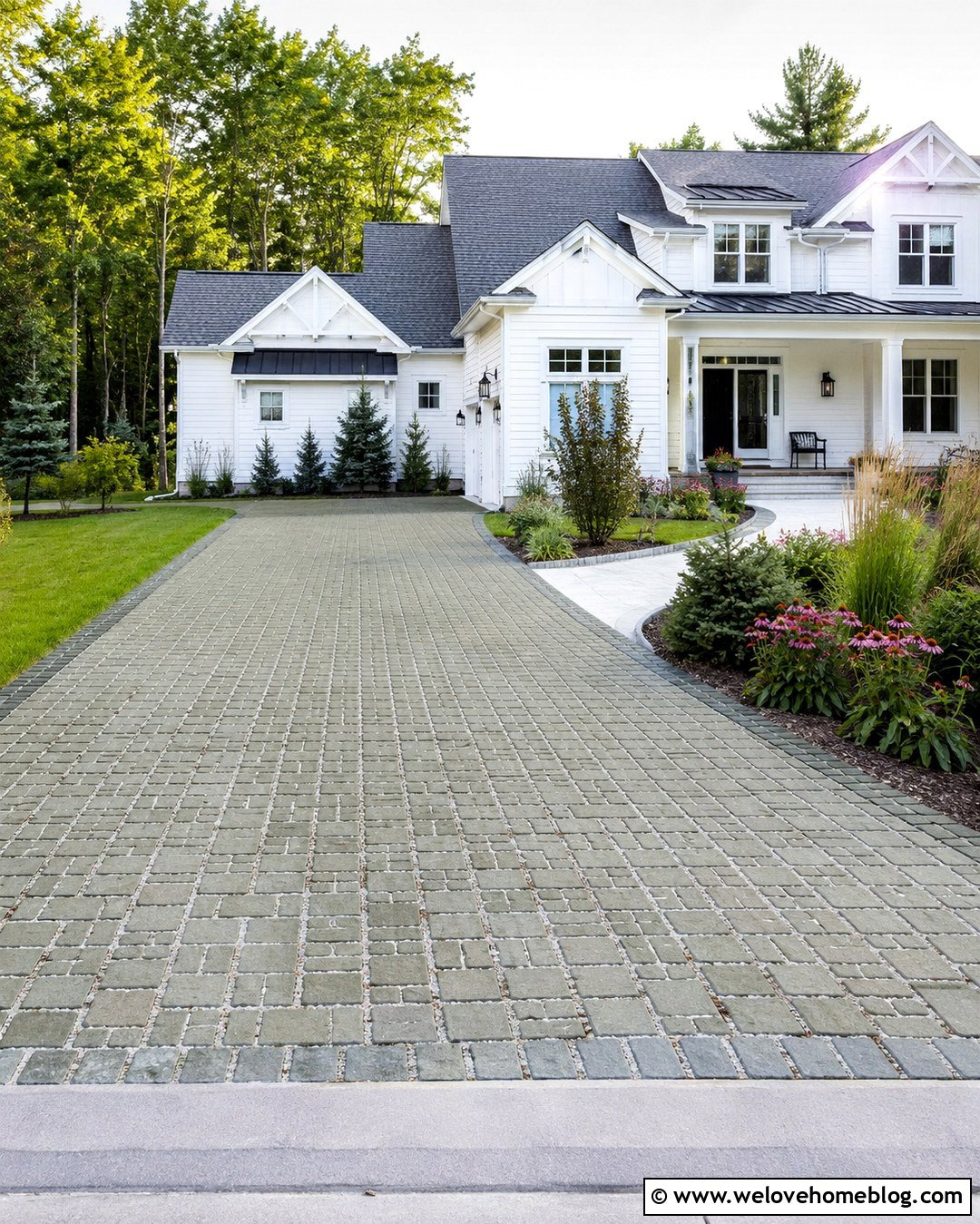
Brick paving and granite boulders give a traditional entrance more texture without weakening its polished appearance. Use clay brick pavers in a herringbone pattern, framed by a straight soldier-course border. Beyond the brick edges, create symmetrical planting beds with granite boulders that share cool gray or warm brown undertones with the house. The stone groupings should be similar in scale but slightly different in arrangement. Boxwoods, flowering perennials, and small ornamental trees can provide structure around them. Keep the central opening wide and avoid placing rocks near the driveway flare. A matching brick walkway leading to the front door ties the entrance into the larger property. This combination works especially well with colonial, Tudor, and traditional brick homes.
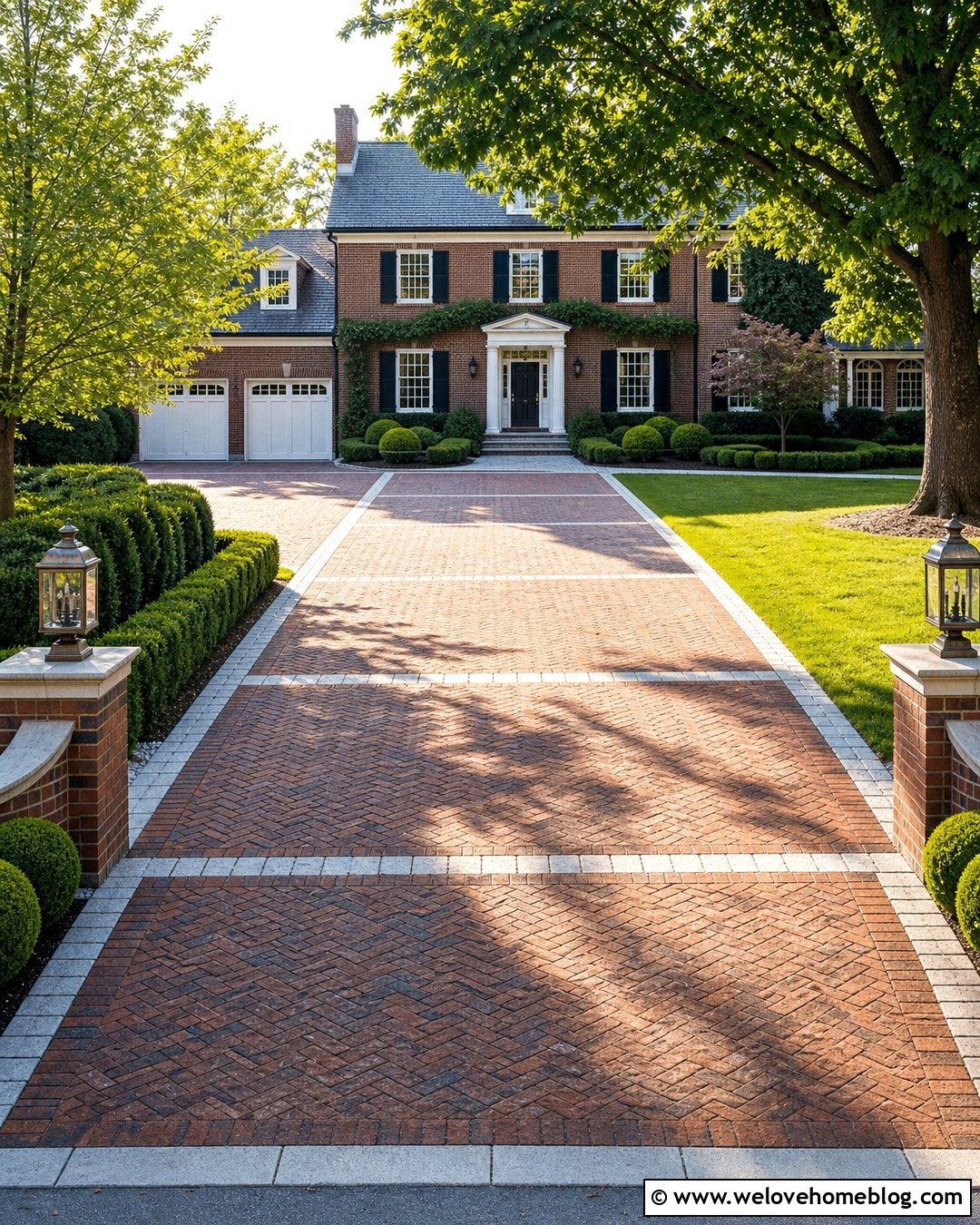
20. Long Driveway Entrance With Boulder-Lined Landscaping
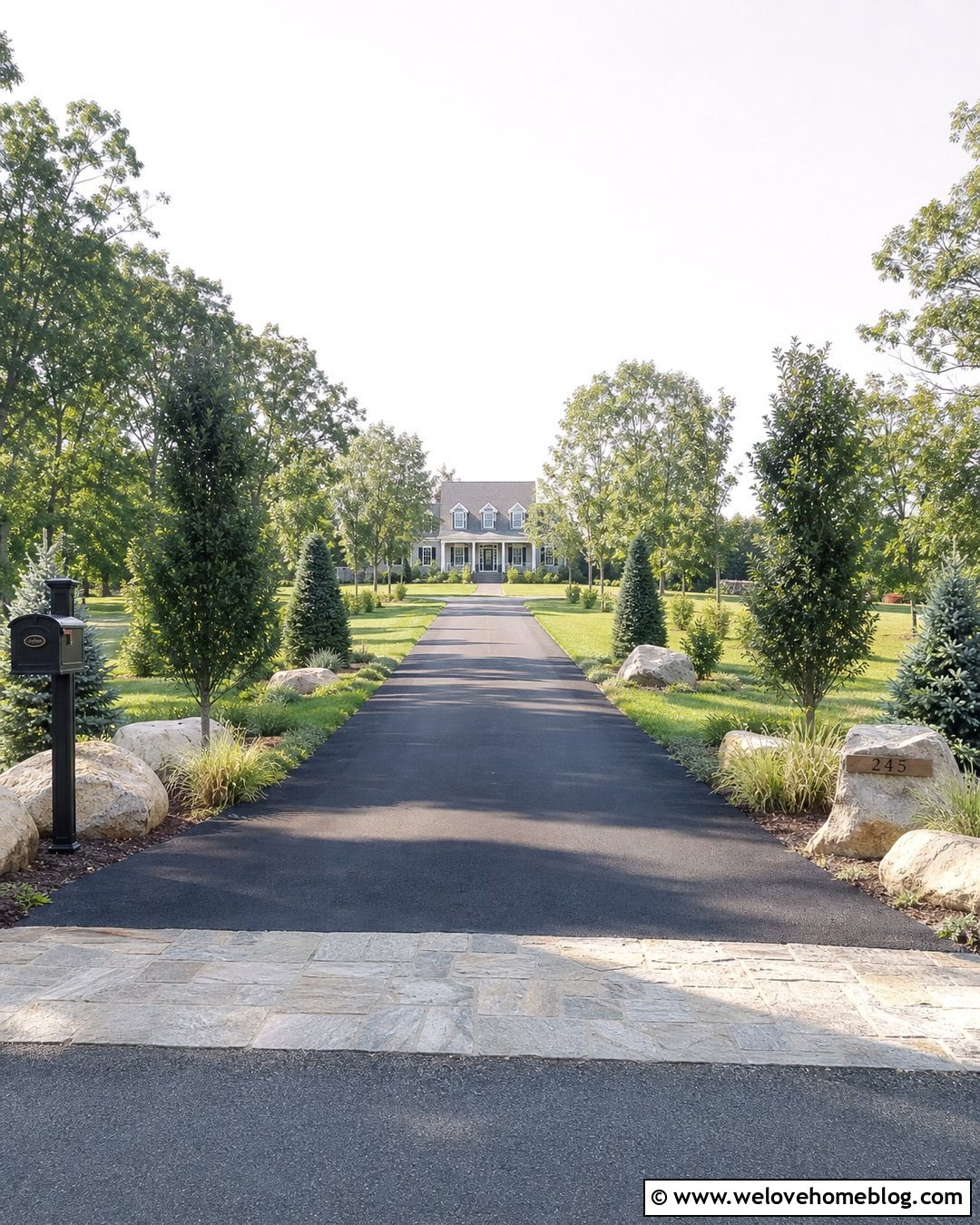
A long driveway needs an entrance that establishes direction without relying on boulders along its entire length. Use dark asphalt or compacted gray gravel for a straight approach, then build substantial boulder beds around the opening. Gradually reduce the size and frequency of stones farther inside the property. This creates a natural visual transition instead of a rigid rock-lined corridor. Add rows of native trees or upright evergreens behind the entrance beds, maintaining adequate spacing from the driving surface. Low grasses and spreading shrubs can fill gaps around the rocks. A stone apron, address marker, and coordinated mailbox complete the roadside view. The house becomes the distant focal point, while the boulder landscaping gives the long approach a clear and welcoming beginning.
Conclusion:
The best 20 Driveway Entrance With Boulders Ideas combine the driveway surface, rock placement, borders, planting, and architecture into one balanced composition. Boulders should appear grounded in the landscape rather than scattered across the lawn or lined up like barriers. Match their color and scale to the house, and keep plants low near road views. Also protect drainage routes and leave generous room for vehicles, snow removal, deliveries, and maintenance. Heavy stones, retaining applications, and gate pillars generally require professional equipment and careful planning. Whether you choose rustic gravel, modern concrete, traditional brick, or dark asphalt, a thoughtfully designed boulder entrance can make the entire property feel more established and connected to its surroundings.

Related posts:
Leave a Reply