
A black concrete driveway can make an ordinary front yard feel sharper, cleaner, and more intentional. Unlike black asphalt, colored concrete offers more control over texture, joint patterns, borders, and decorative finishes. These 20 Black Driveway Concrete Ideas explore complete looks for modern homes, farmhouses, ranch houses, traditional properties, and compact suburban lots. You will find smooth and broom-finished surfaces, stamped patterns, exposed aggregate, contrasting borders, curved layouts, gates, lighting, and integrated landscaping. Before selecting a deep color, test a sample outdoors because sunlight, aggregate, finishing methods, and sealer can affect the final tone. Dark surfaces can also become hot, so climate and shade matter. Use these 20 Black Driveway Concrete Ideas to find a practical design that complements your home.

1. Smooth Black Concrete Driveway
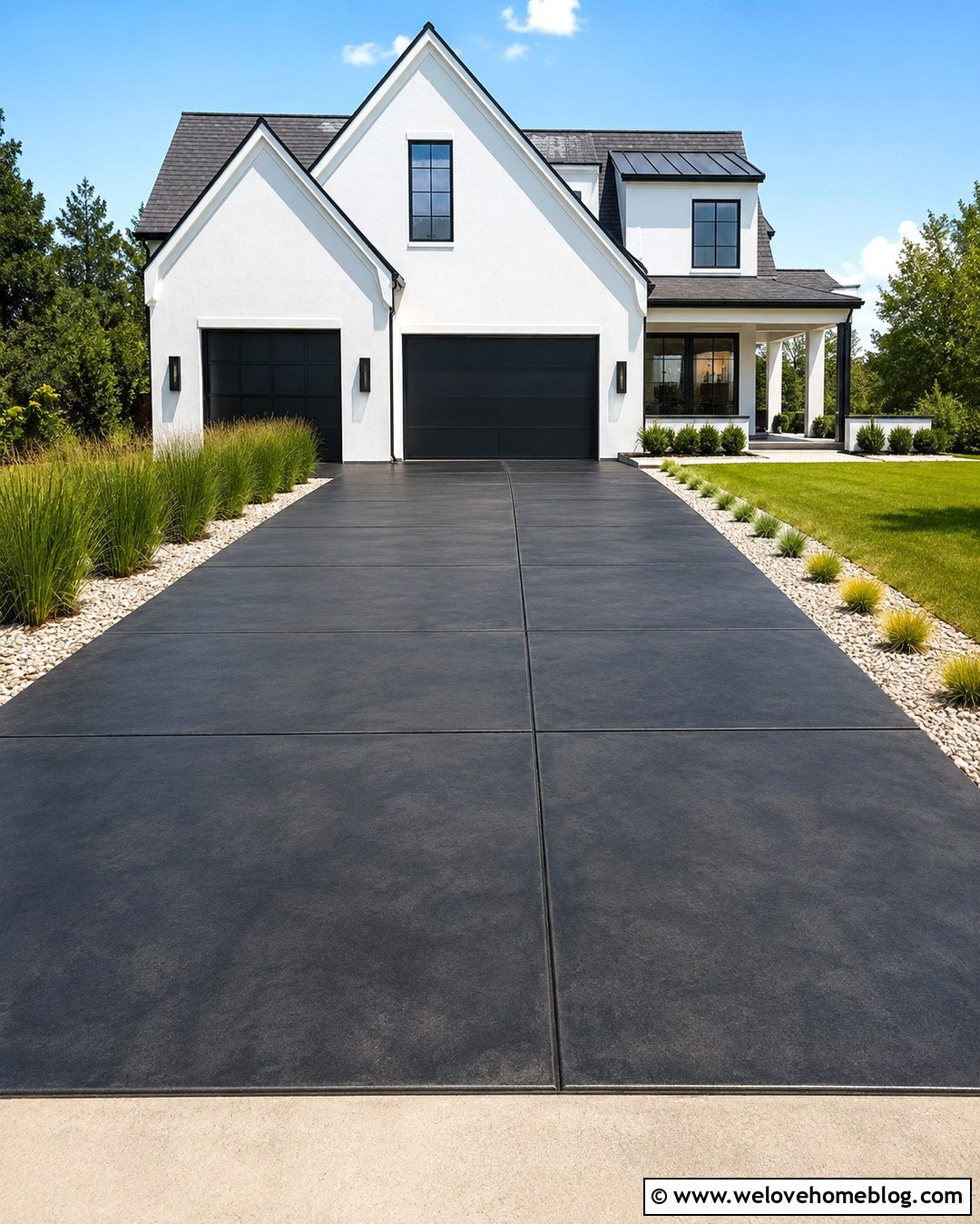
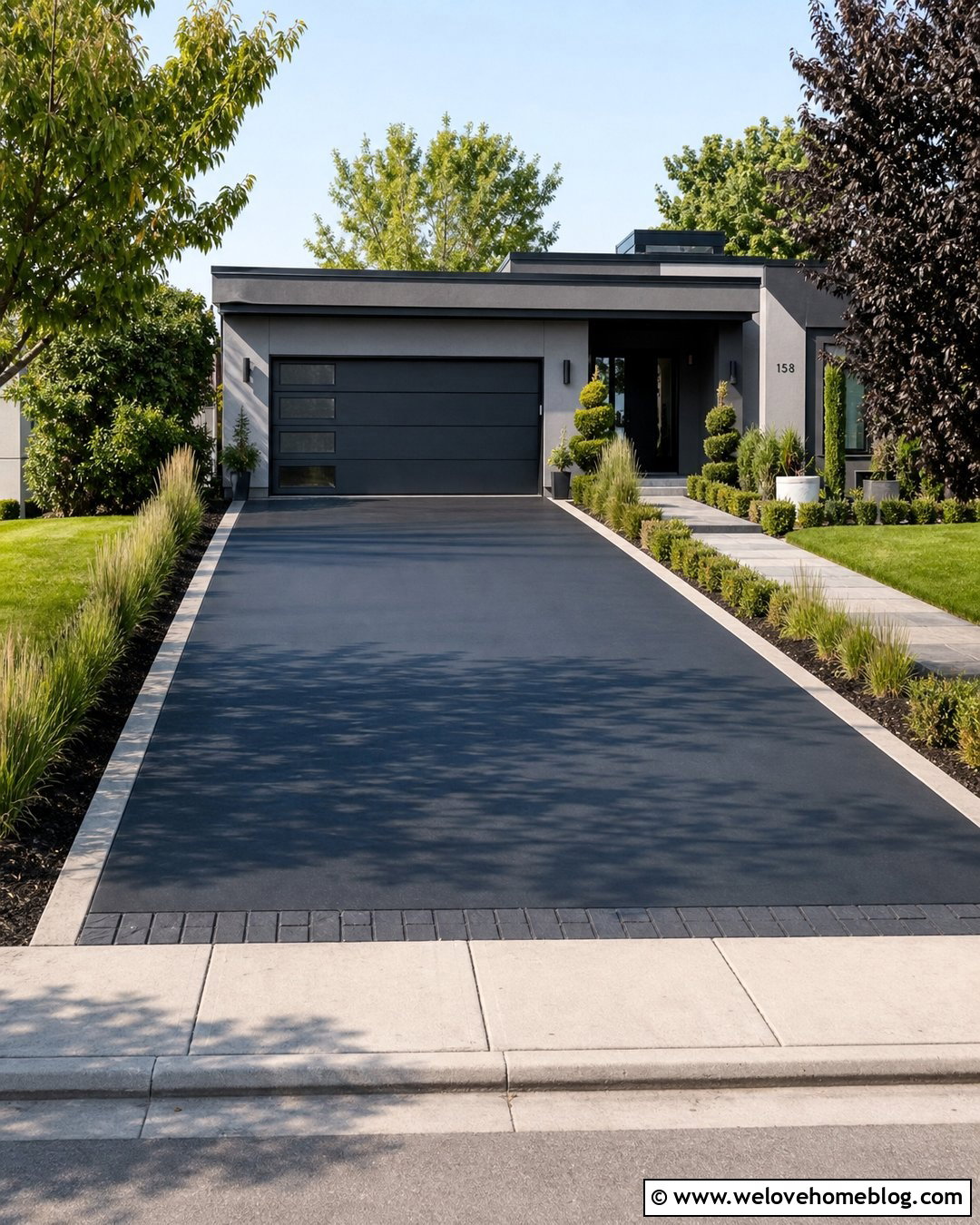
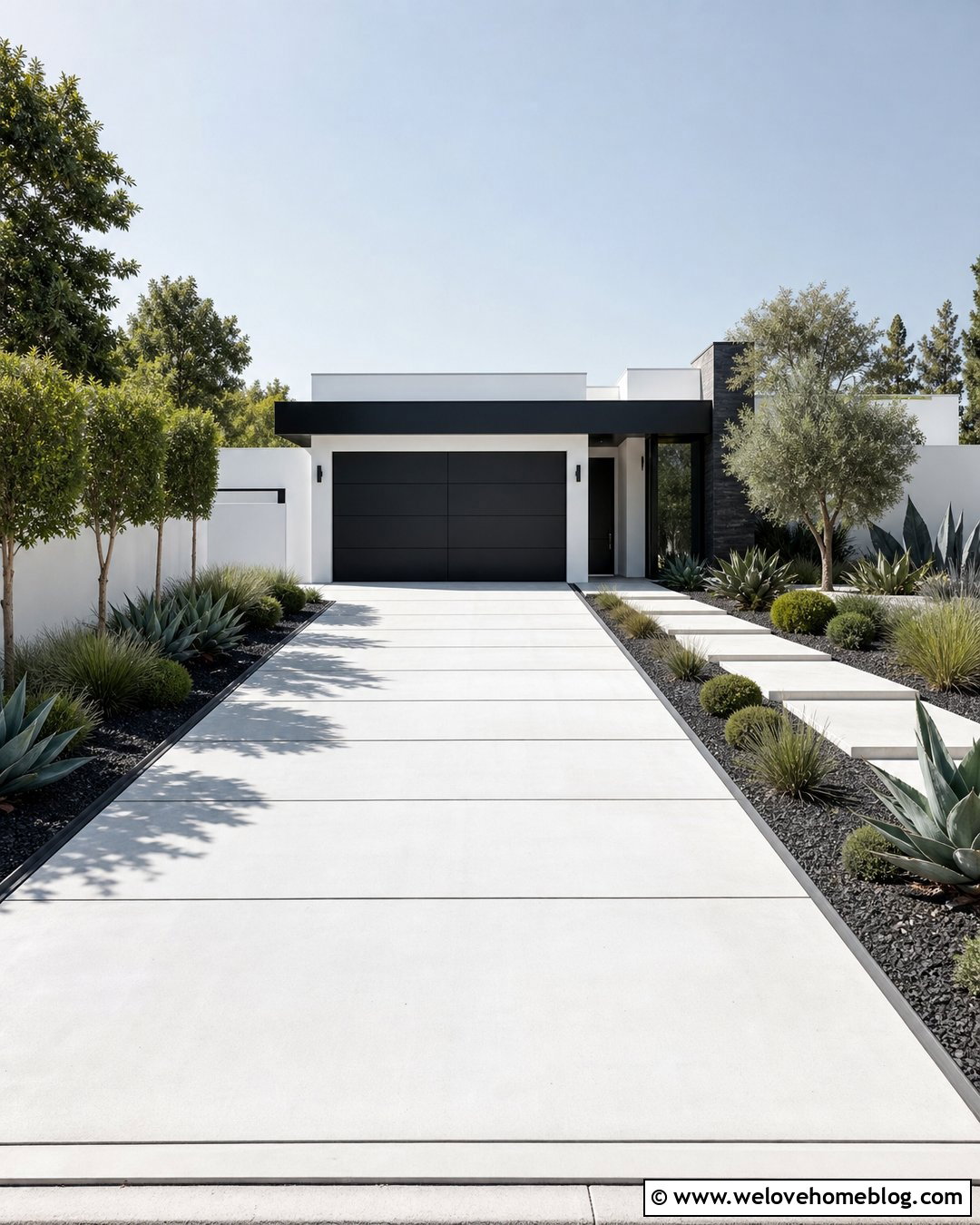
Smooth black concrete creates a crisp entrance that works especially well with contemporary architecture. Use integral black pigment throughout the concrete rather than relying only on a surface coating. This helps the color look more consistent as the driveway ages. A straight layout with broad rectangular slabs gives the surface a calm, organized appearance. Thin saw-cut joints can create definition without making the design feel busy. Frame the driveway with pale gravel beds, clipped ornamental grasses, and a simple concrete walkway. Against a white or light-gray modern house, the dark surface becomes a strong architectural feature. Choose a matte or lightly textured finish instead of a highly polished surface, which could become slippery when wet and may show dust more easily.
2. Broom Finish Black Concrete Driveway
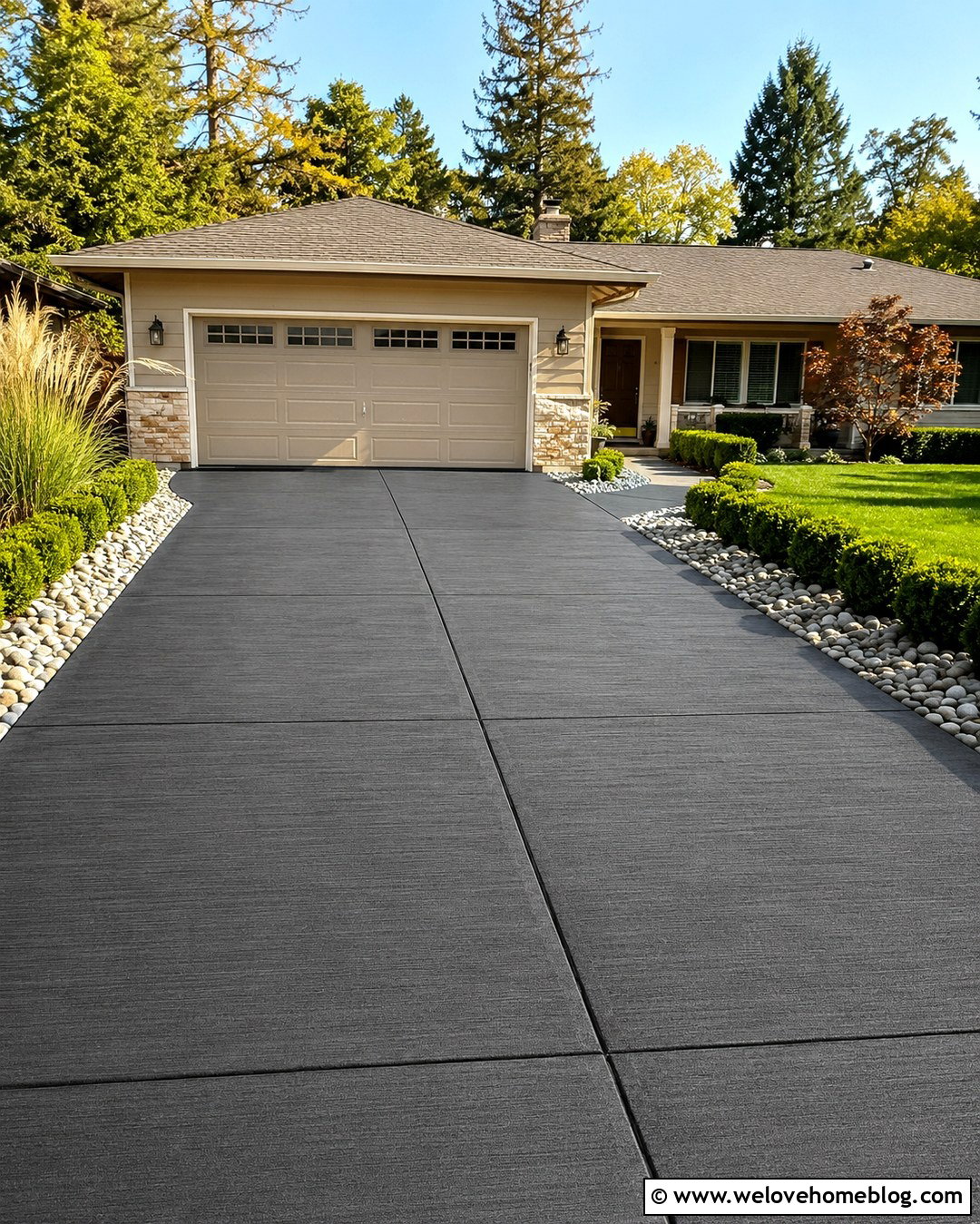
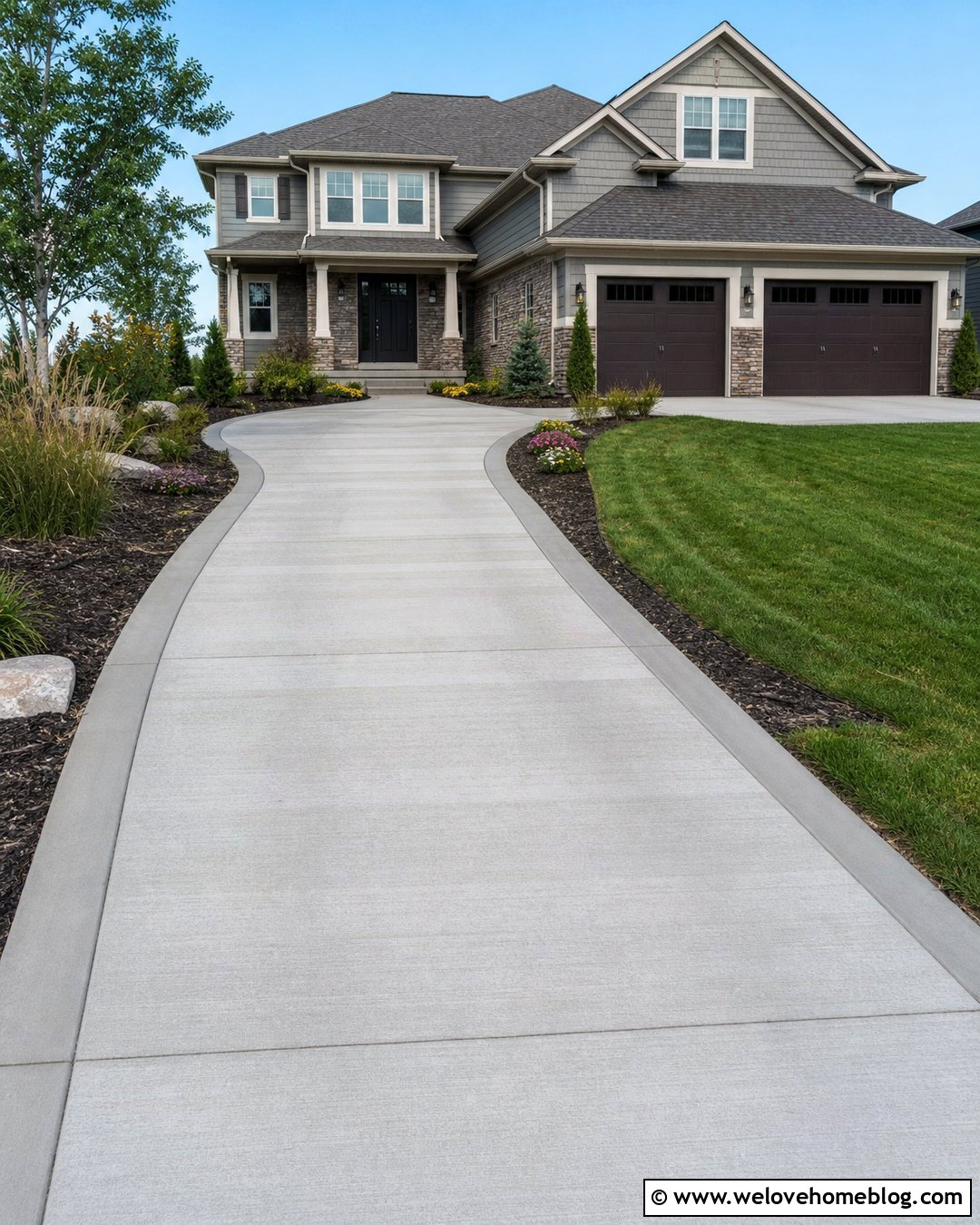
A broom finish gives black concrete a practical texture while preserving its clean, uncomplicated appearance. The fine parallel lines provide more grip than a completely smooth finish, making this treatment useful for sloped entrances and rainy regions. Keep the layout straight and divide the surface into evenly sized rectangular panels. A matching black concrete apron can create a seamless transition between the street and garage. Soft landscaping prevents the dark surface from looking too severe. Consider low boxwood hedges, feather reed grass, and a narrow bed of light river rock along both sides. This complete look suits ranch houses, split-level homes, and simple suburban properties. Ask for a test panel because broom direction and depth can noticeably change how the finished color reflects sunlight.
3. Black Concrete Driveway With White Border
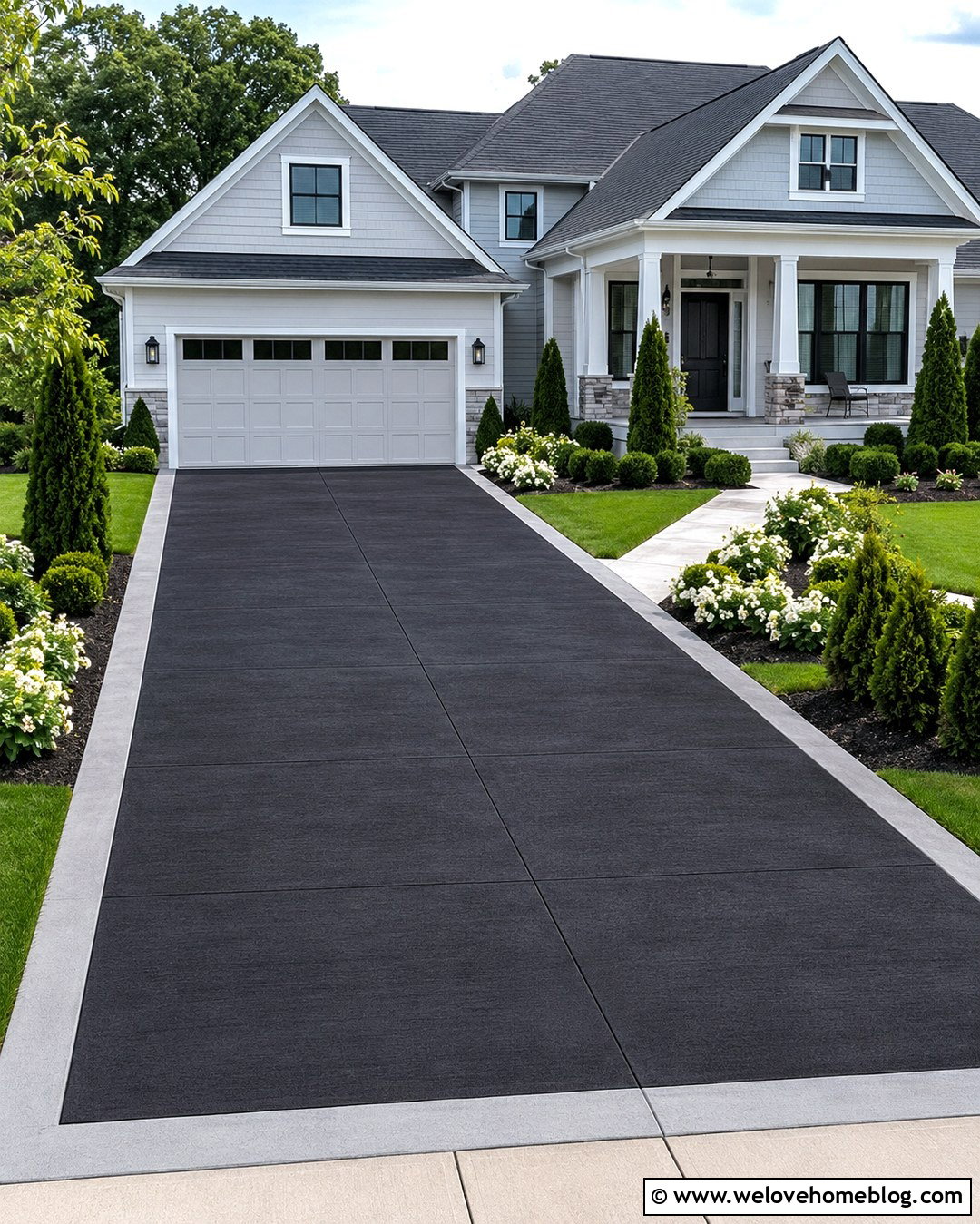
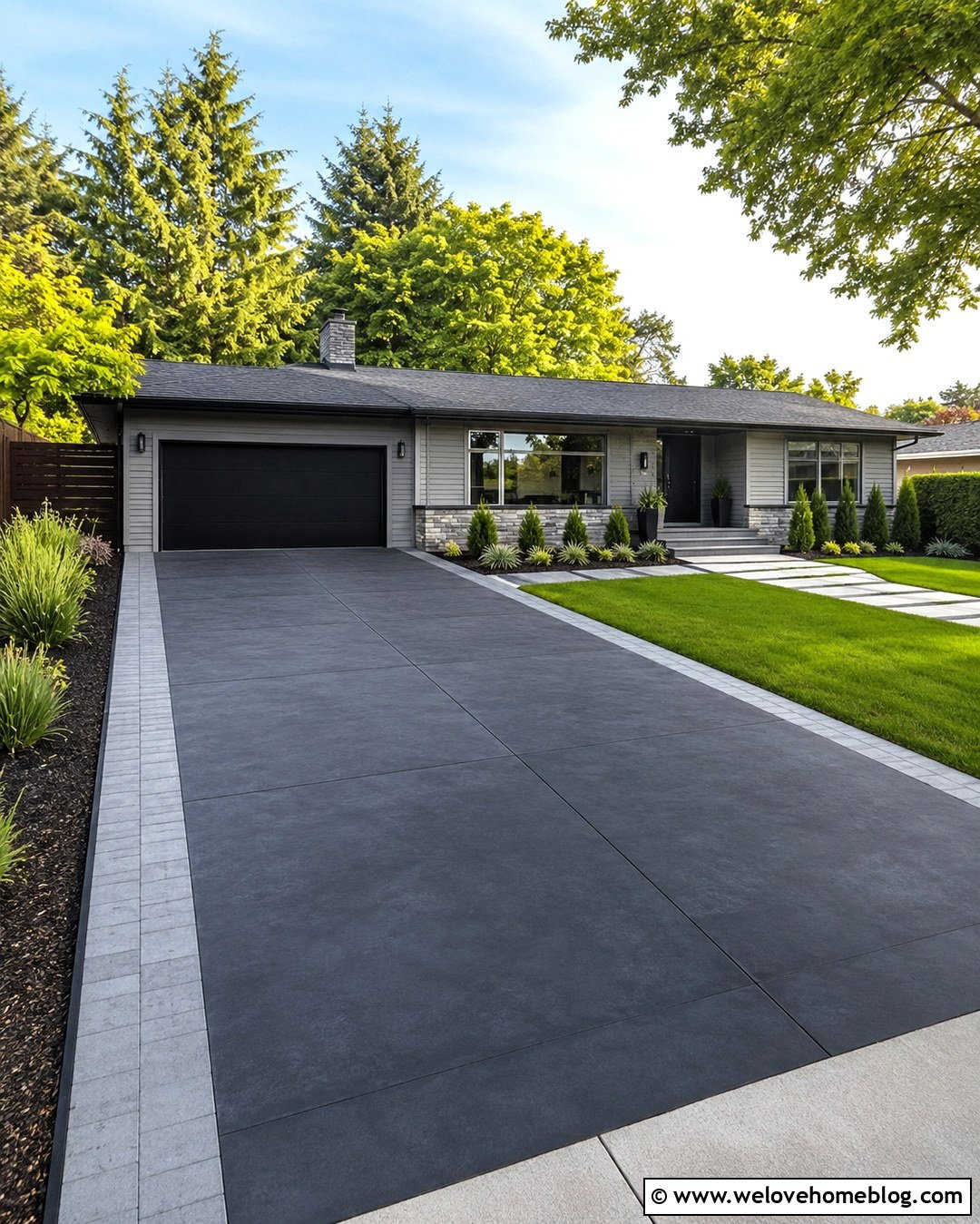
Would you like the driveway to feel bold without overwhelming the front yard? A white or pale-gray concrete border can frame black concrete and provide a controlled contrast. Use a dark broom-finished center with a 10- to 16-inch light concrete band around the perimeter. The border clearly separates the driveway from the lawn and can connect visually with white siding, trim, columns, or garage doors. Large rectangular control-joint panels keep the center modern and balanced. Complete the design with structured evergreen shrubs, white flowering plants, and a matching light walkway leading toward the porch. This combination works beautifully with contemporary and transitional houses. Keep the lighter border slightly textured so it remains practical, and select compatible sealers to avoid noticeably different sheen levels between the two colors.
4. Black Concrete Driveway With Brick Border
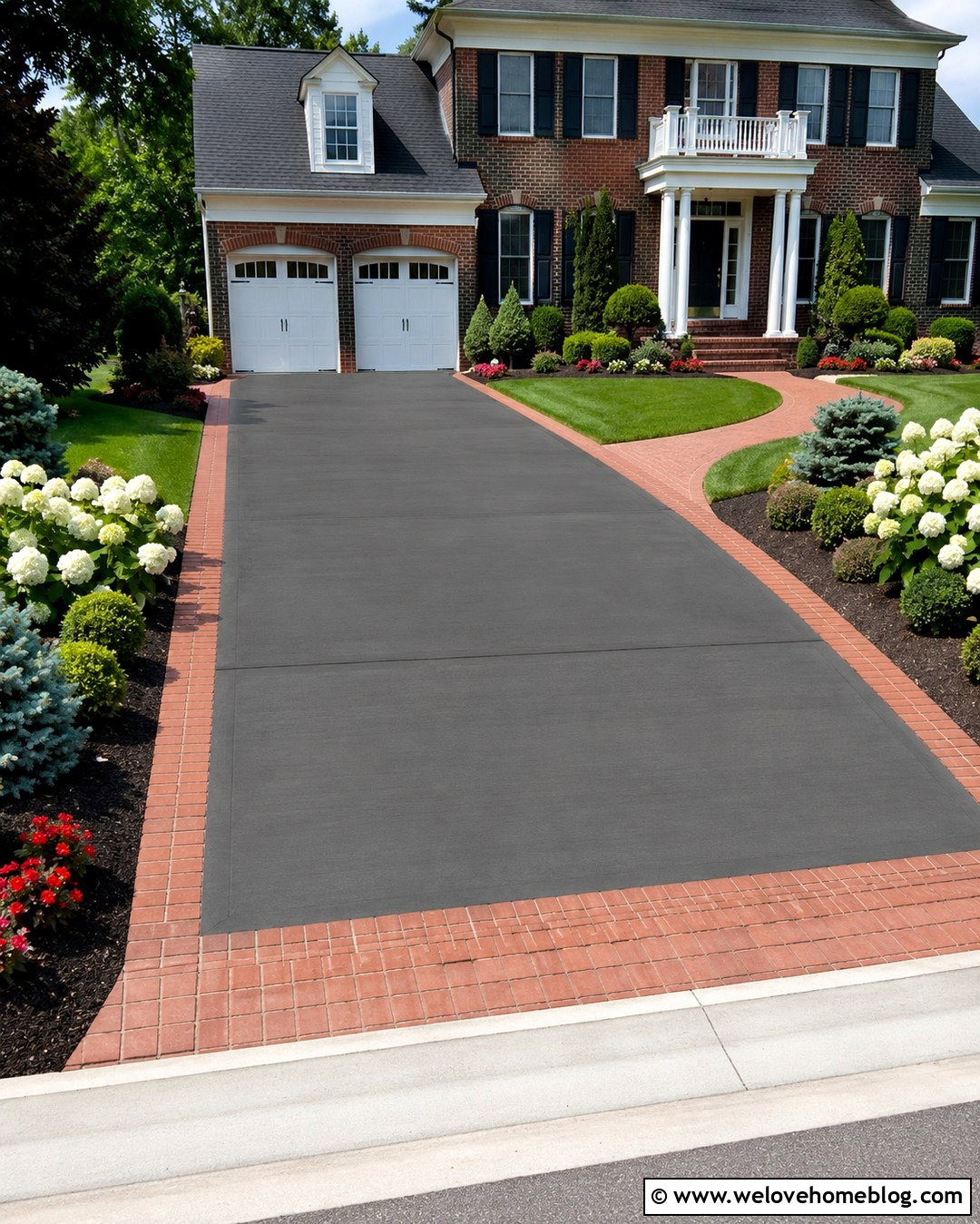
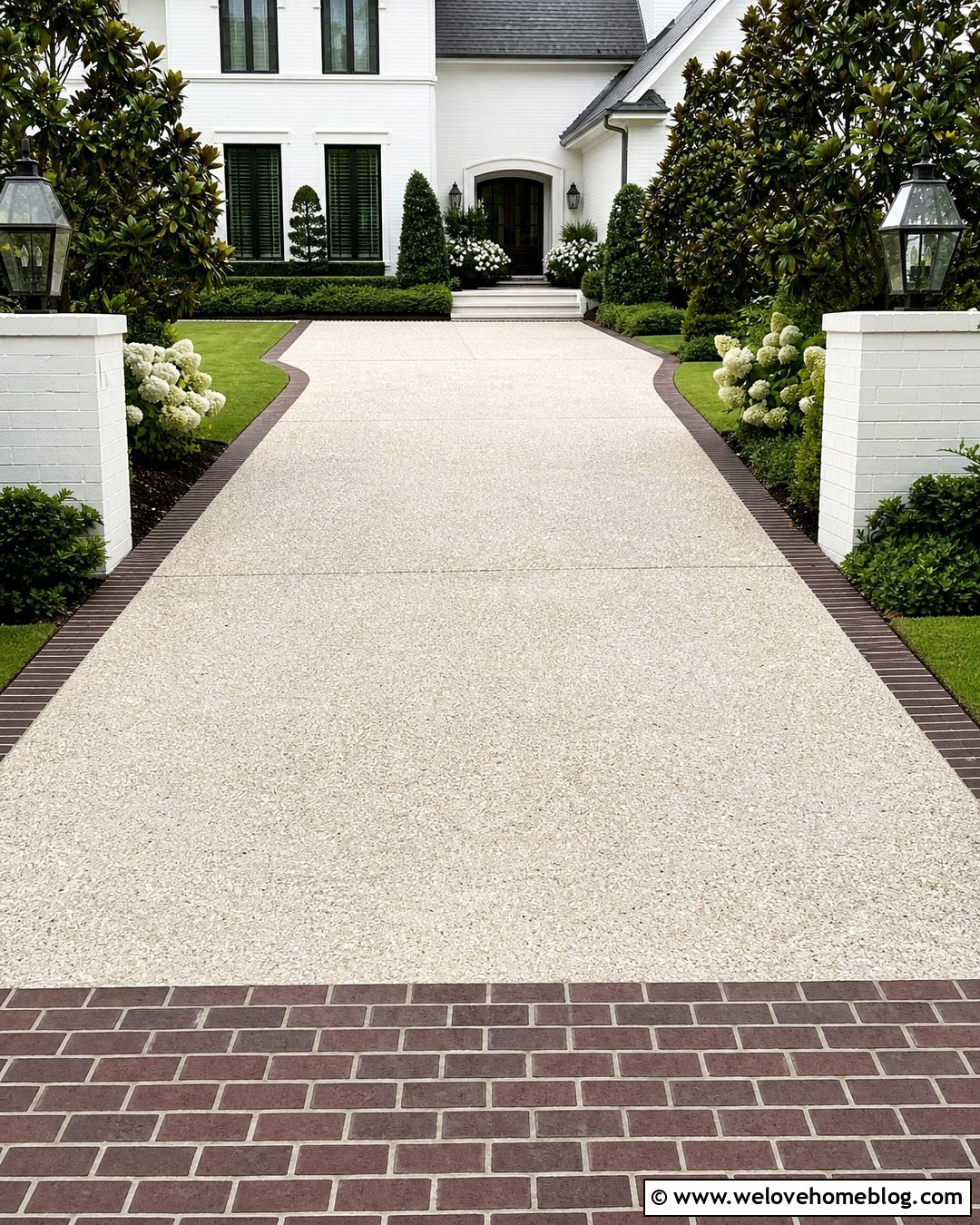
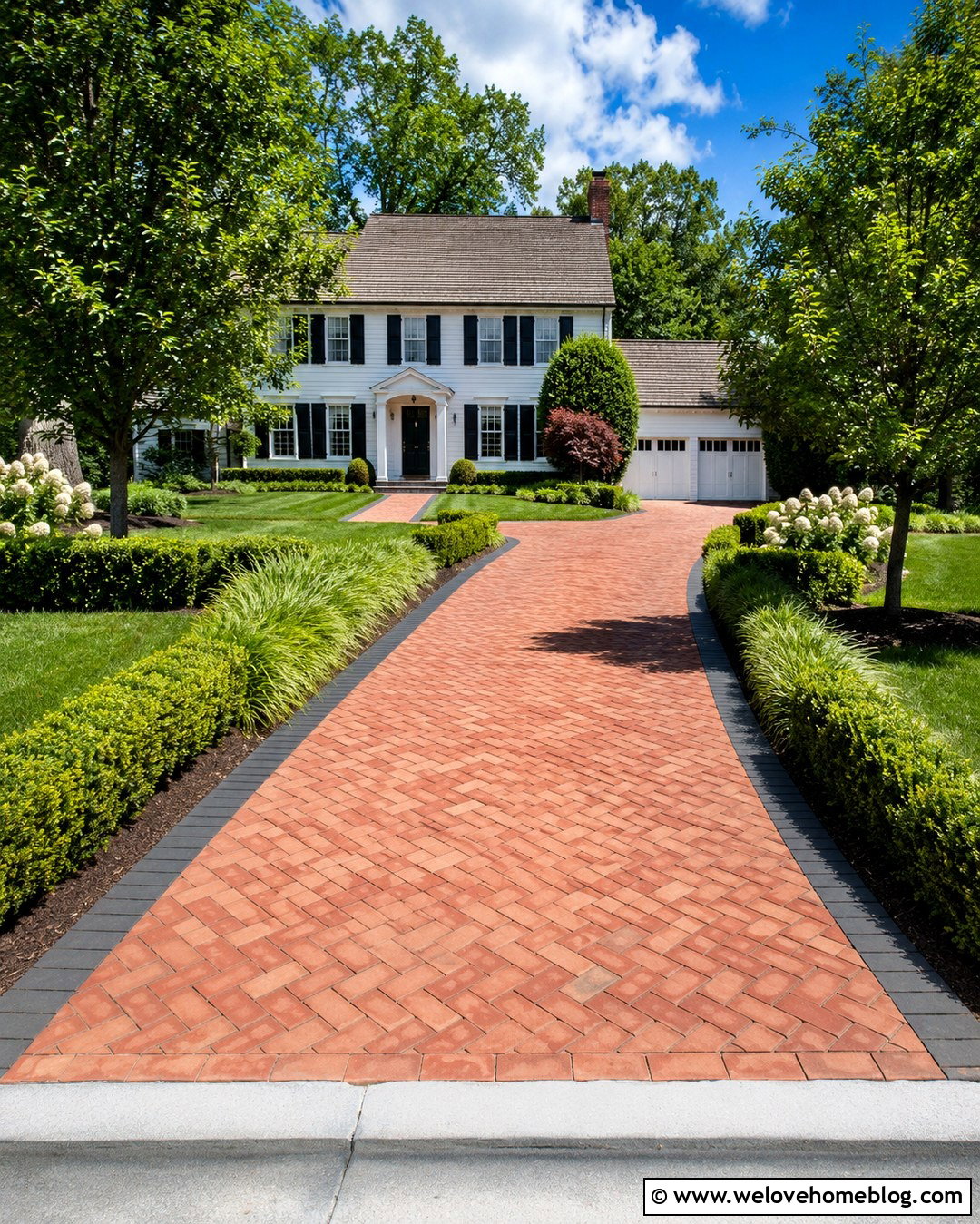
Warm clay brick softens the cool appearance of a black concrete driveway. Install a narrow red or brown brick border along both sides, then repeat the same brick across the garage apron or walkway entrance. A charcoal broom-finished concrete field keeps the main parking surface simple and durable, while the brick adds traditional character. This complete design is particularly effective beside colonial, Craftsman, and red-brick homes. Curved planting beds filled with hydrangeas, dwarf evergreens, and seasonal flowers can connect the hardscape to the yard. Choose bricks rated for vehicular use and place them over a properly prepared base. The concrete and brick should also meet at a clean, stable transition. Matching the border to an existing chimney or facade detail creates a coordinated appearance rather than an unrelated accent.
5. Black Concrete Driveway With Cobblestone Edging
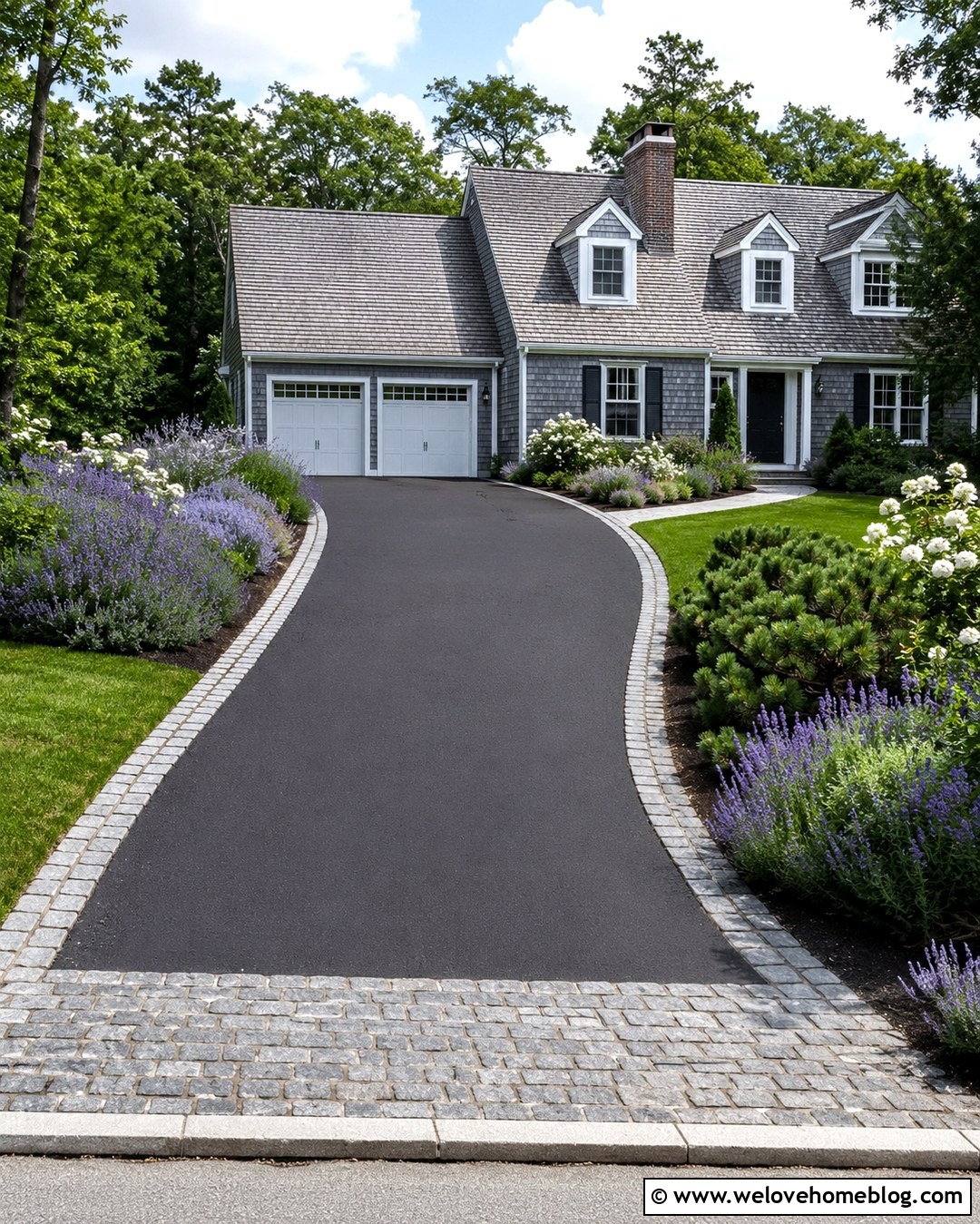
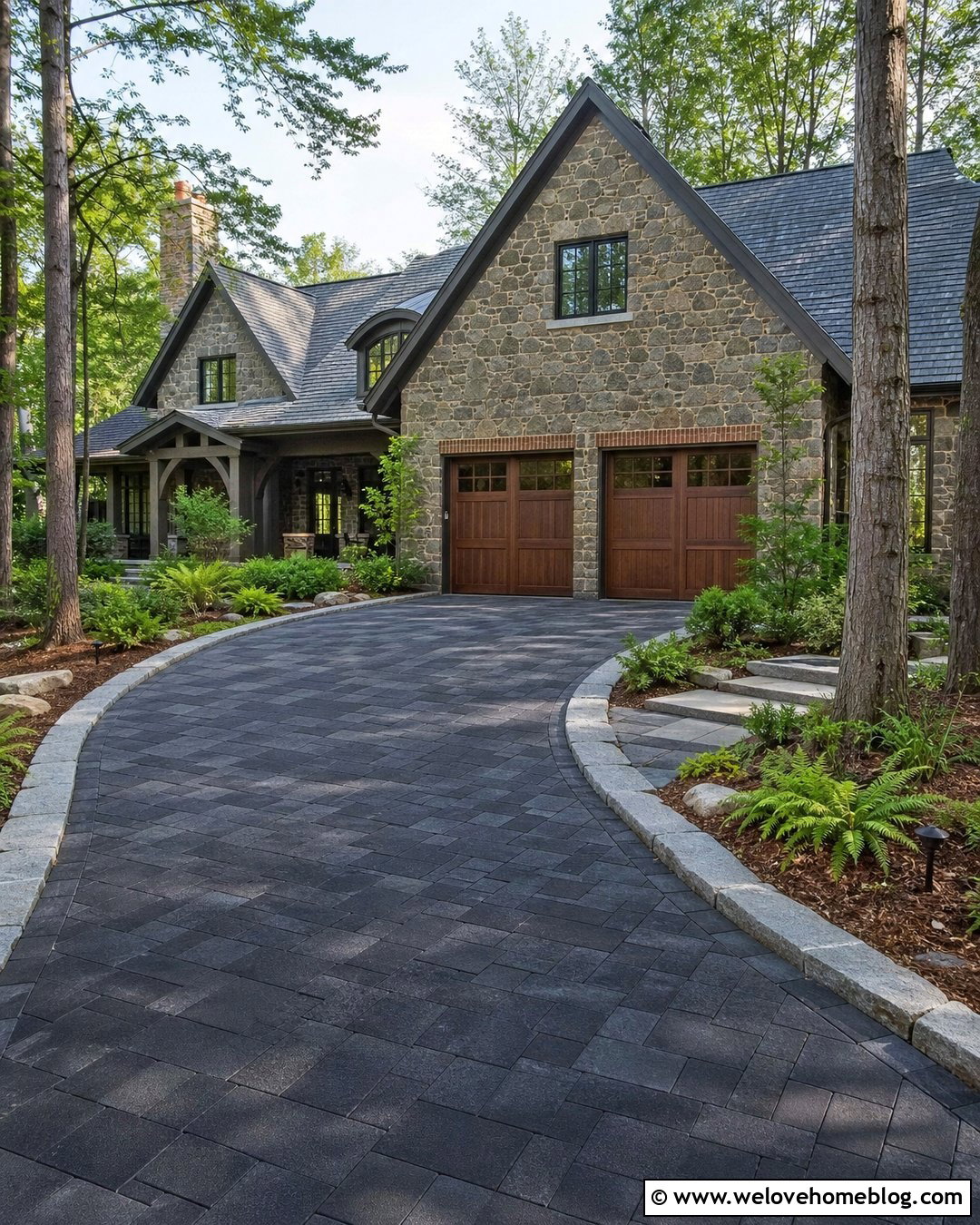
Cobblestone edging brings texture and natural color to a deep black concrete surface. A straight or gently curved driveway can be poured in charcoal concrete, then framed with gray granite cobbles laid in a single or double row. The irregular stone faces create an attractive transition from the dark slab to surrounding greenery. This pairing suits stone cottages, Cape Cod houses, and refined traditional homes. Add informal beds with lavender, catmint, dwarf pine, and white roses to balance the strong pavement color. A cobblestone entrance apron can make the design feel even more complete, but the stones must sit level enough for comfortable vehicle movement. Select a lightly textured concrete finish so the surface does not compete with the rugged edge. The result feels established, durable, and carefully integrated.
6. Black Concrete Driveway With Grass Strips
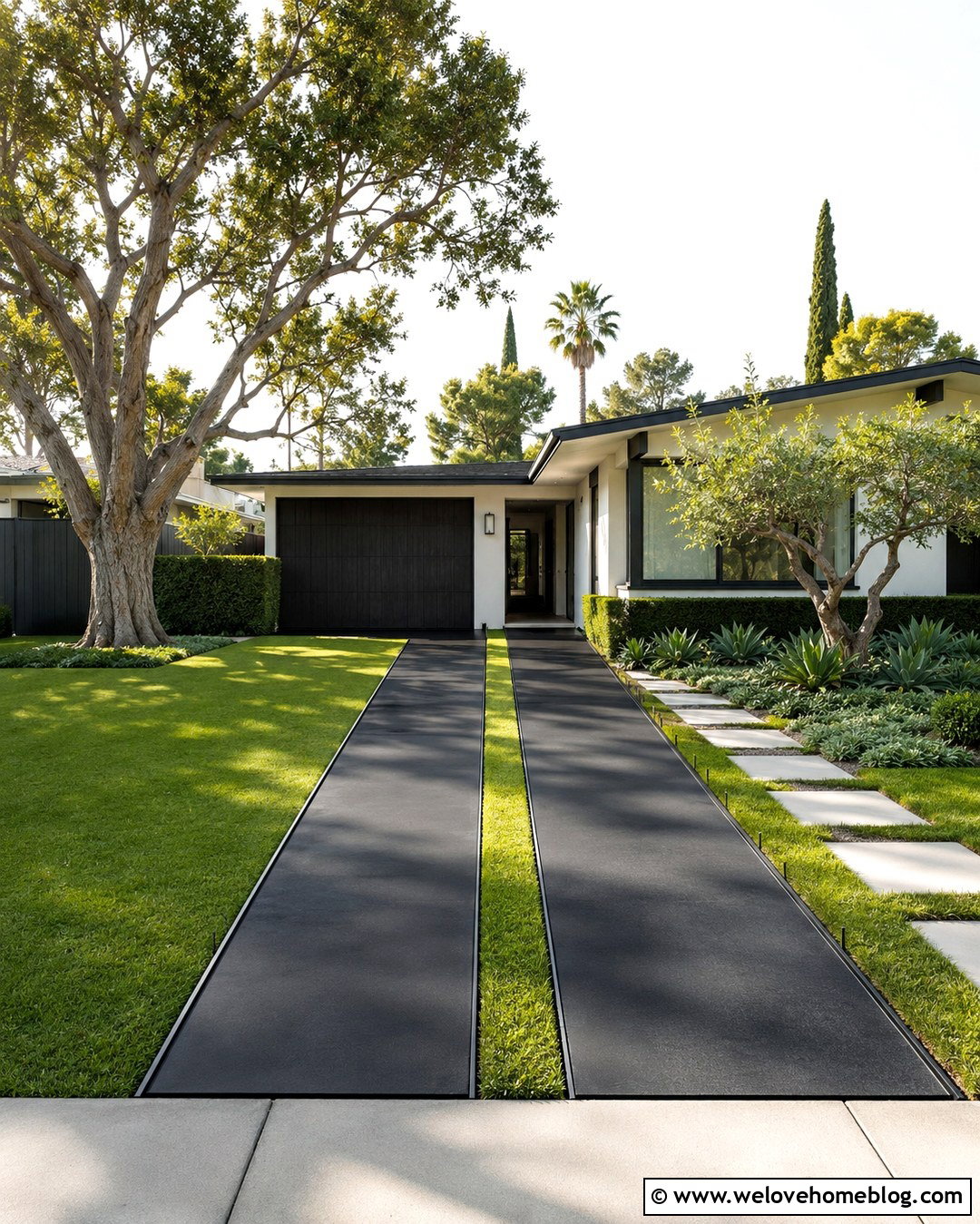
Grass strips can break a wide black concrete driveway into smaller, visually lighter sections. Pour two dark concrete wheel tracks with a narrow planted strip through the center, or create large concrete panels separated by slim green joints. This approach works best where the planting can receive enough sun, water, and routine maintenance. Use durable turf suited to local conditions, or replace traditional grass with a low-growing ground cover approved for occasional traffic. Simple steel edging can keep the vegetation neatly separated from the concrete. Pair the driveway with a minimalist home, open lawn, and a few sculptural trees. The green lines cool the look of the dark surface and connect it to the landscape. Ensure the planted gaps do not interfere with drainage, tires, walking routes, or snow removal.
7. Stamped Black Slate Concrete Driveway
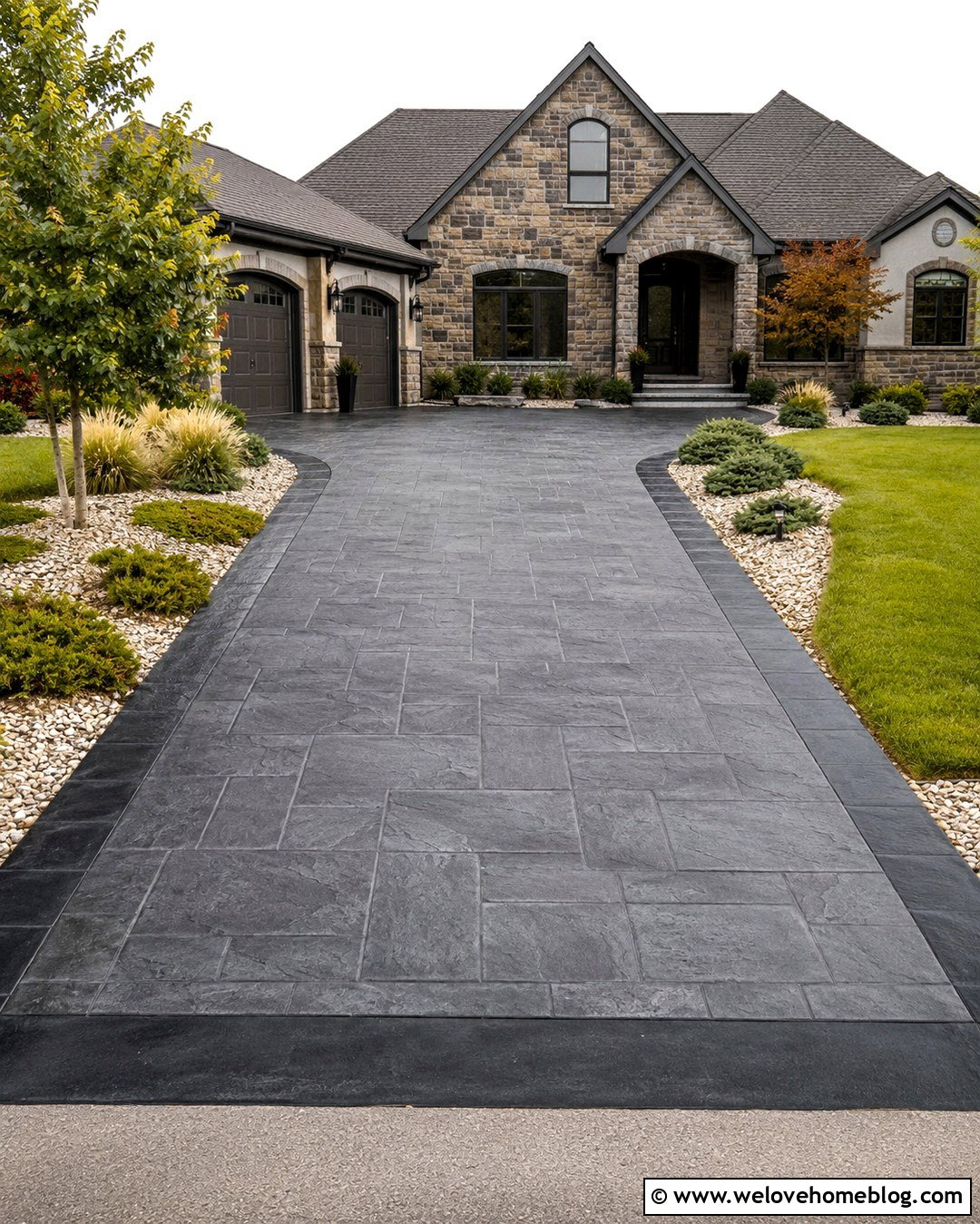
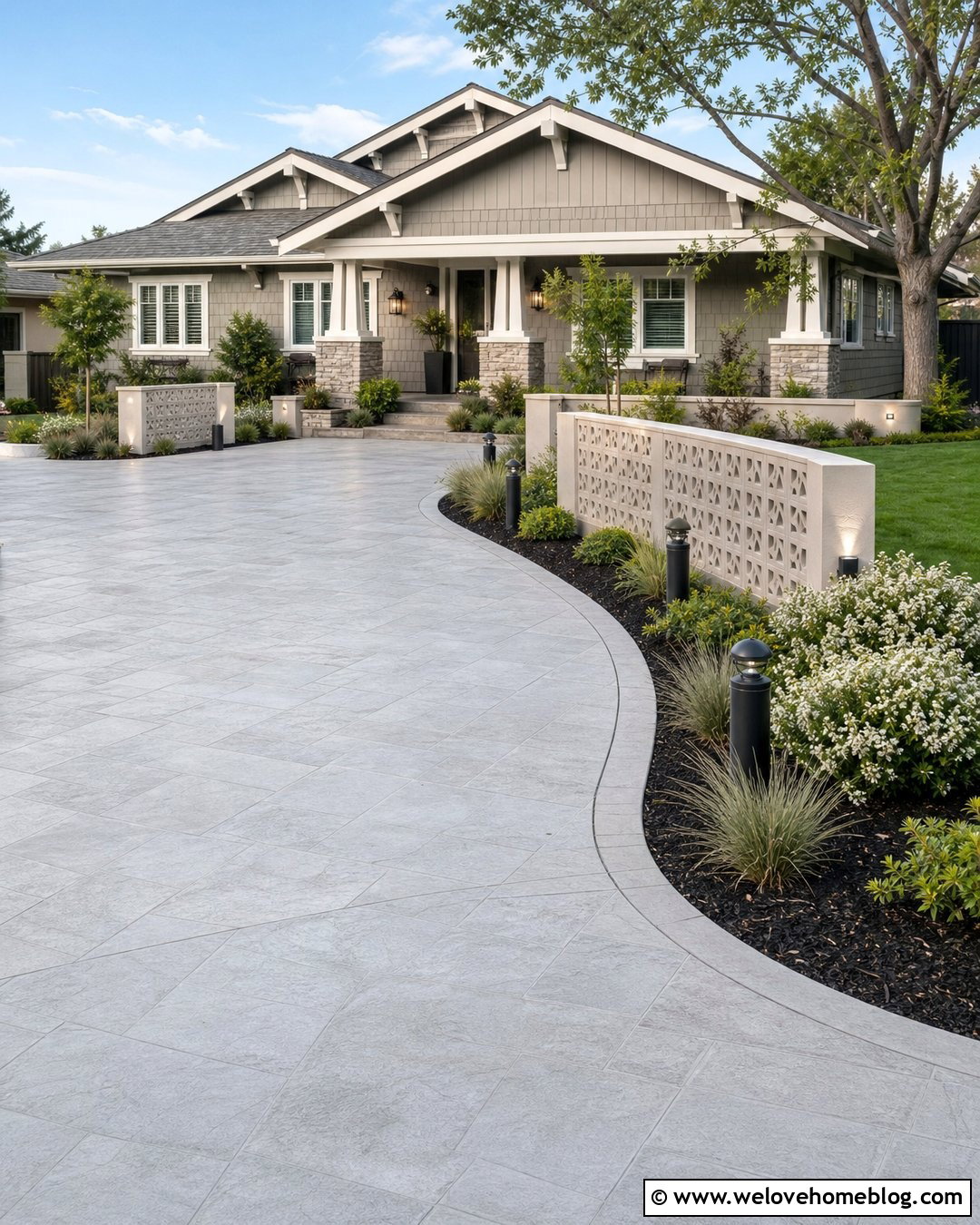
Stamped black concrete can reproduce the layered appearance of slate while maintaining a continuous driveway surface. Choose a charcoal integral color with subtle dark-gray variation rather than one flat black tone. A large ashlar slate pattern creates natural-looking rectangular shapes that complement stone facades and transitional homes. Frame the driveway with a smooth black concrete border to contain the busier stamped field. Low junipers, ornamental grasses, and pale landscape gravel can emphasize the surface without hiding it. Use a slip-resistant sealer designed for exterior concrete, especially if the stamped texture has deeper impressions. The layout should remain broad enough for vehicles to turn without repeatedly crossing the border. A matching stamped walkway or porch landing can carry the material toward the house and make the entire front entrance feel cohesive.
8. Black Exposed Aggregate Concrete Driveway
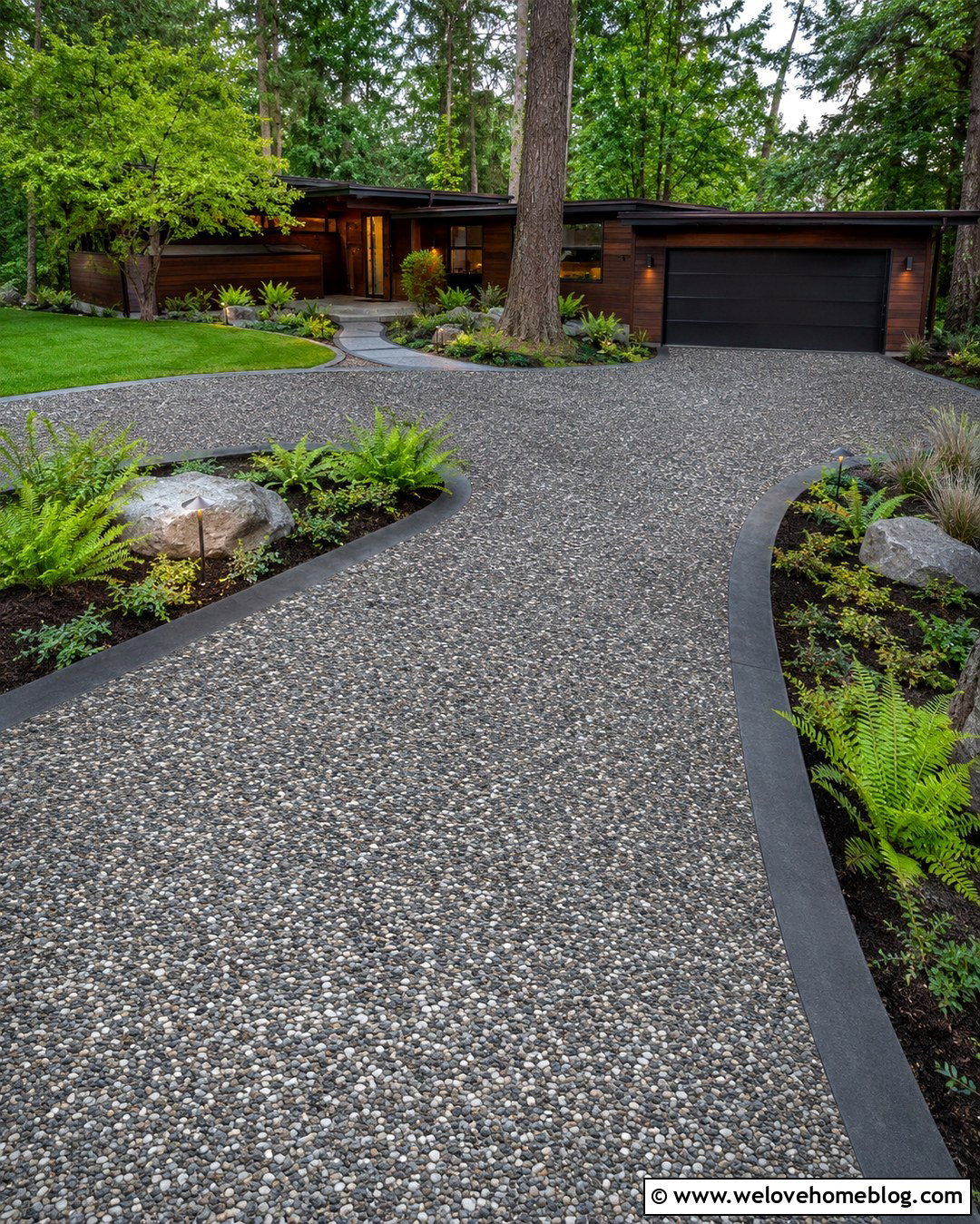
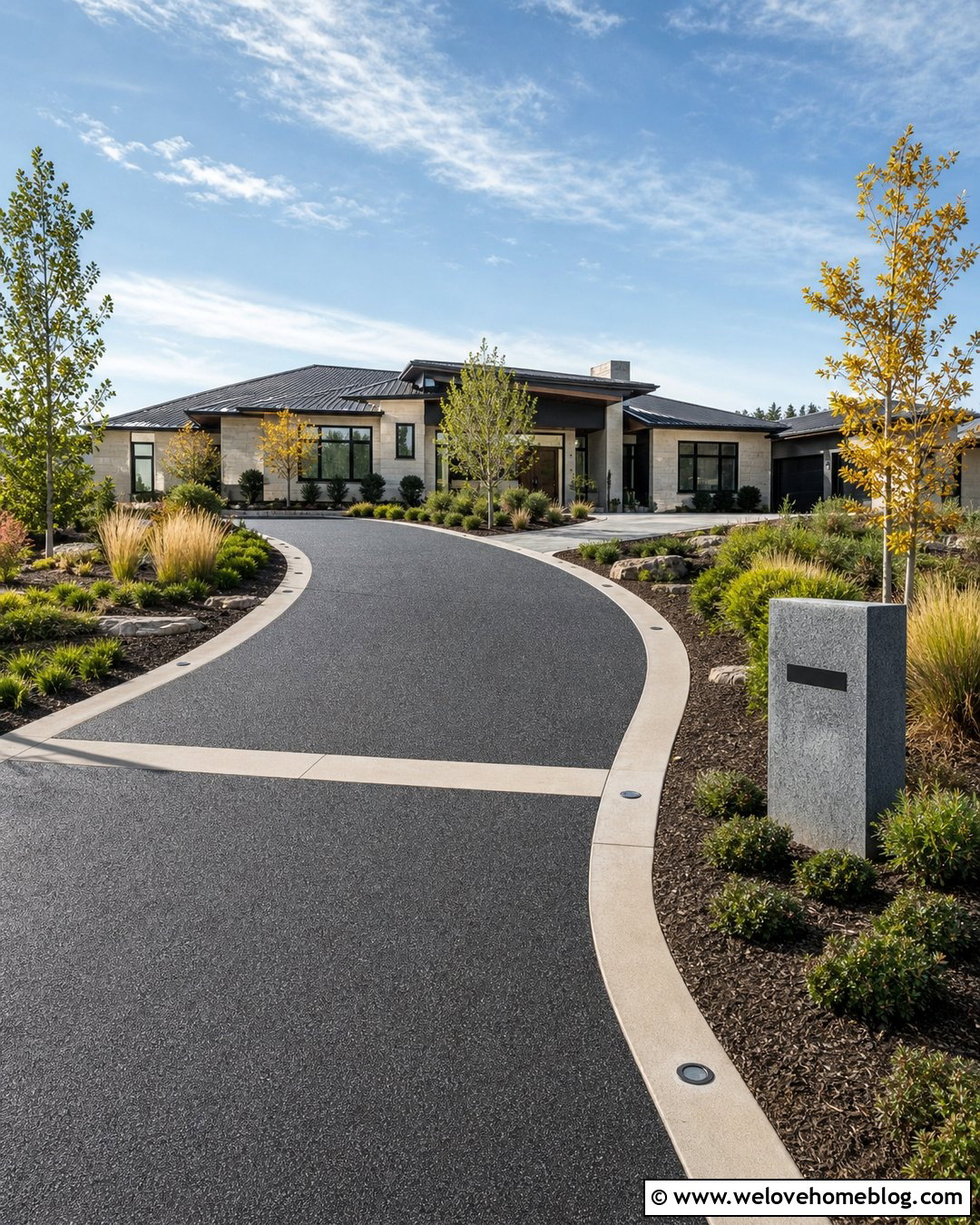
Exposed aggregate gives dark concrete a rich, pebbled surface that can disguise minor dirt and everyday marks. Black or charcoal cement paste combined with gray, white, and muted brown stone creates more visual depth than a uniformly colored slab. Use the material across a gently curved driveway, then add smooth charcoal concrete borders for a clean frame. The contrast between rough aggregate and restrained edging makes the entrance feel custom without adding an elaborate pattern. This look pairs naturally with mid-century homes, wooded properties, and houses featuring stone veneer. Surround the driveway with ferns, native grasses, ground-cover plants, and large landscape rocks. Review an actual aggregate sample before installation because local stone color will influence the final appearance. Consistent exposure is essential for an even, professional-looking surface.
9. Geometric Black Concrete Driveway
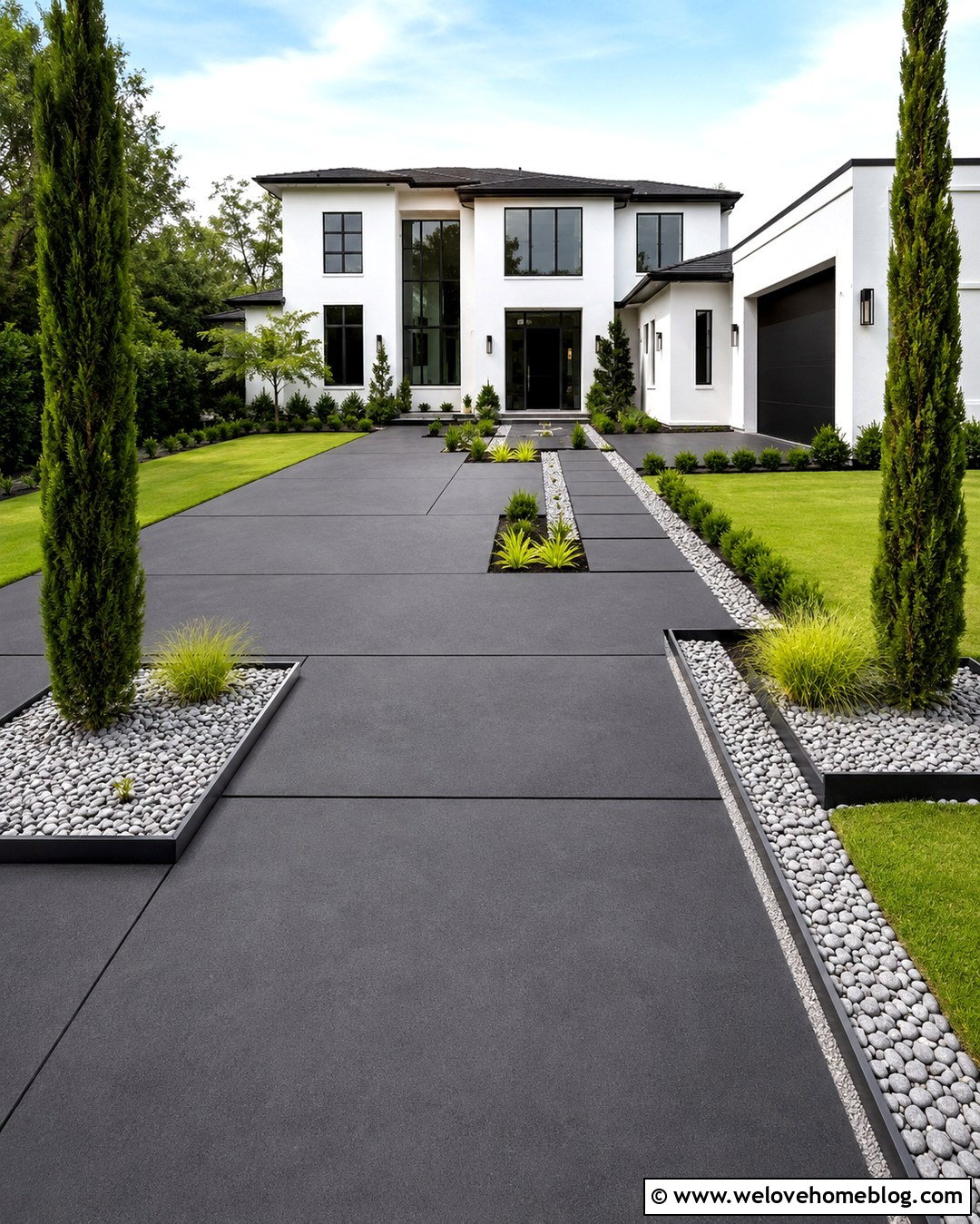
Clean geometric joints turn black concrete into a prominent part of a modern home’s architecture. Divide a straight driveway into oversized squares, offset rectangles, or long linear panels using carefully planned saw cuts. The joint layout should align with the garage doors, walkway, and major facade lines whenever possible. Integral charcoal-black concrete with a matte sand finish keeps the surface refined rather than glossy. Narrow bands of pale gravel between selected panels can add contrast, although vehicle paths should remain stable and easy to maintain. Complete the look with rectangular planting beds, sculptural evergreens, and simple metal edging. This design is best suited to contemporary and mid-century houses with strong horizontal or vertical forms. Proper joint placement remains functional, so decorative geometry should be planned together with required control joints.
10. Black Concrete Driveway With Paver Grid
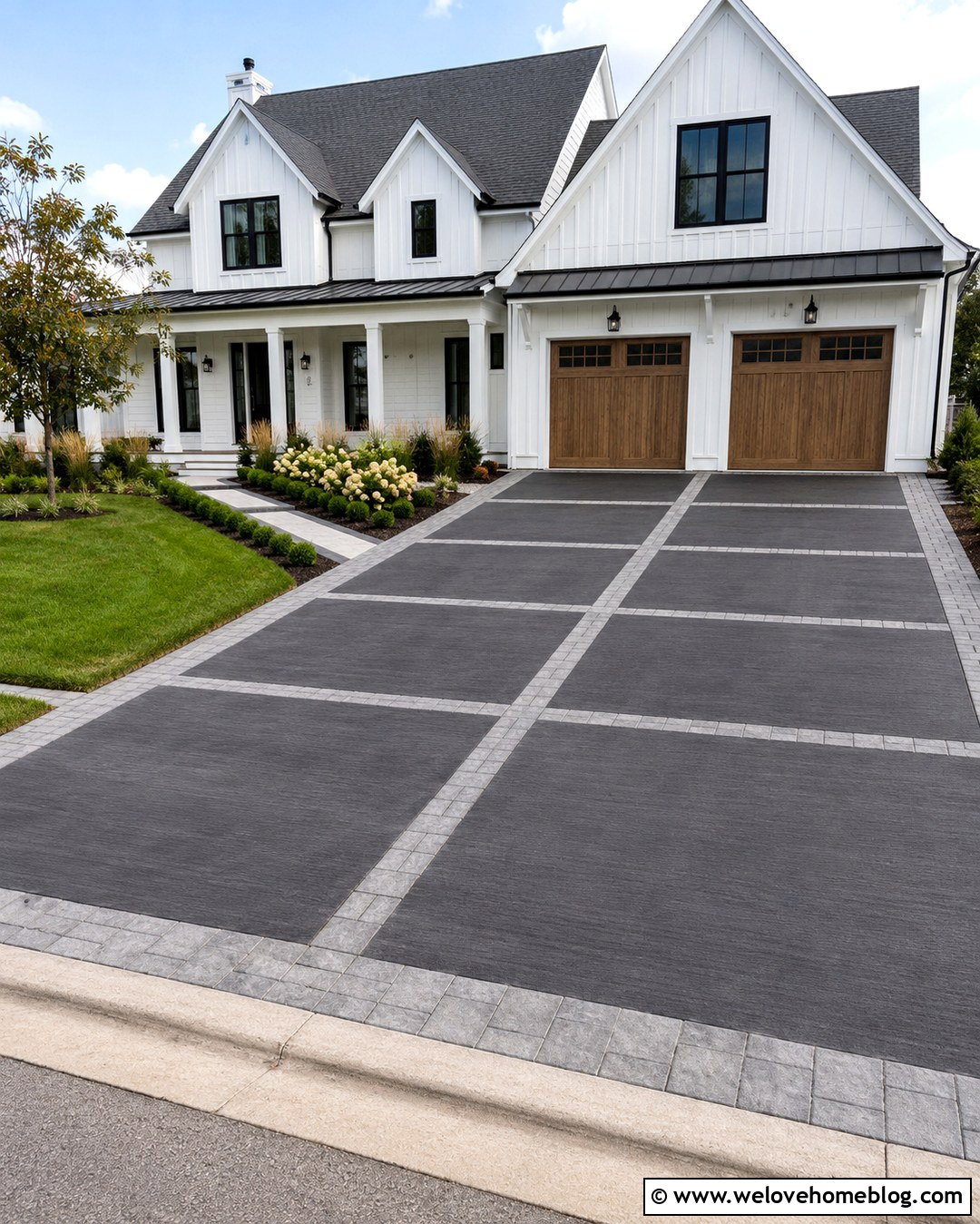
A paver grid adds rhythm to a large black concrete driveway and helps reduce the visual weight of a broad dark surface. Pour charcoal concrete in generous rectangular fields, then separate them with narrow rows of light-gray concrete pavers. The paver bands can run across the driveway, outline parking spaces, or form a large-scale grid aligned with the garage. This complete look works well with contemporary farmhouses and transitional homes that combine dark roofs with pale siding. Use matching pavers for the front walkway so the accent appears intentional. Plant compact hydrangeas, upright grasses, and low evergreen mounds beside the driveway. Choose vehicular-rated pavers and secure each band over a stable base. Flush transitions are important because raised edges can interfere with tires, shovels, drainage, and comfortable walking.
11. Curved Black Concrete Driveway
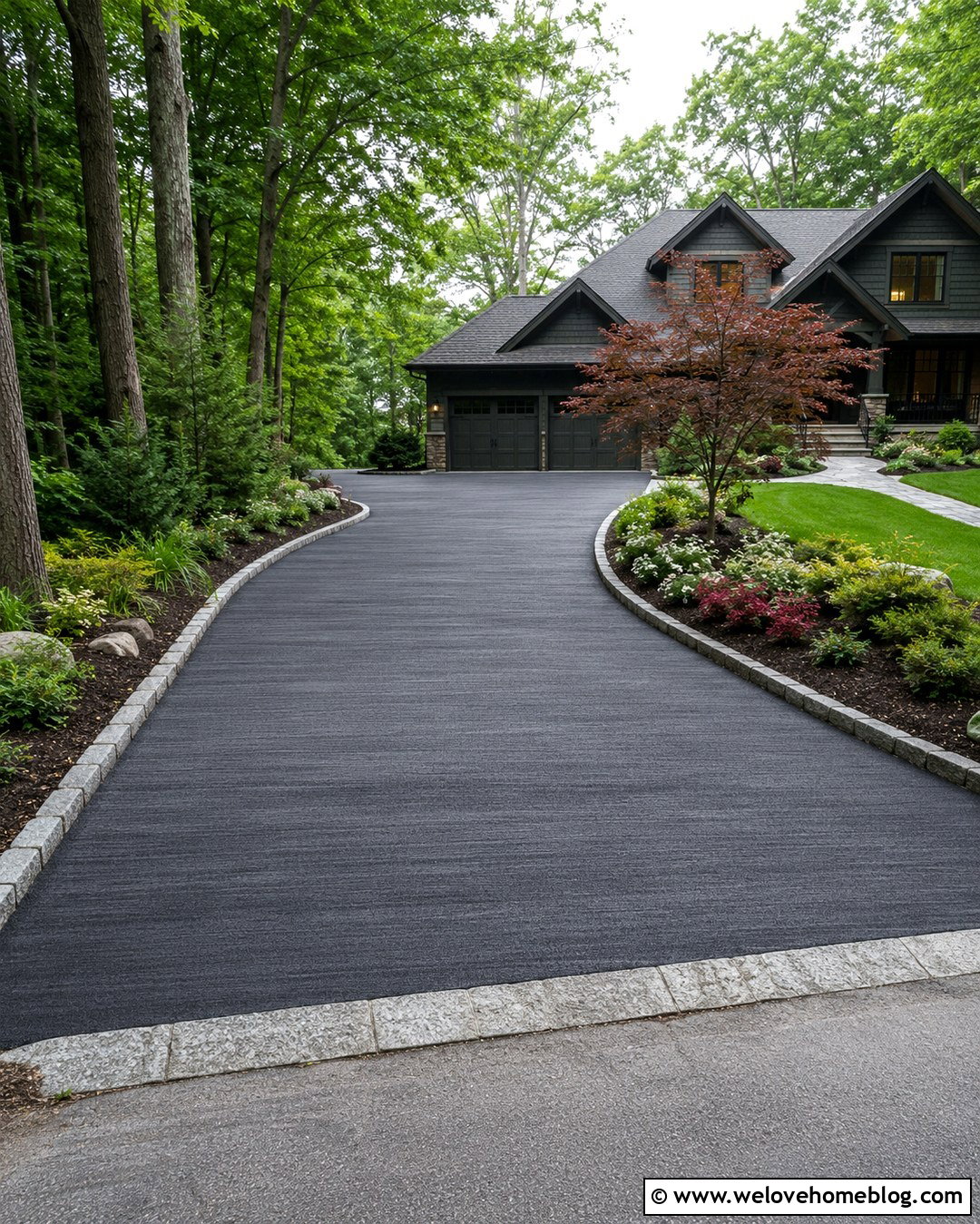
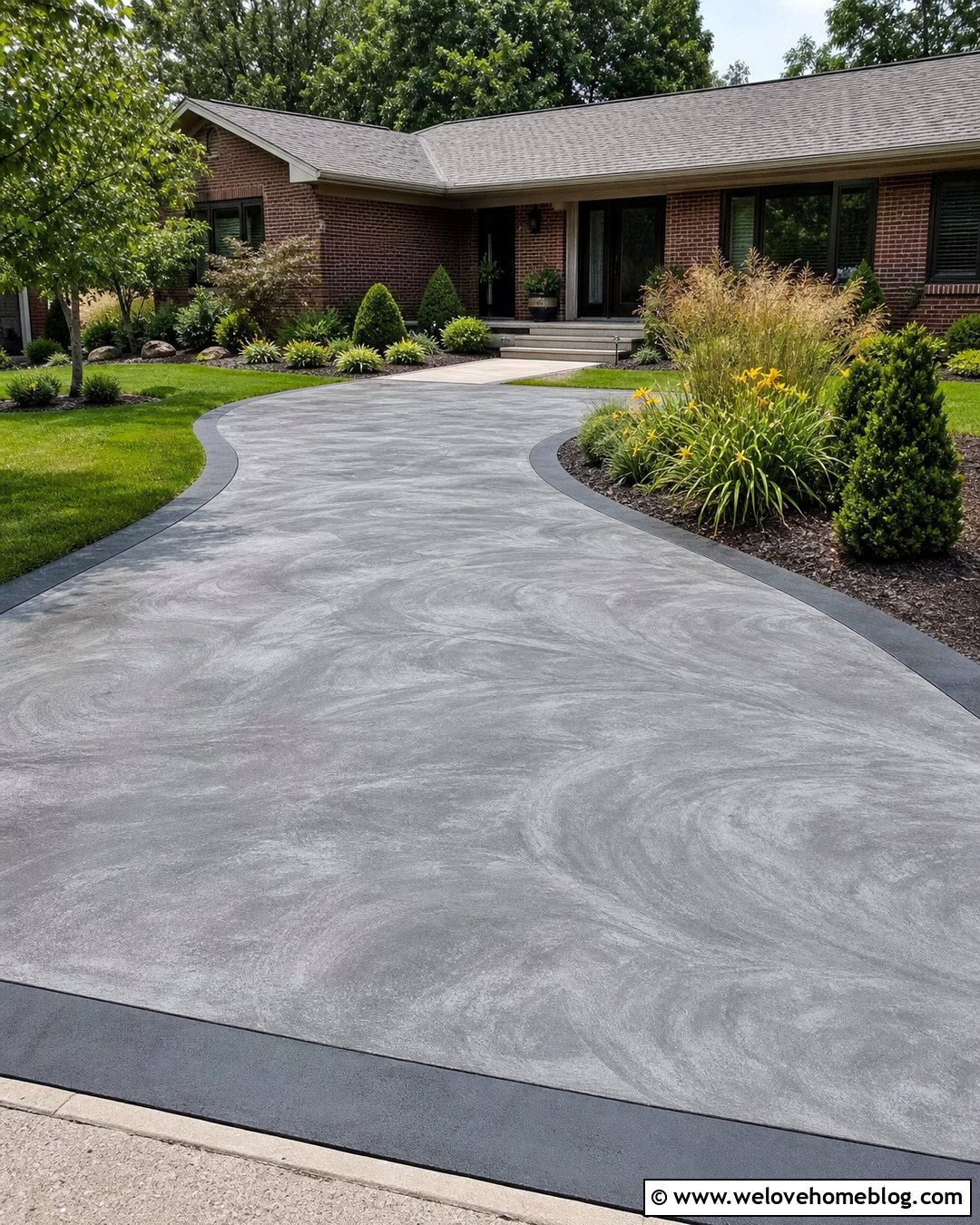
A curved black concrete driveway can guide the eye through a deep front yard while making the approach feel softer than a rigid straight slab. Use a broad, gradual curve that allows vehicles to move naturally without driving over the edges. A charcoal broom finish offers traction and keeps the surface understated. Follow the outer curve with a low granite border, while the inside bend becomes a landscaped focal bed with a small ornamental tree, flowering shrubs, and layered ground covers. This design suits Craftsman houses, wooded ranch homes, and properties where the garage sits at an angle from the street. Repeating the curve in the walkway or planting beds strengthens the overall composition. Drainage and sightlines should be addressed early, particularly where the driveway meets a road or slopes toward the house.
12. Circular Black Concrete Driveway
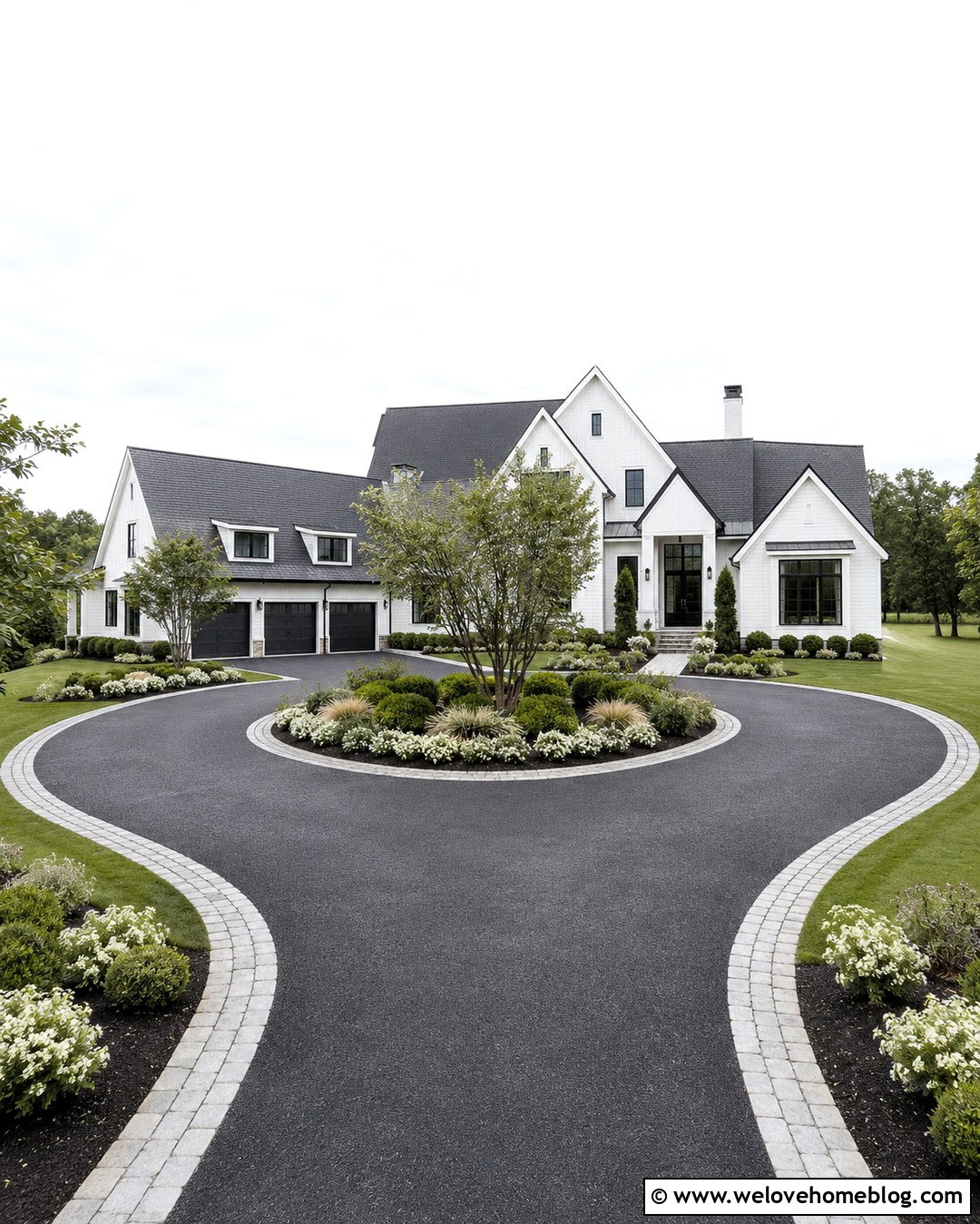
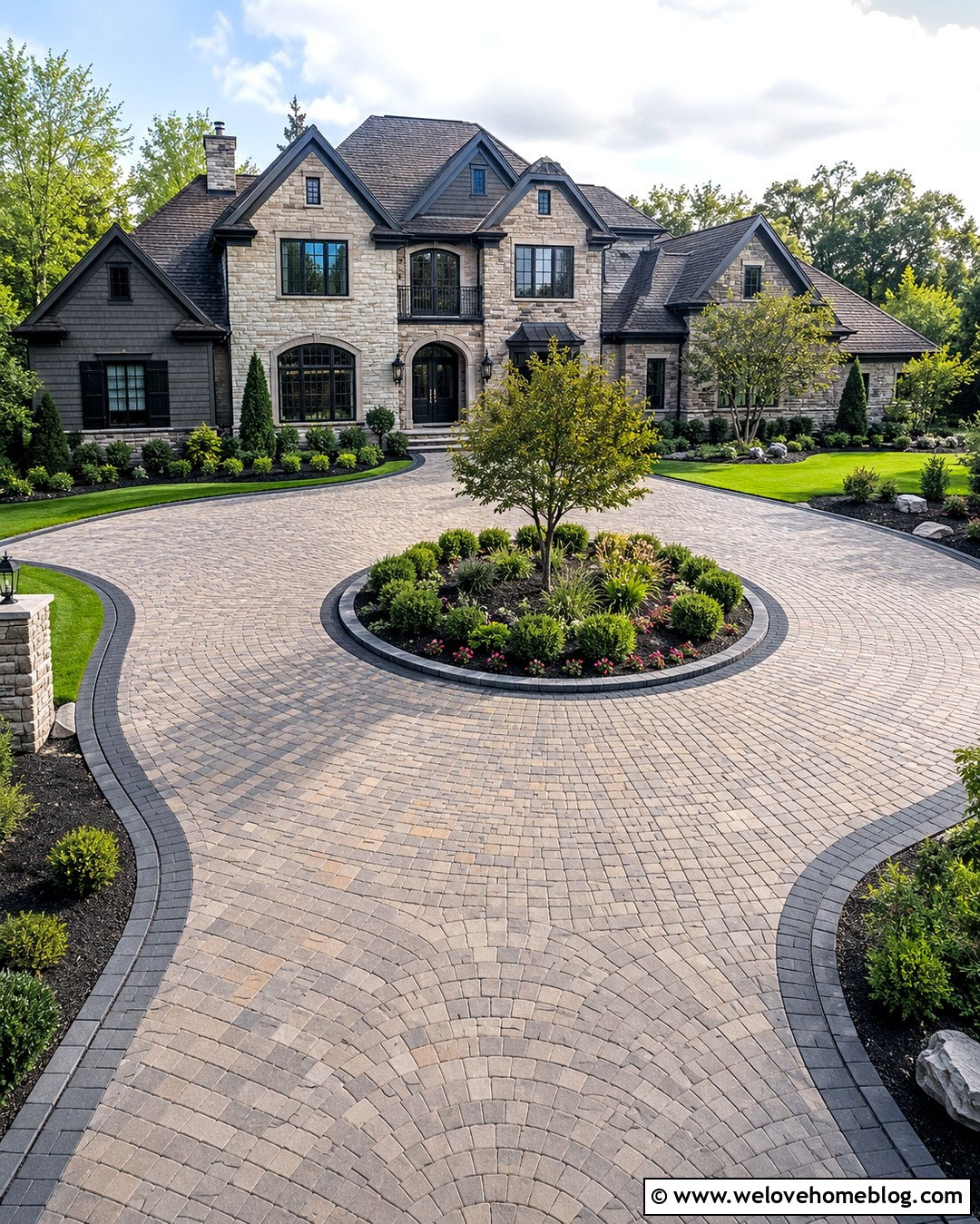
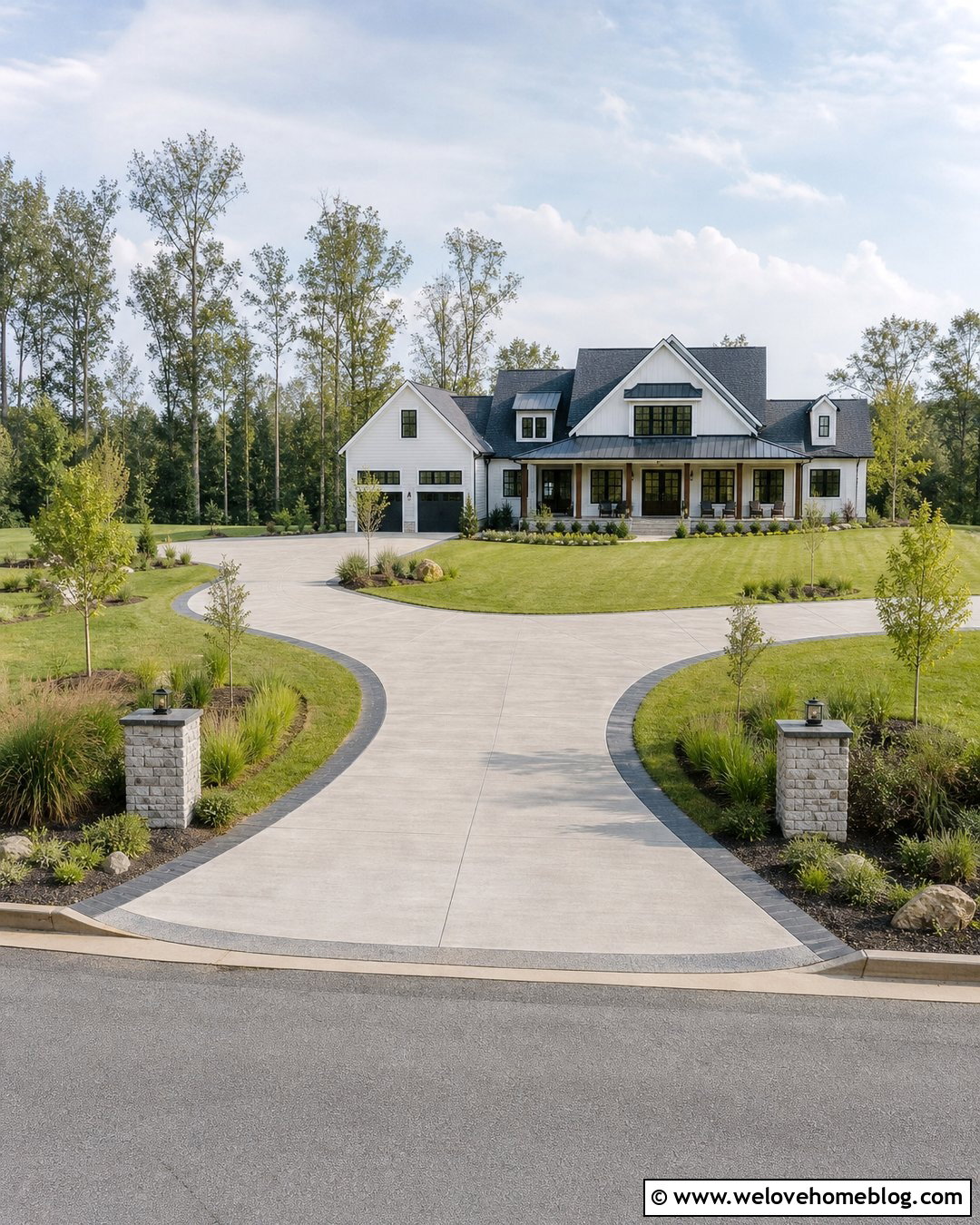
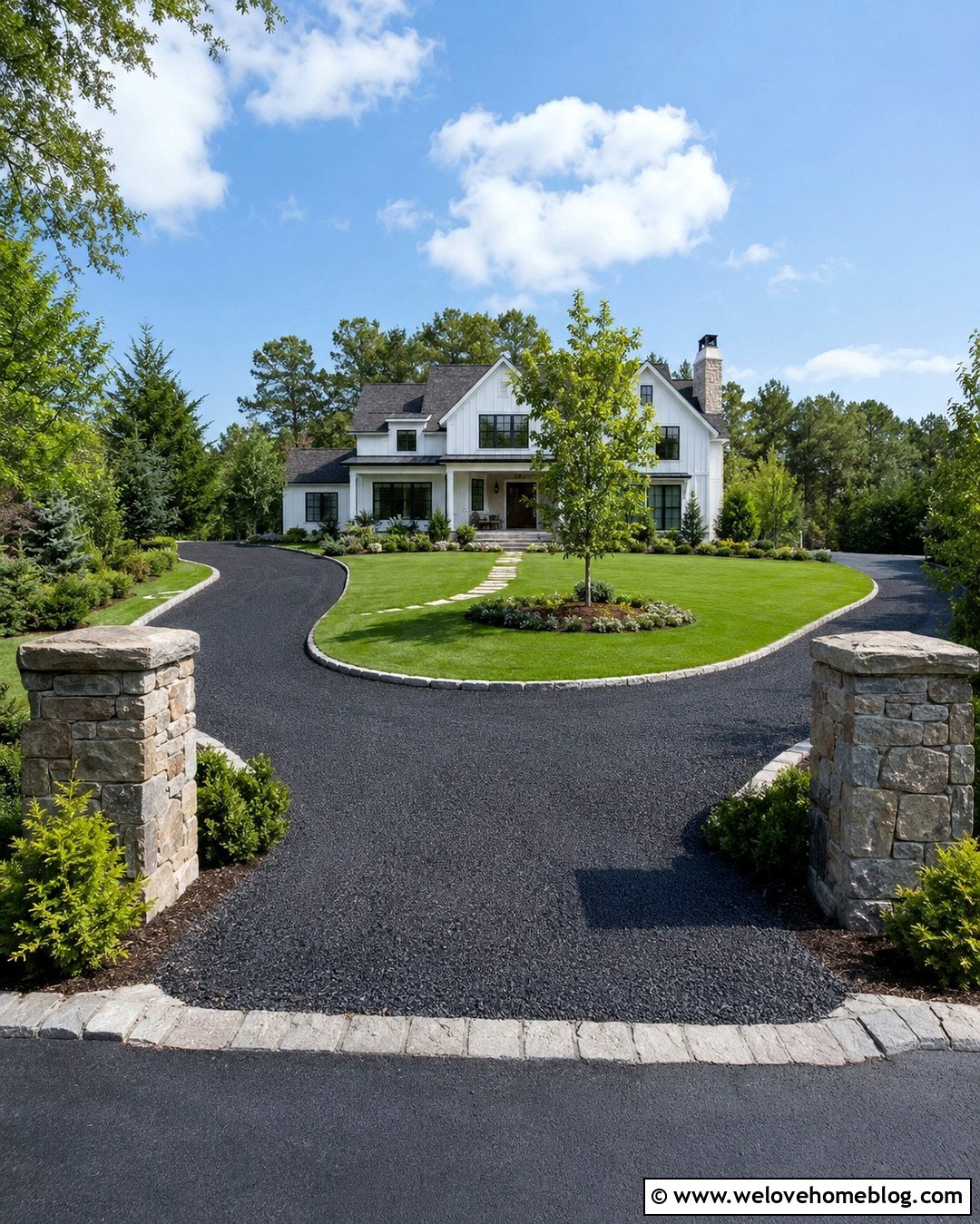
A circular black concrete driveway creates an impressive entrance while improving vehicle movement on a spacious property. Use charcoal concrete with a subtle sand finish for the main loop, then define its edges with light granite setts or pale poured-concrete bands. The center island should feel like part of the landscape rather than leftover lawn. Fill it with a multi-stem tree, clipped shrubs, ornamental grasses, and low flowers that will not block visibility. A traditional or modern farmhouse can both support this design when border materials echo the facade. Keep the circle generous enough for comfortable turning and provide a clear connection to the garage. Well-positioned drainage prevents water from collecting along the inner curve. A matching walkway can branch from the loop and lead guests directly to the front entrance.
13. Black Concrete Modern Farmhouse Driveway
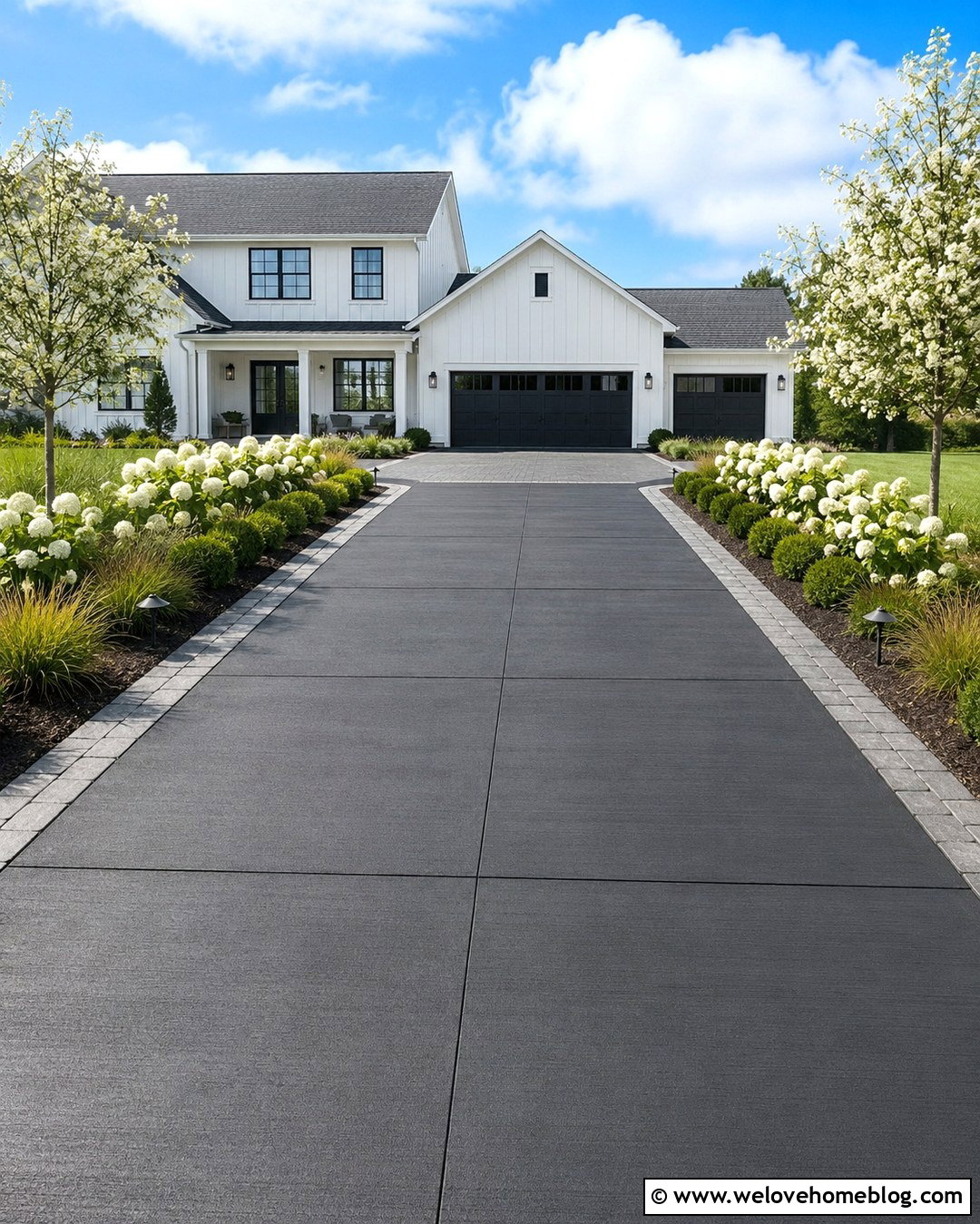
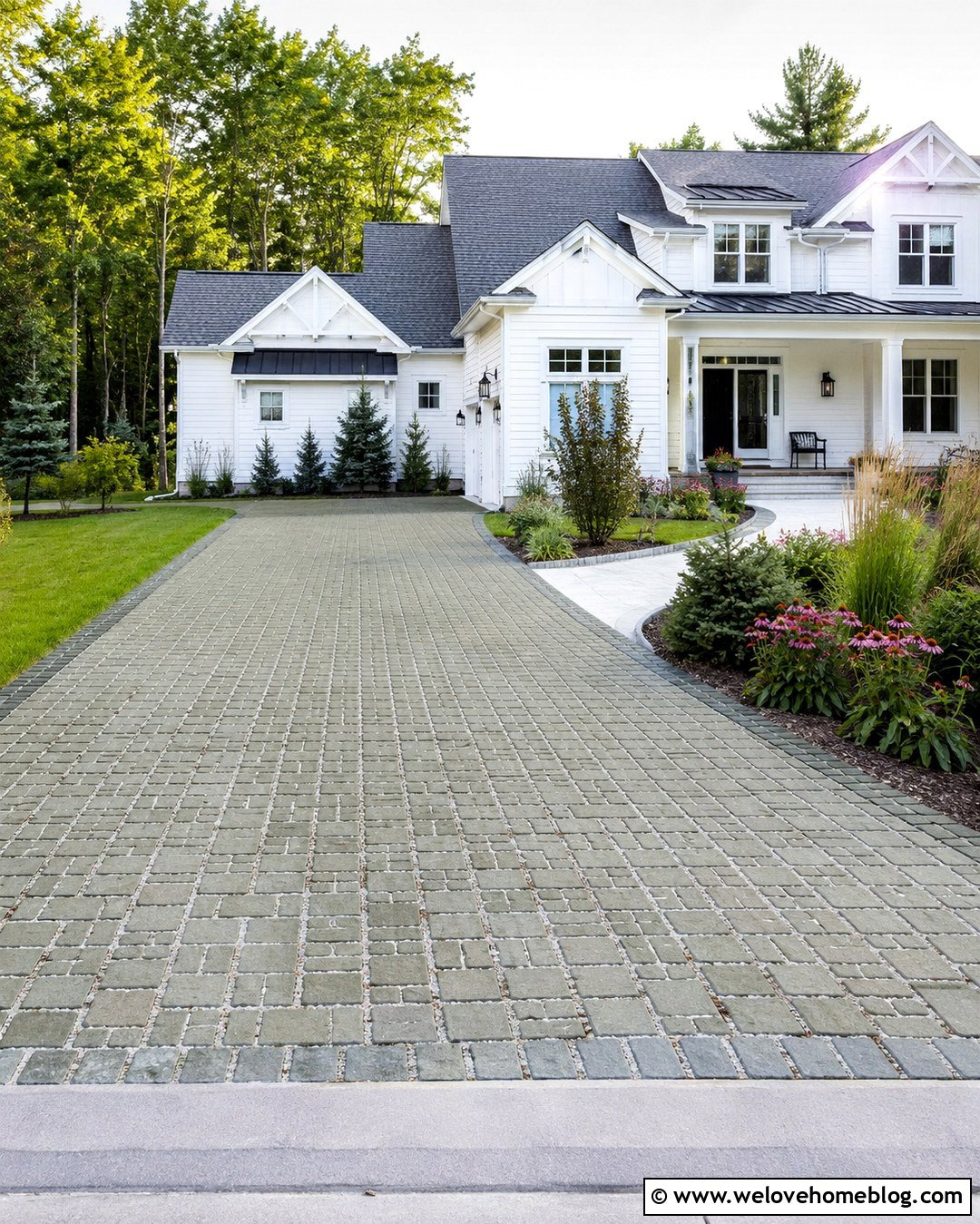
Black concrete adds a grounded, contemporary edge to the familiar white modern farmhouse exterior. Choose a dark charcoal broom-finished driveway with long rectangular sections that emphasize the home’s simple lines. Border the surface with warm gray cobblestones or tumbled concrete pavers to prevent the black field from resembling asphalt. A wide apron near the garage can repeat the same border in a subtle band. Complete the approach with white hydrangeas, boxwood mounds, native grasses, and a few small flowering trees. Black metal lights and garage hardware can connect the driveway color to the facade. Keep the landscaping relaxed but organized so it balances the strong pavement. If the house has a long setback, soften the entrance with broad planting beds rather than lining the entire driveway with a rigid row of identical shrubs.
14. Black Concrete Ranch House Driveway
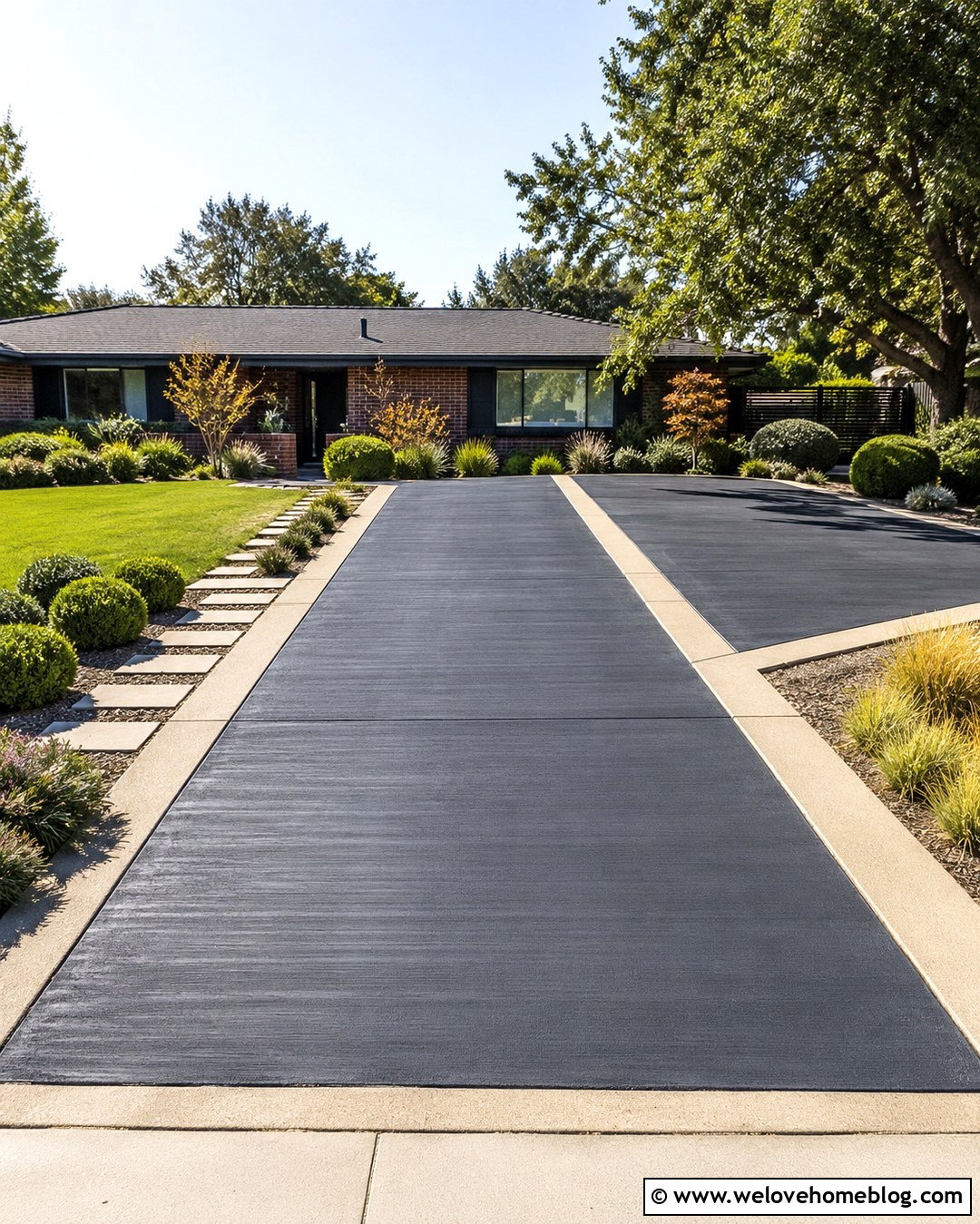
A low ranch house benefits from a black driveway that emphasizes horizontal lines without dominating the facade. Use charcoal concrete with a fine broom finish, laid in long panels running toward the garage. A flush border of tan or buff concrete can pick up warm brick, wood siding, or stone accents on the house. Widen one side near the garage to create a practical parking pad, then use joint lines to make the extension appear intentional. Layer drought-tolerant grasses, rounded shrubs, and spreading ground covers along the driveway instead of tall formal hedges. This keeps windows and rooflines visible. A simple stepping-stone walkway can cross the planting bed toward the front door. The combination creates a clean suburban update while respecting the ranch home’s modest height, broad frontage, and casual character.
15. Black Concrete Colonial Driveway
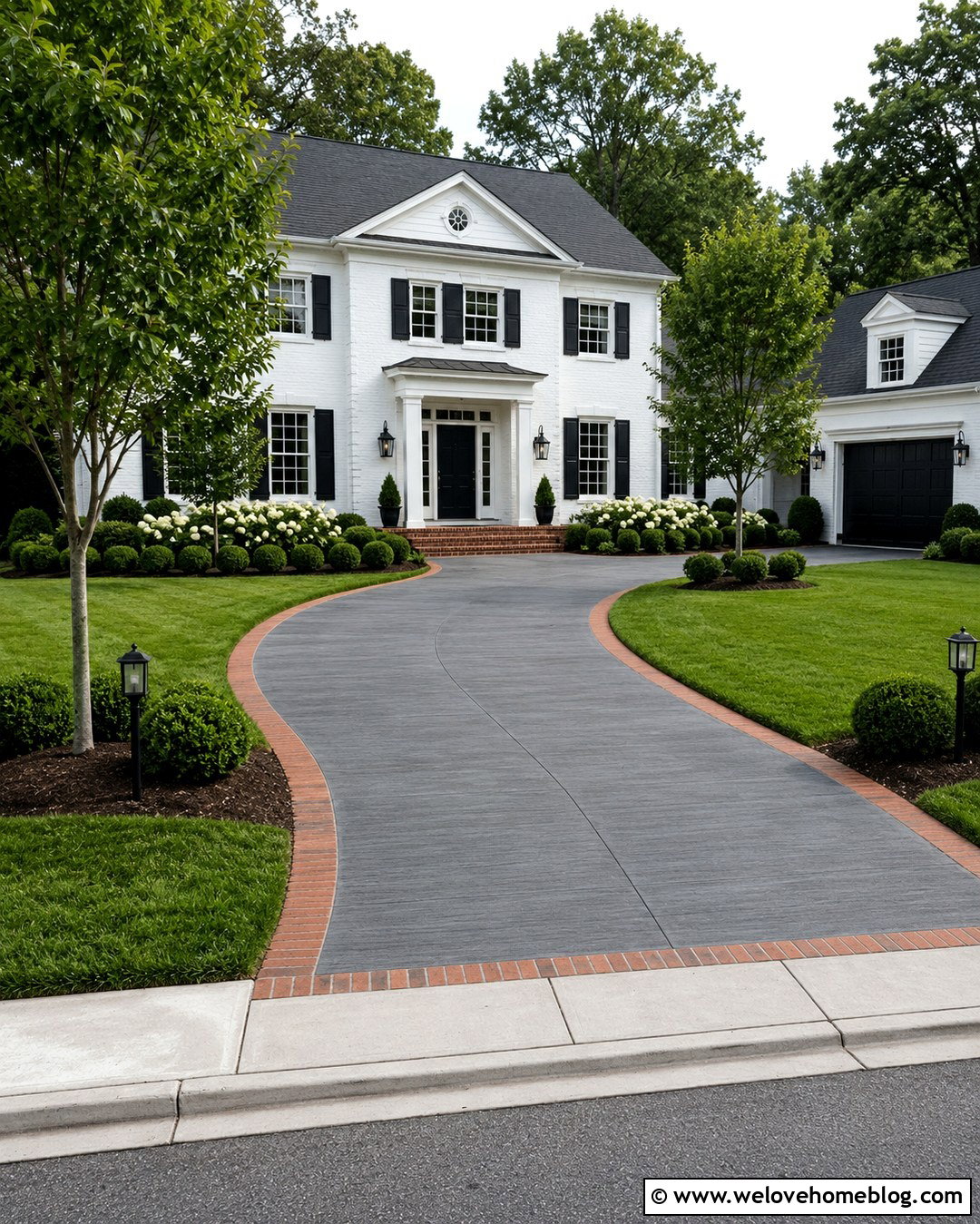
A black concrete driveway can complement a colonial home when the layout remains balanced and symmetrical. Choose charcoal concrete with a restrained broom or sand finish rather than an aggressively modern polished surface. Frame the driveway with traditional red brick laid in a soldier-course border, then repeat that brick around the walkway or porch steps. Matching planting beds on both sides can include clipped boxwoods, white hydrangeas, and small ornamental trees. If the driveway leads to a side garage, use a gentle curve instead of a sharp turn that disrupts the formal landscape. Black lanterns and shutters can help connect the pavement to the facade. Keep decorative details limited because the color and brick edging already provide contrast. This complete design feels established and appropriate without making a traditional property look overly contemporary.
16. Narrow Black Concrete Driveway

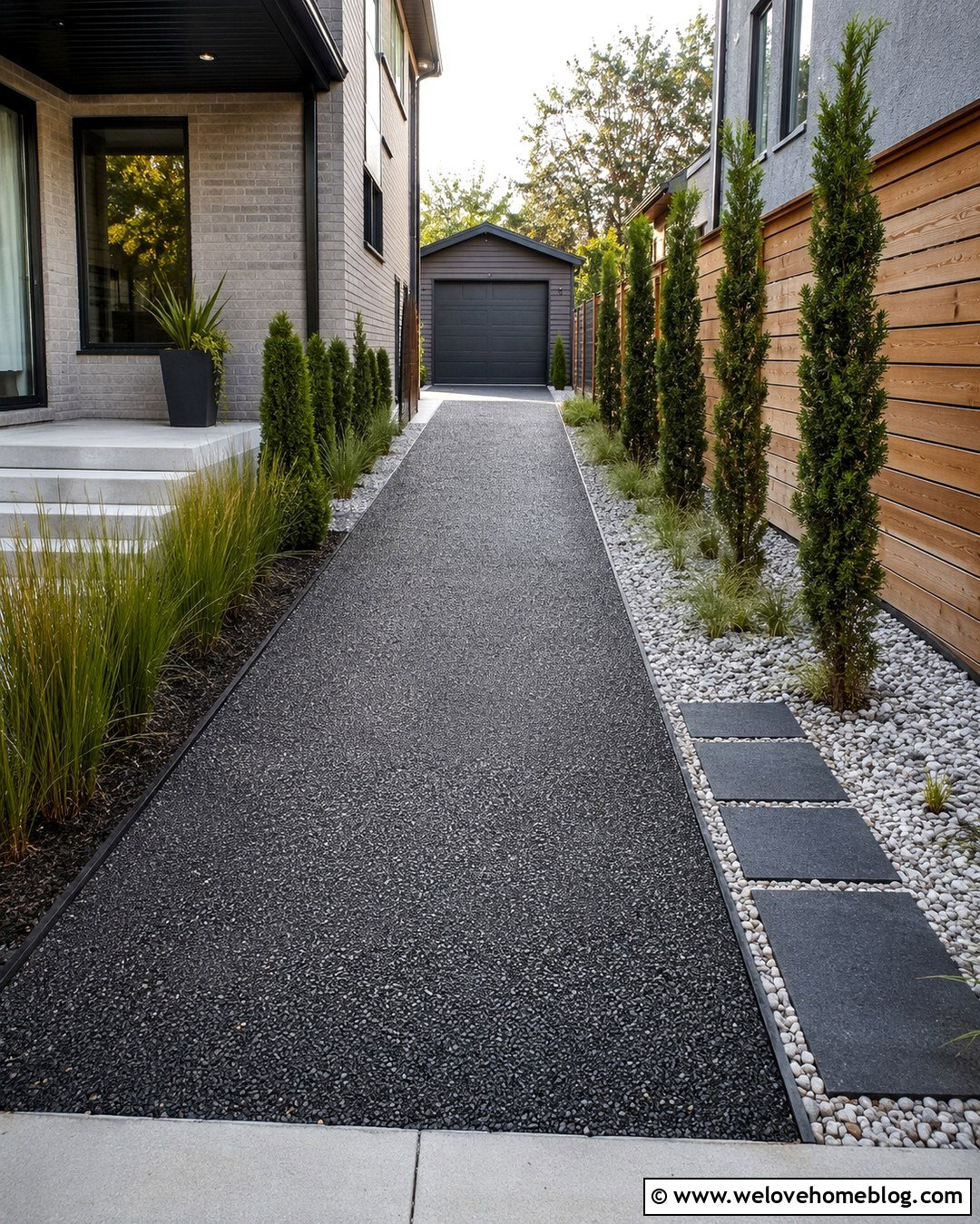
On a small lot, a narrow black concrete driveway can look polished without consuming the entire front yard visually. Select a softer charcoal tone rather than the deepest possible black, especially when the driveway runs close to the house. A straight single-car layout with lengthwise saw cuts can make the area appear longer and more organized. Use a slim light-gray paver border to distinguish the concrete from fencing and planting beds. Vertical shrubs, compact grasses, and espaliered trees provide greenery without narrowing the vehicle path. A walkway can merge with the driveway near the porch, reducing unnecessary hardscape. Keep trash storage, utility boxes, and loose garden items screened from the curb view. Careful measurements are essential so doors can open comfortably and vehicles can pass without damaging plants, edging, or neighboring property.
17. Sloped Black Concrete Driveway
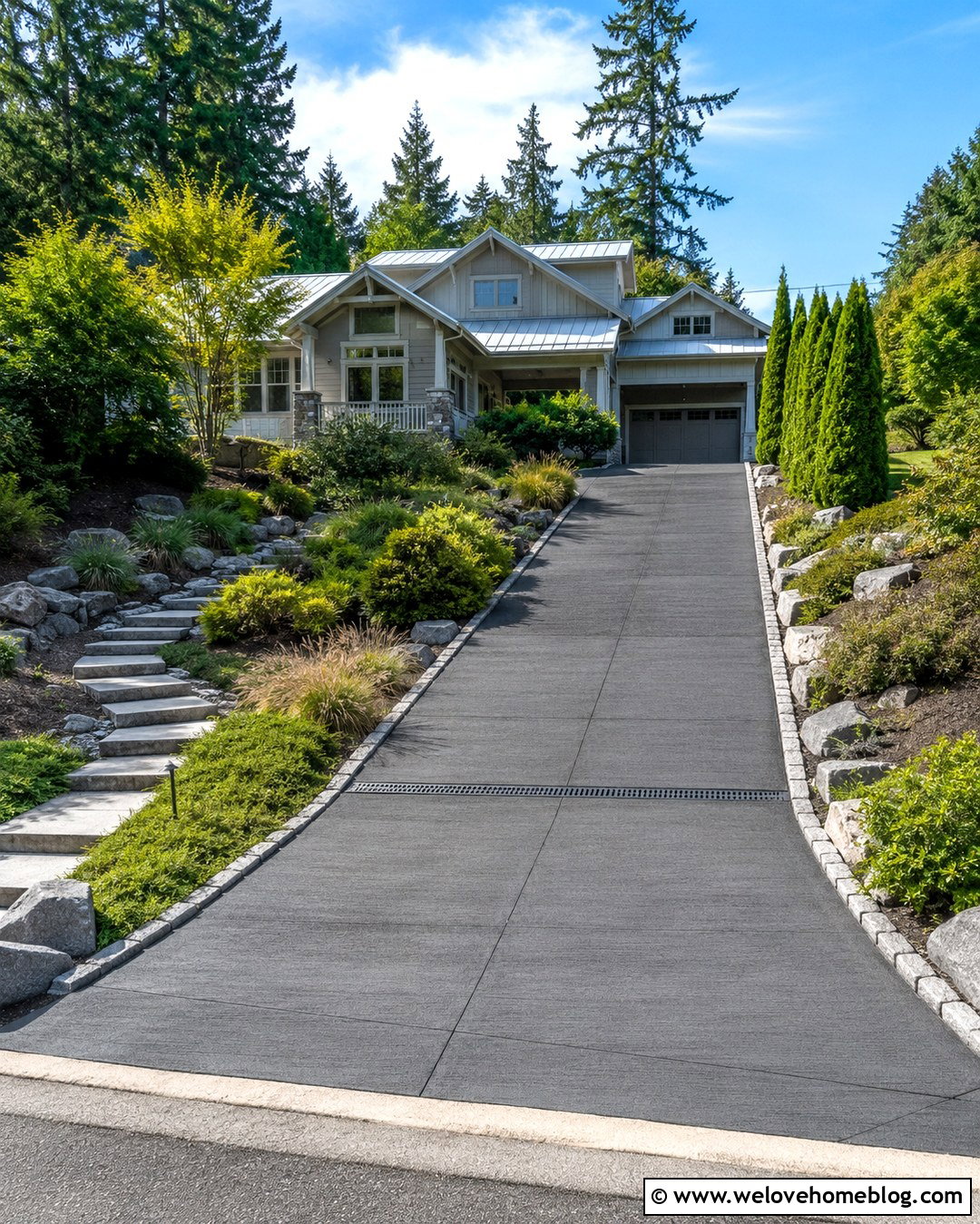
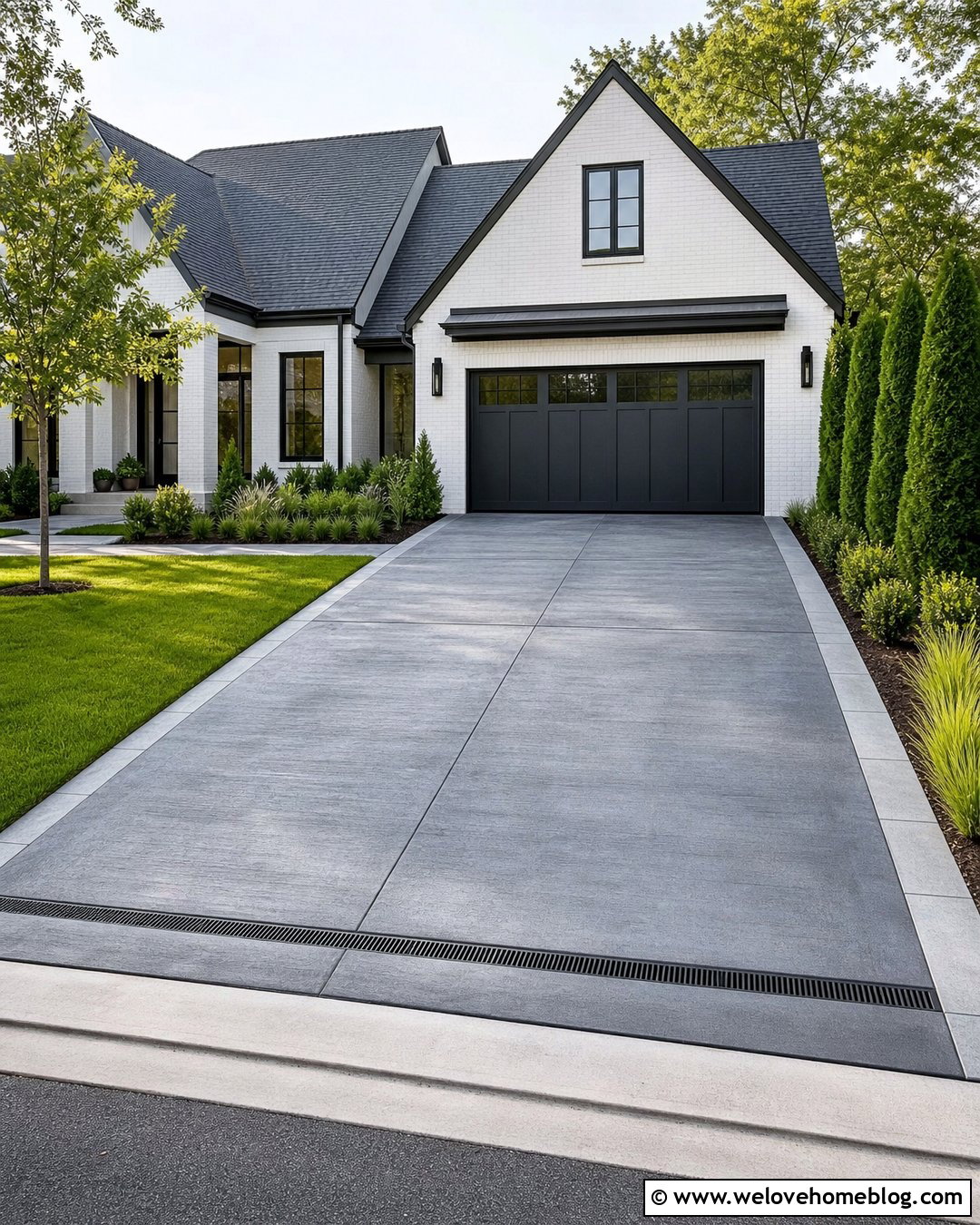
Sloped driveways need a surface and layout that prioritize traction, drainage, and safe transitions. Dark broom-finished concrete provides a clean appearance while offering more texture than a smooth decorative finish. Run the broom marks across the direction of travel when appropriate, and divide the slope with well-planned control joints. A channel drain near the garage can intercept runoff before water reaches the building. Edge the driveway with rough granite blocks and planted slopes containing deep-rooted shrubs, ornamental grasses, and erosion-resistant ground covers. Avoid tall borders that could trap water or reduce usable width. The black concrete will create a striking path up to a light Craftsman or contemporary home. Because every grade behaves differently, drainage locations, finish texture, reinforcement, and transitions should be designed for the specific property rather than copied from another driveway.
18. Black Concrete Driveway With Lighting
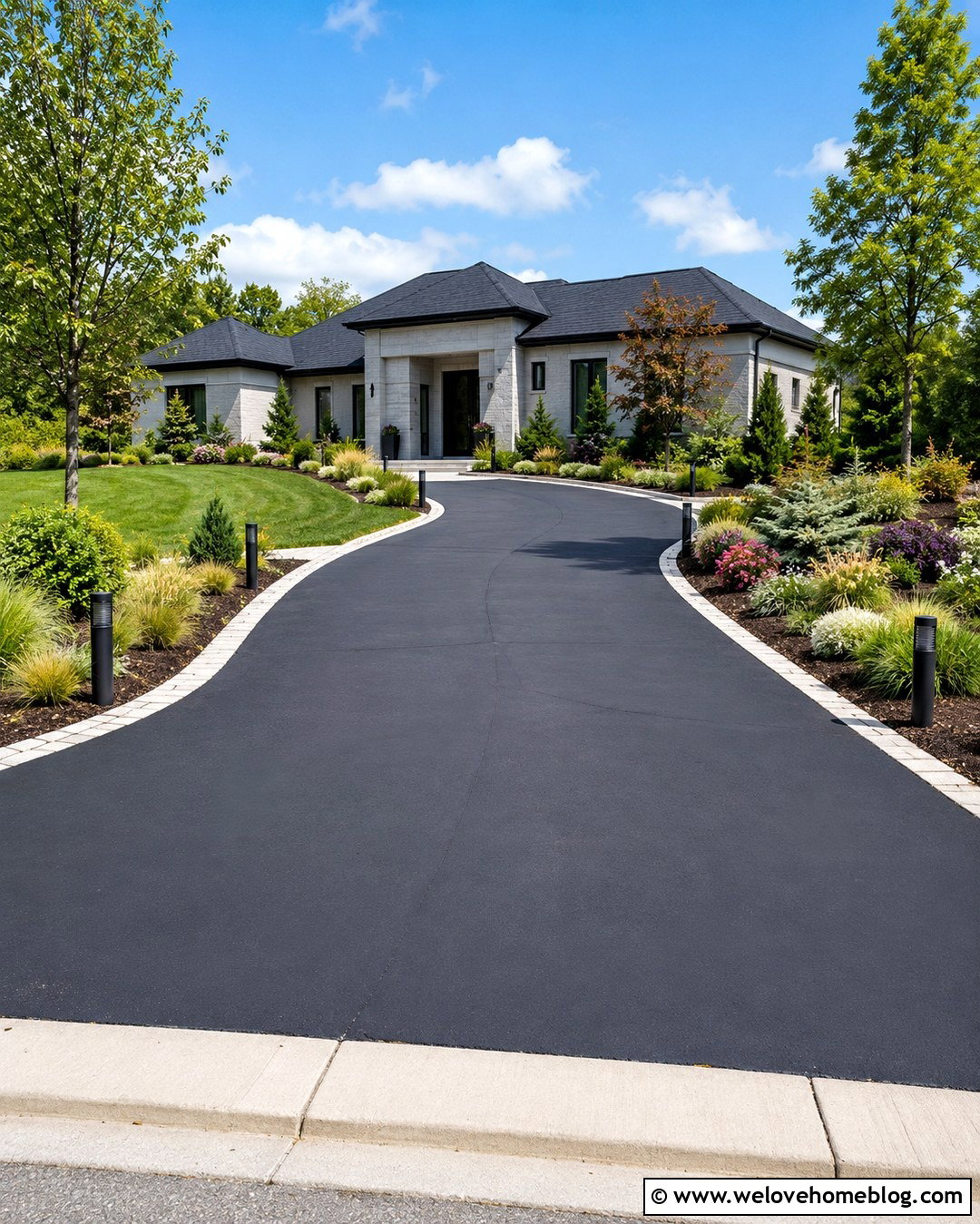
Driveway lighting should define the route and surrounding landscape without turning the entrance into an airport runway. Start with a matte black concrete surface in a straight or softly curved layout. Add low black bollard lights at important points, such as the street entrance, walkway crossing, curve, and garage apron. During daylight, their simple forms connect with the dark pavement and contemporary house details. Pale stone edging improves visibility and separates the driveway from planting beds filled with ornamental grasses, compact evergreens, and seasonal flowers. Space fixtures according to the light they cast instead of placing them in an unnecessarily tight row. Recessed or shielded fixtures can reduce glare and keep light directed toward the ground. The daytime design should still feel complete, with lighting serving as one coordinated layer rather than the only decorative feature.
19. Black Concrete Driveway With Gate Pillars
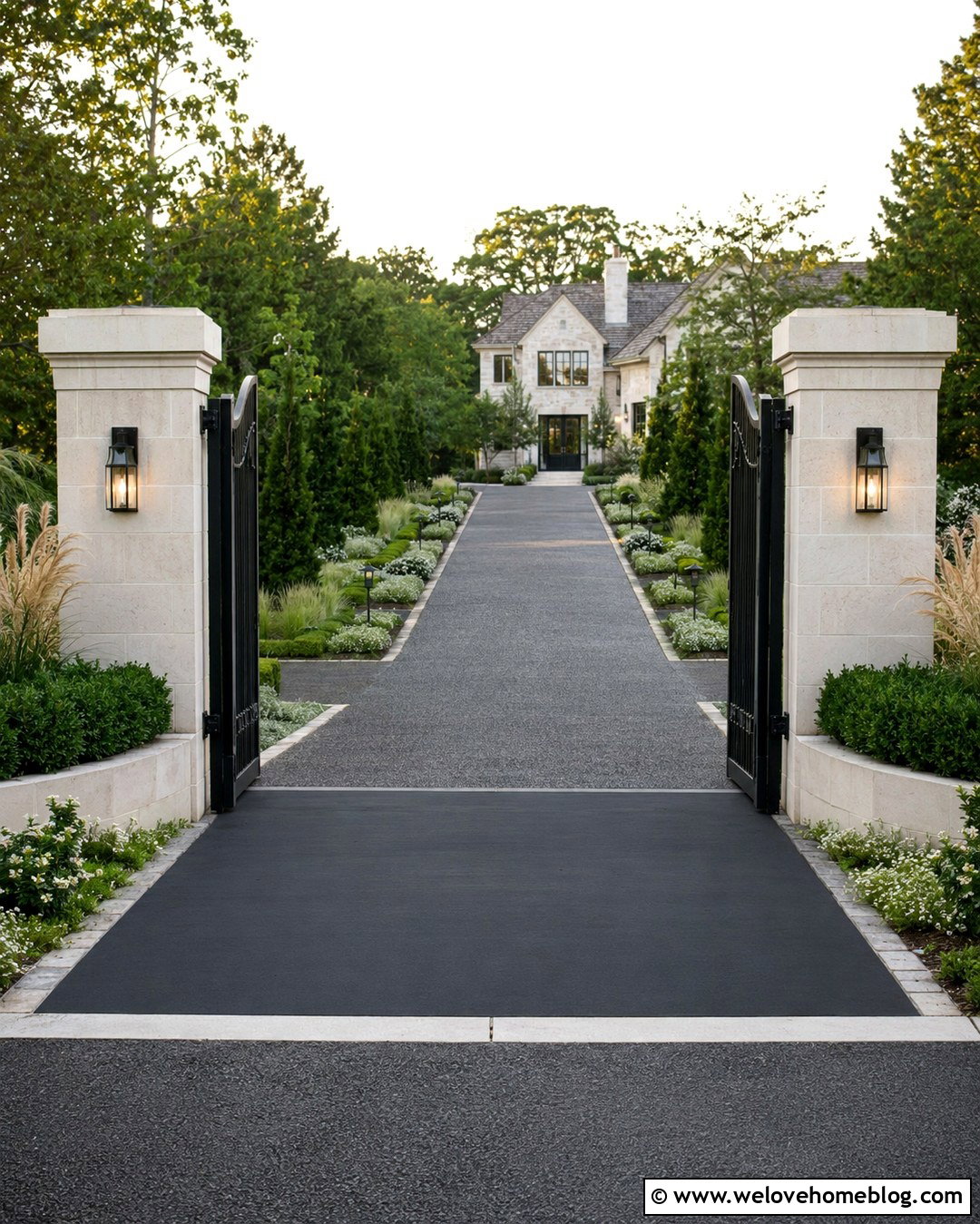
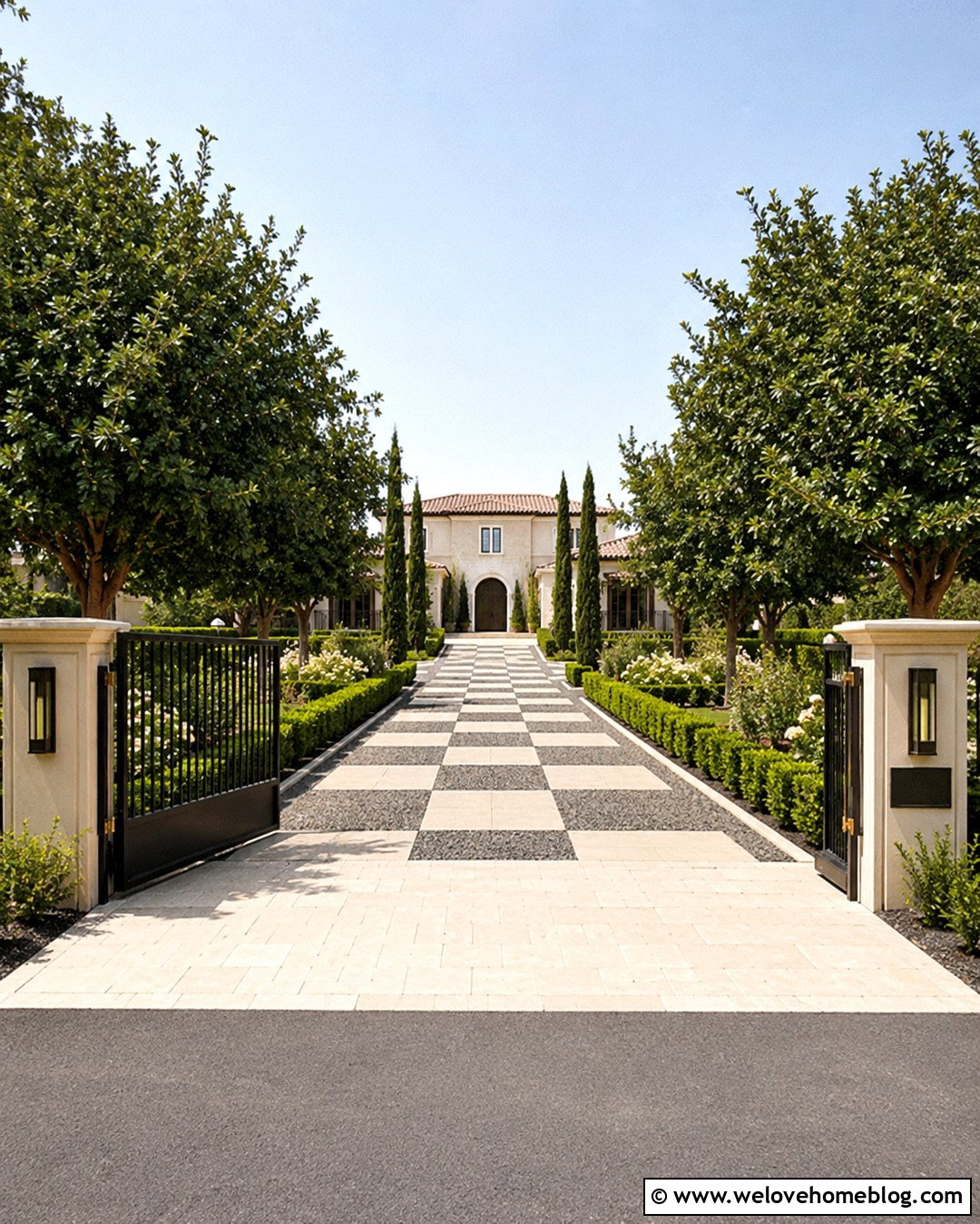
A gated black concrete driveway looks most cohesive when the pavement, pillars, gate, and landscaping share a clear material palette. Use charcoal exposed-aggregate concrete for a long straight entrance, then create a smoother black concrete apron beneath the gate. Light limestone or pale brick pillars will stand out clearly against the dark surface. A simple black metal gate can repeat the color without hiding the view toward the house. Plant symmetrical beds around the pillars using low evergreens, grasses, and flowering ground covers that preserve driver visibility. Continue a stone or concrete border beyond the gate to visually connect the entrance with the full driveway. Provide enough level space for vehicles to stop safely without blocking the road. Gate equipment, drainage, lighting, and address placement should be integrated from the beginning rather than added as separate afterthoughts.
20. Black Stained Concrete Driveway
Black concrete stain can update an existing driveway when the slab remains structurally suitable for resurfacing. A translucent charcoal stain produces natural tonal movement, while an opaque coating creates a more uniform appearance. For a complete design, use a dark stained field with clean geometric scoring and a contrasting light concrete or paver border. Repairing cracks and preparing the surface correctly are critical because stains and overlays will not hide every underlying defect. Pair the renewed driveway with refreshed planting beds, black metal edging, and a walkway that repeats the border material. This approach works well beside updated ranch, contemporary, and mid-century homes. Request a sample area before committing to the entire driveway. The original concrete color, porosity, previous treatments, and surface wear can all influence how a black stain or overlay looks after application.
Conclusion:
The best black driveway balances dramatic color with practical texture, clear joint lines, dependable drainage, and landscaping that softens the overall view. These 20 Black Driveway Concrete Ideas show how one dark material can support modern, farmhouse, ranch, colonial, Craftsman, and traditional homes. Smooth panels create architectural simplicity, while broom finishes, exposed aggregate, stamping, and decorative borders introduce grip and character. Before installation, compare outdoor color samples and consider summer surface temperatures, maintenance, local climate, and neighborhood requirements. Work with an experienced concrete professional to plan the base, slope, reinforcement, control joints, pigment, finish, and sealer. With those details resolved, black concrete can become a distinctive entrance that feels connected to the entire property.

Related posts:
Leave a Reply