
Black aggregate creates a driveway that feels bold, textured, and carefully designed rather than purely practical. Its deep color works with modern architecture, traditional brick homes, rustic properties, and compact suburban yards. The exposed stone also adds visual movement, especially when paired with a contrasting border or a coordinating walkway. Successful black aggregate driveway ideas consider the entire approach to the house. Shape, edging, planting, drainage, lighting, and garage transitions should all feel connected. Because darker surfaces can look visually heavy, lighter masonry, green landscaping, and clearly defined edges help create balance. The following complete driveway looks offer practical inspiration for different homes, lot sizes, and curb appeal goals. Explore these 20 black aggregate driveway ideas to find a layout that suits your property.
1. Black Aggregate Driveway With White Concrete Border
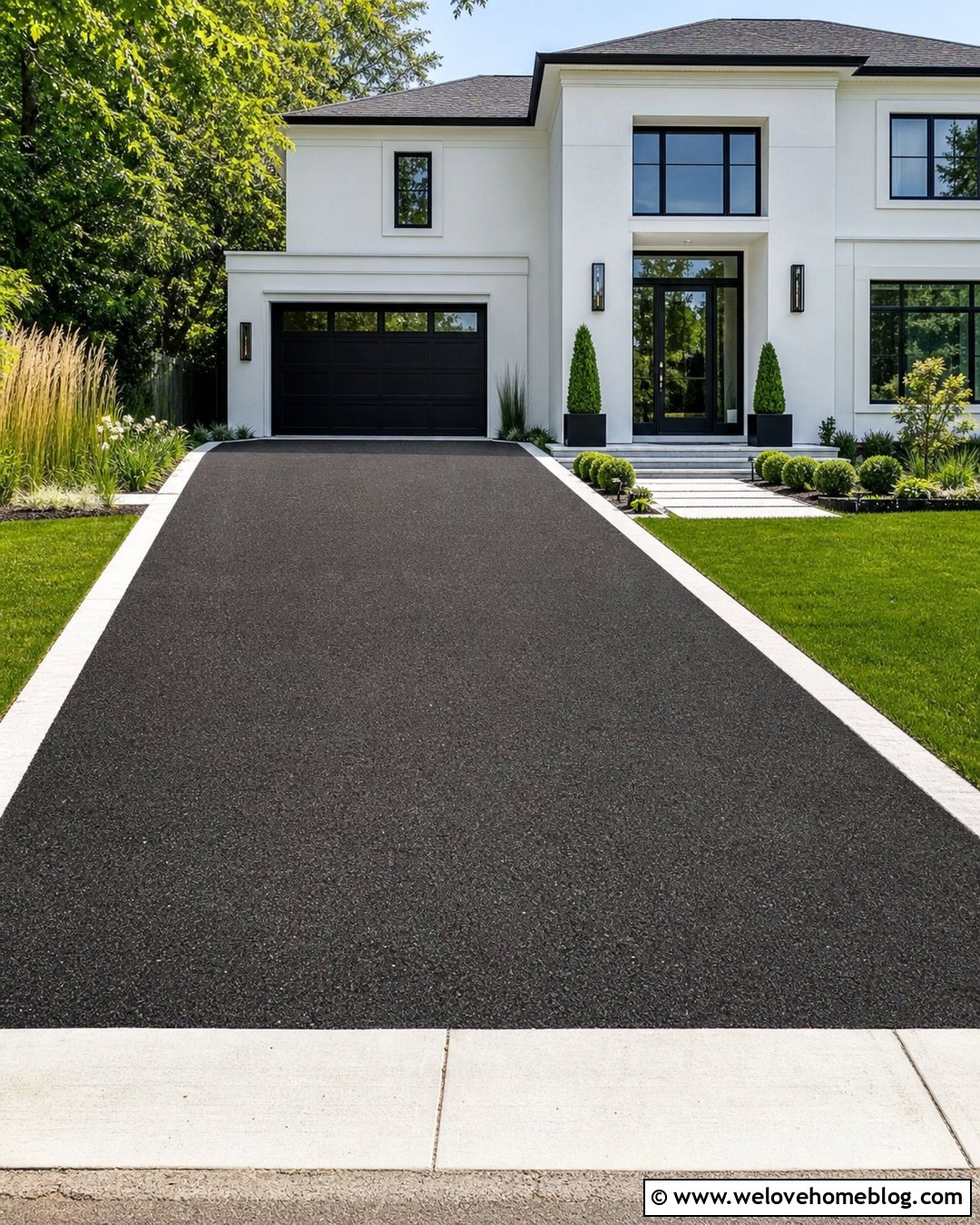
A crisp white concrete border makes a black aggregate surface look sharper and more architectural. Use the lighter concrete as a continuous frame around a straight driveway, then repeat it along the front walkway. This creates a coordinated route from the curb to the garage and entry. The strong contrast works especially well with a modern home featuring white stucco, black-framed windows, and simple garage doors. Keep landscaping controlled with clipped evergreen shrubs, ornamental grasses, and rectangular planting beds. A narrow lawn strip can soften the hard materials without hiding the clean outline. Choose a matte or natural-looking sealer for the aggregate so the finish remains rich without appearing overly glossy. This combination delivers a bright, balanced, and easy-to-read entrance.
2. Black Aggregate Driveway With Charcoal Paver Edging
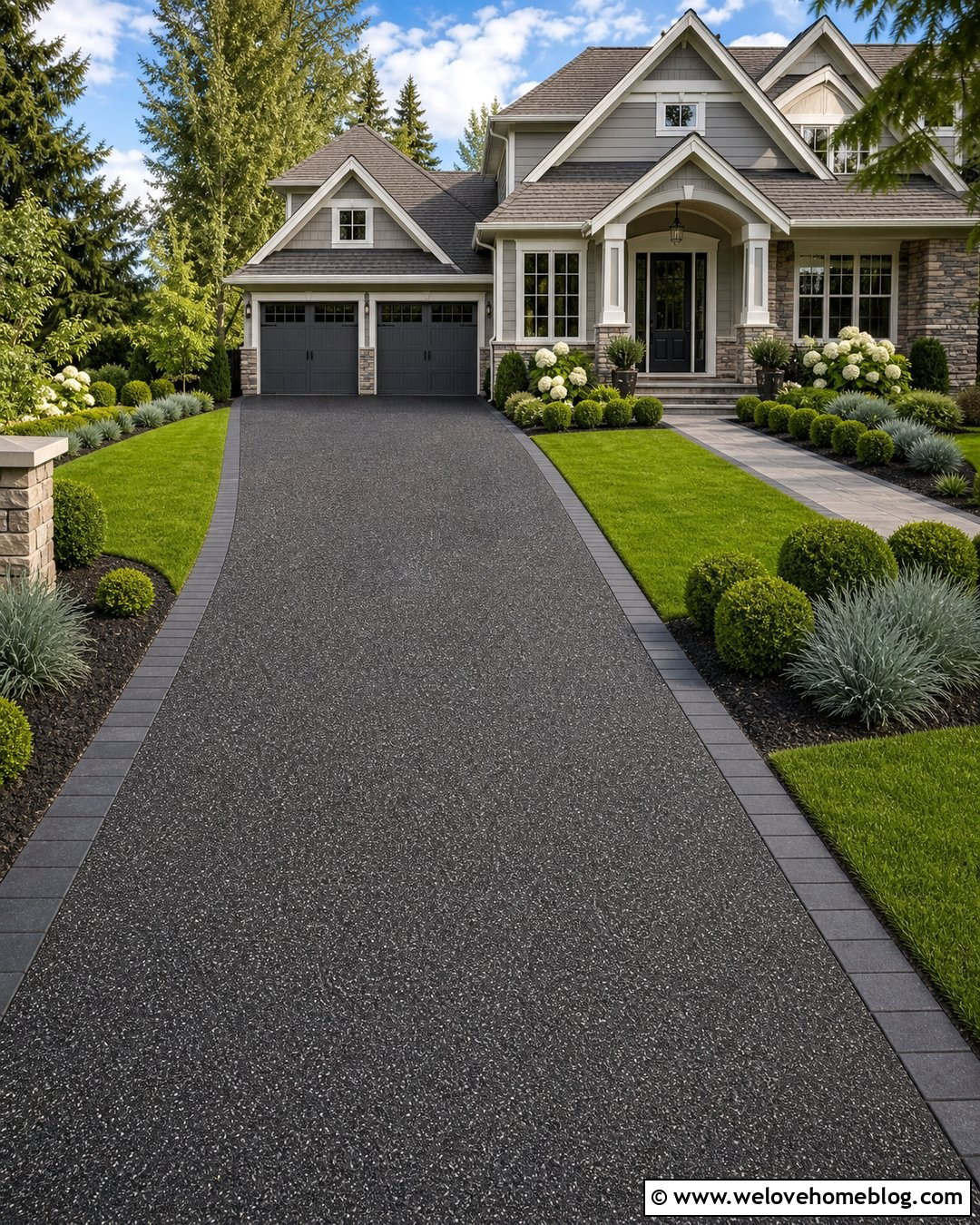
For a subtle frame, pair black exposed aggregate concrete with charcoal pavers in a slightly lighter tone. The small color difference adds definition while maintaining a sophisticated monochromatic palette. Lay the pavers in a soldier-course border along both sides and across the garage threshold. A straight or gently flared layout works well because the border guides the eye toward the house. Add layered planting beds with dwarf boxwood, blue-green grasses, white hydrangeas, and dark mulch. The varied foliage keeps the black surface from dominating the front yard. This complete look suits contemporary craftsman and transitional homes with gray siding or natural stone accents. Match the walkway edging to the driveway border so the entire front approach feels intentionally planned rather than assembled from unrelated materials.
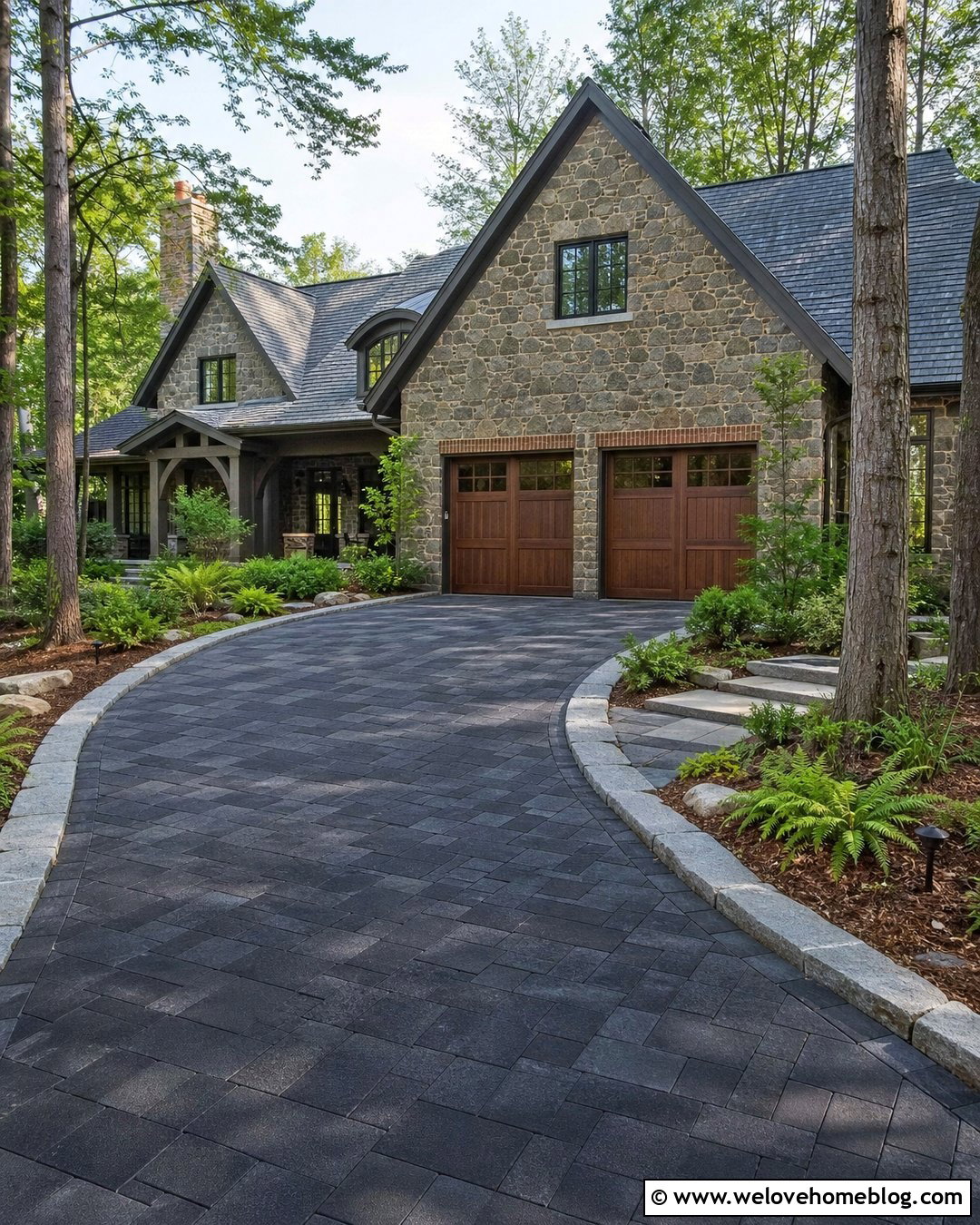
3. Curved Black Aggregate Driveway With Stone Edging
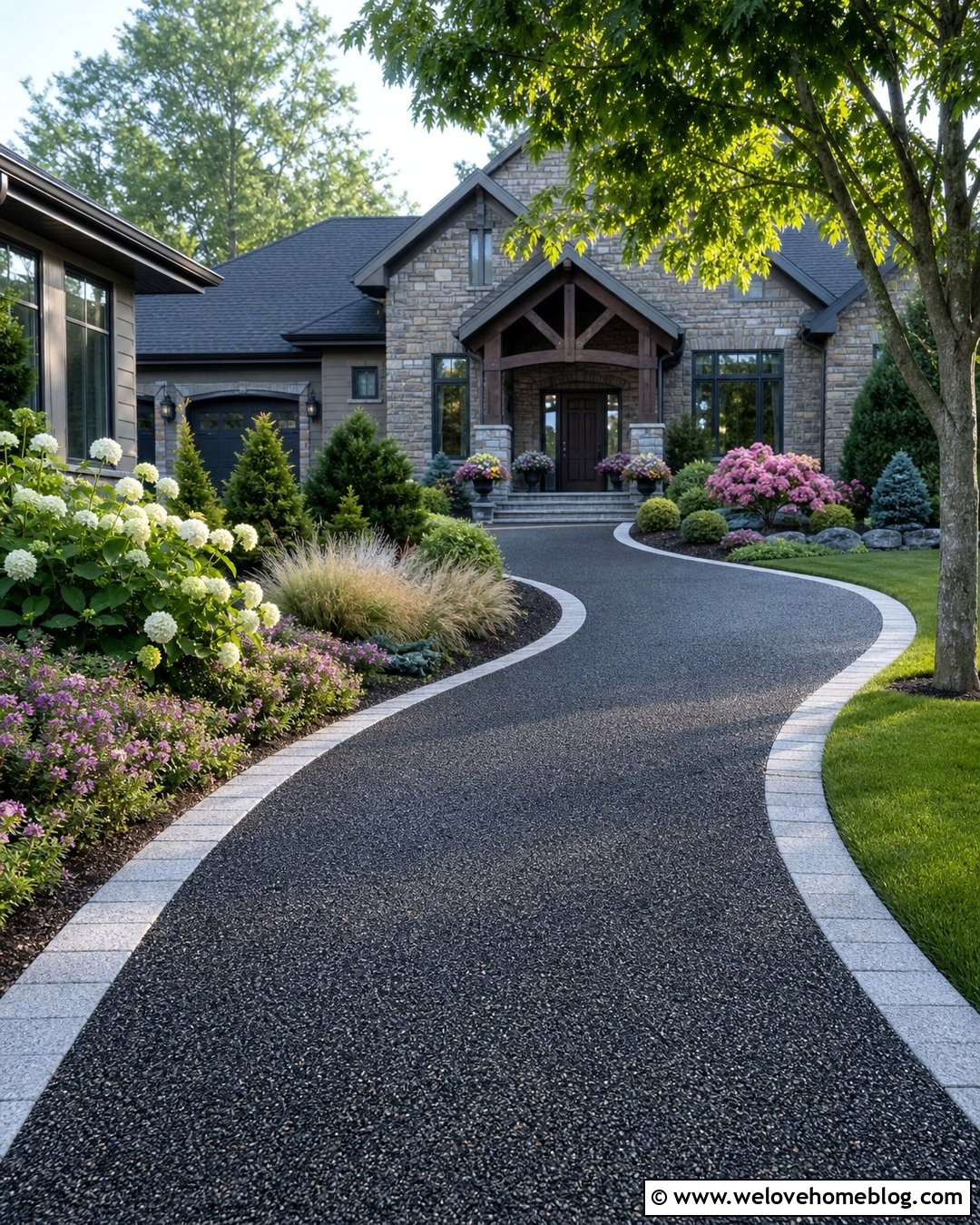
A sweeping curve gives dark aggregate a softer, more natural presence in a large front yard. Define the curve with low granite or limestone edging that remains visible from the street. The lighter stone creates contrast and protects nearby planting beds from vehicle tires. On the outside of the bend, use layered landscaping with flowering shrubs, evergreen mounds, and one sculptural shade tree. Keep plants lower along the inside curve to preserve visibility when entering or leaving the property. A curved walkway can branch from the driveway and echo its flowing line toward the front porch. This design feels especially appropriate for a stone-front craftsman, country home, or wooded suburban property. Wide planting beds help the black aggregate surface settle comfortably into the landscape instead of looking like a heavy ribbon.
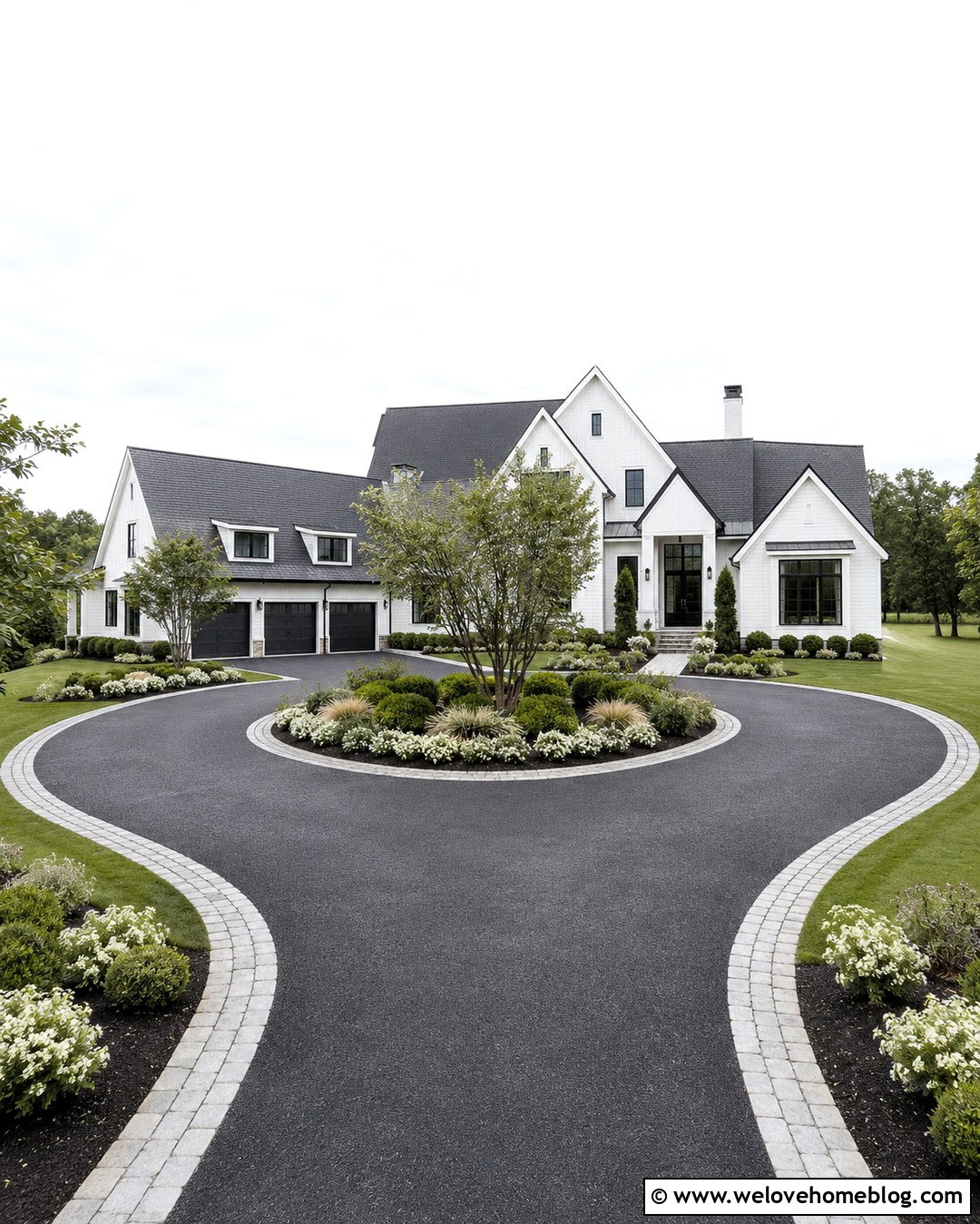
4. Circular Black Aggregate Driveway With Center Garden
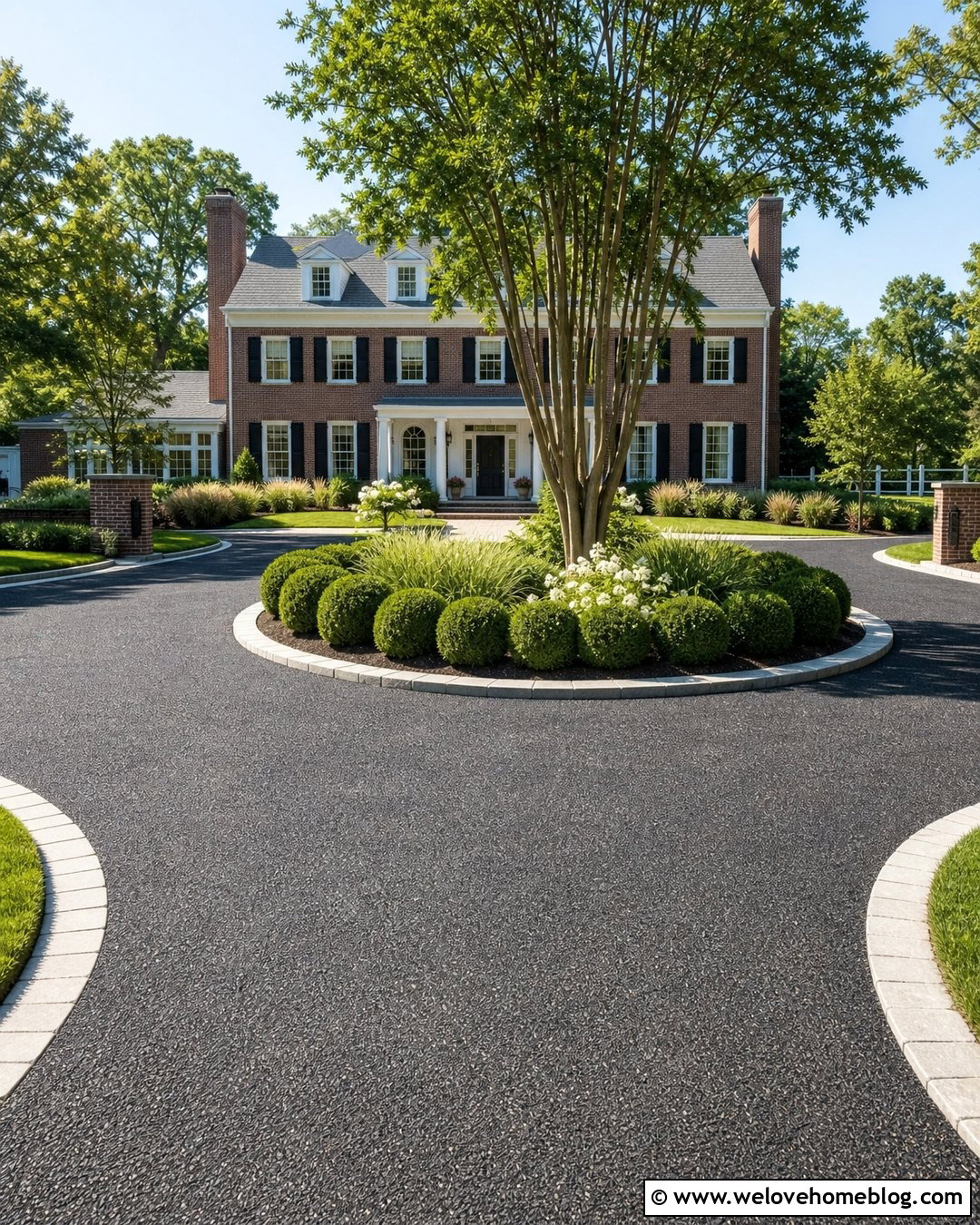
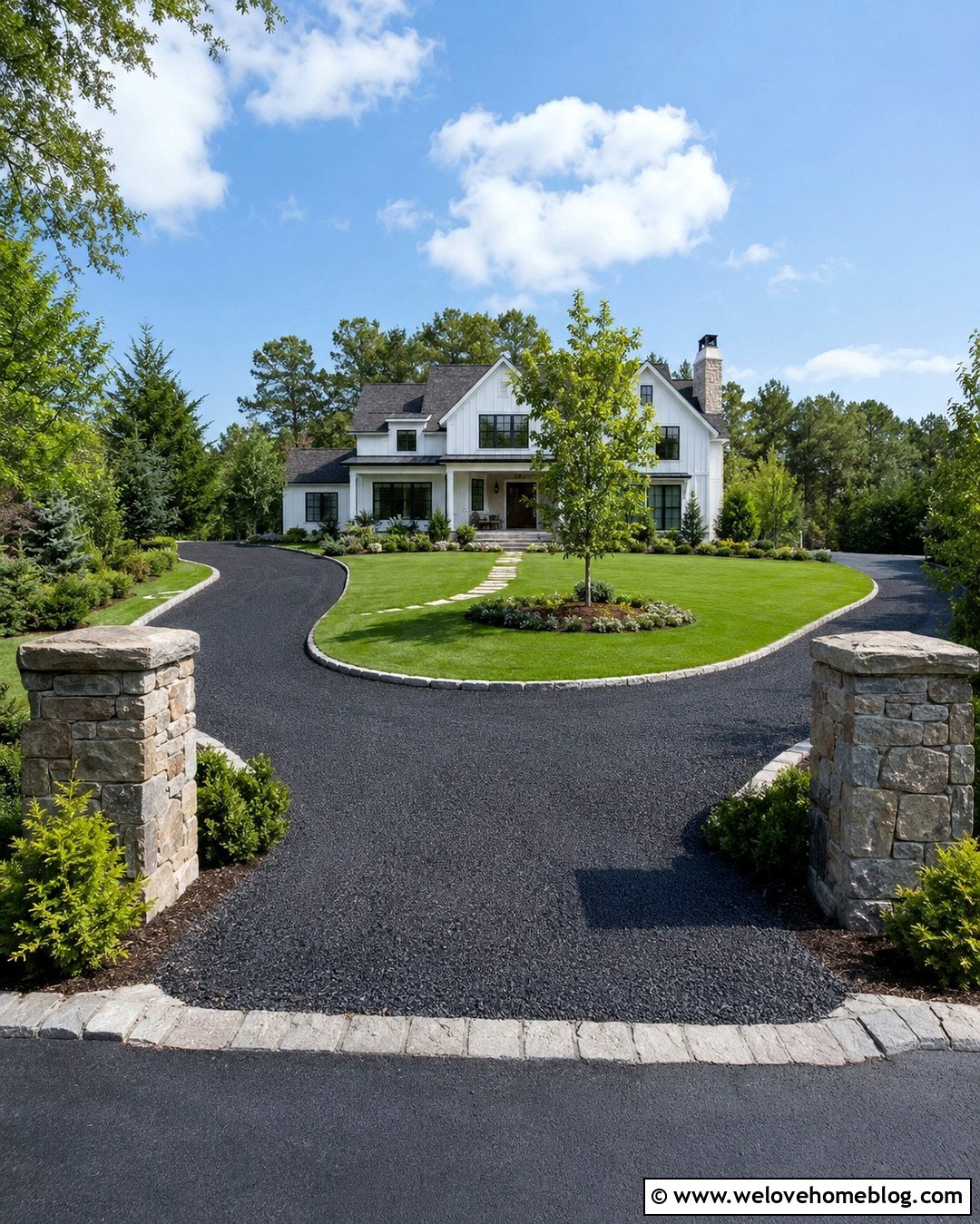
A circular black aggregate driveway can turn a large front yard into a welcoming, functional arrival space. Place a landscaped island at the center to break up the dark paving and create a strong focal point. A multi-stem tree, low evergreens, ornamental grasses, and seasonal flowers provide height without blocking views of the house. Frame the island with pale stone curbing and use the same material around the outer edge of the circle. The lighter outline makes the driveway shape easy to understand from the street. Connect the front steps with a broad walkway that meets the inner circle at a natural stopping point. This layout complements colonial, French country, and traditional brick homes. Keep the planting composition balanced so the center garden looks attractive from every direction throughout the year.
5. Black Aggregate Driveway With Red Brick Border
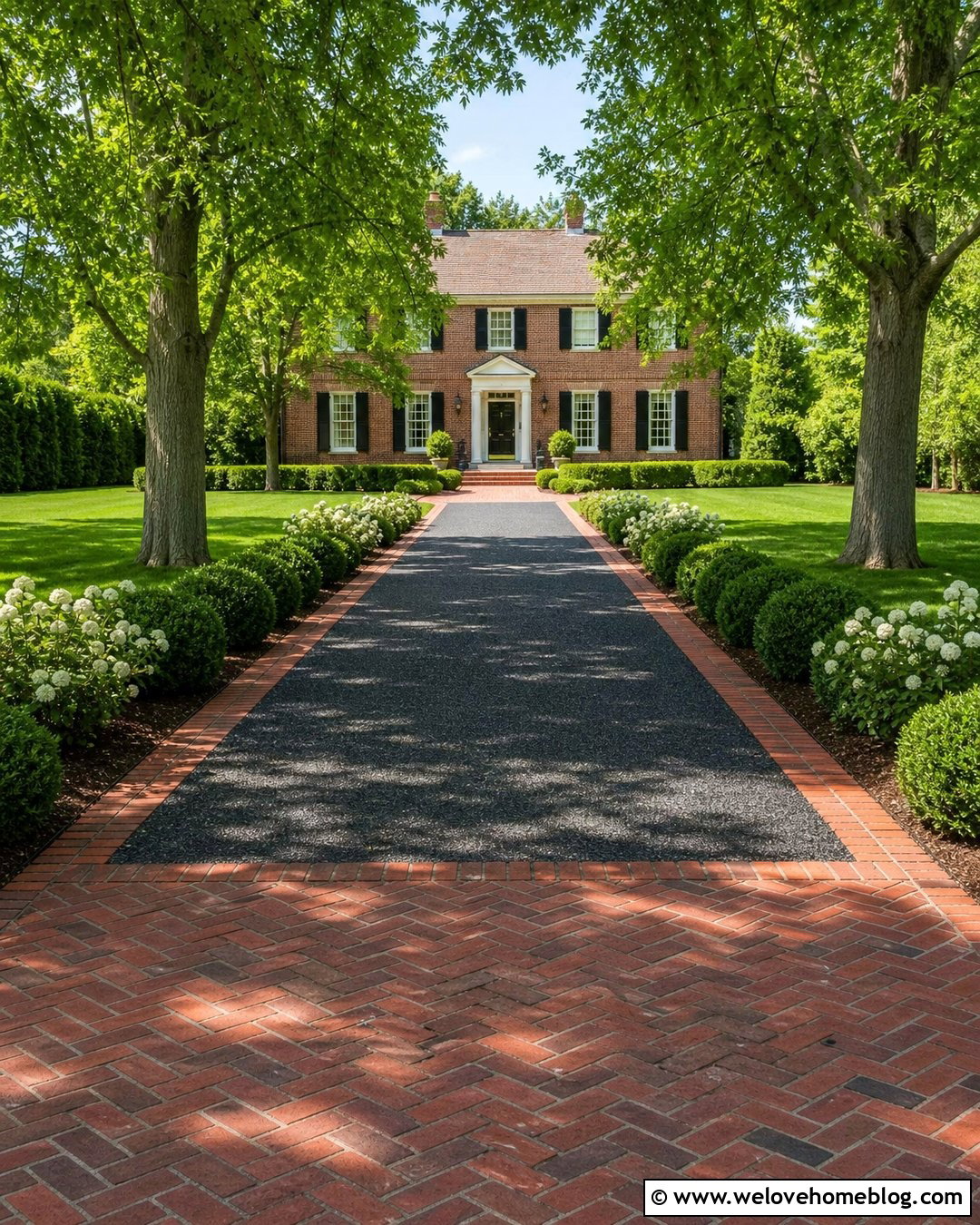
Red brick brings warmth to black aggregate and helps connect the driveway to a traditional home. Choose brick that closely matches the house facade, chimney, or front steps. Install it as a perimeter border and use a wider brick apron near the street for a finished transition. The black and red combination is visually strong, so keep surrounding landscaping classic and restrained. Green lawn, clipped boxwood, white flowering shrubs, and a simple shade tree provide enough softness. A matching brick walkway can lead from the driveway to the porch, creating continuity across the front yard. This complete design works particularly well with colonial, Georgian, and traditional ranch homes. Consider a weathered or tumbled brick finish if the architecture is older, or a smooth brick with precise joints for a cleaner appearance.
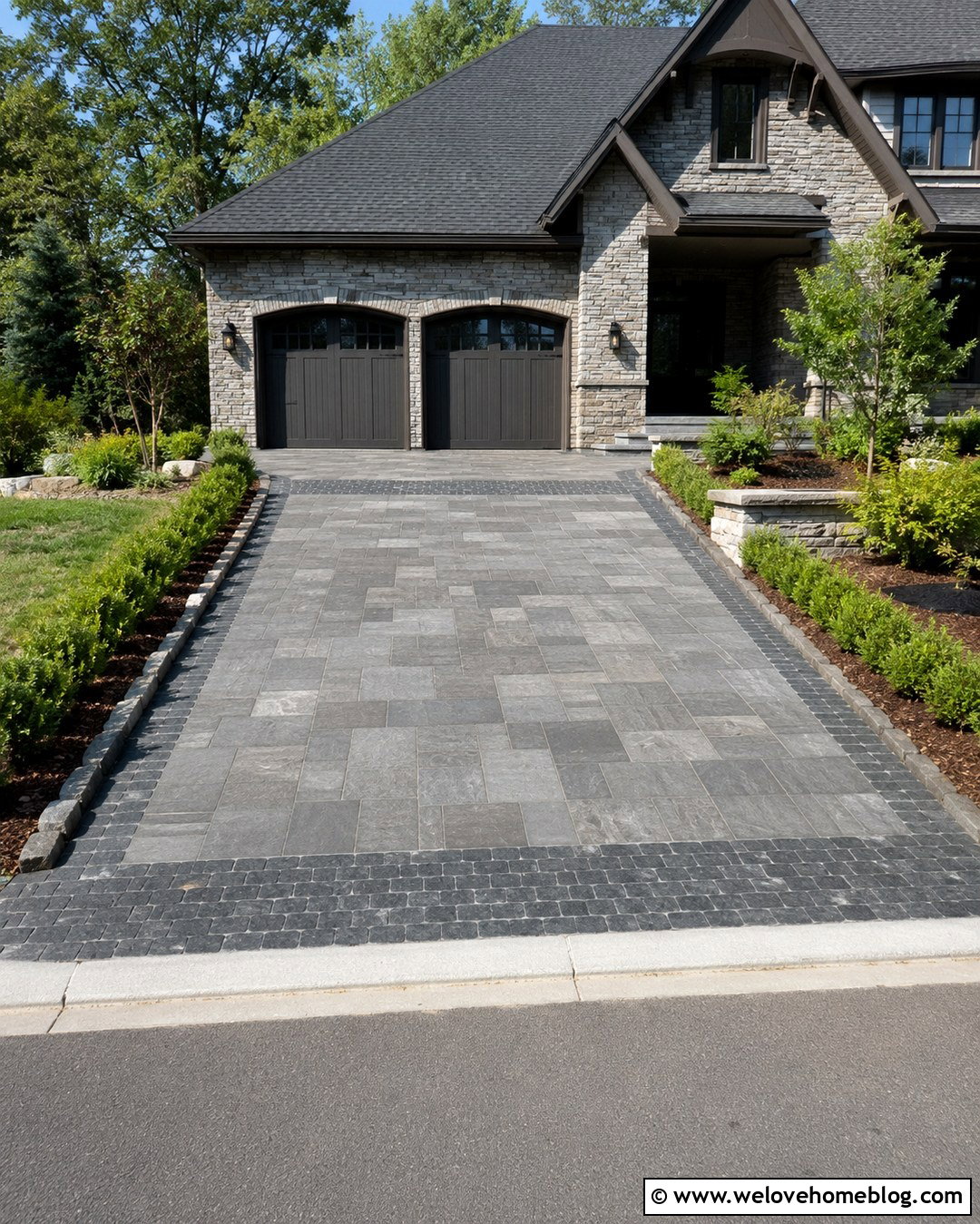
6. Black Aggregate Driveway With Cobblestone Apron
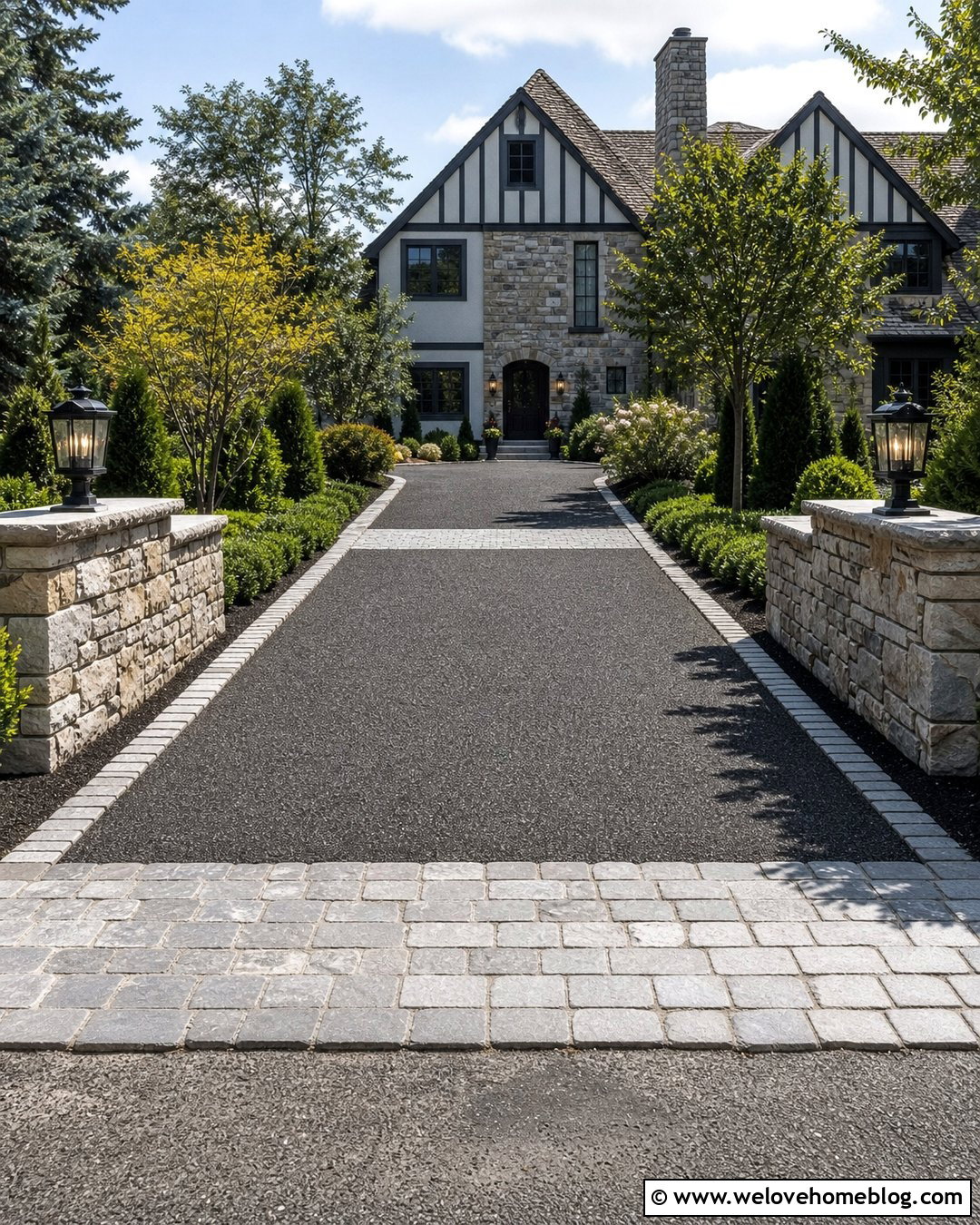
Cobblestone at the driveway entrance creates a durable-looking transition and gives black aggregate a more established character. Use gray granite cobbles across the full width of the apron, then repeat a single row around the driveway perimeter. The textured stone introduces visual variation without competing with the dark exposed aggregate. A slightly flared entrance can make turning easier while giving the apron more presence from the curb. Frame both sides with low stone walls, evergreen shrubs, and small ornamental trees. If the property includes a walkway, carry the cobblestone across its driveway intersection to mark the pedestrian route clearly. This combination suits Tudor, European-inspired, rustic, and traditional stone homes. The finished look feels substantial, but the simple color palette keeps the entrance from appearing overly decorative or busy.
7. Black Aggregate Driveway With Grass Strips
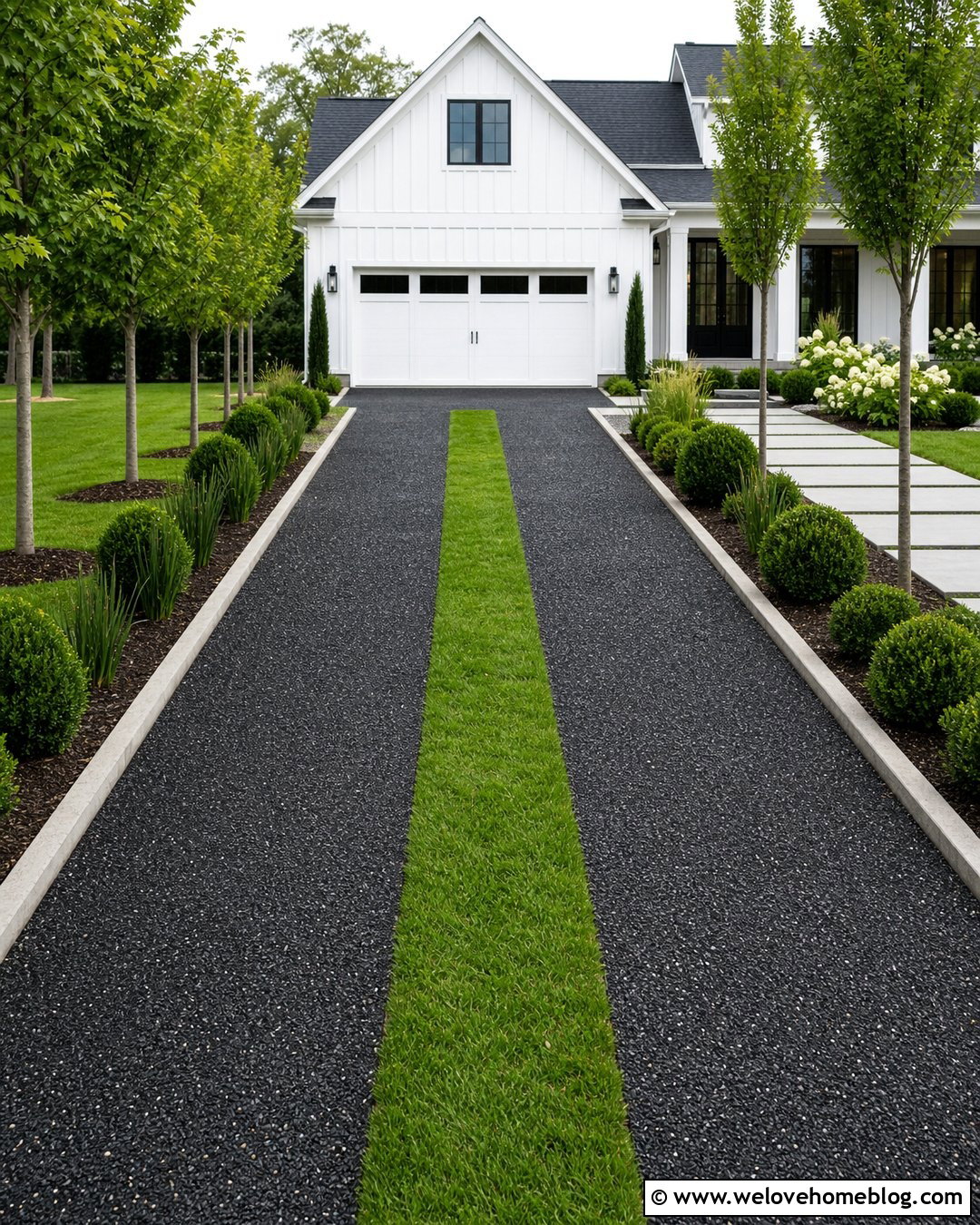
Narrow grass strips can lighten a broad black aggregate driveway while creating a fresh, landscape-focused appearance. Divide the surface into two aggregate wheel tracks with a green strip through the center, or use several straight grass bands across a wide parking court. Keep the layout simple so routine mowing and edging remain manageable. This design works best on relatively level properties where the green sections can follow the driveway cleanly. Add concrete or metal edging between the grass and aggregate to create precise boundaries. Continue the linear theme with rectangular planting beds, low hedges, and evenly spaced trees. A modern farmhouse, updated ranch, or minimalist home provides an ideal background. The living green breaks reduce the visual mass of the dark surface and help the driveway feel integrated with the lawn.
8. Black Aggregate Driveway With Bluestone Walkway
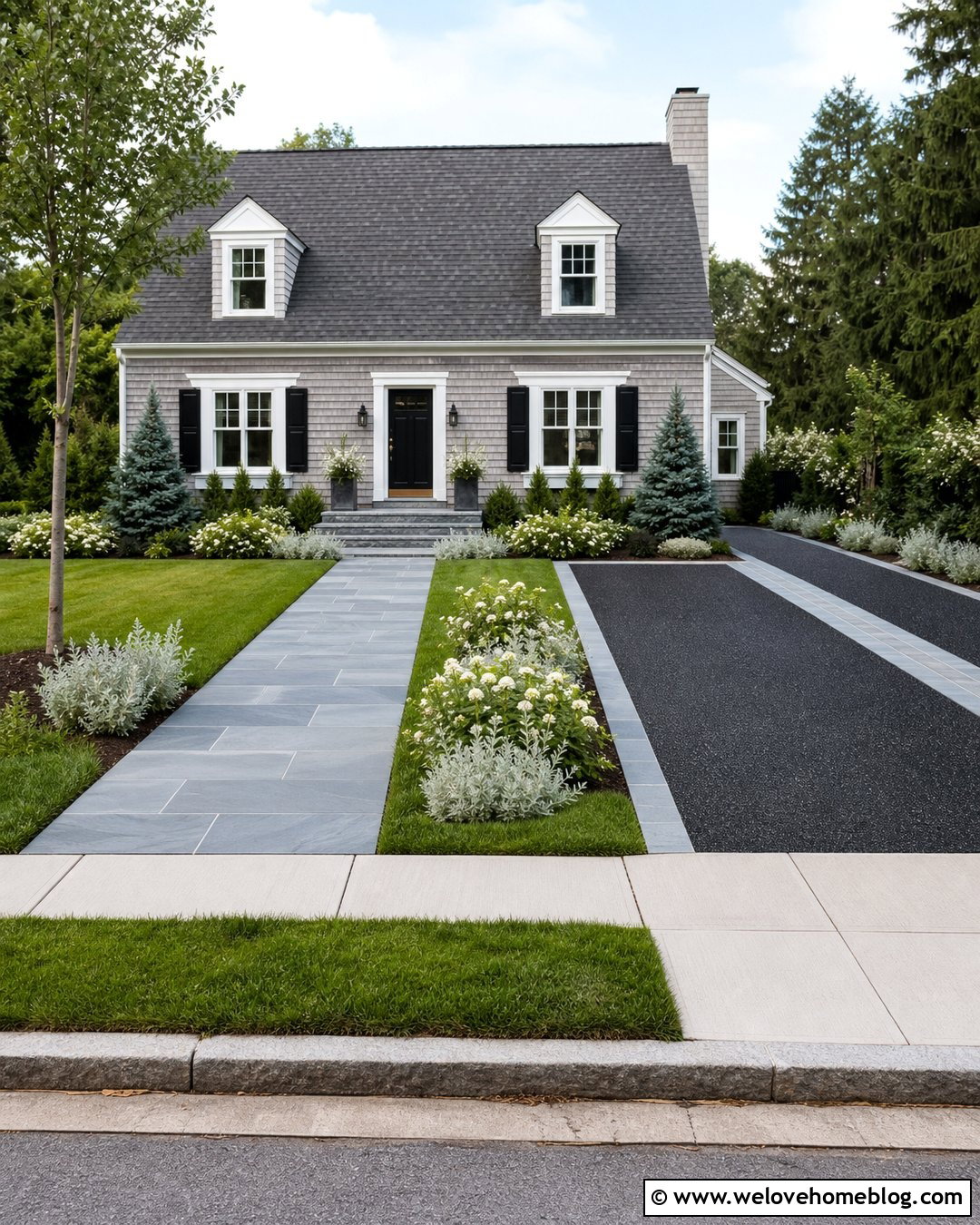
Cool gray-blue bluestone can create an elegant connection between a black aggregate driveway and the front door. Use large rectangular slabs for the walkway, placing them in a straight or gently offset pattern. Add a narrow bluestone ribbon along the driveway edges or across the garage entrance to tie the surfaces together. Soft green and silver foliage complements the cool material palette. Consider lamb’s ear, compact ornamental grasses, blue-green evergreens, and white flowering perennials in broad planting beds. This combination looks especially polished beside gray shingles, white trim, and natural stone siding. Keep the driveway layout straightforward so the walkway remains a clear secondary feature. Matching bluestone porch steps can complete the design, making the entire front approach feel unified from the curb to the entry rather than focused only on the vehicle area.
9. Black Aggregate Driveway With Timber Edging
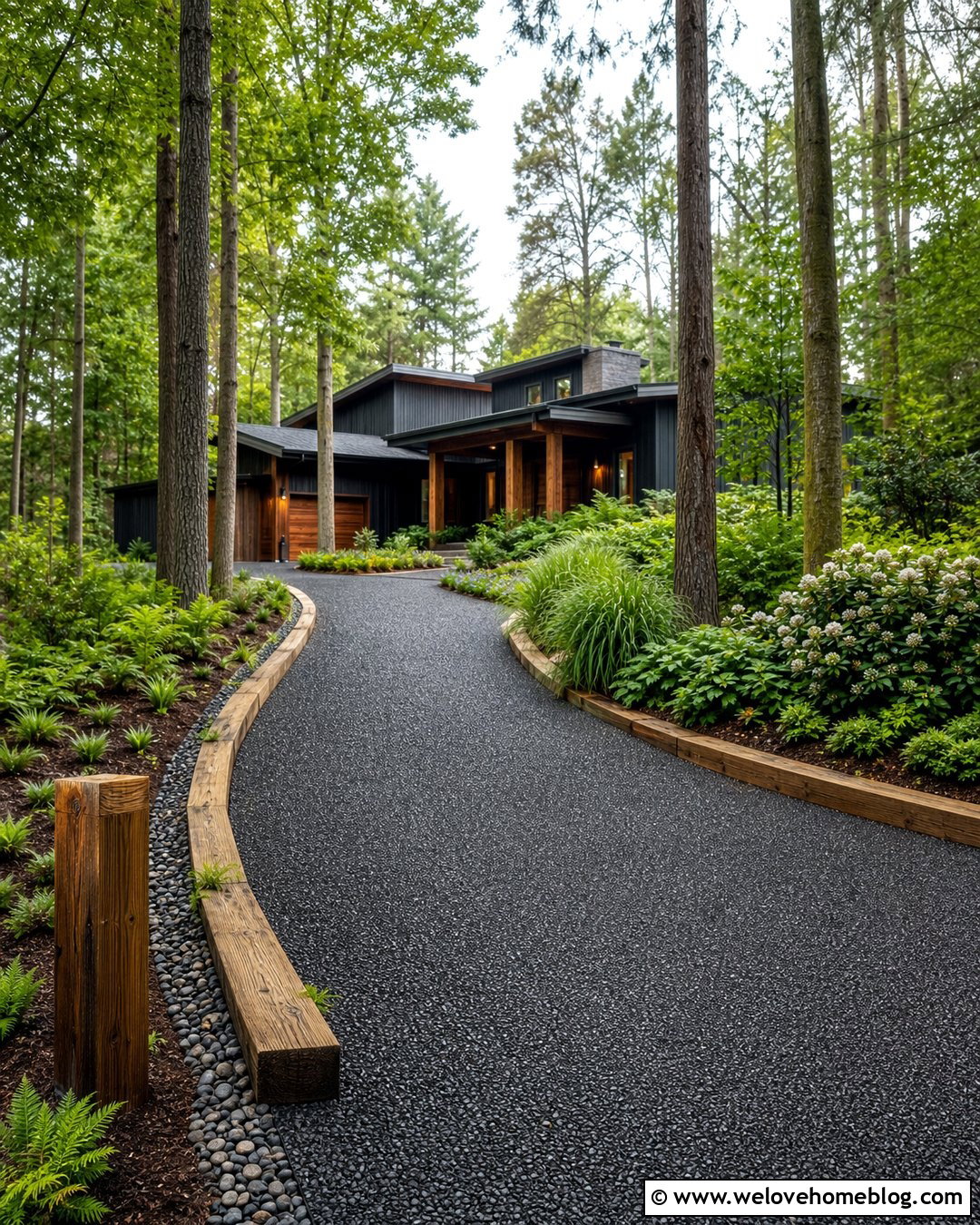
Timber edging introduces a relaxed, natural frame around a black aggregate driveway. Thick treated beams or durable landscape timbers work best along a straight or gently curving layout, particularly on rustic and wooded properties. Set the timber low and level so it defines the paving without becoming an obstacle. Behind the edging, build informal planting beds with ferns, native grasses, flowering shrubs, and ground covers. A gravel drainage strip can sit between the aggregate and plants where runoff needs additional management. Repeat the timber around a nearby path or address sign to connect the entrance elements. This complete look pairs well with cabins, contemporary woodland homes, and dark-sided modern farmhouses. The warm brown tones soften the black surface, while the surrounding greenery keeps the approach casual, practical, and closely connected to its setting.
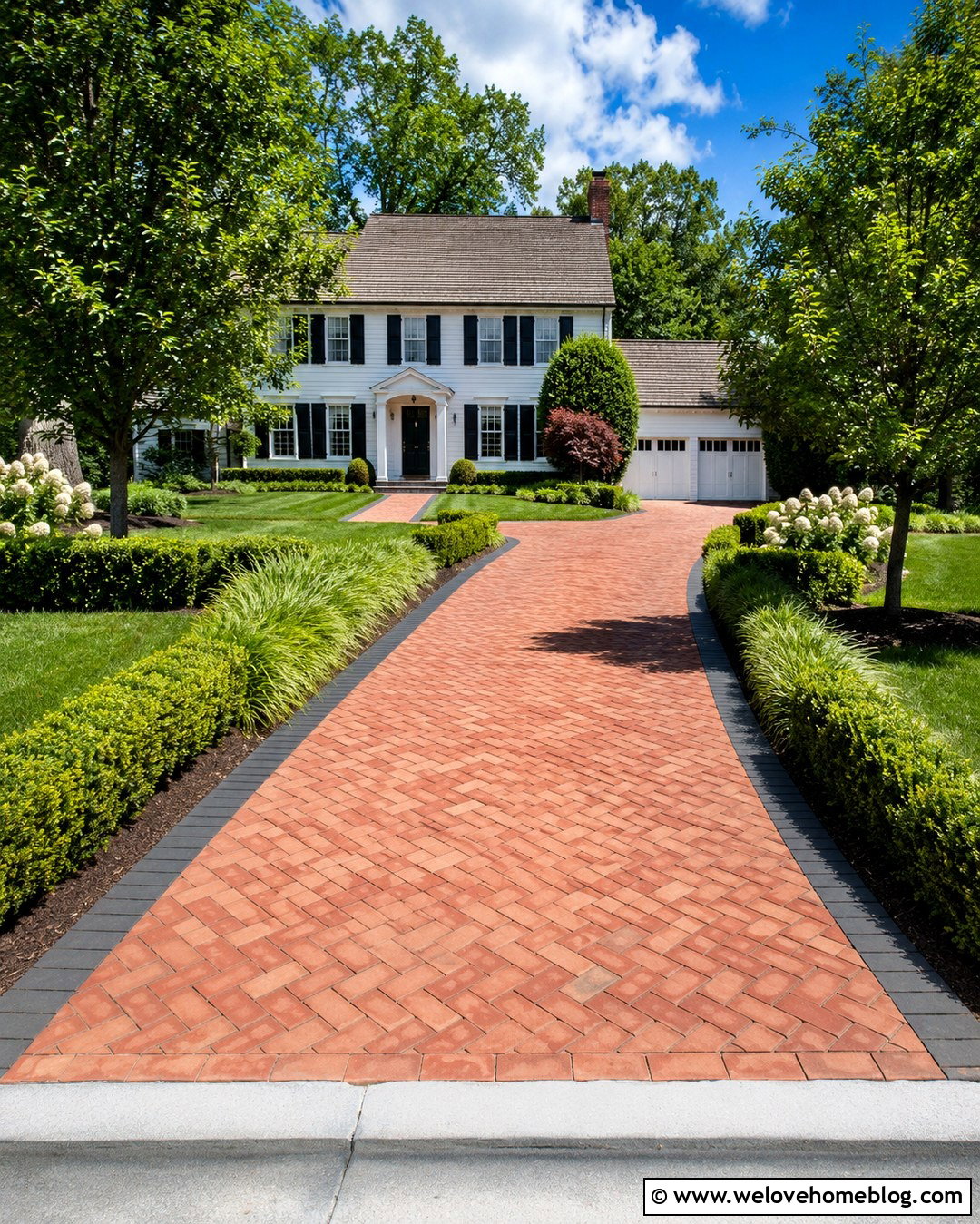
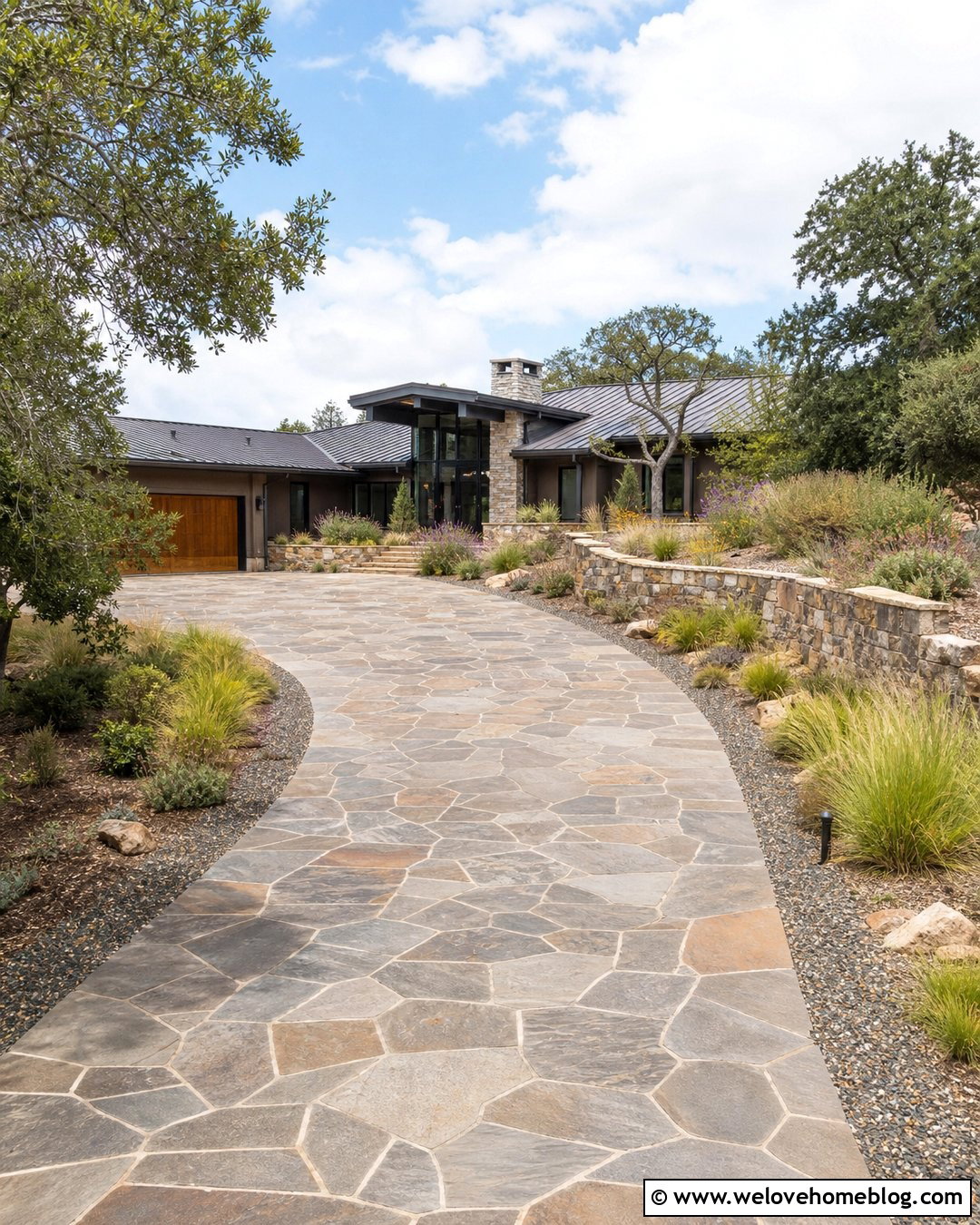
10. Black Aggregate Driveway With Desert Landscaping
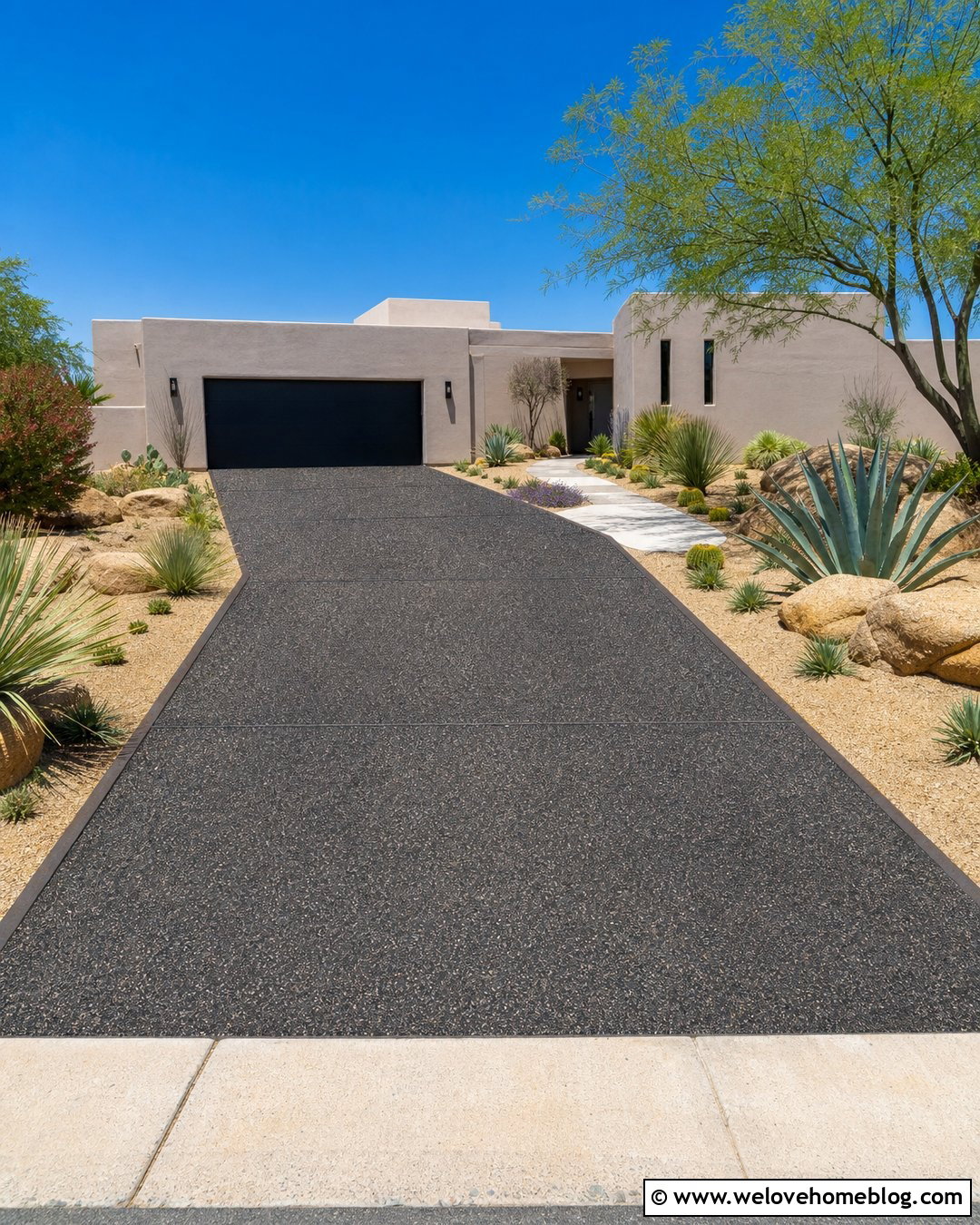
Black aggregate creates dramatic contrast against pale gravel and sculptural desert plants. Use a straight driveway with clean steel or concrete edging, then surround it with decomposed granite in tan or warm gray. Arrange agave, yucca, desert spoon, barrel cactus, and drought-tolerant grasses in widely spaced groups. A few large boulders can anchor the beds and connect the driveway to the natural terrain. Keep plants back from corners and the street entrance so drivers maintain clear sightlines. This look suits low-profile modern, adobe-inspired, and Southwestern homes with stucco walls. Because dark paving can become very warm in strong sun, discuss local material choices, exposure, and site conditions with an experienced installer. A light-colored walkway and pale garage doors can visually balance the black surface while preserving the bold desert palette.
11. Black Aggregate Driveway With Lavender Borders
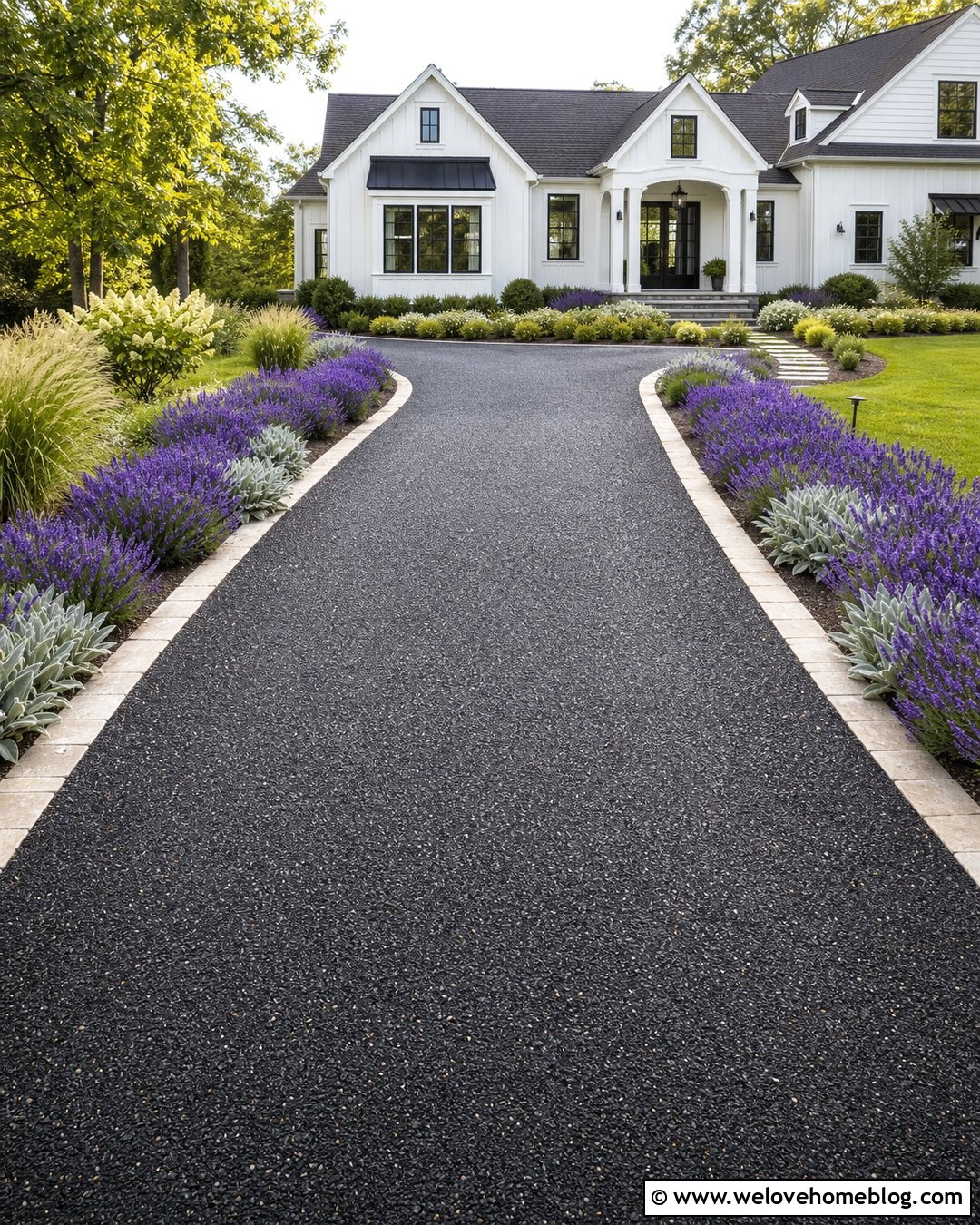
Rows of lavender can soften a dark driveway with color, fragrance, and a relaxed garden character. Run broad planting beds along both sides of a straight or gently curved black aggregate surface. Use pale stone edging to separate the plants from the driveway and repeat that stone around the walkway. Mix lavender with silvery foliage, compact evergreen shrubs, and ornamental grasses so the borders remain attractive beyond the flowering season. Leave enough space between mature plants and the pavement to prevent branches from spreading into the driving area. This combination looks natural beside a cottage, Cape Cod, modern farmhouse, or light-colored stucco home. The purple blooms stand out beautifully against black stone, while the soft planting form balances the driveway’s solid geometry. Keep the entrance open and uncluttered for a welcoming curb view.
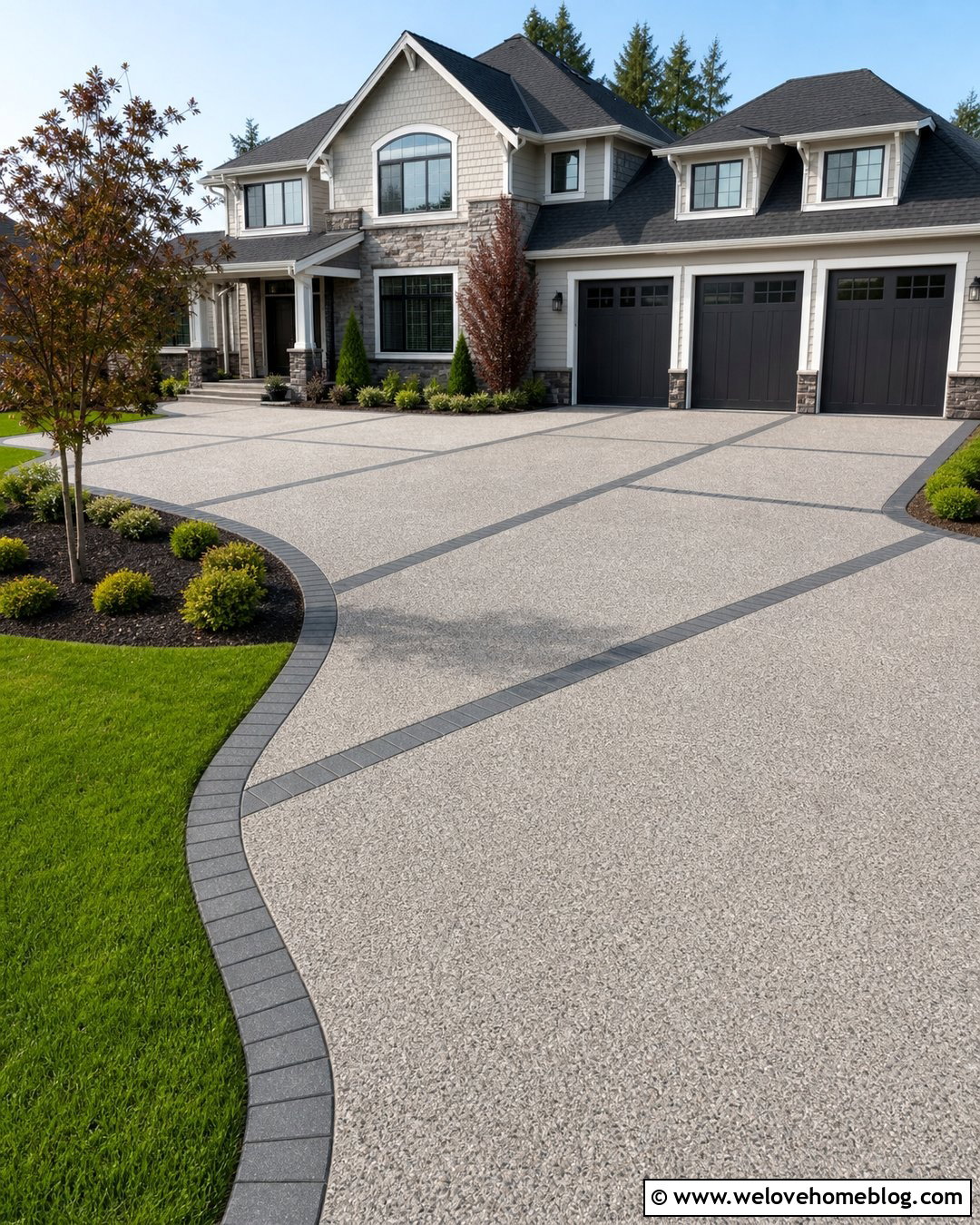
12. Black Aggregate Driveway With Modern Grid Lines
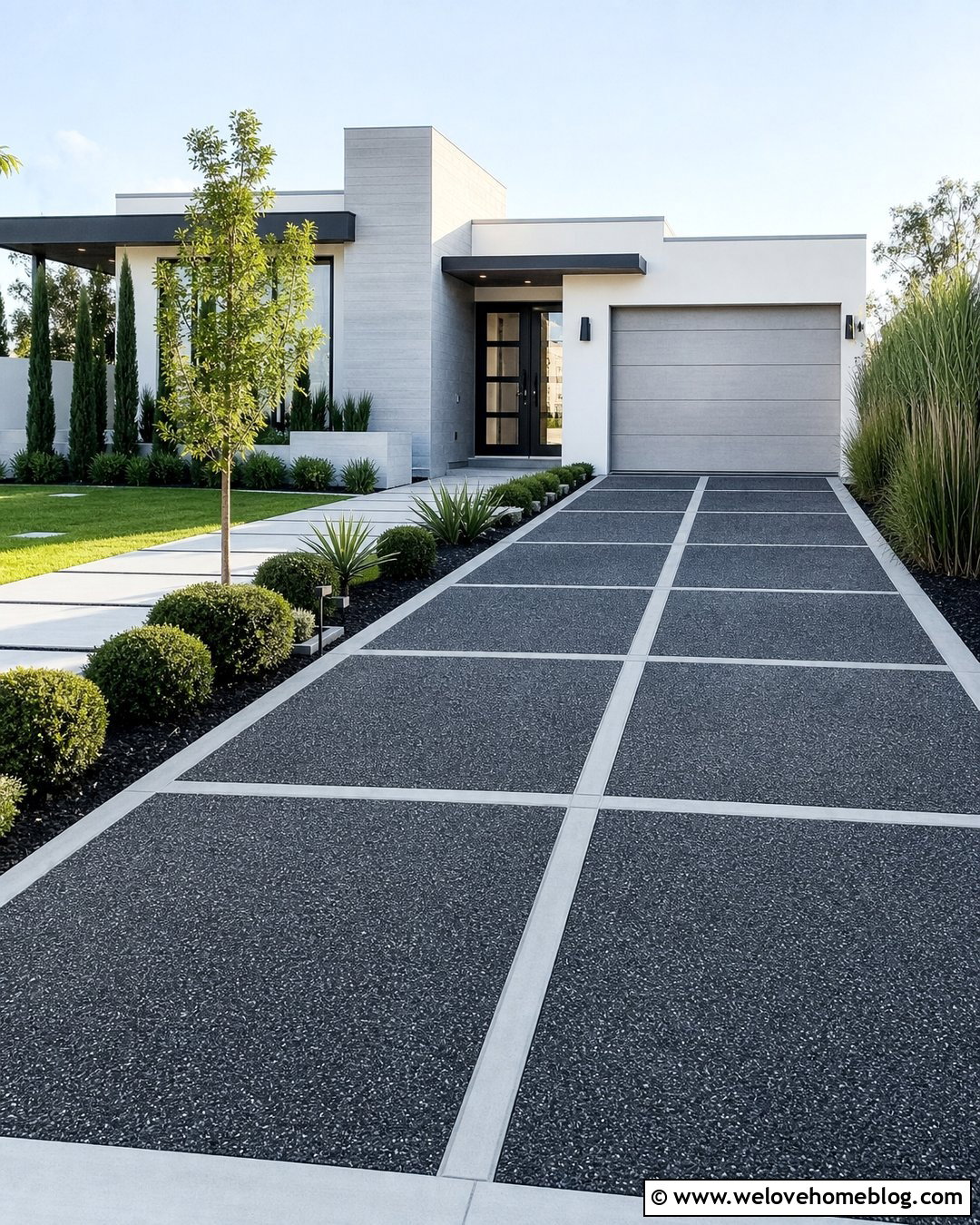
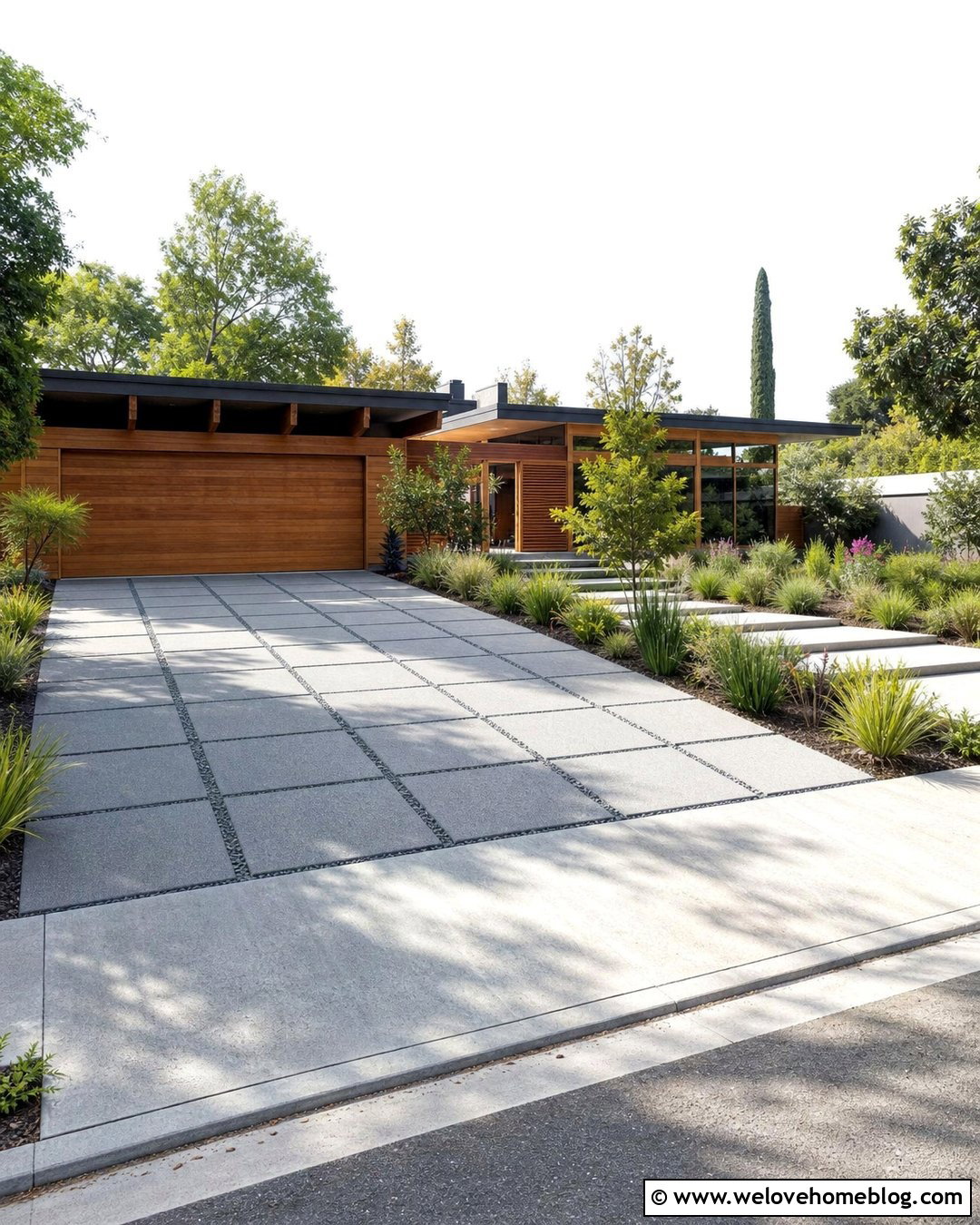
Clean grid lines can organize a wide black aggregate driveway and give it a precise contemporary appearance. Form the surface as large rectangular panels separated by narrow light-gray concrete bands. Align the grid with garage doors, windows, walkway edges, or facade joints so the pattern relates directly to the architecture. A wide, straight layout works best because the full geometry remains visible from the curb. Surround the driveway with linear beds containing clipped shrubs, upright grasses, and a few sculptural plants. Large concrete stepping slabs can form the route to the entrance. Avoid adding too many colors or decorative details, since the grid already provides visual movement. This coordinated look suits flat-roofed modern homes, minimalist facades, and angular contemporary landscaping. Careful planning helps necessary joints feel like intentional parts of the overall design.
13. Black Aggregate Driveway With Natural Stone Pillars
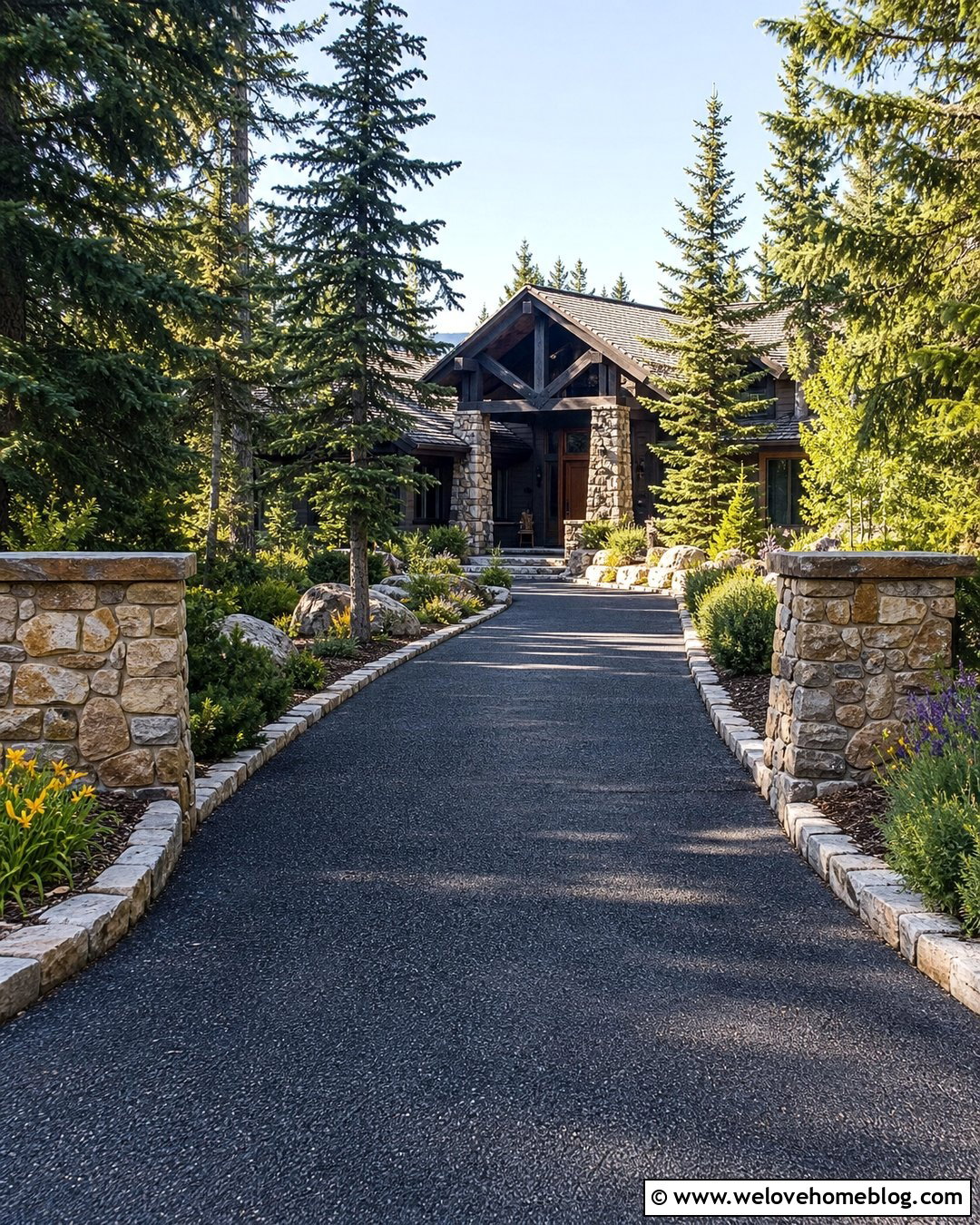
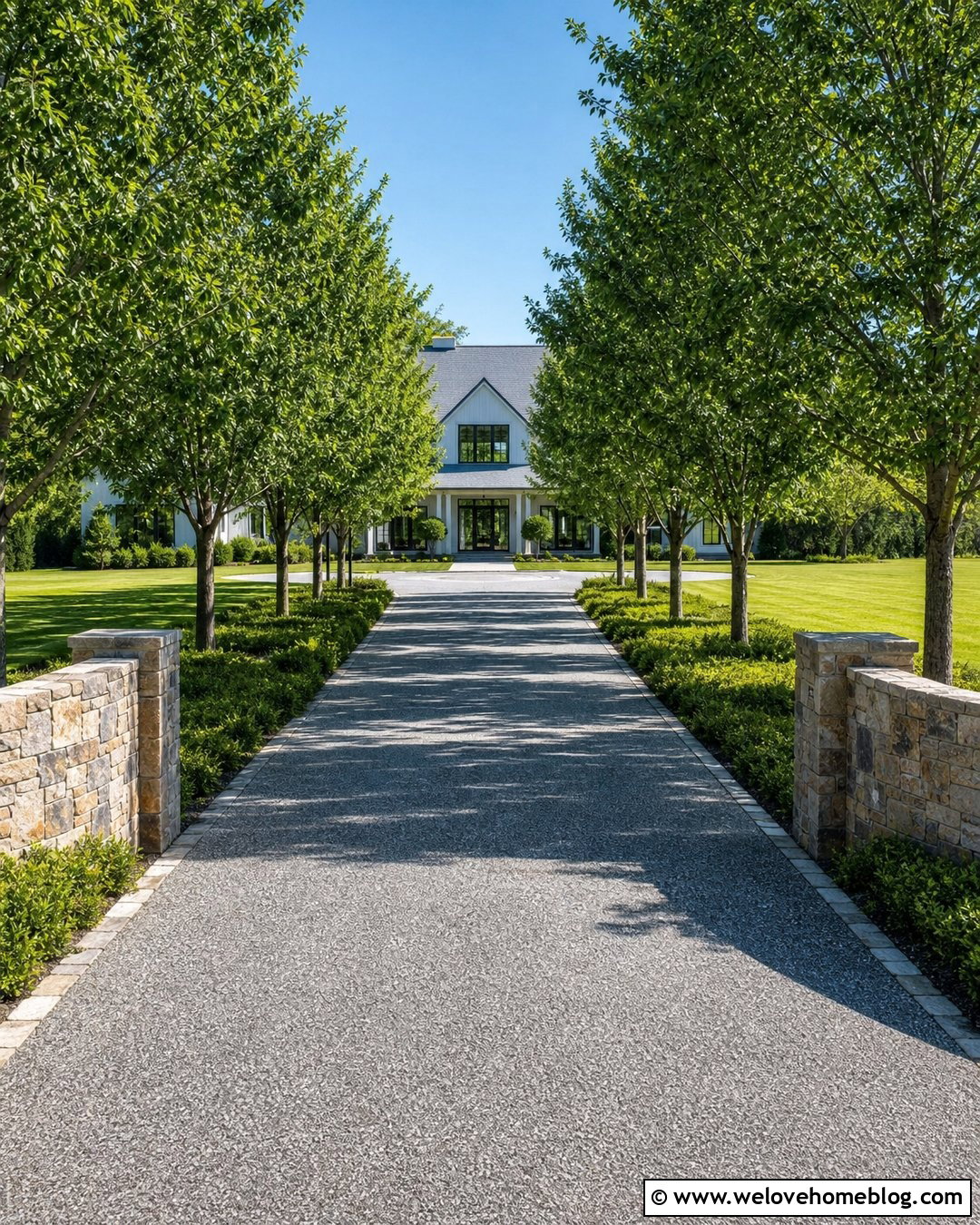
Stone entrance pillars can give a long black aggregate driveway a clear starting point and a stronger connection to the house. Use natural stone that matches the facade, retaining walls, or porch foundation. Position the pillars outside the required driveway clearance and keep them proportional to the width of the entrance. A gently flared apron provides extra breathing room around the masonry. Continue low stone edging from each pillar into landscaped beds filled with evergreen shrubs, ornamental grasses, and seasonal flowers. Simple lanterns or low-voltage fixtures can be integrated without overwhelming the entrance. Farther up the drive, repeat the stone at the walkway or garage corners. This full design works beautifully for craftsman, mountain, country, and traditional homes. The dark aggregate creates a grounded approach, while the pillars add structure and identity.
14. Black Aggregate Driveway With Black Metal Gate
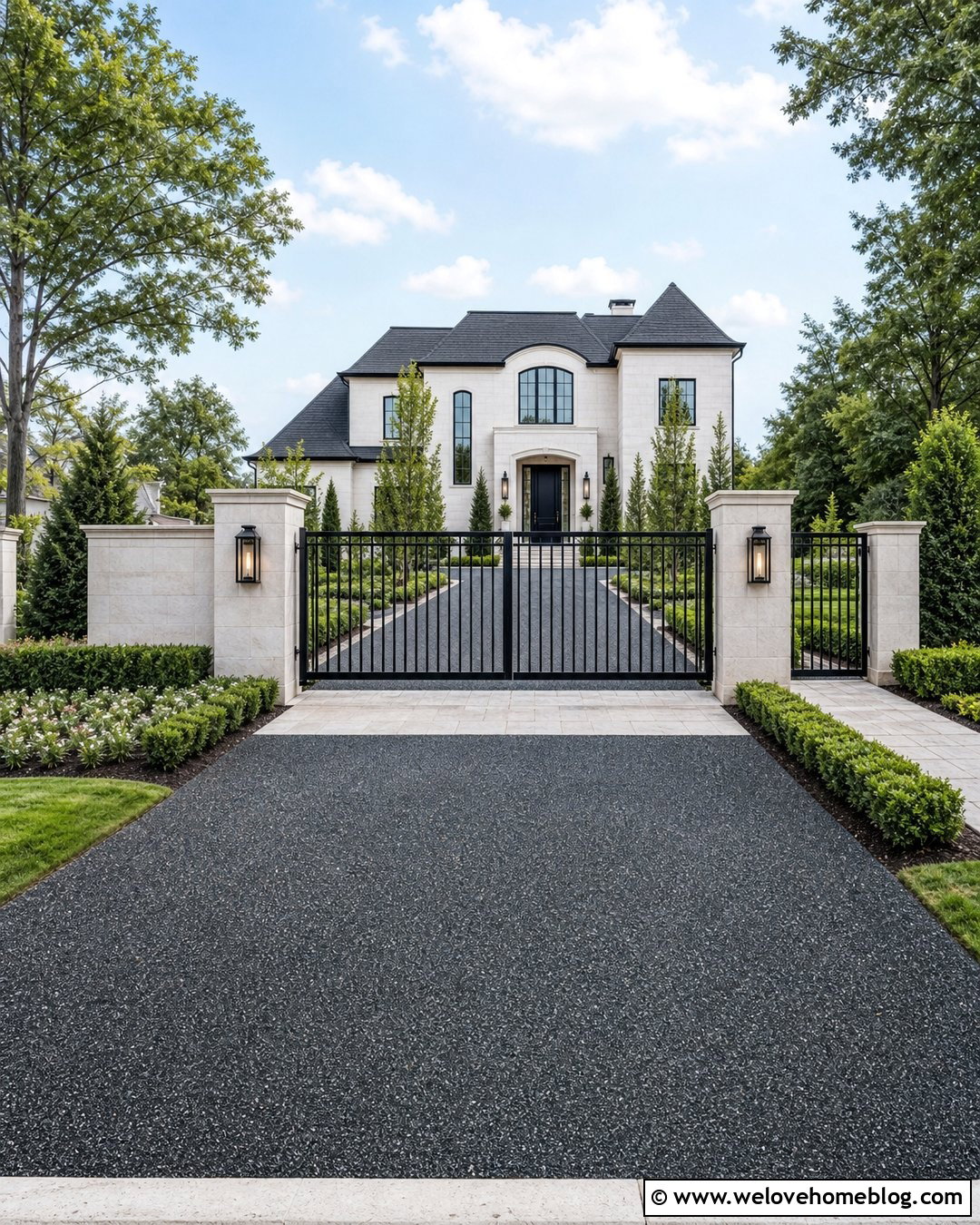
A black metal gate creates a seamless, refined entrance when paired with black exposed aggregate concrete. Choose a simple horizontal, vertical, or lightly detailed design that suits the home rather than using an overly ornate pattern. Set the gate between masonry or concrete pillars that echo materials on the facade. The driveway can remain straight or curve gently after the entrance to reveal the house gradually. Frame the gate with low hedges and symmetrical planting beds, keeping taller vegetation away from moving hardware and visibility zones. Add a matching pedestrian gate beside a connected walkway when space allows. A lighter stone apron under the gate can define the threshold and prevent the dark elements from blending together. This complete look suits modern, transitional, and upscale traditional properties with a controlled, cohesive landscape plan.
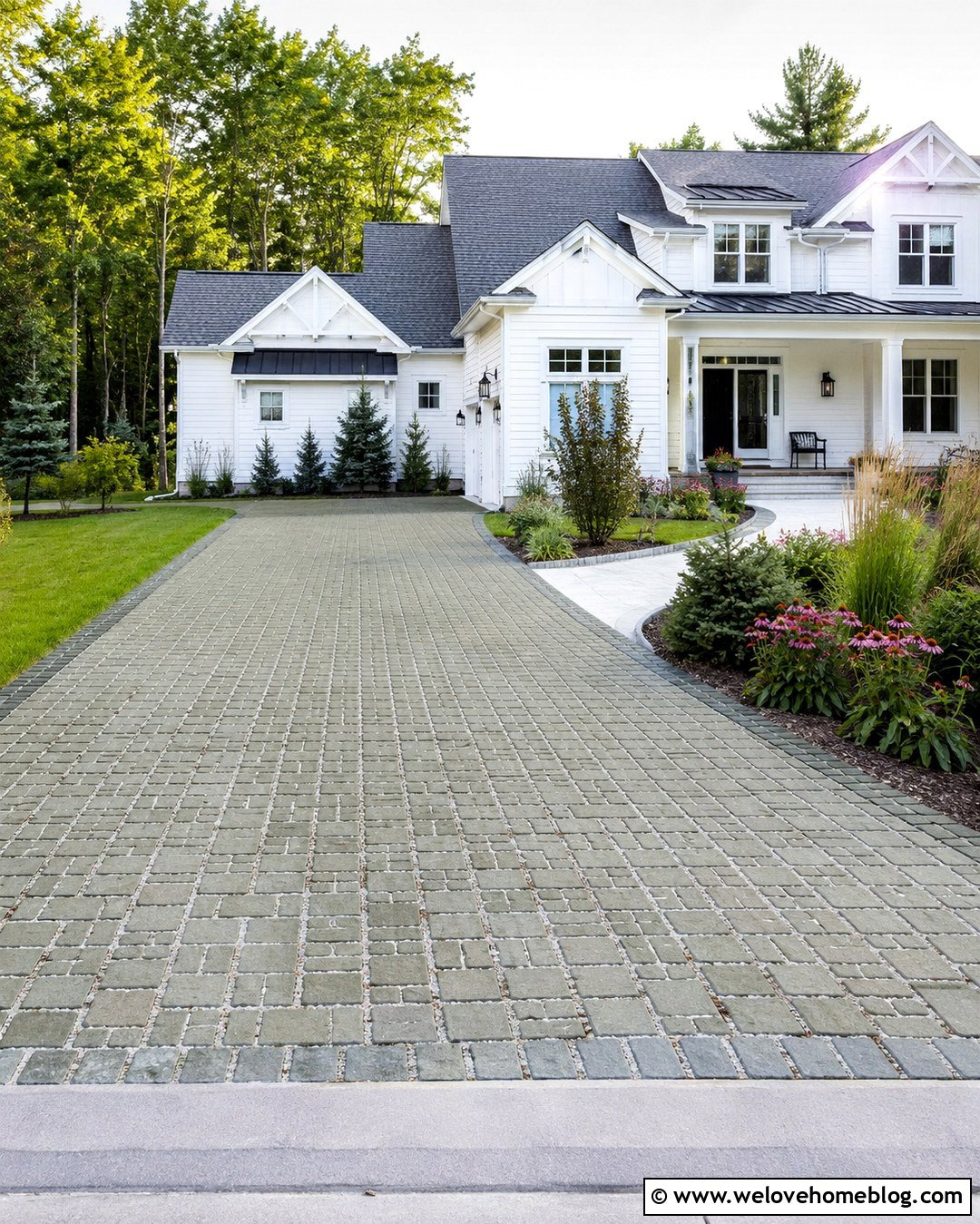
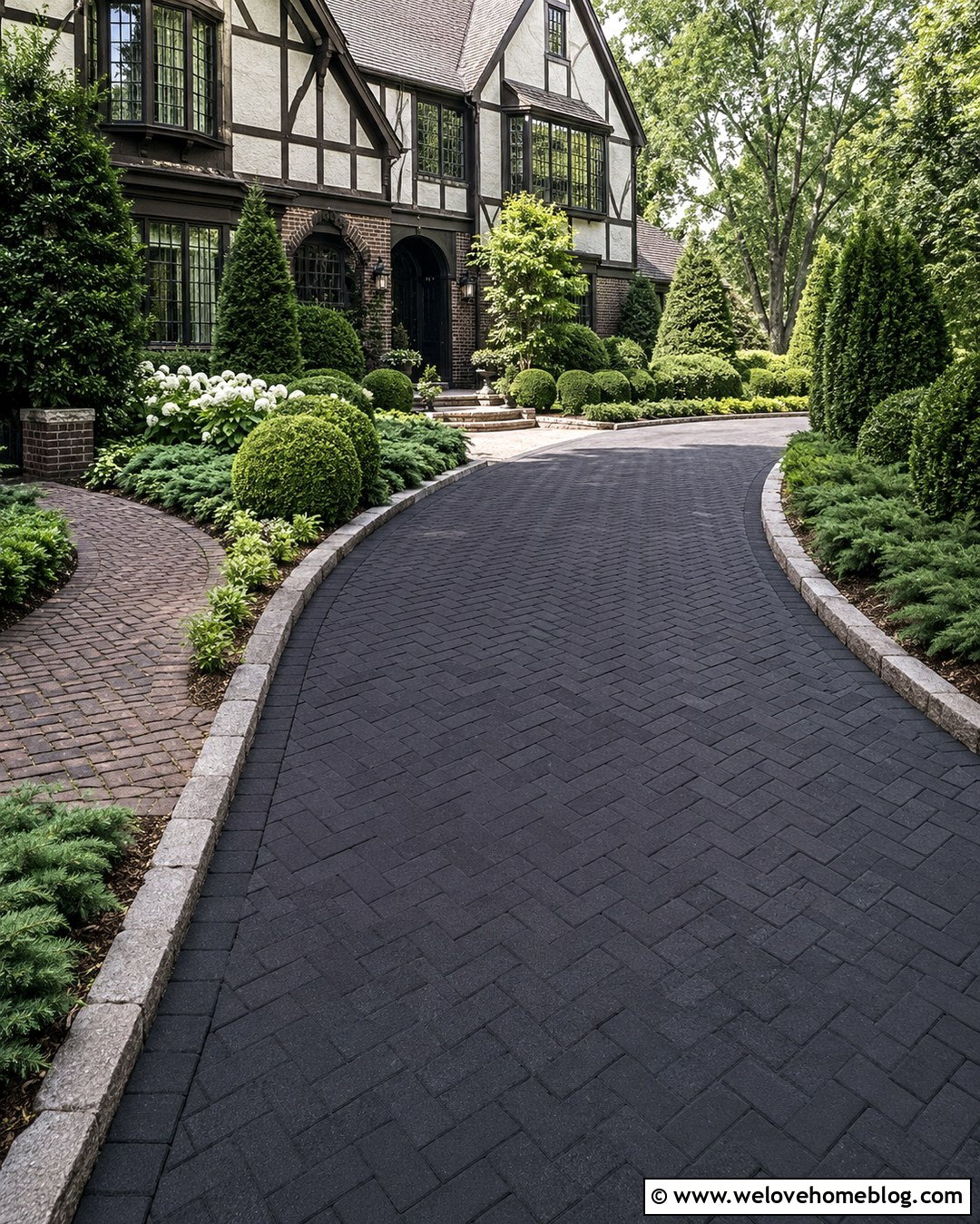
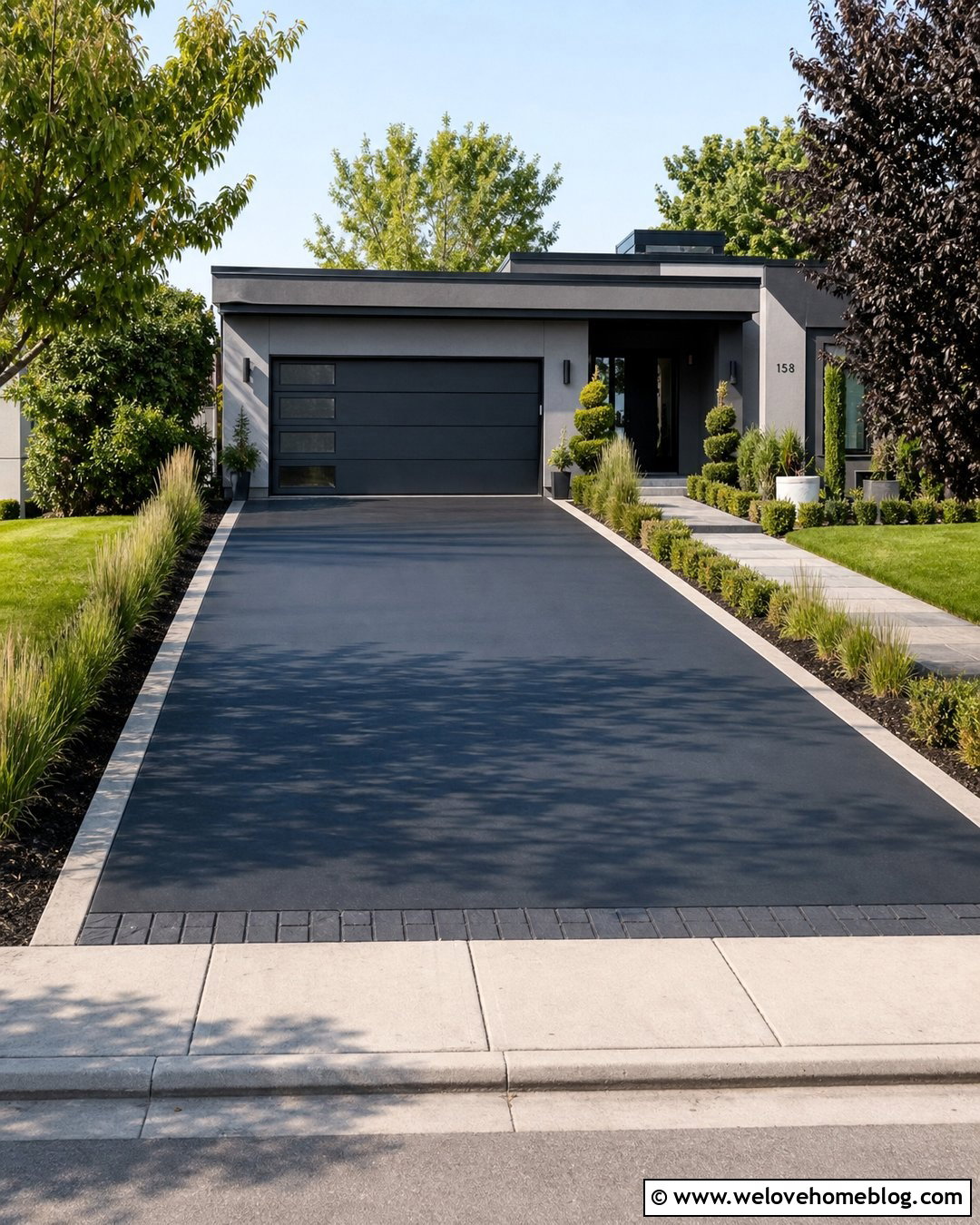
15. Black Aggregate Driveway With Integrated Lighting
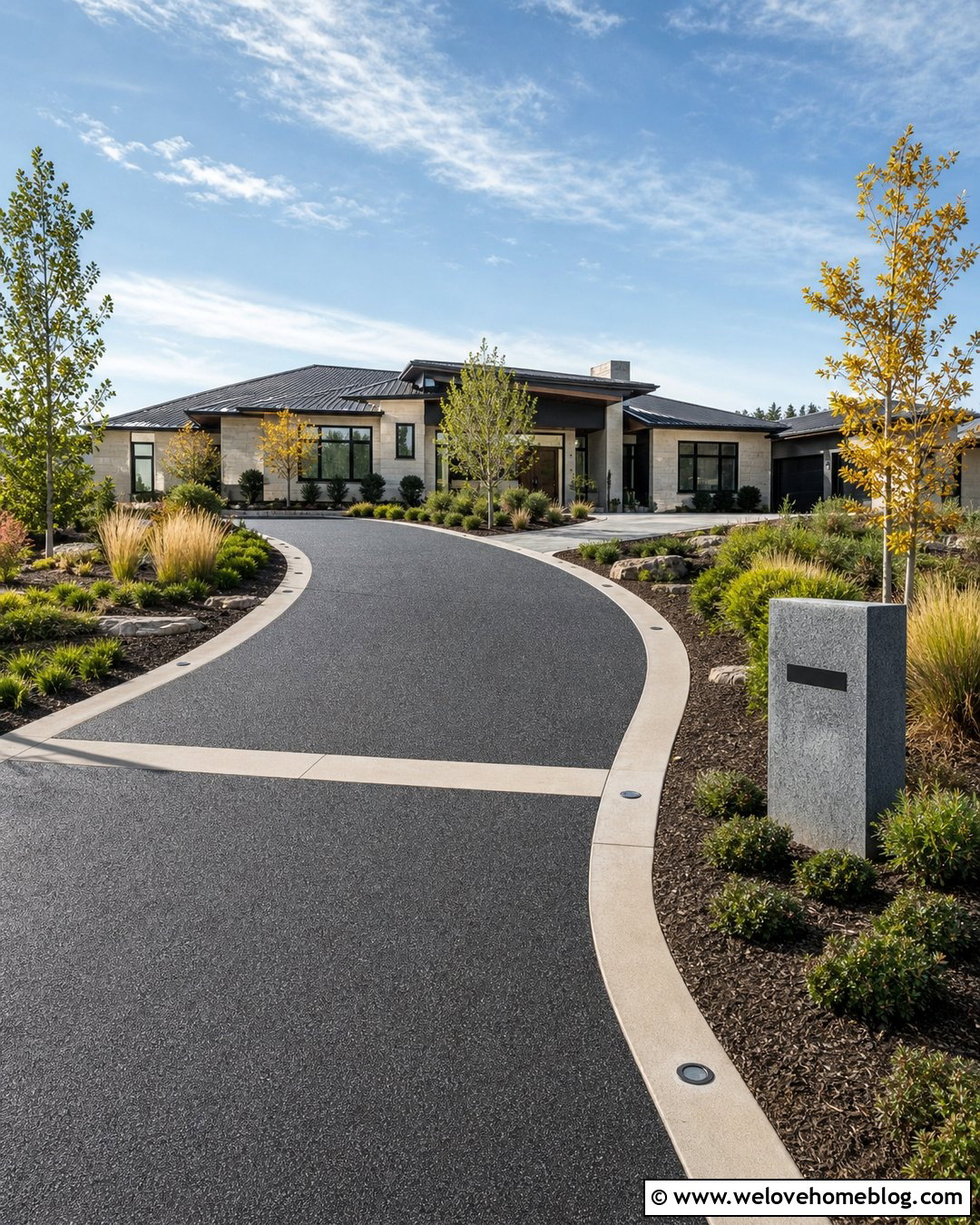
Integrated lighting helps define the edges of a black aggregate driveway while supporting a clean daytime appearance. During the day, small recessed fixtures should sit discreetly within a concrete or paver border. Position them along curves, near the entrance, and around walkway intersections rather than scattering them randomly. Pair the dark surface with pale edging so the driveway boundaries remain visible even when the lights are off. Layer the design with low landscape lighting around shrubs, trees, steps, and the address sign. A straight modern driveway can use evenly spaced fixtures, while a curved approach benefits from lights that emphasize each change in direction. Choose shielded, appropriately rated outdoor fixtures and have electrical work planned professionally. The resulting design feels polished and coordinated without relying on bulky posts or decorative lighting that competes with the architecture.
16. Black Aggregate Driveway With Drainage Channel
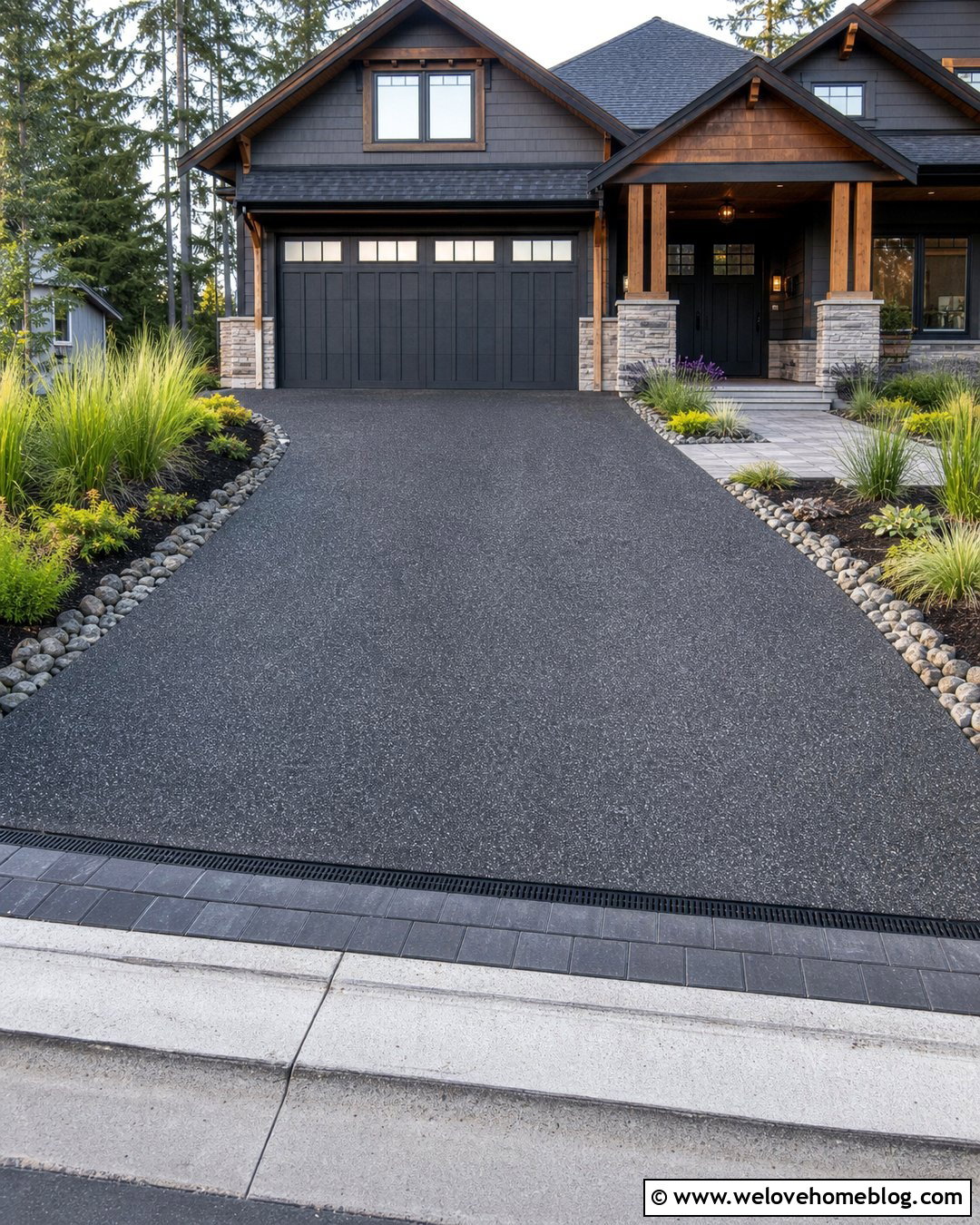
A visible drainage channel can become a deliberate design feature instead of an awkward interruption. Place a slim linear drain across the lower edge of a sloped black aggregate driveway or beside the garage threshold, depending on the site’s drainage plan. Select a black or stainless-steel grate that coordinates with the surface and nearby architectural details. Frame the channel with a narrow band of charcoal pavers for a clean transition. Along the sides, use stone-lined planting beds, moisture-tolerant grasses, and low shrubs to visually connect water management with the landscape. Keep the driveway shape simple and direct so runoff routes remain easy to understand. A contemporary ranch or modern craftsman home provides a fitting backdrop. Final grading, drain capacity, and discharge location should always be determined for the specific property and local requirements.
17. Sloped Black Aggregate Driveway With Retaining Walls
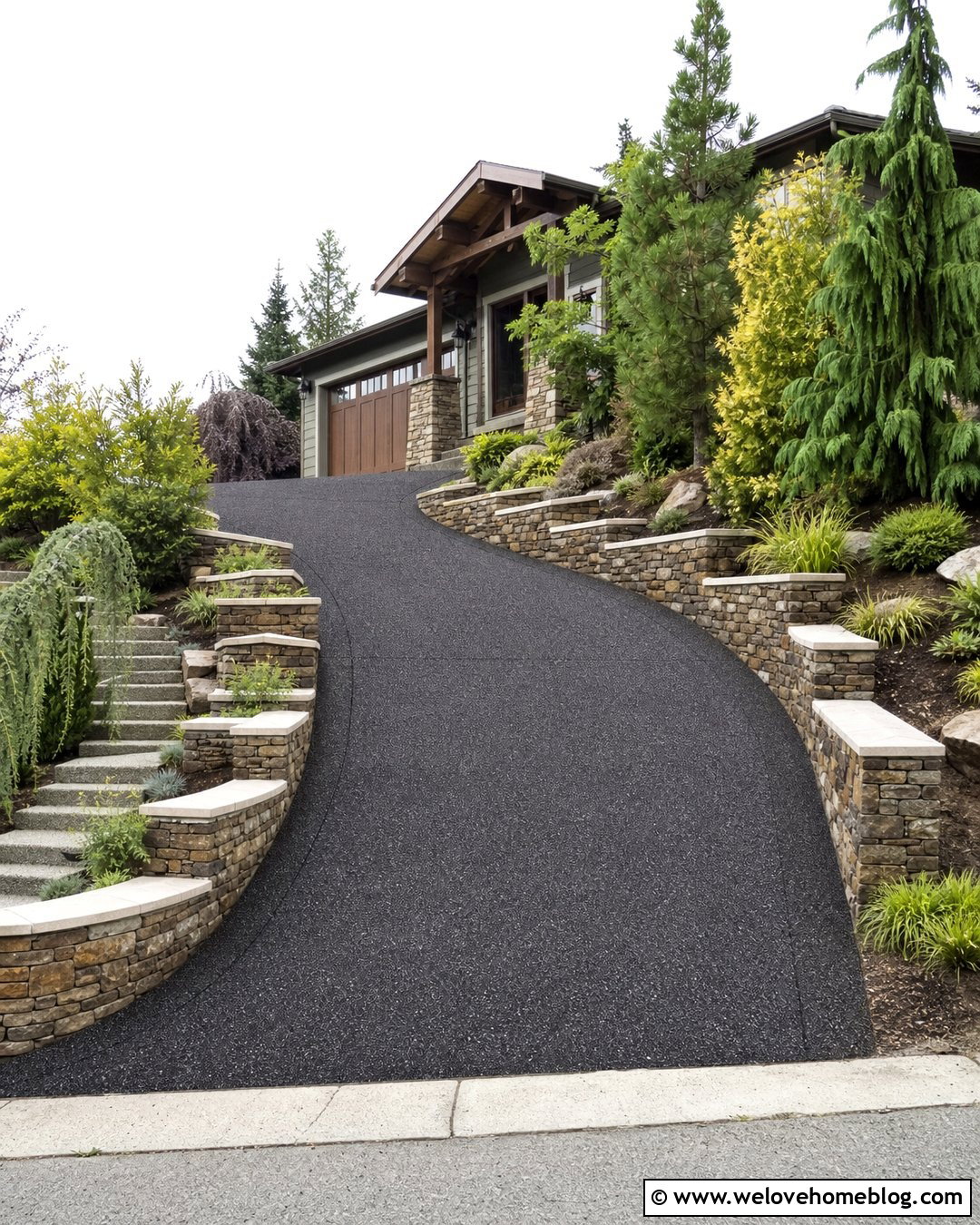
A sloped driveway can feel integrated and secure when retaining walls, borders, and planting are designed together. Use black aggregate on a straight or gently curving incline, then frame it with low natural stone or concrete walls. Step the walls gradually with the grade rather than creating one tall, visually heavy structure. Plant the terraces with spreading evergreens, ornamental grasses, and erosion-conscious ground covers. A light coping stone along the wall tops will contrast with the black driveway and improve its visibility. At the garage, widen the surface slightly to create a comfortable transition onto level ground. Match the front walkway steps to the retaining wall material for continuity. This full look works for hillside craftsman, contemporary, and mountain homes where the driveway must become part of the property’s overall grading strategy.
18. Small Black Aggregate Driveway With Narrow Borders
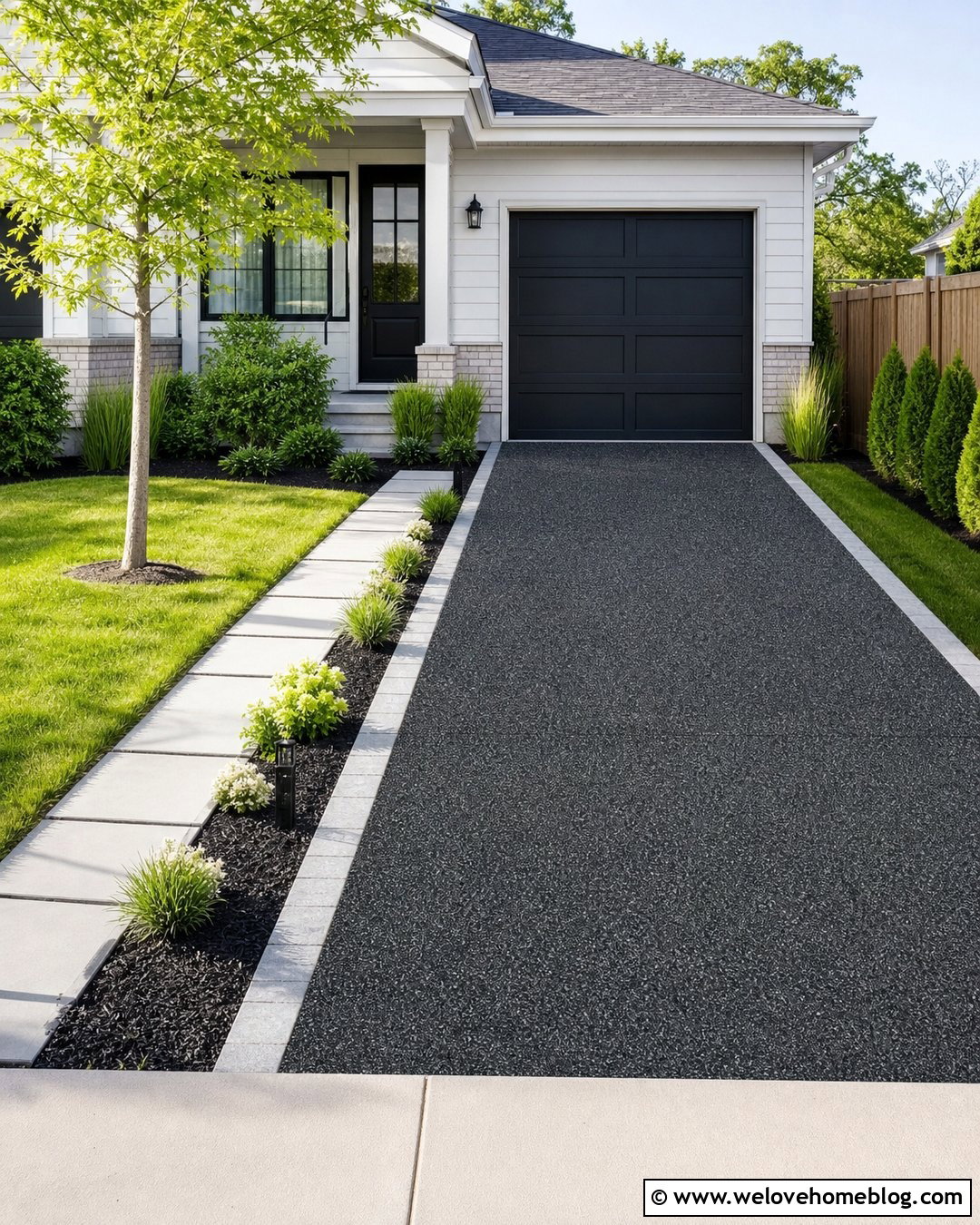
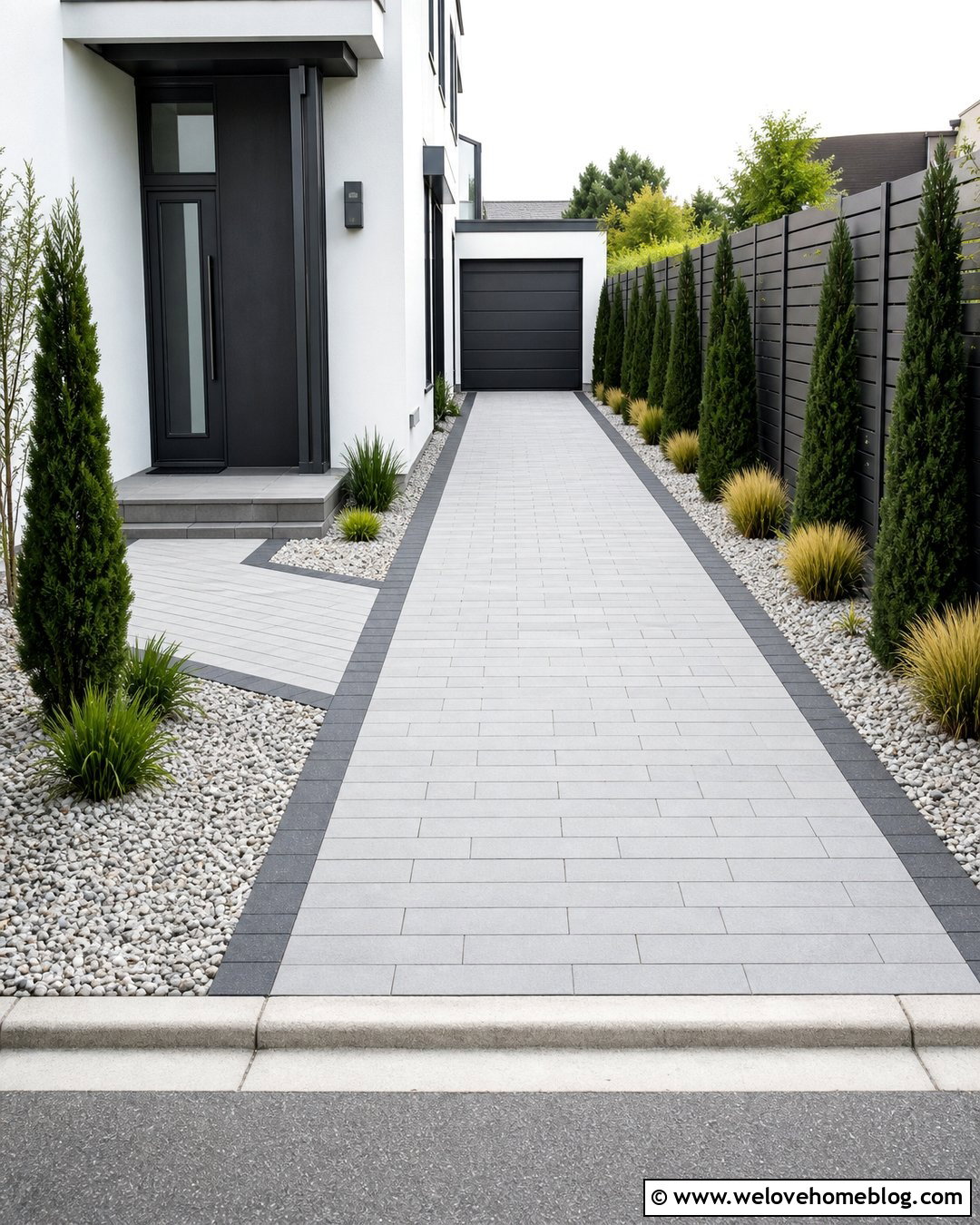
A compact front yard benefits from a simple black aggregate driveway with slim, carefully chosen borders. Use a straight single- or double-width layout that aligns cleanly with the garage. Add a narrow row of light-gray pavers along each edge to prevent the dark surface from visually merging with planting beds. Instead of deep landscaping, choose upright grasses, compact shrubs, and one small ornamental tree. A parallel walkway can use large pale slabs separated from the driveway by a thin planted strip. Keep bins, utility boxes, and drainage components screened without crowding the approach. This complete design suits townhomes, bungalows, and small suburban houses where every inch matters. Limiting the material palette to black aggregate, pale pavers, green plants, and the home’s facade color makes the entrance appear orderly and more spacious.
19. Wide Black Aggregate Driveway With Paver Ribbons
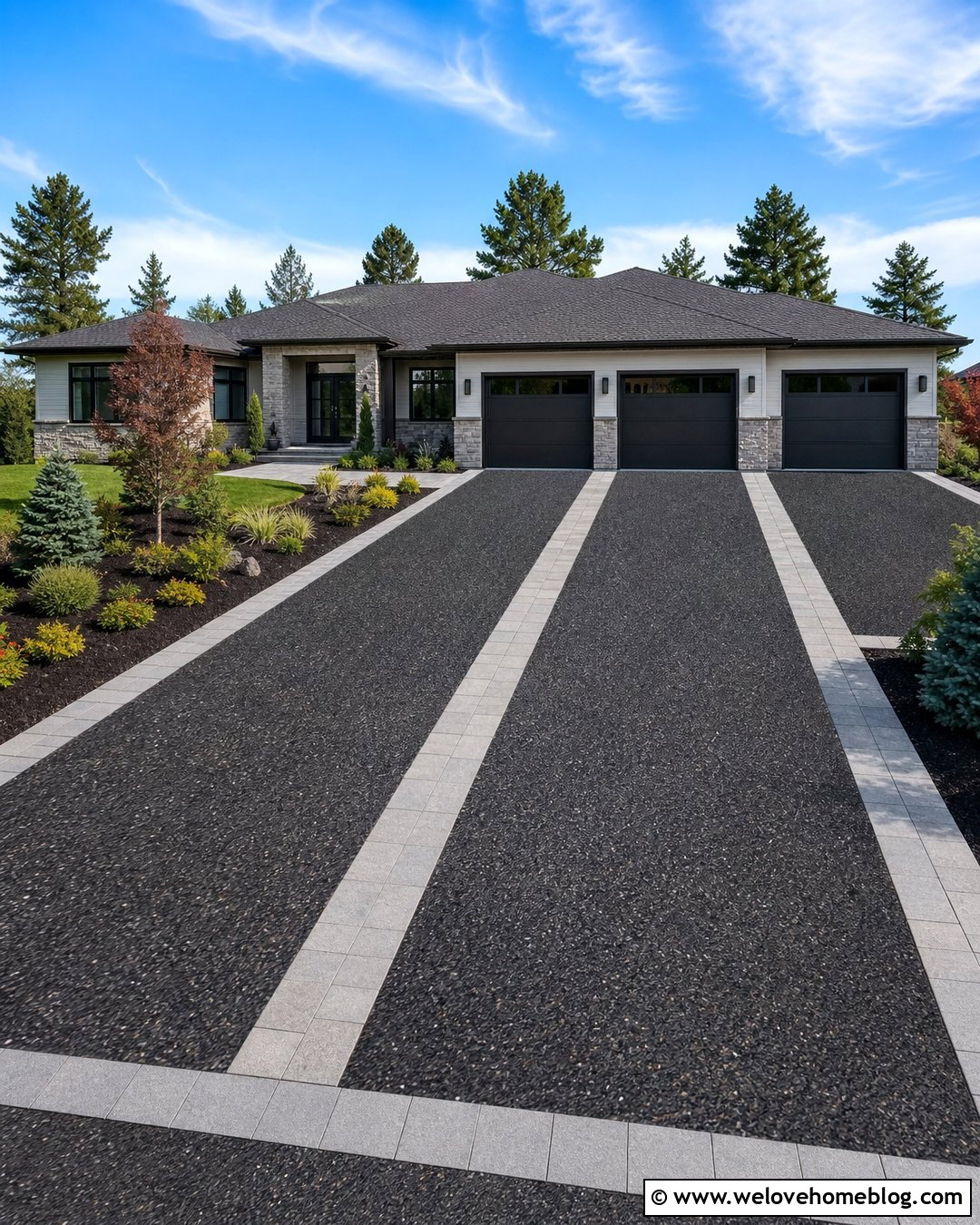
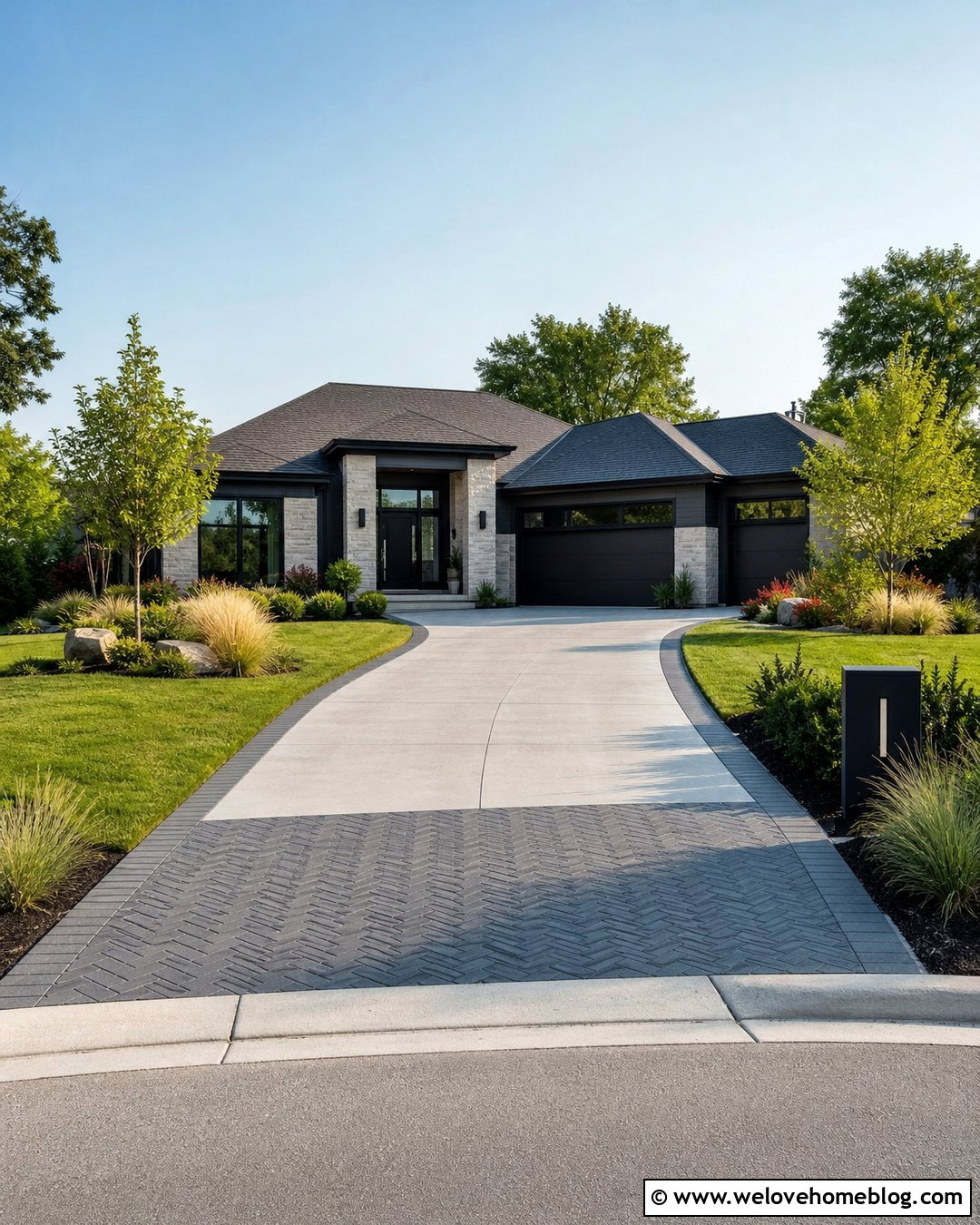
Paver ribbons can break a wide black aggregate driveway into more comfortable visual sections. Run light-gray or warm beige pavers across the surface at regular intervals, aligning them with architectural features such as garage bays or columns. The bands can also mark parking zones and connect visually with the front walkway. Frame the perimeter with the same pavers to create a complete pattern rather than isolated stripes. Broad planting beds with small trees, evergreen shrubs, and ground covers will soften the large paved area. This treatment works well for three-car garages, expansive ranch homes, and broad contemporary facades. Keep the ribbon spacing generous so the driveway does not look overly segmented. A consistent paver color and simple laying pattern allow the exposed black aggregate texture to remain the dominant material.
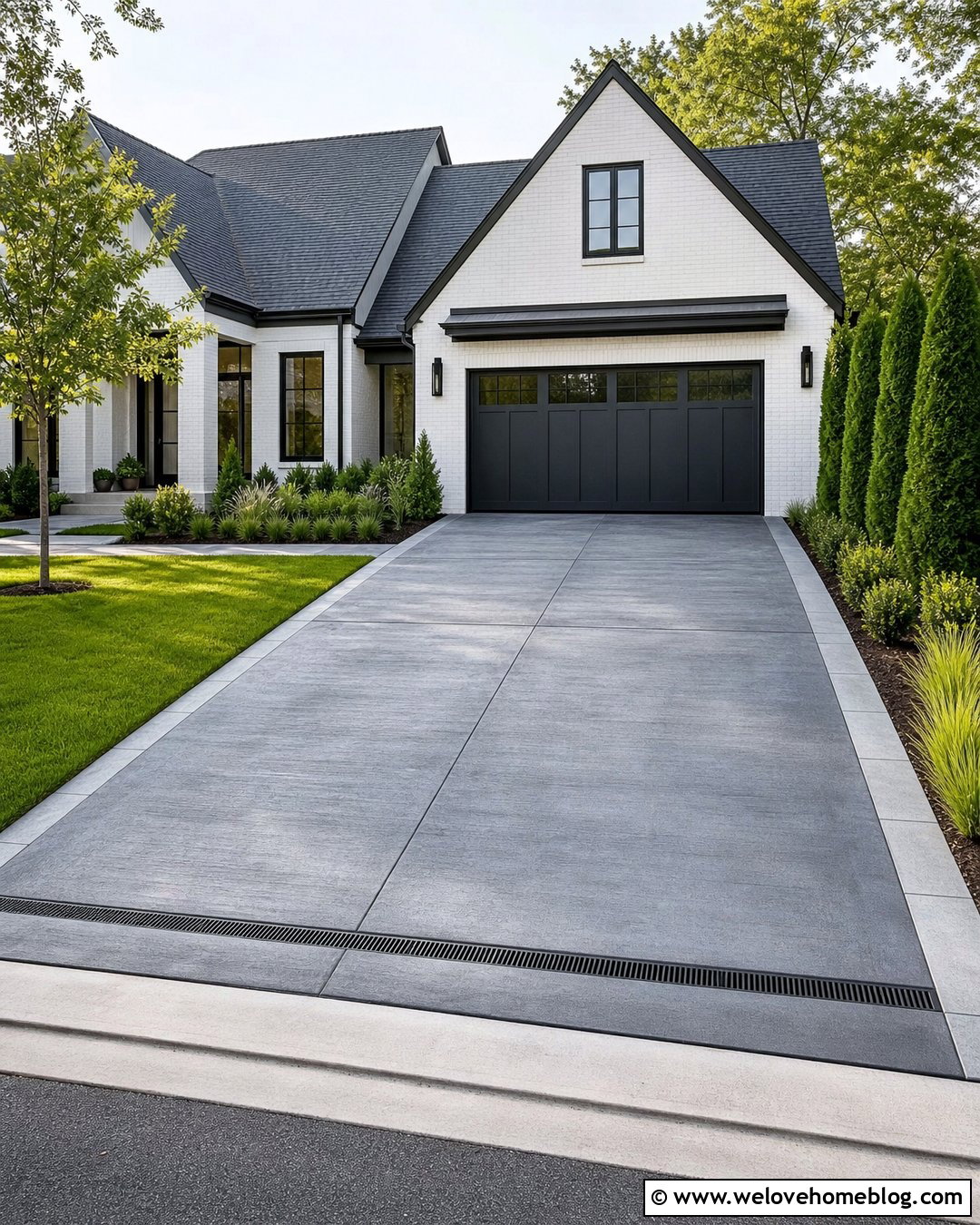
20. Black Aggregate Driveway With Farmhouse Landscaping
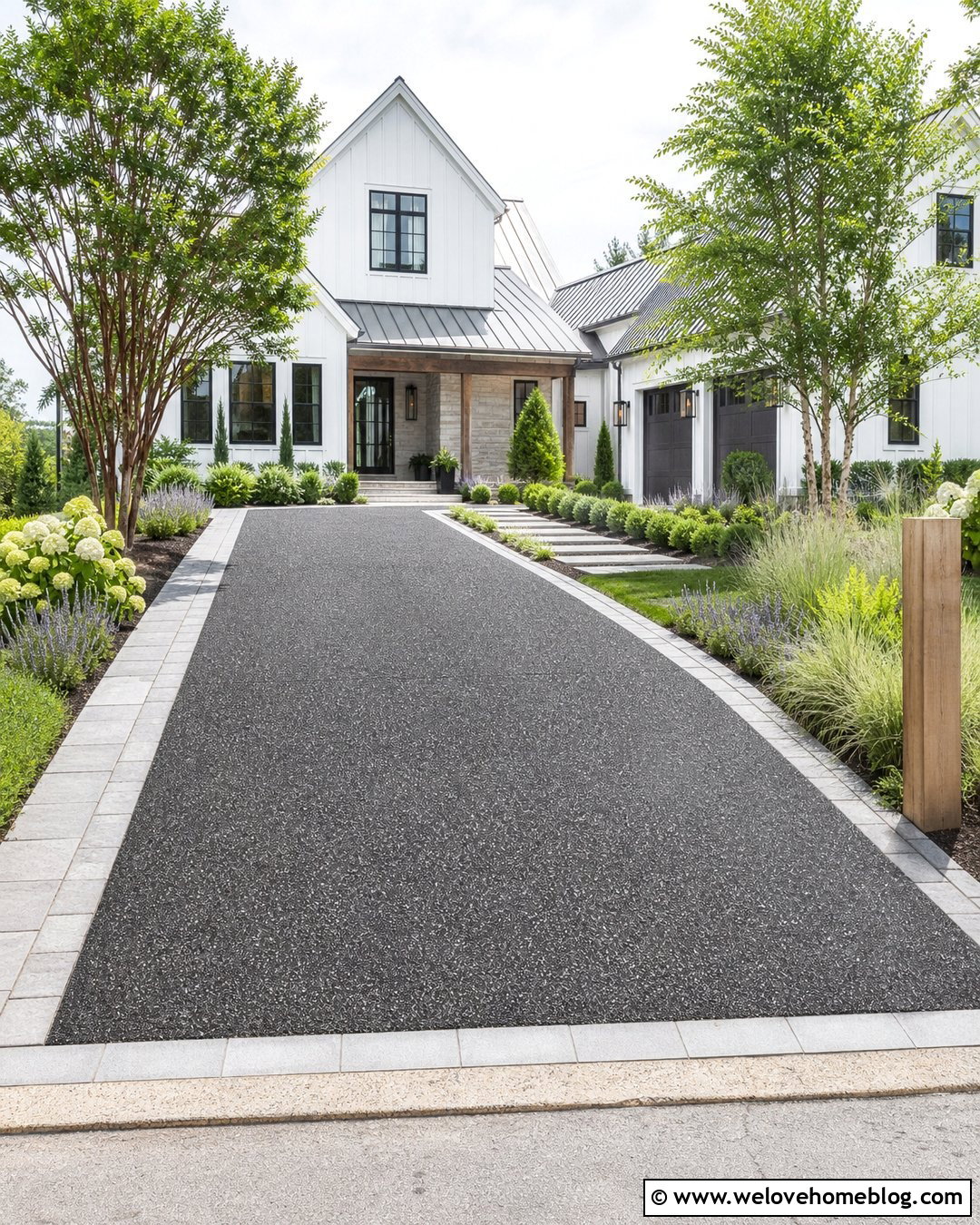
Black aggregate can give a modern farmhouse entrance a strong foundation without losing its welcoming character. Use a broad straight driveway that leads toward white board-and-batten siding, black windows, and natural wood garage doors. Edge the surface with weathered gray pavers or light limestone to create a clear, understated frame. On both sides, arrange loose planting beds with hydrangeas, ornamental grasses, catmint, compact evergreens, and a few multi-stem trees. A wide stepping-stone walkway can branch from the driveway toward the porch. Near the street, add a simple timber address post surrounded by low planting rather than a formal gate. The combination of dark textured paving, pale masonry, warm wood, and relaxed greenery creates a balanced farmhouse look that feels updated, practical, and connected to the entire front yard.
Conclusion:
The best black aggregate driveway ideas treat the driveway as part of the home’s architecture and landscape, not as an isolated paved area. A lighter border can sharpen the outline, while brick, stone, timber, or paver details connect the surface to the house. Curves and circular layouts soften larger spaces. Grid lines and narrow edging bring order to contemporary properties. Planting is equally important because green foliage and seasonal color balance the deep black finish. Before choosing a final design, consider driveway width, turning space, drainage, slope, visibility, maintenance, and local requirements. Then work with an experienced installer to develop a suitable aggregate mix, finish, base, joints, and sealing plan for your climate and property.

Related posts:
Leave a Reply