
Crazy paving turns a practical parking area into a one-of-a-kind landscape feature. Instead of repeating uniform blocks, it uses irregular stone pieces fitted together in an organic pattern. The result can feel rustic, modern, coastal, or formal depending on the stone, joint color, border, and surrounding plants. These 25 Crazy Pave Driveway Ideas explore complete driveway designs rather than isolated details. You will find straight, curved, circular, narrow, and sloped layouts paired with materials such as bluestone, sandstone, limestone, slate, granite, and porphyry. Each design also considers edging, drainage, landscaping, and the style of the home. Use the following 25 Crazy Pave Driveway Ideas to find a practical layout that gives your entrance more texture, personality, and curb appeal.
1. Bluestone Crazy Pave Driveway
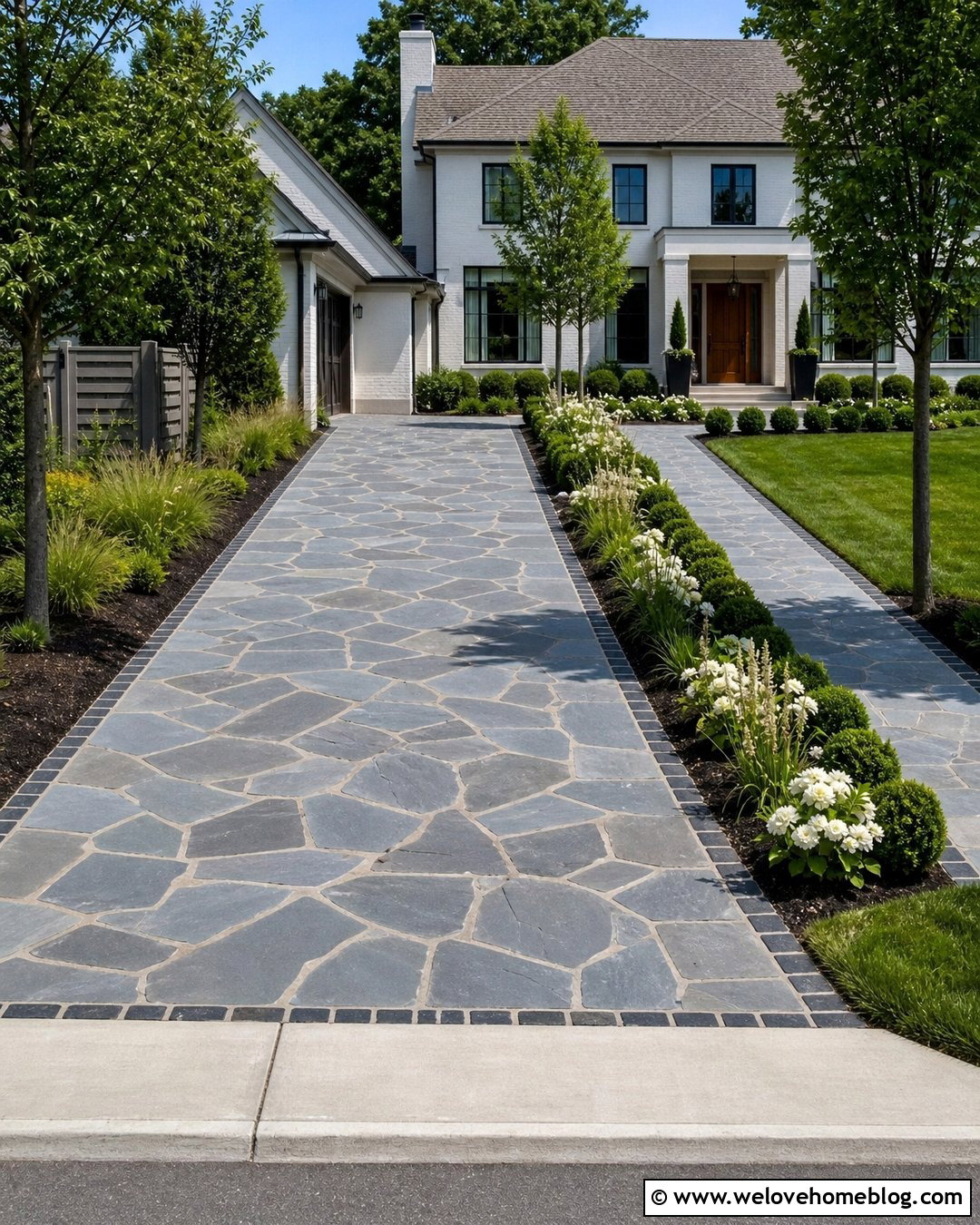
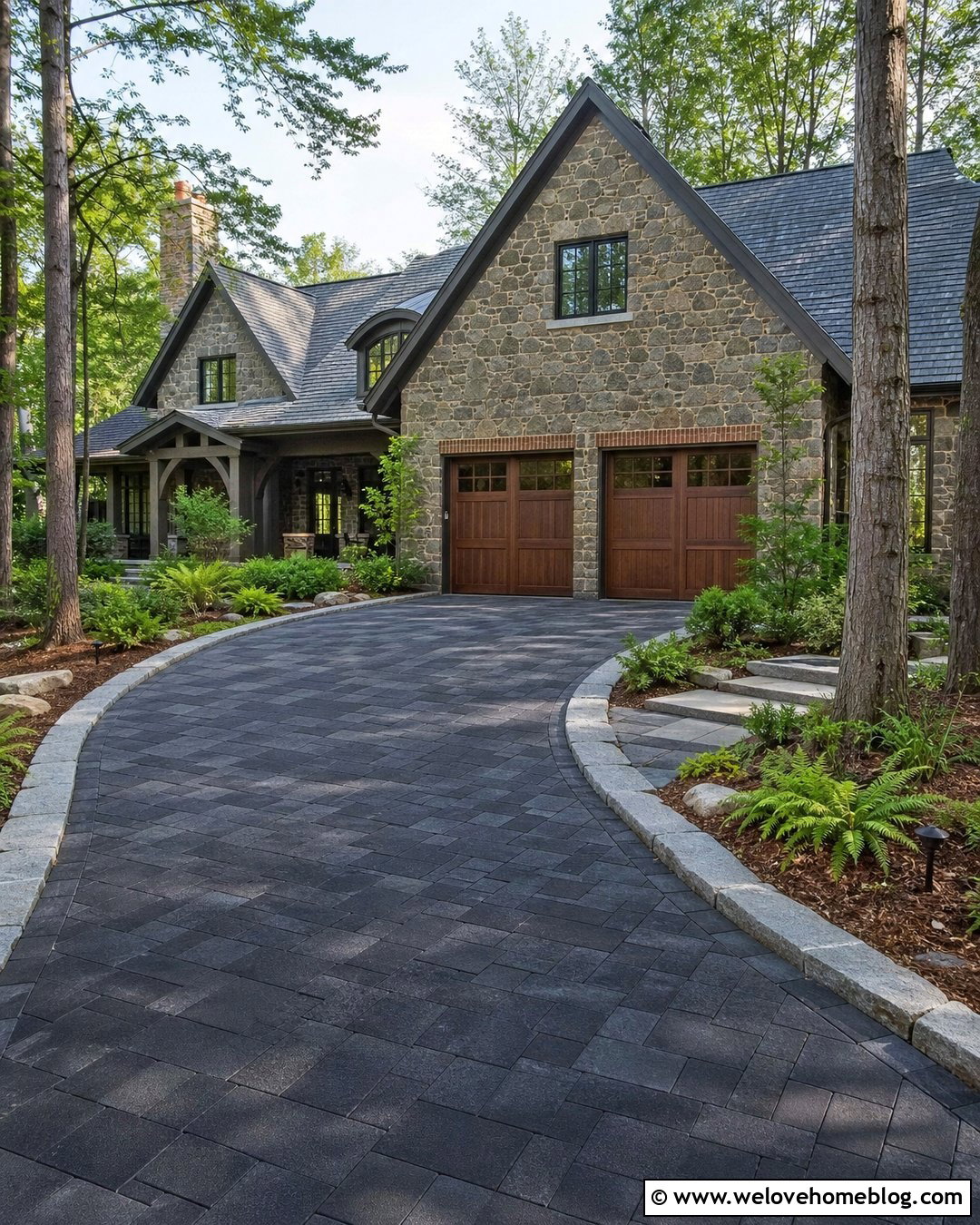
Bluestone creates a strong, refined driveway without making the entrance feel overly formal. Use irregular blue-gray slabs across a straight layout leading to a modern or transitional home. Medium-width gray mortar joints will define each stone while keeping the surface visually balanced. A border of dark granite setts can protect the outer edges and provide a neat transition into the lawn. Add low ornamental grasses, clipped shrubs, and white flowering perennials along both sides. Their softer forms will offset the angular paving pattern. For a unified entrance, continue the same bluestone into the front walkway. Choose stones rated for vehicle traffic and install them over a properly prepared, reinforced base that can handle regular parking and changing weather conditions.
2. Sandstone Crazy Pave Driveway
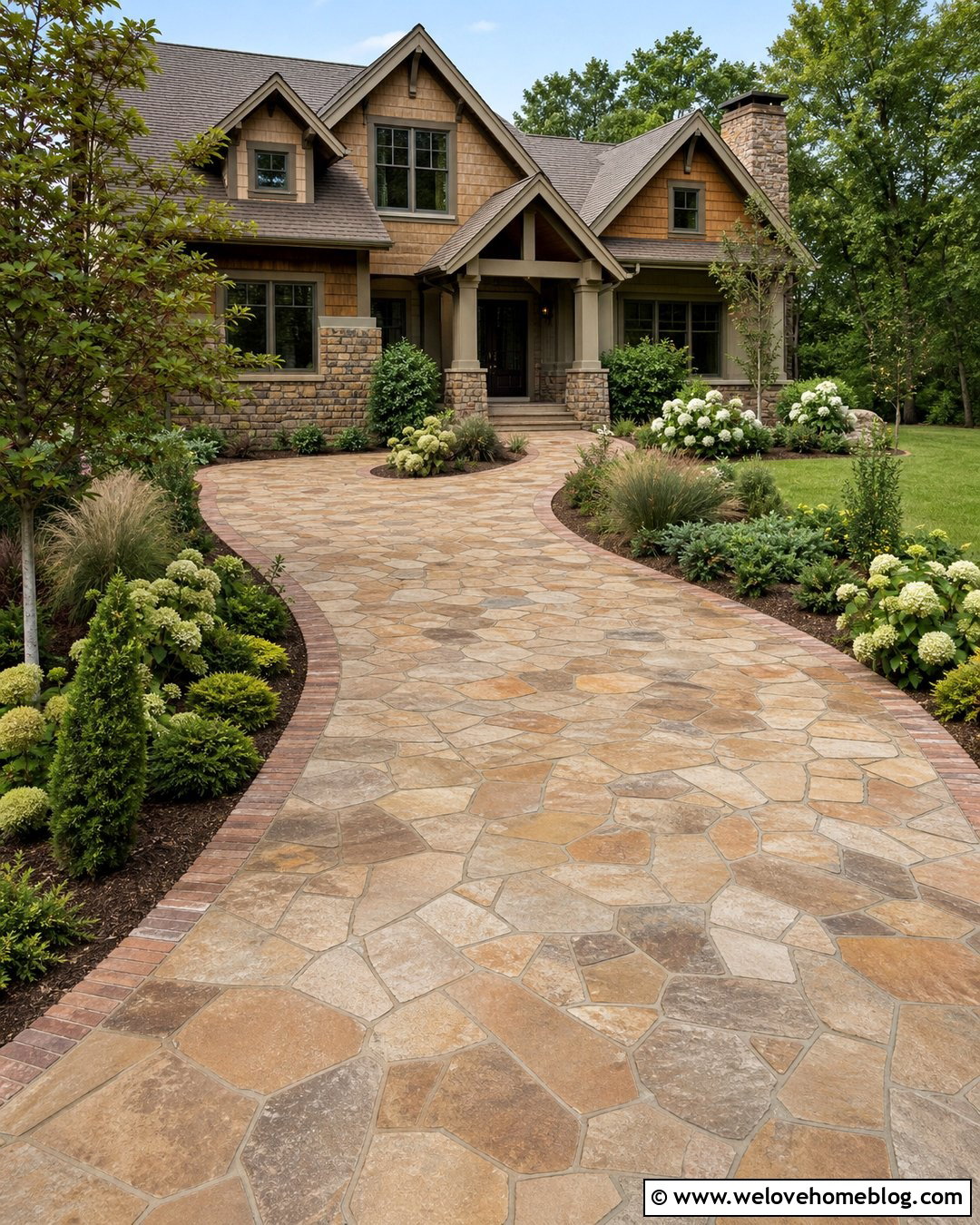
Warm sandstone works beautifully with a gently curved driveway and a welcoming Craftsman house. Select irregular slabs in tan, honey, beige, and muted brown tones for natural color variation. A warm gray jointing material will connect the stones without creating harsh outlines. Frame the driveway with brick edging that complements the home’s porch columns or chimney. Wide planting beds filled with hydrangeas, dwarf evergreens, and ornamental grasses can follow the curve toward the garage. This creates a layered entrance instead of a large, uninterrupted paved area. Keep the driveway wide enough at the bend for comfortable vehicle movement. Because some sandstone is more porous than other driveway materials, ask the supplier to confirm its strength, thickness, finish, and suitability for your local climate.
3. Limestone Crazy Pave Circular Driveway
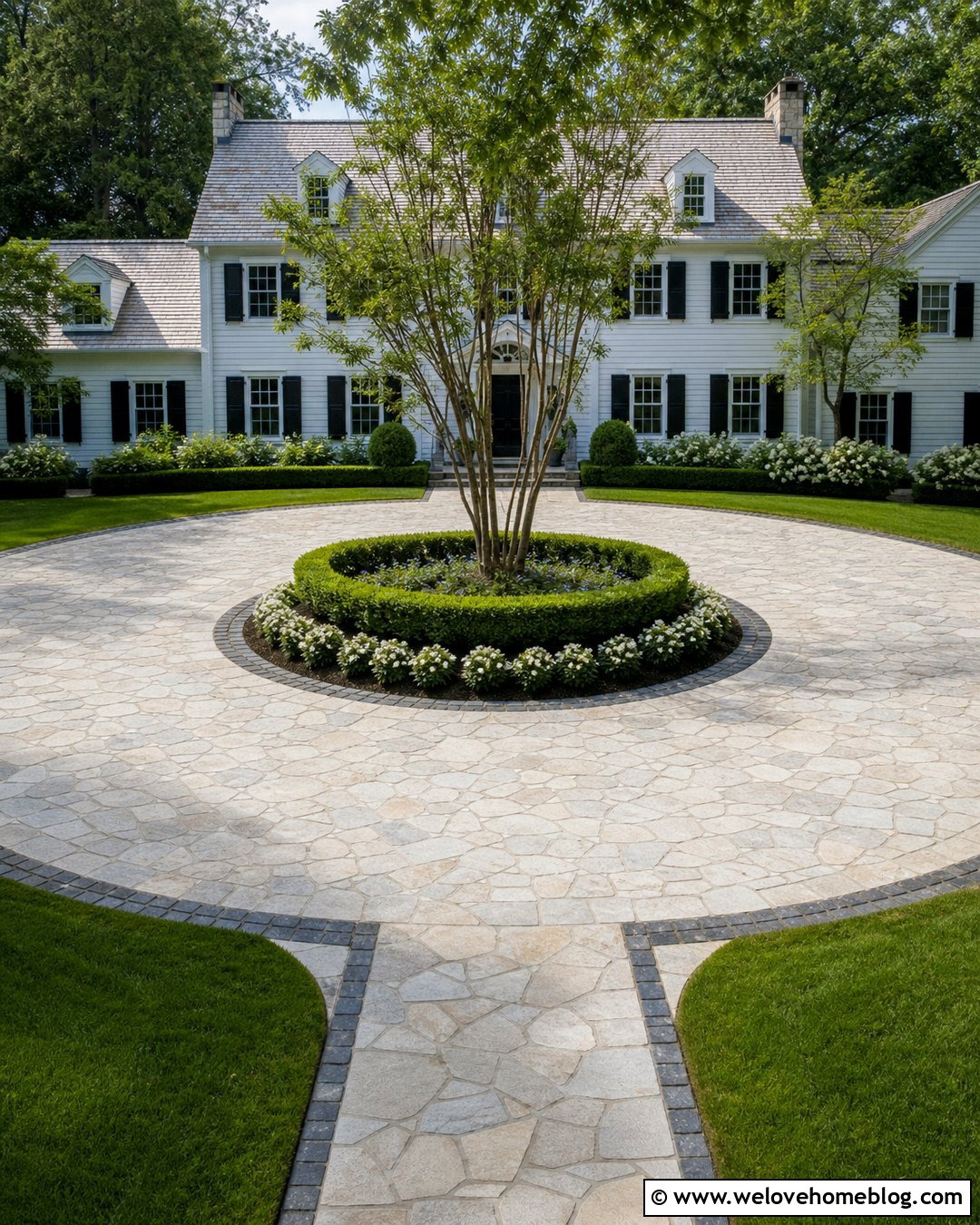
A circular limestone driveway can make a traditional home feel more impressive while improving arrival and departure flow. Pale cream and soft gray limestone pieces will brighten the front yard and emphasize the irregular pattern. Use smaller stones near the curves so the paving follows the circular shape smoothly. A darker limestone or granite border can create a clean outside edge. At the center, plant a simple island with a multi-stem tree, low boxwood, and seasonal flowers. Keep the planting low near the entrance so drivers maintain clear sightlines. The walkway to the front door can branch naturally from the circle using matching crazy paving. Include subtle surface grading and discreet drainage channels to prevent water from collecting around the inner island or garage approach.
4. Slate Crazy Pave Farmhouse Driveway
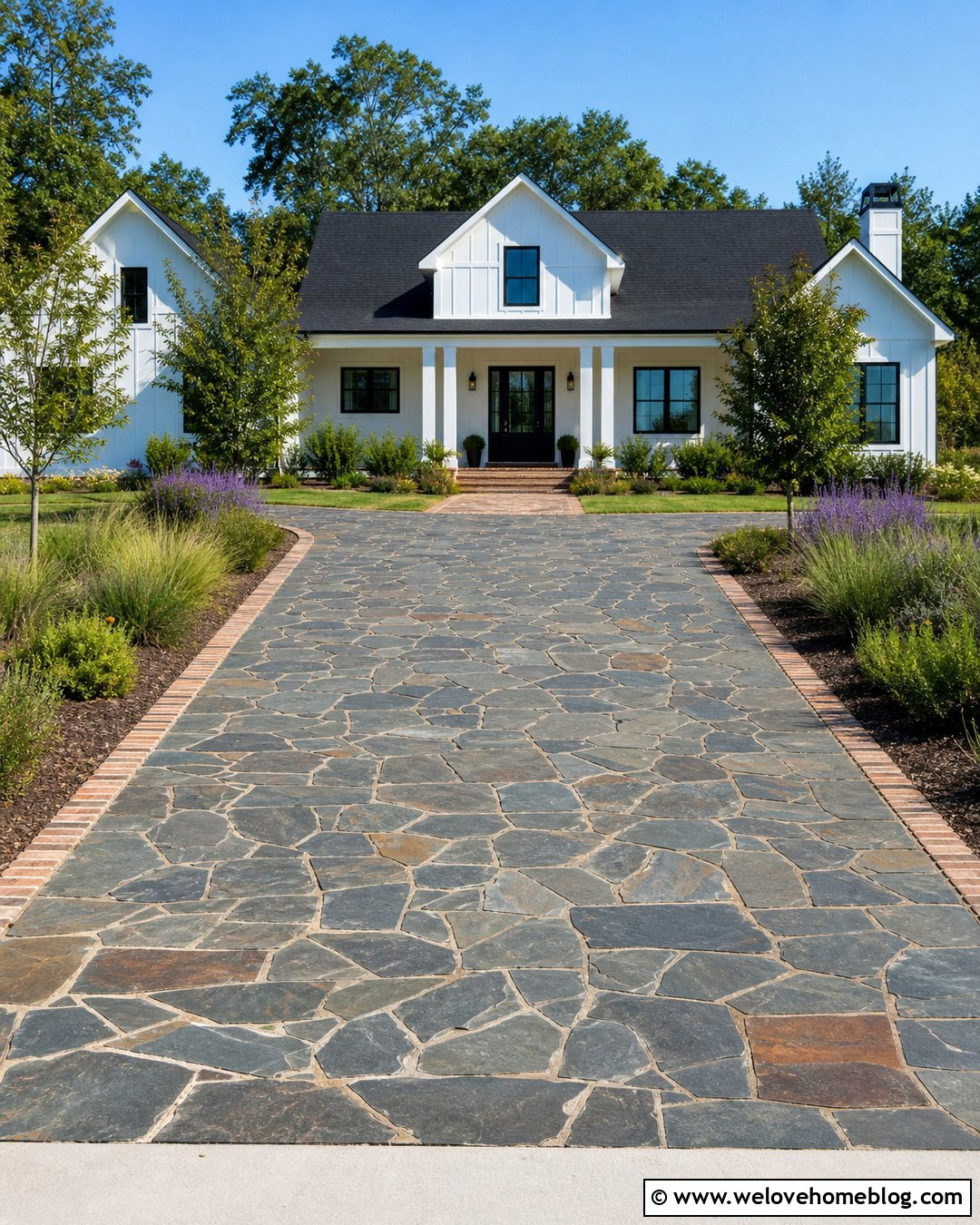
Do you want a farmhouse driveway that feels established rather than newly installed? Irregular slate in charcoal, blue, rust, and gray tones can create that relaxed, timeworn appearance. Lay the stone across a broad straight driveway leading to a white modern farmhouse with a dark roof. A border of reclaimed clay bricks will add warmth and visually connect the driveway with the front porch. Plant native grasses, flowering salvia, and compact shrubs in loose beds along the edges. Avoid arranging the stone pieces in obvious rows because a varied layout will look more natural. Slate can differ significantly in strength and surface quality, so use dense, driveway-rated material. A skilled installer should also minimize weak corners and position the thickest pieces within the main tire paths.
5. Granite Crazy Pave Sloped Driveway
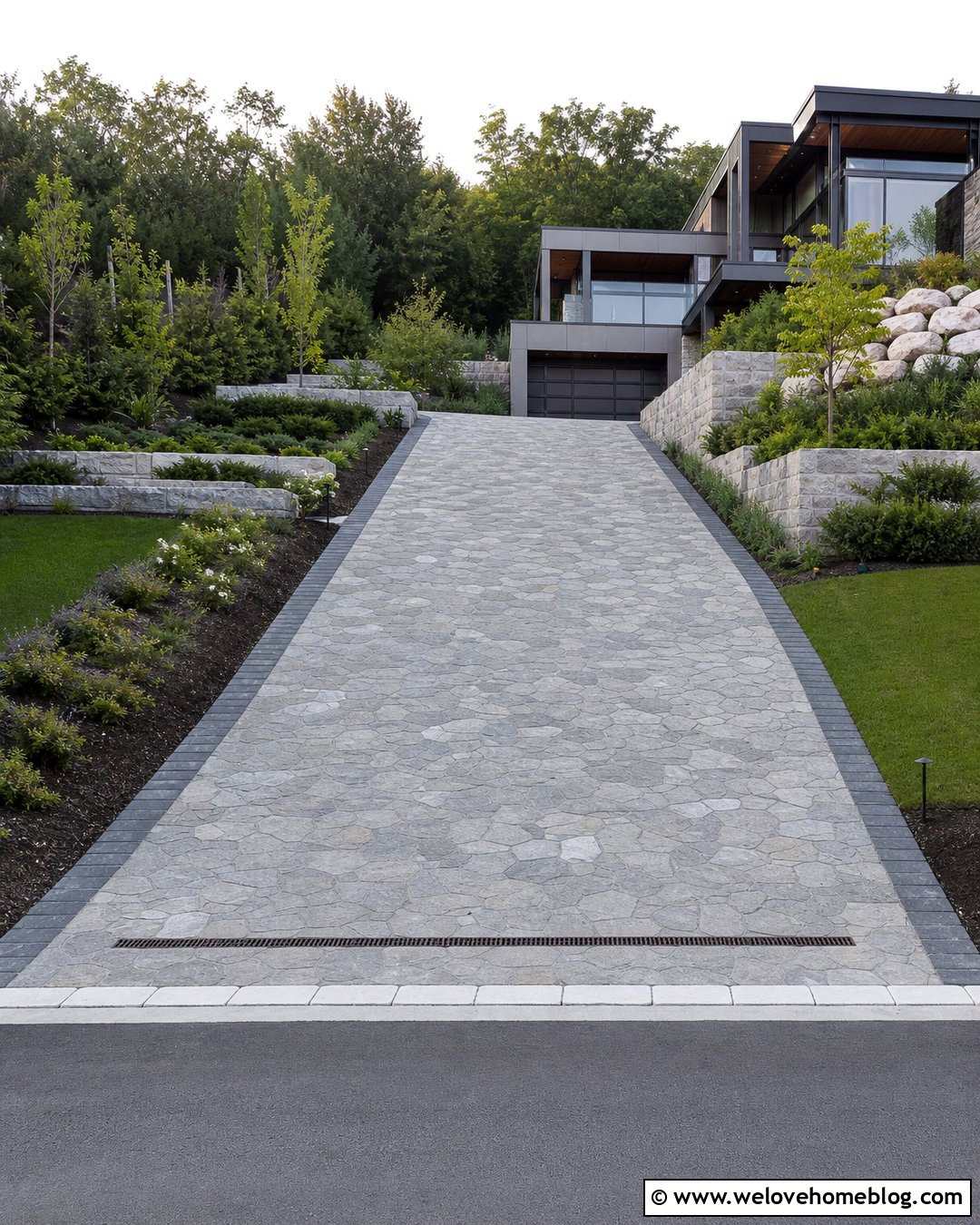
A sloped entrance needs a surface that looks attractive while providing confident vehicle access. Irregular flamed granite slabs offer texture, durability, and a crisp appearance for an uphill crazy pave driveway. Mix light and medium gray pieces to show the pattern without producing a busy patchwork. Dark granite setts installed along both sides will reinforce the edges and visually guide vehicles toward the garage. Add terraced planting beds with juniper, sedges, and low flowering shrubs instead of steep lawn sections that are difficult to maintain. Linear drainage at the garage threshold can capture runoff before it reaches the building. The paving should be designed by an experienced contractor who can specify the base, stone thickness, mortar system, movement joints, drainage, and slip-resistant finish required for the driveway’s exact slope.
6. Porphyry Crazy Pave Driveway
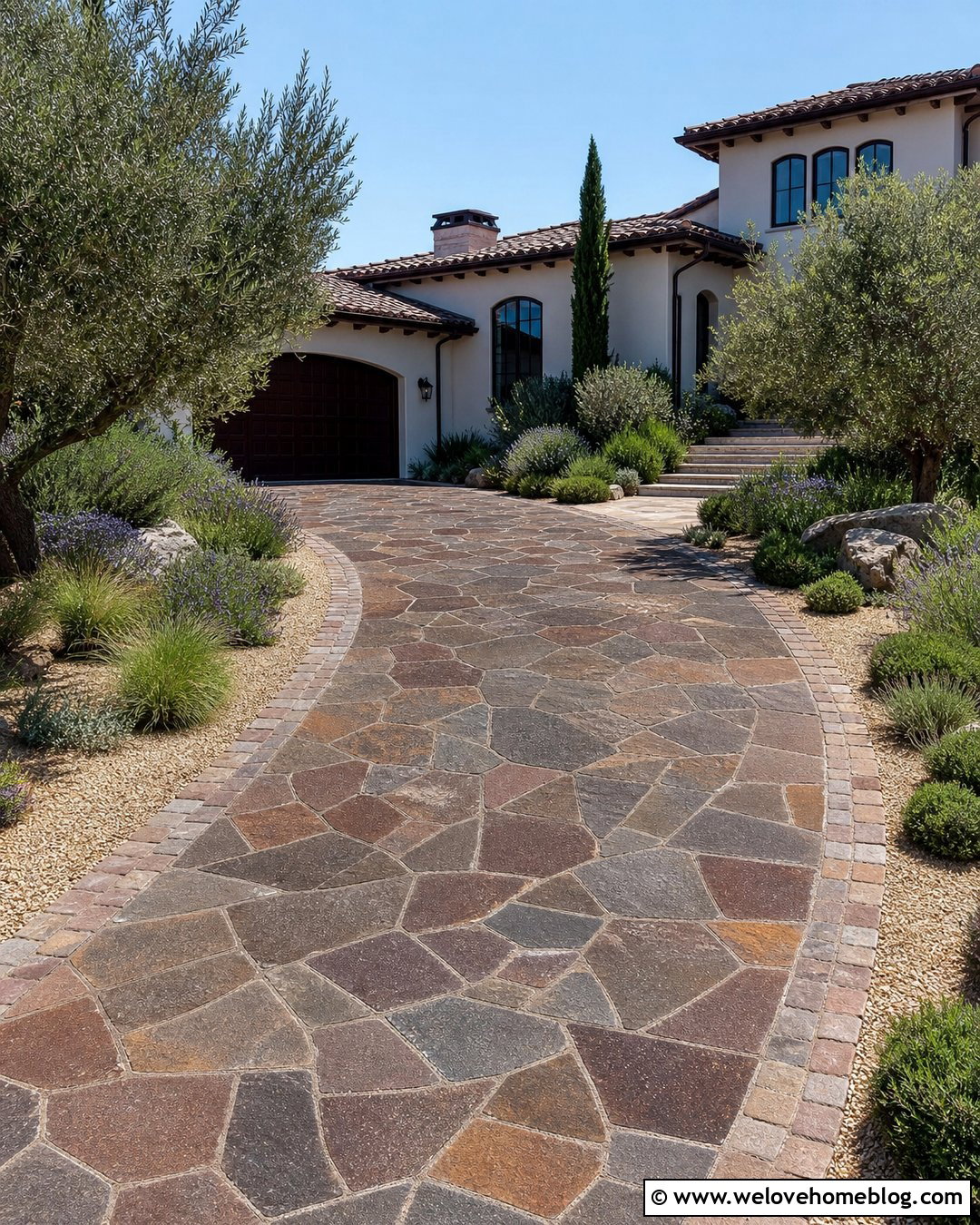
Porphyry brings rich, earthy color to a driveway through its natural mix of rust, brown, plum, gray, and muted red. This material suits a curved approach leading to a Mediterranean, Spanish Revival, or stucco house. Keep the irregular joints moderately narrow so the colorful stone remains the main feature. A border made from small porphyry cubes can create a strong edge without introducing an unrelated material. Surround the driveway with olive trees, rosemary, lavender, and drought-tolerant grasses for a cohesive landscape. Gravel mulch in a complementary warm tone will reduce the visual weight of the paved surface. Carry the crazy paving toward the front steps, but use a clearly defined border where the driveway meets the public sidewalk. The completed entrance should feel organic, warm, and intentionally coordinated.
7. Quartzite Crazy Pave Driveway
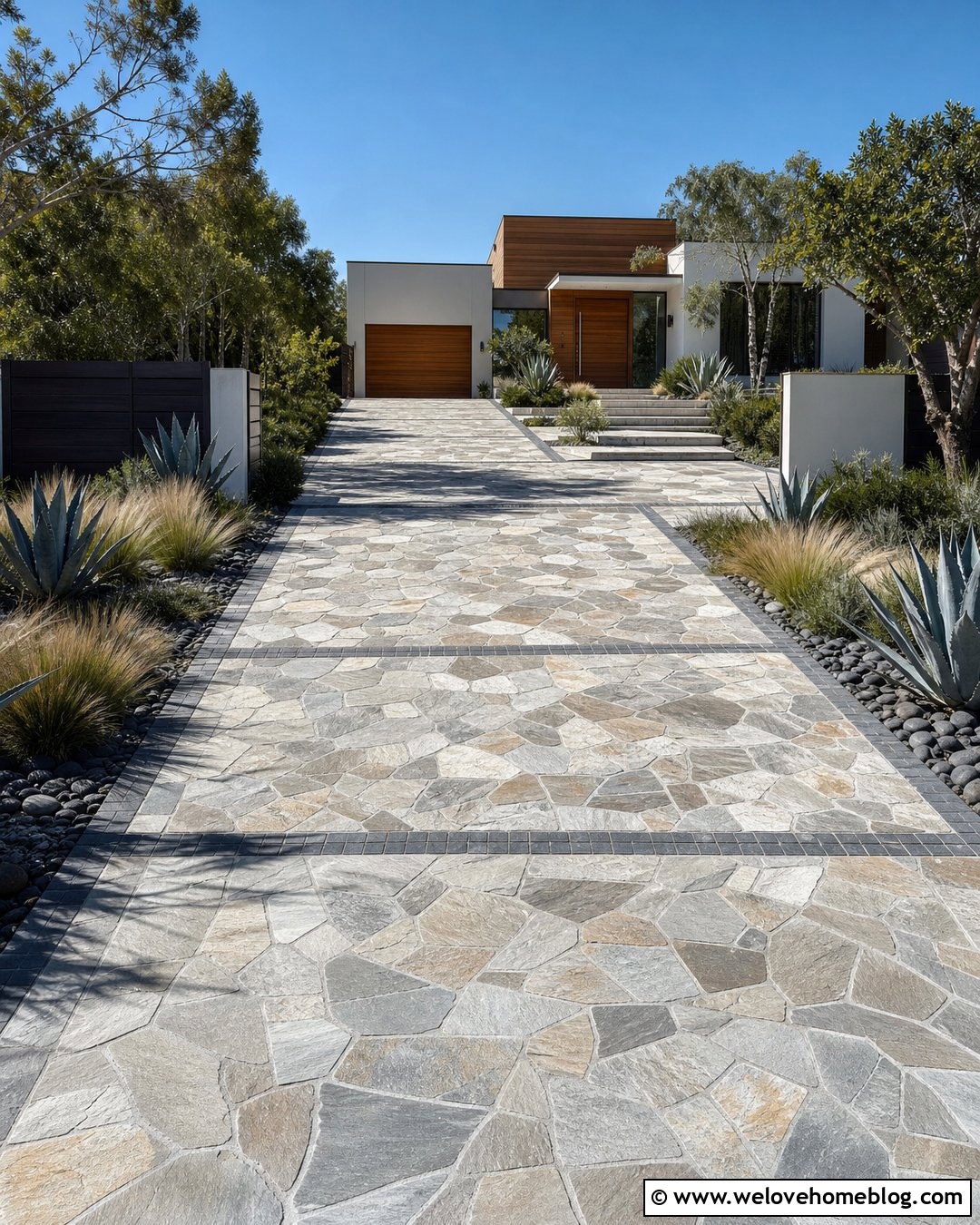
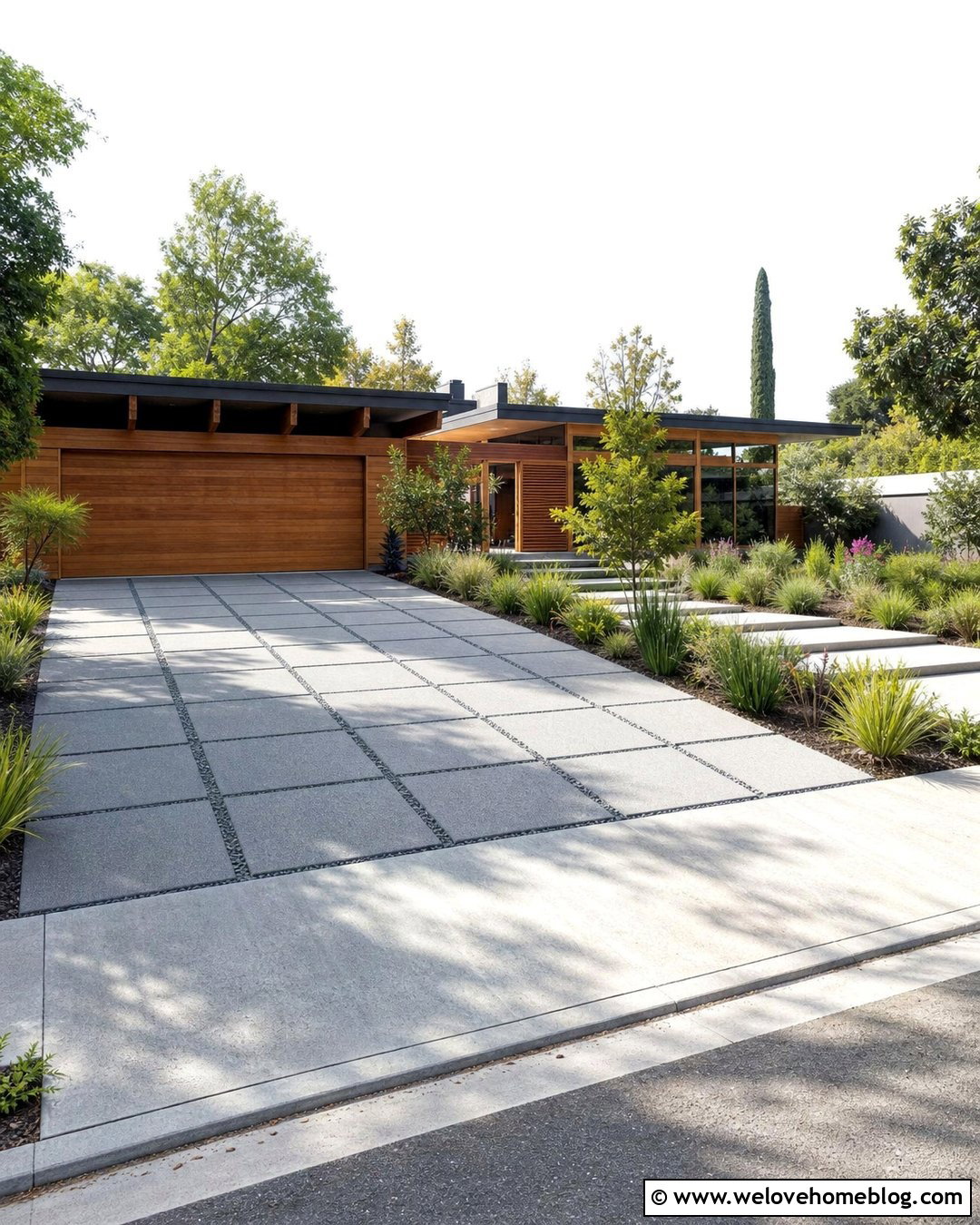
Quartzite can give a contemporary driveway a brighter, more textured surface than plain concrete. Choose irregular silver, pale gray, and soft beige pieces with a naturally split, slip-resistant finish. A wide straight layout divided by narrow dark stone ribbons will help organize the random paving pattern. Pair the driveway with a low-profile modern house featuring wood siding, white stucco, or charcoal metal details. Linear planting beds filled with agave, feather grass, compact shrubs, and river rock can reinforce the architecture. Use a restrained mortar color that blends into the stone instead of outlining every joint dramatically. Quartzite quality varies, so verify that the selected product is thick, dense, and suitable for vehicle loads. Matching stone steps or a side walkway can complete the clean, connected front-yard design.
8. Travertine Crazy Pave Driveway
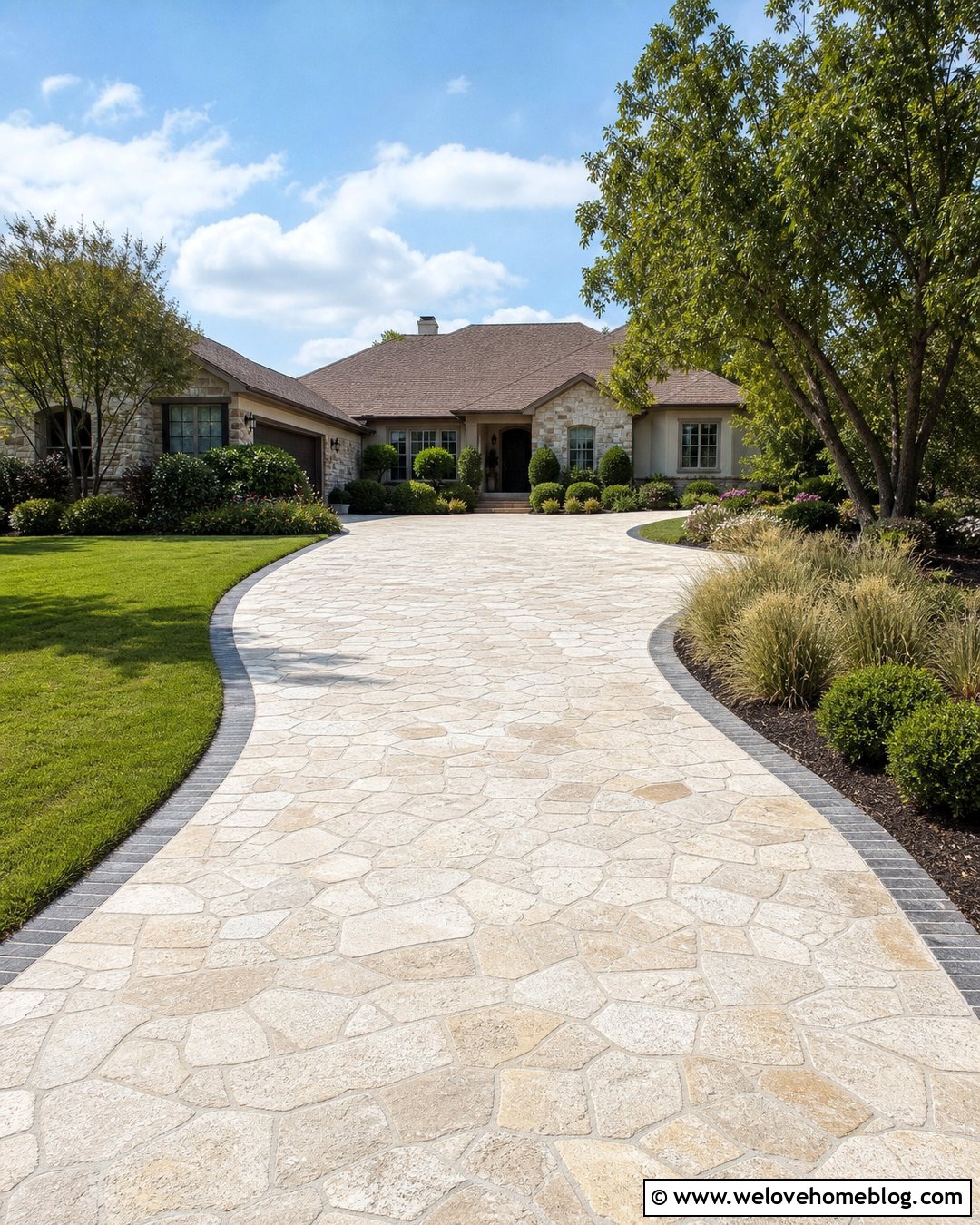
Warm travertine crazy paving can soften the broad facade of a single-story ranch house. Use dense exterior-grade pieces in ivory, beige, and light walnut tones across a gently curved driveway. A tumbled finish will create a relaxed appearance, but the surface must still provide suitable traction for vehicles and wet weather. Frame the paving with a narrow band of darker stone to define its shape against the lawn. Plant rounded shrubs, ornamental grasses, and one or two small shade trees along the curve. A matching walkway can sweep toward the front porch without interrupting the main driveway pattern. Because travertine contains natural pores, material selection and installation are especially important. Choose driveway-rated stone and discuss filling, sealing, freeze-thaw exposure, drainage, and ongoing maintenance with a qualified local installer.
9. Mixed Stone Crazy Pave Driveway
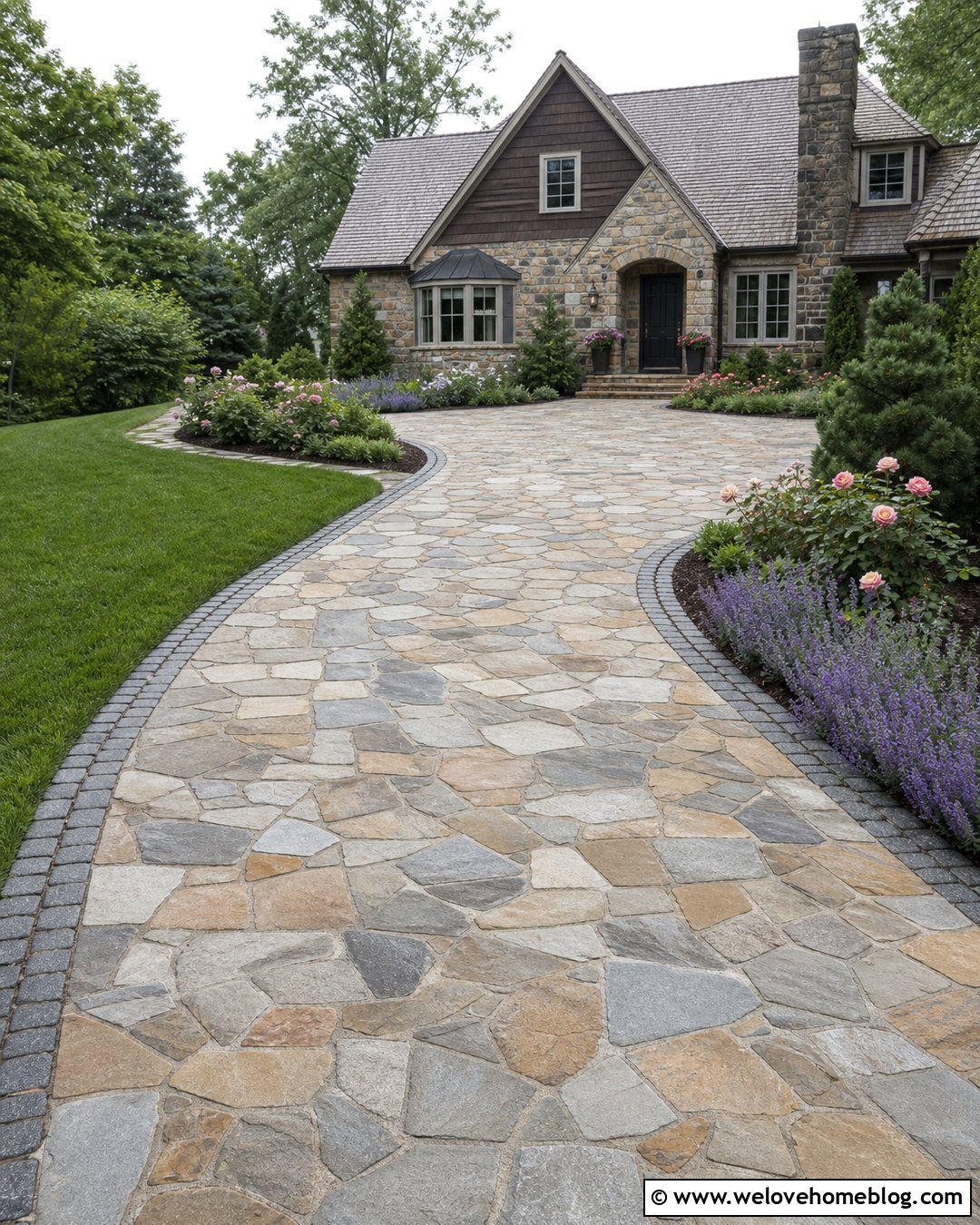
Mixed natural stone creates an informal driveway that feels at home beside a cottage or older suburban house. Combine compatible pieces of sandstone, granite, and dense limestone in related gray, tan, and brown tones. Limiting the color range will prevent the finished surface from appearing chaotic. Use a softly curved layout with a single cobblestone border around the outside edge. Cottage planting beds filled with roses, catmint, hydrangeas, and evergreen shrubs can overlap visually with the paving without blocking the driving area. Repeat several of the driveway stones in the garden path and porch steps to tie everything together. All stone types should have similar thicknesses, weather resistance, and load-bearing performance. Dry-laying the pieces before installation also makes it easier to balance colors, joint sizes, and irregular shapes across the full driveway.
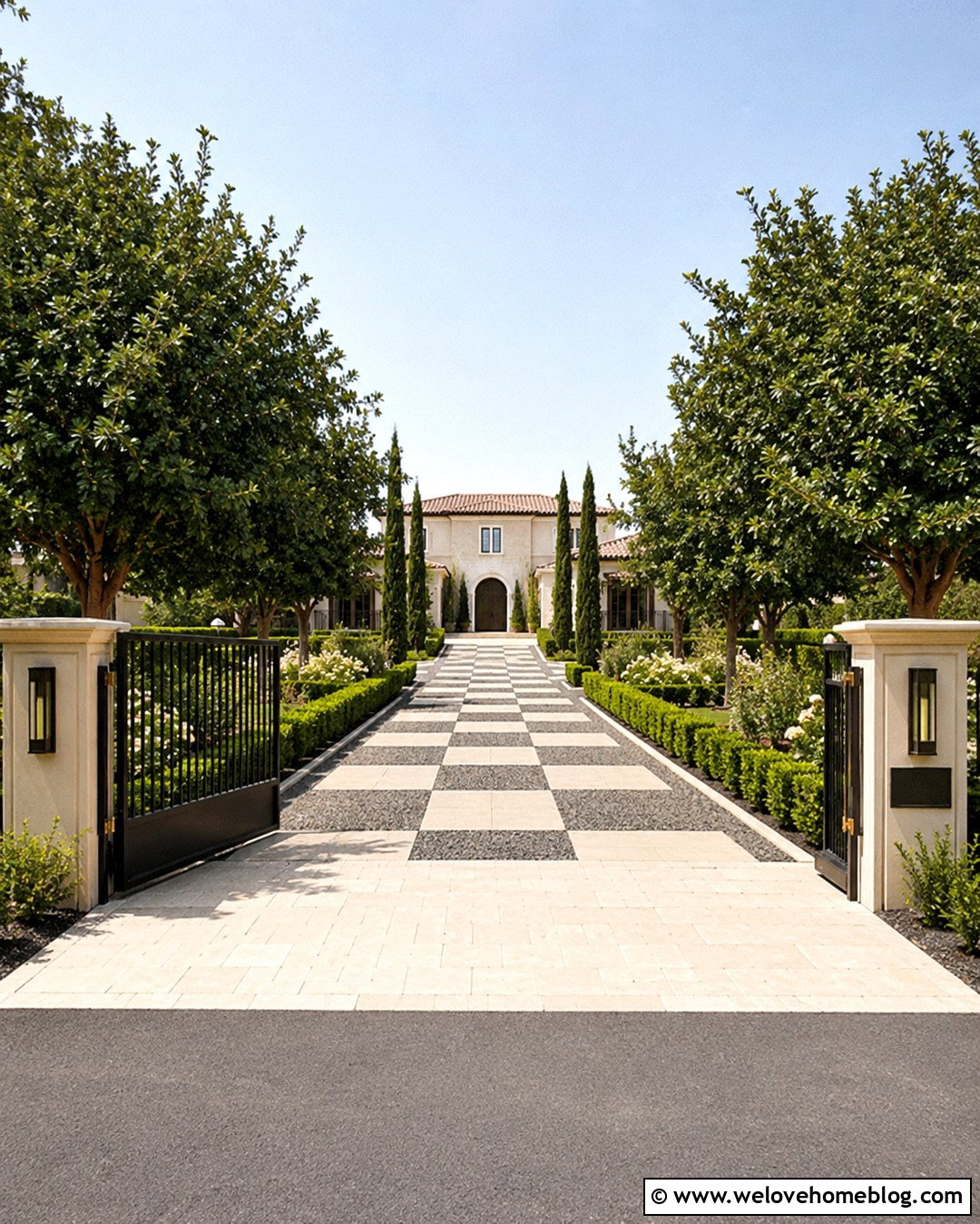
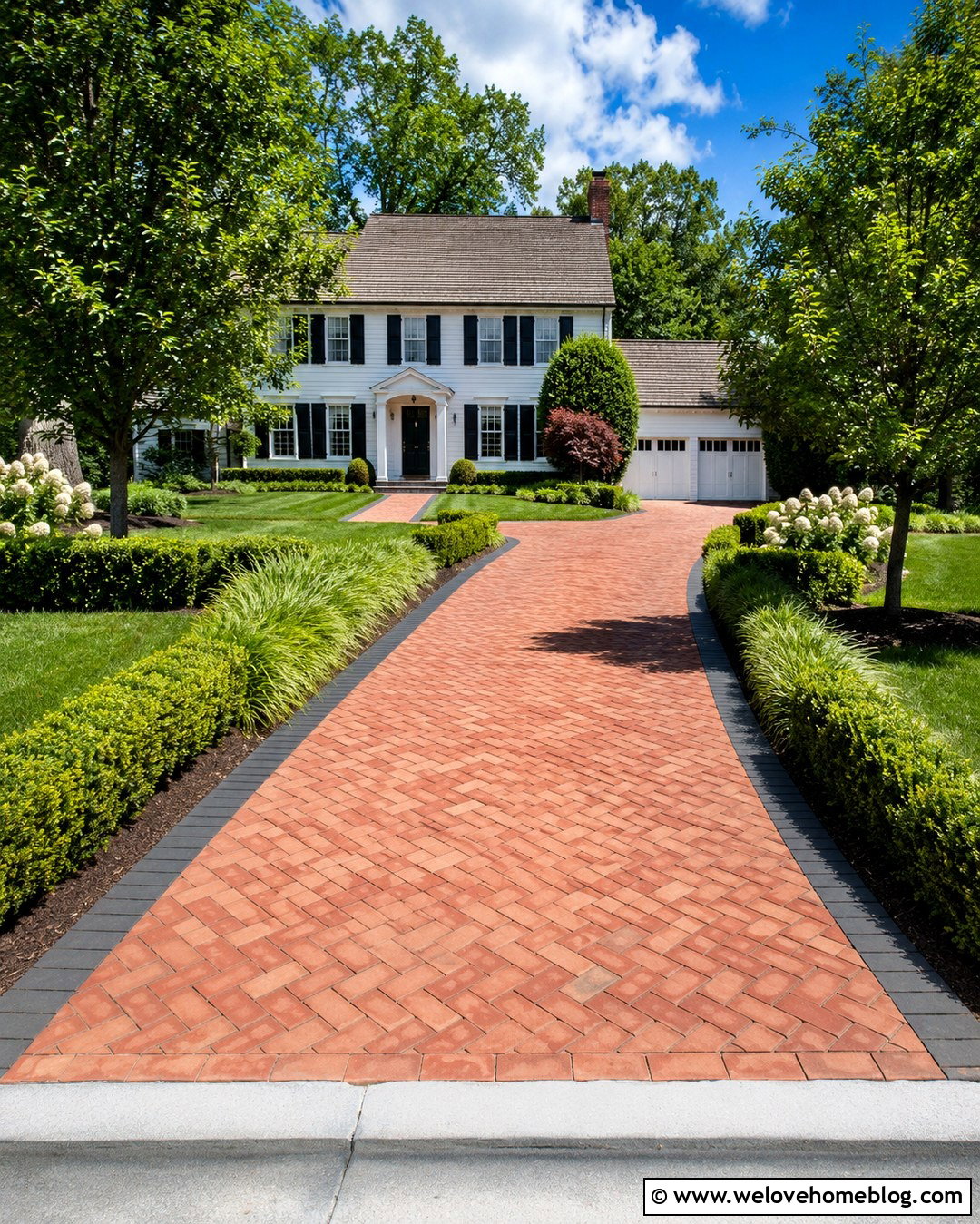
10. Basalt Crazy Pave Driveway
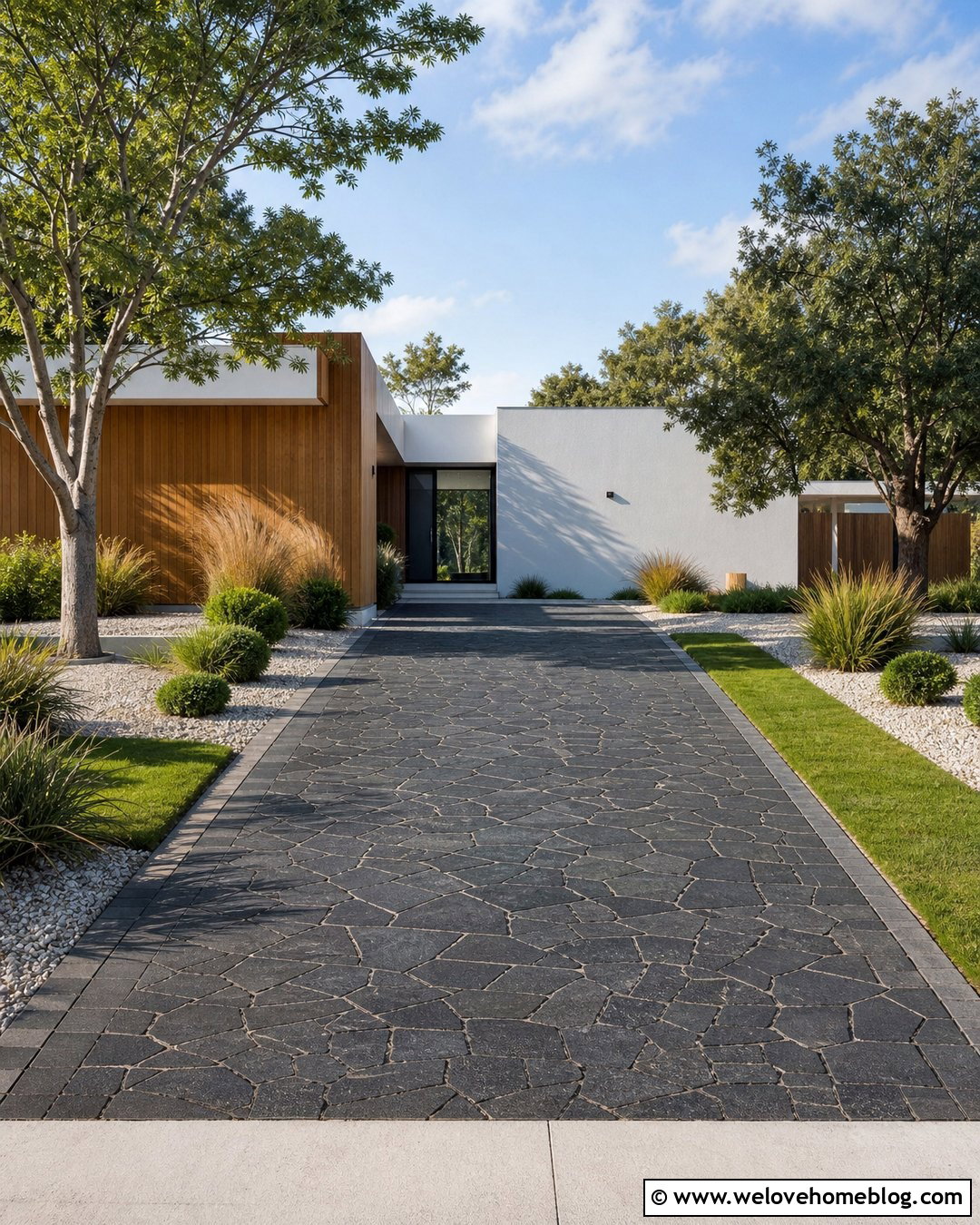
Dark basalt crazy paving can create a dramatic but uncluttered entrance for a minimalist house. Use irregular charcoal and black basalt pieces in a straight driveway leading to a flat-roofed home with white walls and warm wood accents. Dark gray joints will keep the surface visually continuous while allowing the stone shapes to remain visible. Add a narrow border of matching rectangular basalt setts for a crisp perimeter. Simple planting beds with sculptural grasses, evergreen mounds, and pale gravel will prevent the front yard from looking too heavy. Bright green lawn strips can also provide a clean contrast where the site allows them. Since dark stone can become noticeably warm in direct sun, consider the property’s climate and exposure. Strategic shade trees can cool the setting while framing the driveway and house.
11. Cream Crazy Pave Driveway With Grass Joints
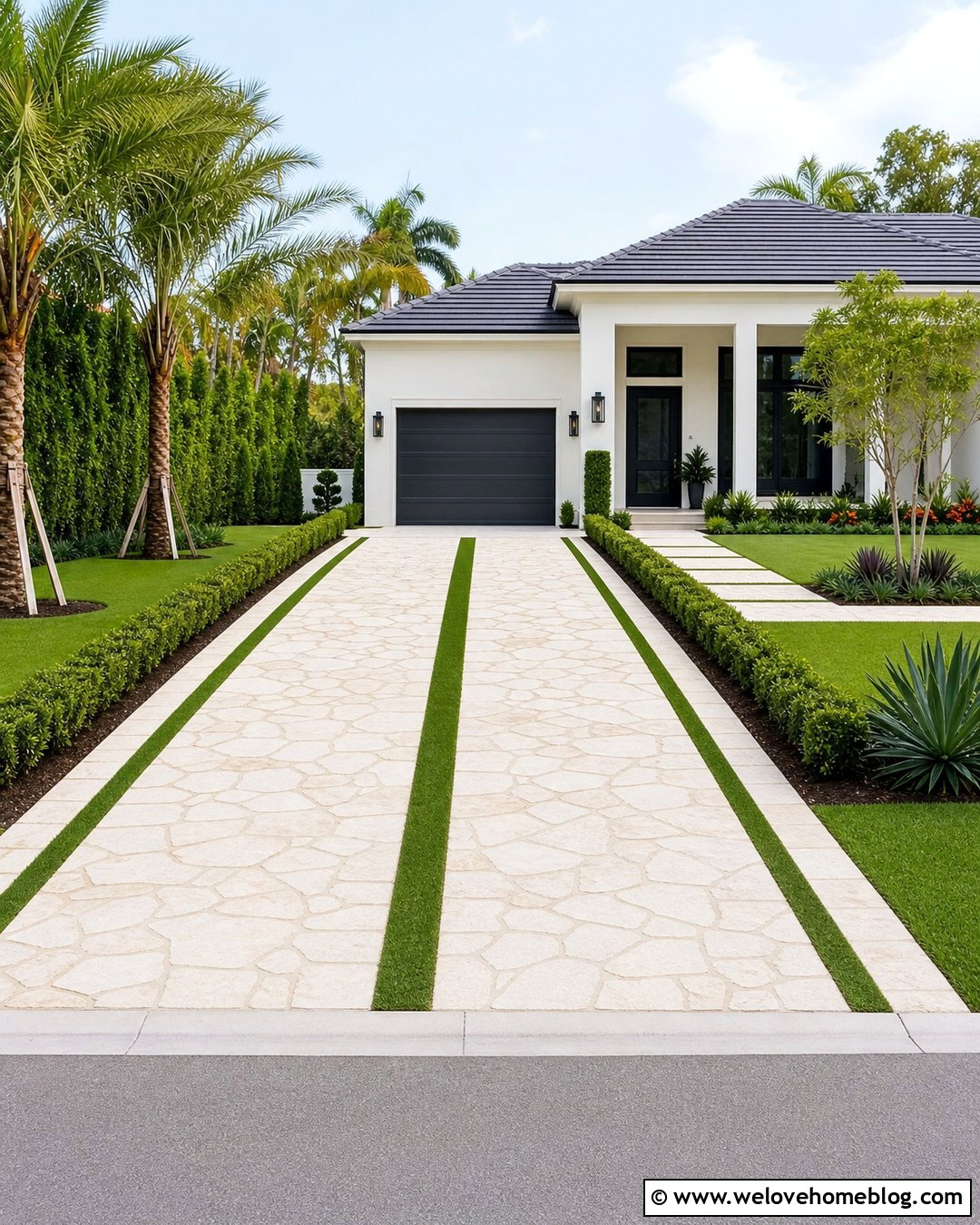
A light crazy pave driveway with green joints can make a front yard feel softer and more permeable. Choose irregular cream limestone or pale sandstone slabs and place planted joints only in carefully designed, low-stress areas. Durable grass or low groundcover can fill wider spaces along the center strip and outer margins, while mortared joints protect the main tire paths. The layout works especially well for a broad contemporary driveway with clear parking positions. Add matching lawn panels, low hedges, and a simple paved walkway leading to the entrance. Irrigation and drainage must be planned before installation so planted joints do not become muddy or dry out. This design requires more maintenance than fully mortared paving, but the combination of pale natural stone and greenery can reduce the visual impact of a large parking area.
12. Reclaimed Crazy Pave Driveway
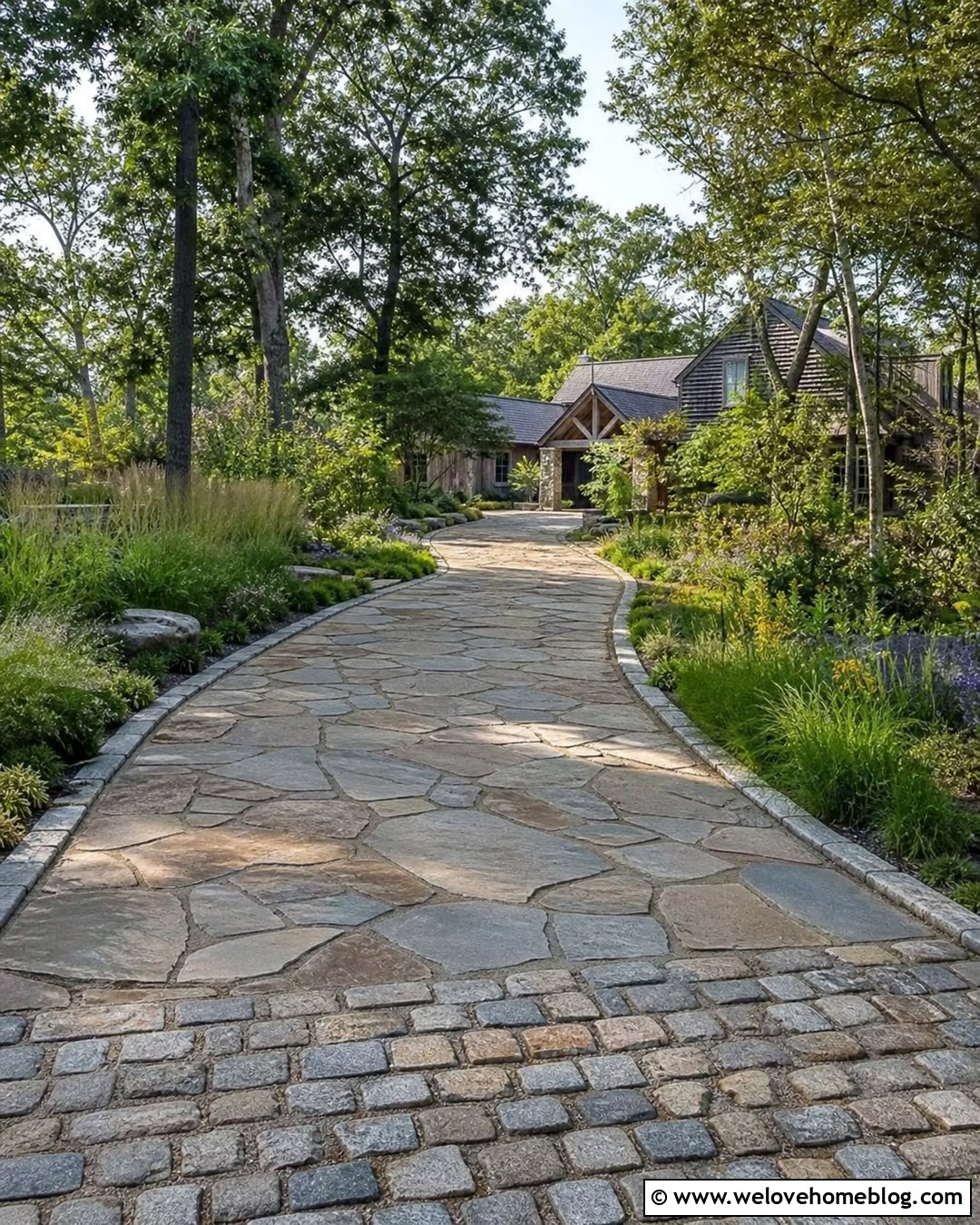
Reclaimed stone gives a driveway instant character through softened edges, weathered colors, and subtle surface marks. Use salvaged sandstone, granite, or old flagstone across a gently winding approach to a country house. Sort the material by thickness and strength before installation because not every reclaimed piece will be suitable for vehicle traffic. A simple granite sett border can contain the irregular paving and create a durable edge. Surround the driveway with meadow-style grasses, mature shrubs, and informal native planting. Reclaimed cobbles can form a small apron at the road entrance, protecting the transition where turning forces are strongest. Keep the joint color neutral and avoid excessive color mixing. With careful selection and a strong base, the finished driveway will look as though it has belonged to the property for decades.
13. Crazy Pave Driveway With Brick Border
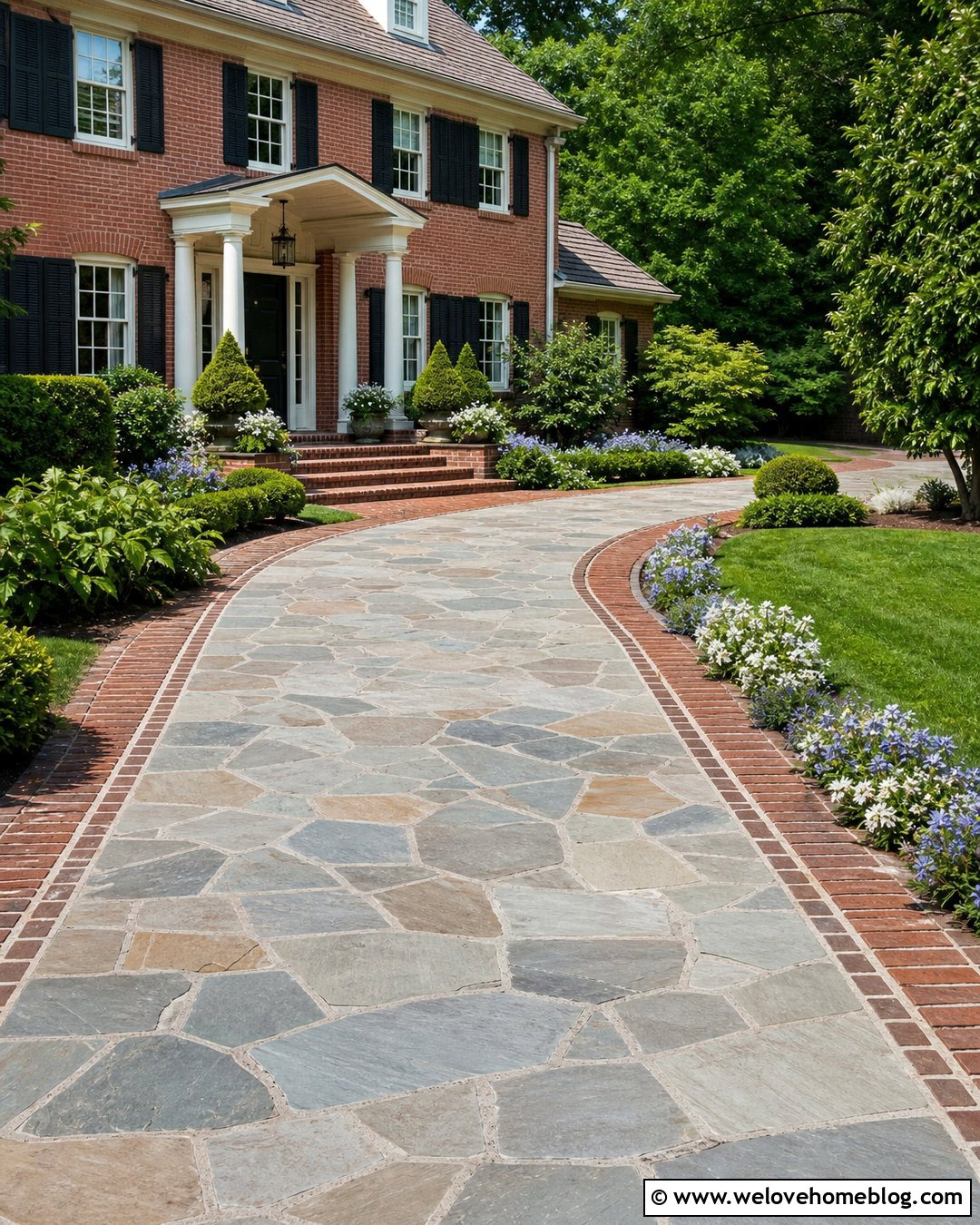
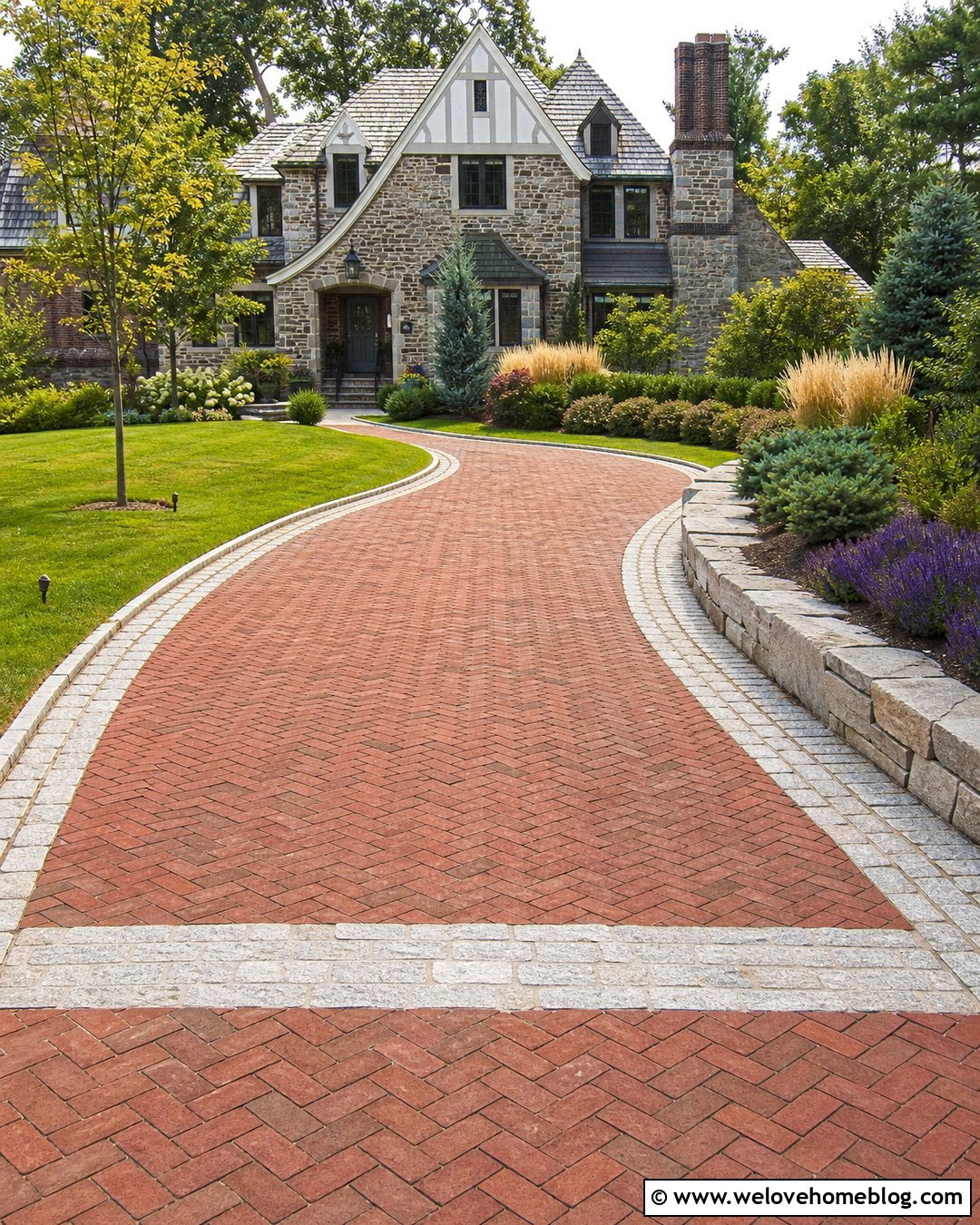
Brick edging adds structure and warm color to an irregular stone driveway. Start with gray and brown sandstone crazy paving across a straight or slightly curved layout. Then install reclaimed red clay bricks as a double border along both sides. The strong linear edge will contrast with the random stone pattern and connect naturally with a brick Colonial, Tudor, or traditional suburban house. A matching brick ribbon can separate the parking area from the front walkway. Use clipped evergreen shrubs near the house and looser flowering plants closer to the street for a balanced landscape. Select bricks rated for paving and local weather conditions rather than ordinary wall bricks. The edge restraint, driveway base, and mortar system should work together so the border does not spread, sink, or separate under repeated vehicle movement.
14. Crazy Pave Driveway With Cobblestone Border
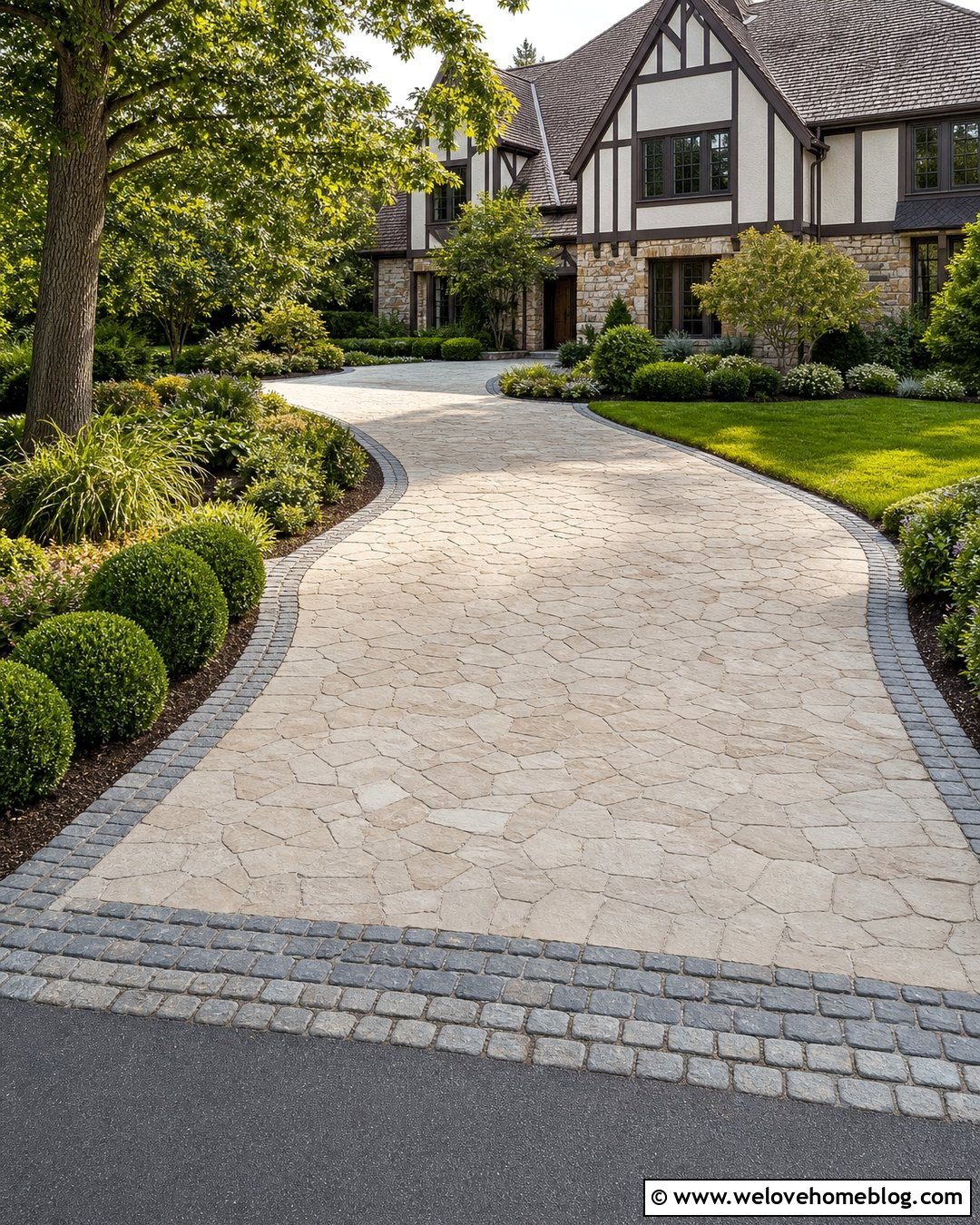
Cobblestones can give crazy paving a durable frame while creating an attractive connection to the street. Use irregular beige limestone or gray sandstone for the main surface and dark granite cobbles around the perimeter. A three-row cobblestone apron at the entrance can handle the visual transition from the road while making the driveway easy to recognize. Continue the border around a curved parking court or toward the garage doors for a finished appearance. Along the outside edge, add lawn, rounded boxwood, and layered perennials that soften the stonework. The cobbles should sit flush enough to avoid becoming a tripping or snow-removal obstacle. Matching cobblestones around nearby planting beds can unify the yard, but keep the overall design simple so the natural crazy pave pattern remains the dominant feature.
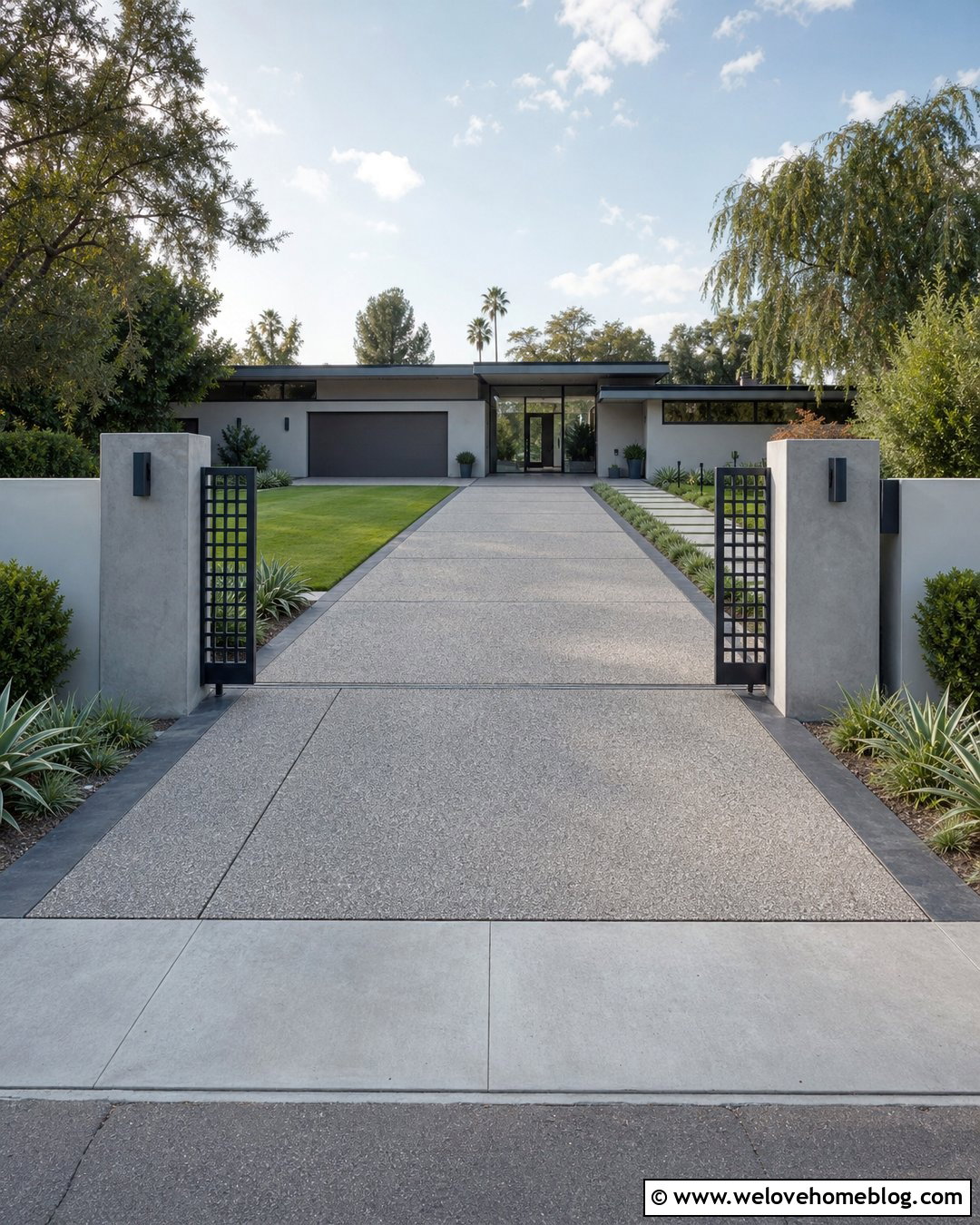
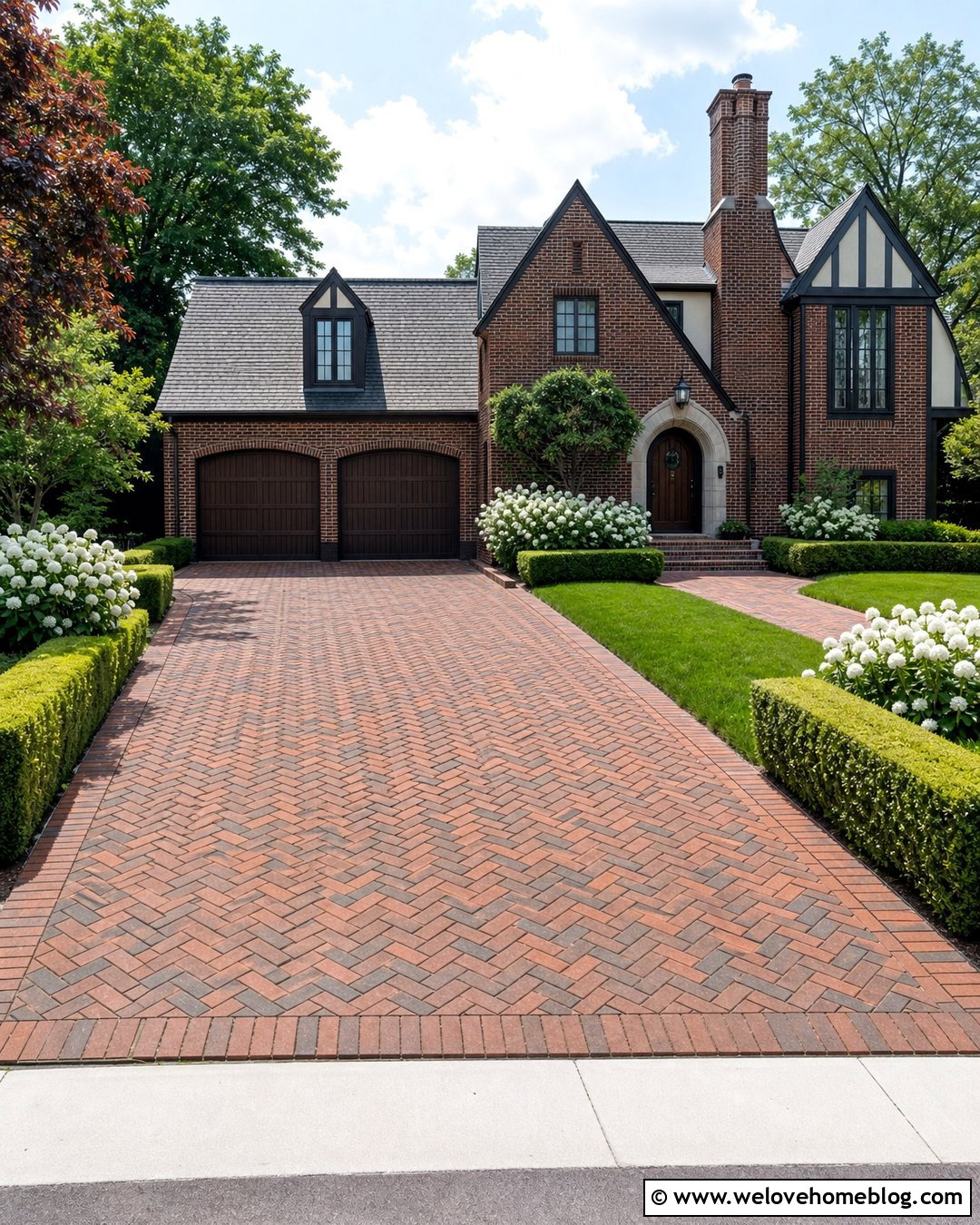
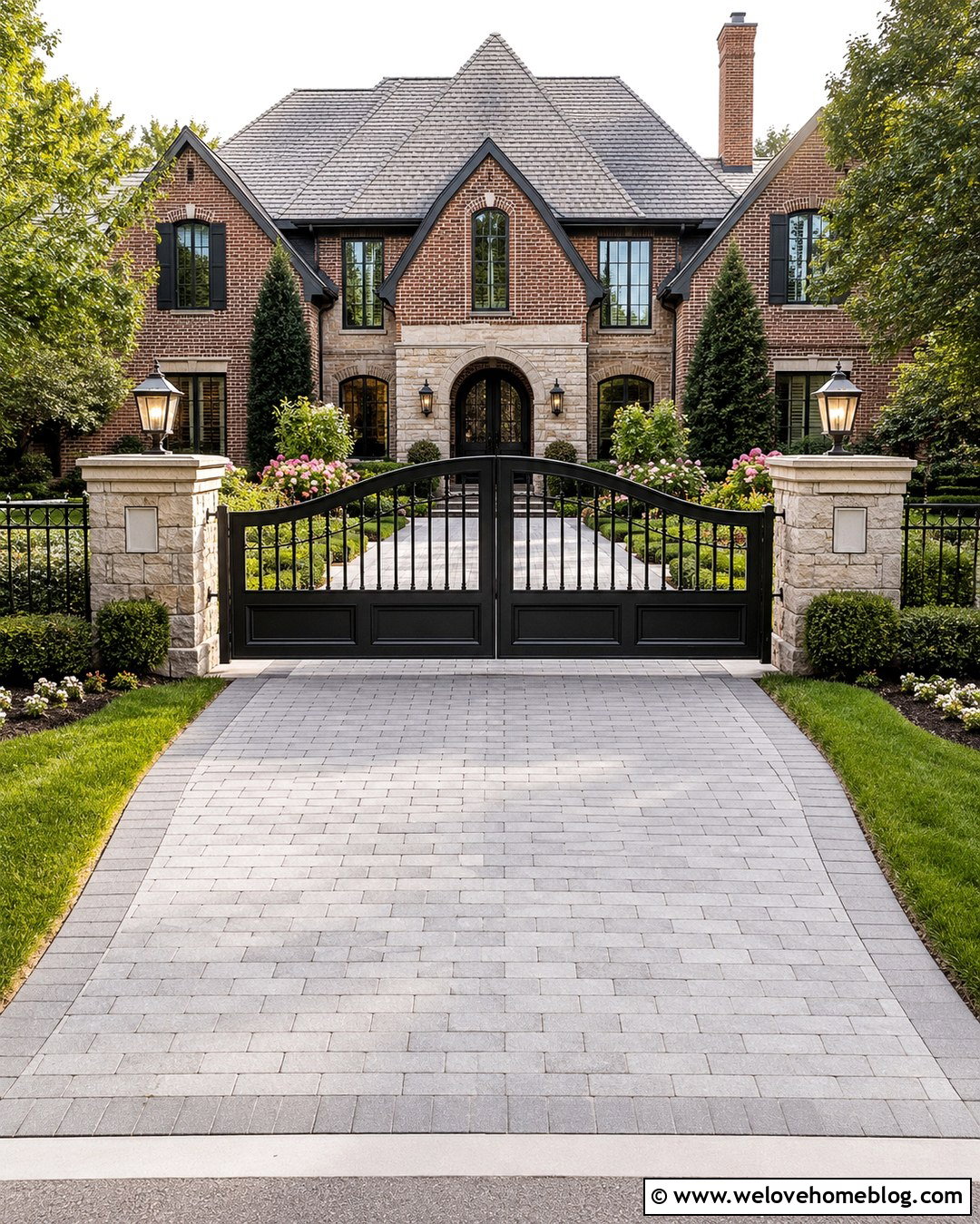
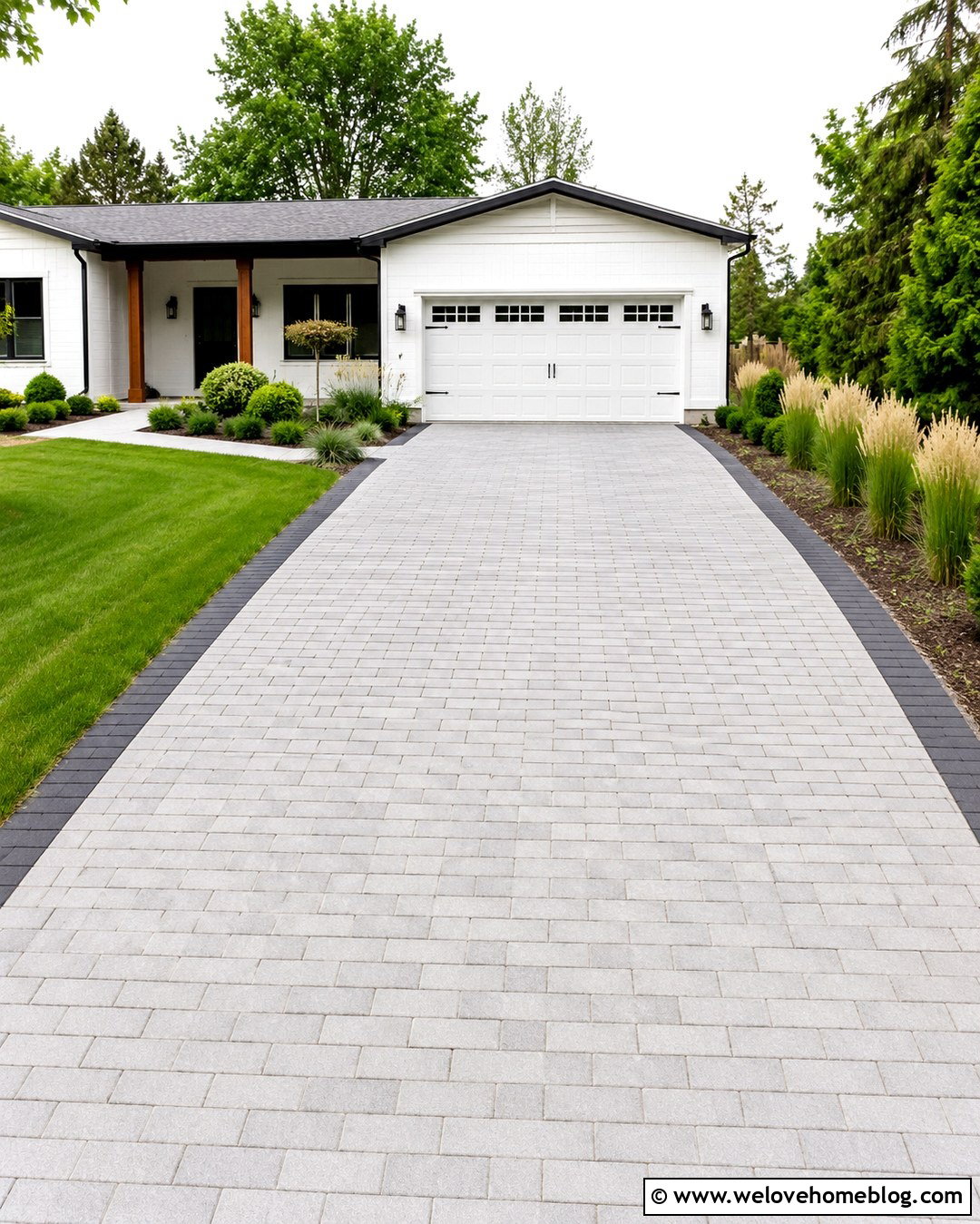
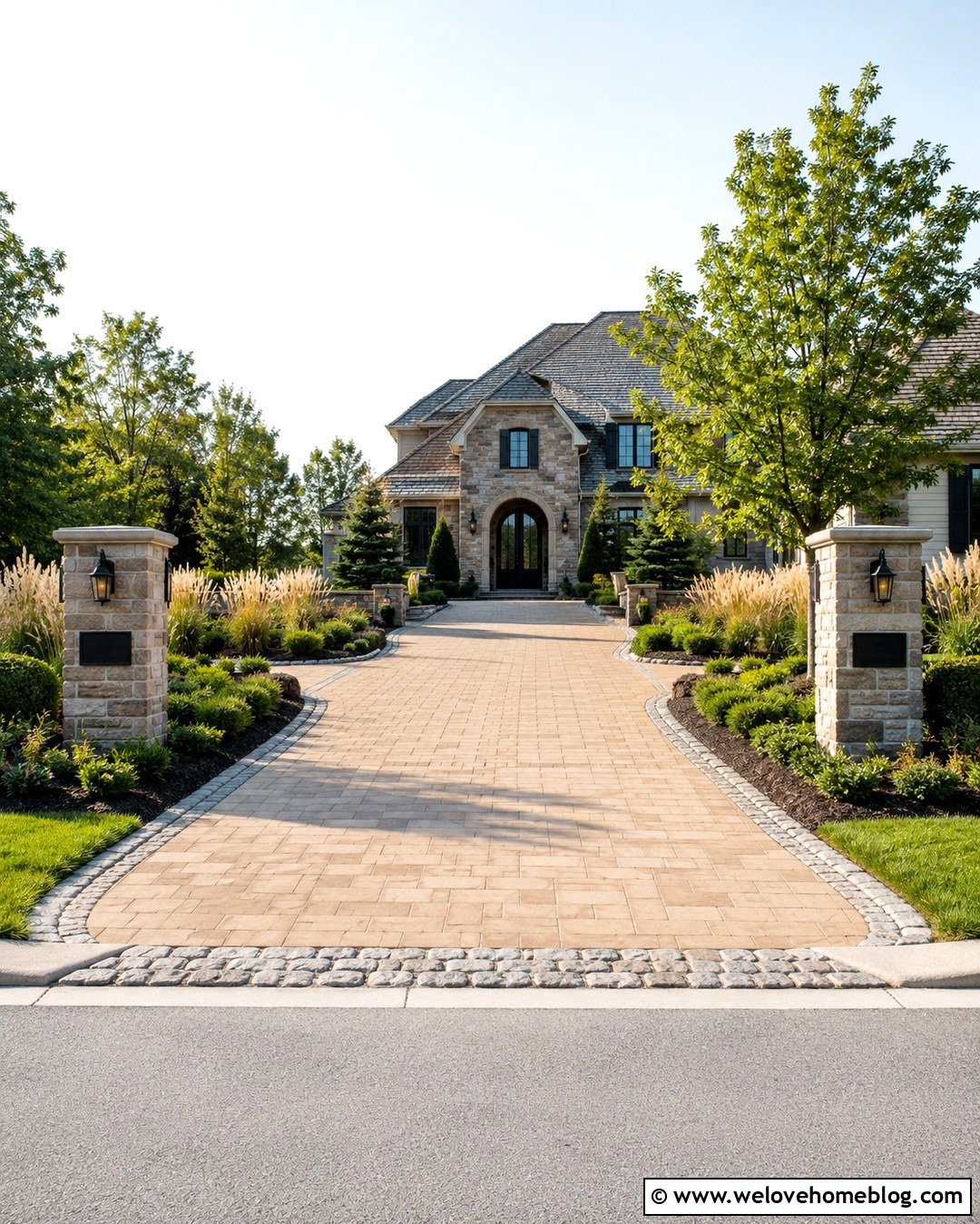
15. Crazy Pave Driveway With Corten Steel Edging
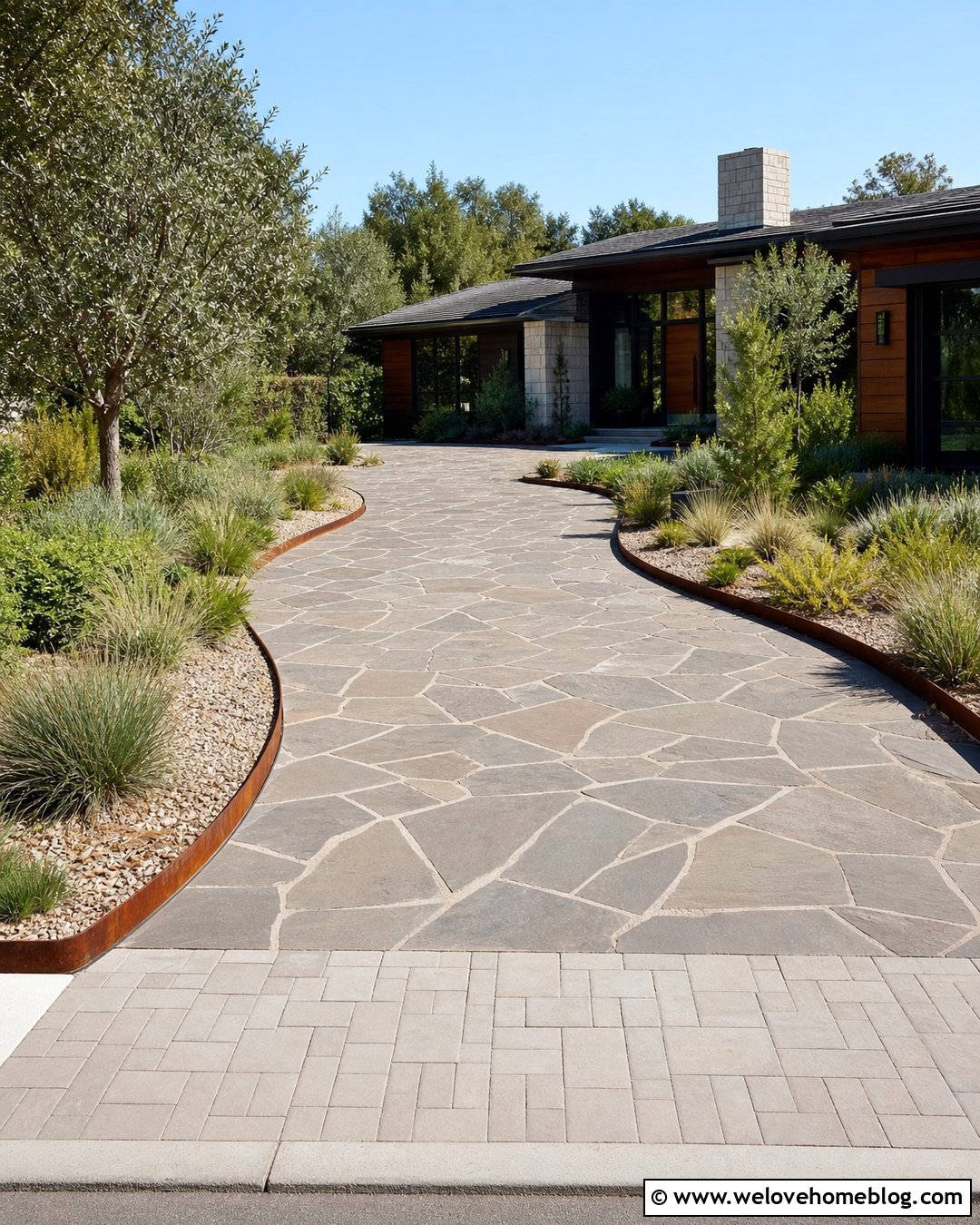
Corten steel edging gives an irregular stone driveway a thin, modern boundary. Pair warm gray sandstone or porphyry crazy paving with a gently curved layout leading to a contemporary house. The weathered steel edge can follow the driveway shape closely without creating the visual weight of a wide masonry border. Use it to separate the paving from gravel mulch, ornamental grasses, and drought-tolerant planting beds. Rust, bronze, and deep green foliage will coordinate naturally with the warm tones in the stone. The steel must be securely anchored and positioned so no sharp edge rises beside the driving surface. Include a paved apron where the driveway meets the street to protect the entrance. This combination works best when the stone, metal, planting, and house facade share a limited, earthy color palette.
16. Crazy Pave Driveway With Timber Edging
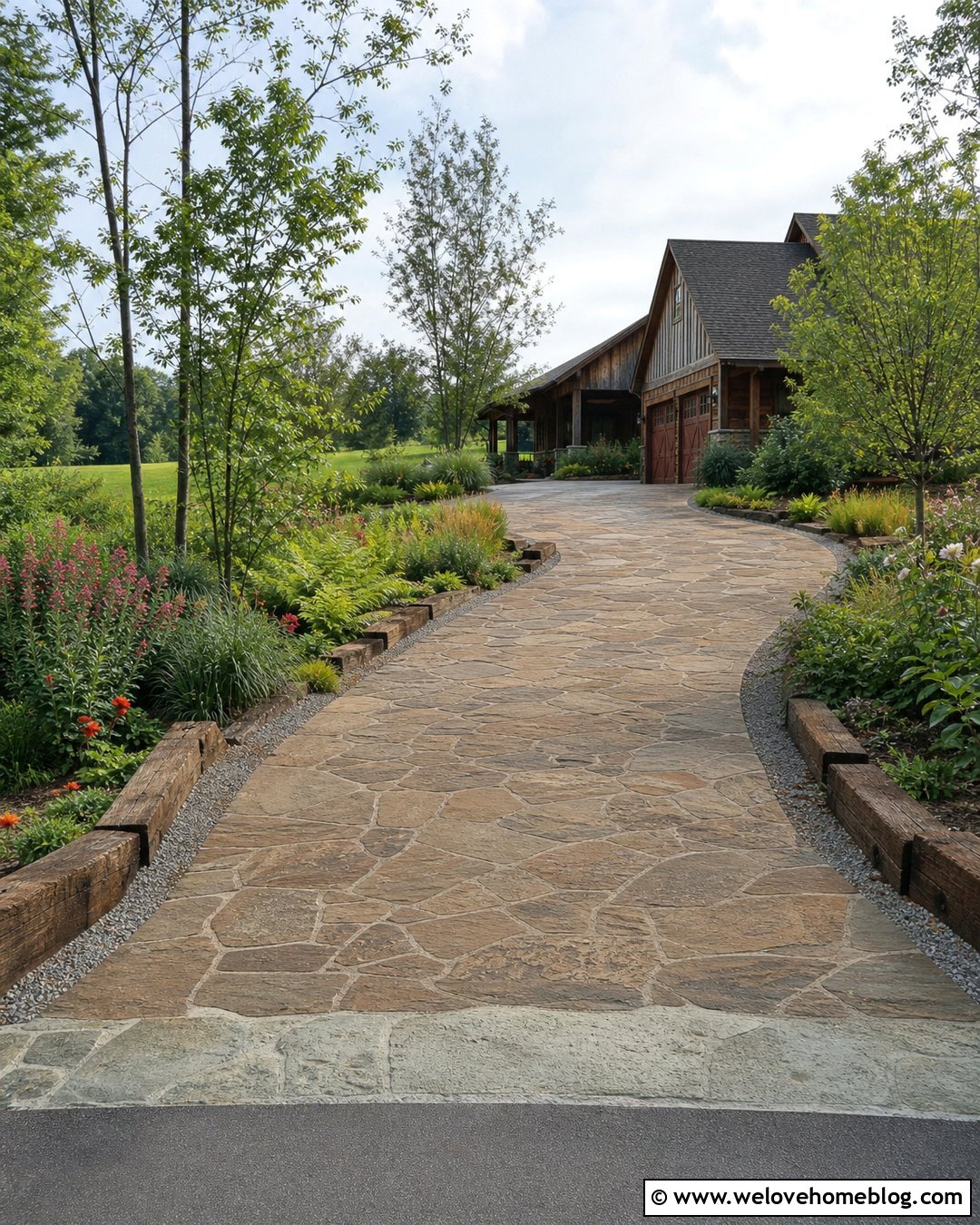
For a casual rural entrance, timber edging can complement the natural shape of crazy paving. Use irregular brown sandstone or fieldstone across a long, softly curved driveway leading to a cabin, barn-style house, or rustic farmhouse. Thick treated timber beams can define the edges beside gravel shoulders and informal planting beds. Set the timber low and anchor it securely so it does not interfere with tires or create exposed corners. Native grasses, ferns, flowering shrubs, and small trees can make the driveway feel integrated with the surrounding land. Because timber eventually weathers and may require replacement, it is better suited to lightly trafficked residential settings than demanding parking courts. A stone apron at the road and garage can strengthen the busiest transition points while preserving the relaxed rural appearance.
17. Crazy Pave Driveway With Gravel Center
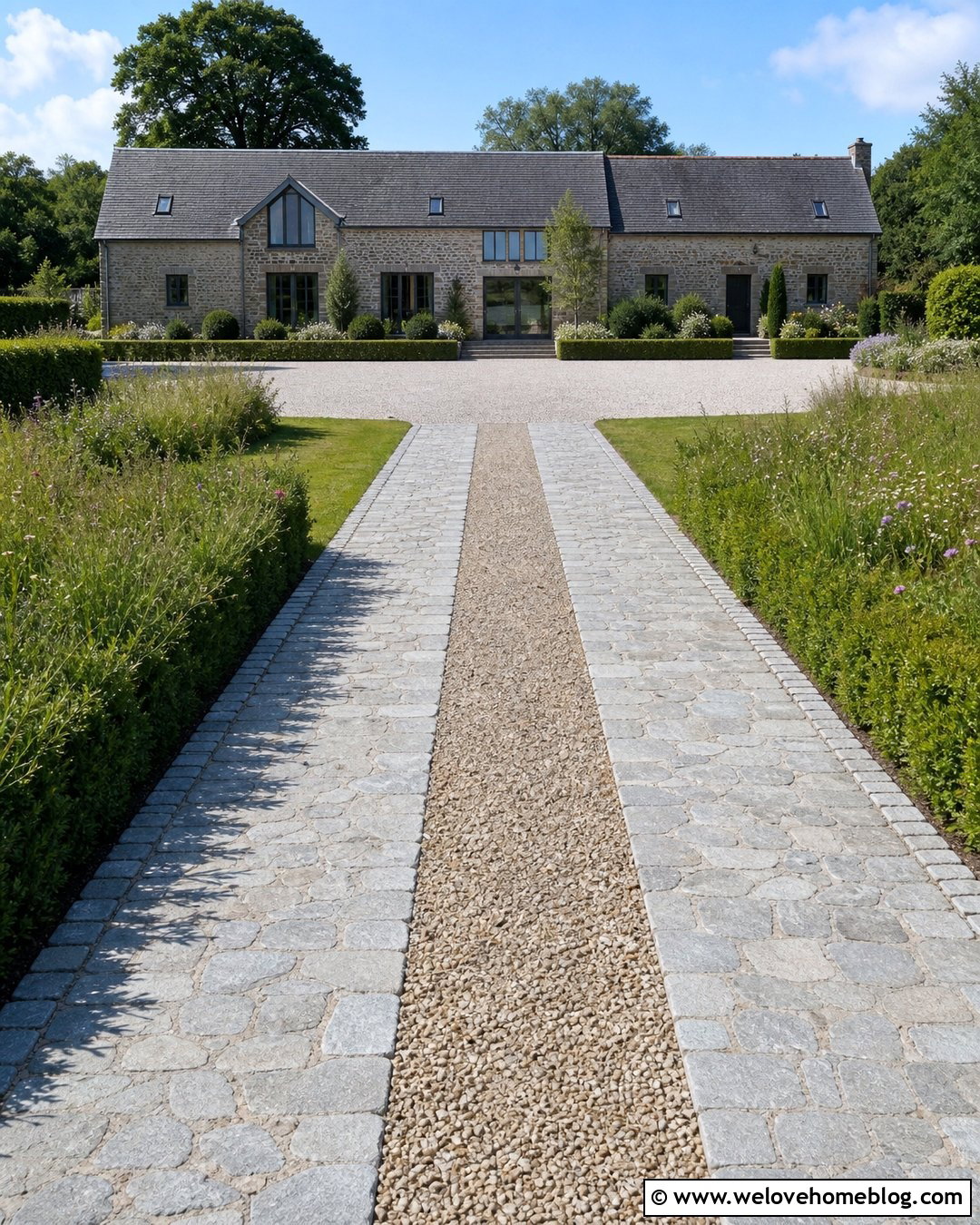
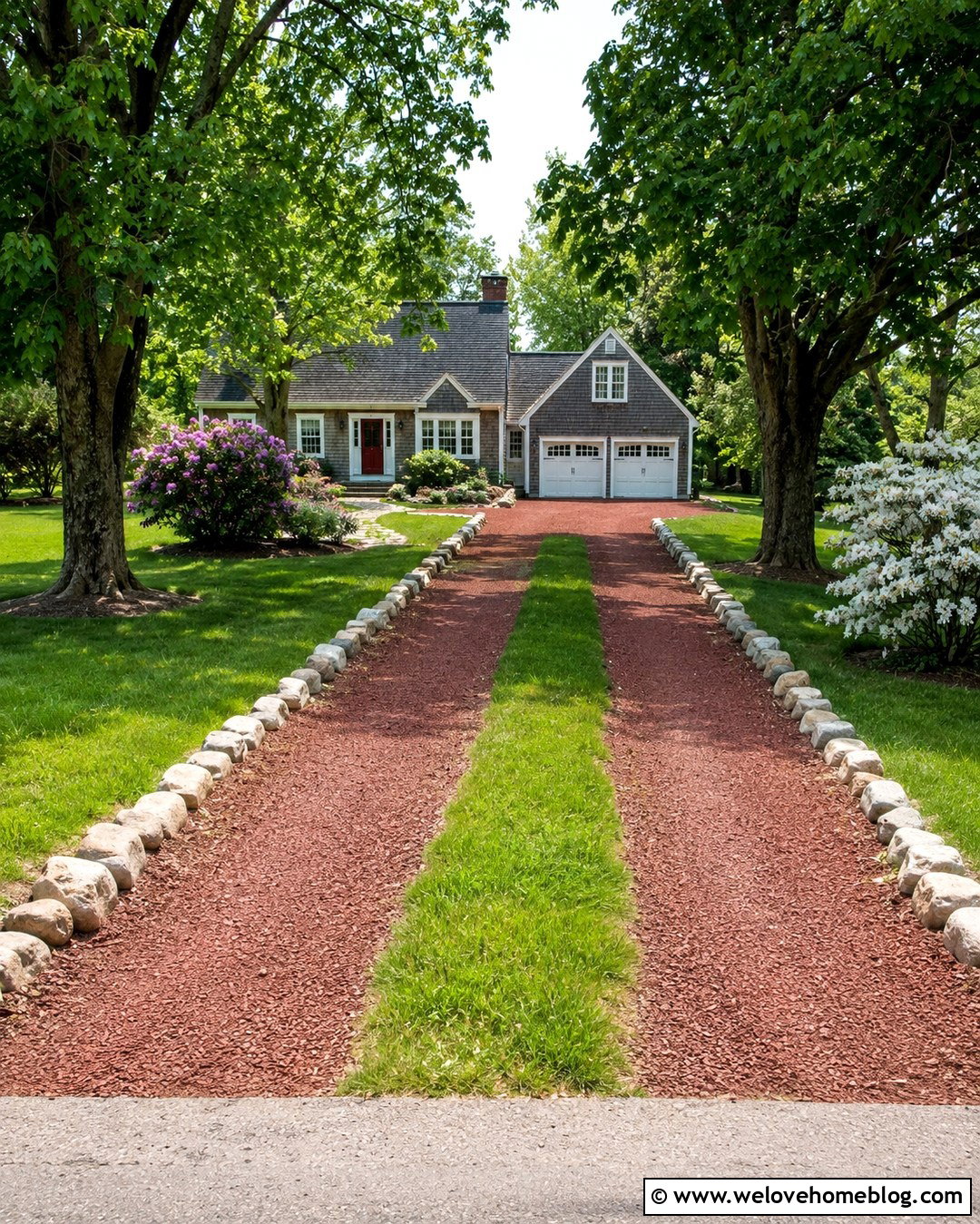
Breaking a wide driveway into paved tire tracks and a gravel center can reduce the amount of solid-looking stone. Use irregular gray granite crazy paving for two broad vehicle tracks, with compacted decorative gravel between them. Matching granite setts should border the track edges and hold the gravel in place. This layout suits a straight country driveway leading to a converted barn or modern farmhouse. Add meadow planting, clipped shrubs near the house, and a matching crazy paved turnaround or parking pad. The track spacing must suit the vehicles that regularly use the property, so careful measurement is essential. Provide a stable base under every section and choose gravel that compacts well without migrating. At turning and parking areas, continue the stone across the full width for easier maneuvering.
18. Crazy Pave Driveway With Garden Beds
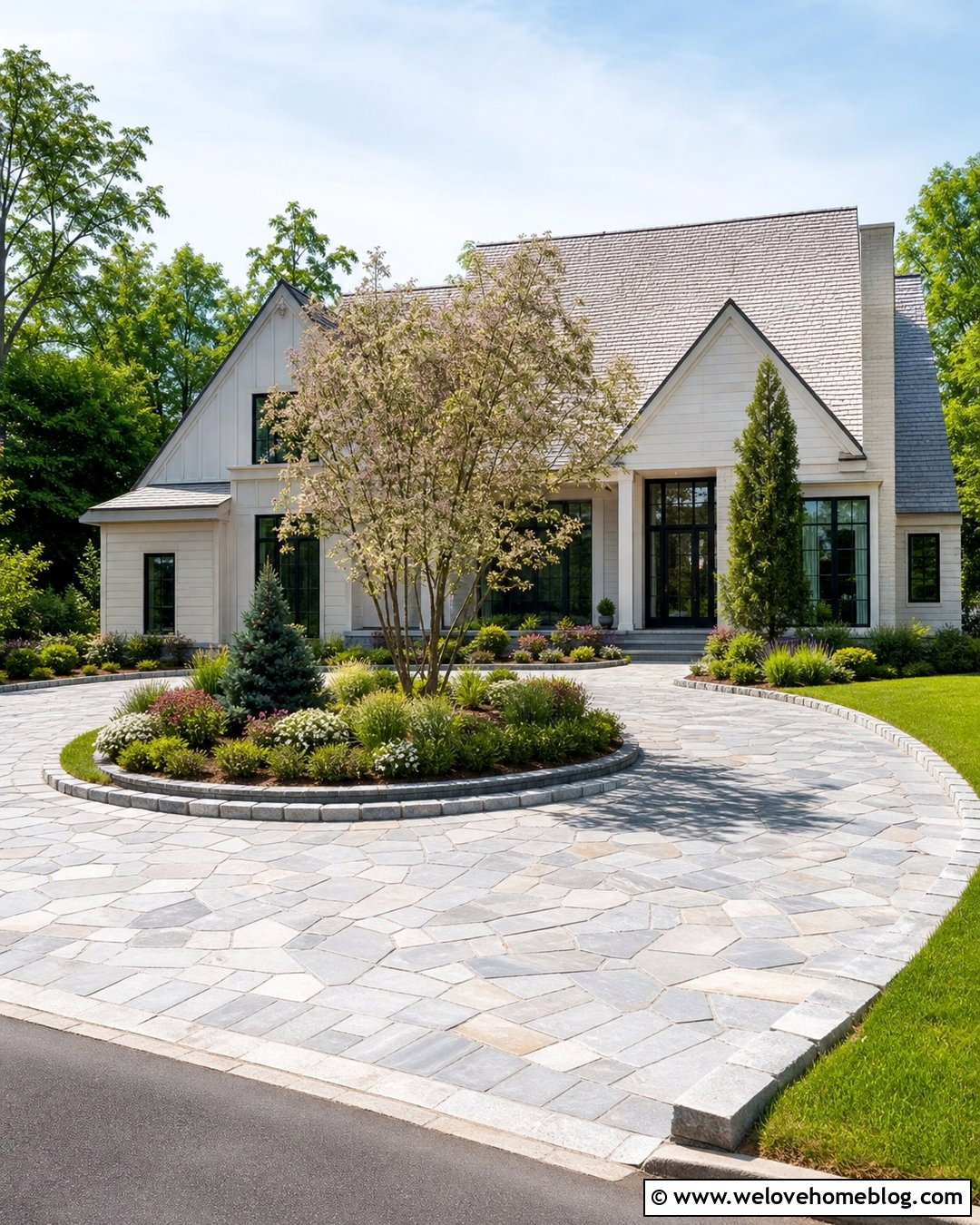
Integrated garden beds can divide a broad crazy pave driveway into smaller, more attractive zones. Use irregular silver quartzite or blue-gray stone across a curved driveway with a planted island near the front entrance. The bed could contain a multi-stem serviceberry, compact evergreens, flowering perennials, and decorative grasses. A low stone curb will protect the plants while repeating the colors found in the paving. Keep branches, tall flowers, and dense shrubs away from vehicle sightlines and turning spaces. Continue the driveway material into a clear walkway that passes beside the island and leads to the front door. This layout is especially useful for a large suburban property where uninterrupted paving would feel overwhelming. Plan irrigation, root space, drainage, lighting, and snow storage before finalizing the island’s size and placement.
19. Crazy Pave Driveway With Lavender Borders
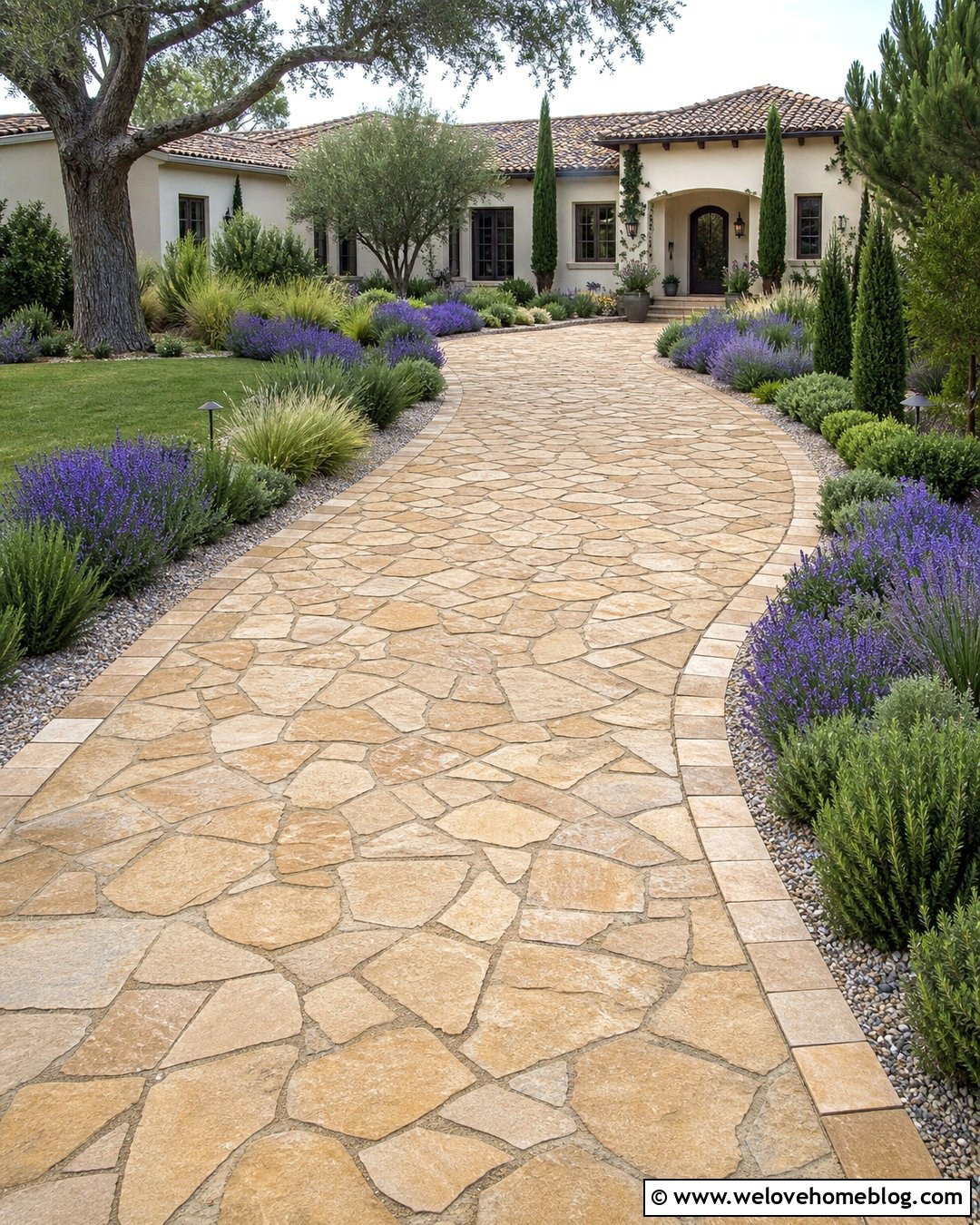
A lavender-lined crazy pave driveway creates a soft, colorful approach with a distinctly relaxed character. Choose warm beige limestone, sandstone, or porphyry pieces for a gently curved surface leading to a light stucco or stone house. Use matching stone setts around the driveway to stop soil from spilling into the joints. Plant lavender in broad sunny borders, then mix in rosemary, ornamental grass, and compact evergreen shrubs for year-round structure. Leave enough setback between the plants and paving so mature growth does not narrow the driving area. Gravel mulch can improve the neatness of the beds and coordinate with the stone’s warm tones. In colder or wetter regions, replace lavender with a locally suitable plant that creates the same low, repeating border without demanding unsuitable growing conditions.
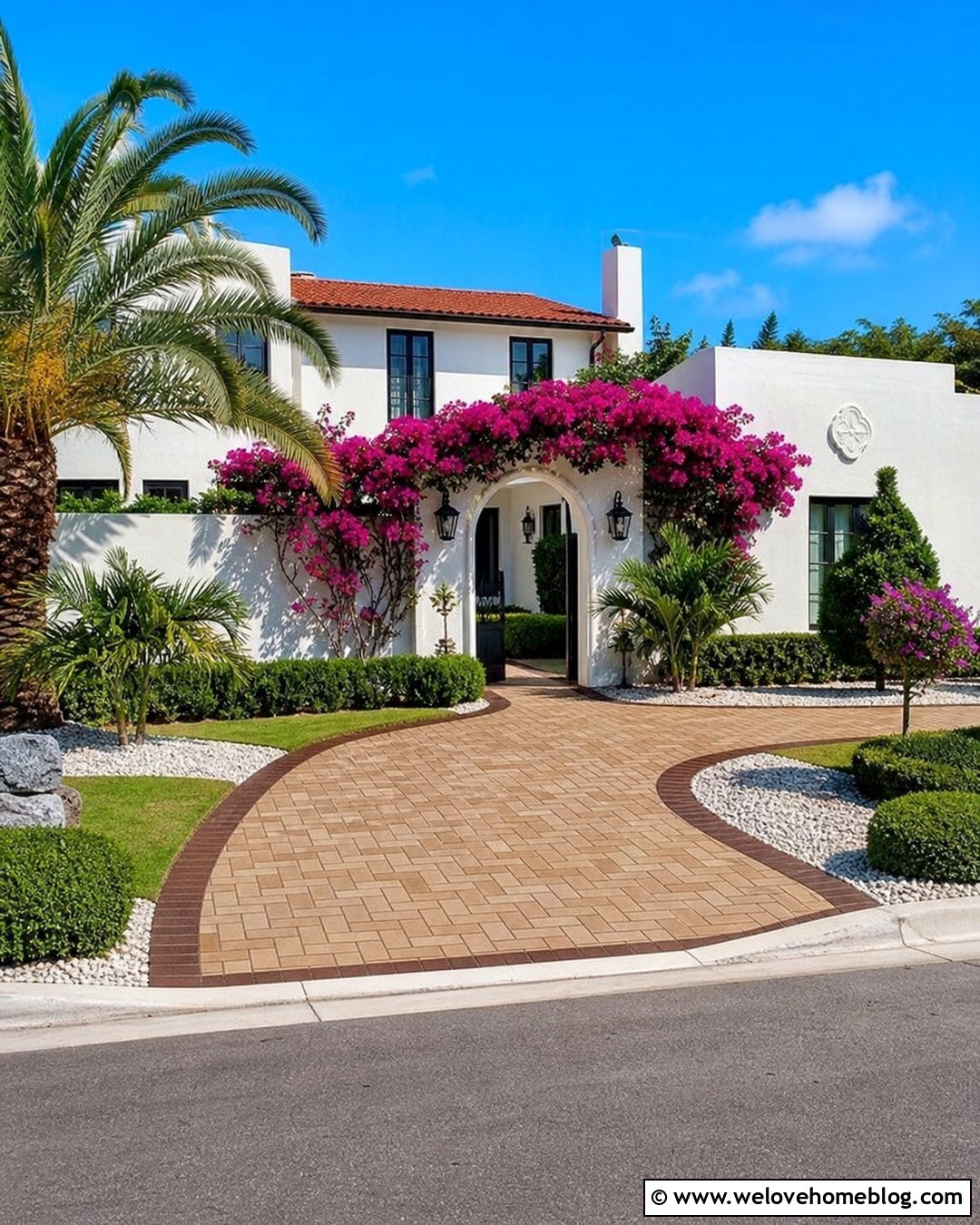
20. Crazy Pave Driveway With Native Landscaping
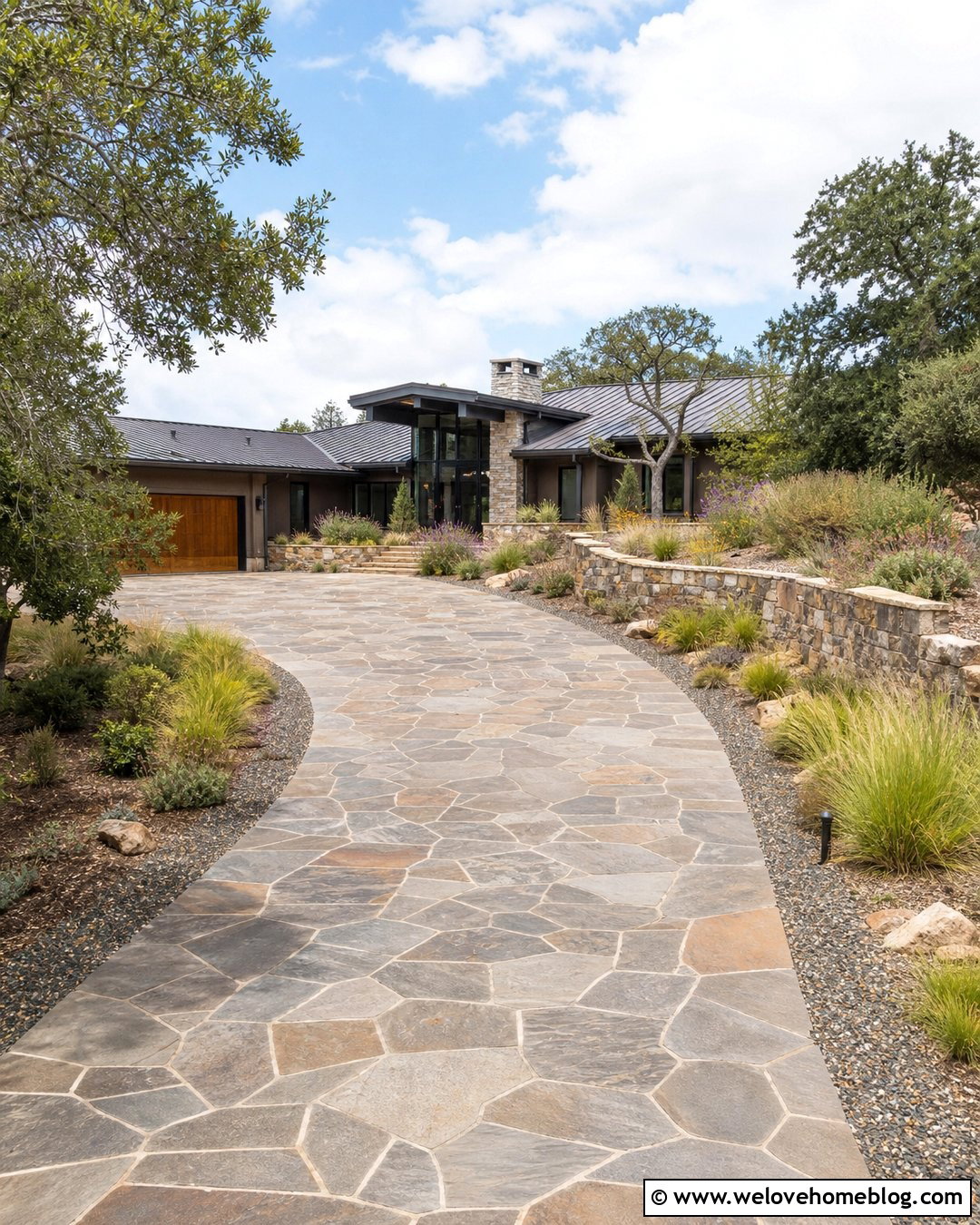
Native landscaping can make a crazy pave driveway feel connected to its regional setting. Begin with locally appropriate irregular stone in muted gray, brown, or sandy tones. Shape the driveway into a gentle curve that works with the existing grade rather than cutting straight across the yard. Along both sides, use native grasses, flowering perennials, low shrubs, and small trees selected for the site’s soil and sunlight. A narrow crushed-stone shoulder can catch runoff and create separation between plants and paving. Keep vegetation low around the road entrance and any pedestrian crossing points. Repeating the same stone in a front path or low retaining wall will strengthen the overall design. The final look should appear natural, but the driveway base, drainage, borders, and vehicle clearances still need precise planning.
21. Long Tree-Lined Crazy Pave Driveway
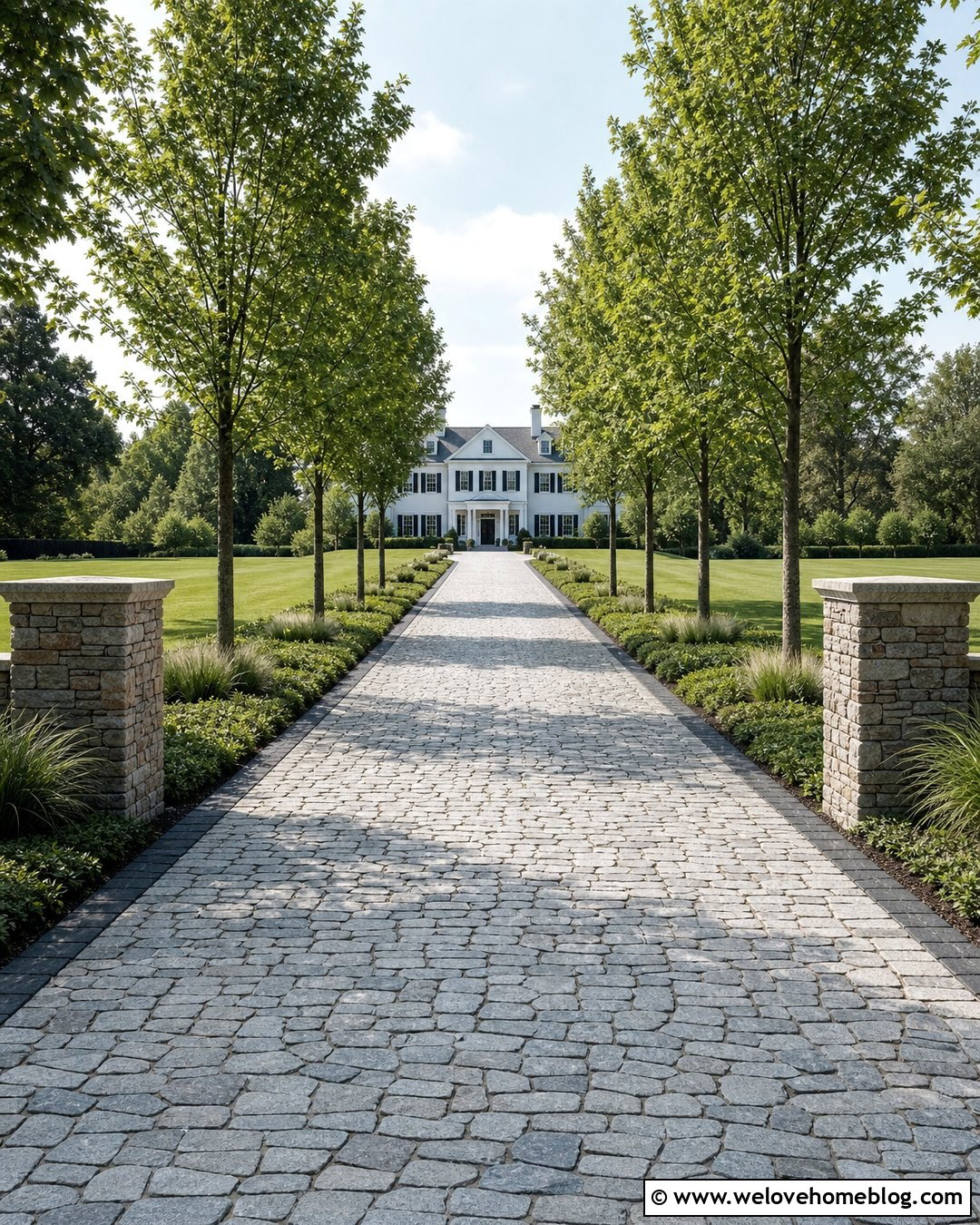
A long crazy pave driveway becomes a strong landscape feature when trees frame the full approach. Use durable gray granite or porphyry pieces in a straight layout leading to a country, Colonial, or estate-style house. Dark stone setts can define both edges and create a formal line beneath the irregular surface pattern. Plant evenly spaced deciduous trees beyond the driveway shoulder, leaving enough distance for healthy roots, mature trunks, visibility, and vehicle clearance. Low grasses or groundcover beneath the trees will keep the entrance open and manageable. Add discreet drainage swales outside the paving rather than allowing runoff to collect near the trunks. Repeating stone pillars at the entrance can complete the composition. The result combines the order of a tree-lined avenue with the natural variation of irregular paving.
22. Gated Crazy Pave Driveway
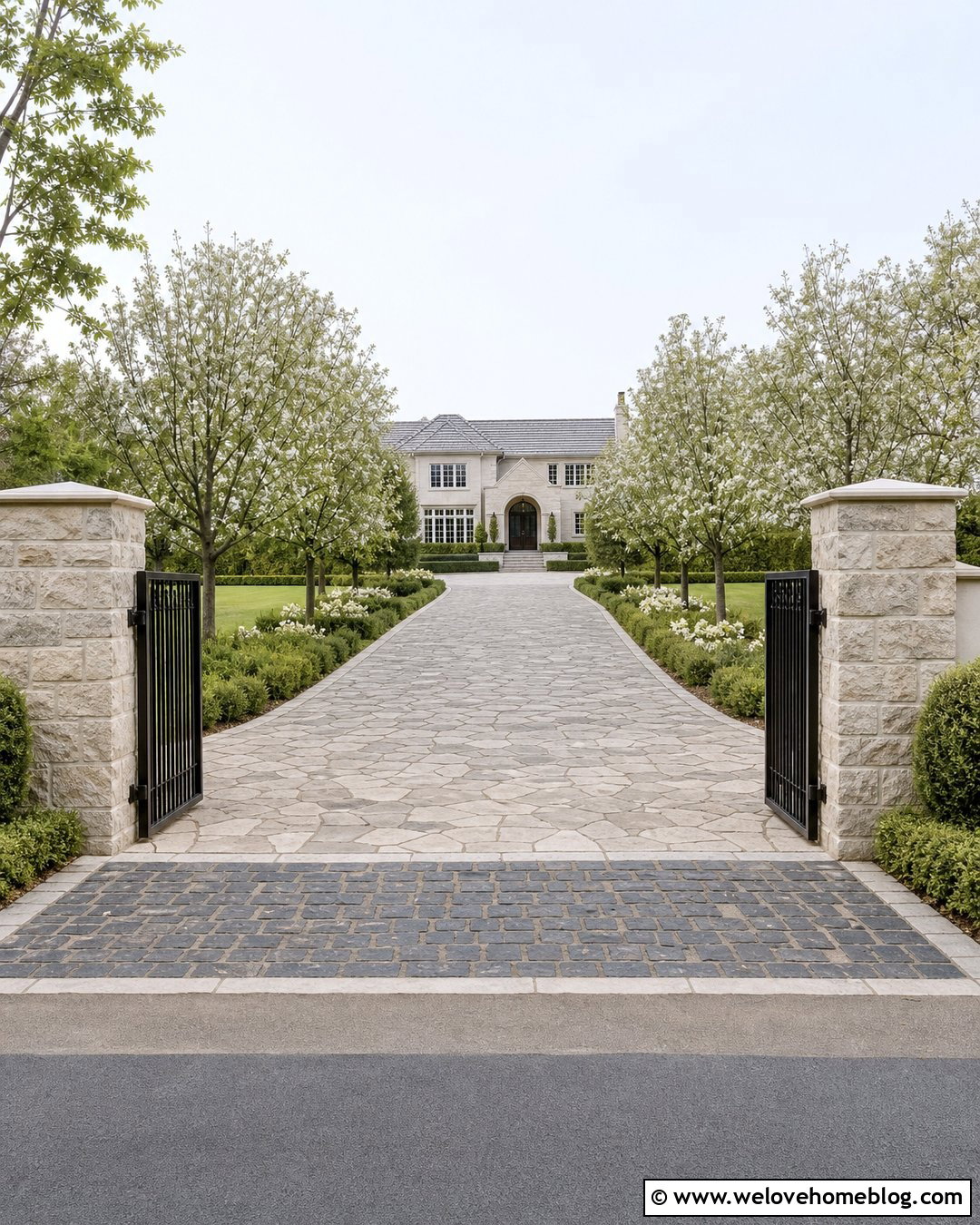
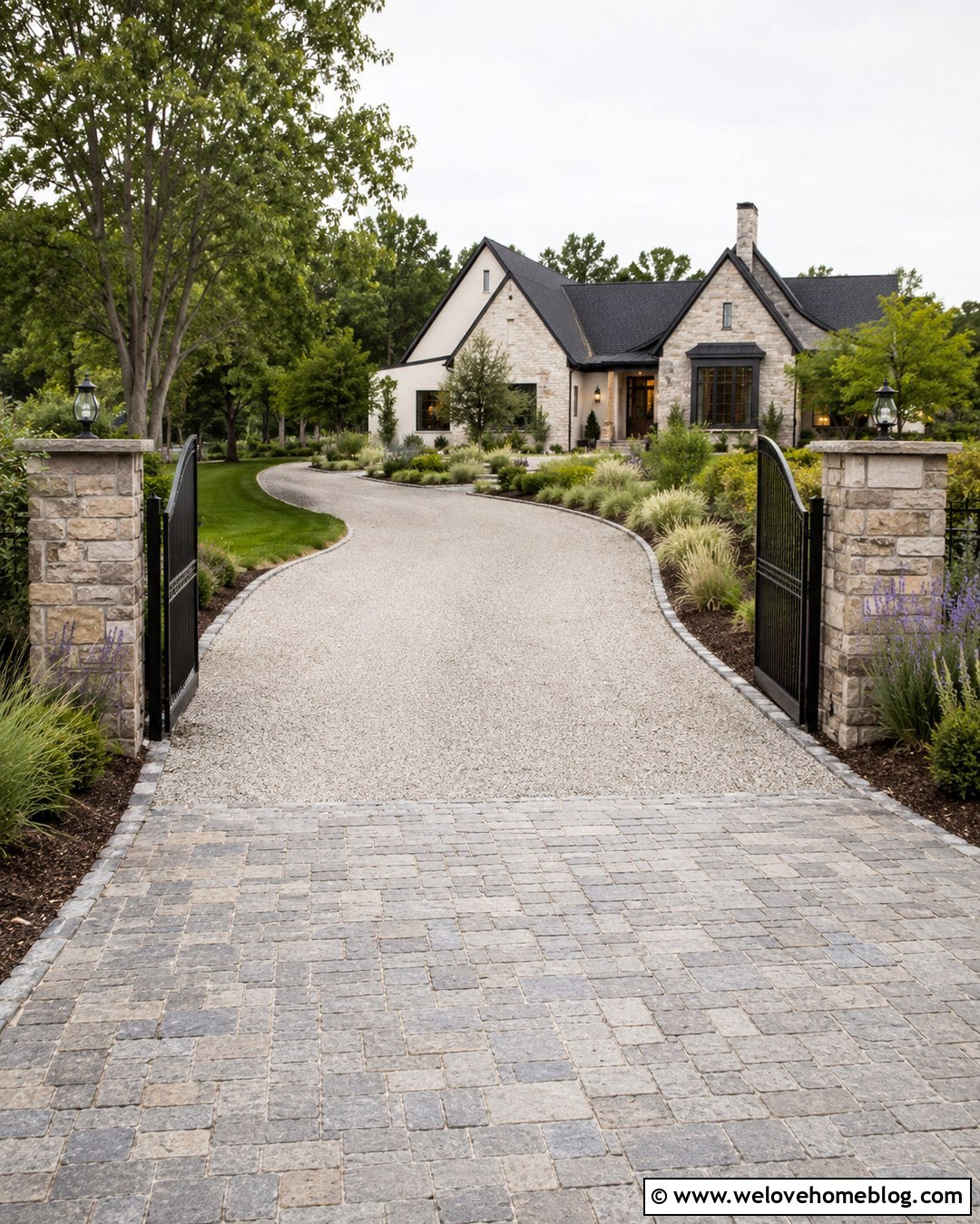
A gate looks more connected to the property when the paving, pillars, and landscape share the same design language. Use warm gray limestone crazy paving across a slightly flared entrance that narrows into a straight driveway. Stone-clad pillars can match the dominant driveway color, while simple black metal gates provide contrast. Install a darker cobblestone apron between the road and gate to create a durable threshold. Low hedges, symmetrical shrubs, and small flowering trees can frame the pillars without hiding the address or blocking visibility. Leave adequate space for vehicles to wait safely while the gate opens. Lighting, access controls, drainage, and underground utilities should be planned before construction begins. Beyond the entrance, continue the crazy paving toward the house so the gate feels like part of one complete driveway design.
23. Crazy Pave Driveway With Lighting
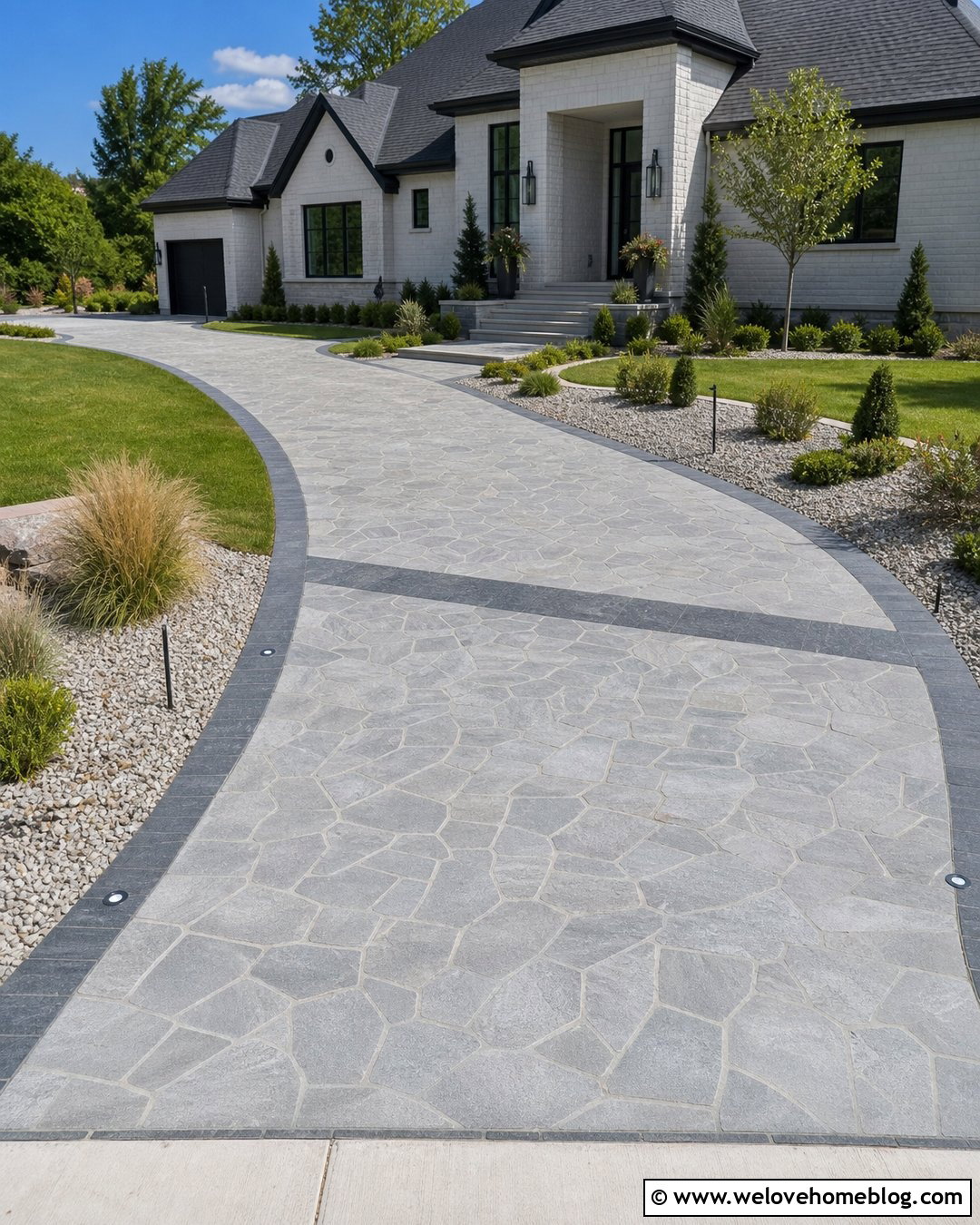
Good lighting can reveal the texture of crazy paving while making the driveway easier to navigate. Choose silver-gray quartzite or bluestone for a curved layout leading to a contemporary or transitional home. Install low shielded path lights along planting beds rather than placing fixtures where tires or snow equipment could damage them. Recessed marker lights can highlight the entrance apron, parking edge, or walkway intersection when local conditions permit. During the day, grasses, low shrubs, and pale gravel will frame the stone without hiding its pattern. Use a dark border to define the curves and provide a consistent line for the fixtures. Keep illumination warm but controlled, directing it toward the surface instead of neighboring windows. Electrical conduits and fixture locations should be included in the plan before the stone is laid.
24. Small Crazy Pave Driveway
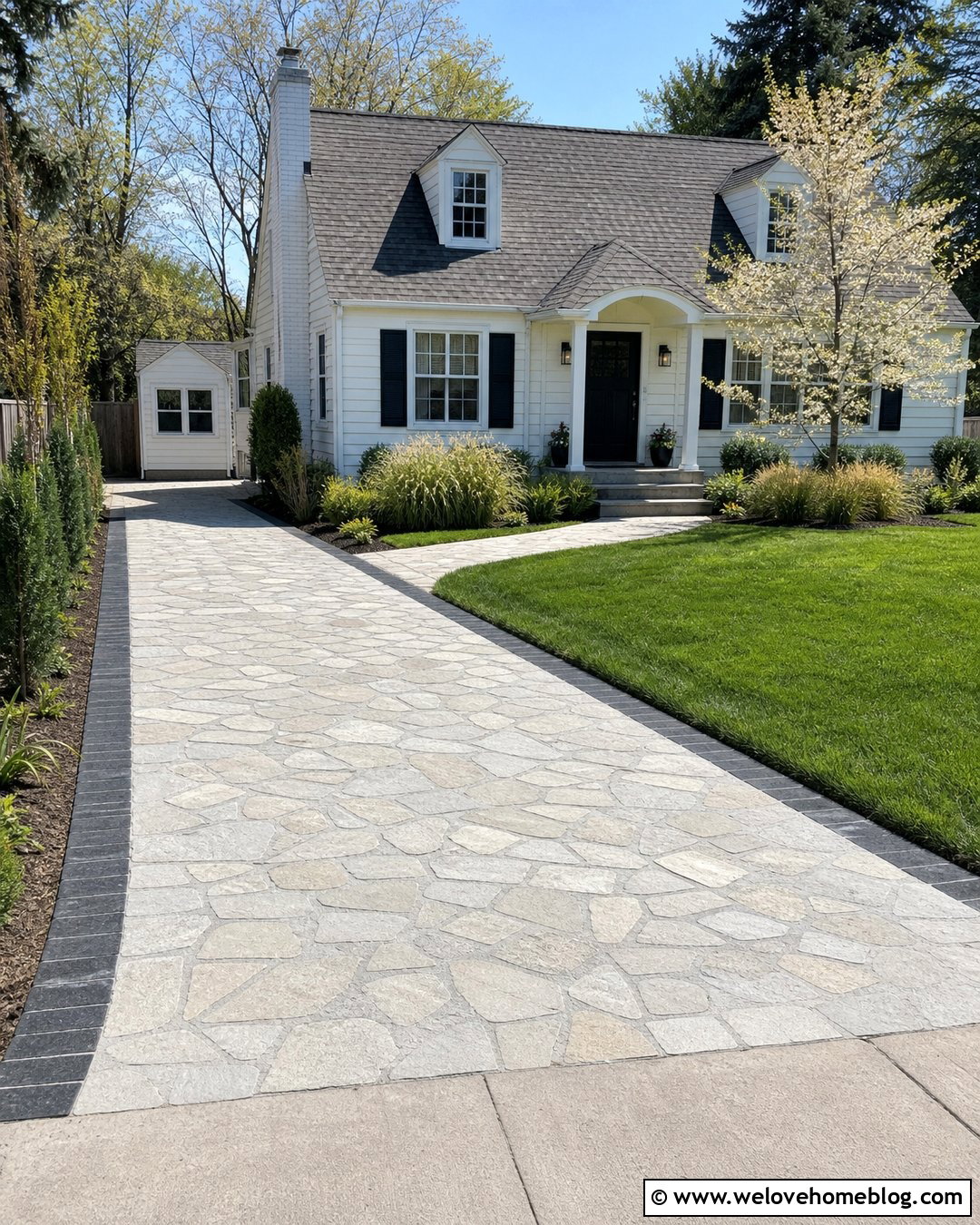
A small front yard can still support a detailed crazy pave driveway if the design remains simple. Use pale gray limestone or compact sandstone pieces across a straight single-car layout. Smaller stone shapes will suit the limited scale and make it easier to form clean edges around the walkway and parking space. A narrow brick or granite border can separate the driveway from compact planting beds. Choose upright shrubs, ornamental grasses, and one small tree rather than plants that spread across the paving. Continue the same stone to the front steps so the driveway and walkway read as one coordinated surface. Light colors can keep the area feeling open, while a restrained joint color avoids visual clutter. Accurate dimensions are important because every border, bed, and turning space affects daily usability.
25. Horseshoe Crazy Pave Driveway
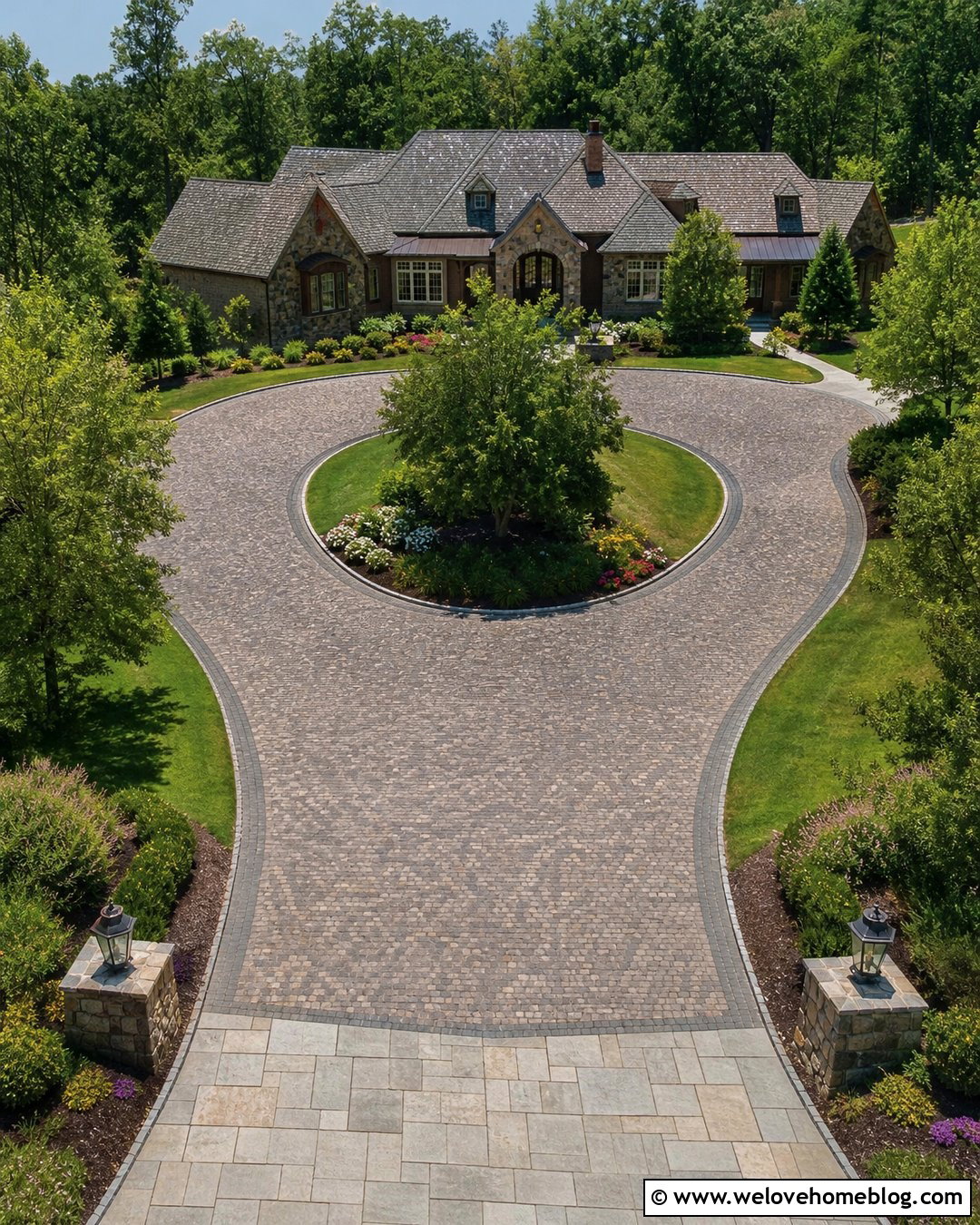
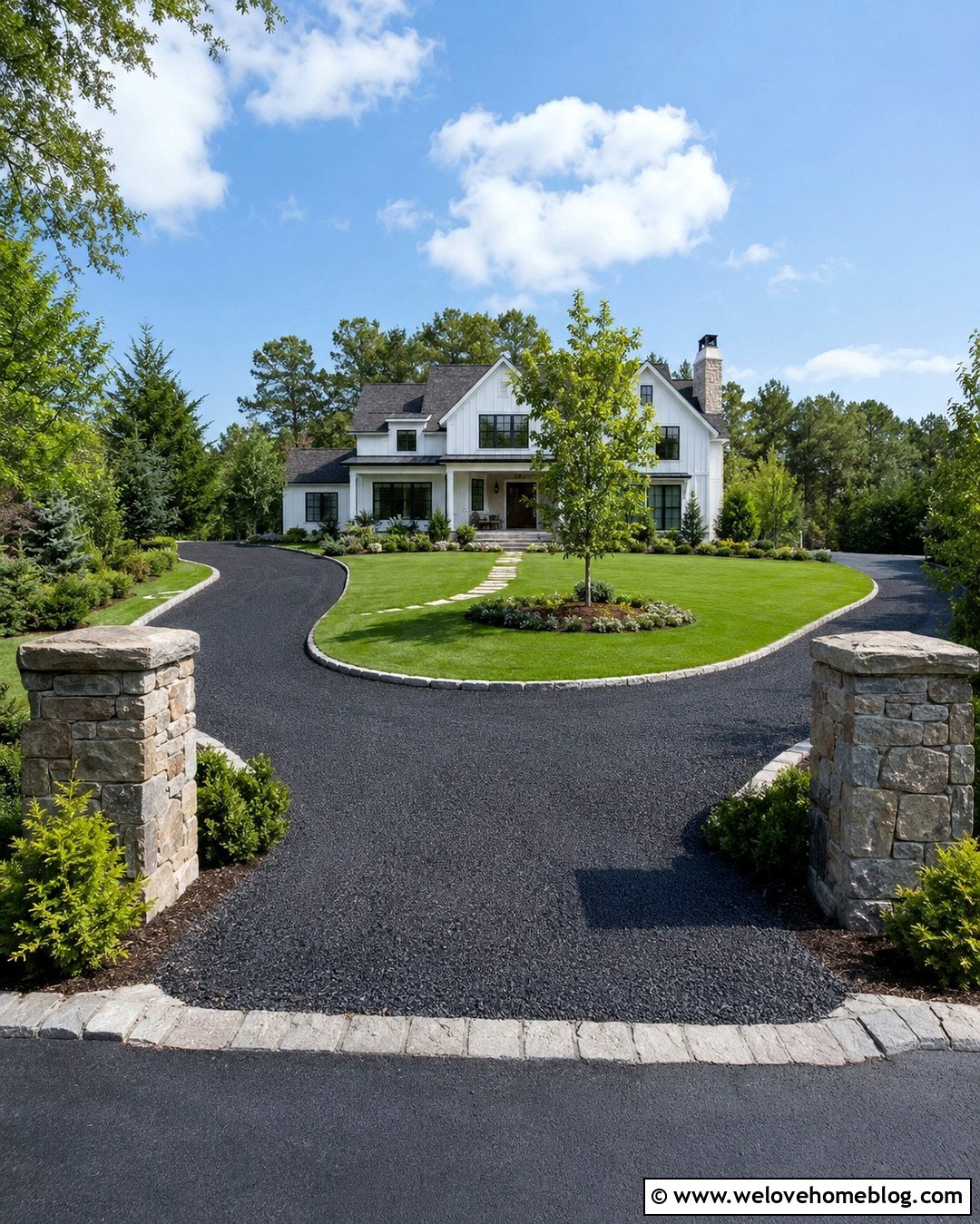
A horseshoe driveway offers an impressive entrance without requiring vehicles to reverse toward the road. Cover the sweeping layout with irregular gray-brown granite, sandstone, or porphyry chosen to complement an estate, ranch, or large country house. Use a continuous cobblestone border to emphasize the curves and protect the paving edges. The central lawn can feature one specimen tree surrounded by low shrubs and seasonal planting. Keep the two road openings clear, visible, and wide enough for comfortable turning. A contrasting stone apron at each entrance will define the arrival and exit points. Near the house, widen the crazy paving into a practical parking court without losing the irregular pattern. Careful grading, drainage, base preparation, and turning-radius planning are essential because this design covers a large, heavily used area.
Conclusion:
The best crazy paving combines irregular beauty with a carefully planned structure. Stone color, driveway shape, joint width, edging, planting, and house architecture should all support one another. Before selecting a favorite design, consider vehicle weight, drainage, climate, slope, maintenance, and the strength of the chosen stone. A driveway-rated material and professionally prepared base are especially important because decorative paving must withstand far more pressure than a garden path. Whether you prefer pale limestone, dark basalt, colorful porphyry, or reclaimed flagstone, these 25 Crazy Pave Driveway Ideas offer practical ways to create a distinctive entrance. Choose a complete look that fits your property instead of selecting the paving pattern in isolation.

Related posts:
Leave a Reply