
A checkerboard driveway turns a practical parking surface into a strong part of your home’s curb appeal. These 20 Checkerboard Driveway Ideas explore far more than the familiar concrete-and-grass grid. You can combine contrasting pavers, brick, cobblestone, gravel, turf, exposed aggregate, or colored concrete to suit modern, traditional, farmhouse, and cottage homes. Large squares create a clean contemporary look, while smaller checks feel detailed and classic. The best designs also consider drainage, tire paths, edging, planting beds, and the transition to the garage. Oversized concrete squares separated by grass or decorative stone are especially well suited to geometric residential landscapes. () Use the complete driveway looks below to compare materials, layouts, and landscaping through these 20 Checkerboard Driveway Ideas.

1. Concrete And Grass Checkerboard Driveway
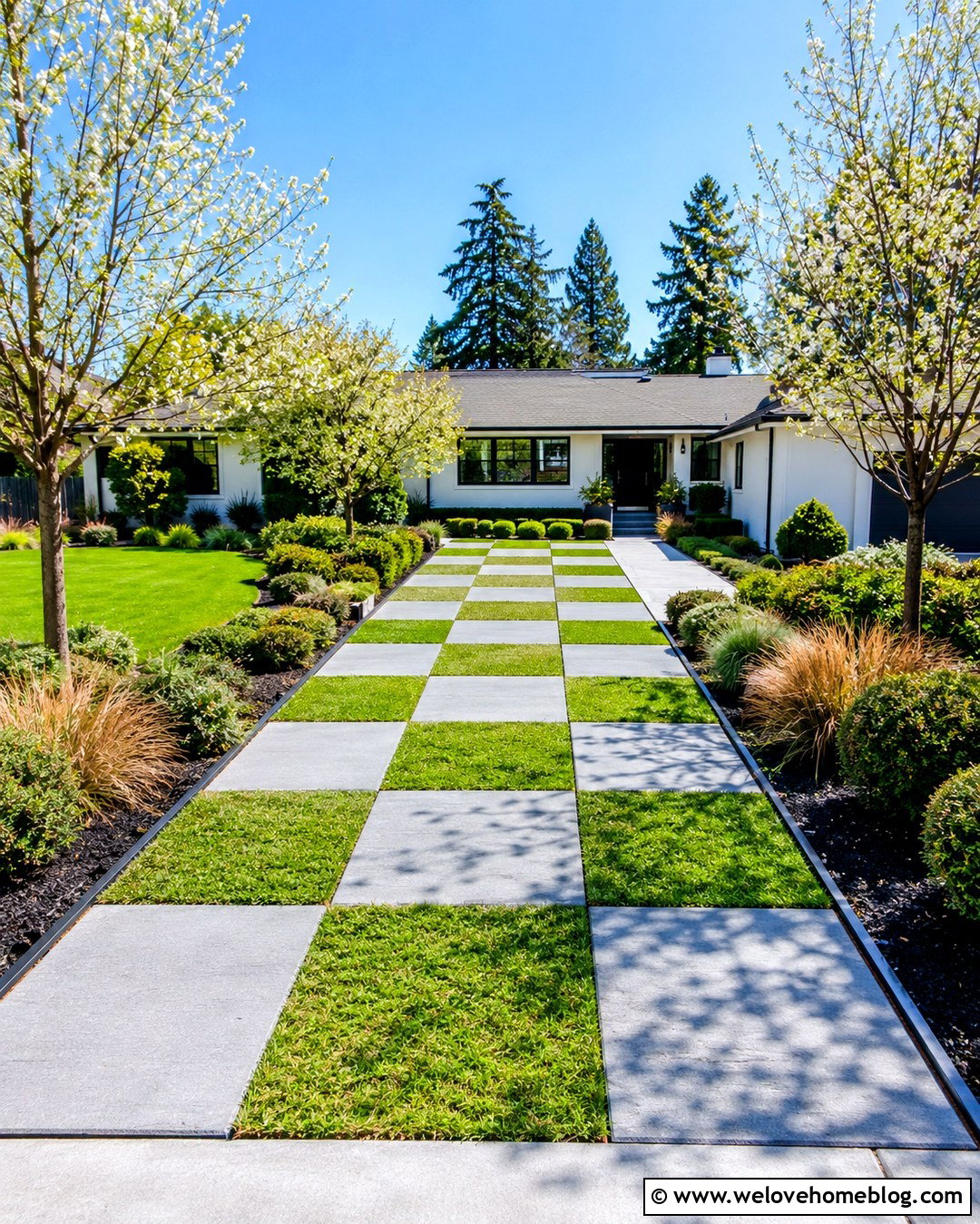
Large concrete squares alternating with healthy green grass create the most recognizable checkerboard driveway. Use medium-gray, lightly textured concrete to reduce glare and provide a practical driving surface. A straight layout makes the pattern easy to understand from the curb, especially when the grid aligns with garage doors and front windows. Keep each grass square level with the concrete to create a cleaner transition and simplify mowing. Wide planting beds filled with ornamental grasses, clipped shrubs, and small flowering trees can soften the strong geometry. A dark steel edging strip around the outside keeps the lawn from spreading into the pattern. This complete look works particularly well with modern, midcentury, and updated ranch homes. Concrete-and-grass grids are widely used to combine structured paving with visible greenery. ()
2. Concrete And Artificial Turf Checkerboard Driveway
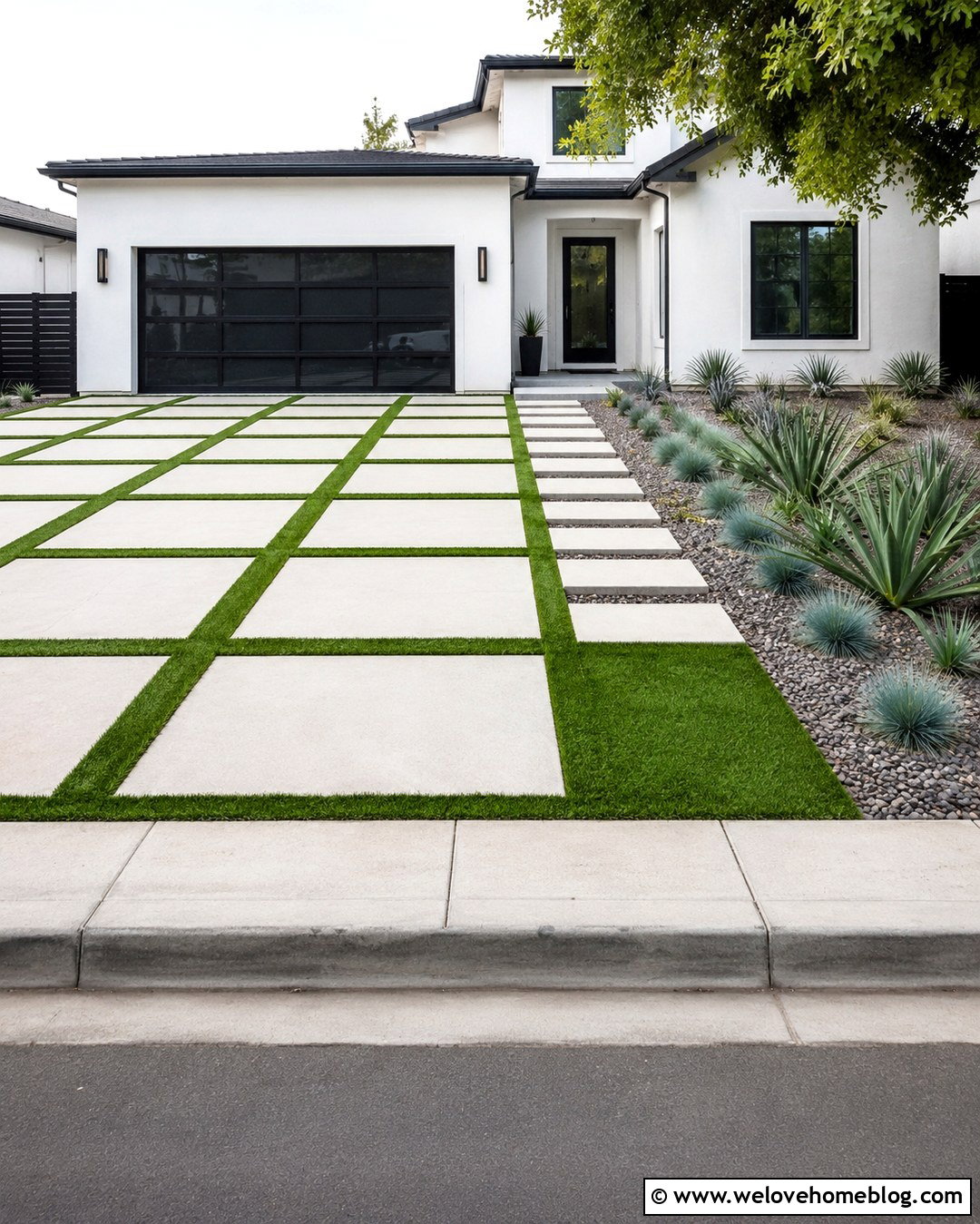
Artificial turf offers the crisp green contrast of grass without regular mowing, watering, or seasonal patchiness. Pair it with large, pale-gray concrete pavers in a straight checkerboard layout for a sharp contemporary entrance. Select driveway-rated turf and position the grid so vehicle tires rest primarily on the concrete squares rather than repeatedly pressing into the turf. This can help the green sections retain a more consistent appearance over time. () Frame the driveway with black aluminum edging and low, drought-tolerant planting beds. Agave, blue fescue, compact shrubs, and pale gravel complement the clean pattern without hiding it. Continue one row of the grid toward the front walk to connect the driveway and entrance. The finished design feels controlled, bright, and especially appropriate for warm-climate modern homes.
3. Black And White Paver Checkerboard Driveway
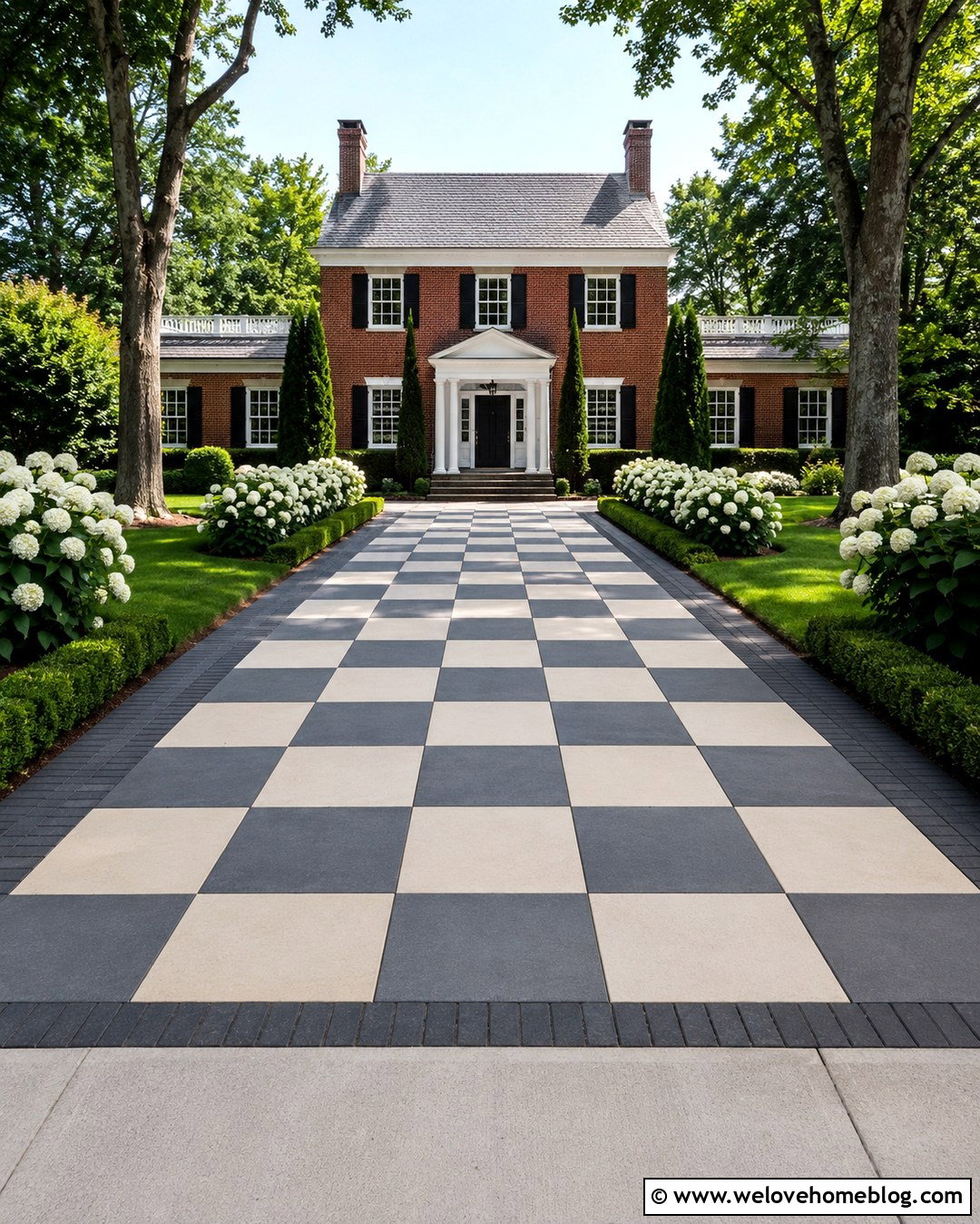
For a checkerboard pattern that remains visible in every season, alternate charcoal and ivory concrete pavers instead of adding grass. Choose large square pavers with a matte or lightly textured finish to prevent the layout from looking like an indoor tile floor. A charcoal soldier-course border gives the pattern a clear stopping point and helps the edges appear finished. On a wide driveway, center the grid carefully between the landscape beds and garage doors. White hydrangeas, dark green hedges, and a simple lawn reinforce the two-tone palette around a colonial or transitional house. Use the lighter paver sparingly in areas prone to staining. A balanced mix of warm ivory and softened charcoal produces a gentler, more residential result than stark black and bright white.
4. Brick And Limestone Checkerboard Driveway
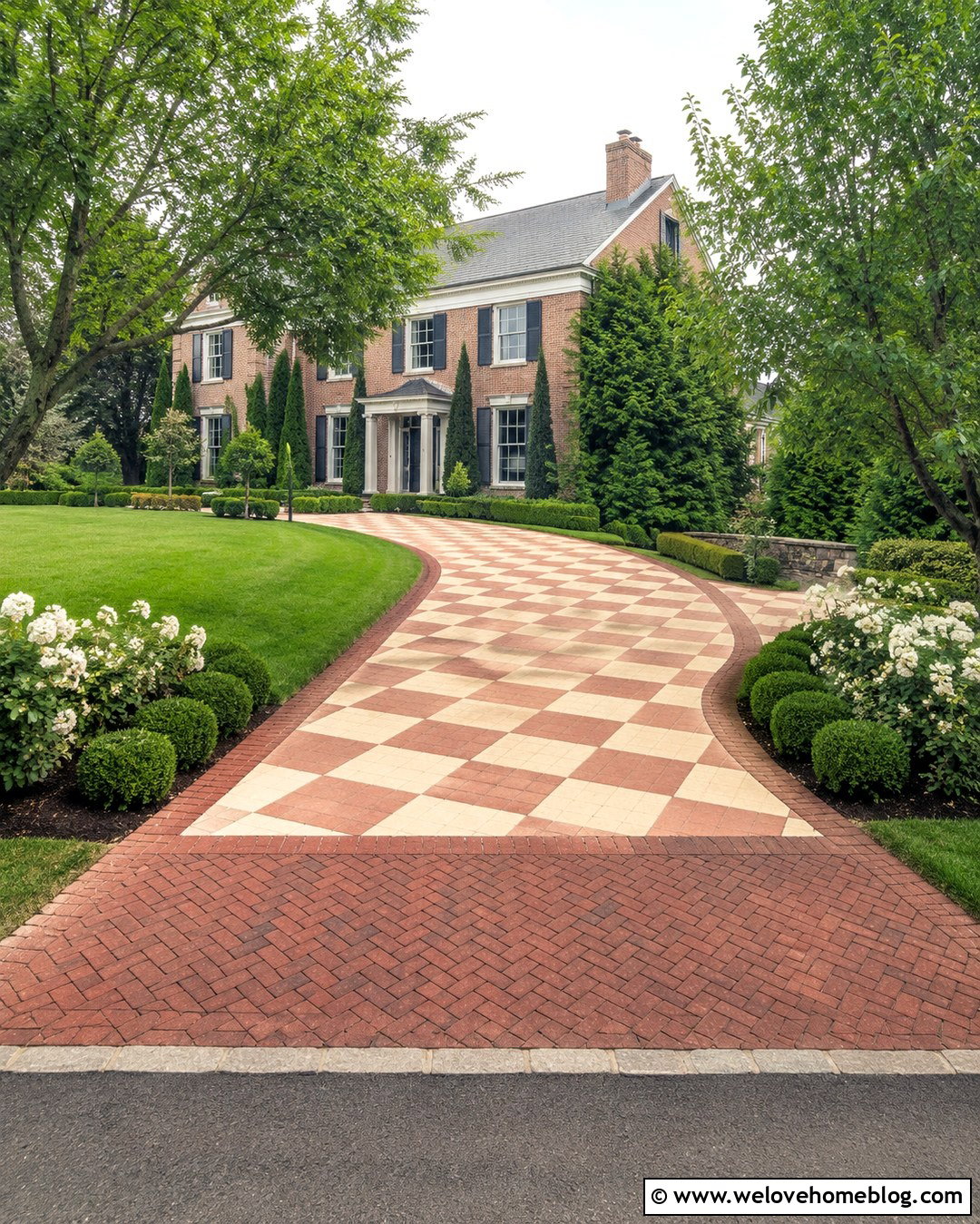
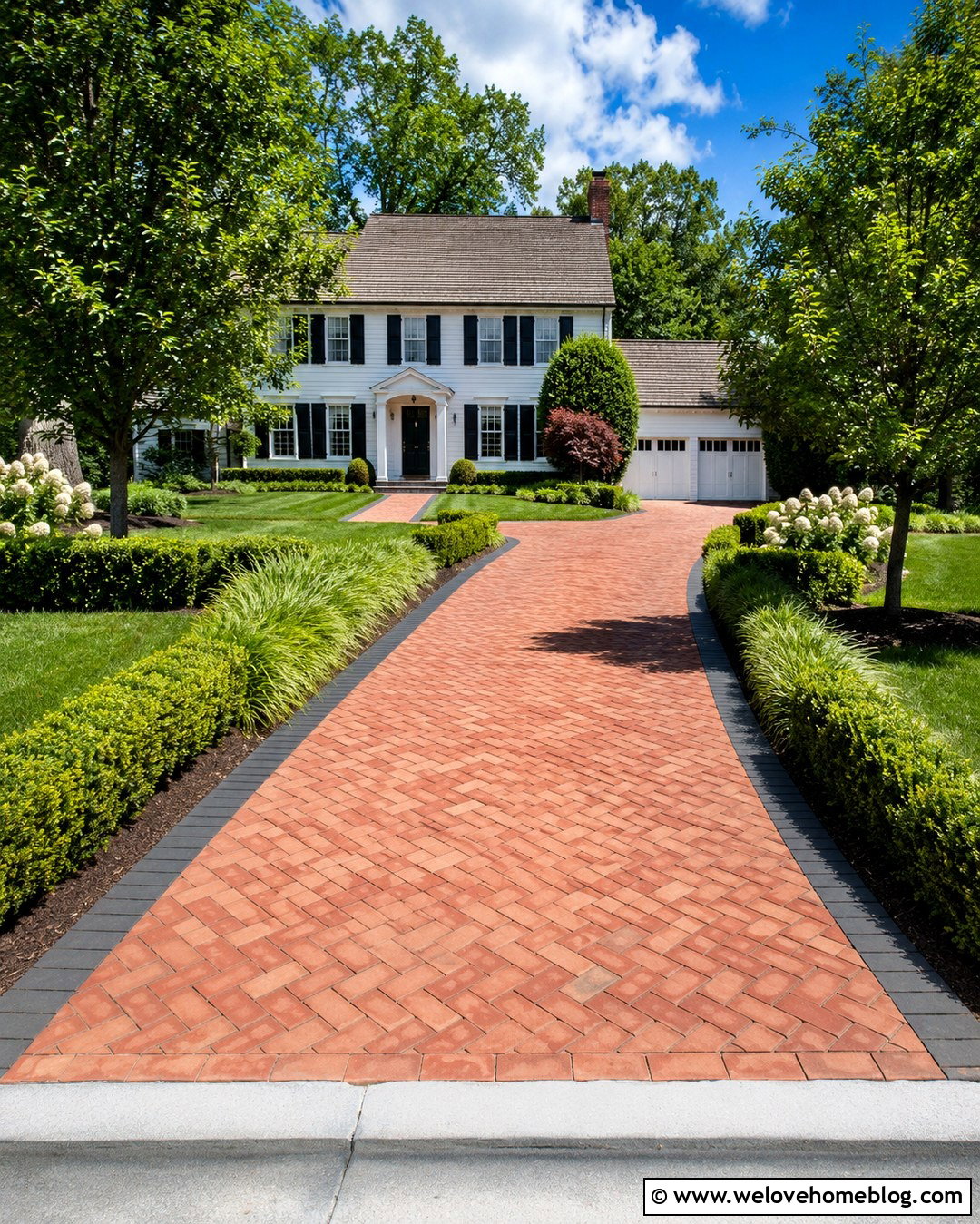
Warm red brick and creamy limestone create a traditional checkerboard driveway with rich color and texture. This pairing complements Georgian, colonial, and Tudor-inspired homes because it repeats materials commonly found on their facades. Use square limestone units and brick blocks of matching dimensions so the pattern stays consistent. A brick perimeter border can tie the checks together and form a smooth transition to the public sidewalk. Along the sides, clipped boxwood, white roses, and layered evergreen shrubs provide an orderly frame without competing with the paving. A gently curved approach makes the pattern feel less rigid while still showing each alternating square. Because natural stone and brick may weather differently, choose compatible driveway-rated materials and establish a solid base that can support the complete installation.
5. Charcoal Concrete Checkerboard Driveway With Gravel
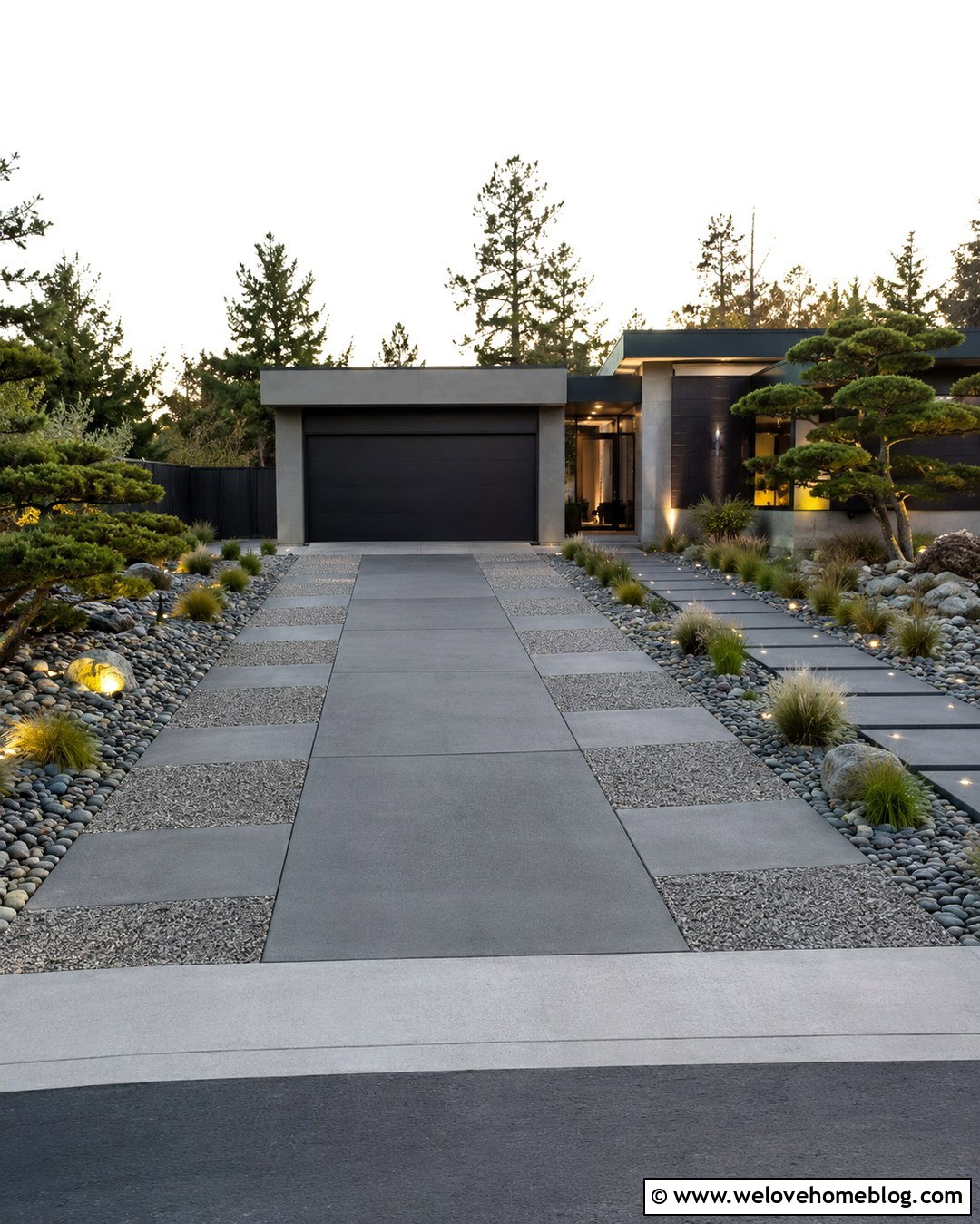
Alternating charcoal concrete squares and light gravel creates a bold checkerboard without the upkeep associated with planted joints. Choose compact angular gravel rather than loose, rounded stones that can move easily under tires. Steel grid restraints or concealed edging around each gravel square can help maintain clean boundaries. Align the most frequently used tire paths with concrete wherever the driveway dimensions allow. At the curb, add a continuous concrete apron so gravel is less likely to migrate toward the street. This low-water design pairs naturally with a flat-roof modern house, sculptural evergreens, ornamental grasses, and broad beds of river rock. A matching charcoal walkway can branch from the driveway grid and lead toward the front door. The pale aggregate brightens the dark paving while preserving the graphic checkerboard effect.
6. White Concrete Checkerboard Driveway With Black Gravel
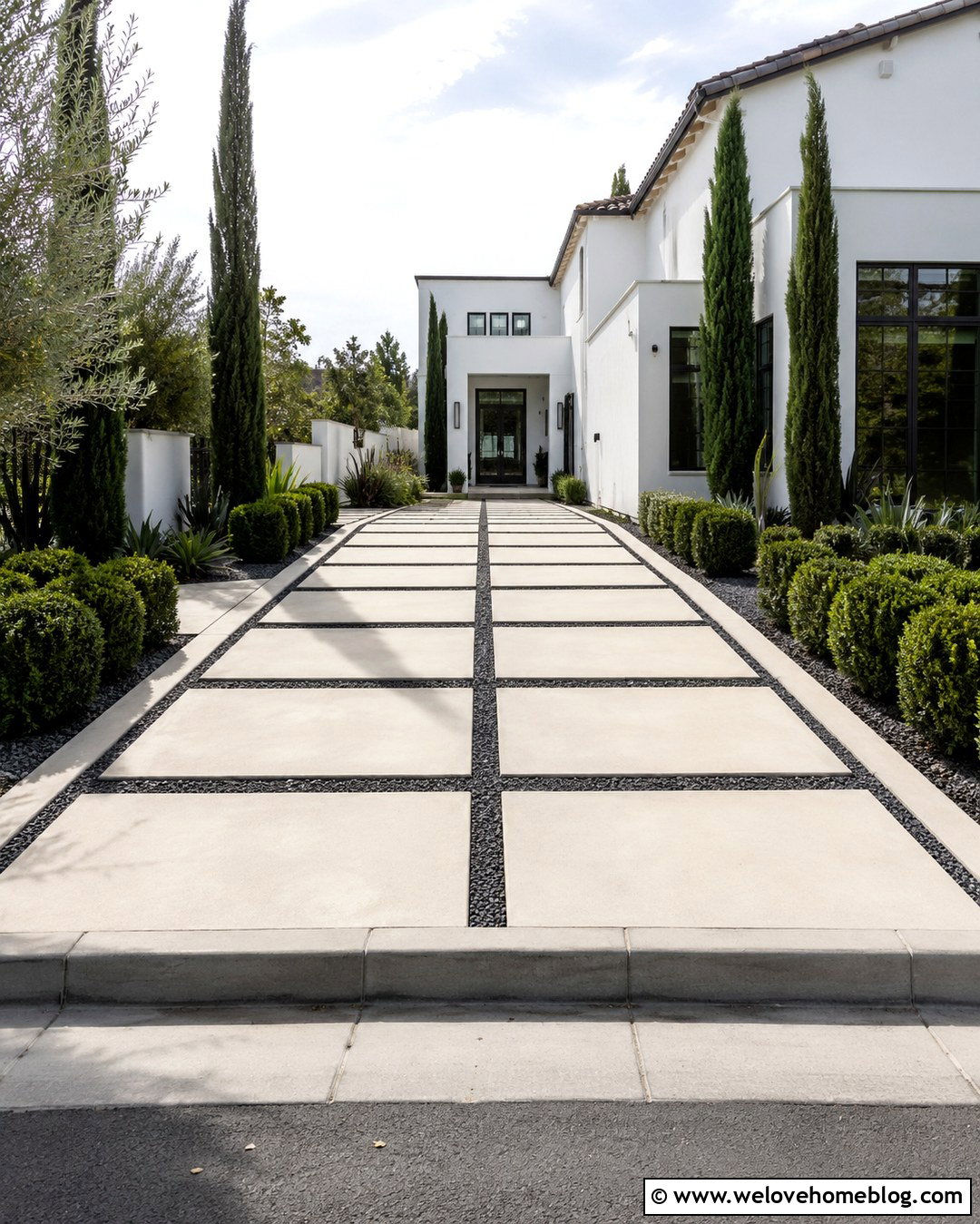
Bright concrete squares set against black basalt gravel produce a dramatic checkerboard entrance. The high contrast works best when the house has a simple exterior palette, such as white stucco with black-framed windows. Use warm white concrete rather than a glaring pure white, and select a subtle broom finish for added surface texture. Deep metal dividers can define the gravel squares and reduce movement between materials. A wide poured-concrete border around the checkerboard provides a stable edge and a cleaner connection to the garage. Keep landscaping restrained with clipped green shrubs, columnar trees, and a few architectural plants. Repeating black gravel in nearby planting beds makes the design feel intentional. This complete driveway look offers modern curb appeal while avoiding the maintenance demands of living grass between every square.
7. Small Checkerboard Driveway With Large Pavers
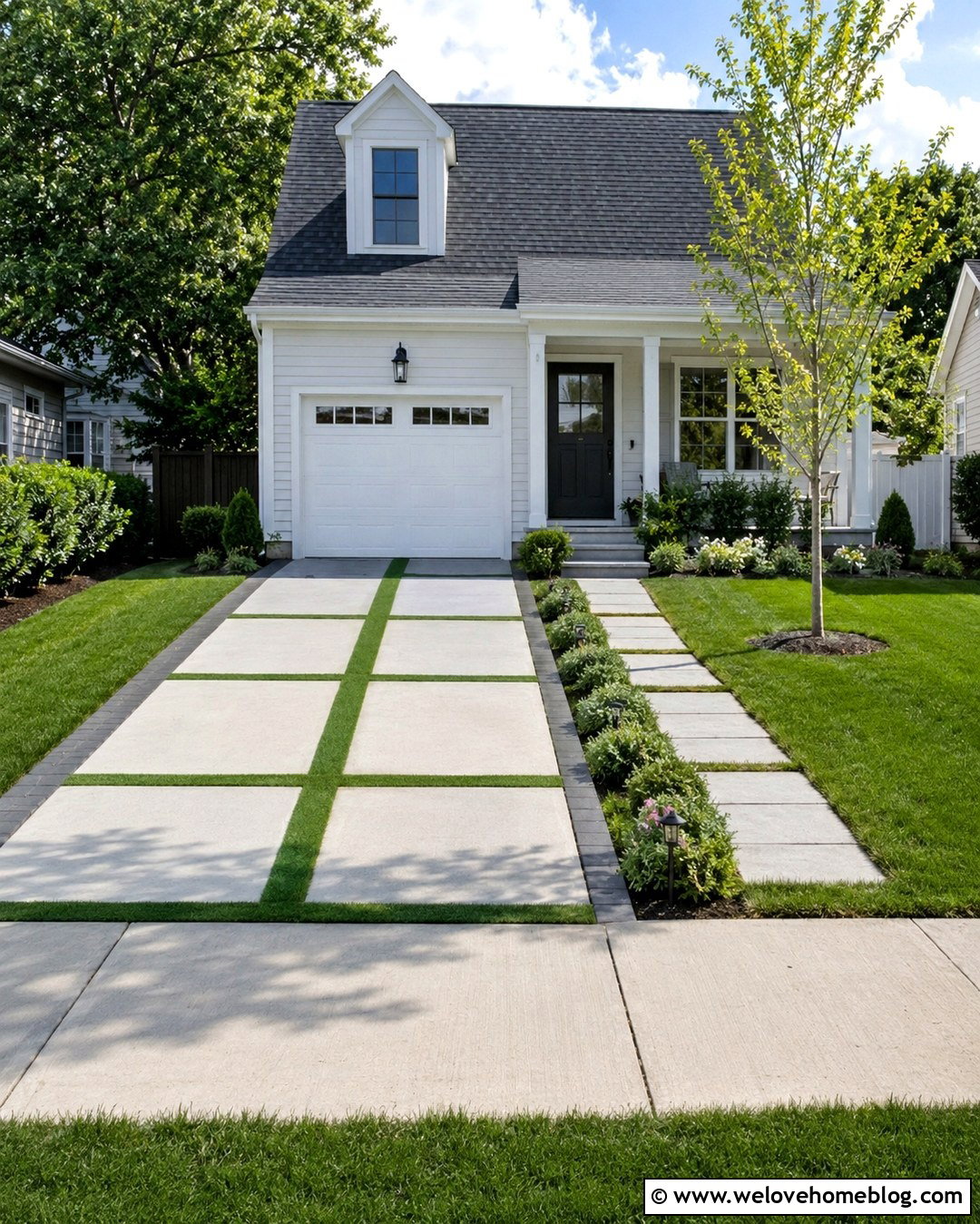
A compact front yard can still support a checkerboard driveway when the pattern is kept simple. Four or six oversized concrete pavers paired with artificial turf may look more spacious than dozens of small checks. Run the pattern straight from the curb to a single garage, and use narrow perimeter borders to preserve usable parking width. Light-gray concrete reflects daylight and prevents the small entrance from feeling heavy. Extend one paver row toward the porch to create a coordinated front walkway. Around the driveway, choose shallow planting beds with dwarf shrubs, ground covers, and one slender ornamental tree. Avoid wide borders or tall plants that visually squeeze the parking area. The reduced number of checks gives the surface a clean, uncluttered appearance while still making a noticeable design statement from the street.
8. Circular Checkerboard Driveway With Grass
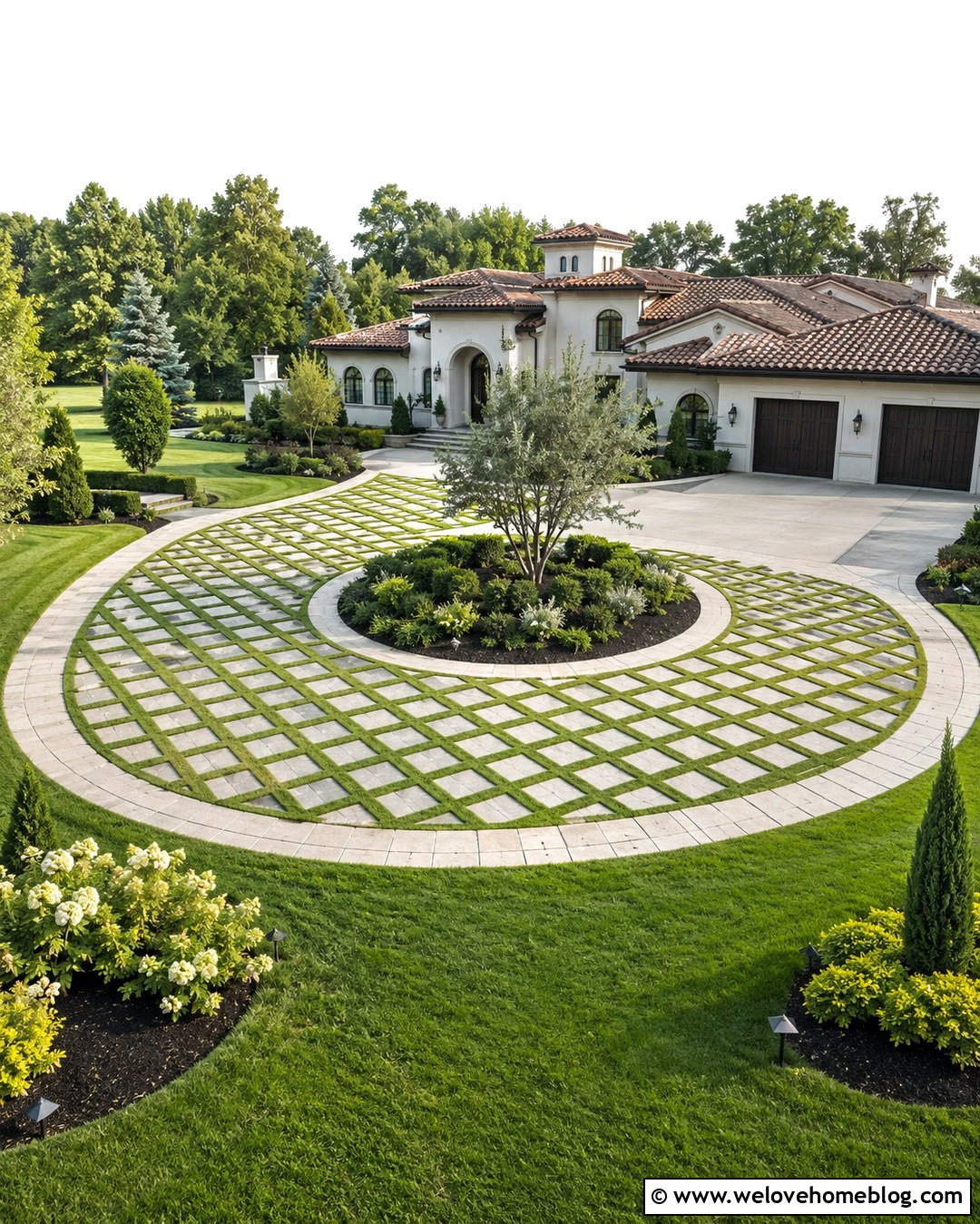
A circular checkerboard driveway can create an impressive entrance while maintaining convenient vehicle flow. Lay square concrete pavers and grass inserts across the main driving loop, then use wedge-shaped border pieces to resolve the pattern along the curved edges. A continuous stone or concrete band around the circle provides a smooth outline and keeps the checkerboard from appearing unfinished. Place a landscaped island at the center with a small ornamental tree, low evergreen shrubs, and seasonal flowers that will not block views across the driveway. At the house, transition the pattern into a solid concrete parking apron for easier turning and garage access. This layout suits larger colonial, Mediterranean, and country properties. Careful planning is essential because the square grid and circular boundary must appear visually balanced from the entrance.
9. Curved Checkerboard Driveway With Stone Edging
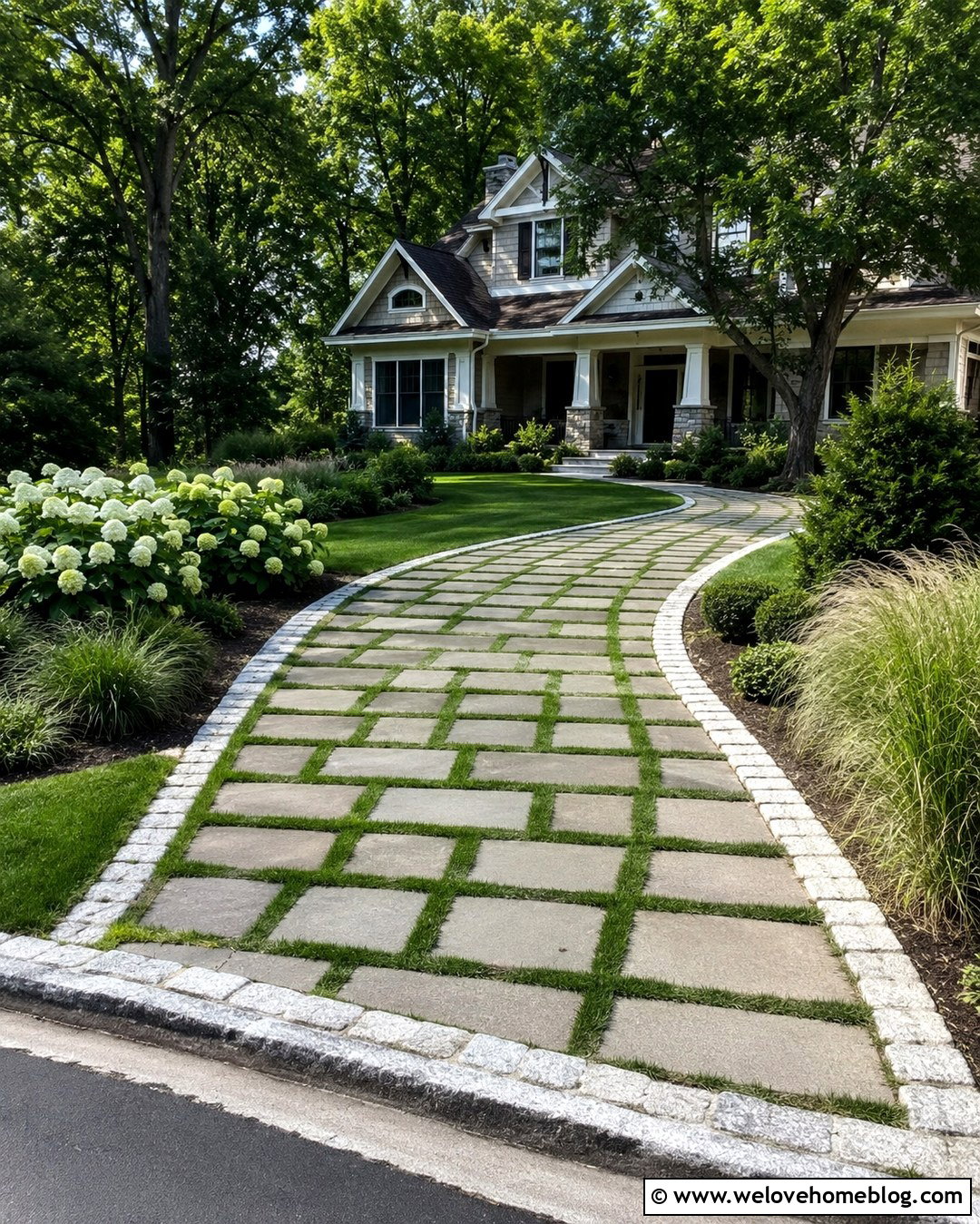
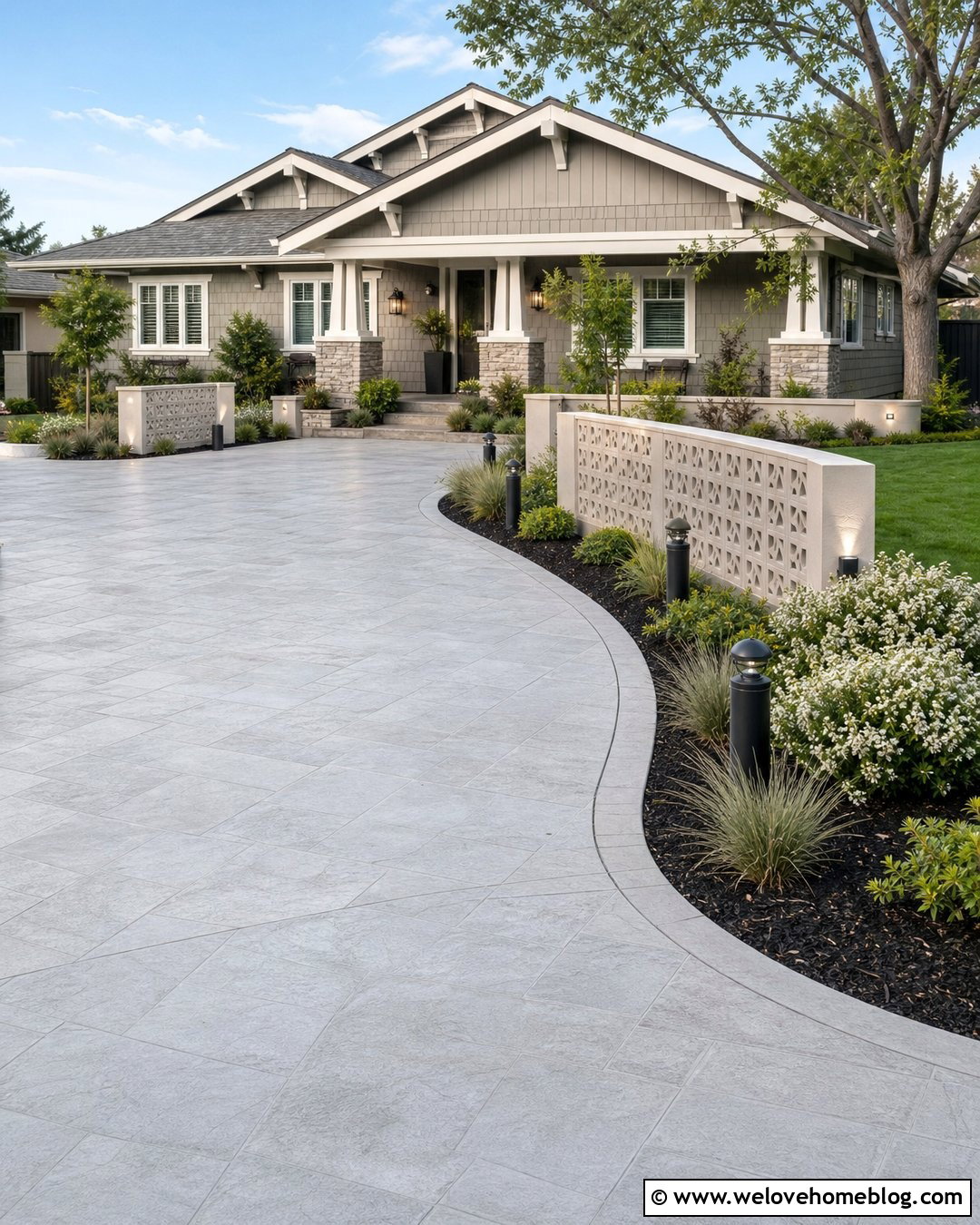
A gentle curve makes a geometric checkerboard driveway feel more natural within a landscaped front yard. Use warm-gray concrete pavers alternating with dense green turf, then contain the outer edges with a continuous row of granite setts. The stone border provides a durable visual line as the grid bends toward the garage. Keep the checks regular through the central portion and allow professional cuts along the sides to accommodate the curve. Layered beds of hydrangeas, ornamental grasses, and compact evergreens can follow the same sweeping shape. Add a matching curved walkway that branches toward the porch without interrupting the driving area. This complete design works especially well for craftsman and cottage homes, where natural stone and informal planting soften the modern geometry of the checkerboard surface.

10. Diamond Checkerboard Concrete Driveway
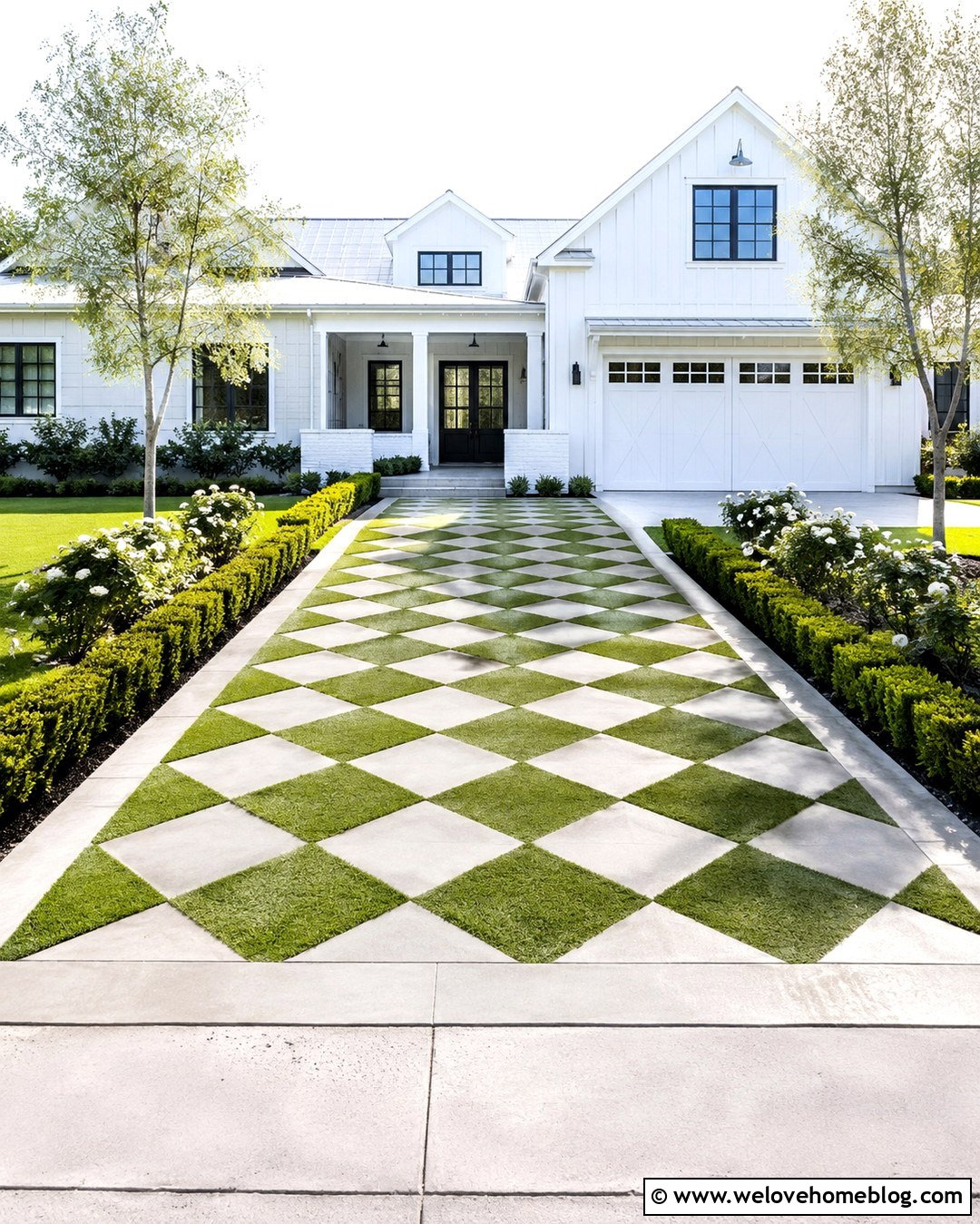
Rotating a square checkerboard pattern 45 degrees creates a diamond grid that adds movement to a straight driveway. Large concrete diamonds alternating with artificial turf can make the approach feel wider and more dynamic. The outer rows will require precisely cut pieces, so use a solid poured-concrete frame to contain the pattern and simplify the perimeter. Pale-gray concrete keeps the angular layout from becoming visually overwhelming. At the garage, finish with a full-width concrete apron that provides a clean stopping point for the diamonds. Low hedges, symmetrical planting beds, and evenly spaced trees bring order to the energetic surface. This design pairs well with a modern farmhouse or transitional home featuring strong rooflines. Keep decorative details minimal because the rotated checkerboard already provides a clear architectural focal point.
11. Exposed Aggregate Checkerboard Driveway With Grass
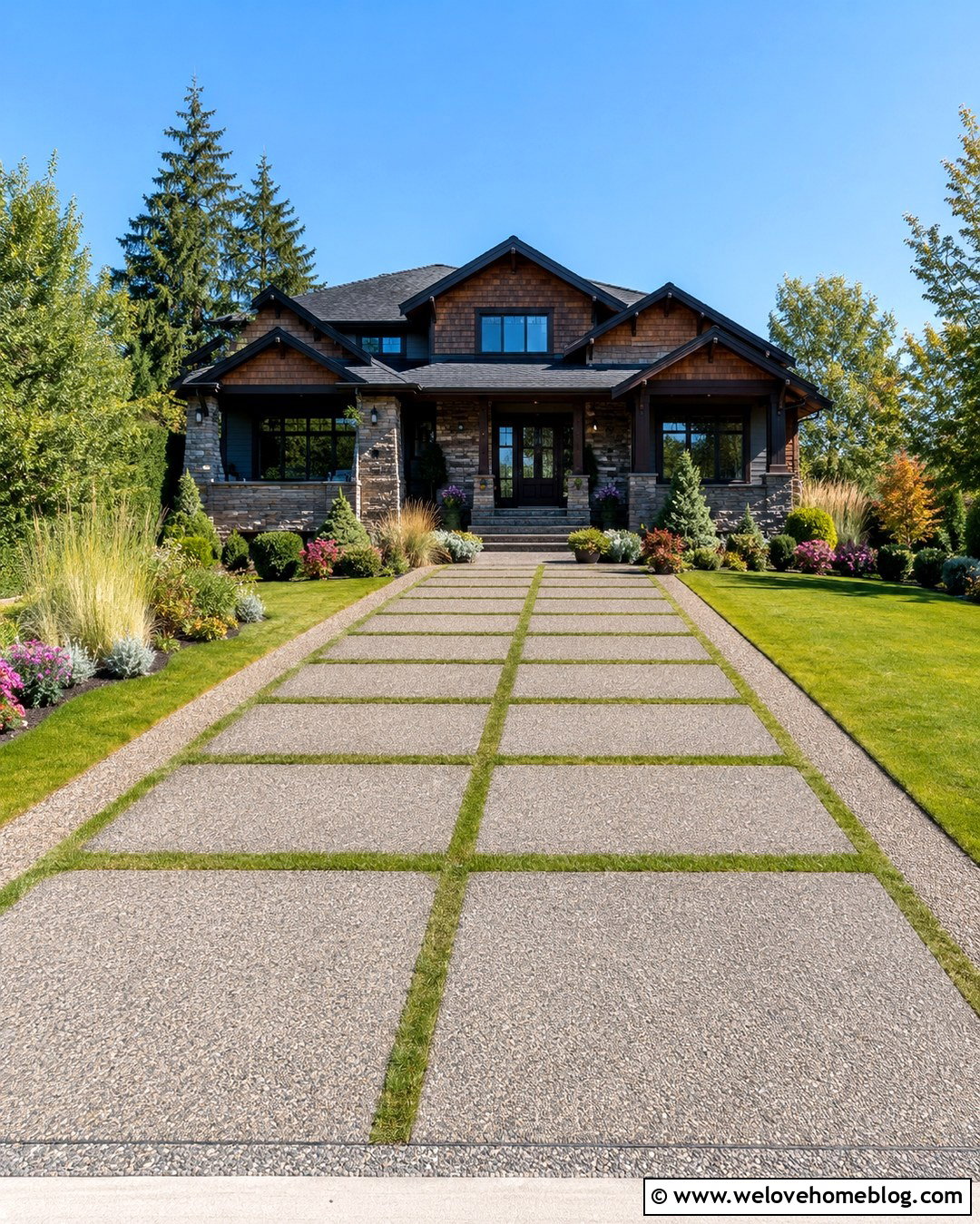
Exposed aggregate introduces small stones and natural color into a concrete-and-grass checkerboard driveway. Select warm gray or sandy aggregate squares that coordinate with the home’s stonework, roof, or walkway. The textured surface gives the checks greater depth than plain concrete while maintaining a structured pattern. Use grass varieties suited to the property’s sun exposure and expected wear, and keep the planted squares level with the hardscape. A border of matching exposed aggregate can frame the entire layout and create a solid entrance apron. Surround the driveway with loose drifts of ornamental grasses, flowering perennials, and native shrubs. This combination balances geometric paving with softer textures, making it suitable for craftsman, prairie, and contemporary homes. Repeating the aggregate finish on porch steps or a walkway strengthens the overall exterior design.
12. Two-Tone Concrete Checkerboard Driveway
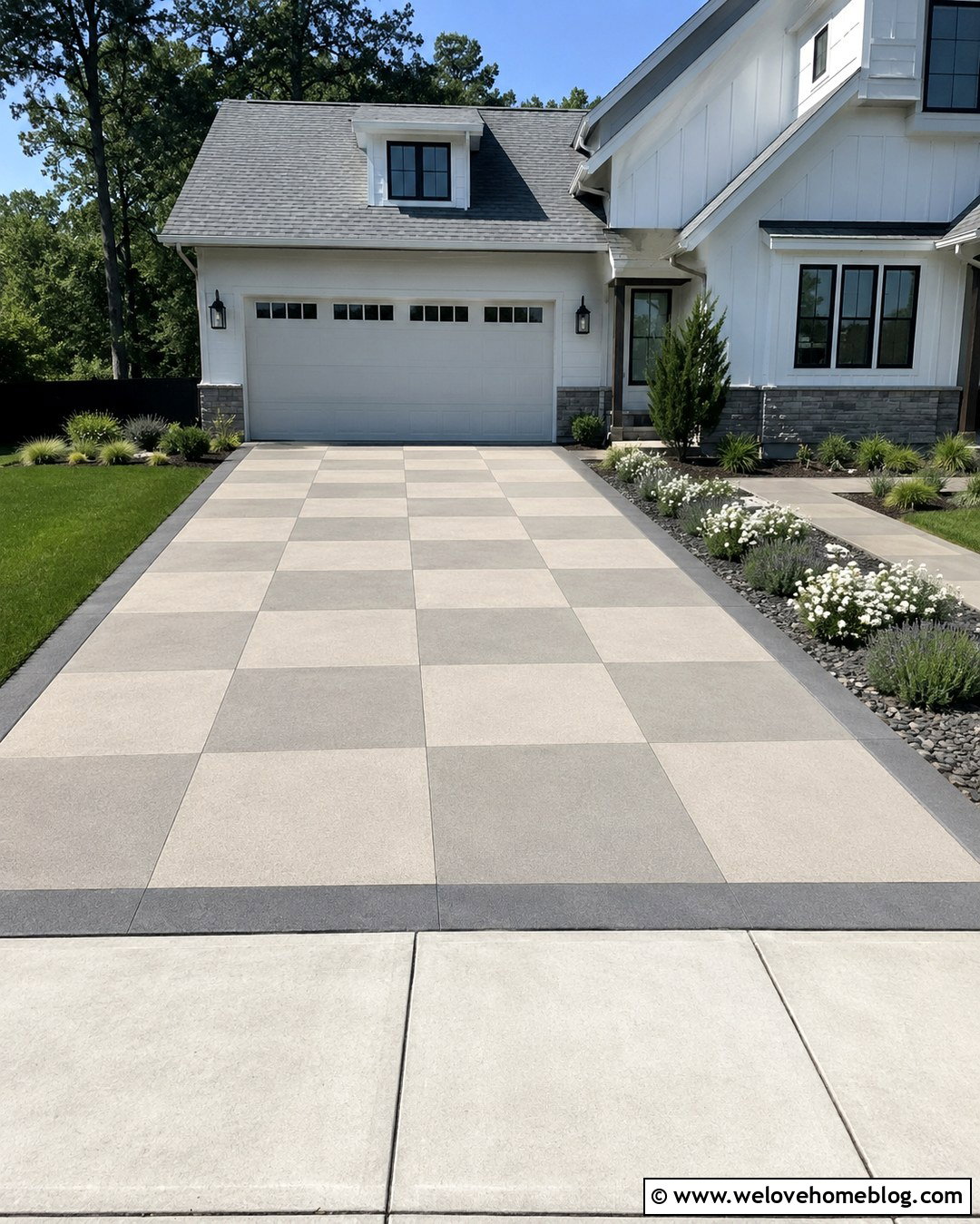
Two coordinating concrete colors create a checkerboard pattern without introducing a second surface material. Alternate medium-gray and sand-colored concrete squares for a subtle contrast that is easier to integrate with traditional residential architecture. A light broom finish adds traction and creates understated texture across both colors. Keep the joint lines narrow and consistent so the alternating tones remain the focus. A darker concrete border can outline the driveway and connect it visually to the garage threshold. Surrounding beds with sage green shrubs, white flowers, and warm decorative stone will reinforce the restrained palette. This design works on straight, wide, or gently flared driveways and requires less landscape maintenance than grass-filled checks. Always review large color samples outdoors, since sunlight and nearby facade materials can change how concrete tones appear.
13. Brick Checkerboard Driveway With Grass
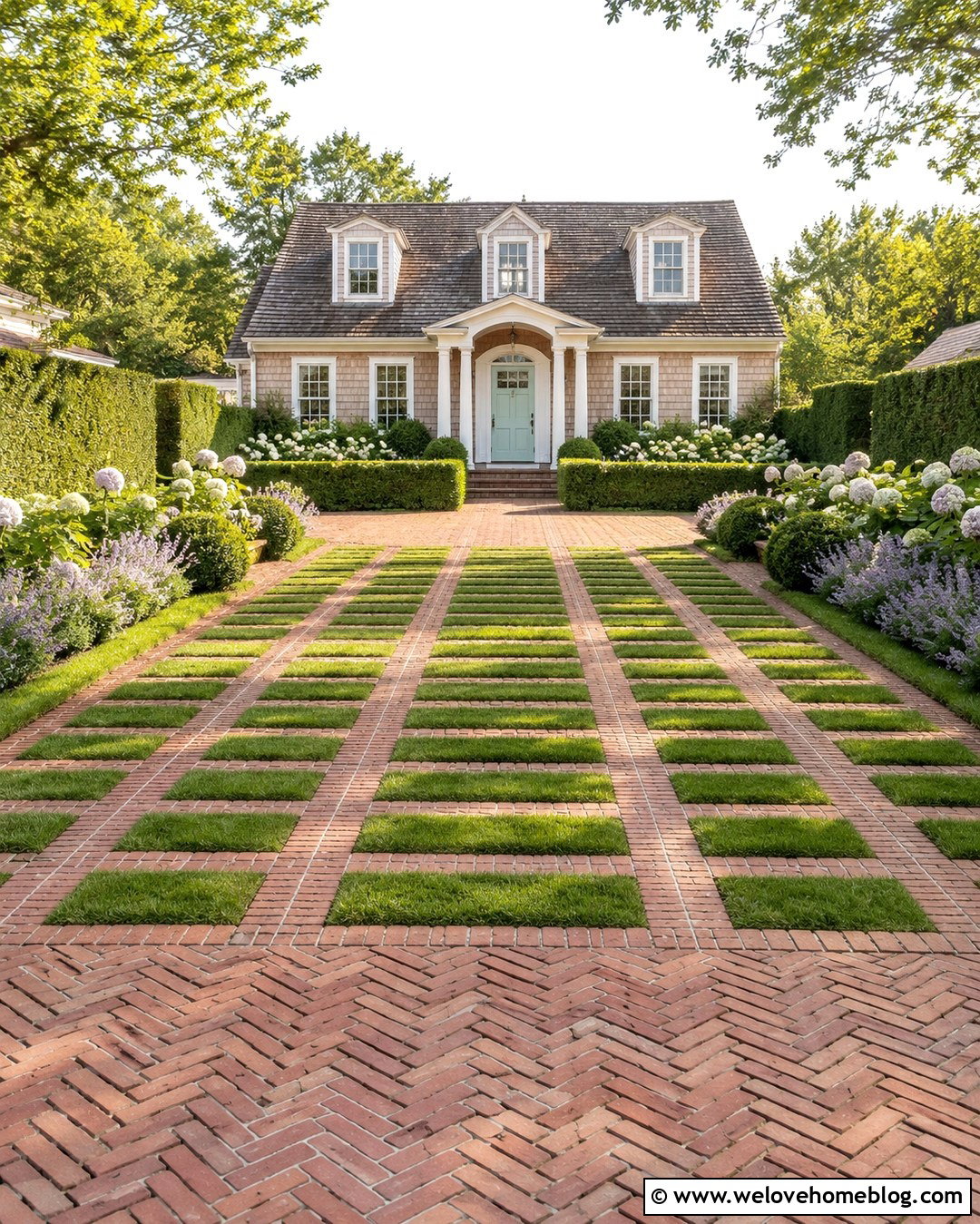
Brick pavers and green grass bring a softer, garden-focused character to the checkerboard pattern. Use weathered red or brown brick blocks arranged into equal squares, alternating them with compact grass sections. A continuous herringbone brick border can secure the visual edge while introducing a secondary pattern around the grid. This surface looks especially welcoming on cottage, Cape Cod, and traditional farmhouse properties. Frame the driveway with lavender, white roses, hydrangeas, and low evergreen shrubs, leaving enough open space to prevent plants from covering the checks. A brick walkway leading to the porch creates a natural connection between the driveway and house. Keep the wheel paths carefully aligned with the paved squares where possible. The mix of warm masonry and greenery creates a relaxed checkerboard that matures attractively with the surrounding landscape.
14. Cobblestone Checkerboard Driveway With Gravel
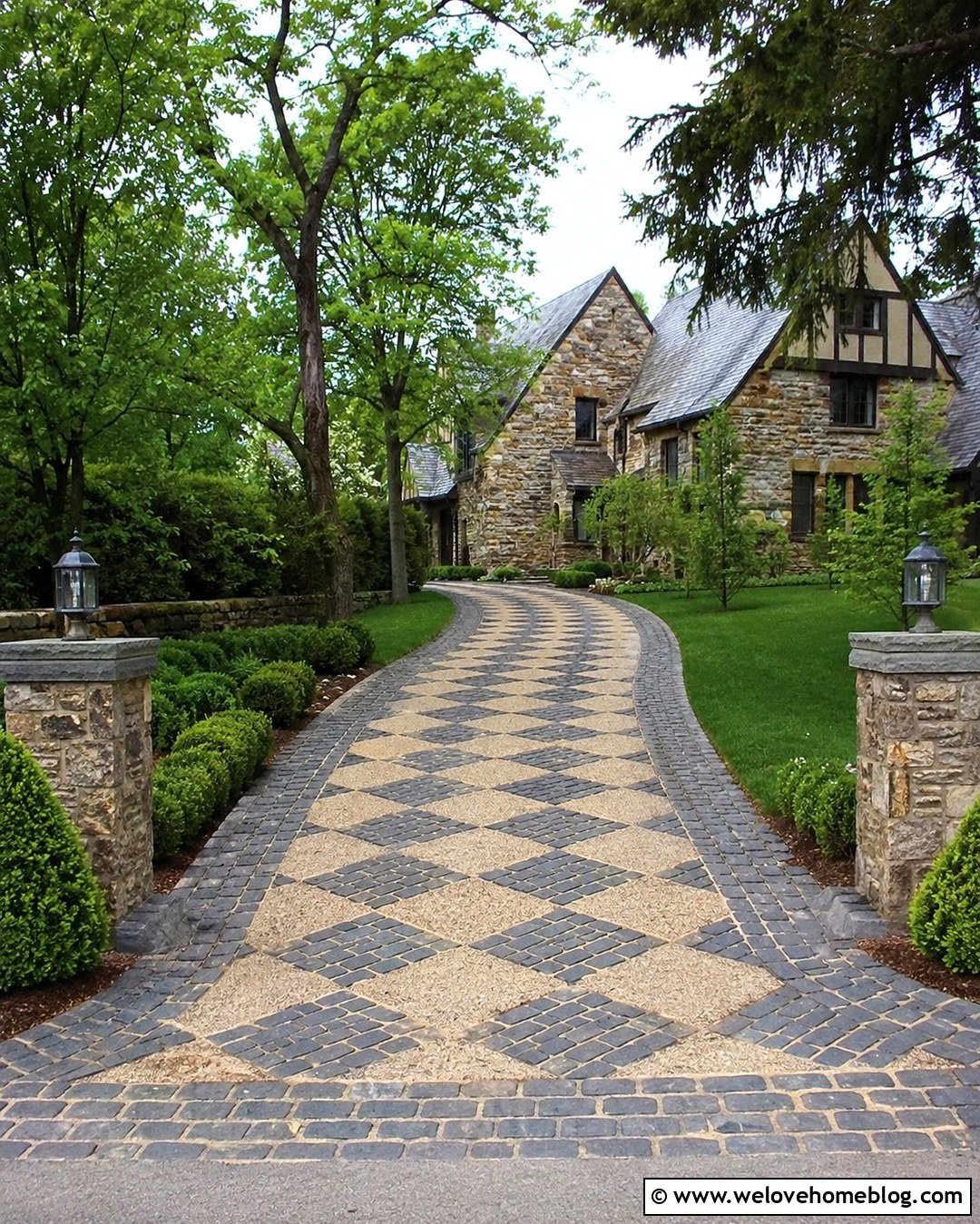
Cobblestone squares alternating with compacted gravel deliver an old-world checkerboard driveway with a practical country character. Choose flat-topped granite or concrete cobbles in a charcoal-gray blend, then fill the contrasting squares with warm buff gravel. A full cobblestone border keeps the loose material contained and gives the driveway a substantial edge. For smoother everyday access, establish broad cobbled tire paths within the pattern and use gravel primarily between them. A slightly flared entrance can be marked by stone pillars and low lanterns, while layered hedges and mature trees frame the approach. This combination complements European-inspired, Tudor, farmhouse, and stone-clad homes. Maintain consistent square dimensions even when the driveway curves. The repeated geometry keeps these rustic materials organized instead of allowing the overall entrance to appear overly informal.
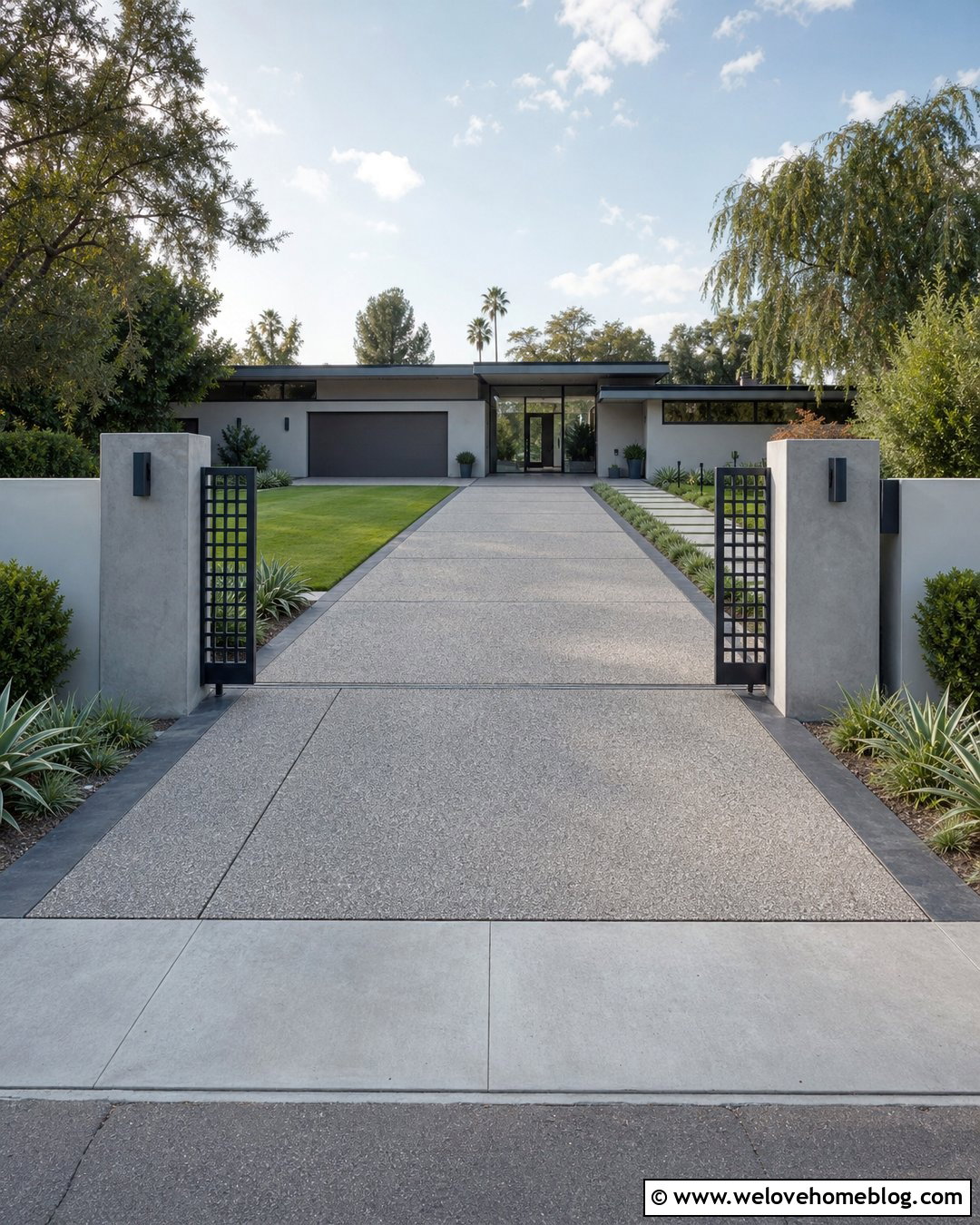
15. Permeable Checkerboard Driveway With Ground Cover
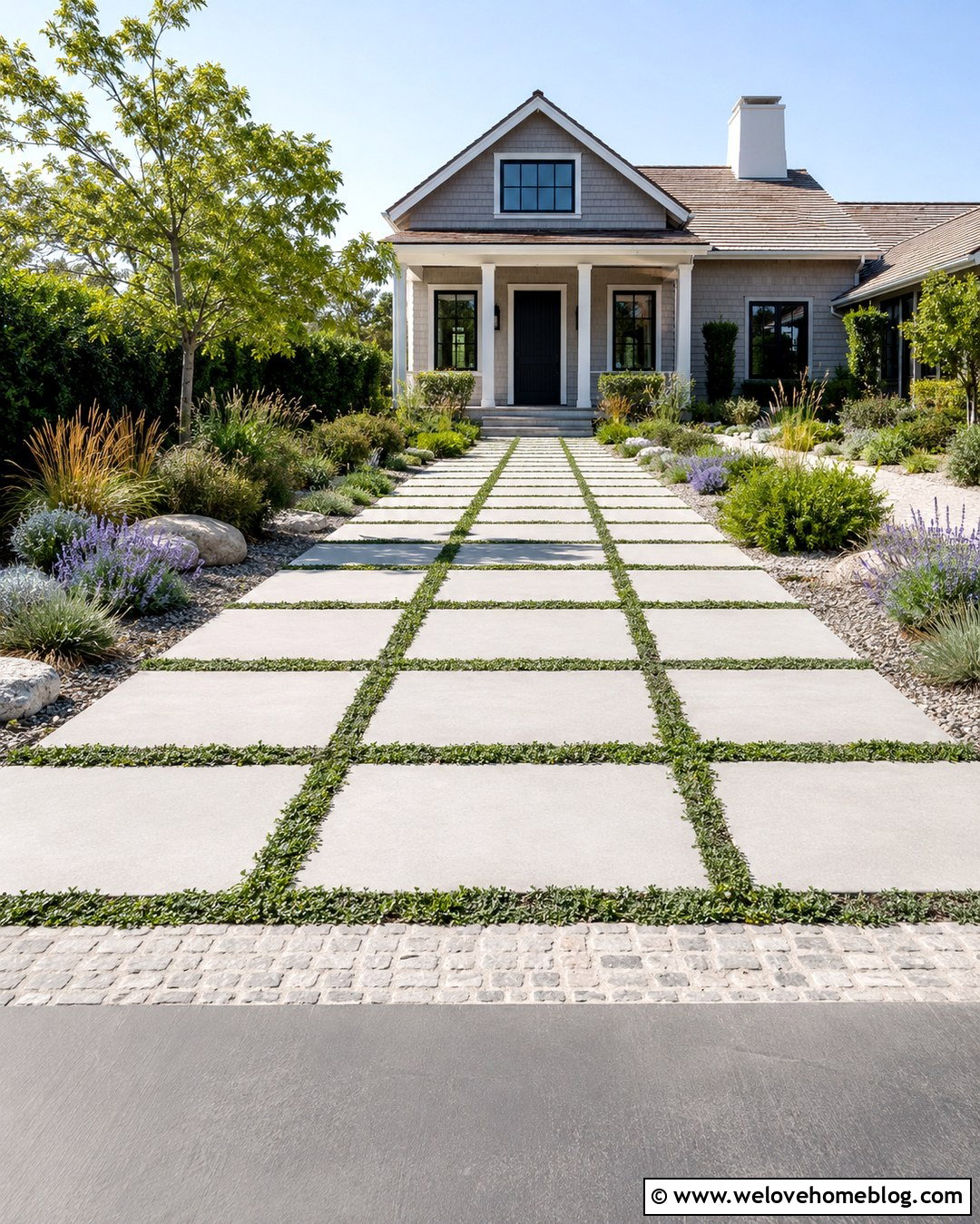
Low-growing ground cover can replace conventional lawn in a checkerboard driveway, creating a softer appearance around concrete pavers. Choose a plant suited to local sunlight, climate, foot traffic, and occasional vehicle exposure. Large, light-gray concrete squares should carry most of the driving load, while planted sections add color and texture between them. Thyme-like ground covers can work in appropriate conditions, but the final selection should follow regional landscape advice. Install a clear stone border around the driveway and use matching gravel in nearby planting beds. Native grasses, compact flowering shrubs, and a small shade tree can continue the natural look around a contemporary cottage. This design is most successful on lightly used residential drives where parking patterns are predictable and the planted squares receive enough light, drainage, and routine care.
16. Checkerboard Driveway With Brick Border
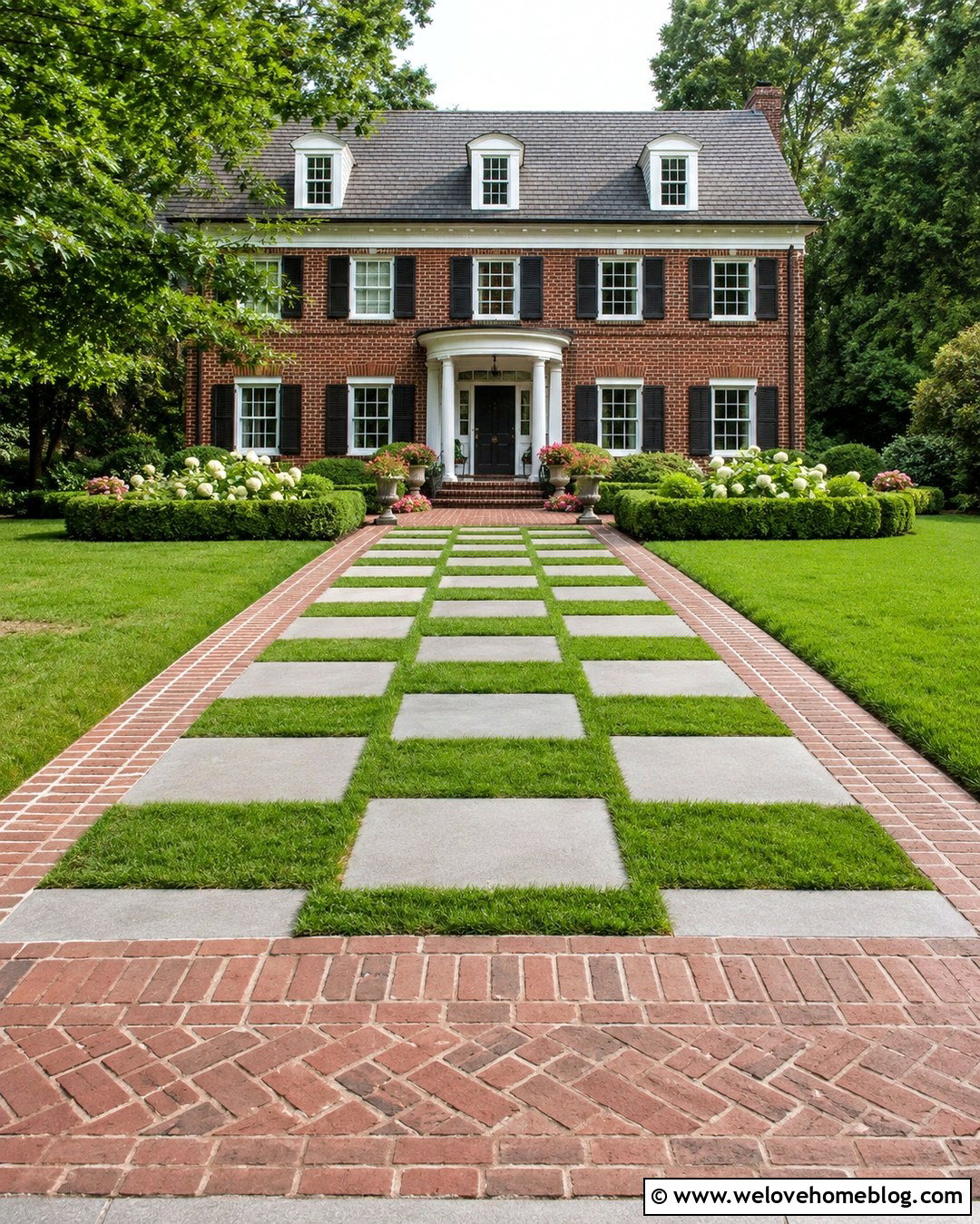
A brick border can give a concrete checkerboard driveway a warmer and more finished appearance. Alternate large, medium-gray concrete squares with green turf, then surround the entire grid with two rows of clay brick pavers. Choose brick that matches the home’s facade, chimney, or front steps to connect the driveway with the architecture. At the curb, widen the brickwork into a decorative apron that clearly marks the entrance. Continue the same material along a walkway leading to the porch. Layered foundation beds containing boxwood, hydrangeas, and seasonal flowers soften the strong lines without concealing them. This combination is versatile enough for colonial, craftsman, and transitional houses. The brick frame also separates the checkerboard pattern from the surrounding lawn, helping the complicated inner layout read as one organized driveway.
17. Checkerboard Driveway With Modern Landscaping
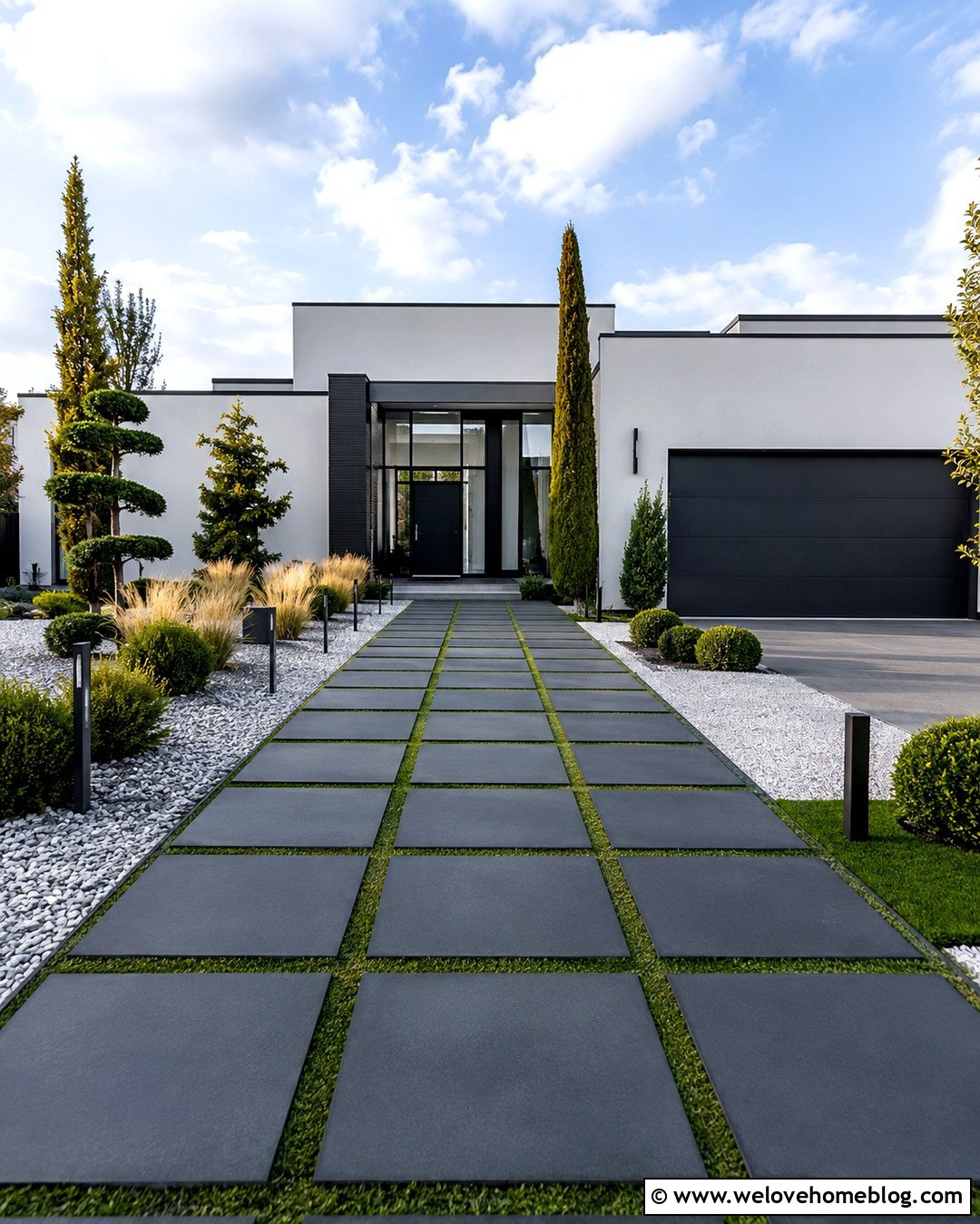
Clean landscaping allows a checkerboard driveway to become the main feature of a modern front yard. Use oversized charcoal concrete pavers alternating with narrow squares of artificial turf. Align the grid with the home’s garage openings, facade panels, and front walkway for a unified architectural appearance. Frame the driveway with linear beds of pale gravel, clipped shrubs, feather reed grass, and a few sculptural evergreens. Black steel edging creates crisp transitions between every surface. Instead of placing many small lights around the checks, use simple bollard lights along one side of the approach. A solid charcoal apron at the garage provides a calm visual endpoint. The finished exterior should use only a few repeated colors and materials. This restraint keeps the geometric surface bold without making the front yard feel busy or fragmented.
18. Checkerboard Driveway With Cottage Landscaping
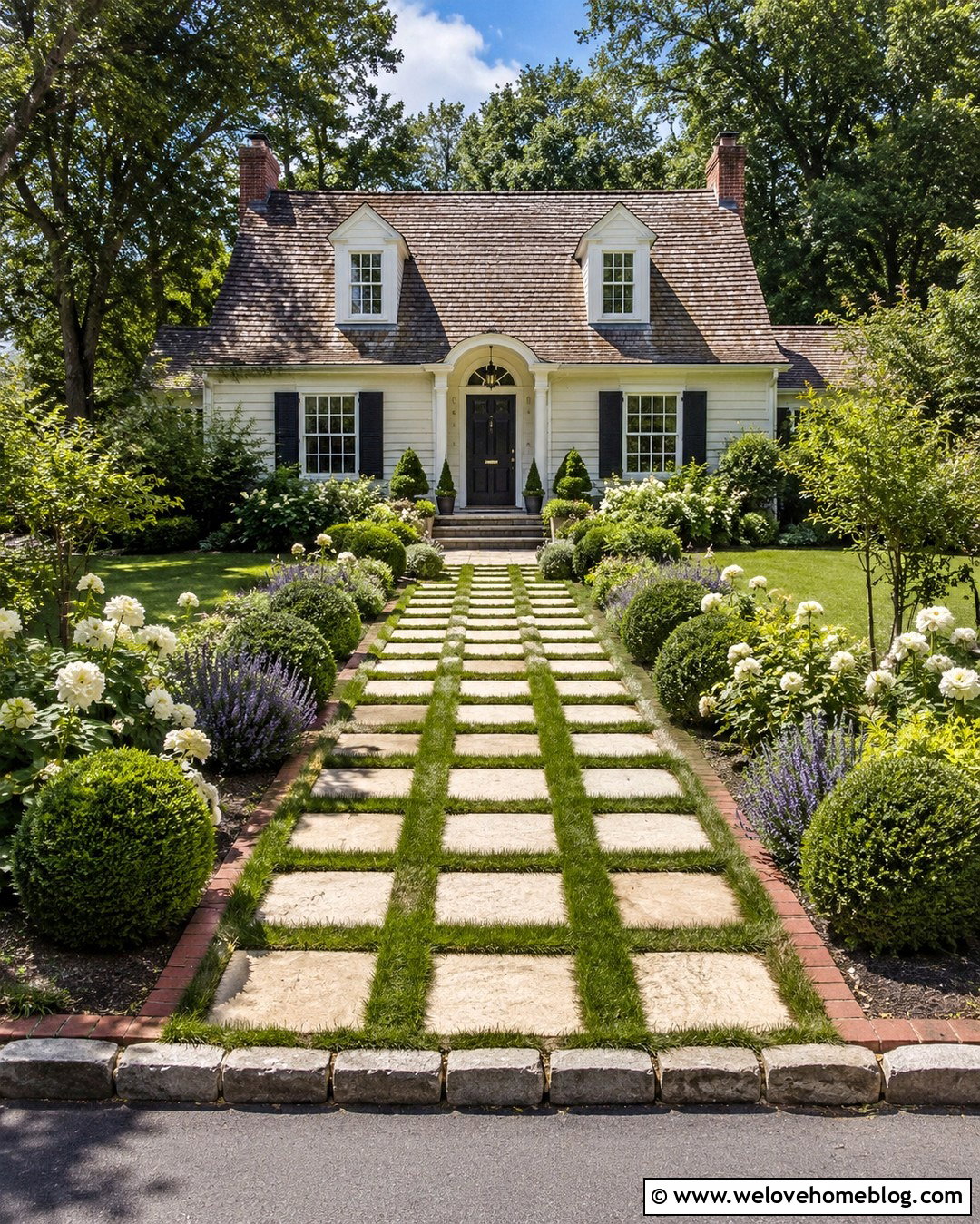
Checkerboard paving can feel relaxed and welcoming when paired with cottage-style planting. Alternate warm concrete or natural limestone squares with thick green grass, and use reclaimed brick as an irregular perimeter border. Allow planting beds to curve gently along the otherwise straight driveway. White roses, catmint, salvia, hydrangeas, and rounded evergreen shrubs can provide layered color while leaving the pavement visible. A matching stepping-stone walkway should lead from the driveway to a covered porch or garden gate. Near the curb, keep flowers low enough to maintain an open view of vehicles and pedestrians. The checkerboard supplies structure, while the abundant planting prevents the entrance from feeling too formal. This combination is ideal for Cape Cod, English cottage-inspired, and modest traditional homes with detailed porches and light-colored siding.
19. Checkerboard Driveway With Gate And Pillars
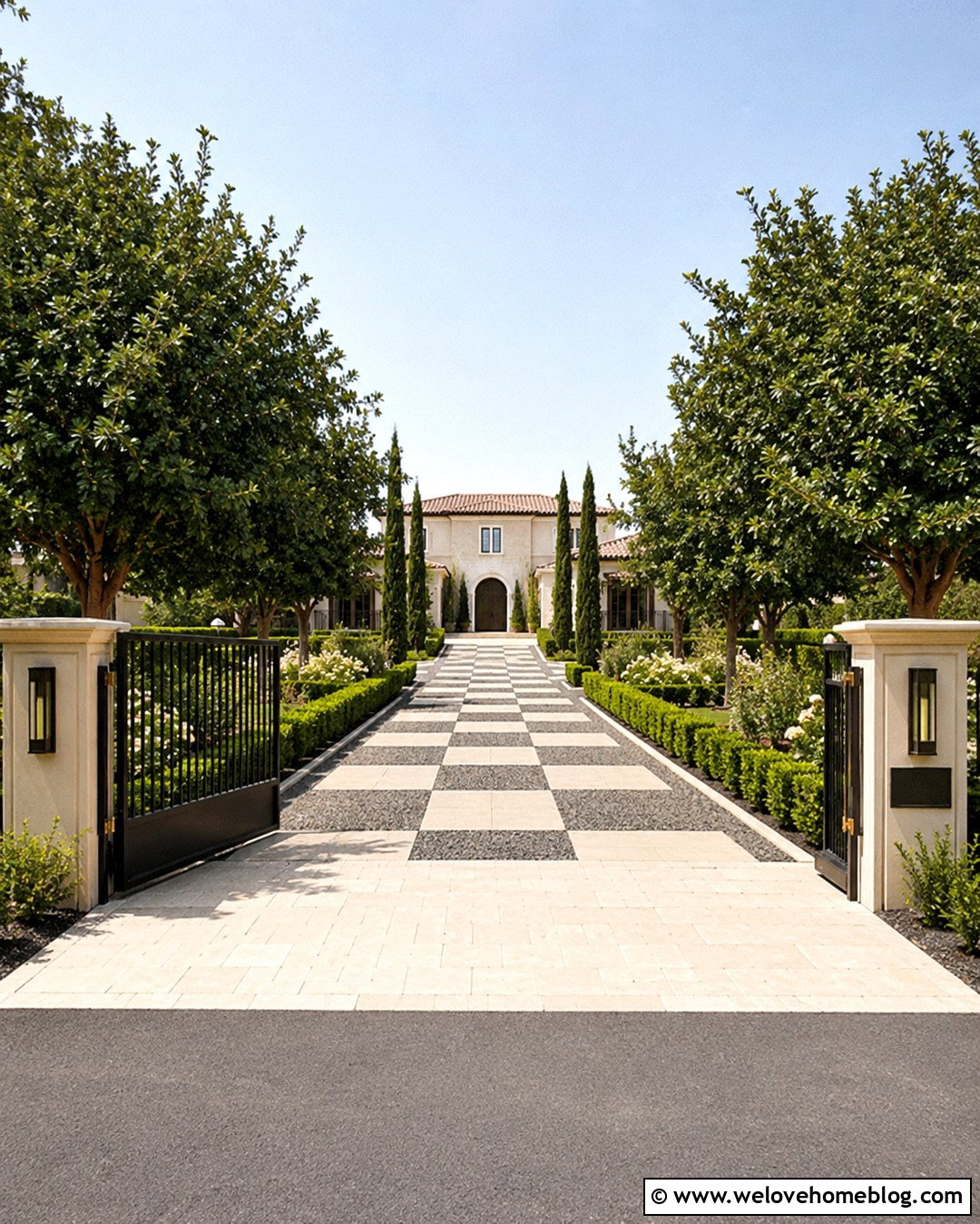
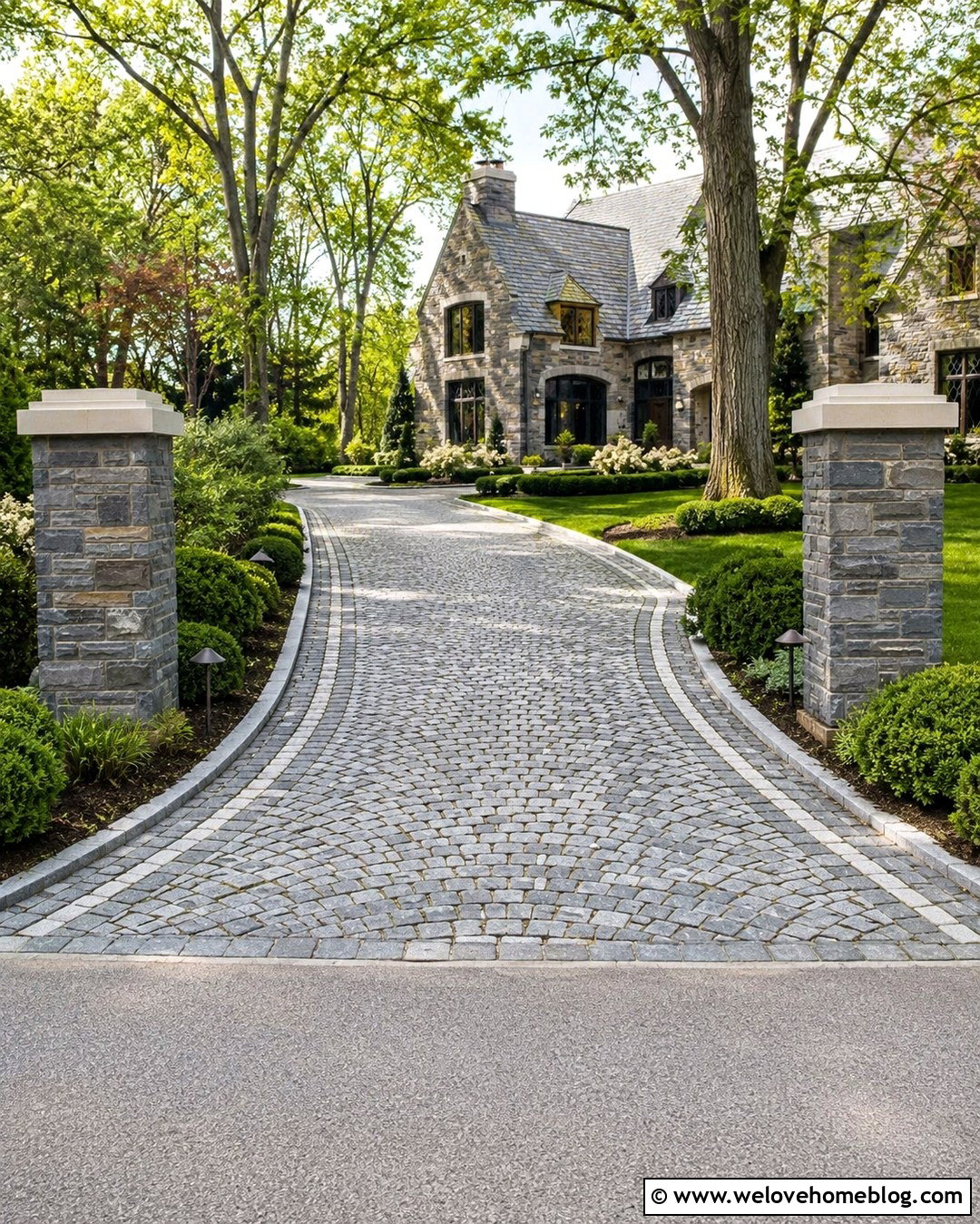
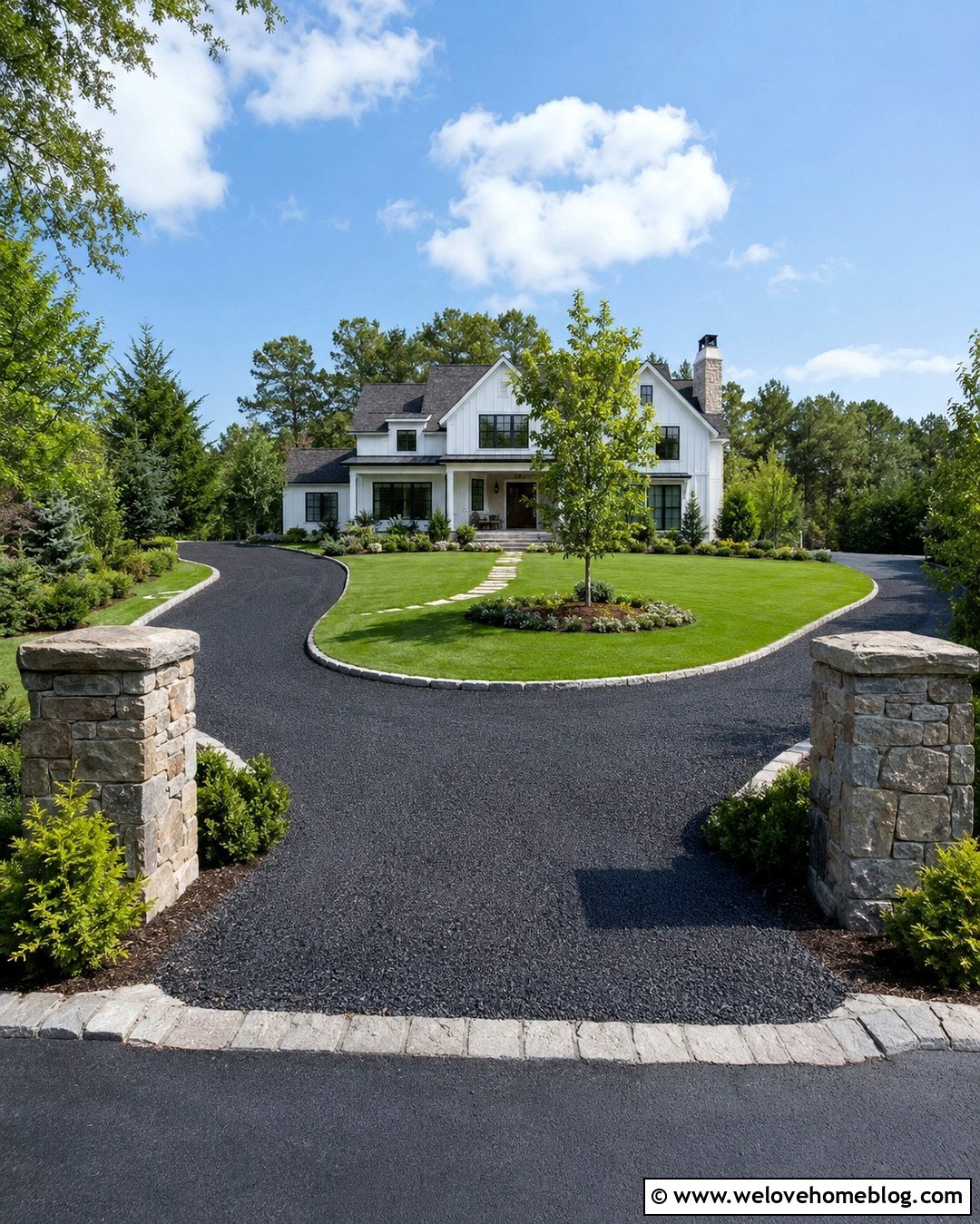
A gated entrance gives a checkerboard driveway a clear beginning and helps frame the pattern from the street. Use pale concrete pavers alternating with dark gravel or artificial turf, then position simple masonry pillars just outside the usable driveway width. Match the pillars to the home’s stone, brick, or stucco facade. A black metal swing or sliding gate keeps the view through to the checkerboard surface instead of hiding it. Continue a solid paver apron beneath the gate so moving components are not positioned over loose material or planted squares. Low hedges and symmetrical trees can guide attention toward the house. Add discreet address signage to one pillar and keep lighting integrated into the masonry. This complete design suits long straight driveways leading to modern, Mediterranean, or substantial traditional homes.
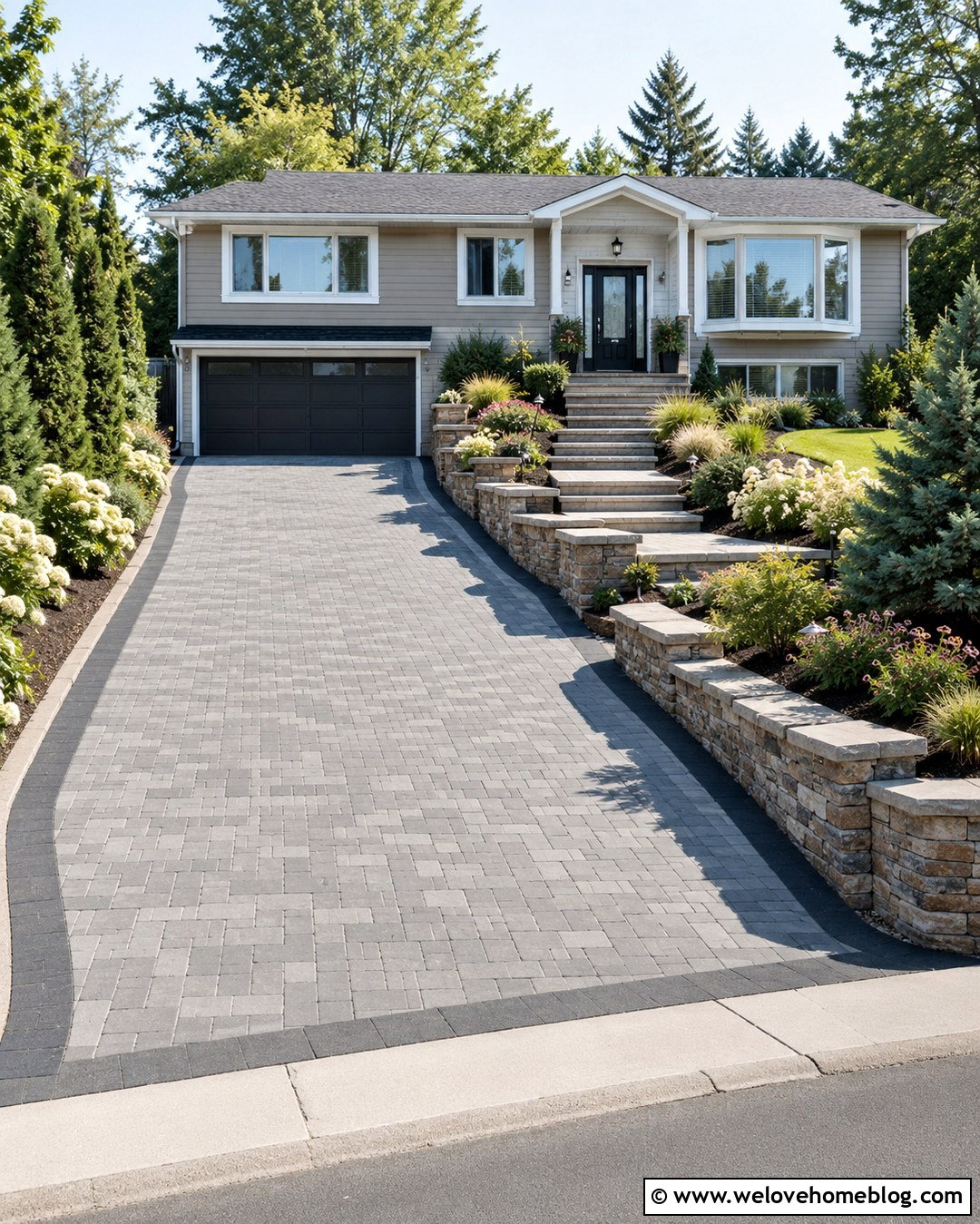
20. Checkerboard Driveway With Lighted Borders
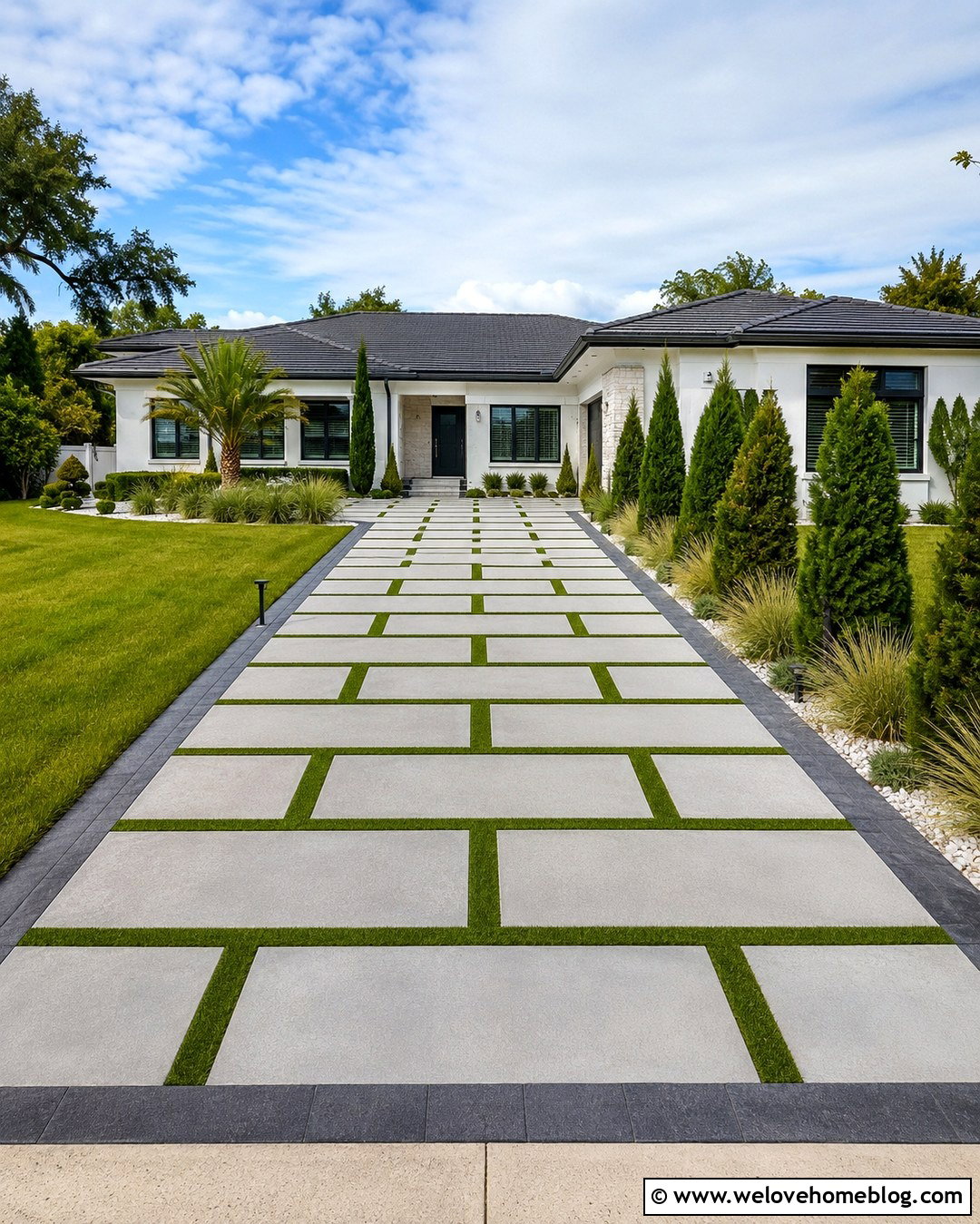
Subtle border lighting can improve the nighttime definition of a checkerboard driveway while preserving a clean daytime appearance. Create the main surface with large gray concrete pavers and artificial turf squares, then add a continuous charcoal paver border. Install low, shielded fixtures along the outside edge rather than placing lights inside every check. This approach emphasizes the driveway shape without visually cluttering the pattern. During daylight, ornamental grasses, clipped evergreens, and pale stone mulch frame the grid. A straight layout leading to a contemporary ranch or modern farmhouse keeps the complete design simple and easy to navigate. Match the fixture finish to exterior hardware, garage lights, and house numbers. Plan electrical work and fixture placement before paving begins so wires, junctions, and drainage components remain safely concealed.
Conclusion:
The strongest checkerboard driveways combine a clear pattern with materials that suit the house, climate, parking needs, and maintenance routine. Concrete and grass create the classic look, while artificial turf, gravel, brick, cobblestone, colored concrete, and natural stone offer distinctive alternatives. The driveway’s shape matters too. Straight grids feel modern, curved arrangements soften the geometry, and circular layouts create a grander approach. Borders, planting beds, walkways, gates, and lighting should support the pattern instead of competing with it. Before installation, plan drainage, load-bearing areas, material transitions, and comfortable tire paths with qualified local professionals. Use these 20 Checkerboard Driveway Ideas to create a complete entrance that looks attractive from the curb and functions well every day.

Related posts:
Leave a Reply