
These 25 turf driveway ideas show how greenery and hardscape can create an attractive, practical entrance that feels softer than solid pavement. A turf driveway may use reinforced grass grids, concrete turf blocks, or artificial grass strips between durable slabs. When installed over a properly prepared aggregate base, these systems can support vehicles while allowing water to move through the surface more naturally. () The best design will also reflect your climate, traffic level, maintenance preferences, and home architecture. From simple tire-track layouts to polished geometric patterns, each option below combines the driving surface, shape, borders, and surrounding landscape into one complete look. Explore these 25 turf driveway ideas to find a layout that fits your property.

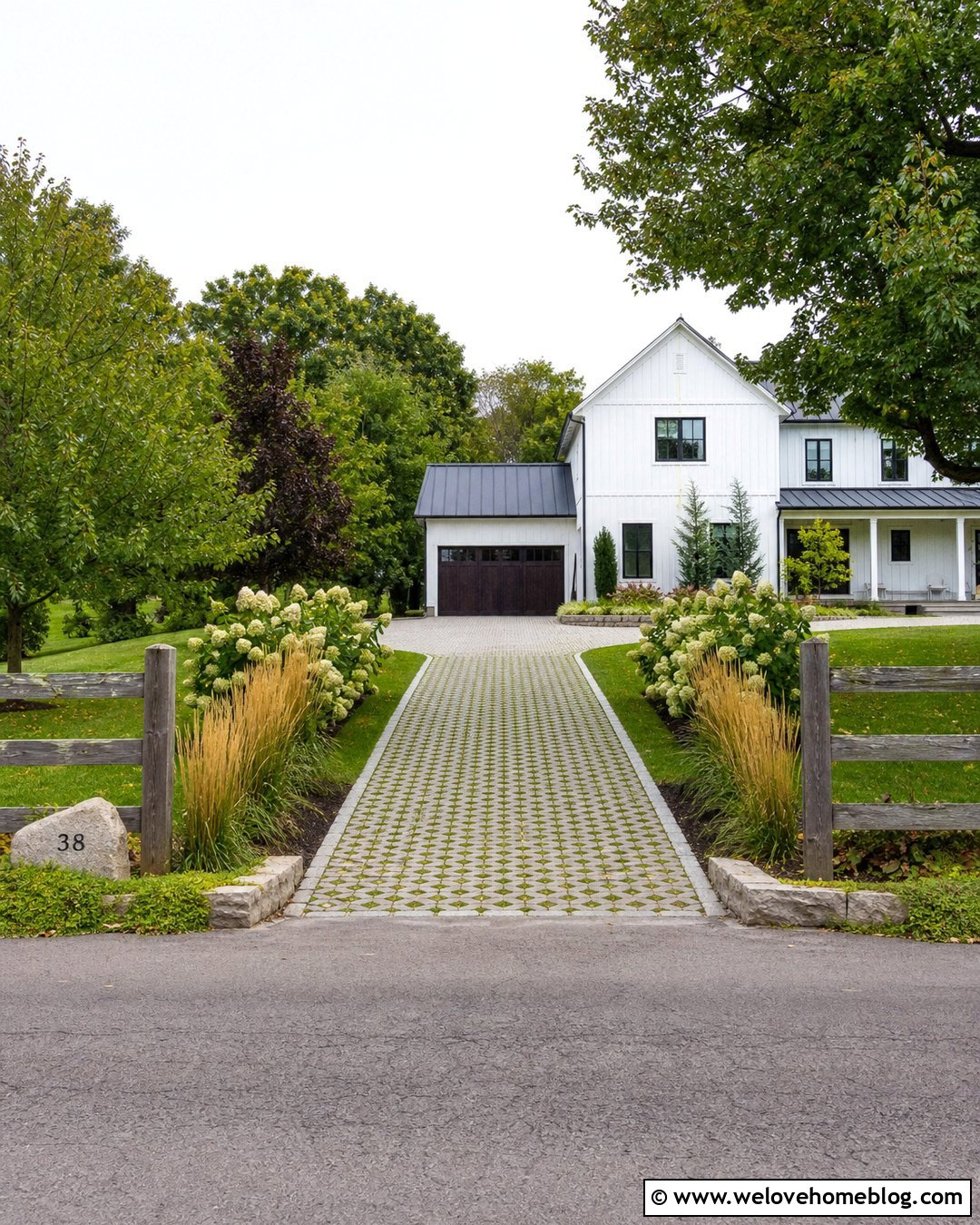
1. Concrete Grid Turf Driveway
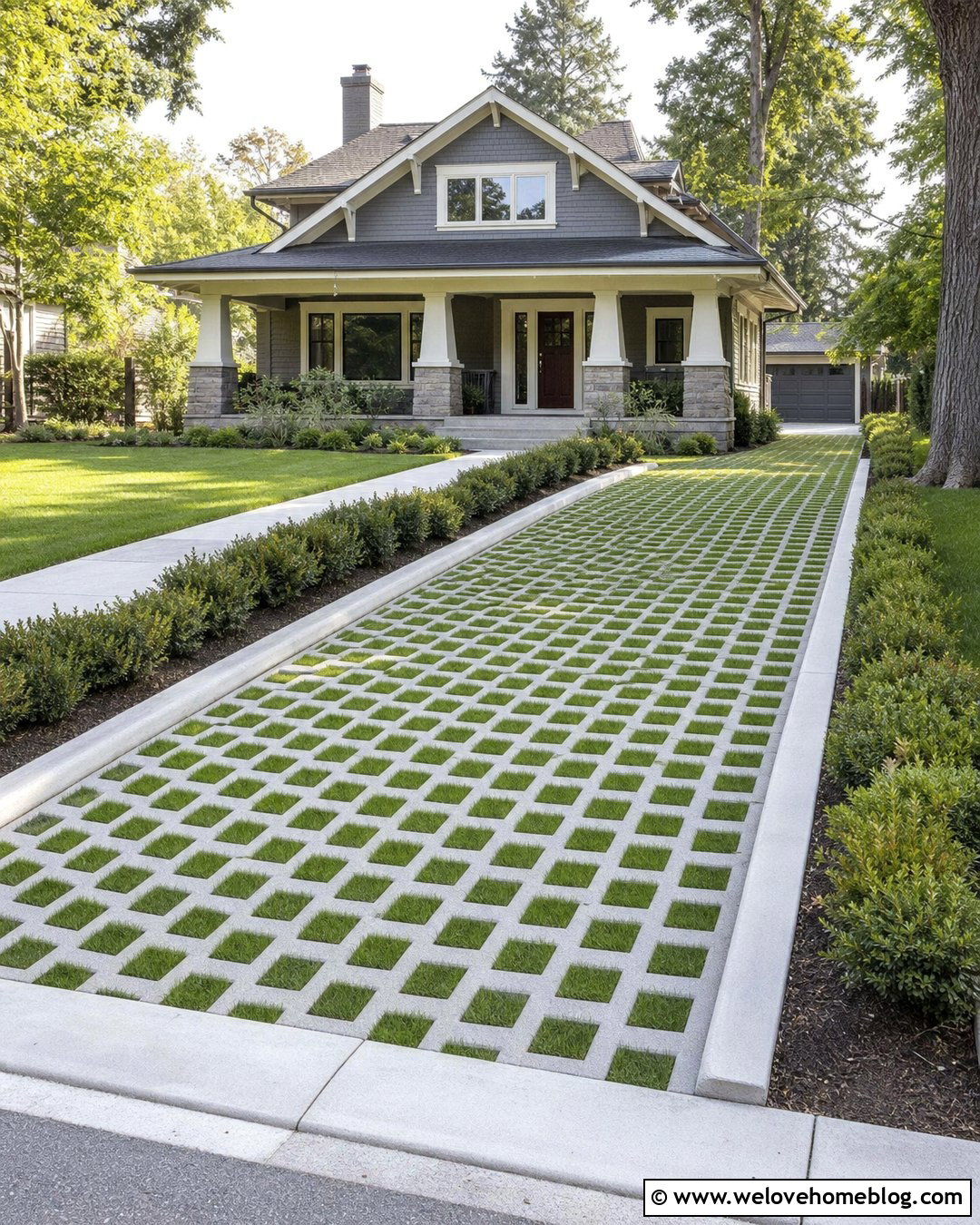
Concrete grid pavers create a strong, clearly defined turf driveway without covering the front yard in solid pavement. The open cells can be planted with durable grass, while the concrete structure helps protect the root zone from direct tire pressure. Choose gray pavers for a neutral appearance that works with ranch, Craftsman, and traditional homes. A straight layout bordered by matching concrete curbs looks especially clean. Connect the driveway to a simple paver walkway, then frame both sides with low evergreen shrubs and wide lawn areas. This design works best when the grass species suits the available sunlight and local climate. Keep the turf level slightly below the grid surface so vehicle tires primarily contact the concrete rather than the soil.
2. Concrete Slab And Turf Driveway
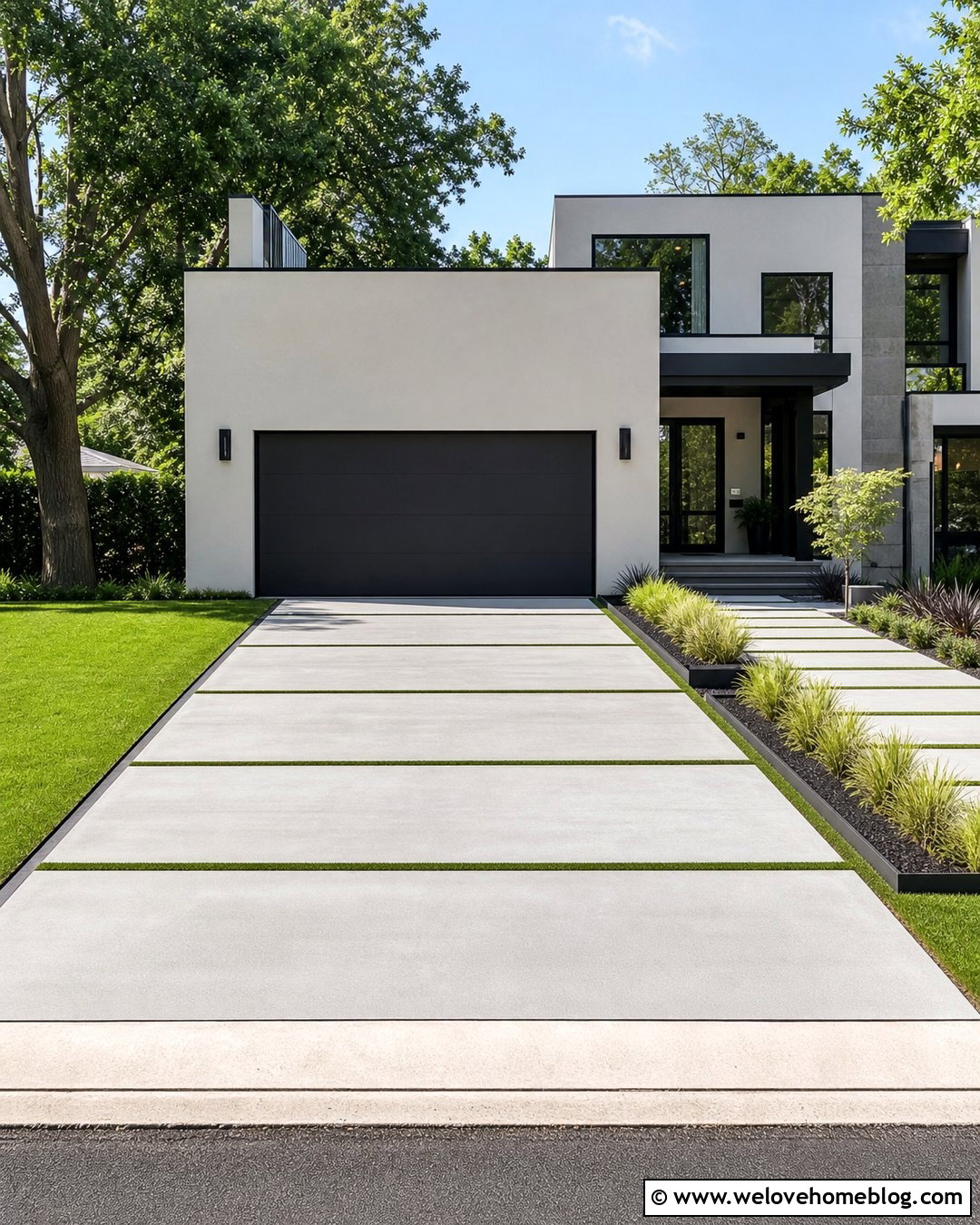
Large concrete slabs separated by narrow turf joints offer a crisp look for a contemporary home. The slabs provide stable driving and parking areas, while the green lines break up the visual weight of the concrete. Use rectangular light-gray slabs in a straight or gently offset grid. Artificial turf is often practical between the panels because narrow joints can be difficult to irrigate and mow evenly. Continue the geometric pattern into the front walkway for a coordinated entrance. Black steel edging, clipped ornamental grasses, and rectangular planting beds reinforce the modern layout. Careful spacing is important because each slab must align with the expected wheel path. The finished driveway should feel balanced, with greenery acting as a deliberate design feature rather than an accidental gap.
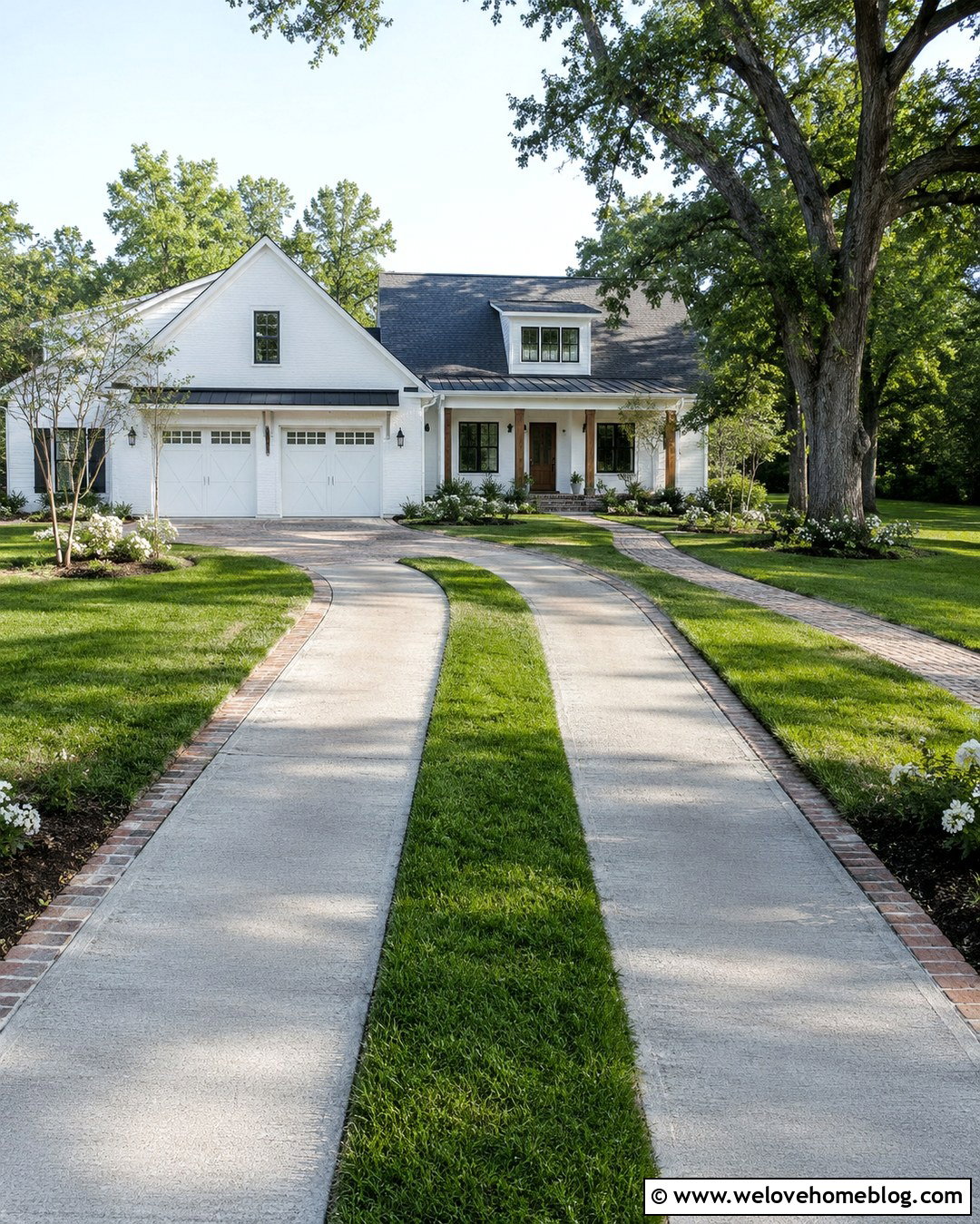
3. Grass Strip Turf Driveway
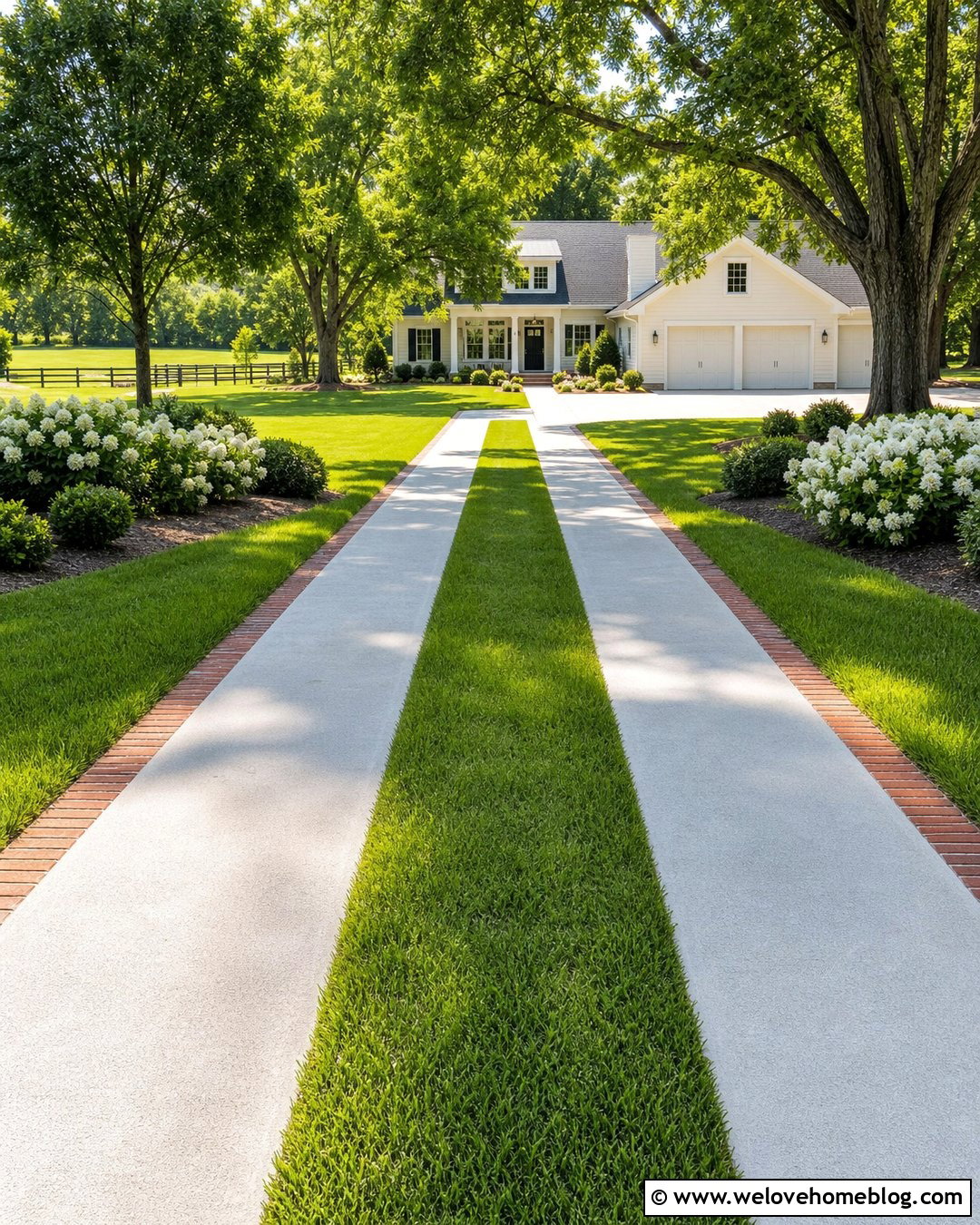
A two-track turf driveway uses paved wheel lanes with a broad green strip running through the center. This straightforward layout reduces the amount of hard surface while giving tires a dependable route to the garage. Precast concrete strips, poured concrete ribbons, or stone pavers can form the tracks. Plant reinforced turf in the middle and connect it visually to the lawn on each side. Brick edging can add warm color and keep the outer borders neat. This configuration is well suited to a long, straight driveway serving a country cottage or traditional suburban home. Before installation, measure common vehicle widths and allow enough room for comfortable entry. A slightly wider paved area near the garage makes turning, unloading, and parking easier.
4. Circular Turf Driveway
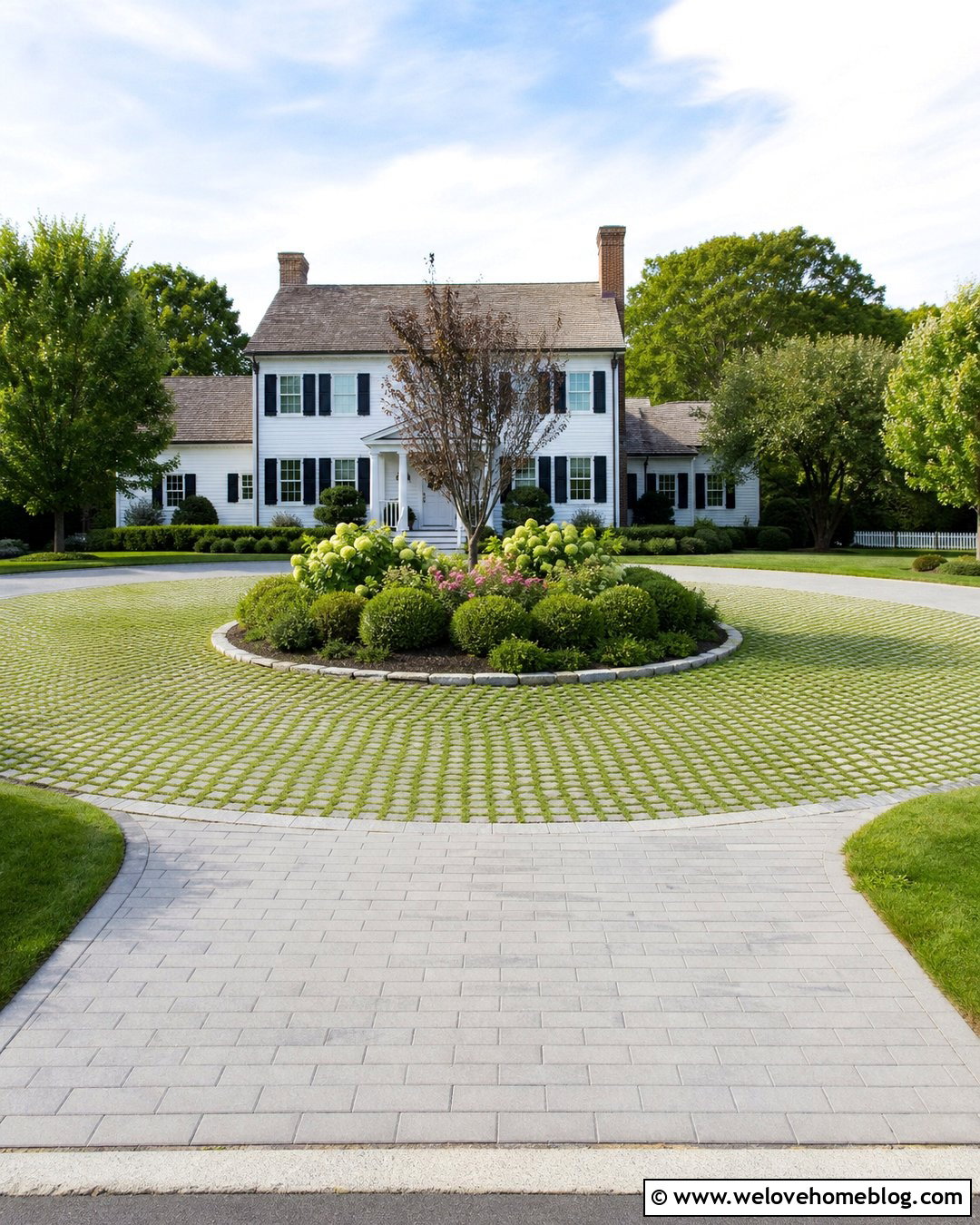
A circular turf driveway creates a welcoming arrival area while preserving a green appearance around the front of the house. Use concrete turf-block pavers throughout the driving loop and place a landscaped island in the center. A small ornamental tree, layered shrubs, and seasonal flowers can establish an attractive focal point without blocking sightlines. Natural stone curbing helps define the circle and protects the planting bed from tires. This complete layout works particularly well in front of Colonial, Georgian, and large ranch homes. The entrance and exit should be wide enough for convenient movement, with clear views toward the street. Add solid paver aprons at both openings to create durable transitions and prevent the edge of the turf system from becoming worn or uneven.
5. Curved Turf Driveway
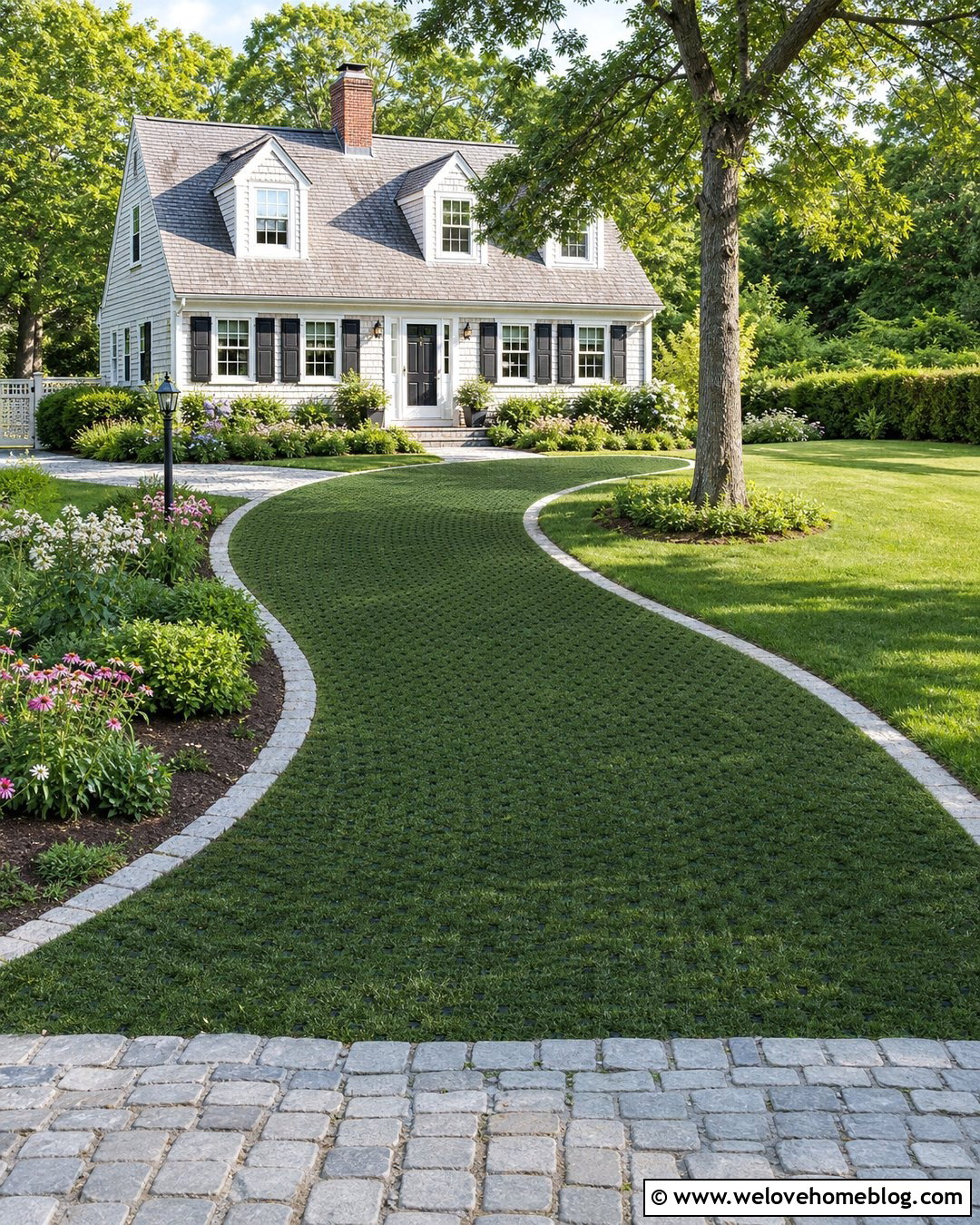
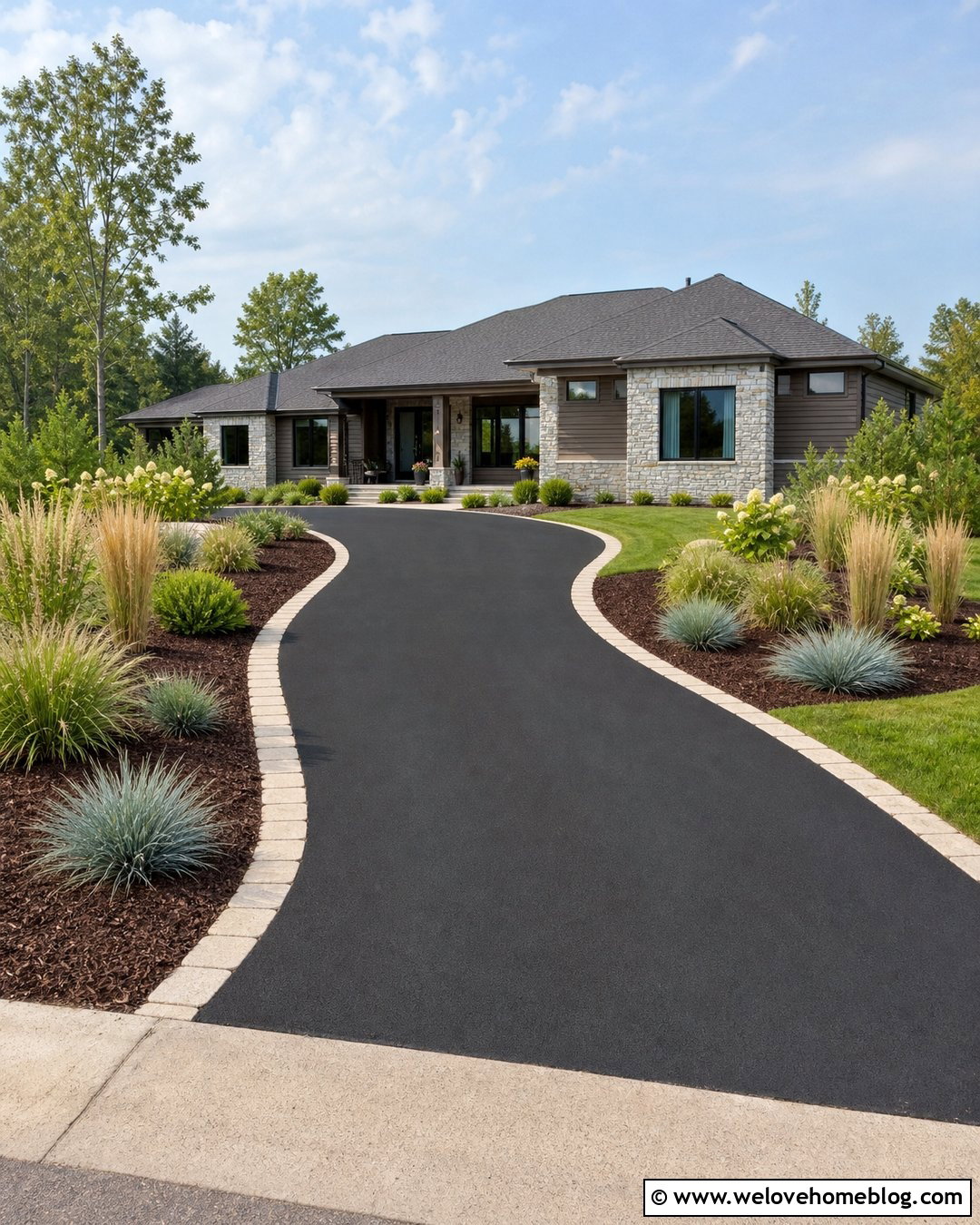
A gently curved turf driveway can make the approach to a home feel more natural and visually interesting. Reinforced plastic grass grids filled with live turf provide a continuous green surface, while pale stone edging makes the sweeping shape easy to see. Use the curve to move around an existing tree, garden bed, or natural rise instead of forcing a rigid path through the yard. Layered shrubs and flowering perennials can follow the outside edge, while open lawn along the inside keeps the route from feeling narrow. This relaxed arrangement complements Cape Cod, cottage, and wooded suburban homes. Keep planting mature sizes in mind so branches do not encroach on vehicles. A compact cobblestone apron at the street gives the soft design a strong, finished entrance.
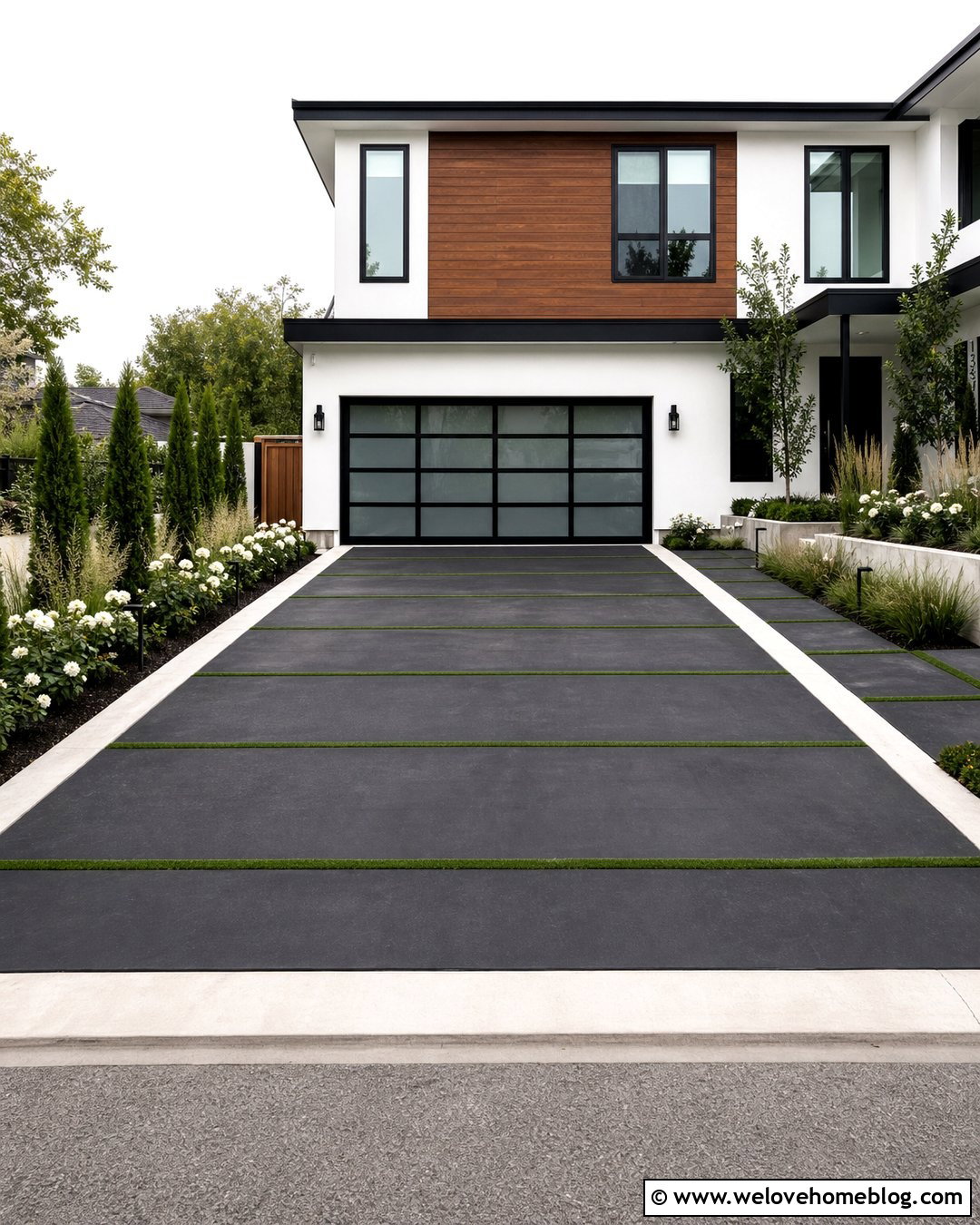
6. Modern Black Concrete Turf Driveway
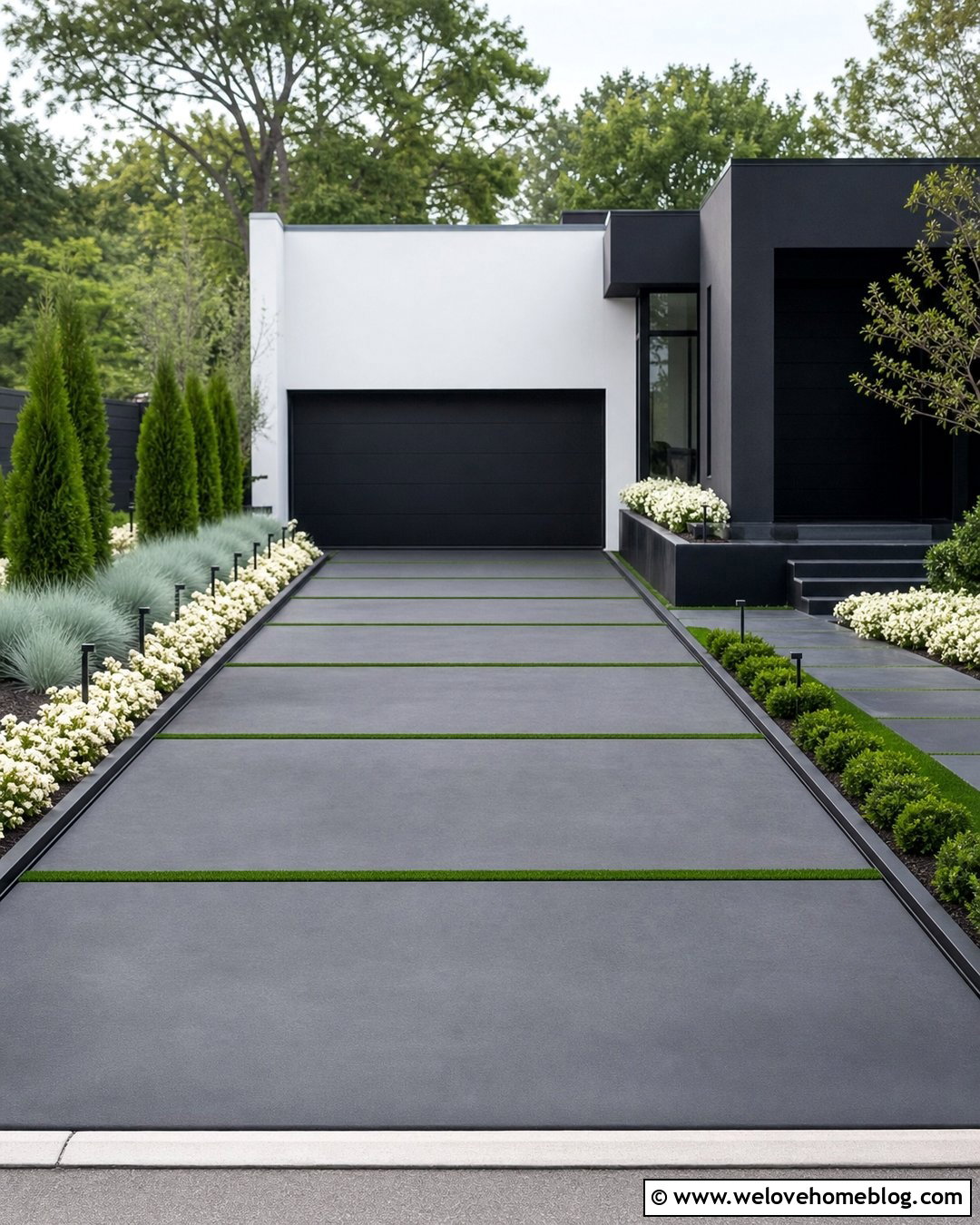
Dark concrete and vivid green turf create a bold driveway for a modern house. Choose charcoal concrete slabs with smooth or lightly sandblasted surfaces, separated by evenly sized artificial turf strips. A straight layout aligned with the garage emphasizes the architecture and avoids visual clutter. Continue the dark material into a narrow border or front walkway to unify the exterior. Plant sculptural grasses, compact evergreens, and a few pale flowering plants beside the driveway for controlled contrast. Black metal landscape edging can keep the turf lines sharp and prevent nearby gravel or mulch from migrating. Because dark paving can show dust and mineral marks, consider local conditions before selecting the deepest color. The final look should remain simple, symmetrical, and closely connected to the home’s facade.
7. White Concrete Square Turf Driveway
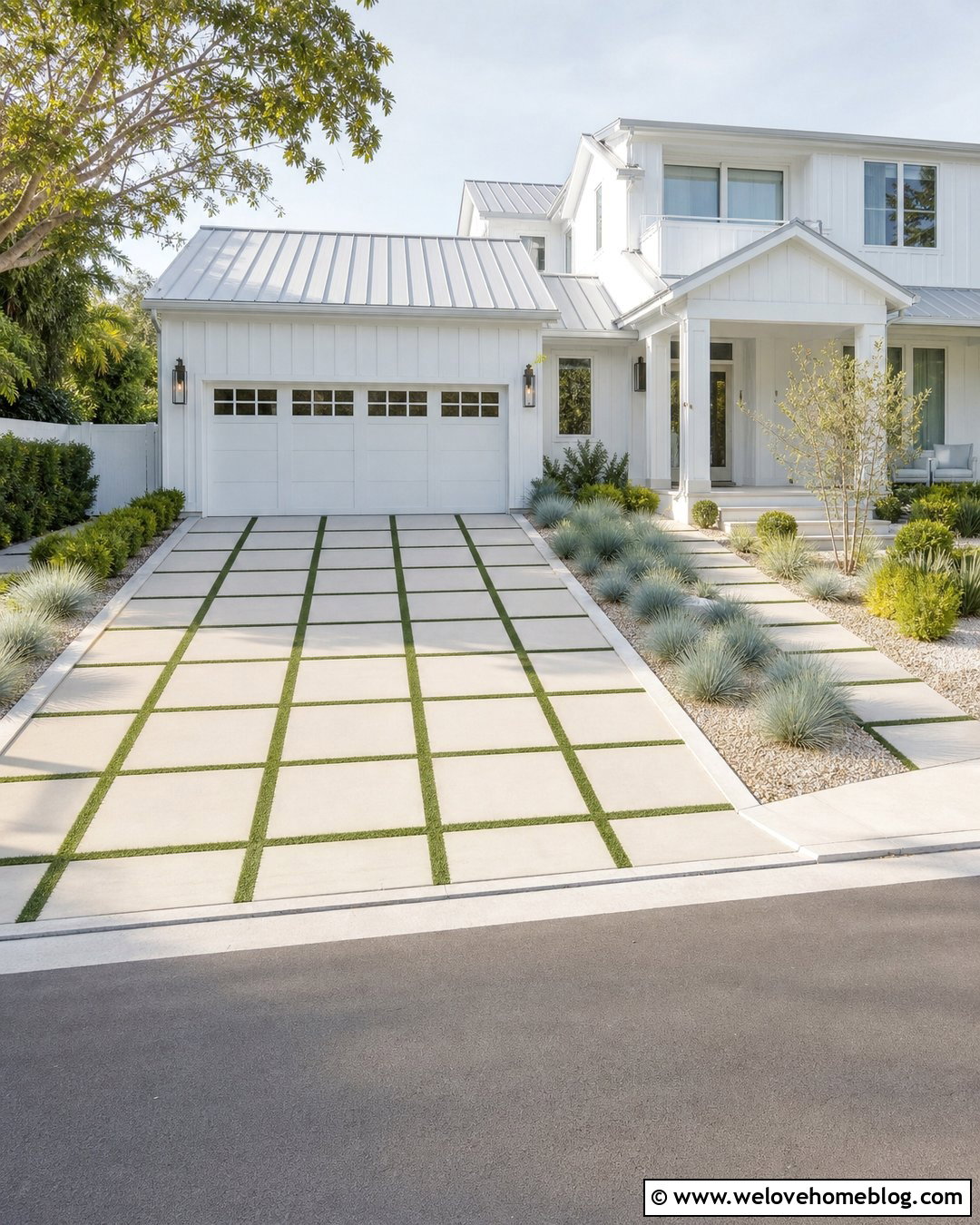
Bright concrete squares surrounded by green turf can make a small front yard appear open and organized. Arrange large off-white concrete pavers in a regular grid, using narrow synthetic turf joints between every square. The lighter surface works beautifully with a white stucco, coastal, or midcentury home. Extend a matching row of squares toward the front door so the walkway feels connected to the driveway. Along the edges, use low blue-green grasses, compact shrubs, and pale gravel mulch to maintain a light color palette. Subtle flush curbing keeps the pattern contained without creating a heavy outline. Choose a warm off-white rather than brilliant white to reduce glare and disguise ordinary outdoor dust. Precise alignment gives this turf driveway its polished architectural character.
8. Brick And Turf Driveway
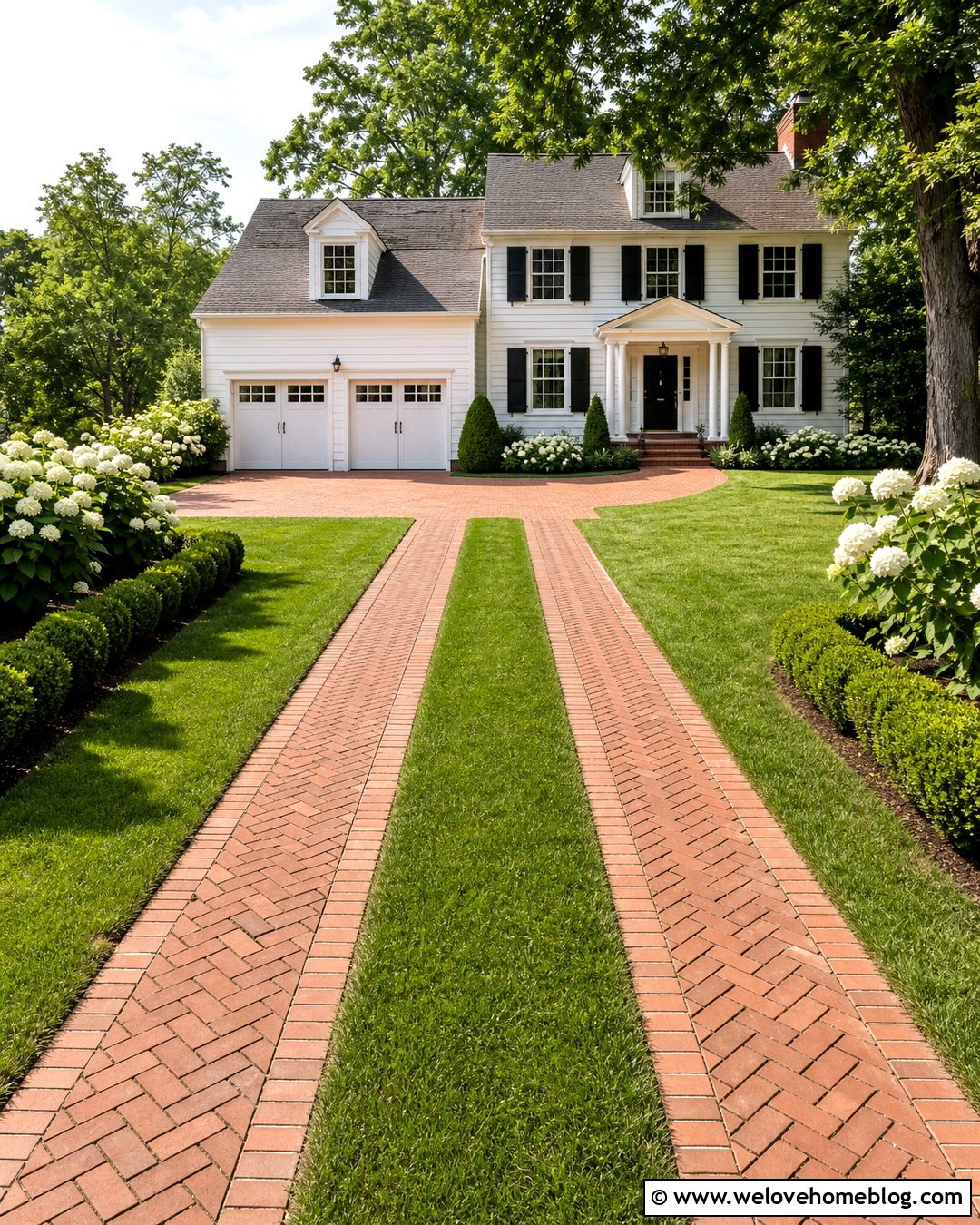
Red or brown brick pavers bring traditional warmth to a turf driveway while providing firm wheel paths. Lay two broad brick ribbons from the street to the garage and grow reinforced grass between and around them. A herringbone pattern within each track can add visual texture and improve the sense of craftsmanship. Frame the outside edges with a soldier course of matching brick for a neat transition into the lawn. Boxwood, hydrangeas, and a brick walkway can connect the driveway to a Colonial or traditional house. Select bricks rated for vehicular use rather than ordinary thin patio units. Near the garage, expand the brick into a full-width parking apron. This gives frequently used areas greater durability while allowing the longer approach to retain its softer, greener appearance.
9. Cobblestone Apron Turf Driveway
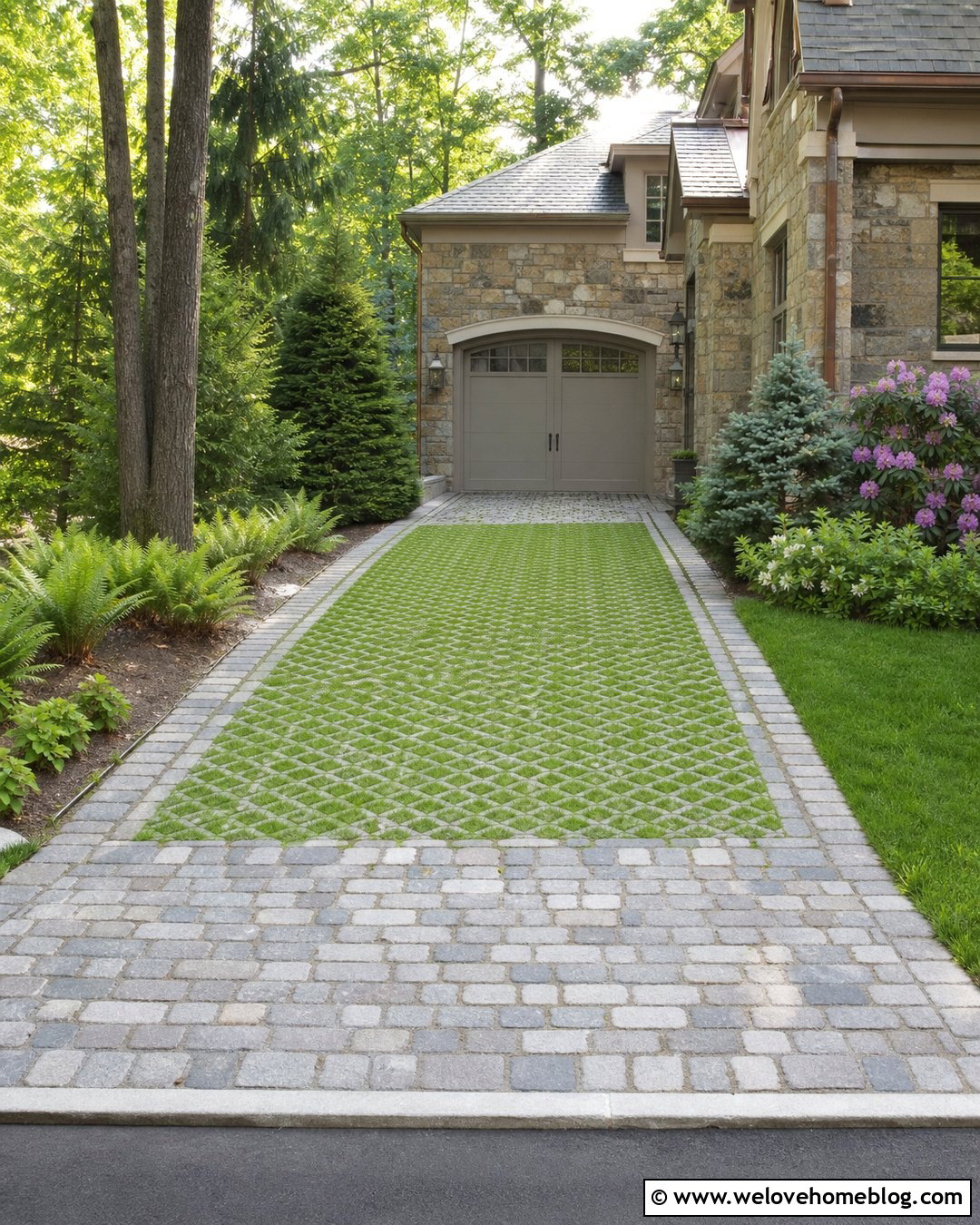
A cobblestone apron gives a grass-filled driveway a durable and attractive connection to the street. Beyond the apron, use precast concrete turf pavers filled with dense lawn grass to form a straight green approach. Repeat the cobblestone along the driveway edges and around the garage threshold to make the materials feel intentional. The varied gray and brown stone tones pair naturally with Craftsman homes, stone cottages, and wooded properties. Ferns, spreading evergreens, and flowering shrubs can soften the borders without hiding the paving. Keep the street apron broad enough to handle turning tires, which place more stress on the surface than straight vehicle movement. This combination places solid stone where wear is greatest while maintaining a lush, garden-like character across the rest of the driveway.
10. Farmhouse Turf Driveway
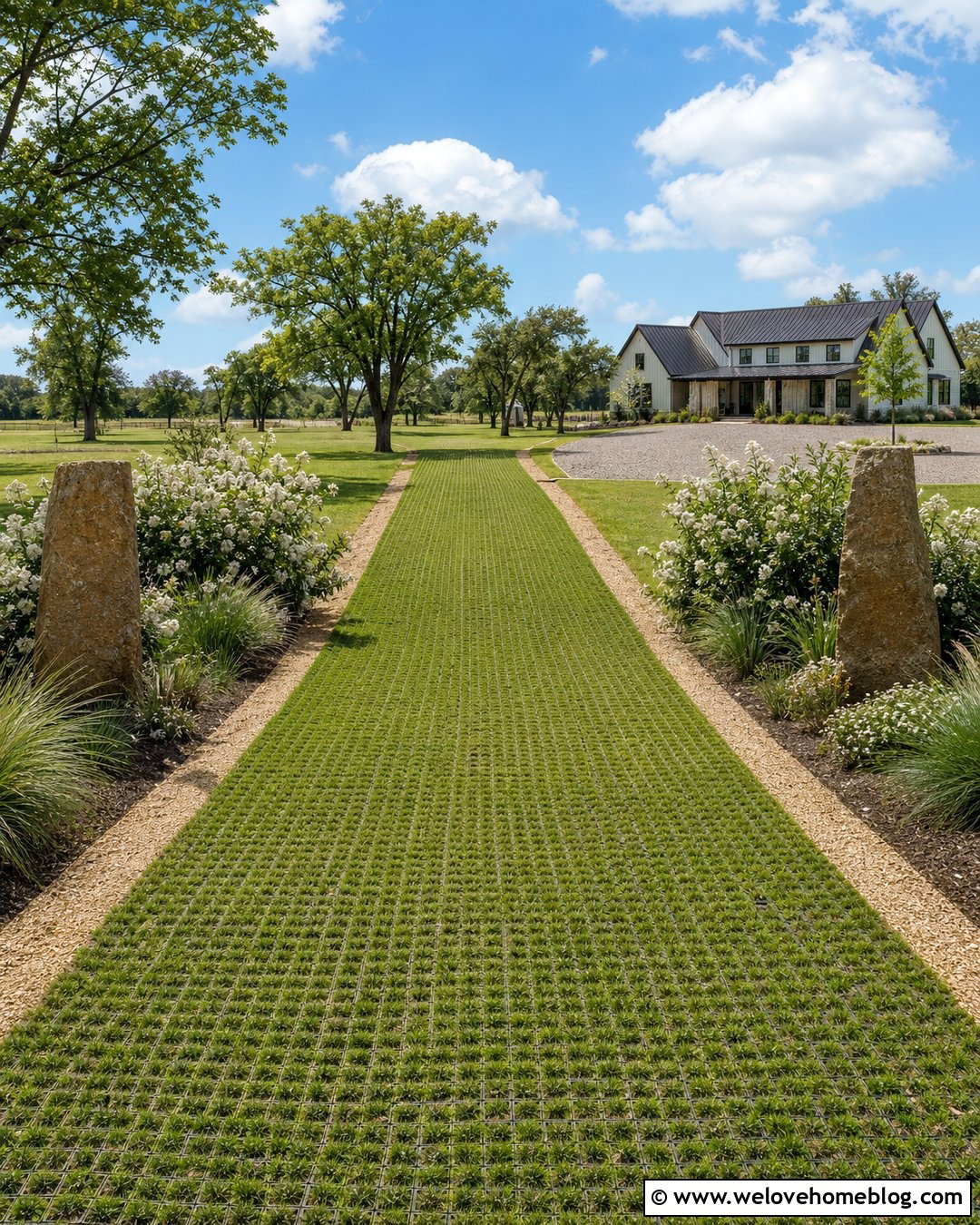
A farmhouse turf driveway should feel relaxed but still provide a dependable route for everyday vehicles. Use reinforced live-grass grids for the main surface, then outline the long straight driveway with compacted tan gravel borders. Weathered stone markers or simple timber posts can define the entrance without making it overly formal. Plant native grasses, white flowering shrubs, and a few shade trees along the approach. A broad gravel or concrete apron beside the garage provides space for turning and heavier use. The green driving surface helps the driveway blend into a large rural lawn instead of dividing it with a dark strip. Avoid allowing loose gravel to spill into the turf cells. Steel or stone separators placed between the materials will produce cleaner edges and simplify seasonal maintenance.
11. Narrow Turf Driveway
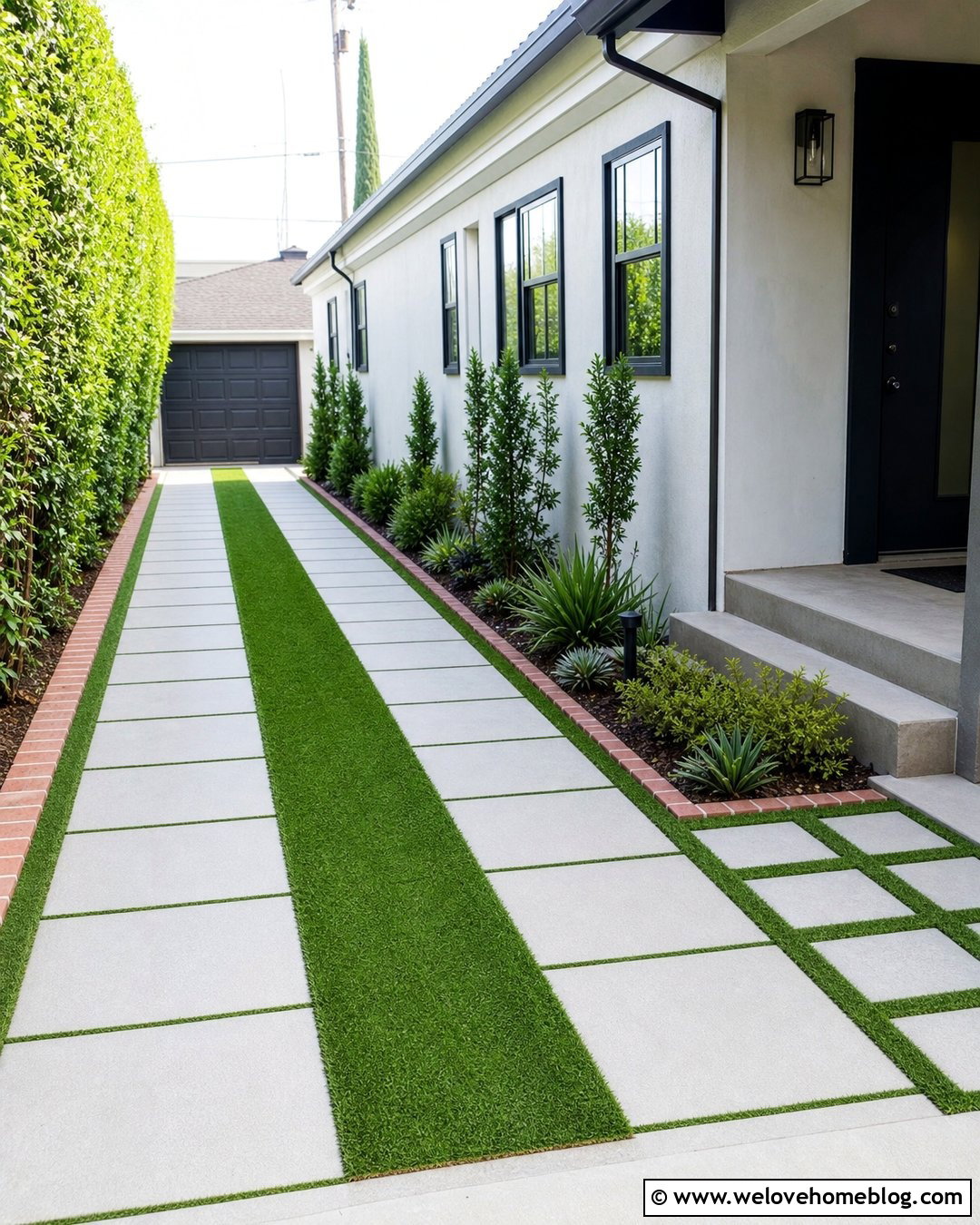
When the space beside a house is limited, a narrow turf driveway can provide access without making the side yard feel completely paved. Install two rows of rectangular concrete pavers precisely beneath the expected wheel paths. Fill the center and outer joints with low-growing artificial turf or reinforced live grass, depending on the sunlight and maintenance conditions. A slim brick border can separate the driveway from the foundation planting bed. On the opposite side, use a narrow lawn strip or vertical evergreen hedge to maintain privacy. This layout suits bungalows, urban cottages, and compact suburban lots. Ensure gutters and downspouts direct water away from the driveway base. Flush-mounted edging and smooth paver transitions also help create a comfortable walking route when the side driveway doubles as everyday pedestrian access.
12. Small Front Yard Turf Parking Pad
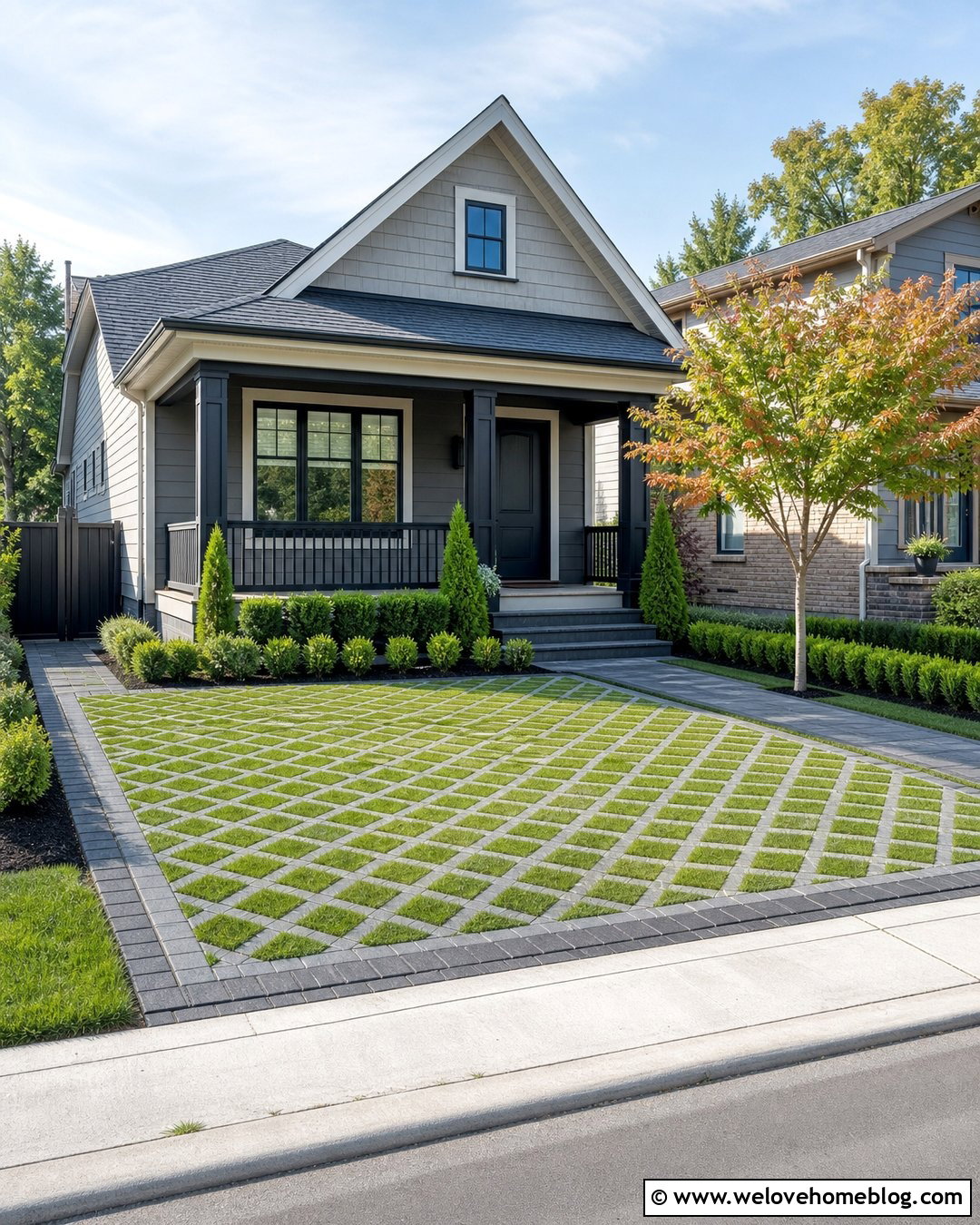
A compact turf parking pad can add off-street space without visually overwhelming a small front yard. Concrete grass-grid pavers filled with turf create a rectangular parking area that continues to look green when it is empty. Define the pad with a narrow band of charcoal pavers, then add a matching path to the front entrance. Keep shrubs low near the street so drivers can see pedestrians and approaching traffic. A small ornamental tree placed beside, rather than directly over, the parking area adds shade without filling the surface with roots and debris. This arrangement works well for cottages, duplexes, and urban infill homes. Accurate excavation and base preparation are especially important because a small pad often receives concentrated tire loads in the same locations every day.
13. Long Tree Lined Turf Driveway
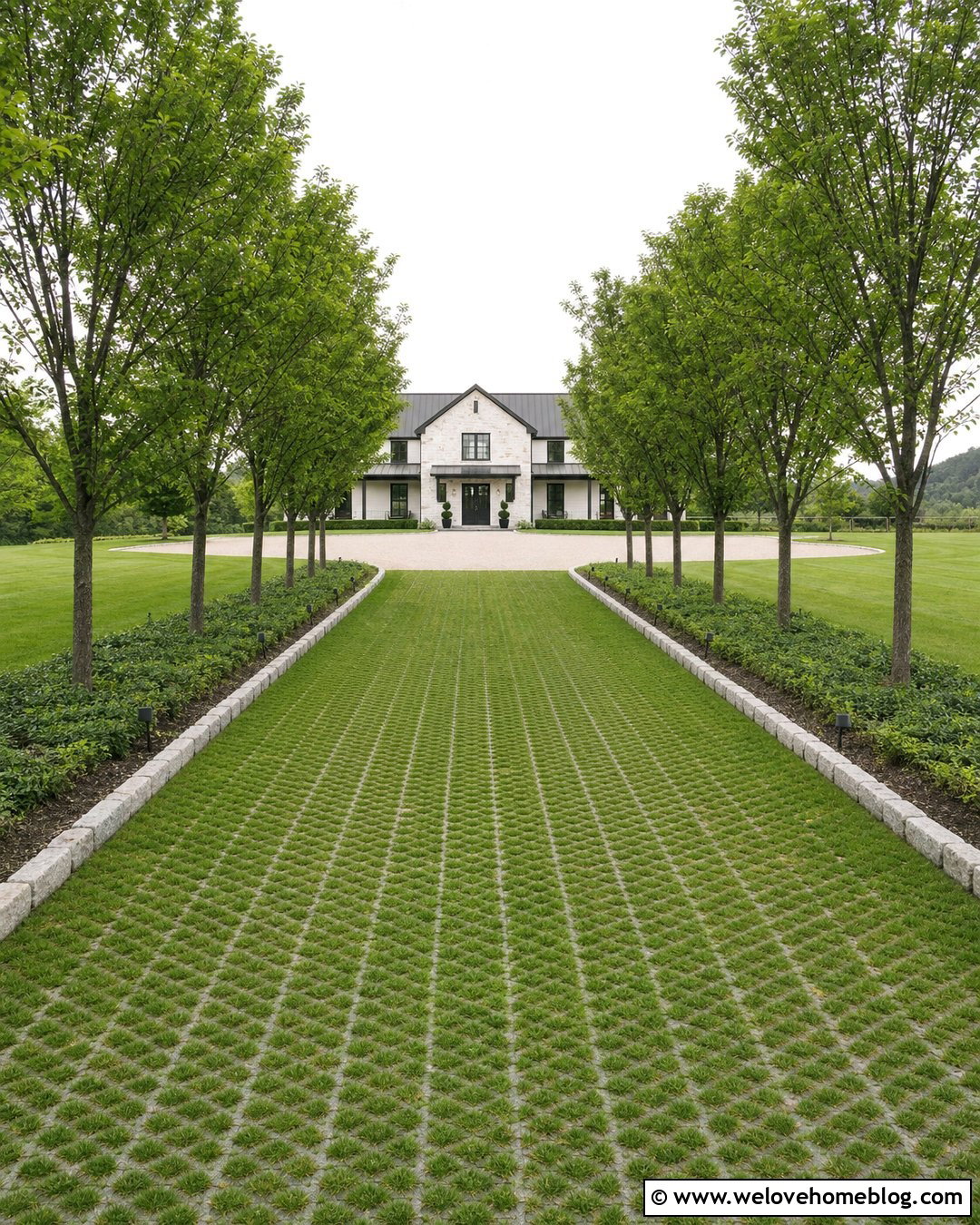
A long turf driveway can blend beautifully into a spacious property when it is framed by an orderly row of trees. Use heavy-duty grass reinforcement grids to form a straight, uninterrupted green lane. Natural stone curbs along both sides help guide vehicles and protect the turf edges. Plant deciduous trees at consistent intervals, leaving enough distance for mature trunks, roots, and canopies. Underplant them with simple ground cover or mown grass rather than dense shrubs that could narrow the view. At the house, transition into a solid stone or permeable paver motor court for easier turning and frequent parking. This layout creates a strong visual axis toward a farmhouse, estate-style residence, or large traditional home while allowing the long approach to remain closely integrated with the surrounding landscape.
14. Gentle Slope Turf Driveway
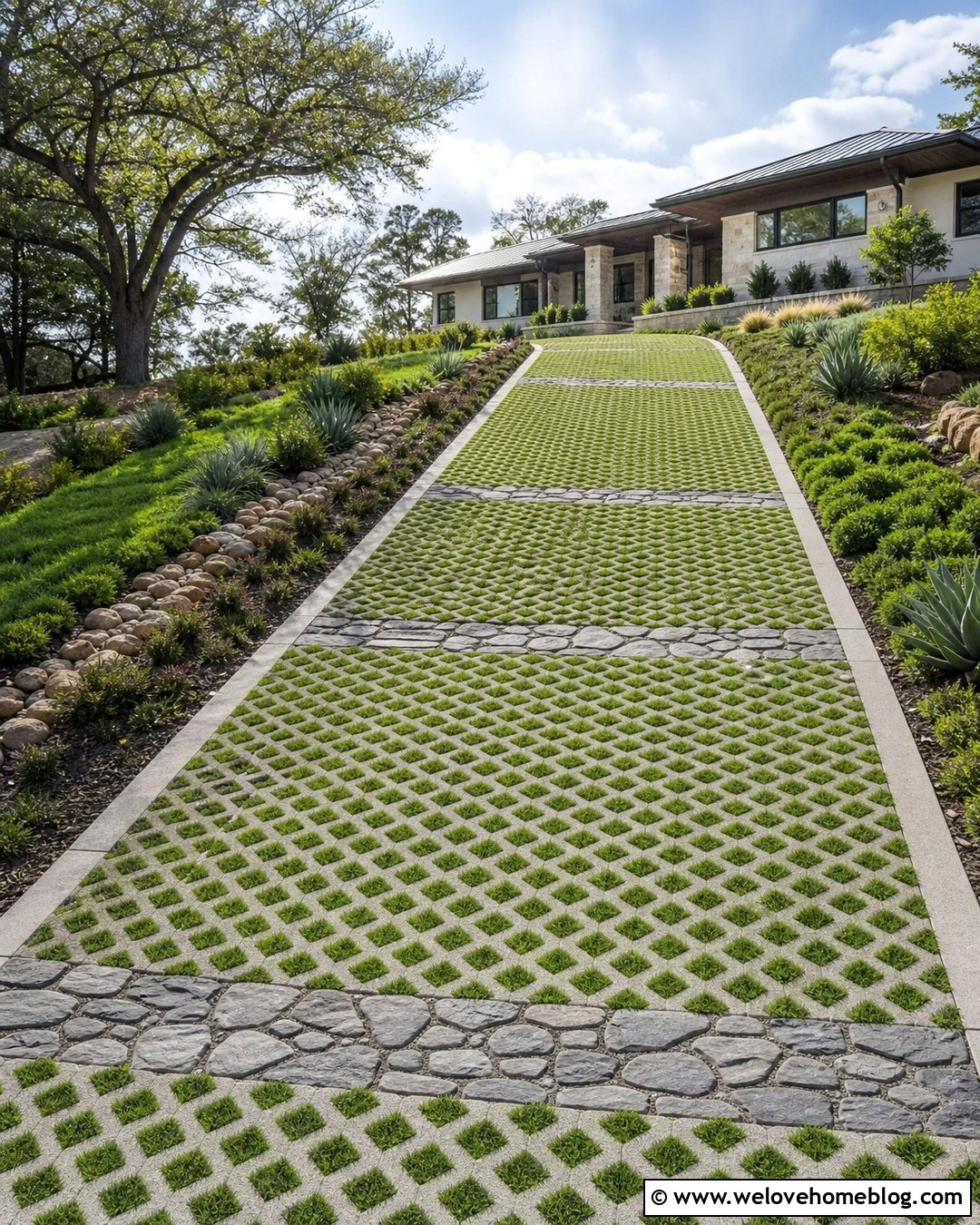
A turf driveway on a gentle slope needs clear edges and a carefully engineered base to remain stable. Concrete lattice pavers filled with grass offer a more defined surface than unsupported lawn, while rough-textured stone bands across the width can add visual rhythm. Use a gradual, straight approach rather than a tight curve that encourages tires to twist against the turf. Shallow planted swales or drainage beds beside the driveway can collect water moving from the surrounding yard. Low shrubs and erosion-resistant ground cover will help frame the slope without blocking visibility. Site conditions, soil permeability, runoff direction, and local requirements should be evaluated before construction because permeable turf systems are not appropriate for every grade. A professional installer can recommend suitable excavation, base depth, drainage, and edge restraint.
15. Artificial Turf Grid Driveway
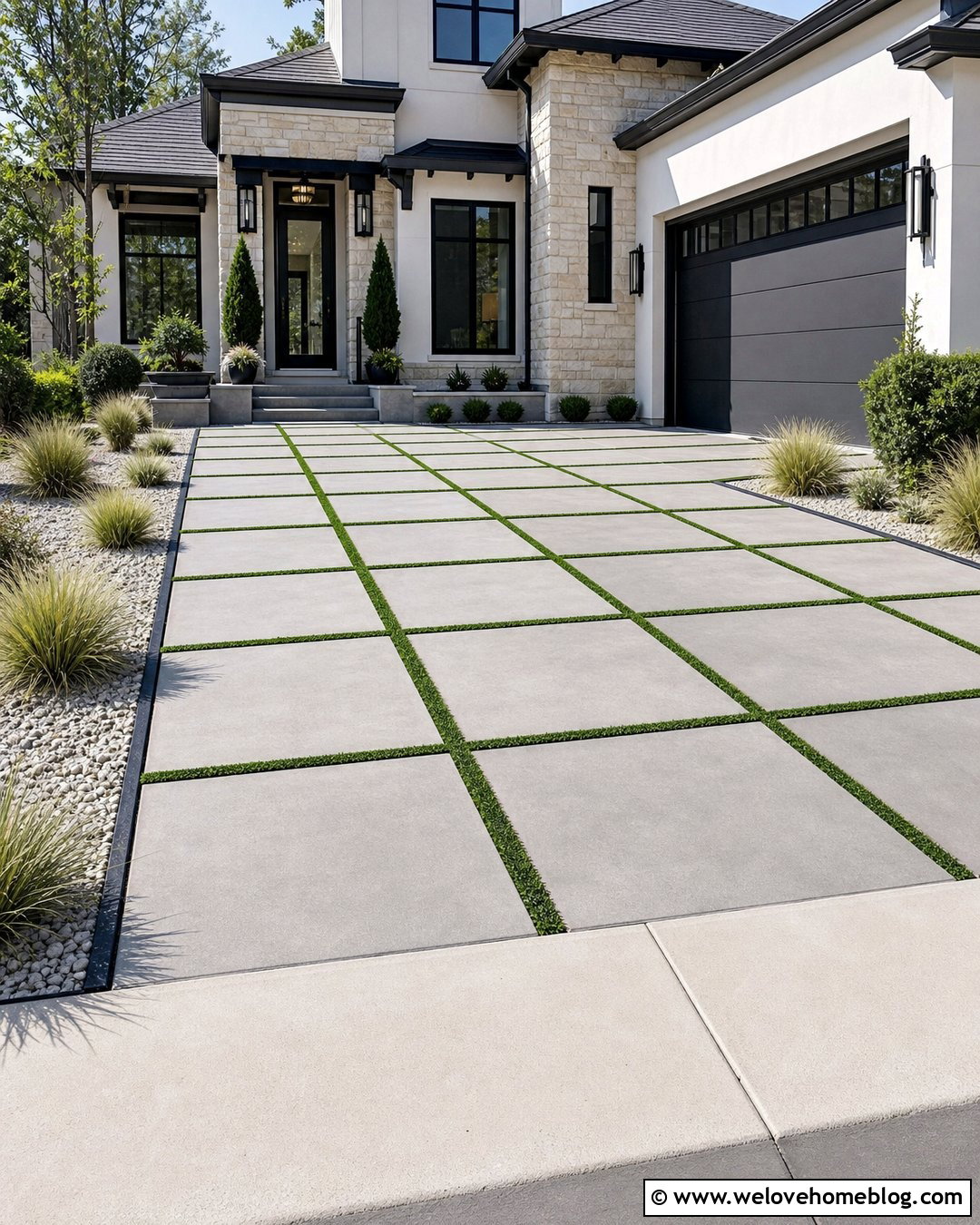
Artificial turf provides consistent color where live grass would struggle with shade, drought, or repeated parking. Pair short, realistic synthetic turf with large gray concrete pavers arranged in a simple rectangular grid. The concrete should carry the primary vehicle load, with turf placed in carefully prepared joints and surrounding spaces. Use dark metal edging to separate the driveway from gravel planting beds filled with drought-tolerant grasses and compact shrubs. This polished combination is suitable for modern, transitional, and contemporary ranch homes. Select turf designed for outdoor drainage and high-traffic landscaping rather than soft indoor applications. The base must still be properly graded and compacted because artificial grass does not correct drainage or settlement problems. Regular brushing and debris removal will help the narrow green strips retain a neat appearance.
16. Native Grass Turf Driveway
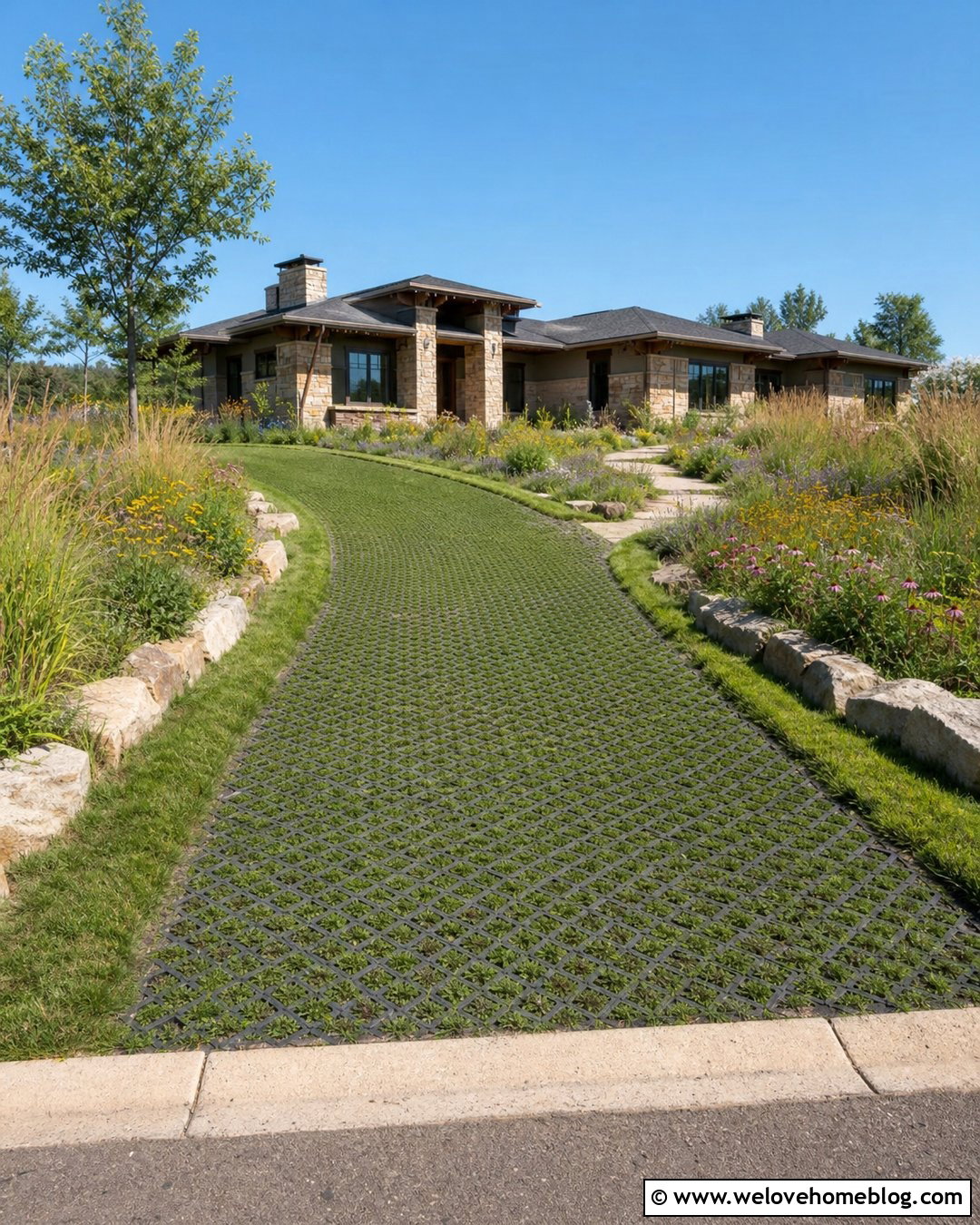
A native grass turf driveway can connect the driving area to a naturalistic front landscape. Begin with a load-bearing grid system and choose a regionally suitable, traffic-tolerant grass recommended by a local landscape professional. Border the straight or gently curved drive with native flowering plants, ornamental grasses, and locally sourced stone. A wider mown edge prevents taller meadow planting from leaning into the vehicle route. This design complements prairie homes, rustic ranches, and contemporary houses surrounded by informal landscapes. Keep the driveway turf shorter and more uniform than the surrounding planting so its boundaries remain easy to recognize. Not every native grass tolerates compacted soil or regular traffic, so appearance alone should not guide selection. The finished scheme should balance ecological character with safe, predictable vehicle access.
17. Shaded Fescue Turf Driveway
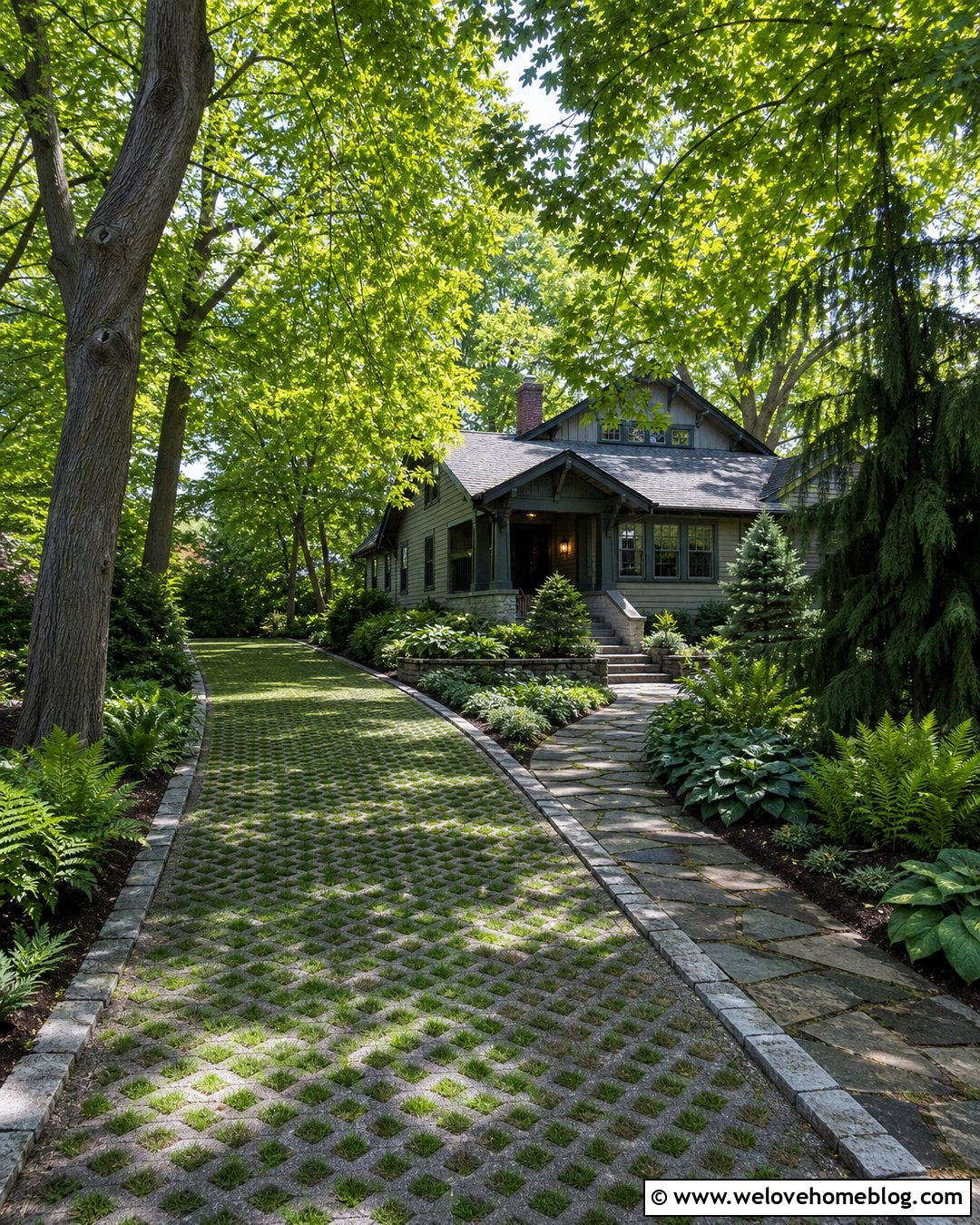
Filtered shade can create a cool, inviting driveway, but the turf selection and surrounding trees require careful planning. Concrete turf-block pavers filled with shade-tolerant fescue can form a straight approach beneath a high tree canopy. Use natural stone edging to protect the corners and separate the drive from woodland planting beds. Ferns, hostas, sedges, and low evergreen shrubs can continue the green palette beside a Craftsman or cottage home. Prune low branches to preserve vehicle clearance and allow useful light to reach the grass. Fallen leaves should be removed before they form a thick, wet layer over the turf cells. If deep shade prevents reliable live growth, use artificial turf in the most difficult sections while retaining real lawn where conditions are brighter.
18. Tropical Turf Driveway
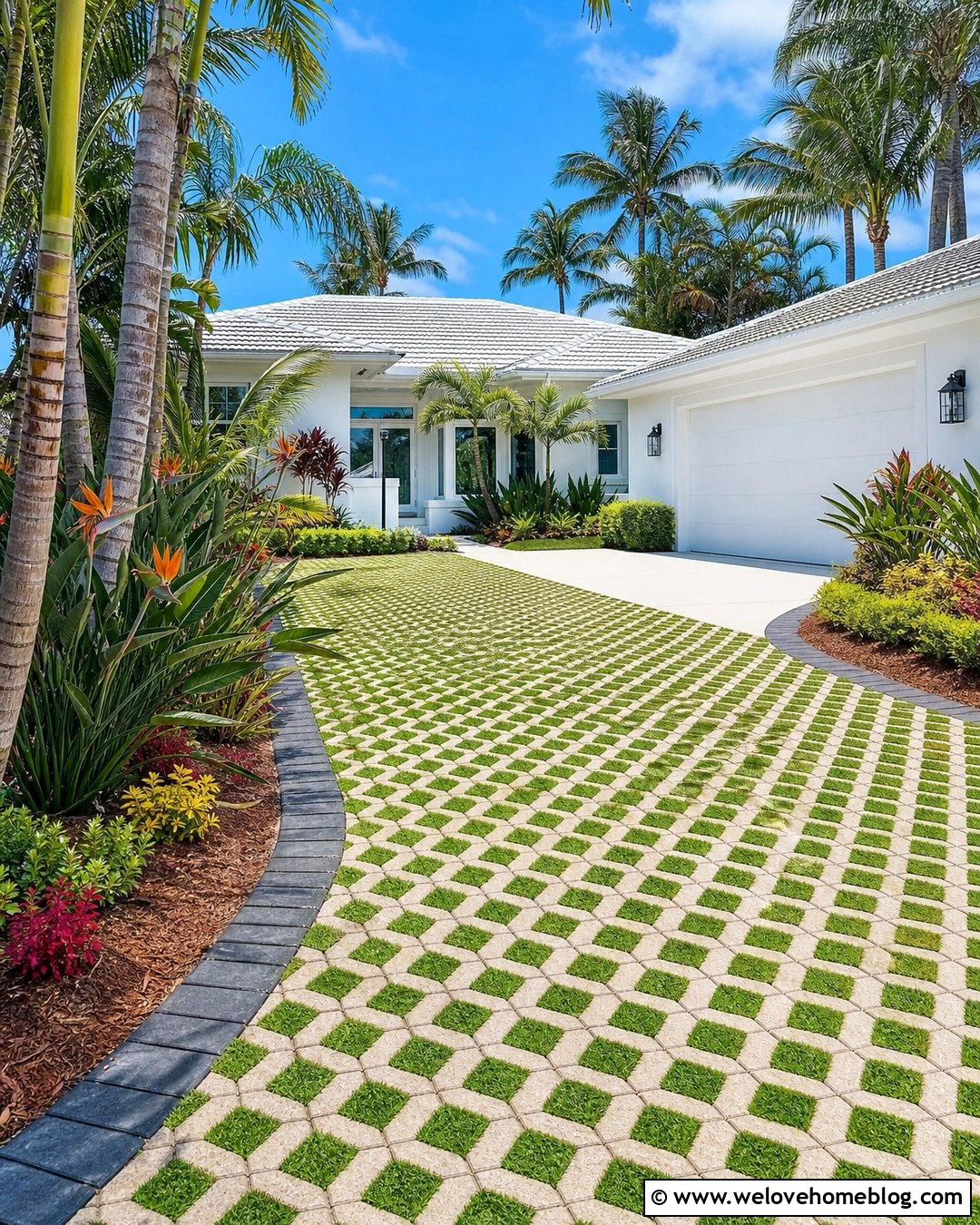
Lush planting and bold paving can turn a turf driveway into a distinctive tropical entrance. Use pale concrete turf blocks filled with warm-season grass in a broad, gently curved layout. Border the driveway with dark volcanic stone or charcoal pavers to create contrast against the bright green surface. Palms, bird-of-paradise plants, broad-leaved shrubs, and colorful ground covers can frame the approach without spilling into the driving zone. The design works especially well with coastal contemporary, Florida ranch, and light stucco homes. Keep dense plants farther back near curves and street connections to maintain visibility. A solid concrete apron at the garage provides an easy-clean parking area, while the grass-grid approach softens the overall frontage. Select plants and turf that can tolerate the property’s heat, rainfall, and salt exposure.
19. Desert Turf Accent Driveway
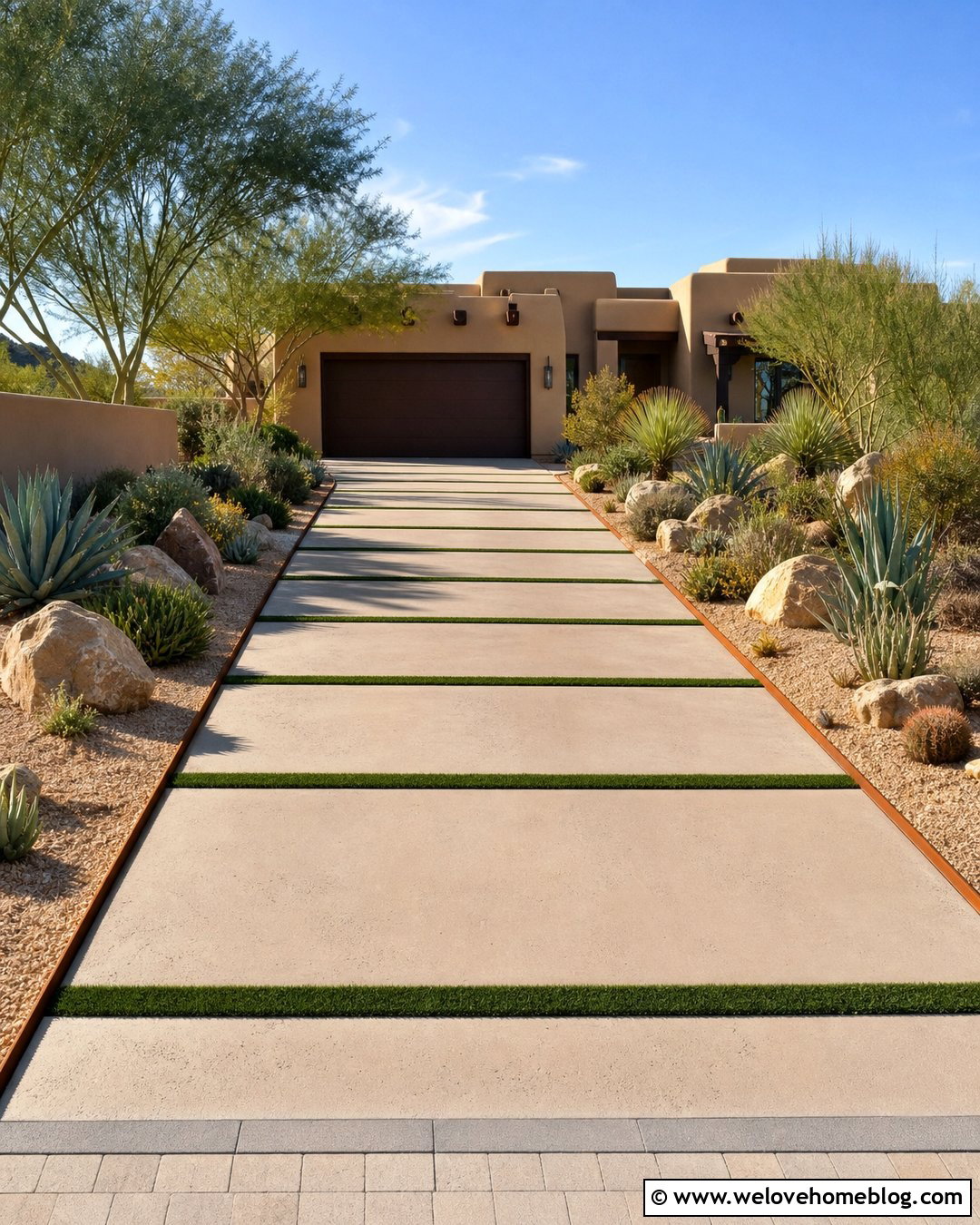
In a dry landscape, narrow artificial turf accents can introduce green color without turning the driveway into a large irrigated lawn. Use warm beige concrete slabs as the primary vehicle surface, with slim synthetic turf bands arranged between them. Border the straight driveway with decomposed granite, boulders, agaves, yuccas, and sculptural desert shrubs. A rust-colored steel edge creates a crisp separation between the turf and gravel. This palette pairs naturally with adobe, Southwestern, and desert-modern homes. Limit the green strips to areas where they make the strongest visual contribution, such as the central axis and slab joints. Choose a muted turf color that resembles natural grass rather than an intensely bright shade. The final driveway should complement the dry setting instead of appearing disconnected from the surrounding water-conscious landscape.


20. Turf Driveway With Gate
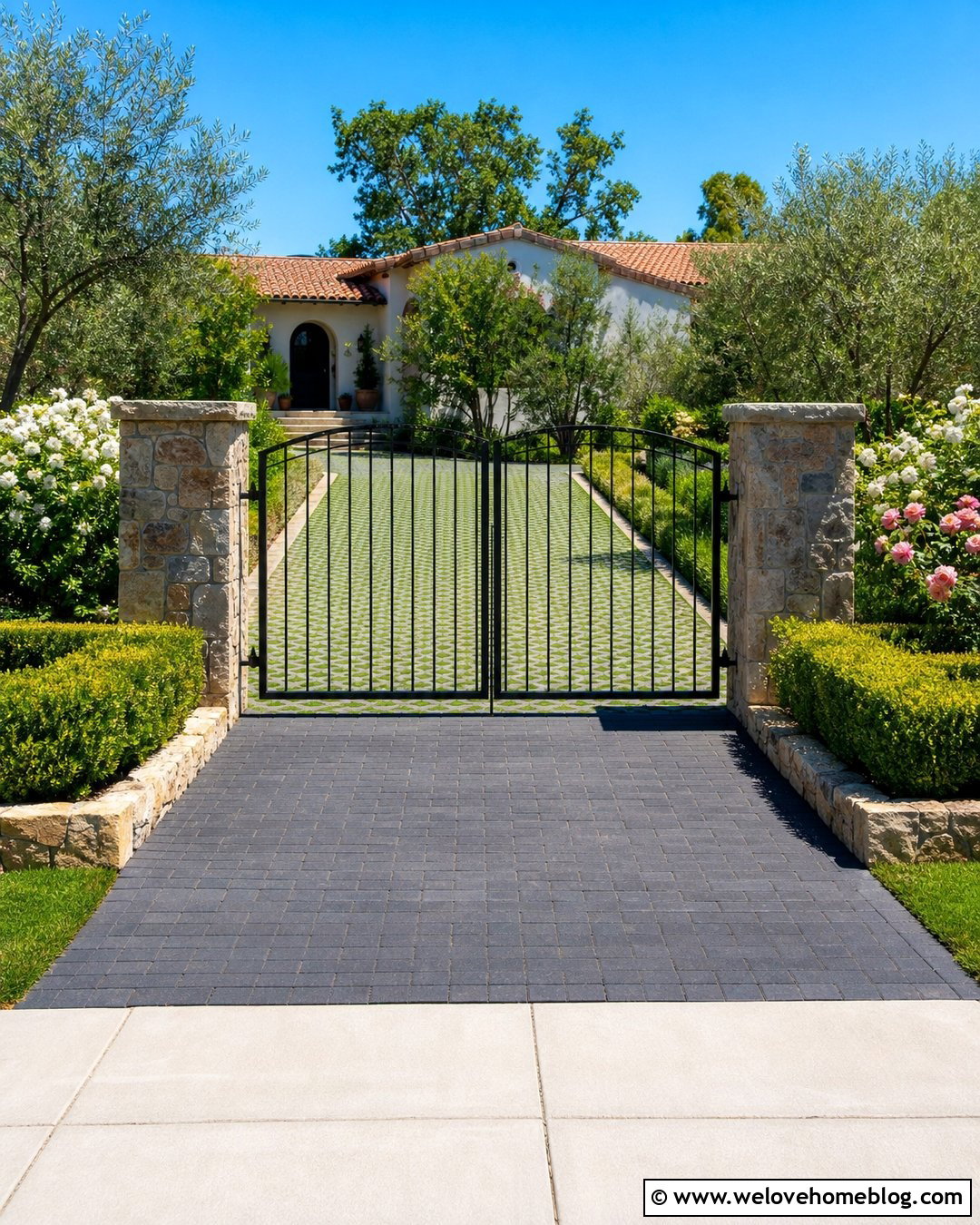
A driveway gate becomes more welcoming when the approach includes greenery instead of uninterrupted hard paving. Install reinforced concrete turf pavers along a straight drive and create a full-width solid paver landing beneath the gate. The landing prevents gate hardware and frequently traveled tire areas from sitting in soft soil. Stone pillars can anchor a simple black metal gate, while low hedges and flowering shrubs frame the entrance without reducing sightlines. Continue matching stone edging from the pillars toward the house to visually connect the entrance with the driveway. This combination suits traditional, Mediterranean, and estate-style properties. Position access controls, lighting, and drainage before completing the paving. The gate should open over a stable, level surface, with enough interior space for a vehicle to wait safely away from the street.
21. Turf Driveway With Lighting
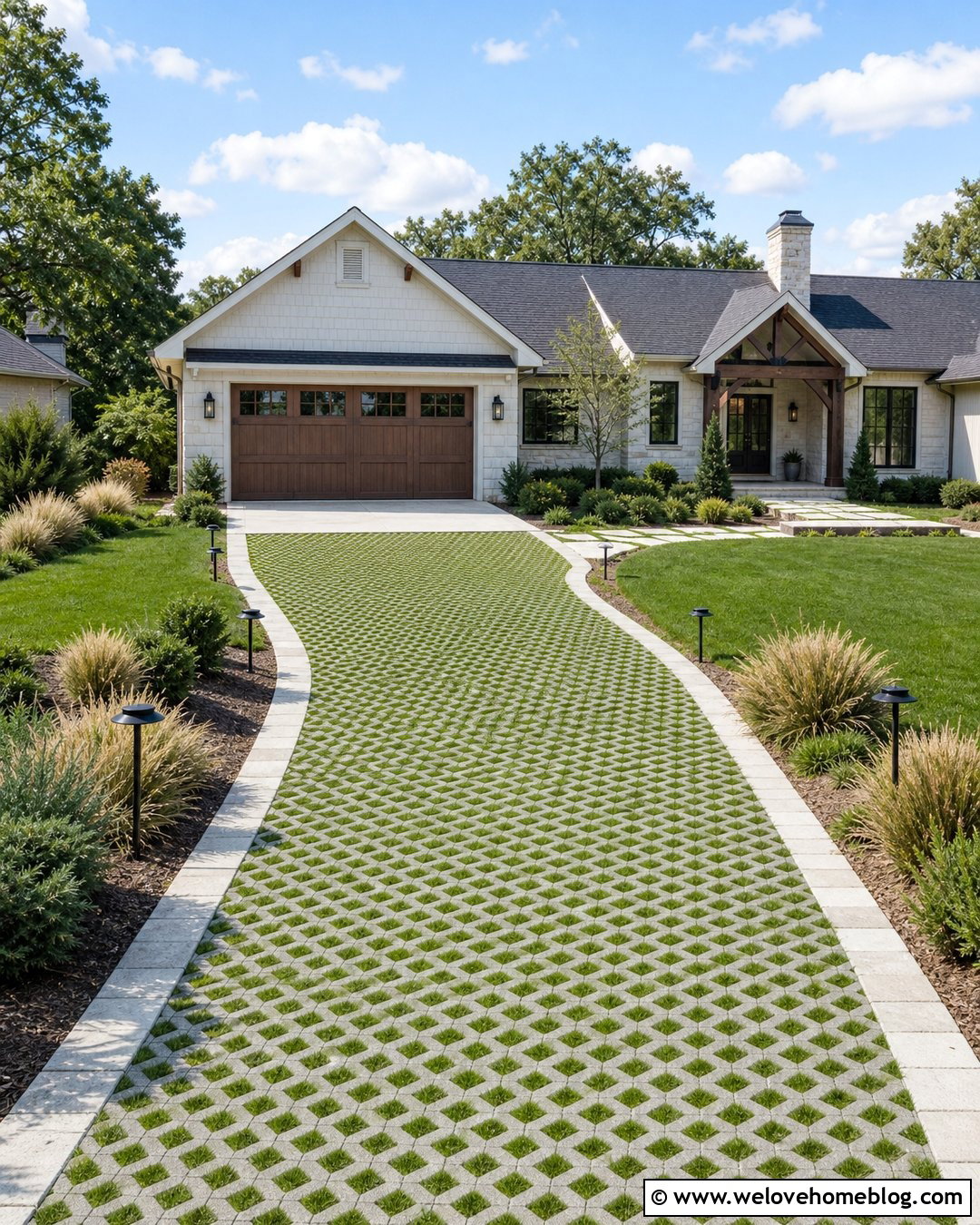
Low-voltage lighting helps define a turf driveway while adding a polished daytime feature. Choose concrete grass-grid pavers filled with live turf for the main surface, then add a narrow limestone border on both sides. Install compact path lights outside the edge restraint so fixtures do not interfere with tires, mowing, or snow removal. During the day, evenly spaced black or bronze fixtures create a subtle rhythm along a curved approach. Layer the borders with low grasses, evergreen shrubs, and open lawn to keep the design uncluttered. Near the garage, recessed or flush-mounted lights can mark the transition to a solid parking apron. Plan the wiring and transformer locations before installing the driveway base. Good fixture spacing should clarify the route without turning the front yard into an overly busy line of hardware.
22. Turf Driveway With Address Sign
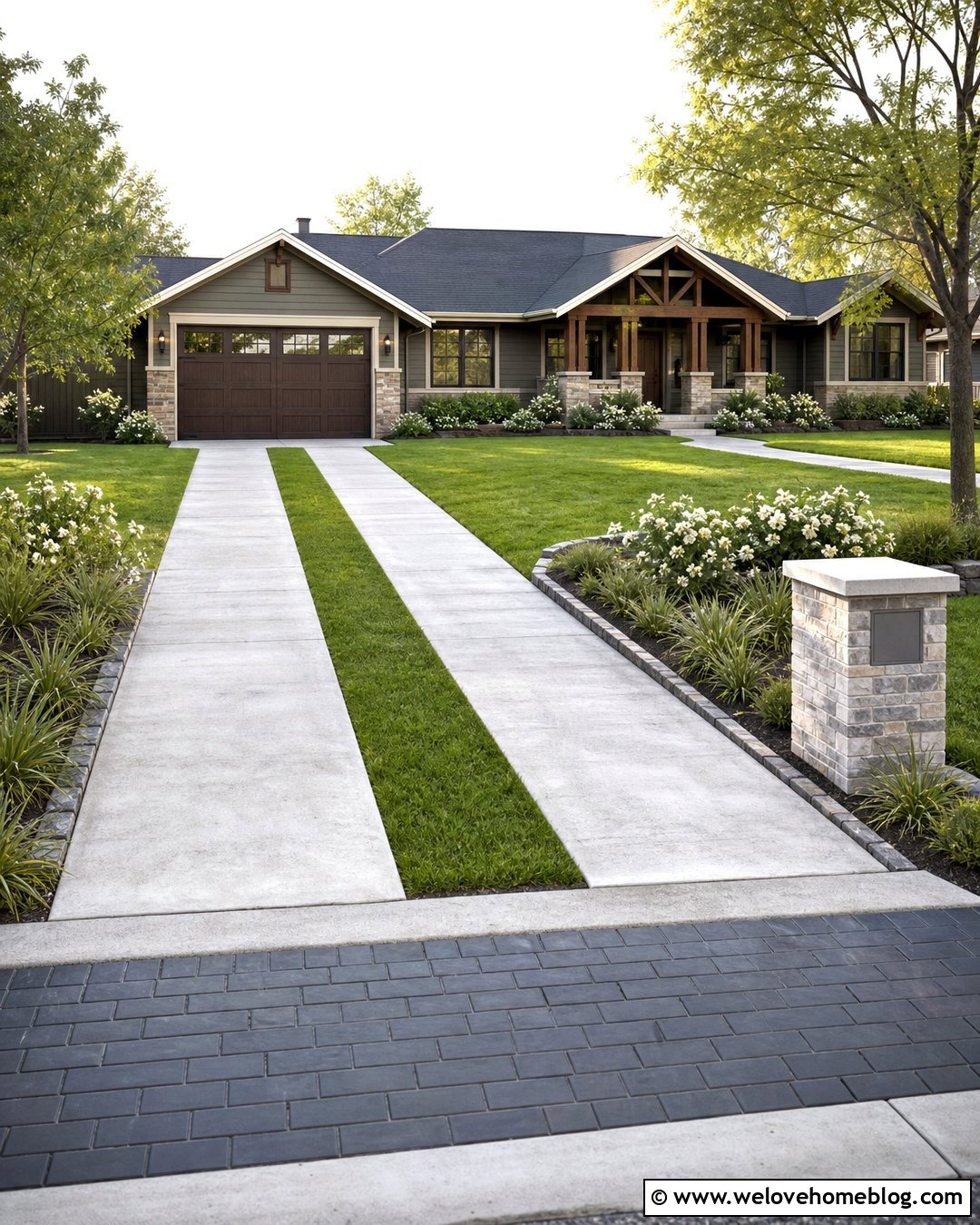
A well-placed address sign can give a green driveway a clear and memorable entrance. Use rectangular concrete wheel tracks with reinforced turf between them, then add a charcoal brick apron where the driveway meets the street. Position a stone or metal address marker beside the apron, outside the vehicle clearance area. Repeat its material in the driveway edging or nearby walkway for a coordinated appearance. Low ornamental grasses and compact flowering shrubs can frame the sign while keeping the numbers visible from both directions. This layout is effective for long driveways leading to ranch, farmhouse, or Craftsman homes. Provide a clean backdrop behind the marker rather than surrounding it with tall plants. The address feature, entry apron, and turf drive should read as one organized composition from the curb.
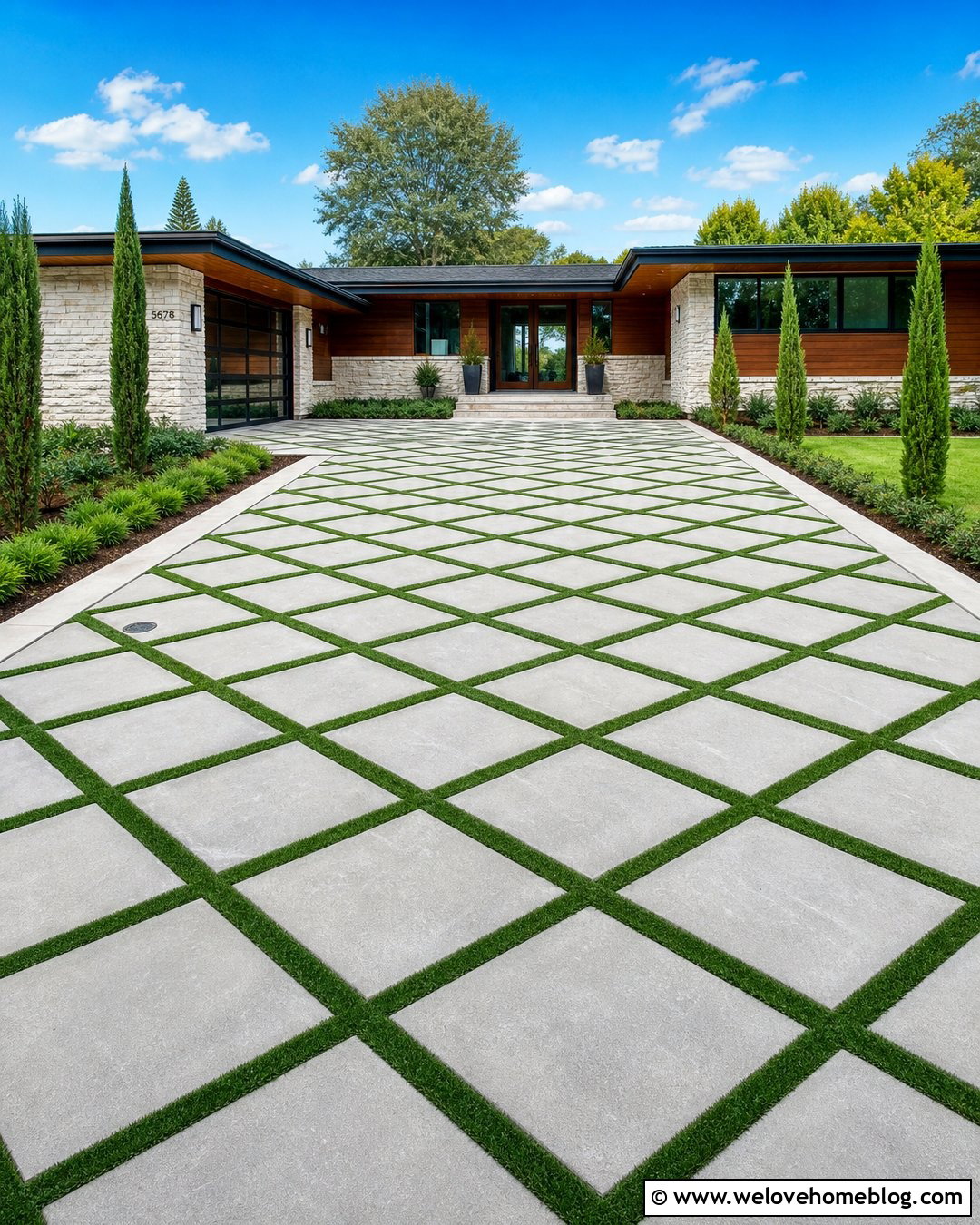
23. Checkerboard Turf Driveway
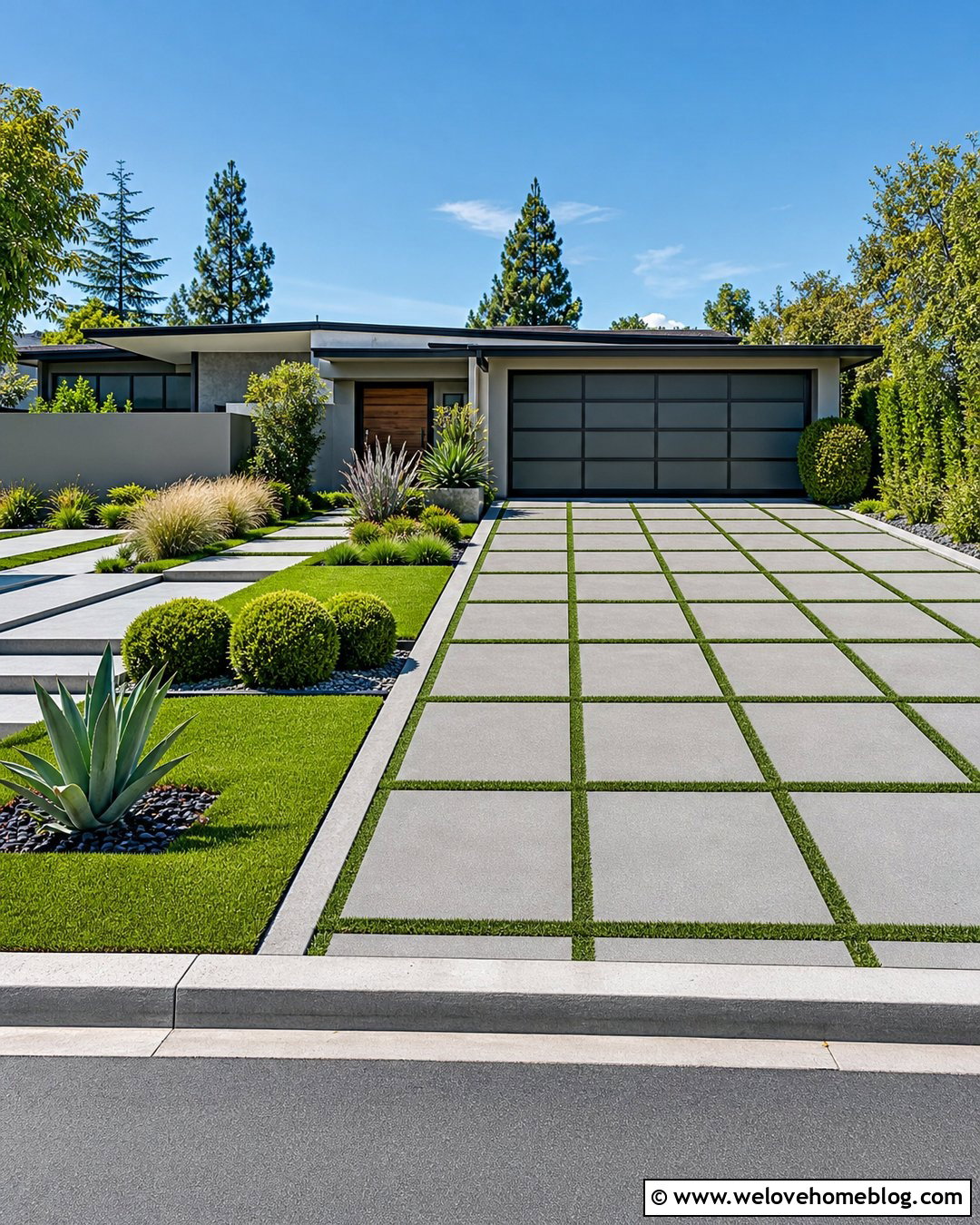
A checkerboard driveway combines square concrete pavers and turf in a striking geometric arrangement. Use large medium-gray concrete squares spaced evenly across the entire rectangular drive, with artificial turf filling the consistent joints. For a bolder interpretation, alternate selected paved and green squares while keeping uninterrupted concrete beneath the main wheel paths. A flush concrete curb can frame the pattern and provide a clean transition into planting beds. Pair the layout with a modern or midcentury house featuring simple horizontal lines. Rounded shrubs, ornamental grasses, and a broad front walkway will soften the strict geometry. Before construction, map the pattern around garage doors, drainage structures, and turning areas. Precise measurements are essential because small alignment errors become highly visible across a repeated checkerboard surface.
24. Herringbone Turf Paver Driveway
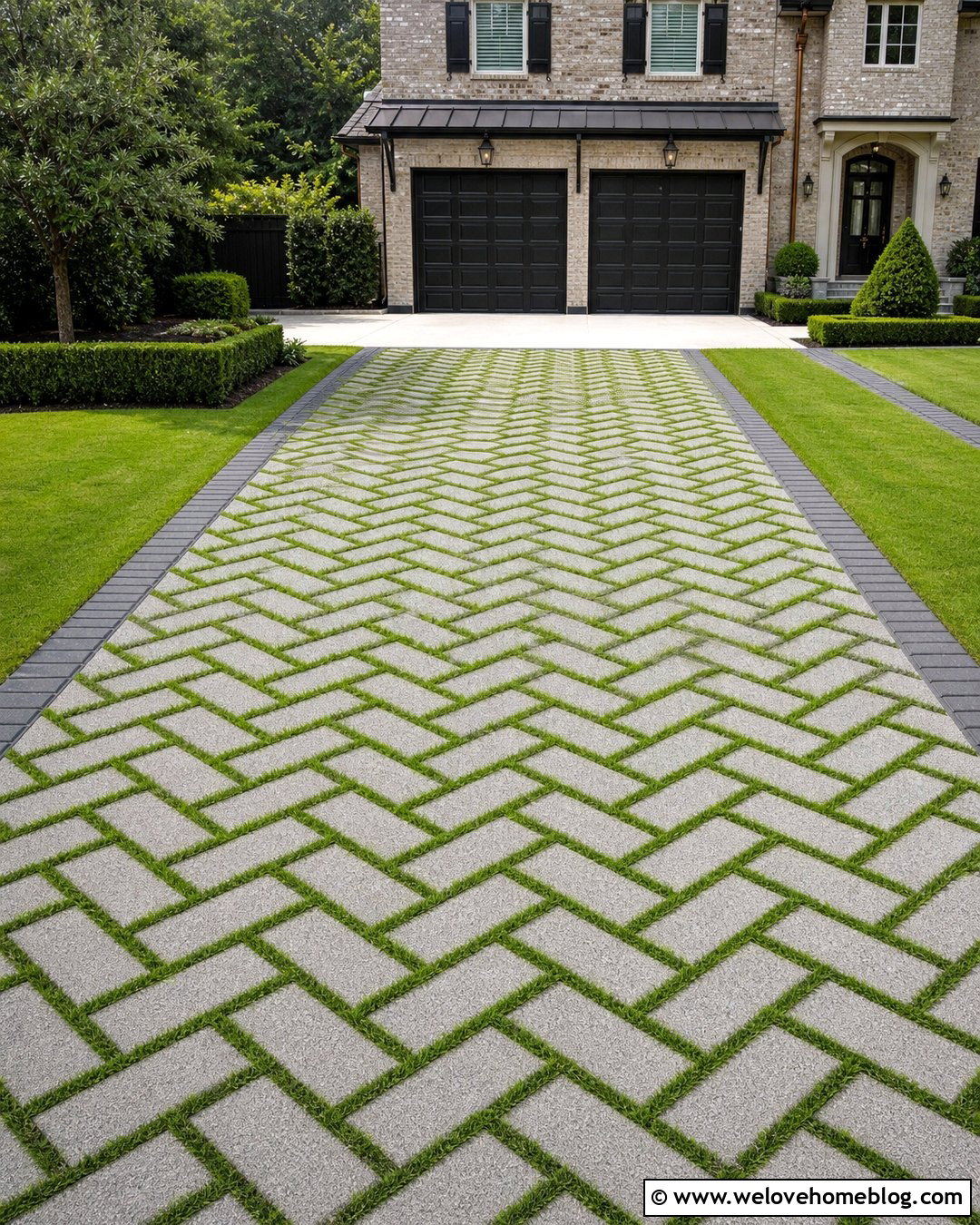
Open-cell concrete pavers arranged in a herringbone-inspired layout add movement to a turf driveway without sacrificing its green character. Select elongated permeable blocks with openings that can support turf, and use a darker paver soldier course around the perimeter. The angled pattern looks especially attractive on a broad, straight drive leading to a traditional brick or transitional home. Match the border to the front walkway and garage apron so the different exterior surfaces feel connected. Simple lawn panels and clipped evergreen shrubs allow the paving pattern to remain the focal point. This design requires careful installation because the units must remain aligned and securely restrained under turning traffic. Use full-depth, vehicle-rated products and plan cut pieces around the edges before work begins.
25. Split Surface Turf Driveway
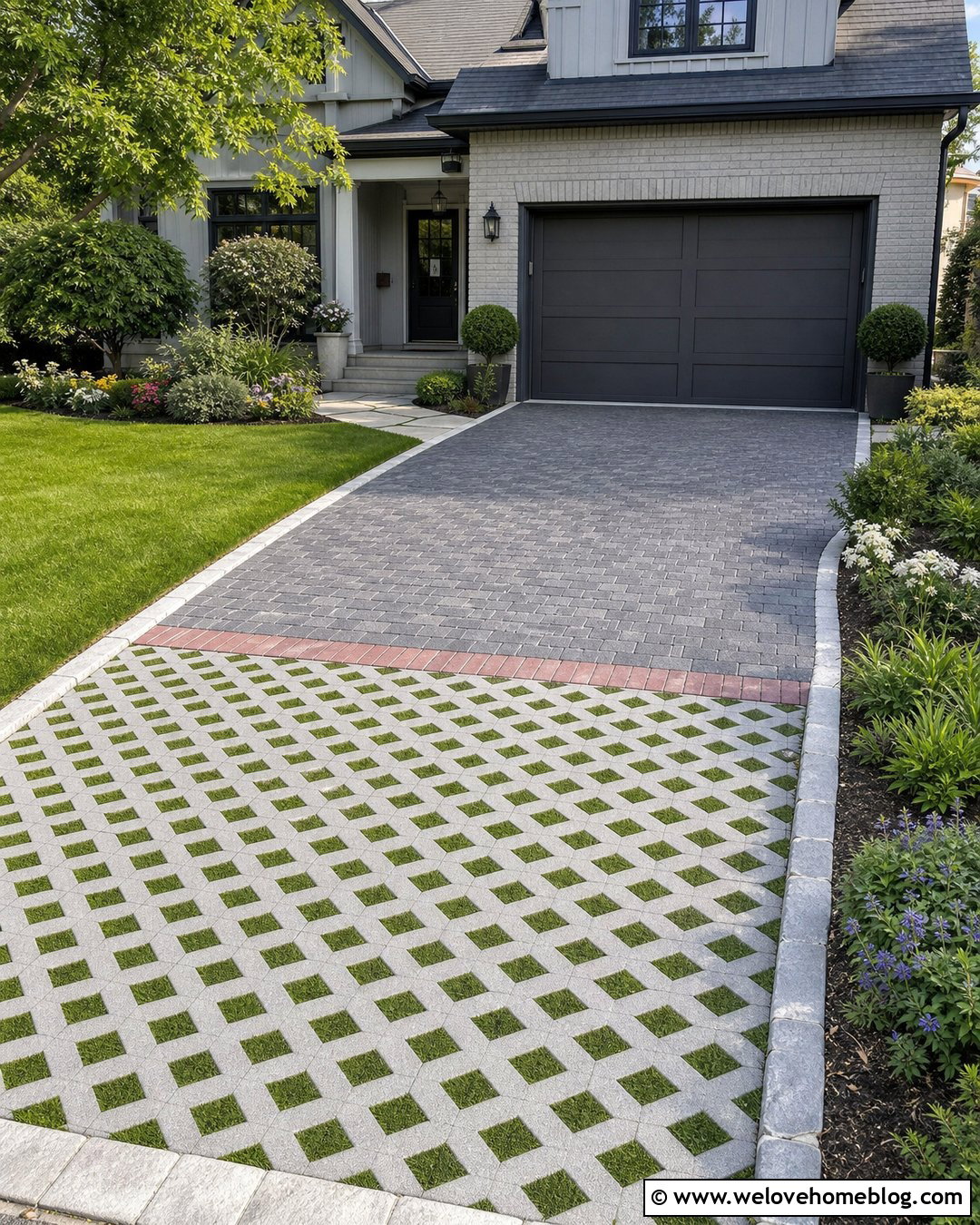
A split-surface driveway places turf where traffic is lighter and solid paving where vehicles turn or remain parked. Use reinforced grass-grid pavers for the long approach, then transition to permeable concrete pavers across the full width near the garage. A contrasting brick ribbon can mark the change in materials. Continue stone edging along both sections to create one unified outline. This practical arrangement works for busy households that want a green entrance without placing live grass beneath every parked vehicle. Frame the approach with lawn and relaxed planting, while keeping the garage area more structured with clipped shrubs and a direct walkway. The transition should occur before the main turning zone. Repeating colors across the grid, paver apron, border, and house facade will make the combination appear planned rather than patched together.
Conclusion:
The best turf driveway balances greenery with the structural support required for regular vehicle use. Reinforced grass grids create a lawn-like surface, while concrete slabs, brick tracks, and paver aprons strengthen busy areas. Artificial turf can provide cleaner joints in dry or heavily shaded settings, but it still needs an appropriate base and drainage plan. Shape, borders, landscaping, and architecture should also work together as one complete composition. Before installation, confirm local rules and have the soil, slope, drainage, and expected traffic evaluated. Whether you prefer a modern concrete grid or a relaxed farmhouse approach, these 25 turf driveway ideas offer practical ways to build a greener and more distinctive entrance.

Related posts:



Leave a Reply