
A well-planned turning circle makes daily arrivals easier while giving the front yard a polished focal point. The best turning circle driveway ideas balance vehicle movement, surface durability, drainage, landscaping, and the architecture of the home. Some designs use a full paved circle around a planted island. Others add a compact turnaround beside a straight driveway or create a wider loop near the garage. Materials also shape the overall character, from relaxed gravel and warm brick to modern concrete and permeable pavers. Before construction, test the route with the largest vehicle that regularly visits and confirm local requirements for entrances, setbacks, and emergency access. The complete driveway looks below offer practical and attractive inspiration for 25 turning circle driveway ideas.

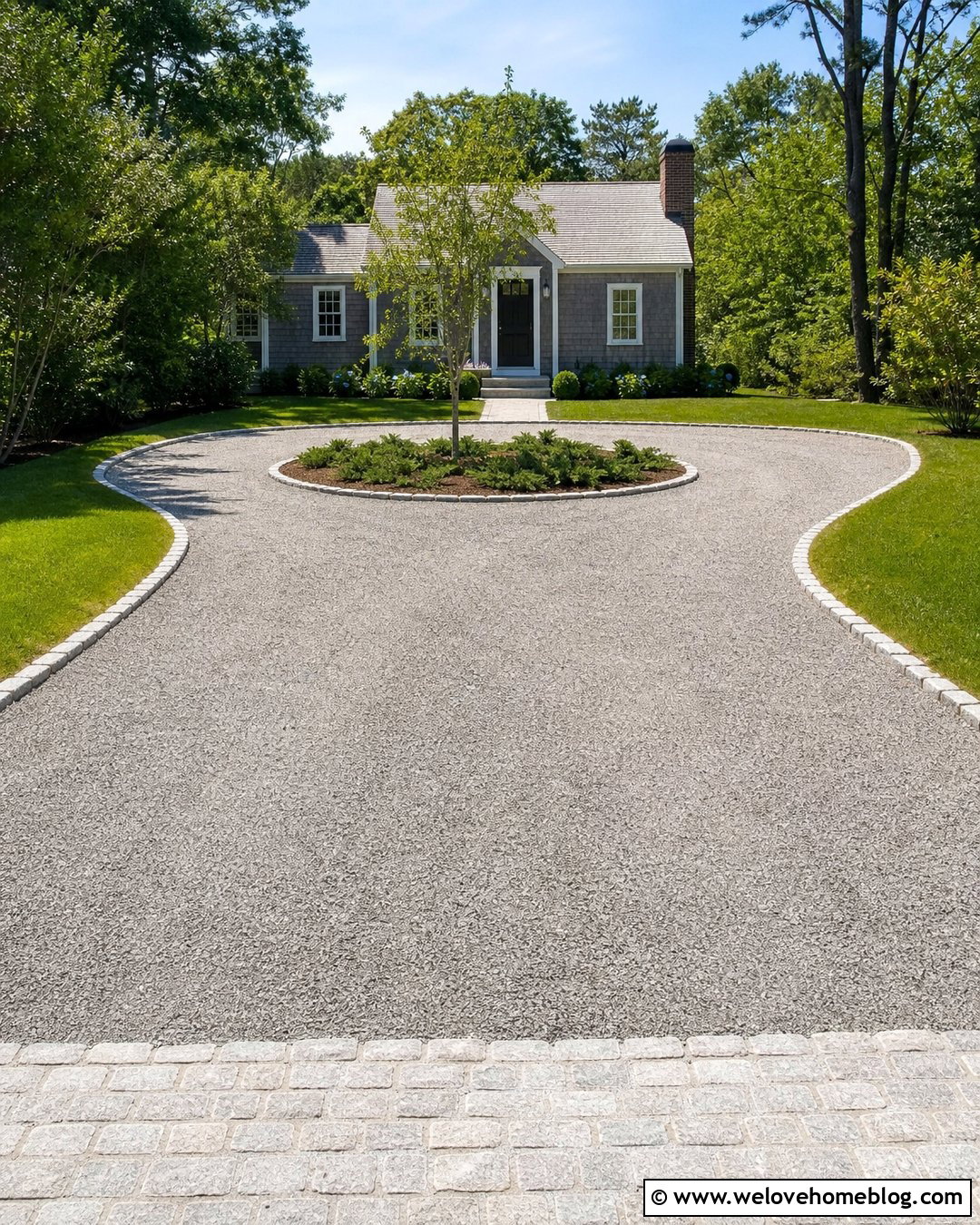
1. Gravel Turning Circle Driveway
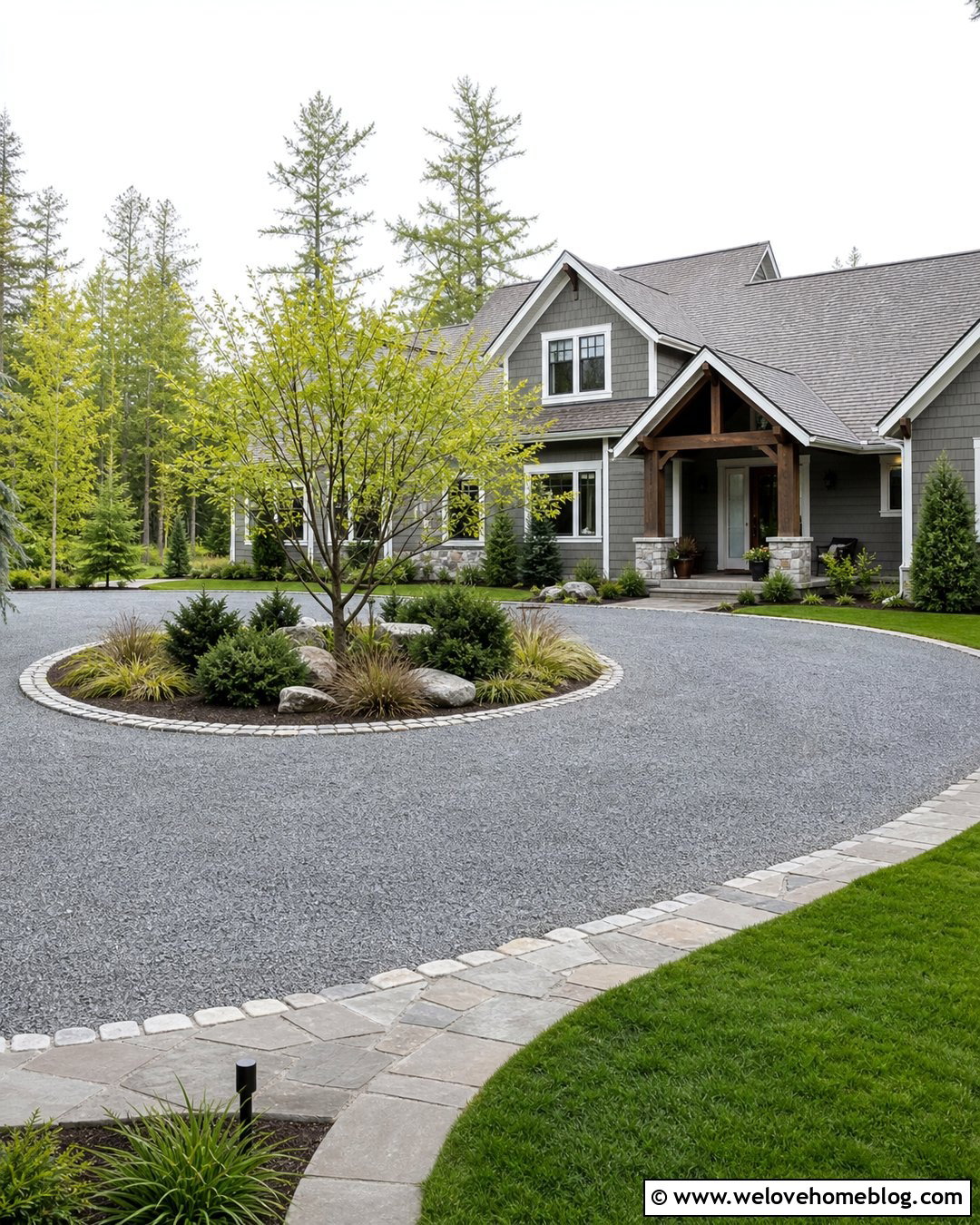
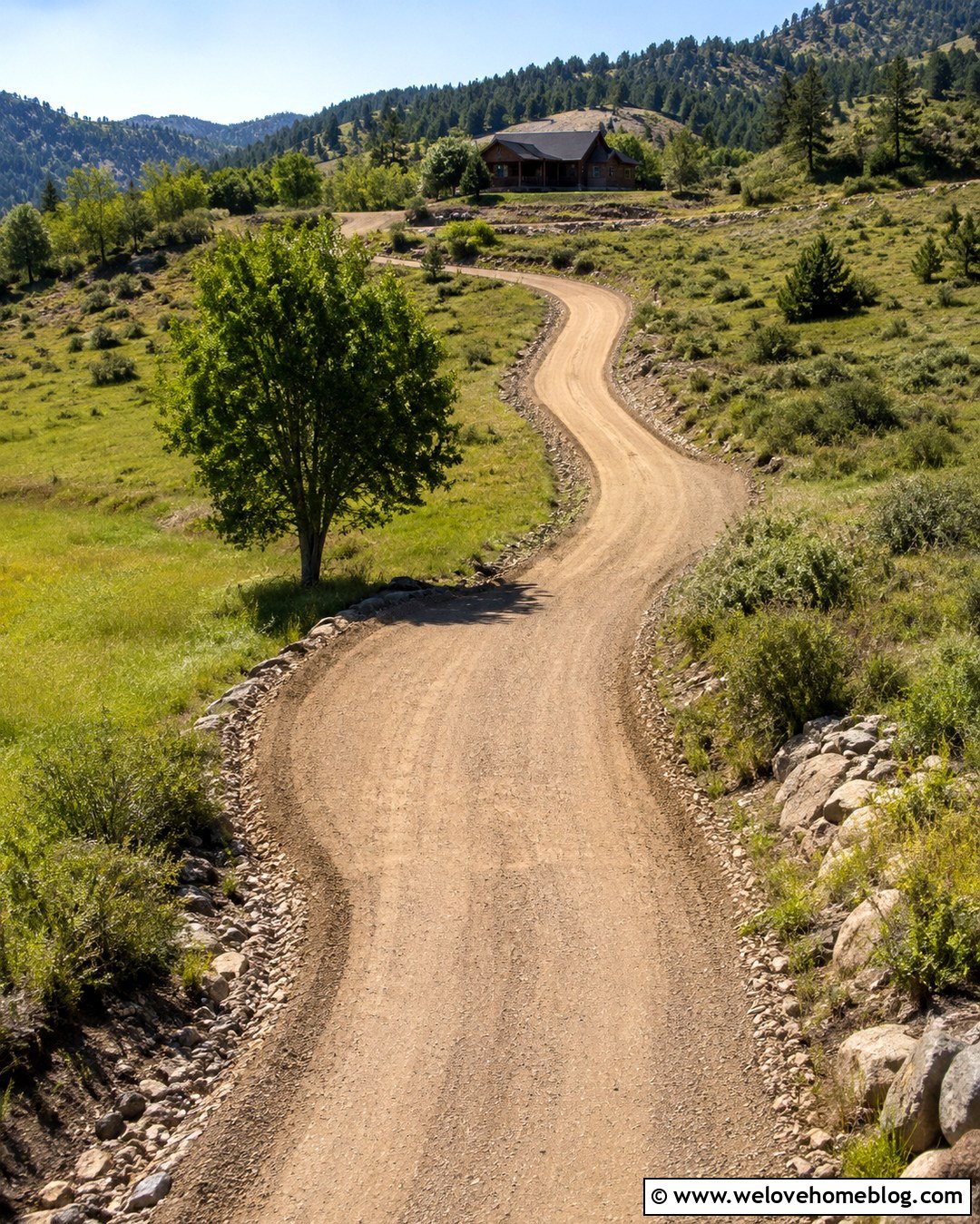
A gravel turning circle gives a large front yard a relaxed, welcoming appearance without covering everything in solid pavement. Use compacted gray crushed stone for the driving surface because its angular pieces lock together more effectively than loose decorative pebbles. A cobblestone border can hold the gravel in place while creating a clean outline around the circle. Fill the center island with a small ornamental tree, low evergreen shrubs, and drought-tolerant grasses that will not block views across the driveway. The approach can remain straight before opening into the circular turnaround near the house. Install a strong compacted base and plan drainage carefully to reduce ruts, washouts, and gravel migration along the curved driving path.
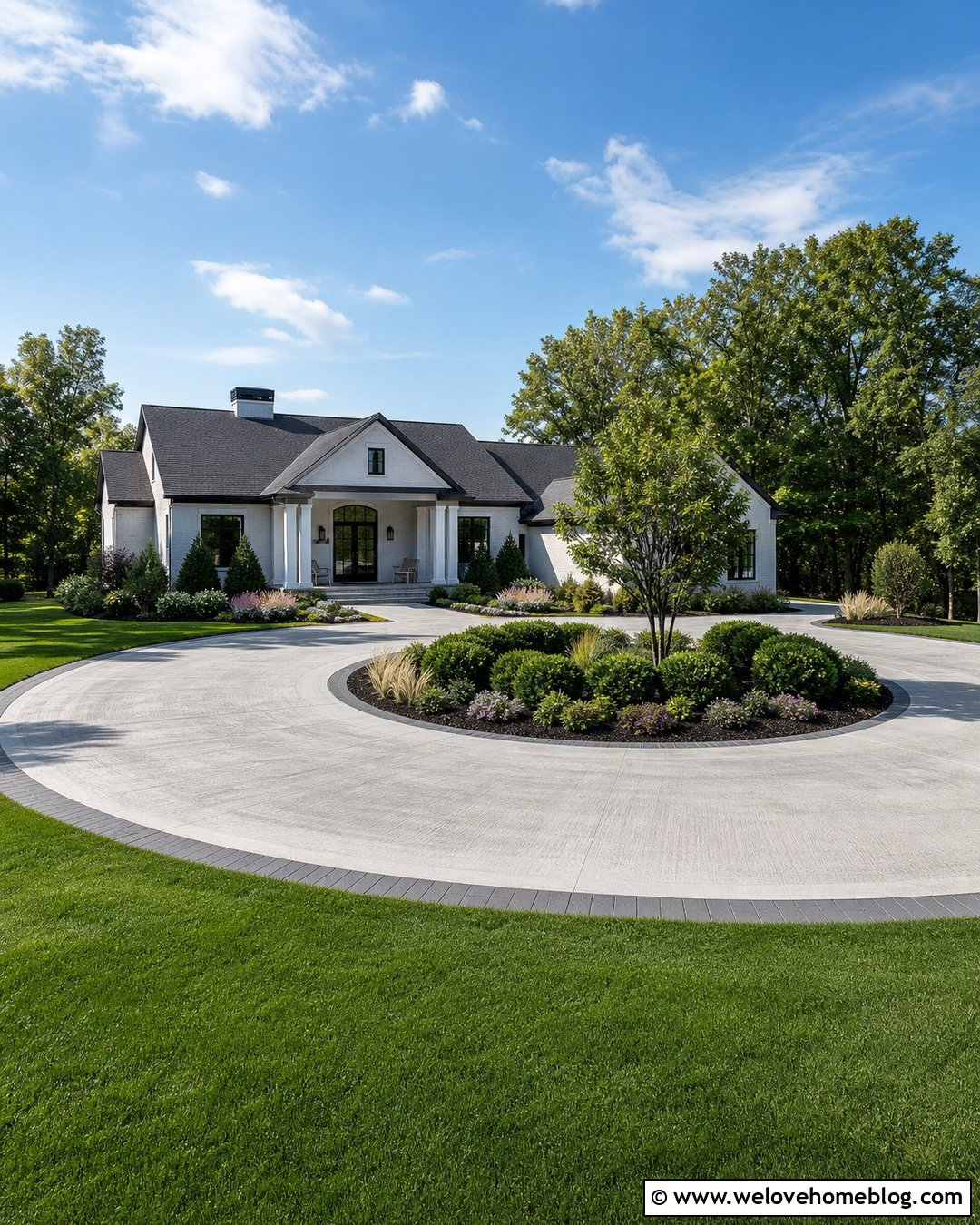
2. Concrete Turning Circle Driveway
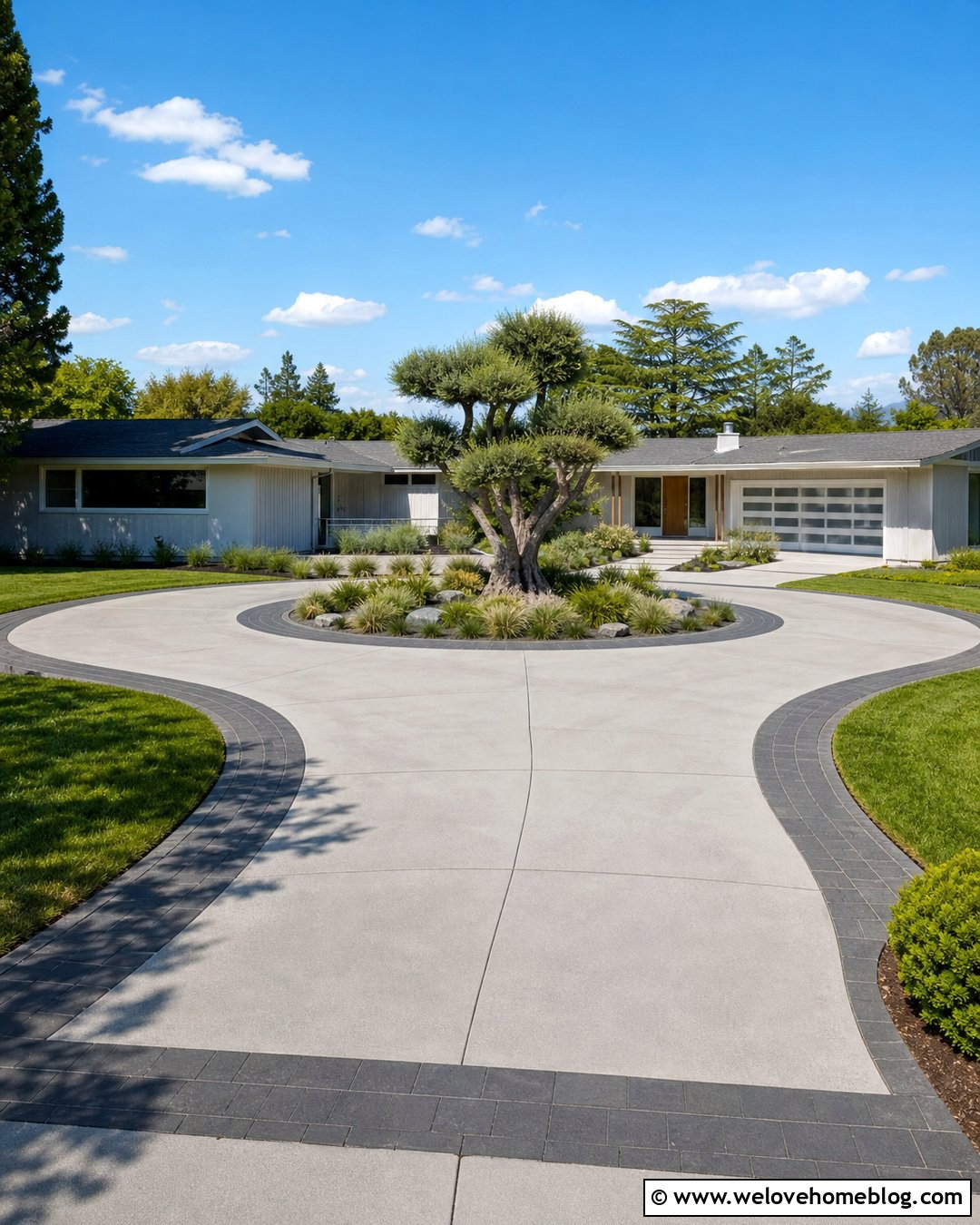
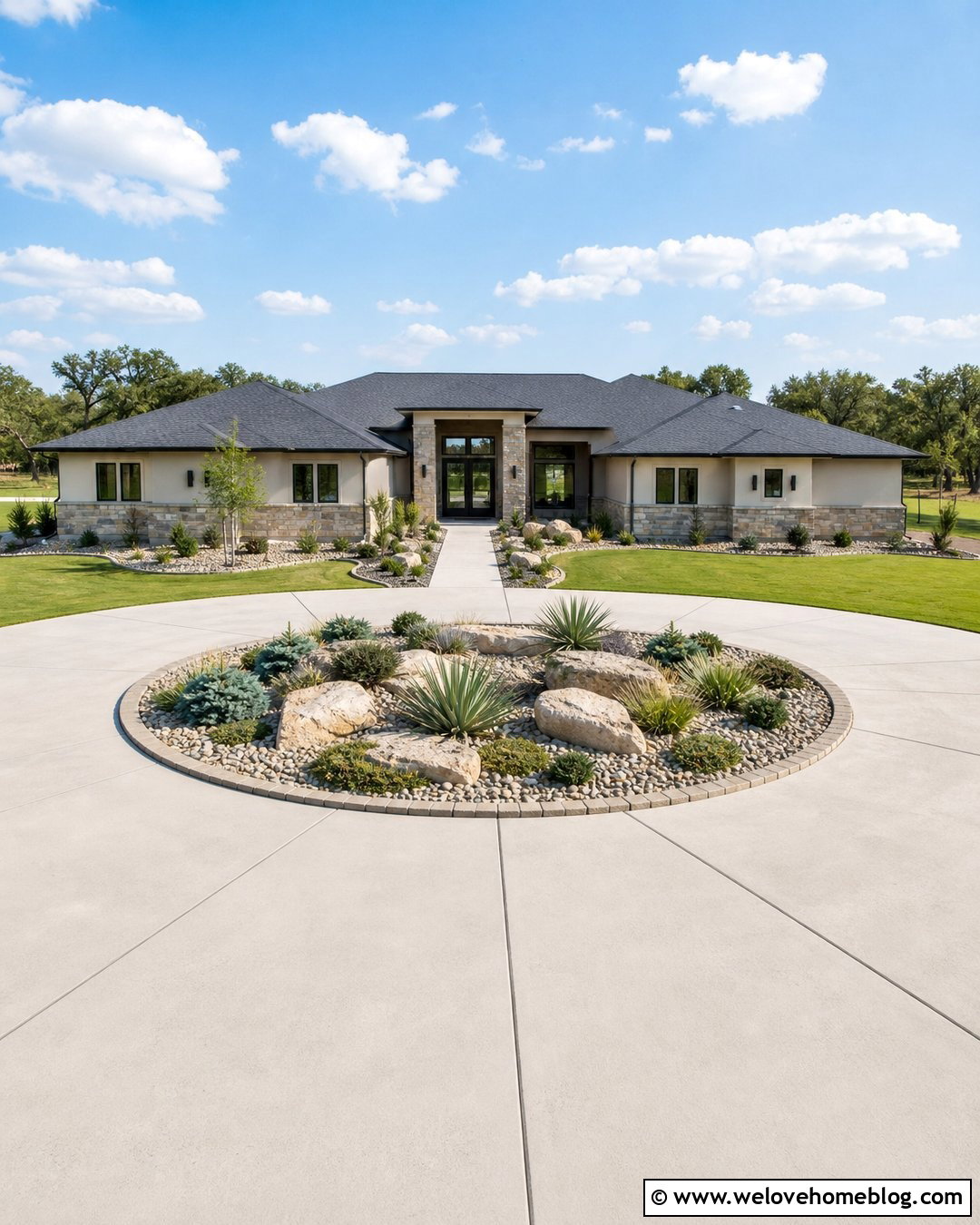
Smooth poured concrete creates a clean turning circle that works especially well with ranch, contemporary, and midcentury homes. Instead of leaving one large blank slab, divide the surface into balanced sections with control joints that follow the driveway’s curve. A contrasting band of dark concrete pavers around the inner and outer edges adds definition. The central island can combine neatly trimmed shrubs, decorative grasses, and one sculptural tree. Keep plants low near intersections so drivers can see approaching vehicles and pedestrians. A broad walkway should connect the circle directly to the front entrance without crossing an awkward parking area. Choose a lightly textured finish for better traction, and direct runoff toward planted drainage beds rather than the house foundation.
3. Asphalt Turning Circle Driveway
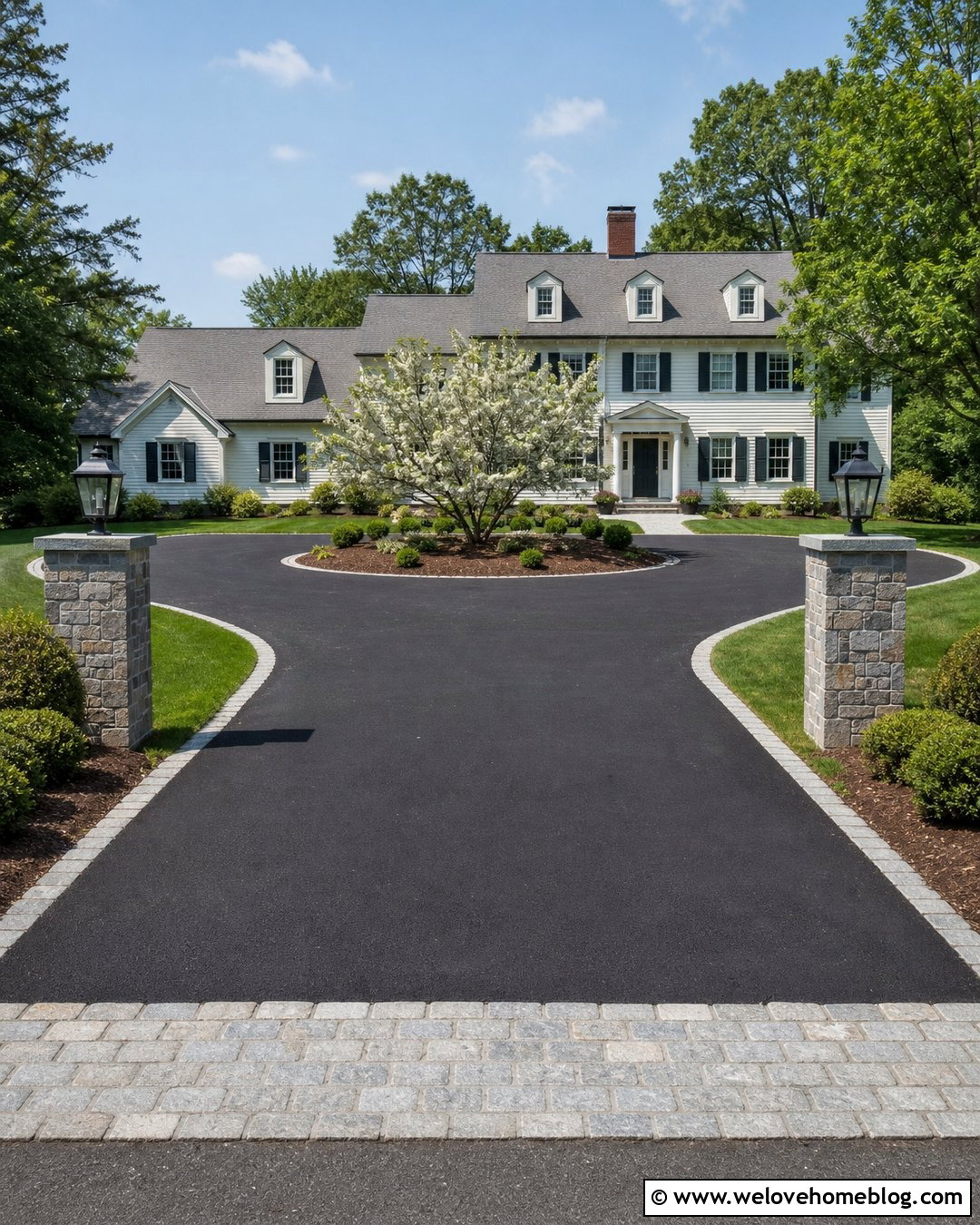
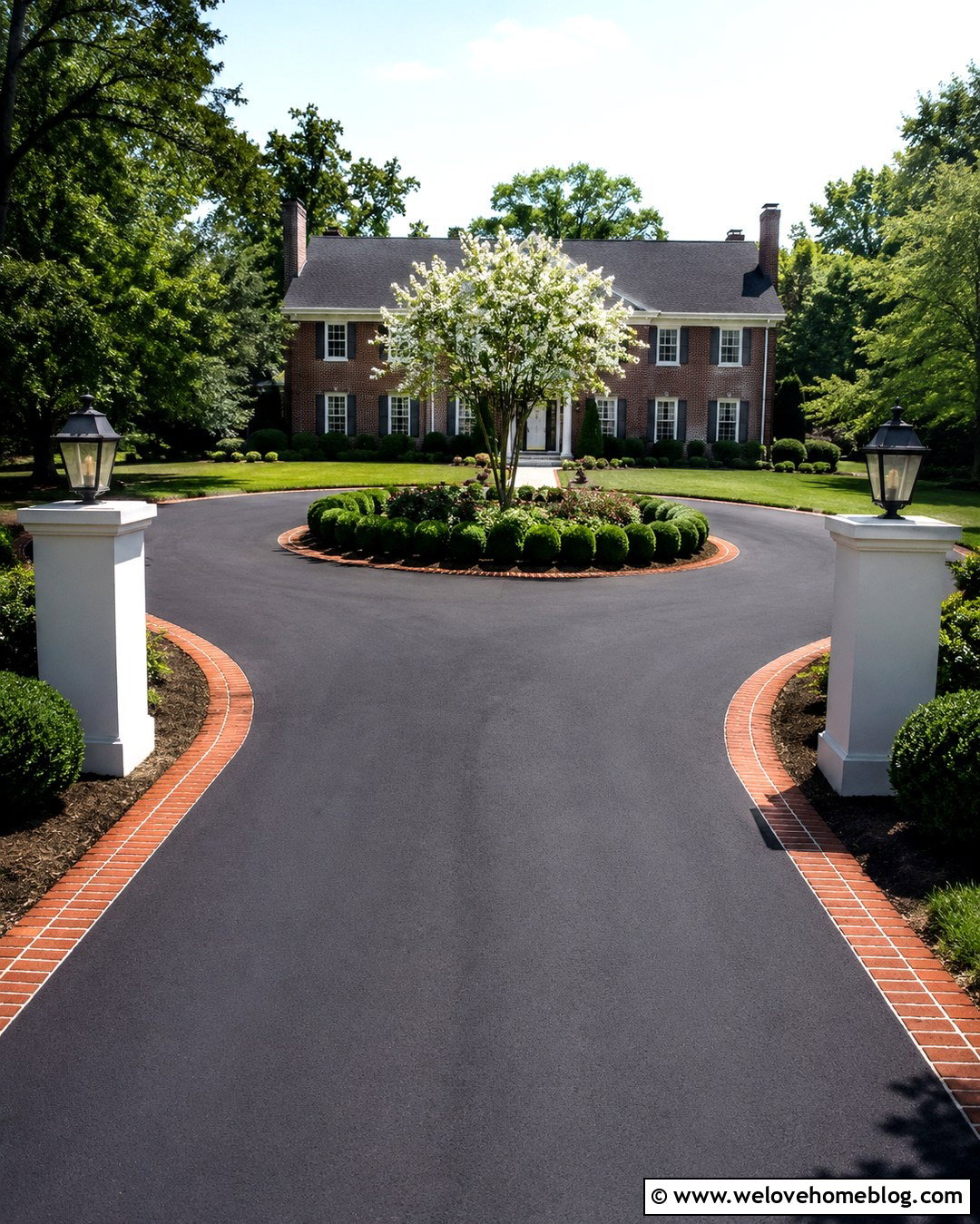
Black asphalt is a practical choice for a long driveway that ends in a generous turning circle. Its dark surface provides strong contrast against green lawn, pale stone borders, and a light-colored house. Add a wide apron where the straight approach meets the circle so larger vehicles can enter the curve comfortably. Granite cobbles or concrete curbing can protect the asphalt edges from cracking and prevent tires from cutting into the lawn. In the middle, use a simple island with a flowering tree, mulch, and a ring of low shrubs. Avoid complicated planting that requires crews to park on the driving lane. A properly prepared base, suitable grading, and periodic sealing help the entire driveway maintain a smooth, unified appearance.
4. Brick Turning Circle Driveway
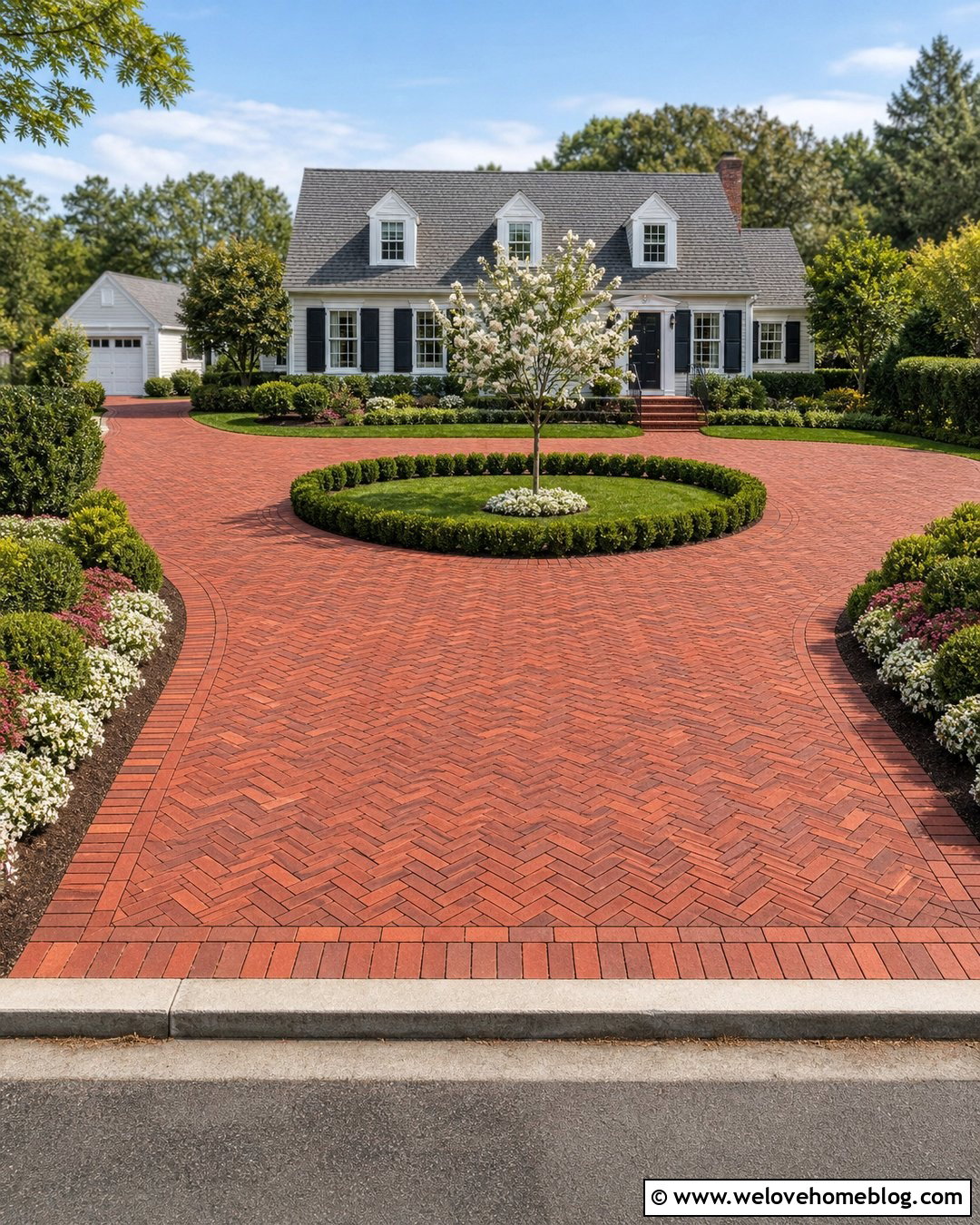
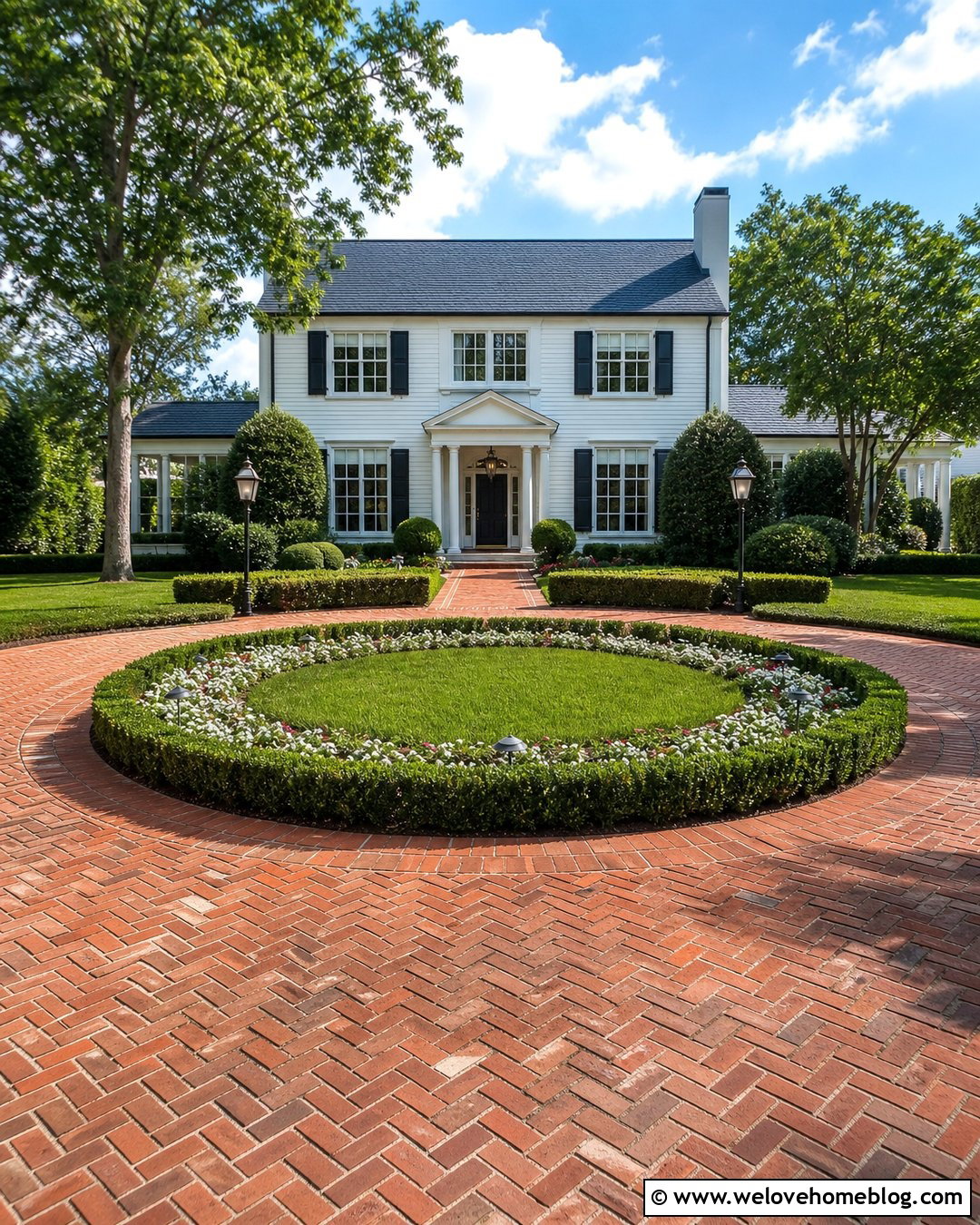
Warm clay brick pavers can make a turning circle feel connected to a traditional brick, colonial, or Cape Cod home. A herringbone field handles multidirectional movement while a soldier-course border clearly outlines the curved edges. Continue the same brick toward the front steps for a coordinated arrival area. Inside the circle, a formal lawn island with a centered flowering tree creates a classic and uncluttered focal point. Boxwood, inkberry, or another compact evergreen can form a low ring without limiting visibility. Use a restrained palette so the brick pattern remains the main feature. Correct edge restraints and a well-compacted base are essential because turning tires place extra sideways pressure on pavers, especially around the tightest parts of the circle.
5. Paver Turning Circle Driveway
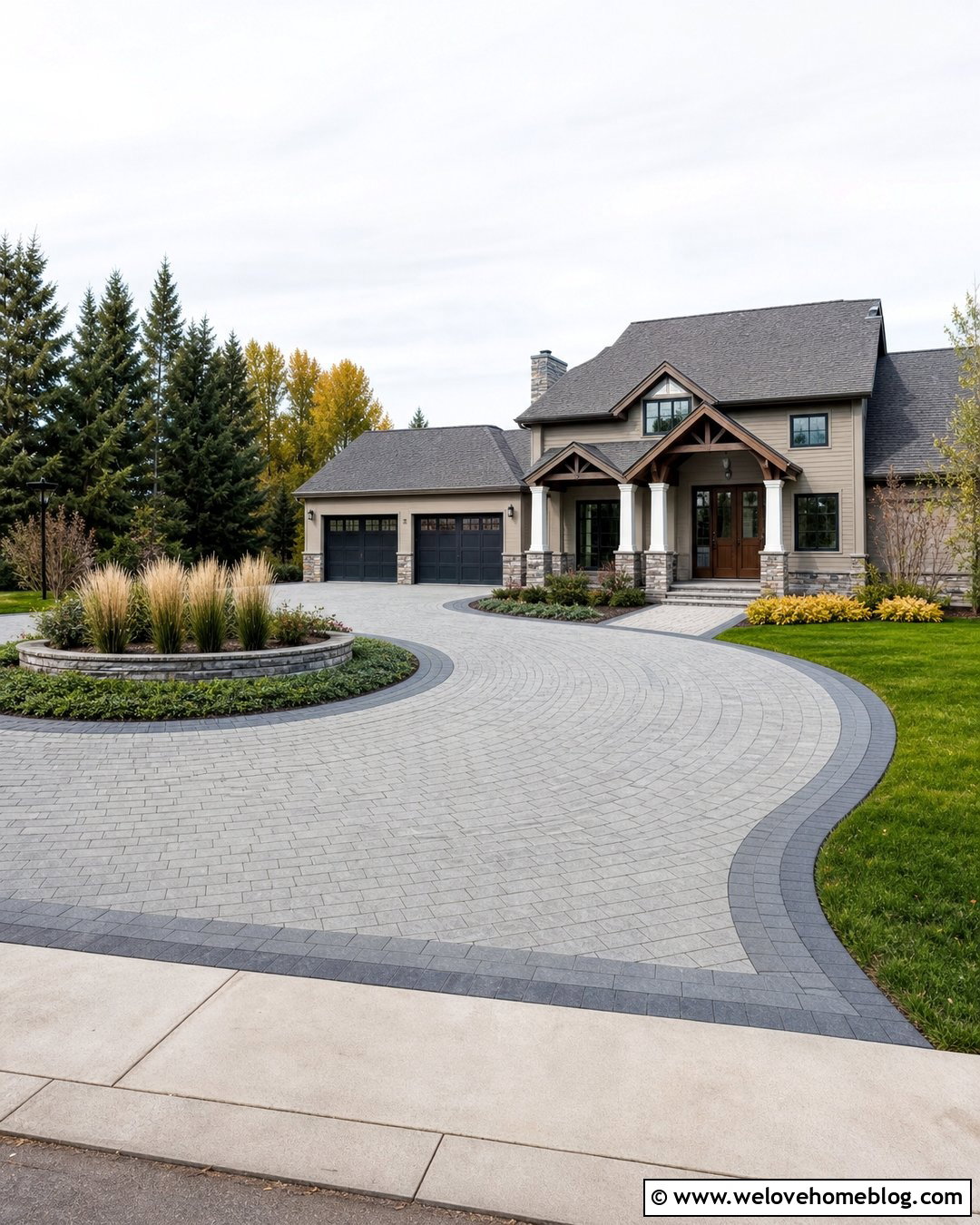
Concrete pavers offer flexibility when a turning circle needs a decorative surface that can also handle everyday traffic. Choose medium-gray rectangular pavers for the main field and charcoal units for the inner border, outer edge, and entrance apron. A fan or curved running-bond pattern can follow the circular layout more naturally than long, rigid rows. Place a layered planting island in the center with low ground cover near the curb and taller ornamental grasses toward the middle. This keeps plants away from tires while creating depth. A matching paver walkway can branch toward the front porch. Because individual units can be lifted and replaced, pavers are particularly useful where future utility access, settlement repairs, or drainage adjustments may be necessary.
6. Cobblestone Turning Circle Driveway
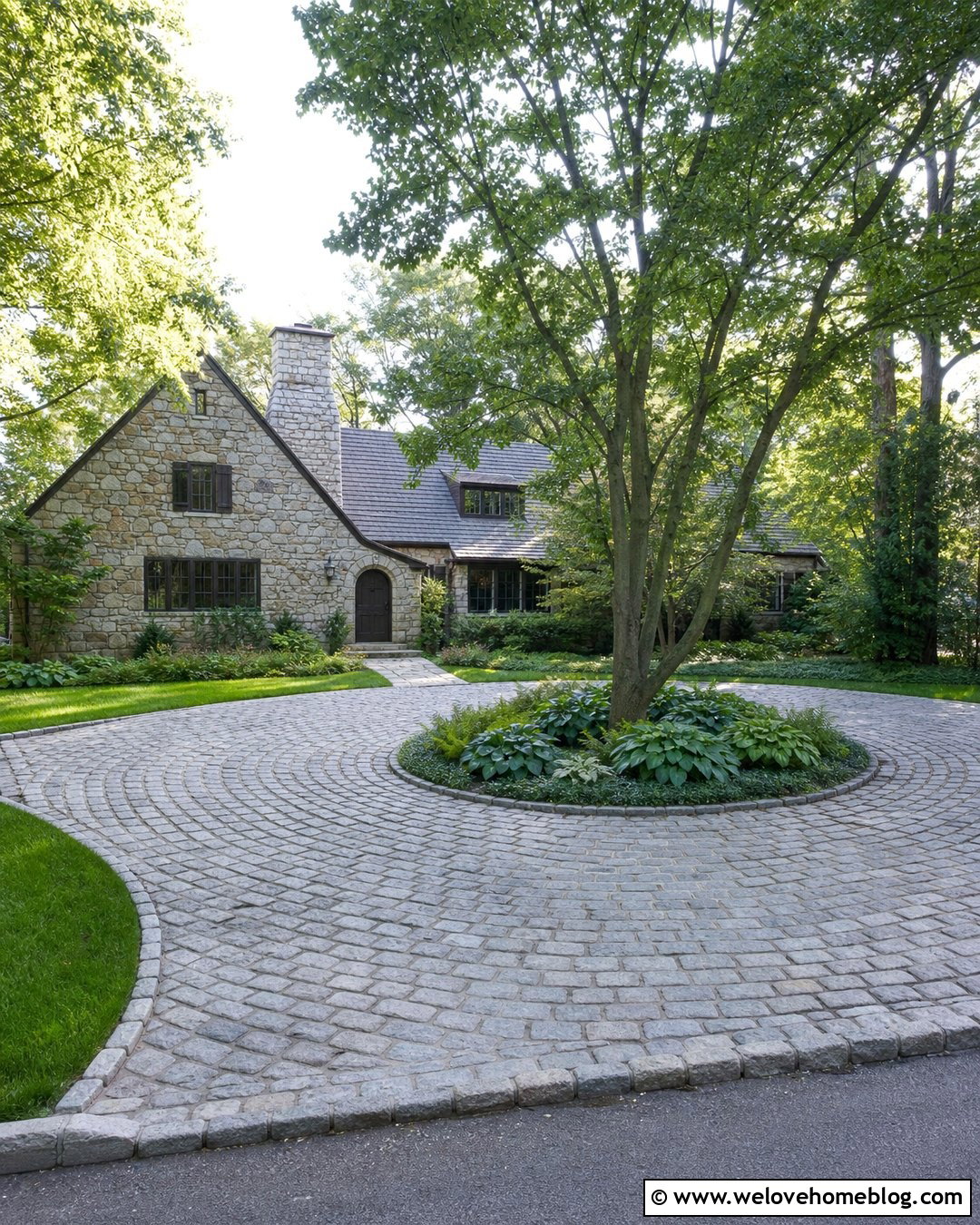
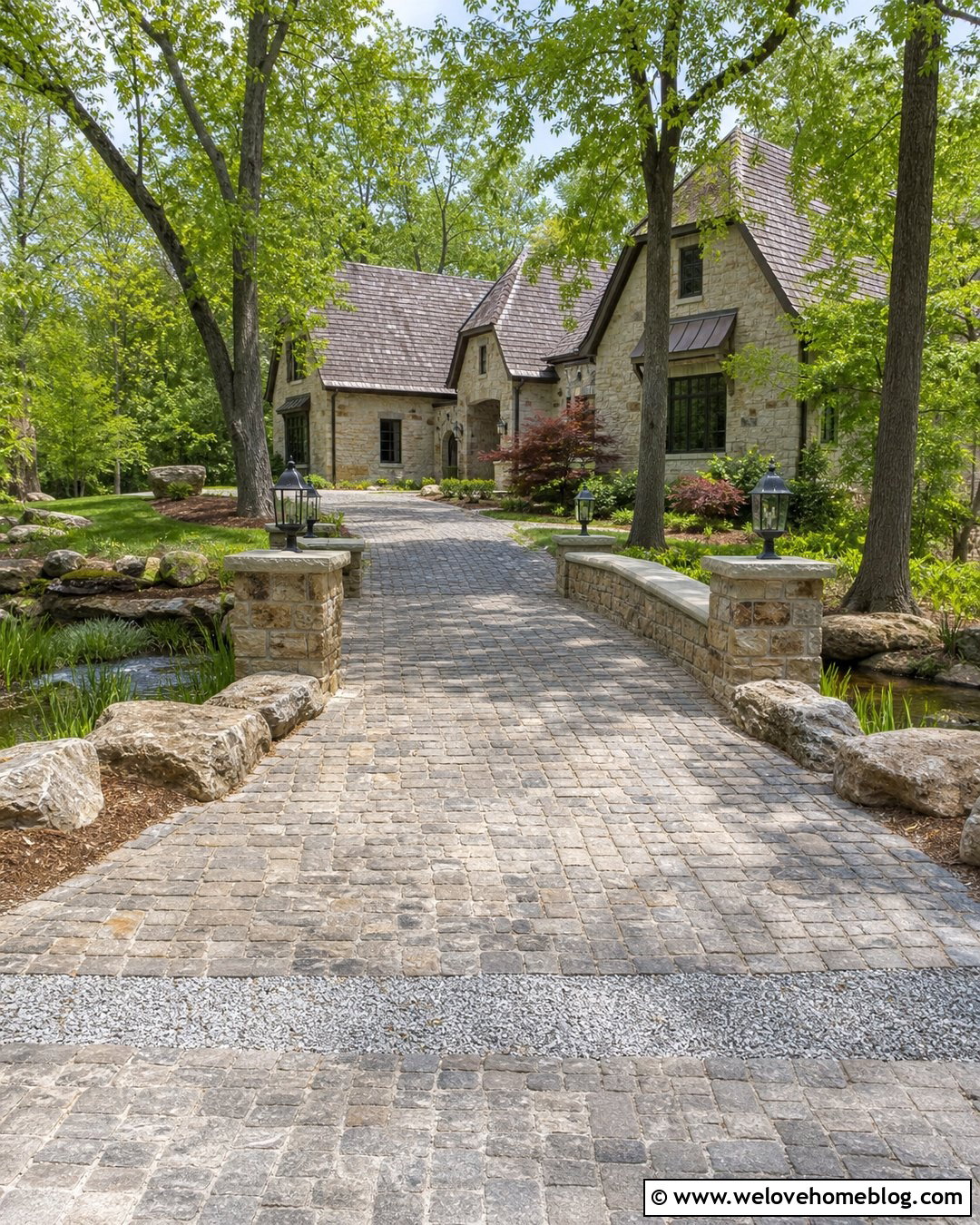
A cobblestone turning circle suits an older home, stone cottage, or European-influenced residence with substantial front-yard space. Use split-face granite cobbles in mixed gray tones to provide authentic texture without making the surface excessively uneven. Lay the stones in curved rows that emphasize the circular movement. A flush-cut granite border keeps the edges controlled and reduces abrupt bumps where the driveway meets the entrance apron. The center island can feature a mature shade tree surrounded by ferns, hostas, and low evergreen ground cover. Keep the planting set back from the curb to prevent branches from scratching vehicles. Since cobblestone installation is labor intensive, use an experienced installer who can create a stable base, consistent joints, and dependable drainage.
7. Exposed Aggregate Turning Circle Driveway
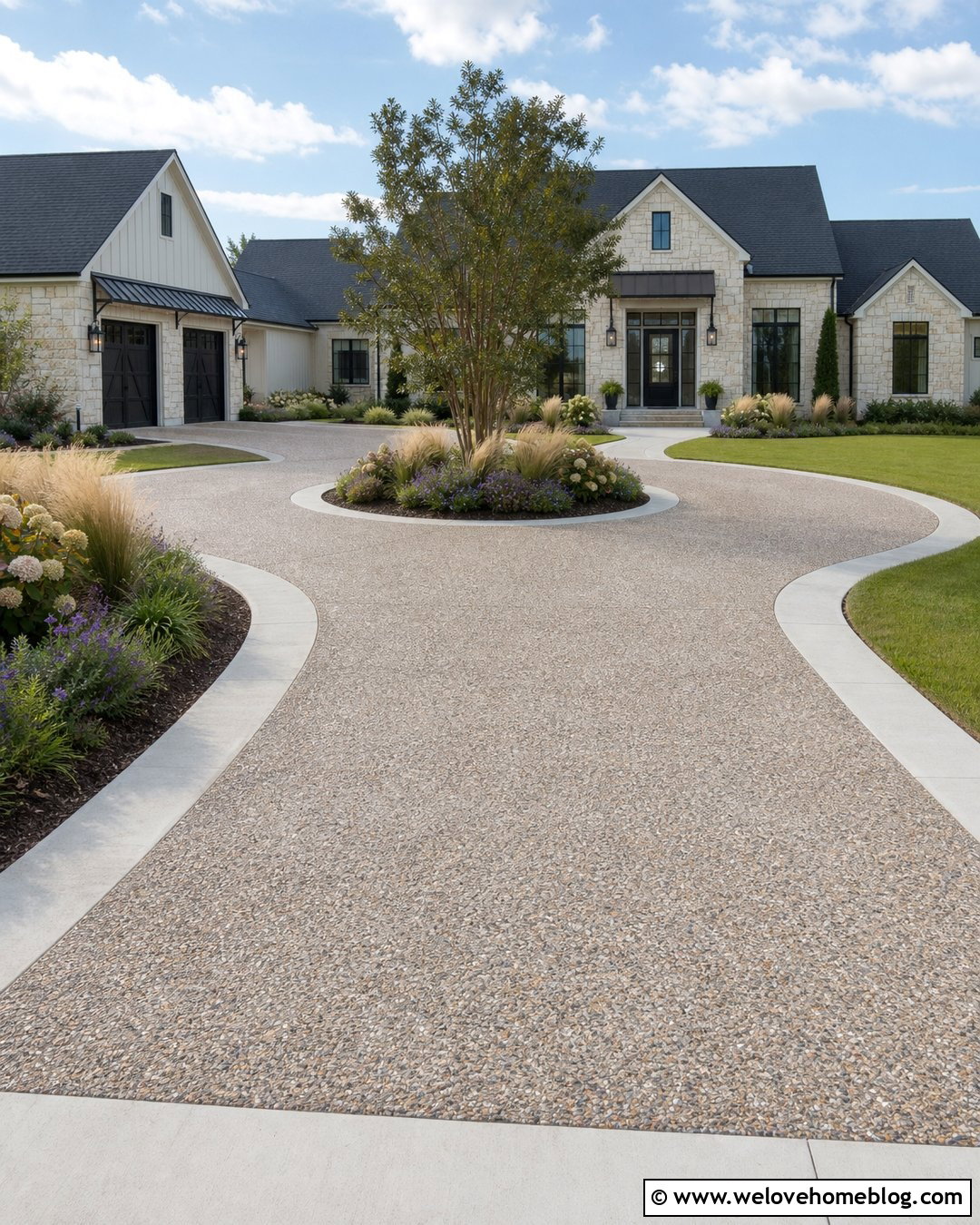
Exposed aggregate brings subtle color and texture to a concrete turning circle without relying on an applied pattern. Select an aggregate blend that echoes stone used on the home’s facade, retaining walls, or porch columns. A smooth poured-concrete ribbon around the circle gives the textured surface a crisp frame and creates an easier transition for adjoining walkways. In the center, combine a multi-stem tree with sweeping masses of native grasses and low flowering perennials. The plants soften the broad paved area while keeping the design manageable. A gently curved approach makes the circle feel integrated rather than attached as an afterthought. Apply the correct sealer for the chosen aggregate and use a finish with enough grip for wet weather and sloping sites.
8. Resin-Bound Turning Circle Driveway
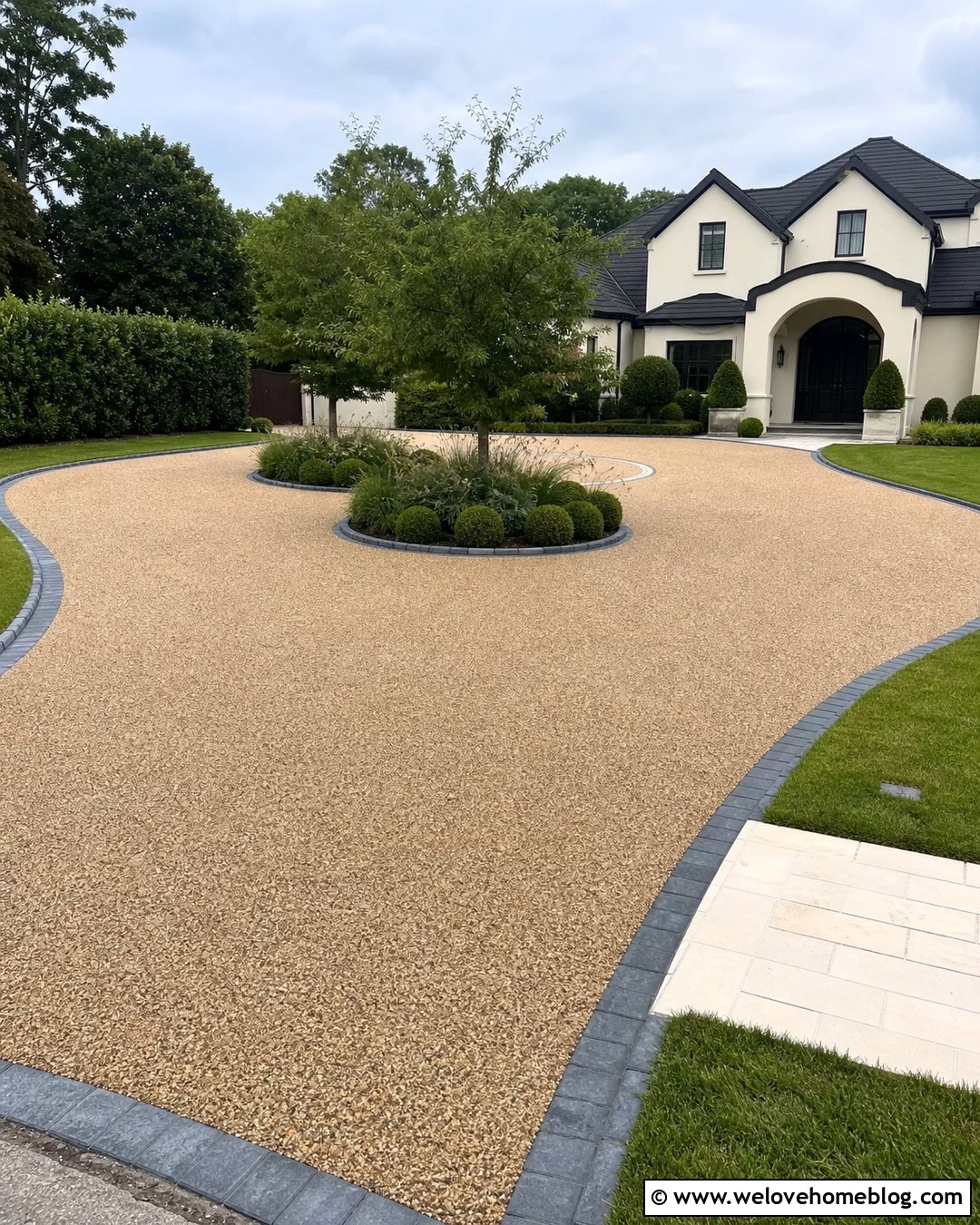
A resin-bound gravel surface creates a smooth, refined turning circle with the natural appearance of small stone. Warm beige aggregate works beautifully beside a cream stucco, painted brick, or modern farmhouse exterior. Define the circle with slim granite setts and use a darker resin-bound band around the center island. Because the aggregate is held within the resin system, the surface appears neater than loose gravel and is easier to navigate with strollers or bicycles. Plant the island with a small tree, clipped evergreen mounds, and ornamental grasses arranged in broad groups. Proper installation is crucial, including a compatible base and carefully planned drainage. Confirm that the selected system is rated for vehicle traffic and appropriate for local temperature and weather conditions.
9. Permeable Turning Circle Driveway
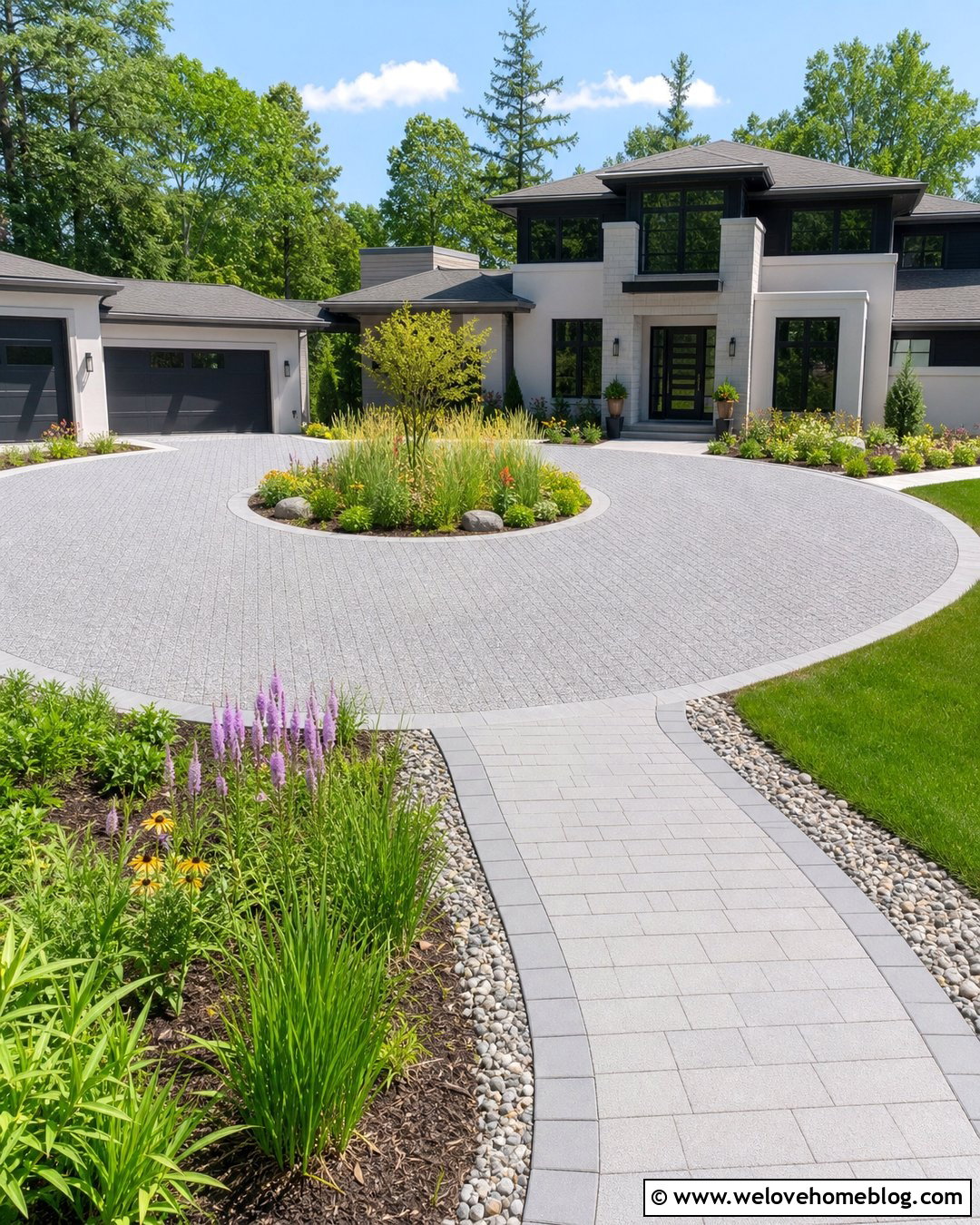
Permeable pavers can reduce the visual and drainage impact of a large turning circle. Choose open-joint concrete units filled with small stone, creating a firm driving surface that allows water to pass into the prepared base below. Use solid pavers at the entrance, along pedestrian paths, and around the inner island to produce clean transitions. A rain garden can sit inside the circle when site grading supports it, with moisture-tolerant grasses and flowering native plants arranged below the driveway edge. Keep an overflow route for unusually heavy rainfall and avoid sending water toward the foundation. This design fits contemporary and environmentally focused homes, but its performance depends on soil conditions, base depth, maintenance, and local stormwater rules. Professional site evaluation is worthwhile.
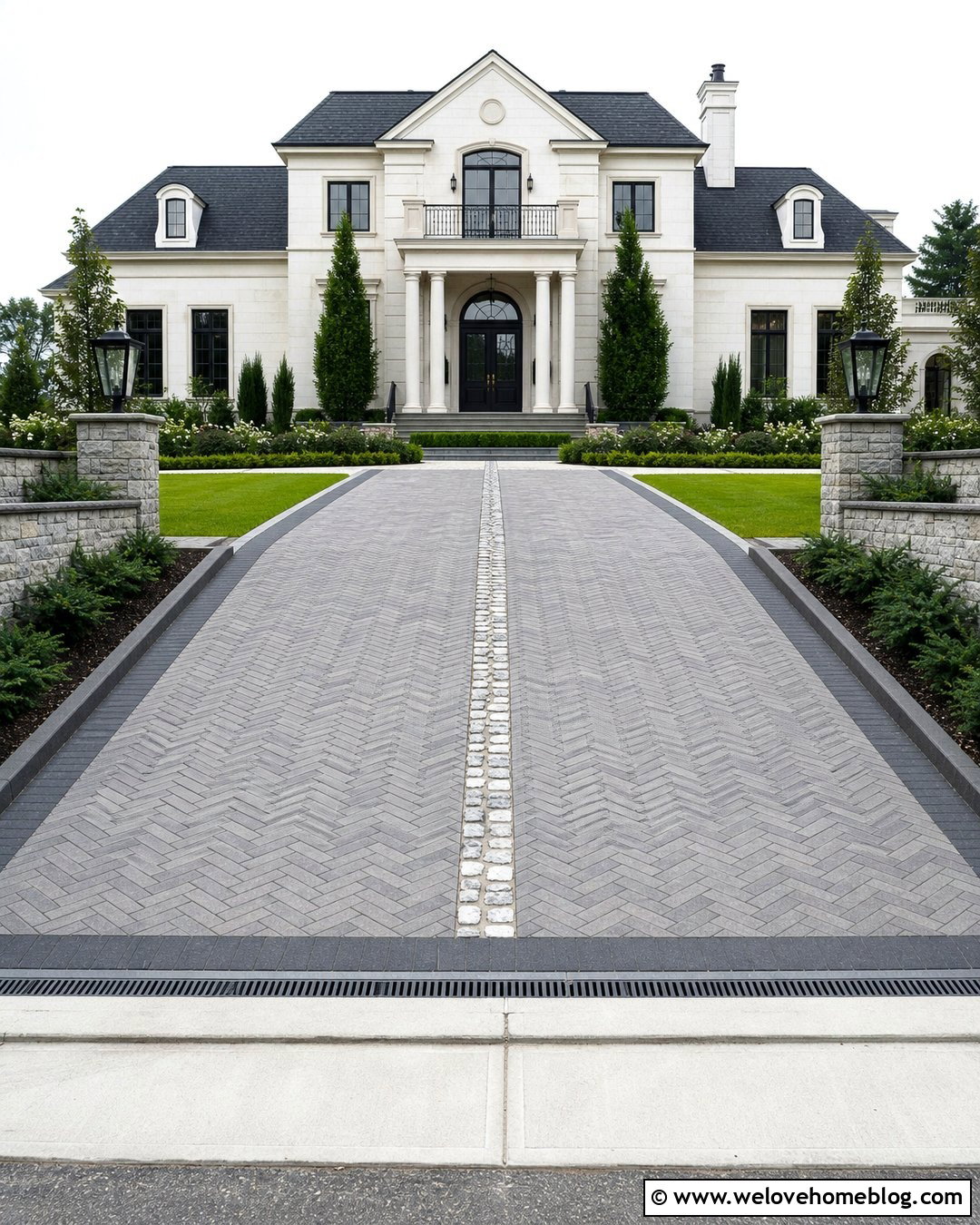
10. Small Turning Circle Driveway
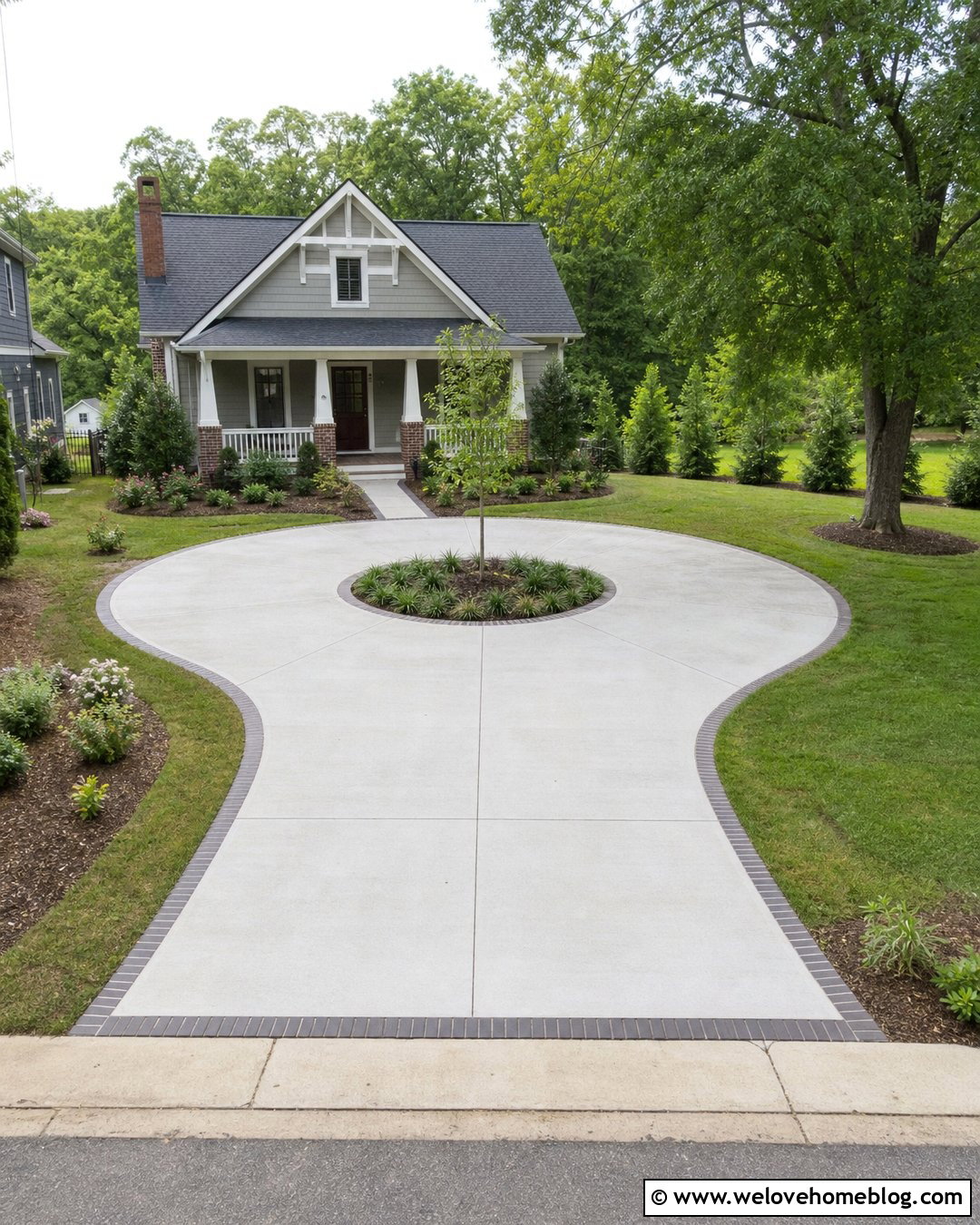
A compact turning circle can improve a restricted front yard when a full circular drive would consume too much space. Begin with a straight, single-lane driveway and widen it into a rounded turnaround near the garage or front entrance. Light gray concrete bordered by dark brick can make the shape easy to read without visually overwhelming the yard. Instead of a large center island, use a small circular bed with one narrow ornamental tree and low ground cover. Keep the outer lawn open so the area feels wider. The design should be tested with accurate vehicle turning templates rather than guesswork. If the available circle cannot handle regular vehicles comfortably, a hammerhead or T-shaped turnaround may require less paving and function more reliably.
11. Large Turning Circle Driveway
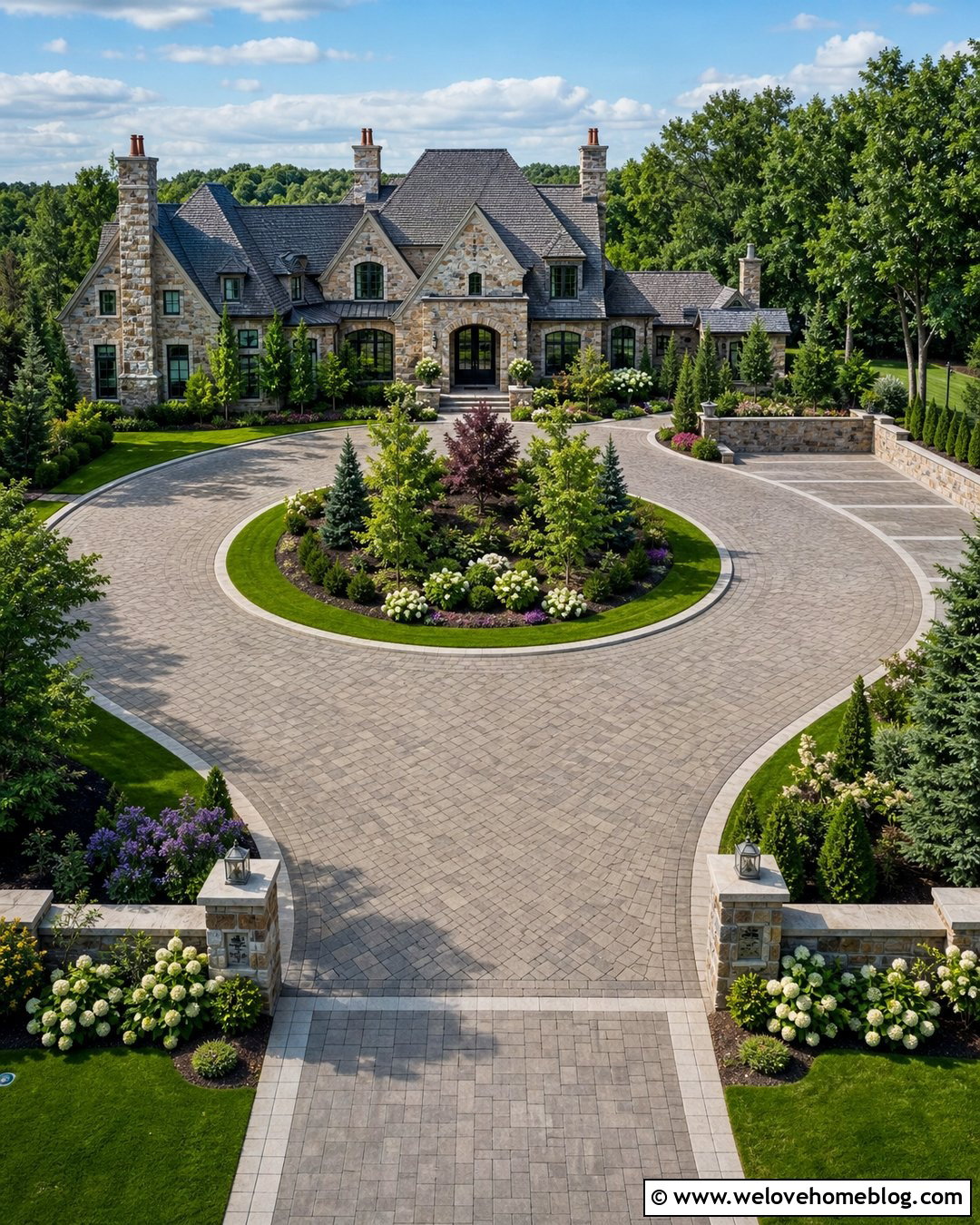
A large turning circle creates an impressive approach for a wide property, but careful proportions keep it from resembling a commercial drop-off area. Use broad bands of warm concrete pavers with a contrasting natural-stone curb to divide the surface visually. The central island should be large enough to balance the paving and may include several small trees, layered shrubs, and a generous lawn panel. Connect the circle to a separate parking court beside the garage so parked vehicles do not obstruct continuous movement. Soft landscape beds along the outer curve can help the driveway settle naturally into the front yard. Before finalizing dimensions, consider larger SUVs, delivery vehicles, trailers, snow-removal equipment, and any emergency-access standards that apply to the property.
12. Turning Circle Driveway With Center Island
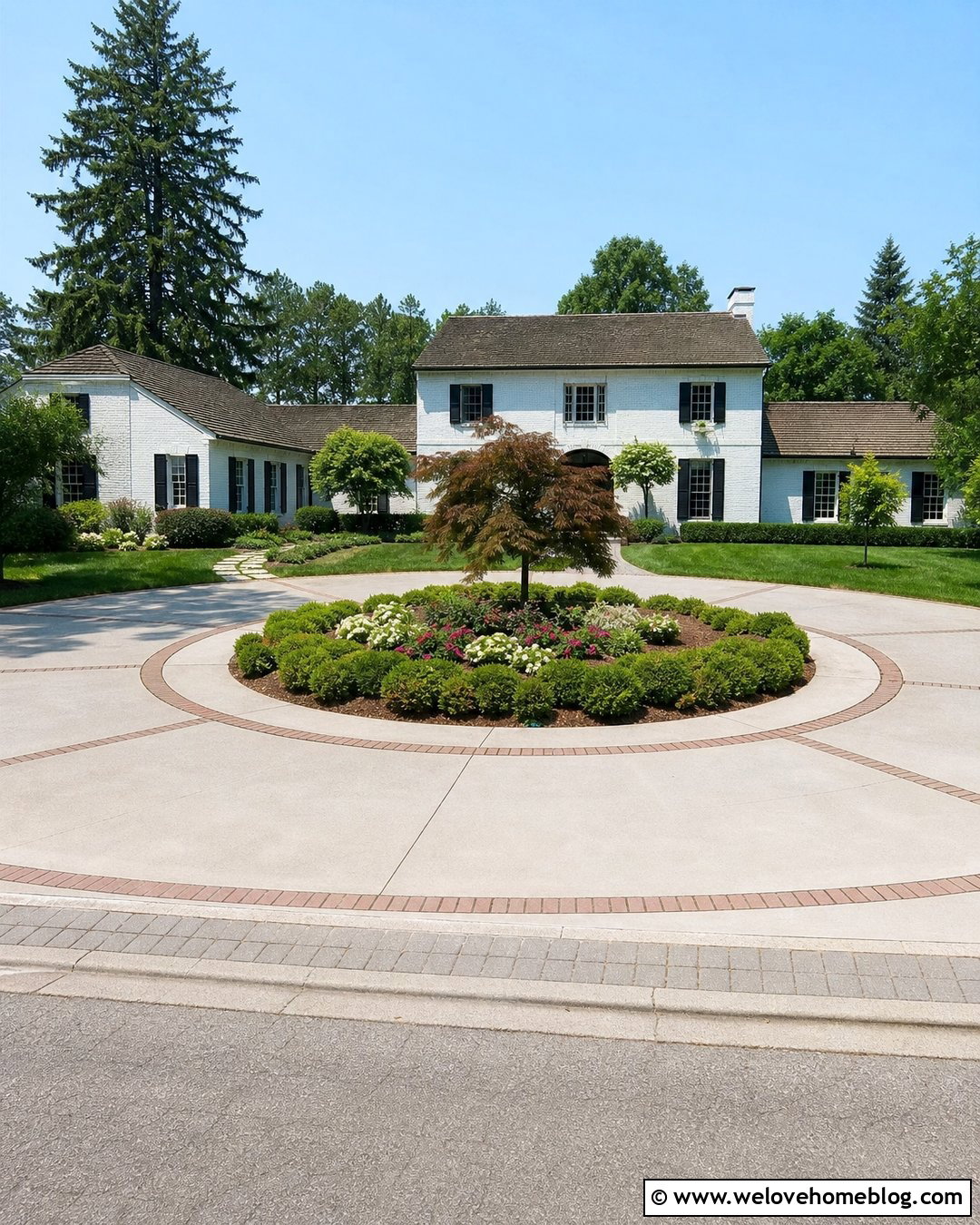
A landscaped center island turns a functional driving loop into the main focal point of the front yard. Surround the island with a durable concrete driveway finished in a soft gray tone and edged with a narrow brick ribbon. Build the planting from low to high, placing ground cover and seasonal flowers near the curb, rounded shrubs behind them, and a well-scaled ornamental tree at the center. This layered arrangement preserves sightlines while adding color and structure. Incorporate drip irrigation so watering does not stain the pavement or spray passing vehicles. A simple stone walkway can cross from the outer edge to the island only when maintenance access is necessary. Avoid oversized trees whose roots may eventually lift paving or restrict the available turning space.
13. Turning Circle Driveway With Fountain
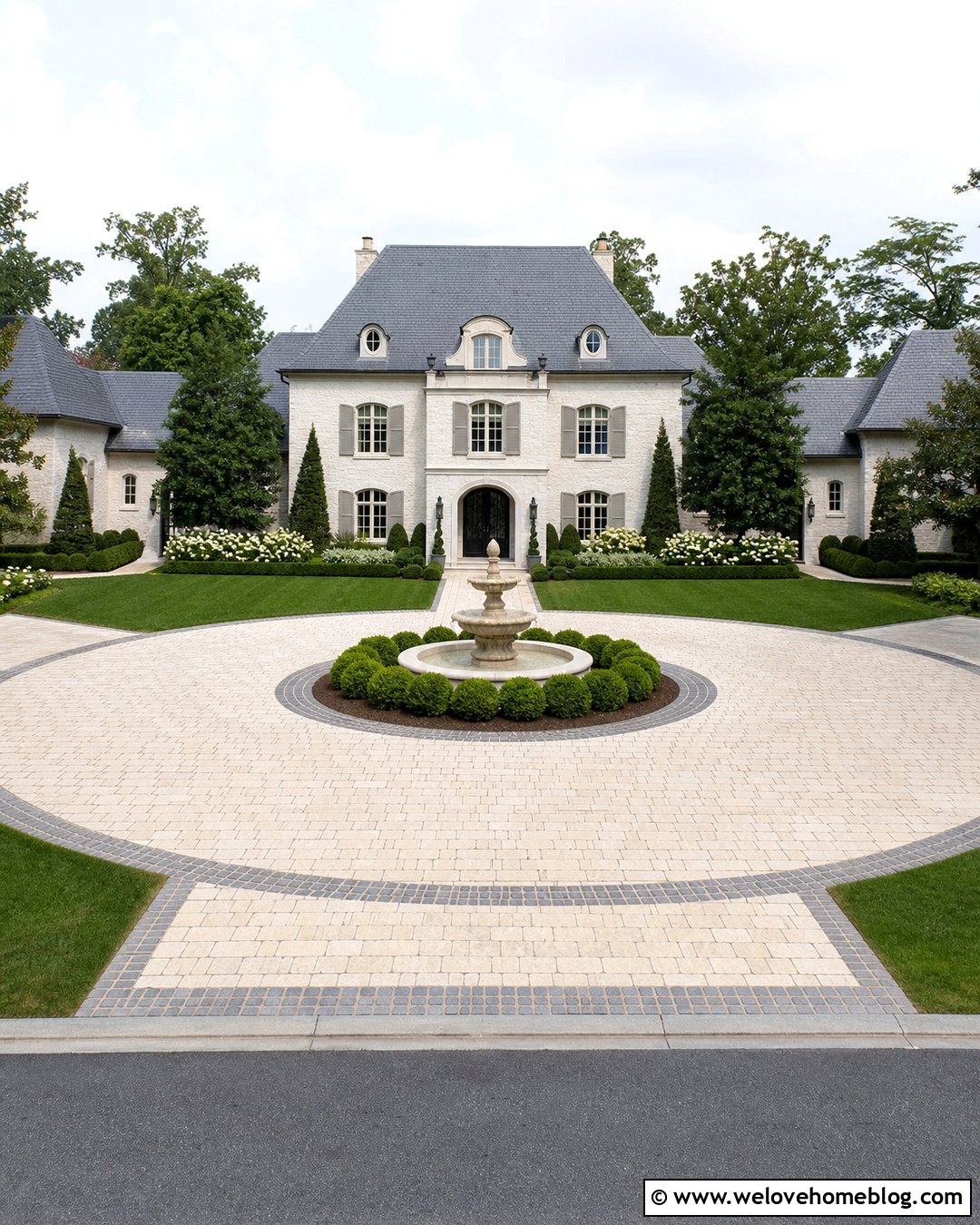
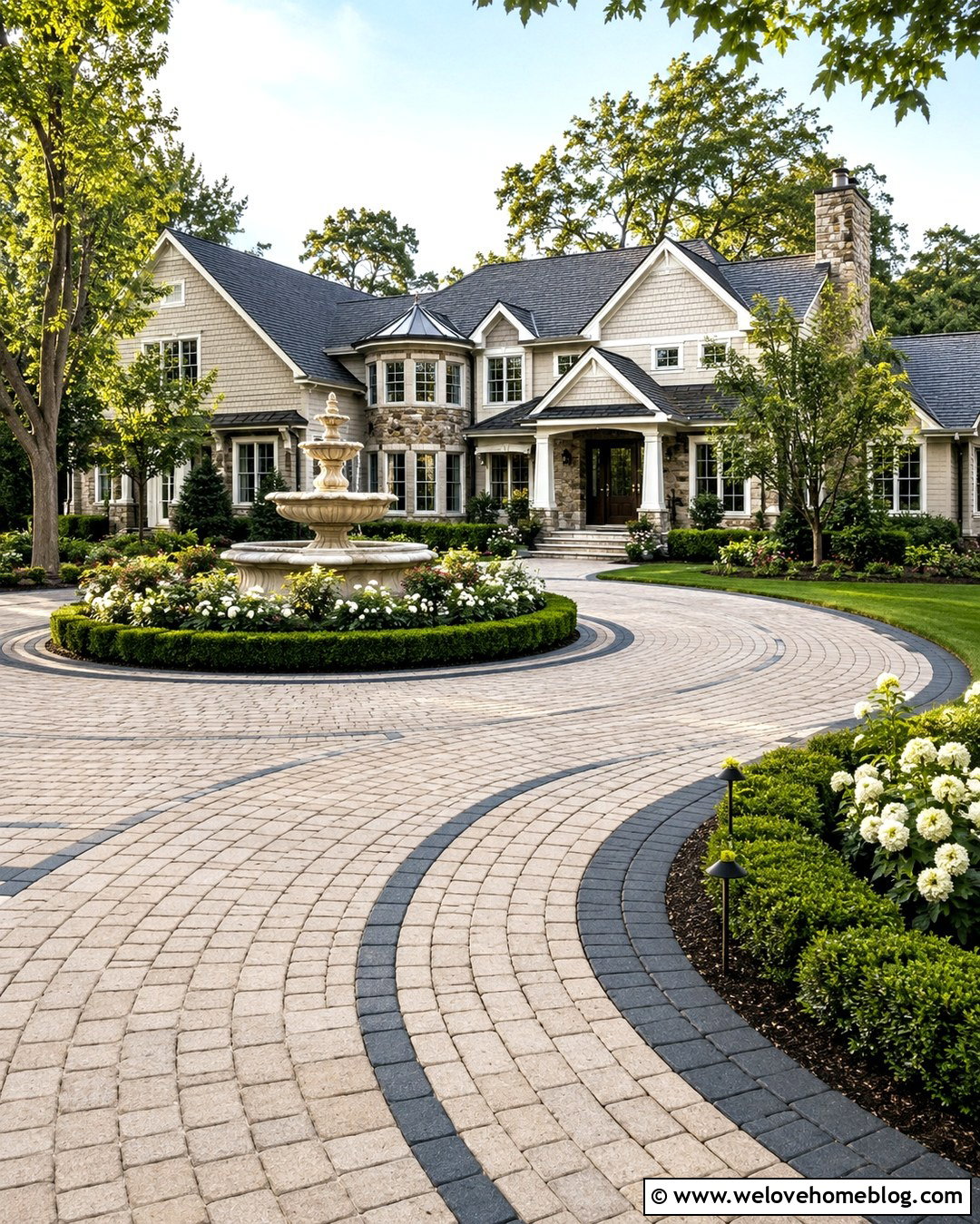
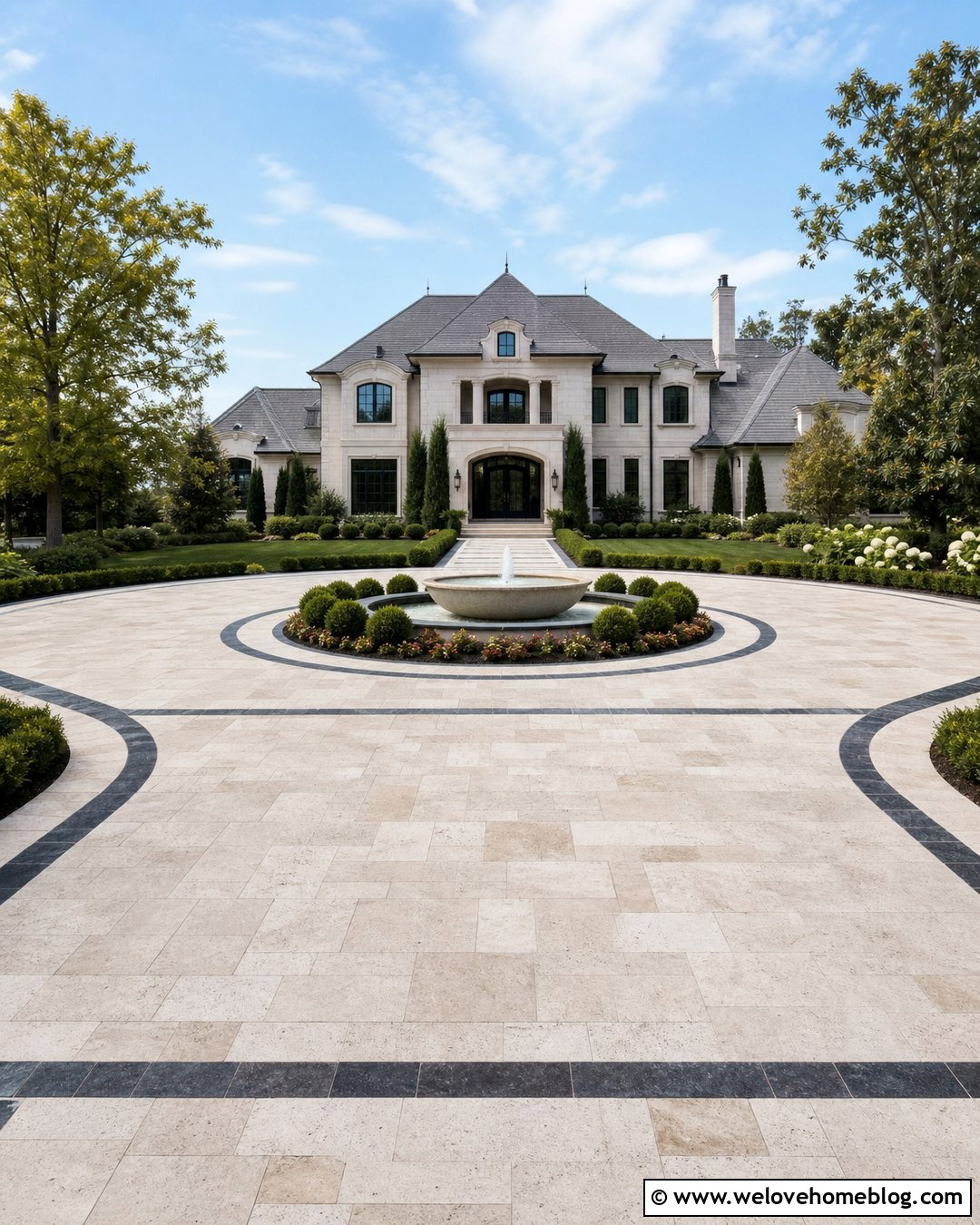
A fountain can bring movement and a formal character to a spacious turning circle. It works best within a substantial center island where splashing water will not constantly reach vehicles or create slippery pavement. Use pale limestone-look pavers for the driveway and a darker cobblestone band around the island to emphasize the circular layout. Place the fountain on a low stone basin surrounded by clipped evergreen shrubs and symmetrical flower beds. The house, fountain, and driveway entrance should align along a clear central axis for a balanced view from the street. Include concealed utility access, dependable drainage, and a practical maintenance route. In cold climates, choose a fountain system that can be drained and protected when freezing weather arrives.
14. Turning Circle Driveway With Large Tree
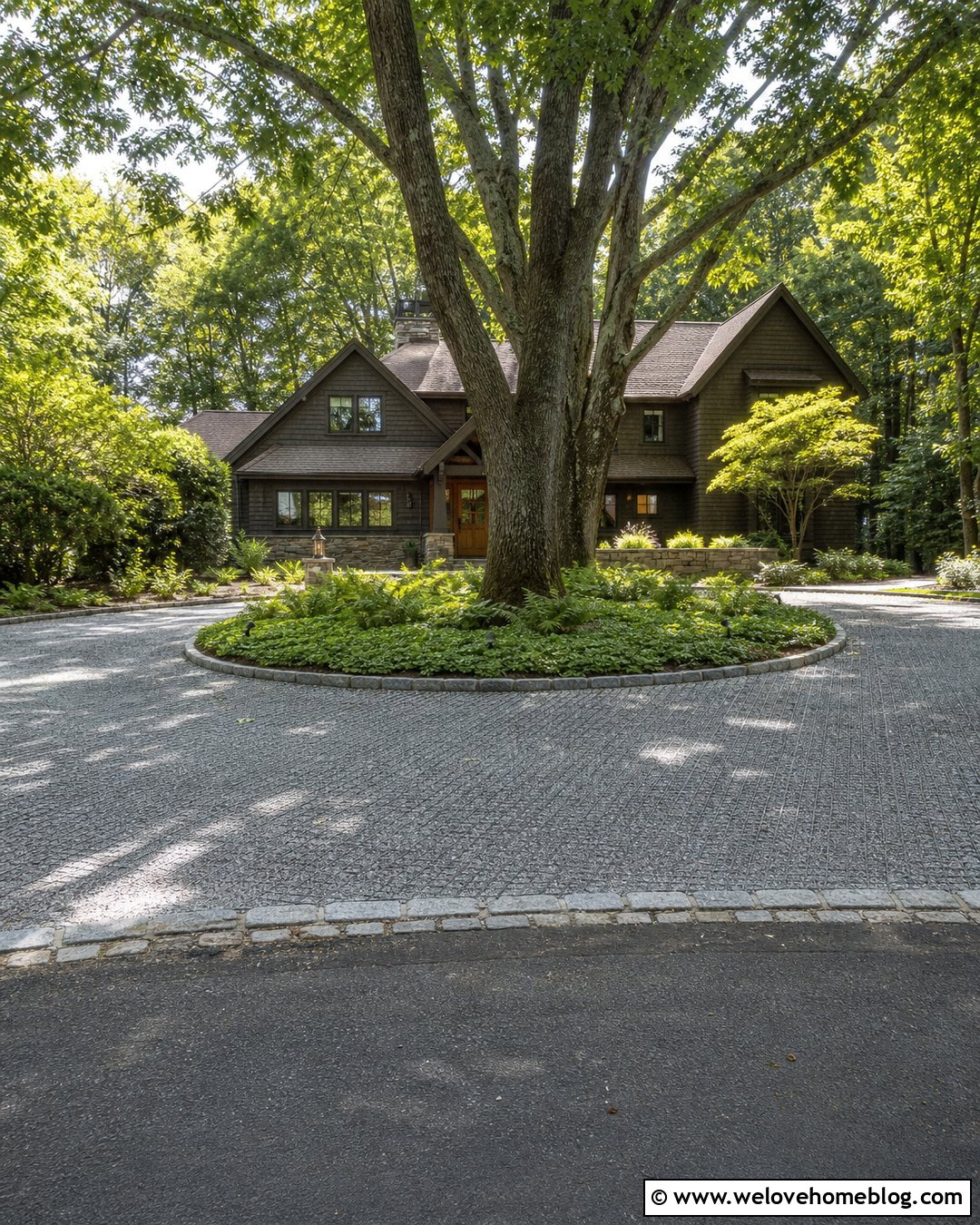
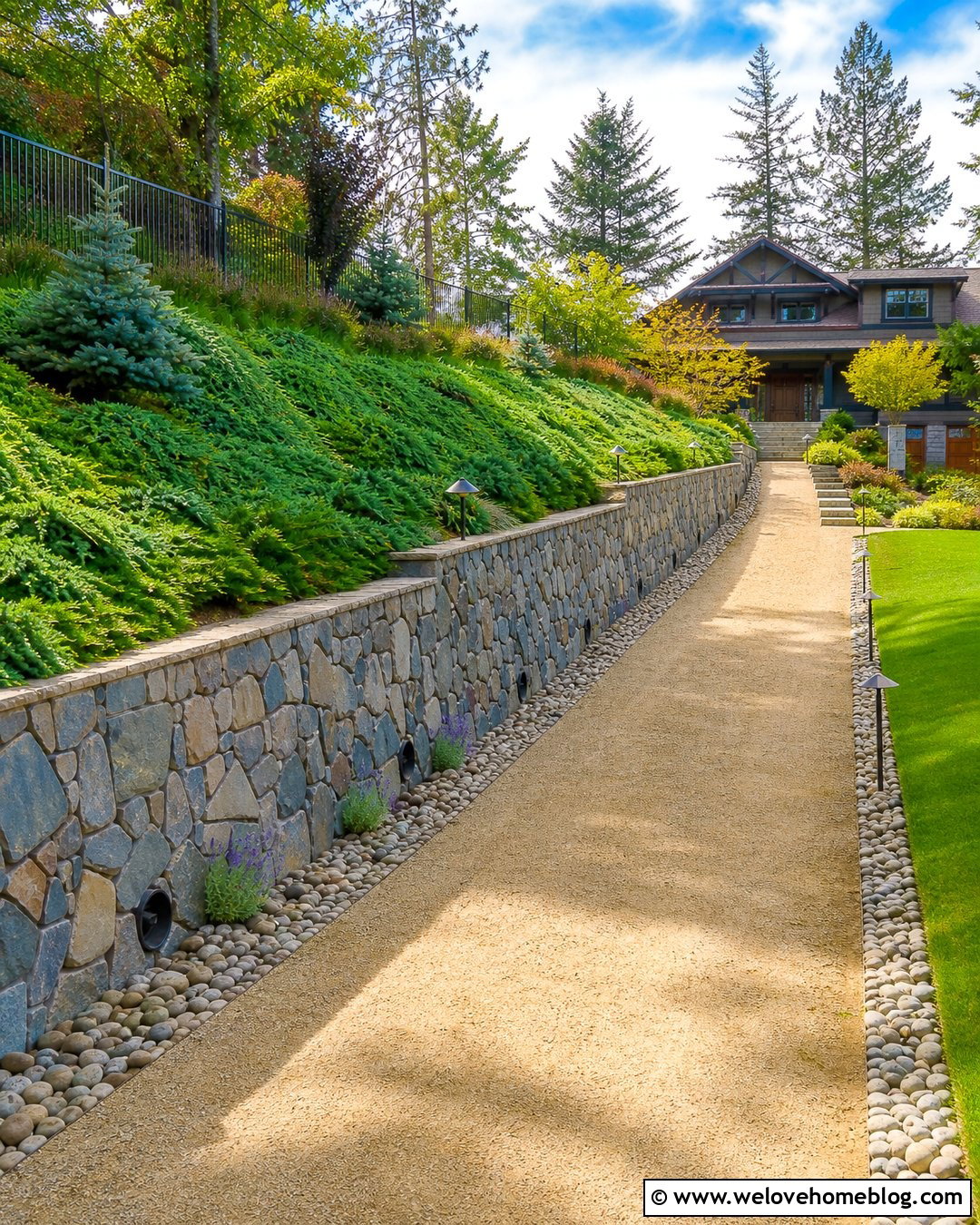
An existing mature tree can become the center of a beautiful turning circle when its root system and canopy are carefully protected. A permeable gravel-grid driveway is often a better fit than a heavily excavated solid slab because the design can support drainage and reduce surface disturbance. Maintain a generous unpaved island around the trunk rather than squeezing the drive close to exposed roots. Edge the circle with natural stone and plant the island with shade-tolerant ground cover that does not require deep digging. Low-voltage uplights may highlight the tree without placing fixtures in the driving path. Consult a qualified arborist before grading or excavation. Compacted soil, changed drainage, root cutting, and construction equipment can seriously damage an established tree even when the trunk remains untouched.

15. Turning Circle Driveway With Native Landscaping
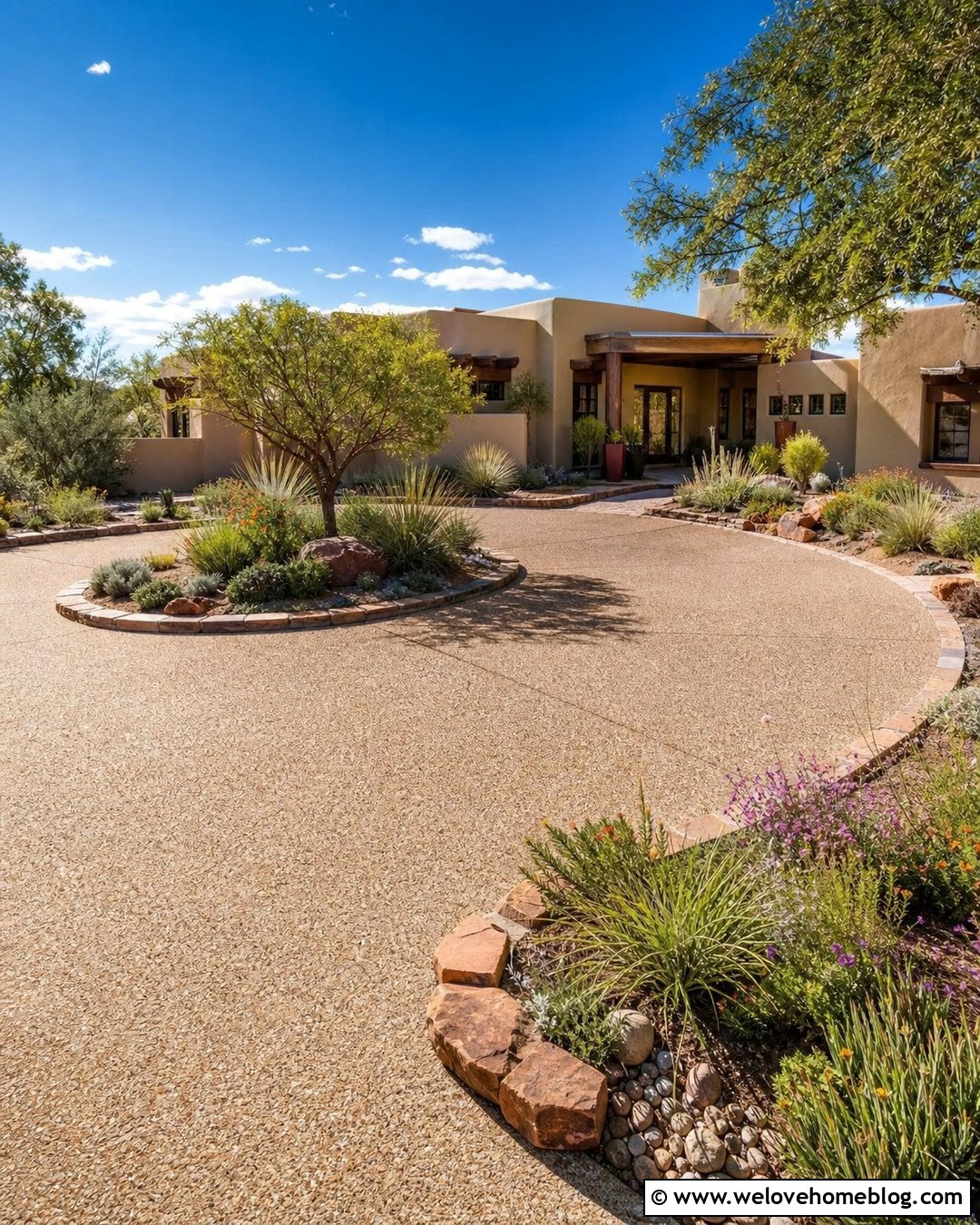
Native landscaping can help a turning circle feel connected to its regional setting instead of imposed on the yard. Pair tan gravel or warm exposed aggregate with broad planting beds filled with locally suitable grasses, flowering perennials, and compact shrubs. Repeat several plant groups around the center island and outer curve to create continuity. Avoid placing tall plants where they could block views near the entrance or hide children and pedestrians. A flat stone border separates vegetation from the driving surface while keeping the overall look informal. Choose plants according to actual sun, soil, rainfall, and winter conditions rather than appearance alone. Once established, a thoughtfully selected native palette may require less supplemental water and can give the driveway changing color and texture throughout the seasons.
16. Turning Circle Driveway With Low-Maintenance Landscaping
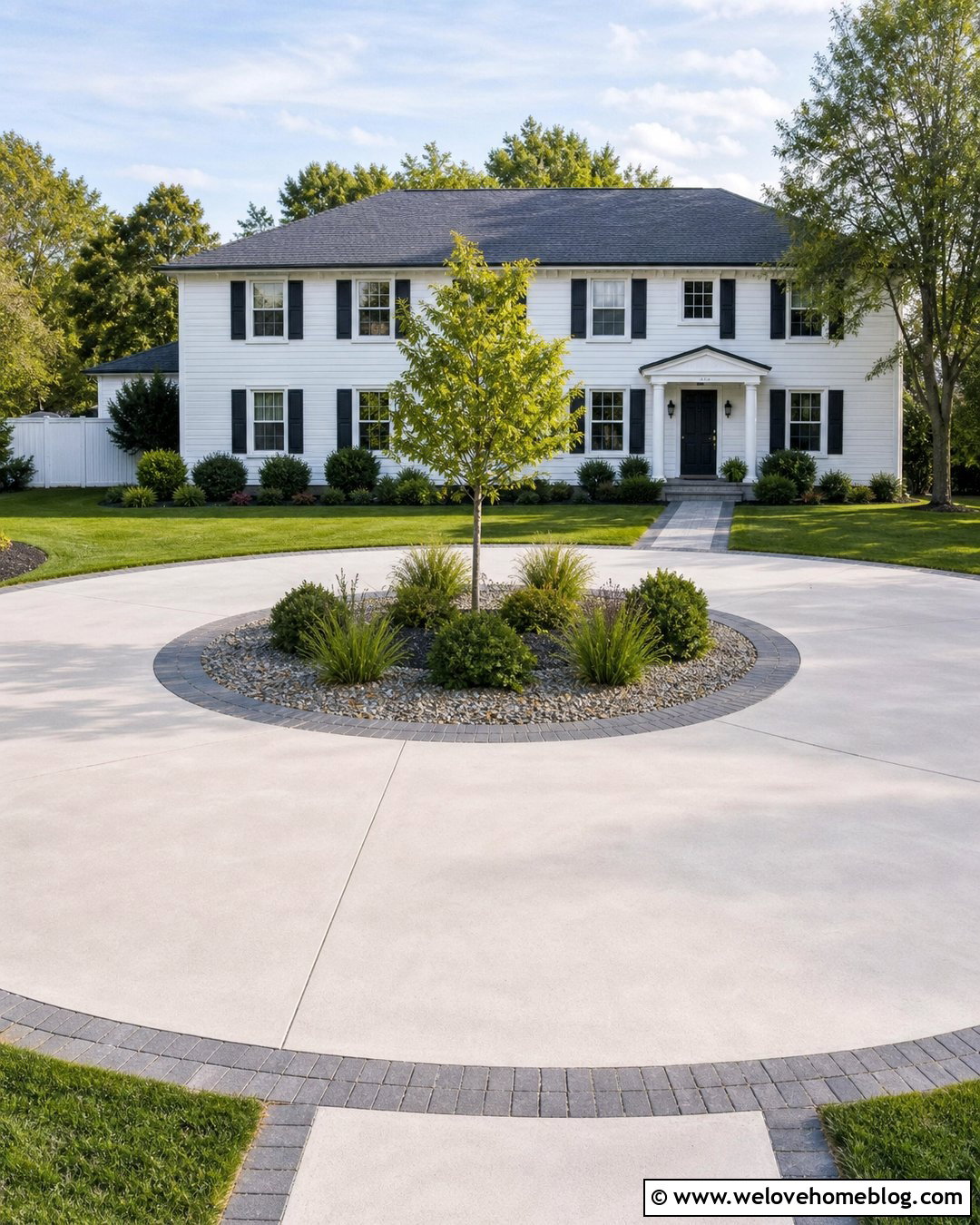
For an attractive entrance without constant pruning, combine a smooth concrete turning circle with simple, durable planting. Use a central island containing one compact ornamental tree, groups of slow-growing evergreen shrubs, and sweeping sections of decorative grass. Cover open soil with stone mulch or a regionally appropriate organic mulch to reduce weeds and create a finished surface. A dark paver border around the island protects planting edges and coordinates with a matching front walkway. Leave sufficient space between mature plants so they do not spill into the vehicle path. Automatic drip irrigation can keep water directed toward roots rather than pavement. The easiest landscape is not completely maintenance-free, but a limited plant palette and clean bed shapes make seasonal care much faster and more predictable.
17. Modern Turning Circle Driveway
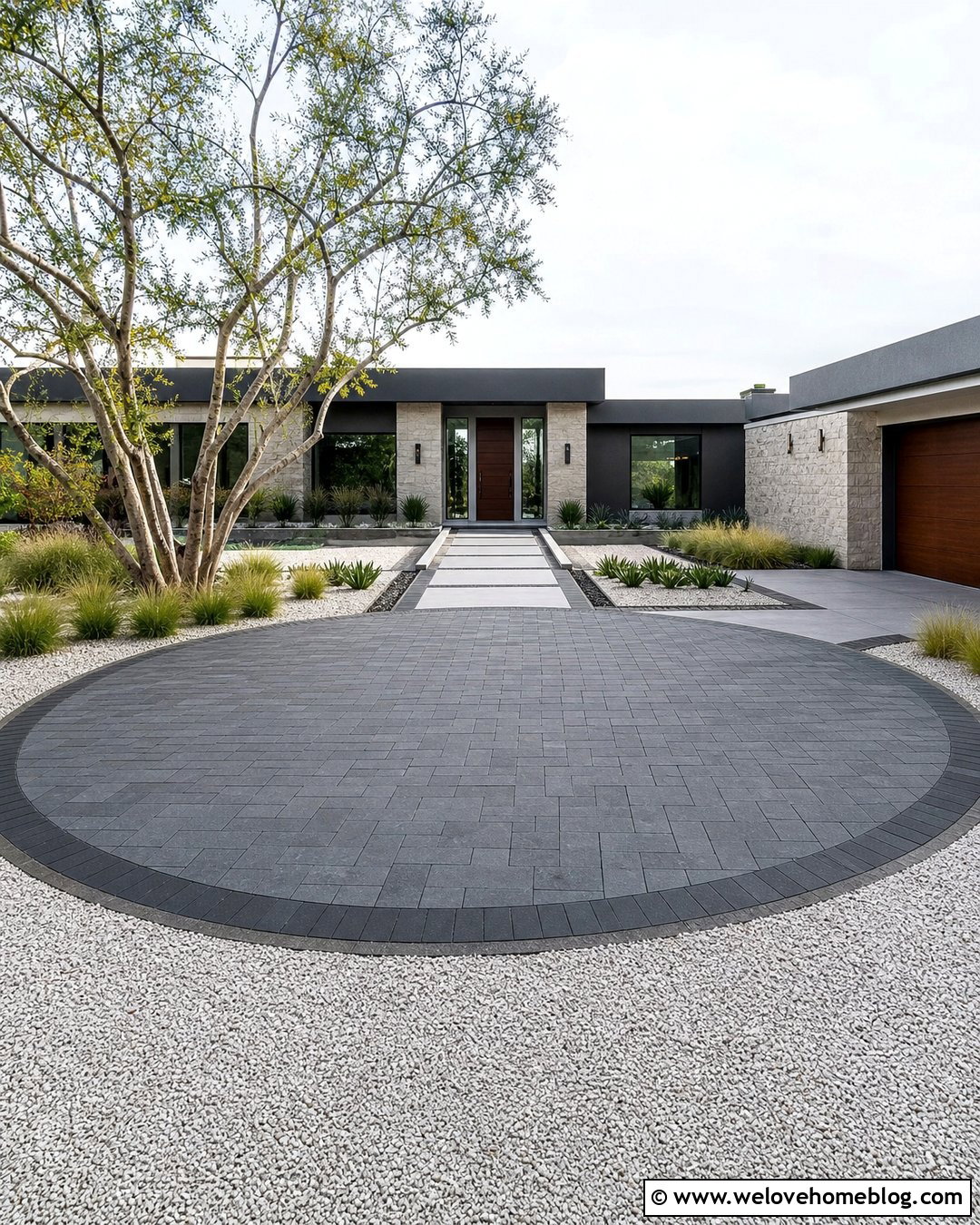
A modern turning circle looks strongest when the material palette is limited and the geometry remains clear. Use large-format charcoal concrete pavers for the driving lane, paired with a narrow border of smooth black setts. The center island can feature a sculptural multi-trunk tree, clipped grasses, and light-colored gravel arranged in simple masses. Continue the pavers toward the garage while using oversized stepping slabs for the path to the front door. Linear drainage channels can blend discreetly into the paving near low points. Keep decorative features minimal so the circle, home, and landscaping read as one coordinated composition. This design works particularly well with flat roofs, strong horizontal lines, dark window frames, and restrained exterior colors. Bright landscape planting prevents the finished approach from feeling too severe.
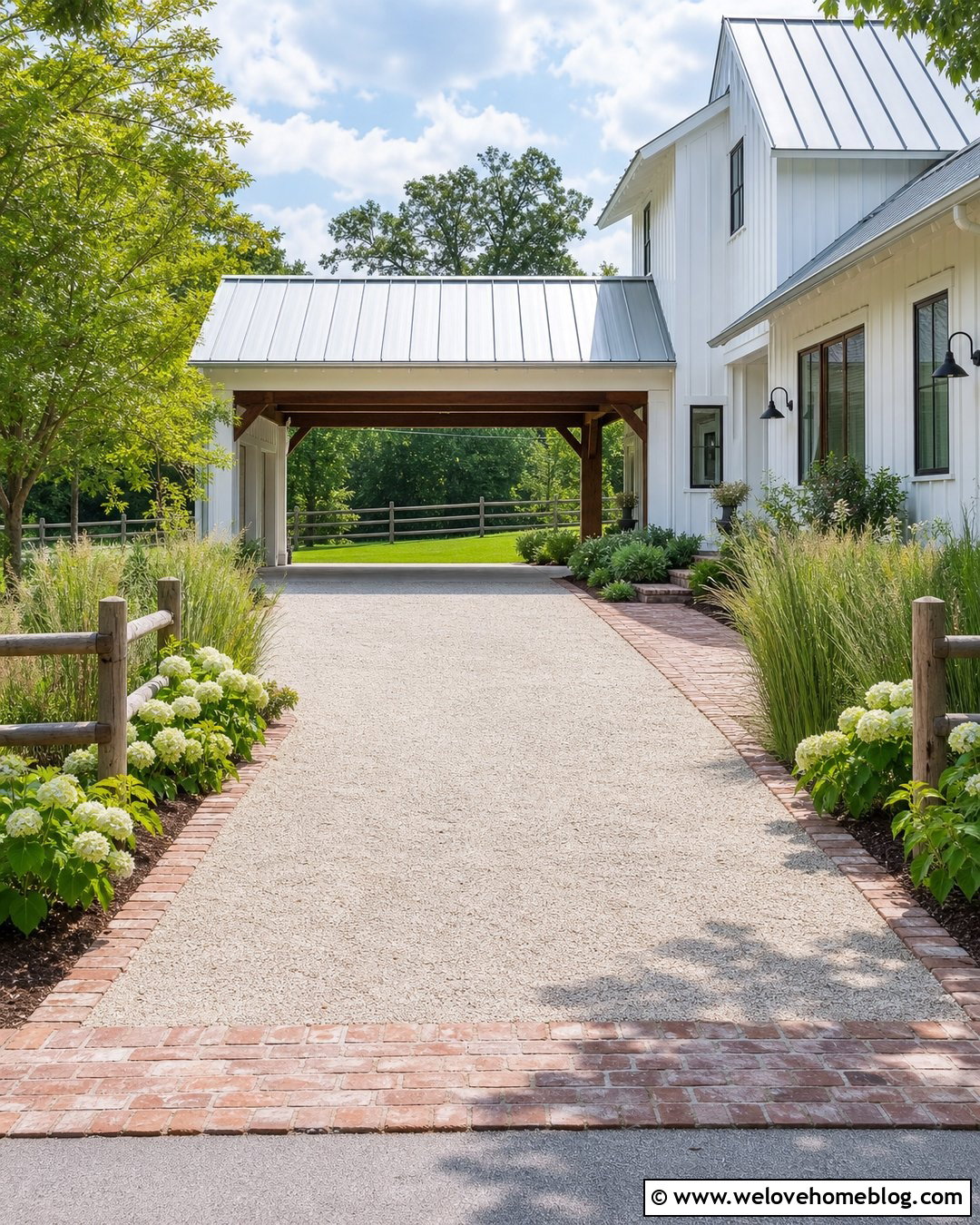
18. Farmhouse Turning Circle Driveway
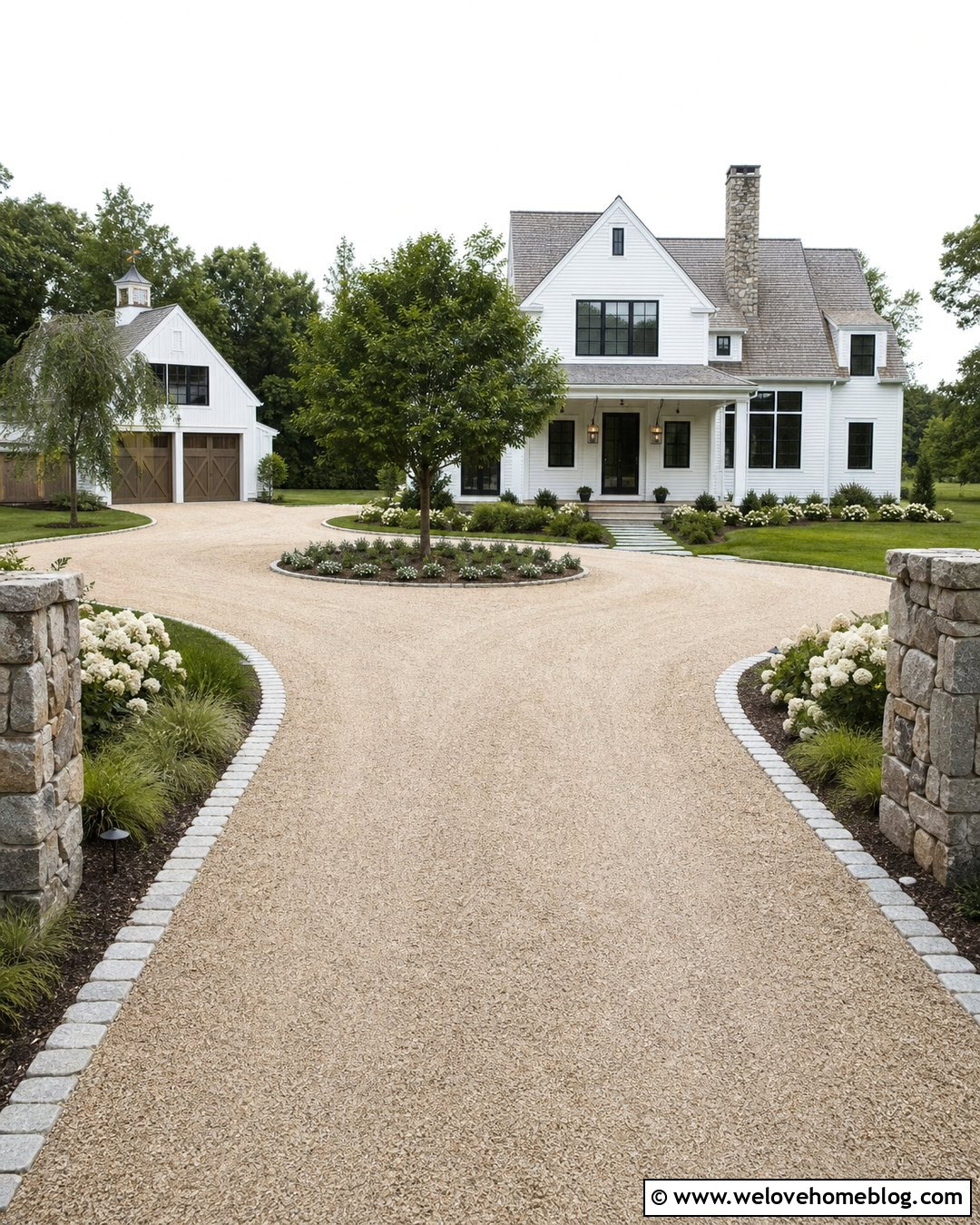
A farmhouse turning circle should feel generous and practical rather than overly formal. Compact cream-colored gravel over a strong crushed-stone base, then outline the drive with weathered granite cobbles or sturdy timber edging where appropriate. The center island can hold a broad-canopy ornamental tree, white flowering shrubs, and relaxed drifts of native grasses. Place simple stone pillars at the entrance and connect the driveway to a covered porch with a flagstone walkway. A secondary spur leading to a detached garage, barn-style outbuilding, or parking pad can keep service traffic away from the main entrance. Gravel requires periodic grading and replenishment, especially where vehicles turn sharply. Strong edging and a properly shaped crown help control migration while preserving the casual country character.
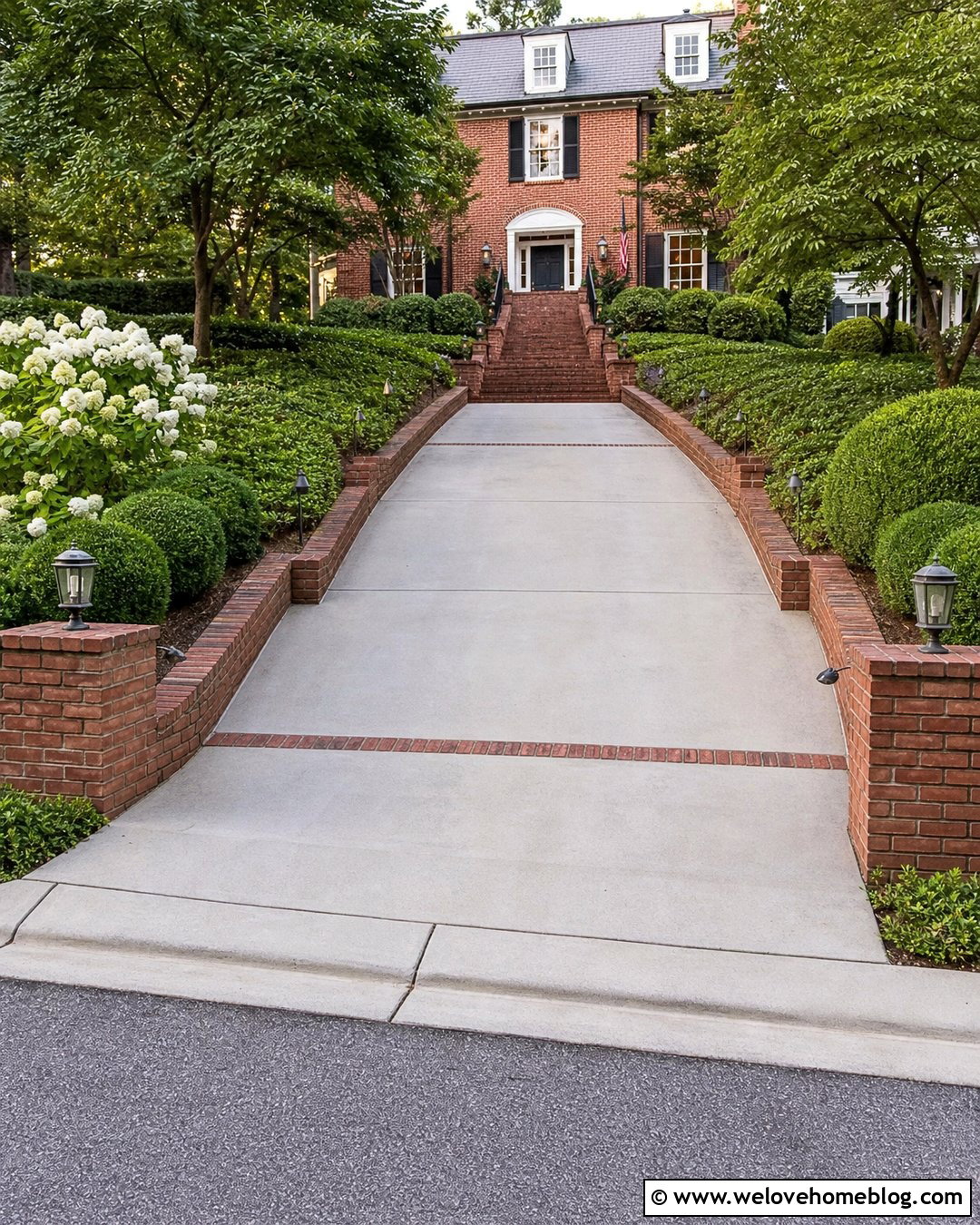
19. Colonial Turning Circle Driveway
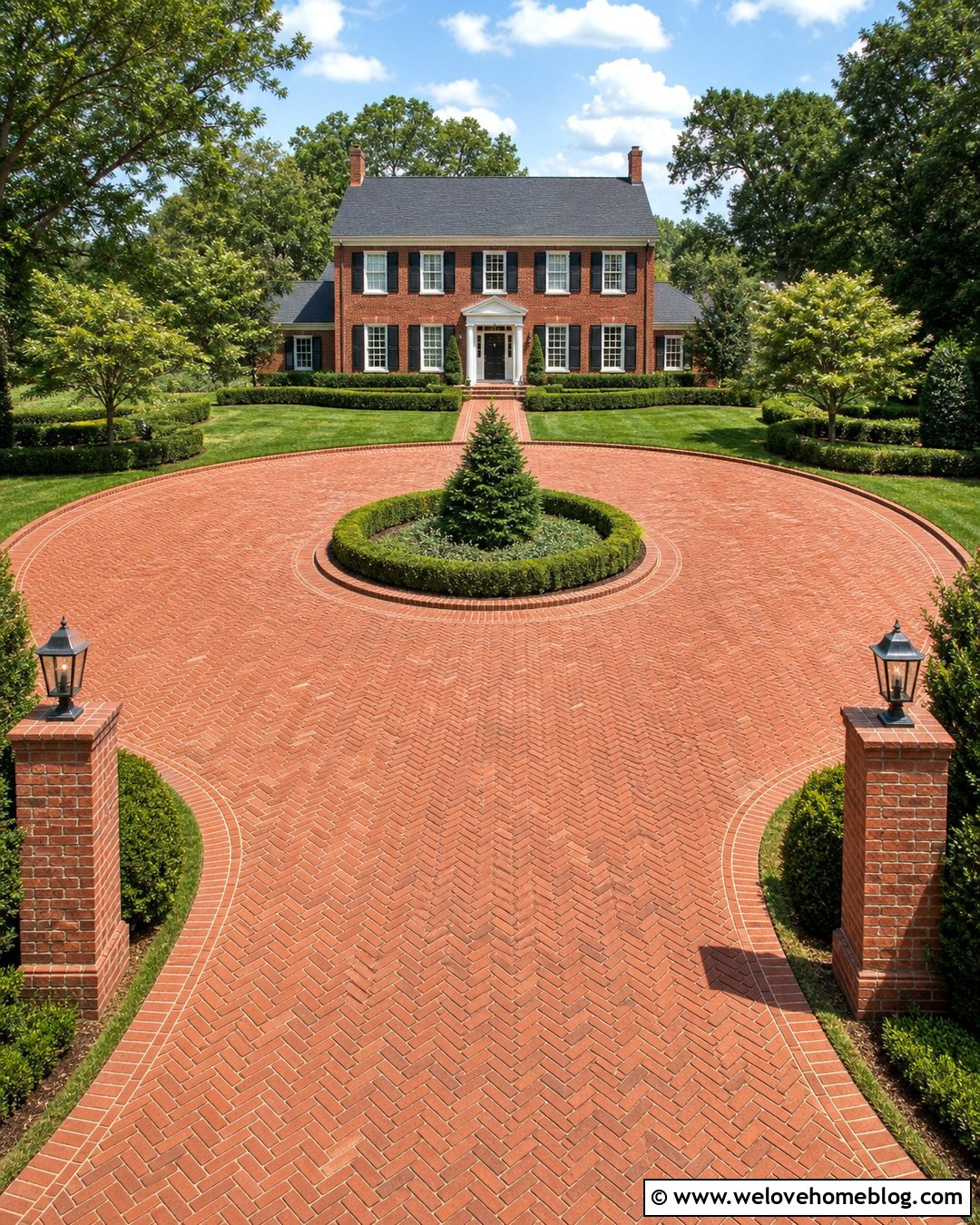
Symmetry is the key to a turning circle that complements a colonial home. Center the driveway loop on the front door and use red clay brick pavers laid in herringbone for a traditional surface. A straight soldier-course border can define the entrance, while curved brick bands emphasize the circle. Inside the island, place a flowering tree or compact evergreen on the central axis and surround it with balanced boxwood-like shrubs. Matching lantern-style fixtures on brick entrance pillars reinforce the architecture without crowding the curb. A straight walkway from the circle to the front steps keeps the arrival sequence formal and easy to understand. Maintain clear sightlines at both driveway entrances, and keep the planting height controlled so the design remains orderly as shrubs mature.
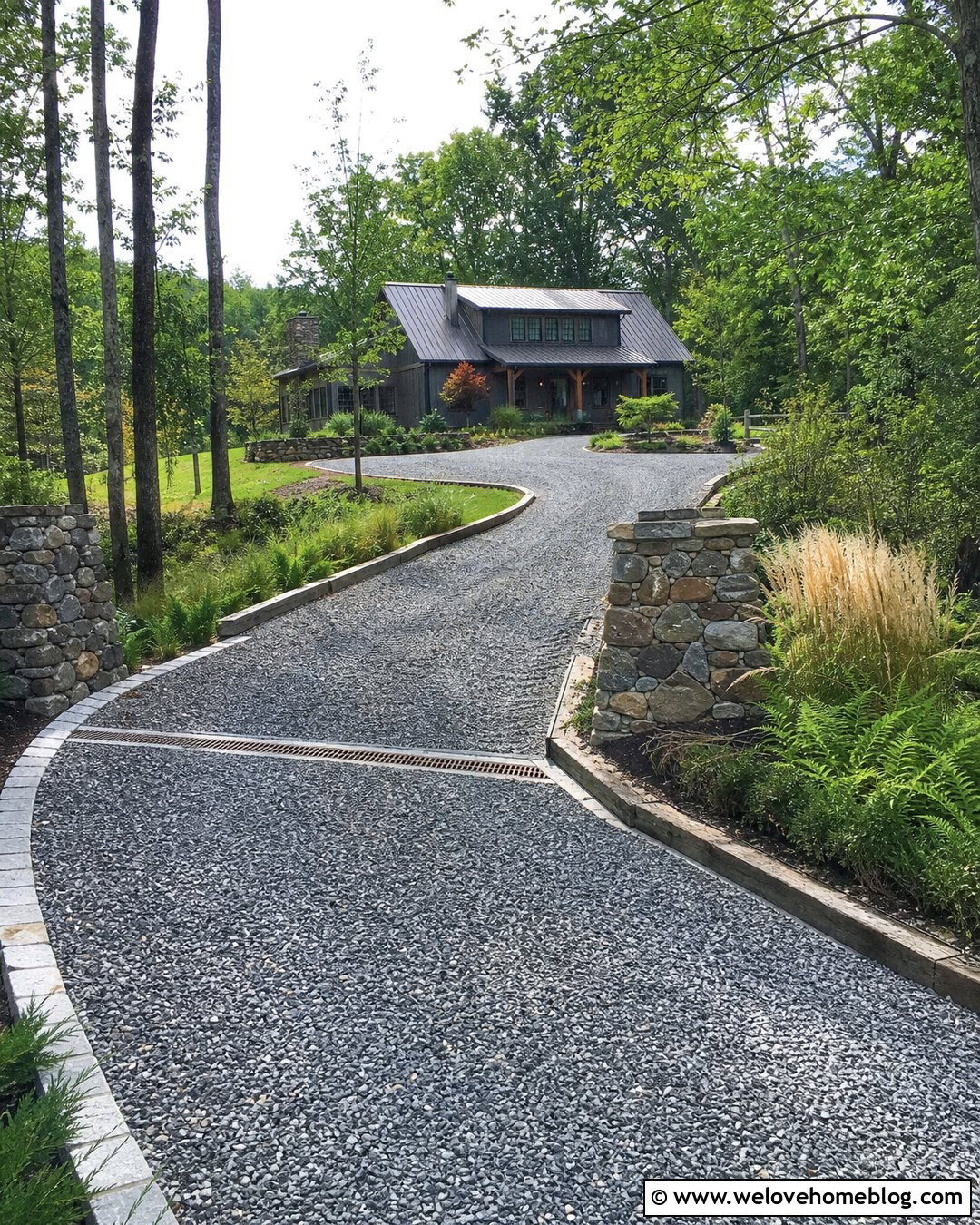
20. Ranch House Turning Circle Driveway
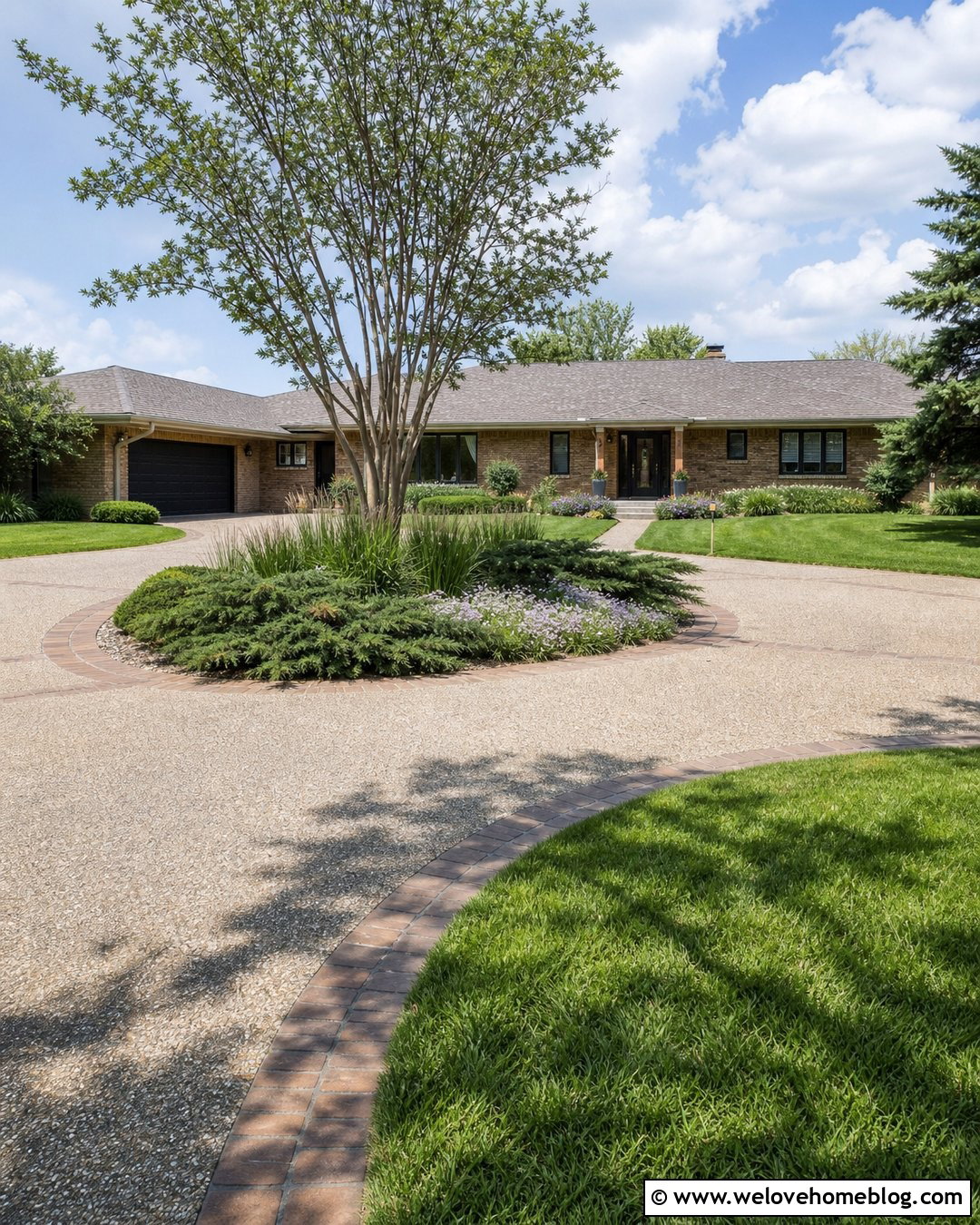
The broad horizontal shape of a ranch home pairs naturally with a low, sweeping turning circle. Use light exposed-aggregate concrete to add texture while maintaining a calm appearance across the wide frontage. A gently curved approach can open into the circle before branching toward a side-facing garage. Edge the pavement with a slim band of warm-toned pavers that relates to brick or stone on the facade. The center island should remain low, using ornamental grasses, spreading junipers, flowering ground cover, and one airy multi-stem tree. Avoid tall, dense hedges that hide the home’s long roofline. A wide walkway can lead from the circle to the entrance, with planting beds placed beside it to make the route feel intentional rather than simply cut through the lawn.
21. Wooded Turning Circle Driveway
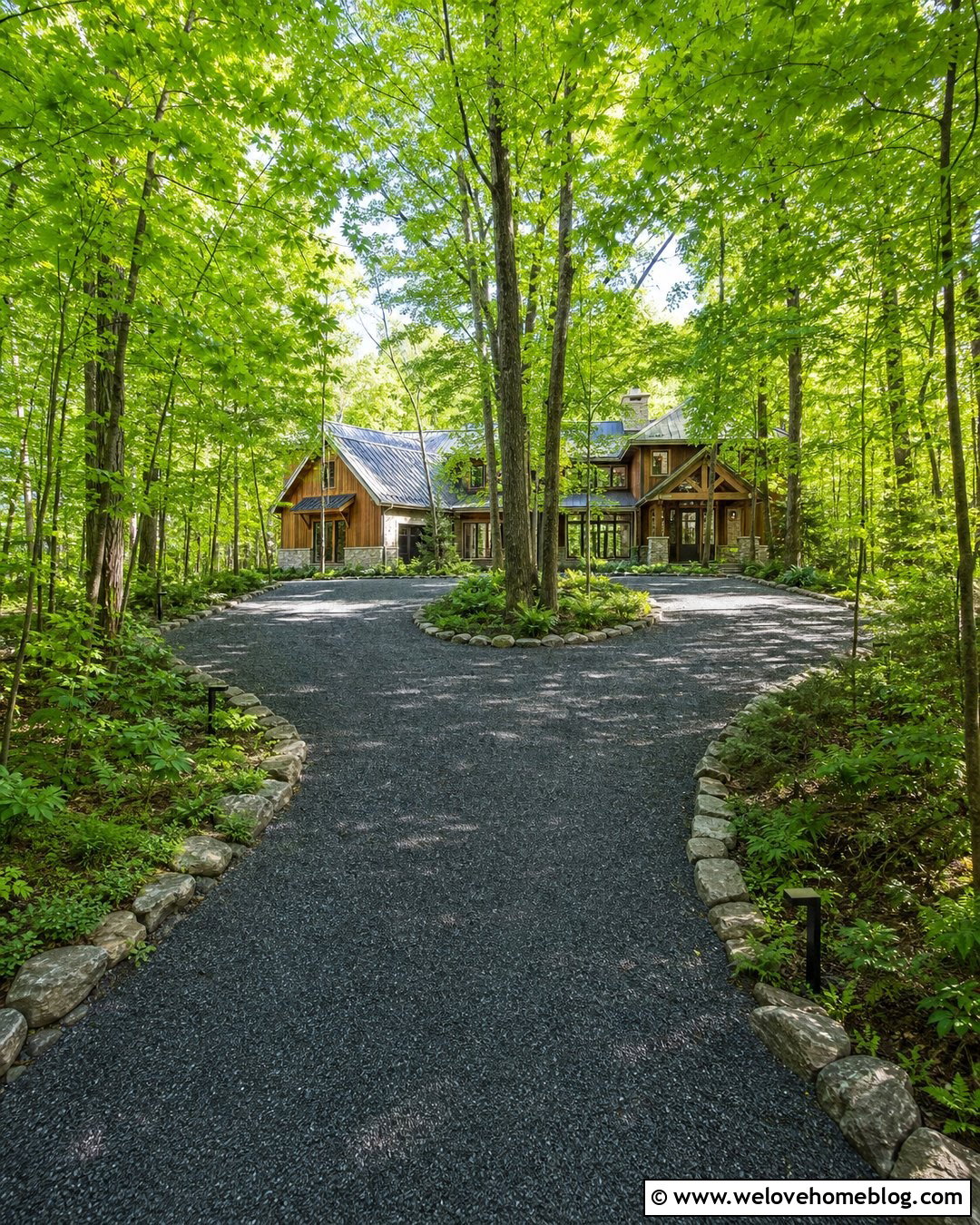
On a wooded property, a turning circle can curve around existing trees and preserve the feeling of a natural approach. Dark asphalt or stabilized gray gravel provides a quiet surface that does not compete with the surrounding landscape. Use irregular local stone as edging and allow woodland ground covers, ferns, and low shrubs to soften the outer borders. The center island may retain several carefully selected trees if the available driving path remains wide enough. Plan overhead clearance as well as ground-level turning room, especially for delivery and emergency vehicles. Subtle bollard lights can guide drivers without flooding the site with brightness. An arborist and drainage professional should review the layout so excavation, runoff changes, and soil compaction do not undermine the trees the design is intended to protect.
22. Sloped Turning Circle Driveway
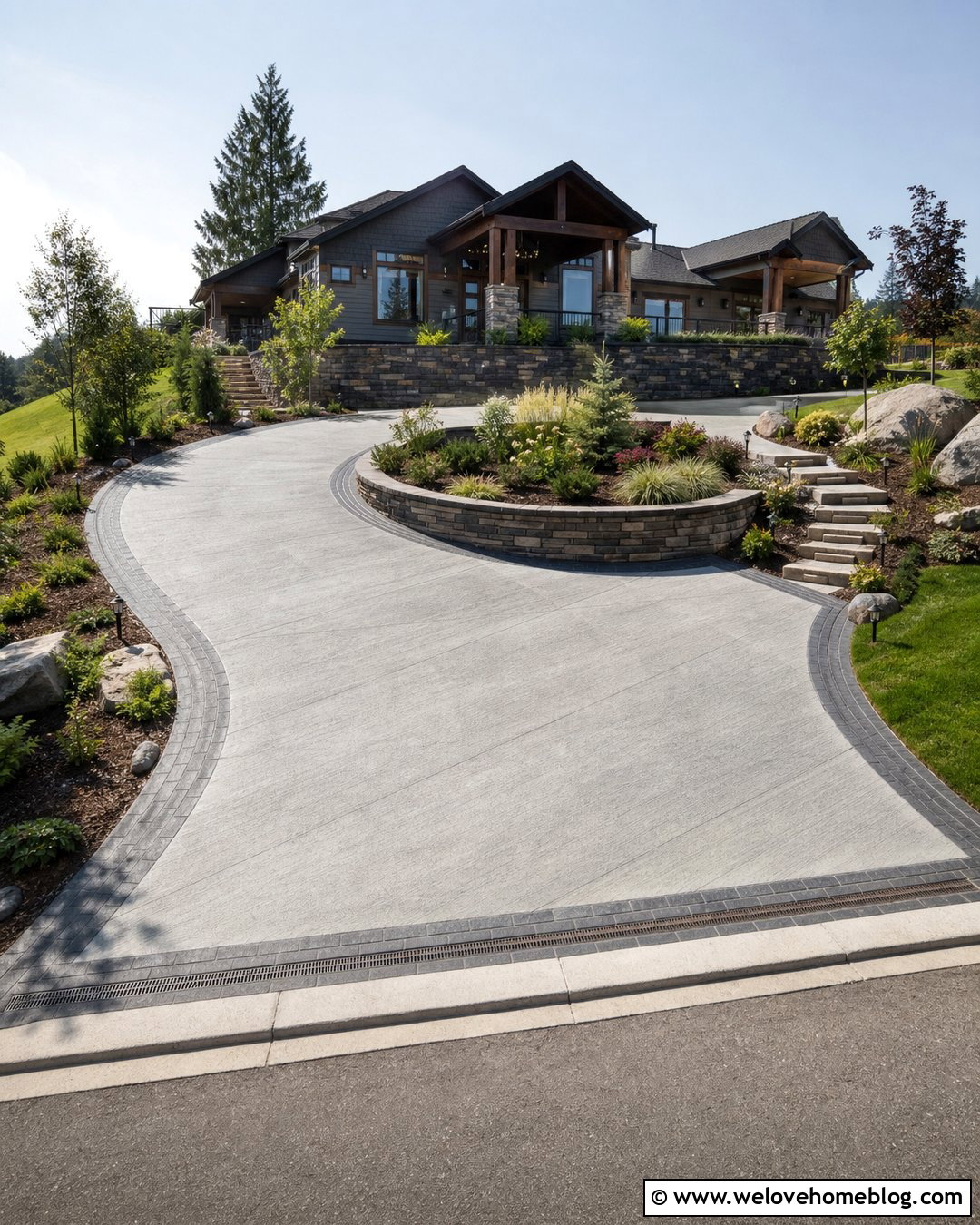
A turning circle on a sloped site requires more planning than one on level ground. The driving surface must provide comfortable transitions without abrupt grade changes that cause vehicles to scrape or lose traction. Broom-finished concrete is a practical option, framed by a darker textured paver border for visual guidance. Use retaining walls along the uphill side and direct water into engineered channels, swales, or planted drainage areas. The center island can be terraced with low shrubs and ornamental grasses rather than built as one steep mound. Keep walls and planting low near the approach to preserve visibility. Because water, soil pressure, and vehicle movement interact on a slope, grading should be designed professionally. A beautiful surface will not compensate for poor drainage or an uncomfortable turning path.
23. Turning Circle Driveway With Parking Court
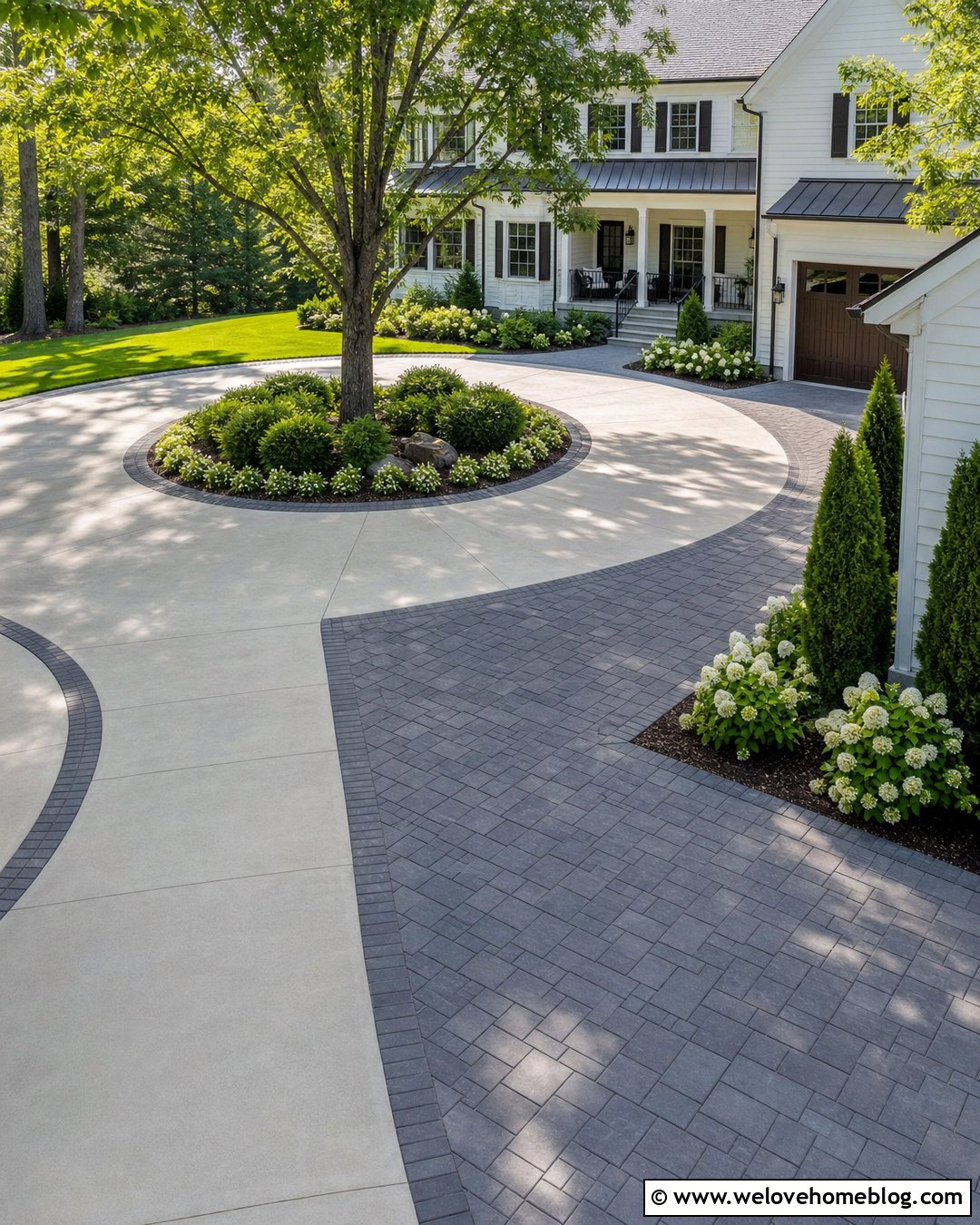
Combining a turning circle with a separate parking court keeps the main loop clear while providing room for guests. Construct the circle in light gray concrete and distinguish the parking area with charcoal interlocking pavers. A paver ribbon can visually connect the two surfaces and guide drivers toward the correct space. Place the court beside the garage or along one side of the house instead of directly in front of the main entrance. The center island can contain a small shade tree and low planting, while taller shrubs screen parked vehicles from the street. Make the transition wide enough for comfortable entry without interrupting vehicles traveling around the loop. Good lighting, clear pedestrian paths, and designated pavement patterns help prevent random parking along the turning lane.
24. Turning Circle Driveway With Gated Entrance
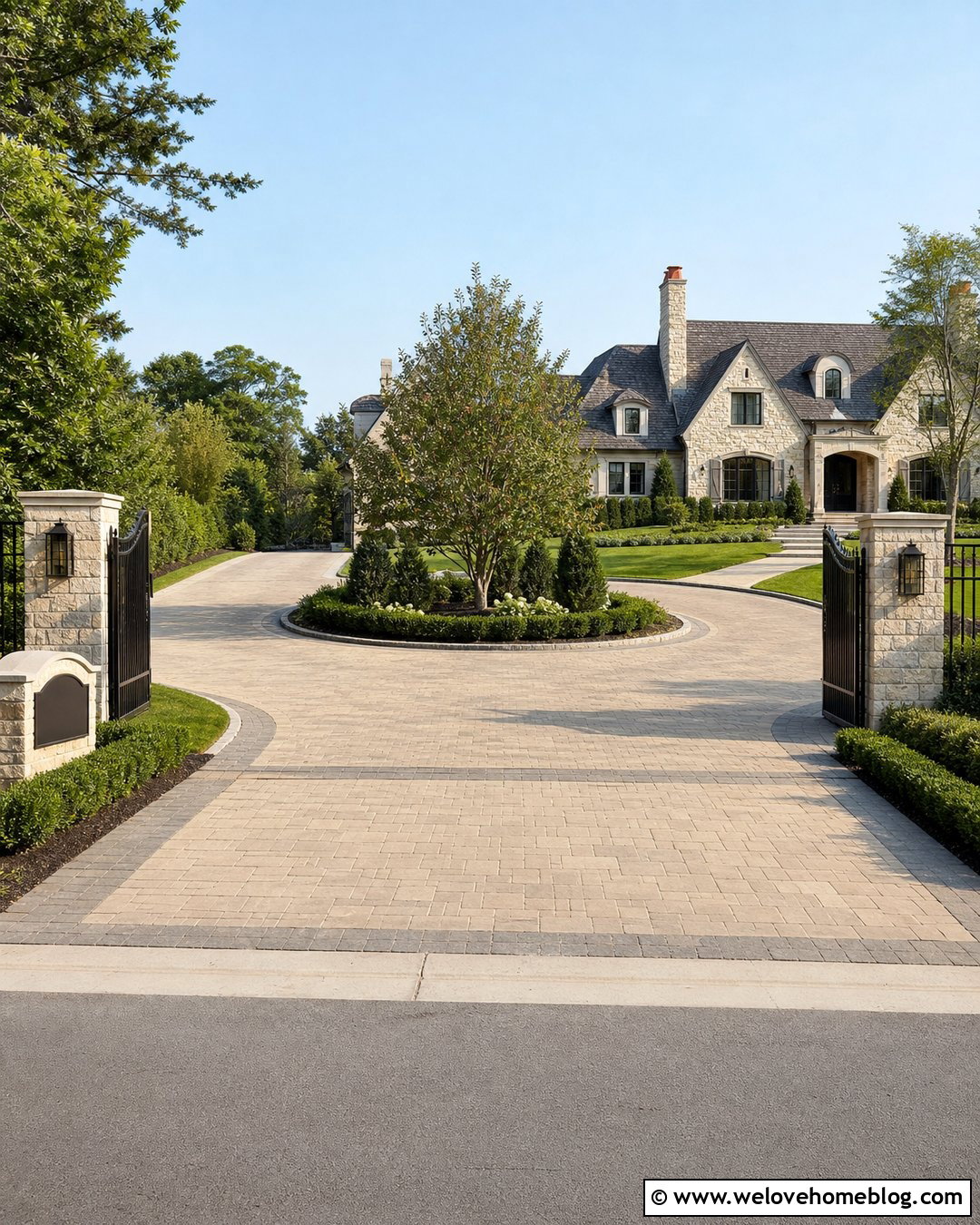
A gated turning circle driveway needs enough space between the road, gate, and loop for vehicles to wait safely without blocking traffic. Use warm concrete pavers for the circular drive and matching stone pillars at the entrance. The gate should open without reducing the usable driveway width or striking a waiting vehicle. Low hedges and layered planting can frame the pillars, but vegetation must not interfere with sensors, visibility, or gate hardware. Continue the approach toward a landscaped center island with one prominent tree and restrained evergreen planting. Include a pedestrian gate and a separate walkway where needed. Access controls, mailboxes, address markers, drainage, utilities, and emergency entry should be planned together rather than added after construction. Always confirm local setback and access requirements before choosing the gate location.
25. Turning Circle Driveway With Lighting
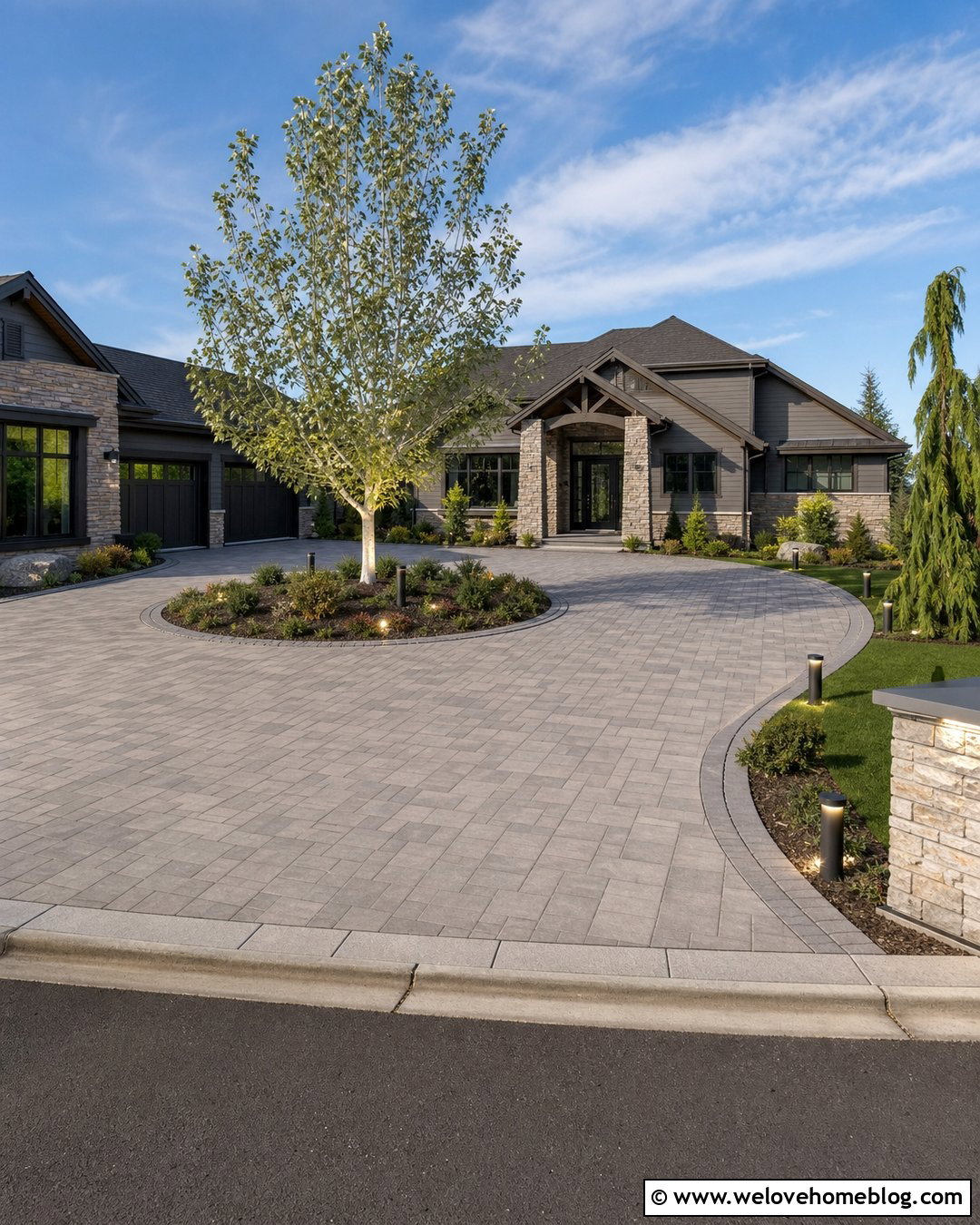
Well-placed lighting makes a turning circle easier to navigate while revealing its shape after sunset. During the day, the fixtures should remain discreet and complement the home’s architecture. Pair a medium-gray paver driveway with low bollard lights along the outer edge and small shielded fixtures around the center island. Add gentle uplighting to one feature tree and focused lighting near the entrance pillars, walkway, and house numbers. Avoid placing fixtures where tires, snowplows, or lawn equipment may strike them. Warm-white illumination generally creates a welcoming residential effect, but the beams should point downward to reduce glare. Use consistent fixture finishes and spacing rather than mixing many decorative designs. A lighting plan with separate zones can support everyday use, guest arrivals, and reduced overnight illumination.
Conclusion:
The most successful turning circle driveway ideas make vehicle movement feel natural while improving the entire view of the home. Start with the practical requirements: available yard space, driveway width, vehicle size, grading, drainage, and local access rules. Then select a surface, border, center island, and planting plan that suits the home’s architecture and expected maintenance. Gravel can create a relaxed country entrance, while concrete, brick, pavers, and cobblestone produce more defined looks. Whatever material you choose, protect sightlines and keep parked cars outside the active turning route. Accurate planning with a landscape designer, engineer, or experienced paving contractor can transform 25 turning circle driveway ideas into a safe, durable, and cohesive finished entrance.

Related posts:
Leave a Reply