
A long dirt driveway can feel like a simple utility route, but thoughtful details can turn it into one of your property’s strongest features. The best 20 Long Dirt Driveway Ideas combine a well-shaped driving surface with practical drainage, durable edges, attractive planting, and an entrance that matches the home. Proper grading matters because standing water and uncontrolled runoff can cause ruts, potholes, and erosion. Defined borders also help create a cleaner transition between the driveway and surrounding soil or lawn. () Whether your property is wooded, open, sloped, rustic, or suburban, there is a design that can improve its appearance without making it feel overly formal. Explore these 20 Long Dirt Driveway Ideas to create a welcoming and functional approach to your home.
1. Straight Dirt Driveway With Grass Borders
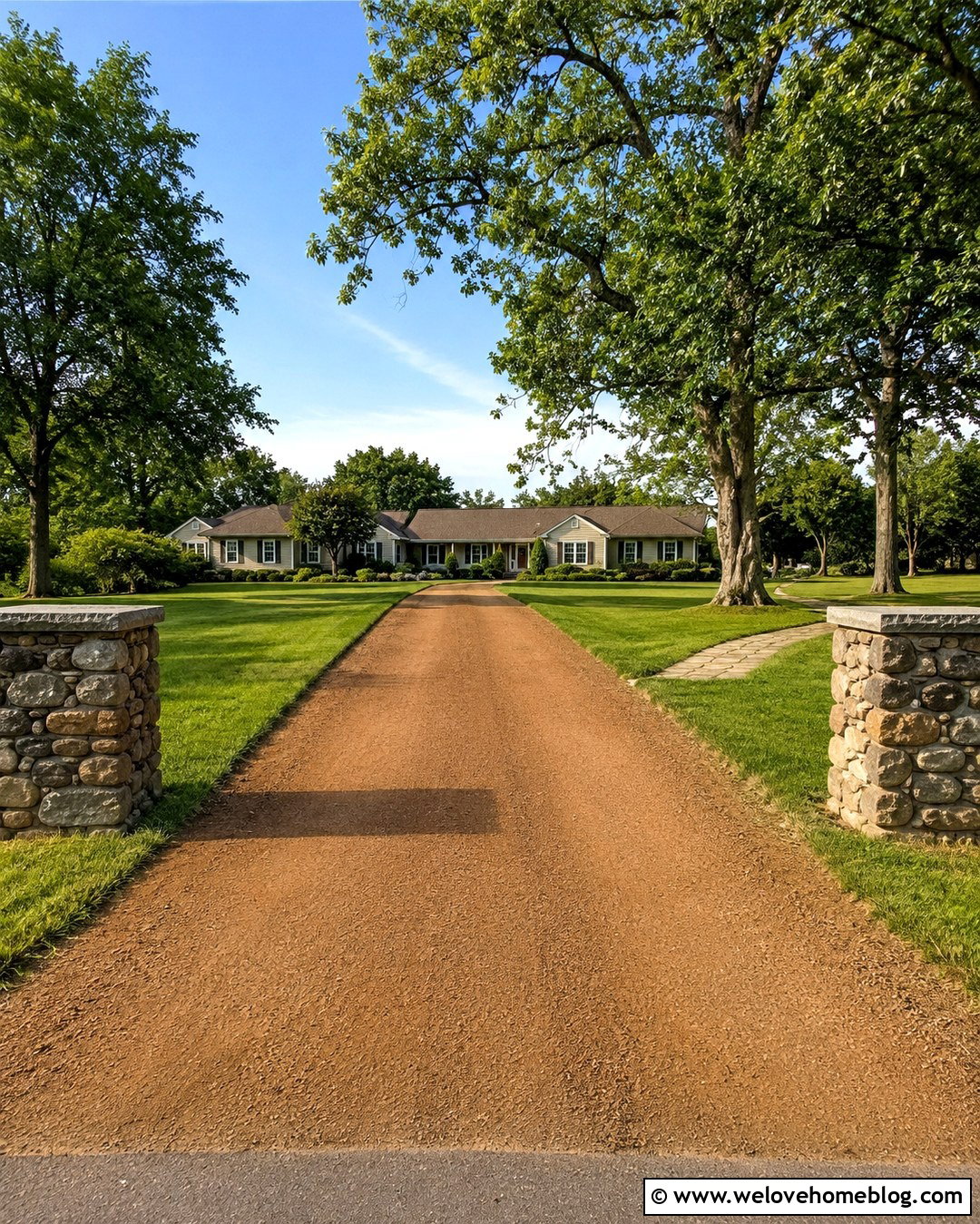
A straight dirt driveway creates a clean sightline from the road to the house. It works especially well on level properties where the home is already visible from the entrance. Keep the compacted earth surface slightly crowned so rainfall moves toward shallow side drainage areas instead of collecting in the tire tracks. Wide grass borders make the drive feel neat without adding expensive hardscape. Choose a durable turf suitable for your climate and mow both sides at the same height. A simple walkway can branch toward the front door near the house. At the roadside, use low stone markers or timber posts to define the entrance. This complete look feels open, practical, and well suited to ranch homes, farmhouses, and uncomplicated country landscapes.
2. Curved Dirt Driveway Through Trees
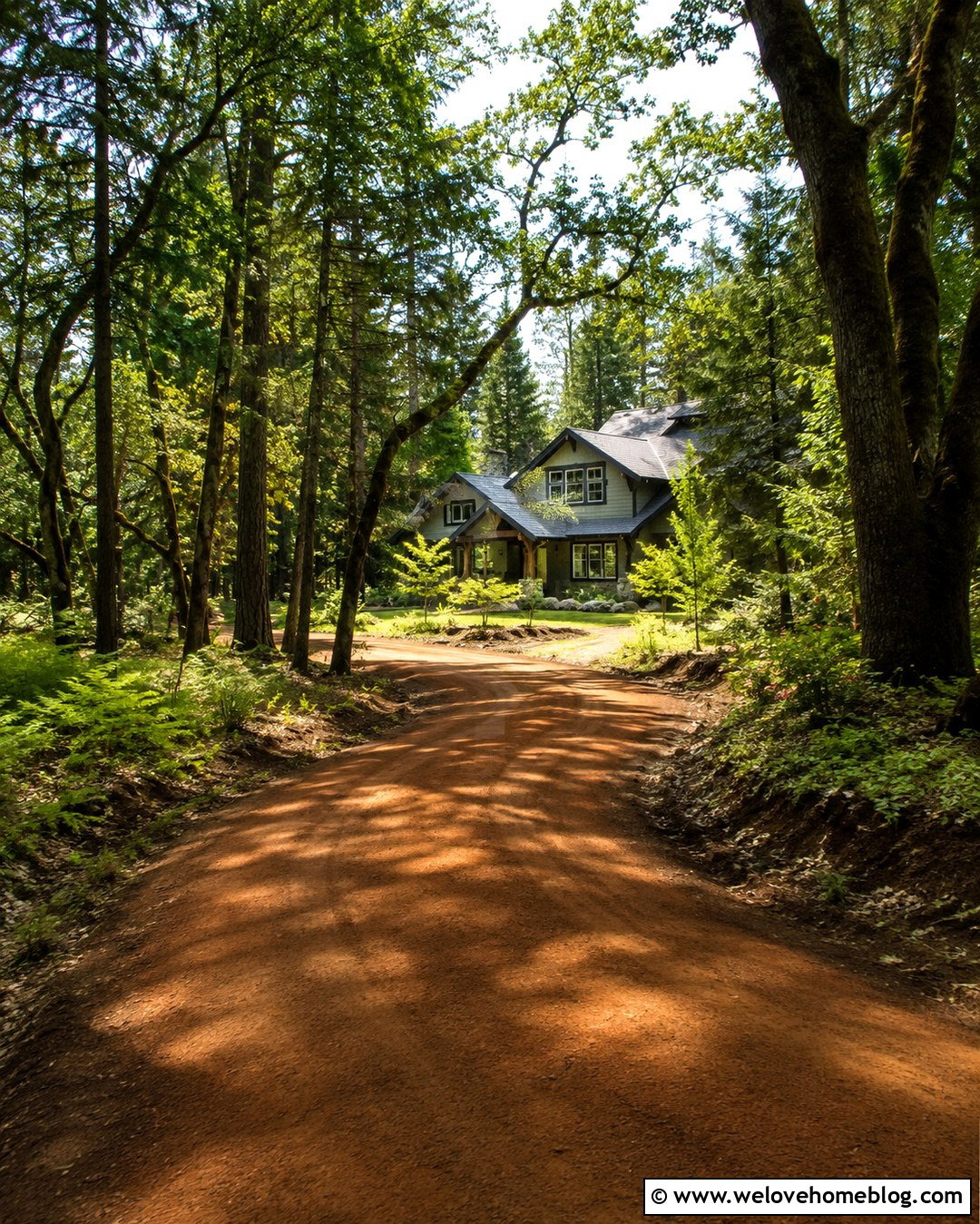
Soft curves can make a long dirt driveway feel more natural while revealing the property gradually. This layout fits a wooded lot because the route can flow around mature trees instead of cutting through them. Use a firm, compacted dirt surface with broad curves that provide comfortable visibility and room for service vehicles. Preserve a clear shoulder between the driving lane and tree trunks to reduce root damage and simplify maintenance. Woodland groundcovers, ferns, and native shrubs can stabilize disturbed soil along the edges. Keep plants low near tighter bends so drivers can see oncoming traffic. A small clearing near the house creates a pleasing transition from the shaded drive to the front yard. The result feels secluded, calm, and connected to the surrounding woods.
3. Dirt Driveway With Timber Edging
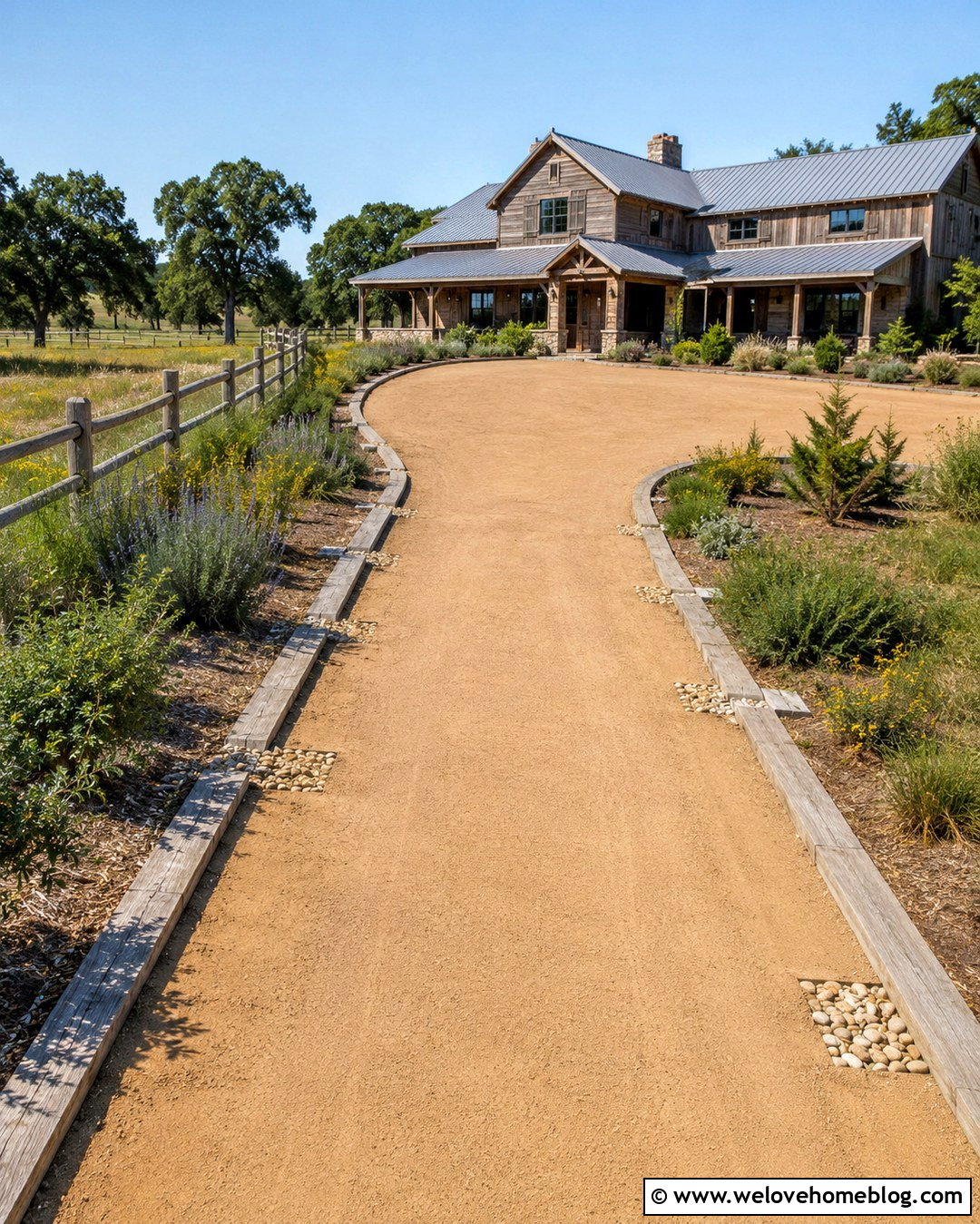
Landscape timbers give a long dirt driveway a defined shape without making it look too polished. They are especially appropriate beside a cabin, barn-style house, or rustic modern farmhouse. Install substantial timbers along level sections where loose soil tends to spread into the lawn. Set them low enough to avoid becoming a tire hazard, but high enough to establish a visible boundary. Because wood can interfere with natural runoff if used carelessly, leave planned openings or gravel drainage gaps where water needs to exit. Timber edging is commonly used for a rural appearance, although it requires periodic inspection as wood ages. () Finish the look with meadow grass, split-rail fencing, and a broad dirt parking area near the house.
4. Dirt Driveway With Stone Drainage Ditches
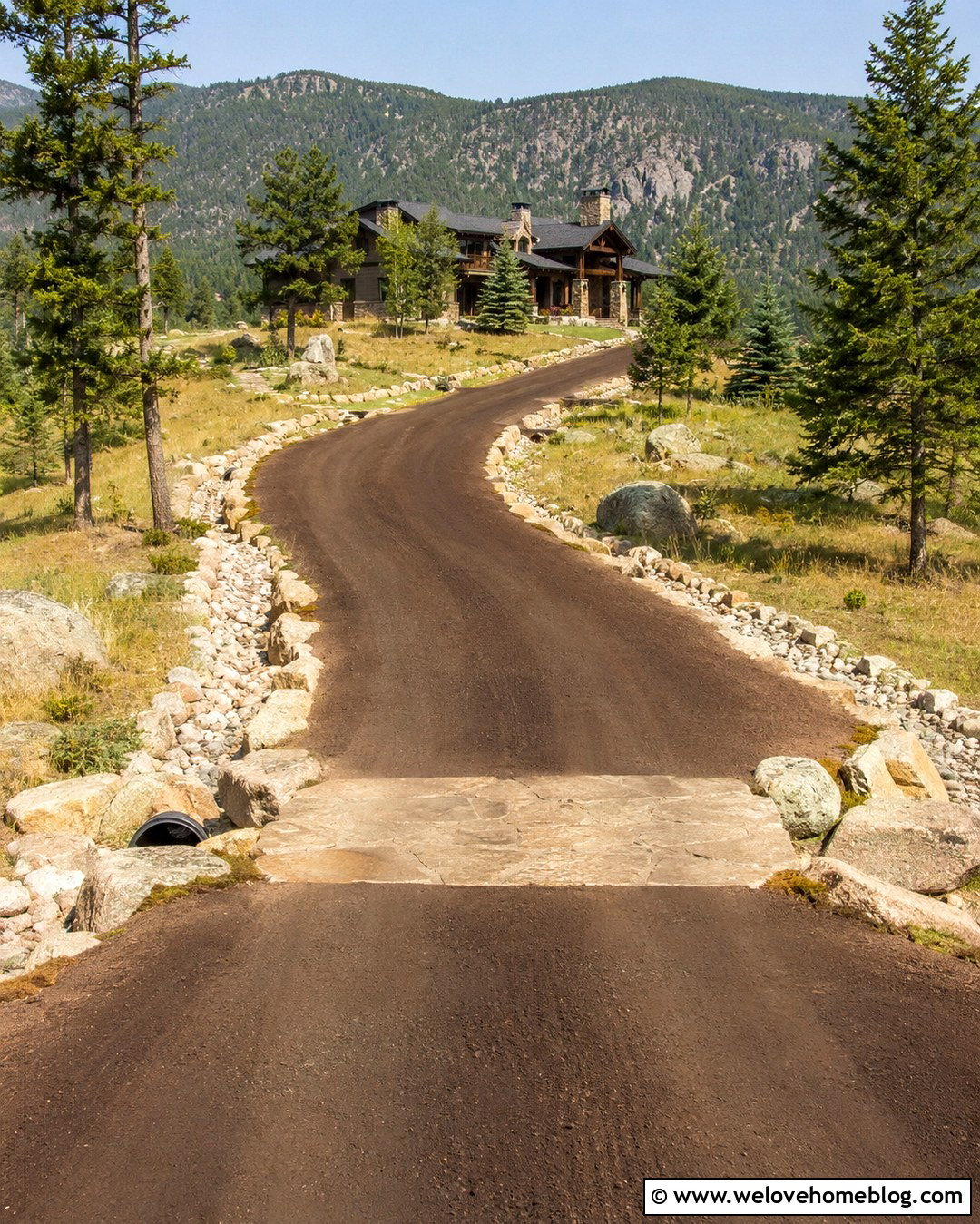
After a heavy downpour, the most valuable driveway feature may be the least decorative one. Shallow stone-lined ditches can collect runoff along a long dirt driveway and guide it toward an appropriate outlet. Use angular fieldstone or river rock in channels that follow the natural grade without creating steep, hazardous drop-offs beside the driving lane. Add native grasses and moisture-tolerant plants beyond the stones to soften the engineered appearance. Culverts may be needed where water crosses beneath the driveway, especially near the entrance or on sloped land. Drainage plans should always direct water away from the house, neighboring properties, and vulnerable slopes. Have a knowledgeable local contractor assess complicated runoff conditions. Paired with a crowned dirt surface, these landscaped channels create an attractive and highly practical country approach.
5. Dirt Driveway With Wildflower Borders
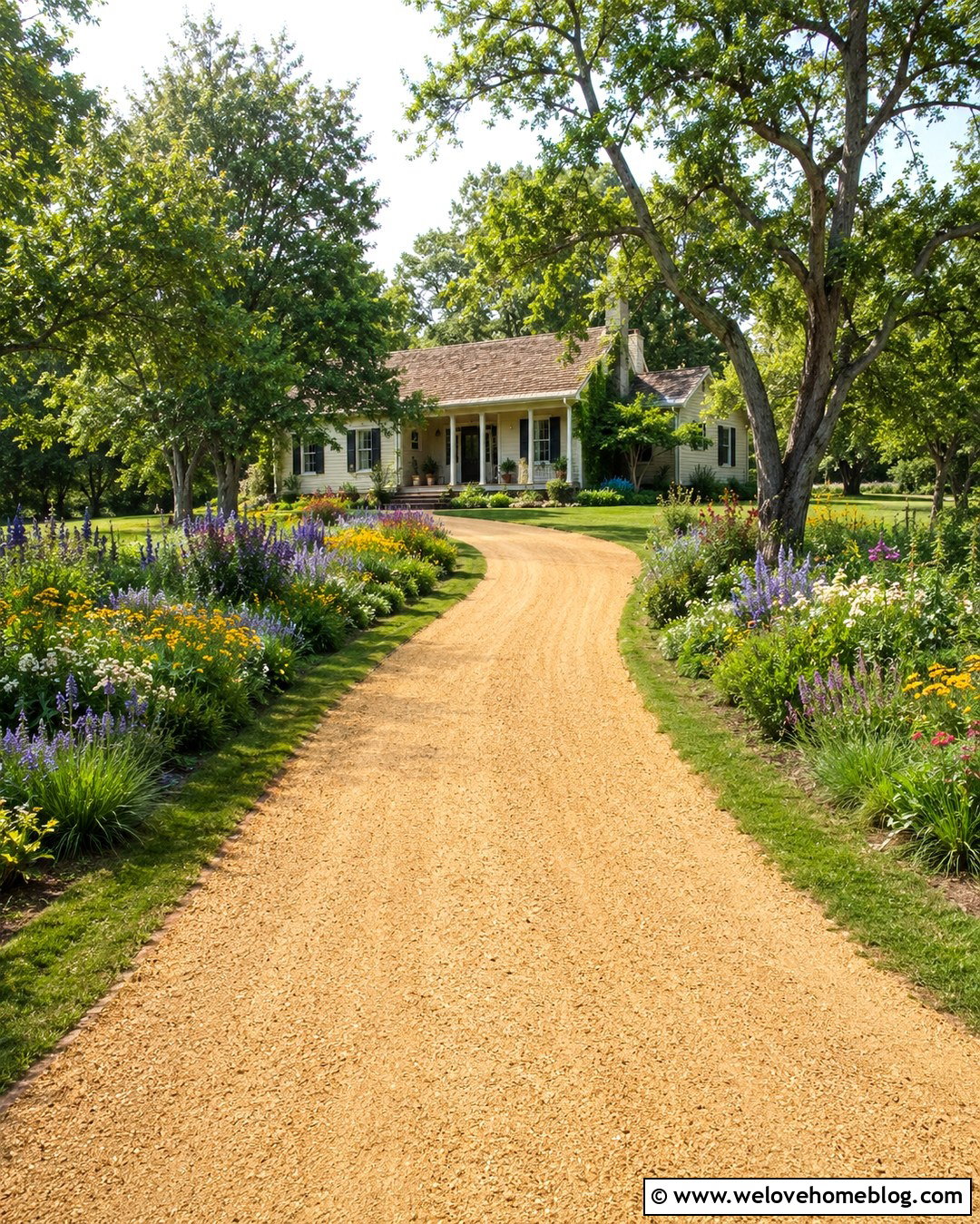
Imagine driving home between ribbons of color moving gently in the breeze. Wildflower borders can transform a plain dirt driveway into a relaxed meadow entrance while keeping the overall design affordable. Select regionally suitable native flowers and grasses that tolerate the site’s sun, soil, and seasonal moisture. Place shorter varieties near the driveway and taller plants farther back so the road remains visible. A narrow mowed strip between the compacted earth and planting bed creates a tidy edge and helps prevent vegetation from encroaching. Avoid placing dense growth where it could conceal drainage problems or block views at the road. Near the house, repeat several of the same flowers in more structured beds. This links the natural driveway landscape with the home’s maintained front yard.
6. Dirt Driveway With Split-Rail Fencing
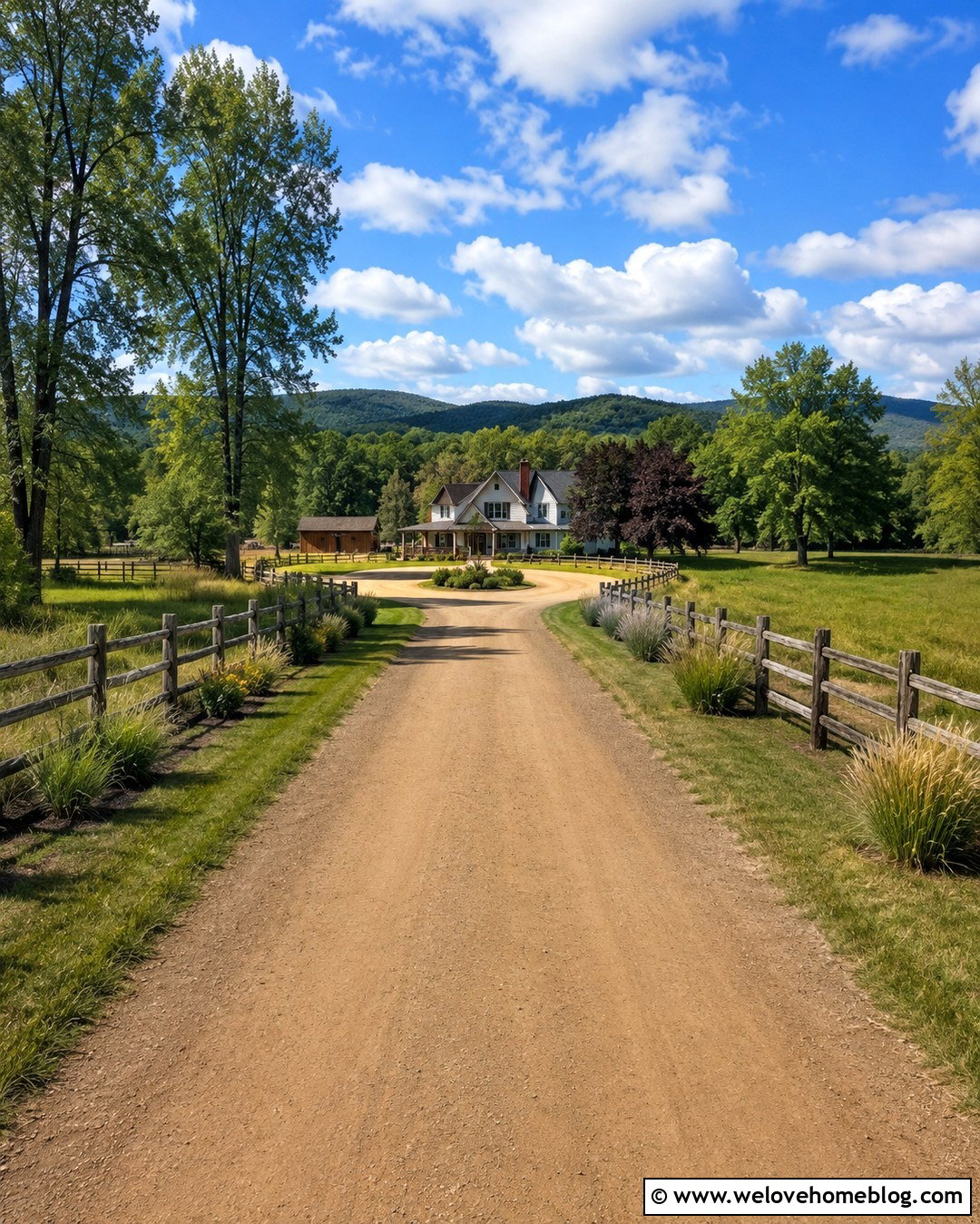
Few combinations feel more comfortably rural than compacted earth and split-rail fencing. Run the fence along one or both sides of the driveway, leaving enough setback for drainage, snow storage, mowing, and vehicle clearance. The long horizontal lines emphasize the length of the approach while creating a clear boundary between the drive and pasture, meadow, or lawn. Natural wood suits traditional farmhouses, log homes, and country cottages. Dark-stained rails offer a slightly more contemporary look. Plant simple groups of ornamental grasses or native shrubs at wider intervals rather than filling every section. At the entrance, flare the fence outward to make turning easier and improve visibility. This design feels organized and welcoming, yet it retains the informal character that makes a dirt driveway appealing.
7. Dirt Driveway With Brick Entrance Apron
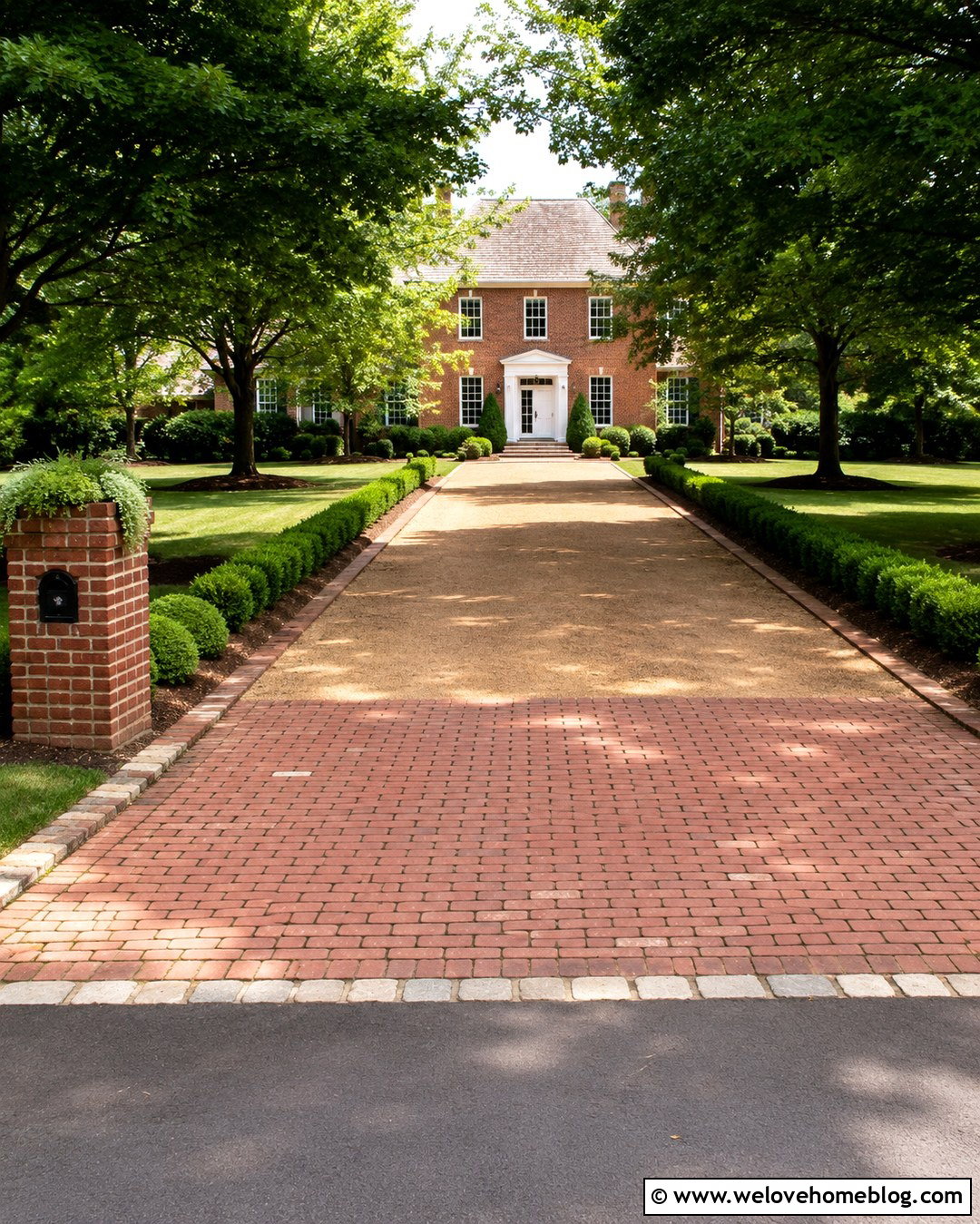
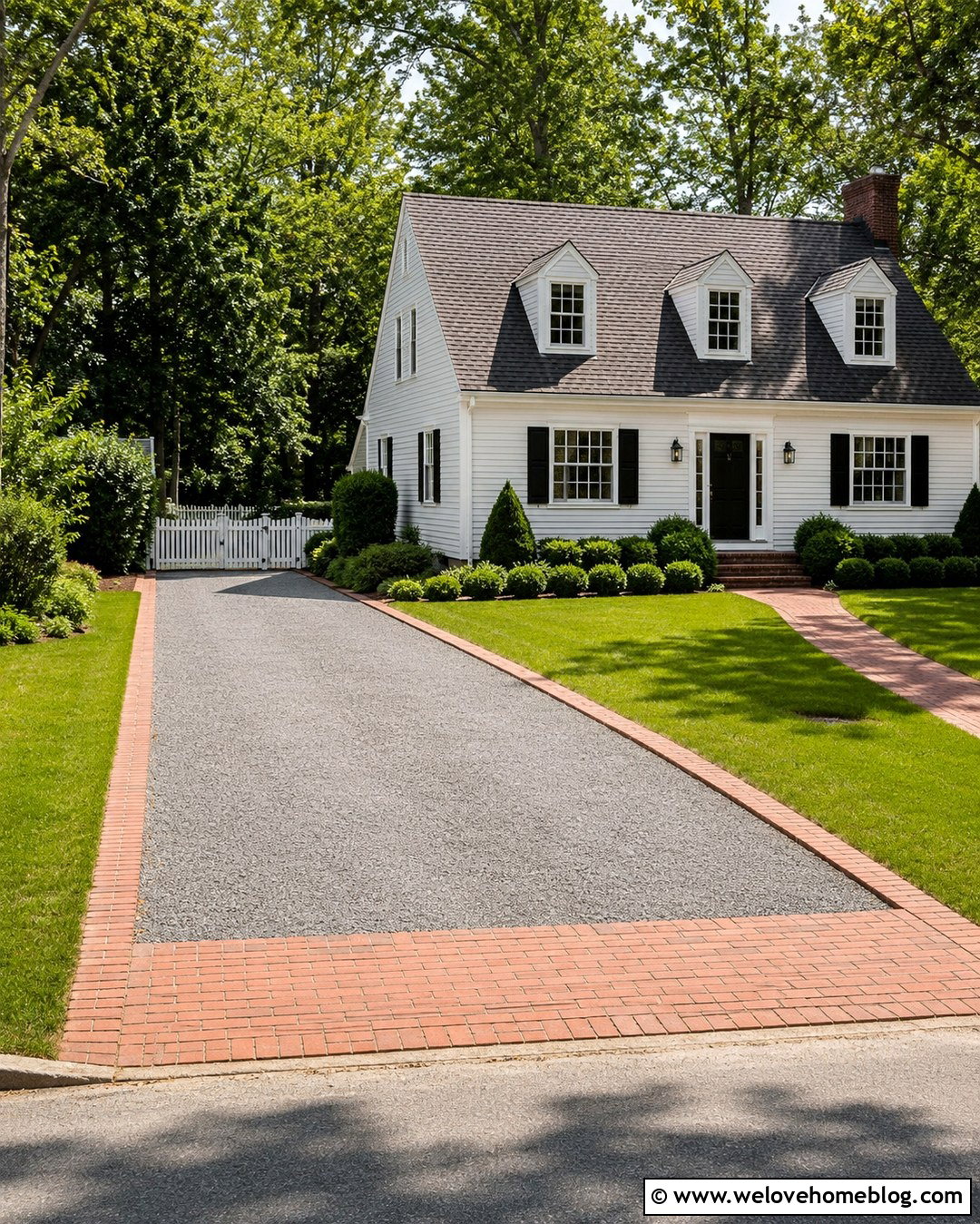
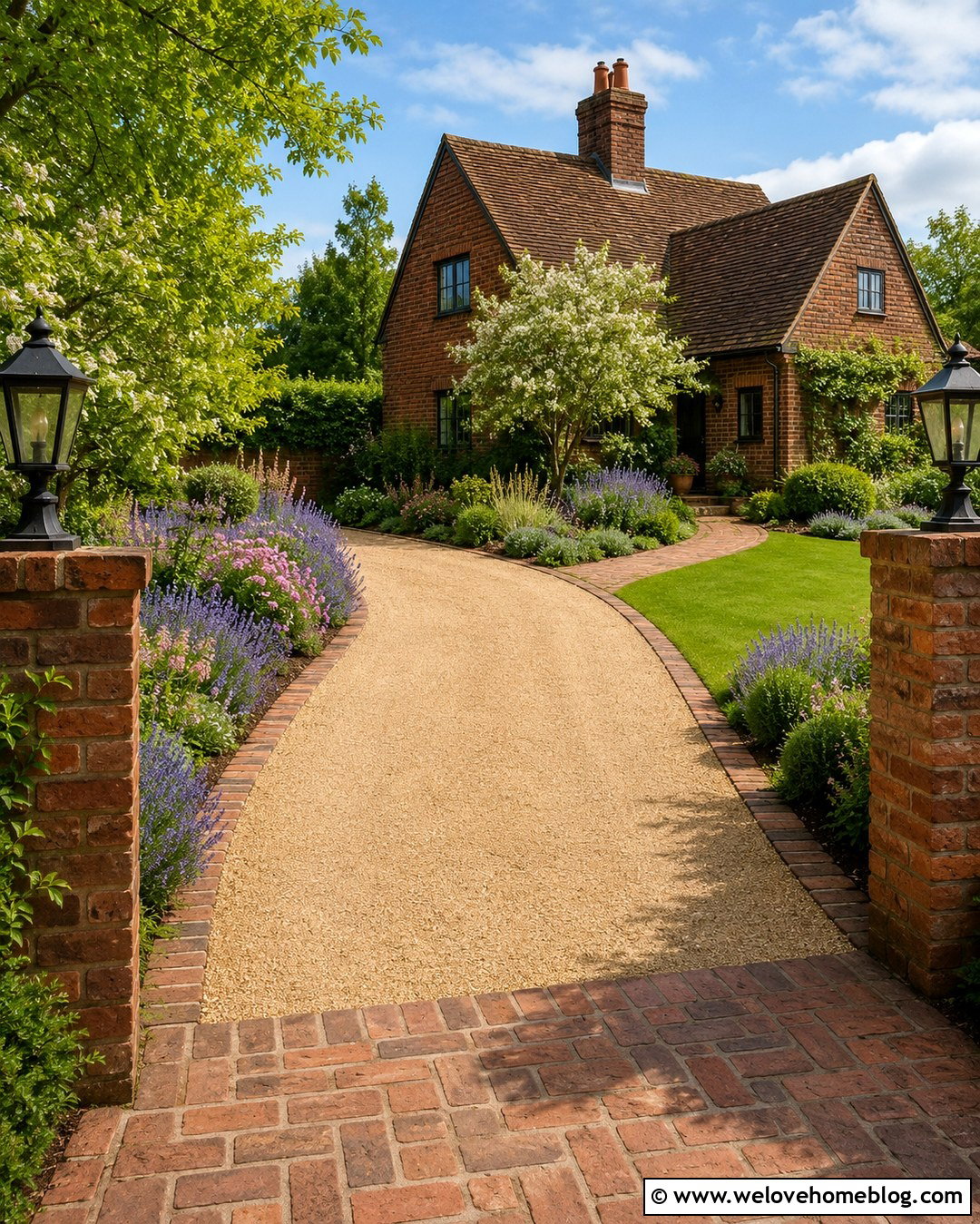
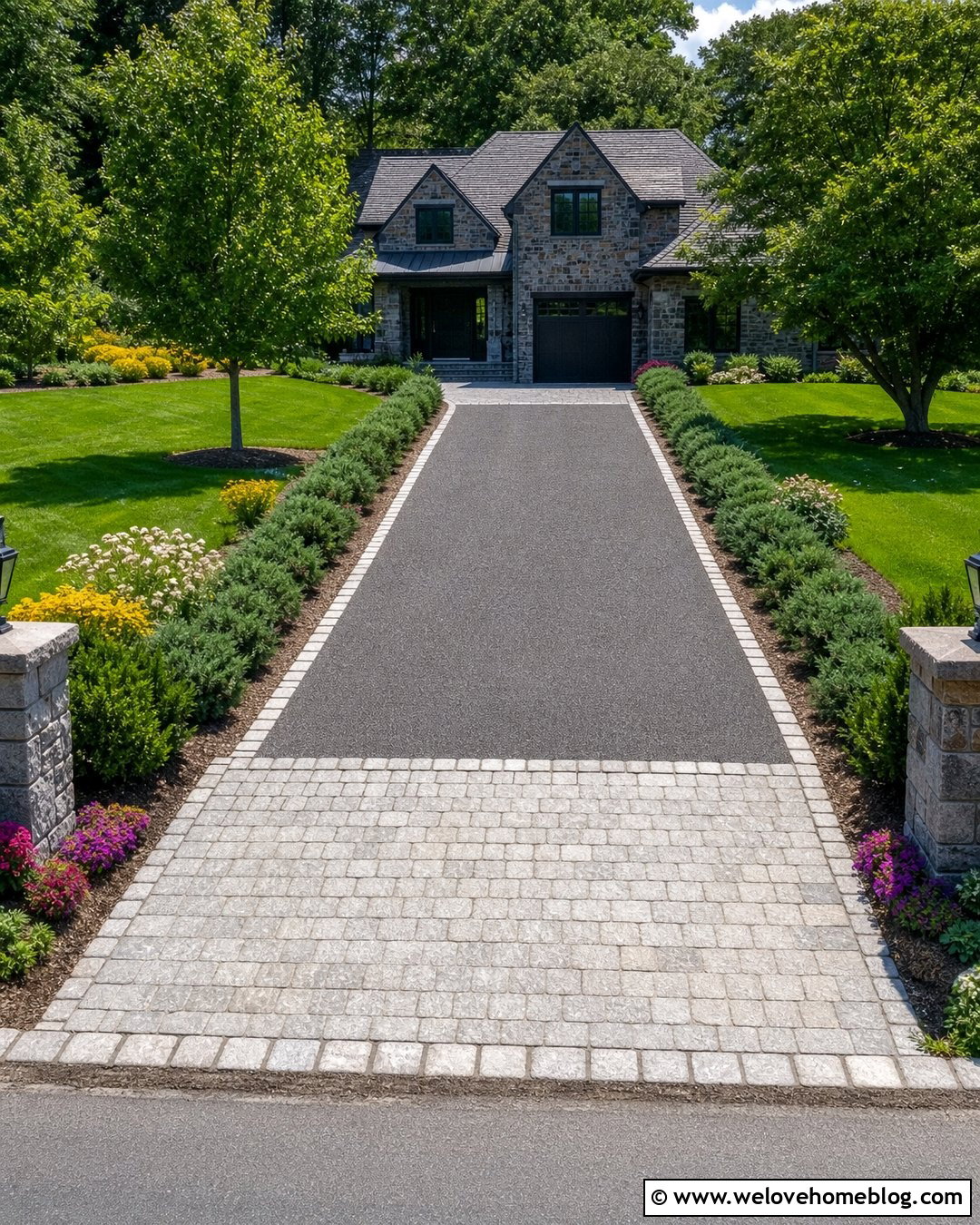
A brick apron can give a long dirt driveway a polished connection to the road. Use clay brick pavers across the first section of the entrance, then transition into firmly compacted earth. A wide apron helps visually announce the property and creates a durable-looking threshold where the driveway meets the street. Choose warm red brick for a colonial or traditional home, or muted brown brick for a rustic farmhouse. A soldier-course border can frame the paving and strengthen the visual transition. Continue the entrance with low hedges, simple lawn shoulders, and matching brick mailbox details. The brick does not need to run the full driveway length to make an impact. Concentrating a more refined material at the entrance provides curb appeal while allowing the long interior drive to remain natural and economical.
8. Dirt Driveway With Fieldstone Pillars
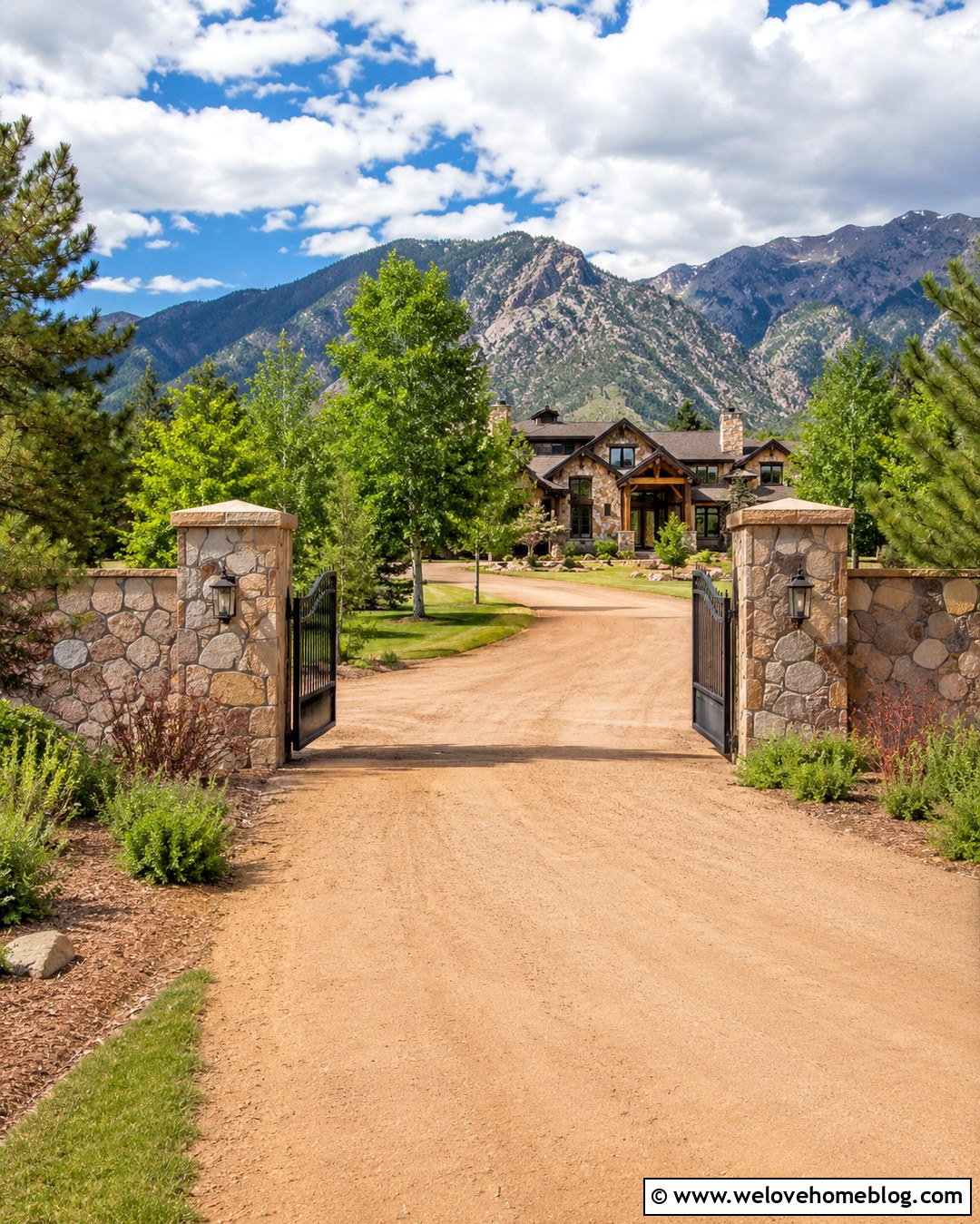
Fieldstone pillars create a substantial entrance without changing the relaxed surface of a long dirt driveway. Position them far enough apart for delivery trucks, trailers, and emergency vehicles to turn safely. The stone colors should relate to materials already present on the house, chimney, retaining walls, or nearby landscape. Low walls can extend briefly from each pillar, but they should not restrict sightlines toward the road. Add understated lantern-style fixtures, a metal gate left visually open, or a small address plaque sized for easy identification. Inside the entrance, allow the compacted dirt drive to curve gently through lawn or native planting. The contrast between rugged stonework and the warm earth surface feels balanced rather than formal. This look is ideal for mountain homes, ranch houses, and wooded country properties.
9. Dirt Driveway With Low Stone Borders
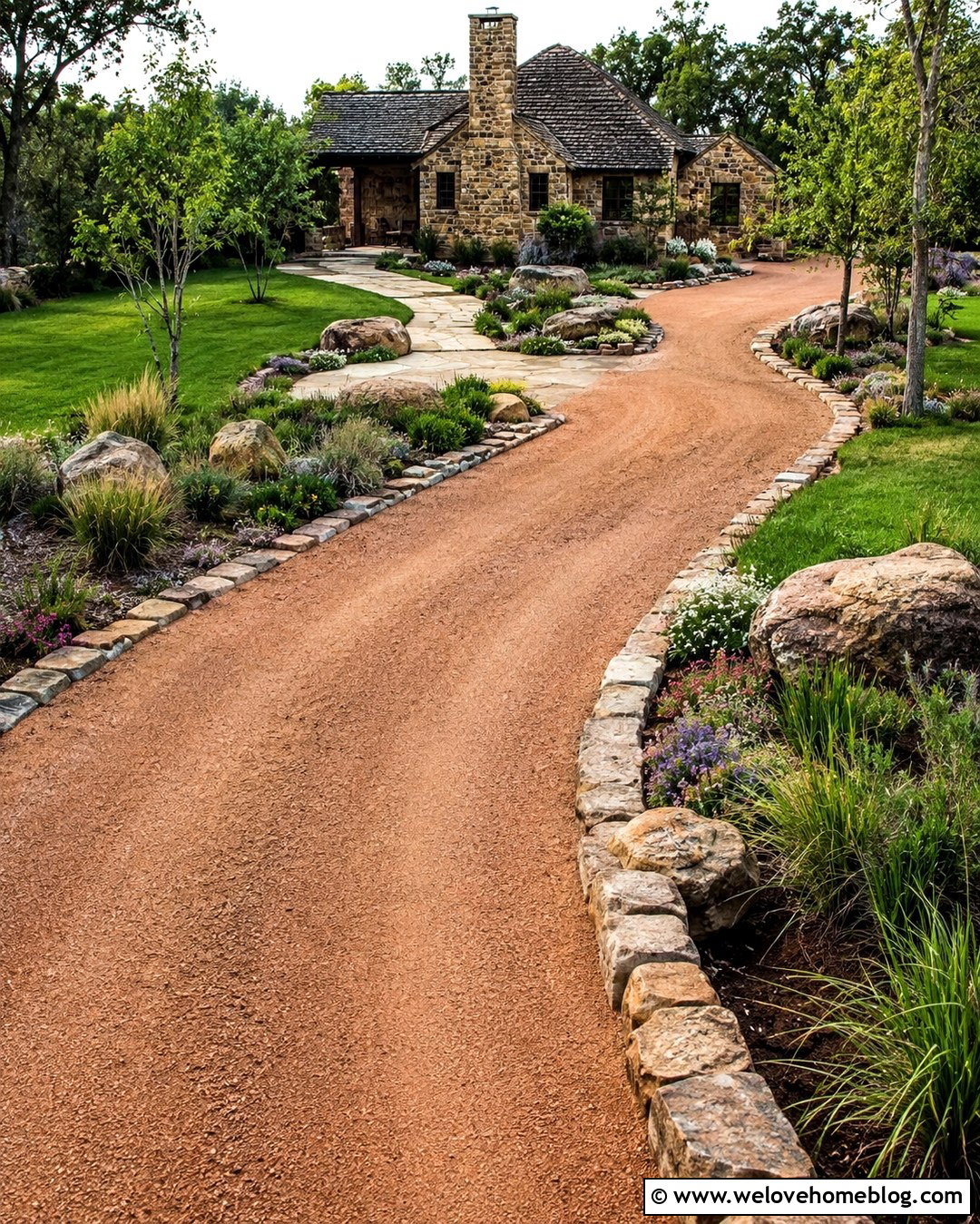
Low stone borders can give a dirt driveway crisp definition while preserving a natural appearance. Choose durable local stone with varied shapes and colors, then arrange it in a low, continuous line outside the usable driving width. The border should follow the driveway’s long curves instead of fighting them. Leave drainage breaks where runoff must move away from the surface, and avoid tall stones that could damage tires or complicate plowing. Stone containment is useful where soil repeatedly spreads into nearby planting areas, but the road base and grading still need to handle the primary structural work. Large rocks and riprap can also help protect erosion-prone shoulders. () Complete the design with native grasses, scattered boulders, and a stone-accented house in the distance.
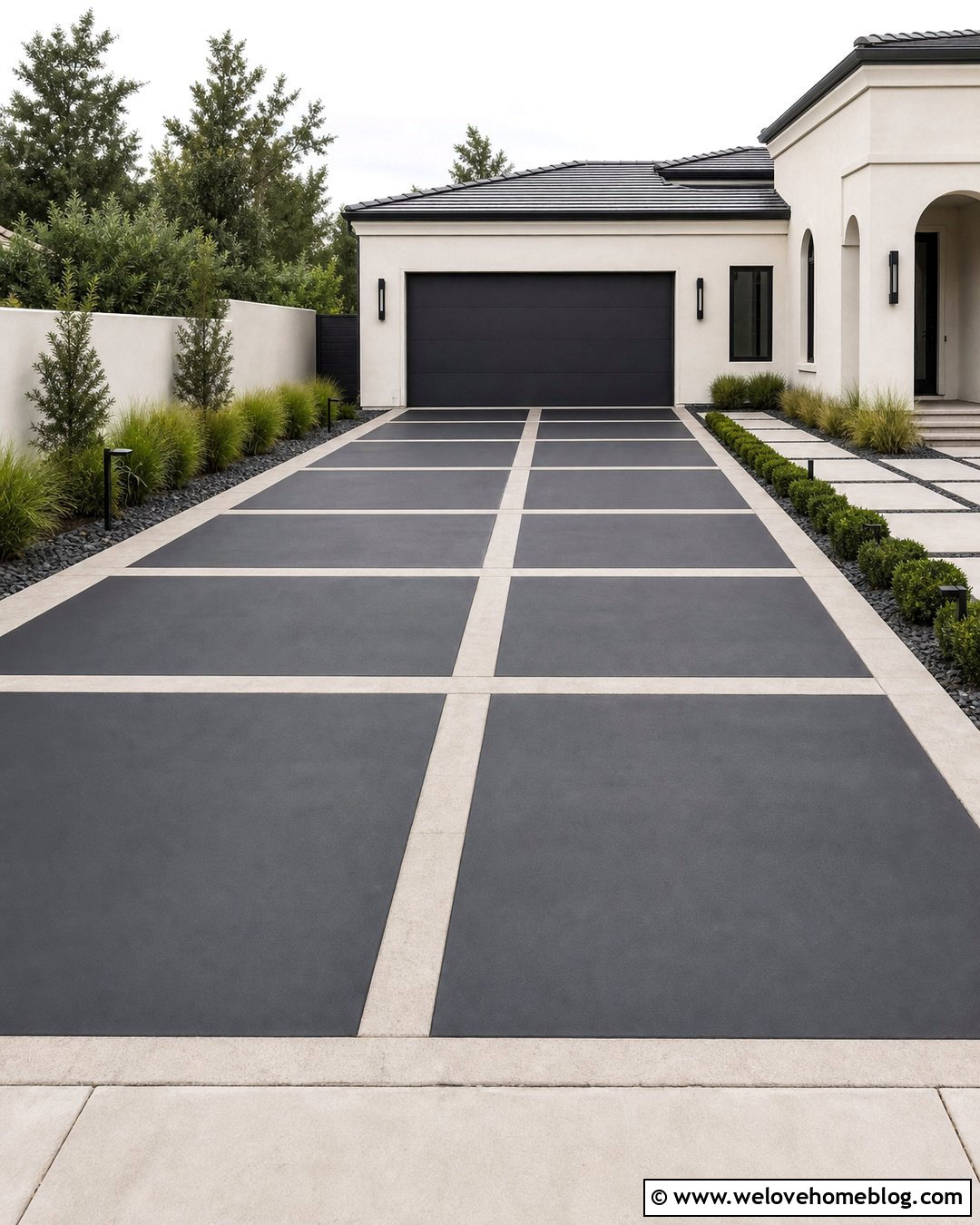
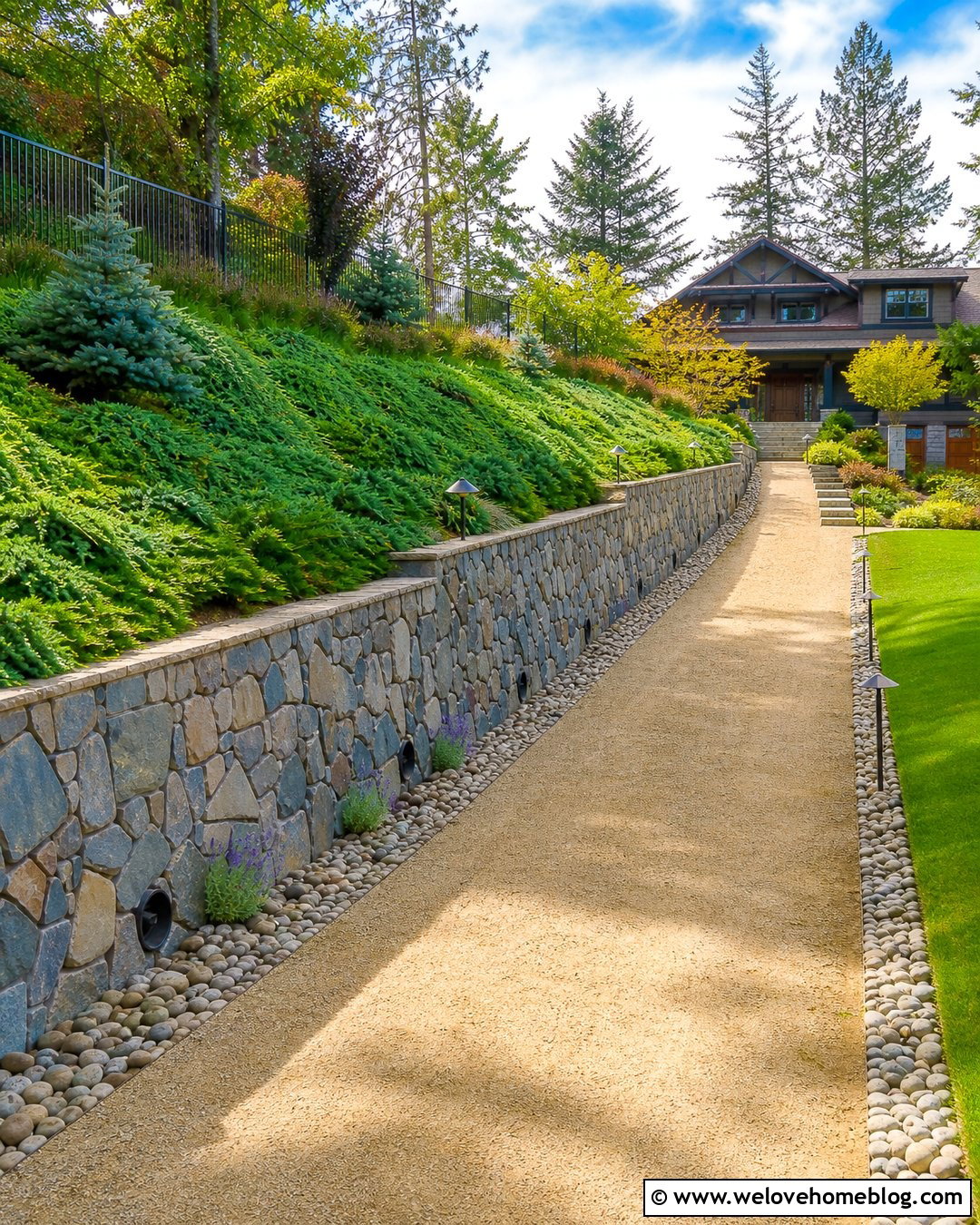
10. Dirt Driveway With Tree-Lined Entrance
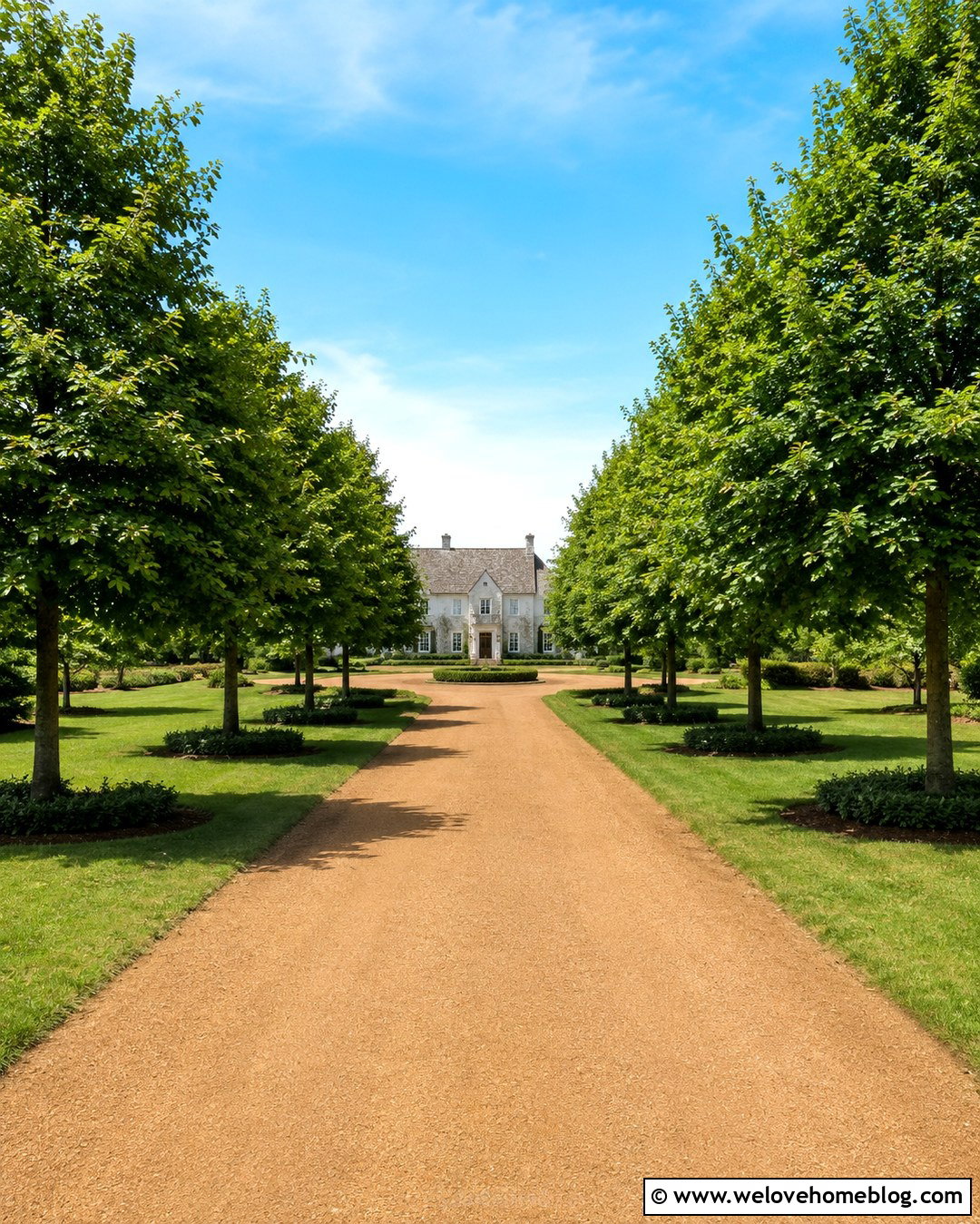
A tree-lined dirt driveway can create a memorable sense of arrival, especially across a broad, open property. Rather than planting trees directly beside the road, set them back far enough to allow mature root systems, drainage work, and safe vehicle movement. Even spacing produces a formal avenue, while loose groupings feel better suited to a farmhouse or rural cottage. Choose species adapted to your climate and available growing space. Underplant them with grass, low groundcovers, or a simple mulch ring that will not spill into the driving surface. Maintain open views near the public road and around curves. As the trees mature, their canopies can frame the approach without overwhelming it. A wide dirt turnaround near the home completes this classic landscape and gives the long drive a clear destination.
11. Dirt Driveway With Solar Marker Lights
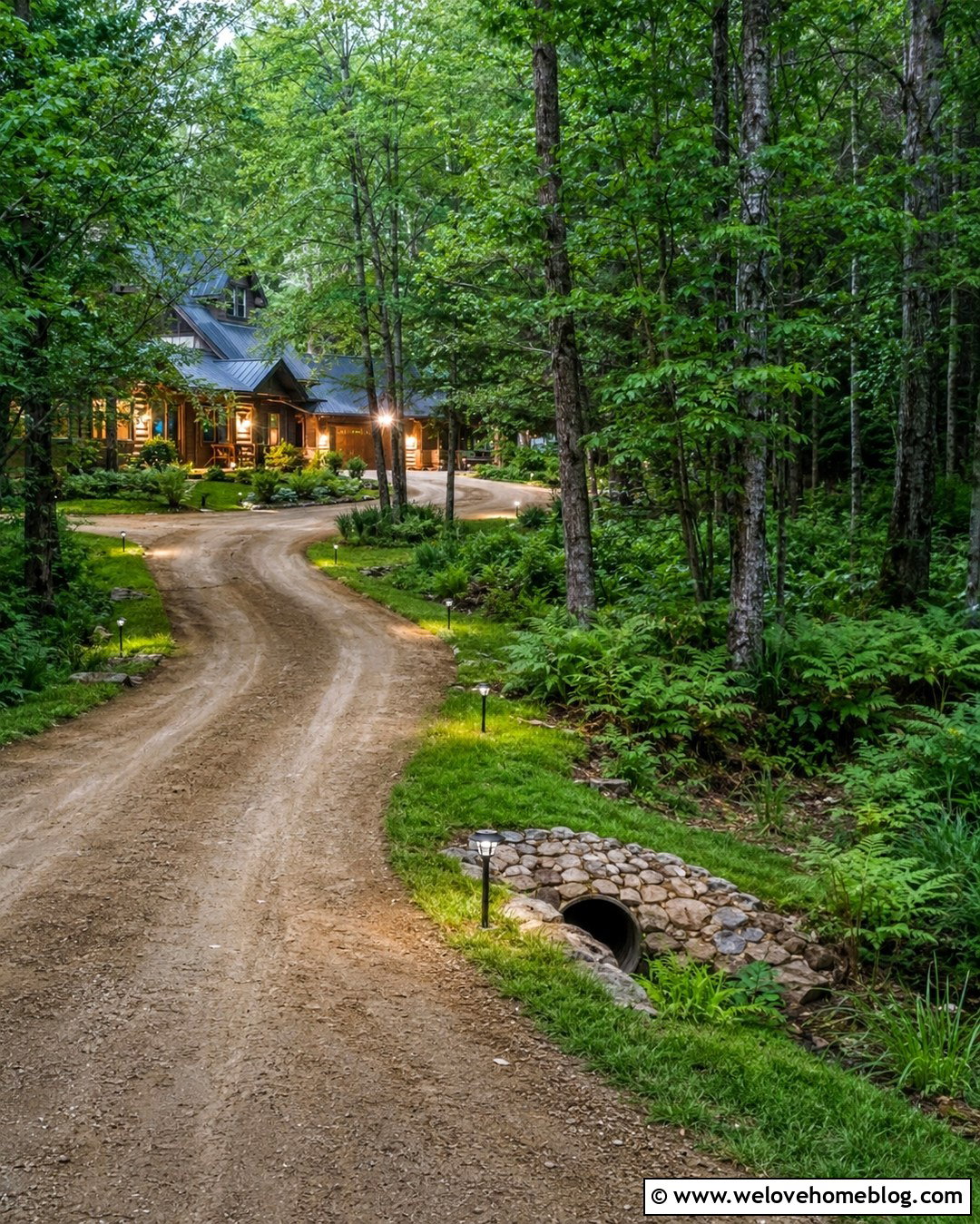
Long driveways can be difficult to follow after sunset, especially where the route bends through open land or trees. Low solar marker lights provide visual guidance without requiring electrical trenching along the entire drive. Place them at important points such as curves, culvert crossings, entrance pillars, and the final approach to the house. Avoid lining every foot with fixtures, which can make a rural setting look like a runway. Choose simple black, bronze, or weathered metal designs that coordinate with the house. During the day, the compacted dirt surface remains the focus, framed by mowed grass and restrained planting. For dependable safety lighting at the gate or parking area, consider professionally installed low-voltage fixtures. The finished look remains understated while making the driveway easier for guests to navigate.
12. Dirt Driveway With Native Grass Shoulders
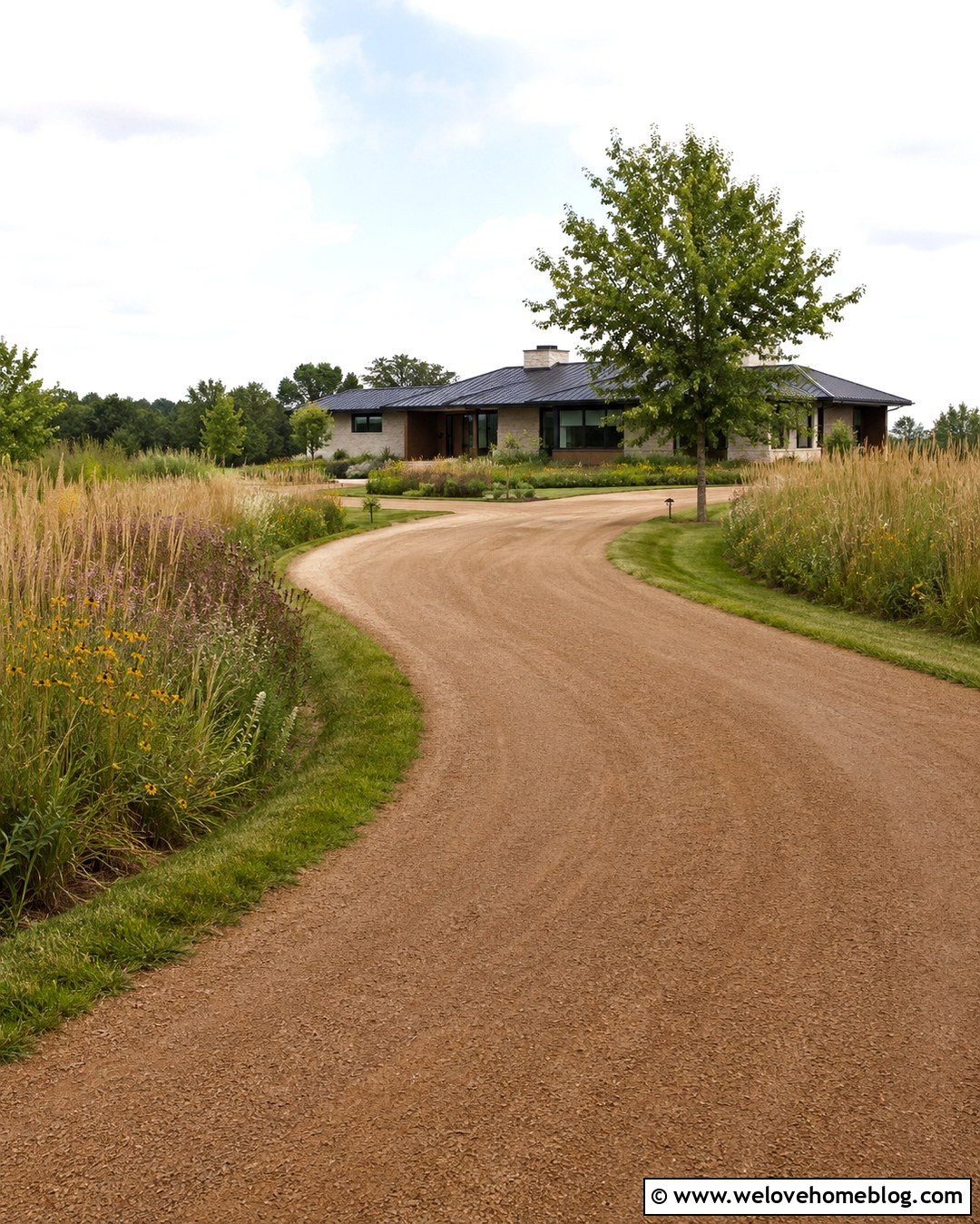
Native grass shoulders create a soft transition between a dirt driveway and the wider landscape. This approach works particularly well on prairie-style lots, modern ranch properties, and homes surrounded by natural acreage. Begin with a compacted, gently crowned dirt road and maintain shallow shoulders that move water away from the driving surface. Plant clumping grasses beyond the drainage zone, choosing varieties that will not lean heavily into the roadway. Mix two or three compatible species to vary height and texture while keeping the palette simple. Mow or trim an occasional clean strip near the edge for a cared-for appearance. Around the house, repeat the grasses in organized foundation beds. The flowing foliage softens the long road, reduces the need for continuous lawn, and makes the driveway feel integrated with the property.
13. Dirt Driveway With Farm Gate
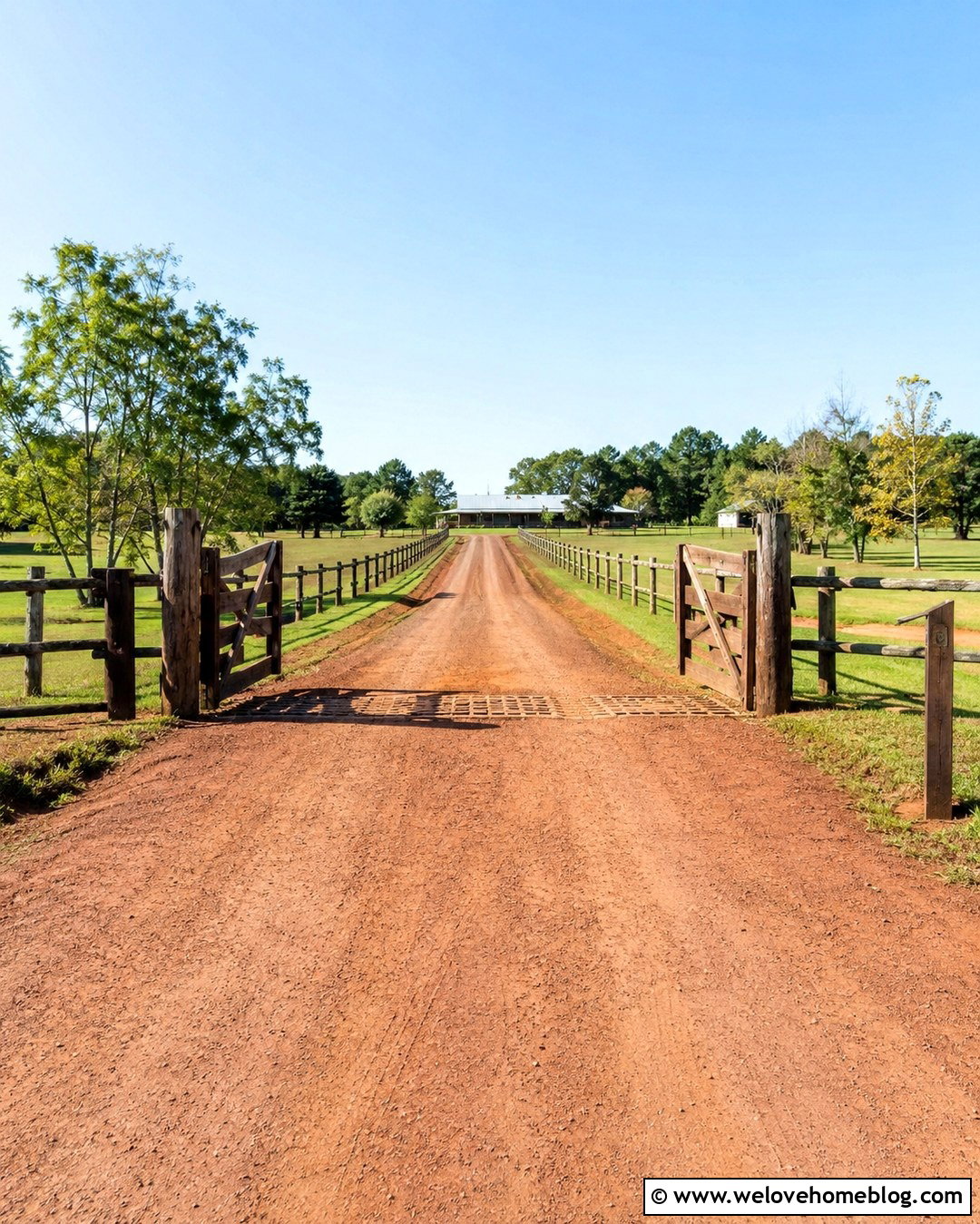
A farm gate gives a long dirt driveway a strong focal point and establishes a clear property entrance. A simple metal tube gate suits working land, while a stained wood gate feels warmer beside a farmhouse or equestrian home. Set the gate back from the public road so a vehicle can pull completely off the street before stopping. Support it with sturdy timber posts or masonry pillars designed for the gate’s weight. The surrounding driveway should remain wide, level, and well drained, with a compacted earth surface and durable shoulders. Add a separate pedestrian opening if people regularly enter on foot. Fencing, pasture grass, and a modest address marker can complete the scene. Keep decoration restrained so the entrance remains practical for equipment, deliveries, and everyday traffic.
14. Dirt Driveway With Desert Landscaping
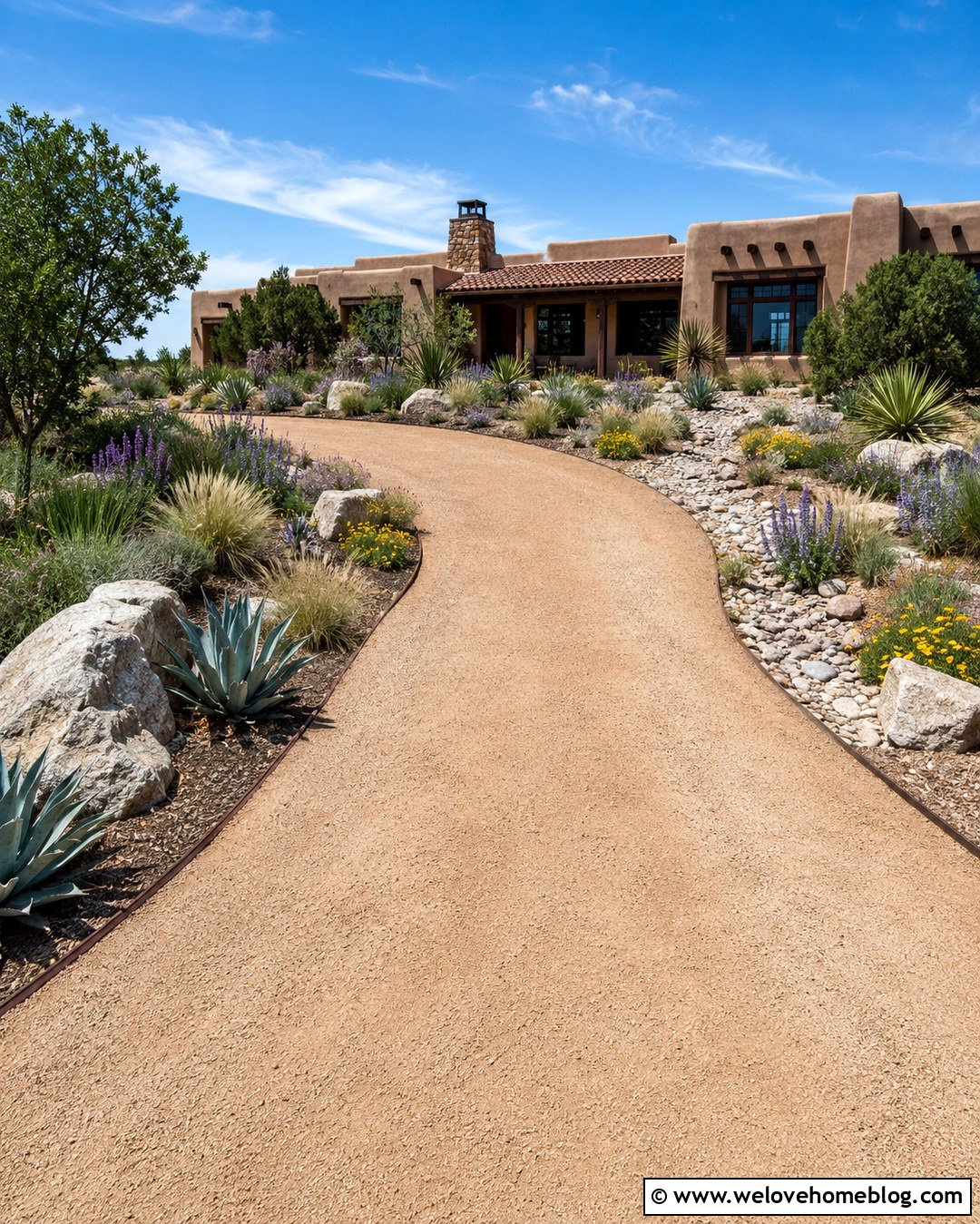
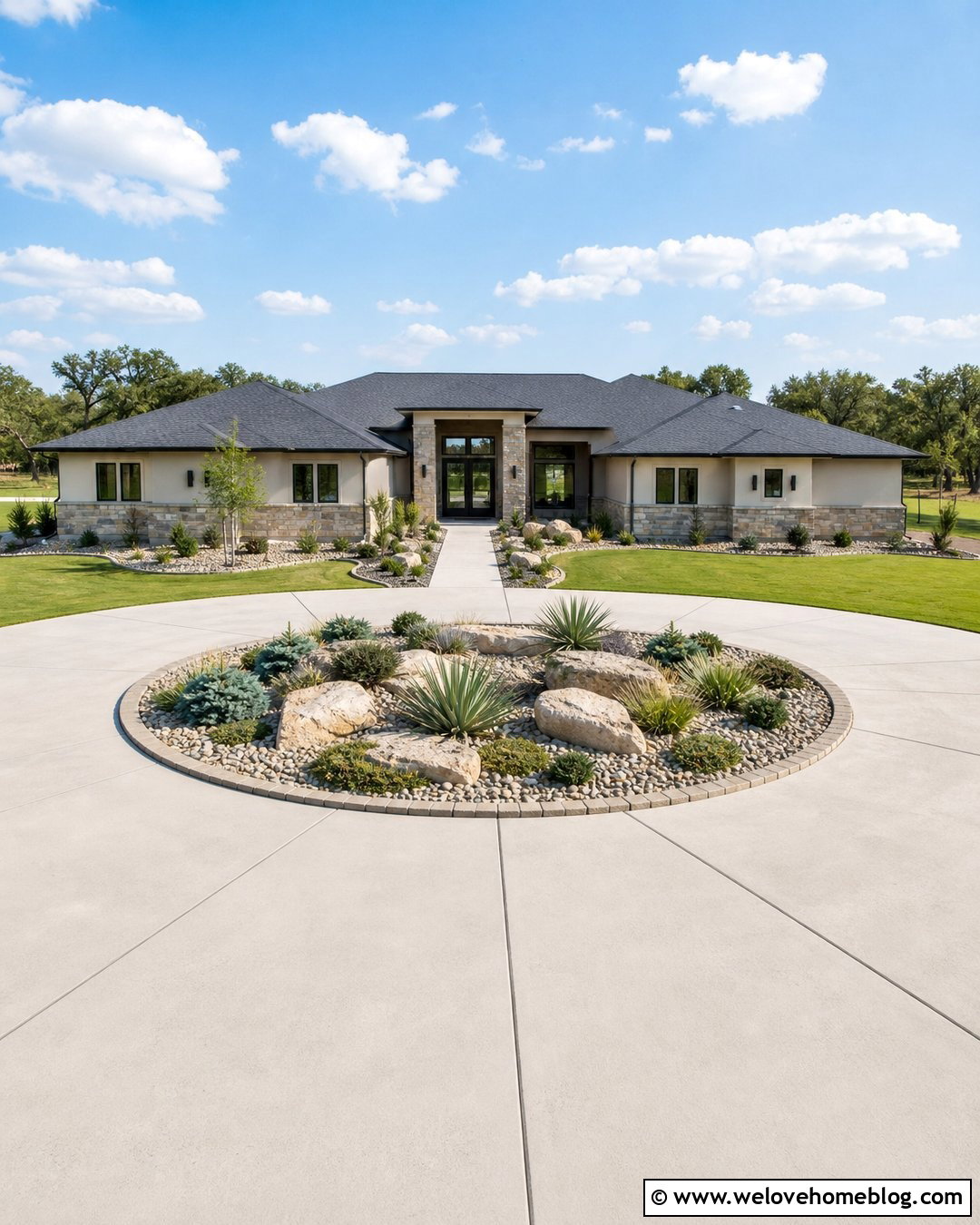
In a dry setting, warm compacted earth can blend beautifully with drought-conscious landscaping. Shape the long dirt driveway with a broad curve that follows the natural contours of the land. Use weathered steel edging or carefully placed rocks only where extra definition is needed. Along the shoulders, combine decomposed rock mulch, agave, yucca, native bunchgrasses, and low flowering plants appropriate for the local climate. Maintain generous open space around spiky plants so they do not threaten tires or passengers. A stone-lined swale can become part of the visual design while moving occasional stormwater away from the road. Near the house, repeat the same materials in cleaner geometric beds. This unified palette complements adobe homes, Southwestern ranch houses, and low-profile contemporary architecture without requiring a traditional green lawn.
15. Dirt Driveway With White Farmhouse Landscaping
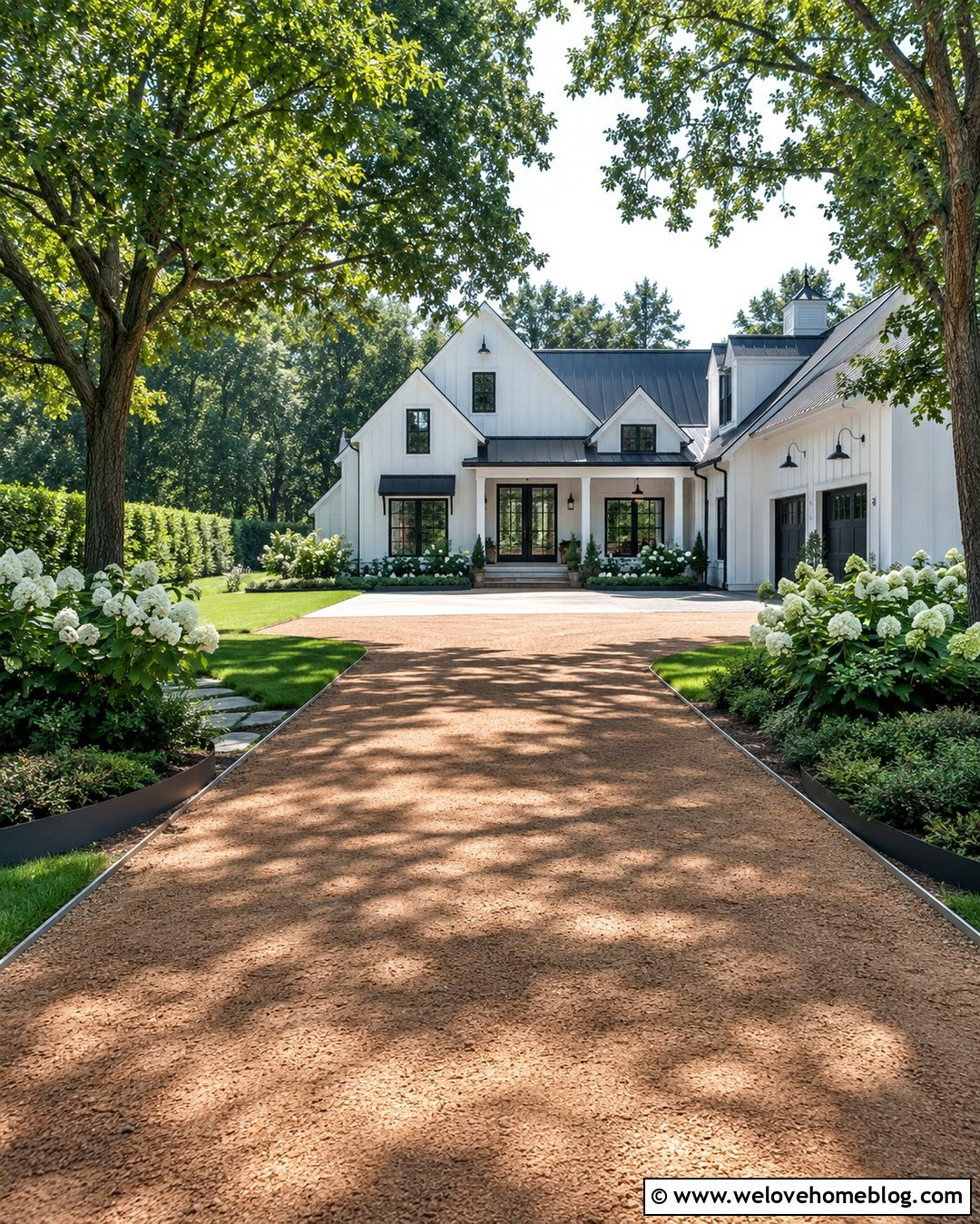
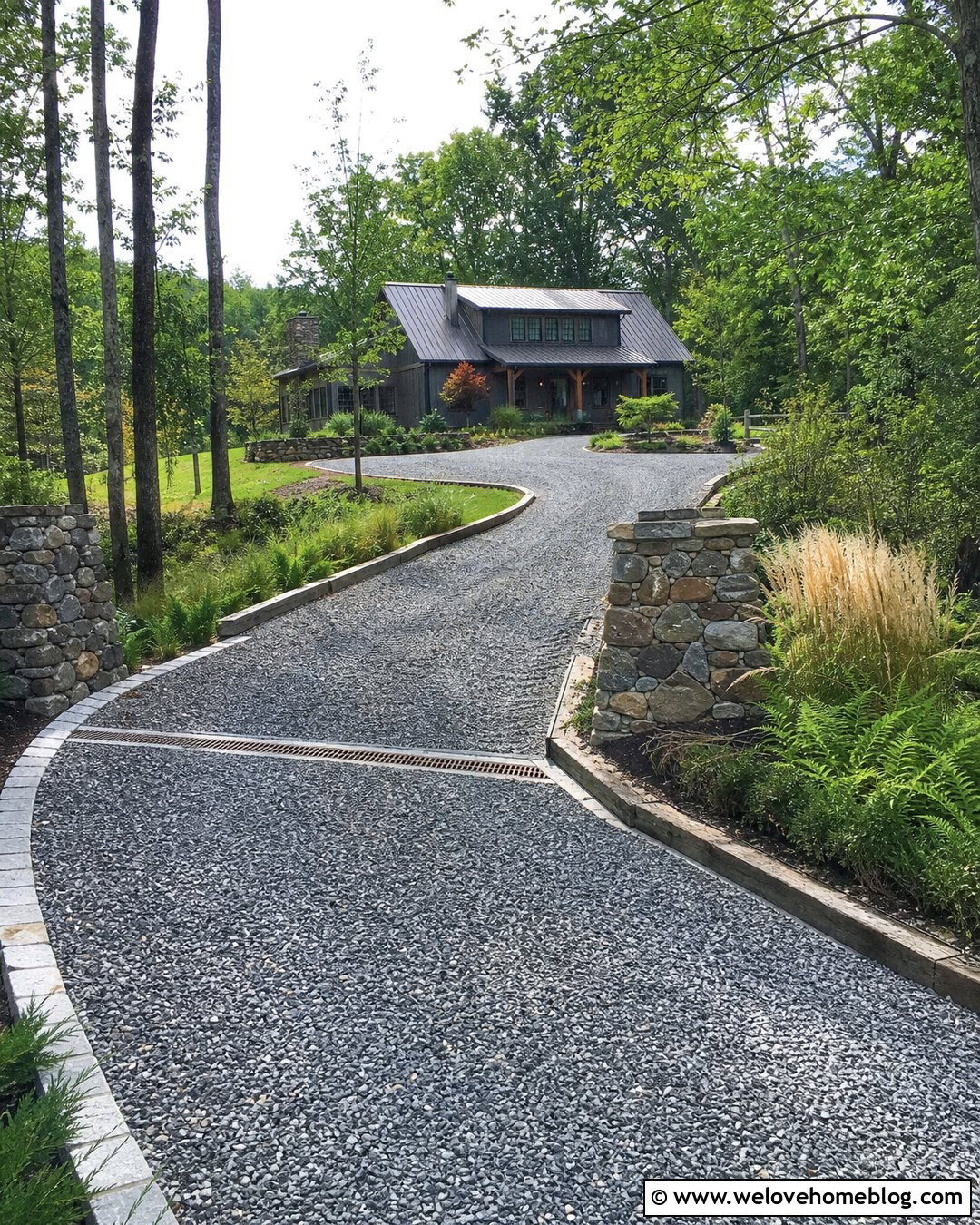
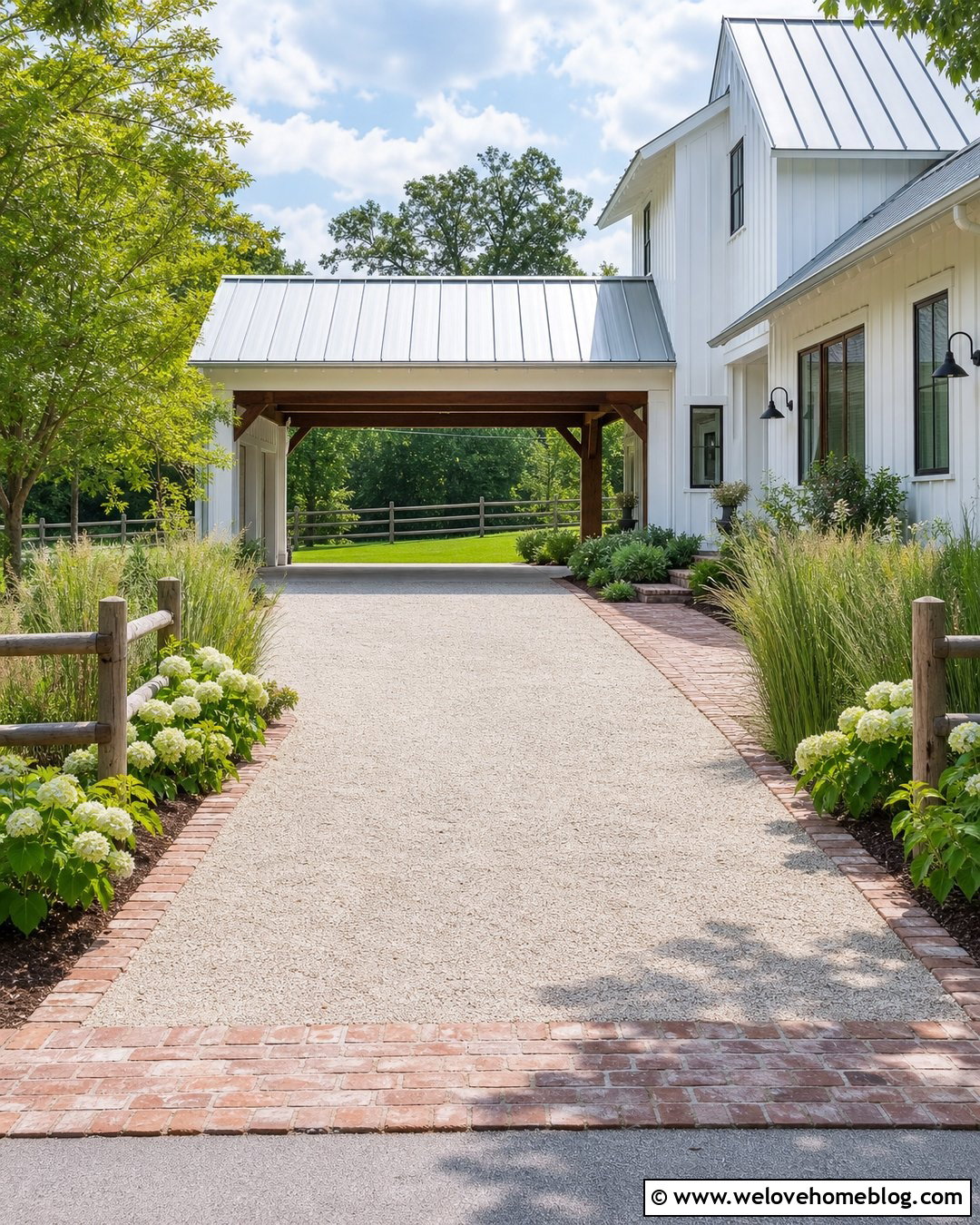
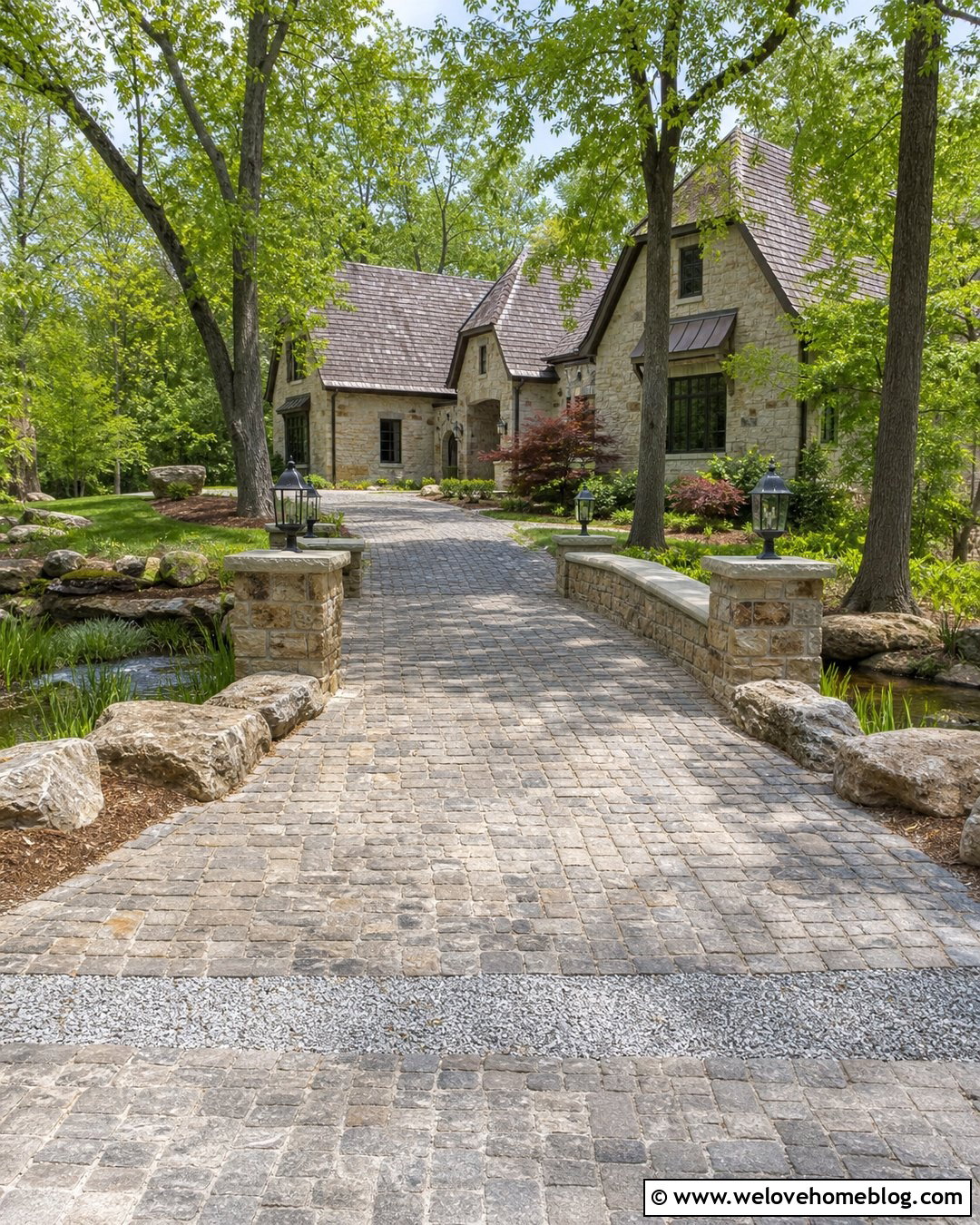
A warm brown dirt driveway creates an appealing contrast against a white farmhouse. Keep the route mostly straight, then widen it into a practical parking and turning area near the home. White flowering shrubs, clipped green hedges, and simple lawn borders can make the informal surface appear intentional. Use galvanized steel or low stone edging around the planting beds rather than along every foot of the driveway. Near the front porch, connect the parking area to a brick or natural flagstone walkway. A pair of broad shade trees can frame the house without crowding the road. Black barn lights, a wood mailbox, and understated fencing bring the full composition together. The result combines farmhouse character with clean organization, making a basic dirt driveway feel like a deliberate part of the property.
16. Dirt Driveway With Passing Bay
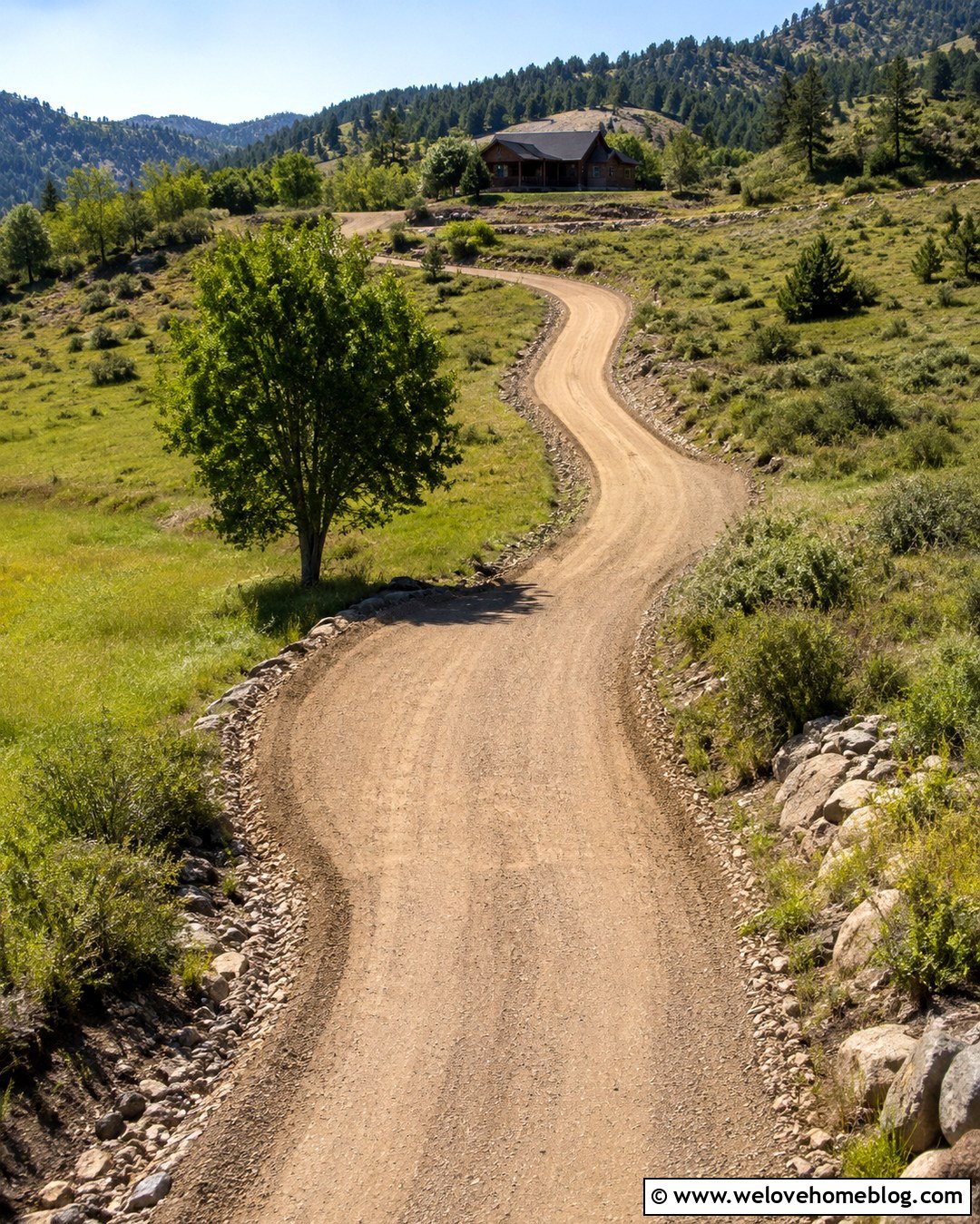
A passing bay is a smart addition when a dirt driveway is too narrow for two vehicles to meet comfortably. Choose a visible, relatively level point about midway between the road and the house. Widen the compacted earth surface gradually rather than creating an abrupt rectangular pocket. Matching soil color and finish will make the bay feel like part of the driveway instead of an afterthought. Reinforce the outer shoulder where repeated turning could cause wear, and preserve a clear drainage route around the widened section. Low shrubs, meadow grass, or a single shade tree can frame the bay without blocking visibility. Near the house, include a separate turnaround so drivers do not need to reverse down the full length. This layout improves daily convenience while keeping the driveway simple and rural.
17. Dirt Driveway With Rustic Retaining Wall
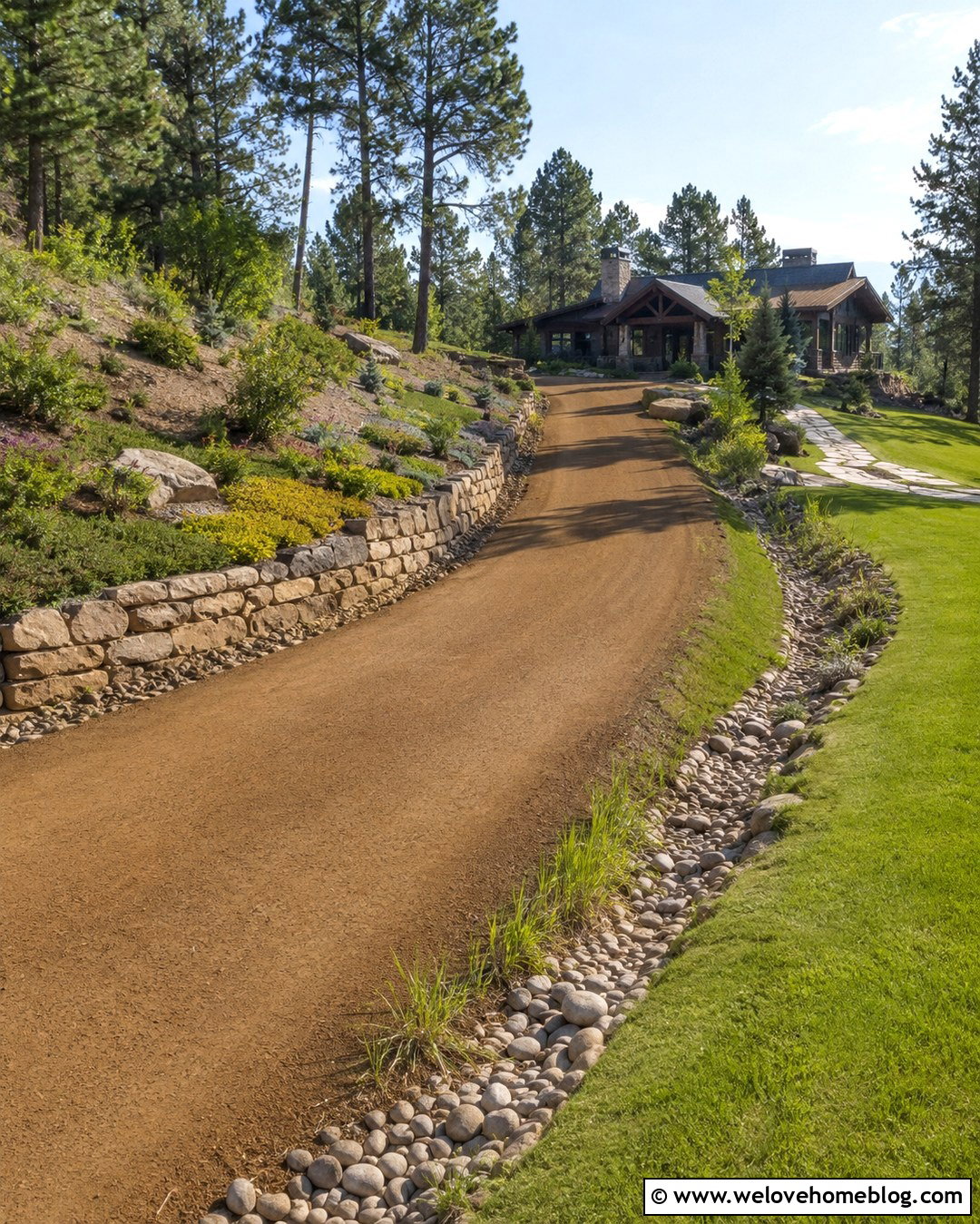
A low retaining wall can help a long dirt driveway sit more comfortably against a sloped landscape. Natural fieldstone, stacked ledgestone, or weathered concrete block can hold back the uphill side while giving the route a defined edge. The wall should be professionally designed if it carries a substantial soil load or sits near vehicle traffic. Include appropriate drainage behind it so water pressure does not build up. On the opposite side, use a wide planted shoulder or stone-lined swale to manage runoff. Cascading groundcovers and small native shrubs can soften the top of the wall without hiding its structure. Keep the compacted dirt lane wide enough for comfortable travel. This complete design works beautifully near hillside cabins, mountain homes, and wooded properties with changing elevations.
18. Dirt Driveway With Covered Bridge Entrance
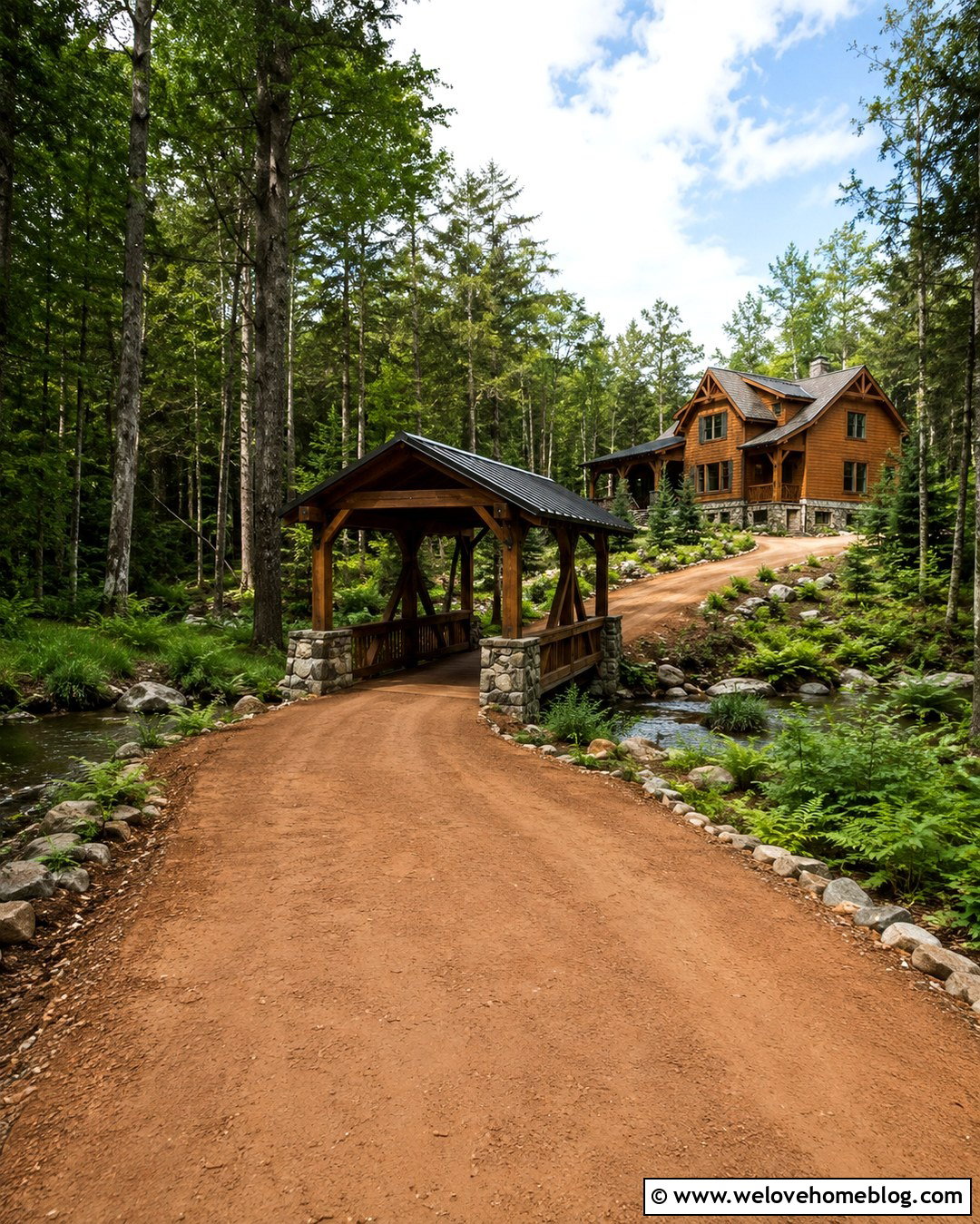
For a property with a stream or deep drainage crossing, a small covered bridge can become an unforgettable part of the approach. The long compacted dirt driveway should lead naturally toward the structure, with wide curves and clear views before the crossing. Use timber siding, a simple metal roof, and stone abutments that coordinate with the architecture of the home. Structural design, load capacity, permits, flood conditions, and emergency access require professional planning. Keep landscaping low near both ends of the bridge so drivers can see the full entrance. Native ferns, grasses, and streamside plants can soften the setting without interfering with water flow. Beyond the bridge, continue the same dirt surface toward a country house or cabin, creating one cohesive and highly distinctive arrival sequence.
19. Dirt Driveway With Circular Turnaround
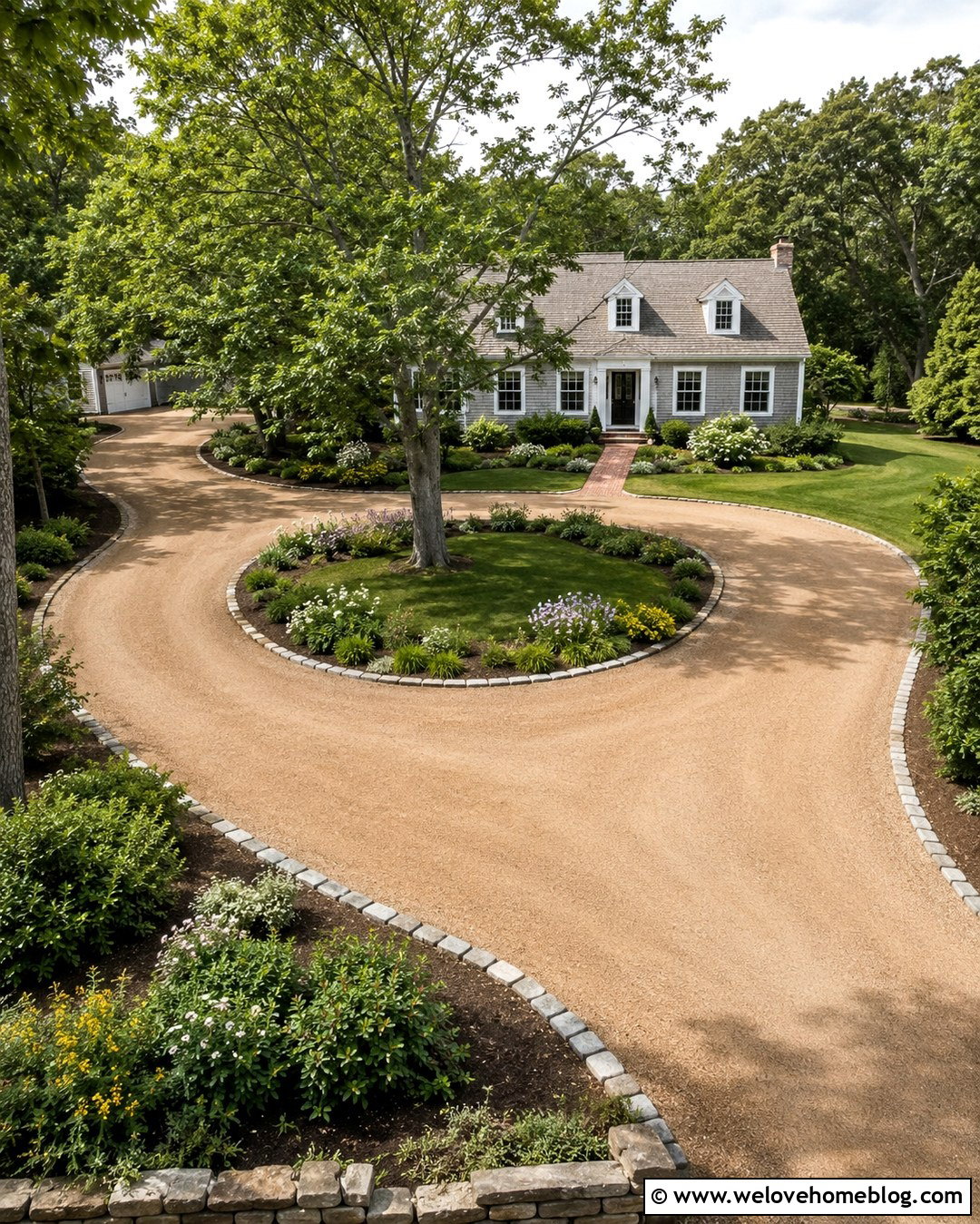
A circular turnaround makes the end of a long dirt driveway easier to use and more attractive. Center the loop on a lawn island, mature tree, native planting bed, or simple group of boulders. The compacted dirt surface should be wide enough for regular vehicles to circulate without driving over the interior landscape. If larger trucks frequently visit, provide a broader turning radius and stable shoulders. Shape the surface so water moves away from the center and does not create muddy tire tracks at the lowest point. A walkway can connect the loop directly to the front porch, while a separate branch leads to the garage. Repeating the same edging and plants used along the driveway creates continuity. This layout feels gracious while eliminating awkward reversing near the house.
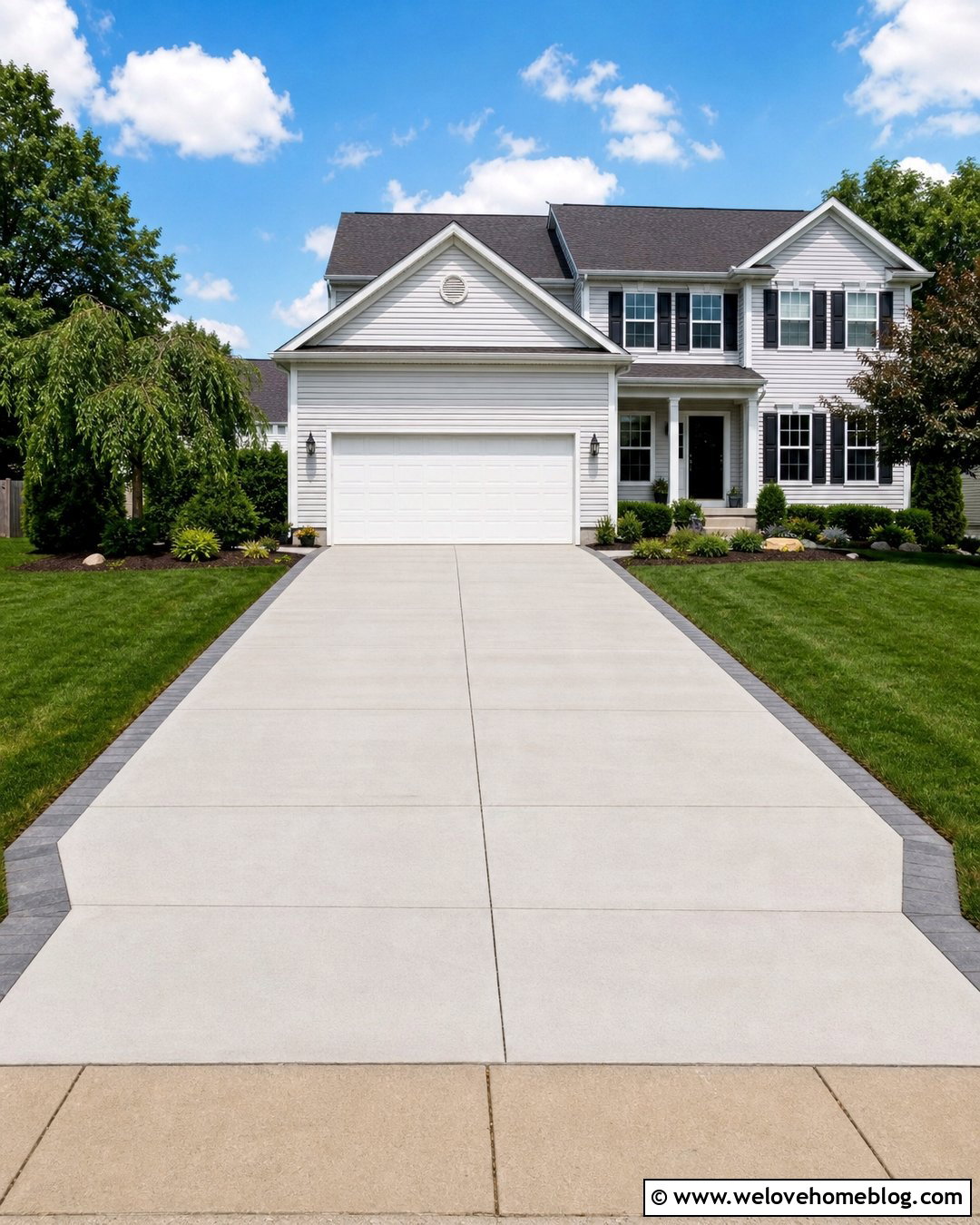
20. Dirt Driveway With Country House Approach
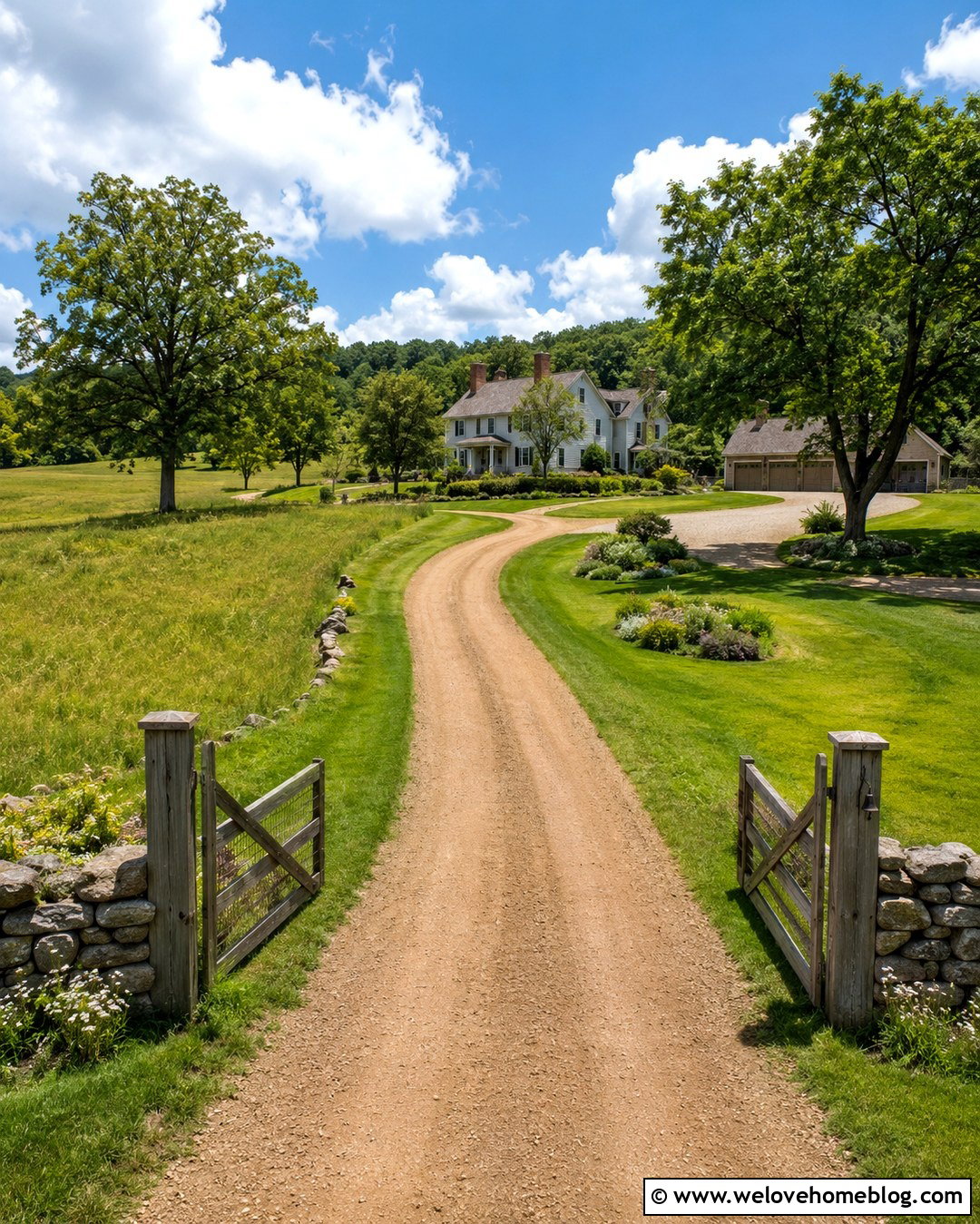
Sometimes the strongest design is also the simplest. A gently curving dirt driveway can travel through open lawn, pasture, or meadow before arriving at a traditional country house. Keep the earth surface broad, smooth, and visually consistent, with a subtle crown and unobstructed shoulders. Add a few carefully selected features rather than decorating the entire length. A wood gate can mark the entrance, mature trees can frame the middle distance, and stone borders can define the final approach near the home. Use plant groupings at natural transition points instead of continuous formal beds. A side parking court and turnaround should blend into the main surface. This balanced composition gives the property a peaceful, established feeling and lets the landscape remain the main source of curb appeal.
Conclusion:
The most effective 20 Long Dirt Driveway Ideas treat the road, entrance, borders, drainage, landscaping, and house as one complete design. A beautiful approach still needs a stable base, an appropriate crown, safe visibility, and a clear route for runoff. Once those practical needs are addressed, details such as timber edging, native grasses, stone pillars, gates, lighting, or wildflower borders can establish the property’s personality. Choose materials that suit your climate and echo the architecture of your home. You do not need to decorate every section. Repeating a few well-chosen elements often creates a stronger result. With careful planning, a long dirt driveway can feel natural, welcoming, and intentionally connected to the wider landscape.

Related posts:
Leave a Reply