
Pea rock brings soft color, natural texture, and relaxed character to a residential driveway. The best 20 Pea Rock Driveway Ideas pair this rounded gravel with a stable base, defined edging, practical drainage, and landscaping that suits the home. Because loose pea rock can shift under tires, it works best as a shallow decorative surface over compacted angular aggregate rather than as the entire structural driveway. Strong borders also help prevent stones from spreading into lawns and planting beds. () From neat modern layouts to welcoming country entrances, each complete look below combines the driveway surface, shape, border, plants, and architecture. Explore these 20 Pea Rock Driveway Ideas.

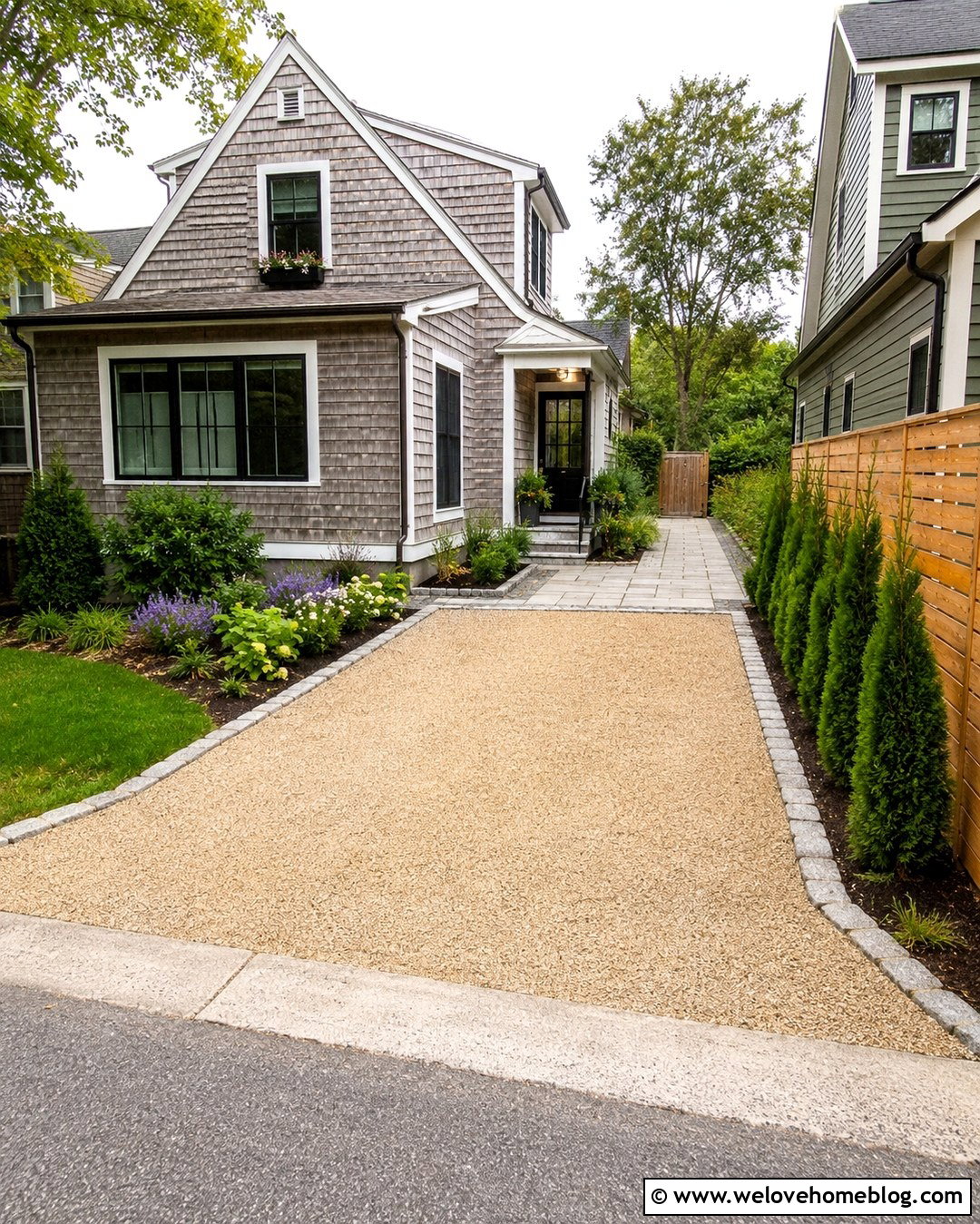
1. Pea Rock Driveway With Cobblestone Edging
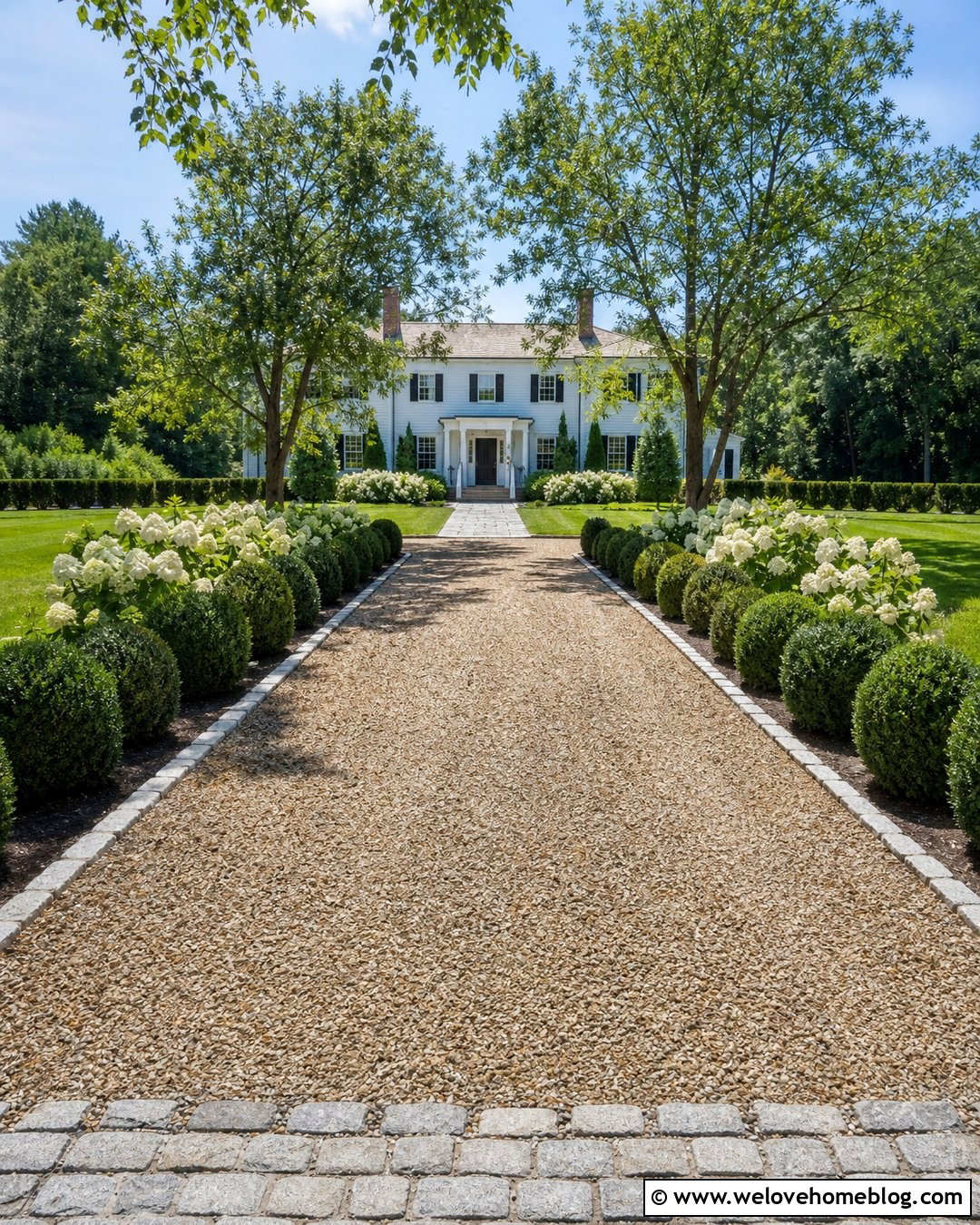
Warm pea rock and rugged cobblestone create a driveway that feels established and carefully planned. Use a compacted crushed-stone base beneath a shallow layer of tan or mixed-color pea rock. Then install granite cobbles along both sides to contain the rounded material. A straight layout works especially well with Colonial, Cape Cod, and traditional brick homes. Repeat the cobblestone around nearby planting beds or along the front walkway for a connected appearance. Low boxwoods, hydrangeas, and neatly clipped lawn keep the overall design structured without making it feel stiff. At the street, widen the cobblestone border slightly to strengthen the entrance. Proper containment matters because pea rock naturally moves under traffic and can spread into surrounding areas. ()
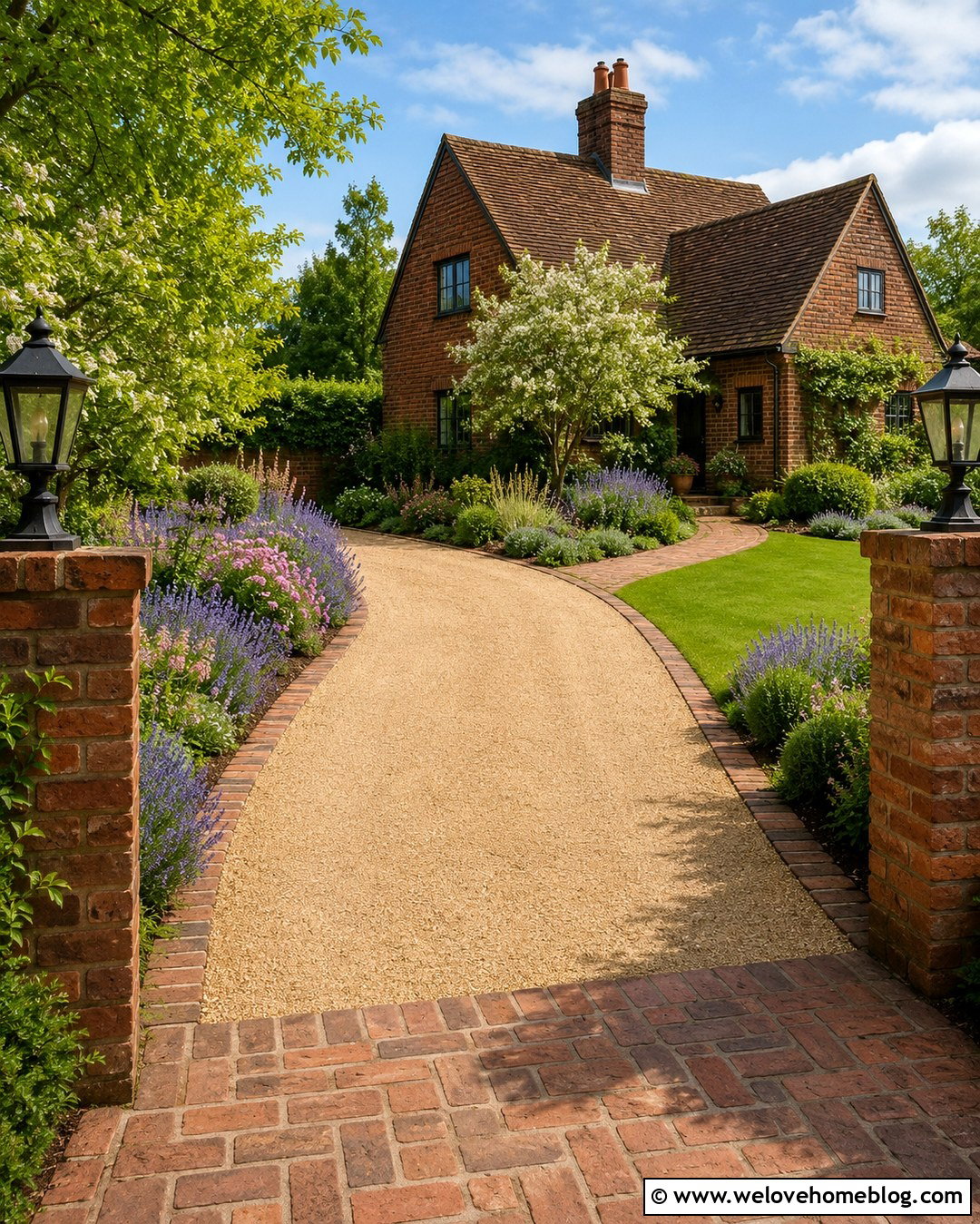
2. Pea Rock Driveway With Brick Border
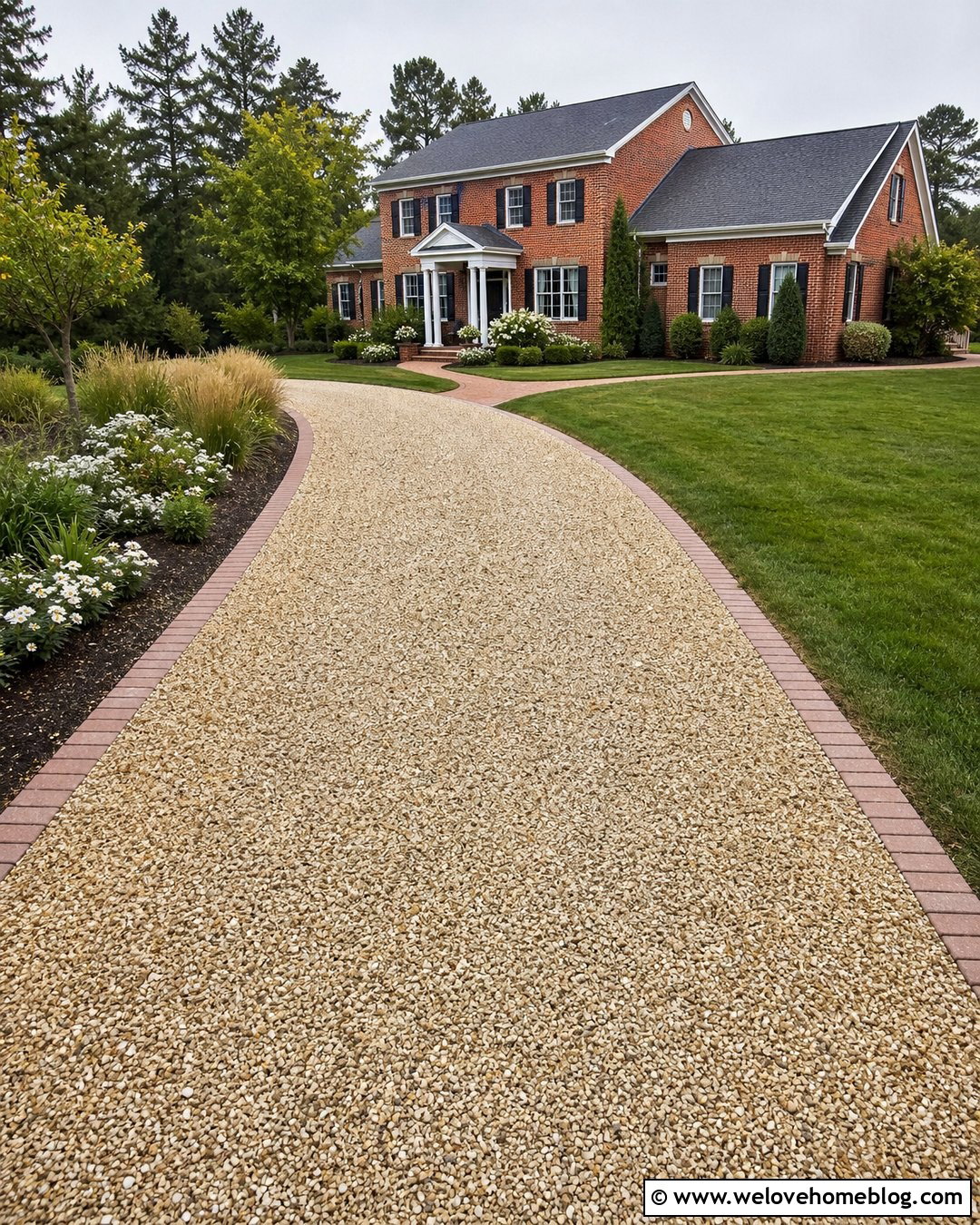
Does your home have a red brick facade or warm exterior details? A brick-edged pea rock driveway can carry those colors into the landscape. Choose golden, cream, and brown pea rock for the driving surface, then install clay brick pavers in a soldier-course border. A gently curved driveway will soften the approach while making a small front yard feel more layered. Match the driveway border with a brick walkway leading toward the front door. Foundation beds filled with evergreen shrubs, white flowering plants, and ornamental grasses provide a clean frame. Keep the brick slightly higher than the loose surface so it helps hold the pea rock in place. This combination feels traditional, welcoming, and coordinated without requiring a fully paved driveway.
3. Pea Rock Driveway With Steel Edging
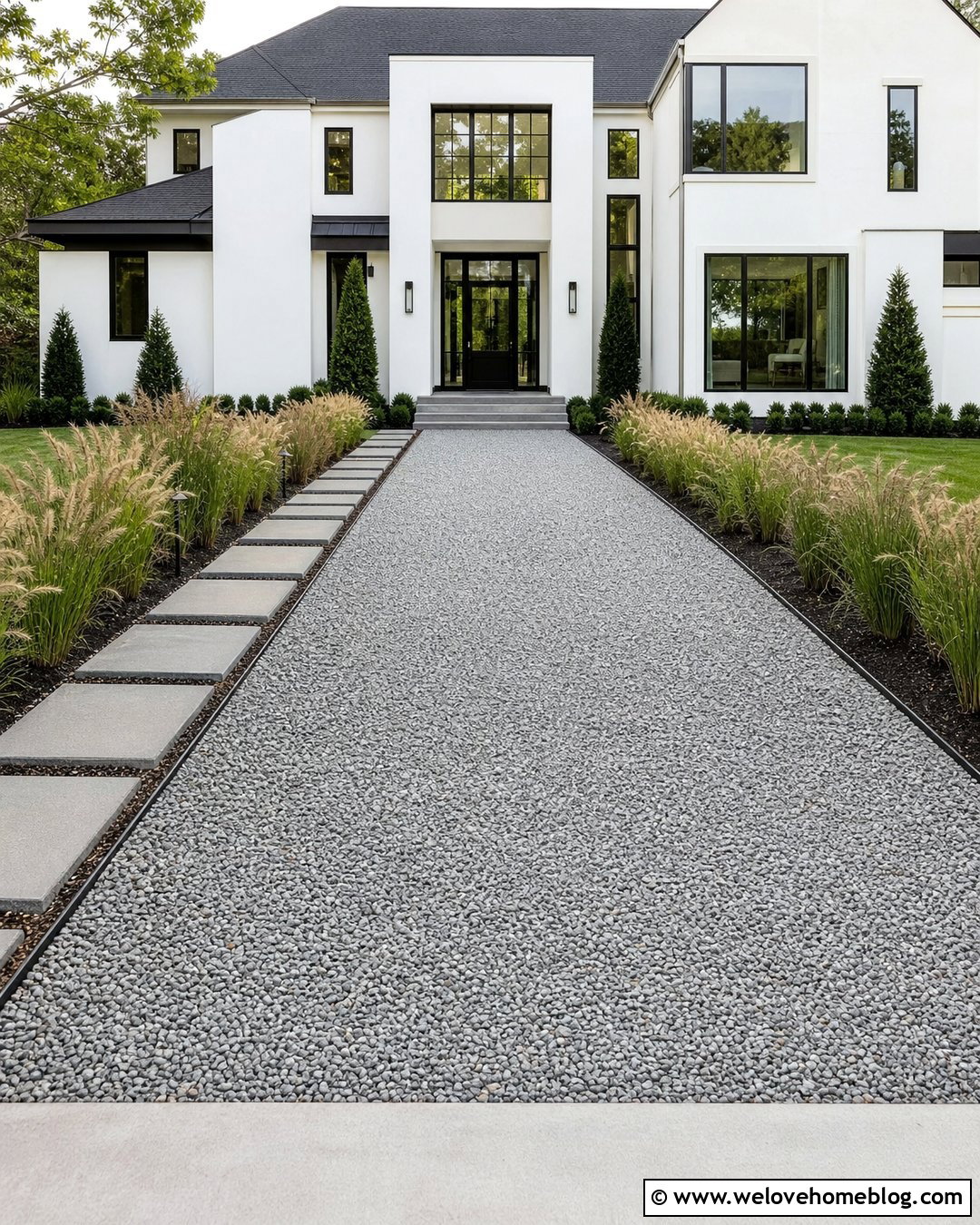
Clean lines give loose pea rock a sharper, more contemporary appearance. Select cool gray pea rock and frame the driveway with dark steel edging that sits just above the finished surface. A wide, straight layout suits a modern home with white stucco, charcoal siding, or natural wood accents. Simple rectangular planting beds can hold feather reed grass, compact evergreens, and low ground covers. Add large concrete stepping pads beside the driveway to create a clear route from the parking area to the entrance. Steel is especially helpful along curves because it can form smooth, controlled lines. Secure edging and a properly prepared base are important for maintaining a defined perimeter and reducing gravel migration. ()
4. Curved Pea Rock Driveway With Lavender
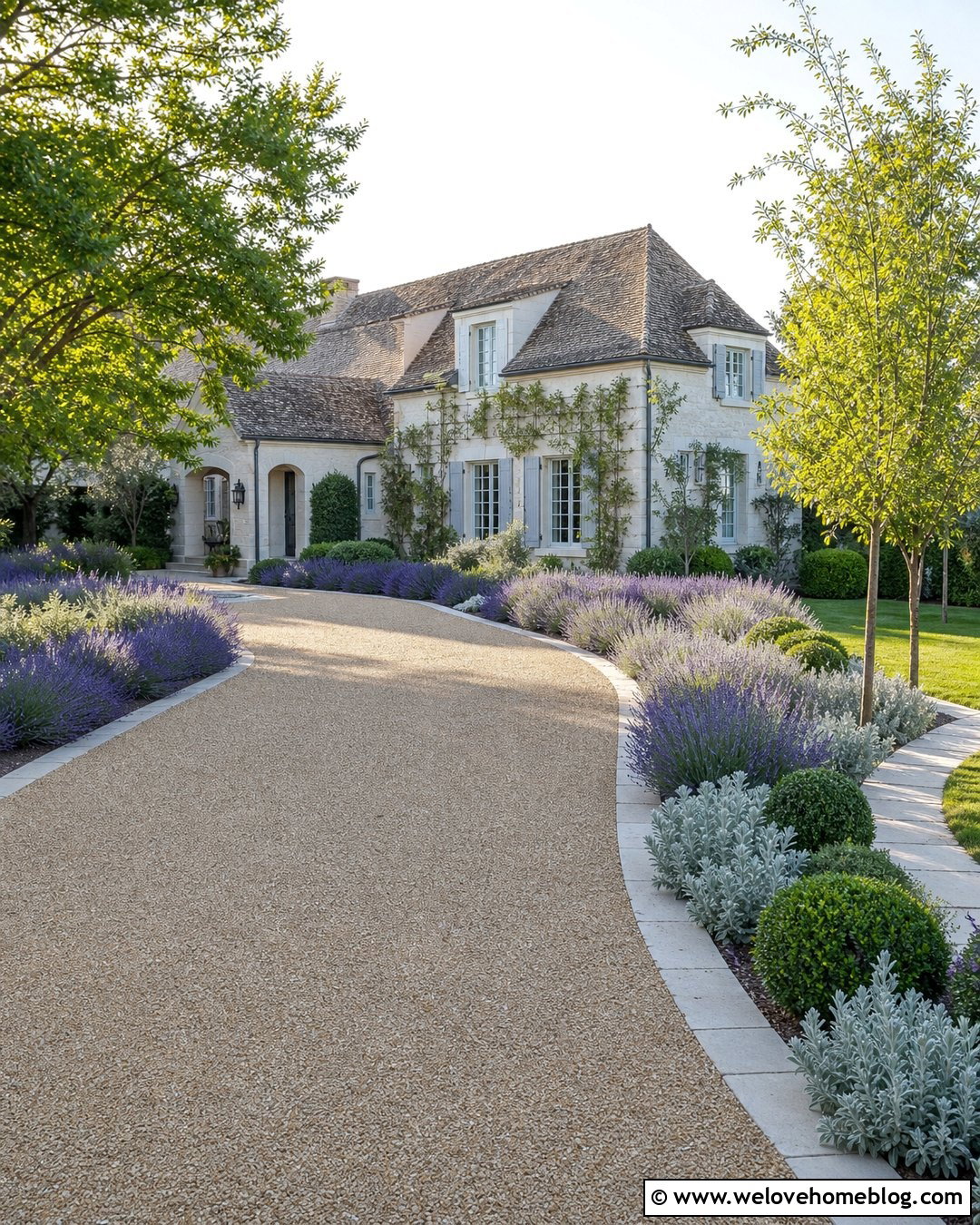
A sweeping driveway bordered by lavender creates a soft arrival that feels connected to the garden. Use warm beige pea rock across the curved surface and pale limestone blocks along the perimeter. The light colors complement a cottage, French country, or cream-painted farmhouse. Plant lavender in broad repeating groups rather than isolated clumps, leaving enough setback to protect the plants from tires. Silvery foliage, clipped shrubs, and a few upright ornamental trees can extend the layered look. Include a stone walkway that branches naturally from the inside curve toward the front door. The combination of rounded gravel, an informal shape, and flowering borders makes the driveway feel less like a parking surface and more like part of the overall front-yard landscape.
5. Circular Pea Rock Driveway With Center Garden
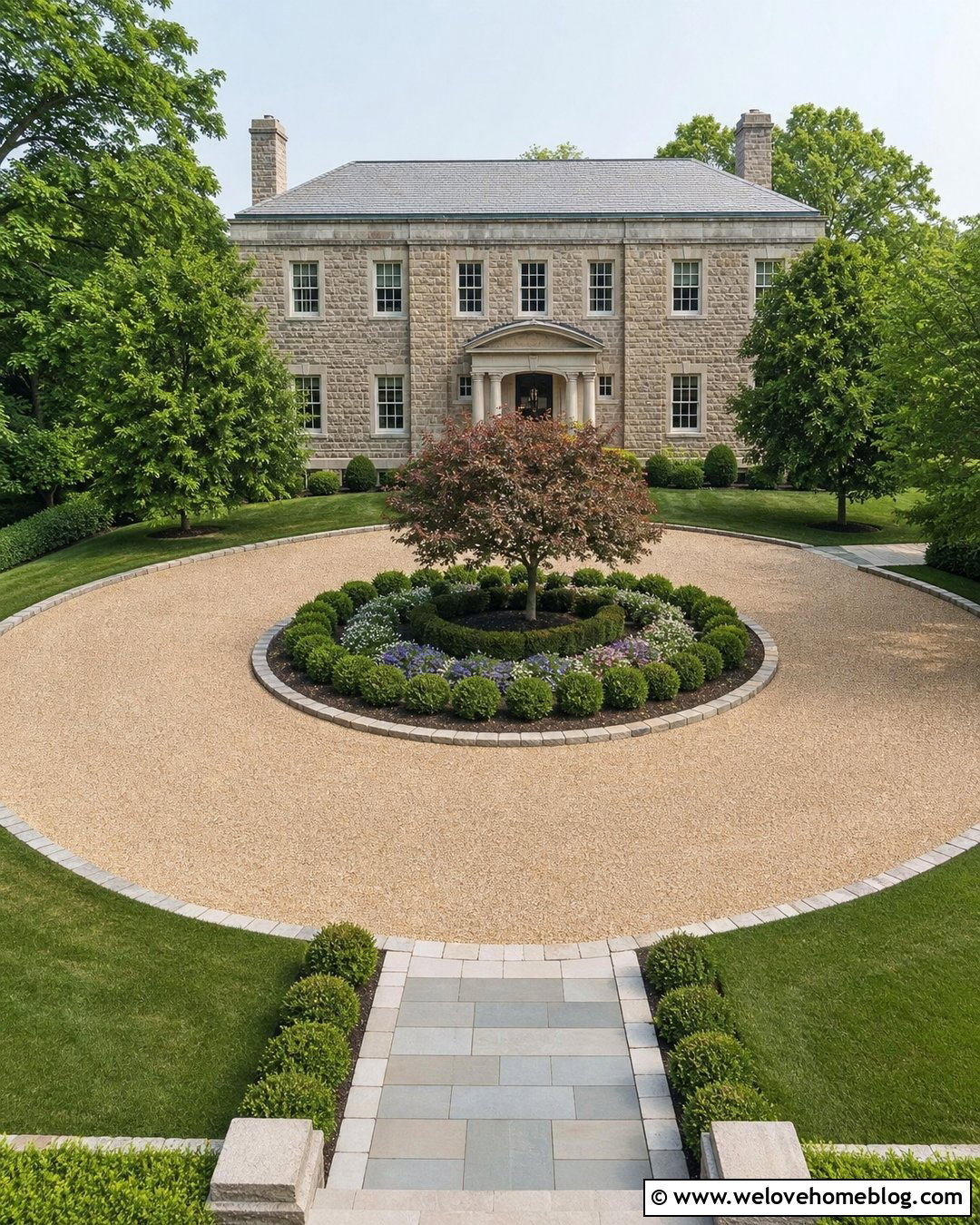
A circular pea rock driveway can create an impressive entrance while keeping vehicle movement convenient. Build the driving lane with a compacted aggregate foundation and finish it with a restrained layer of mixed tan pea rock. In the center, create a raised garden edged with stone that coordinates with the home’s exterior. A small ornamental tree can provide height, while low shrubs and seasonal flowers keep sightlines open. Continue the same stone around the outer driveway edge for a balanced look. This design works beautifully in front of a Colonial, Georgian, or spacious ranch house. Make the center island large enough to feel intentional but not so wide that the driving lane becomes tight or awkward around the curves.
6. Pea Rock Driveway With Concrete Paver Ribbons
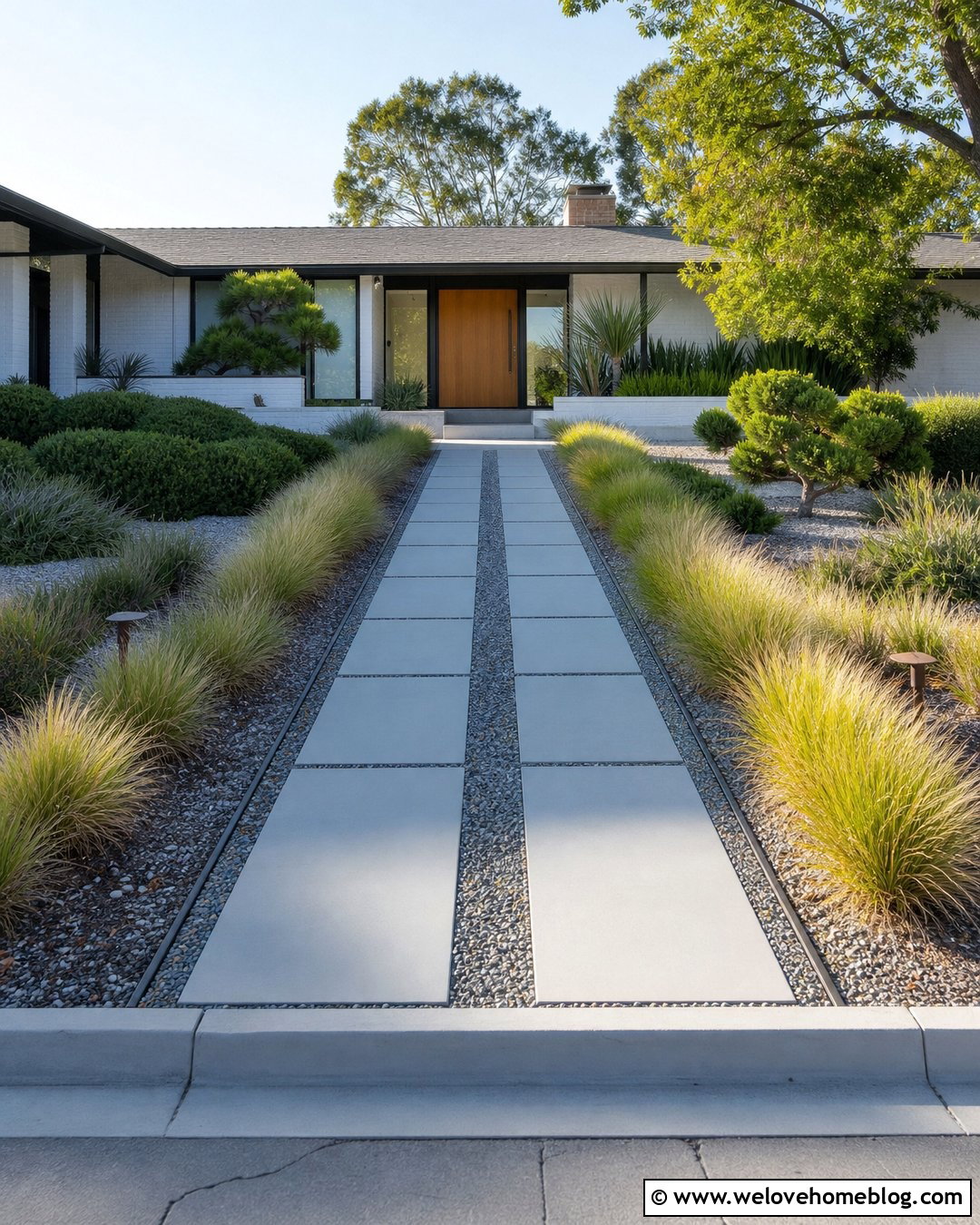
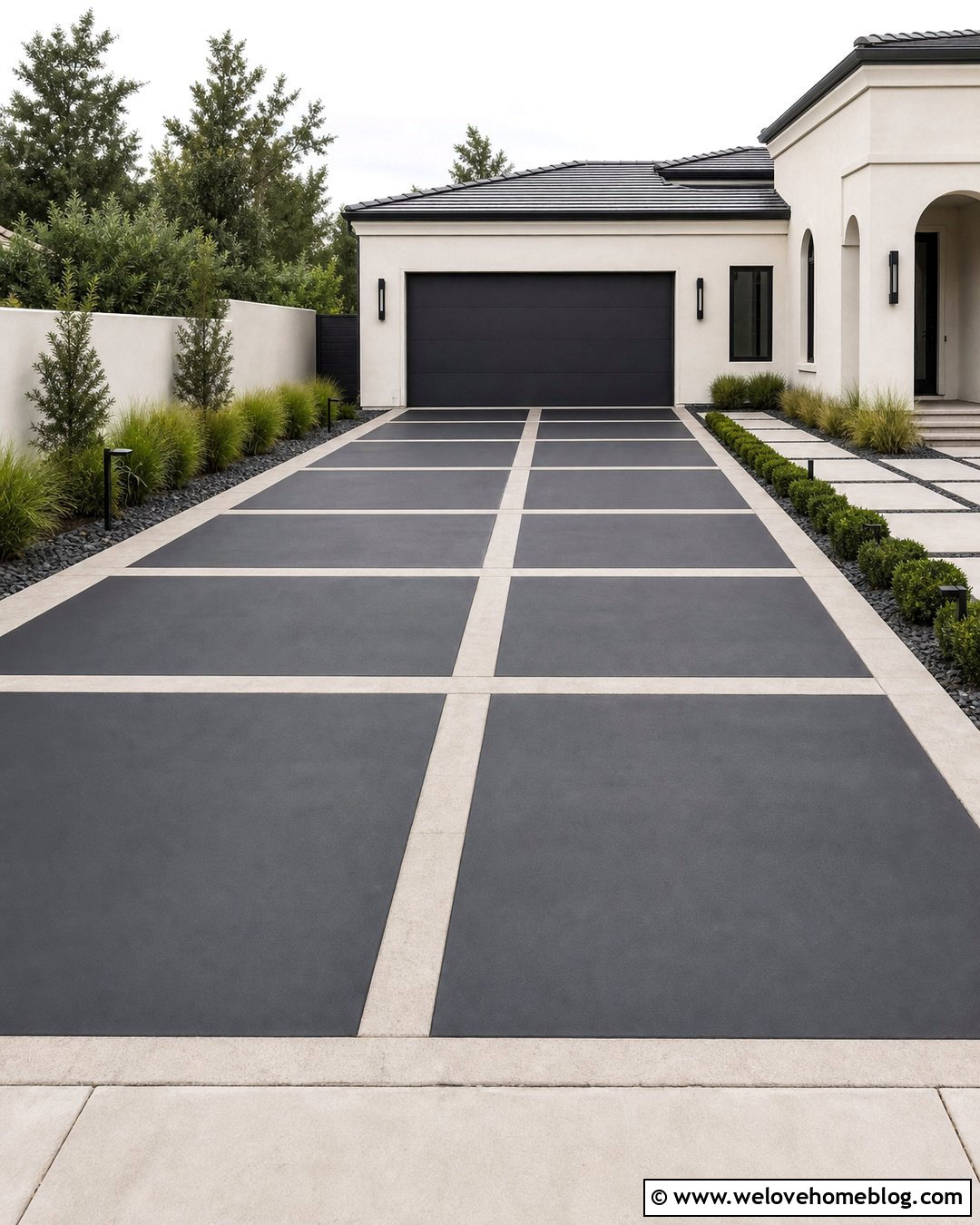
Concrete paver ribbons can make a pea rock driveway look organized while defining where vehicle tires should travel. Begin with a stable, properly graded driveway base. Install two parallel strips of large-format concrete pavers, then fill the surrounding surface with cool gray pea rock. Continue the pavers into a front walkway for visual continuity. This straight, geometric layout complements a modern or midcentury home with a simple facade. Use black steel edging along the outer perimeter and plant low ornamental grasses beside it. The solid ribbons provide a crisp visual structure against the small rounded stones. Keep the pea rock level slightly below the paver tops so loose material is less likely to cover the driving strips or nearby walkway.
7. Pea Rock Driveway With Timber Edging
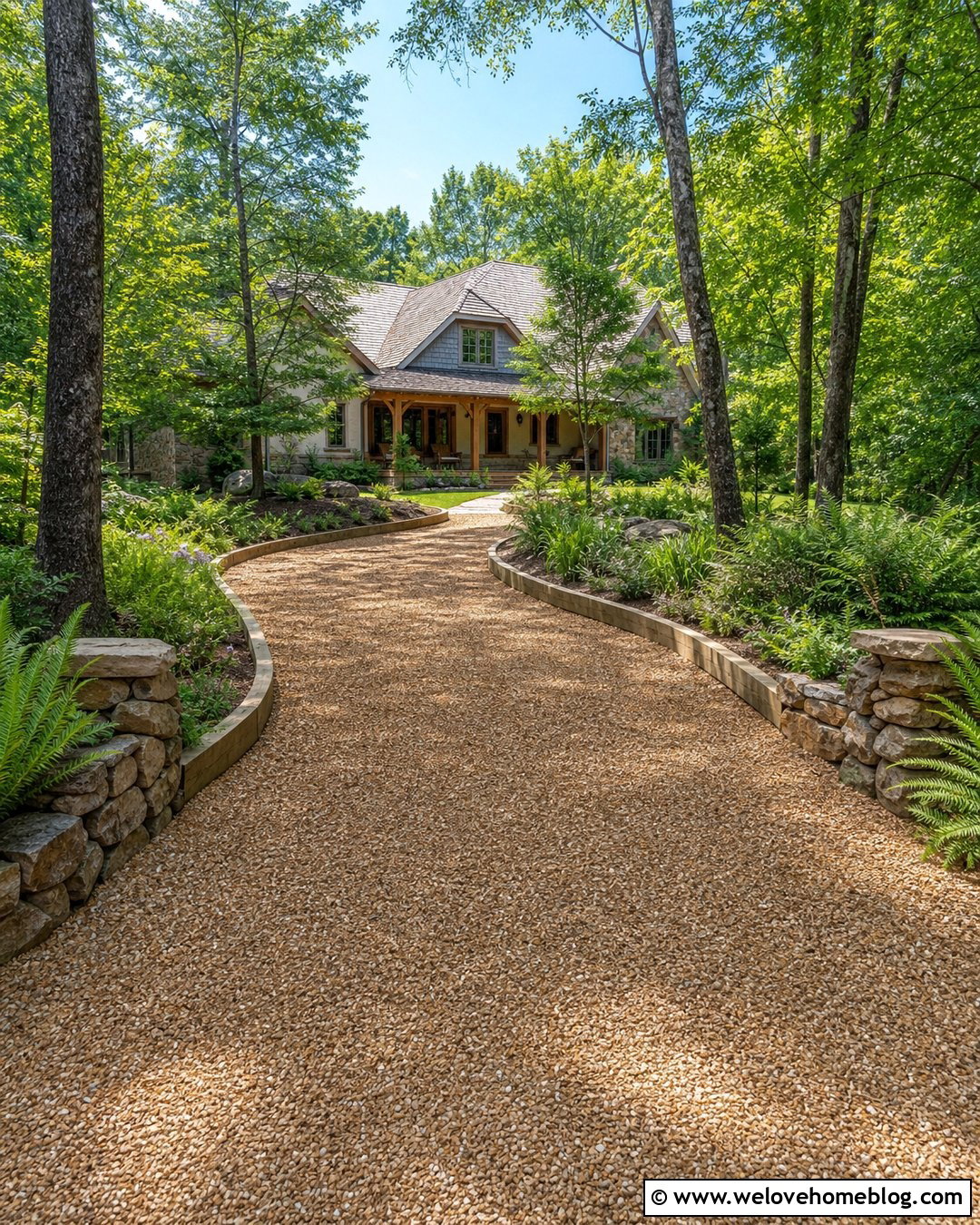
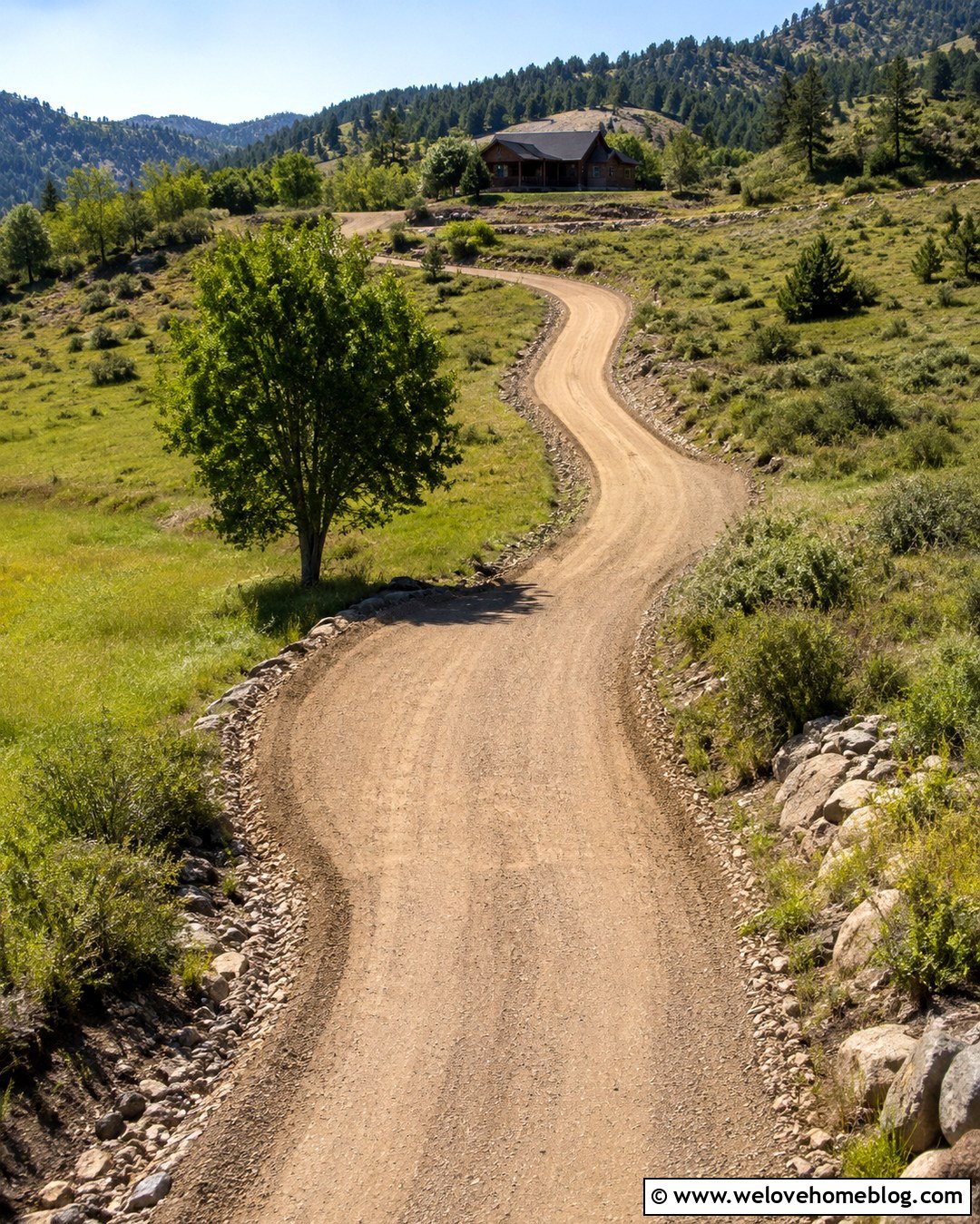
Timber edging gives a pea rock driveway a casual, rural character that suits wooded properties and country homes. Choose brown and honey-toned pea rock for a long, slightly curved drive. Pressure-treated landscape timbers can define the sides, while larger fieldstones strengthen the entrance and turning areas. Surround the driveway with ferns, native grasses, flowering shrubs, and existing shade trees. A simple gravel walkway can branch toward a porch or side entrance without interrupting the natural look. Timber should be firmly anchored and positioned above the loose surface to improve containment. Because wood eventually weathers, this treatment is better for relaxed landscapes where a gently aged appearance feels appropriate. It creates an affordable-looking border without making the driveway seem unfinished.
8. Pea Rock Driveway With River Rock Border
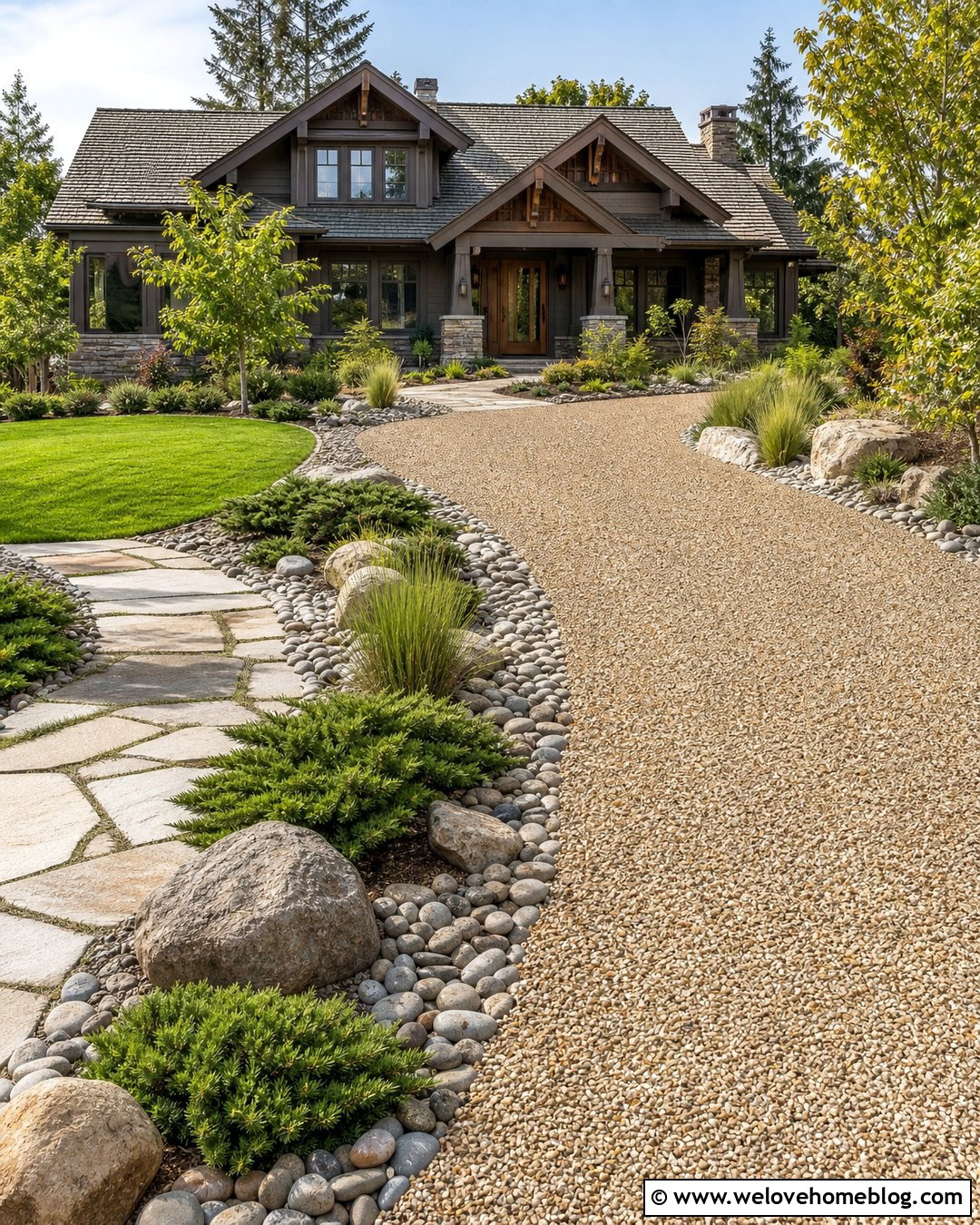
Mixing stone sizes adds depth to an otherwise simple driveway. Cover a straight or softly curved surface with small tan pea rock, then create a broad border of larger gray and brown river rocks. Install a hidden rigid edge between the two materials so the rounded stones do not blend together over time. This complete look works well beside a Craftsman home, rustic ranch, or wooded cabin-inspired house. Add drought-tolerant grasses, spreading junipers, and a few sculptural boulders beyond the river rock. A flagstone walkway can connect the parking area with the porch. The variation in stone scale makes the entrance feel natural, while the defined layers keep it controlled. Use the same river rock around drainage features for a unified landscape.
9. Pea Rock Driveway With Grass Center Strip
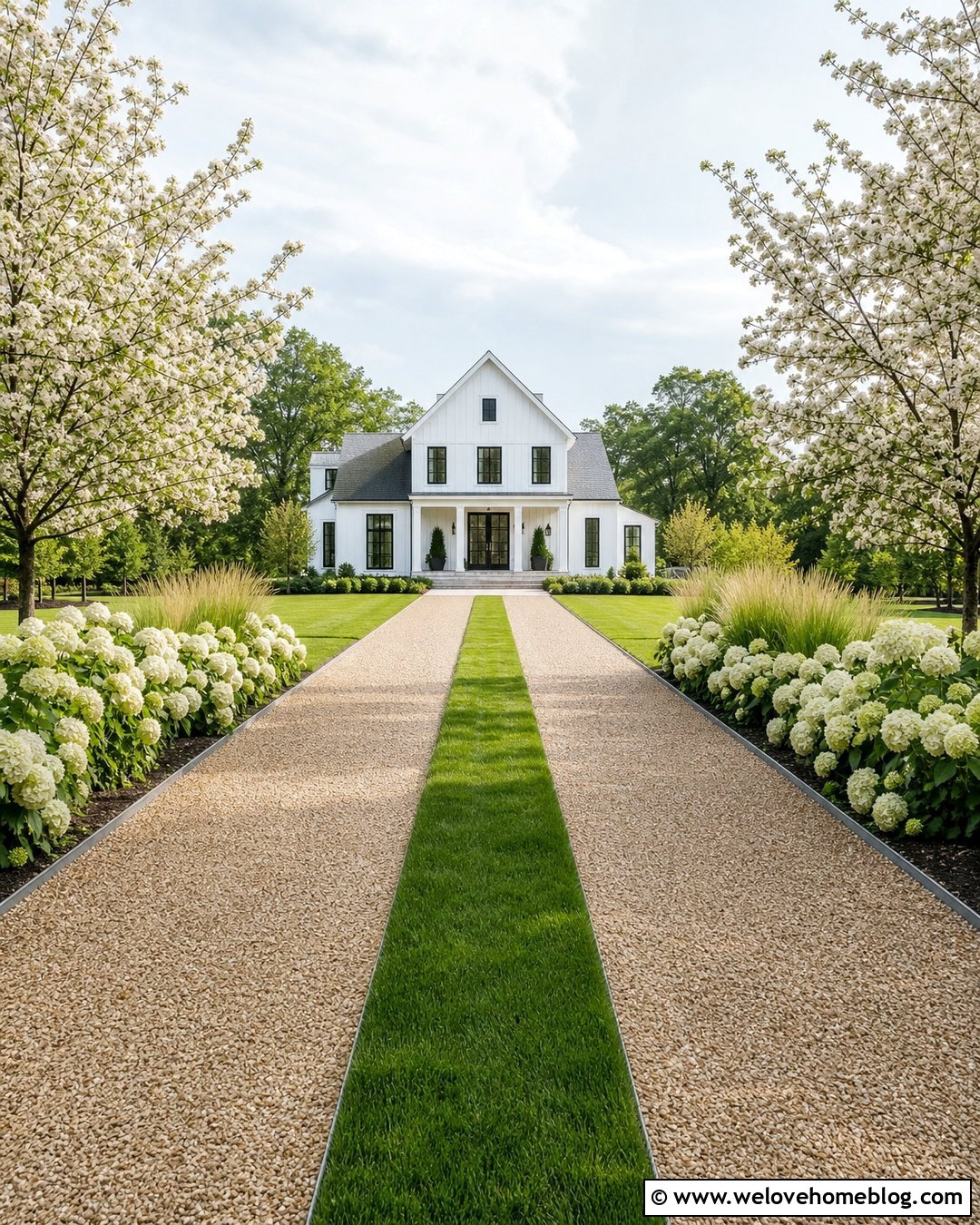
A grass center strip breaks up a broad pea rock driveway and helps it blend into a green front yard. Create two defined driving lanes surfaced with warm pea rock over a strong compacted base. Separate them with a wide strip of durable lawn, then contain every gravel edge with steel, brick, or concrete curbing. A straight approach looks particularly attractive in front of a white farmhouse or simple ranch home. Repeat the grass-and-gravel rhythm near the parking court or walkway. Border the outer edges with hydrangeas, ornamental grasses, and small flowering trees. This layout is most practical where regular lawn care is manageable. Careful edging is essential because loose stones near grass can complicate mowing and make the lanes lose their clean shape.
10. Pea Rock Driveway With Stone Pillars
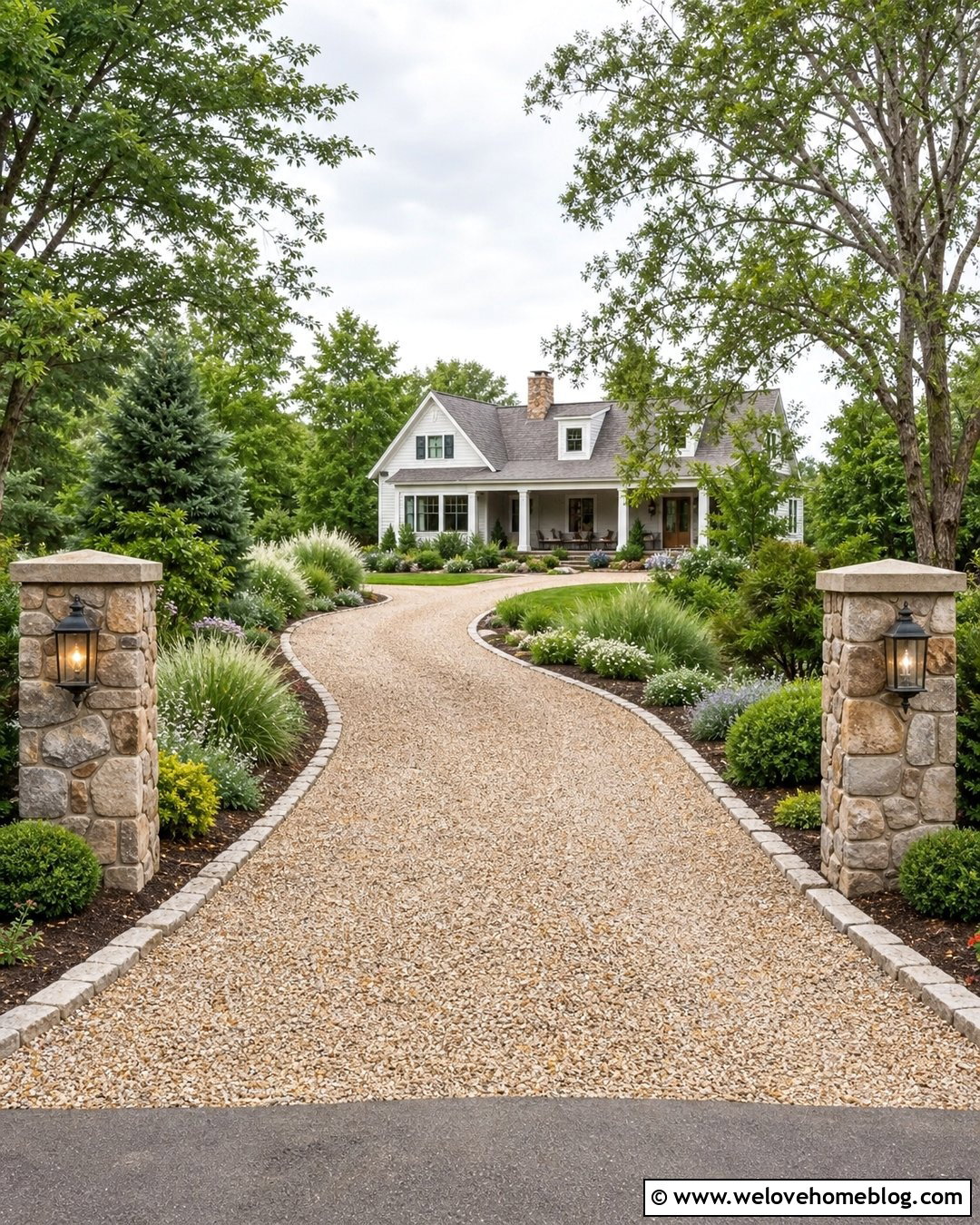
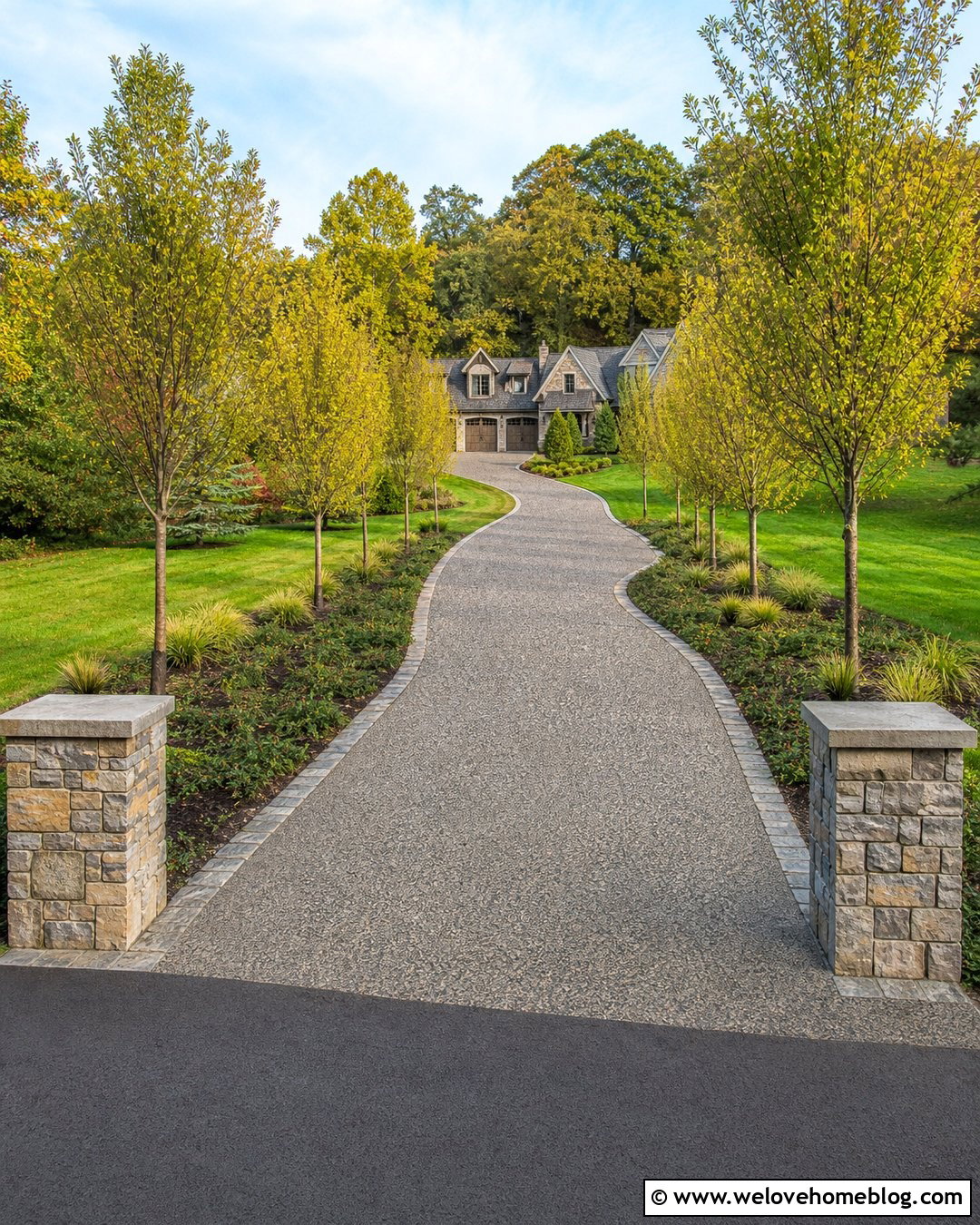
Stone pillars can turn an understated pea rock surface into a defined residential entrance. Place substantial fieldstone or limestone pillars on both sides of a gently curving driveway. Use mixed earth-tone pea rock that relates to the pillar colors, and contain it with low stone curbing. Simple lantern-style fixtures can be mounted on the pillars for visibility, although the overall design should remain uncluttered. Plant evergreen shrubs, native grasses, and low flowering perennials around each pillar base. Farther along the drive, continue the same stone as an edging material or garden accent. This design works especially well for Craftsman, farmhouse, and traditional homes set back from the road. Keep the opening generous enough for comfortable access and clear views of approaching traffic.
11. Pea Rock Driveway With Wooden Gate
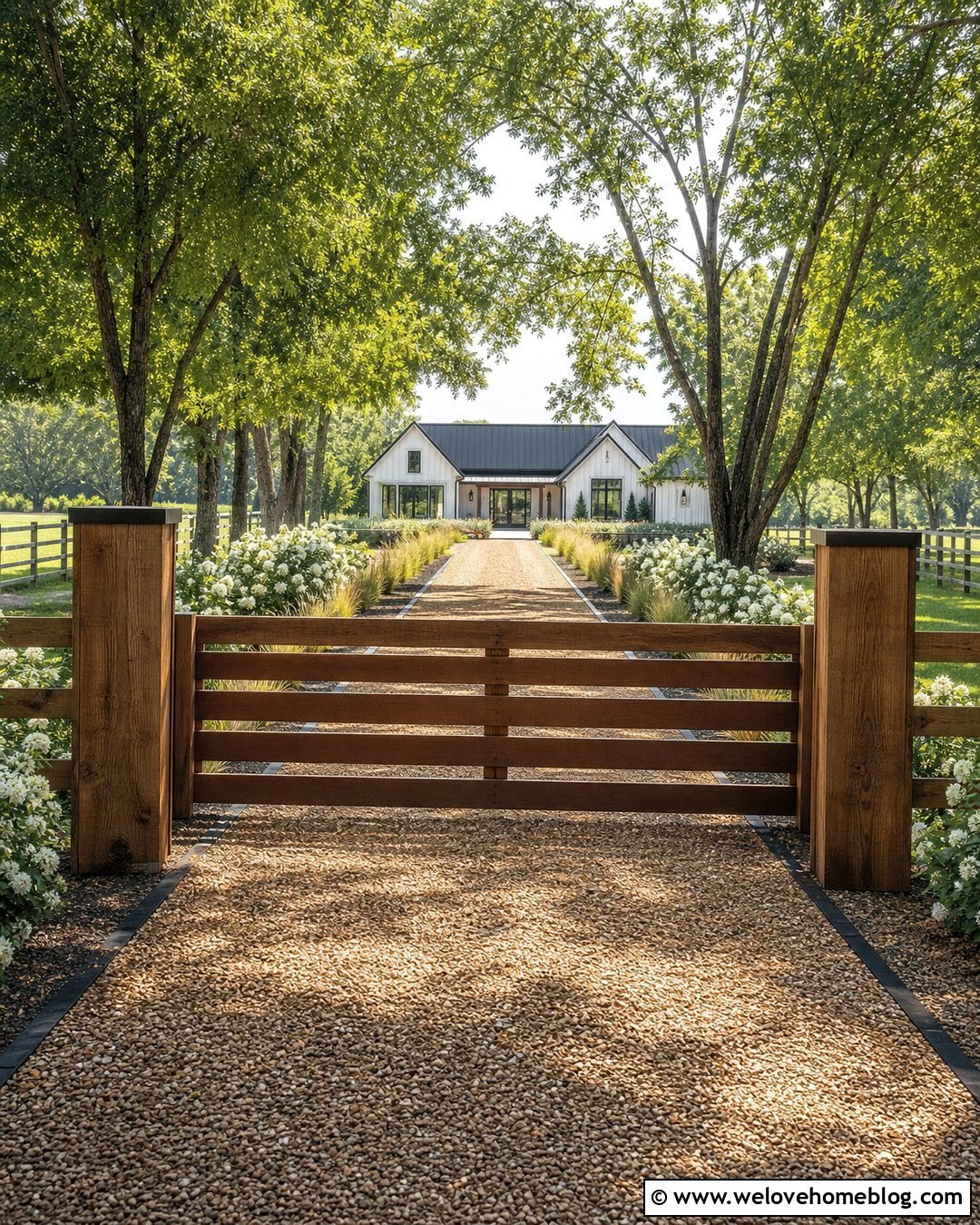
A wooden gate introduces warmth and privacy to a pea rock driveway without making the entrance feel overly formal. Choose medium-brown pea rock for a long, straight drive leading toward a modern farmhouse or country house. Frame the entrance with stained timber posts and a simple horizontal-slat gate. Use dark metal edging along the driveway and repeat the gate’s wood tone in nearby fencing or an address post. Native grasses, white flowering shrubs, and shade trees can soften both sides of the approach. Set the gate far enough inside the property to provide a safe stopping area where local conditions allow. The contrast between natural wood and rounded gravel creates an inviting rural look, while the crisp border keeps the surface neat and intentional.
12. Pea Rock Driveway With Low Stone Walls
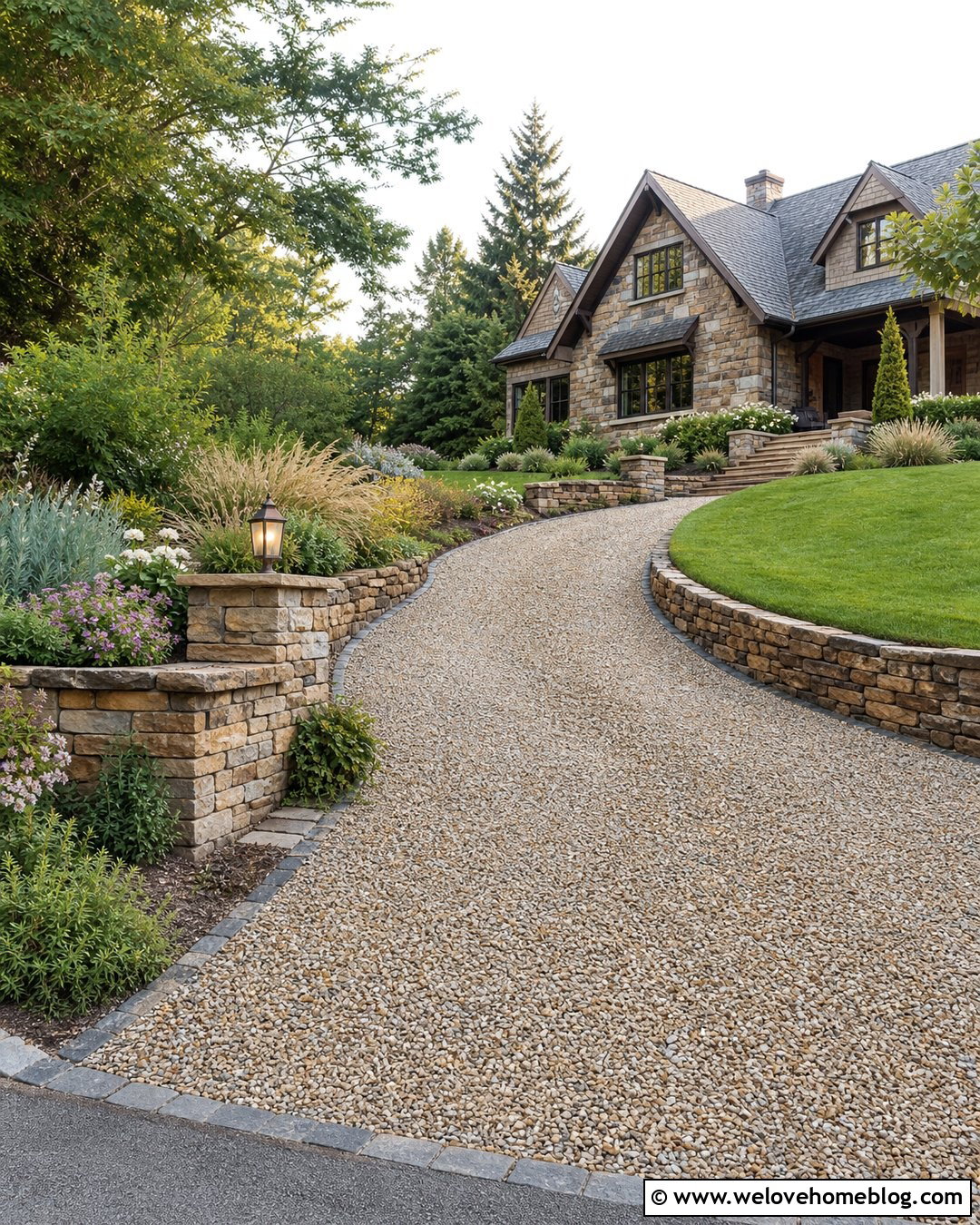
Low stone walls provide strong visual boundaries for a driveway that passes through a sloped or layered front yard. Surface the gently curved drive with cream and tan pea rock, then construct dry-stacked stone walls along selected sections rather than enclosing the entire route. Use concealed edging where the gravel meets the wall base. Above the walls, plant spreading evergreens, ornamental grasses, and seasonal flowers that can trail slightly over the stone. A traditional cottage or hillside Craftsman home makes a fitting backdrop. Repeat the wall material around steps or the front walkway. Keep plant growth trimmed away from the driving surface so visibility remains clear. The finished design should feel integrated into the grade, with the driveway, walls, and planting beds following the same natural curves.
13. Pea Rock Driveway With Hydrangea Borders
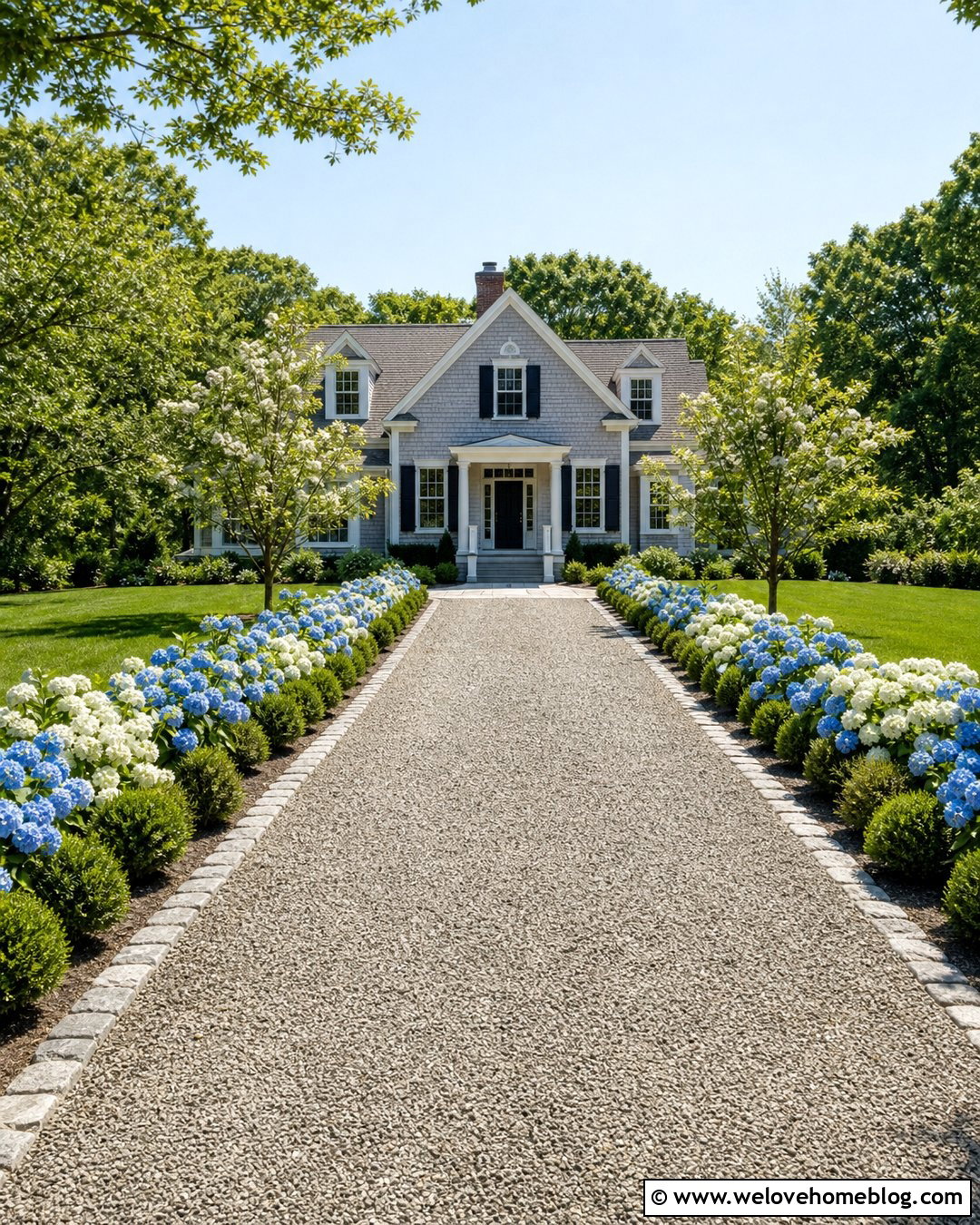
Large hydrangea borders can soften a wide pea rock driveway and bring generous color to a traditional front yard. Use warm gray or buff pea rock on a straight driveway leading toward a Cape Cod or shingle-style house. Define both sides with granite cobbles, then plant hydrangeas behind the edging in broad, evenly spaced groups. Add low evergreen shrubs beneath front windows so the seasonal flowers do not leave the landscape feeling empty during colder months. A bluestone walkway can cross the driveway or run alongside it toward the porch. Provide enough space between mature plants and the driving lane to prevent branches from leaning over vehicles. The gentle gravel texture and rounded flower clusters create a full, welcoming look without relying on complicated hardscape patterns.
14. Pea Rock Driveway With Ornamental Grasses
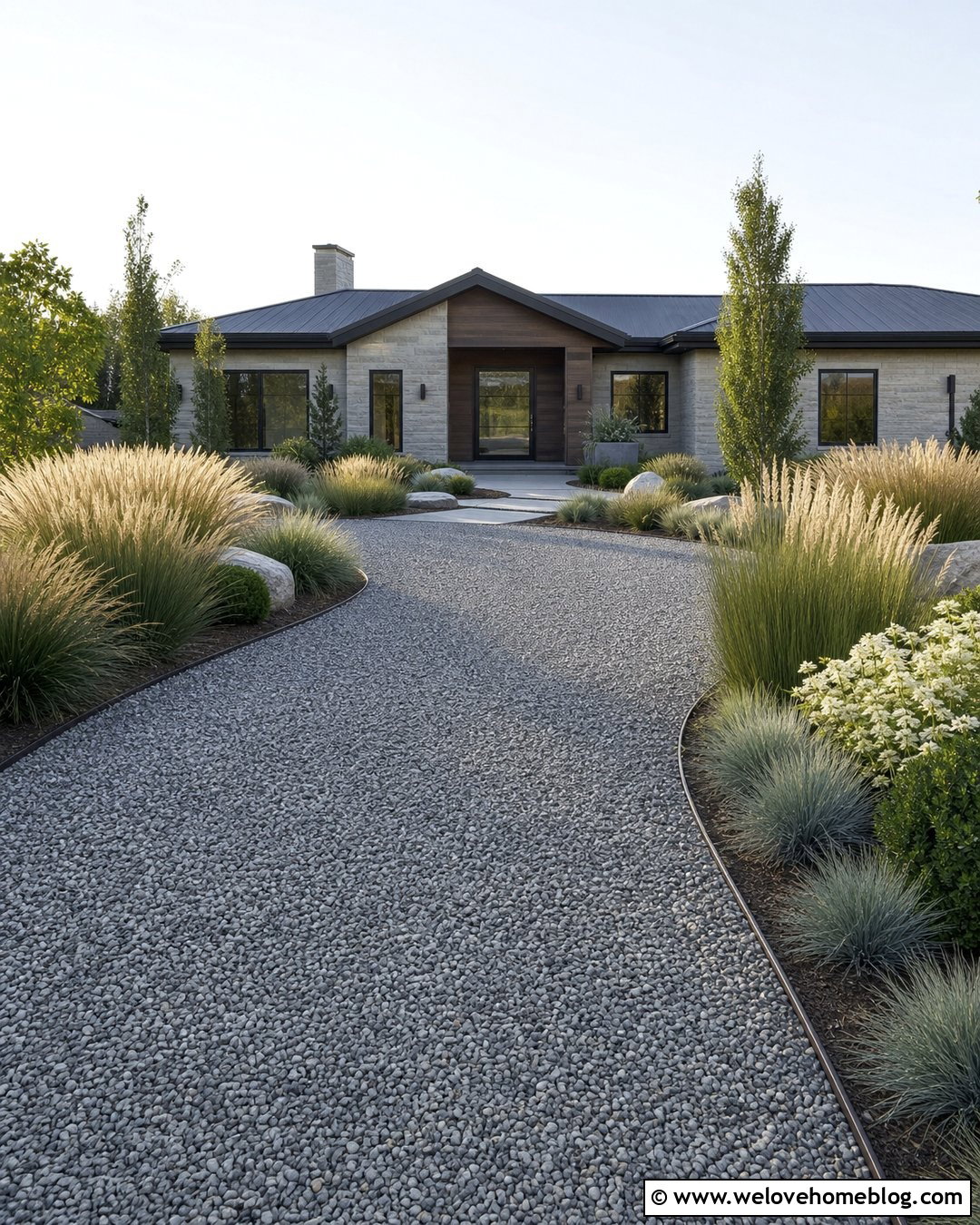
Movement from ornamental grasses makes a simple pea rock driveway feel lively and modern. Choose cool gray pea rock for a broad, gently curved approach to a contemporary ranch or minimalist home. Install dark steel edging and create deep planting bands containing feather reed grass, switchgrass, blue fescue, and compact evergreen forms. Repeat each plant in groups to avoid a scattered appearance. Concrete pavers can form a direct walkway from the driveway to the front entrance. Limit the color palette to green, blue-gray, and a few soft blooms so the texture remains the main feature. Select grasses suited to the local climate and place taller varieties where they will not obstruct sightlines. Together, the flowing plants and controlled gravel surface balance softness with strong architectural lines.
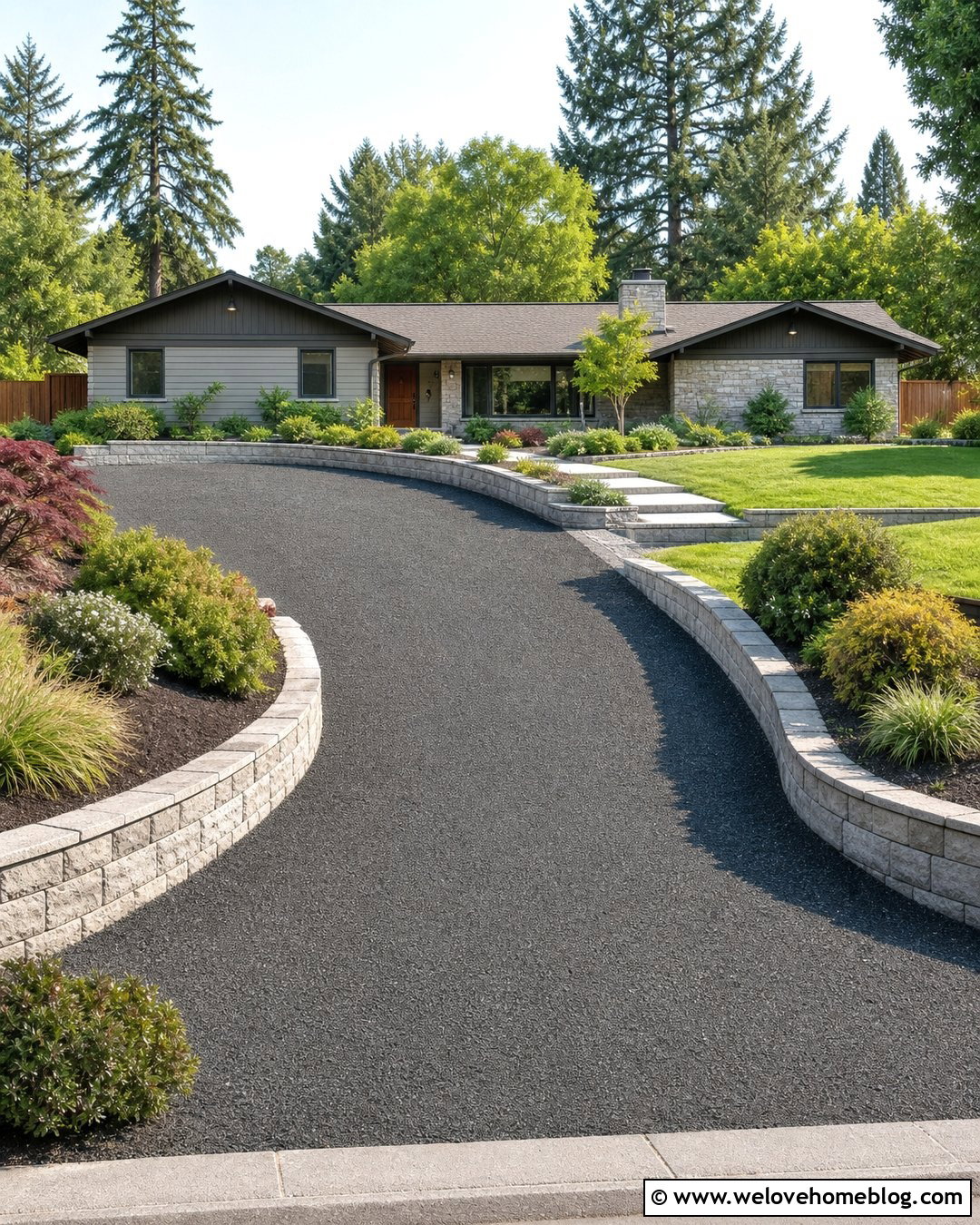


15. Pea Rock Driveway With Boxwood Borders
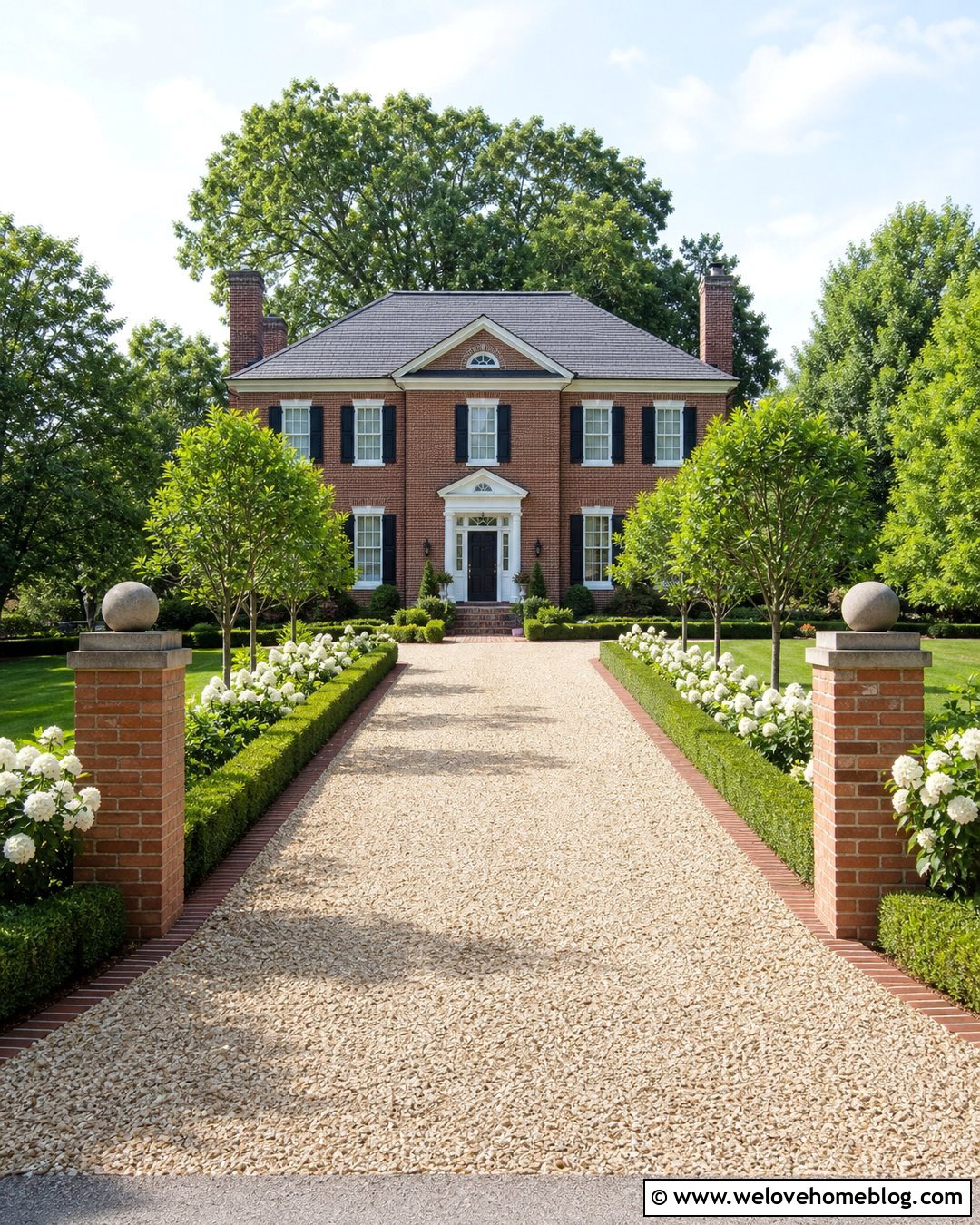
For a more formal front yard, frame warm pea rock with low clipped boxwood hedges and brick edging. A symmetrical straight driveway suits a Georgian, Federal, or classic Colonial house. Place the brick border between the pea rock and hedge so the plants do not become the only form of containment. At the street, use matching brick pillars or widened planting beds to mark the entrance. Repeat the boxwood around the walkway and front steps for a connected layout. White flowers and small ornamental trees can add contrast without disrupting the orderly design. Leave practical gaps in the hedge wherever passengers need to step out. The soft texture of the gravel prevents the formal landscaping from feeling too rigid, while the repeated borders create a polished approach.
16. Pea Rock Driveway With Modern Address Sign
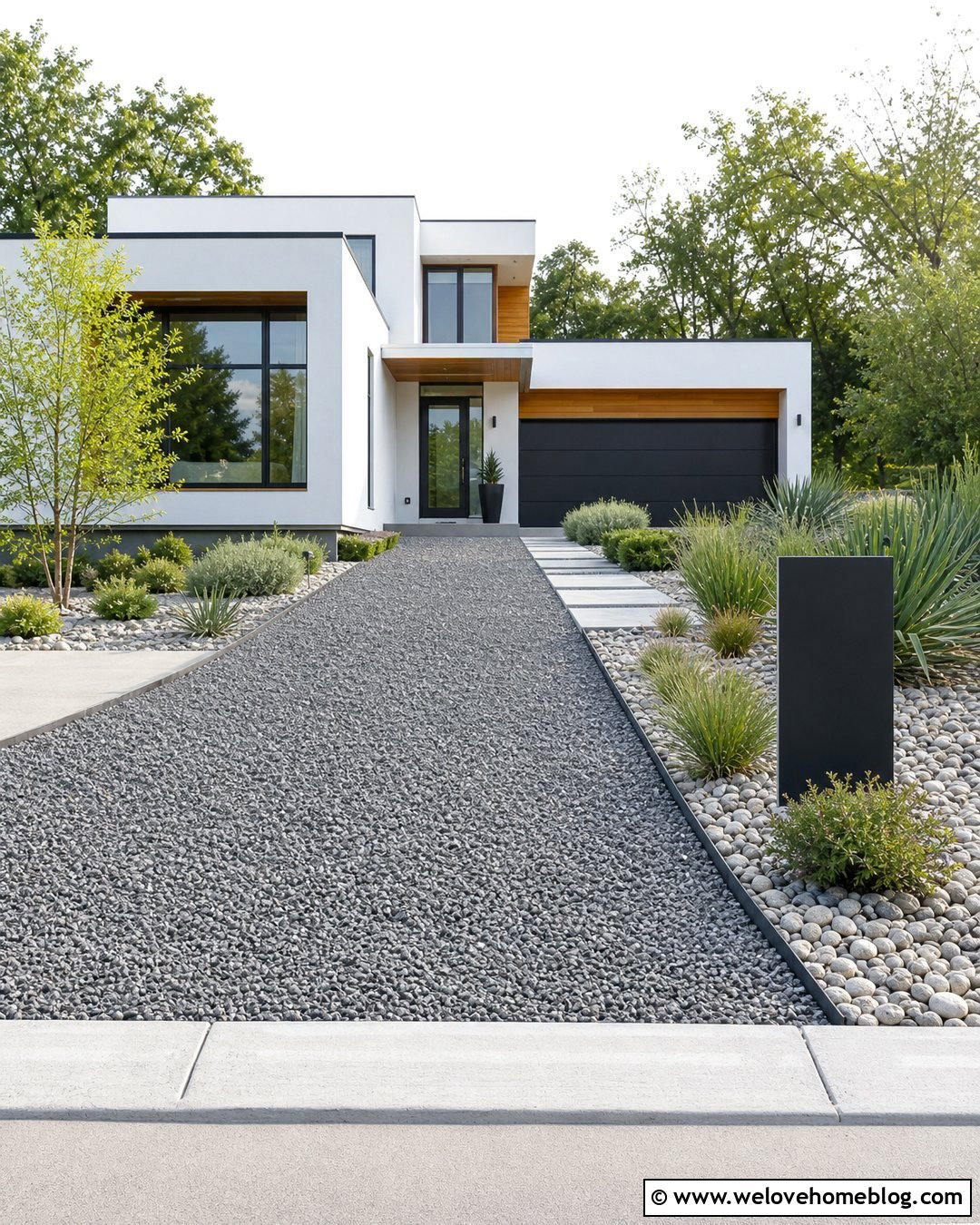
A bold address sign can become part of a complete modern driveway rather than an isolated roadside feature. Use charcoal and light gray pea rock on a straight drive bordered by black steel edging. Place a simple stone, concrete, or powder-coated metal address monument within a landscaped bed near the entrance. Surround it with low grasses, compact shrubs, and pale river rock so the numbers remain easy to see. Continue the same materials toward a modern house with white siding, dark windows, and natural wood details. Large concrete slabs can form the adjoining walkway. Keep the planting low near the street and avoid excessive decoration. The limited palette ties the driveway, sign, borders, and facade together, creating a clean entrance that is easy to understand at a glance.
17. Pea Rock Driveway With Farmhouse Landscaping
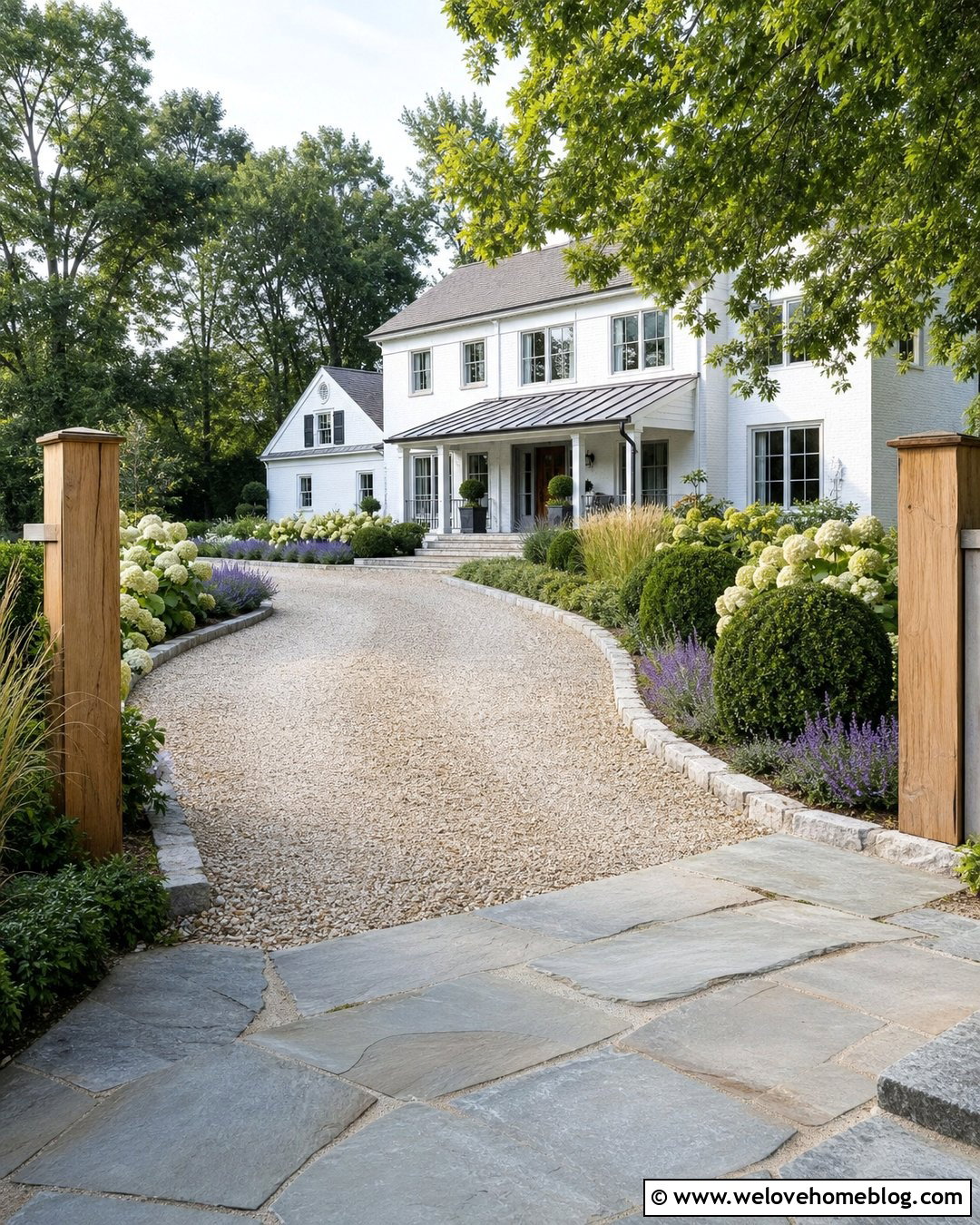
Imagine a warm pea rock lane leading past white fences, loose flowering borders, and mature shade trees. This complete farmhouse driveway works best with a gently curved layout and sturdy stone or brick edging. Use buff, cream, and light brown pea rock to complement white siding and a dark roof. Plant panicle hydrangeas, ornamental grasses, catmint, and rounded evergreen shrubs in relaxed groups. Near the entrance, add simple timber posts or low stone pillars rather than an ornate gate. A wide flagstone walkway can connect the parking area with the porch. Keep the driveway’s foundation and borders carefully constructed even though the landscape looks informal. That hidden structure allows the loose planting and natural stone colors to feel charming rather than untidy.
18. Pea Rock Driveway With Desert Landscaping
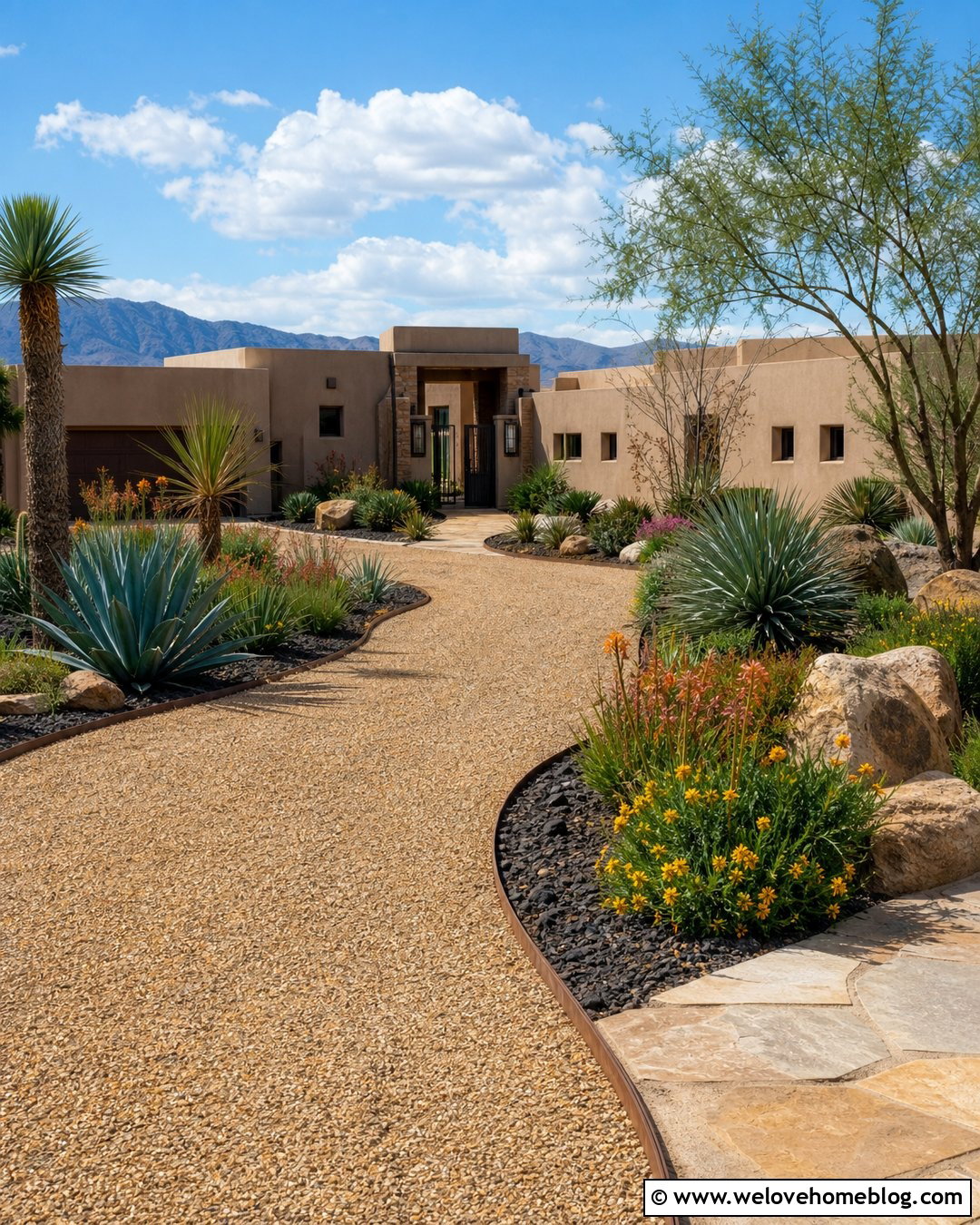
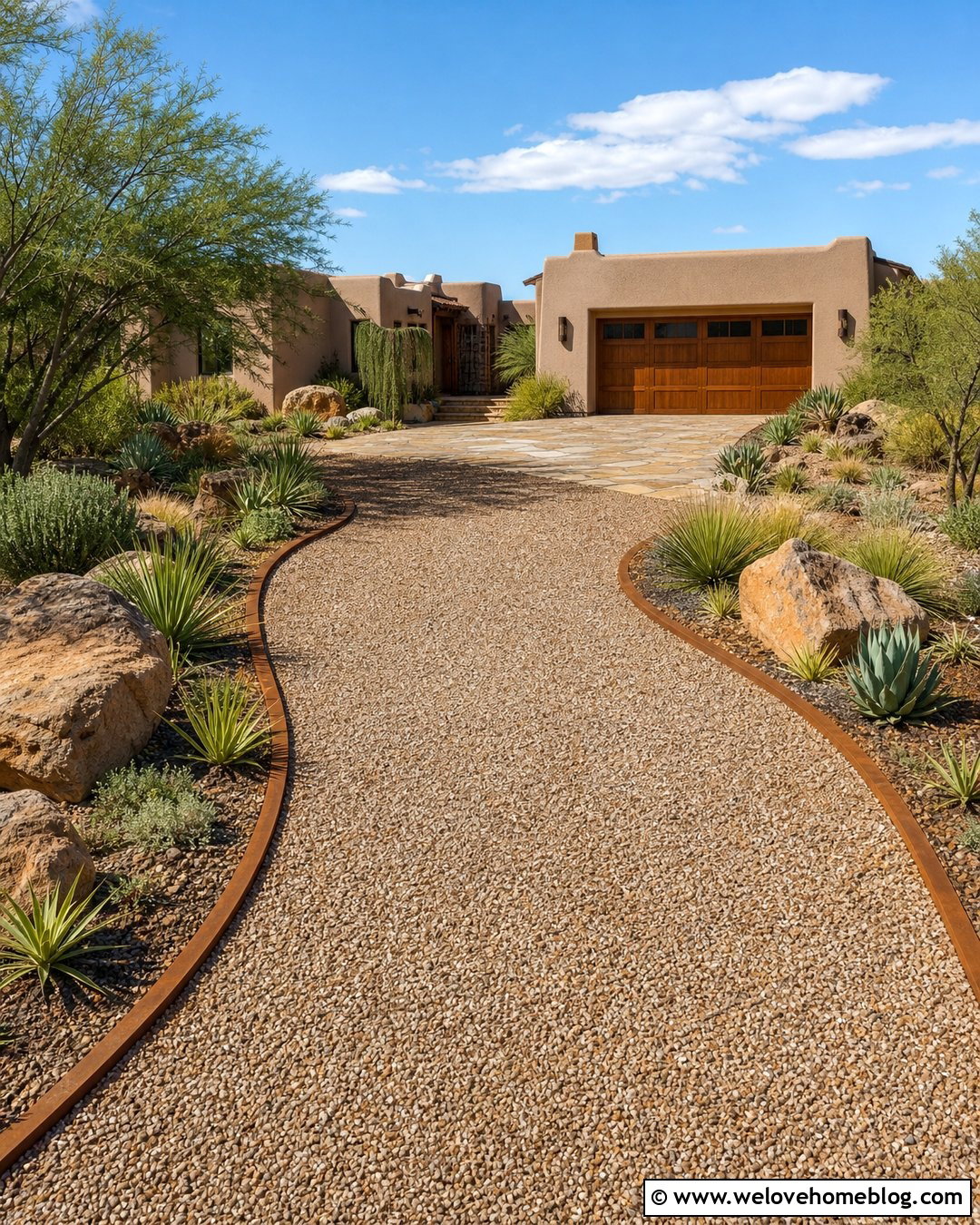
Pea rock pairs naturally with water-conscious landscaping when the colors and stone sizes are carefully layered. Select sandy beige pea rock for a curved driveway leading toward a Southwestern, adobe-inspired, or desert-modern house. Define the surface with weathered steel edging or pale concrete curbing. Beyond it, arrange agaves, yuccas, desert grasses, flowering perennials, and several larger boulders in broad planting zones. Use darker crushed rock in the beds to distinguish them from the driveway. A concrete or flagstone walkway can provide a firm pedestrian route to the entrance. Keep plants back from turning areas and choose varieties suited to the regional climate. The finished look should balance open space with strong sculptural forms, allowing the driveway to blend naturally into the dry landscape.
19. Pea Rock Driveway With Parking Court
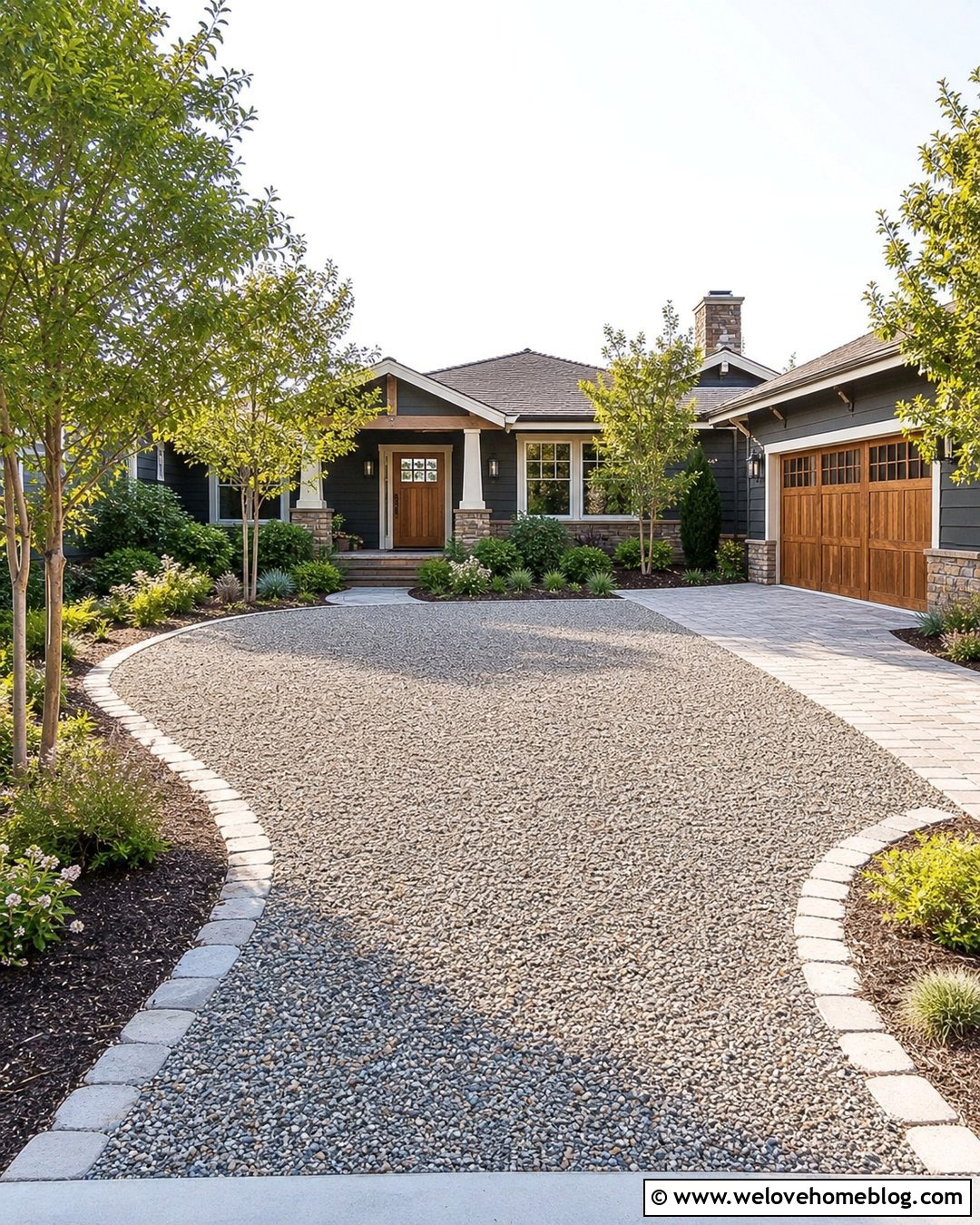
A pea rock parking court gives a larger household more usable space without making the entire front yard look heavily paved. Create a straight entrance that opens into a rectangular or gently rounded court near the house. Cover both areas with mixed gray-and-tan pea rock over a professionally prepared aggregate base. Frame the court with cobblestone or concrete pavers to reinforce its shape. Plant small trees at the outer corners and use low shrubs where clear visibility is important. A solid paver walkway should lead from the court to the front door. Consider adding a contrasting paver apron near the garage to catch displaced stones. This layout works with ranch, Craftsman, and traditional homes because the border and landscaping can be adjusted to match the architecture.


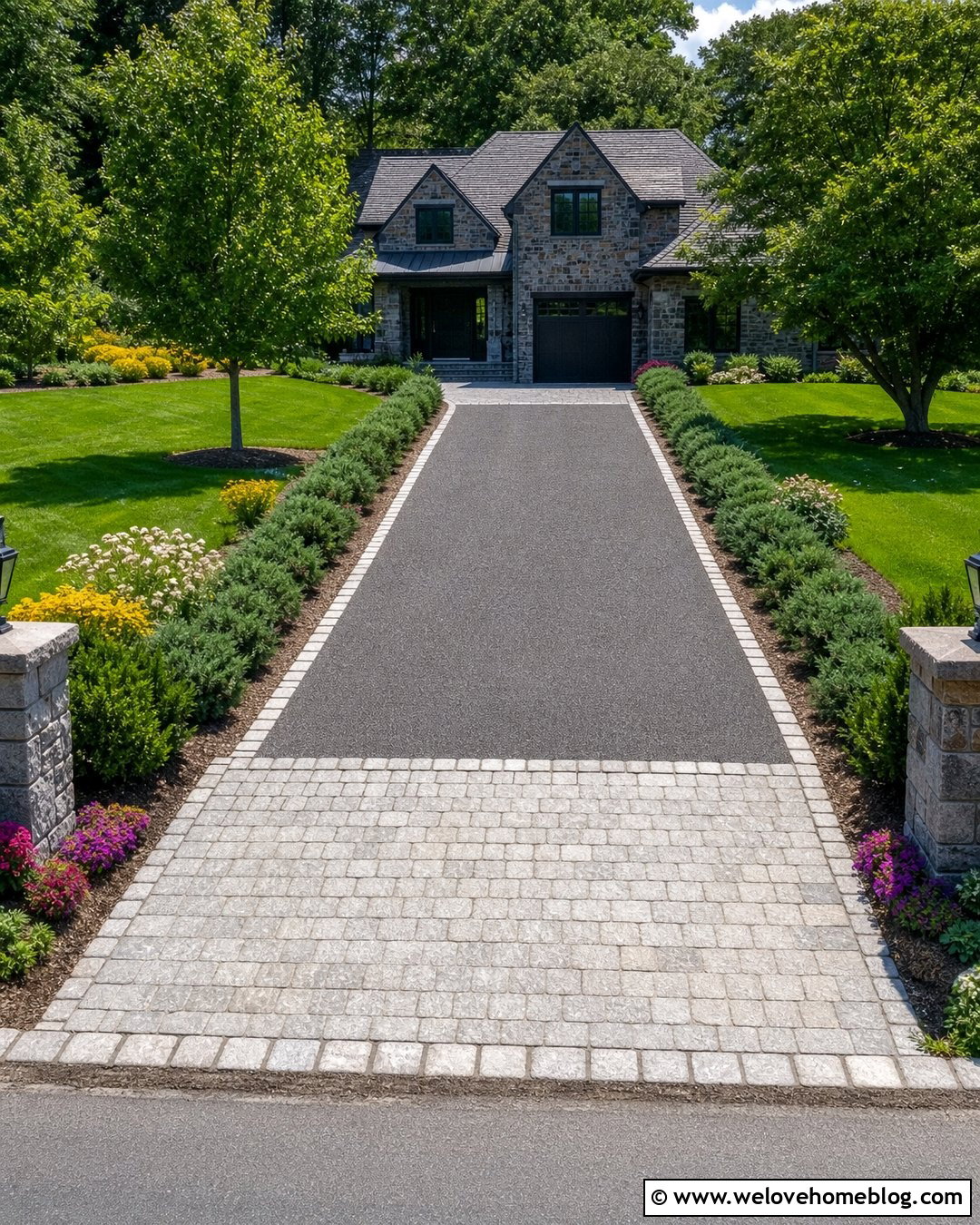
20. Pea Rock Driveway With Paver Entrance Apron
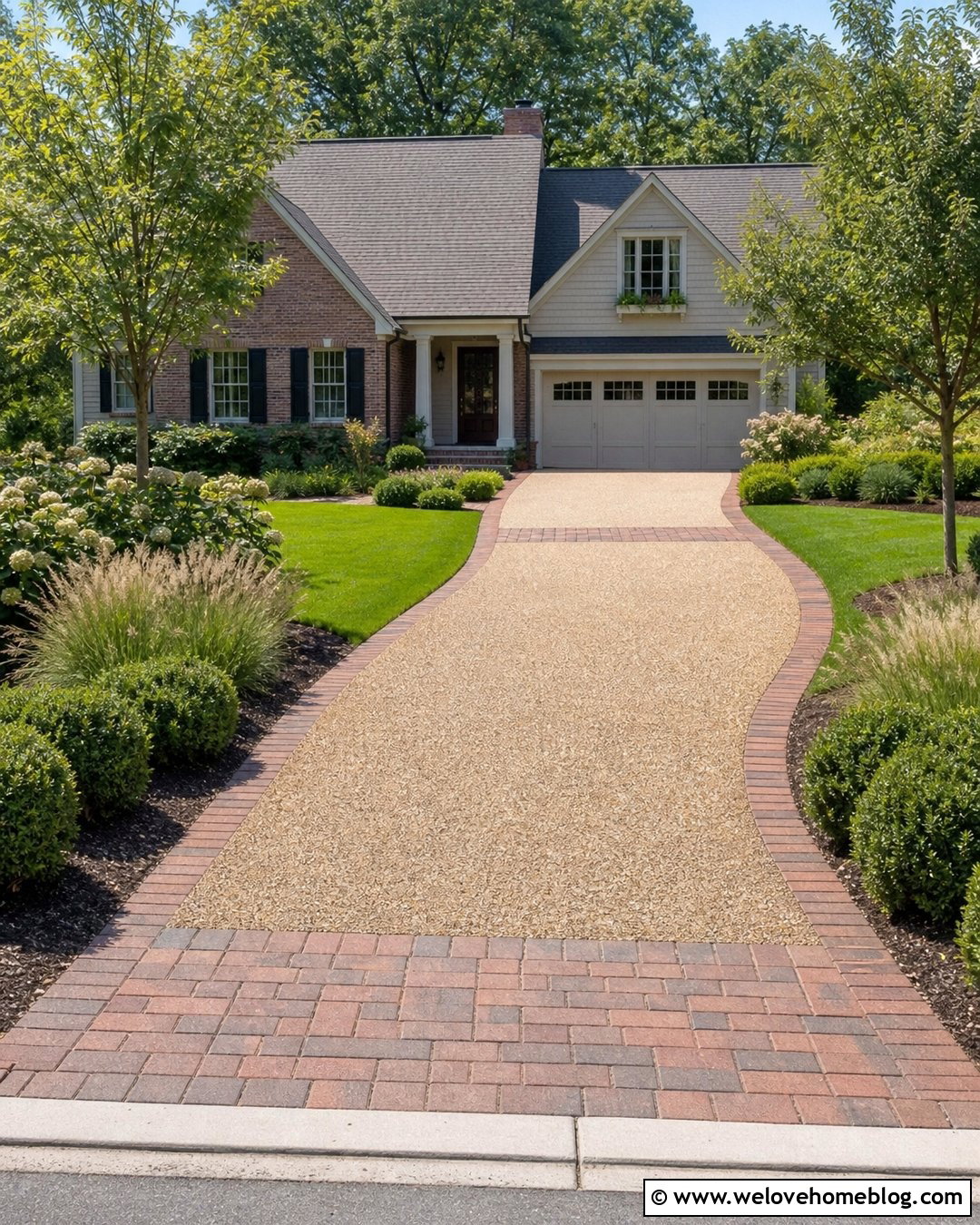
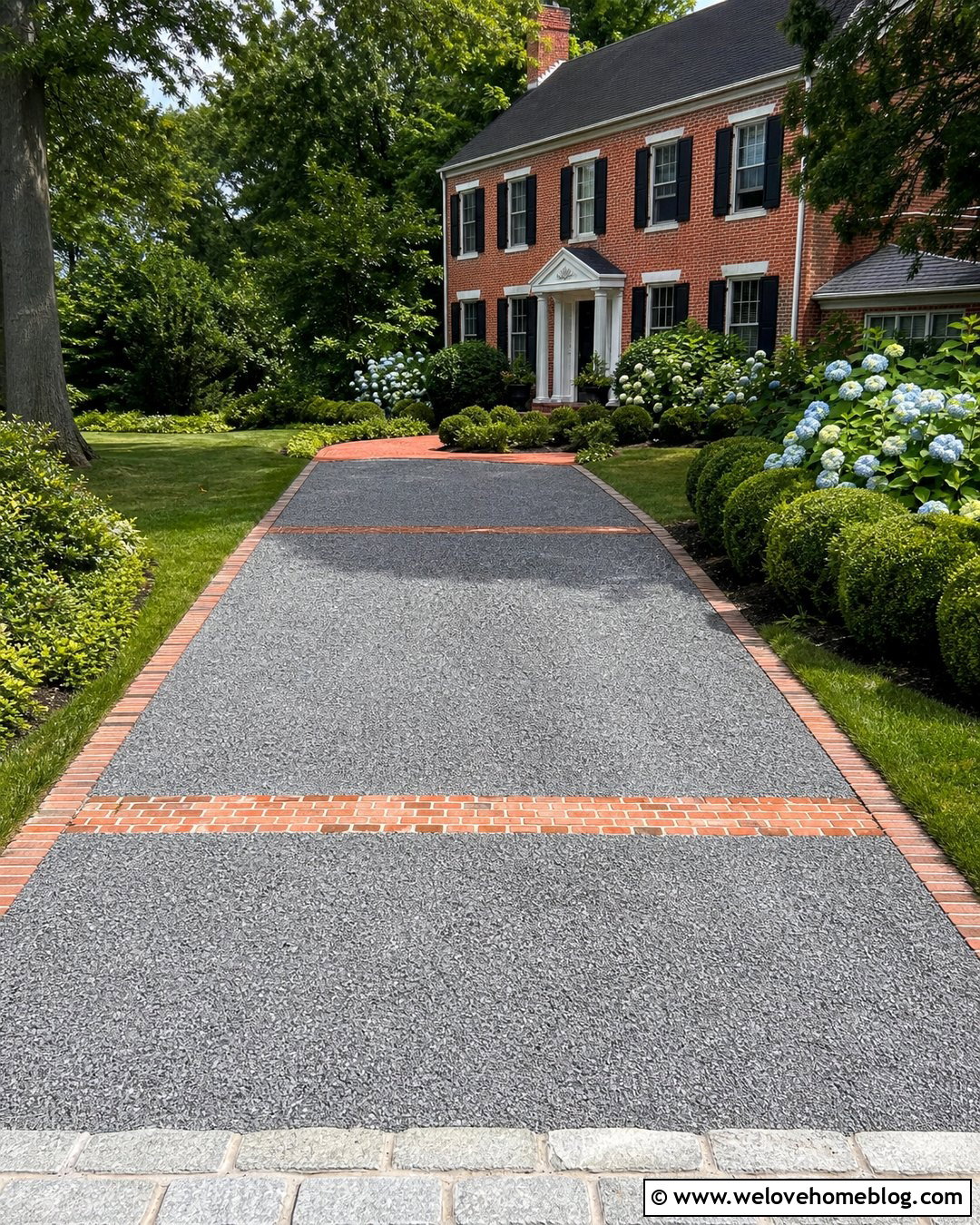
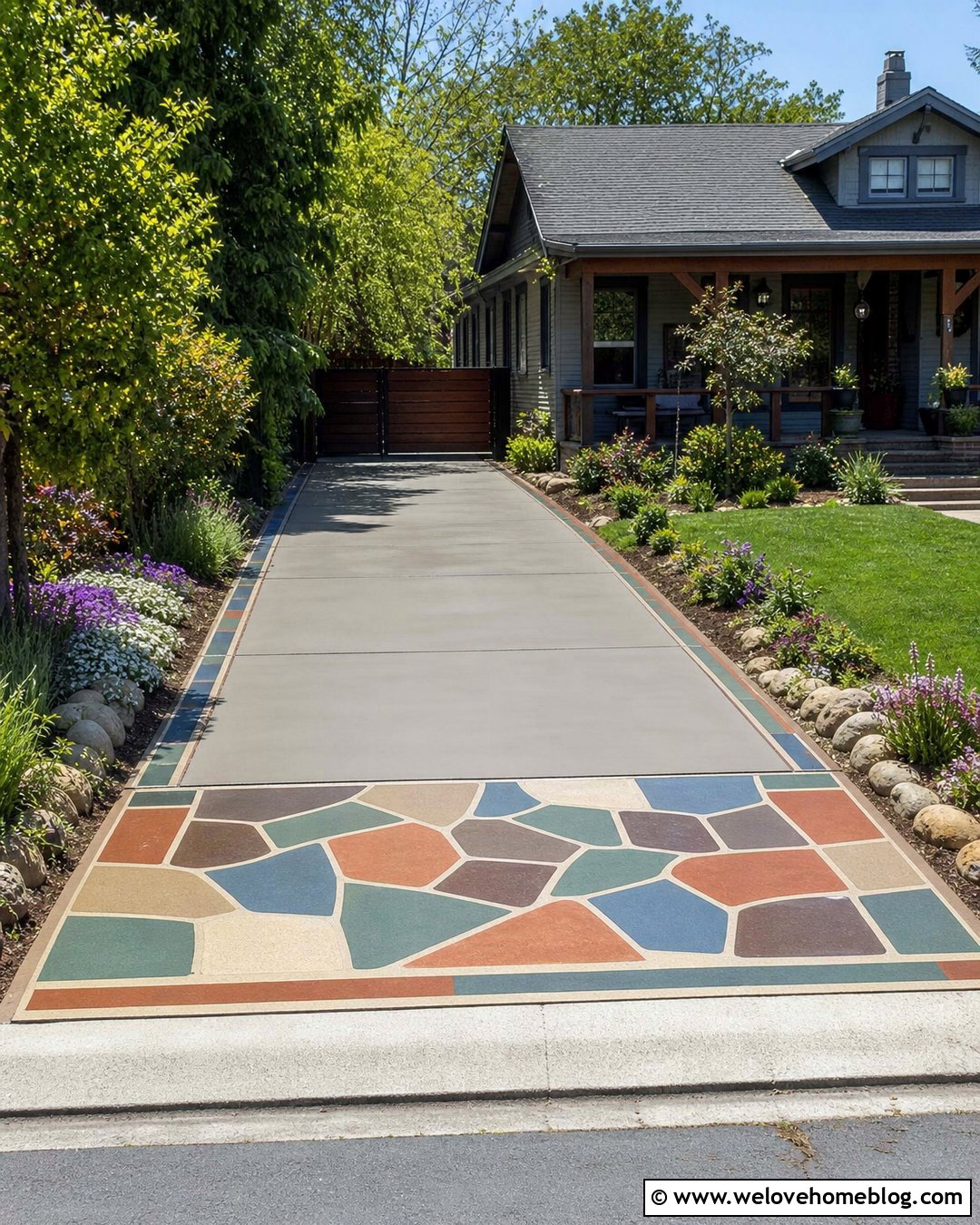
A paved entrance apron provides a durable visual transition between the street and a loose pea rock driveway. Install clay brick, concrete pavers, or cobblestones across the first section of a straight or curved approach. Continue behind it with warm pea rock held by matching side borders. Repeating the apron material near the garage can create another clean transition and help separate the loose surface from paved areas. Add symmetrical shrubs, flowering grasses, and a pair of small trees around the entrance without blocking views. Choose paver colors that connect with the house facade and gravel tones. This practical combination makes the driveway feel more finished from the curb. It also gives the design a clear beginning, defined edges, and a coordinated route toward the home.
Conclusion:
The most successful 20 Pea Rock Driveway Ideas treat the surface as one part of a complete landscape. A compacted angular-stone base, appropriate grading, and sturdy containment are especially important because rounded pea rock does not lock together like crushed gravel. () After those practical details are addressed, the material can complement many homes. Pair warm gravel with brick, timber, or farmhouse planting, or use cool gray stone with steel edging and modern architecture. Curves create a softer garden approach, while straight lines support a clean, formal appearance. Select a design that fits your maintenance needs, driveway slope, local climate, and available space. The result can be welcoming, functional, and visually connected to your home.

Related posts:
Leave a Reply