
Stone dust creates a smooth, compacted driveway surface with a softer, more natural appearance than asphalt or concrete. Also called quarry dust, crusher fines, or screenings in some regions, it is available in gray, charcoal, tan, and reddish tones. The best designs pair the fine aggregate with a properly prepared base, effective grading, firm edge restraints, and landscaping suited to local conditions. Because supplier terminology and particle composition vary, always inspect a sample before ordering. A compacted crushed-stone base can improve stability, while thoughtful drainage helps protect the finished surface from ruts and washouts. () From traditional entrances to contemporary layouts, these **20 Stone Dust Driveway Ideas** offer complete looks for different homes, lots, and budgets.

1. Gray Stone Dust Driveway With Cobblestone Edging
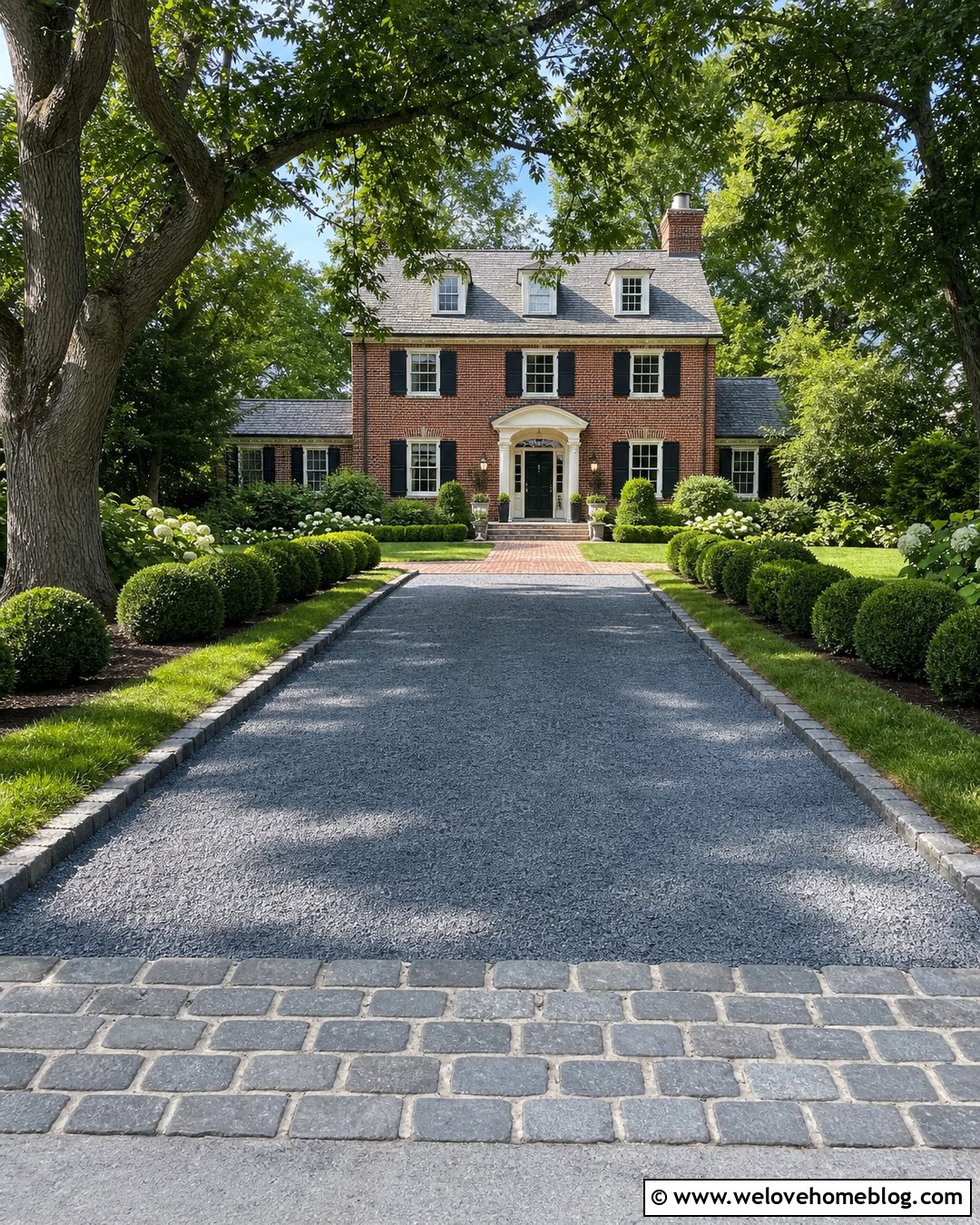
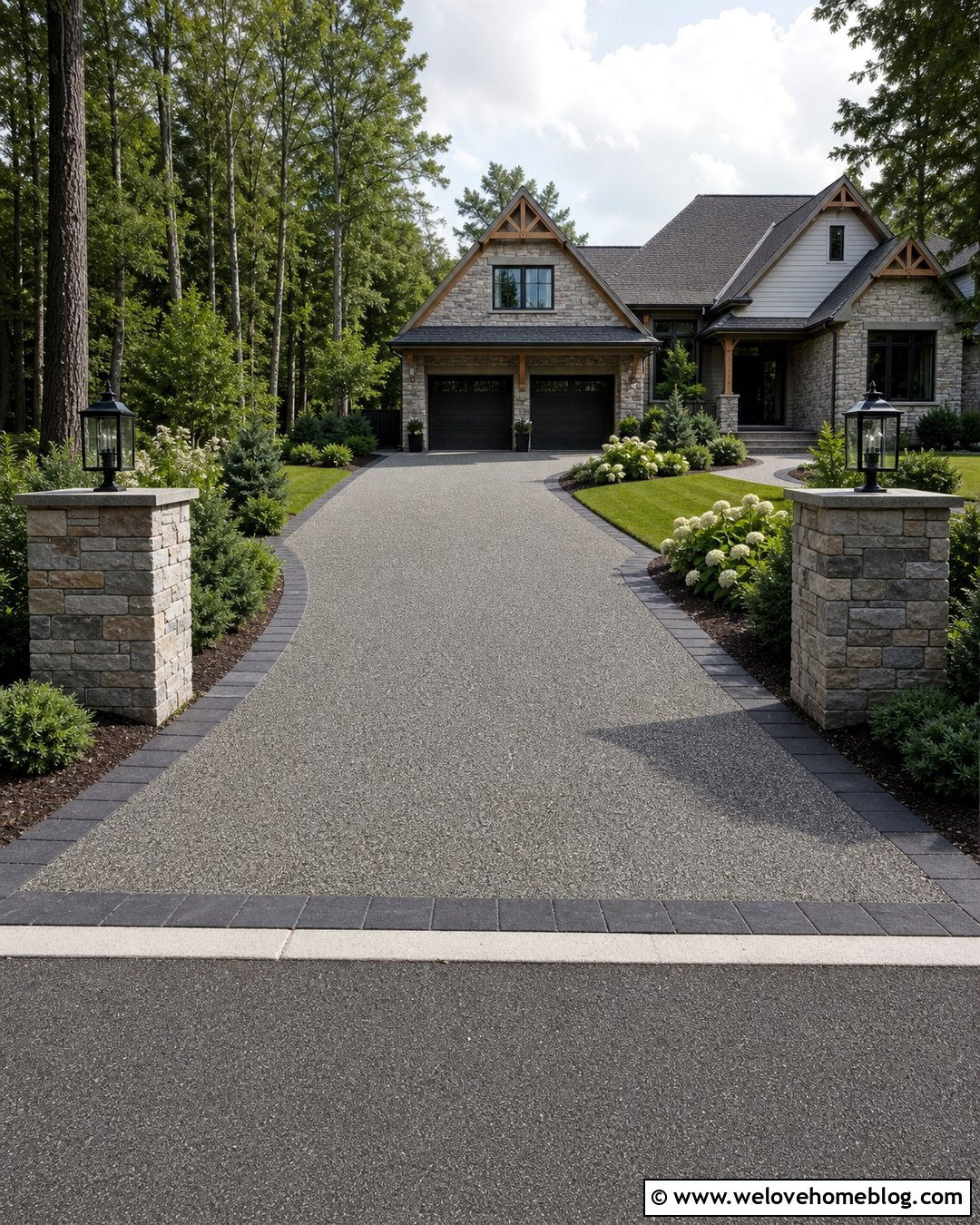
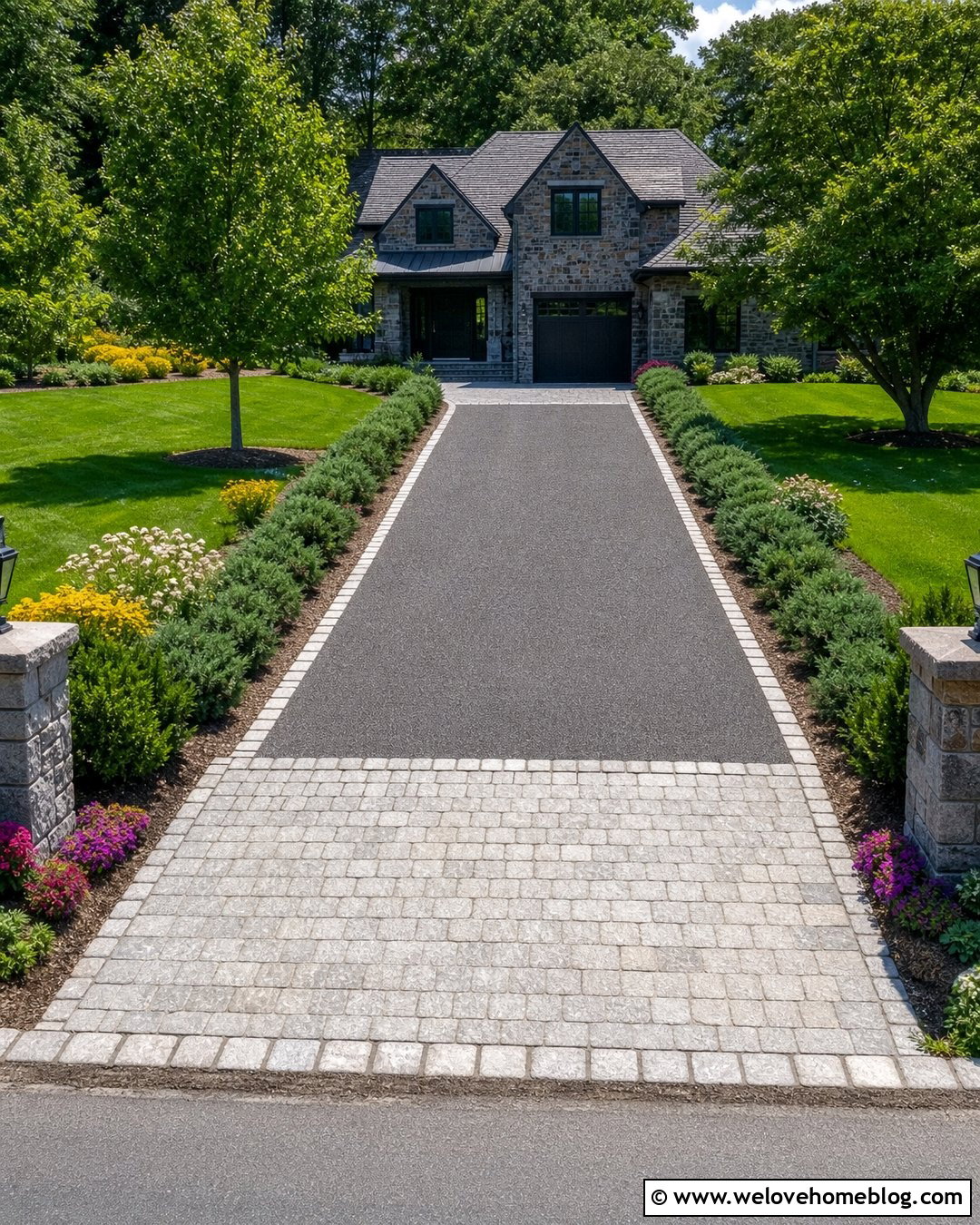
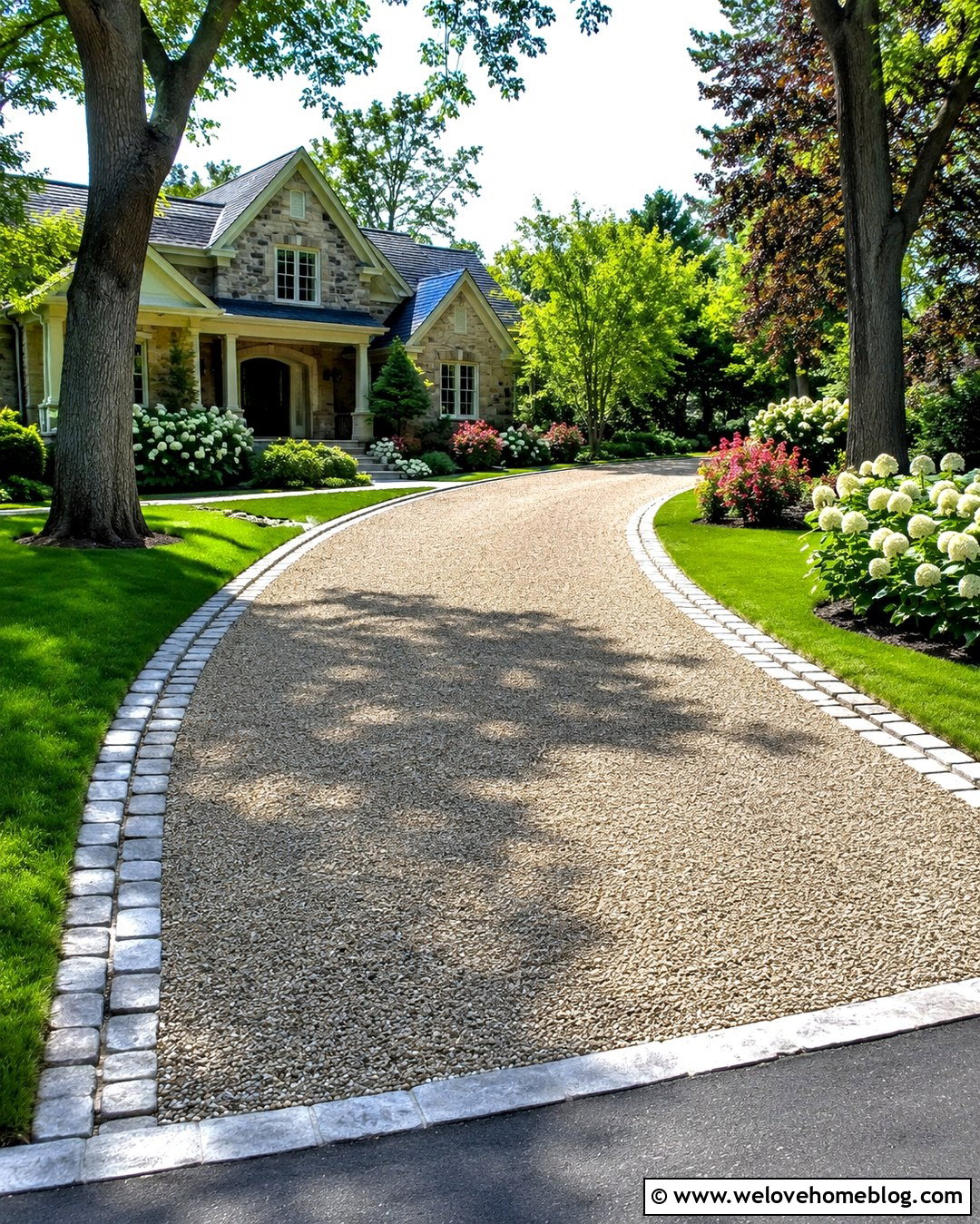
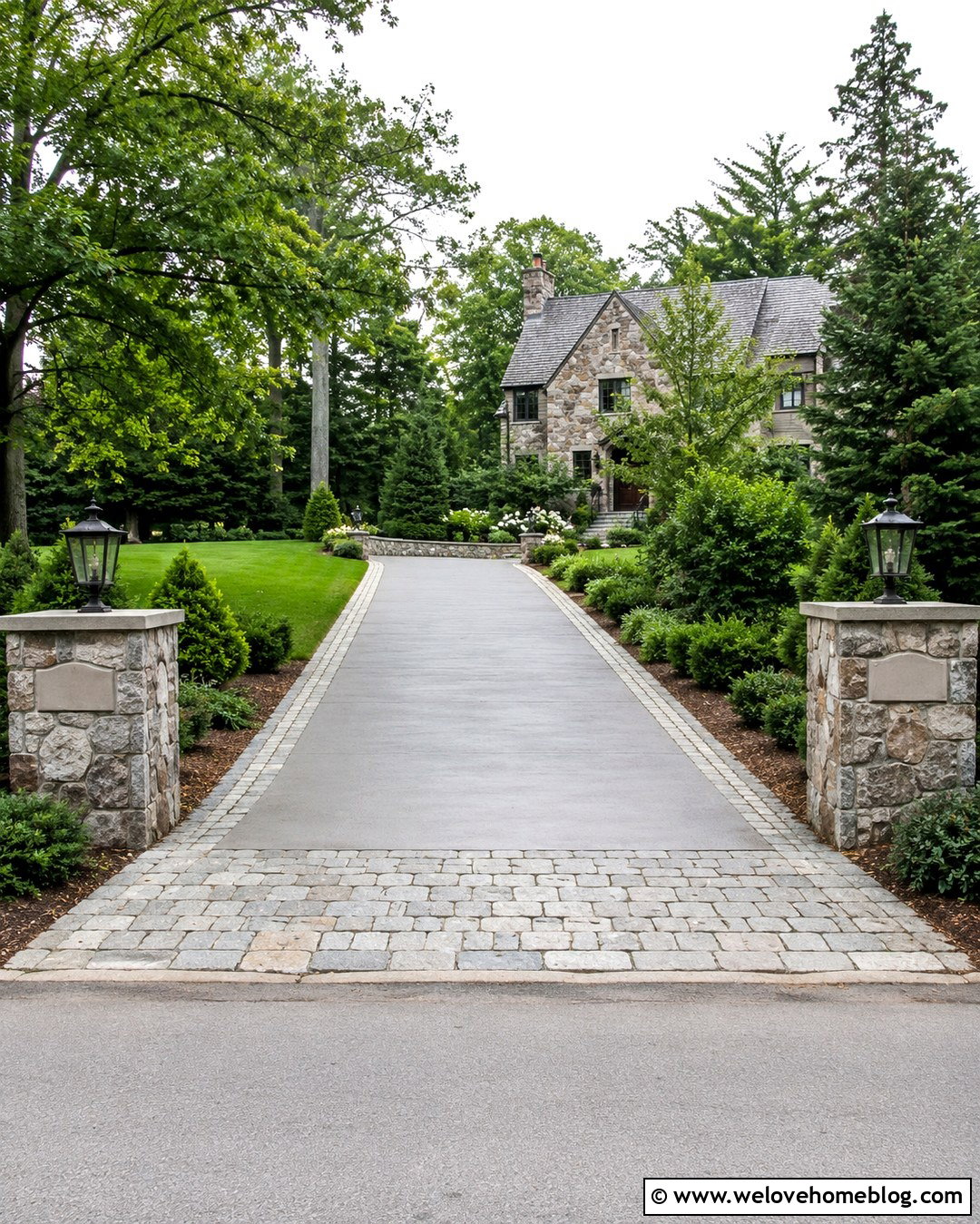
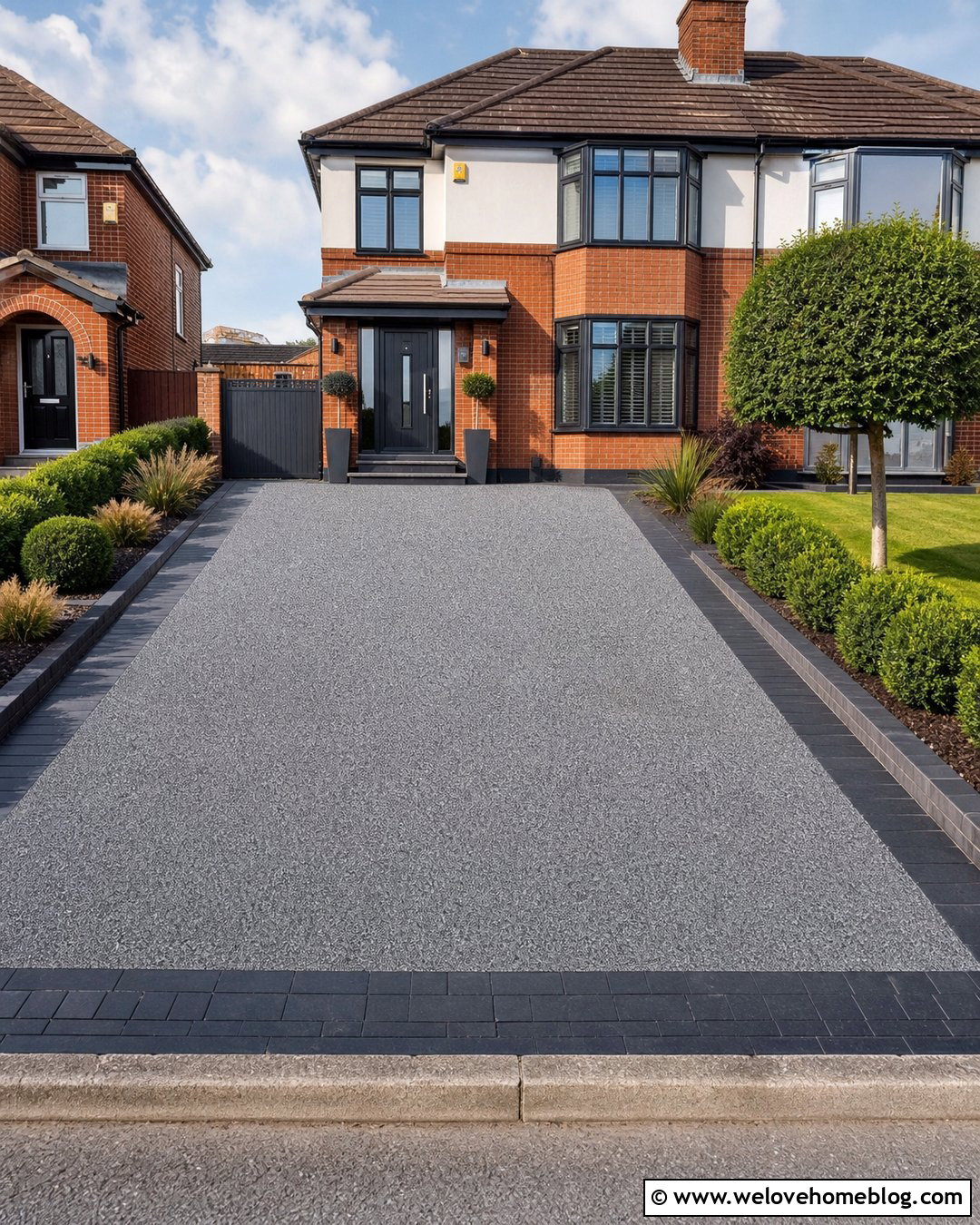
A gray stone dust driveway framed by cobblestones has a clean, established appearance that works especially well with colonial and traditional homes. Keep the driveway straight or gently flared near the street so the entrance feels welcoming without consuming too much lawn. Dark gray Belgian blocks create a strong edge that helps visually contain the fine surface. Set the stones close together and slightly above the finished grade for a crisp outline. Along both sides, use clipped boxwood, hydrangeas, and narrow lawn strips to soften the hardscape. A coordinating cobblestone apron can protect the street transition while making the entrance more noticeable. Choose blue-gray stone dust to connect the driveway’s color with slate roofing, shutters, or cool-toned masonry.
2. Curved Stone Dust Driveway With Fieldstone Borders
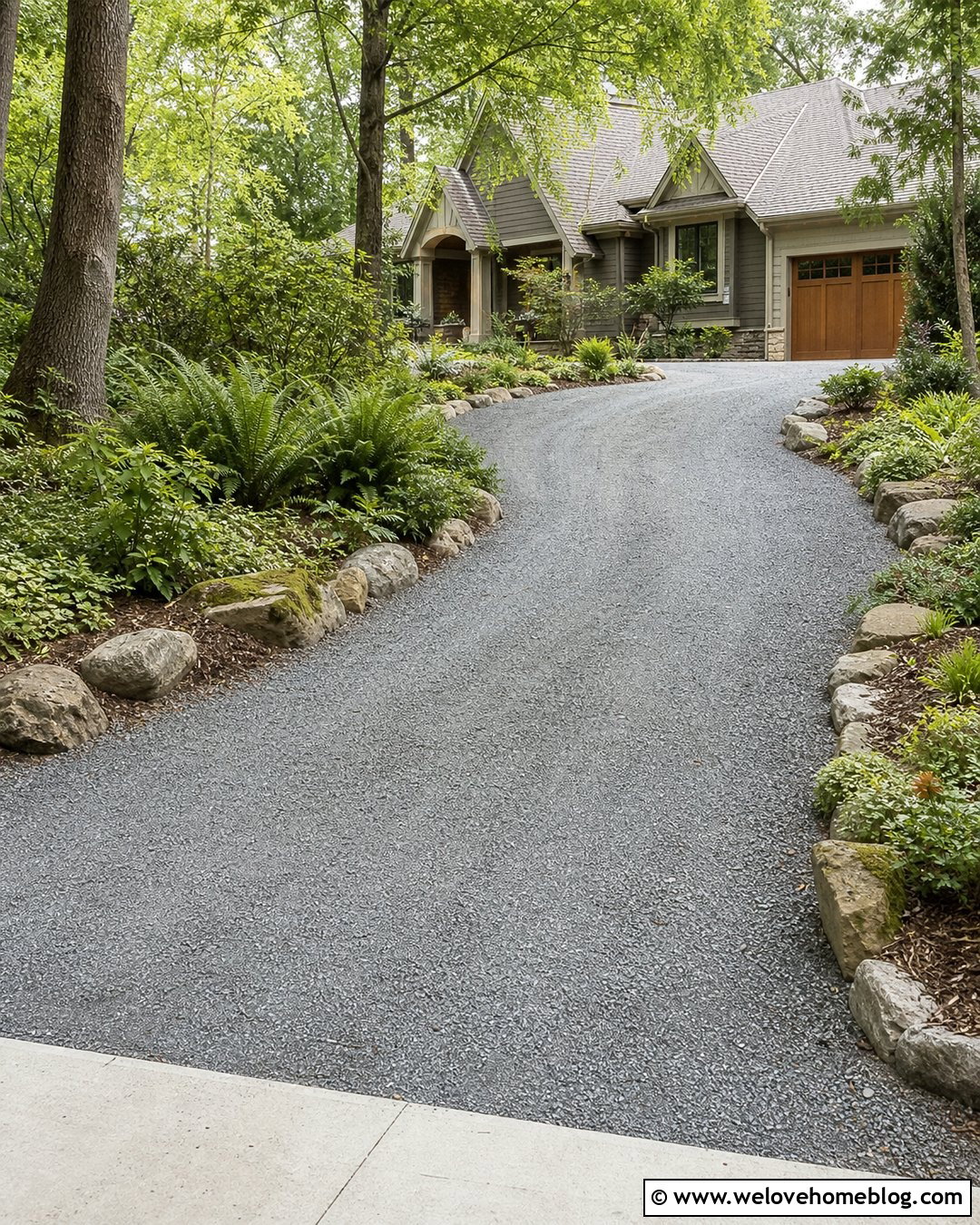
Soft curves can make a stone dust driveway feel like part of the landscape rather than a direct paved route to the garage. This layout is particularly effective on wide suburban lots, wooded properties, and country homes where existing trees can guide the driveway’s path. Edge the compacted gray stone dust with irregular fieldstones in muted brown and charcoal tones. Keep the border low and consistent so tires have a visible boundary without the driveway feeling boxed in. Layer ferns, ornamental grasses, native shrubs, and shade-tolerant ground covers behind the stones. The driveway should be graded carefully through every bend because water naturally follows low areas. A wider turning point near the house makes the curved approach practical as well as attractive.
3. Tan Stone Dust Driveway With Brick Edging
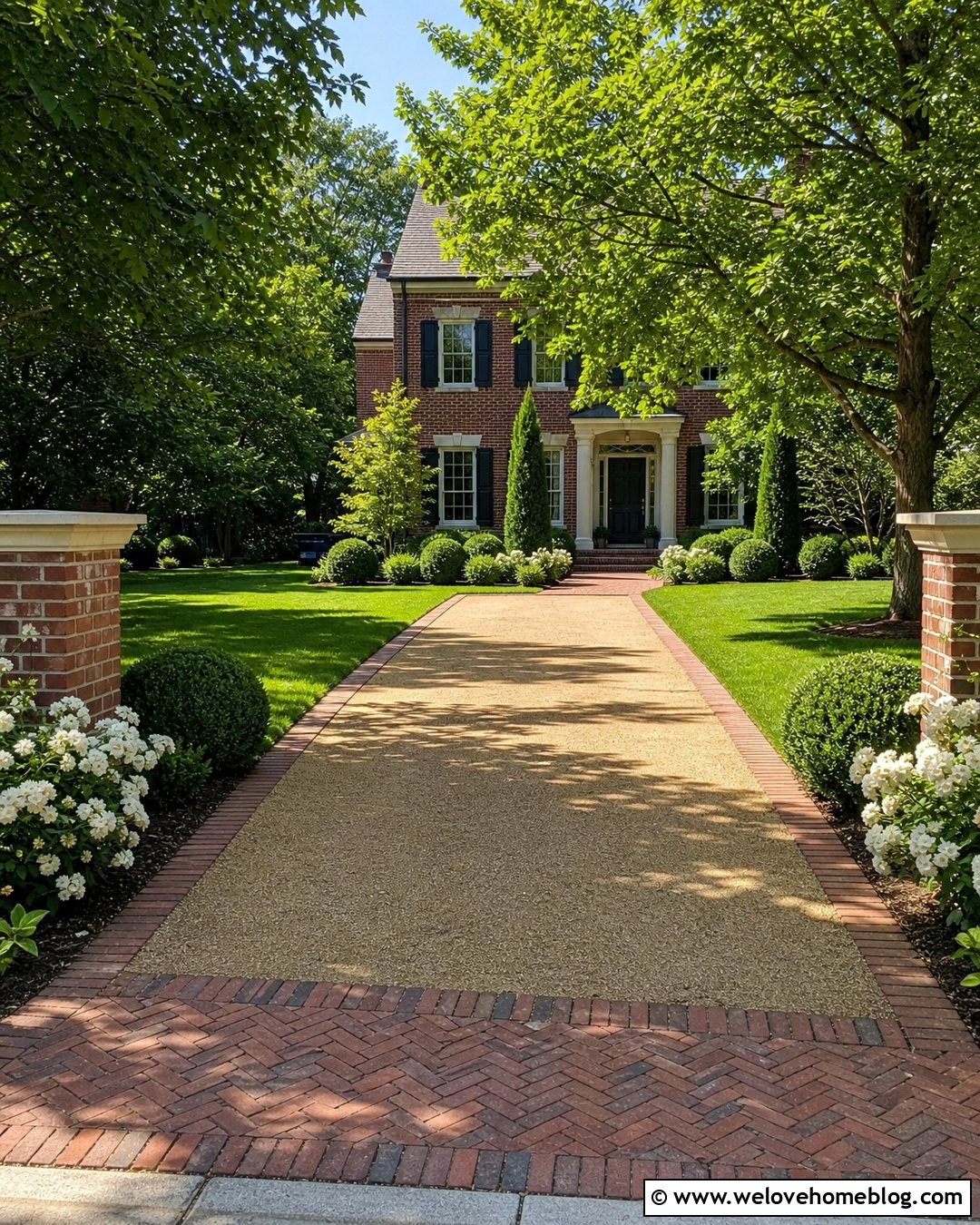
Warm tan stone dust can complement red brick, cream siding, and natural wood details without creating a harsh contrast. Frame a straight driveway with clay brick edging laid in a soldier course for a simple, traditional finish. The bricks can also form a broader entrance apron where the driveway meets the road. This creates a polished transition and introduces enough pattern to keep the fine aggregate from looking plain. Plant low evergreens, white flowering shrubs, and seasonal perennials along the borders. Avoid crowded beds that spill onto the driving surface. A brick walkway branching toward the front porch will visually connect the driveway to the house. Select locally available stone dust with beige, buff, or light brown particles for a naturally coordinated palette.
4. Circular Stone Dust Driveway With Center Landscaping
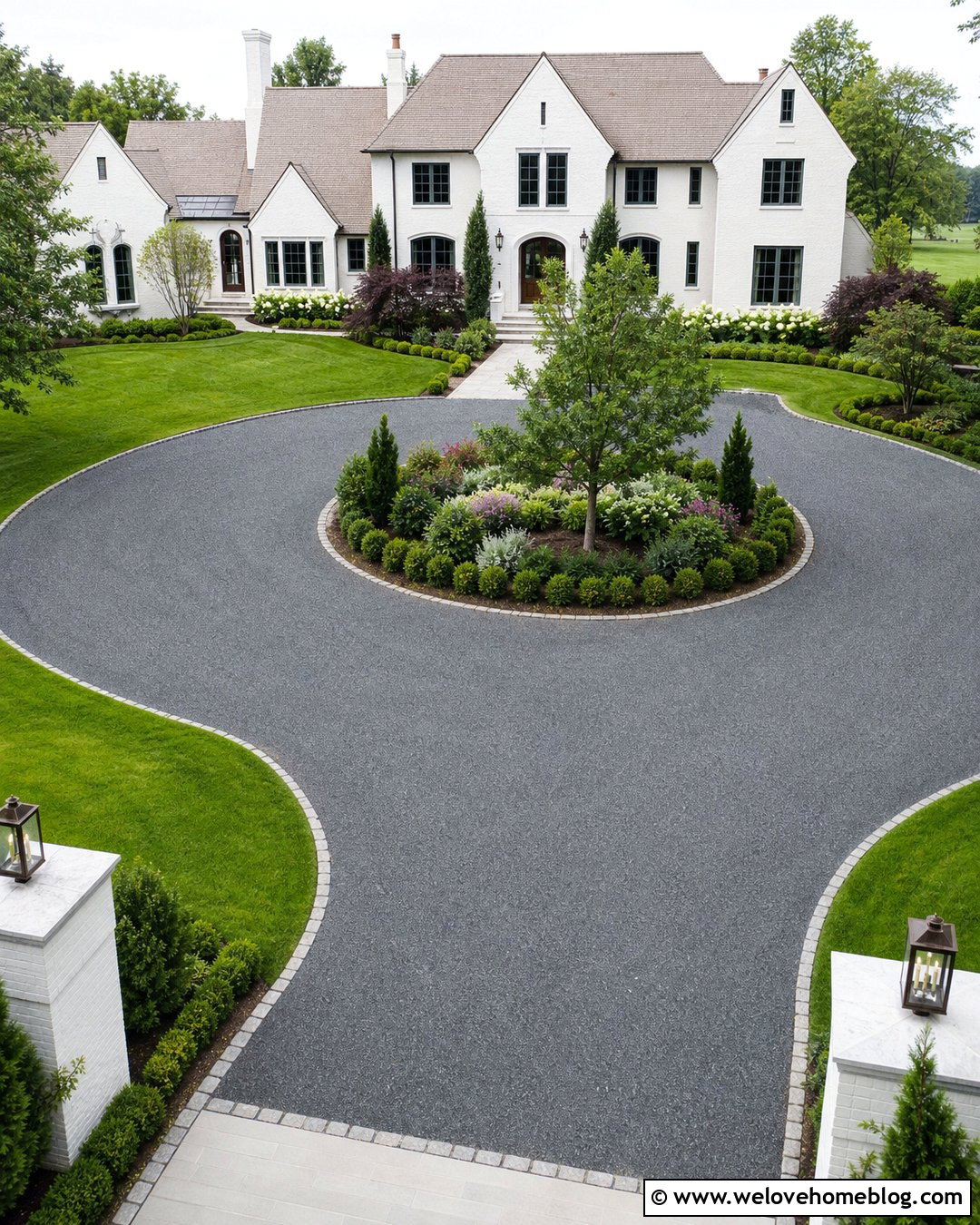
A circular stone dust driveway gives a large front yard an elegant layout while making arrivals and departures easier. Shape the drive around a generous center island rather than creating a tight loop that is difficult to navigate. Compacted charcoal stone dust can provide a refined contrast against a light-colored farmhouse, colonial, or French country facade. Define both driveway edges with granite cobbles or sturdy concrete curbing. In the center island, combine a small ornamental tree with layered shrubs, flowering perennials, and a tidy ground cover. Keep taller plants away from the entrance to preserve visibility. The loop should have a subtle crown or planned cross-slope that moves runoff toward landscaped drainage areas instead of allowing water to collect on the driving surface.
5. Stone Dust Driveway With A Brick Entrance Apron
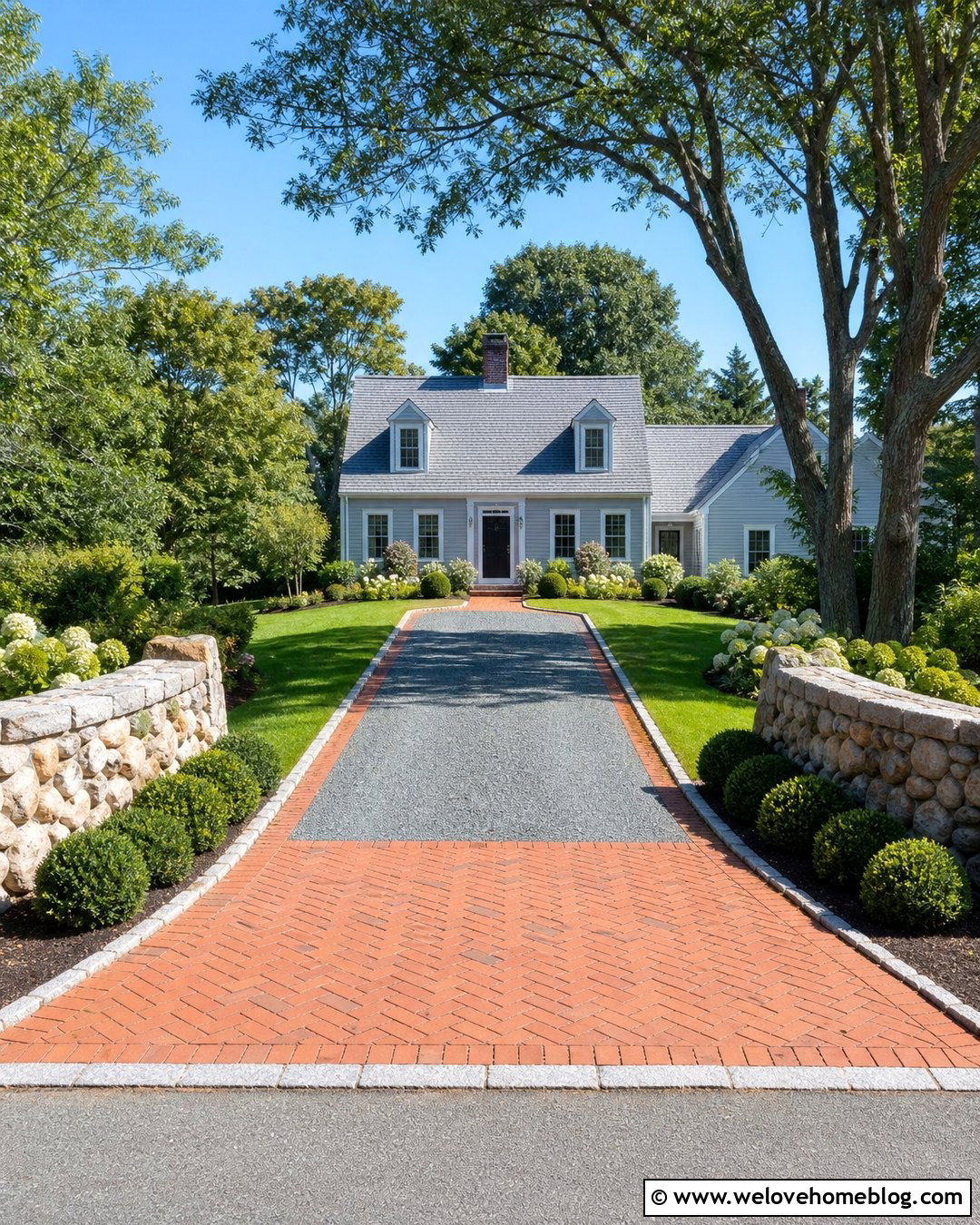
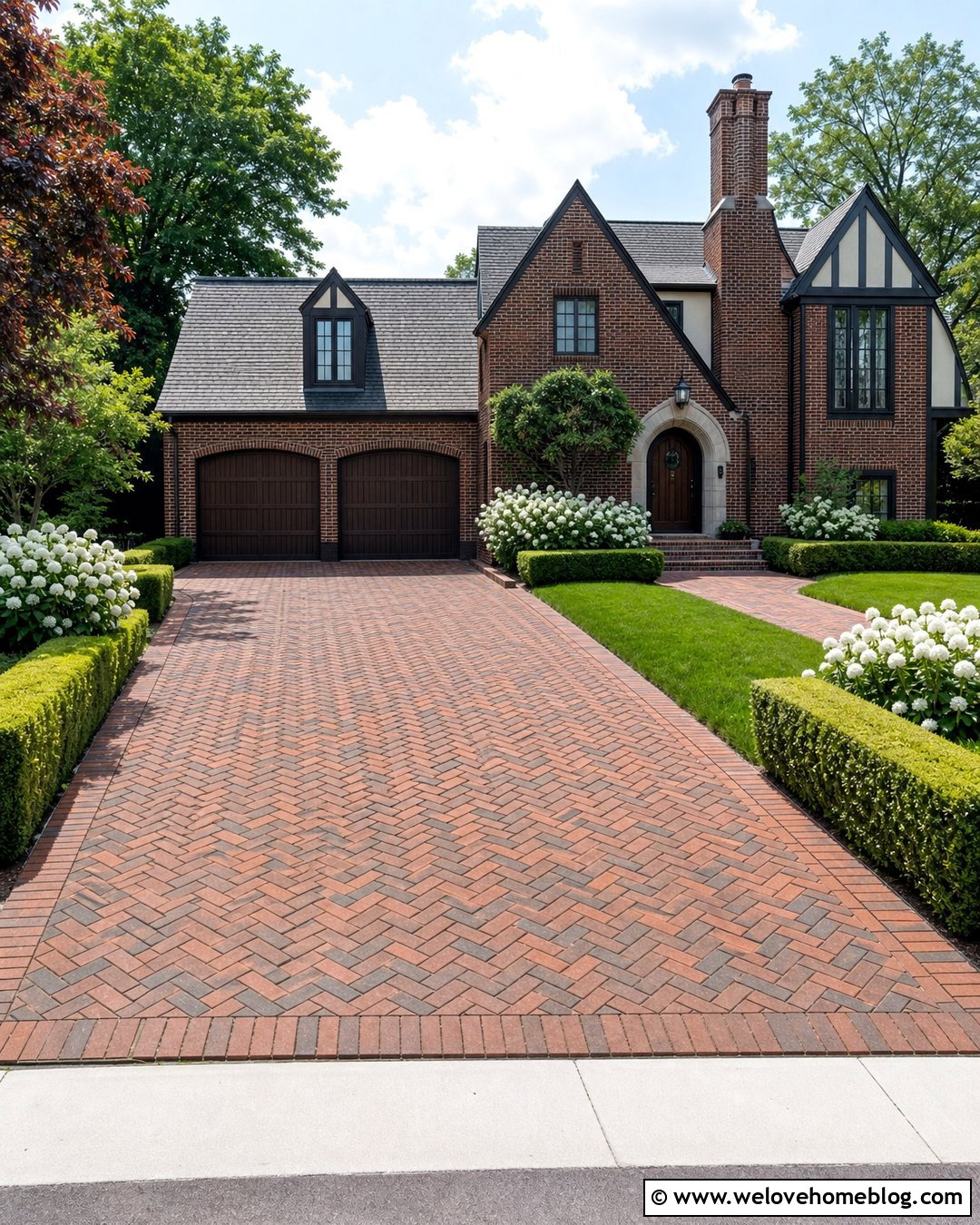
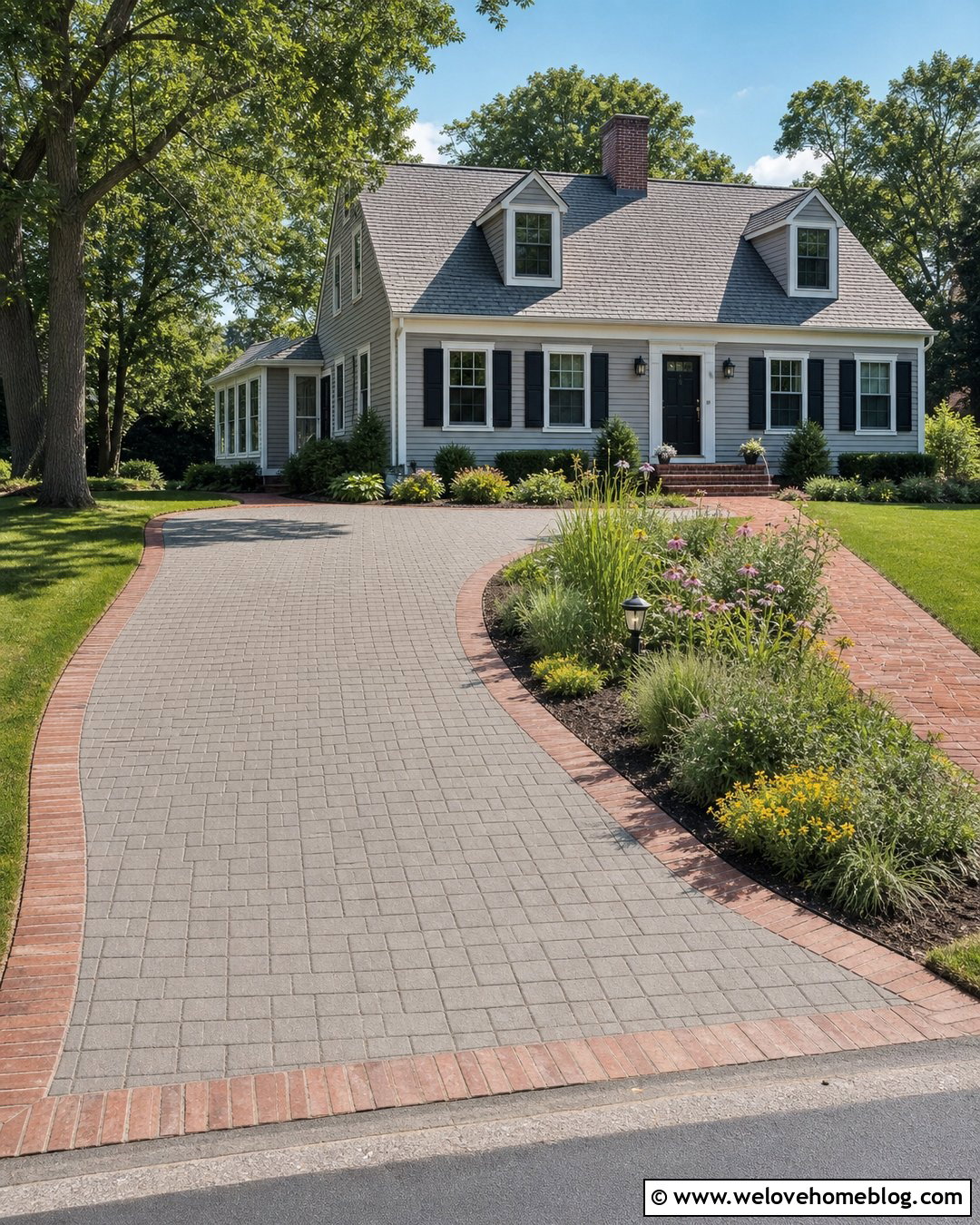
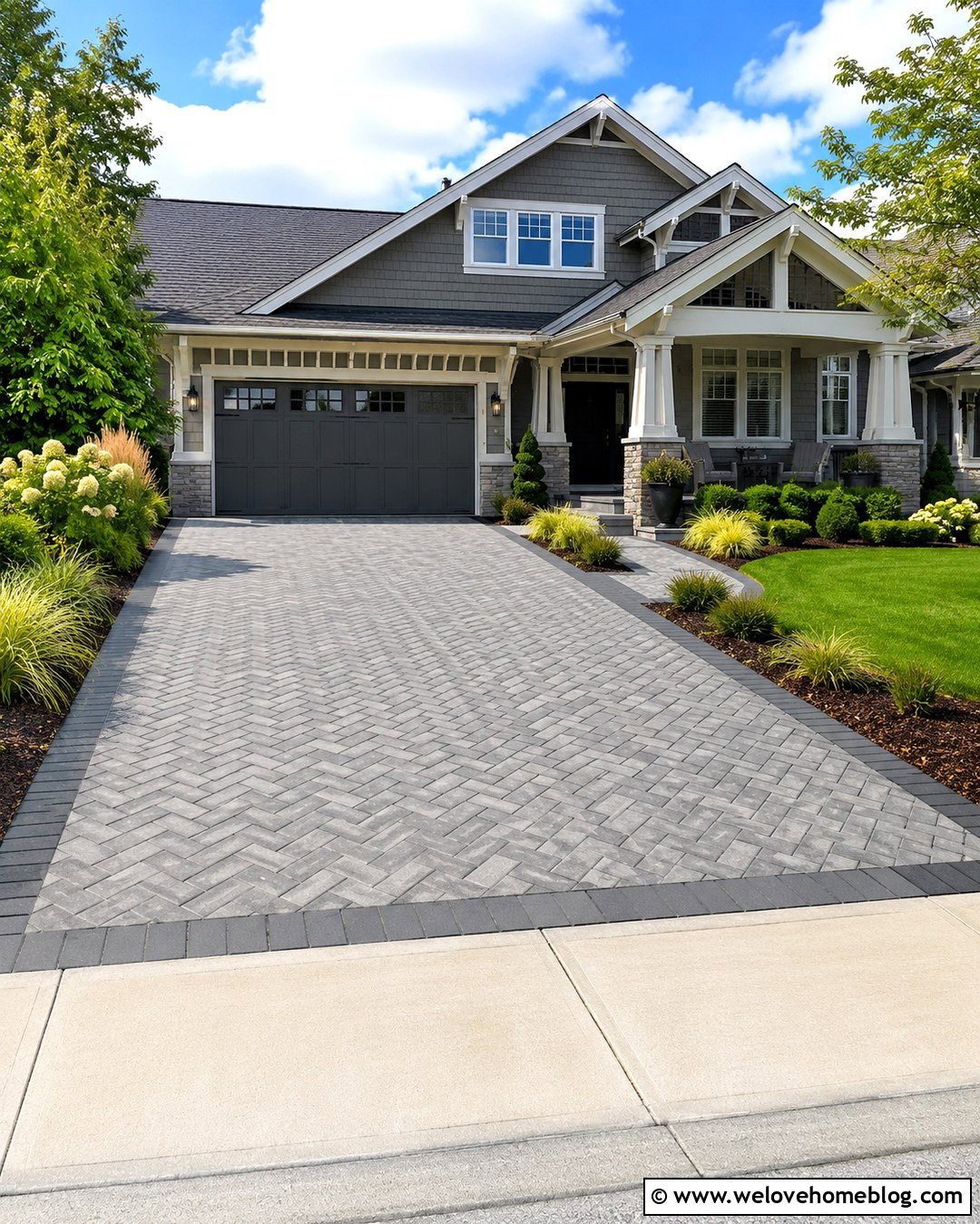
Does the driveway entrance need more definition? A brick apron can turn a basic stone dust surface into a finished, intentional approach. Use compacted blue-gray stone dust for the main driveway, then install red or charcoal clay brick pavers across the first several feet. A herringbone pattern provides visual texture, while a solid border course creates a clean transition. Continue a single brick row along both driveway edges to tie the materials together. This complete look suits Cape Cod, colonial, and craftsman homes. Frame the entrance with low stone walls, compact shrubs, and matching mailbox landscaping. The apron should be installed on a driveway-rated base and positioned so loose fines do not regularly spread onto the public roadway or collect between the bricks.
6. Stone Dust Driveway With Timber Edging
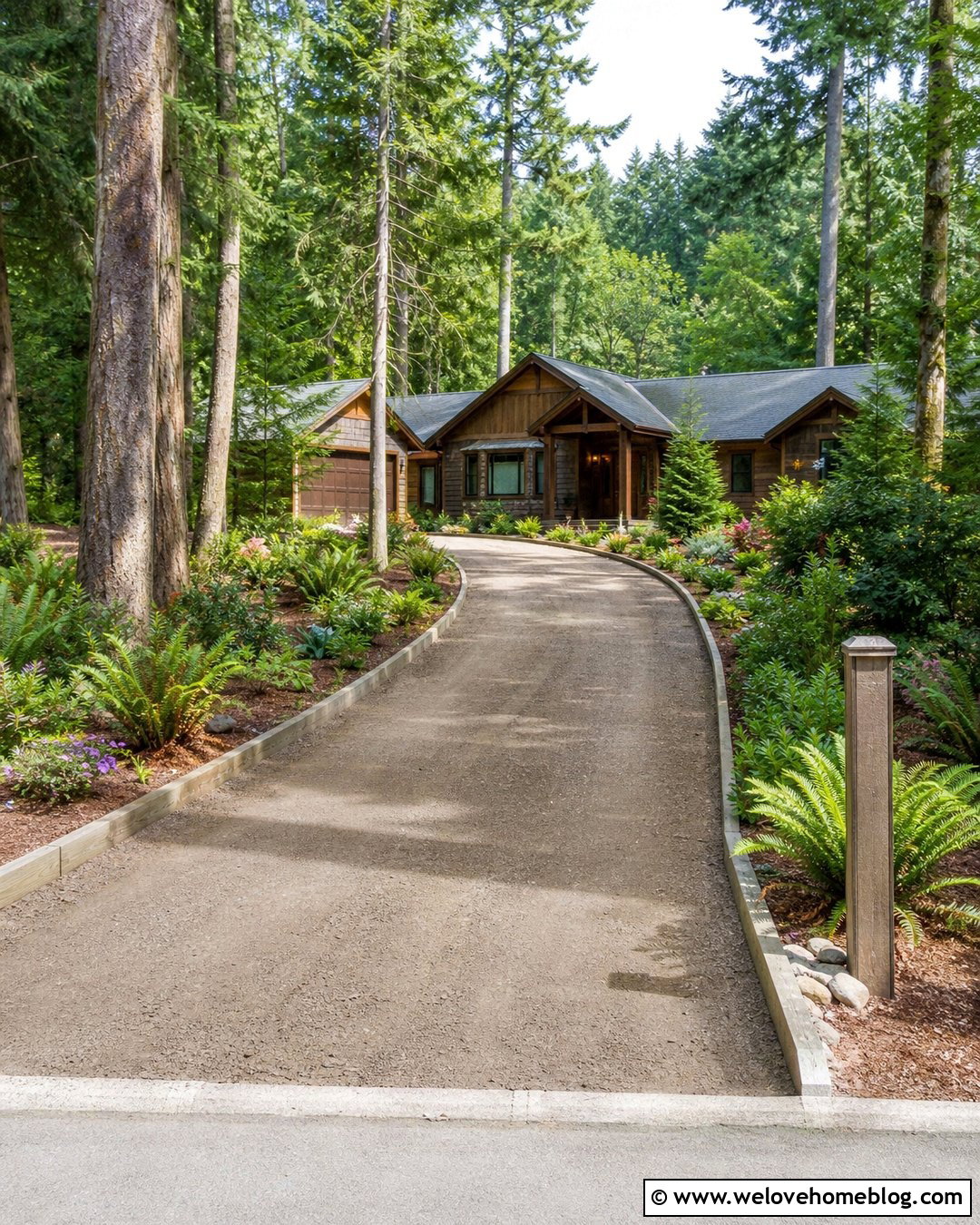
Timber edging gives a stone dust driveway a relaxed appearance that fits cabins, ranch homes, and wooded properties. Choose pressure-treated landscape timbers or naturally durable wood rated for ground contact. Install them along a gently curved driveway filled with compacted brown or warm gray stone dust. The edging should follow a smooth line without abrupt angles that make maneuvering difficult. Behind the timbers, create informal planting beds with native grasses, evergreen shrubs, ferns, and woodland flowers. A matching timber address post can reinforce the rustic design near the entrance. This option is often visually softer than masonry edging, but wood requires periodic inspection for movement and deterioration. Keep soil and mulch below the timber tops so runoff and organic material do not wash across the driveway.
7. Modern Stone Dust Driveway With Steel Edging
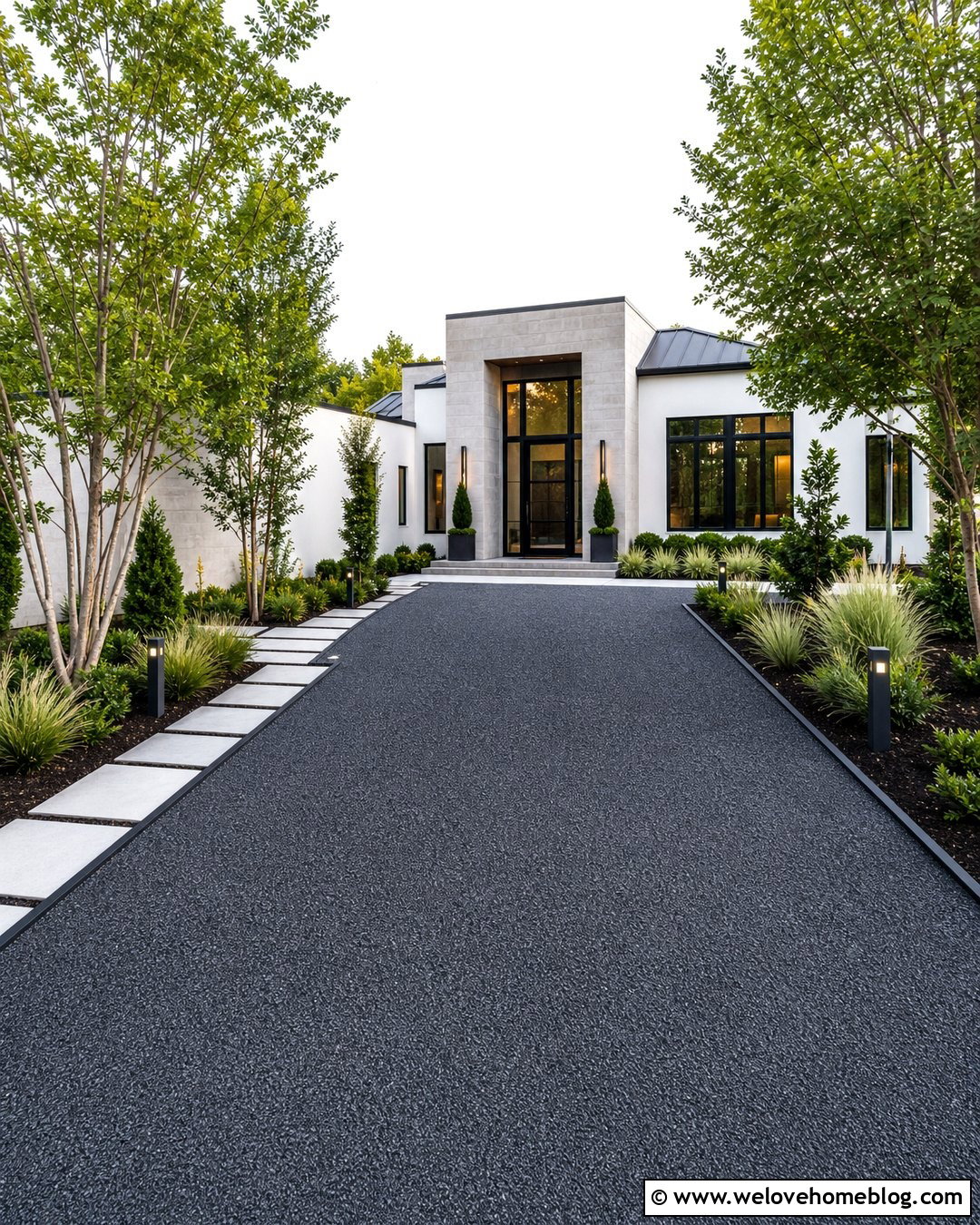
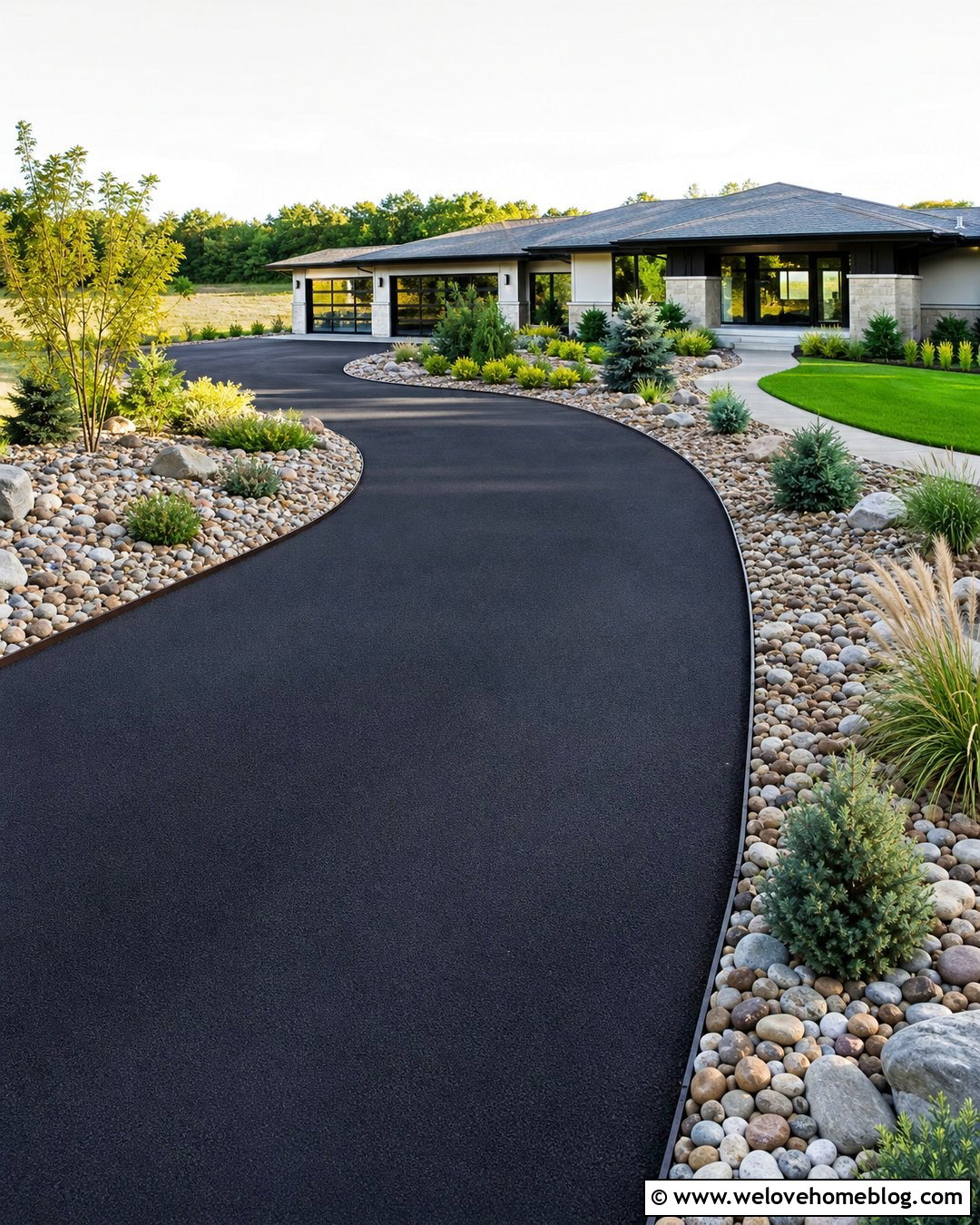
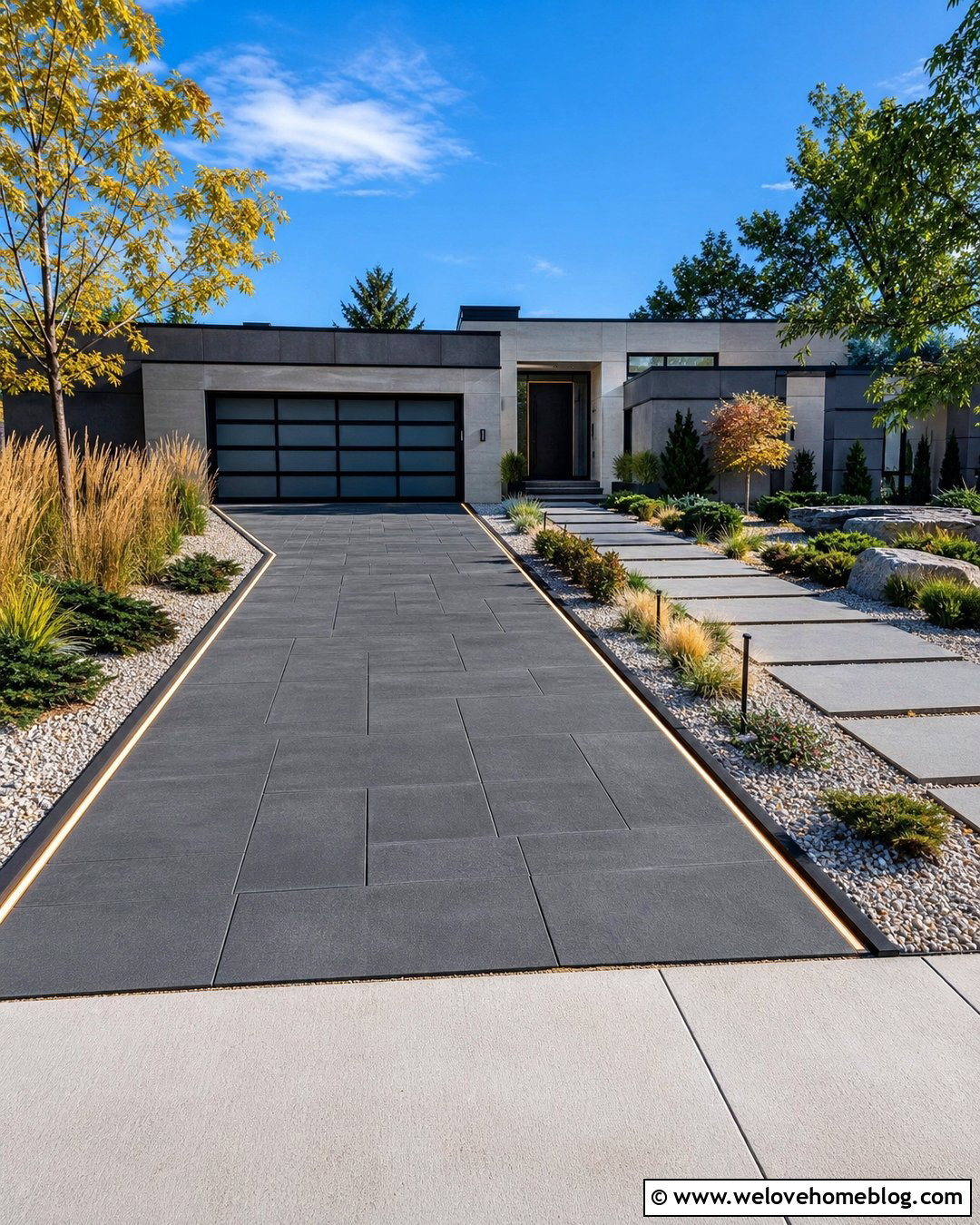
For a modern home, pair charcoal stone dust with slim black steel edging and a simple geometric layout. A wide, straight driveway can be divided visually by narrow planting beds or rectangular concrete stepping pads leading toward the front entrance. The metal edging creates a sharp boundary without adding a bulky border. Surround the driveway with architectural grasses, clipped evergreens, multi-stem trees, and large areas of restrained ground cover. Keep the planting palette limited so the stone dust remains part of the contemporary composition. Black bollard lights can follow one side, but space them far enough from the driving area to prevent damage. The final surface should appear level and tightly compacted, with subtle grading that directs water toward planted swales or another suitable drainage point.
8. Stone Dust Driveway With Granite Block Ribbons
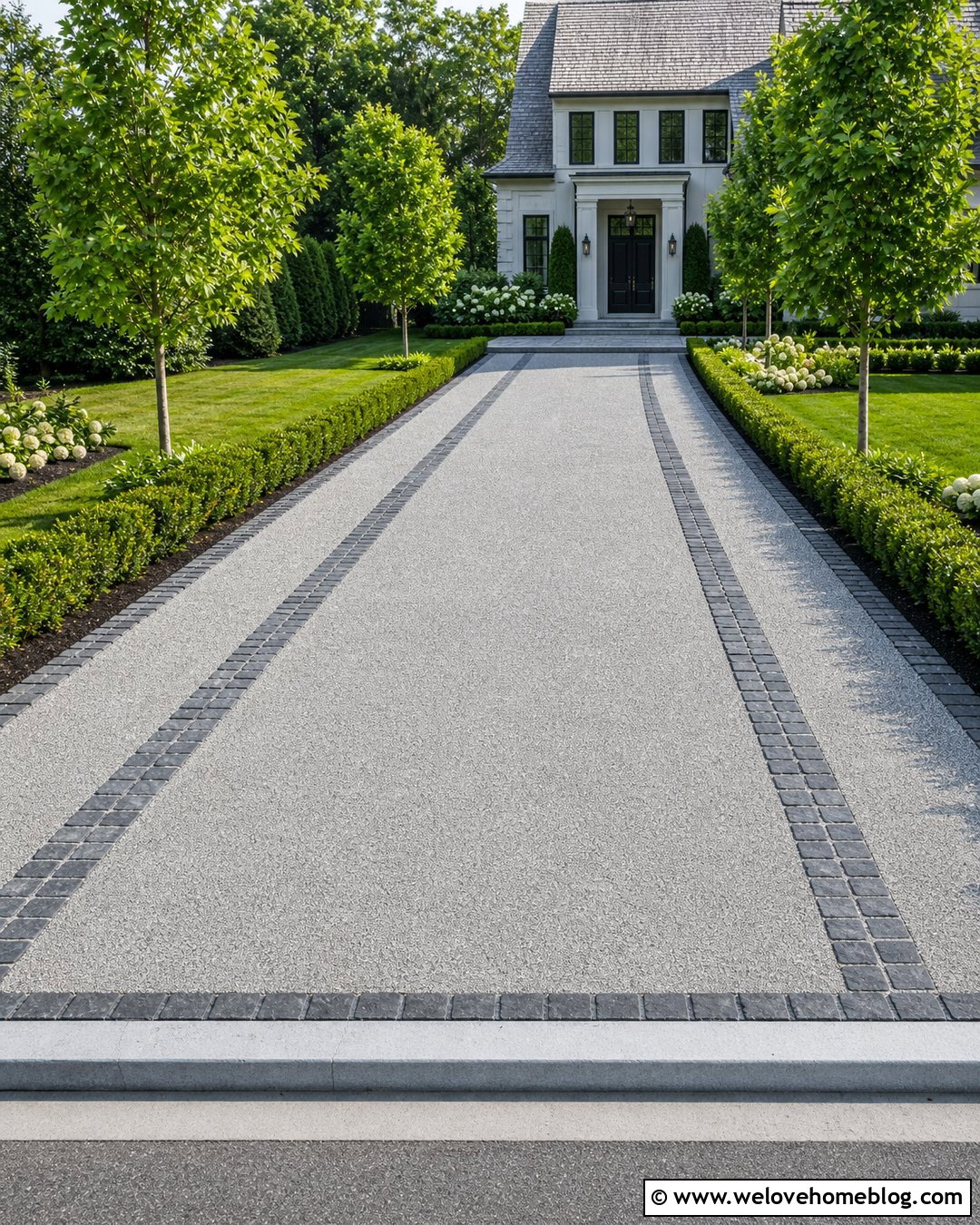
Granite block ribbons add structure to a broad stone dust driveway without covering the entire area in expensive masonry. Place two parallel bands where vehicle tires typically travel, then fill and compact the surrounding surface with gray granite stone dust. The ribbons can be made from rectangular granite setts in charcoal, silver, or mixed natural tones. This arrangement creates a strong visual route toward the garage and reduces the plainness of a large driveway. Continue the same blocks around the perimeter for a coordinated edge. Low hedges, upright ornamental trees, and a simple lawn can frame the design. Ask an experienced installer to plan the base beneath both materials so the granite and stone dust settle evenly rather than forming uncomfortable ridges.
9. Stone Dust Driveway With A Grass Center Strip
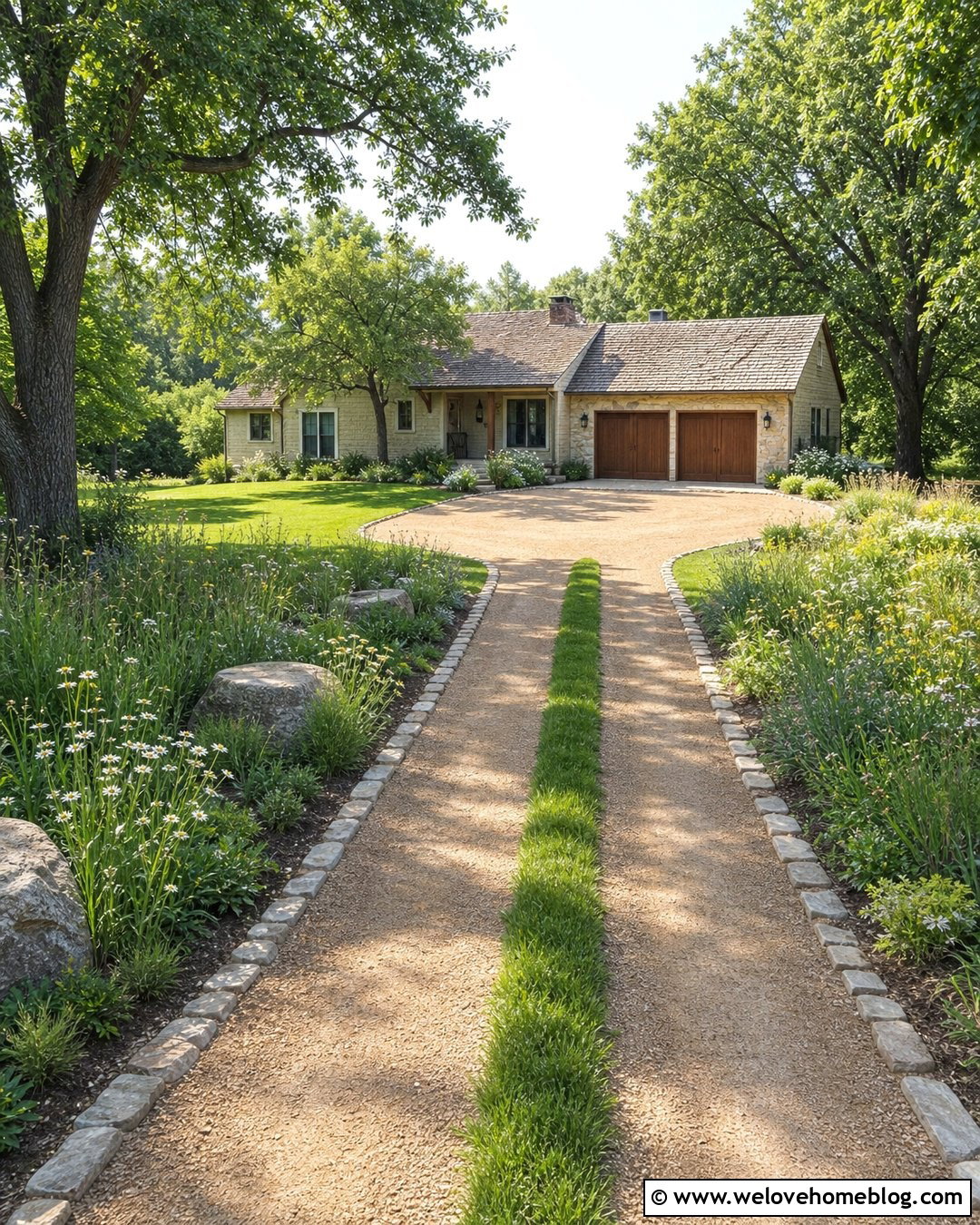
A grass center strip can make a long stone dust driveway feel narrower, greener, and more connected to the yard. Build two compacted driving lanes from tan or gray stone dust, leaving a continuous planted median between them. The layout works best on straight residential drives with predictable vehicle paths and enough room for comfortable maneuvering. Use durable turf suited to local sun, rainfall, and maintenance conditions. Flush steel or stone edging can keep the grass from spreading into the aggregate. Near the garage, transition to a full-width stone dust parking and turning area. Echo the green center with lawn, shade trees, and simple planting beds along the sides. Proper dimensions are essential because unusually wide or narrow vehicles still need to remain fully supported.
10. Stone Dust Driveway With A Paver Parking Area
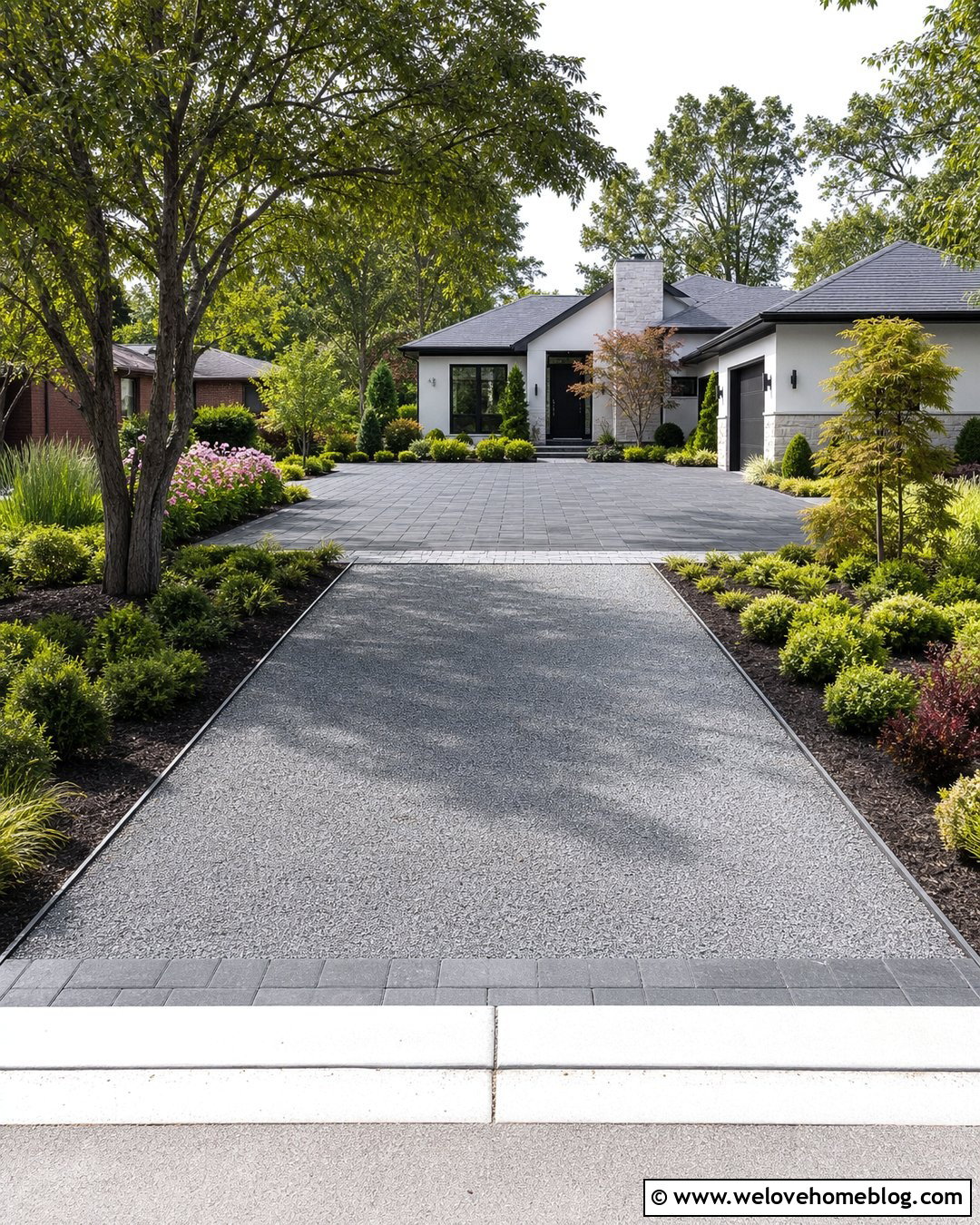
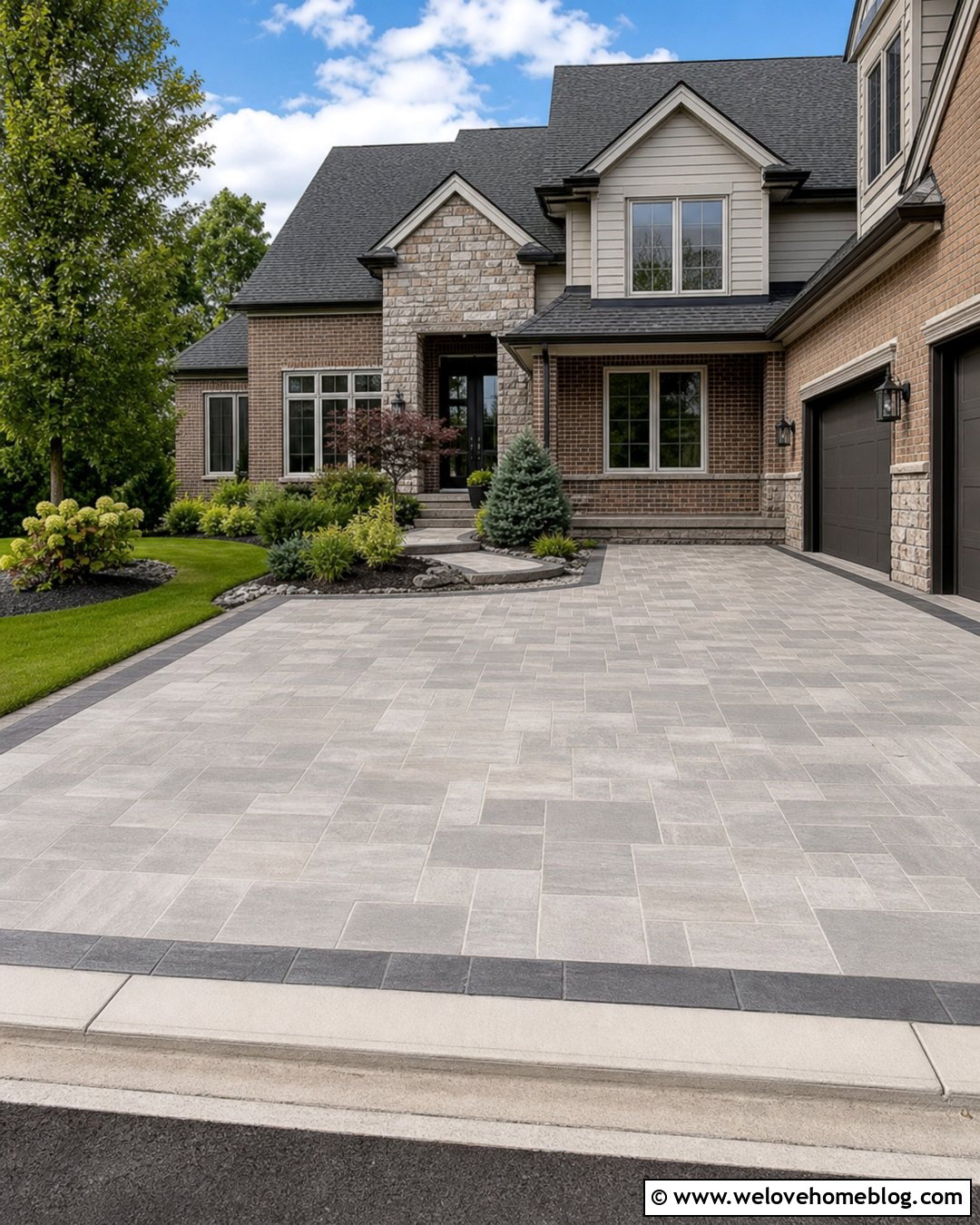
Stone dust can cover the long approach while concrete pavers provide a more defined parking area beside the house. This mixed-material layout balances natural character with a firm, organized space where vehicles frequently turn or remain parked. Use compacted medium-gray stone dust for the driveway and large charcoal pavers for the parking pad. Connect them with a coordinating paver transition band rather than allowing the materials to meet at an uneven edge. Frame the approach with lawn, small trees, and low-maintenance shrubs. Permeable pavers may be considered where site conditions and local requirements allow, but the complete drainage plan should be evaluated before installation. Some stormwater guidance specifically cautions against putting stone screenings inside certain permeable paving systems, so follow the paver manufacturer’s specifications. ()
11. Long Stone Dust Driveway With Tree-Lined Borders
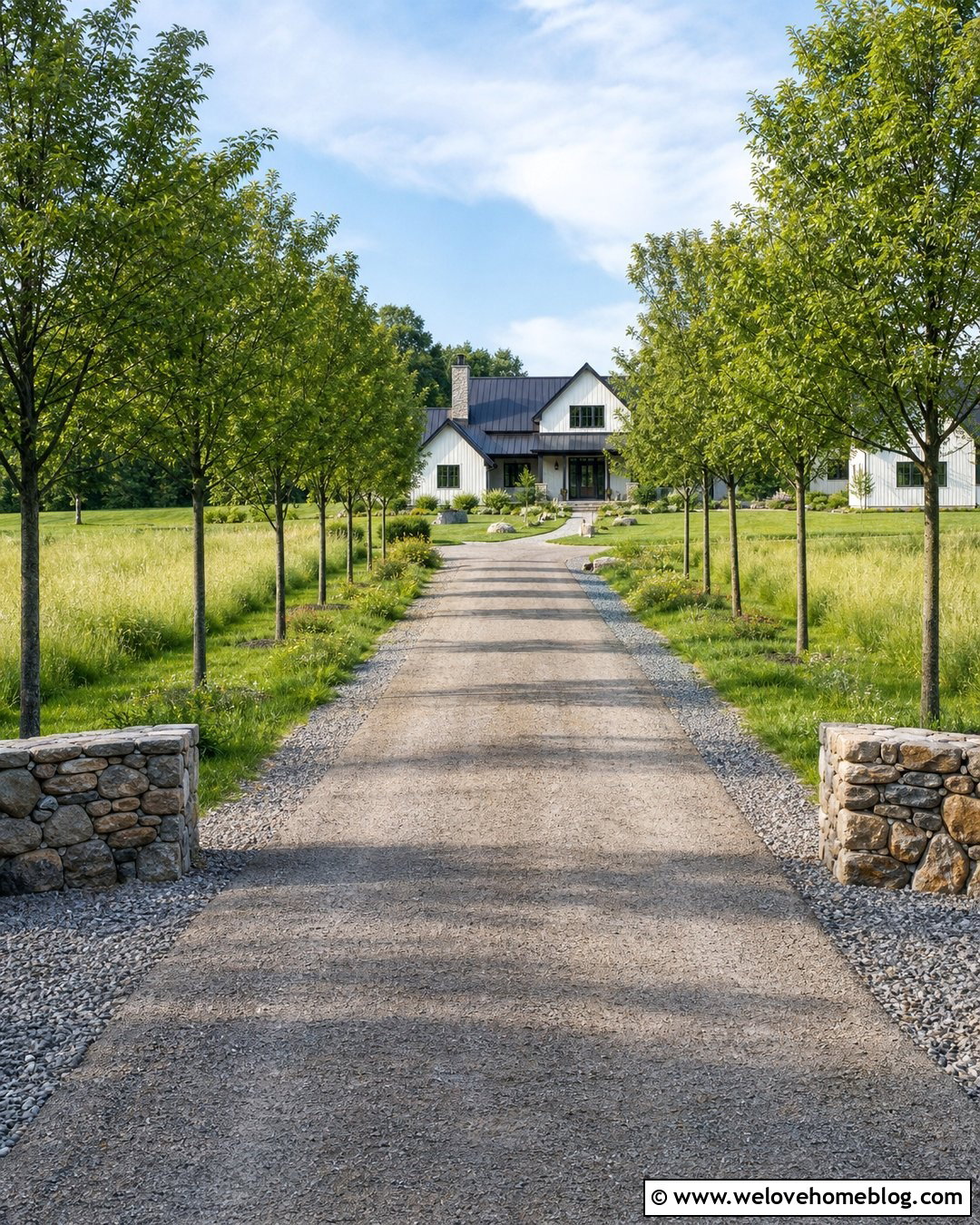
A tree-lined stone dust driveway can create a memorable approach to a farmhouse, country home, or large suburban residence. Keep the compacted stone dust surface simple and use evenly spaced trees to establish rhythm along the route. Gray-brown quarry fines blend naturally with oak, maple, birch, or ornamental pear trunks. Set trees far enough from the driveway to protect roots, preserve visibility, and leave room for mature canopies. Fill the spaces beneath them with lawn, meadow planting, or low ground covers rather than tall shrubs that make the drive feel narrow. Fieldstone edging can define the entrance while discreet steel edging contains the rest. On a long driveway, base preparation, drainage, and material quantities significantly affect performance and cost, so careful measurement should happen before ordering. ()
12. Sloped Stone Dust Driveway With Drainage Swales
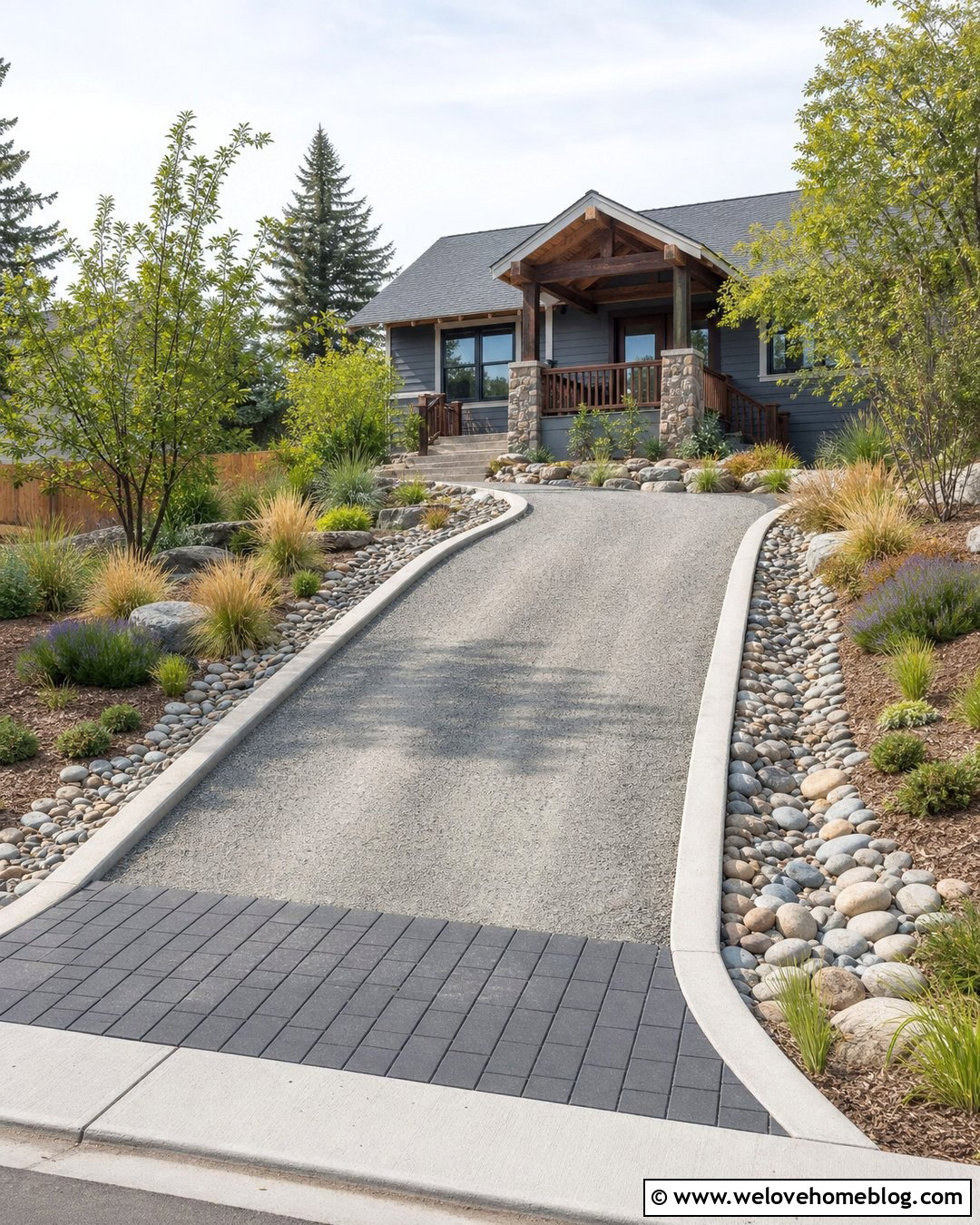
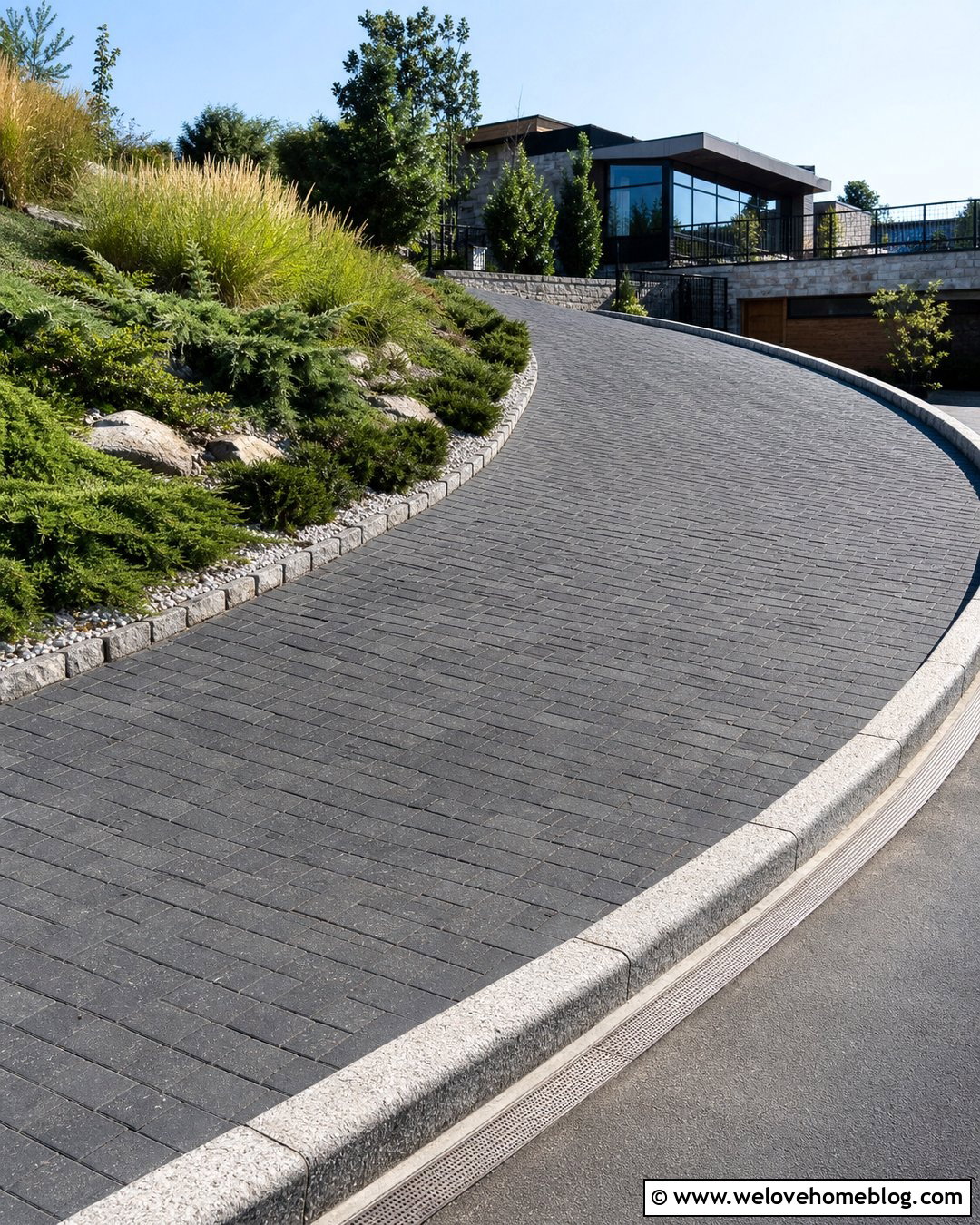
A sloped driveway needs a design that treats water management as part of its appearance. Use compacted crusher fines or stone dust over a suitable structural base, then shape the surface so runoff does not race straight down the wheel paths. Shallow planted swales can run beside the driveway, framed with rounded river rock, moisture-tolerant grasses, and low native shrubs. Install sturdy stone or concrete edging where the surface is most vulnerable to washout. A paver apron at the bottom can create a cleaner street transition and catch some displaced material. Avoid directing water toward the house, neighboring property, or public roadway. Because soil, grade, rainfall, and local rules differ, have a qualified professional determine whether additional drains, culverts, or erosion-control measures are necessary.
13. Stone Dust Driveway With A Natural Boulder Entrance
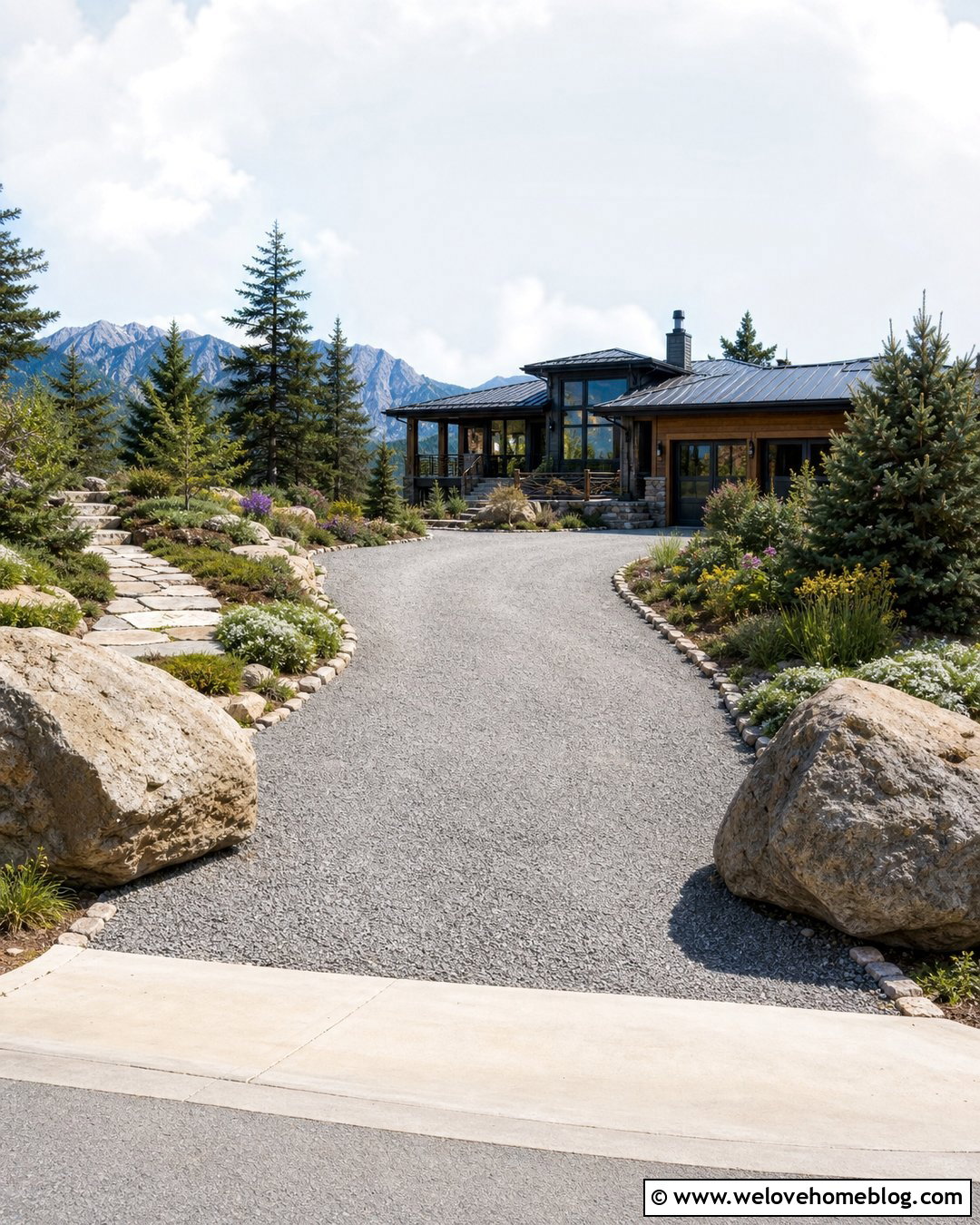
Large boulders can give a stone dust driveway a strong entrance without the formal appearance of brick pillars or masonry walls. Choose locally sourced rocks that match the color of the compacted driveway surface and surrounding landscape. Position one or two boulders on each side of a gently curved gray stone dust drive, leaving generous clearance for vehicles and service equipment. Add ornamental grasses, creeping ground covers, flowering shrubs, and small evergreen trees around their bases. The planting should look layered but should not obstruct sightlines at the road. Continue smaller fieldstones along the driveway edges to connect the entrance with the full design. This approach is especially suitable for mountain homes, wooded ranches, rustic cottages, and contemporary houses with natural stone facade details.
14. Stone Dust Driveway With Low Stone Walls
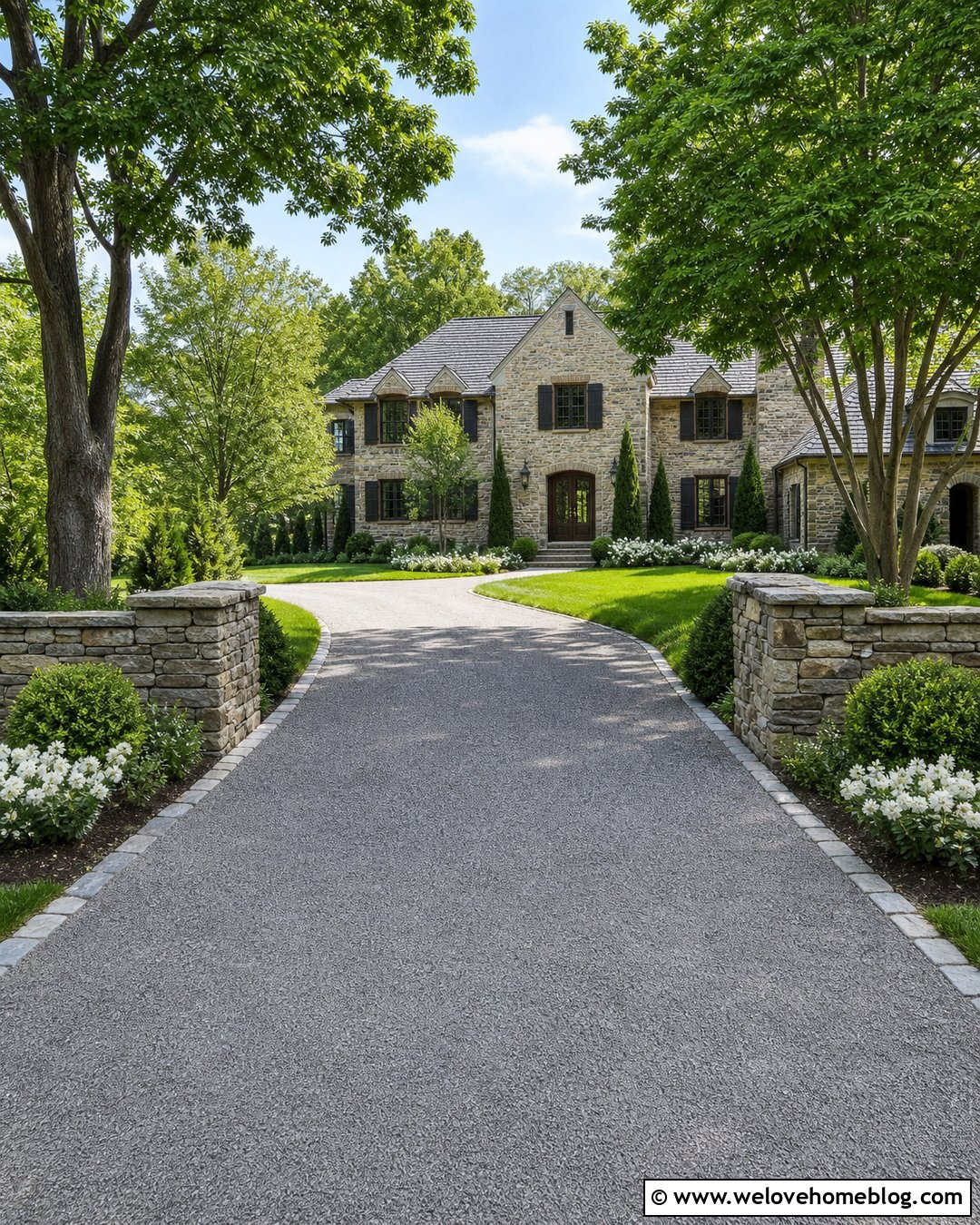
Low stone walls bring definition and permanence to a broad stone dust entrance. Build short dry-stacked or mortared walls near the road, then gradually transition them into simple stone edging along the driveway. A warm gray stone dust surface works beautifully with mixed fieldstone containing tan, rust, and charcoal tones. Cap the entrance walls with flat stones and place compact evergreen shrubs behind them. For a balanced design, repeat the wall material in the front walkway, porch foundation, or garden borders. The walls should sit well outside the vehicle clearance zone and remain low enough to maintain safe visibility. A slightly flared driveway opening helps drivers enter comfortably. Add discreet address markers or lantern-style fixtures only when they suit the home’s architecture and applicable local requirements.

15. Small Stone Dust Driveway With Simple Landscaping
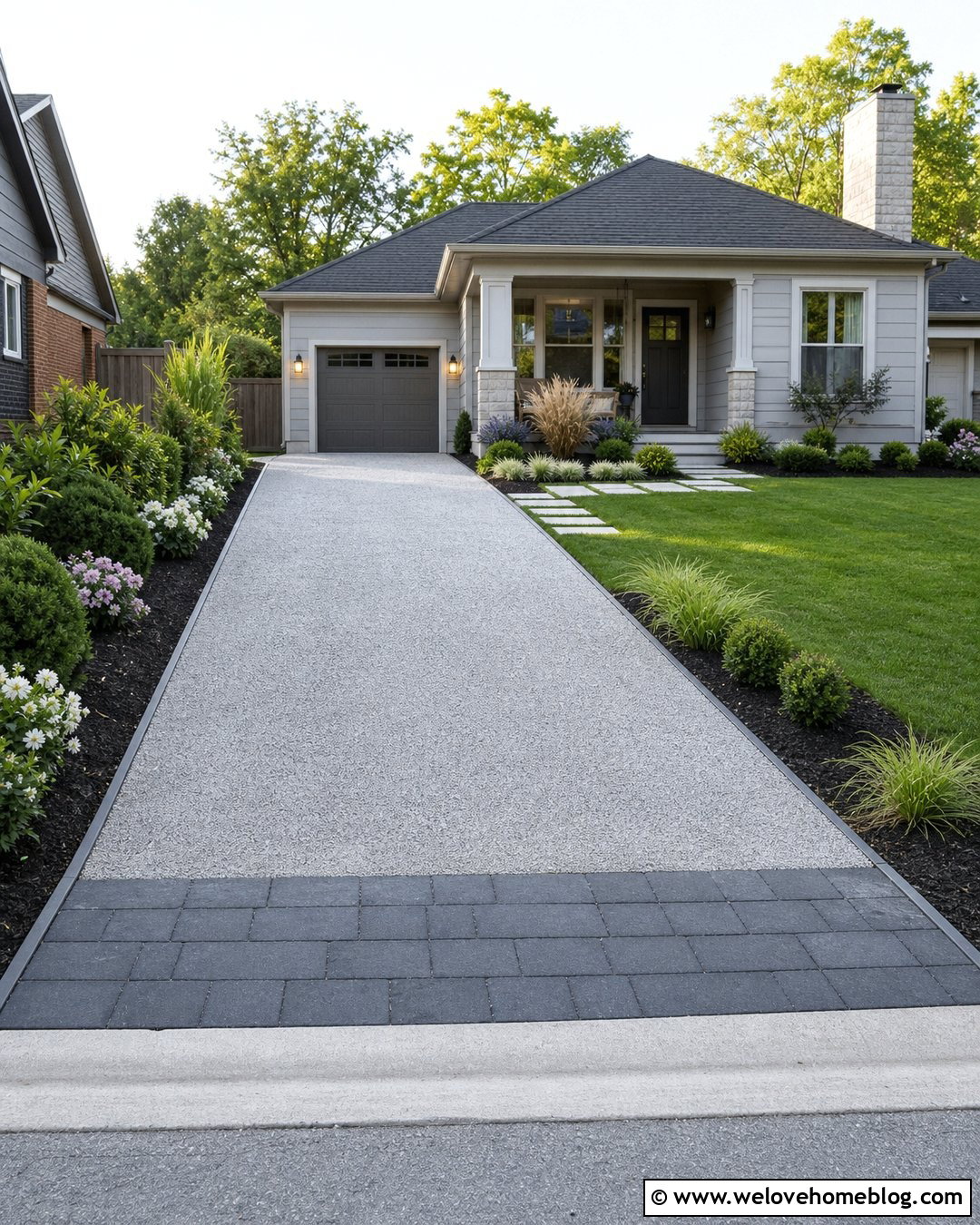
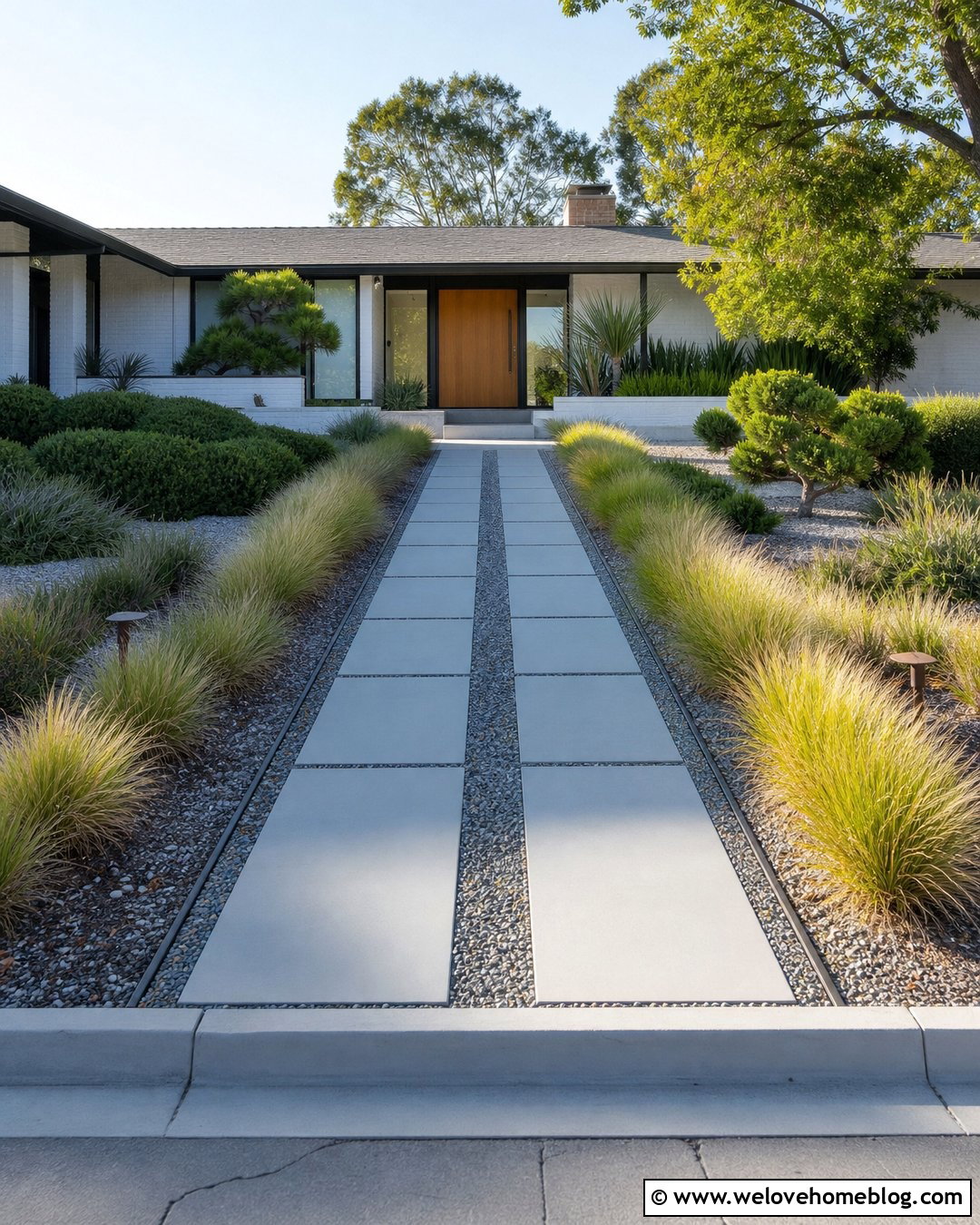
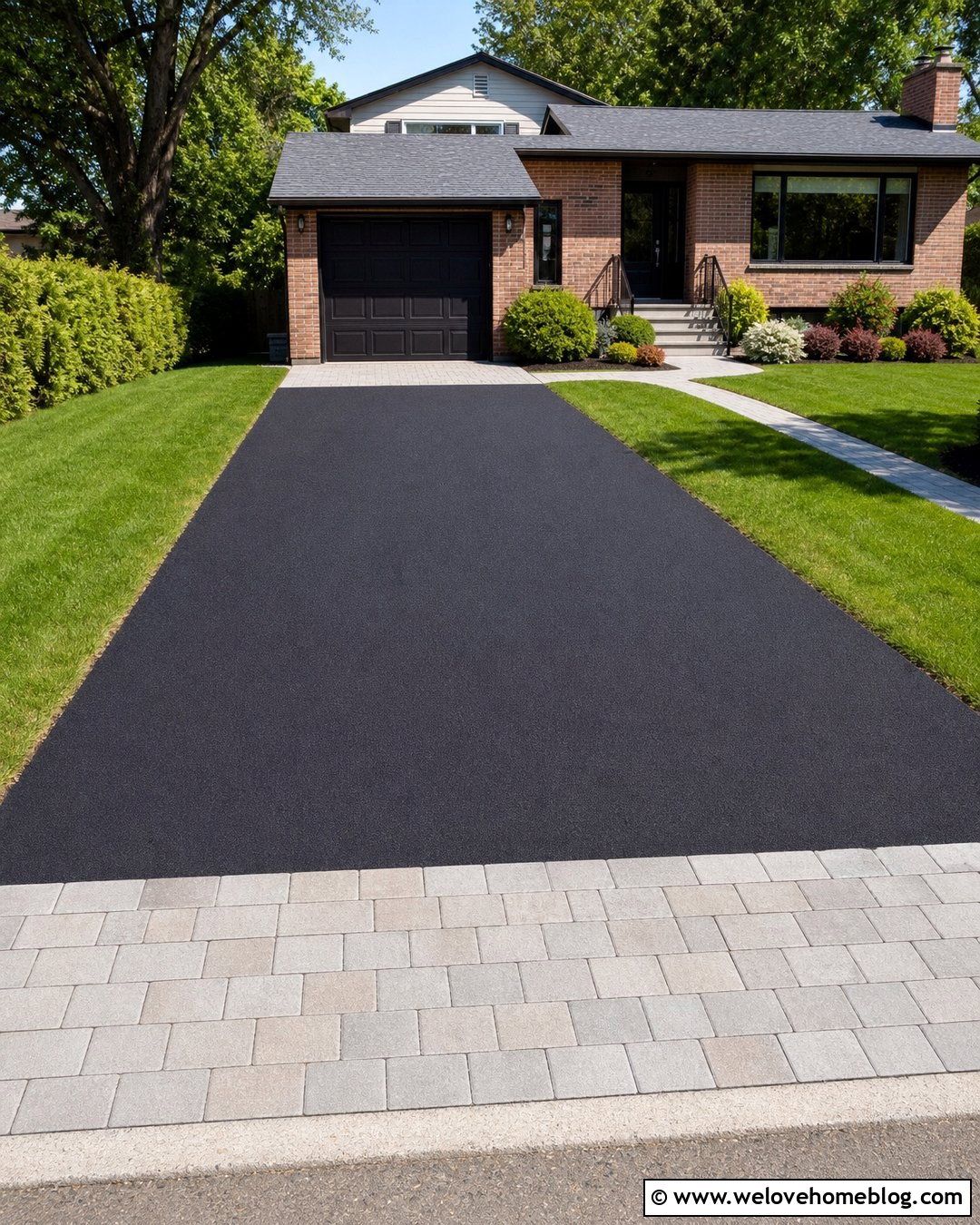
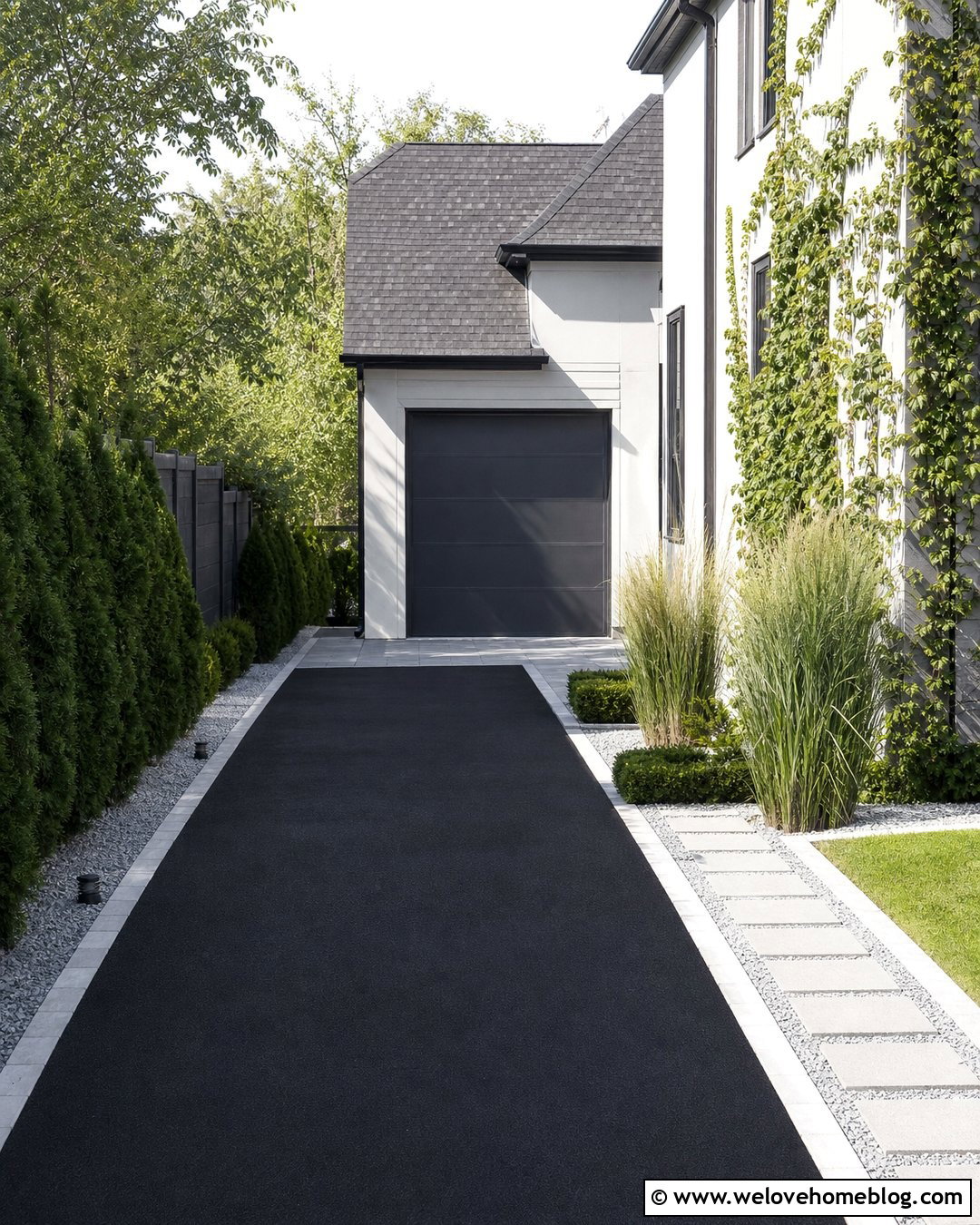
Even a short driveway can look polished when every material has a clear purpose. Use light gray compacted stone dust in a straight layout leading to a single-car garage. Narrow granite or steel edging keeps the footprint tidy, while a small paver apron creates a durable transition at the street. On one side, include a slim walkway made from rectangular stepping stones. On the other, plant a restrained border of dwarf evergreens, flowering perennials, and ornamental grass. This asymmetrical arrangement leaves more usable room without making the front yard feel bare. Select plants that will stay within their allotted width at maturity. Repeating the driveway’s gray tones in the walkway, porch steps, and foundation accents will make a compact property appear more organized and visually spacious.
16. Stone Dust Driveway With Cottage Garden Borders
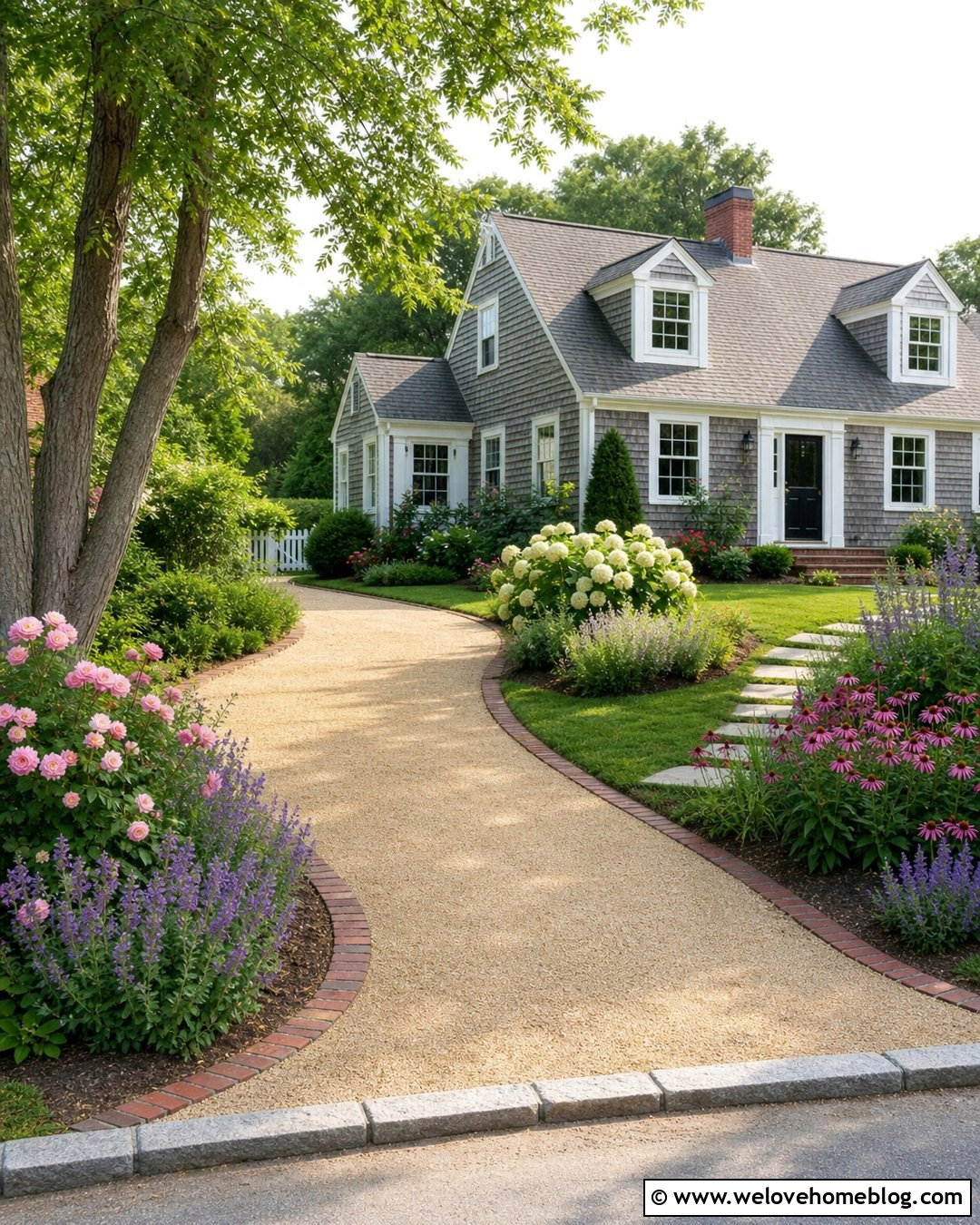
A warm beige stone dust driveway can serve as a calm foundation for colorful cottage-style planting. Shape the driveway with a slight curve and frame it with weathered brick or irregular natural stone. Layer roses, catmint, salvia, coneflowers, hydrangeas, and compact evergreen shrubs along both sides, but leave a narrow buffer beside the driving surface. This prevents stems and soil from spilling into wheel paths. A stepping-stone walkway can branch naturally toward the porch of a cottage, Cape Cod, or craftsman home. Keep plants lower near the street and driveway bends to maintain clear views. Rather than using every available flower color, repeat a limited palette throughout the beds. The consistent stone dust surface will visually balance the softer shapes and changing seasonal color.
17. Stone Dust Driveway With Farmhouse Gate Posts
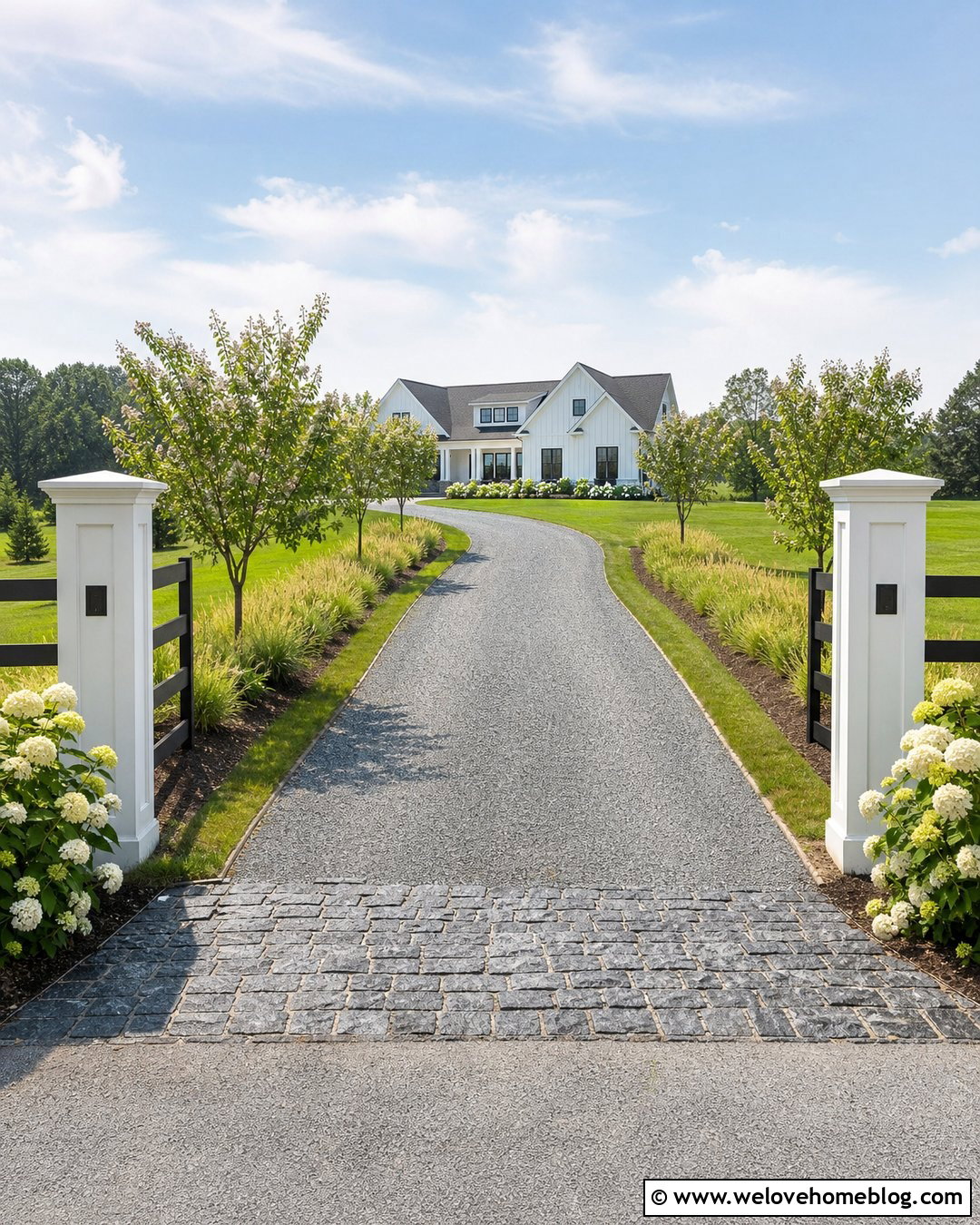
Simple gate posts can make a long stone dust driveway feel complete, even when no operating gate is installed. Use square white-painted posts, stained timber columns, or stone-clad pillars that coordinate with a modern farmhouse. Run a compacted medium-gray stone dust driveway between them in a straight or gently curved layout. Add black metal farm fencing along the nearby property line and soften it with native grasses, hydrangeas, and small flowering trees. A wide entrance with a subtle stone dust flare provides comfortable access for delivery and maintenance vehicles. Finish the roadside transition with a band of dark granite setts. Keep signs and lighting modest so the design remains residential. Any future gate should have adequate setback, clearance, and professionally planned hardware.
18. Stone Dust Driveway With Raised Planting Beds
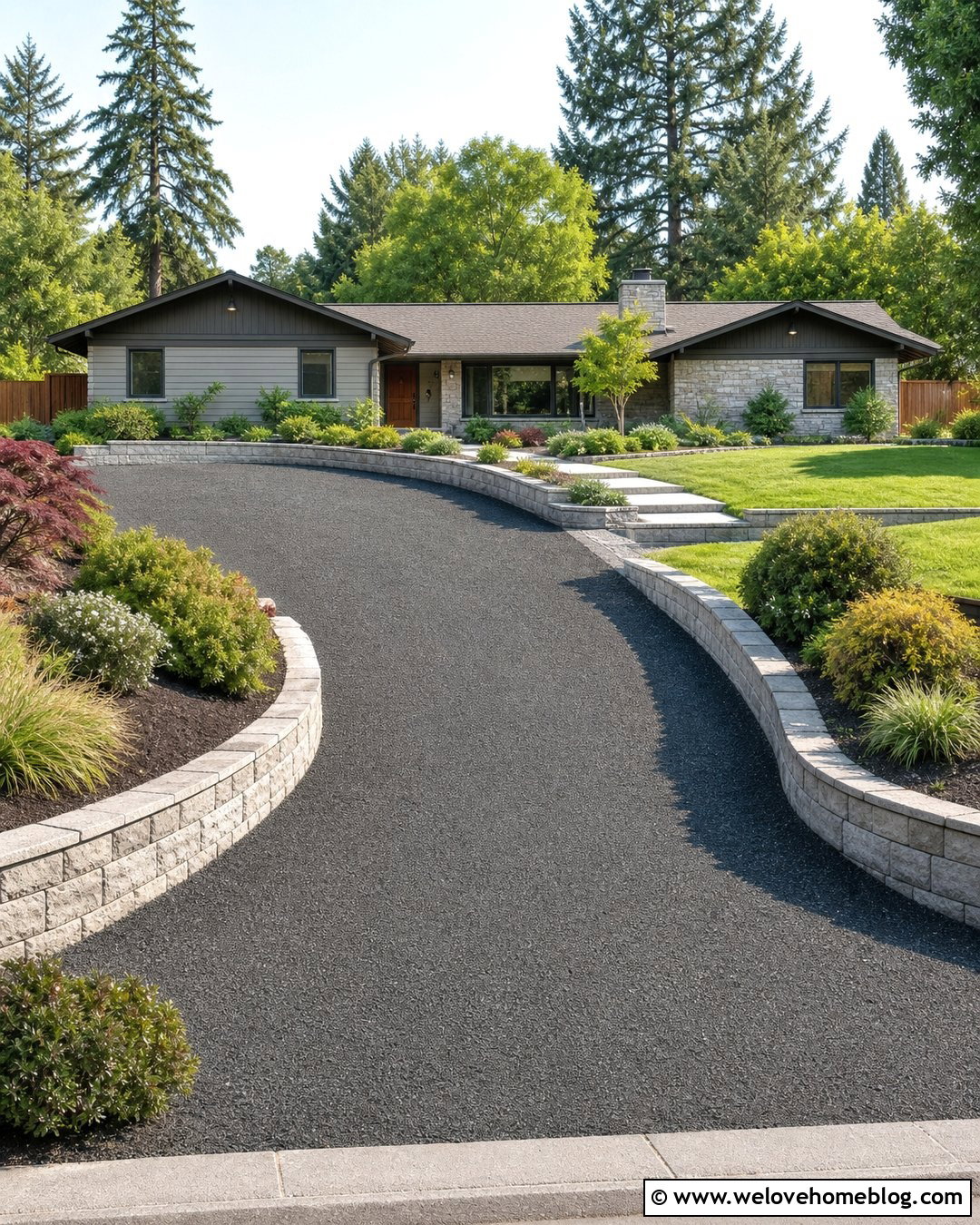
Raised planting beds are useful where a stone dust driveway sits below the lawn or beside a gently sloping front yard. Construct low retaining borders from concrete blocks, granite, or natural fieldstone, then fill the beds with compact shrubs, ground covers, and small ornamental trees. Use charcoal stone dust for the driveway to contrast with green foliage and light masonry. A broad curved layout can lead toward a ranch or midcentury home, while the raised beds guide the eye toward the entrance. Keep retaining walls low near parking and turning zones to reduce the risk of accidental contact. Include a paved walkway between the driveway and front door. Drainage behind the walls and beneath the driveway should be designed together so trapped runoff does not damage either feature.
19. Reddish Stone Dust Driveway With Desert Landscaping
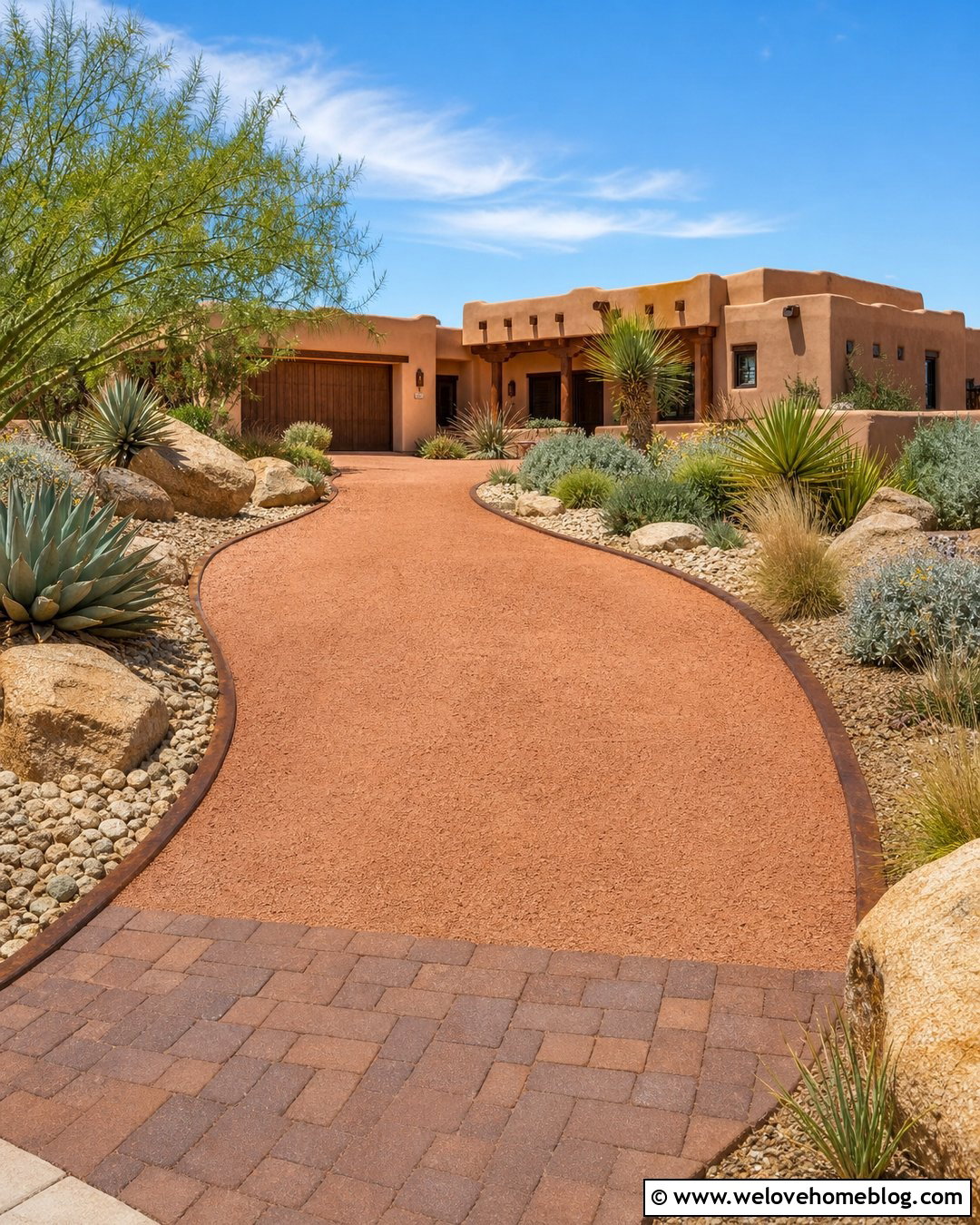
Reddish granite stone dust works naturally with adobe-inspired, Southwestern, and warm contemporary homes. Form a gently curved driveway edged with dark steel or low bands of larger crushed granite. Surround it with drought-tolerant landscaping such as agave, yucca, desert spoon, sage, ornamental grasses, and carefully placed boulders. Leave open gravel-mulched spaces between plants so the yard feels intentional rather than crowded. A rust-colored paver apron can strengthen the driveway entrance and coordinate with terracotta roofing or warm stucco. Select plants appropriate for the local climate instead of assuming every desert species will tolerate the site. Because loose, dry fines may create dust, proper compaction and occasional surface maintenance are important. A locally sourced aggregate usually produces the most convincing color connection.
20. Stone Dust Driveway With A Matching Front Walkway
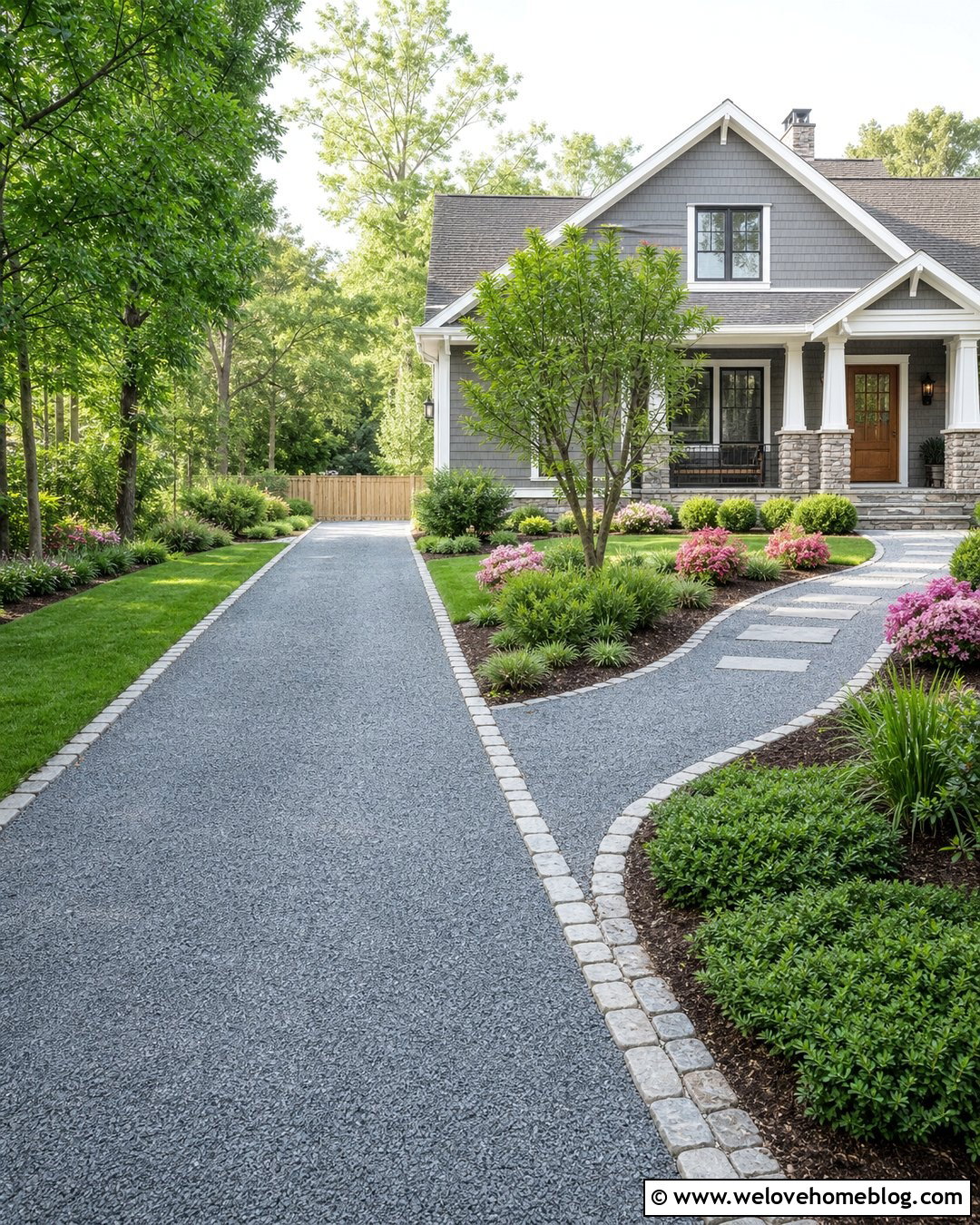
Connecting the driveway and front walkway with the same stone dust creates a unified landscape, especially around craftsman, cottage, and traditional homes. Use compacted blue-gray stone dust for a straight driveway, then branch a narrower curved path toward the porch. Define both surfaces with matching granite cobbles so the walkway feels intentional rather than like an extension worn into the yard. Where accessibility or frequent foot traffic is important, add flat stepping stones or a smoother paved section within the path. Frame the junction with a small ornamental tree, flowering shrubs, and low ground cover. The driveway should remain wide and open, while the path can feel more intimate. Repeating the aggregate color in porch steps or foundation stone completes the coordinated exterior palette.
Conclusion:
The most successful **20 Stone Dust Driveway Ideas** combine an attractive surface with a practical layout, strong borders, suitable landscaping, and a well-prepared foundation. Stone dust can complement everything from a traditional colonial to a modern farmhouse, especially when its color relates to the house and surrounding masonry. Cobblestone edges create formality, while timber, boulders, and cottage planting offer a softer look. Before installation, inspect the local material, confirm what the supplier means by stone dust, and evaluate grading, drainage, soil, and vehicle use. A professional installer can recommend the right base and compaction method. With careful planning and regular maintenance, the driveway can become a cohesive part of the entire front-yard design.

Related posts:
Leave a Reply