
A well-drained gravel driveway should manage rainwater without sacrificing curb appeal. The best **gravel driveway drain ideas** combine a stable crushed-stone surface with smart grading, defined borders, and a safe route for runoff. Depending on the slope and soil, that route might include shallow swales, French drains, trench drains, culverts, catch basins, or landscaped rain gardens. Drainage should move water away from the garage, foundation, road, and neighboring properties while preventing ruts and washed-out gravel. Local rainfall, clay soil, snow removal, and municipal rules also affect the right design. For difficult slopes or recurring flooding, consult a drainage contractor or civil engineer before installation. The complete driveway looks below offer practical and attractive inspiration through 20 Gravel Driveway Drain Ideas. ()

1. Crowned Gravel Driveway With Side Swales
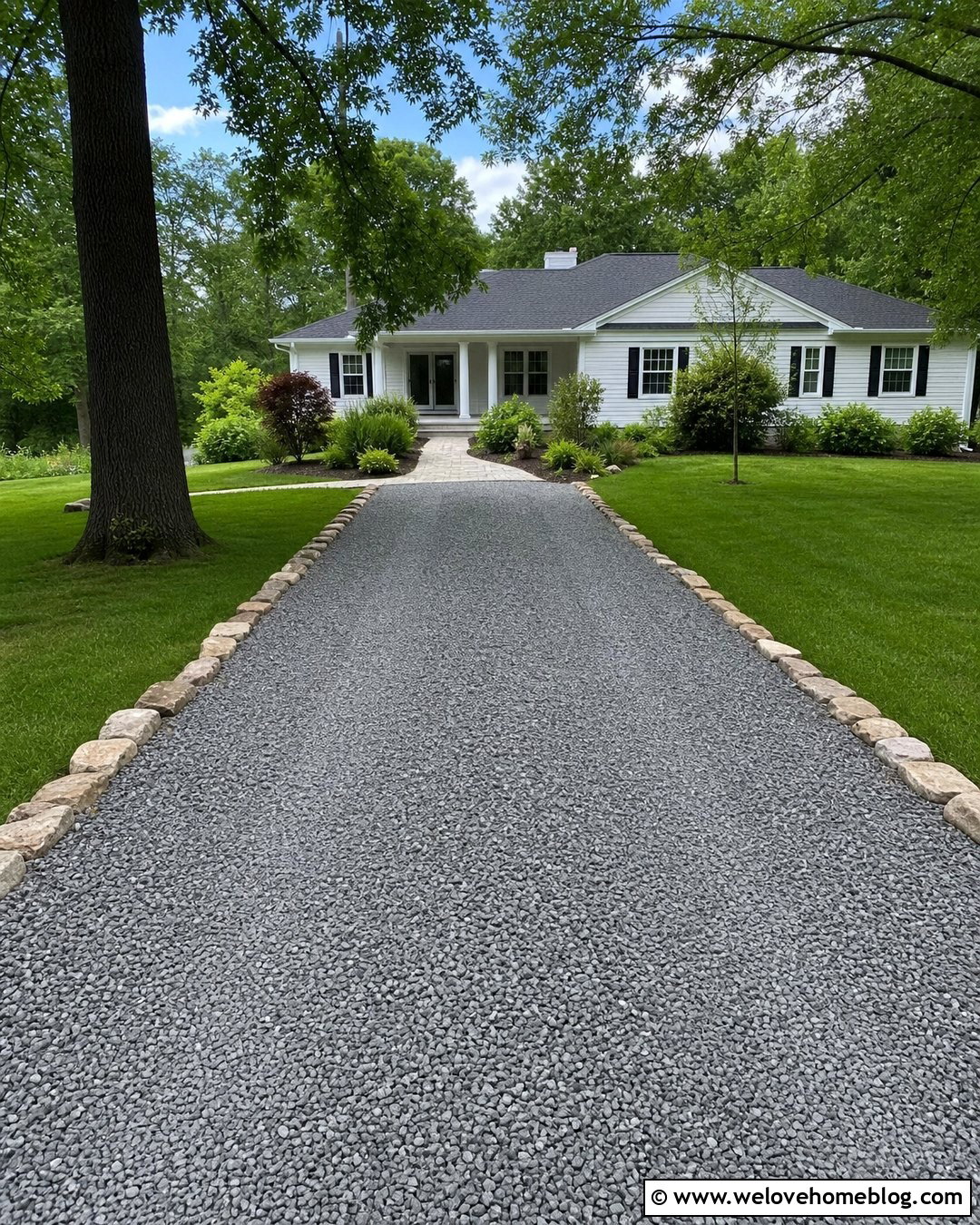
A gently crowned driveway creates a simple first line of defense against standing water. The center sits slightly higher than both edges, encouraging rainfall to move sideways instead of running along the tire tracks. Use compacted crusher run for the base and angular gray crushed stone for the finished surface. Shallow grass swales on both sides can collect runoff and direct it toward a safe lawn area or approved outlet. Stone edging placed outside the swales gives the entrance a polished appearance without trapping water against the driveway. This complete layout suits long, straight driveways beside ranch, farmhouse, and country homes. Regular grading is still important because wheel traffic can flatten the crown and create low areas where puddles begin forming. ()
2. Sloped Gravel Driveway With French Drain
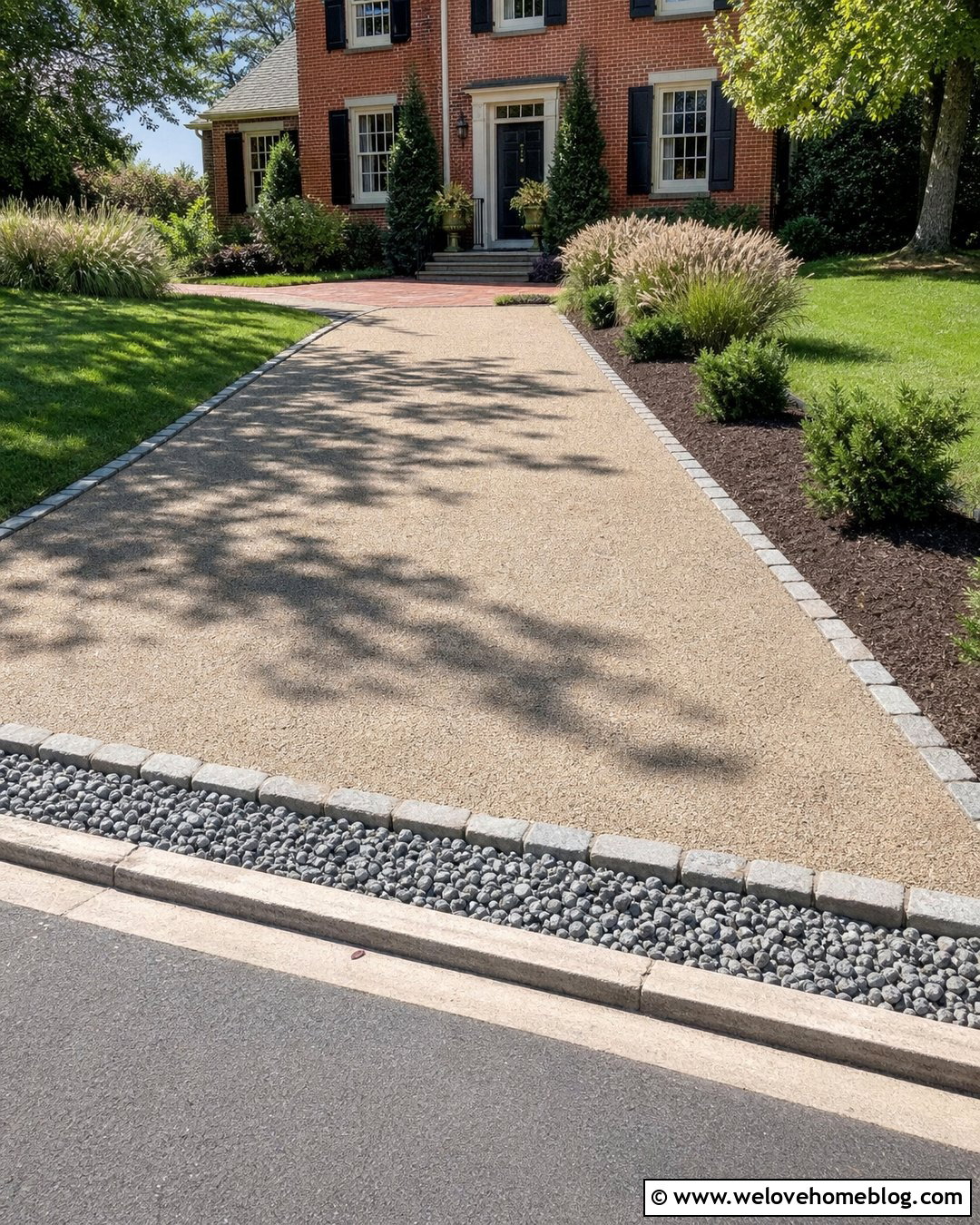
Does water constantly gather along one side of your driveway? A cross-sloped gravel surface paired with a French drain can create a clear drainage route. Grade the driveway gently toward the lower edge, where a stone-filled trench runs parallel to the driving area. The trench typically contains clean drainage rock, filter fabric, and a perforated pipe leading to a suitable discharge point. Keep decorative driveway gravel separate from the drain rock with sturdy metal or cobblestone edging. This prevents loose surface material from filling the trench too quickly. Low ornamental grasses and moisture-tolerant shrubs can soften the outer edge without blocking water movement. The result is a clean, practical driveway look that works especially well on properties with limited space for wide grass swales. ()
3. Gravel Driveway With Garage Trench Drain
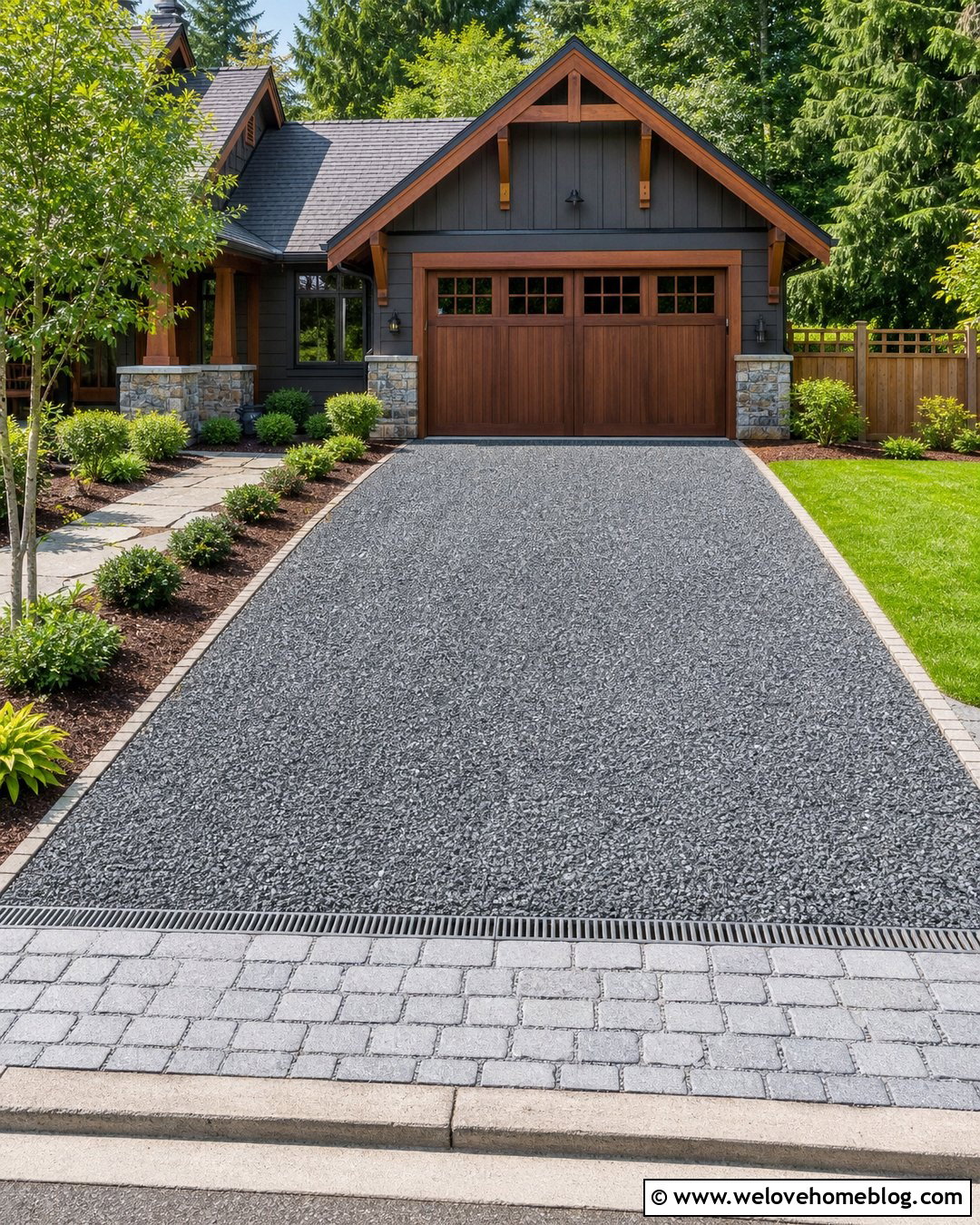
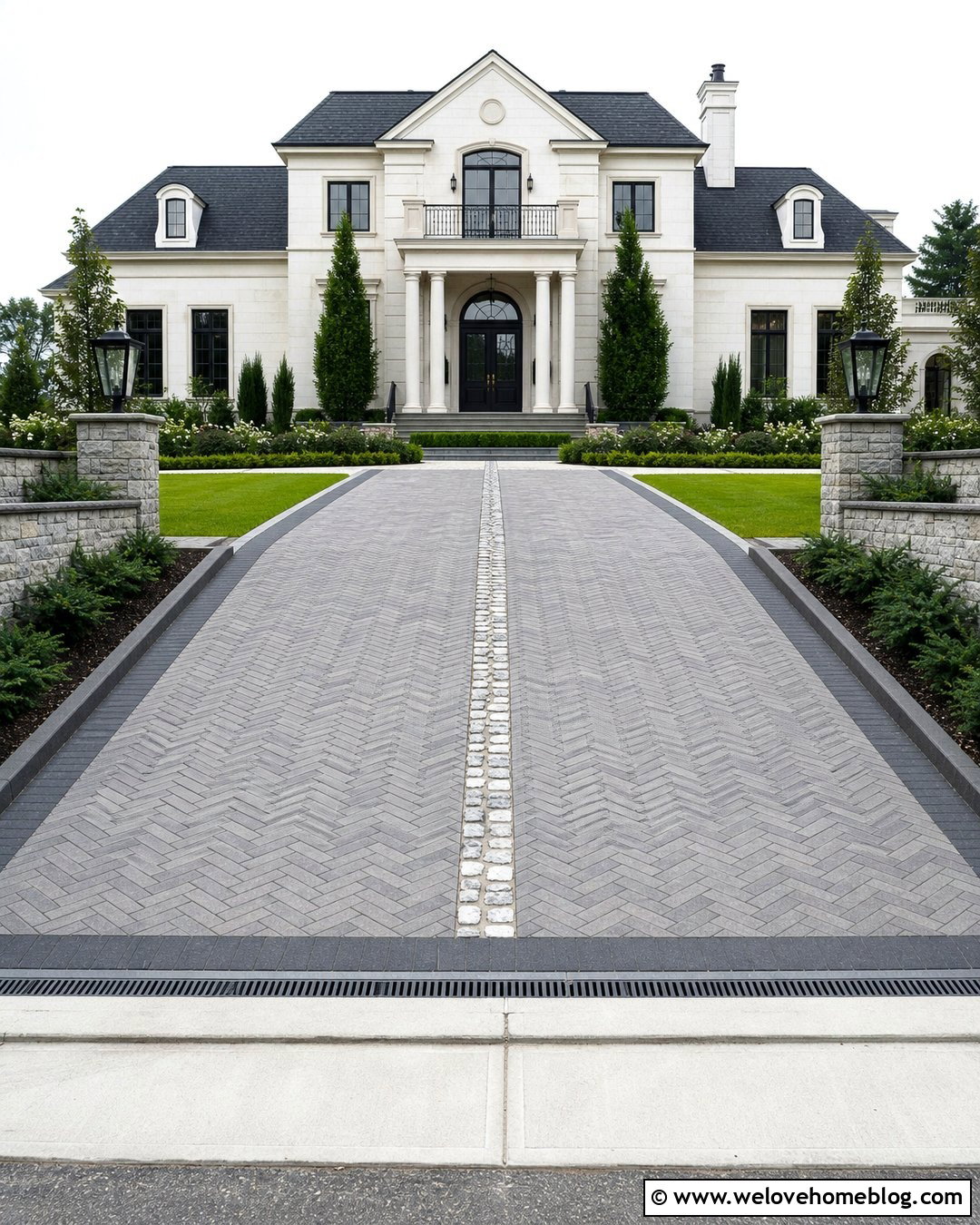
The transition between a gravel driveway and garage floor is a common place for water to collect. Install a grated trench drain across the full garage entrance to intercept runoff before it reaches the building. A compacted gray crushed-stone driveway can slope gently toward the drain, while a short cobblestone apron keeps loose gravel from spilling into the grate. Choose a load-rated channel designed for residential vehicle traffic and connect it to an approved outlet, dry well, or drainage pipe. Removable grates make sediment and small stones easier to clean out. Pair the functional entrance with simple foundation shrubs and a paved walkway to create a finished appearance. This arrangement is particularly useful when the garage sits below the street or at the bottom of a sloping driveway. ()
4. Gravel Driveway Entrance With Channel Drain
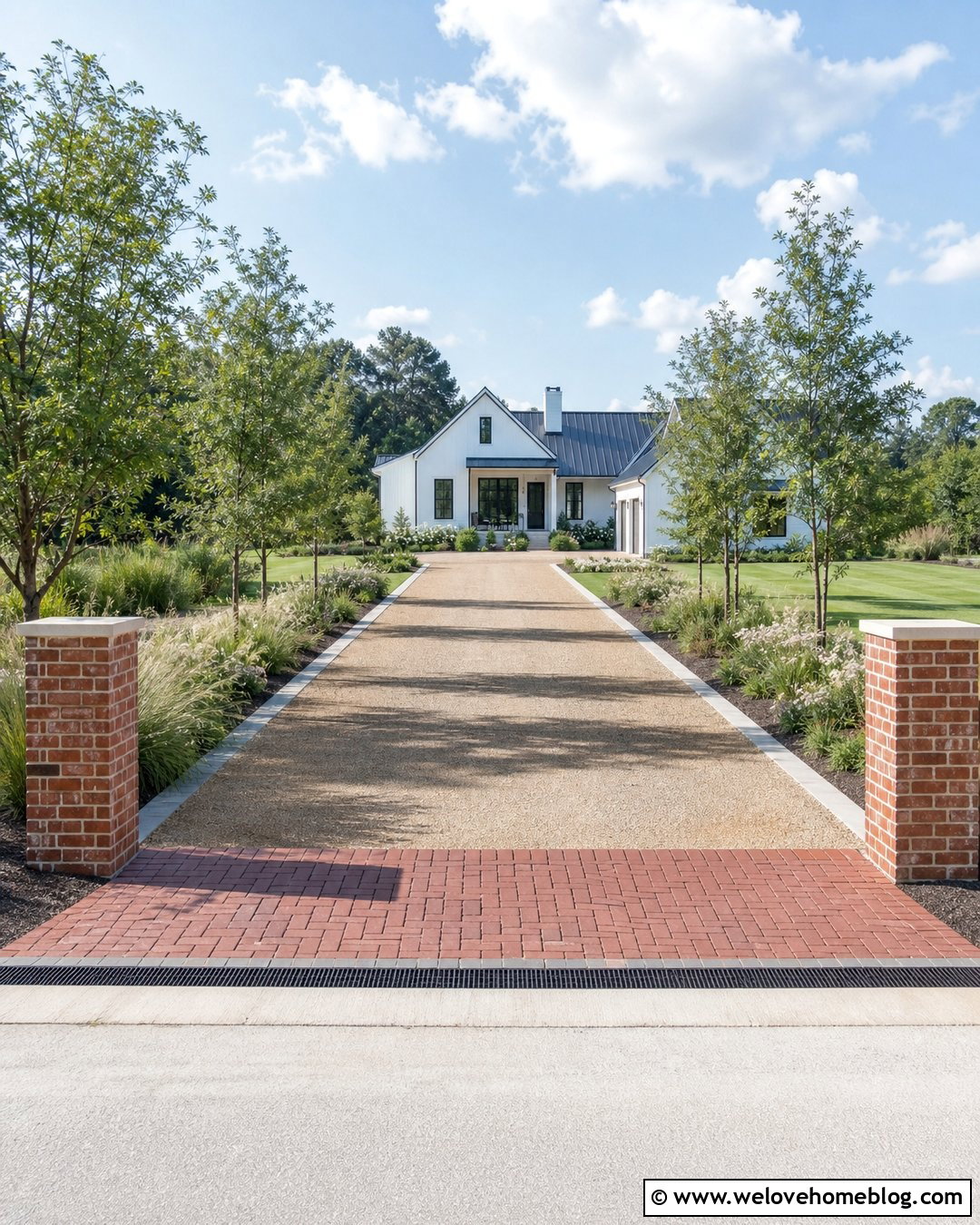
Street runoff can enter a gravel driveway before water ever reaches the property’s own drainage system. A channel drain installed across the driveway entrance helps capture that flow near the curb. Frame the grate with a durable brick or concrete paver apron so braking and turning vehicles do not scatter gravel into the channel. Behind the apron, use compacted tan crushed stone with a gently crowned or cross-sloped layout. Brick pillars, native grasses, and low planting beds can make the drainage feature feel integrated rather than purely utilitarian. The collected water must lead to a legal and suitable discharge location. Avoid sending runoff onto the road or neighboring land. This complete entrance works well for suburban homes where the front yard slopes down from the street. ()
5. Curved Gravel Driveway With Grass Swale
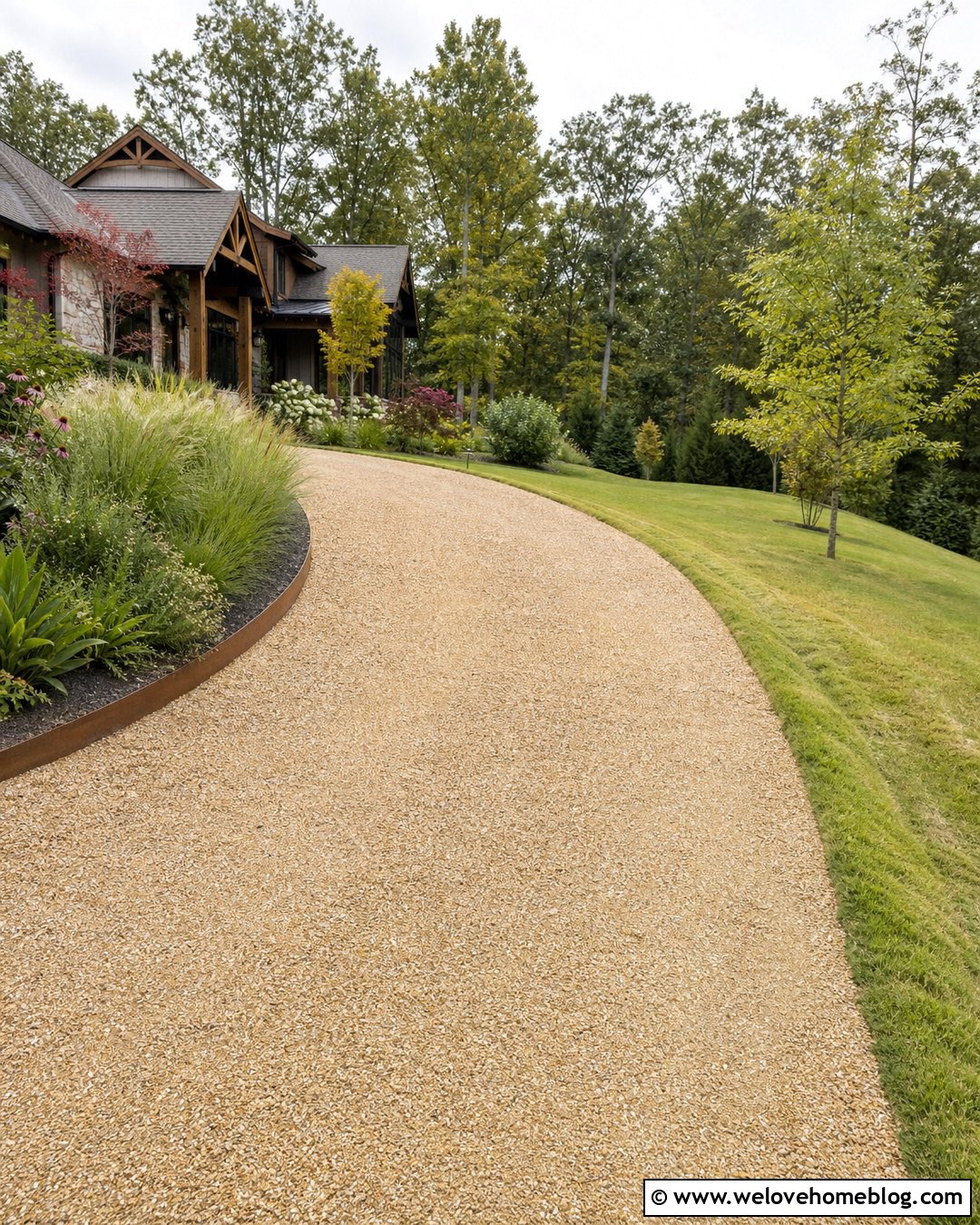
A sweeping curve can guide vehicles gracefully toward the house while following the yard’s natural contours. Use warm beige crushed gravel for the driveway and shape a broad grass swale along the downhill side. The swale should remain shallow enough to mow while providing a continuous route for runoff. A raised steel or stone border on the uphill edge can help keep surrounding soil from washing onto the gravel. On the lower side, leave drainage openings rather than creating an unbroken barrier. Layer native grasses, flowering perennials, and small trees beyond the swale for a soft landscape transition. This design looks especially natural beside Craftsman, cottage, and wooded contemporary homes. It also reduces the need for an exposed pipe or highly visible grated drain near the main approach. ()
6. Steep Gravel Driveway With Water Bars
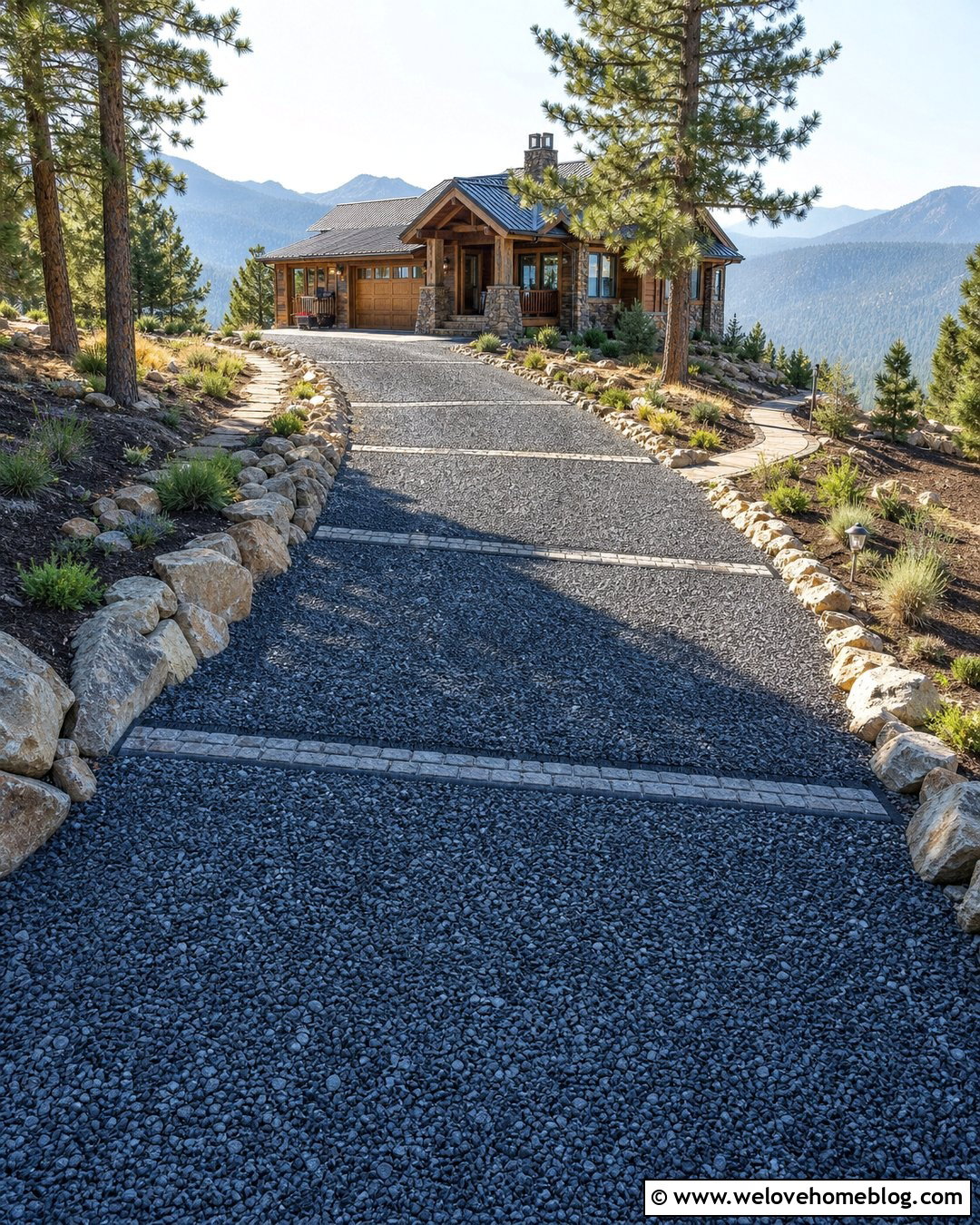
Fast-moving runoff can carve deep channels into a steep gravel driveway. Angled water bars interrupt that flow and direct it toward side ditches before it gains damaging speed. These bars may be formed with compacted asphalt, pressure-treated timber, rubber diverters, or raised stone channels designed for vehicle crossings. Position each one diagonally rather than straight across, with its lower end opening into a stable drainage area. Angular crushed stone gives tires better traction than rounded pea gravel and is less likely to migrate downhill. Riprap around each outlet can slow the released water and protect nearby soil. Stone retaining edges and drought-tolerant slope planting complete the look. Because spacing depends on grade and rainfall, steep installations should be planned with an experienced local drainage professional. ()
7. Long Gravel Driveway With Drainage Ditch
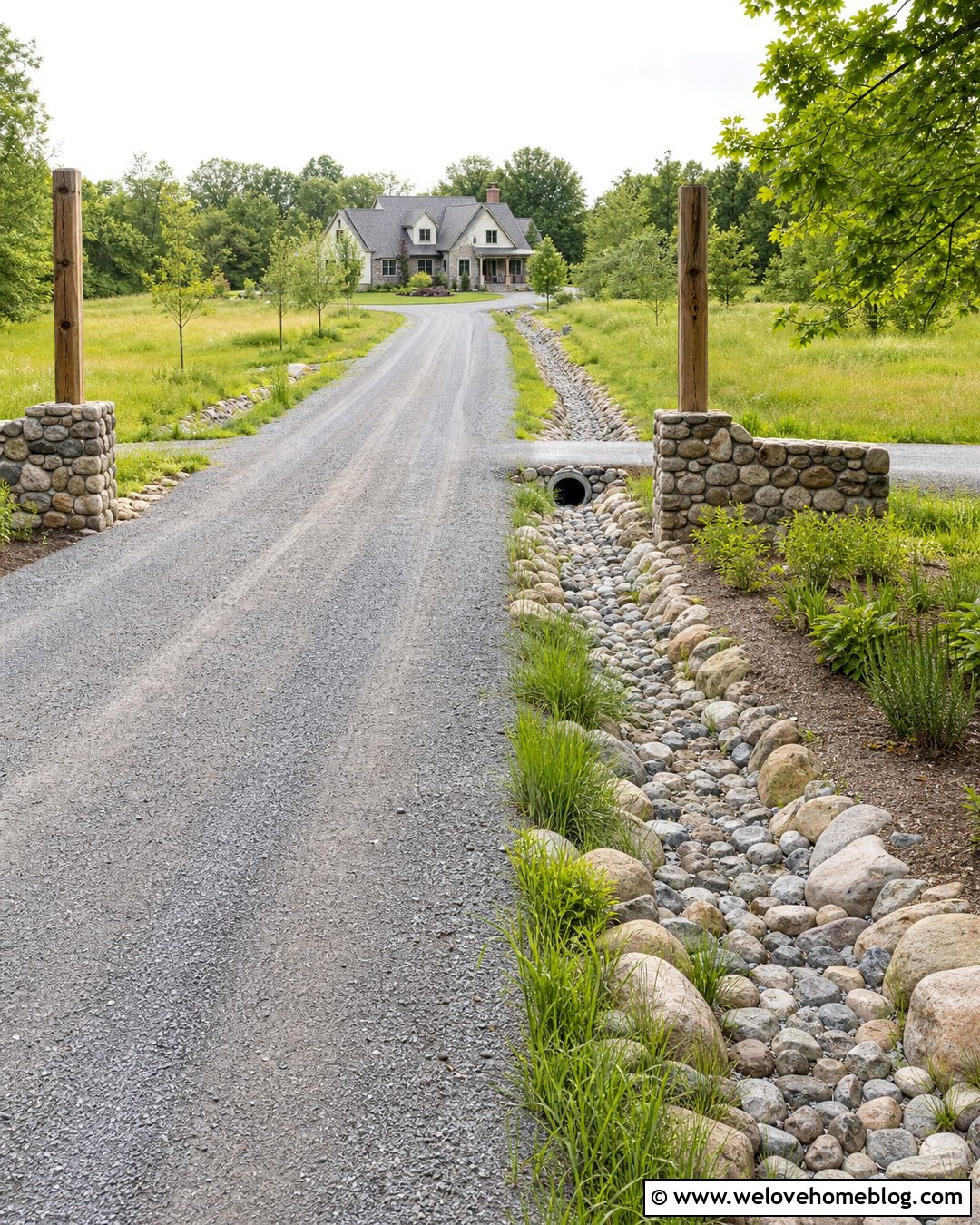
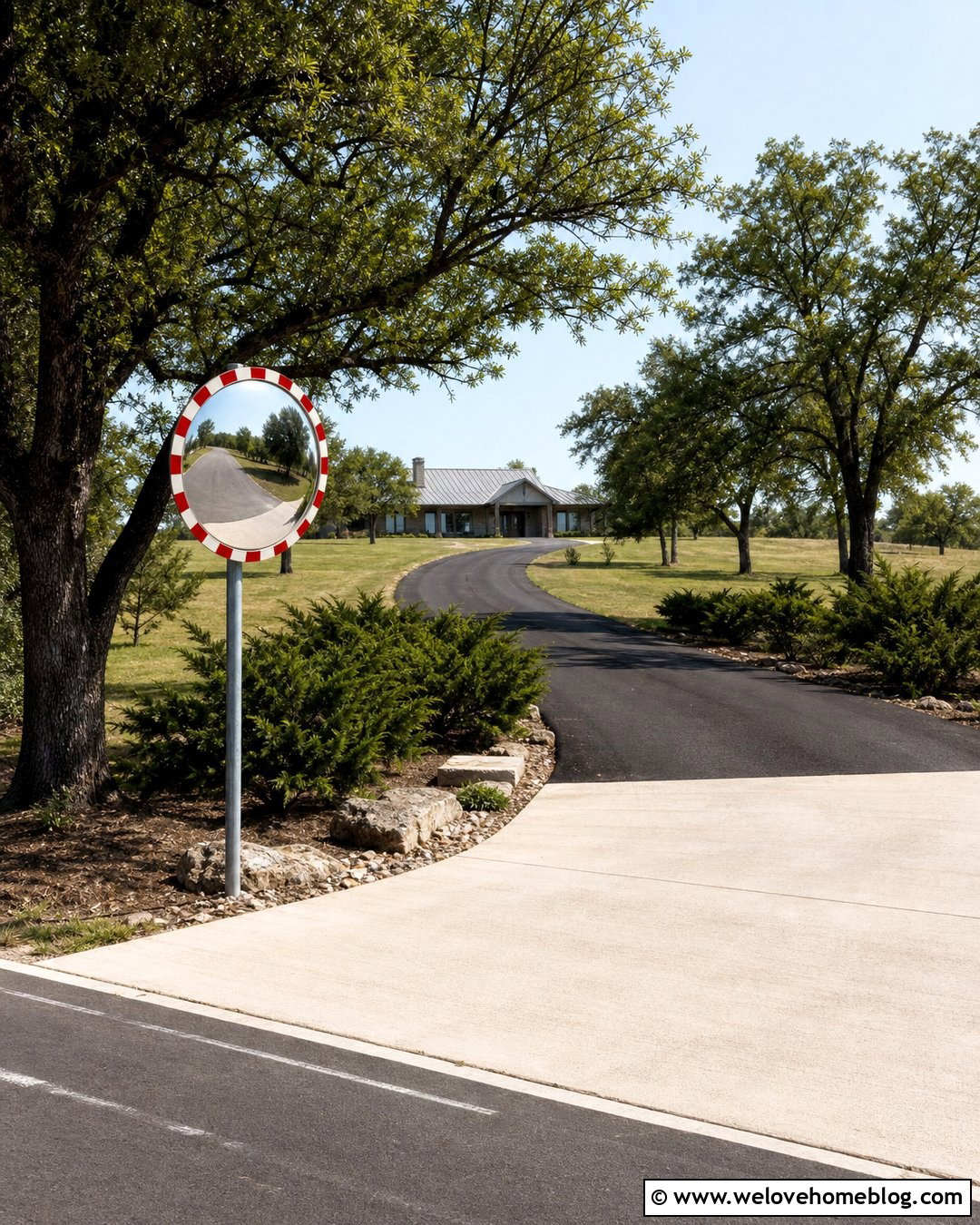
A long rural driveway needs a drainage route that remains continuous from the entrance to the house. A compacted gray crushed-stone surface can be crowned so runoff travels into a shallow ditch along one or both sides. Line high-flow sections with drainage rock or riprap, but keep slower sections grassy for a softer appearance. Under each walkway or secondary entrance, install a properly sized culvert so water can continue moving without interruption. Timber posts, fieldstone markers, and evenly spaced native trees can define the driveway without blocking the ditch. Periodically remove leaves, sediment, and fallen branches from the drainage route. This practical arrangement complements farmhouses, cabins, and large country properties, where enclosed underground systems may be unnecessary or difficult to maintain over a long distance. ()
8. Circular Gravel Driveway With Rain Garden
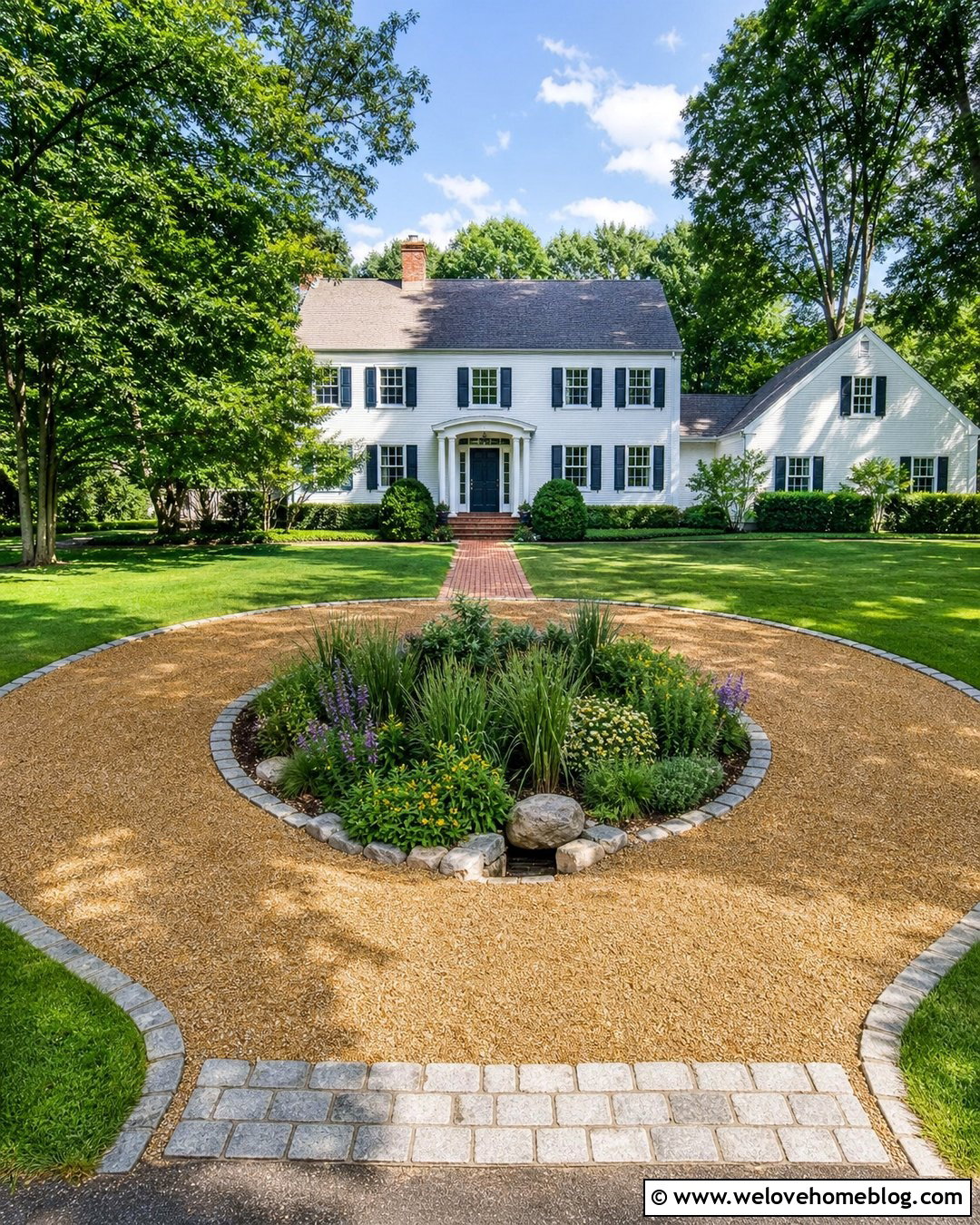
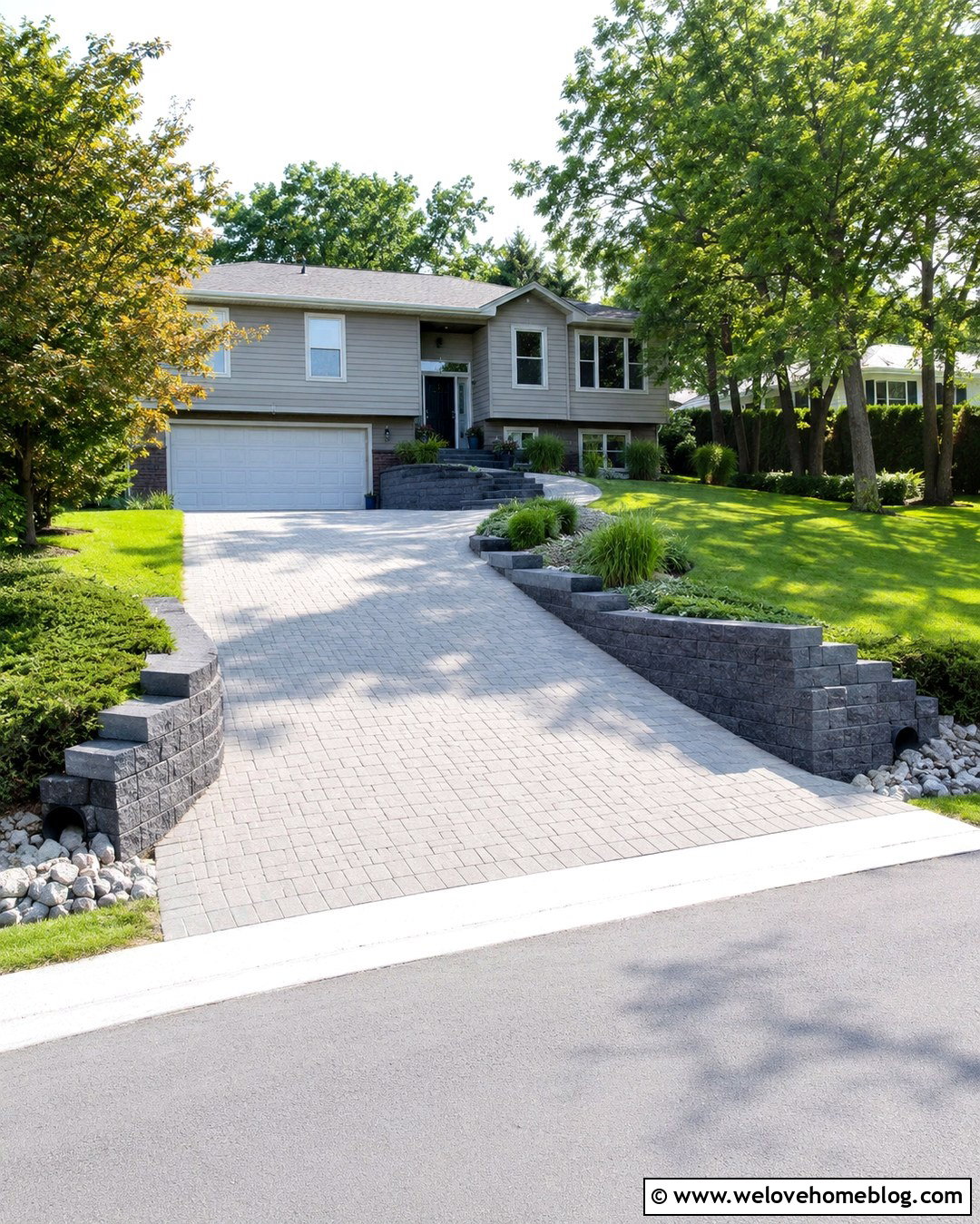
A circular driveway creates an ideal central space for attractive stormwater landscaping. Surface the loop with compacted golden crushed gravel and grade it subtly toward selected openings along the inner border. These openings can feed a shallow rain garden planted with moisture-tolerant native grasses, flowering perennials, and small shrubs. A stone-lined inlet prevents incoming water from washing soil or mulch across the driveway. Use cobblestone edging around most of the island, but avoid a completely sealed curb that would stop runoff from entering the garden. An overflow route should carry excess water safely away during major storms. This complete driveway look gives Colonial, Cape Cod, and traditional homes a balanced entrance. It turns necessary drainage into a central landscape feature rather than hiding it behind the house. ()
9. Horseshoe Gravel Driveway With Twin Culverts
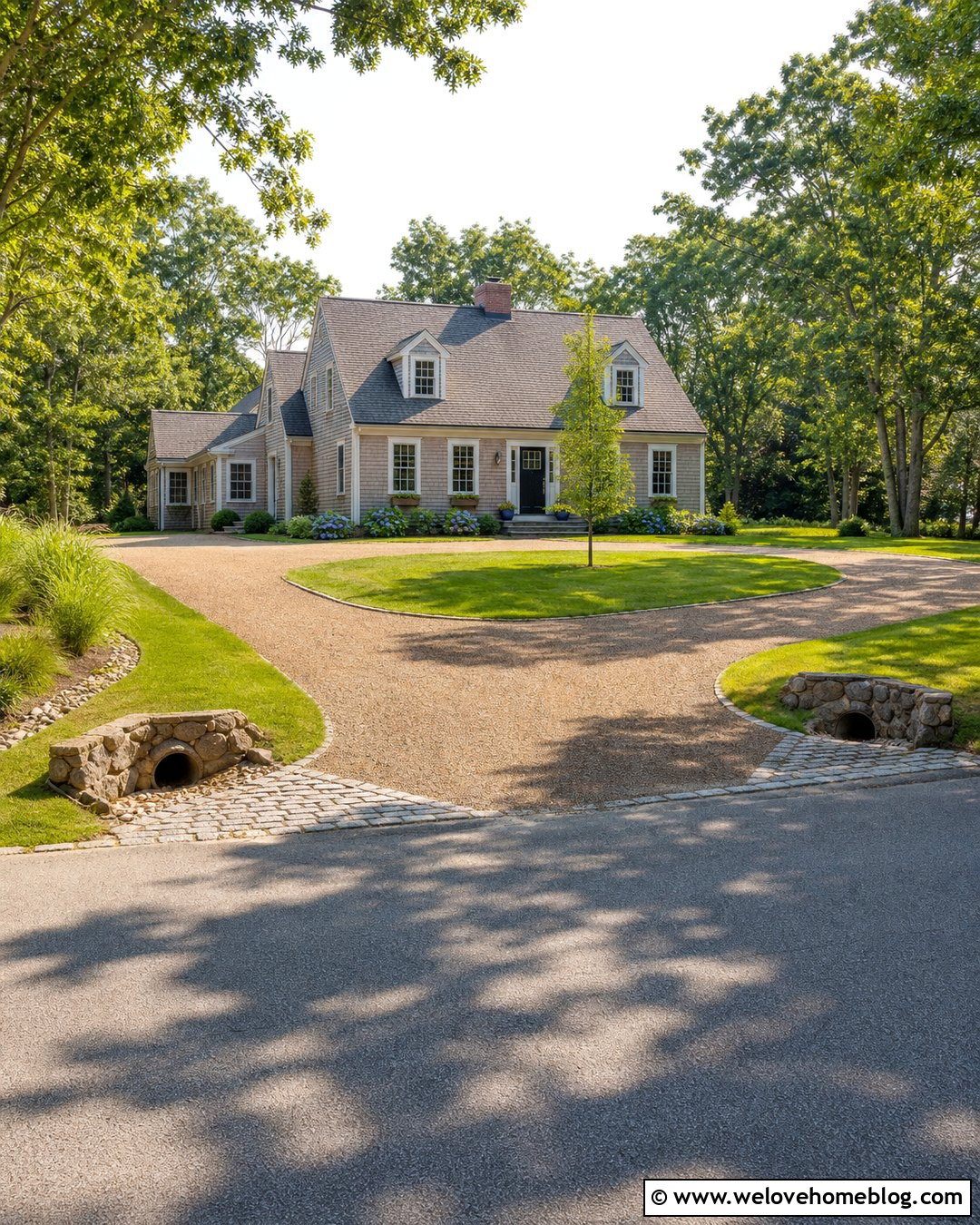
A horseshoe driveway often crosses the same roadside drainage channel at two separate entrances. Installing a culvert beneath each approach allows water to continue along the roadside swale instead of spilling over the gravel. Use compacted brown crushed stone for the main surface and reinforce both aprons with larger angular rock, cobblestone, or concrete pavers. Matching stone headwalls can stabilize the pipe ends and give the entrances a coordinated appearance. Keep plantings low around the culvert openings so leaves and roots do not obstruct flow. Between the entrances, a broad lawn and layered foundation beds create a welcoming view toward the house. Both pipes need appropriate sizing, stable outlets, and enough cover for vehicle loads. Local road authorities may also require approval before roadside drainage is modified. ()


10. Gravel Grid Driveway With Infiltration Trench
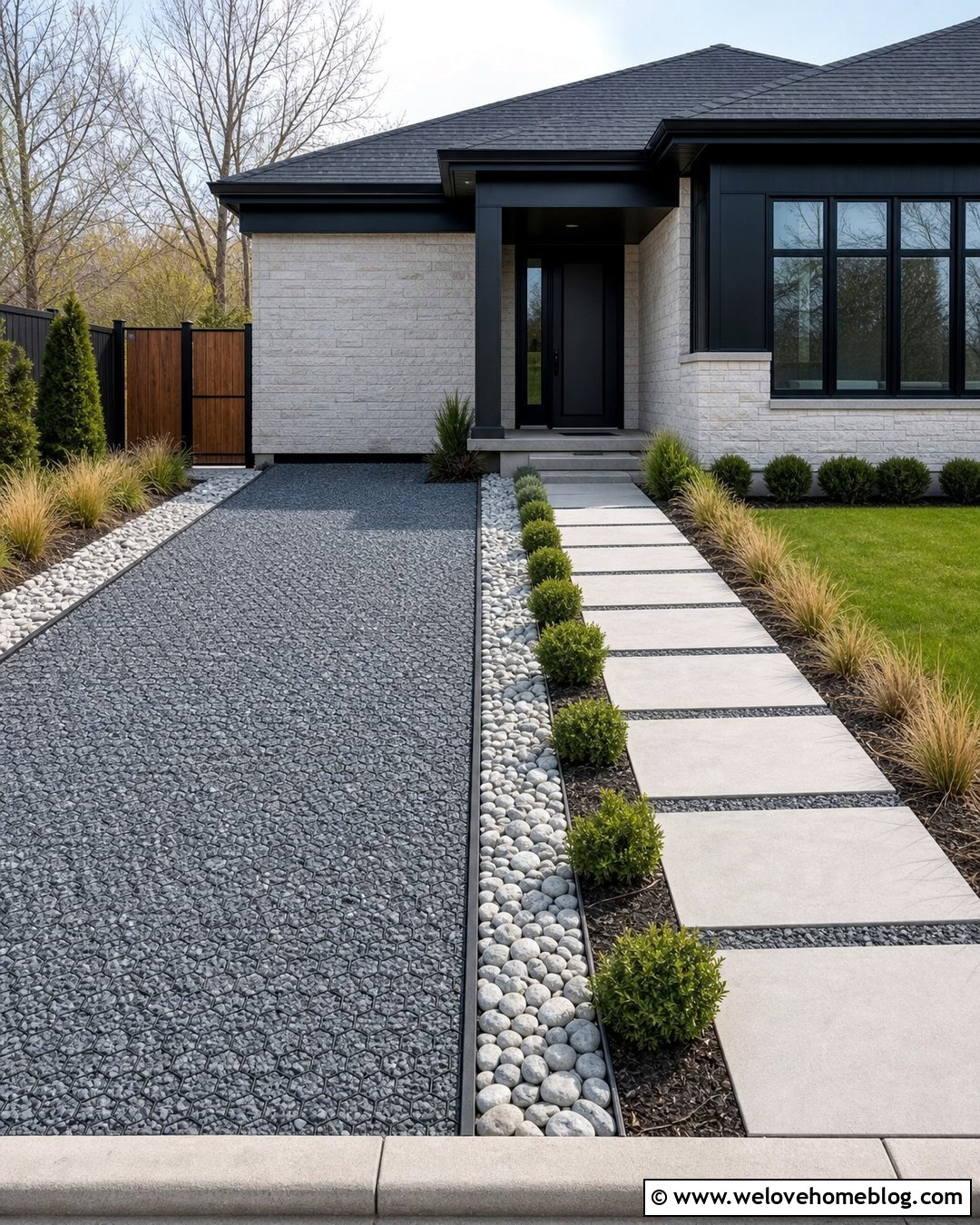
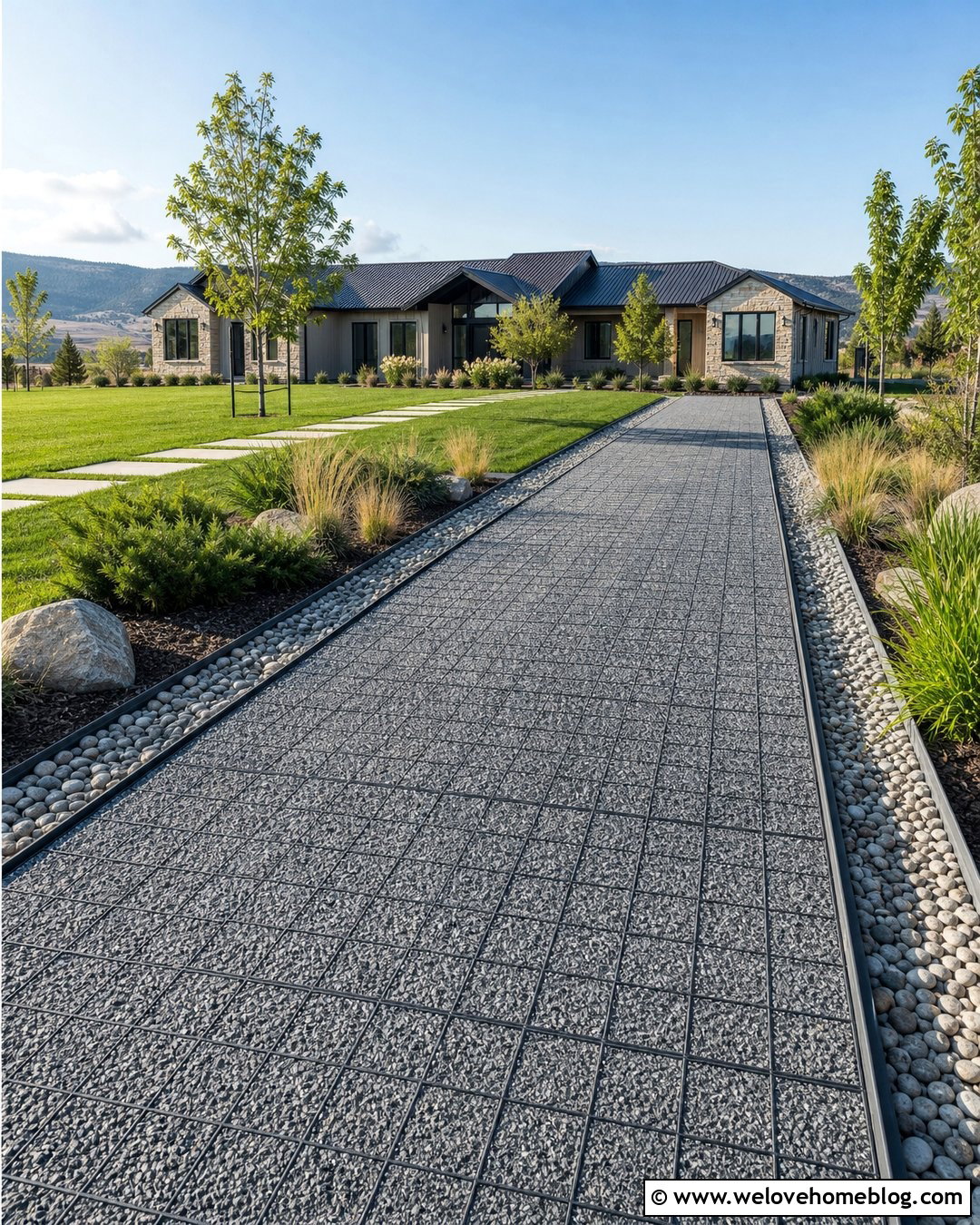
A gravel stabilization grid can reduce rutting while preserving the permeable character of the driveway. Fill a vehicle-rated cellular grid with small angular gray gravel, then frame the surface with steel or stone edging. Along the lower side, add an infiltration trench filled with clean drainage rock to receive water moving through or across the driveway. The trench can remain visible as a narrow decorative stone band or sit beneath a planted border. This modern arrangement works well for smaller suburban lots where broad ditches would consume too much lawn. Pair the straight driveway with ornamental grasses, compact evergreen shrubs, and large rectangular walkway pavers. The subgrade, base, and soil infiltration rate must be evaluated carefully. A grid cannot solve drainage problems if compacted clay beneath it prevents water from escaping. ()
11. Gravel Driveway With Dry Creek Drain
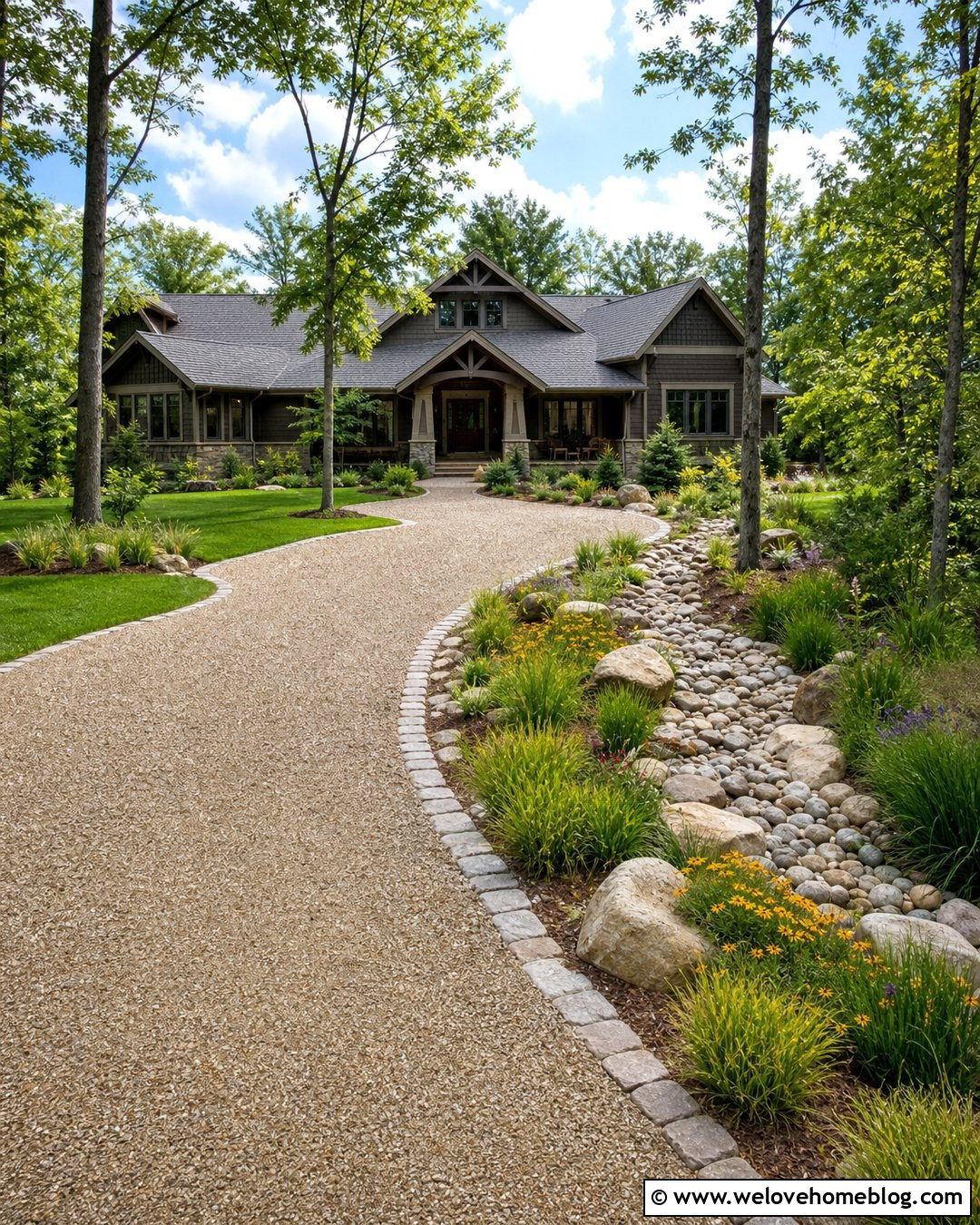
A stone-lined dry creek can turn a drainage route into a striking landscape feature. Grade a buff crushed-gravel driveway toward a shallow channel running beside the lower edge. Build the channel with mixed river rock, larger boulders, and stable stone at bends where moving water could cause erosion. A cobblestone border separates the decorative creek from the driving surface while leaving planned openings for runoff. Native sedges, ornamental grasses, and flowering plants can soften the banks without filling the channel. This natural look suits Craftsman homes, woodland cabins, and modern houses with organic landscaping. The creek should lead to an approved outlet, rain garden, or broad dispersal area. Avoid creating a decorative depression with no exit, since that may simply relocate standing water closer to the yard. ()
12. Gravel Driveway With Stone Drainage Ditch
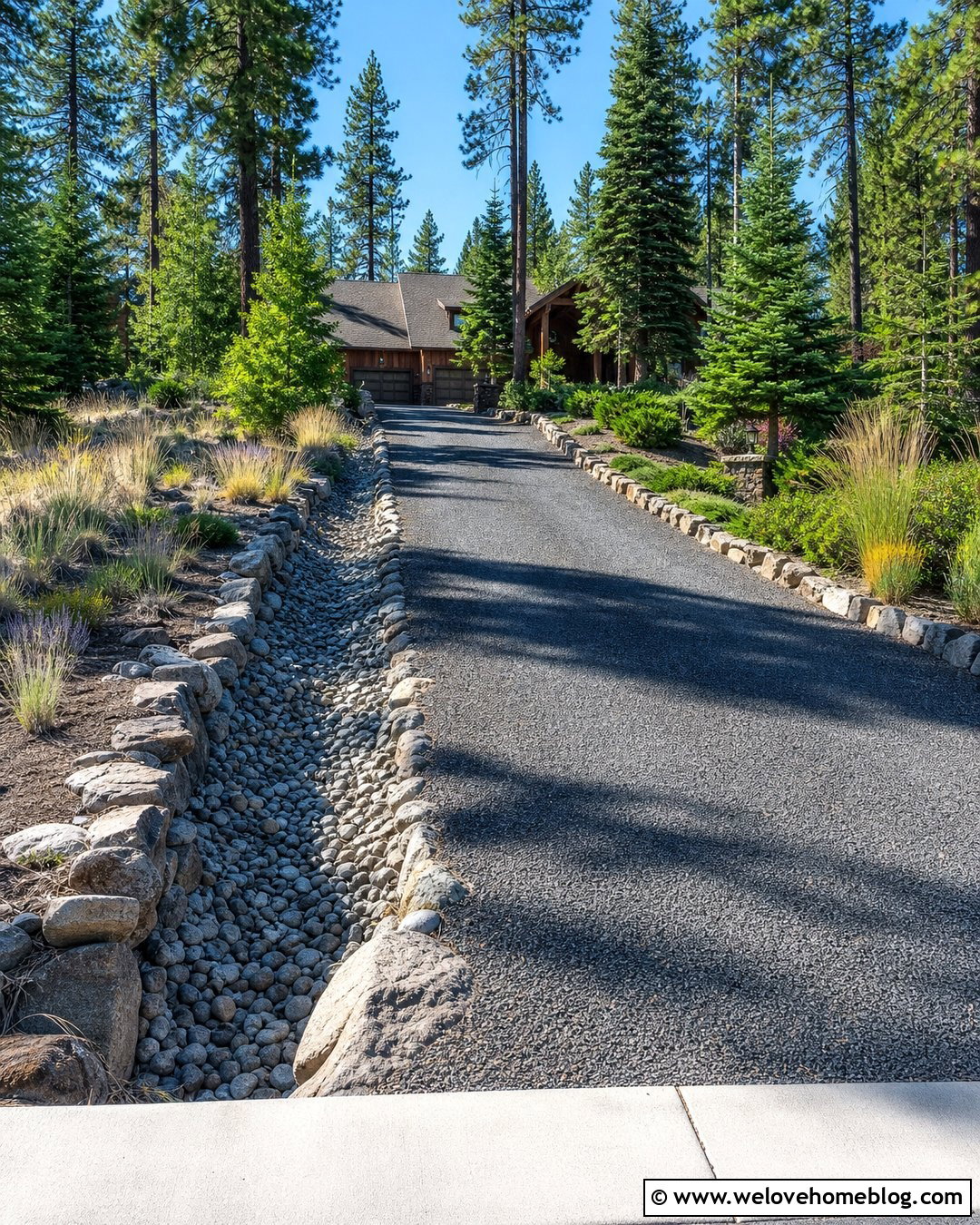
Heavy runoff may overwhelm a plain grass swale, especially on sloping or erosion-prone sites. A stone-lined ditch offers a tougher alternative while fitting naturally beside a gravel driveway. Use dark gray crushed stone for the driving surface and create a subtle cross slope toward the channel. Line the ditch with graduated rock, placing larger riprap where water enters, turns, or exits. A low fieldstone border can hold the driveway gravel in place without forming a wall that blocks drainage. Add evergreen shrubs and native grasses farther from the water path, keeping the channel itself open and easy to inspect. This rugged design pairs well with mountain homes, cabins, and rustic farmhouses. Properly placed check stones can slow water, but the ditch still needs a stable, legal discharge point. ()
13. Gravel Driveway With Catch Basin Drain
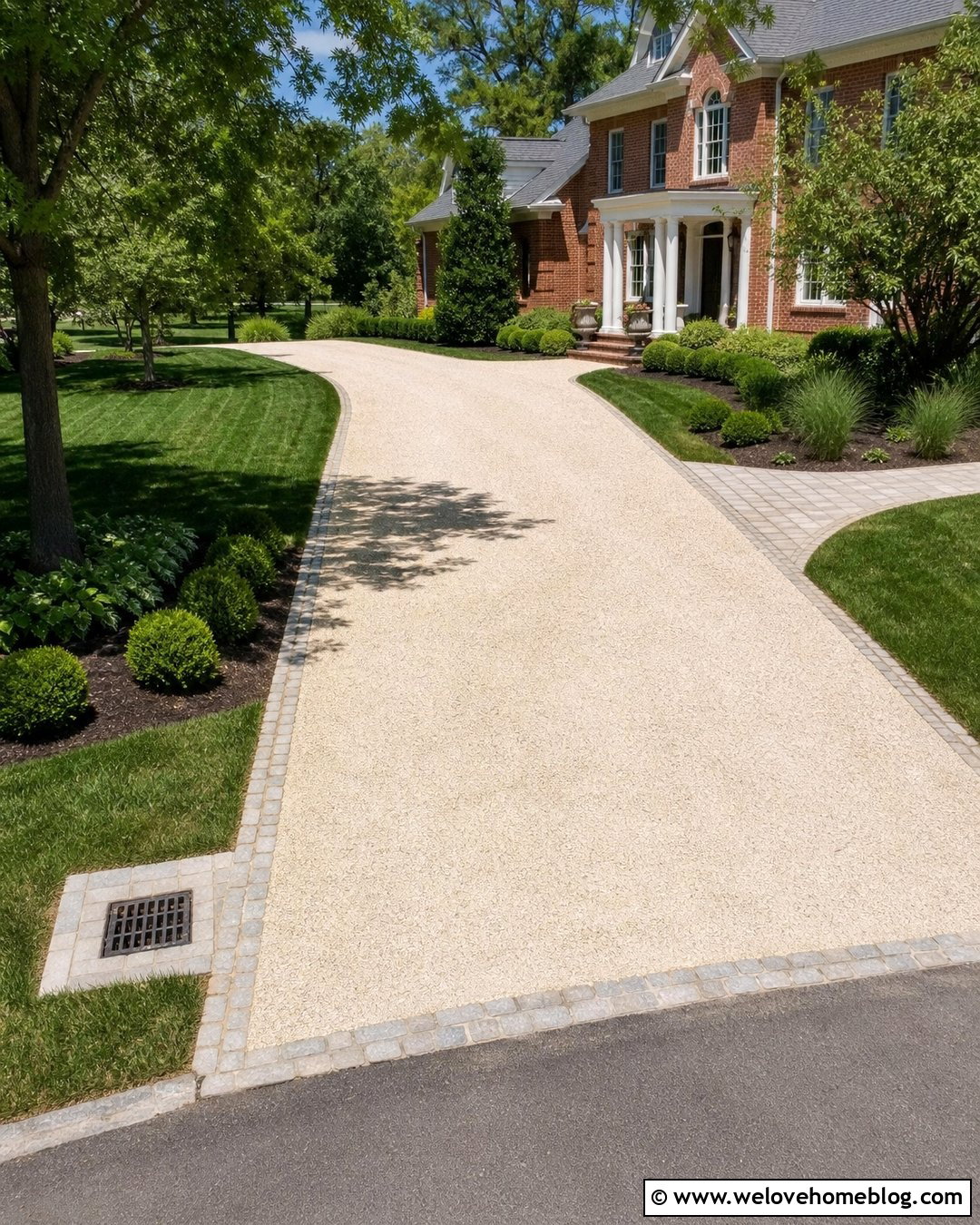
When water consistently gathers at one defined low point, a catch basin can provide focused collection. Shape the cream crushed-stone driveway so runoff reaches a square or round basin positioned beside the vehicle path. Surround the grate with a concrete paver collar to prevent loose gravel from falling directly inside. The basin can connect to a solid underground pipe that carries water toward a dry well, rain garden, or approved outlet. Choose a removable grate and a basin with sediment storage so maintenance remains manageable. Low boxwood, ornamental grass, and a paved front walkway can integrate the drain into a formal suburban landscape. This solution works best when grading naturally concentrates water in one place. It is less effective if several disconnected puddles cover the driveway after every storm. ()
14. Sunken Gravel Driveway With Box Drain
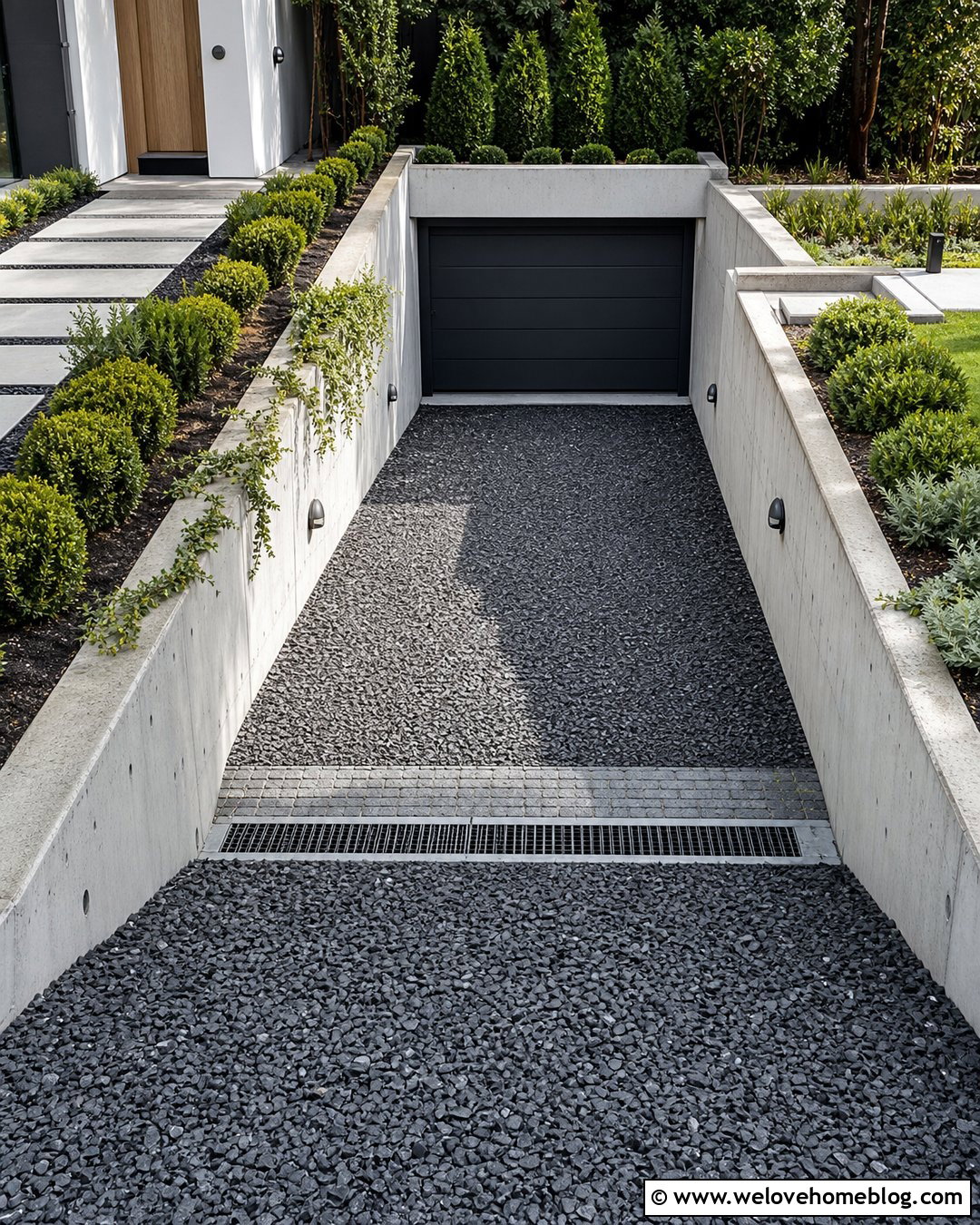
A sunken driveway between retaining walls needs dependable drainage because water cannot spread freely into the yard. Surface the drive with compacted angular charcoal gravel and direct the lowest area toward a large grated box drain. A short concrete or cobblestone pad around the box helps stabilize the grate and catches scattered stones. Retaining walls should include their own drainage system so groundwater does not push through the wall and add more water to the driveway. Use narrow raised planting beds above the walls with compact shrubs and trailing plants that will not clog the drain. This structured layout suits contemporary homes and urban properties with below-grade garages. Because a blocked outlet could cause rapid flooding, include accessible cleanouts and consider a backup drain or pump where gravity drainage is not possible. ()
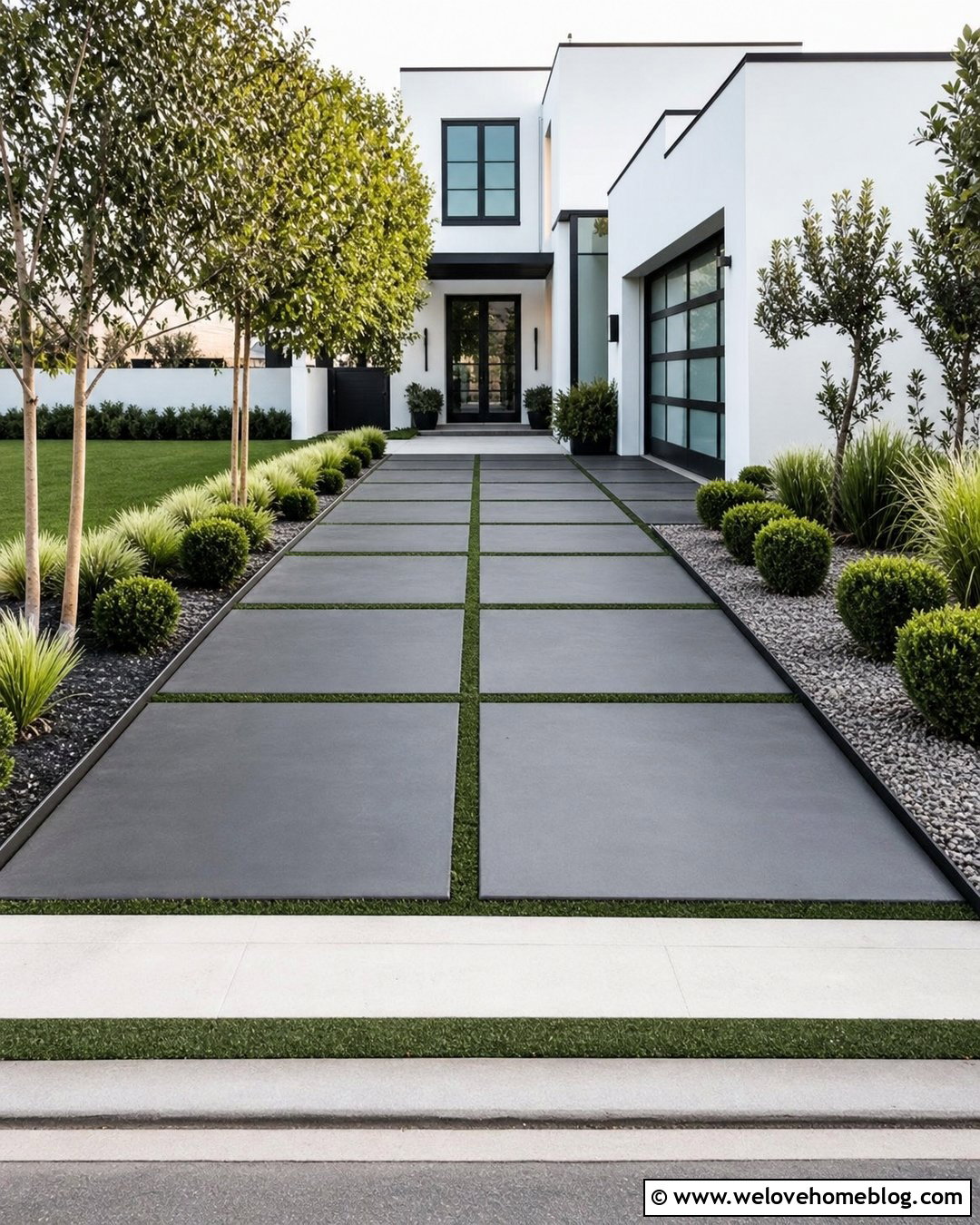
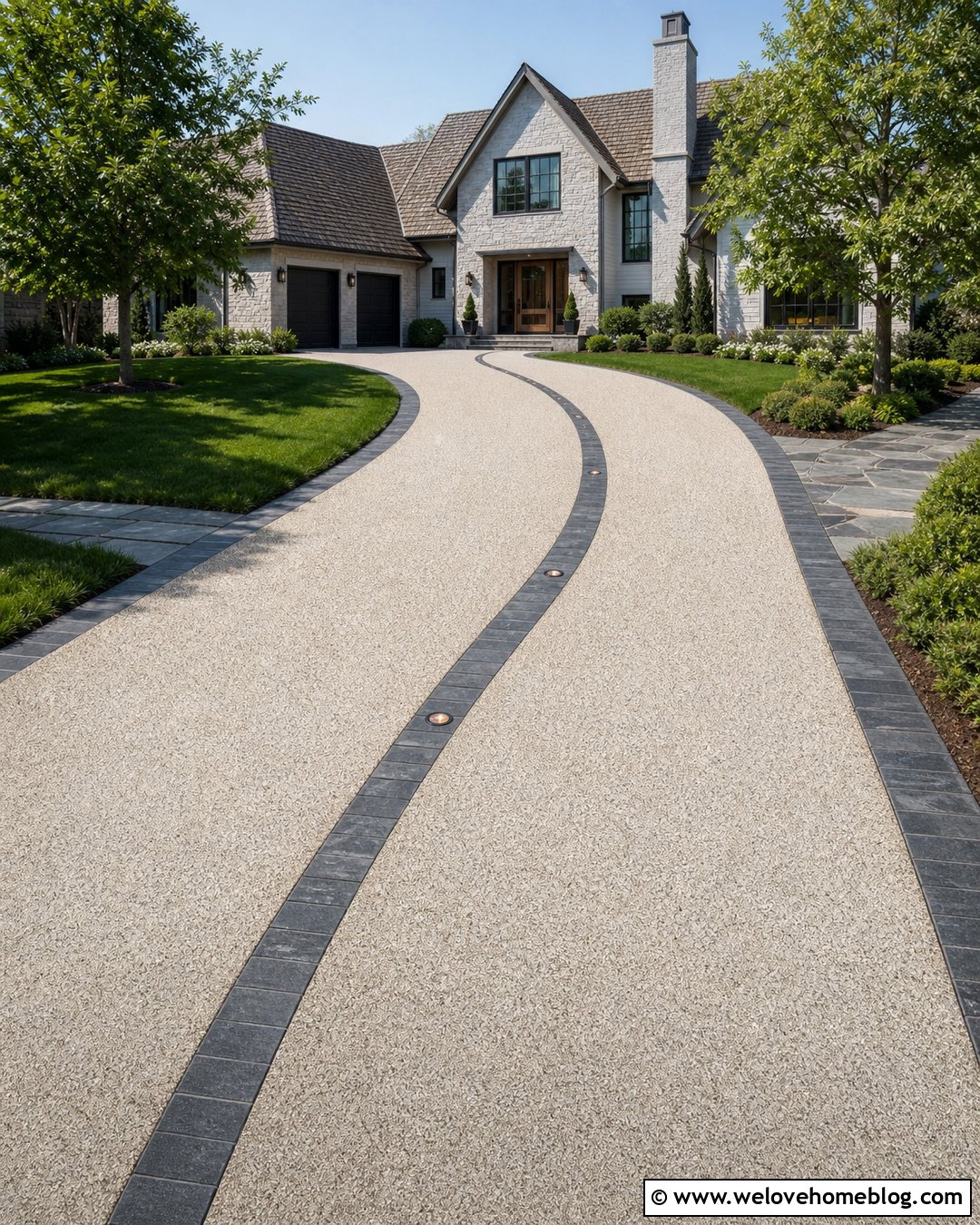
15. Gravel Driveway With Cobblestone French Drain

A visible French drain can double as an elegant driveway border when its materials match the home. Choose pale limestone gravel for the main driveway and install a narrow trench along the downhill edge. Fill the trench with clean dark drainage stone around a perforated pipe, then cap the top with rounded cobbles for a contrasting ribbon. Flexible steel edging beneath the surface can help separate decorative driveway gravel from the drain aggregate. Lavender, catmint, and low evergreen shrubs planted beyond the trench create a soft cottage-style frame while leaving room for water to enter. This complete look is especially attractive beside brick, stone, and European-inspired homes. Ensure the trench has a continuous fall toward a safe outlet, and use filter fabric where appropriate to reduce soil migration and premature clogging. ()
16. Gravel Driveway With Under-Driveway Culvert
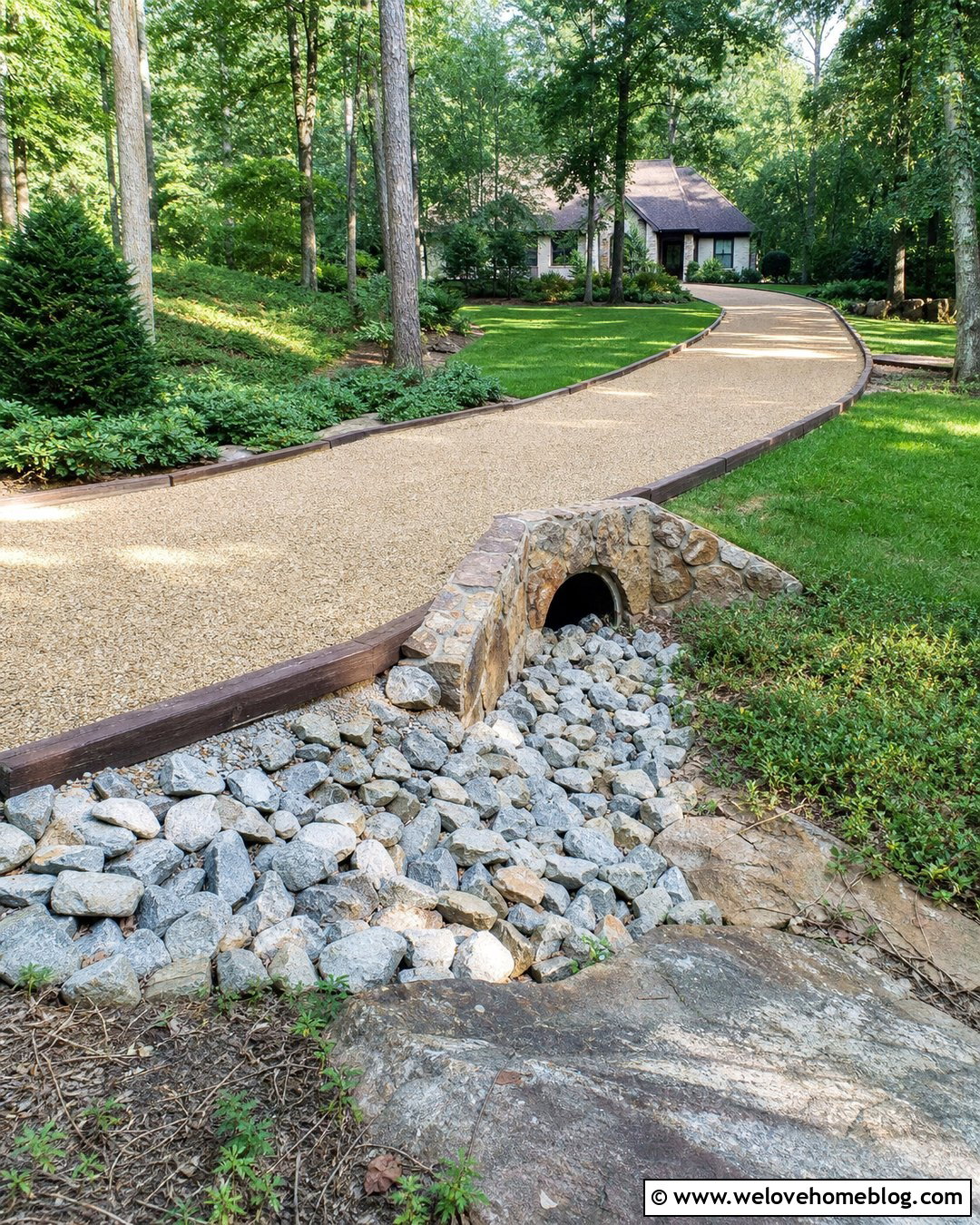
A natural swale or drainage ditch may need to cross underneath the driveway to reach a lower part of the property. In that situation, an under-driveway culvert keeps water moving without creating an open vehicle crossing. Cover the pipe with a properly compacted stone base and finish the surface with angular tan crushed gravel. Fieldstone headwalls at both ends can stabilize the slope and create a finished entrance detail. Place large riprap near the outlet to reduce erosion where concentrated flow leaves the pipe. Keep shrubs, mulch, and decorative fencing away from both openings so inspections remain easy. This layout works well for wooded lots and country homes where the driveway crosses rolling ground. Culvert diameter, pipe strength, cover depth, and outlet protection should be professionally matched to site conditions. ()
17. Switchback Gravel Driveway With Cross Drains
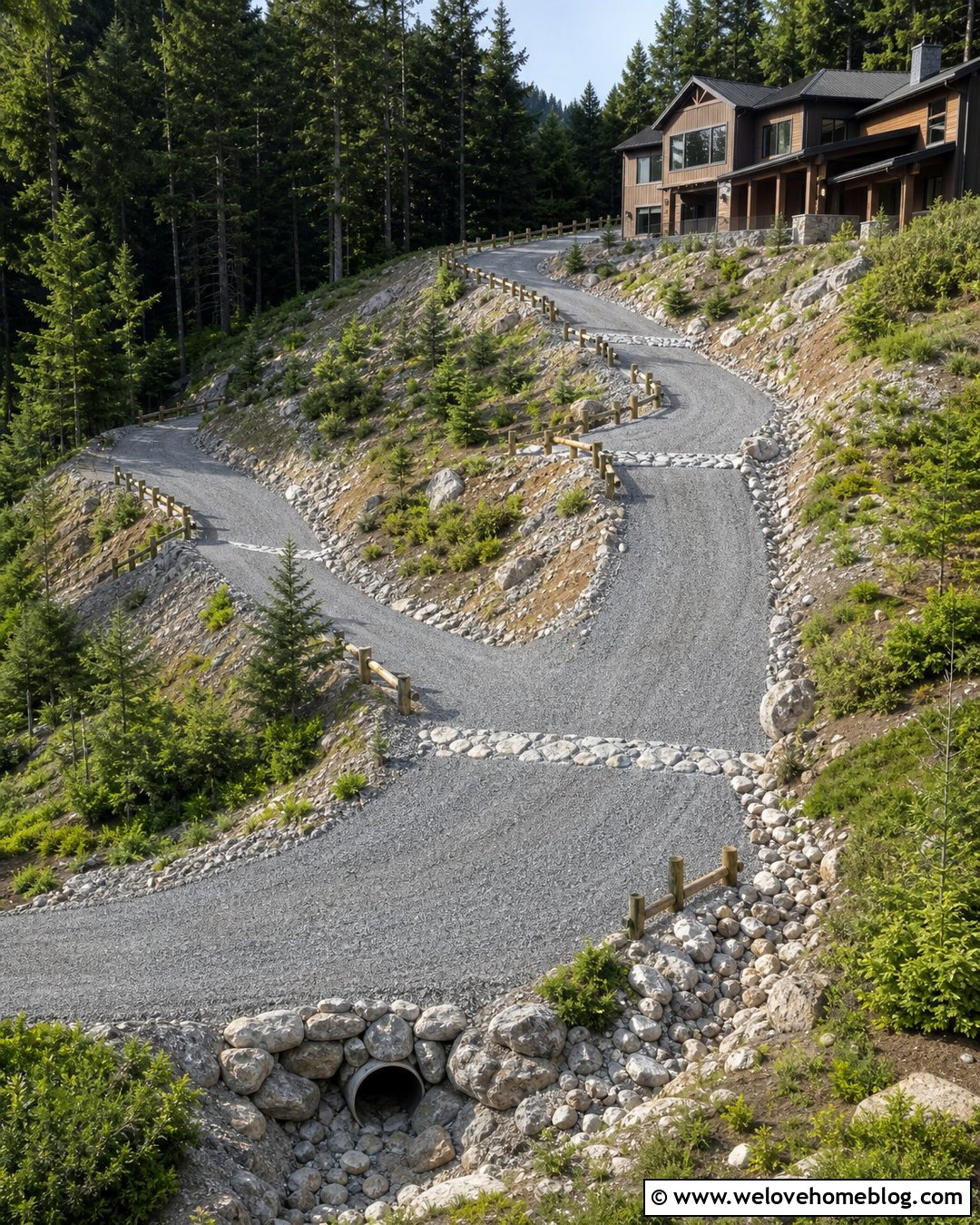
A switchback driveway can collect runoff at each bend, where water slows and gravel often shifts. Build the driving surface with compacted angular gray stone and tilt each segment gently toward an inside drainage ditch. At strategic points, use buried cross drains or armored channels to transfer water beneath the driveway to the downhill side. Large stone at every outlet protects the slope from concentrated erosion. Timber guard posts, native ground covers, and widely spaced evergreen trees can frame the route without obstructing drainage. At the switchback landing, provide enough stable space for vehicles to turn without dropping wheels into the ditch. This design is best suited to hilly wooded properties. Complex slopes can behave unpredictably during heavy rain, so professional grading and erosion-control planning are strongly recommended before construction. ()
18. Gravel Driveway With Paver Drainage Apron
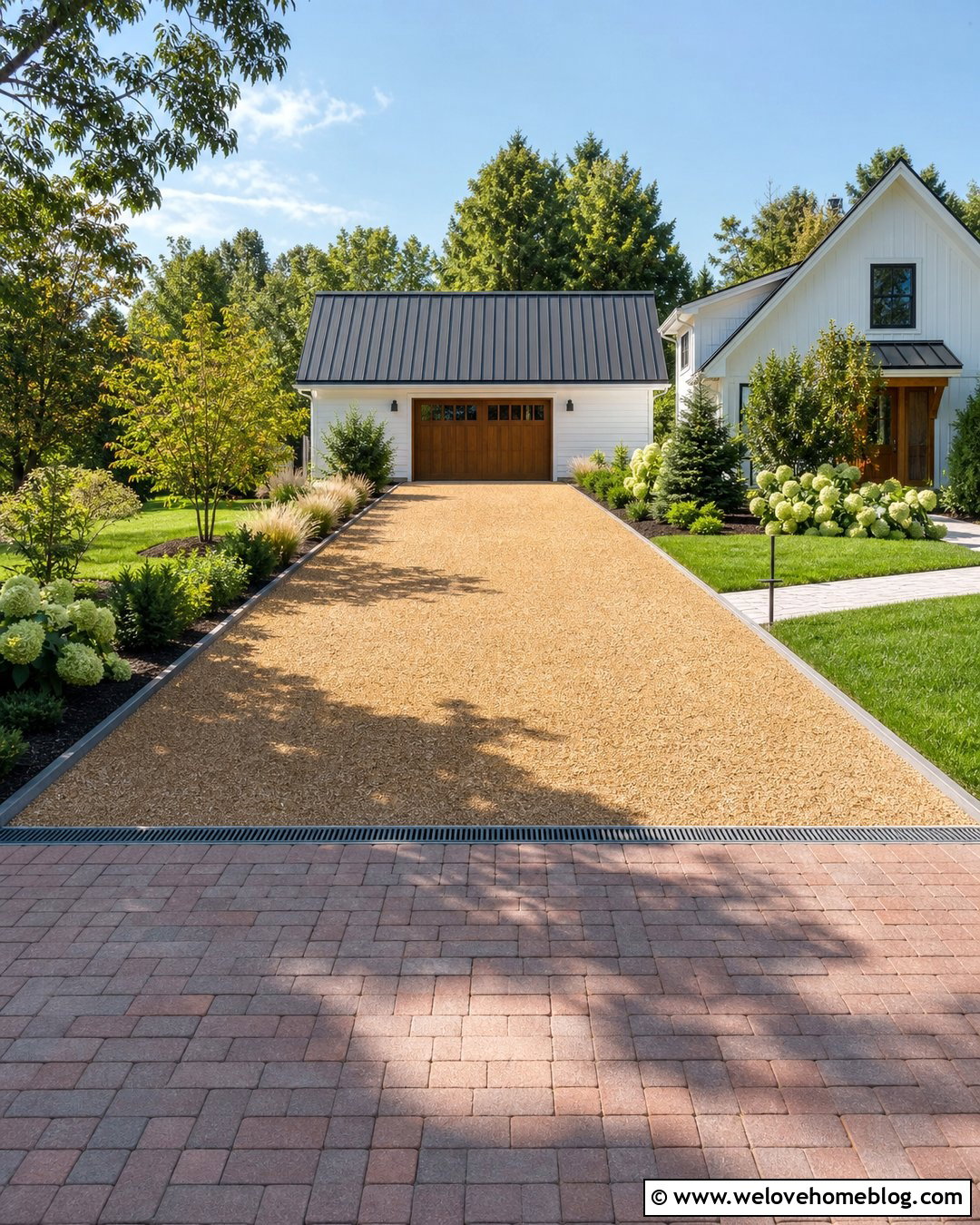
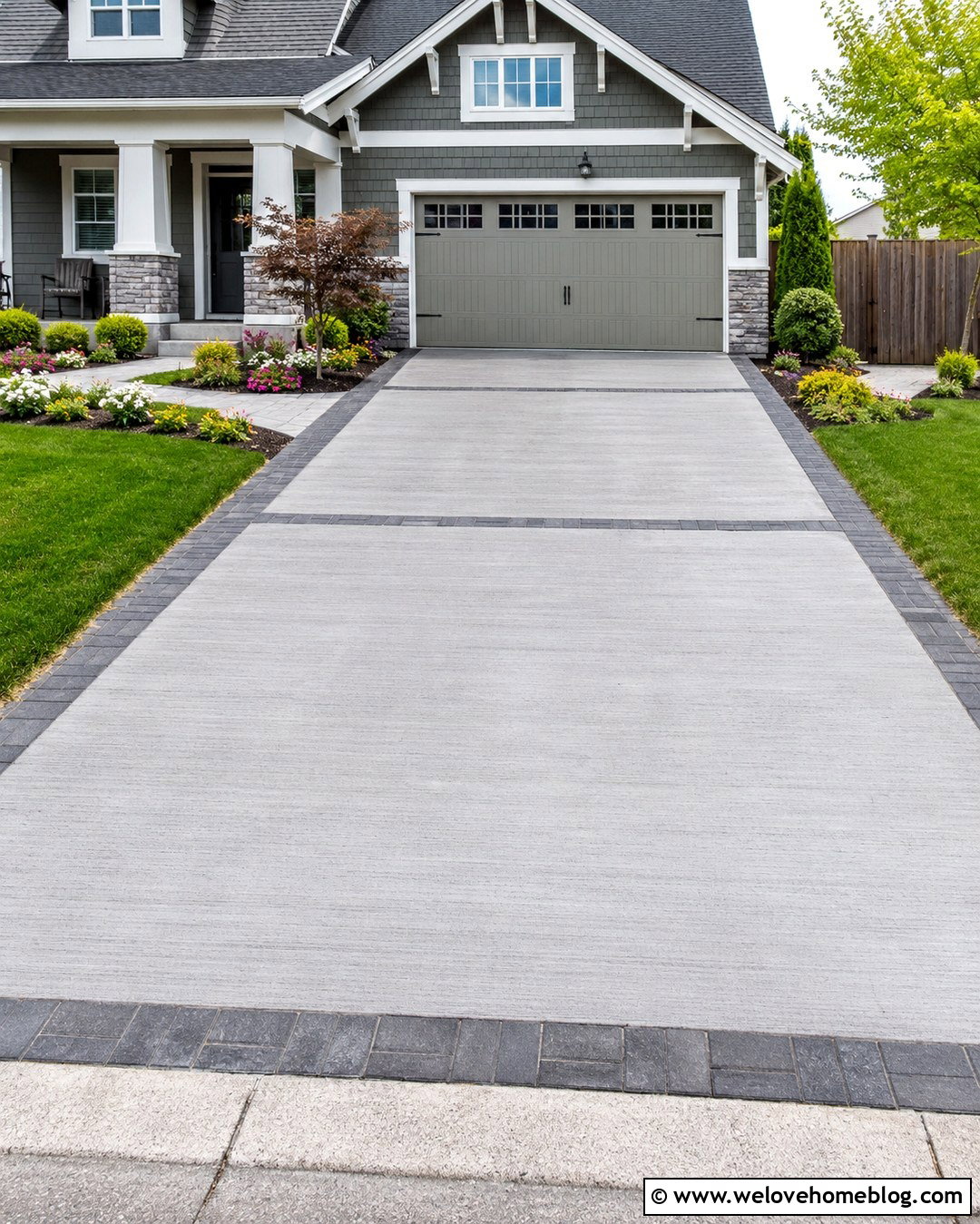
Combining gravel with a permeable paver apron can strengthen the area closest to the house while managing runoff. Use compacted honey-colored crushed stone across the main driveway, then install permeable brick pavers near the garage or parking court. A narrow channel drain between the two materials catches surface flow and creates a crisp transition. Secure edging prevents gravel from migrating into paver joints or covering the grate. Planting beds with dwarf evergreens, hydrangeas, and ornamental grasses can frame the apron without interfering with drainage access. This polished combination suits Craftsman, Colonial, and modern farmhouse homes. The paver base and drain outlet must be designed as part of one system. Simply placing permeable pavers over poorly draining soil will not provide reliable stormwater management during prolonged rain. ()
19. Raised Gravel Driveway With Bioswale

Low, soggy yards may benefit from a slightly raised gravel driveway bordered by a planted bioswale. Build the driveway on a stable, compacted base and finish it with medium brown angular gravel. Grade the surface toward a broad, shallow planting channel located several feet from the driveway edge. River rock inlets can carry runoff through breaks in the border without allowing gravel to escape. Fill the bioswale with plants suited to both temporary moisture and dry periods, using local native species when possible. A mowed lawn strip between the driveway and planting area keeps the layout clean and provides maintenance access. This design suits ranch homes and contemporary suburban properties with wide front yards. An overflow route remains essential because a bioswale should not become a permanent pond after storms. ()
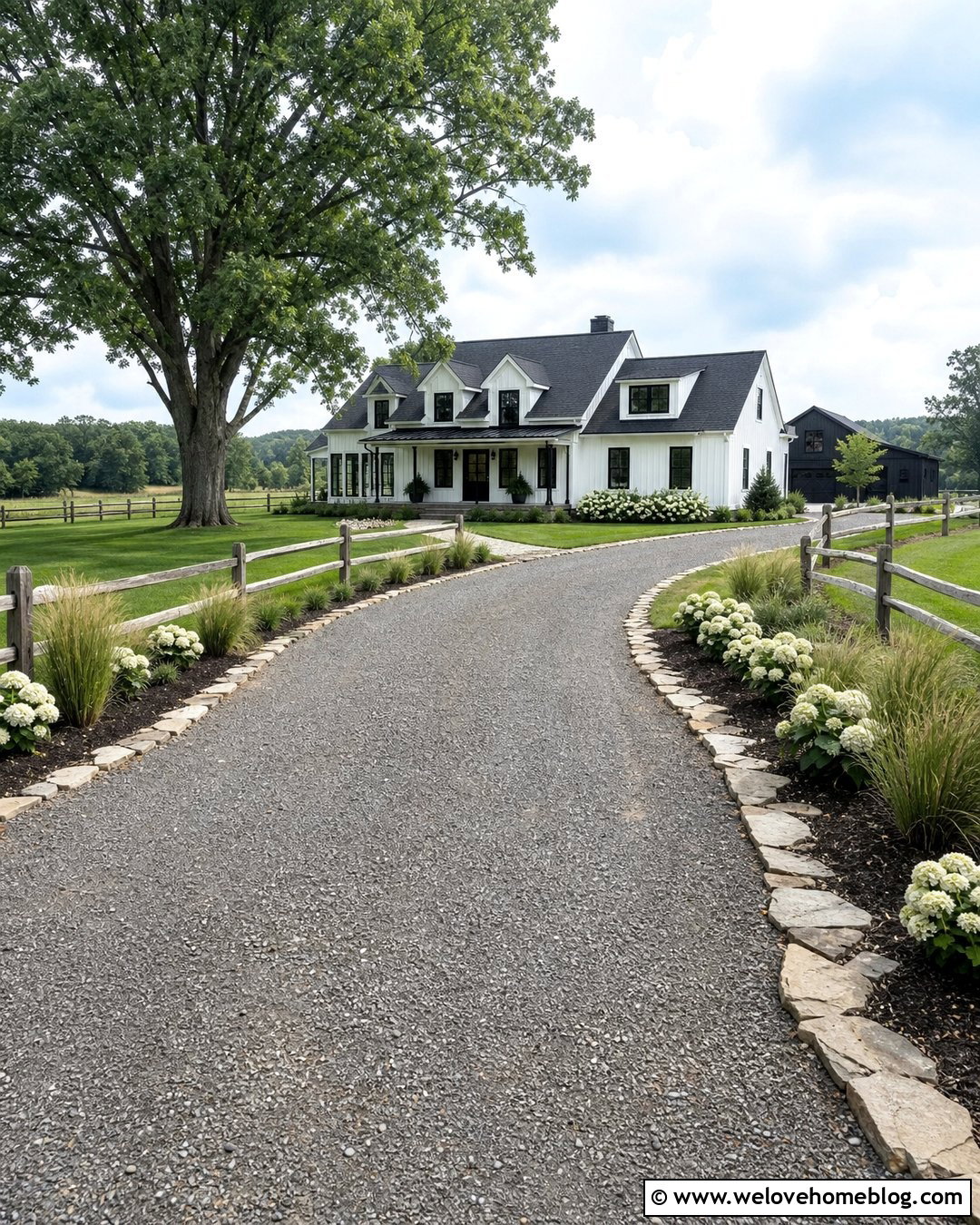
20. Gravel Parking Court With Multiple Drains

A wide parking court may need several drainage features rather than one oversized drain. Surface the area with compacted light gray crushed stone and create subtle high points that divide runoff into smaller drainage zones. A grated channel can protect the garage entrance, while catch basins collect water from low corners. Stone-lined planting beds or an outer rain garden can receive slower surface flow. Use brick ribbons to define parking positions and limit gravel movement without creating raised barriers that trap water. Small shade trees, layered shrubs, and a connected paver walkway make the court feel like part of the landscape. This complete design works well for large suburban and estate homes. Every drain should connect to a coordinated outlet system that can handle the property’s expected runoff. ()
Conclusion:
The strongest **20 Gravel Driveway Drain Ideas** treat water management as part of the entire landscape rather than an afterthought. A durable result begins with a stable base, compacted angular gravel, correct surface grading, and a dependable outlet. From crowned driveways with grass swales to circular layouts with rain gardens, each solution can improve function and curb appeal together. Match the drainage method to the driveway’s slope, soil, rainfall, and traffic. Keep grates, pipes, ditches, and culvert openings clear throughout the year. Most importantly, avoid directing water toward foundations, roads, or neighboring property. When flooding, steep terrain, or complicated outlets are involved, professional site planning can prevent expensive erosion and repeated gravel repairs. ()

Related posts:

Leave a Reply