
Replacing a plain slab opens the door to better drainage, easier repairs, richer texture, and more character at the curb. These **20 Concrete Driveway Alternatives Ideas** explore complete driveway designs rather than materials in isolation. You will find affordable gravel, classic brick, smooth asphalt, natural stone, permeable systems, and lower-maintenance resin finishes. Each option pairs the driving surface with a practical layout, durable edging, suitable landscaping, and a house style that makes the combination feel intentional. Before choosing, consider local weather, driveway slope, vehicle weight, drainage rules, snow removal, installation costs, and ongoing upkeep. Use the following complete looks to compare practical, attractive, and climate-conscious **20 Concrete Driveway Alternatives Ideas**.

1. Crushed Stone Driveway With Brick Edging
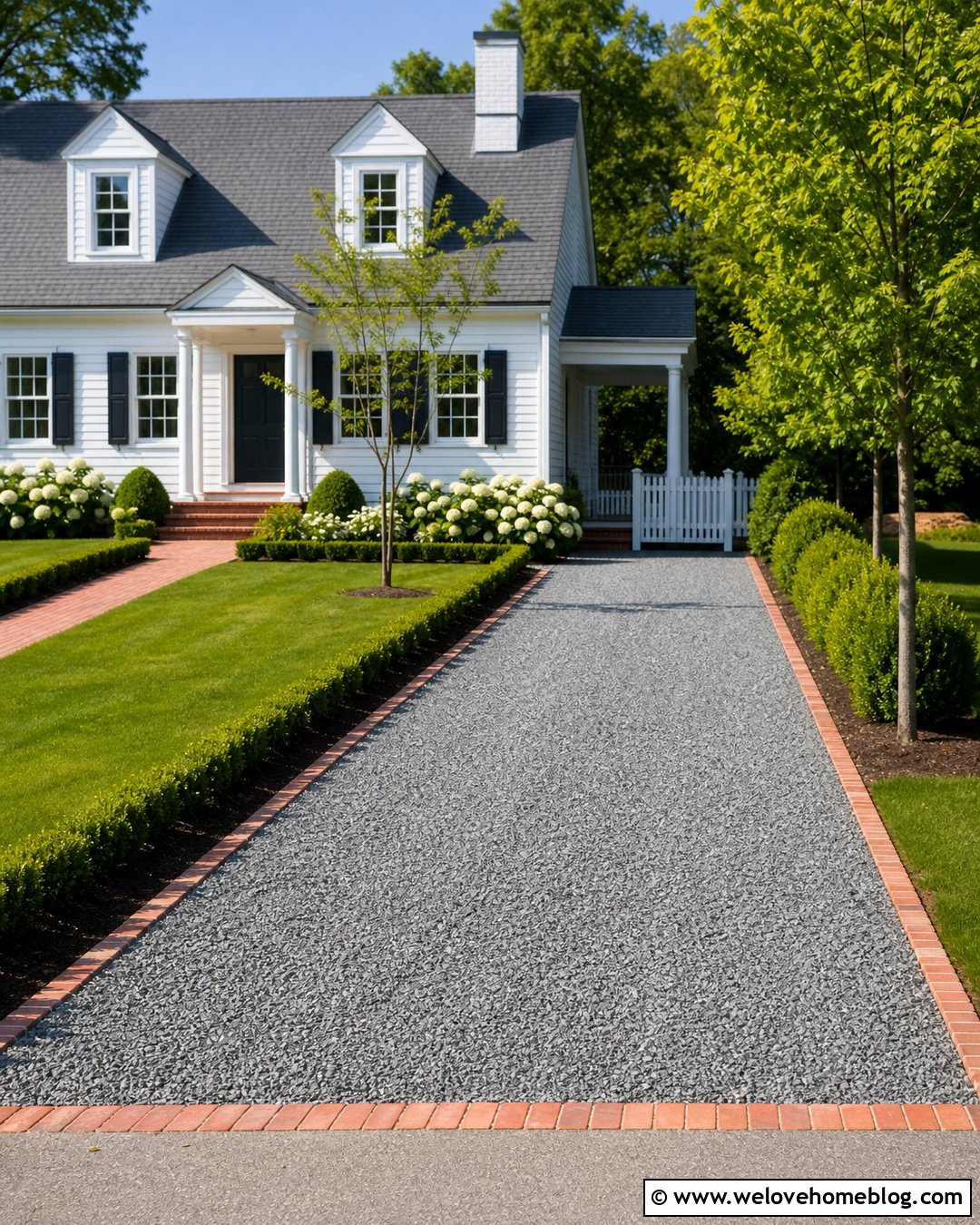
An angular crushed stone driveway offers a relaxed appearance while remaining practical for everyday vehicle use. Choose gray three-quarter-inch stone over a properly compacted base to reduce shifting and rutting. A straight layout works well for ranch and Cape Cod homes because it keeps the entrance simple. Add red brick edging along both sides to contain loose material and introduce warm color. Low boxwood hedges, ornamental grasses, and a matching brick walkway can connect the driveway to the house. Plan a slight crown or cross slope so water moves away from the center. Occasional raking, replenishing, and compacting will keep the surface even. Gravel is generally affordable and permeable, although dependable edging and base preparation are essential. ()
2. Asphalt Driveway With Paver Borders
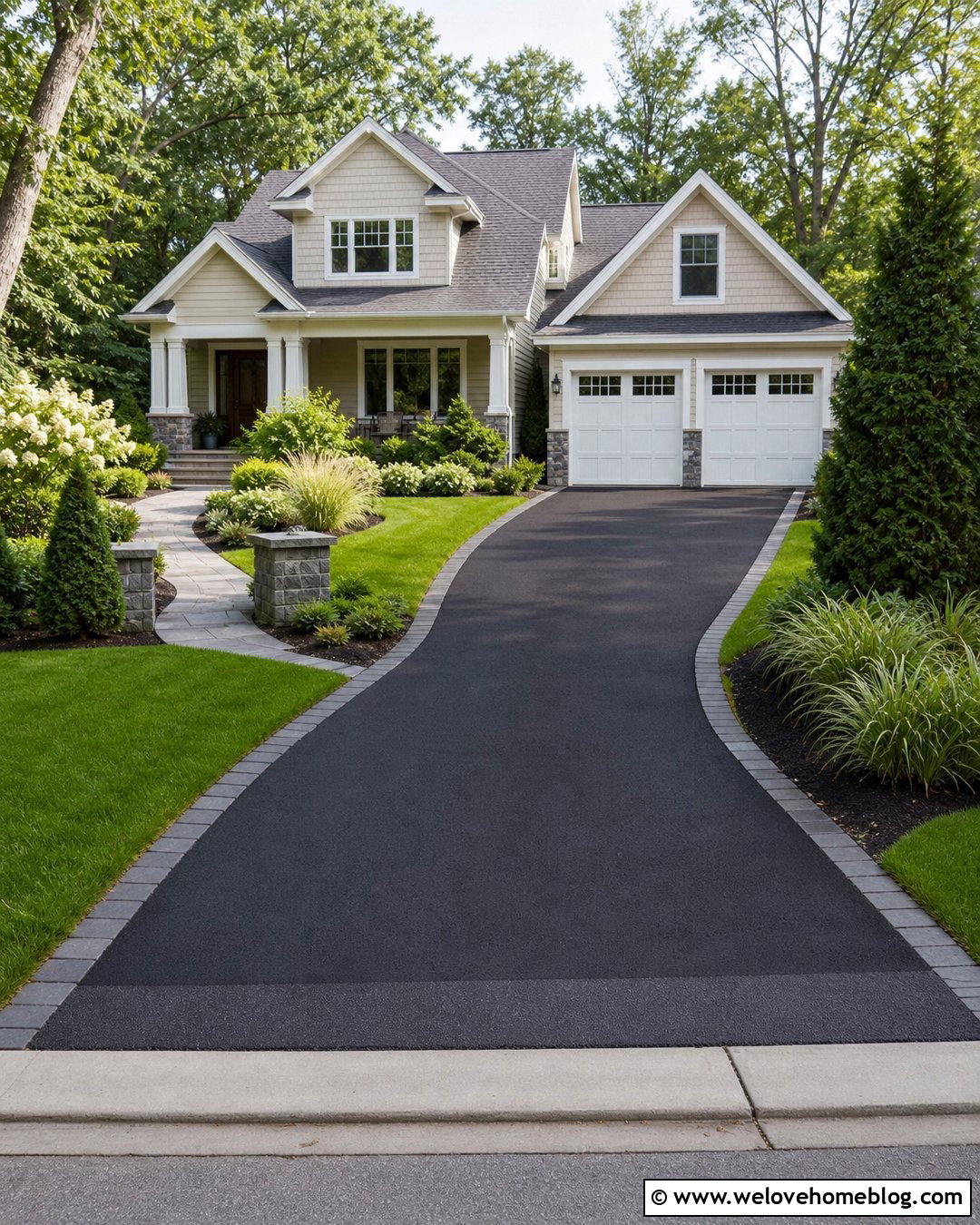
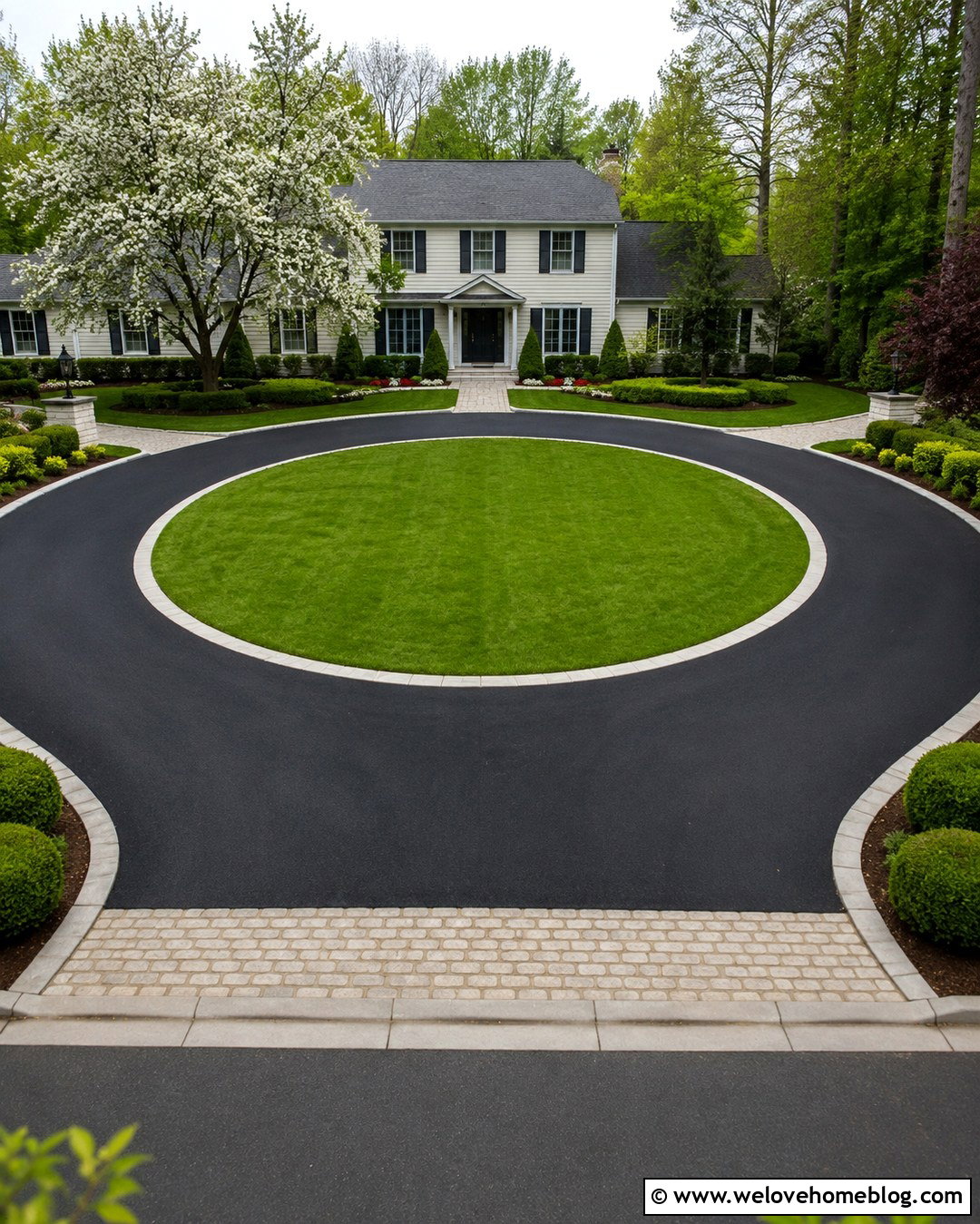
Smooth black asphalt creates a clean surface that suits traditional and contemporary homes. For a more finished appearance, frame a gently curved asphalt driveway with charcoal or warm gray pavers. The border strengthens the visual outline and helps the dark surface feel connected to nearby paths and planting beds. Use layered shrubs on the outer curve, where they can soften the pavement without blocking sightlines. A light-colored craftsman facade provides attractive contrast in the background. Asphalt is especially useful when you want a continuous driving surface without the look of poured concrete. Proper grading, a stable aggregate base, and professional compaction are important for performance. Periodic sealing and timely crack repair can help maintain the crisp finish. ()
3. Clay Brick Driveway In A Herringbone Pattern
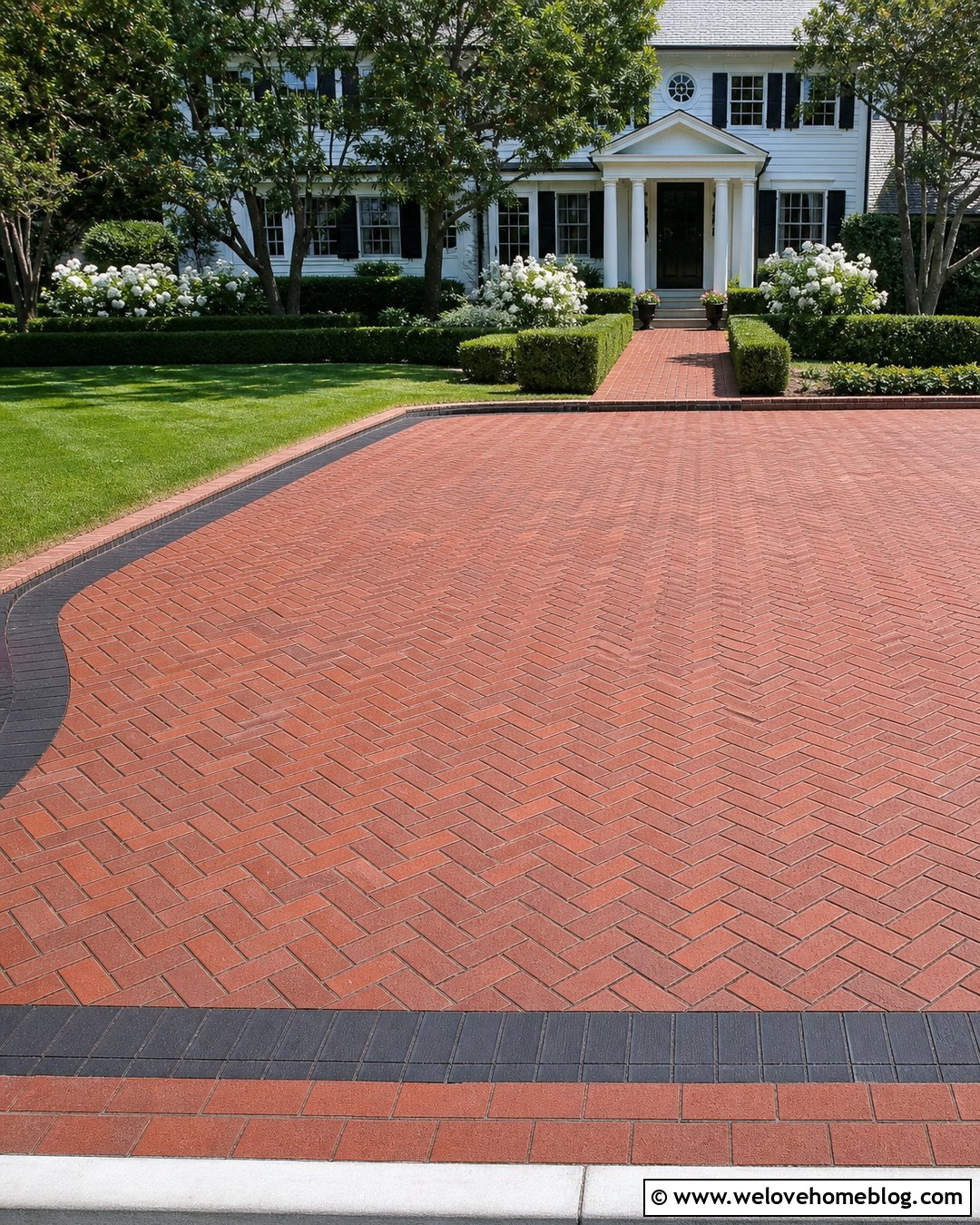
Warm clay brick pavers can transform a driveway into a distinctive part of a colonial or traditional home. Lay the bricks in a herringbone pattern so the surface feels structured and visually active. A straight driveway with a slightly wider parking area near the garage provides a practical layout without overwhelming the front yard. Dark brick soldier-course borders can hold the pattern together and create a defined transition to the lawn. Add clipped hedges, white flowering shrubs, and a brick walkway for a unified entrance. Driveway-rated bricks should be installed over a carefully prepared base with firm edge restraints. Individual damaged units can be lifted and replaced, which makes localized repairs less disruptive than replacing a continuous slab. ()
4. Cobblestone Driveway With Formal Landscaping
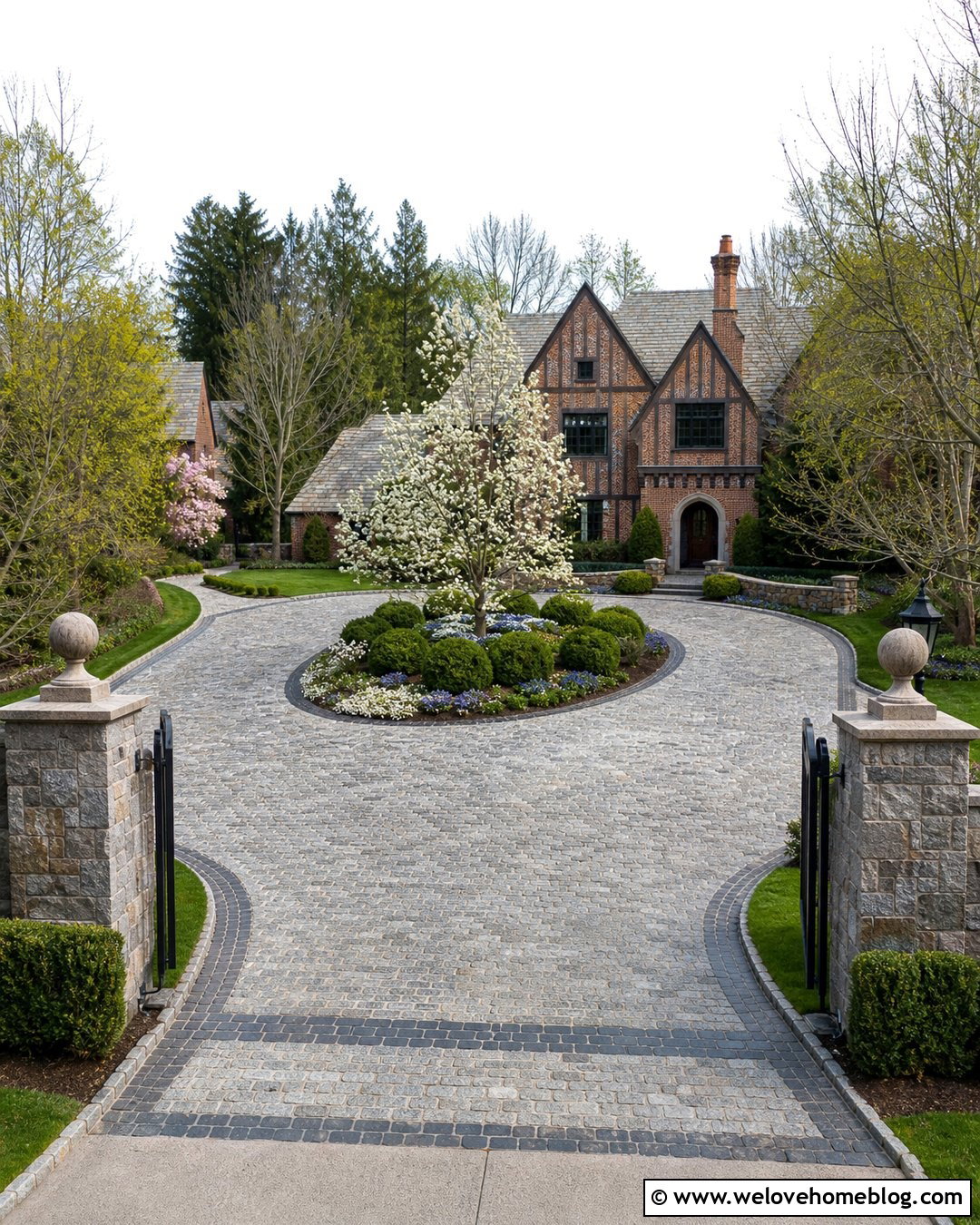
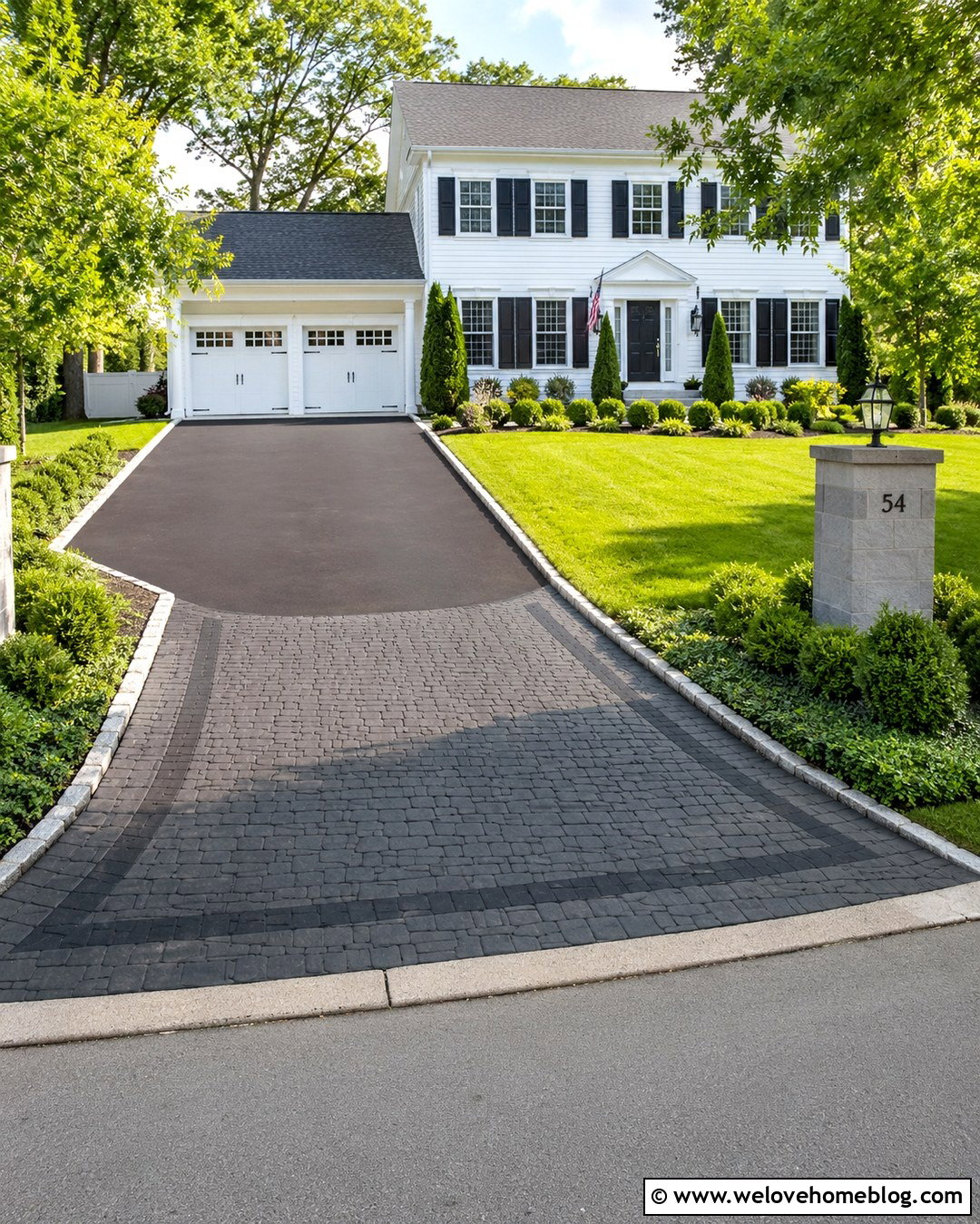
Few surfaces deliver the established appearance of a full cobblestone driveway. Granite cobbles in mixed gray tones work beautifully on a circular layout leading to a brick colonial or stone Tudor house. Use a darker cobblestone band around the perimeter and across the entrance to define the shape. In the center island, combine a small ornamental tree with neatly clipped evergreens and seasonal flowers. Matching stone pillars can mark the street entrance without making it feel closed off. Cobblestone typically requires a larger installation budget because every unit must be set carefully over a strong base. The result is a highly textured, repairable surface with lasting visual character. Keep joints maintained and address movement early to preserve an even driving area. ()
5. Permeable Paver Driveway With Gravel Joints
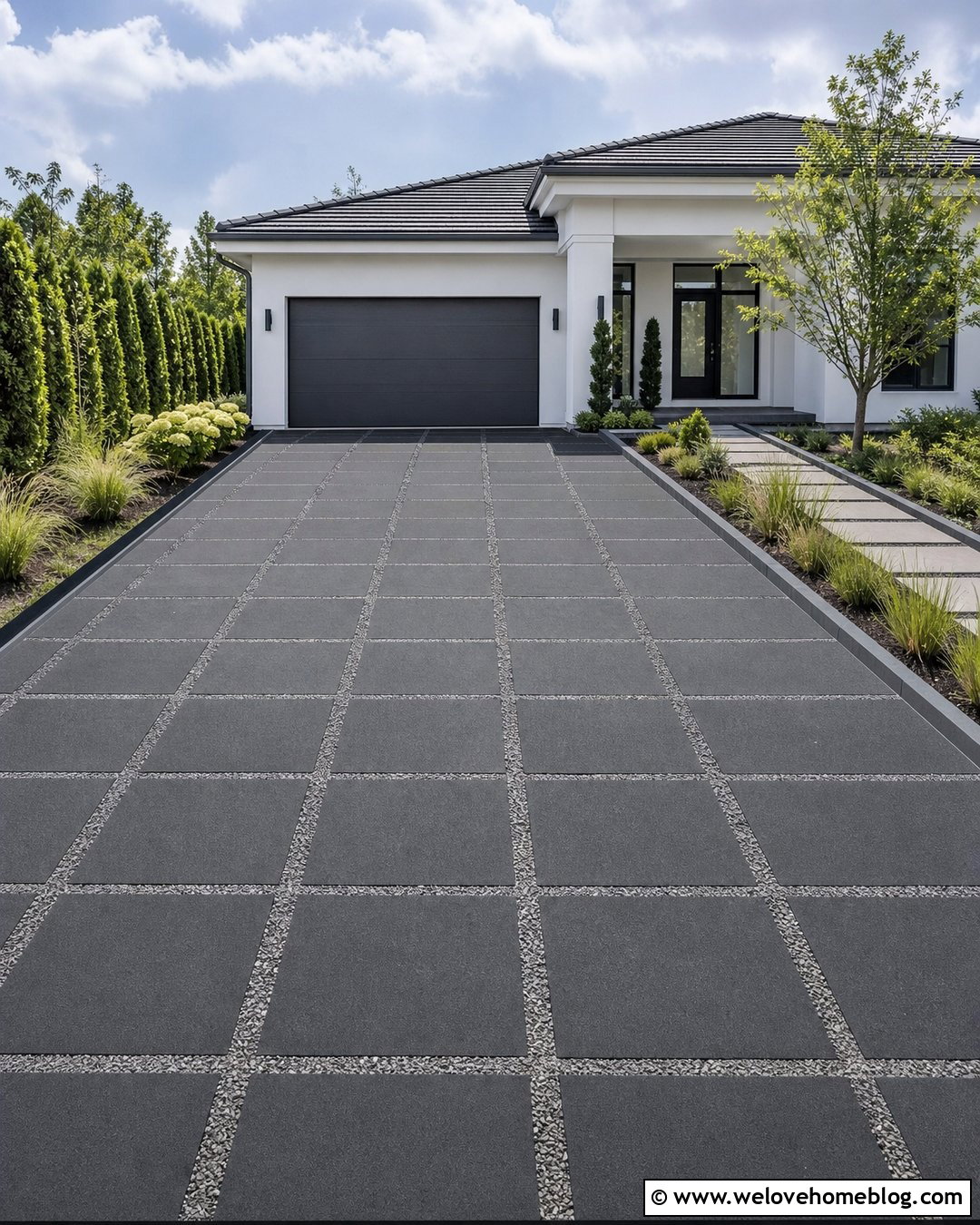
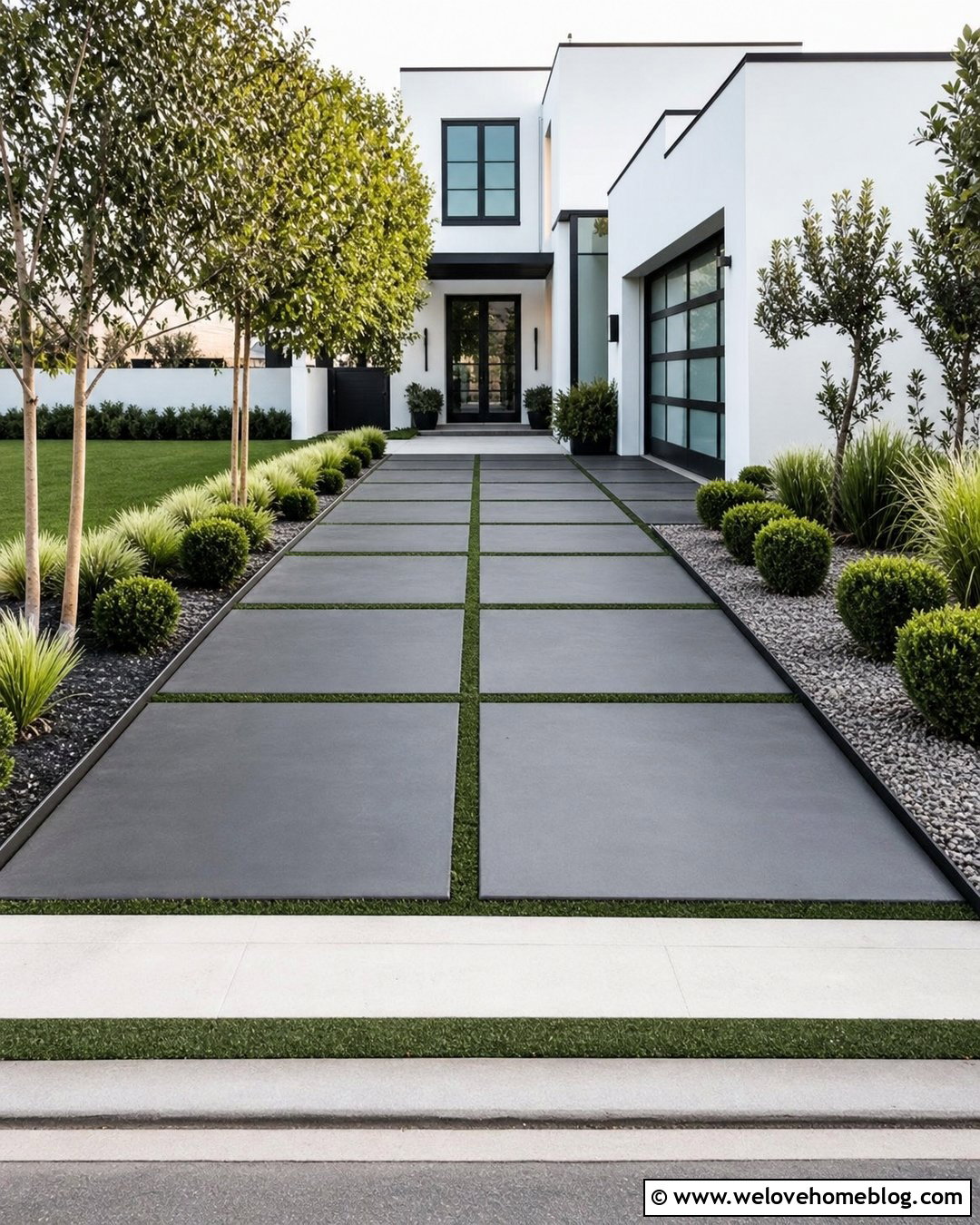
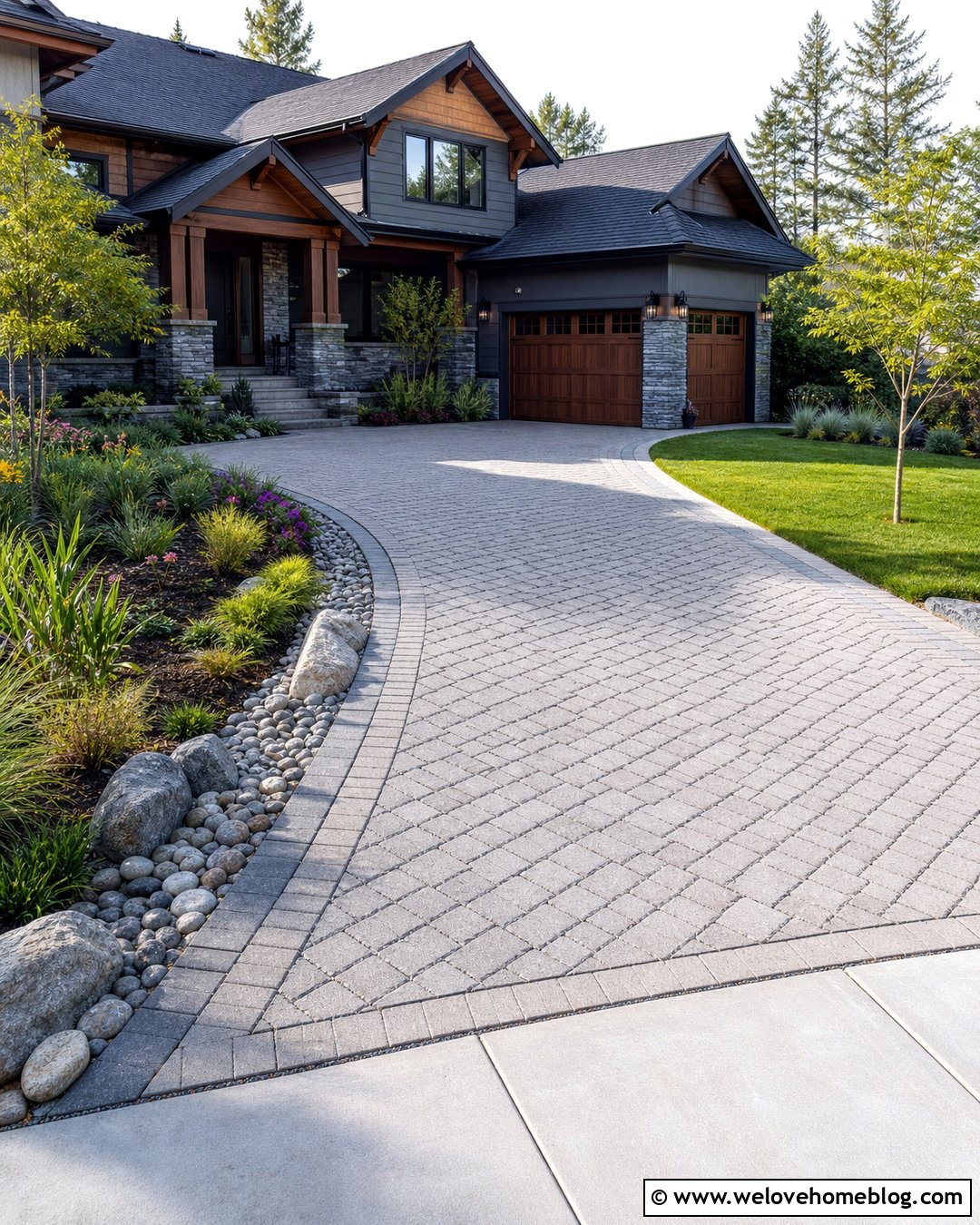
A permeable paver driveway combines an organized pattern with spaces that allow stormwater to enter the stone base below. Select large charcoal pavers with light gray gravel-filled joints for a modern home. A wide, straight layout complements simple architecture and makes the joint pattern easy to appreciate from the curb. Add steel edging, rectangular planting beds, ornamental grasses, and a linear walkway to reinforce the clean geometry. The complete system needs open-graded aggregate beneath the pavers, not merely wider joints over a conventional base. Regularly remove sediment and organic debris that could obstruct the openings. When designed for local soil and rainfall conditions, permeable pavement can help reduce runoff while creating a polished alternative to solid concrete. ()
6. Resin-Bound Gravel Driveway With Stone Borders
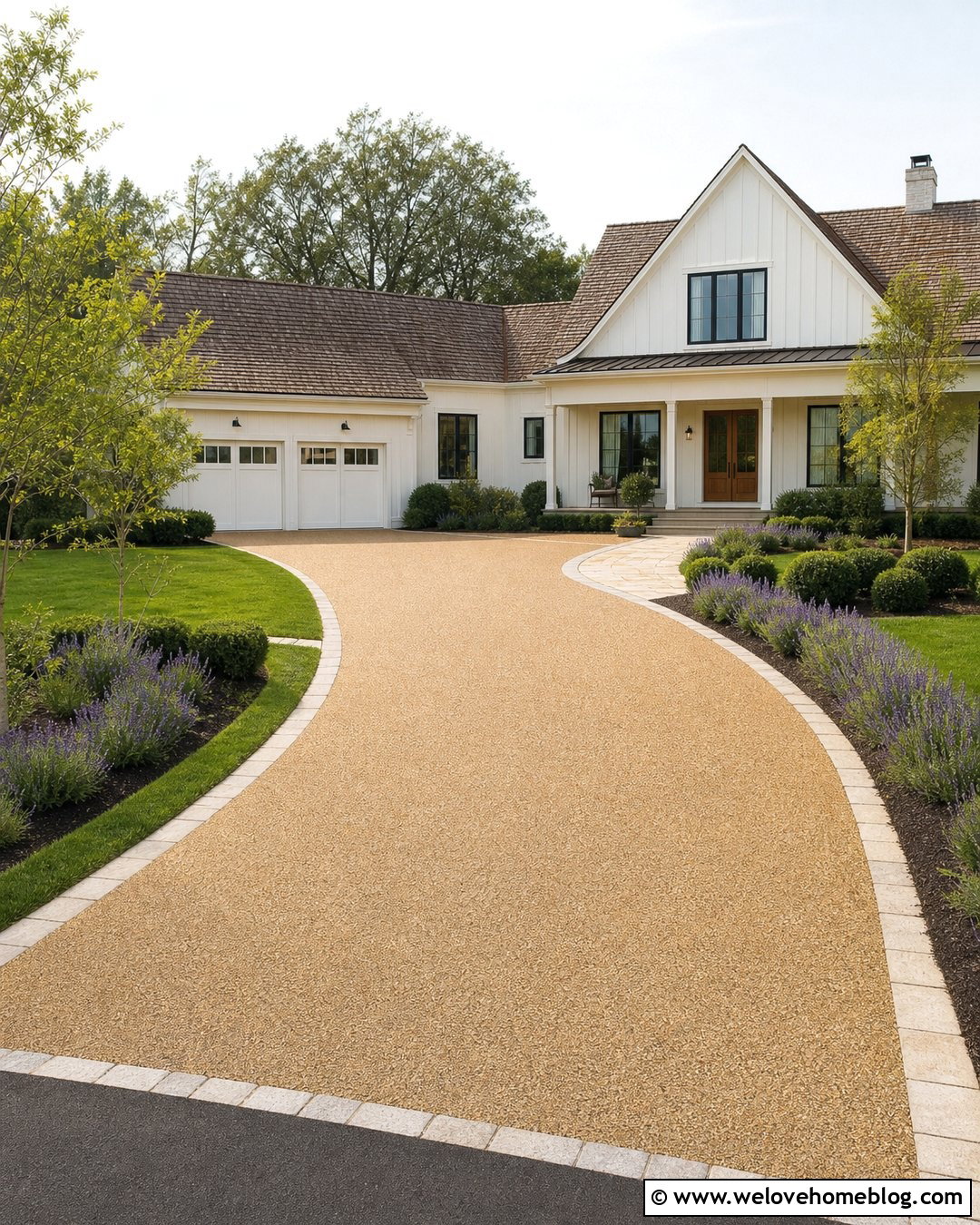
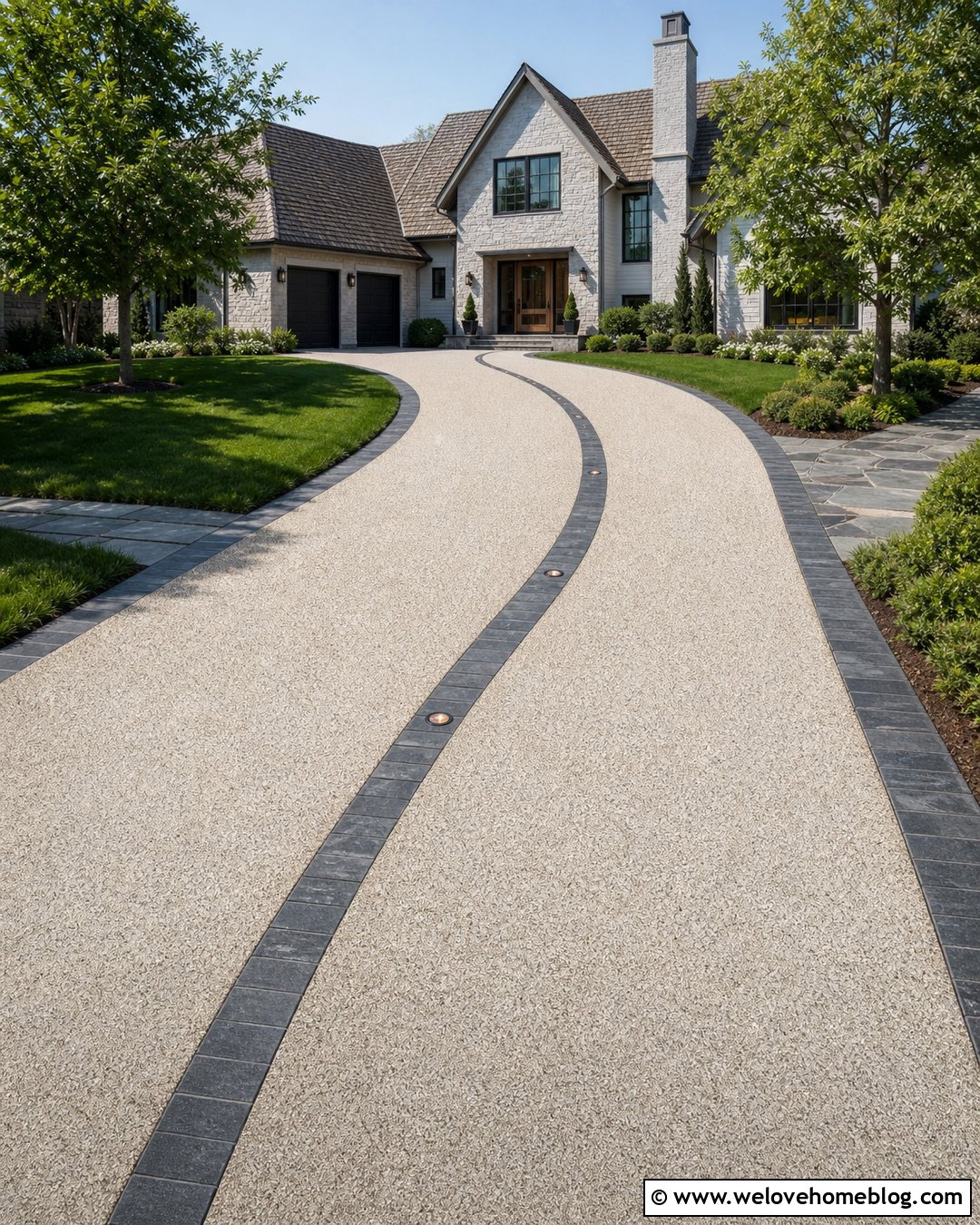
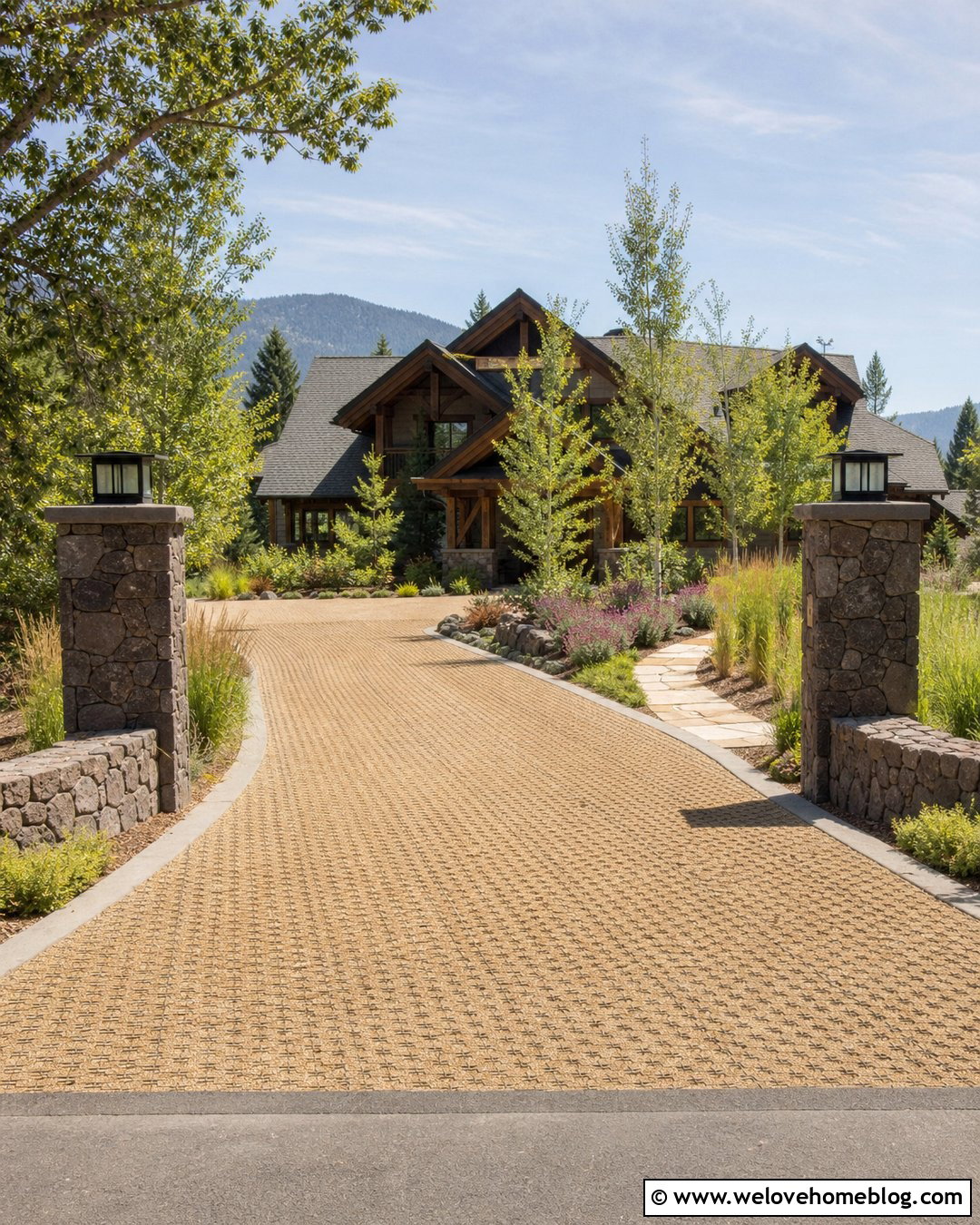
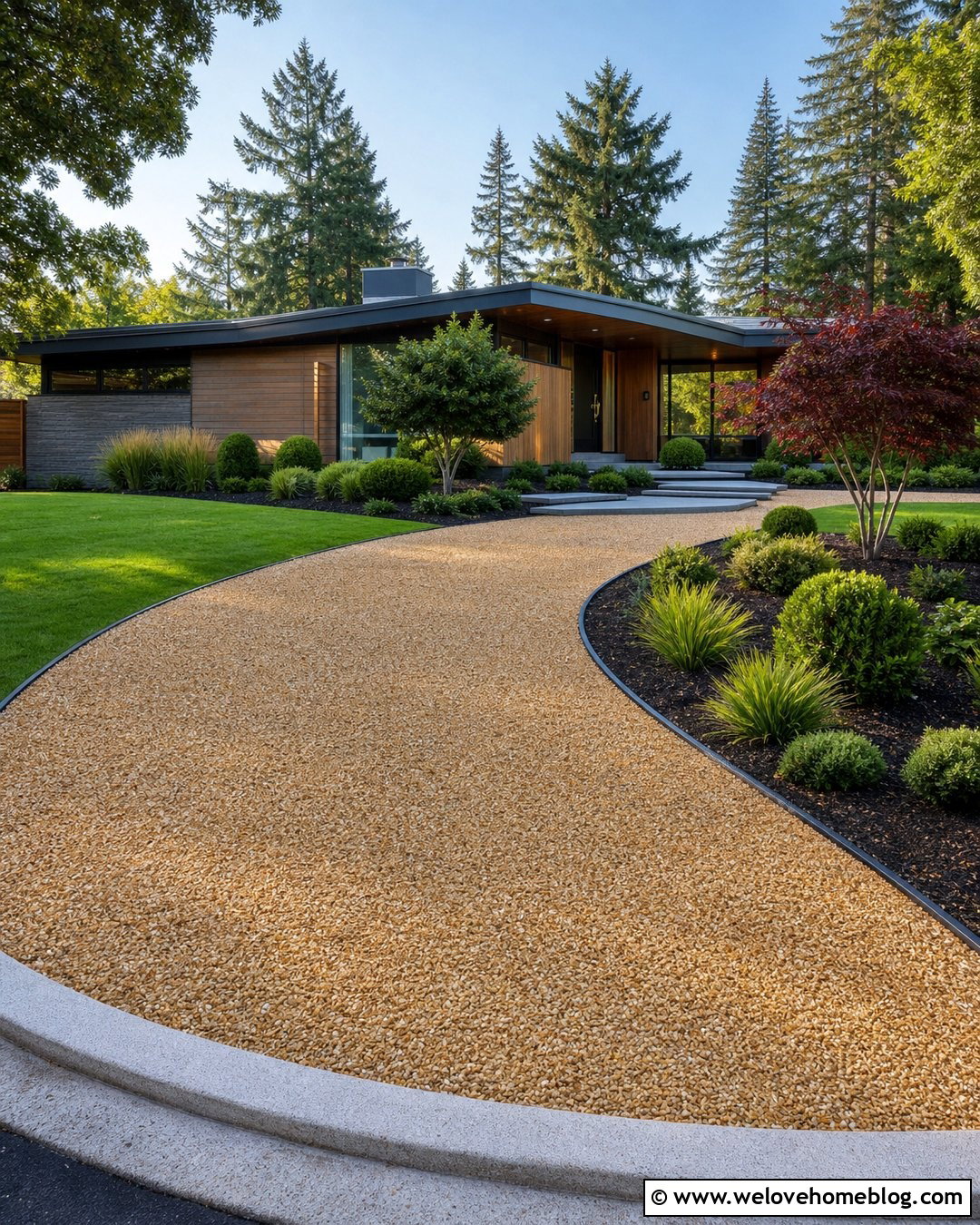
Do you like the texture of gravel but not the loose stones scattered across the lawn? A resin-bound gravel driveway uses clean aggregate mixed with resin to produce a firm, relatively smooth finish. Choose warm golden gravel for a curved driveway approaching a cream stucco or modern farmhouse home. Natural limestone borders will contain the surface and coordinate with entry steps or garden walls. Frame the drive with lavender, compact evergreens, and a narrow lawn strip for softness. Specify resin-bound rather than resin-bonded surfacing when permeability is a priority, and confirm that the base is compatible with drainage requirements. Careful mixing, dry installation conditions, and skilled application are important for consistent color, curing, and long-term performance. ()
7. Grass Grid Driveway With Stone Parking Strips
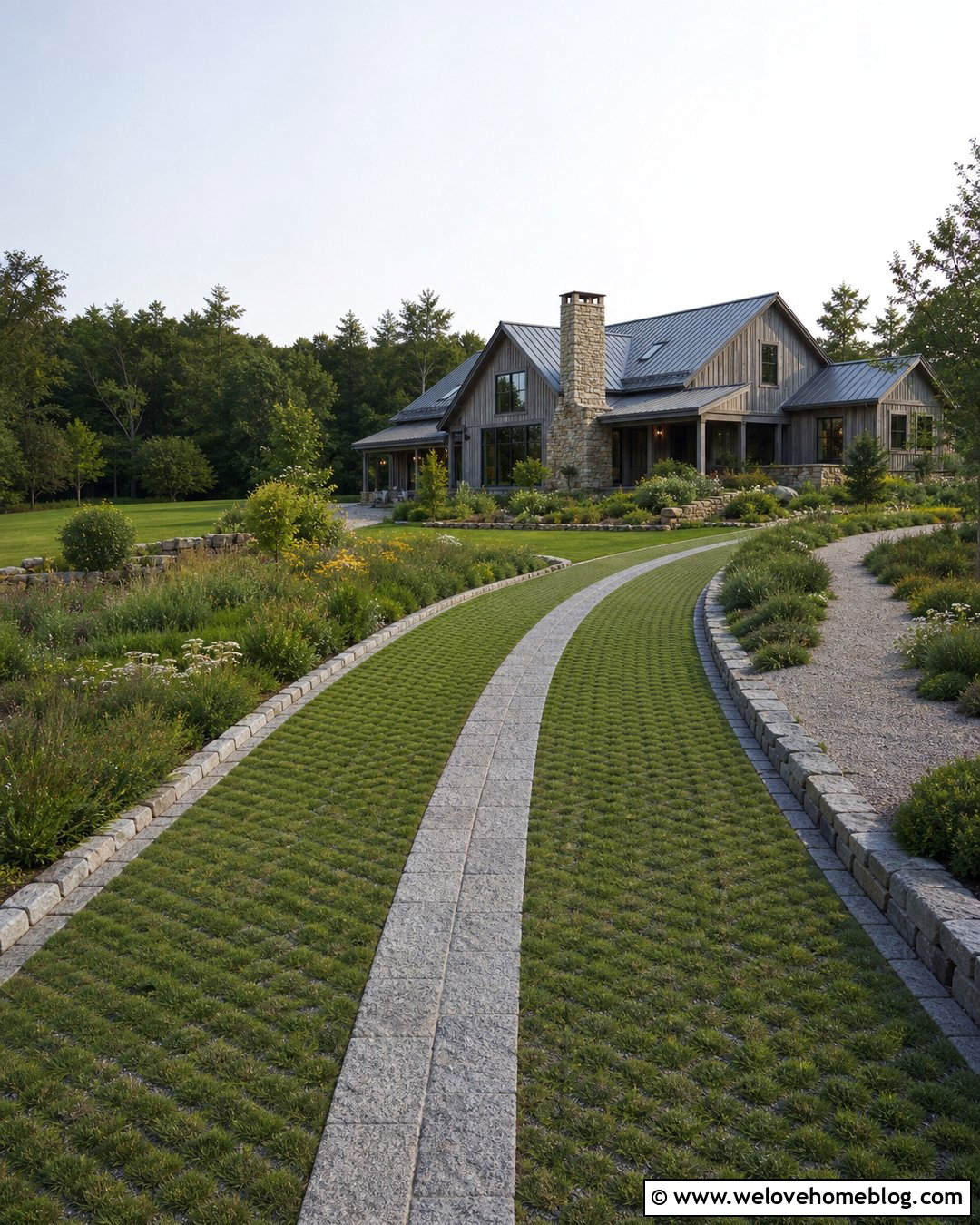
A grass grid driveway allows turf to remain part of the front yard while supporting occasional or regular vehicle traffic. Use load-rated cellular pavers filled with healthy grass, then create two narrow granite strips where tires travel most often. This combination gives a country cottage or farmhouse driveway greater stability while retaining a green appearance. A straight or softly curved layout can blend into the lawn instead of forming one large paved rectangle. Add fieldstone edging near planting beds and keep shrubs back from the driving path. Grass grids need suitable soil, drainage, irrigation, sunlight, and turf maintenance. They may not be appropriate for every climate or heavily used entrance, so match the system to site conditions and anticipated traffic. ()
8. Decomposed Granite Driveway With Steel Edging
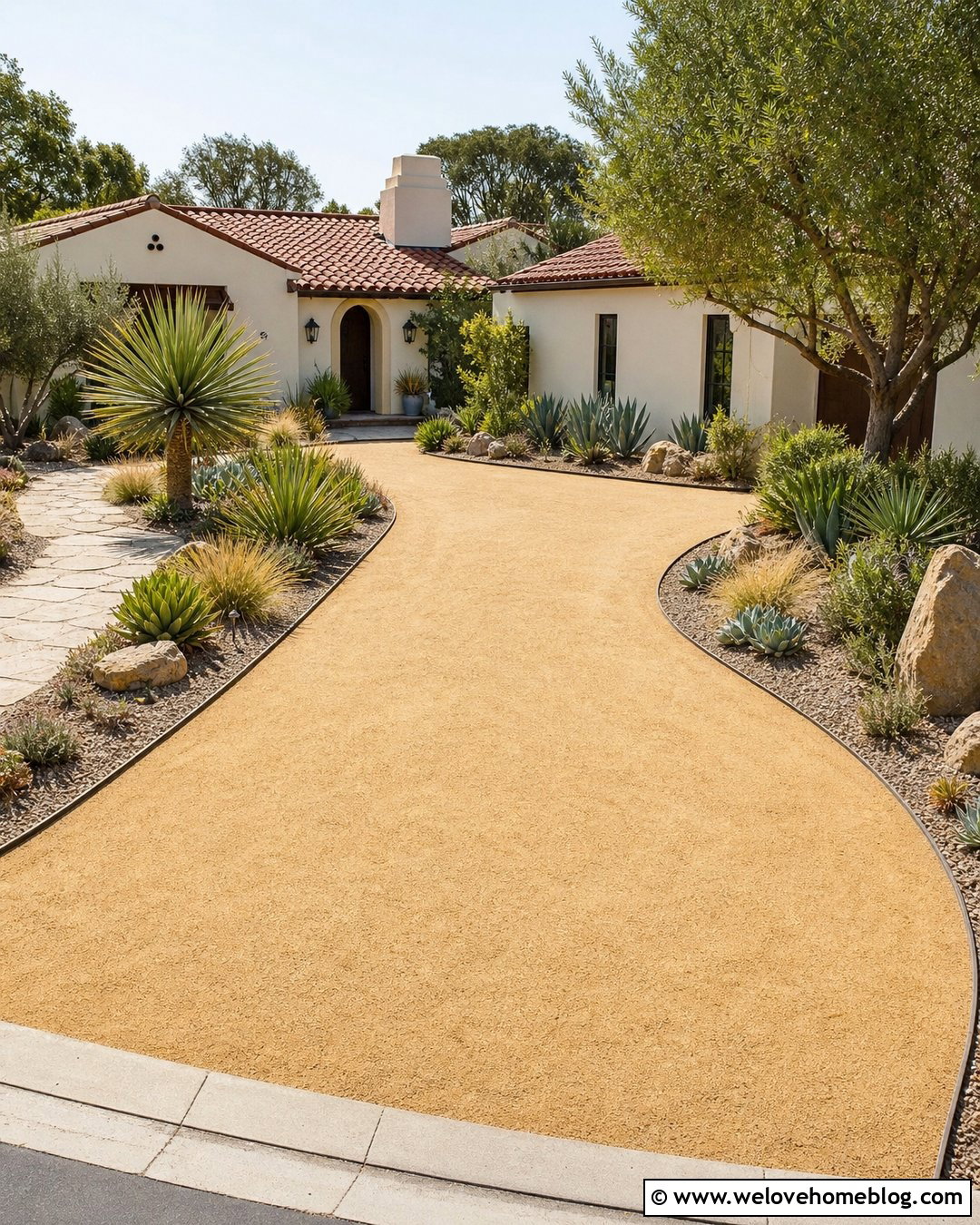
Decomposed granite brings warm, earthy color to Southwestern, Spanish, and contemporary desert homes. Choose a stabilized golden-tan finish for a gently curved driveway leading past drought-tolerant planting beds. Dark steel edging creates a sharp boundary and prevents the fine material from blending into surrounding gravel mulch. Use agave, yucca, sage, ornamental grasses, and a few sculptural boulders to complete the low-water landscape. The surface should be installed in compacted layers over an appropriate base, with a carefully planned slope that prevents water from cutting channels through it. Stabilized products usually create a firmer surface than loose decomposed granite. Periodic recompaction and small material additions may still be needed, especially at turning points, drainage paths, and garage transitions.
9. Crushed Shell Driveway With Timber Edging
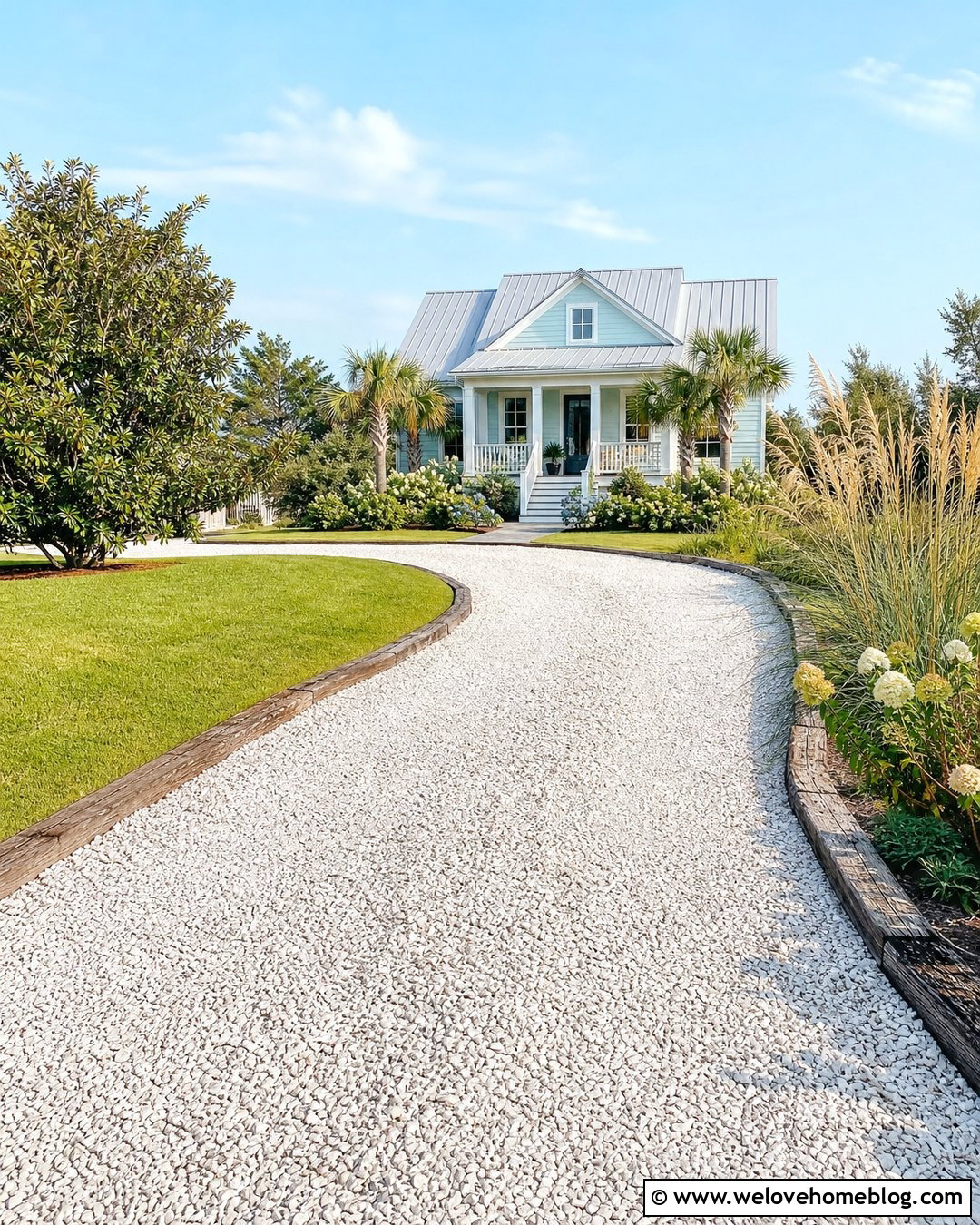
A crushed shell driveway feels especially appropriate beside a coastal cottage, beach house, or relaxed Lowcountry home. Pale oyster or clam shells brighten the entrance and gradually compact into a textured driving surface. Design a softly curved approach with pressure-treated timber or recycled plastic edging to keep the shells away from the lawn. Sea oats, wax myrtle, hydrangeas, and other regionally appropriate plants can provide a breezy landscape without hiding the driveway. Begin with a compacted crushed stone base rather than placing shells directly over soil. Availability, color, and local environmental rules vary, so purchase reclaimed or responsibly sourced material from a reputable supplier. Expect to rake low areas and replenish the top layer as shells break down or migrate. ()
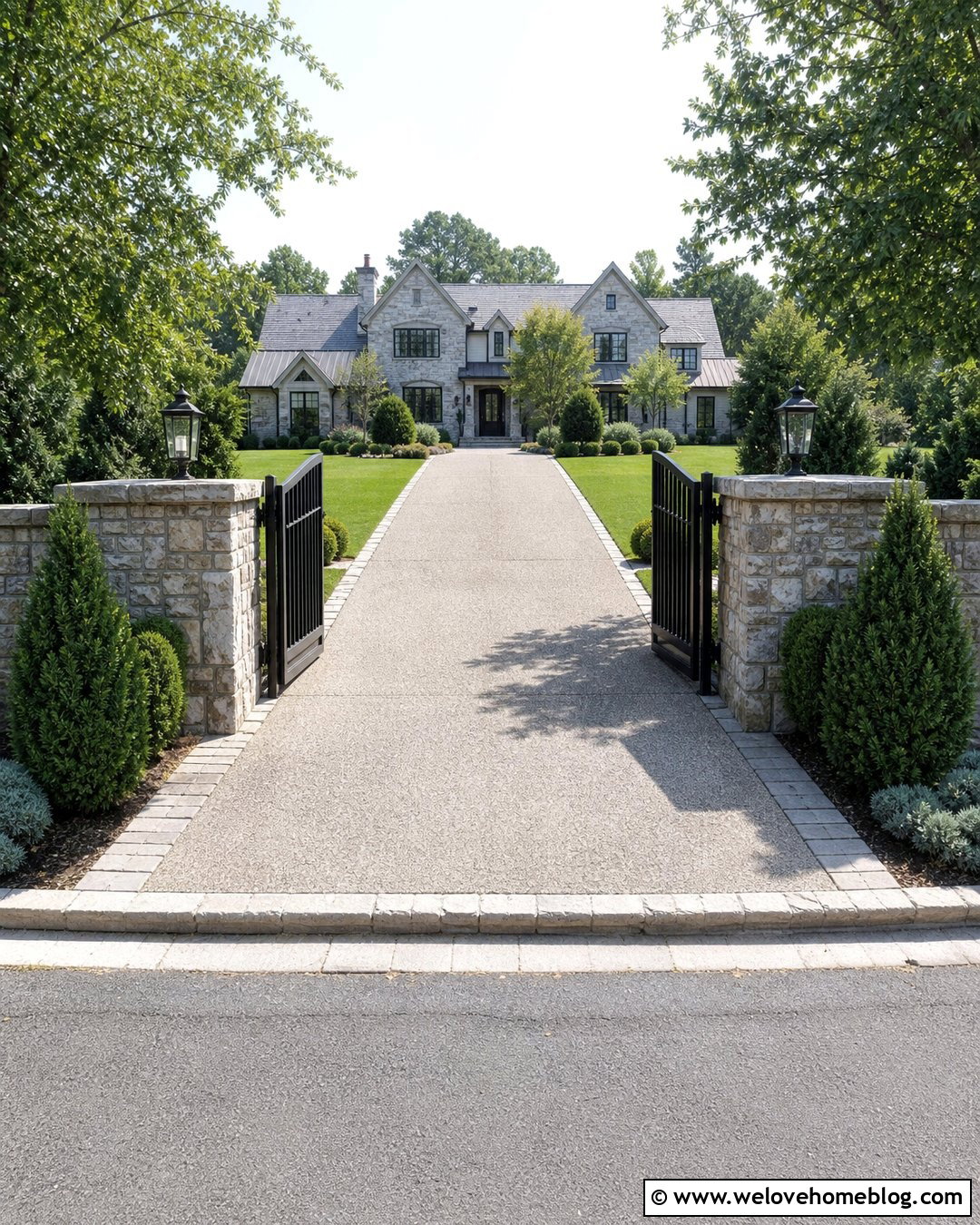
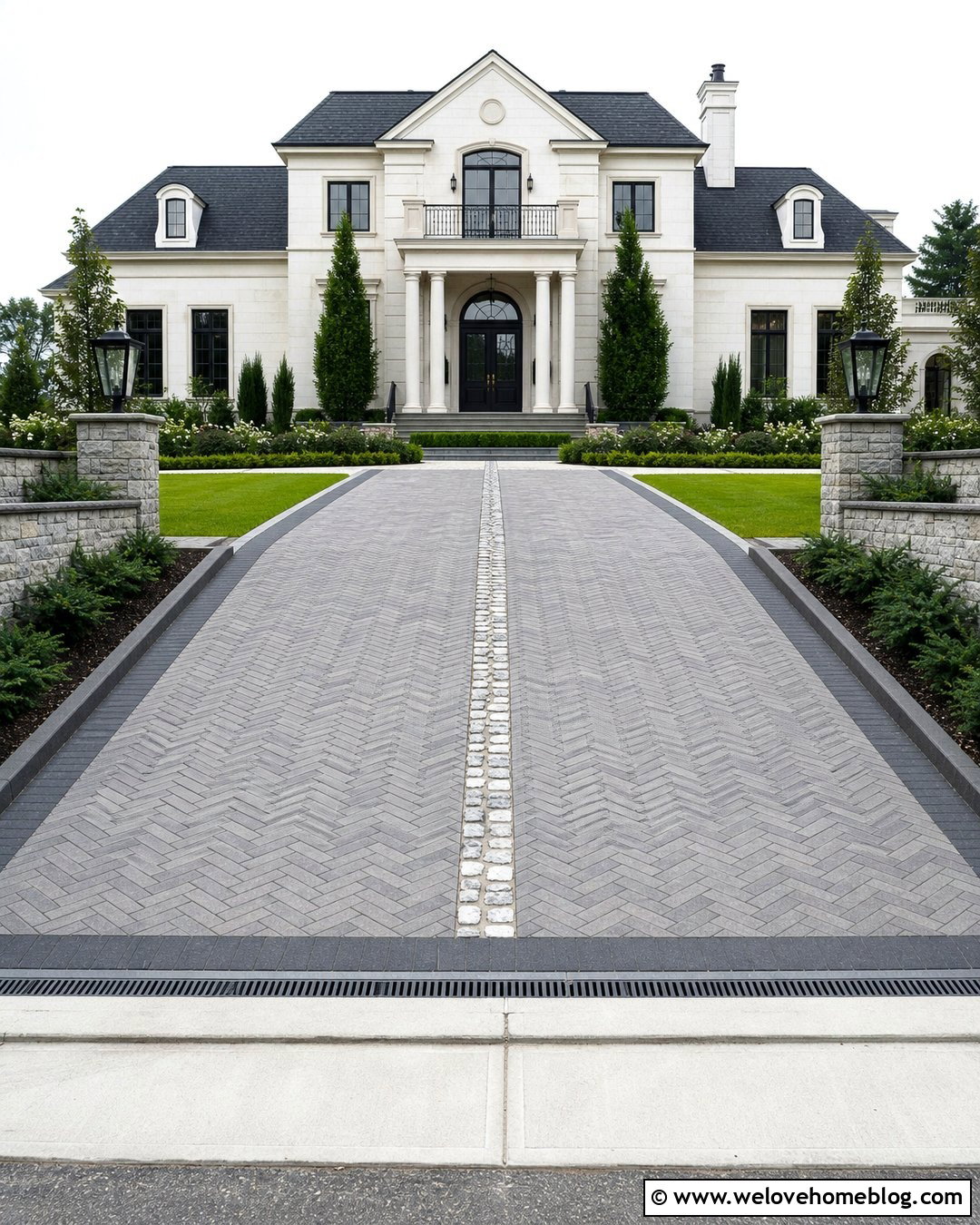
10. Chip Seal Driveway With Fieldstone Edging
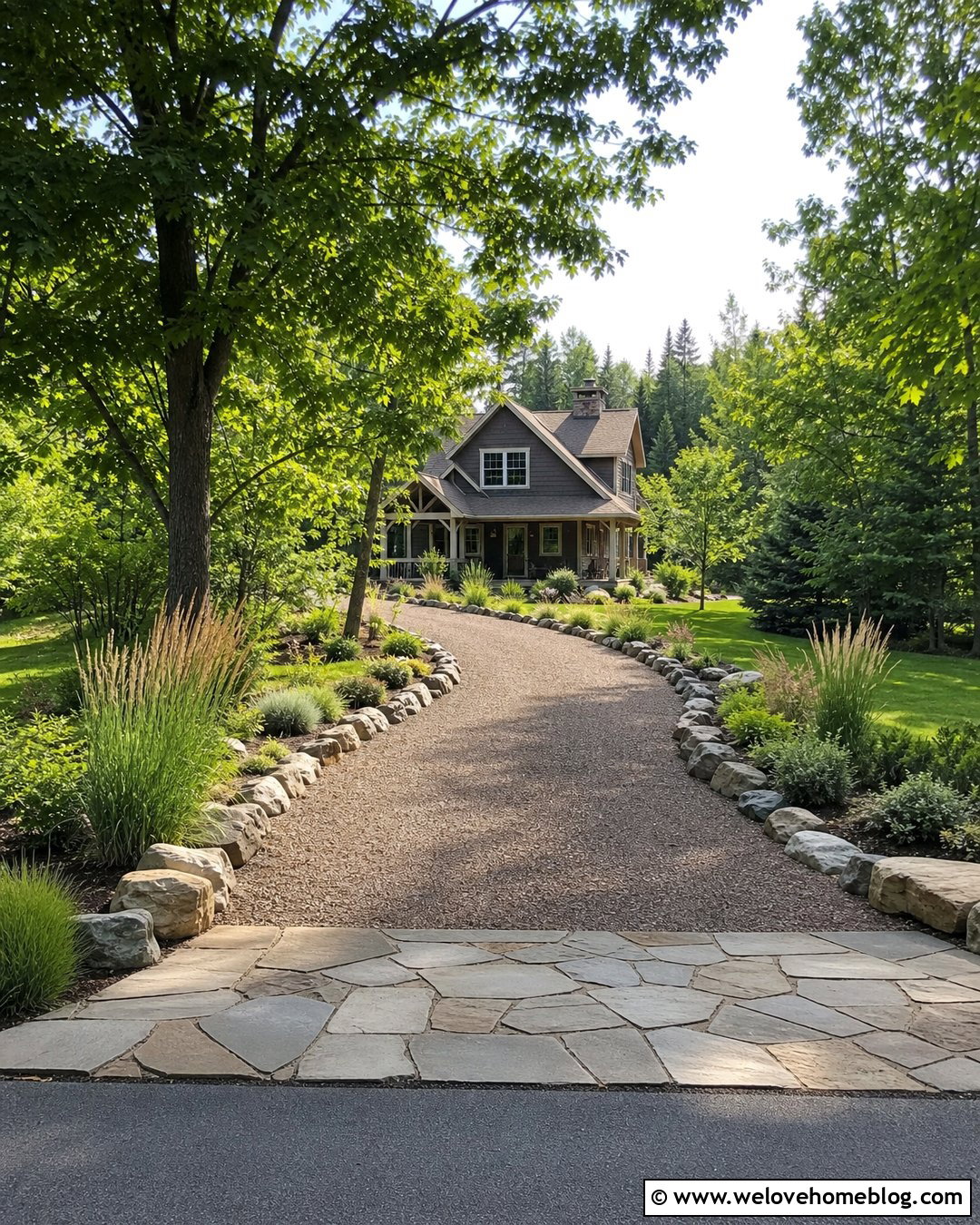
Chip seal, also called tar-and-chip, combines a liquid asphalt layer with stone aggregate rolled into the surface. It provides more texture and a softer color than conventional black asphalt. For a country home, use brown and gray stone chips on a long curved driveway bordered by irregular fieldstone. Native grasses, maples, and informal shrub groups can make the drive feel naturally integrated into a larger property. Add a wider stone apron at the road to create a clear entrance and protect the edge. Chip seal installation requires suitable weather, careful material application, and heavy rolling. Loose aggregate may remain at first, and future surface treatments may be necessary. Ask local contractors whether the method performs well with your climate, slope, traffic, and snow-removal equipment.
11. Recycled Asphalt Driveway With Timber Borders
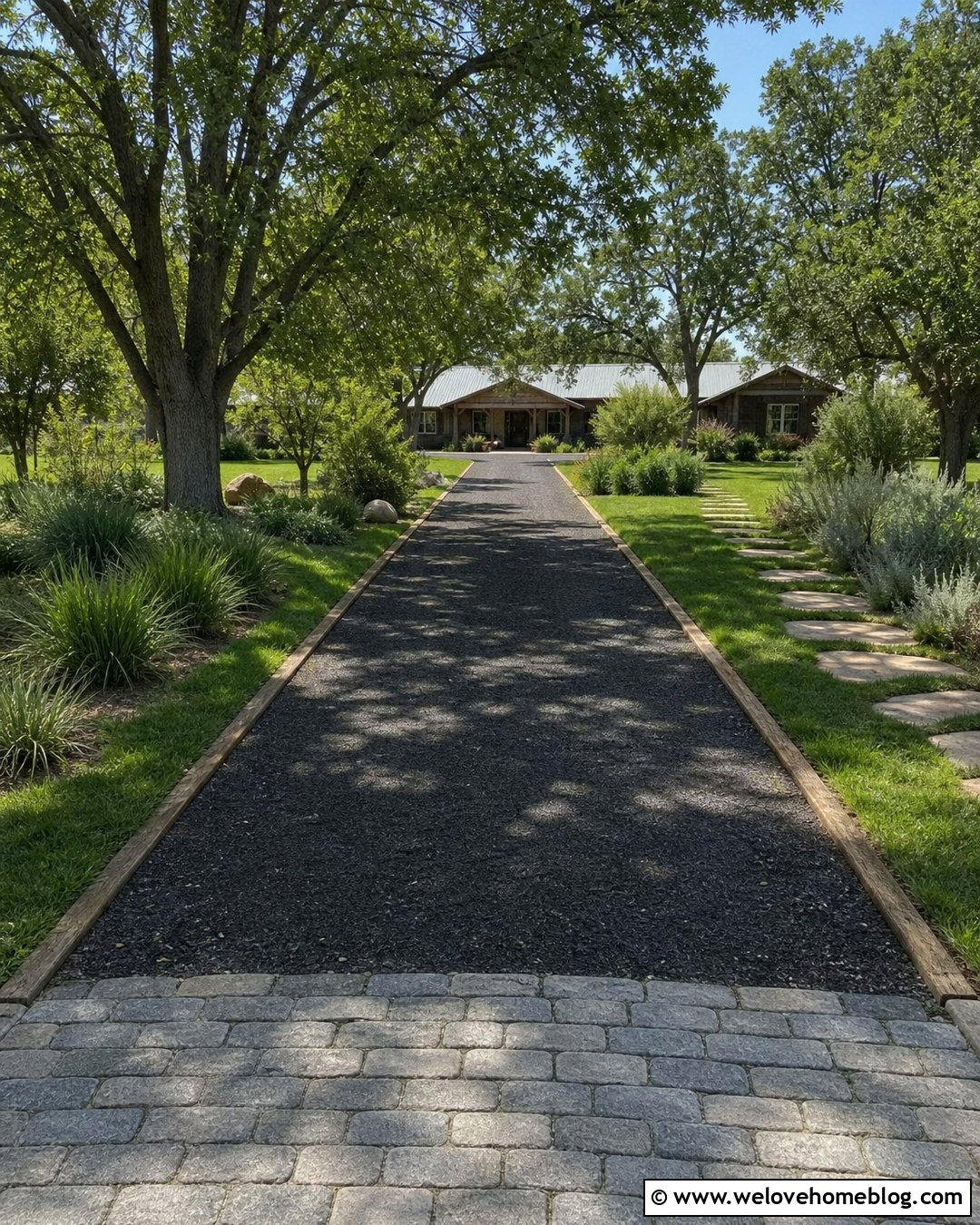
Recycled asphalt millings can create a practical driveway with a dark, compacted finish at a lower-key rural or industrial-style home. A long straight layout works best because it simplifies grading and compaction. Use heavy timber borders near gardens and a contrasting cobblestone apron where the driveway meets the street. Trees, native shrubs, and broad grass shoulders can soften the dark surface. Quality varies depending on the source and composition of the millings, so inspect the material before purchasing. A strong base, correct moisture level, and thorough rolling help particles lock together. The finished surface may not look as uniform as new asphalt, but its slightly mottled texture can suit casual properties. Confirm local rules before using recycled pavement materials.
12. Granite Paver Driveway With A Circular Layout
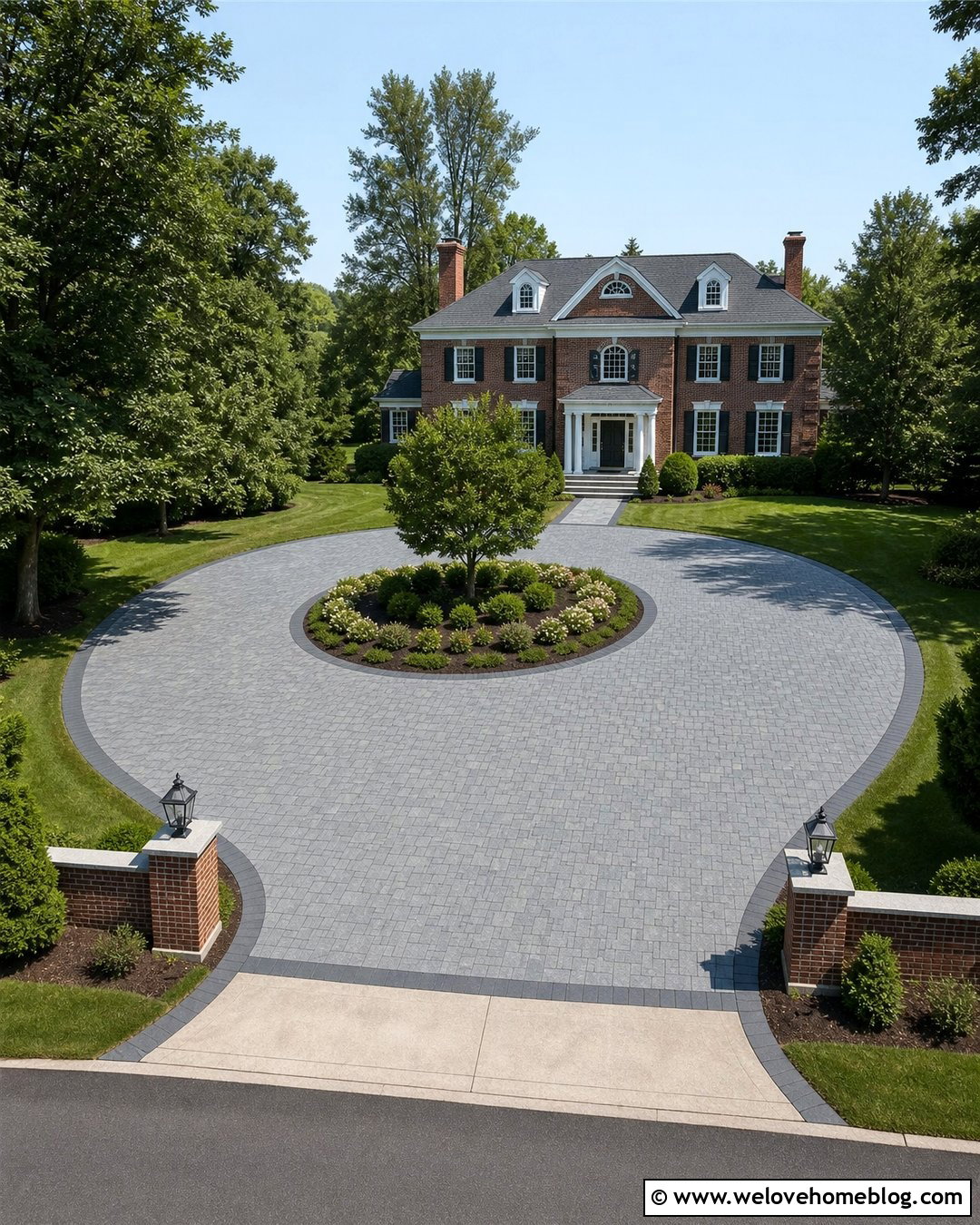
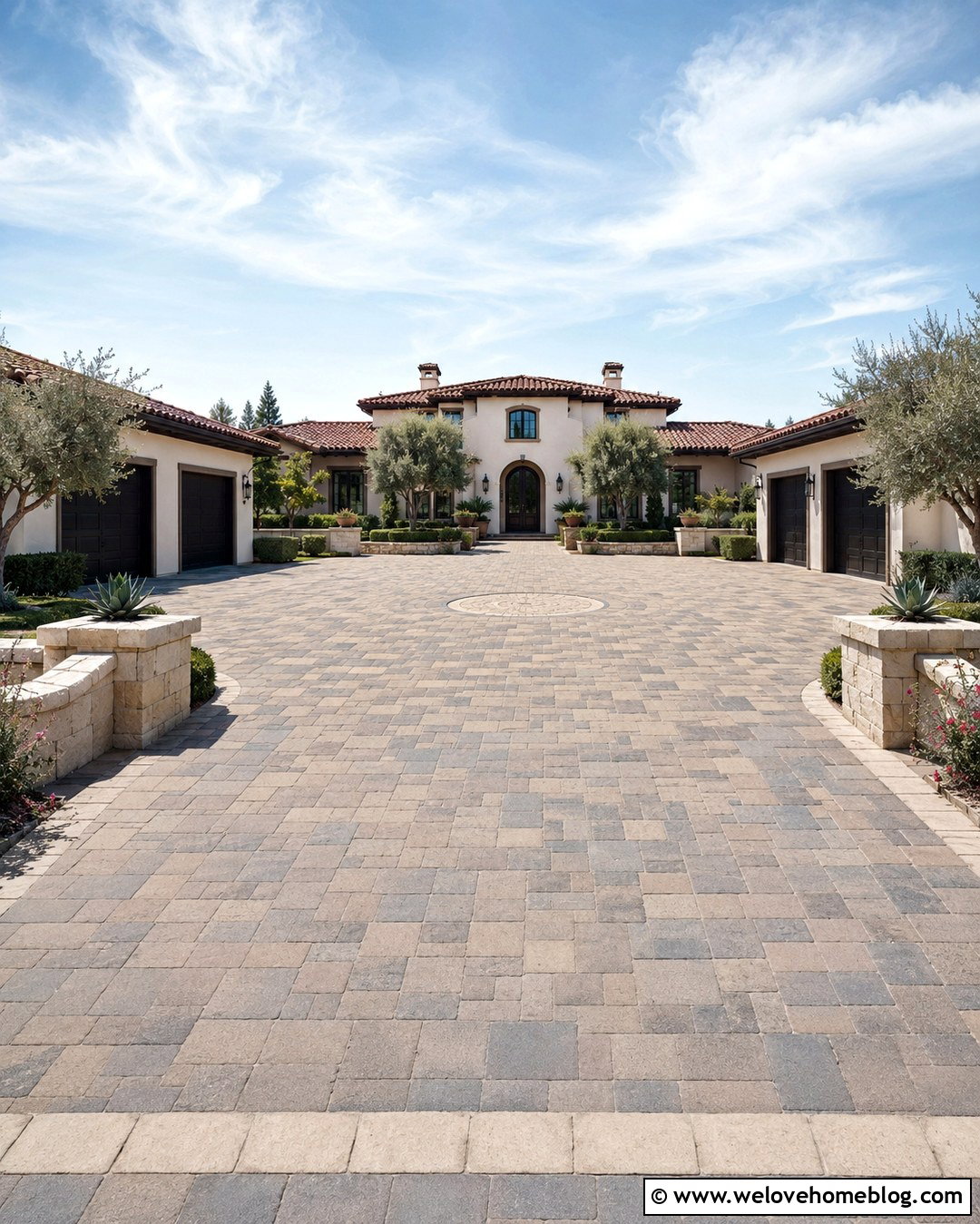
Large granite pavers give a circular driveway a formal structure without relying on poured concrete. Mix medium-gray rectangular pavers with a darker granite border to emphasize the outer curve and central island. This complete look suits Georgian, French country, and substantial craftsman homes. Fill the island with a specimen tree, low evergreen shrubs, and a neat ground cover that will not spill onto the driving lane. A matching granite walkway can connect the drop-off area to the front door. Because natural stone varies in thickness, experienced installation is important. Each paver needs stable support, consistent joints, and secure edge restraints. Granite can carry a premium cost, but its natural variation, repairability, and strong architectural presence create an impressive entrance.
13. Flagstone Driveway With Gravel Joints
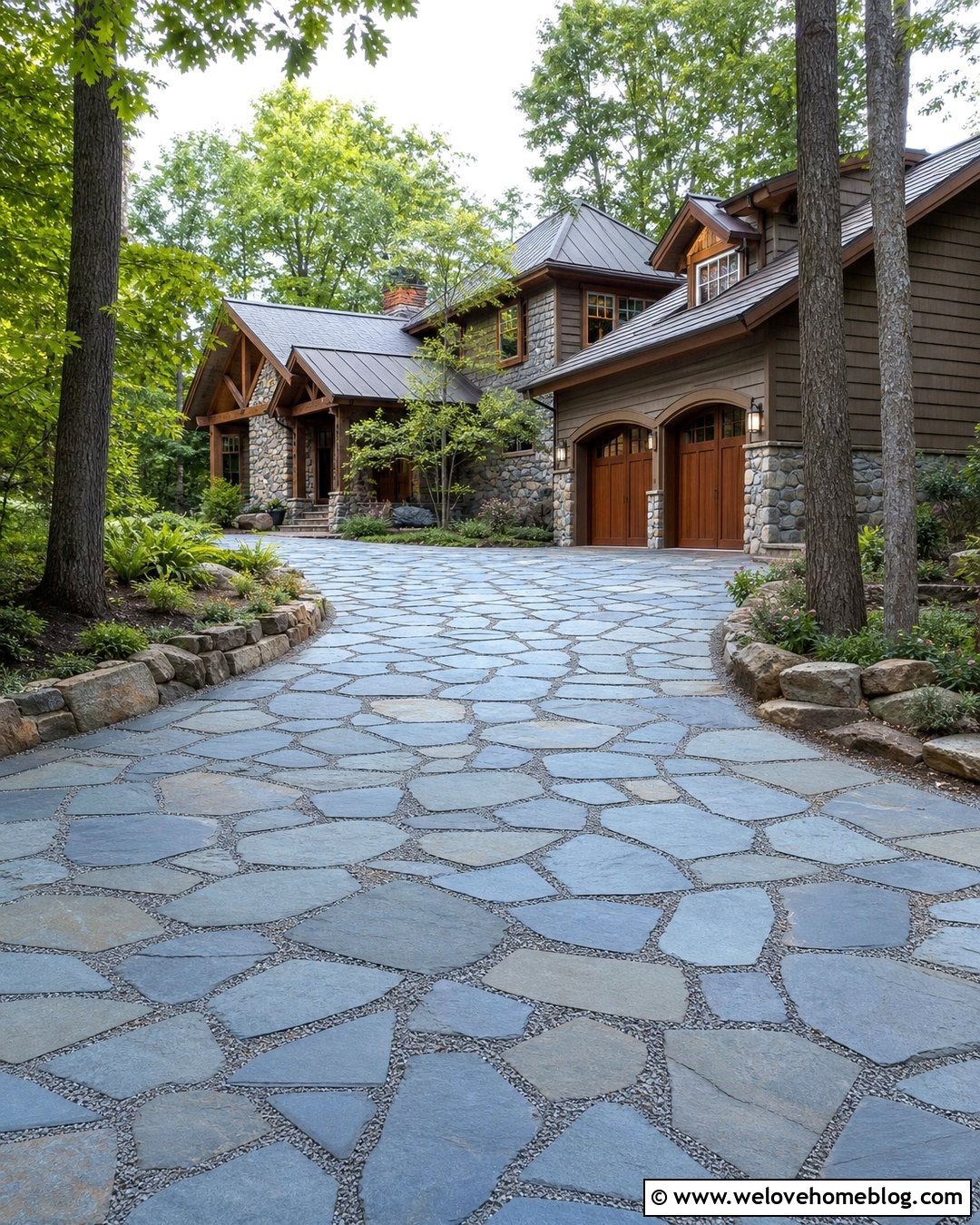
Irregular flagstone laid with compacted gravel joints creates a natural driveway for rustic, mountain, and woodland homes. Use thick, vehicle-rated sandstone or bluestone pieces rather than thin patio-grade slabs. Arrange them across a broad curved driveway so the shapes appear organic while maintaining a smooth travel path. Fill the joints with angular crushed gravel that complements the stone and stays more stable than rounded pebbles. A low fieldstone border, fern beds, native shrubs, and mature shade trees can blend the surface into its setting. The foundation must support both the stone and vehicle loads evenly, or individual pieces may rock or crack. Keep joints topped up and remove weeds before roots become established. Proper stone selection is essential for durability.
14. Bluestone Driveway With Brick Ribbons
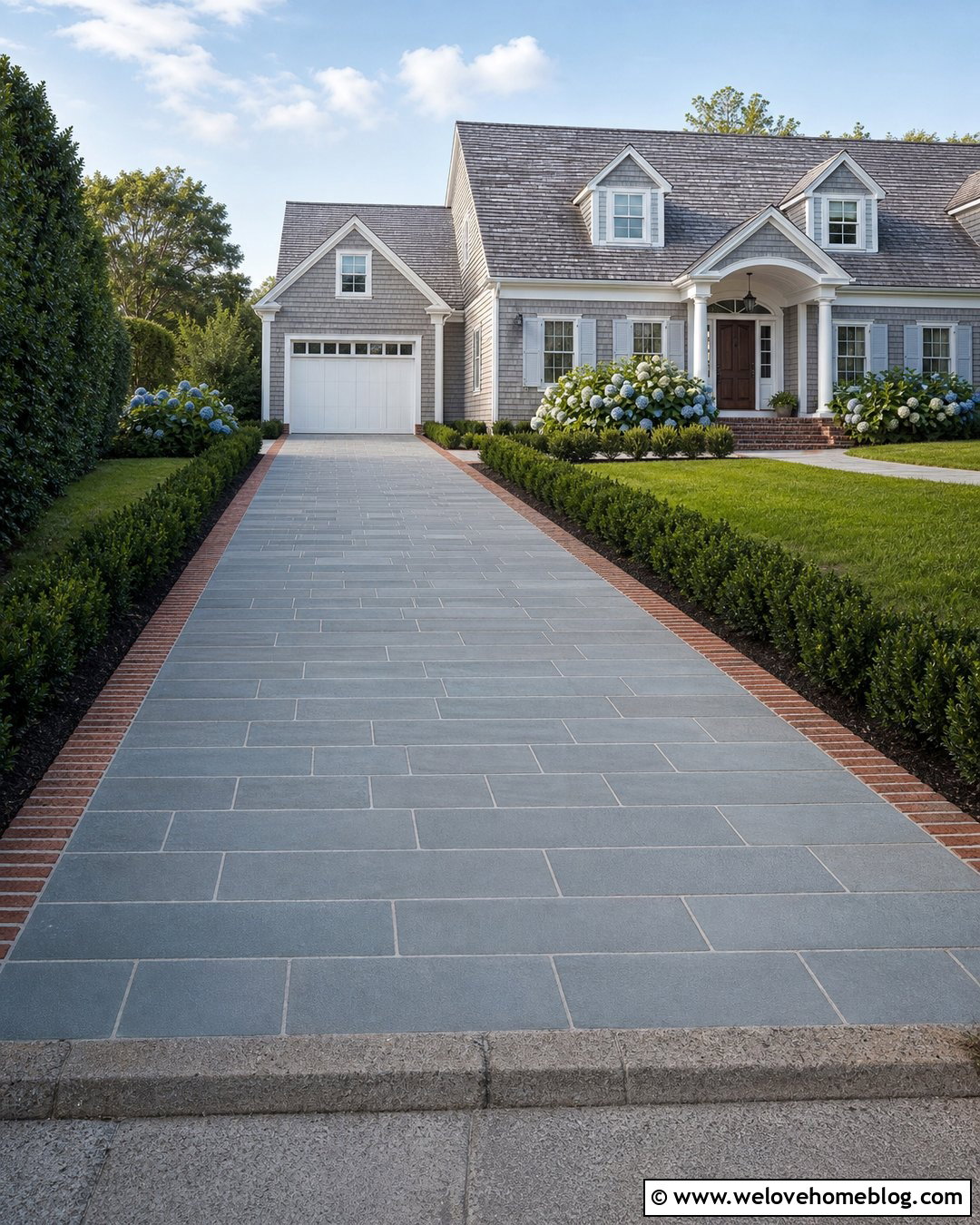
Cool blue-gray bluestone provides an elegant alternative for a shingle-style, Cape Cod, or refined craftsman house. Use rectangular bluestone pavers in a running bond across a straight driveway, then insert narrow red brick ribbons along the edges and near the garage. The warm brick prevents the gray surface from feeling flat and visually connects it to brick steps or chimneys. Hydrangeas, inkberry, and a tidy lawn can frame the driveway without competing with the stone. Choose thick paving units rated for vehicular use and install them over a well-compacted base. Bluestone may develop natural color variations and surface textures, which are part of its character. Good drainage and consistent support help reduce movement during seasonal freeze-and-thaw cycles.
15. Basalt Paver Driveway With Modern Landscaping
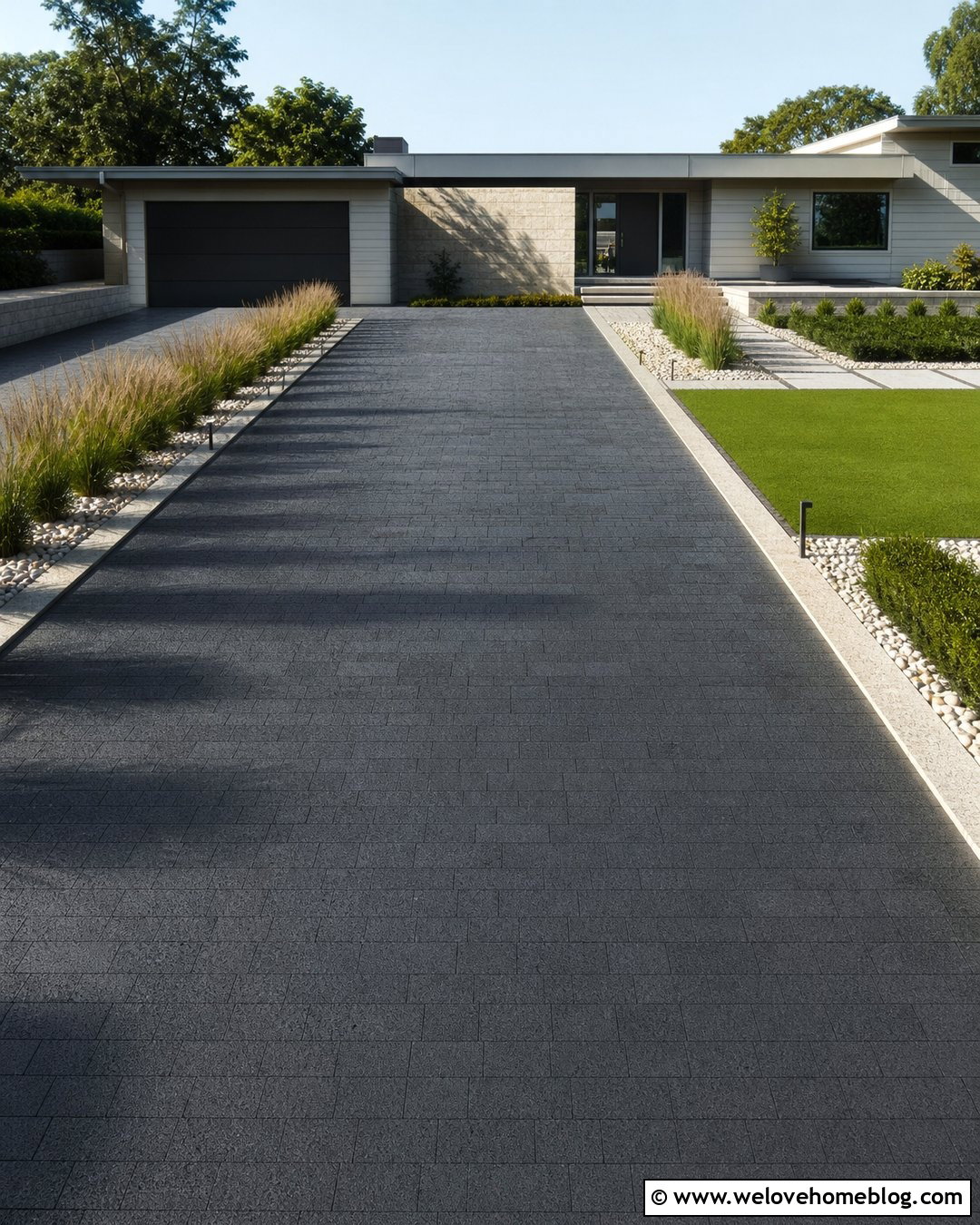
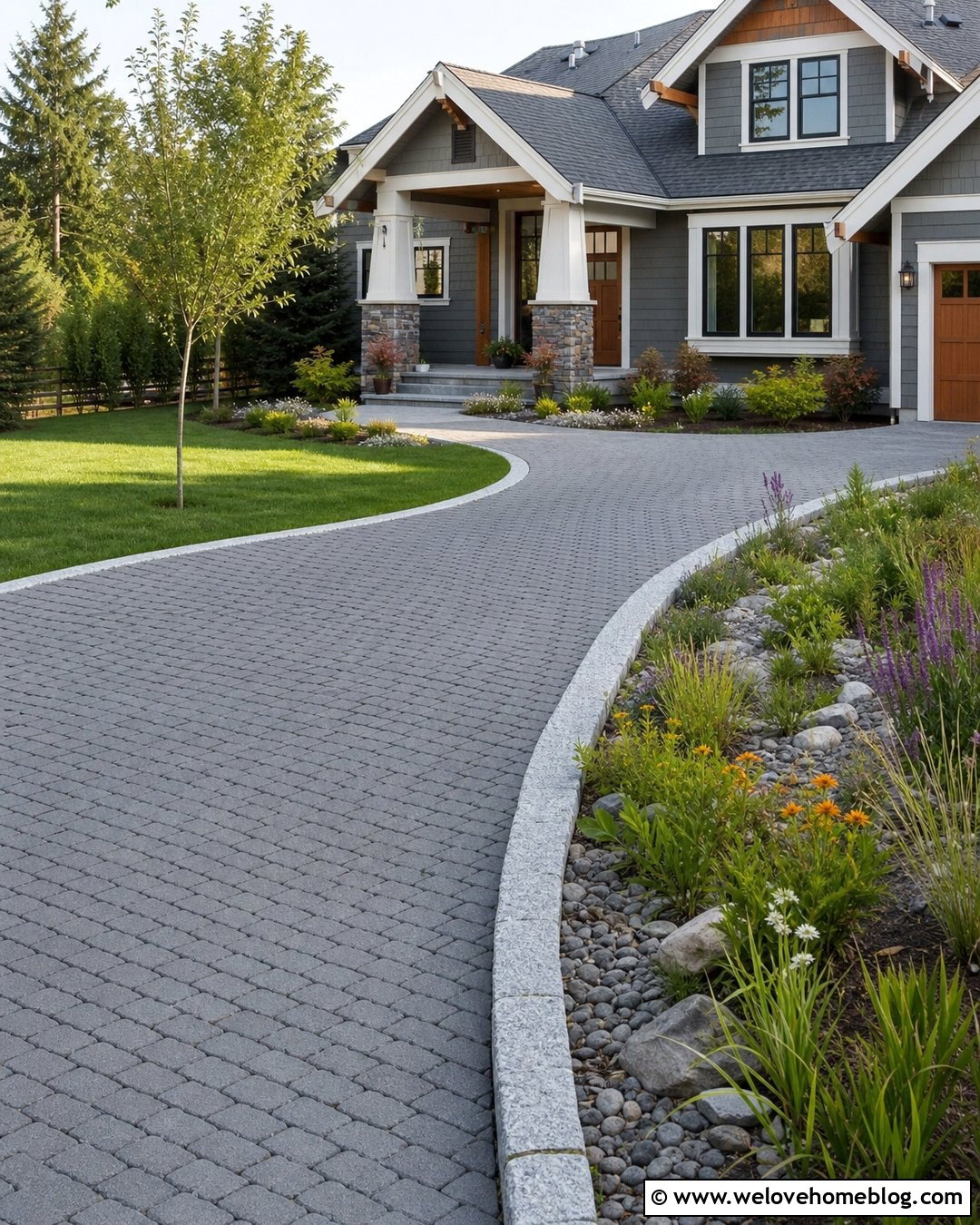
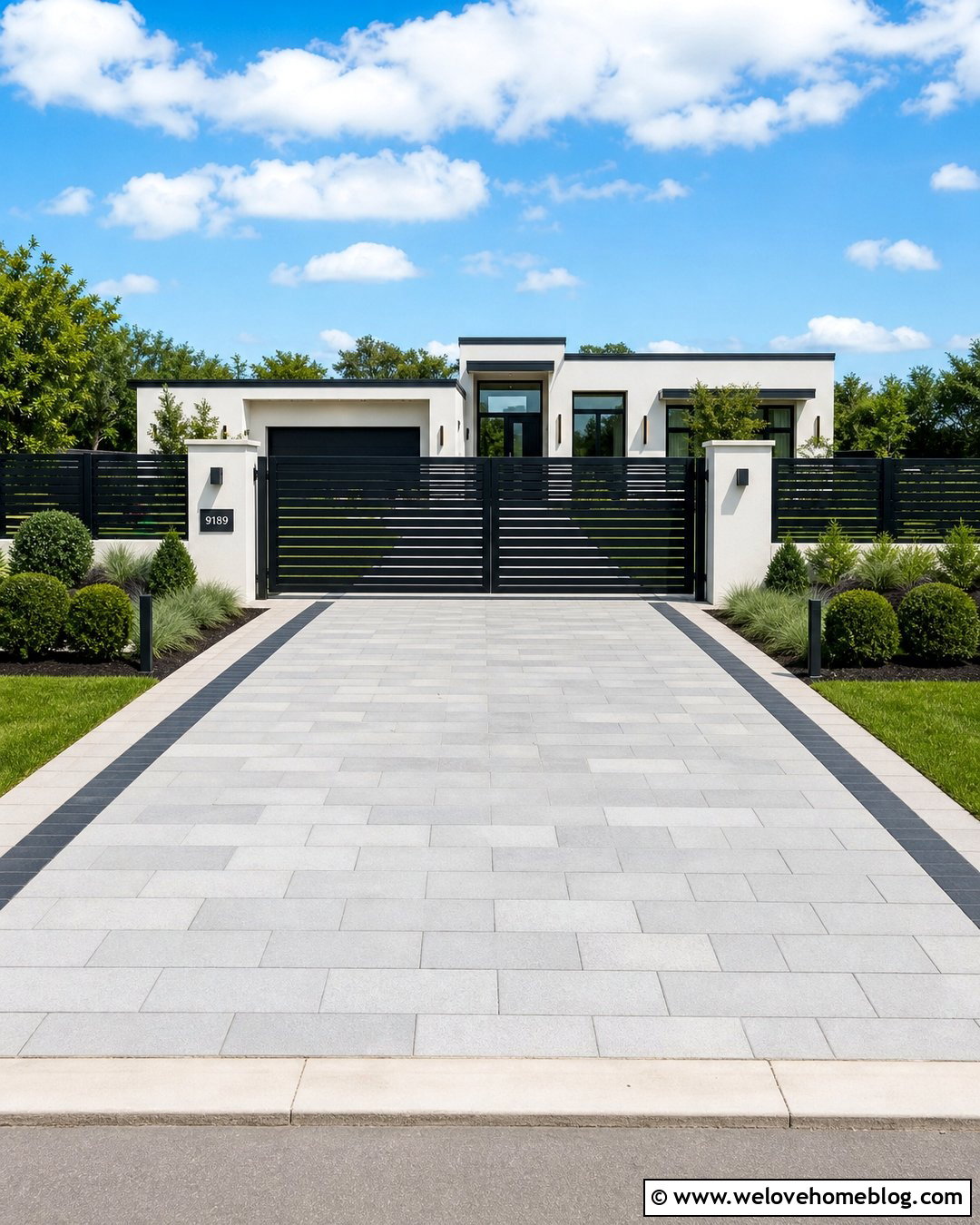
Dark basalt pavers create a bold entrance for a modern or midcentury home. Select flamed charcoal basalt for grip and arrange rectangular units in a clean running bond. A wide straight driveway with a subtle offset near the garage keeps the overall composition simple. Use light granite edging to outline the dark paving and improve visibility along the sides. Linear beds filled with feather reed grass, compact shrubs, and pale river stones can balance the strong surface color. Add a matching stepping-stone walkway separated by a narrow planting strip. Basalt is dense, but the units still require a properly engineered base, secure restraints, and driveway-rated thickness. Consider sunlight and regional heat because very dark paving can become noticeably warm in exposed locations.
16. Limestone Paver Driveway With Garden Borders
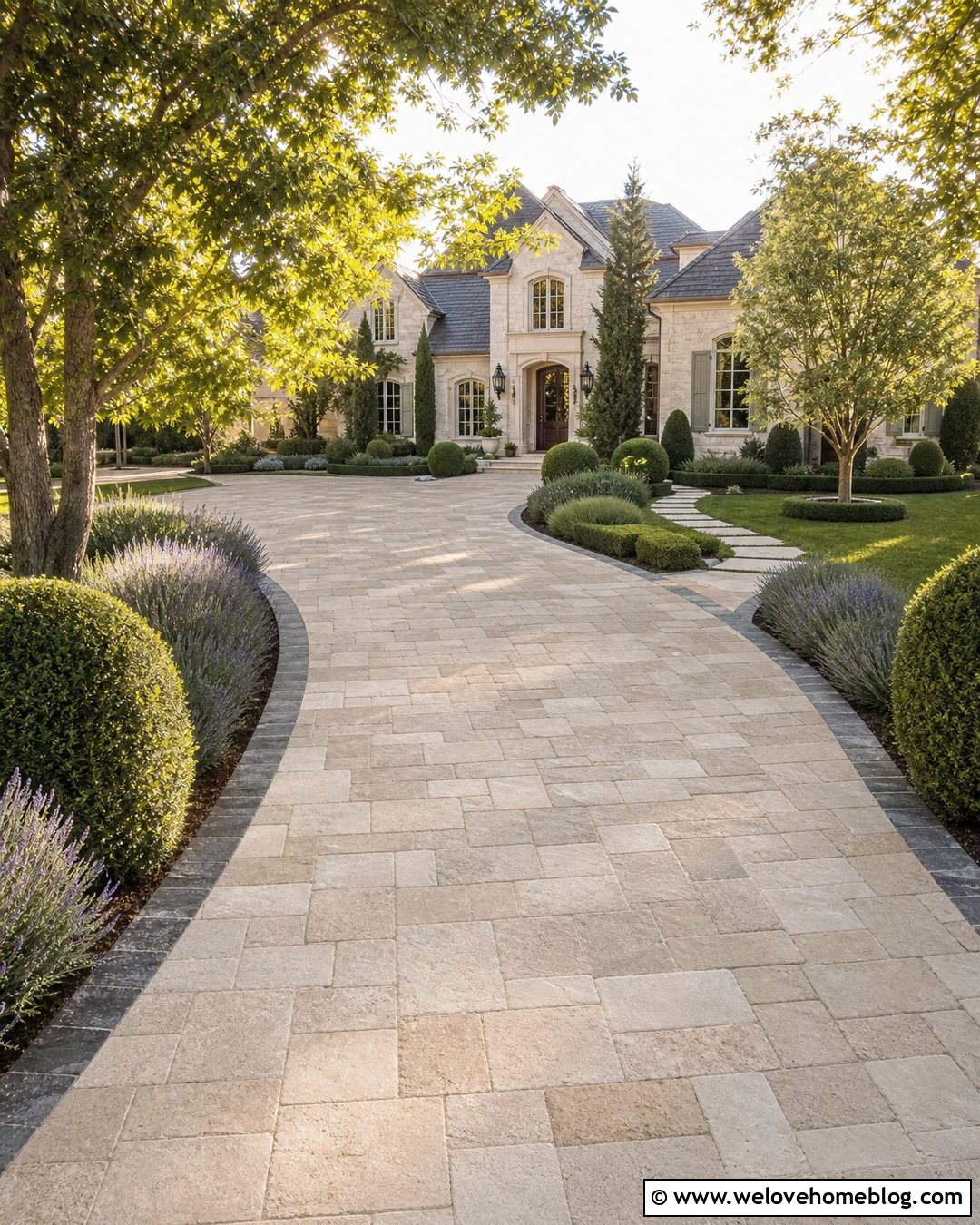
Cream and buff limestone pavers can brighten the front of a Mediterranean, French country, or light-brick home. Create a gently curved driveway using tumbled rectangular limestone in a mixed-size pattern. A darker stone border will define the edges and make the pale center appear more intentional. Plant rosemary, lavender, dwarf olives where climate permits, and rounded evergreen shrubs along generous garden beds. Keep the vegetation far enough back to maintain visibility and prevent branches from scratching vehicles. Limestone varies in porosity, density, and weather resistance, so choose a product specifically approved for driveways and your local climate. Sealing requirements depend on the stone and desired appearance. Proper base construction and drainage will help protect the pavers from settlement and standing water.
17. Porcelain Paver Driveway With Gravel Strips
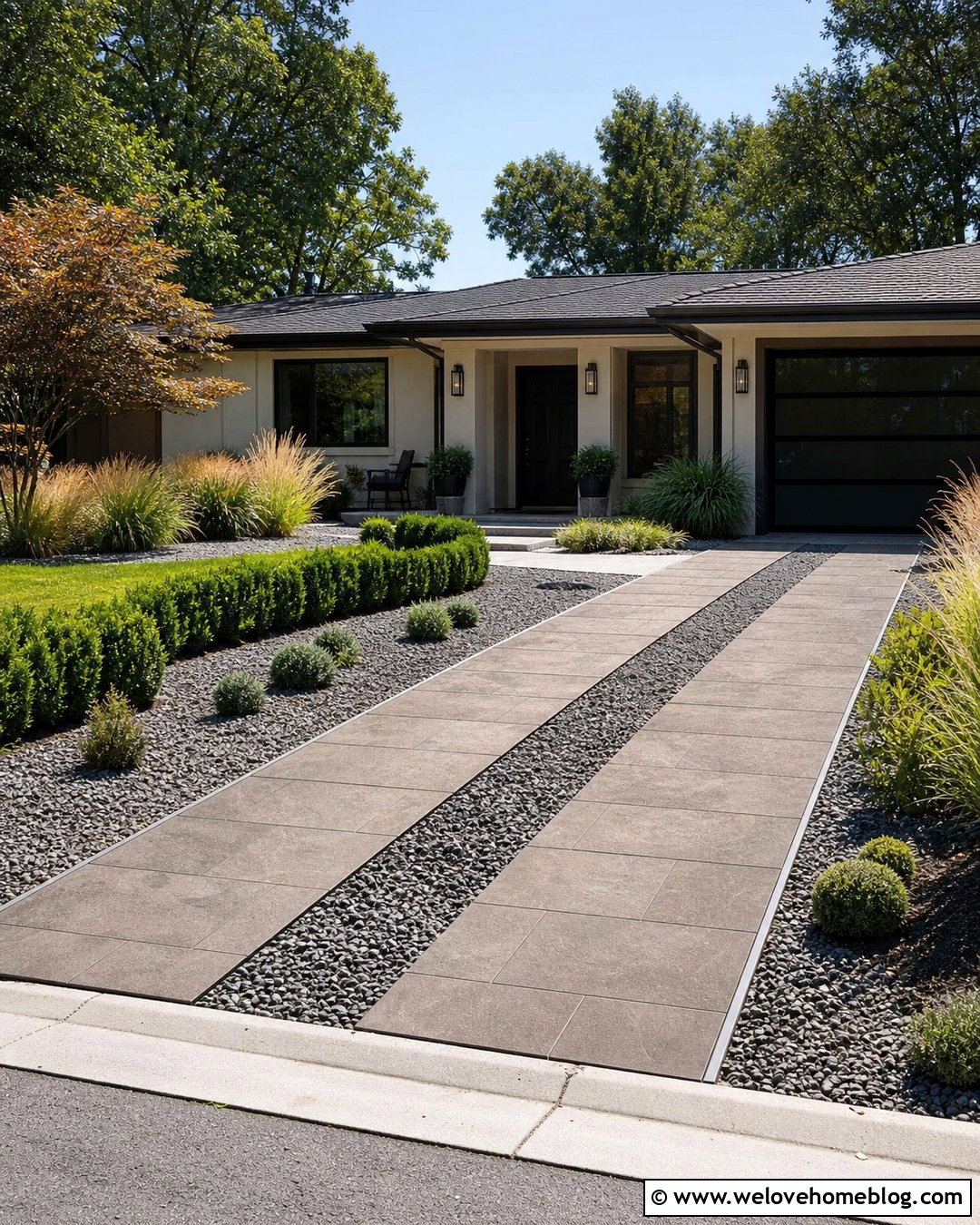
Driveway-rated porcelain pavers offer crisp lines, consistent color, and a contemporary appearance. Choose thick taupe porcelain units with a textured stone-look finish for a split driveway leading to a low modern ranch. Lay pavers beneath the main tire paths and fill the central strip with stabilized gray gravel. This reduces the amount of hard paving while creating a strong linear design. Frame the driveway with metal edging, clipped shrubs, ornamental grasses, and a simple concrete-free stepping path to the entry. Not every porcelain tile can withstand vehicle loads, so use exterior pavers designed and warrantied for driveway applications. Installation specifications may require a reinforced base or specialized support system. Follow the manufacturer’s guidance for joints, edge restraint, drainage, and cutting.
18. Gravel Grid Driveway With A Paver Apron
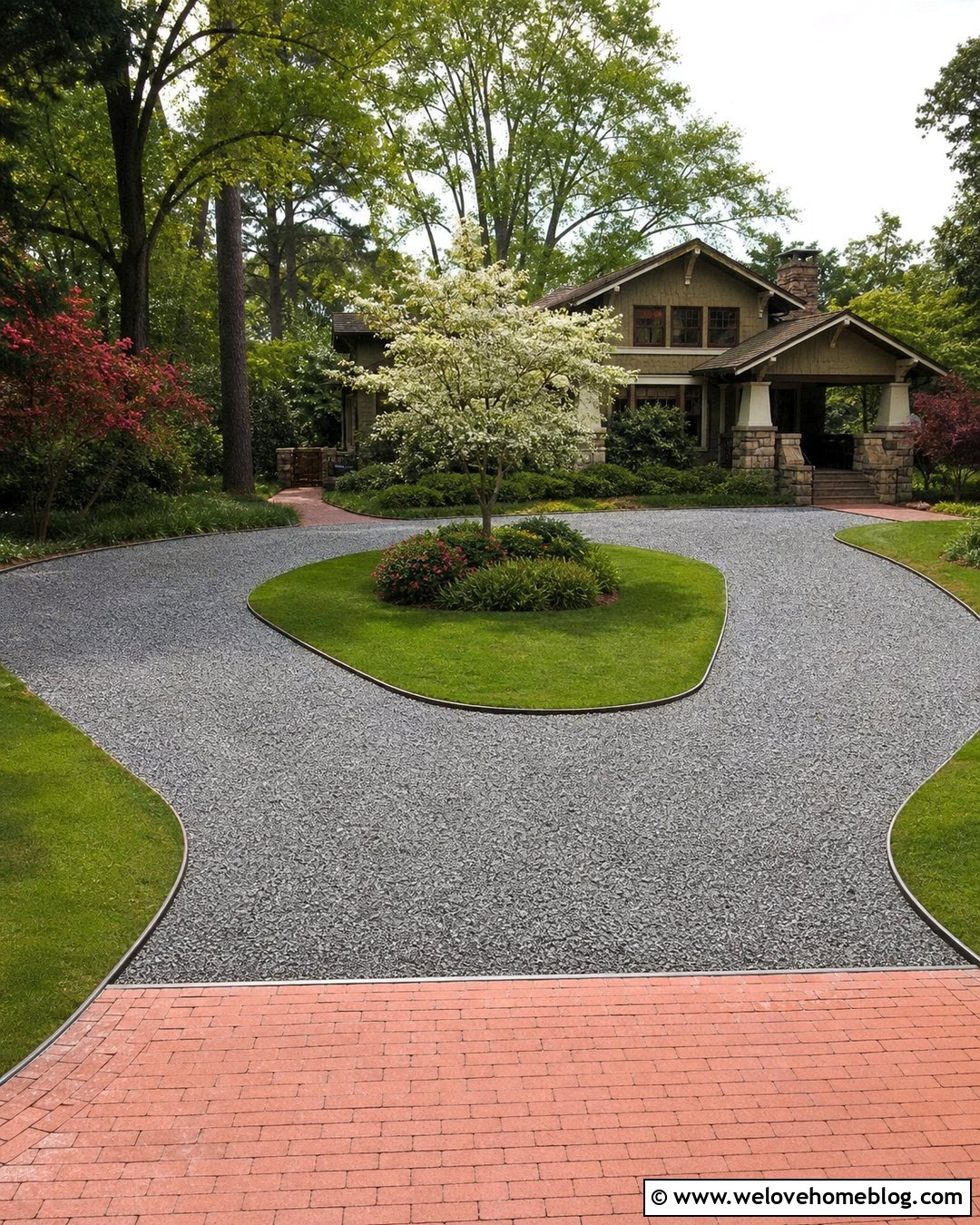
Plastic gravel grids can stabilize loose aggregate while preserving the familiar appearance and permeability of a stone driveway. Fill load-rated honeycomb panels with angular gray gravel and use the system across a wide horseshoe layout. At the street, install a durable clay brick or natural stone apron that clearly marks the entrance and helps contain gravel. A central lawn with a flowering tree gives the turning loop a welcoming focal point. Around the outer edge, use steel restraints, layered shrubs, and shade trees suited to the available space. The grid should sit over an open, compacted base designed for drainage and vehicle loads. Correct filling depth matters because exposed grid tops may be damaged, while excessive loose gravel can shift. ()
19. Crushed Slate Driveway With Granite Borders
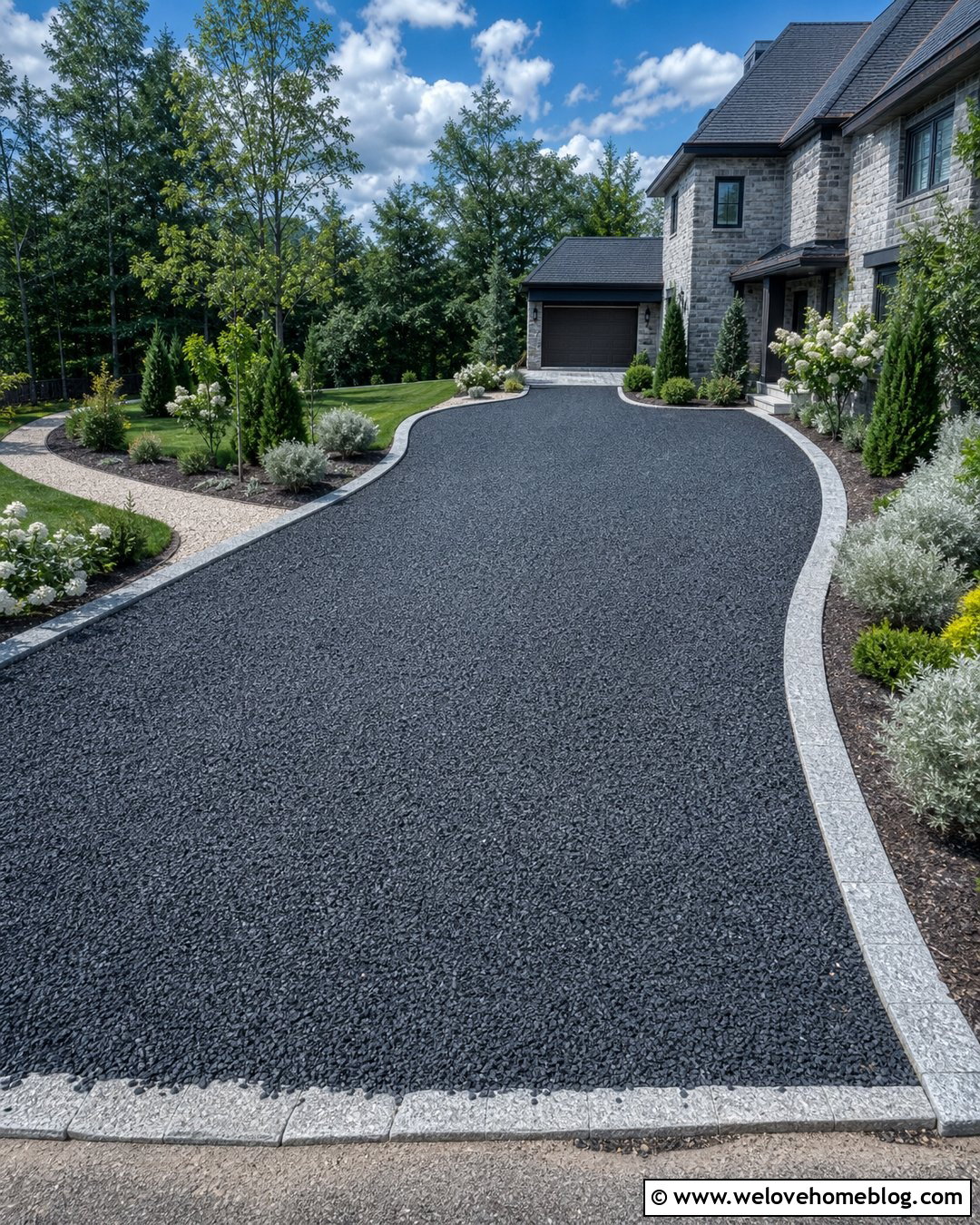
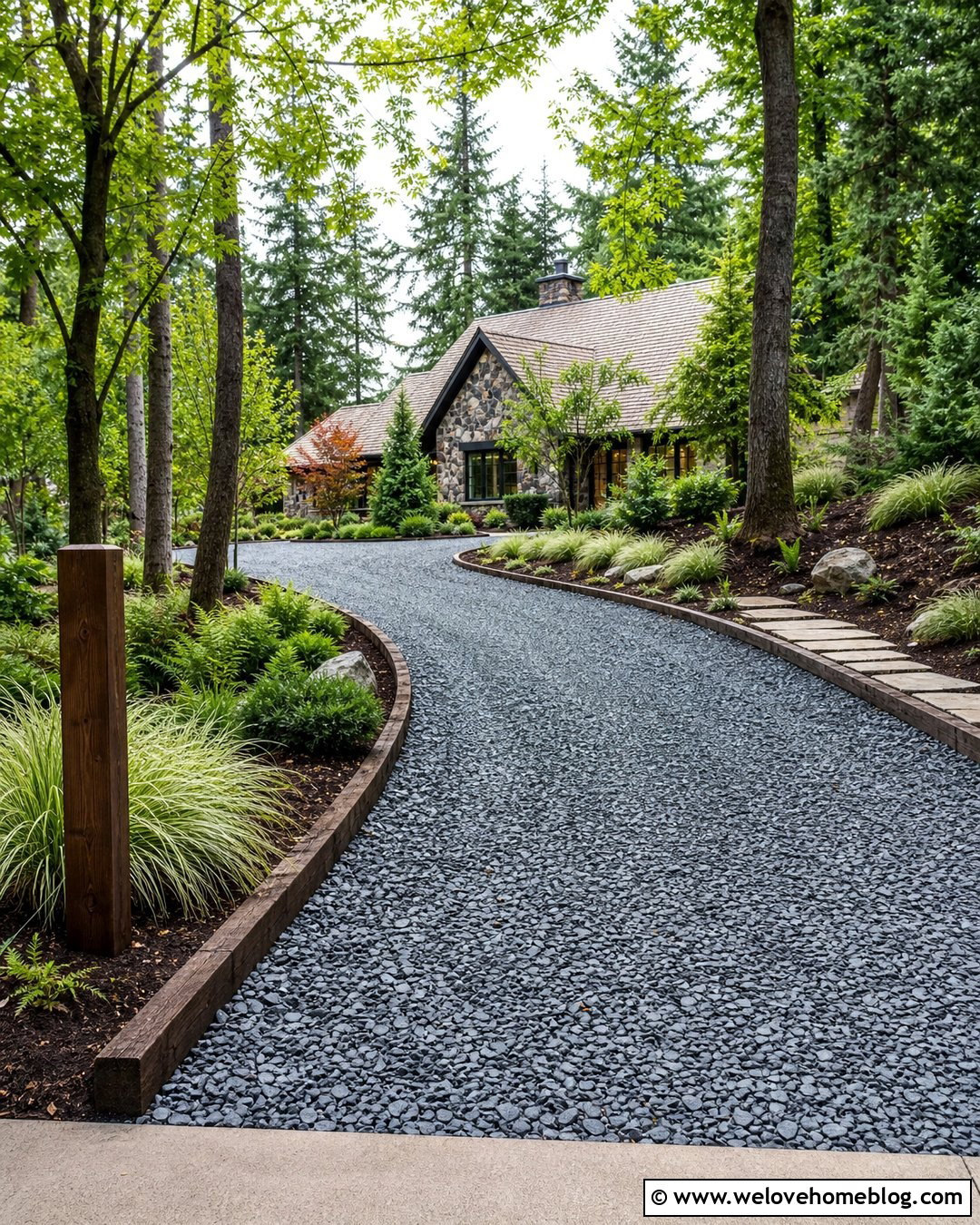
Crushed slate gives a driveway deep blue, charcoal, and plum tones that pair beautifully with gray siding or natural stone facades. Use angular slate chips on a straight driveway with a wider turnaround near the garage. Solid granite curbs along both sides will prevent the dark material from spreading into lawn and planting beds. Complete the look with silver-leaved shrubs, white flowering plants, compact conifers, and a light gravel walkway for contrast. Slate quality and chip shape vary, so choose material intended for vehicle traffic rather than decorative garden mulch. Install it over a graded, compacted base and avoid an excessively thick loose surface. Regular raking, occasional rolling, and prompt filling of wheel ruts will maintain a more stable, polished approach.
20. Mixed Brick And Gravel Driveway
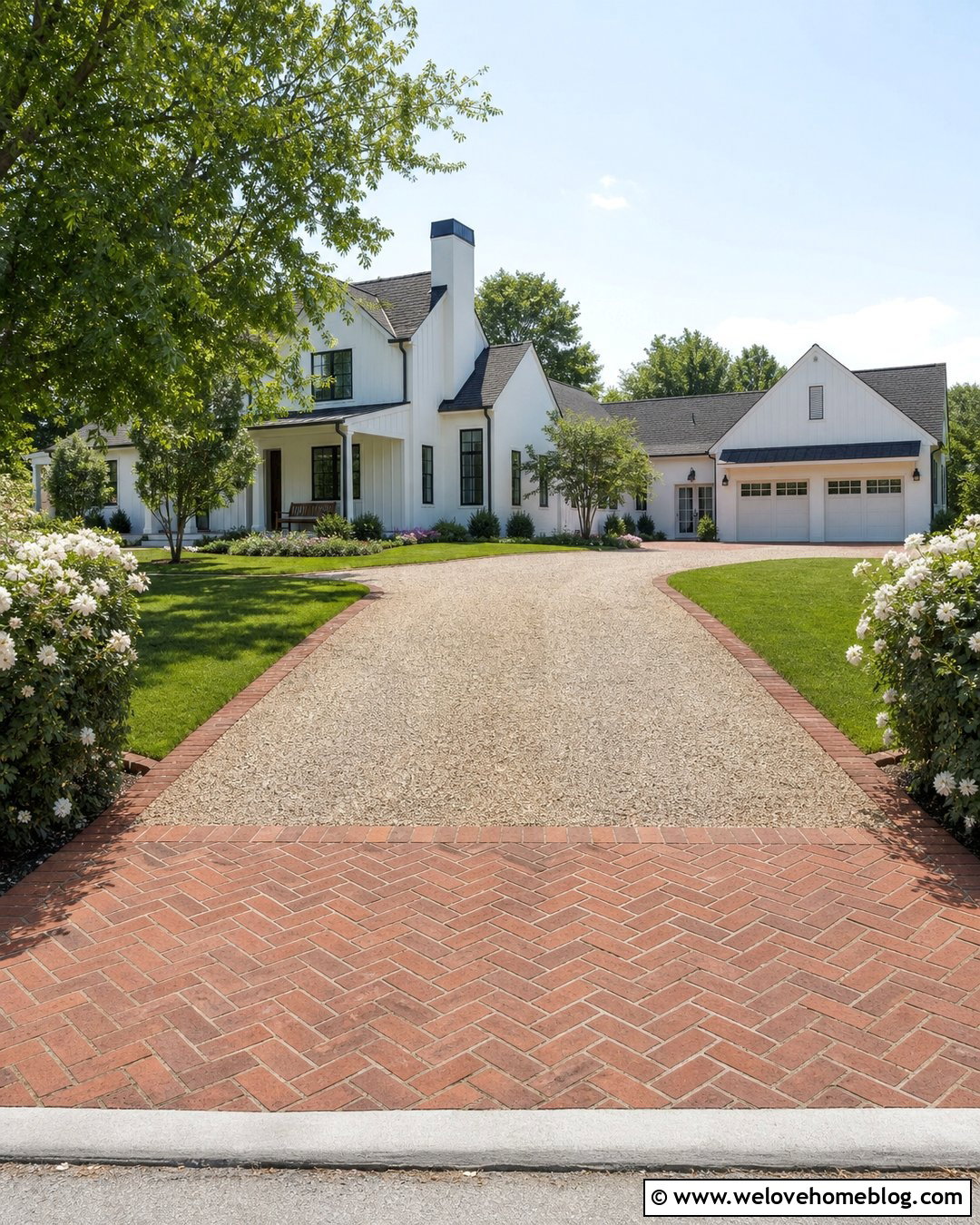
Combining brick and gravel lets you control cost while giving high-visibility areas a more finished appearance. Use clay brick pavers in a herringbone pattern for the entrance apron, parking pad, and garage transition. Fill the central driving area with compacted buff-colored angular gravel. Brick edging should continue along the sides so the loose material stays contained and the two surfaces feel connected. This design works well with farmhouses, cottages, and traditional suburban homes. Add flowering hedges, a narrow lawn, and a brick walkway leading toward the porch. Make sure both materials sit on bases designed for their different installation requirements. Carefully align finished elevations where brick meets gravel to reduce bumps, material migration, and areas where water could collect.
Conclusion:
The best alternative should fit your home, climate, budget, drainage conditions, and willingness to handle maintenance. Gravel and recycled materials can support economical projects, while brick, cobblestone, and natural stone create a more refined entrance. Asphalt offers a smooth, familiar surface. Resin-bound gravel, permeable pavers, grass grids, and stabilized gravel systems can provide useful drainage options when correctly designed. Whatever material catches your eye, do not overlook excavation, base depth, grading, edging, and transitions. Those hidden details often determine how well the finished driveway performs. Use these **20 Concrete Driveway Alternatives Ideas** as a starting point, then consult qualified local installers and confirm municipal requirements before finalizing your design.

Related posts:


Leave a Reply