
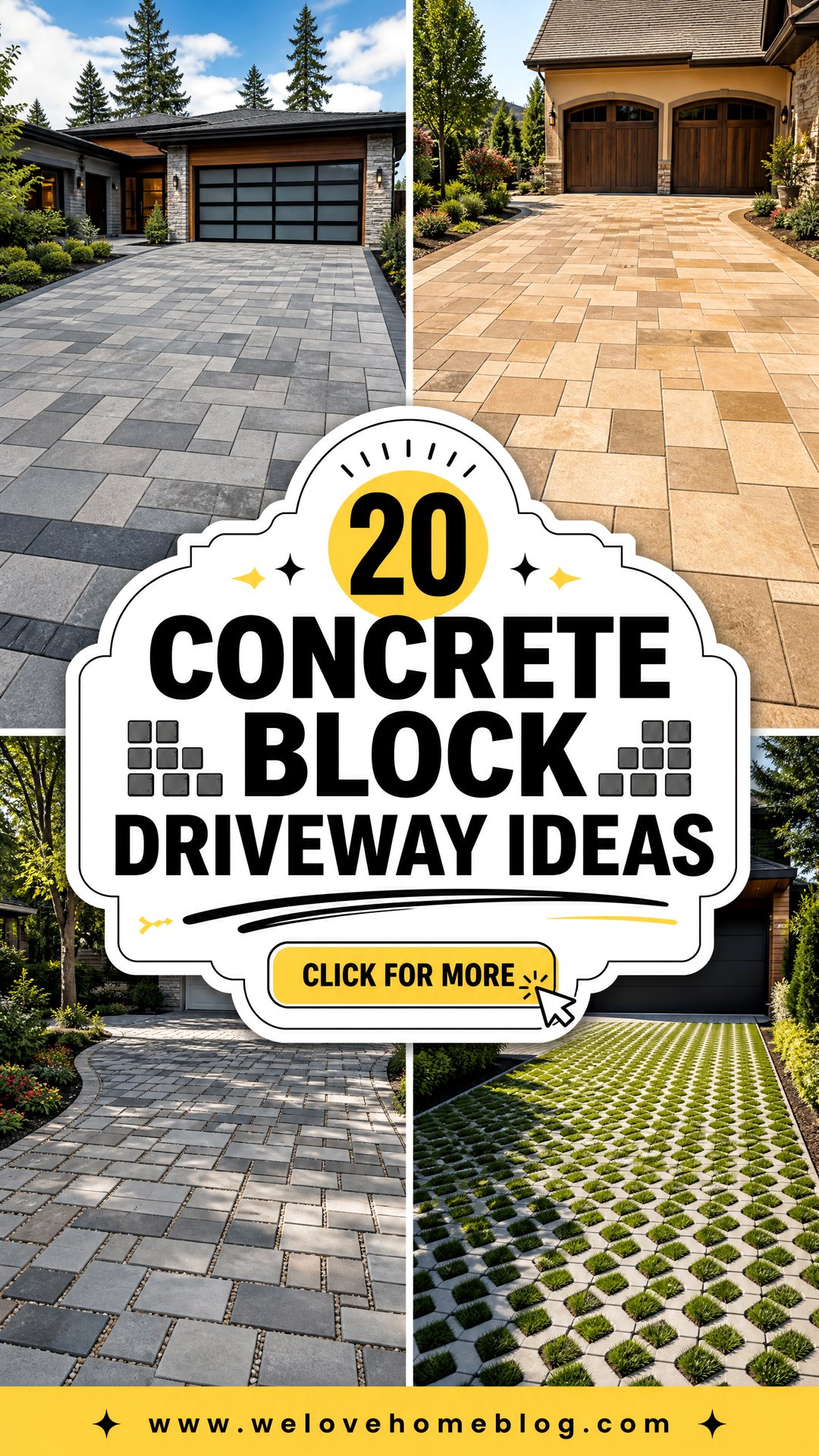
Concrete block driveway ideas offer a practical way to create a durable entrance with more character than a plain poured slab. Here, “concrete blocks” means vehicle-rated concrete paving blocks, not hollow masonry units intended for walls. These pavers come in many sizes, colors, textures, and laying patterns, making them suitable for modern homes, traditional brick houses, compact front yards, and wide suburban properties. A successful design also considers the driveway shape, secure edge restraints, drainage, walkways, planting beds, and the architectural colors of the house. From classic herringbone paving to permeable grids and bold two-tone layouts, the right combination can make everyday parking feel like part of the landscape. Explore these complete Concrete Block Driveway Ideas.
1. Herringbone Concrete Block Driveway
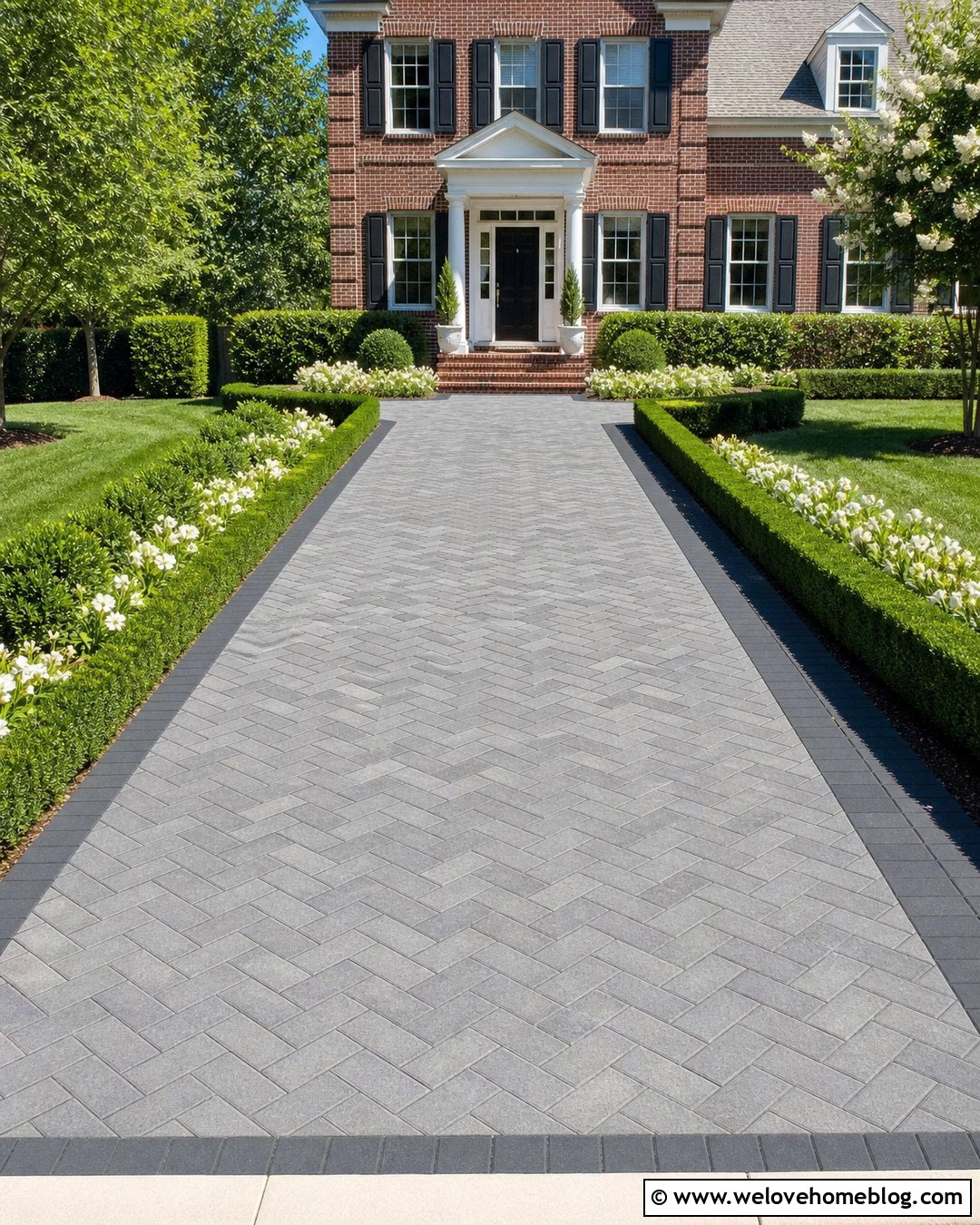
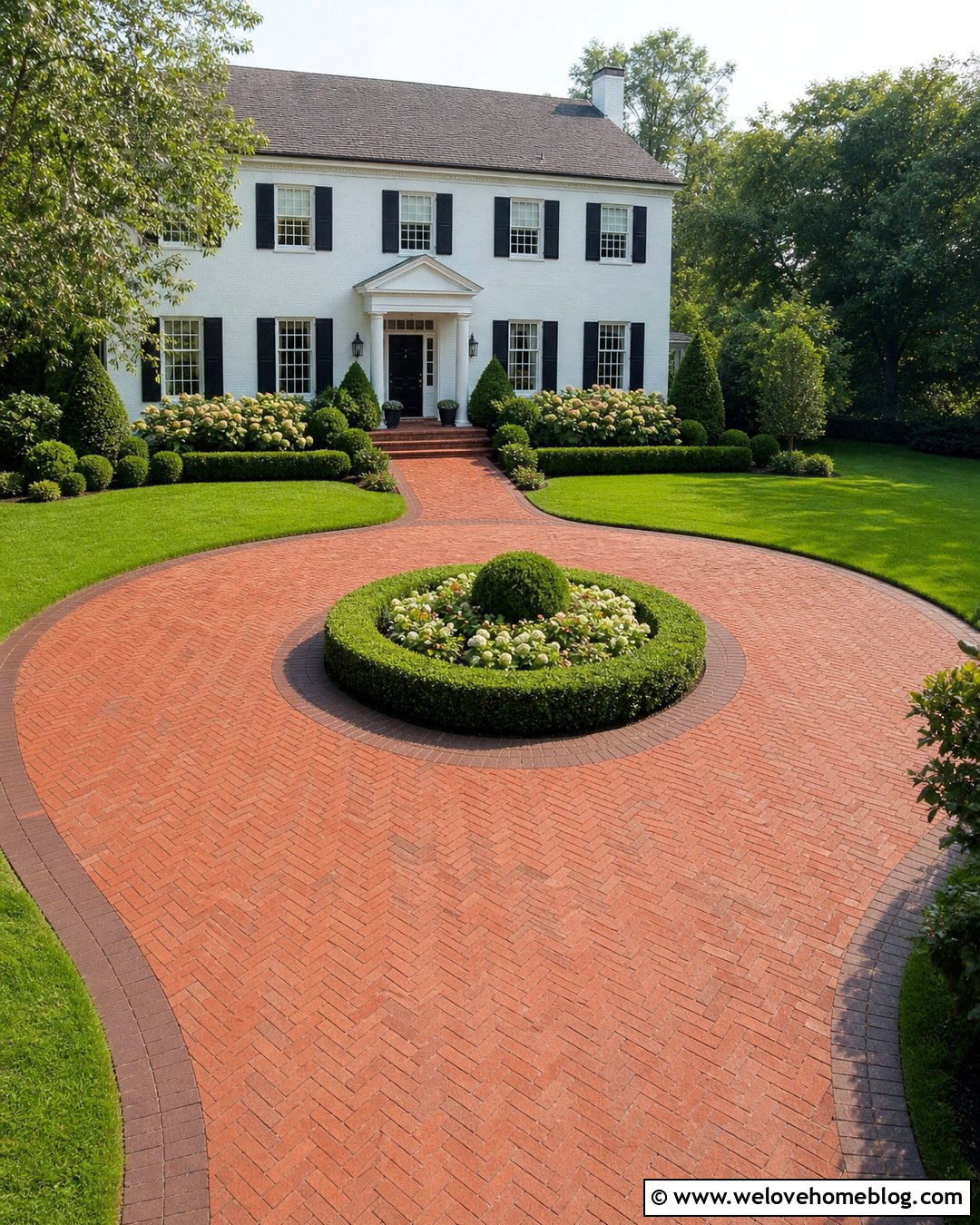
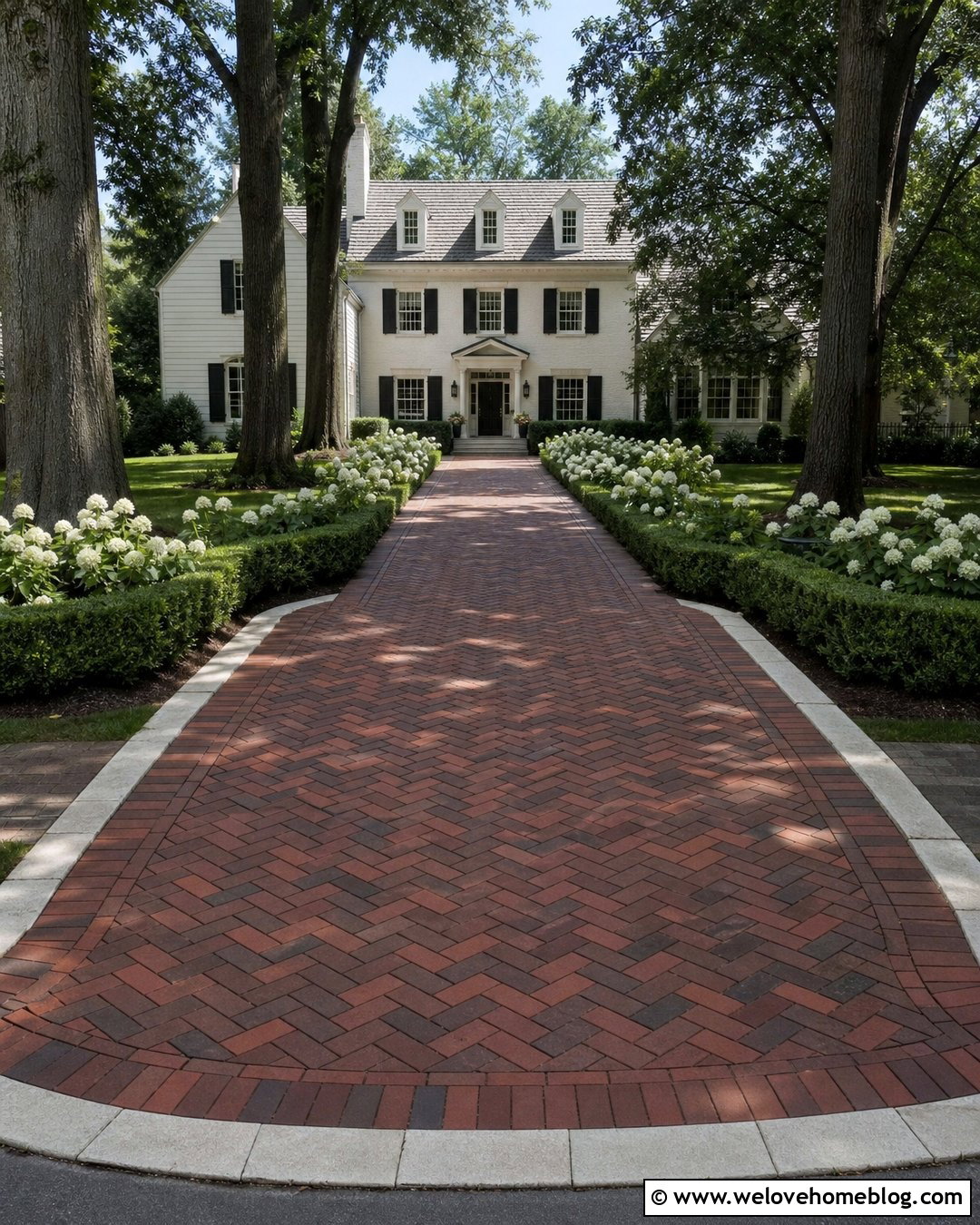
A herringbone concrete block driveway brings movement and structure to a traditional home entrance. Rectangular concrete pavers are installed at 45- or 90-degree angles, creating a tightly interlocked pattern that looks especially attractive across a wide parking area. Choose medium-gray blocks for the main surface, then frame them with a straight charcoal border. Low boxwood hedges, white flowering perennials, and a neat lawn can soften the geometric paving. Continue the border around an adjoining walkway to visually connect the driveway with the front door. This layout works well for Colonial, Georgian, and brick-front homes. Keep decorative features restrained because the paving pattern already creates plenty of detail. A matching block apron at the street completes the polished, coordinated appearance.
2. Basketweave Concrete Block Driveway
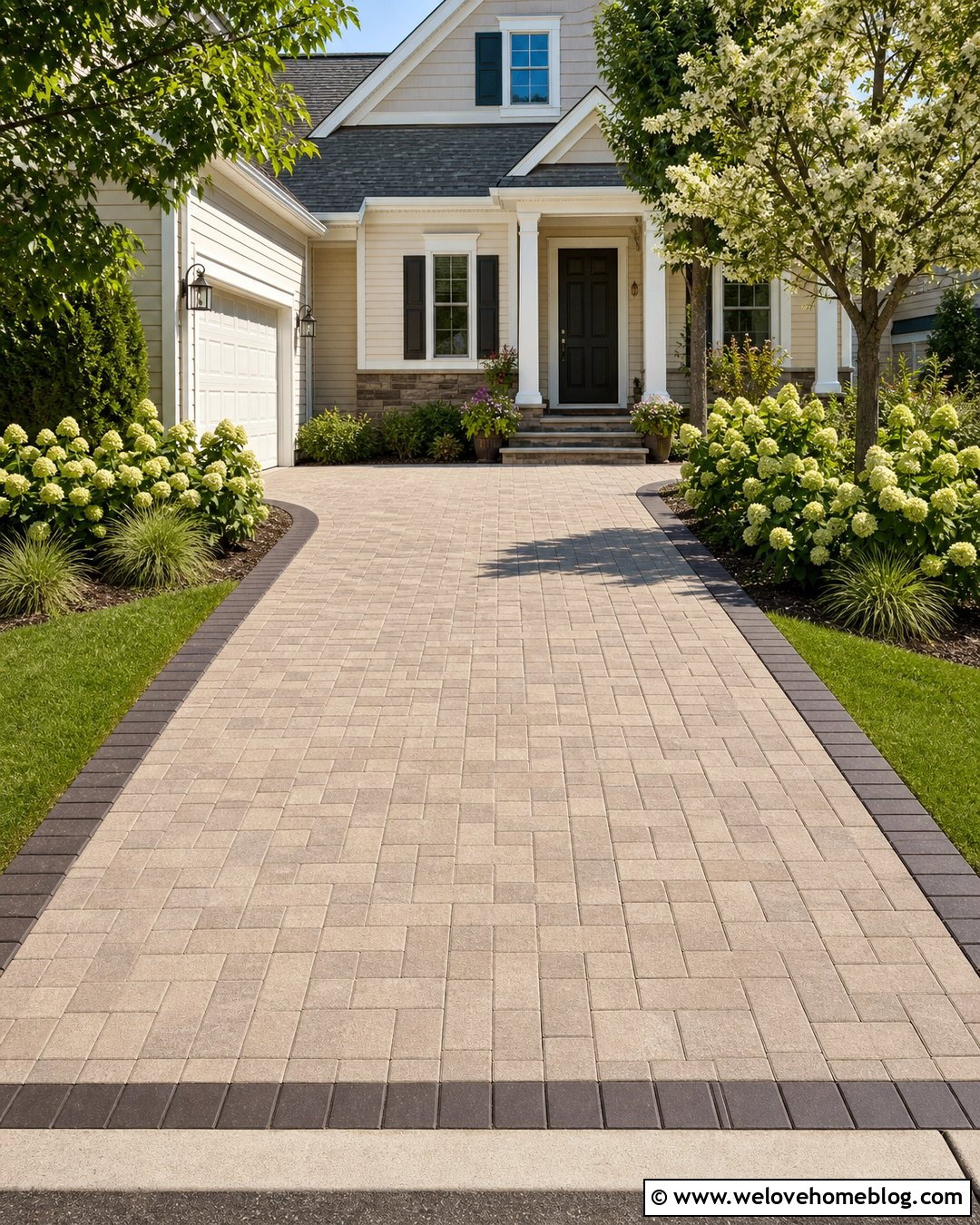
Could a traditional paving pattern make a newer house feel more established? A basketweave concrete block driveway uses pairs of rectangular pavers turned in alternating directions, producing a classic woven appearance. Warm taupe, sand, or muted brown blocks work beautifully with red brick, cream siding, and natural wood accents. A dark brown soldier-course border gives the pattern a clean stopping point and helps define curved planting beds. Add hydrangeas, ornamental grasses, and a small flowering tree near the entrance without crowding the parking space. Because basketweave paving has a noticeable repeating pattern, it is particularly effective on short, straight driveways where the full layout remains visible from the curb. Matching front steps can connect the driveway design with the home’s entry.
3. Running Bond Concrete Block Driveway
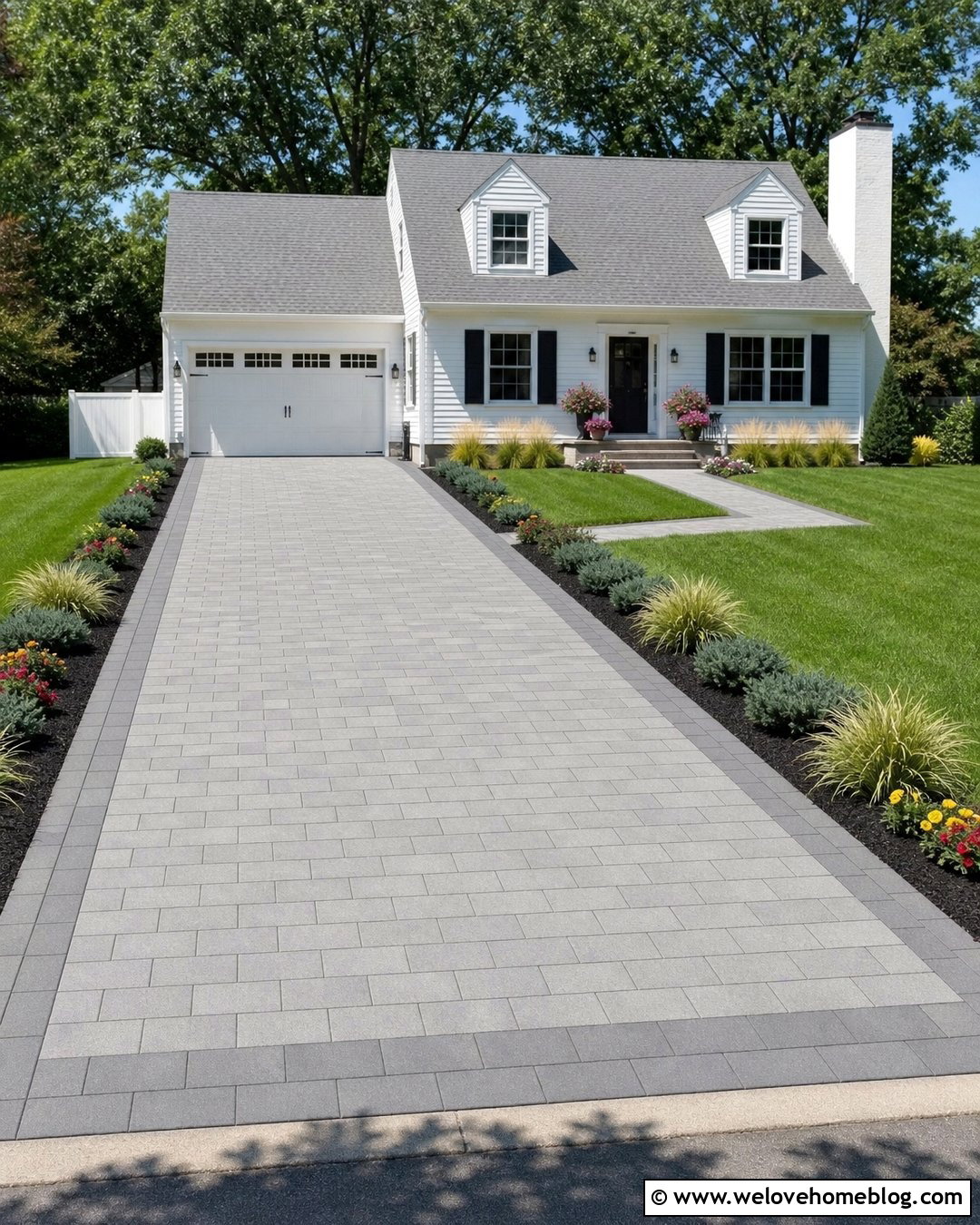
Clean horizontal lines make a running bond concrete block driveway feel orderly without looking overly decorative. Each row of rectangular concrete pavers is offset from the previous one, much like traditional brickwork. This straightforward pattern suits ranch homes, Cape Cod houses, and simple suburban facades. Light gray blocks can brighten the entrance, while a darker gray perimeter provides definition against the lawn. For a wider look, run the blocks across the driveway rather than toward the garage. Frame the pavement with narrow planting beds containing low junipers, dwarf fountain grass, and seasonal flowers. A concrete block walkway laid in the same direction can branch toward the front porch. The finished design feels calm, practical, and easy to coordinate with existing masonry around the property.
4. Large Concrete Block Driveway
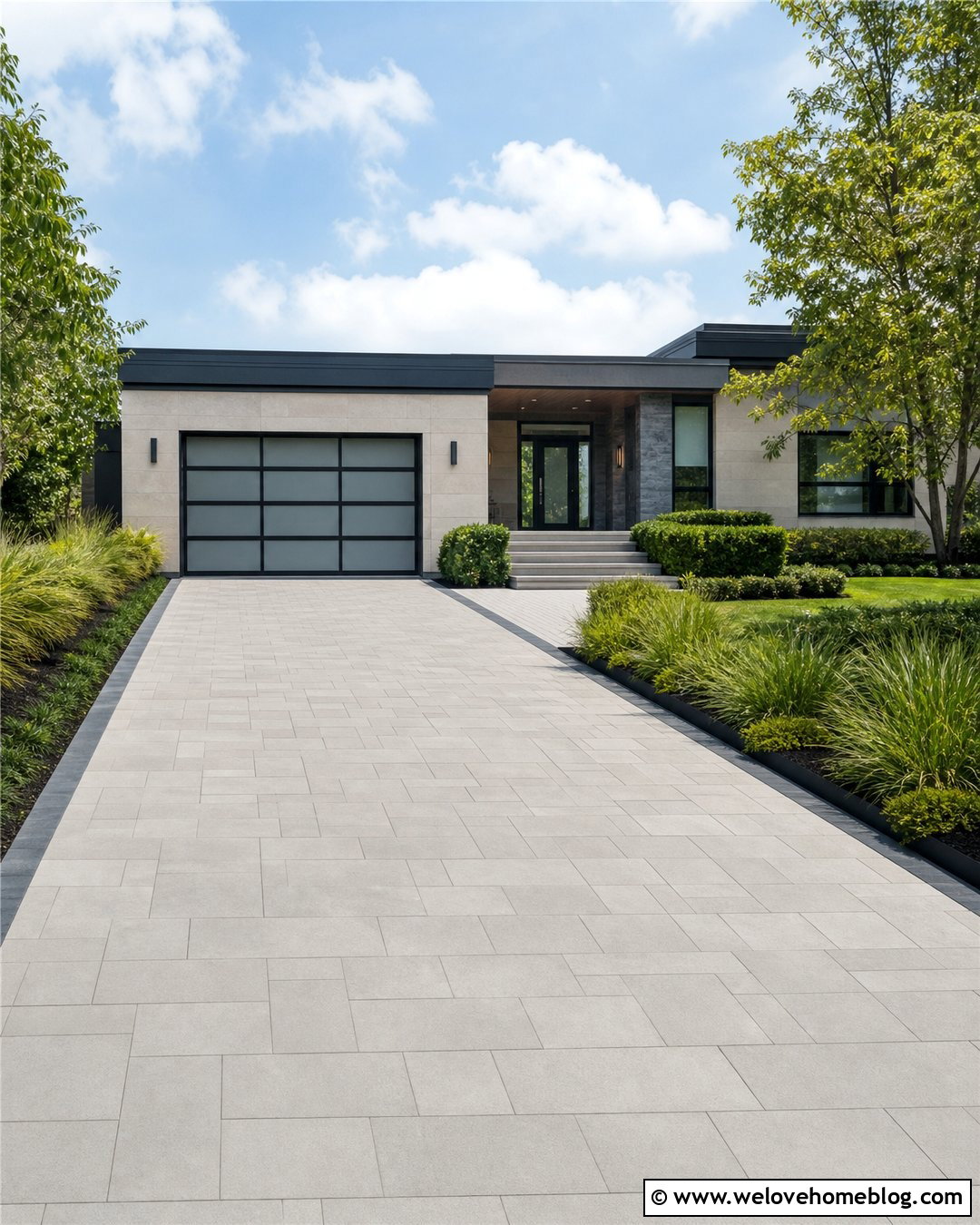
Oversized concrete blocks can give a driveway the broad, uncluttered look often associated with modern architecture. Select large rectangular pavers with a smooth finish in soft gray or greige. Lay them in a simple staggered pattern across a straight driveway, keeping joints consistent and the color palette restrained. A thin charcoal paver border adds contrast without interrupting the clean layout. Pair the driveway with linear planting beds, clipped evergreen shrubs, and ornamental grasses that echo the paving lines. Wide concrete steps and a direct walkway can lead toward a flat-roofed or contemporary house. Large units make the paved area appear less visually busy, but they should still be rated and installed for vehicle traffic. Proper cuts around drains and edges help maintain the precise modern appearance.
5. Charcoal Concrete Block Driveway
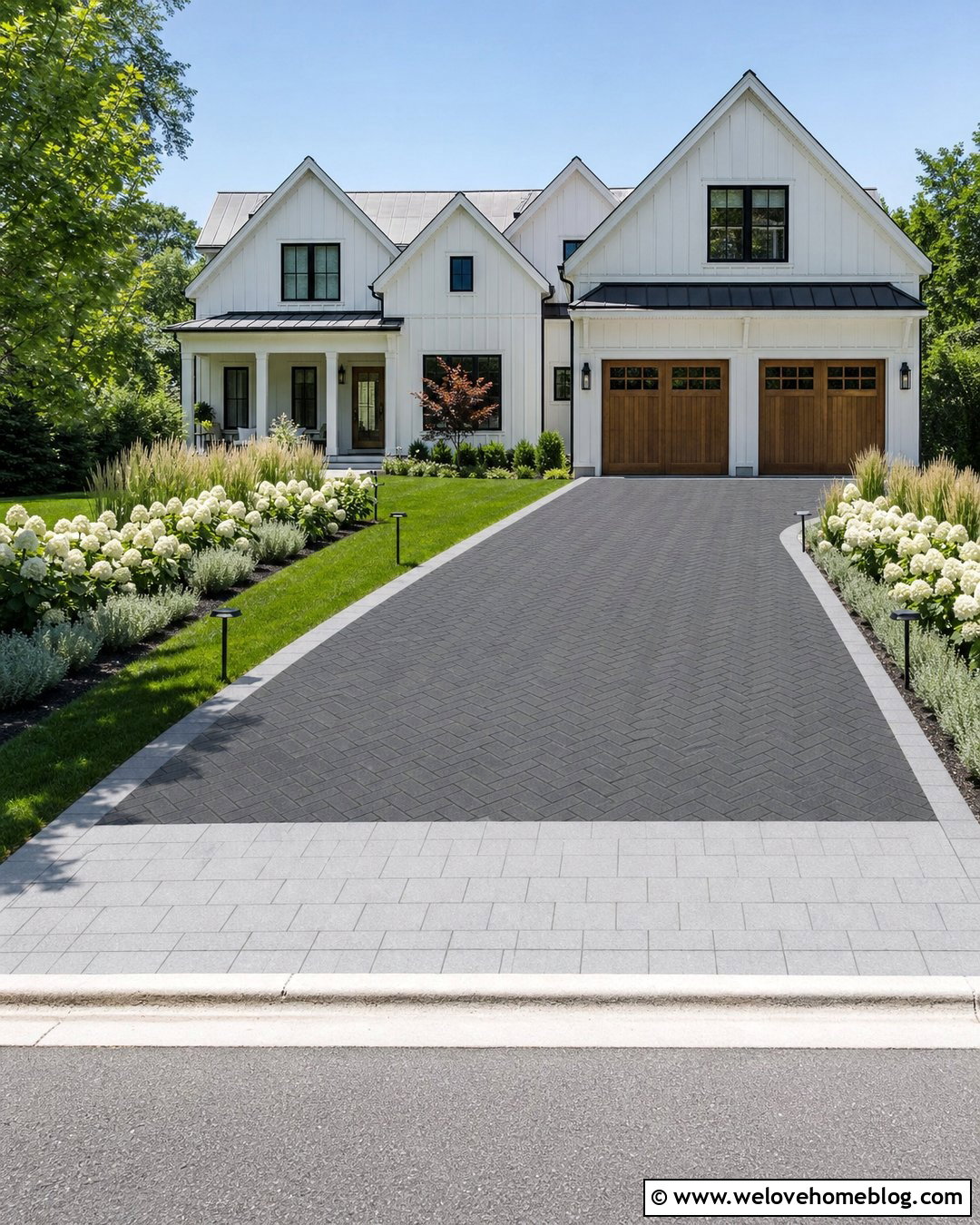
Deep charcoal concrete blocks create a dramatic surface that can ground a pale house and make green landscaping stand out. To prevent the driveway from feeling too dark, use a soft gray block border and a matching light-gray apron at the street. A 45-degree herringbone pattern introduces texture while preserving the strong, contemporary color scheme. Plant white hydrangeas, silvery lamb’s ear, and upright grasses along one side for noticeable contrast. On the other side, include a broad walkway that uses the same light border blocks. This complete look works especially well with white siding, black-framed windows, and natural wood garage doors. In sunny climates, compare physical samples outdoors before choosing a very dark color, since actual appearance can shift under direct daylight and surrounding reflections.
6. Sandstone Color Concrete Block Driveway
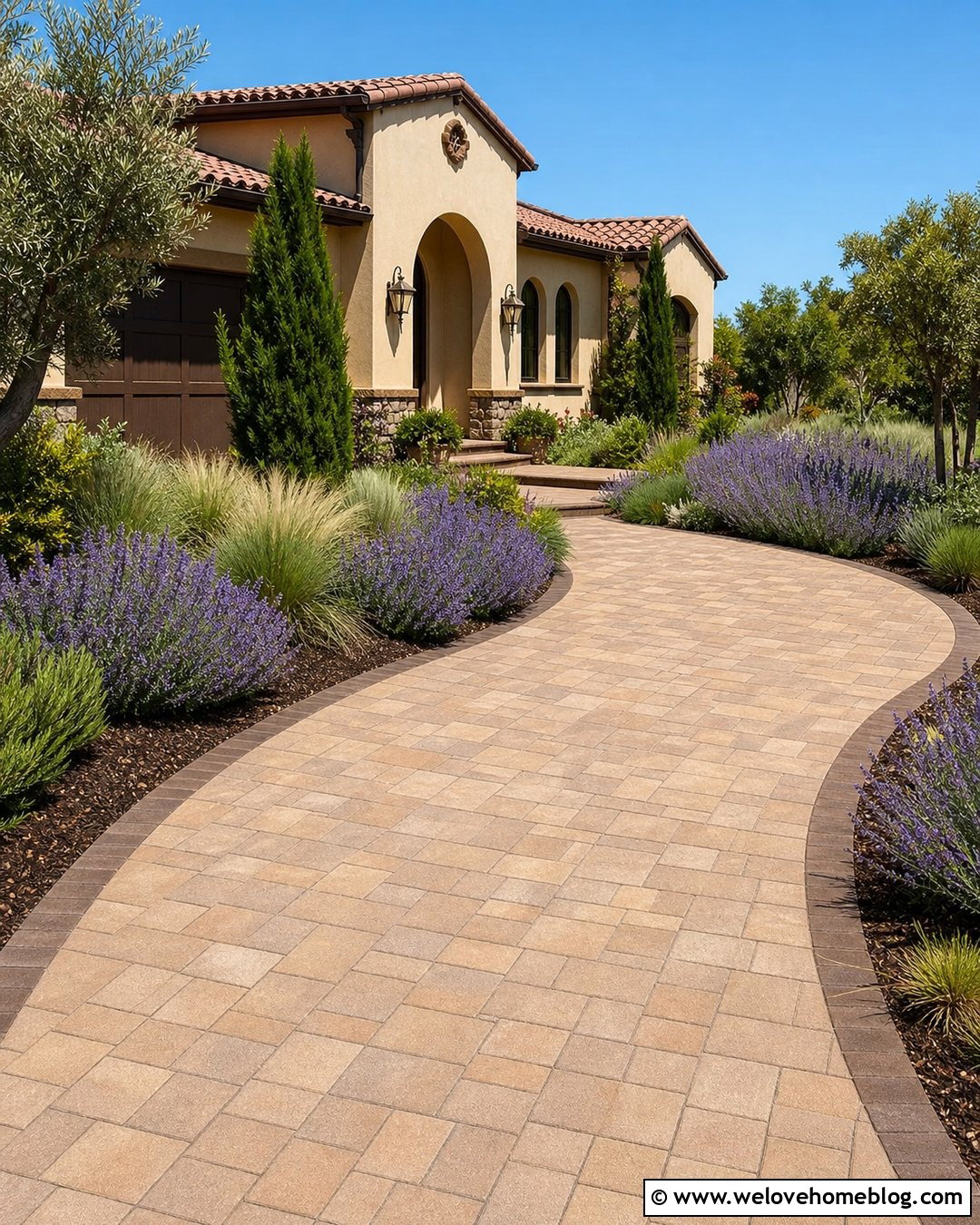
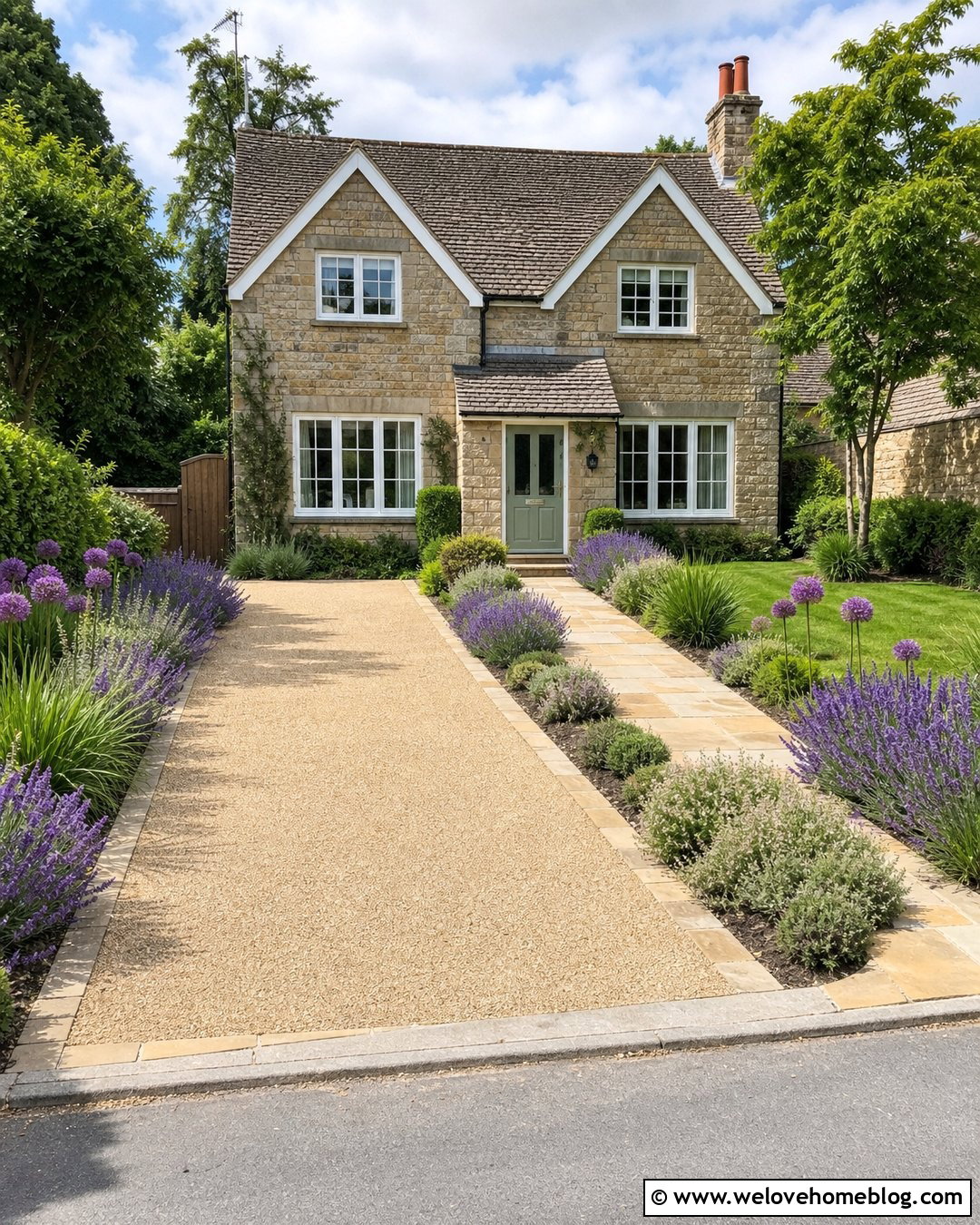
Warm sandstone-colored paving can make a driveway feel welcoming from the moment it meets the curb. Use concrete blocks in a blended mix of beige, buff, and light brown rather than one perfectly uniform shade. A subtle herringbone or random modular pattern enhances the natural variation. Frame the surface with dark brown edging blocks that coordinate with the roof, shutters, or front door. Lavender, catmint, dwarf grasses, and rounded evergreen shrubs can create a soft landscape along both sides. This palette complements stucco, cream stone, tan brick, and Mediterranean-inspired homes particularly well. Carry several driveway blocks into the front walkway or porch landing to build a visual connection. The result is a warm, cohesive entrance that feels softer than a standard gray paved surface.
7. Gray Concrete Block Driveway With Black Border
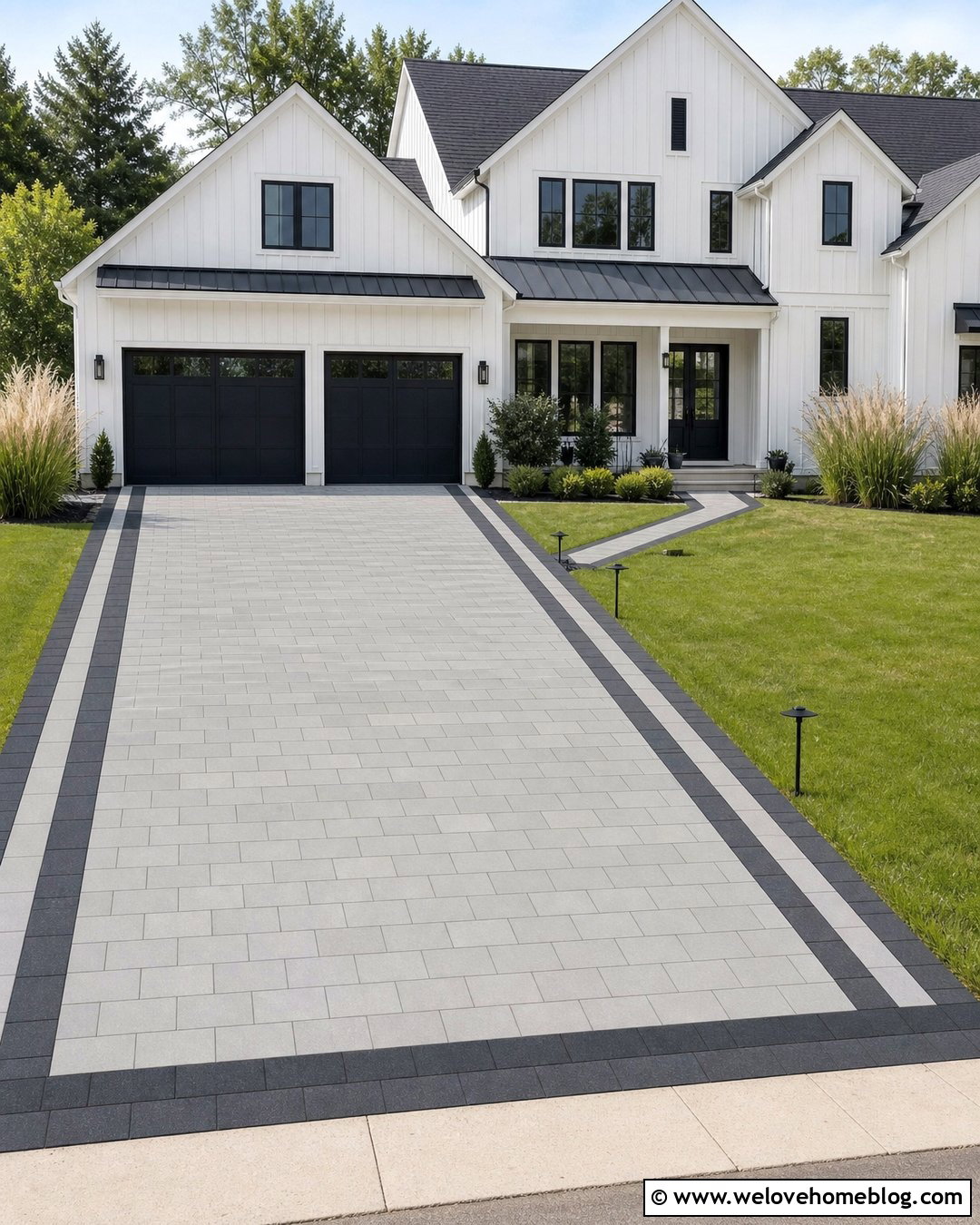
Crisp contrast gives this concrete block driveway a tailored, easy-to-read layout. Use medium-gray rectangular pavers across the main parking surface and surround them with a double row of nearly black concrete blocks. The dark border can follow the entire perimeter, continue around the driveway apron, and outline the walkway to the front door. A straight layout works well for a modern farmhouse or renovated suburban home with white siding and black exterior details. Keep the landscaping fresh but uncomplicated with clipped shrubs, feather reed grass, and broad areas of green lawn. Black metal path lights can reinforce the color scheme without dominating it. The border also provides a visual transition between the gray paving and surrounding soil, mulch, grass, or adjoining garden beds.
8. Circular Concrete Block Driveway
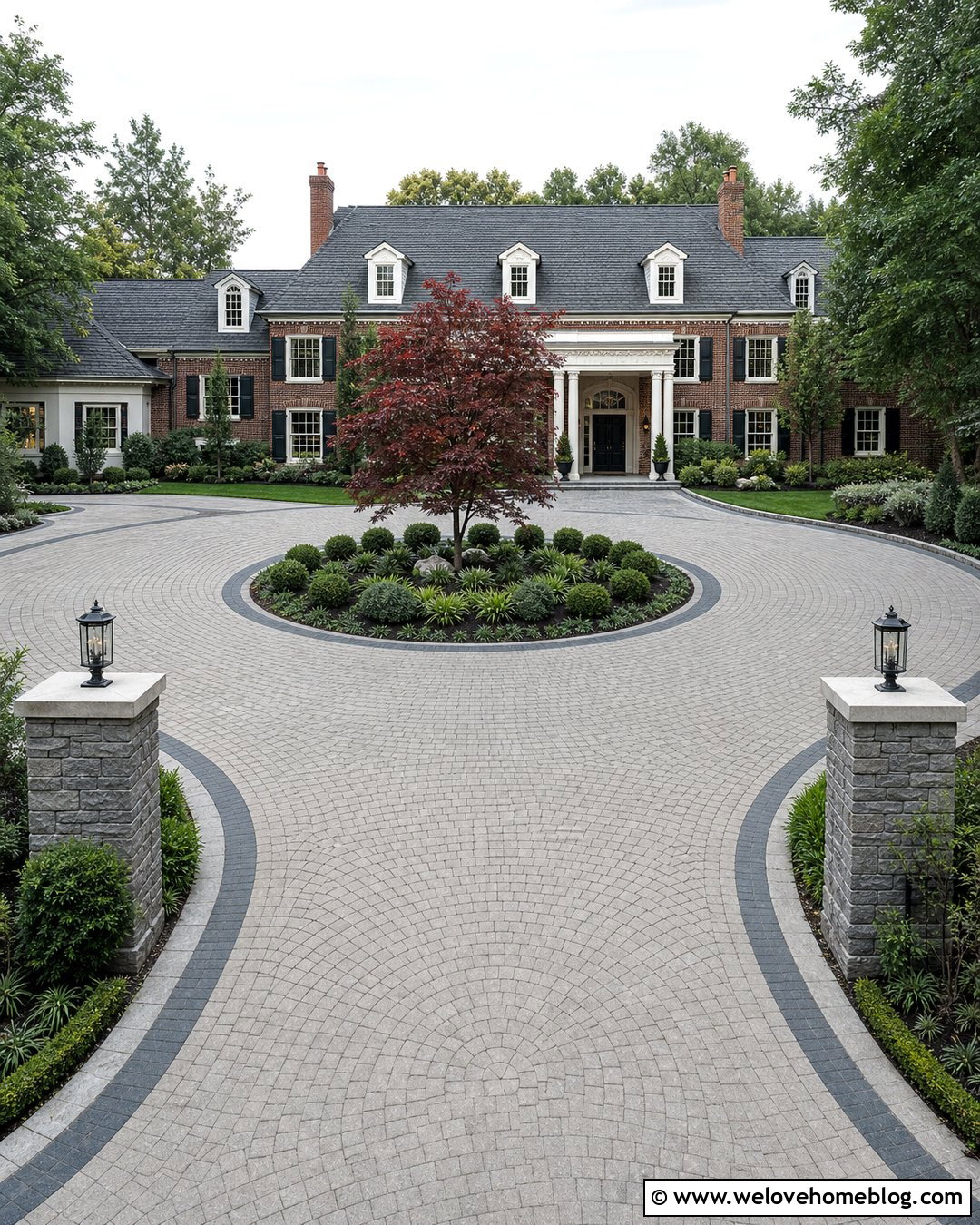
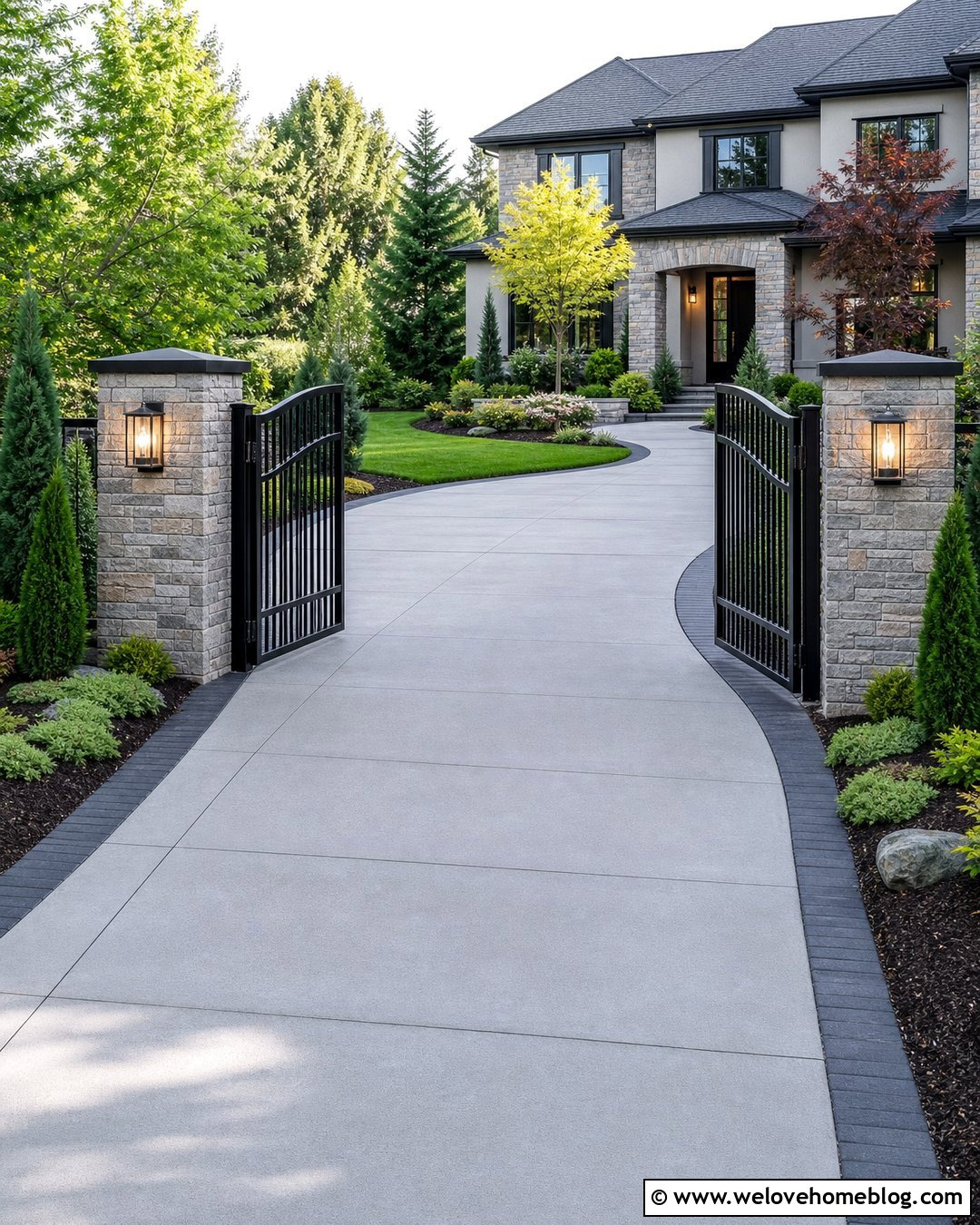
A circular concrete block driveway creates an elegant arrival sequence while allowing vehicles to approach the house and return to the street without extensive reversing. Use medium-gray blocks in a fan or curved laying pattern so the paving follows the circular geometry naturally. A charcoal border can outline both the outside edge and the central landscaped island. Fill that island with a small ornamental tree, low evergreen shrubs, and drought-tolerant perennials that will not block views across the driveway. Matching entry pillars can mark the two openings from the street. This layout needs sufficient front-yard space and careful planning for comfortable turning movements. When the circle, borders, planting, and house entrance align properly, the entire frontage feels intentional rather than dominated by parking. ()
9. Curved Concrete Block Driveway
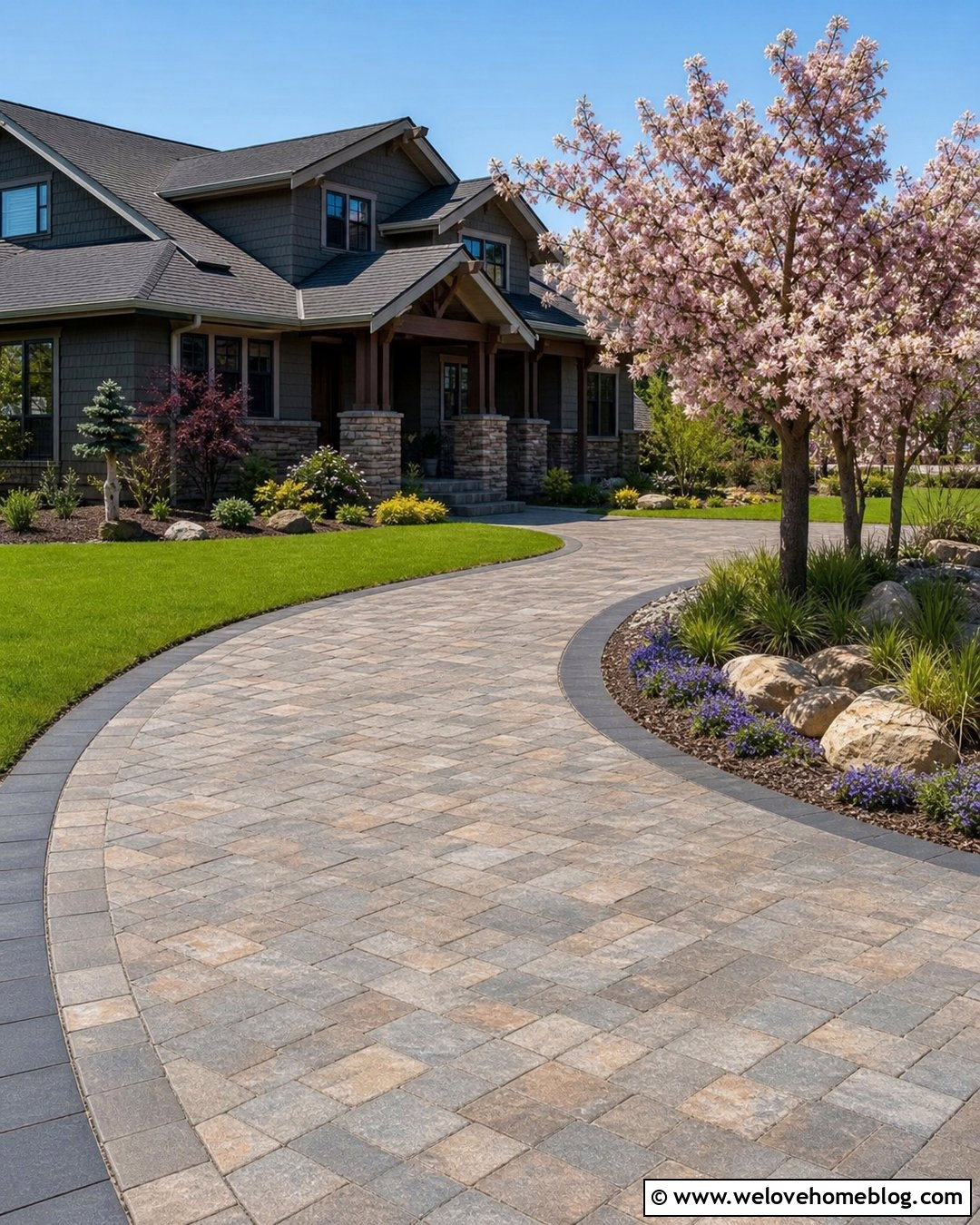
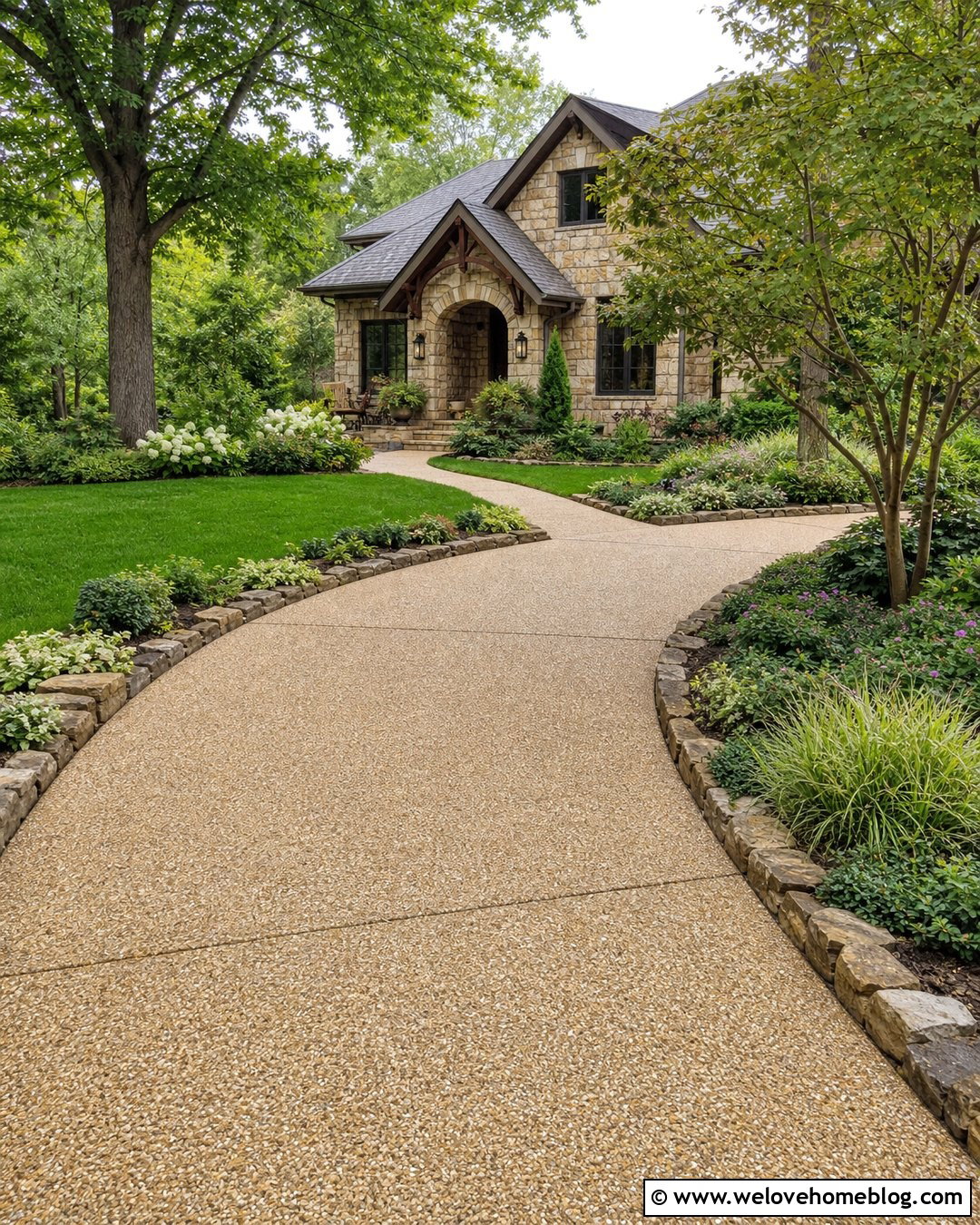
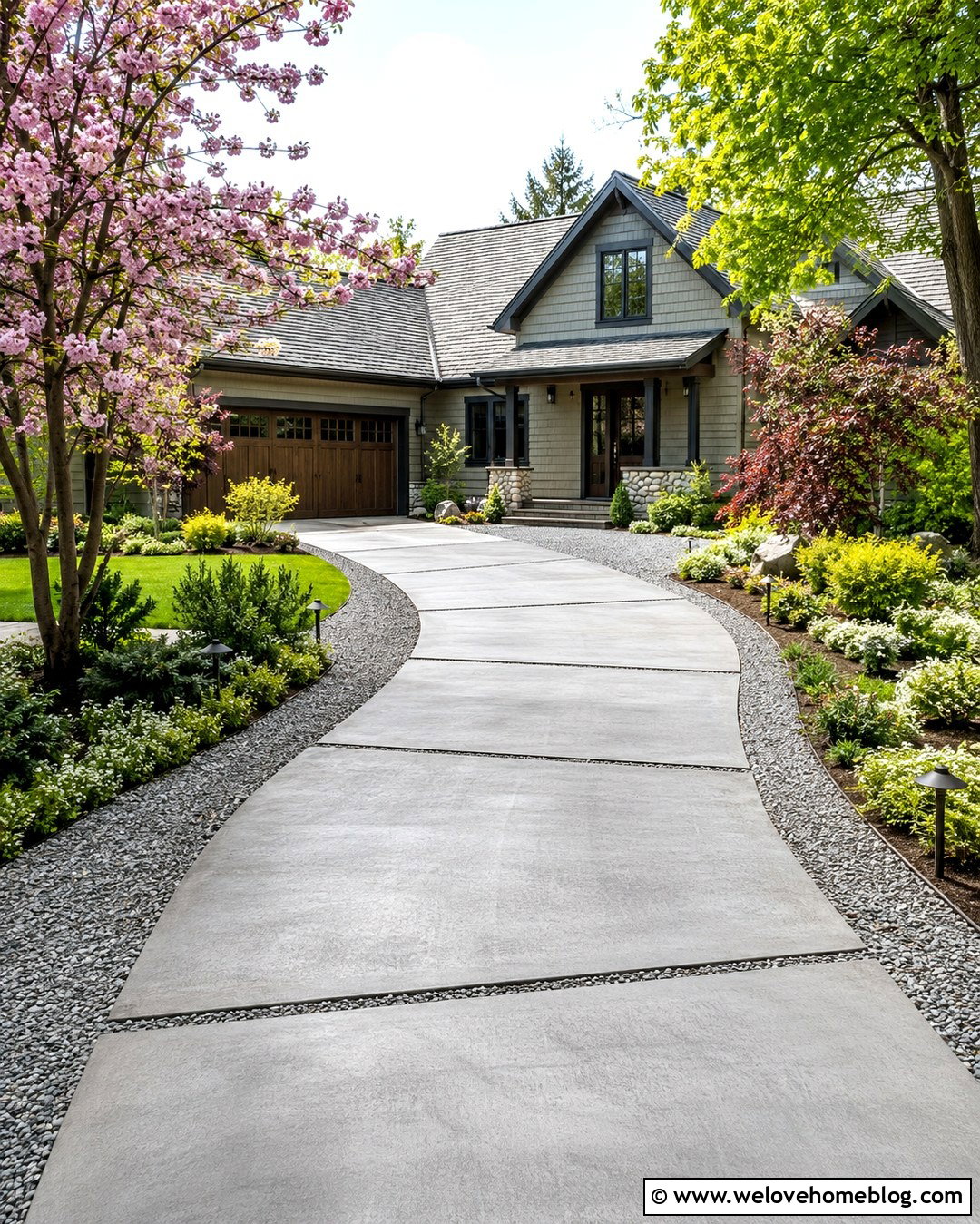
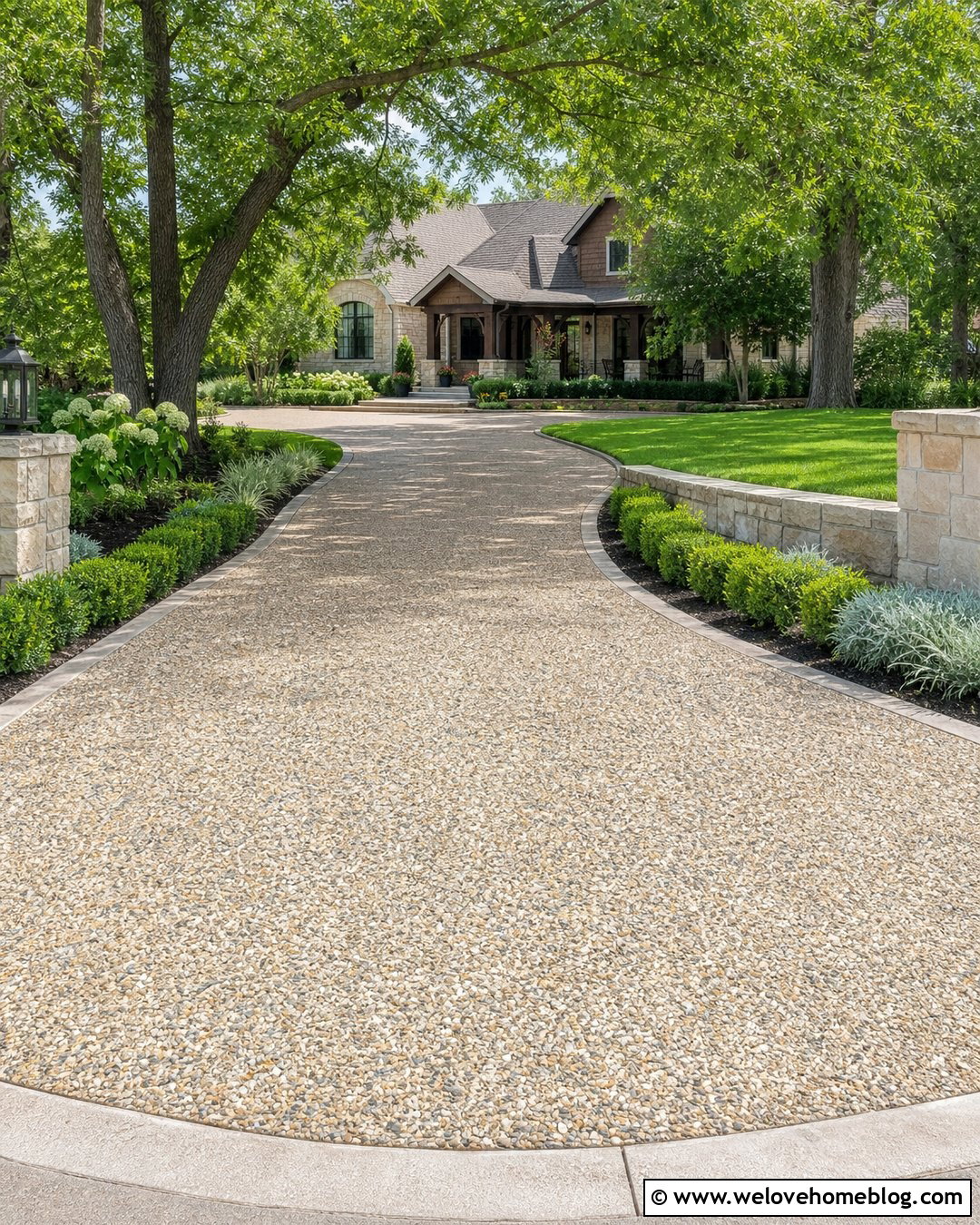
A gently curved concrete block driveway can make the approach to a house feel more natural, especially on a deep or irregular lot. Choose tumbled concrete blocks in blended gray and brown tones, then arrange them in flexible rows that follow the curve smoothly. Dark edging blocks should trace both sides and clearly separate the driveway from planting beds. Position a flowering tree near the outside bend, where it can become a focal point without narrowing the driving route. On the inside curve, use low grasses, spreading ground cover, and landscape rocks to preserve visibility. This complete arrangement suits Craftsman, cottage, and country homes. Rather than adding several tight turns, use one broad sweep that leads vehicles naturally toward the garage or front parking area.


10. Permeable Concrete Block Driveway
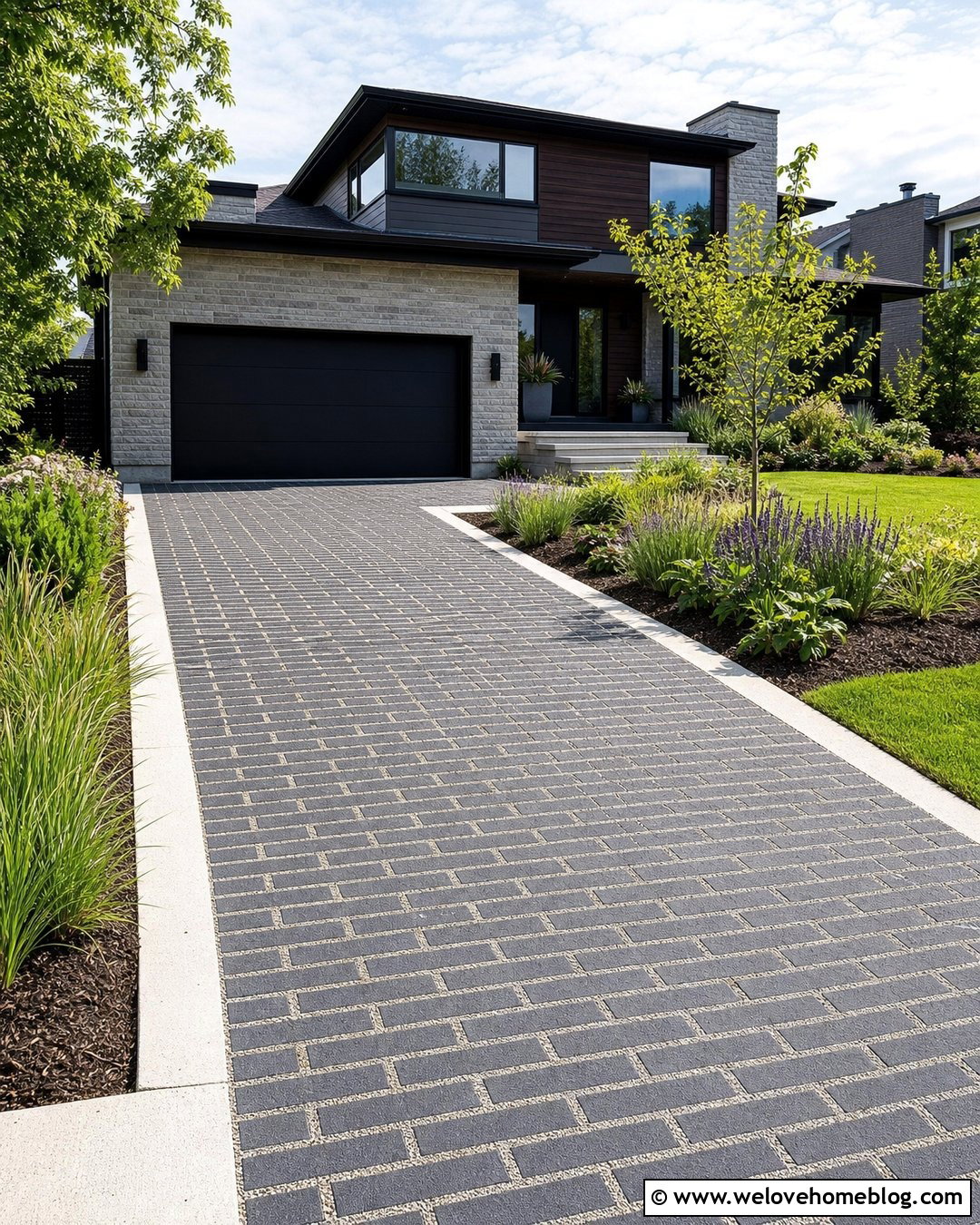
Rainwater management can become part of the design with a permeable concrete block driveway. Permeable paving uses wider, aggregate-filled joints and a compatible open-graded base so water can move through the surface instead of simply running across it. Select charcoal or medium-gray blocks in a clean linear pattern for a contemporary appearance. Surround the driveway with rain-garden planting, including ornamental grasses, native perennials, and moisture-tolerant shrubs where appropriate. A contrasting concrete curb can separate the permeable paving from regular planting soil while preserving the installation’s intended drainage path. This option looks similar to conventional block paving, yet its base, joints, and site preparation differ. Have local soil conditions, slope, drainage requirements, and municipal rules evaluated before selecting the final system. ()
11. Grass Grid Concrete Block Driveway
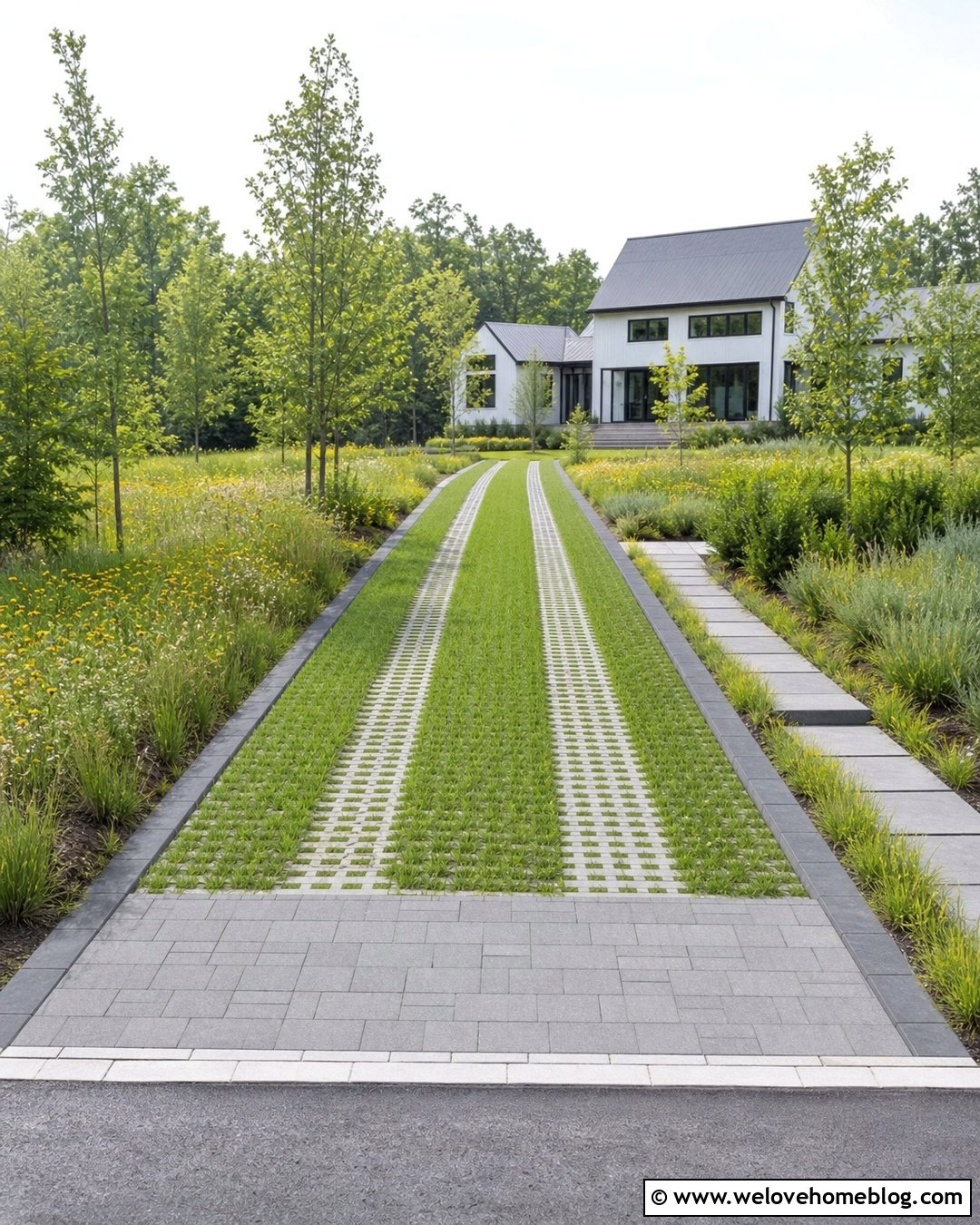
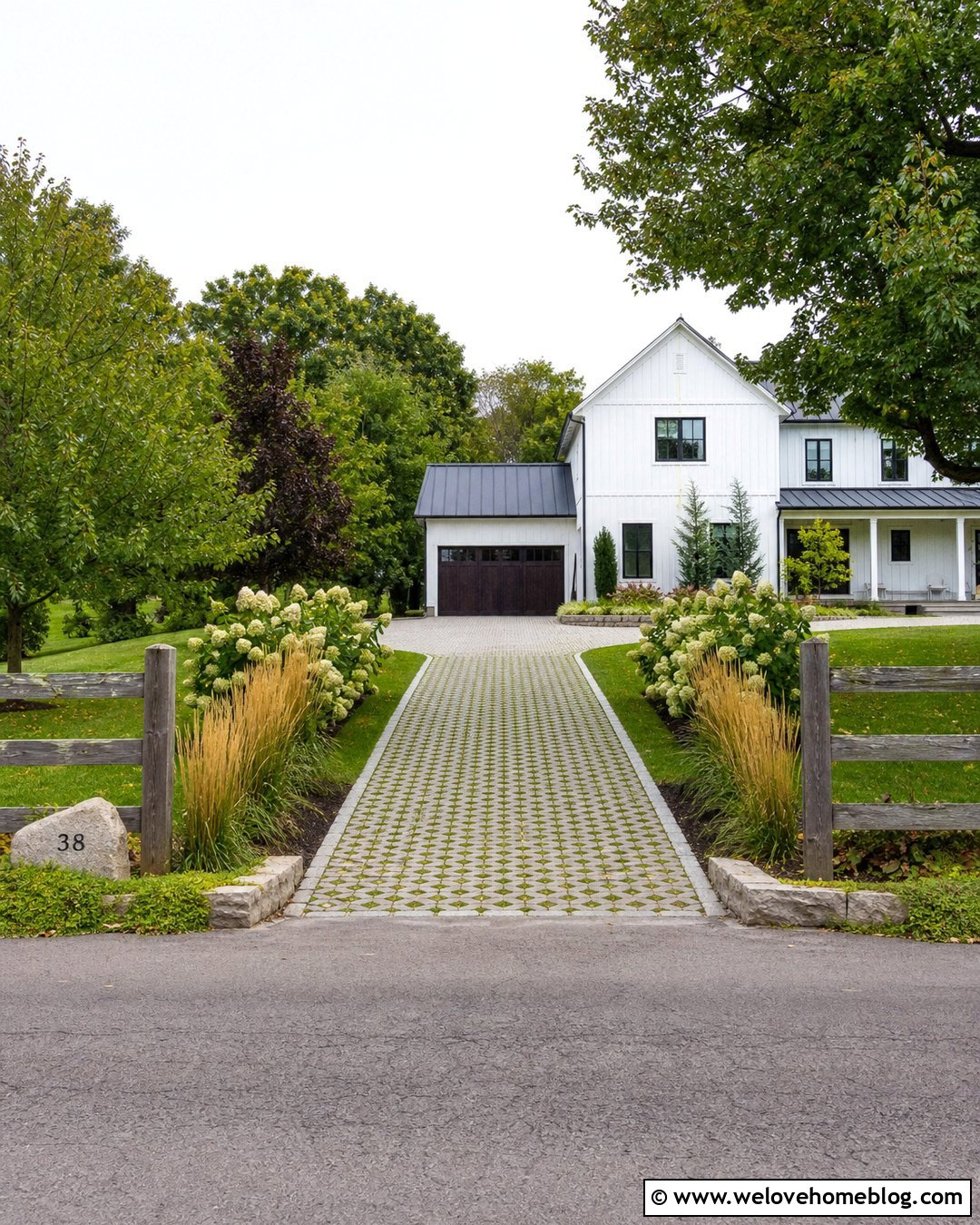
Green openings between concrete blocks can soften a driveway and reduce the appearance of a large paved area. Use vehicle-rated open-cell concrete grid pavers with grass growing inside the voids. Define the driving lanes and parking zone clearly so the greenery looks deliberate rather than overgrown. Solid charcoal concrete blocks can form the perimeter, street apron, and walkway to the house, giving the softer grid area a structured frame. This approach is well suited to contemporary country homes, eco-conscious landscapes, and secondary parking areas. Surround it with meadow-inspired planting, native shrubs, and a few carefully placed trees. Grass varieties and irrigation needs should match the local climate and anticipated traffic. In frequently used tire paths, gravel-filled openings may be more practical than grass.
12. Mixed Size Concrete Block Driveway
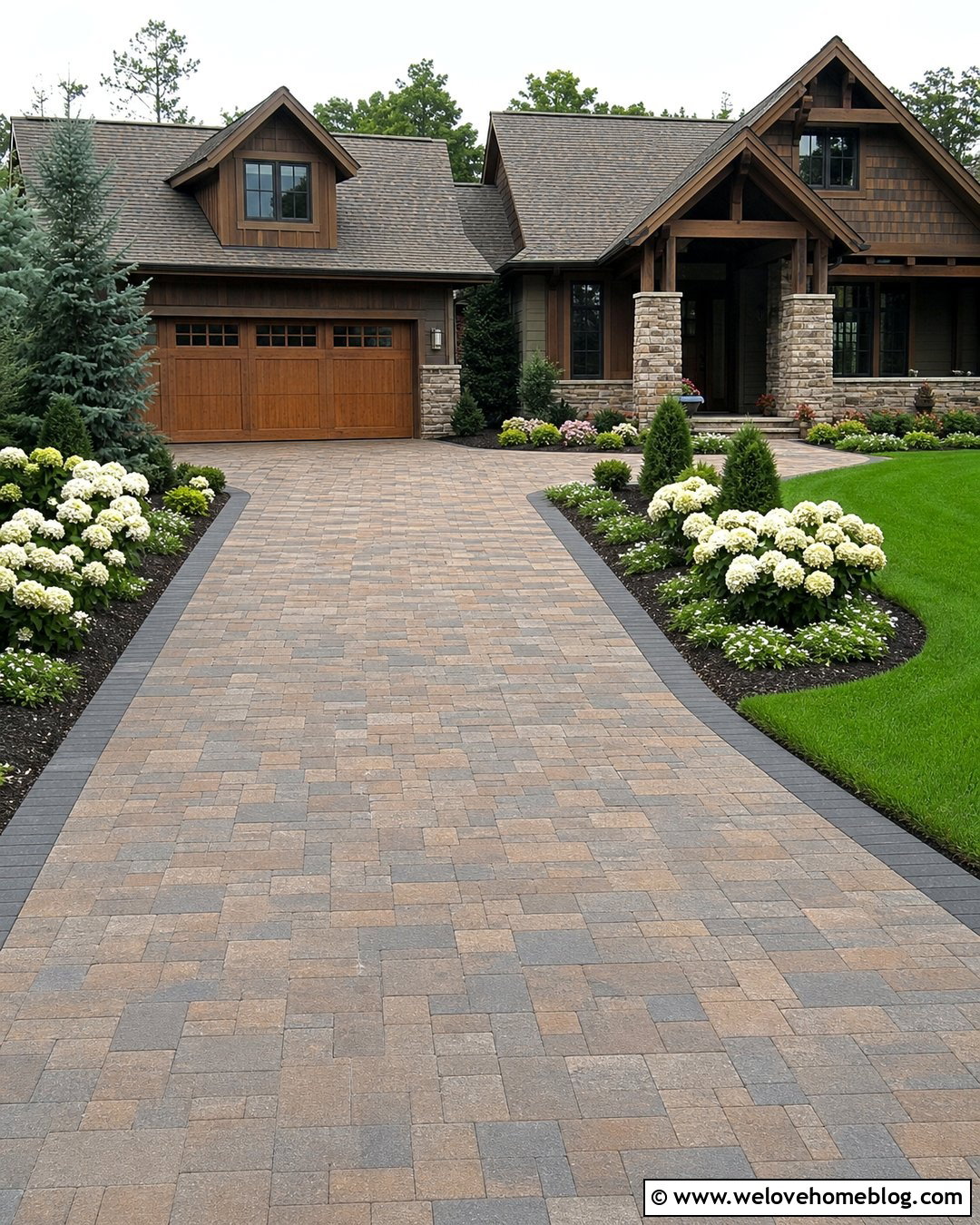
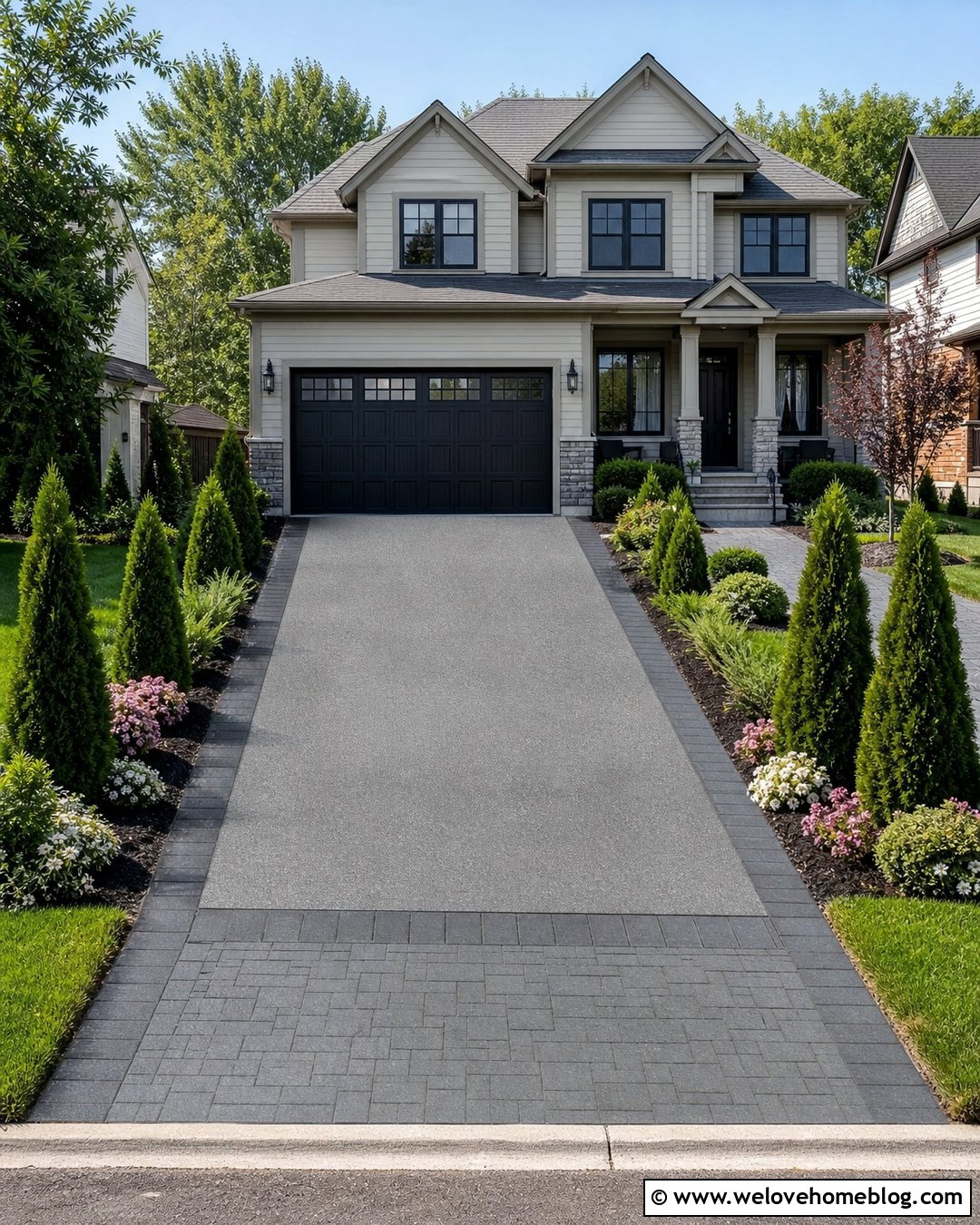
Mixed-size concrete blocks create a relaxed, stone-inspired surface without losing the consistent dimensions of manufactured paving. Combine small squares, medium rectangles, and larger units in a repeating modular layout. A blend of warm gray, tan, and muted brown helps the driveway complement stone veneer, brick, or wood siding. Use a single dark soldier-course border to contain the varied pattern and prevent the design from looking overly busy. Curved planting beds filled with hydrangeas, dwarf conifers, and flowering ground cover can soften the straight edges near the garage. This layout is particularly effective on wide driveways because the pattern remains interesting across a large surface. Keep the walkway simpler, using one block size from the driveway palette so the overall entrance remains organized and visually balanced.
13. Two Tone Concrete Block Driveway
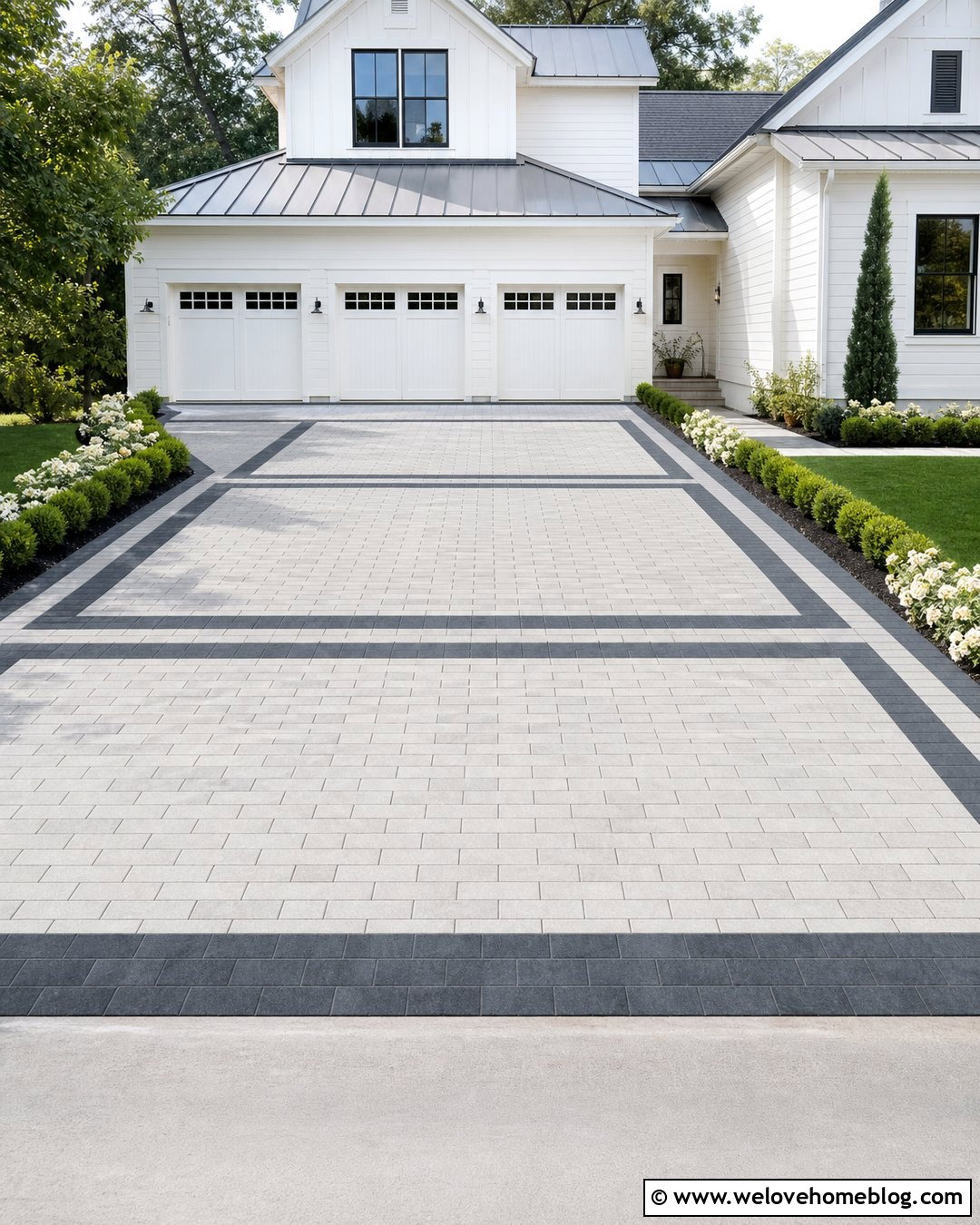
A two-tone concrete block driveway can define functional areas while adding a customized appearance. Use light-gray pavers for the main surface and charcoal blocks for the border, apron, and narrow divider bands. On a wide driveway, the bands can frame two parking bays or create large rectangular panels in front of the garage. Keep the geometry aligned with garage doors, porch columns, or window positions for a thoughtful architectural connection. Low evergreen hedges and white flowering plants provide softness without hiding the pattern. This design works with contemporary, transitional, and modern farmhouse homes. Limit the palette to two closely related tones so the finished paving remains sophisticated. Too many contrasting colors or small decorative inserts can make a heavily used driveway look fragmented from the curb.
14. Cobblestone Look Concrete Block Driveway
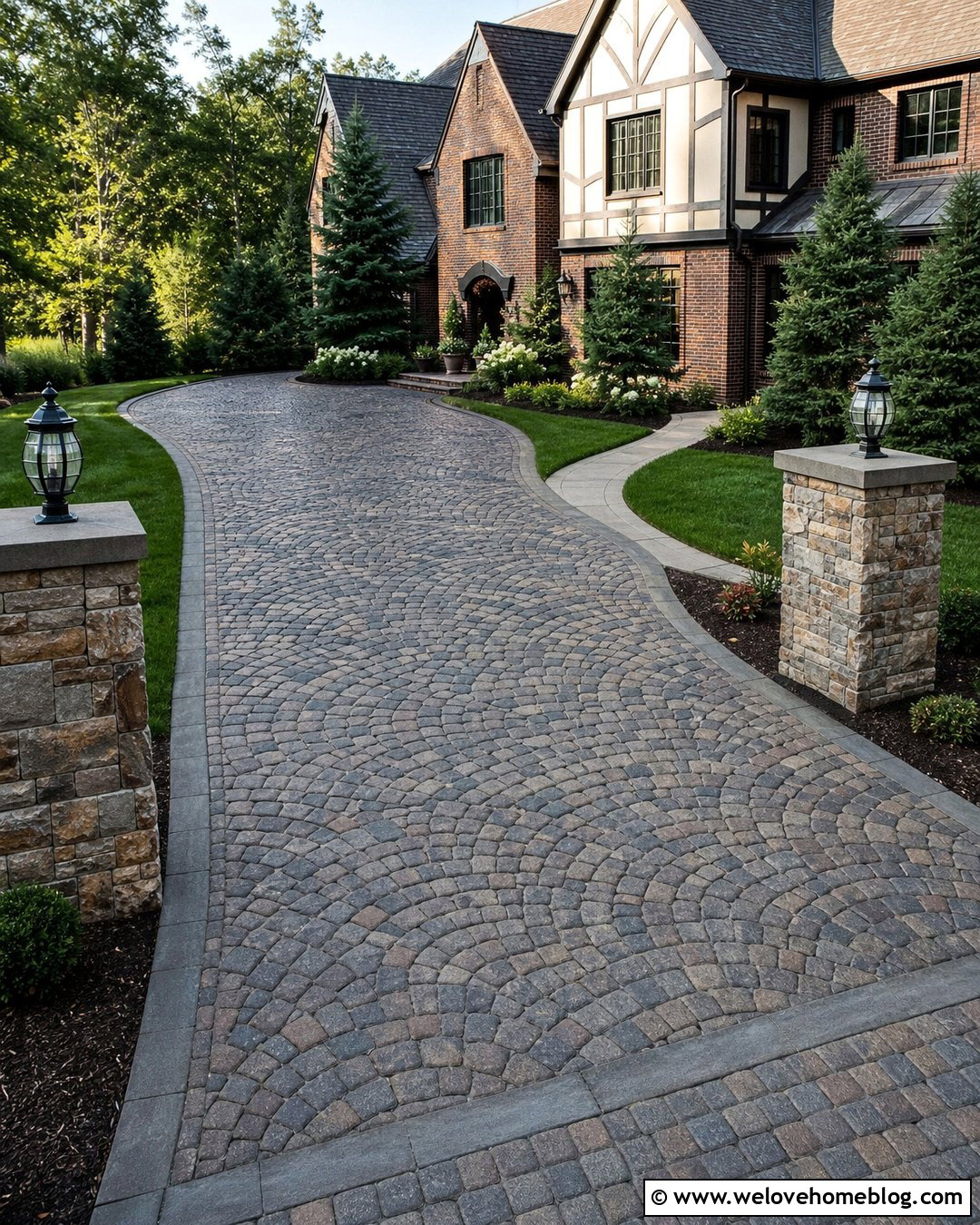
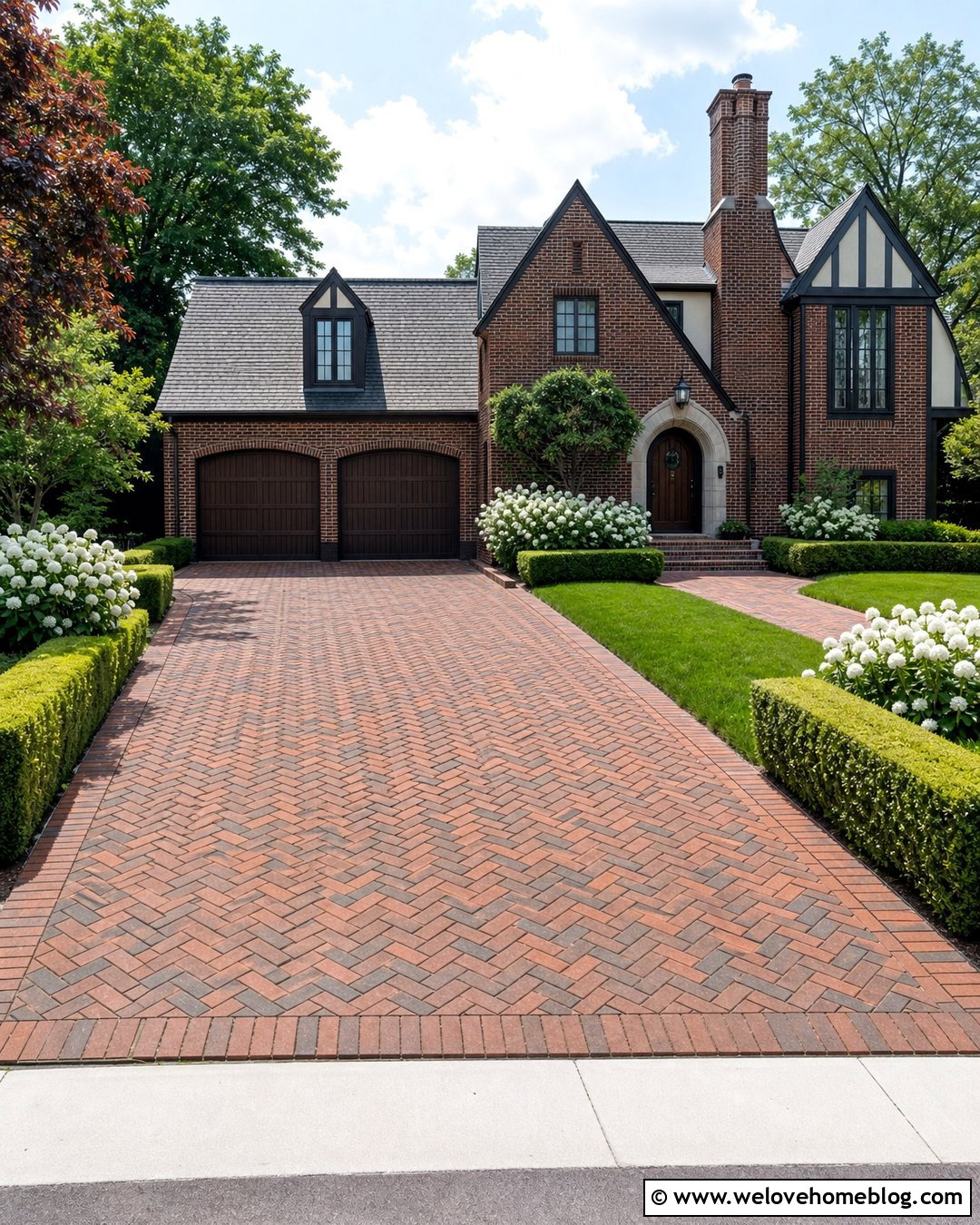
Tumbled concrete blocks can recreate the texture and irregular character of old cobblestone while offering a practical, repeatable paving format. Choose small blocks with softened edges in blended charcoal, pewter, and muted brown. Lay them in gentle fans or curved courses across the driveway, then add a slightly larger matching curb along the perimeter. Traditional lantern-style fixtures, stone entry pillars, and layered evergreen planting reinforce the established appearance. This surface pairs naturally with Tudor, Colonial Revival, European-inspired, and older brick homes. Include a smooth, clearly defined walkway beside the driveway for comfortable pedestrian access. Because the blocks already have noticeable texture and color variation, keep other hardscape materials consistent. The complete design should feel aged and inviting, not crowded with competing patterns or unrelated decorative stone.
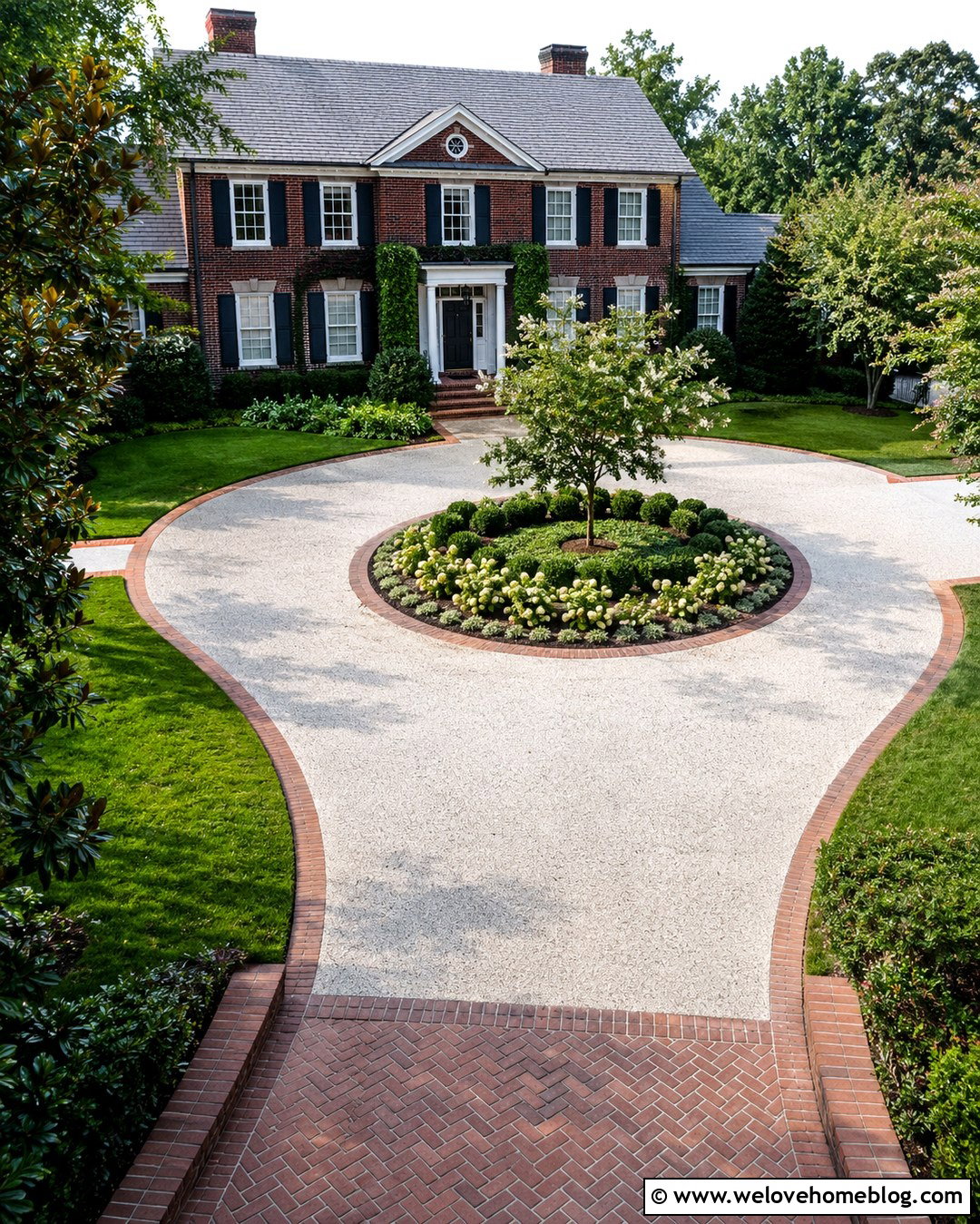
15. Concrete Block Driveway With Brick Border
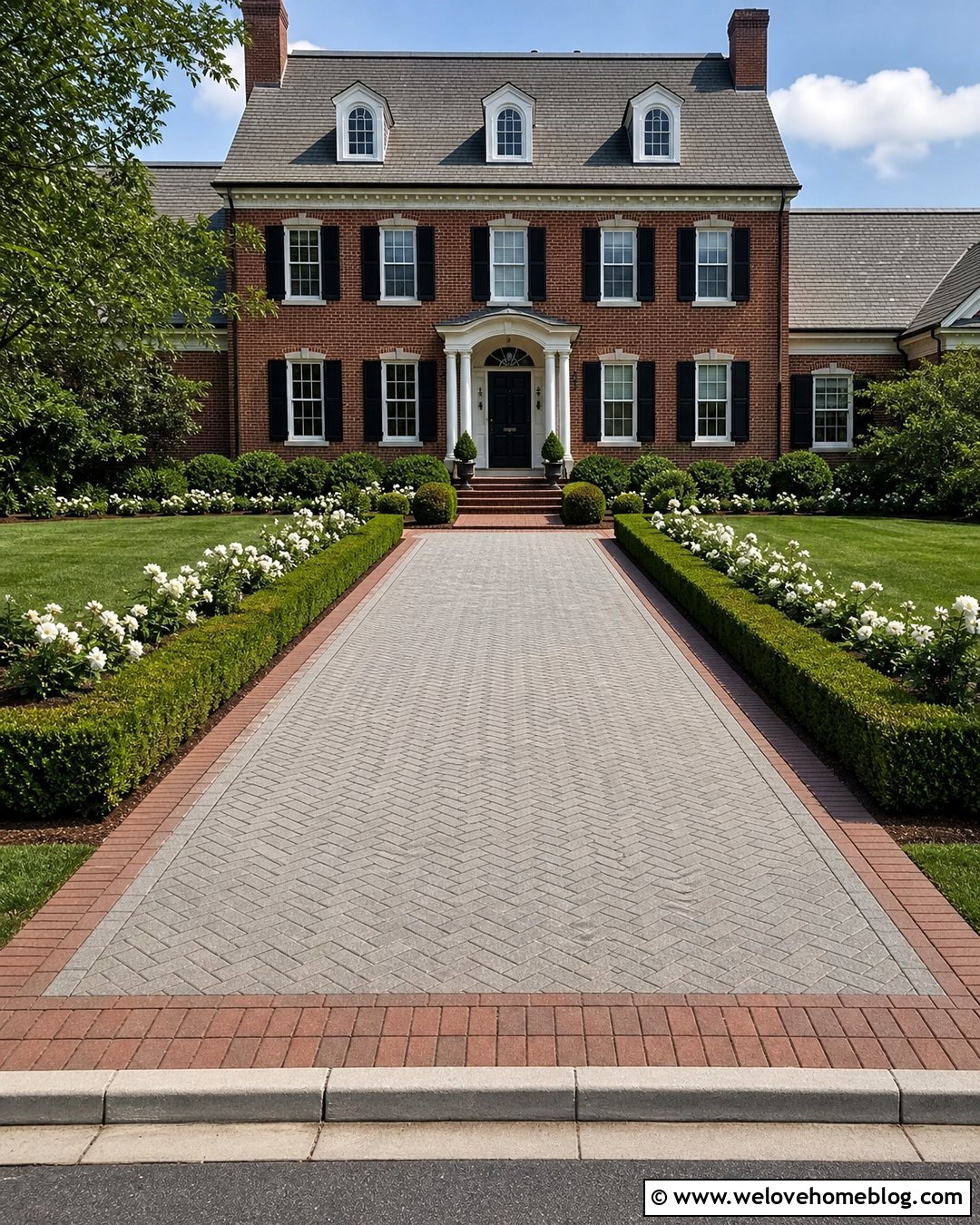
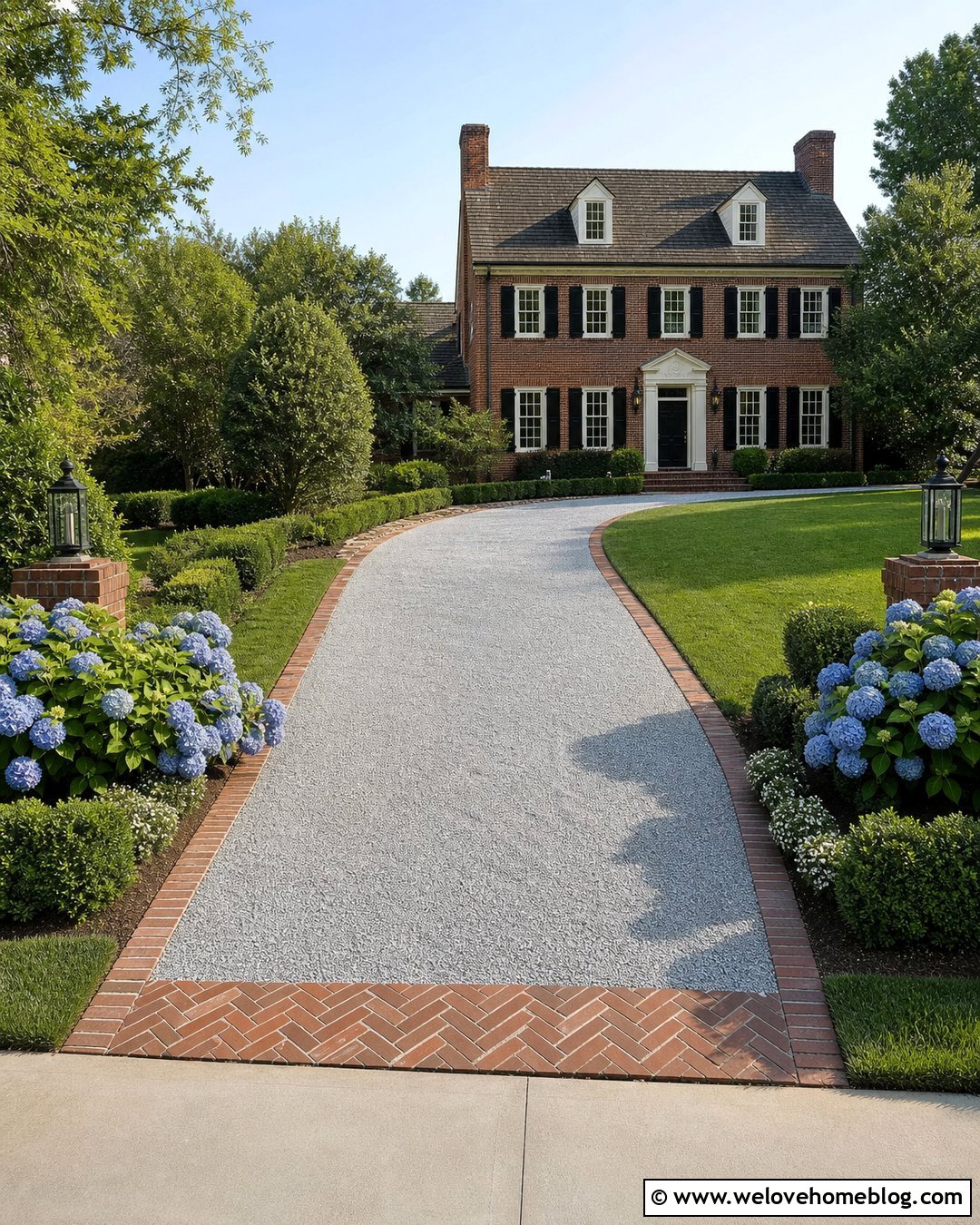
Red or brown brick can create a warm transition between concrete block paving and a traditional brick house. Cover the main driveway with neutral gray concrete blocks in a 45-degree herringbone pattern. Then install a double brick border that matches or closely relates to the home’s facade. Continue the brick around the street apron and front walkway for a unified finish. Deep green boxwoods, white roses, and a neatly maintained lawn can frame the hardscape without competing with its contrasting materials. Repeating the facade color at ground level helps the driveway feel connected to the architecture. However, the border and field pavers should both be suitable for exterior paving and the expected loads. Secure edge construction is important because it helps contain an interlocking block surface. ()
16. Concrete Block Driveway With Stone Edging
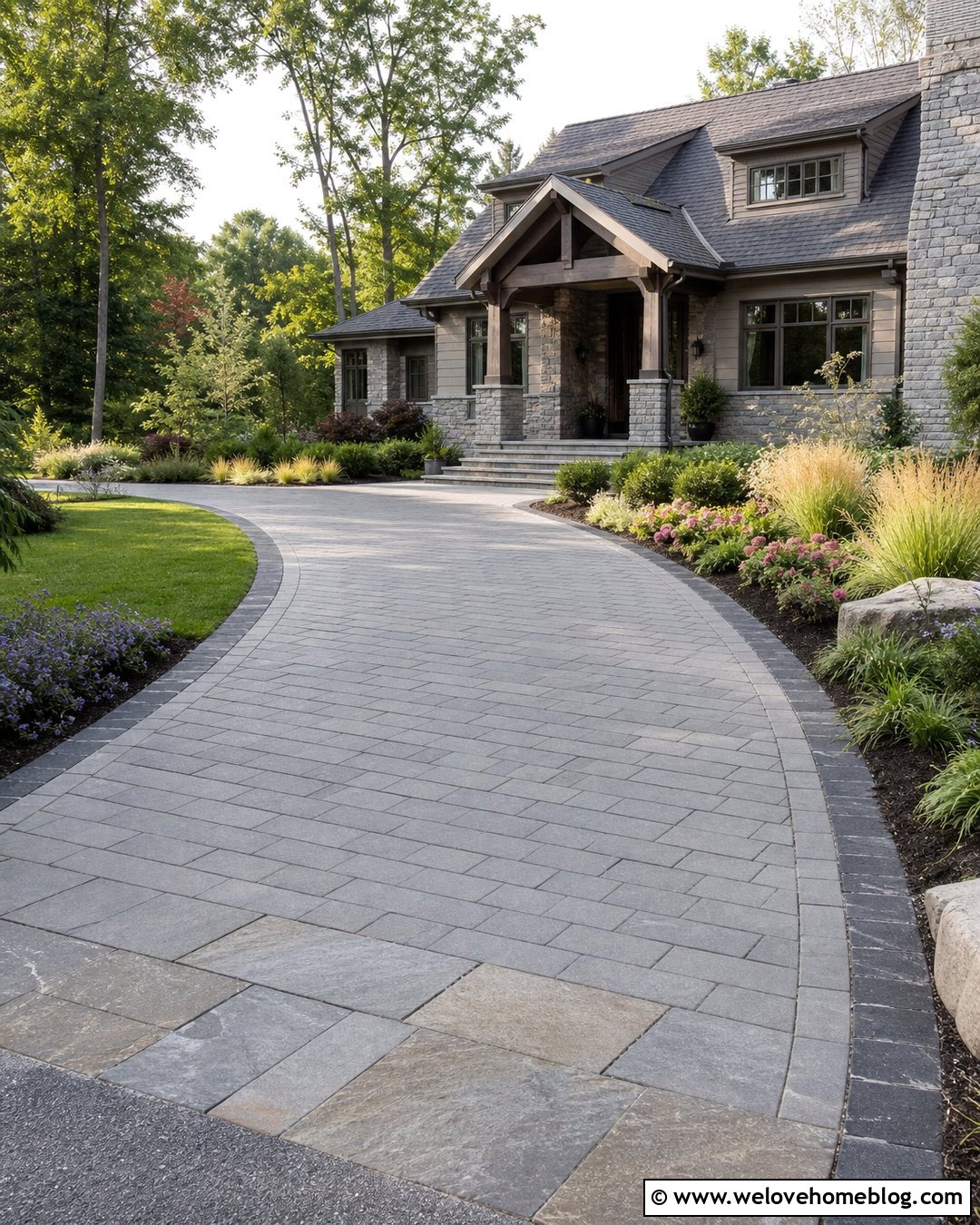
Natural stone edging gives concrete block paving a more substantial, landscape-focused frame. Begin with smooth medium-gray concrete pavers laid in a running bond or herringbone pattern. Add granite, basalt, or similarly durable stone setts along both sides, using a color that contrasts gently with the main surface. The stone can also form a broad apron at the road and a small landing near the front steps. Fill adjoining beds with layered shrubs, ornamental grasses, and low flowering plants that partly soften the hard edge without spilling into the driving area. This combination suits Craftsman homes, stone-front houses, and wooded suburban properties. Keep the stone edging scale consistent throughout the frontage. Random changes in width can make the boundary look unfinished rather than intentionally rustic.
17. Modern Concrete Block Driveway With Grass Strips
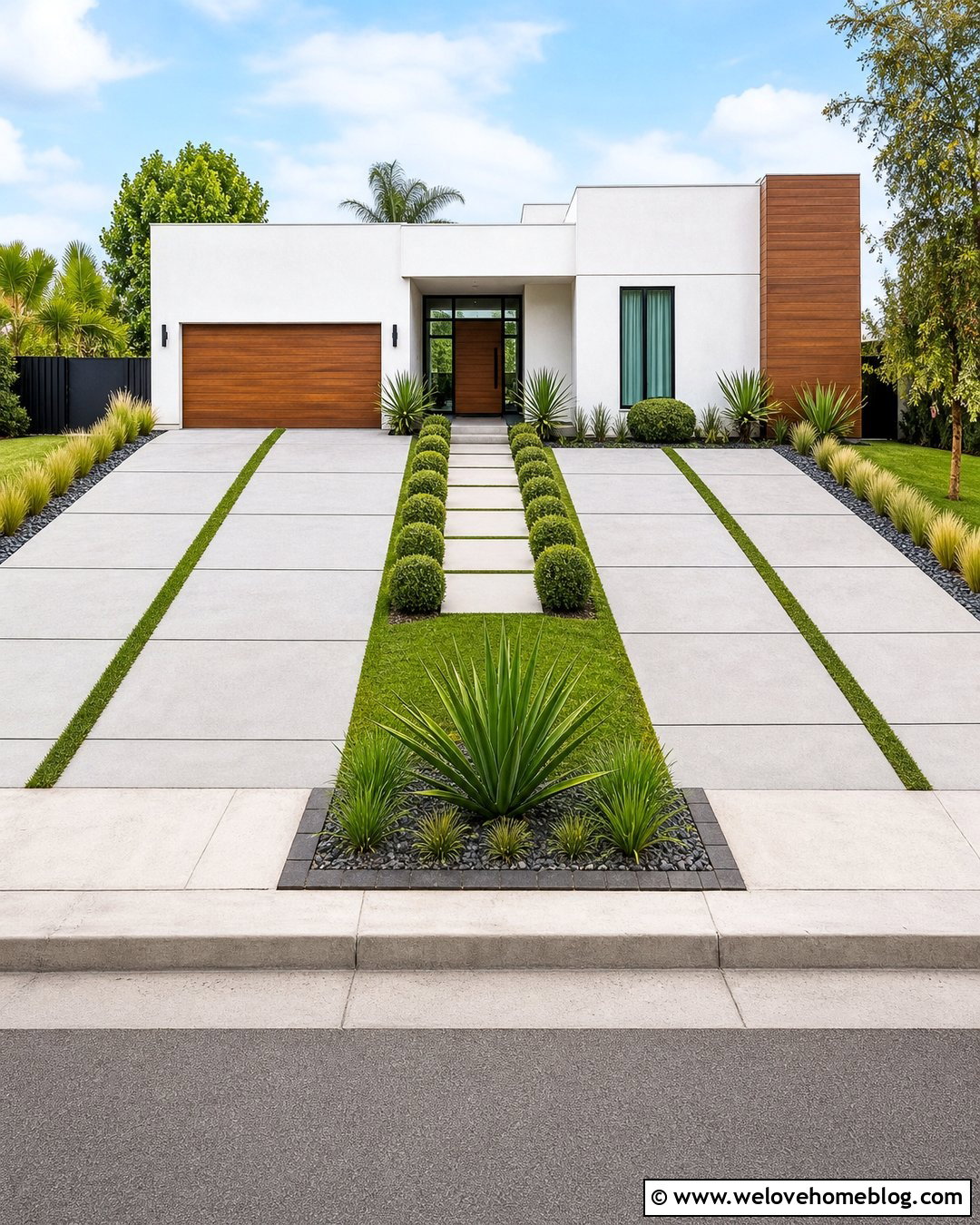
Thin grass strips can turn a broad concrete block driveway into a lighter, more architectural composition. Use large smooth concrete pavers in pale gray, arranged as defined parking panels or two continuous vehicle tracks. Add narrow green joints or wider lawn bands between the paved zones, depending on maintenance preferences and local growing conditions. Dark edging blocks should frame the outer perimeter and separate grass from planting beds. Pair the design with a contemporary house featuring white stucco, warm wood siding, and black window frames. Linear grasses, sculptural shrubs, and a direct slab walkway reinforce the modern geometry. Make the paved tire paths wide enough for comfortable daily use. Where living grass would struggle, low ground cover or decorative permeable aggregate can provide a similar visual break.
18. Small Concrete Block Driveway
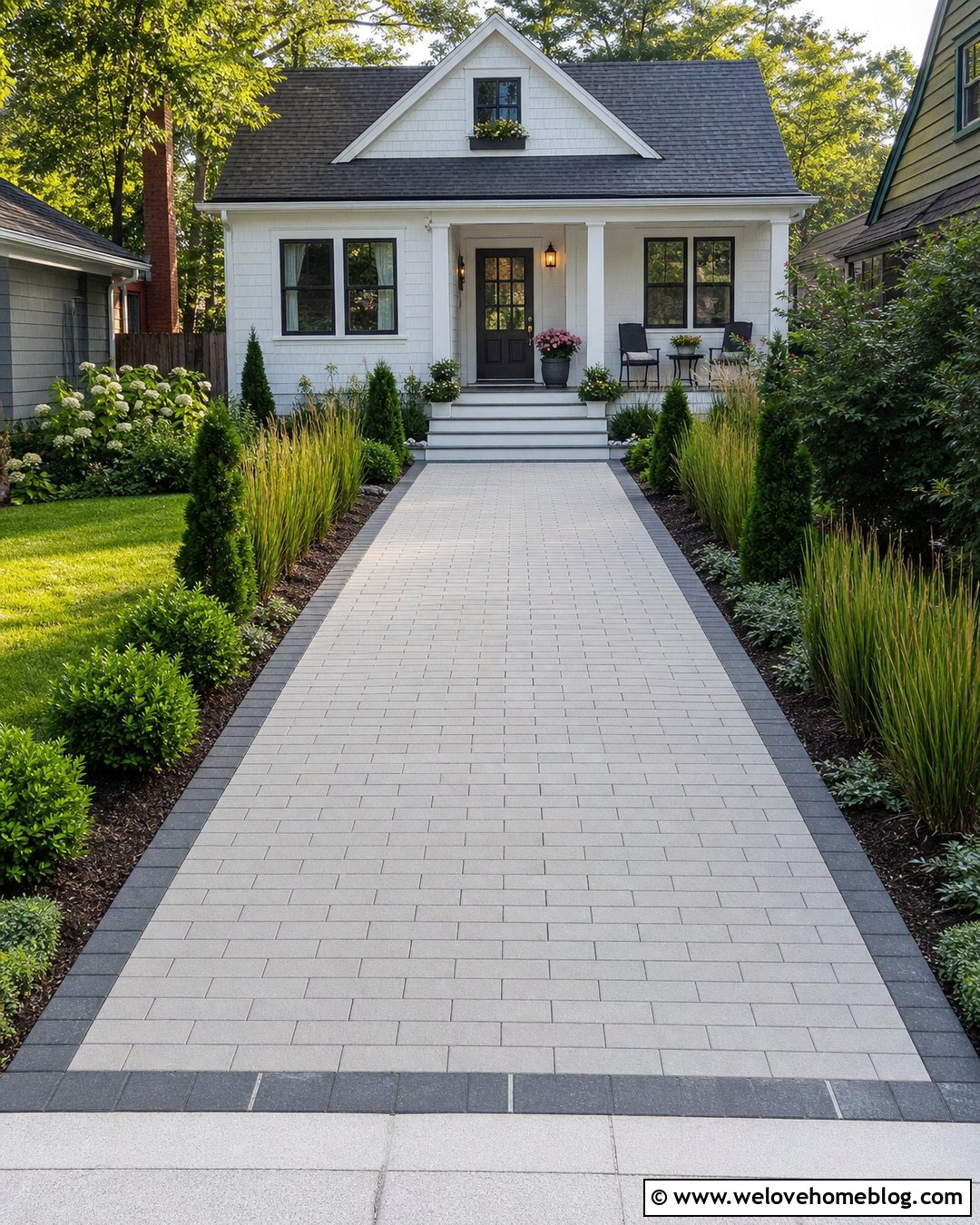
Limited front-yard space can still support an attractive and organized concrete block driveway. Use small rectangular pavers in a light-gray running bond, positioning the rows across the driveway to make the area feel visually wider. A single charcoal border provides definition without consuming valuable parking width. Replace bulky planting beds with narrow strips containing upright grasses, compact evergreens, and low ground cover. A walkway can share one driveway edge rather than dividing the yard into several cramped sections. Near the street, use a simple matching apron with no complicated medallion or excessive color changes. This streamlined arrangement is suitable for townhouses, cottages, and narrow suburban lots. Accurate planning is essential so doors, gates, paths, drainage features, and parking areas can function without competing for the same small space.
19. Wide Concrete Block Driveway With Center Pattern
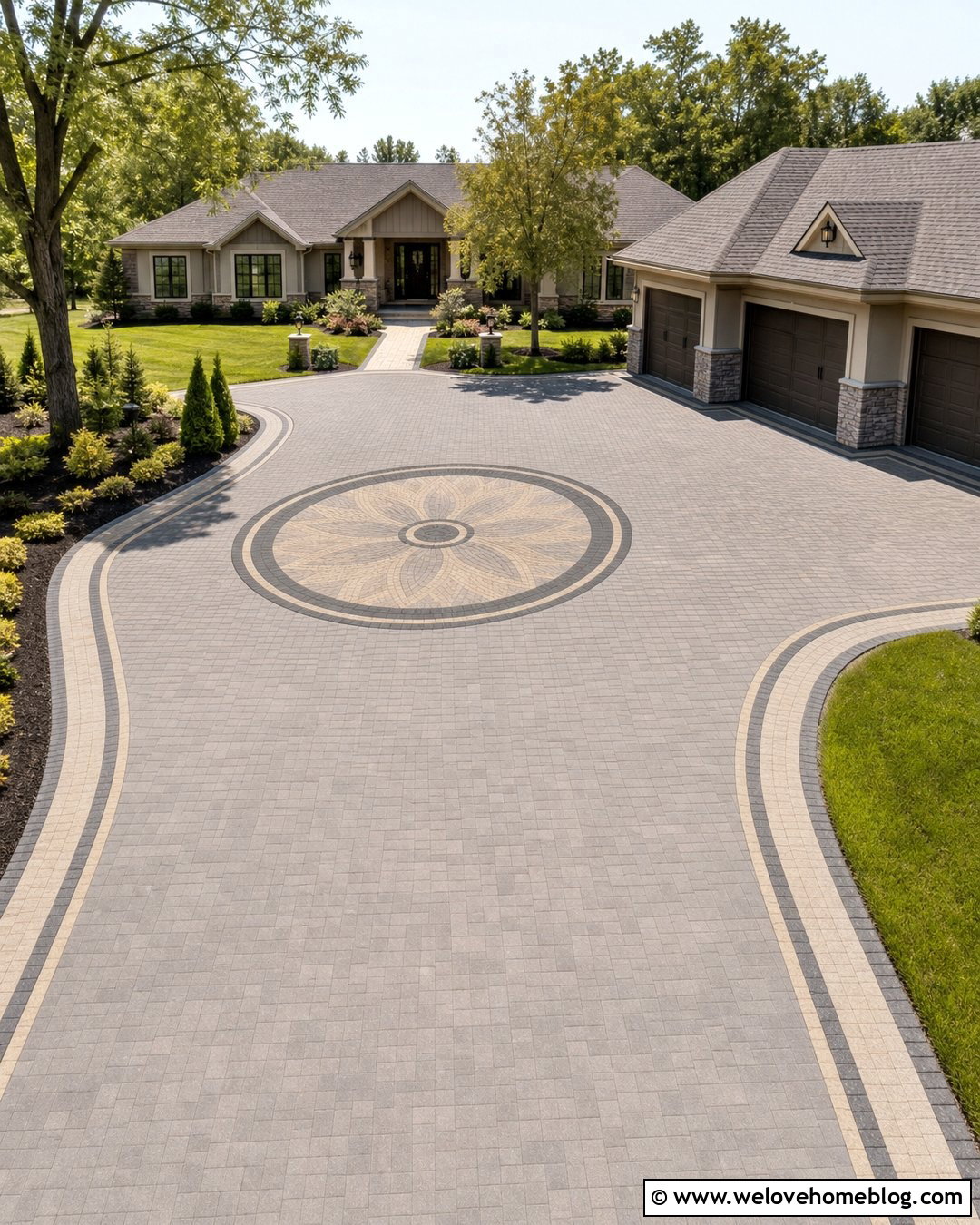
A wide driveway can feel empty unless its large surface is divided into visually manageable sections. Use warm-gray concrete blocks for the main field and create a simple circular or diamond-shaped center pattern with charcoal and sand-colored blocks. Position the feature on the primary approach rather than beneath a routinely parked vehicle. A double dark border can frame the driveway and outline separate parking bays in front of multiple garage doors. Balance the paving with large planting beds, broad lawn areas, and medium-size shade trees suited to the property. This complete design works well for expansive ranch, transitional, and estate-style homes. Keep the central pattern bold and uncomplicated so it reads clearly from the street. Small, intricate motifs may disappear when viewed across a large front yard.
20. Concrete Block Driveway With Lighted Entrance
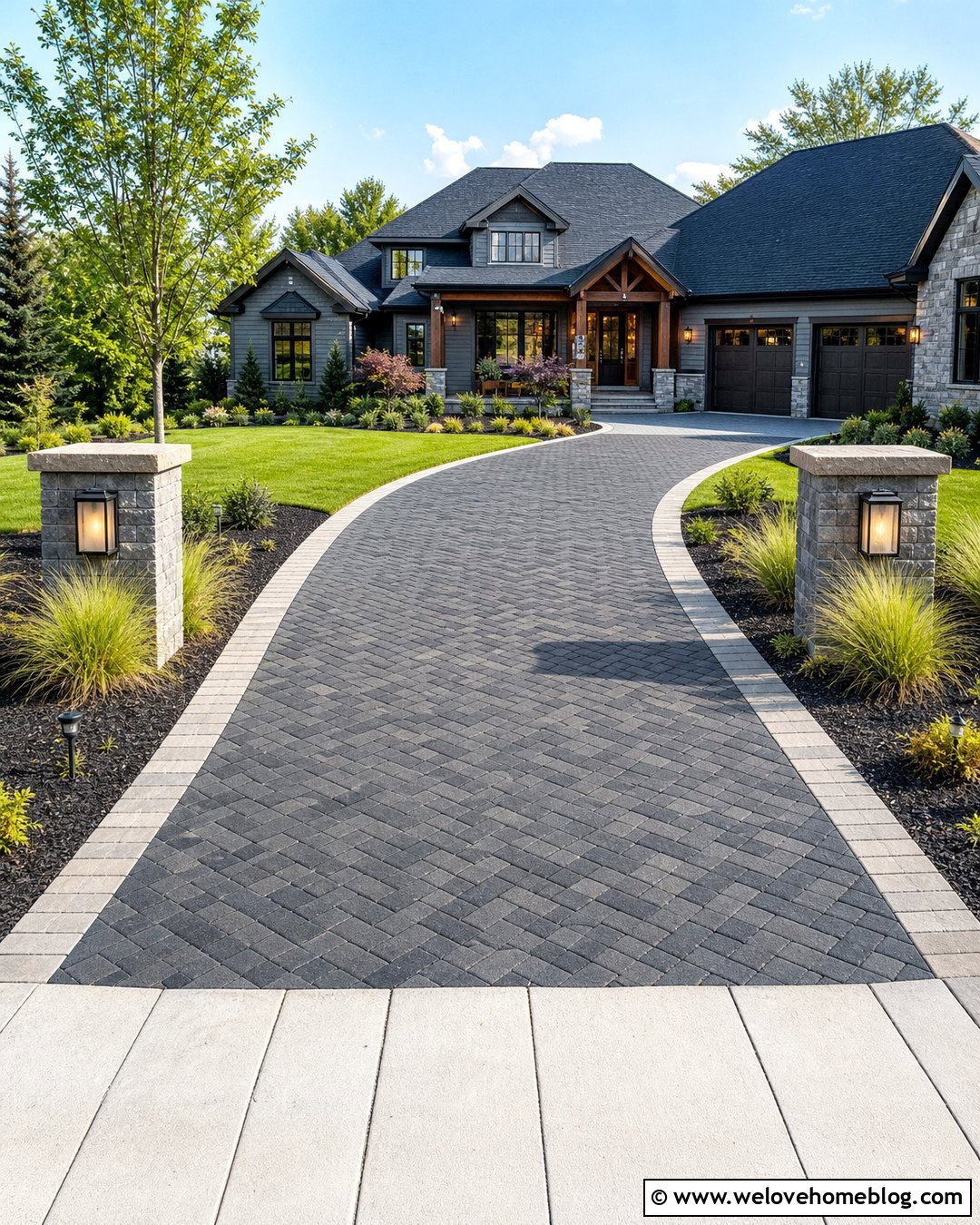
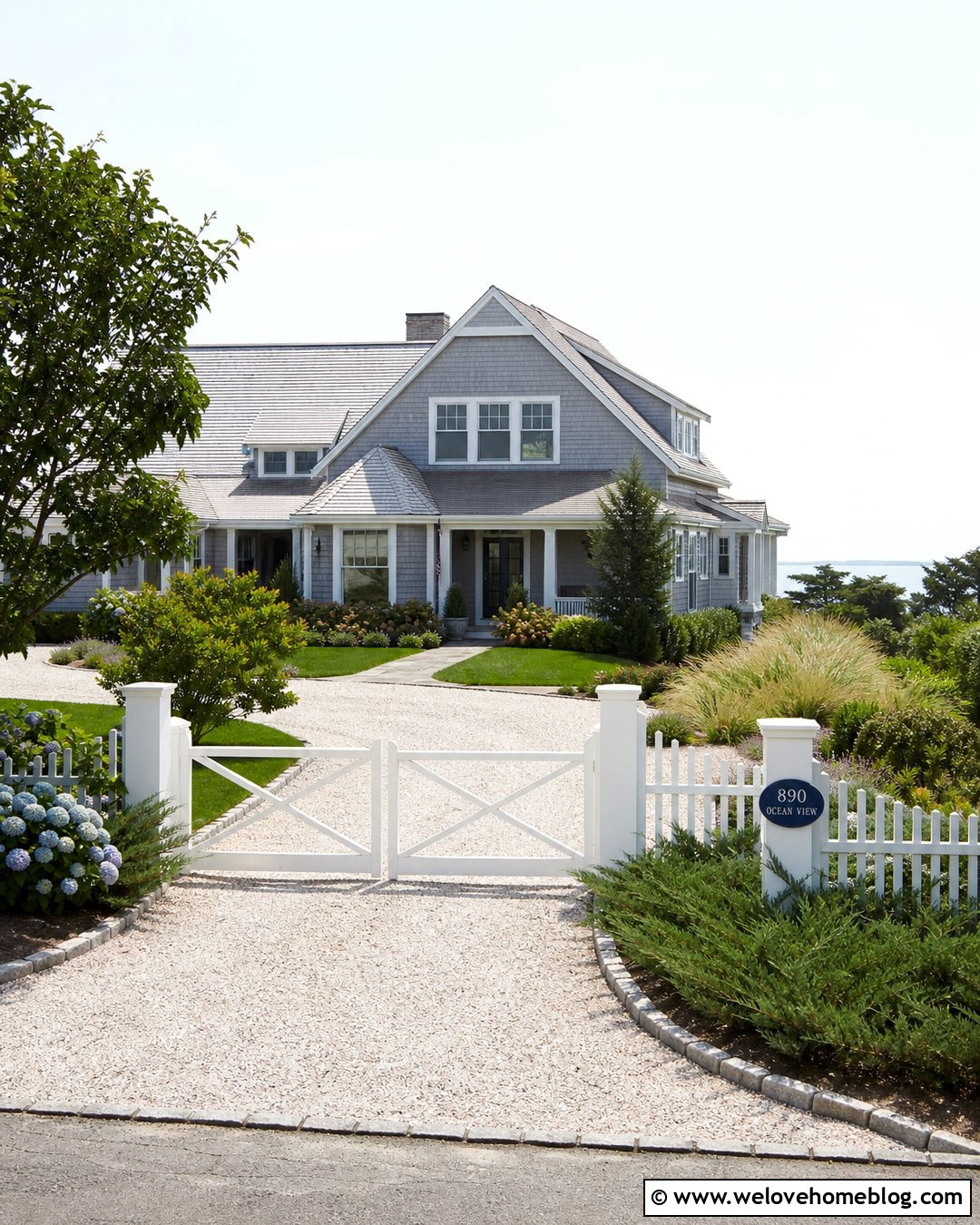
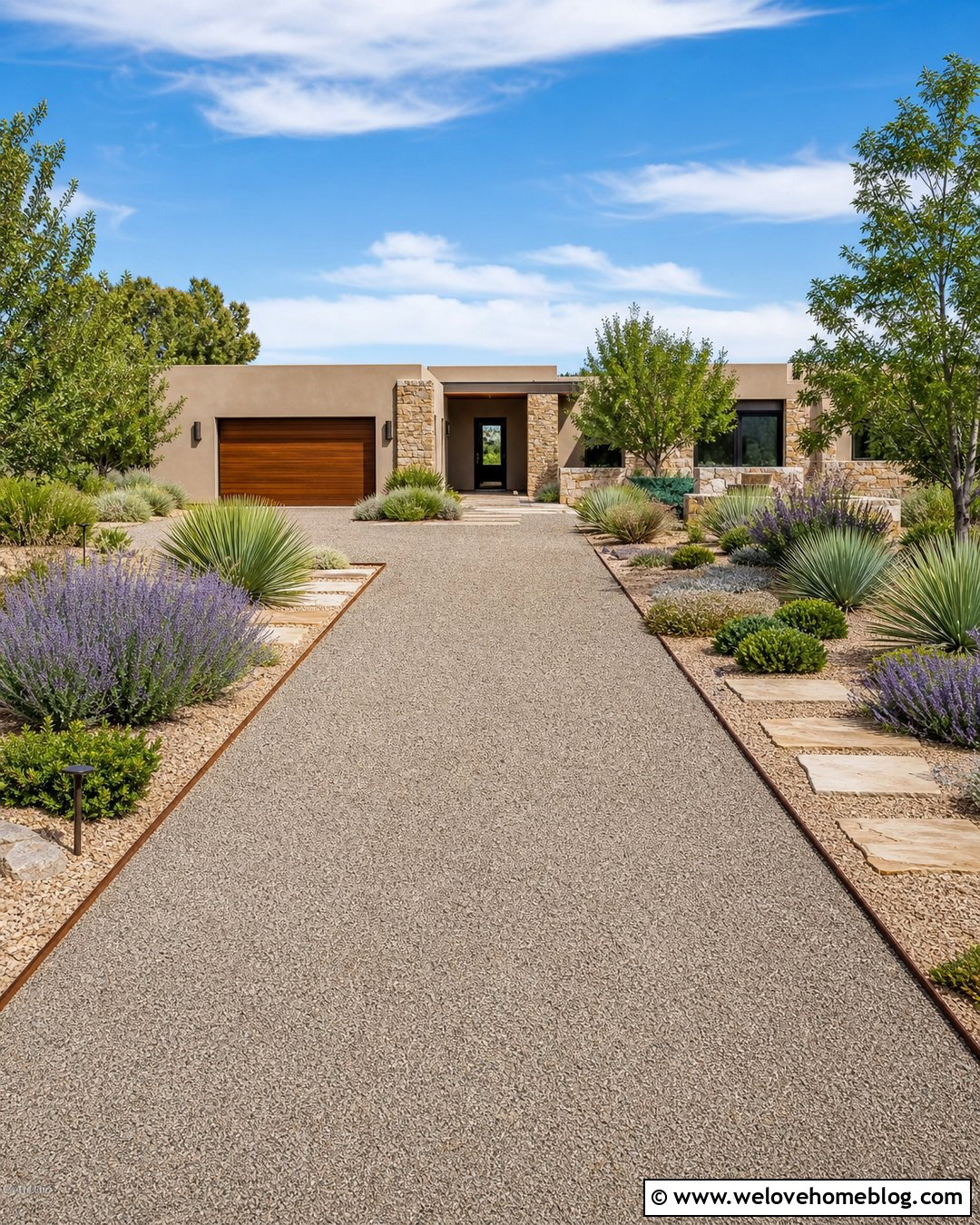
Good lighting can make a concrete block driveway entrance easier to understand while strengthening its daytime curb appeal. Start with textured charcoal and gray concrete pavers laid in a herringbone pattern along a straight or gently curved approach. Add pale concrete block borders that remain visible against the darker surface. At the street, install two low masonry pillars with shielded fixtures and a coordinated address plaque. Continue subtle path lighting beside low shrubs, ornamental grasses, and a walkway leading to the front door. The fixtures should support navigation without creating glare toward drivers, neighbors, or the road. A Craftsman, modern farmhouse, or transitional house provides a fitting backdrop. During daylight, the pillars serve as architectural anchors, making the full driveway entrance look finished even when the lights are off.
Conclusion:
The best Concrete Block Driveway Ideas combine attractive paving with a layout that supports everyday parking, walking, drainage, and maintenance. Start by choosing vehicle-rated concrete blocks that complement the home’s facade. Then select a pattern and border suited to the driveway’s size and shape. Herringbone layouts create energy, running bond patterns feel clean, and tumbled blocks support a traditional look. Permeable pavers and grid systems can also integrate drainage into the overall design when properly specified. Finally, use planting beds, walkways, lighting, and entrance features to connect the pavement with the surrounding yard. Careful base preparation, drainage planning, and strong edge restraints will help the finished driveway remain attractive, stable, and functional.

Related posts:


Leave a Reply