
Crushed concrete offers the relaxed look of gravel with a firmer, more interlocking surface. Made from processed reclaimed concrete, it can create an affordable driveway with plenty of character, especially when paired with strong edging, thoughtful grading, and simple landscaping. Properly processed recycled concrete aggregate is commonly used for base and subbase applications because its angular particles compact and lock together effectively. It also gives existing material a practical second use instead of relying entirely on newly quarried aggregate. () Color can range from pale gray to warm beige with subtle brick flecks, so every installation looks slightly different. From modern entrances to country properties, the complete designs below explore 20 Crushed Concrete Driveway Ideas.

1. Straight Crushed Concrete Driveway With Steel Edging
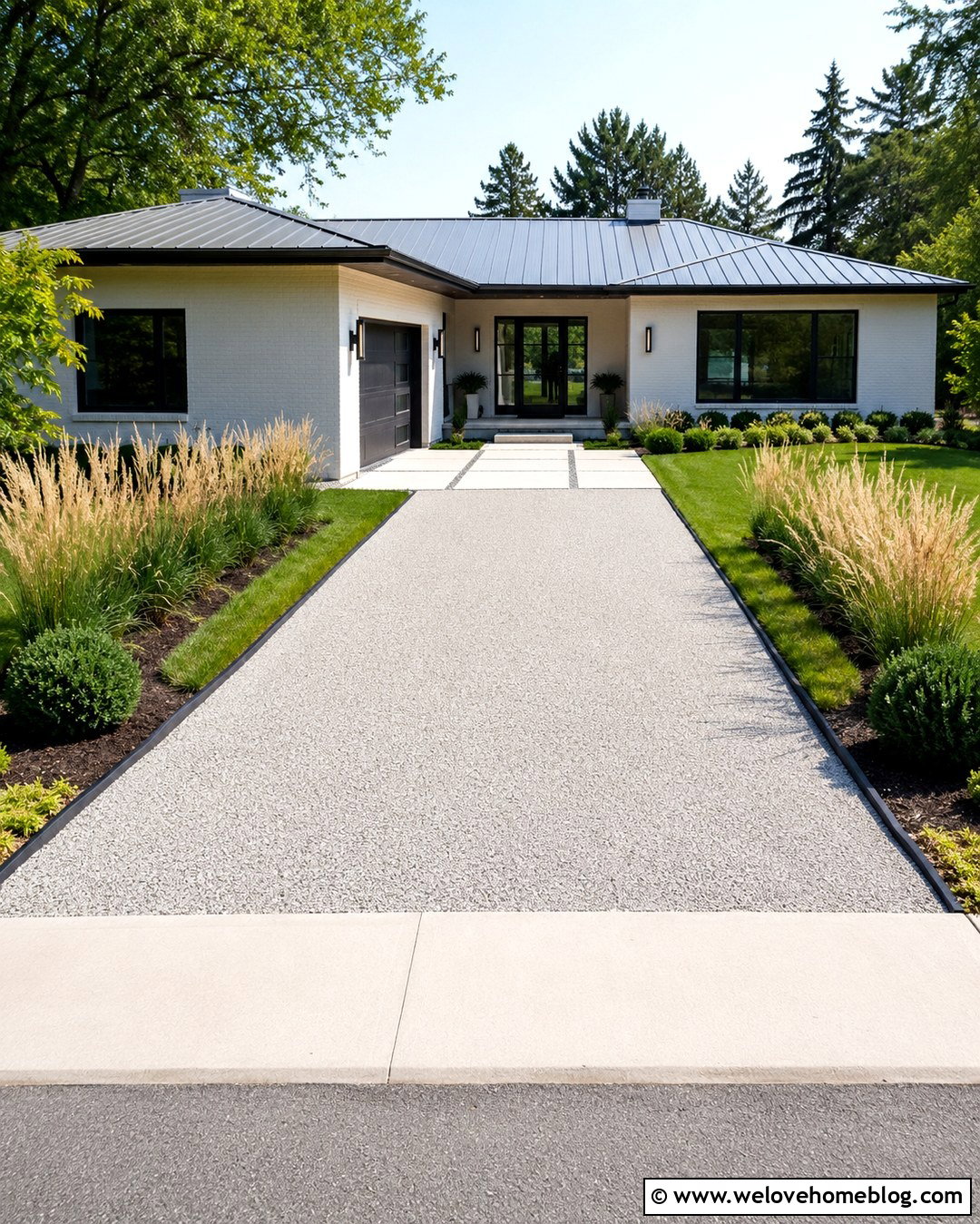
A straight driveway creates a clean sightline from the street to the garage. Use finely graded crushed concrete in a pale gray tone, then compact it for a smooth, consistent finish. Dark steel edging provides a crisp boundary and prevents loose aggregate from spreading into the lawn. This combination works especially well with a modern ranch or simple contemporary home. Add rectangular planting beds filled with ornamental grasses, compact evergreen shrubs, and light-colored river rock. A wide concrete walkway can run beside the driveway without competing with its texture. Keep the center slightly crowned or establish an appropriate cross slope so water moves away from the driving surface and nearby foundations. The finished look is practical, uncluttered, and easy to refresh.
2. Curved Crushed Concrete Driveway With Cobblestone Edging
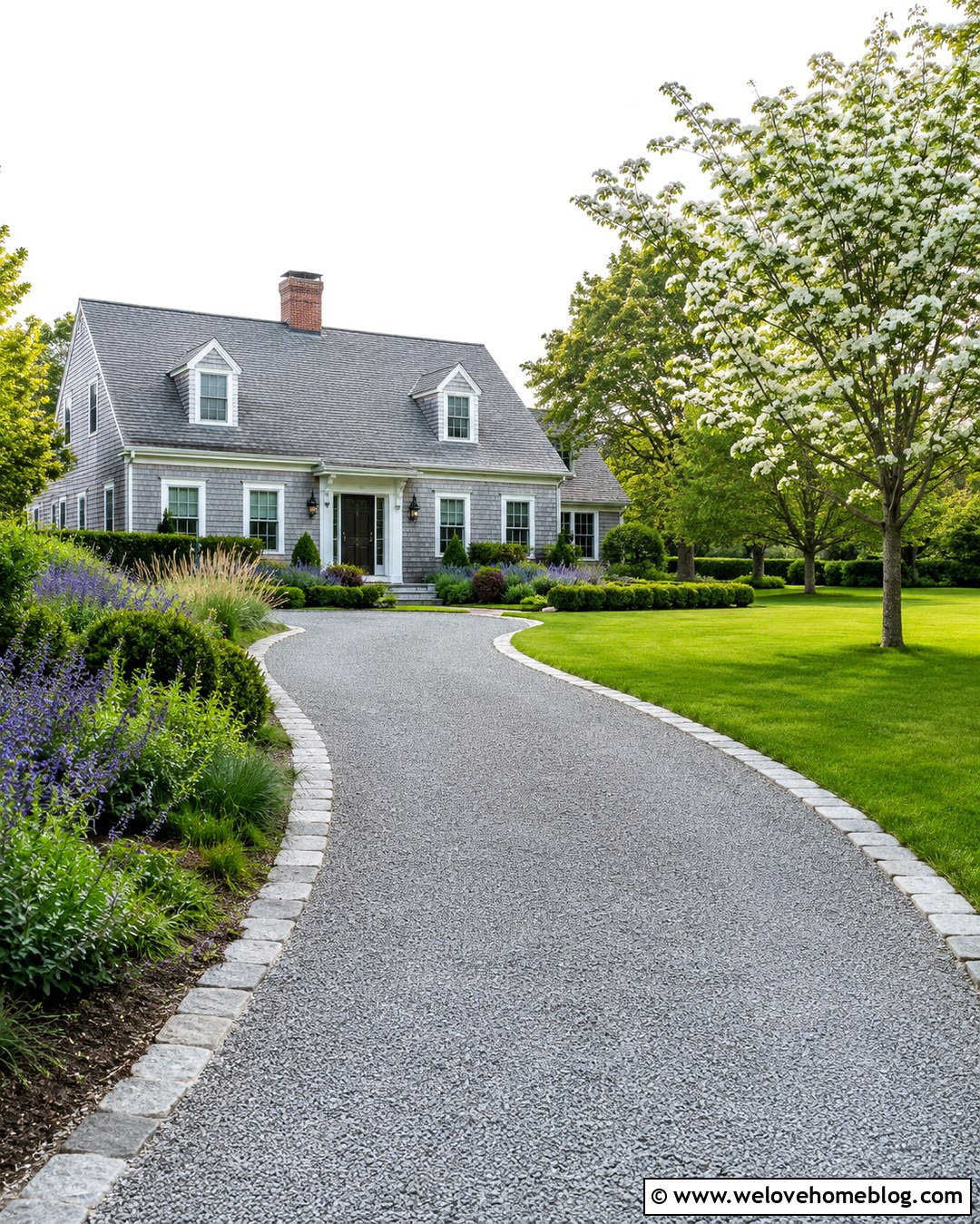
Soft curves can make an average front yard feel larger and more inviting. Shape the crushed concrete driveway in a gentle arc that reveals the house gradually rather than creating a direct, rigid approach. Reclaimed cobblestones along both sides add definition and contrast with the finer gray aggregate. Set the stones low enough to avoid creating an awkward obstacle near parking areas. Fill the outer curve with lavender, salvia, ornamental grasses, and low evergreen shrubs for year-round structure. On the inner curve, maintain an open lawn or plant one carefully positioned ornamental tree. This complete driveway look suits cottages, Cape Cod homes, and traditional brick houses. The solid stone edge also helps hold the compacted material in place around bends.
3. Circular Crushed Concrete Driveway With Brick Aprons
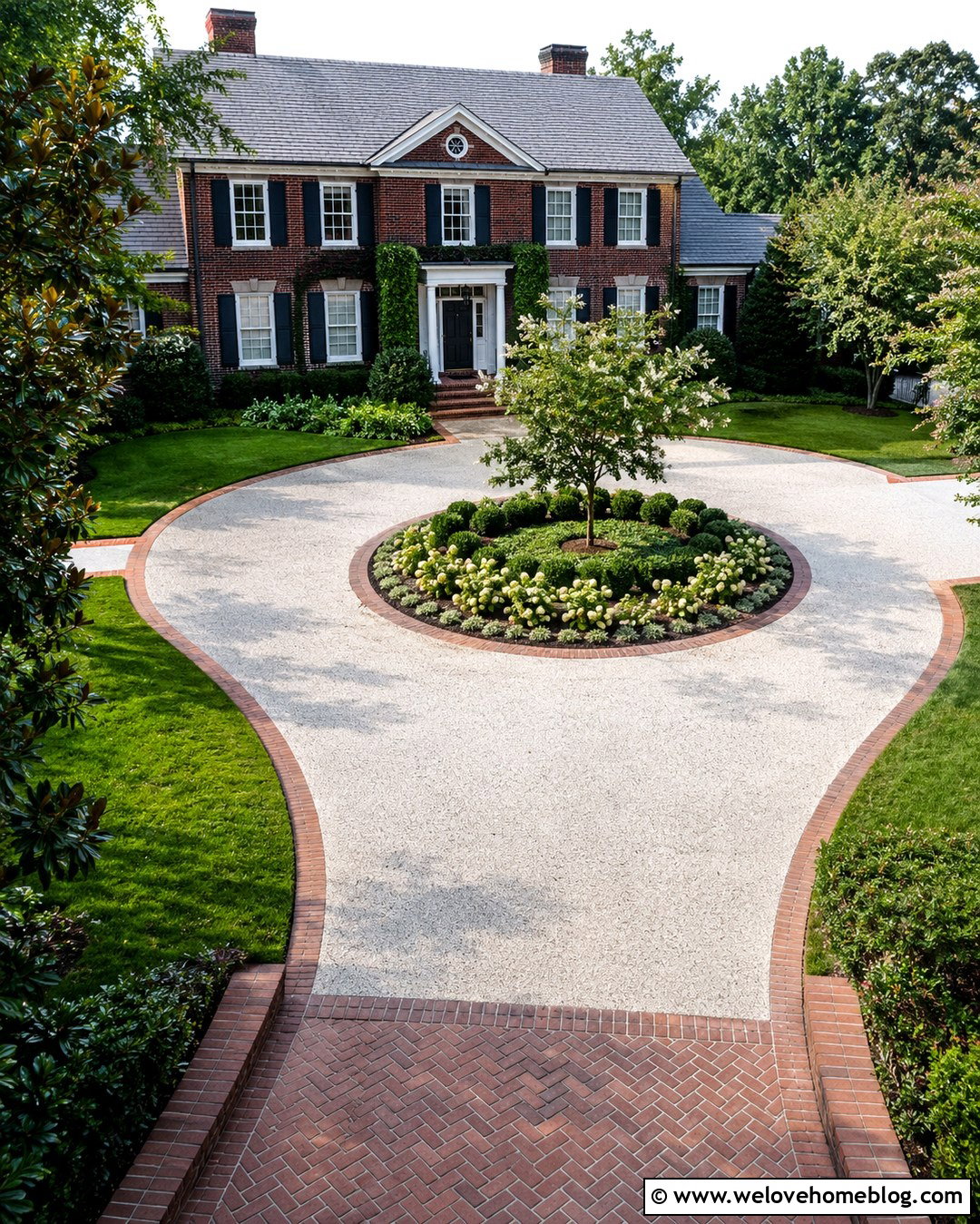
A circular layout gives guests an easy arrival and departure route while creating a prominent landscaped centerpiece. Cover the main driving lane with compacted crushed concrete and install clay brick aprons where the driveway meets the street and front walkway. A matching brick ribbon along the outer edge ties the surfaces together. In the center island, combine a small flowering tree with hydrangeas, boxwoods, and seasonal ground cover. Keep plants low near entry and exit points so drivers have clear views of pedestrians and traffic. This layout looks natural in front of colonial, Georgian, and large traditional homes. Because circular driveways require careful turning dimensions, drainage planning, and municipal access approval, confirm the layout before excavation rather than adjusting it after the aggregate arrives.
4. Farmhouse Crushed Concrete Driveway With Timber Borders
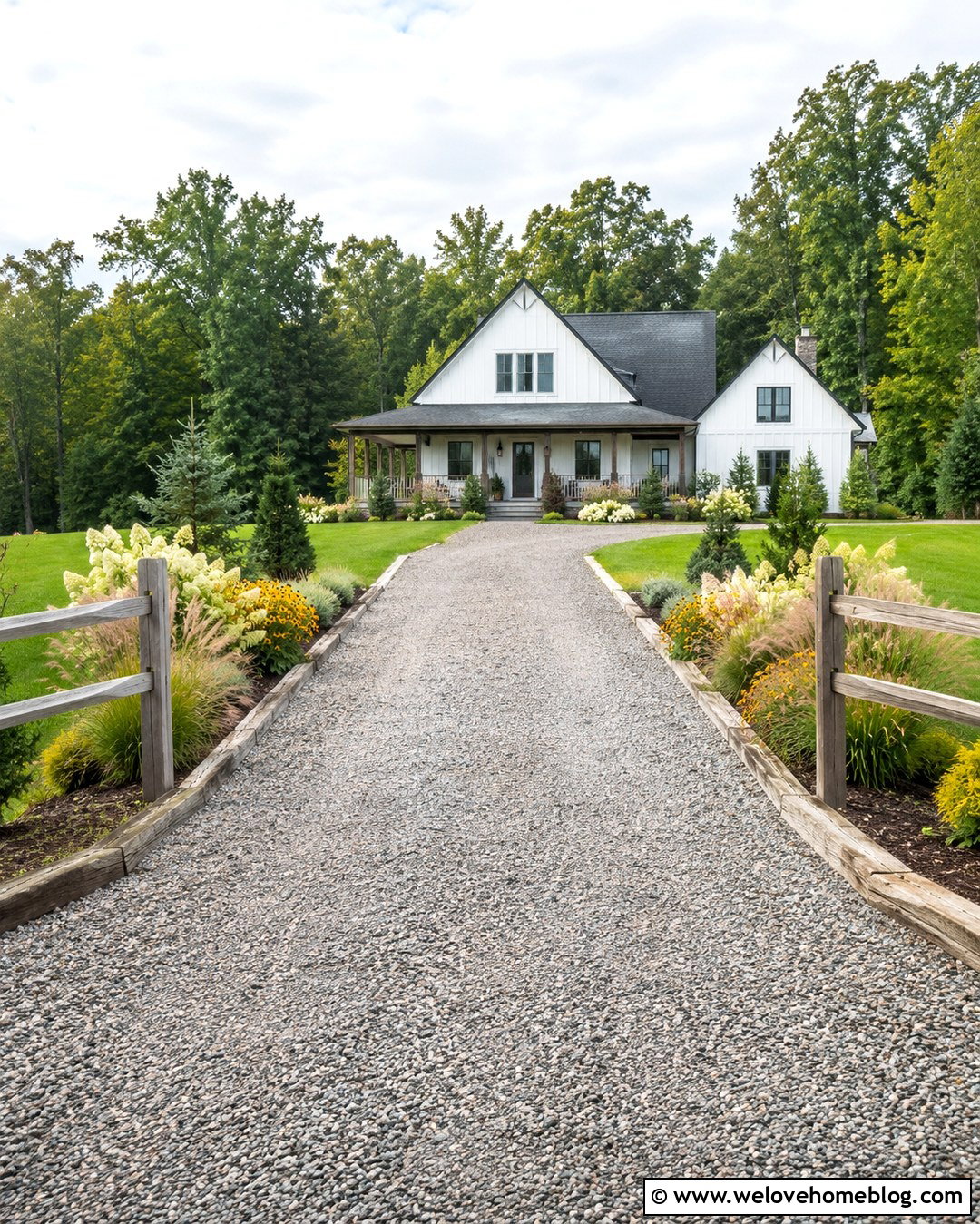
Weathered timber borders bring warmth to the cool, irregular tones of crushed concrete. Run a broad, straight driveway toward a modern farmhouse, using compacted gray-and-tan recycled concrete with visible stone texture. Install pressure-treated or naturally durable timbers along planted sections, securing them properly so they remain aligned. Behind the borders, use informal masses of fountain grass, panicle hydrangeas, black-eyed Susans, and evergreen foundation shrubs. A split-rail fence near the street can strengthen the rural character without enclosing the entire property. Finish the entrance with wider turning areas and simple timber posts. This design works best where the driveway has enough room to feel relaxed. Avoid placing untreated wood directly against persistently wet soil, where deterioration can occur more quickly.
5. Modern Crushed Concrete Driveway With Black Paver Borders
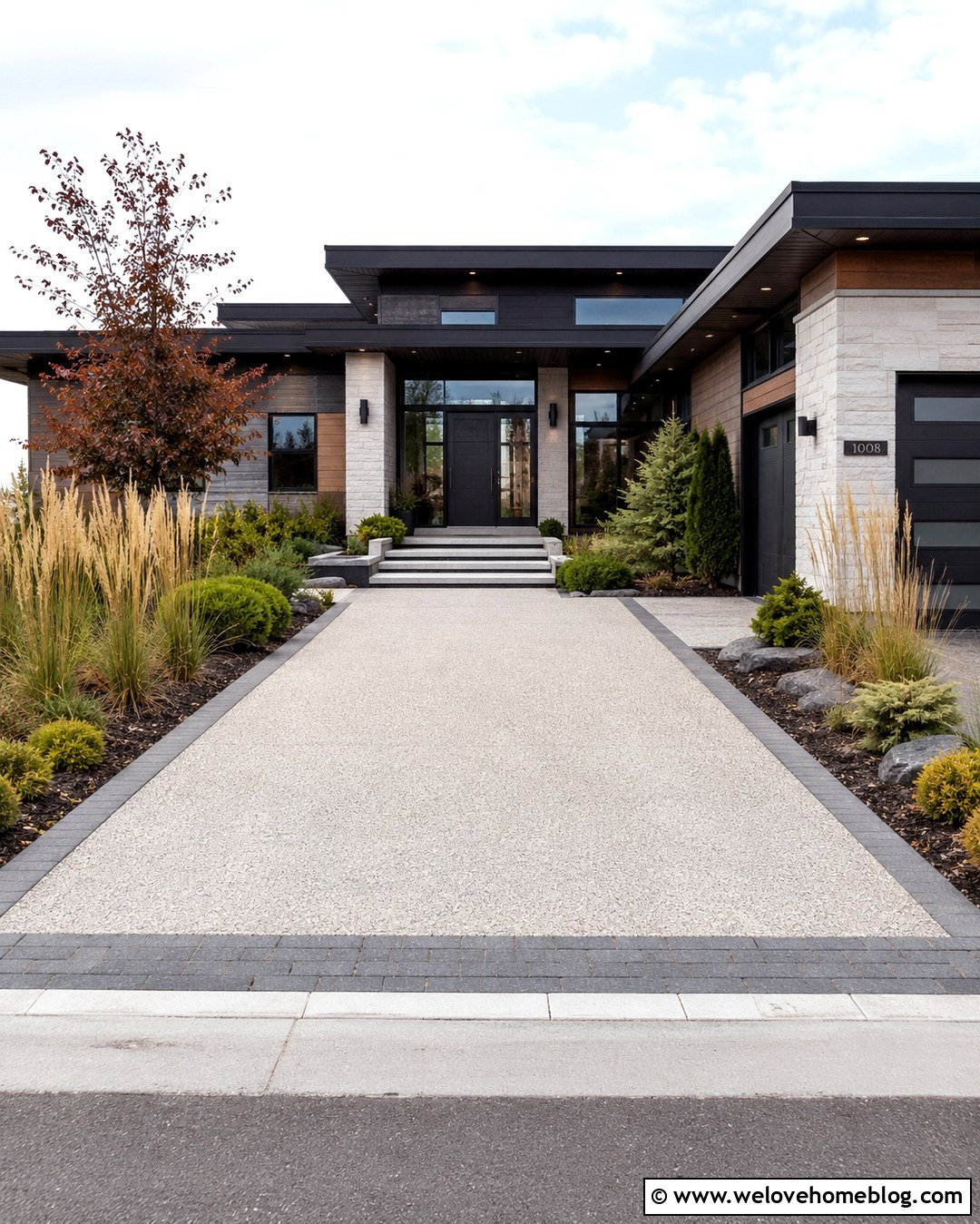
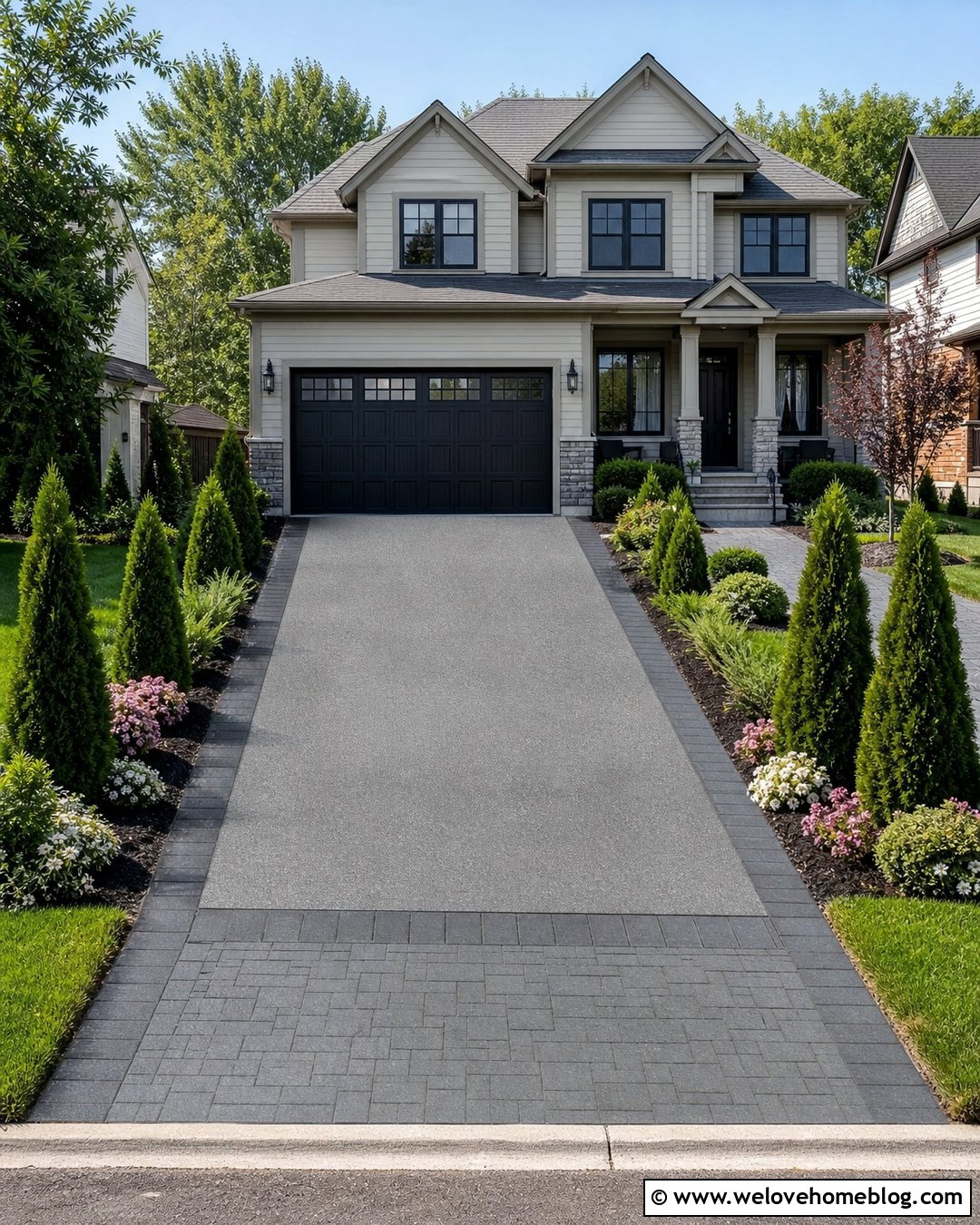
Dark pavers can make light crushed concrete look surprisingly refined. Begin with a rectangular driveway leading to a modern home, then frame it with charcoal concrete pavers installed as a flat soldier-course border. The dark outline clearly defines parking spaces and visually connects the driveway to black windows, roofing, or garage doors. Add narrow planting beds with feather reed grass, dwarf conifers, and sculptural shrubs. Large concrete stepping pads can form a separate walkway through the landscaping. For a coordinated entrance, repeat the charcoal pavers across the driveway as a narrow threshold band. The recycled aggregate should be screened and evenly graded so the finished surface looks intentional rather than rough. Regular compaction and occasional top-dressing will help preserve the clean geometry.
6. Crushed Concrete Driveway With a Grass Center Strip
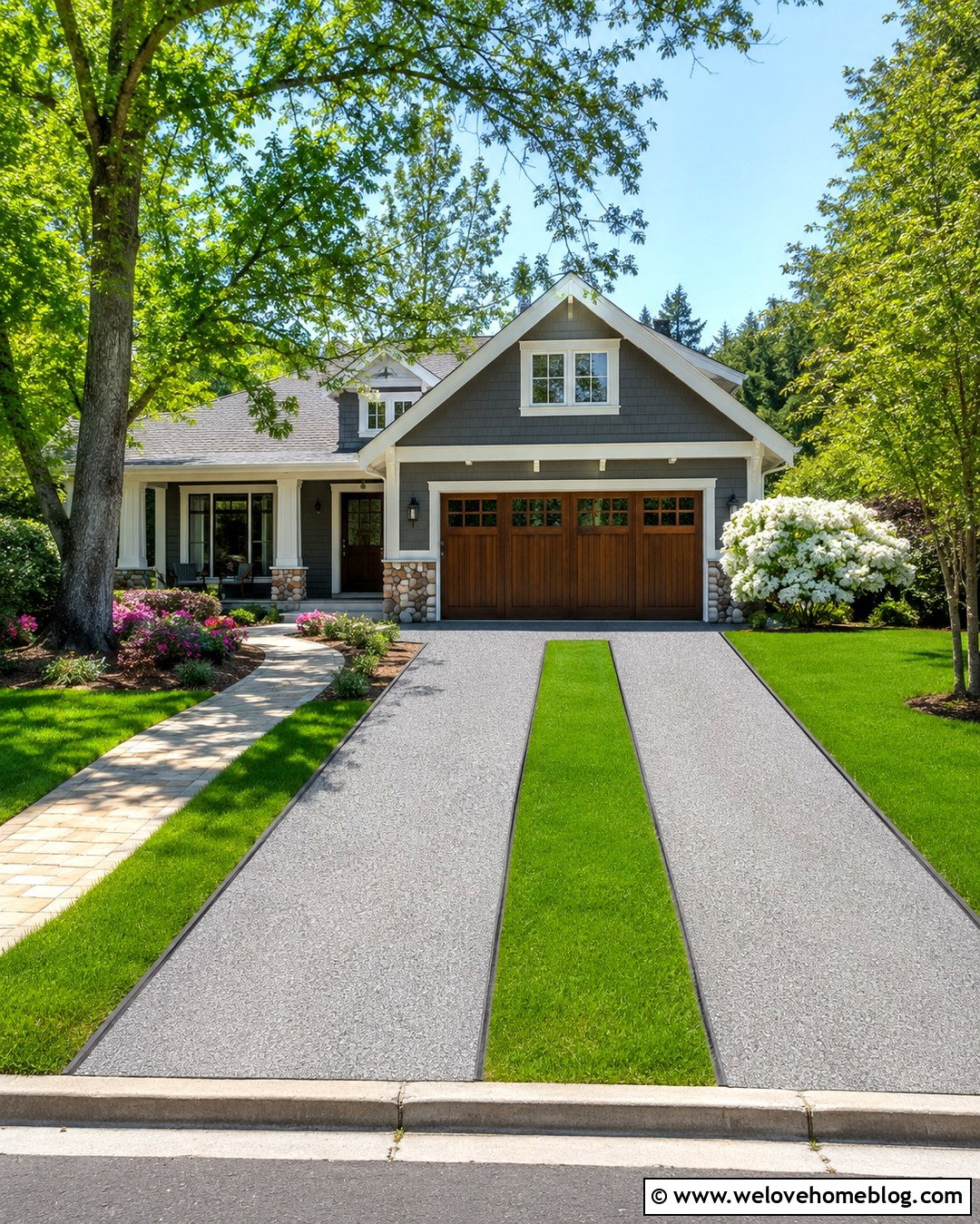
A grass center strip breaks up a wide driveway and reduces the amount of visible aggregate. Create two compacted crushed concrete driving tracks with a broad green strip running between them. This layout is best for a straight, private driveway where vehicle paths are predictable. Define the grass with flush concrete or steel edging so mowing remains simple and wheels can cross the boundary when necessary. Near the garage, transition into one full-width parking area to provide easier turning and door clearance. Frame the approach with medium-height shrubs, shade trees, and an adjacent walkway. The design complements Craftsman homes, ranch houses, and rural properties. Provide adequate soil depth and irrigation in the center because reflected heat and occasional tire traffic may stress the lawn.
7. Small Crushed Concrete Driveway With Concrete Curbs
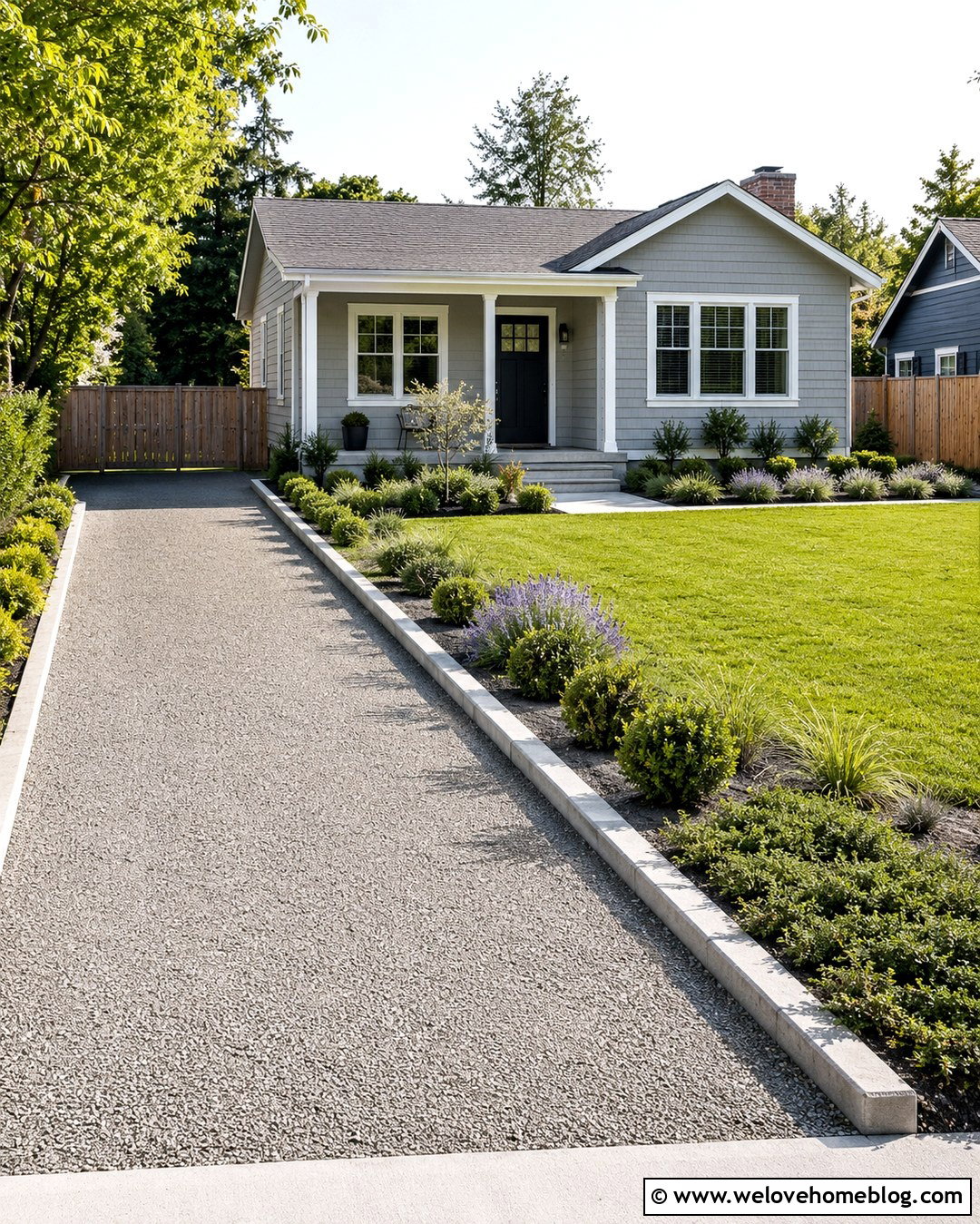
In a compact front yard, clearly controlled edges can make the driveway feel organized instead of crowded. Use light gray crushed concrete for a single-car driveway and contain it with narrow poured concrete curbs. Keep the curbs low and simple, especially beside doors or pedestrian routes. A matching concrete walkway can branch toward the porch, while a small planting bed fills the remaining corner of the yard. Choose compact plants such as dwarf boxwood, creeping juniper, catmint, or small ornamental grasses. Limit the material palette to crushed concrete, smooth concrete, green planting, and one accent color from the house. This streamlined treatment works well with bungalows and small suburban homes. Careful grading is especially important because small lots offer fewer places to direct runoff safely.
8. Long Crushed Concrete Driveway With Tree-Lined Landscaping
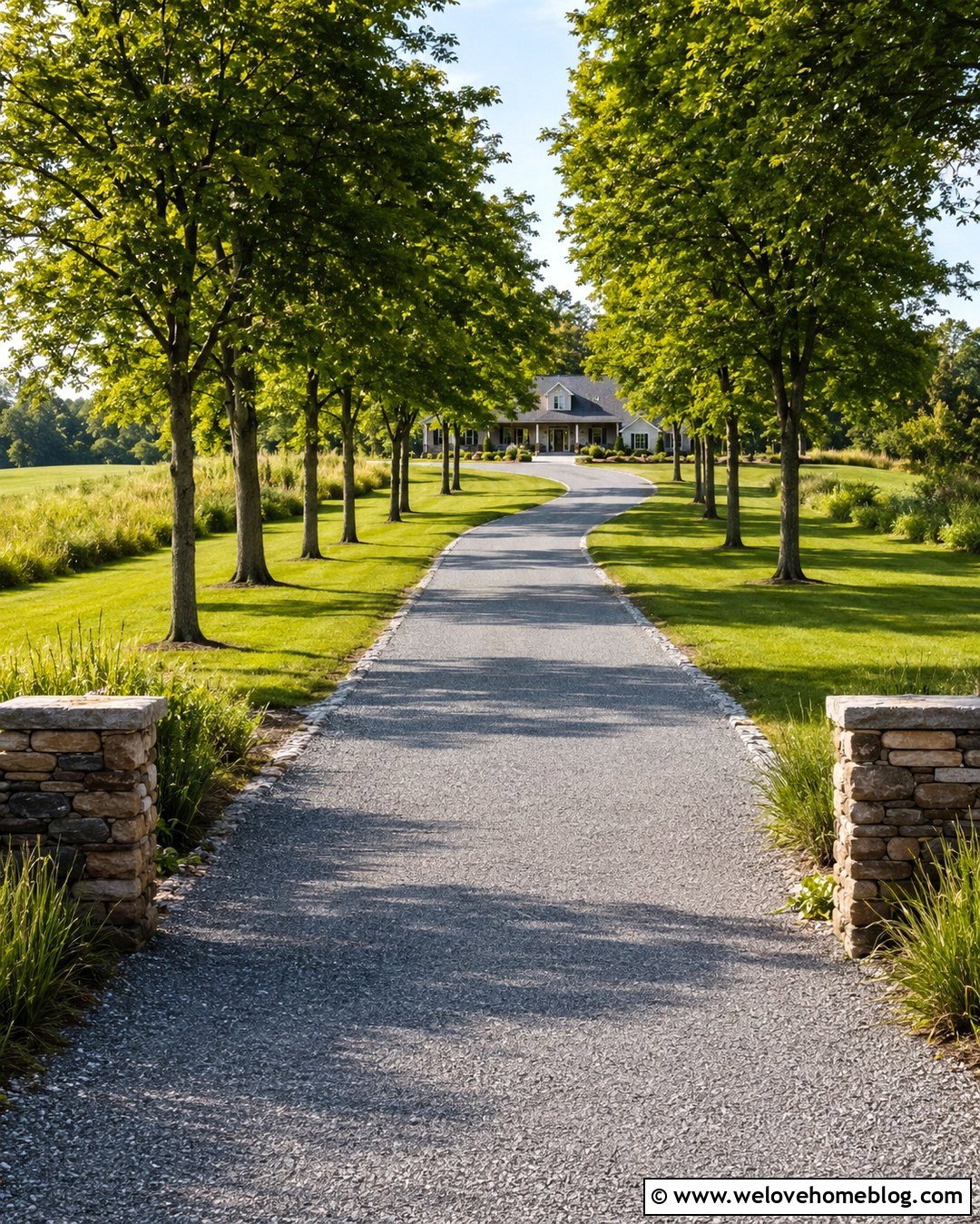
A long driveway benefits from repetition because it creates rhythm and makes the approach feel purposeful. Spread compacted crushed concrete across a gently curving or straight lane, then border both sides with evenly spaced deciduous trees. Trees with upright growth habits preserve driving clearance while producing a shaded avenue as they mature. Underplant them with broad lawn strips or simple masses of native grasses rather than complicated flower beds that demand constant care. Near the house, widen the driveway into a practical parking court with a stone or paver border. Low entrance pillars can mark the beginning without blocking the view. Confirm mature canopy size, root behavior, and utility locations before planting. Trees should sit far enough from the surface to reduce branch conflicts and future edge disturbance.
9. Sloped Crushed Concrete Driveway With Drainage Swales
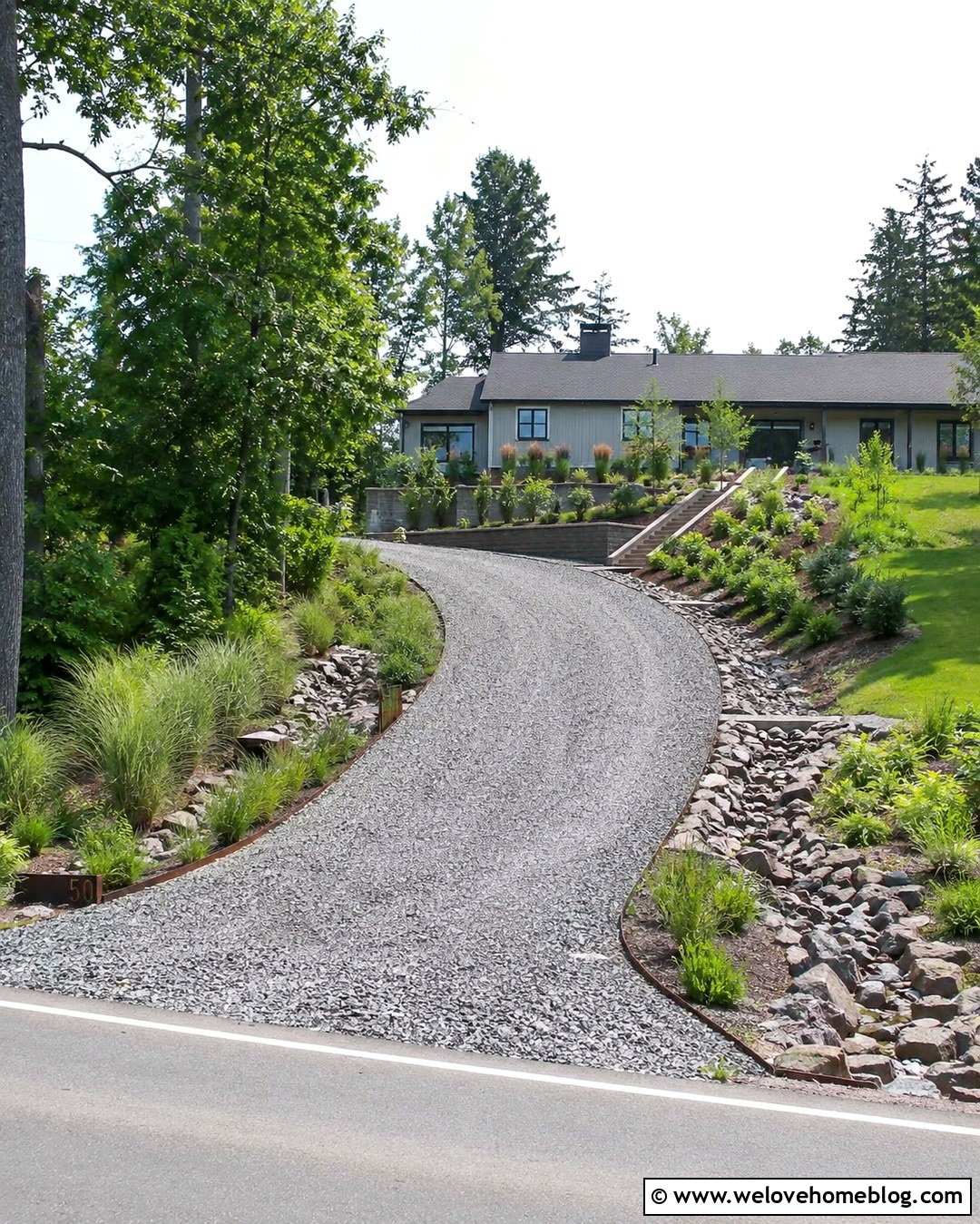
Water management should shape the entire design of a sloped driveway. Use well-graded crushed concrete that contains a controlled mix of aggregate sizes and fines, then compact it in suitable lifts over a stable base. Create shallow vegetated swales beside the driveway to collect and guide runoff toward an approved discharge area. Line faster-flowing sections with durable stone where erosion is likely. Low concrete curbs or buried steel edging can keep aggregate from washing into the swales. Plant moisture-tolerant grasses and compact shrubs along the drainage areas, leaving clear access for maintenance. The driveway can curve gently across the slope to soften the grade, where site conditions permit. Improperly processed recycled concrete can affect drainage performance, making clean material, suitable gradation, and site-specific planning essential. ()

10. Crushed Concrete Driveway With River Rock Borders
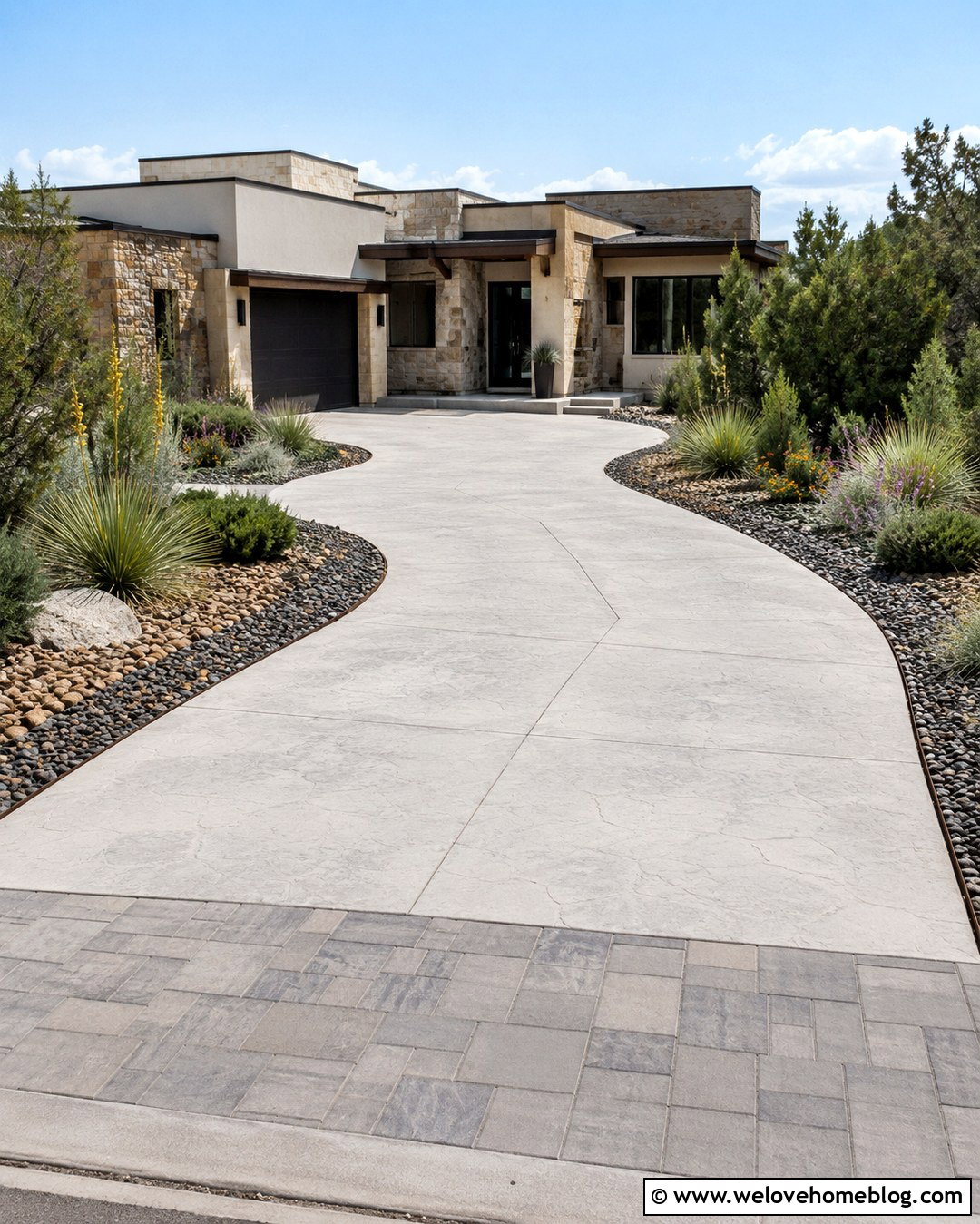
Rounded river rock creates a strong textural contrast beside angular crushed concrete. Build the main driveway with compacted pale gray recycled concrete, then add wide river-rock borders along the planting beds. Install rigid edging between the two aggregates so they do not mix under tires, rainfall, or routine maintenance. Use larger river stones rather than tiny pebbles for clearer separation. Behind the border, combine ornamental grasses, spreading junipers, and a few drought-tolerant flowering perennials. A curved layout makes the contrasting materials especially noticeable and suits desert-inspired, transitional, or contemporary landscaping. Keep river rock away from primary wheel paths because rounded stones can shift more easily. At the street, finish the entrance with a flat paver apron that neatly contains both materials.
11. Crushed Concrete Driveway With a Paver Parking Pad
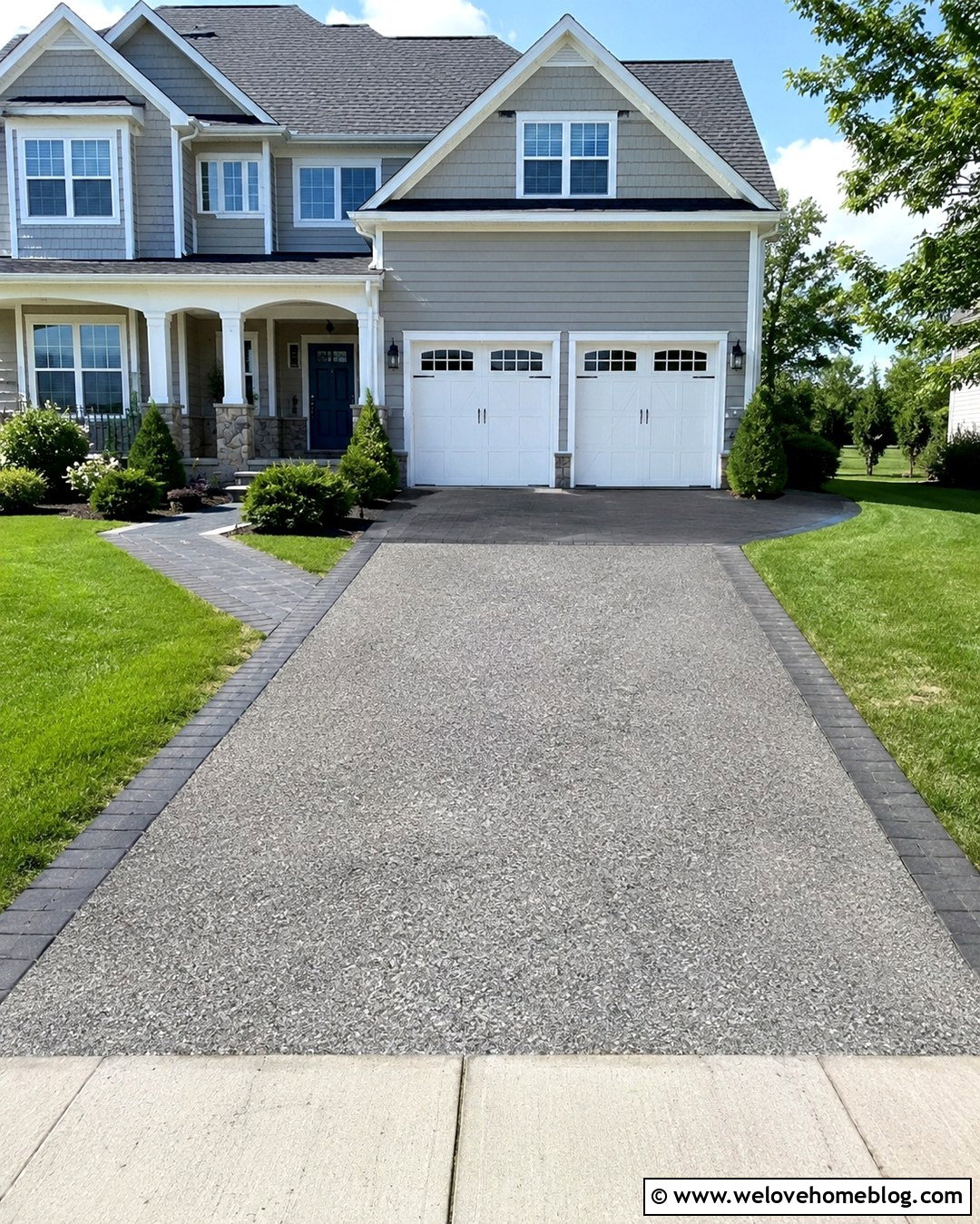
Combining crushed concrete with pavers places a more finished surface where vehicles sit most often. Use compacted crushed concrete along the main approach, then transition to concrete or brick pavers in front of the garage. The paver parking pad provides a crisp visual destination and can reduce surface disturbance in turning and braking zones. Repeat the same pavers as a border along the driveway or as bands across the aggregate. A simple lawn, evergreen foundation planting, and paved walkway complete the design without introducing too many materials. This mixed-surface layout can help homeowners concentrate premium materials where they have the greatest visual impact. Carefully align the elevations at the transition so tires, snow-removal equipment, and walking traffic move smoothly between the two surfaces.
12. White Crushed Concrete Driveway With Limestone Edging
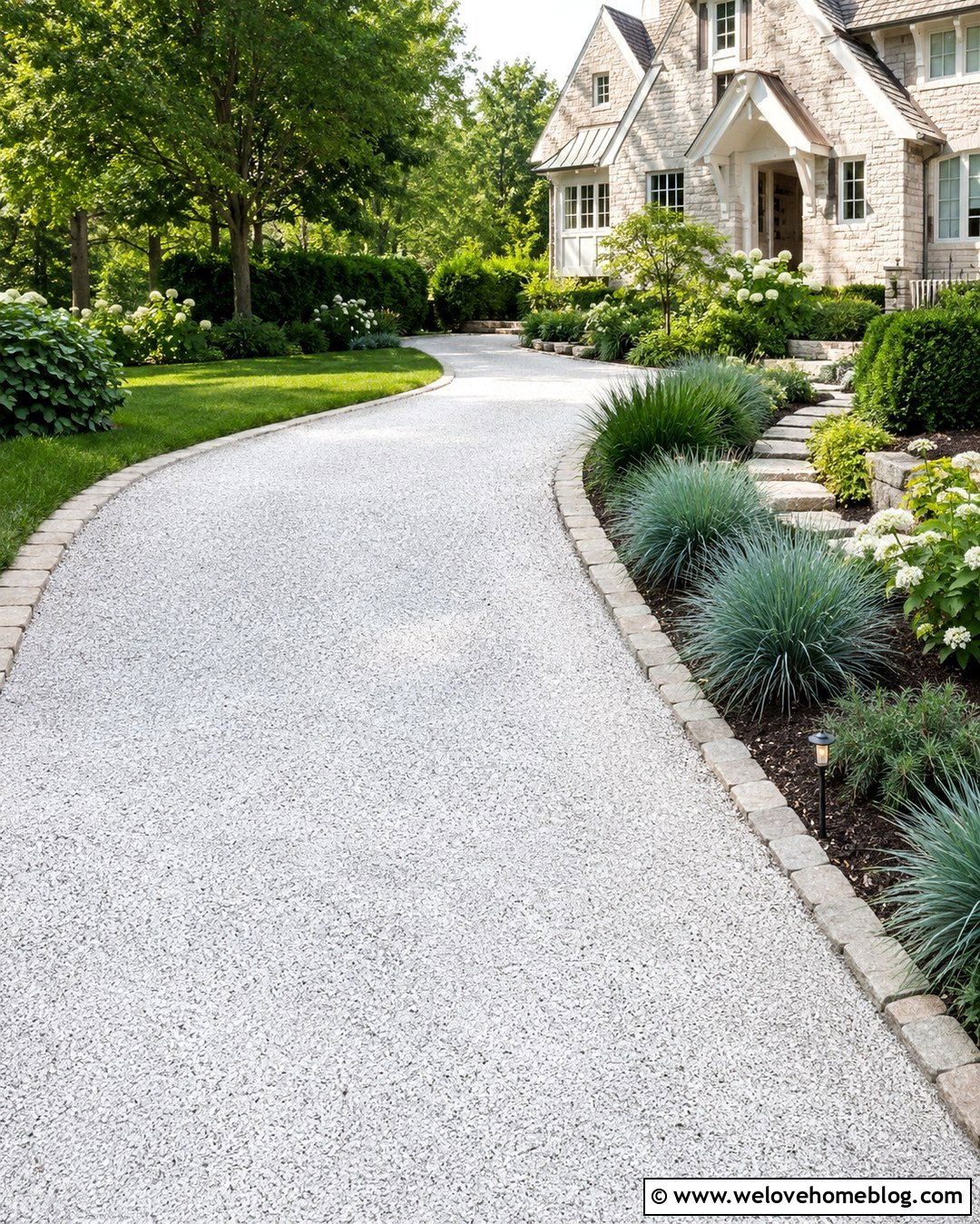
Bright crushed concrete can lighten a shaded yard and complement pale exterior finishes. Select clean, screened recycled concrete with a mostly white or light silver appearance. Frame the driveway with rectangular limestone blocks in a warm cream tone to create subtle contrast. A gentle curve will prevent the light-colored surface from looking too formal or severe. Plant the borders with deep green shrubs, blue-green ornamental grasses, and white flowering perennials. Against a stone cottage or light-painted Cape Cod home, the limited palette feels cohesive and fresh. Pale aggregate may display leaves, soil, and tire marks more readily, so provide generous planting-bed mulch and practical maintenance access. Before ordering, inspect a current material sample because recycled aggregate color can vary according to its original source.
13. Gray Crushed Concrete Driveway With Brick Ribbons
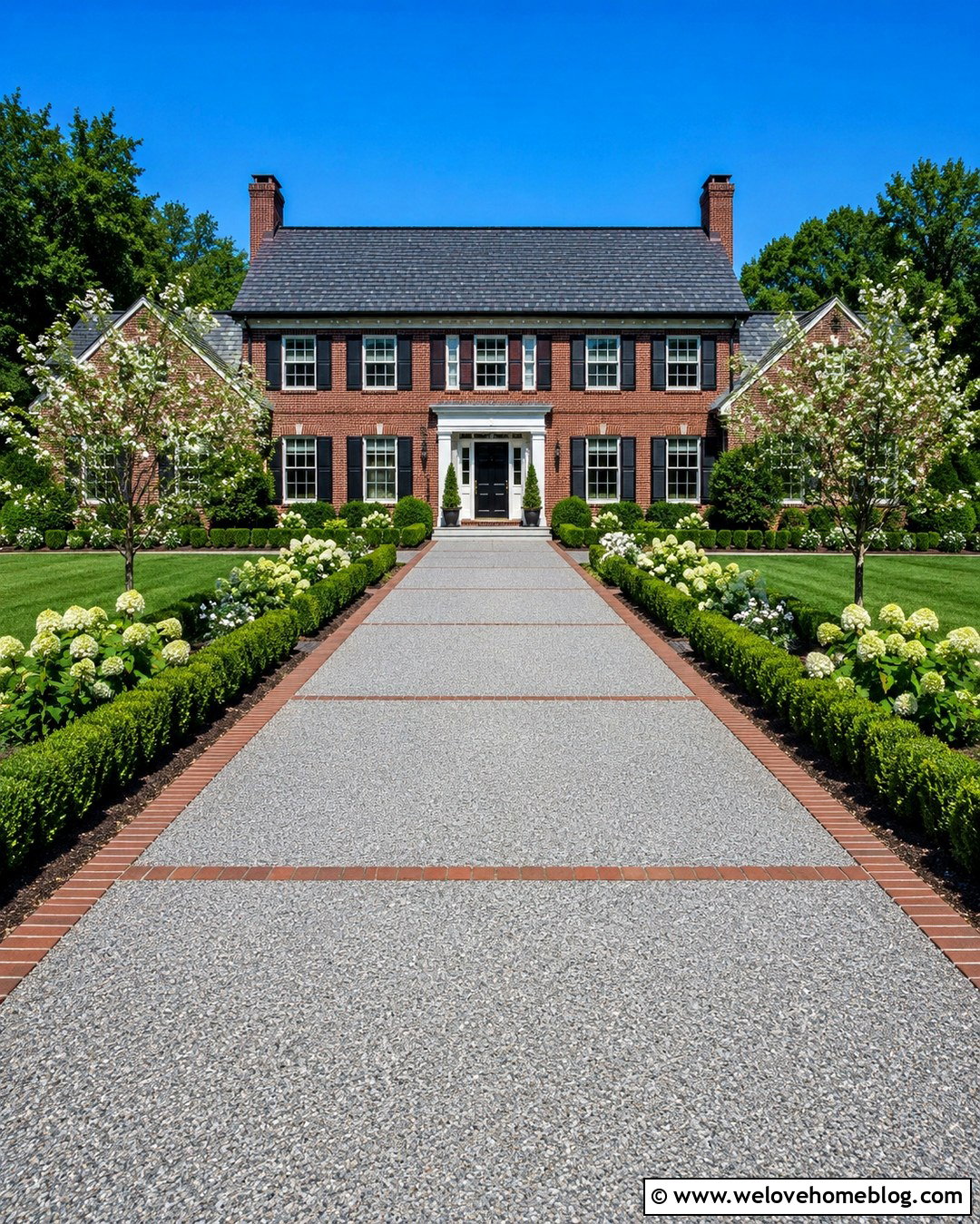
Brick ribbons add traditional detail without covering the entire driveway in masonry. Install medium-gray crushed concrete as the primary surface, then place narrow bands of red or brown clay brick across the driveway at measured intervals. Continue the brick along both edges for a unified border. The bands can visually divide a long driveway into shorter sections and connect it with a brick facade or front walkway. Choose a straight layout for a formal home or a slight curve for a more relaxed suburban setting. Plant boxwoods, hydrangeas, and small flowering trees along the outer edges. The bricks should sit flush with the compacted surface to minimize bumps and maintenance problems. A well-prepared base beneath every material helps keep the transitions even and stable.
14. Rustic Crushed Concrete Driveway With Boulder Edging
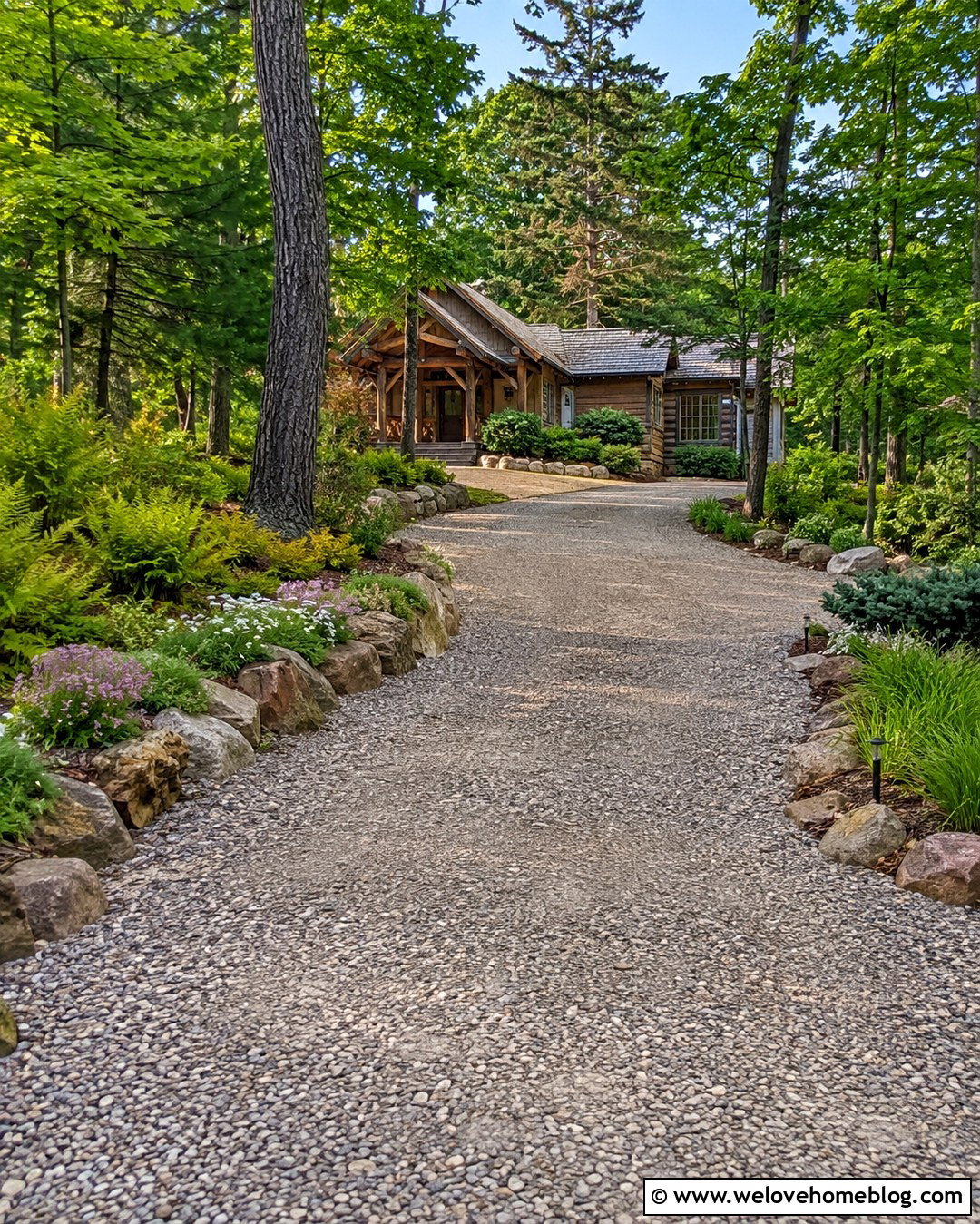
Large natural boulders can anchor a crushed concrete driveway in a wooded or rural landscape. Use mixed gray and warm-toned recycled concrete along a broad, gently curved approach. Position irregular fieldstone boulders outside the driving clearance, spacing them naturally rather than forming an unbroken wall. Between the boulders, plant native grasses, low junipers, ferns, and flowering ground cover suited to the site’s sun and moisture. Continue the rustic treatment near the house with a flagstone walkway and simple wooden porch details. This complete look fits cabins, country homes, and rustic ranch houses. Avoid placing tall stones where they could interfere with doors, turning movements, snow removal, or visibility. Reflective markers can be integrated discreetly if the entrance is difficult to see.
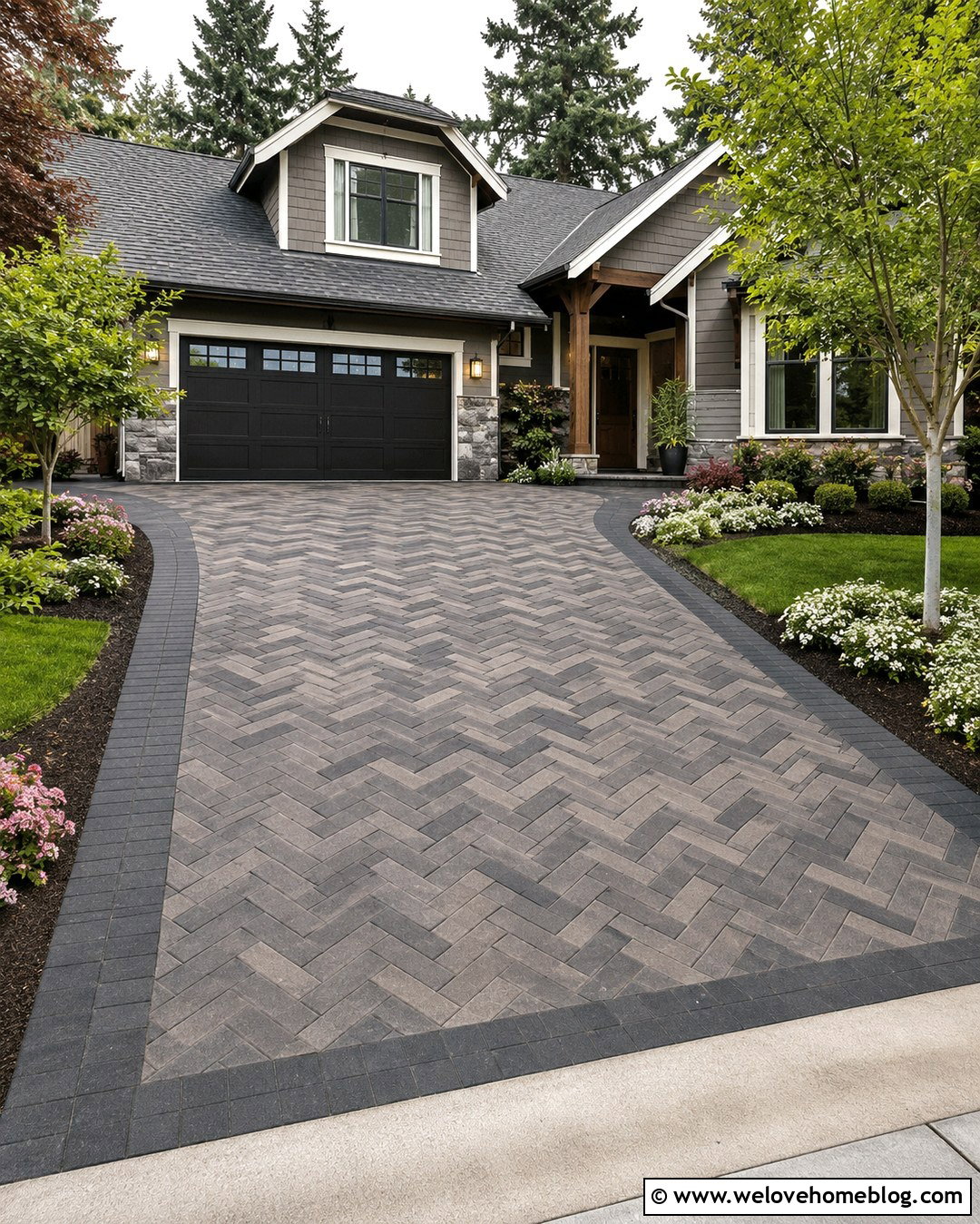
15. Crushed Concrete Driveway With Garden Beds
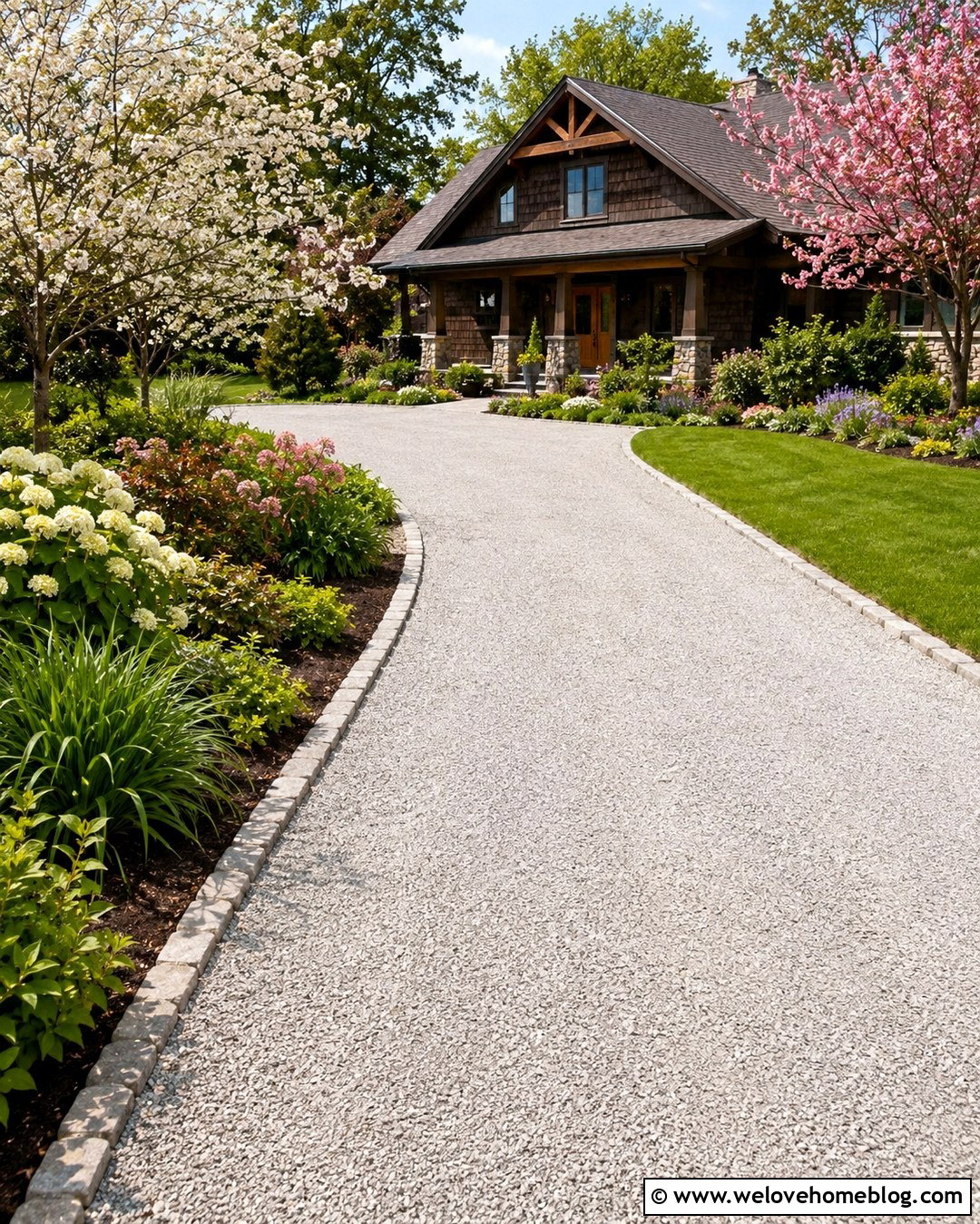
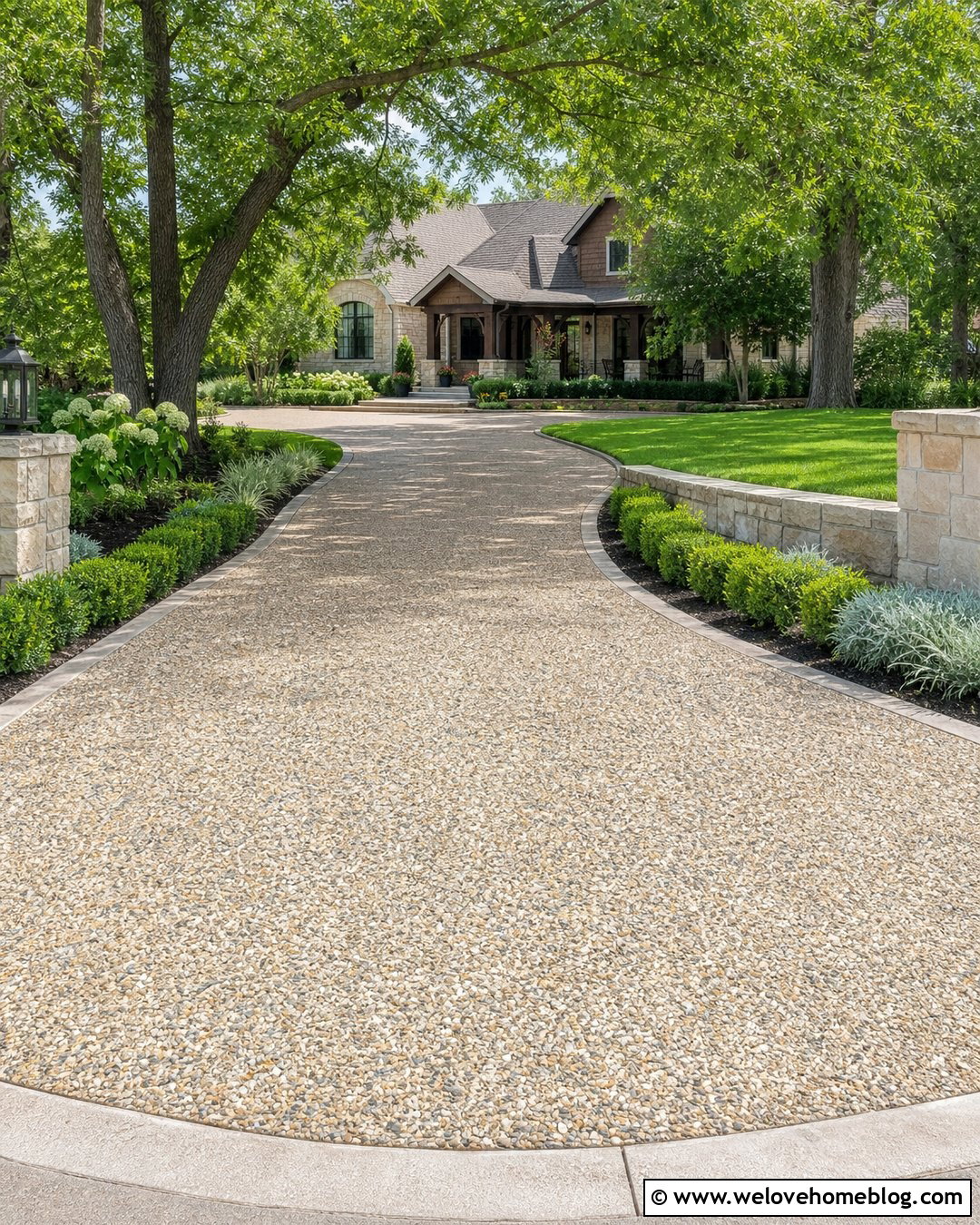
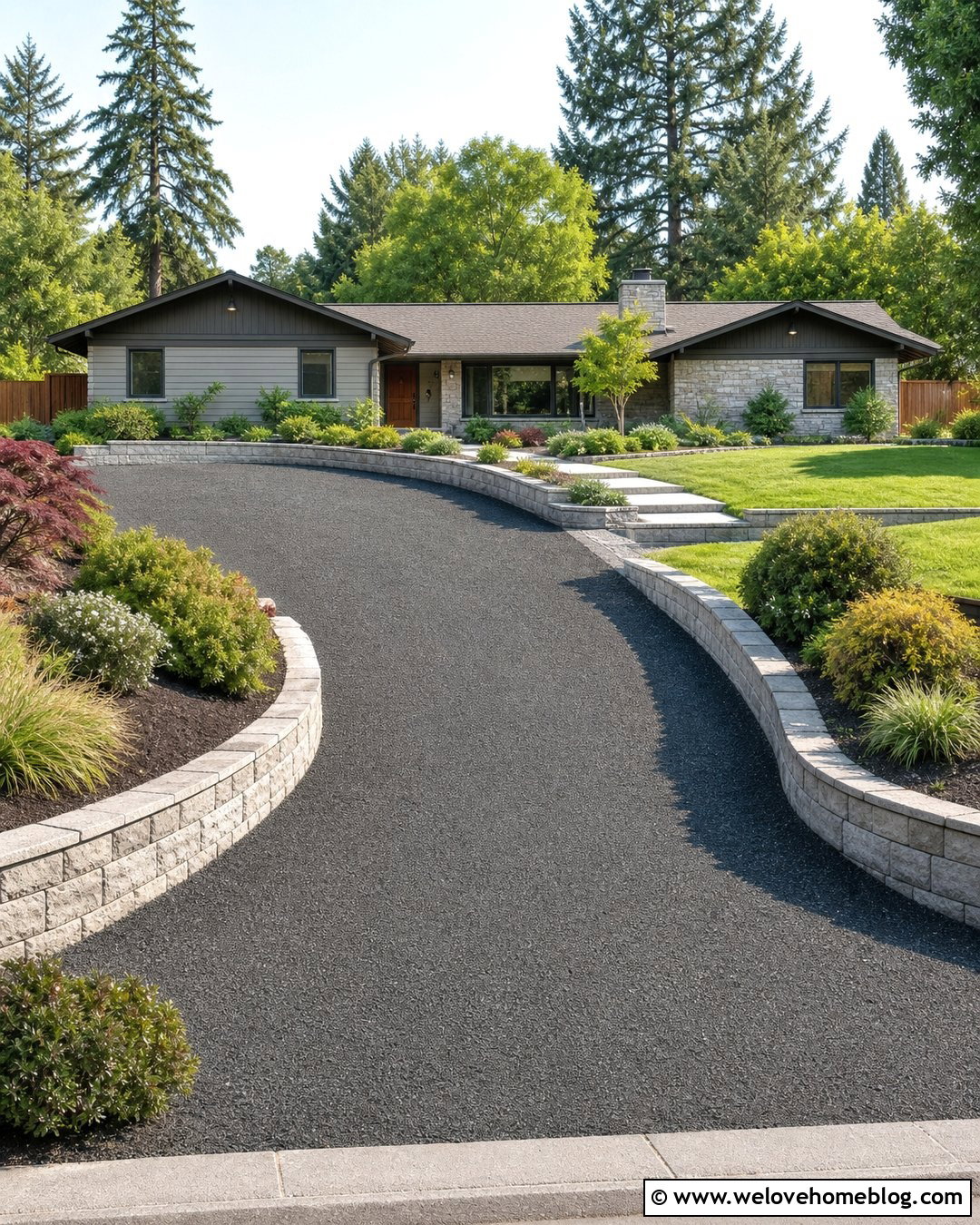
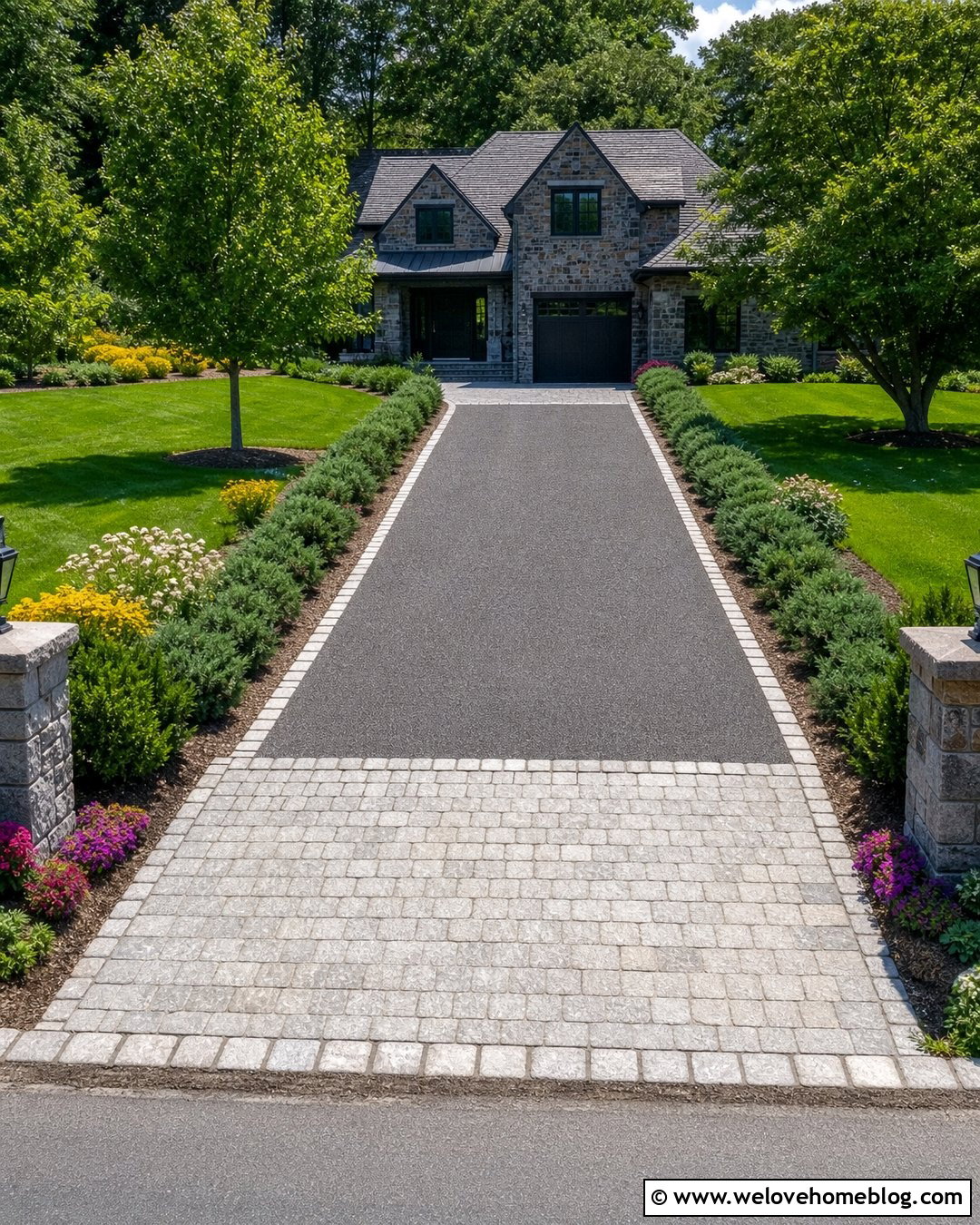
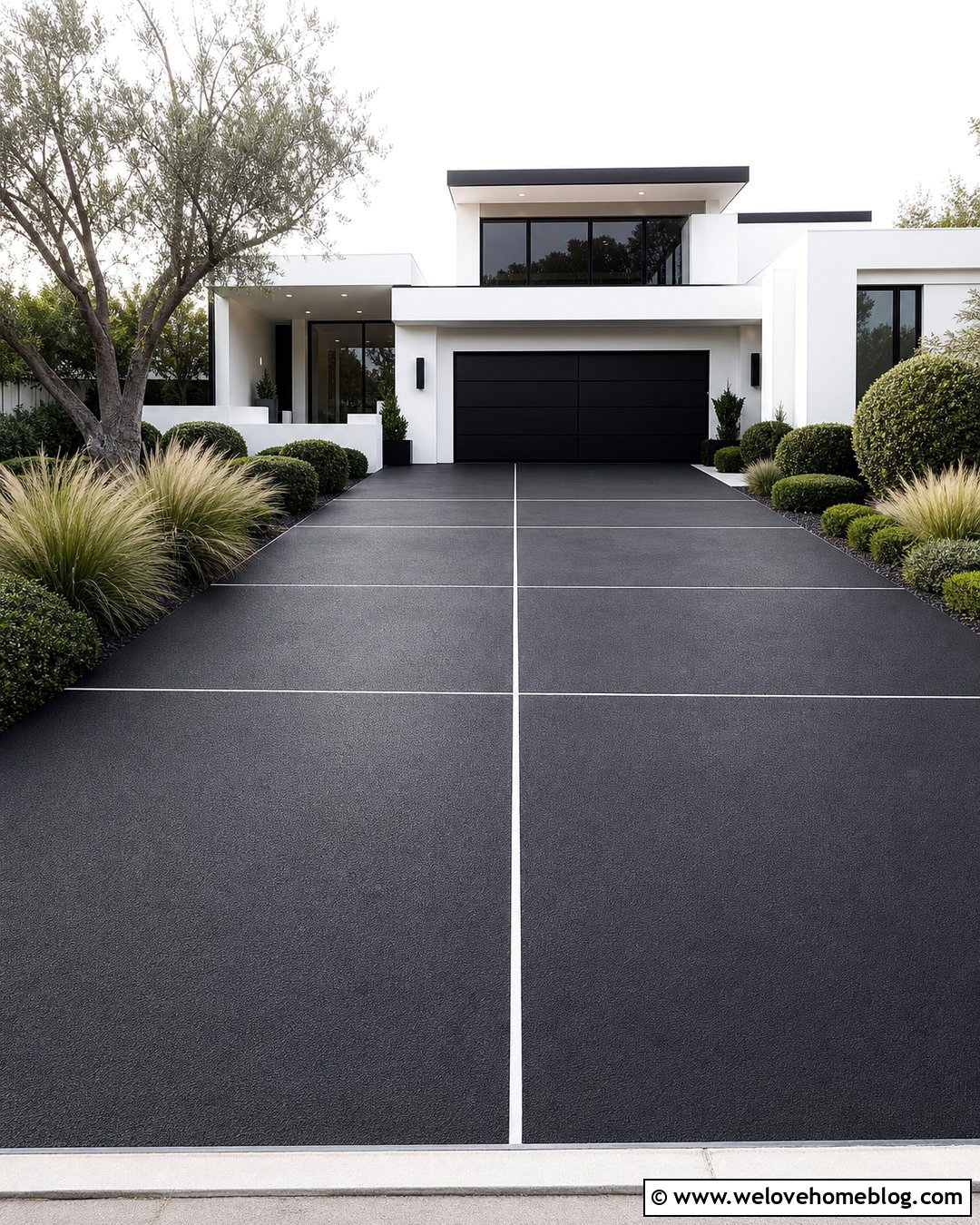
A driveway garden can turn a practical surface into a strong part of the front landscape. Shape the crushed concrete driveway with one broad curve, allowing deep planting beds to follow the outer edge. Use a low cobblestone or concrete paver border to hold the aggregate and create a clean mowing line. Fill the beds with layered planting: low ground cover near the edge, flowering perennials in the middle, and shrubs or small trees toward the back. Repeat a limited group of plants along the route rather than using a different species every few feet. Near intersections and the street, keep growth low for visibility. This design works with cottage, Craftsman, and traditional homes. Drip irrigation can reduce overspray that might erode or stain the driveway surface.
16. Crushed Concrete Driveway With Gate Pillars
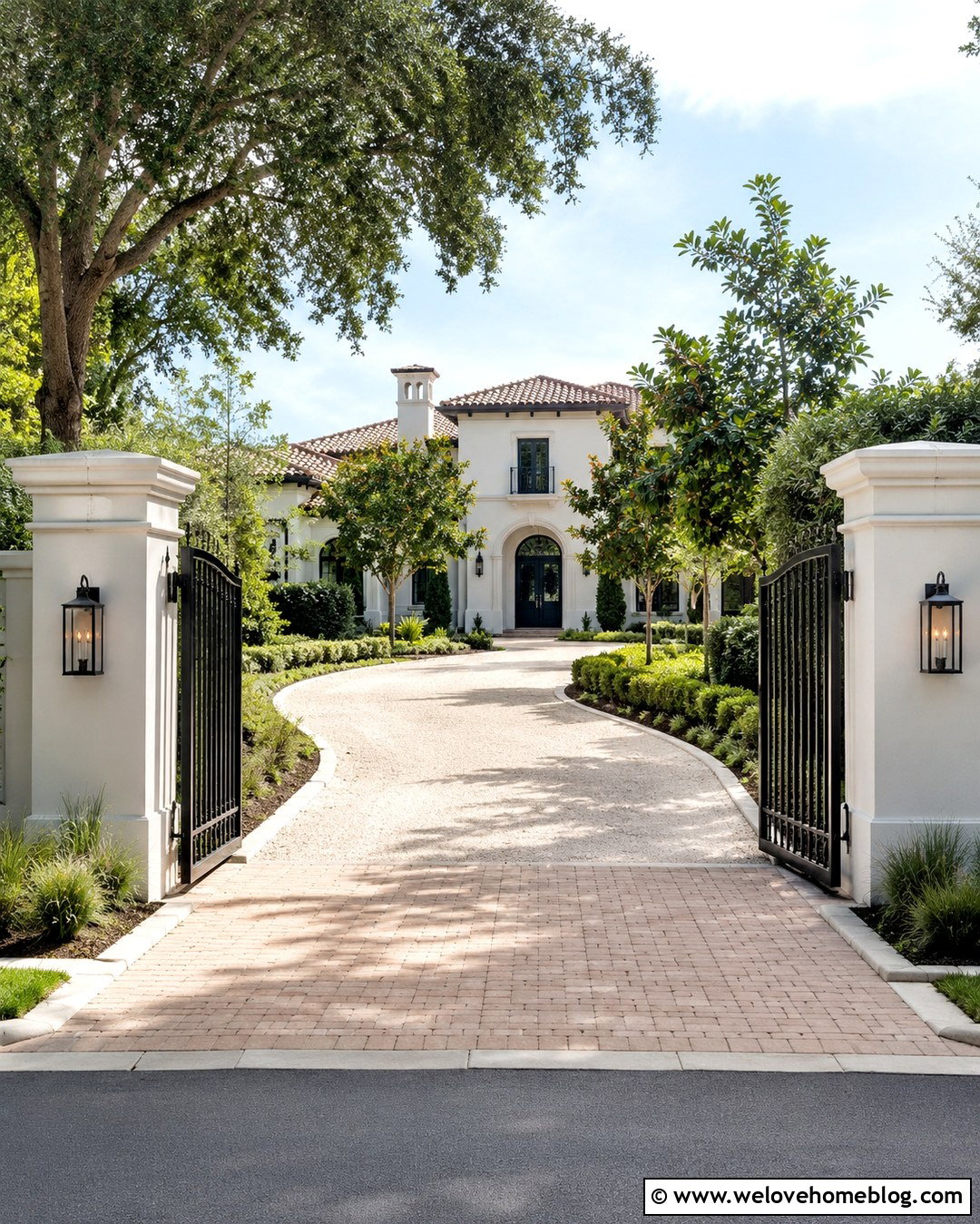
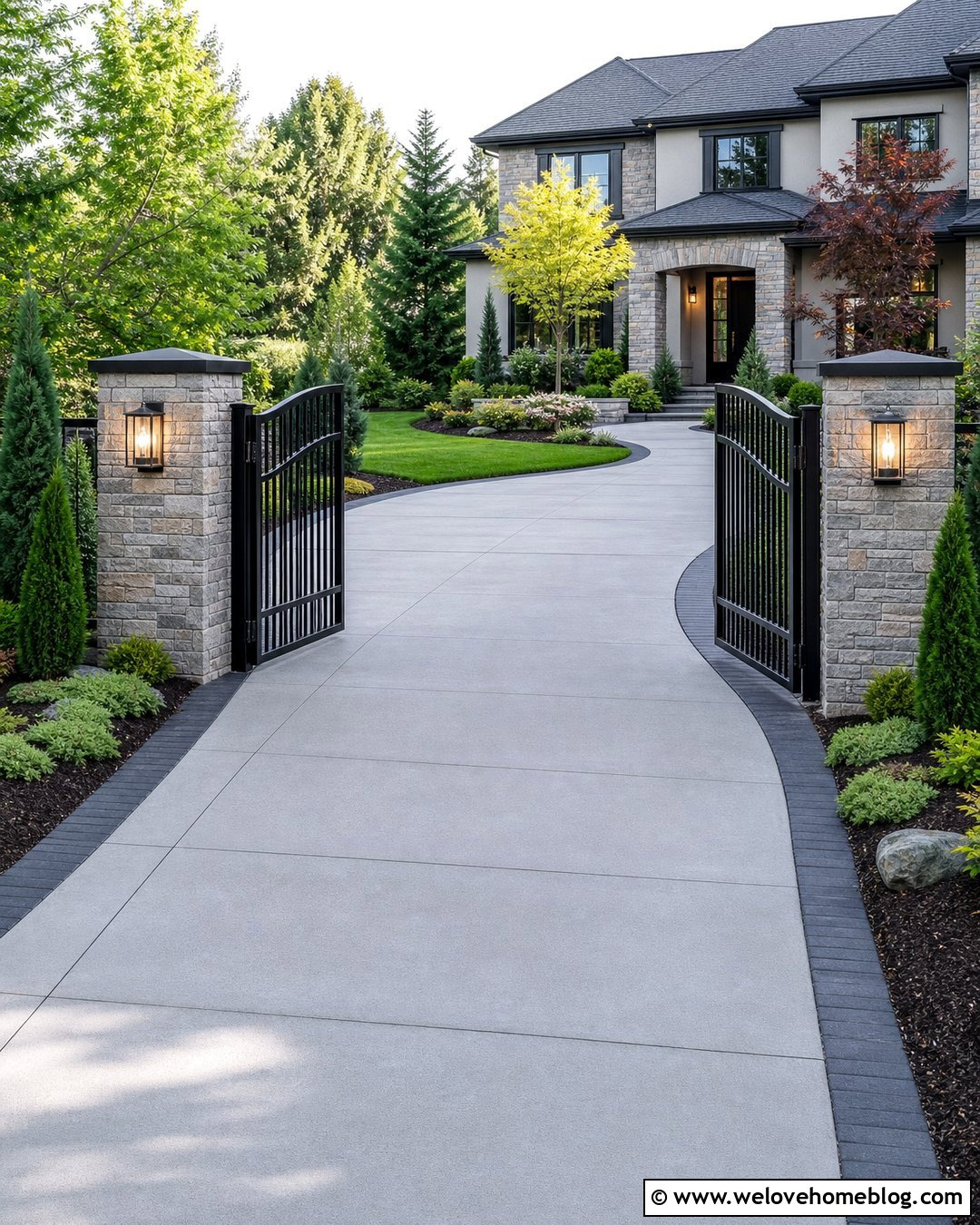
Substantial gate pillars create a clear entrance and give an informal aggregate driveway more architectural presence. Build a straight or gently curved crushed concrete approach between brick, stone, or stucco pillars that coordinate with the house. Widen the entrance enough for comfortable vehicle turns and set the pillars beyond required roadside clearances. A flat paver apron beneath the gate can provide a stable transition and prevent loose material from collecting around moving hardware. Continue low hedges or ornamental grasses behind the pillars to connect the entrance with the larger landscape. If a future automatic gate is planned, include conduit, drainage, sensors, and adequate vehicle waiting space during the initial construction. The completed look is especially effective for farmhouse, Mediterranean, colonial, and estate-style properties.
17. Crushed Concrete Driveway With Low-Voltage Lighting
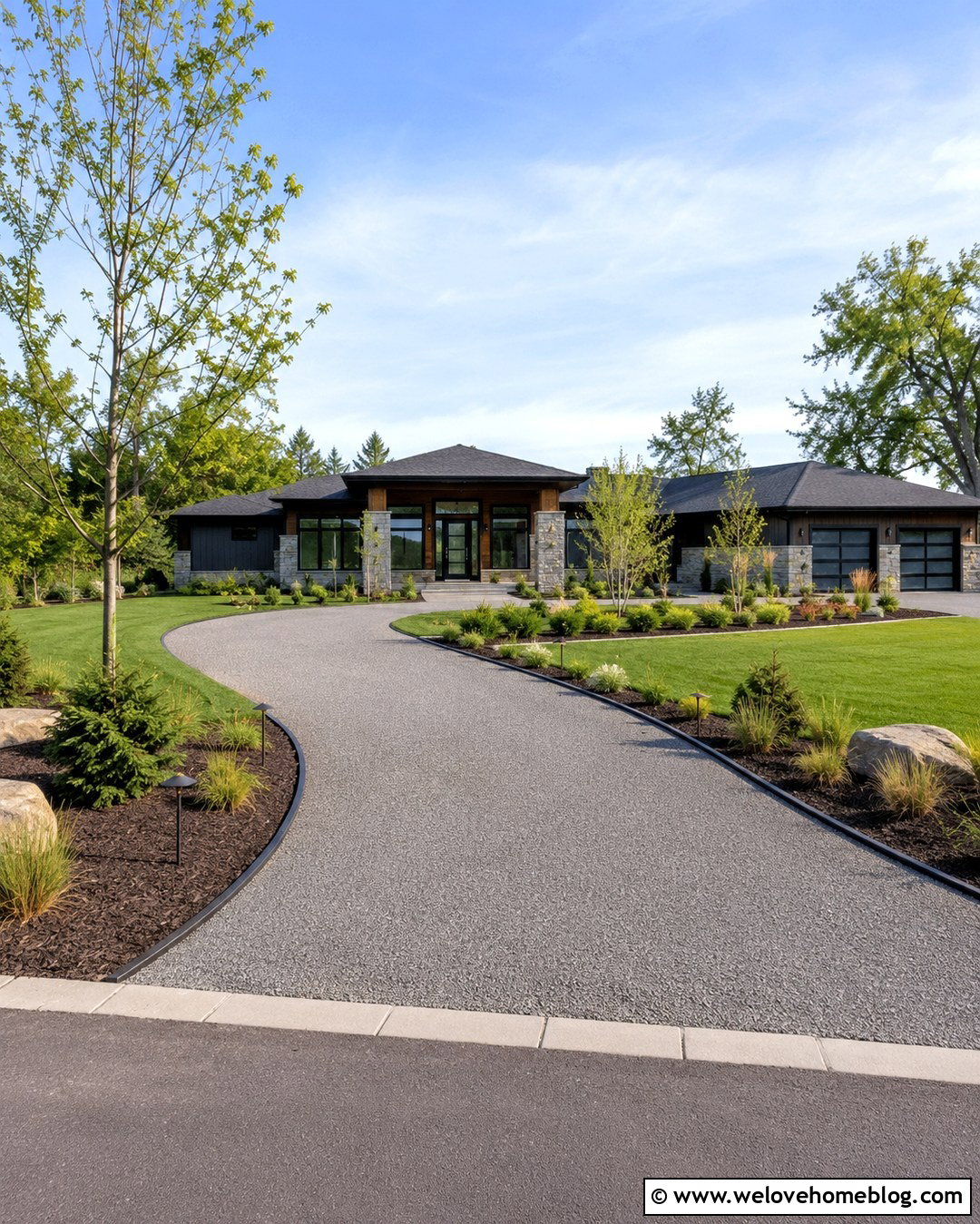
Subtle lighting can define a crushed concrete driveway without making it resemble a commercial roadway. Install low-voltage fixtures in the landscaping rather than directly in the driving surface. Short shielded path lights can mark curves, while small uplights highlight entrance trees, stone pillars, or the home’s facade. During daylight, the compacted gray driveway should remain the main feature, framed by dark metal edging and simple planted beds. Space fixtures consistently but not excessively, and aim them downward to reduce glare for drivers and neighbors. A curved driveway offers natural lighting points at each change in direction. Plan cable routes before final grading so the finished aggregate does not need to be disturbed later. Use fixtures rated for wet outdoor locations and protect wiring near edges.
18. Crushed Concrete Driveway With Gravel Stabilization Grid
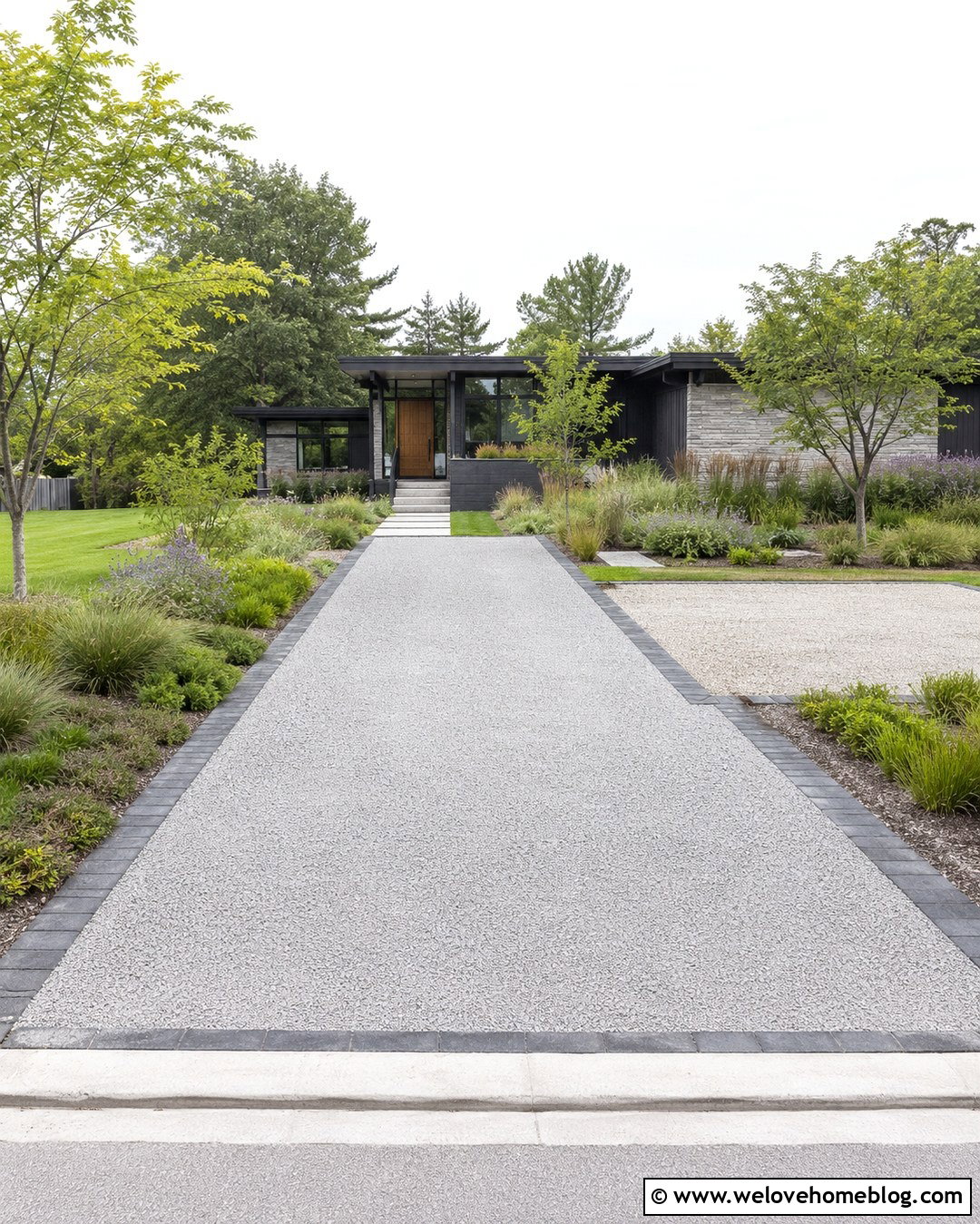
A stabilization grid can help maintain the intended shape of a crushed aggregate surface in areas exposed to turning or frequent use. Prepare the subgrade and base for local soil conditions, install a load-rated cellular grid according to its specifications, and fill it with properly sized crushed concrete. The grid should disappear beneath the finished surface rather than remaining visibly exposed. Define the driveway with concrete paver edging and add planted rain-garden beds where site drainage plans allow. This system looks particularly neat in a rectangular driveway beside a contemporary or midcentury home. It can also support a clearly shaped guest parking bay. Product requirements vary, so match grid type, base depth, aggregate size, drainage plan, and installation method to the expected vehicle loads.
19. Crushed Concrete Driveway With a Matching Walkway
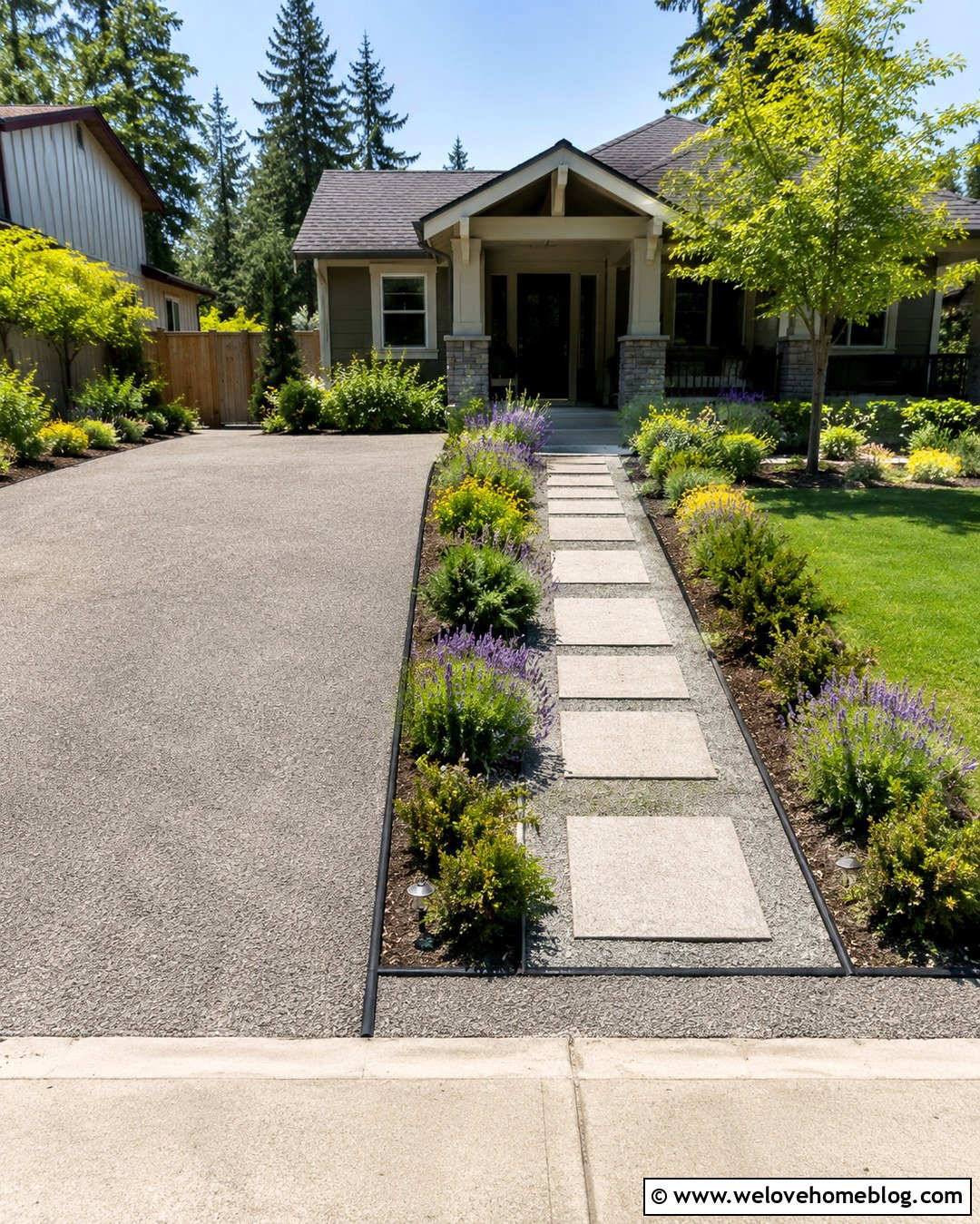
Using crushed concrete for both the driveway and walkway creates continuity, but the pedestrian path still needs a clear identity. Form a wide, compacted driveway in medium-gray recycled concrete, then branch off a narrower path made from finer crushed concrete. Separate the walkway with steel edging and add large rectangular stepping stones or flat paver bands for easier foot placement. Plant low shrubs and colorful perennials between the path and driveway so the two routes remain visually distinct. Near the porch, transition the walkway to a solid landing that matches the steps. This design suits ranch, Craftsman, and casual contemporary homes. Keep the walkway appropriately graded and compacted, and prevent downspouts from discharging directly onto either loose aggregate surface.
20. Budget Crushed Concrete Driveway Makeover
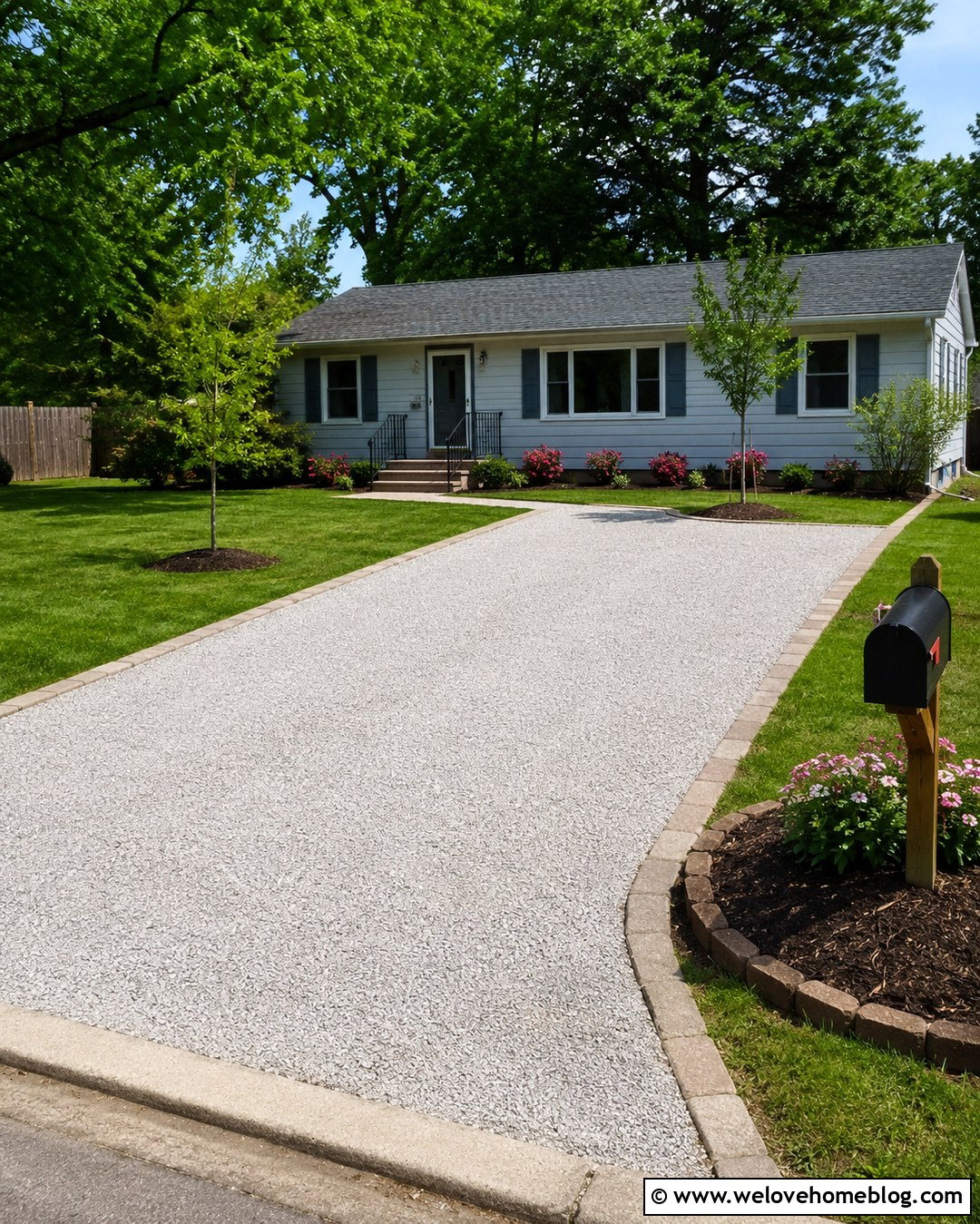
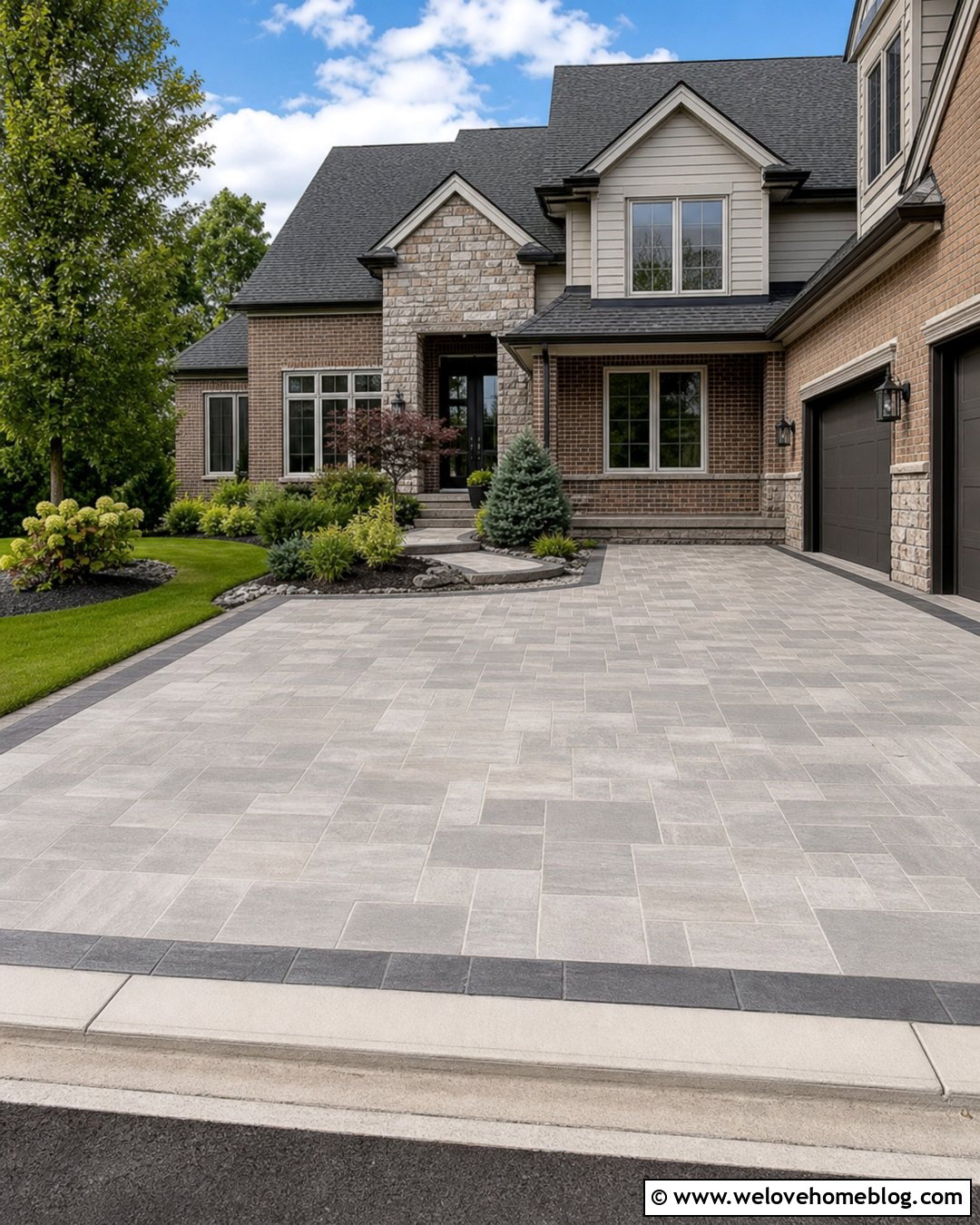
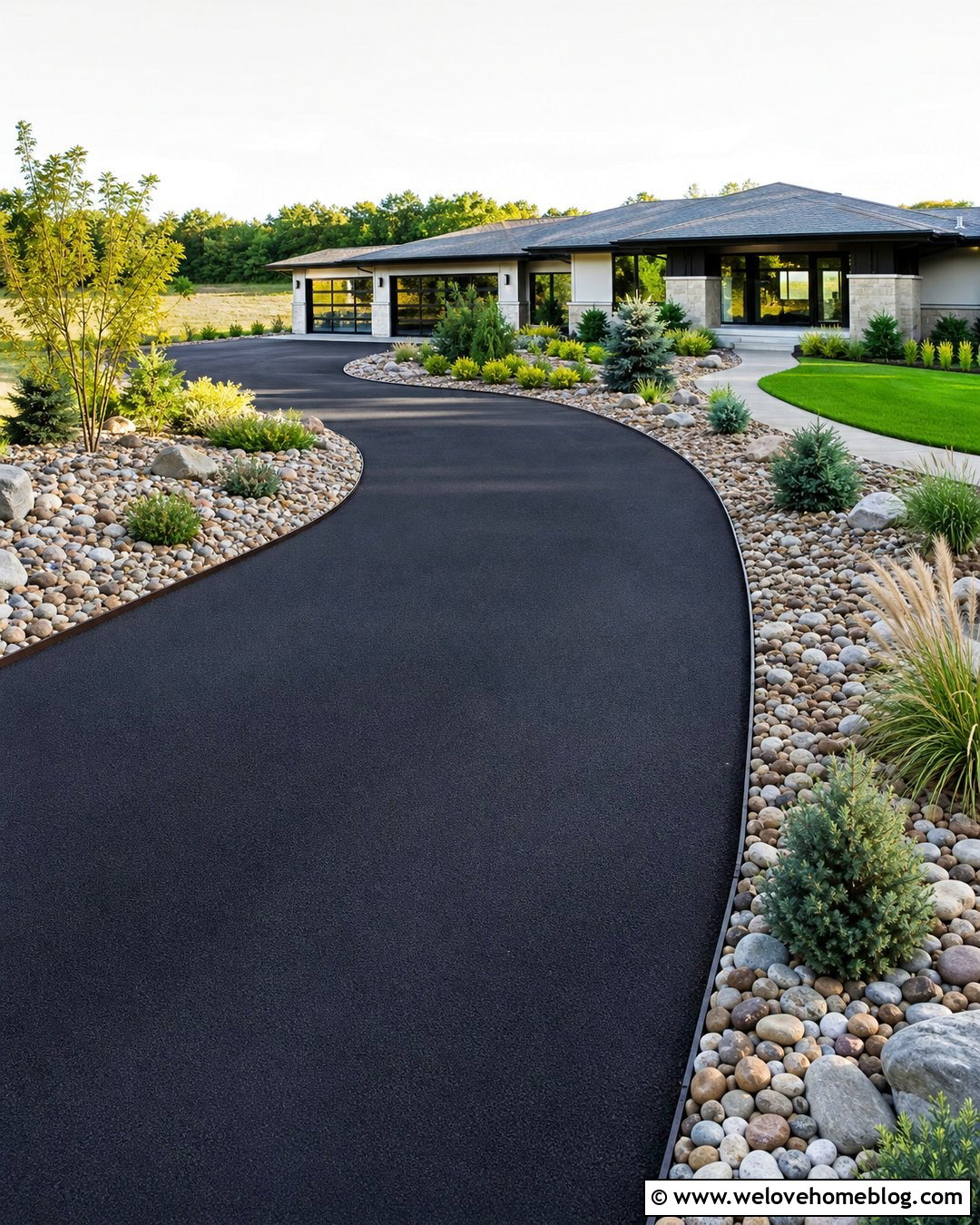
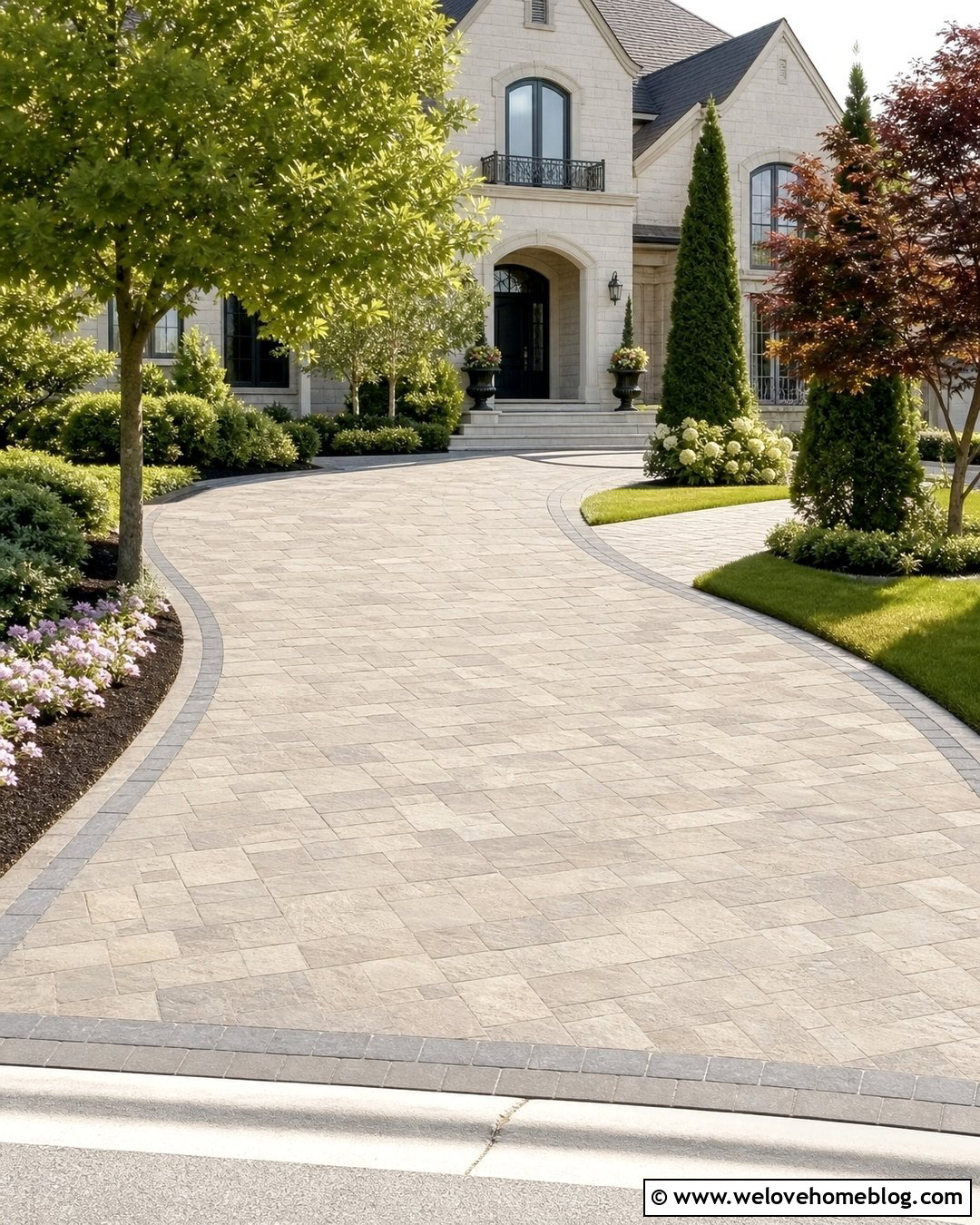
An existing dirt or worn gravel driveway can gain a more finished appearance through grading, repaired drainage, strong borders, and a fresh crushed concrete surface. Start by correcting soft areas and determining why ruts or puddles developed. Depending on the soil and site, the project may require excavation, stabilization fabric, additional base aggregate, or drainage work before the top layer is installed. Spread clean, screened crushed concrete evenly and compact it with appropriate equipment. Add affordable pressure-treated timber, recycled pavers, or steel edging along visible sections. Simple lawn repairs, several durable shrubs, and a refreshed mailbox bed can complete the makeover. Reusing processed concrete as aggregate can reduce demand for virgin material while keeping recovered construction material in productive use. ()
Conclusion:
The best crushed concrete driveway balances appearance with practical construction. Shape, edging, drainage, planting, and the connection to the house should be planned as one complete composition. A strong border keeps the aggregate contained, while thoughtful grading protects the surface from avoidable erosion and standing water. Always purchase screened material from a reputable supplier, inspect its color and particle size, and confirm that it is suitable for residential driveway use. Local contractors can help determine excavation depth, base preparation, compaction, and runoff requirements for the property. Whether the goal is modern, traditional, rustic, or budget-friendly, these 20 Crushed Concrete Driveway Ideas show how recycled aggregate can create welcoming curb appeal.

Related posts:


Leave a Reply