
Crushed gravel can create a driveway that feels practical, polished, and naturally connected to the landscape. Its angular texture offers more visual character than a plain paved surface, while the wide range of stone colors makes it suitable for modern homes, cottages, ranch houses, and traditional properties. The best designs combine the gravel surface with a clear shape, sturdy edging, thoughtful drainage, and landscaping that complements the house. You can use pale limestone for a bright entrance, dark basalt for modern contrast, or warm granite for a rustic setting. Curves, parking courts, gates, trees, and planting beds can further customize the approach. The complete looks below offer useful inspiration for planning **20 Crushed Gravel Driveway Ideas**.

1. Gray Crushed Gravel Driveway With Brick Edging
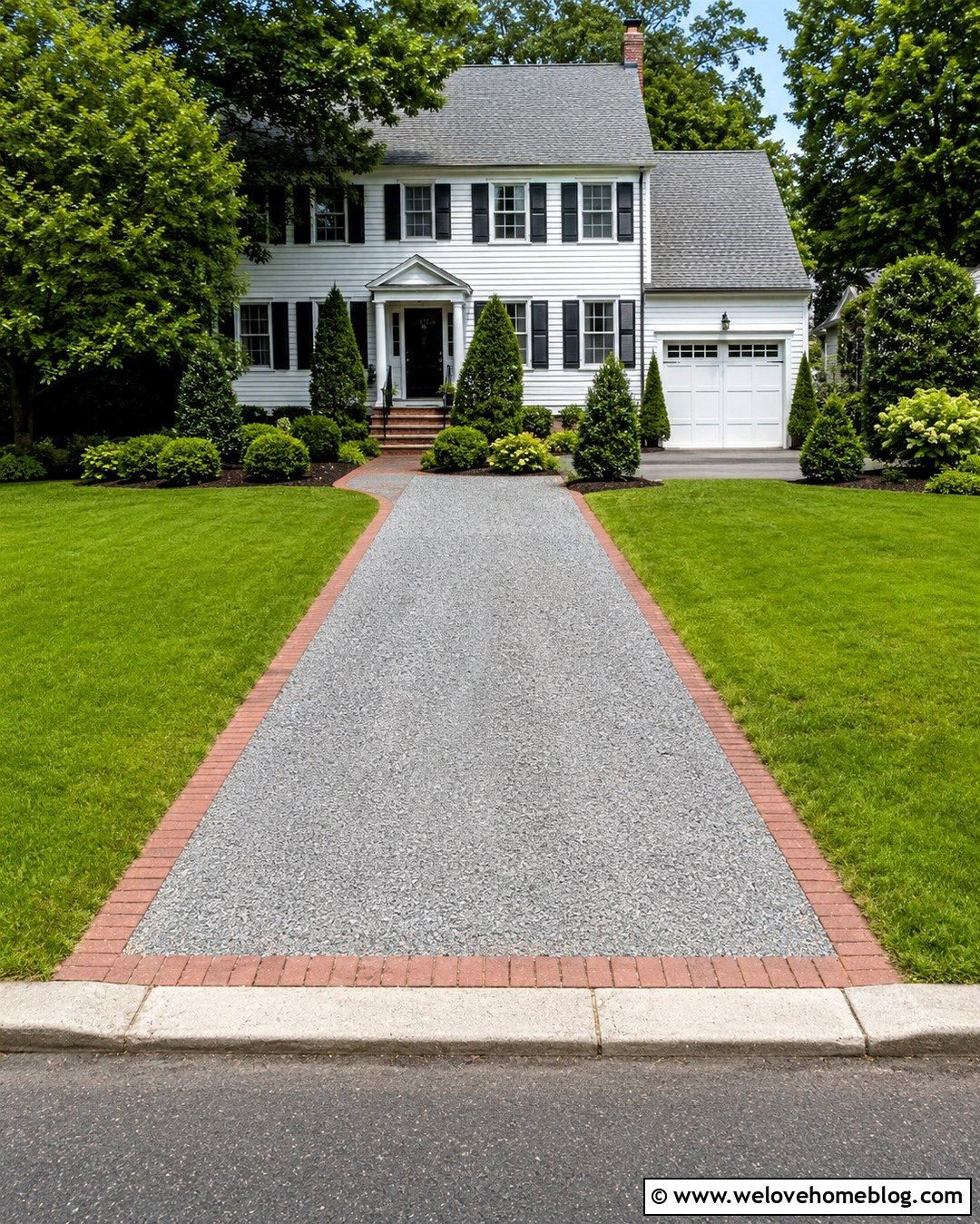
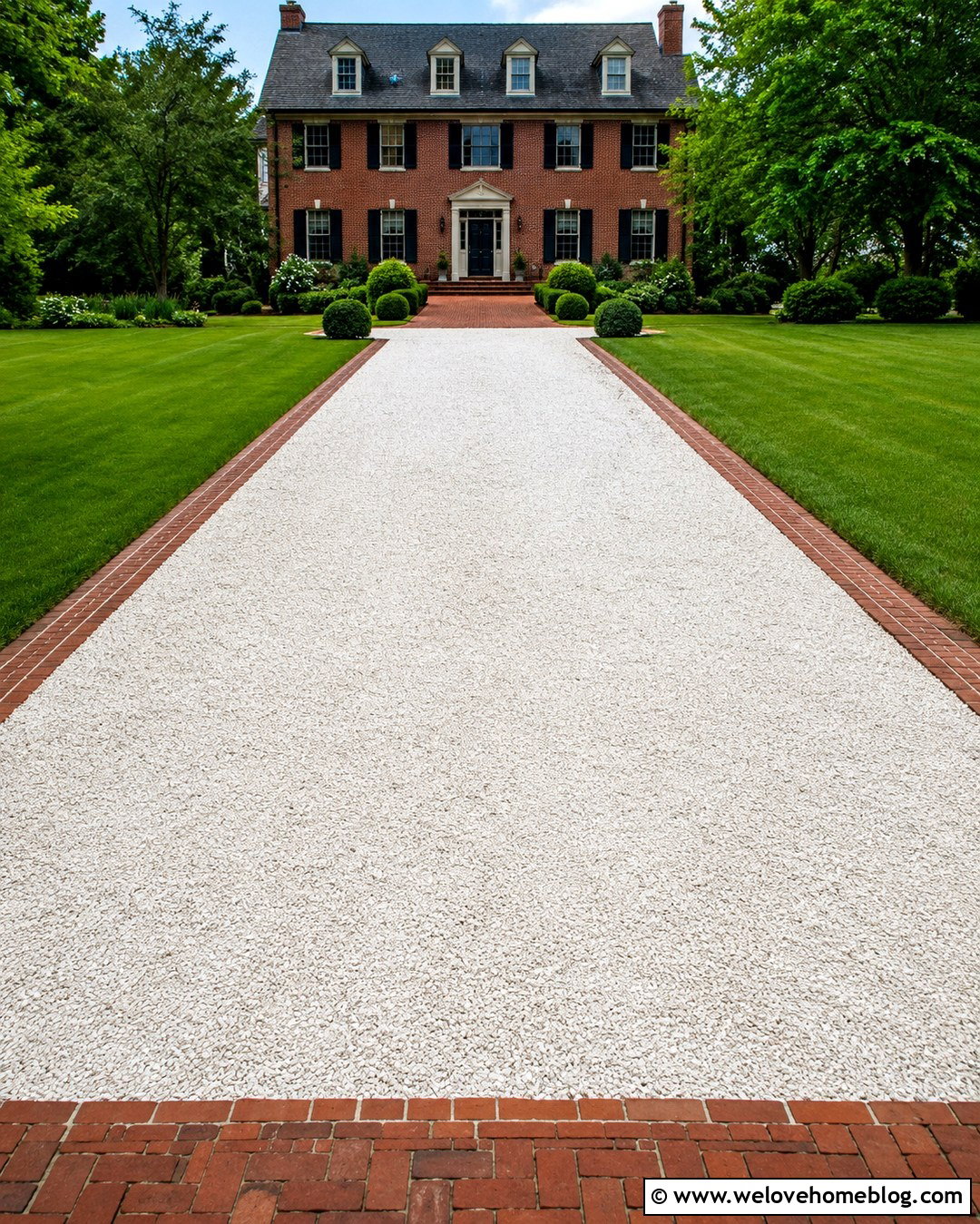
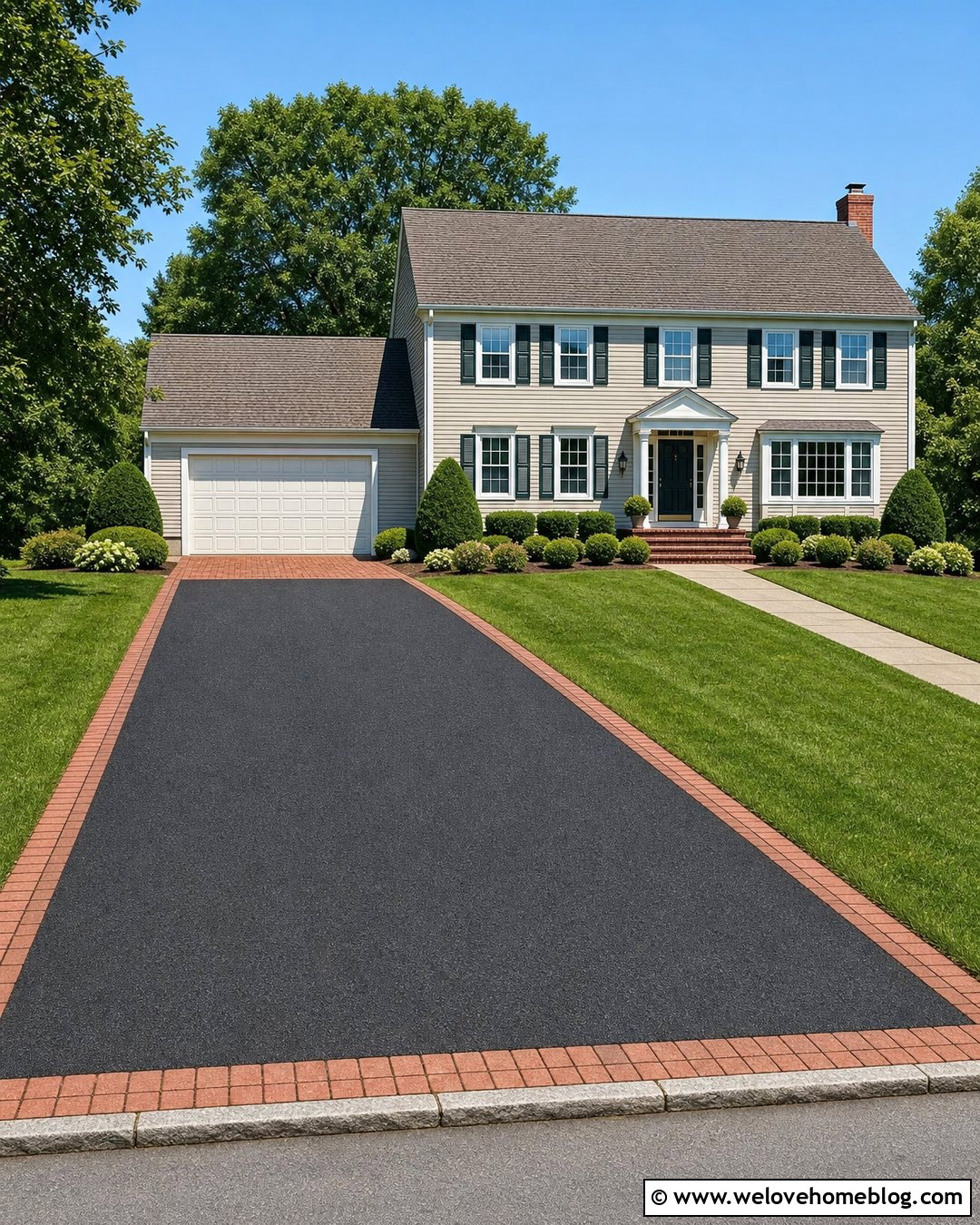
A straight gray crushed gravel driveway gains warmth and definition from a traditional red brick border. This combination works especially well with Colonial, Cape Cod, and brick-front homes because the edging connects the driveway to the architecture. Set the bricks lengthwise for a clean ribbon or use a soldier-course pattern for a stronger outline. Wide lawn panels on both sides keep the entrance open and uncluttered. Near the house, add symmetrical evergreen shrubs and a brick walkway leading to the front door. The gravel should sit slightly below the top of the edging to reduce spillover. A compacted, gently crowned surface also helps the complete driveway look tidy while directing water away from the center.
2. White Crushed Limestone Driveway With Cobblestone Borders
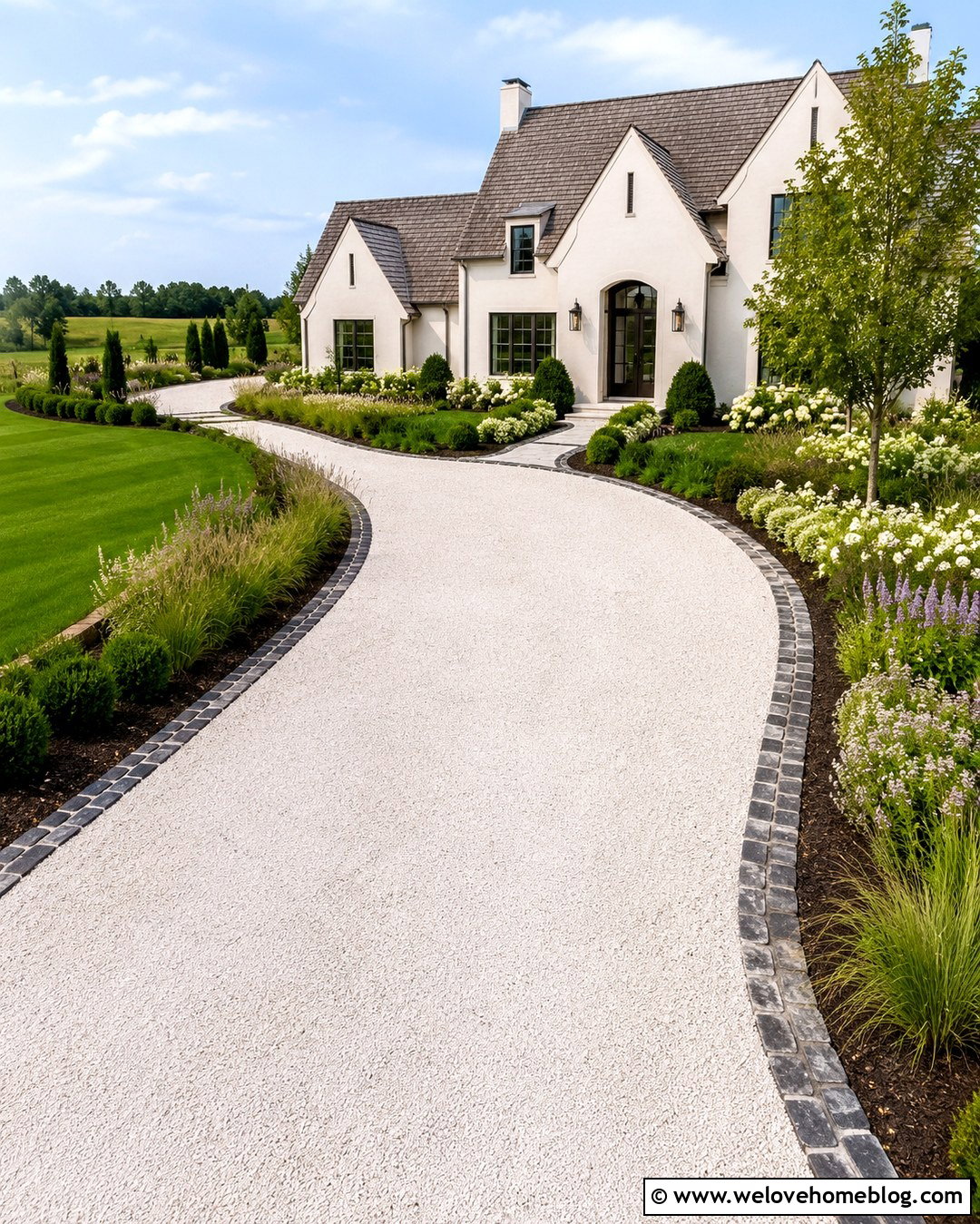
Bright white crushed limestone can make a curved driveway feel crisp, spacious, and welcoming. Dark gray cobblestone borders provide enough contrast to emphasize every bend while helping contain the loose stone. This complete look suits a light-colored farmhouse, stucco home, or coastal-inspired house. Frame the outside curve with soft ornamental grasses, low boxwood, and flowering perennials. Keep the inside curve simpler with lawn or a broad planting bed so drivers have a clear view of the approach. Repeating cobblestone around the front walkway creates a coordinated transition to the entrance. Because pale gravel shows soil and leaves quickly, place messy trees farther back and choose restrained landscaping beside the driving surface.
3. Crushed Granite Driveway With Steel Edging
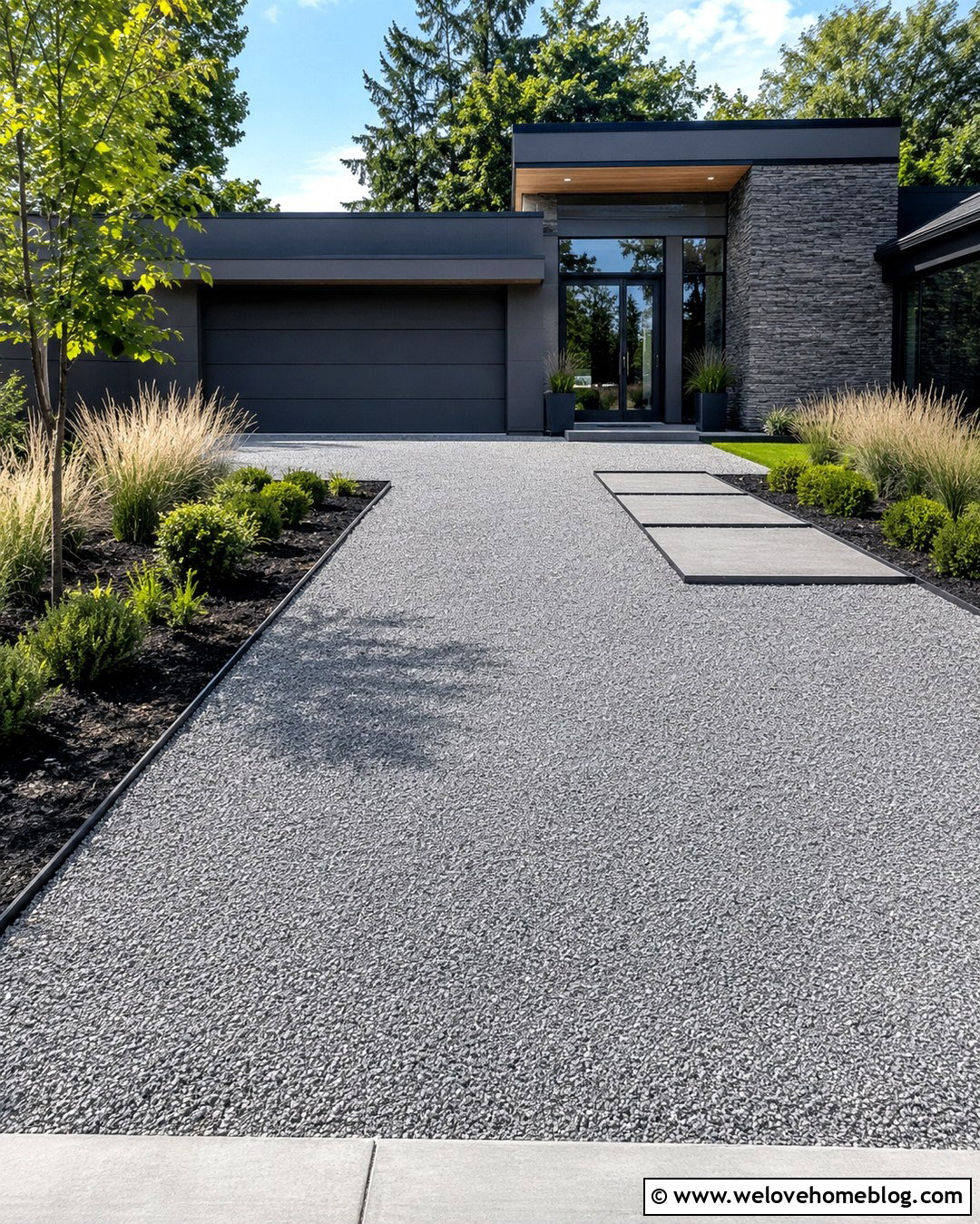
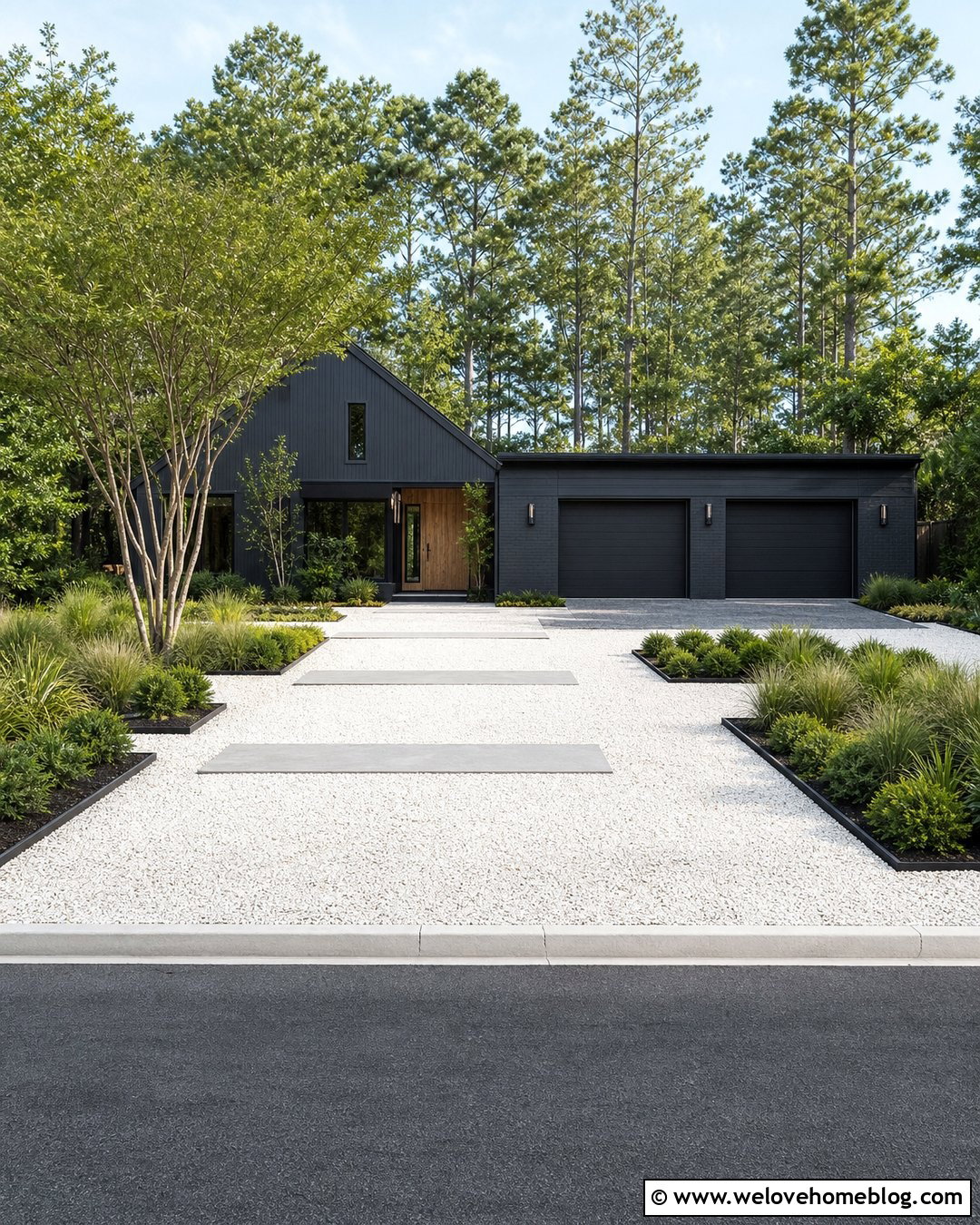
For a contemporary entrance, pair finely crushed gray granite with slim black steel edging. The steel almost disappears from a distance, creating a sharp boundary without adding a bulky border. Use a straight or gently angled layout that aligns with the lines of a modern house. Rectangular planting beds filled with feather reed grass, compact shrubs, and dark mulch reinforce the clean geometry. Large concrete stepping pads can form a separate walkway beside the gravel rather than interrupting the driving surface. The granite’s varied gray tones soften the architecture while maintaining a streamlined appearance. Keep the driveway wide enough for comfortable access, and use a carefully prepared base so the flat, minimalist surface remains visually even around the garage and entry.
4. Crusher Run Driveway With Timber Edging
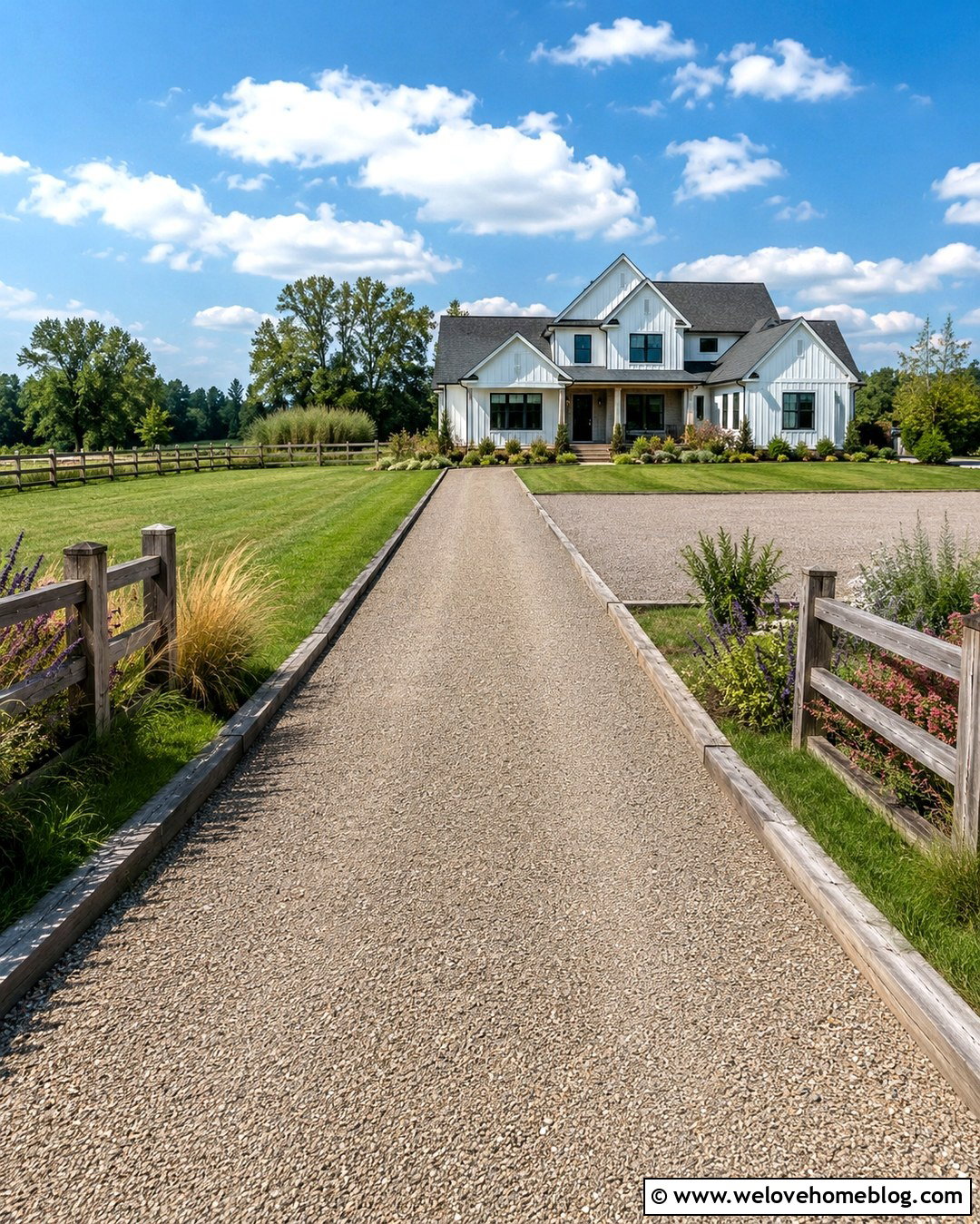
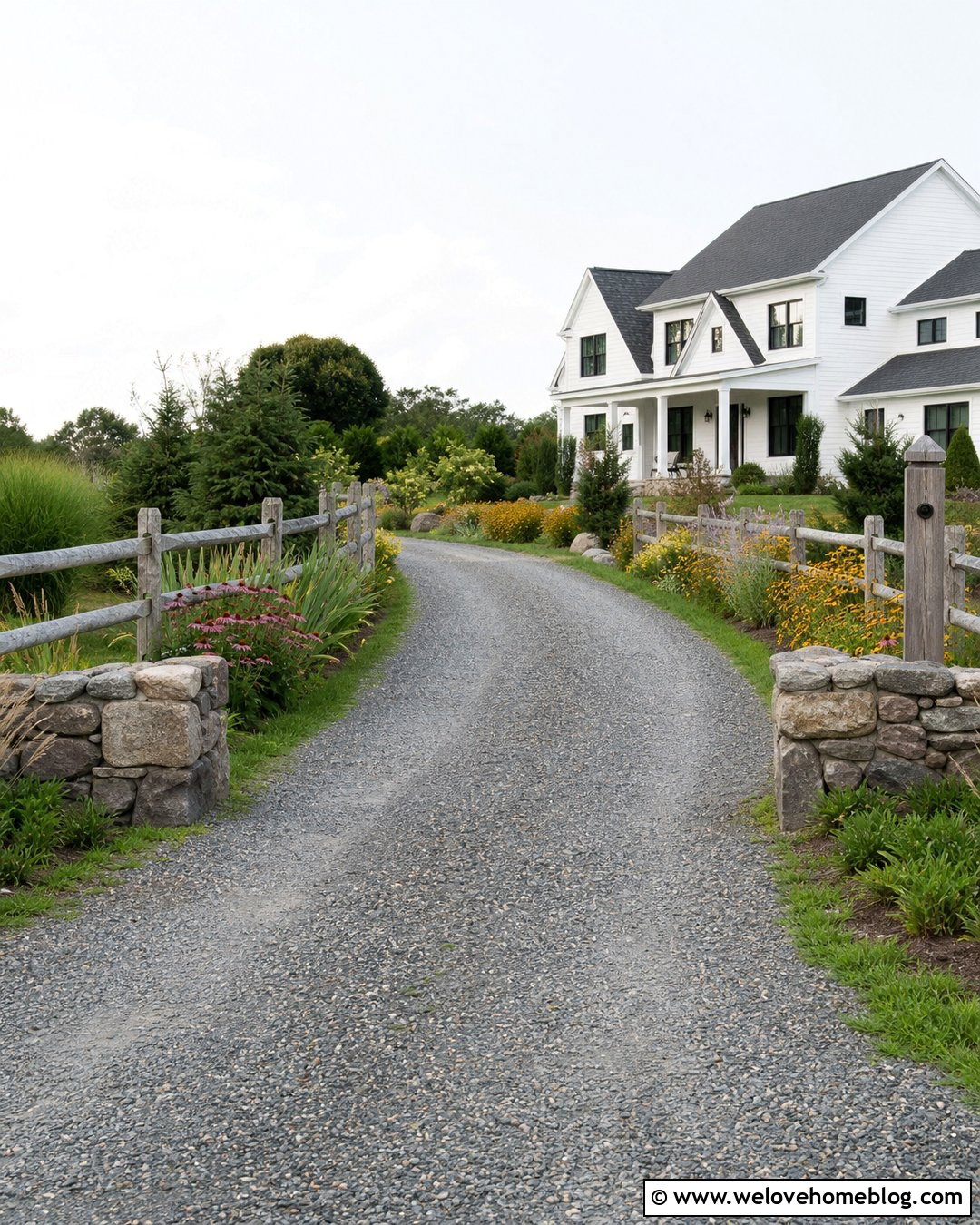
Crusher run offers a practical, understated surface for a country driveway or modern farmhouse. Its mix of angular stone and fine particles creates a dense-looking finish that feels more substantial than loose decorative gravel. Pressure-treated landscape timbers can define the edges and introduce a warm, rustic detail. Use the combination on a long, straight approach bordered by lawn, split-rail fencing, or open meadow planting. At the house, widen the driveway into a simple rectangular parking area and repeat the timber around nearby beds. Native grasses and informal flowering shrubs prevent the design from appearing too rigid. Keep the timbers firmly anchored and level so they form a consistent border without becoming an obstacle near turning or parking areas.
5. Red Crushed Granite Driveway With Fieldstone Edging
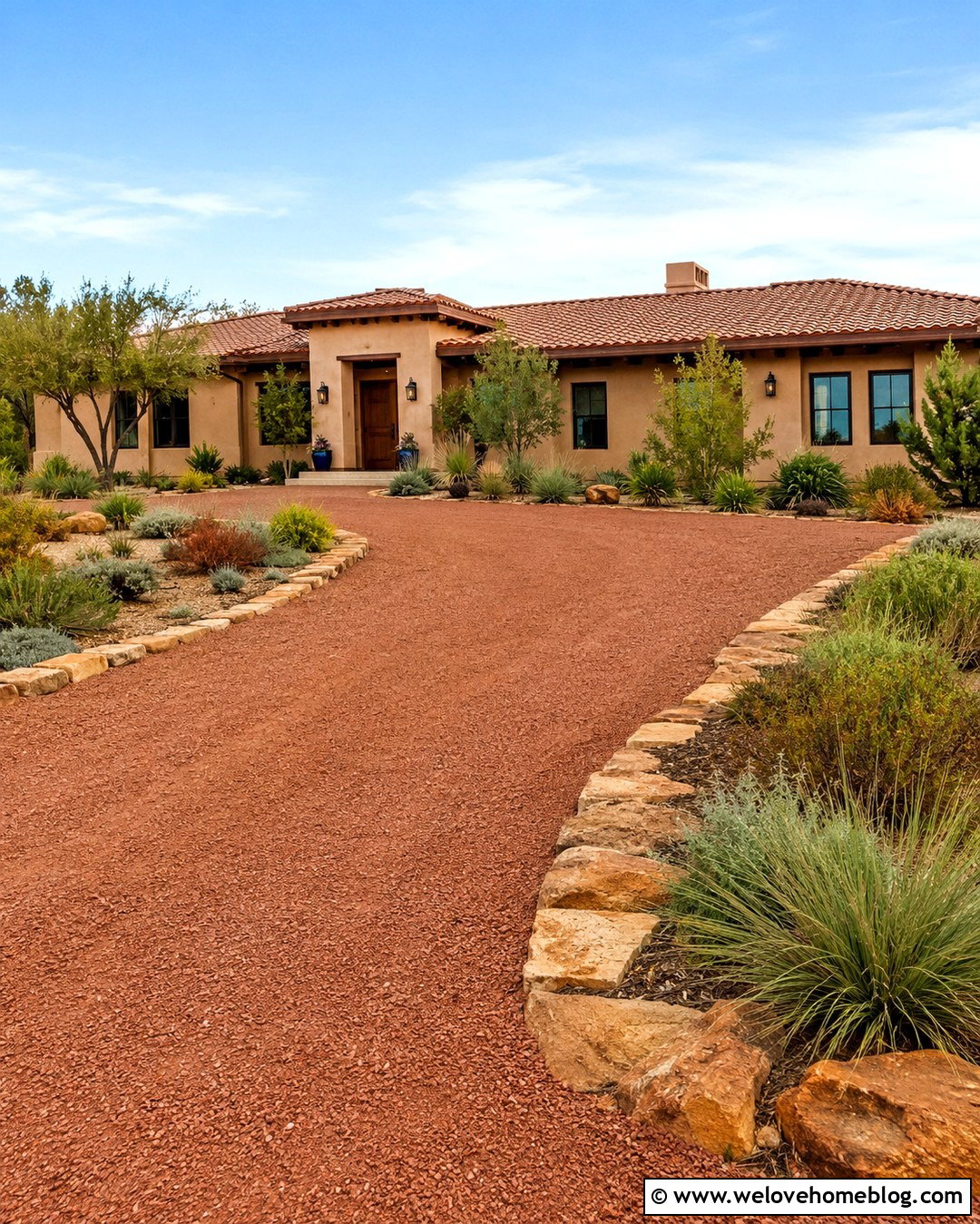
Warm red crushed granite brings earthy color to a ranch house, adobe-inspired home, or wooded country property. Irregular fieldstone edging enhances the natural appearance and connects the driveway to stone walls, foundation details, or nearby rock beds. A broad curved layout allows the rich gravel color to become part of the front-yard composition rather than simply a parking surface. Use drought-tolerant grasses, juniper, sage-colored shrubs, and small ornamental trees along the borders. Choose fieldstones with gray, brown, and rust tones instead of perfectly matched pieces. Their subtle variation makes the entrance feel established and relaxed. Finish the driveway with a generous parking apron near the garage, where vehicles can turn without disturbing the planted edges.
6. Black Crushed Basalt Driveway With Concrete Curbs
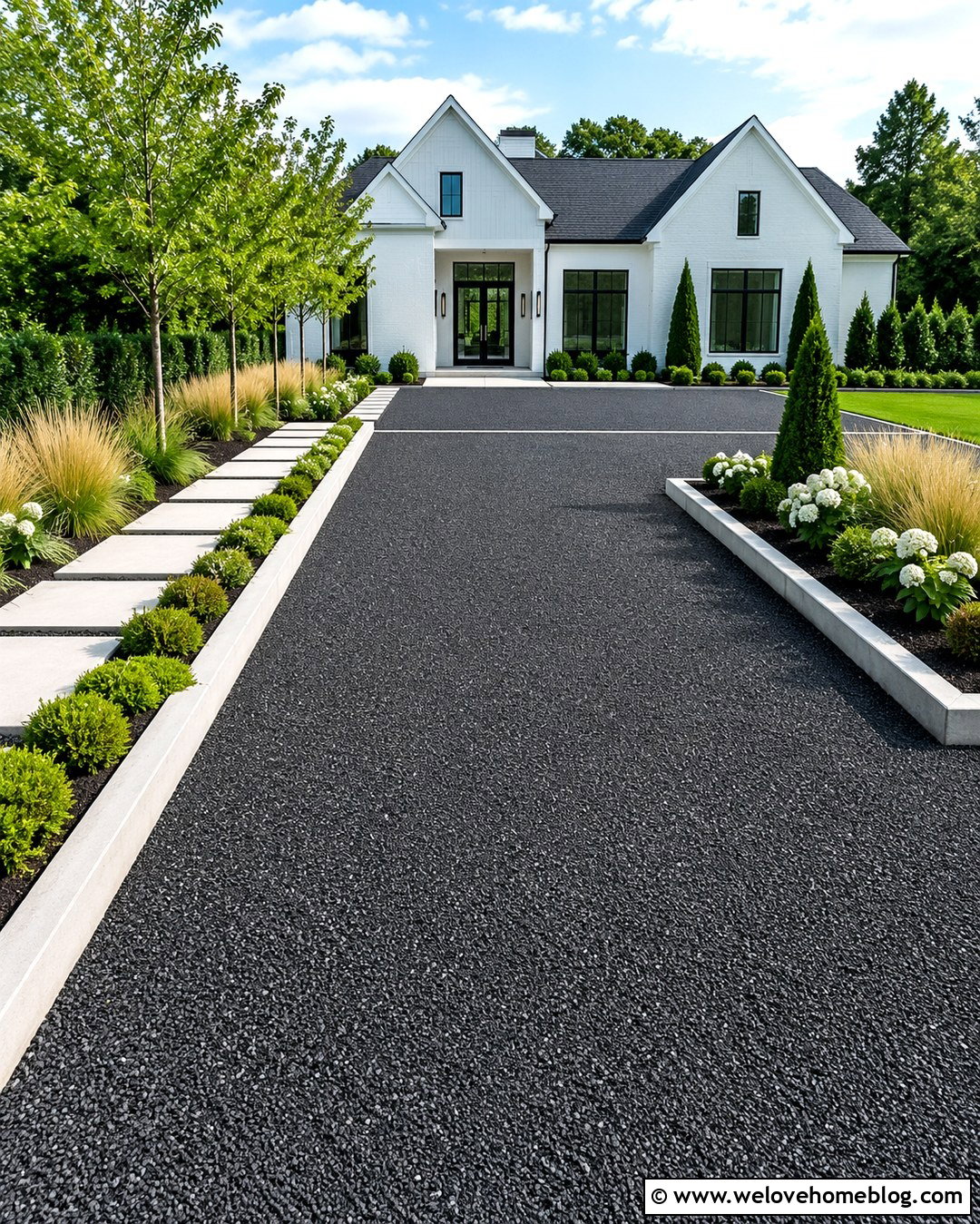
Black crushed basalt creates striking contrast against a white modern home and bright green lawn. Low poured-concrete curbs give the dark gravel a strong architectural frame while keeping the surface neatly contained. This design looks best with a straight driveway, squared parking area, and clearly defined walkway. Repeat the curb material around minimalist planting beds filled with sculptural grasses, clipped evergreens, and a limited palette of white flowers. The dark stone can visually emphasize dust and pale debris, so avoid placing heavily shedding plants directly beside it. A light concrete walkway crossing one corner of the driveway can connect the parking area to the entrance. Together, the basalt, curbs, restrained landscaping, and simple geometry produce a bold but balanced curb view.
7. Circular Crushed Gravel Driveway With Center Island
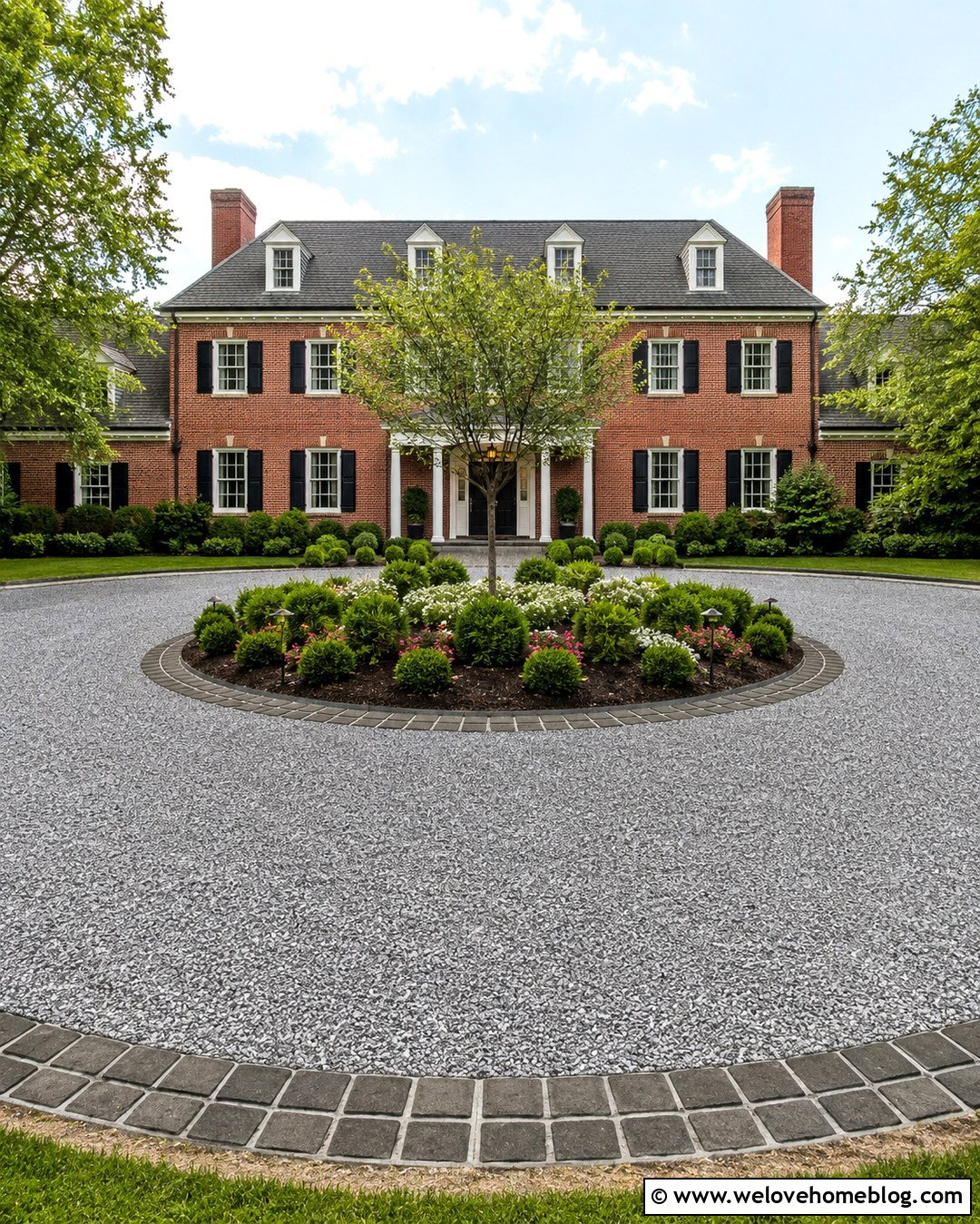
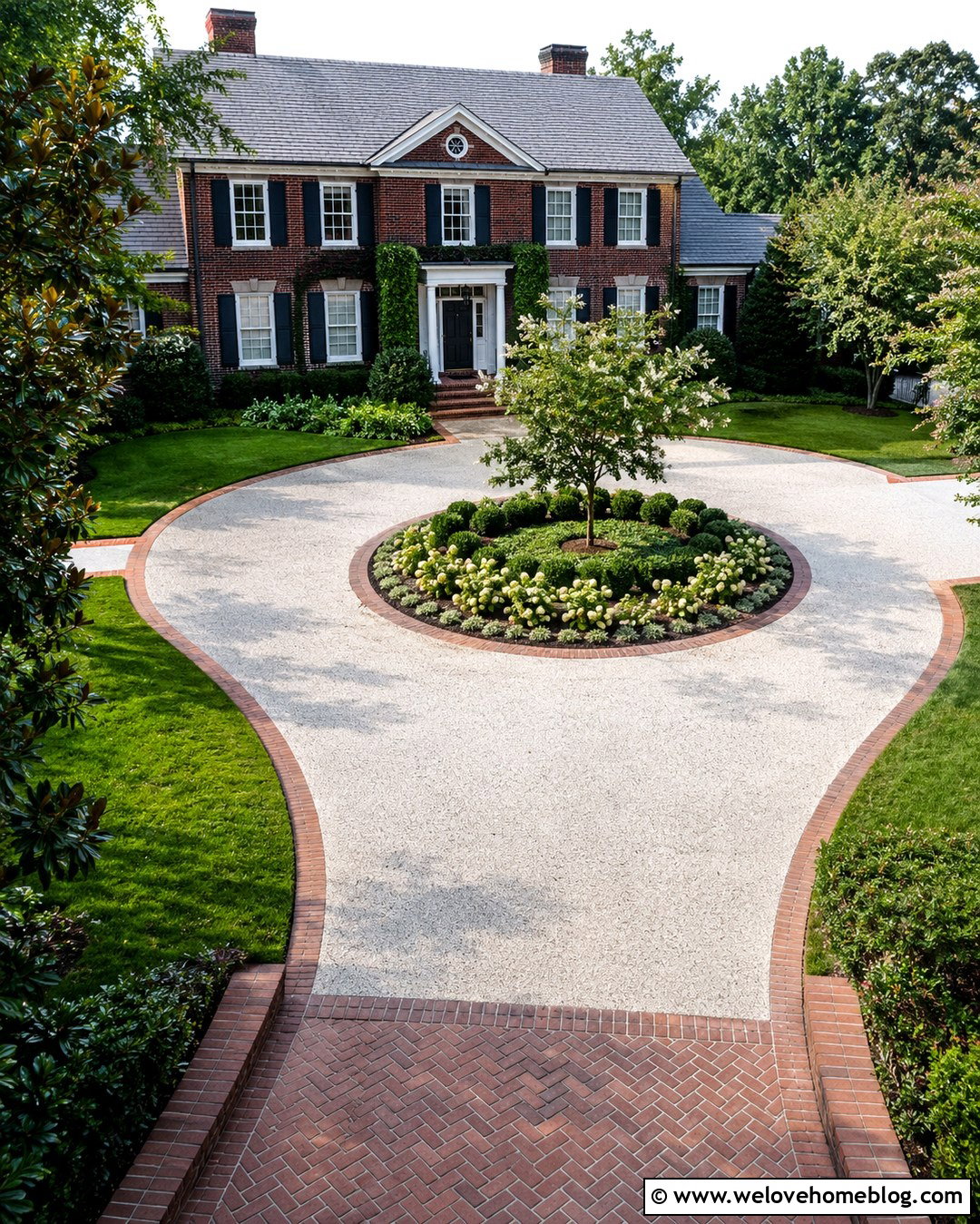
A circular crushed gravel driveway makes arrival and departure easier while creating room for a landscaped focal point. Use medium-gray angular gravel with a cobblestone perimeter to establish a traditional, durable-looking outline. In the center island, plant one appropriately scaled ornamental tree surrounded by low evergreen shrubs, seasonal flowers, and mulch. Keeping the planting low around the island preserves visibility across the circle. This layout complements Colonial, Georgian, and large farmhouse homes with centered front entrances. Connect the circle to the house using a stone walkway that matches the cobblestone edging. Subtle lighting around the island can define the route after sunset, but the daytime design should remain simple enough that the driveway’s graceful circular shape stays easy to read.
8. Horseshoe Crushed Gravel Driveway With Stone Pillars
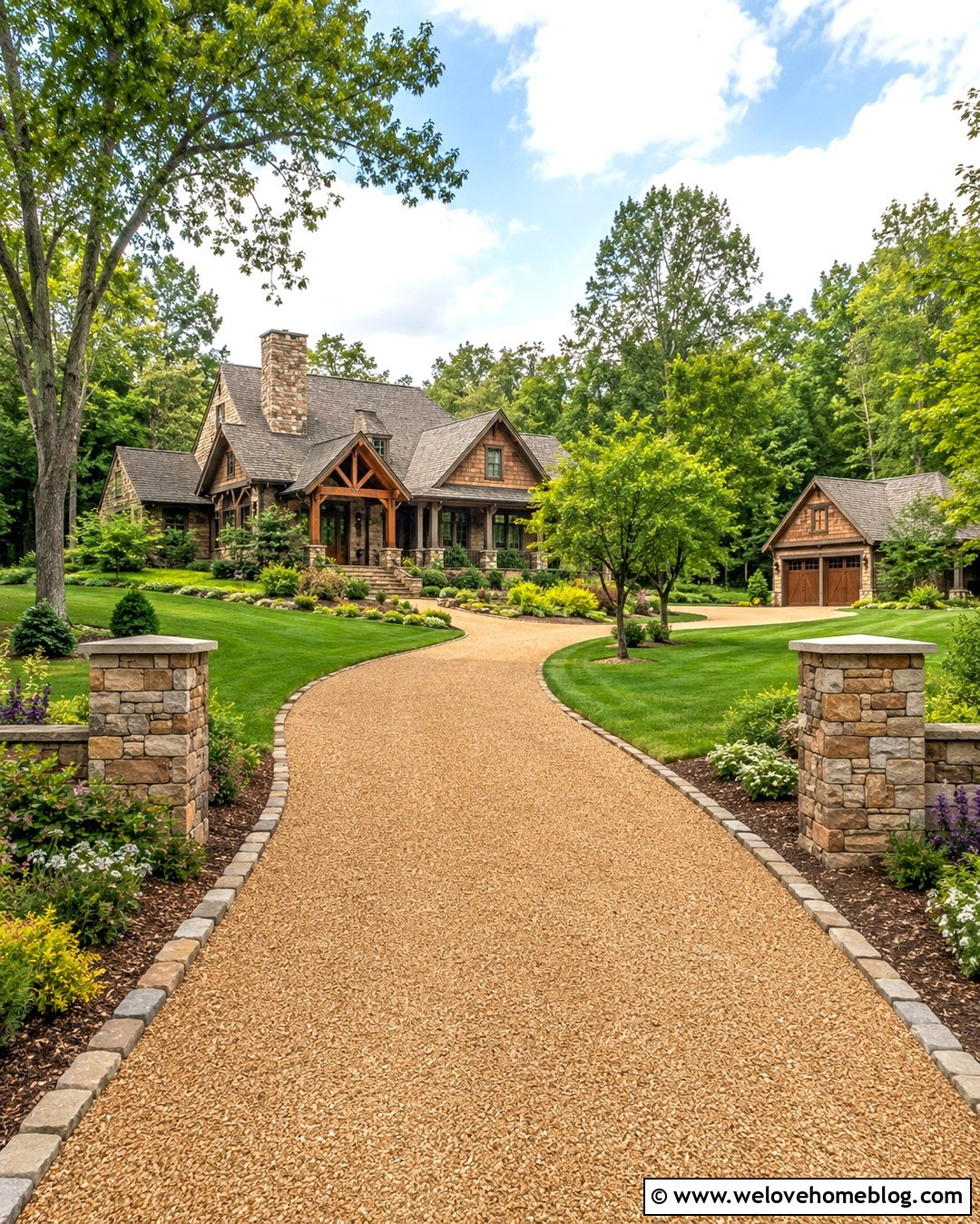
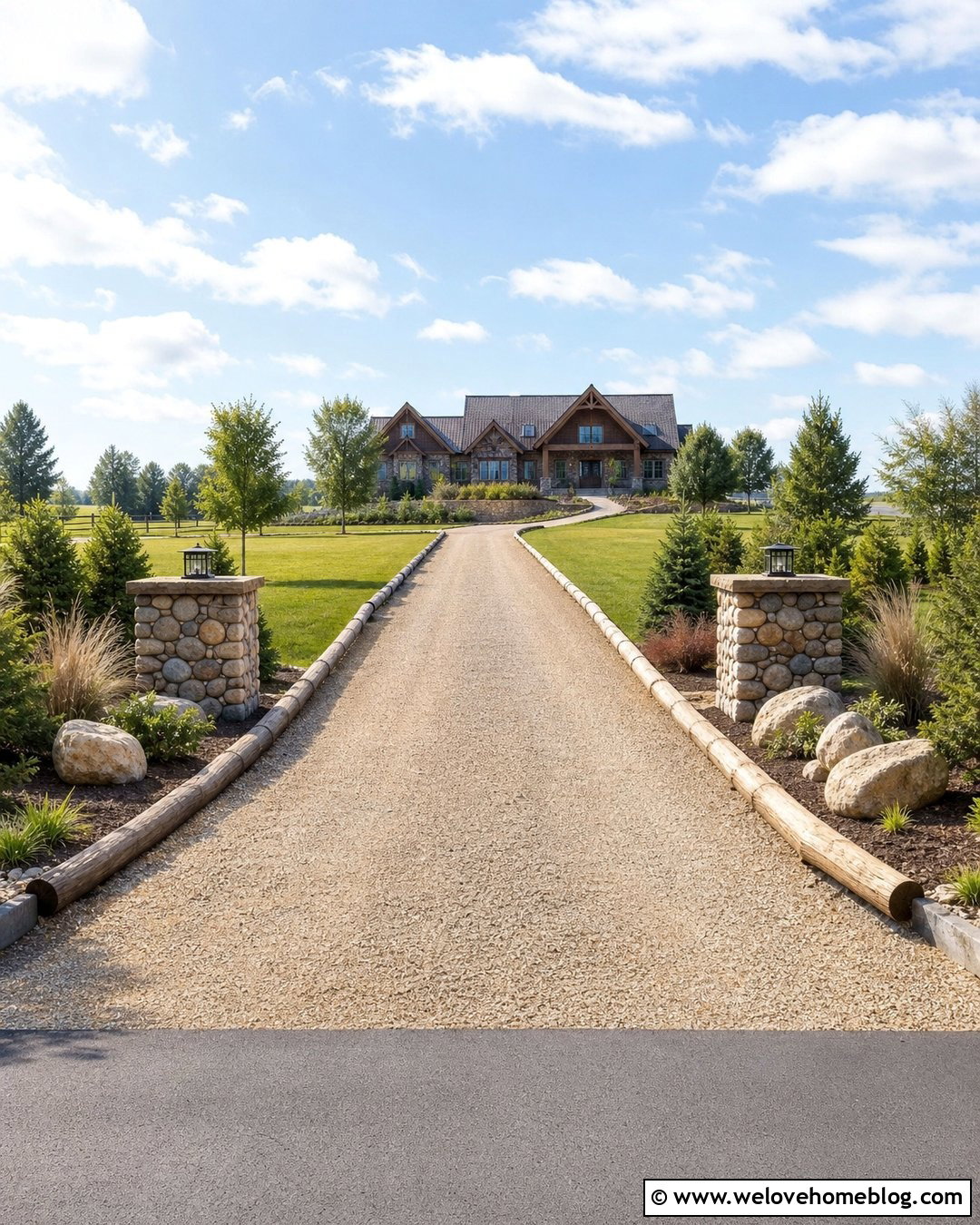
A horseshoe layout provides two distinct entrance points and gives a wide country property a formal sense of arrival. Cover the drive with warm tan crushed gravel and mark both openings with matching natural-stone pillars. Low stone edging can continue from the pillars around the sweeping curves, creating a unified boundary. Between the entrances, use lawn, a small grove of ornamental trees, or a broad planting bed rather than dense shrubs that block sightlines. A secondary branch can lead toward the garage while the main arc passes the front door. Lantern-style fixtures on the pillars introduce a traditional accent without overwhelming the landscape. This complete look suits farmhouse, craftsman, and country homes set back from the road.
9. Narrow Crushed Gravel Driveway With Brick Ribbons
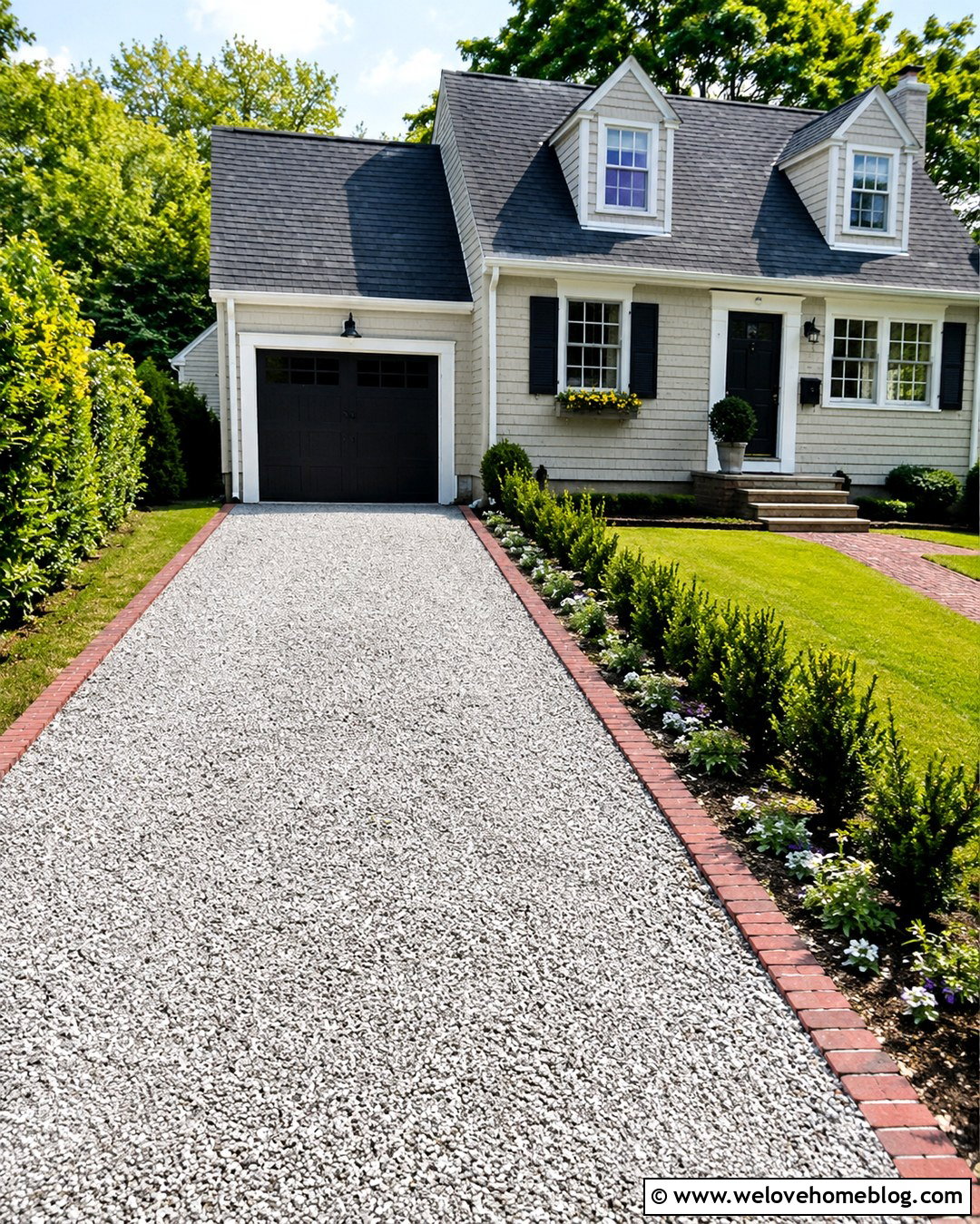
Small front yards benefit from a narrow driveway that feels intentionally connected to the house. Use pale gray crushed gravel with slim brick ribbons on both sides to establish a clear route without making the space look heavily paved. A straight layout is usually the most efficient, especially when the garage sits close to the street. Place a narrow planting bed along one side with upright shrubs, compact grasses, and low flowers that will not spread into the driving area. On the opposite side, maintain a clean lawn edge or install a simple brick walkway. Matching the border bricks to the home’s chimney or facade creates visual continuity. The result feels detailed and welcoming without sacrificing valuable parking or maneuvering space.
10. Long Crushed Gravel Driveway With Tree-Lined Landscaping
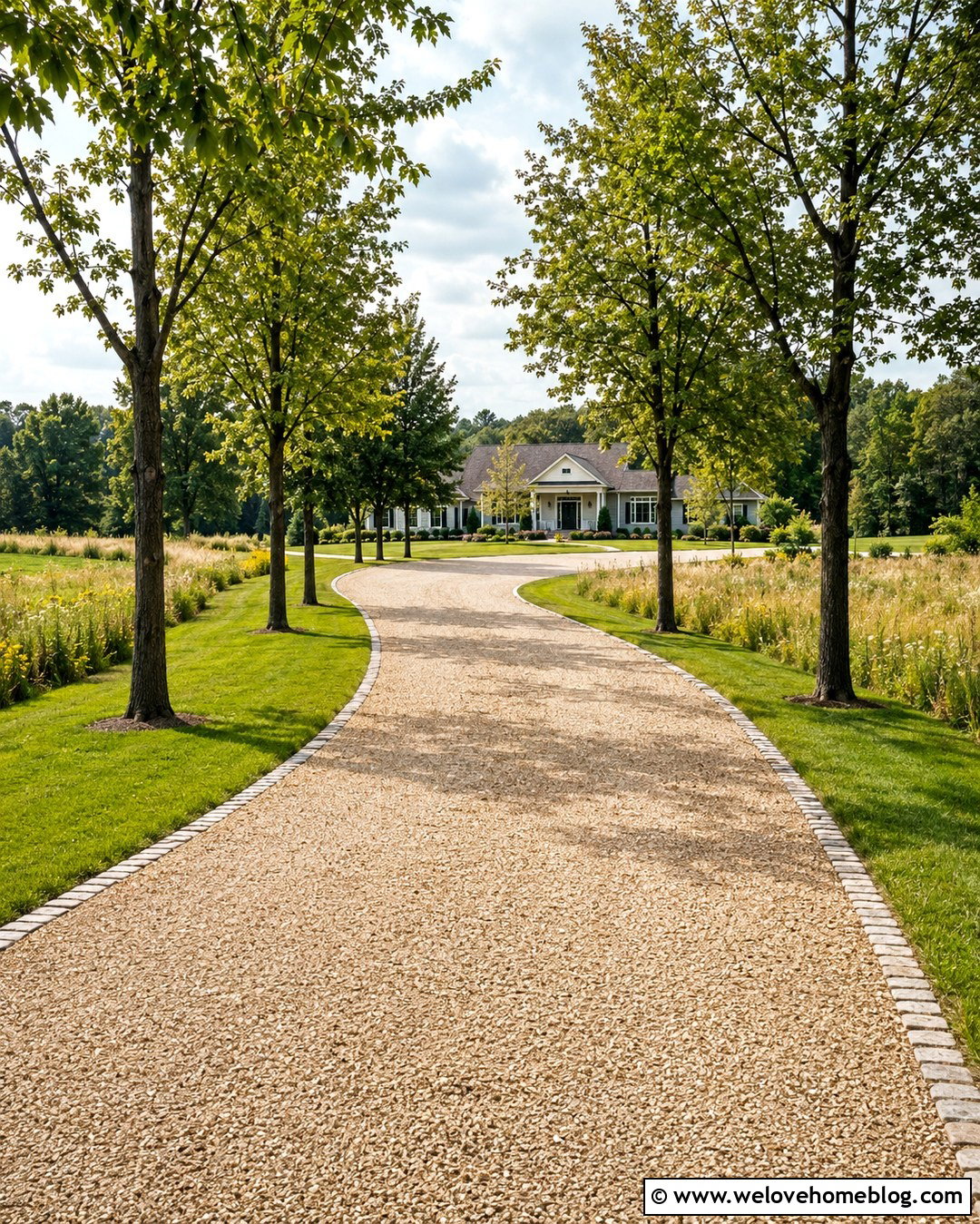
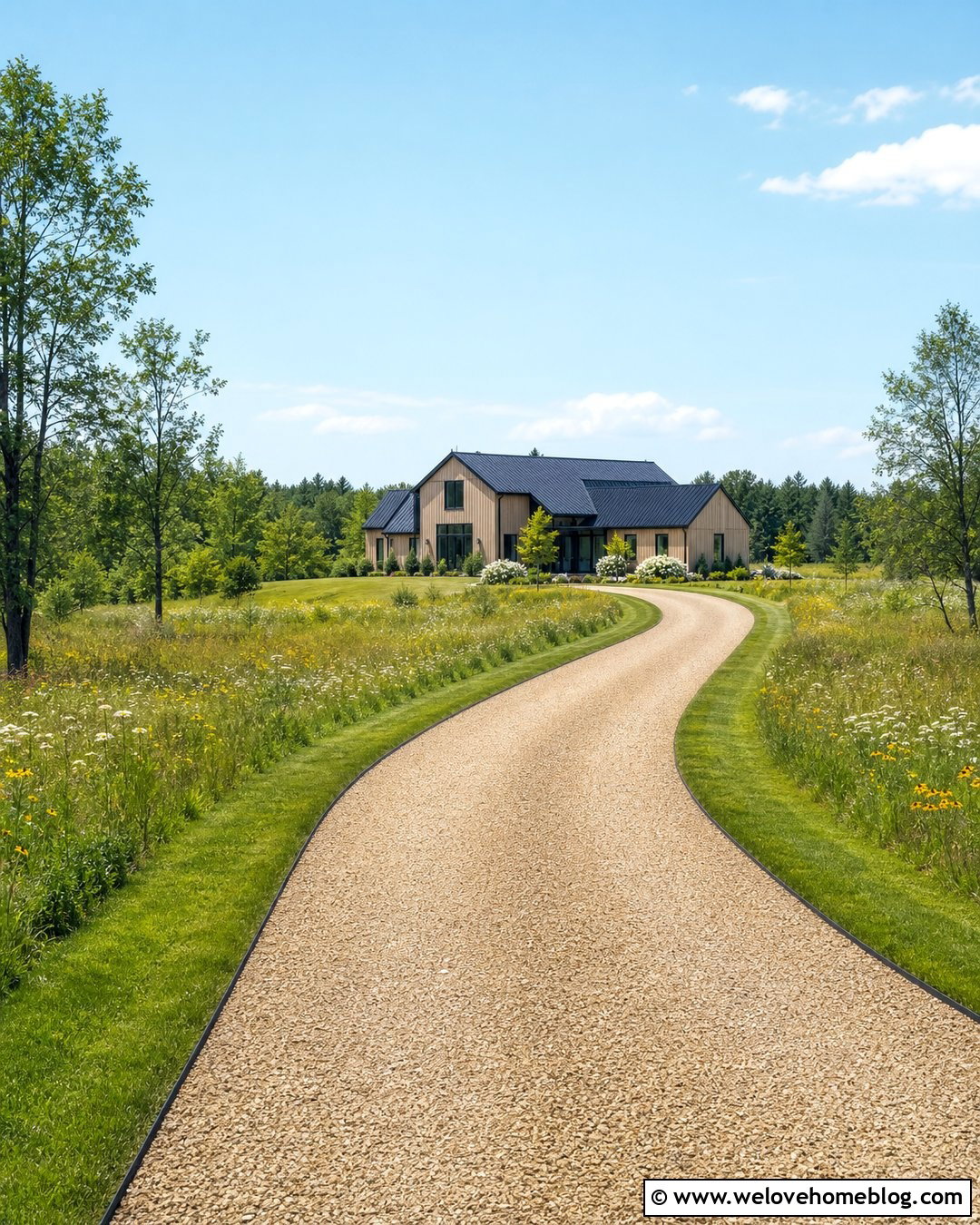
A long crushed gravel driveway becomes more inviting when evenly spaced trees guide the view toward the house. Choose locally available gray or warm beige crushed stone so the surface blends naturally with the setting. Define the edges with flush cobblestones or sturdy metal edging that will not compete with the tree-lined approach. Place trees far enough from the driving lane to allow healthy growth, clear visibility, and comfortable vehicle access. Low meadow grasses or broad lawn strips can fill the space beneath them. Near the house, transition into more structured beds with evergreen shrubs and flowering plants. A gentle curve near the end can reveal the home gradually while opening into a practical parking and turning area beside the garage.
11. Sloped Crushed Gravel Driveway With Drainage Curbs
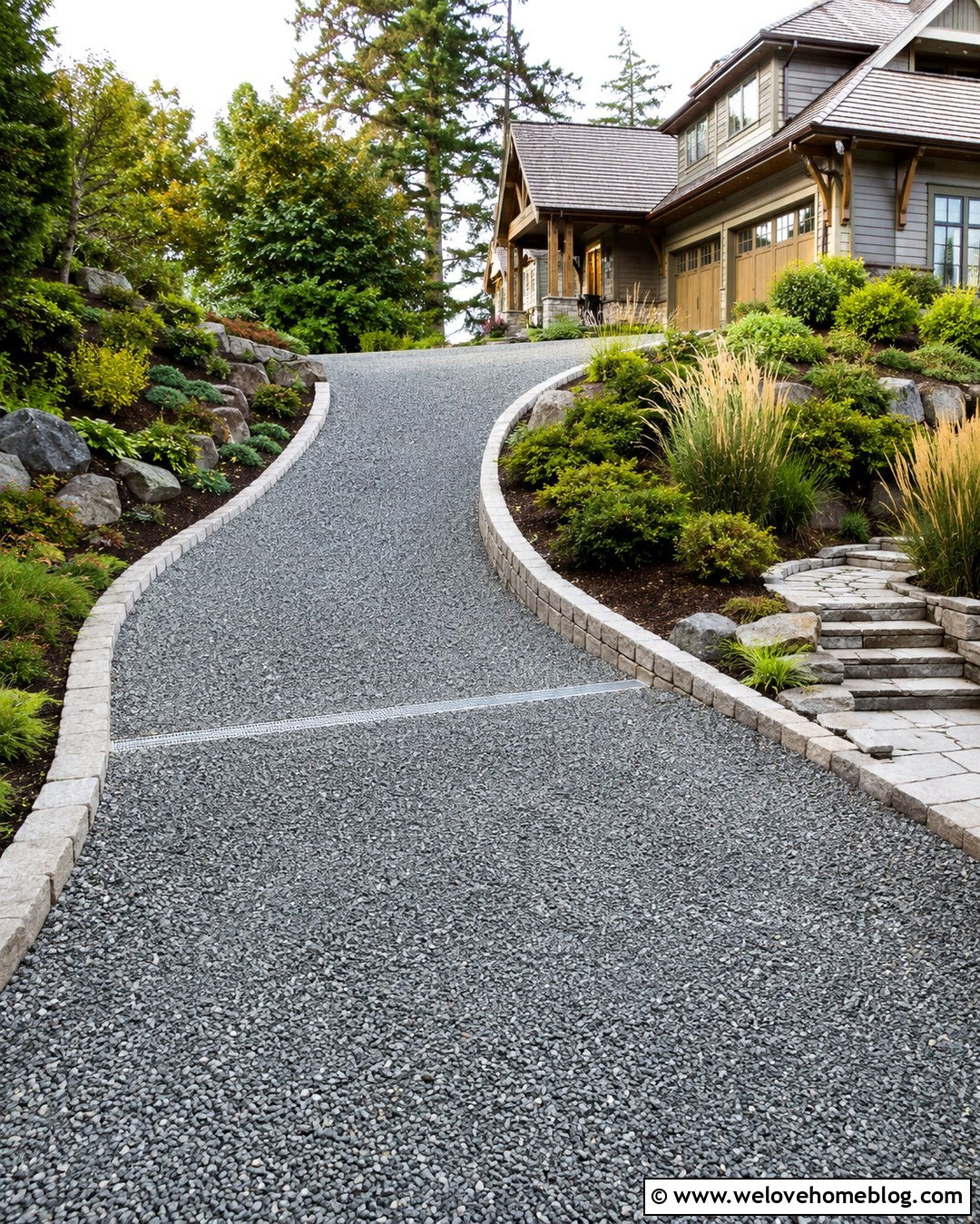
A sloped driveway needs a design that manages runoff while keeping the gravel from migrating into the yard. Use compactable angular crushed gravel framed by low concrete or stone curbs. A subtle crown can guide water toward the sides, while discreet channel drains at key transition points help prevent water from crossing the garage threshold. Follow the slope with broad, gradual curves rather than a sudden bend. Plant the surrounding banks with deep-rooted ground covers, ornamental grasses, and low shrubs to soften the grade. Avoid loose, rounded stones that can shift easily under tires. The retaining edges, drainage features, and landscaping should look like coordinated parts of the entrance instead of later additions, producing a stable and attractive uphill approach.
12. Two-Tone Crushed Gravel Driveway With Dark Borders
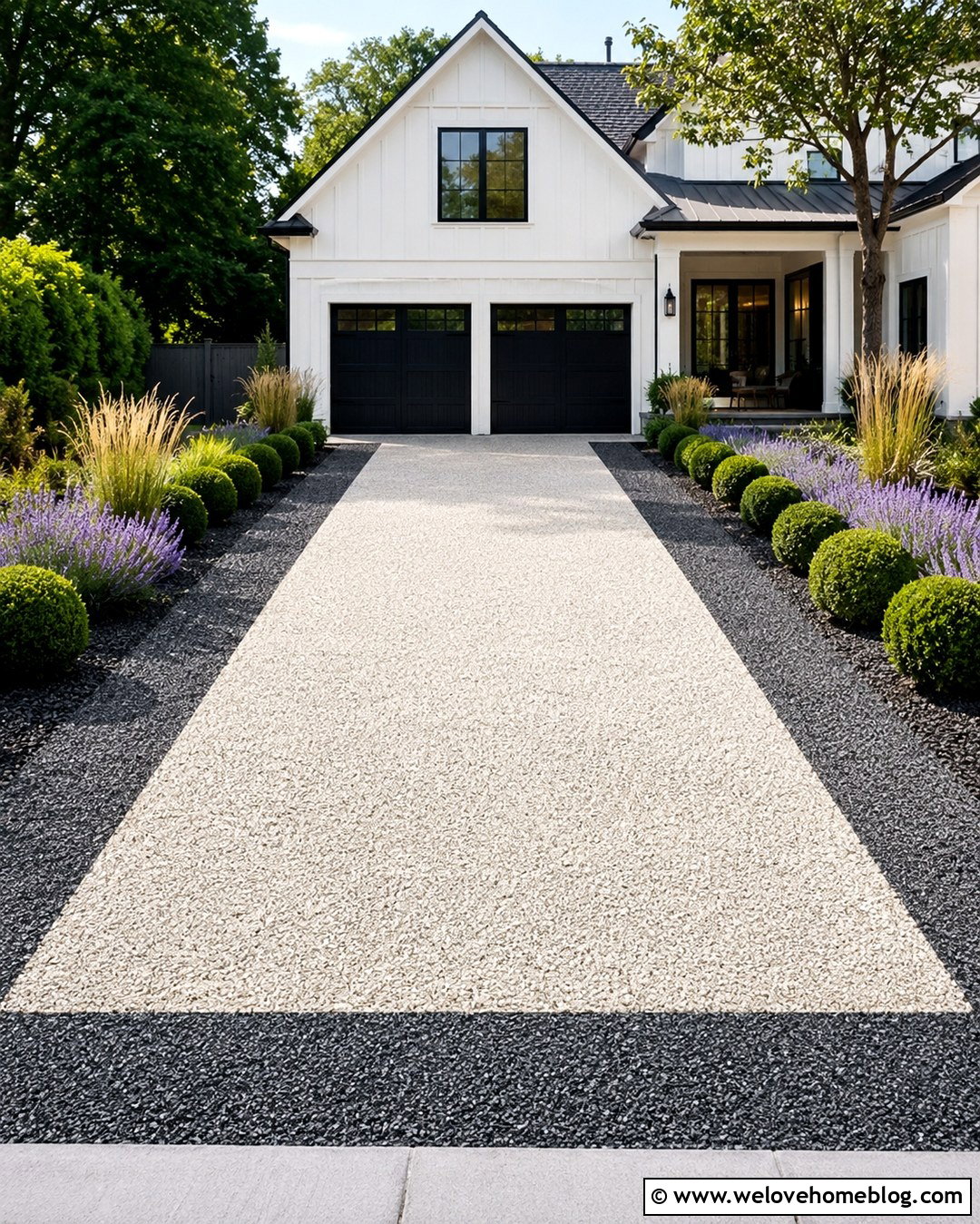
Two gravel colors can give a simple driveway more detail without relying on an expensive paved pattern. Cover the main surface with light crushed limestone and create a wide border using charcoal crushed granite. Separate the colors with concealed metal edging so they remain visually distinct. This look works well on a straight driveway leading to a transitional or modern farmhouse home. Continue the dark gravel around nearby planting beds to connect the border with the landscape. Boxwood, lavender, and ornamental grasses provide structure without competing with the two-tone surface. Keep the pattern simple and symmetrical; complicated shapes can become difficult to maintain. A matching dark gravel band across the entrance can visually finish the composition and frame the driveway from the street.
13. Crushed Gravel Parking Court With Paver Apron
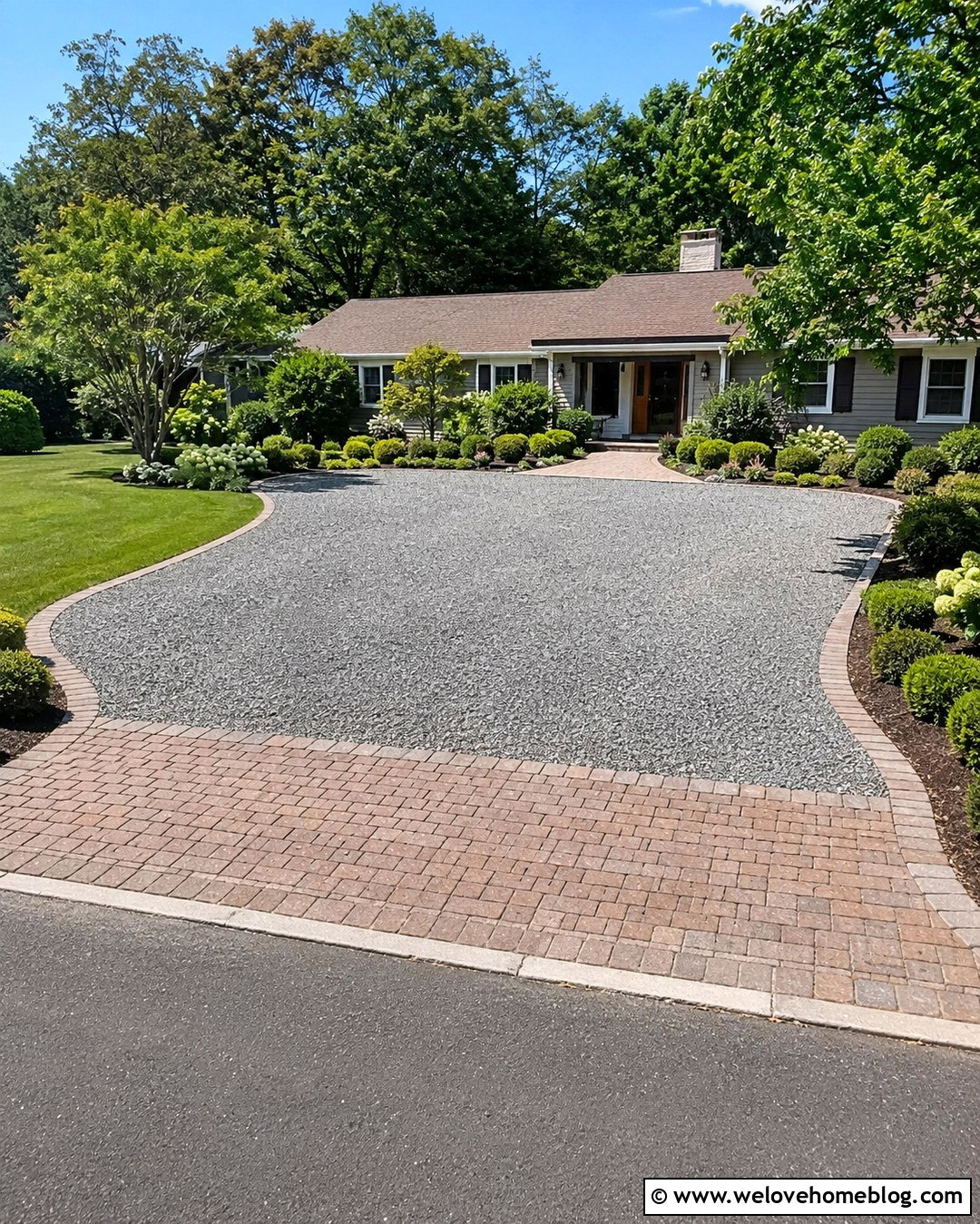
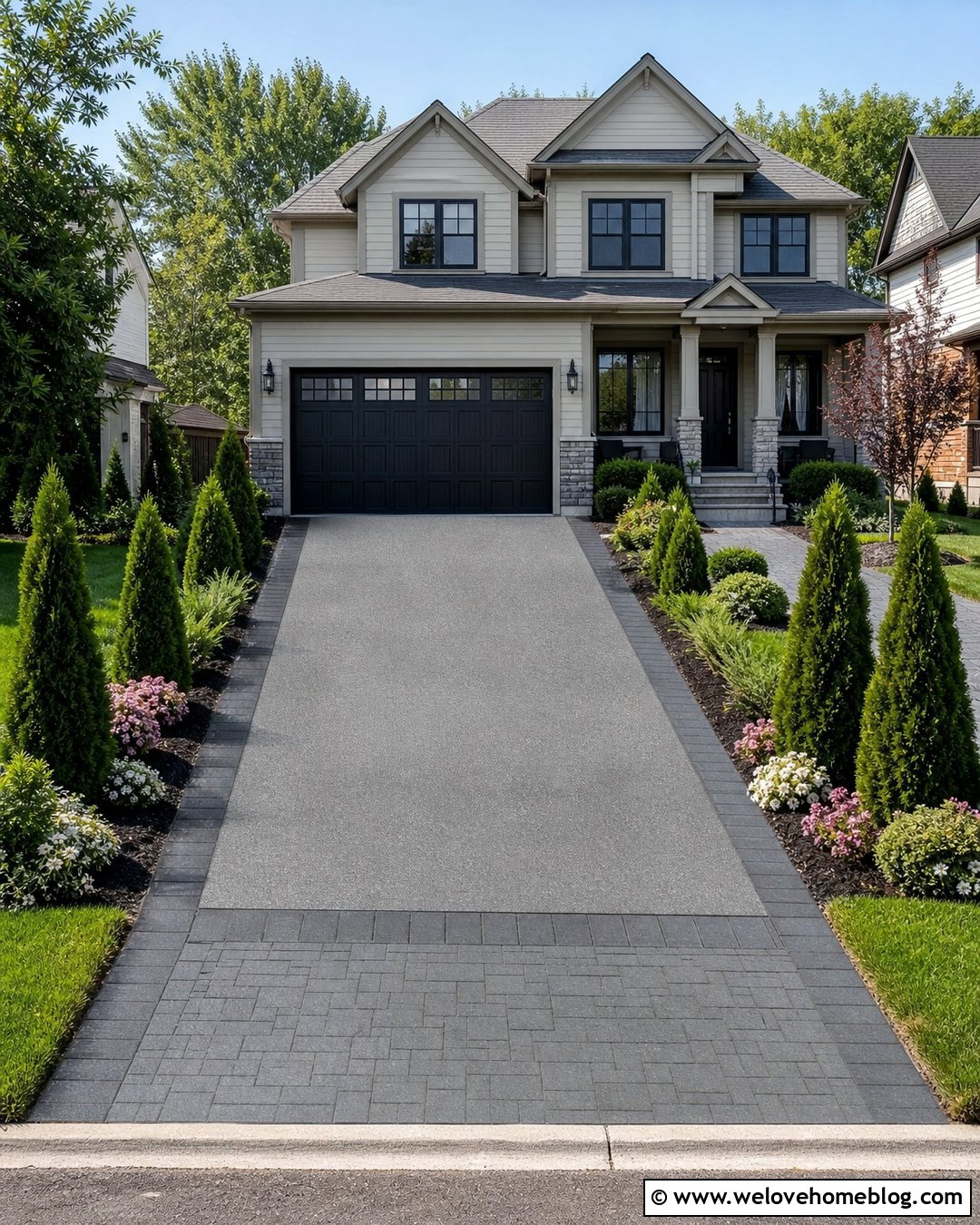
A generous crushed gravel parking court can look polished when it includes a clear entrance and defined pedestrian route. Use warm gray crushed stone throughout the main parking area, then install a brick or concrete paver apron where the driveway meets the street. The solid transition reduces the unfinished appearance sometimes associated with loose gravel entrances. Shape the court as a broad rectangle with softened corners, leaving enough open space for turning. Edge the perimeter with matching pavers and place layered shrubs around the outer boundary. A paved walkway should lead directly from the parking court to the front door. This complete layout works particularly well for ranch homes, detached garages, and properties that regularly need flexible guest parking.
14. Crushed Gravel Ribbon Driveway With Grass Center
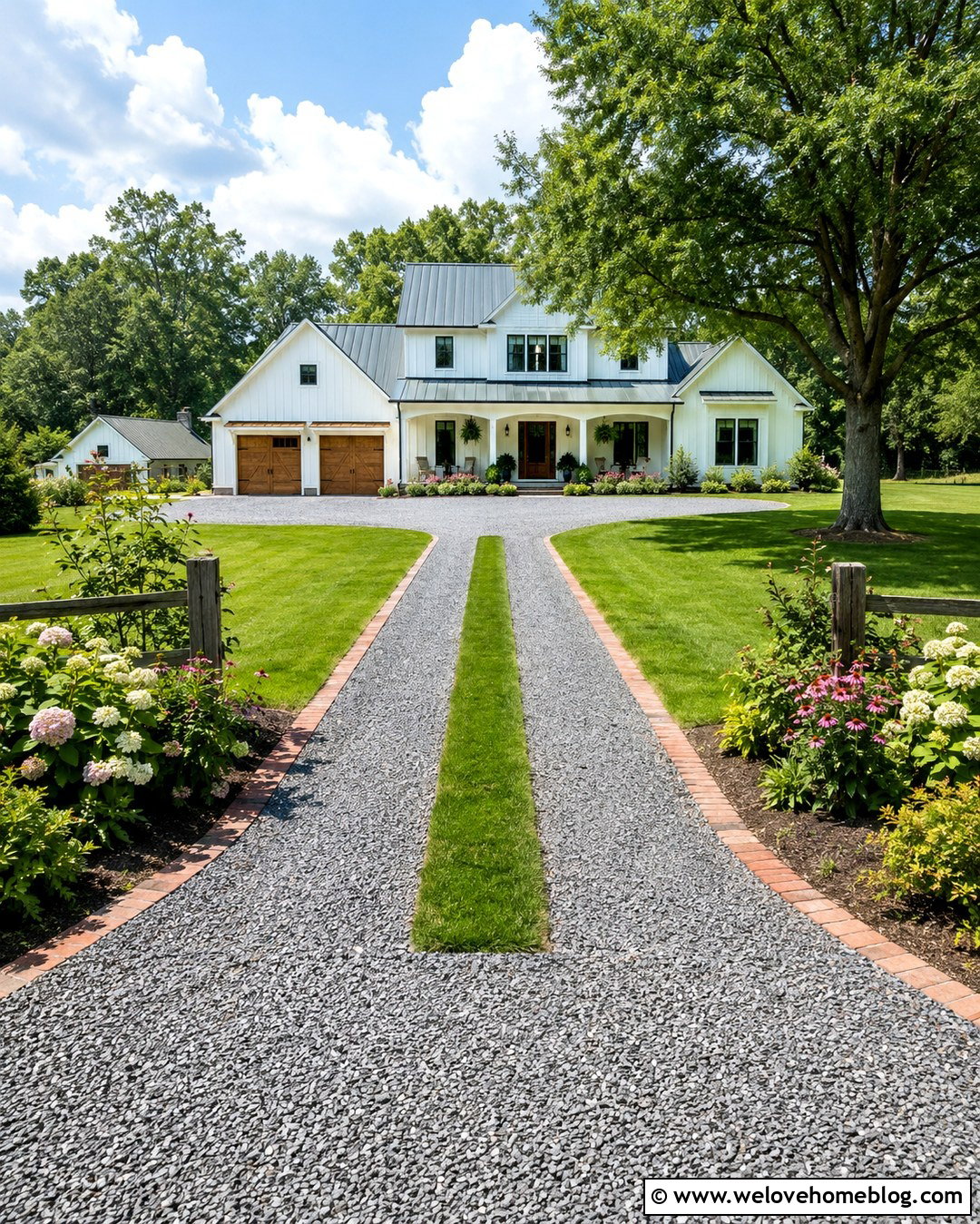
Two crushed gravel driving strips separated by grass can reduce the visual width of a driveway while maintaining a clear path to the garage. Use tightly compacted gray crushed gravel for the ribbons and frame their outside edges with flush brick or steel. The center grass strip should be wide enough to look intentional but narrow enough to avoid interfering with vehicle clearance. This layout suits cottages, smaller farmhouses, and lightly used residential drives on relatively level ground. Continue the lawn outward on both sides, then add flowering borders near the house for a soft finish. A solid gravel apron at the street and garage provides easier turning. The repeated strips create a relaxed country appearance that blends parking access into the front yard.




15. Crushed Gravel Driveway With Boulder Edging
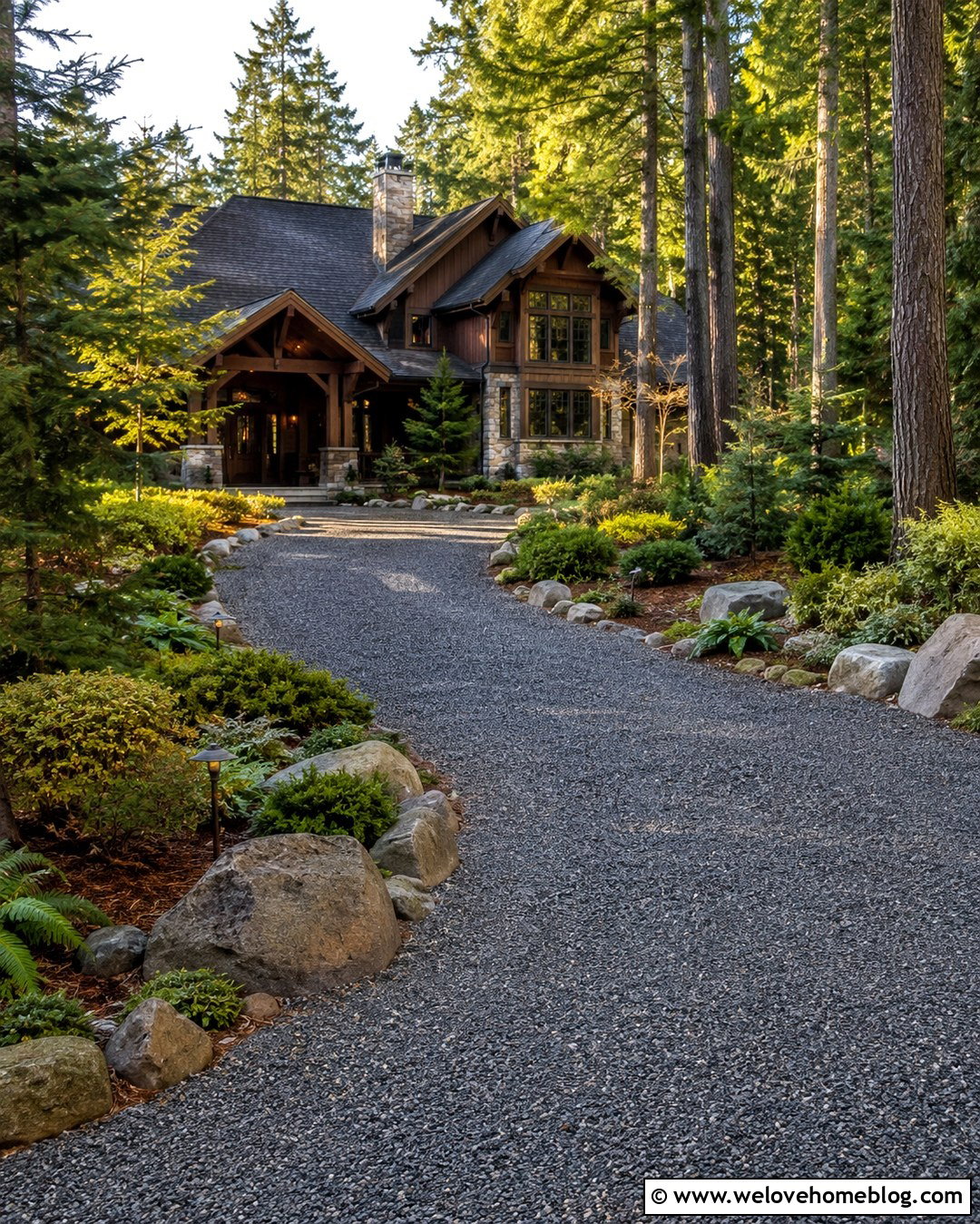
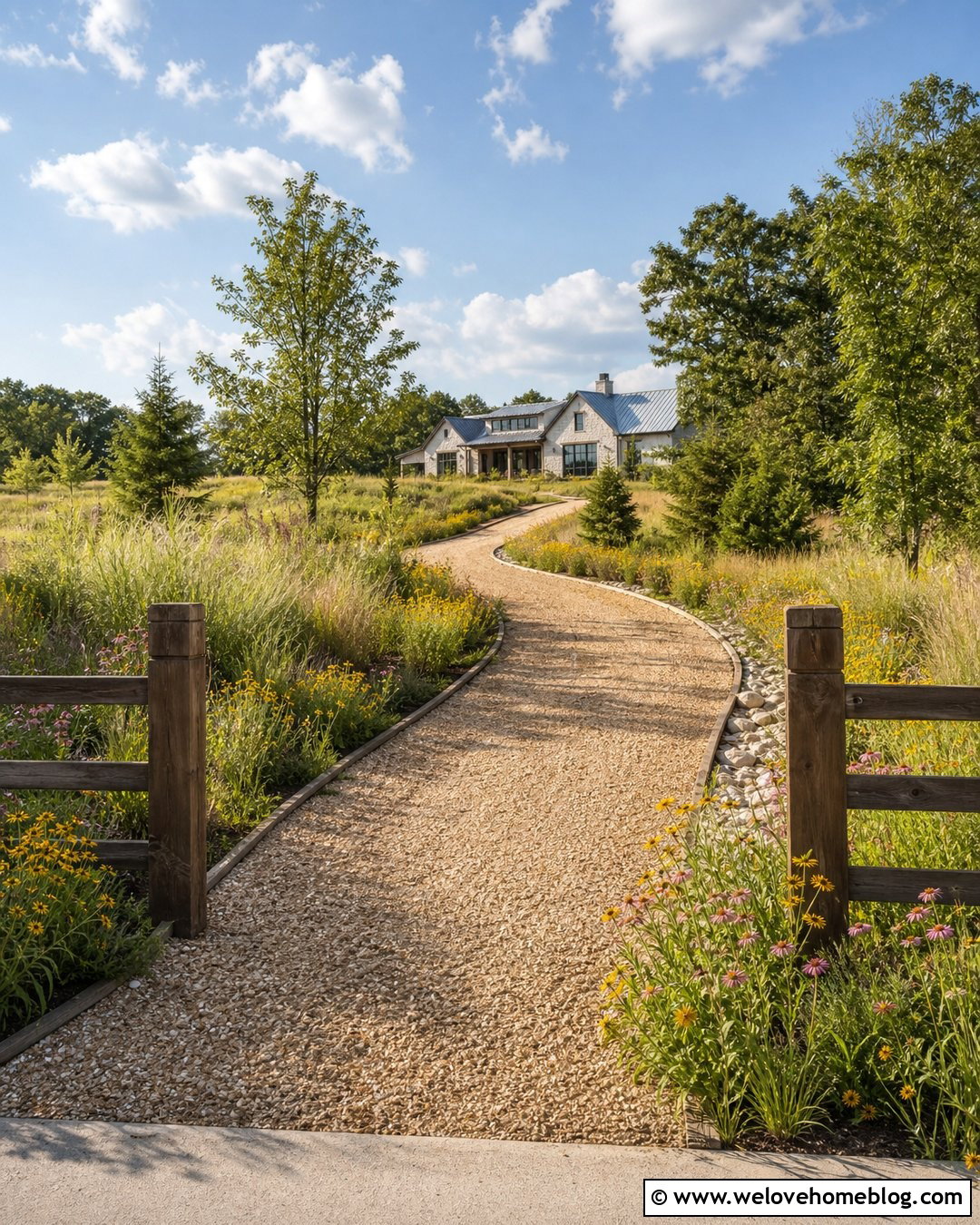
In a wooded setting, large natural boulders can create an attractive transition between a crushed gravel driveway and the surrounding landscape. Select gray crushed granite or trap rock that reflects the colors already found in the local stone. Arrange boulders in loose groups rather than forming a continuous wall, leaving enough distance from the driving lane for safe clearance. Fill the spaces between them with ferns, native grasses, low evergreen shrubs, and woodland ground covers. A gently curving layout will feel more natural than a perfectly straight line through the trees. Near the home, use smaller stones to refine the edge and connect it with the walkway. The varied scale produces a rugged driveway design without making the approach feel disorderly.
16. Crushed Gravel Driveway With Drought-Tolerant Landscaping
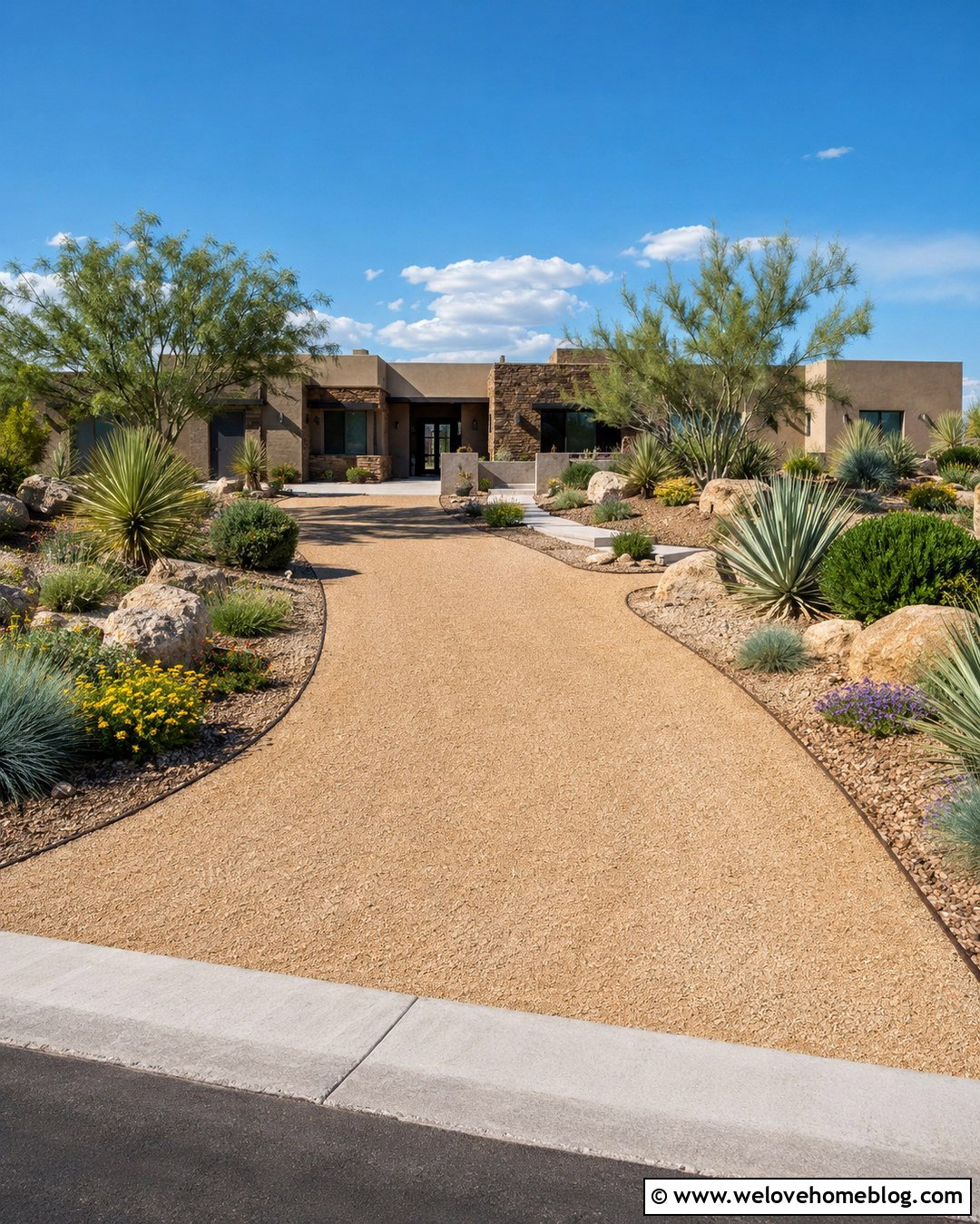
Crushed gravel pairs naturally with a low-water front yard because the driveway can flow visually into rock-mulched planting beds. Choose warm buff crushed stone for the driving surface and slightly larger gravel in a related tone around the plants. A steel or concrete edge should separate the two areas so the driveway remains clearly defined. Use a gently curved layout bordered by ornamental grasses, yucca, agave where climate-appropriate, compact juniper, and flowering drought-tolerant perennials. Space the plants generously and repeat a limited selection for a calm appearance. Larger accent rocks can mark curves without narrowing the driving area. This complete look suits modern ranch and Southwestern-inspired homes, especially when the gravel colors coordinate with stucco, wood, or stone facades.
17. Crushed Gravel Driveway With Hydrangea Borders
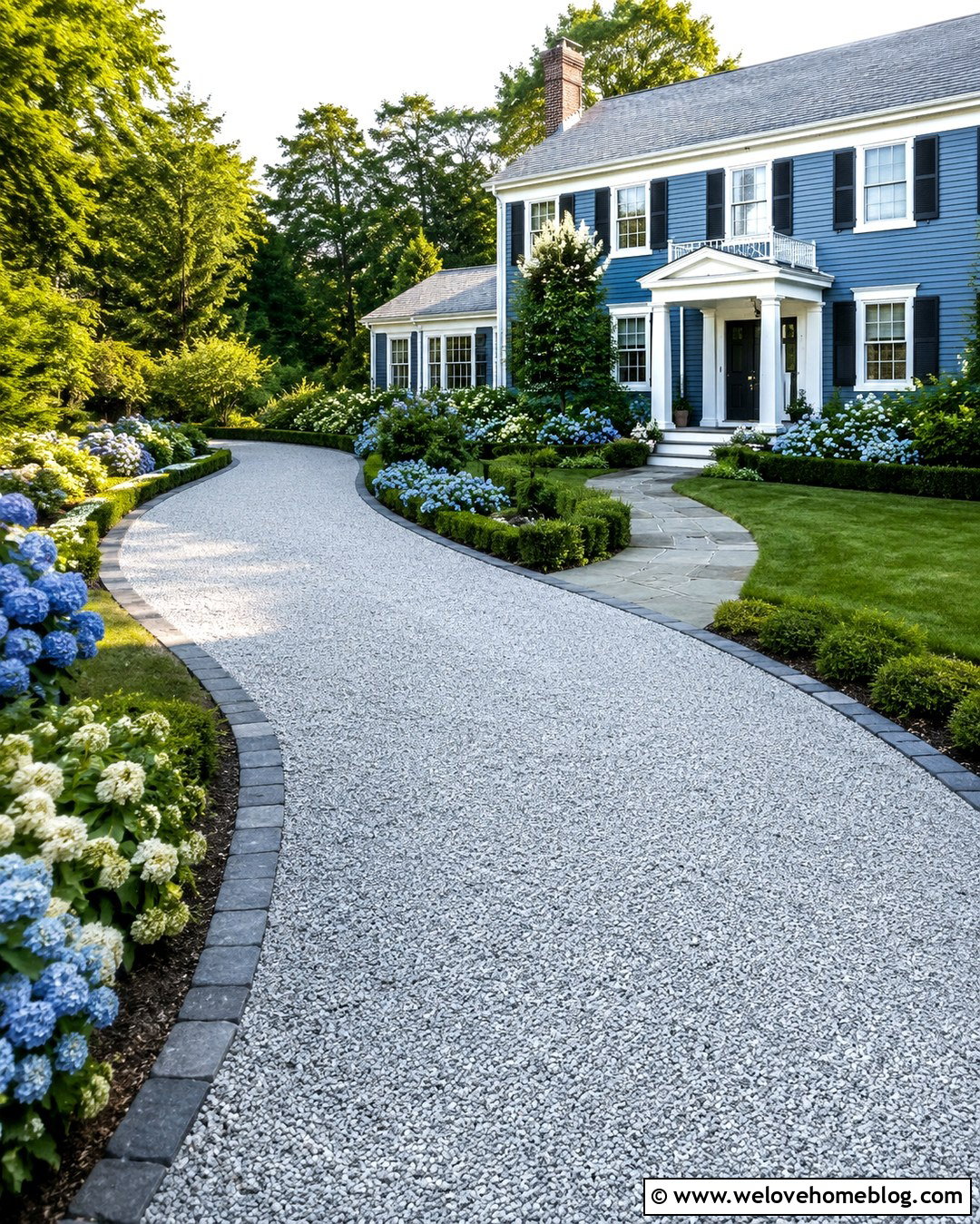
Soft flowering borders can turn a basic crushed gravel driveway into a welcoming approach to a traditional home. Use light gray crushed limestone with dark cobblestone edging, then plant hydrangeas behind a low evergreen framework. The cobblestones create separation between the loose gravel and planting soil, while the evergreens provide structure when the hydrangeas are not blooming. A straight driveway or broad shallow curve works well with this balanced landscape. Allow generous planting space so mature shrubs do not obstruct mirrors or vehicle doors. Add a matching stone walkway near the house and repeat a few hydrangeas around the front porch. White, blue, or pink flowers can be selected to complement the facade, shutters, and existing garden palette.
18. Crushed Gravel Driveway With Landscape Lighting
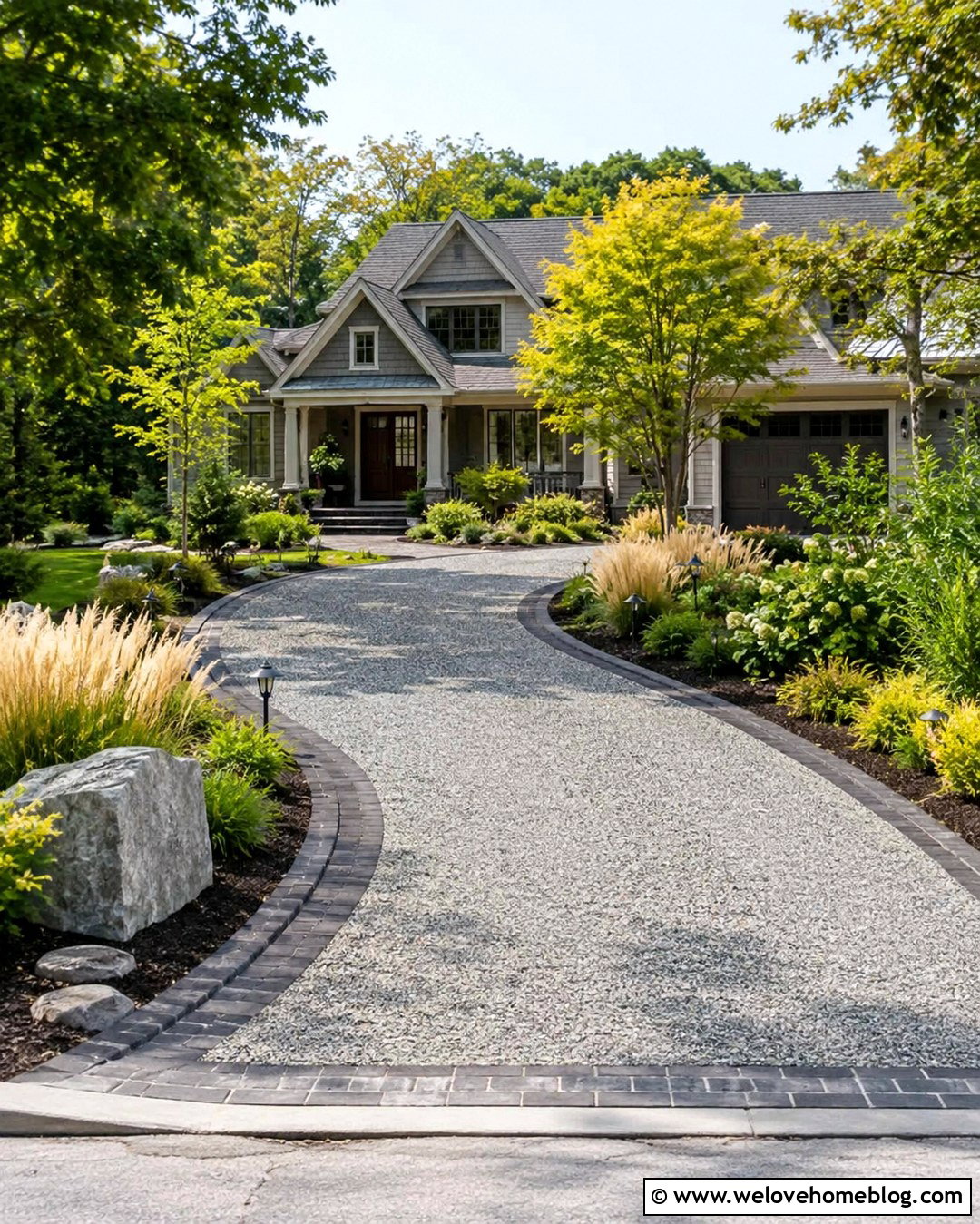
Well-planned landscape lighting can define a crushed gravel driveway without lining it with too many visible fixtures. Start with medium-gray crushed granite and a simple curved route edged in dark brick or stone. Place low path lights at wider intervals along the outside curve, where they can clarify the driveway shape and illuminate adjacent planting beds. Highlight one entrance tree, stone wall, or address marker rather than lighting every feature equally. During the day, the fixtures should blend into layered landscaping of shrubs, grasses, and ground covers. Near the house, coordinate the fixture finish with porch lights and garage hardware. The complete design remains attractive in bright daylight while offering a clear, organized approach when exterior lighting is needed.
19. Crushed Gravel Driveway With Gate And Stone Pillars
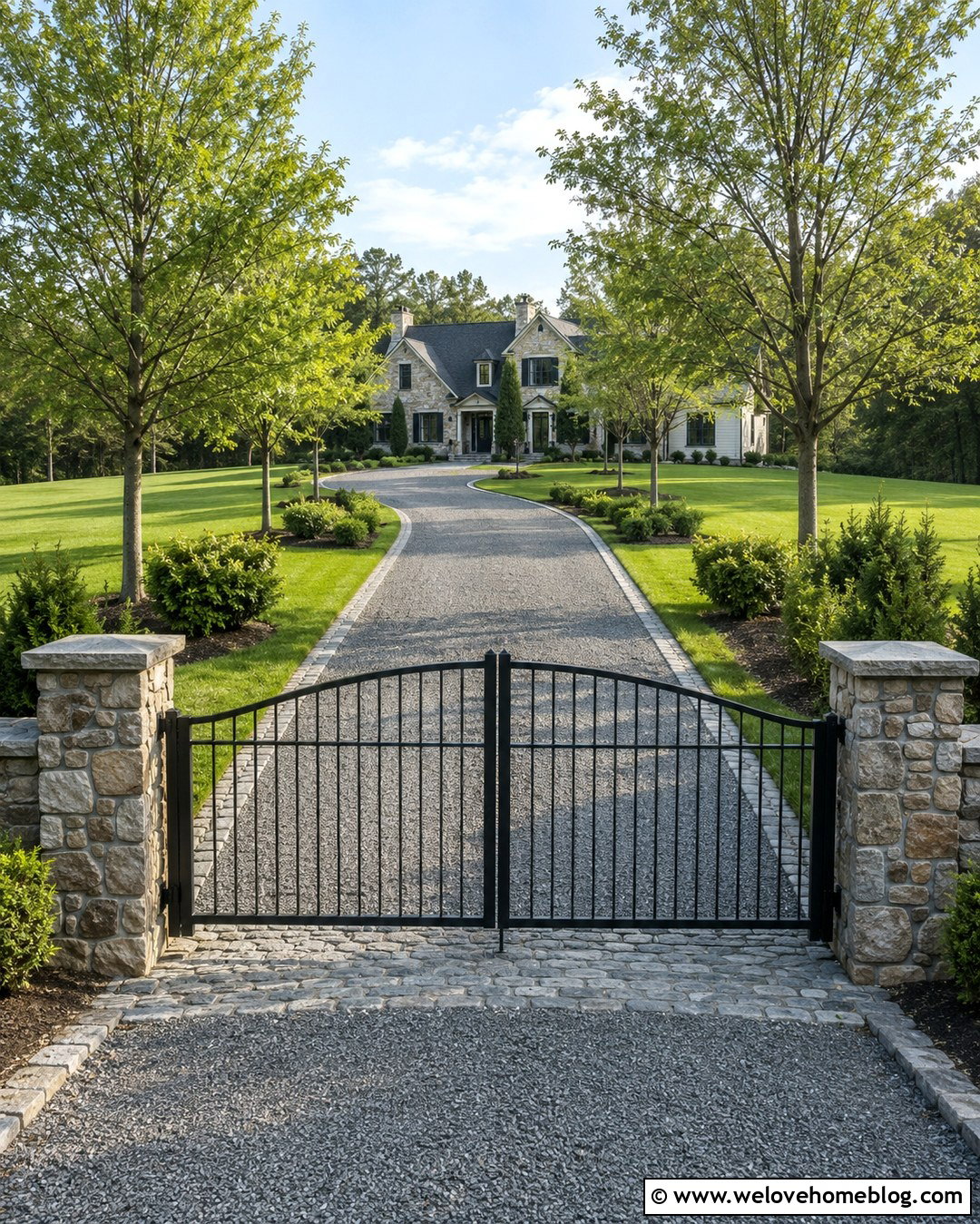
A gate becomes part of the overall landscape when its materials relate to the driveway, house, and entrance walls. Use warm gray crushed gravel for a straight or gently curved approach framed by substantial stone pillars. A simple black metal gate provides contrast without hiding the view toward the home. Continue low stone walls or cobblestone edging from the pillars along the first section of driveway. Beyond the gate, soften the route with lawn, evenly spaced trees, and restrained shrub beds. Position the gate far enough inside the property to create a comfortable entry area off the road. Repeating the pillar stone on the house foundation, front steps, or address sign makes the complete entrance feel coordinated rather than assembled from unrelated features.
20. Crushed Slate Driveway With Corten Steel Edging
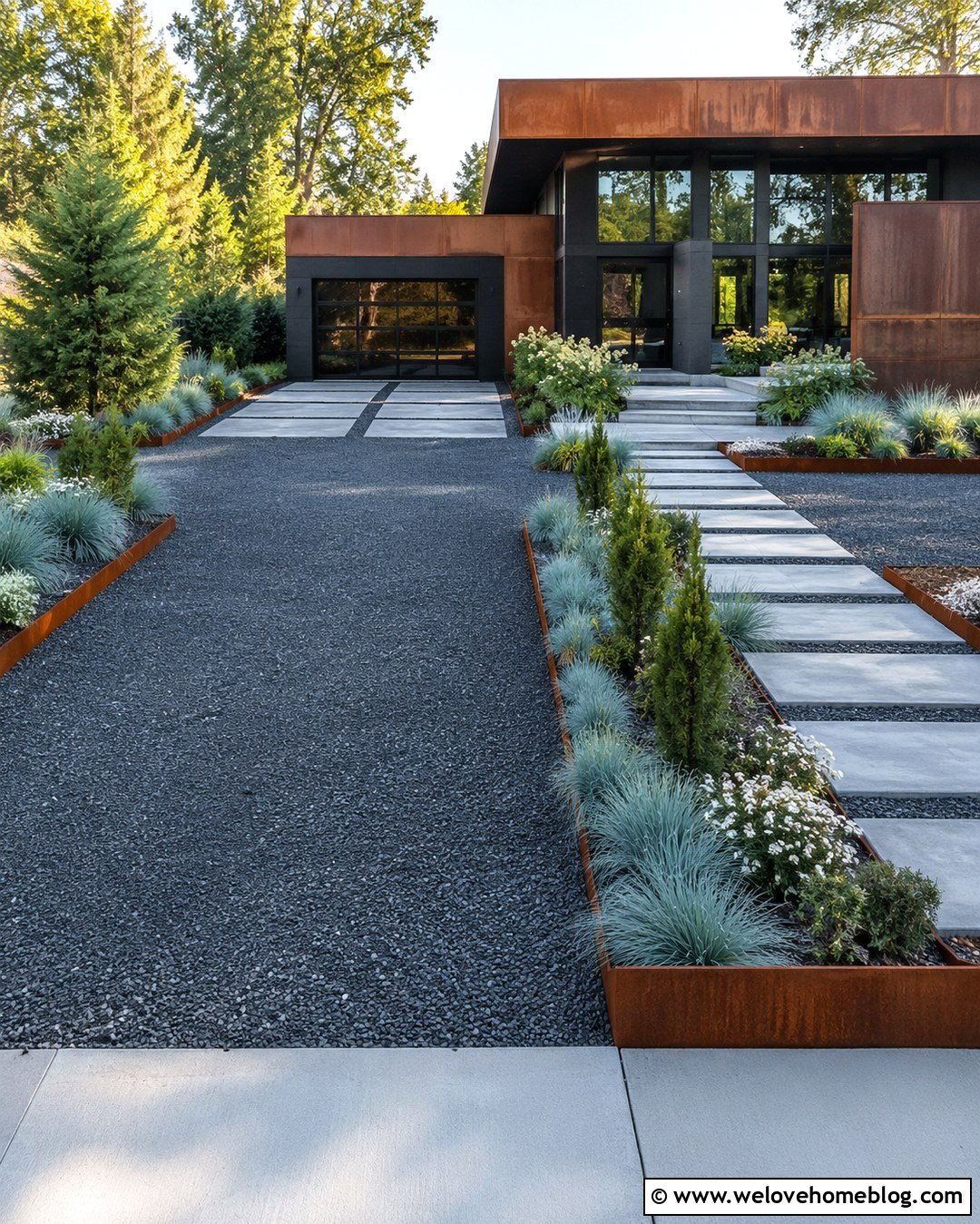
Dark crushed slate and rust-toned Corten steel create a distinctive driveway for a modern or industrial-inspired home. Use the slate on a wide, straight layout with a geometric parking pad near the garage. The steel edging should form crisp lines around both the driving surface and adjacent planting beds. Fill those beds with blue-green grasses, compact evergreens, and pale flowering perennials that stand out against the dark gravel. Concrete walkway slabs can cross one edge of the driveway and lead toward the front entrance. Keep decorative elements minimal because the contrast between charcoal stone, weathered steel, and green planting already provides strong visual interest. This complete composition feels modern while retaining the natural texture and relaxed character associated with crushed gravel.
Conclusion:
The most successful crushed gravel driveway combines appearance with practical details. Stone color should complement the house, while the driveway shape should make parking and turning comfortable. Reliable edging keeps the surface defined, and well-planned drainage helps preserve a smooth approach. From traditional brick borders and flowering shrubs to modern steel edging and drought-tolerant beds, every surrounding feature should support the complete design. Before choosing a look, consider the property’s slope, climate, traffic, maintenance needs, and existing architecture. Local crushed stone can also create a more natural connection to the landscape. Use these **20 Crushed Gravel Driveway Ideas** to plan an entrance that feels attractive, organized, and appropriate for your home.

Related posts:

Leave a Reply