
Rock driveways can feel rustic, polished, modern, or traditional depending on the stone, layout, edging, and surrounding landscape. The best 35 Rock Driveway Ideas go beyond simply spreading gravel across the ground. They combine a stable surface with strong borders, practical drainage, and landscaping that complements the home. Crushed limestone creates a bright country look, while dark basalt suits contemporary architecture. Brick ribbons, cobblestone aprons, steel edging, native grasses, and stone pillars can make the same basic material look completely different. Proper grading, a compacted base, and durable containment also help reduce rutting and scattered stones. () Whether you have a small suburban yard or a long rural approach, explore these practical and attractive 35 Rock Driveway Ideas.

1. Crushed Limestone Rock Driveway
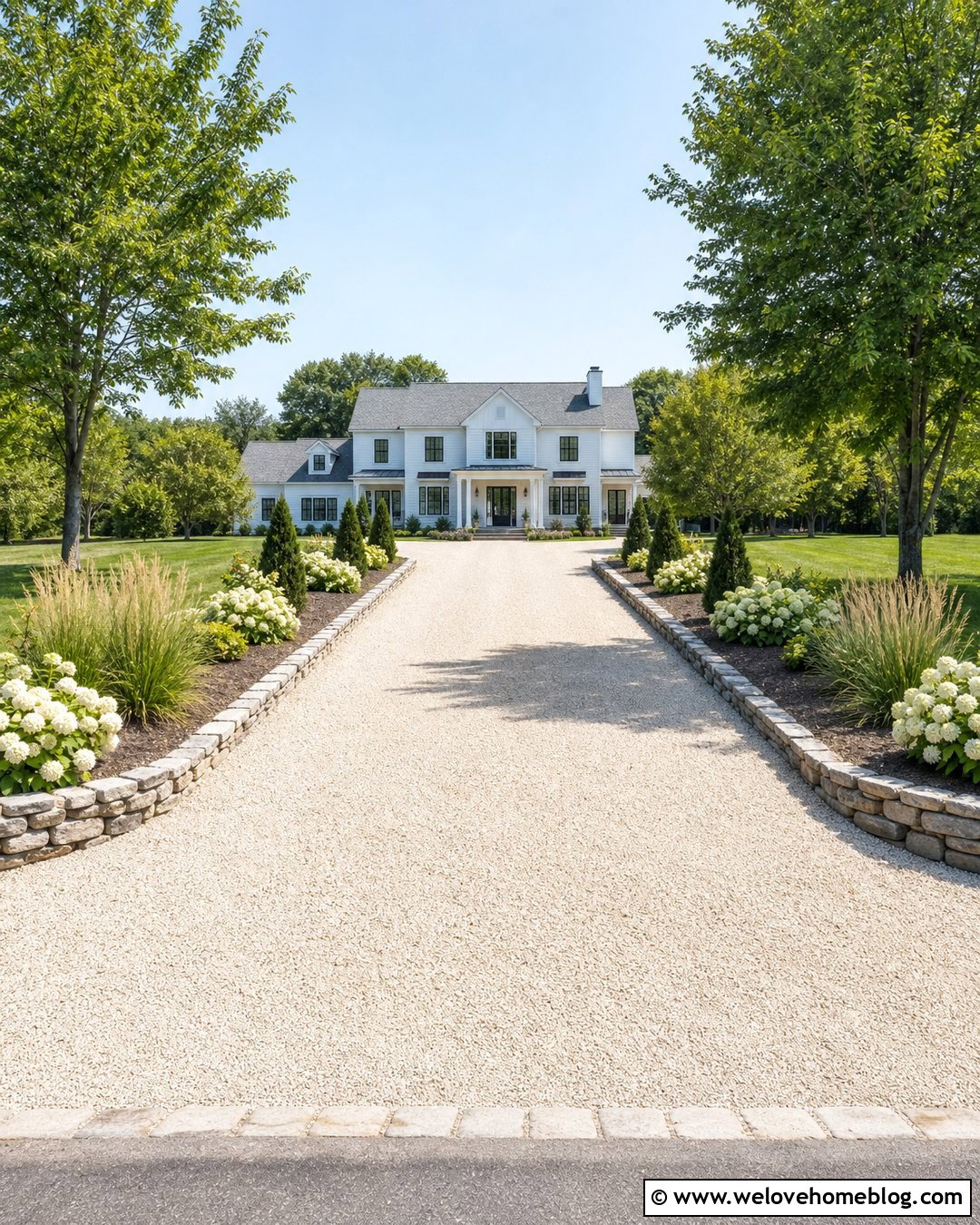
A crushed limestone rock driveway creates a clean, welcoming approach that works especially well with farmhouses, ranch homes, and traditional brick houses. Choose pale cream or warm gray limestone to brighten the front yard without making the surface feel stark. A straight layout keeps the driveway simple, while low fieldstone edging prevents the rock from disappearing into the lawn. Add broad planting beds with ornamental grasses, hydrangeas, and compact evergreens near the house. Limestone containing a mix of angular particles and fines can form a firmer surface after compaction than rounded decorative stones. Complete the entrance with a wider stone apron so turning vehicles do not disturb the surrounding grass. The finished design feels relaxed, practical, and intentionally connected to the landscape.
2. Gray Crushed Stone Rock Driveway
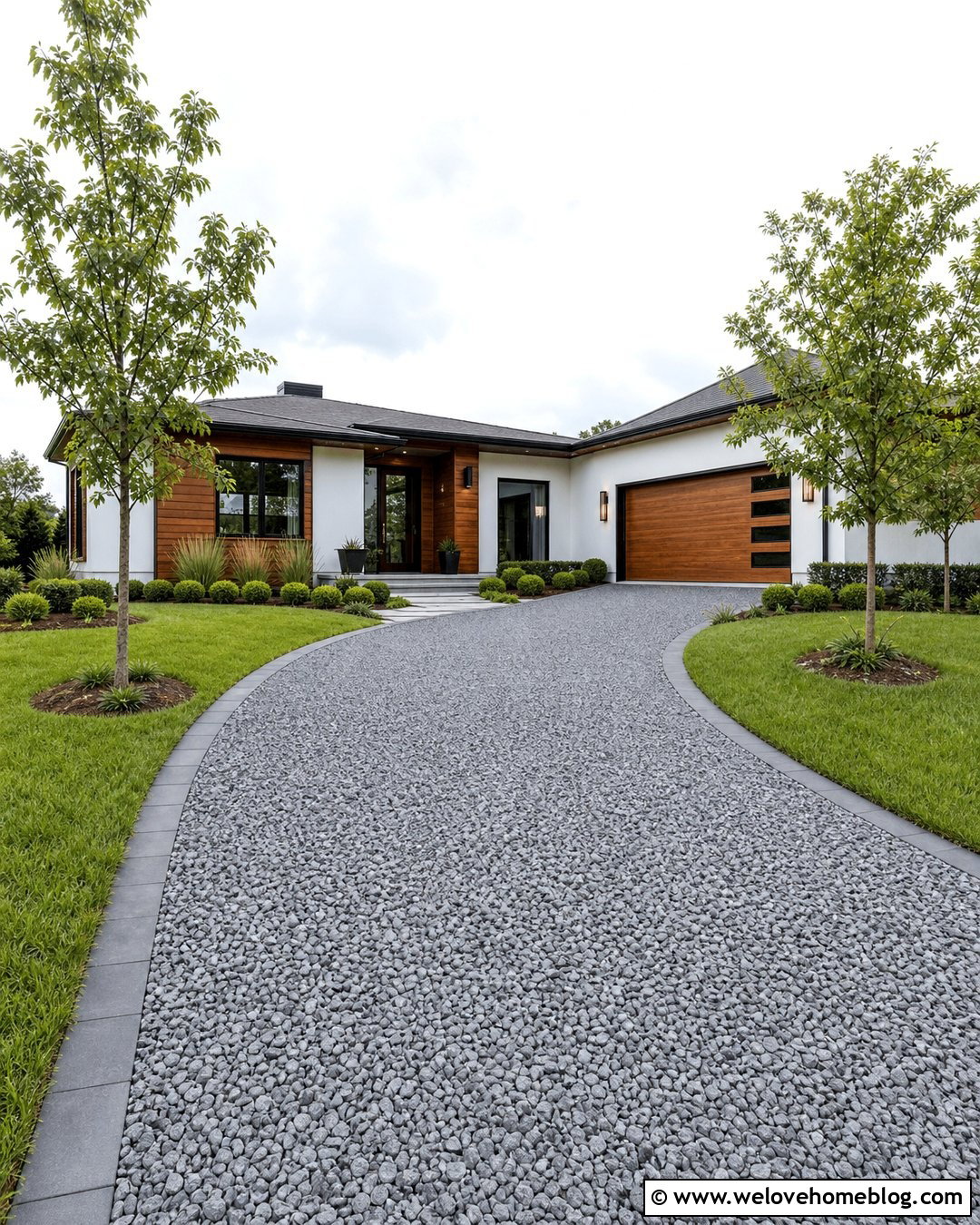
Cool gray crushed stone gives a rock driveway a versatile appearance that complements nearly every exterior color. It looks especially balanced beside white siding, charcoal roofing, or natural cedar accents. Use medium-size angular stone over a prepared, compacted base, then contain the surface with dark gray concrete curbs. A gently curved layout can soften a wide front yard and direct the view toward the main entrance. Repeat the driveway color in a flagstone walkway leading to the porch. Green lawn, clipped shrubs, and two small shade trees provide contrast without overcrowding the approach. Because the palette is neutral, seasonal flowers can be changed without disrupting the design. This complete look feels orderly enough for a suburban property yet natural enough for a wooded residential setting.
3. Pea Gravel Rock Driveway With Brick Edging
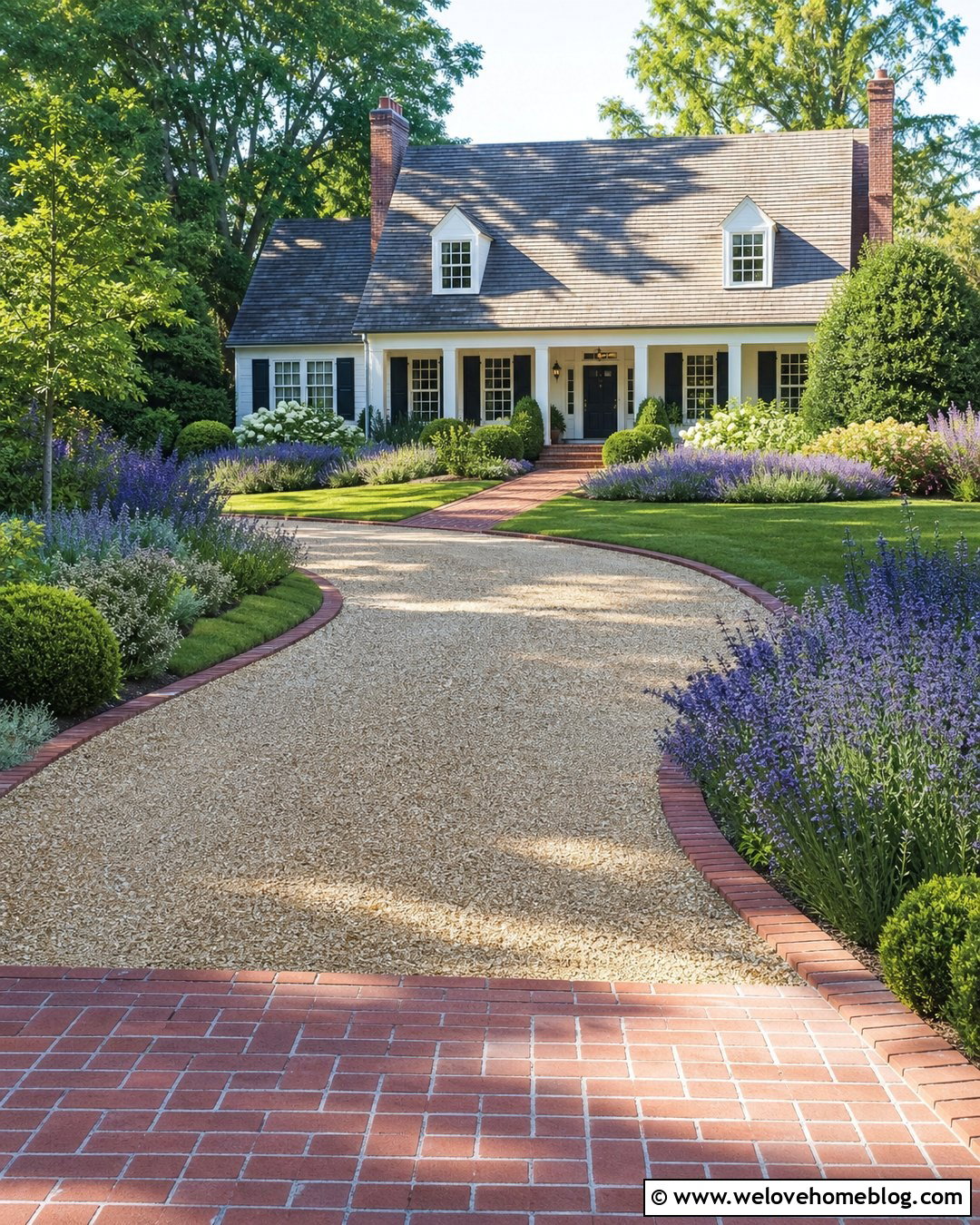
Warm pea gravel and red brick edging create an inviting rock driveway for a cottage, Cape Cod, or older colonial home. The rounded gravel brings a soft texture, while a mortared or firmly restrained brick border gives the driveway a crisp outline. Pea gravel shifts more readily than angular crushed rock, so it works best when installed in a shallow surface layer over a strong base and contained by substantial edging. () Use a straight or lightly curved layout rather than a steep slope. Plant lavender, catmint, and low boxwood beyond the brick edge to create a garden-like transition. A matching brick apron at the street strengthens the entrance and helps connect the driveway with brick steps, chimneys, or facade details.
4. White Marble Chip Rock Driveway
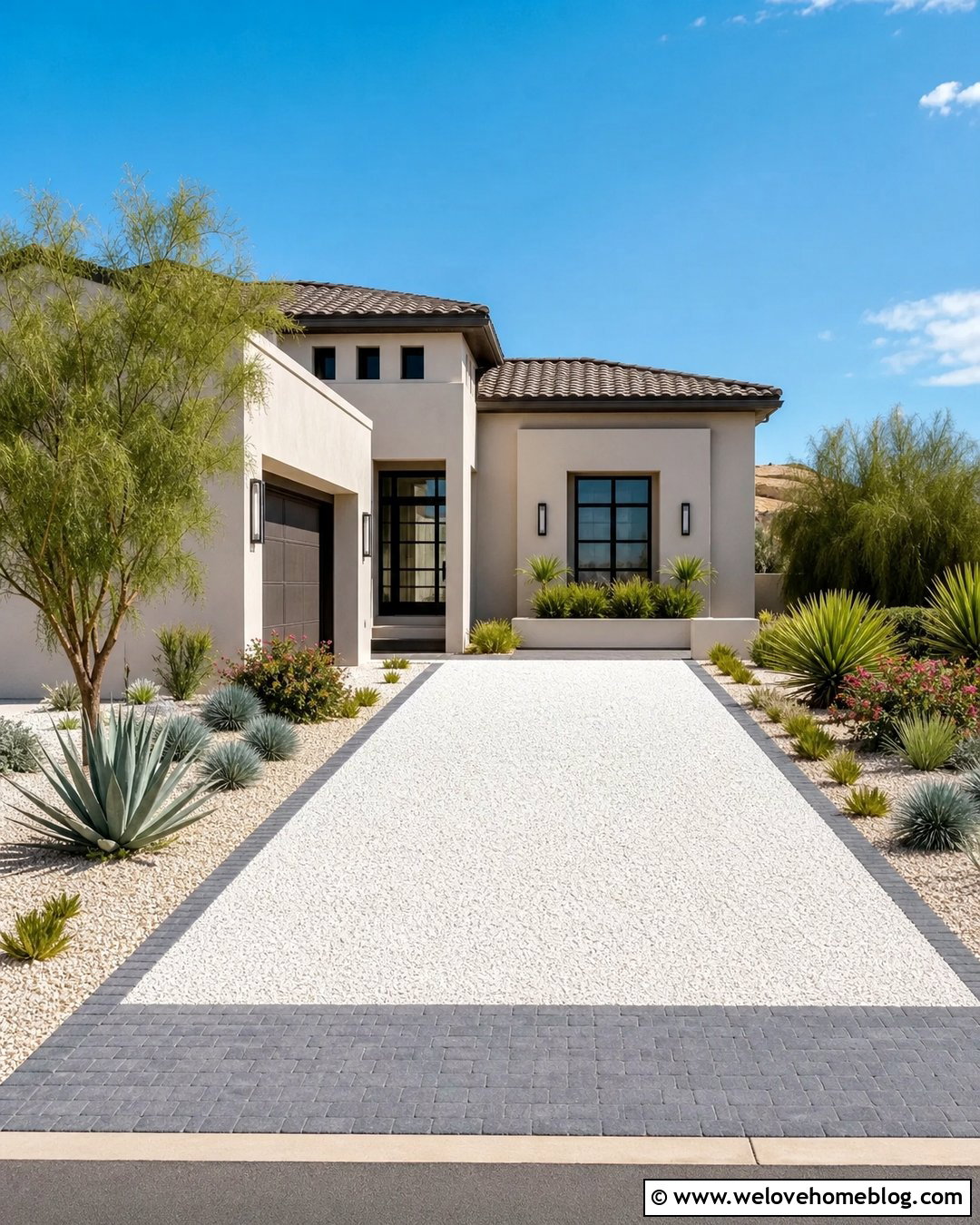
White marble chips can turn a basic rock driveway into a bright focal point, particularly in warm, sunny regions. Pair the reflective white surface with beige stucco, pale stone, or a light modern facade. Keep the layout straight and geometric so the bold material looks deliberate rather than overly decorative. Charcoal concrete edging creates a strong boundary and adds welcome contrast. Beside the driveway, use drought-tolerant plants such as agave, yucca, blue fescue, and compact flowering shrubs. Avoid placing white marble directly beneath messy fruiting trees because fallen material may stain or clutter the surface. A wide gray paver apron near the street can reduce stone migration at the busiest transition. The result is crisp, high-contrast curb appeal with a warm-climate character.
5. Black Basalt Rock Driveway
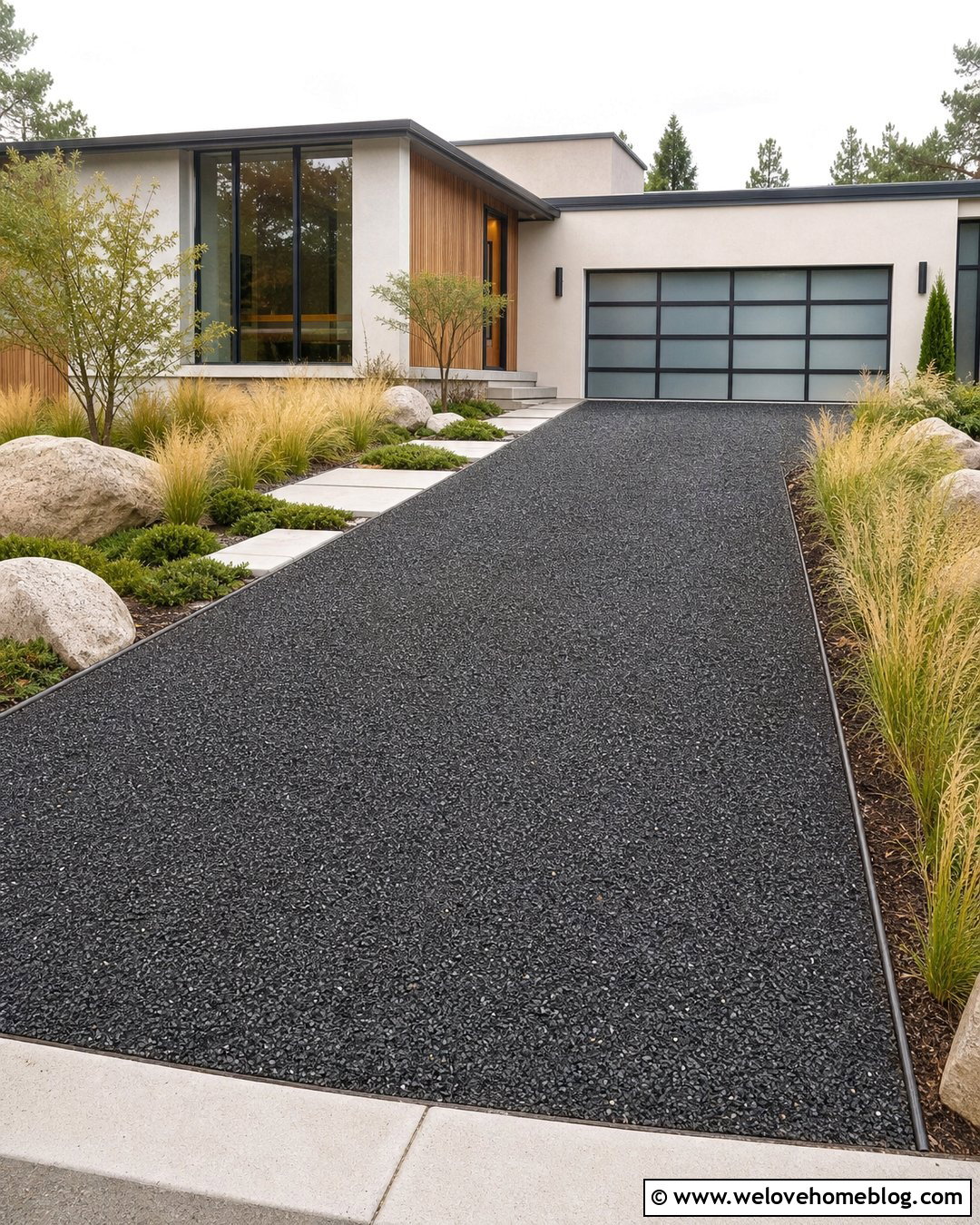
Dark basalt rock produces a dramatic driveway that fits contemporary and midcentury modern homes. Its charcoal-to-black color makes light siding, warm wood doors, and architectural concrete stand out. Choose crushed, angular basalt rather than large rounded stones so the driving surface can be graded and compacted more effectively. Slim steel edging keeps the sides visually sharp without introducing another prominent material. For a complete modern landscape, add linear planting beds filled with feather reed grass, low junipers, and a few sculptural boulders. A straight driveway with a broad rectangular parking pad reinforces the clean geometry. Light concrete stepping pads can form a pedestrian route beside the dark rock. This contrast helps the entire entrance feel designed, while the restrained planting keeps attention on the house.
6. Decomposed Granite Rock Driveway
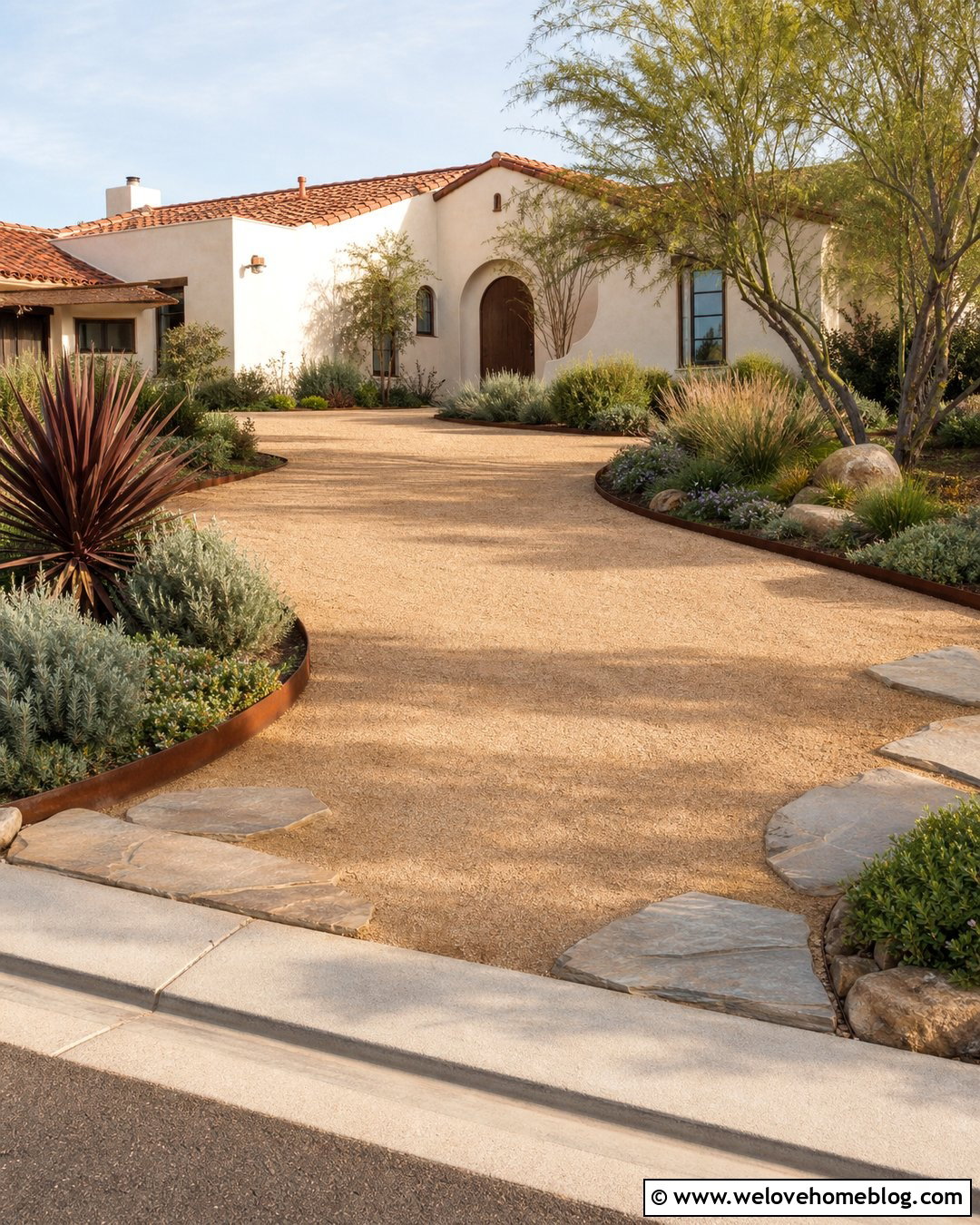
Decomposed granite creates a warm, natural rock driveway with a smoother visual texture than larger gravel. Golden tan, rust, and soft brown tones pair beautifully with adobe, Spanish Revival, ranch, and Southwestern homes. Use a gently curved layout bordered by weathered steel or natural stone. Compaction is important because loose decomposed granite can become dusty or develop shallow tracks. Stabilized material may be worth considering where a firmer finish is desired. Surround the driveway with drought-tolerant beds containing sage, rosemary, red yucca, ornamental grasses, and spreading groundcovers. A flagstone path in a related earth tone can branch toward the front door. Keep the planting low near the street so the driveway entrance remains visible. The completed look feels warm, regional, and pleasantly informal.
7. River Rock Border Gravel Driveway
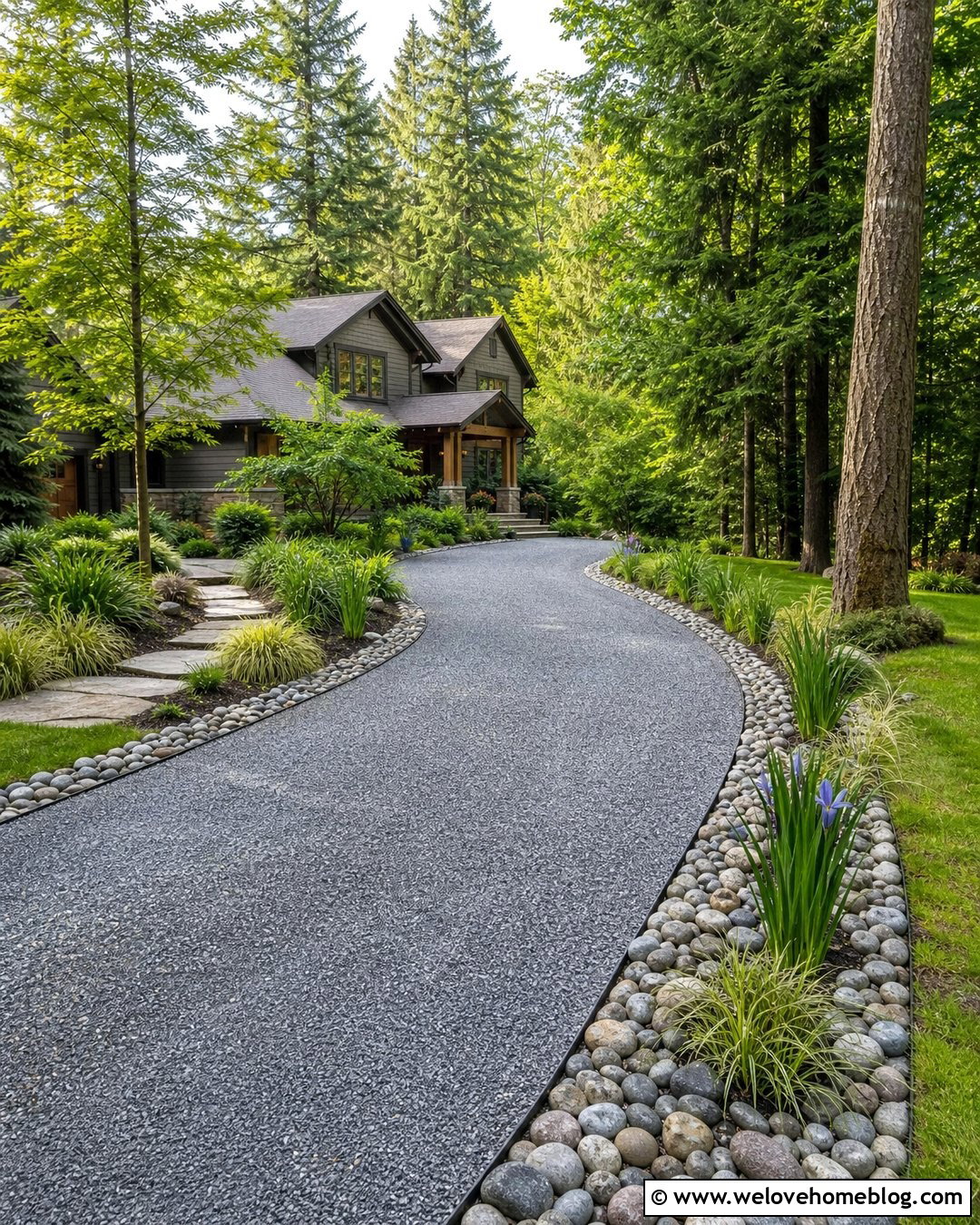
River rock is attractive along a driveway, but its smooth, rounded shape makes it better suited to borders and drainage features than the primary driving surface. Create the main driveway with compacted gray crushed gravel, then place mixed river stones inside wide side channels. The rounded rocks can visually define a drainage swale while adding varied shades of gray, tan, brown, and cream. () Separate the two materials with steel edging so the river rock does not mix into the traffic area. Moisture-tolerant grasses, rushes, and irises can soften the channels where local conditions allow. This combination works well beside a craftsman or wooded contemporary home. A subtle curve makes the drainage border appear integrated with the landscape rather than added as an afterthought.
8. Rock Driveway With Cobblestone Border
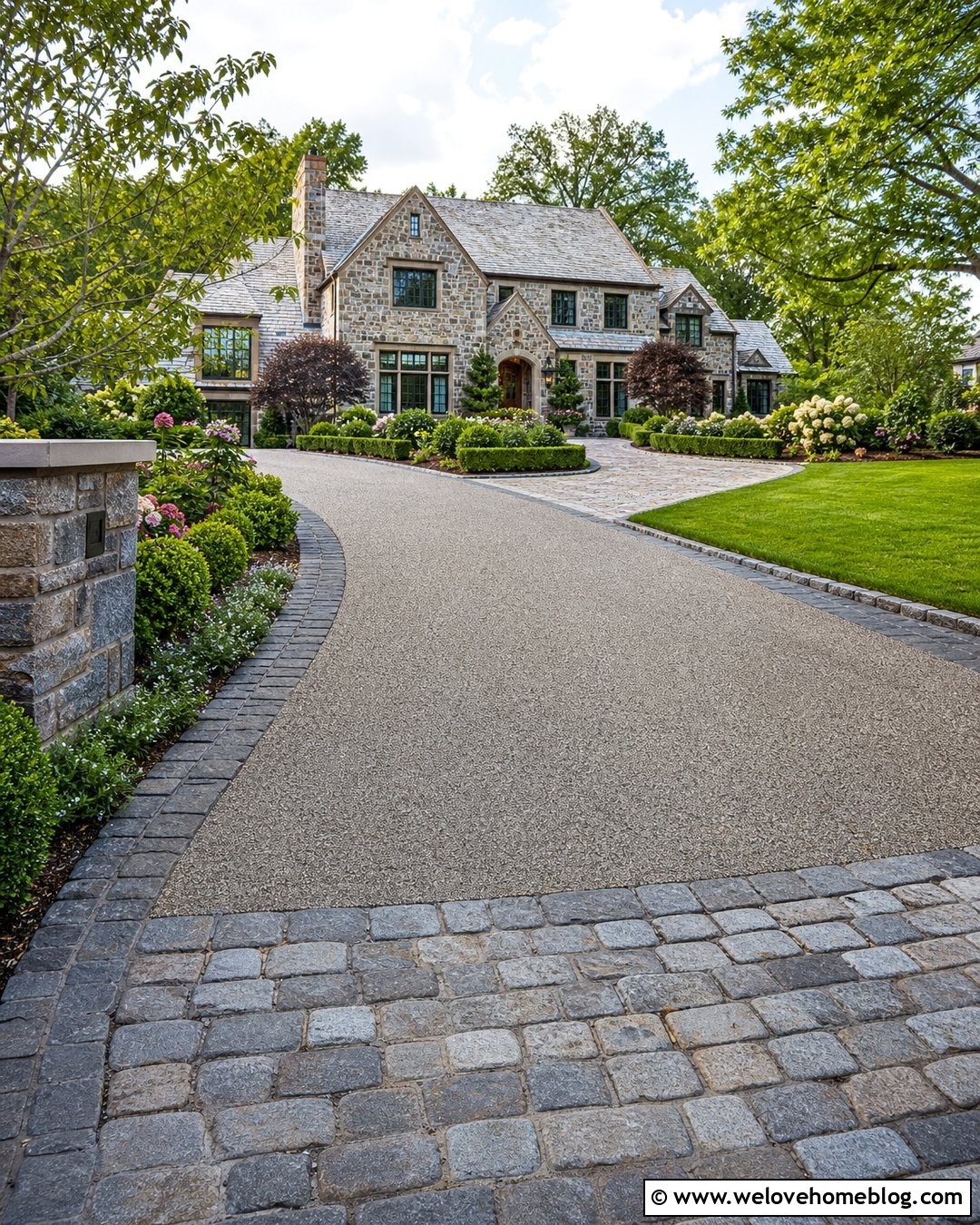
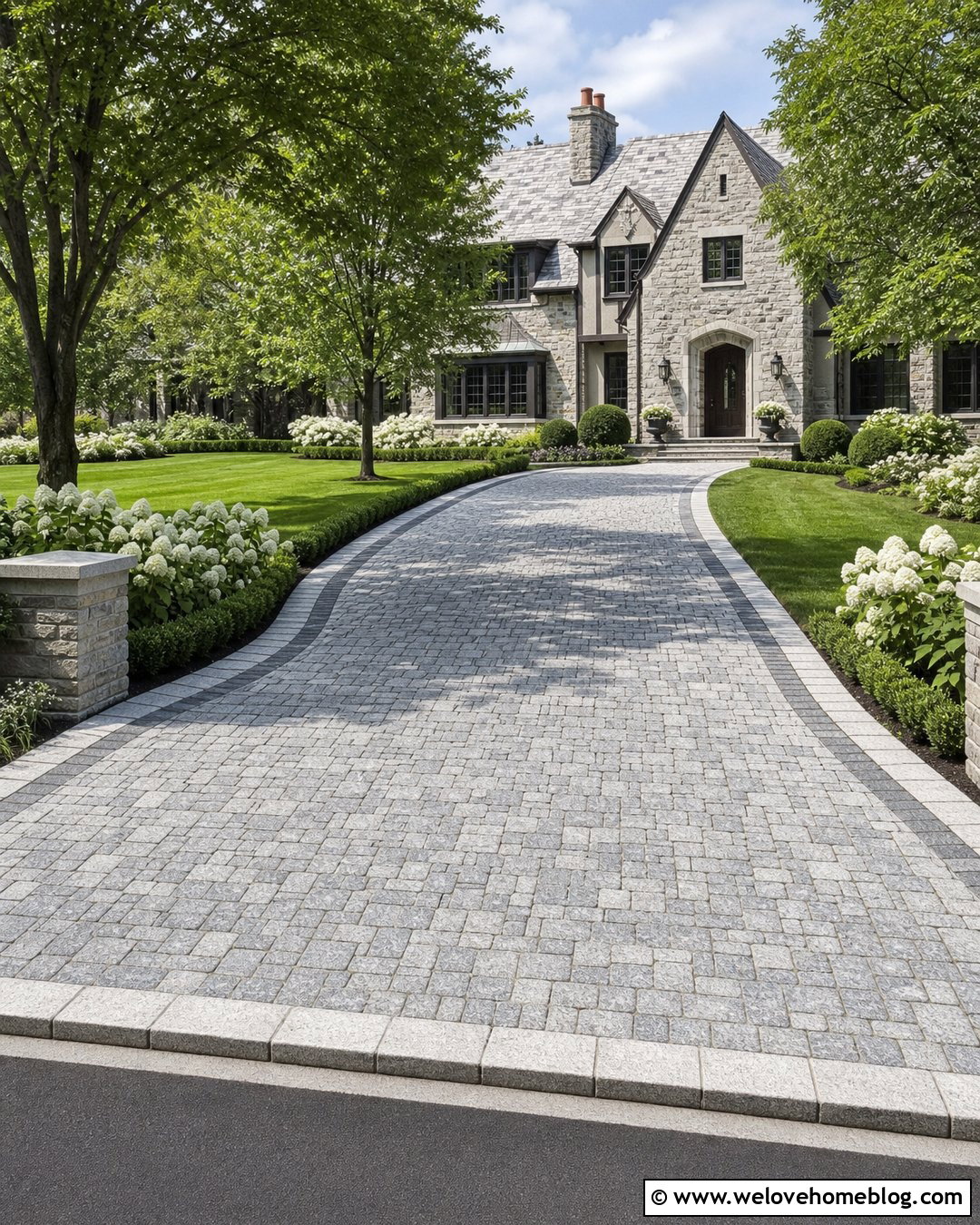
A cobblestone border gives a loose rock driveway a durable, traditional frame. Fill the center with warm gray crushed granite and install dark granite cobbles along both edges. The slightly irregular stones complement historic homes, European-inspired houses, and substantial traditional facades. Carry the cobblestones across the driveway at the entrance to create a defined apron. A curved layout can lead visitors past layered beds of boxwood, hydrangeas, roses, and small ornamental trees. Keep the cobble edge slightly raised where additional containment is needed, but plan smooth transitions at walkways and garage doors. Repeating the same cobblestone around nearby planting beds creates visual continuity. This design combines the relaxed texture of loose rock with a strong architectural outline that makes the entire driveway look established and carefully finished.
9. Rock Driveway With Steel Edging
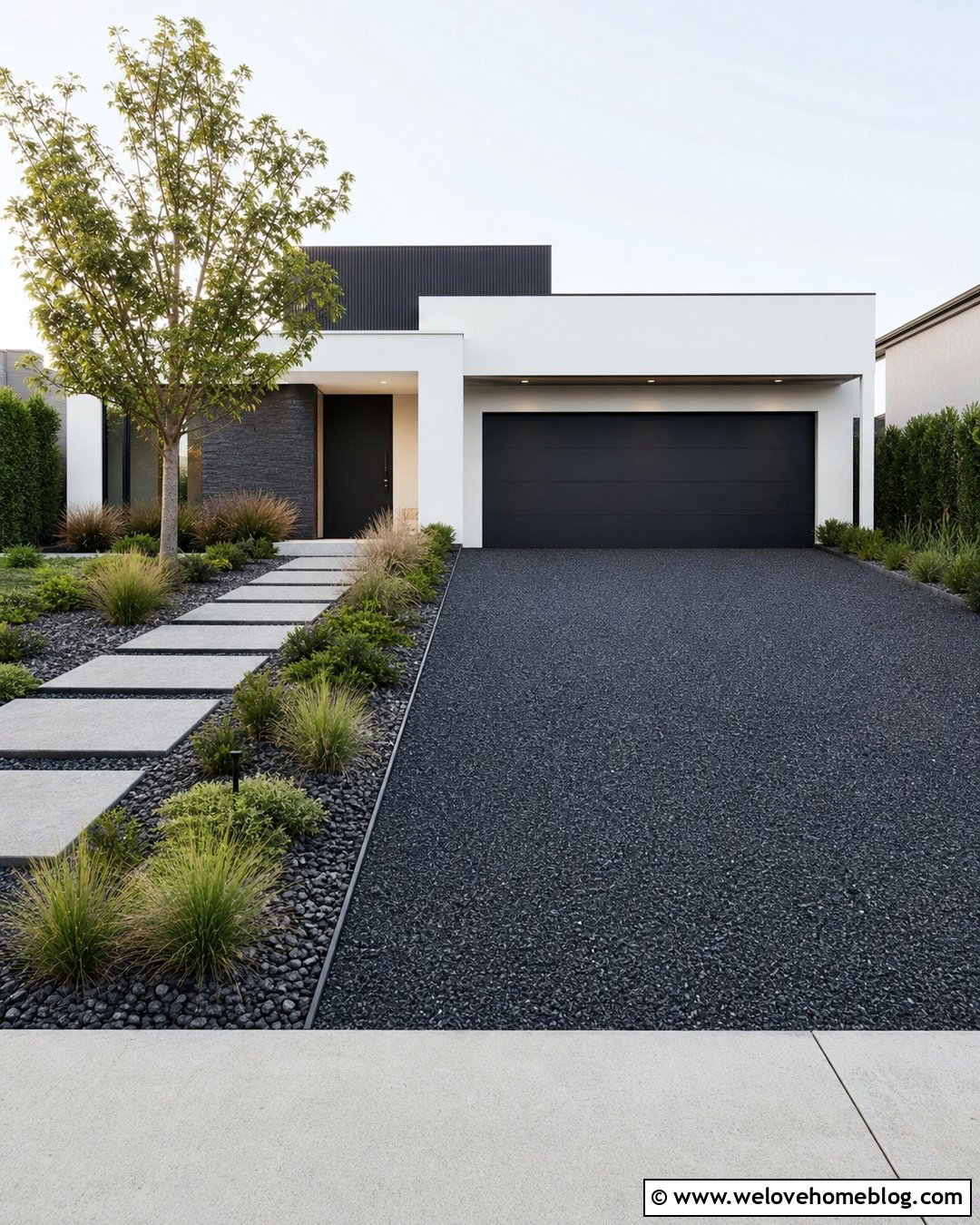
Steel edging creates a thin, nearly invisible boundary for a clean rock driveway. It is particularly effective with dark gray crushed stone, black gravel, or warm decomposed granite because it preserves a precise line without competing with the surface. Choose a straight driveway for a formal modern home or bend the edging into broad curves for a softer landscape. Place low ornamental grasses, clipped groundcovers, and gravel-mulched planting beds outside the metal border. The contrasting textures will make the driveway easier to distinguish while keeping the palette restrained. Heavy-duty edging should be installed securely and positioned with safe, smooth transitions around pedestrian routes. Add rectangular concrete pads leading from the driveway to the entrance. The final composition feels simple and contemporary, with every material serving a clear purpose.

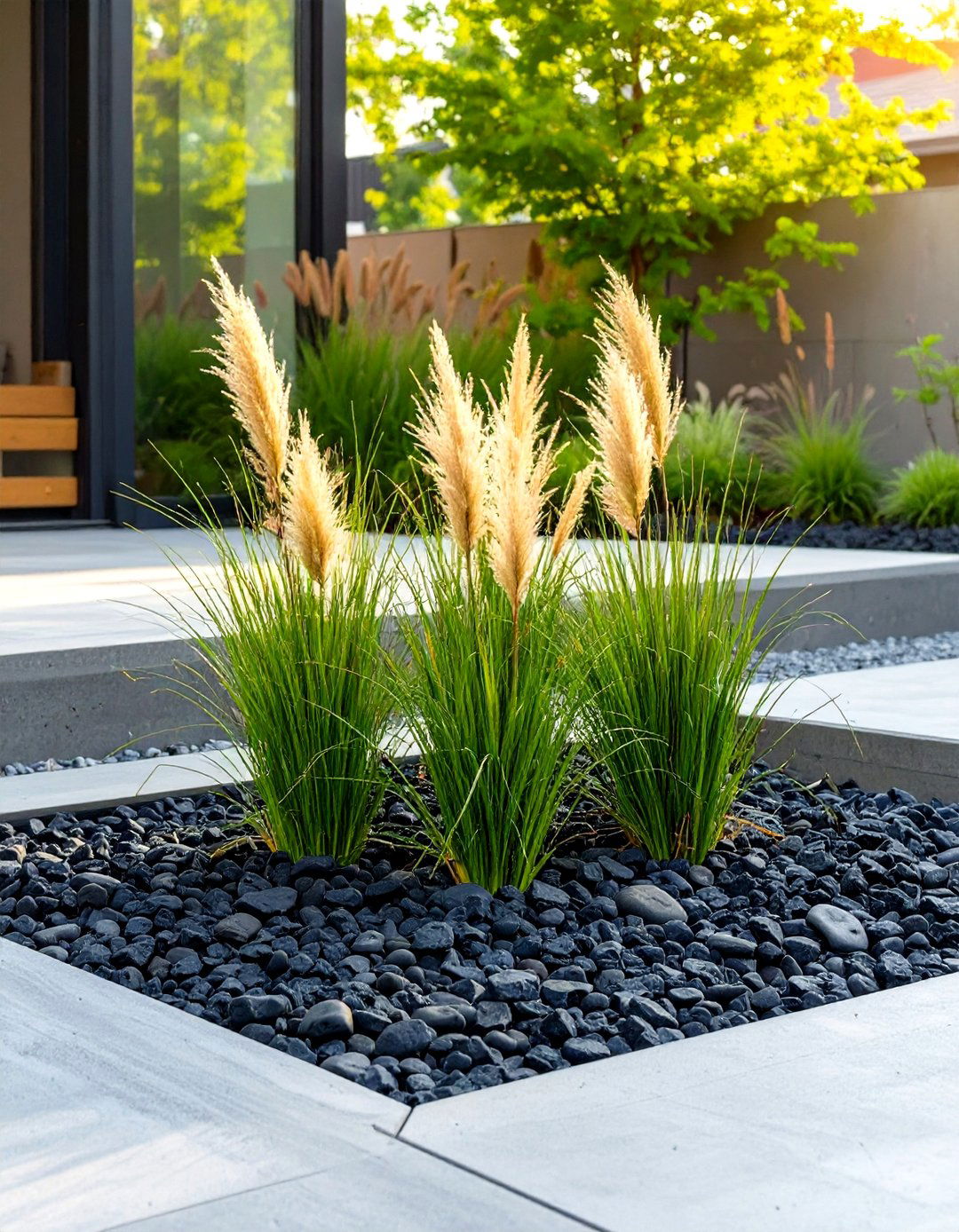
10. Rock Driveway With Timber Edging
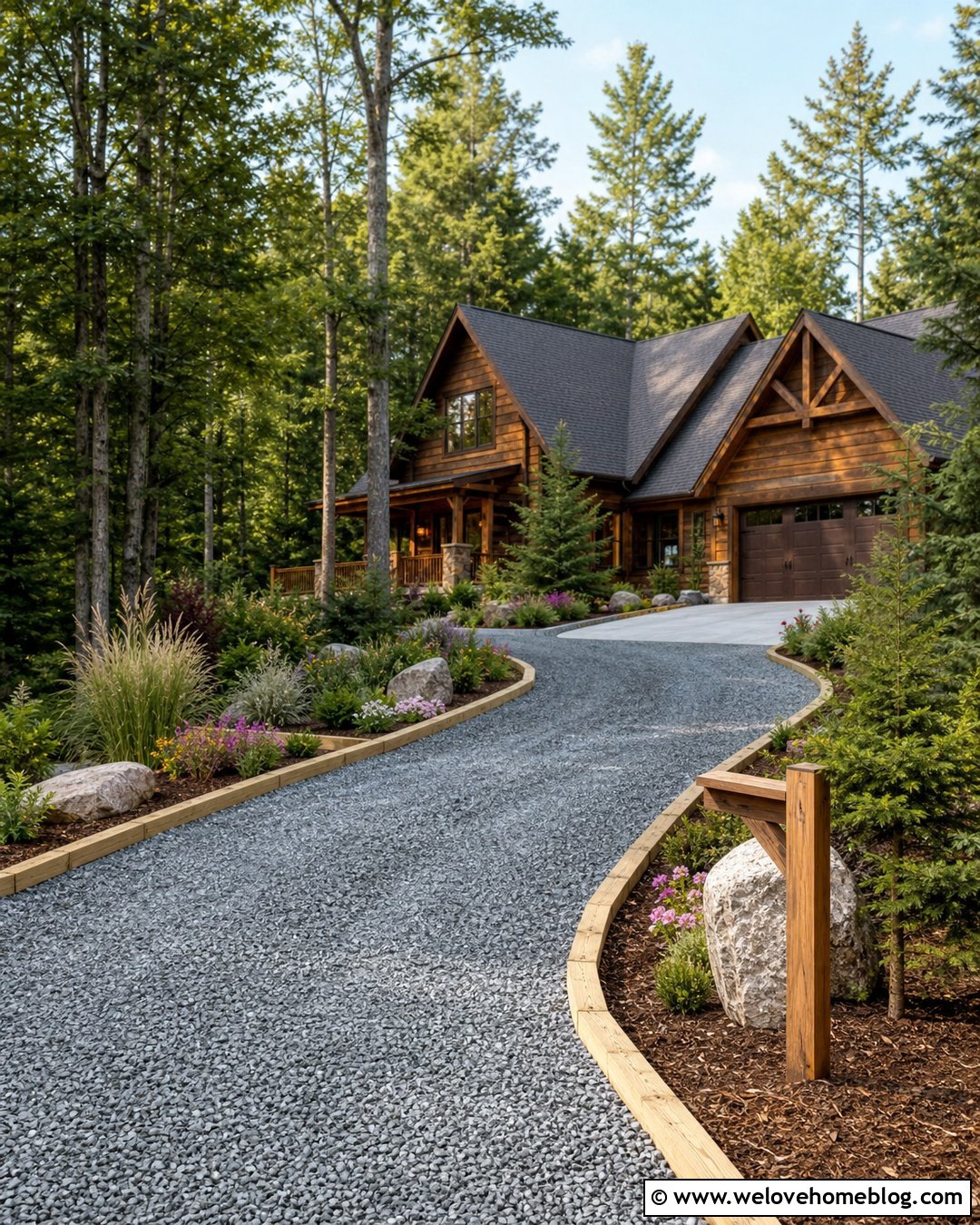
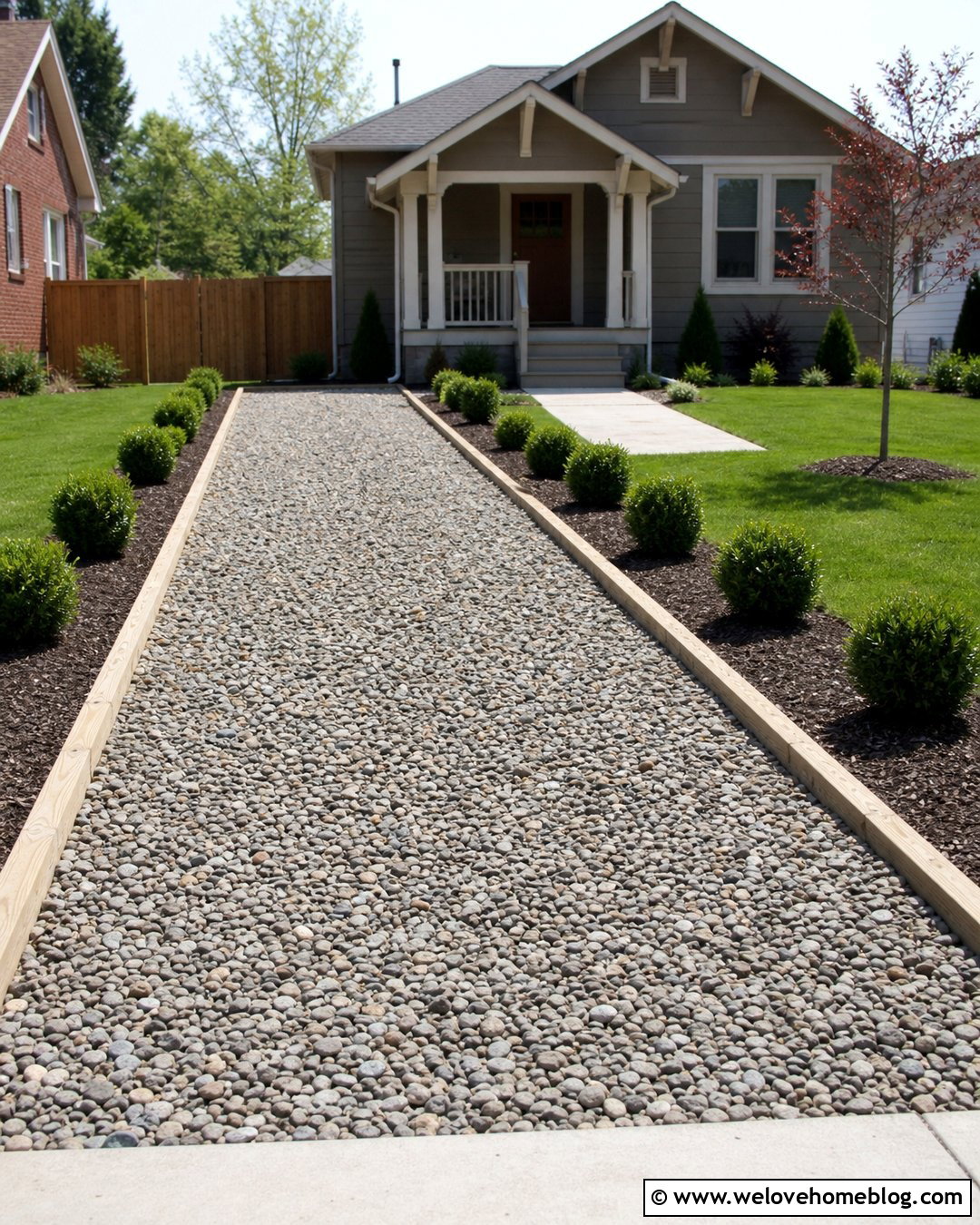
Timber edging brings a casual, affordable character to a country rock driveway. Use pressure-treated or naturally durable beams to contain gray crushed stone along a straight or winding approach. The warm wood looks particularly comfortable beside a cabin, rustic ranch, or modern farmhouse with timber accents. Set the edging securely so it does not shift outward under repeated traffic. Outside the border, plant native grasses, flowering perennials, and small shrubs in broad, informal groups. A timber-framed address marker at the entrance can repeat the same material without making the design feel overly themed. Where the driveway meets the garage, transition to a firm concrete or paver apron. This reduces loose rock near the door and gives the timber-edged driveway a clean, practical stopping point.
11. Rock Driveway With Concrete Curbs
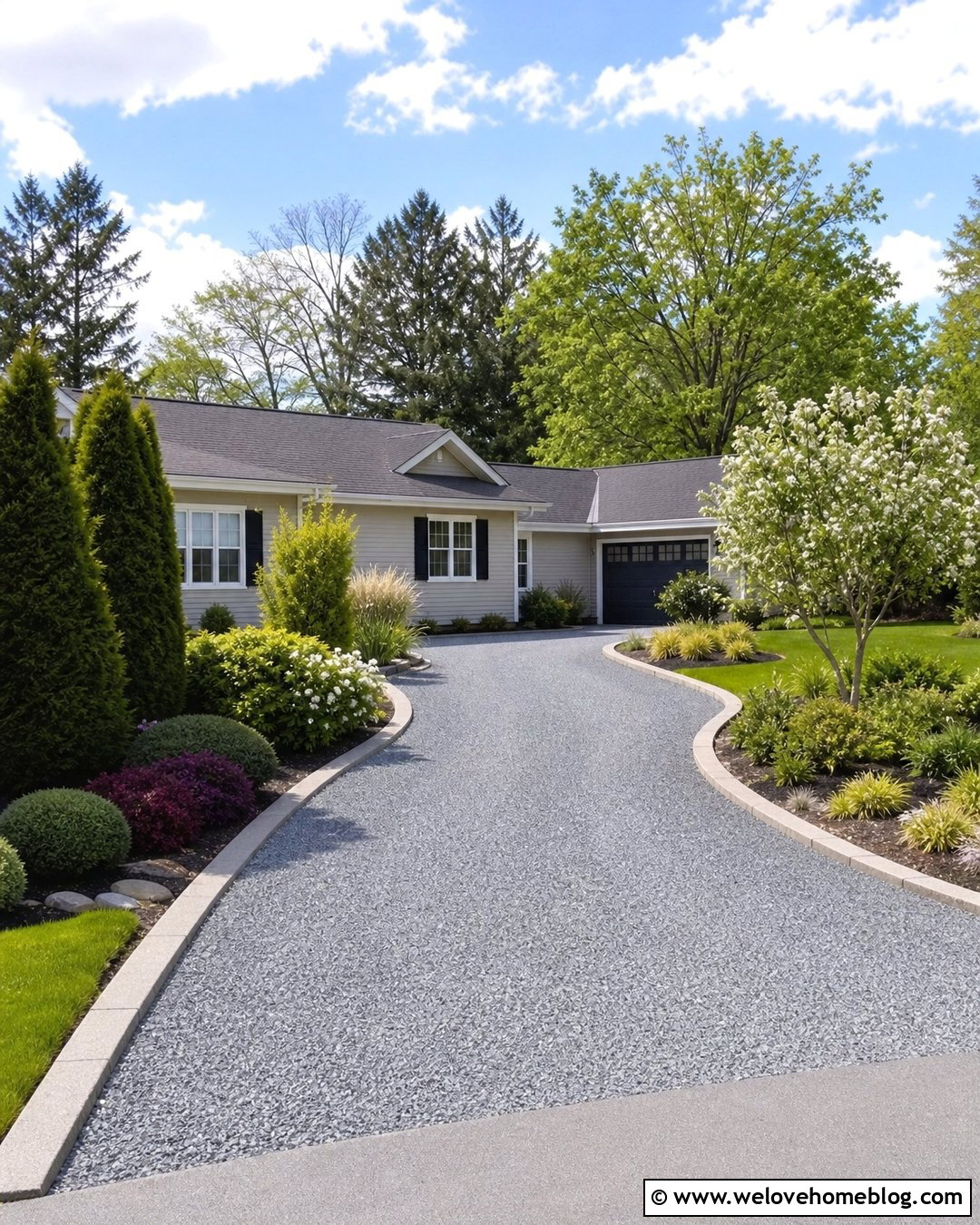
Concrete curbs provide dependable containment and a polished outline for a high-use rock driveway. They work well with angular gray gravel because the smooth border clearly separates the driving area from lawns and garden beds. Use low poured curbs for a suburban home, keeping the top simple rather than heavily decorative. A soft curved layout can guide vehicles toward a side-facing garage while leaving room for a landscaped island near the house. Fill surrounding beds with evergreen shrubs, compact flowering plants, and one well-positioned ornamental tree. Match the curb color to an existing concrete walkway or foundation trim so the materials relate to one another. At the street, widen the curbs into a structured entrance. This design looks organized, withstands routine maintenance, and gives loose rock a more permanent appearance.
12. Curved Rock Driveway
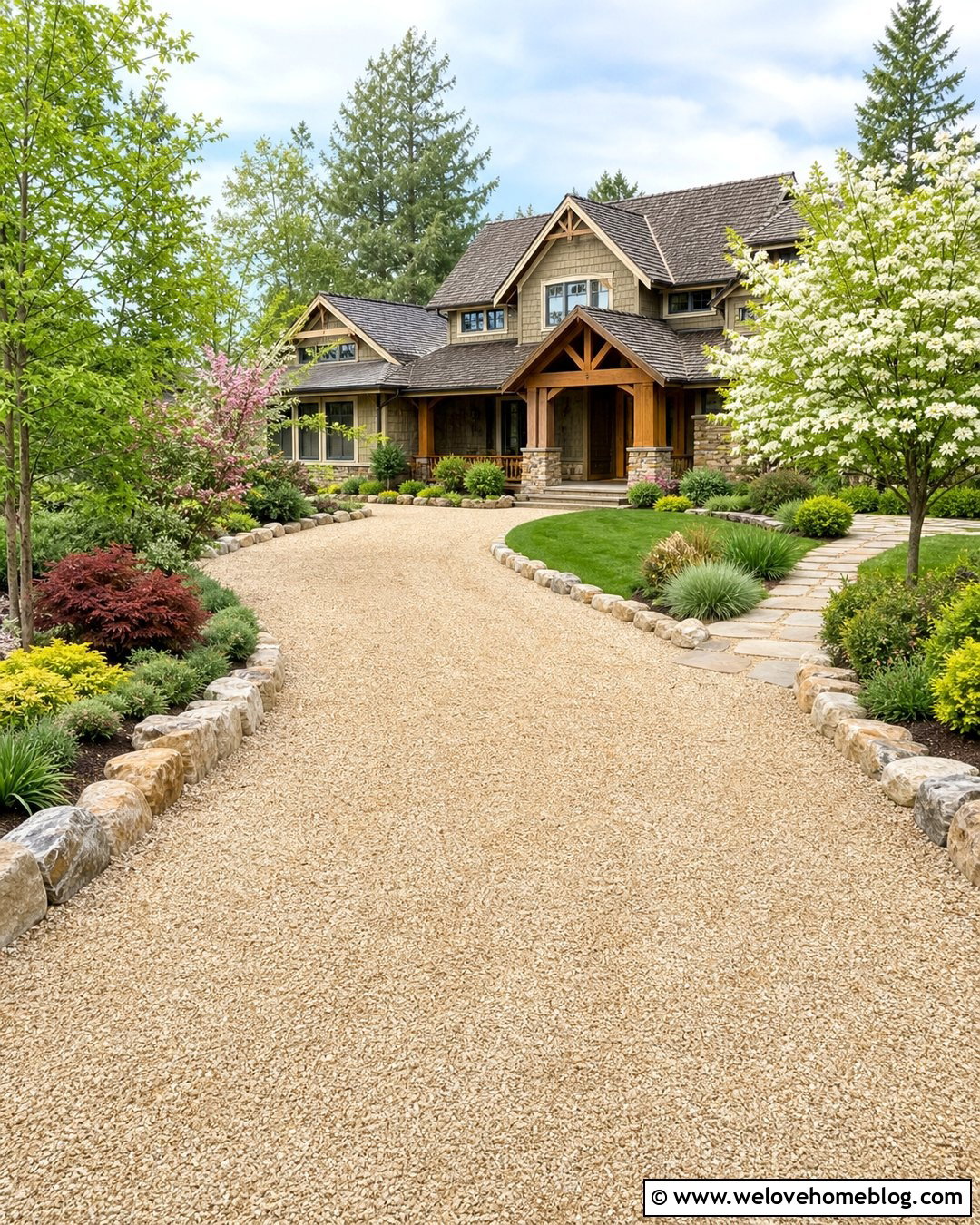
A curved rock driveway can make a broad front yard feel larger and create a more interesting approach to the house. Cover the driving surface with compacted tan crushed stone, then follow the curve with natural fieldstone edging. The bend should appear generous and smooth rather than tight or awkward. Use layered landscaping along the outside curve, where it will be visible from both the street and the house. Small flowering trees, rounded evergreen shrubs, ornamental grasses, and groundcovers can create depth without blocking sightlines. Keep the inside edge more open with lawn and low planting. A flagstone walkway can branch from the final curve toward the porch. This coordinated layout turns the driveway into part of the garden while maintaining a clear and practical route for vehicles.
13. Circular Rock Driveway
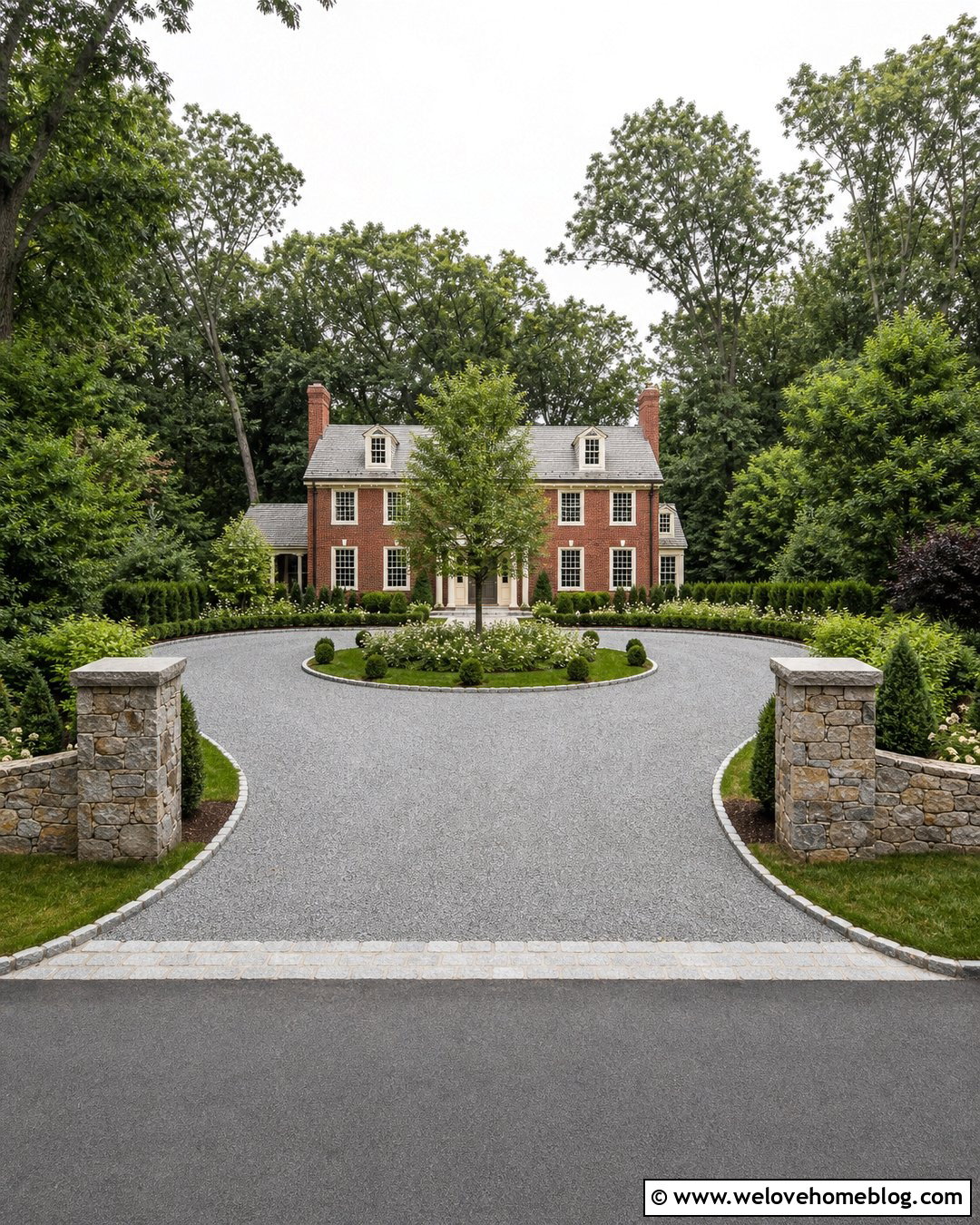
A circular rock driveway offers a convenient arrival sequence while creating space for a central landscape feature. Use medium-gray crushed granite for the loop and contain it with granite cobblestones. In the middle island, plant one small ornamental tree surrounded by low evergreen shrubs, flowering perennials, and stone mulch. Avoid oversized plants that could obstruct views across the circle. A balanced colonial, Georgian, or traditional brick house makes an attractive background for this symmetrical layout. Define both street entrances with matching stone pillars or low masonry walls. Near the front steps, add a wider gravel court so passengers have room to exit comfortably. The repeated gray stone ties the driveway, borders, and entrance together. This complete design feels formal without requiring a solid paved surface across the entire front yard.
14. Ribbon Rock Driveway
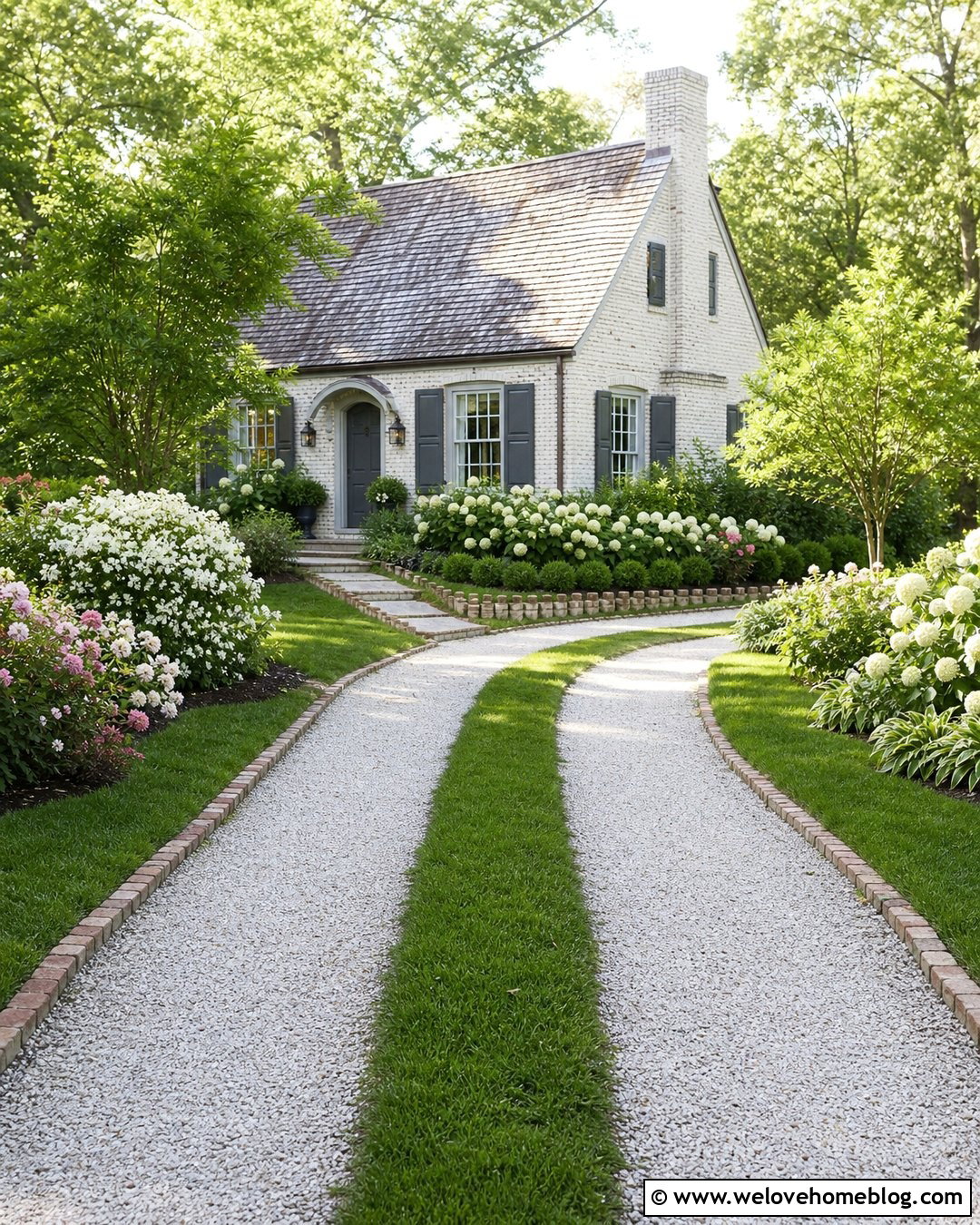
A ribbon rock driveway reduces the visual width of the hardscape by placing stone beneath the tire paths and greenery through the center. Create the driving strips with compacted crushed limestone or stabilized gravel, not loose rounded pebbles. A narrow grass strip adds color and suits cottages, older homes, and properties with a relaxed garden setting. Edge the outside boundaries with brick or small cobblestones to keep the lines defined. The center strip should remain low and easy to maintain, especially near the garage and street. Surround the driveway with flowering shrubs, small trees, and a simple stepping-stone path to the porch. Ribbon driveways are a recognized feature of traditional landscapes and can make an entrance feel lighter than a fully covered surface. ()
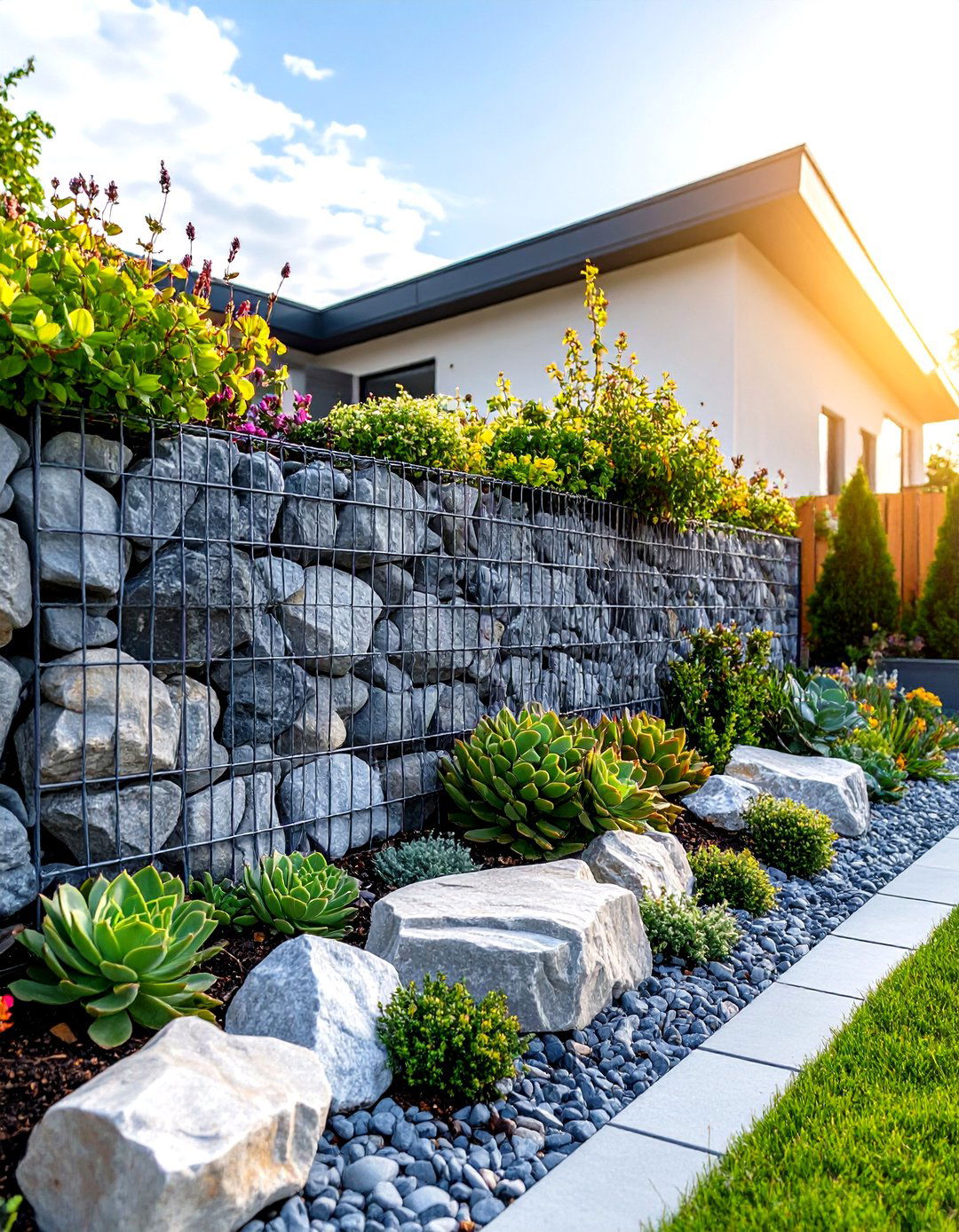


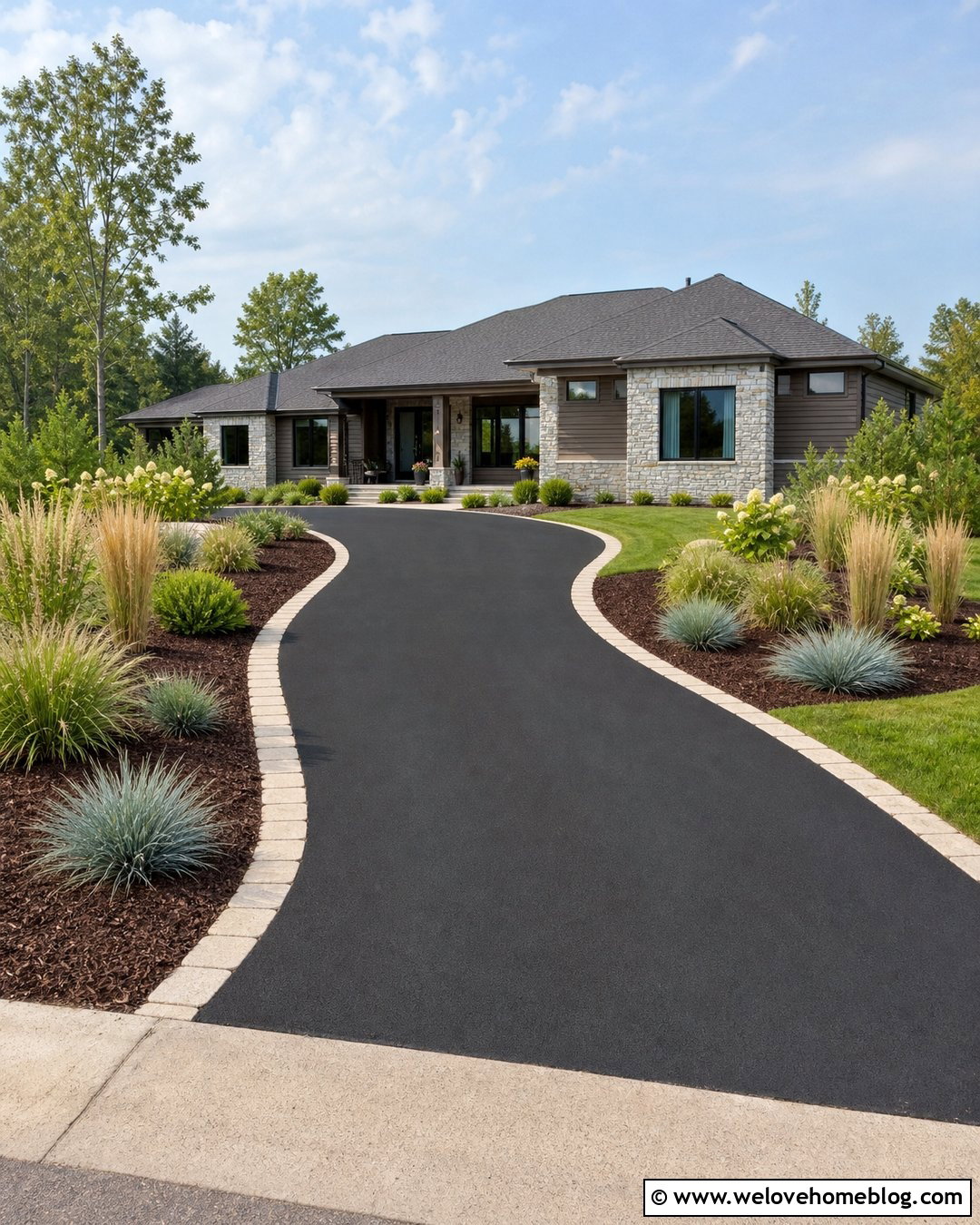
15. Long Country Rock Driveway
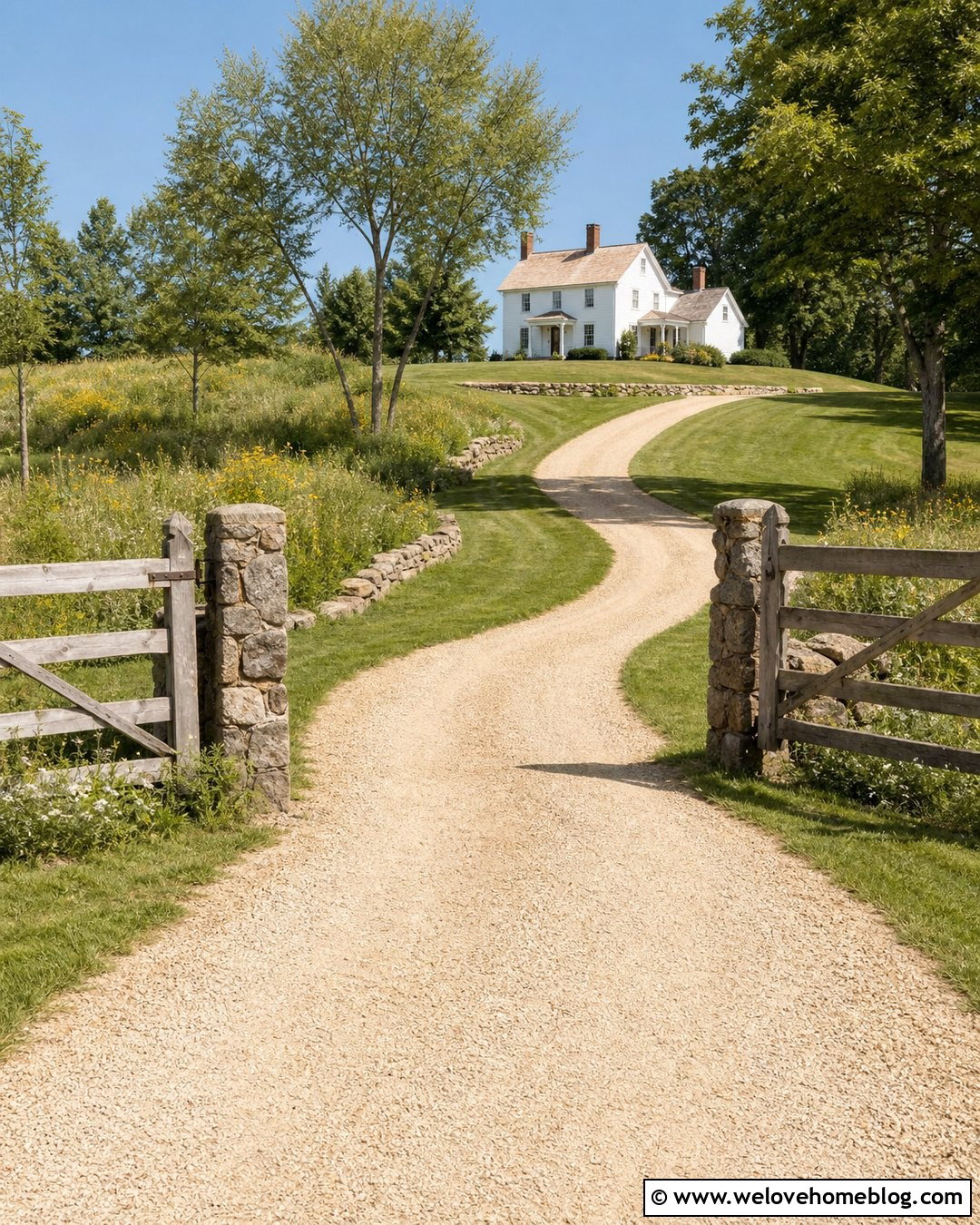
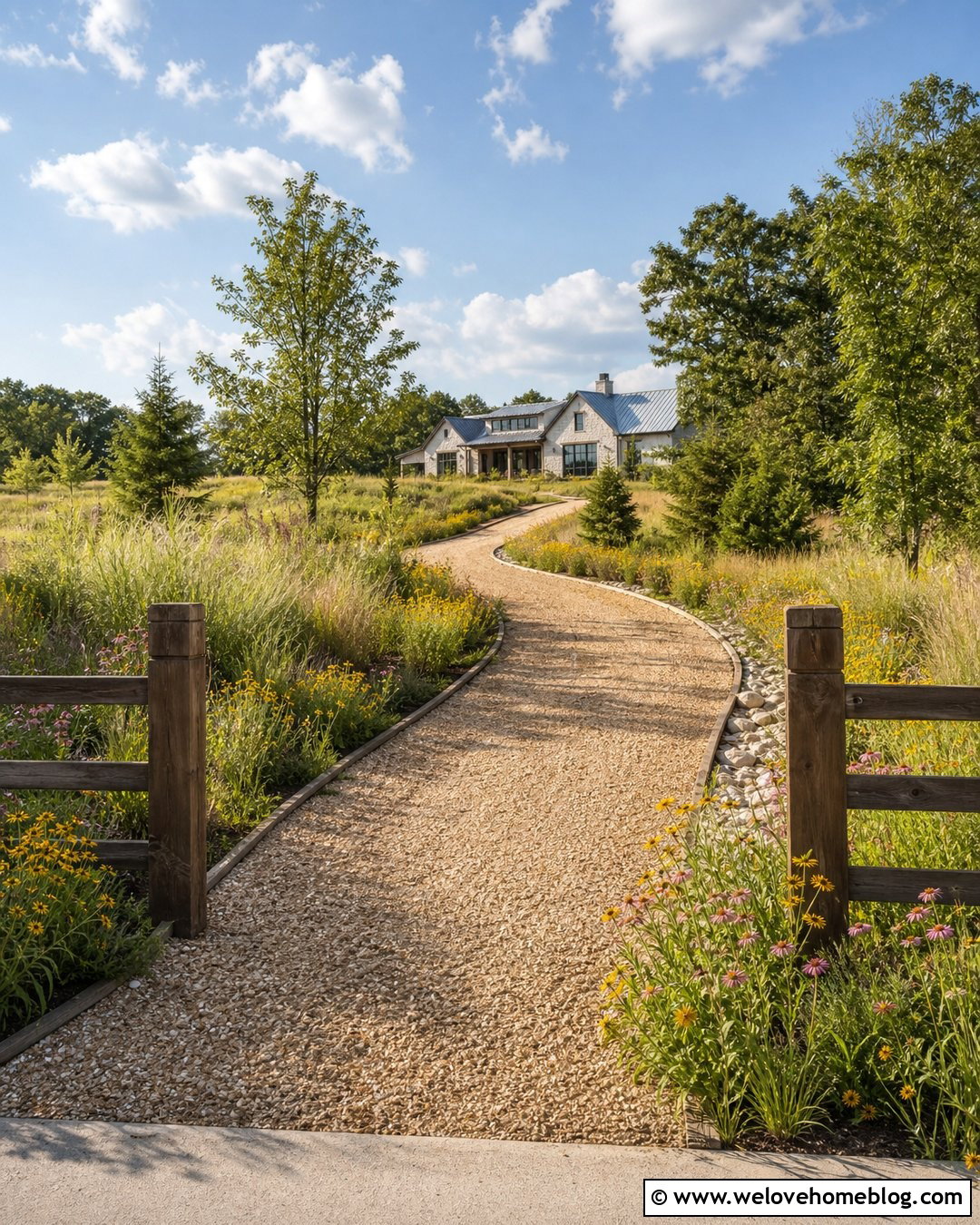
A long country rock driveway should feel connected to the land rather than like a narrow strip laid across it. Use locally available crushed stone whose color reflects nearby soil, stone walls, or the home’s foundation. A pale gray or buff surface works well with barns, farmhouses, and rural ranch homes. Let the route follow a gentle curve toward the house, then widen into a practical parking court. Low fieldstone borders can reinforce selected sections without lining every foot. Plant native meadow grasses and wildflowers beyond mowed shoulders, while placing shade trees at generous intervals. A simple gate or address marker identifies the entrance. Local stone often creates a more natural visual relationship with the surrounding landscape, while a properly prepared base helps the long surface handle regular use. ()
16. Small Front Yard Rock Driveway
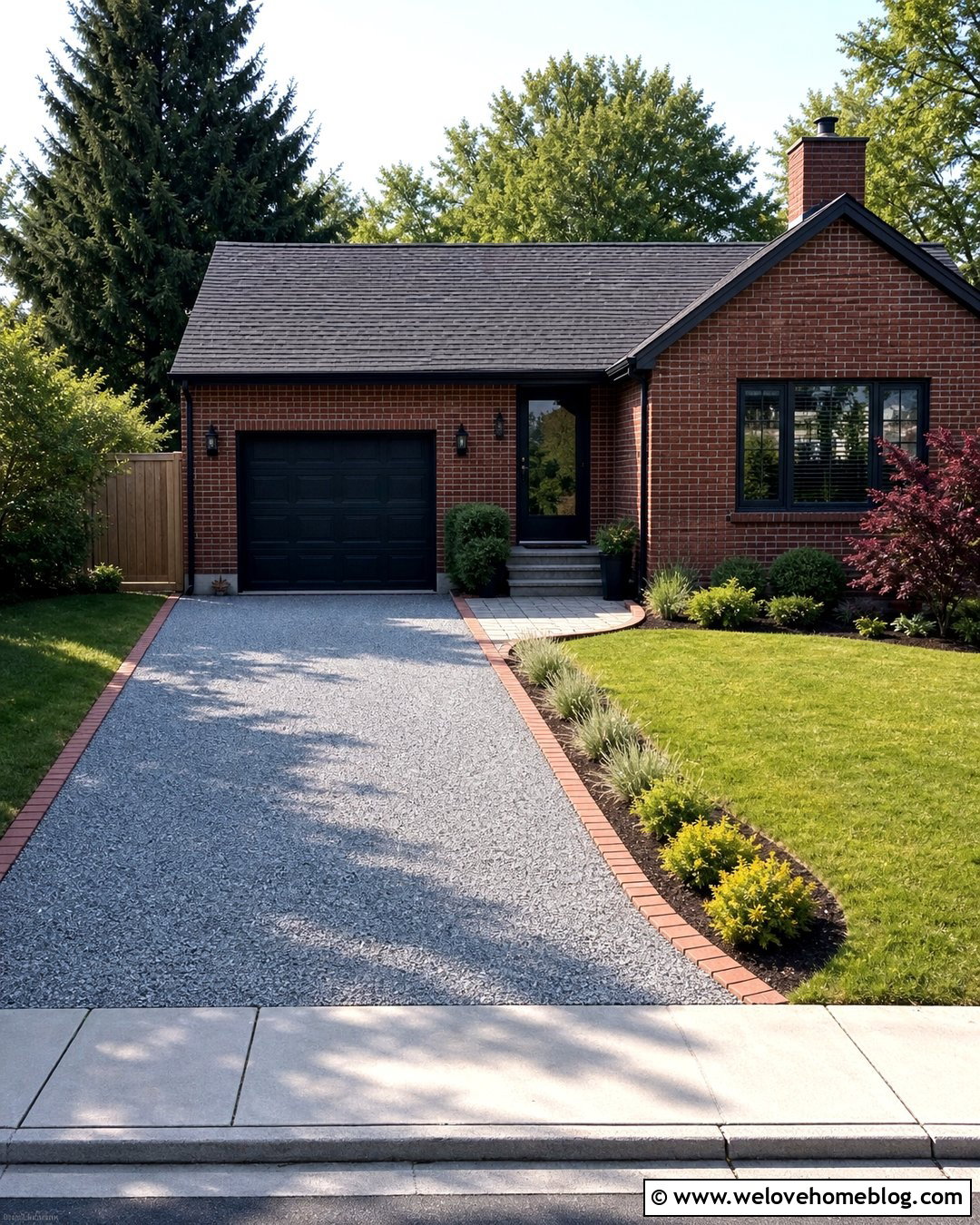
A compact rock driveway can provide parking without overwhelming a small suburban front yard. Choose fine gray crushed stone and keep the layout straight, narrow, and clearly contained. A single brick border adds warmth and connects the driveway with a brick house or porch steps. Instead of deep planting beds on both sides, place one narrow border of low shrubs and ornamental grasses along the property edge. Maintain lawn or groundcover on the opposite side to preserve an open feeling. A short paver walkway can cross the driveway near the porch, creating a clear pedestrian route. At the garage, install a flush concrete threshold that catches loose stones before they reach the door. The simple material palette makes the yard look larger, neater, and easier to maintain.
17. Sloped Rock Driveway With Drainage
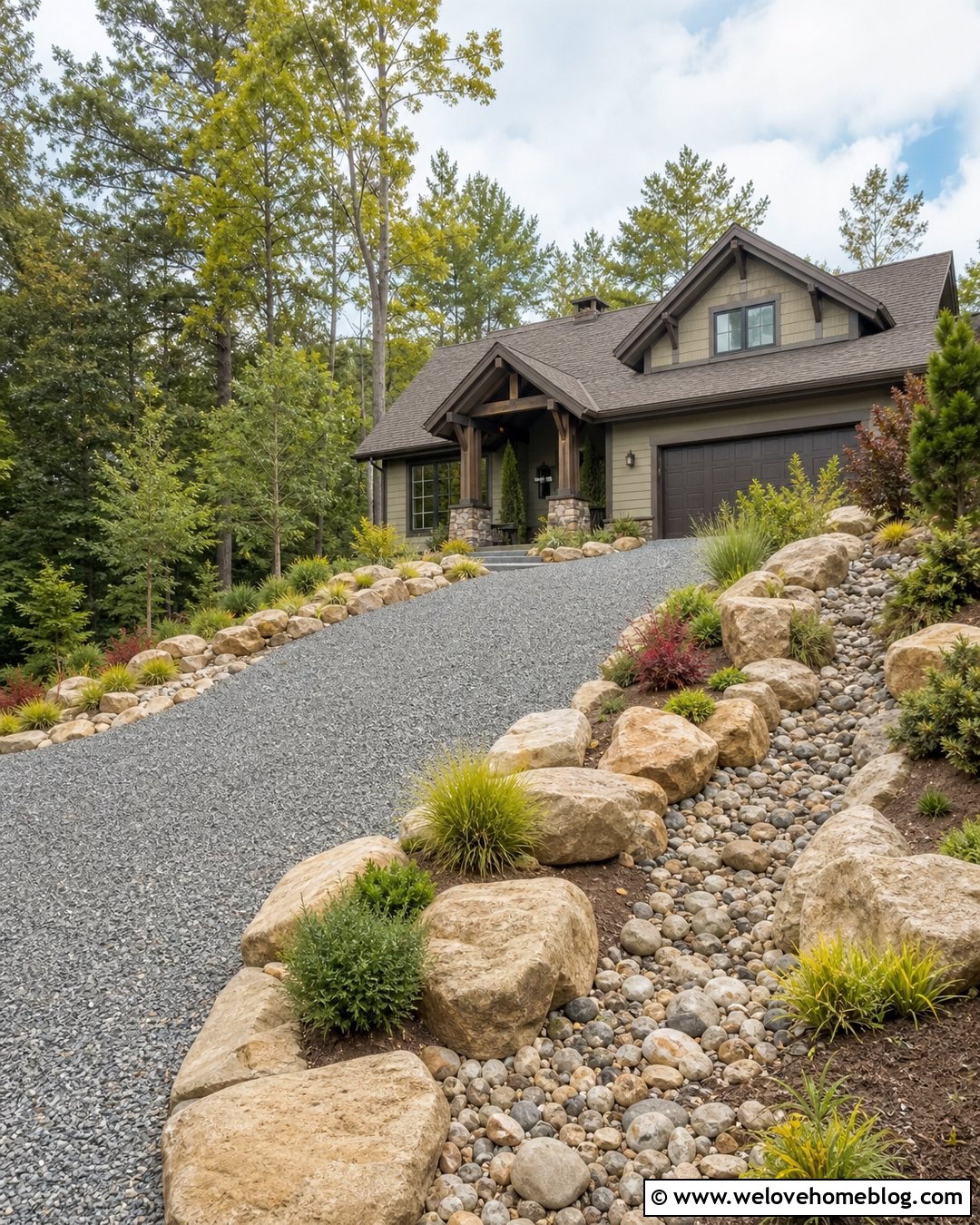
Sloped rock driveways require a layout that manages runoff and reduces washout. Use angular crushed stone over a well-compacted base rather than rounded gravel that moves easily under tires. Install substantial concrete or stone edging along vulnerable sides. A shallow rock-lined swale can follow the lower edge and direct water toward an appropriate drainage area, subject to local requirements. Mixed cobbles, river stones, sedges, and moisture-tolerant grasses can turn the swale into an attractive landscape feature. Houzz examples show cobble-filled swales being used to slow stormwater and encourage infiltration. () Break up a long descent with a subtle curve where the property allows. Keep trees and tall shrubs away from critical sightlines. The finished driveway should appear integrated with the slope rather than fighting against it.
18. Rock Driveway With Gravel Grid
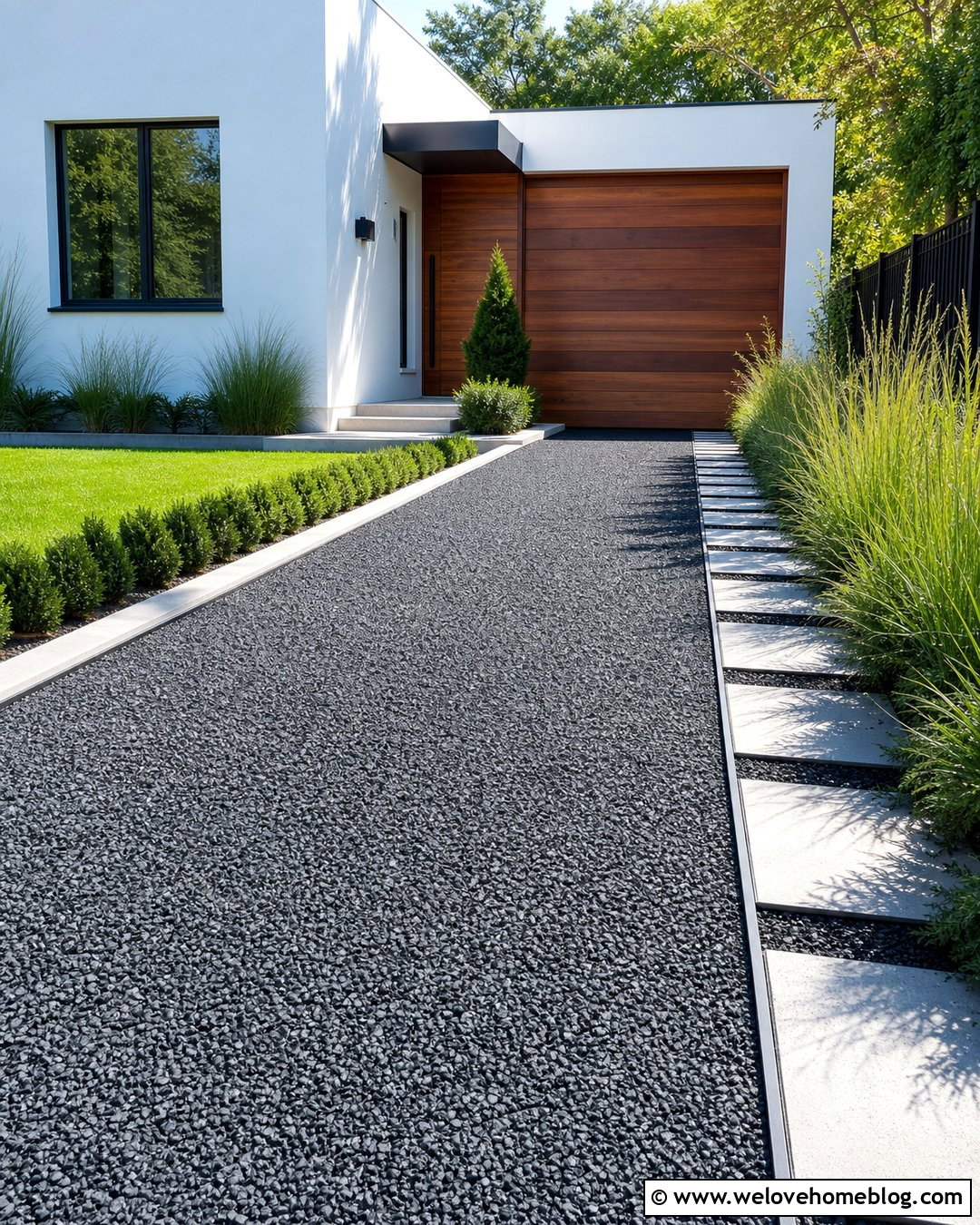
A gravel grid can give a rock driveway a more stable, even appearance while preserving the texture of loose stone. Install a load-rated cellular grid over a correctly prepared base, then fill it with small angular gravel in gray, tan, or charcoal. The cells help limit sideways movement and can reduce visible ruts, although the entire system still depends on sound excavation, grading, and installation. () Conceal the grid beneath the recommended amount of rock so the surface remains natural. Use slim metal edging to frame a straight modern driveway. Add linear beds with ornamental grasses, low evergreen shrubs, and concrete stepping pads. This combination is useful when you want a tidy rock surface that matches contemporary architecture without switching to a continuous slab of concrete or asphalt.
19. Rock Driveway With Paver Apron
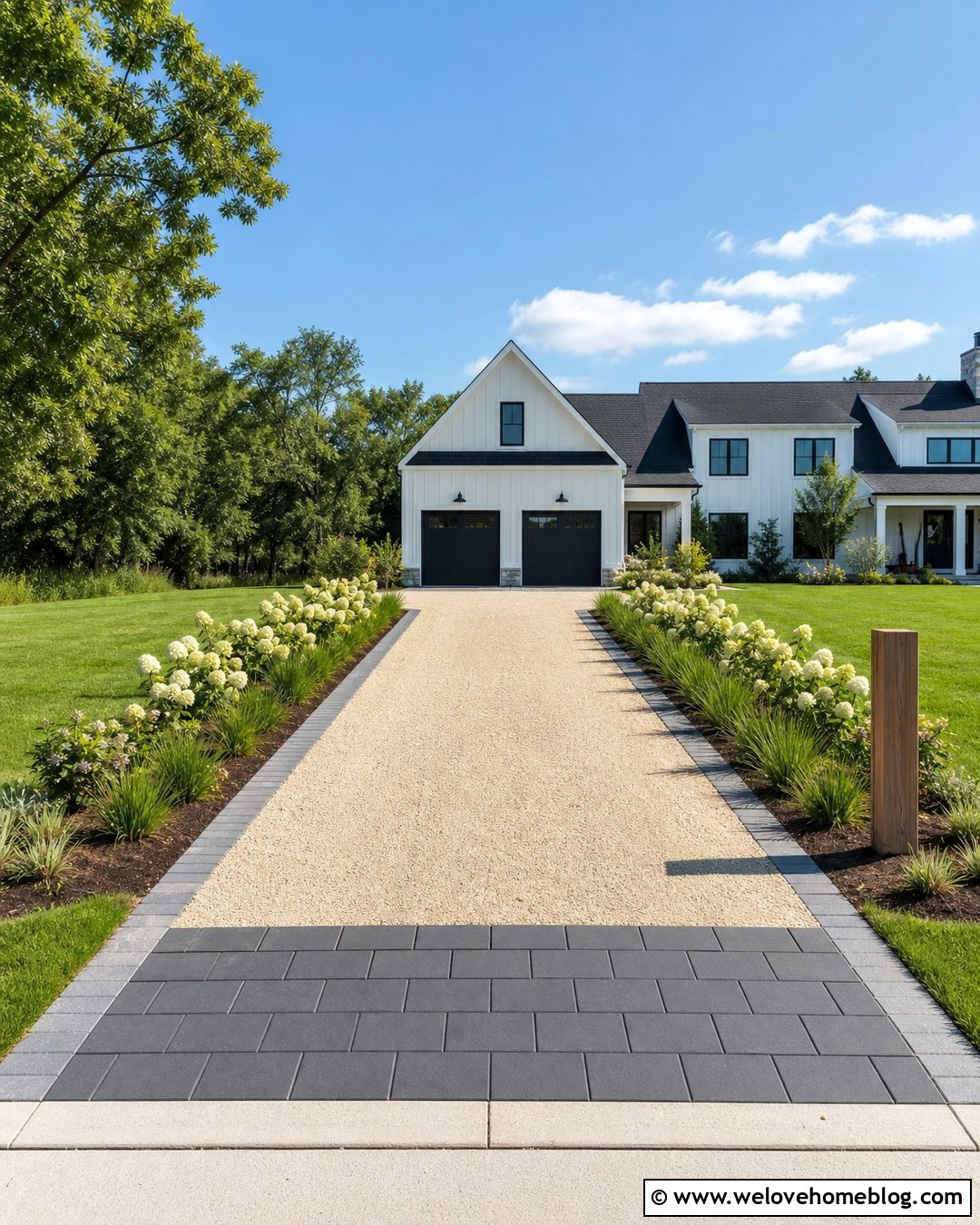
A paver apron creates a strong transition where a rock driveway meets the street. Cover the main surface with compacted beige crushed limestone, then install charcoal concrete pavers across the first several feet. The contrasting apron defines the property entrance and provides a firm turning area where loose stones are most likely to shift. Continue a narrow paver ribbon along both sides for additional containment. This combination works well with a modern farmhouse, where dark roofing and white siding echo the two driveway colors. Frame the entrance with low grasses, hydrangeas, and a simple wooden address post. Repeat the charcoal pavers in the walkway near the house. By using the more expensive material only in strategic locations, the driveway gains a finished appearance without losing the economical, relaxed quality of rock.
20. Rock Driveway With Brick Ribbon
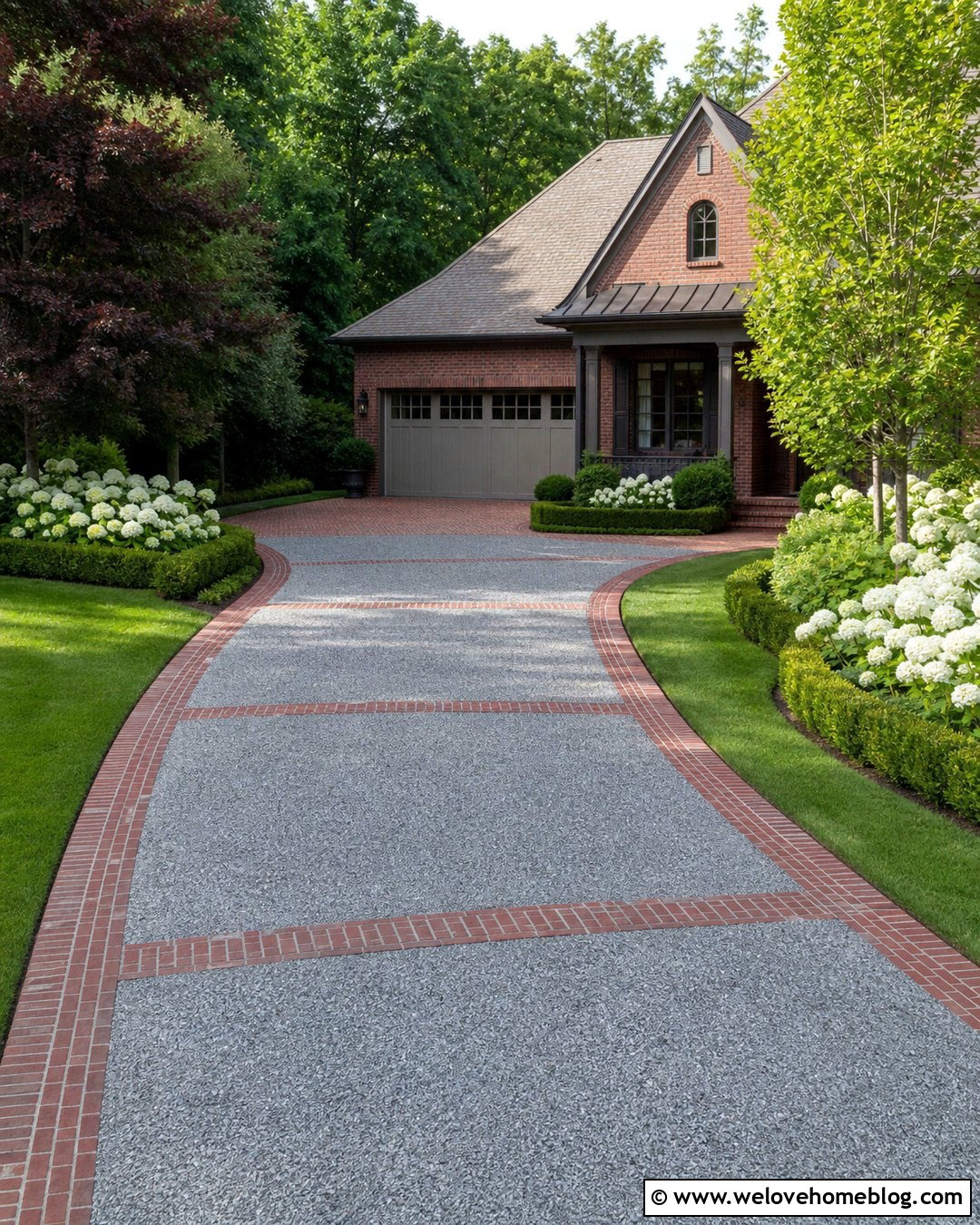
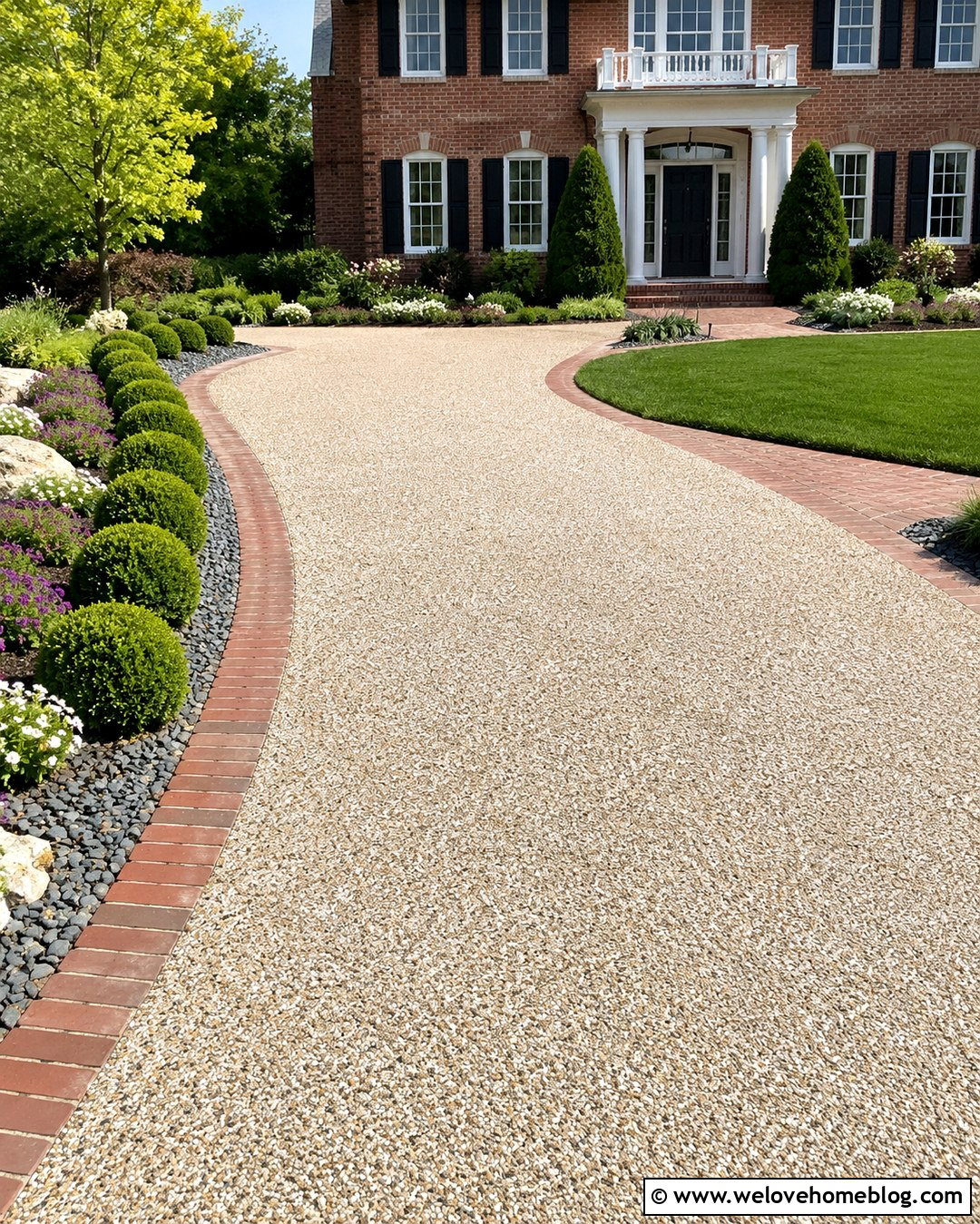
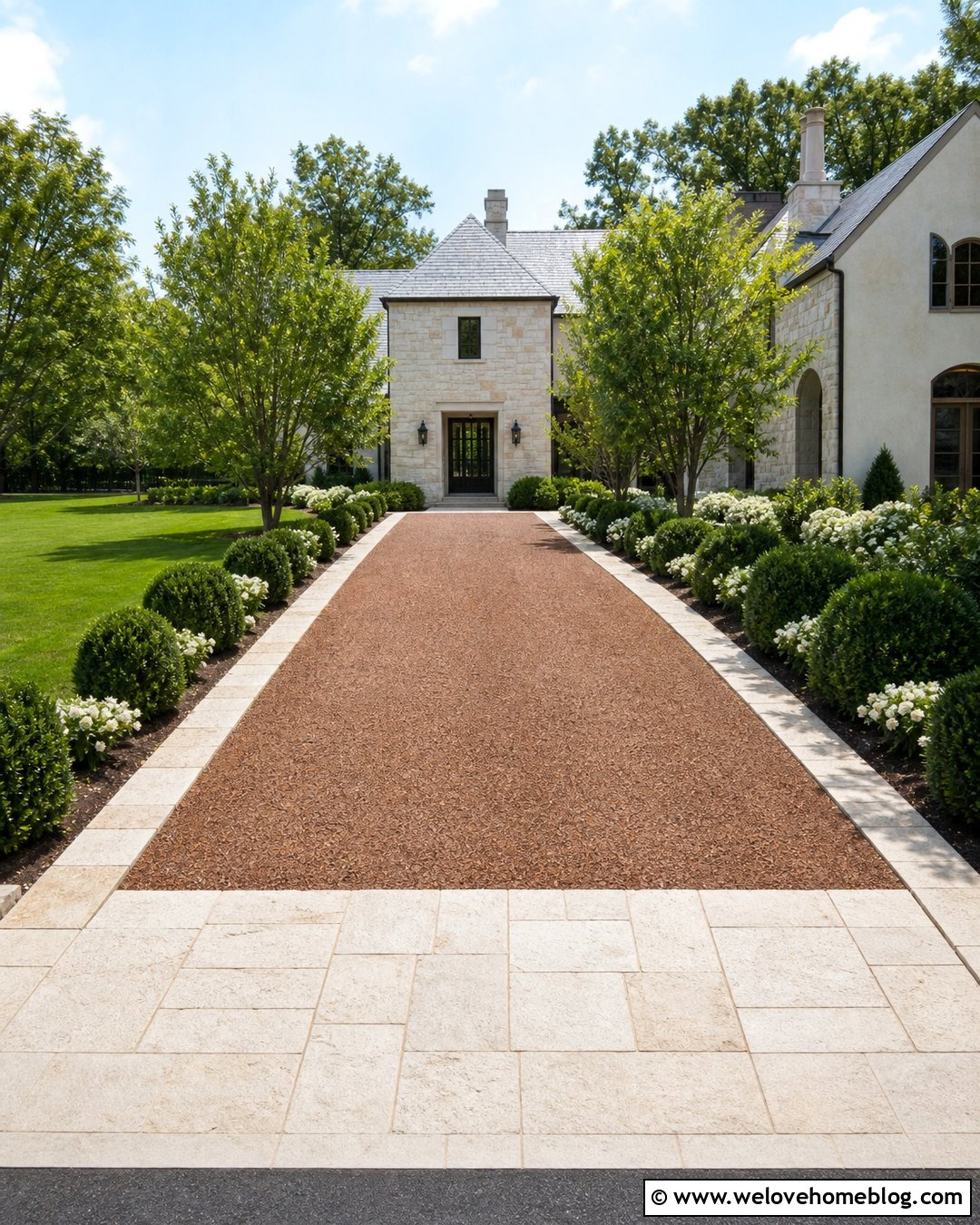
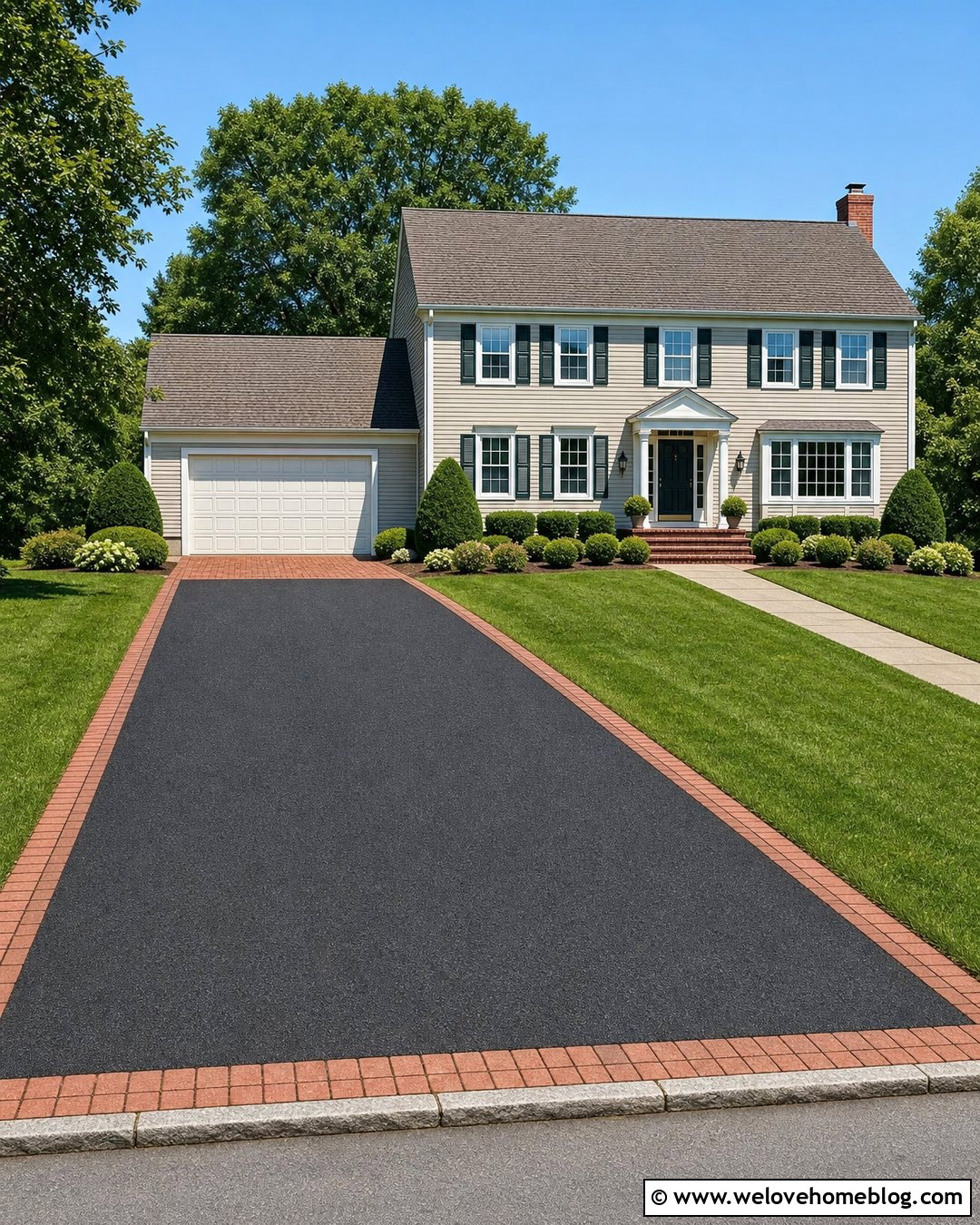
A brick ribbon adds color and pattern to an otherwise neutral rock driveway. Begin with compacted gray crushed stone, then install thin brick bands along the edges and across the surface at spaced intervals. These crossbands visually divide a long driveway and connect it with a red brick colonial, craftsman, or traditional home. Set the bricks on a properly prepared base so they remain level with the surrounding rock. Curving the ribbon around a planting island can make a wide parking area feel more organized. Beyond the border, use clipped boxwood, white hydrangeas, and small shade trees for a classic landscape. A full brick apron at the garage provides another clean transition. The repeated masonry details create cohesion while allowing the softer rock texture to remain the dominant surface.
21. Rock Driveway With Side Walkway
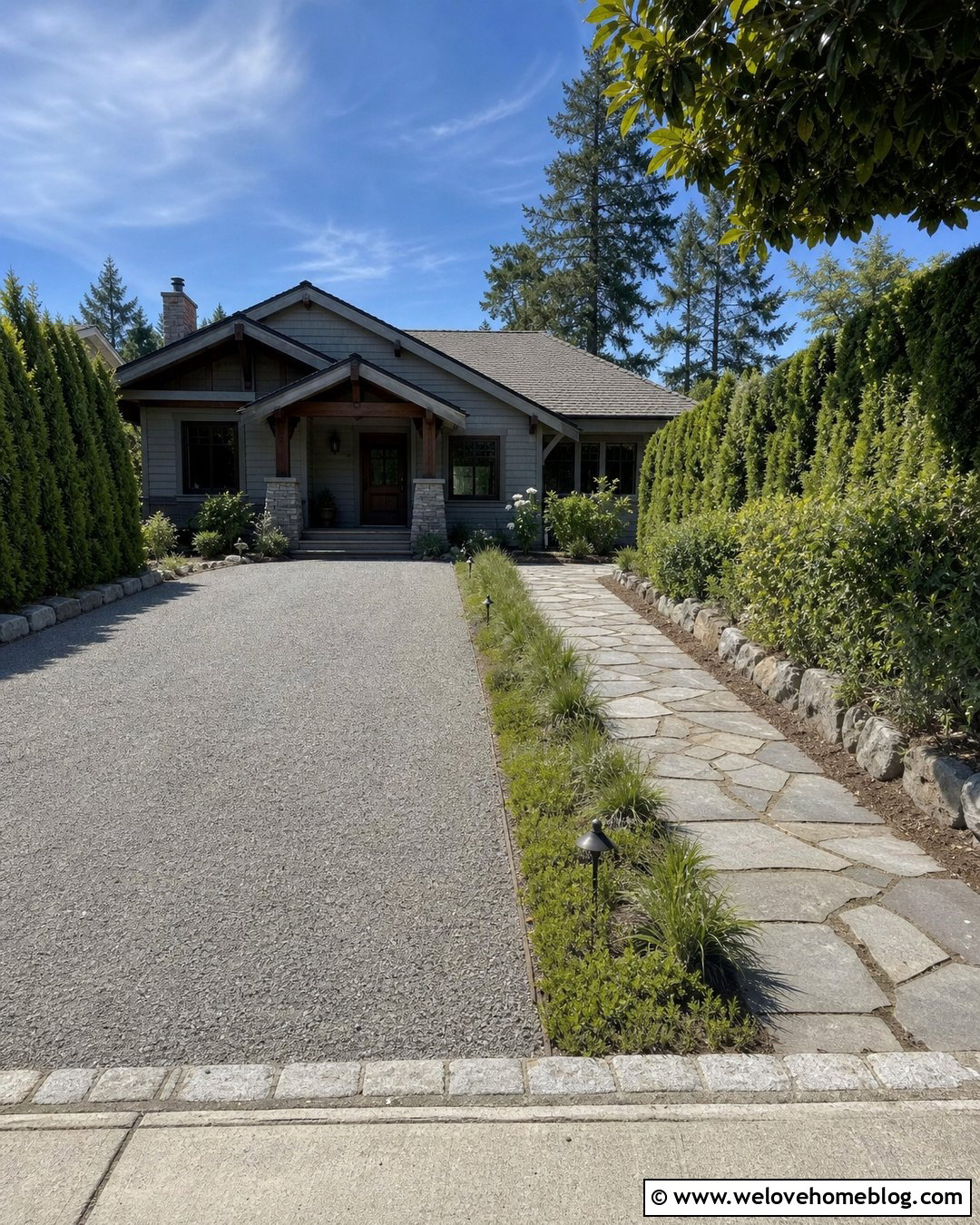
Separating the walkway from a rock driveway makes the approach safer and more welcoming for guests. Use warm gray crushed granite for a straight driveway, then place broad flagstone or concrete stepping pads along one side. A narrow planted strip can separate the two routes where space allows. Fill it with low groundcover, compact grasses, and small landscape lights that will not spill into the driving area. Frame the opposite edge with matching stone or steel. The walkway should connect clearly with the sidewalk, parking area, and front porch rather than ending abruptly. Choose a path material that repeats the house foundation, steps, or facade. This complete layout suits craftsman and ranch homes because it is practical but not overly formal. It also prevents visitors from struggling across loose stone in dress shoes.
22. Rock Driveway With Native Grasses
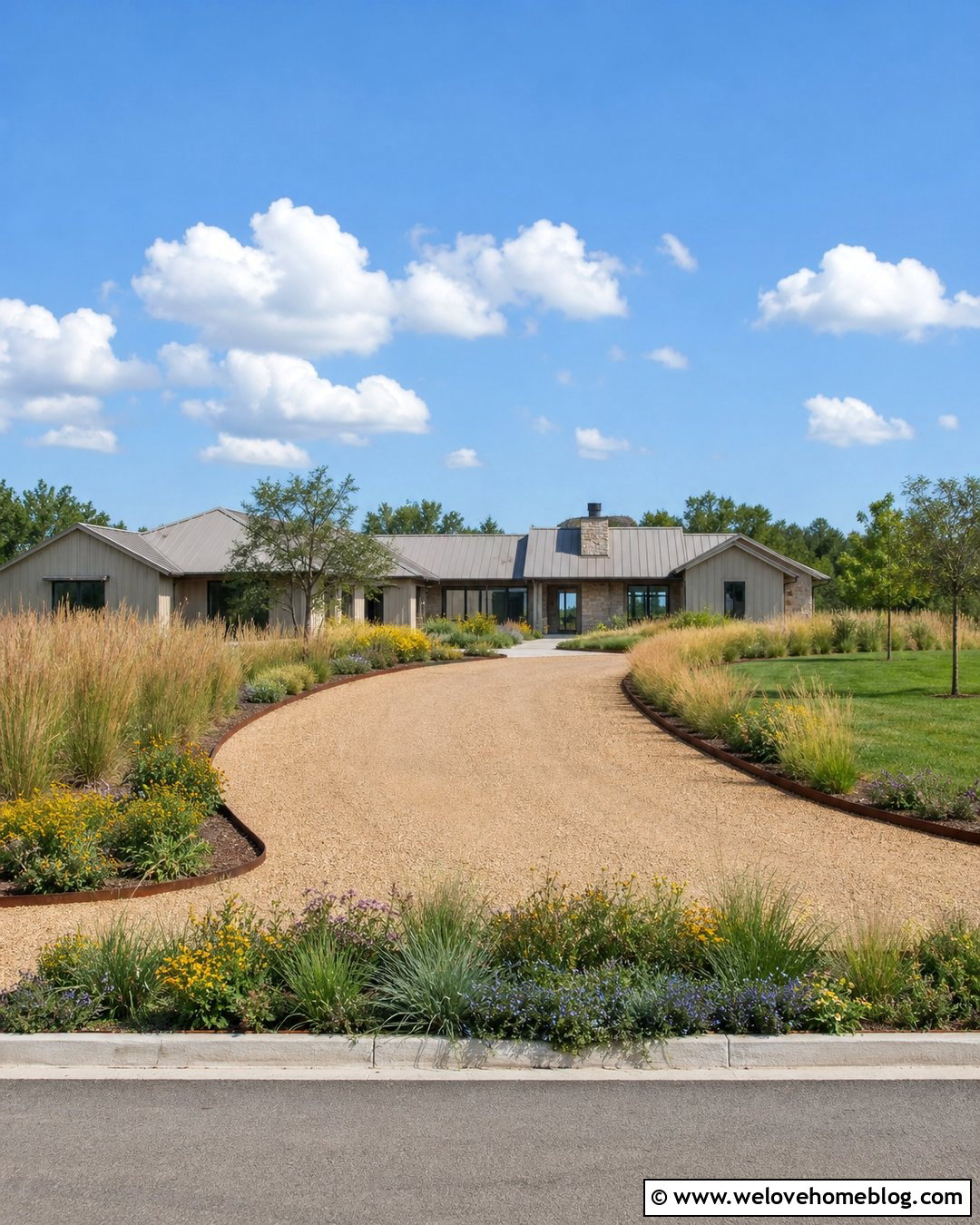
Native grasses can soften a rock driveway while creating a landscape that feels appropriate to its region. Start with locally sourced gray or tan crushed stone and shape the driveway into one broad, gentle curve. Use weathered steel edging to separate the rock from flowing beds of switchgrass, little bluestem, prairie dropseed, or suitable regional alternatives. Mix in a limited selection of native flowering perennials for seasonal color. Keep plants short near the street and driveway bends so drivers can see clearly. Larger grass groups can be placed farther inside the property, where their movement adds texture. A simple concrete walkway and an understated modern ranch house complete the scene. The driveway, edging, and planting should share clean lines, allowing the natural grasses to provide softness without making the approach look unmaintained.
23. Rock Driveway With Lavender Borders
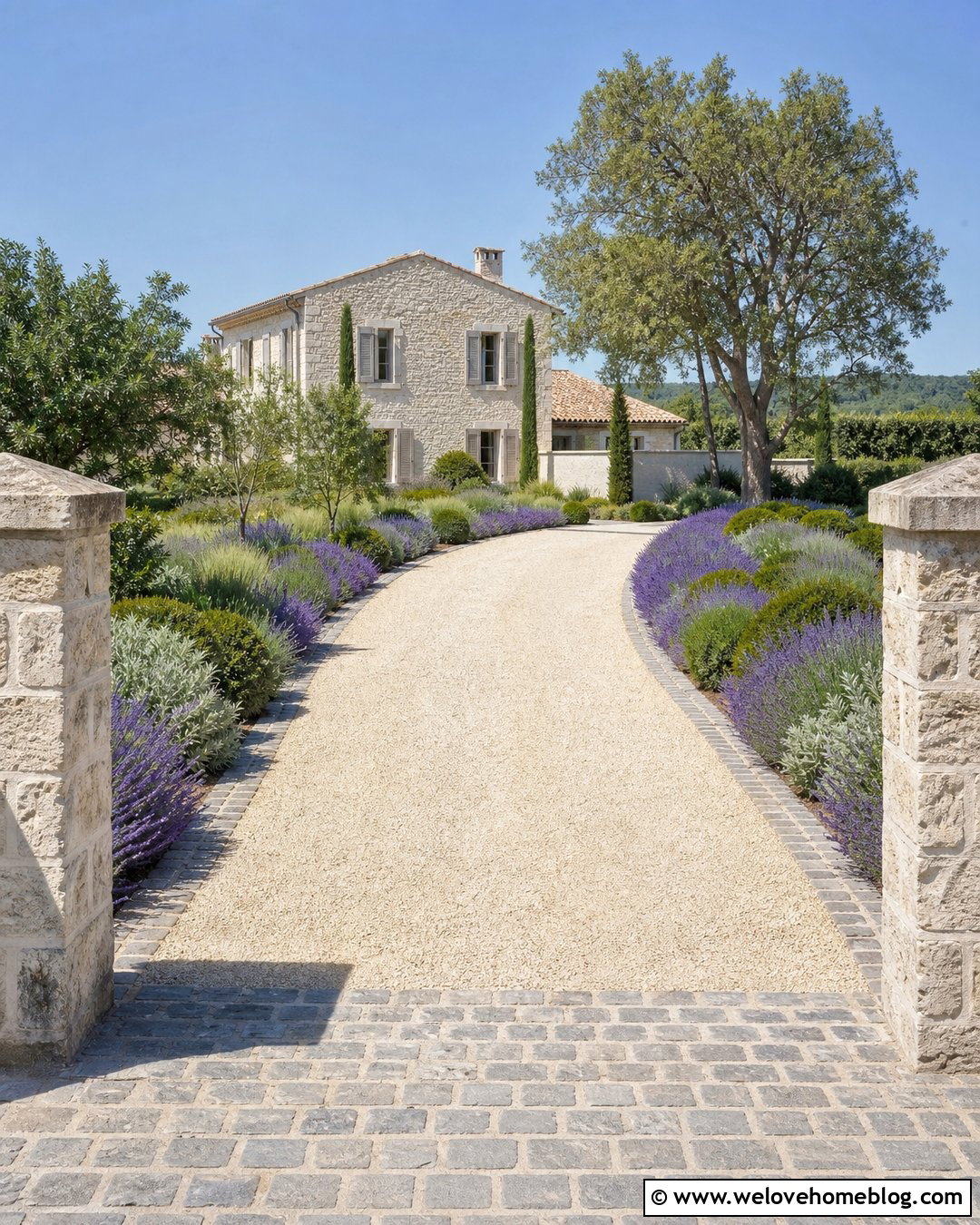
A pale rock driveway bordered by lavender creates a bright, garden-focused entrance. Use cream crushed limestone or light gray gravel in a straight or gently curved layout. Define both sides with low cobblestone edging, then plant repeated drifts of lavender beyond the stones. Add silver-leaved plants, compact ornamental grasses, and evergreen shrubs to maintain structure outside the flowering season. This combination looks especially attractive with cottage, French country, and light stucco homes. Give the plants enough setback from tires, snow storage, and foot traffic. In climates where lavender struggles, select a regionally suitable flowering plant with a similar low form. Finish the entrance with two simple stone pillars and a matching cobble apron. The limited color palette keeps the full driveway elegant rather than excessively busy.
24. Rock Driveway With Boxwood Landscaping
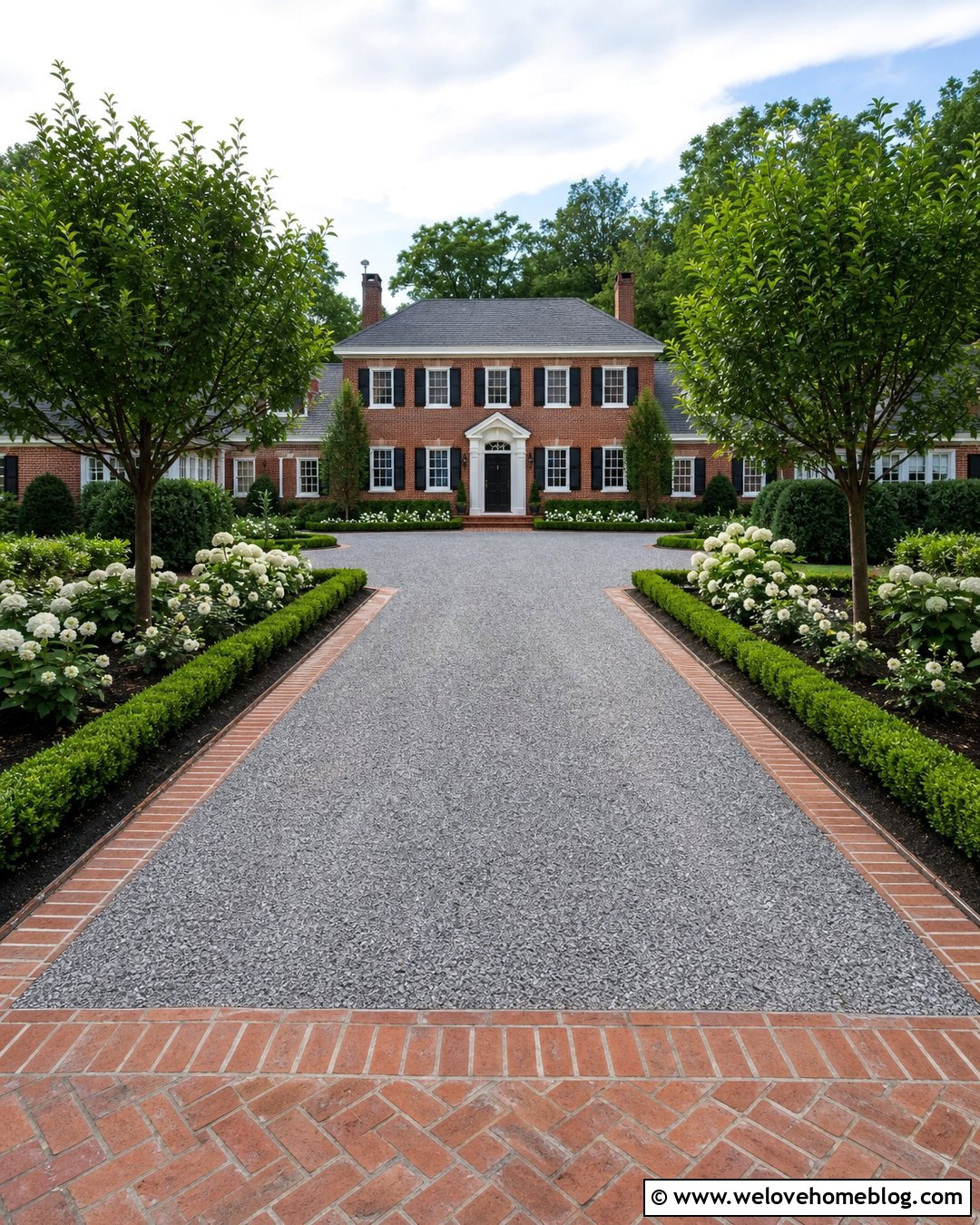
Clipped boxwood brings formal structure to the relaxed texture of a rock driveway. Fill a symmetrical straight drive with fine gray crushed stone and contain it with a double row of clay brick. Plant low boxwood hedges beyond the border, leaving breaks for the front walkway and access to planting beds. White roses, hydrangeas, or seasonal flowers can sit behind the evergreen framework. This balanced layout works particularly well with colonial, Georgian, and traditional brick homes. At the street, widen the brick edging into a rectangular entrance apron. Near the house, create a small gravel parking court centered on the front facade. Keep hedges low enough to preserve visibility and simplify snow or leaf cleanup. The result combines a practical loose-stone surface with the orderly appearance of a formal front garden.
25. Desert Rock Driveway
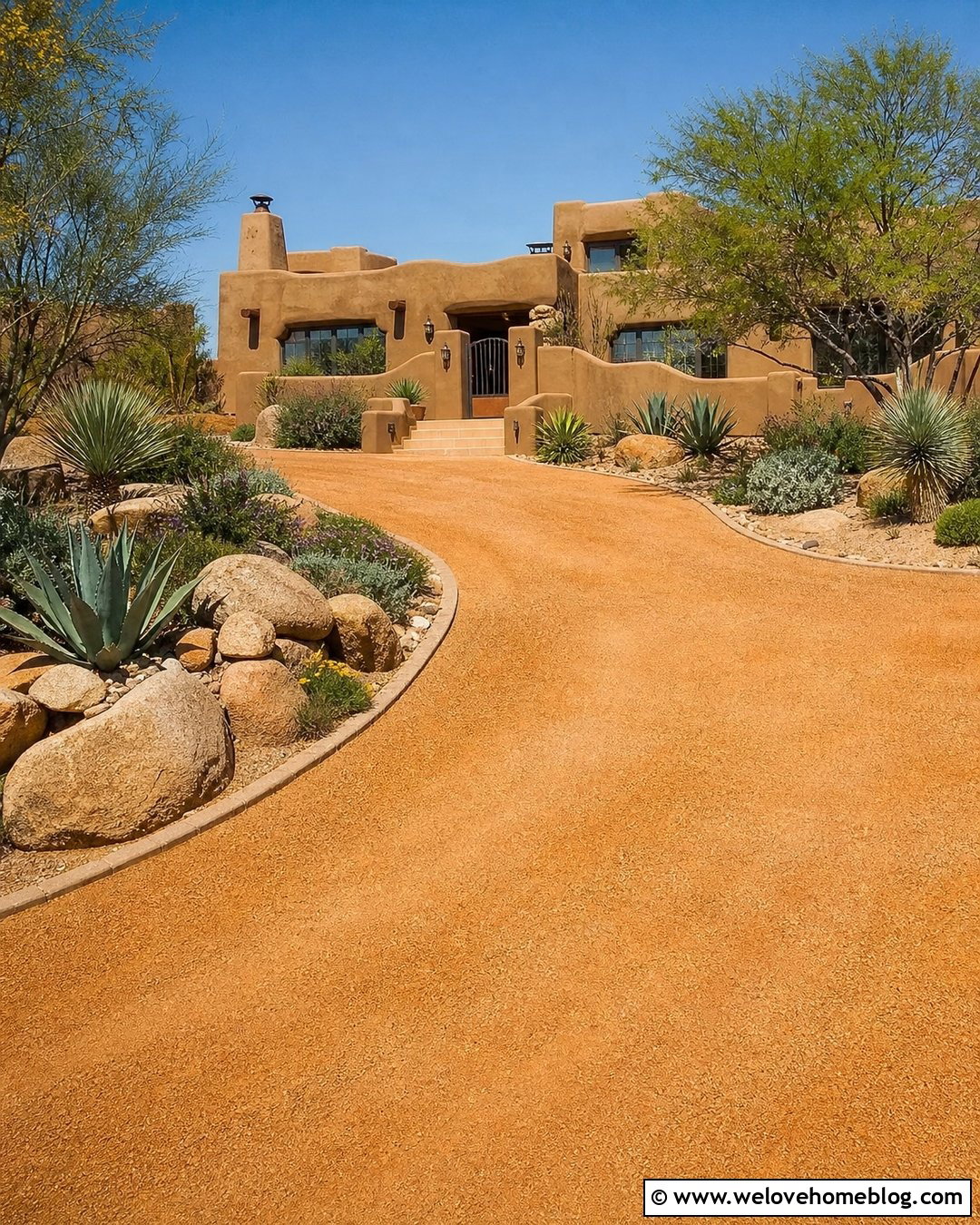
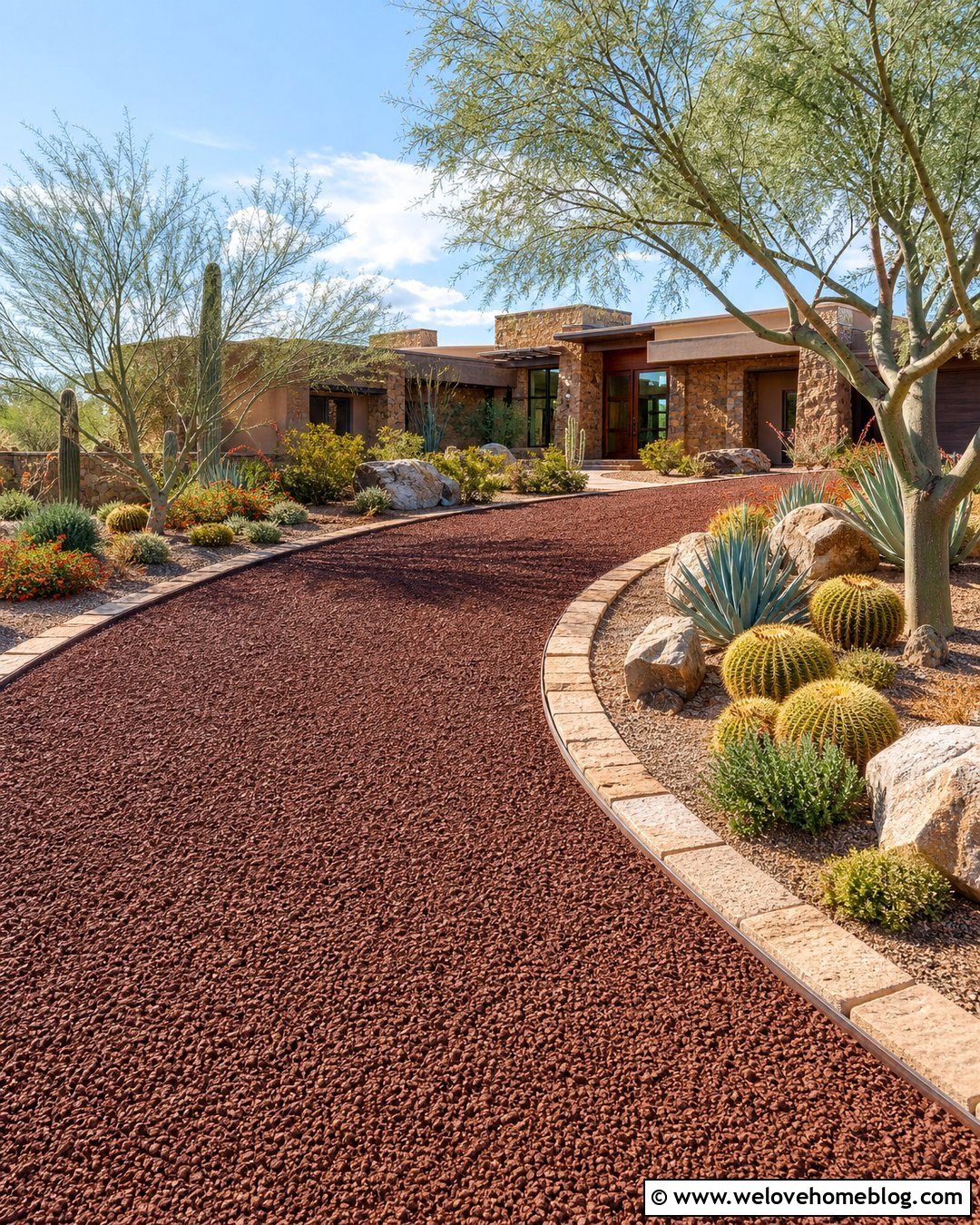
A desert rock driveway looks most convincing when its colors and planting reflect the surrounding terrain. Use compacted decomposed granite in warm tan, copper, or muted red, shaped into a broad curved approach. Edge selected areas with larger native boulders instead of creating an unbroken border. Maintain generous clearance between boulders and vehicle paths. Plant agave, yucca, desert spoon, sage, and drought-tolerant grasses in asymmetrical groups. Areas of smaller decorative rock can connect the driveway to planting beds without copying the exact driving surface. A low stucco wall and simple steel address sign can define the entrance. This design suits Southwestern, adobe, and desert-modern homes. The restrained planting, earthy rock, and open ground work together to create strong curb appeal without forcing a lush suburban landscape into an arid setting.
26. Coastal Rock Driveway
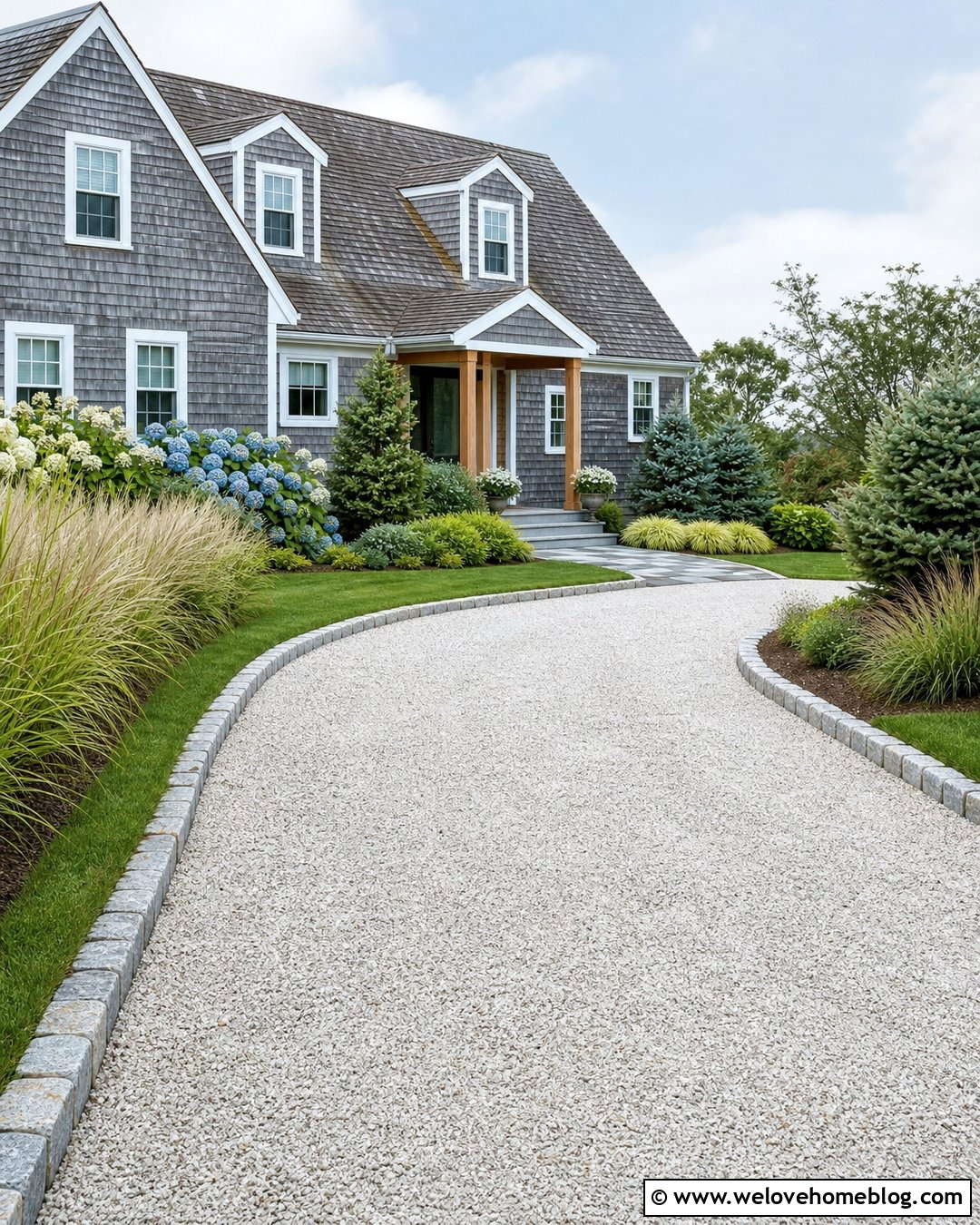
Soft gray crushed shell or pale gravel can give a coastal rock driveway an airy, relaxed appearance. Use a gently curved layout leading toward a shingle, Cape Cod, or coastal cottage home. Border the surface with weathered granite cobbles that echo the tones of the driveway without creating harsh contrast. Plant salt-tolerant ornamental grasses, low evergreen shrubs, hydrangeas, and regionally appropriate coastal plants. A bluestone walkway can branch toward the porch and provide a comfortable route across the loose material. At the entrance, use simple cedar posts rather than oversized masonry pillars. Keep the overall palette to silver, gray, blue-green, and white. The combination feels polished but not formal, allowing the driveway to blend with breezy planting and a light-colored house instead of dominating the front yard.
27. Farmhouse Rock Driveway
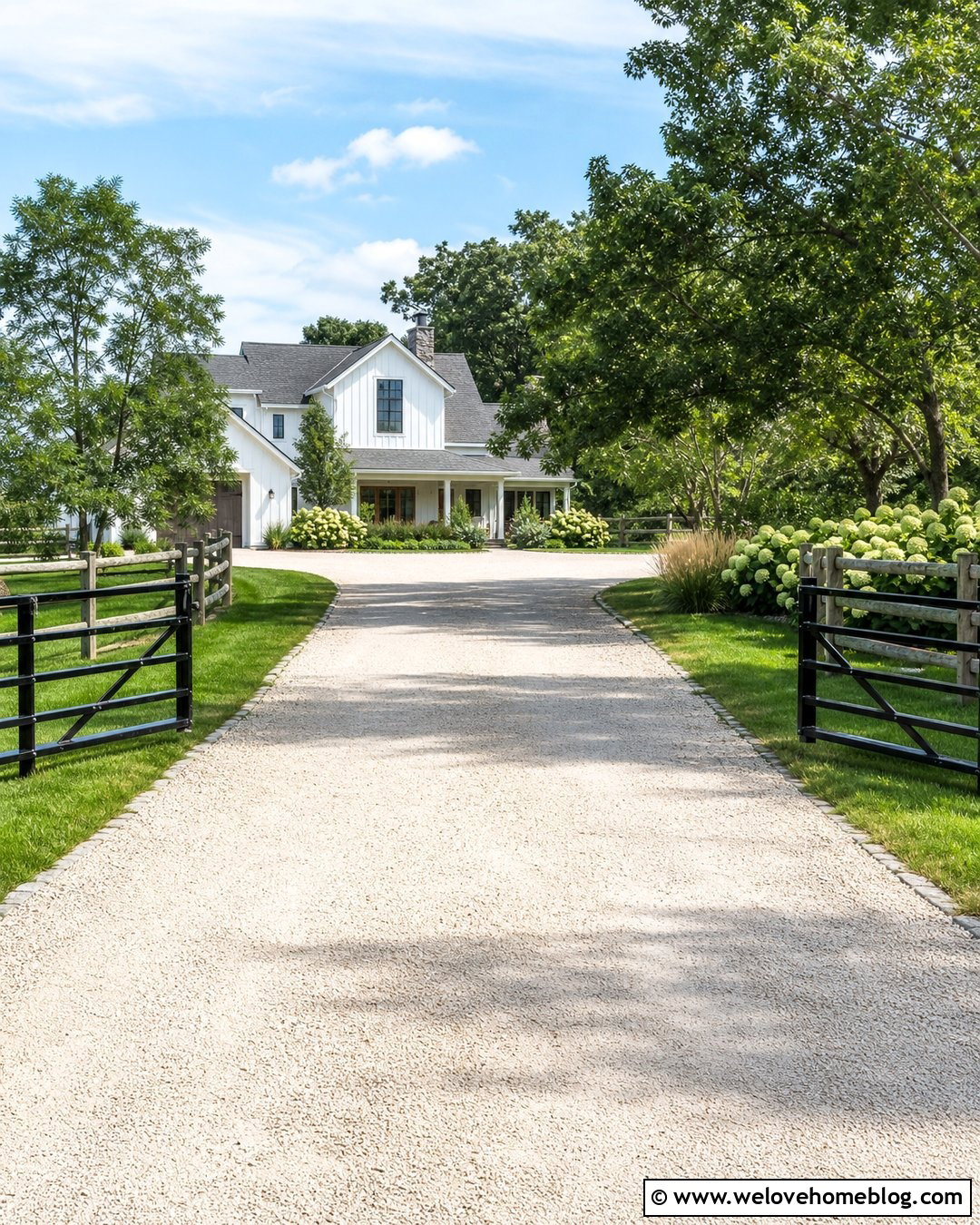
A farmhouse rock driveway should feel practical, broad, and comfortable beside open lawn. Choose pale crushed limestone for the main surface and form a straight approach that widens near the garage or barn. Reclaimed granite blocks or sturdy timber can contain the most visible sections, while simple grass shoulders keep the longer run affordable. Add a split-rail fence, deciduous shade trees, hydrangeas, and large sweeps of ornamental grass. A black metal farm gate can mark the road entrance without hiding the house. Repeat the driveway stone around a nearby walkway or utility court to connect the different outdoor areas. The light rock will contrast with a dark roof and white board-and-batten siding. This complete look feels honest and functional while still offering the detail needed for strong farmhouse curb appeal.
28. Modern Rock Driveway
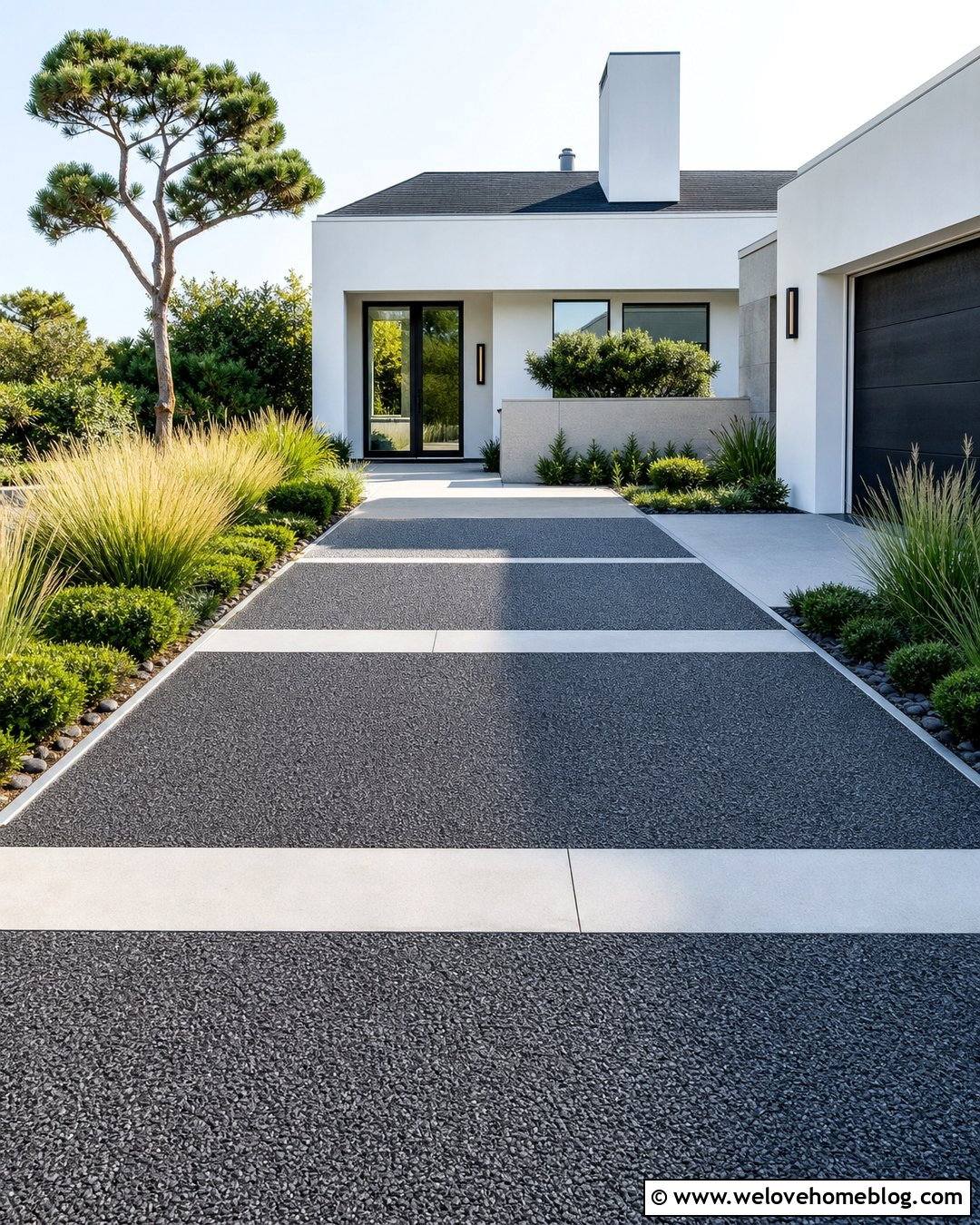
Modern architecture pairs well with a dark rock driveway built around clear geometry. Use fine black basalt or charcoal crushed granite in a wide, straight layout. Install flush steel edging and divide selected areas with large rectangular concrete bands. These bands can align with windows, the garage door, or the front walkway to strengthen the house’s architectural grid. Keep landscaping minimal but substantial, using massed ornamental grasses, low evergreen forms, and one sculptural tree. Avoid scattering many small decorative plants along the edges. A flat-roof home with light stucco, dark cladding, and warm wood accents creates balanced contrast. At the street, add a low concrete address wall surrounded by dark gravel. The finished driveway feels intentional because its surface, planting, and architecture follow the same restrained visual language.
29. Craftsman Rock Driveway
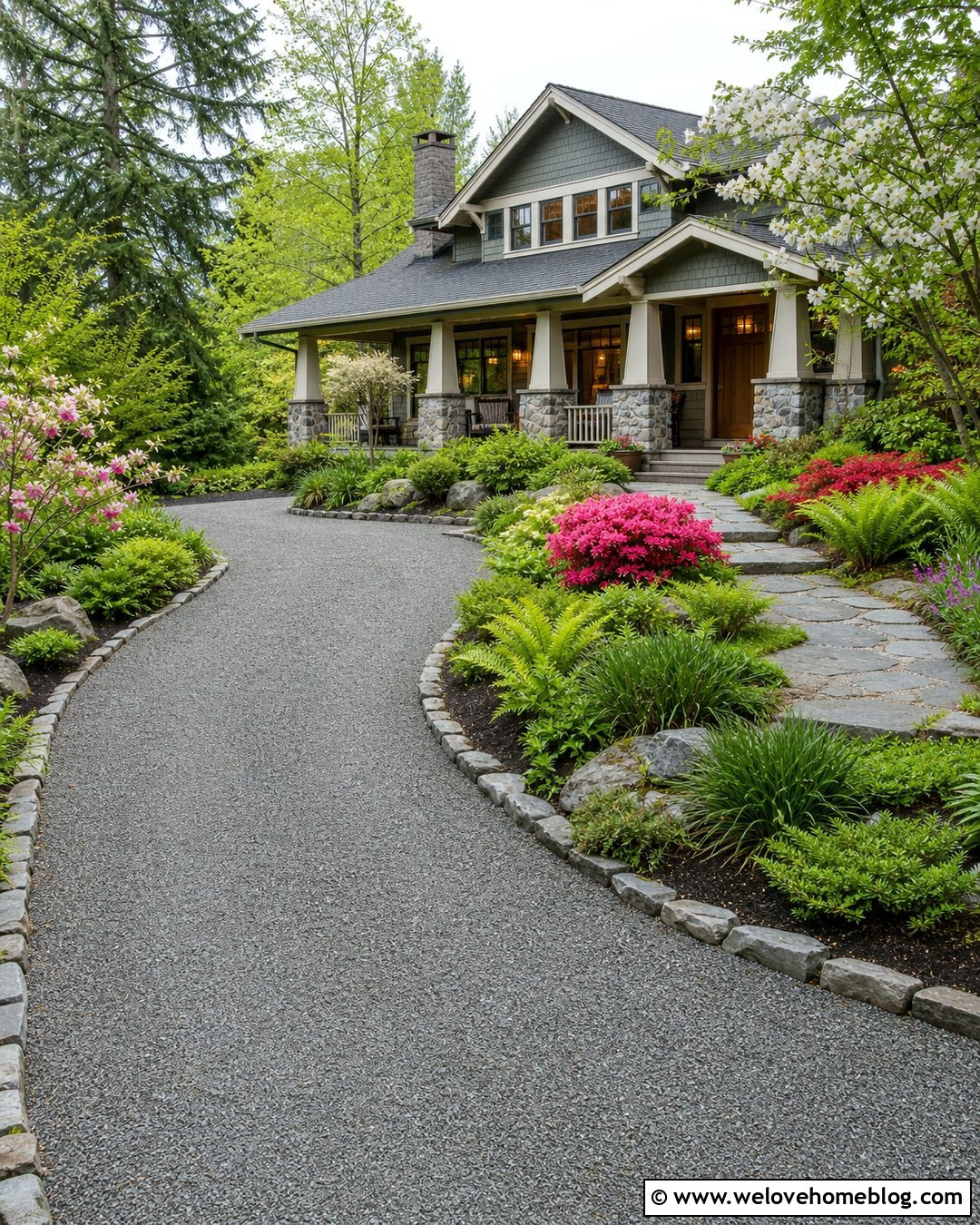
A craftsman rock driveway benefits from natural colors and handcrafted-looking borders. Use warm gray crushed granite in a lightly curved layout leading toward a detached or side-facing garage. Frame the surface with brick or irregular stone that repeats the porch columns and foundation. Plant layered beds of ferns, azaleas, compact evergreens, and ornamental grasses, selecting varieties suited to local conditions. A flagstone walkway should branch naturally from the driveway and widen near the porch steps. Place a small flowering tree at the inside of the curve, leaving enough clearance for visibility and mature growth. Low, warm-toned landscape fixtures can reinforce the craftsman character without crowding the borders. This combination makes the driveway feel like part of the home’s architecture, rather than a separate utilitarian area crossing the front landscape.
30. Colonial Rock Driveway
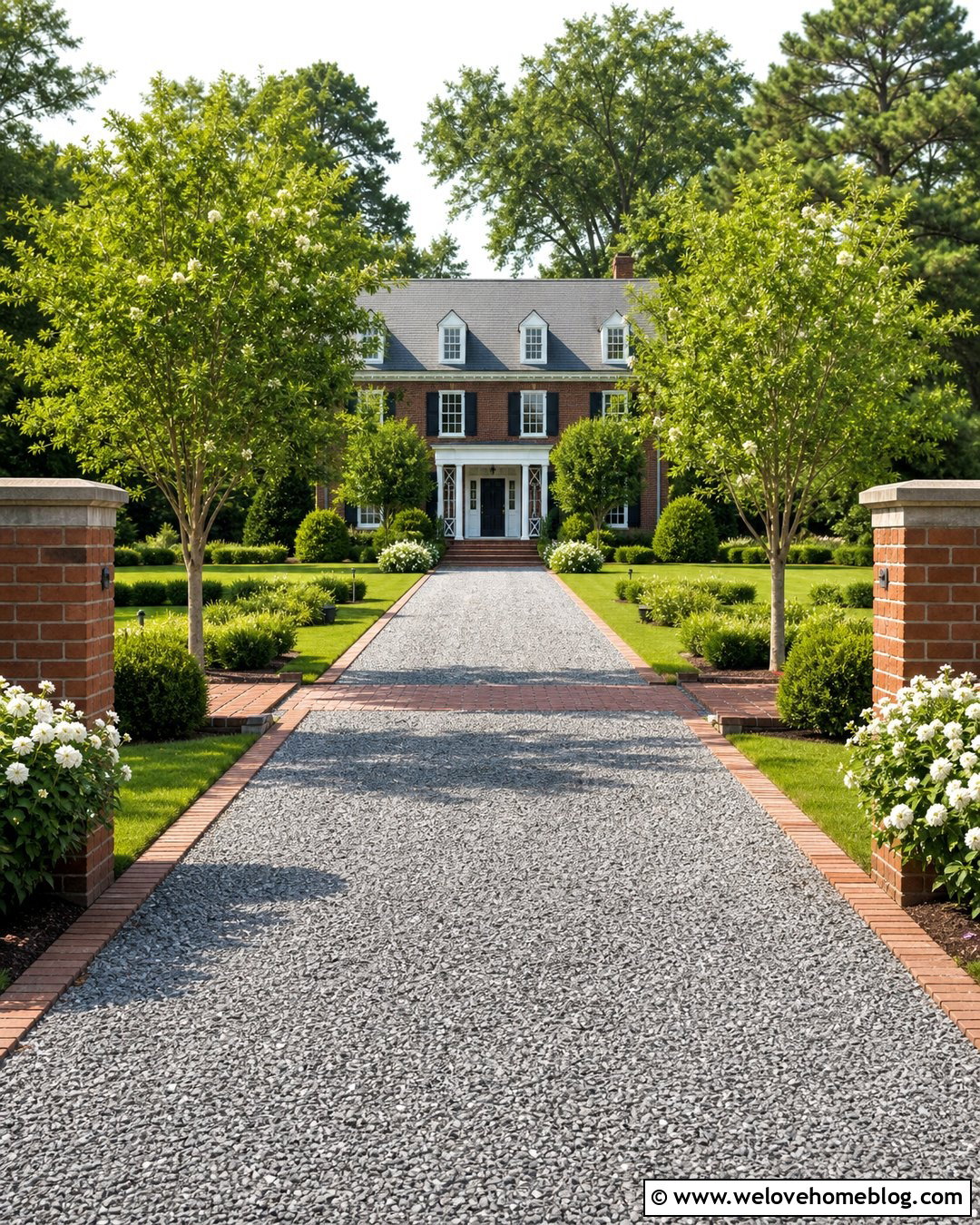
Symmetry makes a rock driveway feel appropriate beside a colonial home. Select medium-gray crushed stone for a straight central approach or an orderly circular layout. Use red brick edging to connect the driveway with the facade, chimney, and front steps. On both sides, create matching beds with clipped shrubs, white flowering plants, and evenly spaced ornamental trees. A brick walkway can cross the rock and lead directly to the centered front door. If the driveway continues toward a side garage, keep the main view aligned with the entrance before curving away. Matching lantern posts or low brick pillars can define the street opening. The restrained palette of gray, red, green, and white creates a timeless composition. Every component supports the balanced proportions associated with colonial architecture without making the yard feel overly elaborate.
31. Cottage Rock Driveway
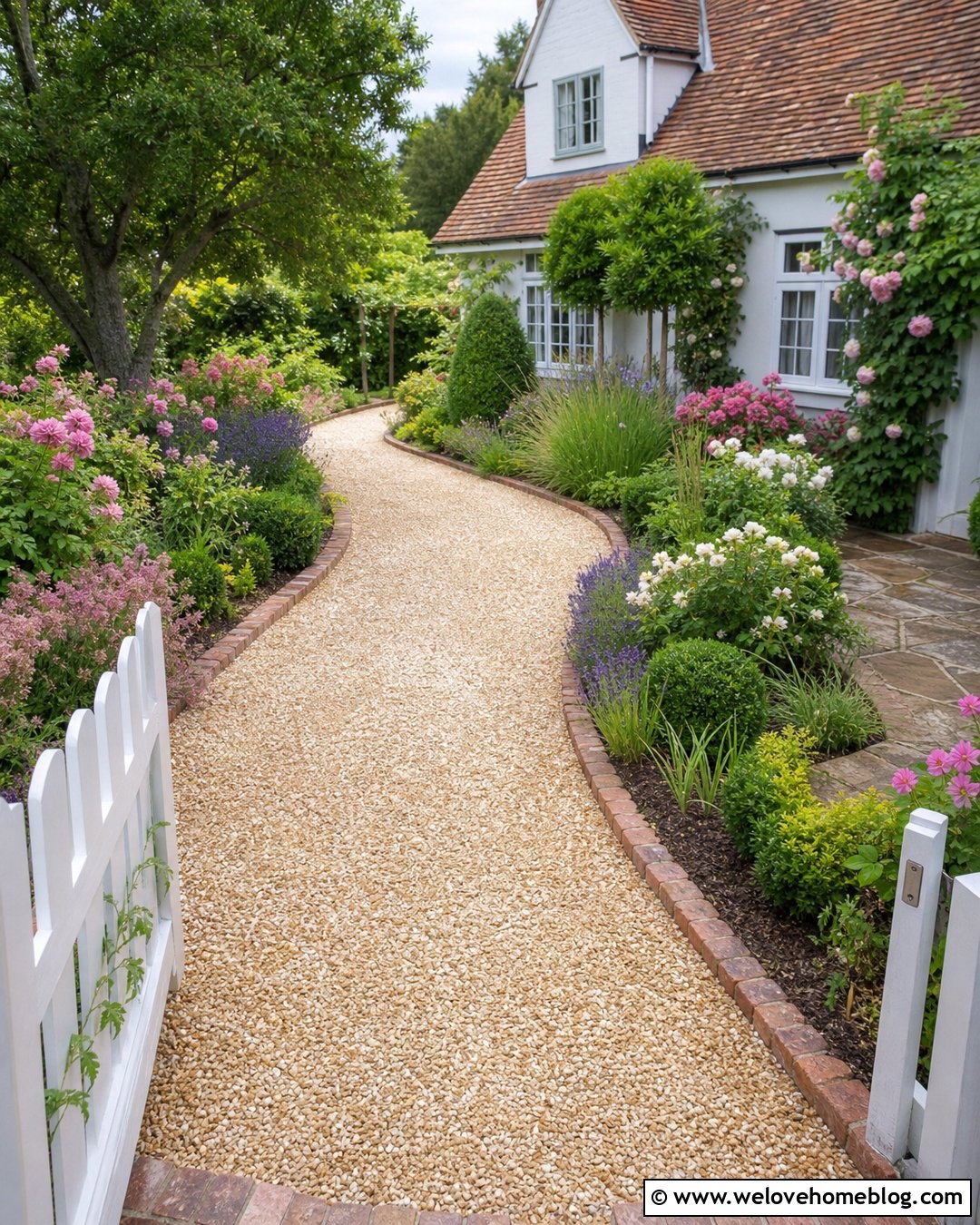
A cottage rock driveway can be informal without appearing untidy. Use golden pea gravel or small buff crushed stone in a narrow, gently winding layout. Install weathered brick edging to hold the rock and create a softly aged look. Beyond the border, layer flowering perennials, roses, compact shrubs, herbs, and ornamental grasses in generous beds. Allow plants to soften the brick line, but maintain enough clearance to prevent branches from scratching vehicles or hiding the driveway edge. Irregular flagstones can form a walkway from the parking area to an arched porch or painted front door. A small picket gate and simple address sign complete the entrance. The mix of warm rock, brick, and abundant planting gives the full driveway a welcoming garden character while preserving a clear, functional driving route.
32. Rock Driveway With Gate And Stone Pillars
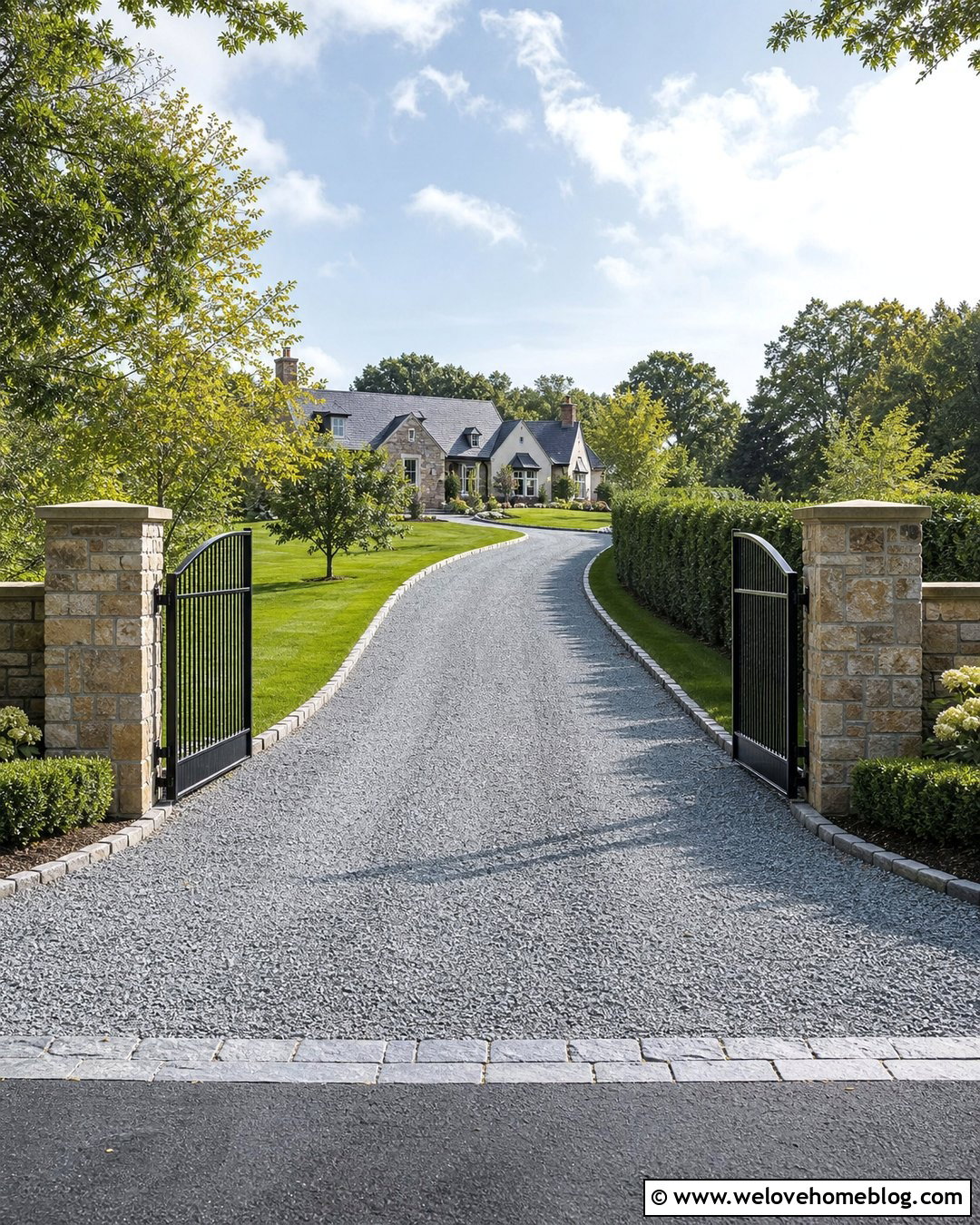
A gate framed by stone pillars creates a clear focal point for a long rock driveway. Use compacted gray crushed stone for the surface and continue it through a wide entrance between square-cut natural stone columns. Choose a simple wood or black metal gate that matches the home’s architecture. Set the gate far enough inside the property to allow safe vehicle access according to local conditions and codes. Low stone walls can extend from the pillars before transitioning into hedges or open lawn. Repeat the pillar stone in the driveway edging near the house and around the front walkway. A gentle curve beyond the gate can partially screen the residence and create a gradual reveal. The coordinated materials make the entrance feel substantial without turning the entire driveway into a heavily paved or formal structure.
33. Rock Driveway With Boulder Edging
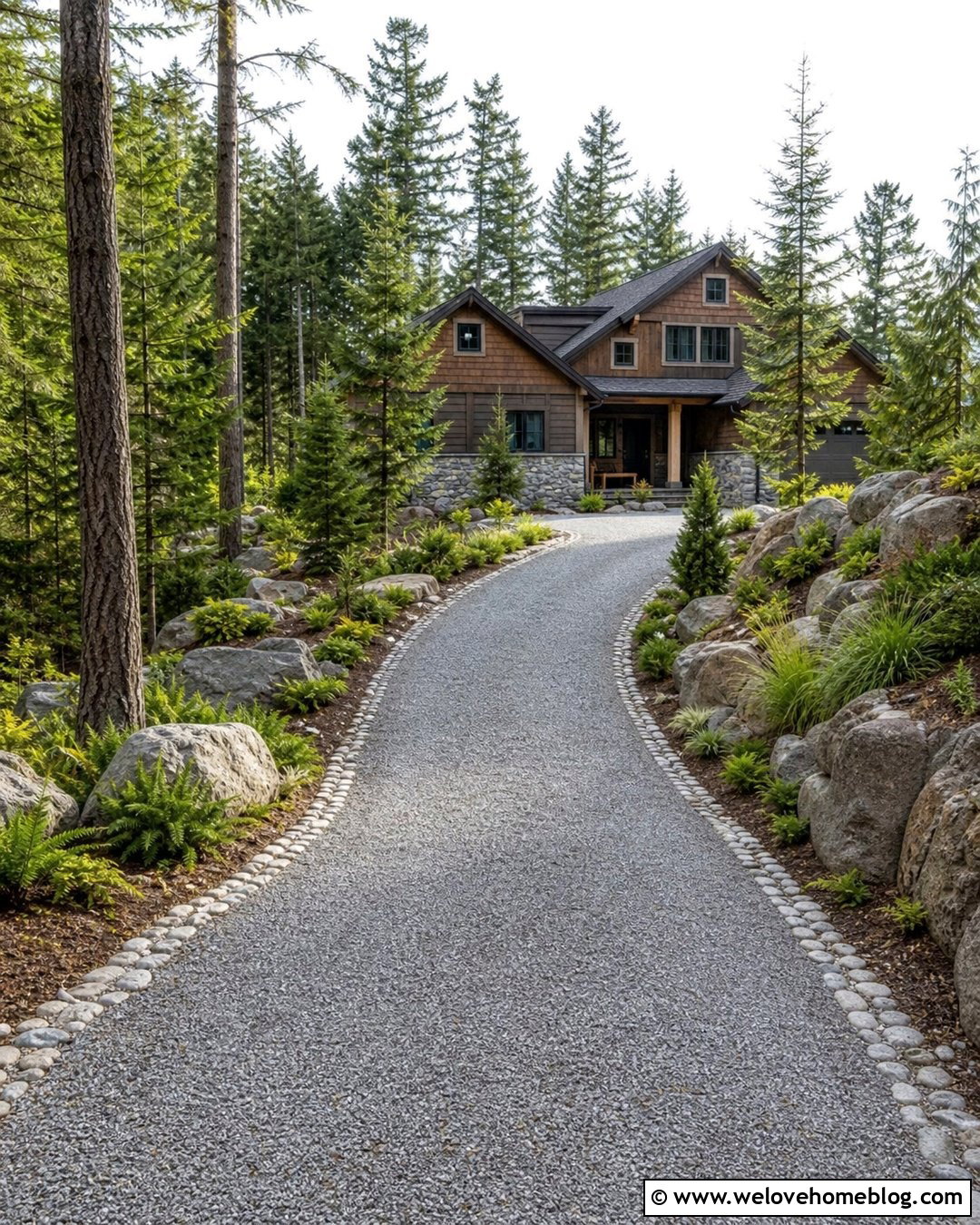
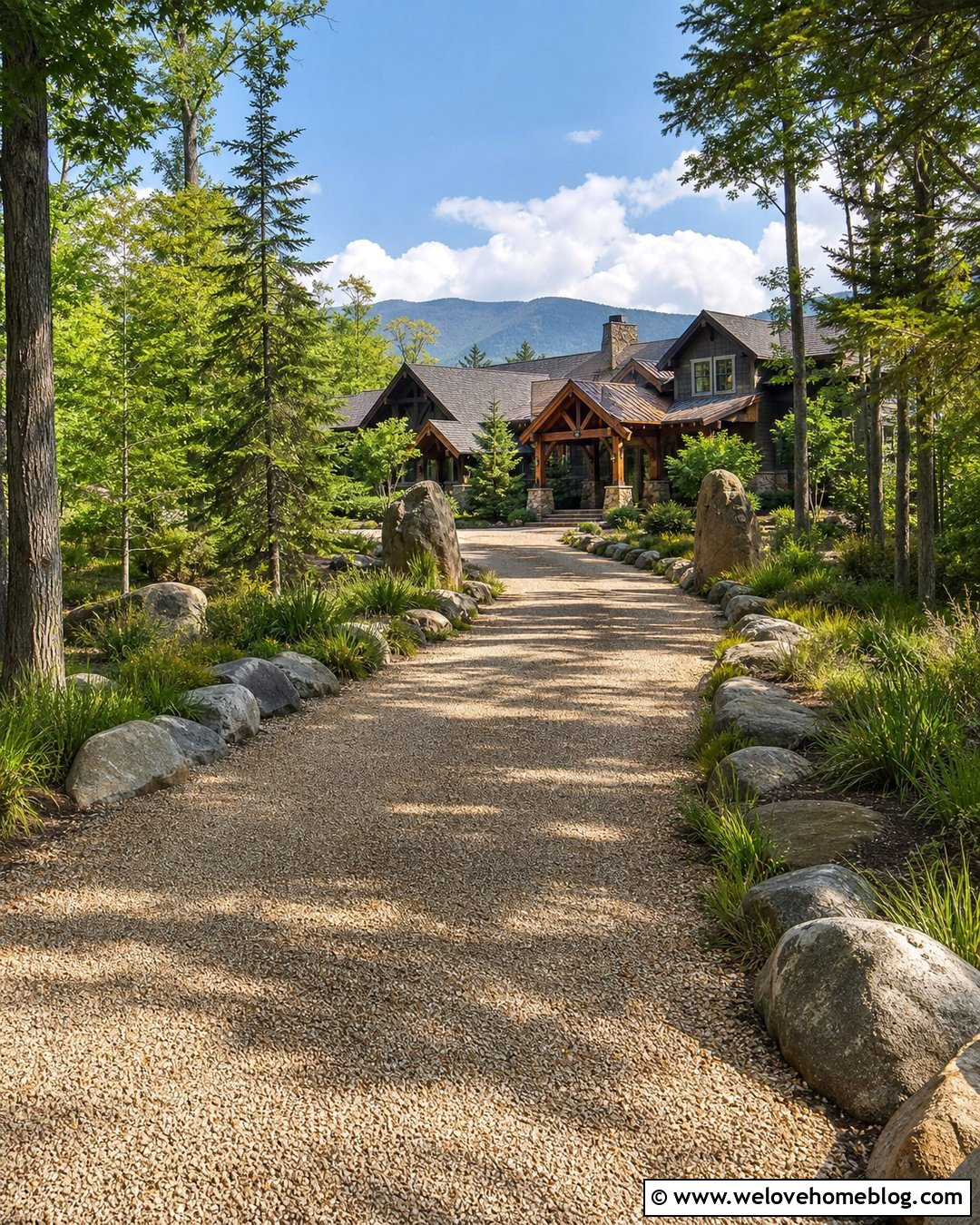
Boulder edging gives a rock driveway a rugged, natural boundary that fits wooded, mountain, and contemporary rustic properties. Fill the driveway with compacted gray crushed stone, then place large local boulders at selected curves and planting beds. Avoid lining the entire route with evenly spaced rocks, which can look artificial and reduce usable width. Instead, cluster two or three boulders with native grasses, low shrubs, ferns, and groundcovers. Maintain generous clearance from traffic and position every stone securely. A winding driveway makes the boulder groups feel connected to the terrain. Use smaller cobbles or steel edging between the major clusters for consistent containment. Repeat the same rock near the house foundation or entry steps. This creates a complete landscape where the driveway appears to pass naturally through the property.
34. Rock Driveway With Parking Court
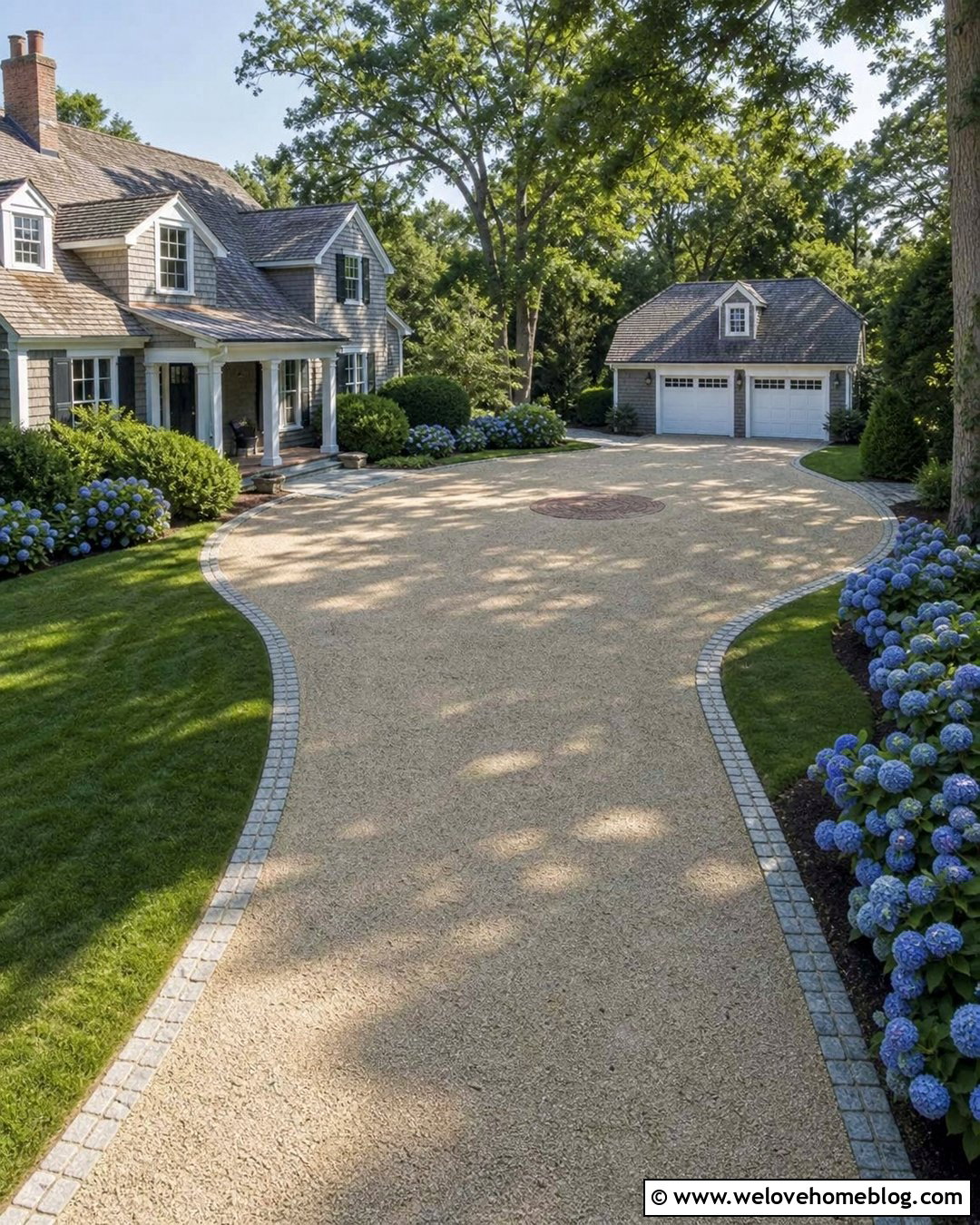
A rock parking court provides useful turning and guest space without paving an oversized area in concrete. Create the main approach with compacted tan crushed stone, then widen it into a rectangular or oval court near the house. Define the outer edge with granite cobblestones and install a small brick or paver circle at the center for visual structure. Keep the driving route open rather than filling the court with a large planting island. Place trees, shrubs, and hydrangeas around the perimeter to soften the expanded surface. A clearly separated flagstone walkway should lead from the court to the front door. This arrangement works well with larger traditional, farmhouse, and country homes. Matching stone at the garage threshold helps the broad loose-rock area look planned instead of resembling an unfinished parking lot.
35. Budget Rock Driveway Makeover
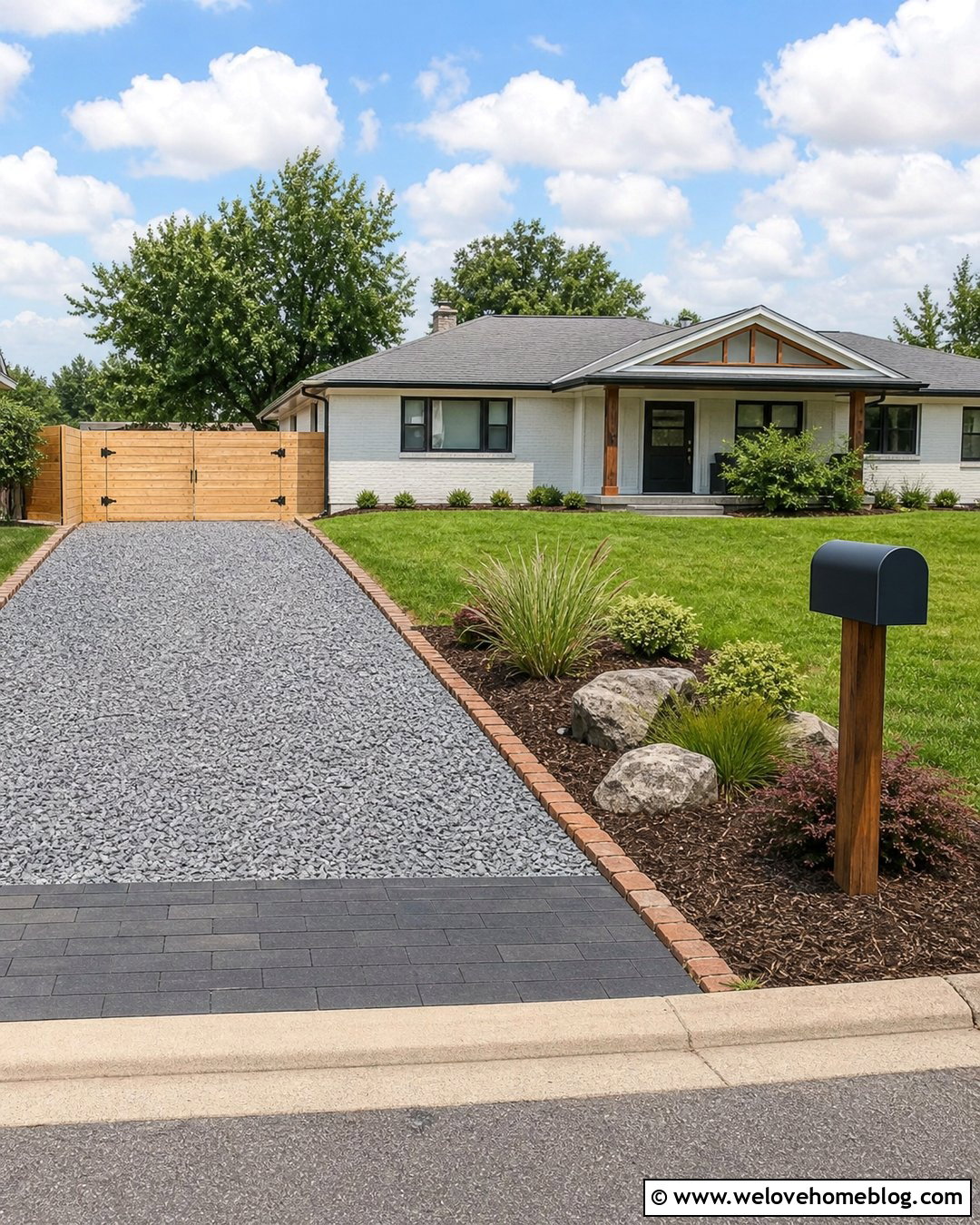
A budget rock driveway makeover can look complete when money is spent on the areas with the greatest visual impact. Refresh an existing drive with a new layer of compatible angular crushed stone after repairing low spots and restoring the grade. Add affordable timber, salvaged brick, or heavy-duty metal edging along the most visible sections. Create a short paver apron at the street rather than bordering the entire driveway with masonry. Near the house, define one generous planting bed with ornamental grasses, compact shrubs, and low-maintenance groundcover. Repaint the mailbox or address post to coordinate with the exterior. Reuse suitable existing rocks as accents instead of buying decorative boulders. The result can feel cohesive and intentional because the entrance, borders, surface, and landscaping receive focused improvements rather than unrelated decorative additions.
Conclusion:
The best rock driveway balances appearance with practical construction, easy navigation, drainage, and long-term maintenance. Start by selecting a stone color and texture that complement the house. Then choose a layout suited to the yard, whether that means a compact straight drive, sweeping curve, circular entrance, or rural lane. Strong edging, a prepared base, and clearly planned transitions help the surface look finished. Landscaping should frame the route without reducing visibility or usable width. Brick ribbons add warmth, steel borders create modern lines, and native plants connect the driveway to its setting. Use these 35 Rock Driveway Ideas to create an entrance that feels attractive, functional, and naturally integrated with your entire property.

Related posts:

Leave a Reply