
Creek rock brings natural color, smooth texture, and relaxed character to a residential driveway. However, the best **creek rock driveway ideas** involve more than spreading decorative stones over bare ground. Rounded rock can shift under tires, so a lasting design needs a compacted angular gravel base, strong edging, proper grading, and an appropriately sized top layer. The surrounding landscape matters too. Cobblestone borders can create a traditional finish, while steel edging, native grasses, boulders, or brick ribbons can completely change the overall look. You can also adapt creek rock to straight, curved, circular, narrow, and sloped layouts. The complete driveway designs below combine practical construction details with attractive landscaping, helping you find realistic inspiration among these **20 Creek Rock Driveway Ideas**.

1. Creek Rock Driveway With Cobblestone Edging
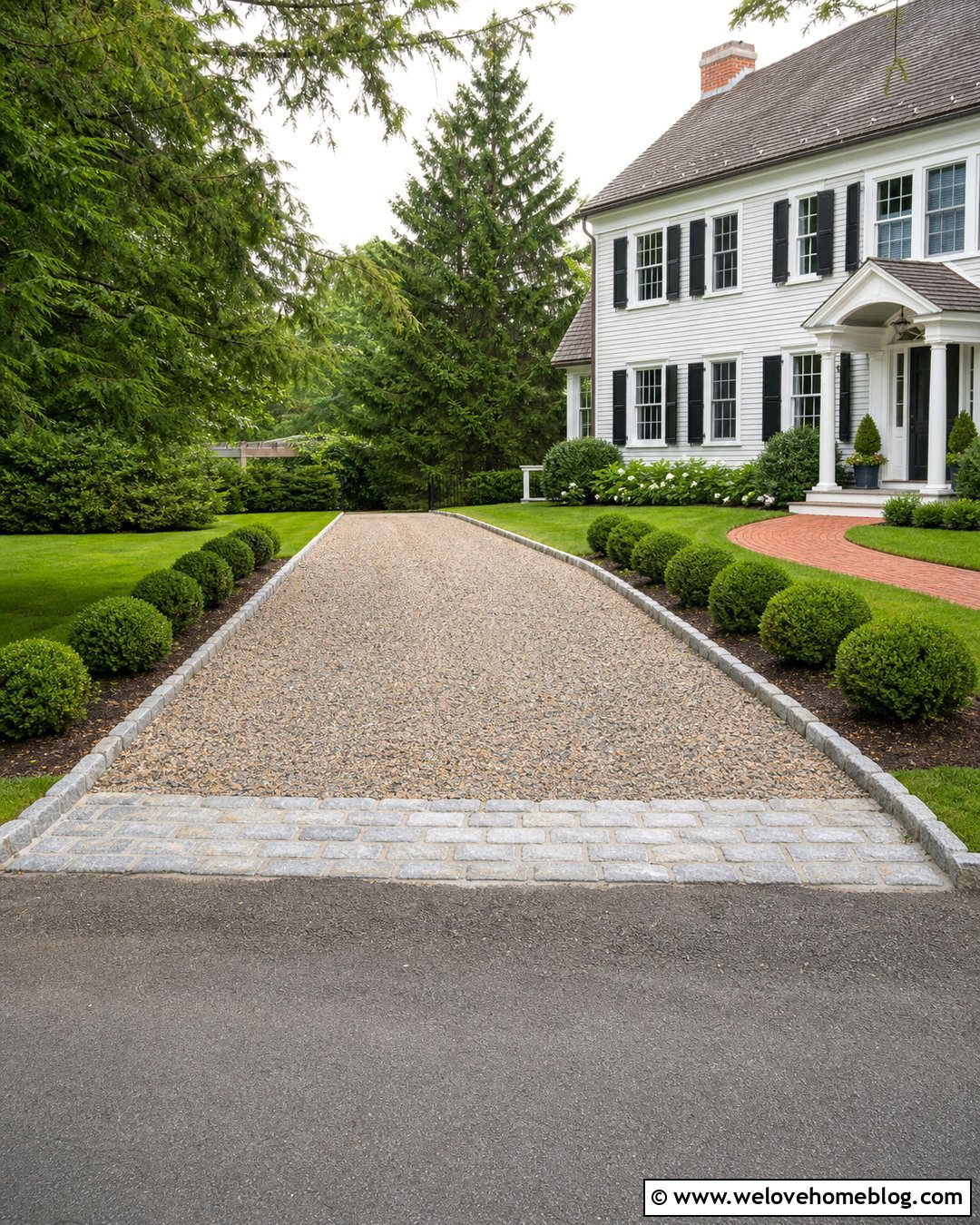
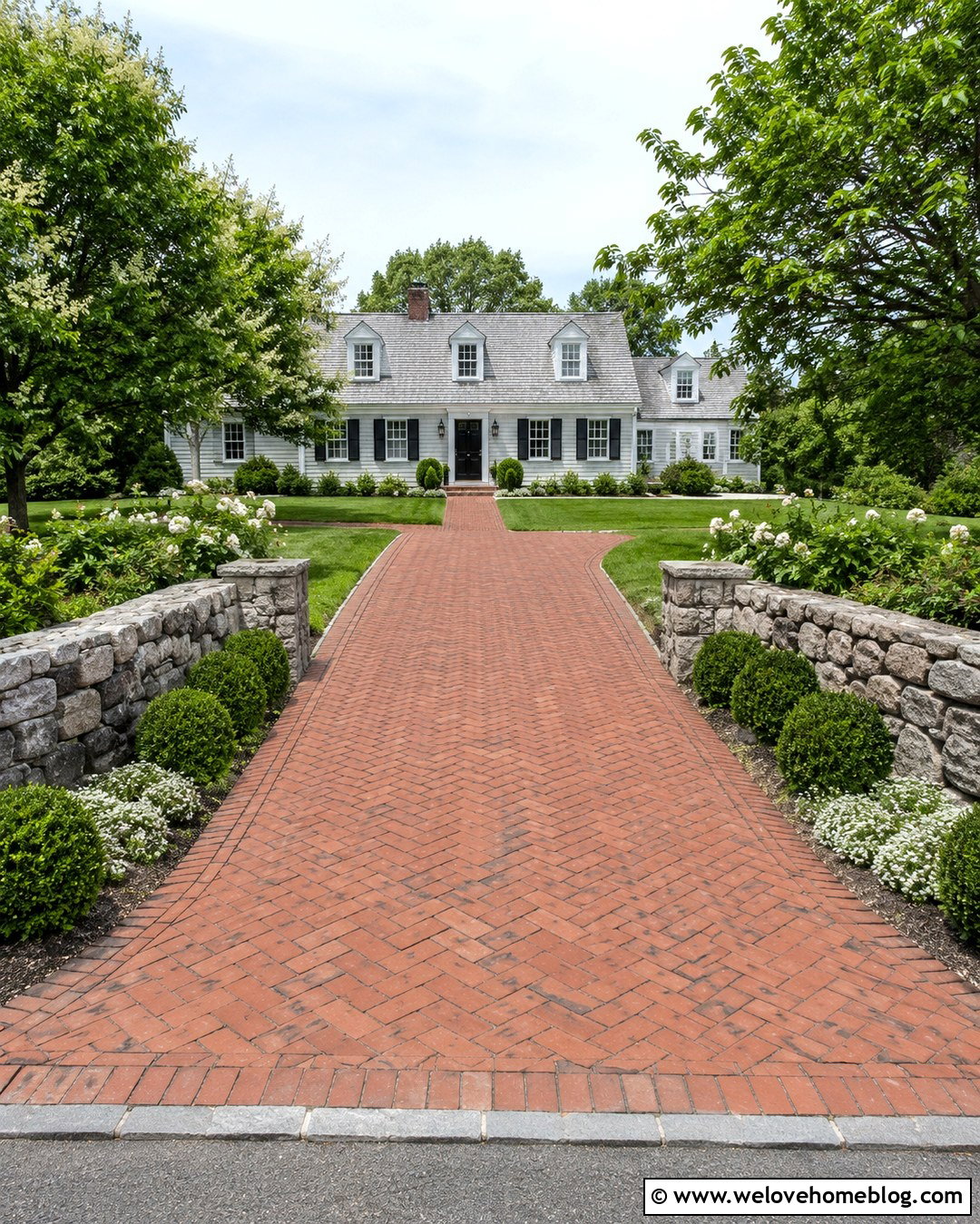
A straight creek rock driveway framed by cobblestone edging offers a tidy balance between natural texture and traditional structure. Choose small creek stones in blended gray, tan, and brown tones, then install them over a compacted layer of angular aggregate. The firm base supports vehicle traffic, while the cobblestones help stop rounded surface stones from spreading into the lawn. Set the border slightly above the finished rock level without creating an uncomfortable bump at the entrance. On both sides, use simple grass lawns or low evergreen shrubs to keep attention on the driveway. This complete look works especially well with colonial, Cape Cod, and brick homes because the cobblestone border connects the informal rock surface to more formal architecture.
2. Curved Creek Rock Driveway With Boulder Borders
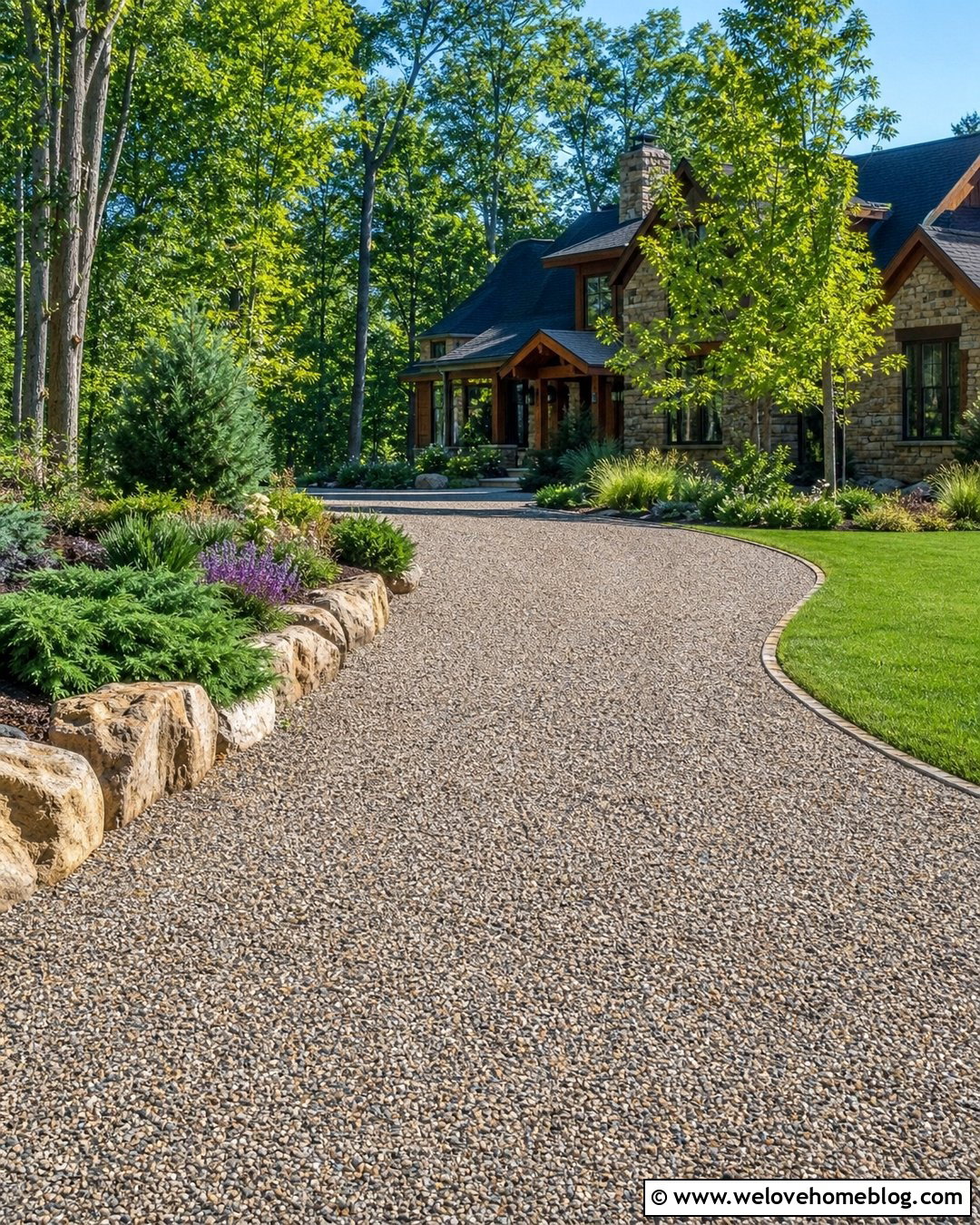
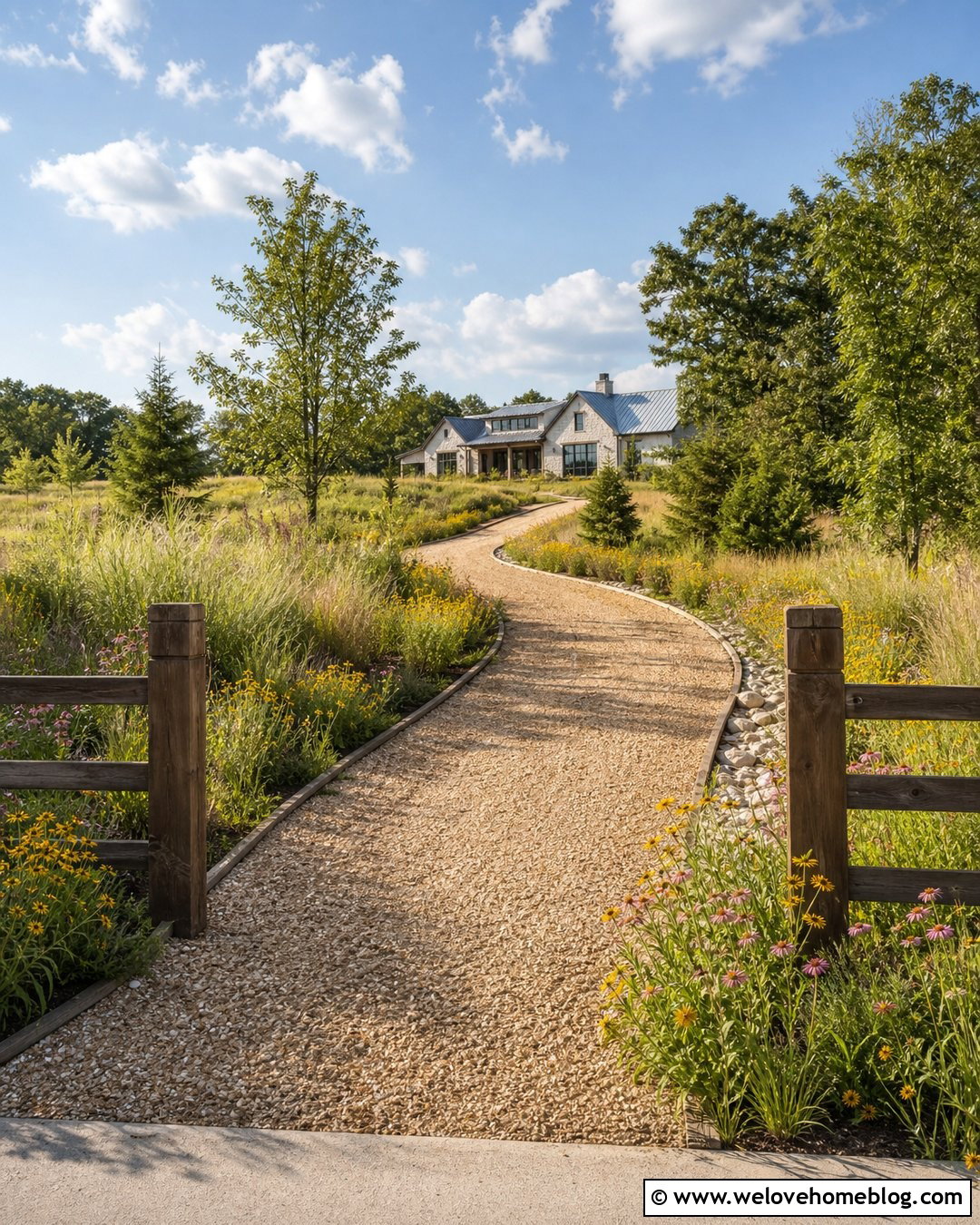
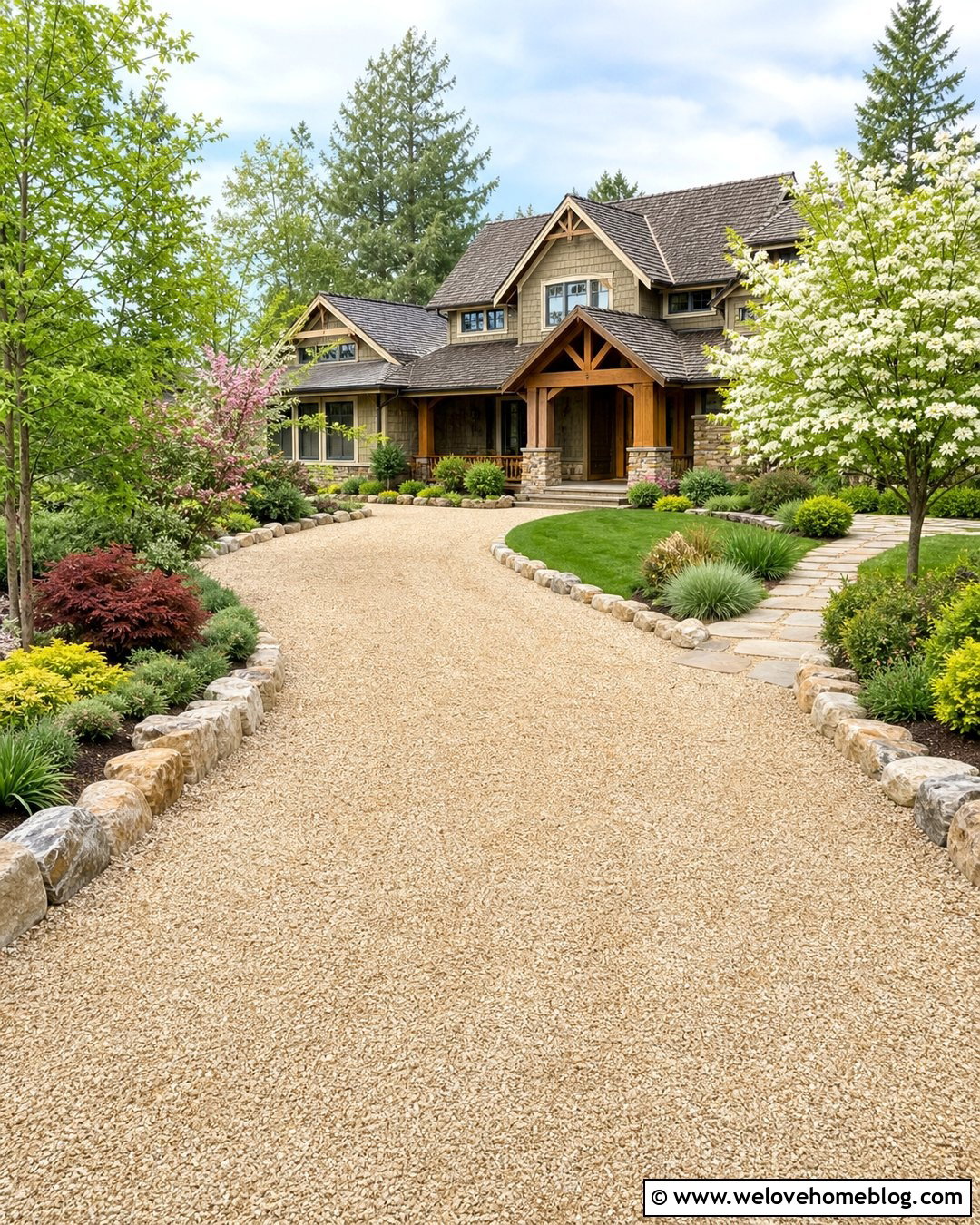
A sweeping curve makes a creek rock driveway feel like a natural part of the landscape rather than a direct path to the garage. Medium boulders placed along the outside bend can strengthen the visual curve and protect nearby planting beds from vehicle tires. Use smaller, tightly graded creek rock across the driving surface so the rounded stones settle more evenly. A compacted crushed-stone base and concealed metal edging will improve stability behind the visible boulders. Fill the surrounding beds with ornamental grasses, junipers, and repeating groups of flowering perennials. Avoid placing boulders too close to the usable driving area. This layout suits large suburban lots, wooded properties, and rustic homes where a softer, flowing entrance feels more appropriate than a rigid straight driveway.
3. Modern Creek Rock Driveway With Steel Edging
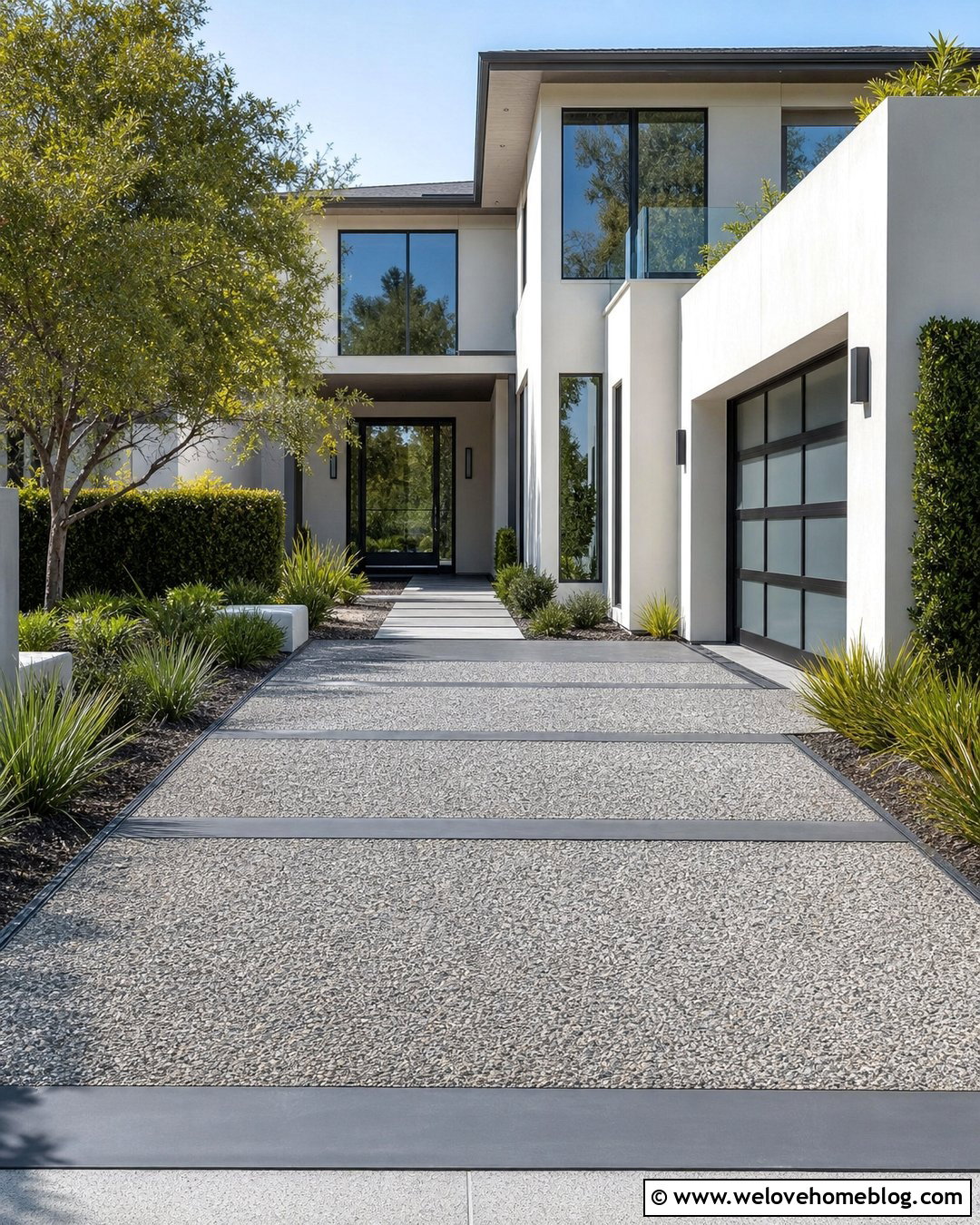
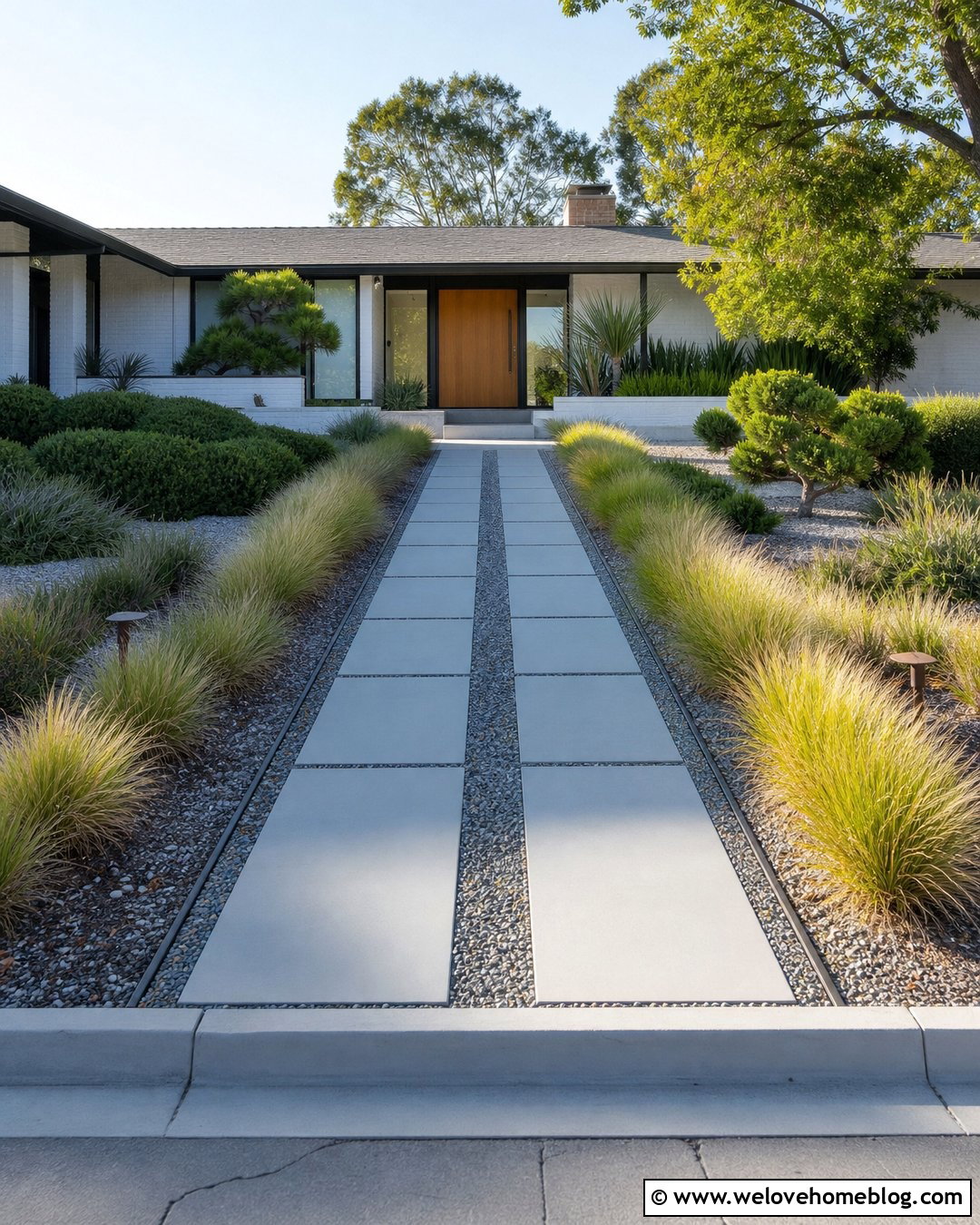
Can creek rock look clean enough for a modern house? It can when the colors, lines, and borders remain simple. Select charcoal, blue-gray, or cool-toned creek pebbles for a straight driveway with crisp rectangular edges. Dark powder-coated steel edging provides a thin boundary that controls the rounded material without introducing a bulky border. Install the creek rock over compacted angular gravel, and consider placing stabilizing gravel grids beneath areas exposed to regular turning. Wide concrete bands at the garage and street can create durable transition points. Complete the design with architectural grasses, clipped shrubs, and large rectangular stepping slabs leading to the entrance. The contrast between smooth stones, sharp lines, and restrained planting creates a polished driveway that complements glass, stucco, metal, and dark siding.
4. Farmhouse Creek Rock Driveway With Timber Edging
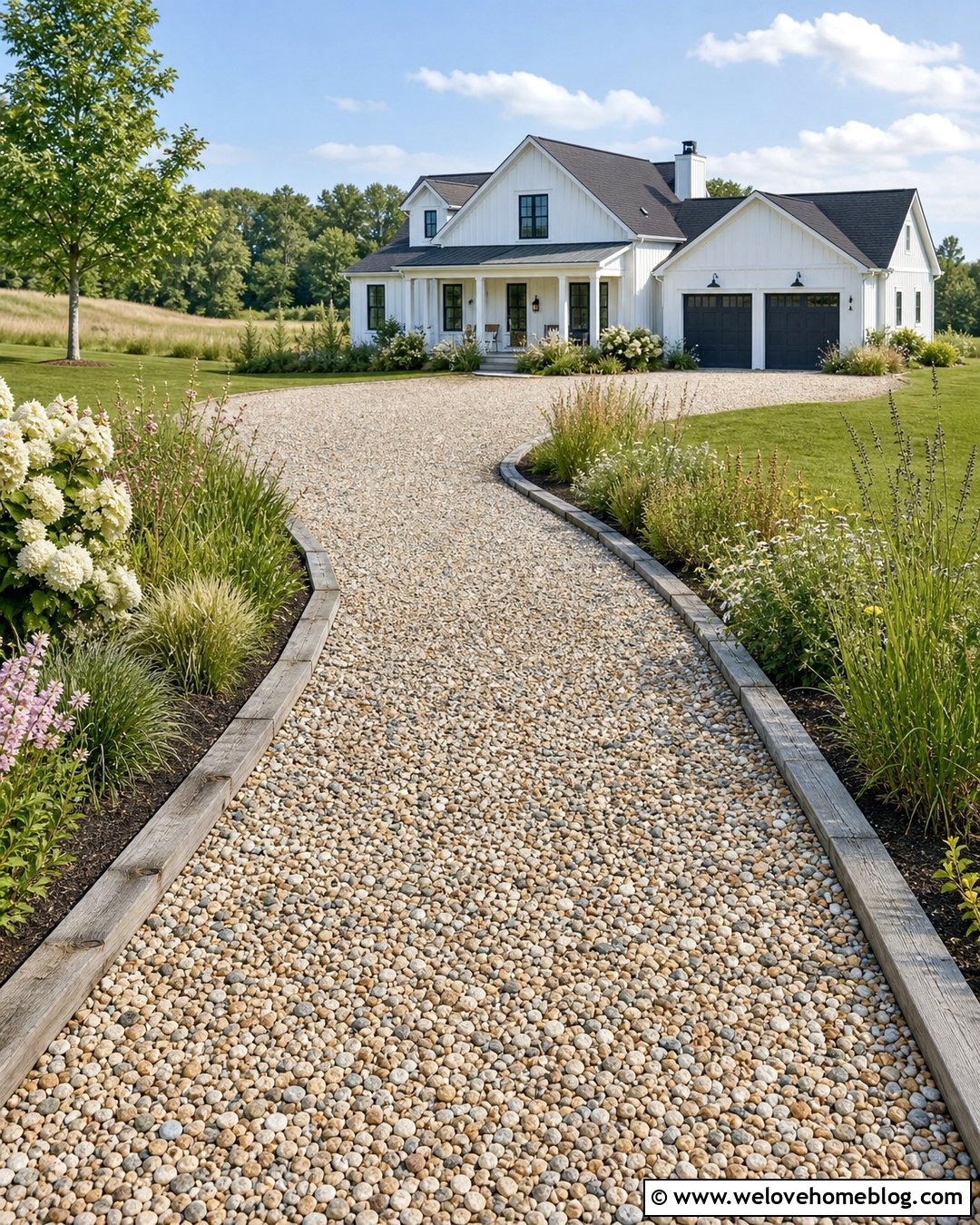
Warm creek rock and timber edging can give a farmhouse driveway a welcoming country appearance. Use mixed tan, cream, rust, and muted gray stones to coordinate with white siding, natural wood details, or a metal roof. Pressure-treated landscape timbers create an affordable border, but they should be securely anchored so vehicle movement cannot push them outward. Keep the driveway straight or add a gentle curve near the house for a relaxed approach. Plant hydrangeas, ornamental grasses, boxwoods, or native meadow flowers beyond the timber edge. A wider rock apron near the garage provides useful turning space without losing the rural character. Because timber eventually weathers, this option works best for homeowners who appreciate a casual finish and are comfortable replacing border sections when necessary.
5. Circular Creek Rock Driveway With A Planted Island
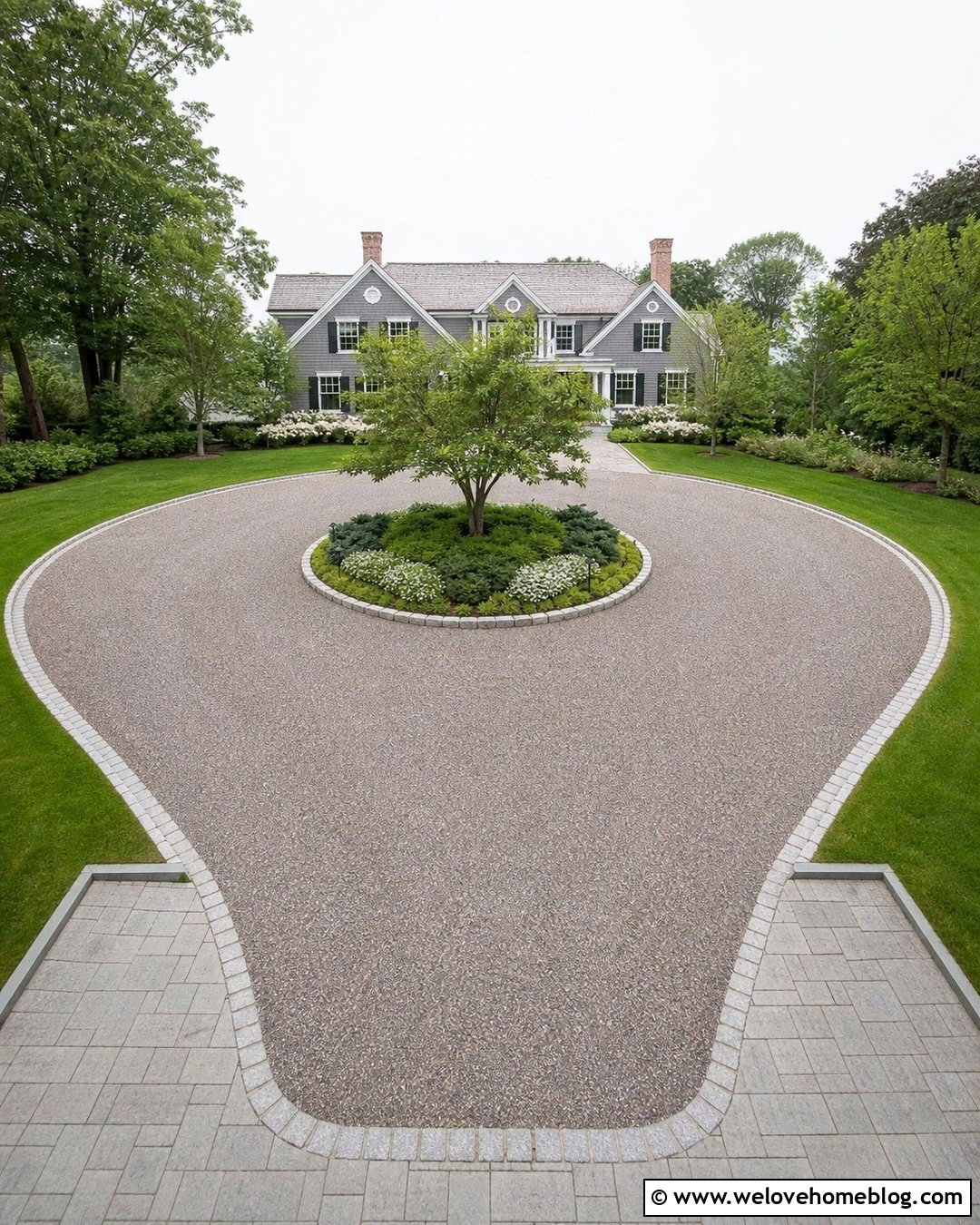
A circular creek rock driveway creates an impressive entrance while allowing vehicles to move through the property without backing into the street. The center island becomes the main landscape feature, so its scale should match the diameter of the driveway. Frame it with stone curbing or large granite blocks that keep creek rock from migrating into the soil. A small ornamental tree, low shrubs, and layered ground cover can provide year-round structure without blocking views across the circle. Use compact, smaller creek rock over a professionally prepared crushed aggregate base to reduce rutting around turns. The entrance and exit should have generous widths and sturdy paved aprons. This complete layout works beautifully with colonial, traditional, country, and estate-style homes on wider front lots.
6. Creek Rock Driveway With Brick Ribbon Borders
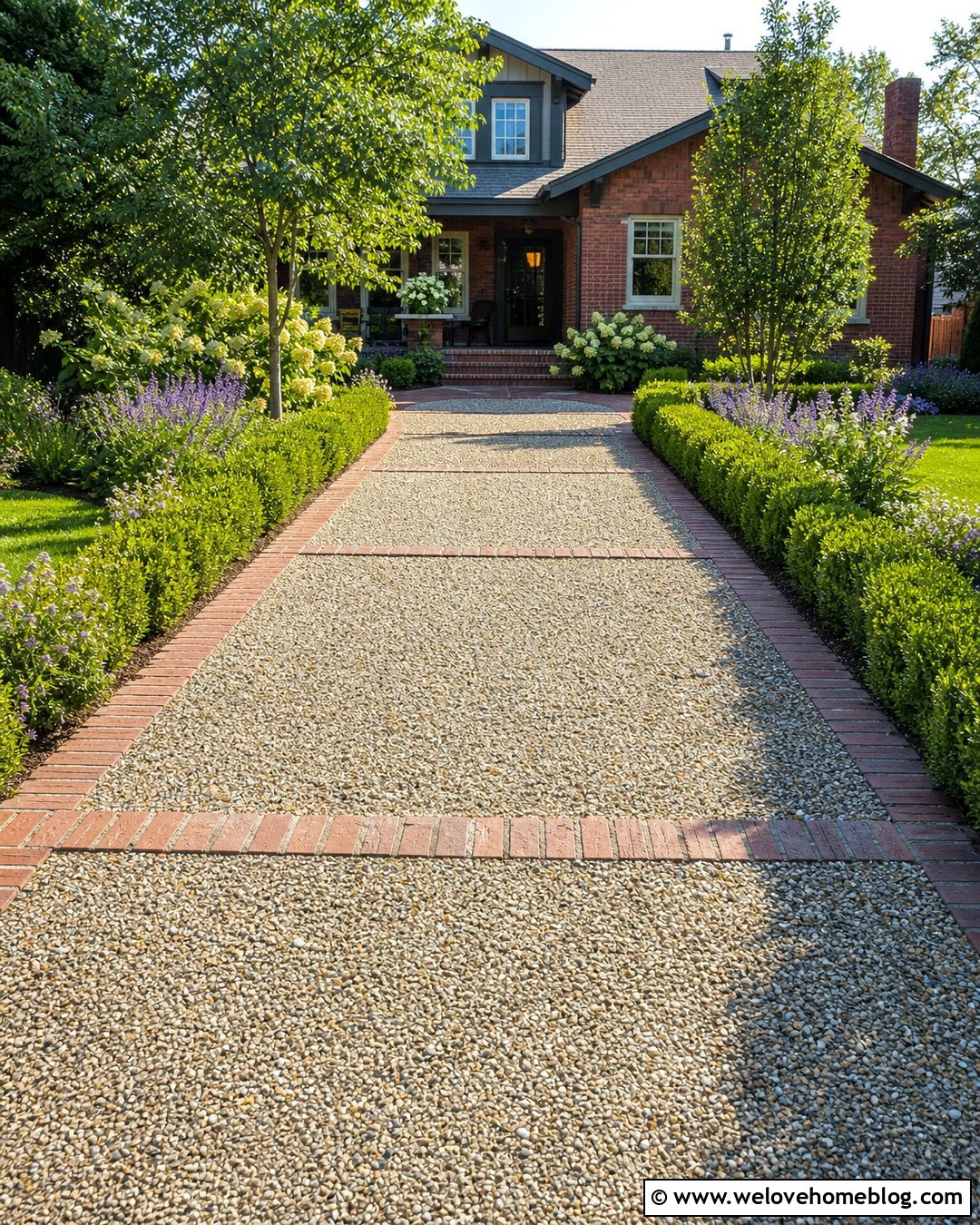
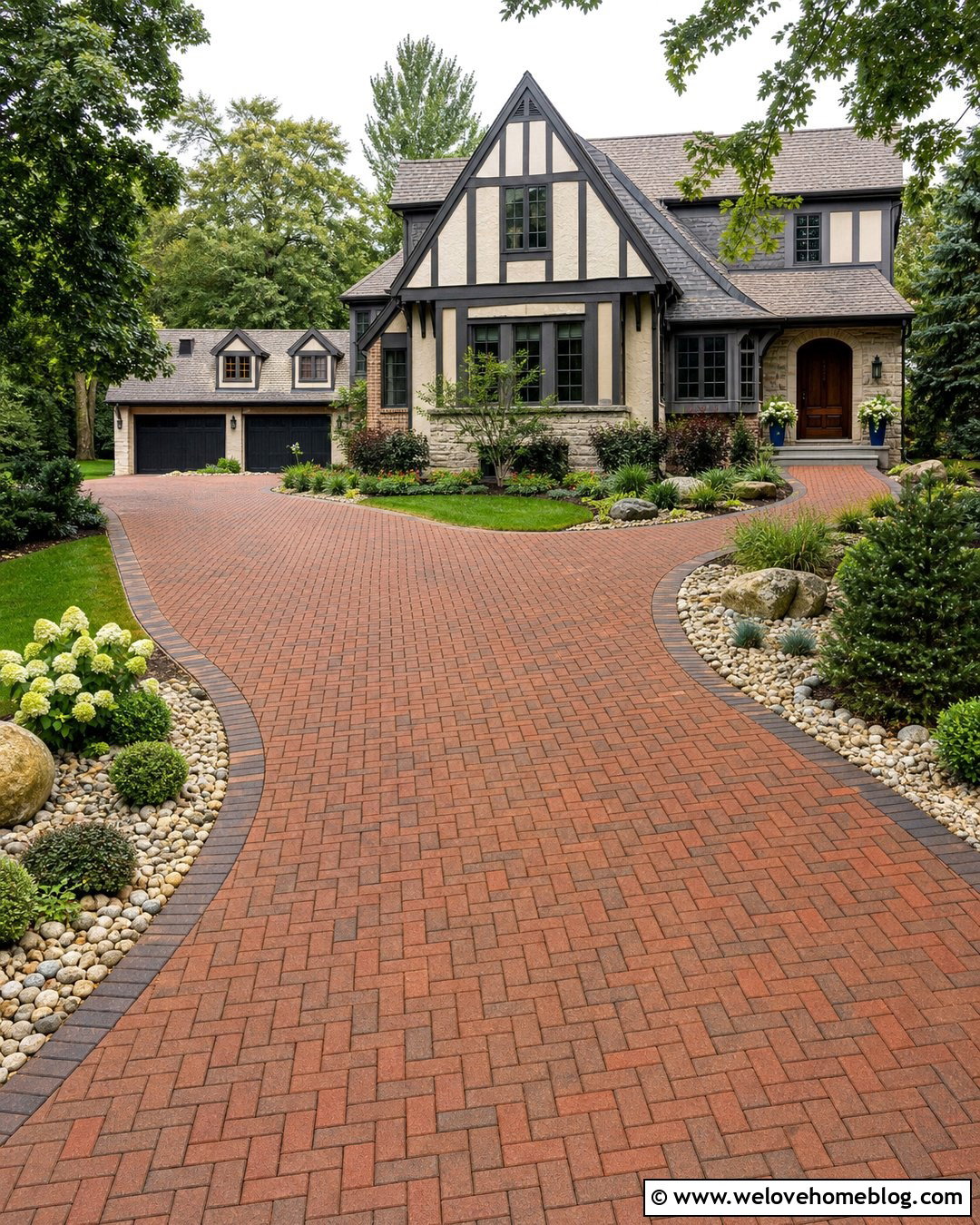
Brick ribbon borders bring rich color and clear definition to a creek rock driveway. Red or weathered clay brick looks especially attractive beside buff, brown, and gray creek stones. Lay the bricks over a stable base in a soldier-course pattern, keeping the border level and securely restrained. A matching brick band across the driveway entrance can create a finished transition from the street, while another band near the garage visually connects the two ends. Surrounding lawns should meet the outer brick edge cleanly, with foundation beds adding boxwoods, salvia, or flowering shrubs. This design fits Craftsman homes, brick ranch houses, and traditional facades. The creek rock keeps the surface informal, while the brick adds enough structure to make the entire front yard appear planned and complete.
7. Creek Rock Driveway With Dry Creek Drainage
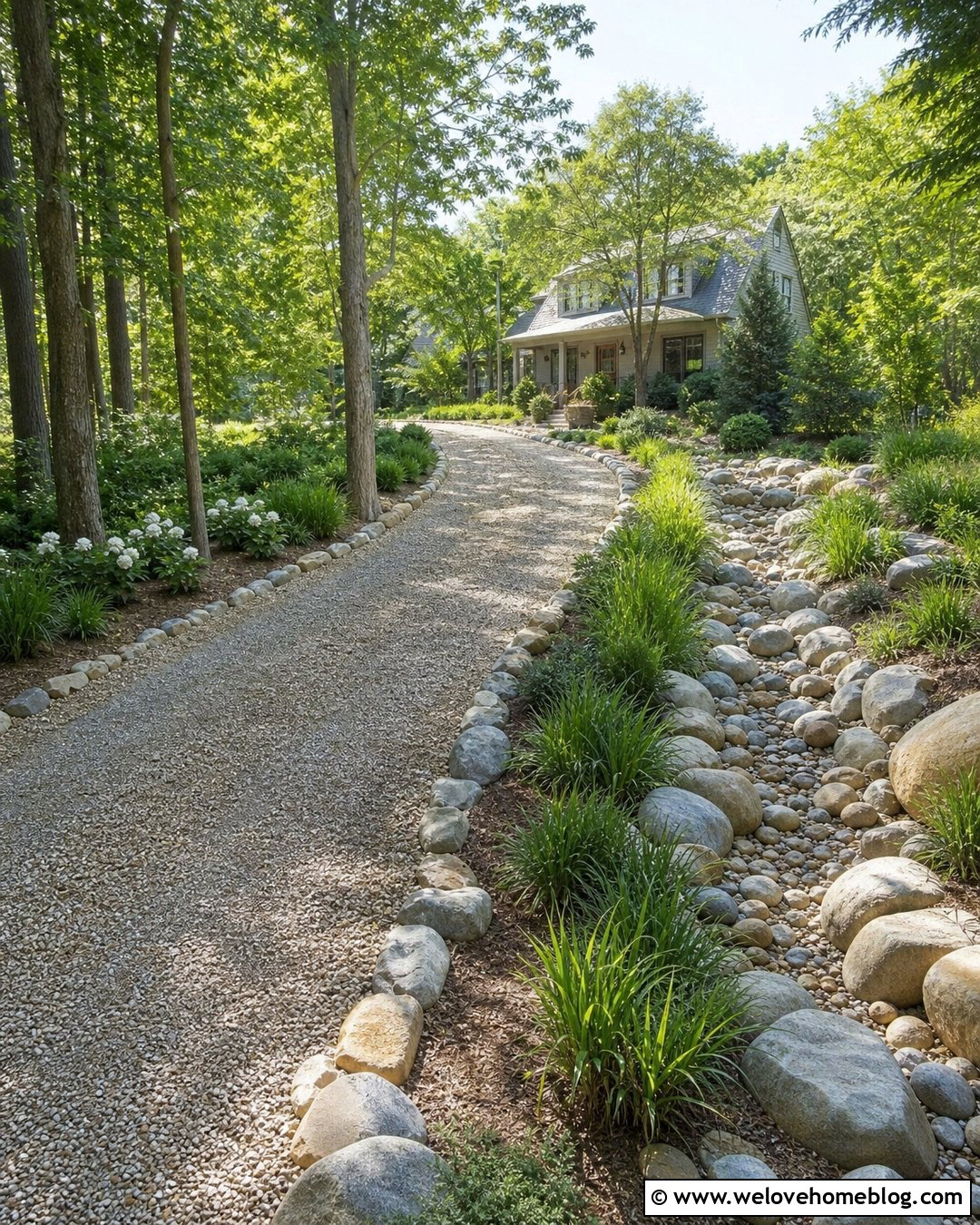
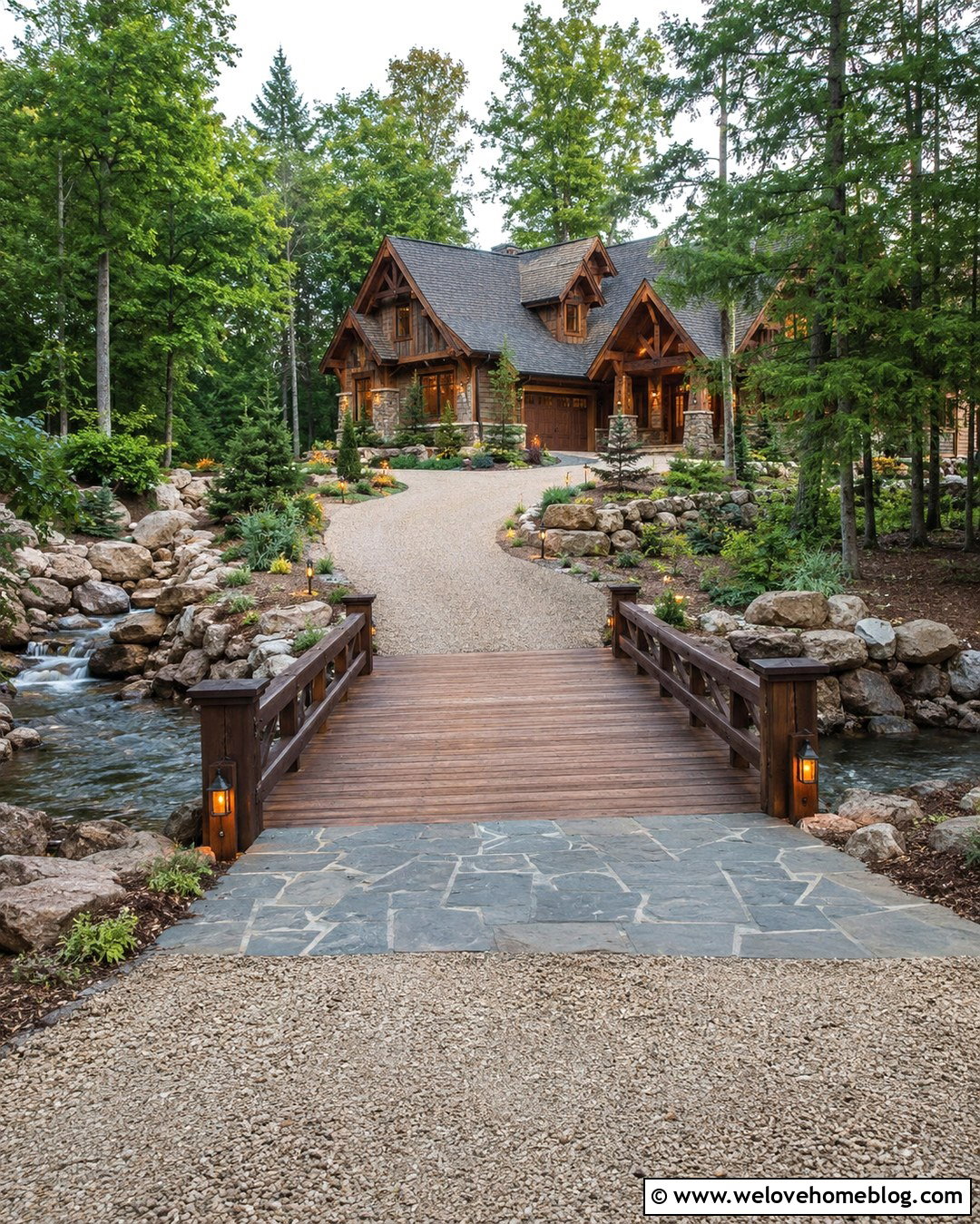
If runoff regularly follows the edge of your driveway, a connected dry creek bed can turn necessary drainage into an attractive landscape feature. Build the driving surface with small creek rock over compacted angular aggregate, then create a separate shallow channel along the lower side. Fill that channel with larger creek cobbles, scattered boulders, and smaller stones that visually blend with the driveway. The channel must follow a safe outlet rather than sending water toward the house, neighboring property, or street without approval. Strong edging should separate the drivable surface from the drainage area. Add moisture-tolerant grasses and native plants along the banks. This complete arrangement looks natural while giving flowing water a defined route, but grading should be evaluated carefully before construction begins.
8. Light Creek Rock Driveway With Dark Paver Edging
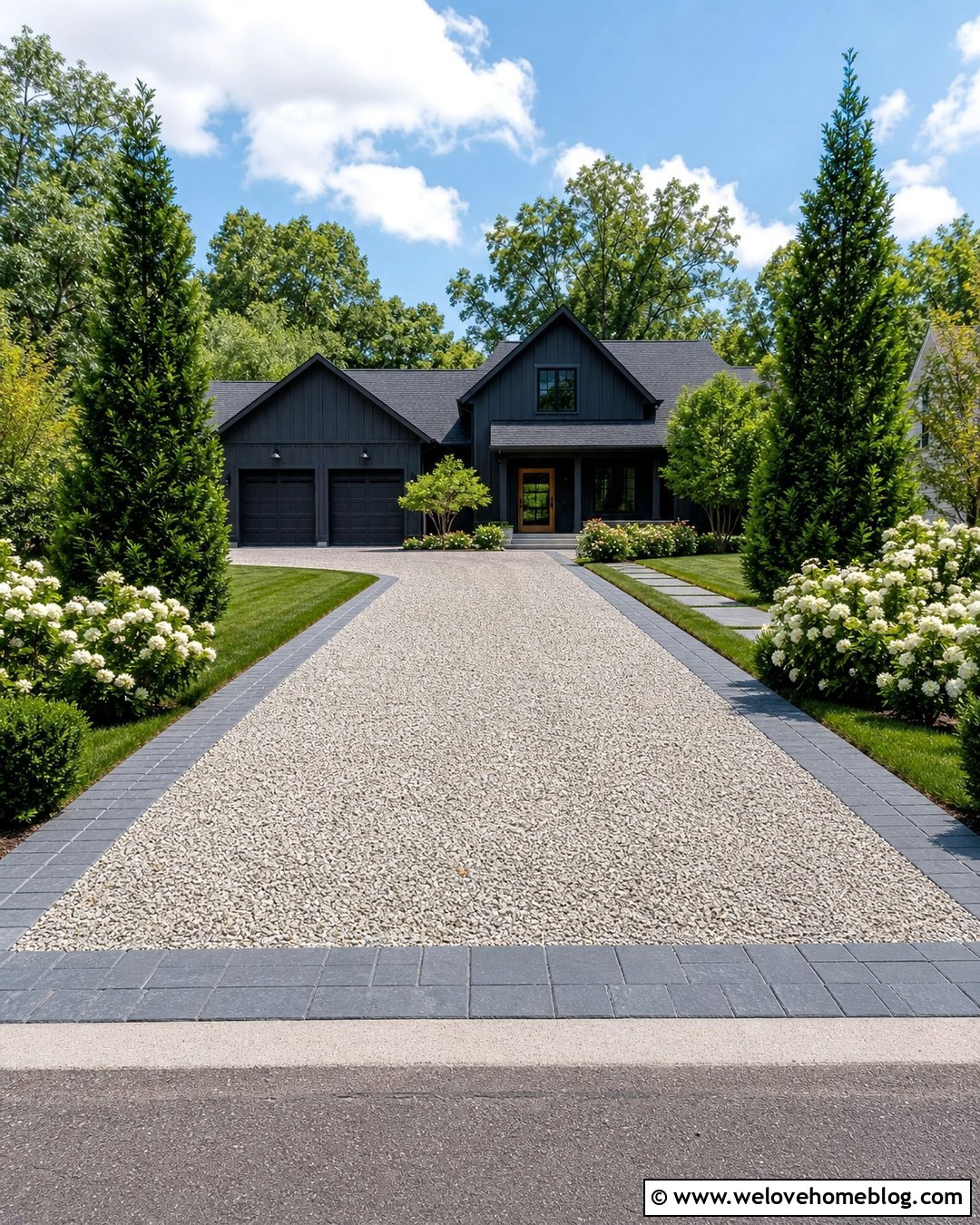
Light cream and pale gray creek rock can brighten a shaded front yard or create striking contrast against a dark home exterior. Define the driveway with charcoal concrete pavers laid in a single or double row. The dark border makes the layout easy to read and keeps the pale stones separated from lawn and planting soil. Choose smaller creek rock rather than oversized cobbles, and spread it in a shallow top layer over a properly compacted crushed-stone foundation. Recessed gravel grids can provide added control in turning and parking zones. Frame the driveway with dark green evergreens, white flowering shrubs, and a simple paved walkway. This high-contrast combination works well with contemporary farmhouses, modern Craftsman homes, and black or deep-gray siding without making the yard feel overly severe.
9. Mixed Creek Rock Driveway With Native Landscaping
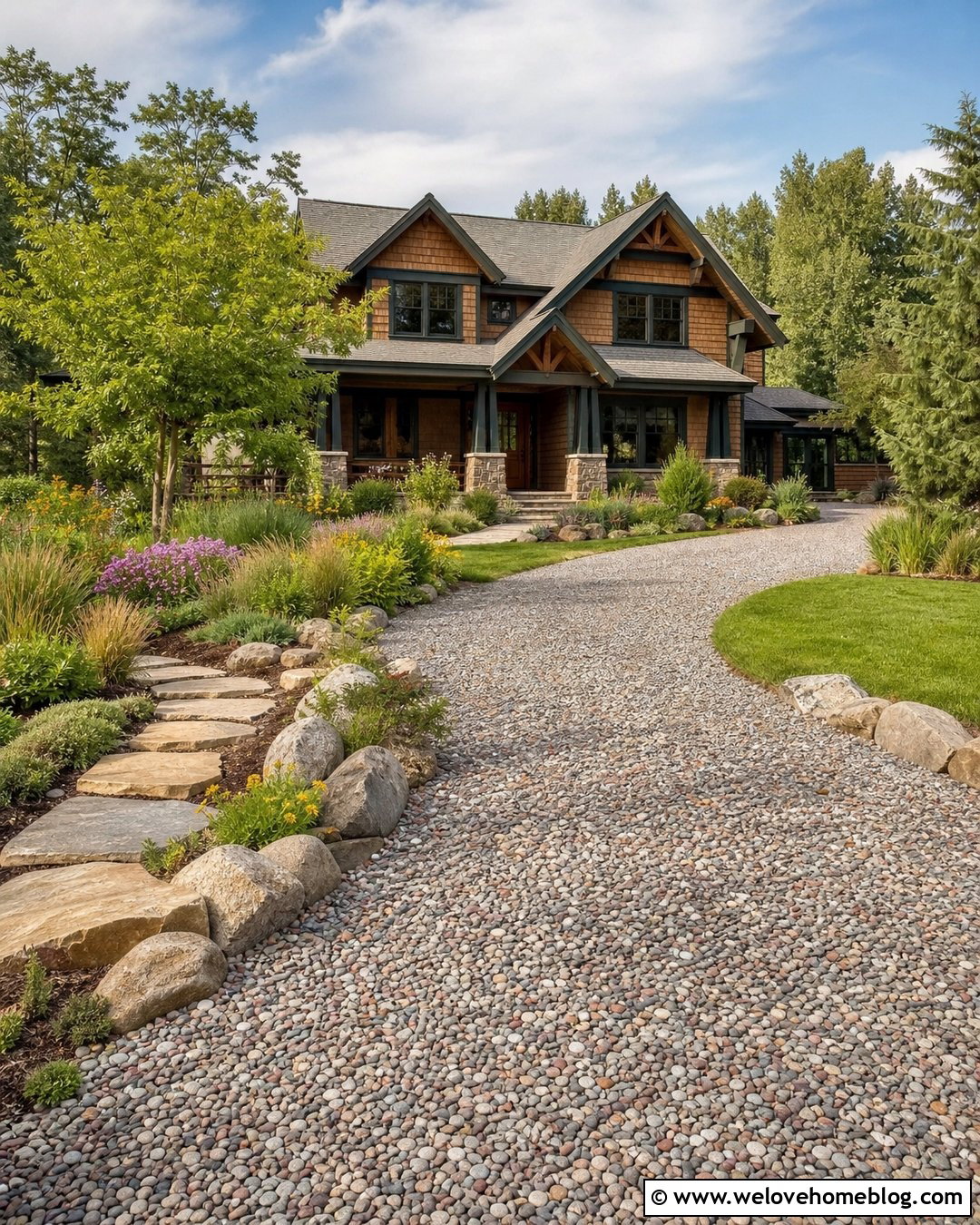
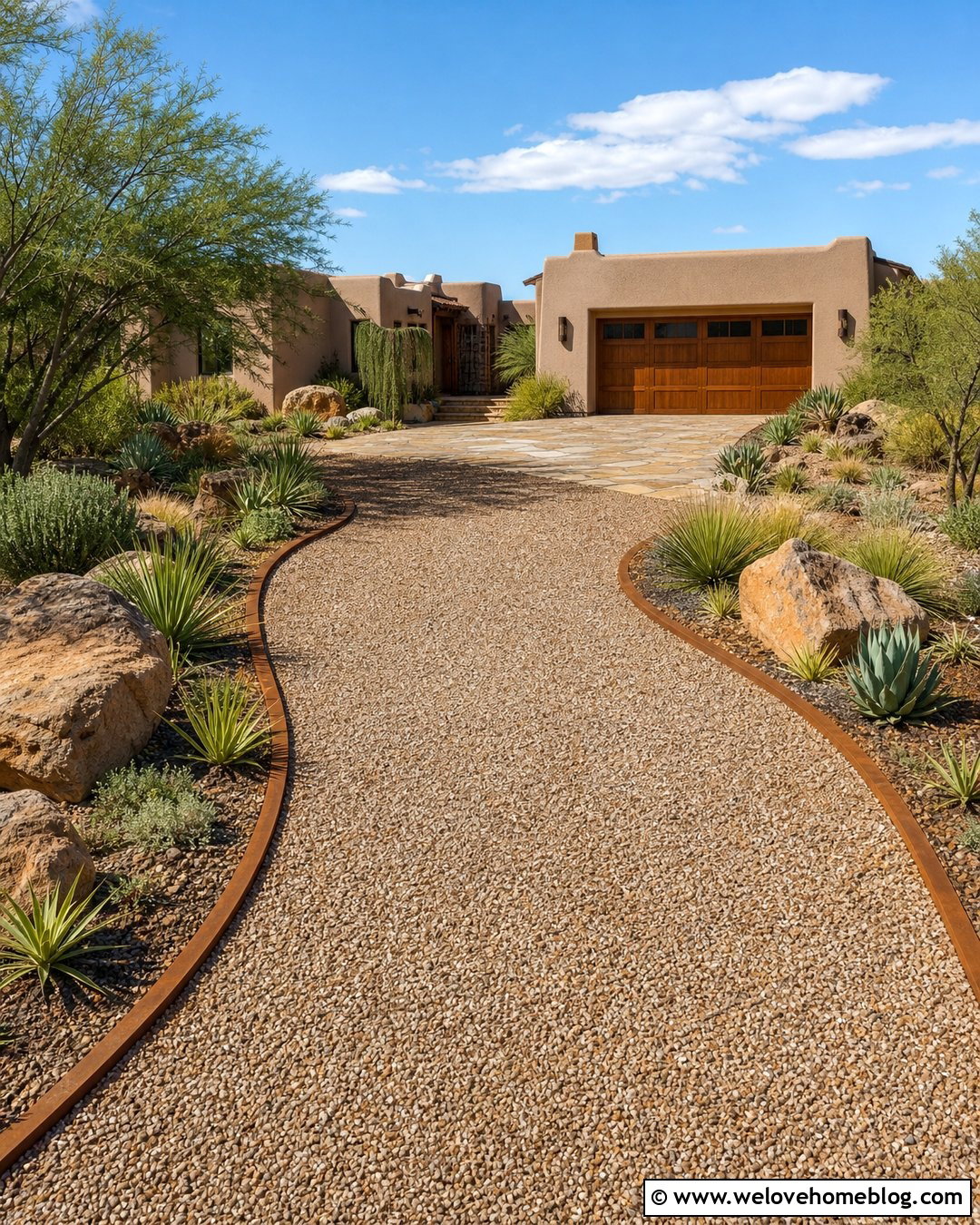
Mixed creek rock naturally coordinates with native landscaping because its varied colors resemble a seasonal streambed. Select a blend containing gray, brown, cream, and muted red stones, then shape the driveway with relaxed curves. Use local fieldstone or concealed steel edging to contain the surface without making the design look overly formal. Plant native grasses, flowering perennials, and compact shrubs in broad repeating groups rather than scattering many unrelated varieties. Leave enough clearance beside the driving lane to prevent mature plants from brushing vehicles. A flagstone walkway can cross or follow the driveway while maintaining the natural theme. Native plant choices should match local soil, sunlight, and rainfall. The result is a cohesive, regionally appropriate entrance that can reduce reliance on expansive turf and frequent ornamental replanting.
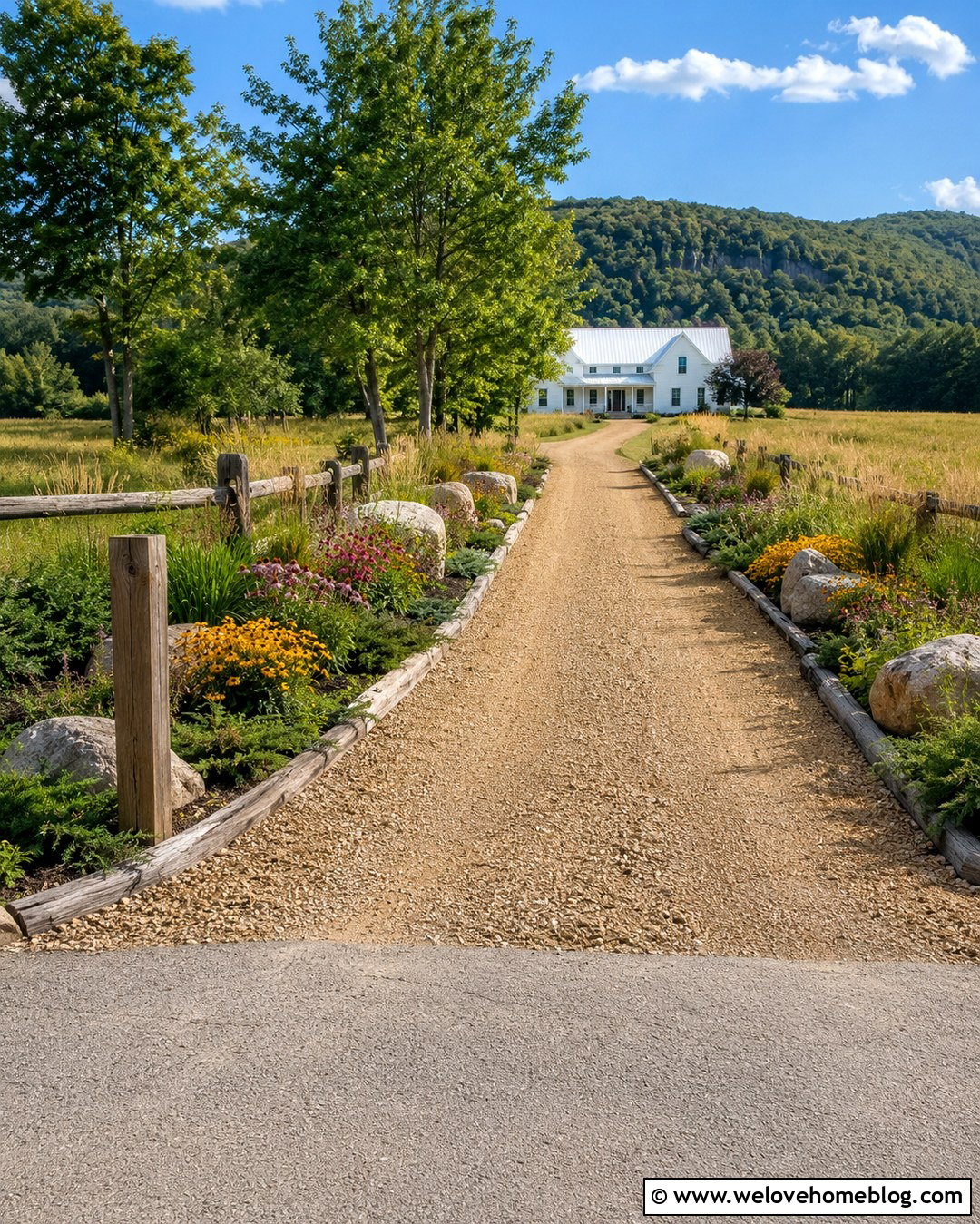
10. Narrow Creek Rock Driveway For A Small Front Yard
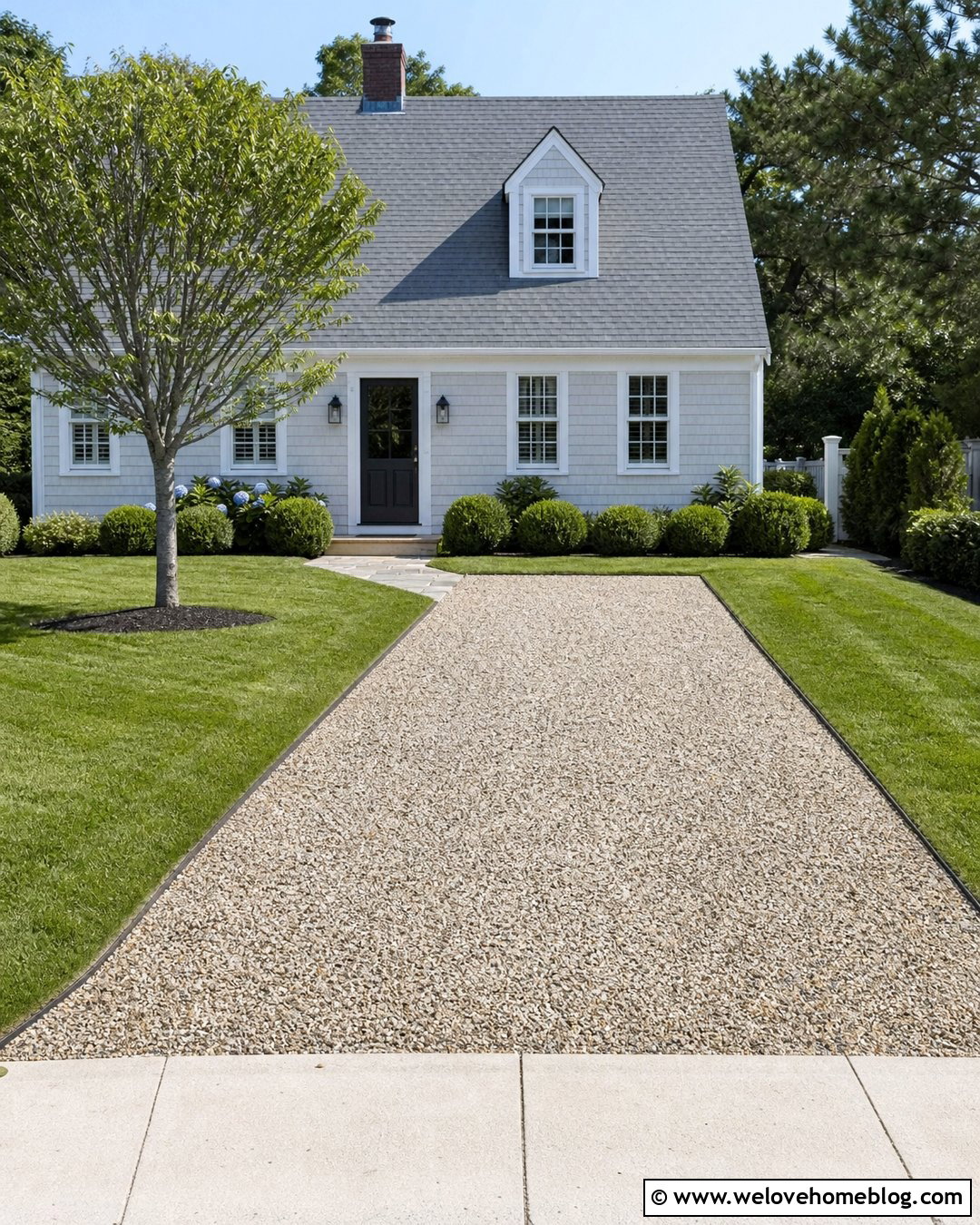
A small front yard benefits from a driveway design that feels light and uncluttered. Use fine, evenly graded creek rock in soft gray or tan, contained by a narrow metal or stone edge. A straight layout generally preserves the most planting space, while a slightly flared entrance makes daily access more comfortable. Build the surface only as wide as local requirements and practical vehicle clearance allow. A compacted angular gravel foundation is particularly important because tires will repeatedly follow the same narrow tracks. Keep landscaping simple with one slender ornamental tree, low shrubs, and a clear walkway to the front door. Matching stone at the porch or path can connect the materials. This streamlined approach gives a modest property natural texture without overwhelming the house or consuming the entire lawn.
11. Long Creek Rock Driveway With Trees
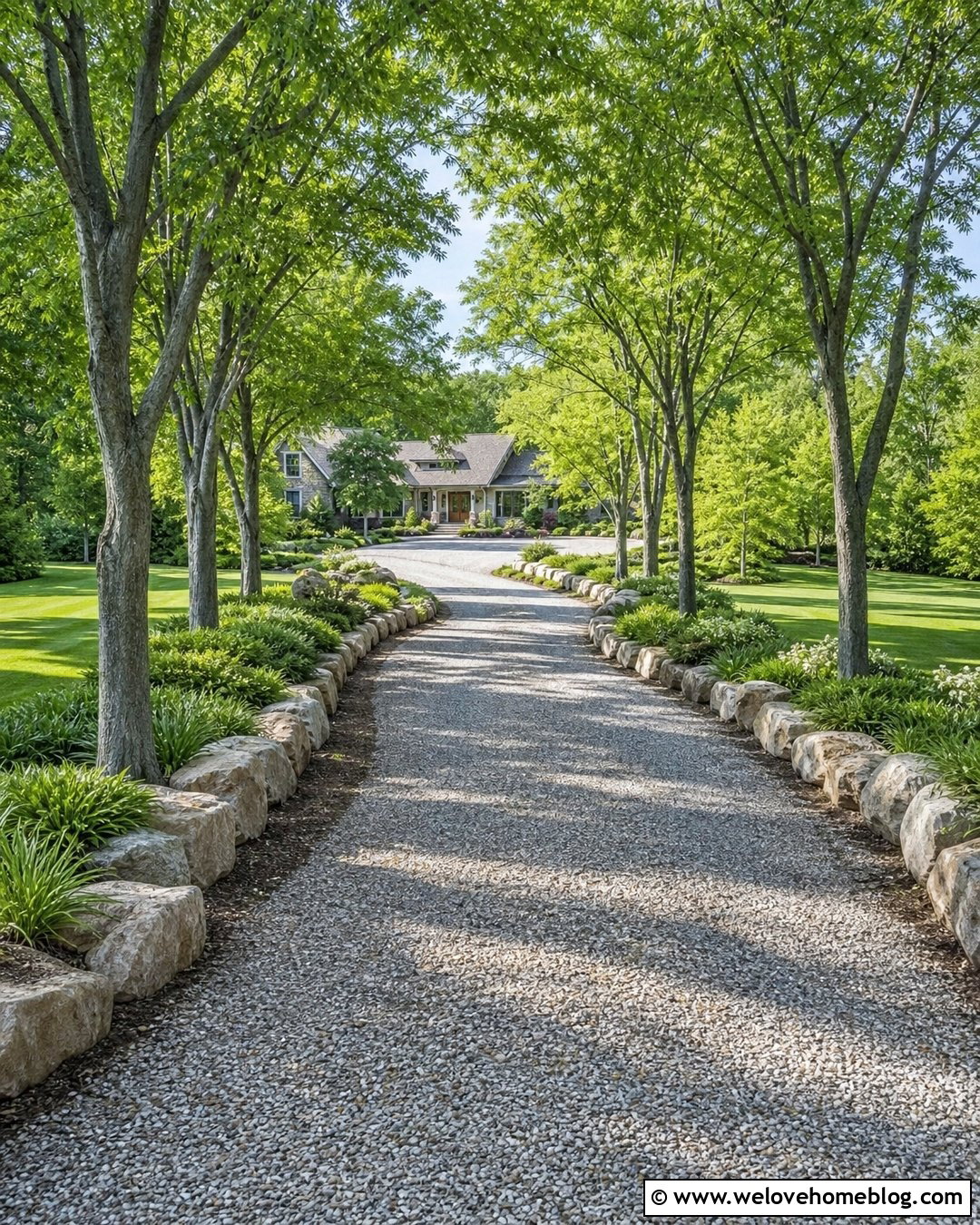
A long creek rock driveway becomes more inviting when trees and planting beds guide the eye toward the house. Use a gently curved or straight surface of small gray-brown creek rock with substantial stone edging. Space trees well beyond the driving clearance zone and account for their mature canopy, roots, and visibility needs. Instead of creating a rigid row, stagger the trees slightly for a more relaxed country appearance. Low grasses, ground covers, or mown lawn can fill the areas beneath them. Consider widening the driveway near the house to create a parking court or turnaround. The long surface requires a deeply compacted base, proper crowning, and drainage along its full length. Repeating plants and consistent borders help the extended approach feel unified rather than empty or unfinished.
12. Sloped Creek Rock Driveway With Stone Retaining Borders
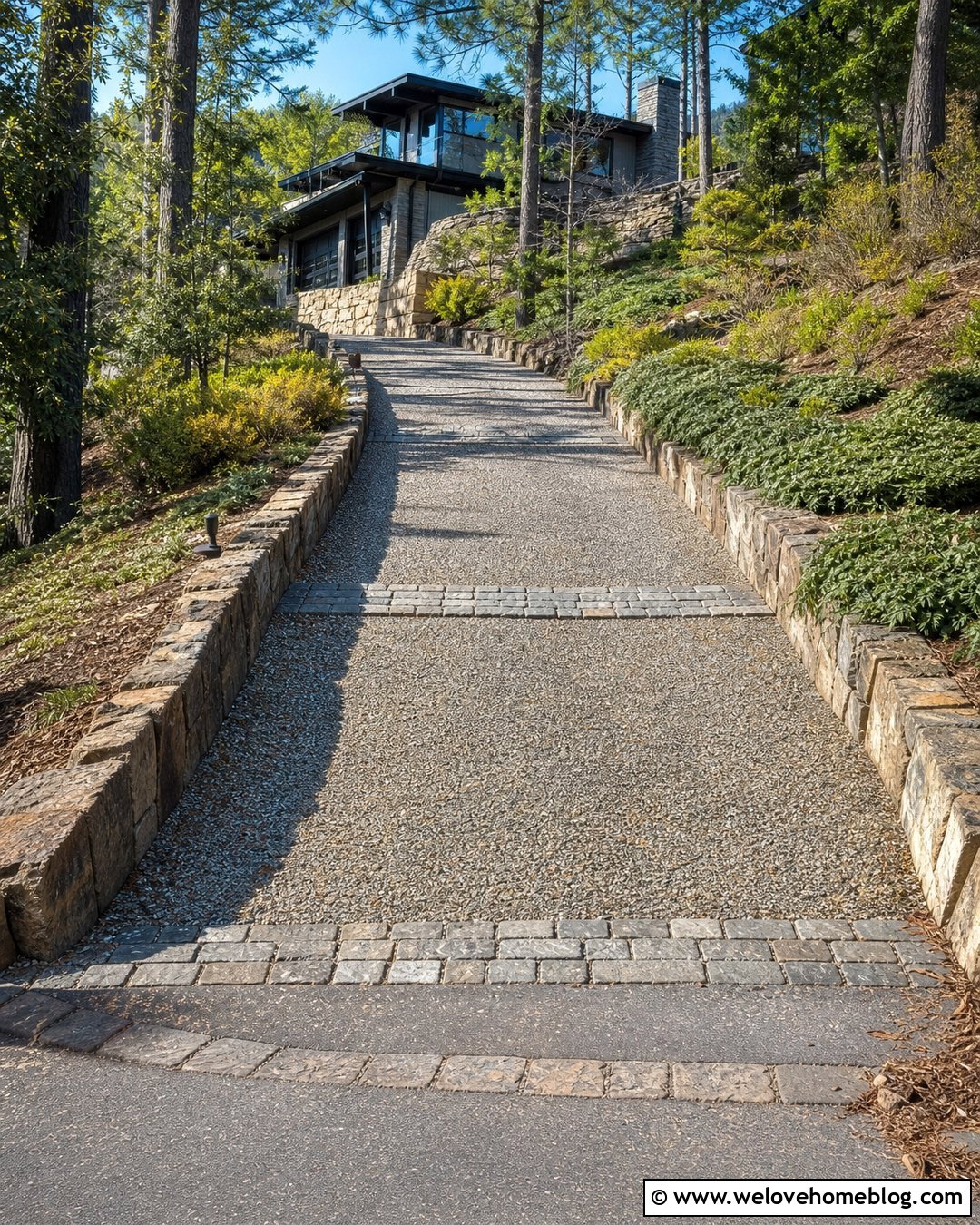
Sloped driveways require more stabilization than flat creek rock surfaces because rounded stones can gradually travel downhill. Begin with professional grading, a strong compacted aggregate base, and durable cellular confinement grids where appropriate. Use smaller creek rock that settles closely together rather than large smooth cobbles. Stone retaining borders can support raised planting beds along the high side and clearly separate drainage channels on the low side. Install paved or textured transition bands at the steepest points to reduce material movement. Deep-rooted shrubs and ground covers can soften the retaining stone while helping cover exposed soil. The driveway should direct runoff safely away from foundations and prevent sediment from entering public drains. For steep properties, consult a qualified contractor before choosing loose creek rock as the primary surface.
13. Creek Rock Driveway For A Ranch House
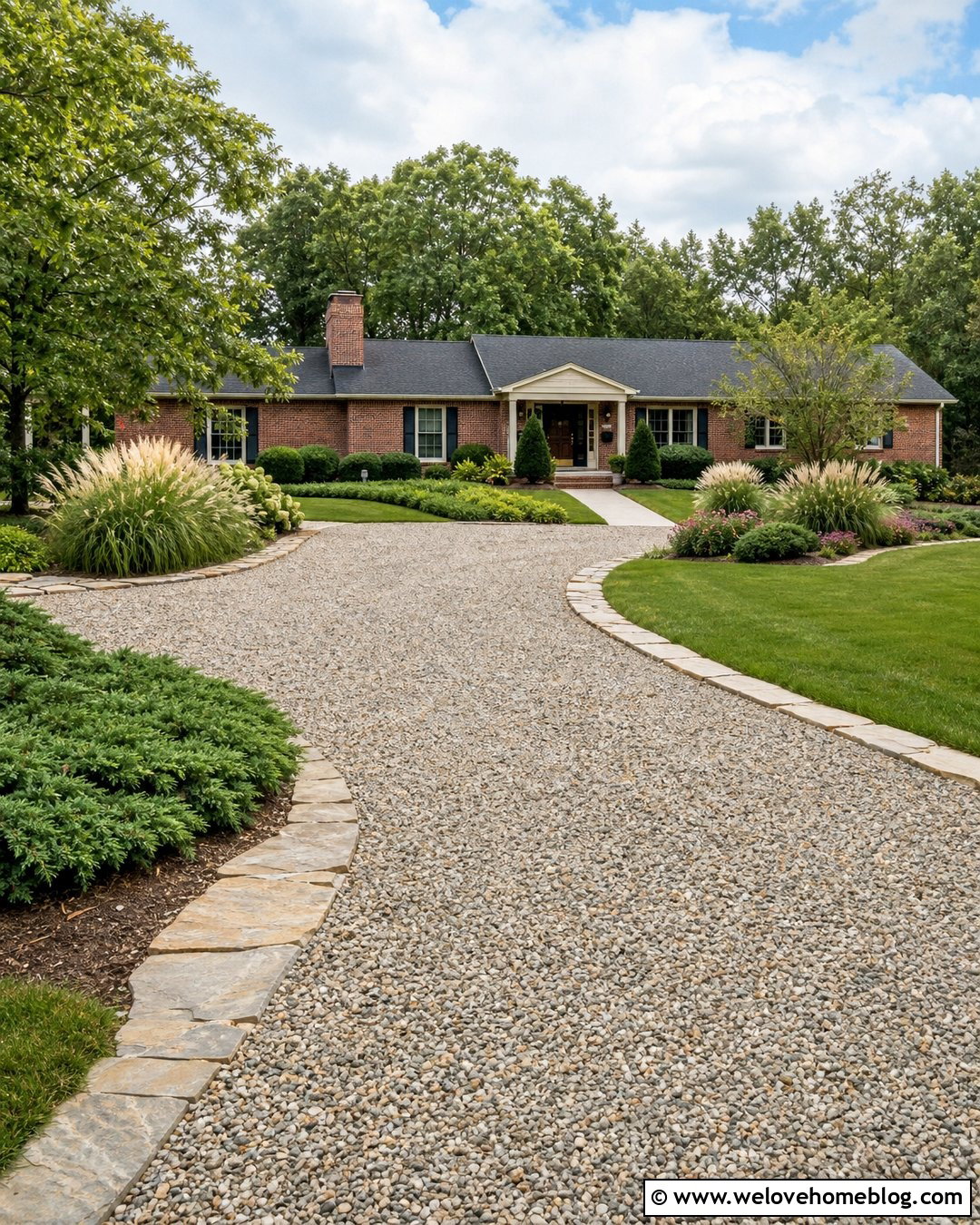
The broad, low profile of a ranch house pairs naturally with a wide creek rock driveway and simple horizontal landscaping. Choose warm gray and tan creek stones that complement brick, stone veneer, or painted siding. A subtle curved approach can soften the home’s long facade, while low concrete curbs or flat fieldstone borders keep the surface contained. Extend the driveway into a wider parking pad near the garage, but define its edges so it does not appear like an unplanned gravel area. Use broad sweeps of ornamental grass, spreading juniper, and low flowering shrubs rather than tall plants that hide windows. A straight walkway from the parking area to the entrance improves function. This complete design feels relaxed, practical, and appropriately scaled for a classic single-story suburban home.
14. Cottage Creek Rock Driveway With Flowering Borders
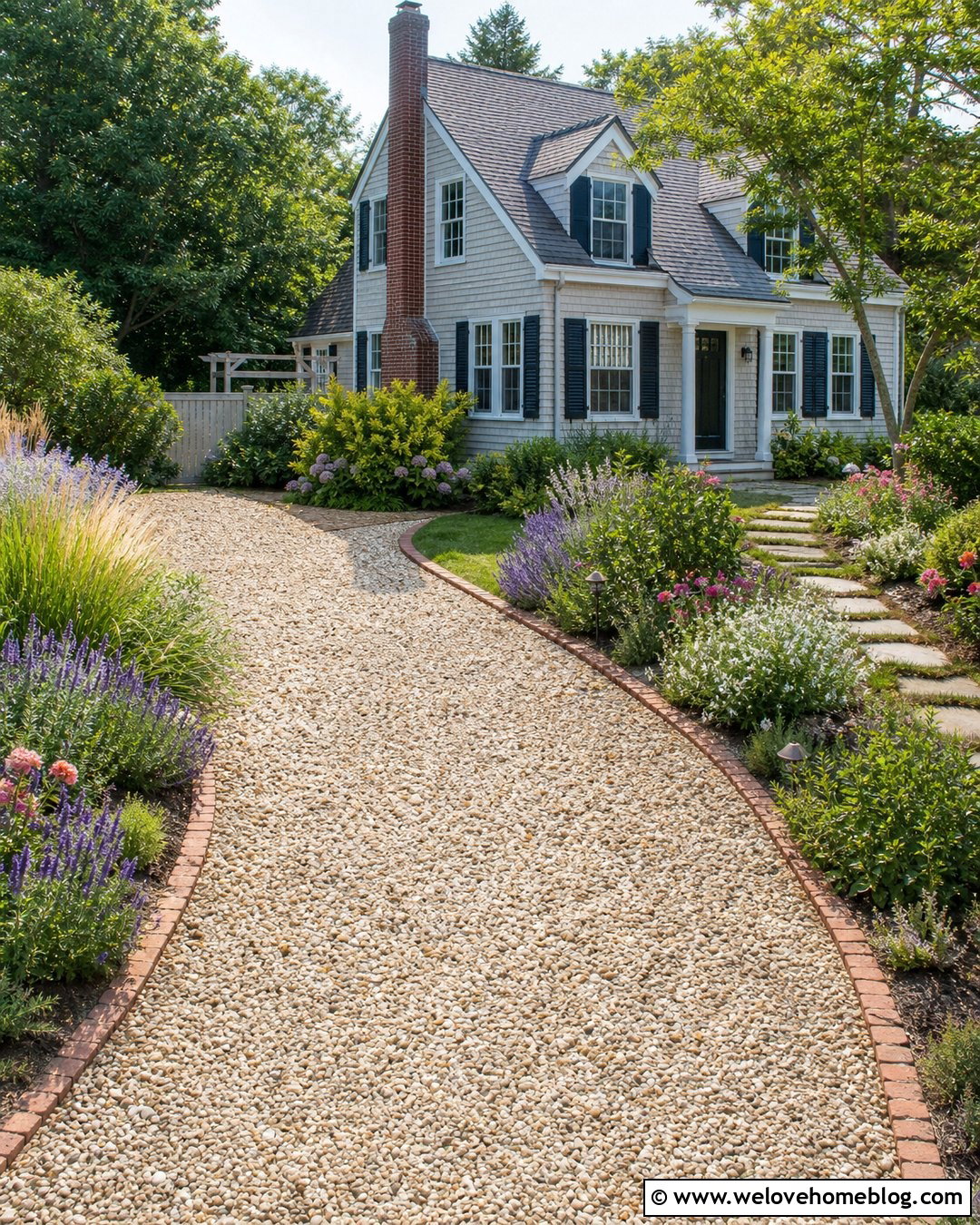
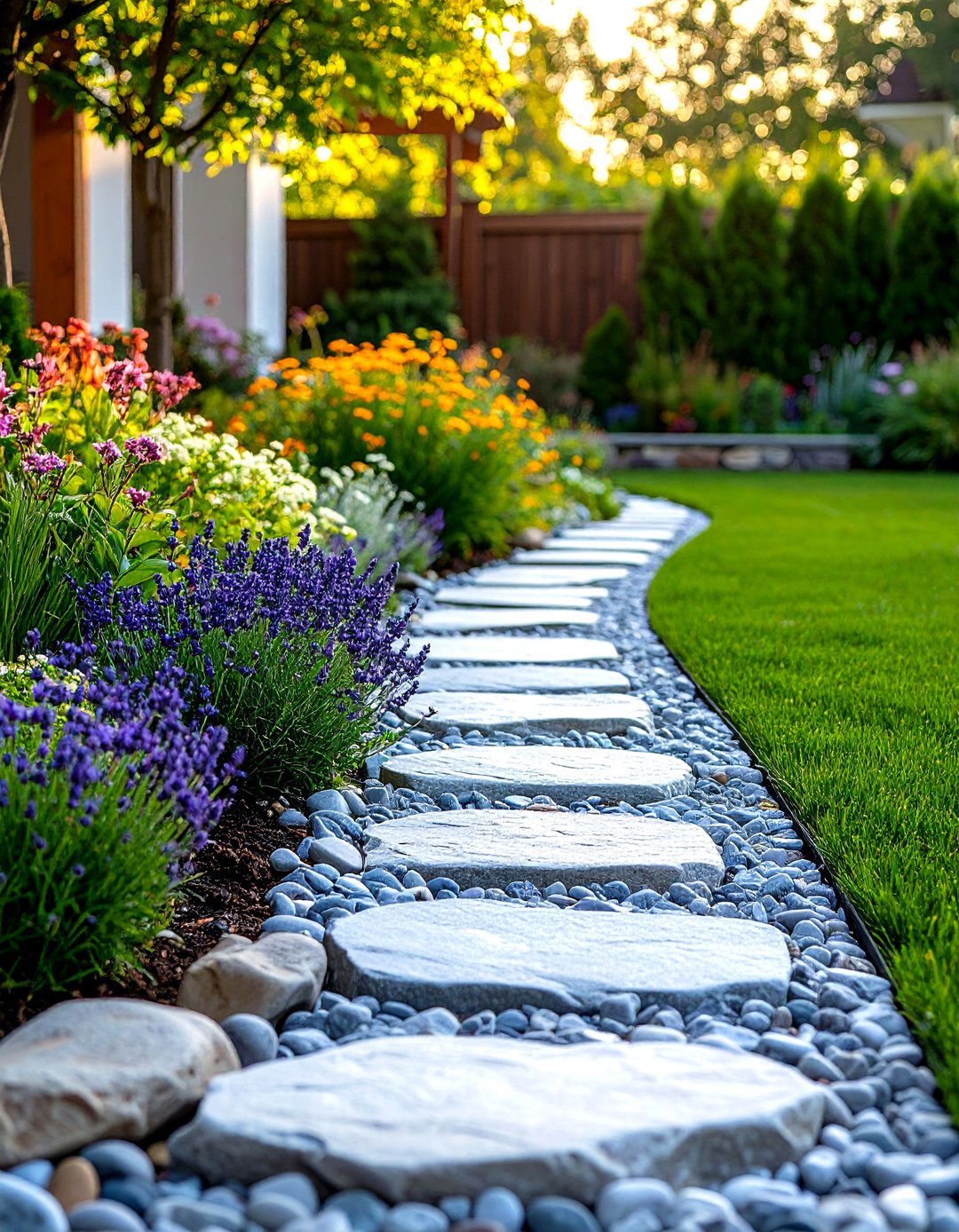
A compact creek rock driveway surrounded by flowering beds can create an inviting cottage entrance without looking chaotic. Use smooth stones in warm cream, honey, and light gray tones, bordered by reclaimed brick or irregular natural stone. Shape the driveway with a soft curve toward the house and widen it slightly near the garage or parking area. Plant repeated groups of lavender, salvia, catmint, compact roses, and ornamental grasses, choosing varieties suited to local conditions. Keep taller plants farther from the driveway so they do not reduce visibility or spill across the driving space. A stepping-stone path can connect the driveway to the porch through the garden. The combination of textured rock, informal edging, and layered flowers complements cottages, Cape Cod houses, and small Craftsman homes.
15. Creek Rock Driveway With Desert Landscaping
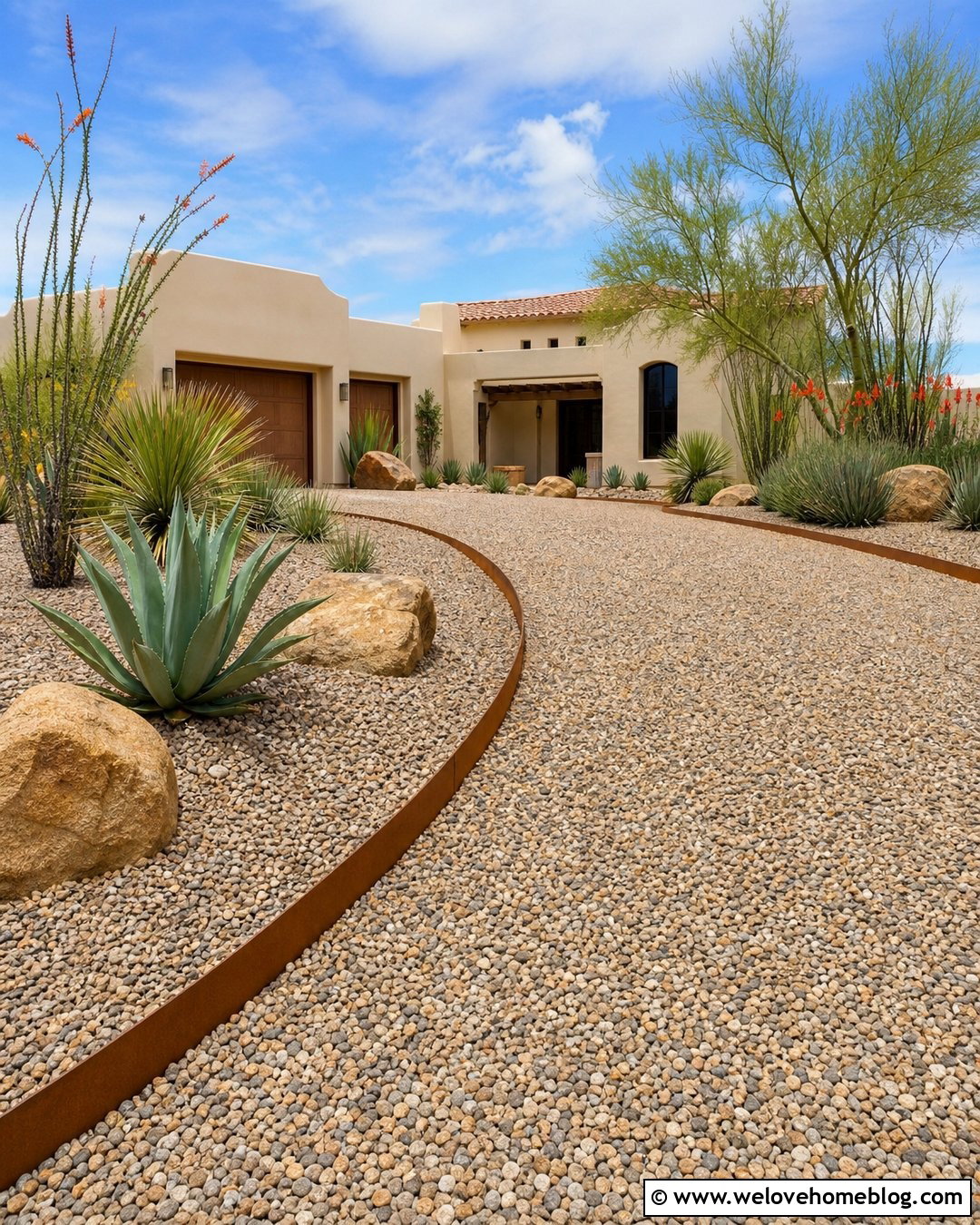
Creek rock fits naturally into a desert landscape when it is combined with drought-adapted planting and clear geometric boundaries. Choose warm beige, rust, and charcoal creek stones for a gently curved driveway leading to a stucco or Southwestern-style house. Corten steel, concrete curbing, or large regional stone can provide dependable containment. In the surrounding beds, repeat sculptural plants such as agave, yucca, desert spoon, and upright grasses, leaving open rock-covered areas between groups. Keep sharp or spiny plants safely away from vehicle doors, sidewalks, and sightlines. A few accent boulders can visually connect the driveway surface to the landscape. Although the design appears dry and simple, careful grading remains essential because desert storms can produce fast runoff that moves loose material and damages poorly planned edges.
16. Creek Rock Driveway With Woodland Landscaping
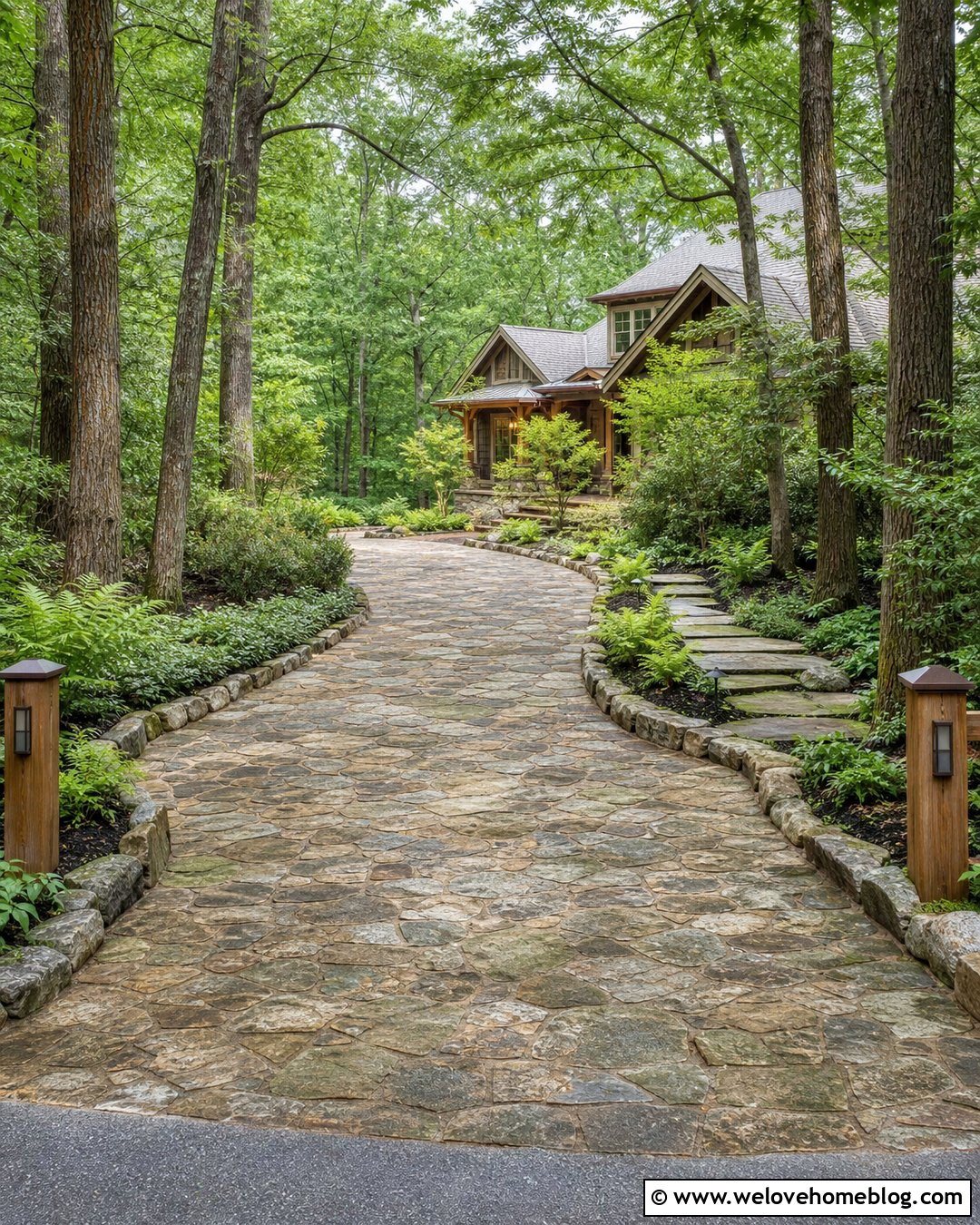
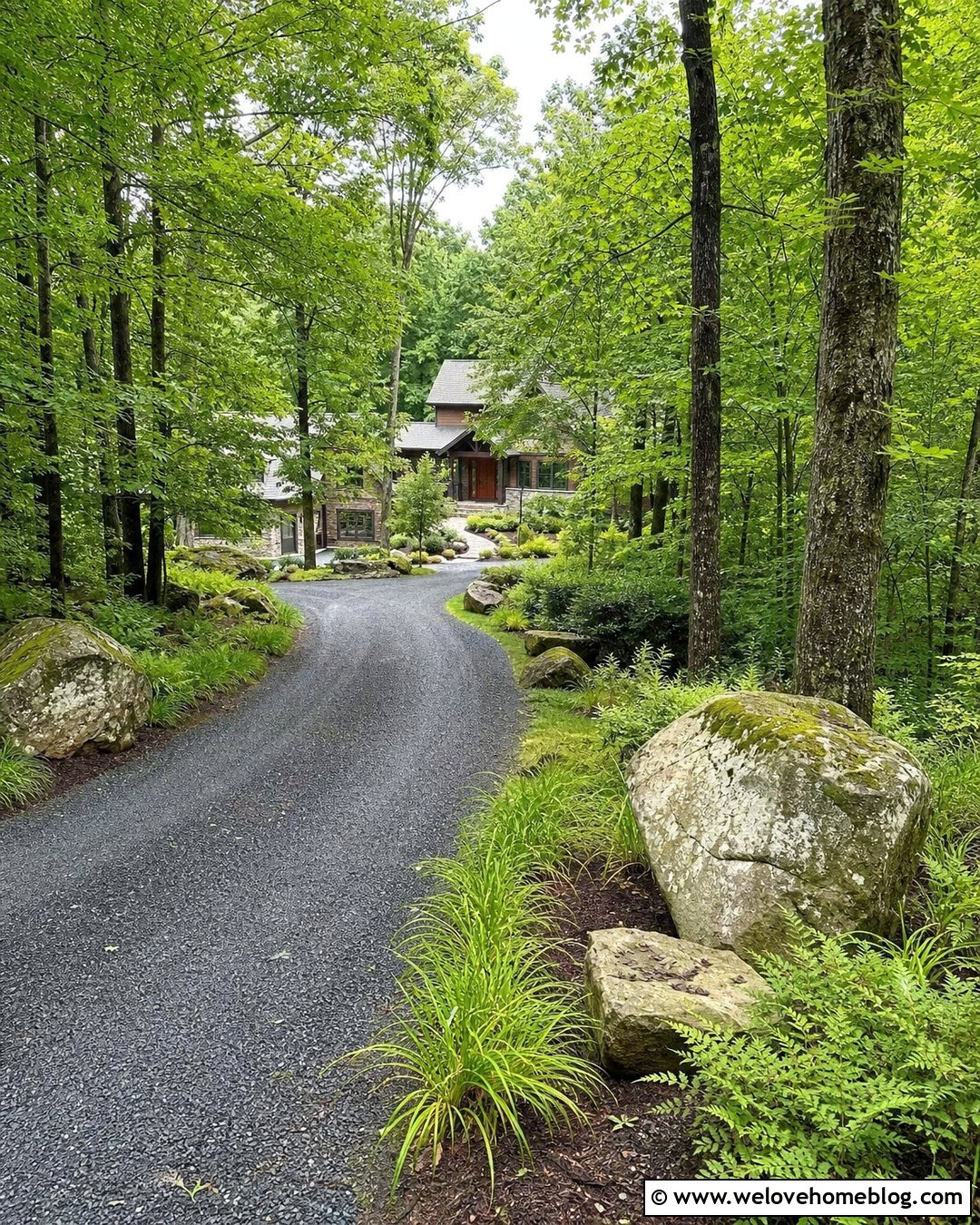
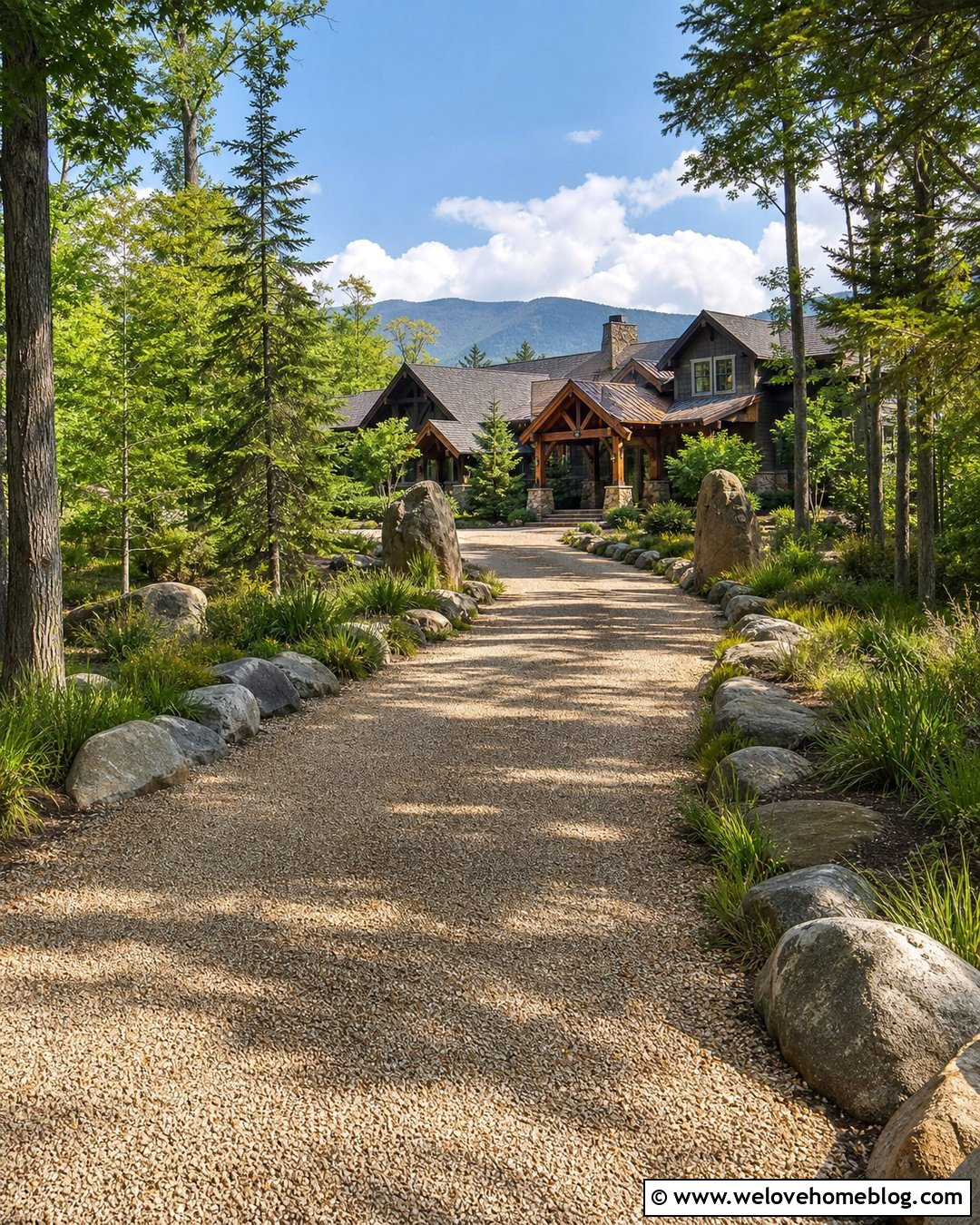
In a wooded setting, a creek rock driveway can appear as though it has always followed the natural contours of the property. Use mixed brown, mossy gray, and muted tan stones over a stable crushed-rock base. A gradual curve between mature trees creates a relaxed approach, but construction should avoid unnecessary root damage. Border the driveway with irregular fieldstone, ferns, shade-tolerant ground covers, and clusters of native woodland shrubs. Keep plants low near intersections and bends to maintain visibility. Fallen leaves will collect between rounded stones, so plan for periodic blowing or gentle raking. A simple flagstone walkway and low wooden entrance posts can reinforce the rustic character. This design suits cabins, Craftsman homes, and country houses surrounded by established trees and naturally layered vegetation.
17. Creek Rock Driveway With Coastal Landscaping
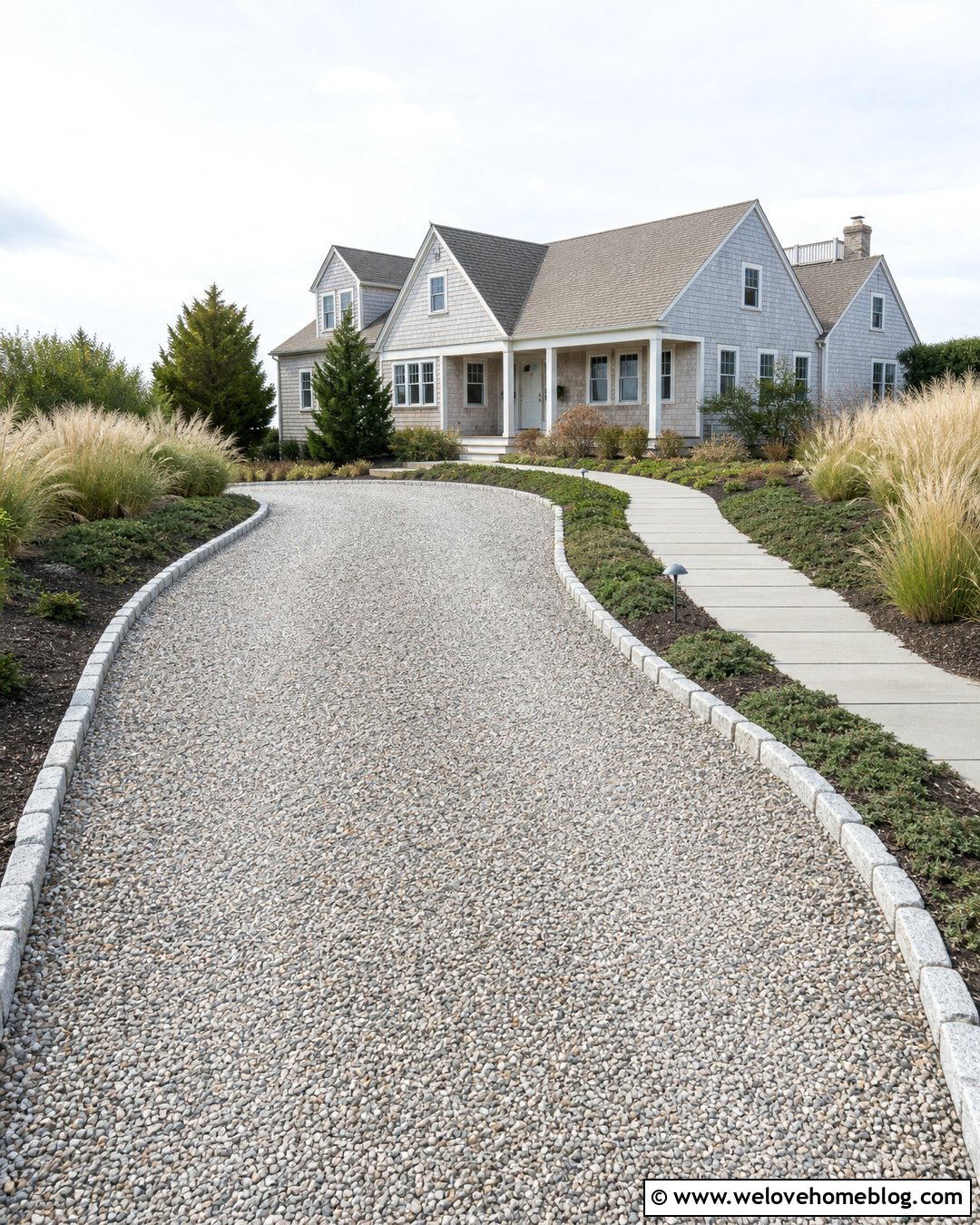
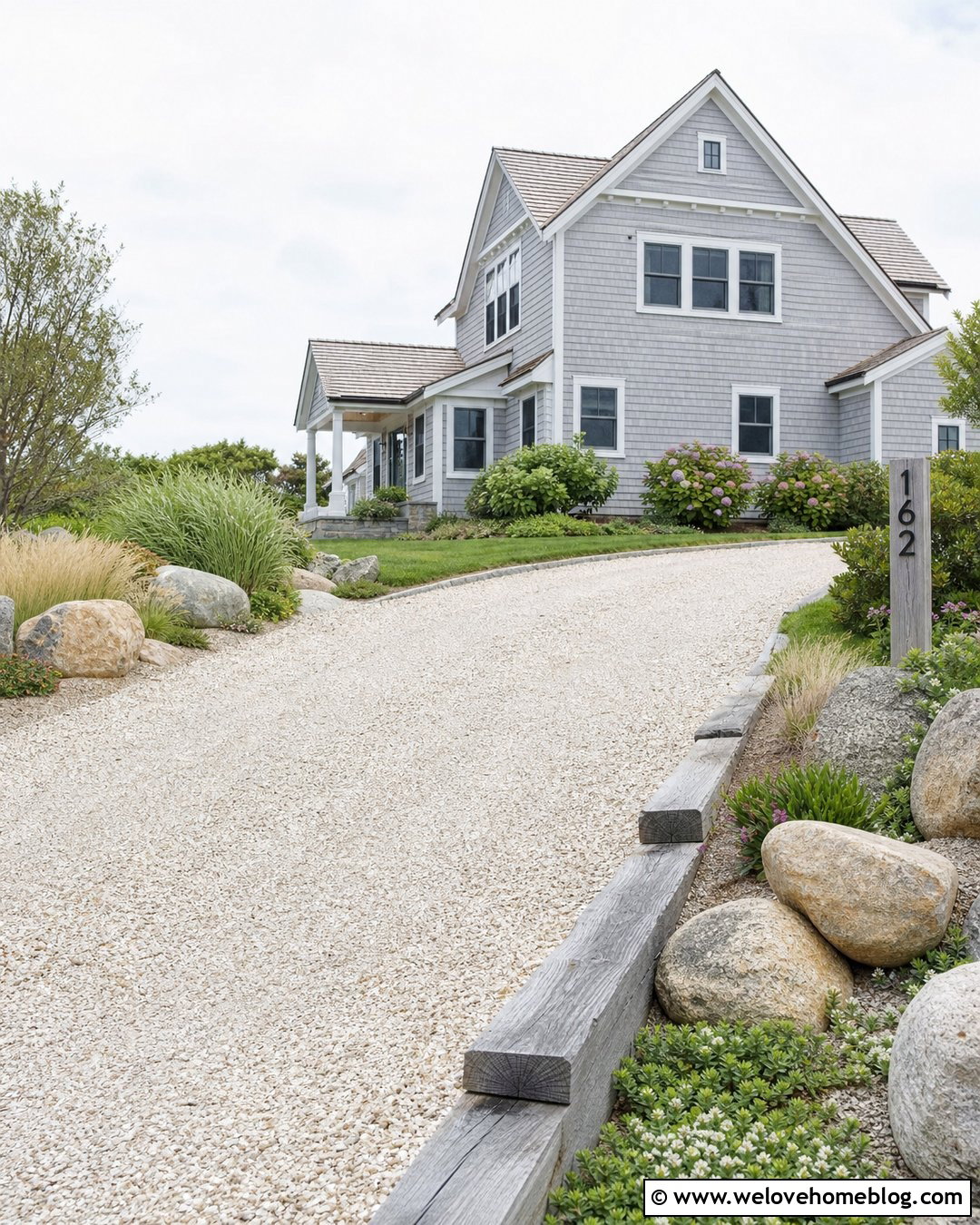
Soft gray, white, and sand-colored creek rock can support a breezy coastal look without relying on decorative themes. Create a straight or lightly curved driveway with weathered granite setts, pale concrete curbs, or durable metal edging. Surround it with salt-tolerant grasses, compact evergreen shrubs, and broad areas of simple ground cover suited to the local climate. The driveway should have a compacted angular base and well-defined boundaries because lightweight loose material can migrate during heavy rain or strong weather. Add a boardwalk-inspired path made from pale concrete pavers rather than untreated wood in constantly damp areas. The restrained colors work well with shingle, Cape Cod, and light-painted coastal homes. Keeping the planting loose but repeated gives the property movement while preserving a neat, functional vehicle approach.
18. Creek Rock Driveway With A Parking Court
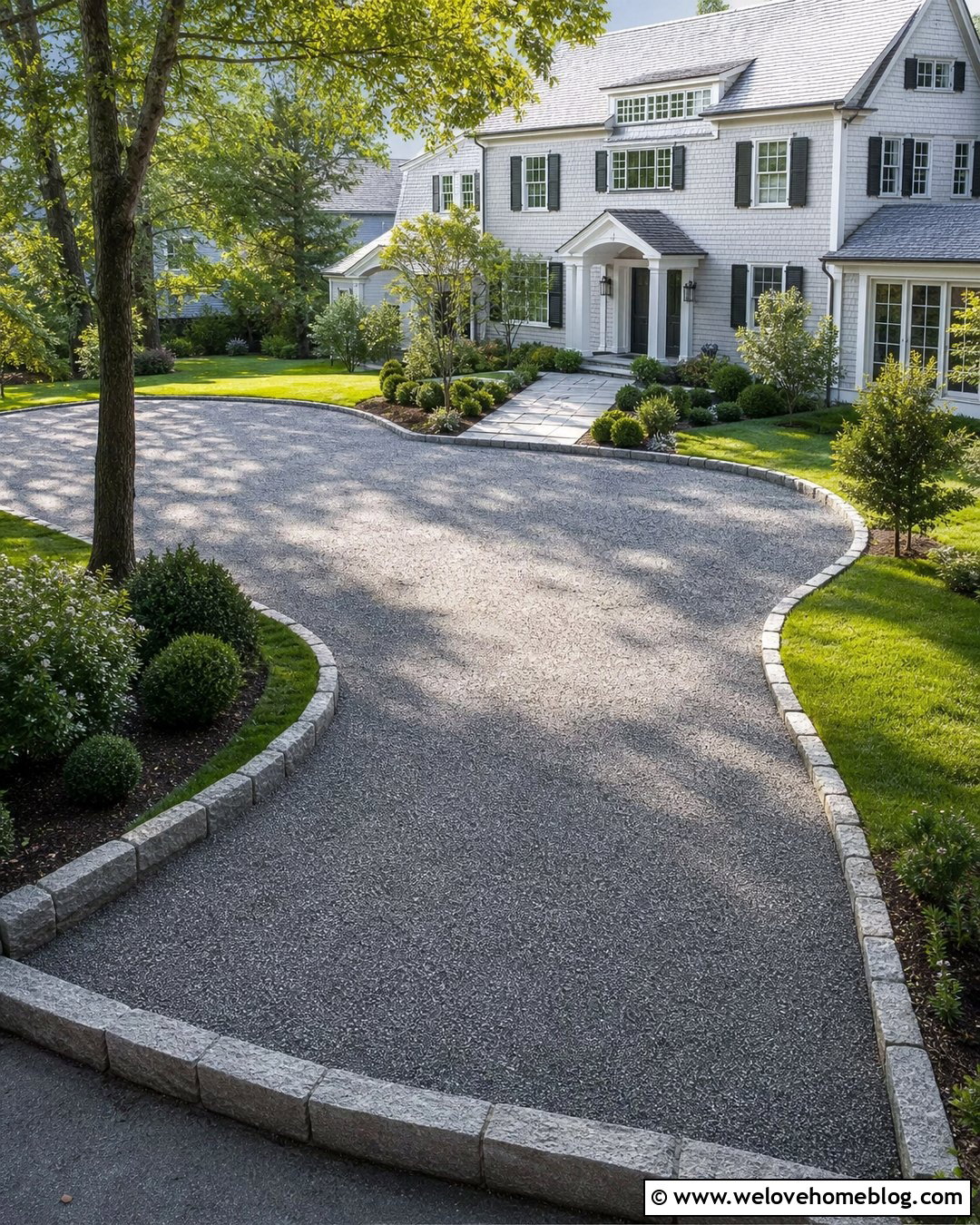
A creek rock parking court adds useful space near the house while maintaining a softer appearance than a large solid slab. Shape the main driveway as a straight or curved approach, then open it into a clearly defined rectangular, oval, or fan-shaped parking area. Use small creek rock over a heavy compacted base, with stabilization grids beneath frequent parking and turning zones. Granite blocks, brick pavers, or concrete curbing should contain the rounded stones around the entire court. Add a central walkway to the front door and place planting islands only where they will not interfere with backing movements. Low shrubs and small ornamental trees can soften the expanded surface. This layout works well for larger families, guest parking, and detached garages when dimensions are carefully planned.
19. Gated Creek Rock Driveway With Stone Pillars
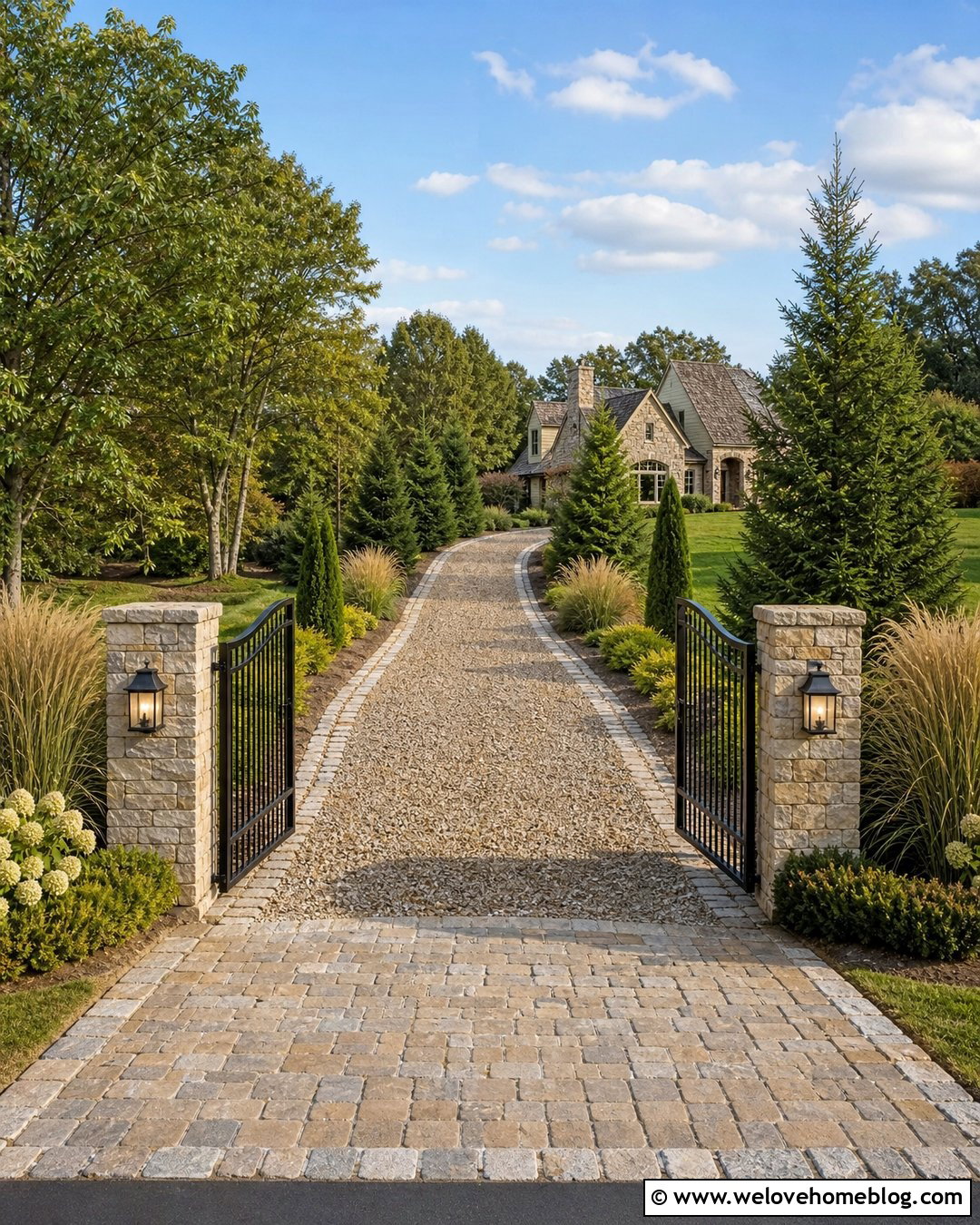
A gated entrance gives a creek rock driveway a strong focal point before the surface begins its approach to the house. Build substantial stone or brick pillars that coordinate with the home, then install a gate sized for comfortable vehicle access and emergency clearance. Use warm mixed creek rock beyond a paved entrance apron so loose stones do not scatter onto the road. Cobblestone or masonry borders can visually connect the pillars to the driveway while containing the rounded surface. Plant symmetrical evergreens near the entrance, followed by looser grasses and shrubs farther along the drive. Lighting should illuminate the gate and address area without creating glare. Before construction, confirm property lines, utility locations, gate setbacks, local regulations, and any requirements for automated emergency access.
20. Budget Creek Rock Driveway With Simple Edging
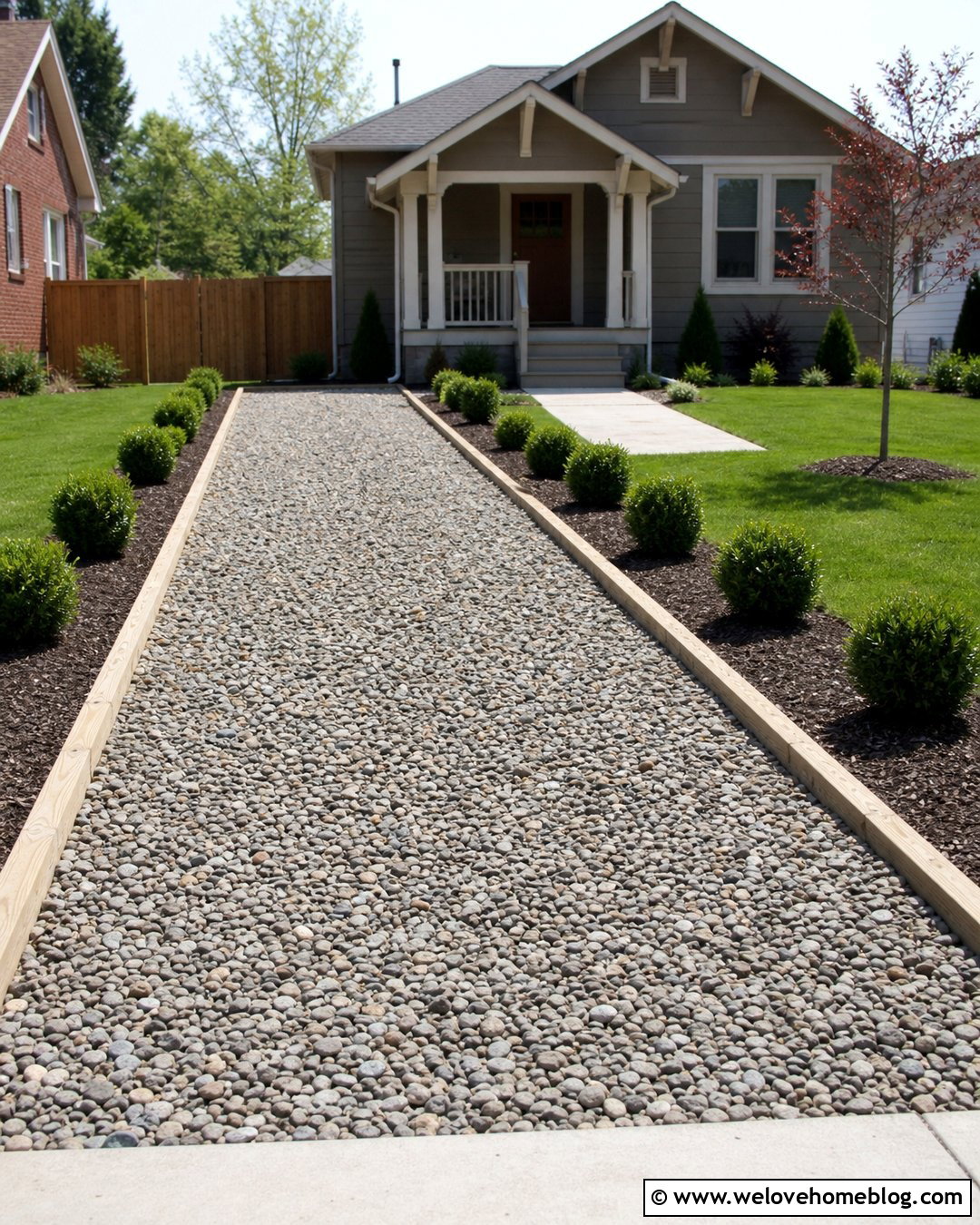
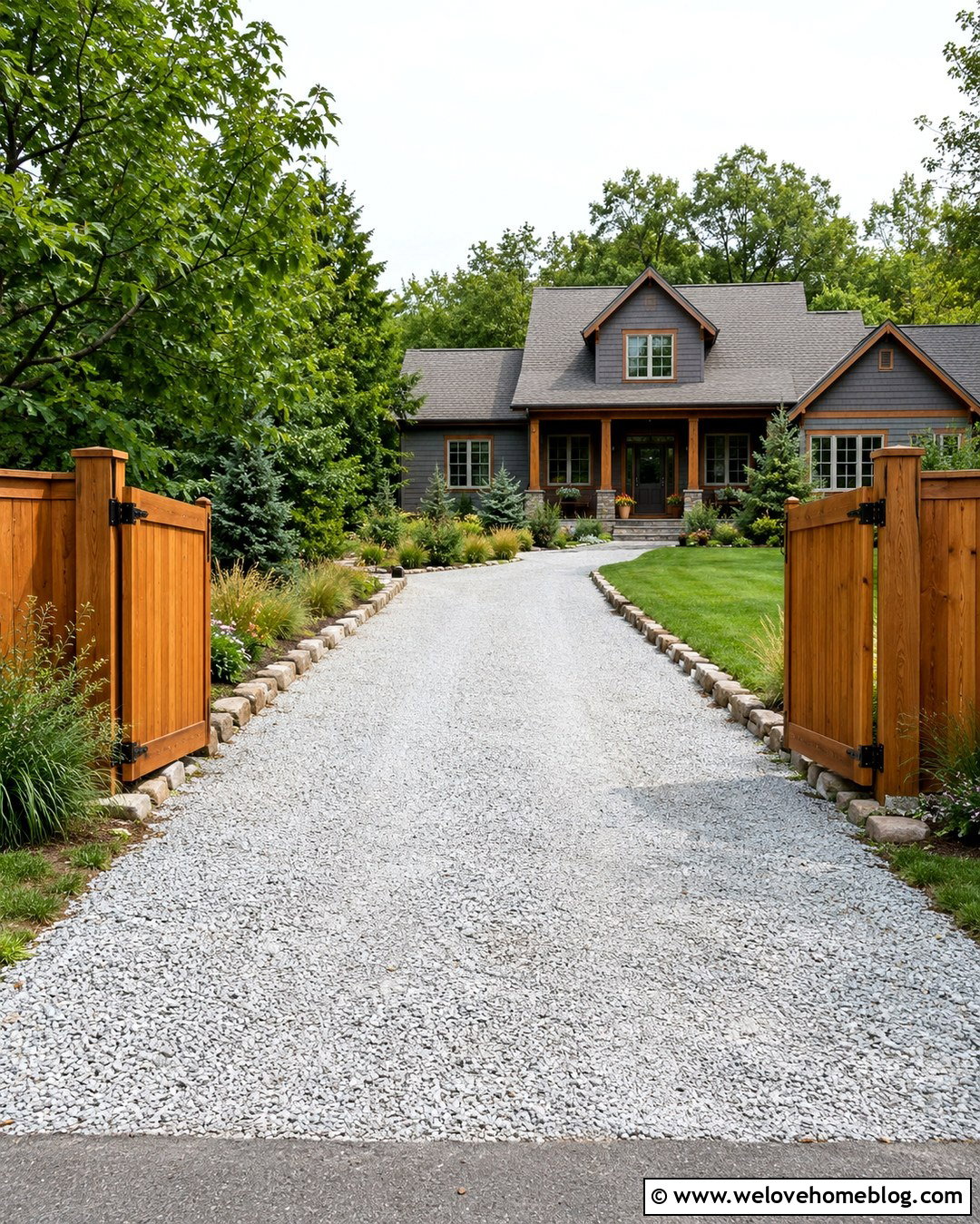
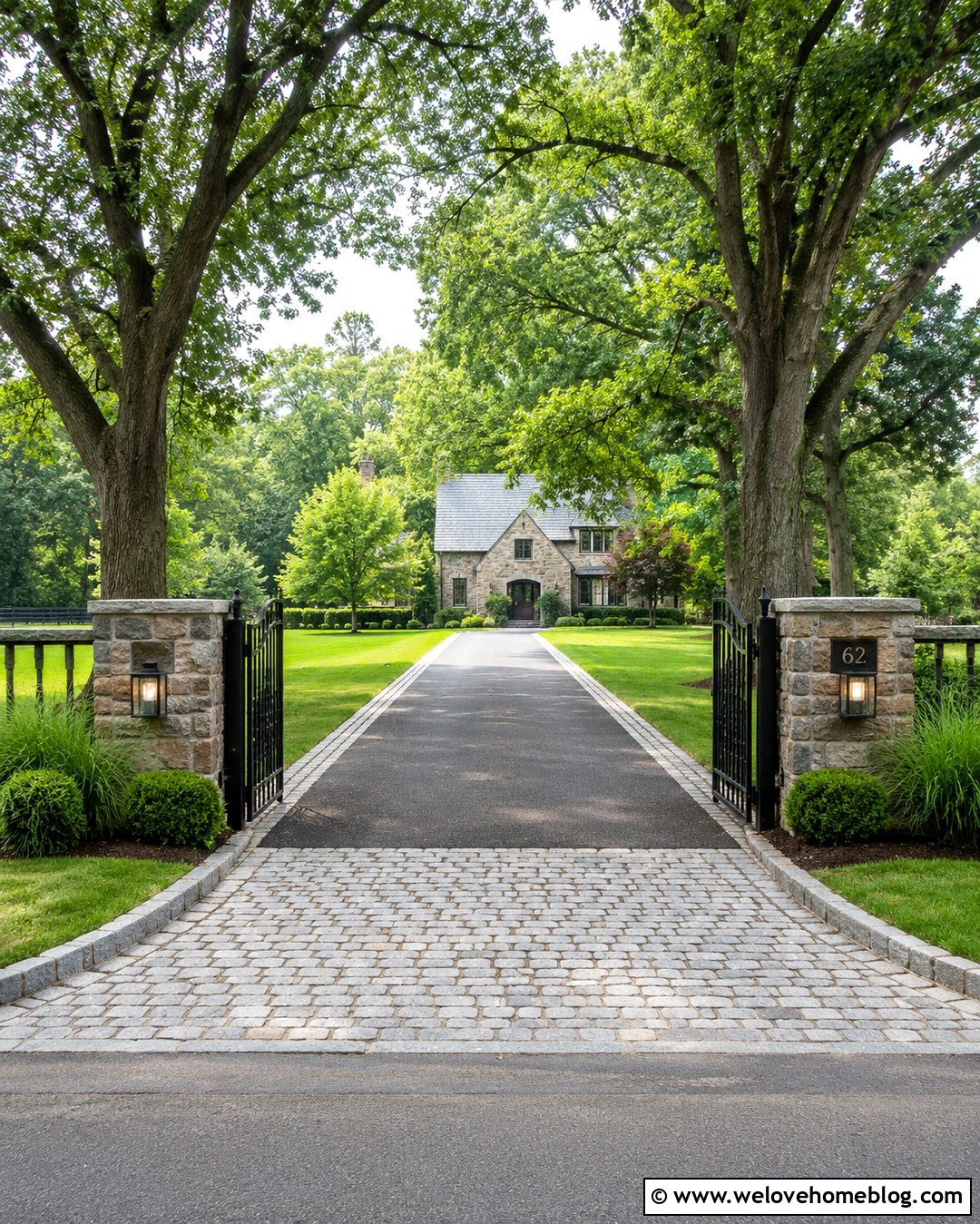
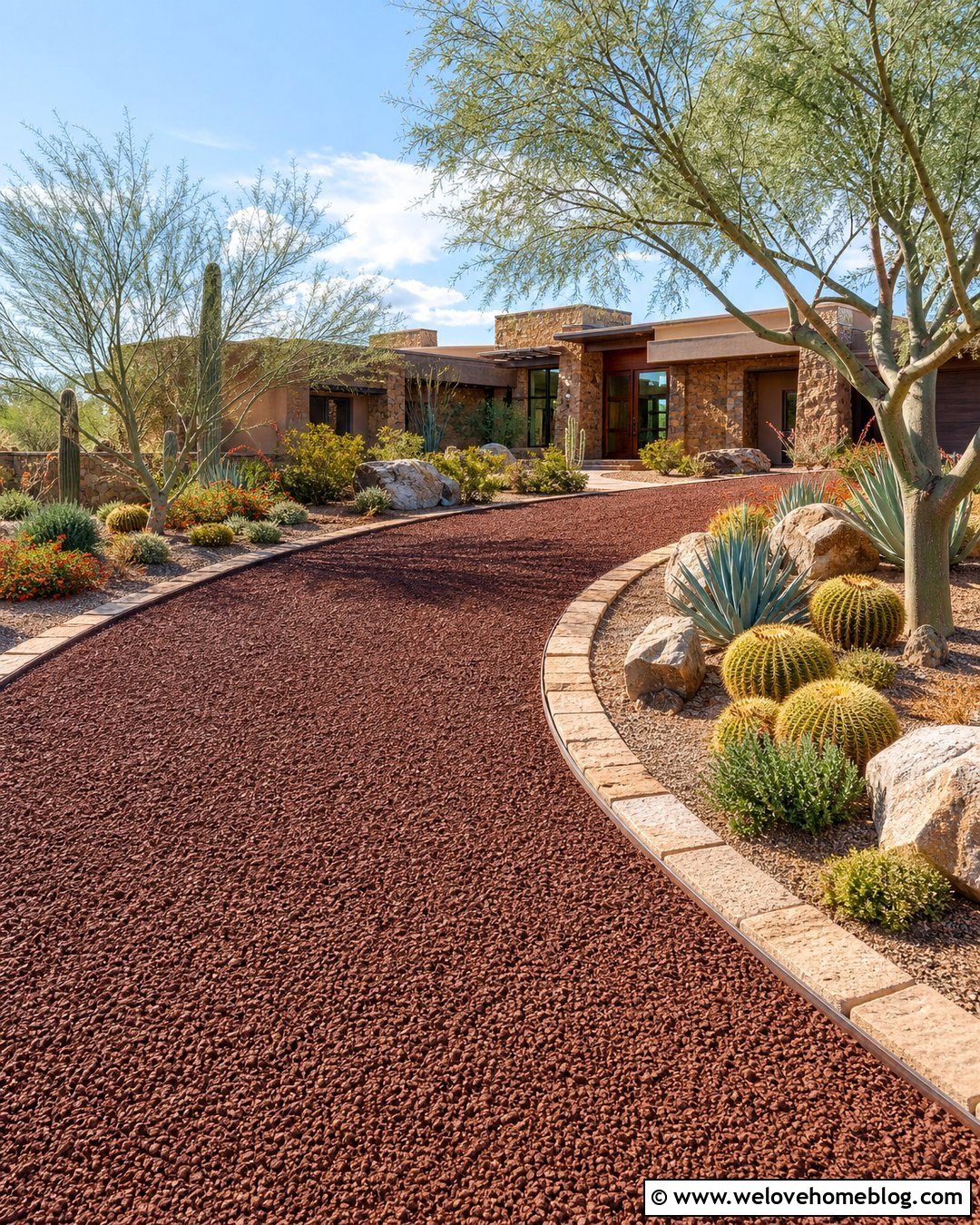
A budget-friendly creek rock driveway can still look intentional when the layout and materials are kept straightforward. Choose locally available, small creek rock rather than rare colors or oversized decorative stones. Use a straight driveway to reduce excavation, border length, and installation complexity. Pressure-treated timber or heavy-duty steel edging can provide containment at a lower cost than custom masonry. The area beneath the decorative surface should not be skipped; a compacted angular stone base protects the investment by limiting mud, settlement, and deep tire ruts. Finish the surrounding yard with clean lawn edges, a few repeated shrubs, and one uncomplicated walkway. Purchasing bulk material may be more economical than using bagged stone. Spend first on drainage, base preparation, and strong borders, then add decorative landscaping gradually.
Conclusion:
The strongest **Creek Rock Driveway Ideas** combine a naturally attractive surface with the structural details needed for daily vehicle use. Small, evenly graded creek stones usually perform better than large rounded cobbles, especially when placed over compacted angular aggregate. Solid edging, thoughtful grading, durable entrance aprons, and stabilization grids can further control shifting. From modern steel borders and cottage flower beds to circular layouts and dry creek drainage, each design should relate to the house and surrounding yard as one complete composition. Before installation, consider slope, runoff, maintenance, snow removal, local material availability, and municipal rules. Careful planning will help your creek rock driveway remain functional, contained, and visually connected to the property.

Related posts:
Leave a Reply