
A well-planned pebble driveway can make a home feel more welcoming while giving the front yard a softer, more natural finish. These 20 pebble rock driveway ideas explore complete designs rather than focusing on the surface alone. You will find straight, curved, circular, and compact layouts paired with practical edging, attractive planting, and distinctive entrances. Pebble color also matters. Warm stone complements brick and farmhouse exteriors, while gray, white, and black blends suit contemporary homes. Because rounded stones can shift under tires, a compacted base, firm edge restraints, and stabilization grids are worth considering during installation. Use the following designs to find a layout that fits your home, climate, maintenance goals, and favorite 20 pebble rock driveway ideas. ()

1. Pea Pebble Driveway With Cobblestone Edging
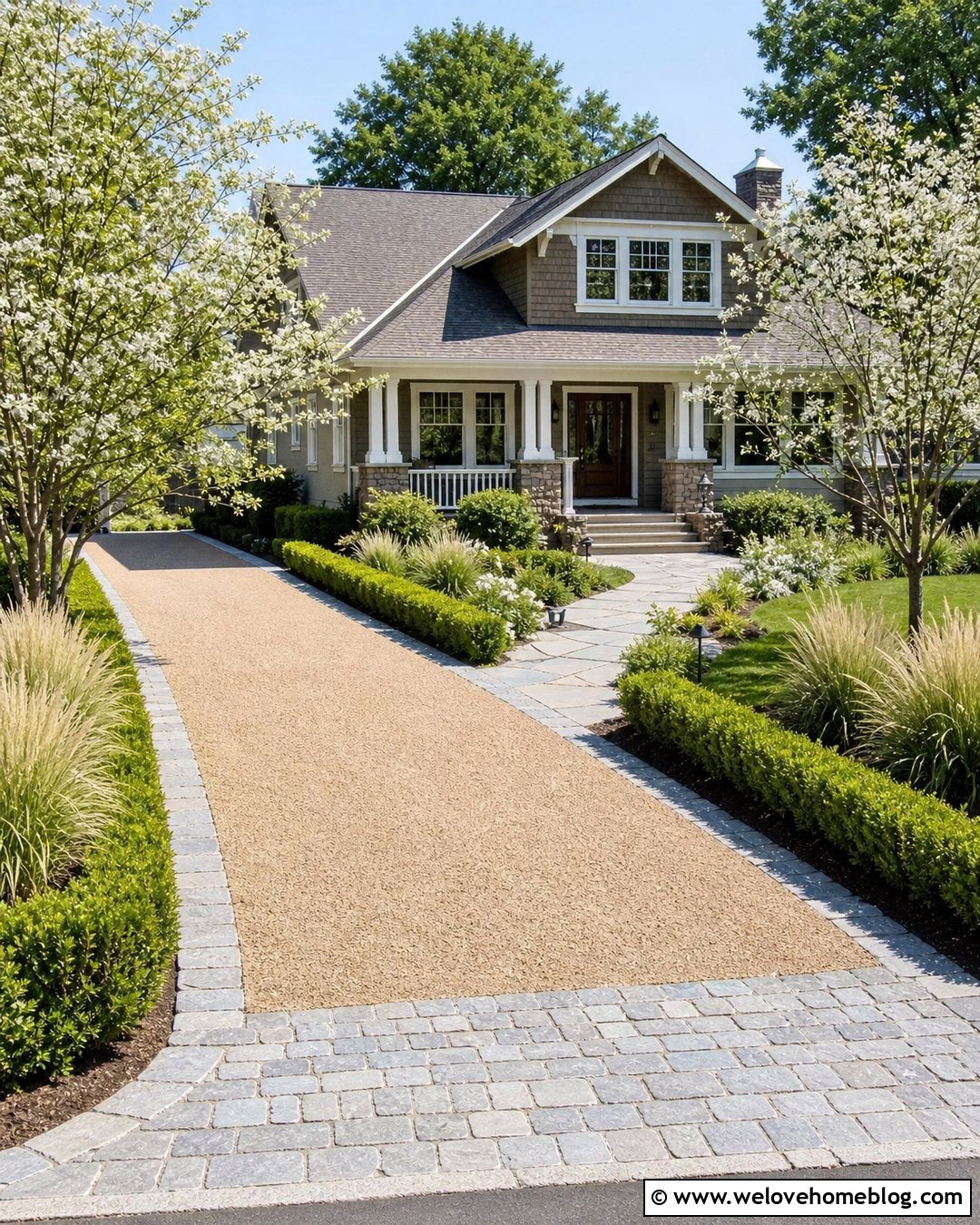
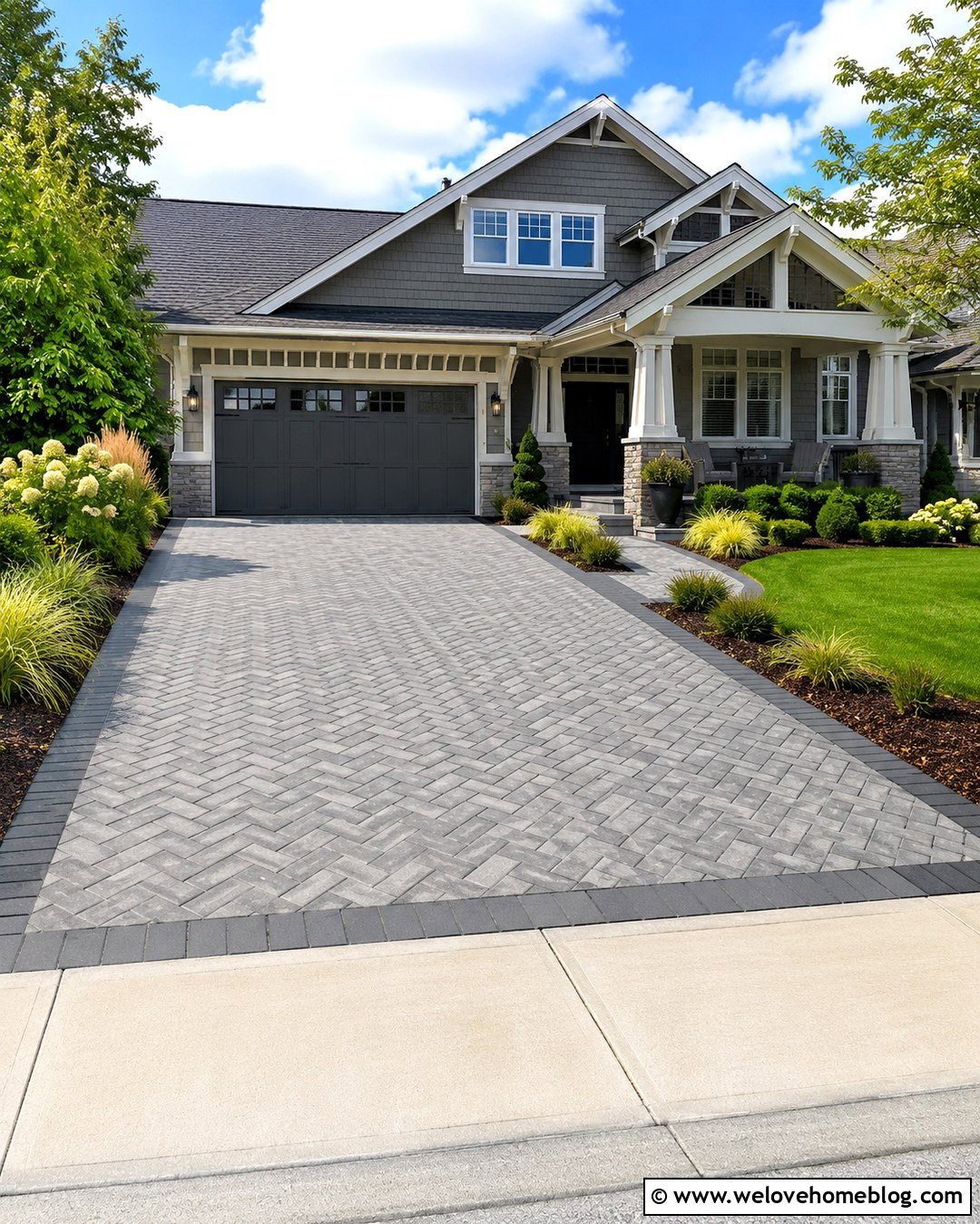
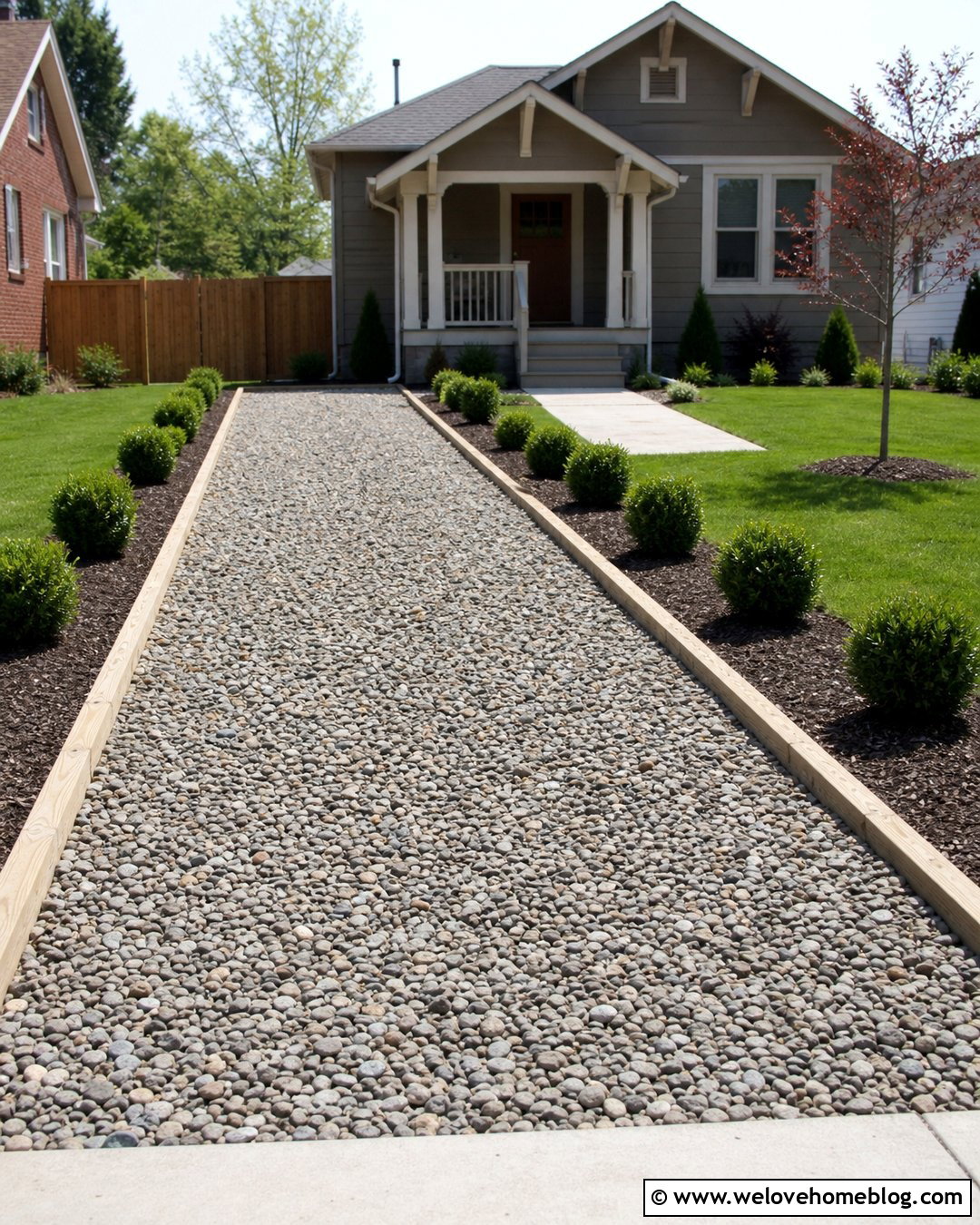
Small pea pebbles create a smooth-looking surface that feels relaxed without appearing unfinished. For a complete design, use warm beige or gray pea pebbles on a straight driveway leading to a Craftsman house. Install a cobblestone border along both sides to prevent loose material from spreading into the lawn. A matching cobblestone apron at the street can make the entrance look more substantial. Frame the driveway with low boxwoods, ornamental grasses, and one or two flowering trees near the garage. The combination works especially well when the house has natural stone columns or earth-toned siding. Choose pebbles with consistent coloring, and keep the border slightly raised so the driveway maintains a clean, clearly defined shape.
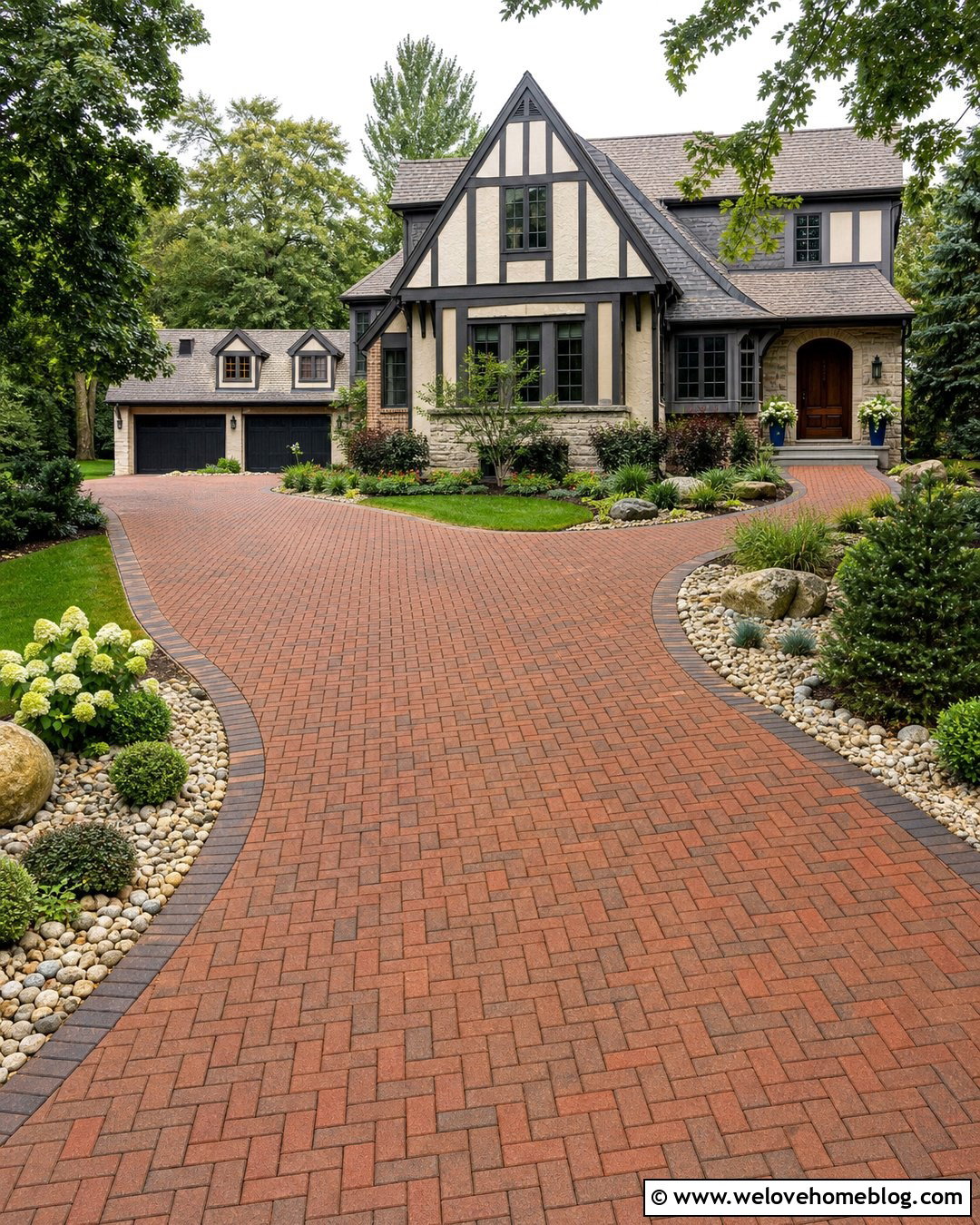
2. River Pebble Driveway With Boulder Borders
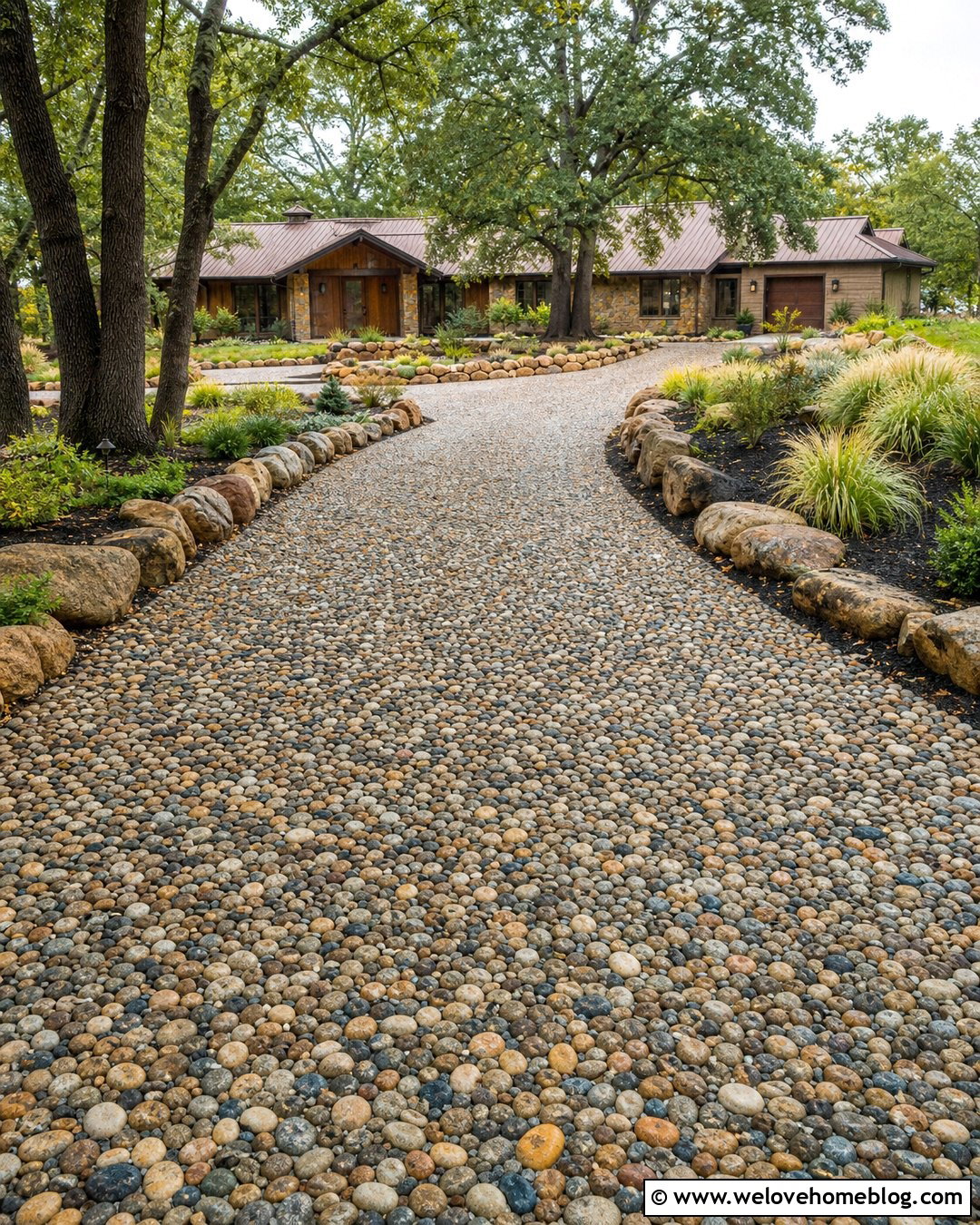
Smooth river pebbles bring varied shades of brown, gray, cream, and charcoal into one natural-looking driveway. A gently curved layout helps this material feel connected to the landscape instead of looking like a rigid strip. Place large weathered boulders at wider intervals along the edges, then fill the spaces with native grasses and spreading ground covers. This complete look suits a ranch house, mountain home, or wooded suburban property. The boulders should be large enough to remain visually balanced with the driveway, but they should not narrow the driving area. Since rounded river stones may move more readily than angular gravel, use a stable crushed-stone base and cellular containment grid beneath the decorative surface. ()
3. Gray Pebble Driveway With Brick Ribbons
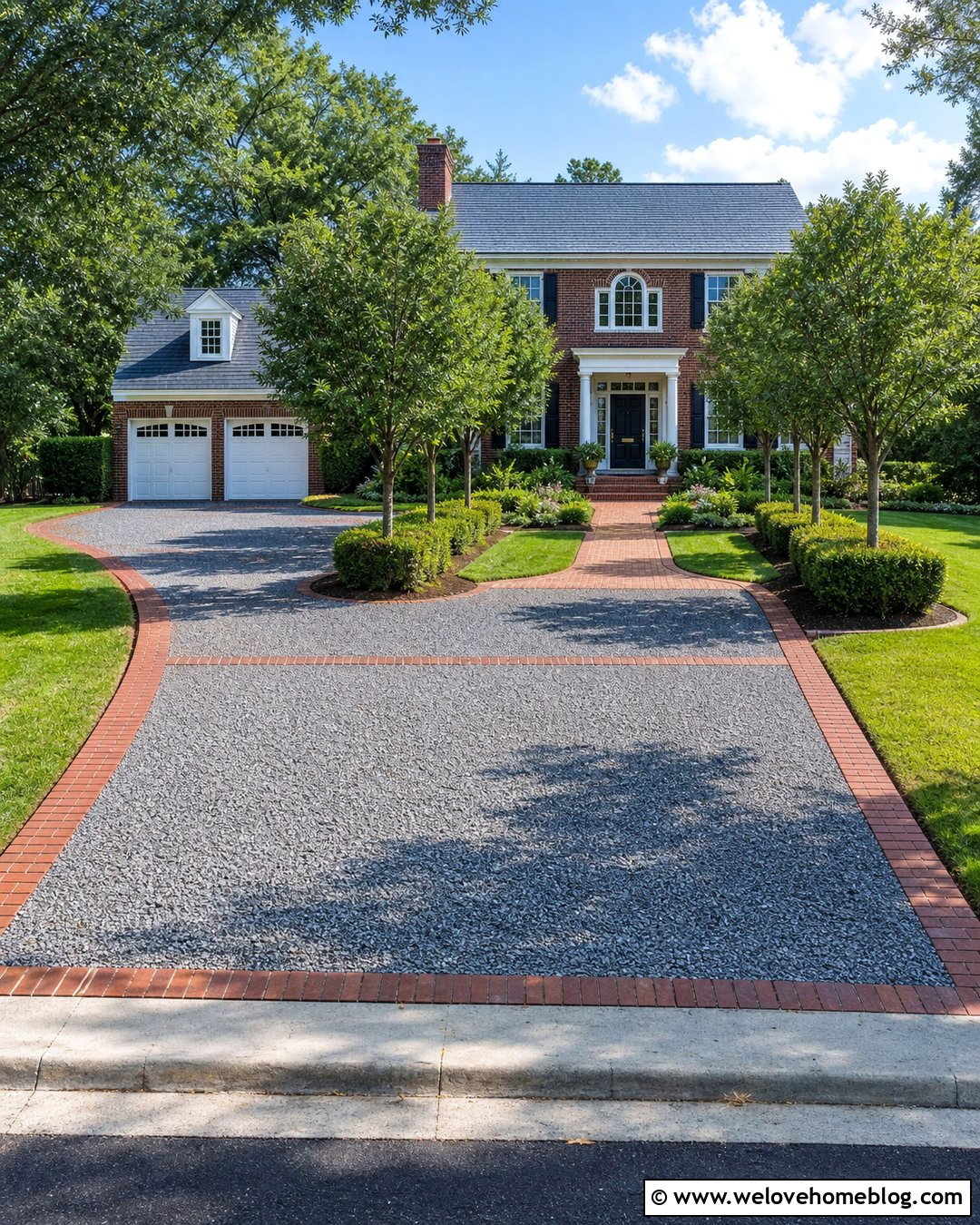
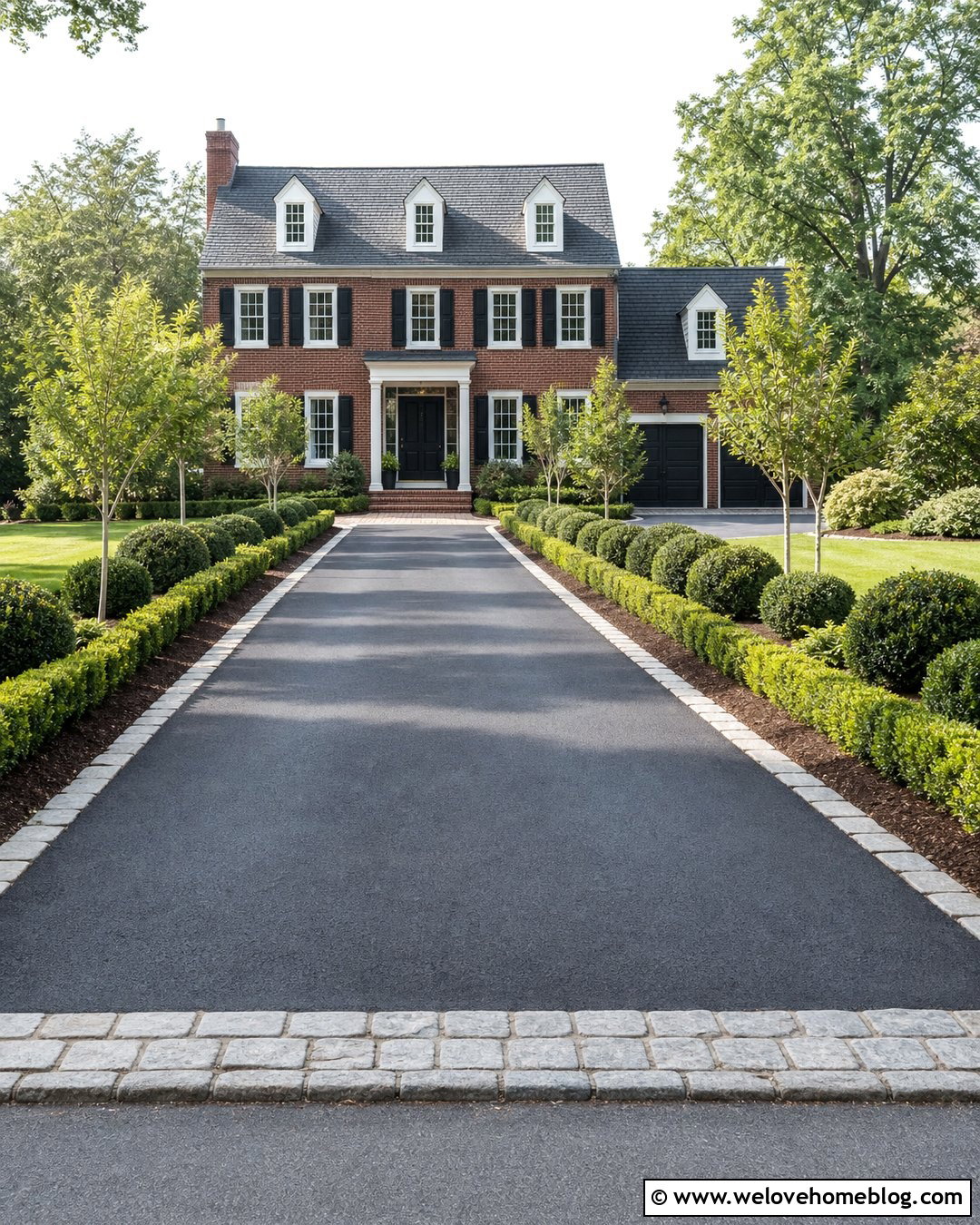
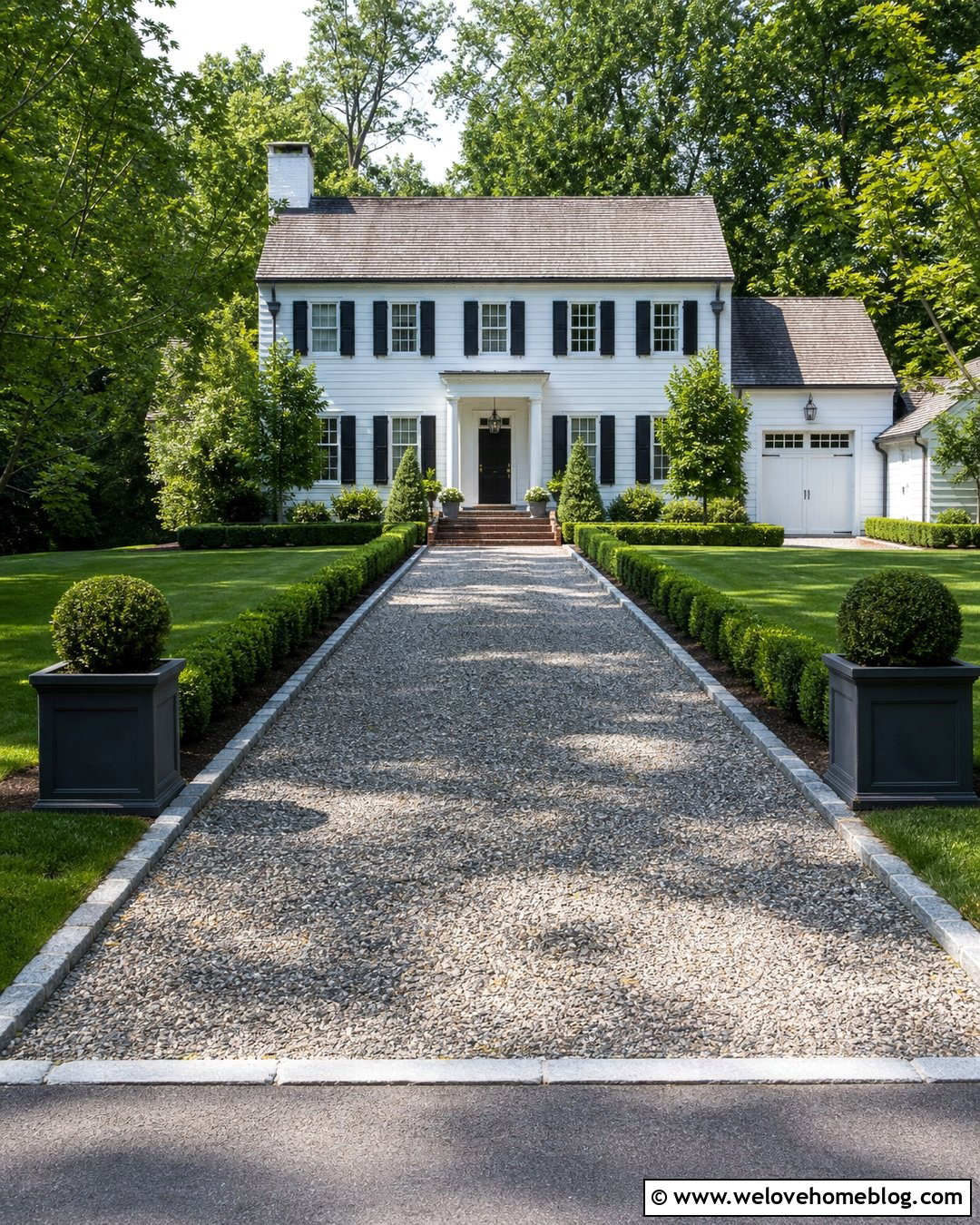
A cool gray pebble driveway becomes warmer and more traditional when divided by red or brown brick ribbons. Run the bricks across the driveway at regular intervals, or place one continuous ribbon around the perimeter. A straight layout leading to a colonial house creates a balanced, formal appearance. Repeat the brick near the front walkway, porch steps, or mailbox so the different areas feel connected. Neatly clipped hedges can line the driveway, while symmetrical trees placed near the garage reinforce the orderly design. The brick sections also provide visible reference lines that help define a large surface. For the most cohesive result, select a brick tone already found in the home’s facade, chimney, foundation, or garden walls.
4. White Pebble Driveway With Steel Edging
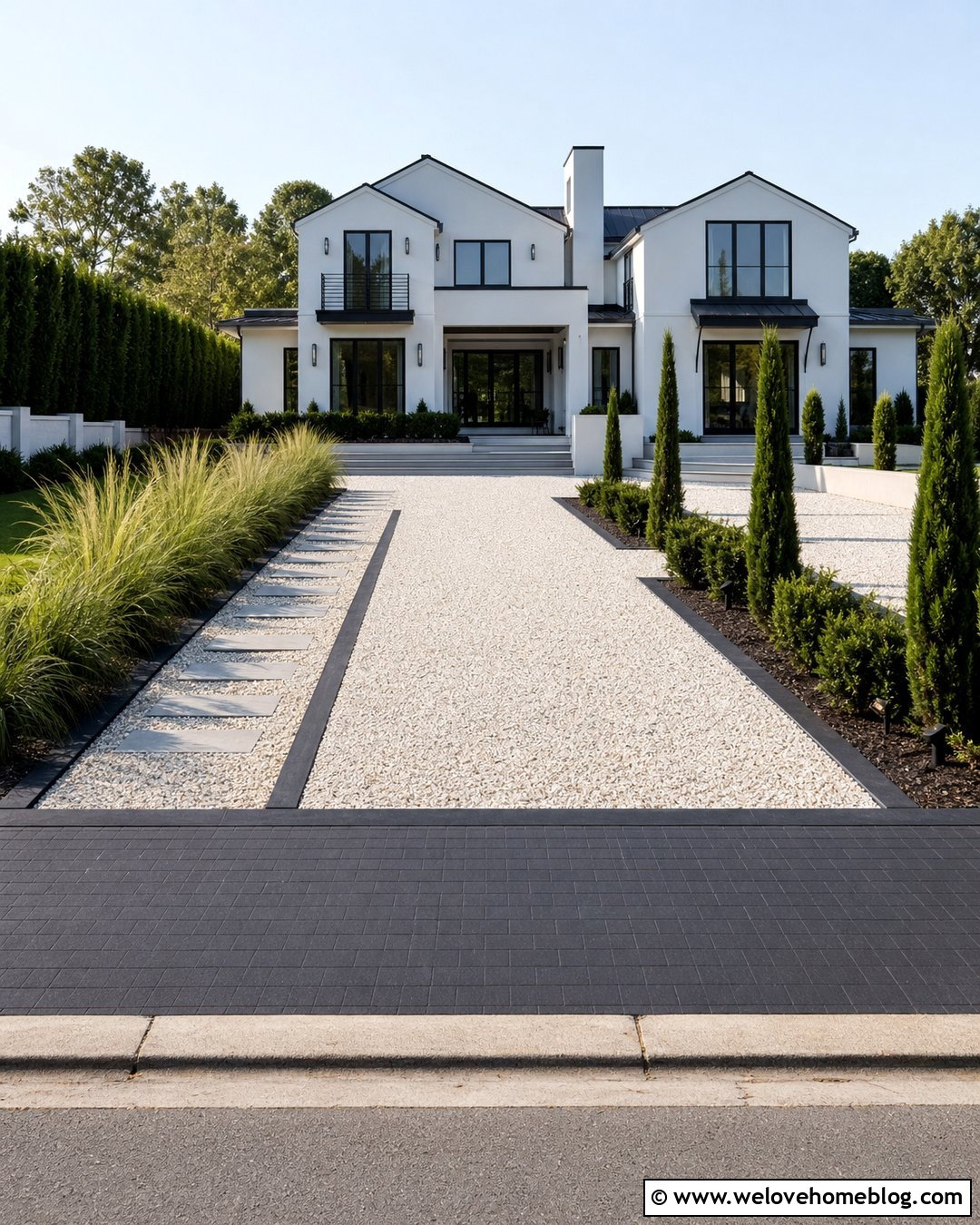
Bright white pebbles can create a crisp entrance for a contemporary house, especially when paired with narrow black steel edging. Keep the driveway straight and geometric, with sharp corners and a broad rectangular parking area near the garage. Dark steel borders make the pale stone stand out while separating it from planting beds. Choose simple landscaping, such as compact evergreens, upright ornamental grasses, and large rectangular concrete stepping stones leading to the entrance. White pebbles can show leaves, soil, and tire marks more quickly than mixed-color stone, so this look is best for owners comfortable with regular raking and occasional cleaning. A light gray or white exterior with black windows will complete the high-contrast modern palette.
5. Tan Pebble Driveway With Timber Edging
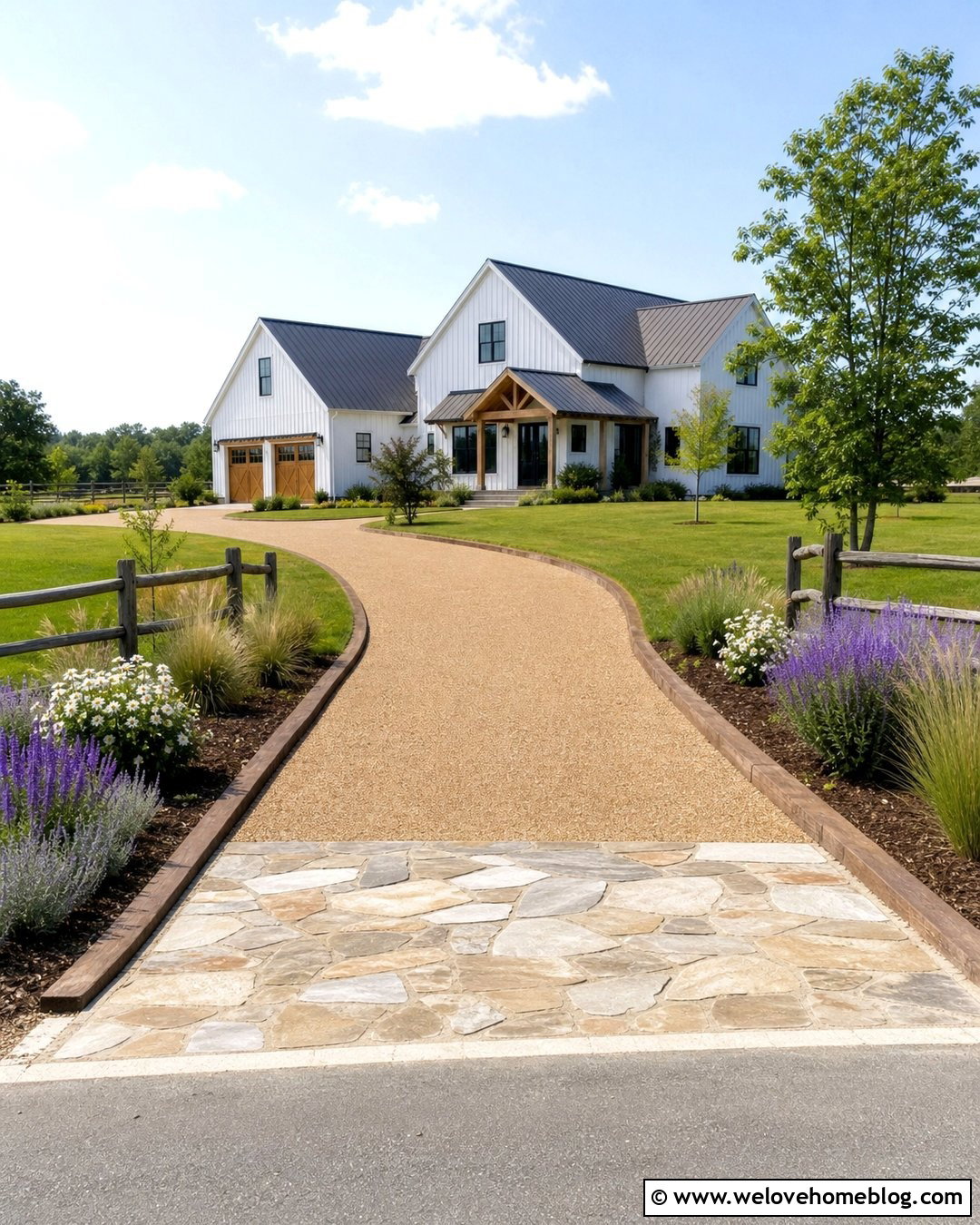
Warm tan pebbles and sturdy timber edging create an approachable driveway for a farmhouse or country home. A slightly curved route looks especially attractive when it passes open lawn, split-rail fencing, or informal planting beds. Use thick pressure-treated landscape timbers rather than thin decorative boards, and secure them firmly so they can contain the surface material. Near the house, transition into a stone or brick parking apron that provides a stable area beside the garage. Lavender, salvia, daisies, and ornamental grasses can soften the long timber lines. This combination feels most convincing when the pebbles include several muted earth tones rather than one uniform color. Allow enough open width beside the plants to prevent mature growth from crowding vehicles.
6. Stabilized Pebble Driveway With Paver Edging
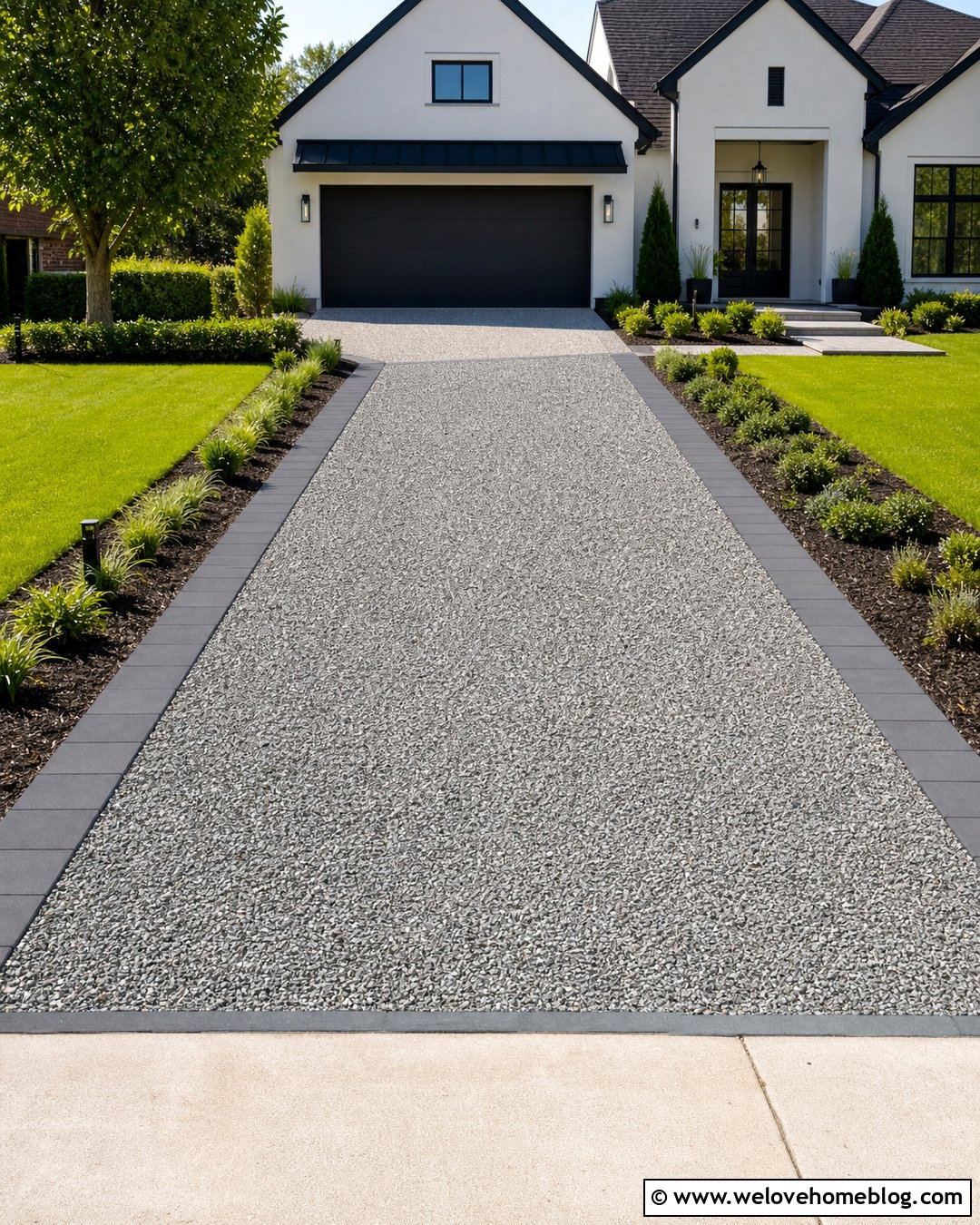
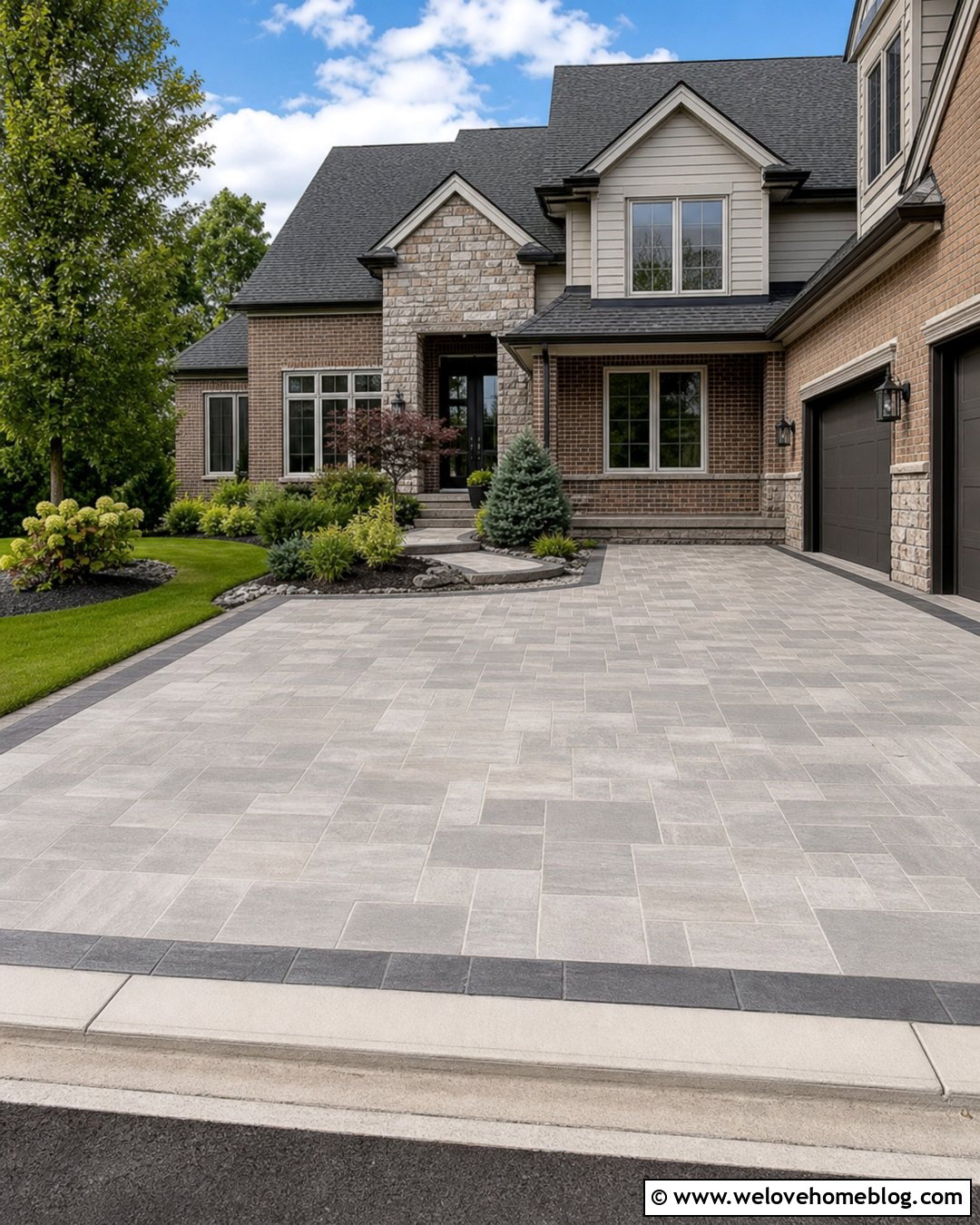
Do you like the appearance of loose pebbles but want a more controlled driving surface? A honeycomb stabilization grid can hold small driveway-grade pebbles in individual cells, reducing movement and helping the surface retain an even depth. Pair the stabilized center with wide concrete paver edging for a clean transitional design. This arrangement works well on a straight driveway serving a modern suburban home. Match the paver color to the front walkway or exterior masonry, then add structured planting beds with dwarf shrubs and low grasses. The edge should be strong enough to handle occasional tire contact. Proper excavation and a compacted aggregate base remain important because the grid organizes the top layer rather than replacing the supporting foundation beneath it. ()
7. Circular Pebble Driveway With Center Landscaping
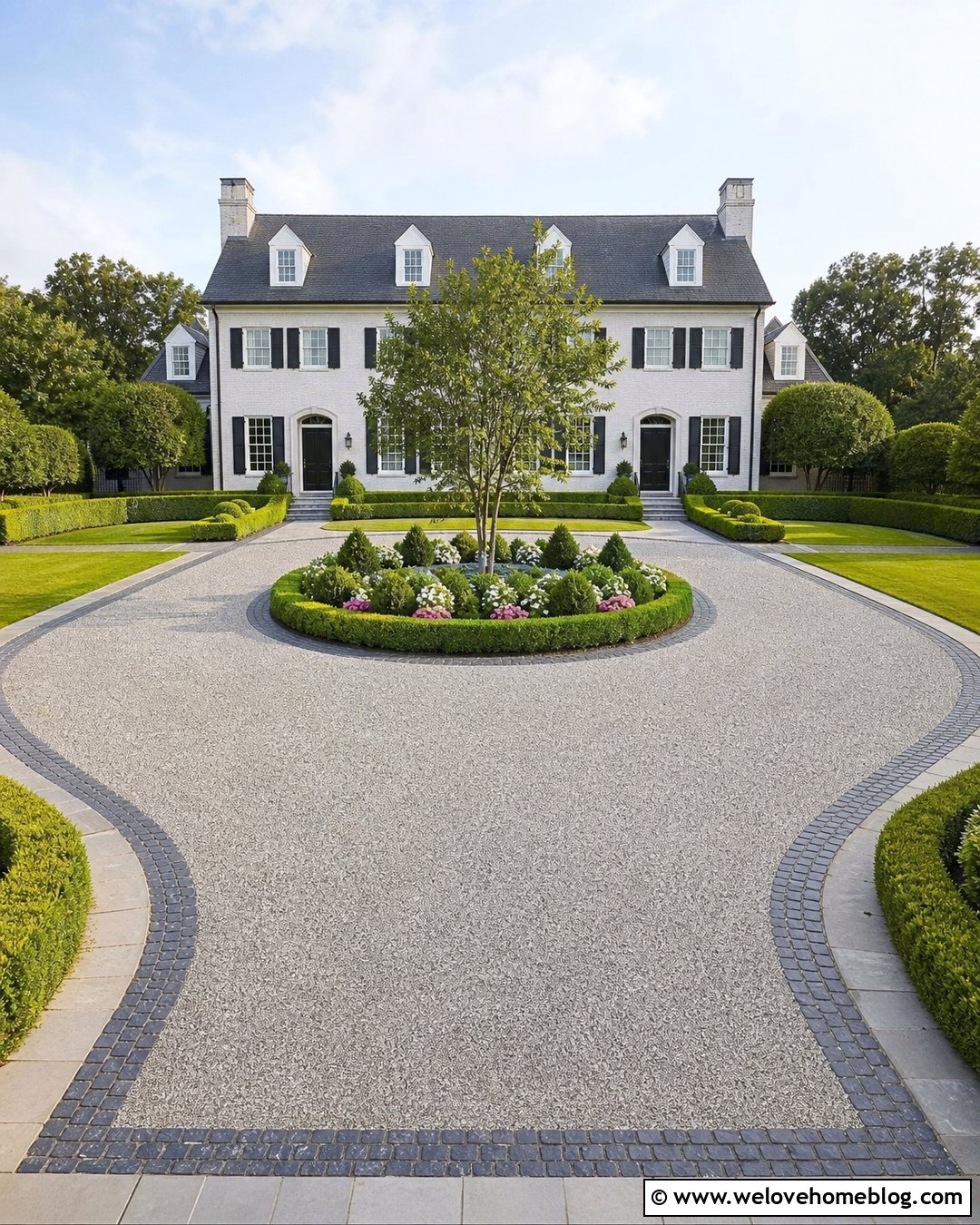
A circular pebble driveway can transform a wide front yard into a graceful arrival space. Use medium-gray pebbles for the driving lane and define the circle with a dark cobblestone border. In the center, create a raised island containing a small ornamental tree, evergreen shrubs, and seasonal flowers. The island should remain low enough to preserve visibility across the driveway. This complete design pairs naturally with a symmetrical Georgian, colonial, or traditional brick house. Connect the circle to the front door with a generous stone walkway that matches the driveway edging. If the property has two street entrances, repeat the same pillars, lighting, and border treatment at both ends. The consistent materials will make the large layout feel organized rather than overly busy.
8. Horseshoe Pebble Driveway With Stone Pillars
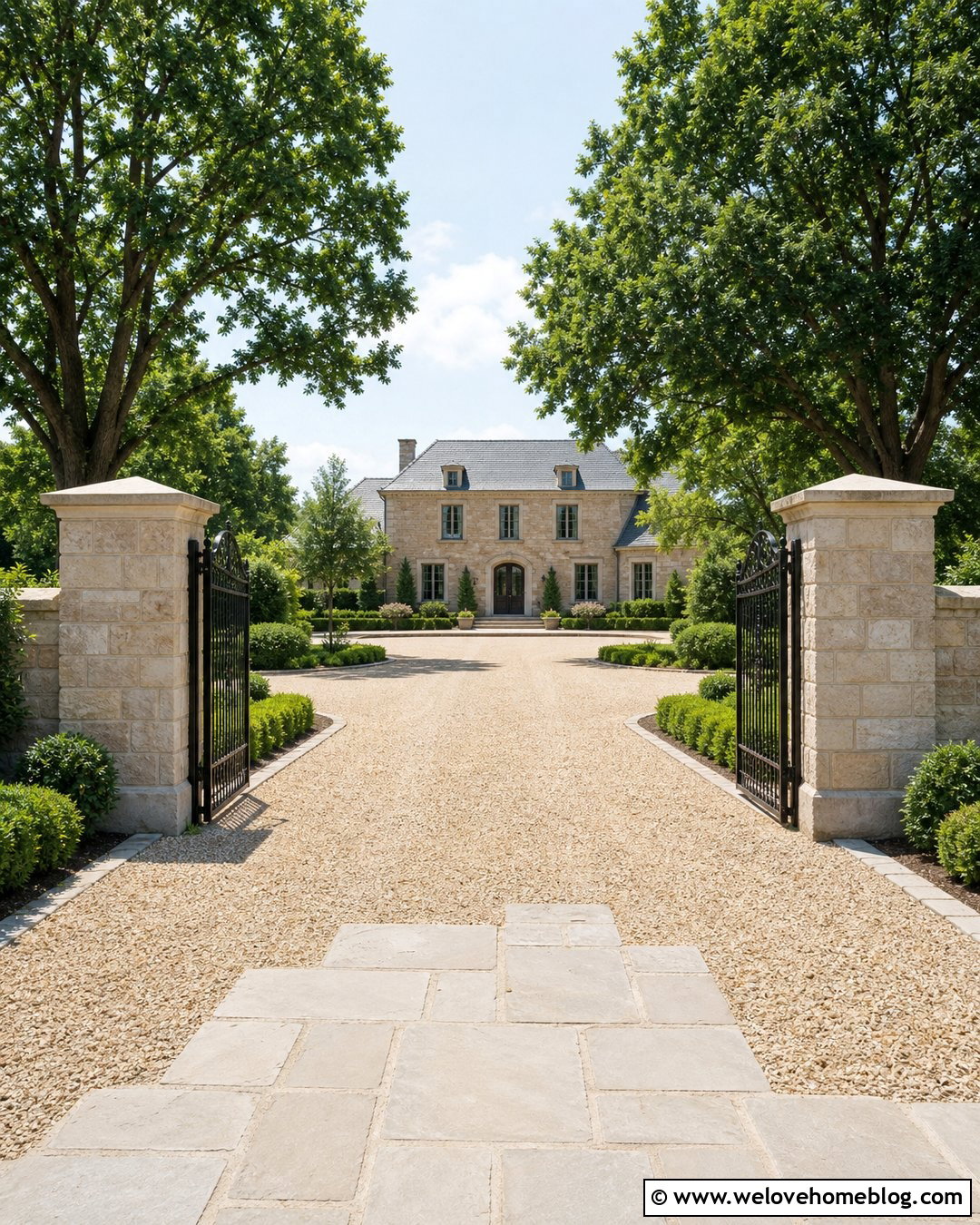
For a broad property, a horseshoe driveway provides separate entrance and exit points while creating an impressive view of the house. Cover the surface with a compacted blend of small buff pebbles and angular stone for a natural appearance with better stability. Build square stone pillars at both openings, and connect them visually with low stone walls or clipped hedges. A black metal gate can be added if security is needed, but the entrance should remain wide and easy to navigate. Plant matching trees behind the pillars and use low ground covers near the roadway to maintain clear sightlines. This look complements a French country house, stone residence, or large traditional home with warm masonry and dark exterior accents.
9. Coastal Pebble Driveway With Grass Borders
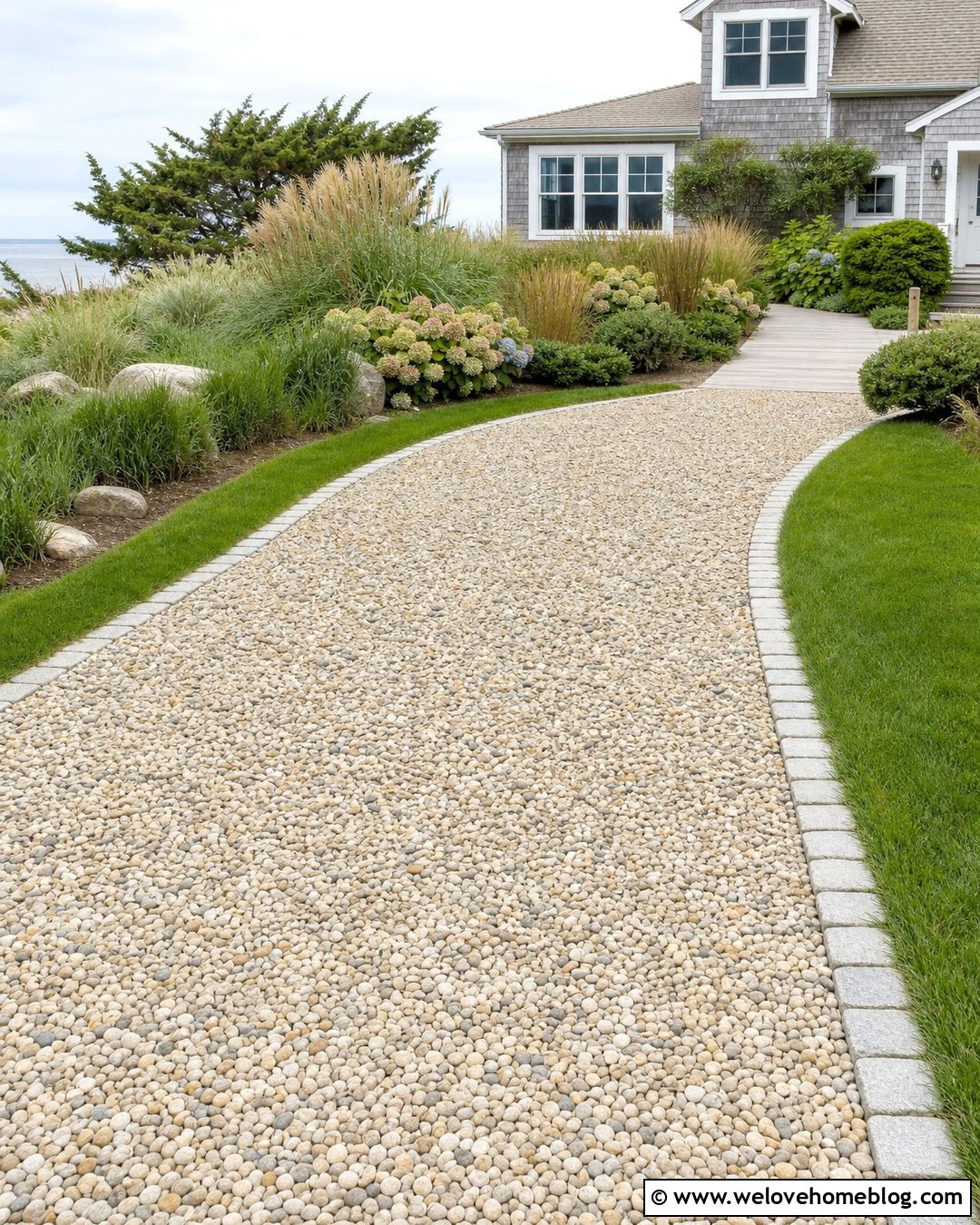
Pale gray, cream, and soft beige pebbles reflect the easygoing character of a coastal home. Shape the driveway with a gentle curve rather than a perfectly straight approach. Along each side, use narrow bands of tough lawn or low ornamental grass to create a fresh green contrast. A light cobblestone apron near the road can contain the loose material and mark the entrance. Complete the setting with hydrangeas, beach grasses, compact junipers, and a simple wooden walkway to the front door. Avoid making every surface pure white, since a subtle mix of natural tones will hide dust more effectively. This driveway looks especially cohesive beside weathered shingles, white siding, pale blue doors, and understated coastal landscaping without nautical decorations.
10. Desert Pebble Driveway With Drought-Tolerant Landscaping
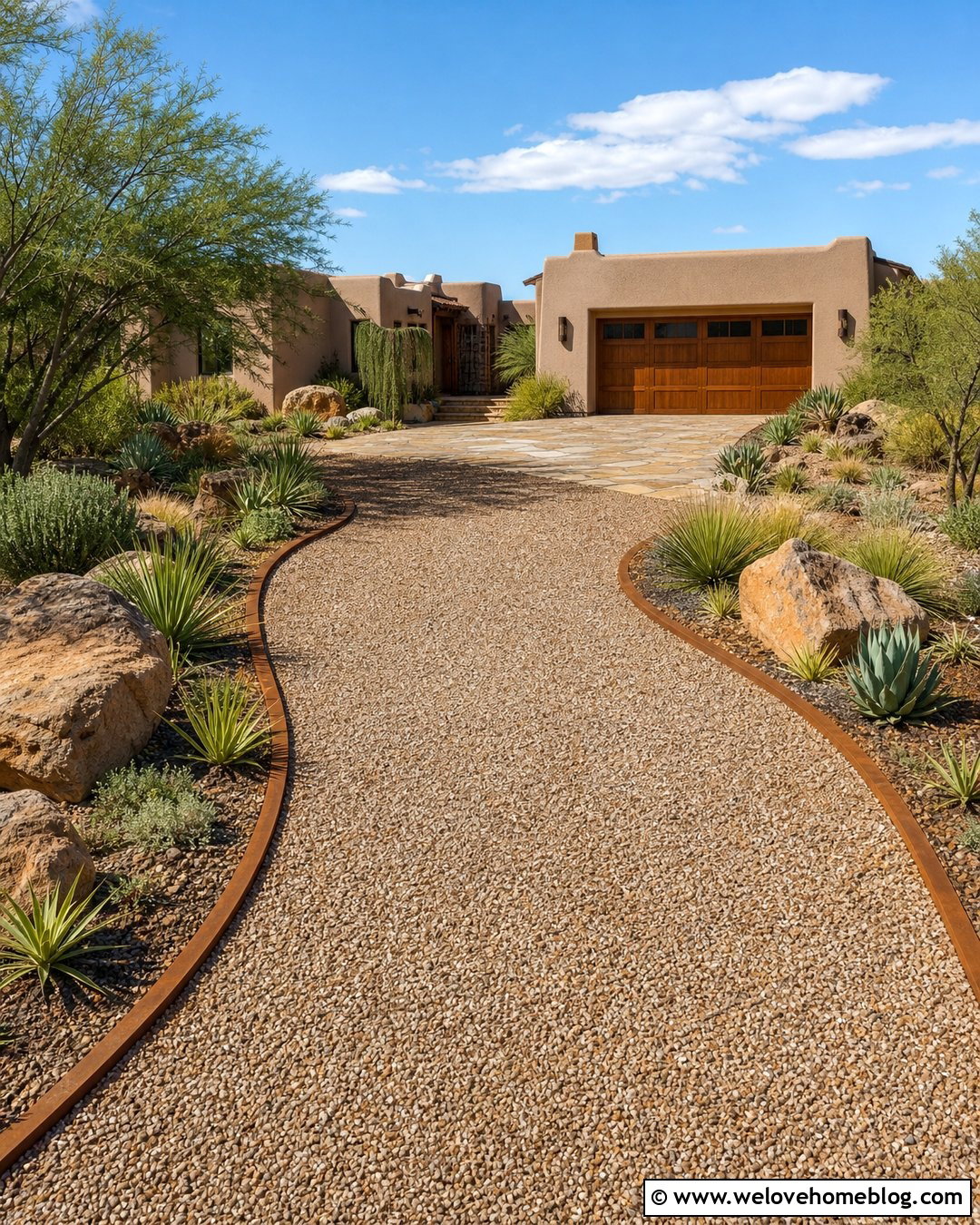
Earth-colored pebbles blend naturally into a dry front yard and can help connect the driveway with surrounding rock beds. Choose a straight or softly curved layout using small tan, rust, and gray pebbles contained by weathered steel edging. Beside the driveway, arrange agave, yucca, desert spoon, ornamental grasses, and a few sculptural boulders with generous open spacing. The result should feel intentional, not densely planted. A broad concrete or natural-stone apron near the garage can provide a firmer turning and parking area. This complete look works with a Southwestern, adobe, or desert-modern house. Keep plant placement away from vehicle doors, and select species appropriate for the local climate rather than copying a desert palette that may struggle in wetter regions.
11. Woodland Pebble Driveway With Natural Stone Edging
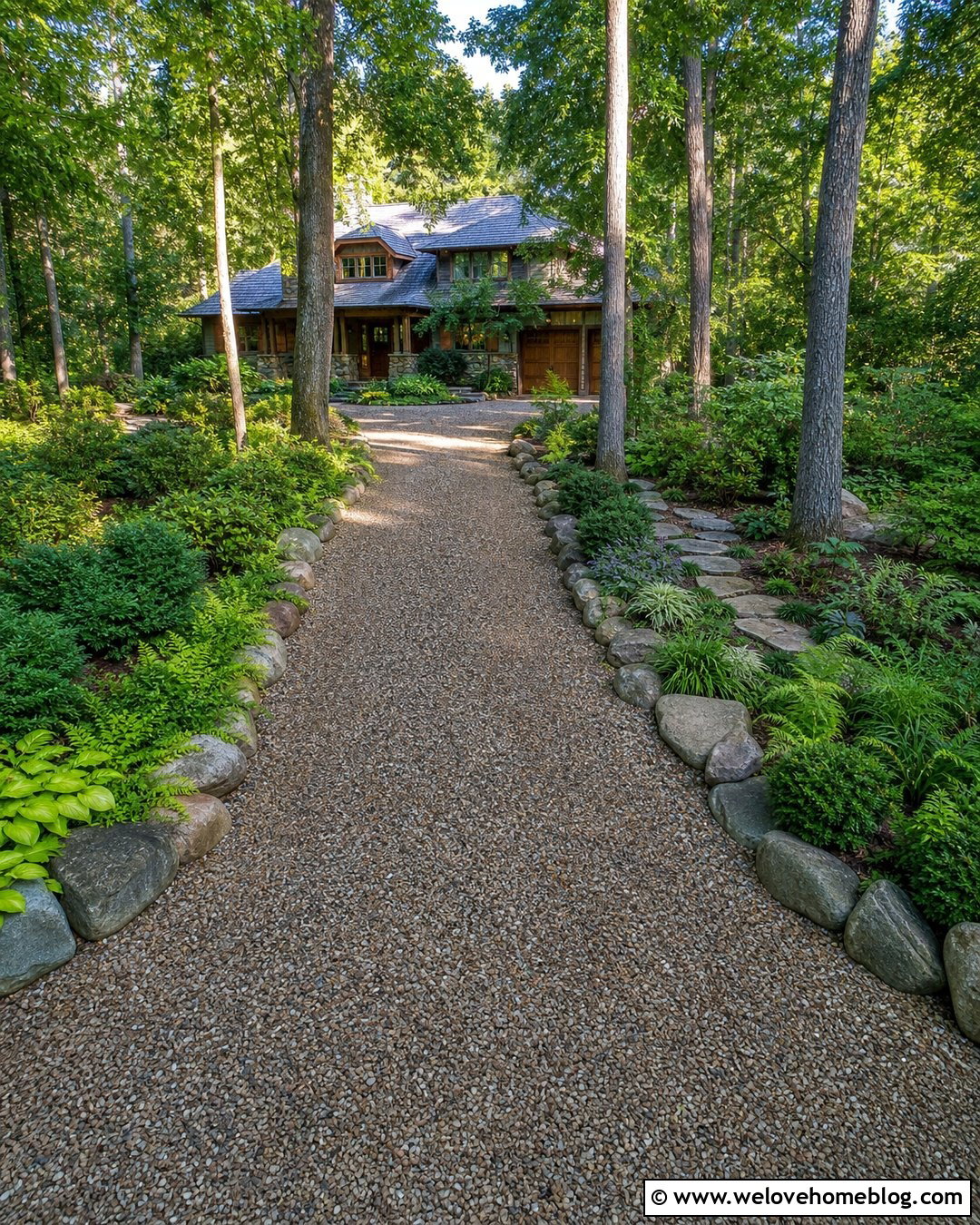
Under mature trees, a woodland driveway should look established and comfortable rather than overly polished. Use mixed brown and gray pebbles on a winding route that follows the natural contours of the yard. Edge the surface with irregular fieldstone, setting the larger pieces firmly so they do not shift into the driving lane. Ferns, shade-tolerant grasses, hostas, and low evergreen shrubs can fill the surrounding beds. Leave breathing room around tree trunks instead of piling stone or soil against them. This driveway suits a cabin-inspired home, rustic Craftsman, or traditional house surrounded by woodland. Because falling leaves can quickly cover small pebbles, provide accessible storage for a leaf blower and create simple edges that are easy to maintain throughout autumn.
12. Black Pebble Driveway With Concrete Borders
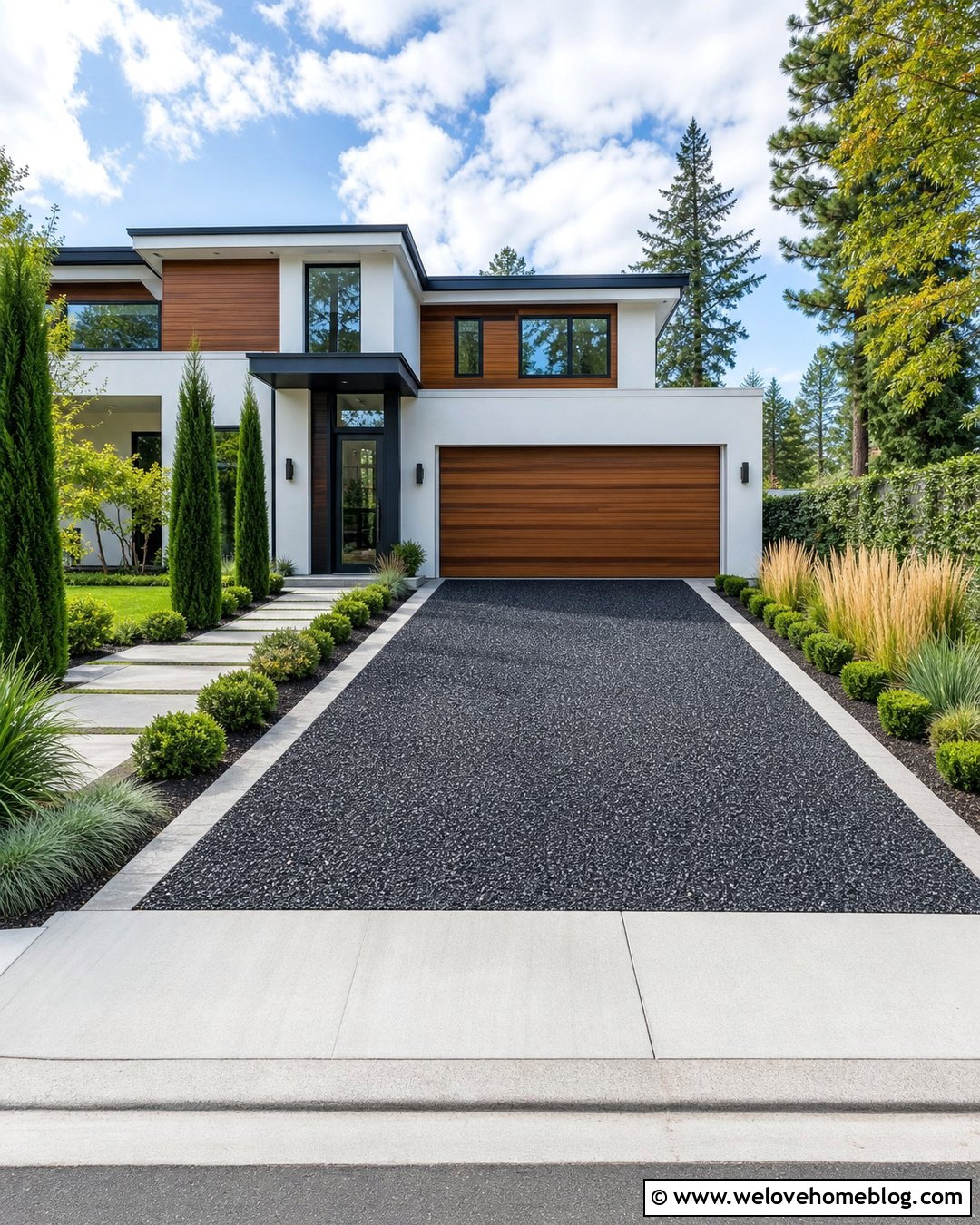
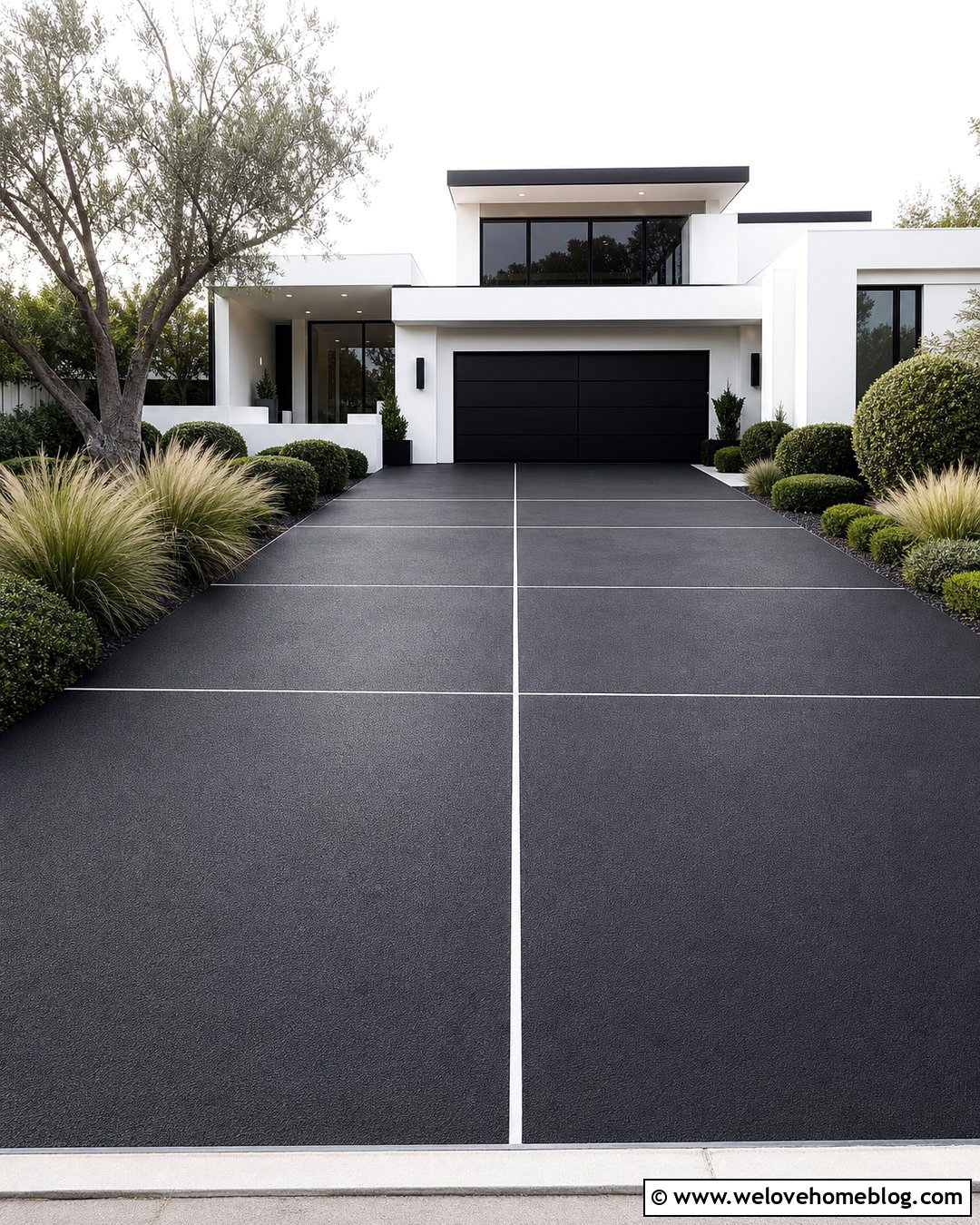
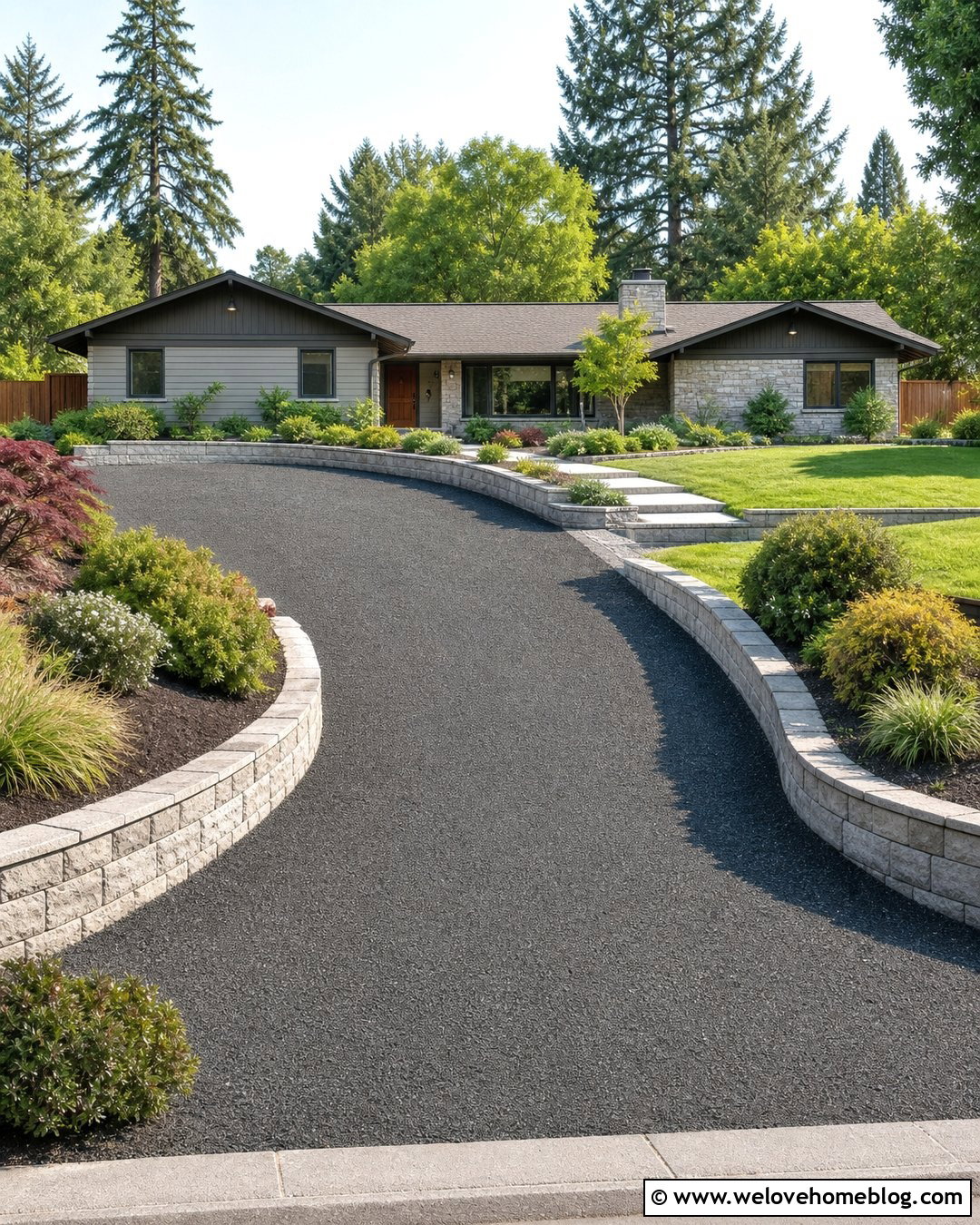
Black pebbles create a bold surface that can visually anchor a modern home with white, gray, or wood-toned siding. Use them on a wide, straight driveway framed by poured concrete borders. The light concrete prevents the dark surface from blending into surrounding mulch or shadowed planting beds. Repeat the concrete in a walkway made from large rectangular slabs, separated by narrow planting strips or dark stone joints. Keep the landscaping architectural with columnar evergreens, clipped shrubs, and grasses planted in clean groups. Dark stone can become noticeably warm in strong sunlight, so consider the local climate and nearby barefoot areas. Finish the street entrance with a full-width concrete apron that keeps loose pebbles farther from sidewalks and public pavement.
13. Two-Tone Pebble Driveway With Contrasting Bands
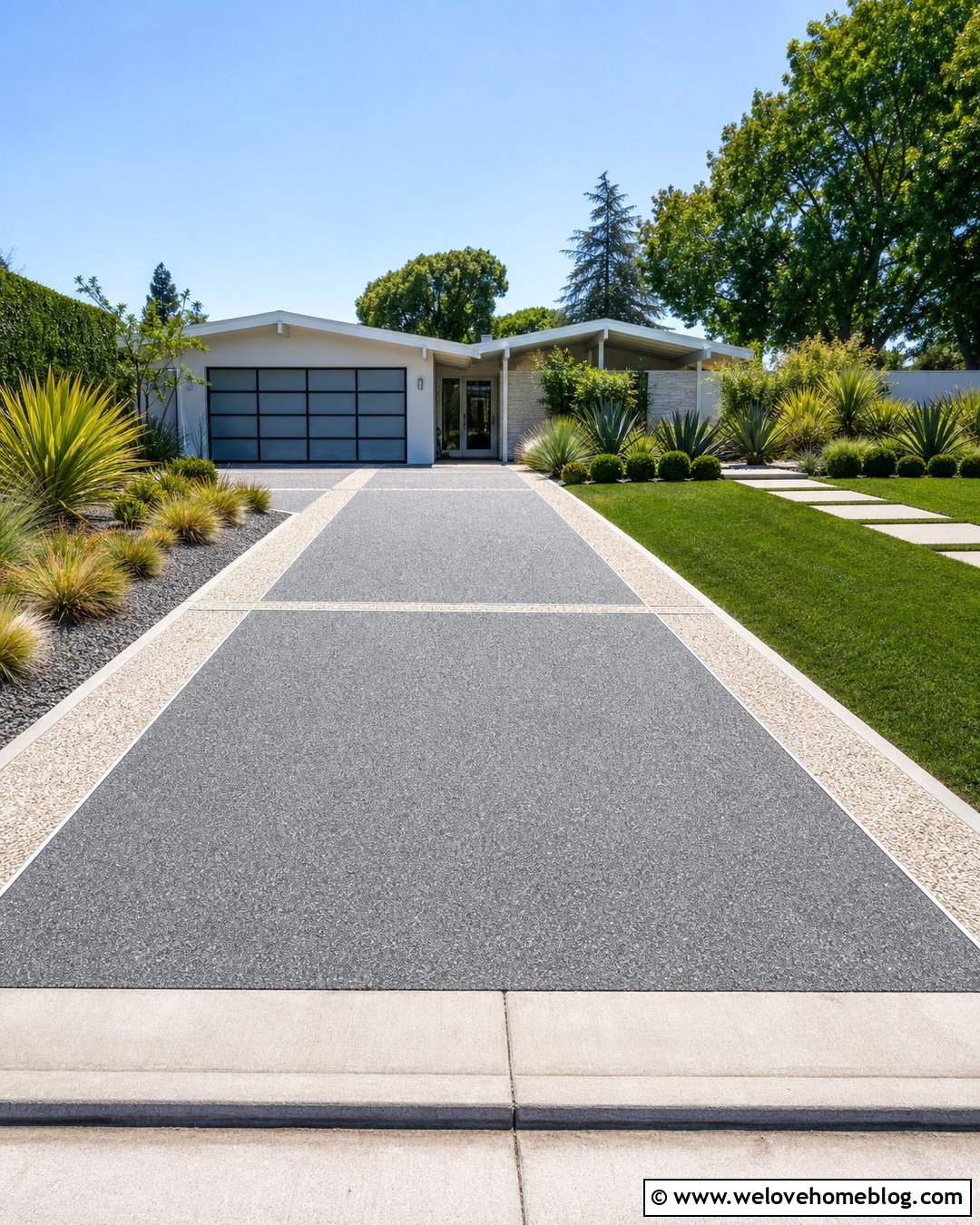
A two-tone design gives a pebble driveway more structure without covering its natural texture. Fill the main driving area with medium-gray pebbles, then add narrow bands of cream pebbles along the edges and across the entrance. Strong restraints are essential between colors because loose stones will otherwise blend over time. Metal dividers, paver ribbons, or flush concrete curbs can create practical separation. Use this treatment on a straight driveway leading to a mid-century modern home, where simple lines support the graphic pattern. Surround the surface with low green shrubs, sculptural grasses, and an uncluttered lawn. Limit the design to two closely related pebble sizes so the driveway remains cohesive, comfortable to cross, and easier to rake back into place.
14. Pebble Driveway With Concrete Tire Tracks
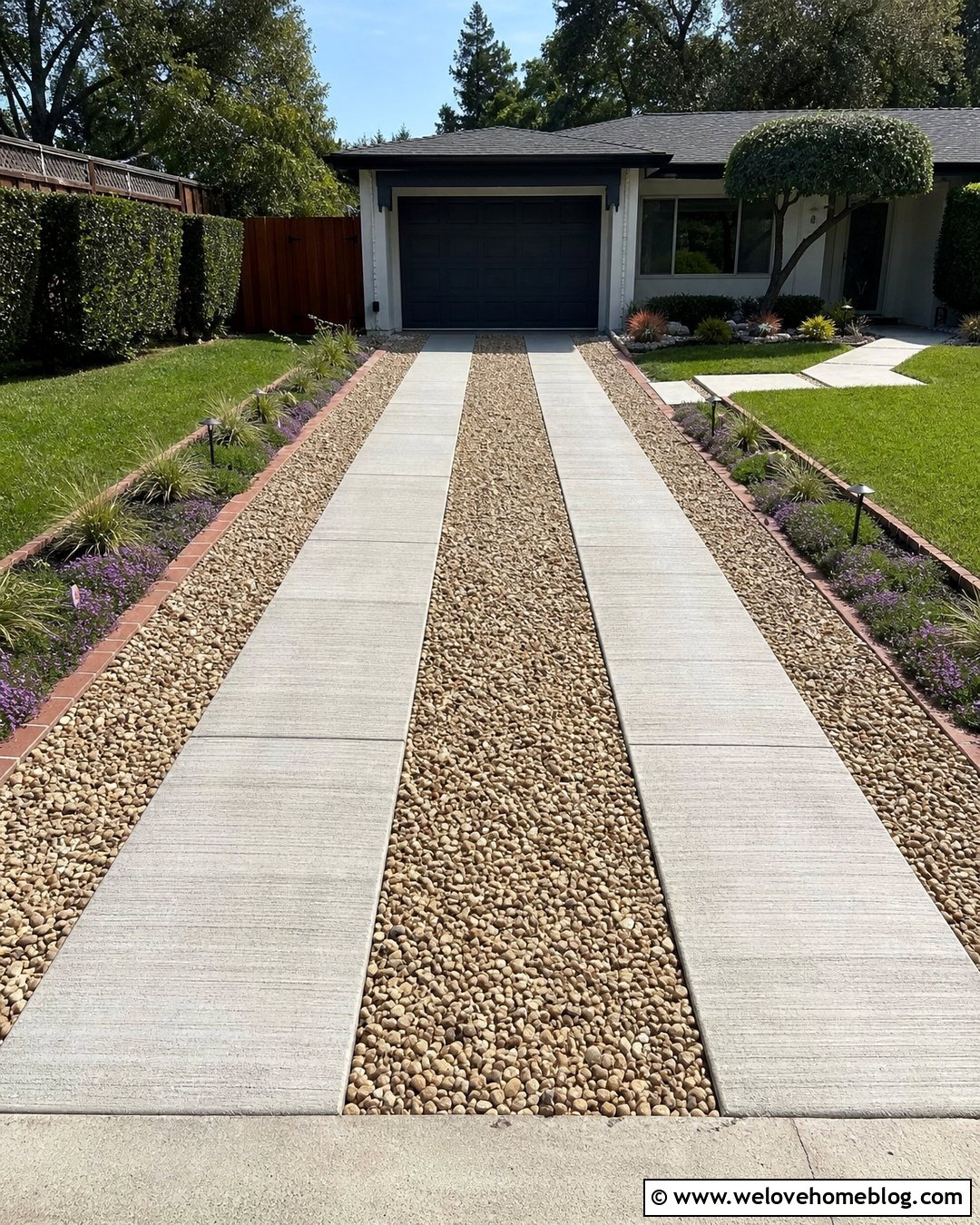
Concrete tire tracks offer a practical compromise for homeowners who want decorative pebbles without placing vehicle tires entirely on loose stone. Install two parallel strips of broom-finished concrete, then fill the center and outer sections with small gray or buff pebbles. Continue the tracks from the street to the garage for a clear, uninterrupted route. Brick or concrete edging can contain the exterior pebble bands. This layout works well for a small ranch house, cottage, or modern home with a narrow front yard. Plant creeping thyme, compact grasses, or low flowers beside the driveway, but keep the center stone-only for simple maintenance. Accurate track spacing is important, especially if vehicles of different sizes regularly use the driveway.
15. Sloped Pebble Driveway With Drainage Swale
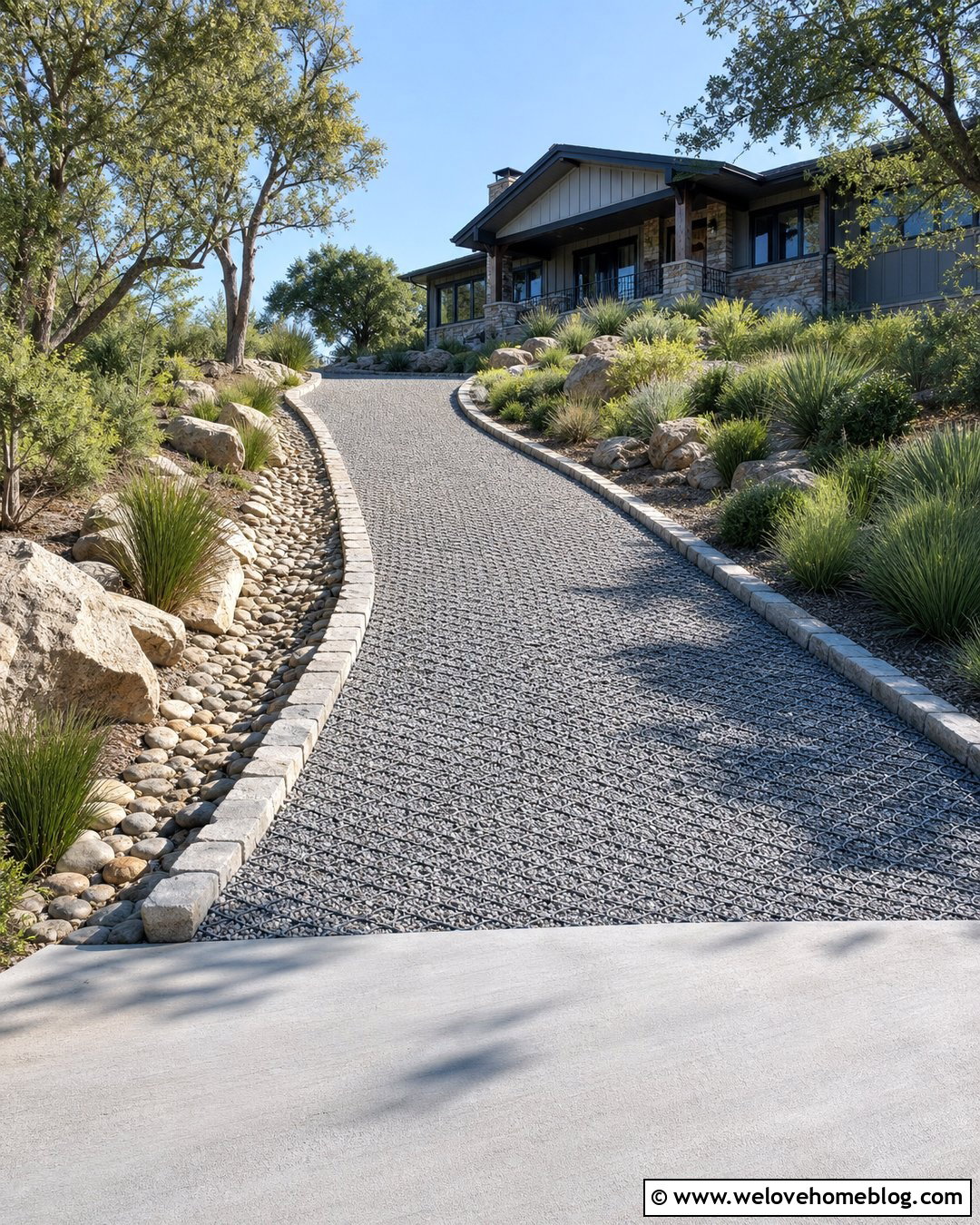
A sloped pebble driveway needs more than attractive stone because moving water can wash loose material downhill. Start with a properly graded and compacted base, then use stabilization cells filled with small angular pebbles or a pebble-gravel blend. Add a stone-lined swale beside the lower edge to guide runoff away from the driving surface and building foundation. Larger cobbles, water-tolerant grasses, and deep-rooted plants can make the drainage area look like part of the landscape. Concrete or stone curbs will help contain the driveway along the slope. This complete arrangement suits a hillside home or raised ranch. Drainage requirements vary by property, so significant grading and runoff work should be planned with an experienced local professional. ()
16. Small Pebble Driveway With Brick Edging
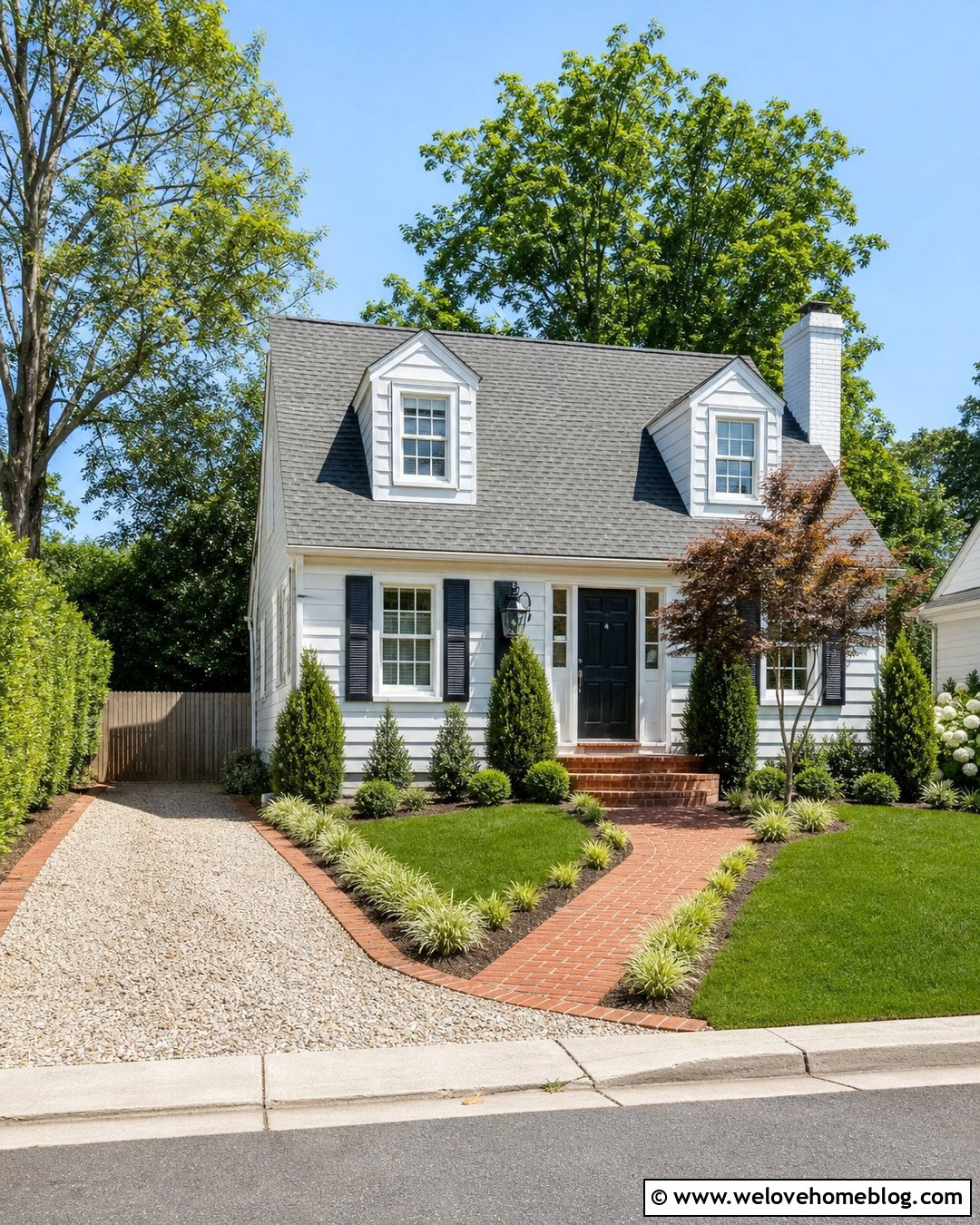
Limited front-yard space does not require a plain driveway. Cover a single-car layout with warm gray pea pebbles and surround it with a slim red brick edge. Lay the bricks vertically or in a simple soldier course to create definition without taking away valuable driving width. A matching brick walkway can branch toward the front steps, helping the compact area feel coordinated. Choose narrow planting beds with upright shrubs, dwarf grasses, and one small ornamental tree positioned away from vehicle doors. This look works beautifully with a Cape Cod home, bungalow, or brick cottage. Keep decorative features low and simple because too many colors or borders can make a small driveway feel crowded. One pebble blend and one edging material are usually enough.
17. Long Pebble Driveway With Tree-Lined Borders
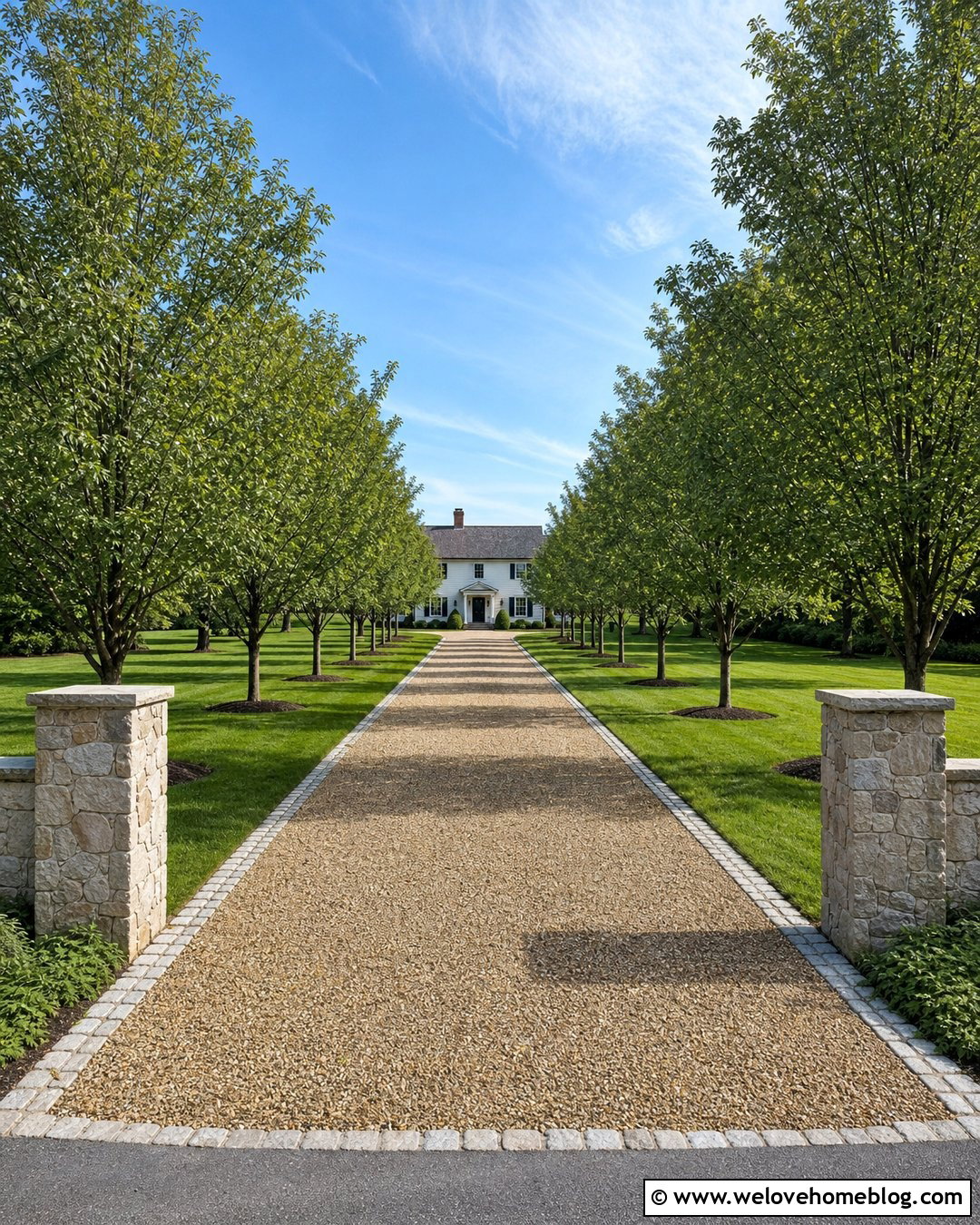
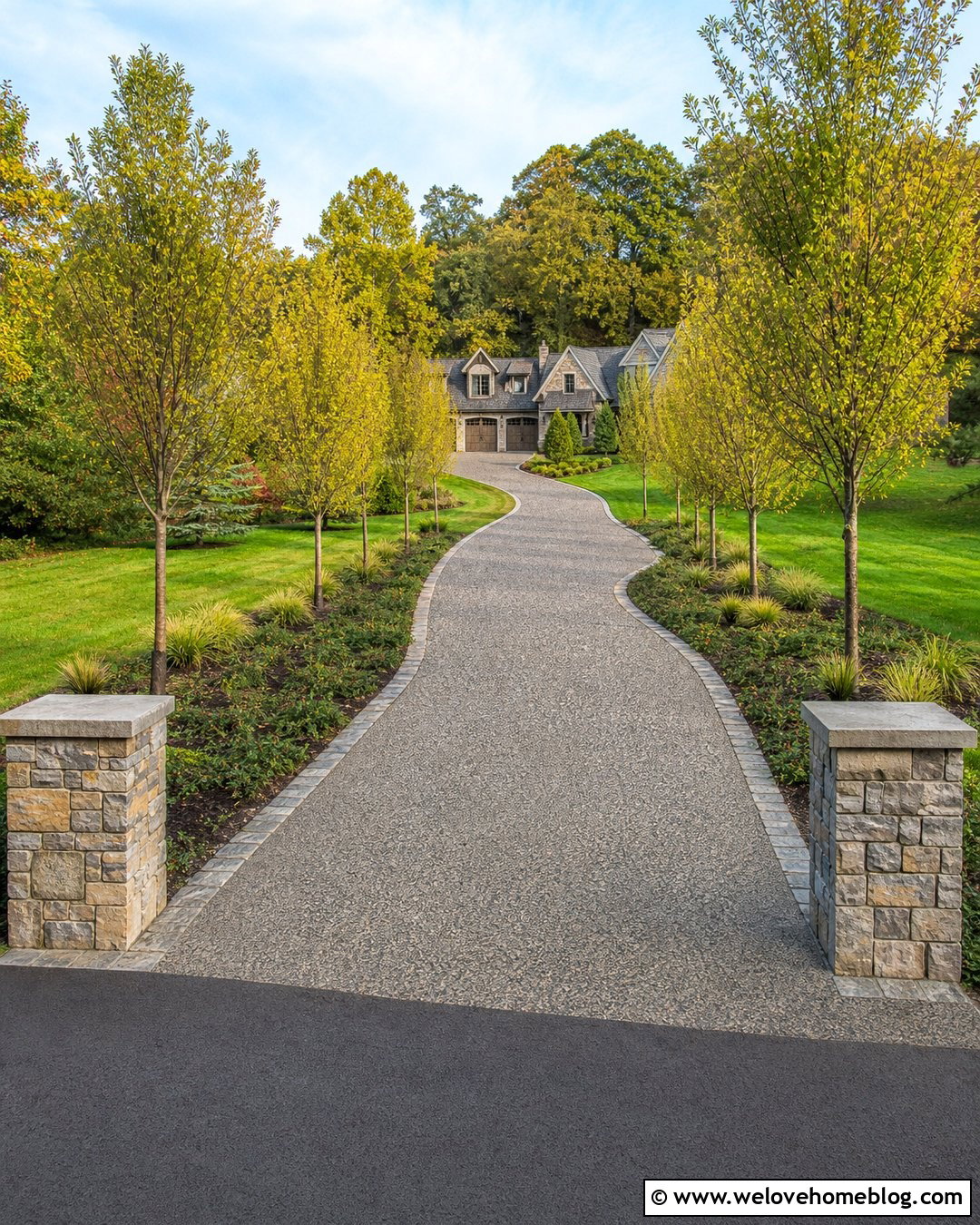
A long driveway becomes an experience when evenly spaced trees guide the view toward the house. Use compacted golden-brown pebbles on a straight lane with durable stone curbs or flush cobblestone edging. Plant matching deciduous trees far enough from the driving surface to allow for mature trunks, branches, and roots. Between the trees, use lawn or low ground cover to preserve an open, orderly appearance. Place simple stone entrance pillars at the road, then repeat the same masonry near the house or parking court. This complete design complements a farmhouse, country estate, or traditional home on a deep lot. Plan lighting, drainage, snow access, and passing space early, since maintaining a long pebble driveway requires more than selecting an attractive surface color.
18. Pebble Parking Court With Paver Apron
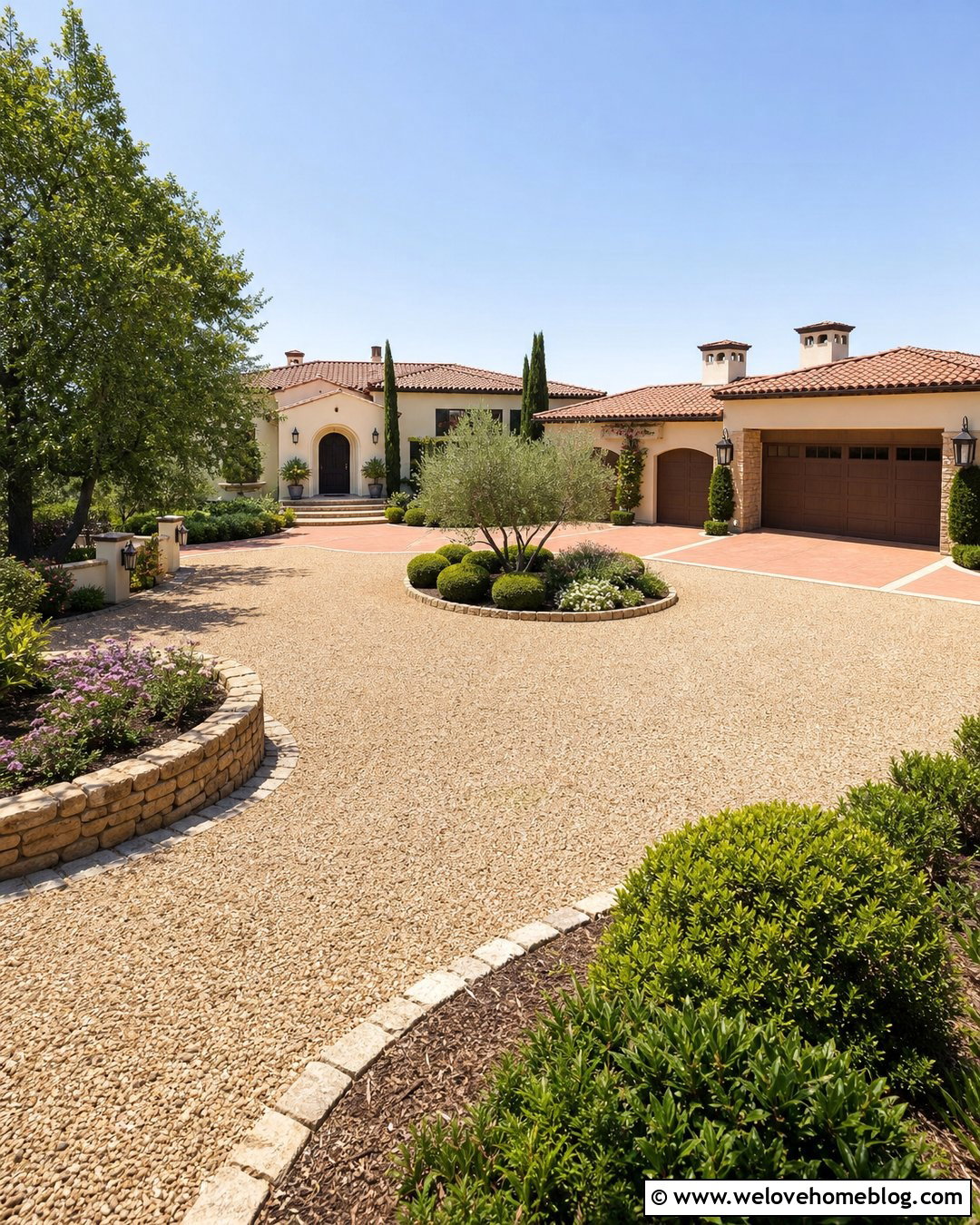
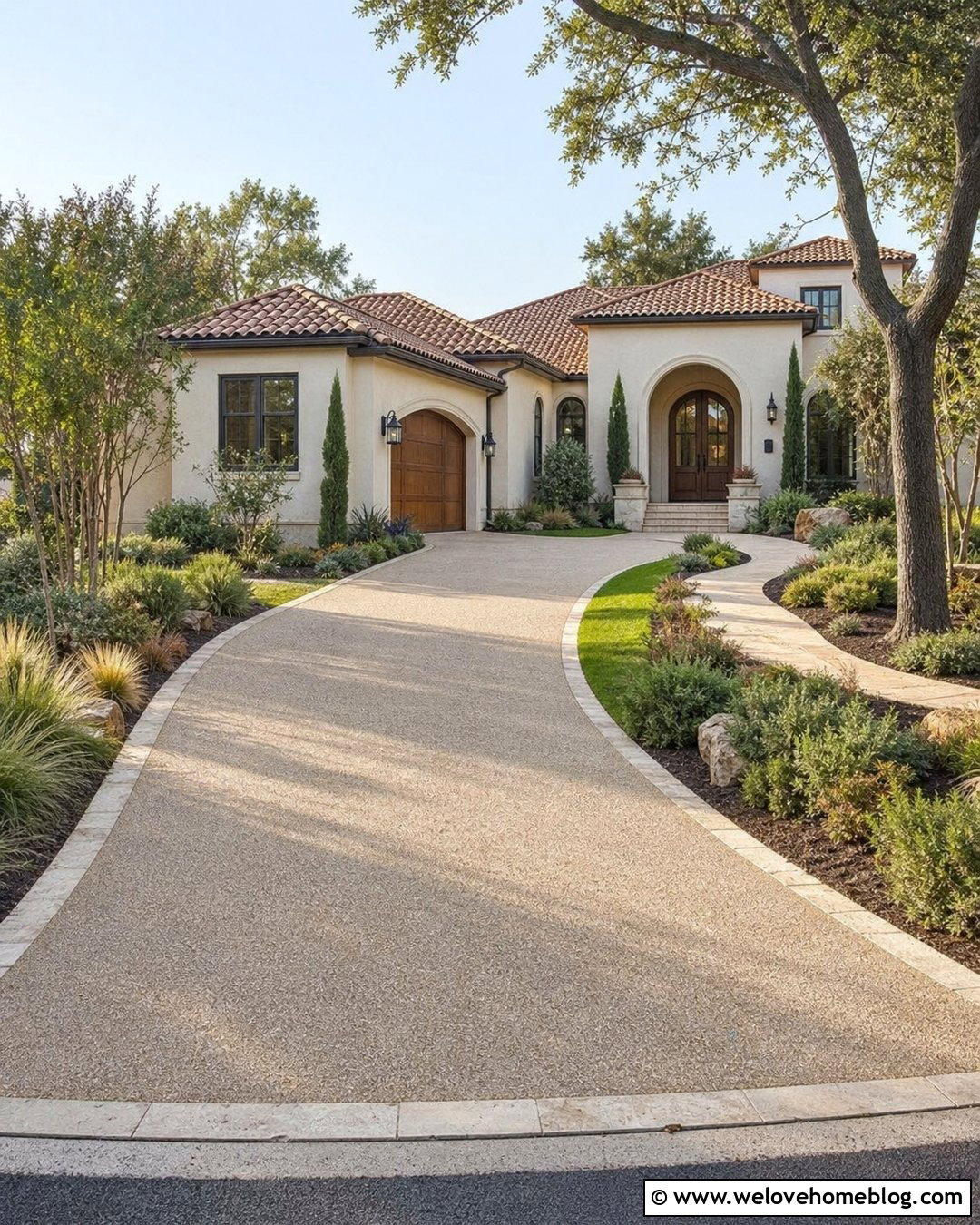
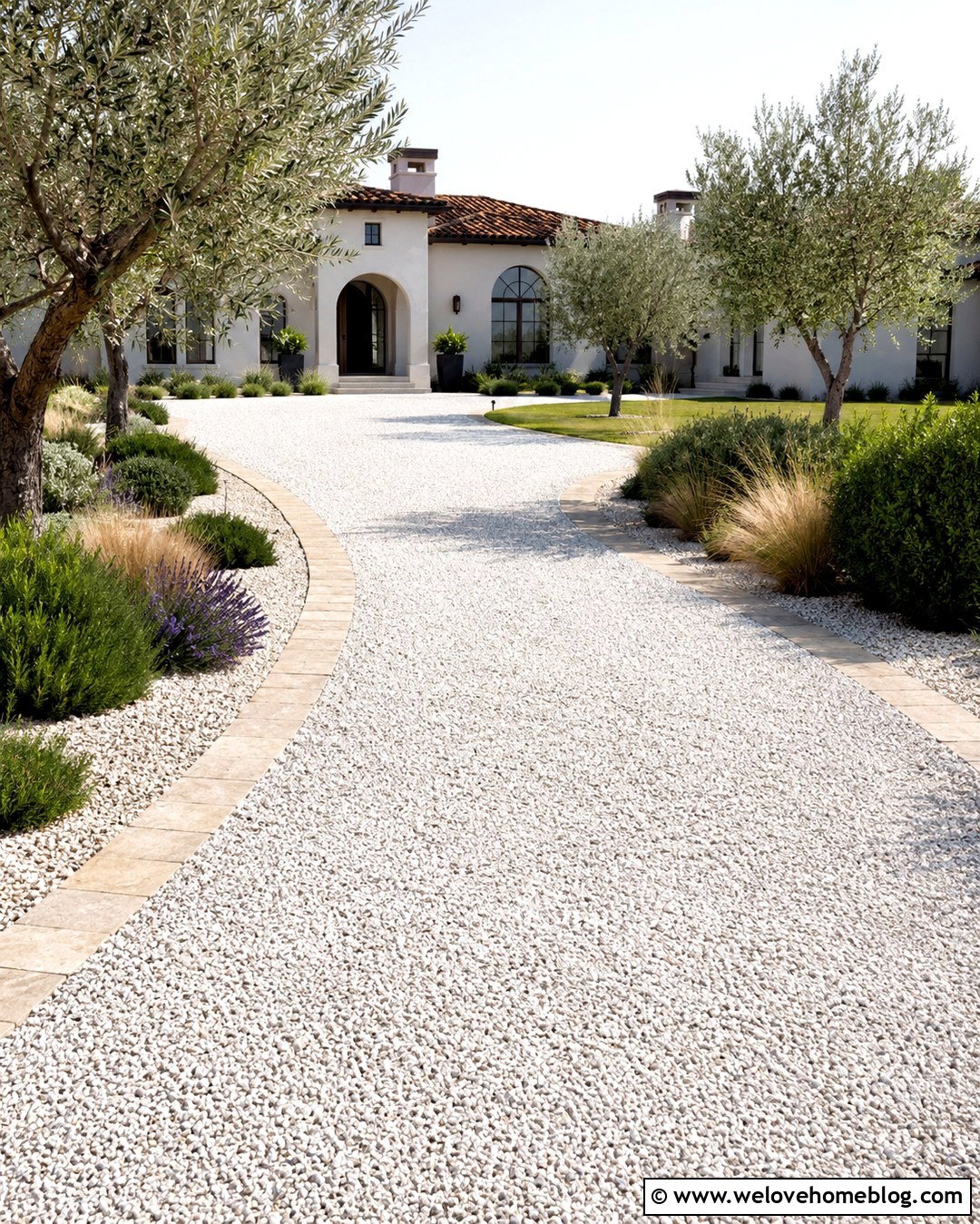
A broad parking court can feel more like a landscaped courtyard when the pebble surface is divided into clear functional zones. Use small beige pebbles for the main court and install a wide paver apron directly in front of the garage. The stable apron provides a strong visual transition and a defined place for turning. Frame the outer court with low stone walls, evergreen shrubs, and a central planting island if space permits. An arched or fan-shaped edge can soften the wide layout in front of a Mediterranean or stucco home. Choose pavers that echo the roof, facade, or entry steps. Keep plants away from turning paths, and make sure the court provides enough room for vehicles to maneuver without repeatedly crossing the landscaped edges.
19. Cottage Pebble Driveway With Flower Borders
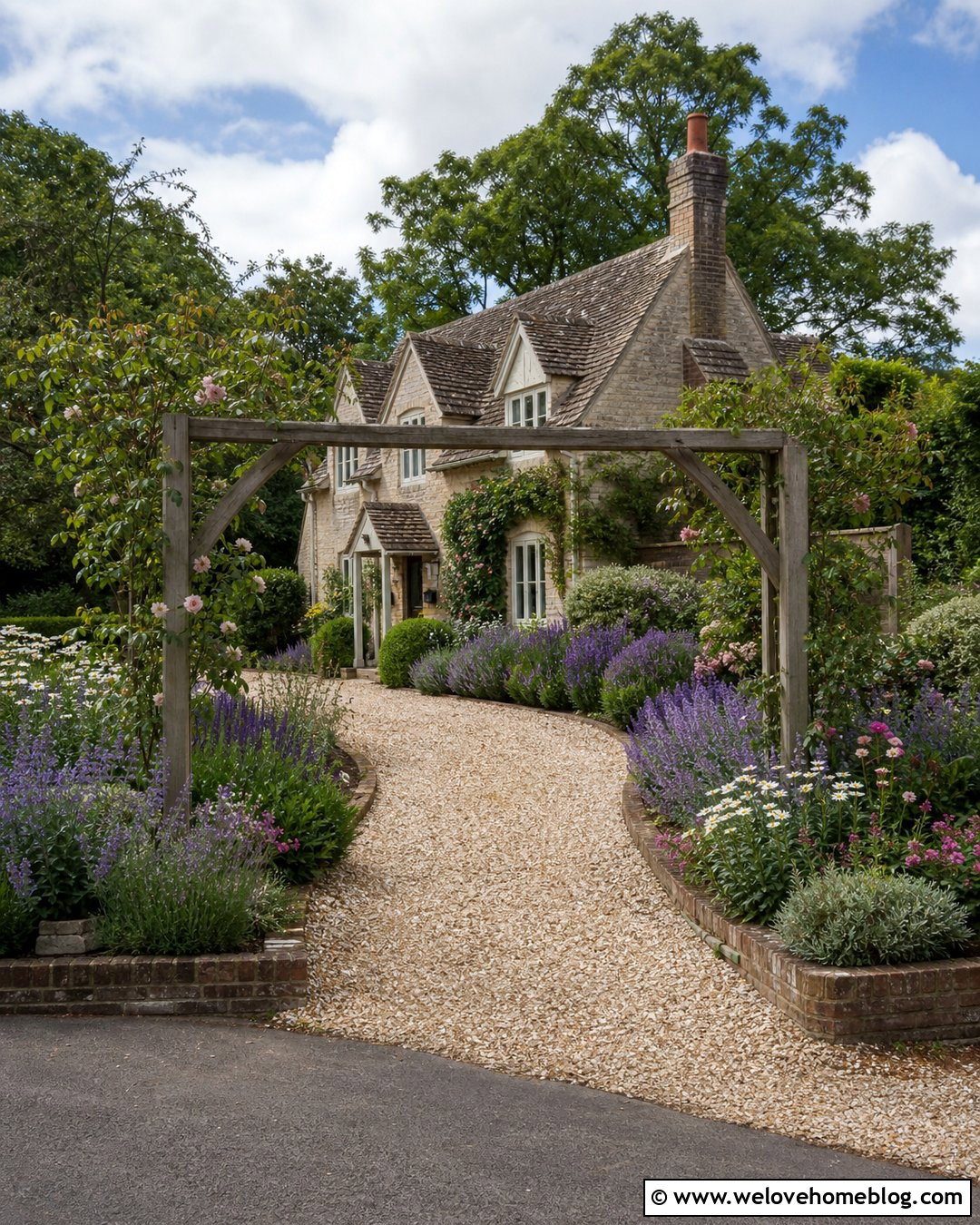
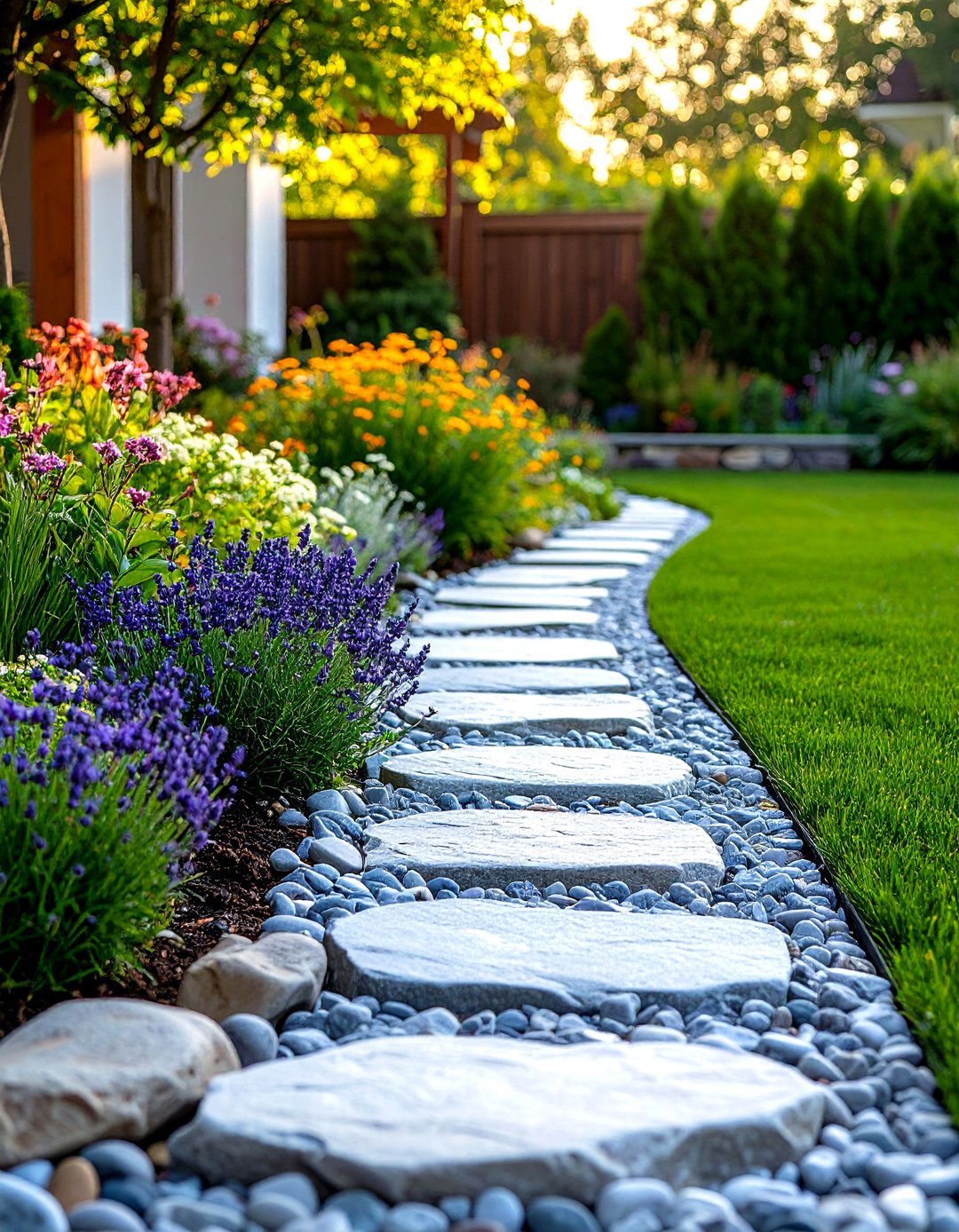
Colorful flower borders can soften a simple pebble driveway and make a cottage entrance feel immediately welcoming. Choose a curved surface made from warm cream and honey-colored pebbles, then contain it with low brick or reclaimed stone edging. Plant lavender, catmint, salvia, daisies, and compact roses in layered beds along the outer borders. Repeating several plants creates a calmer result than using a different variety in every available spot. Allow a few soft stems to lean toward the edging, but keep mature growth away from the driving lane. A matching pebble walkway can continue to the porch of an English cottage, Tudor-inspired home, or small traditional house. Add a modest wooden gate or arbor near the entrance for extra definition.
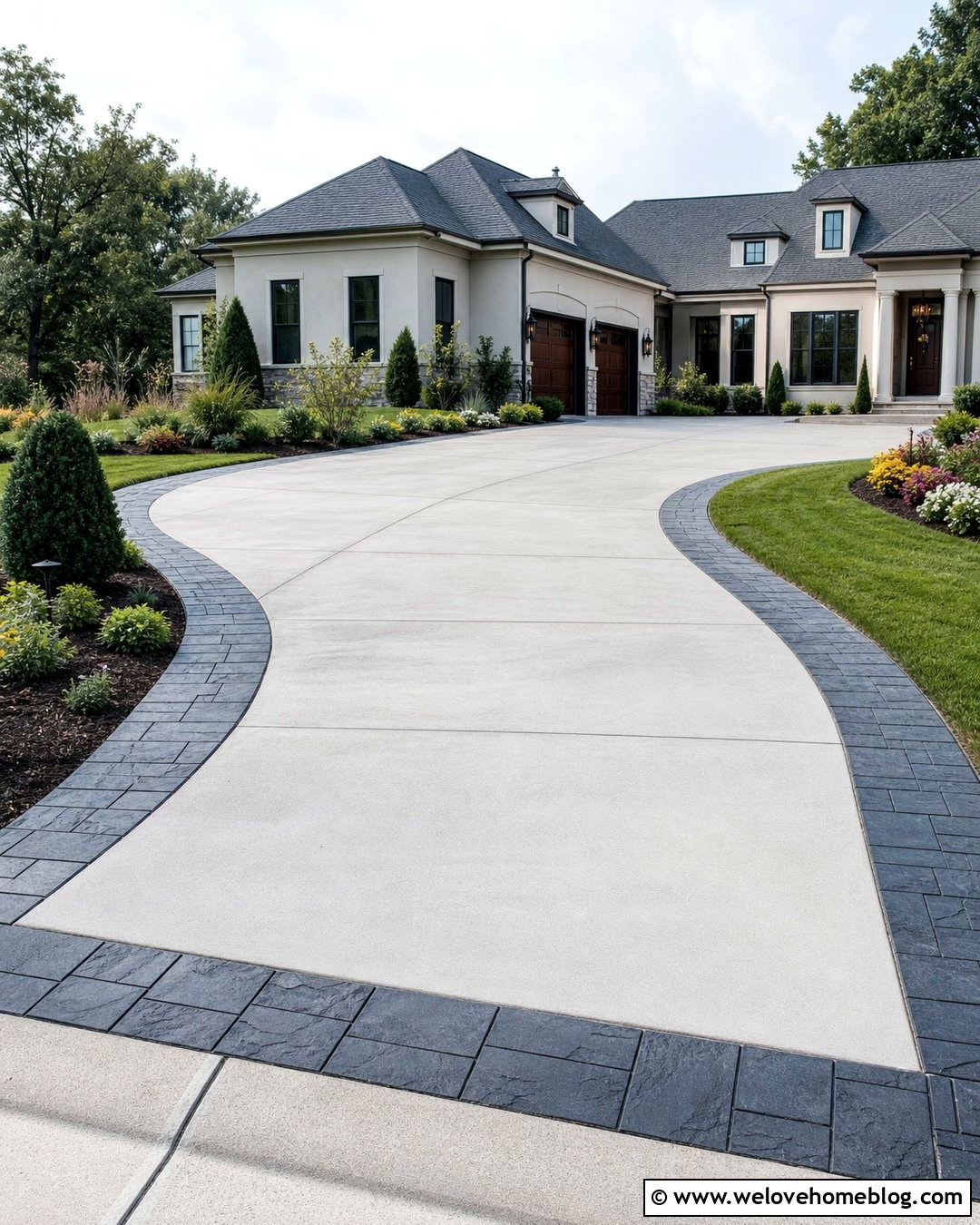
20. Resin-Bound Pebble Driveway With Modern Landscaping
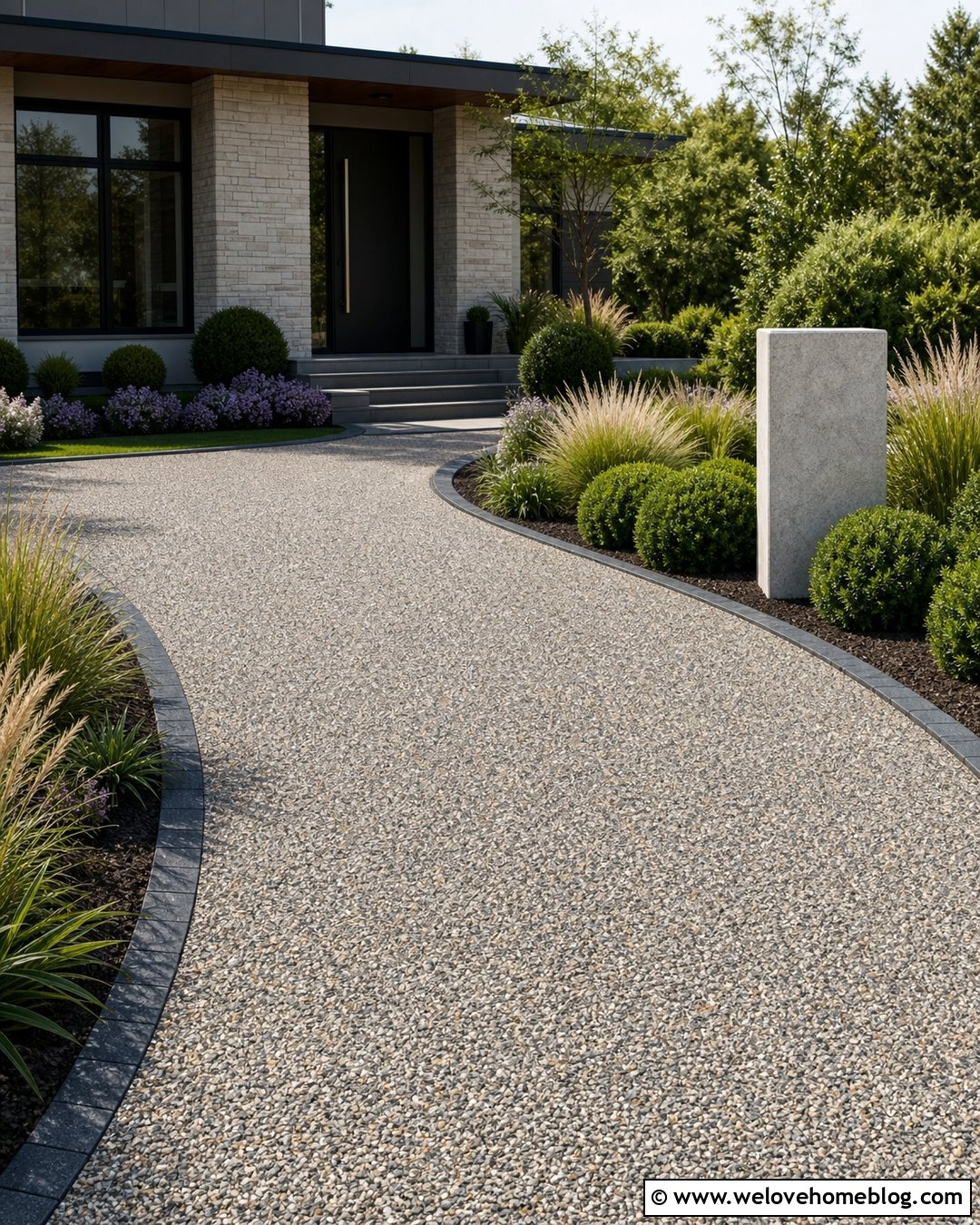
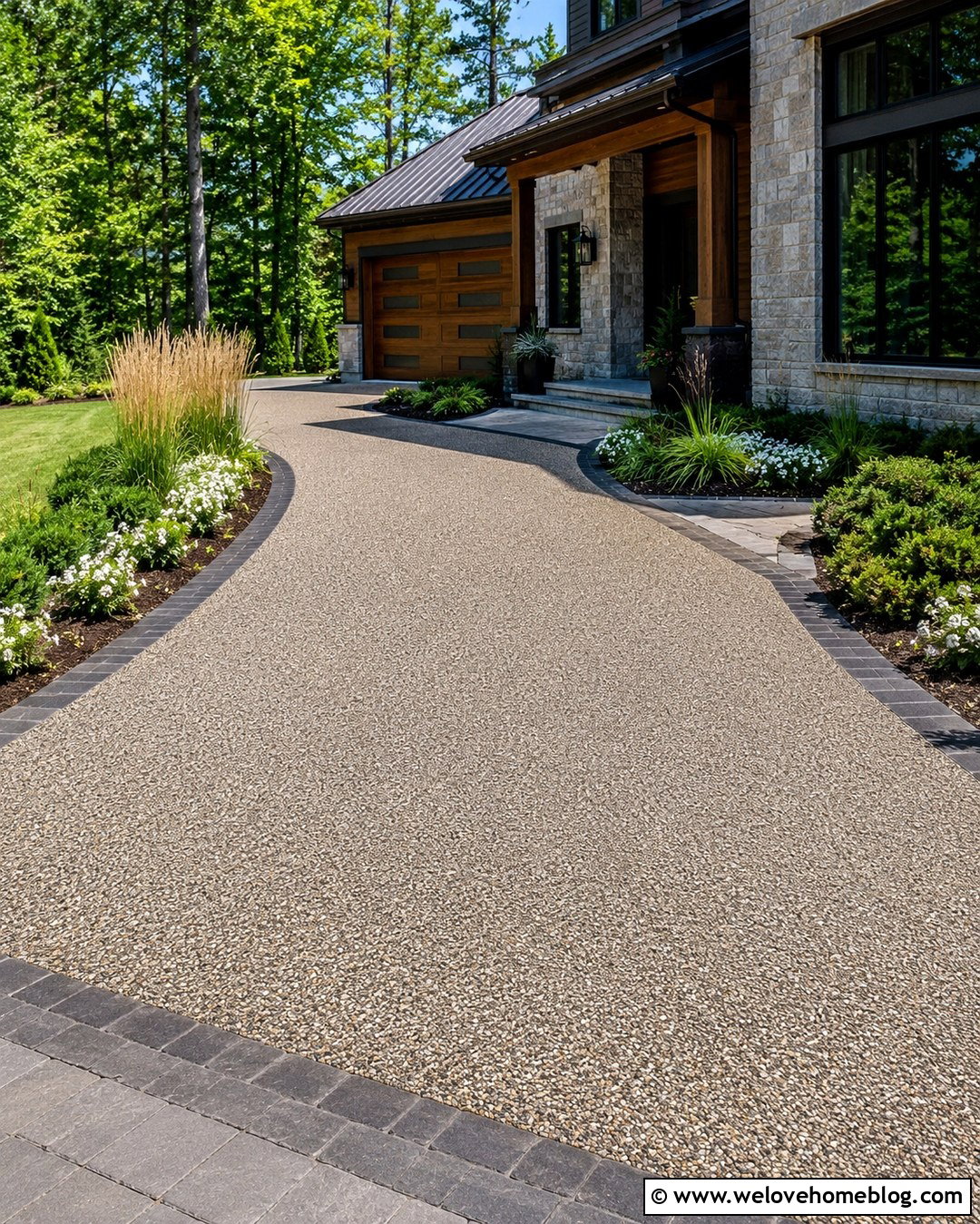
Resin-bound pebbles provide the visual texture of small stones in a smoother, more unified surface. Select a natural gray and beige pebble blend for a curved driveway leading to a contemporary home. Frame it with dark concrete edging and broad planting beds containing grasses, rounded evergreens, and low flowering perennials. Large-format concrete slabs can form the walkway, while a minimalist address pillar marks the entrance without obstructing the view. This design is useful when a homeowner loves the pebble appearance but prefers a surface that does not require frequent raking. Product performance depends on correct preparation, drainage, aggregate selection, and installation, so follow the chosen system’s specifications. Avoid placing ordinary decorative resin over an unstable base or unsuitable loose stone.
Conclusion:
The best pebble driveway combines an attractive stone blend with a shape, border, and landscape that fit the property. These 20 pebble rock driveway ideas demonstrate how the same natural material can suit cottages, modern homes, ranch houses, coastal properties, and country estates. Before choosing a look, consider vehicle movement, slope, drainage, snow removal, and the amount of maintenance you can manage. Rounded pebbles offer a soft appearance, while stabilization grids, strong edging, paver aprons, or resin-bound systems can create greater control. Most importantly, treat the driveway as part of the entire front yard. Repeating colors and materials from the home will produce a finished, cohesive entrance.

Related posts:
Leave a Reply