
River rock brings natural color and texture to concrete without sacrificing the clean, permanent look homeowners expect from a paved surface. These 20 river rock concrete driveway ideas explore complete designs rather than isolated details. You will find exposed aggregate finishes, curved layouts, contrasting borders, decorative aprons, modern concrete bands, and landscaping that connects the driveway to the home. Rounded pebbles can create a softer appearance than sharp crushed stone, while thoughtful edging makes the surface look polished and intentional. Color, exposure depth, drainage, and control-joint placement should be planned with an experienced concrete contractor before installation. Exposed aggregate can also be paired with smooth, colored, or stamped concrete for greater definition. () Use these 20 river rock concrete driveway ideas to find a layout that complements your property.

1. Tan River Rock Concrete Driveway With Brick Border
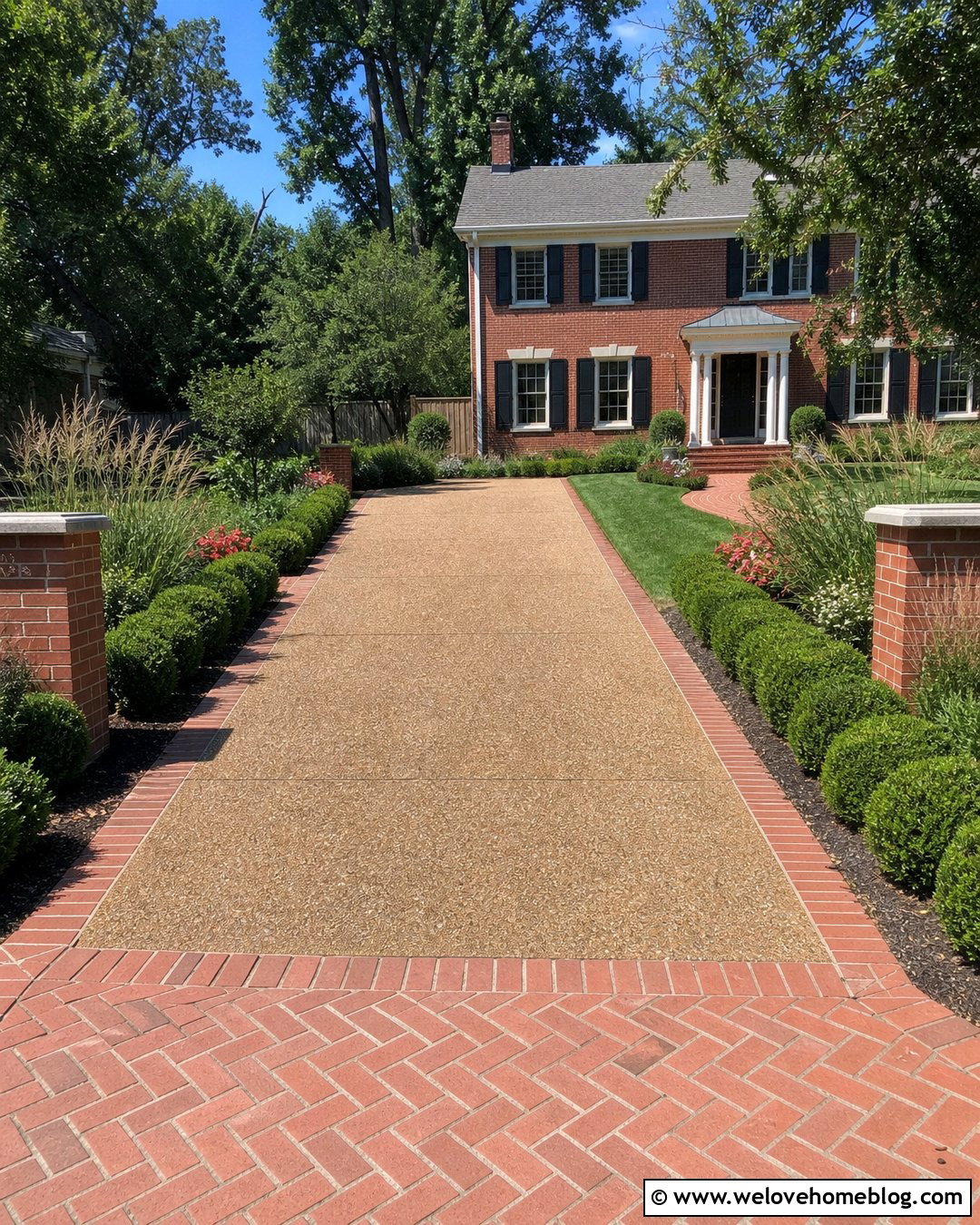
Warm tan river rock creates an inviting exposed aggregate surface that works especially well with traditional brick homes. Use a straight driveway layout to keep the approach simple, then frame both sides with a narrow red or brown brick border. A matching brick apron at the street can make the entrance feel more established. Along the edges, add curved planting beds with boxwoods, ornamental grasses, and seasonal flowers. The rounded stones soften the formal appearance of the brick and help connect the hardscape to the garden. Choose a warm beige concrete base so the cement blends with the pebbles instead of overpowering them. Brick borders can also define the driveway clearly where it meets the lawn and front walkway. ()
2. Gray River Rock Concrete Driveway With Charcoal Border

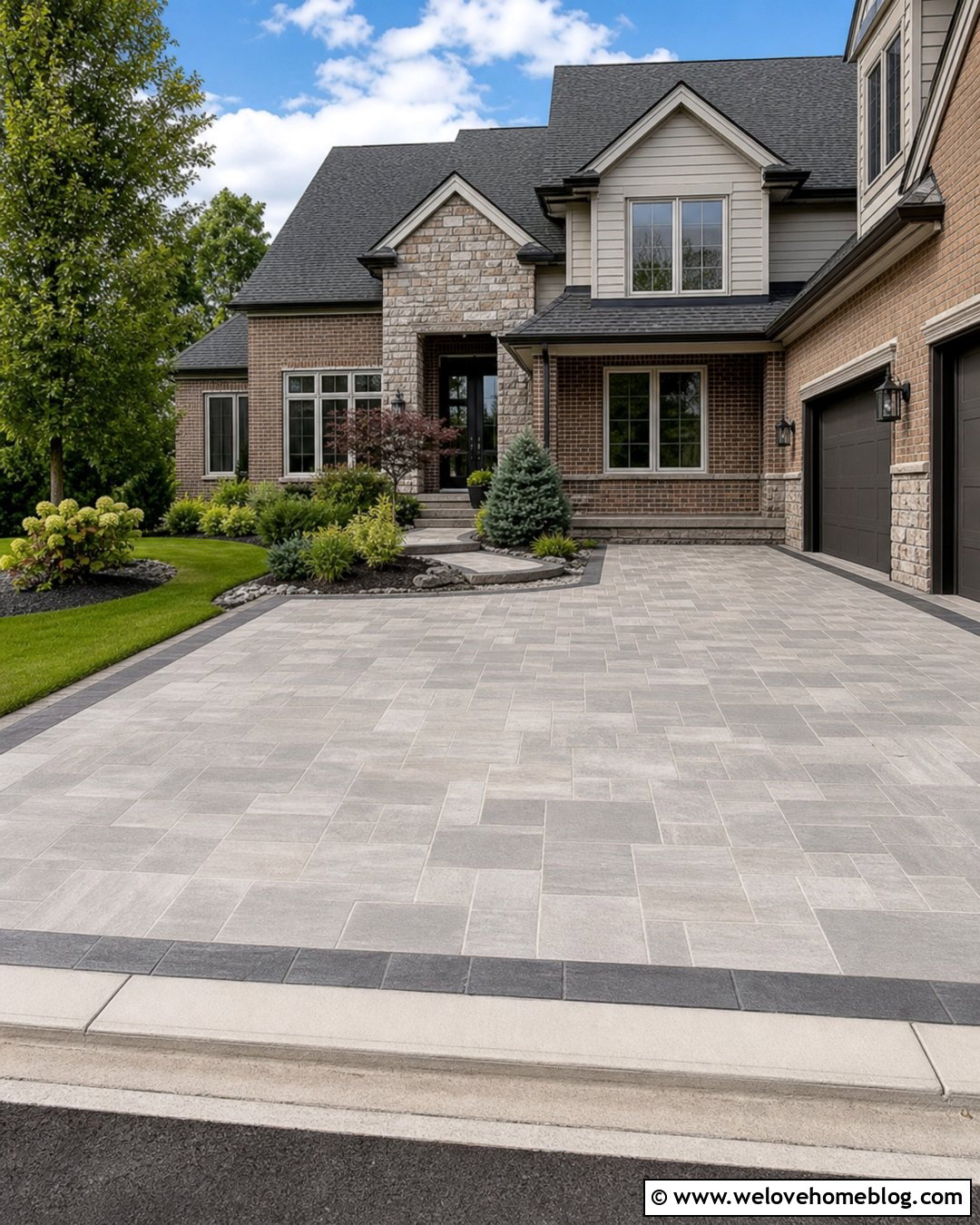
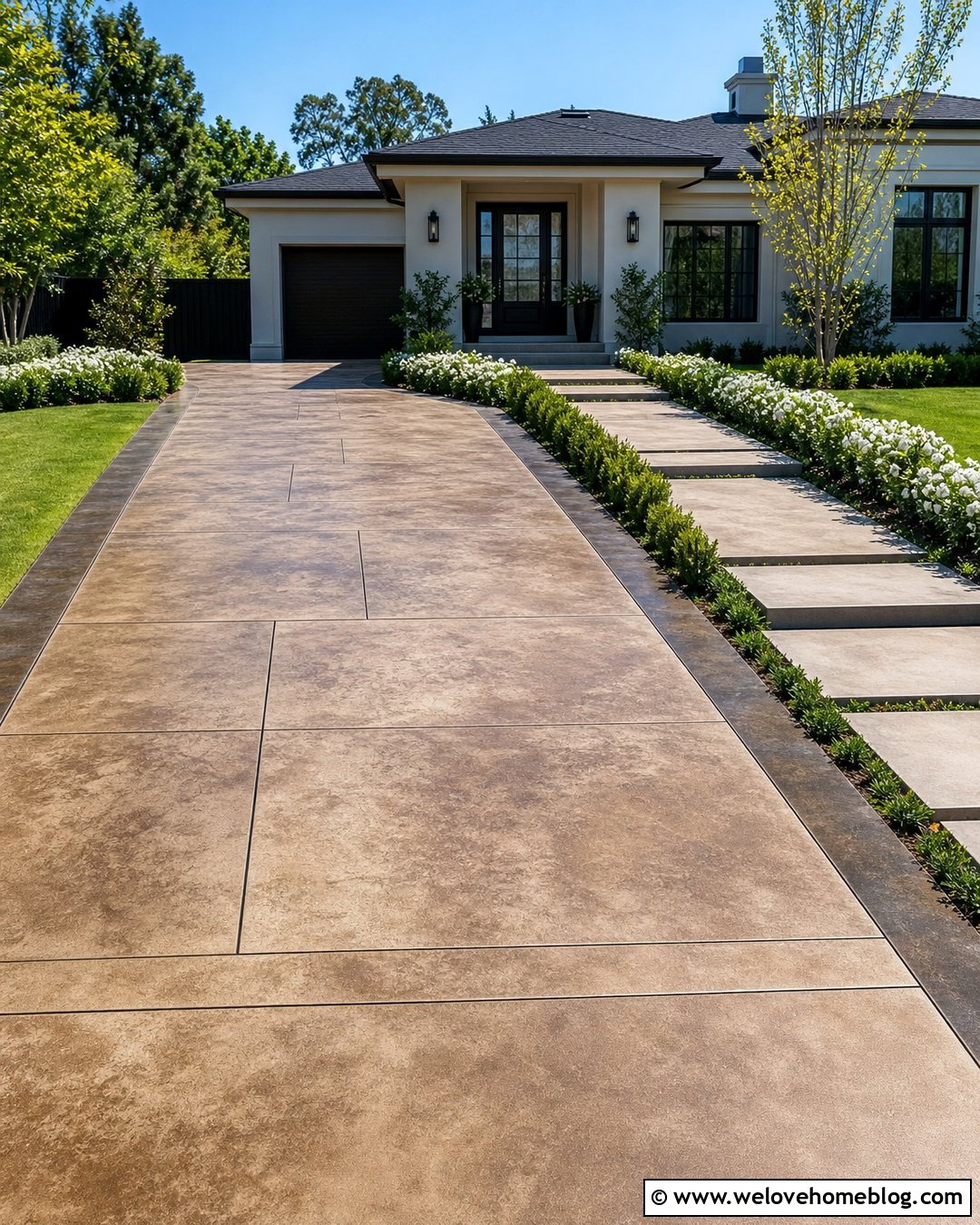
For a clean contemporary look, combine gray river rock exposed aggregate with a charcoal stamped concrete border. The darker frame creates strong definition while allowing the small stones within the main surface to remain visible. A gently curved layout can guide attention toward a modern or transitional home without making the driveway feel overly formal. Repeat the charcoal color in the front steps, walkway edging, or large planters near the garage. Low grasses, clipped shrubs, and beds of dark landscape rock will reinforce the simple color scheme. Choose river pebbles in mixed gray, cream, and muted brown tones for depth. A contrasting stamped border can emphasize the driveway’s flowing shape and visually connect it with adjoining landscape beds. ()
3. White River Rock Concrete Driveway With Grass Strips
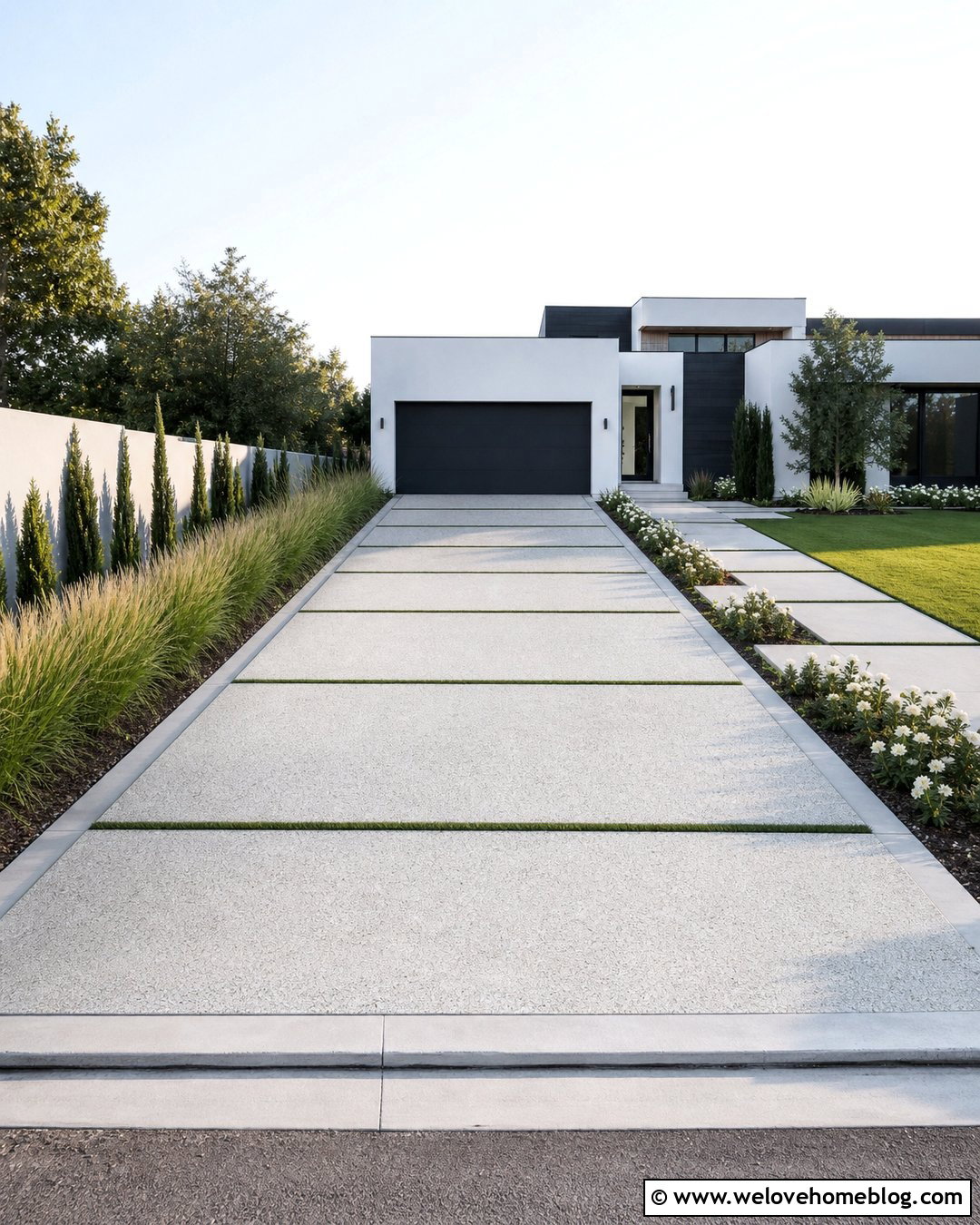
Small white and pale gray river pebbles can give exposed aggregate concrete a bright appearance that suits a modern home. Divide a wide, straight driveway into large rectangular sections using narrow grass strips or durable ground cover. The green lines break up the paved area and introduce a softer visual rhythm. Keep the driveway edges simple with flush concrete curbing, then plant structured beds with dwarf evergreens, feather reed grass, and white flowering perennials. This design is most practical on a relatively level property where the planted joints will not interfere with drainage or regular maintenance. Coordinate the driveway with oversized concrete walkway slabs. The finished entrance will feel open and modern while still displaying the natural variation found in river rock.
4. Circular River Rock Concrete Driveway With Center Garden
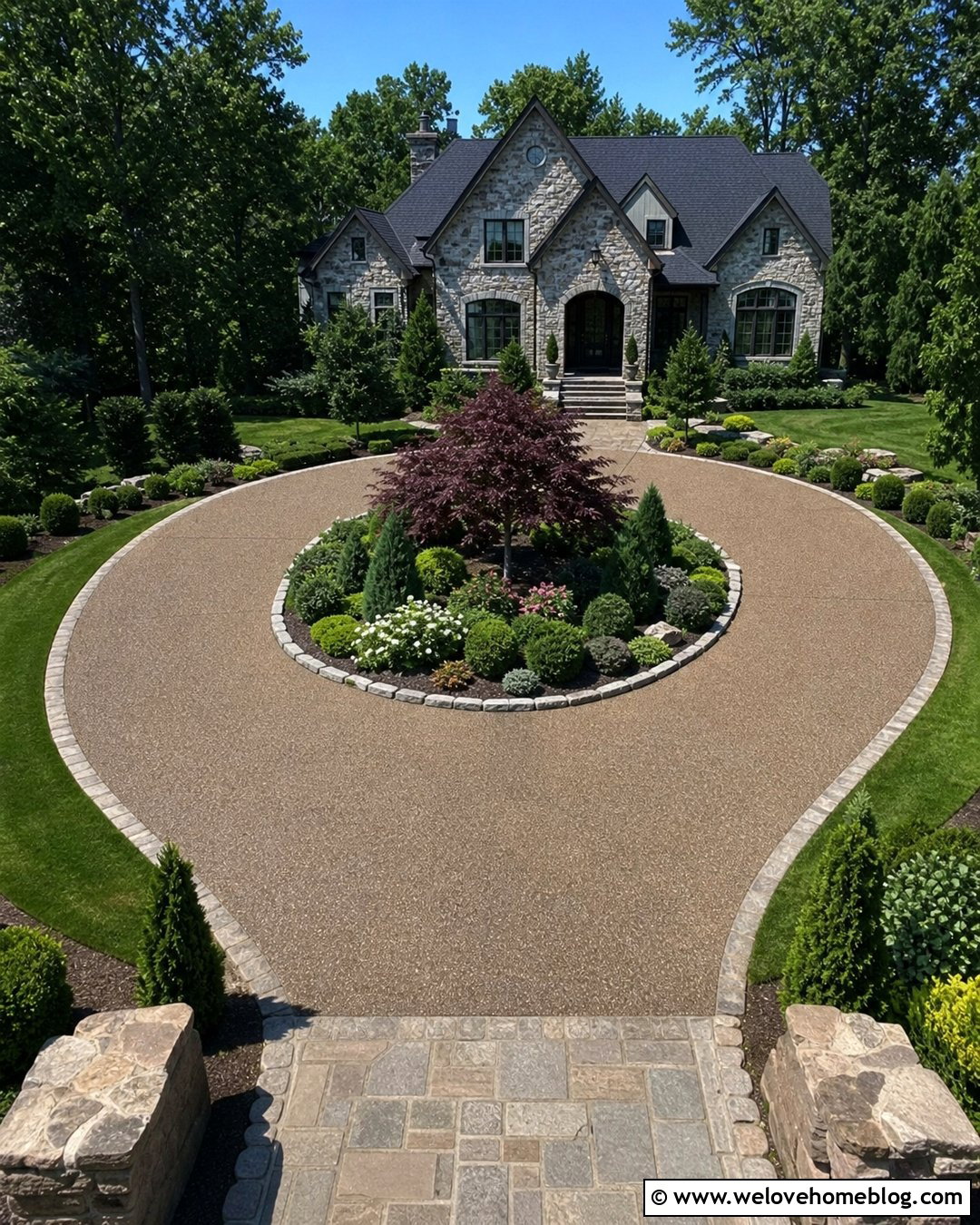
A circular river rock concrete driveway creates an impressive arrival area while improving movement around a spacious front yard. Use a medium-brown exposed aggregate finish for the driving surface and define the inner circle with natural stone curbing. Inside, build a layered garden with a small ornamental tree, evergreen shrubs, flowering perennials, and low ground cover. Keep taller plants near the center so drivers maintain clear views around the curve. A matching river rock walkway can branch toward the front porch, creating continuity between the entrance and house. At the street, consider widening the driveway slightly with a decorative stone apron. Carefully planned bands and borders can help large concrete areas appear more detailed and visually organized. ()
5. River Rock Concrete Driveway With Cobblestone Grid
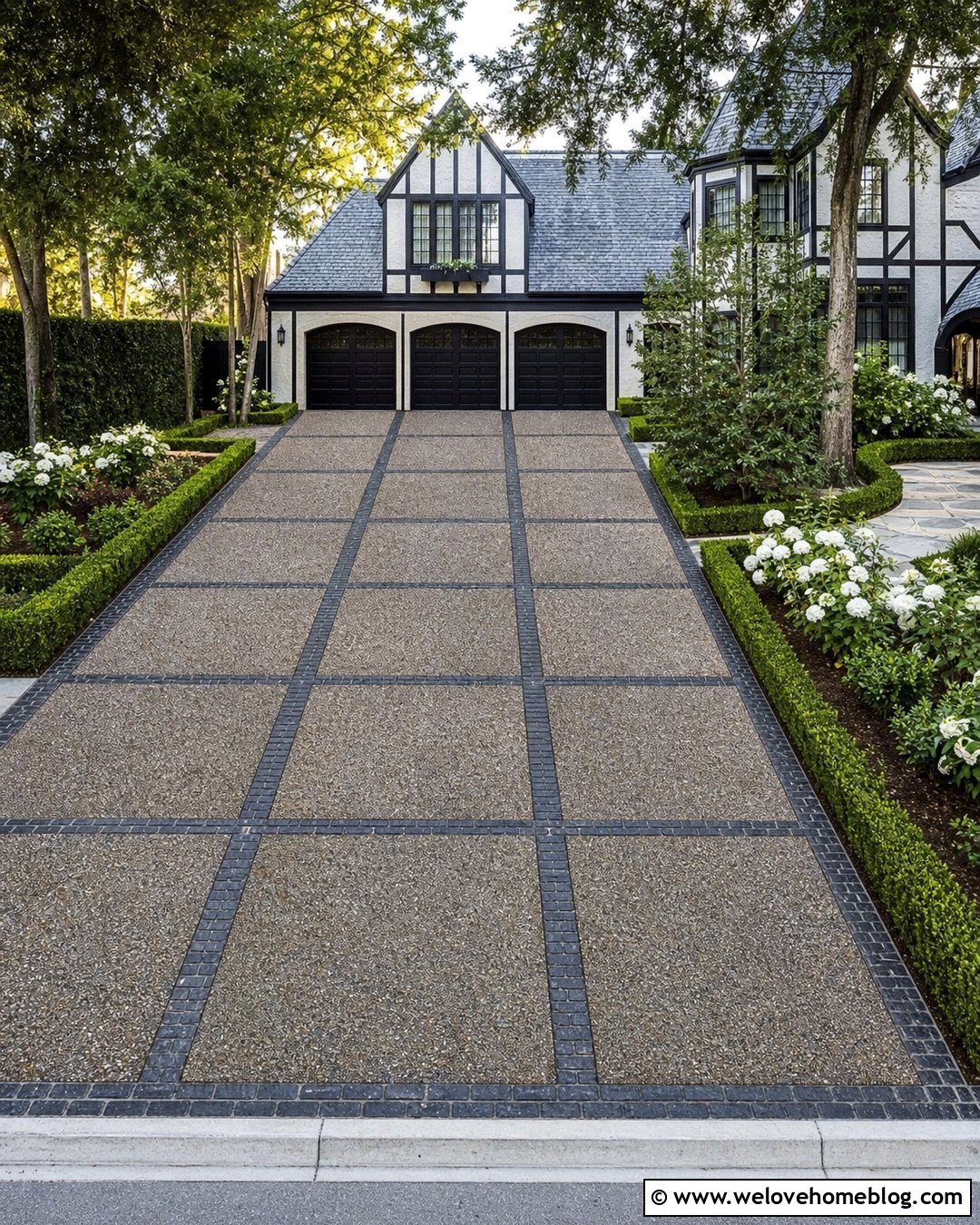
A cobblestone grid can turn a broad river rock concrete driveway into a more structured and elegant surface. Divide the exposed aggregate field into large rectangular panels using narrow bands of gray or charcoal cobblestone. The grid provides contrast and helps the expansive driveway relate to a large colonial, Tudor, or European-inspired house. Continue the cobblestone around the outer edge and across the street apron for a complete appearance. Formal hedges and symmetrical planting beds will complement the strong geometry. Place lantern-style fixtures near the garage or entrance pillars, but keep the center of the driveway unobstructed. Decorative grid patterns can be coordinated with appropriate concrete joints, although the structural layout should always be determined by the installer. ()
6. Modern River Rock Concrete Driveway With Smooth Bands
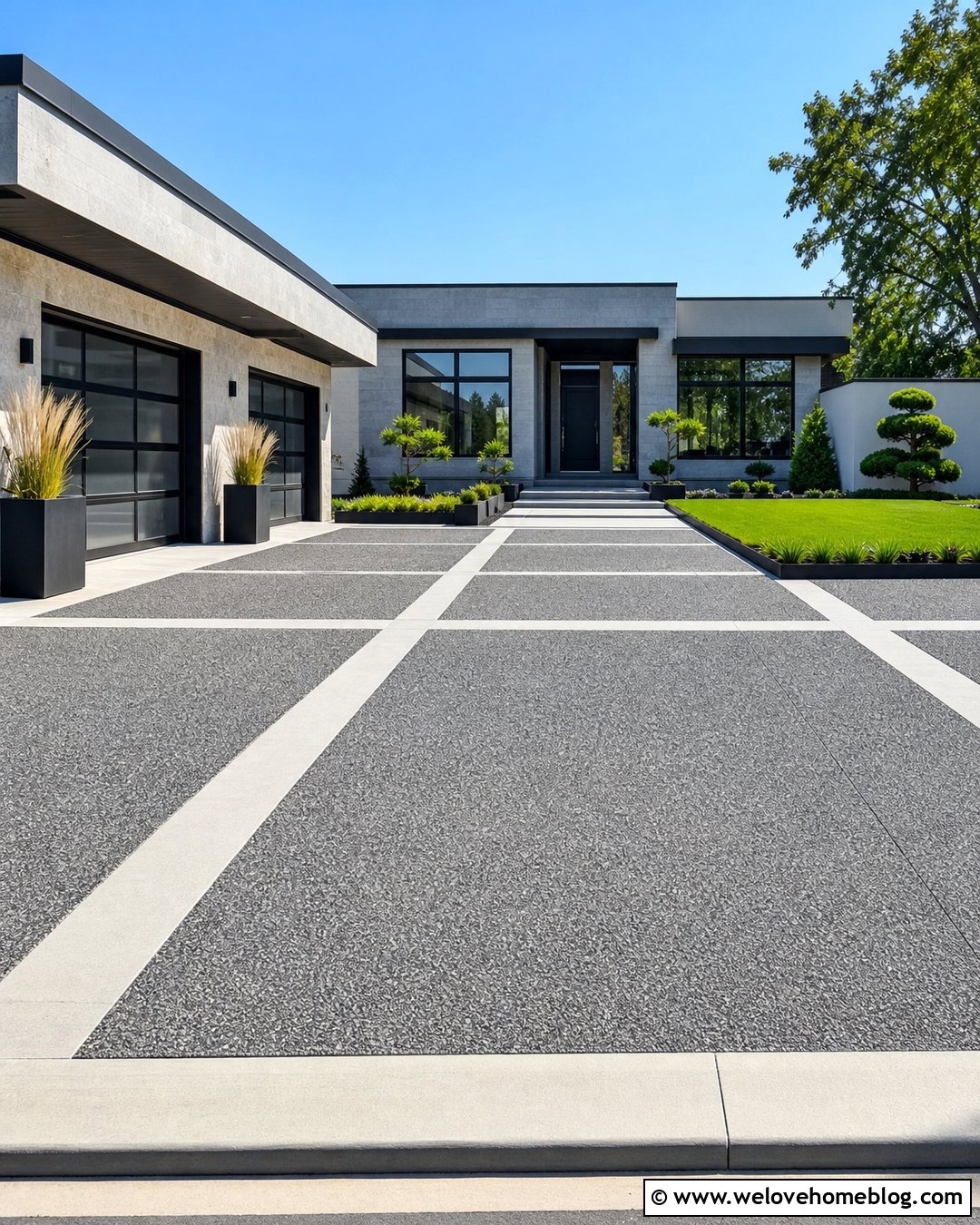
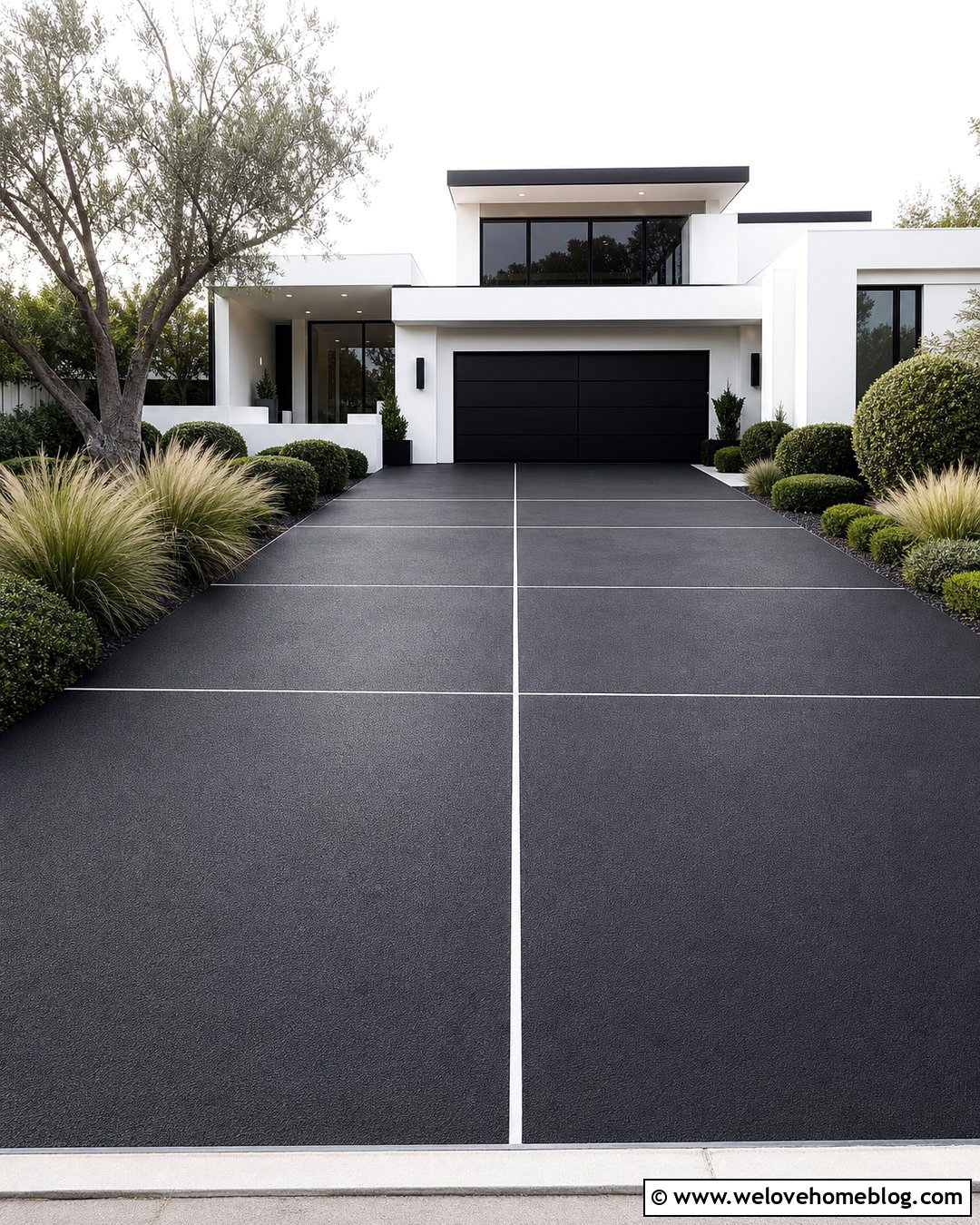
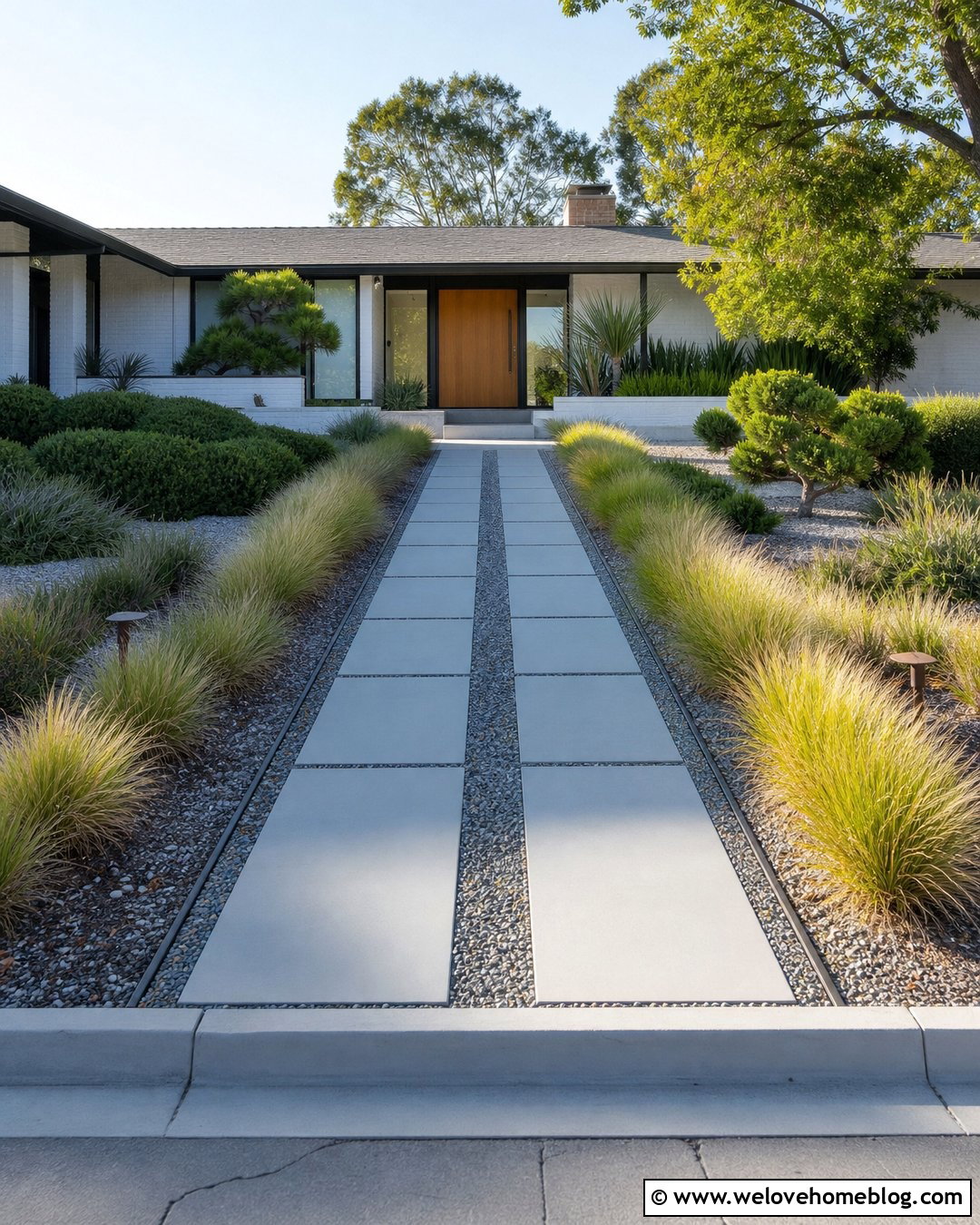
Do you want natural texture without making a modern facade look too rustic? Pour rectangular fields of fine gray river rock exposed aggregate and separate them with wide bands of smooth concrete. The smooth strips create an orderly grid while the pebbled panels introduce subtle color and texture. Use crisp, straight edges and a flush transition to the sidewalk. Black metal planters, architectural grasses, and neatly shaped evergreen shrubs will reinforce the contemporary setting. Match the smooth bands to the home’s pale concrete, stucco, or fiber-cement exterior. A direct walkway can align with one of the driveway bands, making the entrance feel intentionally connected. Combining exposed and smooth concrete finishes is an effective way to create contrast without introducing another paving material. ()
7. River Rock Concrete Driveway With Brick Apron
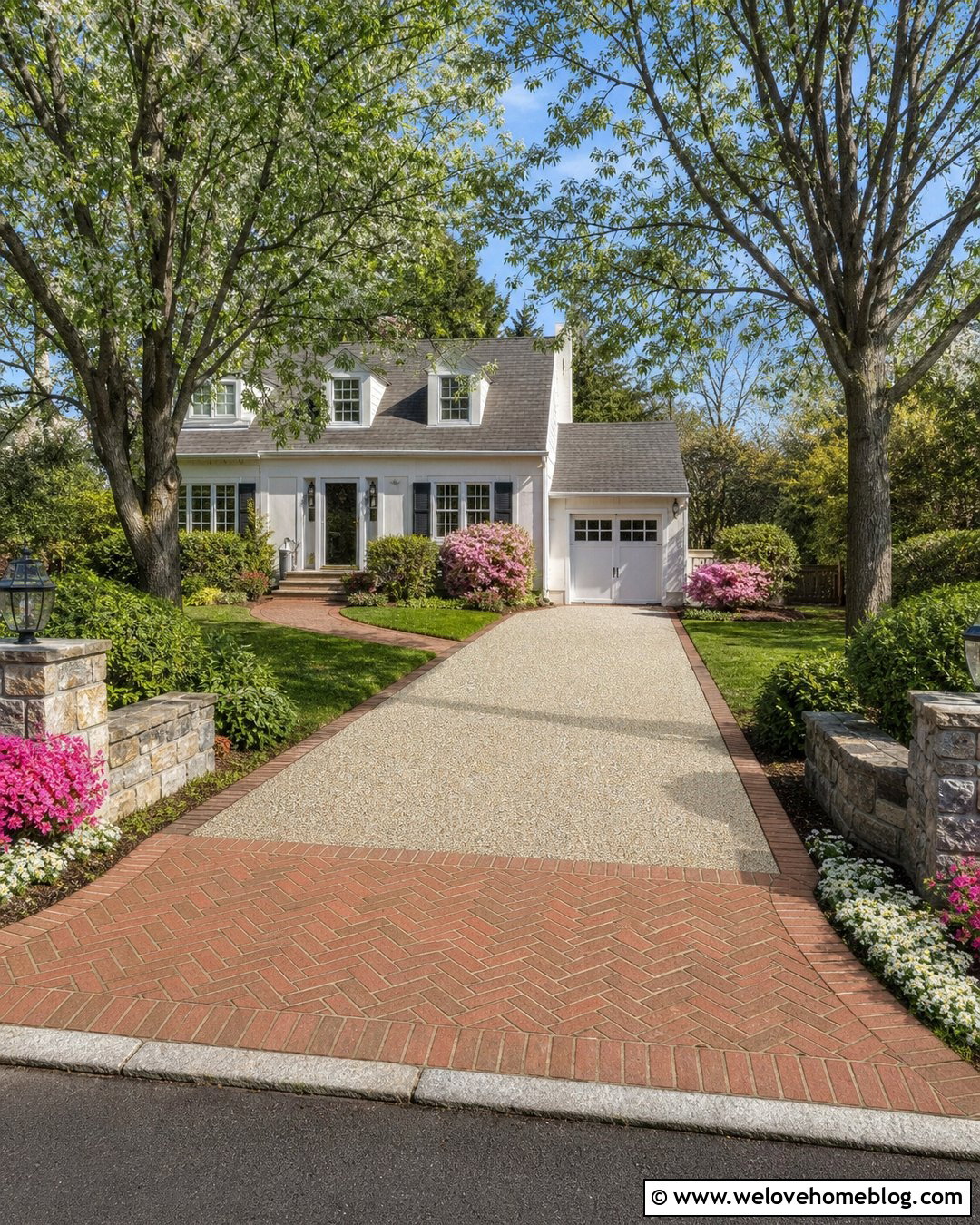
A decorative brick apron gives a river rock concrete driveway a clear and welcoming starting point. Choose multicolored tan exposed aggregate for the main straight driveway, then install clay brick pavers across the first portion near the street. A herringbone pattern can add character while resisting a visually repetitive appearance. Carry a single brick row along both driveway edges to connect the apron with the garage. This combination looks especially comfortable beside a ranch, Cape Cod, or traditional suburban home. Frame the approach with green lawn, flowering shrubs, and one small shade tree on each side. Because the apron receives turning and braking traffic, its base and edge restraints need professional preparation. Driveway aprons commonly serve as prominent decorative transition areas. ()
8. River Rock Concrete Driveway With Natural Stone Edging
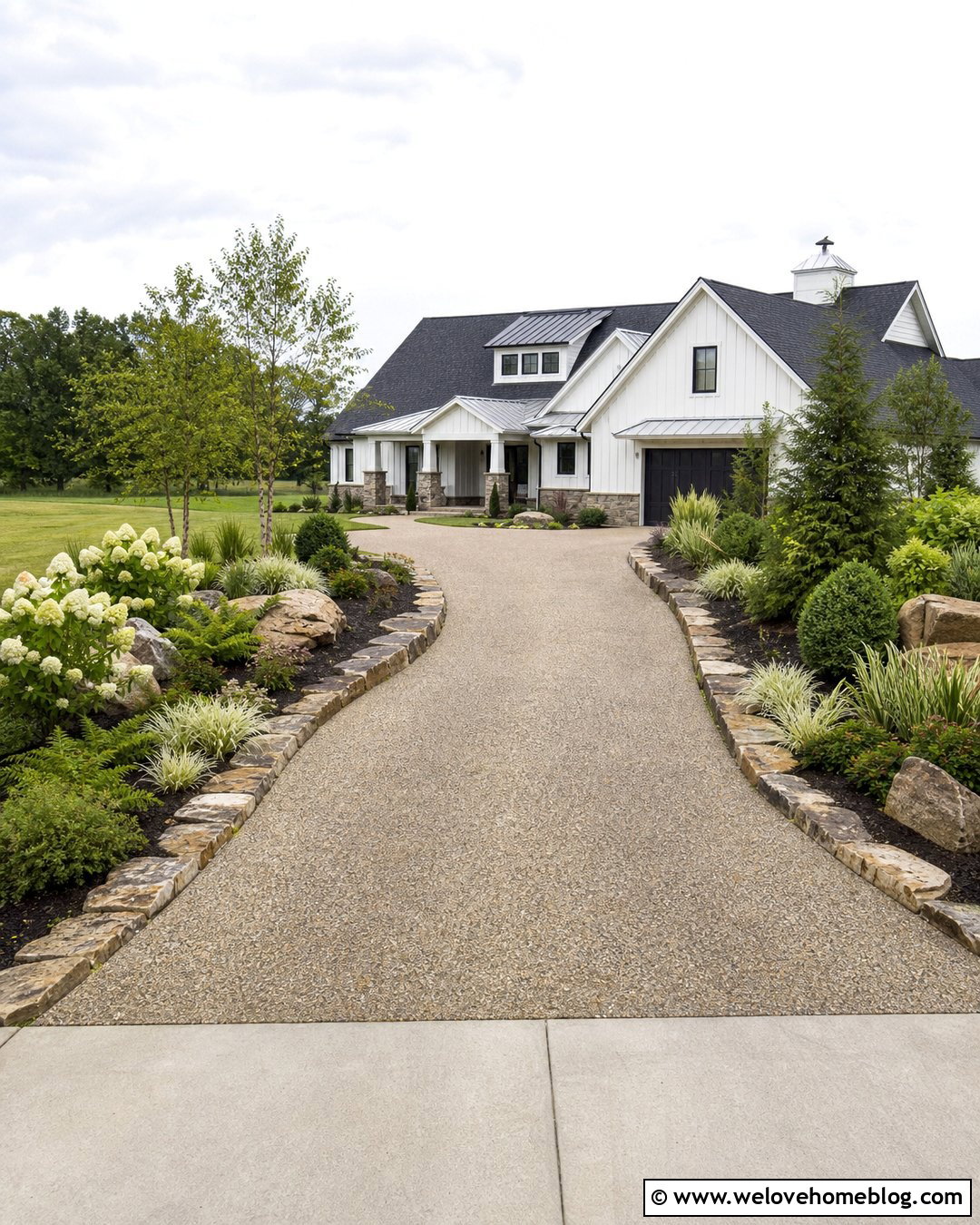
Natural stone edging makes exposed river rock concrete feel closely connected to a wooded or country landscape. Select warm brown, cream, and charcoal pebbles for the driveway surface, then border the edges with irregular-cut fieldstone or granite set in a stable base. A gently curving layout will strengthen the organic effect and provide a relaxed approach to a farmhouse or rustic home. Use broad planting beds filled with native grasses, hydrangeas, ferns, and compact evergreen shrubs. A few larger boulders can anchor the curves, but they should remain safely outside the vehicle clearance zone. Match the edging stone to the house foundation or porch columns. The repeated material will make the driveway appear integrated with the architecture rather than added as a separate feature.
9. Curved River Rock Concrete Driveway With Boulder Beds
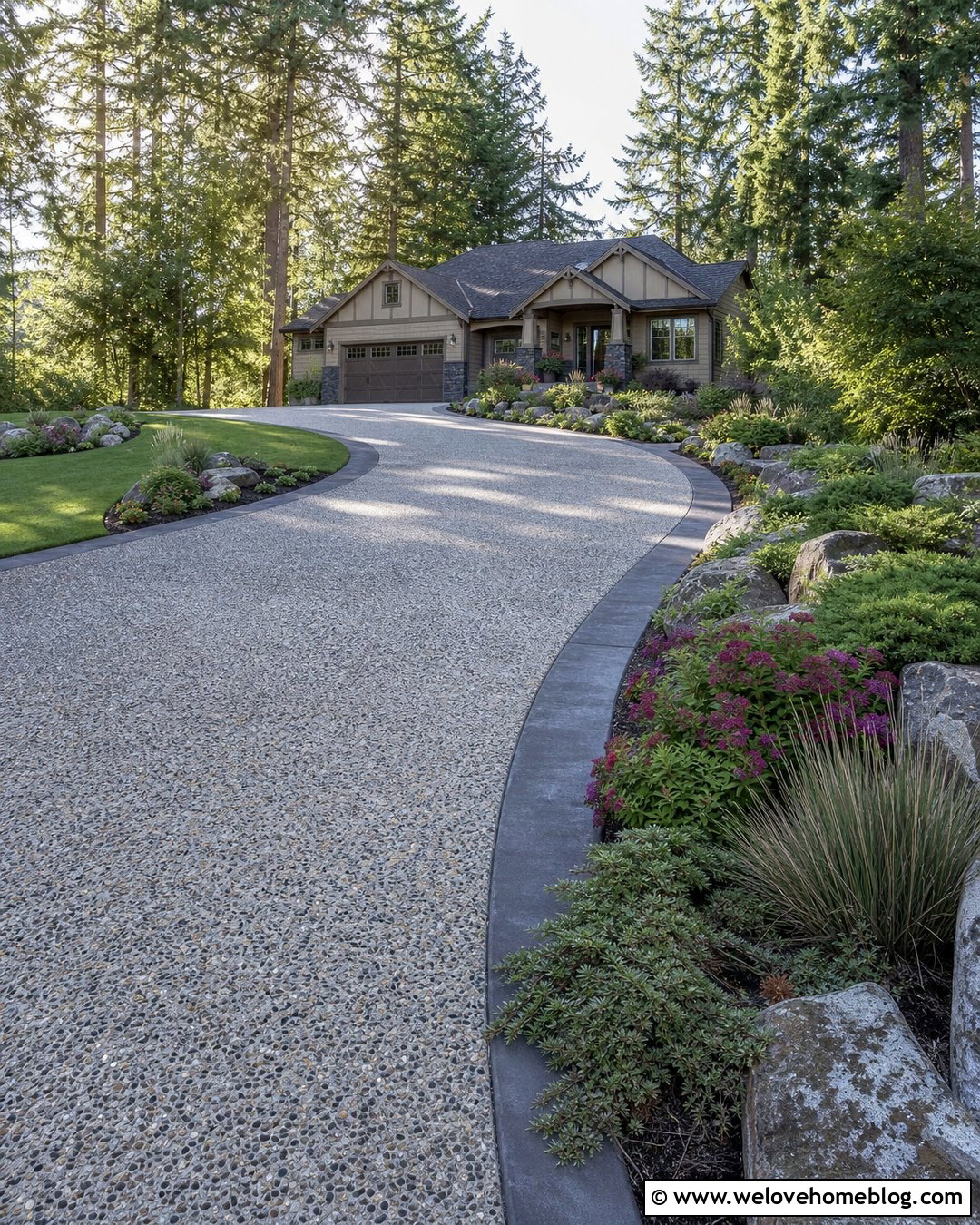
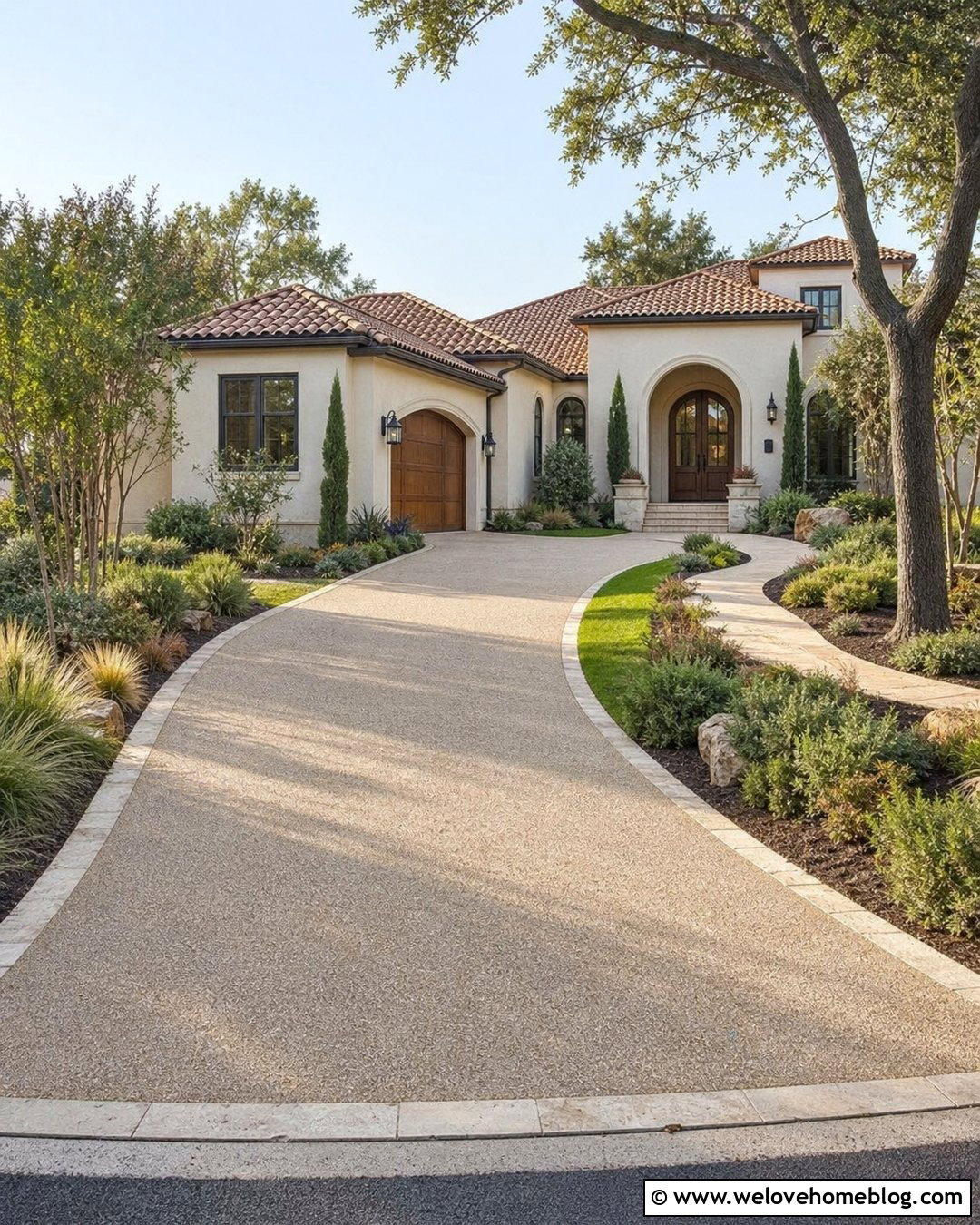
A curving driveway can transform a deep front yard into a more scenic approach. Use medium exposed river rock concrete with rounded tan and gray pebbles, then follow the outer curves with generous landscape beds. Place groups of weathered boulders among ornamental grasses, low junipers, and spreading ground cover. Avoid lining every inch with rocks; irregular groupings will look more natural and leave room for plants to soften the hardscape. On the inside curve, keep the landscaping low so the route remains visible. A flush dark concrete border can provide a crisp separation between the driveway and planting beds. This complete look works well with Craftsman, mountain, and contemporary ranch homes, especially when the river rock colors repeat tones from the roof and masonry.
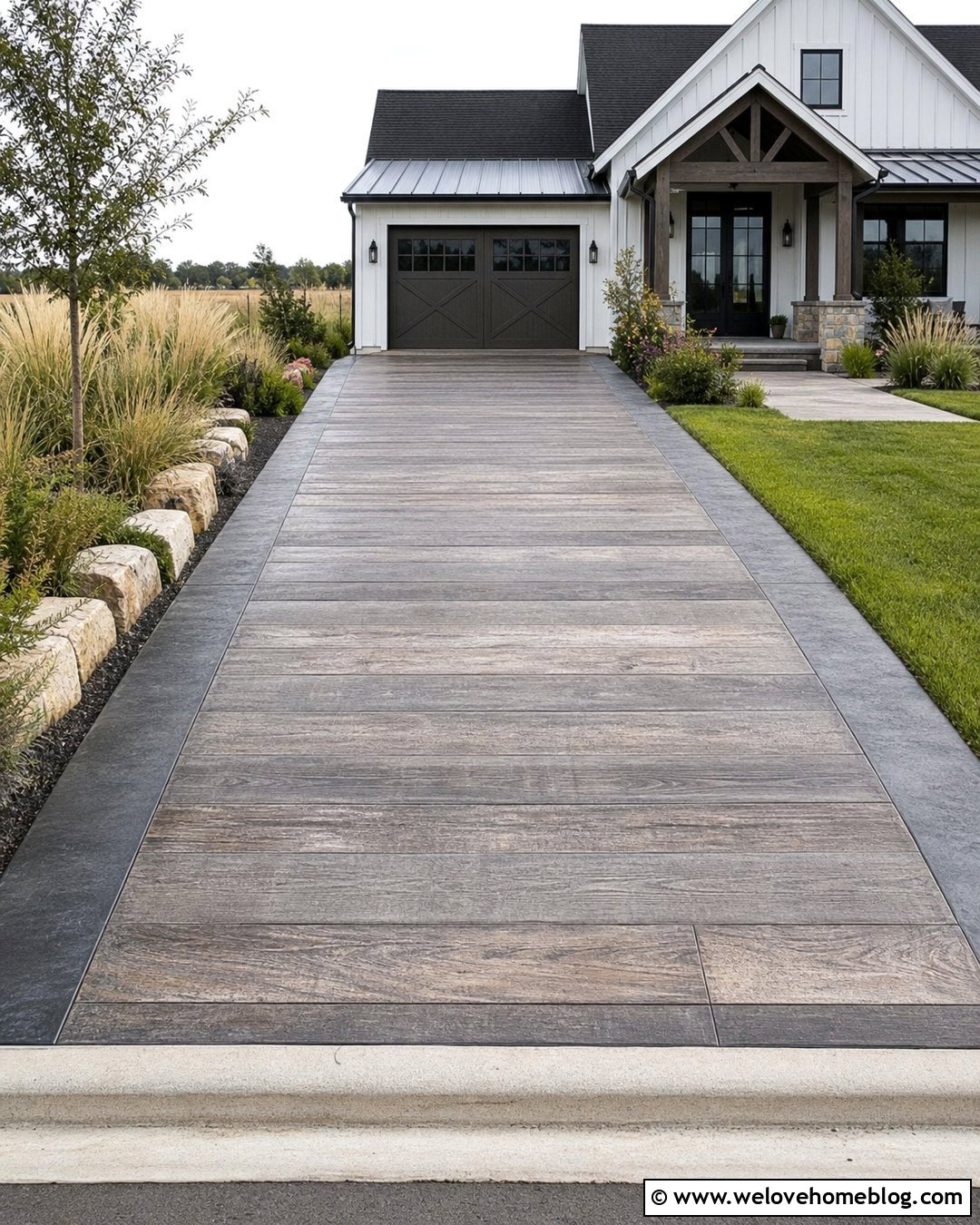
10. Light River Rock Concrete Driveway With Blue Stone Border
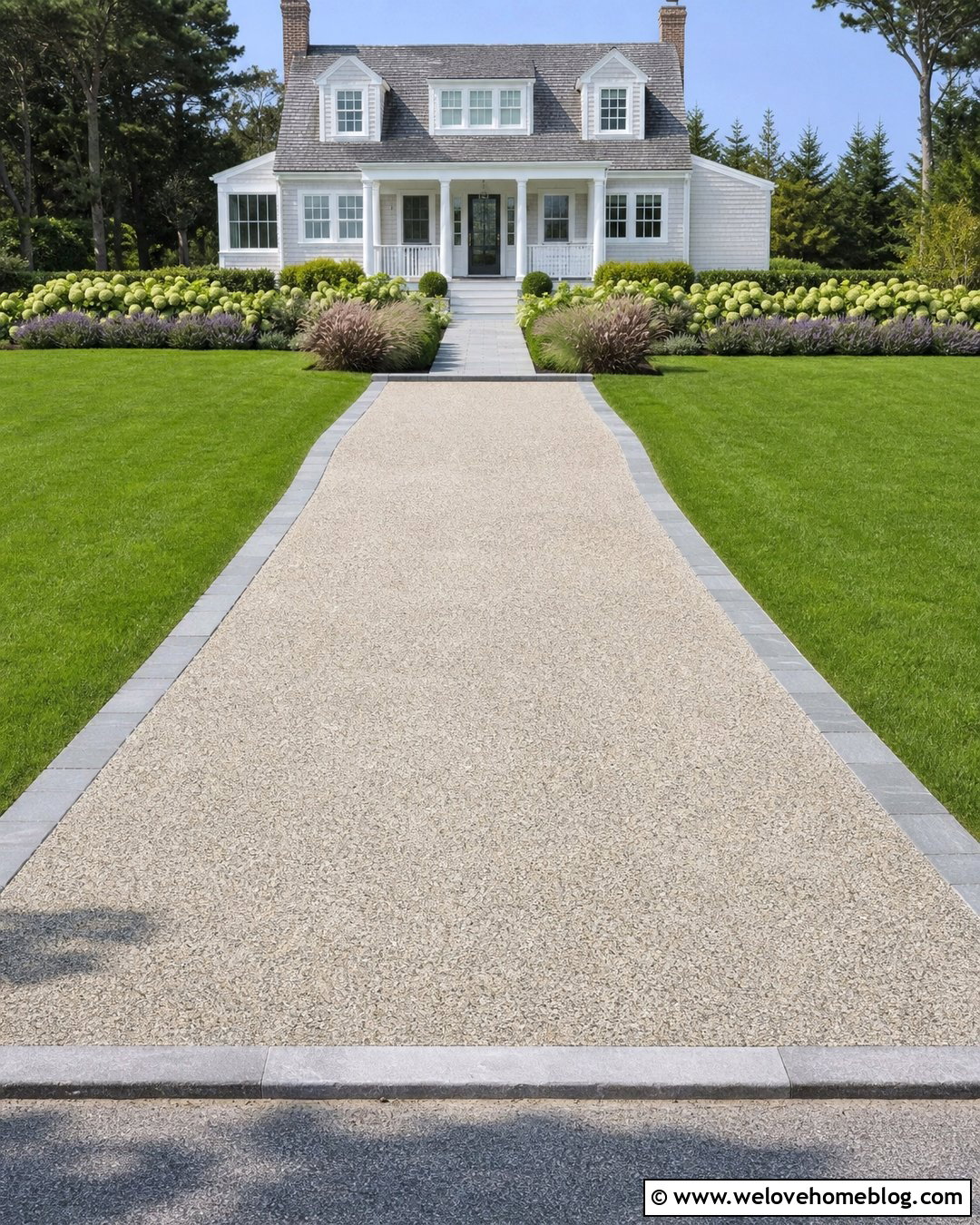
Pale exposed aggregate can brighten the approach to a coastal, Cape Cod, or light-colored colonial home. Choose cream, white, and soft gray river pebbles in a light concrete base. Frame the driveway with a cool blue-gray bluestone border to provide contrast without making the design feel heavy. A straight or slightly flared layout keeps the entrance uncomplicated. Surround it with clipped hydrangeas, fountain grasses, lavender, and an open green lawn. Continue the bluestone into the front walkway or porch steps so the hardscape materials feel connected. A restrained palette is important because both river rock and natural stone contain visible color variation. Ask to review full-size samples outdoors, since aggregate and cement colors can look different under direct sun and shade.
11. Dark River Rock Concrete Driveway With Light Concrete Edge
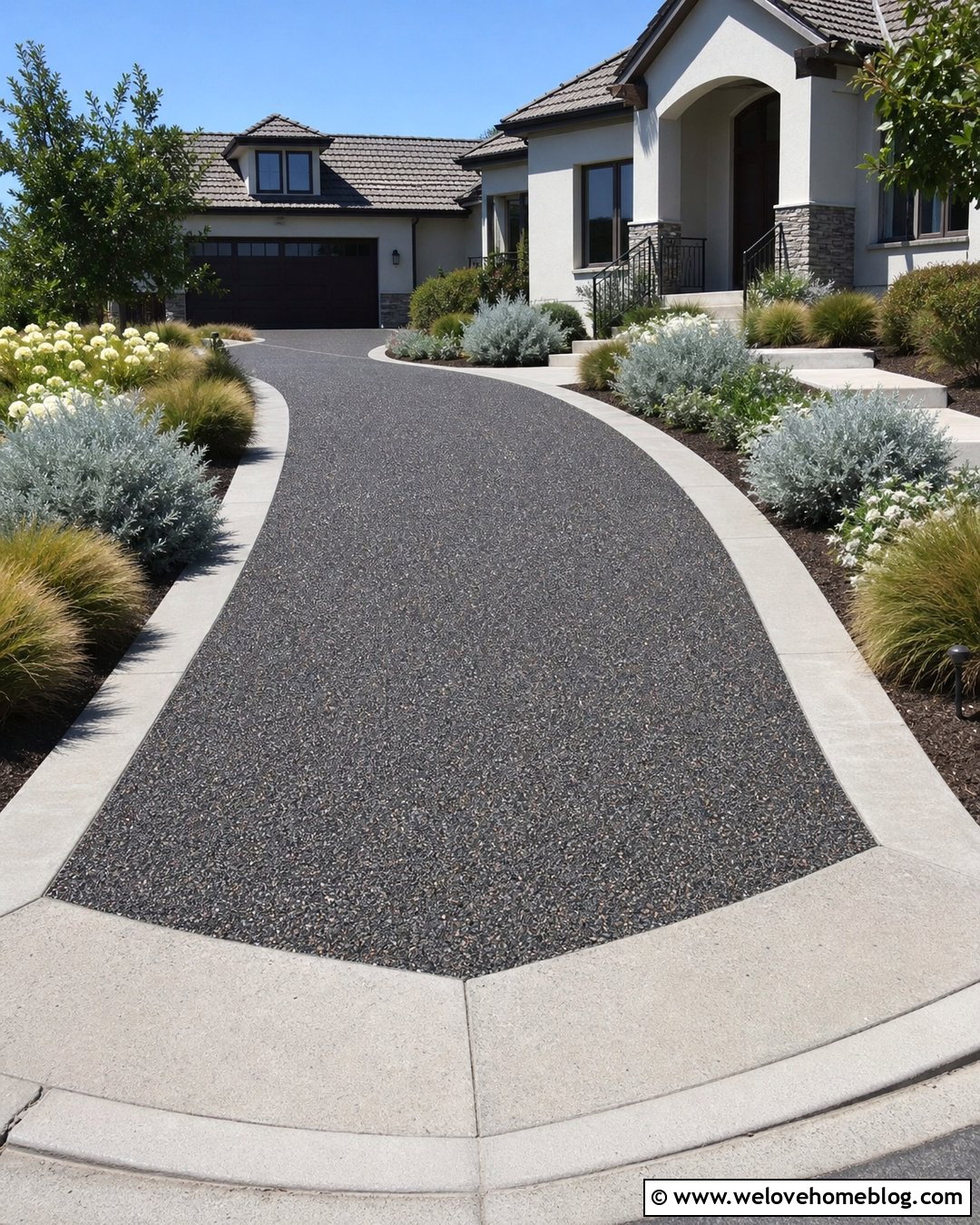
Dark charcoal and brown river pebbles create a dramatic exposed aggregate driveway for a light stucco or painted brick house. Prevent the surface from appearing too heavy by adding a smooth, pale concrete edge around the entire layout. The contrasting frame outlines curves, parking bays, and garage entries while giving the darker aggregate a tailored finish. Use a broad, gently flared apron at the sidewalk to make the entrance easier to recognize. Simple landscape beds with silvery foliage, compact grasses, and white flowers can balance the deep pavement color. Repeat the lighter concrete in a direct walkway leading to the front door. Integral color can be used to coordinate the cement base with the selected aggregate, helping the individual river stones remain the visual focus. ()
12. Two-Tone River Rock Concrete Driveway
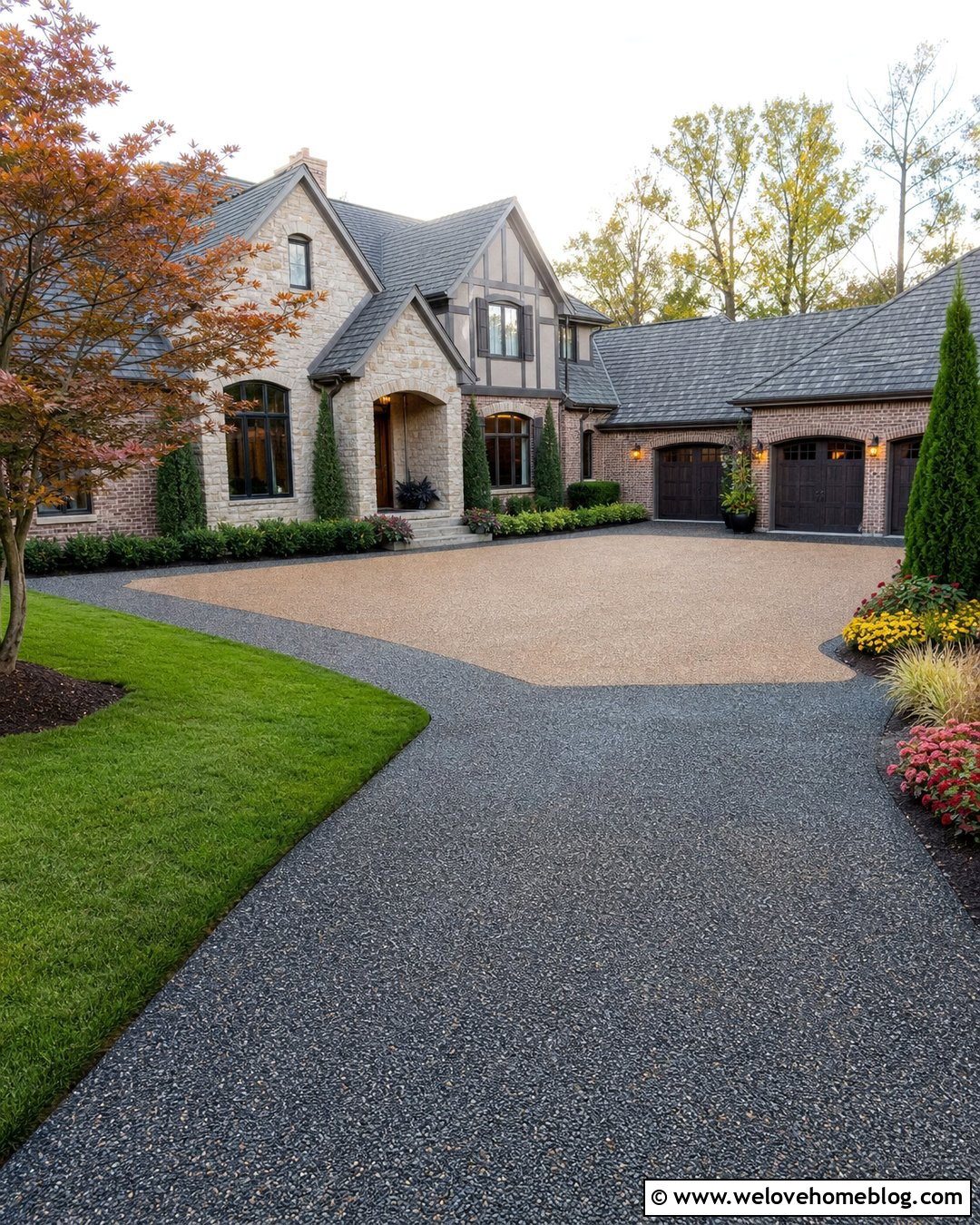
A two-tone layout adds definition to a wide driveway without relying on elaborate patterns. Use warm tan river rock exposed aggregate for the main driving lanes and darker gray river rock concrete for the perimeter bands. The darker material can also outline a central parking court or form a large rectangular panel near the garage. Keep the stone size and exposure level similar across both colors so the surfaces feel related. This look suits a transitional home with mixed brick, siding, and stone finishes. Plant evergreen shrubs near the garage and use ornamental trees closer to the street to frame the full approach. Contrasting aggregate fields, colored concrete, and decorative bands offer several ways to organize the surface while preserving the durability and texture of exposed concrete. ()
13. Salt and Pepper River Rock Concrete Driveway
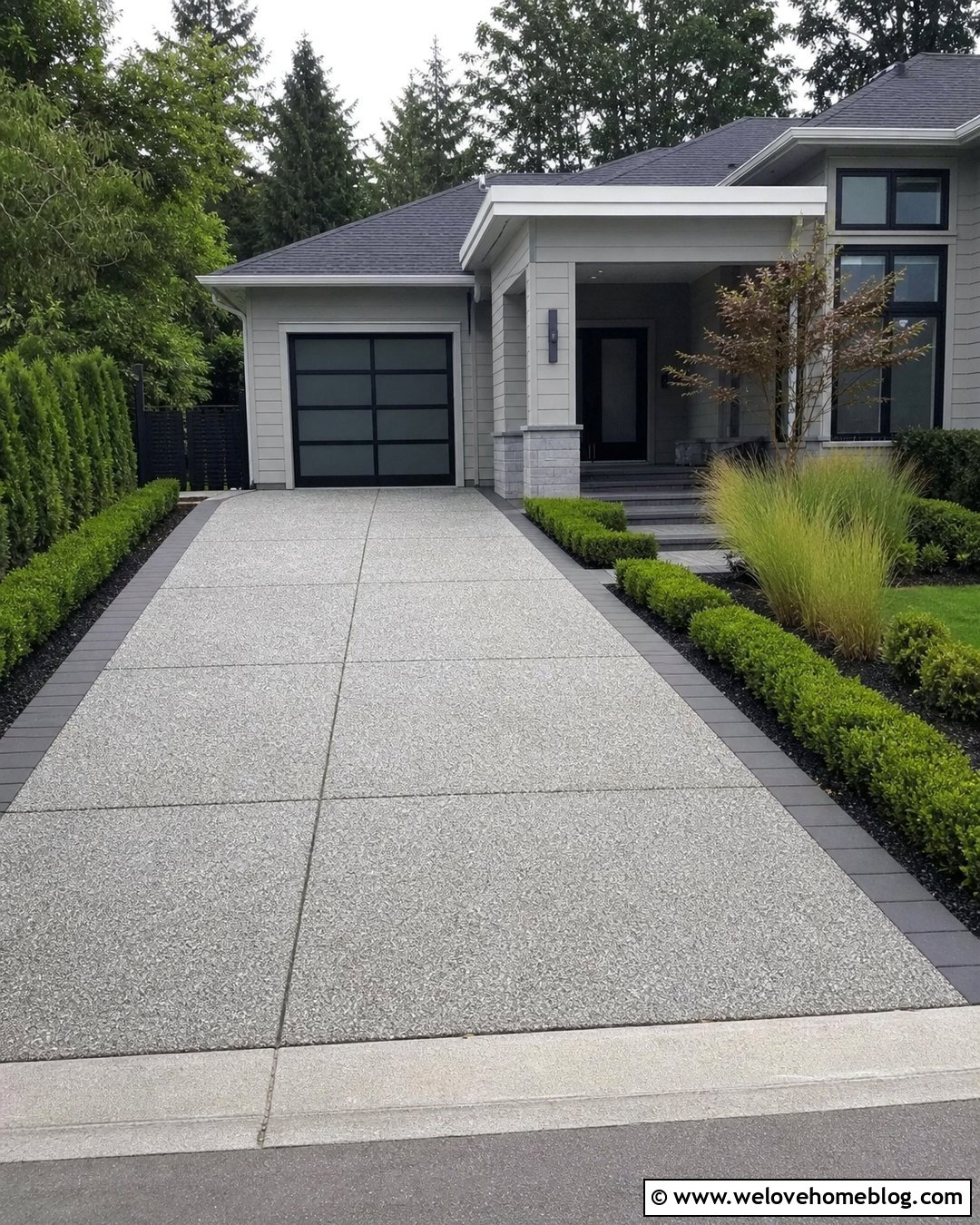
A salt-and-pepper blend of black, white, and gray river pebbles gives concrete a versatile neutral finish. Use it across a straight driveway with clean saw-cut panels and narrow charcoal paver edging. The mixture works particularly well with gray siding, white trim, black garage doors, or contemporary stone veneer. Keep the landscaping equally controlled with low boxwoods, upright grasses, and one or two sculptural trees. A paver walkway in a matching charcoal tone can run beside the driveway before turning toward the porch. Select an aggregate size that feels comfortable underfoot where the driveway meets pedestrian areas. The amount of stone exposure can influence both appearance and texture, so review a contractor’s completed samples rather than choosing from a small indoor color chip. ()
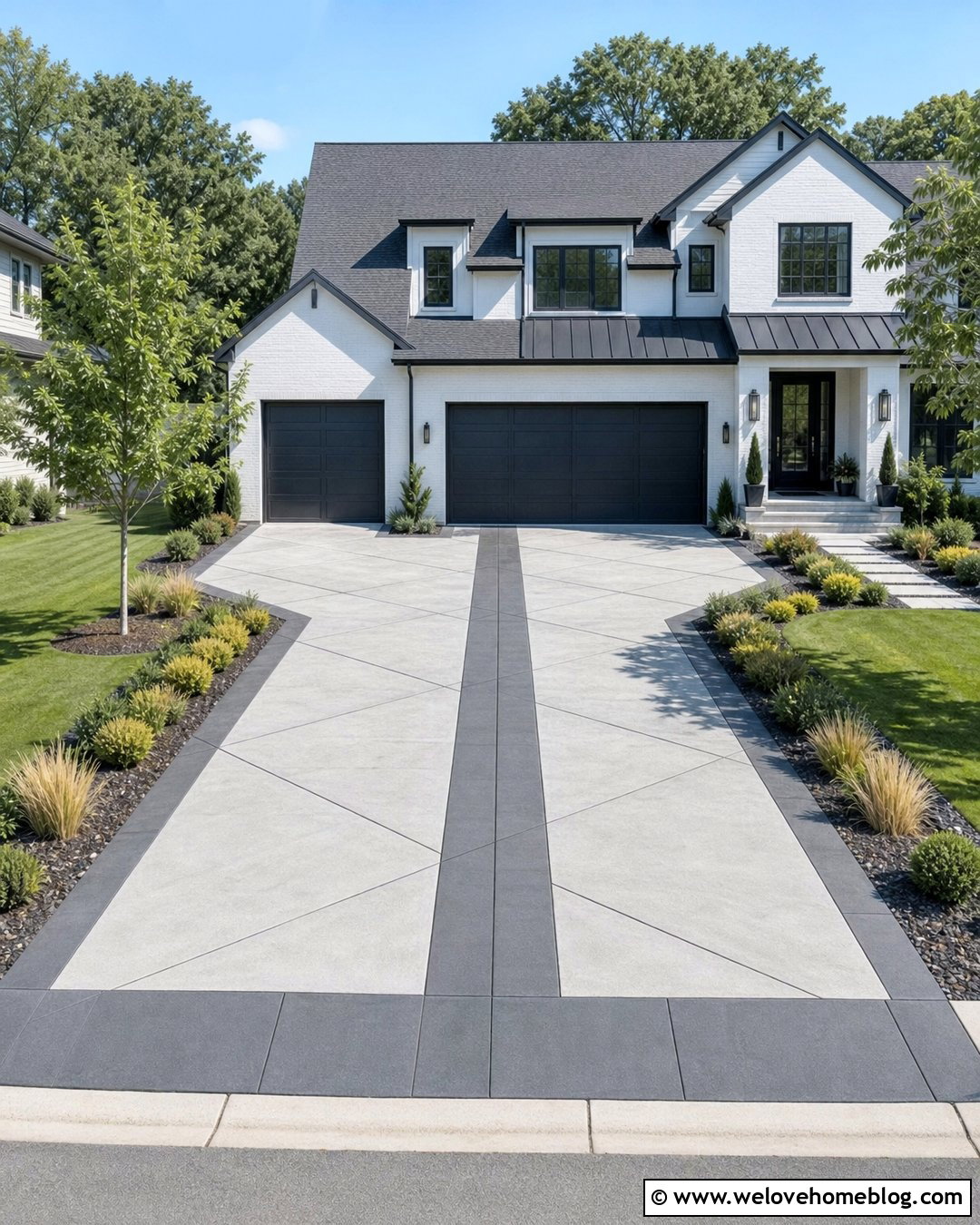
14. River Rock Concrete Driveway With Center Ribbon
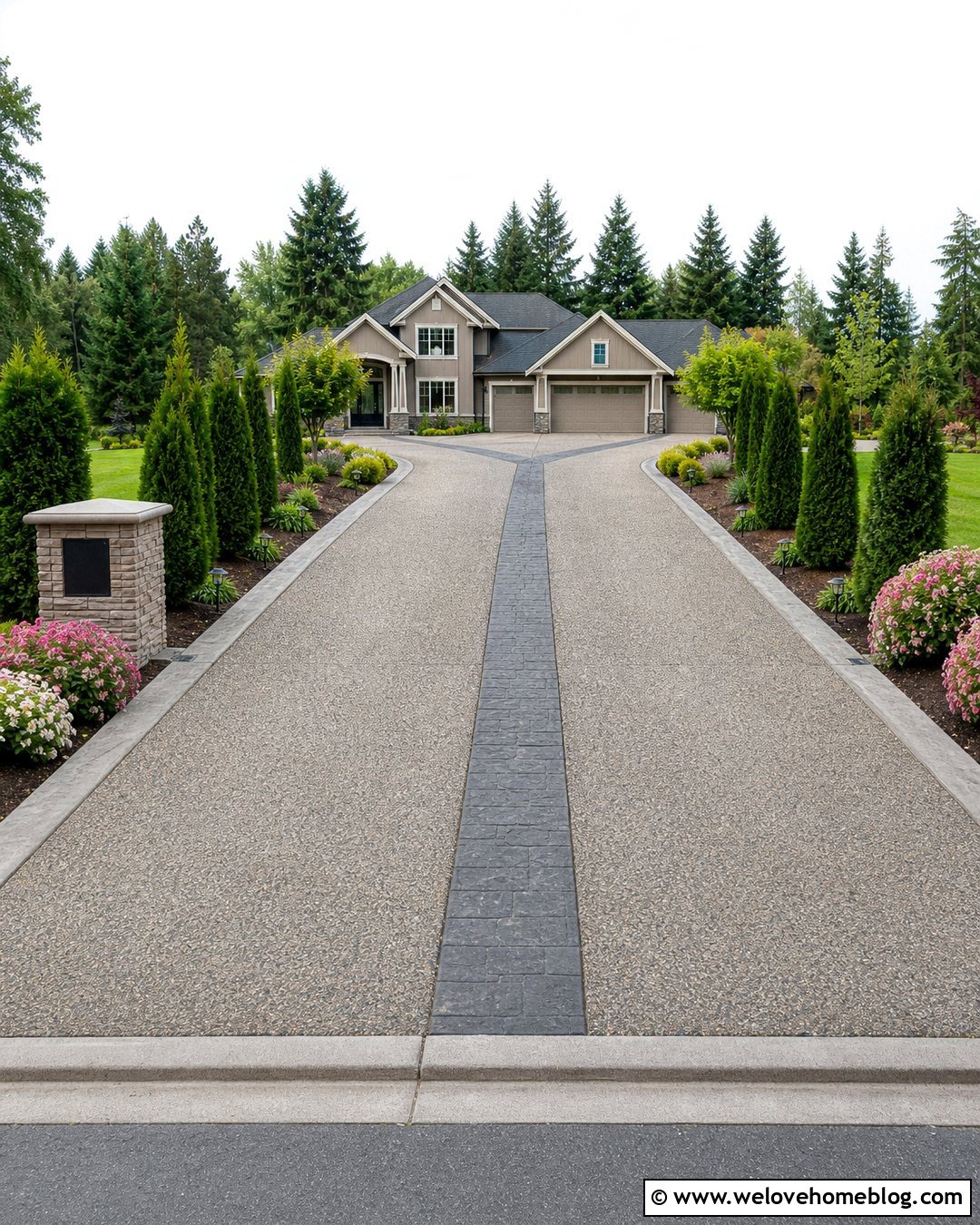
A contrasting center ribbon draws the eye toward the house and makes a long driveway feel more designed. Create the main surface with warm gray river rock exposed aggregate, then install a narrow strip of charcoal stamped concrete or cobblestone along the centerline. At the garage, the ribbon can branch toward separate doors or end in a larger decorative inset. Border the outside edges with simple concrete curbing and deep planting beds. Repeating evergreens, flowering shrubs, and small trees will reinforce the long perspective without hiding the driveway. For a cohesive entrance, use the same dark material around an address marker near the street. Decorative insets and stamped treatments can become useful focal points within an exposed aggregate field when their scale matches the overall driveway. ()
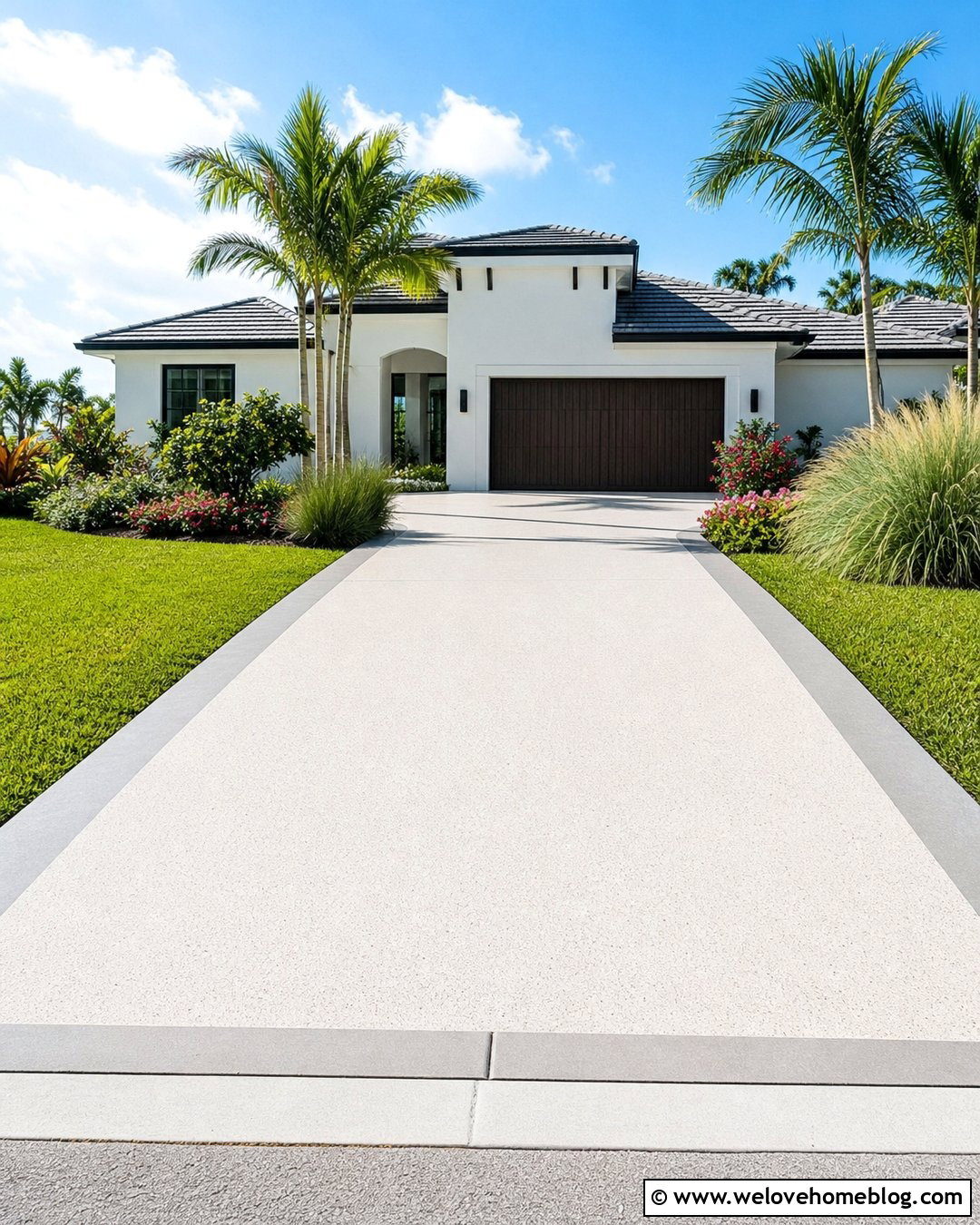
15. Smooth Concrete Driveway With River Rock Border
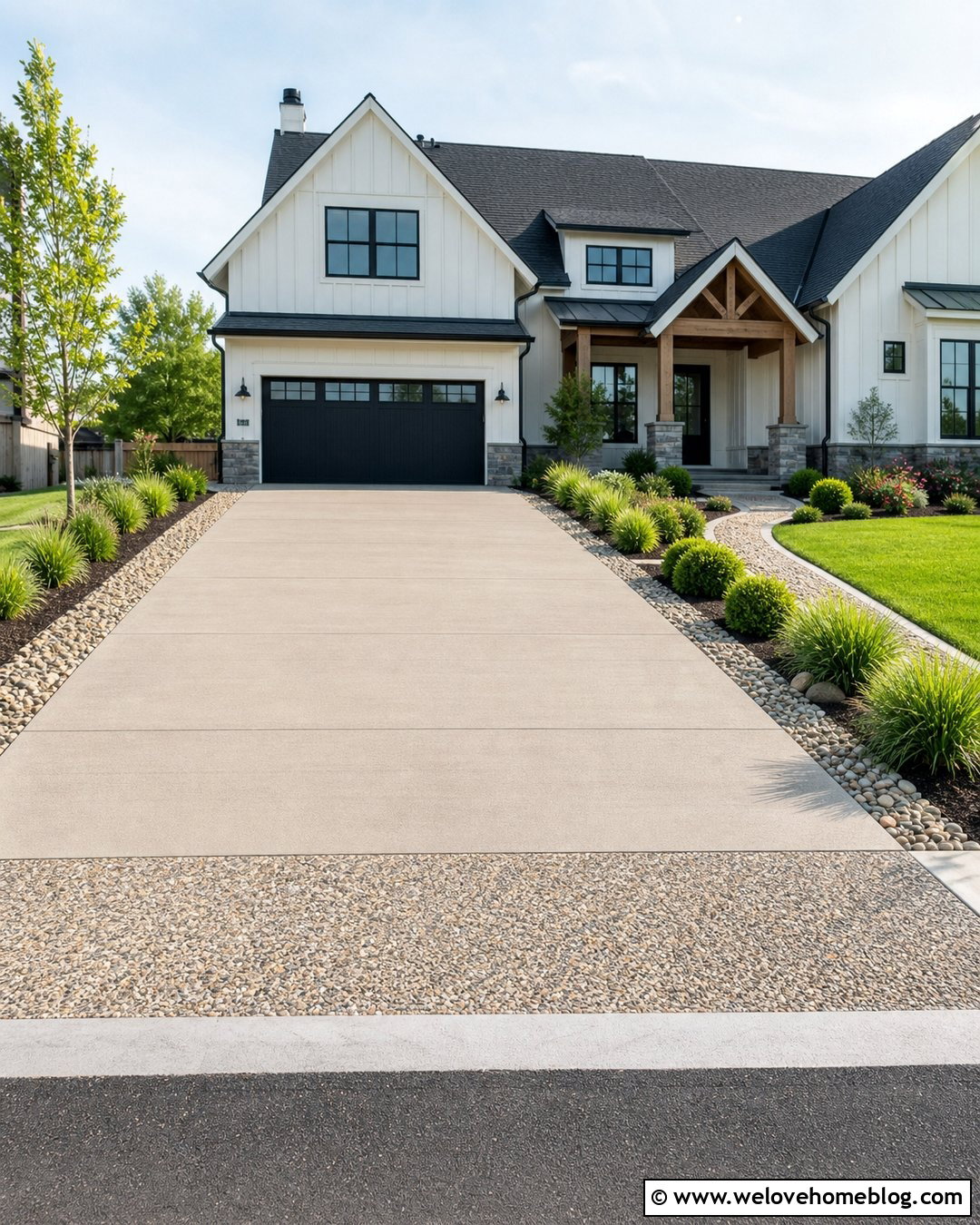
The river rock does not have to cover the entire surface. A light broom-finished concrete driveway can be framed by wide exposed aggregate borders containing tan, cream, and brown river pebbles. This arrangement provides natural texture along the edges while leaving a smoother central area for vehicles, walking, and maintenance. Use the aggregate border to form a matching apron and connect with the front walkway. The design fits a simple ranch, traditional home, or modern farmhouse because it feels decorative without becoming overly formal. Plant soft grasses and rounded shrubs beside the stone-textured bands. Exposed aggregate is frequently used as a border treatment with other concrete finishes, creating contrast while keeping the installation within one coordinated paving system. ()
16. Split River Rock Concrete Driveway With Planted Median
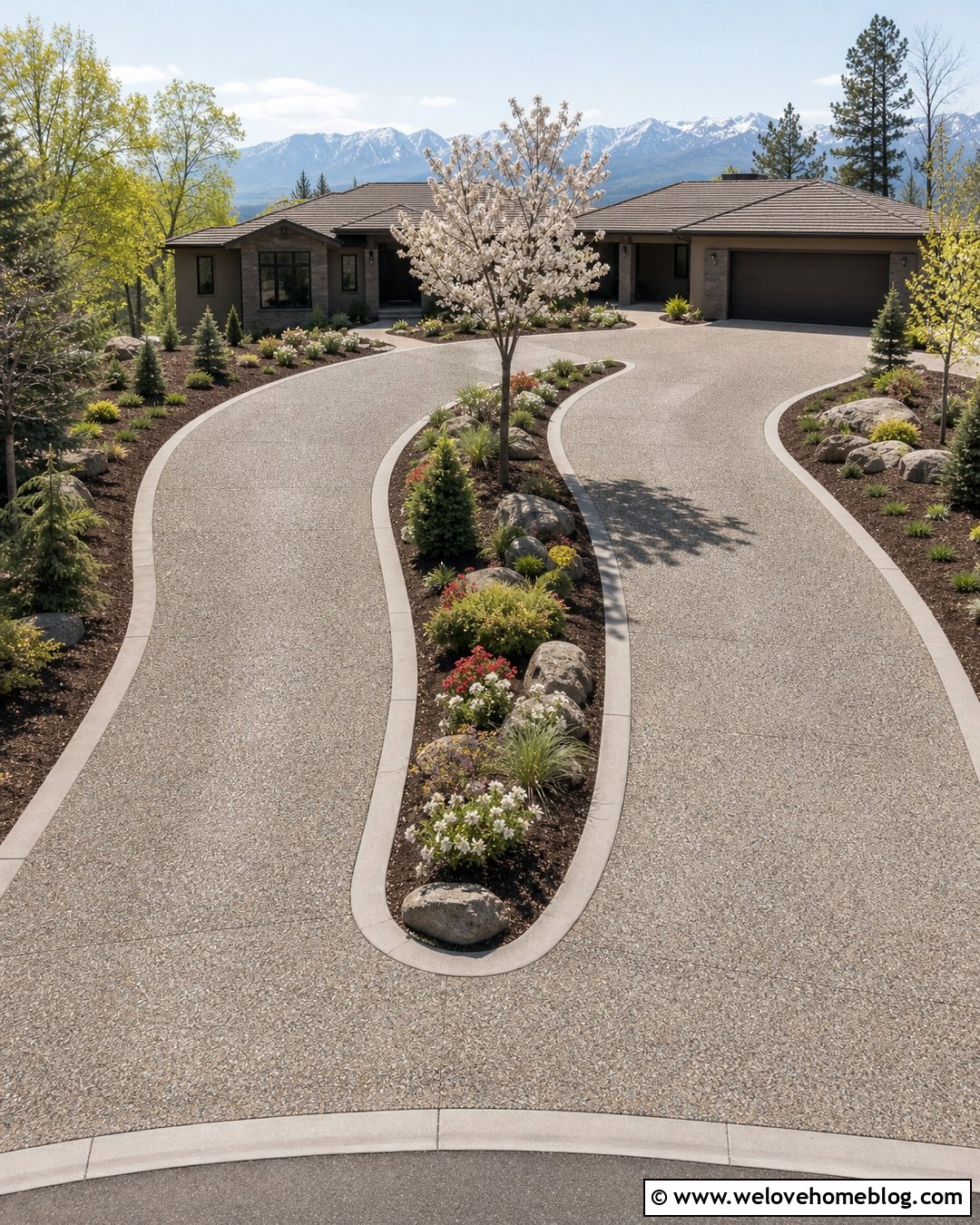
A split driveway can reduce the visual weight of pavement in a broad front yard. Build two exposed river rock concrete lanes around a long planted median, reconnecting them near the garage or covered entry. Use medium gray and tan pebbles so the surface blends with both green landscaping and neutral architecture. Edge the lanes with smooth concrete curbs that keep soil and mulch away from the aggregate. Fill the median with a small flowering tree, compact evergreens, low ornamental grasses, and seasonal color. Keep plants trimmed near the street and connection points for clear visibility. This complete design works best when both lanes have enough width and turning space. A landscape designer and concrete contractor can coordinate the geometry, grading, drainage, joints, and planting areas before construction begins.
17. Sloped River Rock Concrete Driveway With Retaining Wall
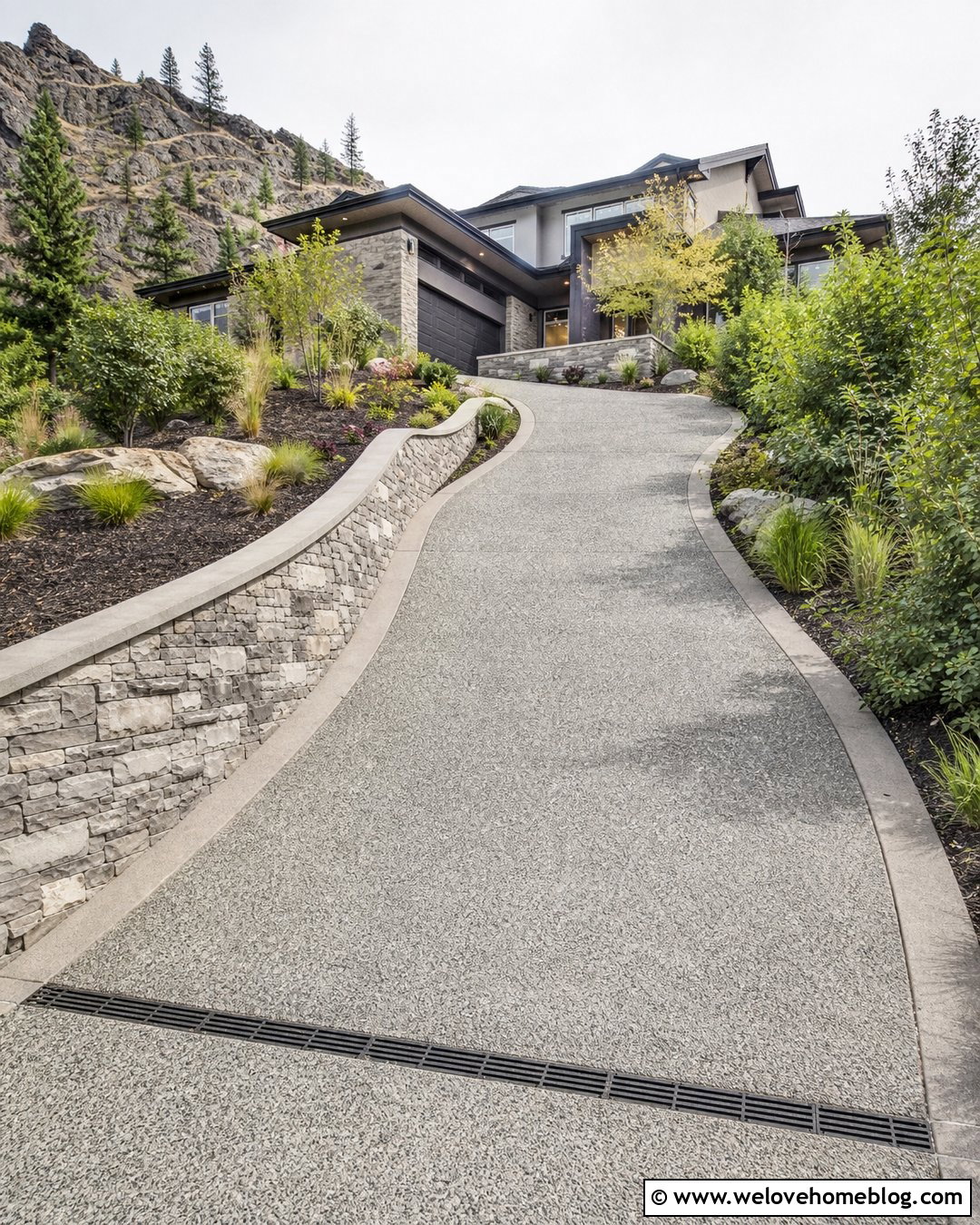
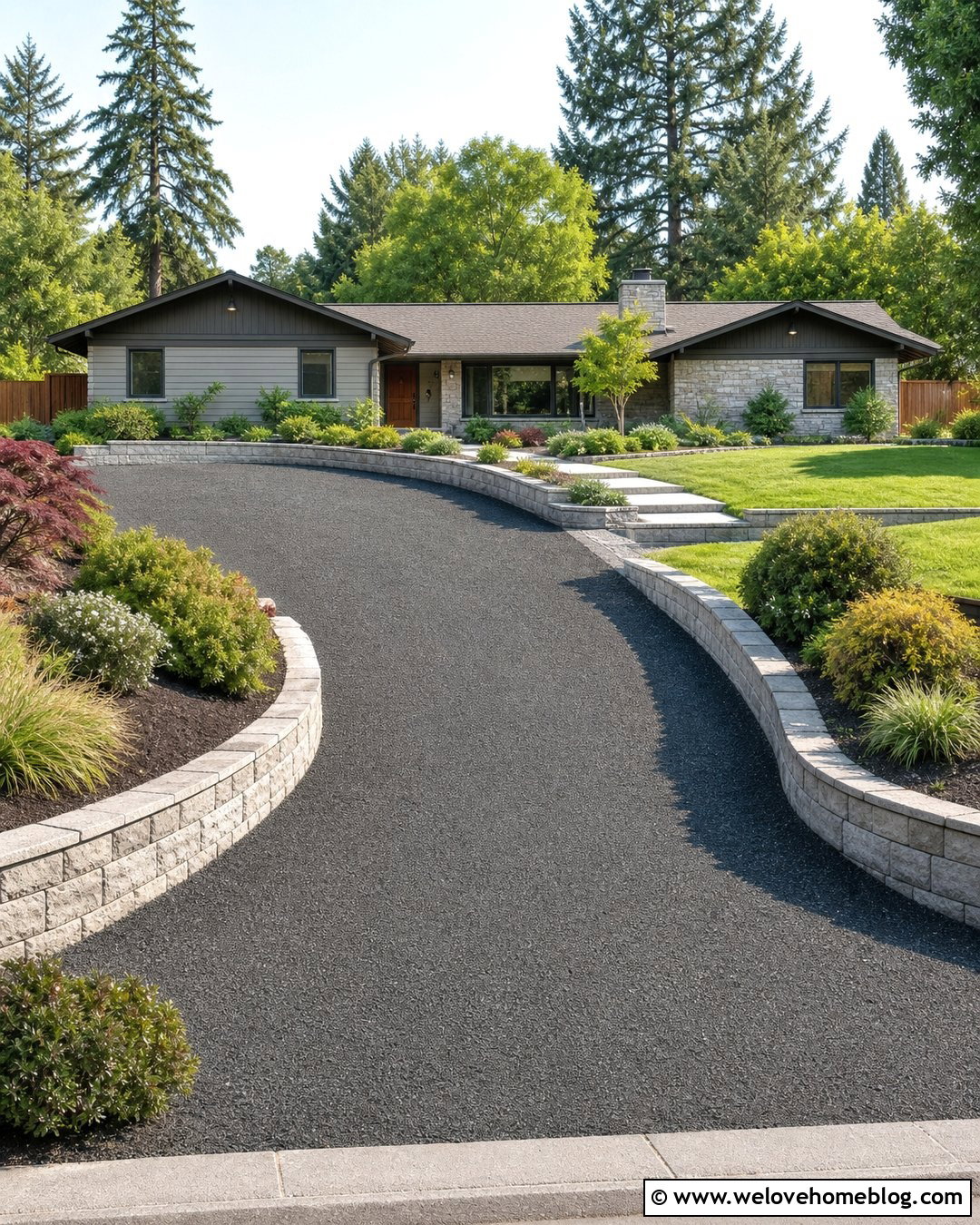
On a sloped property, the driveway and surrounding grade should look like one coordinated design. Use a textured gray river rock exposed aggregate surface on a gently curving route, then support the uphill planting bed with a low stacked-stone retaining wall. Match the wall to the river pebbles by selecting stone with similar gray, tan, and brown tones. On the downhill side, install a defined concrete curb and low plantings that do not obstruct the edge. Deep-rooted shrubs and ornamental grasses can soften the retaining wall. Drainage needs careful professional planning because runoff should not be directed toward the garage, neighboring property, or unstable soil. If a channel drain is required, align it with a decorative aggregate band so the functional feature feels integrated into the layout. ()
18. Small River Rock Concrete Driveway With Paver Edge
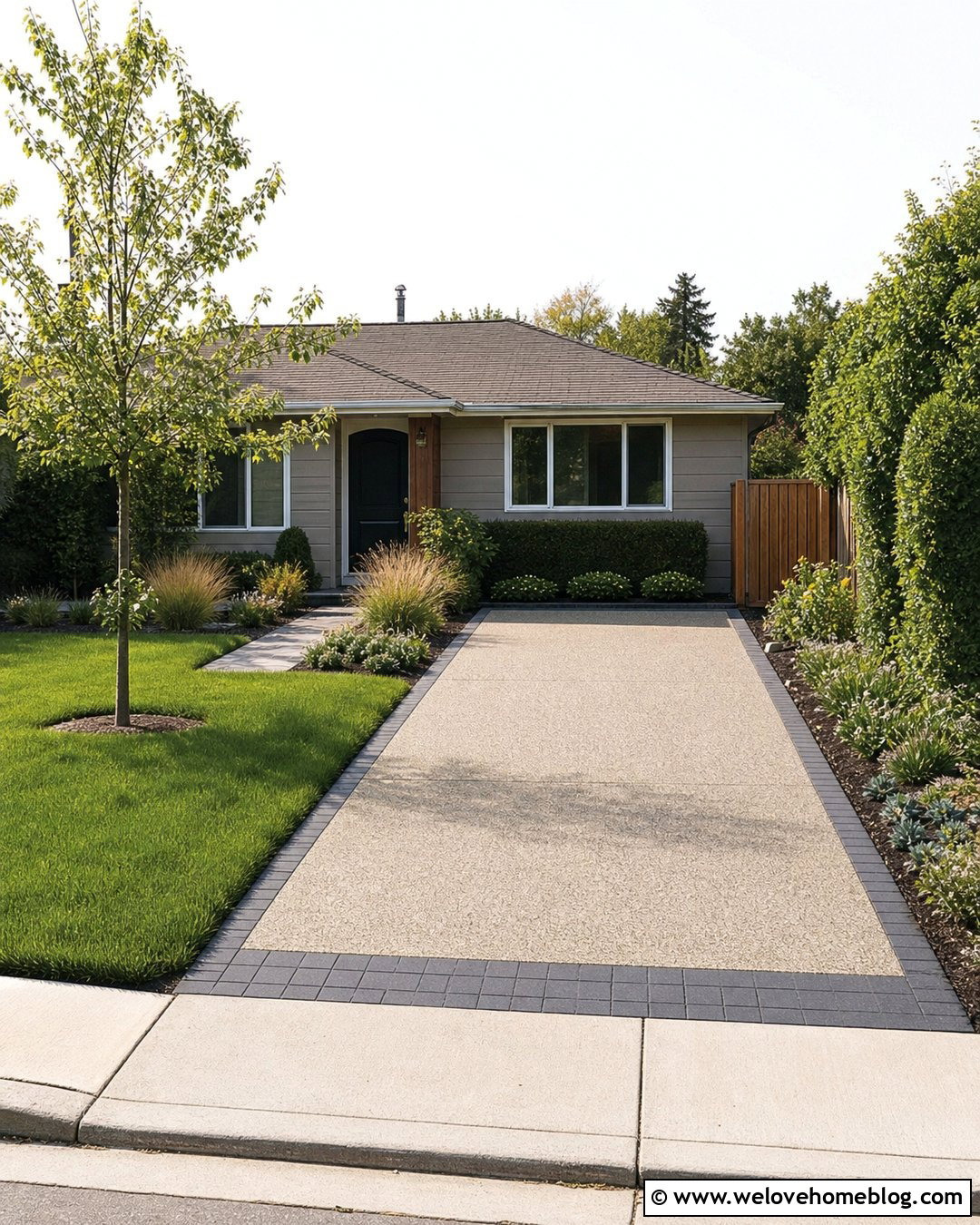
A compact driveway can still have a layered, finished appearance. Choose fine exposed river rock concrete in a light tan blend to keep the area visually open. Add a narrow charcoal or red-brown paver edge that clearly separates the driveway from the lawn and planting beds. Instead of a large apron, use a simple two-row paver band at the sidewalk. A matching walkway can branch from one side without creating an awkward intersection. Keep the landscaping scaled appropriately with dwarf shrubs, low grasses, and one slender ornamental tree near the house. Avoid oversized borders that reduce usable parking width. A carefully proportioned edge gives the small surface definition, while the varied pebbles provide enough visual interest without requiring a complicated stamped pattern or multiple decorative materials.
19. Long River Rock Concrete Driveway With Tree-Lined Border
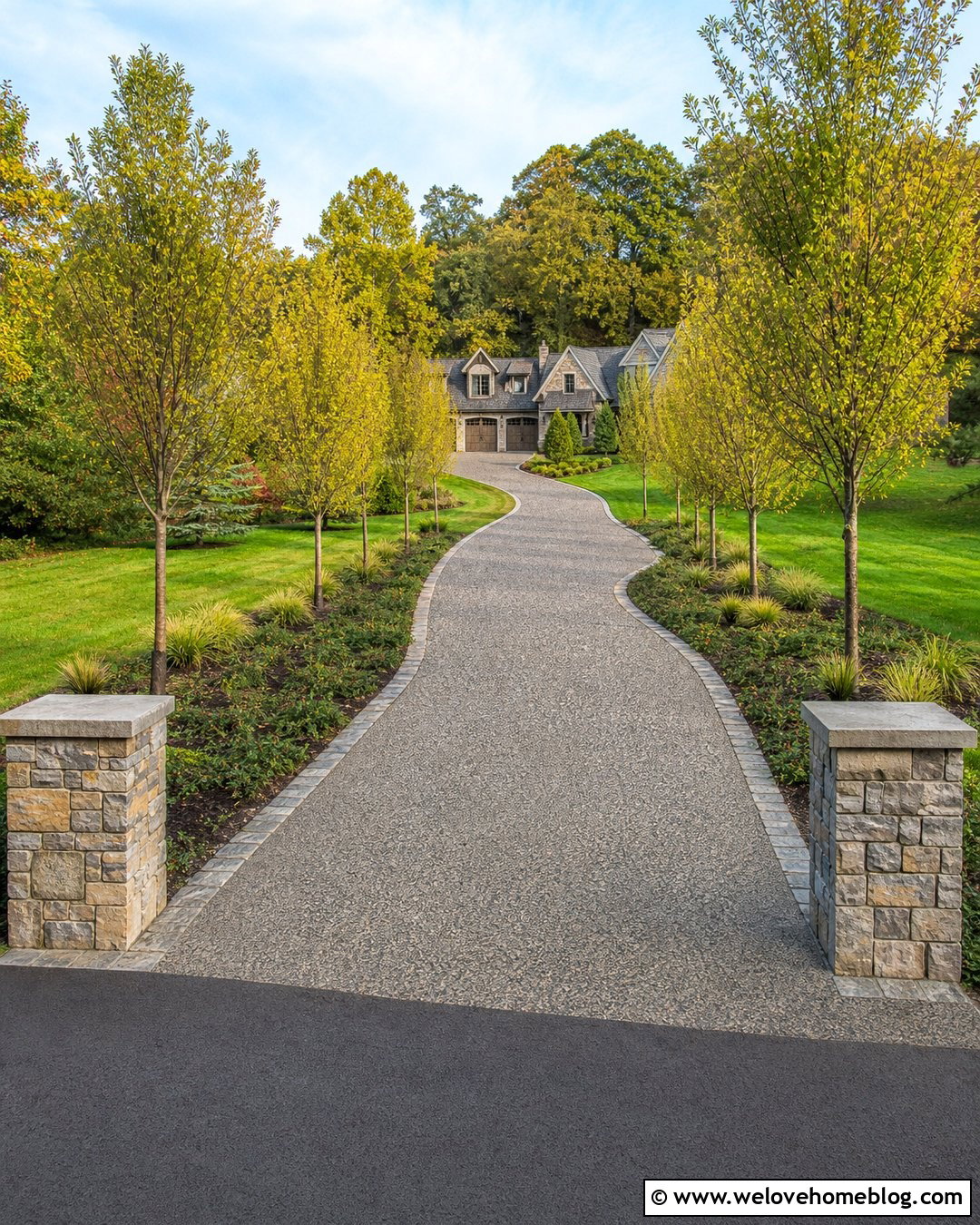
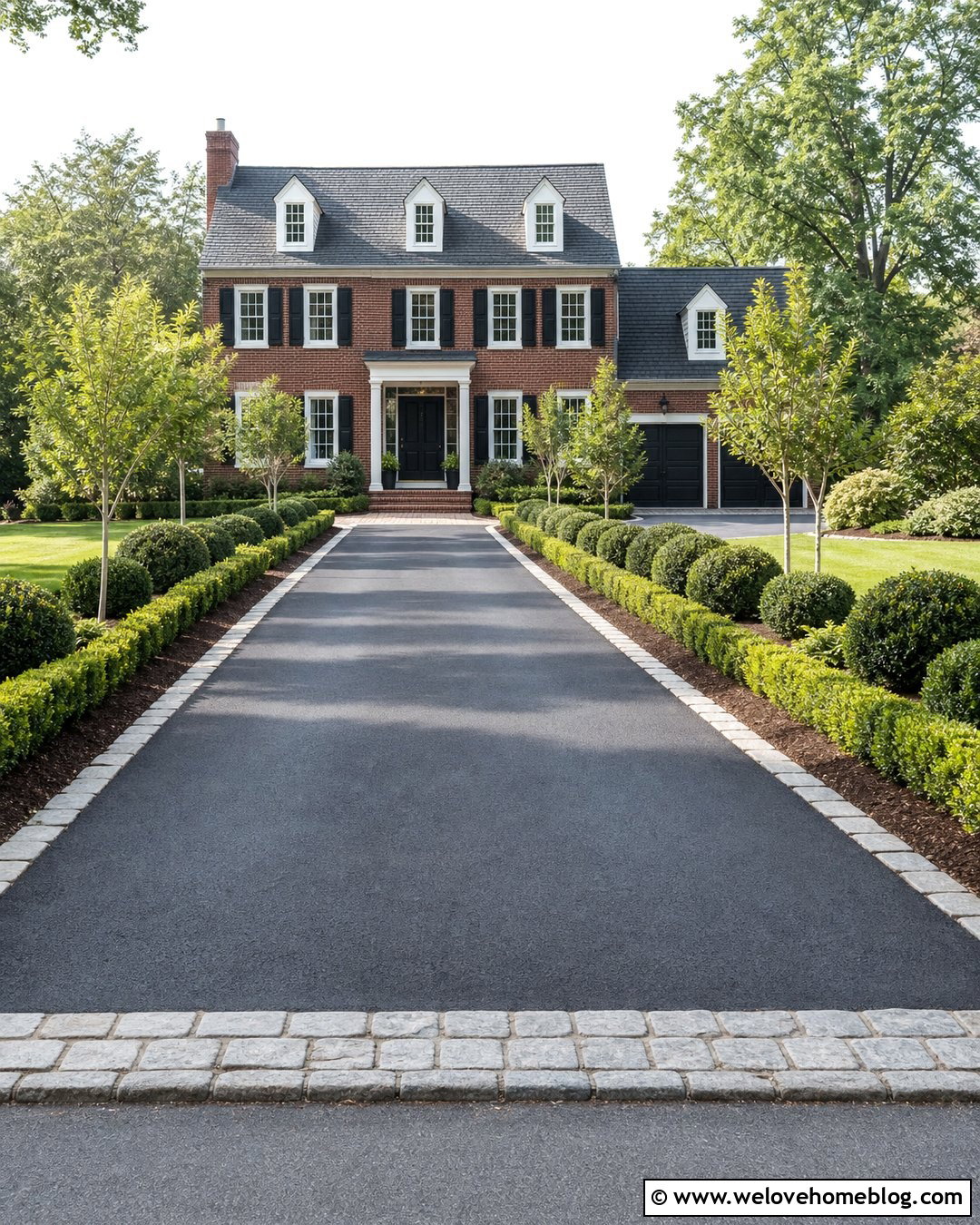
A long exposed aggregate driveway feels more welcoming when landscaping establishes a clear rhythm from the street to the house. Use a warm gray river rock concrete surface with a gentle curve and narrow natural stone edging. Plant evenly spaced small trees along both sides, positioning them far enough from the pavement to allow for mature trunks, roots, and canopies. Fill the spaces between trees with lawn, low grasses, or broad ground-cover beds. Near the house, transition to more detailed foundation plantings and a wider parking court. Simple entrance pillars can repeat stone used in the border. The consistent river rock surface unifies the entire route, while the trees provide changing color, shade, and scale as visitors move through the property.
20. Horseshoe River Rock Concrete Driveway With Stone Pillars
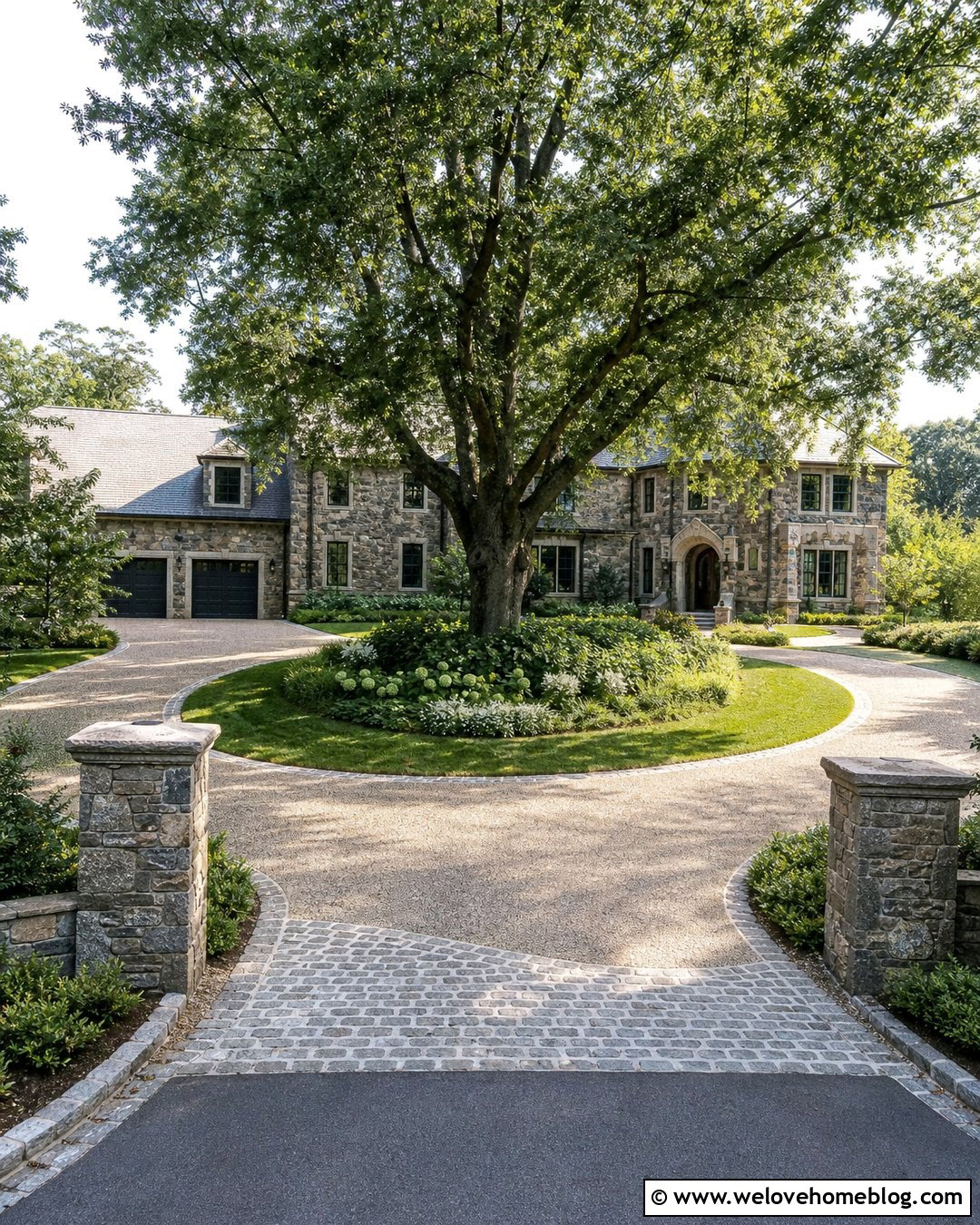
A horseshoe driveway offers two clear access points and creates a strong framework for a large front landscape. Finish the full route in tan and gray river rock exposed aggregate, then mark both entrances with low stone pillars. Use matching natural stone curbs around the inner garden and a contrasting brick or cobblestone apron at each street connection. The central lawn can contain a mature shade tree surrounded by layered shrubs and ground cover. Keep plantings low near both exits for clear views of pedestrians and traffic. Lantern fixtures on the pillars can add architectural detail without placing obstacles in the driving area. Connect one side of the horseshoe to a larger garage court, maintaining the same aggregate blend so the entire entrance reads as one unified design.
Conclusion:
The best 20 river rock concrete driveway ideas balance natural texture with a layout that supports everyday use. Exposed river pebbles can cover the entire driveway, define borders, form contrasting bands, or highlight an entrance apron. Straight designs feel orderly, while curved, circular, split, and horseshoe layouts create a more distinctive arrival experience. Choose aggregate colors that relate to the house exterior, then repeat those tones in edging, walkways, walls, or planting beds. Before installation, discuss grading, drainage, slab construction, joints, stone exposure, sealing, and maintenance with qualified local professionals. With careful planning, a river rock concrete driveway can feel refined and practical while connecting the architecture, pavement, and front-yard landscaping into one cohesive design.

Related posts:

Leave a Reply