
River rocks offer a timeless, natural appeal to any outdoor space, providing texture, color, and function with minimal upkeep. From creating serene dry creek beds that mimic natural water flows to designing practical and attractive pathways, the versatility of these smooth stones is unmatched. They can be used as a durable mulch alternative, an elegant border for garden beds, or a foundational element in a tranquil water feature. Embracing river rock landscaping allows you to craft a durable, low-maintenance, and visually striking environment that connects your home to the natural world, enhancing curb appeal and creating peaceful outdoor living areas.

1. Winding River Rock Dry Creek Bed

A meandering river rock dry creek bed is an excellent way to solve drainage issues while adding immense visual interest. This feature mimics the look of a natural, dried-up stream, guiding water away from your home's foundation during heavy rains. To create one, excavate a shallow, curving trench and line it with landscape fabric to prevent weed growth. Fill the trench with a mix of river rock sizes, using larger stones along the edges and smaller ones in the center to create a realistic effect. Incorporating native grasses and boulders along the banks further enhances the naturalistic appearance of your landscape.
2. River Rock Pathway with Flagstone

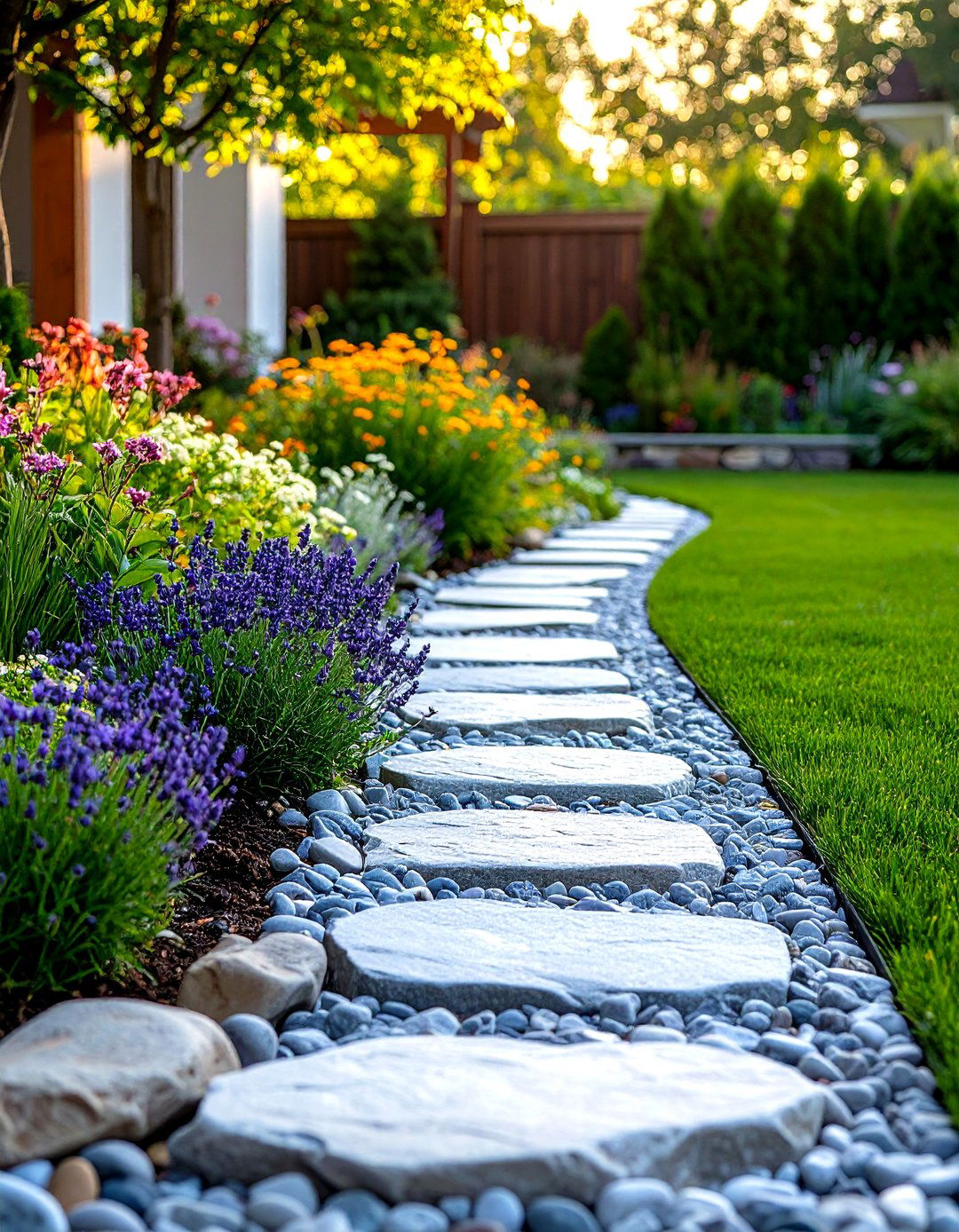
For a pathway that blends rustic charm with structured elegance, combine smooth river rocks with large, flat flagstone steppers. This design creates a comfortable and stable walking surface while filling the gaps with beautiful, textured stone. The contrast between the irregular shapes of the flagstones and the rounded river rocks adds depth and character to your garden walk. This approach is not only aesthetically pleasing but also practical, as the river rocks help suppress weeds and improve drainage around the stepping stones. Ensure the flagstones are set securely into the base for a safe and even path.
3. Using River Rock as a Garden Mulch
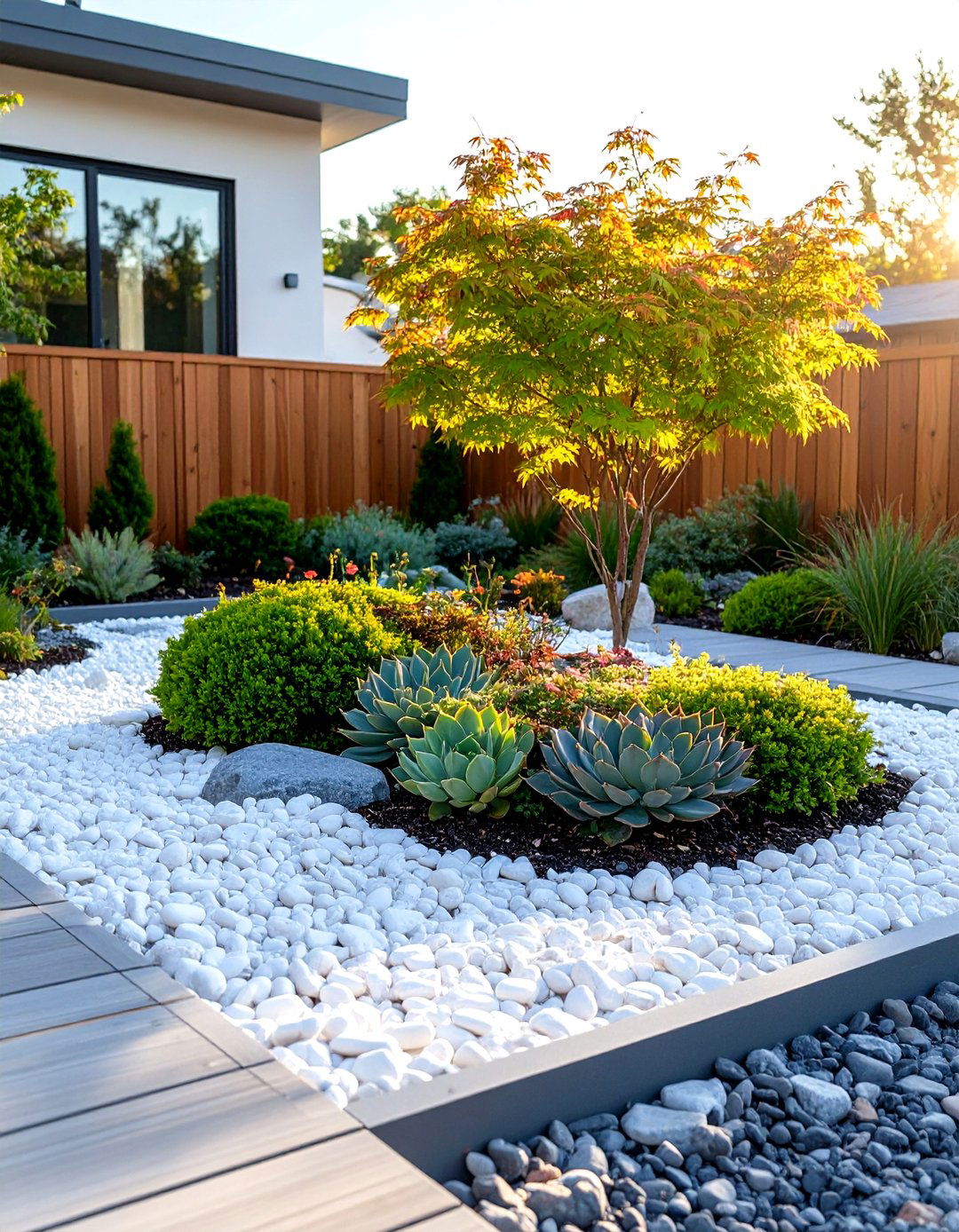
Consider replacing traditional wood mulch with a permanent layer of river rock for a sleek and modern look that lasts. River rock mulch is exceptionally durable, won't decompose or wash away, and effectively suppresses weed growth when laid over landscape fabric. It’s a perfect choice for accentuating desert plants, succulents, or architectural grasses, as the stones retain heat and create a microclimate that many drought-tolerant species love. Using a mix of colors, such as gray, tan, and white, can add subtle variation and texture, making your plant beds a standout feature in your yard's design.
4. A Circular River Rock Fire Pit Area

Create an inviting and low-maintenance gathering spot by designing a circular patio area around your fire pit using river rocks. Define the space with a metal or stone border and fill it with a thick layer of medium-sized river rocks. This surface is fire-safe, drains quickly, and provides a clean, contemporary foundation for your outdoor seating. The natural, earthy tones of the river rocks complement the warmth of a fire, establishing a cozy and organic ambiance. This design eliminates the need for mowing or weeding, making it a functional and attractive solution for your backyard entertainment space.
5. River Rock Edging for Garden Beds

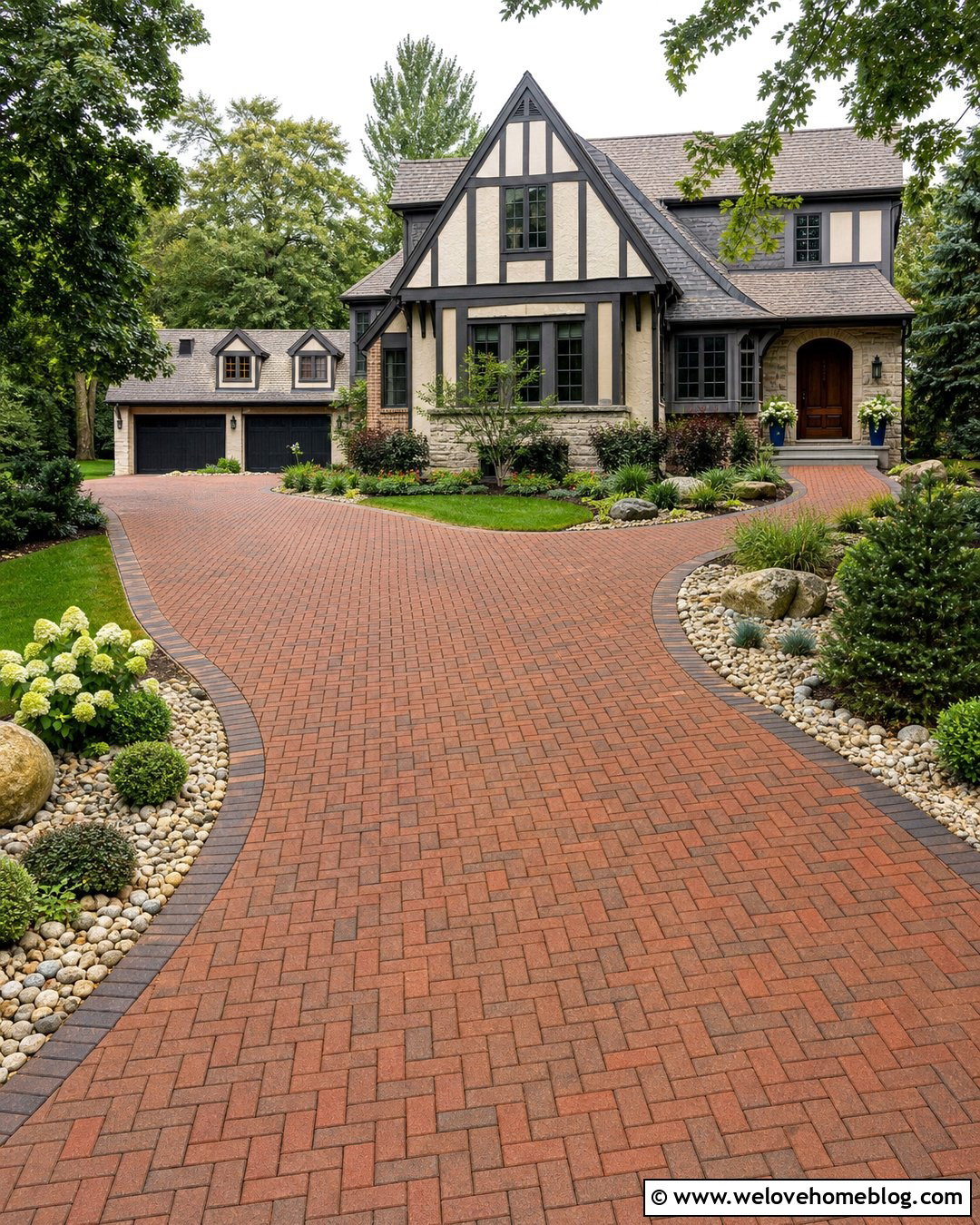
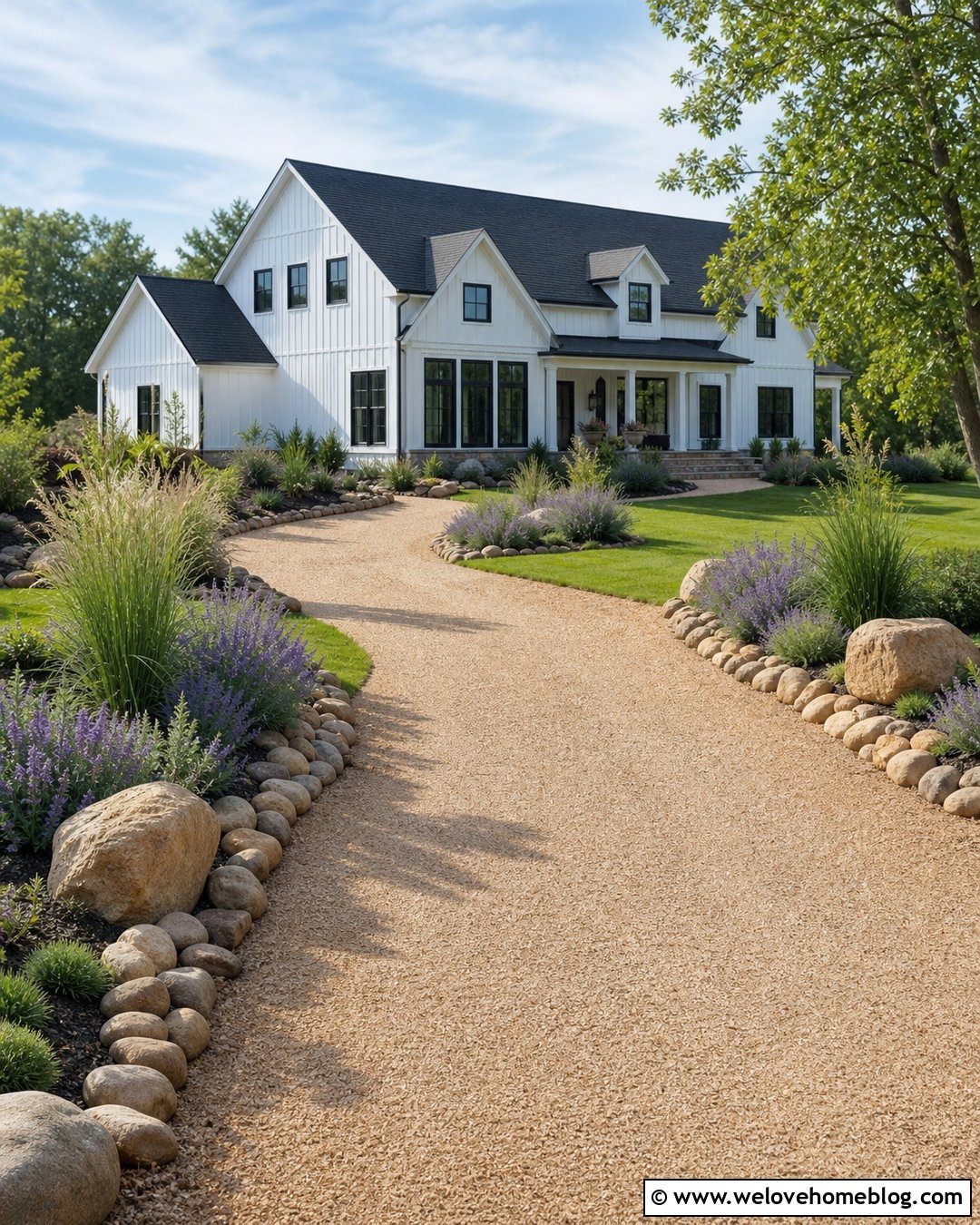
Defining your garden beds with clean, crisp river rock edging adds a professional and polished touch to your landscape. This type of border creates a clear separation between your lawn and planting areas, preventing grass from encroaching and keeping mulch contained. To install, dig a shallow trench along the perimeter of the bed, lay down landscape fabric, and fill it with your chosen river rocks. Using larger, more uniform stones creates a bold, defined line, while smaller pebbles offer a softer transition. This durable edging is a simple yet highly effective way to elevate the overall appearance of your yard.
6. River Rock Base for a Water Feature

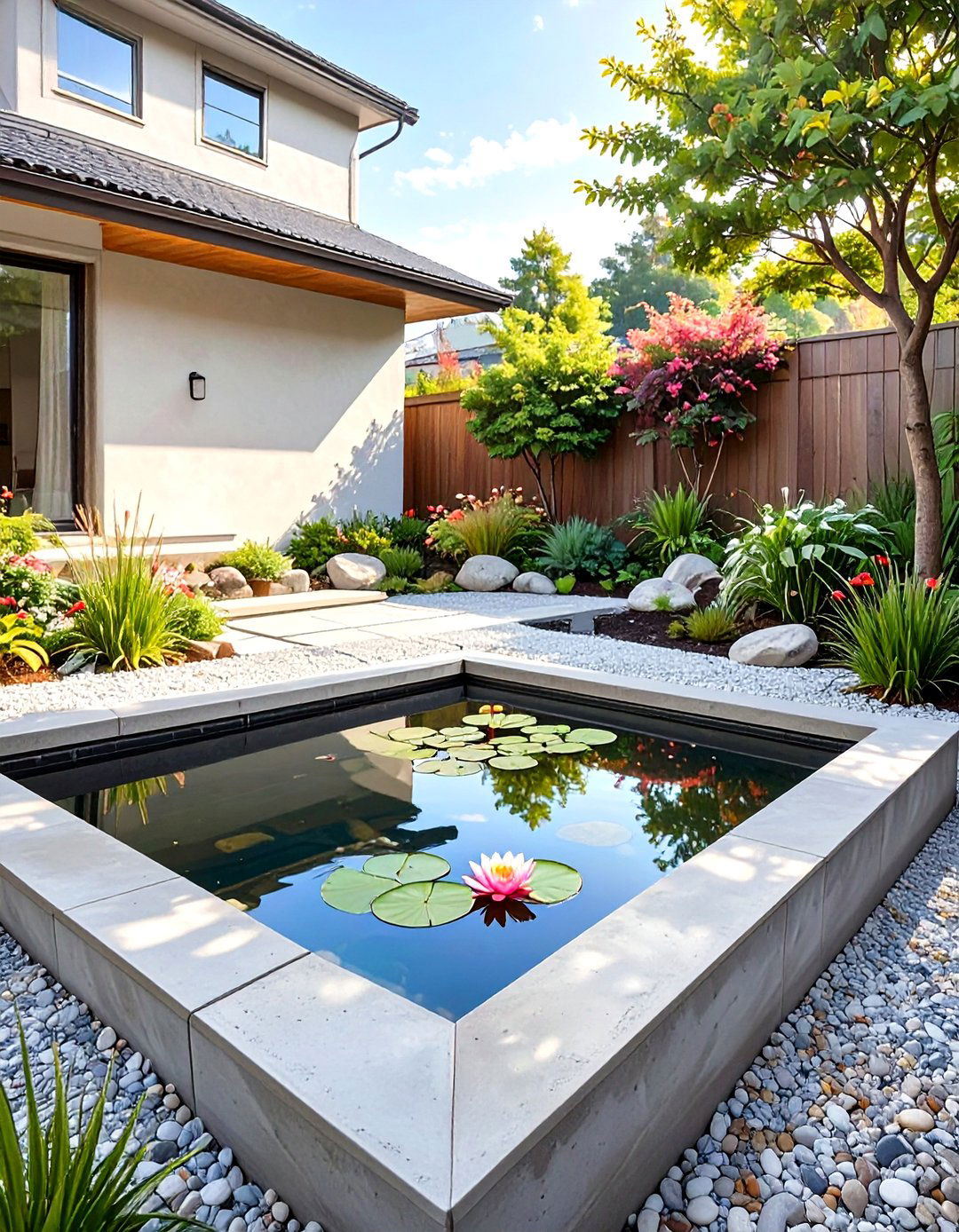
Enhance the tranquility of a fountain or birdbath by creating a base of river rocks around it. The stones conceal the pump and basin mechanics while adding a beautiful, natural element that complements the flowing water. As water splashes onto the rocks, it creates a gentle, soothing sound that enhances the peaceful atmosphere of your garden. This design also helps to reduce water evaporation and prevent mud from forming around the feature. Choose river rocks in varying sizes and colors to mimic a natural streambed, seamlessly integrating your water feature into the surrounding landscape for a harmonious look.
7. A Contemporary River Rock Zen Garden

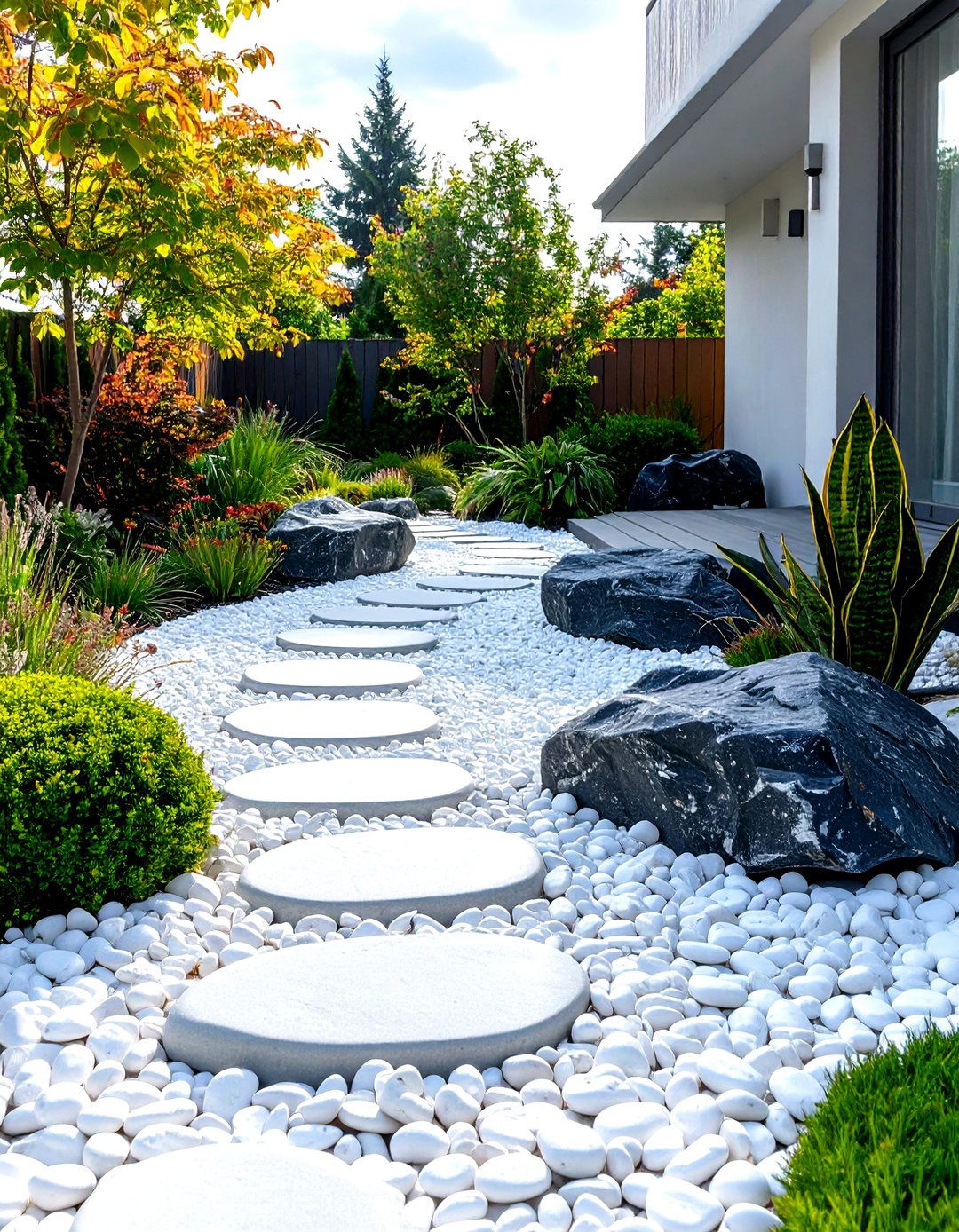
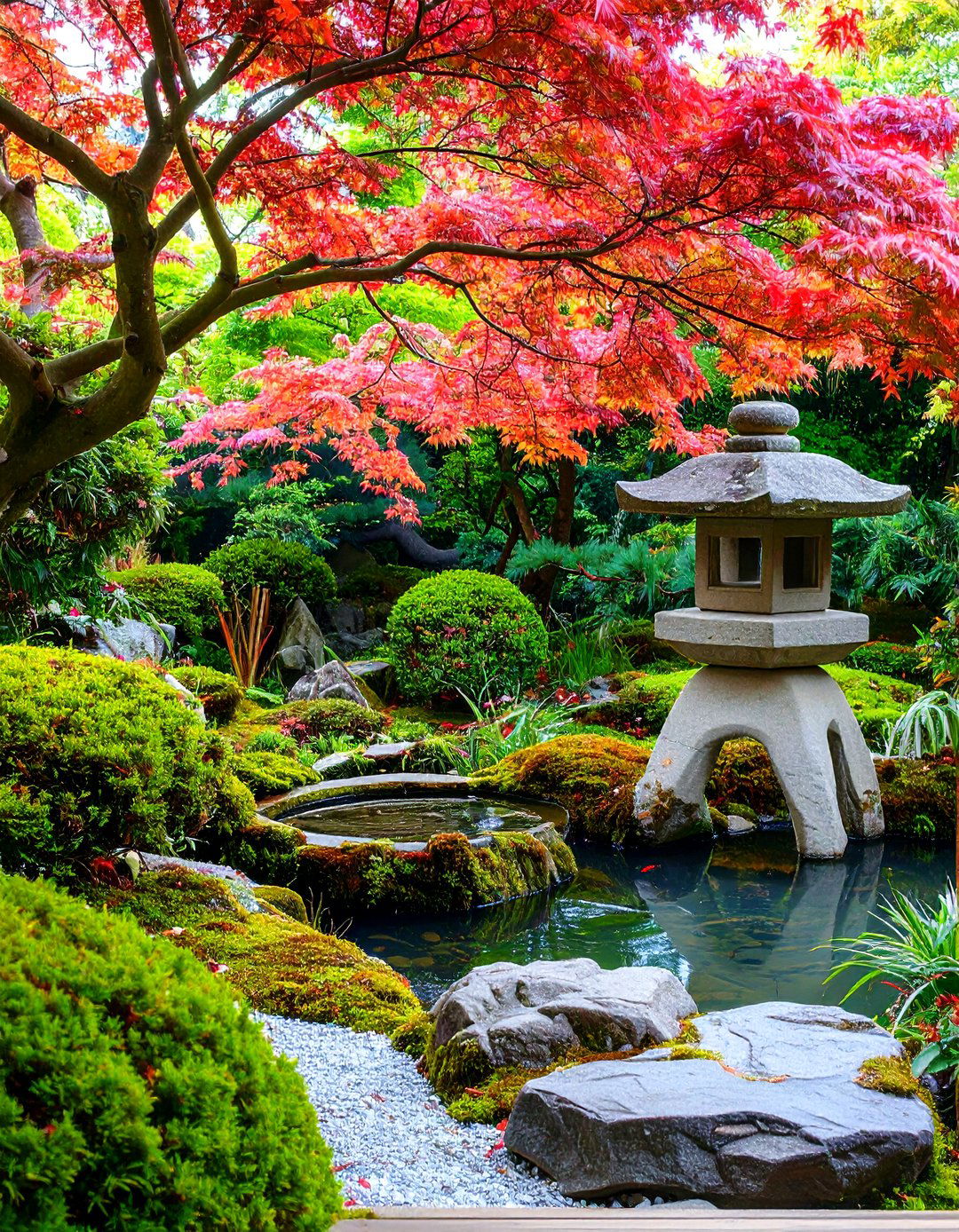
Craft a space for meditation and calm by designing a Zen garden using fine gravel and strategically placed river rocks. Rake the gravel into serene patterns that represent water, and arrange a few large, smooth river rocks to symbolize islands or mountains. The simplicity of this design promotes a sense of peace and mindfulness. This minimalist approach requires very little maintenance and serves as a powerful artistic statement in a small courtyard or a quiet corner of your yard. The contrast between the raked lines and the solid forms of the rocks is the central element of this contemplative landscape style.
8. Filling Gaps in a Flagstone Patio with River Rock

Elevate your flagstone patio by filling the gaps between the stones with small river rocks. This technique, often called a "living patio," adds texture and visual interest while allowing for excellent drainage. The river rocks create a beautiful contrast with the flat, angular flagstones and prevent weeds from growing in the crevices. Choose a contrasting color of river rock to make the pattern pop, or select a similar shade for a more subtle, cohesive look. This method gives the patio a more organic and less rigid feel, blending it seamlessly into the natural elements of your garden landscape.
9. A River Rock Border Along a Driveway

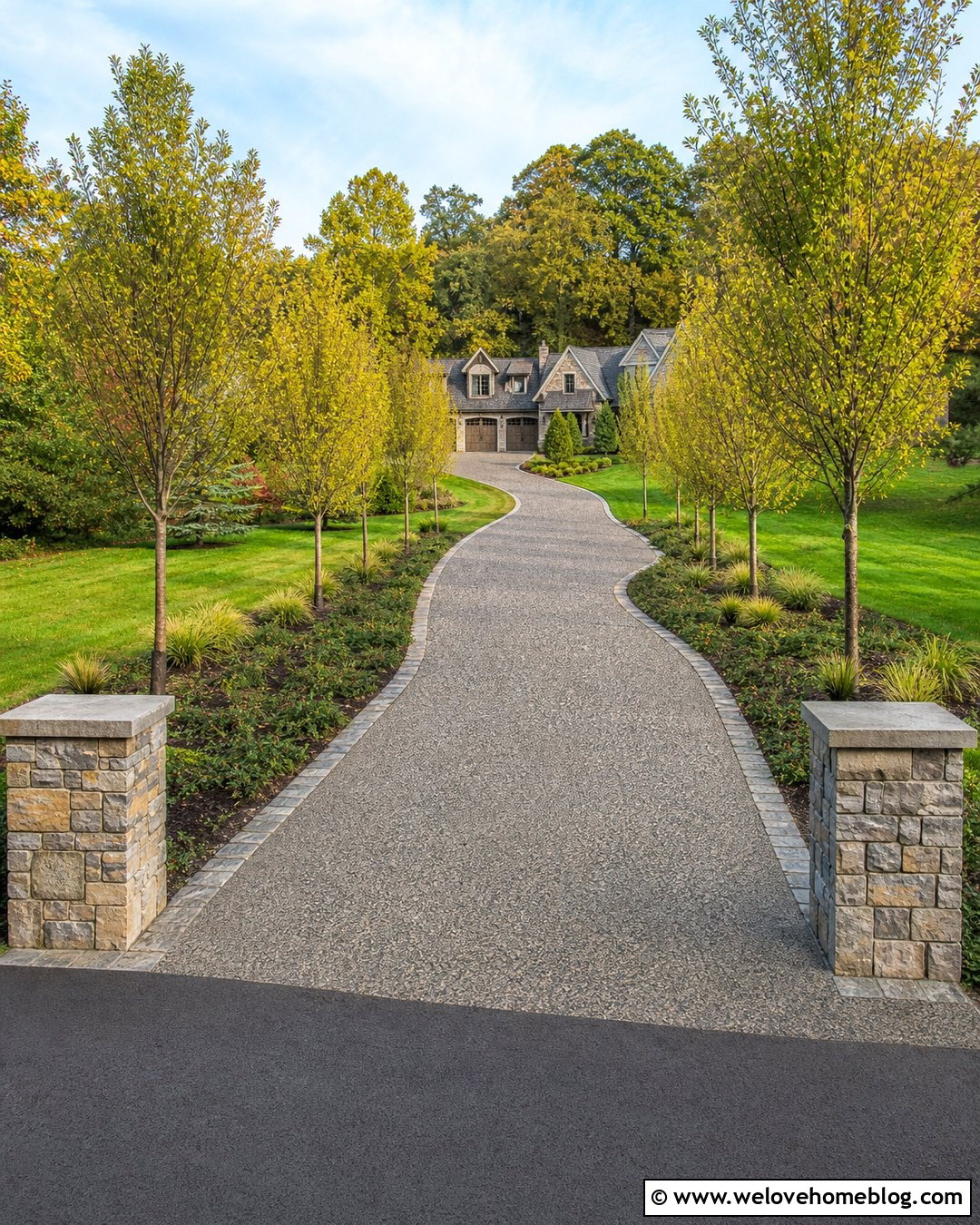
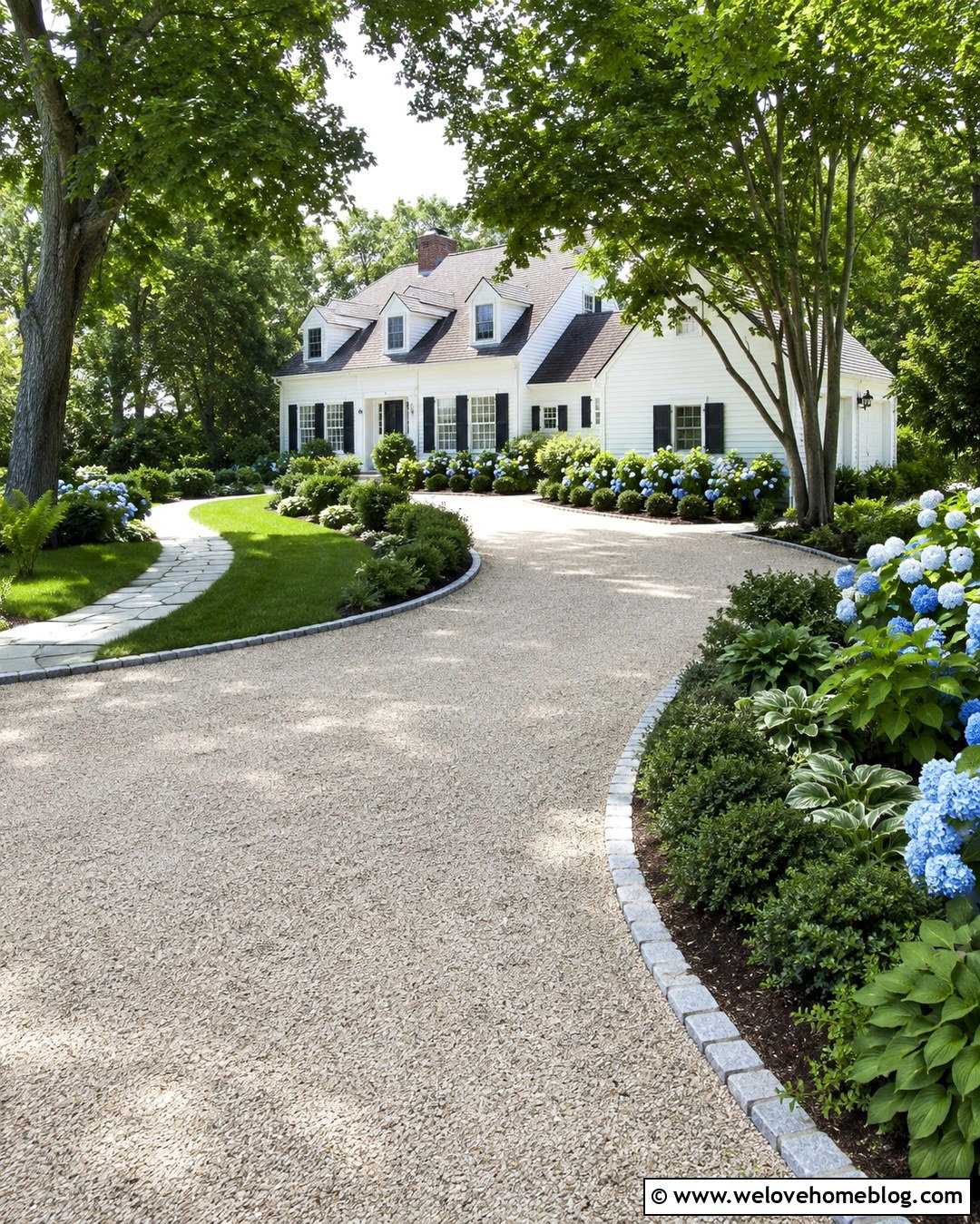
Frame your driveway with a wide band of river rocks to create a clean, sophisticated edge that boosts curb appeal. This border not only provides a neat transition from the pavement to your lawn but also serves a practical purpose. It creates a durable buffer zone that prevents cars from driving onto the grass and simplifies mowing and trimming. Laying landscape fabric underneath the rocks is essential to keep the area weed-free and low-maintenance. This simple addition makes a significant impact, giving your home’s entrance a manicured and well-cared-for appearance that stands up to the elements year after year.
10. Creating Mosaics with Colorful River Rock

Unleash your creativity by designing intricate mosaic patterns with colorful river rocks set into a pathway or patio. Use different hues—like black, white, red, and green—to form spirals, sunbursts, or even animal shapes. This artistic application turns a simple ground covering into a unique focal point for your outdoor space. To begin, sketch your design onto the prepared base, then carefully set each stone in mortar to hold it in place. While time-consuming, a river rock mosaic is a durable and stunning piece of landscape art that reflects your personal style and transforms an ordinary area into something truly special.
11. A River Rock Skirt Around Your Home's Foundation

Install a "skirt" of river rocks around the foundation of your house for a practical and attractive landscaping solution. This perimeter, typically about two to three feet wide, prevents soil and mulch from splashing onto your siding during rainstorms, keeping it clean and reducing the risk of moisture damage. It also discourages pests from nesting near your home and improves drainage away from the foundation. By laying down a layer of landscape fabric first, you can create a weed-free zone that requires virtually no maintenance while giving the base of your home a crisp, finished appearance.
12. Accenting a Pool Deck with River Rock

Integrate bands of smooth river rock into your pool deck design for a touch of spa-like luxury. These channels can be used to break up large expanses of concrete or pavers, adding textural contrast and improving drainage. The rocks are comfortable underfoot and don't get as hot as pavement, making them a great choice for areas where people walk barefoot. Polished black or bright white river rocks can create a striking, modern look that complements the cool blue of the pool water. This application brings a natural, resort-style feel to your backyard oasis, enhancing both its beauty and functionality.
13. Building Raised Garden Beds with River Rock Borders

Construct beautiful and functional raised garden beds by using mortared river rocks for the retaining walls. This method provides a sturdy, natural-looking alternative to wood or concrete blocks. The rounded shapes and varied colors of the river rocks create a rustic, organic feel that enhances the beauty of your flowers or vegetables. The stone walls also absorb and retain heat, which can help extend your growing season in cooler climates. This project combines the practicality of raised bed gardening with the timeless appeal of natural stone, resulting in a durable and charming landscape feature.
14. A River Rock Splash Block for Downspouts

Replace a standard plastic splash block with a more attractive and effective river rock version. Create a small, shallow basin at the end of your downspout and fill it with river rocks of various sizes. This not only disperses rainwater more gently to prevent soil erosion but also turns a purely functional item into a decorative landscape element. The water trickling over the stones creates a pleasant visual and sound, especially during a rain shower. This simple upgrade is an easy way to integrate natural materials into every corner of your yard while improving water management around your home.


15. A River Rock Inlay in a Concrete Pathway

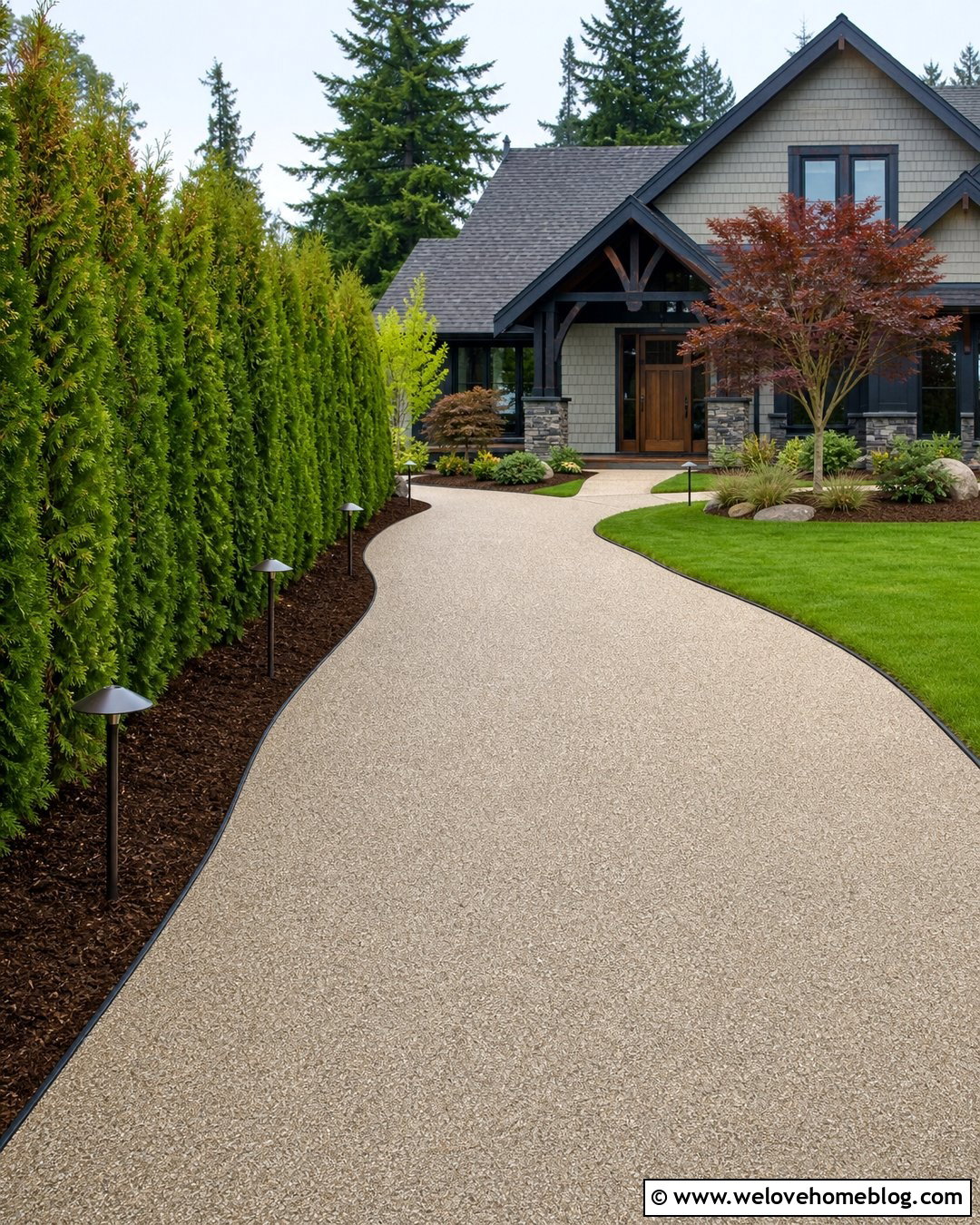
Add a custom, high-end touch to a plain concrete pathway by creating an inlay of smooth river rocks. Before the concrete sets, press polished river rocks into the surface to form a decorative border or a central, flowing pattern. This technique breaks up the monotony of the concrete, adding texture, color, and a unique design element. The contrast between the smooth, industrial finish of the concrete and the organic, rounded shapes of the stones is visually striking. This is a fantastic way to personalize a standard walkway and turn it into a durable piece of functional art.
16. Landscaping Under a Deck with River Rock

The area under a raised deck is often difficult to landscape, but covering it with river rock is a perfect solution. This creates a clean, dry, and maintenance-free surface that prevents weed growth and discourages pests. It also improves drainage and eliminates the need to mow or water in a hard-to-reach spot. Using river rocks provides a neat and tidy appearance that looks finished from every angle. You can even place a few potted plants or decorative boulders on the rock bed to add visual interest, transforming a neglected space into an attractive part of your landscape.
17. Creating River Rock Rain Chains

Direct water from your gutters in style by creating a functional art piece with a river rock rain chain. Instead of a traditional downspout, use a chain to guide rainwater downward, with smooth, drilled river rocks strung along its length. As water flows down, it clings to the rocks, creating a mesmerizing waterfall effect. The sound is much more pleasant than water rushing through a downspout, adding a tranquil auditory element to your garden. This beautiful and creative feature turns a rainy day into an opportunity to enjoy a dynamic water display in your yard.
18. A River Rock Surround for a Mailbox

Enhance your home's curb appeal by creating a decorative river rock bed around the base of your mailbox. This small landscaping project makes a big impact, defining the space and eliminating the need for awkward trimming around the post. Simply clear the area of grass, lay down weed barrier fabric, and fill a circular or square border with river rocks. You can add a few low-maintenance, drought-tolerant plants like sedum or ornamental grasses to complete the look. It’s a simple, elegant upgrade that adds a touch of class to your front yard and sets a welcoming tone.
19. Building a Low River Rock Retaining Wall
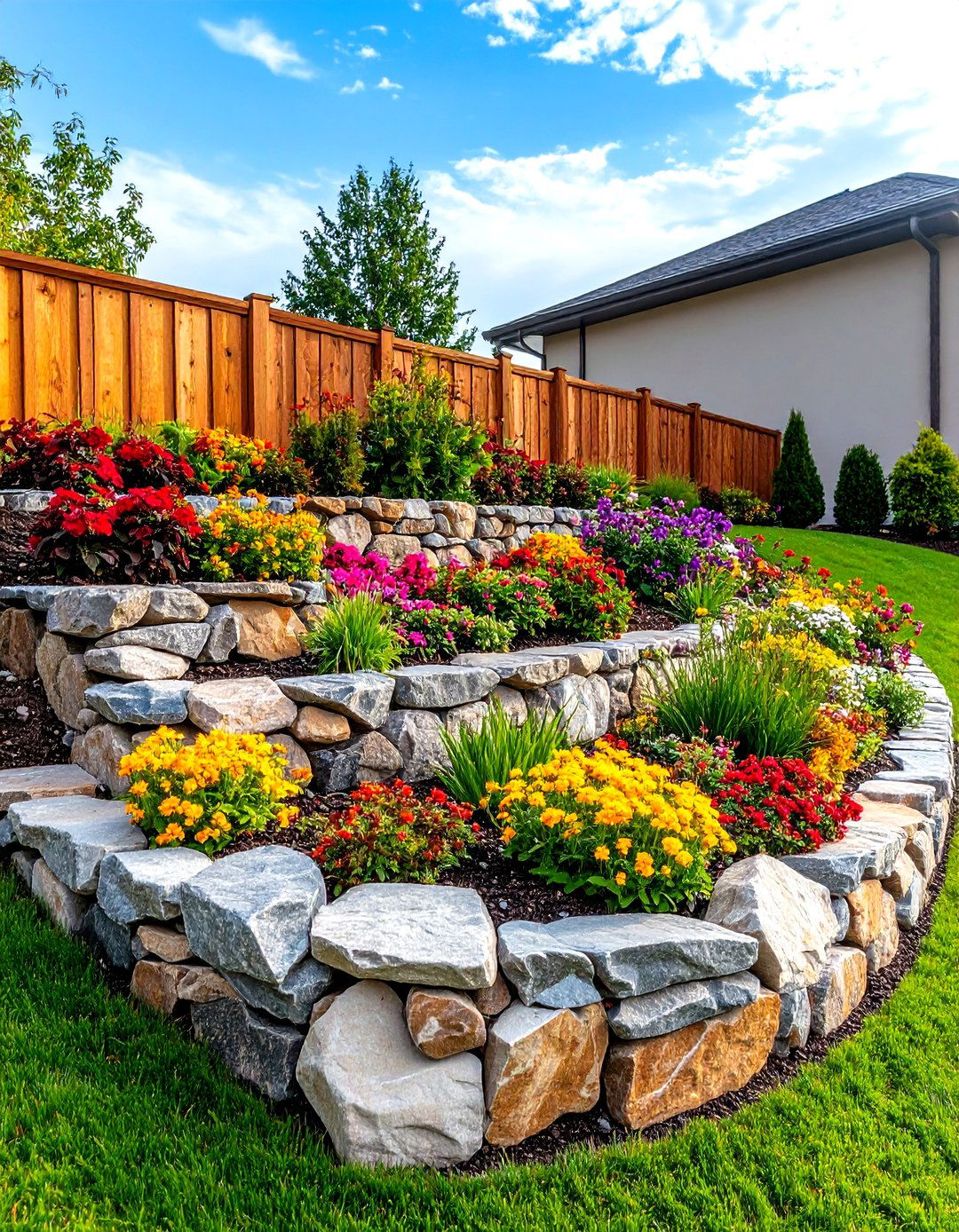
For subtle changes in elevation, a low, dry-stacked river rock retaining wall offers a natural and charming solution. Unlike formal block walls, a stacked river rock wall has an organic, rustic appeal that blends beautifully into a garden setting. These walls are ideal for terracing a gentle slope or creating a slightly raised flower bed. The process involves carefully selecting and fitting stones together without mortar, allowing for excellent drainage. This approach adds texture, character, and structure to your landscape, turning a simple slope into an interesting and dynamic garden feature that looks timeless.

20. A Checkerboard Patio with River Rock and Pavers

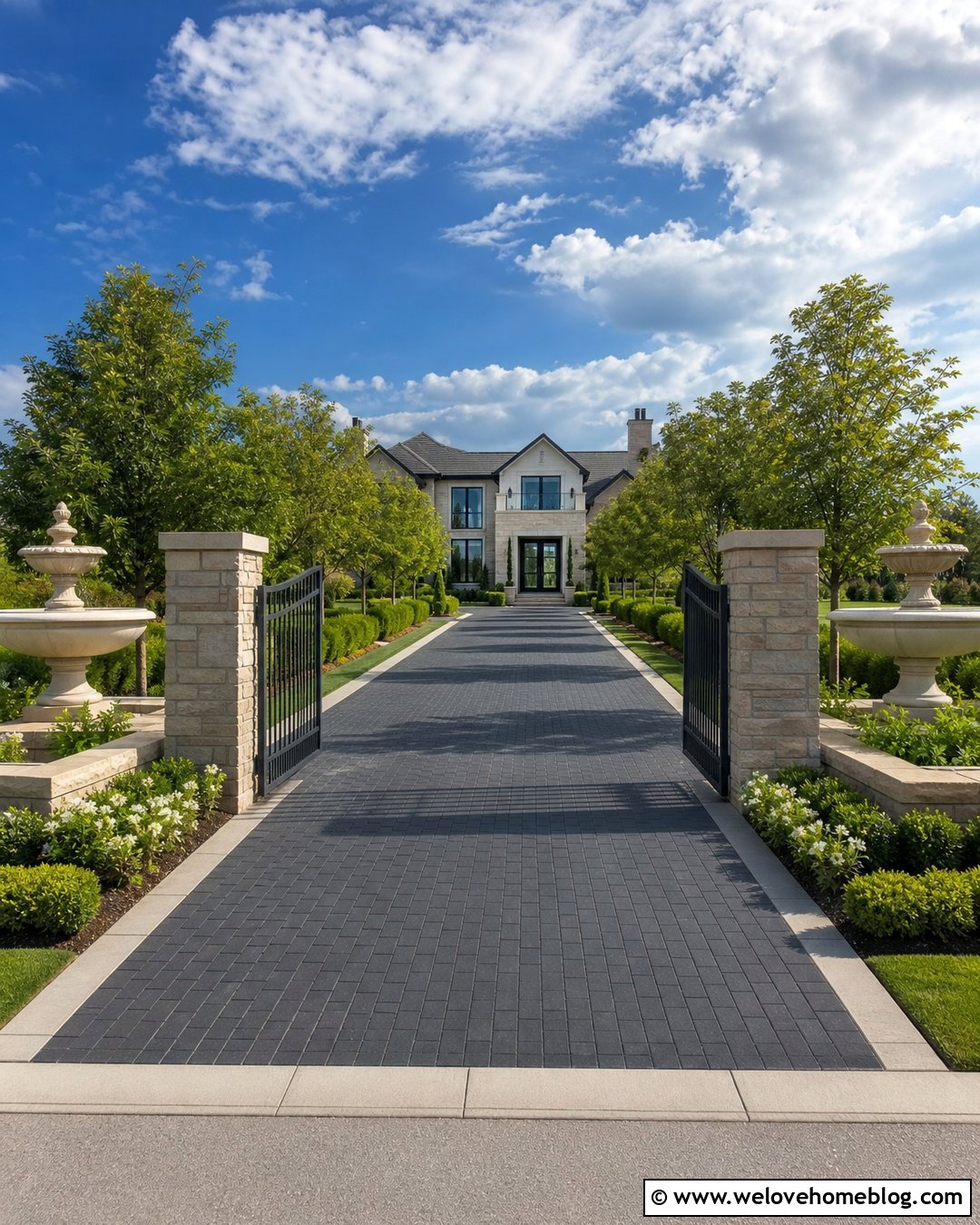
Design a visually captivating patio with a checkerboard pattern using square pavers and river rocks. Alternate concrete or stone pavers with sections filled with contrasting river rocks to create a bold, geometric design. This style adds a playful yet sophisticated element to your outdoor living space. The river rock sections provide excellent drainage and break up the hardscape with natural texture. Choose dark river rocks to contrast with light-colored pavers for a dramatic effect, or use similar tones for a more subtle, textured look. This unique flooring is both a functional patio and a work of art.
21. A River Rock Base for Outdoor Sculptures

Showcase a garden sculpture or art piece by placing it on a dedicated bed of river rocks. This creates a clean, gallery-like pedestal that draws the eye to your chosen focal point and separates it from the surrounding lawn or garden beds. The simple, neutral backdrop of the stones ensures that the artwork remains the star of the show. Using a contrasting color of river rock can make the sculpture stand out even more. This technique adds a level of intentionality and sophistication to your garden design, elevating your outdoor art from a simple decoration to a true centerpiece.
22. Designing Steps with River Rock Risers

Incorporate river rocks into your garden steps for a unique and textural design. Use large stone slabs or wooden planks for the treads (the part you step on) and fill the risers (the vertical face of the step) with mortared river rocks. This combination creates a stunning visual contrast between the smooth tread and the bumpy, multi-toned riser. It’s a creative way to add natural beauty to a sloped area of your yard. This custom detail turns a purely functional staircase into a beautiful landscape feature that seamlessly integrates with a rustic or naturalistic garden theme.
23. A River Rock Path Through a Vegetable Garden

Lay a practical and attractive path through your vegetable garden using river rocks. This provides a clean, dry surface to walk on while you tend to your plants, preventing you from compacting the soil in your garden beds. The rocks also help to suppress weeds between rows and improve the overall tidiness of the space. A simple river rock path is easy to install over landscape fabric and requires minimal maintenance. It brings a touch of organized, rustic charm to your edible garden, making the experience of harvesting your vegetables even more enjoyable and efficient.
24. A River Rock "Welcome" Mat at the Entryway
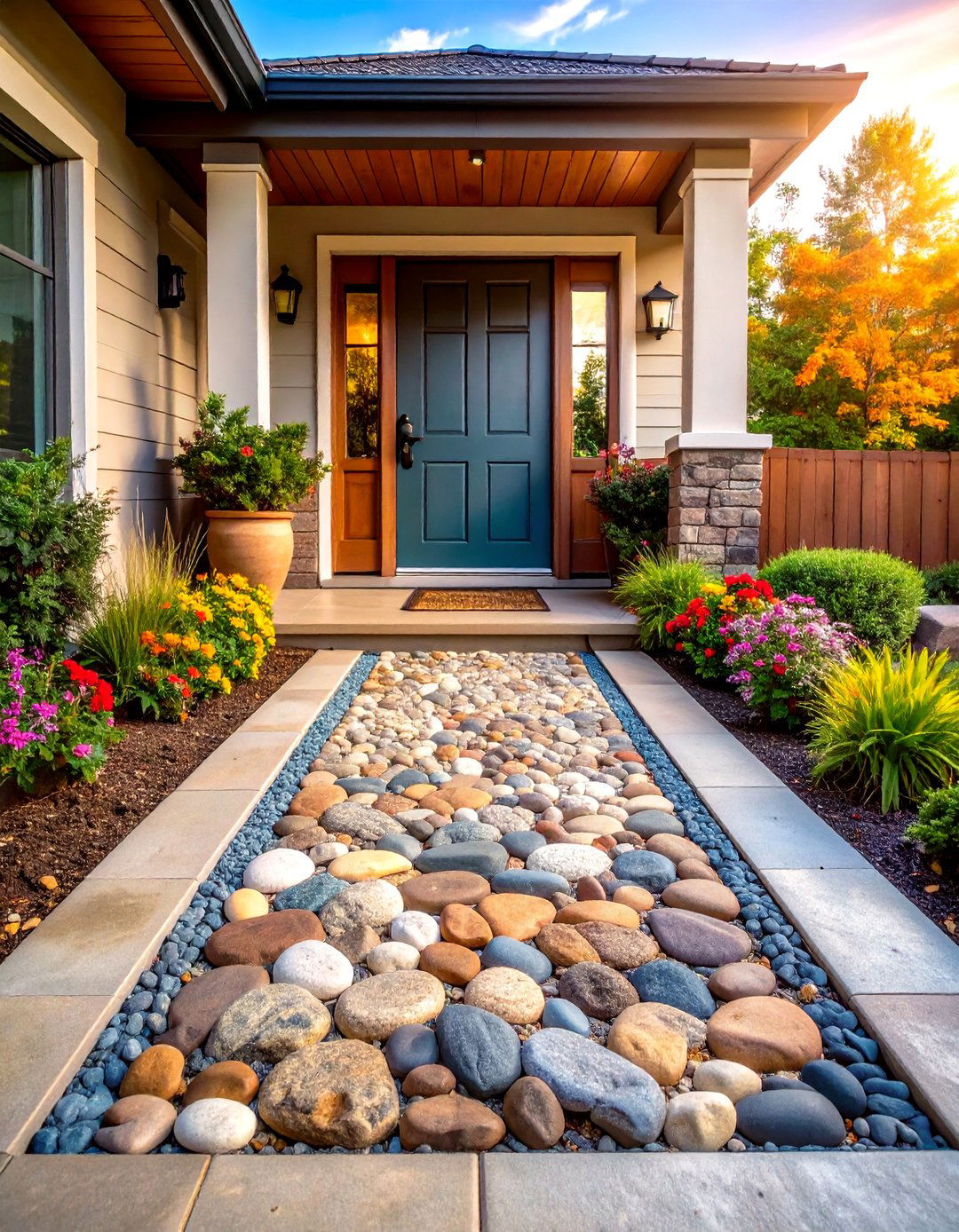
Create a permanent and stylish welcome mat at your front or back door by setting river rocks into a shallow frame or mortar bed. This feature is not only visually appealing but also highly functional, providing a durable surface for wiping shoes before entering the house. You can create a simple rectangular shape or even spell out "Welcome" with different colored stones for a personalized touch. This unique entrance feature is weather-resistant, easy to clean, and adds a custom, high-end detail that enhances your home’s entryway and greets guests with natural style.
25. Defining a Seating Area with a River Rock "Rug"
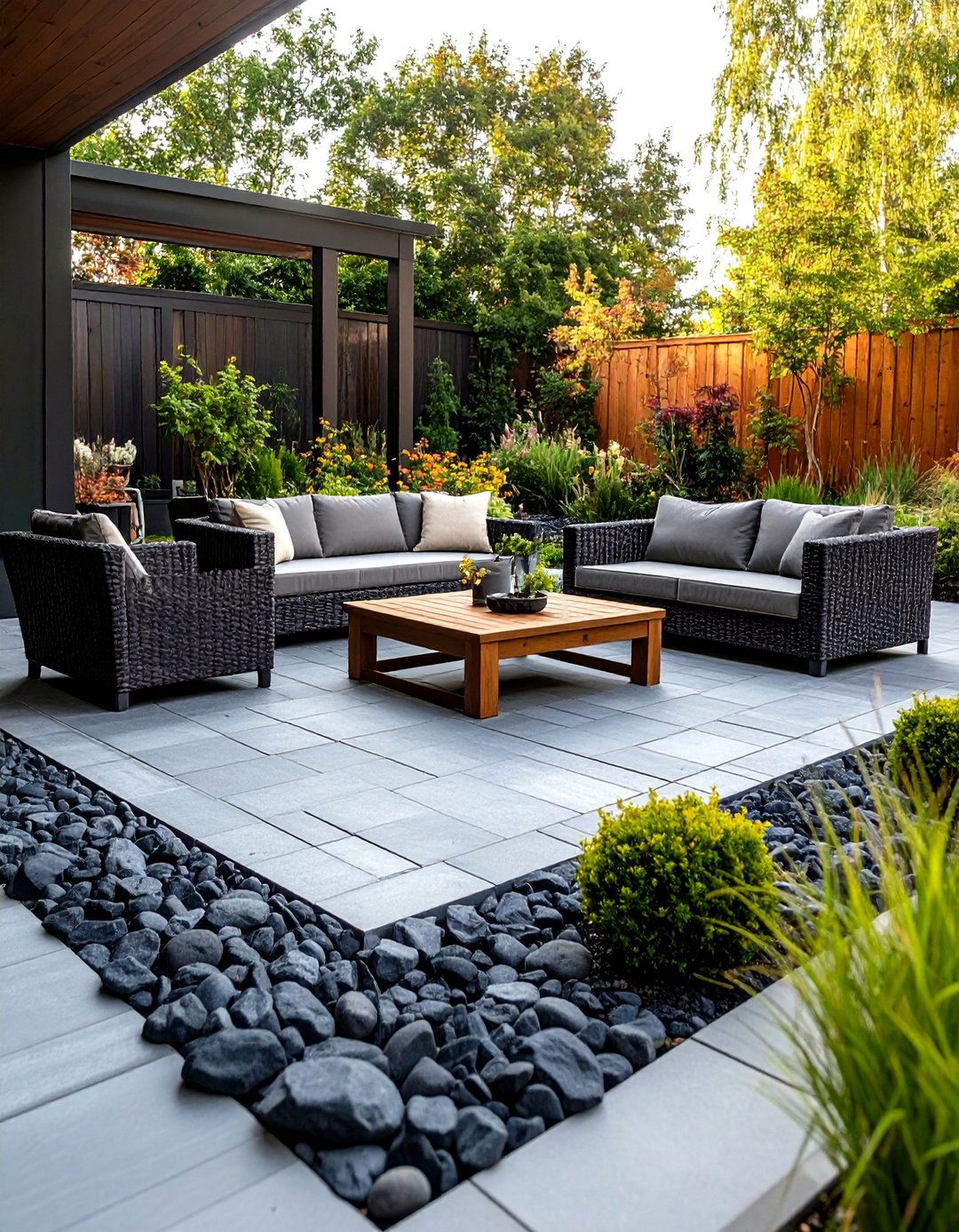
Anchor an outdoor seating area by creating a "rug" out of river rocks. Define a rectangular or circular space underneath your patio furniture and fill it with a layer of smooth, small river rocks. This delineates the conversation or dining zone from the rest of the yard or patio, much like an indoor area rug. You can use a contrasting color of rock to create a border for an even more defined look. This technique adds texture and visual interest to your outdoor room while providing a durable, all-weather surface that’s both practical and sophisticated.
26. A River Rock Drainage Swale

Effectively manage stormwater runoff by creating a functional and beautiful drainage swale lined with river rock. A swale is a shallow, wide channel that slows and directs the flow of water, allowing it to percolate into the ground. Lining it with river rock prevents erosion, keeps the channel clear of debris, and turns a utilitarian feature into a landscape asset that resembles a dry creek bed. This sustainable landscaping solution is an attractive way to handle drainage on your property, reducing runoff and helping to recharge groundwater while adding natural texture and form.
27. Using River Rock in a Container Garden
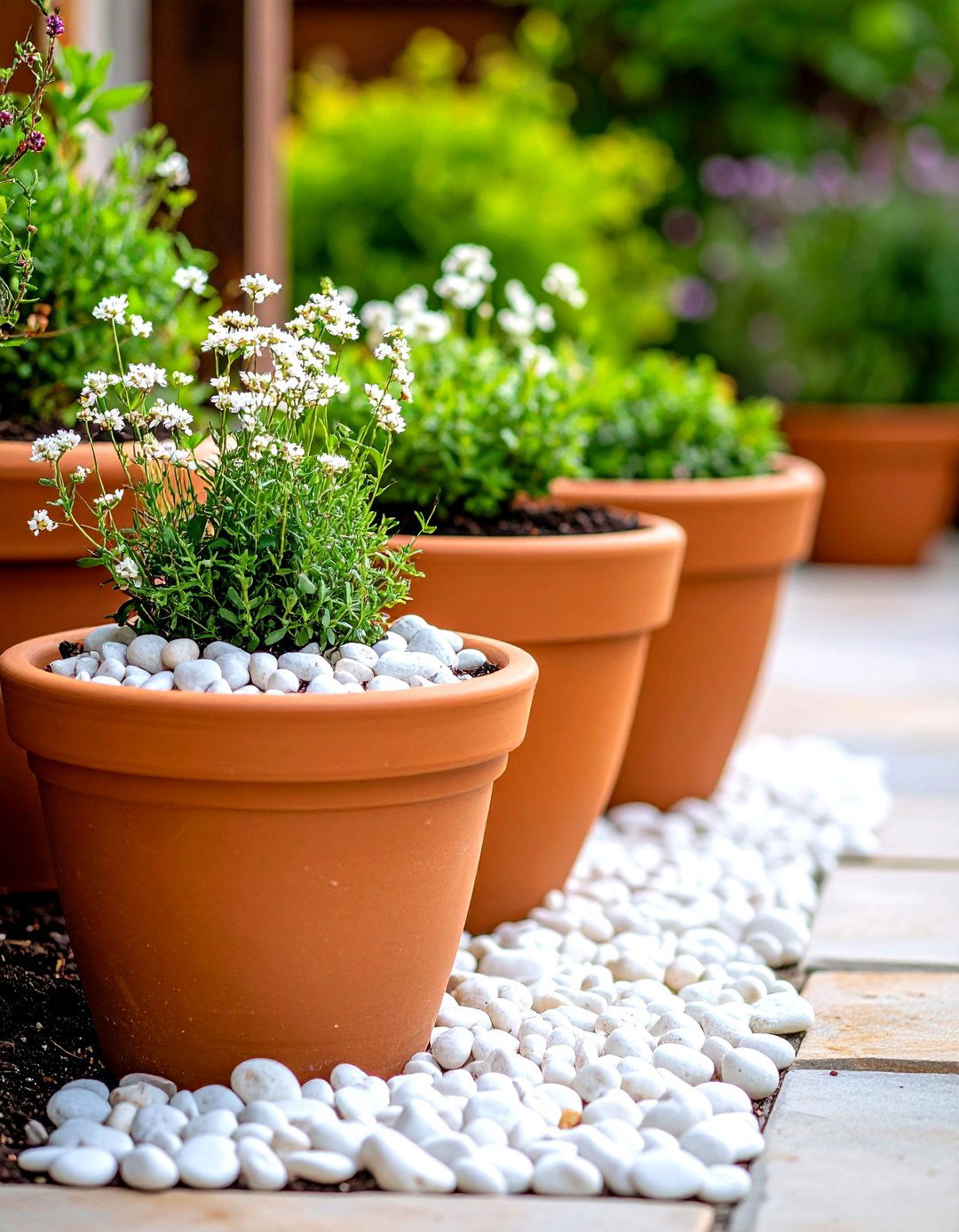
Add a top dressing of small river rocks to your potted plants and container gardens. This simple addition serves multiple purposes: it gives the containers a clean, finished look, helps retain soil moisture by reducing evaporation, and prevents soil from splashing out during watering. It also discourages weeds from taking root on the soil surface. Using different colored river rocks can complement the pot or the plant itself, adding another layer of design to your container arrangements. This is an easy, inexpensive way to elevate the appearance and health of your potted plants.
28. Creating a River Rock Waterfall

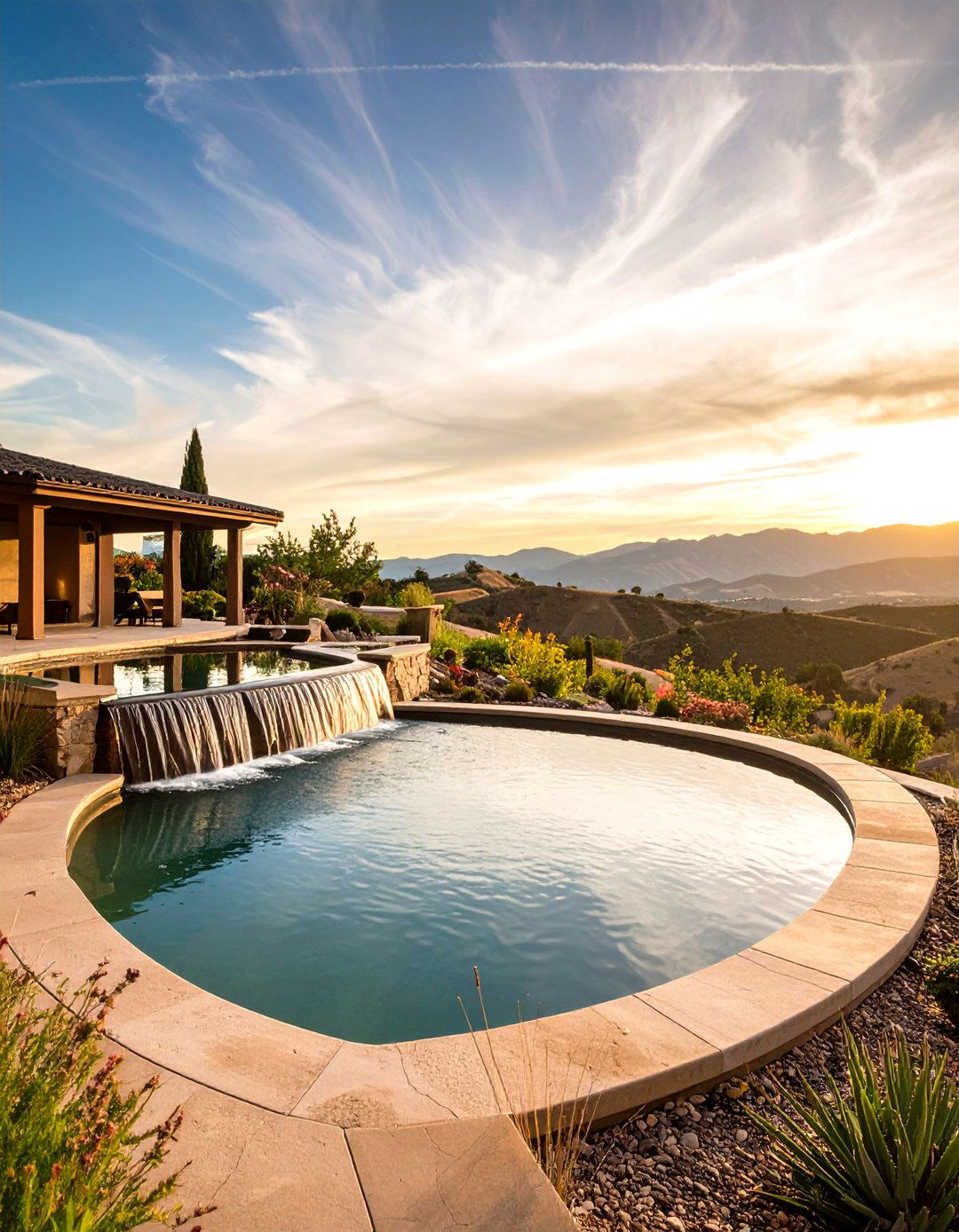
For the ultimate tranquil garden feature, construct a cascading waterfall using large boulders and river rocks. The water flows over the larger stones and pools in basins lined with smaller river rocks before recirculating. The sound of the falling water is incredibly soothing, and the sight of it tumbling over the natural stones is captivating. A well-designed waterfall becomes the centerpiece of any landscape, creating a dynamic focal point that attracts birds and other wildlife. The river rocks are essential for creating the naturalistic look and feel of a mountain stream in your own backyard.
29. A River Rock Inlay Around a Tree Base

Instead of a traditional mulch ring, create a permanent and elegant river rock inlay around the base of a mature tree. This defines the space, protects the trunk from lawnmower damage, and eliminates the need for yearly re-mulching. A river rock ring provides a clean, manicured look that highlights the tree as a specimen feature in your yard. Ensure you don’t pile the rocks directly against the trunk to allow for proper air circulation. This is a sophisticated, low-maintenance solution that adds polished character to your landscape and showcases your favorite trees.
30. A Black River Rock Modern Landscape Design

Embrace a sleek, contemporary aesthetic by using polished black river rock as a primary groundcover. The deep, uniform color creates a dramatic and sophisticated backdrop that makes green foliage and vibrant flowers pop. Use it in geometric beds with clean, straight lines for a minimalist feel. Black river rock pairs beautifully with modern architecture, metal accents, and simple, structural plants like horsetail reed or snake plants. This bold choice creates a high-contrast, high-impact landscape that is both visually stunning and exceptionally low-maintenance, perfect for a modern home.
Conclusion:
River rocks are a remarkably versatile and durable material for transforming any landscape. From functional solutions like dry creek beds and weed-suppressing mulch to aesthetic features like intricate mosaics and tranquil Zen gardens, their applications are nearly limitless. By incorporating river rocks, you can add texture, color, and natural beauty to your yard while reducing maintenance. Whether you’re creating a simple garden border or an elaborate waterfall, these stones provide a timeless connection to the natural world, enhancing the overall appeal and usability of your outdoor living spaces.

Related posts:
Leave a Reply