
A well-planned driveway hedge can soften hard paving, screen neighboring windows, and make the approach to your home feel more private. These 20 Privacy Hedge Along Driveway Ideas combine practical screening with complete driveway designs, including suitable surfaces, borders, lighting, and layered planting. Before choosing plants, check your USDA hardiness zone, sunlight, soil drainage, road-salt exposure, and the hedge’s mature width. Narrow evergreens often suit compact suburban driveways, while mixed hedgerows work beautifully on larger properties. Keep plants clear of pavement, utilities, and entrance sightlines so growth does not interfere with vehicles or pedestrians. Use the following complete looks to find the right layout, material, and planting character for your property with these 20 Privacy Hedge Along Driveway Ideas.

1. Arborvitae Privacy Hedge Along Concrete Driveway
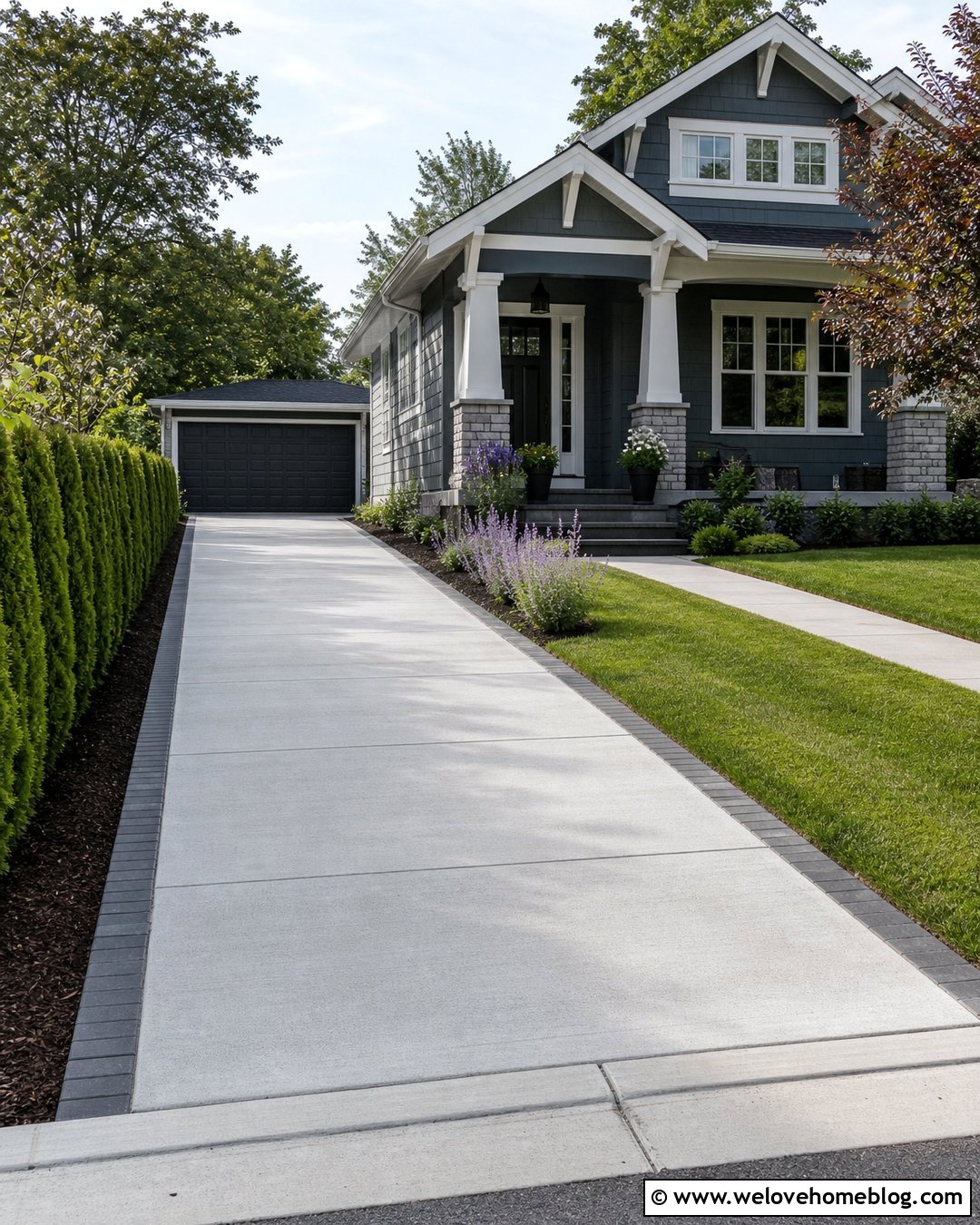
A straight concrete driveway feels much more secluded when a narrow row of Emerald Green arborvitae runs along the property line. Their upright shape works especially well where the planting strip between neighboring driveways is limited. Add a dark charcoal paver border between the concrete and planting bed to create a clean transition. Low catmint or creeping thyme can cover exposed soil without competing visually with the hedge. Leave enough room for each arborvitae to reach its expected mature width rather than planting directly against the pavement. A simple mulch bed helps protect roots from mower damage. This complete look suits Craftsman, Cape Cod, and traditional suburban homes that need dependable greenery without losing valuable driveway space. ()
2. Green Giant Privacy Hedge Along Gravel Driveway
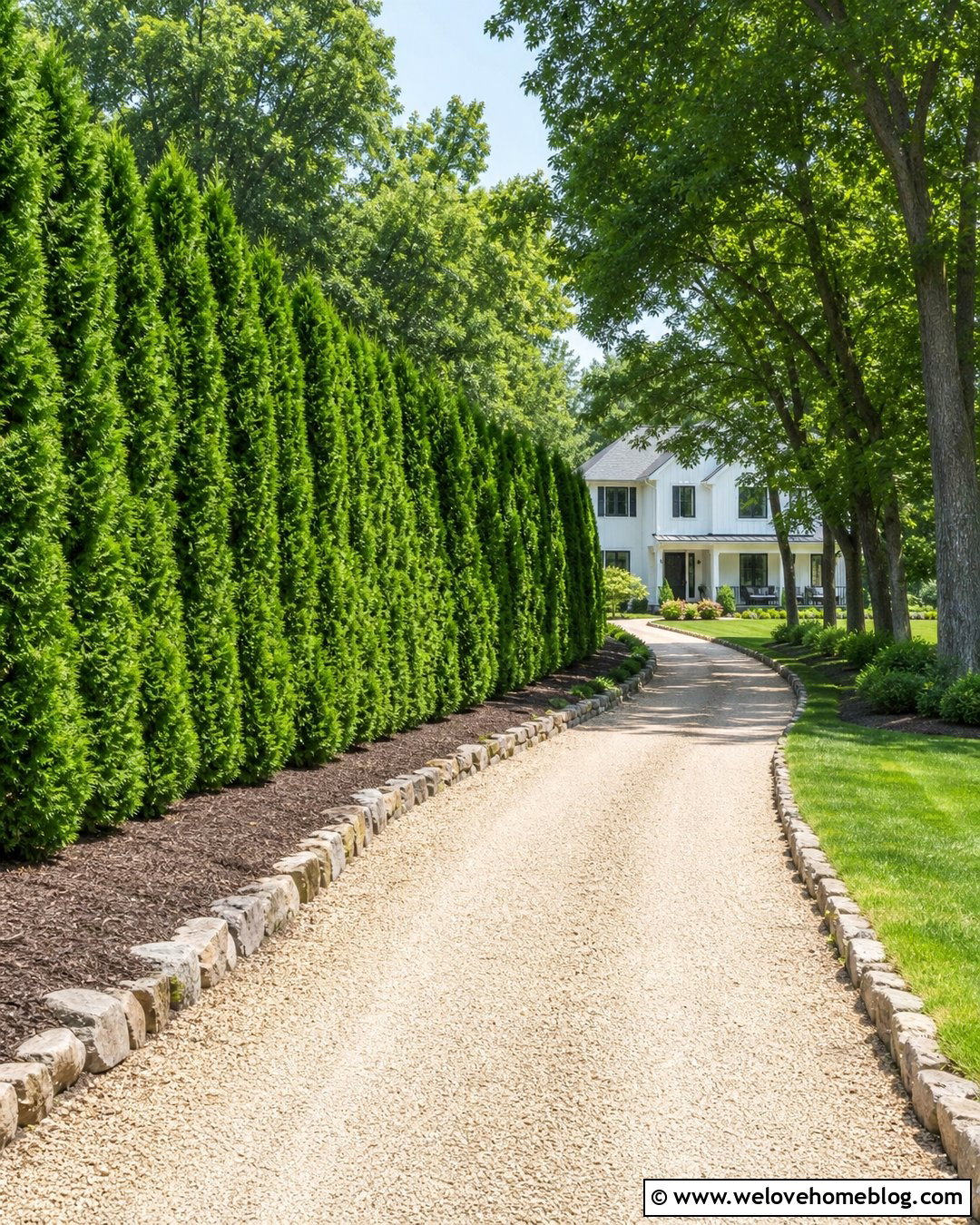
Picture a long gravel driveway framed by a tall, softly textured wall of Green Giant arborvitae. This substantial evergreen requires more room than narrow arborvitae varieties, making it better for large suburban yards and country properties. Warm beige crushed gravel, weathered fieldstone edging, and a gently curved layout complement the natural scale of the plants. Space the hedge back from the driving surface so branches will not scrape vehicles as they mature. A wide mulched bed can catch scattered gravel and simplify mowing. Near the entrance, gradually lower the planting or set it farther back to preserve a clear view of traffic. The finished driveway feels sheltered and established, especially when paired with a modern farmhouse or stone-front country house. ()
3. Holly Privacy Hedge Along Asphalt Driveway
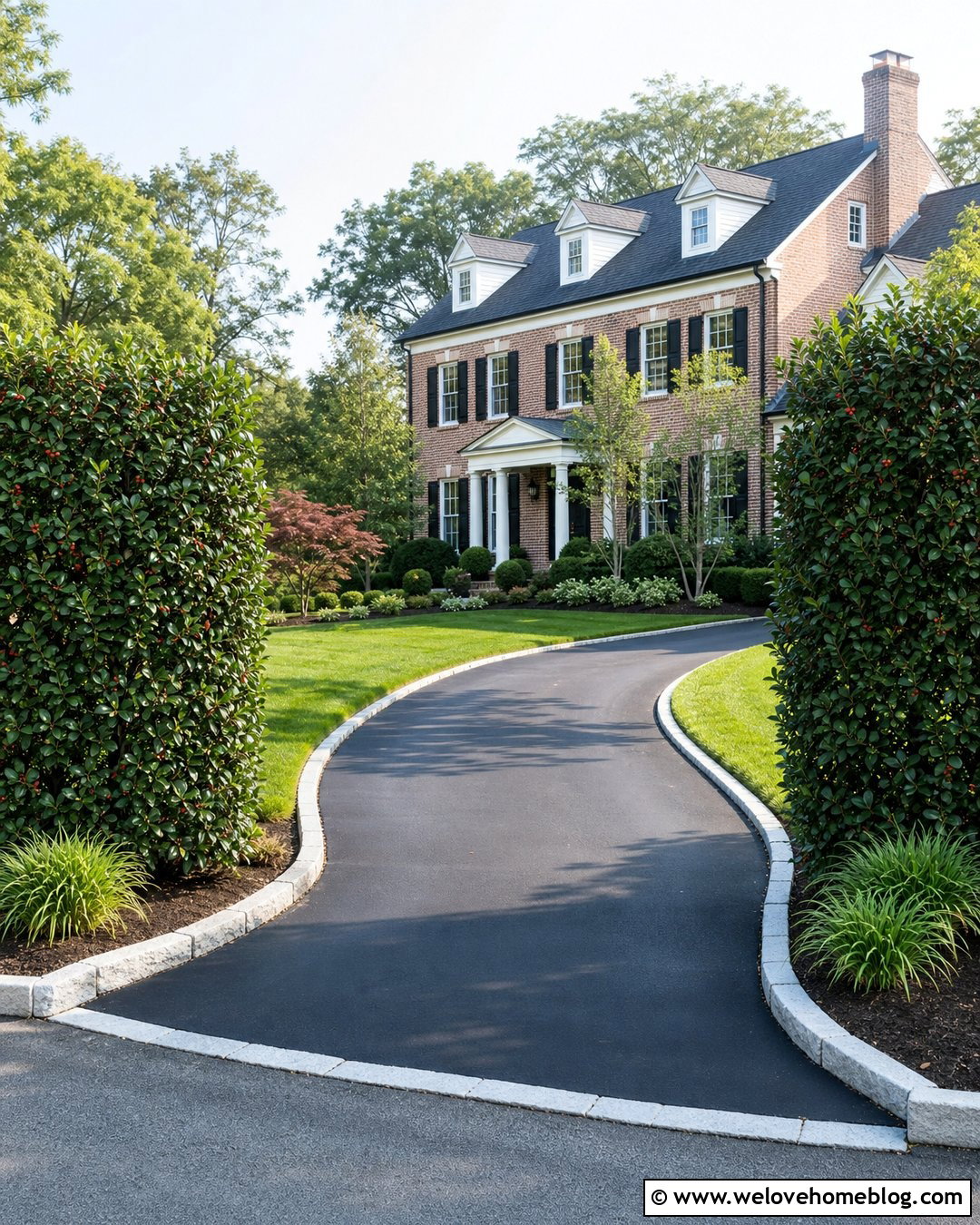
Glossy holly foliage can turn an ordinary black asphalt driveway into a polished, year-round entrance. Use an upright holly suited to your climate and available planting width, then allow it to form a dense natural hedge rather than forcing it into a narrow box. A light-gray granite curb creates contrast with the dark pavement and stops roots or mulch from spilling onto the driveway. Add compact ornamental grasses near the house for softer movement. Along a curved driveway, repeat the hedge on the outside curve while keeping the inside entrance open for visibility. This combination looks especially fitting beside Colonial and red brick homes. Before planting, verify the mature size and whether the selected holly requires a pollinating partner if decorative berries are desired.
4. Yew Privacy Hedge Along Brick Driveway
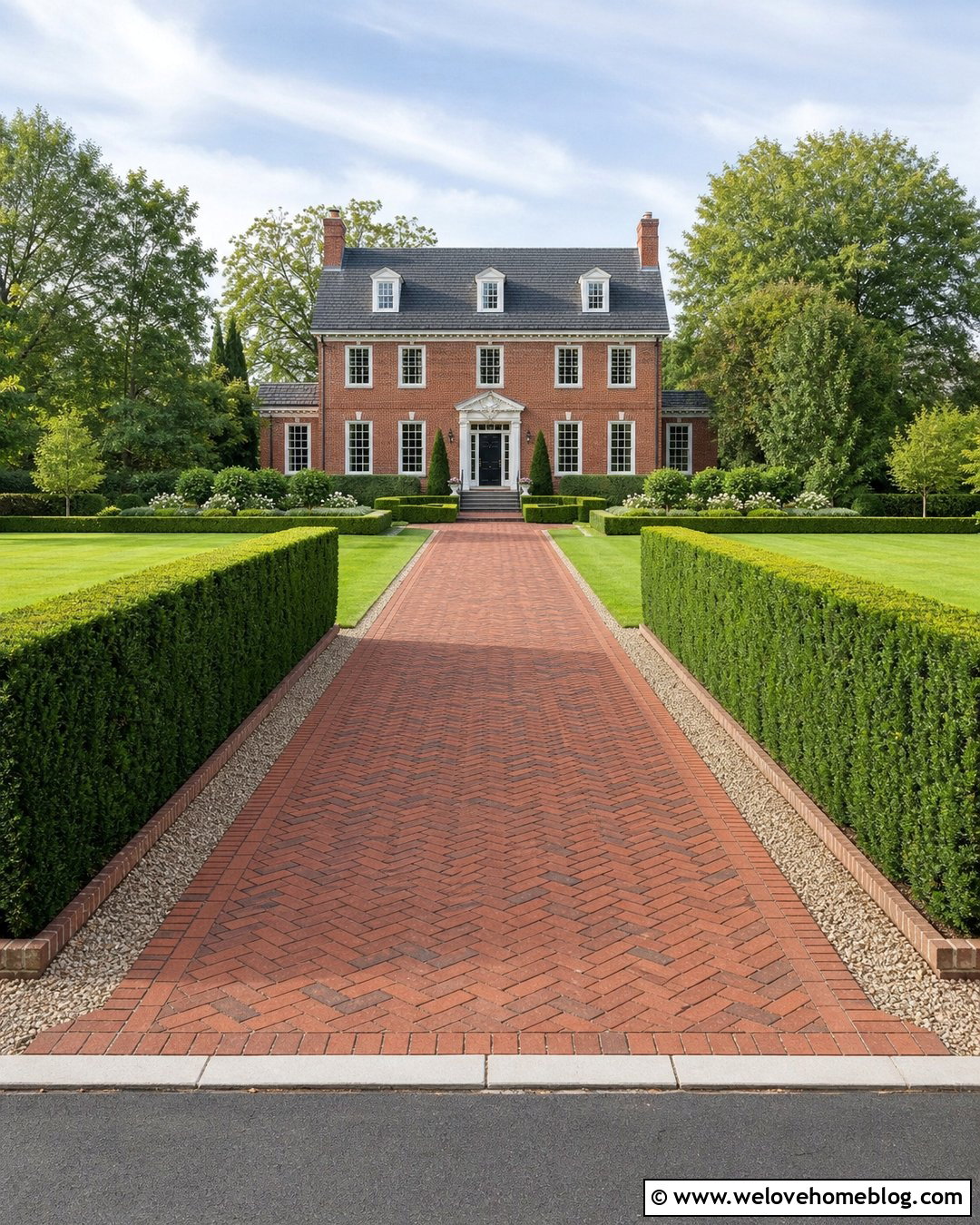
Would a more formal landscape suit your home? A clipped yew hedge beside clay brick pavers creates a structured entrance with deep green color and crisp lines. Lay the brick in a herringbone pattern and use a soldier-course border to strengthen the traditional look. Keep the hedge slightly wider at the bottom than the top so sunlight can reach lower growth. This helps the screen remain full near ground level instead of becoming bare and see-through. A narrow gravel maintenance strip between the bricks and planting bed makes trimming and cleanup easier. Add matching yew sections around the front walkway to connect the driveway with the house. This refined combination complements Georgian, Federal, Tudor, and other traditional architecture. ()
5. Laurel Privacy Hedge Along Shaded Paver Driveway
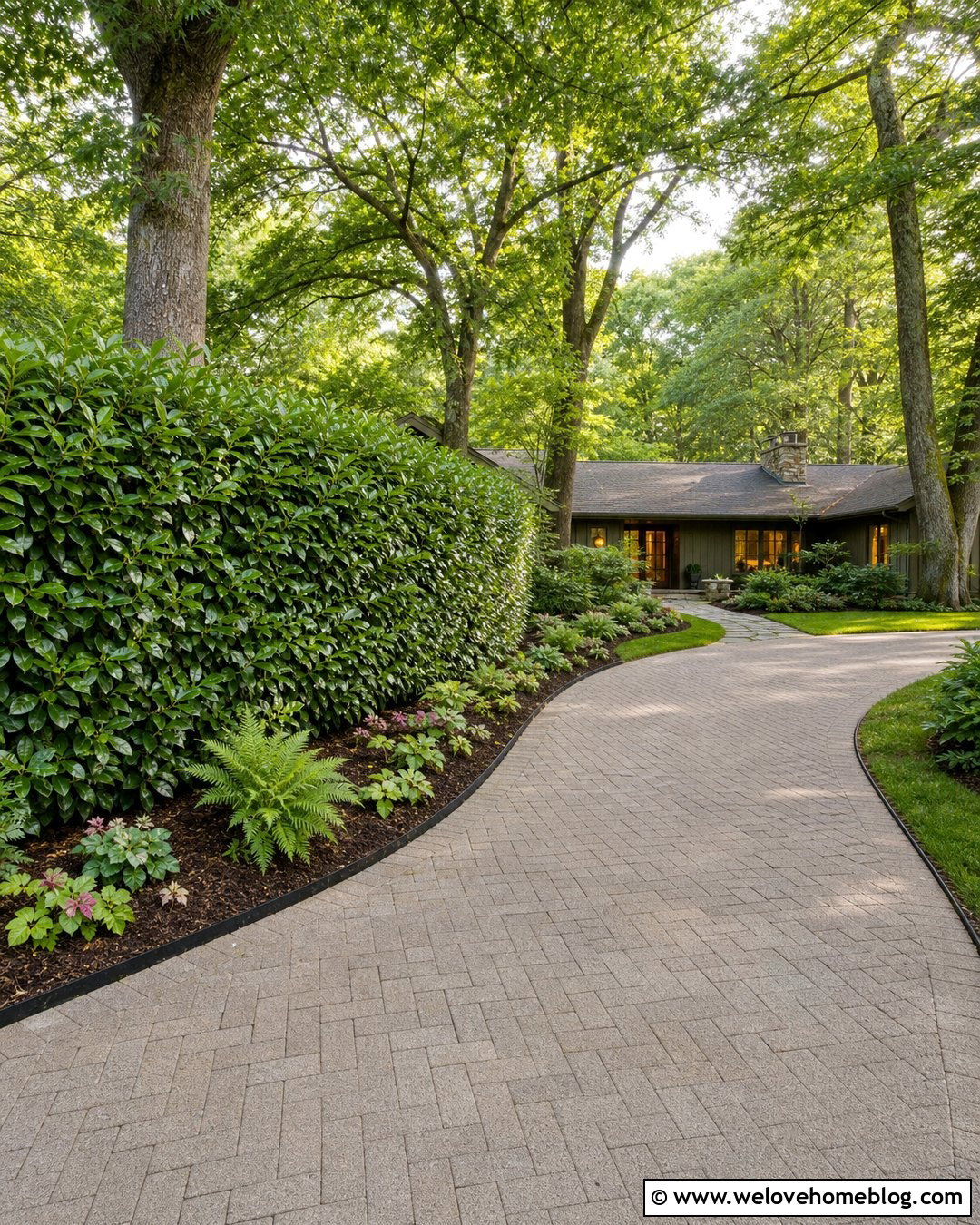
A driveway shaded by neighboring trees needs plants chosen for lower light, not simply the fastest-growing hedge at the garden center. A broadleaf evergreen laurel can create a lush screen where the climate and site conditions are suitable. Pair it with warm gray permeable concrete pavers arranged in a running bond pattern. A steel edge keeps the paving separate from a generous bed of shredded bark mulch. Let the hedge follow a slight driveway curve for a softer, woodland-inspired approach. Ferns, hellebores, and shade-tolerant ground covers can fill the foreground beneath the leafy screen. Because laurels may develop considerable width, confirm the exact cultivar’s mature dimensions. This complete driveway look works beautifully with wooded ranch homes, cottages, and shaded split-level properties.
6. Bayberry Privacy Hedge Along Coastal Gravel Driveway
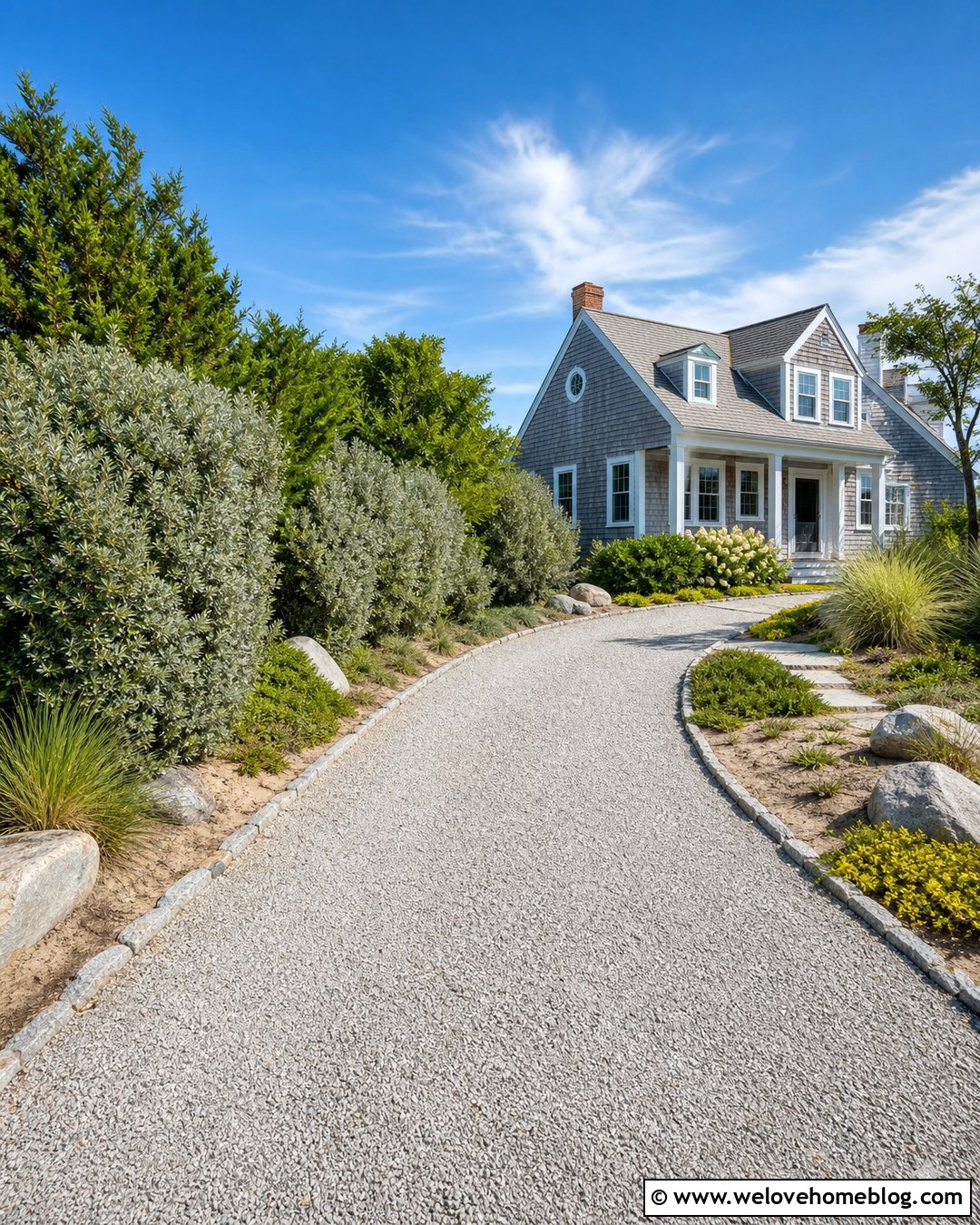
Salt exposure, wind, and sandy soil can make coastal driveway landscaping difficult. Northern bayberry offers an informal screening option in regions where it is locally appropriate. Combine the loose, silvery green hedge with pale gray crushed-stone gravel and rough granite edging. A gently bending driveway will emphasize the relaxed coastal character while preventing the planting from looking overly rigid. Beach grass, native ground covers, and small boulders can fill wider sections of the border. Allow the hedge to keep its natural outline and remove only wayward branches that lean into the driving area. The result feels at home beside cedar-shingle cottages and coastal Cape Cod houses. Bayberry can tolerate challenging roadside conditions and works well as an informal screen. ()
7. Podocarpus Privacy Hedge Along Modern Concrete Driveway
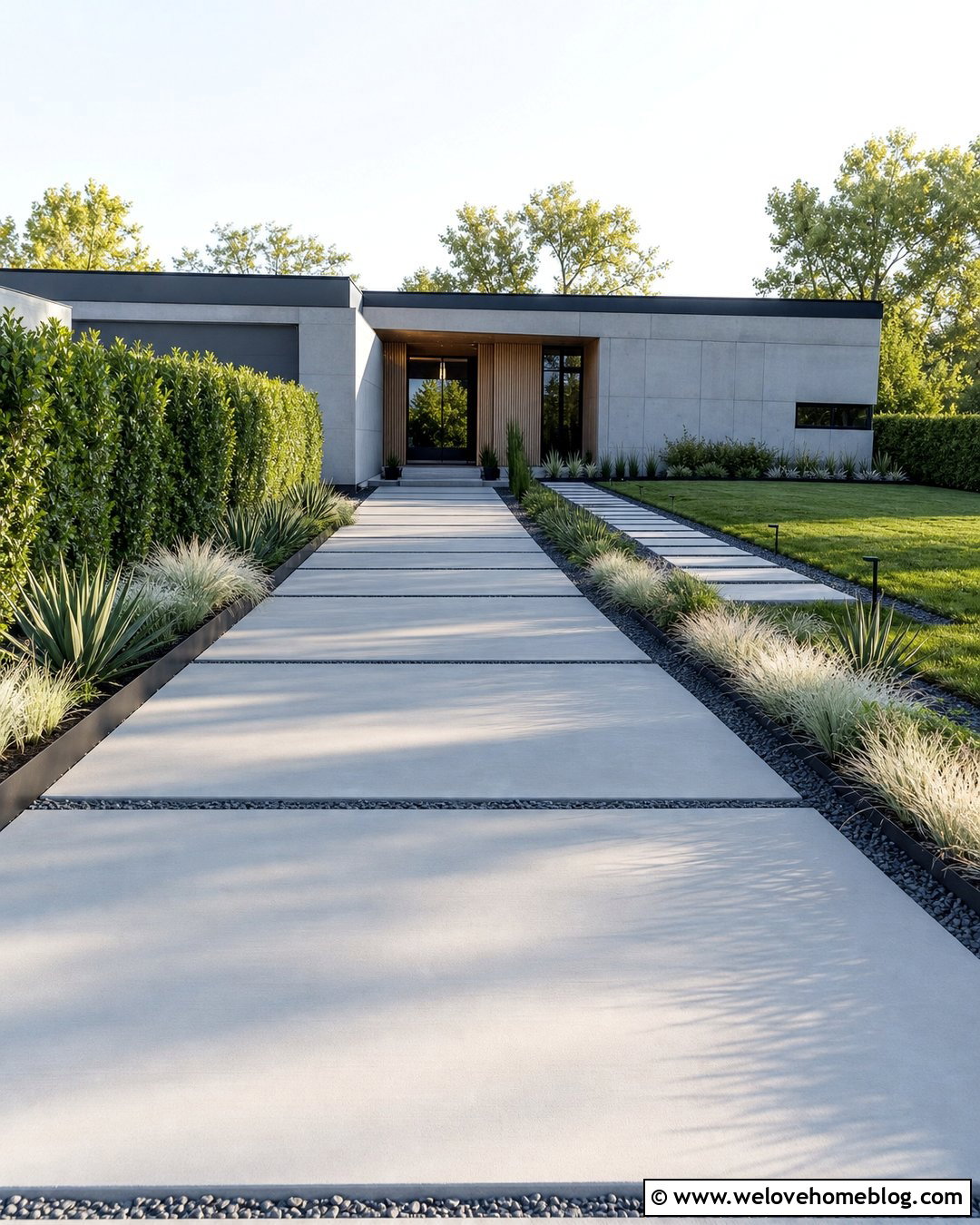
In warm climates, a podocarpus hedge can provide a sleek green backdrop for a modern driveway. Use large rectangular slabs of light-gray poured concrete separated by narrow gravel joints. Plant the podocarpus in a continuous bed behind black steel edging, then maintain a smooth vertical face without cutting the top into an unnaturally thin line. White ornamental grasses or low agave-like plants can add contrast where they are appropriate and noninvasive. Continue the hedge toward the house, but stop it before the garage apron to keep turning space open. A flat-roofed or midcentury modern home completes the clean composition. Confirm local hardiness, irrigation needs, and mature size because podocarpus performance varies significantly among climates and cultivars.
8. Clumping Bamboo Privacy Hedge Along Resin Driveway
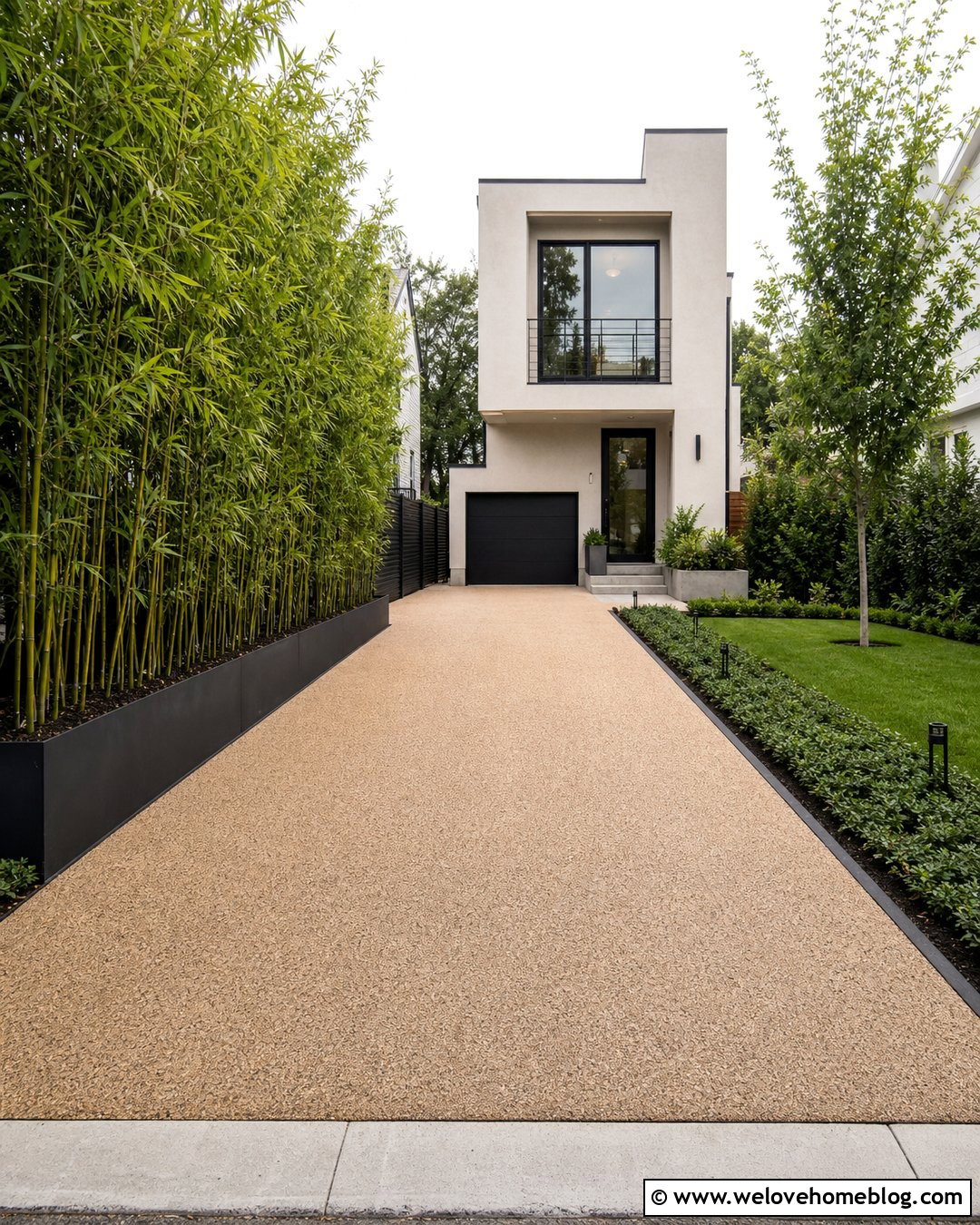
Clumping bamboo can screen a very narrow driveway when selected carefully, but it should not be confused with aggressively spreading running bamboo. Place a noninvasive clumping variety in a raised linear planter beside a warm beige resin-bound gravel driveway. A rendered concrete planter or dark steel container keeps the planting visually organized and lifts foliage above the pavement. Underplant with simple evergreen ground cover to hide bare lower stems. The driveway can remain straight and compact, making this layout useful beside contemporary townhomes and narrow-lot houses. Regularly remove leaning canes before they interfere with vehicles. Check regional regulations and mature dimensions before planting, and avoid any bamboo labeled as running unless it is professionally contained and legally permitted in your area.
9. Hornbeam Privacy Hedge Along Cobblestone Driveway
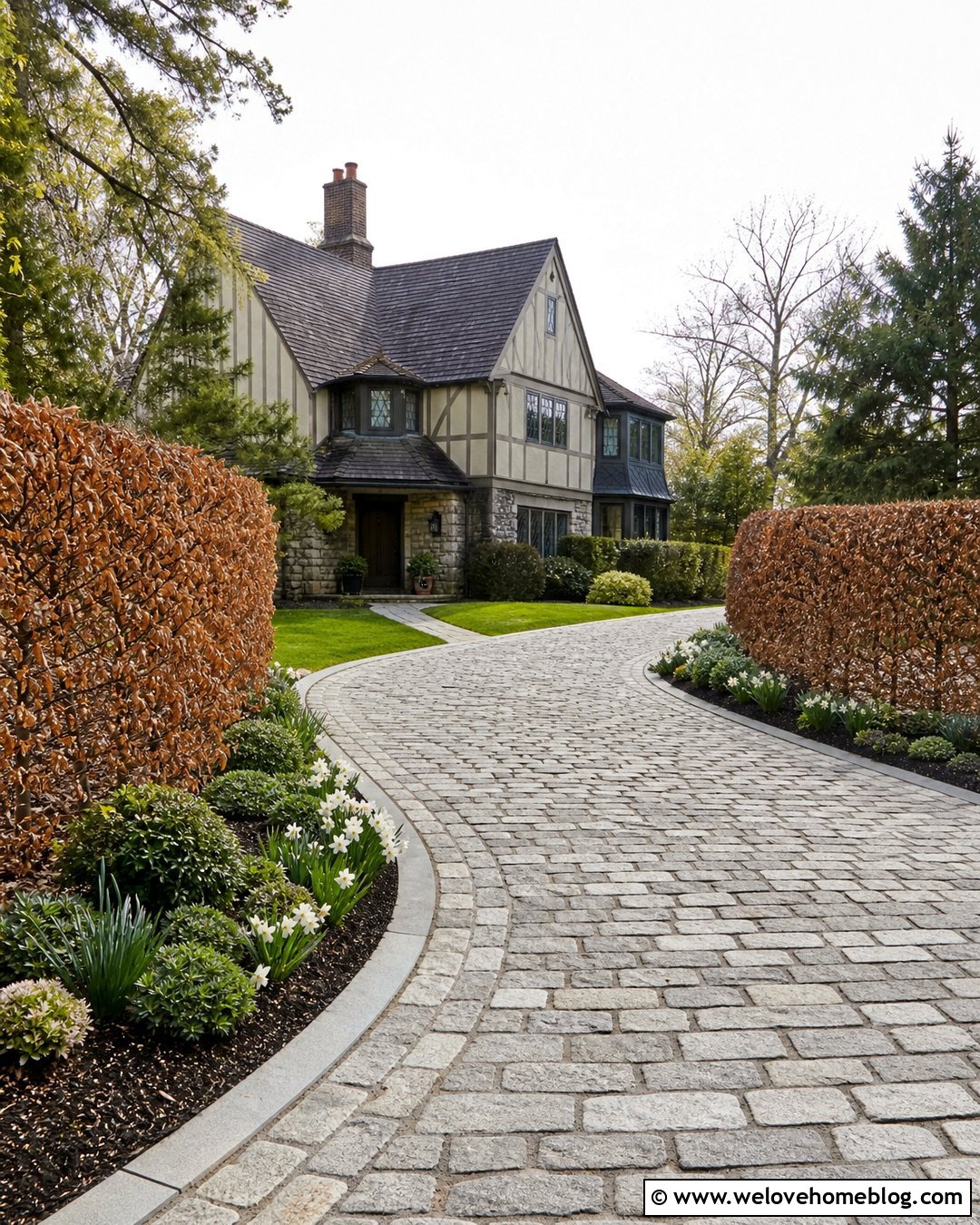
A hornbeam hedge offers strong summer privacy and a handsome branch structure in winter. Its tailored appearance pairs naturally with a curved cobblestone driveway leading to a Tudor, French country, or European-inspired house. Use reclaimed-looking gray cobblestones with a flush stone curb, then plant the hedge in a broad bed enriched with compost and covered in fine mulch. Train young hornbeams into an even screen, or pleach them above short trunks when ground-level openness is preferred. Spring bulbs and low shade plants can soften the base without hiding the driveway edge. Because hornbeam is deciduous, it will not produce the same solid winter screen as an evergreen. It remains an excellent choice when seasonal change and formal structure matter as much as complete year-round coverage.


10. Mixed Privacy Hedge Along Permeable Paver Driveway
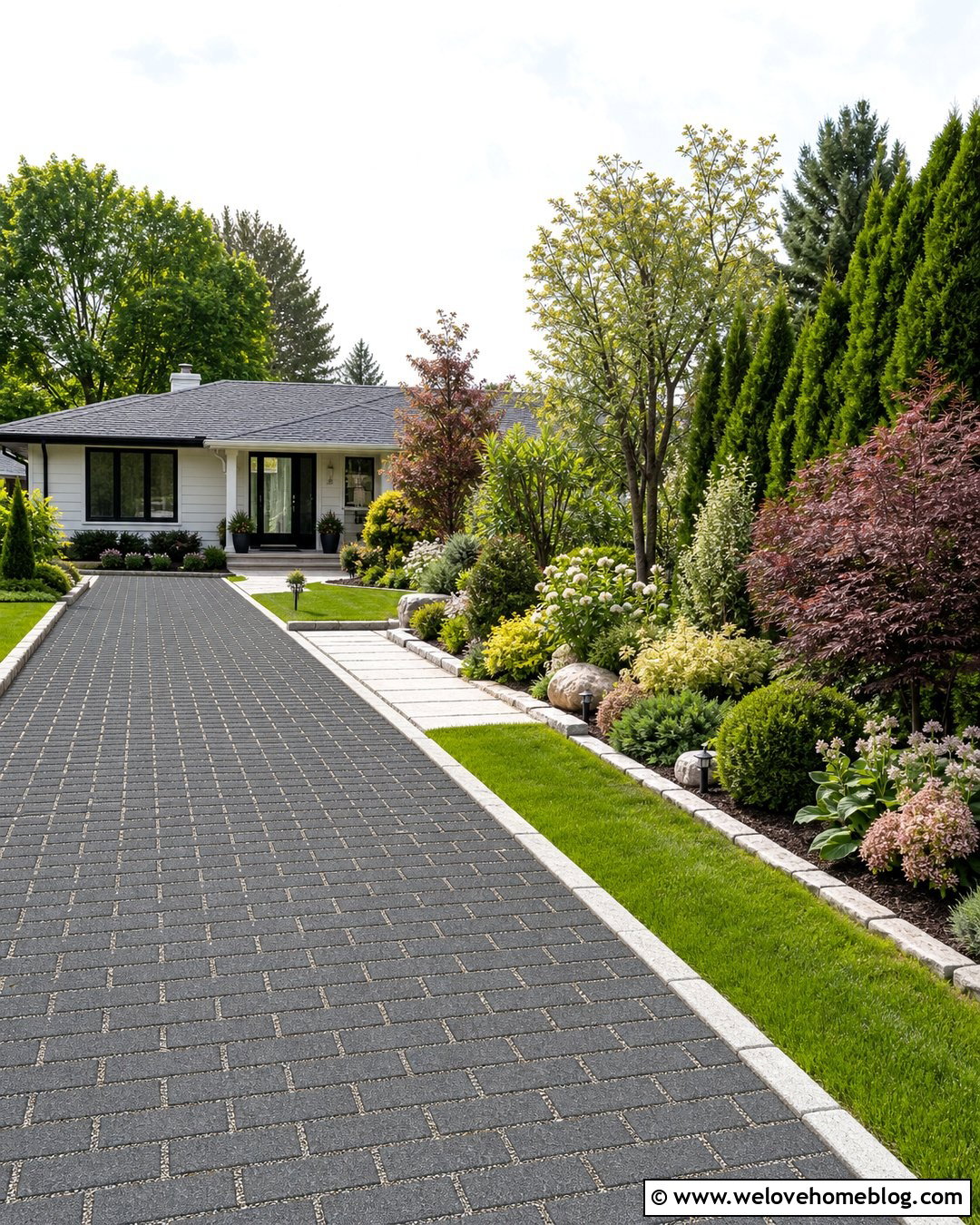
One species is not always the best answer for a long boundary. A mixed hedge can combine evergreen structure, seasonal flowers, fall color, and greater visual variety. Run the planting beside a straight driveway made from charcoal permeable pavers with light aggregate-filled joints. Use locally suitable evergreen shrubs as the backbone, then weave in flowering native shrubs and small ornamental trees. Repeat plant groups instead of placing every species randomly. A wide stone edging strip gives the layered planting room to spread without crowding vehicles. This design works especially well around ranch houses and renovated suburban homes with broad front yards. Mixed hedgerows can support wildlife while screening roads and neighboring properties, but every plant should be matched to local conditions. ()
11. Layered Privacy Hedge Along Circular Driveway
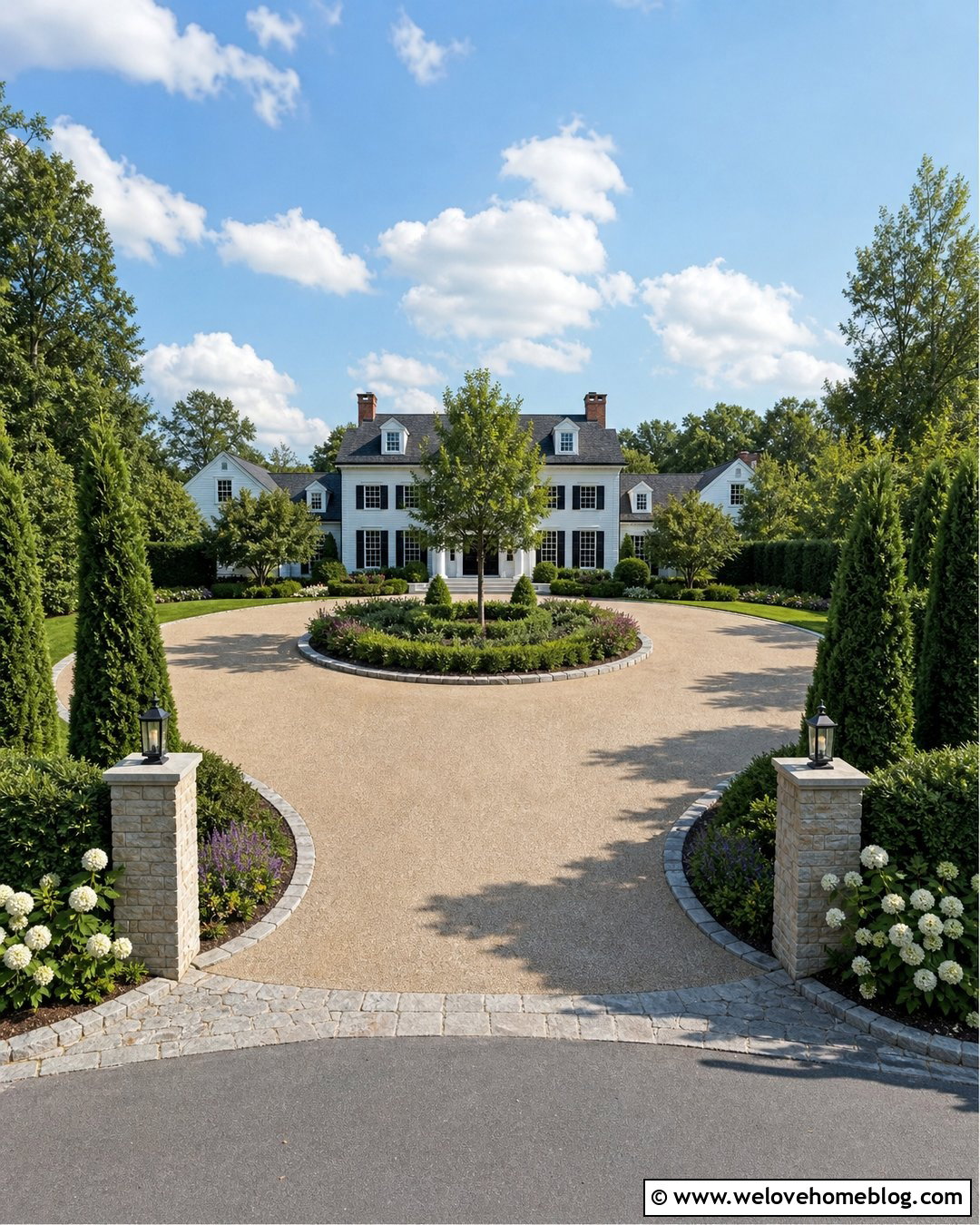
A circular driveway can feel exposed because so much paving is visible from the street. Create depth with a layered privacy hedge along the outer property boundary rather than enclosing the center island. Use dark green upright evergreens at the back, medium flowering shrubs in front, and sweeping ornamental grasses along a tan exposed-aggregate driveway. A natural stone curb keeps the planting bed separate from vehicle tires. Lower the layers near both entrance points to maintain safe sightlines. In the center island, repeat just a few plants from the outer hedge around one small ornamental tree. This creates a coordinated view without making the driveway feel crowded. The complete layout provides privacy around a Colonial or large ranch home while preserving the open flow of the circular drive.
12. Staggered Privacy Hedge Along Crushed Stone Driveway
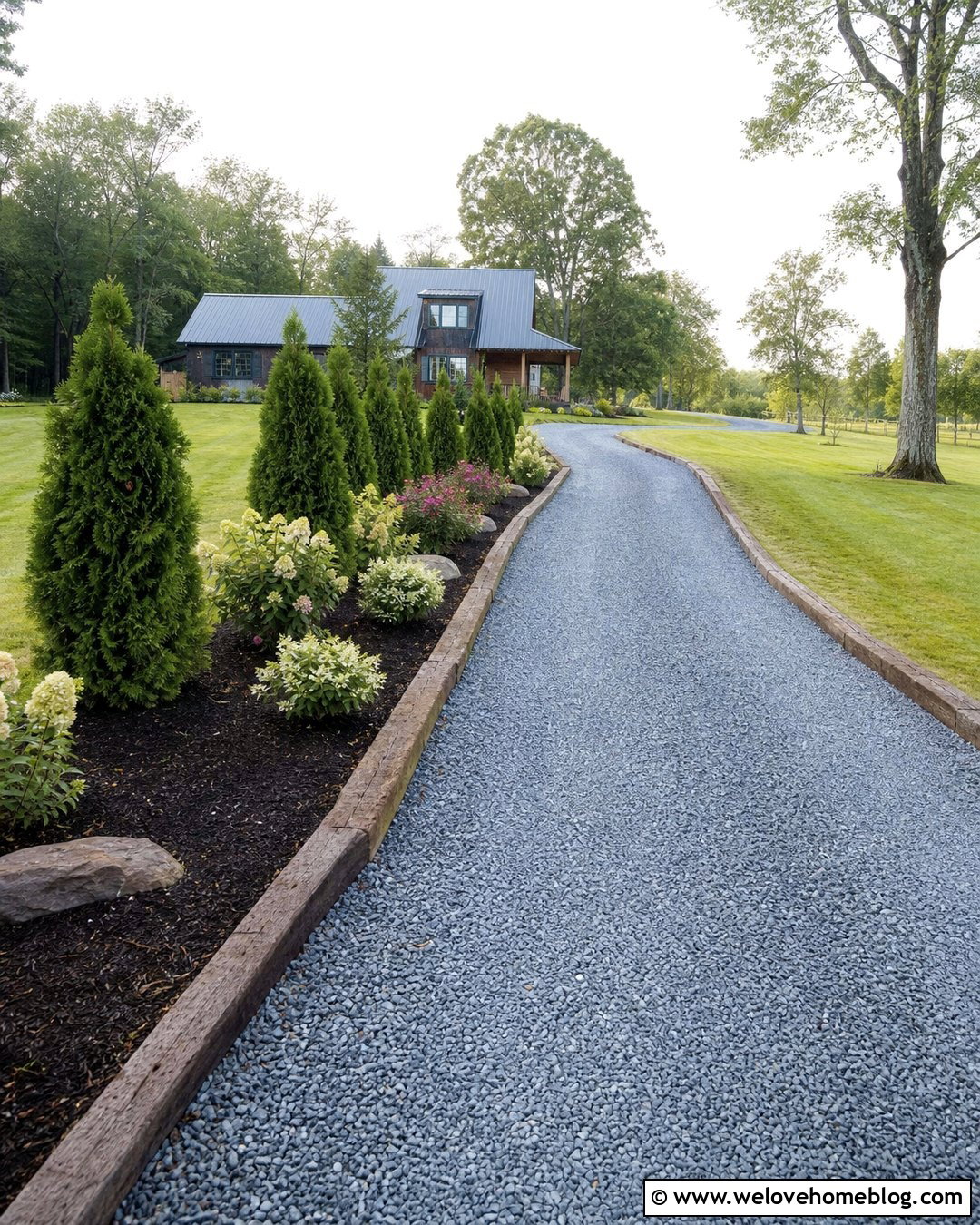
A staggered hedge looks fuller and less rigid than a single straight row. Arrange compact upright evergreens in two offset lines beside a broad driveway surfaced with blue-gray crushed stone. This layout needs a deeper bed, but it can close visual gaps while giving each plant space to develop. Use heavy timber edging on the driveway side and a mown grass path behind the hedge for pruning access. On a long country approach, gently vary the planting line instead of following the pavement with mechanical precision. Native flowering shrubs can be added at wider intervals to break up the evergreen mass. The layered arrangement suits farmhouse, barn-style, and rural homes. Plan from mature widths, since overcrowded hedges often create avoidable pruning, airflow, and maintenance problems.
13. Privacy Hedge Behind Low Stone Wall Driveway
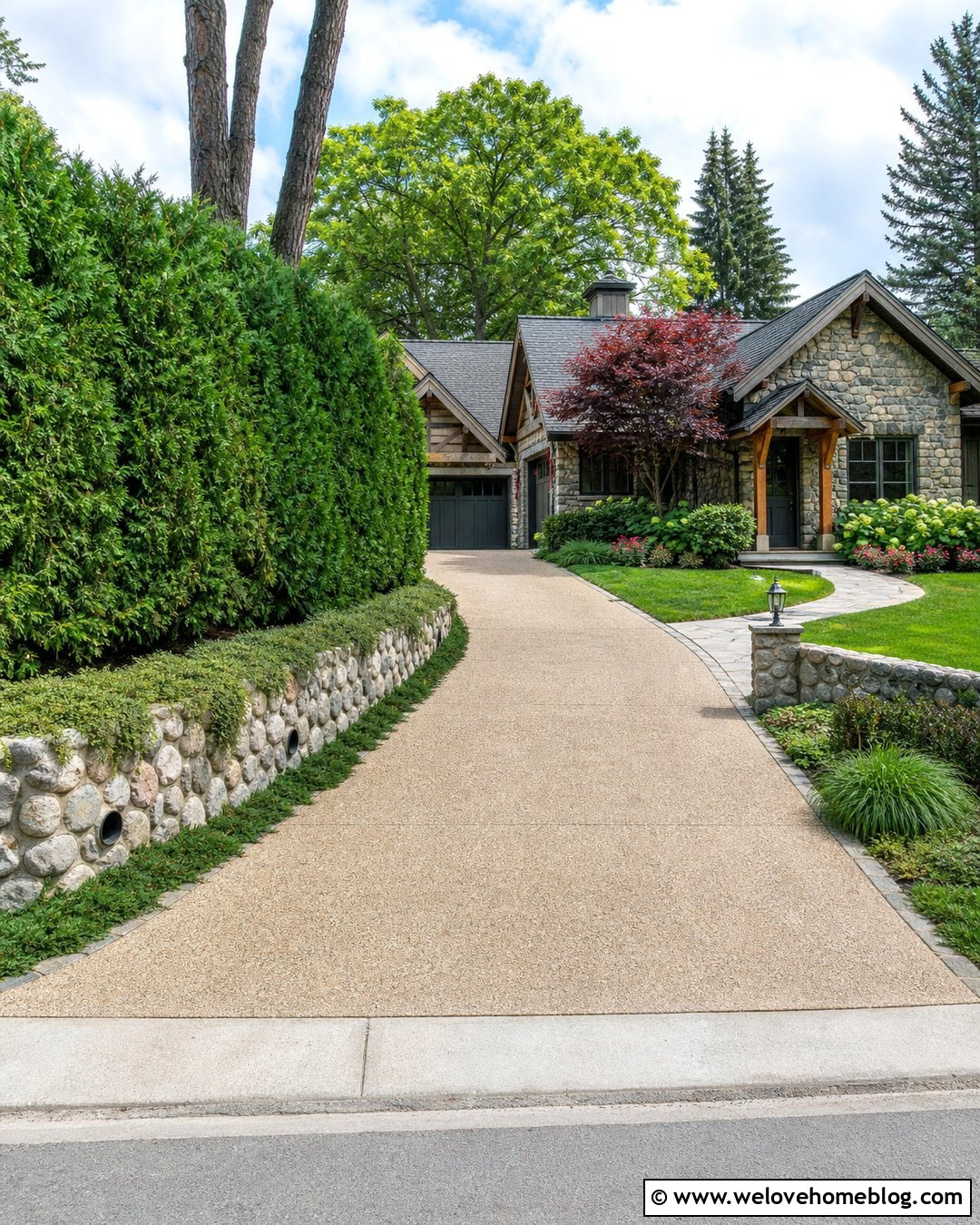
A low wall gives a driveway hedge immediate definition while the plants are still establishing. Pair a tan exposed-aggregate concrete driveway with a two-foot-high fieldstone wall and a dense evergreen hedge planted directly behind it. The wall catches mulch, protects the bed from vehicle tires, and visually raises the screen. Allow sufficient soil volume behind the masonry and include drainage openings where needed. Soft ground covers can trail over selected sections without covering the stone completely. Continue the wall around a planting bed near the house so it feels integrated rather than added as an isolated barrier. This driveway design works particularly well with stone cottages, Craftsman homes, and rustic ranch houses. Keep the wall and hedge lower near the street entrance for unobstructed visibility.
14. Privacy Hedge With Fence Along Narrow Driveway
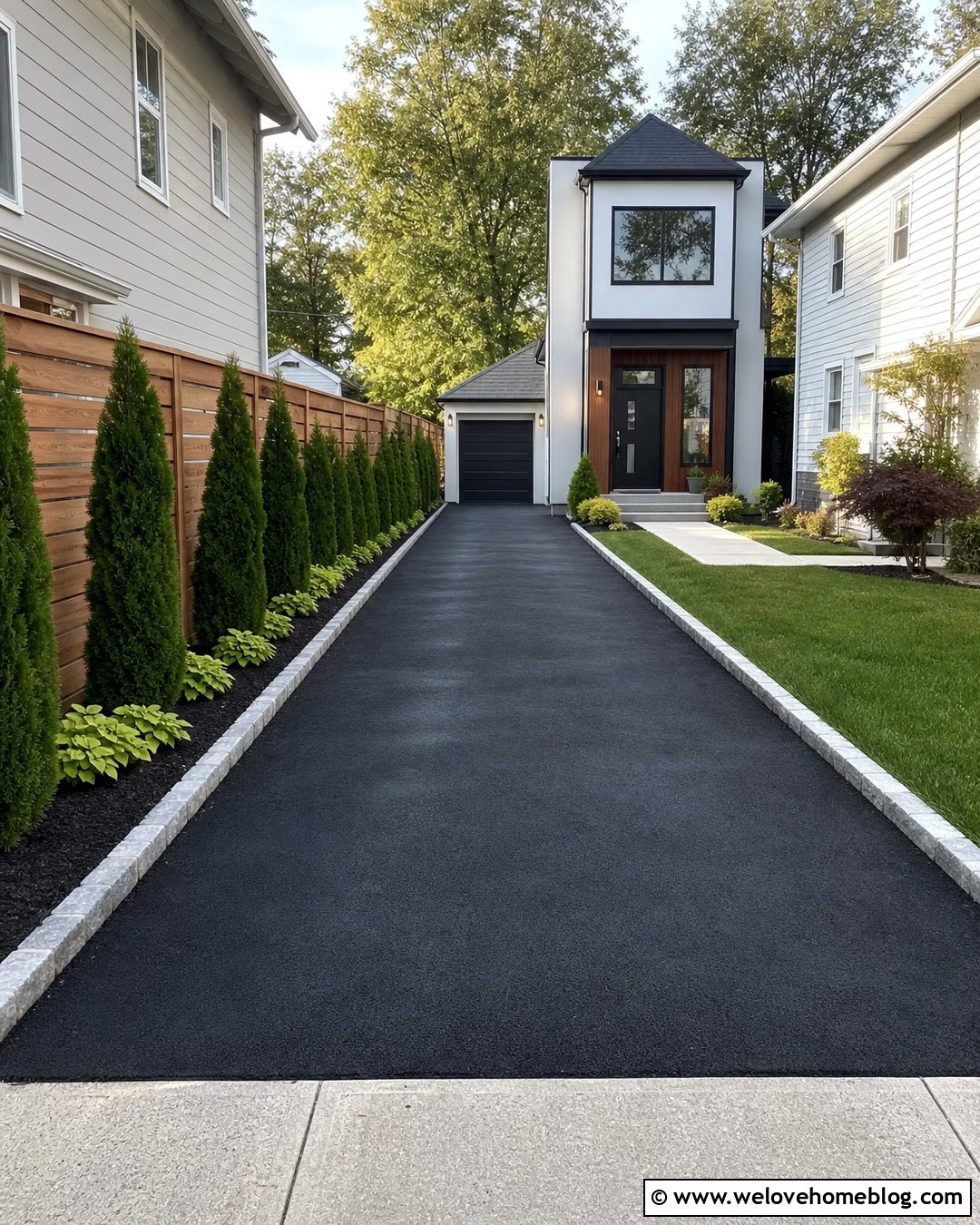
When the planting strip is extremely tight, combining a modest fence with a shorter hedge can provide privacy without depending on oversized shrubs. Place a horizontal cedar fence along the boundary of a narrow black asphalt driveway, then plant compact columnar evergreens on the yard side. Add a slim Belgian block curb between the asphalt and the fence line to protect the edge. The fence supplies immediate screening while the plants soften its appearance over time. Leave small access points for fence repairs and hedge maintenance. This layout is useful between close suburban houses where every inch matters. Choose plants based on mature width instead of relying on continual hard pruning. Upright evergreens generally fit residential spaces better than broad spreading forms when planting room is restricted. ()


15. Privacy Hedge With Open Driveway Entrance
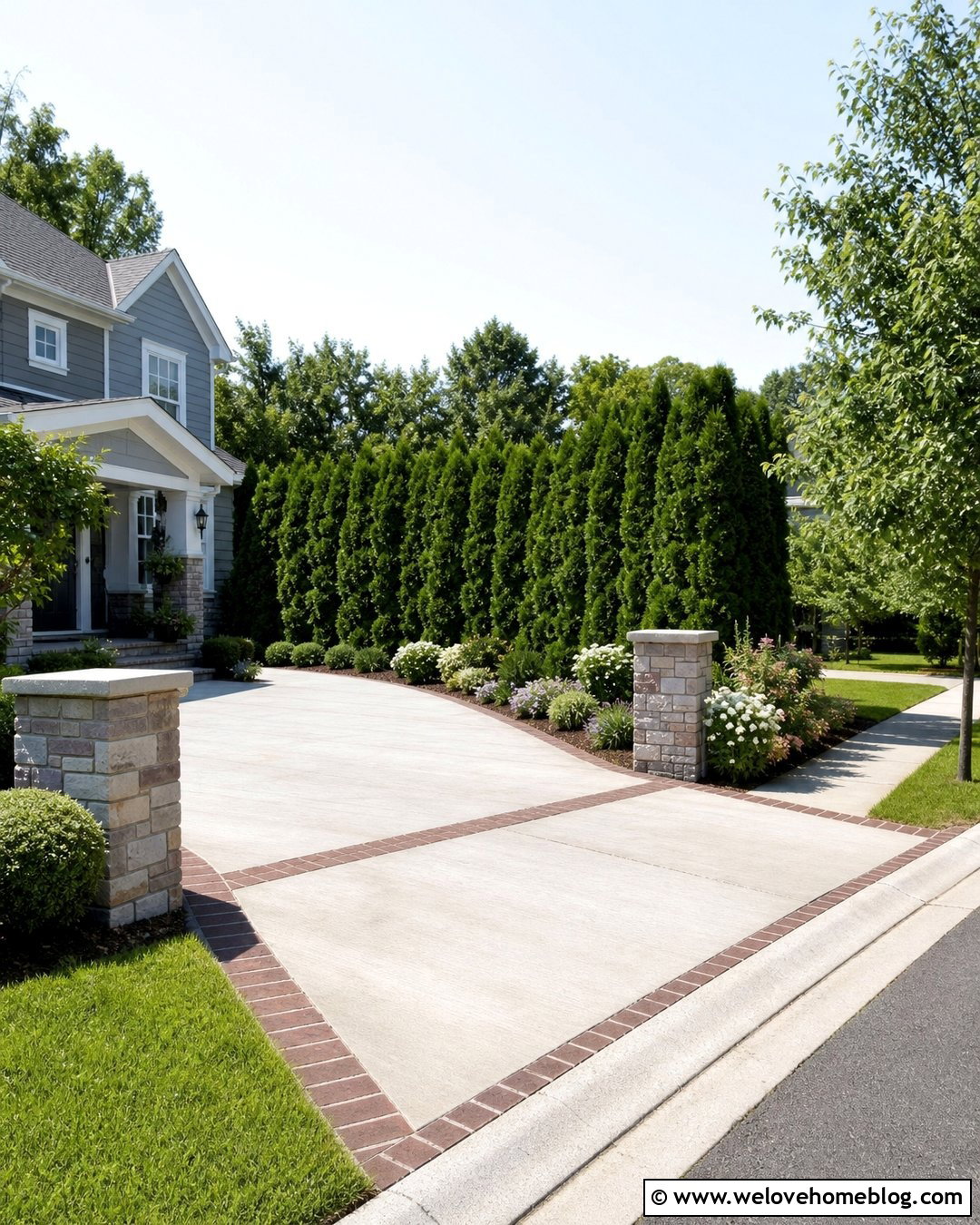
Privacy should not come at the cost of a safe driveway exit. Set the main hedge farther back from the curb and taper its height as it approaches the street. A light-gray brushed concrete driveway with dark brick ribbon borders makes the open entrance look intentional. Place taller evergreen screening along the middle and upper driveway, where it can block direct views toward windows and outdoor living areas. At the street, switch to low shrubs, flowering perennials, and ground cover. Two small masonry pillars can define the opening without hiding approaching pedestrians or traffic. This arrangement suits almost any suburban home because it balances screening with an inviting entrance. Confirm local corner-clearance and sight-triangle requirements before planting, especially near sidewalks, intersections, or shared driveways.
16. Privacy Hedge With Driveway Lighting
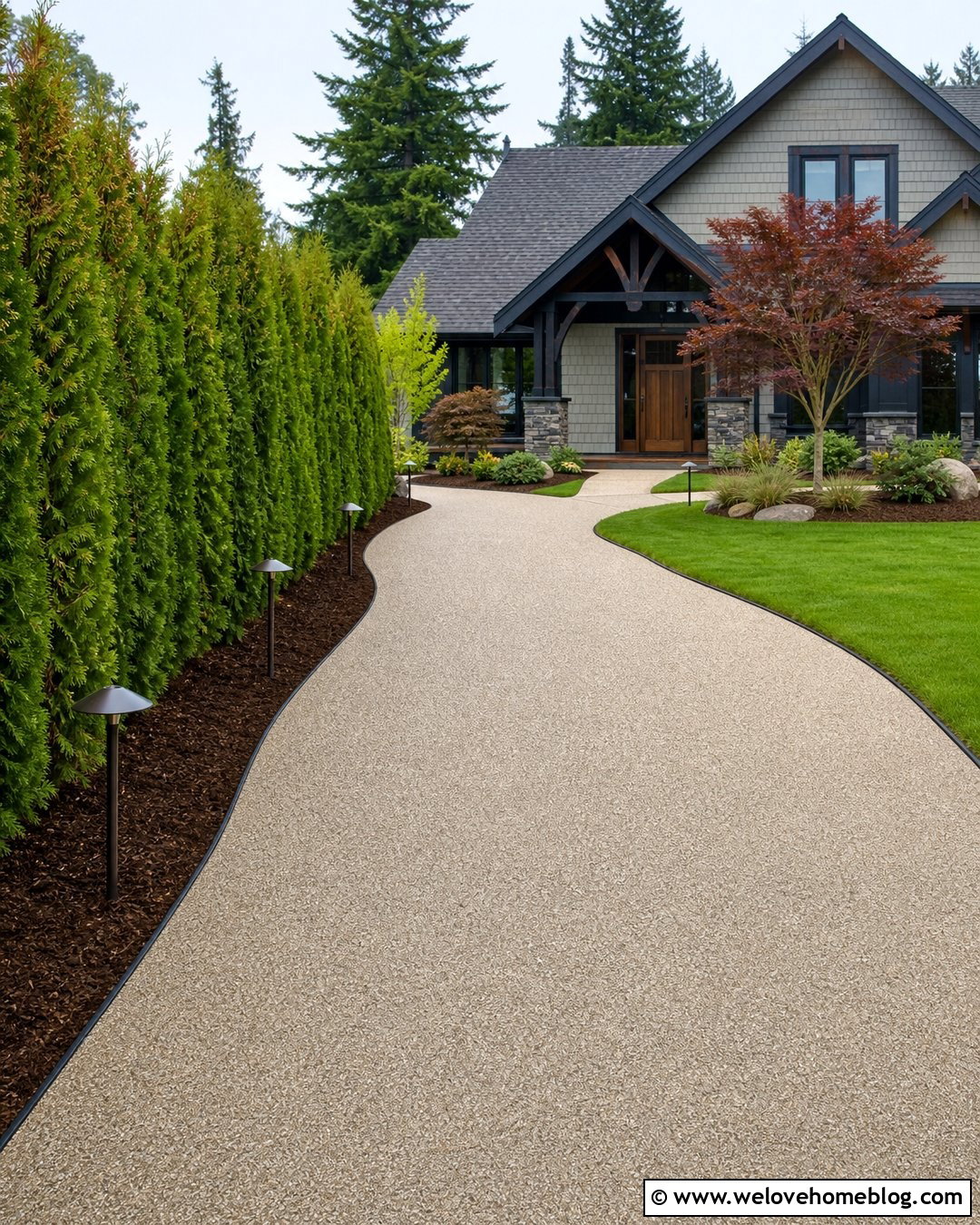
Low-voltage lighting can make a long hedge feel designed rather than simply functional. Install evenly spaced shielded path lights between a dark green evergreen screen and a warm gray resin-bound gravel driveway. Aim the fixtures downward so they illuminate the pavement edge without shining into neighboring windows. A slim black aluminum edge will keep the resin surface and mulched planting bed visually separate. Follow a gentle driveway curve and stagger the lights rather than placing them in a harsh runway pattern. Near the house, add one or two soft uplights to highlight a specimen tree instead of lighting the entire hedge. This complete look pairs well with contemporary Craftsman and modern farmhouse homes. During daylight, the fixtures should remain discreet against the rich foliage and clean driveway surface.
17. Native Privacy Hedge Along Country Driveway
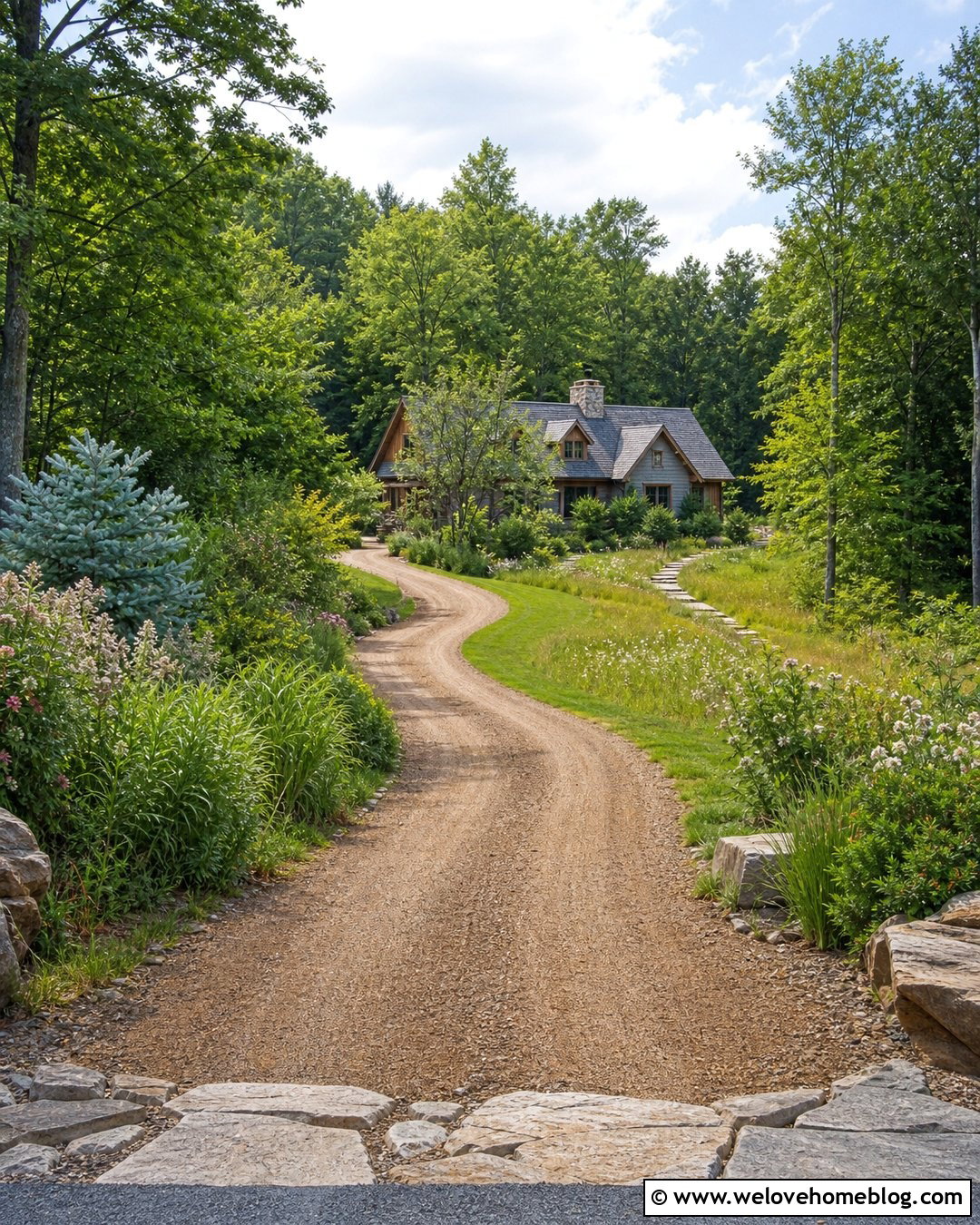
A native hedgerow creates privacy with a looser, more ecological character than a clipped evergreen wall. Border a winding driveway of compacted brown crushed stone with a regional mix of evergreen shrubs, flowering shrubs, and small trees. Choose species recommended by a local extension office or native plant organization, since suitable plants differ across the United States. Use irregular fieldstone edging near the entrance and let the border transition into meadow grasses farther up the drive. Repeat several key plants to keep the arrangement cohesive. Preserve a mown shoulder so arching branches do not narrow the driving lane. This natural layout looks especially convincing beside farmhouse, cottage, and woodland architecture. Diverse hedgerows can provide screening while offering useful habitat and seasonal interest. ()
18. Privacy Hedge Along Sloped Driveway
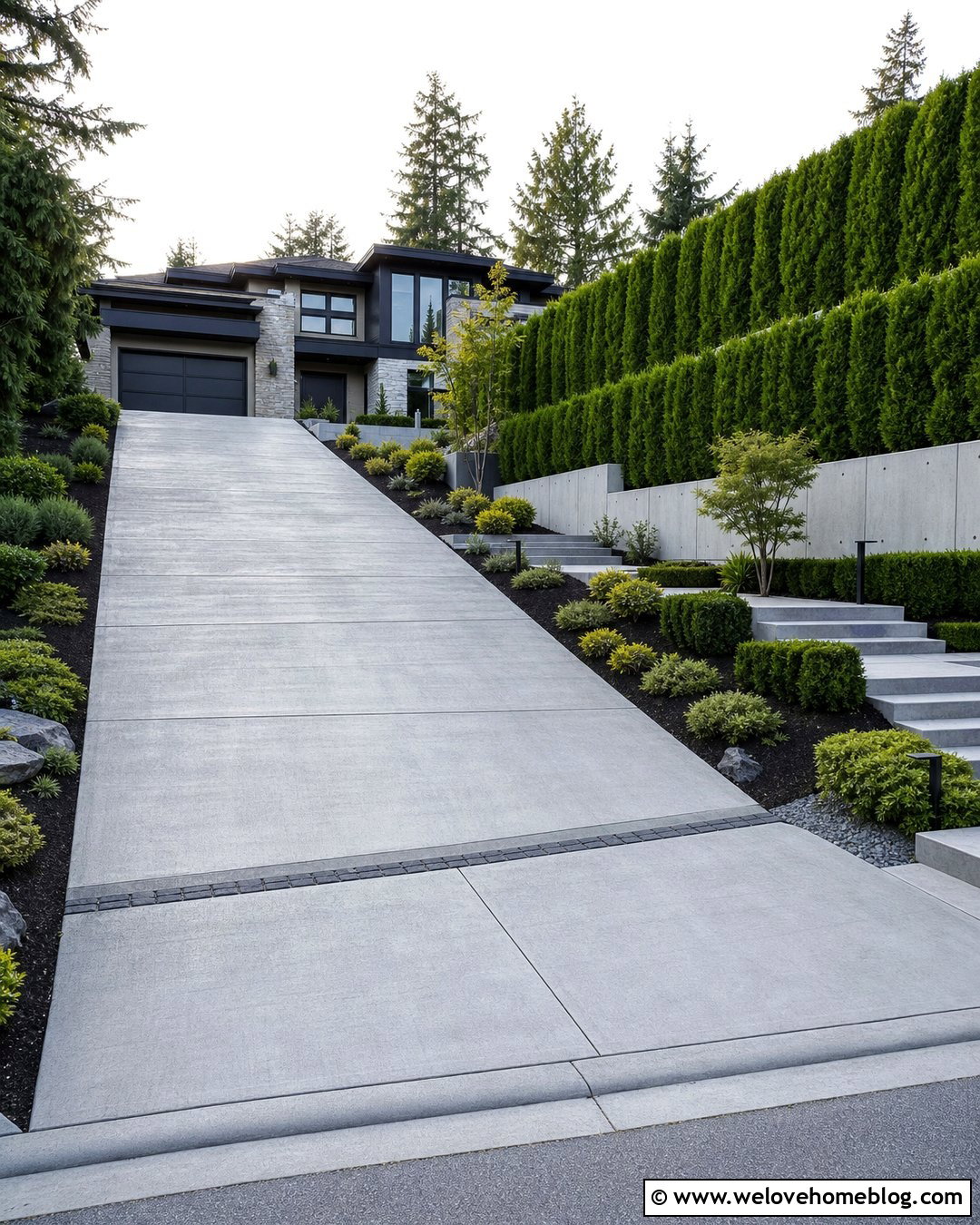
A sloped driveway needs careful grading, drainage, and plant placement. Install a tiered evergreen hedge above a charcoal broom-finished concrete driveway, using a low retaining wall to hold the planting bed. Choose plants with mature sizes that fit each terrace without blocking drainage channels or leaning over the pavement. A flush cobblestone drainage strip can collect runoff along the lower driveway edge. On the uphill side, stagger the shrubs so their tops form a gentle line rather than a steep staircase. Ground covers between plants will help soften exposed soil, while mulch should be contained so storms do not wash it onto the concrete. This complete approach works with hillside ranch, contemporary, and split-level homes. Consult a professional when retaining walls or significant grade changes are involved.
19. Informal Privacy Hedge Along Asphalt Driveway
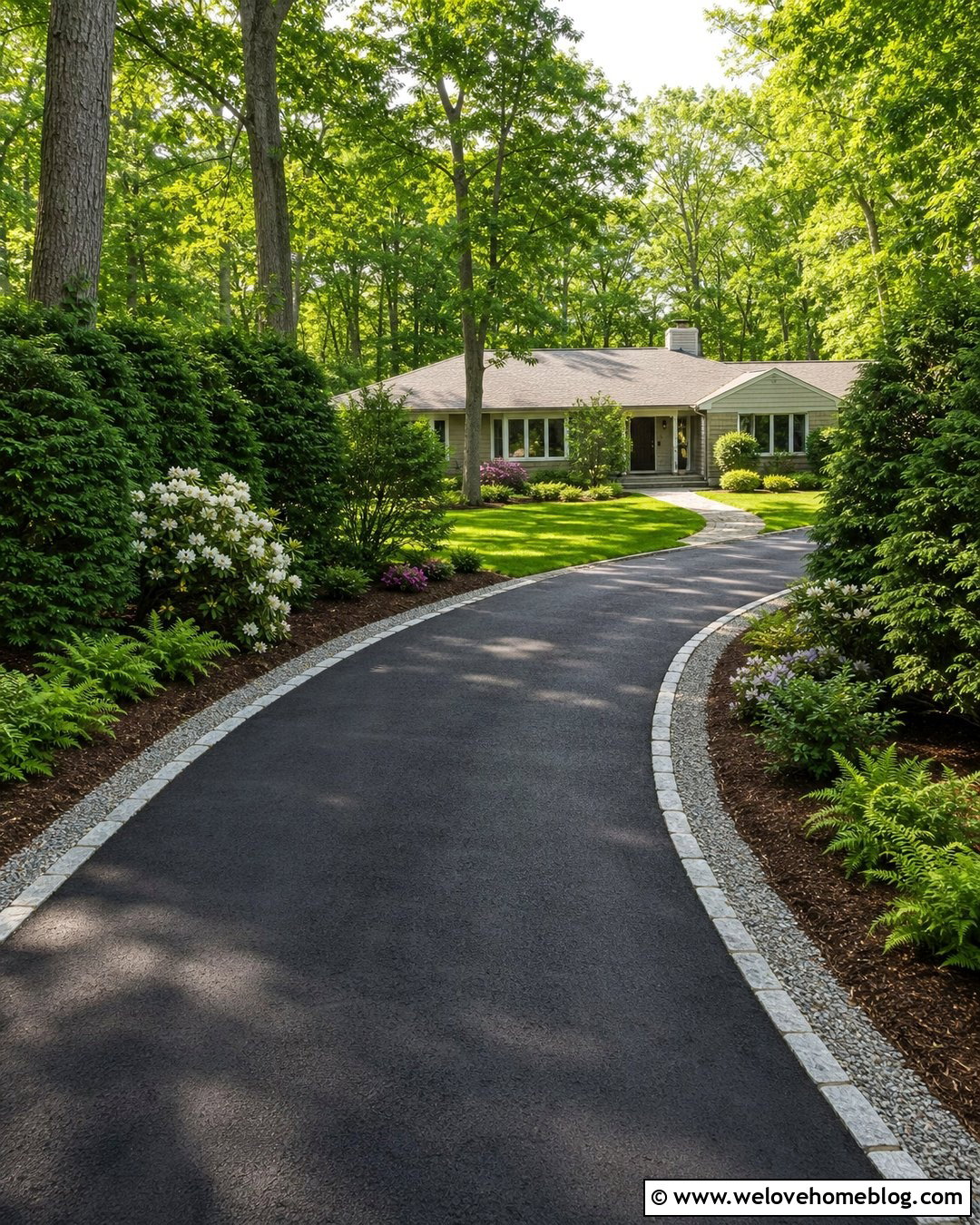
Not every driveway hedge needs constant shearing. An informal hedge uses shrubs with naturally dense, attractive forms and allows them to maintain a softer outline. Pair the planting with a smooth black asphalt driveway edged in pale granite setts. Choose locally appropriate evergreens that will fit the bed at maturity, then mix in a few flowering shrubs where additional width is available. Keep a narrow mulch or gravel strip beside the pavement so branches do not immediately spill into the driving lane. Selective pruning can remove damaged stems and control occasional overgrowth without turning the screen into a rigid rectangle. This relaxed design works with ranch, cottage, and wooded suburban homes. Informal pruning generally requires less repeated shaping than a tightly clipped formal hedge. ()


20. Formal Privacy Hedge Along Brick Border Driveway
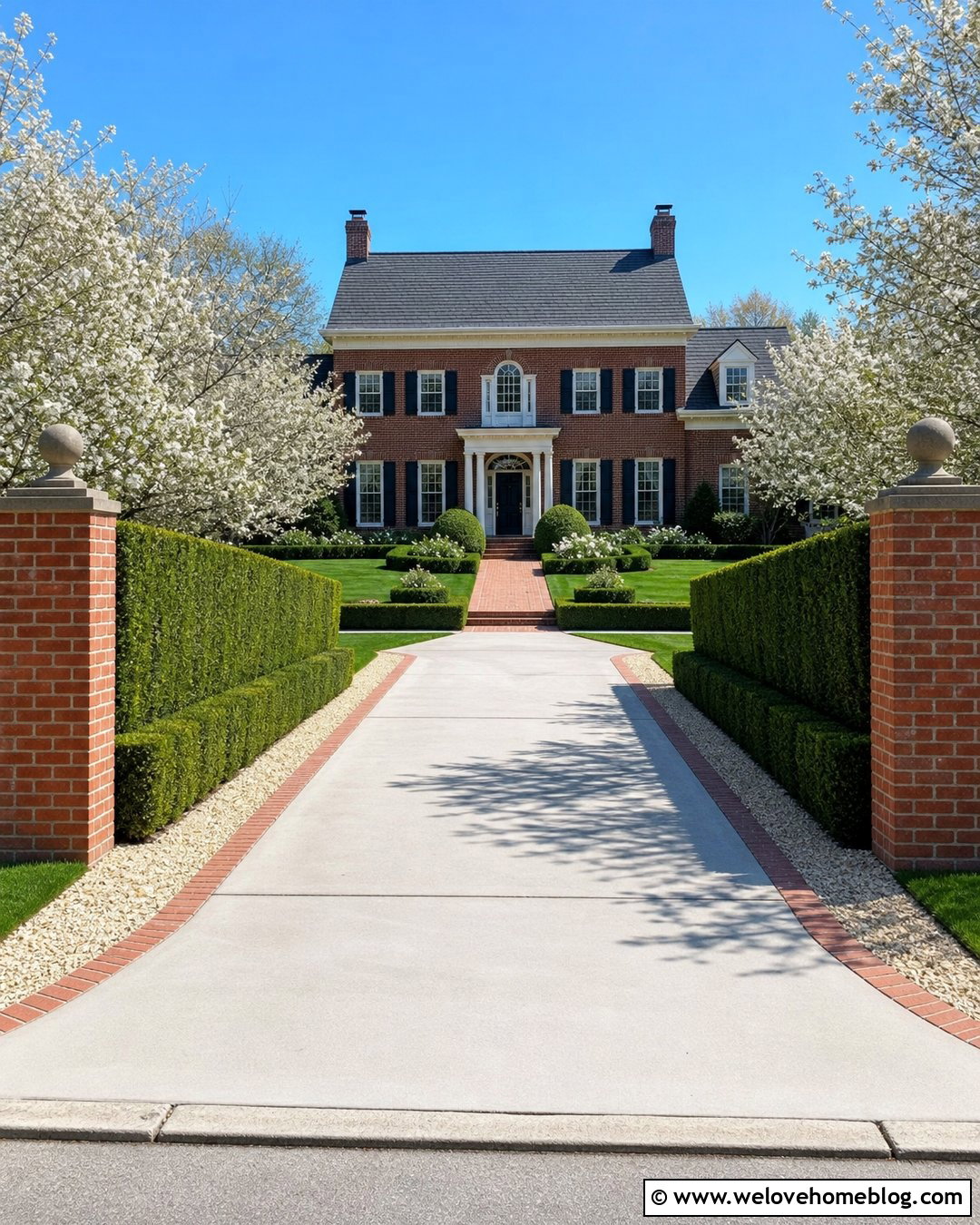
For a crisp finished entrance, combine a clipped evergreen hedge with a poured concrete driveway and red clay brick borders. Run the hedge along one side of the straight approach, then repeat a shorter section around the front walkway. This connects the driveway to the overall landscape. Maintain the hedge with a slightly wider base and narrower top so lower foliage continues receiving light. A strip of fine gravel between the brick ribbon and hedge provides room for trimming and catches fallen leaves. Small flowering trees placed behind the hedge can add seasonal height without weakening its formal structure. This balanced look complements Colonial, Georgian, and symmetrical traditional homes. Regular pruning from the hedge’s early years encourages denser branching and creates a more effective privacy screen. ()
Conclusion:
The best 20 Privacy Hedge Along Driveway Ideas treat plants, paving, borders, and the home as one connected design. Choose a hedge that fits your climate, sunlight, soil, and available bed width at maturity. Then match its character to the driveway surface and house. Narrow arborvitae can organize a compact concrete drive, while mixed native hedgerows bring life to a long country entrance. Formal yew, layered evergreens, low walls, and fence-and-hedge combinations offer additional options. Whatever look you prefer, protect driveway visibility, drainage, utilities, and vehicle clearance. Thoughtful spacing at the beginning will reduce future pruning and help the entire entrance remain attractive, practical, and private for many years.

Related posts:
Leave a Reply