
Pressure washing can completely refresh a tired driveway without the cost of replacing the surface. The best **pressure washing driveway ideas** combine careful cleaning with a complete curb-appeal plan, including defined borders, healthy landscaping, clear walkways, and an attractive entrance. Concrete, asphalt, brick, cobblestone, and pavers all respond differently, so the cleaning method should always match the material. Testing a small area first, pretreating stains, and using even, overlapping passes can help prevent visible streaks or surface damage. A clean driveway can also make surrounding colors, textures, and planting beds appear brighter and more intentional. () Use these practical **pressure washing driveway ideas** to create a cleaner, more polished approach to your home.

1. Pressure Washing a Concrete Driveway With Brick Edging
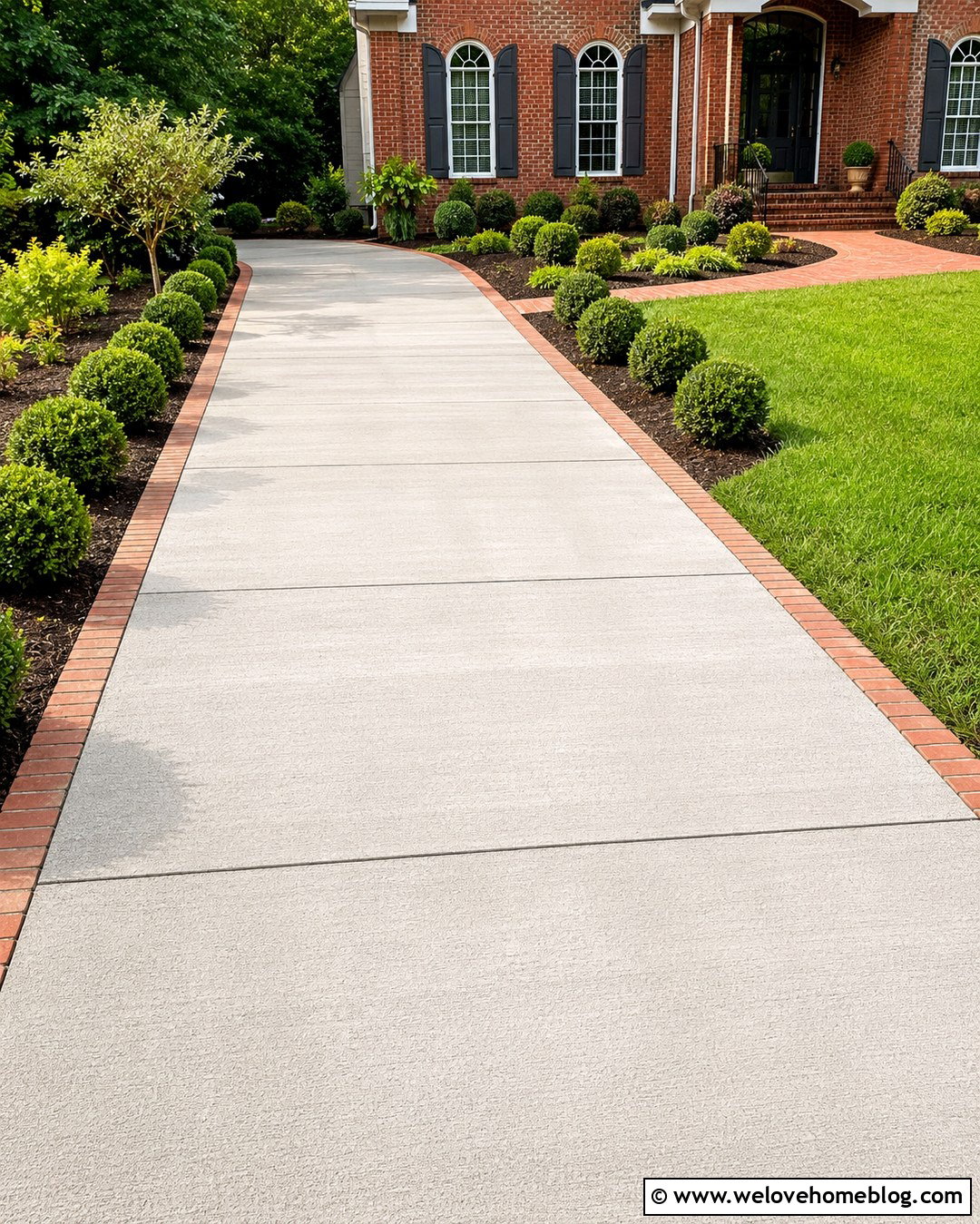
A straight broom-finished concrete driveway becomes much more attractive when pressure washing reveals its original pale gray tone. Start by sweeping away loose dirt and pretreating oil spots before cleaning the larger surface. Work in consistent, overlapping passes from the garage toward the street so dirty runoff moves away from the house. Red brick edging adds warm contrast and gives the driveway a crisp outline after washing. Complete the look with a narrow lawn, rounded boxwoods, and a matching brick walkway leading to the front door. Clean the edging with less pressure than the concrete to protect mortar joints. Once everything dries, redefine the planting beds and remove weeds from transitions for a neat suburban entrance.
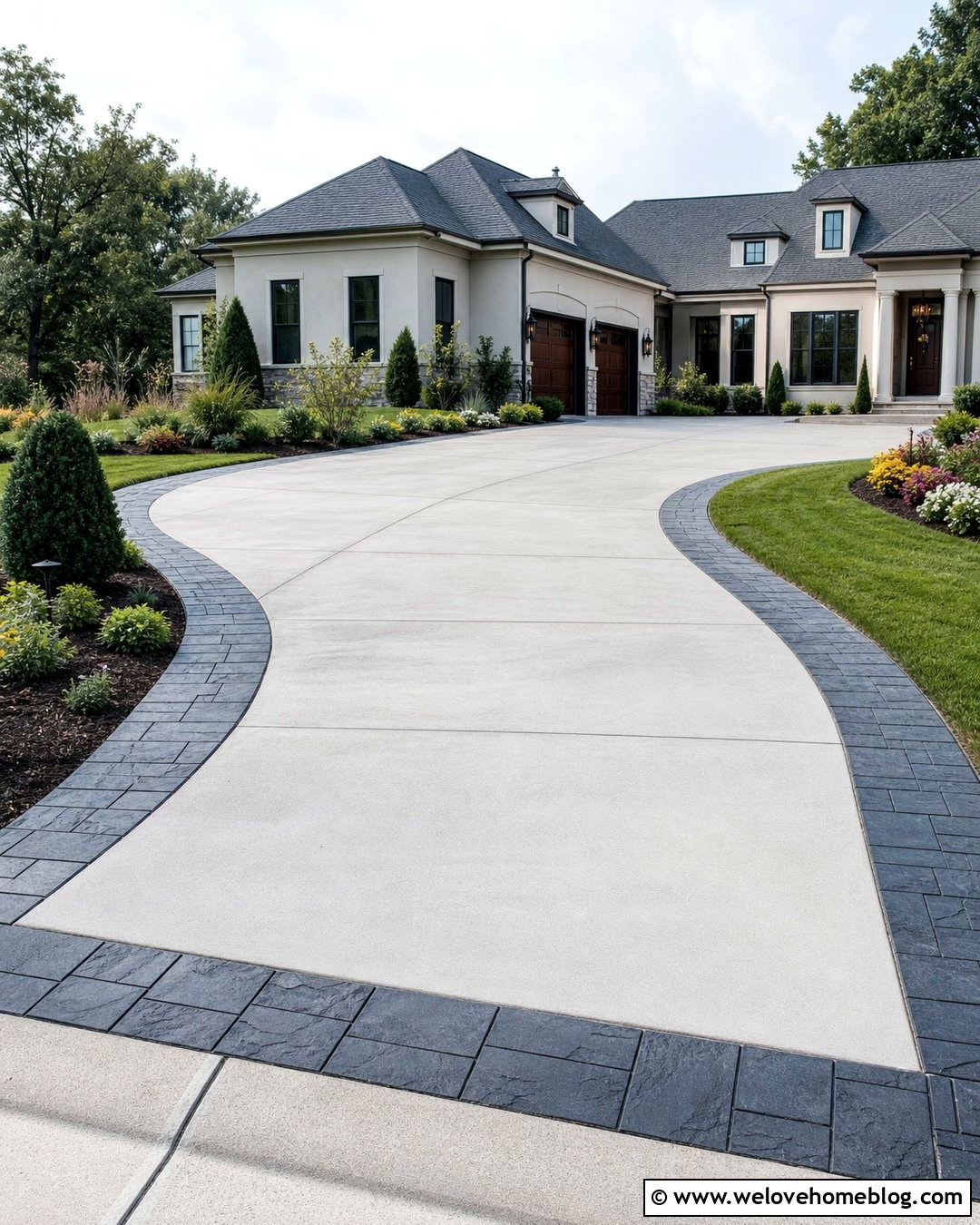
2. Pressure Washing a Curved Concrete Driveway
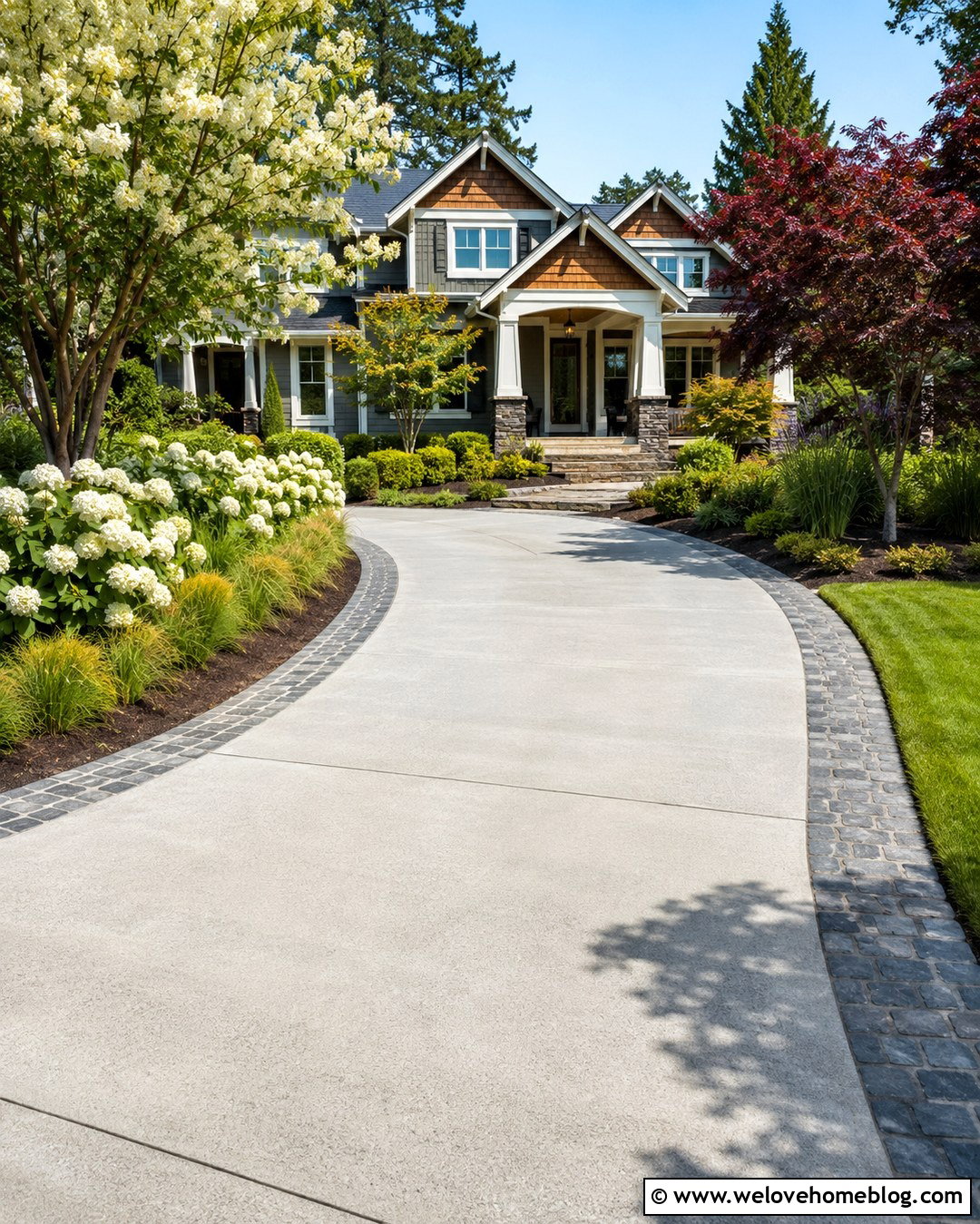
Curves can look especially dramatic when a dirty concrete surface is restored to an even color. Follow the driveway’s shape with short, controlled cleaning passes instead of forcing the wand into long straight lines. A wide spray pattern or properly matched surface cleaner can help reduce noticeable stripes. Dark cobblestone edging will frame the pale concrete and emphasize the sweeping route toward the house. Add layered ornamental grasses, hydrangeas, and a few small flowering trees along the outside curve. Keep plants covered or thoroughly rinsed when using an approved driveway detergent. The completed design works beautifully with a Craftsman home, where the flowing driveway, textured border, and relaxed planting beds create a welcoming approach without appearing overly formal.
3. Pressure Washing an Exposed Aggregate Driveway
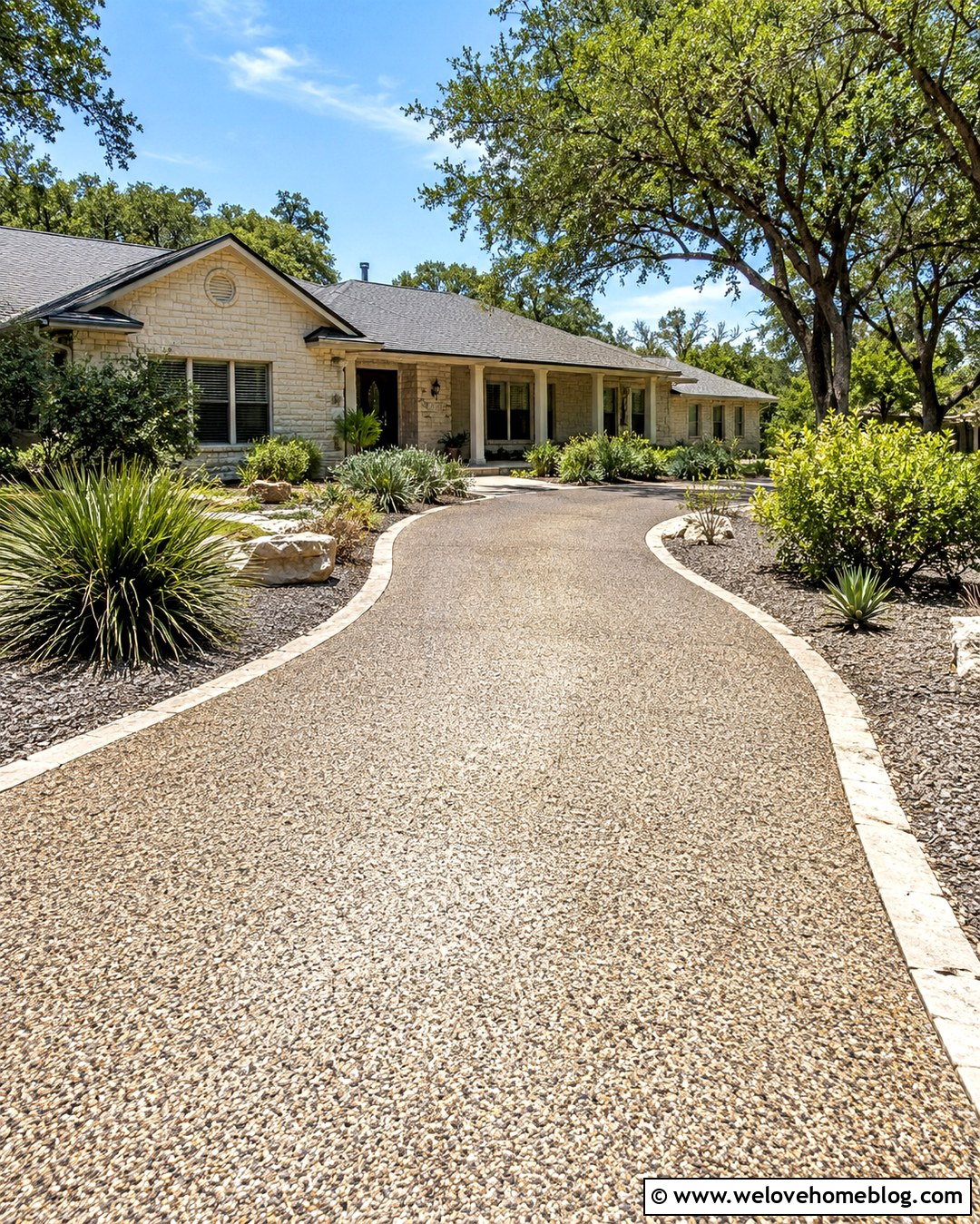
Exposed aggregate has rich texture, but that texture can trap soil, leaves, and organic buildup. Careful pressure washing restores the visible mix of small stones without stripping away the surrounding cement paste. Begin with a test area and use moderate pressure, a wider fan, and steady movement. Avoid holding the spray directly over one spot. Natural stone edging supports the driveway’s rugged appearance, while drought-tolerant shrubs and decorative grasses soften its sides. A gently curved layout leading to a ranch house makes the aggregate feel integrated with the landscape. After cleaning, rinse nearby gravel beds so loosened dirt does not settle back onto the driveway. A compatible sealer can deepen the aggregate color and simplify future maintenance once the surface is completely dry.
4. Pressure Washing a Stamped Concrete Driveway

Stamped concrete can lose much of its decorative character beneath dust, mildew, and tire marks. A careful wash brings back the pattern and color without requiring a major redesign. Because aggressive pressure may damage the textured finish or existing sealer, begin with a mild cleaning solution and a low-pressure test. Use smooth passes that follow the stamped pattern. A circular driveway with an ashlar-slate texture looks balanced beside a traditional stucco home. Frame the circle with limestone edging, clipped shrubs, and a central bed containing a small ornamental tree. Clean the stone border separately to maintain an even result. When dry, inspect the decorative sealer for cloudy or worn areas and use a compatible product if recoating is necessary.
5. Pressure Washing a Modern Concrete Driveway
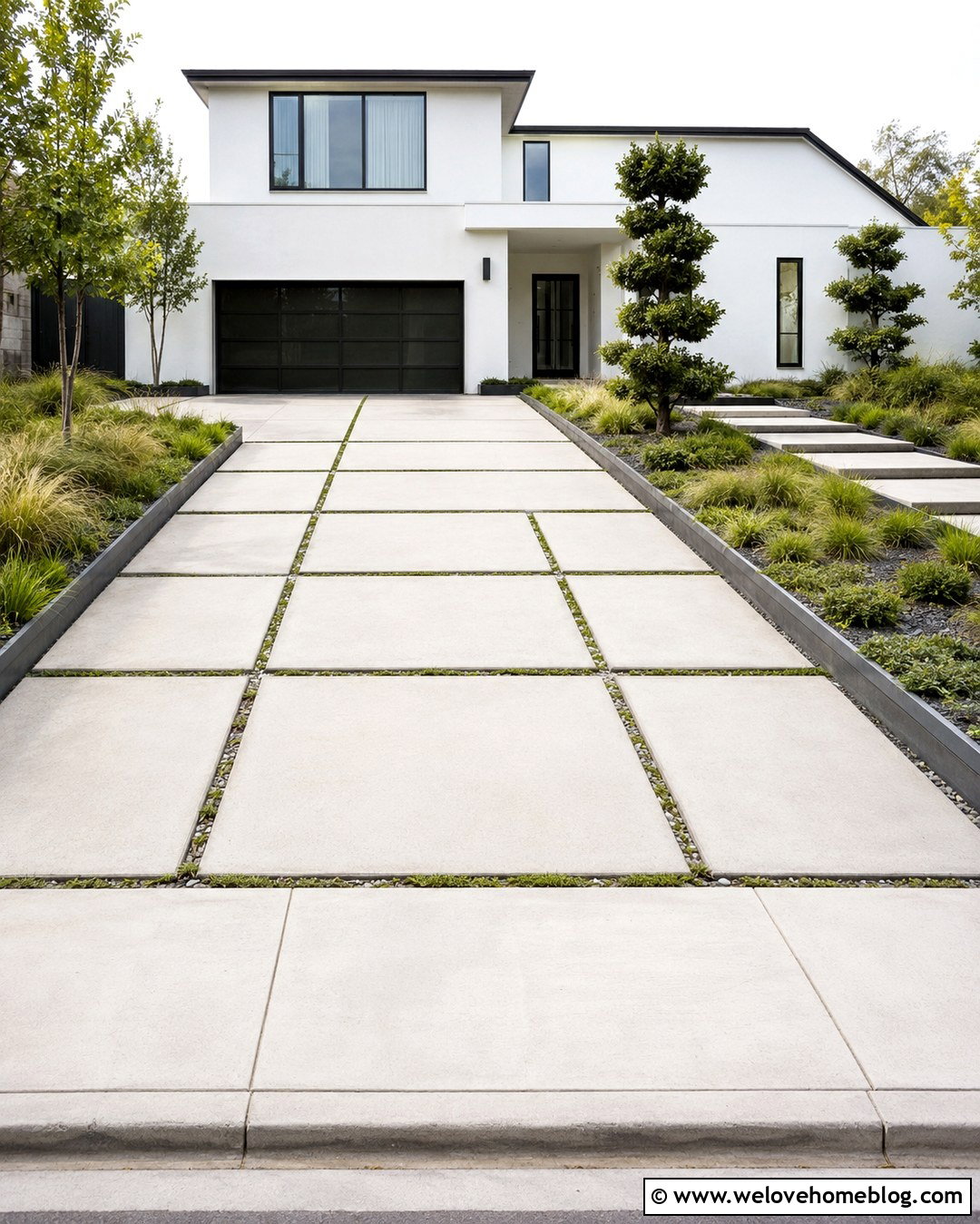
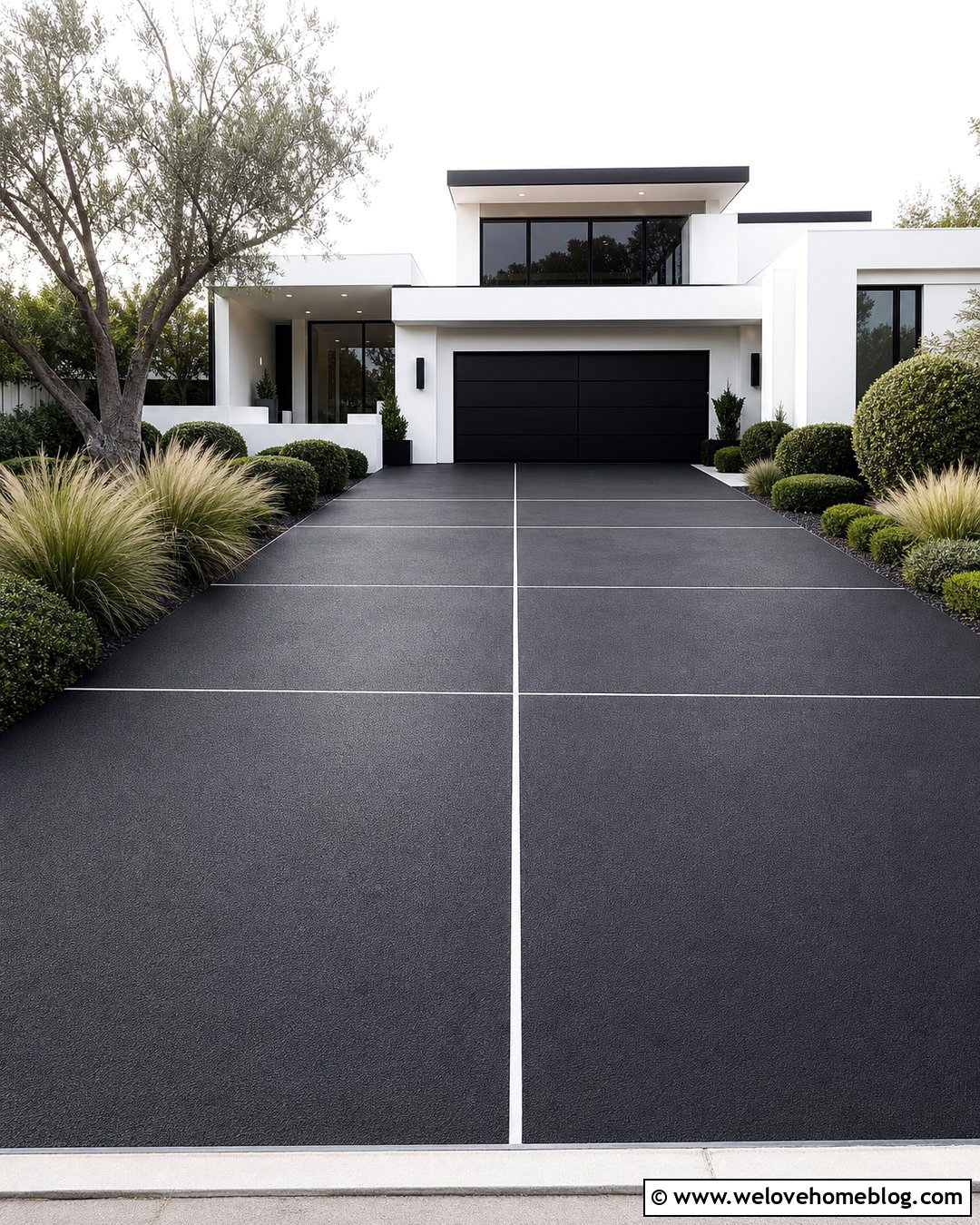
Wide concrete slabs separated by narrow gravel or grass joints create a sharp modern entrance, but dirt can make the geometry appear dull. Pressure wash each slab as a complete panel, keeping the cleaning direction consistent across the driveway. Protect loose joint gravel from direct spray and avoid blasting soil out from grass strips. Pale gray poured concrete looks especially clean beside black metal edging and a white contemporary house. Use low ornamental grasses, sculptural evergreens, and simple rectangular planting beds to reinforce the streamlined layout. Rinse glass garage doors and painted siding immediately if overspray reaches them. The finished driveway should have an even surface tone, clean joints, and strong lines that guide the eye directly from the curb to the front elevation.
6. Pressure Washing a Herringbone Paver Driveway
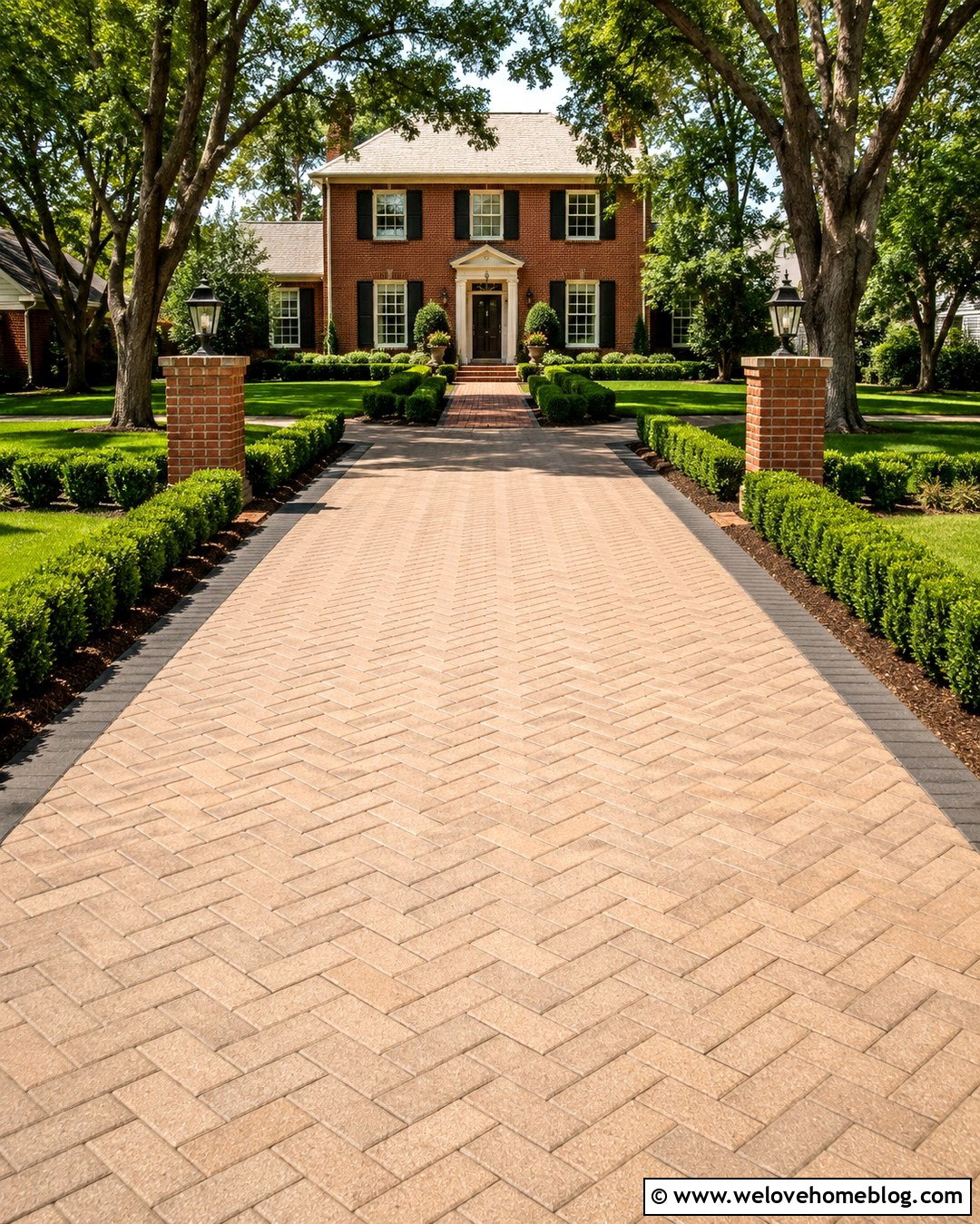
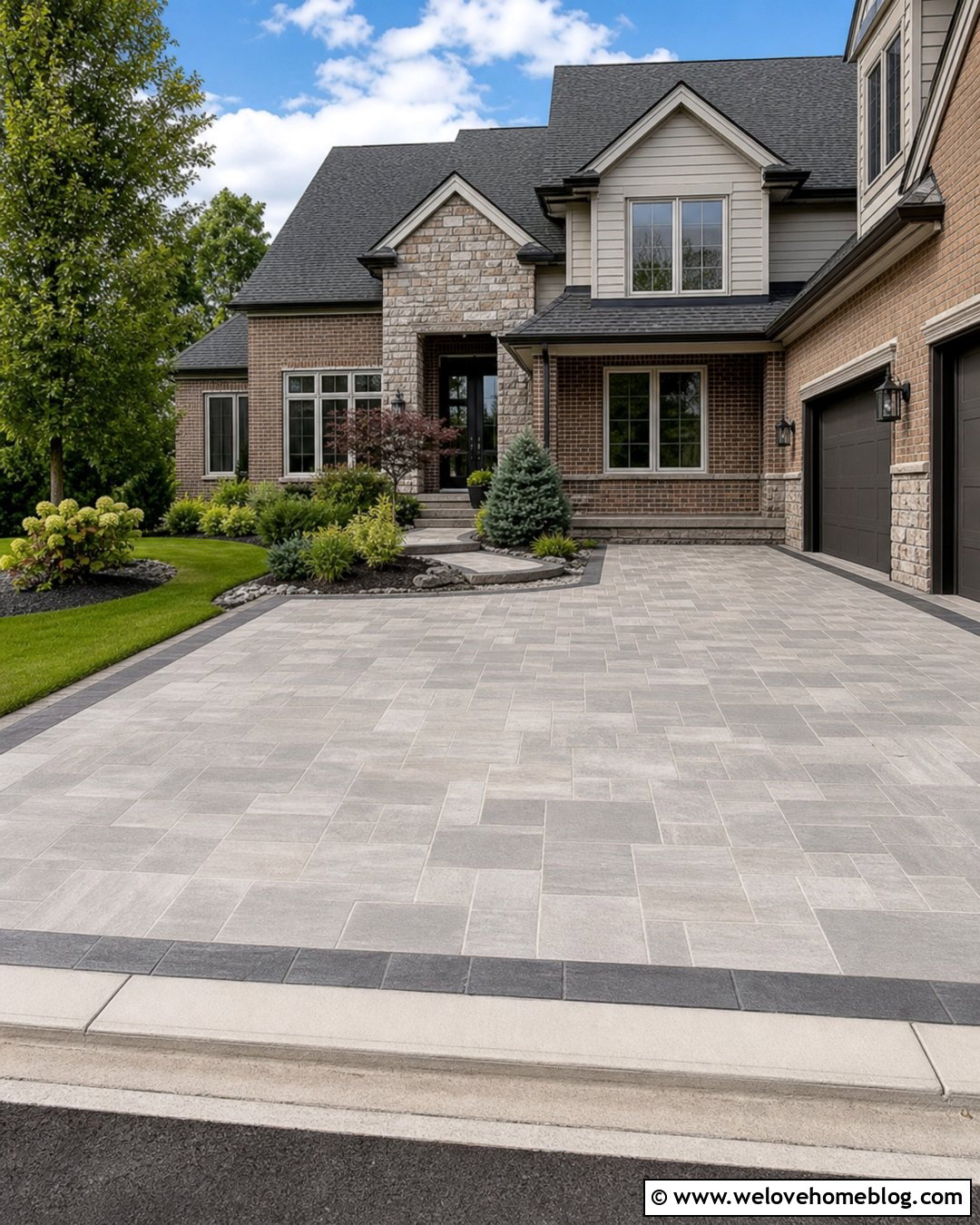
A herringbone concrete paver driveway can regain impressive depth and definition after years of traffic buildup. Before washing, identify loose or sunken pavers and repair unstable sections. Clean with controlled pressure while directing the spray at an angle rather than straight into the joints. This helps limit unnecessary loss of jointing material. Afterward, allow the surface to dry and replace sand where required, following the paver manufacturer’s recommendations. () Charcoal soldier-course borders give warm tan pavers a structured edge. Pair the surface with symmetrical boxwood beds, a brick walkway, and a classic Colonial home. The restored pattern becomes the main visual feature, while restrained landscaping keeps the entrance orderly, balanced, and easy to maintain.
7. Pressure Washing Large Concrete Pavers

Large-format concrete pavers create a sophisticated driveway, especially when their clean lines remain visible. Dirt tends to collect around joints and drainage points, so begin by sweeping the entire layout and clearing the curb transition. Use a low, controlled setting and keep the nozzle moving to avoid producing light and dark marks. A straight driveway made from oversized charcoal pavers looks striking beside a modern house with warm wood siding. Border it with light granite setts to create contrast and prevent the edges from disappearing into planting beds. Add clipped grasses, compact evergreens, and a linear walkway. Once cleaned, check the joint material and correct any washout. The final design should appear crisp without looking overly polished or disconnected from the surrounding yard.
8. Pressure Washing a Brick Driveway
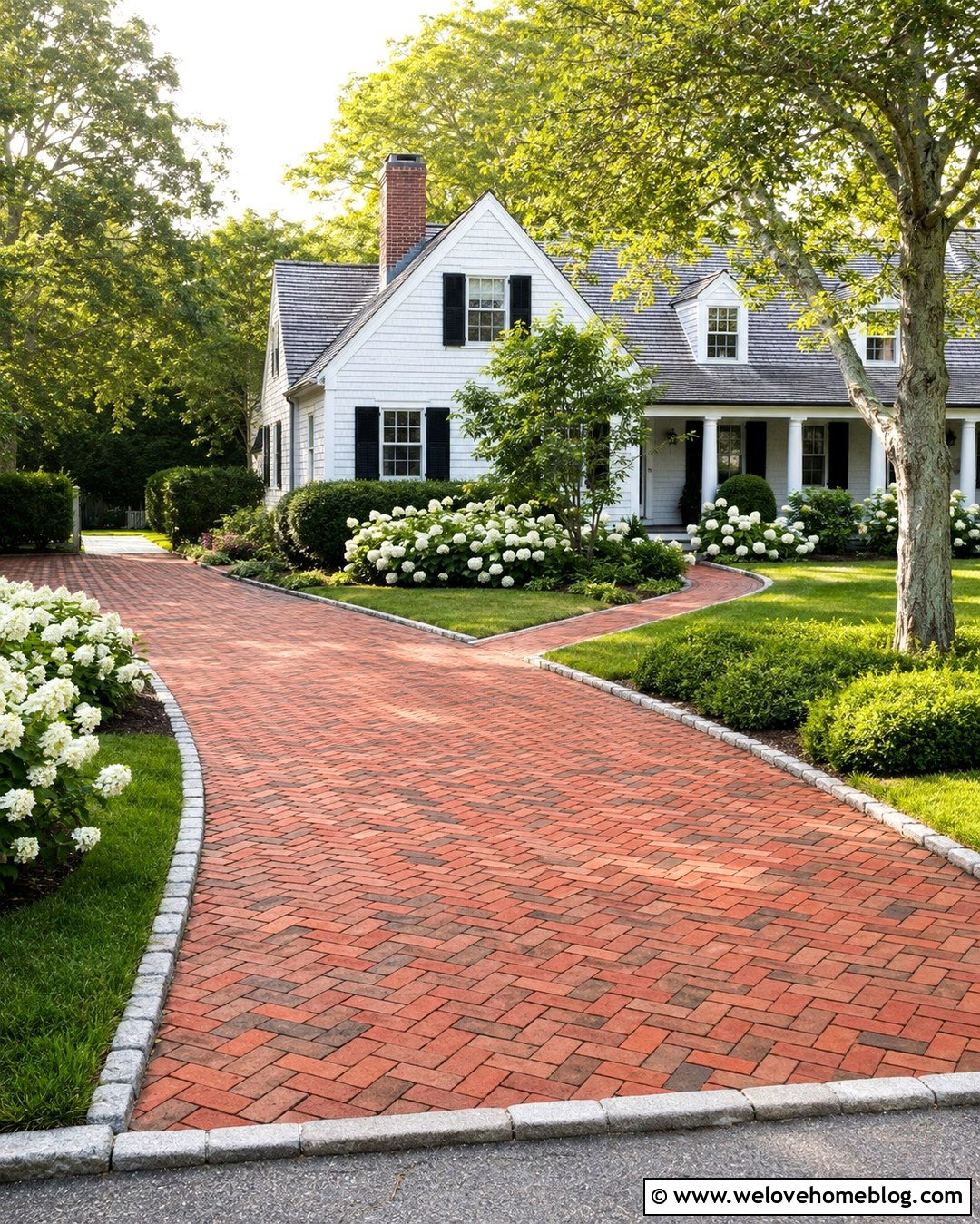
Old clay brick can display beautiful red, brown, and terracotta tones once layers of grime are removed. However, older bricks and mortar joints may be softer than modern concrete, making a gentle test essential. Use lower pressure, a wider fan, and an angled approach. Avoid concentrating water directly into joints or damaged brick faces. A slightly curved brick driveway works naturally with a Cape Cod or cottage-style house. Complement it with granite edging, white flowering shrubs, ground cover, and a brick garden path. Replace crumbling units before cleaning so water does not worsen unstable areas. After the driveway dries, replenish suitable joint material if needed. The clean brick, green planting, and simple facade will produce a warm entrance with strong traditional character.
9. Pressure Washing a Cobblestone Driveway
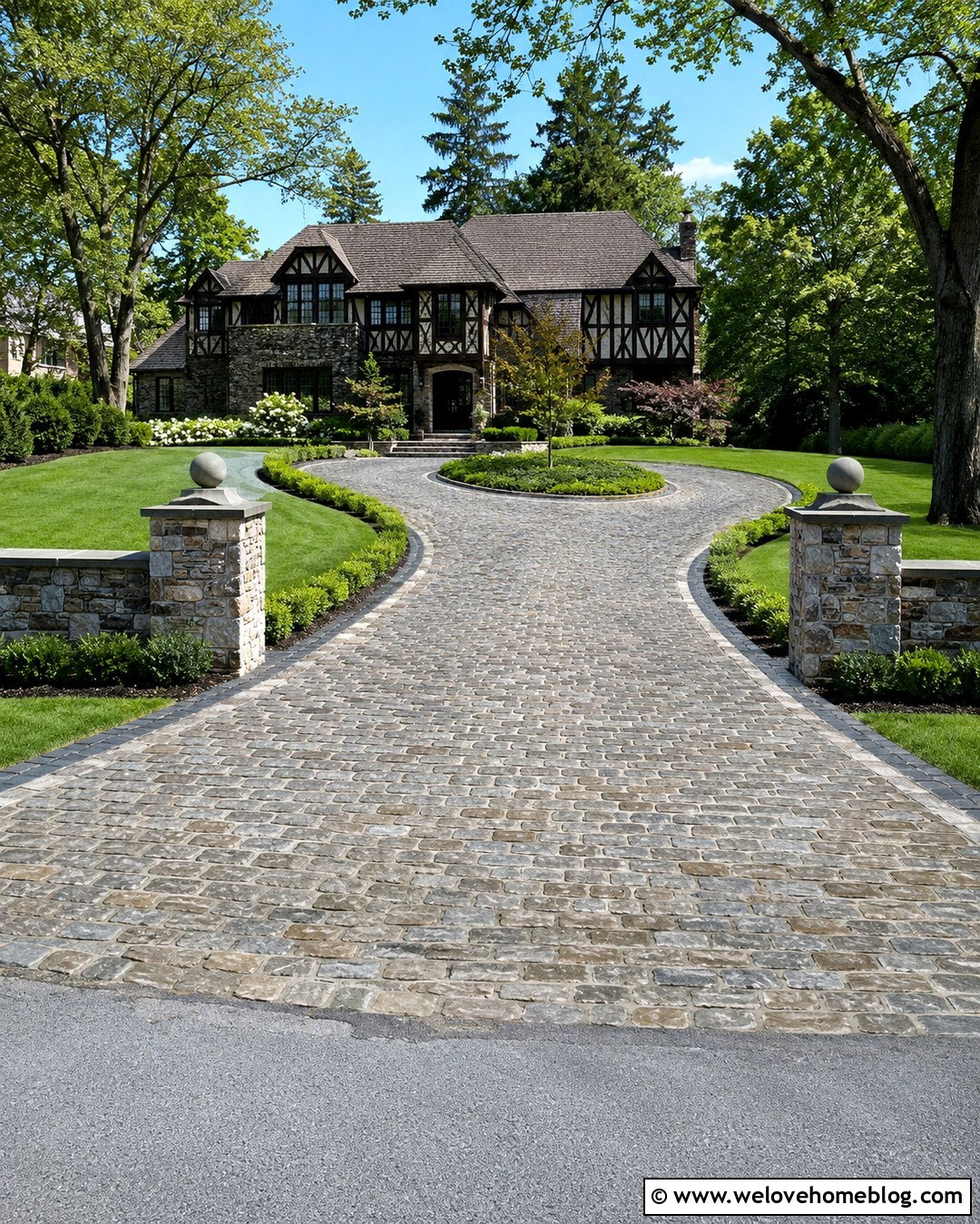
Few surfaces gain as much visual richness from cleaning as genuine cobblestone. Soil can hide individual stone colors and make the whole driveway look flat. Use cautious pressure because old stones may have weak joints, irregular surfaces, or previous repairs. A professional assessment may be worthwhile for historic installations. A horseshoe layout suits cobblestone well, especially in front of a stone or Tudor-style home. Define the entrance with matching masonry pillars, low hedges, and broad lawn panels. Direct runoff away from the foundation and avoid forcing water into loose joints. After washing, repair displaced joint material and remove remaining weeds by hand. The finished approach should highlight the natural variation of the stones while preserving the slightly aged character that makes cobblestone distinctive.
10. Pressure Washing an Asphalt Driveway With a Paver Apron
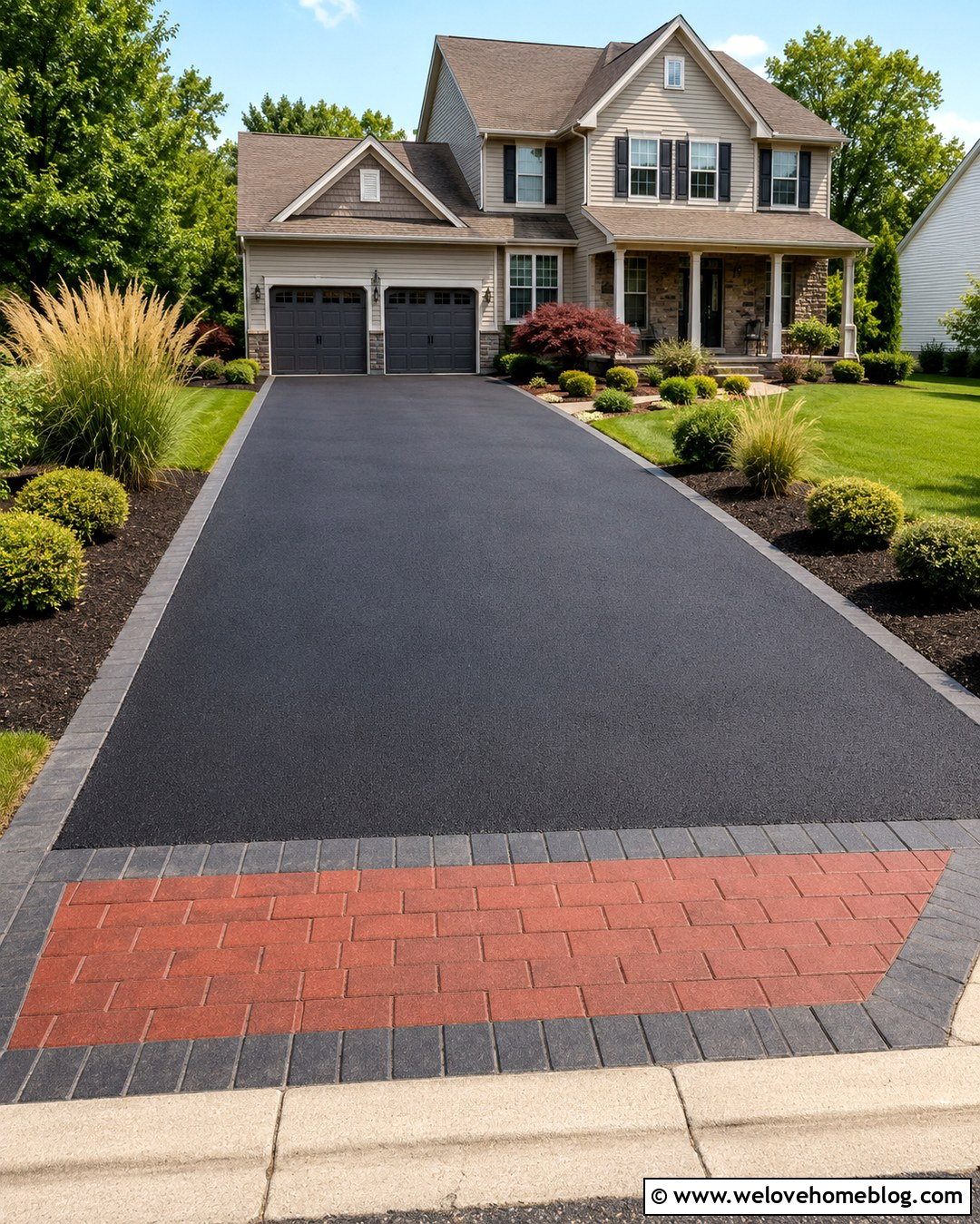
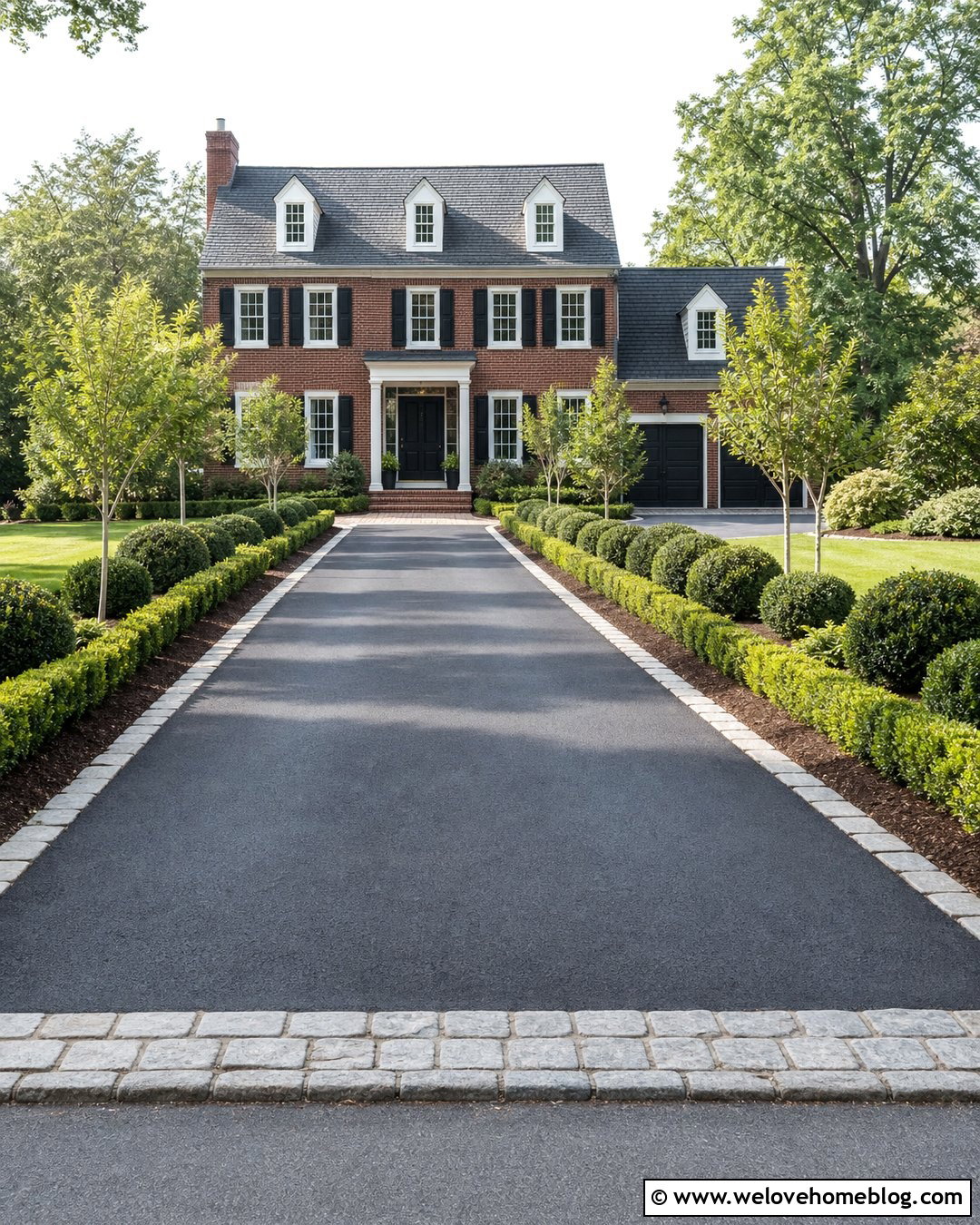
Black asphalt creates a strong backdrop for colorful landscaping, but it requires a gentler approach than durable concrete. Inspect the surface for cracks, loose aggregate, crumbling edges, and failing sealcoat before cleaning. Use mild detergent and lower pressure, keeping the spray moving rather than concentrating it on stains. High pressure can loosen material or leave visible lines on vulnerable asphalt. () A straight black asphalt driveway looks more finished with a red and charcoal paver apron at the curb. Continue those colors in a walkway near the house. Soft grasses, compact shrubs, and clean lawn edges complete the design. Once dry, evaluate whether crack repair or a new sealcoat is needed instead of expecting washing alone to restore damaged asphalt.
11. Pressure Washing a Curved Asphalt Driveway
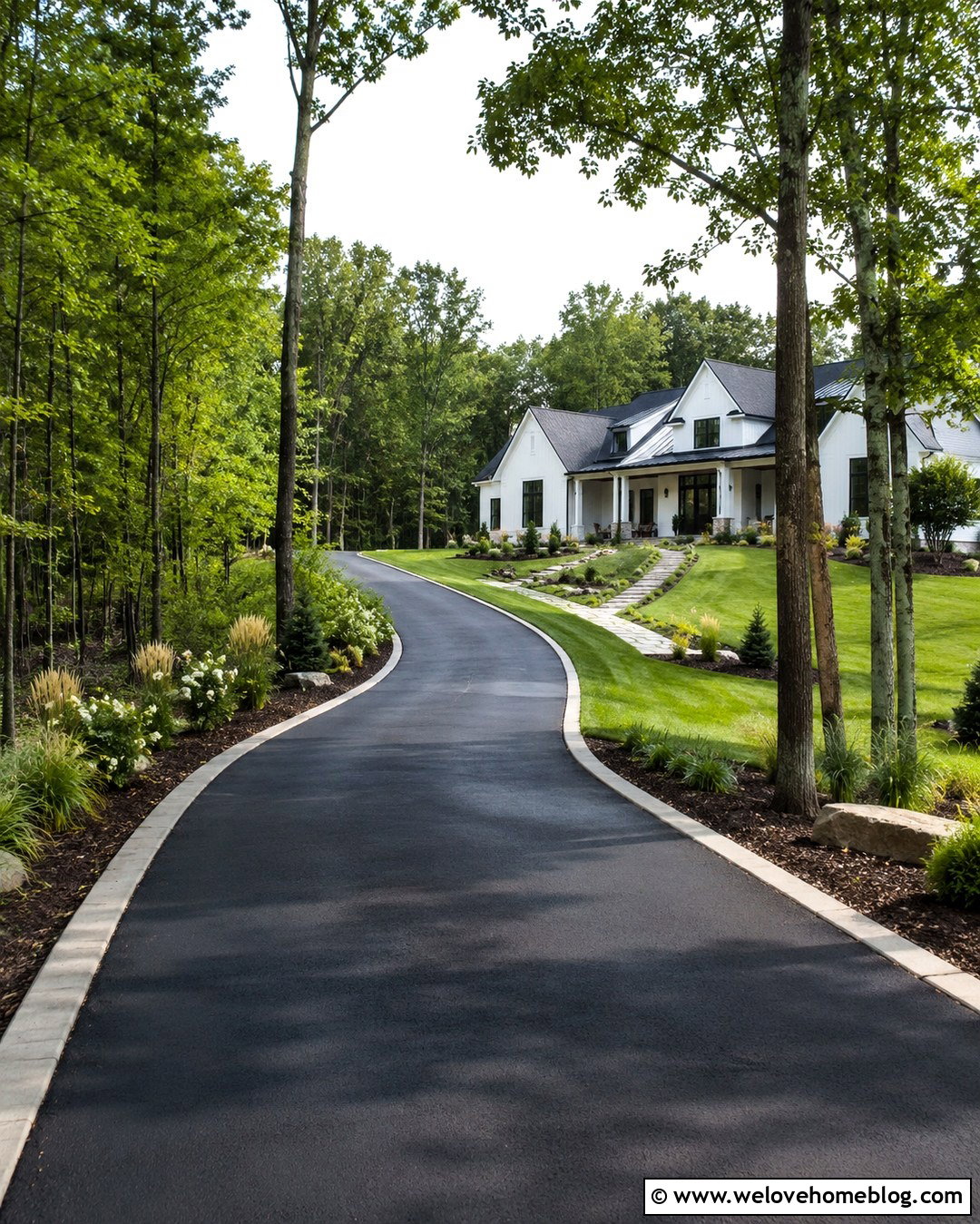
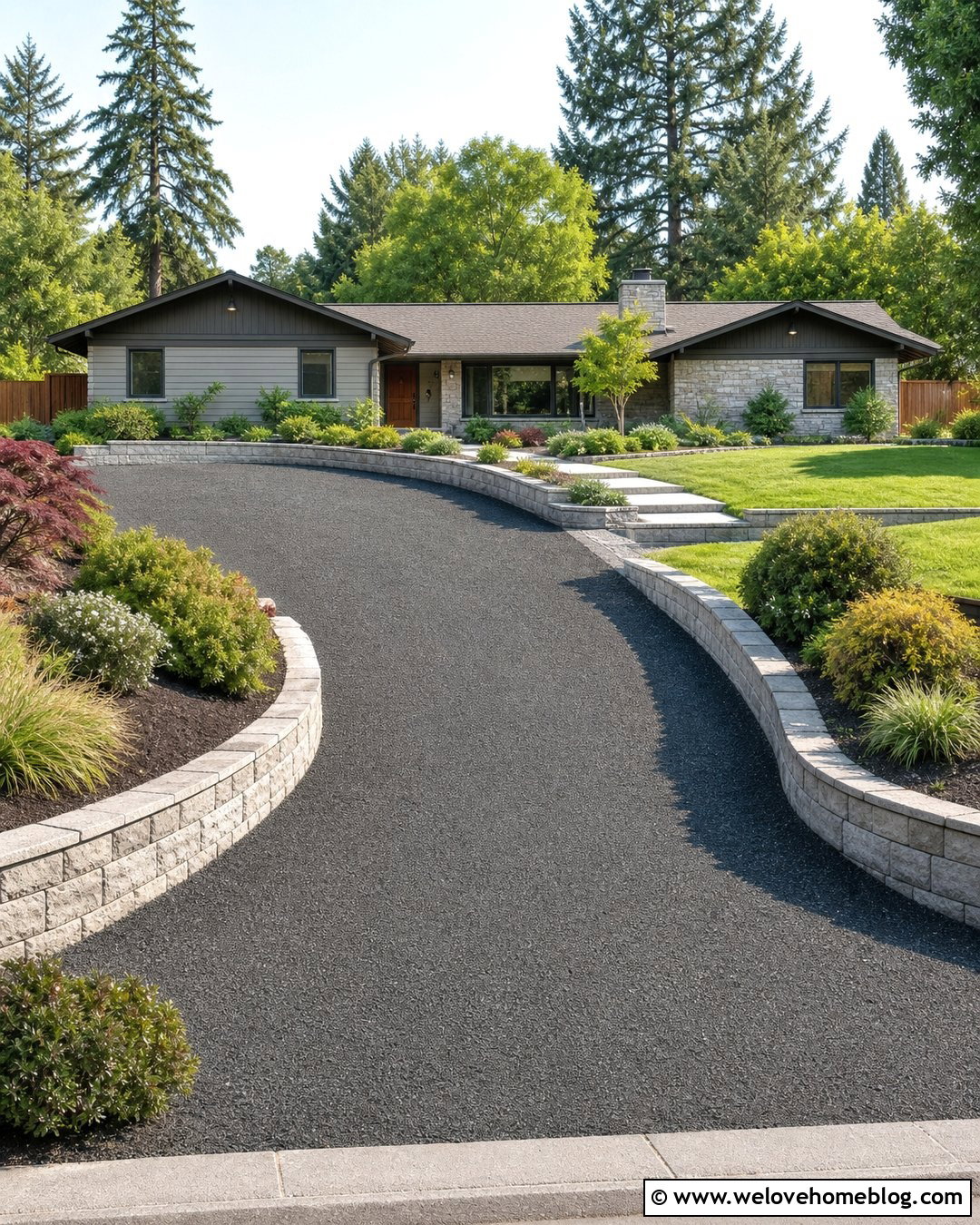
A long curved asphalt driveway often gathers pollen, dust, leaves, and green organic growth along shaded edges. Start by blowing away loose debris and clearing any blocked drainage areas. Apply an asphalt-compatible cleaner where necessary, then rinse with controlled pressure. Keep the wand farther from the surface than you would on strong concrete and test an inconspicuous section first. Light-gray concrete curbing can define the black driveway and prevent grass from creeping onto the pavement. Create a tree-lined entrance with mulched beds, native shrubs, and shade-tolerant ground cover. Trim overhanging branches to improve airflow and reduce recurring debris. The clean curve, defined border, and layered greenery will make a country or farmhouse property feel organized while maintaining its relaxed landscape character.
12. Pressure Washing Oil Stains From a Concrete Driveway
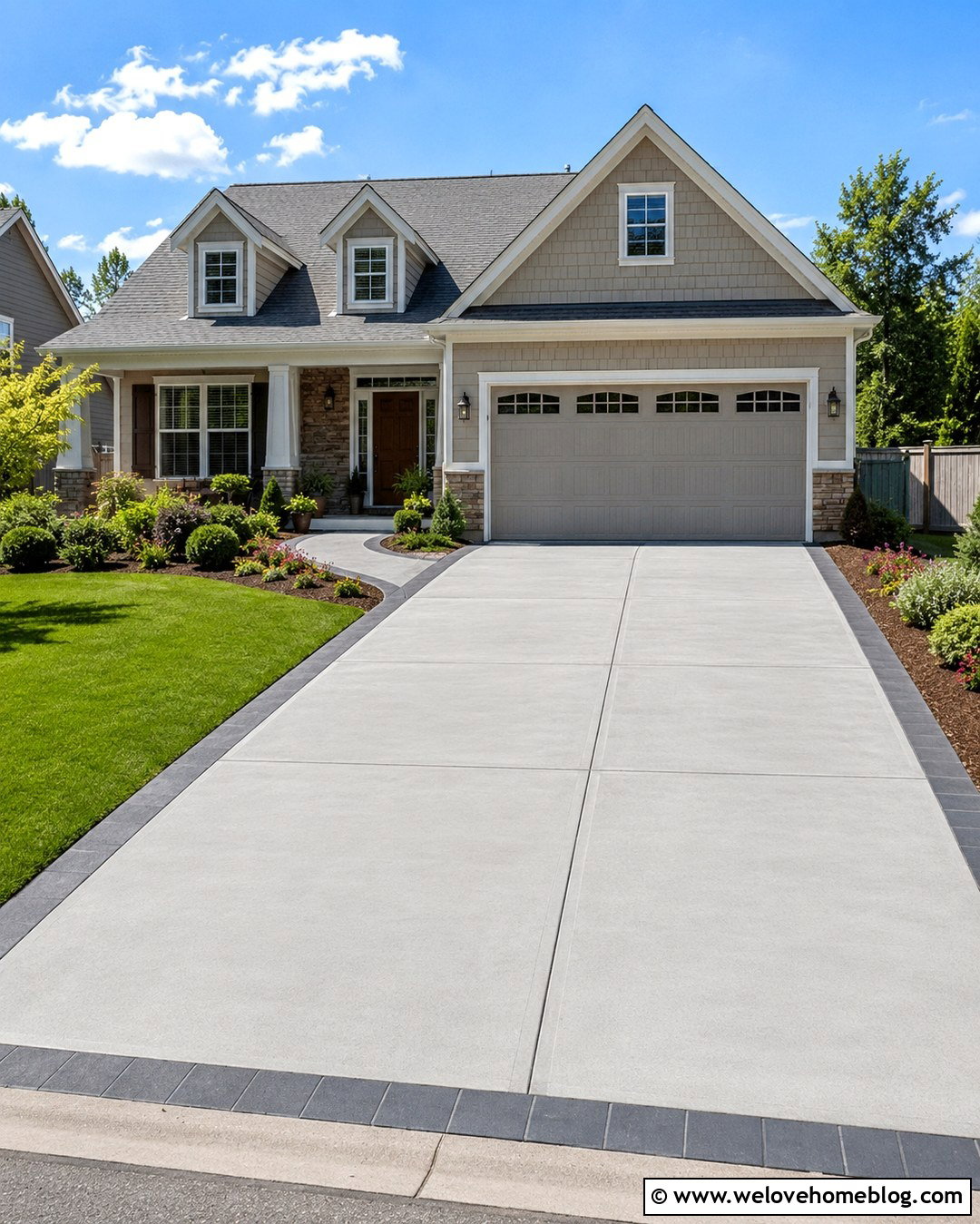
Dark oil marks can remain visible even after the rest of a driveway is washed, so treat them before tackling the full surface. Absorb any fresh residue, apply a concrete-compatible degreaser according to its label, and scrub with a stiff brush. Then clean the entire driveway rather than concentrating intense pressure only on the stain. This creates a more consistent finish and reduces the risk of an obvious bright patch. Pretreatment is commonly recommended because pressure alone may not remove embedded grease. () Frame the restored concrete with charcoal paver borders and low evergreen planting beds. A simple straight layout leading to a two-car garage will appear cleaner, wider, and more balanced when the surface, edges, and adjacent walkway are refreshed together.
13. Pressure Washing an Algae-Covered Driveway
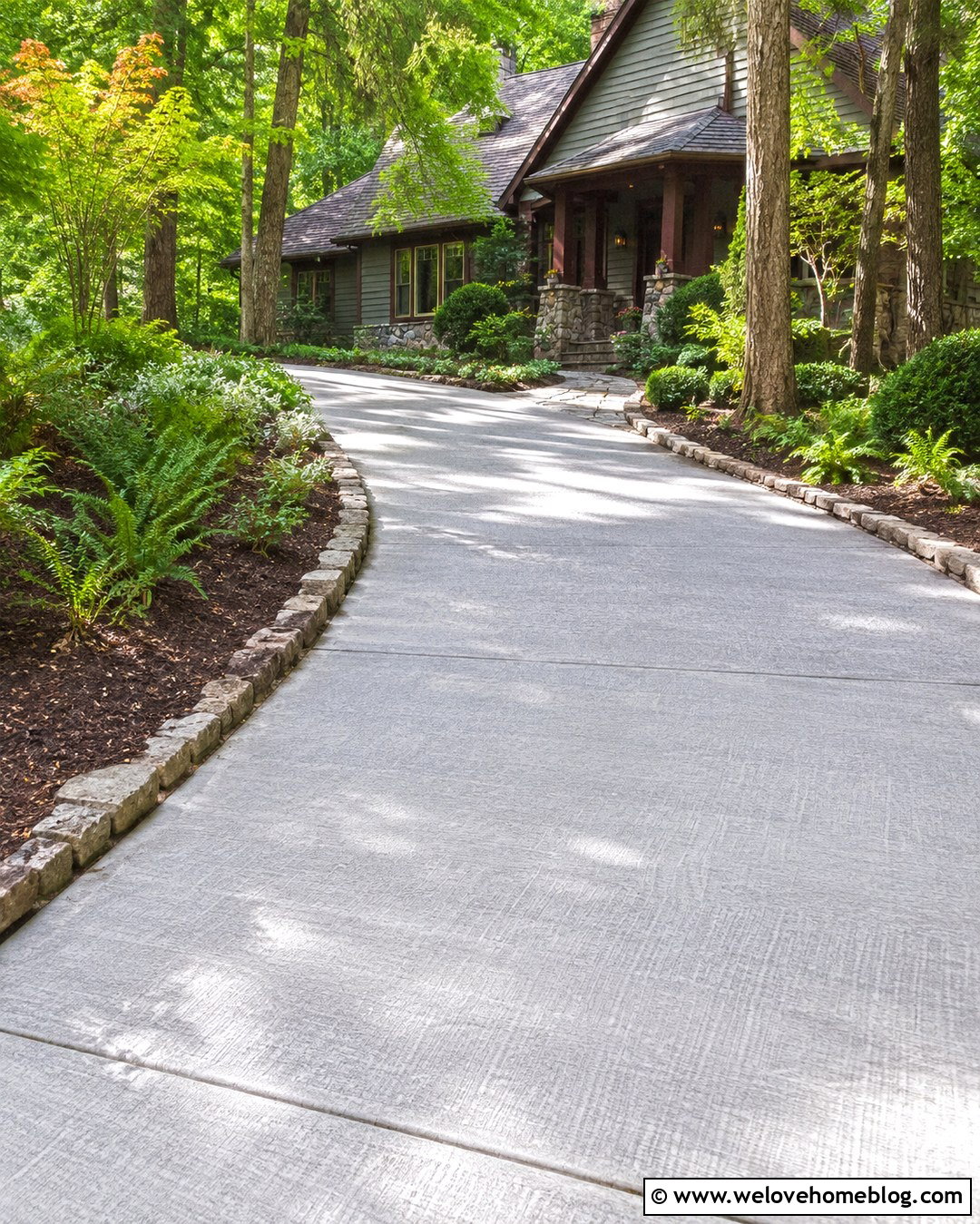
A shaded driveway can develop green or dark organic buildup where moisture lingers. Instead of repeatedly blasting those areas, address the conditions that encourage regrowth. Sweep the driveway, use an appropriate exterior cleaner, and allow the recommended dwell time without letting the solution dry. Rinse in overlapping passes while protecting nearby plants. A light broom-finished concrete driveway with fieldstone edging works well beside a wooded Craftsman house. Thin dense shrubs, redirect downspouts, and keep damp leaves from collecting along the border. Add shade-tolerant ferns and neatly mulched beds beyond the splash zone. The completed driveway should look bright but still natural within its setting. Better drainage, airflow, and routine debris removal can help the cleaned surface remain attractive for longer.
14. Pressure Washing a Sloped Concrete Driveway
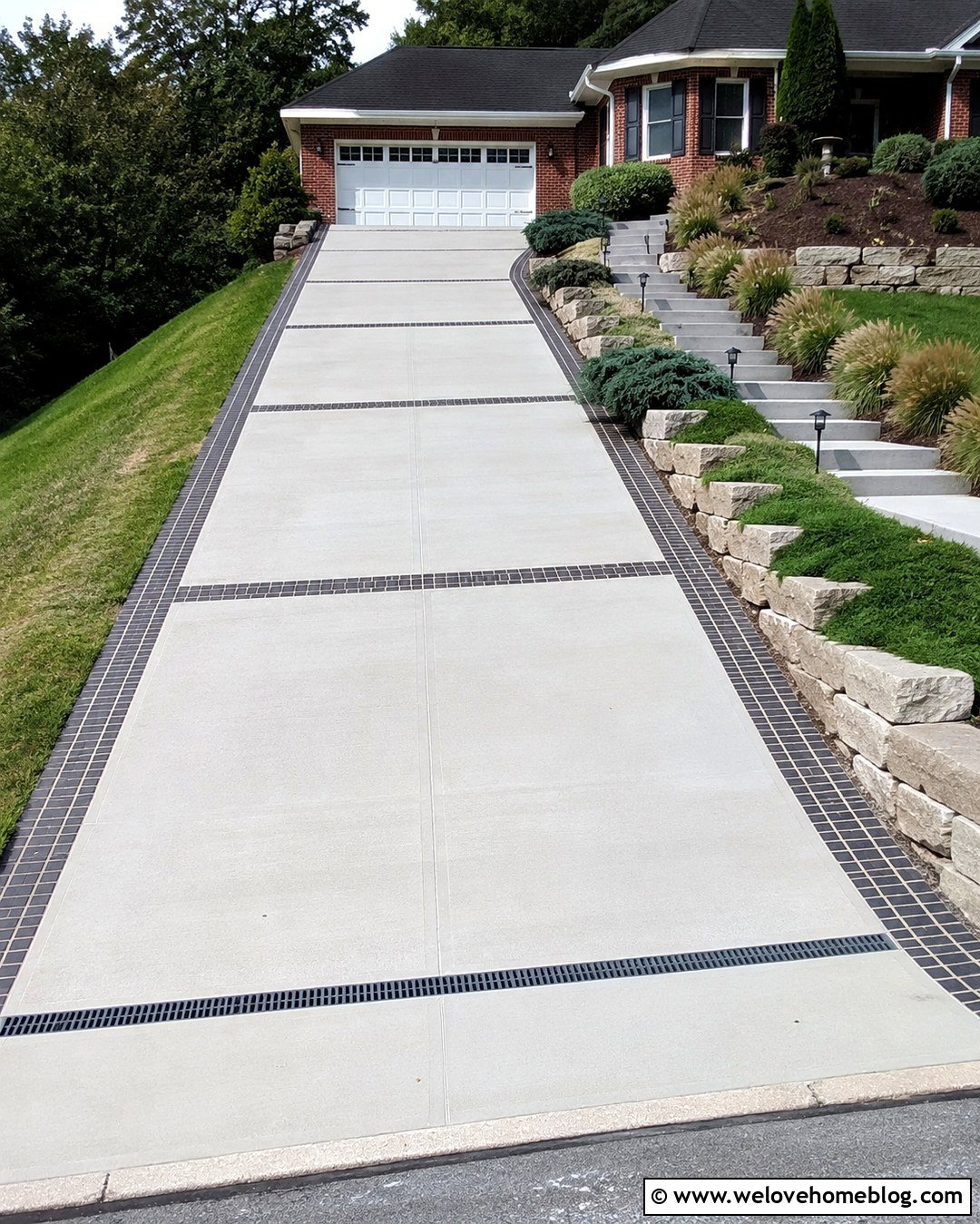
Water movement is the central concern when cleaning a steep driveway. Begin at the highest point and work downhill so detergent and loosened soil travel toward the street rather than back across finished sections. Use smaller cleaning zones to prevent detergent from drying in the sun. A surface cleaner can create consistent results, but it must remain level against the slope. A pale concrete driveway with dark brick borders and a channel drain near the garage provides a practical complete design. Plant low junipers and ornamental grasses along terraced beds to stabilize the surrounding soil. Keep runoff away from storm drains when cleaning products are involved and follow local requirements. The refreshed surface and clear drainage details will make the incline appear safer, cleaner, and more intentional.
15. Pressure Washing a Wide Concrete Driveway
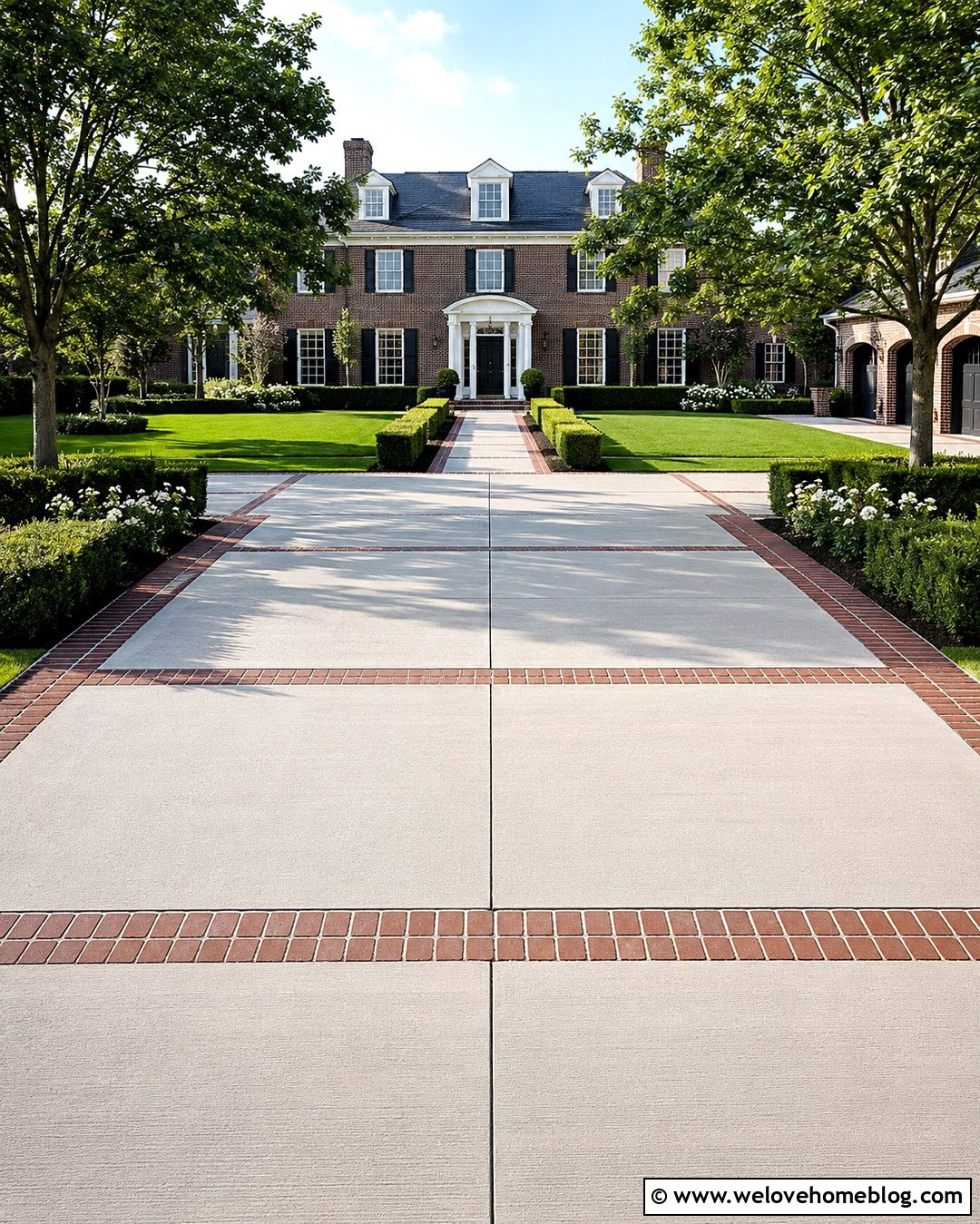
Large driveways easily develop stripes when cleaning speed, overlap, or distance changes from one pass to another. Divide the surface into logical sections using expansion joints as guides. Move across the shorter dimension with steady, overlapping passes, then rinse the full area from the garage toward the curb. A rotating surface cleaner matched to the pressure washer can improve consistency across broad concrete areas. Finish stubborn sections carefully instead of repeatedly tracing narrow lines with a powerful nozzle. Pair the wide driveway with contrasting brick ribbons, a central walkway, generous lawn panels, and symmetrical planting beds around a Georgian-style home. Washing the walkway and curb apron at the same time prevents the main driveway from looking noticeably brighter than every connected hardscape.
16. Pressure Washing a Narrow Side Driveway
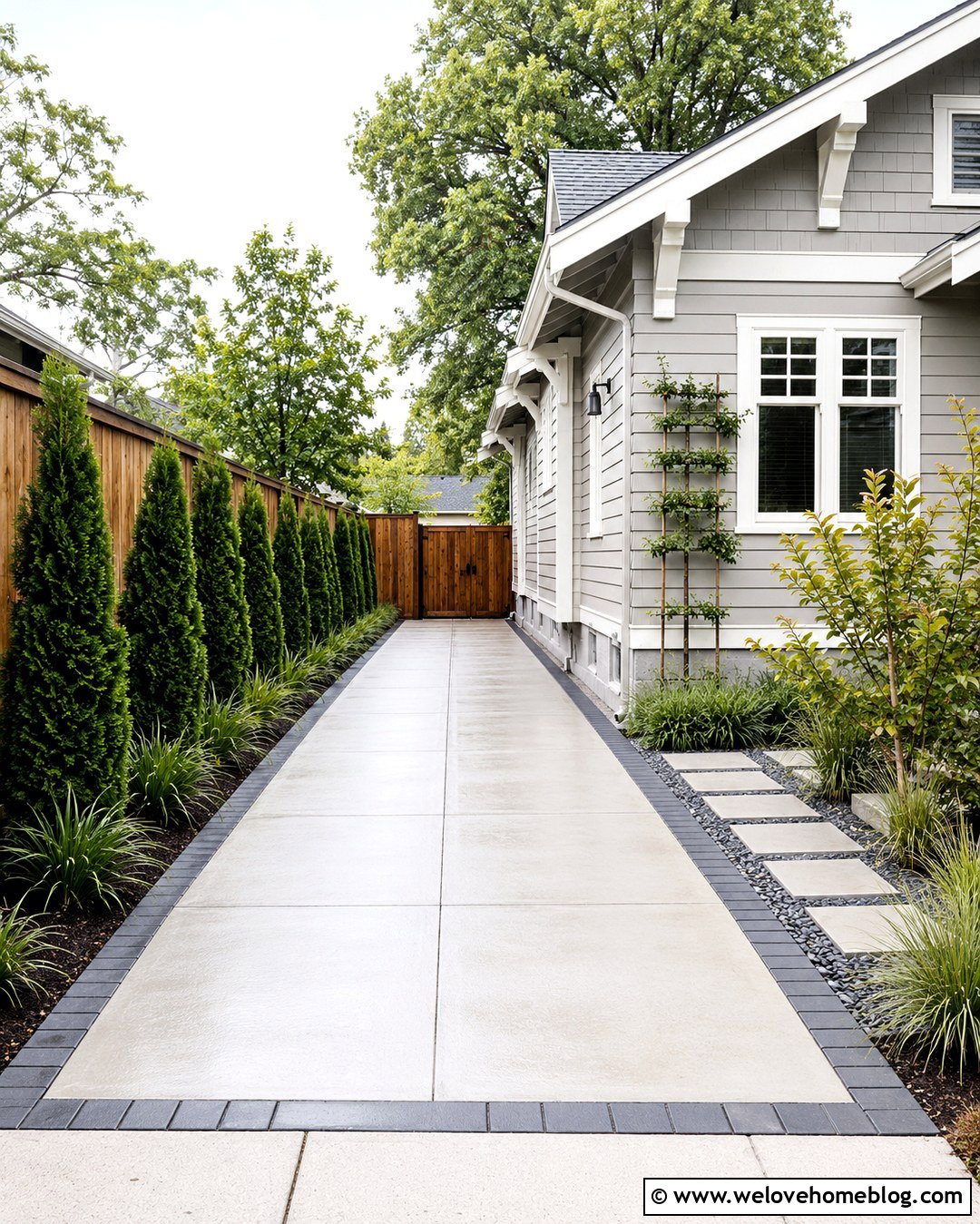
A narrow driveway beside a house requires additional control because overspray can reach siding, windows, gates, and planting beds. Move lightweight objects, close windows, cover sensitive fixtures, and rinse surrounding plants before beginning. Wash a simple straight section at a time while directing water away from the foundation. Light-gray concrete with a slim charcoal paver edge makes the restricted space feel more defined. Use upright shrubs, espaliered greenery, or narrow ornamental grasses rather than plants that spread across the driving area. A matching stepping-stone walkway can lead toward a backyard gate without crowding the layout. Once cleaning is complete, rinse the siding and border plants with clean water. The result should feel open, orderly, and connected to the home despite the limited width.
17. Pressure Washing a Permeable Paver Driveway
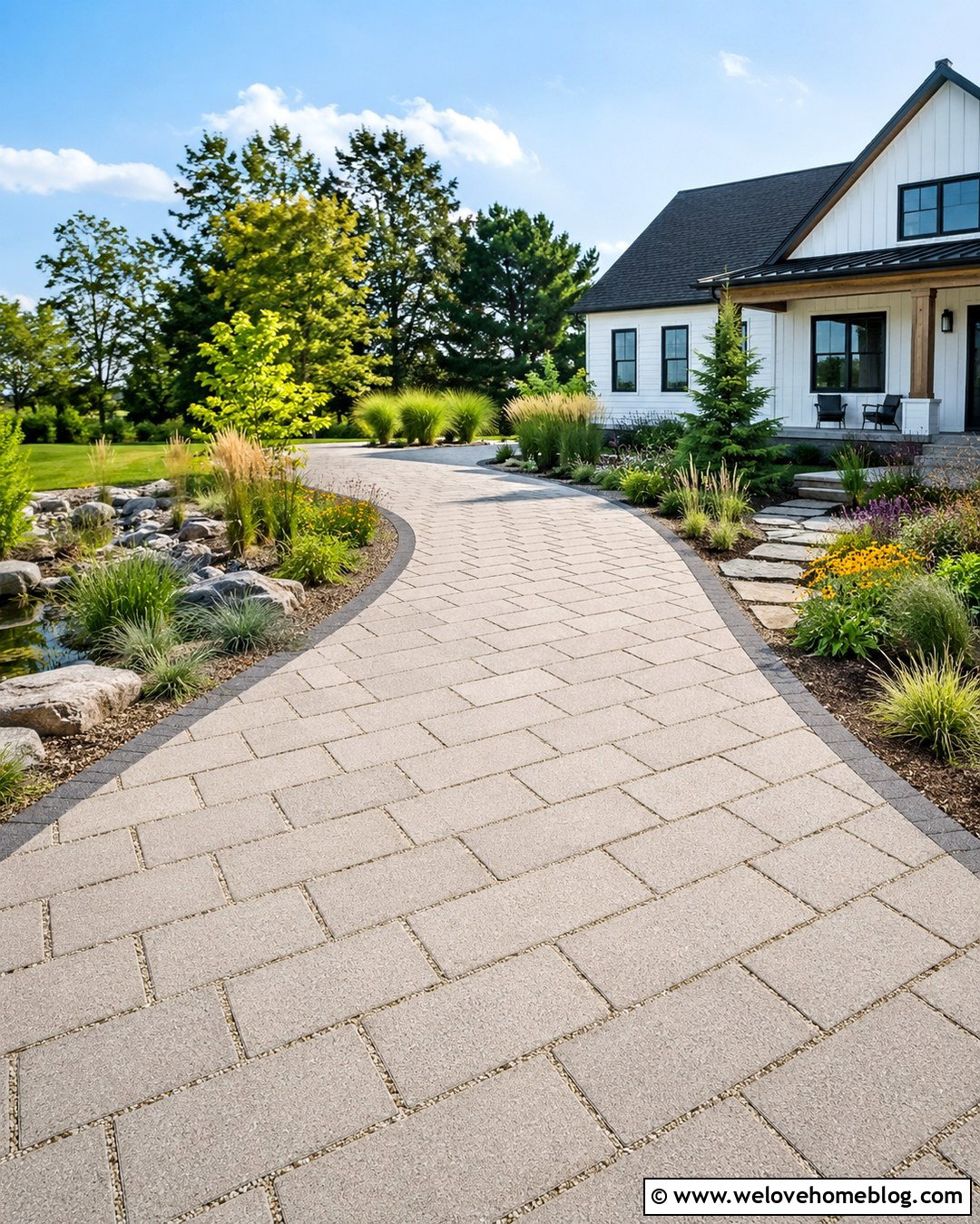
Permeable pavers depend on open joints that allow water to move into the prepared base. That means cleaning must remove surface grime without disturbing large amounts of joint aggregate. Begin with sweeping and gentle rinsing. Use controlled pressure only after checking the paver supplier’s maintenance guidance, and hold the spray at an angle. Replace compatible joint stone if cleaning removes material. A curved driveway made from warm-gray permeable concrete pavers fits naturally beside a modern farmhouse. Add a dark paver border, rain-garden planting, native grasses, and a stone walkway near the entrance. Keep mud from nearby beds from washing onto the newly cleaned surface. The complete design combines a clearly defined driving route with softer planting that helps manage water and frames the approach.
18. Pressure Washing a Concrete Grass Paver Driveway
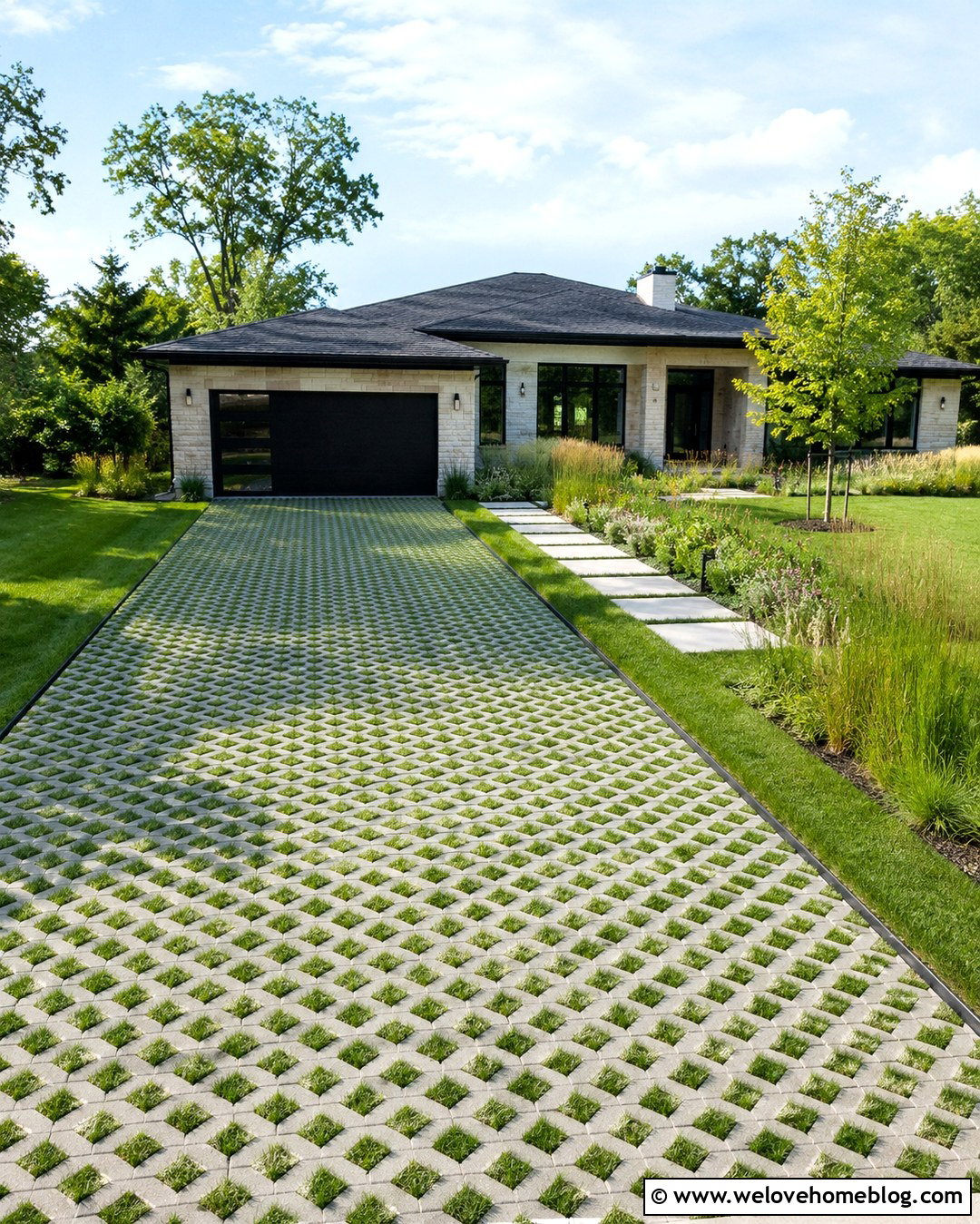
Concrete grass pavers offer an appealing mixture of hardscape and greenery, but aggressive pressure can remove soil and damage the planted openings. Begin by trimming the grass, sweeping the concrete ribs, and pulling large weeds manually. Use low pressure on the solid sections and avoid aiming directly into planted cells. A straight grass-grid driveway looks especially suitable in front of a low ranch or contemporary cottage. Define the sides with steel edging, meadow-style planting, and a simple concrete walkway. Repair thin grass sections after cleaning with a soil and seed mix suited to local conditions. This approach preserves the driveway’s green pattern instead of turning maintenance into erosion. Clean concrete lines and healthy planted openings should remain equally visible from the curb.
19. Pressure Washing a Resin-Bound Gravel Driveway
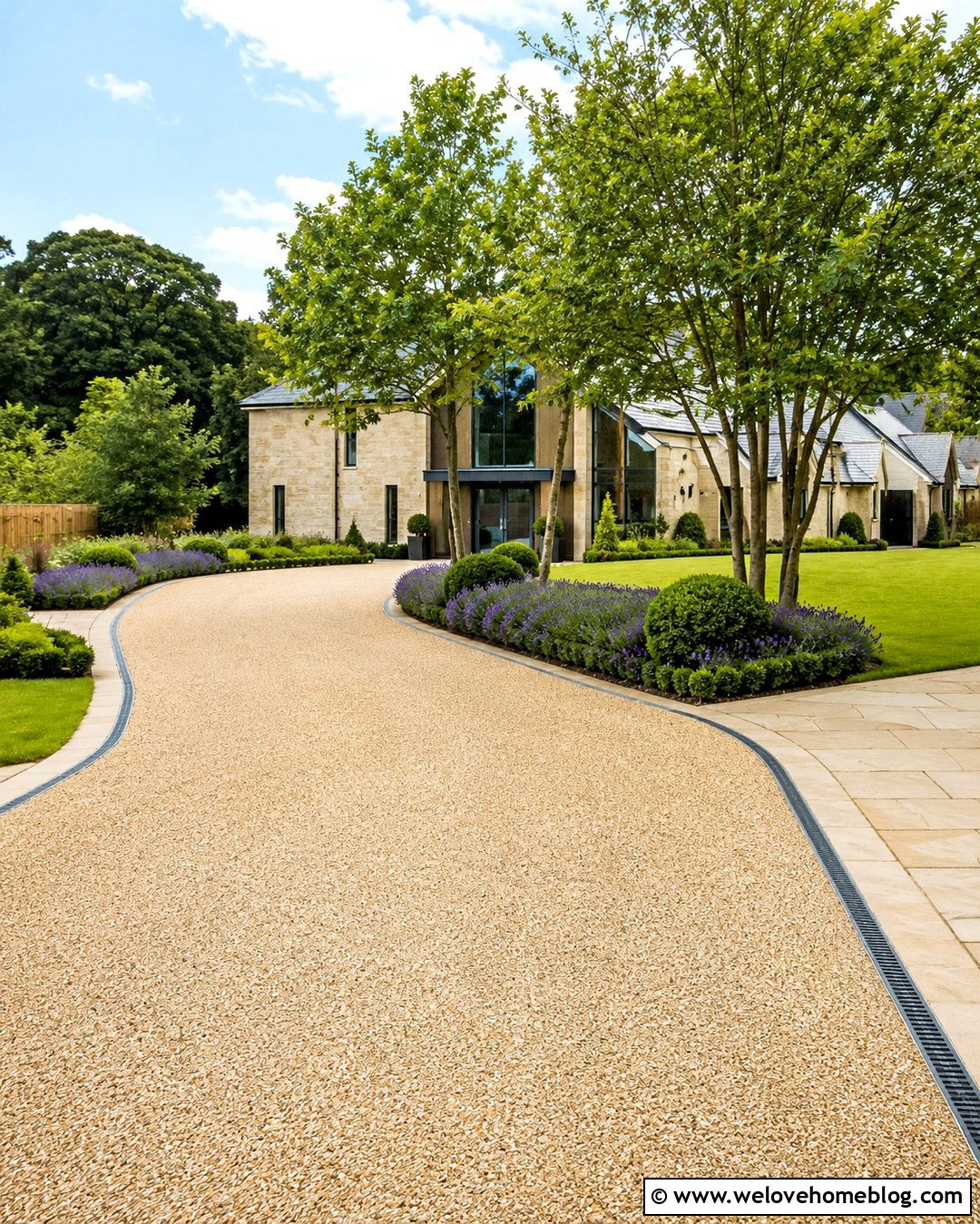
Resin-bound gravel creates a smooth, decorative surface without the movement of loose stone, yet it should still be cleaned carefully. Sweep first to remove grit that could scratch the finish. Use a manufacturer-approved cleaner and low, even pressure, keeping the nozzle at a safe distance. Never assume the same setting used on concrete will suit a bonded surface. A sweeping resin-bound driveway in a warm beige blend pairs well with sandstone edging and a contemporary country house. Lavender, clipped shrubs, lawn, and multi-stem trees can frame the curve without covering the border. Clear drainage channels before rinsing so dirty water leaves the surface efficiently. The final look should reveal the aggregate’s natural color while preserving a smooth and consistent finish across the driveway.

20. Pressure Washing a Driveway and Front Walkway
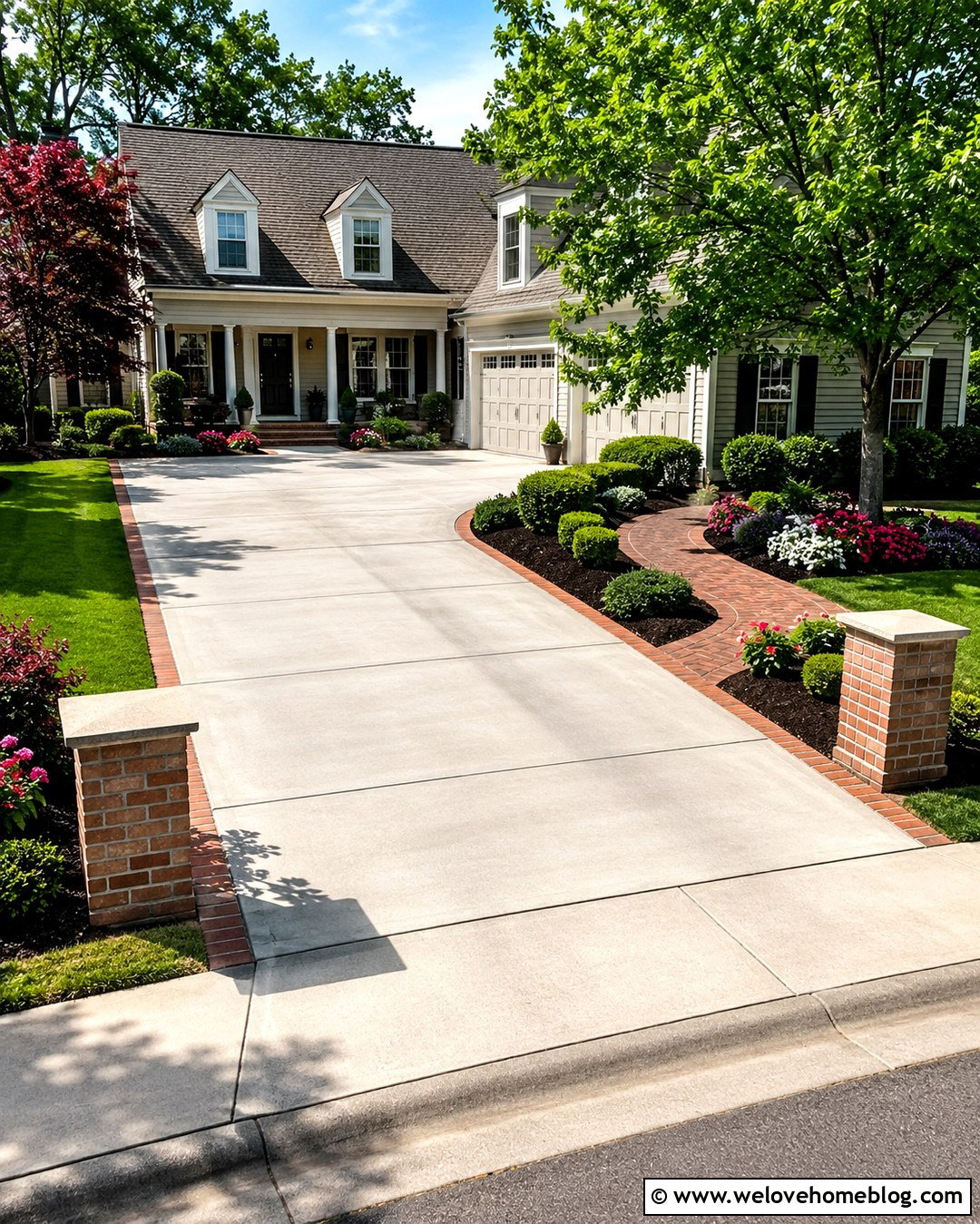
Cleaning the driveway alone can make neighboring hardscape look darker, so consider the entire route from the curb to the front door. Wash the concrete driveway, curb apron, front walkway, and porch steps as coordinated zones. Adjust the pressure when moving between materials, particularly if the walkway has brick borders or decorative pavers. A straight light-gray concrete driveway with a curved brick walkway creates a balanced entrance for a traditional suburban home. Refresh nearby mulch, sharpen lawn edges, clean the address pillar, and prune shrubs after washing. Once the hardscape dries, any remaining stains or uneven areas will be easier to evaluate. Treating the surface and landscaping as one project produces a more convincing curb-appeal improvement than cleaning an isolated rectangle of pavement.
Conclusion:
The most effective **pressure washing driveway ideas** go beyond spraying away surface dirt. A successful update considers the driveway material, cleaning technique, edging, drainage, landscaping, and connected walkways as one complete design. Always inspect the surface first, pretreat difficult stains, test a small area, and adjust the pressure for concrete, asphalt, brick, pavers, or resin-bound gravel. Use consistent passes and protect plants, siding, joints, and loose borders from concentrated spray. After the driveway dries, repair damaged joints, replenish displaced material, or apply a compatible sealer when appropriate. These finishing steps help the freshly cleaned surface blend naturally with the house and create a polished, welcoming entrance from the curb.

Related posts:

Leave a Reply