
A worn driveway does not always need to be demolished and replaced. Small cracks, shallow pits, faded color, uneven slabs, and damaged edges can often be corrected while giving the entire entrance a cleaner, more intentional look. The key is matching the repair to the cause of the damage. Structurally sound concrete may benefit from crack filling, patching, lifting, staining, or resurfacing, while severe heaving and widespread failure usually require professional evaluation. Good surface preparation is equally important because loose material, dirt, oil, and moisture can weaken the bond of a repair product. () The complete driveway designs below combine practical restoration methods with attractive borders, landscaping, finishes, and drainage improvements. Explore these 20 Repairing Concrete Driveway Ideas.

1. Broom Finish Concrete Driveway With Hairline Crack Repair
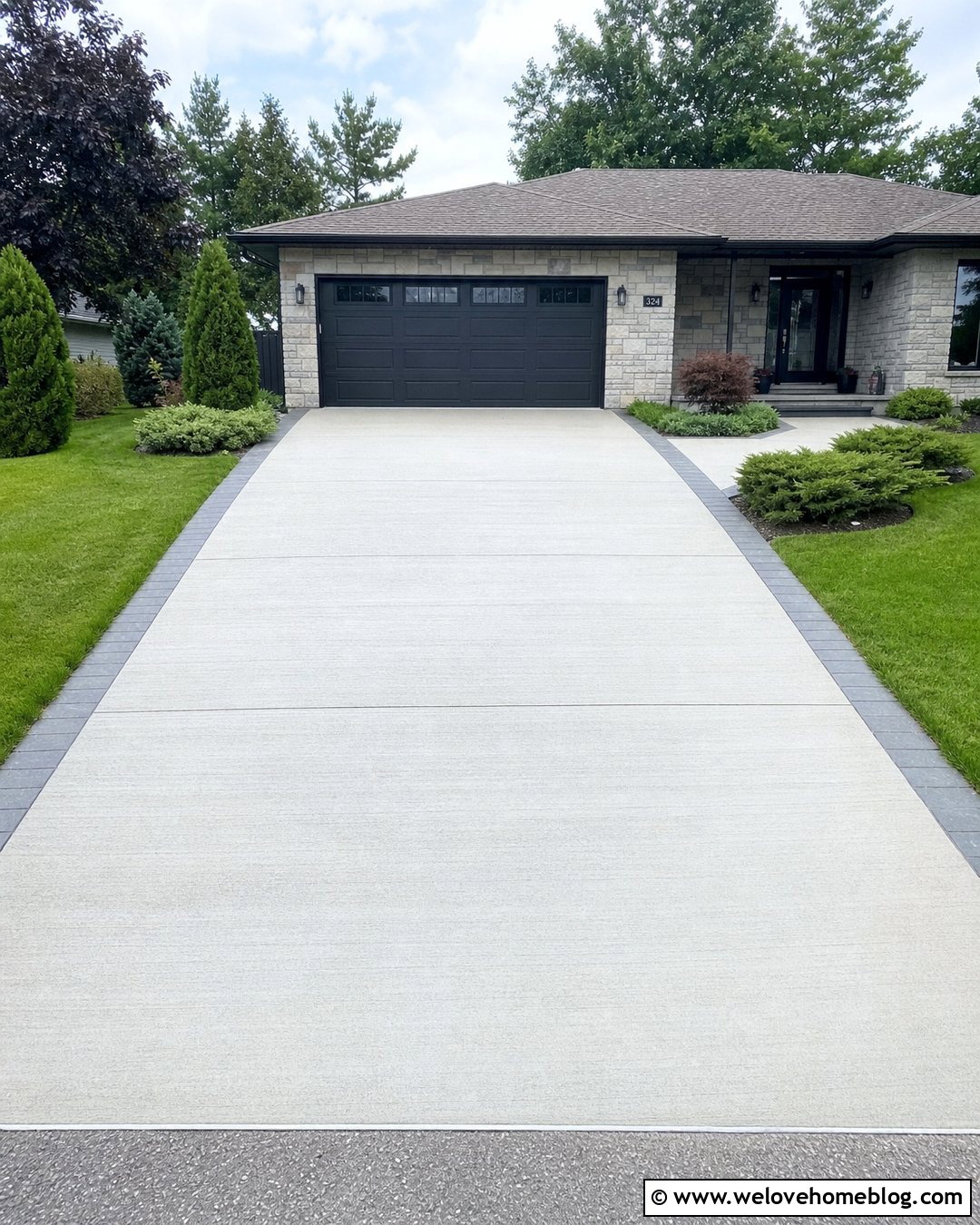
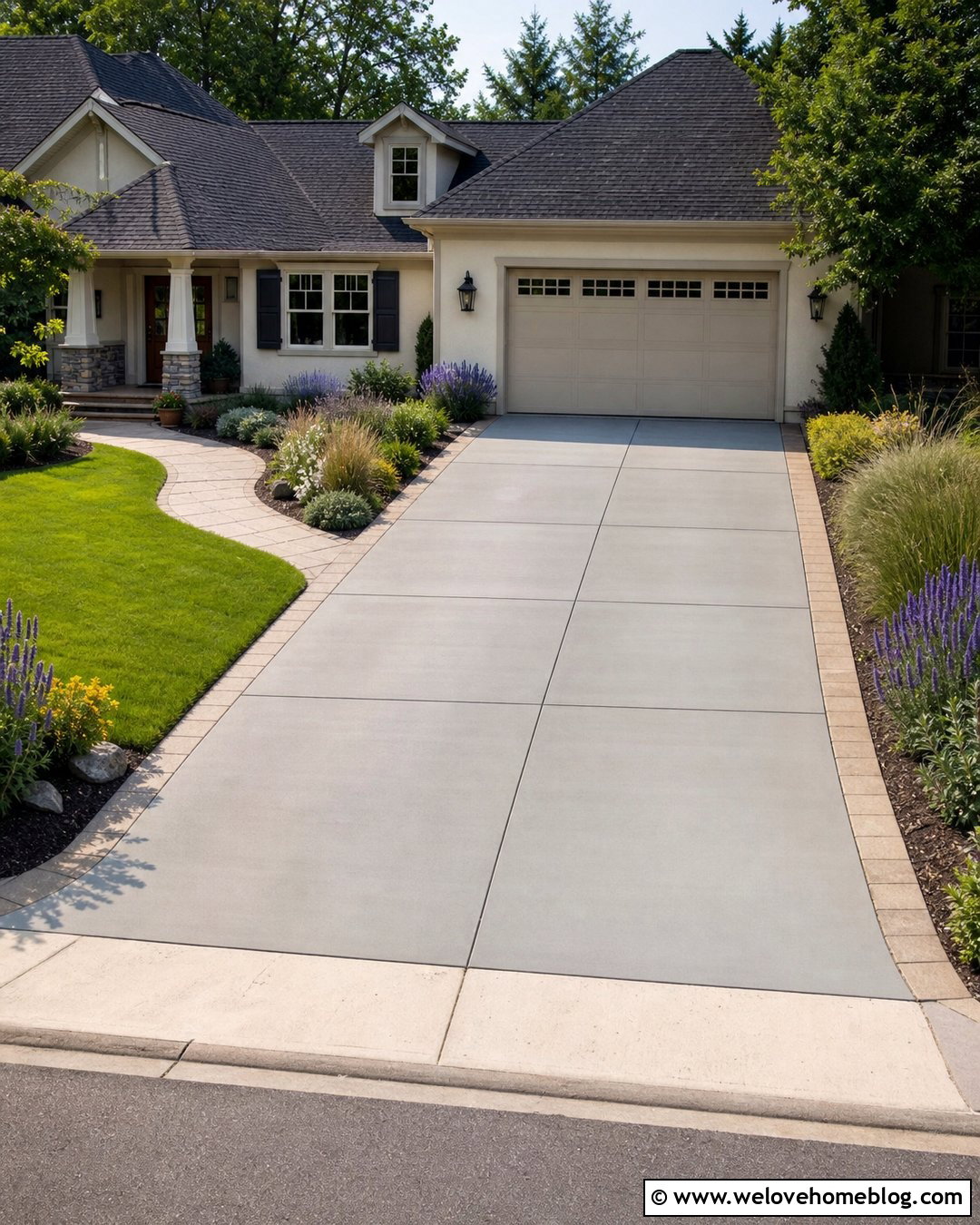
Thin cracks can disappear into a simple, refreshed driveway when the surrounding concrete remains level and solid. Begin by cleaning each opening with a stiff brush and removing loose particles before using a compatible concrete crack filler. Deep gaps may need backer material or sand beneath the filler, depending on the product instructions. After the repairs cure, pressure-wash the full driveway and apply a light gray concrete stain or tinted sealer to reduce visible color differences. Keep the original broom finish for reliable traction and an understated appearance. Straight charcoal paver borders create stronger definition along both sides. Finish the look with trimmed lawn, low evergreen shrubs, and a matching concrete walkway leading toward the front porch. ()
2. Concrete Driveway With Flexible Crack Sealer And Brick Borders
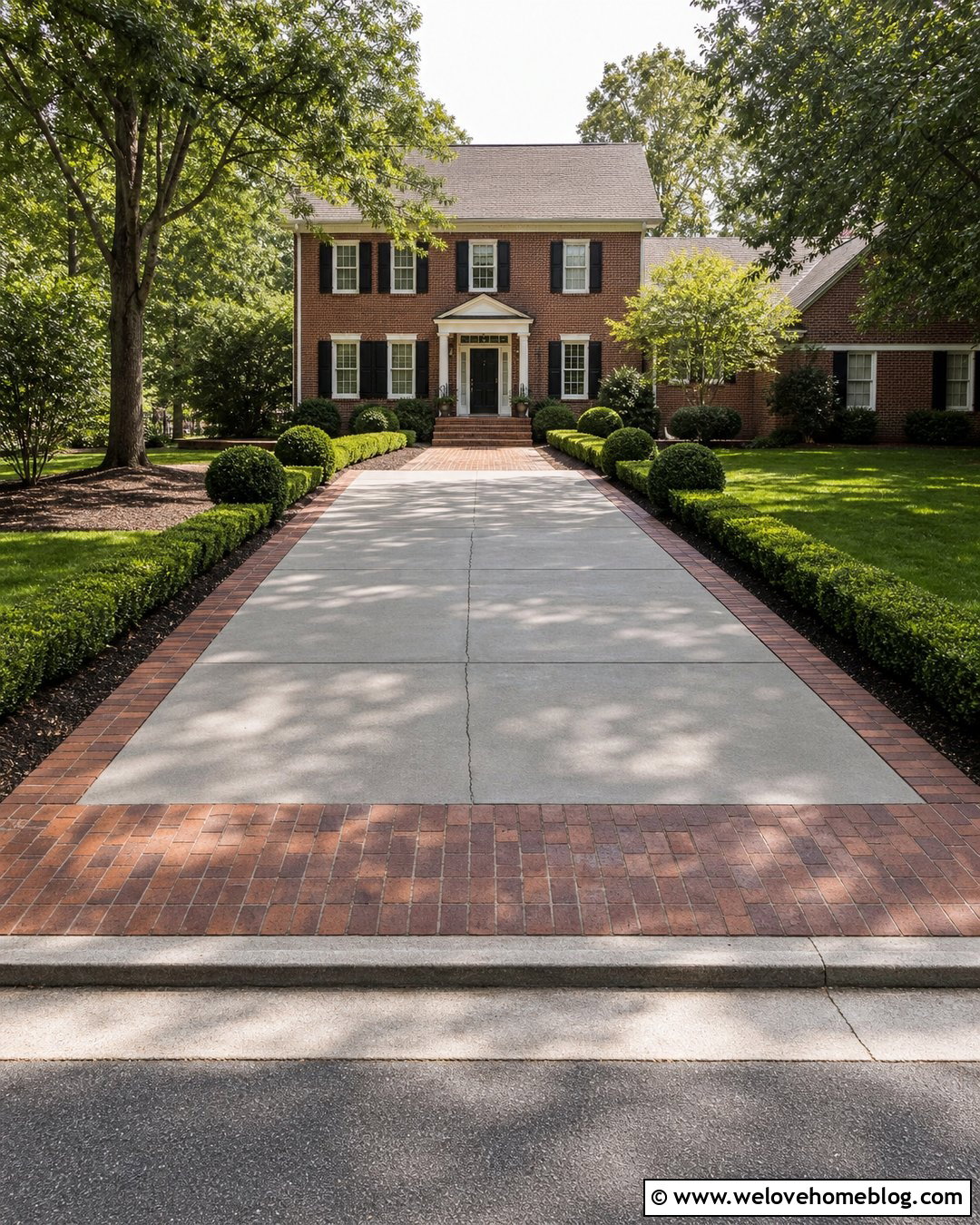
A long crack that opens and closes with seasonal movement needs a different approach than a shallow surface chip. Flexible concrete sealant can accommodate limited movement better than a rigid patch, provided the slabs are not severely displaced. Clean and prepare the crack according to the manufacturer’s directions, then tool the sealant slightly below or level with the surface. Red brick borders make the completed repair feel like part of a traditional driveway update. Carry the brick across the entrance as a wide decorative apron for visual balance. A straight concrete layout works especially well with a colonial home, clipped boxwoods, and symmetrical planting beds. Once cured, a breathable concrete sealer can help the existing slab maintain a more even, cared-for appearance.
3. Patching A Spalled Concrete Driveway With Stone Edging
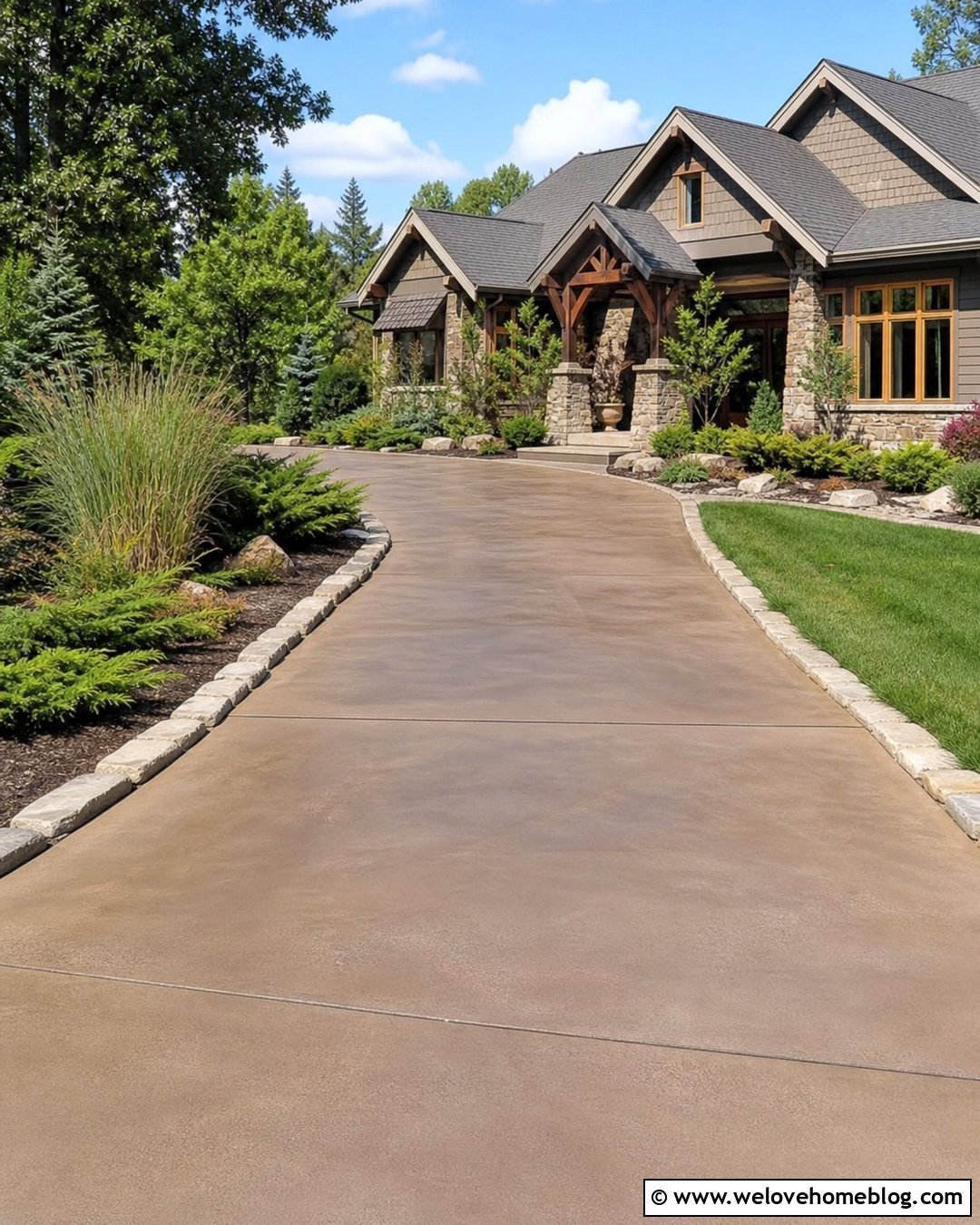
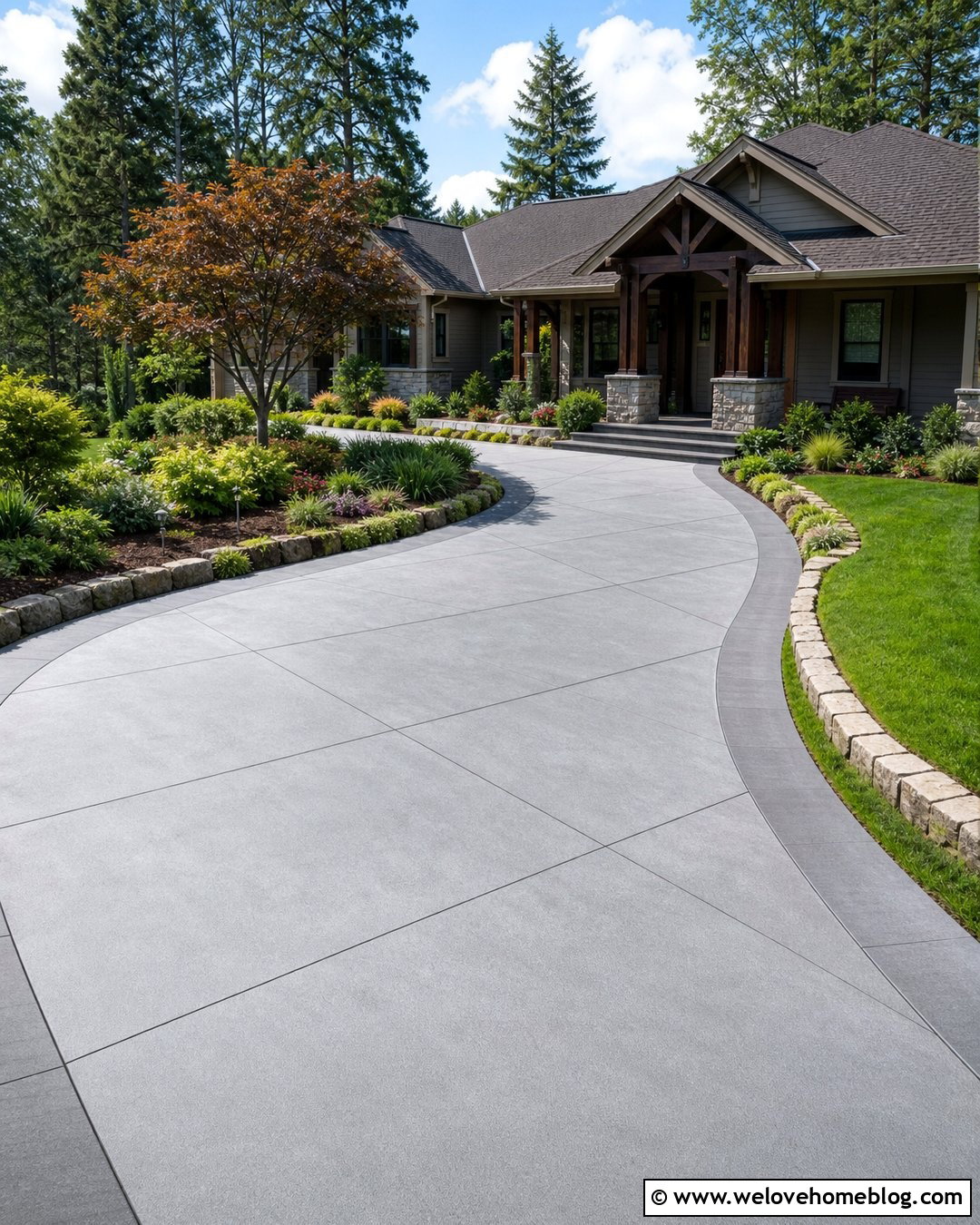
Flaking and shallow surface loss can make an otherwise usable driveway look much older than it is. Remove every loose or weak piece before applying a patching compound intended for horizontal exterior concrete. Feathering the repair into sound material can create a smoother transition, although color variation may remain. For a more unified finish, apply a compatible light taupe stain across the repaired concrete after the required curing period. Natural limestone edging complements the warmer surface and protects vulnerable driveway edges from lawn equipment. Use a gently curved layout leading to a craftsman house, with ornamental grasses and spreading junipers softening the stone border. This complete arrangement turns practical spall repair into a polished landscape improvement rather than leaving scattered, obvious patches. ()
4. Concrete Driveway With Replaced Damaged Slab Sections
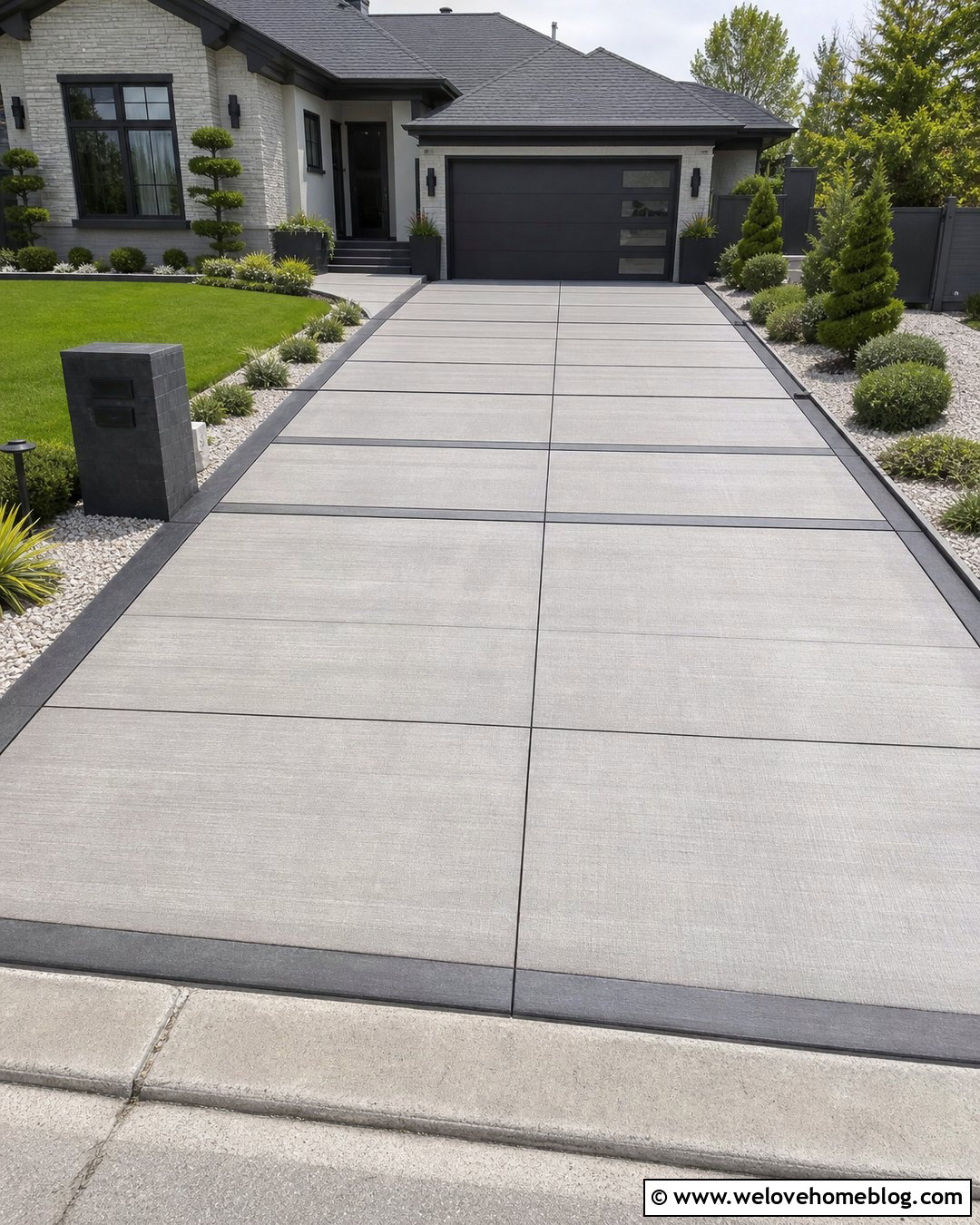
When one or two panels are badly cracked but the remaining driveway is stable, selective slab replacement can deliver a cleaner result than repeated patching. Saw-cut along existing joints, remove the failed concrete, correct any weak base or drainage issue, and install properly matched replacement sections. This type of work is usually best handled by an experienced contractor. Instead of trying to hide every new panel, repeat their lines across the driveway as an organized rectangular grid. Narrow bands of dark gray concrete stain can make the joint pattern look deliberate. Frame the straight driveway with pale gravel beds, sculpted shrubs, and a modern address marker. The combination fits a contemporary house while allowing necessary repairs to become part of the overall geometric design.
5. Resurfaced Concrete Driveway With A New Broom Finish
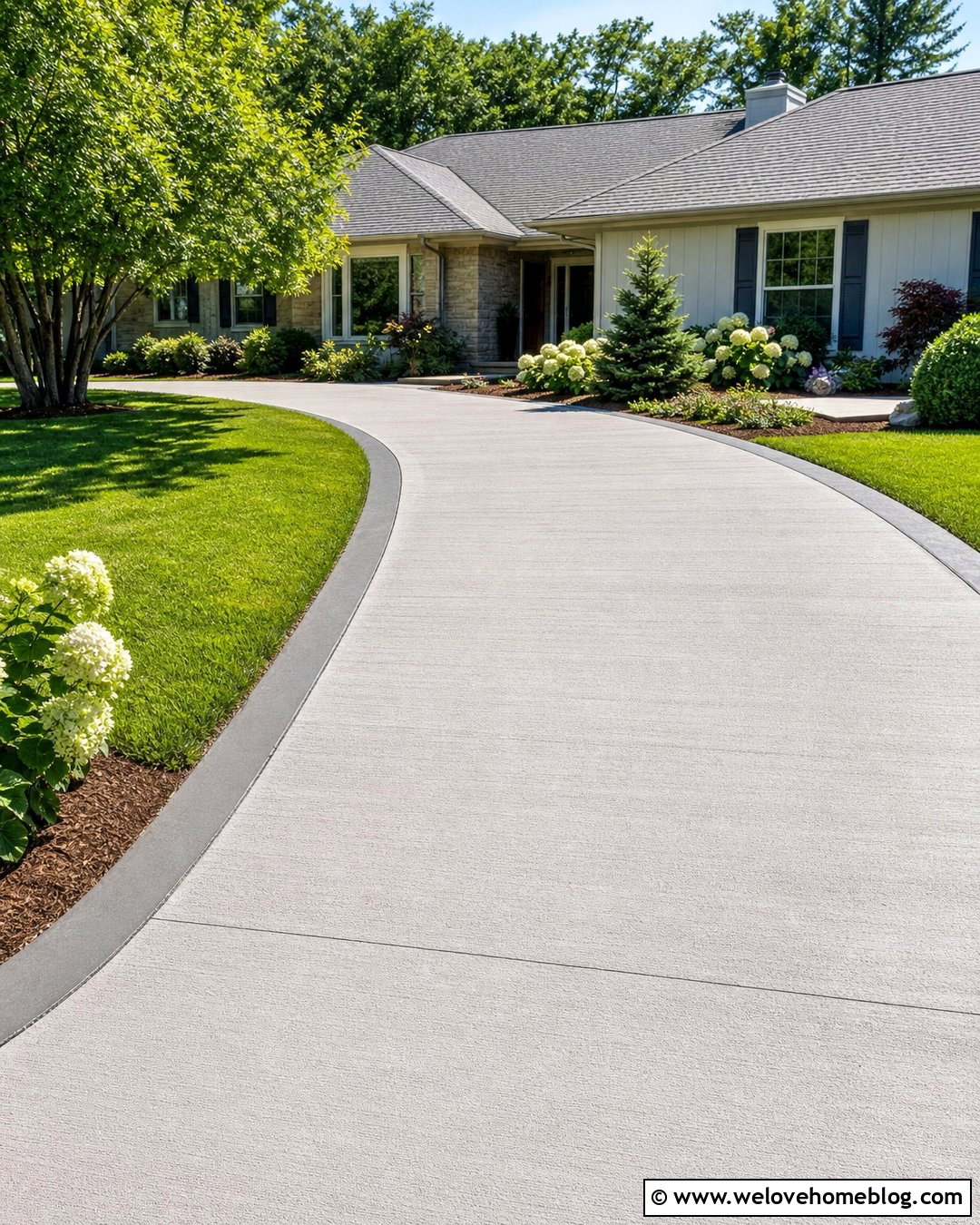
Resurfacing can give structurally sound but heavily weathered concrete a consistent new face. Cracks, pits, and deteriorated spots should be repaired first because a thin overlay will not correct moving slabs or serious foundation problems. Thorough cleaning and proper bonding preparation are essential. A light gray cement-based resurfacer finished with a broom creates a familiar surface with useful tire traction. Continue the fresh material across the full driveway rather than covering only random areas, which can produce a patchy result. Add medium-gray concrete curbing, a slightly curved approach, and simple planting beds filled with hydrangeas and dwarf evergreens. This restrained design suits a suburban ranch home and offers a practical middle ground between isolated repairs and complete concrete replacement. ()
6. Stamped Concrete Overlay Driveway With Cobblestone Borders
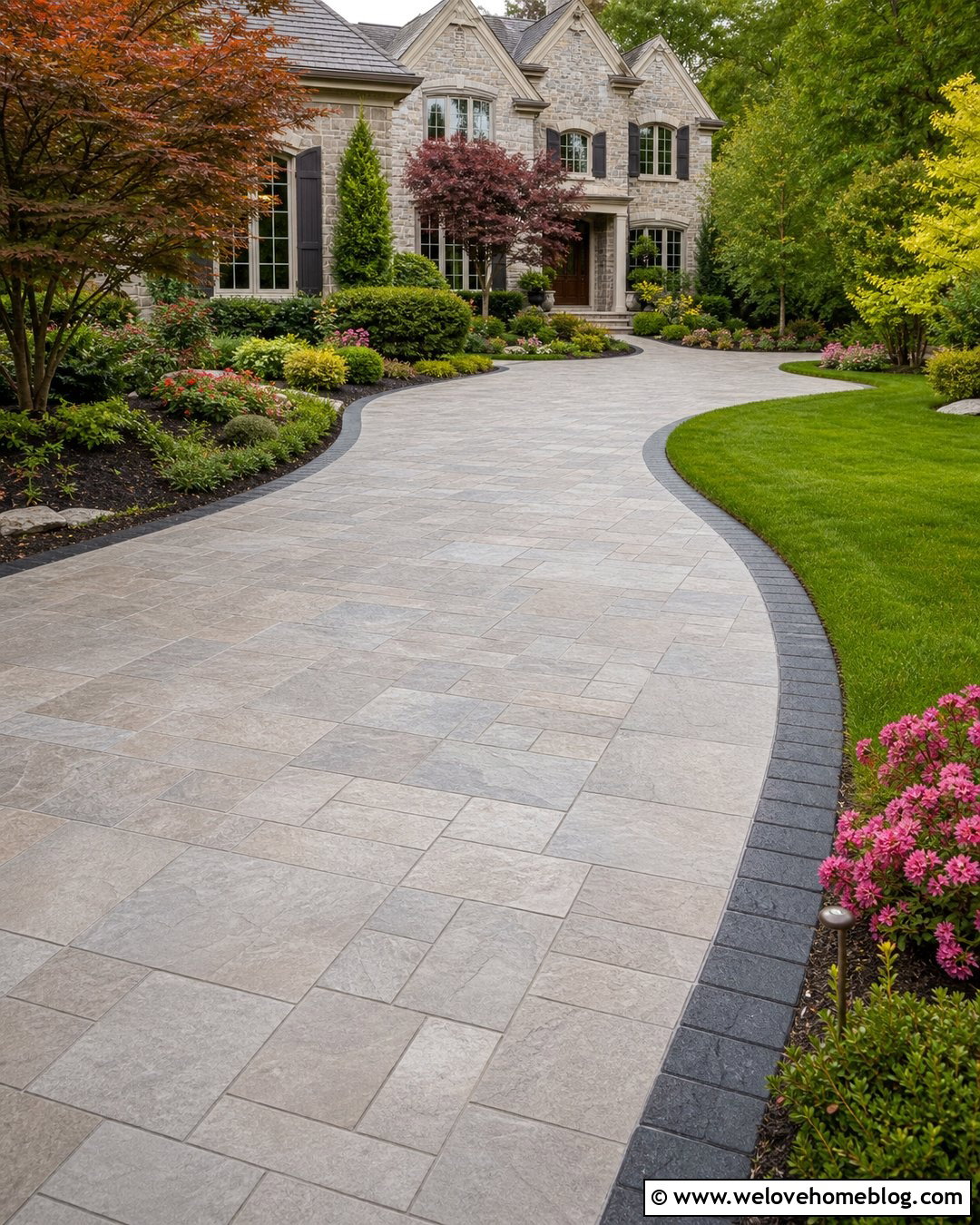
Could a damaged plain driveway become the most decorative part of the front yard? If the existing slabs are stable, a professionally installed stamped concrete overlay can cover widespread discoloration and repaired surface defects. Choose a large ashlar slate pattern in soft gray and beige tones rather than an overly busy texture. A darker cobblestone-stamped border gives the surface definition and helps visually contain the pattern. Use the finish on a broad curved driveway leading to a stone-front home. Deep planting beds with flowering shrubs, ornamental trees, and low ground cover should follow the same curve. The pattern, border, and landscaping work together to make the repaired driveway feel completely redesigned. Confirm that the selected overlay system is rated for exterior vehicle traffic and local weather conditions.
7. Stained Concrete Driveway With Hidden Patch Repairs
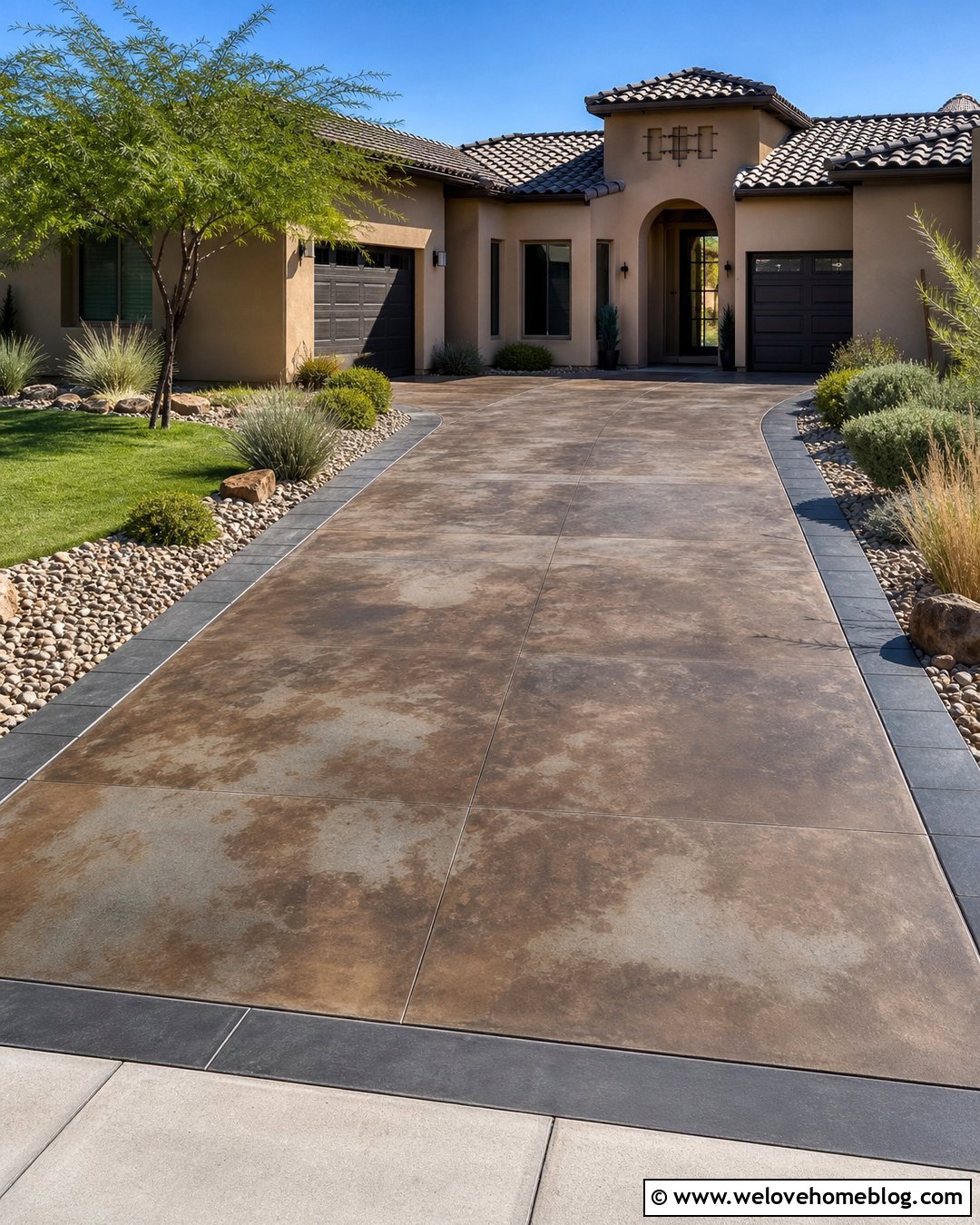
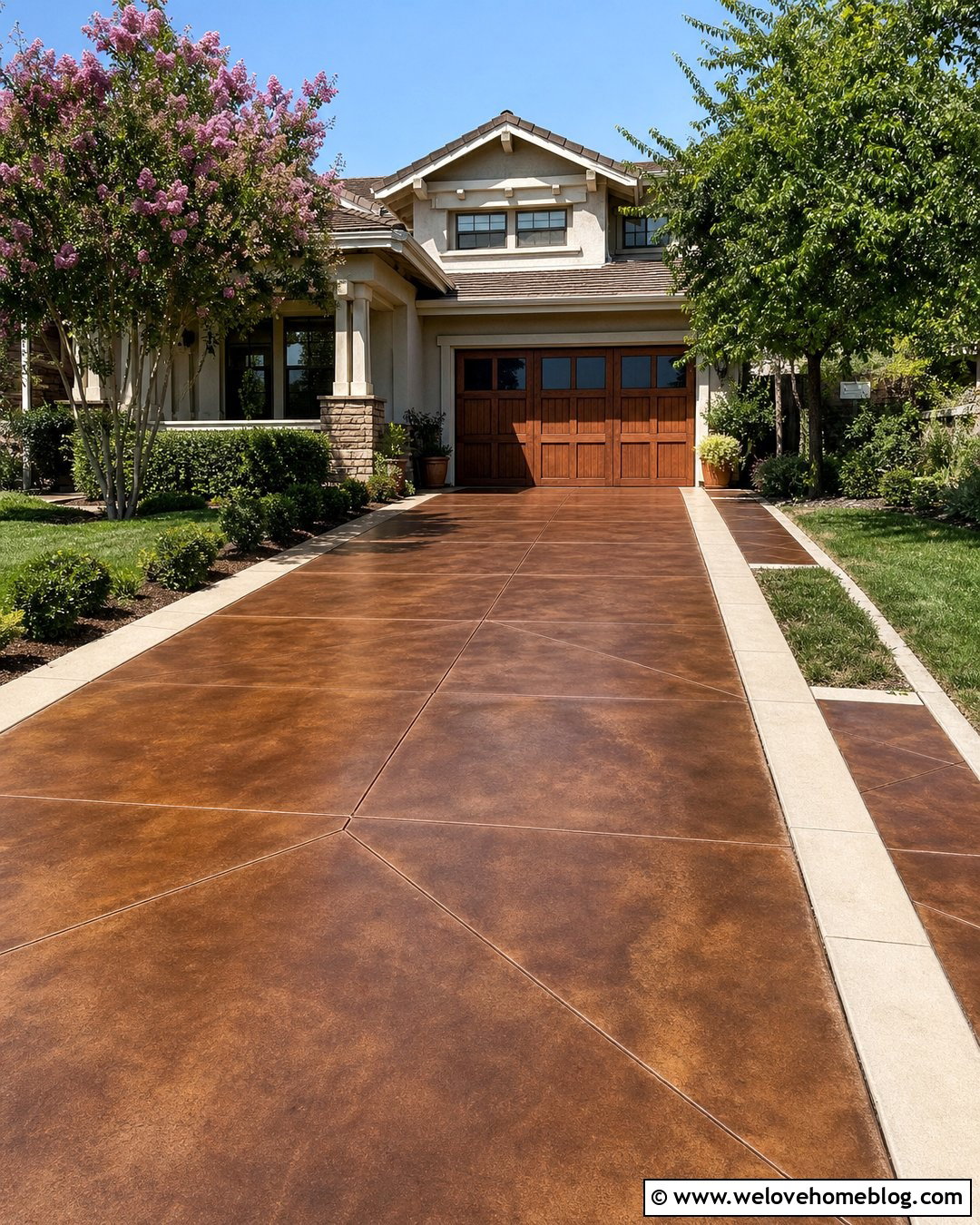
Scattered patches often remain structurally acceptable but create distracting light and dark spots. Concrete stain can help visually connect these areas without covering the driveway in a thick decorative pattern. Begin with proper cleaning, completed repairs, and a test area because old concrete and patch materials may absorb color differently. A layered brown and charcoal water-based stain can produce gentle variation that makes minor inconsistencies less noticeable. Saw-cut border lines and a matching charcoal band add a crisp edge to the straight driveway. Pair the warm surface with a tan stucco house, river rock beds, desert grasses, and drought-tolerant shrubs. The final design looks intentional while avoiding the unrealistic expectation of an exact color match between old concrete and every repaired location. ()
8. Exposed Aggregate Concrete Driveway With Surface Restoration
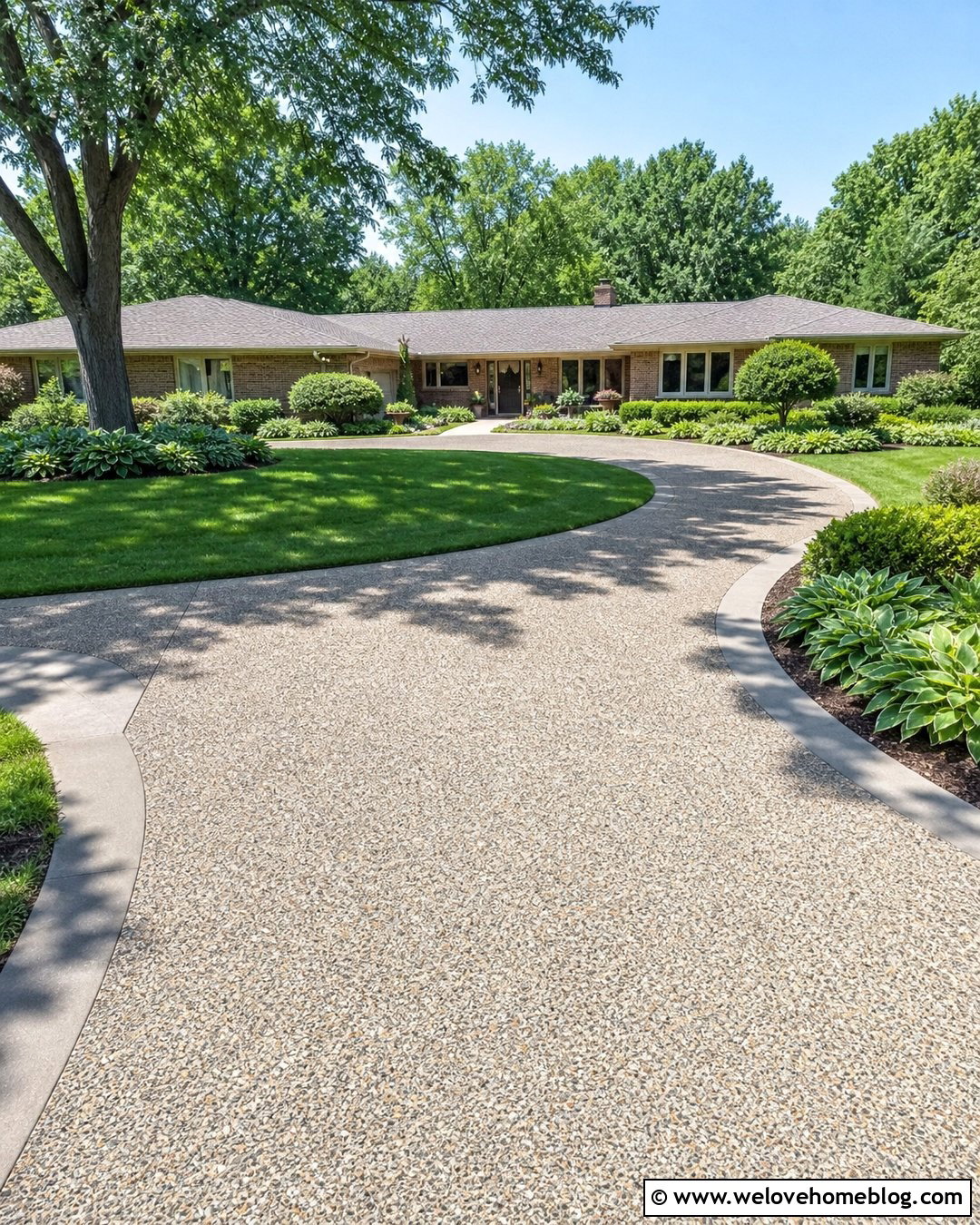
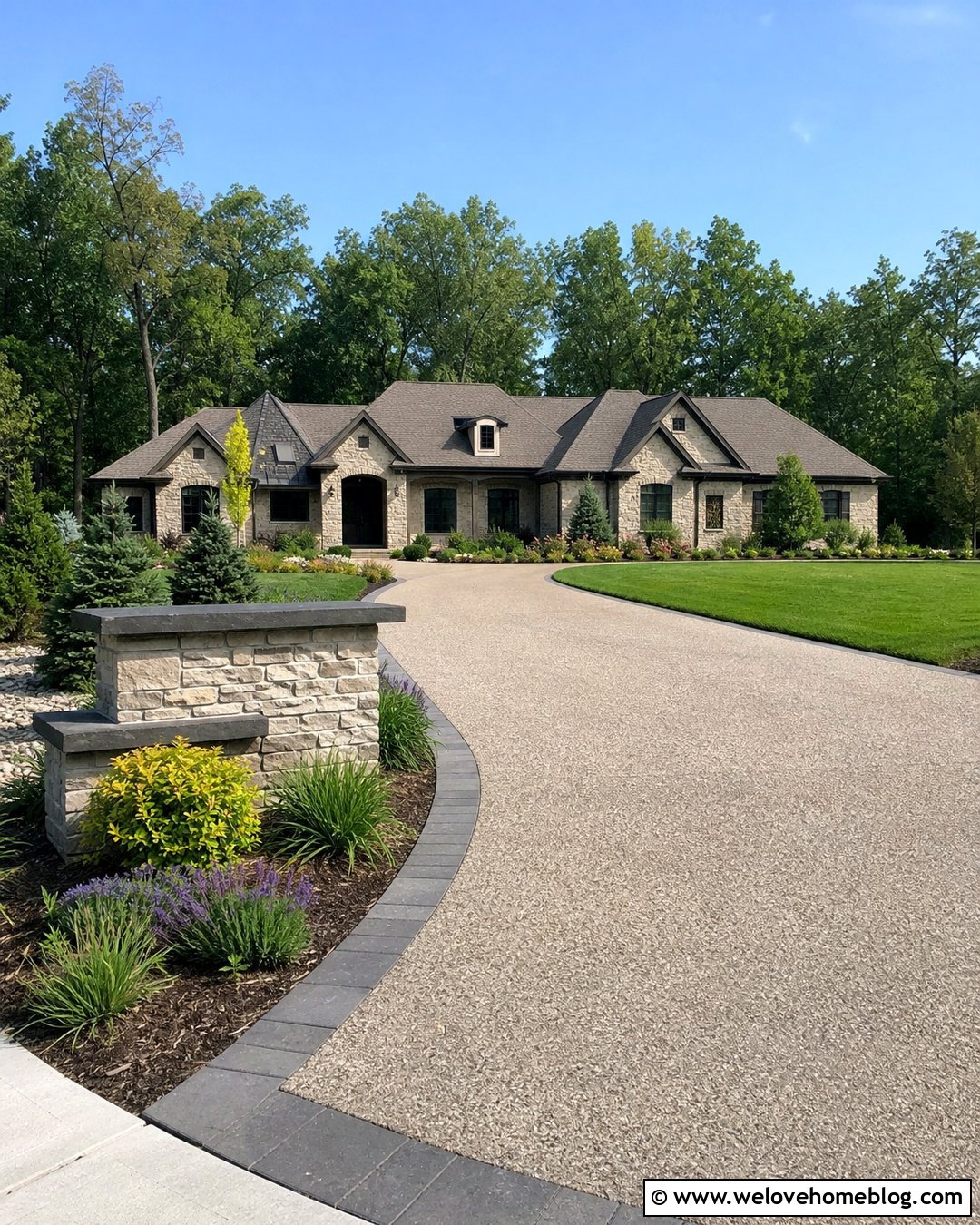
An exposed aggregate finish can restore visual texture when a plain driveway has widespread wear but remains structurally sound. A contractor can evaluate whether a bonded decorative overlay is appropriate for the existing surface and vehicle loads. Choose small, rounded stones in gray, cream, and muted brown to create a balanced appearance rather than a coarse finish. Smooth poured-concrete bands along the edges and center provide contrast while simplifying transitions to the sidewalk and garage. A wide horseshoe layout pairs beautifully with a low brick ranch house. Frame the driveway with broad lawn panels, mature shade trees, and curved beds of hostas and compact shrubs. Because the aggregate texture naturally varies, it can make repaired areas and minor future staining less visually prominent across the complete driveway.
9. Spray Texture Concrete Driveway With Modern Landscaping
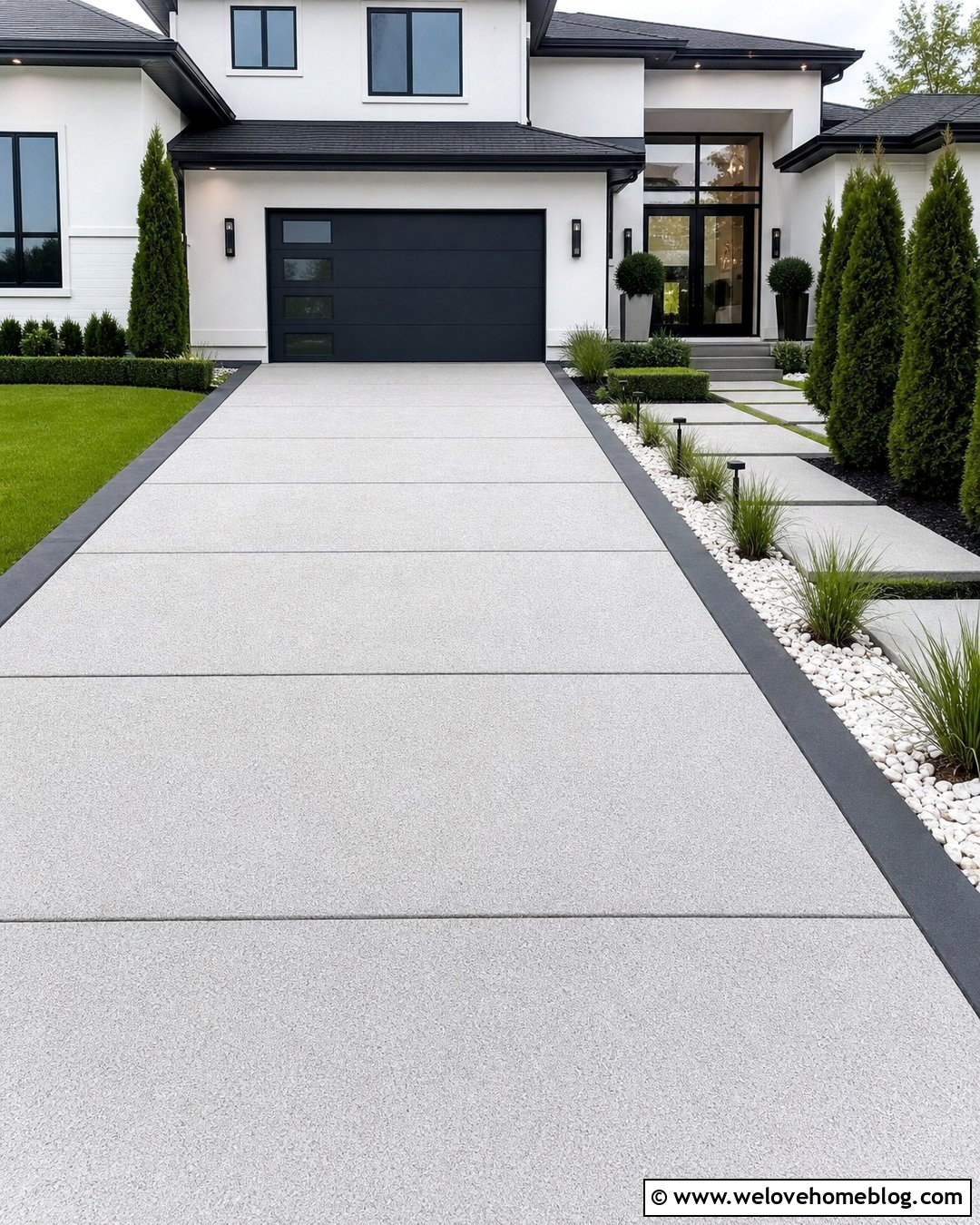
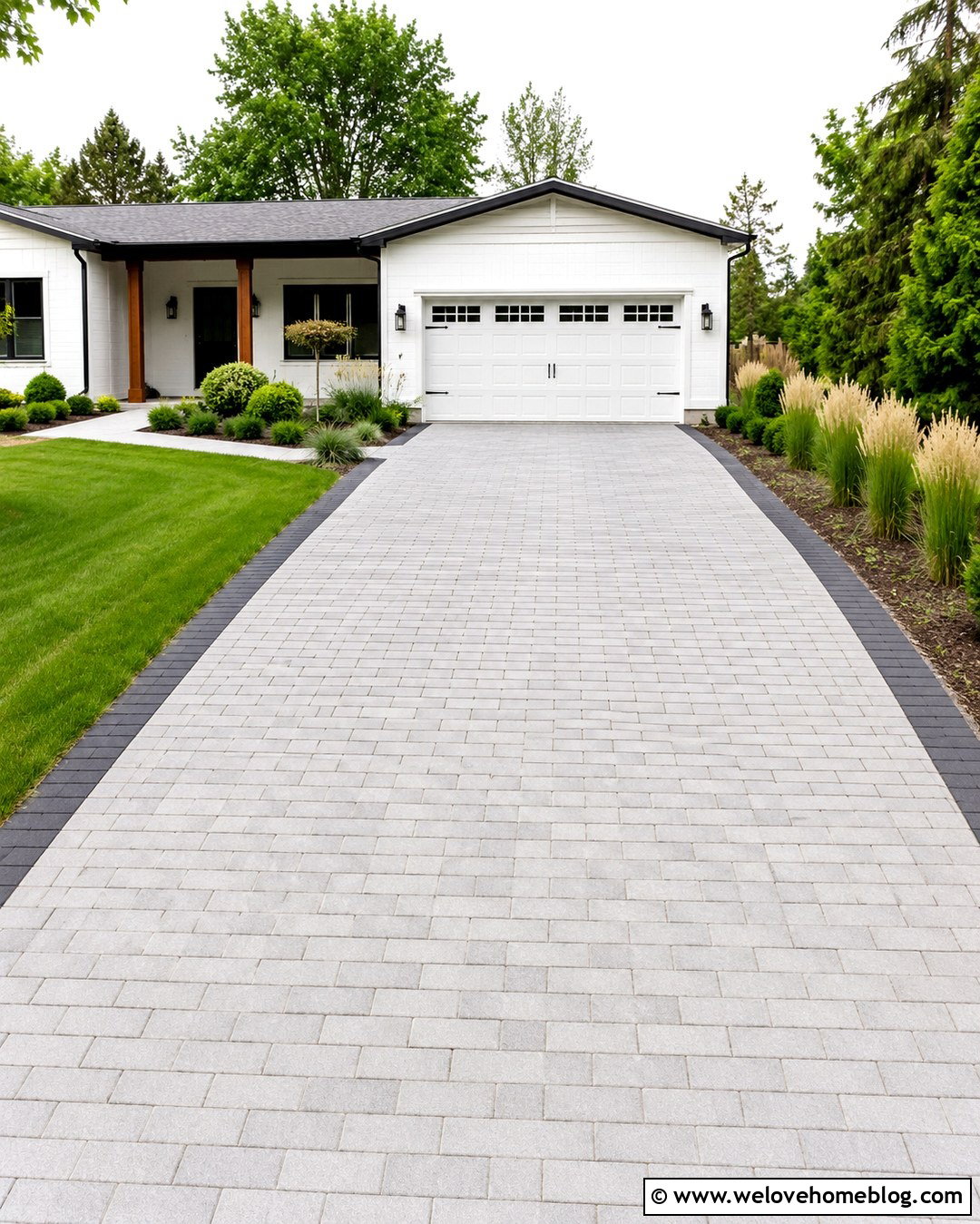
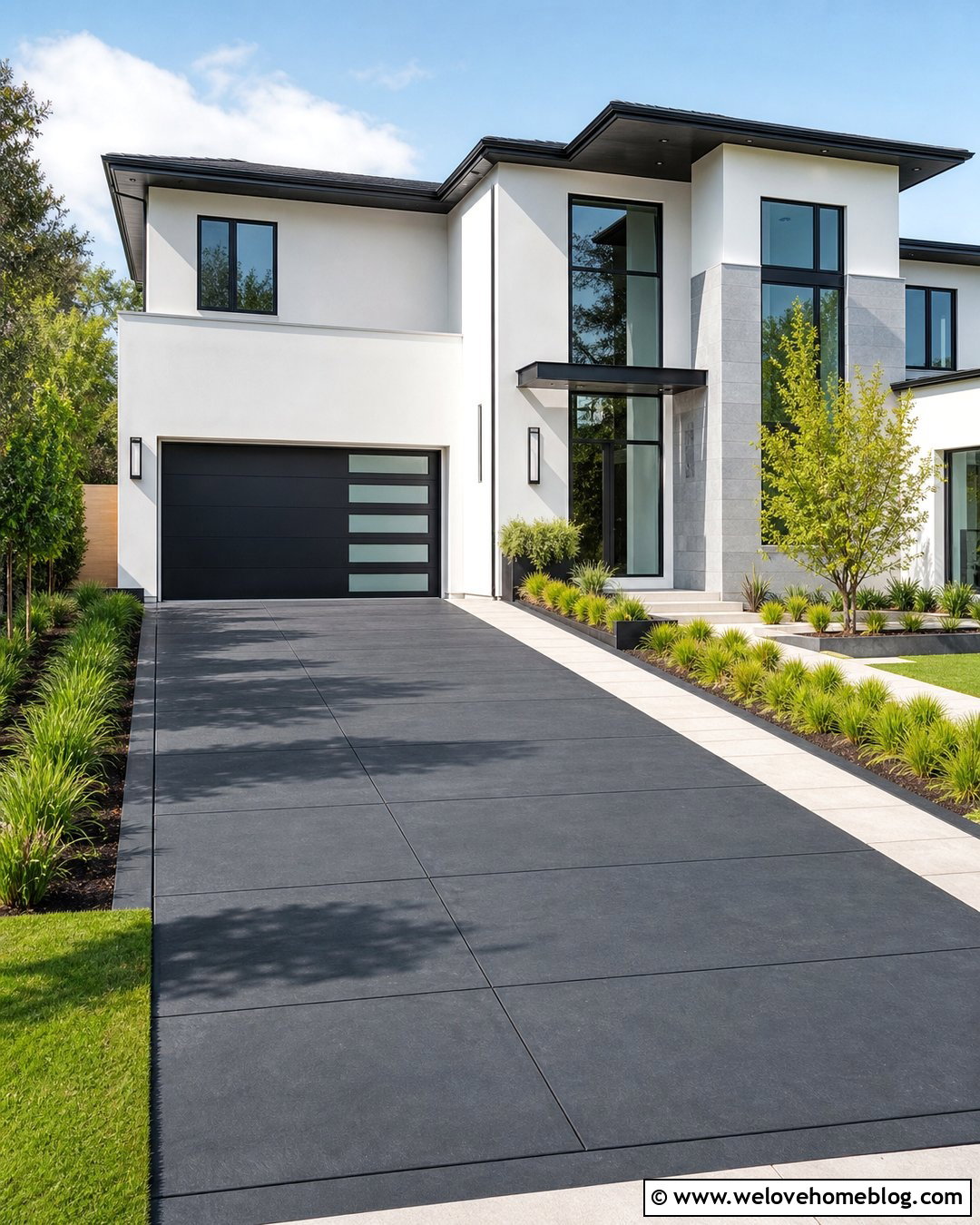
A spray-applied concrete texture can refresh lightly worn slabs while adding subtle traction and a more uniform color. The underlying driveway must first be cleaned, repaired, and checked for movement or moisture problems. Select a fine light-gray texture rather than an aggressive coating that may be uncomfortable underfoot or difficult to maintain. A straight driveway divided by clean control-joint lines creates a simple modern foundation. Add narrow black concrete borders beside linear beds filled with ornamental grasses, compact evergreens, and white landscape stone. Rectangular stepping slabs can connect the driveway to the front entrance without interrupting the main parking area. Against a modern white house with dark trim, the repaired driveway feels crisp and coordinated instead of merely coated to conceal age or damage.
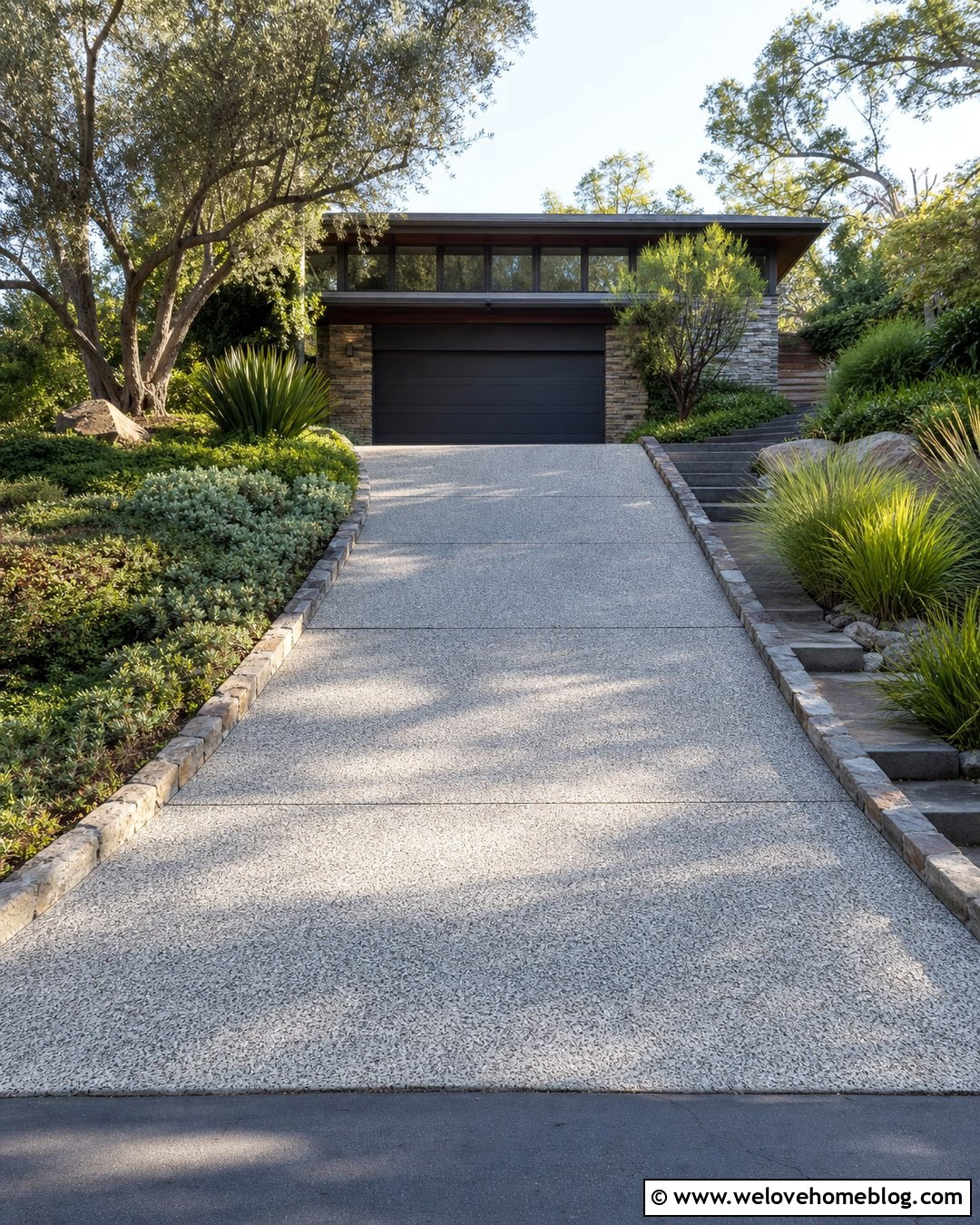
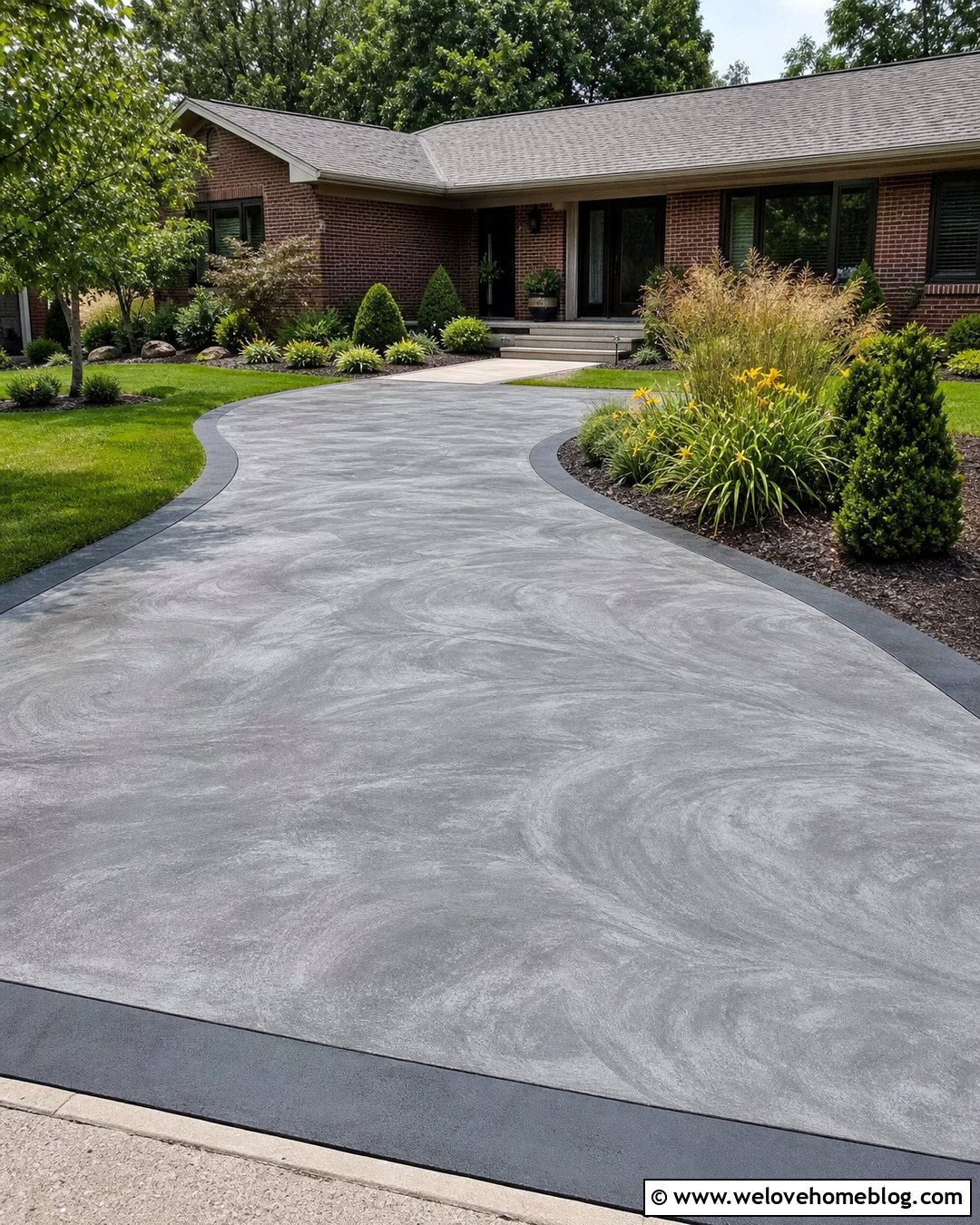
10. Saw Cut Concrete Driveway With Contrasting Stain
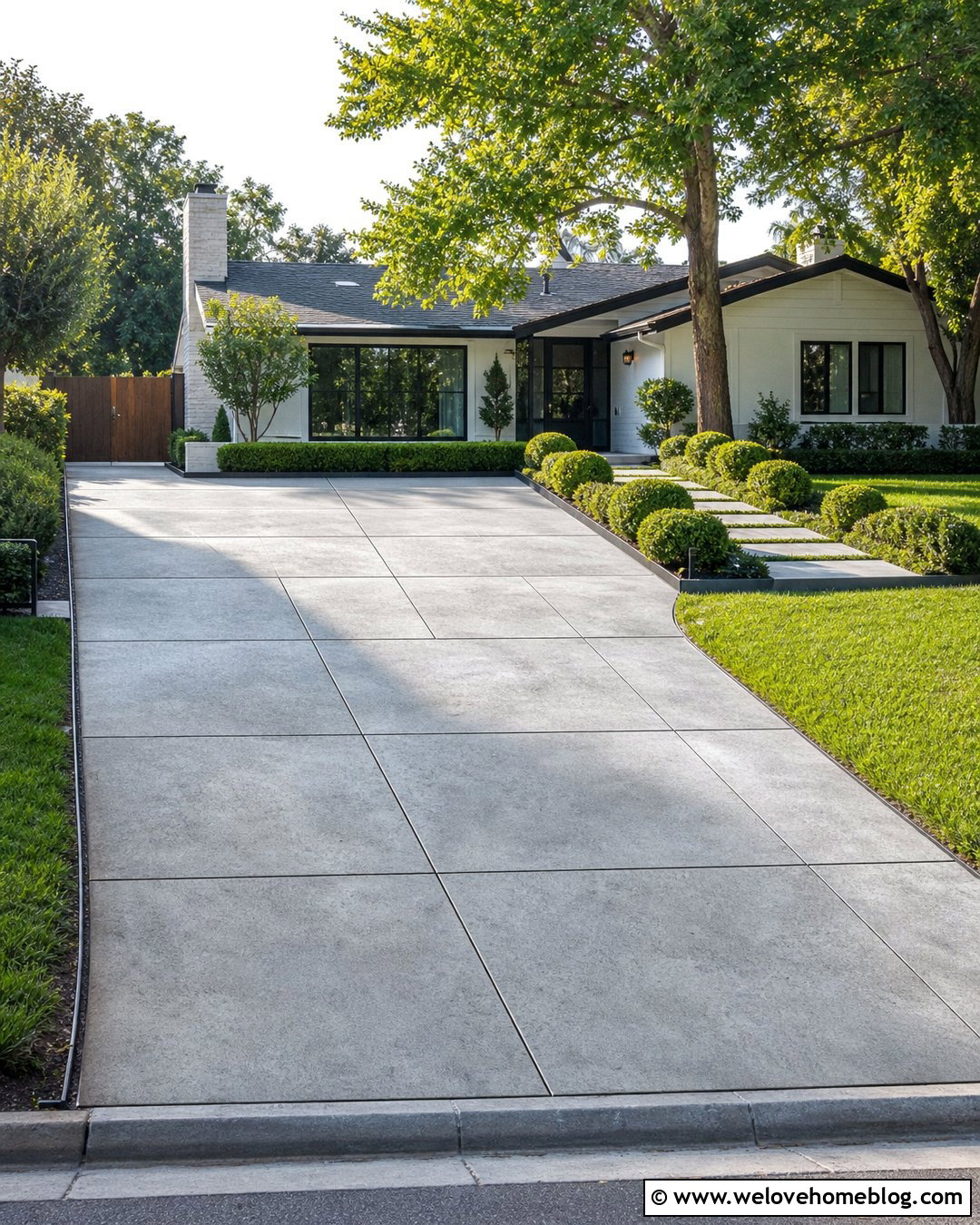
Visible repairs can become less distracting when the driveway receives a strong geometric layout. After filling stable cracks and patching shallow deterioration, have decorative lines saw-cut into a large square or rectangular grid. Position the pattern carefully so existing control joints remain functional rather than being accidentally covered. Apply a medium-gray stain to the main fields and a darker tone inside selected bands. The resulting finish resembles oversized concrete pavers while preserving the original slab. A straight driveway with a slightly widened parking pad suits a midcentury ranch home. Black metal edging, clipped shrubs, and broad areas of green lawn reinforce the clean lines. This design is especially useful when several repair locations need to blend into a larger visual pattern without relying on an exact concrete color match.
11. Stenciled Concrete Driveway With Brick Pattern Borders
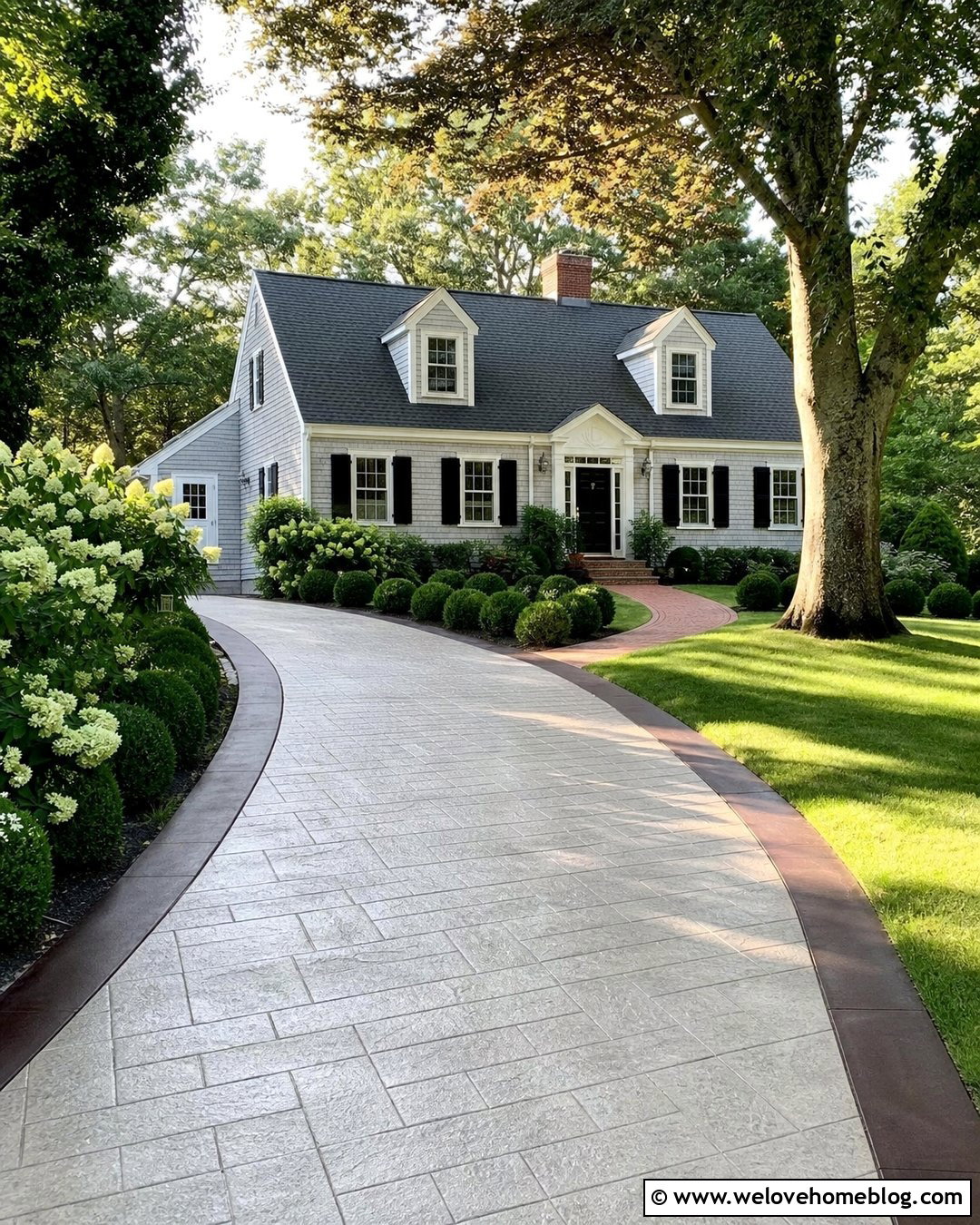
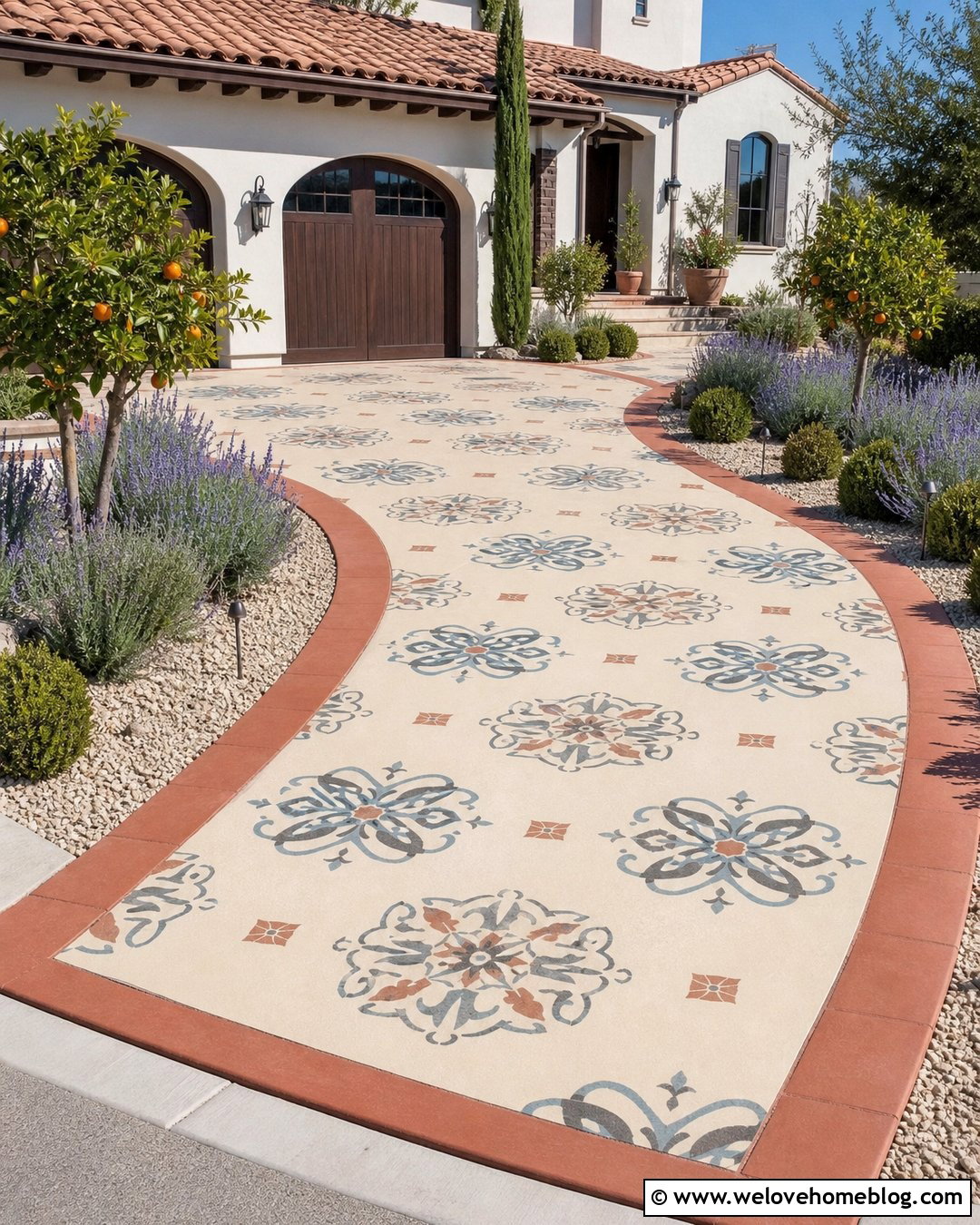
A stenciled overlay can give an aging driveway the appearance of individual masonry units without removing every sound slab. Repair the concrete first, then use an exterior-rated overlay system designed for driveway traffic. A warm gray field with a running-bond brick pattern offers detail while remaining calm enough for a large surface. Add a deeper brown stenciled border and a matching band across the driveway entrance. A curved approach leading to a traditional cape cod house keeps the pattern from feeling too formal. Hydrangeas, rounded boxwoods, and a brick walkway connect the driveway to the facade. The completed look works best when the stencil scale is large enough to read naturally from the curb and the decorative coating maintains a slip-resistant exterior texture.
12. Concrete Driveway With A Stamped Stone Repair Border
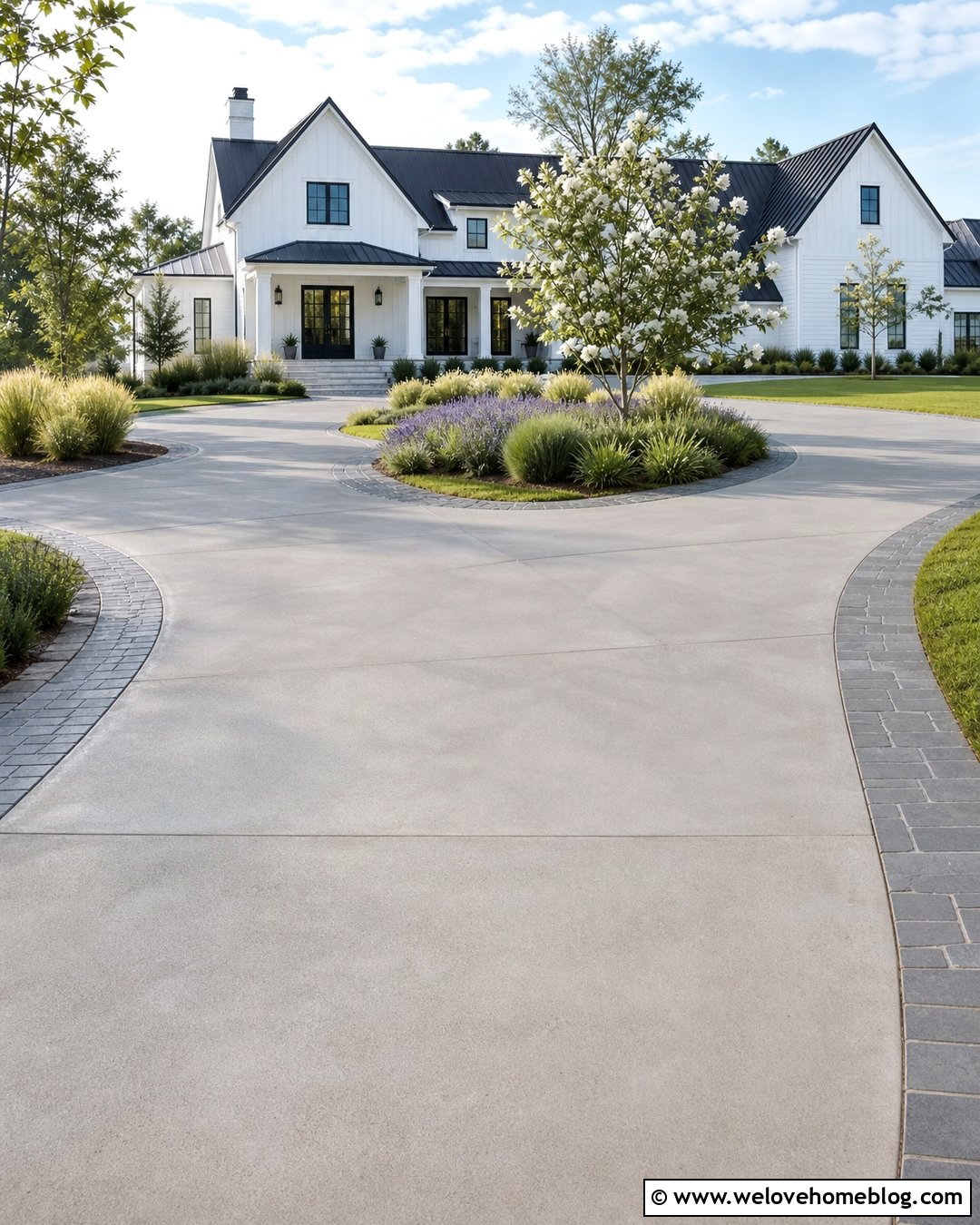
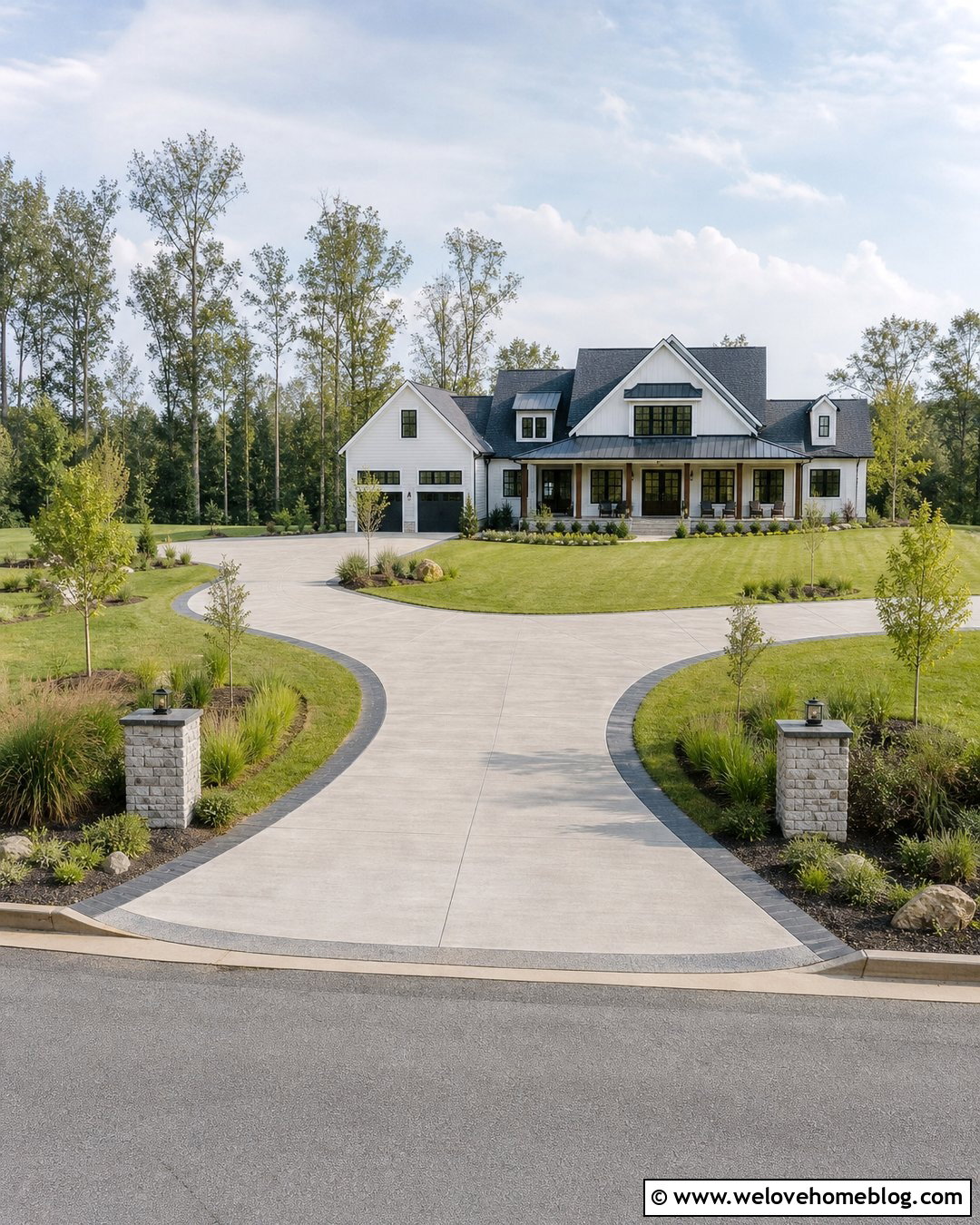
Edge damage is common where vehicle tires repeatedly cross unsupported concrete or soil has washed away beside the slab. After correcting the base, remove weak material and complete the appropriate edge repair. A stamped stone border can then run along both sides, visually incorporating repaired sections into a deliberate frame. Use warm gray poured concrete for the main surface and a darker fieldstone texture along the perimeter. Carry the border around a circular planting island to unify a semicircular driveway. A modern farmhouse with white siding, black accents, and a covered porch makes an ideal backdrop. Add lavender, ornamental grasses, and small flowering trees around the outer curves. The stronger edge treatment, flowing layout, and layered landscaping create a complete repair-focused transformation with welcoming country character.
13. Lifted Concrete Driveway With Level Slabs And Paver Bands
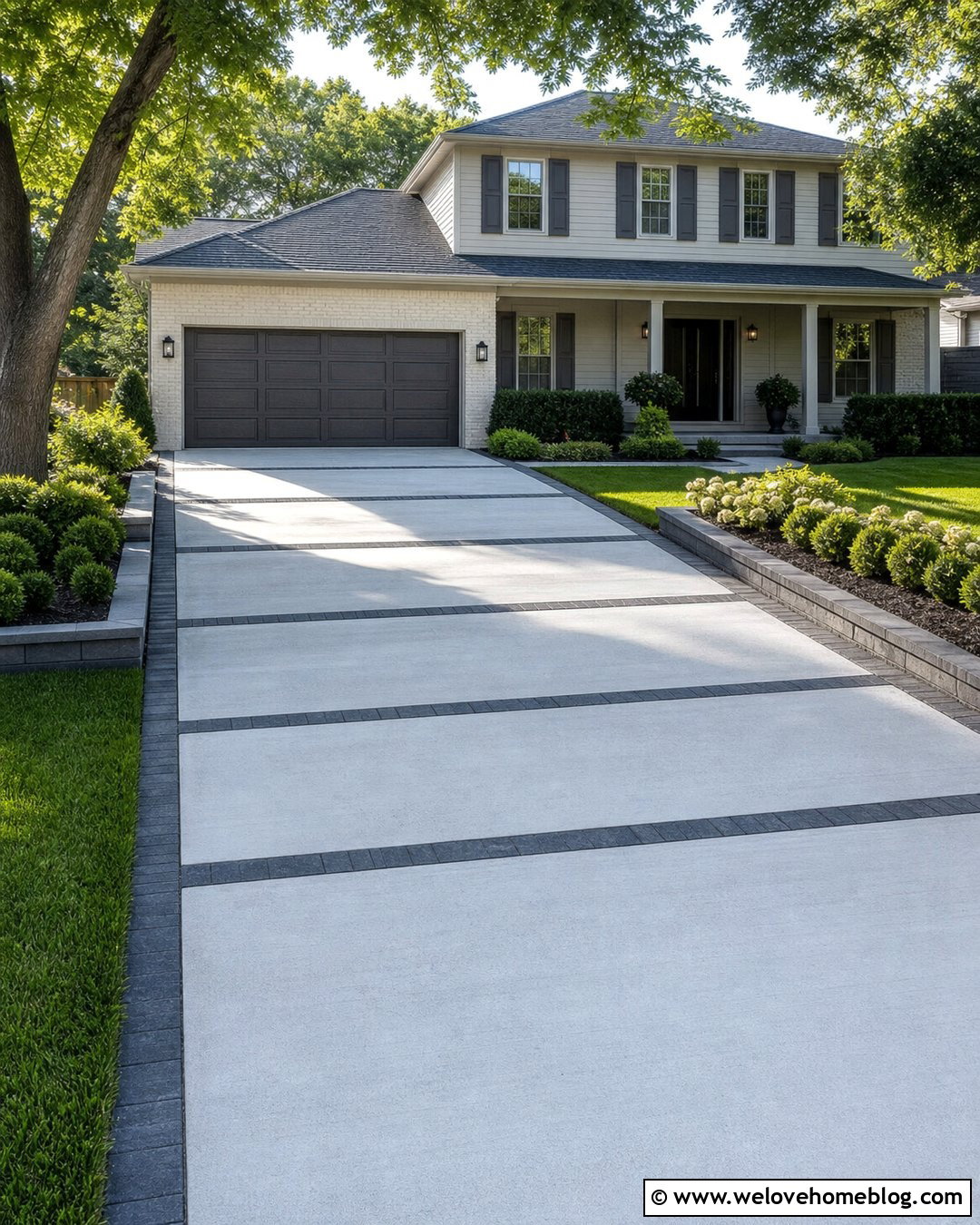
Sunken driveway panels can create puddles, harsh bumps, and uneven transitions near the garage. Where the concrete remains intact, professional slab lifting may be an alternative to removing and repouring the affected sections. The contractor should investigate soil settlement, erosion, leaking drainage, or another underlying cause before raising the slabs. Once the surface is level, fill appropriate cracks and restore the joints. Dark charcoal paver bands installed alongside existing panel lines can help disguise former repair zones. Use the treatment on a wide, straight driveway leading to a two-story suburban home. Raised planting beds, compact hollies, and a neat lawn frame the approach. The finished design should look balanced from the street while allowing rainwater to move away from the garage and foundation.
14. Foam Lifted Concrete Driveway With Improved Drainage
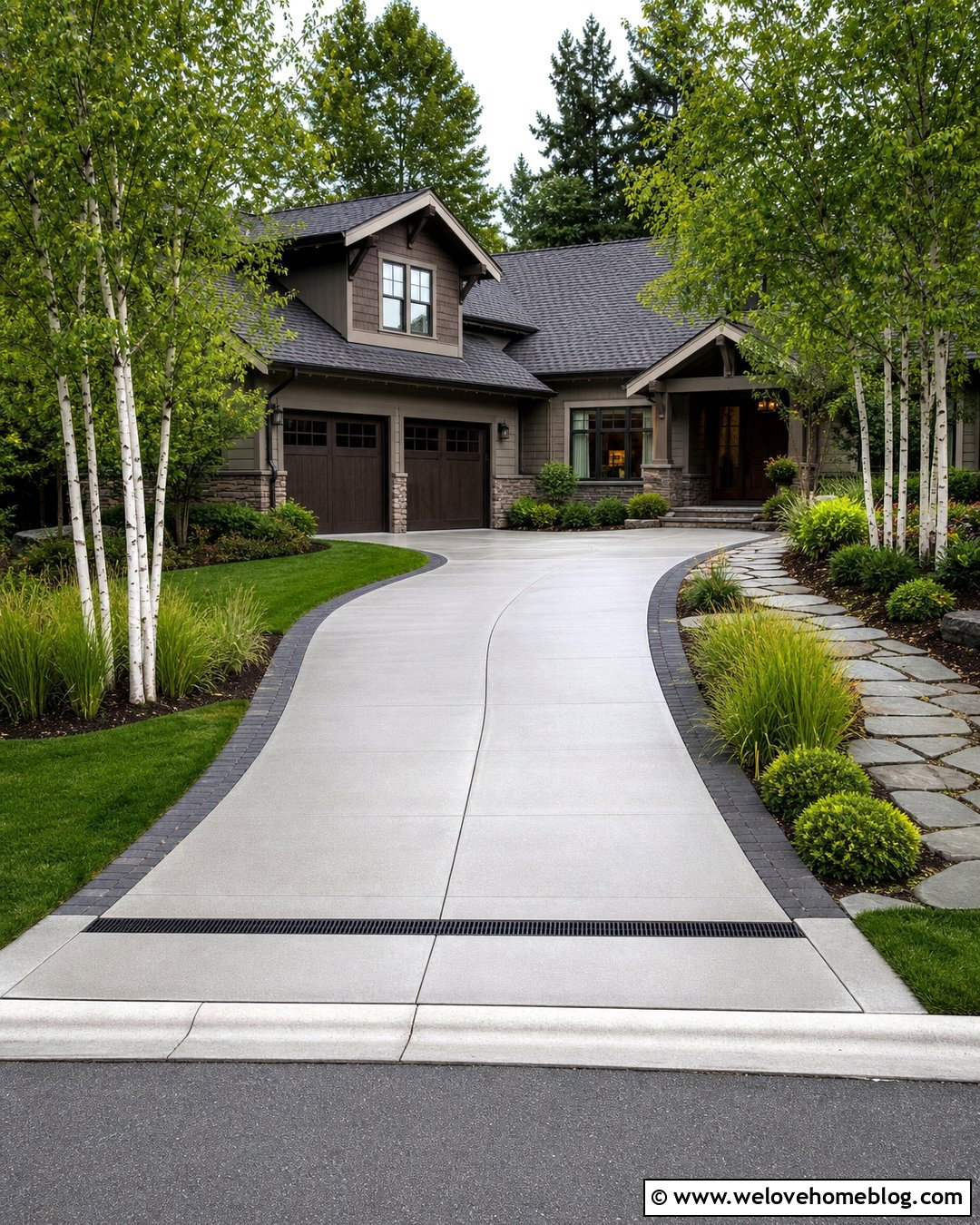
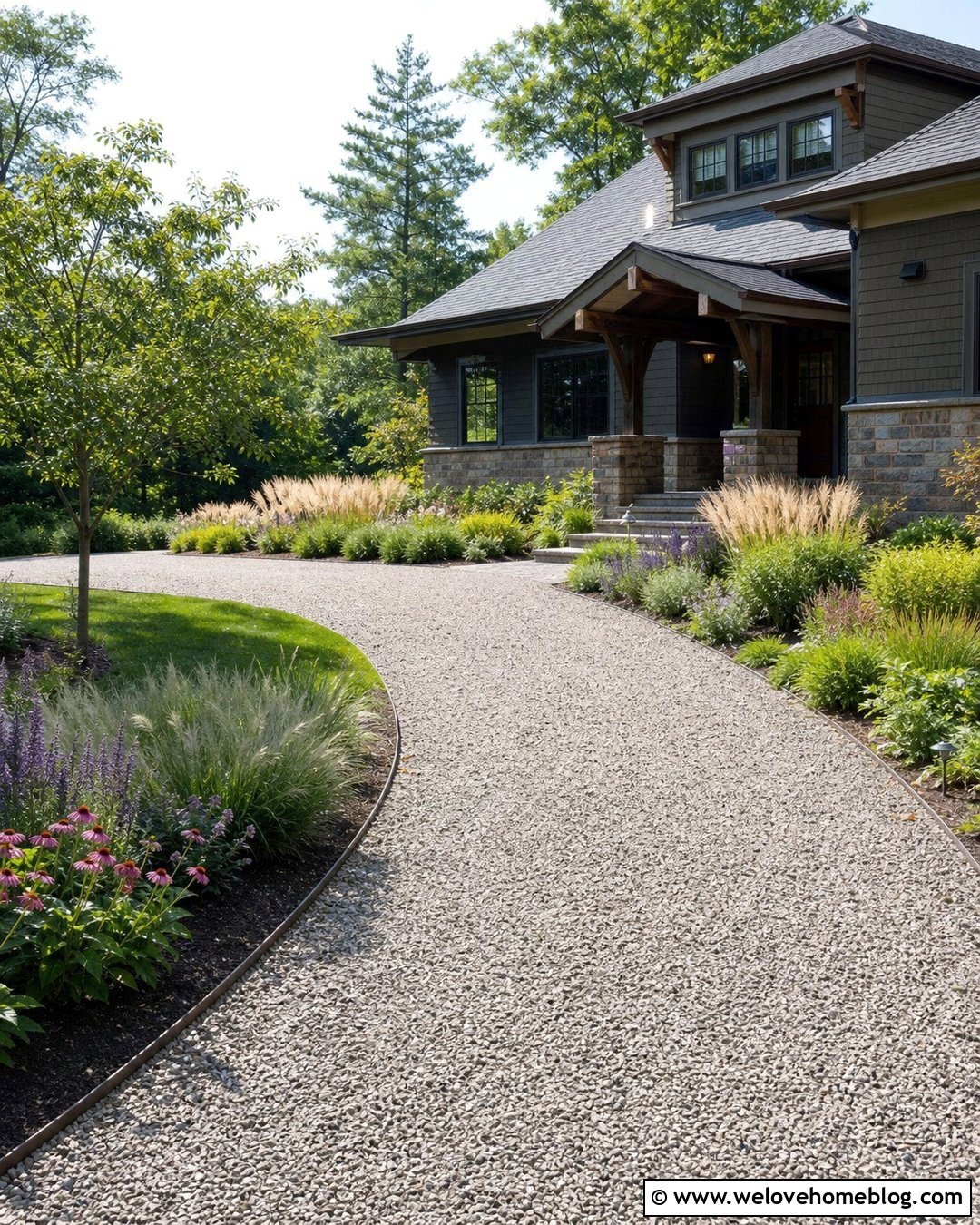
A driveway that slopes toward a low corner may need more than cosmetic patching. Professional polyurethane foam lifting can raise suitable settled slabs through small access holes, but drainage conditions should also be corrected to reduce the chance of recurring washout. Add a discreet channel drain or properly graded landscape swale where runoff repeatedly collects. After leveling, repair the injection openings and stable cracks before applying a light gray tinted sealer. A gently curved driveway works well with dark granite edging and moisture-tolerant planting near the drainage area. Use river birch, compact grasses, and low shrubs without placing aggressive roots against the concrete. Against a craftsman home, these practical changes create an attractive, cohesive entrance while addressing both the visible settlement and a potential source of the problem.
15. Repaired Concrete Driveway Apron With Brick Pavers
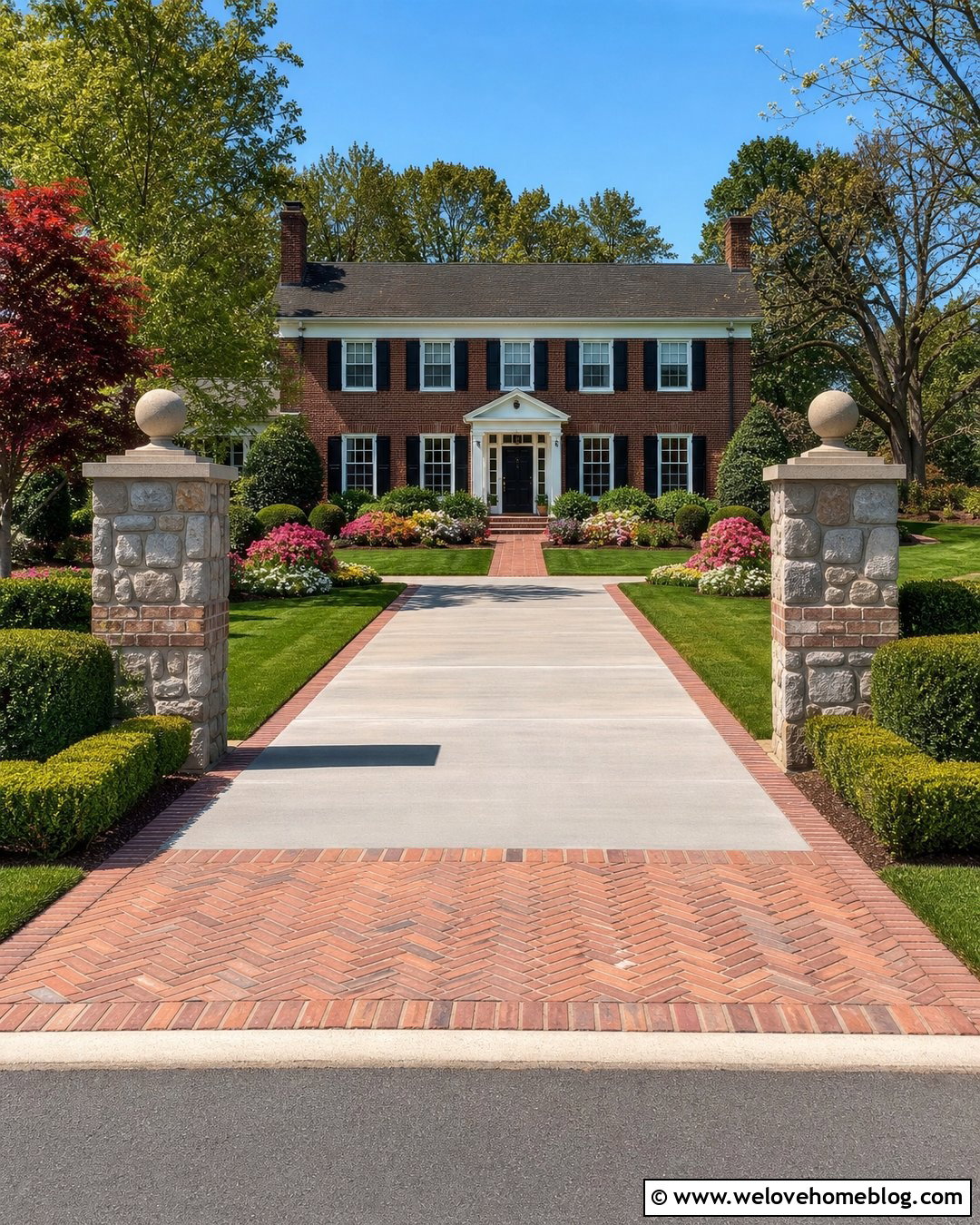
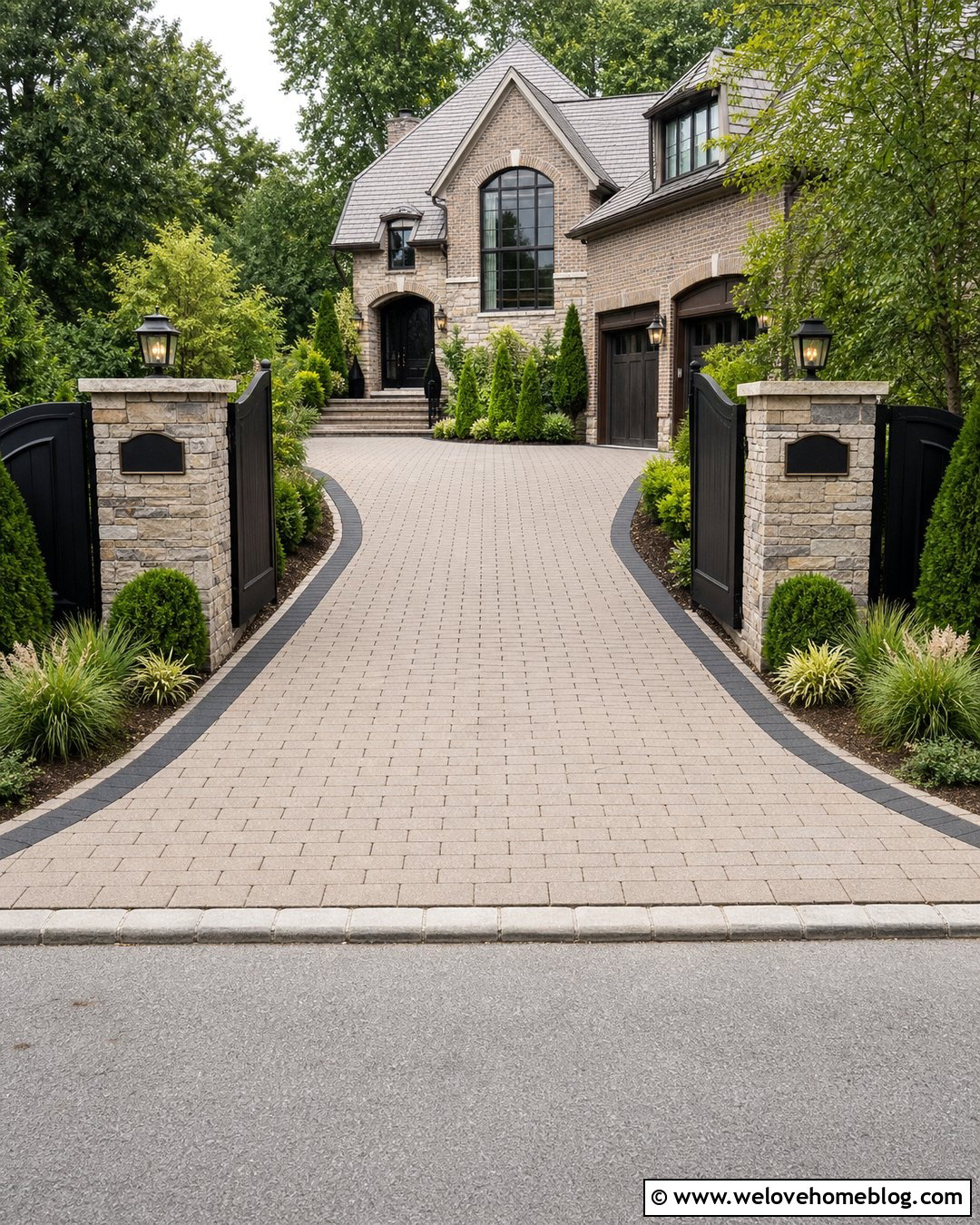
The driveway apron receives frequent turning pressure and often develops cracks, broken corners, or settlement before the upper driveway does. Replacing only the failed apron can preserve the sound concrete closer to the house. Use clay brick pavers in a herringbone pattern across the entrance, supported by a properly prepared base and secure edge restraints. The brick section clearly separates new work from older gray broom-finished concrete, eliminating the need for an exact material match. Continue a single brick ribbon along both driveway edges for unity. A flared entrance gives vehicles more room to turn and suits a red brick colonial home. Symmetrical stone pillars, low hedges, and seasonal flowering beds complete the formal curb view without making the repaired apron appear like an unrelated addition.
16. Concrete Driveway With A Channel Drain And Resurfaced Finish
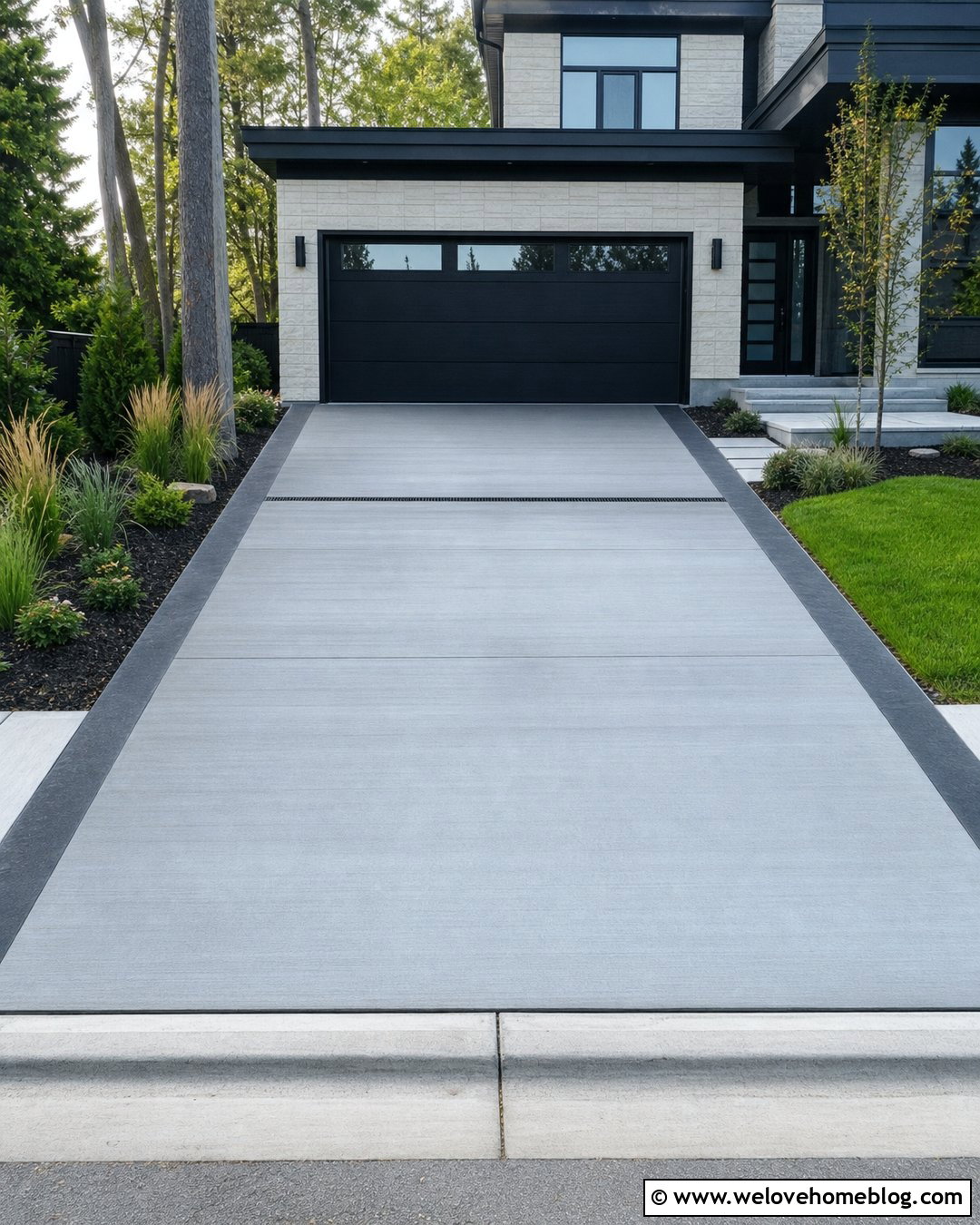
Standing water can stain concrete, enter cracks, and contribute to surface deterioration. If runoff crosses the driveway or collects in front of the garage, a professionally planned channel drain can become part of the repair. Install it at the correct low point and direct discharge to an approved location. Repair existing cracks and spalled areas before applying a medium-gray broom-finished resurfacer across the stable driveway. Choose a slim black or galvanized drain grate that runs cleanly from one side to the other. Dark concrete curbing and dense evergreen borders strengthen the horizontal lines. This complete design works well for a downward-sloping driveway serving a contemporary home. The drainage feature remains visible enough for maintenance but feels integrated with the repaired surface, borders, walkway, and surrounding landscape.
17. Concrete Driveway With Repaired Expansion Joints And Gravel Borders
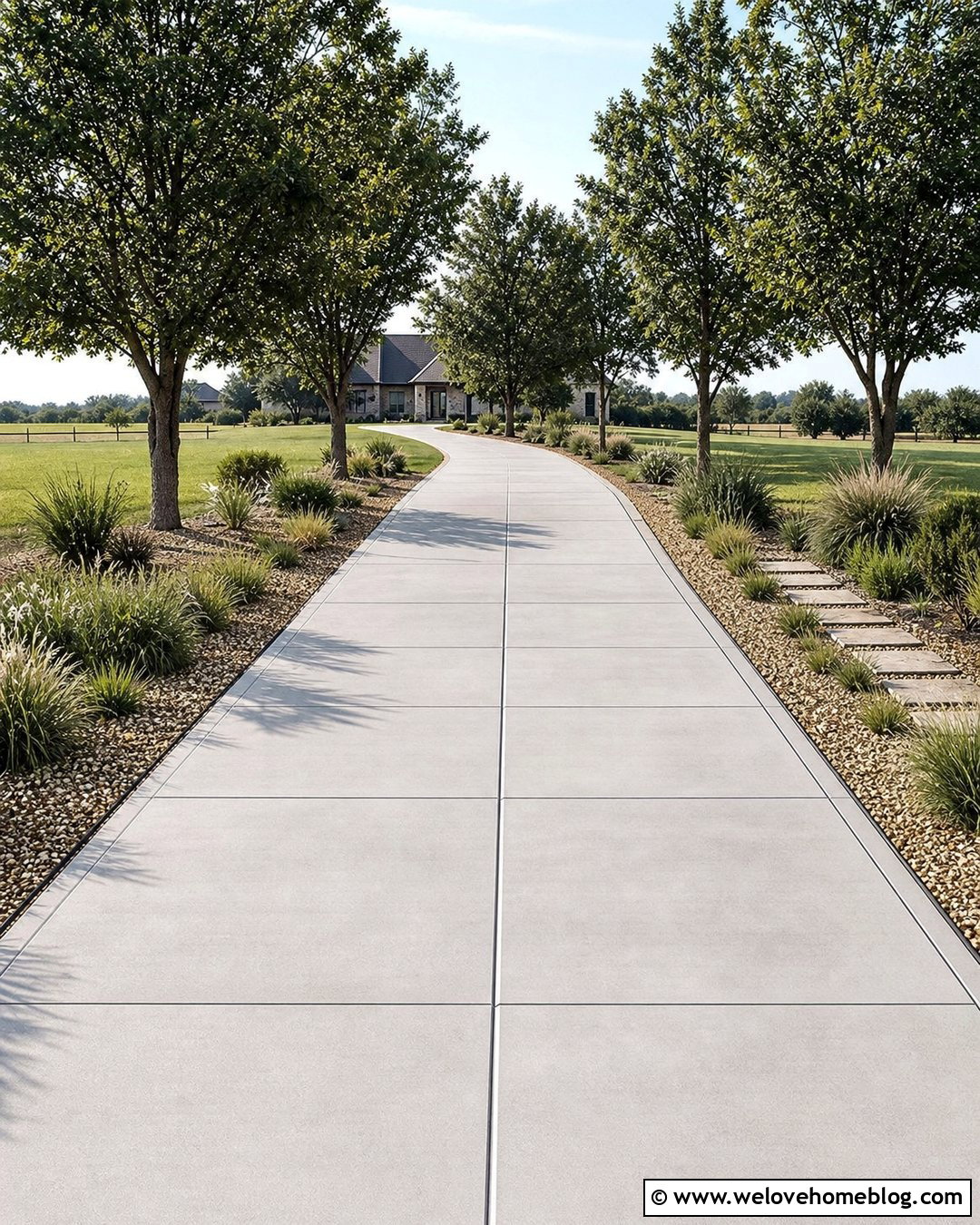
Old joint material can shrink, crack, or pull away, leaving channels that collect water and debris. Remove deteriorated filler carefully without damaging the slab edges, clean the joints, and install a compatible backer rod and flexible sealant where appropriate. Do not rigidly fill joints designed to accommodate movement. Once repaired, repeat their straight lines with narrow bands of warm-toned decorative gravel beside the driveway. The main surface can remain natural light-gray concrete after pressure washing and sealing. A long driveway approaching a country house benefits from timber-free steel edging, native grasses, and evenly spaced deciduous trees. The gravel provides drainage and texture while keeping soil away from the slab edges. Together, the restored joints and simple landscape borders create an orderly, low-maintenance entrance with relaxed rural appeal.
18. Salt Damaged Concrete Driveway With A Protective Overlay
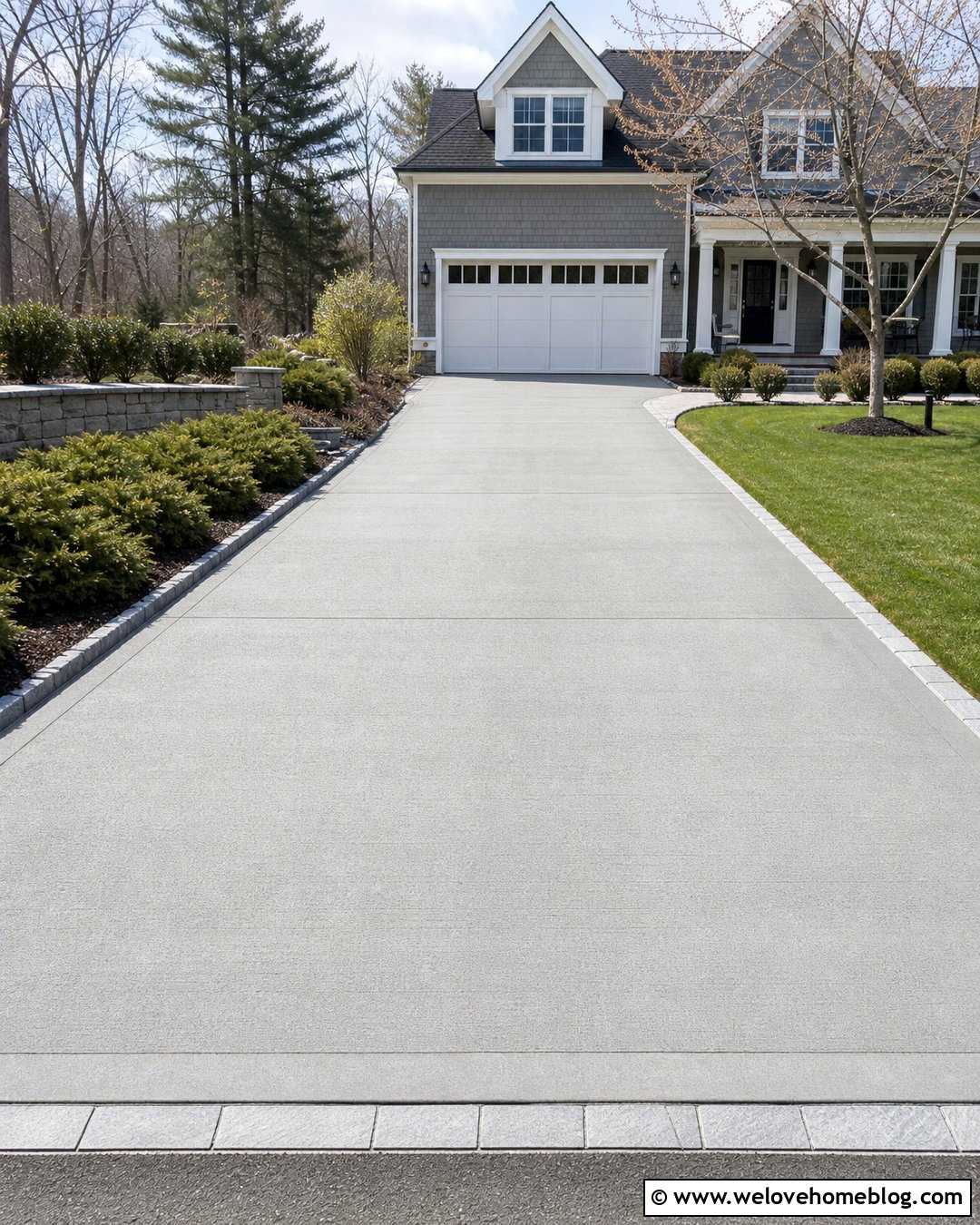
Concrete affected by scaling may show shallow flakes, rough patches, and exposed aggregate across areas exposed to winter moisture and deicing products. Remove unsound material and have the remaining slab evaluated before choosing an overlay. Resurfacing should only proceed when the concrete beneath is stable and properly prepared. A polymer-modified cement overlay with a medium broom texture creates a clean, slip-conscious surface. Select a natural gray tone that complements snow-belt homes and avoids obvious future touch-up contrast. Bluestone edging, compact evergreen shrubs, and a slightly crowned straight layout support drainage and winter maintenance. The driveway should connect cleanly to a covered garage and wide walkway. Follow the overlay manufacturer’s curing, temperature, sealing, and vehicle-use requirements rather than rushing the surface back into service. ()
19. Partial Concrete Driveway Replacement With Grass Strips
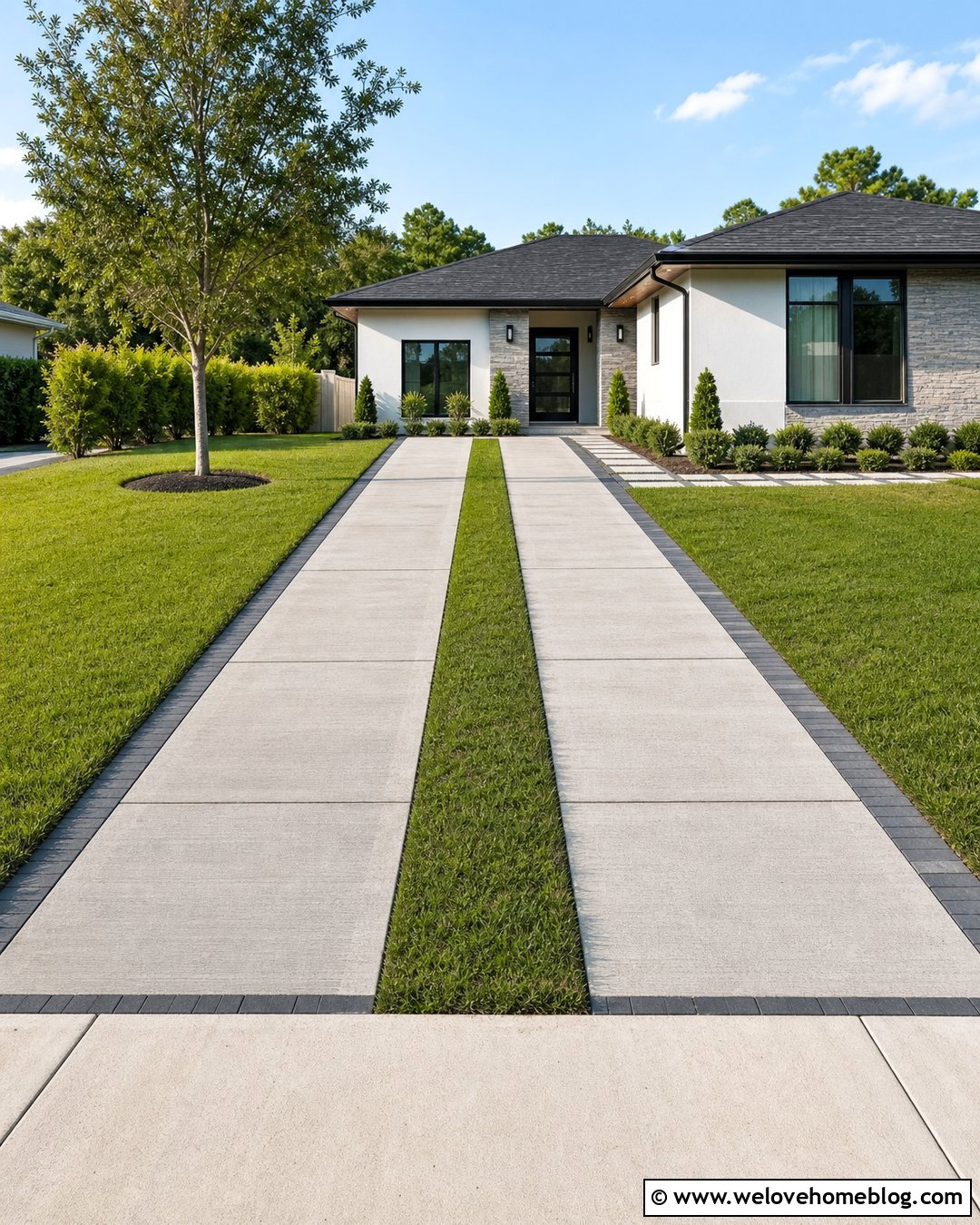
Several severely failed sections may require replacement even when other portions remain usable. Instead of reproducing one uninterrupted slab, reorganize the driveway into two broad concrete wheel tracks separated by a reinforced grass or low ground-cover strip. This layout works best where vehicle dimensions, local codes, soil, snow removal, and maintenance conditions support it. Replace unstable concrete with new light-gray broom-finished panels and keep the transitions flush. Thin charcoal paver borders can define each track and protect the center planting area. A straight approach toward a small modern bungalow makes the narrow yard feel wider and greener. Add simple foundation shrubs, a permeable front walkway, and one compact shade tree. The result turns necessary partial replacement into a distinctive design while reducing the visual mass of the driveway.
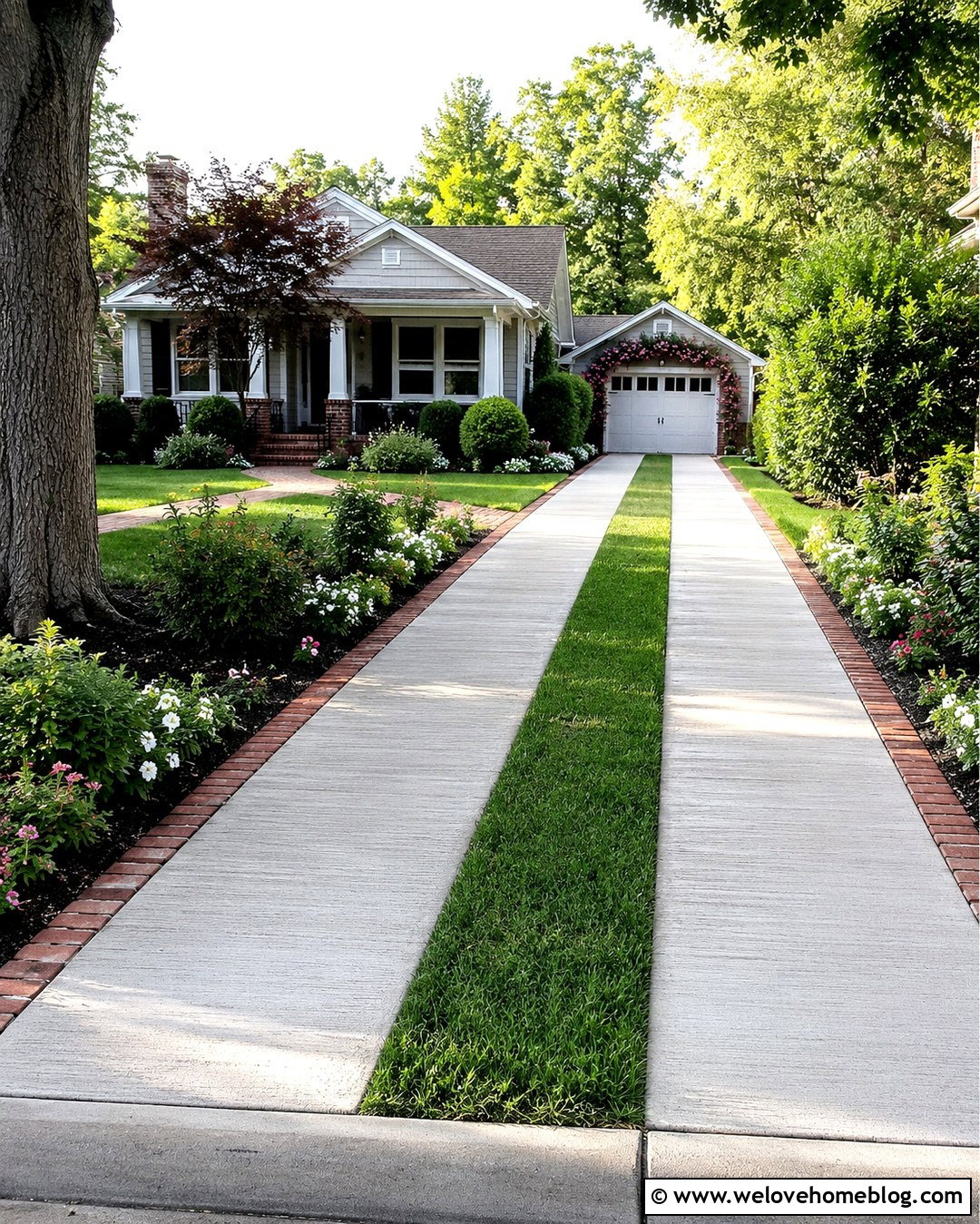
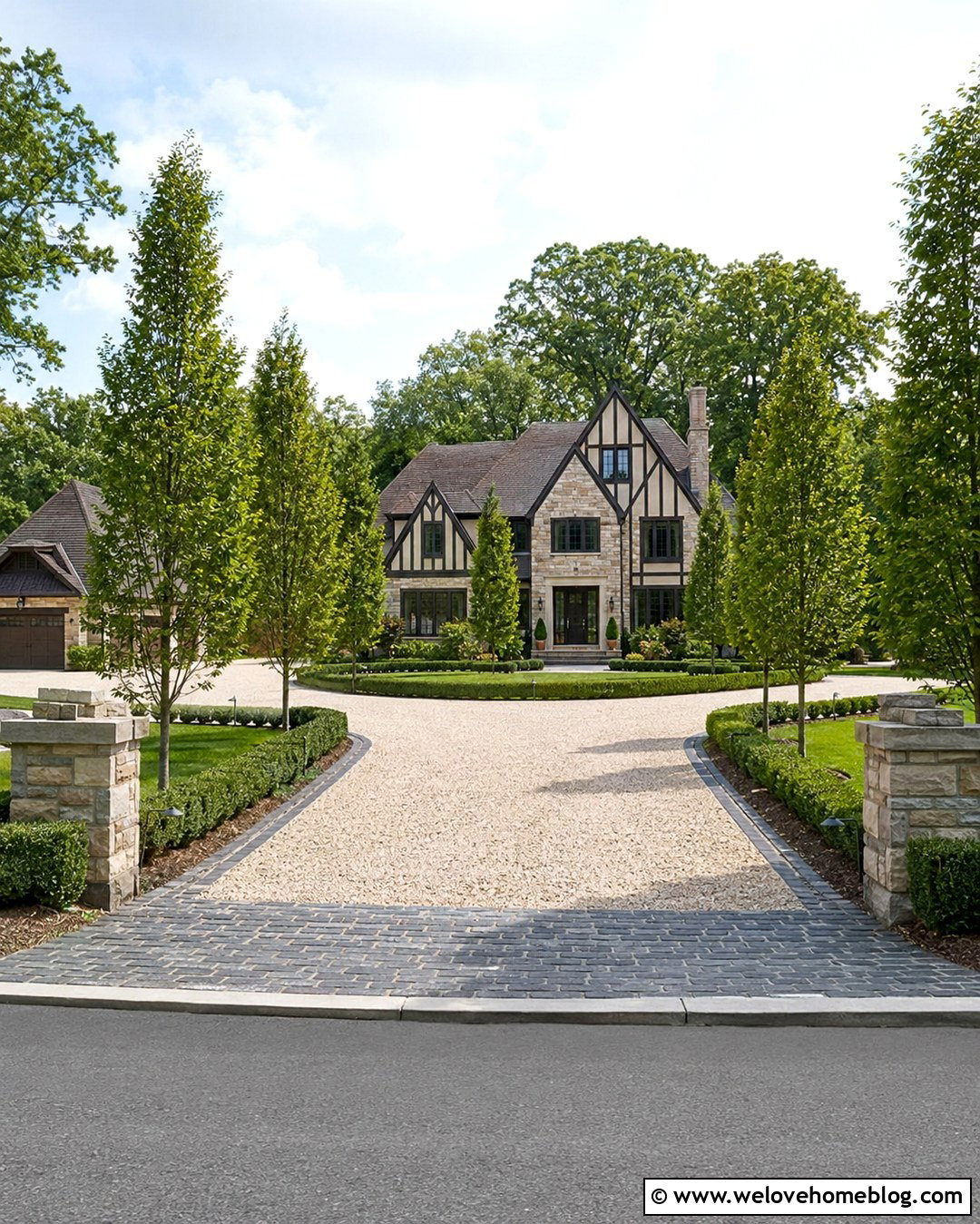
20. Cleaned And Sealed Concrete Driveway With Spot Repairs
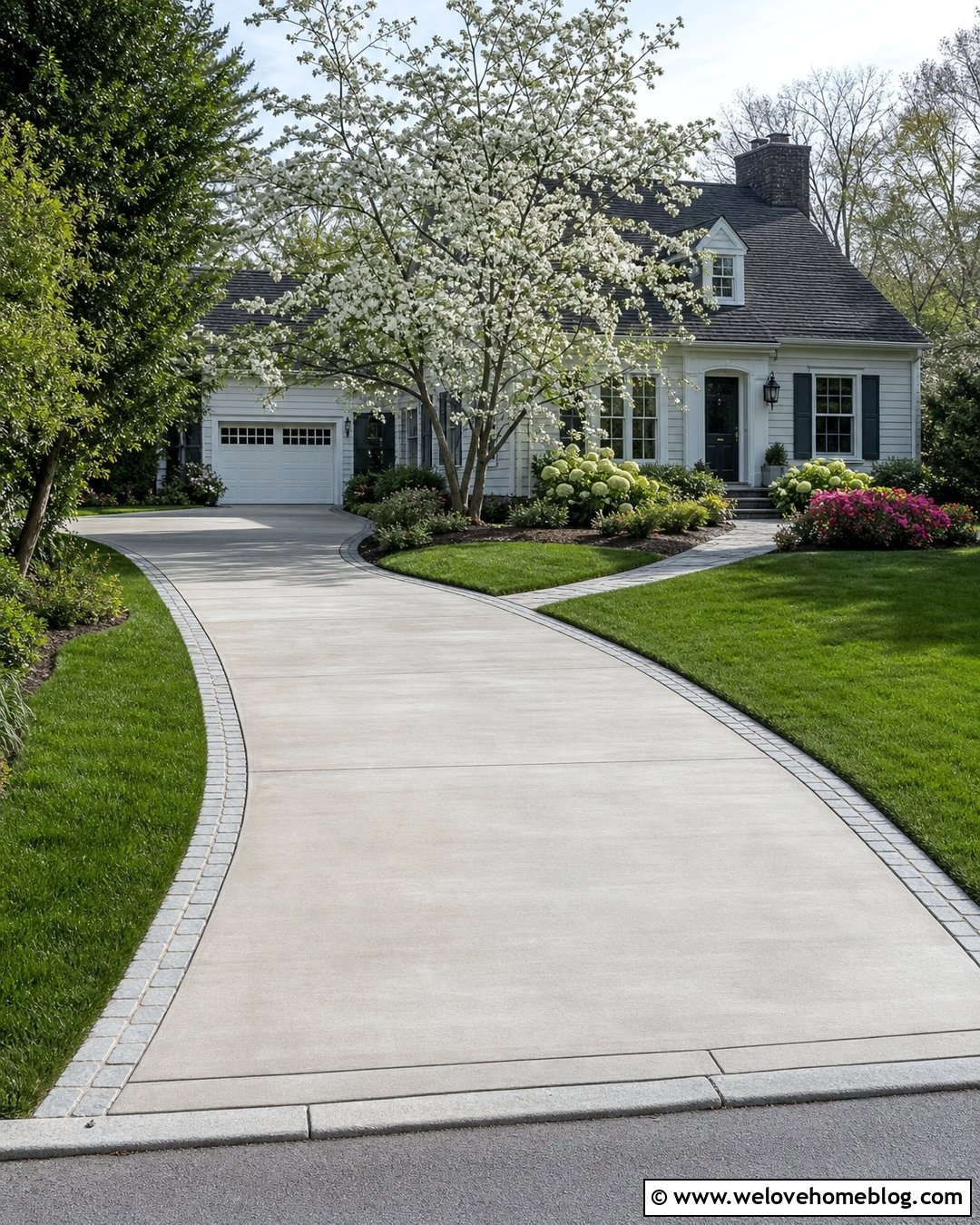
Sometimes the most effective transformation is also the least complicated. A driveway with only minor cracks, small pits, and surface stains may need careful spot repairs rather than a decorative overlay. Remove weeds and loose material, treat stains with concrete-safe products, and complete each patch using material suited to its depth and location. Pressure-wash the full driveway after repairs have cured, then apply a compatible clear or lightly tinted sealer under suitable weather conditions. Preserve the original pale gray broom finish and add a clean row of Belgian block along the edges. A softly curved layout, fresh lawn, flowering dogwood, and layered foundation beds suit a classic cottage home. This restrained plan improves the complete curb view without disguising sound concrete beneath unnecessary coatings.
Conclusion:
The best driveway repair begins with understanding why the concrete cracked, sank, flaked, or discolored. Small stable defects may need only cleaning, filling, patching, and sealing. Widespread surface wear can often support a resurfaced, stained, stamped, or textured finish when the underlying slabs remain sound. Uneven panels, drainage failures, and major structural movement deserve professional evaluation before decorative work begins. Borders, joint patterns, planting beds, aprons, and lighting can then turn necessary repairs into a coordinated curb appeal update. Always follow product directions and local requirements for preparation, curing, weather, and vehicle traffic. With thoughtful planning, these 20 Repairing Concrete Driveway Ideas can create a safer, cleaner, and more attractive entrance.

Related posts:
Leave a Reply