
If you are searching for **35 concrete driveways ideas**, the best designs go far beyond one plain gray slab. Concrete can be brushed, stamped, stained, scored, exposed, colored, or divided into bold geometric panels. It also works with brick borders, stone aprons, grass joints, landscape beds, and built-in drainage. Current driveway design favors simple textures, architectural patterns, natural-looking colors, and mixed finishes that complement the house instead of overpowering it. Exposed aggregate adds traction and visible stone, while stamped borders can introduce contrast without covering the entire surface in a decorative treatment. () Whether your home is modern, traditional, farmhouse, or ranch, the following complete driveway looks offer practical inspiration. Explore these **35 concrete driveways ideas** to find a layout that fits your property.

1. Broom Finish Concrete Driveway With Dark Border
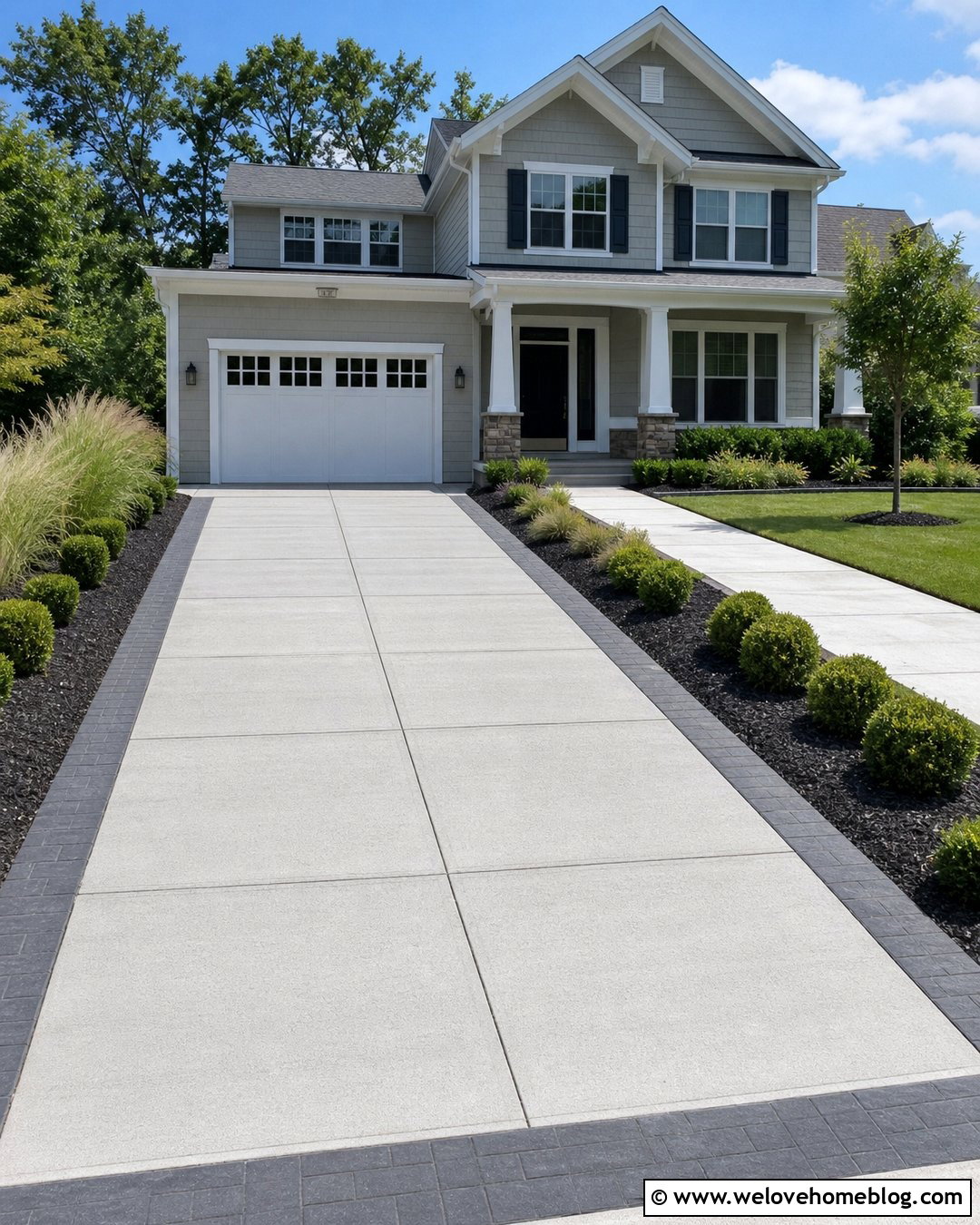
A broom finish is a practical starting point for an attractive concrete driveway. Fine lines brushed across the wet surface create a clean texture that feels more finished than completely smooth concrete. Frame the light gray center with a charcoal stamped-concrete border for strong definition. A straight layout suits a suburban home, especially when the border continues around the walkway and garage apron. Keep the landscaping simple with clipped boxwoods, ornamental grasses, and a narrow bed of dark mulch. Saw-cut control joints can divide the driveway into balanced rectangular sections. The darker perimeter makes the pale concrete look brighter while visually connecting it to black shutters, roofing, or garage doors. This combination offers an orderly, versatile look without requiring a highly decorative finish across the entire driveway.
2. Curved Exposed Aggregate Concrete Driveway
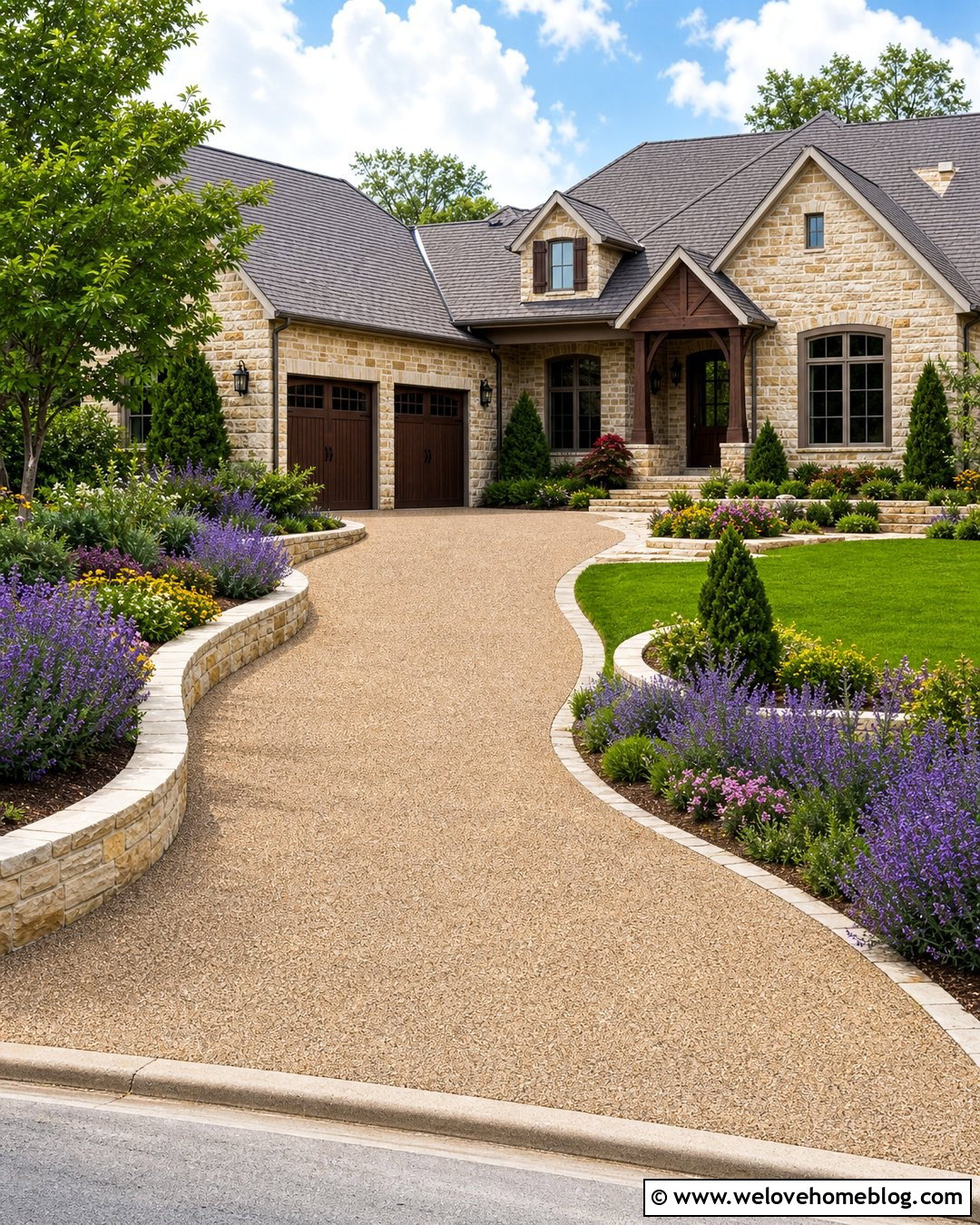
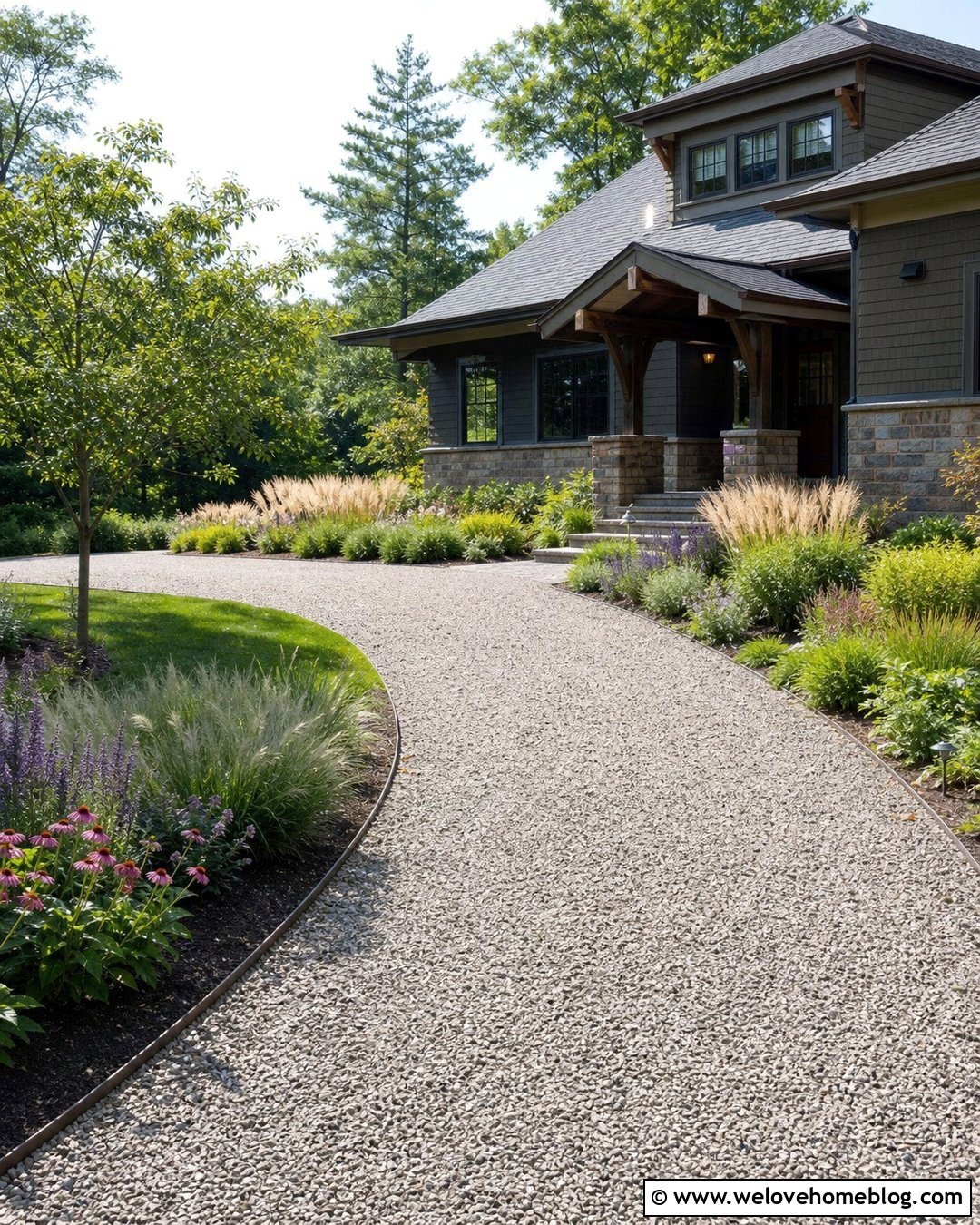
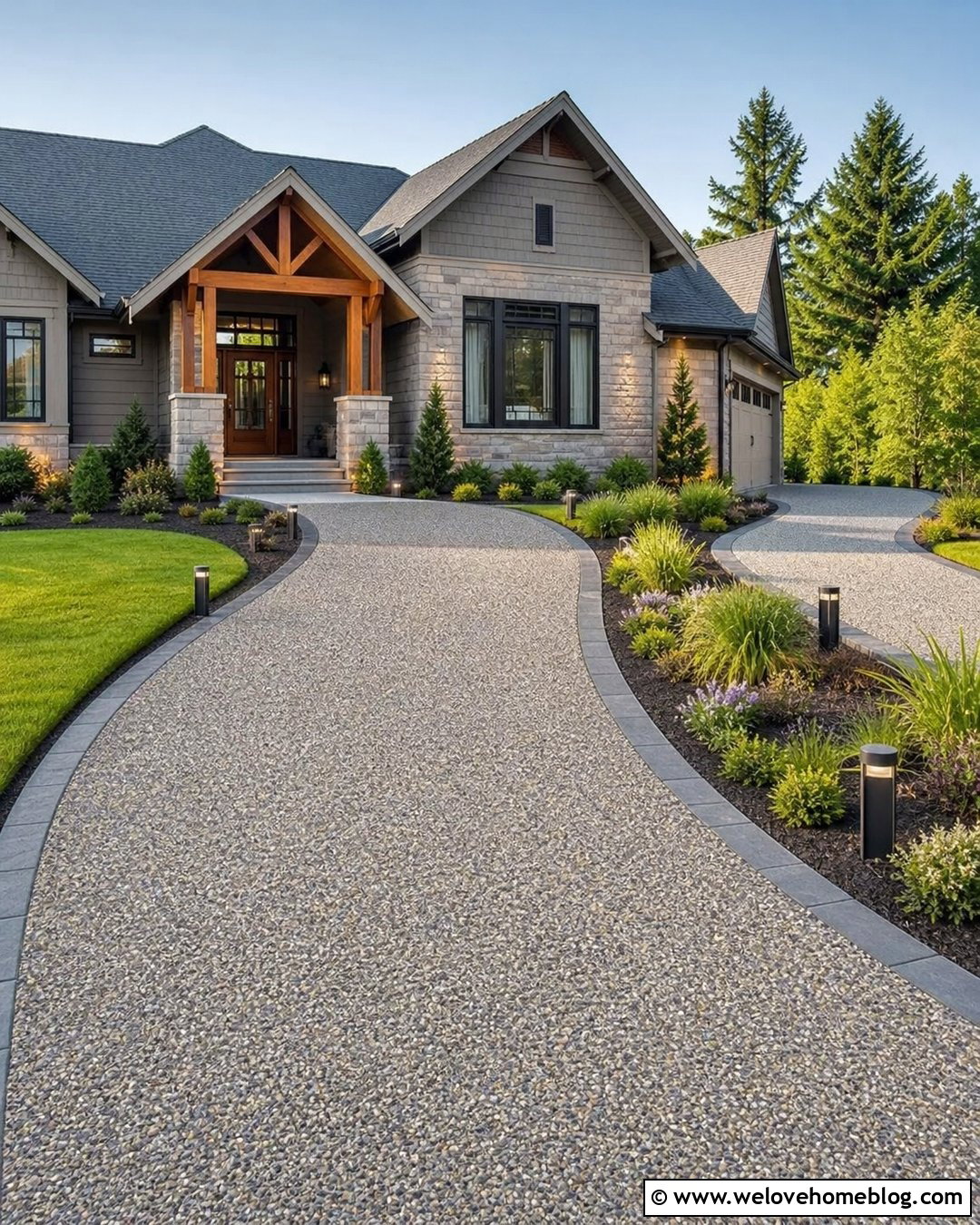
A gently curved driveway feels welcoming because the house is revealed gradually as visitors approach. Use warm exposed aggregate concrete containing tan, cream, and brown stone to blend the paved area into the surrounding landscape. The textured surface offers more visual depth than standard concrete because decorative aggregate is revealed by removing the upper layer of cement paste. () Border the curve with low limestone curbing that keeps soil and mulch away from the driving surface. Layer the outer planting beds with dwarf evergreens, lavender, and flowering perennials. On the inside curve, preserve an open lawn so drivers can clearly follow the route. This complete look works especially well with craftsman, cottage, and stone-front homes where natural colors already shape the exterior palette.
3. Stamped Slate Concrete Driveway
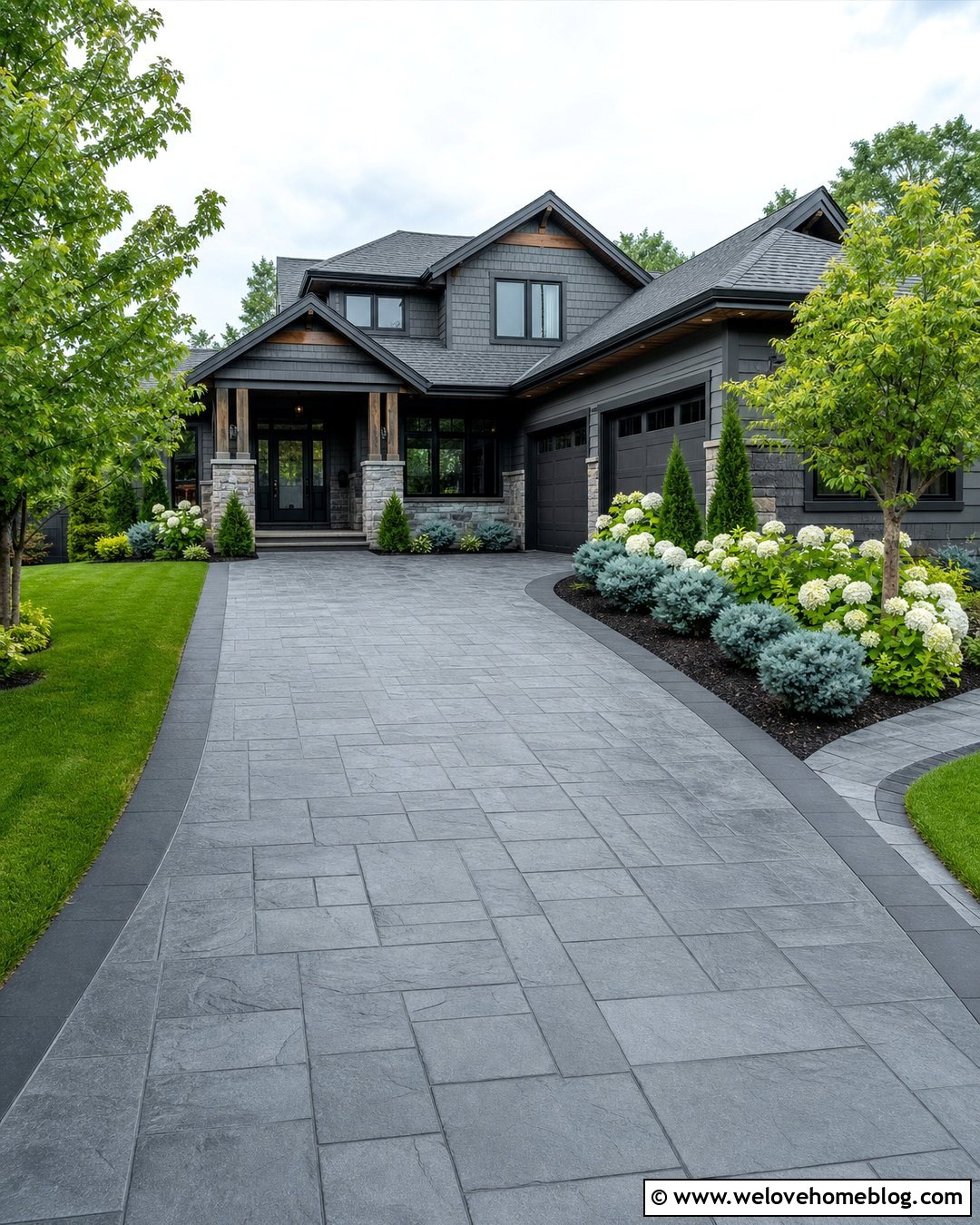
Stamped slate concrete delivers the character of broad natural stone without creating a driveway filled with individual stone joints. Choose a seamless slate texture in a medium gray tone, then add subtle charcoal accents that emphasize the uneven surface. Texture skins can create a continuous stone-like appearance without a strongly repeated pattern, producing a restrained alternative to heavily patterned stamps. () A straight driveway divided by hand-tooled joints will keep the layout structured and complement a contemporary craftsman house. Use smooth concrete bands along the sides to frame the textured field. Blue-green shrubs, white hydrangeas, and ornamental trees soften the gray surface. Carry the same slate texture onto the front walkway for continuity, but change its orientation or width so the pedestrian route remains easy to identify.
4. Large Concrete Slab Driveway With Grass Joints
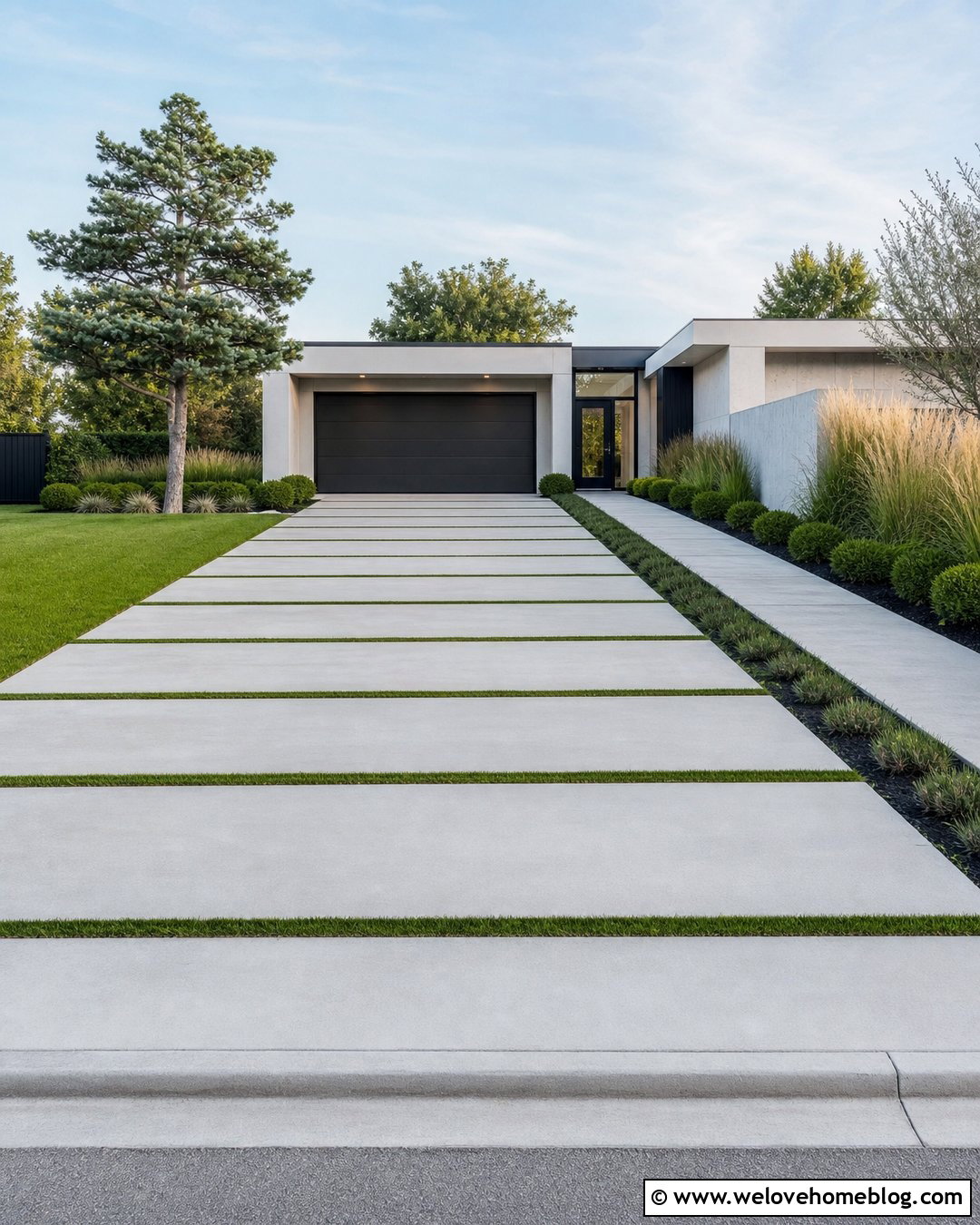
Large concrete slabs separated by narrow grass joints create one of the cleanest looks for a modern home. Pour light gray rectangular panels in a straight, symmetrical arrangement, leaving consistent green bands between them. Oversized slabs and planted joints can turn a basic driveway into a strong geometric feature that connects modern architecture with the lawn. () Use reinforced turf or another traffic-tolerant joint treatment where vehicle tires will regularly cross. A wide concrete walkway can run parallel to the driveway and lead directly to the front door. Complete the composition with low ornamental grasses, clipped shrubs, and one sculptural tree. This design looks best when the garage doors, windows, and driveway joints align, creating deliberate sight lines from the curb to the house.
5. Tan Stained Concrete Driveway With Stone Edging
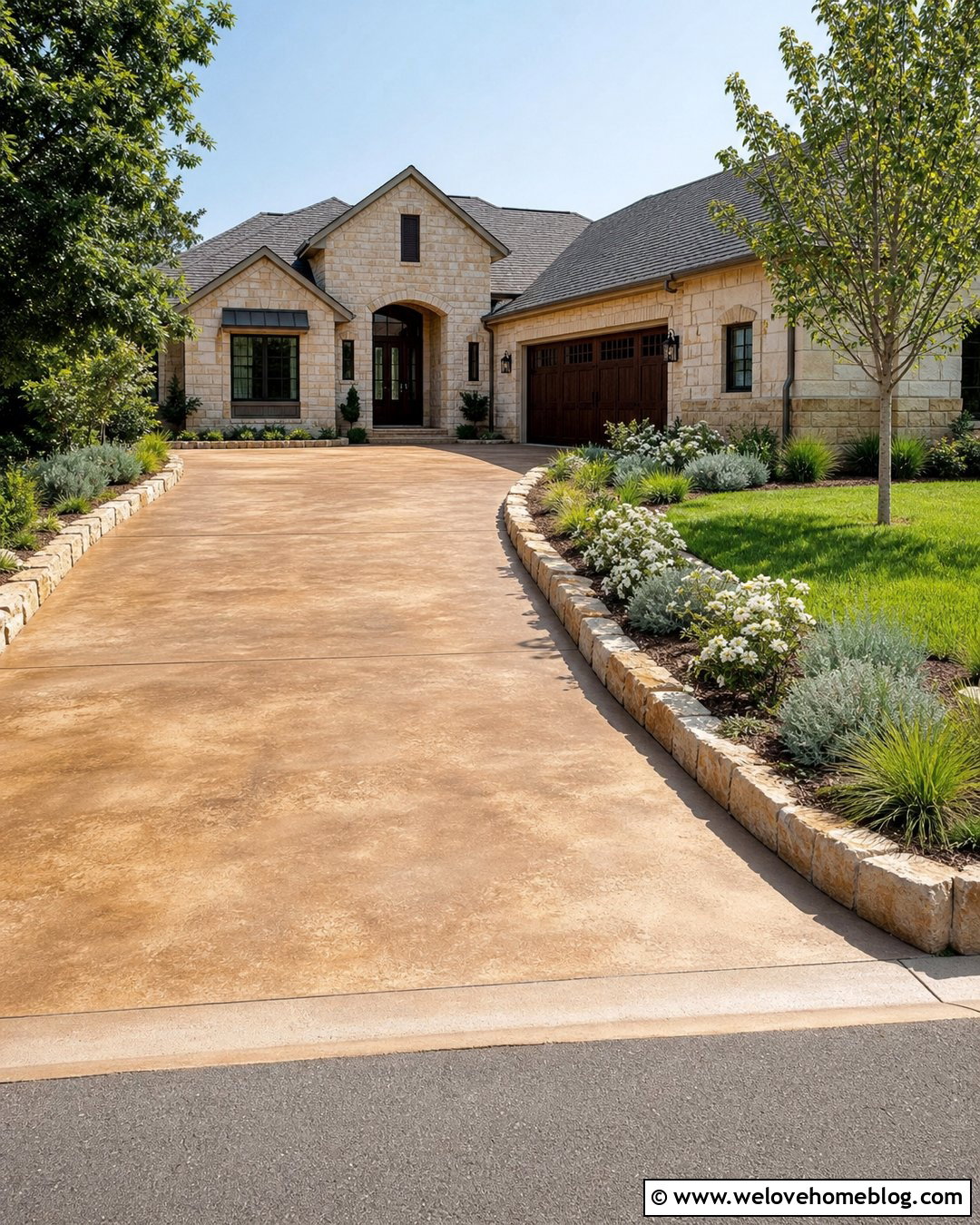
Warm tan concrete can make a driveway feel softer and more connected to a beige, cream, or stone-clad house. Start with lightly textured poured concrete and apply a layered tan stain that creates gentle color variation instead of one flat shade. Edge the driveway with rough-cut limestone or sandstone set close to the surface. A broad, straight layout provides plenty of parking while the stone border gives the edges a more tailored appearance. Add curved planting beds containing sage, dwarf grasses, and white flowering shrubs. The warm paving color will disguise ordinary dust better than very dark or bright white finishes. Before choosing a stain, ask for a sample on the actual concrete mix because the finished color can respond differently to surface texture, curing conditions, and the existing base tone.
6. Circular Concrete Driveway With Center Landscaping
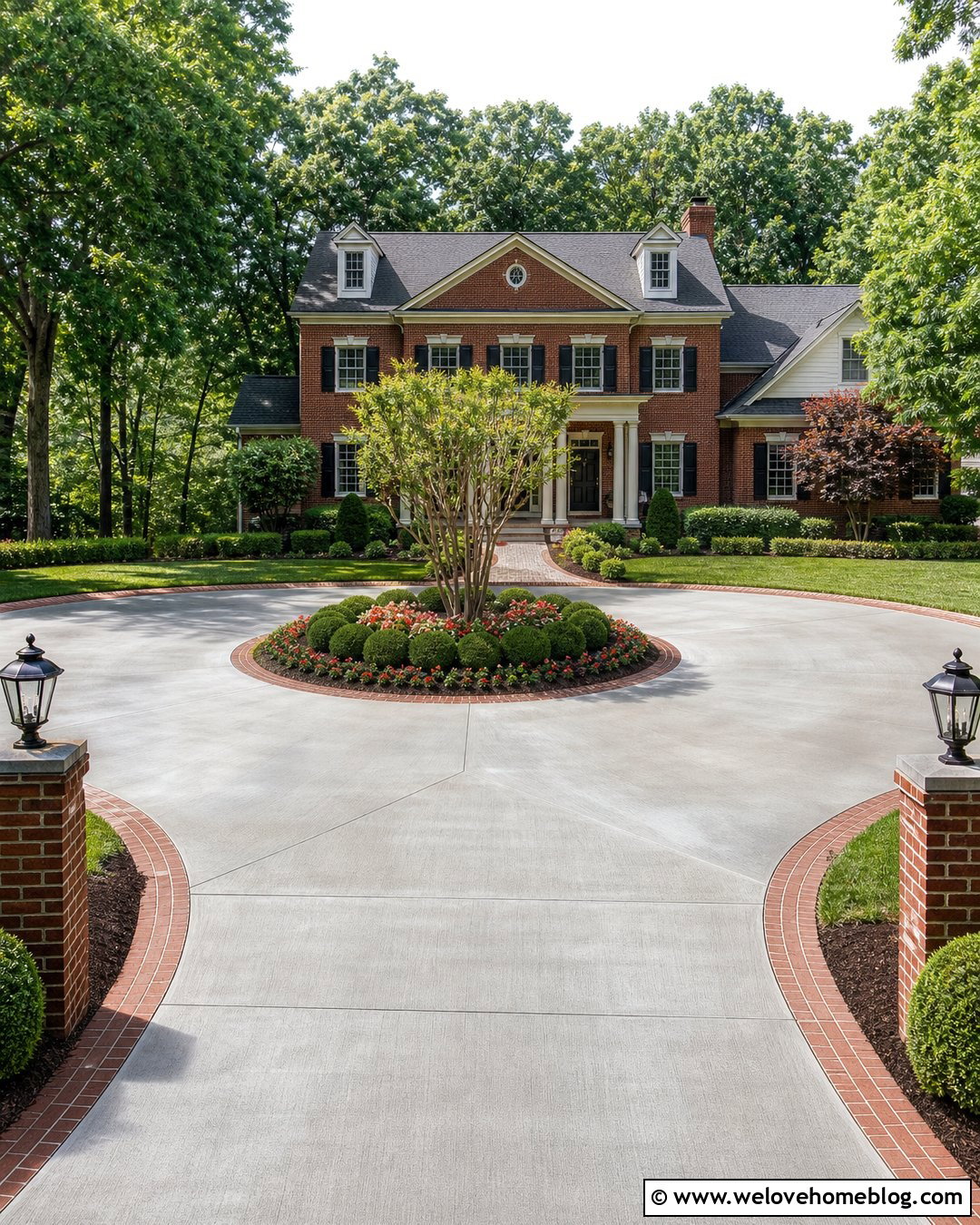
A circular concrete driveway gives a large front yard an elegant layout while allowing vehicles to approach and leave without backing toward the street. Use medium-gray broom-finished concrete for the main loop and outline both edges with a red brick ribbon. In the center island, plant a multi-trunk ornamental tree surrounded by low evergreen shrubs and seasonal flowers. Keep taller plants away from the street-facing side so drivers maintain a clear view when exiting. A wider section near the entrance can provide a convenient guest drop-off area. Echo the circular shape with a curved front walkway leading to a colonial or Georgian-style home. The concrete keeps the surface visually calm, while the brick and central landscaping turn the full arrival sequence into a coordinated front-yard feature.
7. Concrete Driveway With Brick Ribbons
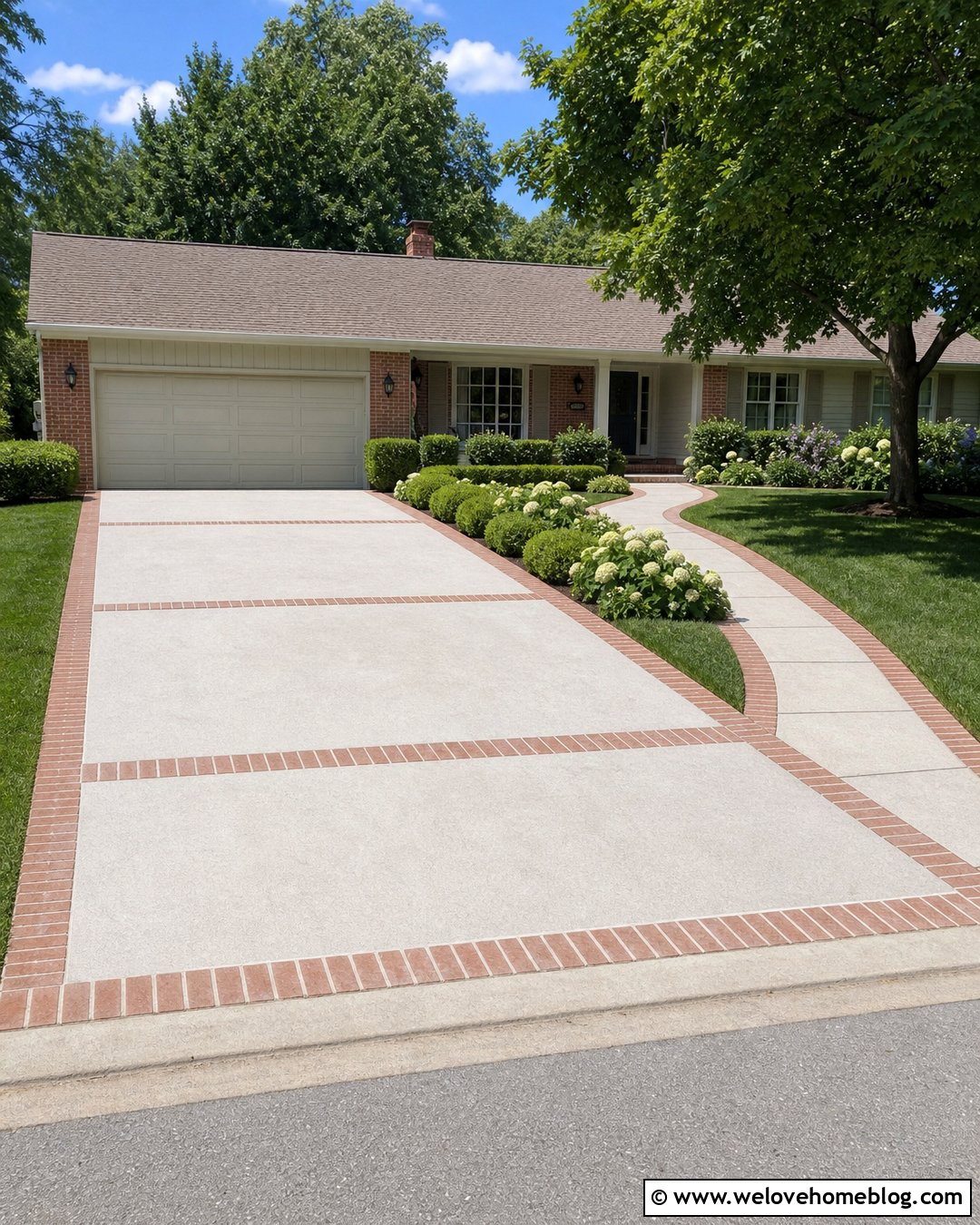
Brick ribbons can break a wide concrete driveway into smaller, more attractive sections. Pour a pale broom-finished concrete field and install clay brick bands across it at regular intervals. Continue the brick around the perimeter to form a complete frame. A running-bond pattern feels relaxed, while herringbone bands produce a stronger traditional accent. Decorative bands are especially useful for visually organizing long driveways without covering the entire area in expensive patterned work. Choose brick colors that repeat the home’s chimney, facade, or front steps. Along the edges, use simple lawn panels and foundation beds with boxwoods and hydrangeas. The result suits traditional ranch, colonial, and craftsman homes. Proper detailing between the concrete and brick is important because the two materials may respond differently to movement and weather.
8. Cobblestone Stamped Concrete Driveway
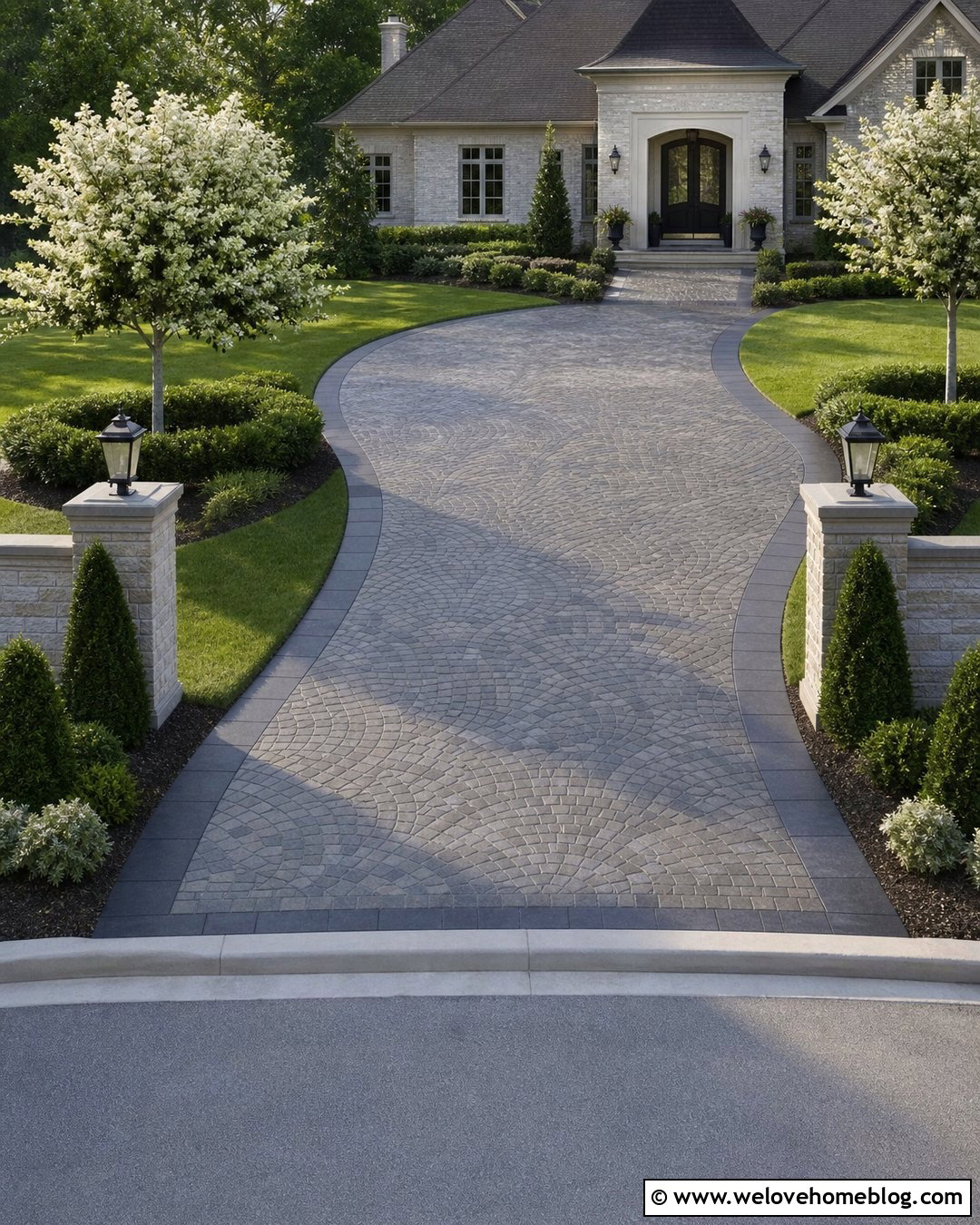
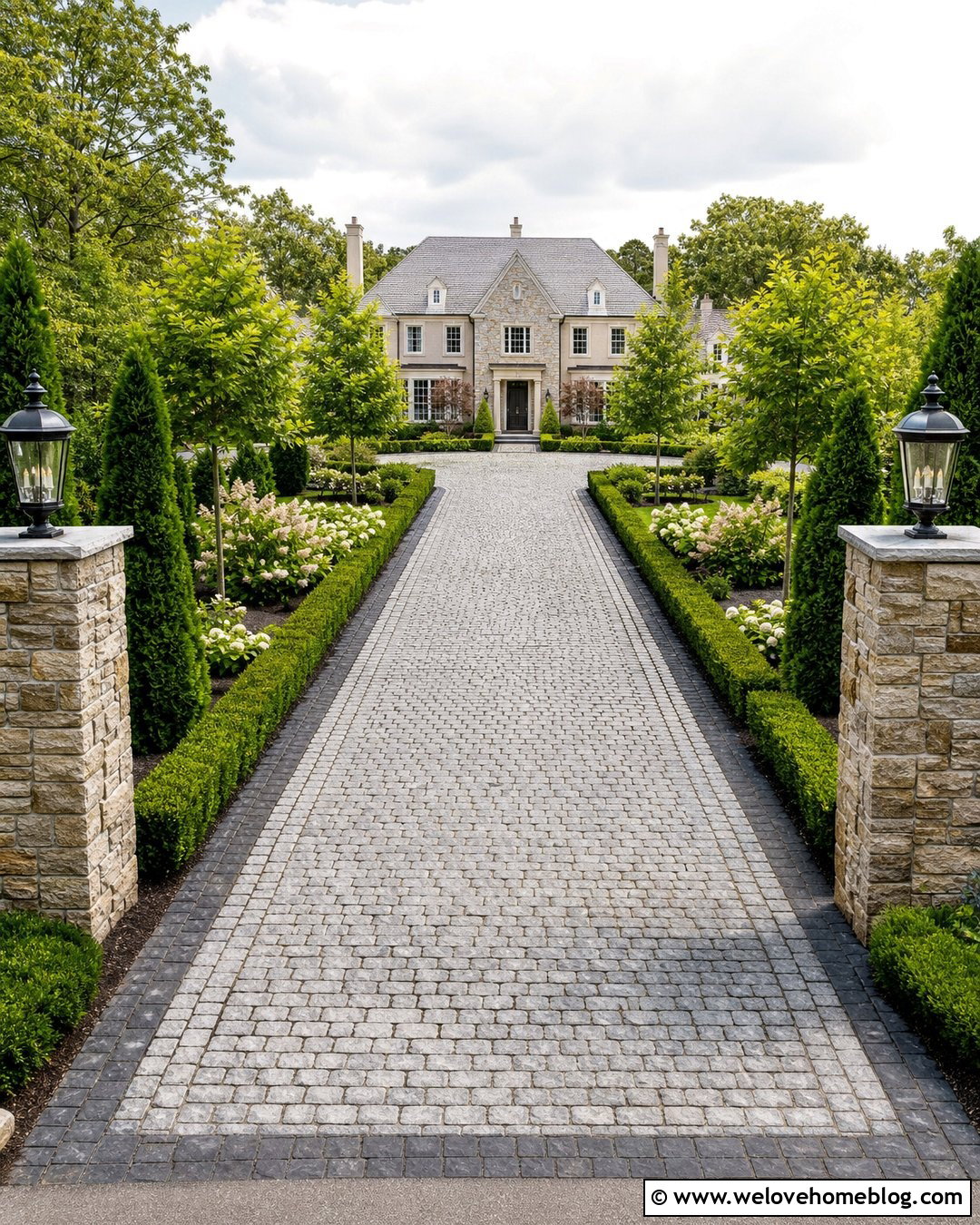
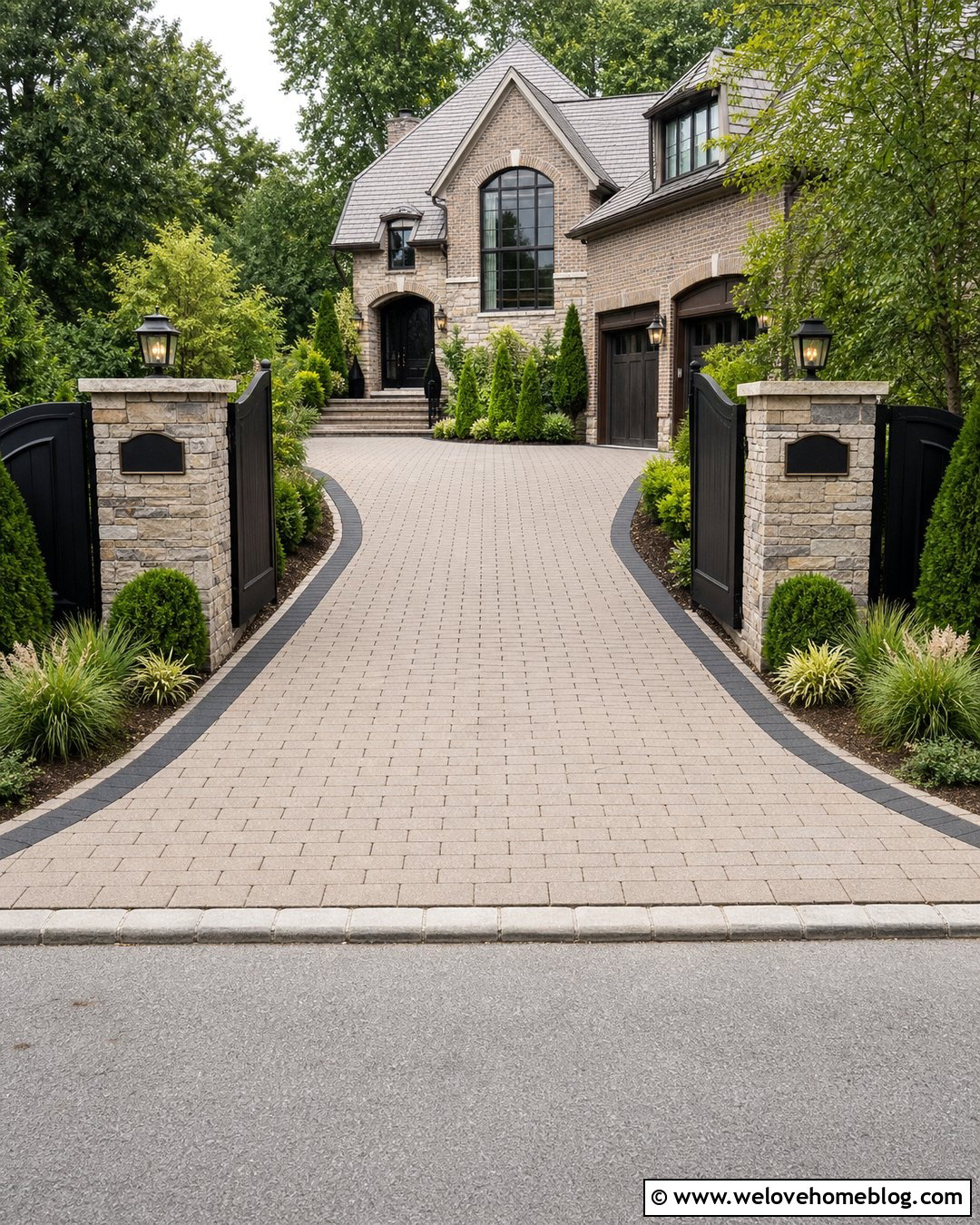
Cobblestone-stamped concrete can give a traditional home an established appearance while maintaining one continuous concrete installation. Select a European fan or irregular cobblestone pattern in blended charcoal, brown, and muted gray. A curved or flared layout makes the pattern feel more natural than a narrow rectangular strip. Border it with smooth dark concrete that provides a crisp stopping point for the detailed stamp. Near the street, add masonry pillars and low planting beds to create a defined entrance. Formal evergreens, small flowering trees, and a neat lawn balance the richly patterned surface. Keep color variation restrained so the driveway does not look artificially painted. A high-gloss finish is not always necessary; a lower-sheen protective sealer can preserve the color while creating a more convincing stone-like appearance.
9. White Concrete Driveway For A Modern House
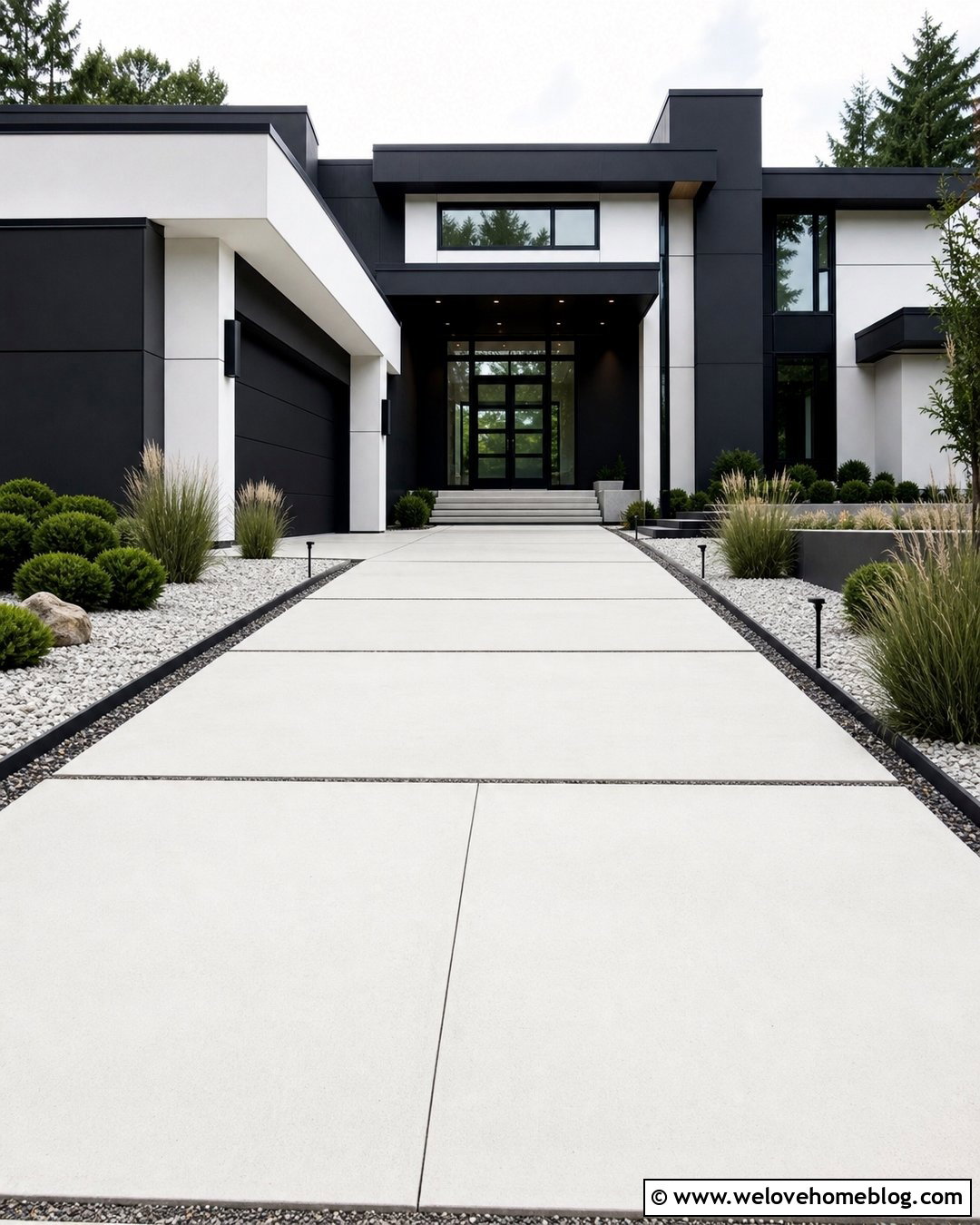
Bright white concrete creates sharp contrast against dark siding, black garage doors, and minimalist landscaping. Divide a straight driveway into large rectangular panels with narrow saw-cut joints. Rather than placing grass between every slab, use continuous solid concrete in the vehicle path and reserve gravel-filled joints for decorative areas near the walkway. Black steel edging can separate the paving from beds of pale river stone, compact shrubs, and architectural grasses. The reduced color palette makes the full exterior appear larger and cleaner. White and very light concrete can show tire marks and organic stains, so consider a slightly warm off-white tone instead of a brilliant white surface. Good drainage and an appropriate protective treatment will also help maintain the crisp appearance. This driveway works best when its joint layout aligns with the home’s modern facade.
10. Charcoal Concrete Driveway With Light Borders
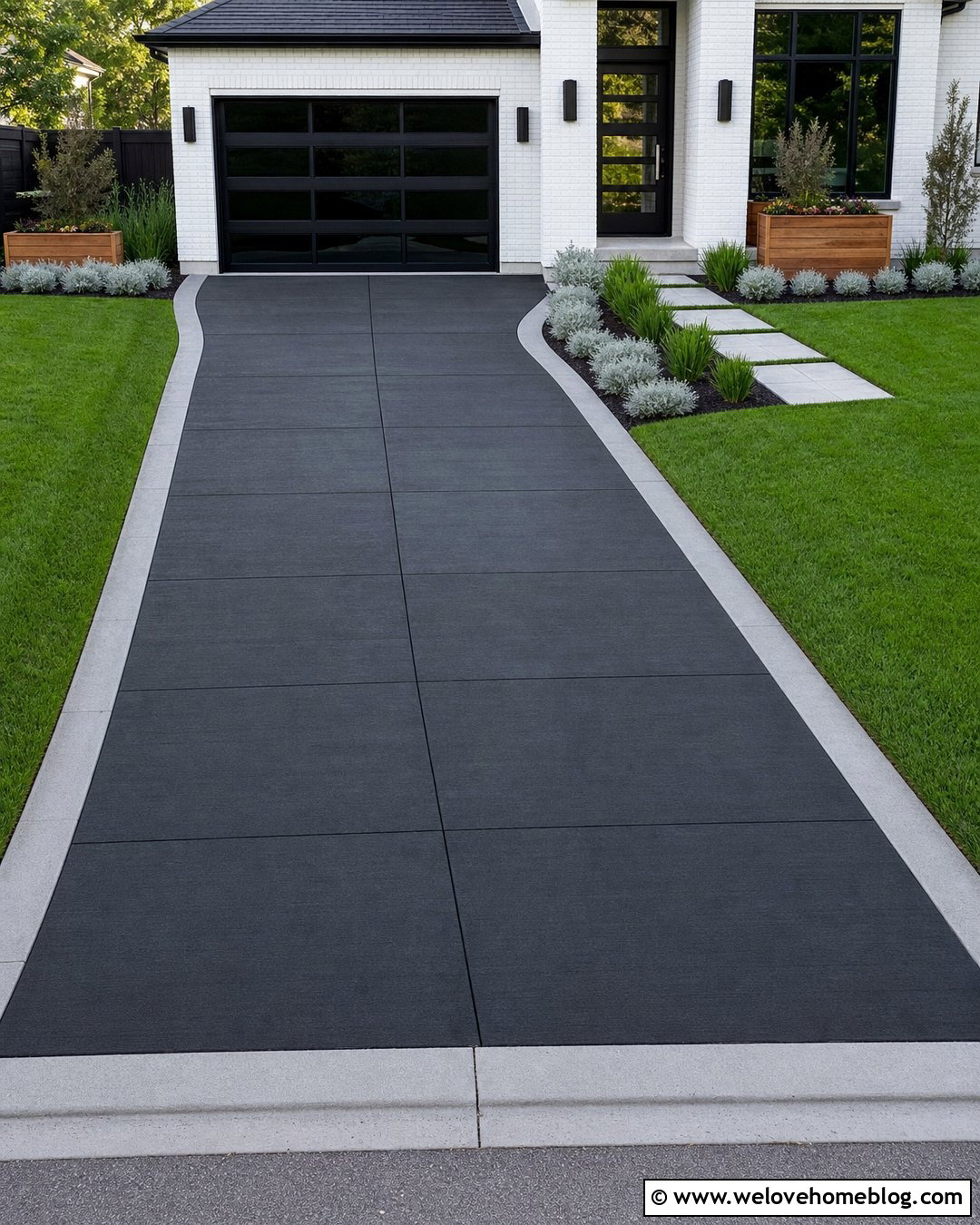
Dark charcoal concrete creates a bold base for a pale stucco, white brick, or light wood house. Use integrally colored concrete rather than relying only on a surface coating, then apply a subtle broom or seamless texture. Frame the dark field with light gray concrete borders that make the driveway shape easy to read from the street. Straight edges reinforce a contemporary look, while a gentle flare at the garage provides practical turning space. Surround the paving with green lawn, silvery shrubs, and warm wood planters to prevent the exterior from feeling too cold. Dark surfaces may become noticeably warmer in direct sun and can reveal mineral deposits or faded areas, so local climate and maintenance should influence the final shade. Ask the installer to create a cured color sample before approving the full pour.
11. Seamless Stone Texture Concrete Driveway
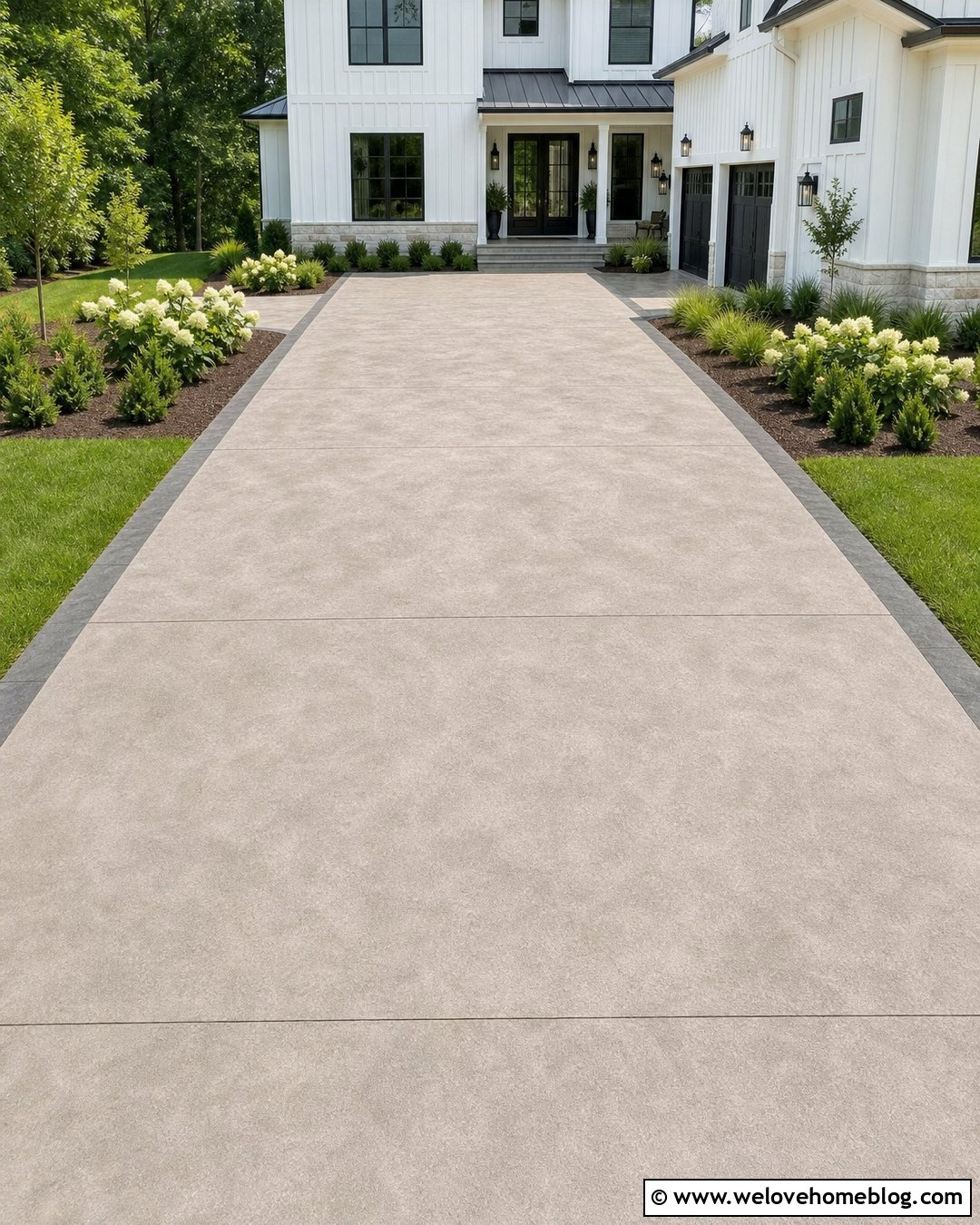
For a natural appearance without obvious repeating blocks, consider seamless stone-textured concrete. Texture skins press subtle ridges and variations into the surface while leaving it visually continuous. Choose a soft greige color with gentle brown antiquing to complement a modern farmhouse or transitional home. Divide the driveway with widely spaced hand-tooled joints instead of adding a busy grid. A smooth concrete border in a slightly darker shade will keep the edges neat. Add generous planting beds with hydrangeas, ornamental grasses, and low junipers, then connect the driveway to a flagstone-inspired concrete walkway. The uninterrupted texture makes a large paved area feel quieter than small stamped patterns. Keep the finish moderately textured and verify that the selected sealer will not create an unnecessarily slick surface during wet or icy conditions.
12. Salt Finish Concrete Driveway For A Coastal Home
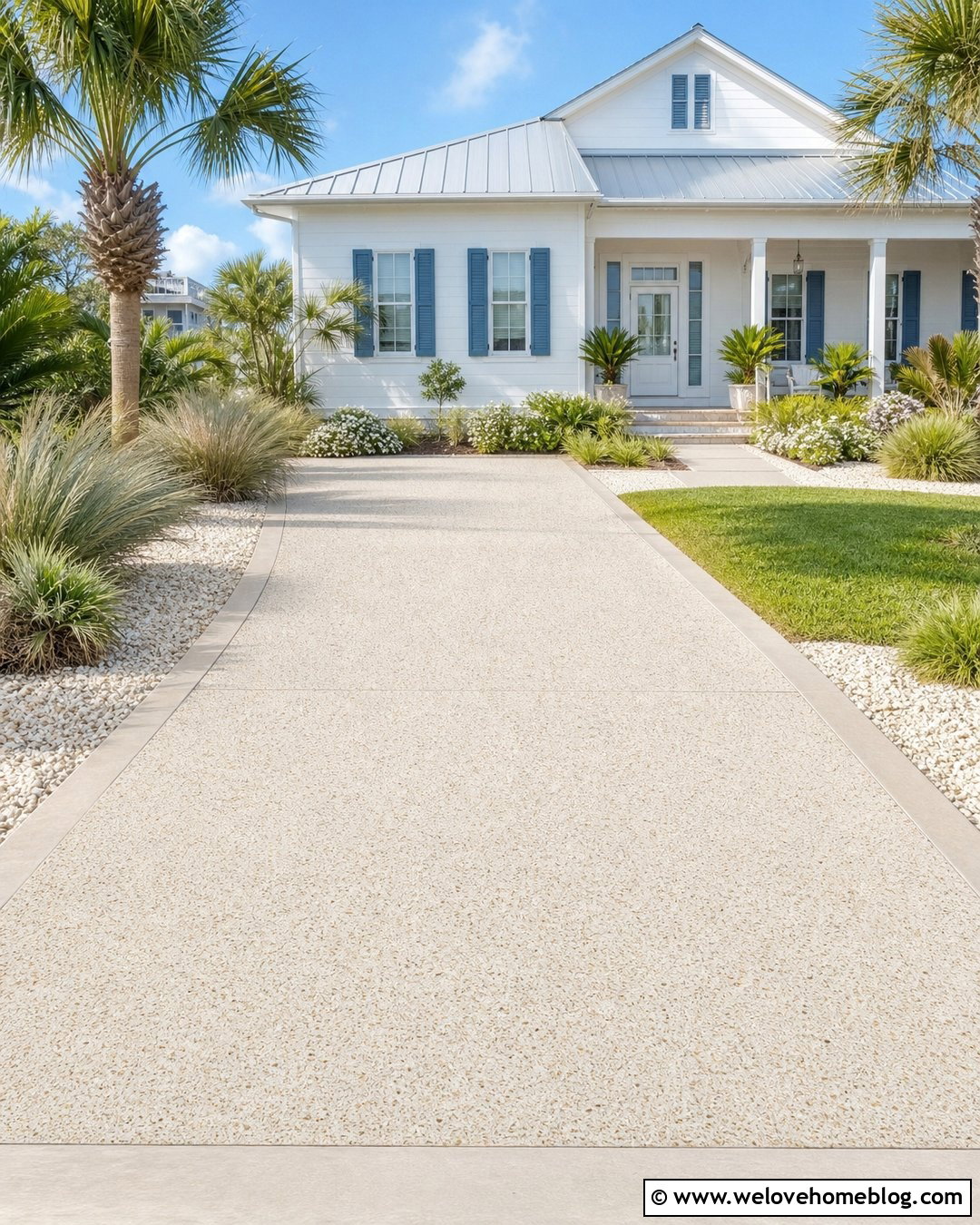
A salt finish gives concrete a lightly speckled texture that pairs naturally with relaxed coastal architecture. The finish is traditionally created by pressing coarse salt into fresh concrete and removing it after the surface sets, leaving shallow irregular pits. Choose a pale sand-colored concrete for a straight driveway leading to a white or blue coastal cottage. Border the surface with smooth concrete bands in the same color for understated definition. Plant sea oats, ornamental grasses, dwarf palms where appropriate, and low flowering ground covers along the edges. A crushed-shell-colored landscape bed can reinforce the coastal palette without placing loose material in the vehicle path. Because freeze-thaw exposure and deicing practices vary by region, discuss finish depth, durability, and sealing with a local concrete professional before selecting this treatment for a cold climate.
13. Swirl Finish Concrete Driveway
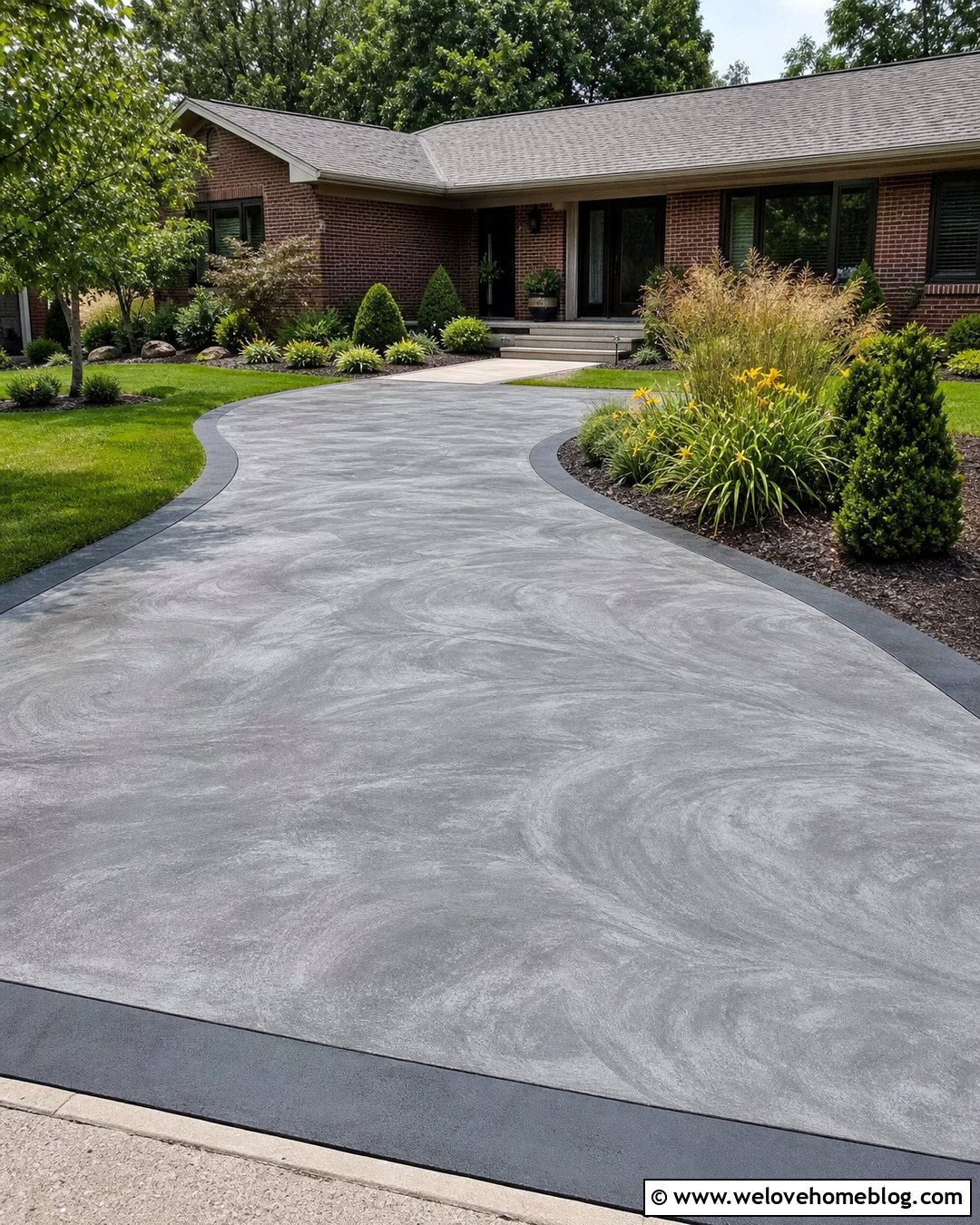
A hand-troweled swirl finish can add movement to plain concrete without imitating brick or stone. The curved marks catch light differently throughout the day, making a simple driveway look more detailed from the curb. Use medium-gray concrete with broad, consistent swirls and frame it with smooth charcoal borders. A gently curved layout reinforces the flowing surface pattern and works well with a ranch or split-level home. Add rounded planting beds filled with compact evergreens, daylilies, and decorative grasses. Keep the front walkway simpler so it does not compete with the driveway texture. The size and depth of the swirls should remain consistent across the pour. Reviewing a sample panel is worthwhile because hand-finished patterns vary by installer, tool selection, and the timing of the finishing process.
14. Picture Frame Concrete Driveway
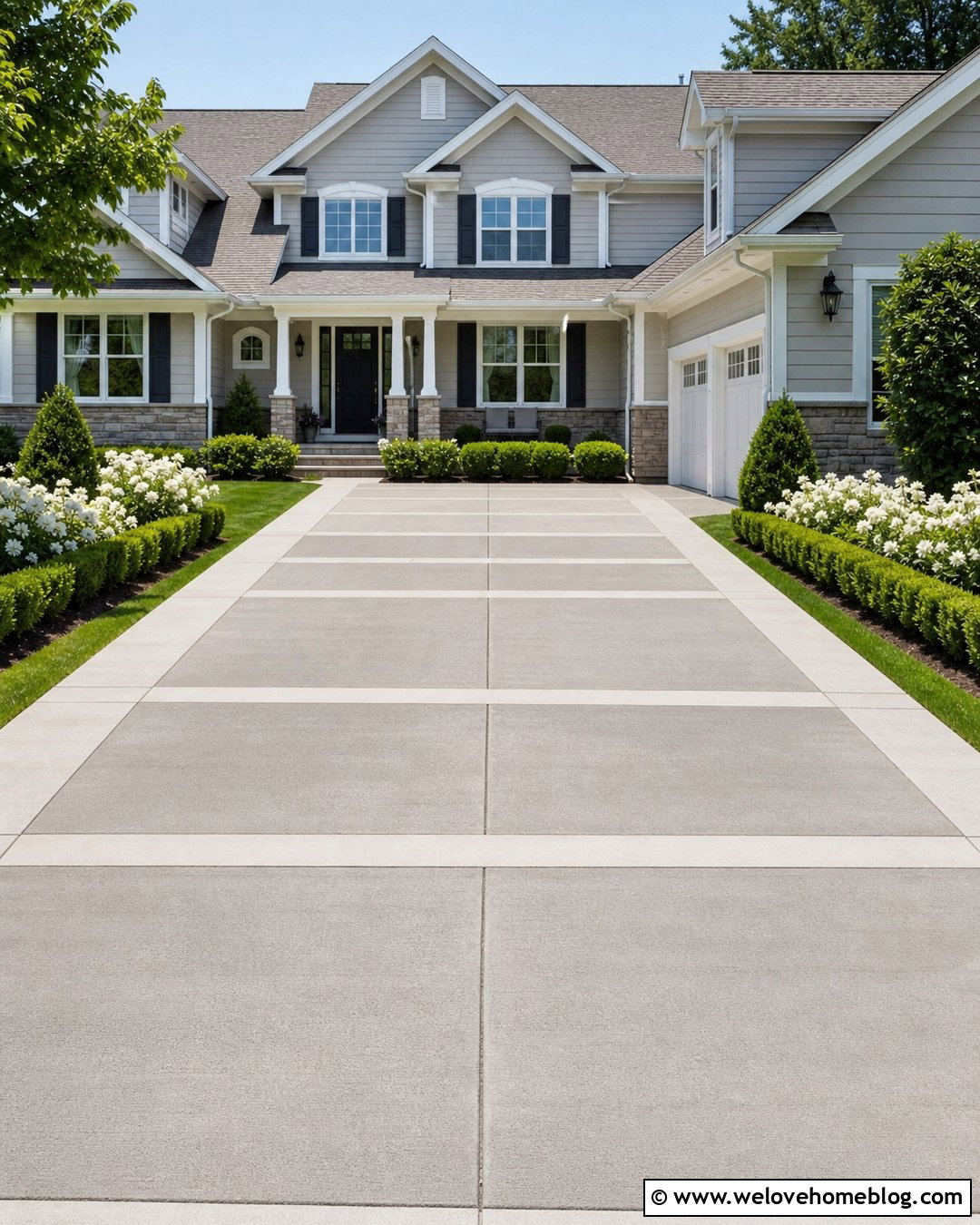
A picture-frame treatment makes basic broom-finished concrete look intentionally designed. The center receives a textured broom finish, while a smooth or differently textured band runs around each slab. Create large rectangular sections using clean control joints, then repeat the framing treatment throughout the straight driveway. This approach adds visual structure without introducing another paving material or a strong contrasting color. Light gray concrete suits nearly any house, from a brick ranch to a traditional two-story home. Complete the driveway with a narrow lawn border, clipped foundation shrubs, and a matching framed walkway. The smooth bands should still provide appropriate traction for the location, especially on sloped areas. Consistent dimensions are essential, so the contractor should plan the border width and joint alignment before concrete placement rather than improvising during finishing.
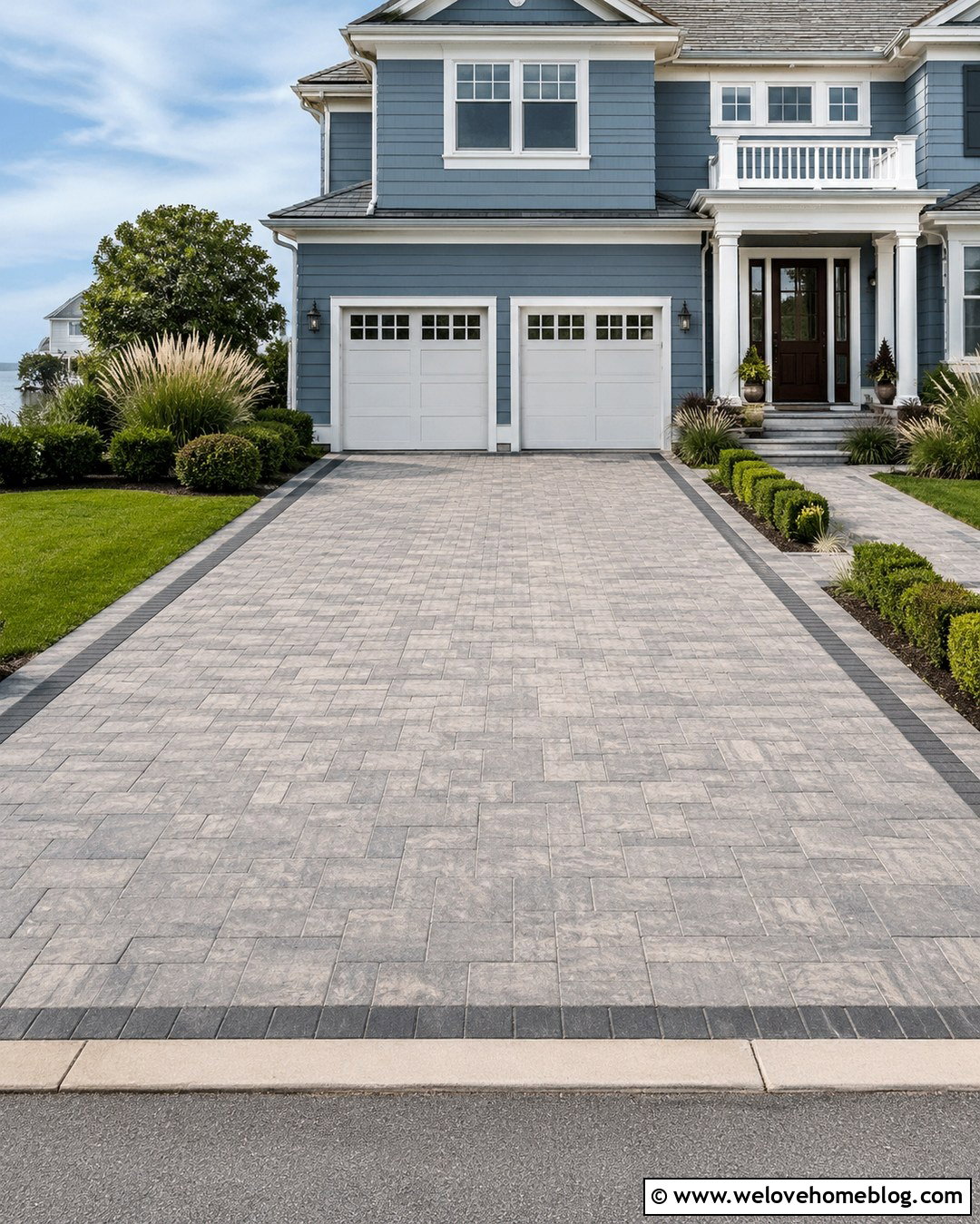
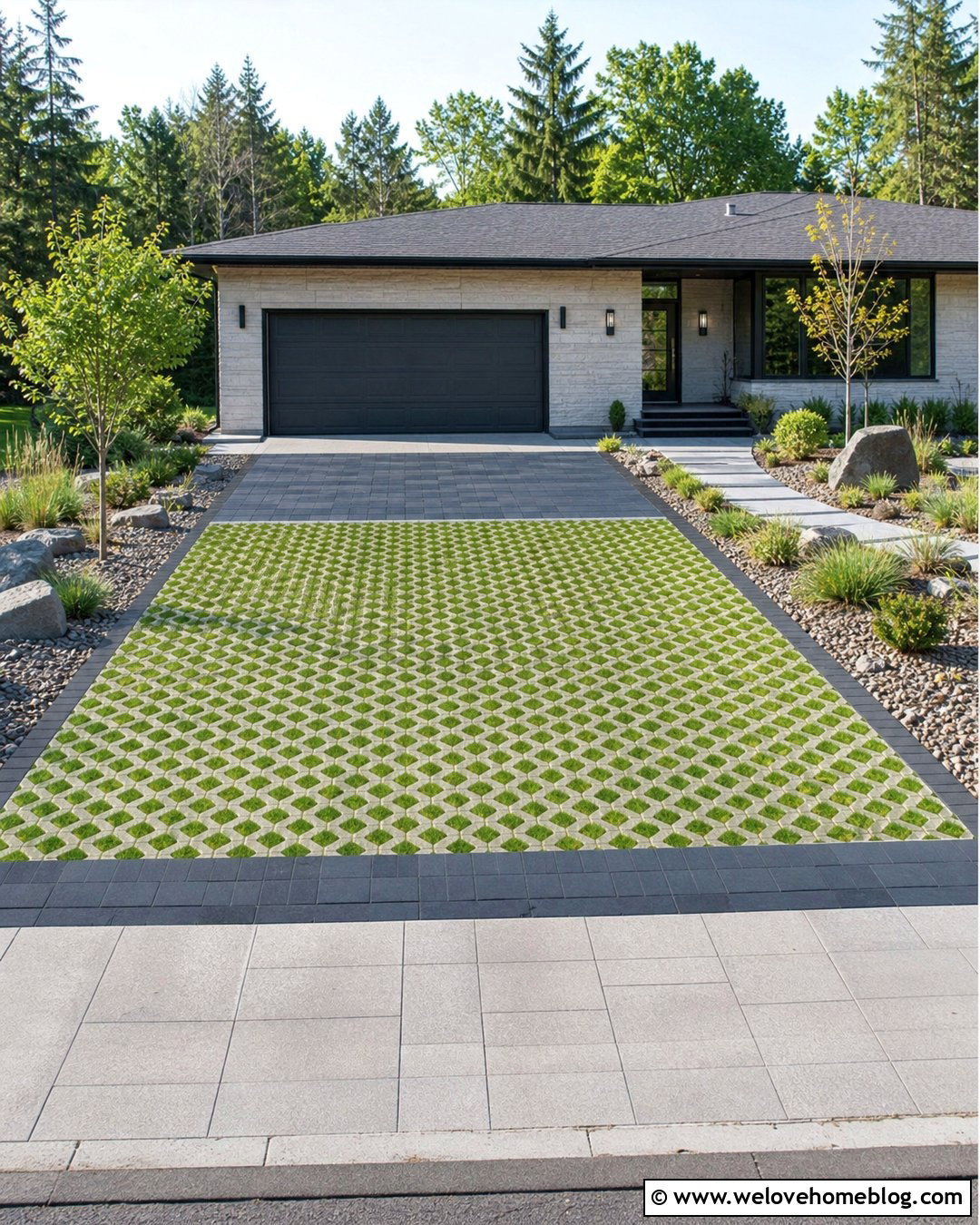
15. Saw Cut Grid Concrete Driveway
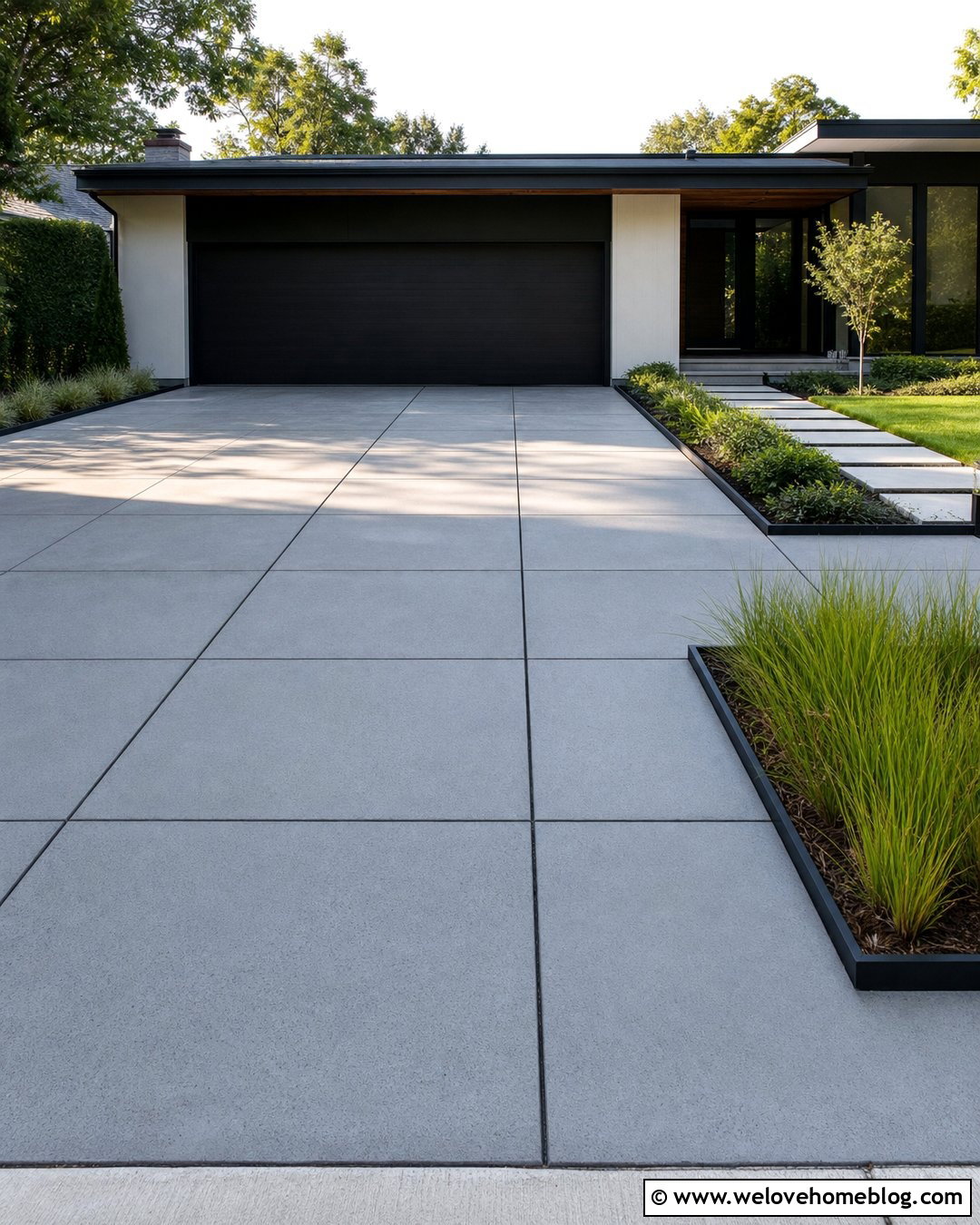
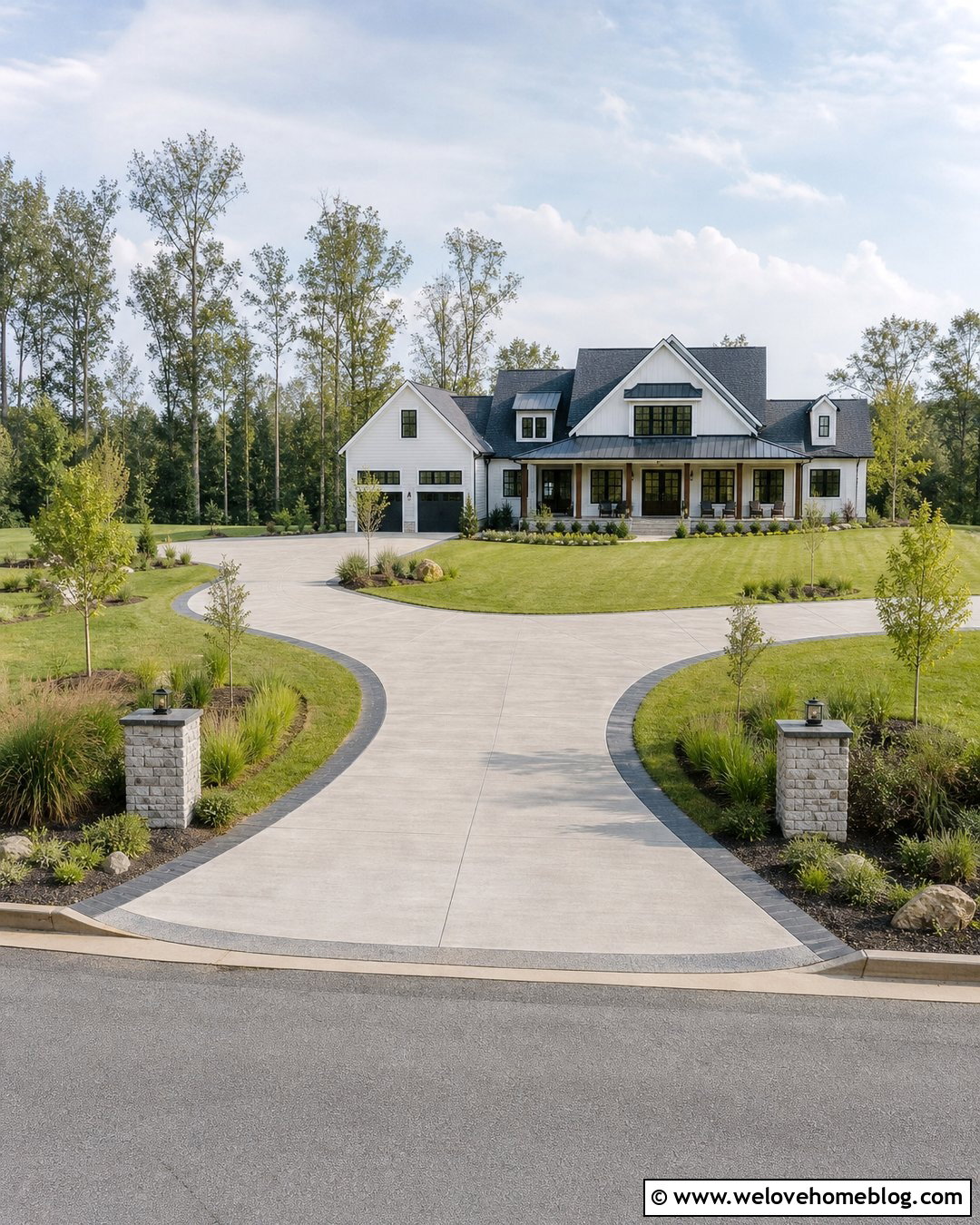
A precise saw-cut grid can transform smooth gray concrete into a contemporary architectural surface. Use large square or rectangular panels sized to match the scale of the garage and house. Darken the narrow joints with a compatible joint treatment so the geometric pattern is clearly visible from the street. A broad straight driveway is ideal because it provides enough space for the grid to repeat evenly. Add black metal landscape edging, rectangular planting beds, and linear rows of ornamental grasses. A flat-roofed or midcentury modern house provides a strong background for this organized layout. Joint placement should serve both visual and functional goals, since crack-control planning must consider slab dimensions, thickness, and site conditions. Work with the installer to coordinate the decorative grid with necessary control and isolation joints.
16. Diamond Scored Concrete Driveway
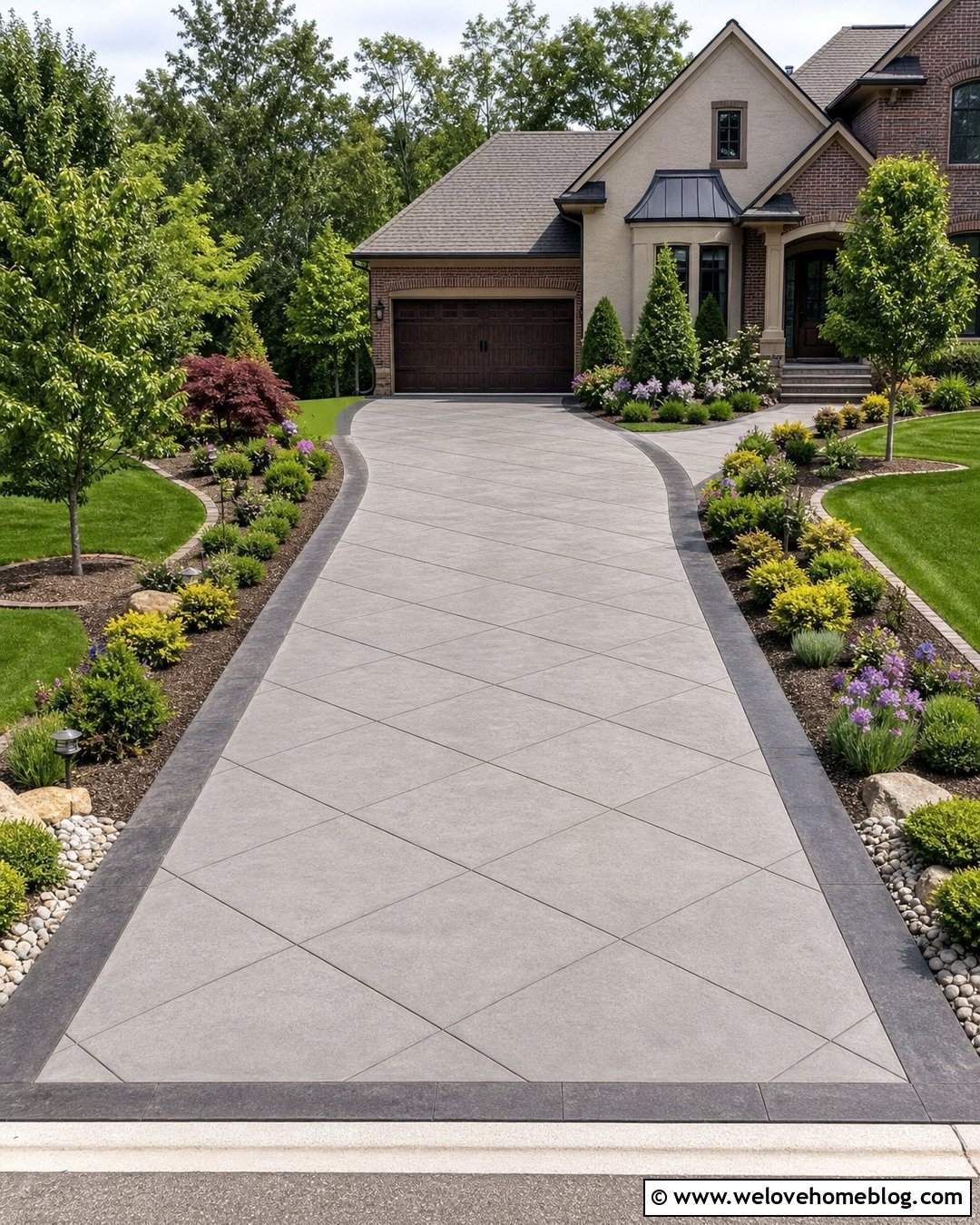
Diagonal scoring gives a standard concrete driveway the appearance of large diamond-shaped paving units. Choose warm gray concrete and cut shallow decorative lines at consistent angles across the surface. A darker stained border can frame the pattern and keep the diagonal lines from looking unfinished at the edges. This treatment works especially well on a wide driveway leading to a traditional brick or stucco house. Balance the geometry with softly curved planting beds containing small trees, evergreen shrubs, and flowering perennials. Near the garage, repeat one diagonal line in the walkway or porch paving to connect the spaces. Decorative scores should be distinguished from structural control joints during planning. If color is added to the grooves, test it first to avoid an overly dark or artificial outline that overwhelms the concrete field.
17. Concrete Driveway With Gravel Joints
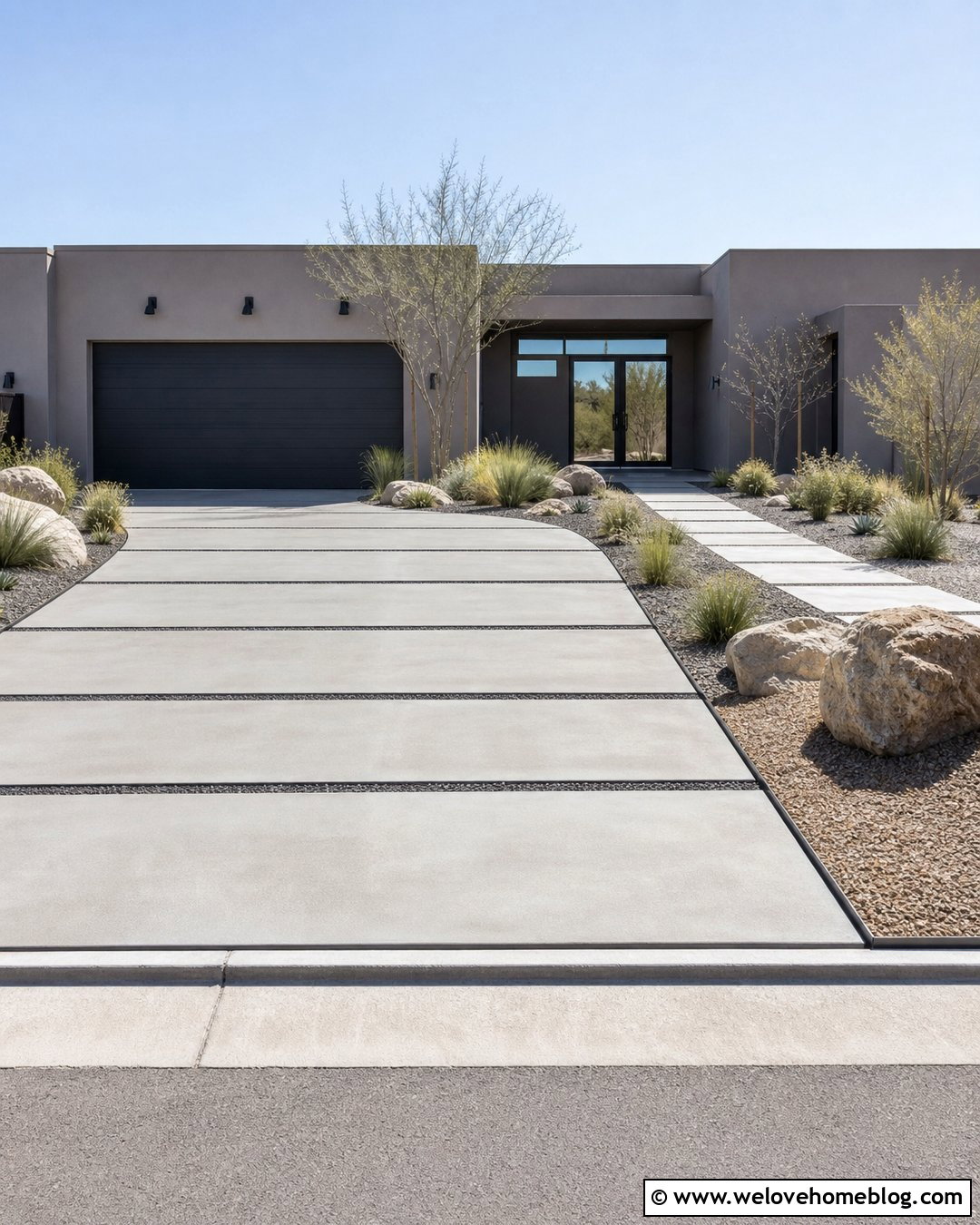
Concrete panels separated by decorative gravel joints create a modern look with more texture than grass strips. Pour large warm-gray slabs in a straight driveway and place narrow bands of dark crushed stone between selected panels. Keep the gravel away from primary tire paths when possible, or use stabilized aggregate systems to reduce movement. Steel edging or formed concrete channels can hold the stone neatly in place. Surround the driveway with drought-tolerant grasses, low succulents, and a few larger boulders for a coordinated landscape. A contemporary stucco or desert modern house completes the setting. The gravel color should contrast with the concrete without becoming the dominant feature. Plan drainage carefully so runoff does not wash loose stones onto the sidewalk, street, or smooth concrete sections after heavy rain.
18. Concrete Strip Driveway With Grass Center
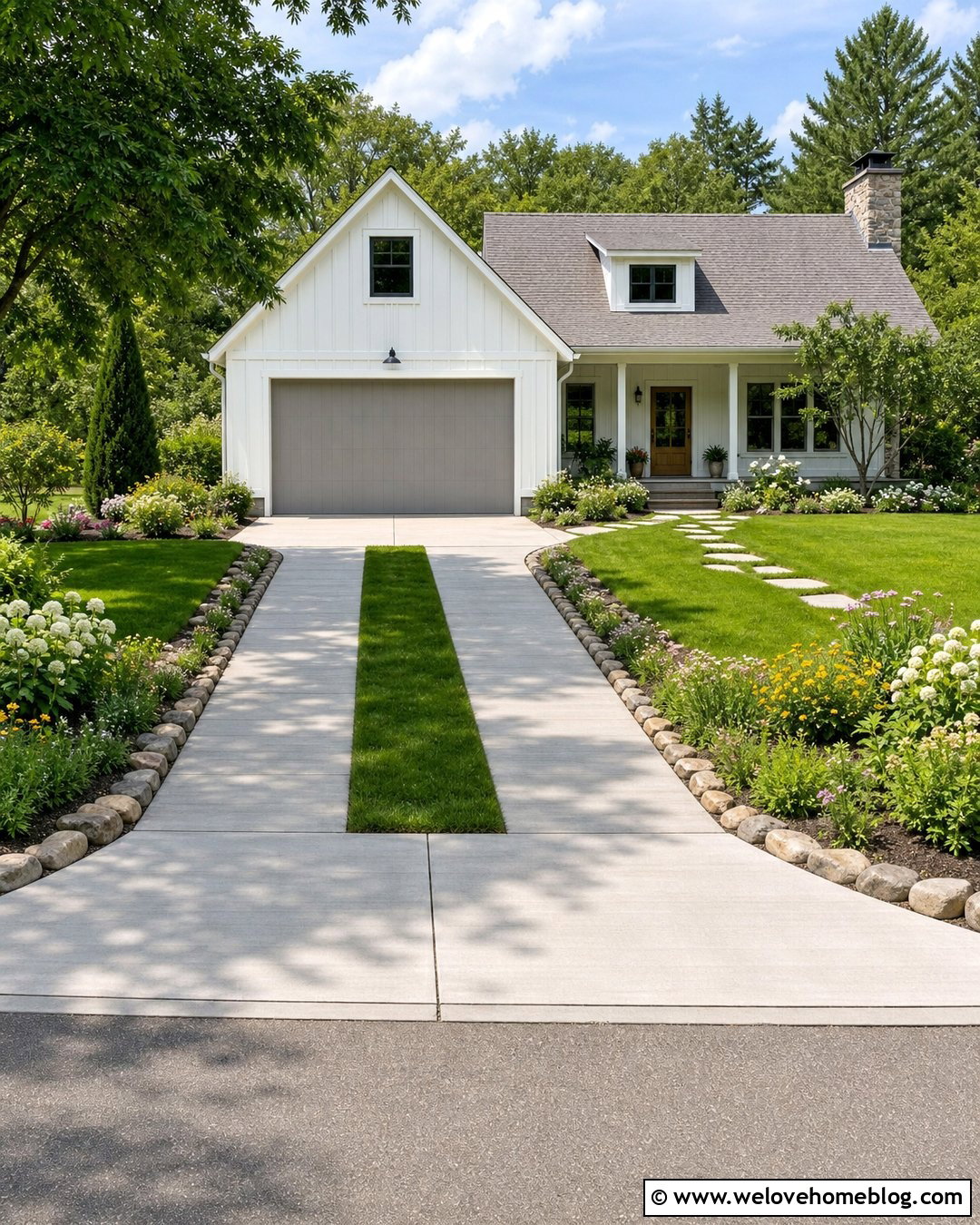
Two concrete tire strips with a planted center can reduce the visual weight of a driveway in a cottage or country setting. Use lightly broom-finished gray concrete for the parallel tracks, making each one wide enough to accommodate normal vehicle movement. Fill the center and outer joints with sturdy lawn or a regionally suitable low ground cover. At the garage, transition into a full-width concrete apron that provides convenient turning and parking space. Natural stone edging and relaxed flower beds can frame the approach. This layout works best on relatively straight driveways where vehicles follow a predictable path. It requires thoughtful dimensions, stable soil preparation, irrigation planning, and regular trimming. Confirm local codes and emergency-access requirements before choosing separated strips instead of a conventional full-width paved surface.
19. Concrete Driveway With Paver Apron
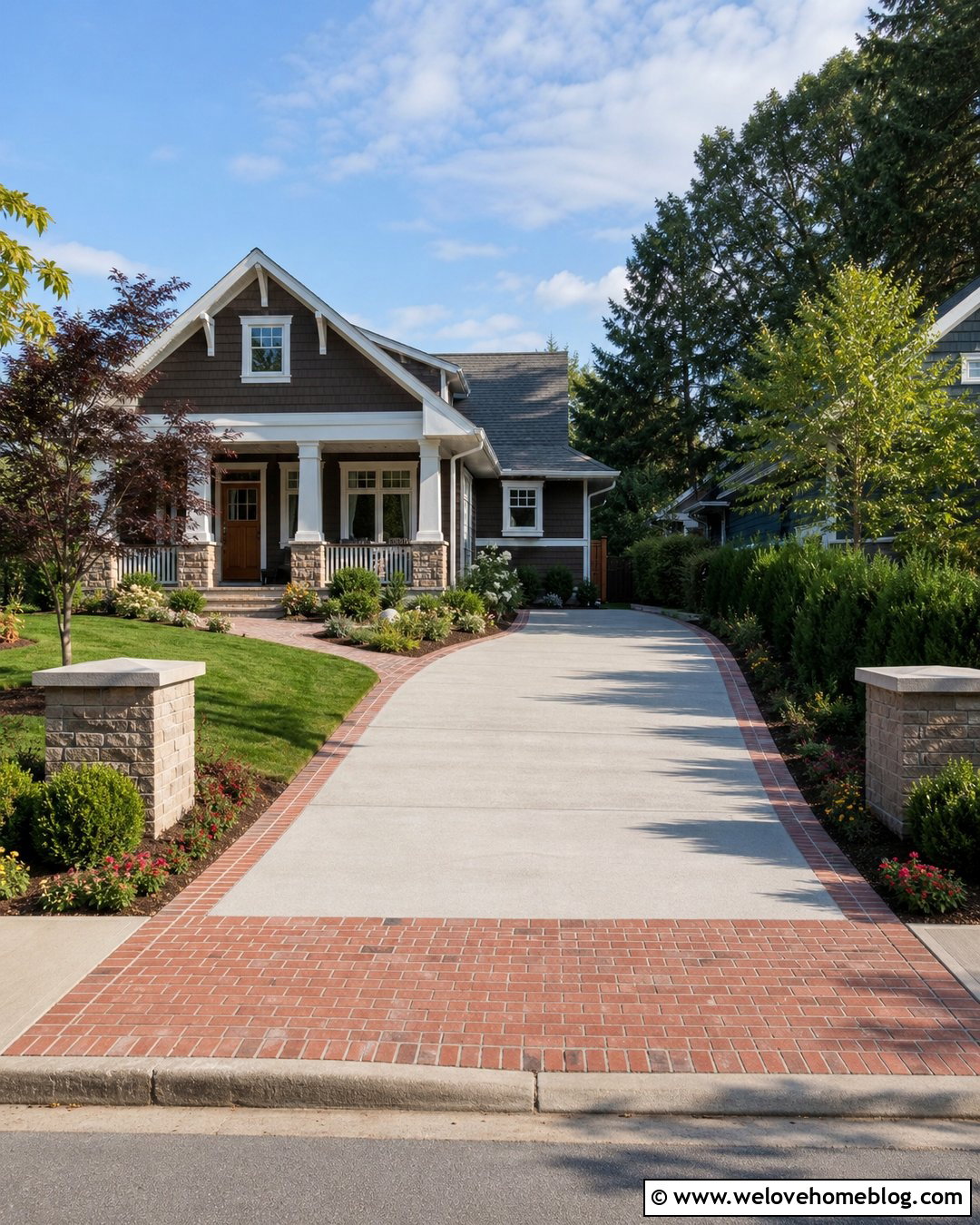
A decorative paver apron creates a strong first impression while allowing most of the driveway to remain affordable broom-finished concrete. Install a wide band of clay brick, concrete pavers, or cobblestone-look units at the street entrance. Choose colors that repeat materials on the house, then use a narrower version of the same paver as a border around the concrete. A straight driveway with a gently flared entrance provides a comfortable transition from the road. Add low masonry walls, address pillars, and compact shrubs on both sides of the apron. This strategy concentrates the decorative material where it is most visible. It can also help visually separate private property from the public sidewalk. Coordinate base preparation, drainage, and edge restraints so the paver and concrete areas meet cleanly and remain level.
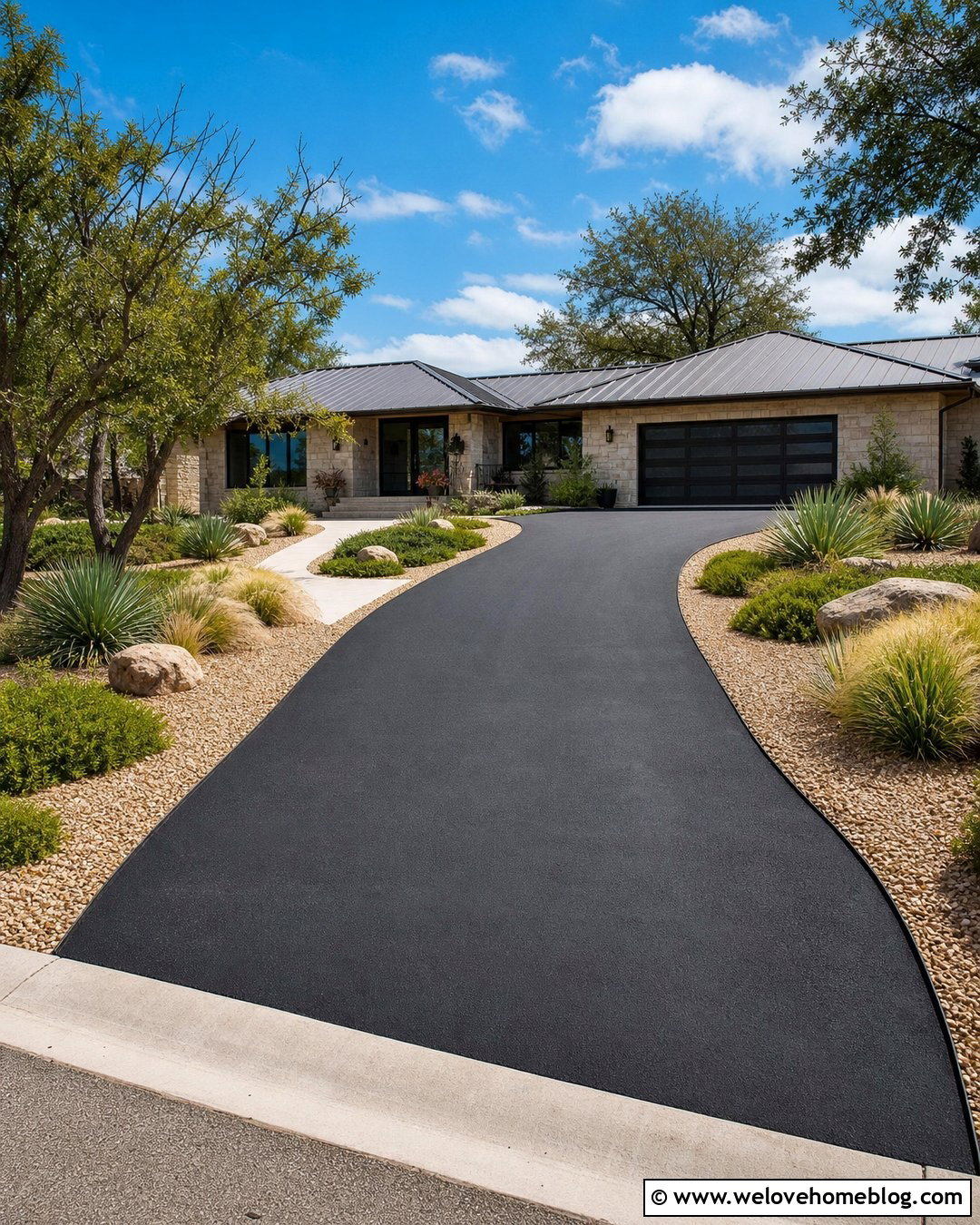
20. Broom Finish Concrete Driveway With Stamped Border
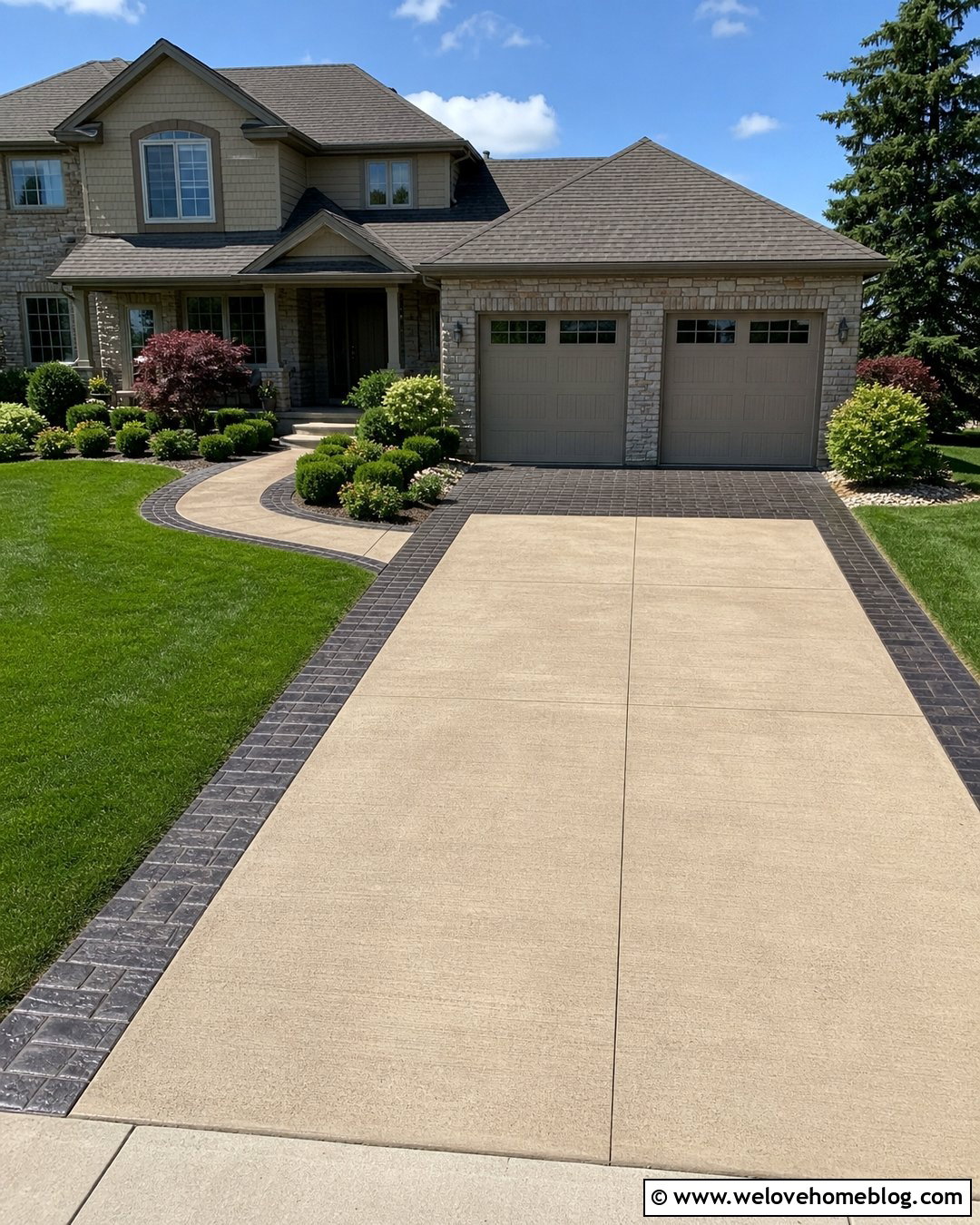
Combining a simple broom-finished center with a stamped border offers detail without covering the full driveway in a premium decorative finish. This mixed approach is commonly used to control cost while giving the concrete a more finished appearance. () Choose light tan concrete for the main field and a darker brick-pattern stamp around the perimeter. Continue the stamped material across the driveway at the garage apron to create a visual stopping point. A straight layout works with nearly any suburban home. Frame it with lawn, boxwoods, and a walkway that repeats the darker border. Limit the palette to one main color and one accent so the design remains natural. The border should be wide enough to read from the curb but not so wide that it crowds the center.
21. Exposed Aggregate Driveway With Stamped Border
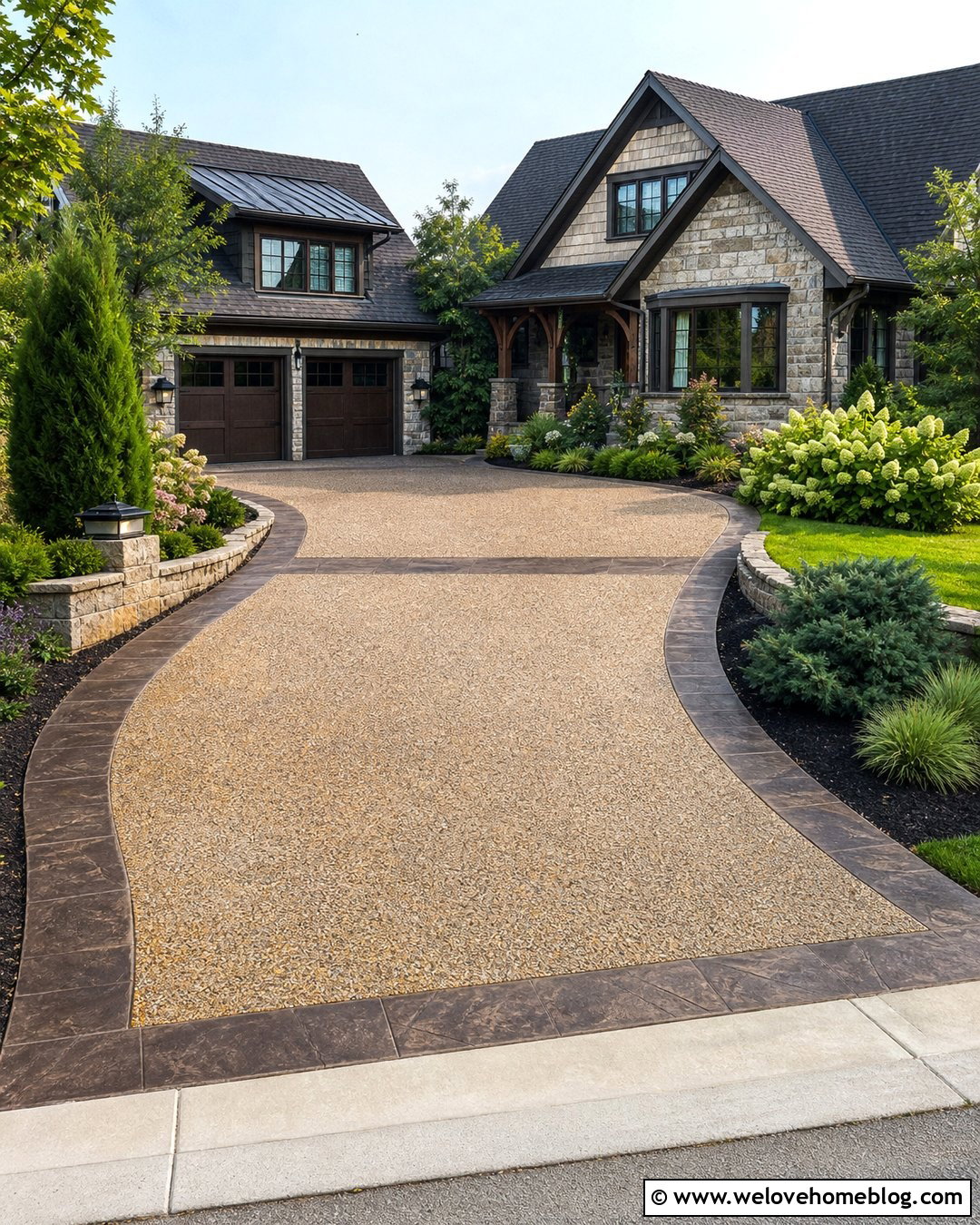
Exposed aggregate and stamped concrete create a layered driveway with both texture and pattern. Use warm pebble aggregate for the main driving surface, then install a slate-stamped border in a deeper brown or charcoal tone. The aggregate field provides natural color variation, while the border gives the wide paved area a defined shape. This combination is especially attractive on a curved driveway leading to a stone craftsman house. Add low stone retaining walls where needed and plant layered beds with junipers, hydrangeas, and ornamental grasses. A stamped cross-band near the garage can connect the two borders and break up the long approach. Because each finish requires different timing and techniques, select a contractor experienced in combining decorative treatments. Review full-size samples to confirm the colors complement one another after sealing.
22. Stamped Concrete Driveway With Aggregate Bands
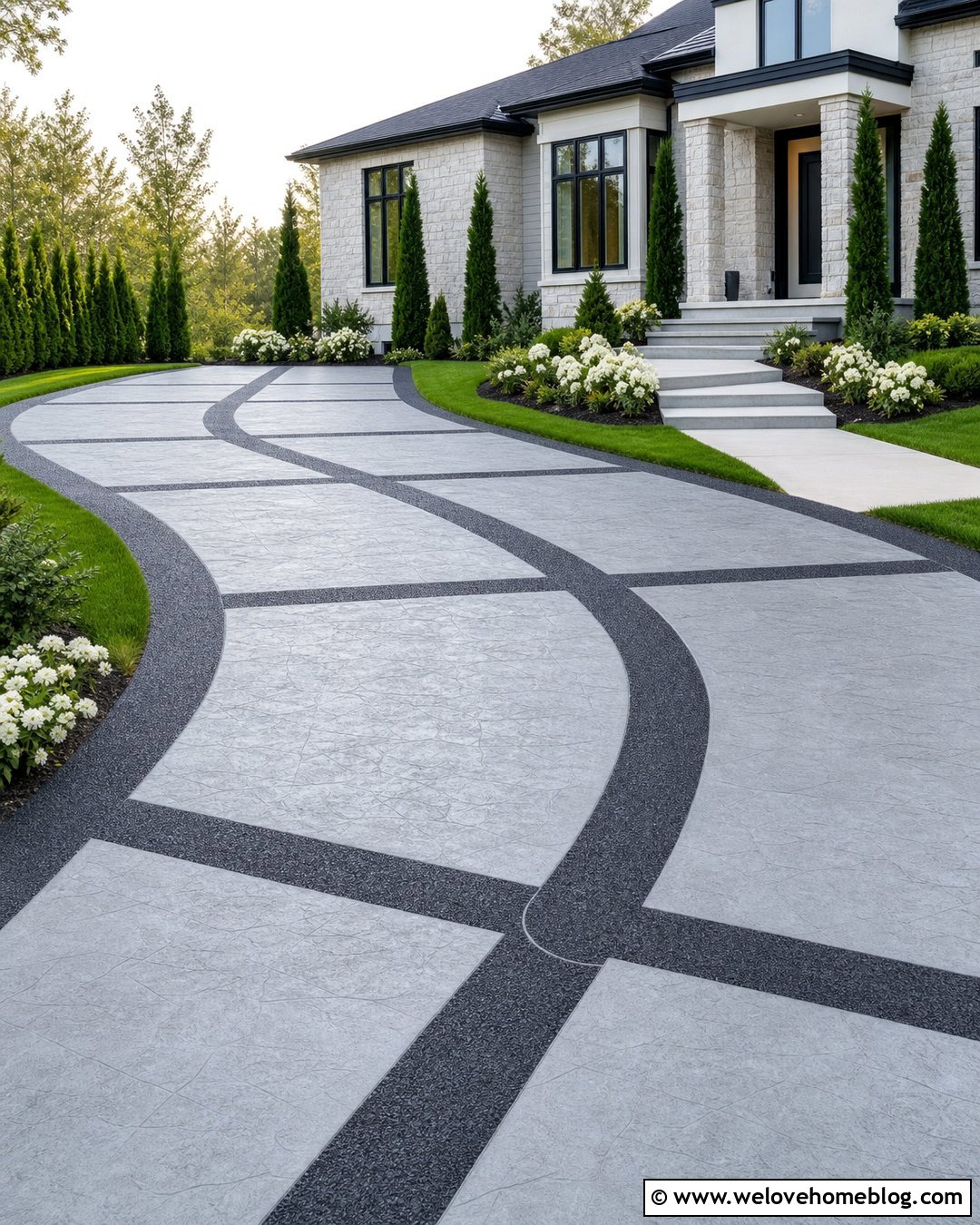
Reverse the usual material arrangement by using stamped concrete as the main field and dark exposed aggregate as the border and dividing bands. A seamless slate stamp in soft gray creates the broad surface, while charcoal aggregate lines form large rectangular panels. The bands add depth and can emphasize the direction of a long driveway. This layout looks striking beside a contemporary home with dark roofing, stone accents, and black-framed windows. Add restrained landscaping with evergreen hedges, white flowers, and broad areas of lawn. A matching aggregate channel near the garage can be designed to visually connect with the drainage plan. Keep rounded corners or gentle transitions where bands intersect so the pattern feels refined. Joint placement, finish transitions, and water flow should all be planned together before the forms are installed.
23. Two Tone Concrete Driveway
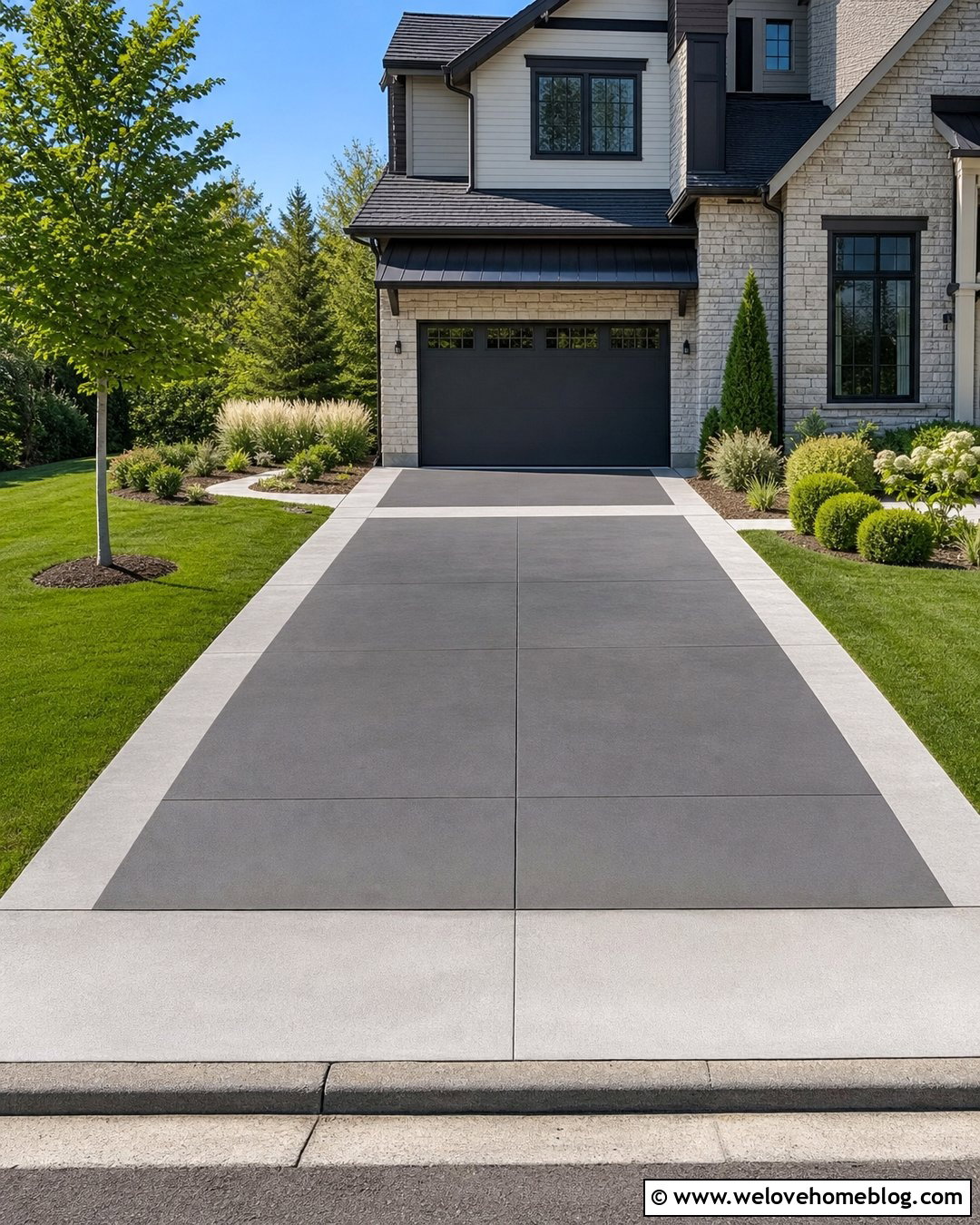
A two-tone driveway can define parking zones, guide movement, and complement a house with contrasting exterior materials. Use medium-gray concrete for the primary vehicle lanes and lighter gray concrete for wide side borders and the central walkway connection. Divide the colors with clean straight lines rather than complicated curves. On a wide driveway, a darker rectangular parking court near the garage can make the area feel visually smaller and more organized. Match the gray tones to the home’s stone, siding, and roof instead of selecting them independently. Finish both colors with the same subtle broom texture for consistency. Add foundation grasses, clipped shrubs, and a single ornamental tree near the walkway. Full-size cured samples are valuable because concrete color can appear different in direct sunlight, shade, and wet conditions.
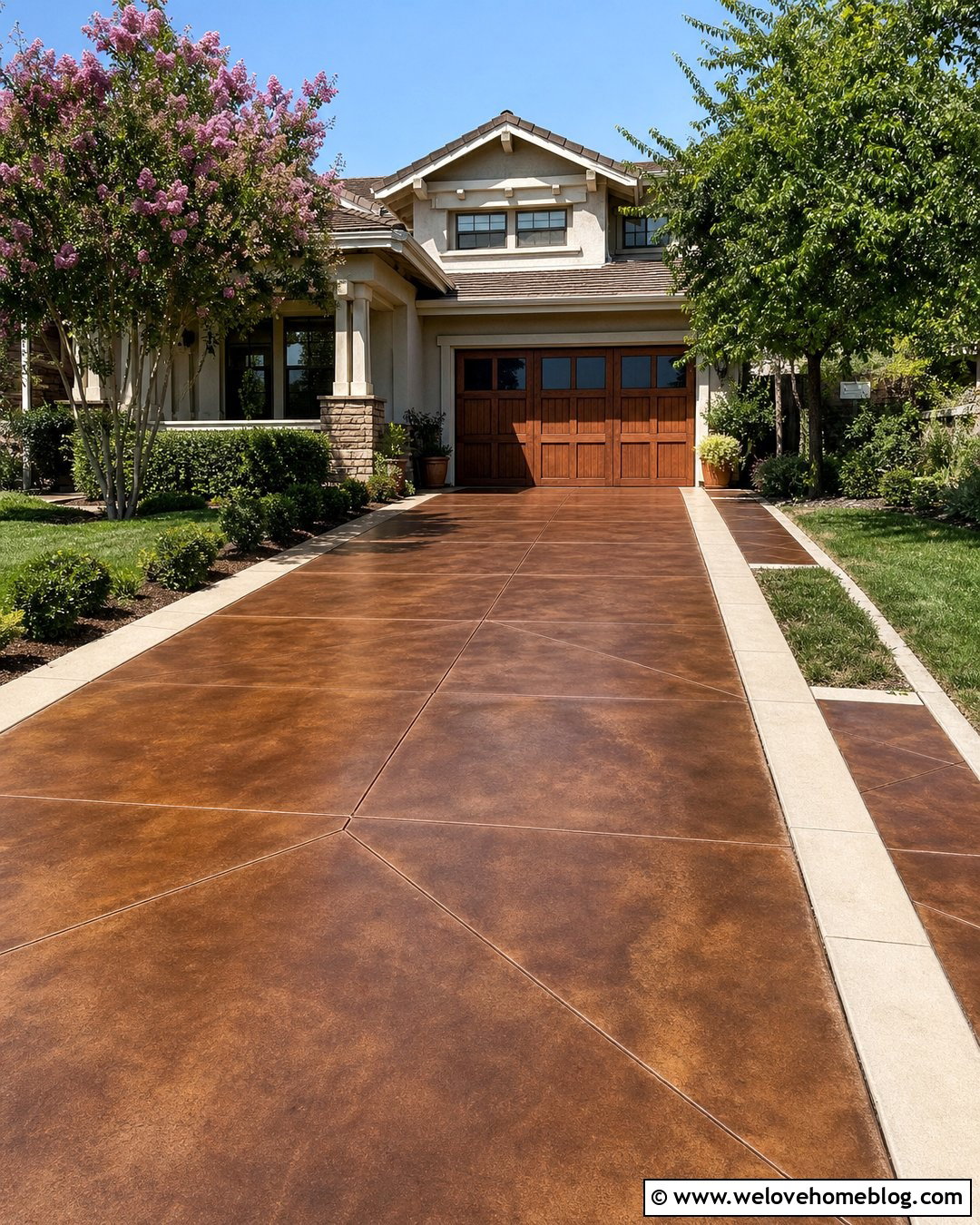
24. Acid Stained Concrete Driveway
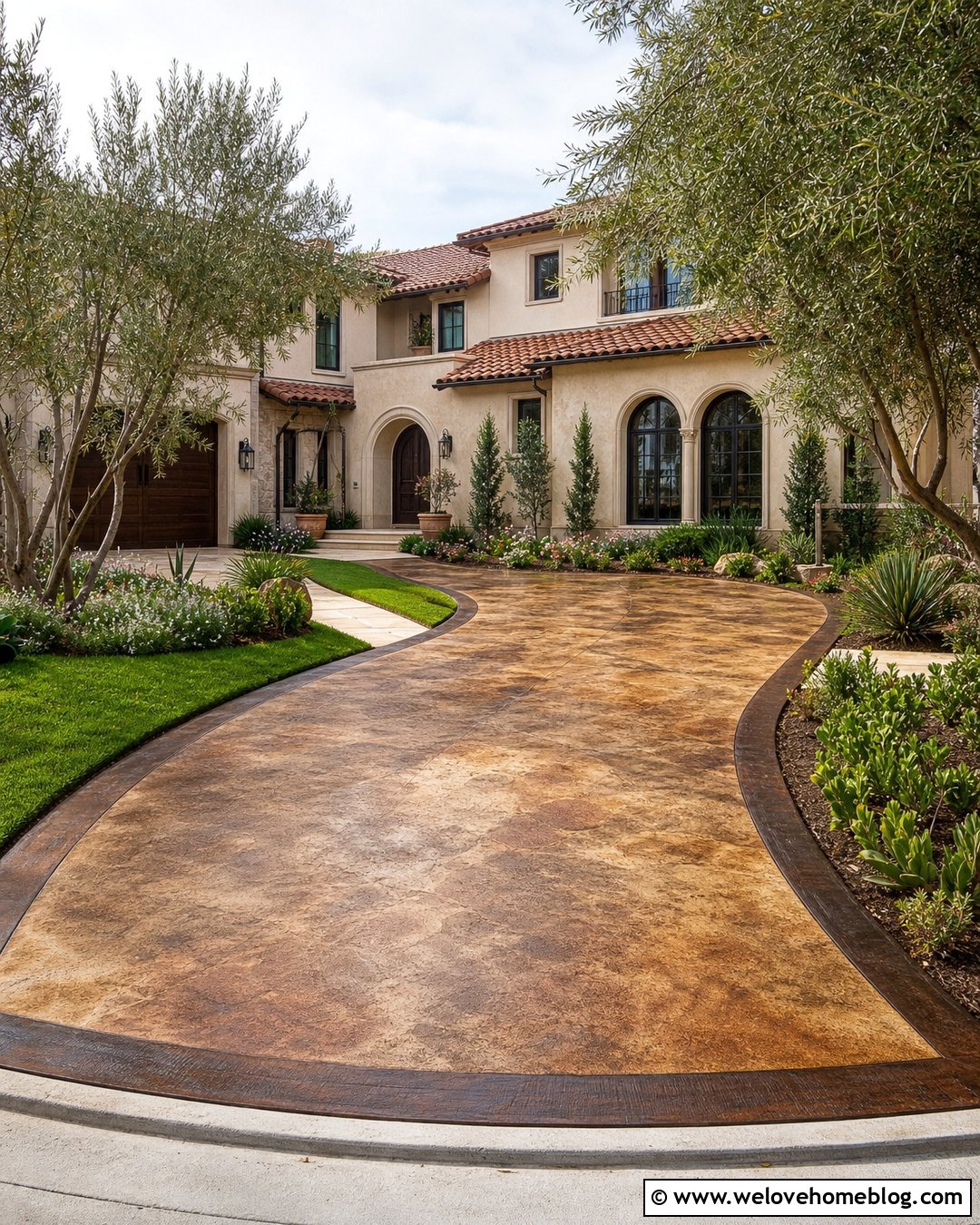
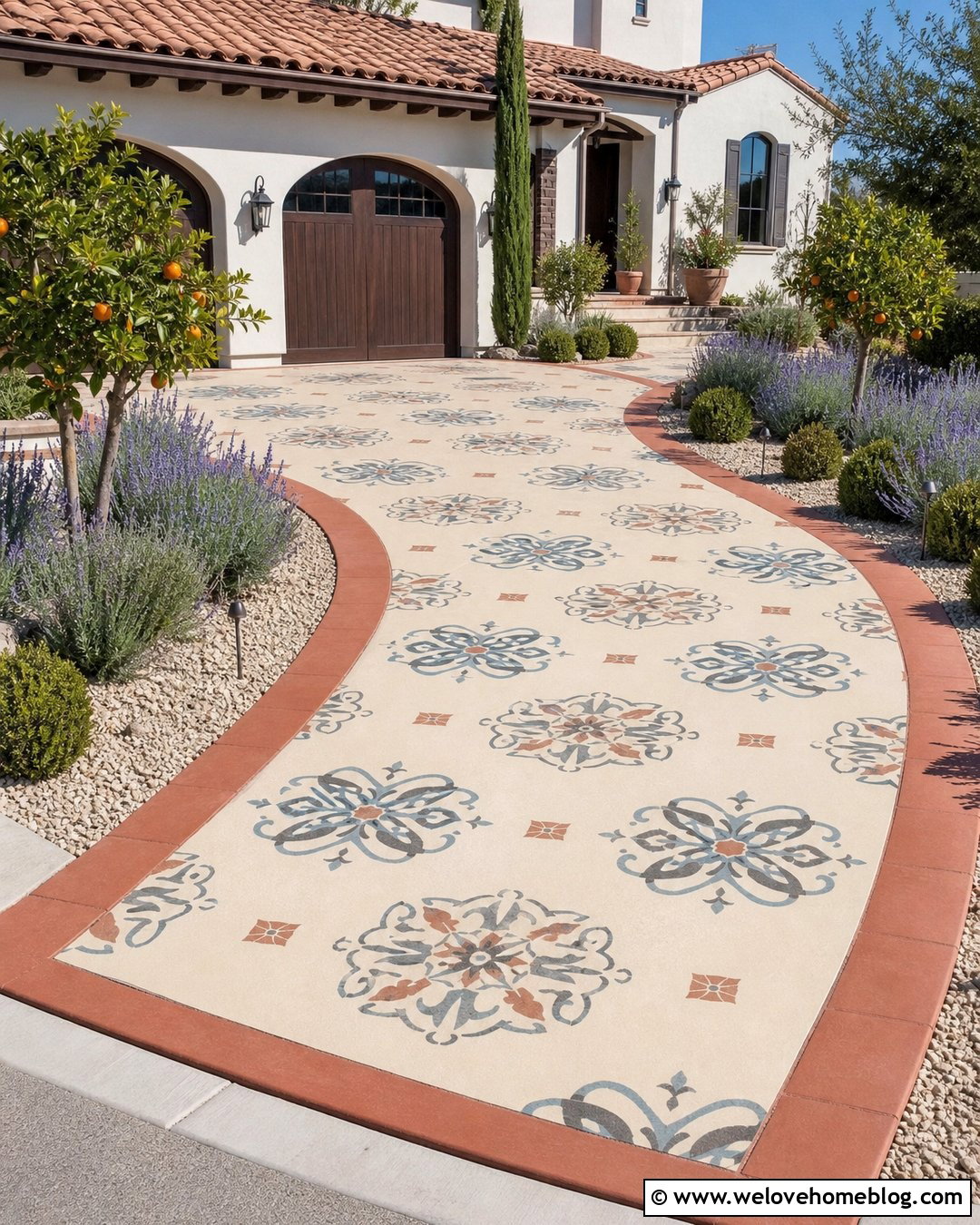
Acid-stained concrete can create mottled earth tones that suit Mediterranean, Spanish, and rustic homes. Choose layered shades of brown, amber, and muted terracotta rather than one intense color. A seamless stone texture gives the stain additional depth without introducing a rigid repeating pattern. Frame the driveway with dark concrete or clay brick and use a curved layout that follows the architecture and terrain. Complete the setting with stucco walls, terracotta roof tiles, olive-like ornamental trees, and drought-tolerant planting beds. Since stains interact with the concrete surface instead of covering it like opaque paint, variation is part of the finished appearance. Ask for a test section and discuss compatibility with the concrete, prior treatments, and chosen sealer. The finished driveway should look naturally weathered, not uniformly painted.
25. Terracotta Colored Concrete Driveway
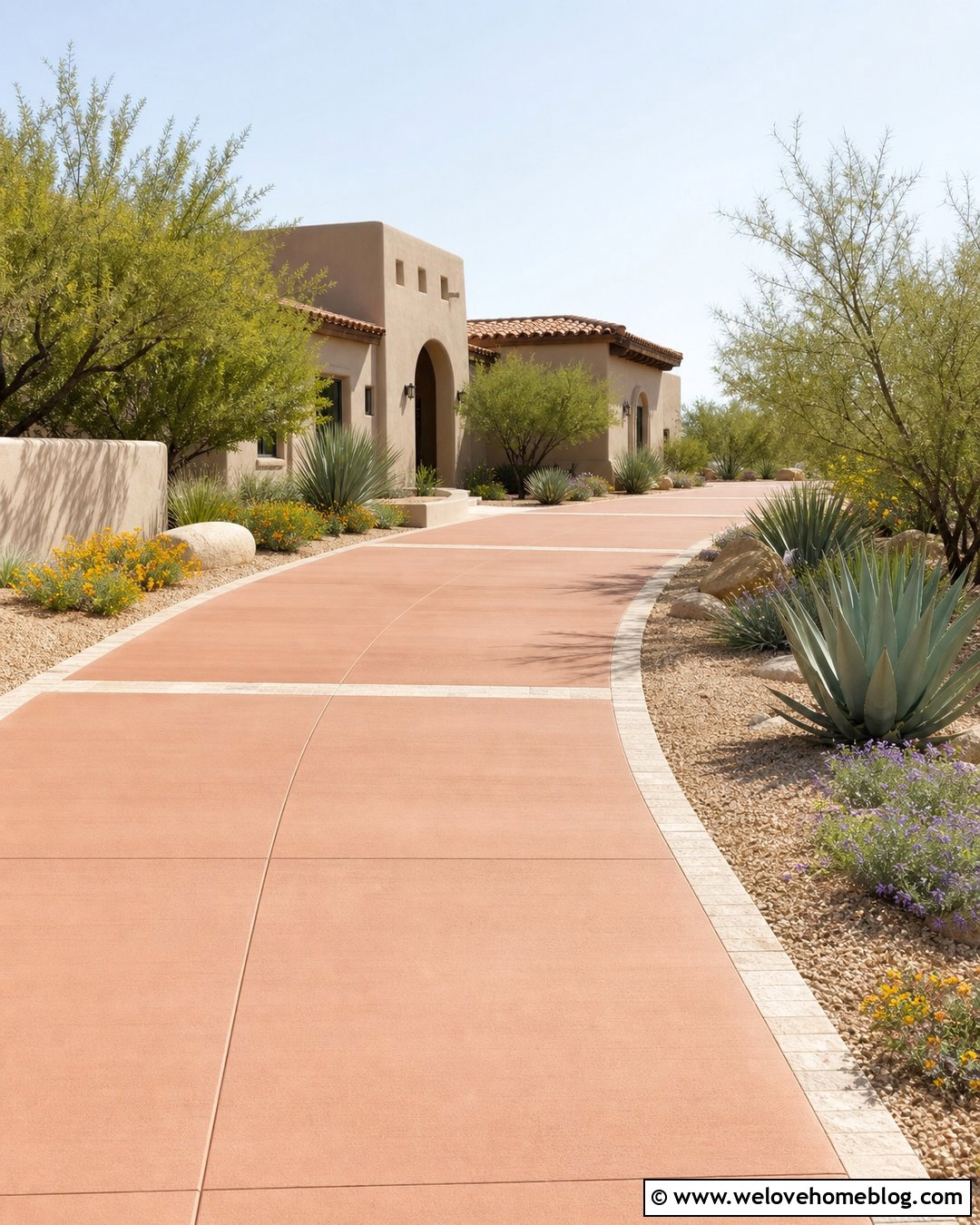
Terracotta-colored concrete brings warmth to a Southwestern, Spanish revival, or desert home. Use integrally colored concrete with a restrained red-brown tone and a light broom finish for dependable visual texture. Divide the surface into broad squares with saw-cut joints, then outline the driveway with cream limestone or pale concrete bands. A gently curved approach will soften the strong color and lead naturally toward an arched garage or courtyard entrance. Surround it with gravel beds, agave, yucca, ornamental grasses, and low flowering plants suited to the local climate. Avoid matching the driveway exactly to the roof tiles; a slightly muted tone usually creates better separation. Because colored concrete may display normal shade variation, view cured outdoor samples and plan joint locations before approving the final mix.
26. Heated Concrete Driveway
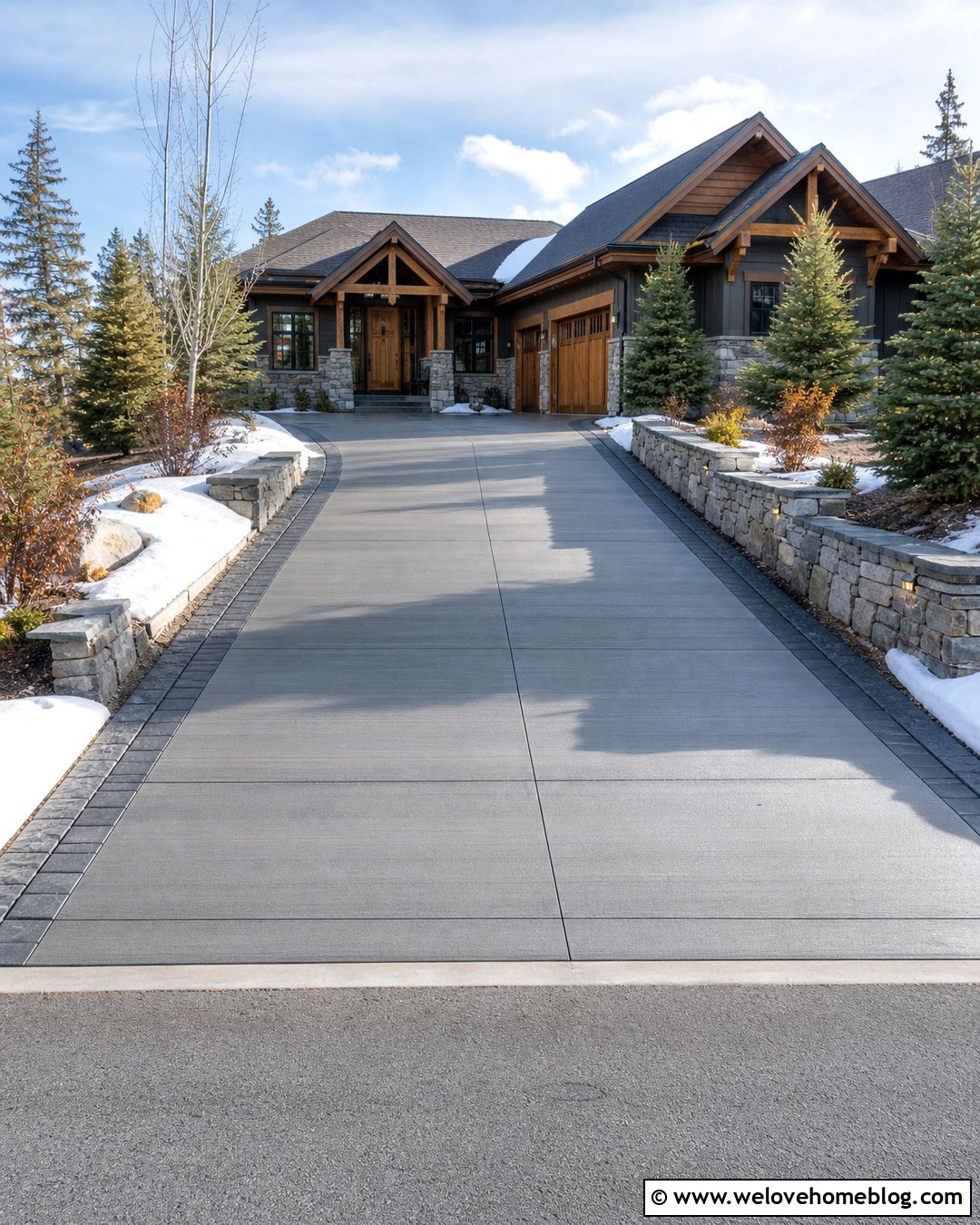
A heated concrete driveway can be integrated into a polished-looking design for a home in a snowy climate. Use medium-gray broom-finished concrete in a straight or gently sloped layout, with dark granite pavers forming a narrow perimeter. Radiant systems are installed beneath or within the paved assembly to help manage snow and ice, but system design, controls, energy use, and operating costs require professional planning. Keep the surface pattern simple so future maintenance locations are clearly documented. Add evergreen landscaping, stone retaining walls, and bright entry lighting for a complete winter-ready approach. Drainage remains essential because melted snow needs a safe route away from the garage, sidewalk, and refreezing zones. Coordinate the concrete contractor, heating specialist, electrician or plumber, and drainage designer before construction begins.
27. Pervious Concrete Driveway
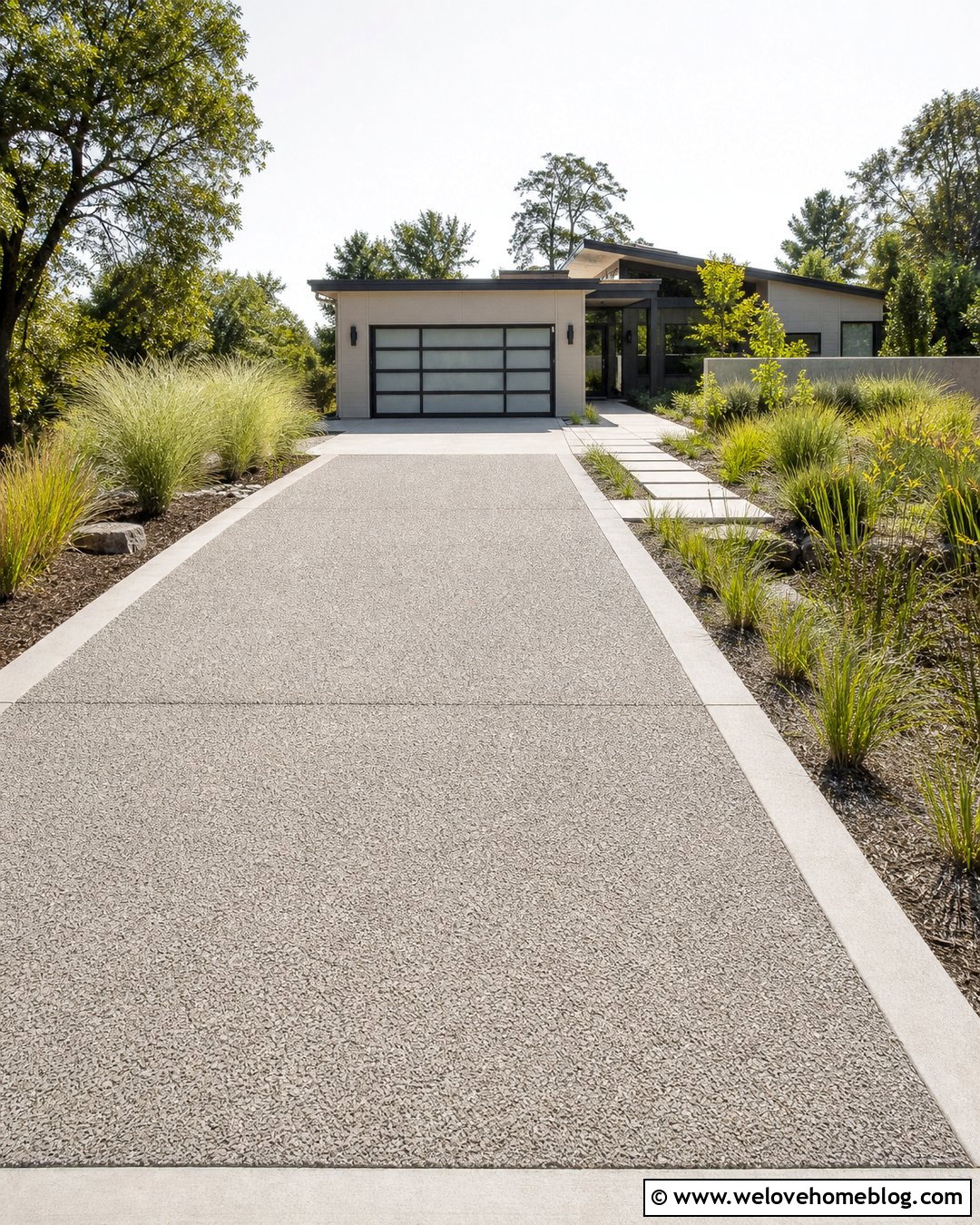
Pervious concrete offers a distinct open-textured appearance and is designed to allow water to pass through the pavement into a prepared stone reservoir below. Use a natural light gray or sandy tone for a straight driveway leading to an environmentally focused modern home. Frame the permeable field with smooth concrete bands only where the drainage design allows them. Native grasses, rain-garden planting, and shallow landscape swales can reinforce the water-conscious layout. A solid concrete apron near the garage may be included if runoff is directed appropriately. Pervious systems depend on correct subgrade assessment, reservoir design, installation, and maintenance to function as intended. They are not suitable for every soil, slope, climate, or local code. Consult qualified local professionals before choosing this system for stormwater management.
28. Narrow Concrete Driveway With Landscape Borders
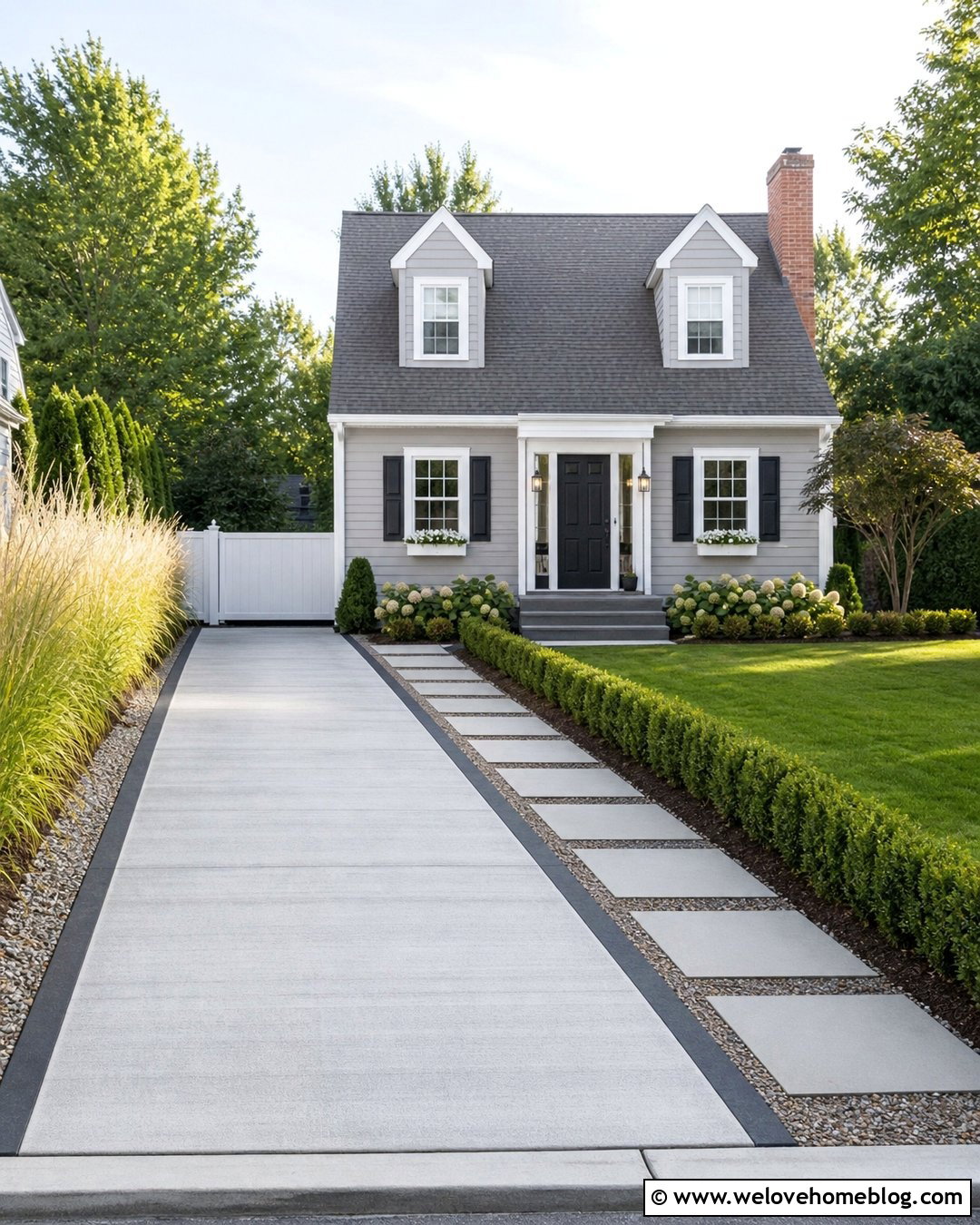
A narrow lot can still have a polished driveway when every edge is carefully planned. Use light gray broom-finished concrete in a straight layout, adding one slim charcoal border rather than a wide decorative frame. A matching stepping-stone walkway can branch toward the front door without taking space from vehicle access. On one side, install a low evergreen hedge that protects the house facade. On the other, use upright ornamental grasses and a narrow gravel strip that supports drainage and maintenance access. Keep trees and spreading shrubs away from door-opening areas. Large rectangular control-joint sections will make the driveway appear wider than numerous small panels. Before finalizing dimensions, account for vehicle width, mirrors, trash bins, gates, roof downspouts, utility locations, and comfortable pedestrian movement.
29. Wide Concrete Driveway With Motor Court
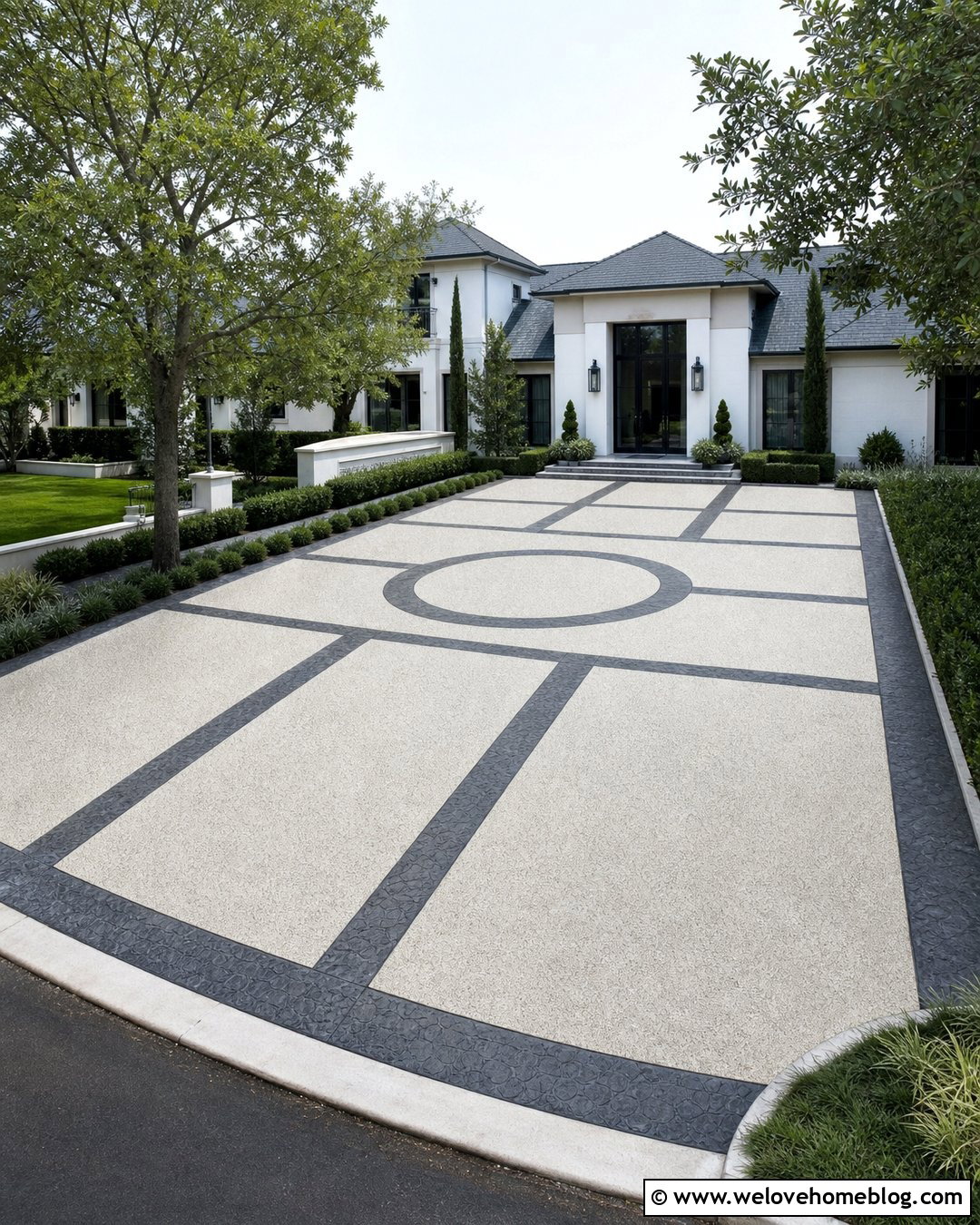
A broad motor court needs visual structure so it does not resemble an uninterrupted parking lot. Use pale exposed aggregate concrete for the main surface and divide it with charcoal stamped-concrete bands. Arrange the bands into large rectangles that define arrival, turning, and parking areas. A circular focal medallion or contrasting center panel can mark the main entry axis without becoming overly ornate. Surround the court with deep planting beds, mature shade trees, and low hedges that soften its scale. A substantial traditional or contemporary home provides the right architectural balance. Connect the front door with a clearly differentiated walkway, perhaps using the same dark stamped finish as the bands. Joint planning, vehicle turning paths, drainage slopes, and guest parking should be resolved before choosing the final decorative pattern.
30. Curved Concrete Driveway Through Trees
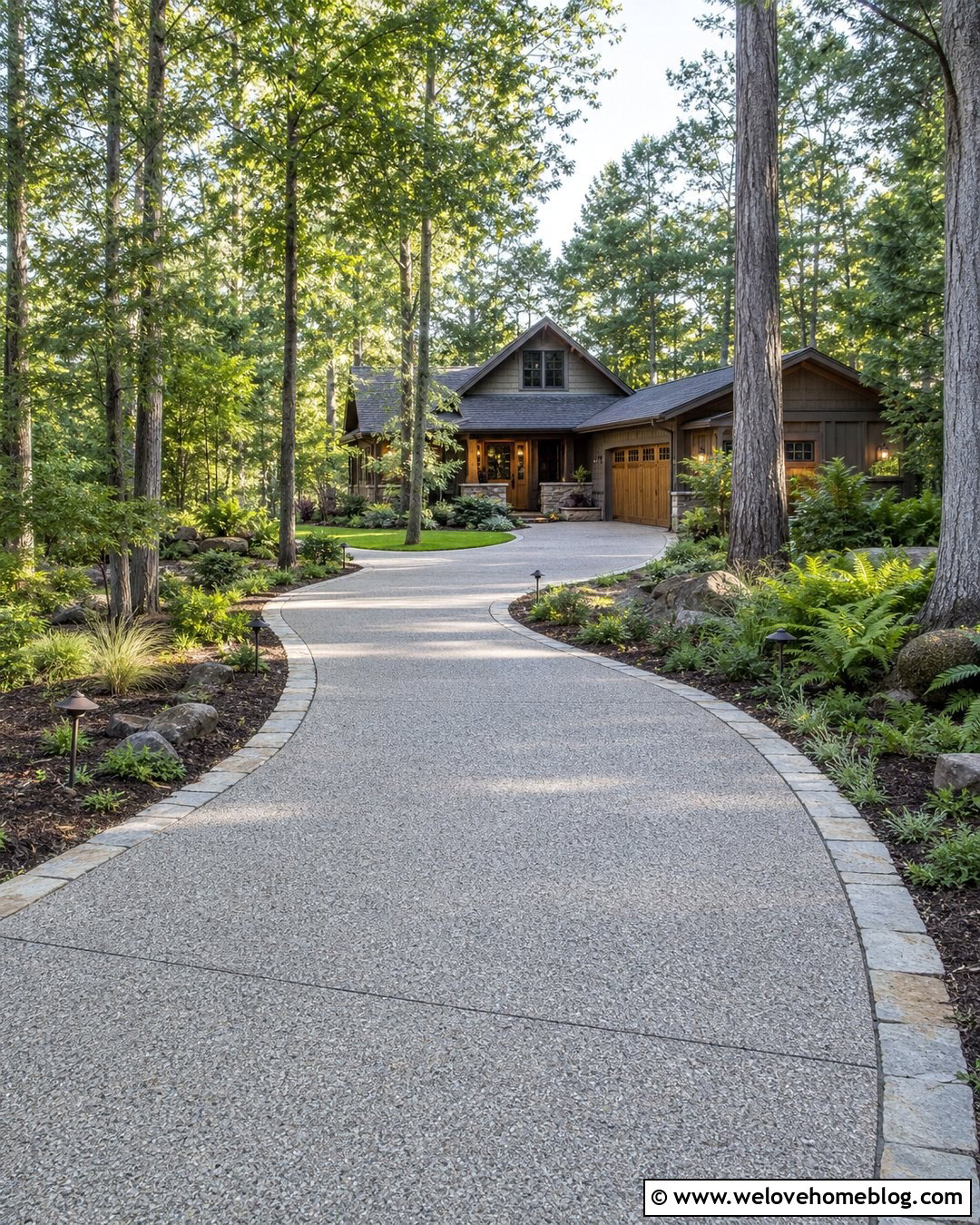
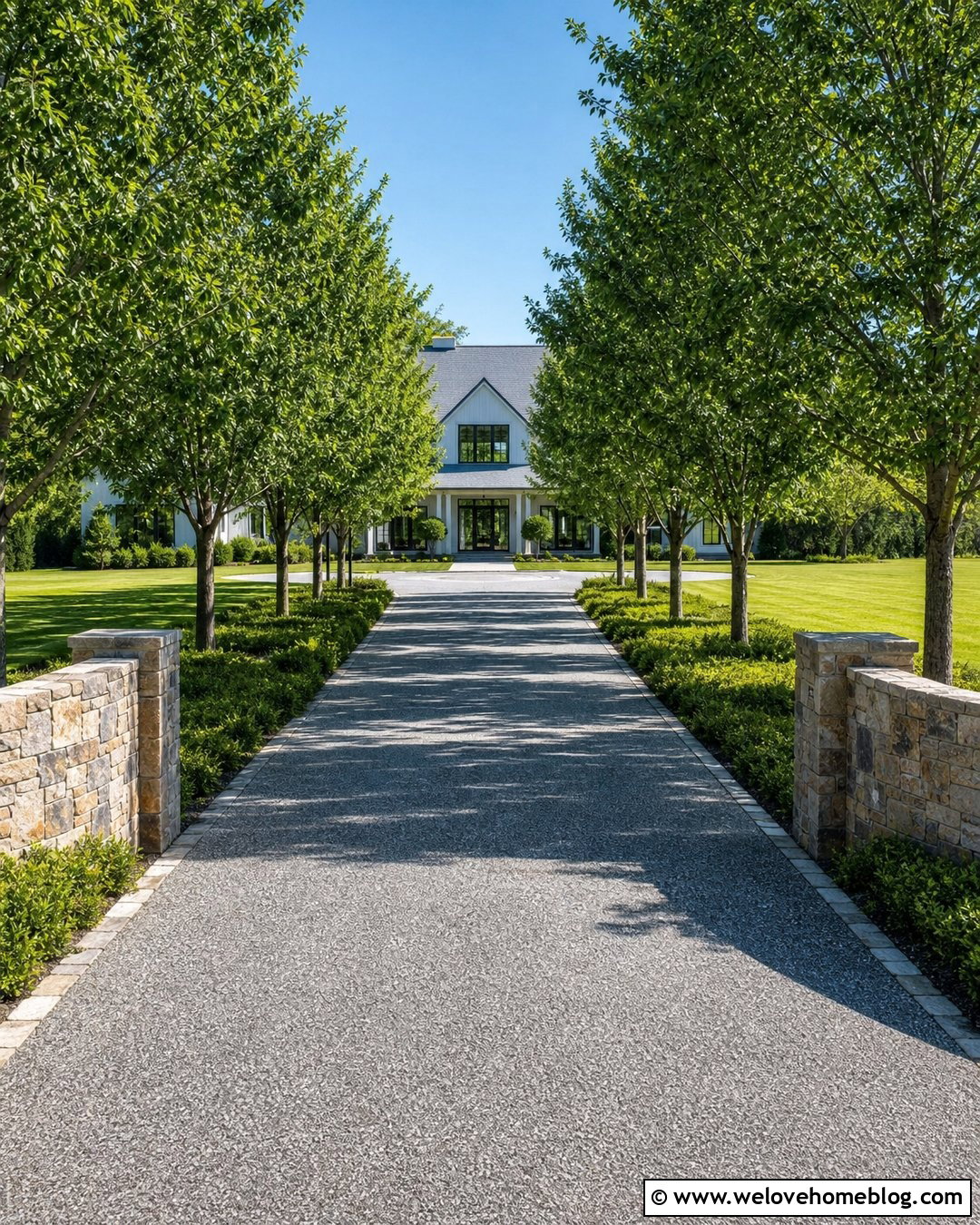
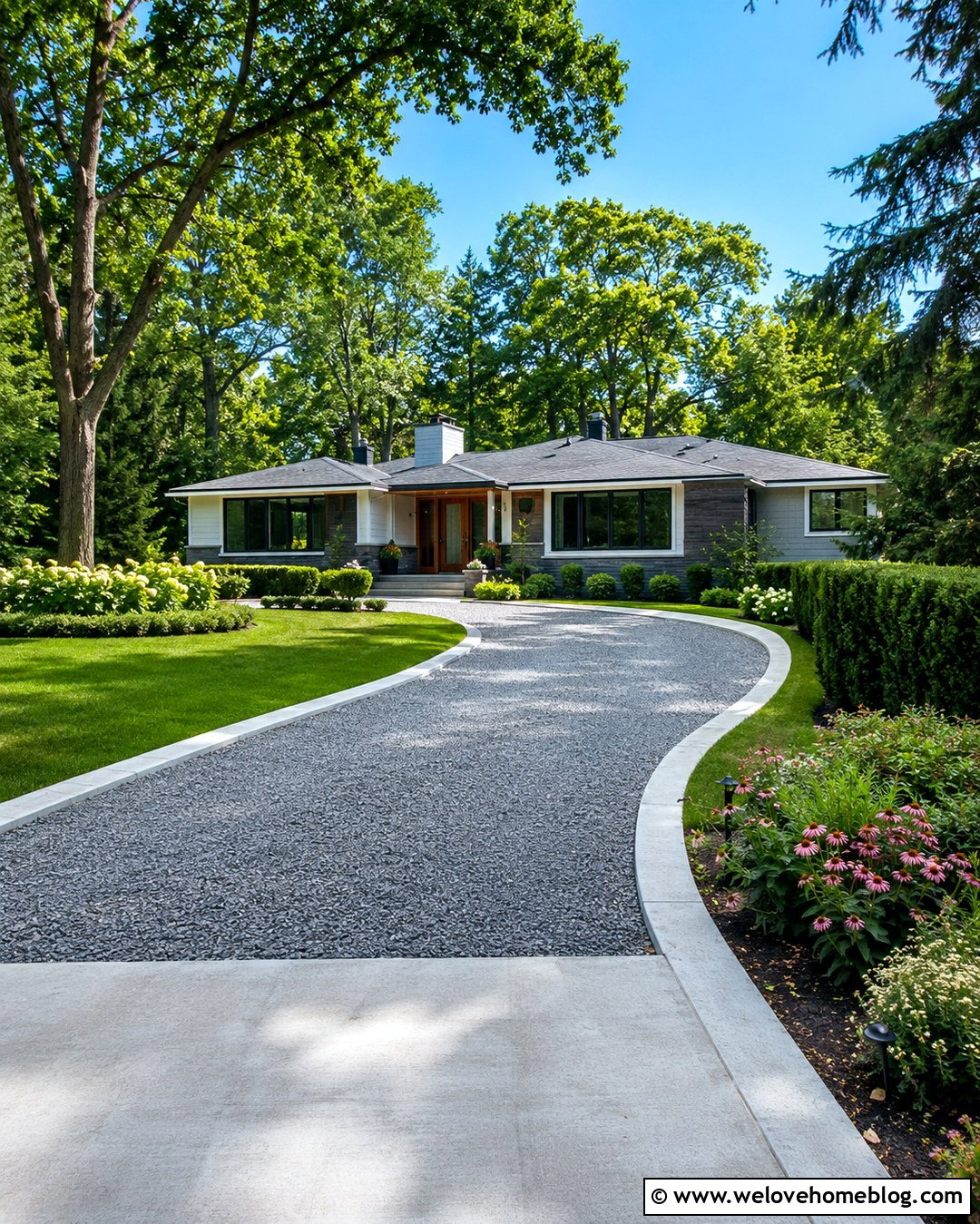
A curved driveway passing through established trees can feel private and natural when the paving remains understated. Choose warm gray exposed aggregate concrete with a narrow stone curb that follows each bend. Preserve generous planting areas around trunks and avoid raising soil over major root zones. Native shrubs, ferns, woodland ground covers, and shade-tolerant grasses can fill the edges without creating a formal suburban border. Use low path lights outside the driving clearance area, but keep the scene open enough for safe visibility. The driveway should widen near the garage or house to provide practical turning space. Tree protection, root conditions, excavation limits, and drainage require professional site evaluation. When carefully planned, the textured concrete, flowing route, and layered greenery create one continuous landscape rather than separate paved and planted areas.
31. Modern Farmhouse Concrete Driveway
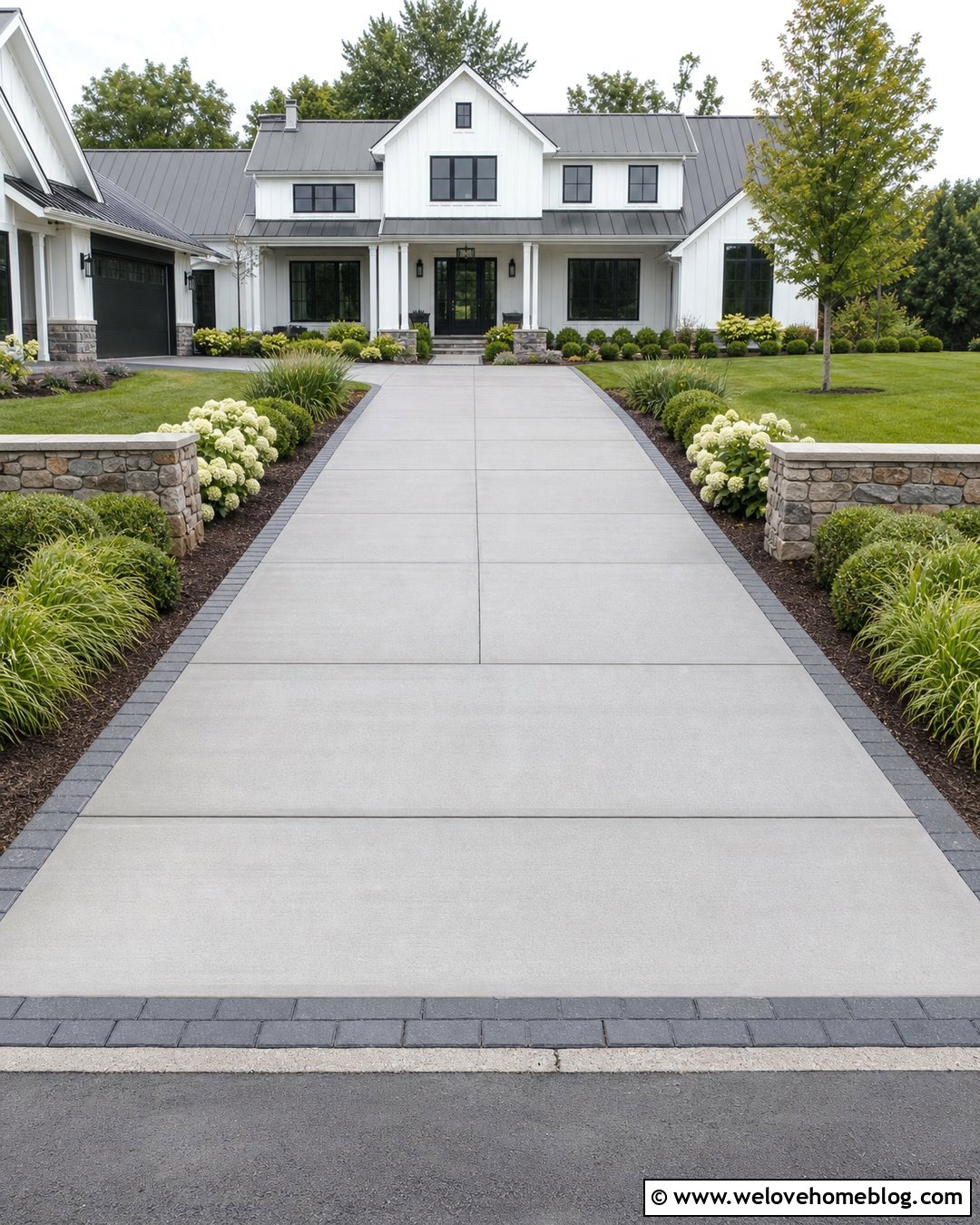
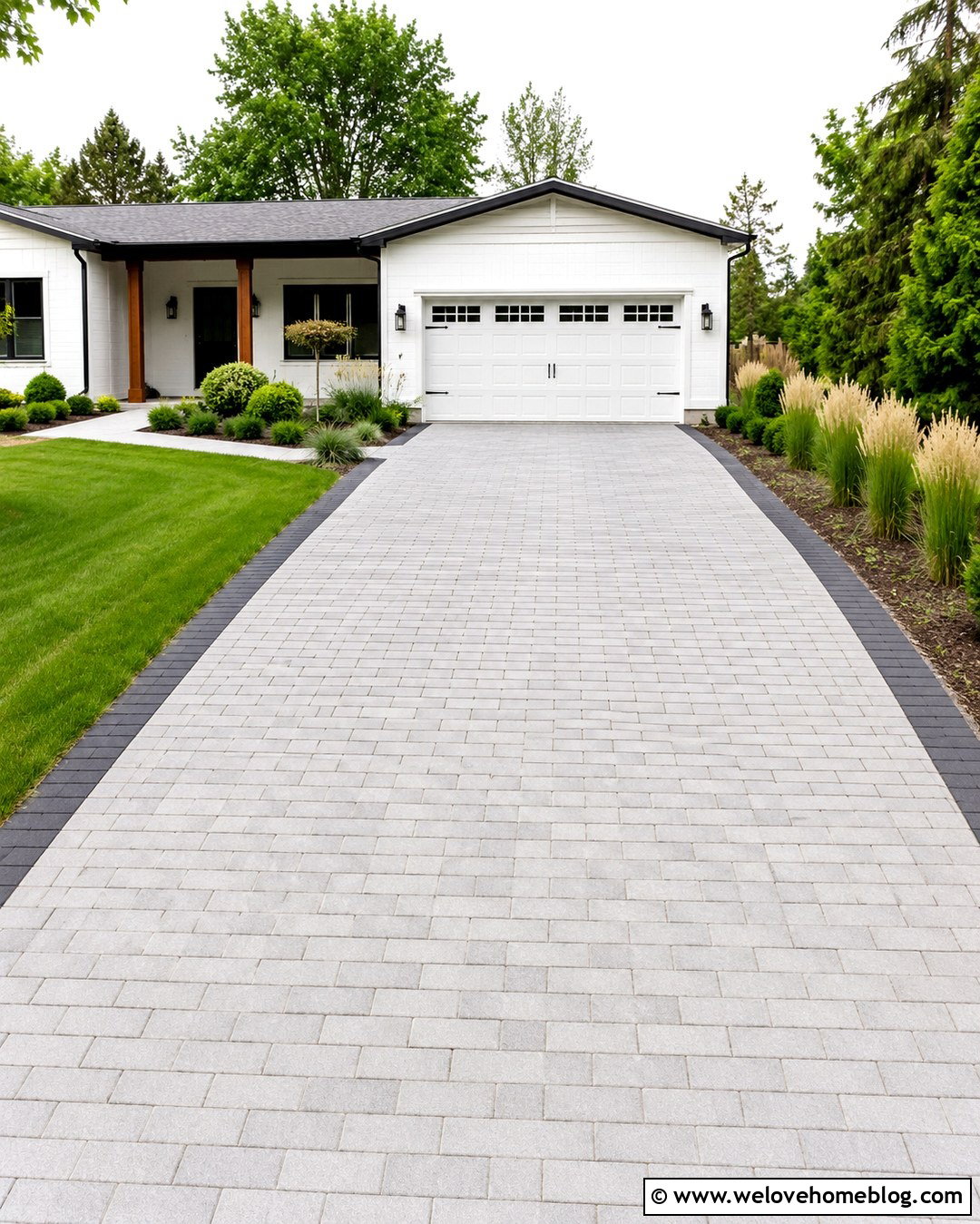
A modern farmhouse calls for a driveway that feels clean but not overly urban. Use soft gray broom-finished concrete divided into broad rectangular sections. Add a thin border of charcoal concrete pavers that connects visually with black windows, metal roofing, and exterior light fixtures. A straight driveway reinforces the home’s symmetry, while a modest flare near the garage improves access. Frame the approach with white hydrangeas, clipped evergreens, ornamental grasses, and a few natural stone accents. A concrete walkway can branch toward the porch and repeat the dark border. Avoid excessive stamped patterns, which may compete with board-and-batten siding and other strong farmhouse details. The restrained palette lets the house remain the focal point while giving the driveway enough definition to look thoughtfully incorporated into the property.
32. Concrete Driveway For A Ranch House
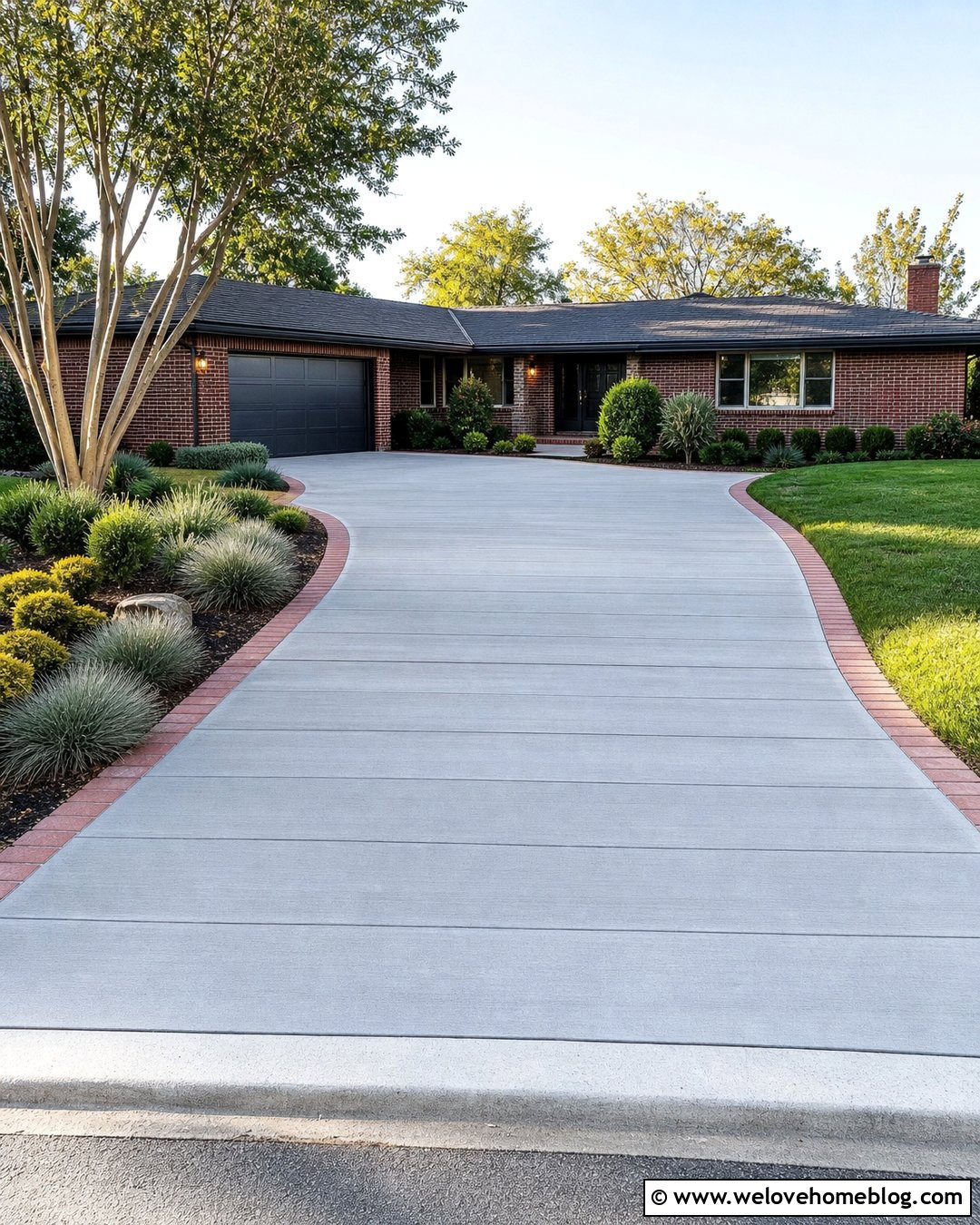
A low, wide ranch house benefits from a driveway design that emphasizes horizontal lines. Use medium-gray broom-finished concrete with long rectangular panels running toward the garage. Install a warm brick ribbon along the edges and across the apron to connect the paving with the home’s masonry facade. A gently curved outer edge can soften the broad garage elevation while preserving an efficient parking area. Add low shrubs, spreading ornamental grasses, and one small multi-trunk tree rather than tall formal plants. Extend the brick-bordered concrete into a broad front walkway that feels proportionate to the house. If the existing driveway is very wide, landscape islands or contrasting concrete bands can divide it visually. Keep plants clear of vehicle overhang, doors, sight lines, and utility access points.
33. Concrete Driveway For A Colonial House
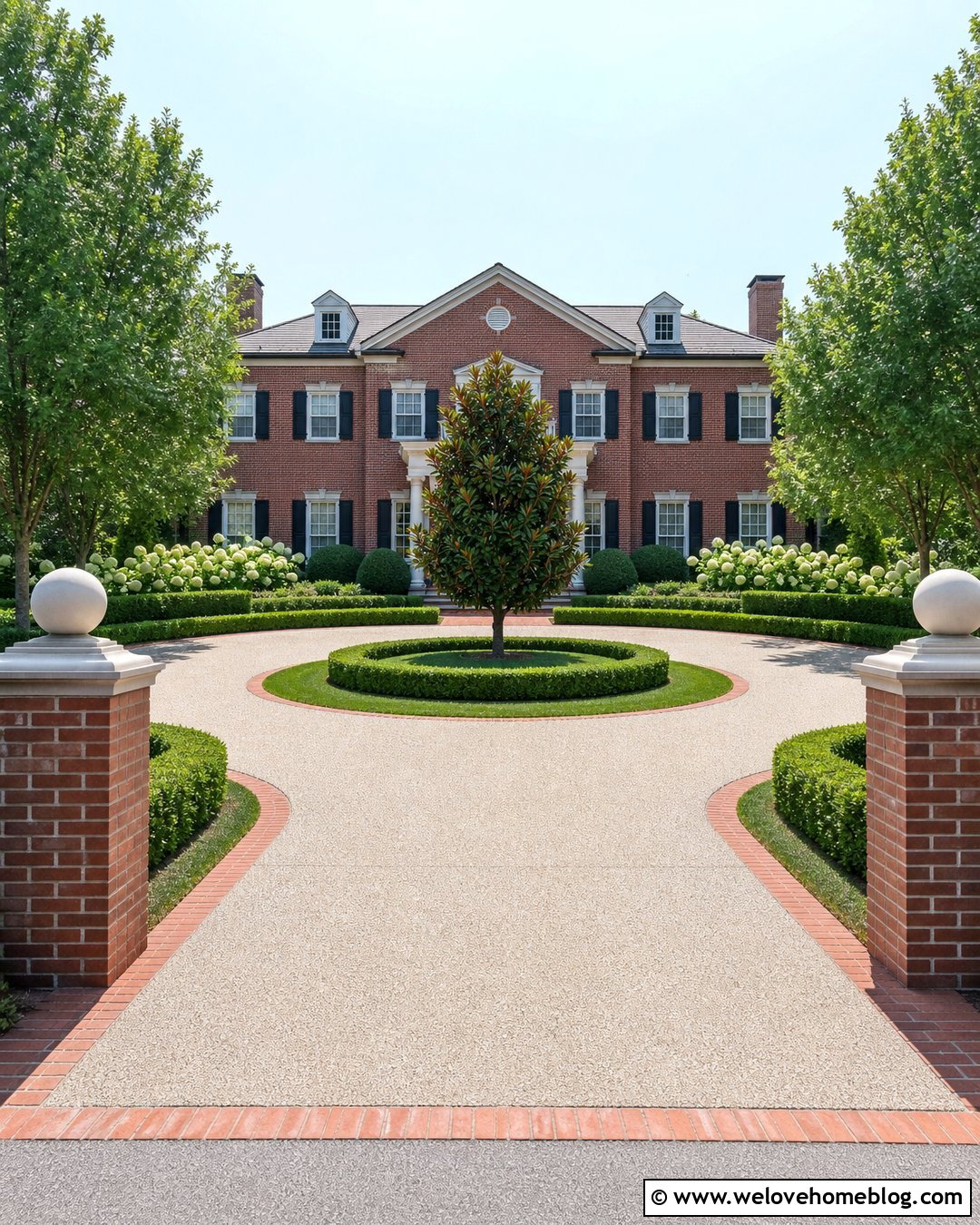
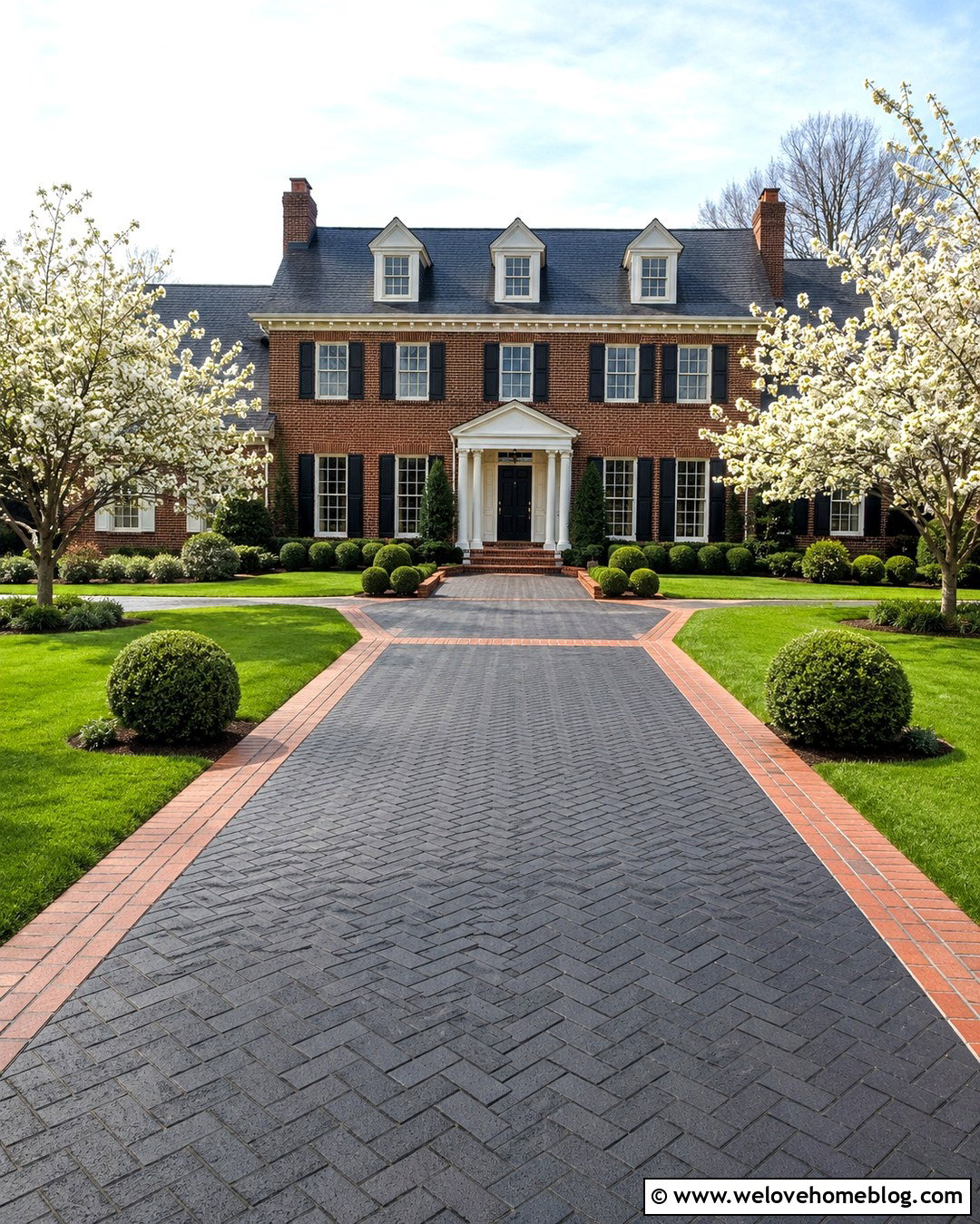
Symmetry is the key to a concrete driveway that complements a colonial home. Choose light gray exposed aggregate for a straight driveway aligned with the garage or front entry. Frame it with traditional red clay brick in a soldier-course pattern. If the property is wide enough, create a circular arrival loop with a centered lawn island and one formal ornamental tree. Matching brick pillars at the street can establish the entrance without requiring an oversized gate. Use boxwood hedges, hydrangeas, and evenly spaced trees to reinforce the balanced facade. The aggregate provides restrained texture, while the brick repeats the home’s chimney or walls. Keep decorative patterns orderly and avoid too many competing materials. A matching brick-edged walkway will connect the driveway to the front steps and complete the formal composition.
34. Concrete Driveway With Desert Landscaping
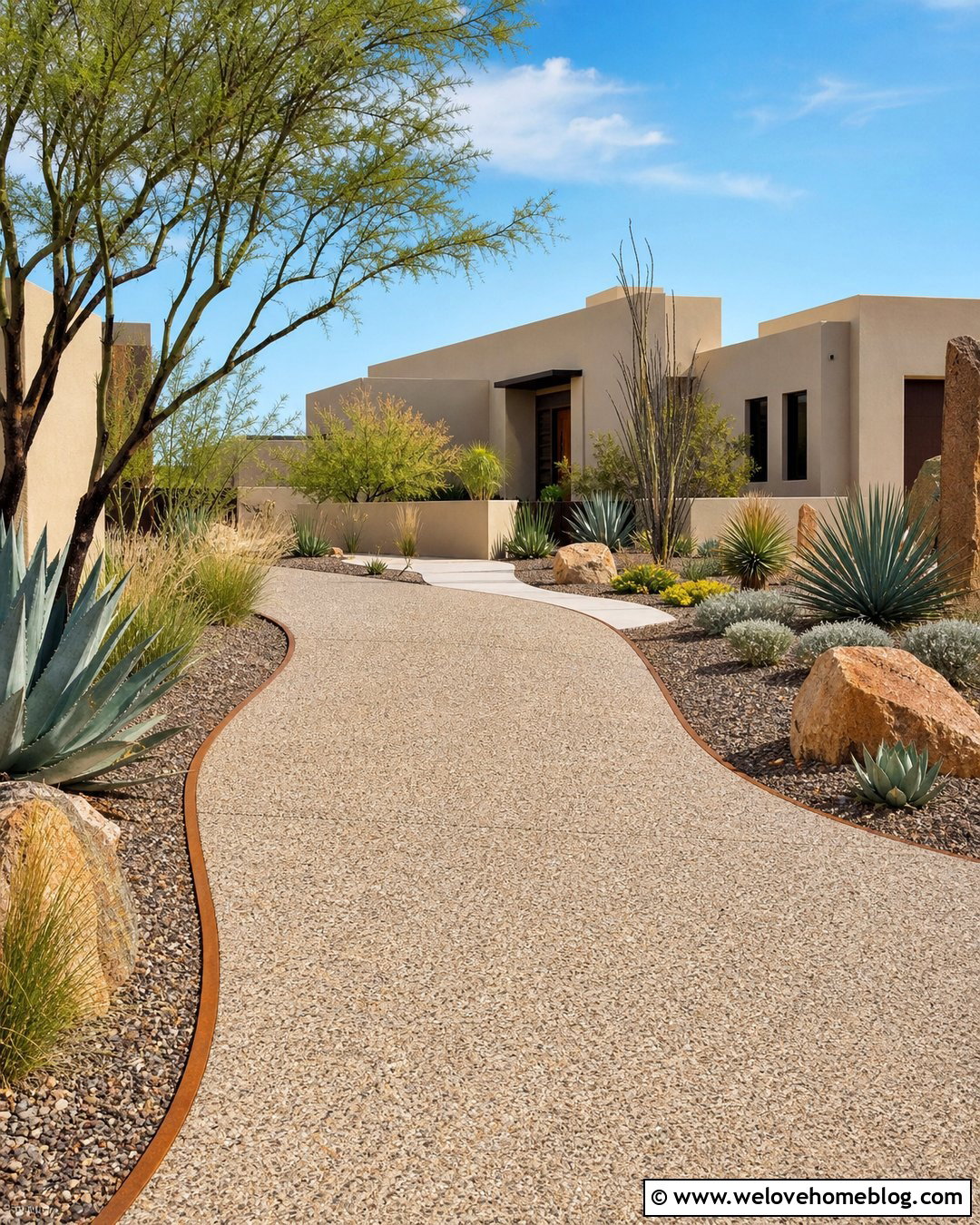
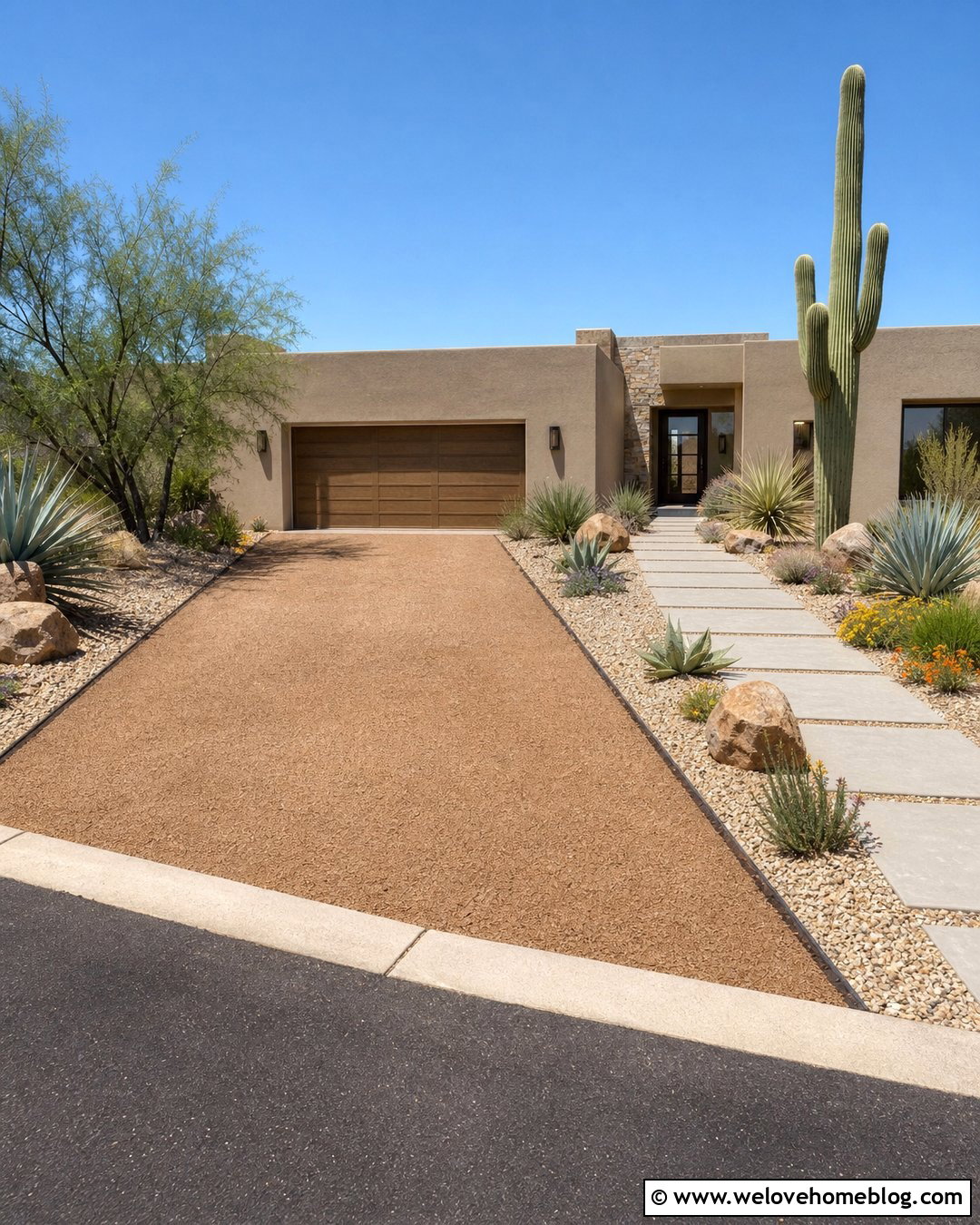
A desert driveway should coordinate with the dry landscape rather than appearing like a cool gray strip through warm surroundings. Use sand-colored exposed aggregate concrete containing cream, tan, and muted brown stones. Form a gently curved layout and edge it with rust-toned steel or low bands of darker integral-color concrete. Wide gravel beds can contain agave, yucca, desert spoon, sculptural cacti where appropriate, and clumps of ornamental grass. Arrange several boulders near the entrance, leaving clear visibility and enough distance from moving vehicles. A stucco or desert modern house in warm neutral colors completes the look. Select plants suited to the exact climate and maintain safe spacing from walkways. Thoughtful grading should direct occasional heavy rainfall away from the garage and neighboring property.
35. Sloped Concrete Driveway With Channel Drain
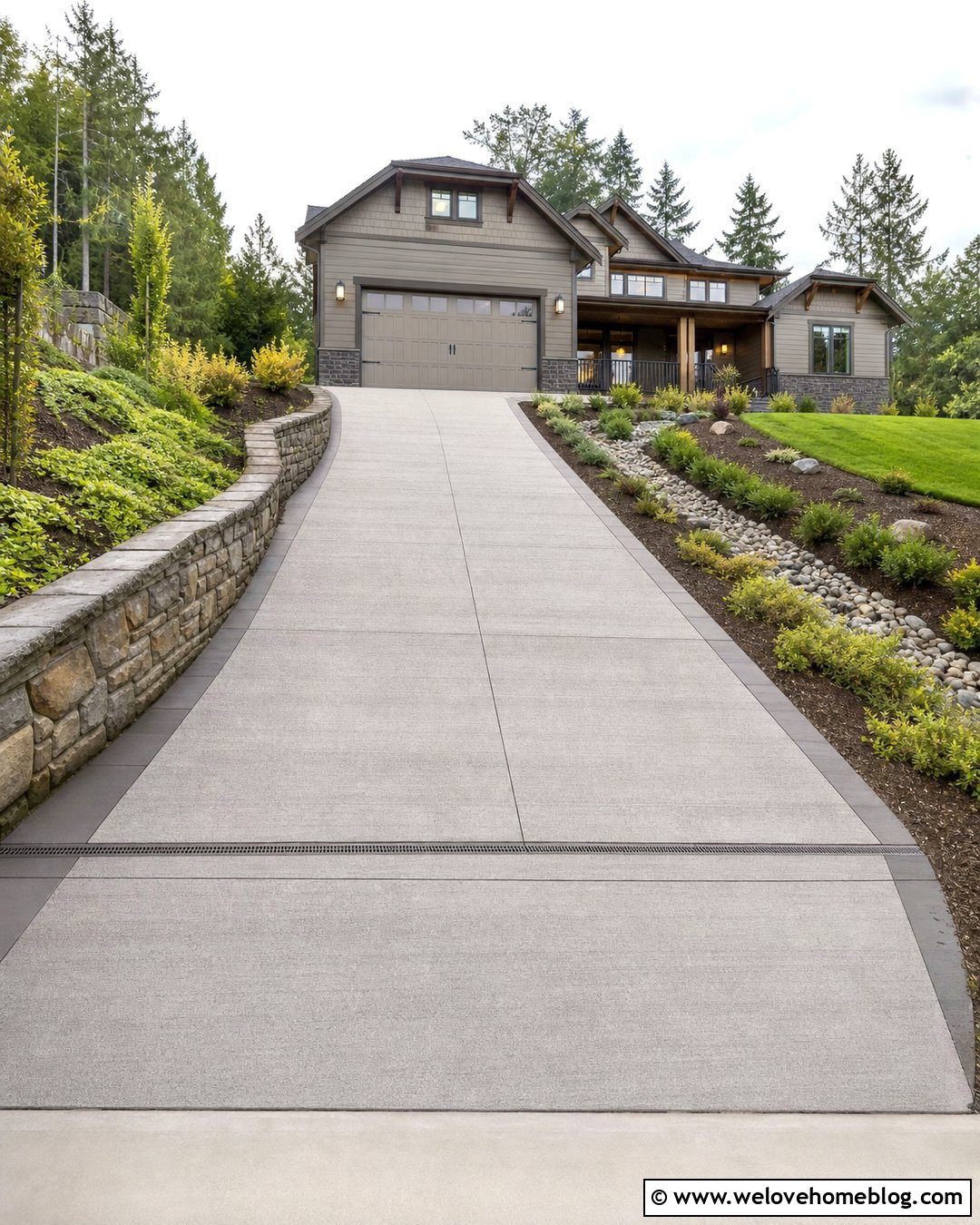
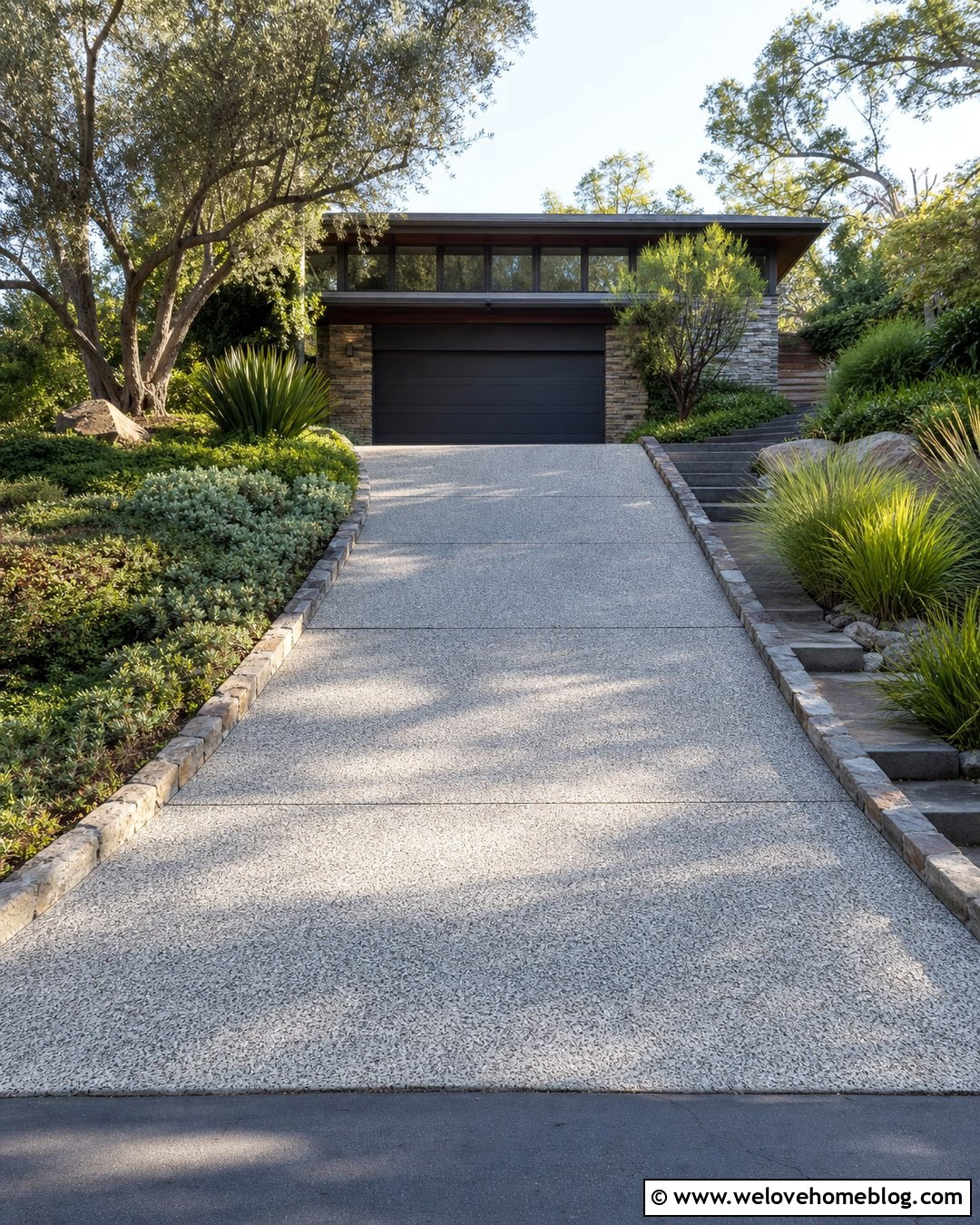
A sloped driveway requires drainage to be treated as part of the design rather than an afterthought. Use medium-gray broom-finished concrete for traction and divide the incline with broad horizontal control-joint lines. Install a properly specified channel drain where runoff needs to be intercepted, often near the garage or another low point. Frame the driveway with dark concrete borders that visually connect to the drain grate. On the uphill side, add a stone retaining wall with low shrubs and cascading ground covers. Use a simple lawn or shallow planted swale on the opposite side when site conditions permit. The slope, surface texture, drainage capacity, retaining structures, and winter conditions should be professionally evaluated. A coordinated plan protects the house while giving the practical drainage components a clean, deliberate appearance.
Conclusion:
These **35 concrete driveways ideas** show how adaptable concrete can be when the surface, layout, borders, landscaping, and house architecture are planned together. A broom finish offers a simple foundation, while exposed aggregate, stamping, scoring, staining, and integral color provide more visual character. Brick ribbons, paver aprons, grass joints, stone edging, and planting beds can further personalize the approach. Before choosing a final look, consider your climate, driveway slope, drainage, maintenance expectations, vehicle movements, and local requirements. Obtain cured samples whenever color or decorative finishes are involved. Most importantly, work with experienced local professionals who can balance curb appeal with base preparation, reinforcement, joint placement, traction, and water management for a driveway that performs as beautifully as it looks.

Related posts:
Leave a Reply