
A worn asphalt driveway does not always need complete replacement. The right repair can restore a smoother surface, improve drainage, and create a cleaner approach to the home. These 20 Asphalt Repair Driveways Ideas cover practical solutions for cracks, potholes, broken edges, faded pavement, low spots, and larger damaged areas. Each option also treats the driveway as a complete landscape feature by pairing repaired blacktop with attractive borders, planting, walkways, and entrances. Small defects may respond well to filling or patching, while widespread deterioration can call for resurfacing or reconstruction. The driveway’s age, base condition, and drainage should guide the final decision. () Use these complete designs to explore 20 Asphalt Repair Driveways Ideas.
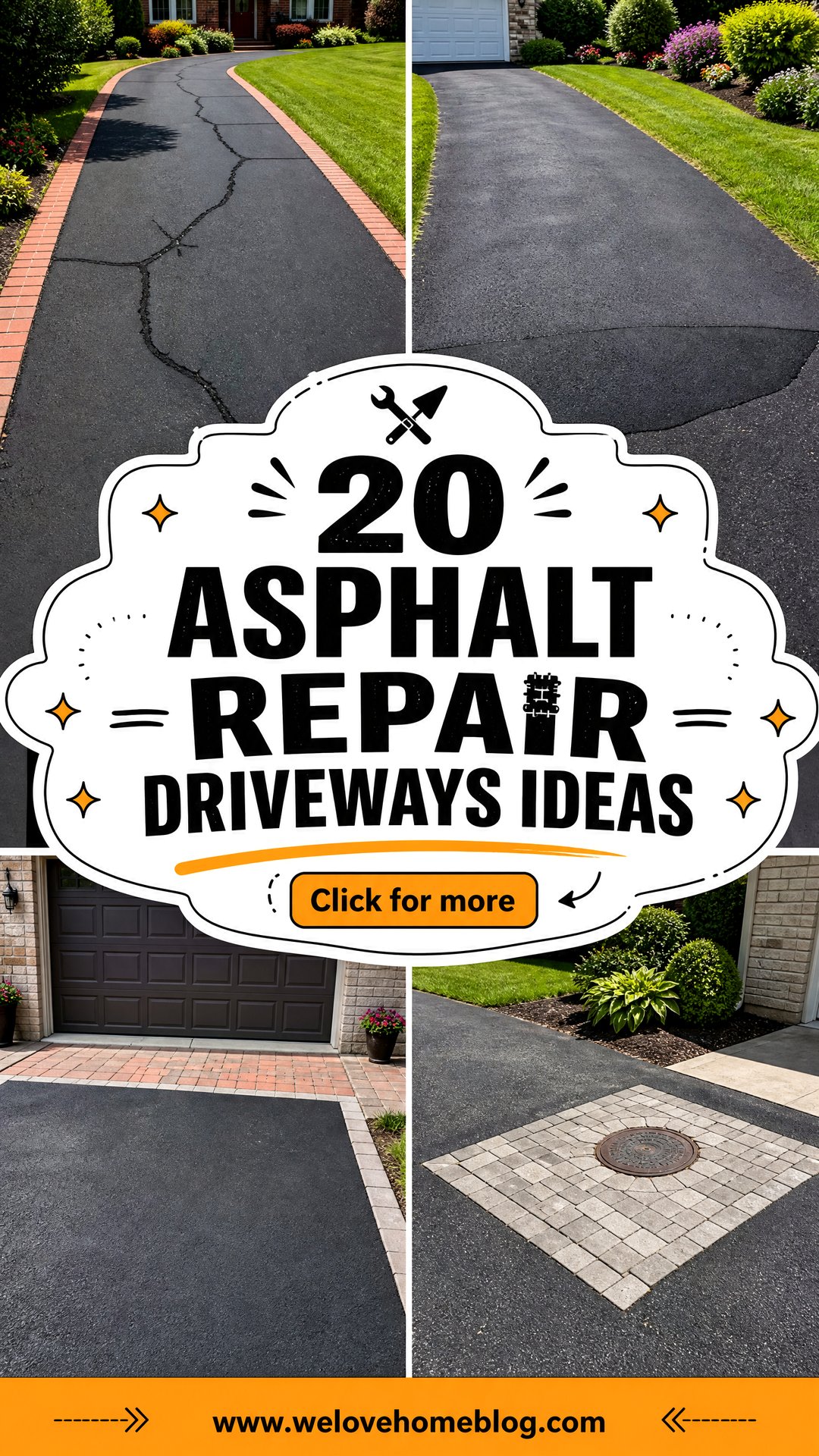
1. Asphalt Driveway Crack Repair With Brick Edging
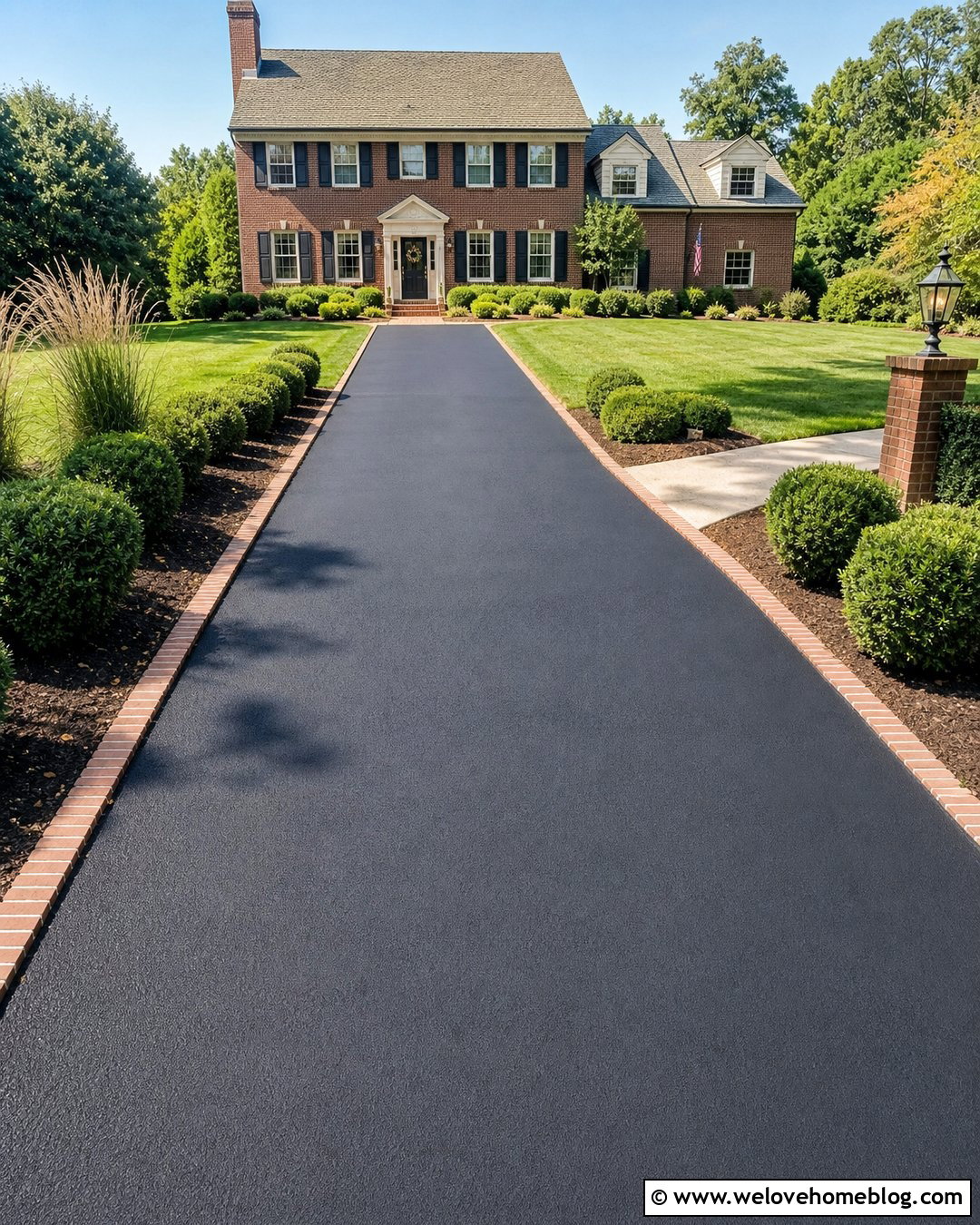
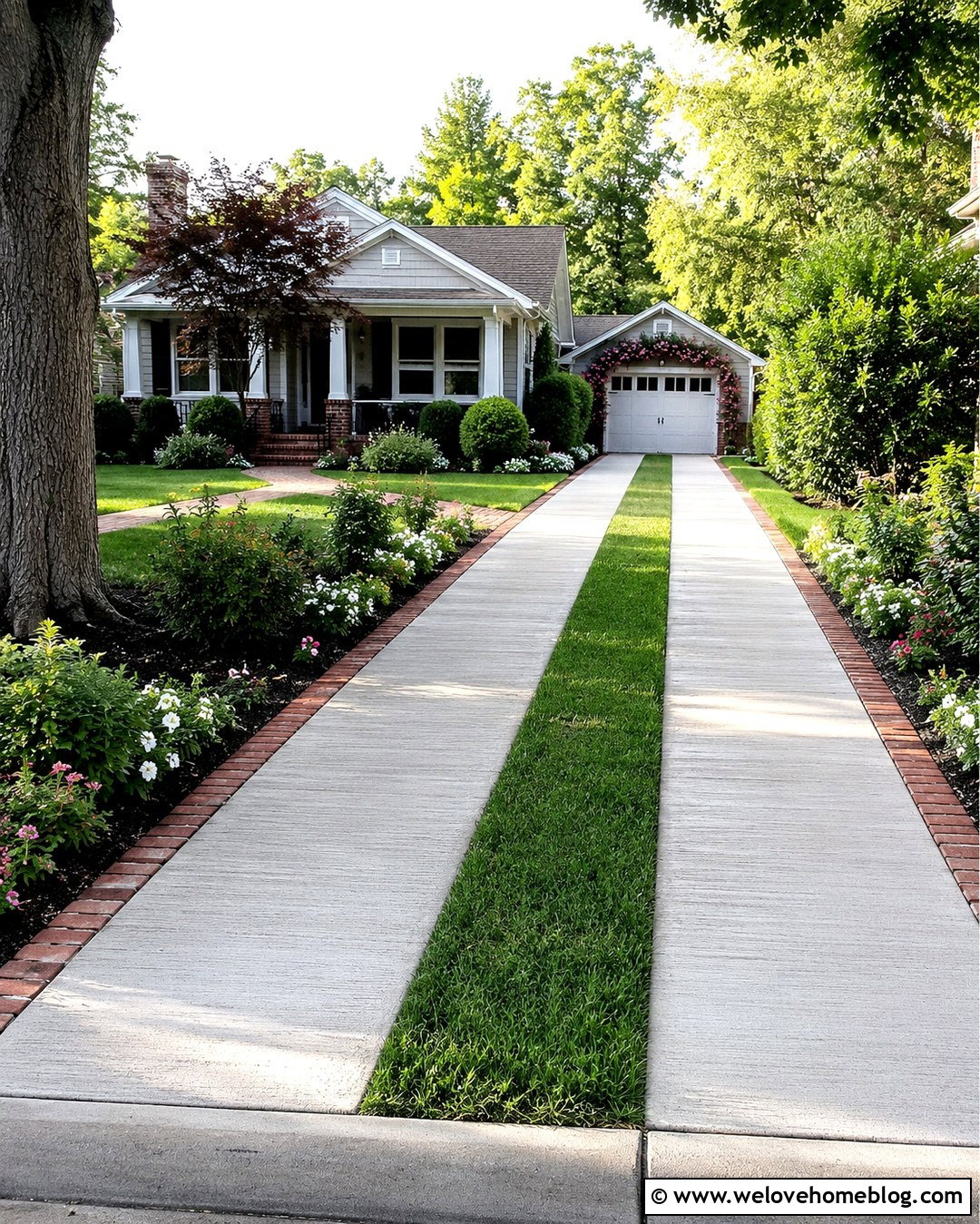
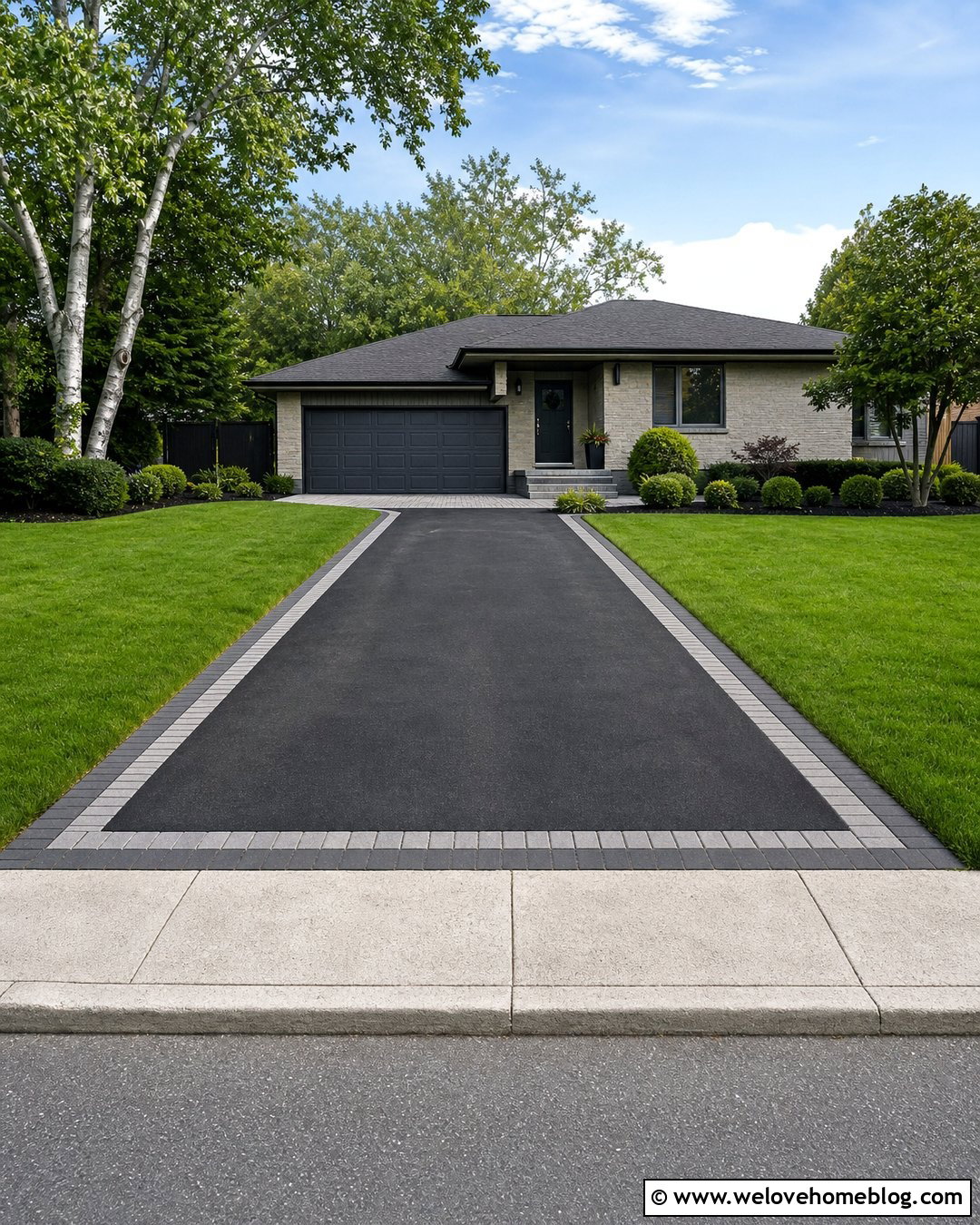
Thin cracks can make an otherwise attractive driveway appear neglected. Start this design by cleaning and filling stable cracks, then apply a compatible sealcoat after the repairs have cured. The renewed black asphalt creates a strong contrast with a single row of red or charcoal brick pavers installed along both sides. Keep the driveway straight and uncluttered so the border forms a crisp frame from the curb to the garage. Low boxwood shrubs, ornamental grasses, and a simple concrete walkway can soften the dark pavement. Brick edging also gives the repaired driveway a more intentional appearance. However, active cracks caused by movement or base failure should be professionally evaluated rather than repeatedly covered with filler.
2. Asphalt Driveway Pothole Repair With Gravel Shoulders
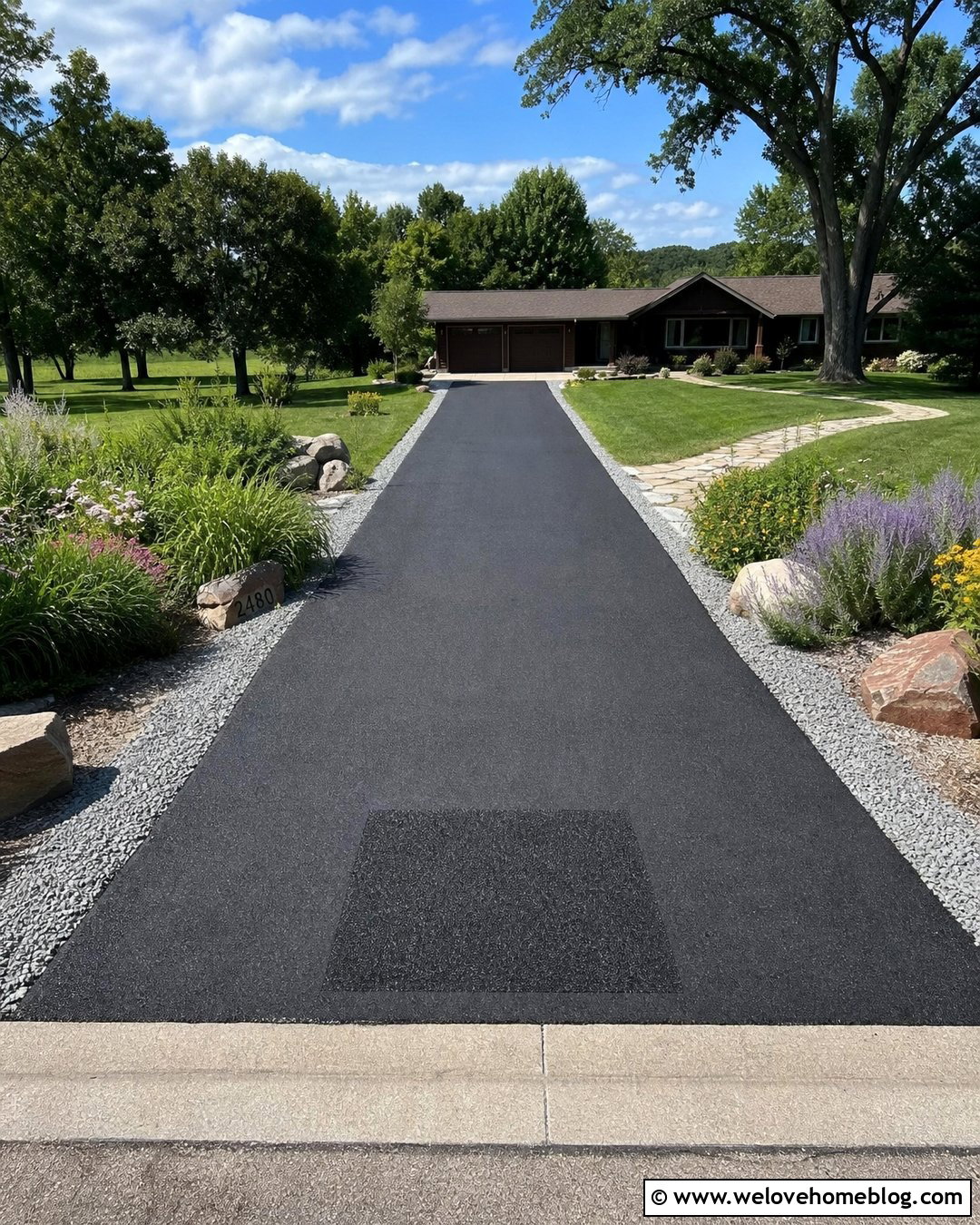
A pothole repair looks more finished when the surrounding driveway edges receive attention too. The damaged asphalt should be cut or cleaned back to solid material, and any weak base underneath should be removed and rebuilt. A properly compacted asphalt patch can then sit level with the existing blacktop. Finish the complete look with compacted gray gravel shoulders running along both sides of the straight driveway. The gravel supports a casual country setting while creating a practical transition into the lawn. Add native grasses, small flowering shrubs, and a fieldstone walkway near the house. A neat, squared patch is generally less distracting than an irregular repair, especially after the surrounding asphalt receives a uniform protective coating.
3. Asphalt Driveway Resurfacing With Cobblestone Borders
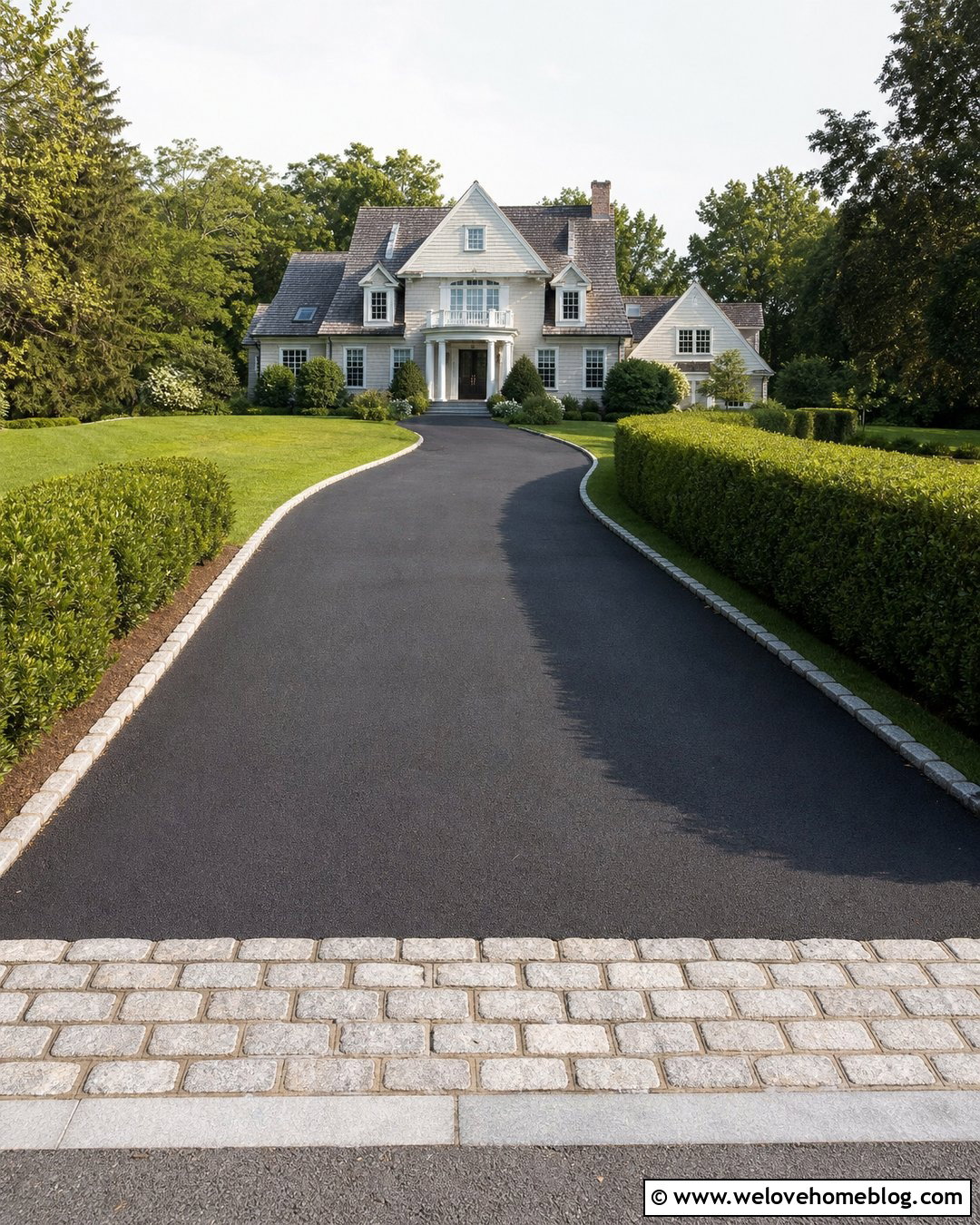
When numerous small repairs begin covering an otherwise stable driveway, resurfacing can provide a more consistent appearance. This method places a new asphalt layer over a properly prepared existing surface, but underlying drainage and structural problems must be corrected first. () Pair the smooth black finish with granite cobblestone borders to create a polished driveway leading toward a traditional home. The stones should be supported on a suitable base so they do not shift outward under vehicle pressure. A gently curved layout makes the transition feel softer, while clipped hedges and broad lawn areas keep the border visible. Continue the cobblestone into the front walkway or garage apron for a connected design rather than treating the edging as an unrelated decoration.
4. Asphalt Driveway Edge Repair With Concrete Curbs
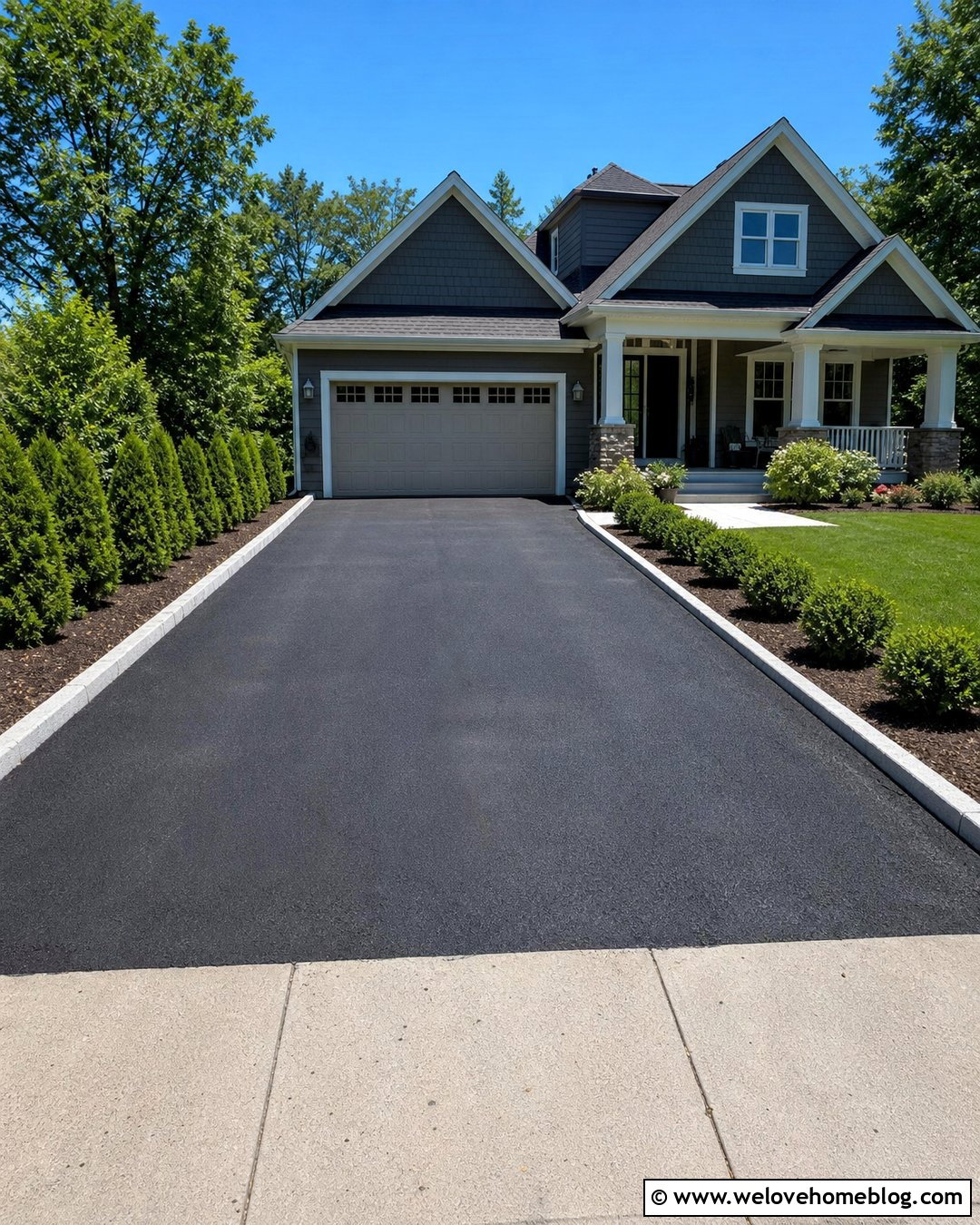
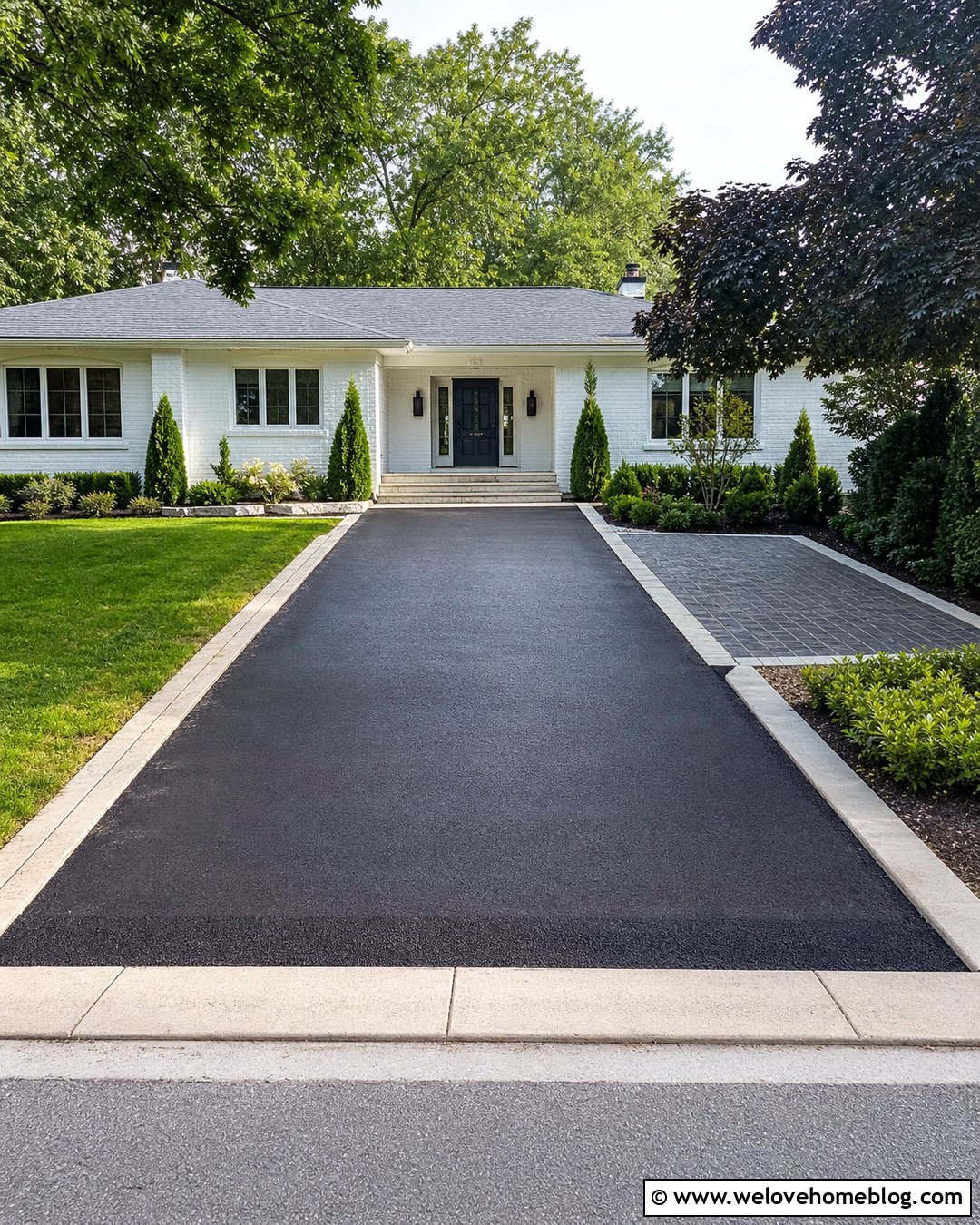
Crumbling edges often develop where tires repeatedly leave the paved surface or unsupported asphalt meets soft soil. For this complete design, remove loose material and rebuild weak edge sections over a stable, compacted base. Low poured-concrete curbs can then frame the repaired black asphalt and help define the driving area. Use a straight driveway layout for a clean suburban look, with the concrete curb continuing toward the garage and meeting a matching walkway. Plant compact shrubs behind the curb, leaving enough clearance to prevent roots and branches from crowding the pavement. The pale concrete provides a bright contrast against the asphalt. It also makes repaired edges look deliberate, although water must still have a clear route away from the driveway and house.
5. Asphalt Driveway Alligator Crack Repair With Paver Bands
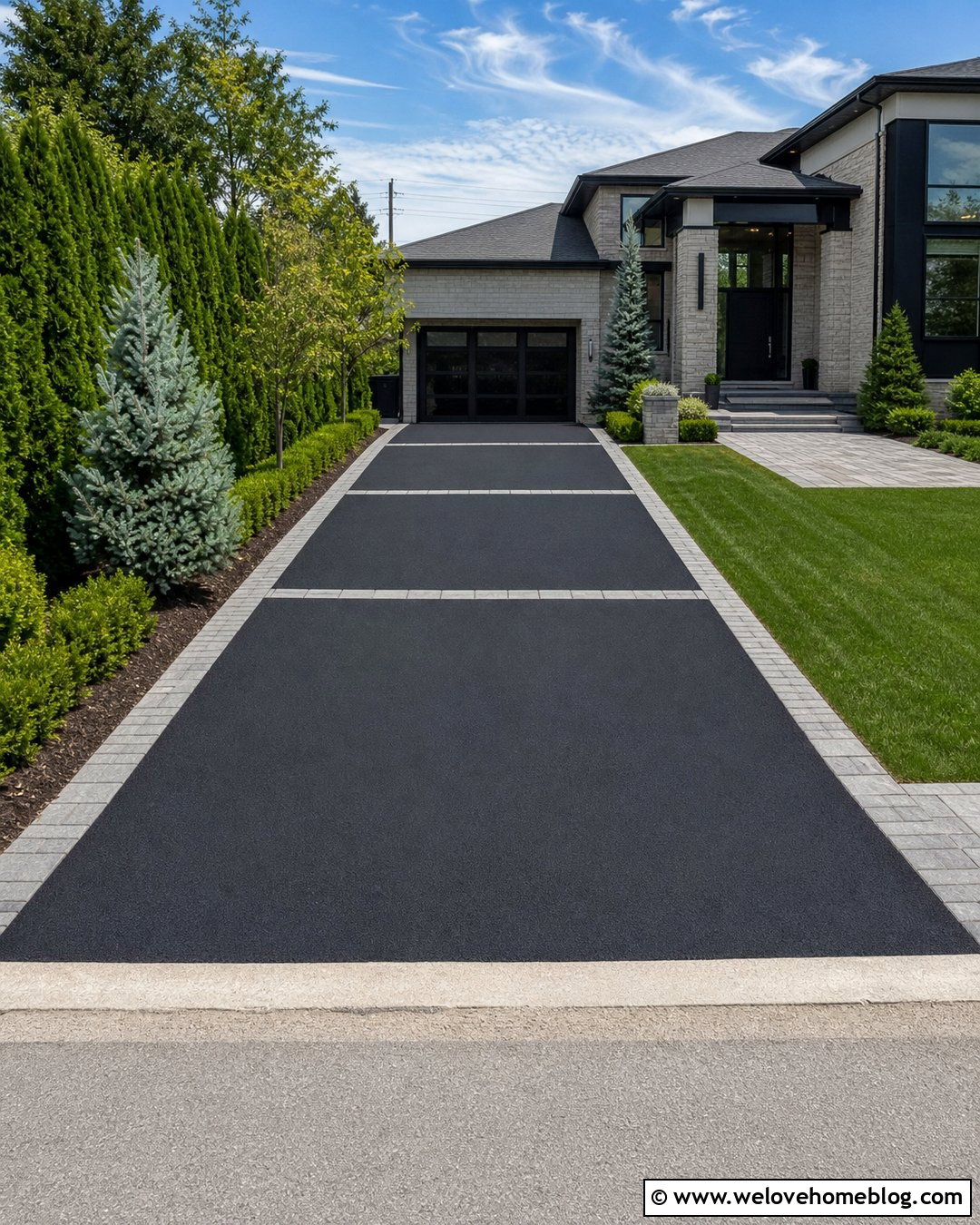
A network of interconnected cracks often points to more than surface wear. Instead of coating over the pattern, remove the failed asphalt section and investigate the base beneath it. Rebuild weak areas before placing and compacting new asphalt. To blend the repaired section into the overall design, add decorative paver bands across the driveway at planned intervals. Charcoal concrete pavers work especially well because they relate to the asphalt without producing a harsh color change. Repeat the pavers at the curb apron and garage entrance for balance. Frame the driveway with lawn, layered evergreen shrubs, and a broad front walkway. The bands should be designed for vehicle loads and installed on a proper base, not placed over active cracks as camouflage.
6. Asphalt Driveway Cold Patch Repair With Timber Edging
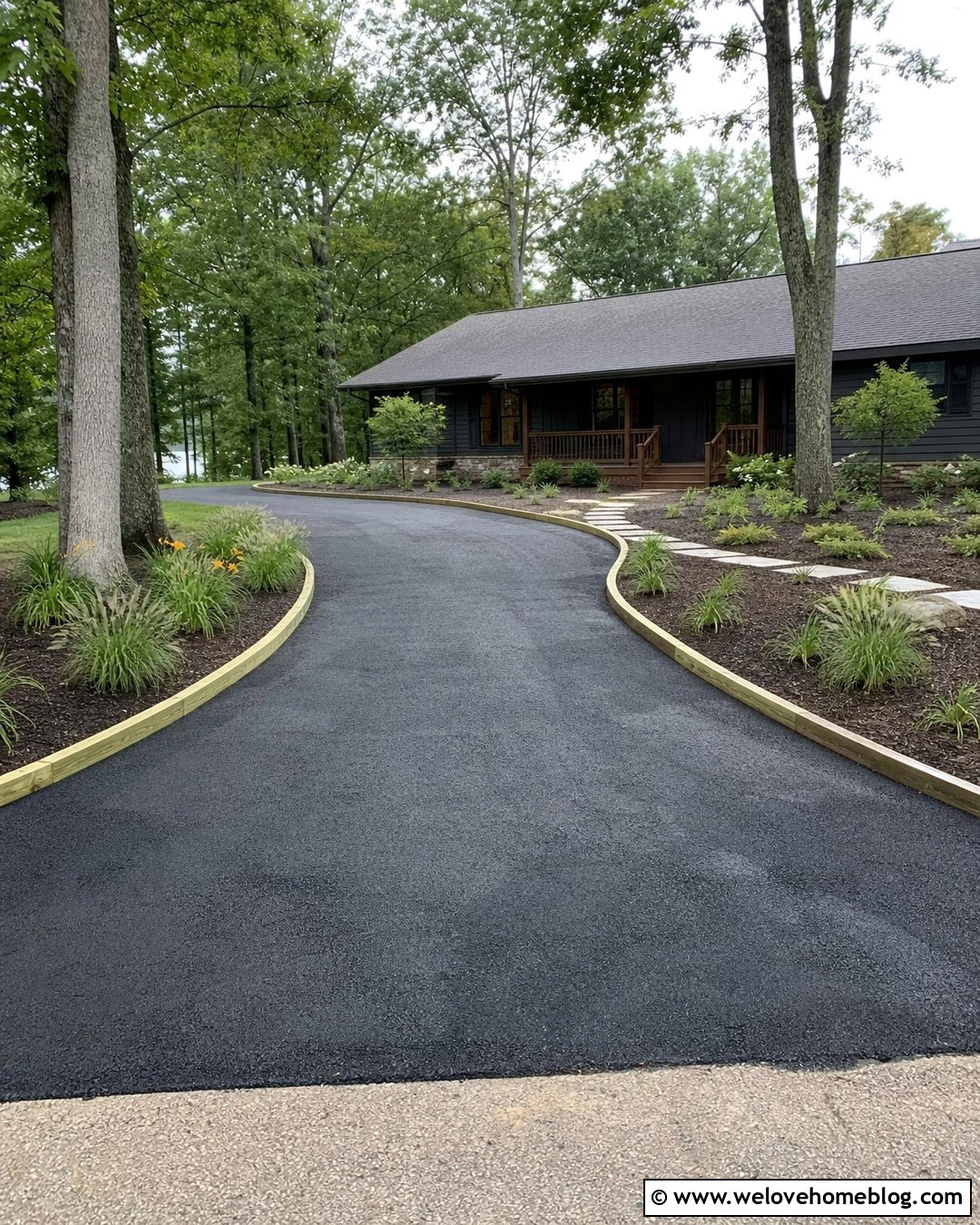
Cold patch can provide a practical solution for a localized hole when the damaged area is prepared carefully. Remove broken asphalt, square the opening, restore the aggregate base, and compact the patch in layers according to the product instructions. For a relaxed ranch or woodland property, pair the repaired black asphalt with pressure-treated timber edging and narrow beds of ornamental grass. The timber creates a warm transition between pavement and planting without making the driveway feel overly formal. Use a straight or softly curved layout leading to a simple garage. Keep mulch below the asphalt surface so loose material does not wash onto the driveway. Cold patch may be especially useful for limited repairs, but recurring settlement indicates a deeper base or drainage problem requiring professional assessment.
7. Asphalt Driveway Infrared Repair With Stone Landscaping
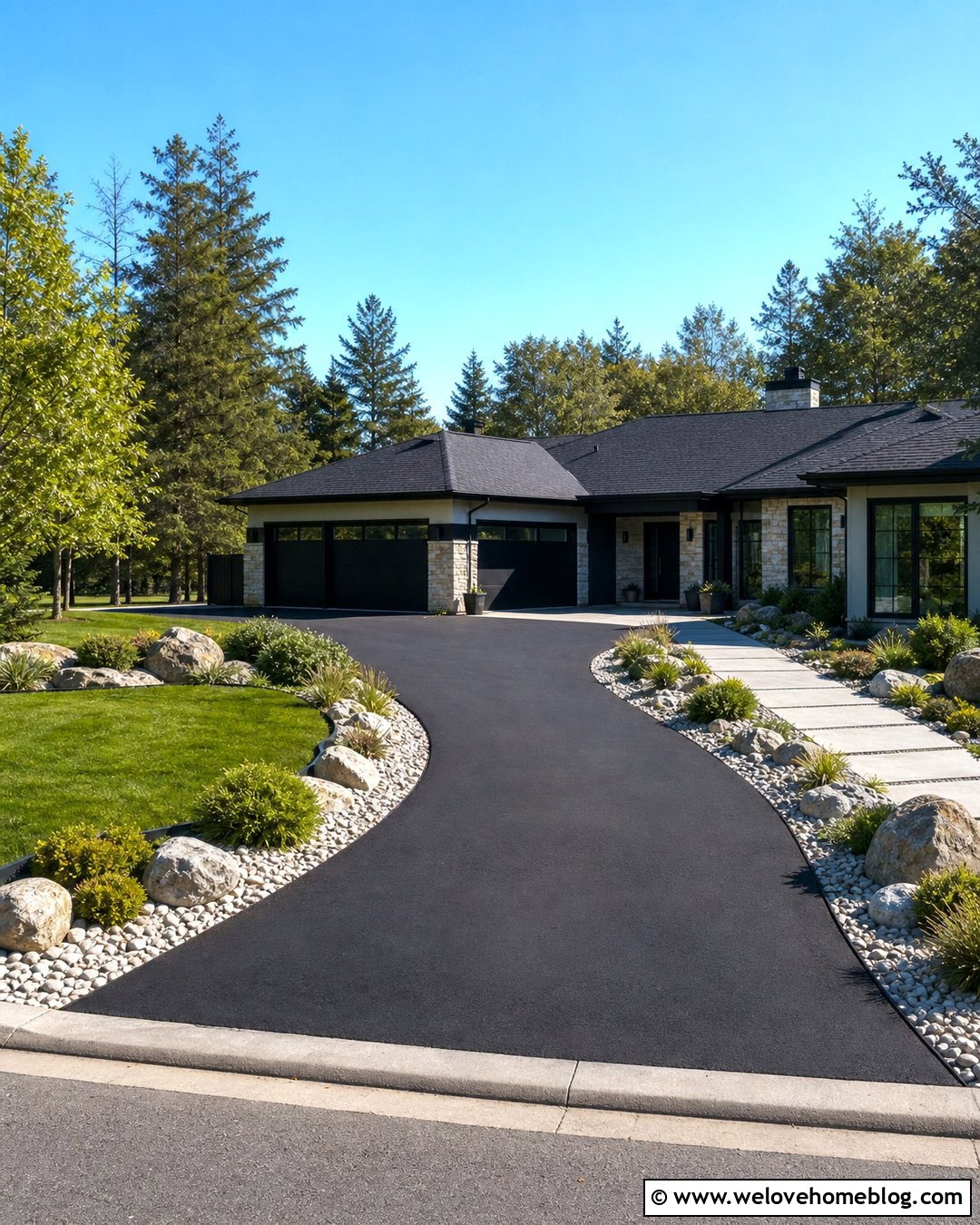
Infrared repair can produce a less noticeable transition when localized asphalt damage is suitable for reheating and reworking. The process warms the existing pavement so new material can be blended and compacted into the repair area. Surround this smooth black asphalt driveway with pale river rock, large natural boulders, and drought-tolerant planting for a modern landscape. A wide, gently curved approach gives the repaired surface a prominent role without relying on complicated decoration. Use steel edging between the stone beds and lawn to maintain clean lines. Near the house, connect the driveway to a large-format concrete walkway. Because infrared repair is not a solution for every type of base failure, ask an experienced contractor to determine whether the damage is limited to the asphalt surface.
8. Asphalt Driveway Sealcoating With White Stone Edging
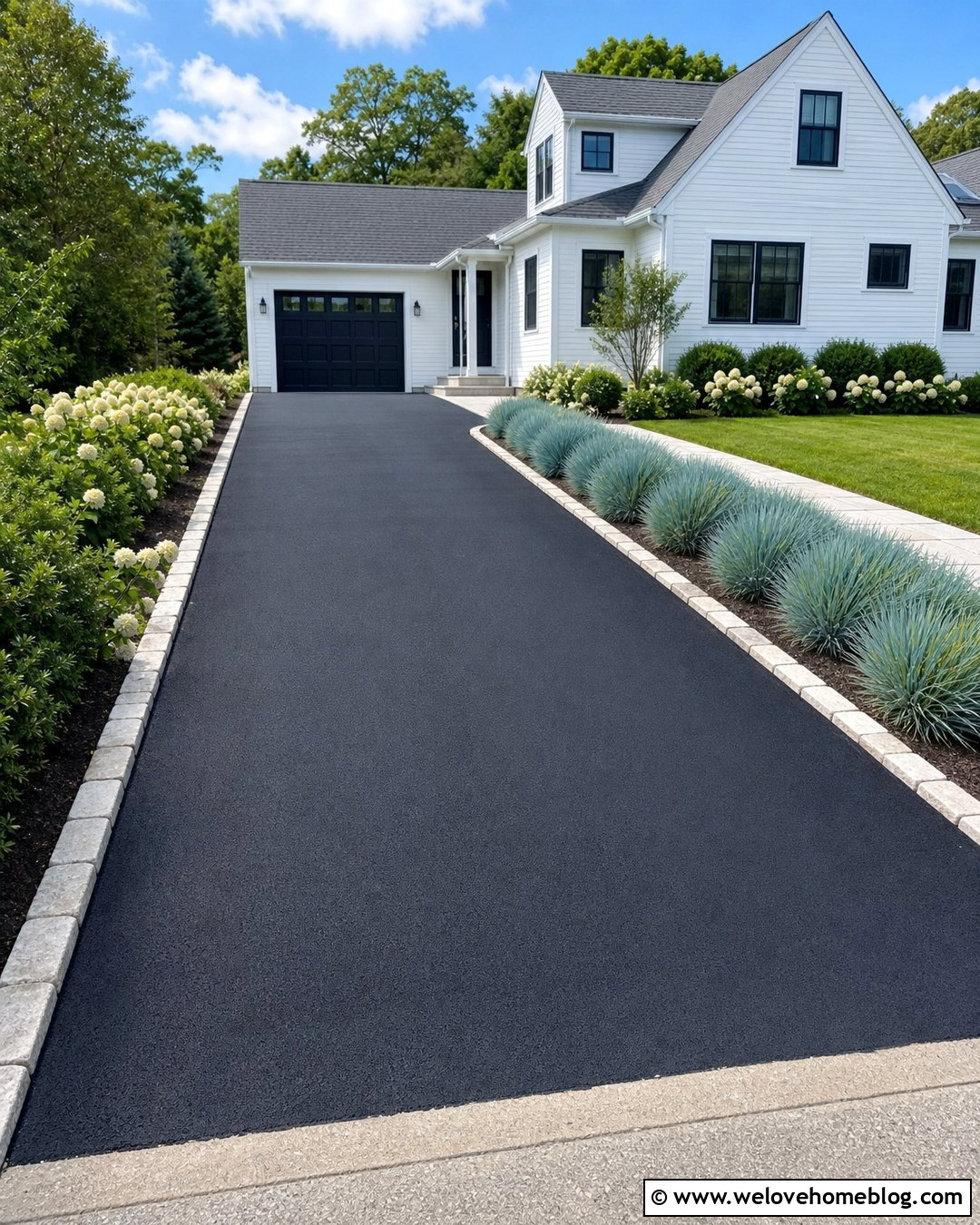
Fresh sealcoating can unify filled cracks and faded areas while giving a sound asphalt driveway a cleaner black finish. Complete all necessary repairs first, clean the pavement thoroughly, and allow the surface to dry before applying the selected coating. Sealcoat should not be treated as a structural fix for potholes, base movement, or severe cracking. () Create a crisp coastal look by bordering the driveway with light limestone blocks or pale concrete pavers. Add blue-green grasses, hydrangeas, and an open lawn leading toward a Cape Cod house. A straight driveway keeps the high-contrast palette simple. The white edging should remain slightly raised and firmly supported, while nearby planting beds should be graded so soil and water do not spill across the renewed asphalt.
9. Asphalt Driveway Drainage Repair With Channel Drain
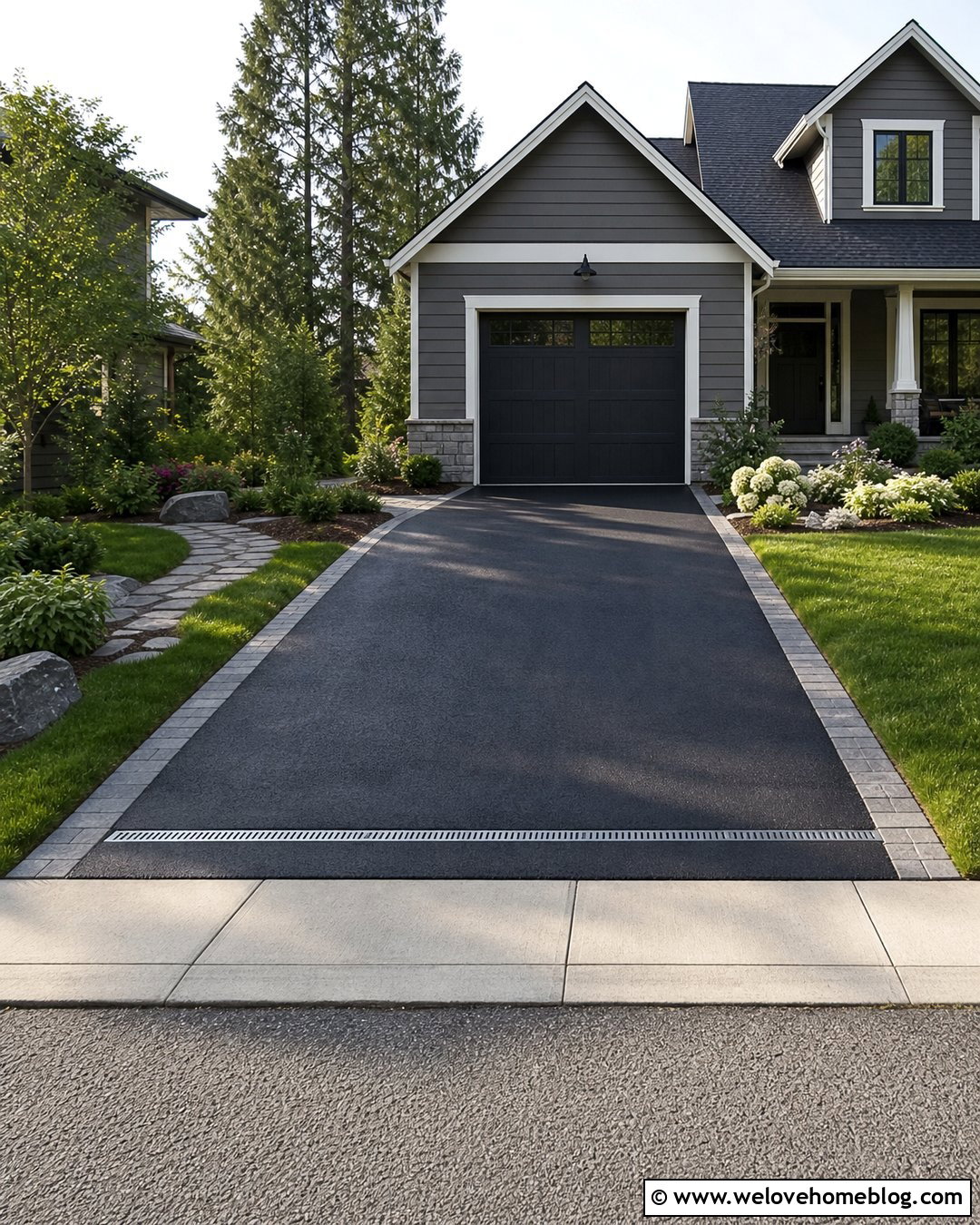
Water collecting near a garage can accelerate pavement damage and create an inconvenient wet area. Correct this design by repairing settled asphalt and adjusting the grade so runoff moves toward an appropriate outlet. A channel drain installed across the lower end of the driveway can intercept water before it reaches the garage, provided local conditions and discharge requirements allow it. Frame the sloped black asphalt with concrete paver edges and moisture-tolerant planting positioned away from the driving surface. The complete driveway should remain visually open, with the drain grate aligned neatly across its width. Use a craftsman house, stone walkway, and layered foundation shrubs for context. If water continues to collect, the problem may involve the base, surrounding soil, gutters, or an improperly planned drainage route.
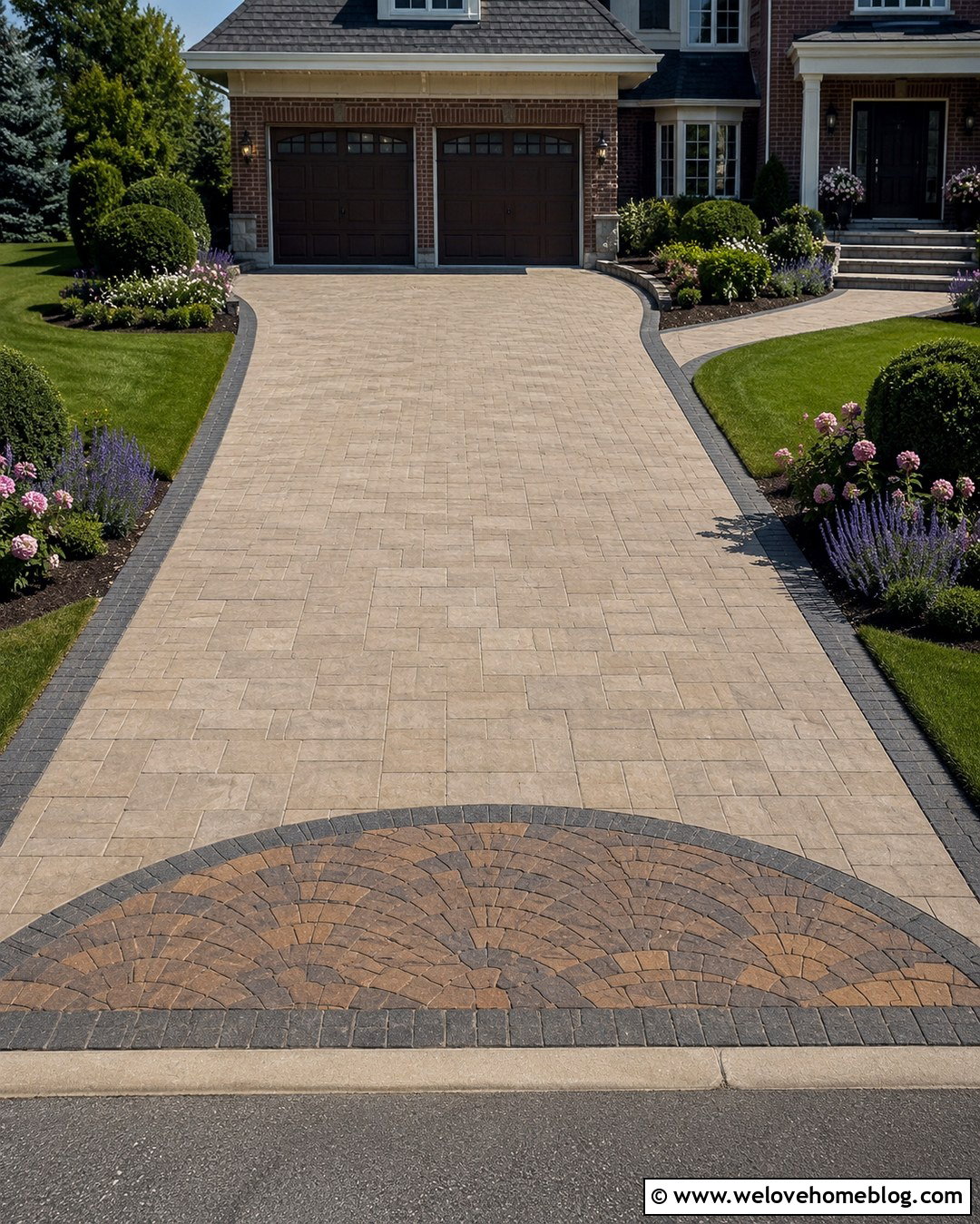
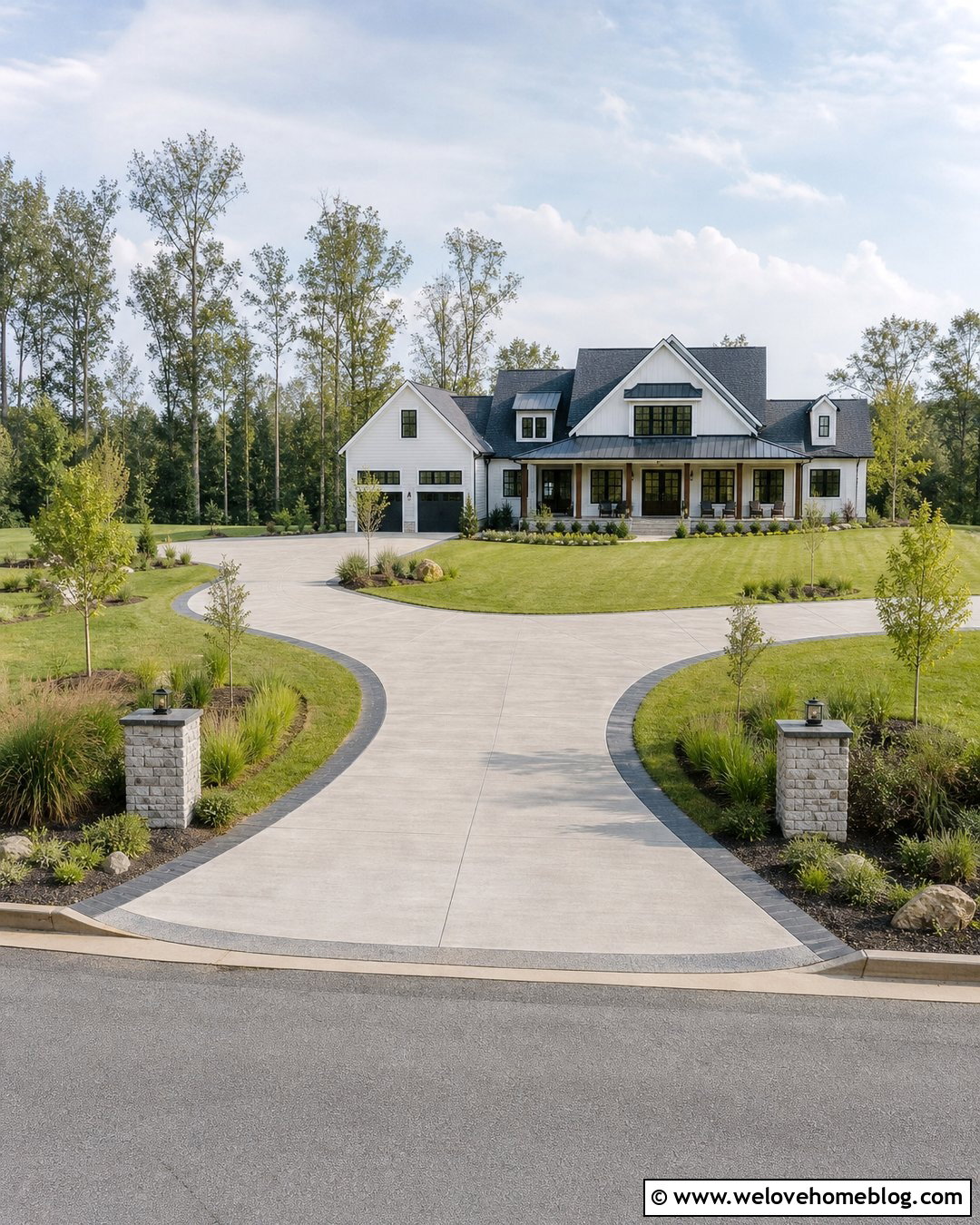
10. Asphalt Driveway Low Spot Repair With Grass Borders
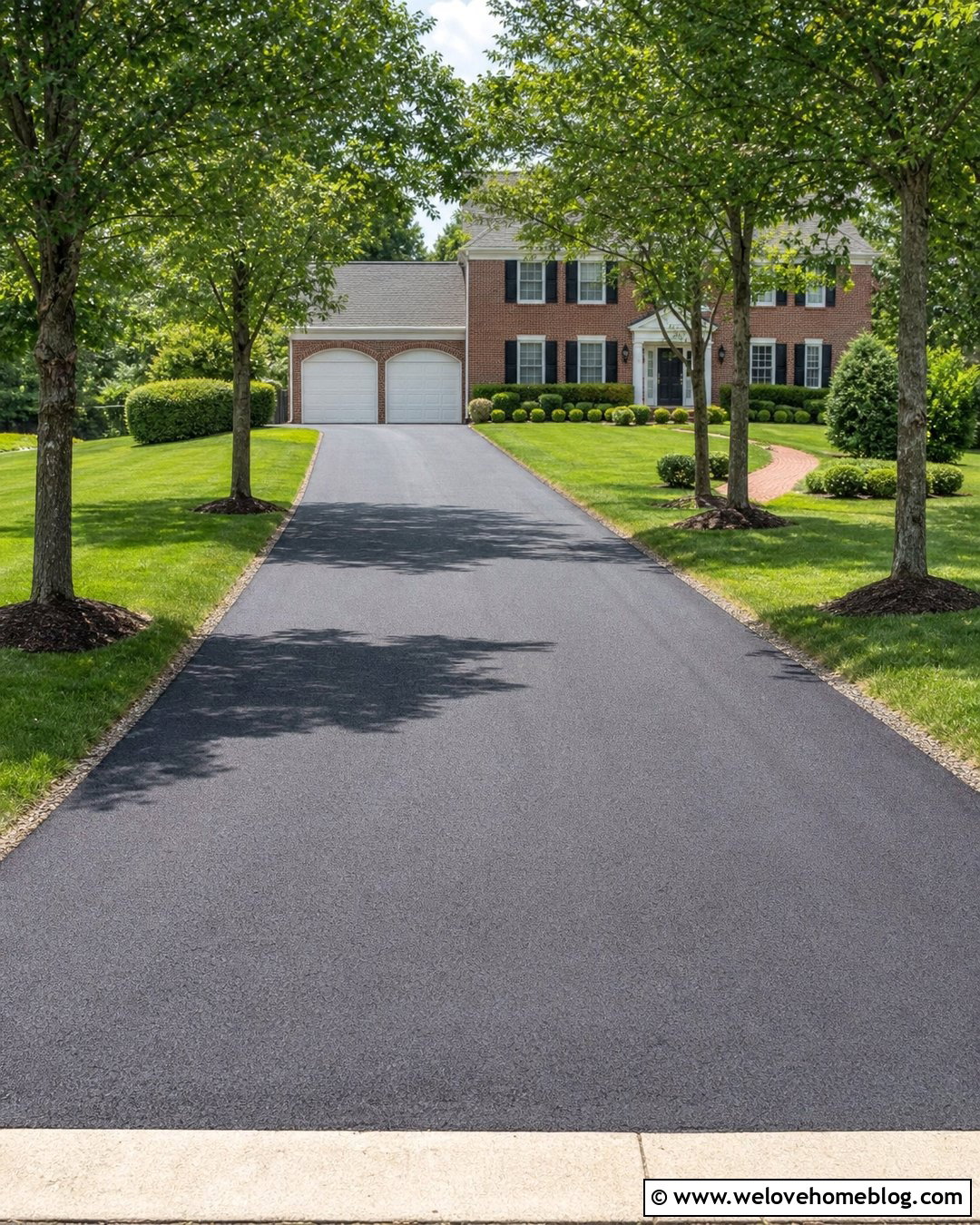
A shallow depression can hold water long after the surrounding pavement dries. Simply pouring material into the low spot may create a temporary bump without solving the cause. A better repair removes the affected asphalt, evaluates the base, corrects the grade, and restores a smooth transition into the existing driveway. Keep the finished design simple with a wide black asphalt surface and narrow grass borders on both sides. The green strips provide a soft edge around a suburban colonial home while allowing the corrected slope to remain visible. Add evenly spaced shade trees beyond the grass and connect the driveway to a brick front walk. Avoid creating planting beds that trap runoff against the repaired pavement. Proper drainage should guide the landscaping arrangement rather than being added after the repair is complete.
11. Asphalt Driveway Garage Apron Repair With Brick Pavers
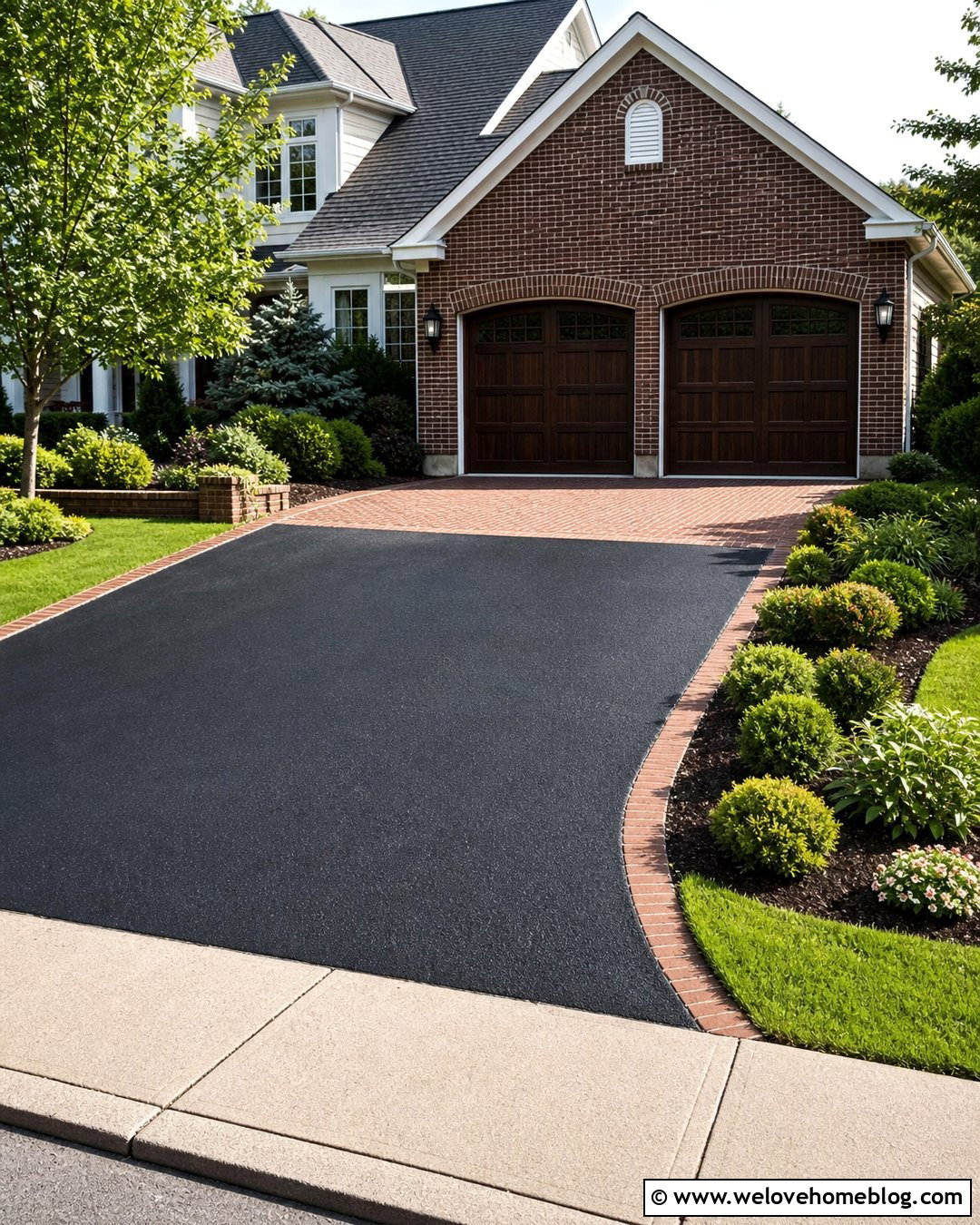
Damage frequently appears where the driveway meets the garage slab because this transition receives regular vehicle pressure and may collect water. Remove loose asphalt, stabilize the underlying material, and rebuild the approach at the correct height. A band of vehicle-rated brick pavers can create an attractive garage apron between the repaired black asphalt and concrete floor. Choose dark red or brown pavers in a herringbone pattern for a traditional home. Repeat the same brick along the front walkway or planting-bed edges to make the apron feel connected. Keep the driveway straight, with trimmed lawn and low evergreen foundation planting on each side. The transition should remain smooth enough for tires, bicycles, and snow-removal equipment while directing runoff away from the garage interior.
12. Asphalt Driveway Root Damage Repair With Tree Islands
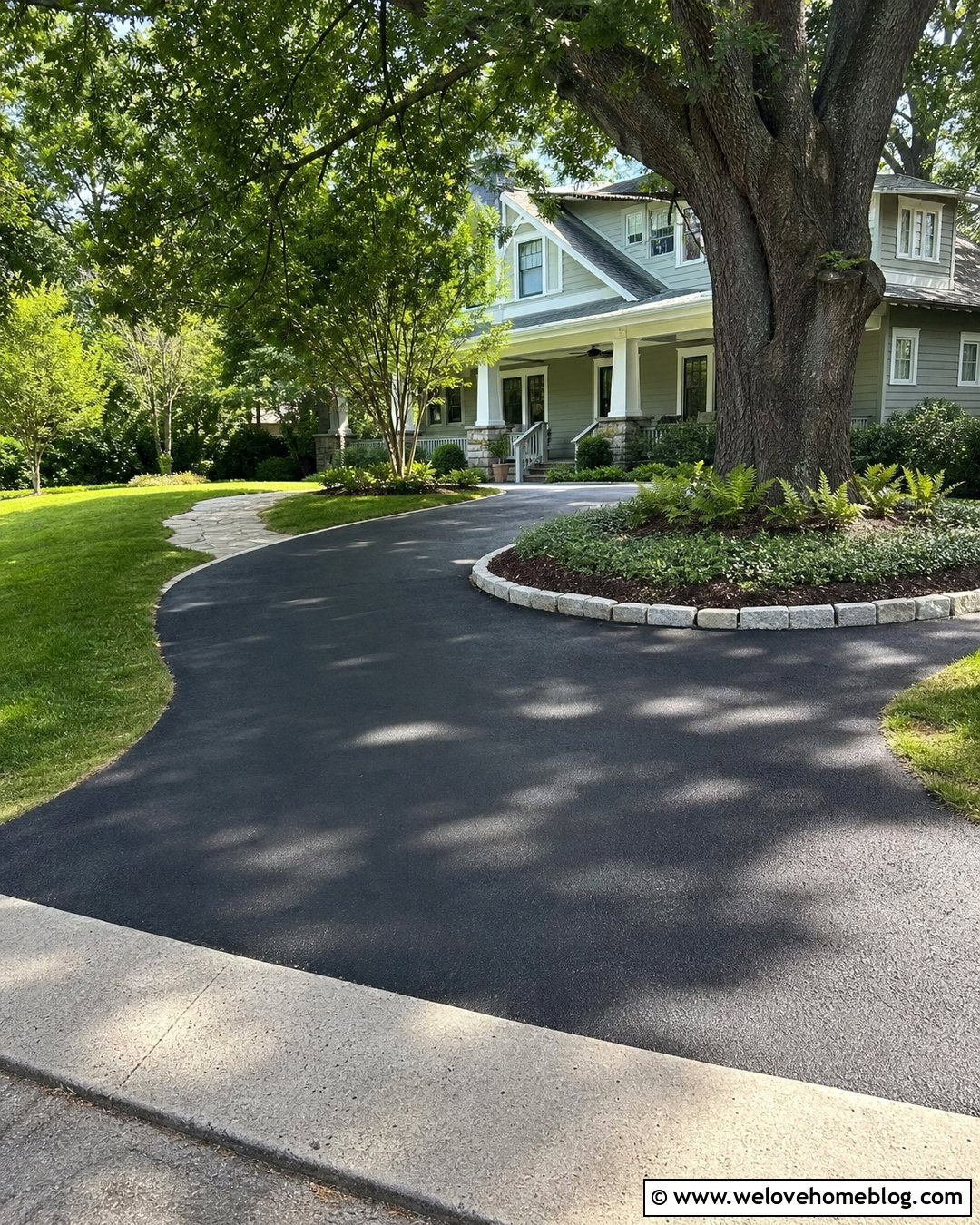
Tree roots can lift or crack asphalt, but removing the surface damage without addressing the root conflict rarely produces a lasting result. Consult an arborist before cutting important roots, especially around mature trees. One possible redesign reroutes or widens the damaged driveway around a protected tree, creating a generous planting island instead of forcing pavement against the trunk. Repair the remaining black asphalt over a stable base and edge the new curved layout with granite blocks. Fill the island with mulch and shade-tolerant ground cover, while keeping soil away from the tree’s root flare. A country or craftsman home suits this natural arrangement. The finished driveway should provide enough turning space without compacting the primary root zone or creating a narrow asphalt edge that will quickly break apart.
13. Asphalt Driveway Oil Stain Repair With Modern Borders
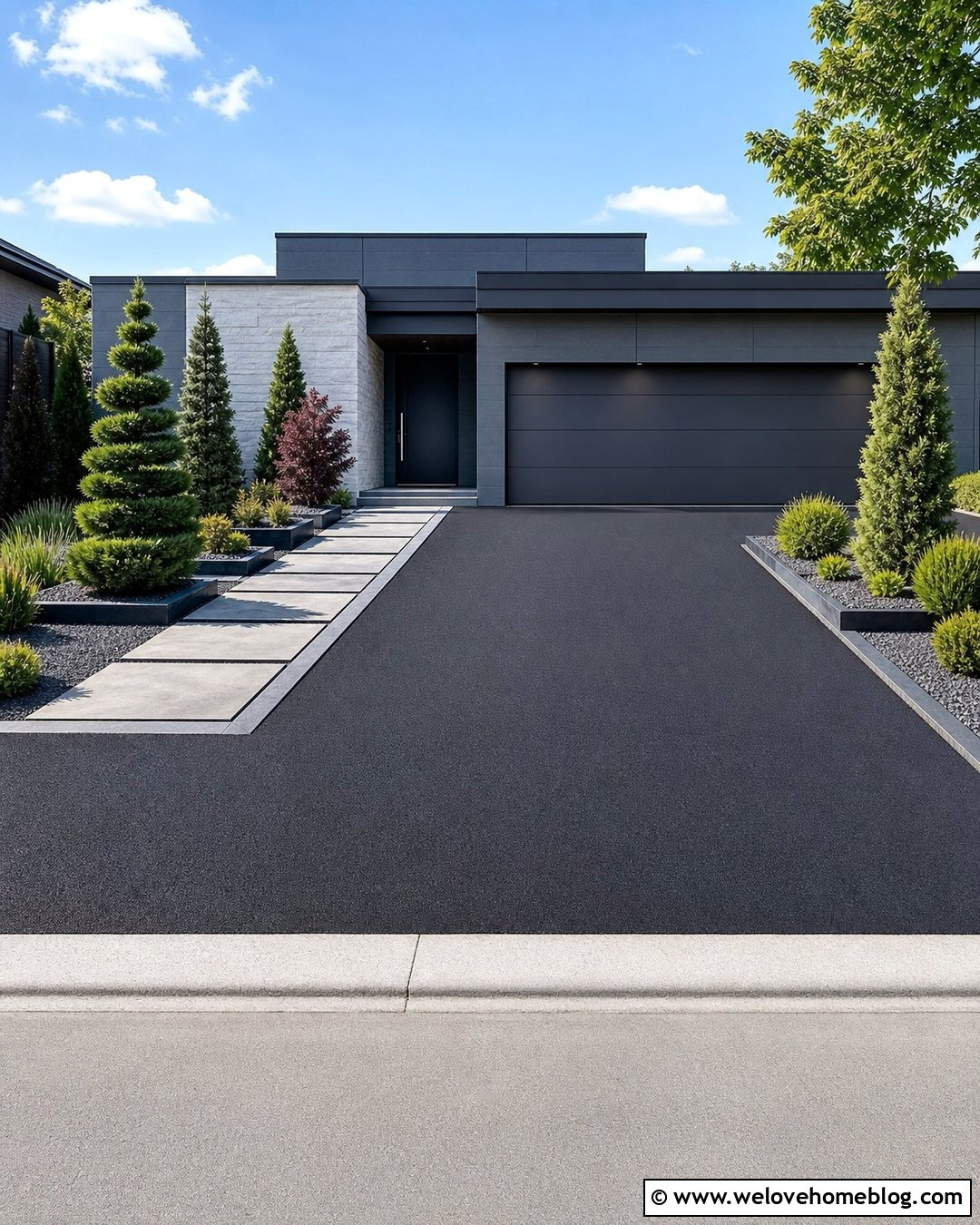
Dark oil marks can remain visible even on black asphalt because they often create glossy, softened, or irregular areas. Begin by identifying and stopping the leak. Clean recent staining with a product approved for asphalt, taking care not to use harsh solvents that could damage the binder. If the pavement has softened, remove and patch that section rather than relying on cosmetic coating. Finish the restored driveway with slim charcoal concrete borders, rectangular planting beds, and sculptural evergreen shrubs. A straight driveway leading to a modern home keeps the layout clean and balanced. Large concrete walkway slabs can run beside the asphalt with narrow gravel joints. Once repairs have cured, a compatible overall coating may help reduce color differences between the patched section and the surrounding surface.
14. Asphalt Driveway Raveling Repair With Gravel Beds
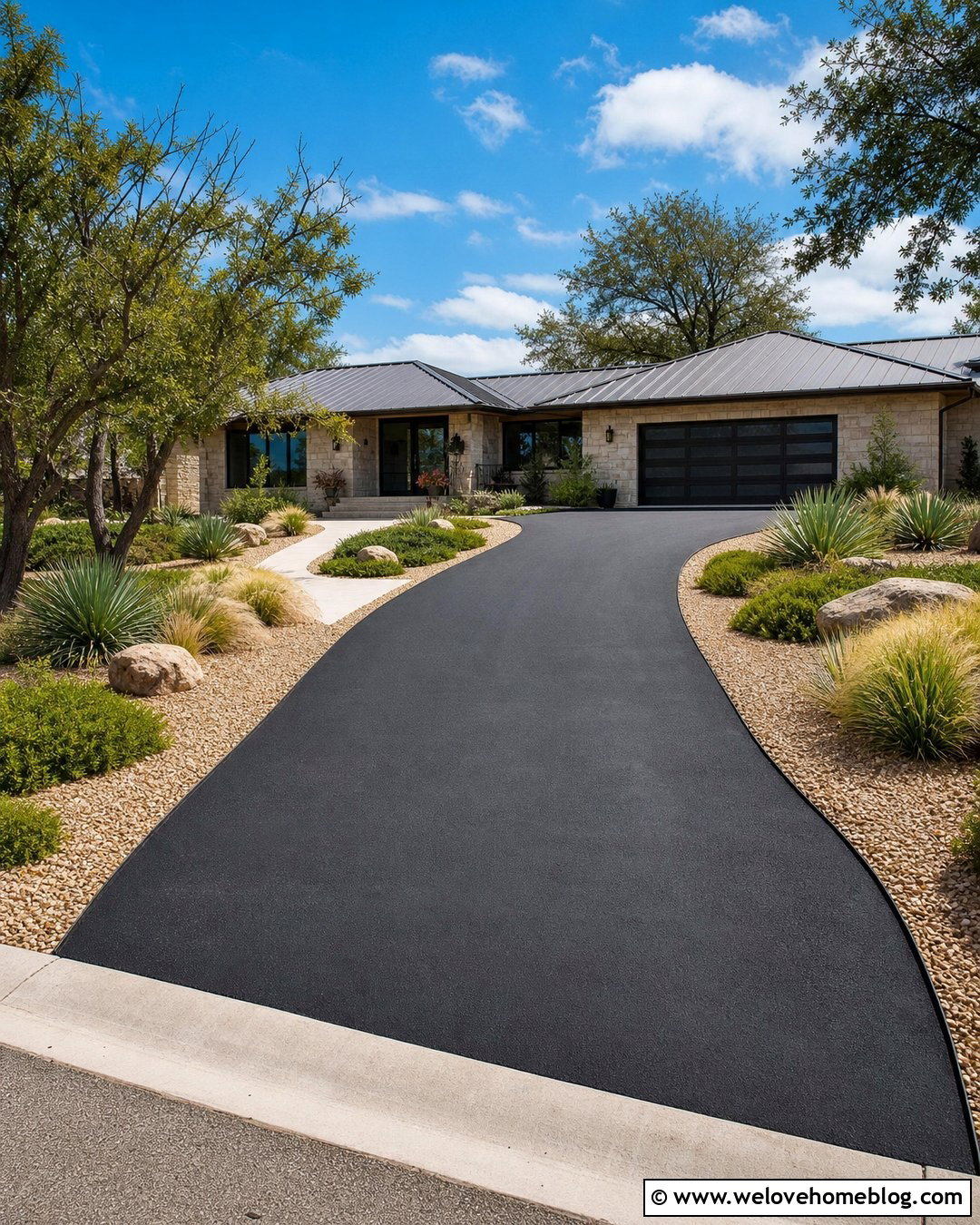
Raveling leaves loose stones on the surface as the asphalt binder deteriorates. Minor surface wear may be evaluated for a protective treatment, but extensive material loss can require patching, resurfacing, or replacement. After correcting the damaged pavement, build a complete low-maintenance design with smooth black asphalt, warm tan gravel beds, and steel edging. Use a wide curved layout leading toward a contemporary ranch home. Plant the beds with yucca, low juniper, feather reed grass, and a few large accent rocks. Keep loose decorative gravel physically separated from the driving surface so it does not make the repaired asphalt appear to be shedding aggregate. This simple landscape also makes future changes in the pavement easier to notice, allowing small defects to be addressed before larger sections begin breaking apart.
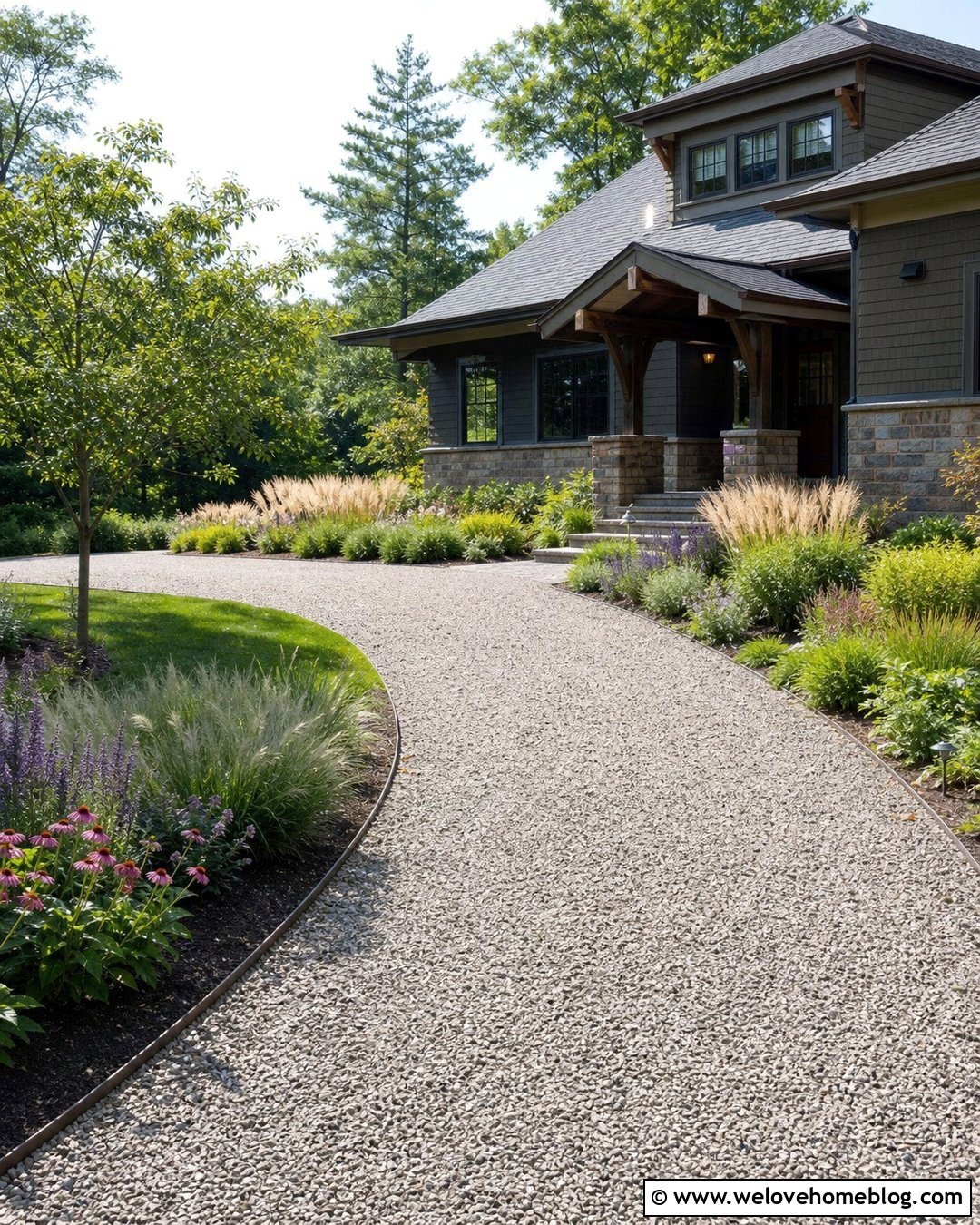
15. Asphalt Driveway Sunken Area Repair With Retaining Walls
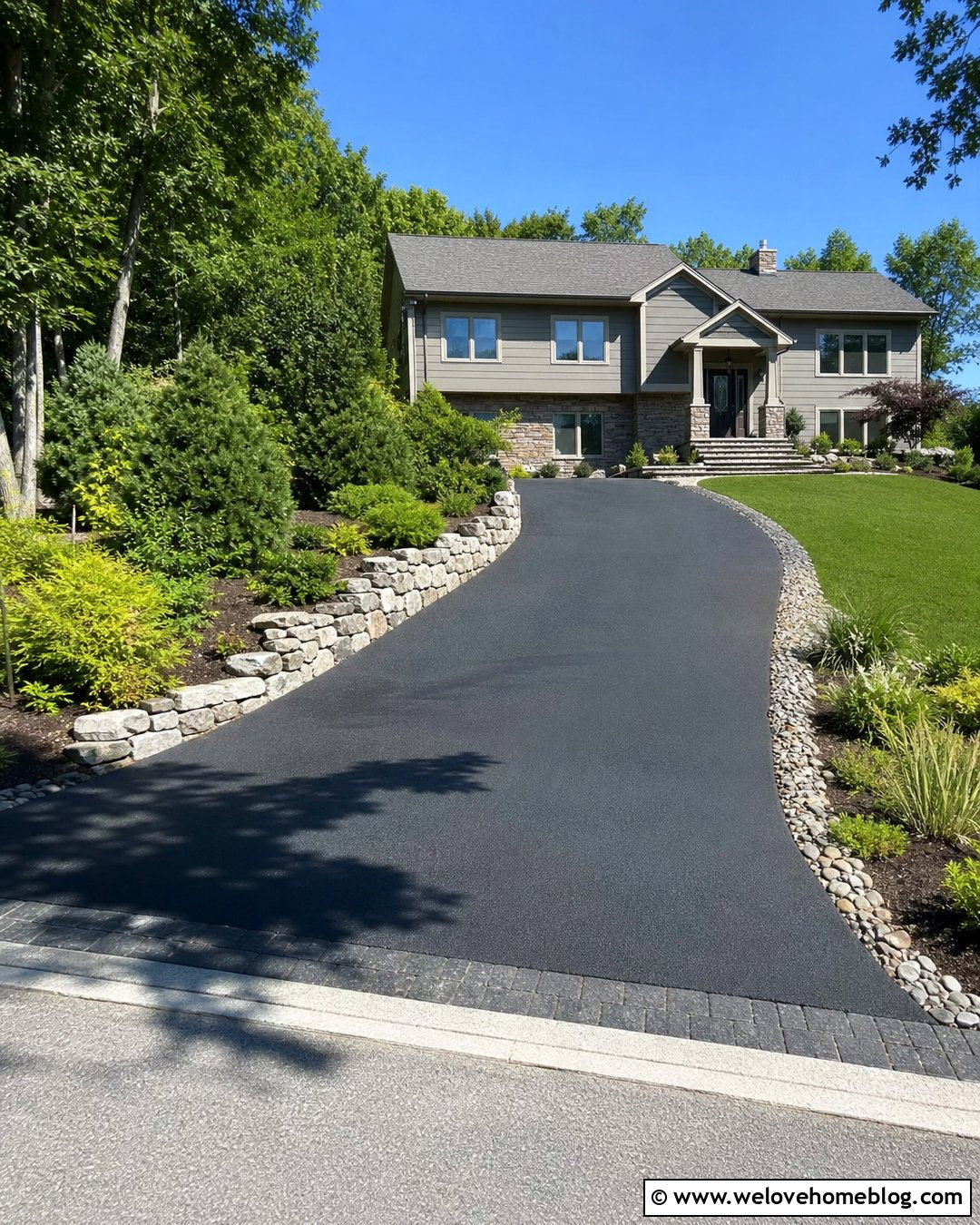
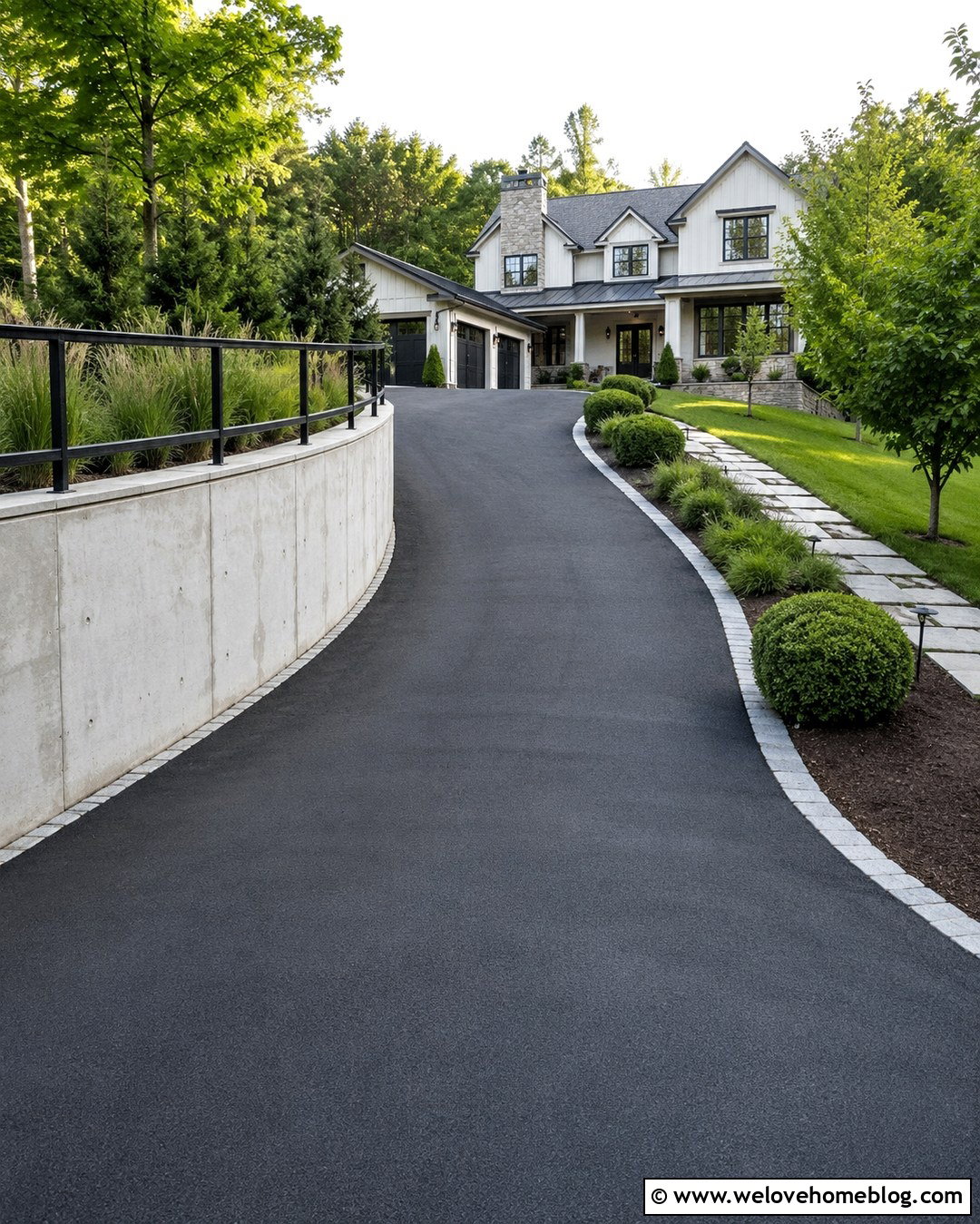
A driveway that sinks along one side may be losing support because of erosion, poor compaction, or movement near a slope. The lasting solution begins below the asphalt. Remove the affected area, correct the base and drainage, then rebuild the pavement at a stable grade. On a sloped property, low stone retaining walls can support adjacent landscaping and create a defined edge around the repaired black asphalt. Use a gently curving driveway leading uphill to a craftsman or split-level home. Install planting beds above the walls with compact shrubs and deep-rooted ground covers selected for the site. Direct roof runoff and hillside water away from the pavement. Retaining walls, drains, and major grade changes should be planned professionally so they work as one system instead of shifting water elsewhere.
16. Asphalt Driveway Utility Cut Repair With Paver Apron
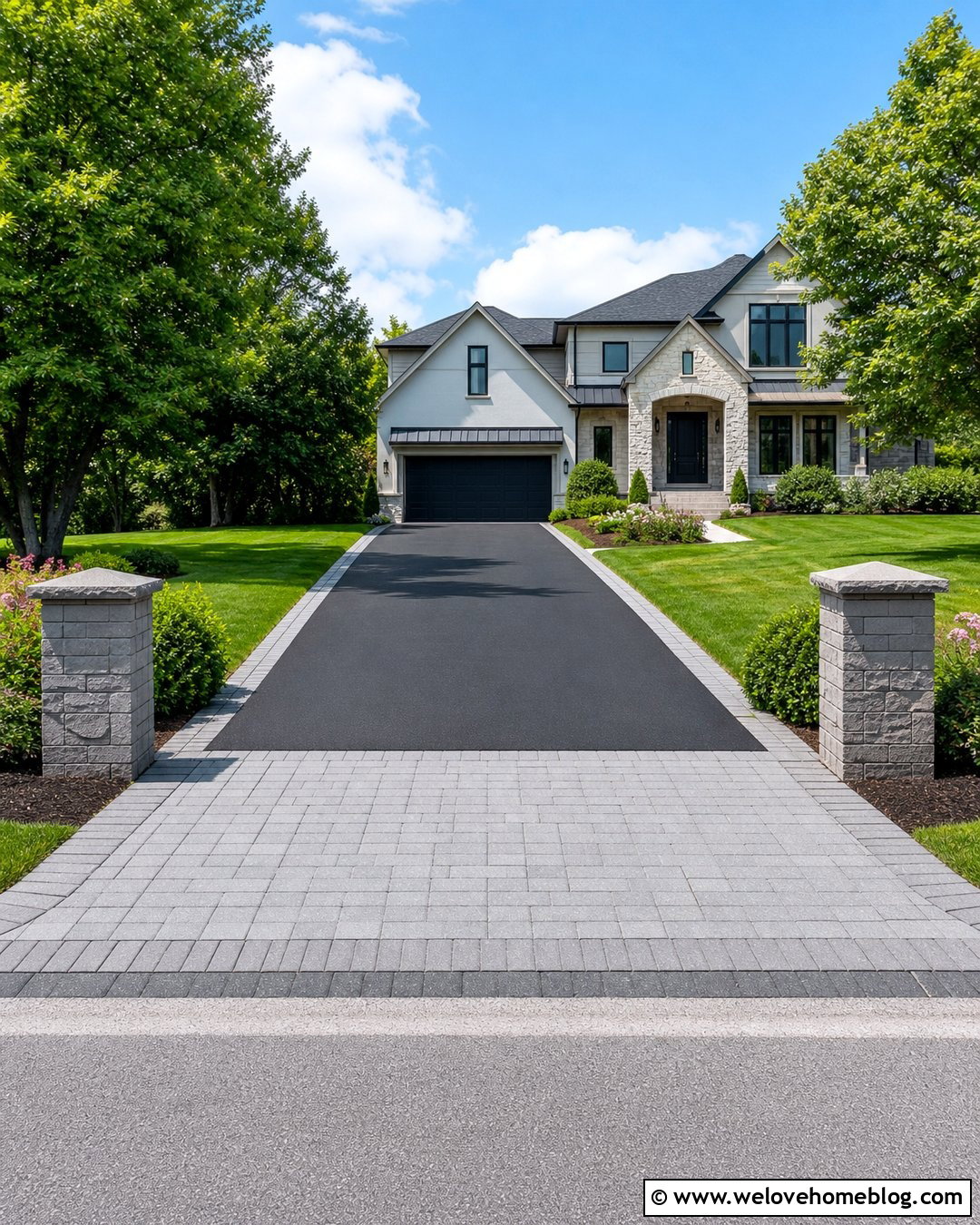
Utility work can leave a rectangular patch that stands out from the older pavement. A full-depth repair with straight, solid edges and a properly compacted base offers a cleaner result than filling an uneven trench. When the cut is located near the street, incorporate it into a wider entrance design using a vehicle-rated concrete paver apron. Choose medium-gray pavers with a soldier-course border, then transition into repaired black asphalt leading toward the house. Add matching mailbox pillars, clipped shrubs, and broad lawn areas for a coordinated suburban entrance. The paver apron visually separates the road from the main driveway and reduces attention on the repaired zone. Confirm property lines, utility access rules, and local requirements before adding permanent features near the public right-of-way.
17. Asphalt Driveway Resurfacing With Curved Landscaping
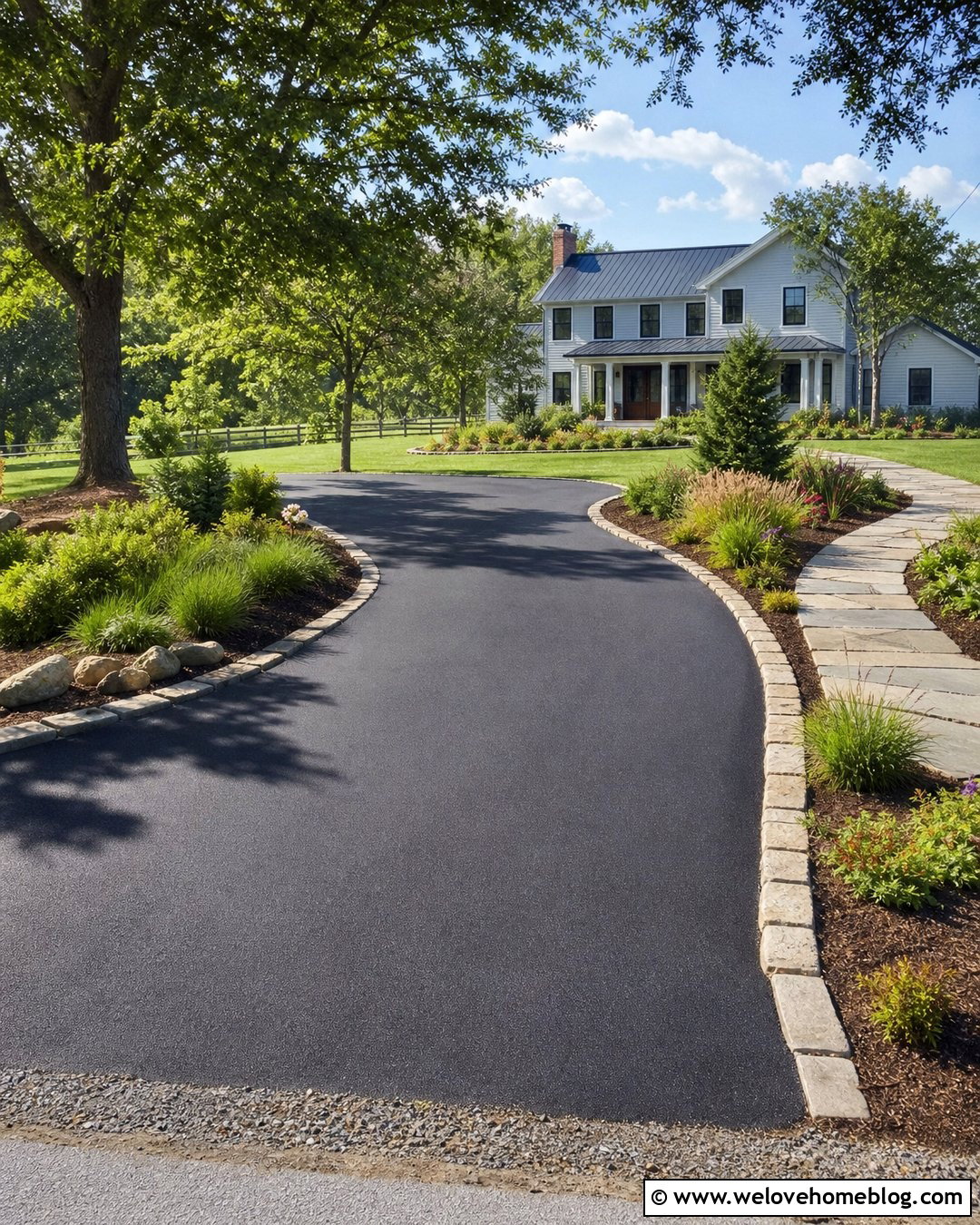
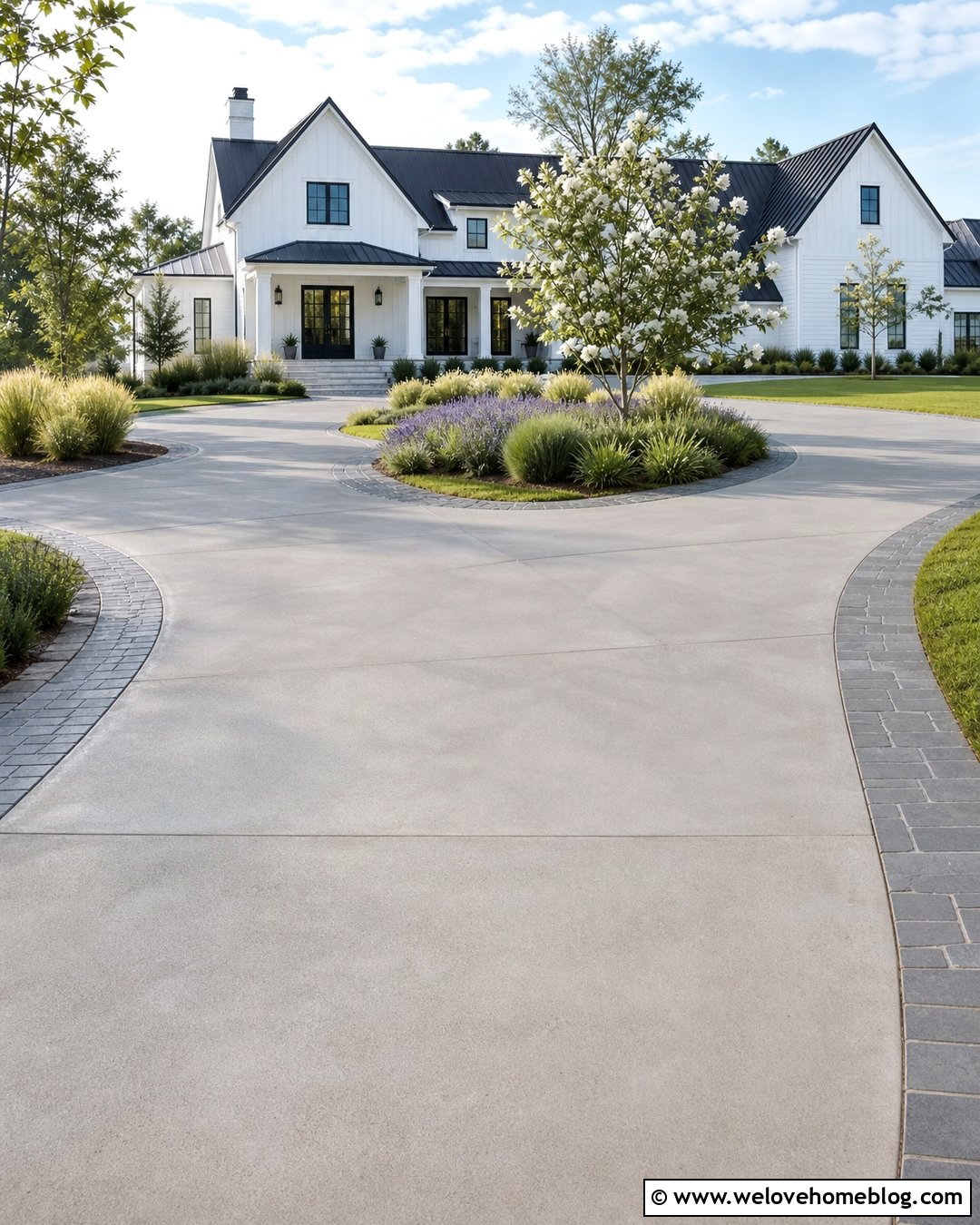
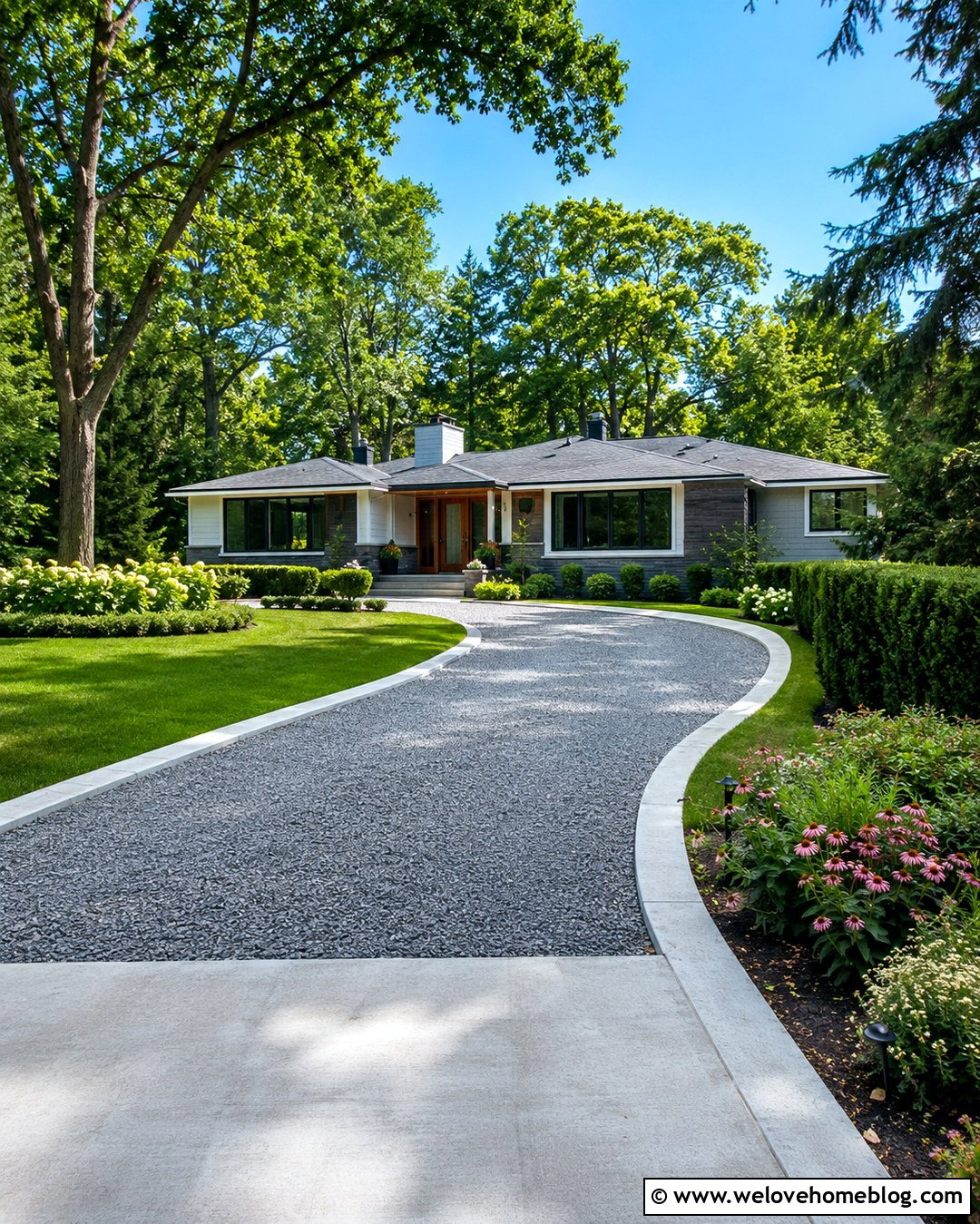
A long asphalt driveway can look dramatically better after surface repairs and resurfacing are paired with thoughtful landscaping. Use a broad curve that follows the yard rather than running directly toward the front door. Once weak pavement and drainage problems are corrected, apply the new asphalt layer to create an even black finish. Border the outside curve with natural stone and groups of evergreen shrubs, flowering perennials, and ornamental grasses. Keep the inside edge more open with lawn and a few canopy trees so drivers maintain clear sightlines. A modern farmhouse works well at the end of this approach. Add a separate stone walkway near the house instead of asking pedestrians to follow the entire driveway. The landscaping should emphasize the repaired curve without narrowing usable pavement.
18. Asphalt Driveway Patch Repair With Farmhouse Entrance
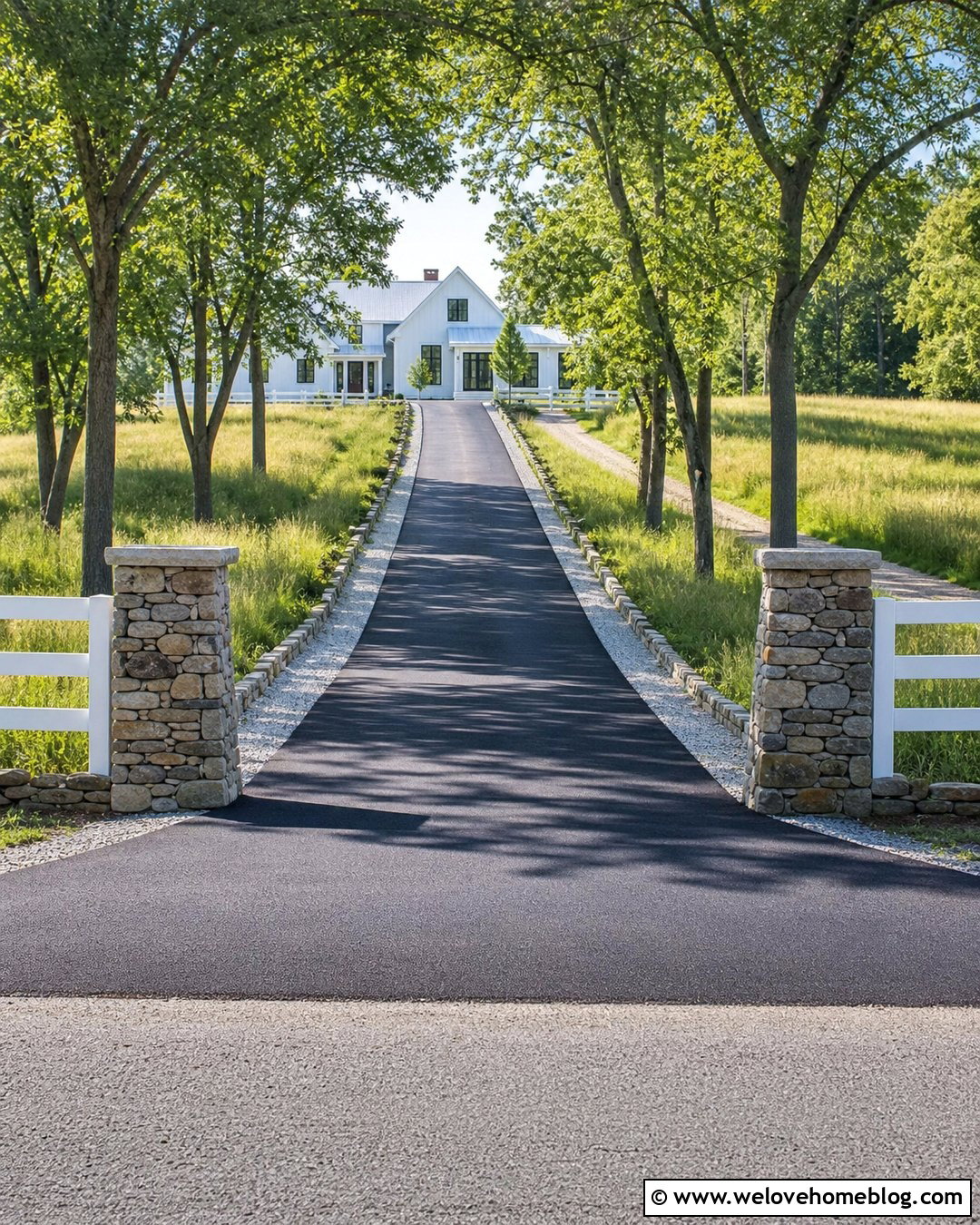
A farmhouse driveway can accommodate visible repair work without losing its welcoming character. Use squared, compacted asphalt patches for localized damage, then apply a compatible finish across the sound portions when appropriate. Frame the straight black driveway with compacted gravel shoulders and simple timber or stone edging. At the road, install white fence sections set well back from vehicle clearance areas, along with low stone pillars and a plainly designed address marker. Continue the rural look with meadow grasses, deciduous trees, and a gravel footpath leading toward the porch. Avoid placing large plants where they block views of approaching traffic. The contrast between dark pavement, pale fencing, and open green space gives the repaired surface a purposeful farmhouse appearance rather than making it seem like an unfinished utility area.
19. Asphalt Driveway Repair With Snow-Friendly Edging
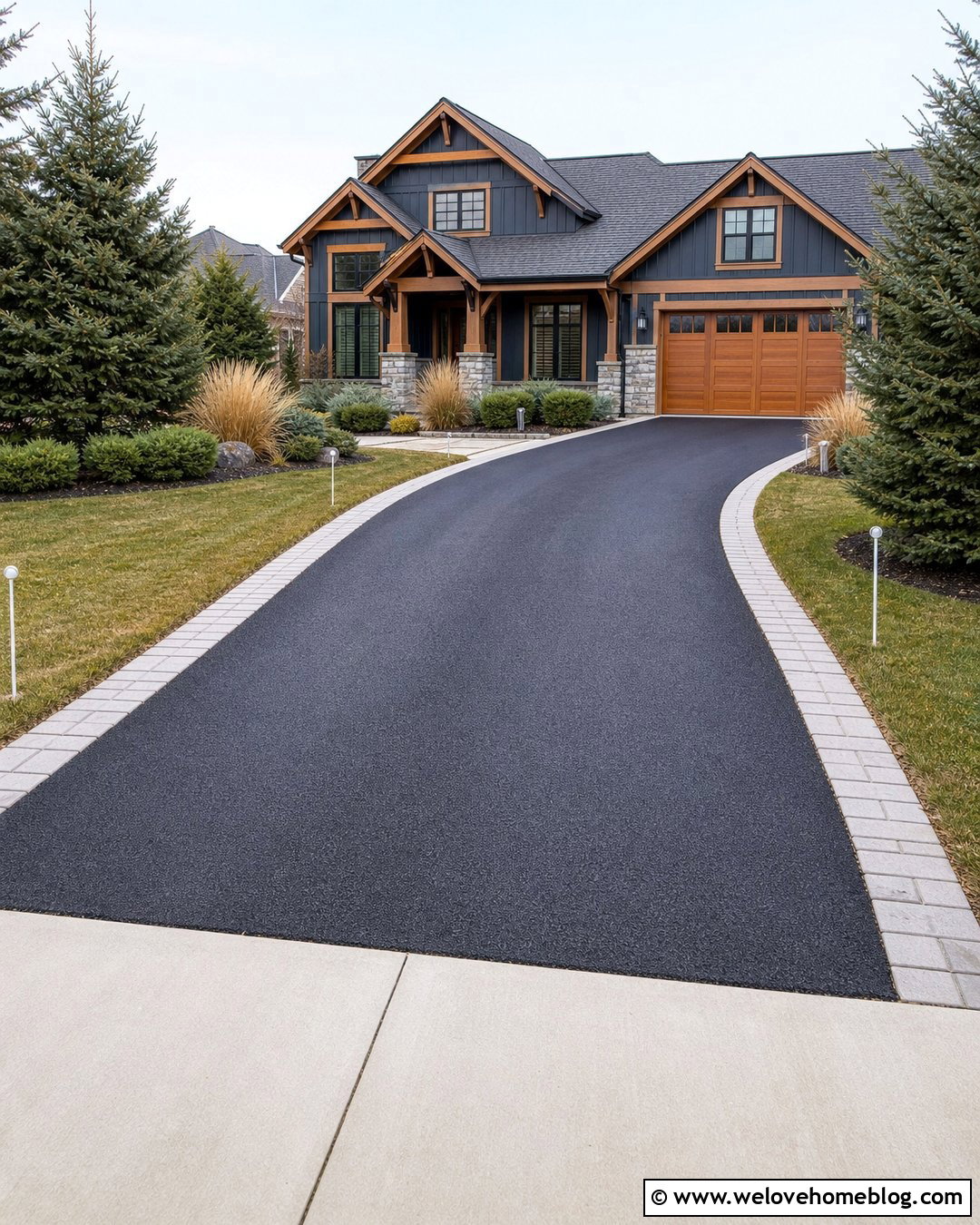
In snowy climates, driveway borders should be easy to see and durable enough to handle shoveling or plowing. Repair cracks and potholes before freezing weather allows water to enter and expand within damaged areas. Create a straight or gently curved black asphalt driveway with flush concrete paver edging instead of tall, delicate borders. Flexible driveway markers can identify both sides during heavy snow without permanently cluttering the landscape. Set shrubs and ornamental grasses farther back so snow storage does not crush them or trap moisture against the pavement. A simple lawn strip between the asphalt and planting beds provides additional clearance. Near the garage, keep transitions smooth and avoid loose gravel that can be picked up by snow-removal equipment. Regional contractors can recommend repair materials suited to local temperature cycles.
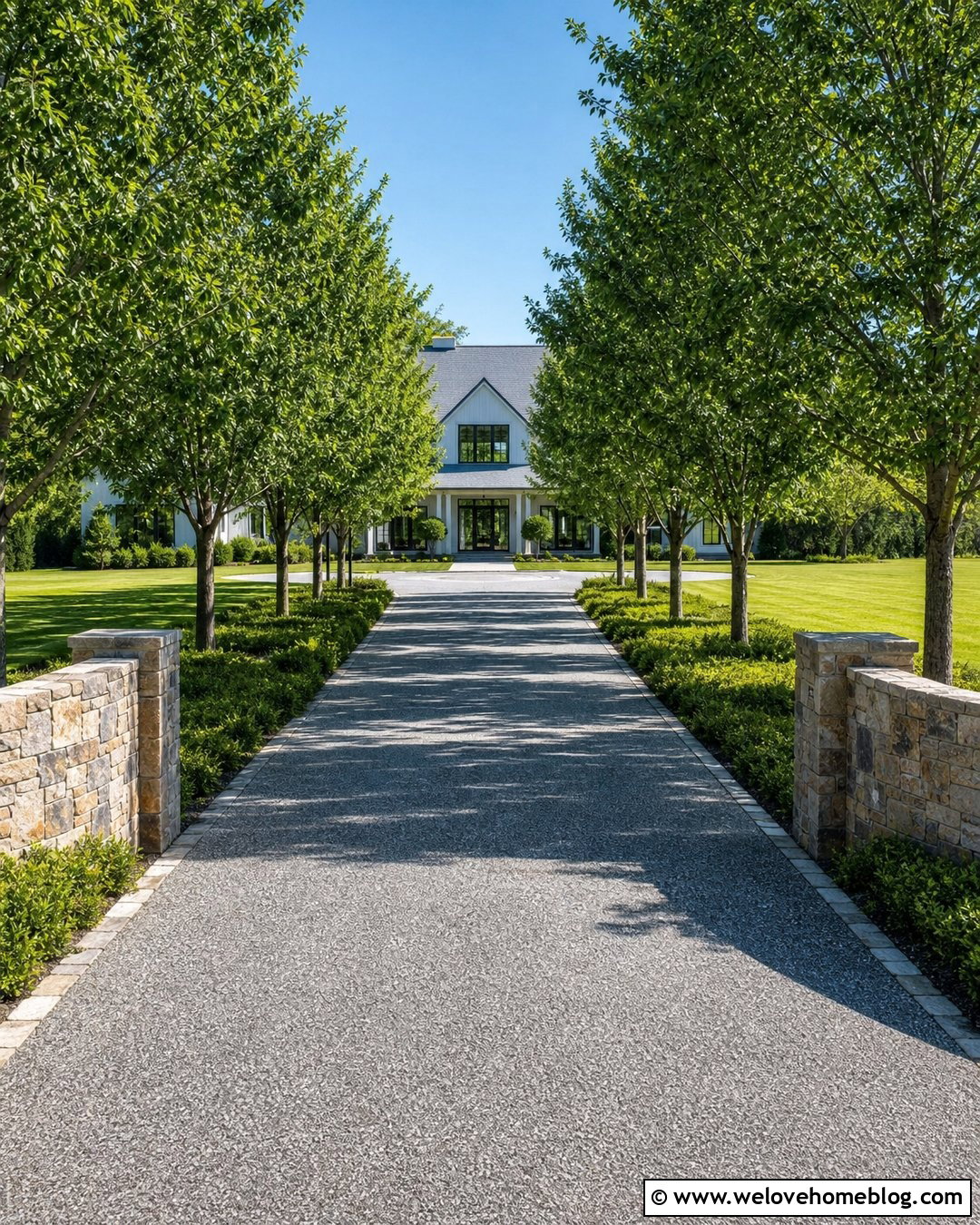
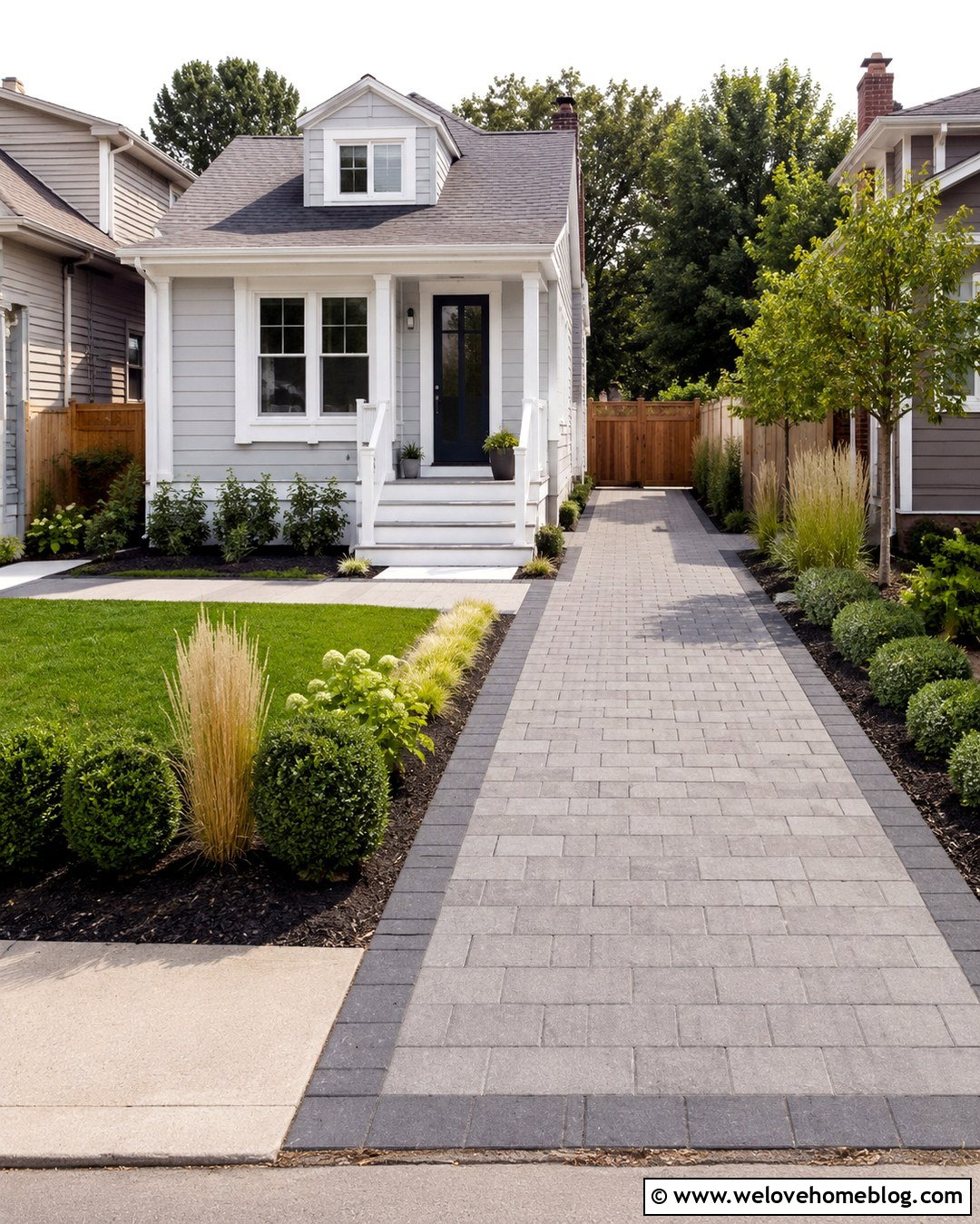
20. Asphalt Driveway Replacement With Recycled Brick Borders
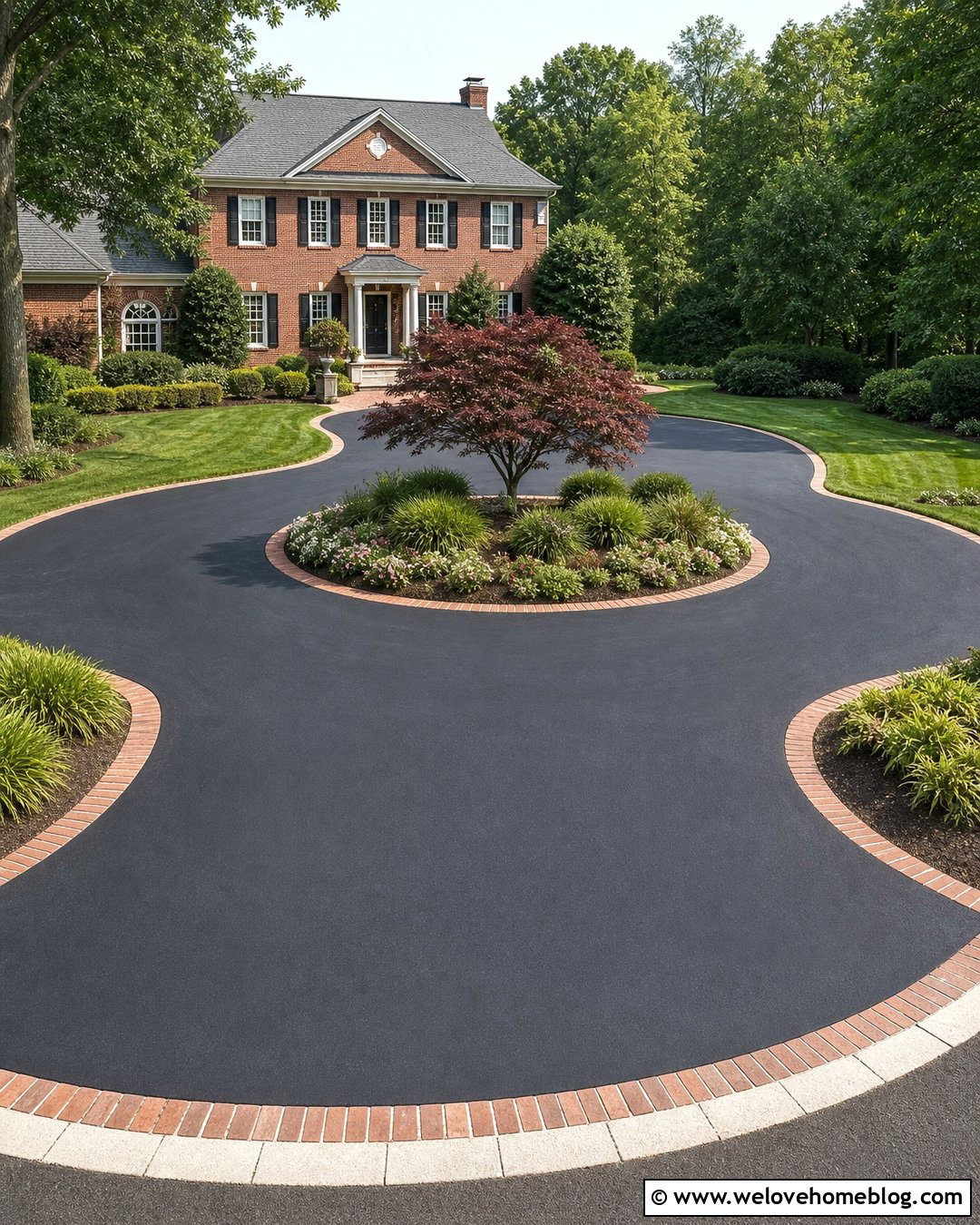
Sometimes repeated patching no longer makes financial or structural sense. Widespread cracking, severe settlement, poor drainage, or extensive base failure may justify removing the old driveway and rebuilding it. A replacement project also creates an opportunity to correct the width, slope, and relationship between the driveway and front walk. Use new black asphalt in a broad horseshoe layout, then border it with salvaged or recycled clay bricks installed on a vehicle-appropriate foundation. Create a landscaped center island with a small ornamental tree, low shrubs, and ground cover that will not block visibility. A colonial or traditional brick home completes the setting. The brick border provides warmth and history, while the rebuilt asphalt delivers a smooth, practical surface supported by a properly prepared base.
Conclusion:
The best repair depends on what is happening above and below the asphalt. Stable hairline cracks may need filling, while potholes, sinking areas, and alligator cracking often require deeper investigation. Resurfacing can renew a structurally sound driveway, but it cannot correct a failing base or unresolved drainage. These 20 Asphalt Repair Driveways Ideas also show how brick edging, gravel shoulders, paver aprons, curbs, planting beds, and improved entrances can make repair work feel like a complete exterior upgrade. Inspect the pavement carefully, address water problems first, and choose landscaping that protects the edges. When damage is widespread or repeatedly returns, consult an experienced asphalt contractor before investing in another surface-level fix.

Related posts:
Leave a Reply