
Australian driveways need to handle strong sun, heavy rain, everyday traffic, and a wide range of home designs. The best surfaces also connect naturally with the front yard, garage, and surrounding landscape. These 20 Australian Driveway Ideas cover popular finishes such as exposed aggregate, concrete, gravel, brick, natural stone, asphalt, and permeable pavers. Each complete look combines the driveway material with a practical layout, defined edging, and climate-suitable planting. Exposed aggregate remains especially versatile, while permeable surfaces can help manage runoff where site conditions and local requirements allow. () Whether you have a compact suburban frontage, coastal property, modern build, or spacious rural block, you can find inspiration in these 20 Australian Driveway Ideas.

1. Exposed Aggregate Driveway With Native Landscaping
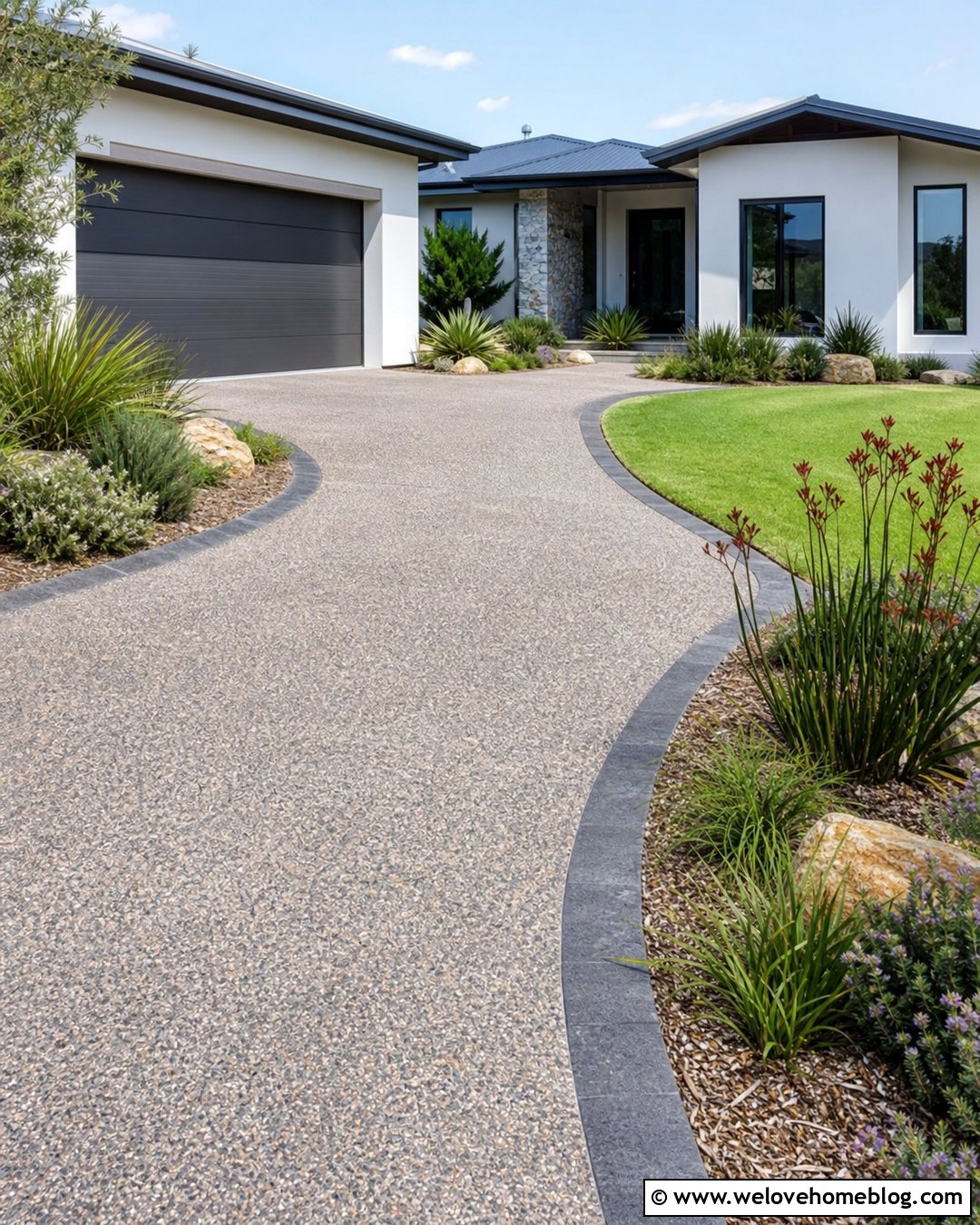
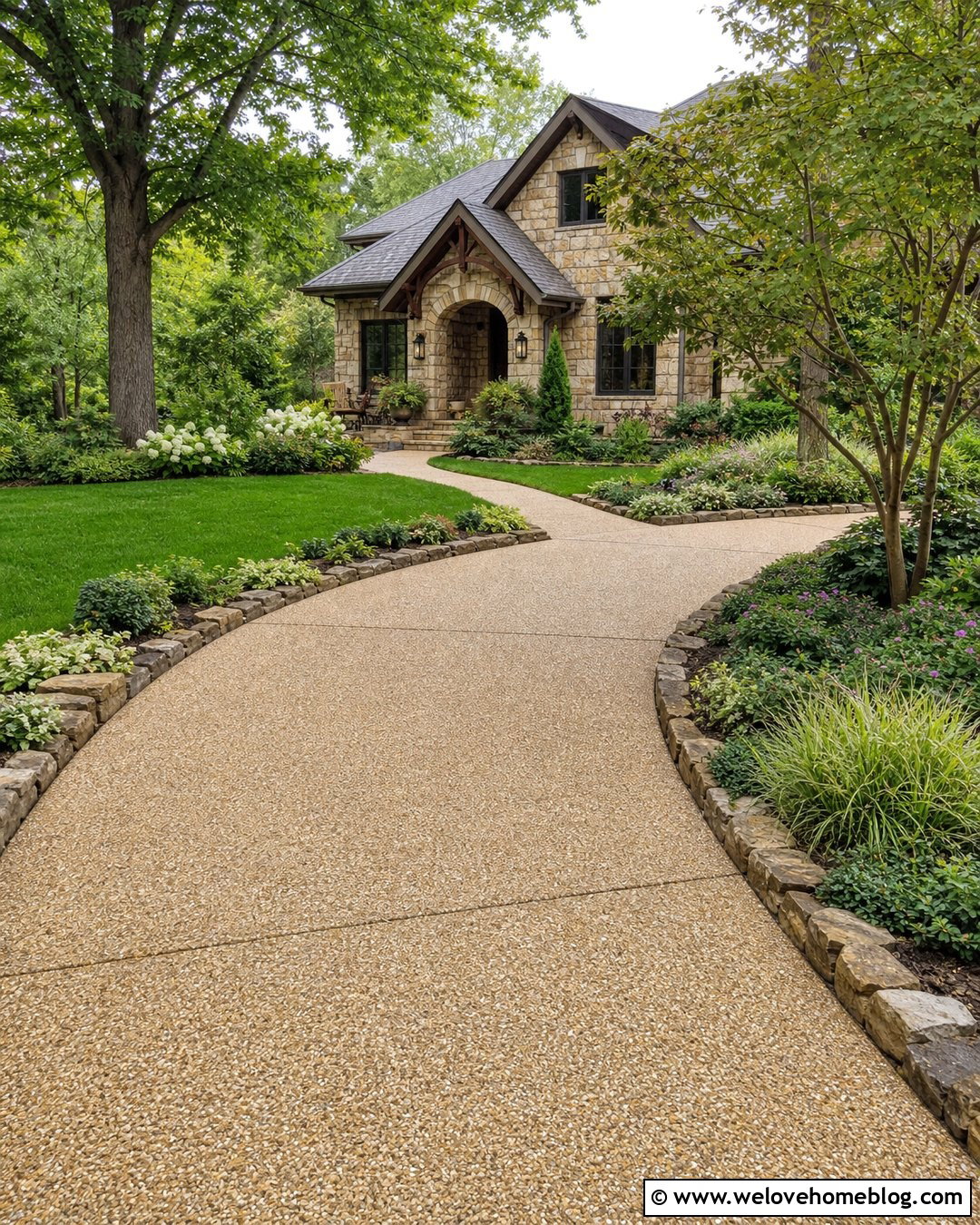
A warm gray exposed aggregate driveway creates a practical foundation for a contemporary Australian home. Choose a locally available aggregate mix containing cream, charcoal, or brown stone so the surface connects with the facade and regional landscape. A gently curved layout can make the approach feel softer, while dark concrete edging keeps the shape crisp. Along both sides, plant layered groups of lomandra, westringia, kangaroo paw, and low-growing grevillea. Use gravel mulch and several large landscape rocks to complete the native look. Keep plants low near the street so drivers retain clear sightlines. Exposed aggregate provides visible texture, and the broad range of available mixes makes it easier to coordinate the driveway with brick, render, timber, or stone. ()
2. Modern Concrete Driveway With Grass Strips
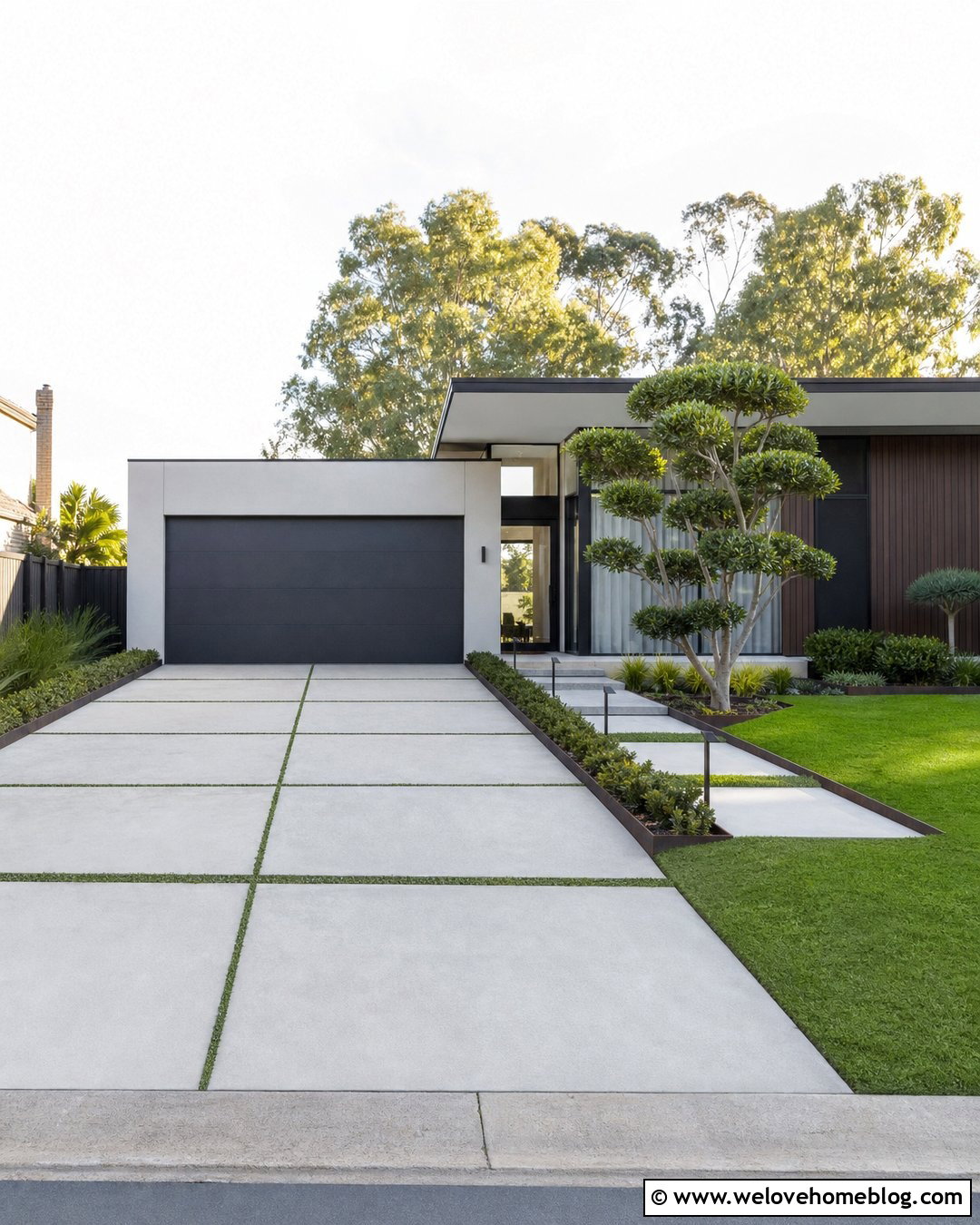
Large concrete slabs separated by narrow grass strips can make a wide driveway feel lighter and more connected to the yard. This layout works particularly well beside a modern Australian house with a simple rendered facade and flat or low-pitched roof. Use pale gray poured concrete with straight control joints and dark steel or concrete edging. The green strips should follow the direction of travel, creating strong lines toward the garage. Select a durable ground cover suited to the local climate and expected vehicle pressure. Frame the outer edges with clipped shrubs, ornamental grasses, and one sculptural feature tree. Proper drainage and a professionally prepared base are essential because separate slabs can move if the underlying construction is inadequate. The result feels clean, open, and garden-focused rather than heavily paved.
3. Charcoal Paver Driveway With Light Borders
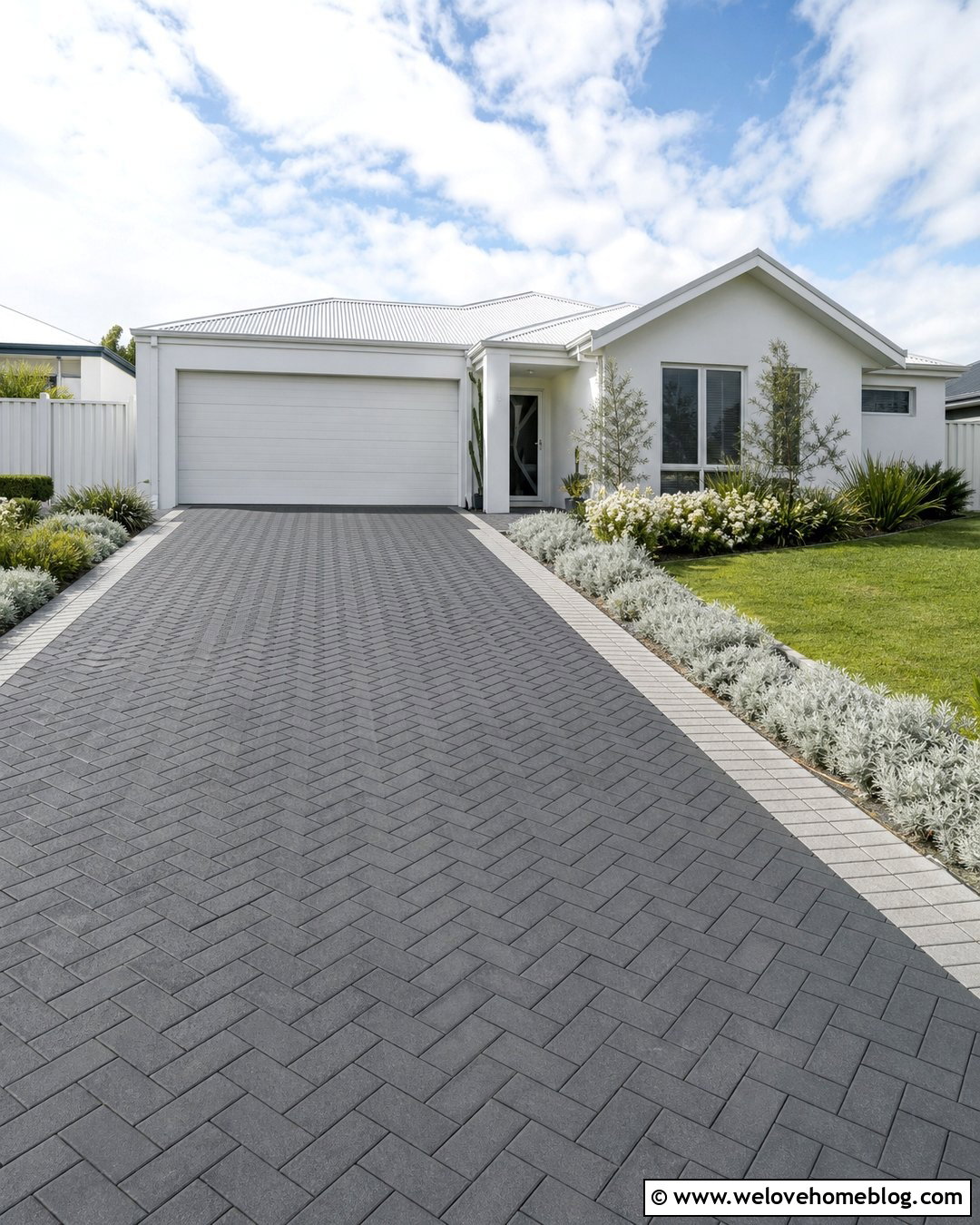
Charcoal concrete pavers give a suburban driveway a polished appearance while helping everyday marks look less noticeable. Lay rectangular pavers in a herringbone pattern for strong visual movement and dependable interlock. A contrasting border made from light gray pavers clearly defines the driveway and prevents the dark surface from appearing too heavy. Repeat the lighter material along the front walkway to connect both routes. Beside the driveway, use structured garden beds with white flowering shrubs, silver foliage, and compact native grasses. This combination suits a light brick, white rendered, or contemporary weatherboard home. Dark driveway pavers can be paired with lighter bands or header courses to create decorative definition without introducing an overly complicated pattern. ()
4. Coastal Gravel Driveway With Sandstone Edging
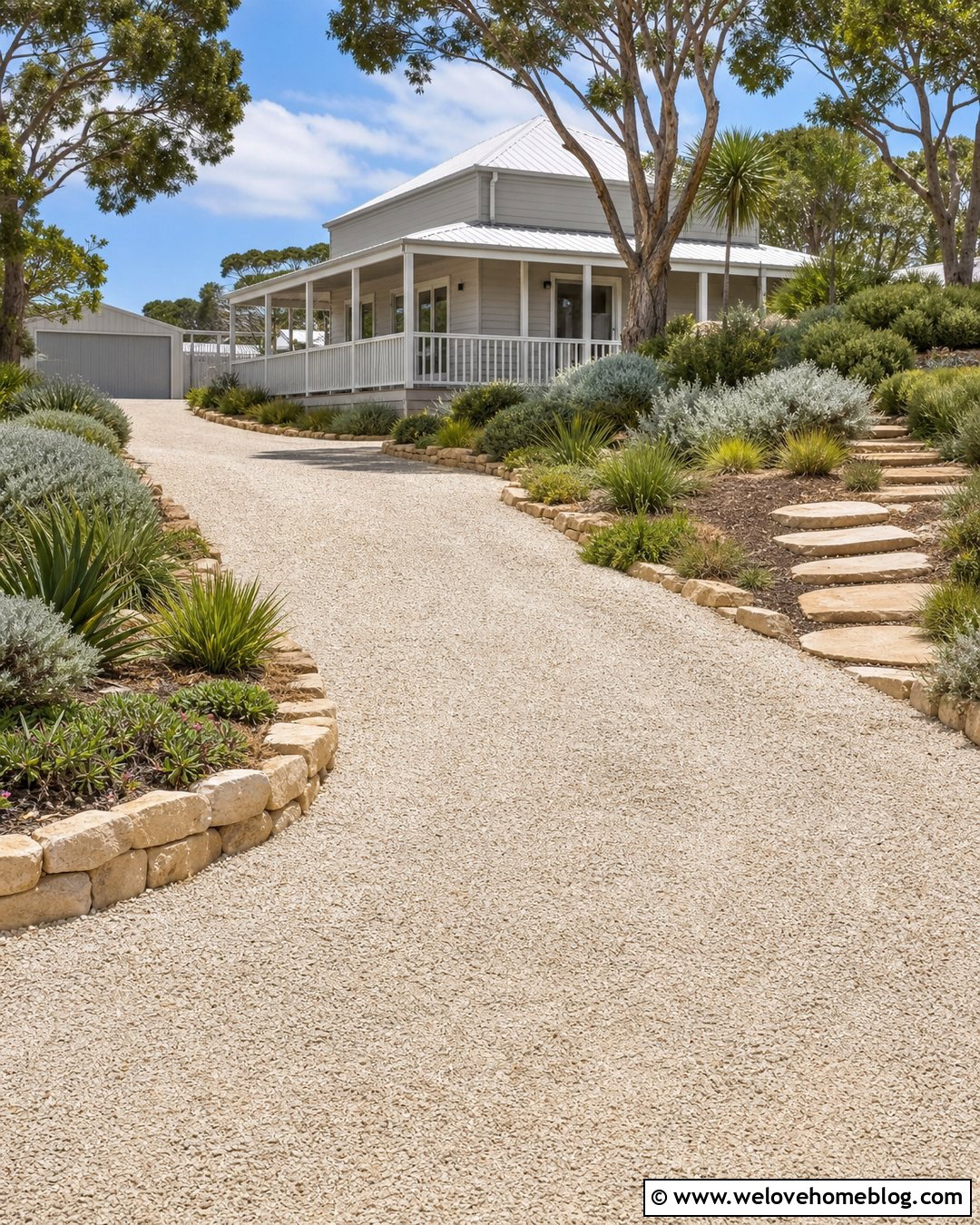
Picture a bright coastal home reached by a softly curved driveway covered in pale crushed gravel. Cream, beige, or light gray stone reflects the relaxed colors of sand and weathered coastal rock. Solid sandstone edging helps contain the loose surface and creates a natural transition into planting beds. Surround the driveway with coastal rosemary, cushion bush, lomandra, pigface, and other plants appropriate for the site’s wind, soil, and salt exposure. Add a stepping-stone walkway along one side so pedestrians do not have to cross loose gravel. Regular raking and occasional topping up will keep the surface even. This complete look suits weatherboard beach houses and coastal-inspired new builds, especially when the driveway color repeats tones found in the roof, facade, or garden walls. ()
5. Crushed Granite Driveway For A Rural Home
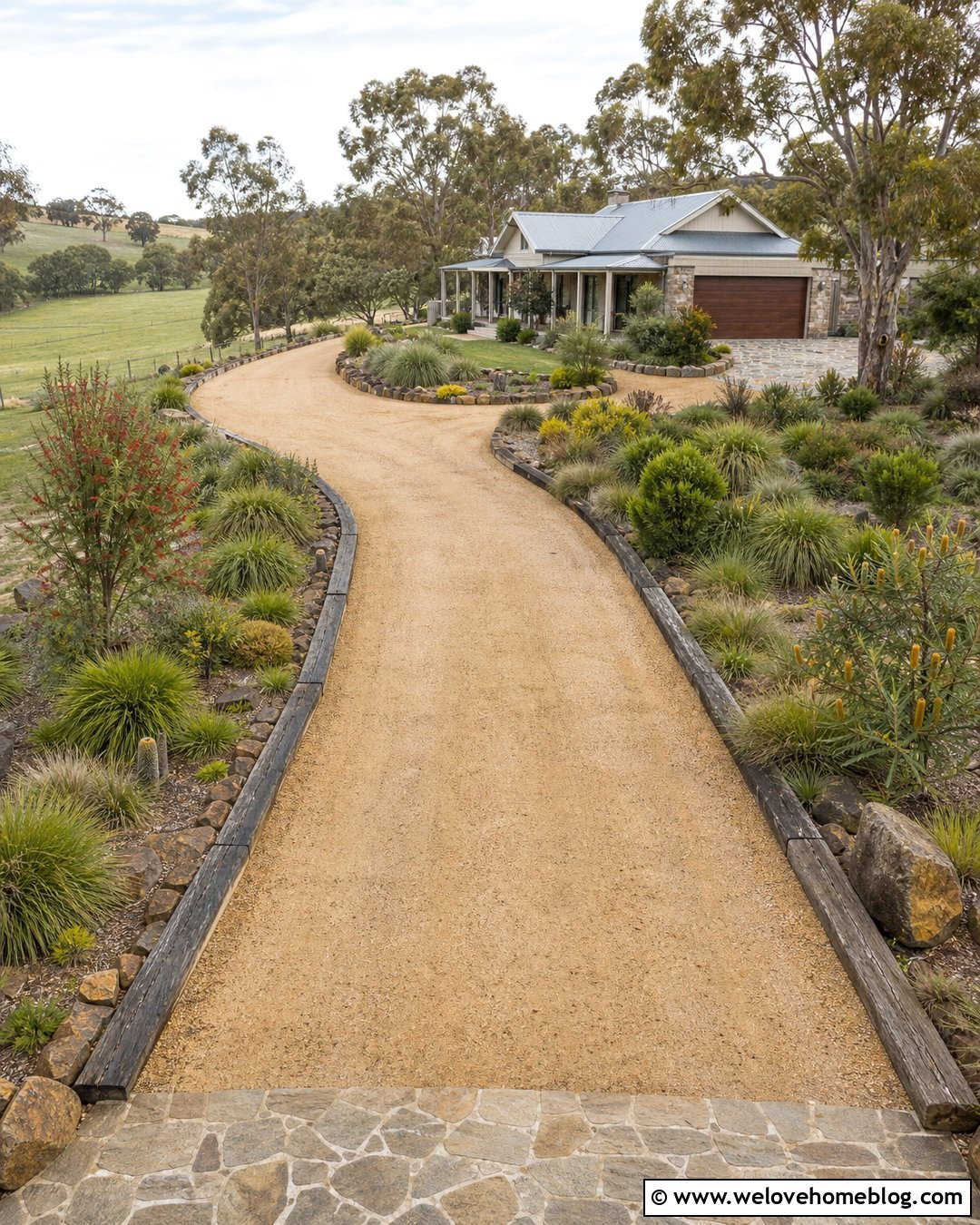
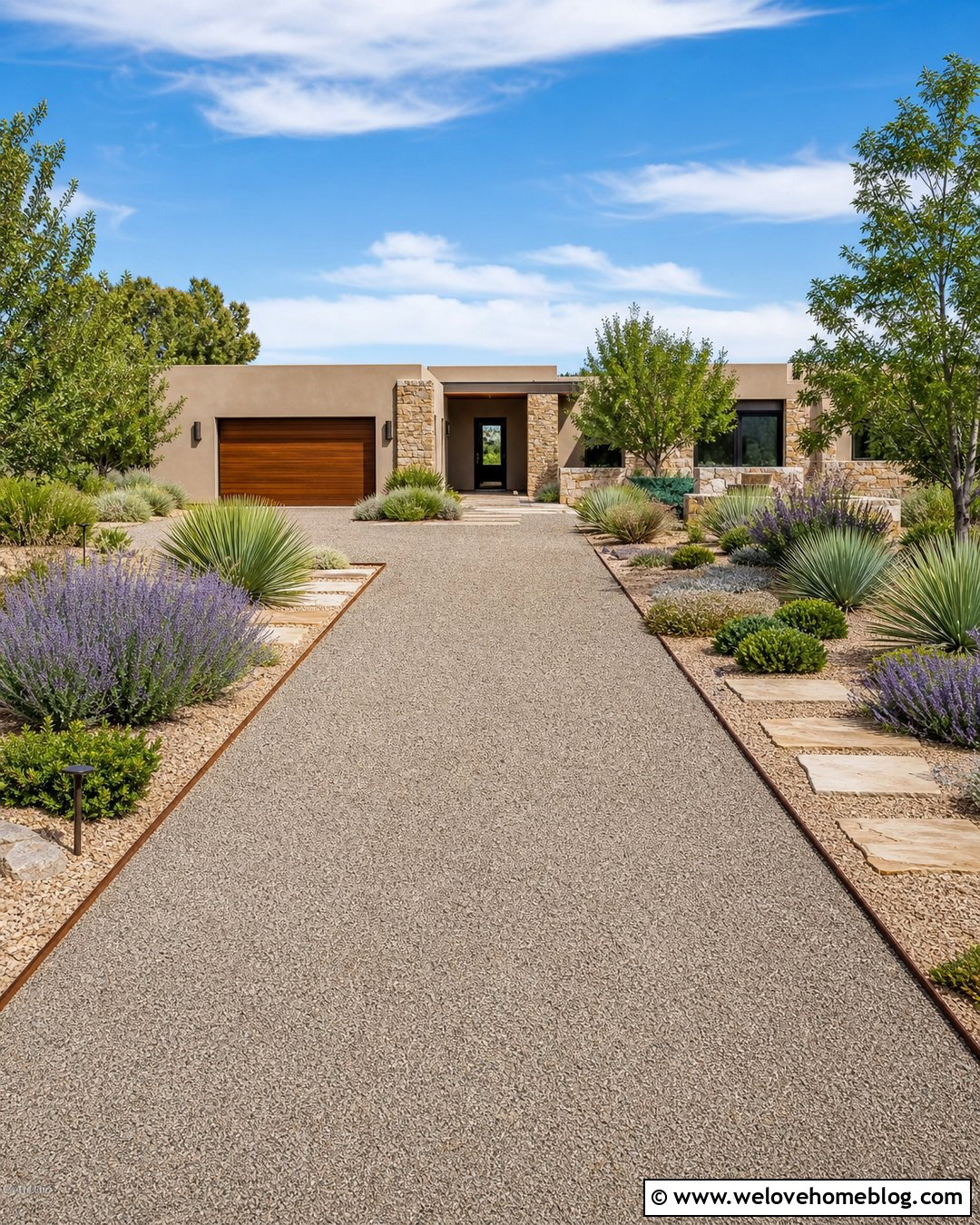
A long crushed granite driveway feels appropriate for an Australian country property because its earthy color settles naturally into an open landscape. Choose compacted decomposed granite in warm gold, rust, or muted brown, supported by a properly constructed road base. A gentle curve can reveal the house gradually while working around existing trees. Edge high-wear areas with timber sleepers, steel strips, or local stone to limit surface migration. Broad planting zones containing native grasses, bottlebrush, banksia, and hardy ground covers can connect the driveway with surrounding paddocks or bushland. Near the house, introduce a wider turning area and a stone-paved transition into the garage. The overall design should look informal, but drainage, compaction, and vehicle access still need careful professional planning.
6. Brick Driveway For A Federation Home
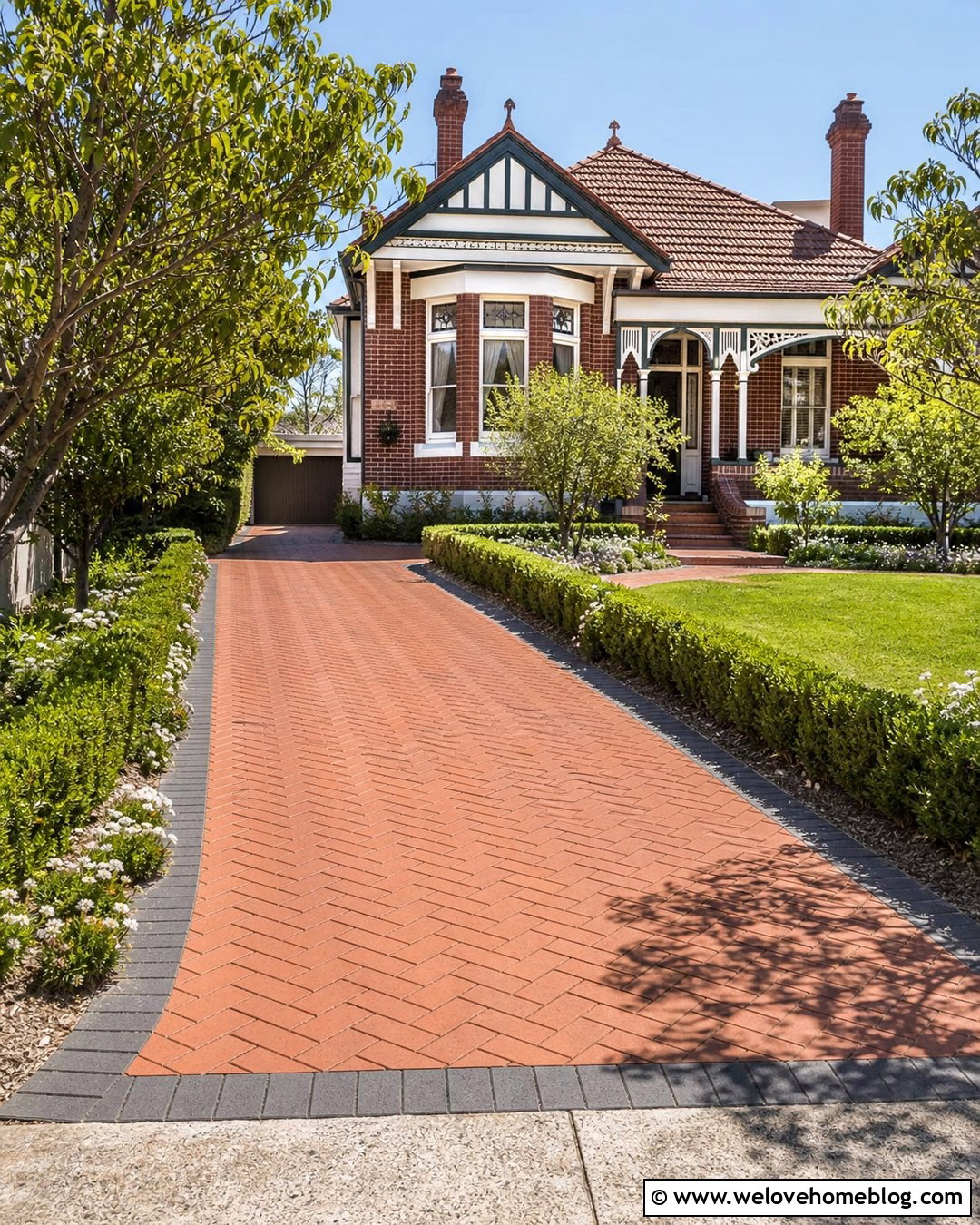
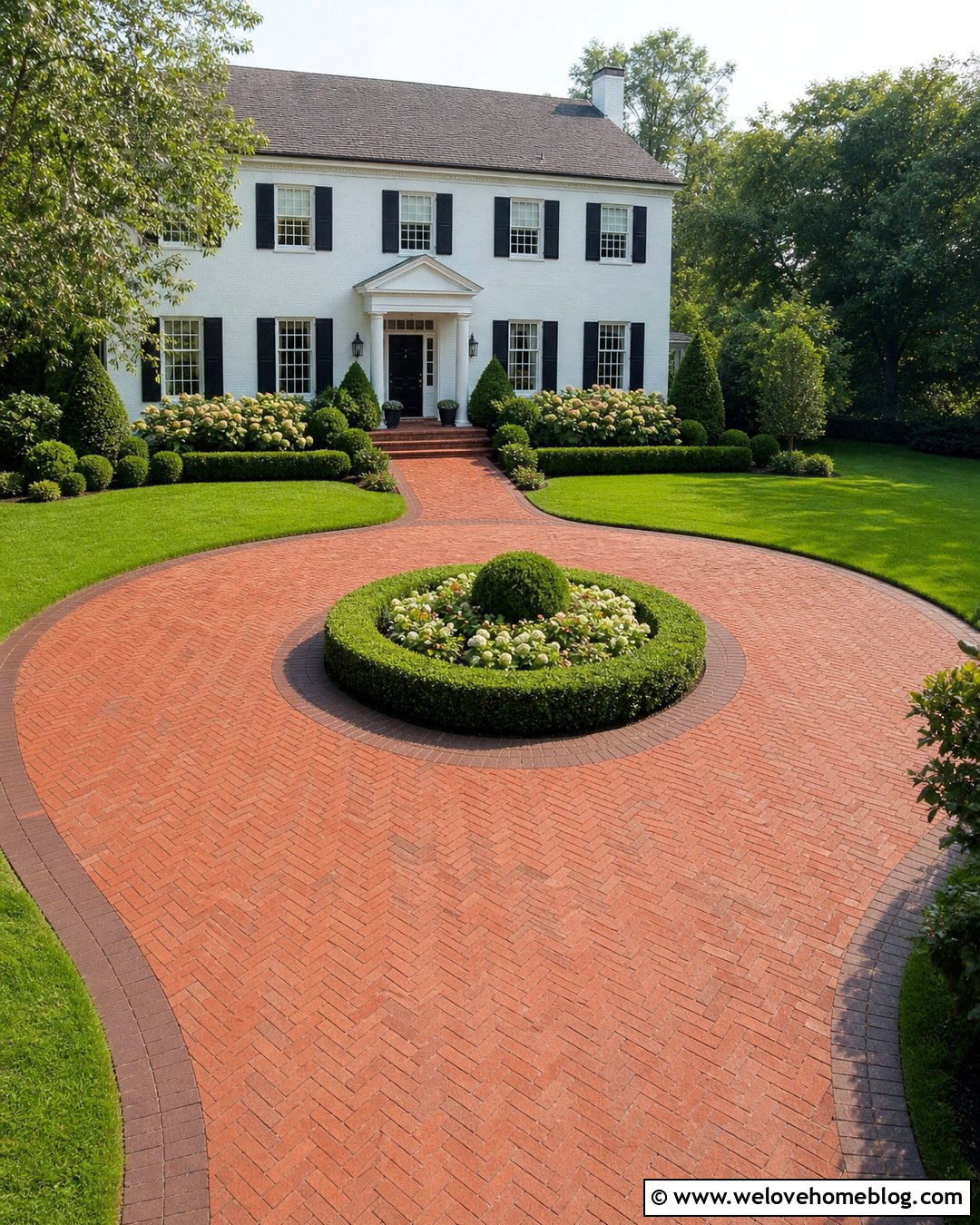
Traditional clay brick pavers can strengthen the character of a Federation-style house without making the entrance feel outdated. Deep red, terracotta, and brown bricks laid in herringbone provide a rich surface that complements decorative masonry and painted timber details. Use a darker brick soldier course around the perimeter to form a secure, clearly visible edge. A straight driveway keeps the layout formal, while curved garden beds can soften the space beside it. Plant clipped westringia, flowering ground covers, small ornamental trees, and layered greenery that suits the home’s established appearance. Carry the same brick into the front path or porch steps for continuity. Select pavers manufactured for vehicle loads, and ensure the base and edge restraints are designed to prevent spreading under repeated traffic.
7. Bluestone Driveway With Concrete Bands
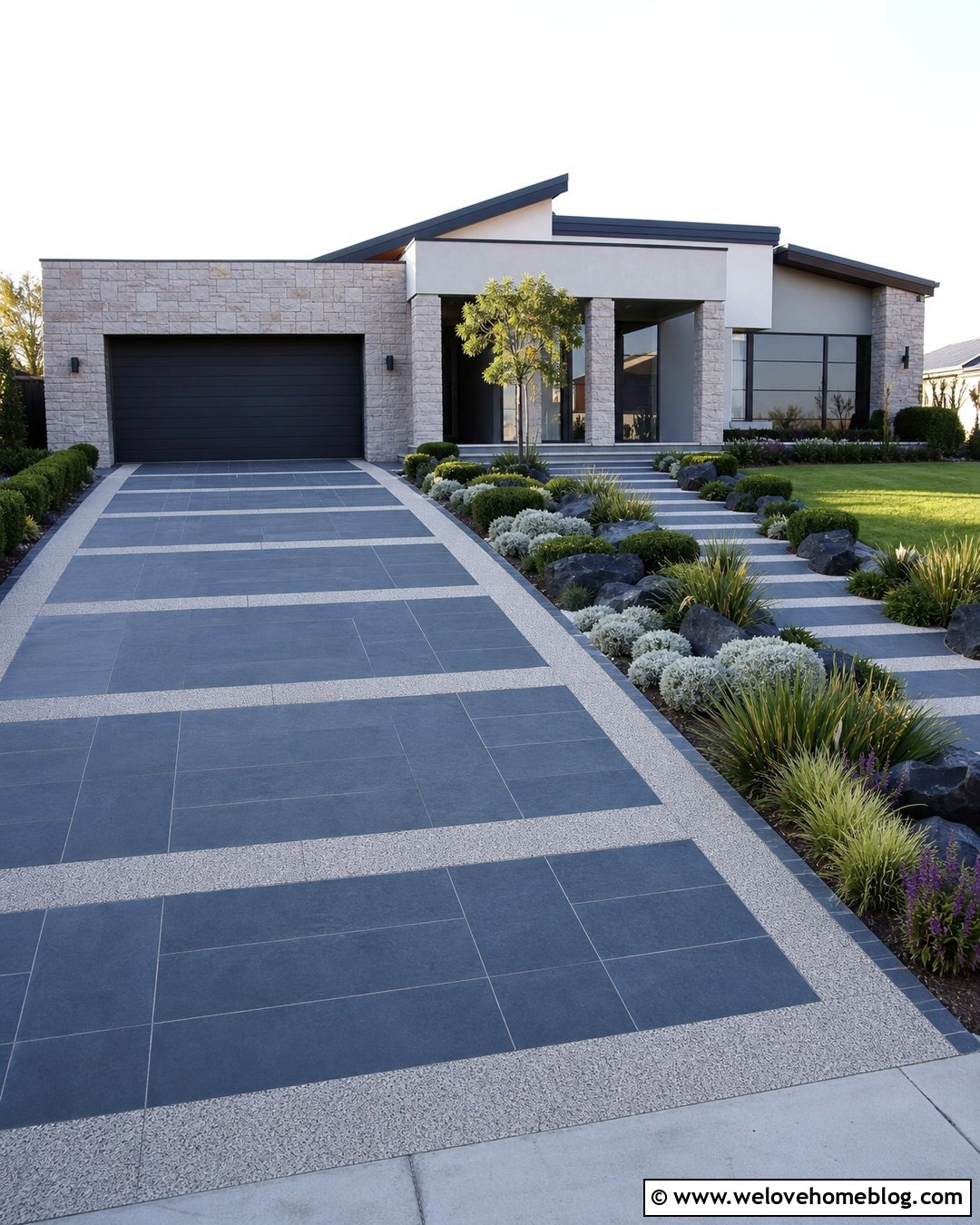
Bluestone creates a sophisticated driveway that works beautifully with both restored homes and modern Australian architecture. Instead of covering the entire surface in stone, combine charcoal bluestone pavers with broad bands of exposed aggregate concrete. The mixed-material layout reduces visual heaviness and can emphasize the width or direction of the driveway. Use bluestone at the entrance, along the borders, and in several cross bands leading toward the garage. Match those dark tones with charcoal window frames or roofing. Simple beds of lomandra, dianella, clipped shrubs, and silver ground covers will soften the strong geometry. Contrasting exposed aggregate and bluestone details can establish a clear relationship between the driveway, garage, fence, and house facade. ()
8. Permeable Paver Driveway With Ground Cover
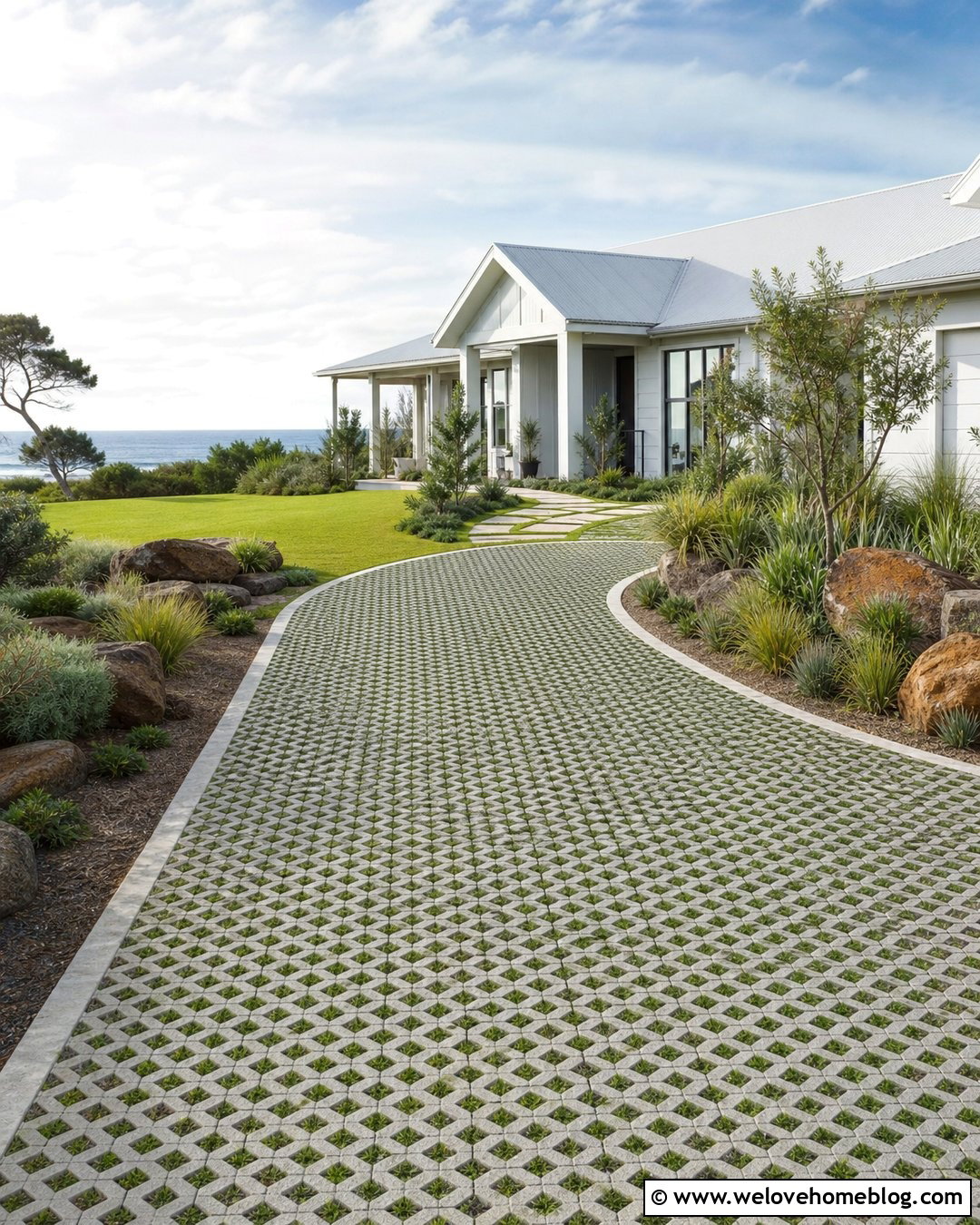
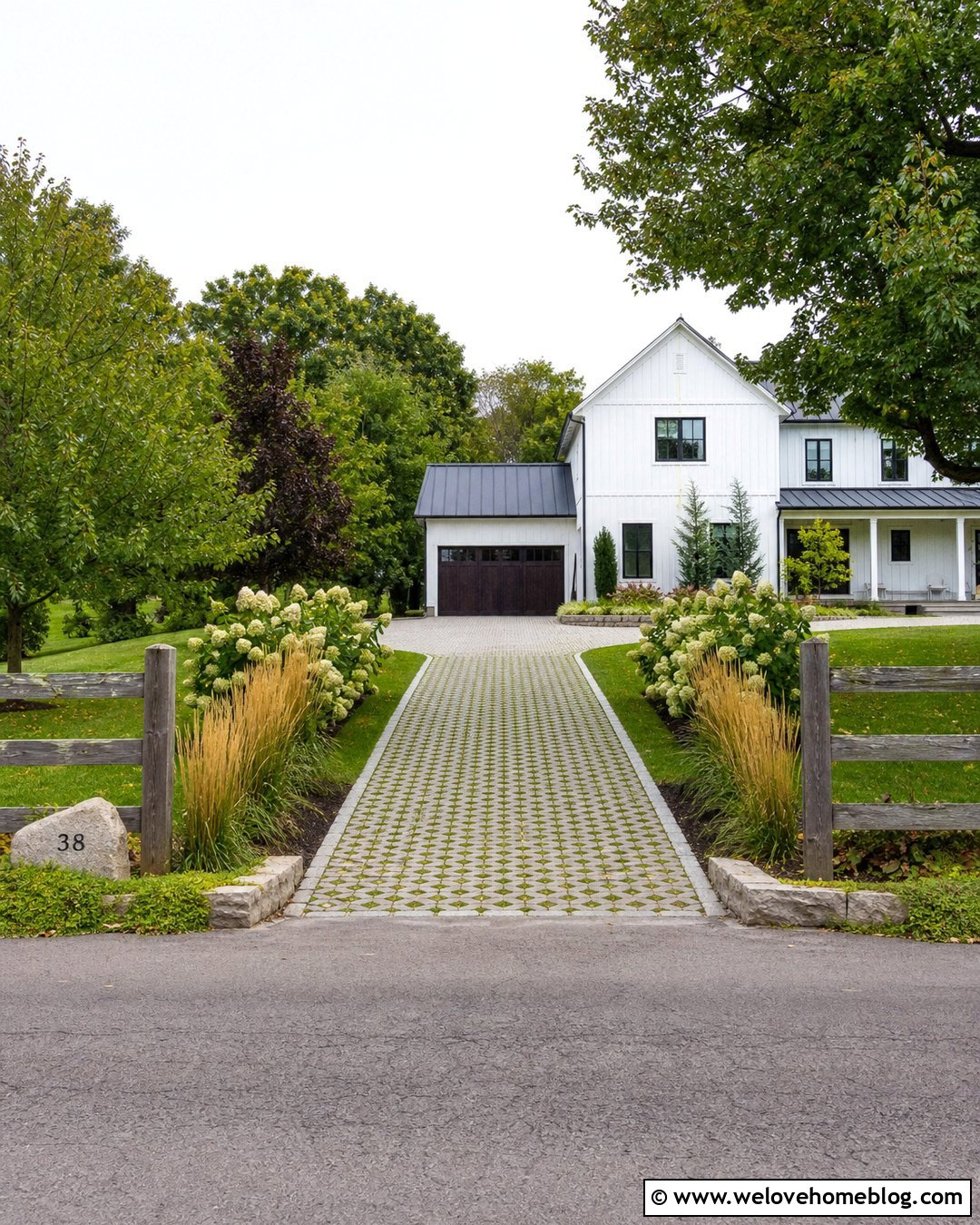
Permeable concrete grid pavers create a driveway that visually blends paving and planting. The open cells can be filled with suitable gravel or a carefully selected low ground cover, depending on the system, climate, traffic, and maintenance plan. Use the grid across a straight or slightly curved driveway, then frame it with solid concrete borders that stabilize the edges. Native garden beds filled with grasses, low shrubs, and feature rocks reinforce the landscape-led appearance. This treatment works well beside a coastal or modern farmhouse-style home where a solid paved slab might feel too dominant. Permeable paving can allow water to move through designated openings, but its performance depends on correct sub-base construction, soil conditions, drainage design, and ongoing care. ()
9. Curved Driveway With Layered Native Gardens
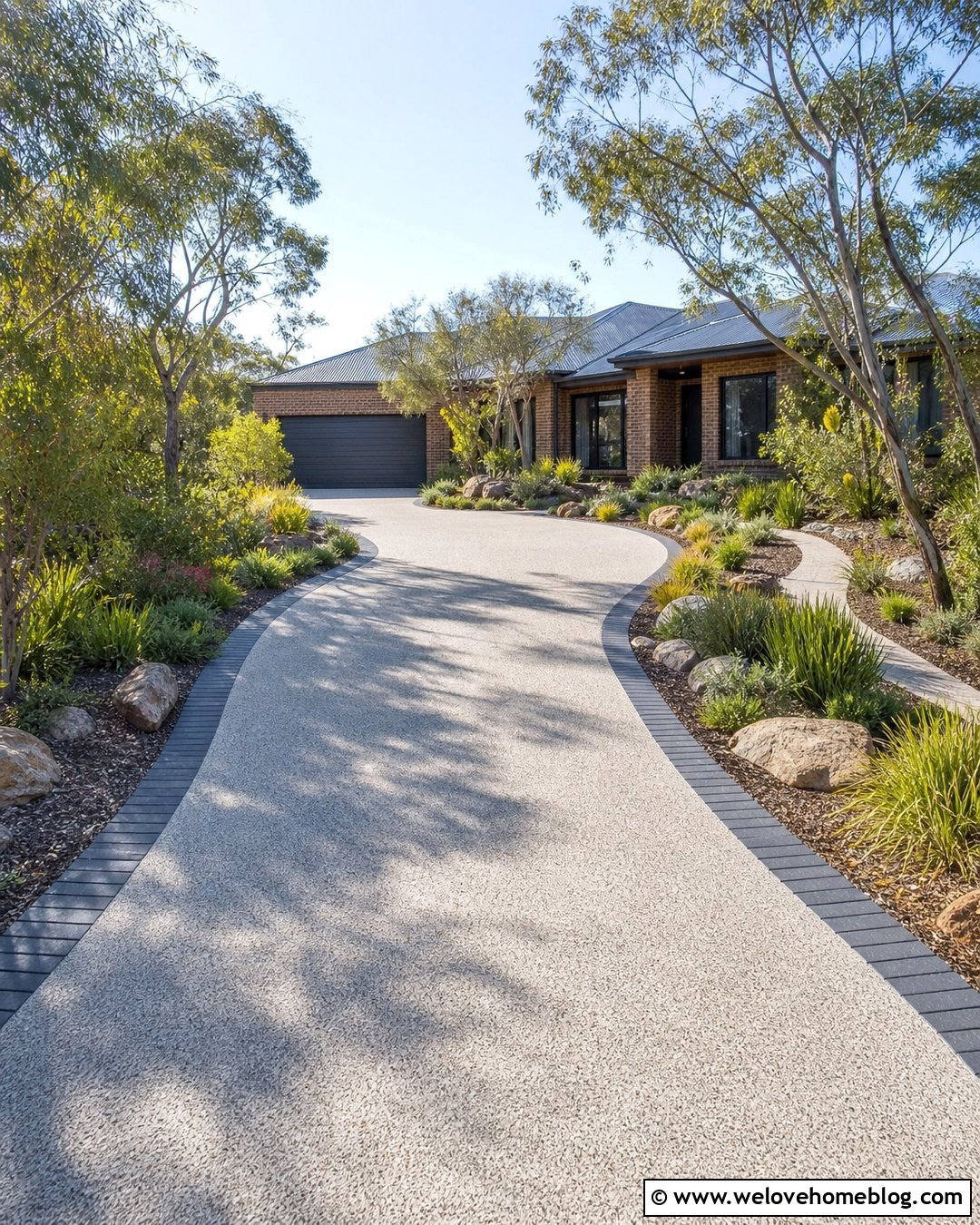
A curved driveway can make a medium or large front yard feel more natural while creating space for deeper planting beds. Use light exposed aggregate concrete to provide a durable, textured surface that follows the curve cleanly. Define the outer edge with a charcoal paver border and place a broad native garden inside the bend. Combine low lomandra near the pavement with taller banksia, grevillea, and small eucalyptus varieties farther back. This layered arrangement preserves visibility while building depth and privacy. A separate curved walkway can branch from the driveway and guide visitors directly to the front door. Repeat driveway colors in landscape rocks and garden mulch. The flowing layout helps soften a boxy facade and creates a more gradual, welcoming arrival from the street.
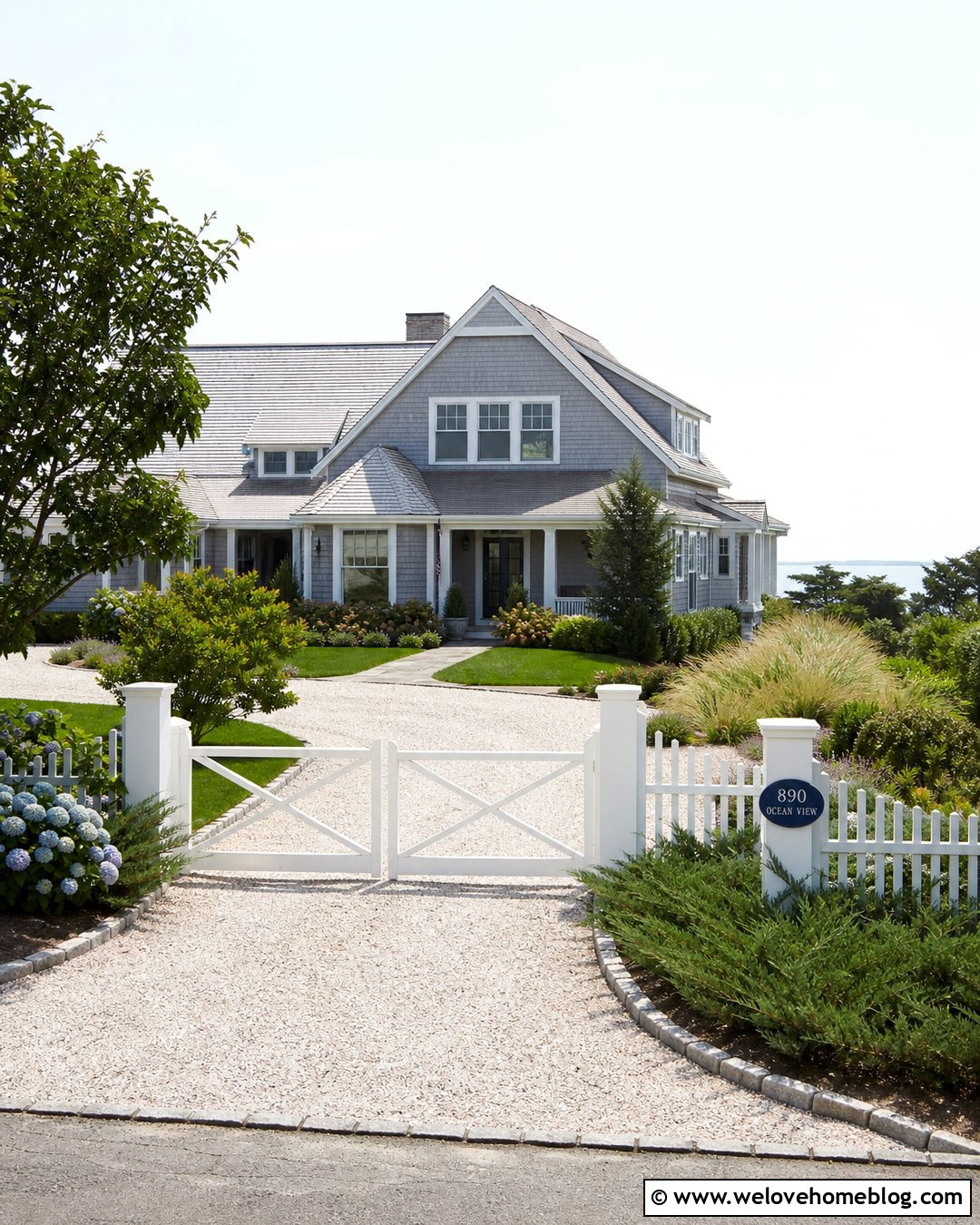
10. Circular Driveway With A Feature Tree
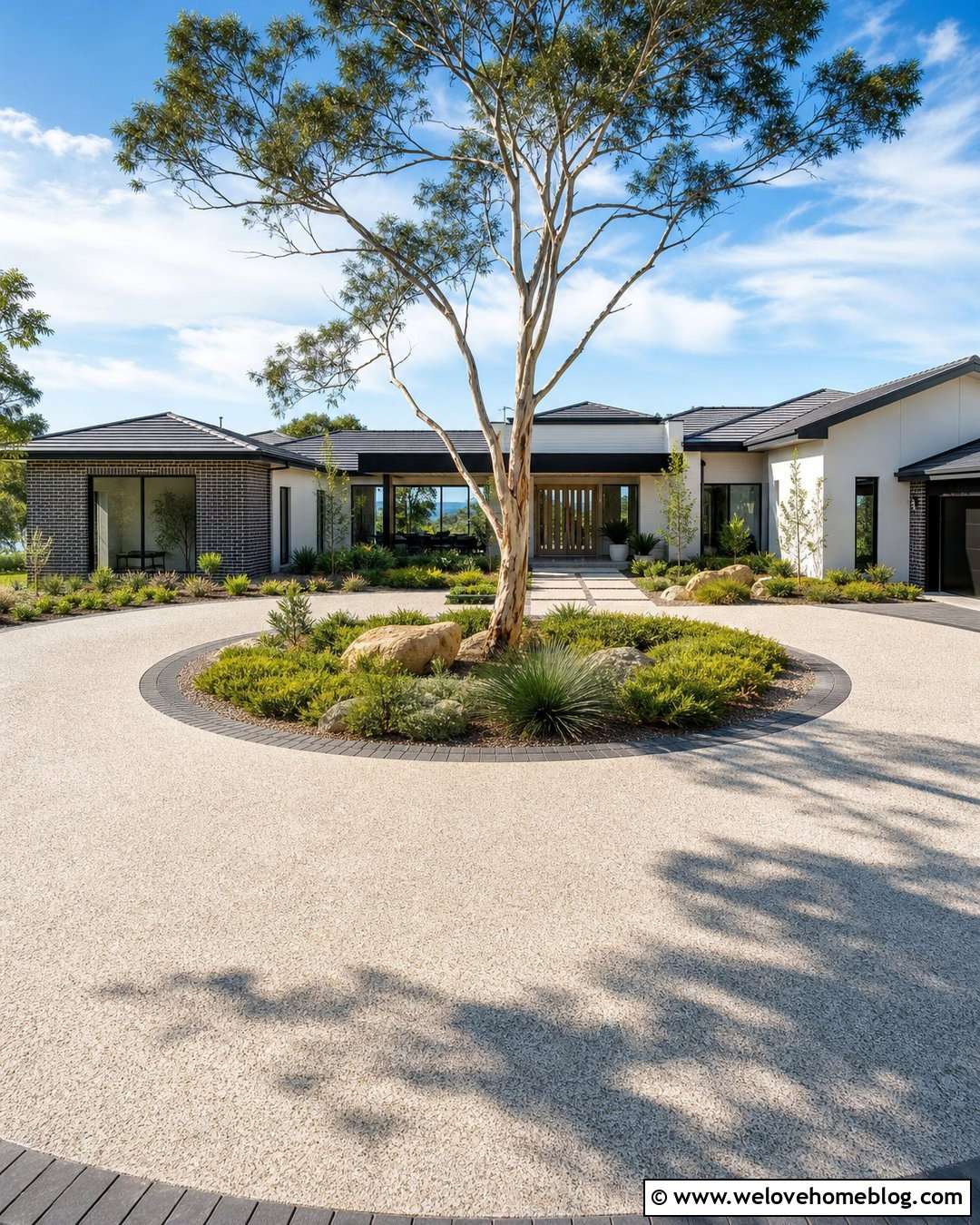
A circular driveway can give a wide Australian frontage convenient access and an impressive sense of arrival. Pale exposed aggregate or honed concrete keeps the loop bright, while a dark brick border emphasizes its shape. At the center, create a generous planted island around one feature tree selected for the available space and local growing conditions. Surround it with low native grasses, clipped shrubs, gravel mulch, and simple landscape rocks so the island remains attractive without blocking views. Connect the loop to the front entrance with a clear paver walkway. The driveway should provide comfortable turning space without overwhelming the lawn or building facade. Before construction, confirm dimensions, drainage, tree-root clearance, and crossover requirements with appropriate local professionals and authorities.
11. Steep Driveway With Textured Concrete
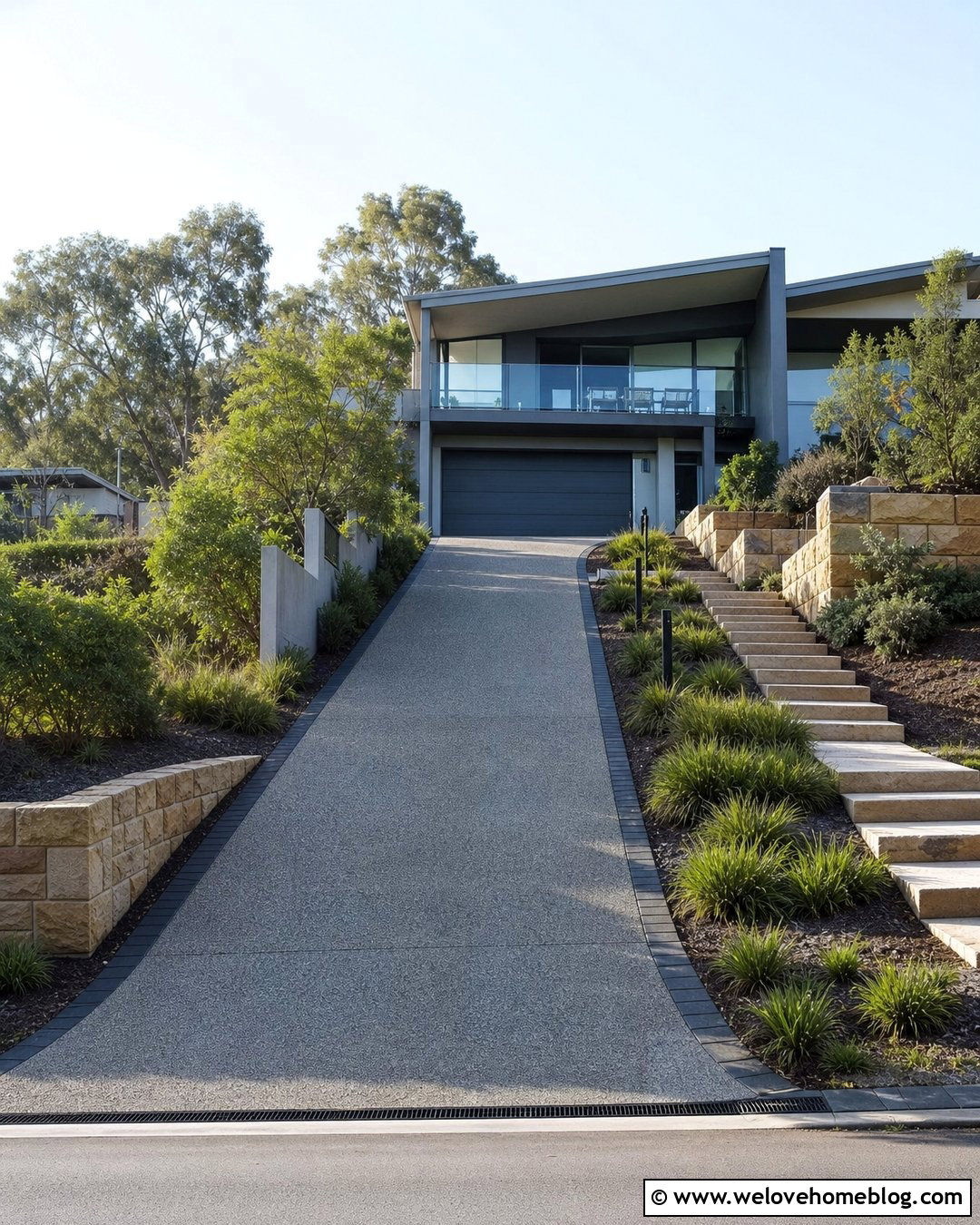
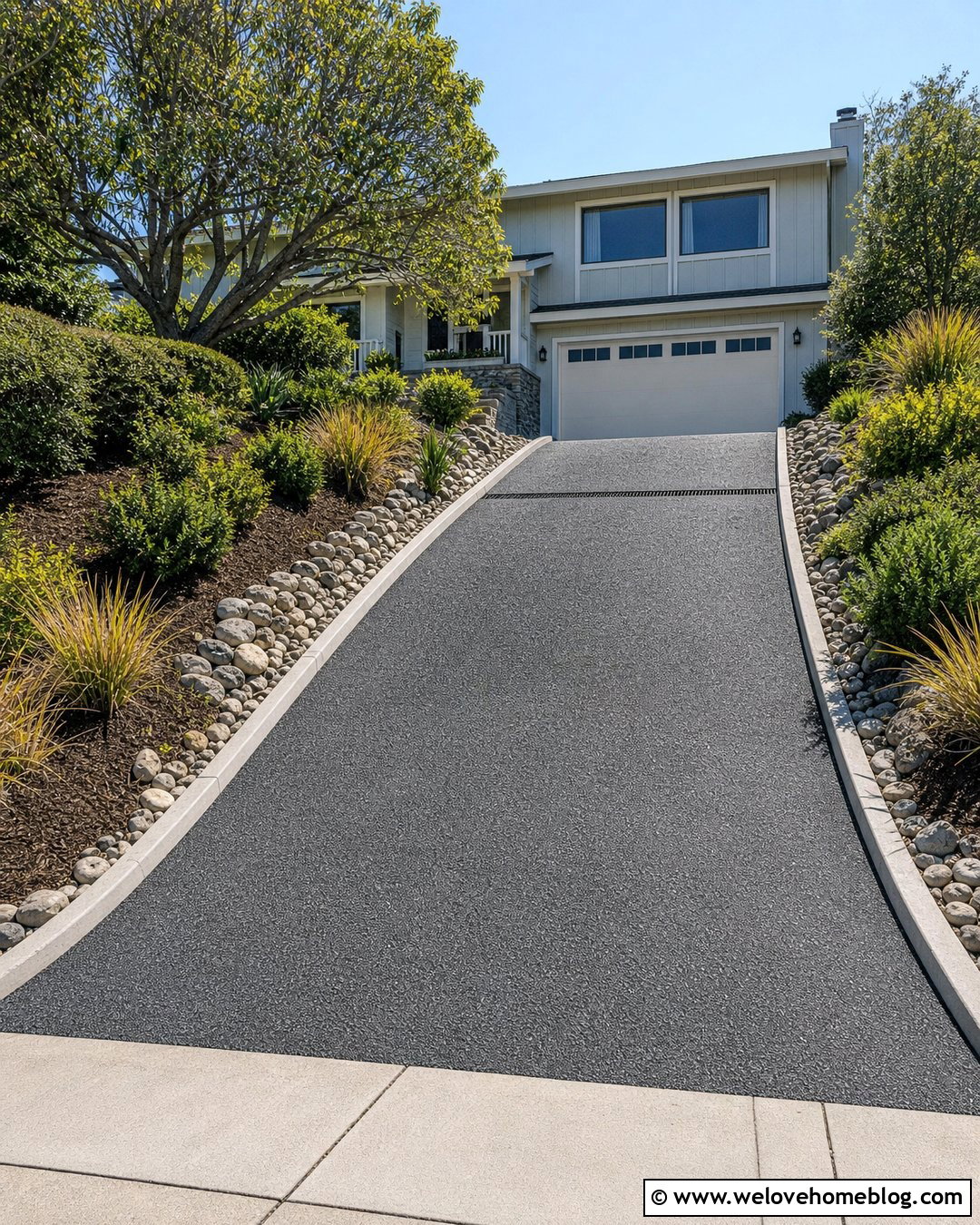
Steep blocks require a driveway surface and drainage plan designed around safe, reliable access. A broom-finished or exposed aggregate concrete driveway provides visible texture while maintaining a clean residential appearance. Break up the slope with clearly positioned control joints and a contrasting paver border that makes the driveway edges easy to read. Install drainage channels where professionally specified so runoff does not collect near the garage or cross pedestrian areas. Retaining walls made from sandstone, concrete block, or dark masonry can hold planted banks beside the driveway. Use low grasses and spreading shrubs that will not obstruct drivers. Exposed aggregate paving is commonly considered where additional surface traction is desirable, although the final design should always respond to the actual gradient, water flow, and local construction requirements. ()
12. Narrow Driveway With Two-Tone Concrete
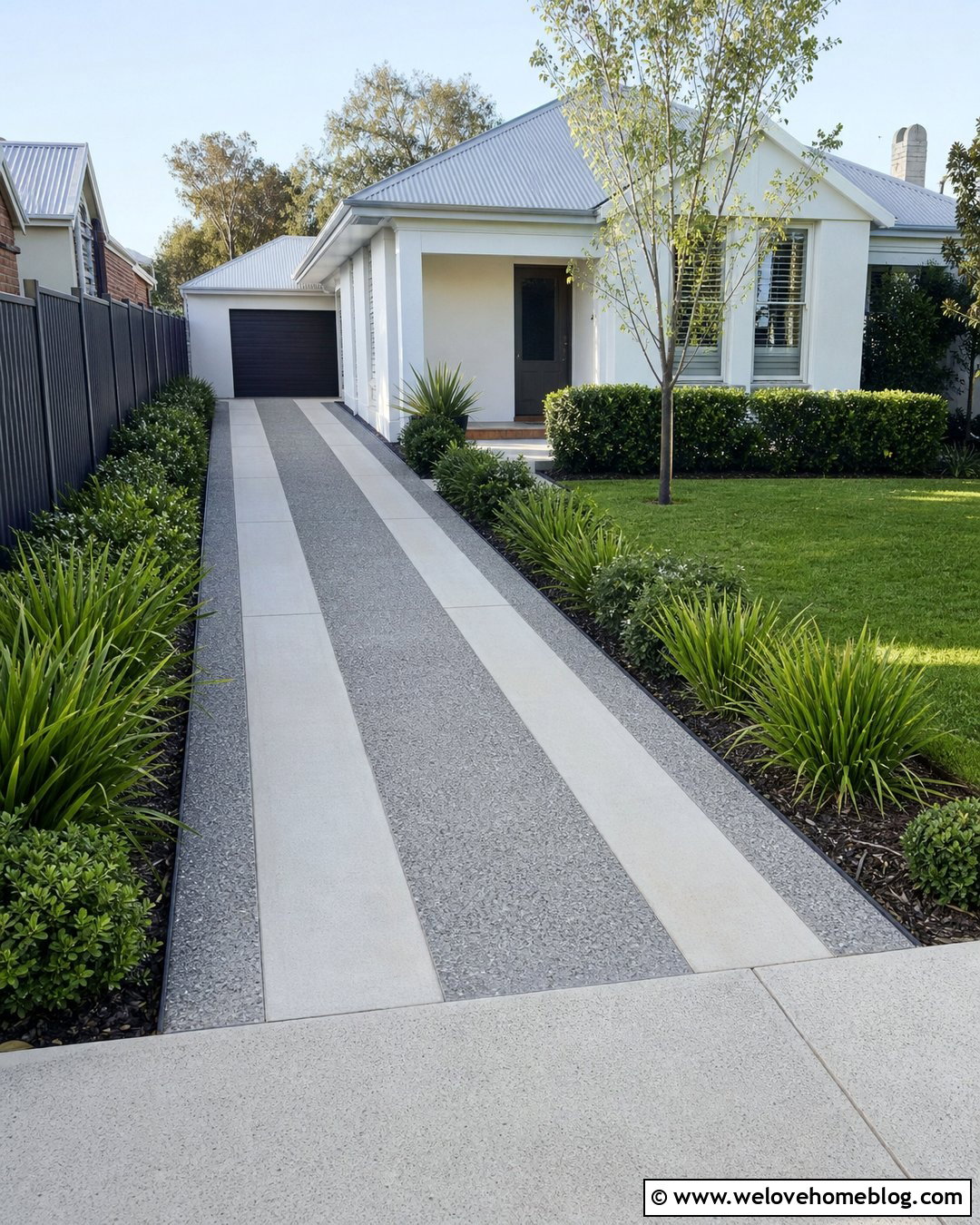
A narrow driveway can feel more generous when color and pattern are used to guide the eye toward the house. Begin with medium-gray poured concrete, then add two lighter concrete wheel strips or a pale central band. This lengthwise contrast makes the route appear orderly without sacrificing valuable width. Keep edging slim by using dark steel, narrow pavers, or flush concrete borders. On one side, create a compact walkway separated from vehicles by a narrow bed of lomandra or clipped westringia. Use vertical planting, such as a small tree or restrained screening hedge, where more greenery is needed without crowding the driveway. At the garage, widen the surface slightly to improve movement. A simple material palette prevents the confined frontage from looking busy or fragmented.
13. Asphalt Driveway With Brick Edging
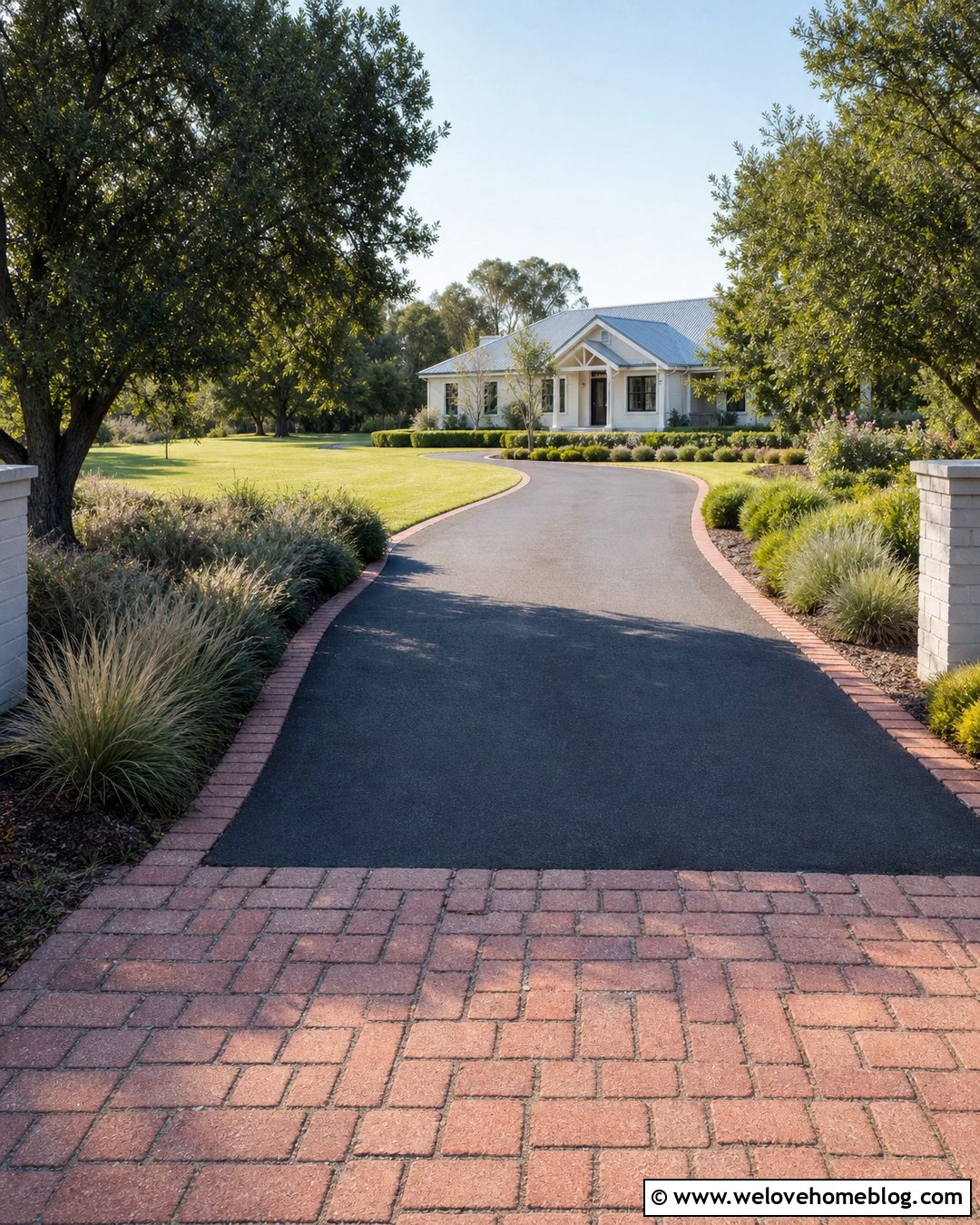
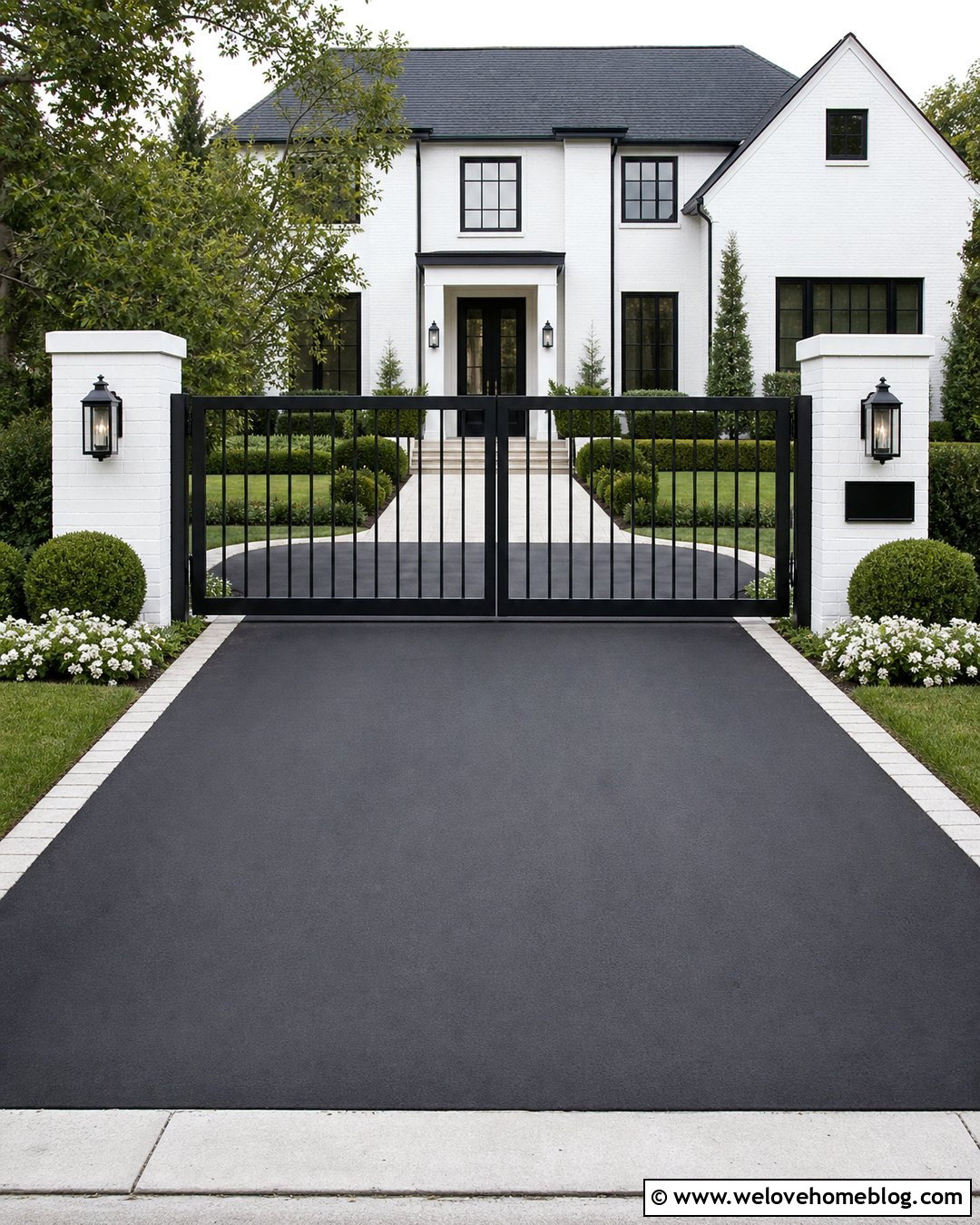
Black asphalt offers a smooth, understated surface for long suburban or semi-rural driveways. Its deep color can look especially sharp beside a light home, green lawn, and established trees. Add red or charcoal brick edging to strengthen the perimeter and introduce a warmer architectural detail. A gently curved layout will reduce the road-like appearance often associated with long asphalt areas. Near the house, create a brick apron or turning zone that connects the driveway visually with the front path. Plant broad beds containing ornamental grasses, native shrubs, and one or two canopy trees, while keeping branches and roots appropriately separated from the pavement. The strong contrast between dark asphalt, brick borders, and green landscaping produces a clean entrance that is practical without feeling purely utilitarian.
14. Sandstone Driveway For A Coastal House
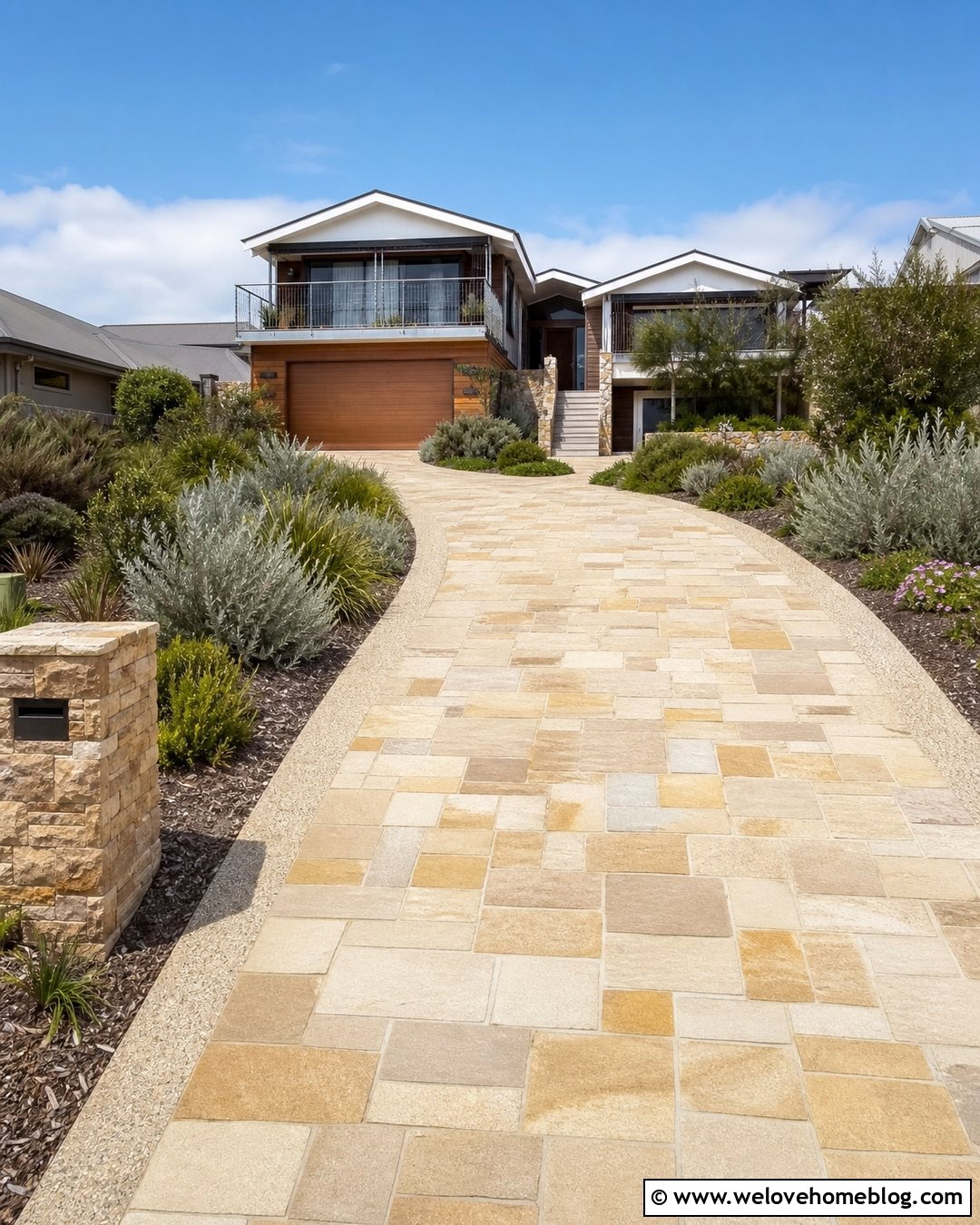
Natural sandstone can give a coastal driveway warmth, texture, and an immediate connection to the Australian landscape. Use vehicle-rated sandstone pavers in cream, tan, and muted gold, arranged in a random ashlar or simple rectangular pattern. A straight driveway suits a compact beach house, while a gentle curve works well on a larger site. Edge the stone with narrow bands of exposed aggregate concrete to create a stable transition and reduce visual clutter. Surrounding beds can feature coastal rosemary, lomandra, banksia, pigface, and silver-foliage plants suited to local conditions. Repeat sandstone in the mailbox wall or front steps. Because natural stone varies in porosity and performance, select the product, thickness, base, and sealing approach with advice appropriate to the site and expected vehicle use.
15. Resin-Bound Gravel Driveway With Stone Borders
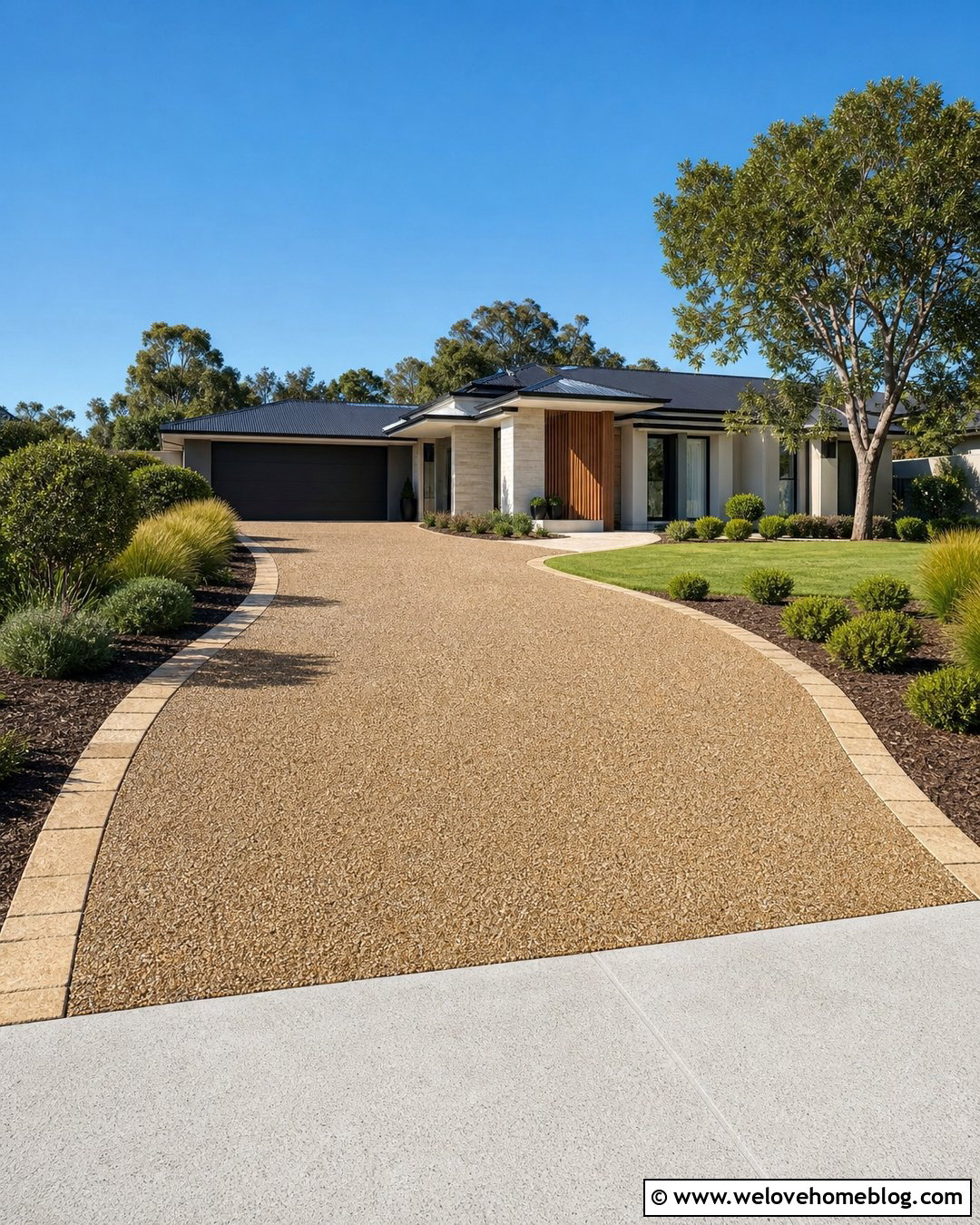
A resin-bound gravel driveway delivers the visual texture of small stone with a more unified surface than loose gravel. Warm beige aggregate suits coastal and traditional homes, while cool gray stone creates a sharper look beside contemporary architecture. Use a sweeping curved layout with solid sandstone or concrete borders to define the edges. Add a contrasting apron at the street entrance and repeat that material in the front walkway. Low native grasses, clipped shrubs, and layered ground covers can soften both sides without hiding the driveway shape. The relatively seamless appearance makes this finish useful when you want visible texture without a strongly patterned surface. Product suitability, UV stability, drainage characteristics, installation depth, and local availability should be confirmed with an experienced Australian supplier and installer before selecting the system.
16. Recycled Brick Driveway For A Country Cottage
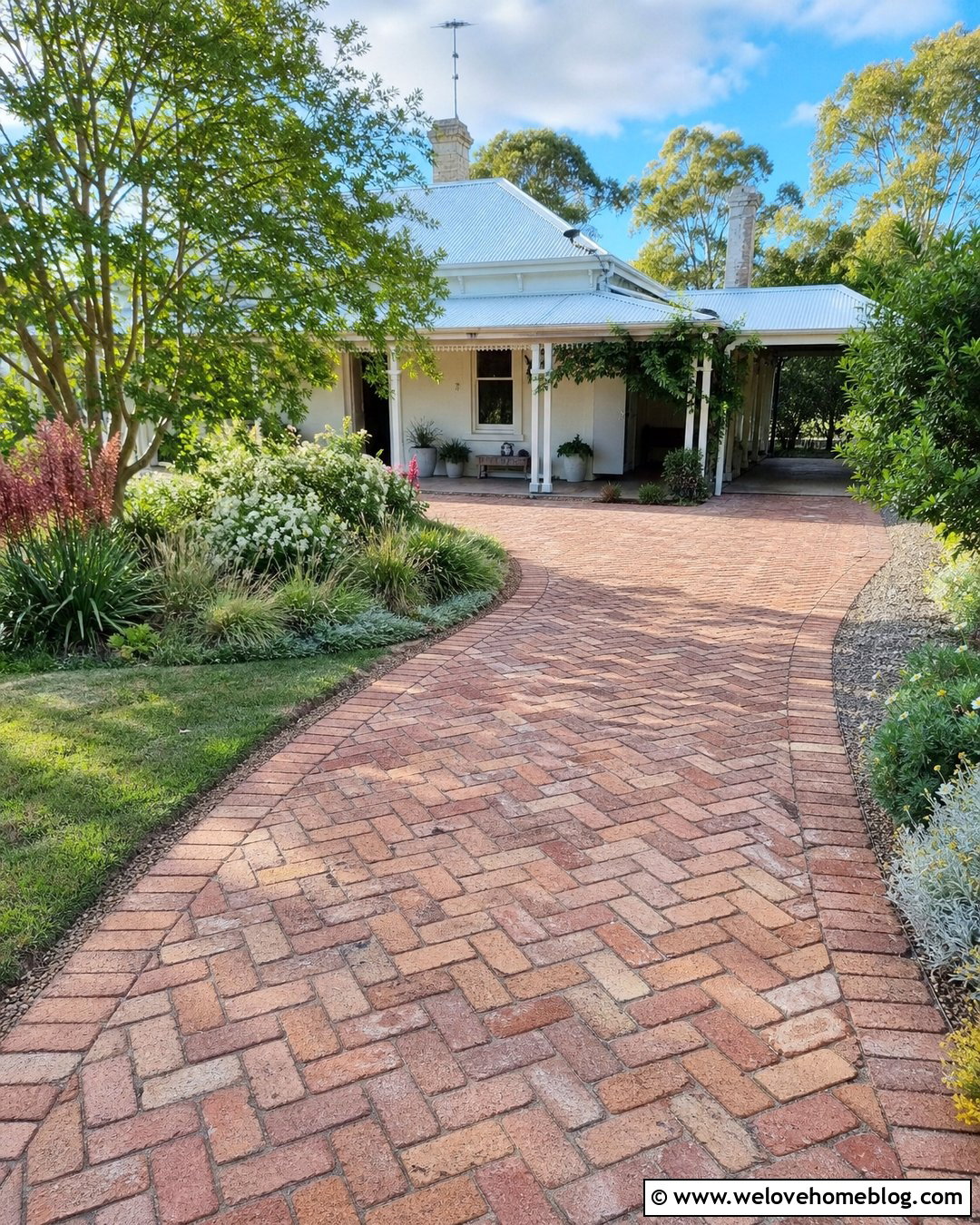
Recycled clay bricks create a relaxed driveway that complements a country cottage, farmhouse, or older weatherboard home. Their varied reds, browns, and weathered edges add character, but the finished layout should still feel intentional. Lay the bricks in herringbone through the main vehicle area and use a straight soldier-course border to control the irregular appearance. A softly curved route can weave past cottage garden beds filled with native grasses, flowering shrubs, and drought-tolerant perennials. Gravel strips beside the bricks can provide a tidy transition into the planting. Near the garage or carport, widen the paving into a practical parking area. Check that reclaimed bricks are sound and suitable for driveway loads, since decorative bricks may not withstand repeated vehicle traffic or challenging site conditions.
17. Stamped Concrete Driveway With Stone Pattern
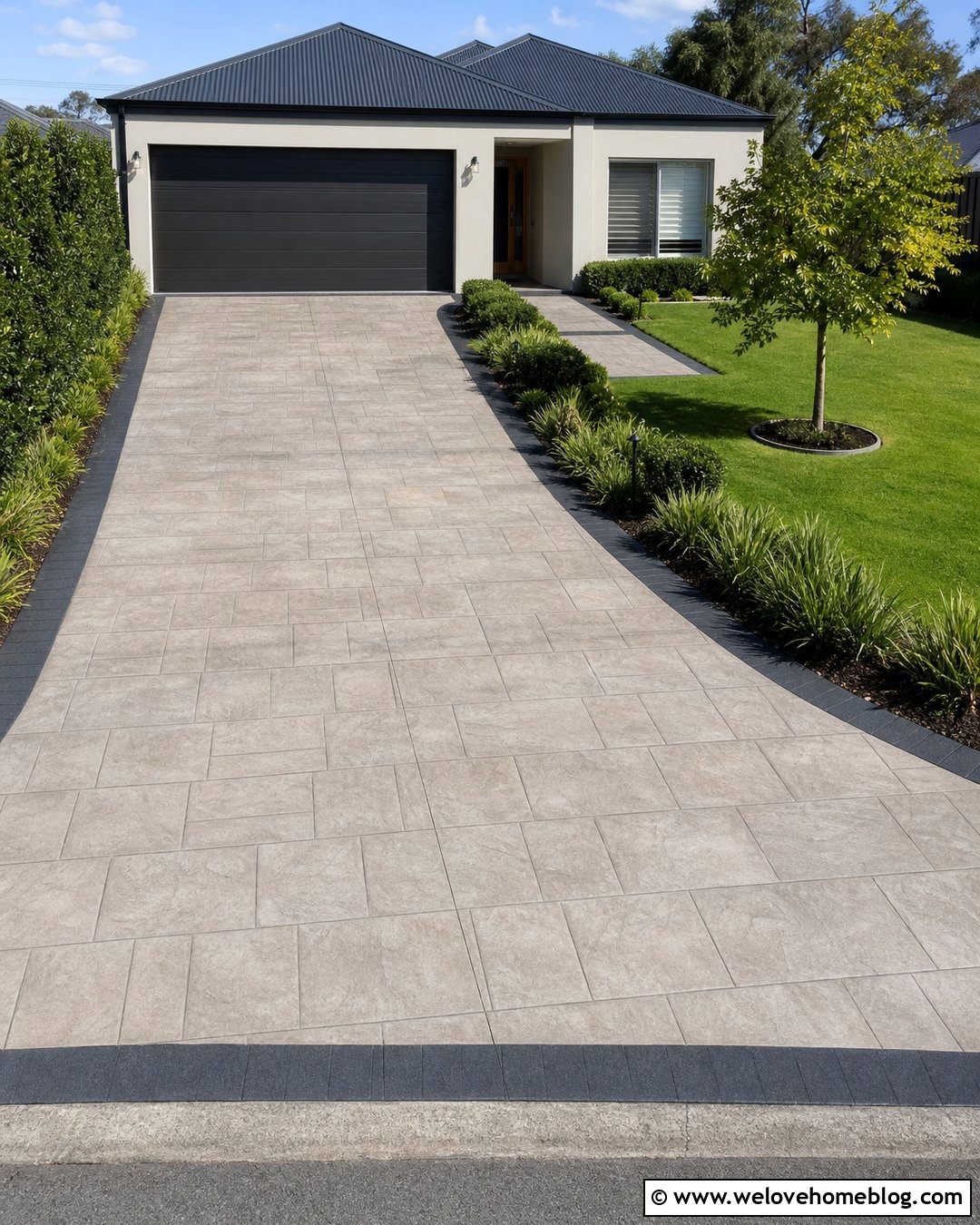
Stamped concrete can introduce the appearance of individual paving units while retaining a continuous poured surface. For an Australian suburban home, choose a restrained ashlar-stone pattern in warm gray rather than an overly complex or highly contrasting finish. Add charcoal release tones lightly so the texture is visible without looking artificial. A straight driveway with a broad curved entrance creates an easy transition from the street. Border the surface with plain dark concrete, then frame it with lawn, clipped shrubs, lomandra, and a small feature tree. Coordinate the driveway color with the roof and facade instead of trying to match every exterior material exactly. Professional placement, joint planning, coloring, and sealing are important because the large patterned surface will make inconsistencies easy to notice.
18. Concrete Driveway With Timber Sleeper Edging
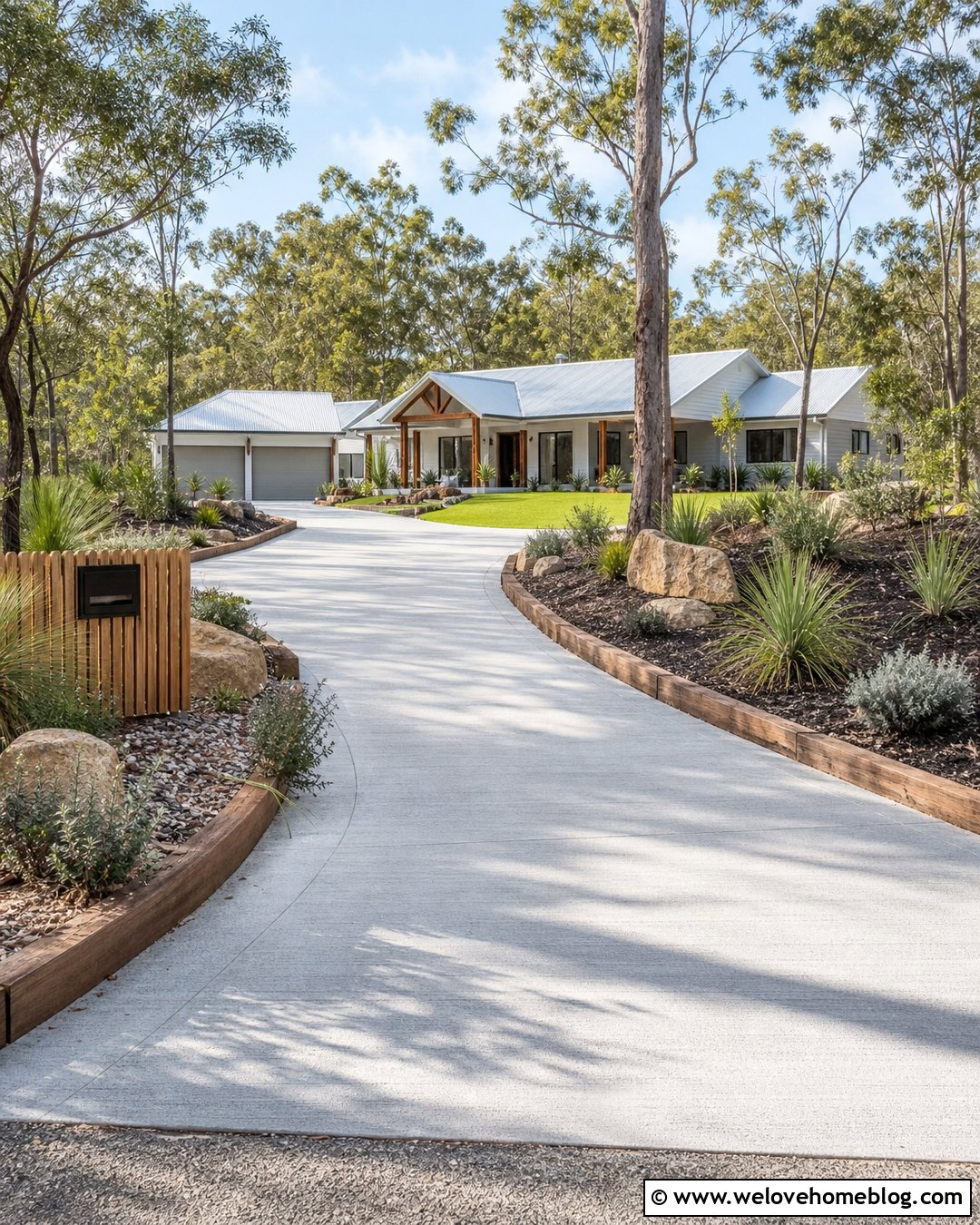
Timber sleeper edging gives a concrete driveway a warmer, more relaxed character, particularly around modern farmhouse and bushland-inspired homes. Use light gray broom-finished concrete in a gently curved layout, then install durable sleepers along the raised garden side. The timber can retain gravel mulch and layered native planting while creating a clear boundary between vehicles and soft landscaping. Combine lomandra, westringia, grass trees, and scattered boulders for a strong Australian garden character. On the opposite side, keep the edge flush with lawn or a narrow gravel drainage strip. Repeat the timber in a mailbox enclosure or low entry fence. This complete look balances the practical surface of concrete with natural colors and textures that help the driveway settle comfortably into a leafy site.
19. Long Gravel Driveway With A Timber Gate
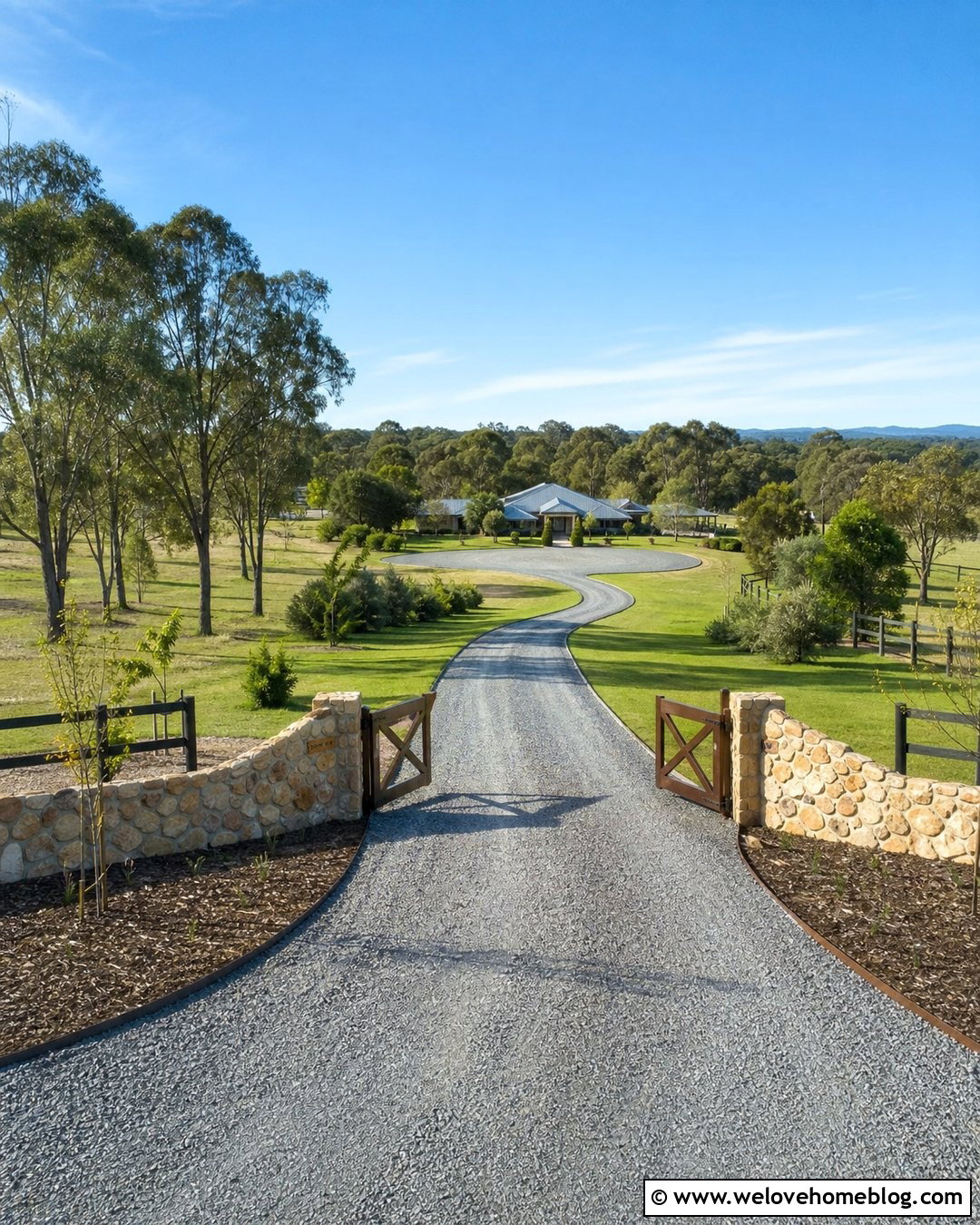
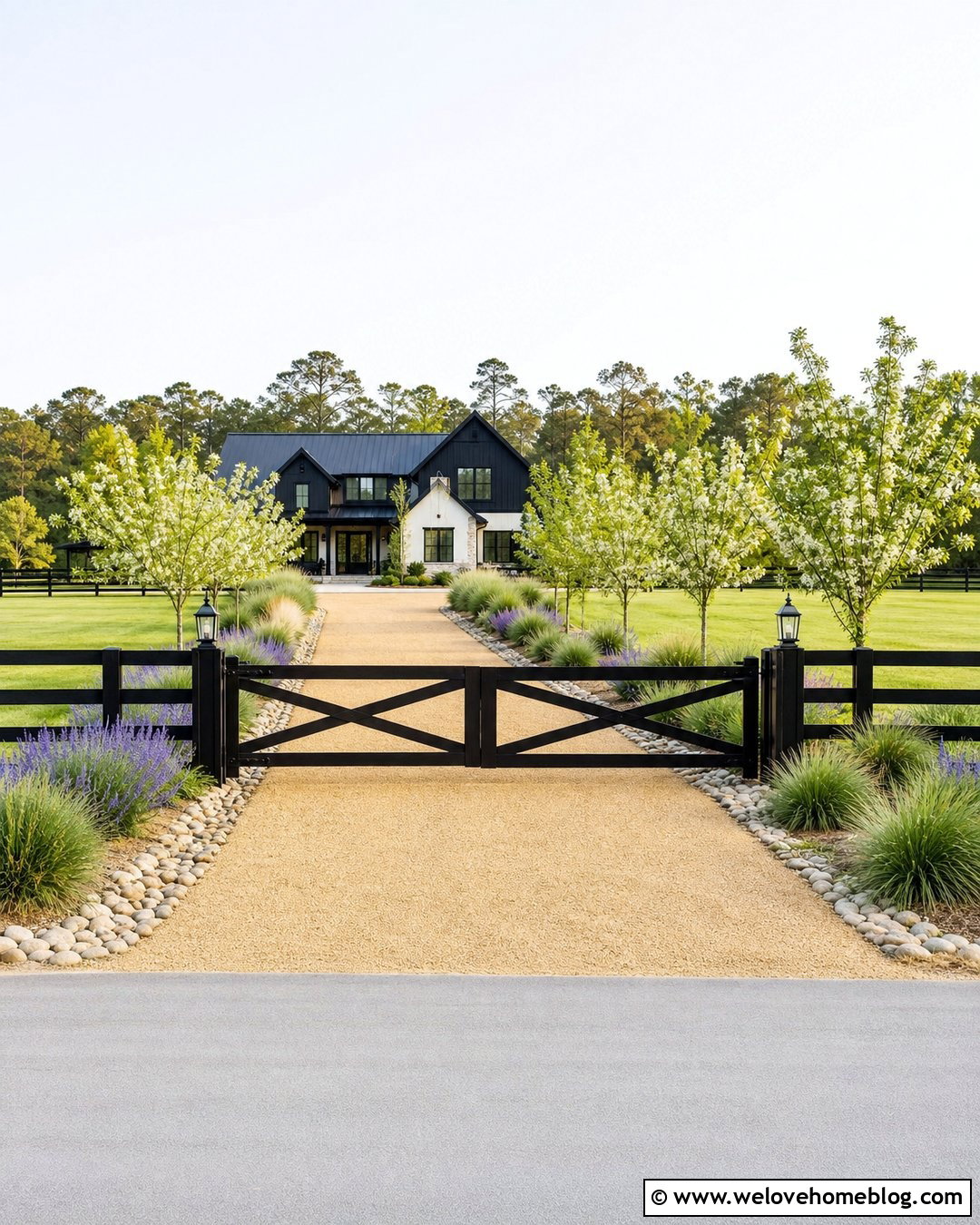
A long rural driveway becomes more welcoming when the entrance, surface, and planting are designed as one composition. Use compacted gray or warm-brown crushed gravel in a broad, gently winding route. At the property boundary, install a simple timber gate between stone or masonry pillars, leaving generous visibility for vehicles entering and exiting. Define the driveway with steel edging or shallow grass shoulders rather than formal curbs. Groups of native trees and shrubs can frame selected sections, while open lawn or paddock views keep the approach spacious. Add a larger gravel turning circle near the house and use stone pavers around the front entrance. Good grading, drainage, and periodic surface maintenance are especially important on a long gravel route exposed to repeated traffic and seasonal rain.
20. Driveway And Carport With Matching Materials
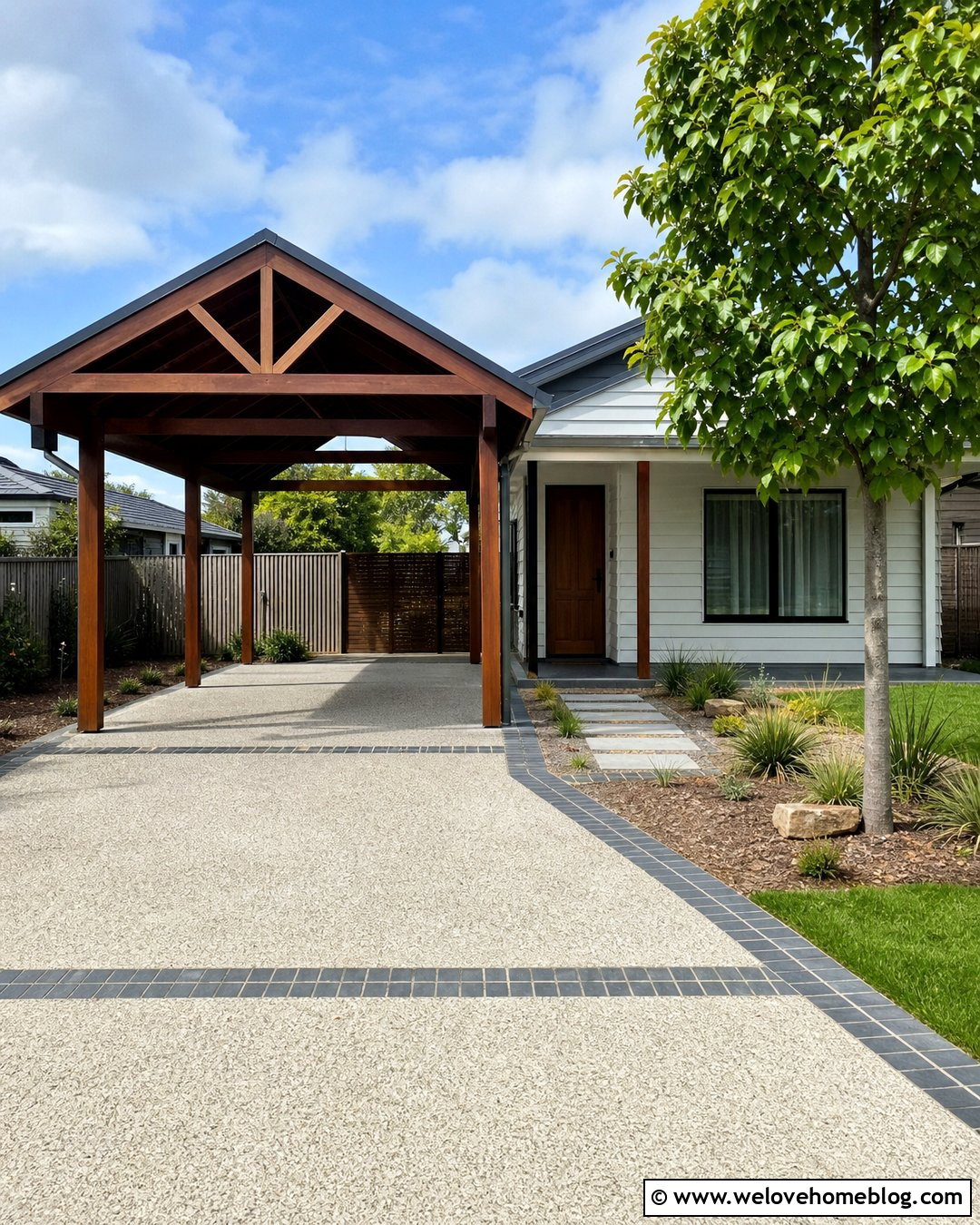
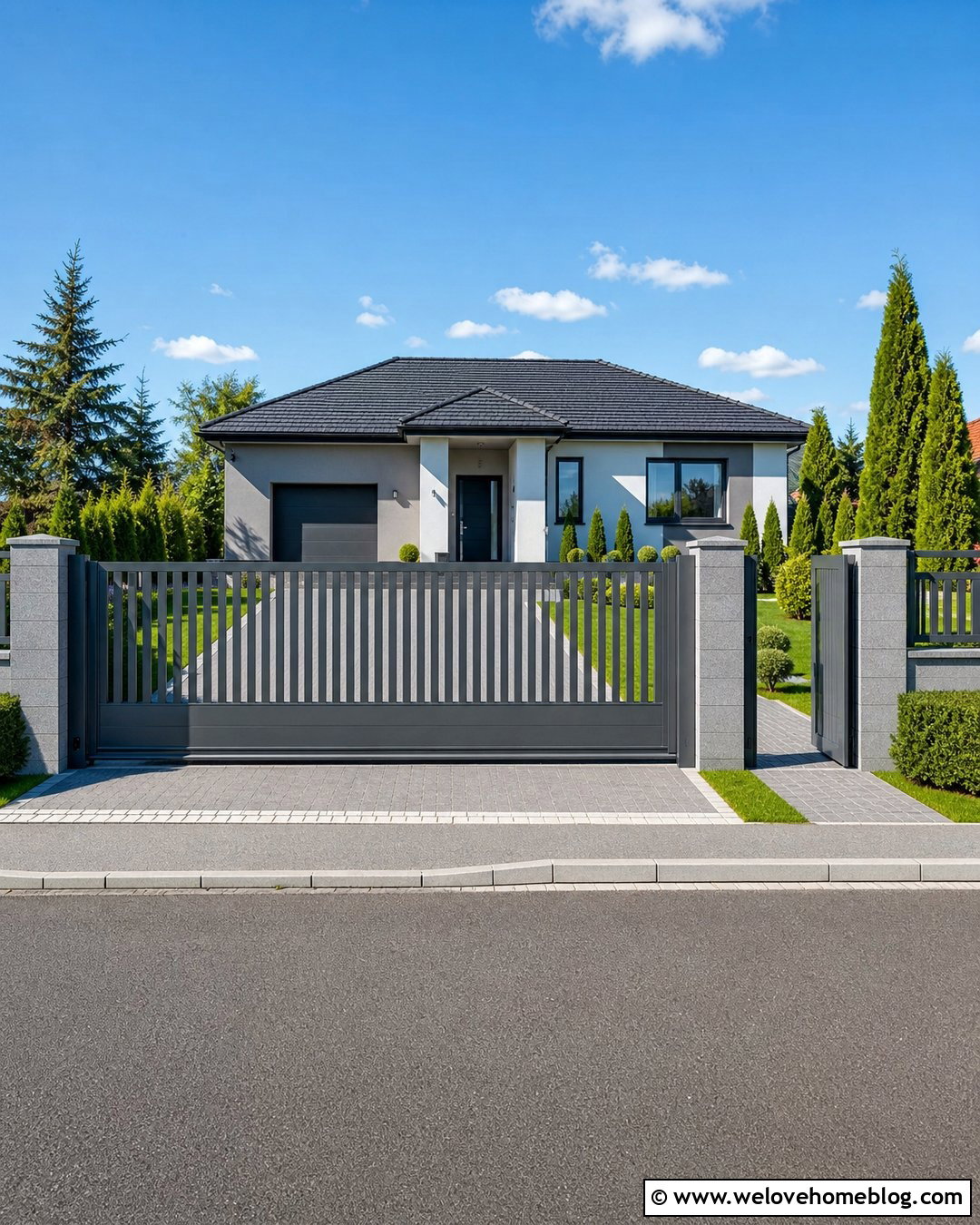
A driveway looks more resolved when its surface continues naturally into the carport instead of ending at an unrelated slab. Use pale exposed aggregate concrete across a straight driveway and under a timber-framed carport, maintaining the same aggregate blend throughout. Introduce dark paver bands at the street, beside the walkway, and across the carport threshold to define each zone. A modern Australian weatherboard home can repeat the carport timber around the front door or fence. Frame the driveway with low native planting, neat gravel mulch, and a small shade tree positioned away from vehicle movement. Matching the driveway and covered parking area creates visual continuity, while carefully placed contrasting bands stop the large surface from appearing flat. The finished entrance feels coordinated, functional, and purposefully connected to the house.
Conclusion:
The strongest Australian driveway designs balance appearance, vehicle access, drainage, maintenance, and a clear connection to the home. Exposed aggregate works across many settings, while brick, stone, gravel, asphalt, concrete, and permeable pavers offer distinct advantages and visual character. Shape also matters. A curved approach can soften a large yard, a straight driveway suits compact blocks, and a circular layout provides an impressive arrival where space allows. Use durable edging, safe sightlines, and layered planting to make the entire frontage feel complete. Before building, confirm local approvals and obtain site-specific advice about levels, drainage, and construction. Use these 20 Australian Driveway Ideas to create an entrance that feels attractive, practical, and suited to its surroundings.

Related posts:

Leave a Reply