
Choosing a driveway gate involves more than finding an attractive design. The gate must suit your driveway width, slope, opening space, security needs, climate, and daily routine. It should also complement the driveway surface, entrance pillars, fencing, landscaping, and architecture of your home. Swing gates remain practical for level properties with generous clearance, while sliding and cantilever gates can work better where space or terrain creates challenges. Materials such as aluminum, steel, iron, wood, vinyl, and composite offer different levels of privacy, durability, maintenance, and visual warmth. () The complete entrance should feel intentional from the curb to the garage. Use these **20 Choosing A Driveway Gate Ideas** to compare complete, practical looks for your property.
1. Modern Aluminum Driveway Gate
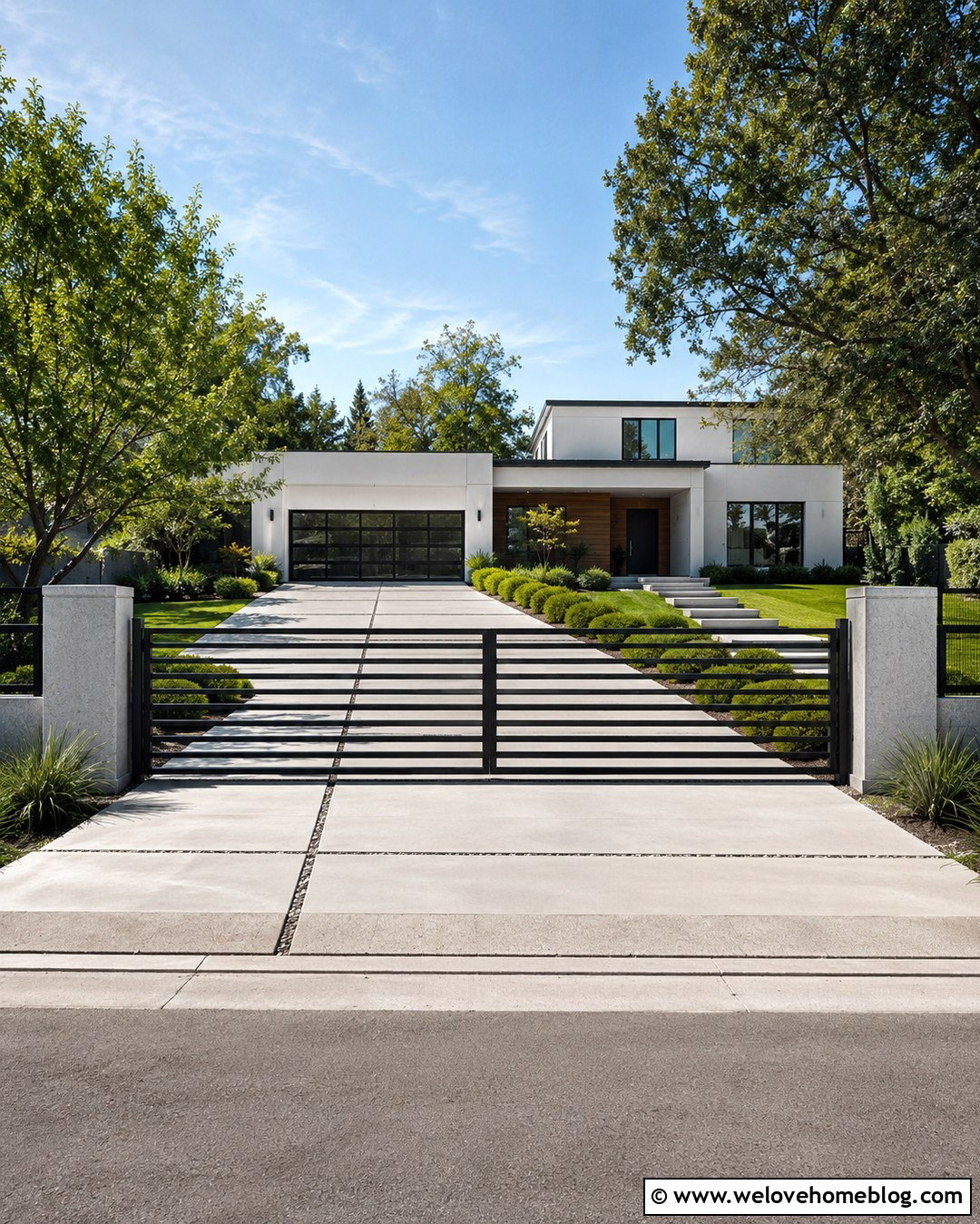
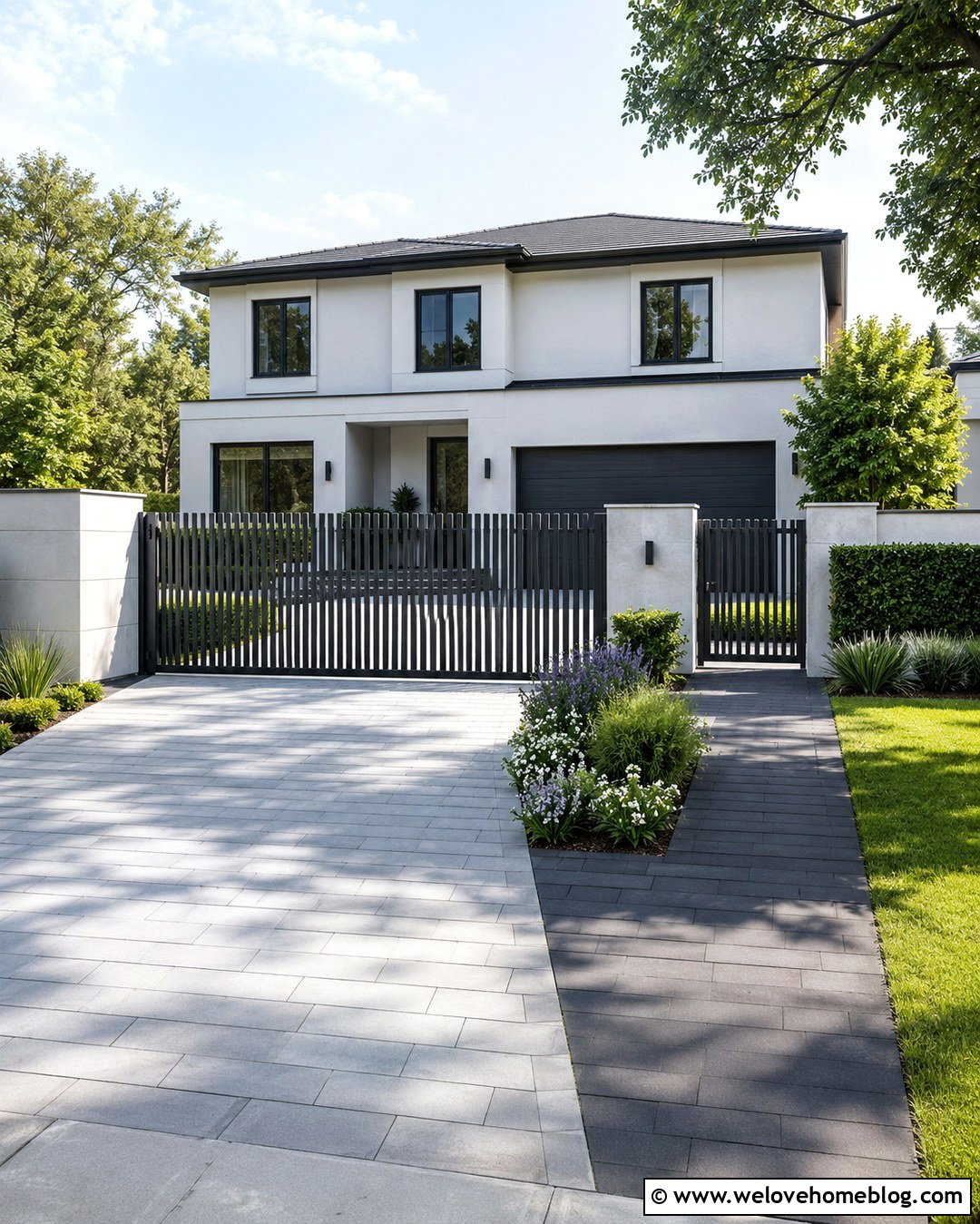
A modern aluminum driveway gate works especially well with a contemporary home and a clean concrete entrance. Choose horizontal slats for a streamlined appearance, then adjust the spacing according to your privacy needs. A matte black or charcoal powder-coated finish creates definition without making the entrance feel overly decorative. Pair the gate with square concrete pillars, simple metal fencing, and low ornamental grasses. A wide poured-concrete driveway with narrow gravel joints reinforces the crisp geometry. Aluminum is a useful option in wet or coastal climates because it does not rust like untreated iron or steel, although hardware and finishes still require inspection. Keep access controls, hinges, wiring, and the opener discreet so the complete entrance remains uncluttered and modern.
2. Wooden Double Swing Driveway Gate
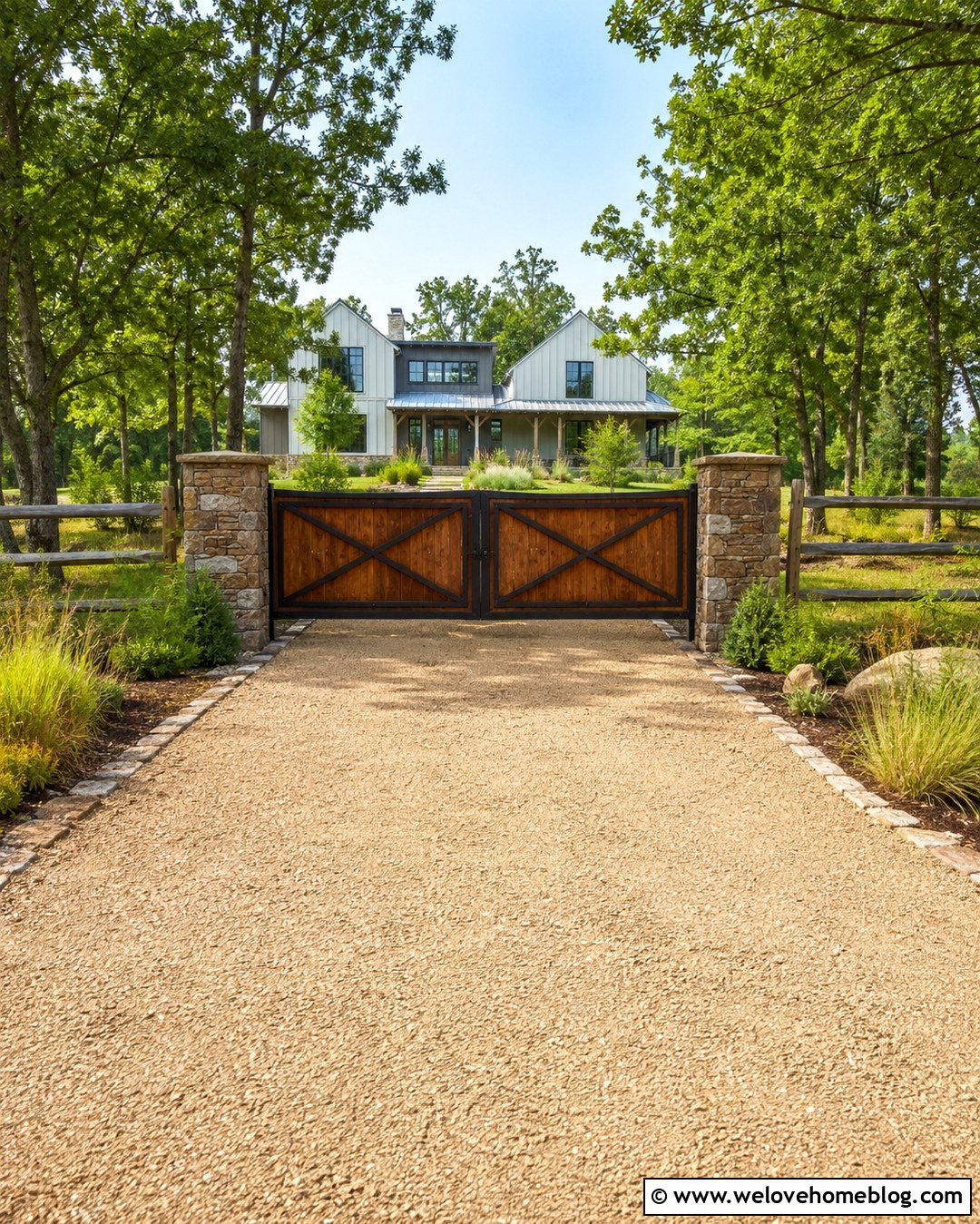
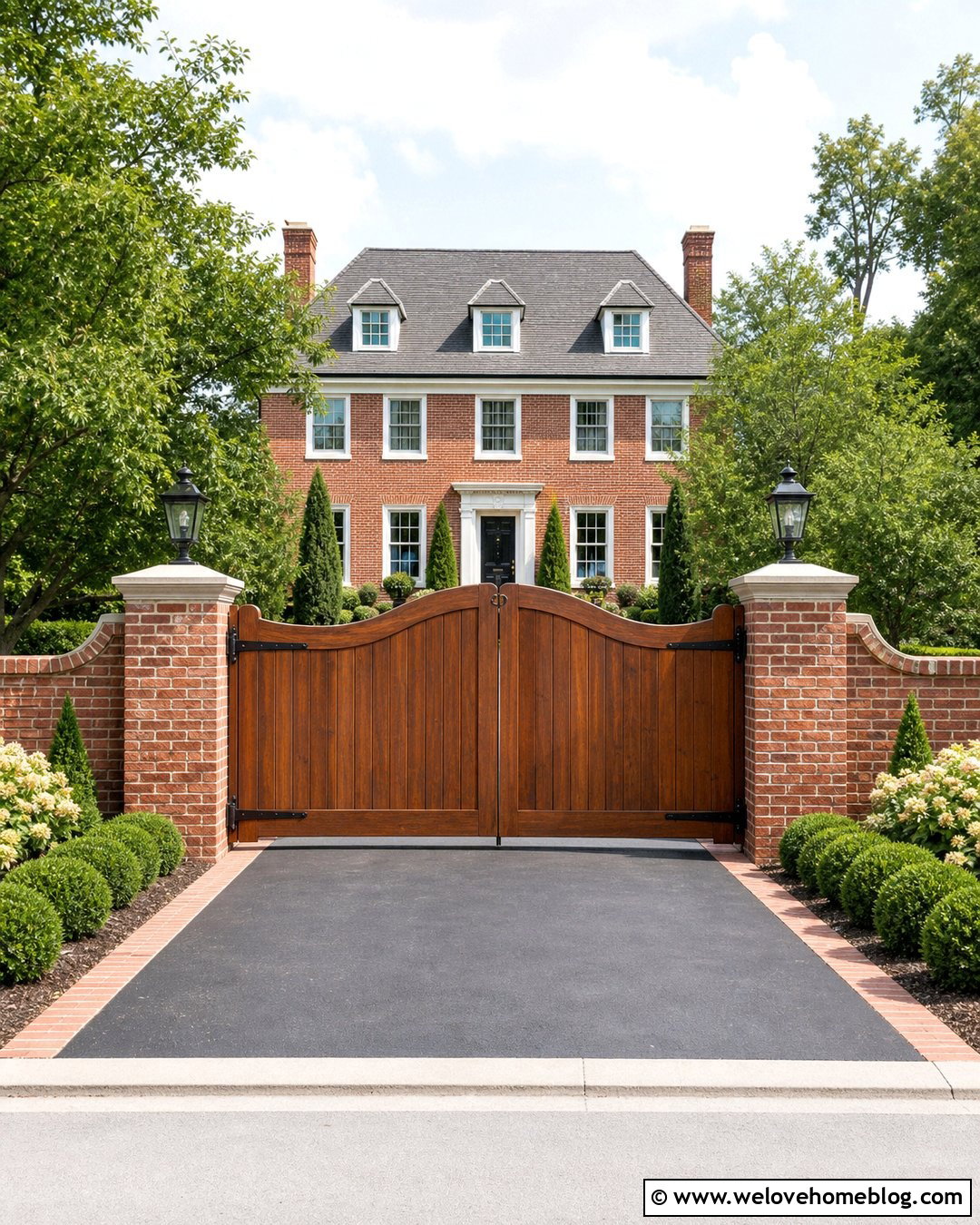
Warm wood can soften a large driveway and help the entrance blend with a farmhouse, ranch, Craftsman, or country home. A double swing gate divides the total span into two balanced leaves, creating a welcoming center opening. This arrangement generally needs a level area with enough unobstructed room for both leaves to move safely. () Use cedar or redwood boards within a reinforced metal frame to reduce sagging and improve stability. Pair the gate with a tan gravel driveway, stone columns, split-rail fencing, and layered native shrubs. An arched or gently scalloped top adds character, while a straight top feels simpler. Plan for periodic cleaning, sealing, and hardware adjustments because outdoor wood changes with moisture, sunlight, and temperature.
3. Black Iron Driveway Gate
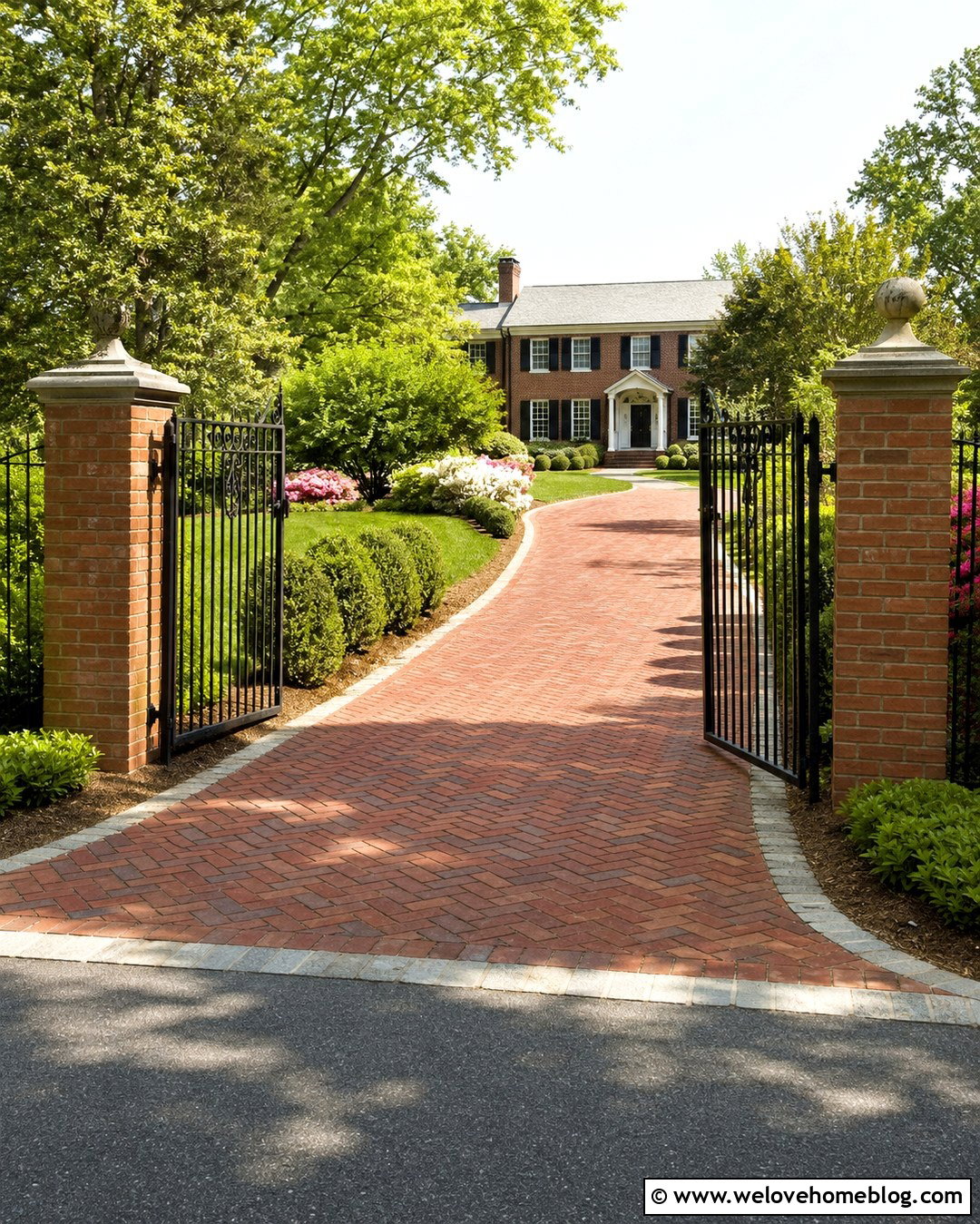
An open black iron gate creates security and definition without completely hiding the home. It is a natural match for brick, stone, Colonial, Tudor, and traditional architecture. Place a double swing gate between substantial brick pillars, then continue low iron fencing along the property line for a connected look. A red brick paver driveway in a herringbone pattern adds warmth beneath the dark metal. Choose restrained scrollwork or evenly spaced vertical bars instead of excessive ornament, especially on a smaller property. Open construction also maintains visibility when vehicles leave the driveway, though the final layout should be reviewed for safe sightlines. Specify a protective finish suitable for local weather and inspect scratches promptly. Simple finials and a gently curved top provide detail without overwhelming the entrance.
4. Sliding Driveway Gate For A Short Driveway
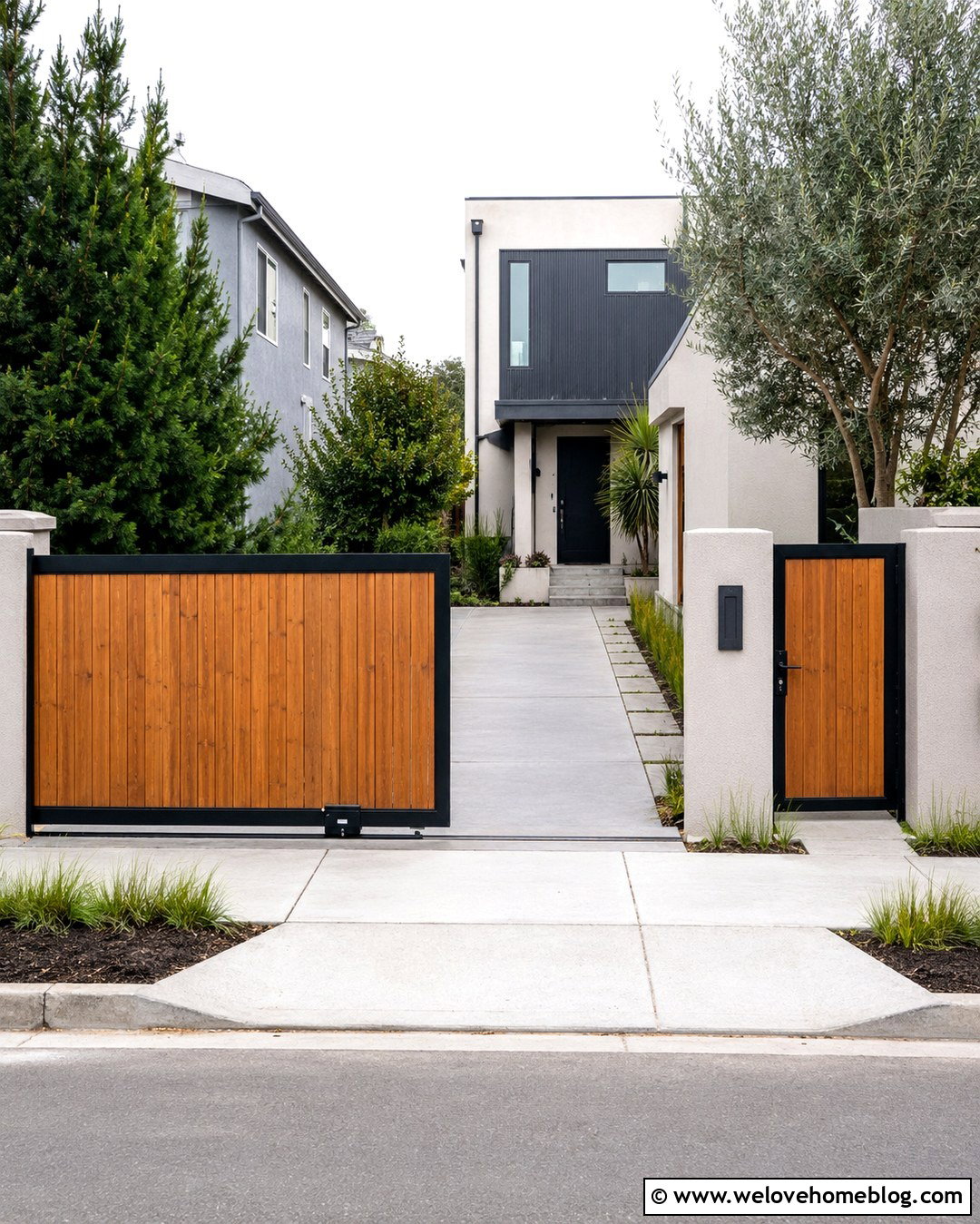
When a driveway is too short for inward-swinging leaves, a sliding gate can preserve valuable parking and turning space. The gate moves parallel to the fence instead of sweeping across the driveway, but it needs a clear run along the property boundary. () A black steel frame with vertical wood infill gives a compact urban entrance both warmth and privacy. Combine it with a smooth gray concrete driveway, narrow planting beds, and a matching pedestrian gate. Conceal the motor behind a low wall or landscaped enclosure while keeping it accessible for service. Before selecting this layout, measure the opening and the available side space carefully. Also consider drainage, utility boxes, existing trees, and the condition of any ground track required by the chosen system.
5. Cantilever Driveway Gate For A Sloped Entrance
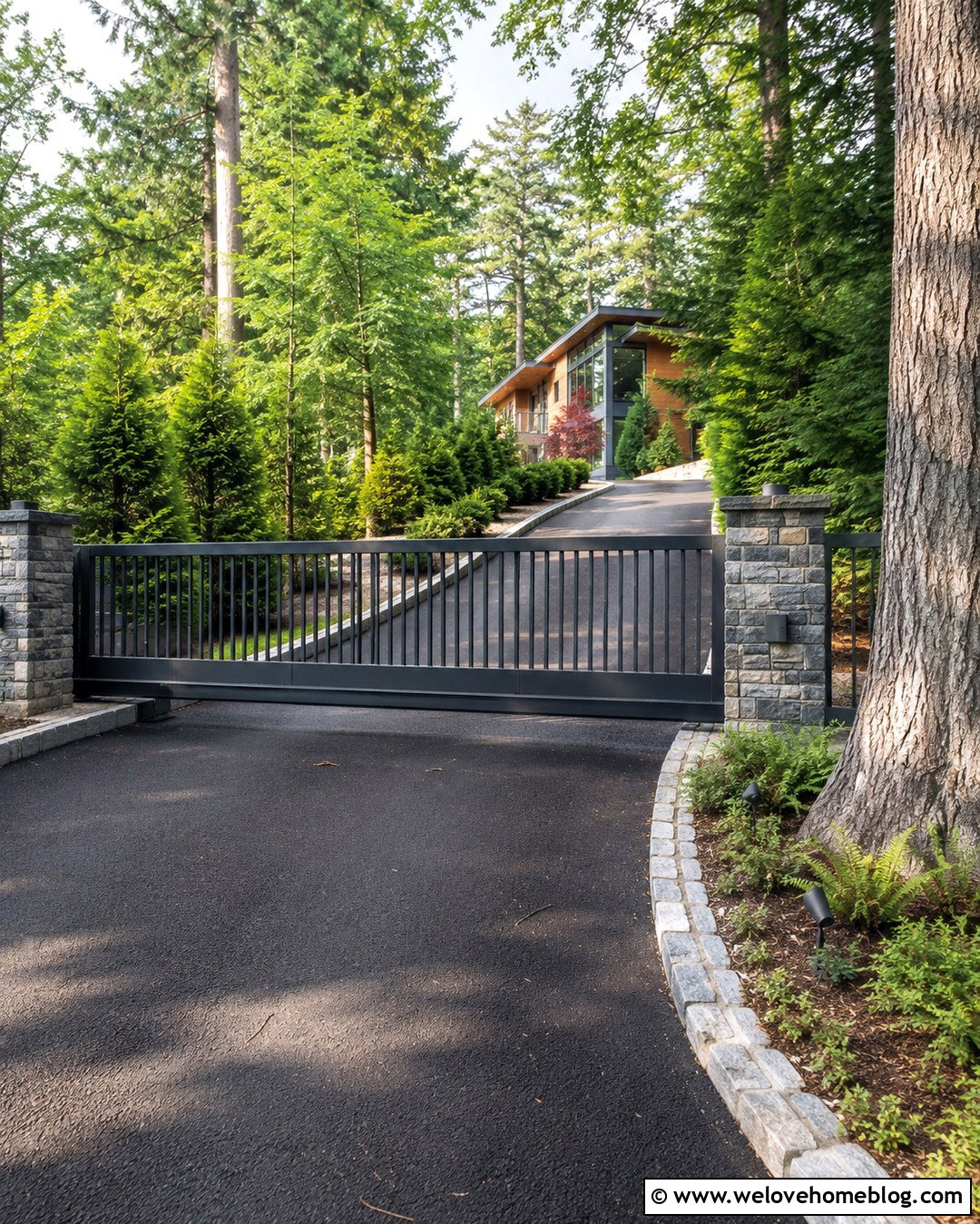
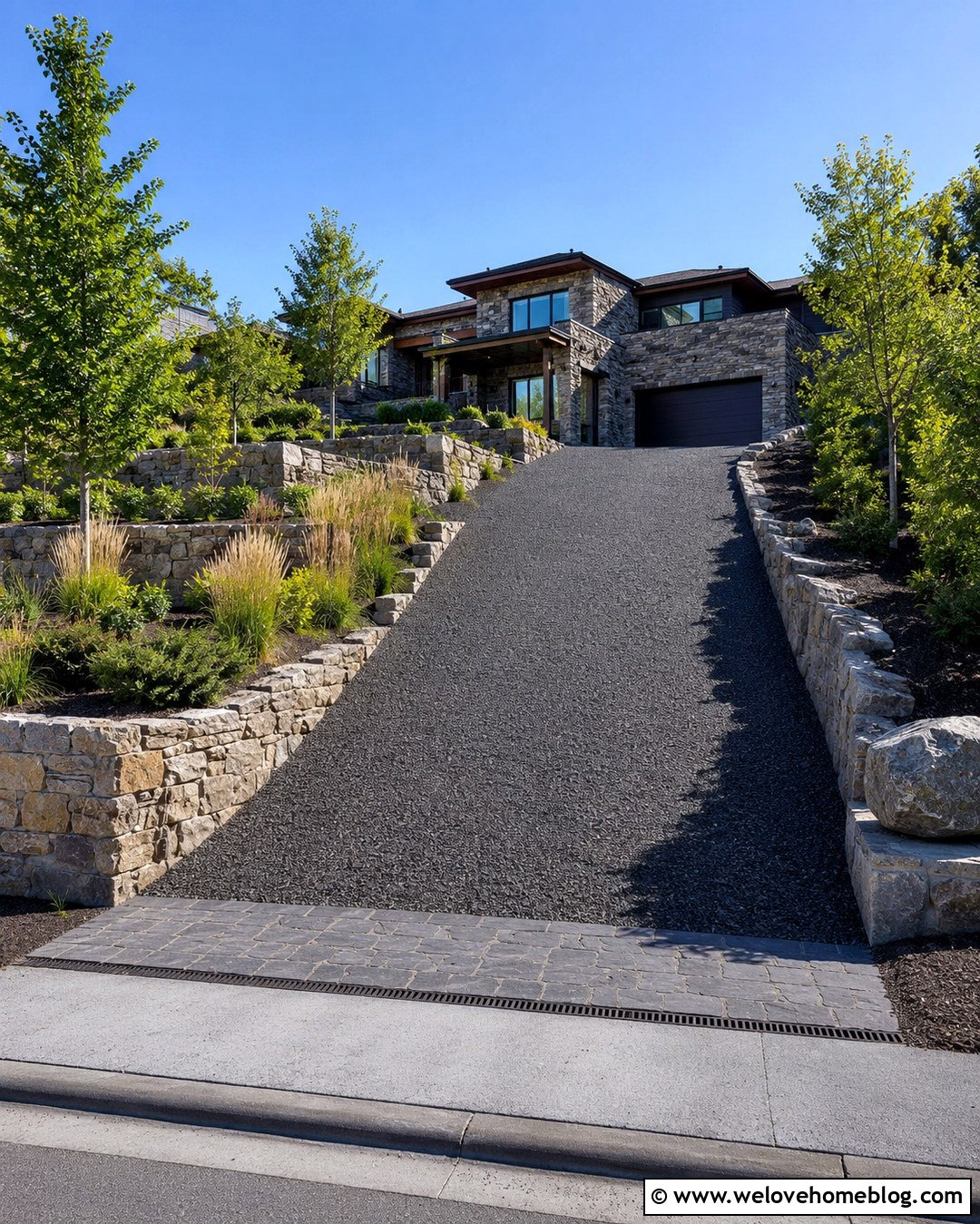
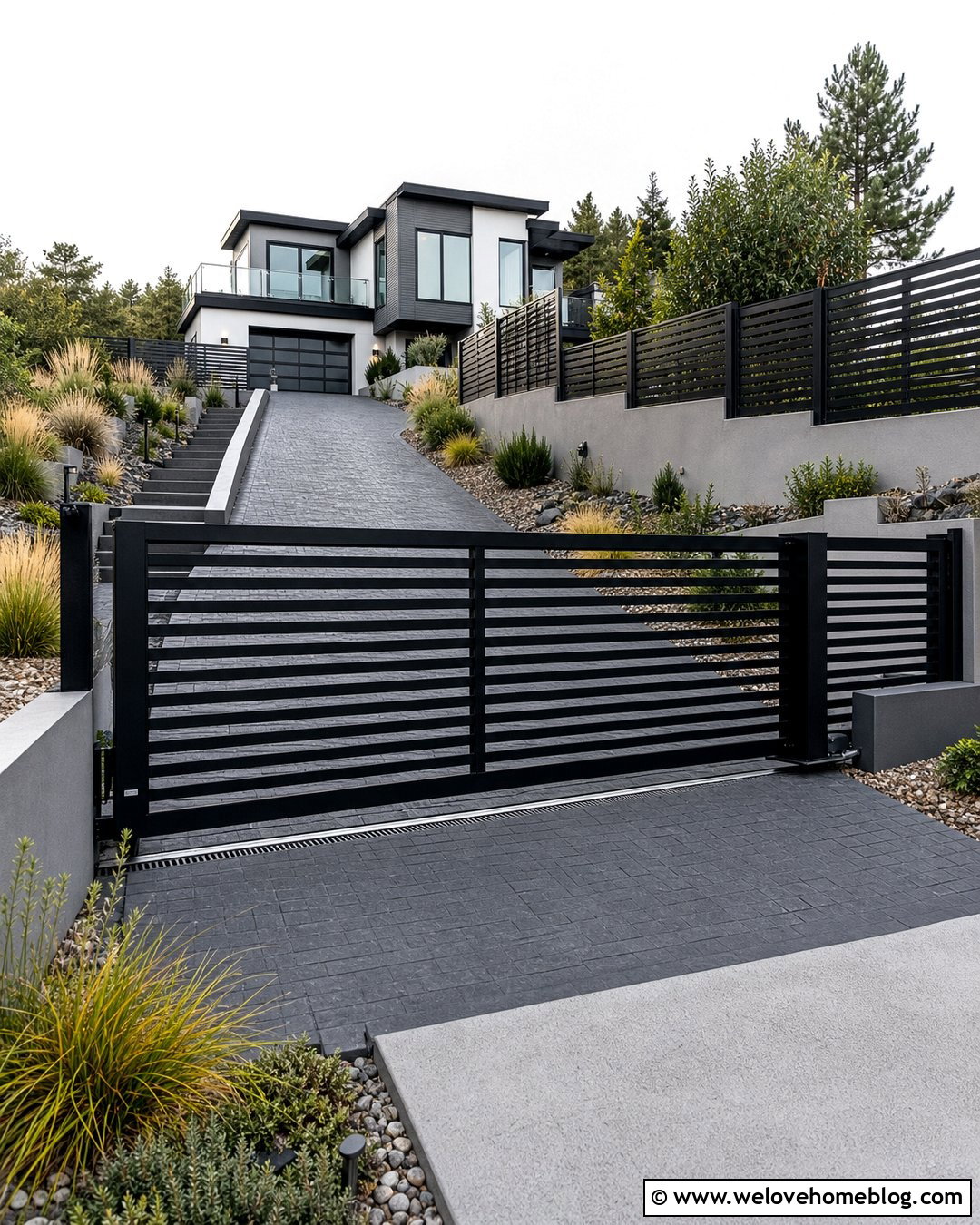
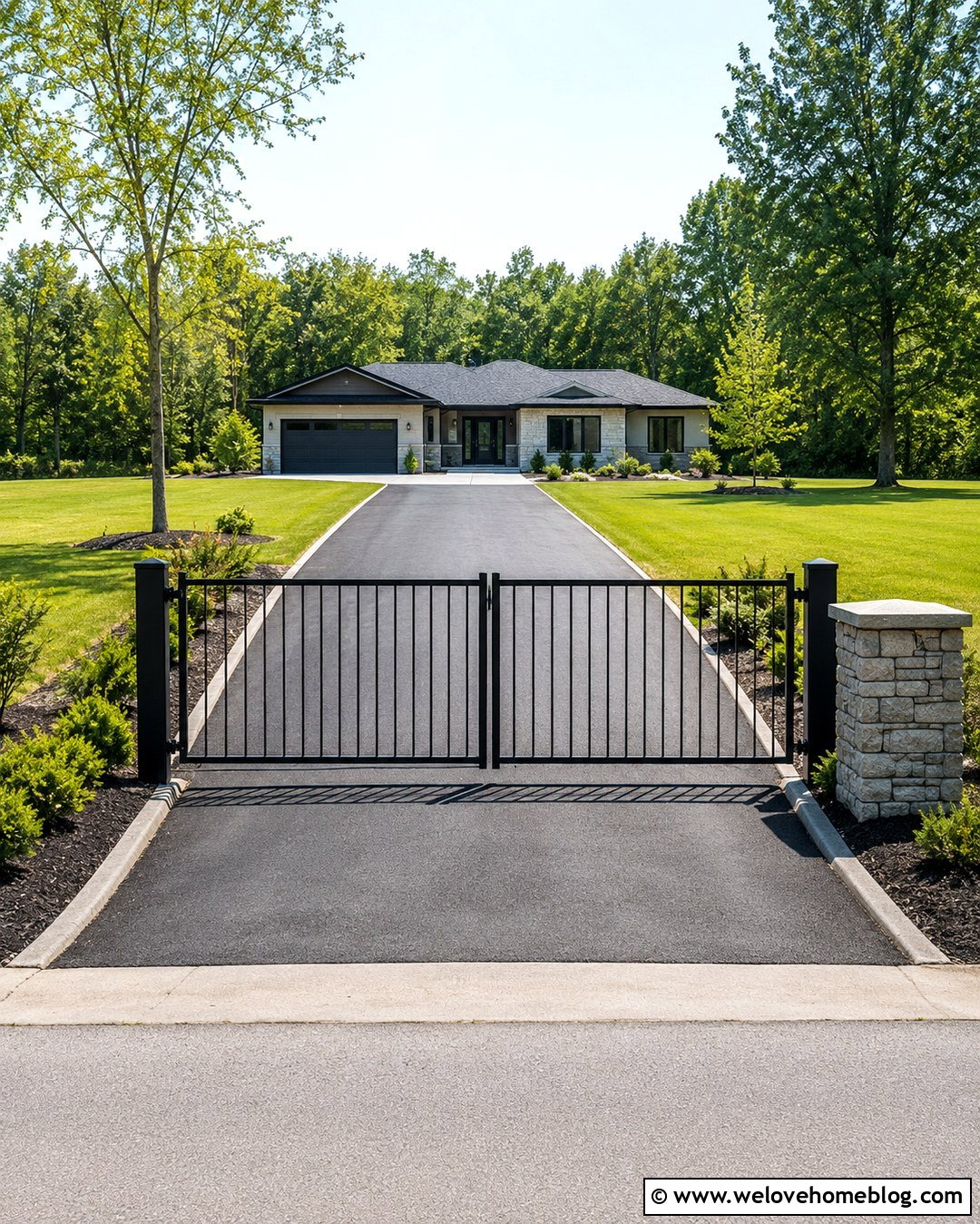
A cantilever gate can solve entrance problems where a conventional swing path is blocked by an incline. It slides above the driveway opening without relying on a track across the driving surface. However, the counterbalanced section requires additional side space and strong engineered supports. () Use a lightweight powder-coated aluminum gate with medium-spaced vertical bars to reduce visual bulk. Pair it with a gently sloped black asphalt driveway, granite curbing, evergreen screening, and stone-faced columns. This complete look suits wooded contemporary and mountain-inspired homes. Proper grading remains important so runoff does not collect near the posts, controls, or foundation. Since dimensions, weight, wind exposure, and automation loads affect performance, have the gate and support system designed for the specific site rather than adapting a standard panel.
6. Farmhouse Driveway Gate With Stone Pillars
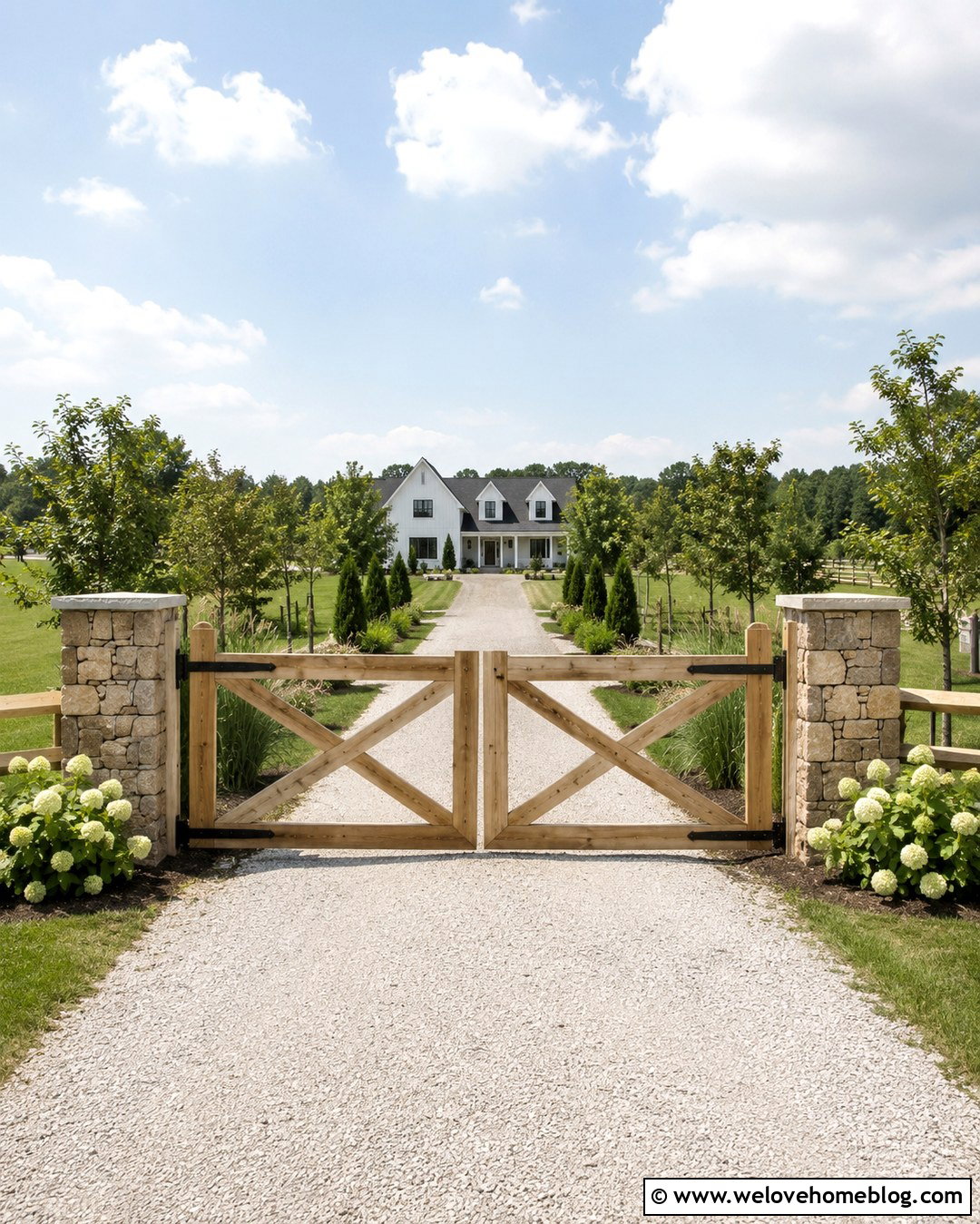
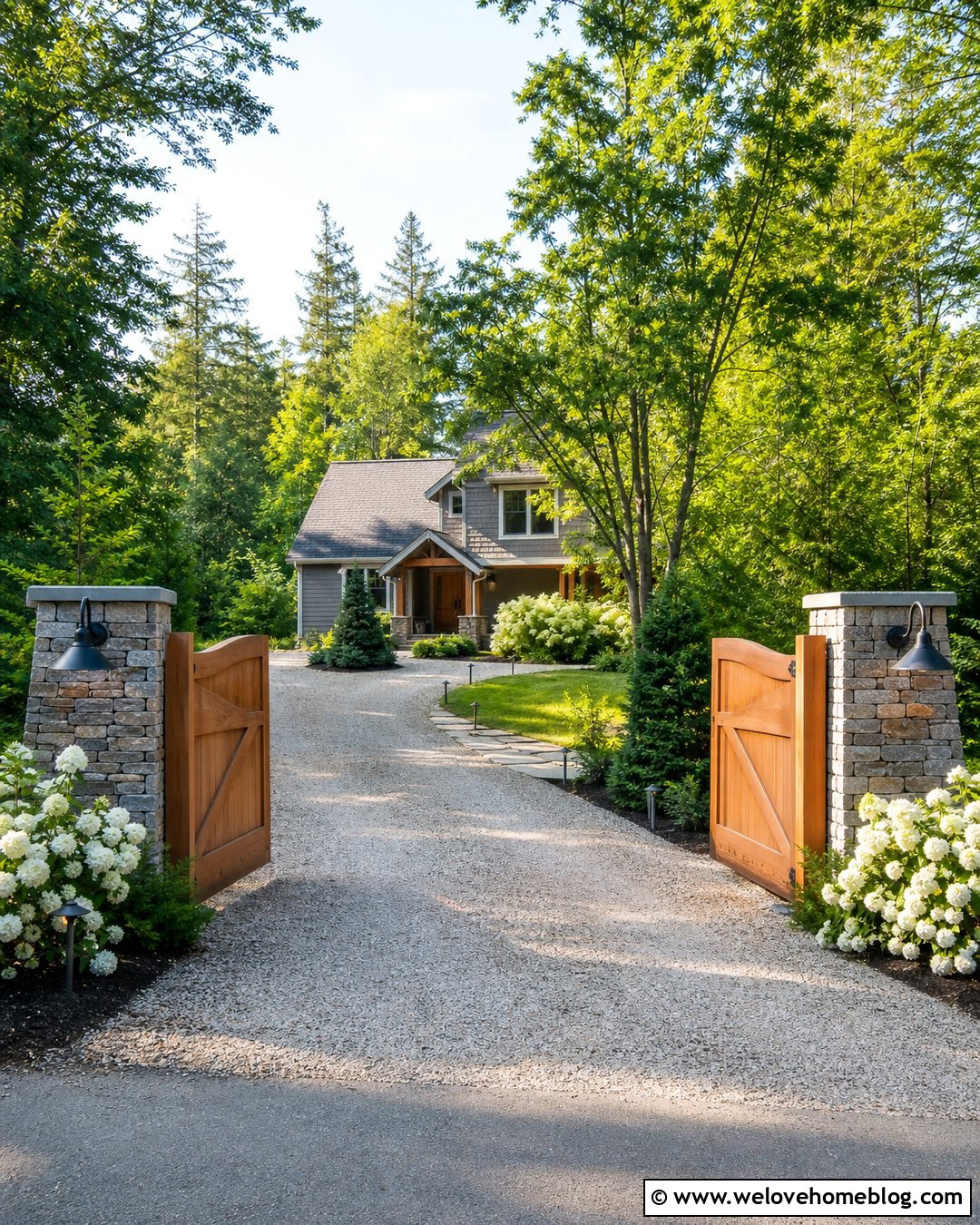
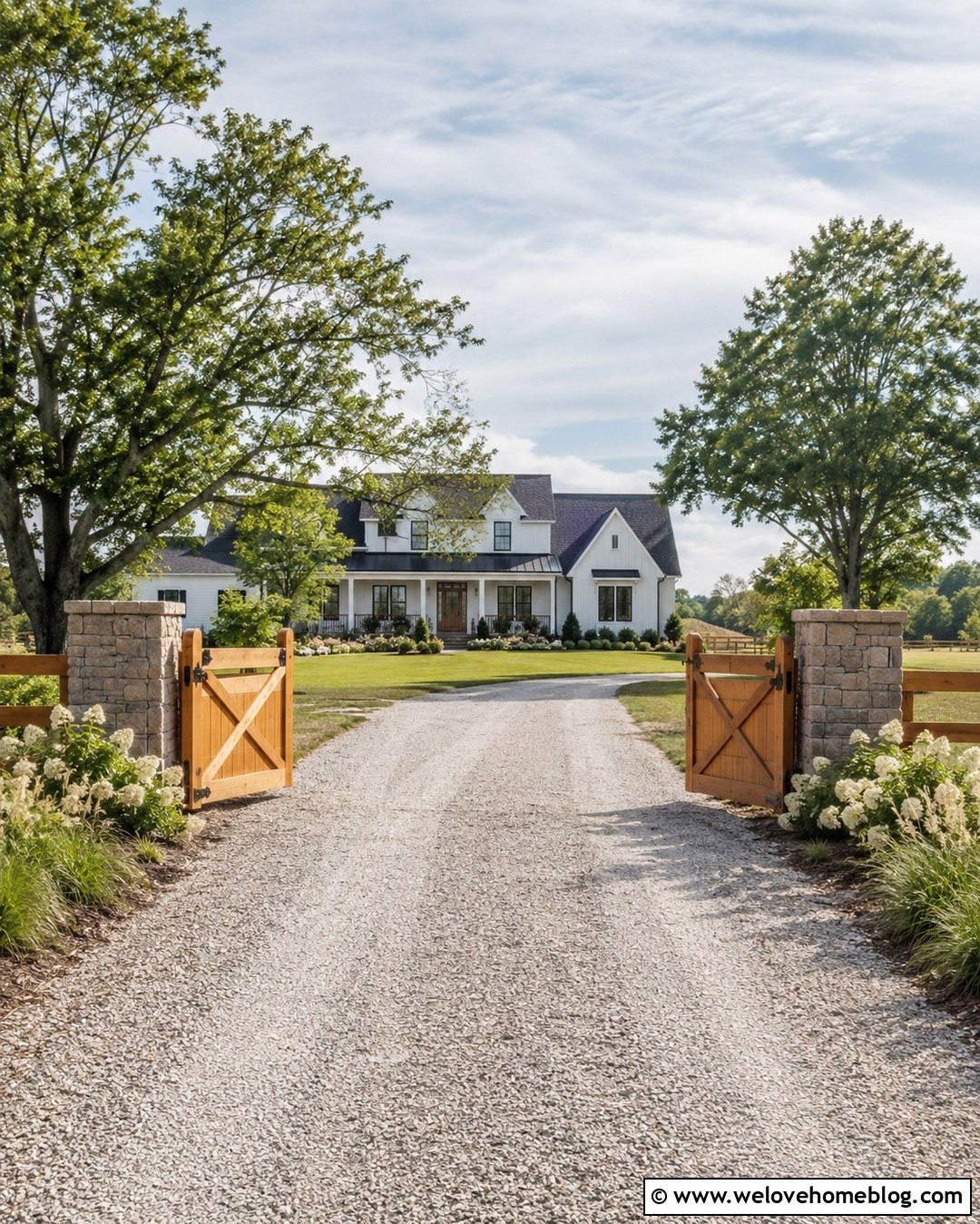
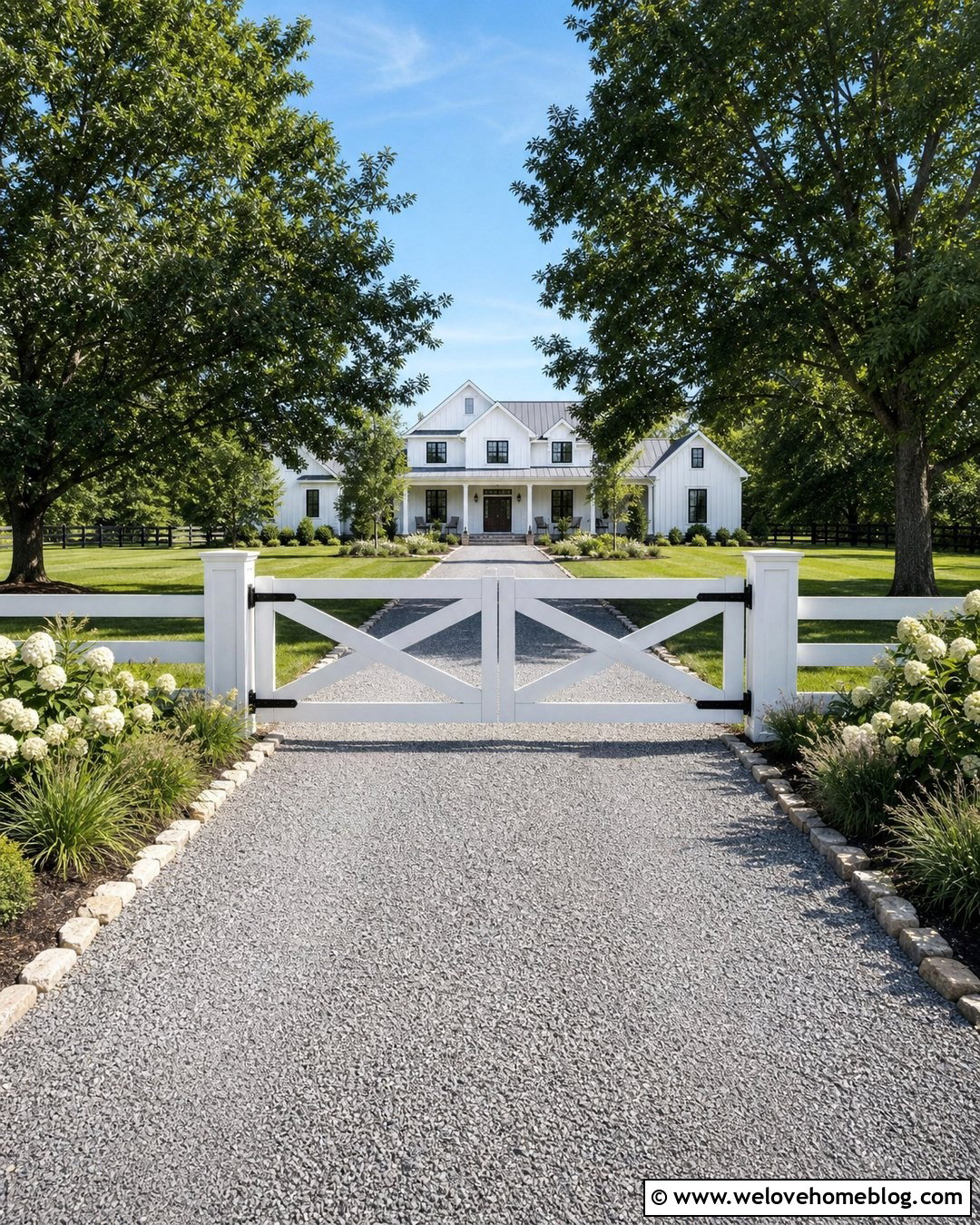
A farmhouse entrance feels most convincing when every material looks practical and connected to the landscape. Choose a simple timber double gate with diagonal bracing, rather than a heavily ornamental design. Install it between fieldstone pillars capped with flat slabs, then continue post-and-rail fencing toward open lawn or meadow planting. A pale crushed-limestone driveway creates a relaxed surface that complements natural wood. Add hydrangeas, switchgrass, and a few compact evergreens around the pillar bases, leaving the gate’s movement area clear. Black strap hinges and understated lanterns provide useful contrast. The gate should echo exterior elements already visible on the house, such as porch columns, shutters, or exposed beams. Use a reinforced internal frame if the timber leaves are wide, helping the gate preserve its shape over time.
7. Full Privacy Driveway Gate
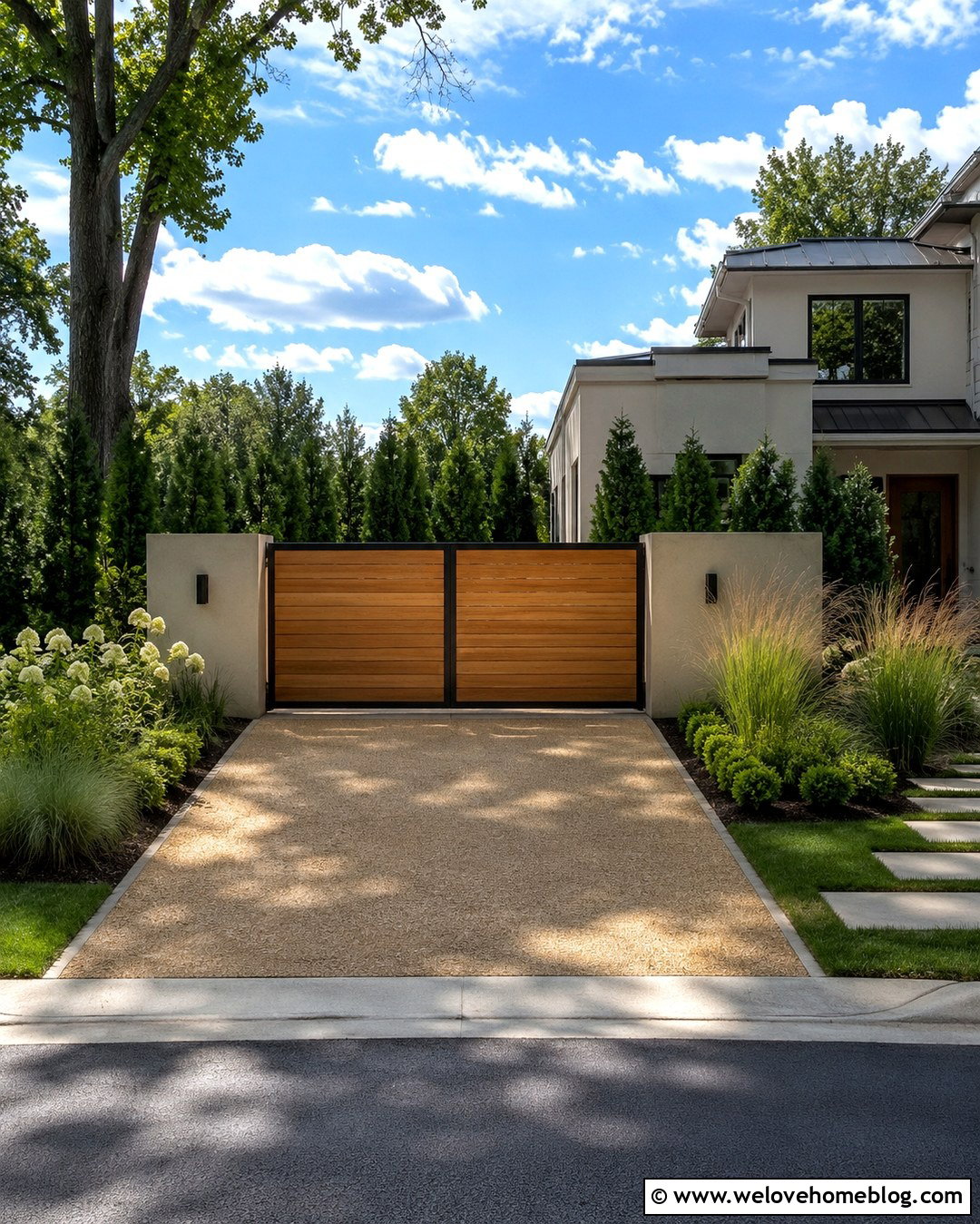
A solid driveway gate can screen parked vehicles, play areas, and front-yard activity from the street. To keep the entrance from looking harsh, combine privacy with warm materials and thoughtful landscaping. A horizontal cedar gate framed in black steel offers strong coverage while maintaining clean proportions. Pair it with a resin-bound gravel driveway in a warm beige tone, smooth stucco pillars, and dense but controlled evergreen planting. Set the gate back from the road when possible so a vehicle can wait safely without blocking traffic. Solid gates catch more wind than open-bar designs, so posts, foundations, hinges, and operators must be selected for the added load. Break up the broad surface with narrow board spacing, subtle metal trim, or a small upper section of open slats.
8. Low Driveway Gate For An Open Front Yard
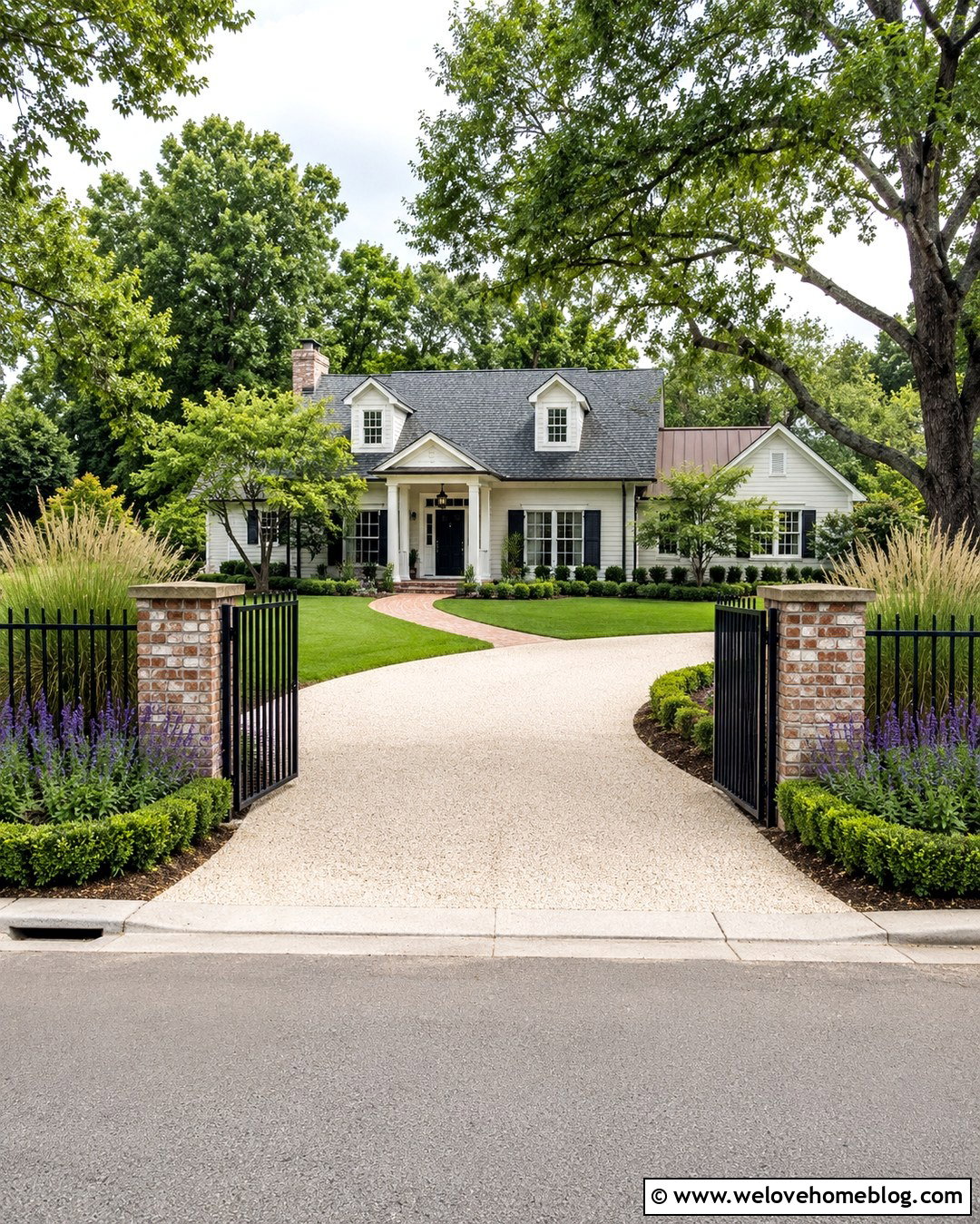
Not every property needs a tall security barrier. A low gate can establish a clear boundary while preserving views of the house, lawn, and planting beds. This approach suits friendly suburban settings, cottage homes, and properties where curb appeal matters more than complete privacy. Choose a low black aluminum double gate with widely spaced vertical pickets. Pair it with an exposed aggregate concrete driveway, matching low fencing, and curved beds filled with boxwood, salvia, and ornamental grasses. Brick pillars can connect the gate visually to a brick facade or front walkway. Keep the gate proportions broad and simple so it does not resemble a narrow garden gate. Add automation only if frequent manual opening would be inconvenient, and locate controls where visitors can use them without entering the vehicle path.
9. Automatic Driveway Gate With Smart Access
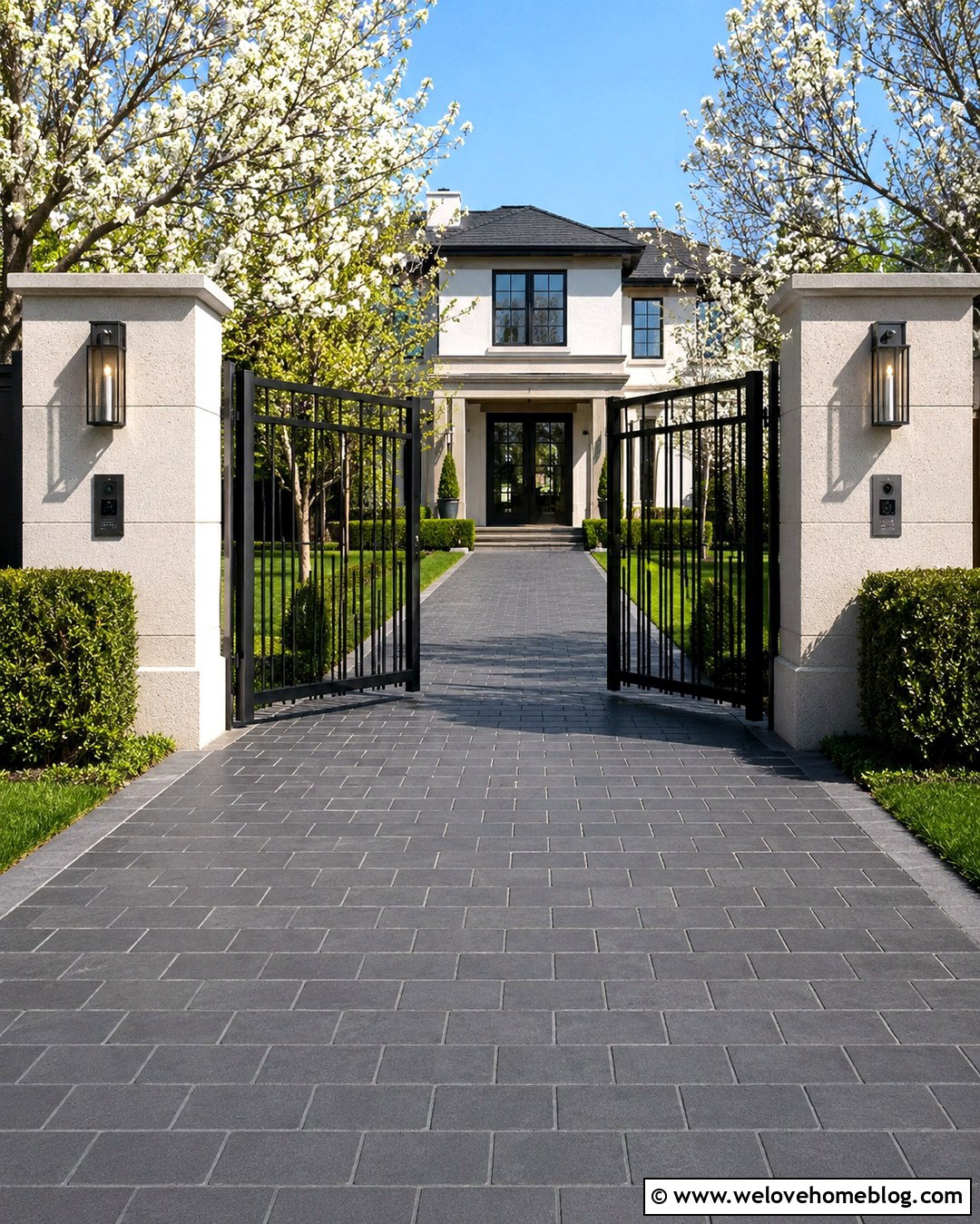
Automation makes a driveway gate more convenient, but the opener and access system must match the gate’s weight, movement, and frequency of use. Swing and sliding gates require different equipment, and safety accessories are essential around moving panels. () For a polished residential look, use a black steel double swing gate with narrow vertical bars, limestone pillars, and an intercom integrated into one column. A charcoal concrete paver driveway can lead toward a transitional home framed by clipped hedges and small trees. Consider remote controls, keypad entry, video calling, vehicle detection, manual release, and backup power. Keep photo eyes and other protective devices unobstructed by plants. Ask the installer to explain emergency operation, maintenance intervals, access permissions, and how the system behaves during a power or internet outage.
10. Solar Powered Driveway Gate
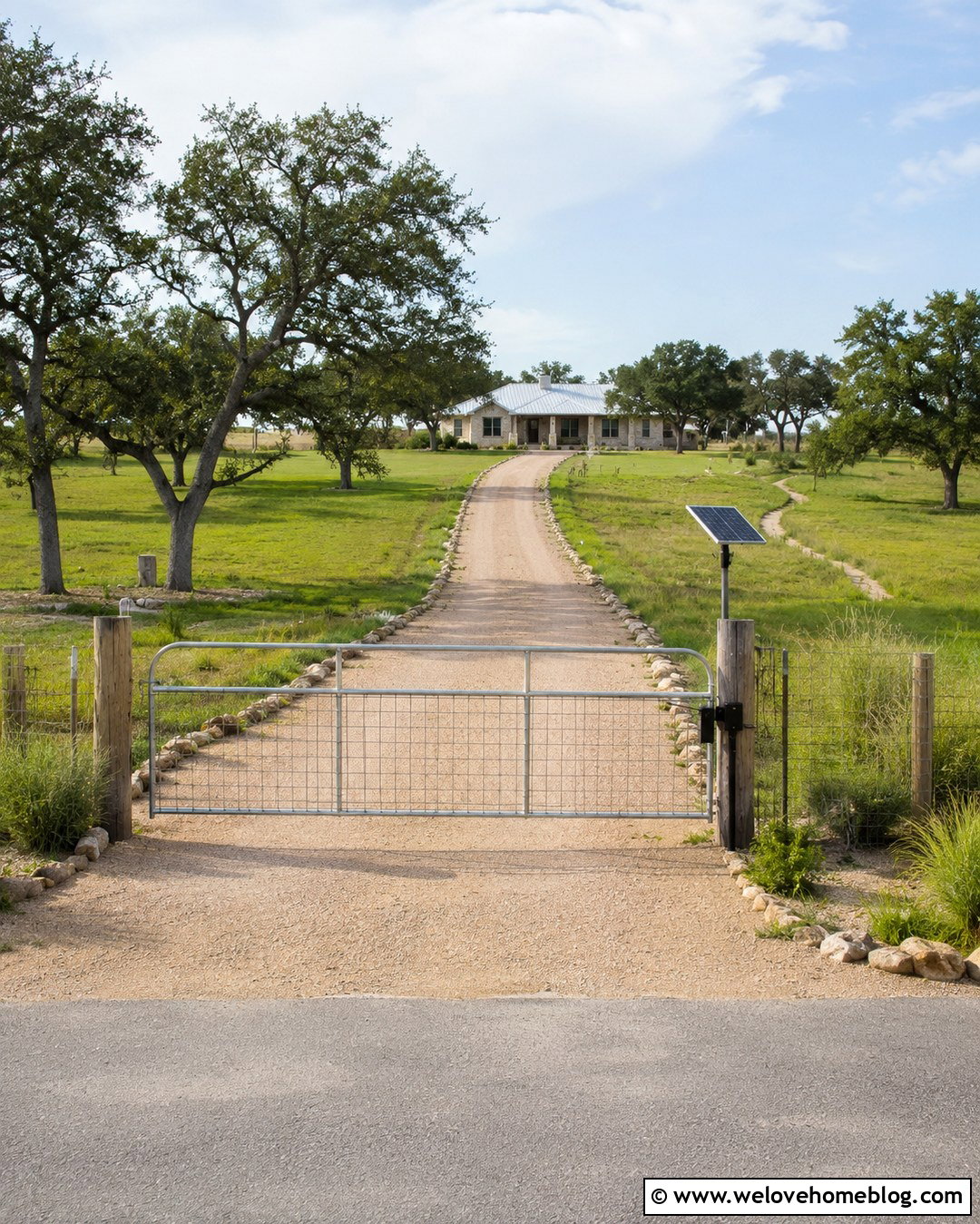
A solar-powered opener may be useful when the gate stands far from the house and extending electrical service would be disruptive. It works especially well at a long rural entrance with good sun exposure. Pair a lightweight galvanized steel ranch gate with a tan gravel driveway, timber posts, wire fencing, native grasses, and a modest address marker. Position the solar panel where trees, pillars, and the open gate will not shade it during important charging hours. The battery, panel capacity, gate weight, local climate, and expected daily cycles should be evaluated as one system. A lightweight, smoothly operating gate generally places less demand on the equipment. Include a manual release and accessible battery enclosure. The practical rural materials keep this complete entrance affordable, durable, and visually appropriate for the setting.
11. Driveway Gate With Brick Pillars
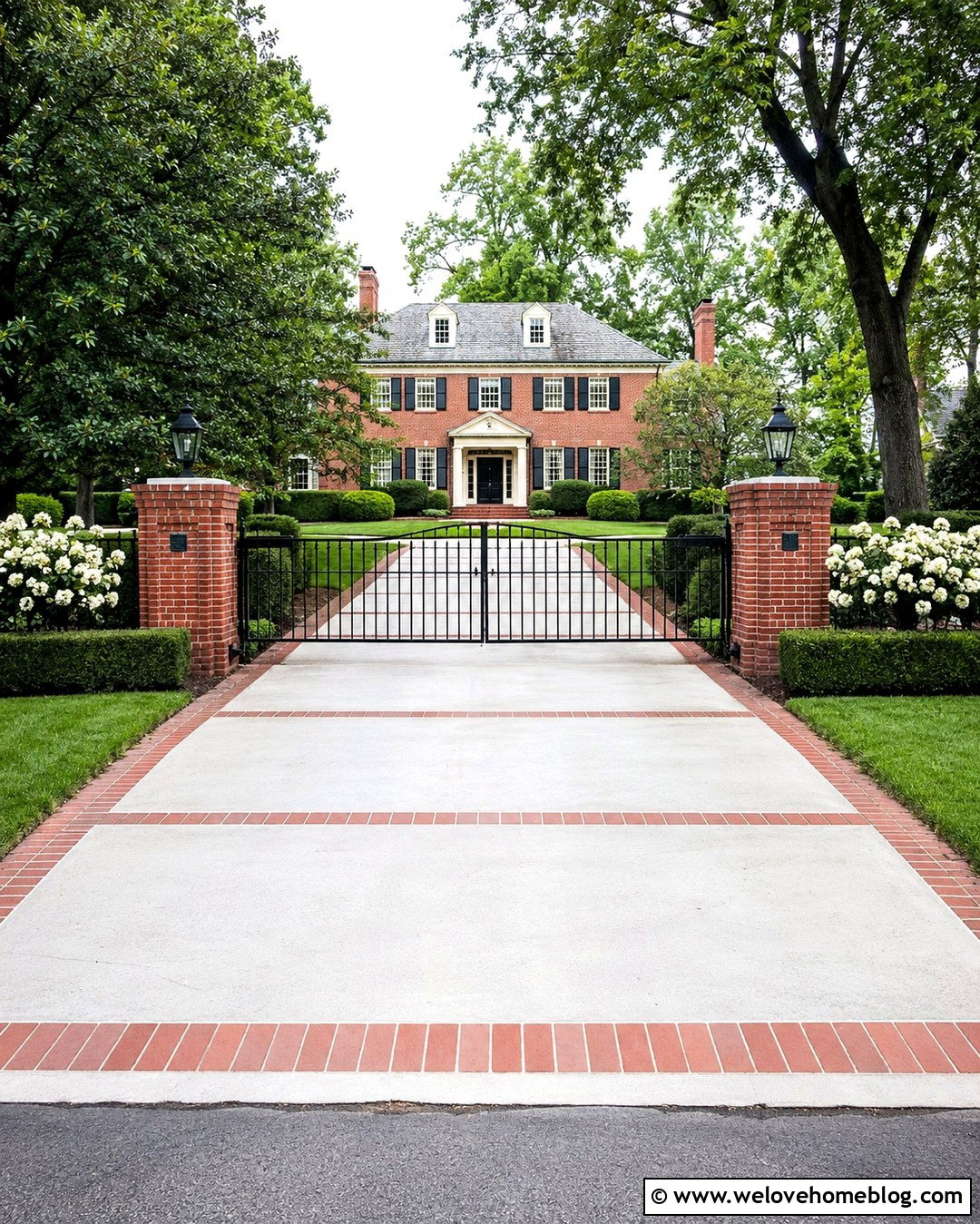
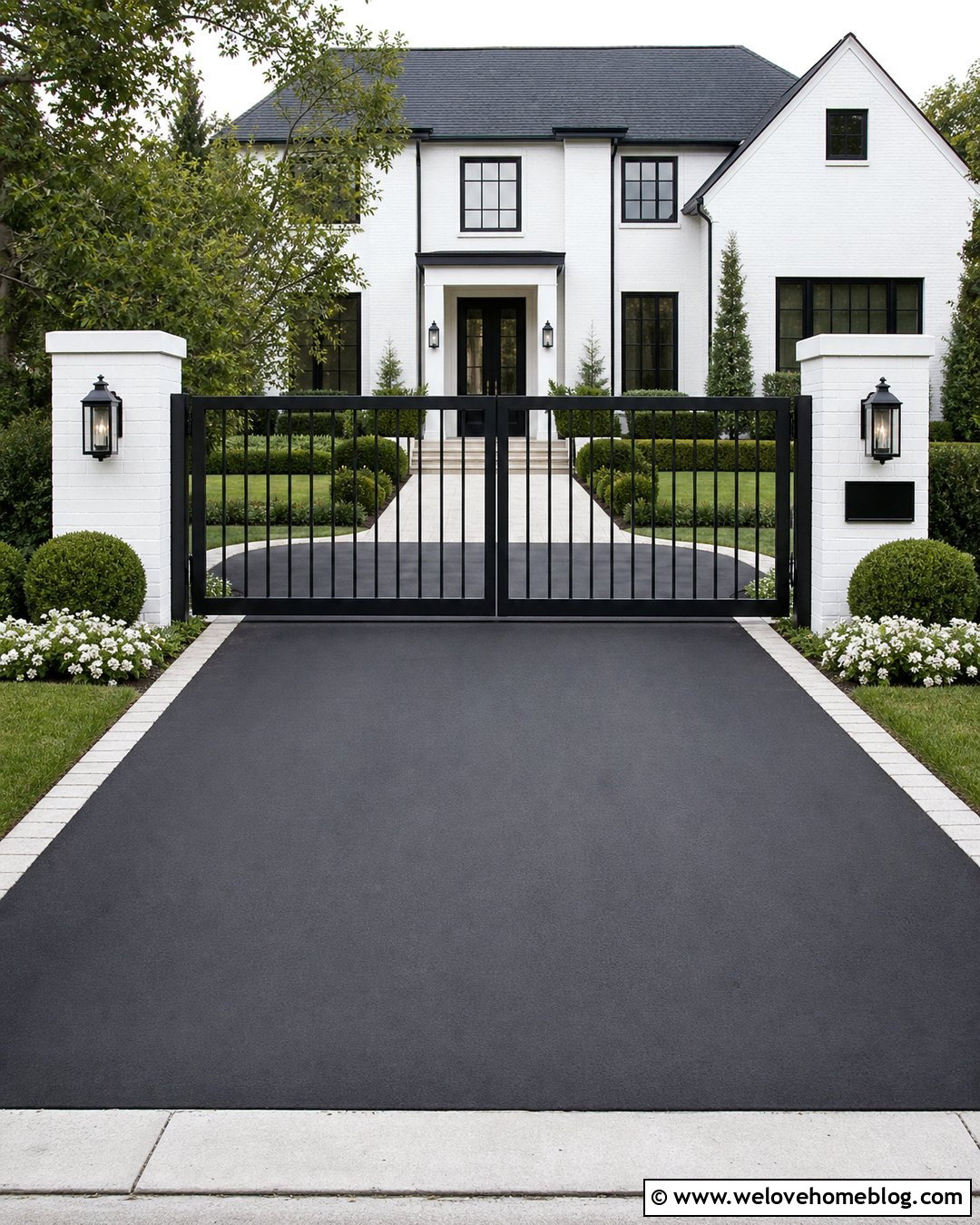
Brick pillars help a driveway gate feel connected to a traditional brick home rather than added as an afterthought. Match the pillar brick to the house as closely as possible, or select a complementary blend with similar undertones. A black steel gate with a flat top and minimal detailing keeps the entrance balanced. Continue the brick through narrow driveway ribbons or a border around a light-gray concrete surface. Low boxwood hedges and white flowering shrubs can soften the masonry without hiding it. Include caps that shed water cleanly and protect the pillar tops. Gate hinges, operators, conduit, intercom wiring, and lighting should be planned before construction begins, not attached later wherever space remains. Repeat the gate’s black finish on house lights, railings, or shutters to unify the full curb view.
12. Driveway Gate With Stone Columns
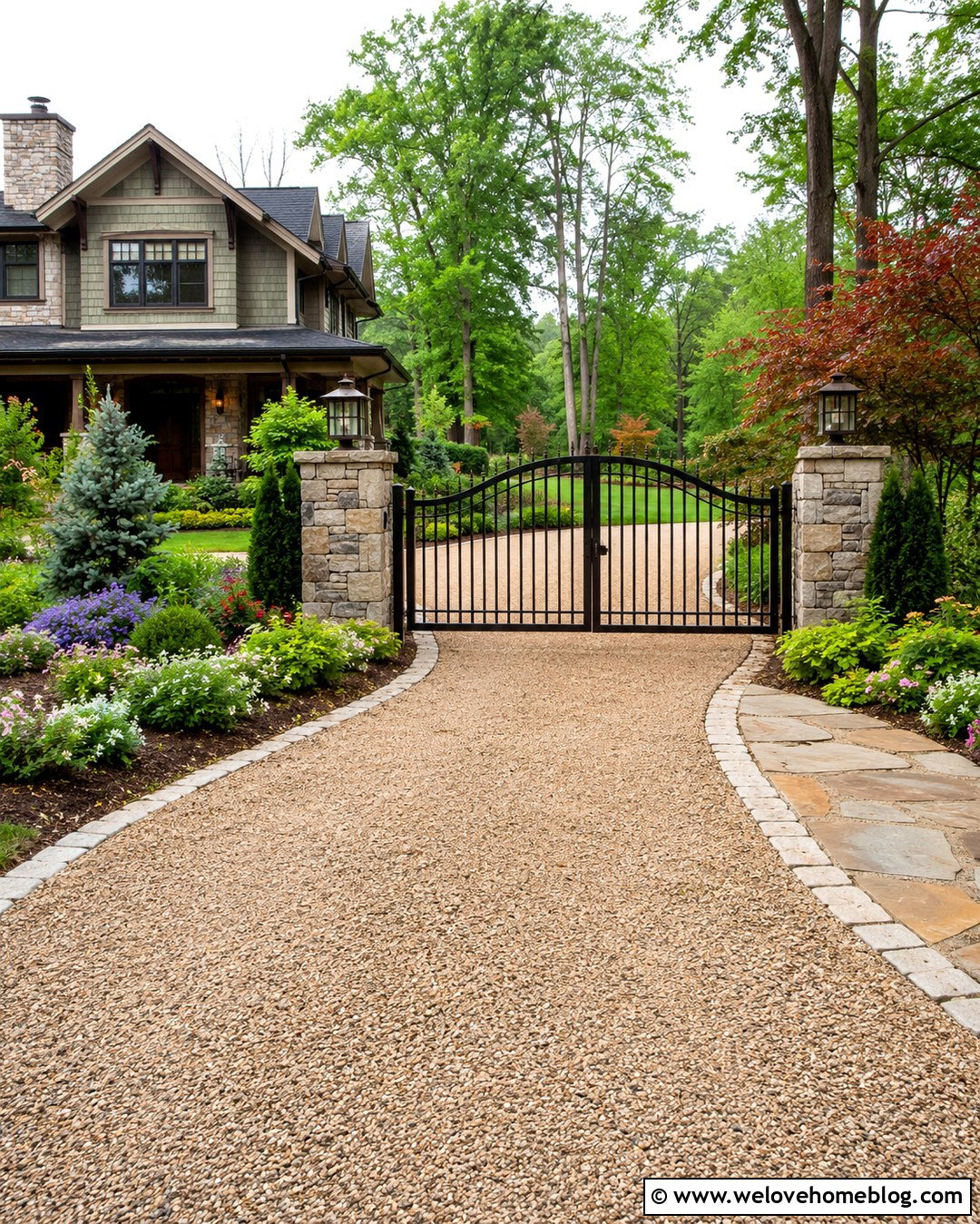
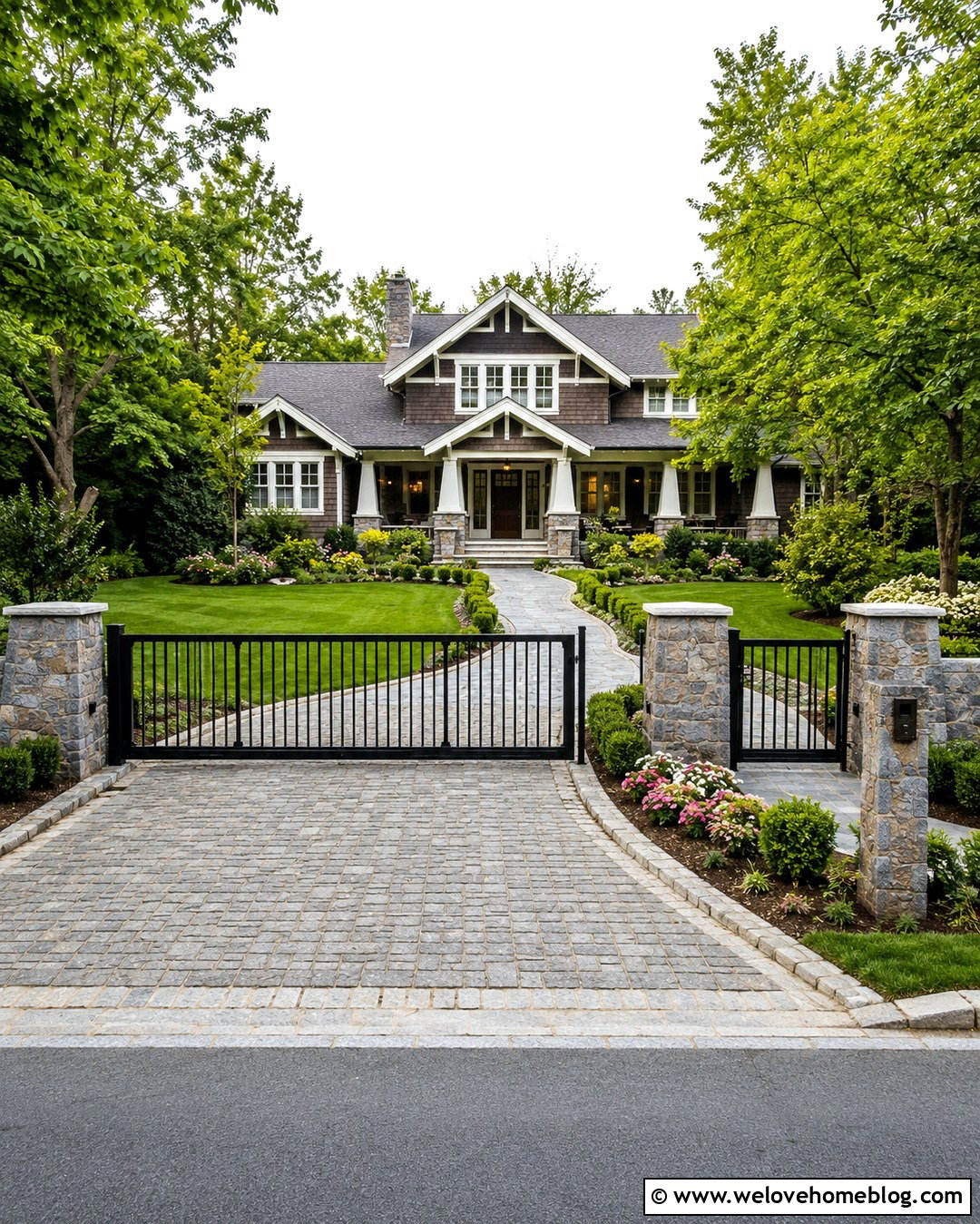
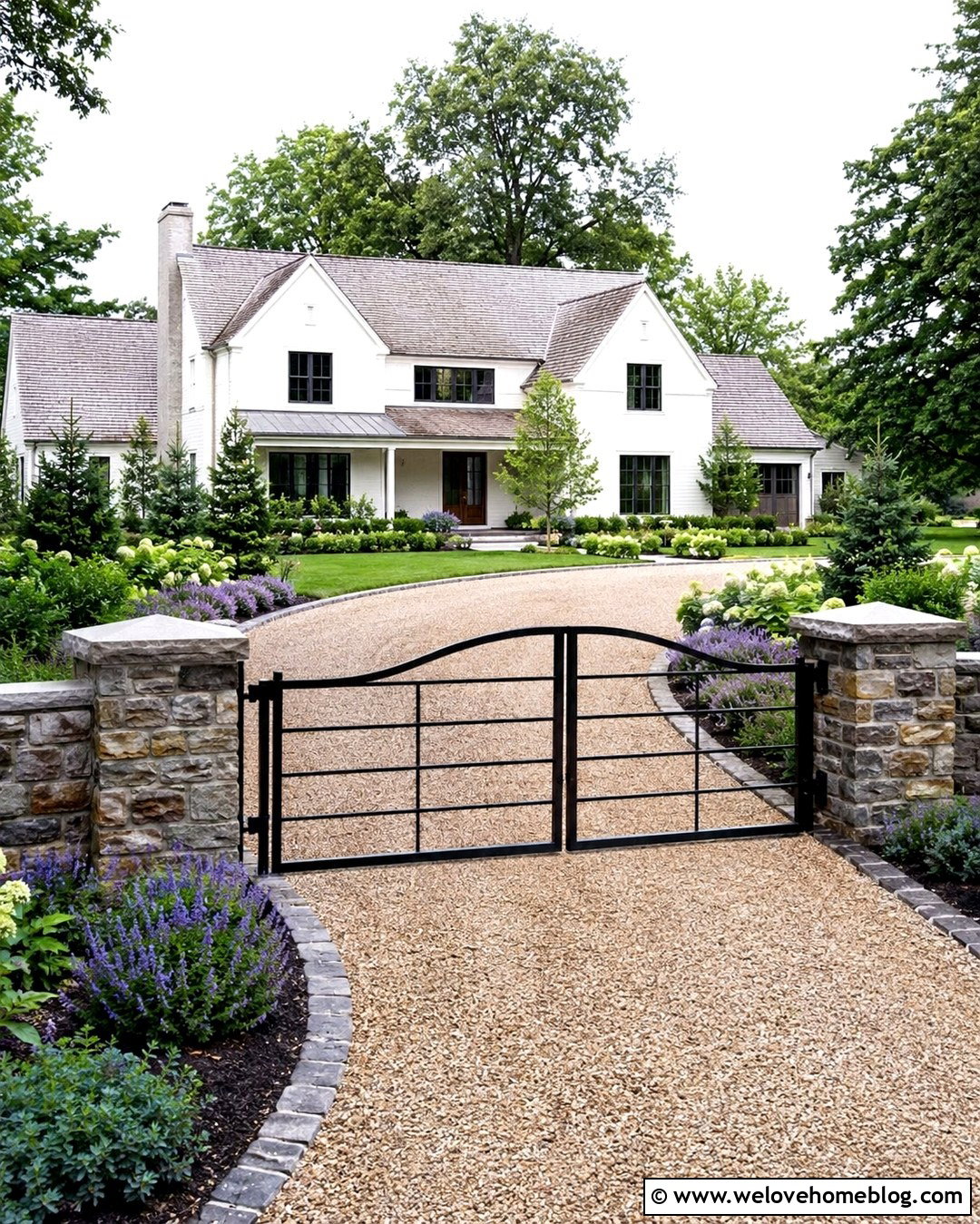
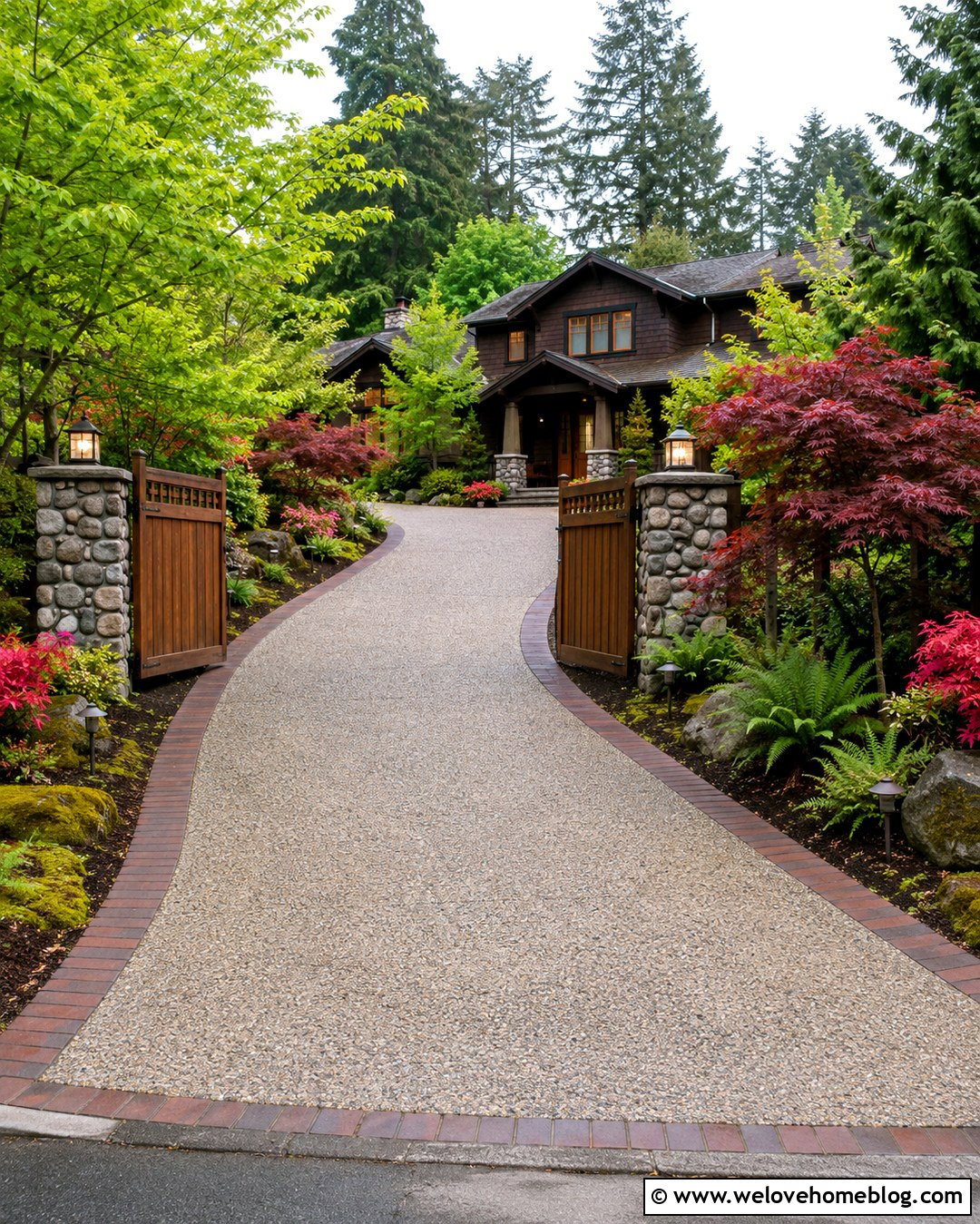
Natural stone columns give the entrance visual weight and work beautifully with Craftsman, rustic, lodge, and modern farmhouse homes. Choose stone that appears elsewhere on the house foundation, chimney, or retaining walls. Between the columns, install a dark bronze aluminum gate with a shallow arch and widely spaced bars. A curved pea gravel driveway with cobblestone edging creates a softer approach than plain concrete. Surround the columns with dwarf evergreens, flowering perennials, and low groundcover, but maintain clear access to hinges and electrical components. Oversized columns can make an average driveway opening feel cramped, so scale them to the gate and home. Finish each one with a simple stone cap and shielded lantern. The resulting entrance feels substantial while still allowing the house and landscape to remain visible.
13. Narrow Driveway Gate
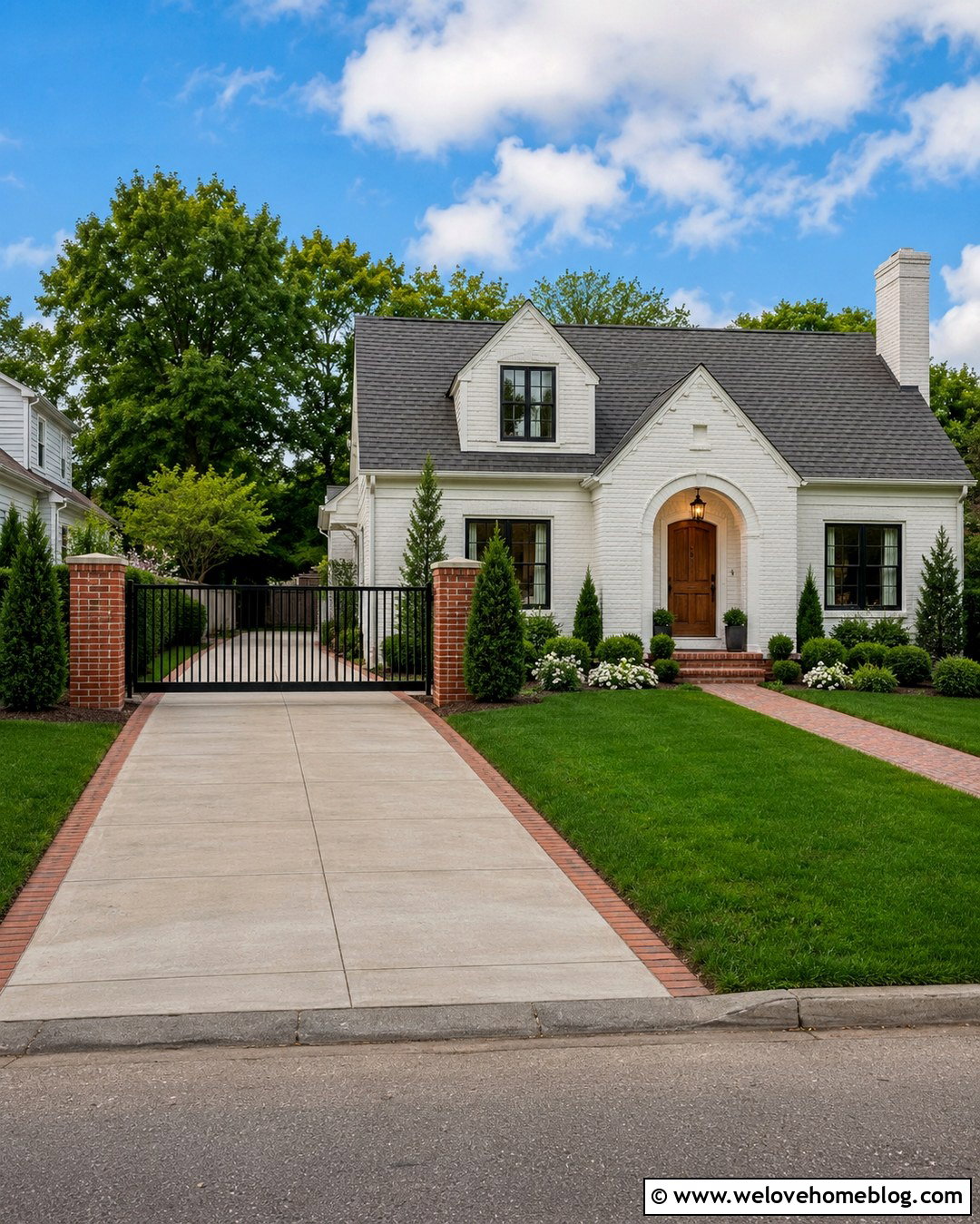
A narrow driveway requires accurate measurements and a gate that does not steal usable clearance from mirrors, delivery vehicles, or landscaping. A single swing gate can work where there is adequate opening space, while a compact sliding or bifolding design may suit tighter conditions. Choose a slim black aluminum frame with vertical slats to keep the gate lightweight and visually clean. Pair it with a straight concrete driveway, flush brick edging, upright evergreen shrubs, and a compact Cape Cod home. Avoid bulky pillars; narrow steel posts wrapped in modest brick or masonry usually preserve more width. Locate keypads and intercoms where drivers can reach them without sharply turning. Confirm the clear opening rather than measuring only between outer posts. Good lighting and a contrasting driveway edge also make the entrance easier to navigate.
14. Wide Estate Driveway Gate
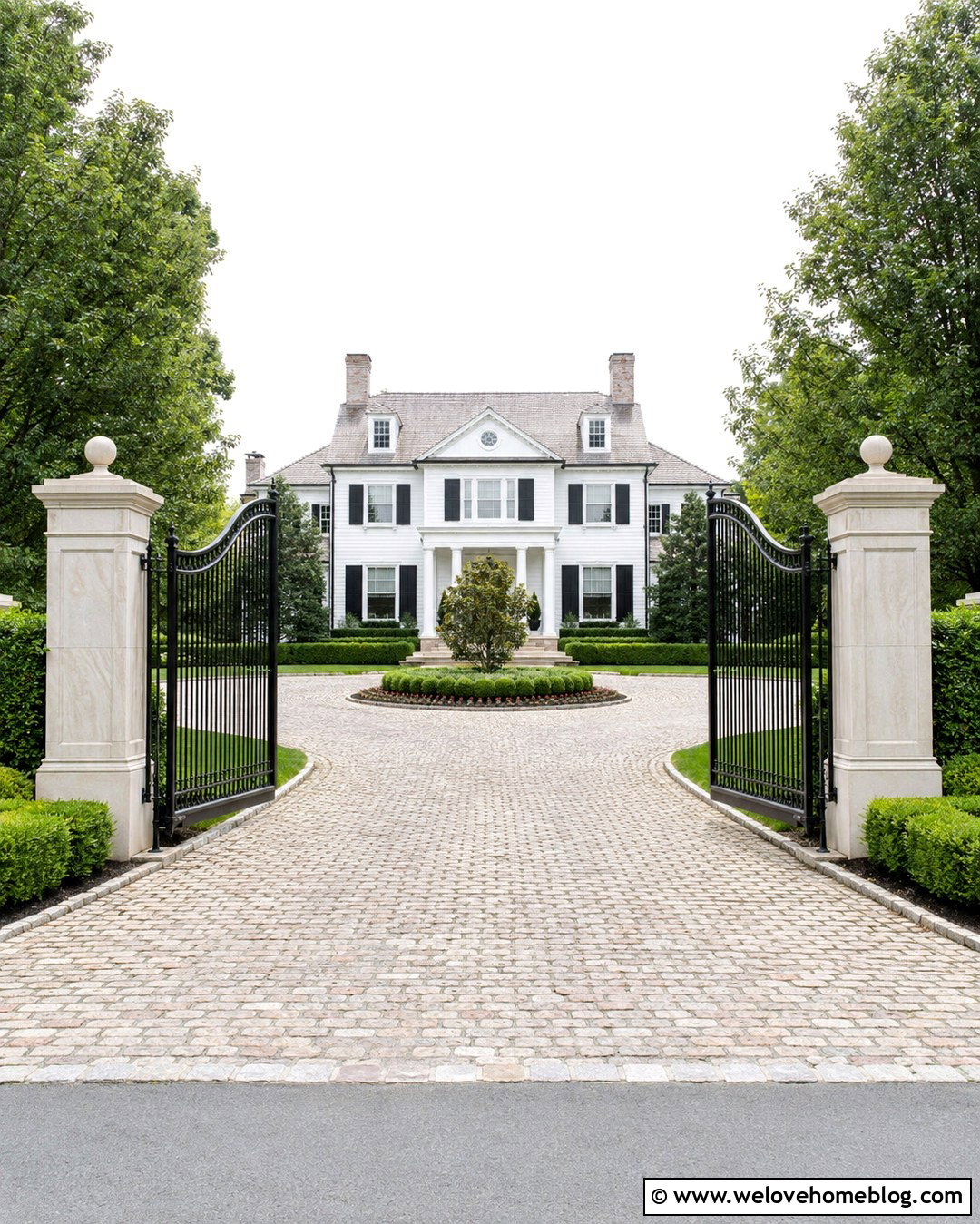
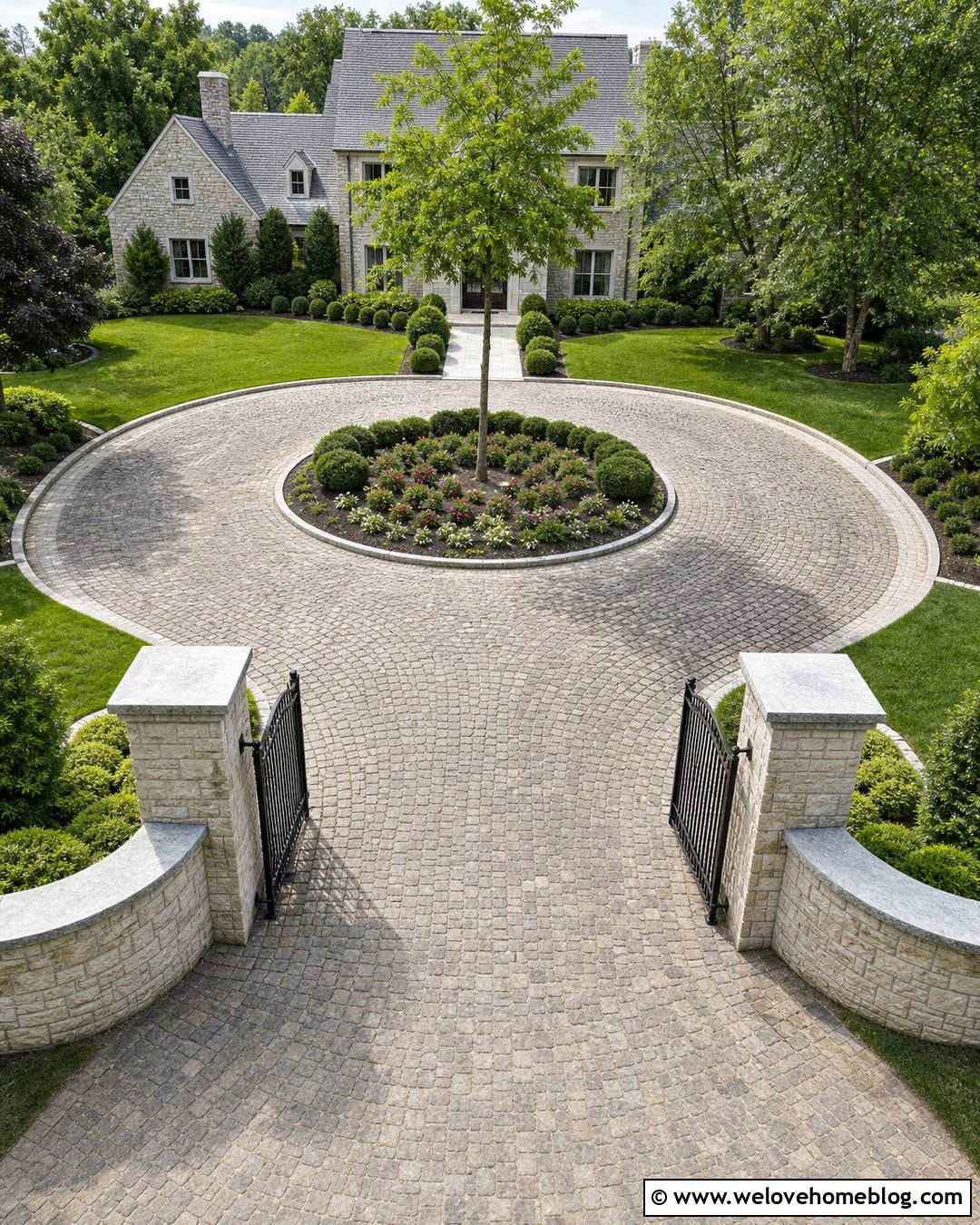
A wide entrance needs a gate with enough structure to feel proportional without becoming visually heavy. Double swing leaves create a formal center opening and reduce the length carried by each hinge compared with one very broad leaf. Use open black steel bars with a shallow central arch, restrained finials, and solid masonry columns. A circular cobblestone driveway can extend toward a large Colonial or European-inspired house, framed by symmetrical trees and clipped hedges. Repeat the stone from the columns in the driveway apron or central island border. Wide gates place greater demands on posts, hinges, foundations, and automation, so engineering should come before decorative decisions. Keep visitor controls outside the moving area and provide a separate pedestrian entrance where frequent foot access would otherwise require operating the entire vehicle gate.
15. Arched Wooden Driveway Gate
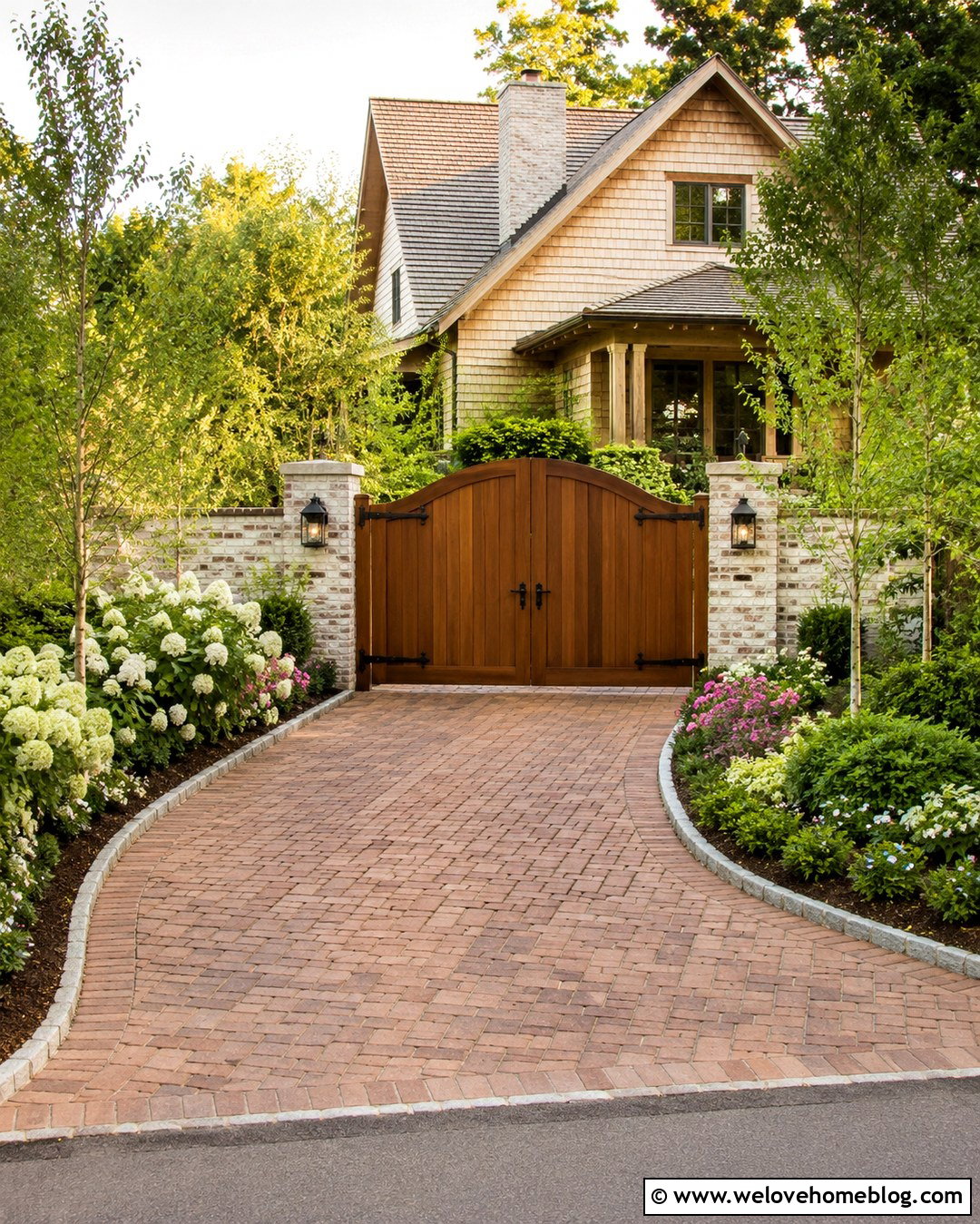
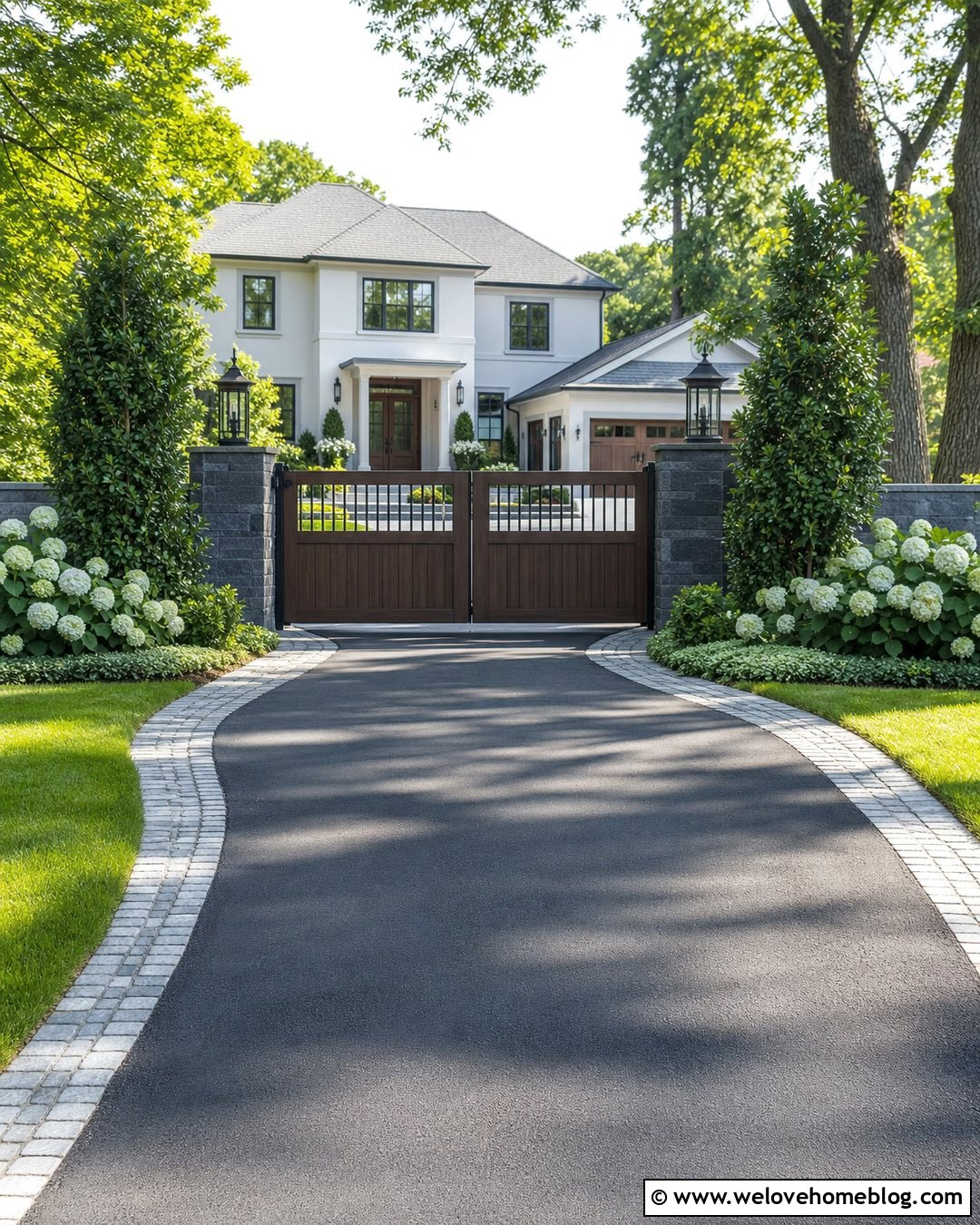
An arched wooden gate brings softness to an entrance dominated by straight rooflines, fences, and paving. The curve should be gentle and correctly proportioned, with the highest point centered over the driveway. Use stained cedar boards within a hidden galvanized steel frame for a warm appearance with added support. Pair the gate with clay brick pavers laid in a basket-weave pattern, limewashed brick pillars, cottage planting, and a Craftsman or English-inspired home. Leave modest gaps between boards if full privacy is unnecessary, allowing wind and filtered views through the entrance. Curved tops require careful fabrication because uneven boards or a weak frame quickly become noticeable. Echo the arch subtly in a porch opening, window, or garden arbor, but avoid repeating it so often that the entrance feels themed.
16. Wood And Metal Driveway Gate
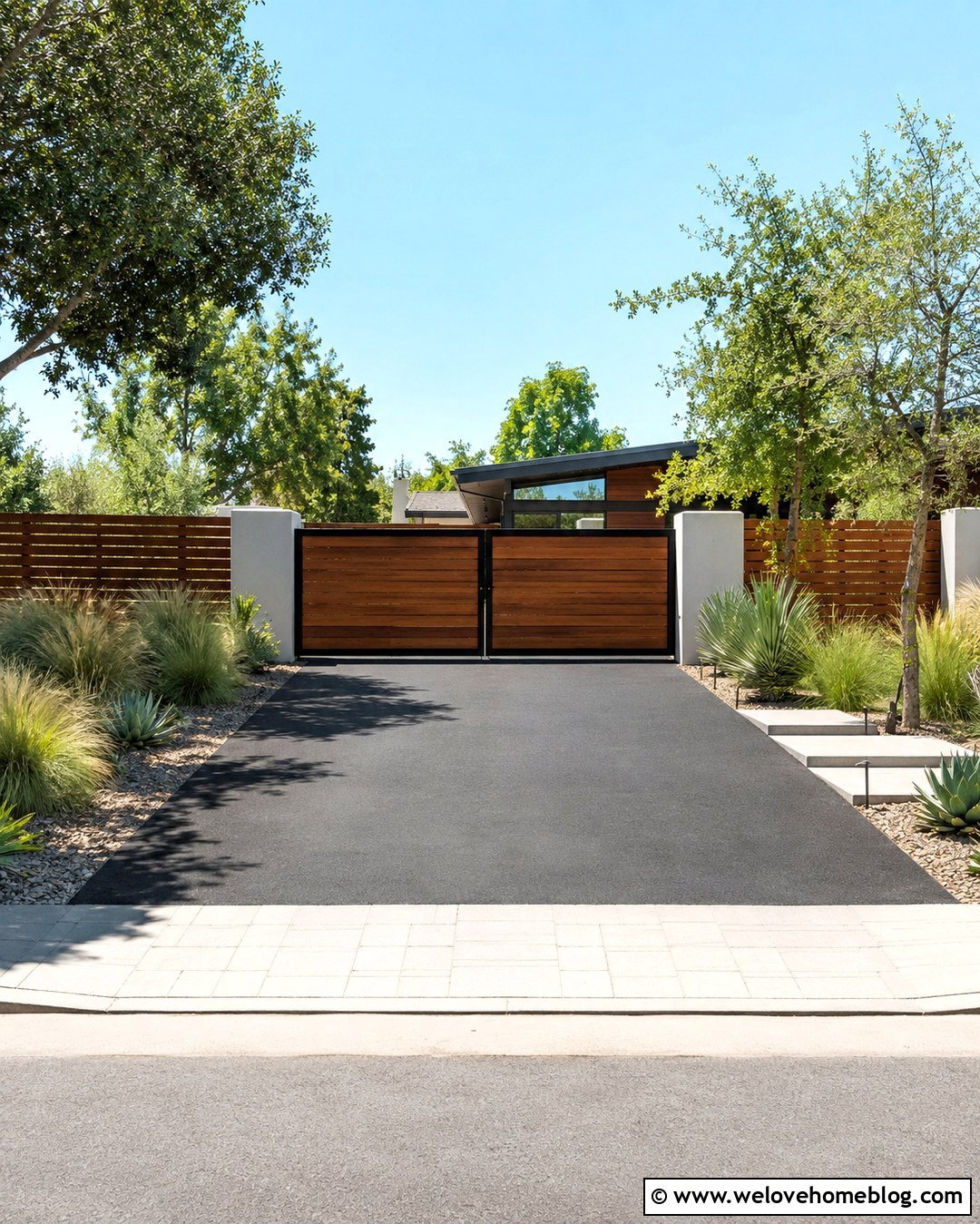
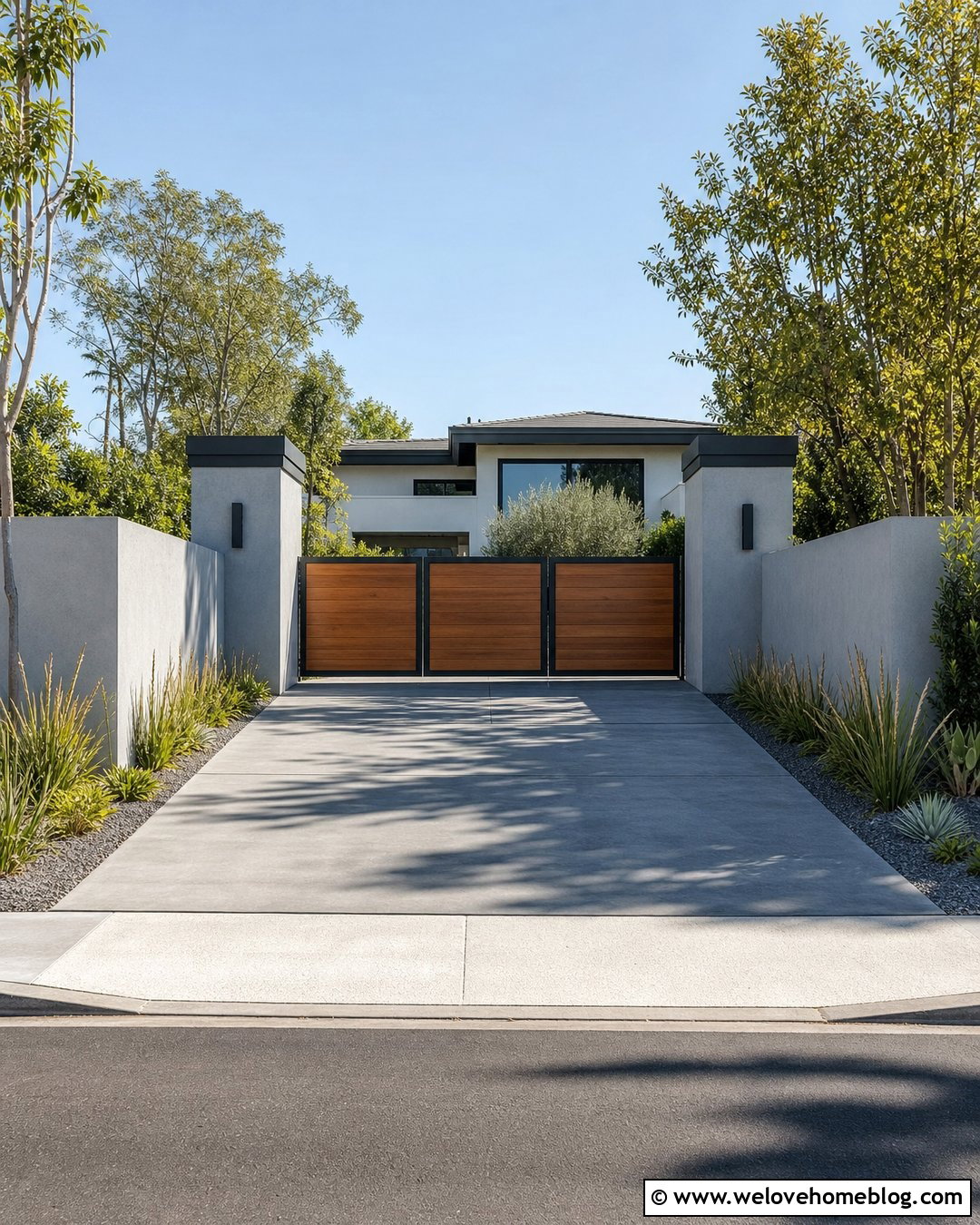
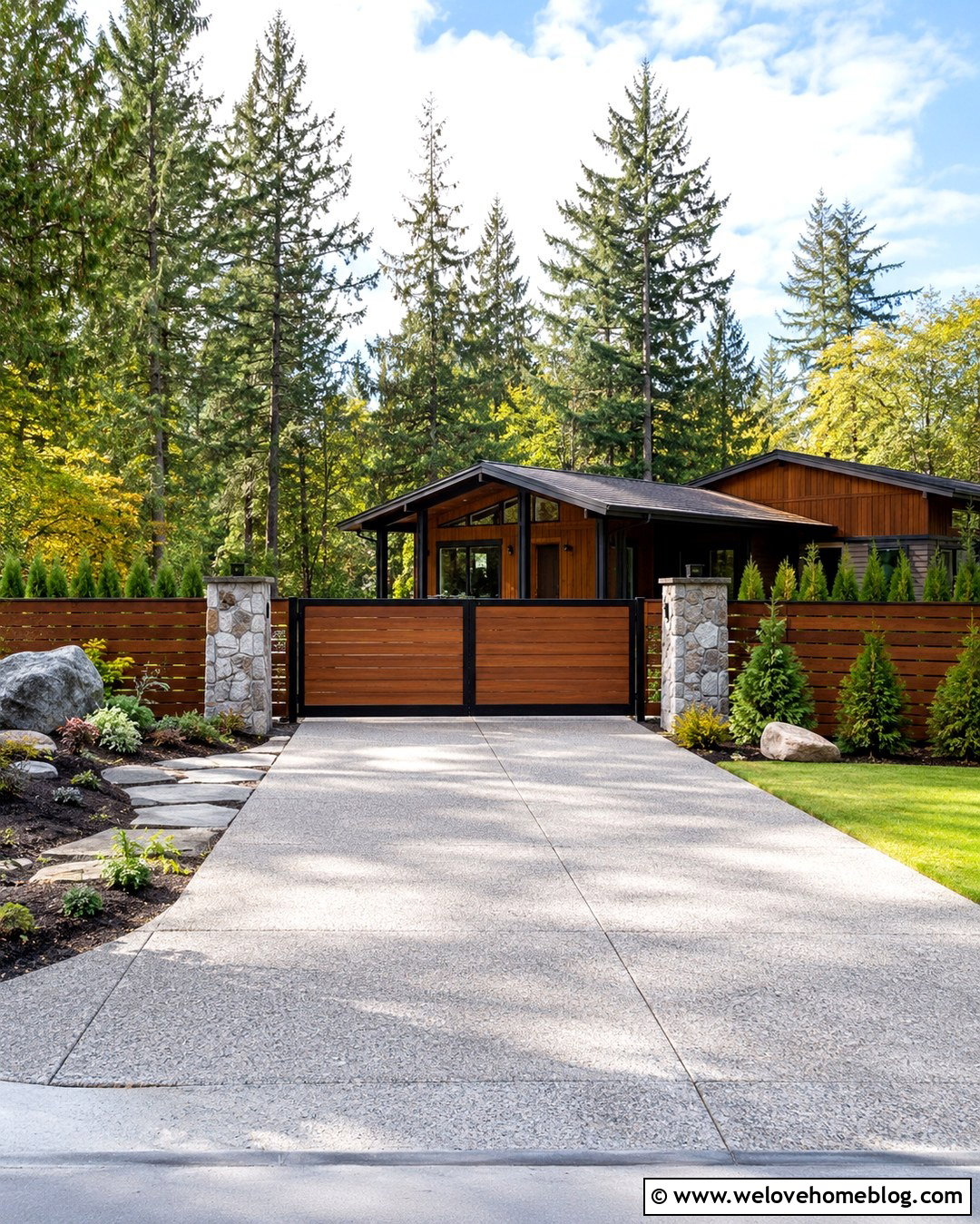
Combining wood and metal offers a useful balance between warmth, strength, and contemporary detail. A black powder-coated steel frame can support horizontal cedar or redwood boards while creating a crisp outline. Use the gate at the entrance to a straight charcoal asphalt driveway with a concrete paver apron. Square stucco columns, drought-tolerant grasses, agave, and a low modern fence can frame the approach to a midcentury home. Select boards with consistent spacing and place fasteners in an orderly pattern. Because wood and metal expand, age, and react to weather differently, the construction details should allow appropriate movement and drainage. Repeat the same wood tone on the garage door or front entry. This prevents the gate from looking like an isolated feature and creates a coordinated view from the street.
17. White Vinyl Driveway Gate
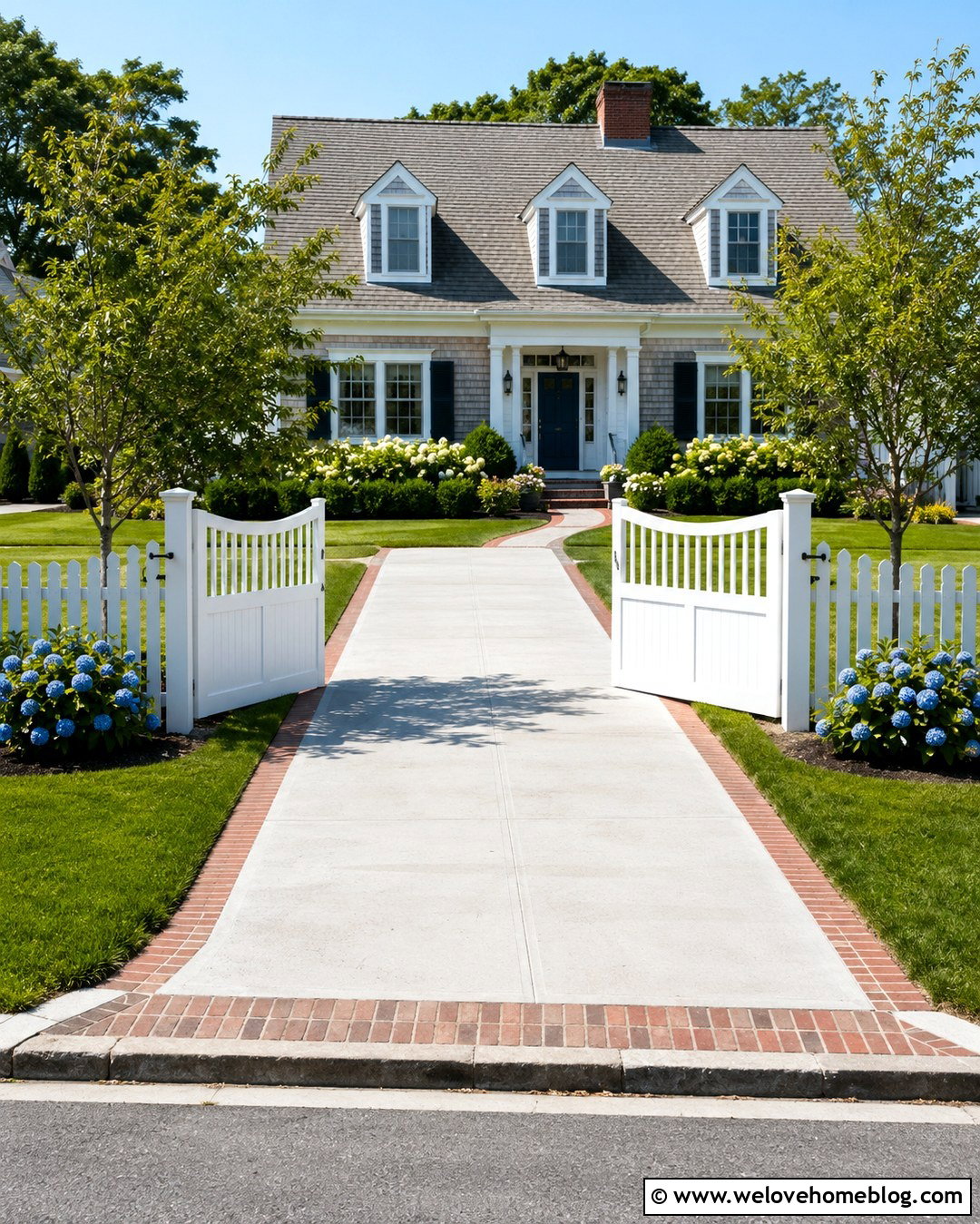
A white vinyl gate can create a bright, tidy entrance for a coastal, Cape Cod, cottage, or traditional suburban home. Choose a double swing design with a solid lower section and open pickets above to balance privacy and visibility. Pair it with a pale gray concrete driveway, white fence panels, brick-edged planting beds, hydrangeas, and a green lawn. The light color works best when repeated on porch railings, window trim, or columns. Vinyl avoids the painting and staining associated with wood, but hinges, internal reinforcement, posts, and opener attachments still require careful specification. Dirt can be more visible on white surfaces, so allow easy access for washing. Avoid overly ornate caps and hardware. Simple proportions help the gate look like a permanent architectural element rather than a decorative fence panel.
18. Black Steel Security Driveway Gate
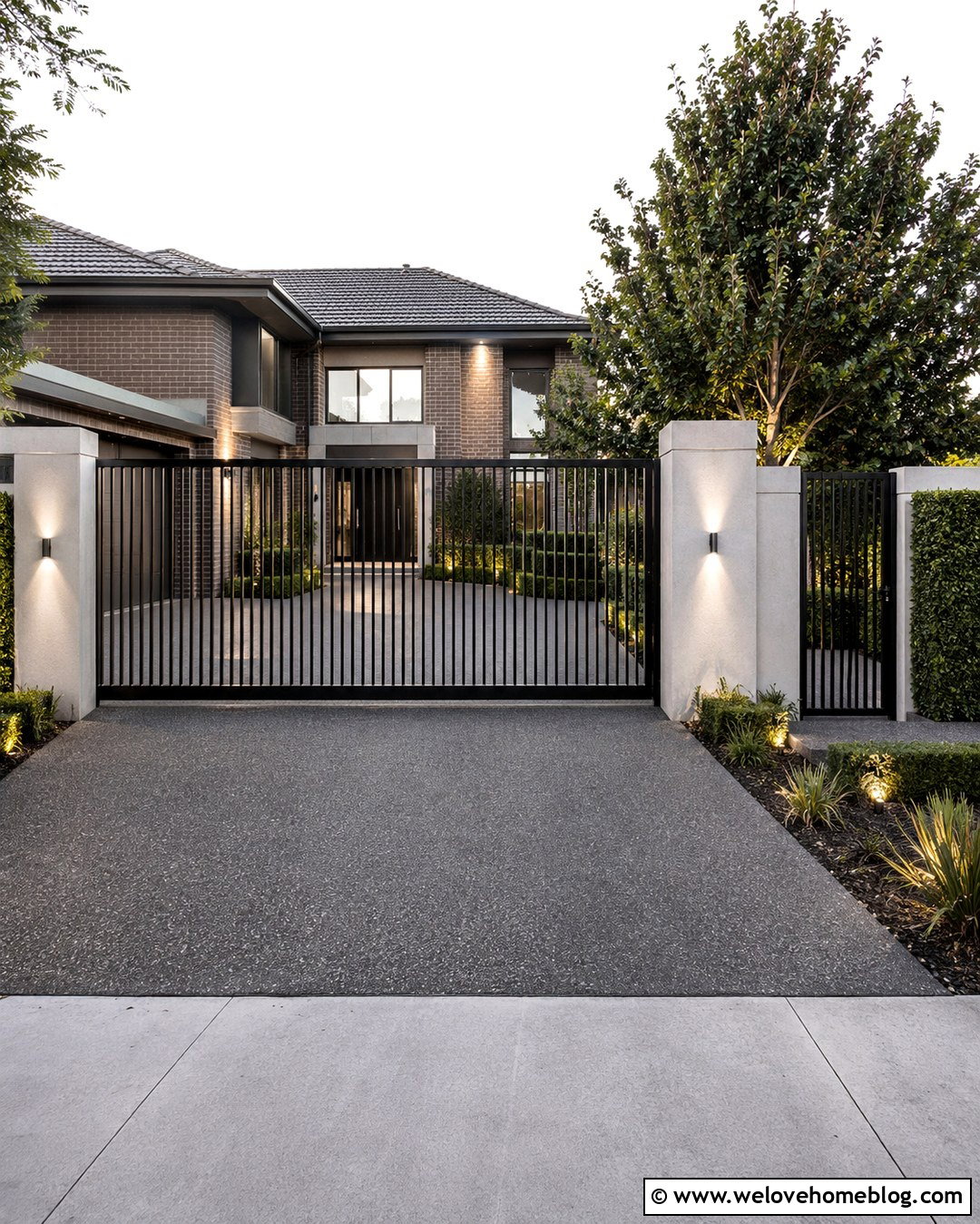
For stronger visual security, choose a tall black steel gate with closely spaced vertical bars and a straight upper rail. This design creates a clear boundary while avoiding the boxed-in appearance of a completely solid panel. Pair a sliding version with a dark exposed-aggregate driveway, concrete columns, matching steel fencing, and layered evergreen shrubs. A modern brick or industrial-style home makes a fitting backdrop. Keep horizontal footholds to a minimum and select durable locks and access controls appropriate to the property. Security should not reduce safe vehicle visibility, emergency access, or protection around the moving gate. Use integrated lighting to illuminate the entrance evenly rather than aiming harsh fixtures toward the road. A separate matching pedestrian gate can reduce unnecessary vehicle-gate cycles and create a more convenient route to the front walkway.
19. Driveway Gate With Matching Pedestrian Gate
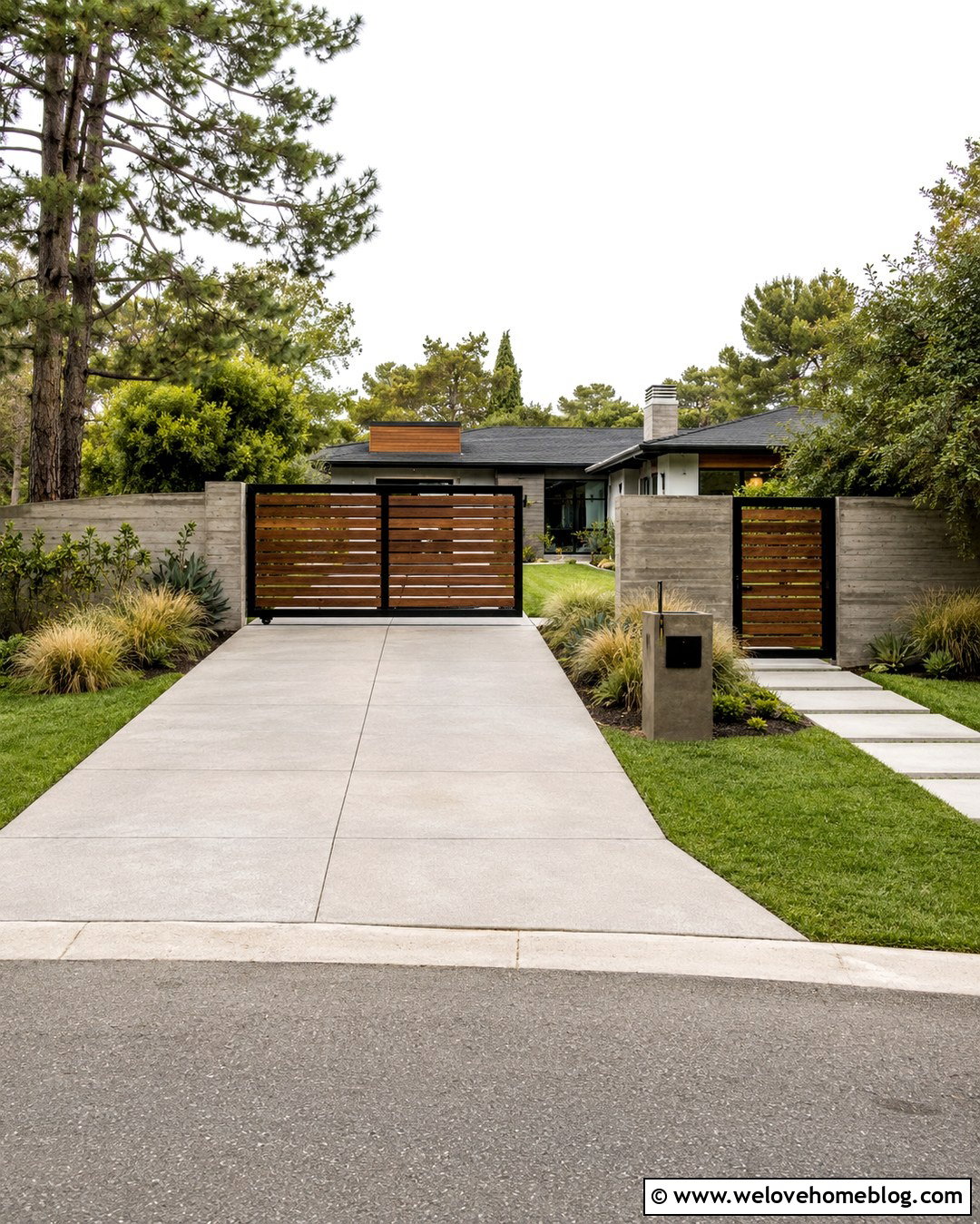
A separate pedestrian gate makes everyday access easier and prevents the large driveway gate from opening whenever someone enters on foot. Match the two gates through material, spacing, color, and top-line height, but size each one for its specific purpose. A horizontal cedar vehicle gate with a narrow matching walk gate looks cohesive beside a warm gray concrete driveway. Use black steel frames, board-formed concrete walls, and soft grasses around a modern ranch home. Direct the pedestrian opening toward a clear walkway instead of into the vehicle path. Include practical hardware, visible house identification, and an access system mounted at a comfortable height. The driveway gate, walk gate, fence, mailbox, and landscape should read as one entrance. This coordinated approach improves function without adding visual clutter to the front boundary.
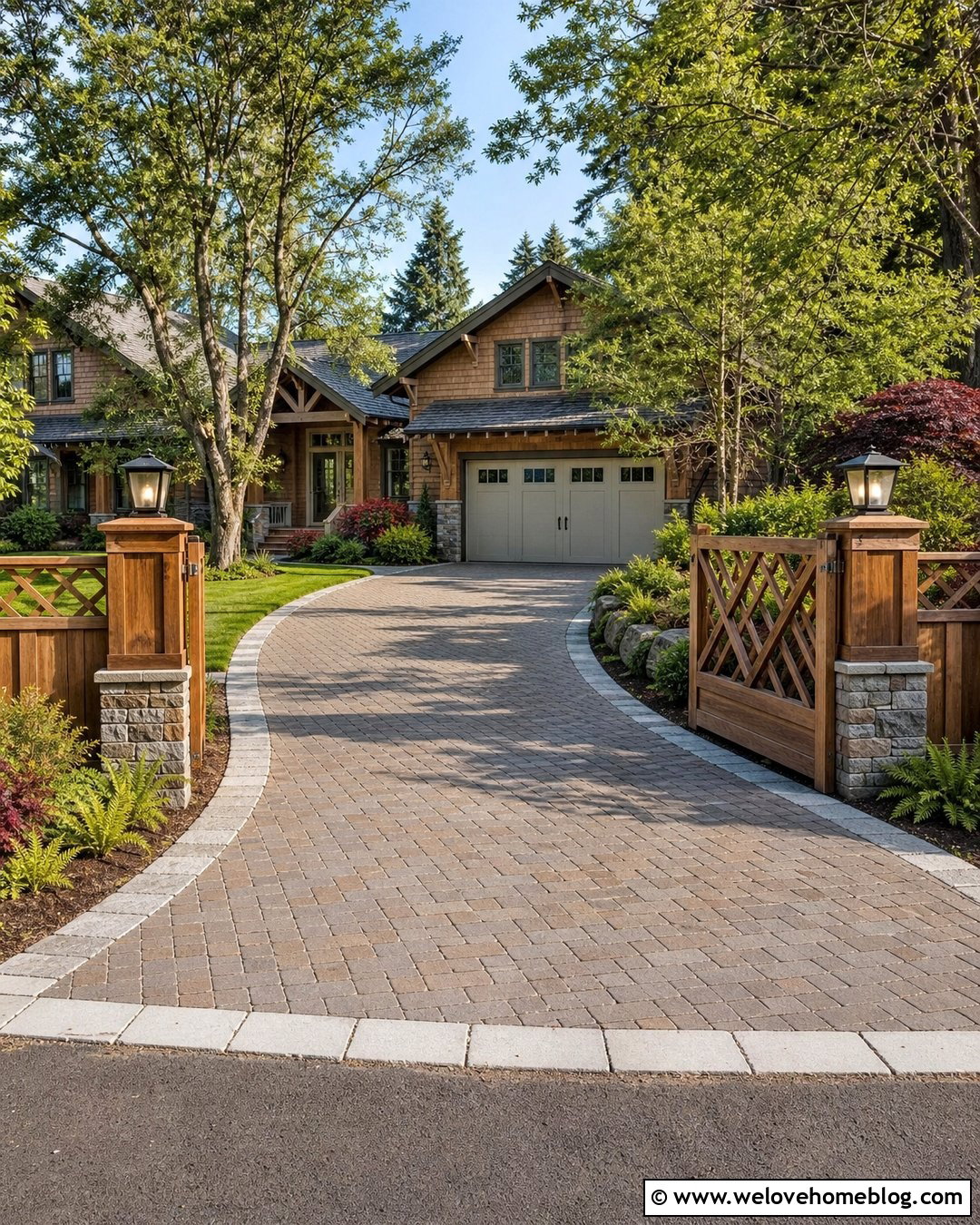
20. Budget Chain Link Driveway Gate
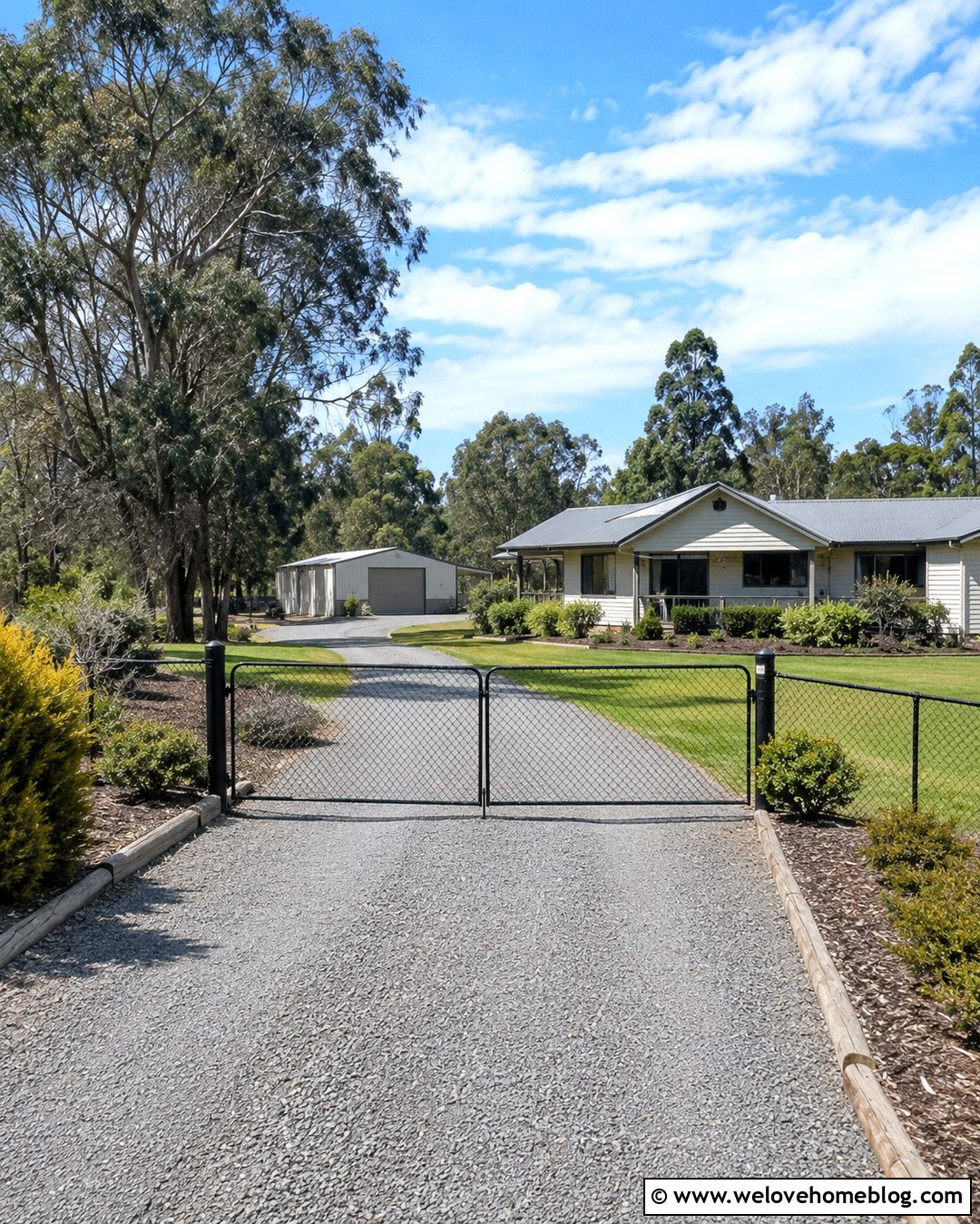
A chain link gate is a practical choice for a large rural, side-yard, or utility entrance where affordability and visibility matter more than formal appearance. Improve the complete look by using black vinyl-coated chain link instead of unfinished galvanized mesh. Pair a double gate with a compacted gray gravel driveway, black metal posts, matching fencing, and simple native shrubs. A ranch home, workshop, or modest country house provides an appropriate background. Set the posts carefully and use diagonal bracing to limit sagging across wider openings. A rolling or supported sliding configuration may help where a long single leaf would become difficult to handle. Keep weeds and loose gravel away from wheels, latches, and the swing path. A neat landscape edge and coordinated black hardware can make this economical entrance look intentional.
Conclusion:
The best driveway gate combines appearance, movement, safety, privacy, and long-term upkeep in one coordinated entrance. Start with the physical site. Measure the clear opening, check the slope, map the swing or sliding path, and note drainage, utilities, wind exposure, and roadside visibility. Then choose a material and design that complement the driveway, fencing, landscape, and architecture. Wood adds warmth, aluminum reduces corrosion concerns, steel offers strength, and vinyl provides a clean, low-maintenance appearance. Automation can improve convenience when its power source, safety equipment, and access controls are properly planned. These **20 Choosing A Driveway Gate Ideas** offer a practical starting point for creating an entrance that looks attractive and works reliably every day.

Related posts:
Leave a Reply