
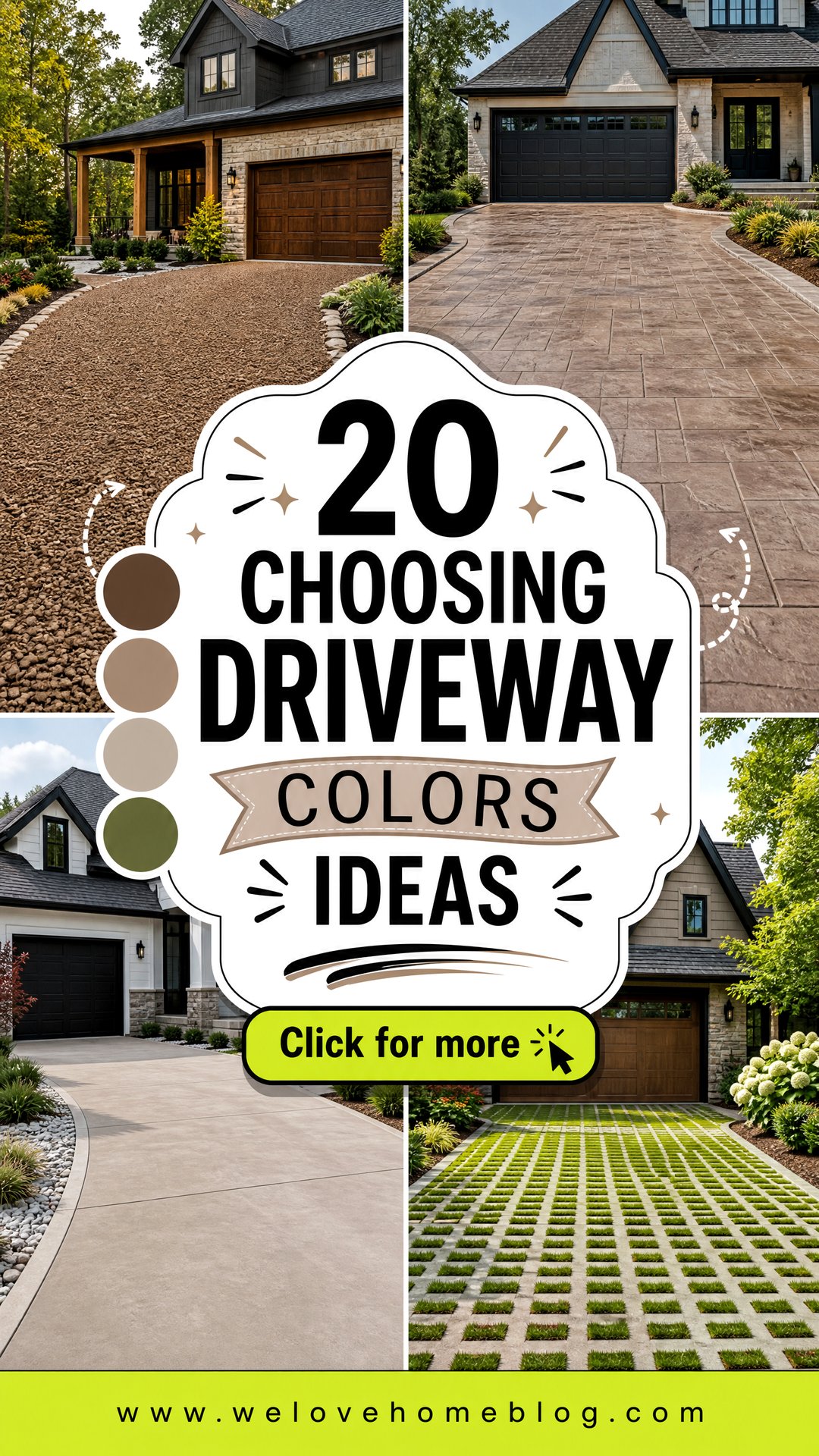
Choosing the right driveway color can make the entire front of your home feel more polished and connected. The best shade should complement the siding, brick, stone, roofing, garage door, and surrounding landscape without matching everything too closely. Material also matters because gray poured concrete, clay brick, black asphalt, gravel, and concrete pavers reflect color differently. Consider sunlight, dust, tire marks, regional architecture, and how the surface may weather over time. A physical sample viewed outdoors is far more useful than a small digital image. Whether you prefer warm neutrals, cool grays, earthy reds, or bold contrast, these complete driveway looks will help you compare practical 20 Choosing Driveway Colors Ideas.
1. Warm Gray Concrete Driveway
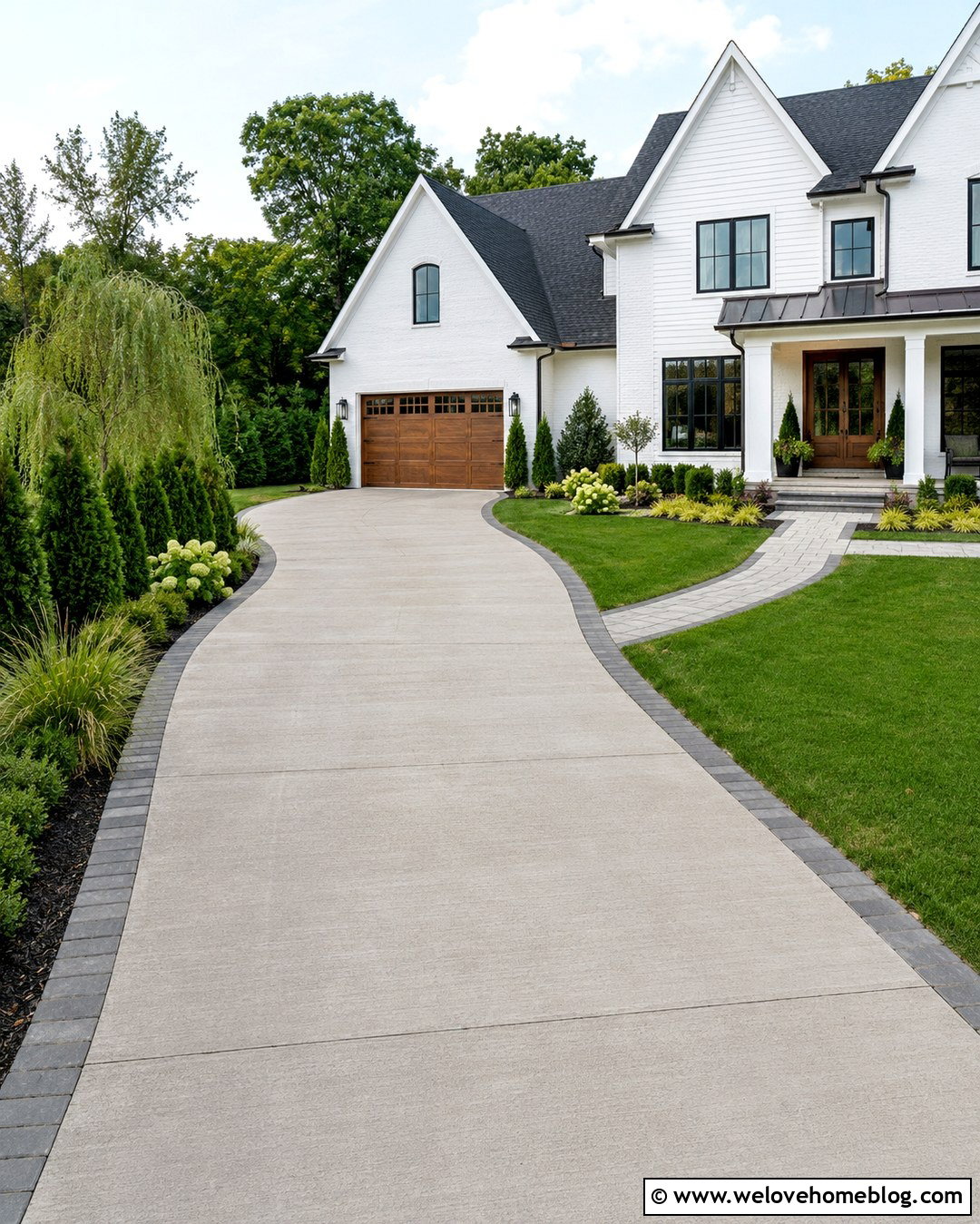
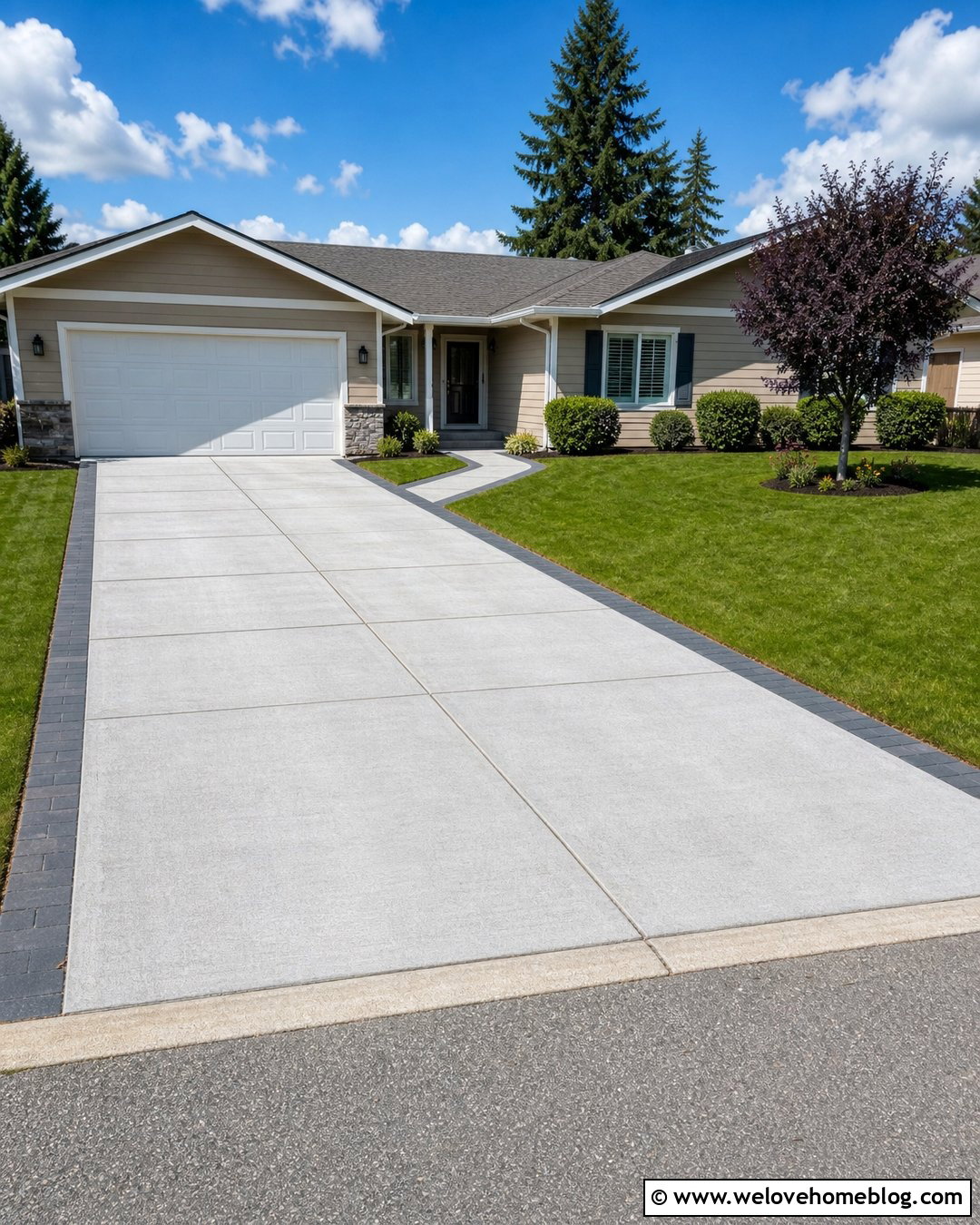
Warm gray concrete creates a balanced foundation for white, cream, beige, and light greige homes. Unlike a blue-gray surface, it contains subtle beige or brown undertones that make the driveway feel softer beside warm exterior finishes. Use a straight or gently curved layout with charcoal paver edging to define the shape. Green foundation shrubs and ornamental grasses add enough contrast without introducing competing colors. This combination works especially well for a transitional home with a dark roof and wood front door. Ask for a light-to-medium integral color rather than a topical coating when planning new concrete. Always inspect a cured sample outdoors, since bright sun and surrounding colors can change how the final gray appears.
2. Charcoal Paver Driveway
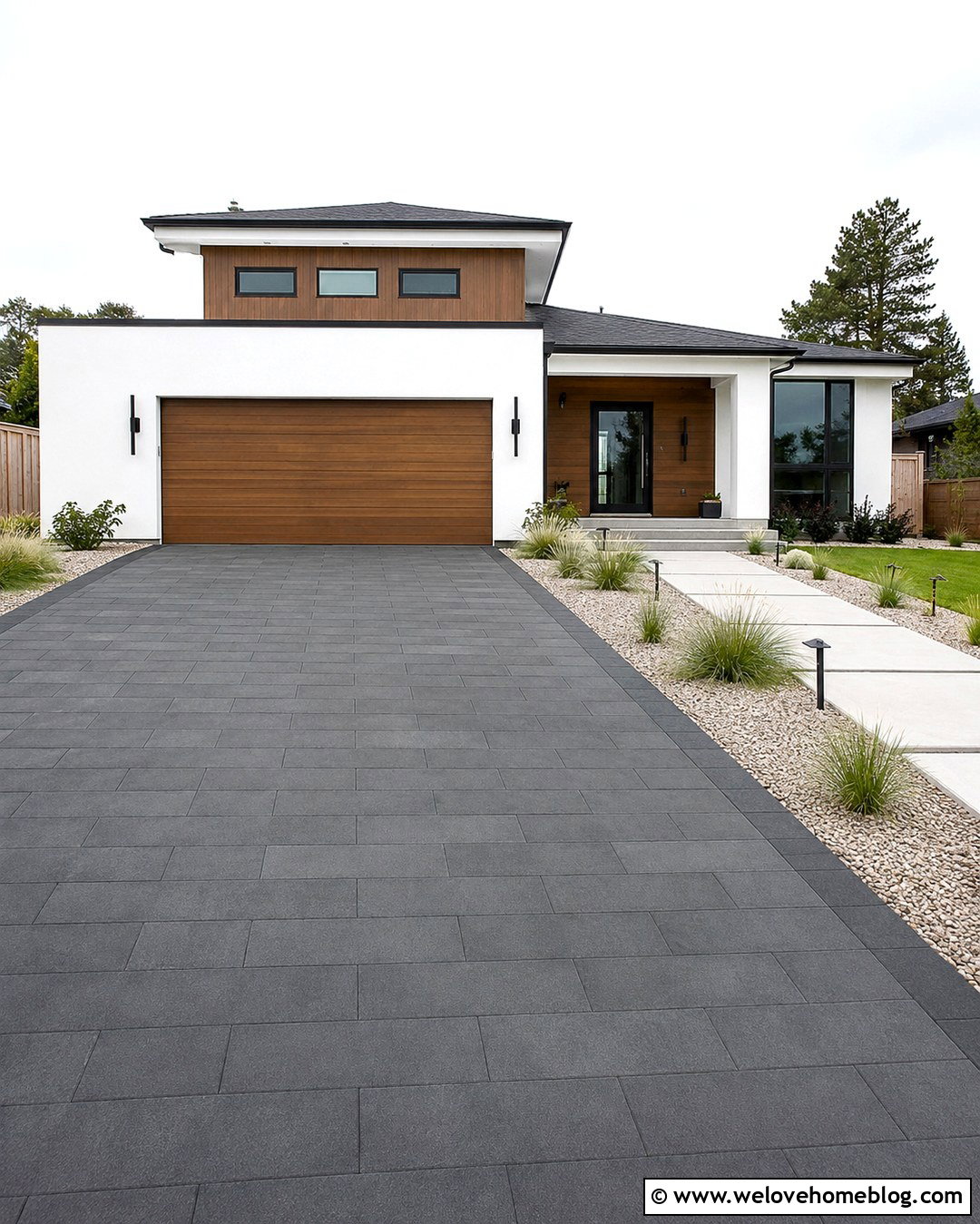
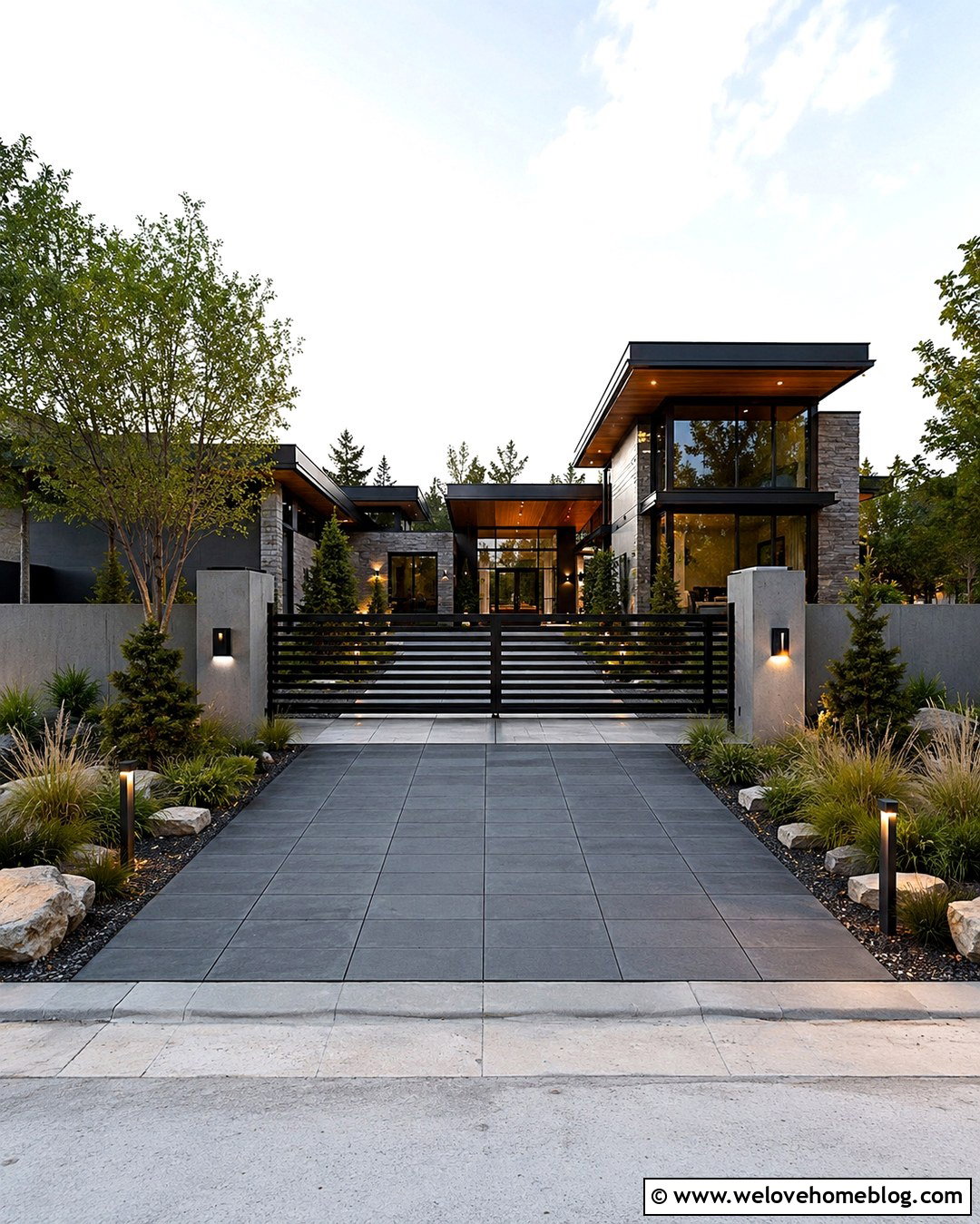
A charcoal paver driveway gives a modern house a strong, streamlined approach. The deep gray surface looks especially effective with white stucco, pale stone, natural wood, or light gray siding. Choose large-format concrete pavers in a simple running bond to keep the driveway from appearing overly busy. A narrow border of matching charcoal pavers can create a clean frame, while pale gravel planting beds brighten the edges. Include architectural shrubs, low grasses, and a direct walkway to the entrance. Because very dark paving can show light dust and absorb more sunlight, a softly blended charcoal is often easier to maintain visually than solid black. This complete look feels bold while allowing the house to remain the main feature.
3. Tan Paver Driveway
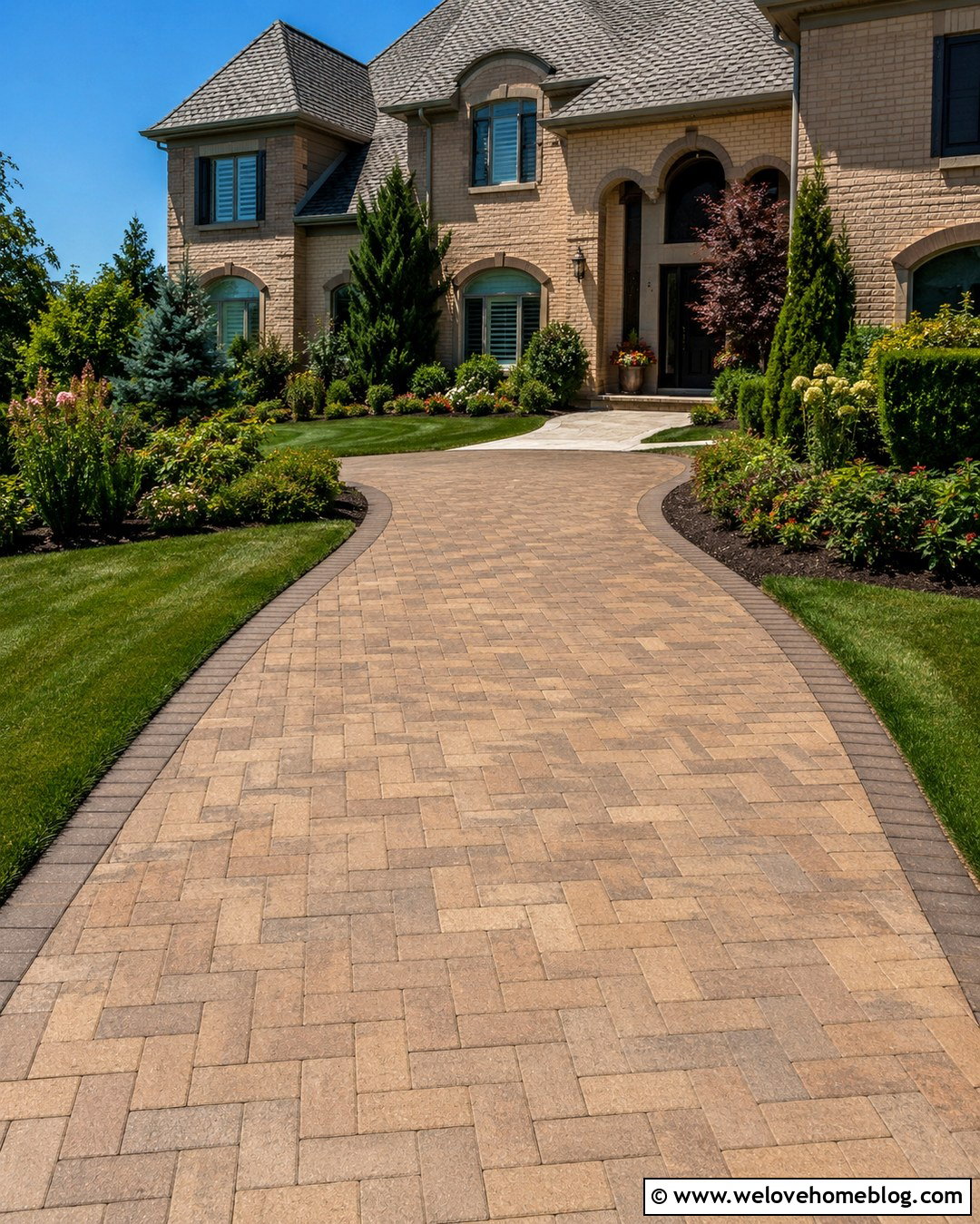
Tan concrete pavers can bring warmth to a beige brick, cream stucco, or traditional stone facade. Select a blend containing sand, camel, and muted brown rather than one flat yellow-toned color. Subtle variation helps disguise everyday dust while giving the surface a more natural appearance. A curved driveway laid in a herringbone pattern adds movement, and dark brown paver edging keeps the lighter field from blending into the lawn. Frame the approach with evergreen shrubs, flowering perennials, and a stone walkway that repeats one of the paver tones. Tan works best when it relates to an existing exterior material, such as mortar, roof shingles, or stonework. Avoid an exact match, which can make the whole frontage look washed out.
4. Red Brick Driveway
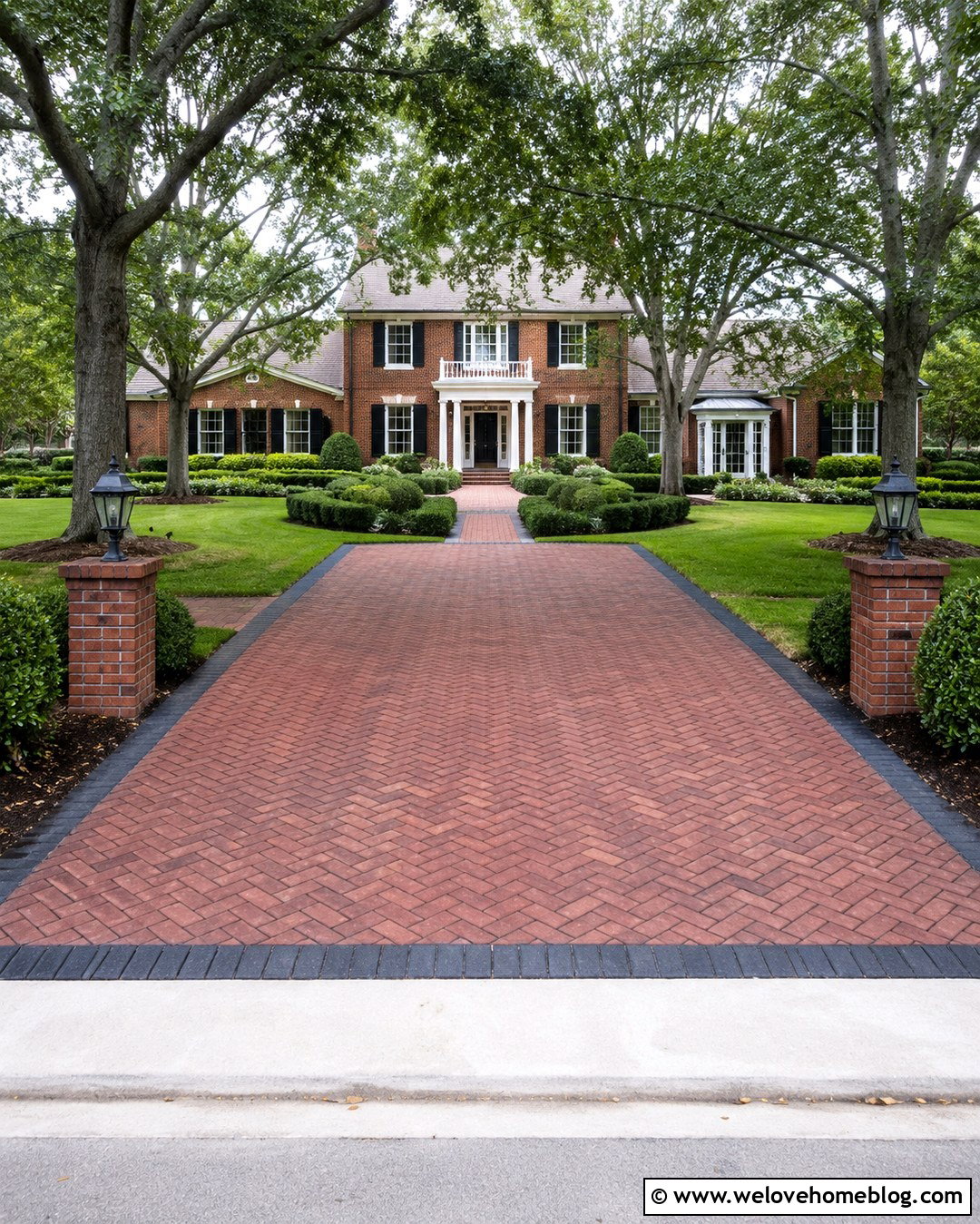
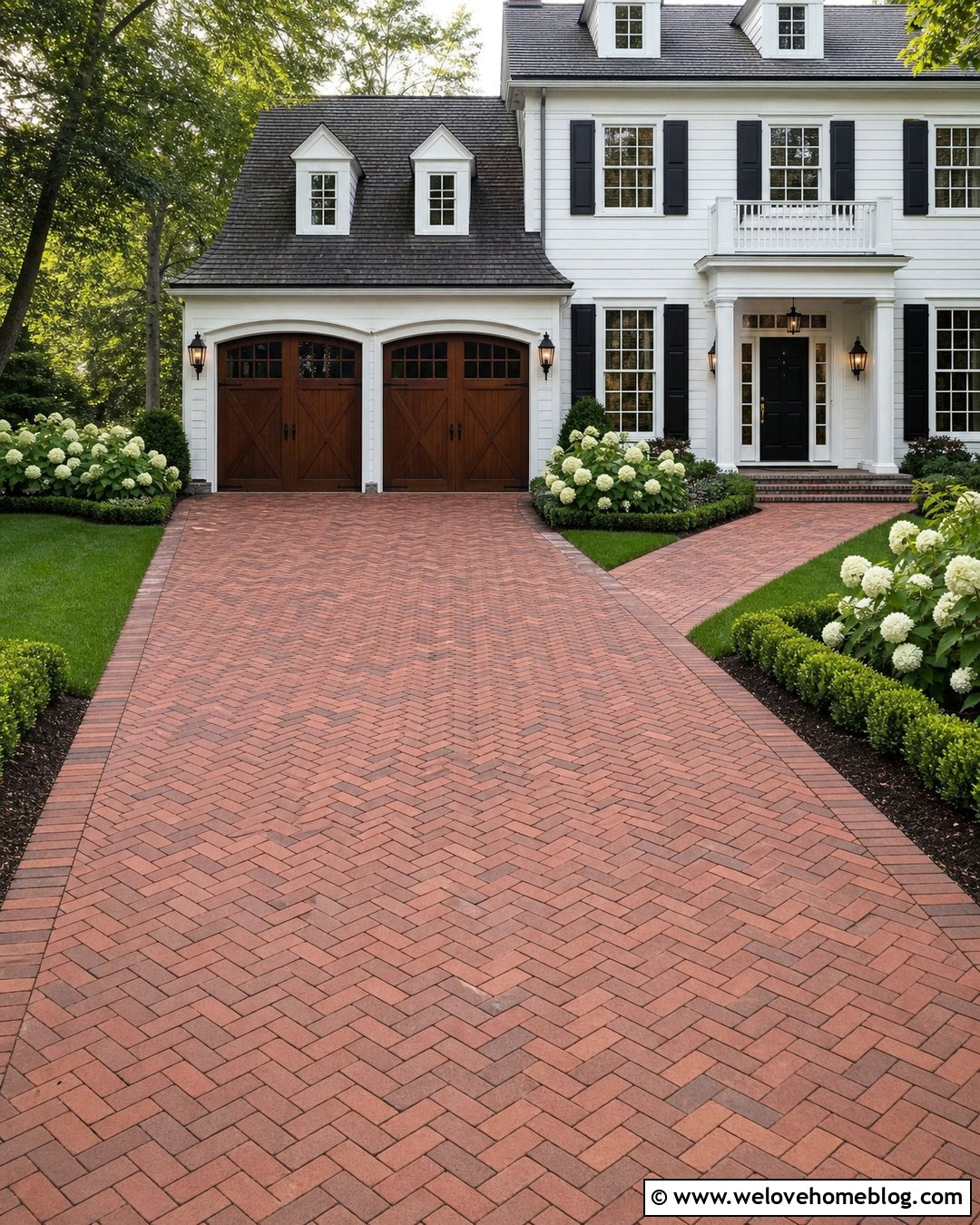
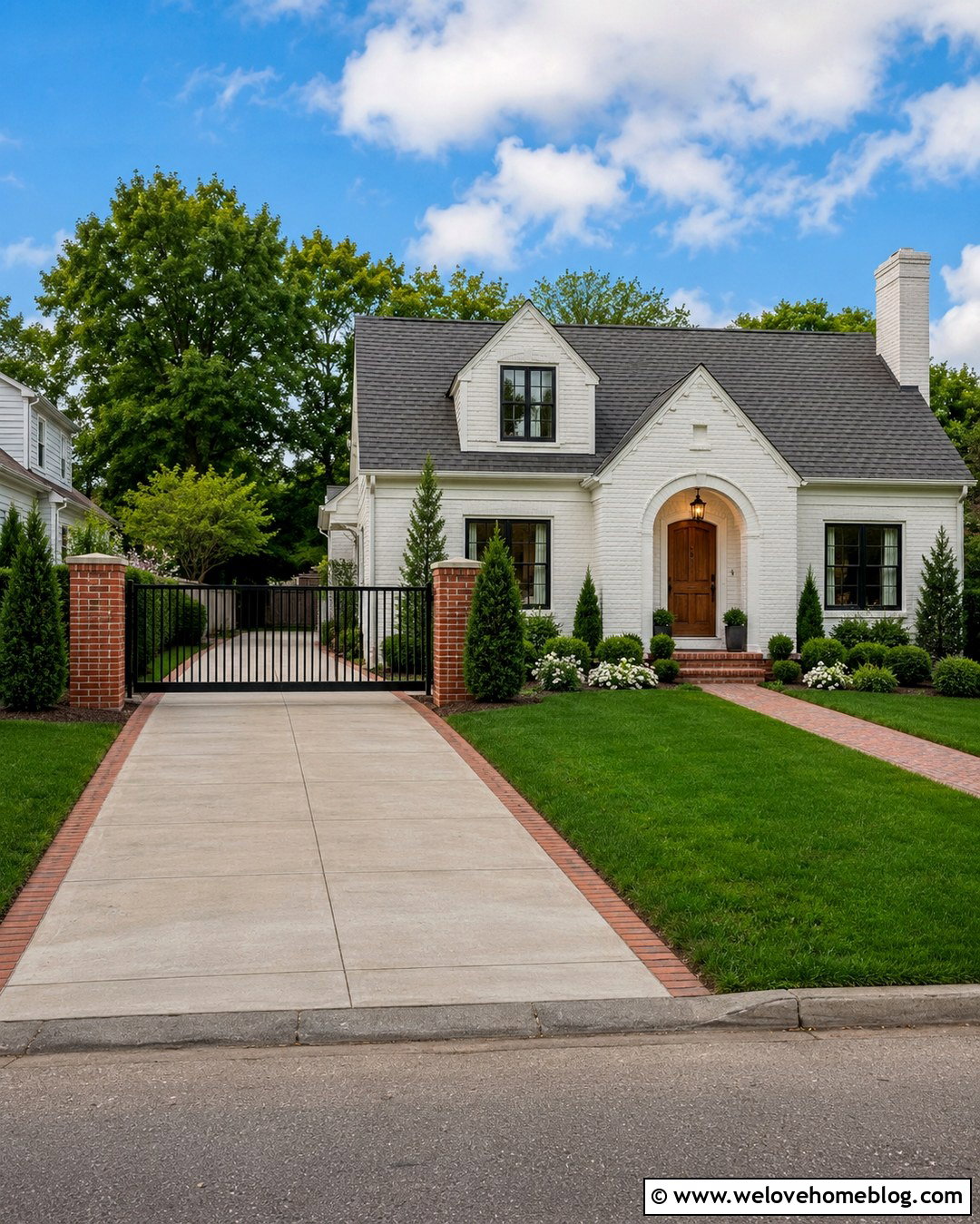
Red clay brick pavers create a classic driveway that naturally complements Colonial, Georgian, and traditional brick homes. For a coordinated result, select bricks that repeat one or two colors from the facade without perfectly copying it. A mix of muted red, burgundy, and brown usually looks more established than a bright, uniform red. Lay the bricks in herringbone for stability and visual texture, then add a dark charcoal soldier-course border. A straight approach framed by clipped hedges, lawn, and symmetrical trees reinforces the home’s formal architecture. If the house already has extensive red brick, consider using brown-red driveway bricks to provide gentle separation. Light mortar, white trim, and green planting will keep the finished entrance from feeling too dark or heavy.
5. Light Gray Concrete Driveway
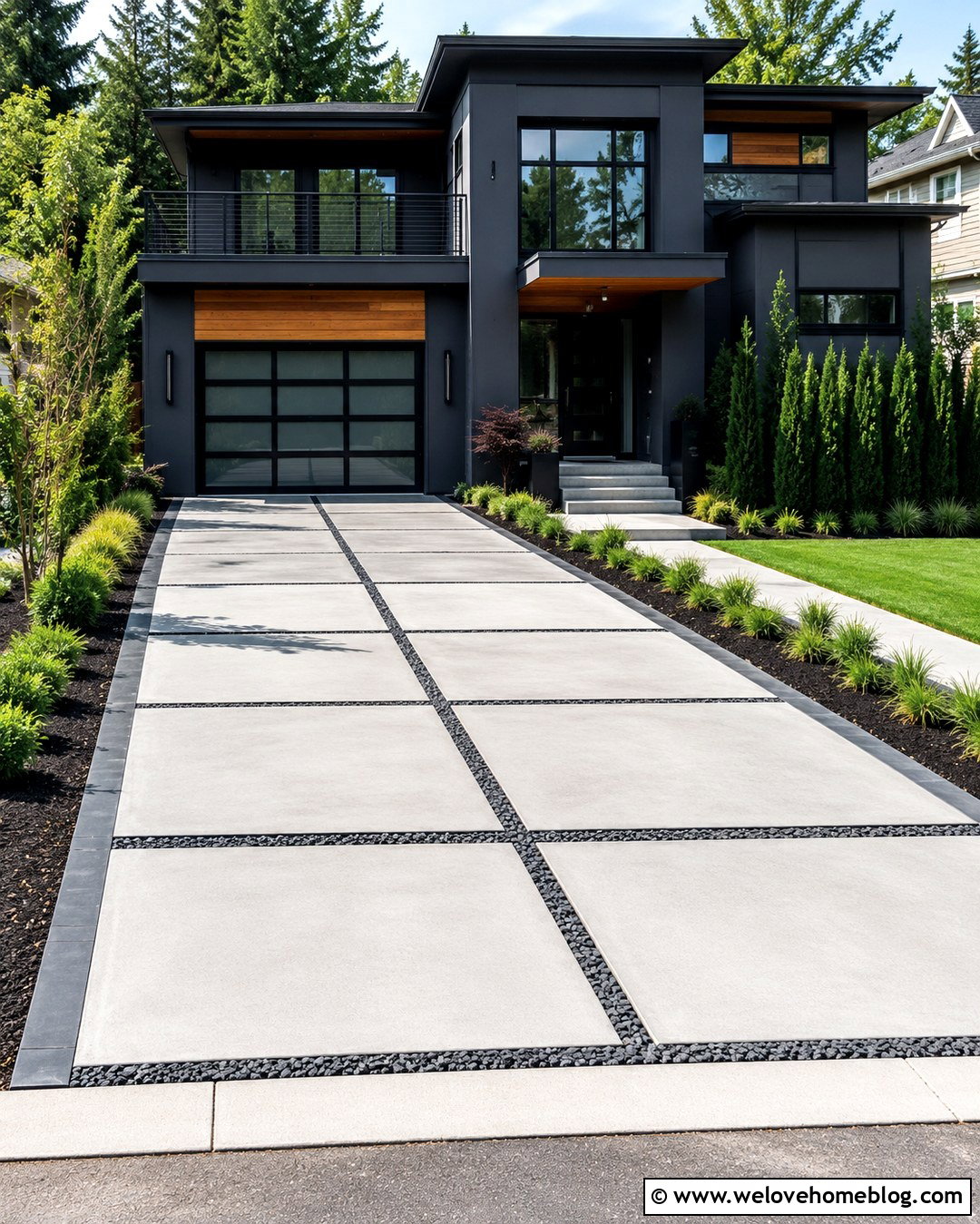
Light gray concrete can brighten the curb view of a dark-painted home while maintaining a clean, understated appearance. It pairs particularly well with charcoal siding, black brick, dark blue exteriors, and contemporary facades with wood accents. Use broad poured-concrete panels separated by narrow grass or dark gravel joints for a modern layout. Black metal edging and restrained planting beds help connect the driveway to dark windows and roofing. Because pale surfaces may reveal oil stains, choose a lightly textured finish with gentle tonal variation rather than stark white concrete. A quality sealer suited to the finish can simplify routine care. This color combination works best when the pale driveway provides contrast, while the border and landscaping repeat darker tones from the house.
6. Black Asphalt Driveway
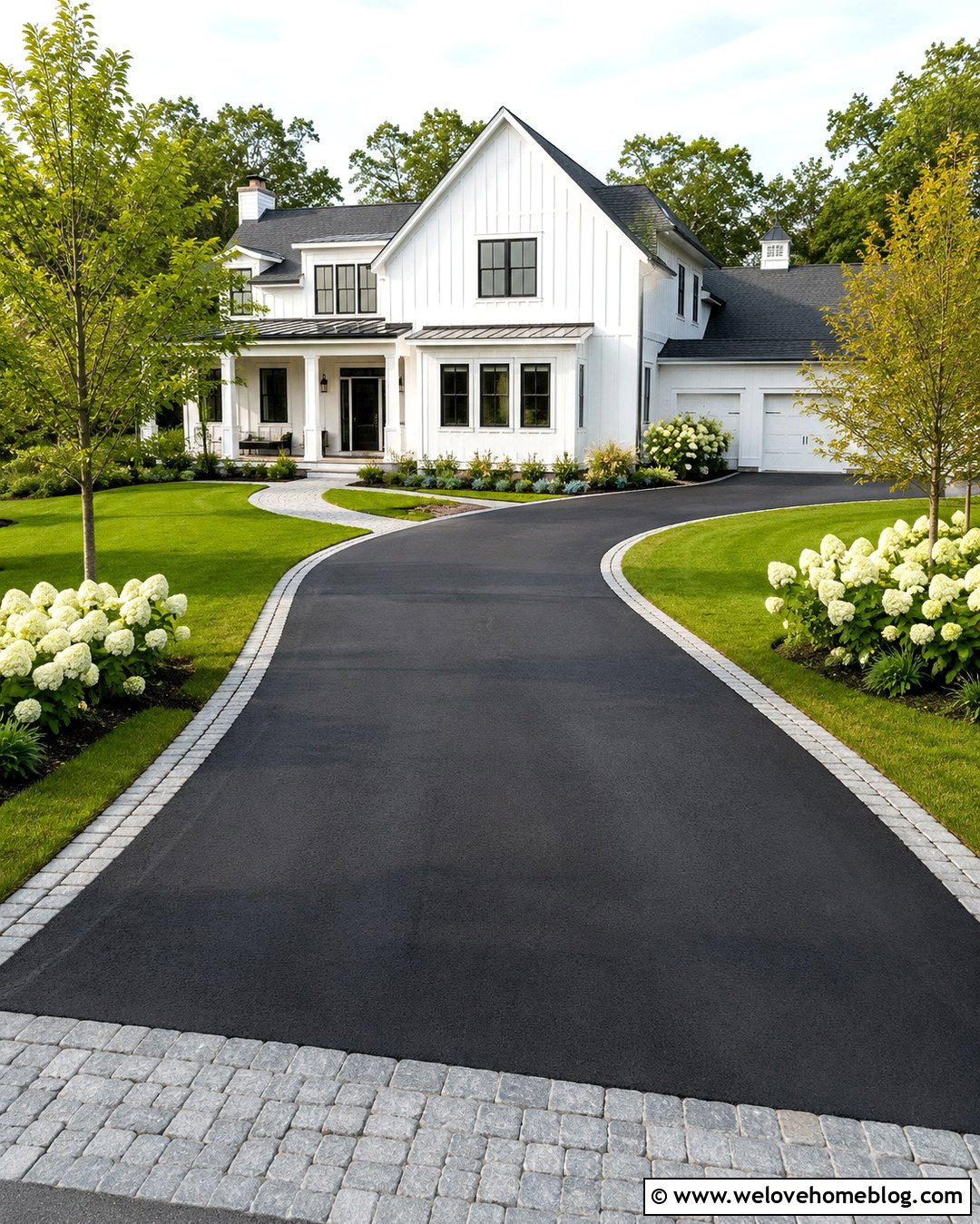
Fresh black asphalt creates crisp contrast against a white modern farmhouse, Cape Cod, or light-colored ranch house. Its simple surface allows details such as board-and-batten siding, porch columns, and natural wood doors to stand out. Soften the dark expanse with a gently curved layout and a border of medium-gray cobblestones or concrete pavers. Wide lawn edges, white flowering shrubs, and small ornamental trees make the approach feel welcoming rather than severe. Asphalt naturally changes toward charcoal as it ages, so choose border materials that coordinate with both its fresh and weathered appearance. For a more finished entrance, continue the edging around the apron and connect it to a matching walkway. The result is affordable-looking simplicity with strong, recognizable curb appeal.
7. Cream Gravel Driveway
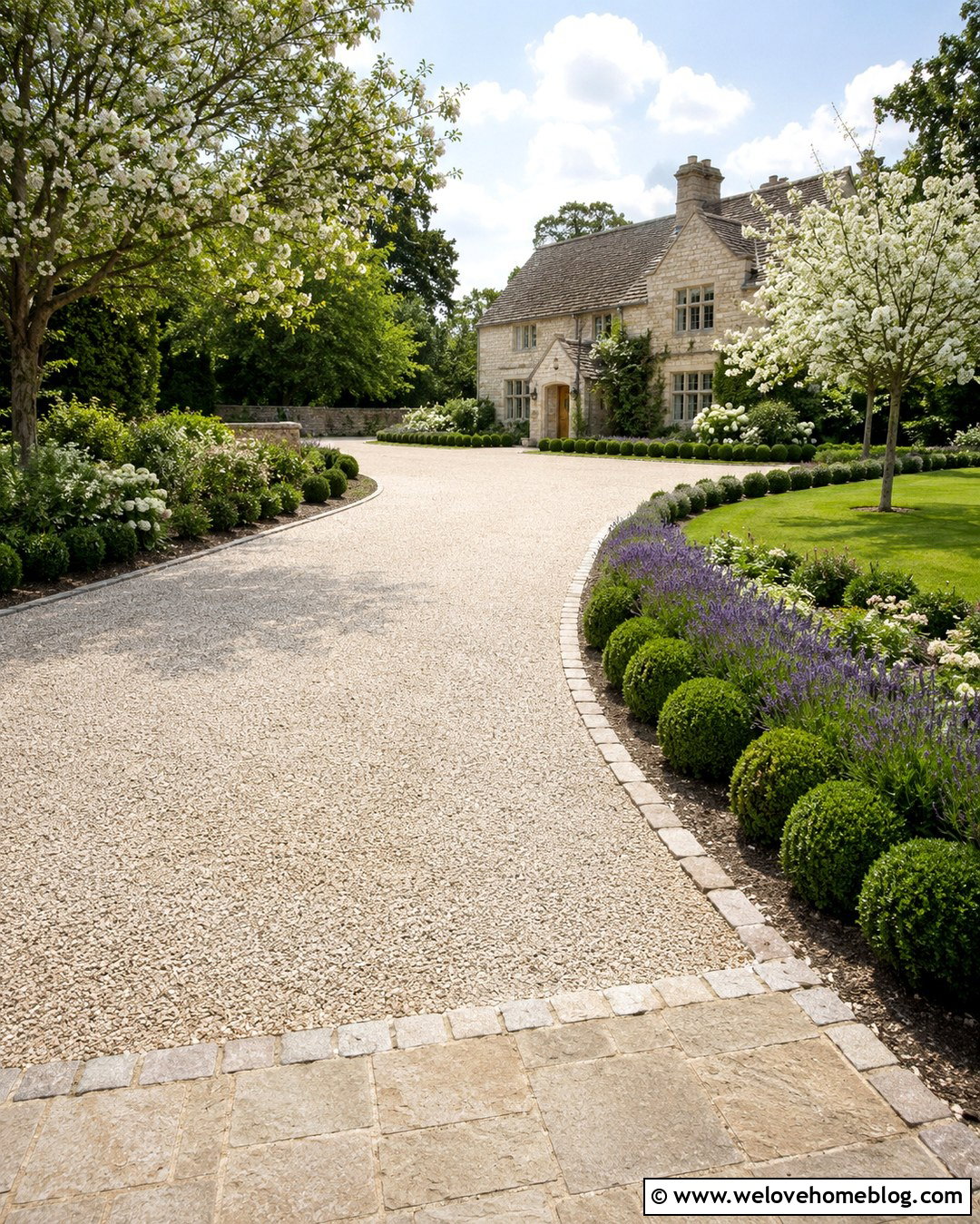
Cream gravel gives a stone cottage, French country home, or light stucco house a relaxed and elegant approach. Choose angular limestone or compactable gravel in ivory, pale beige, and soft gray tones rather than rounded pea gravel that can move more easily under tires. A curved layout edged with weathered cobblestone helps contain the material and reinforces the traditional character. Lavender, boxwood, hydrangeas, and small flowering trees can frame the drive with soft color. Place a stable paver apron near the street and a coordinating parking pad near the garage to manage transitions. Pale gravel shows fallen leaves and dark debris, so it suits owners comfortable with periodic raking. In return, it creates a bright surface that blends beautifully with natural masonry.
8. Brown Gravel Driveway
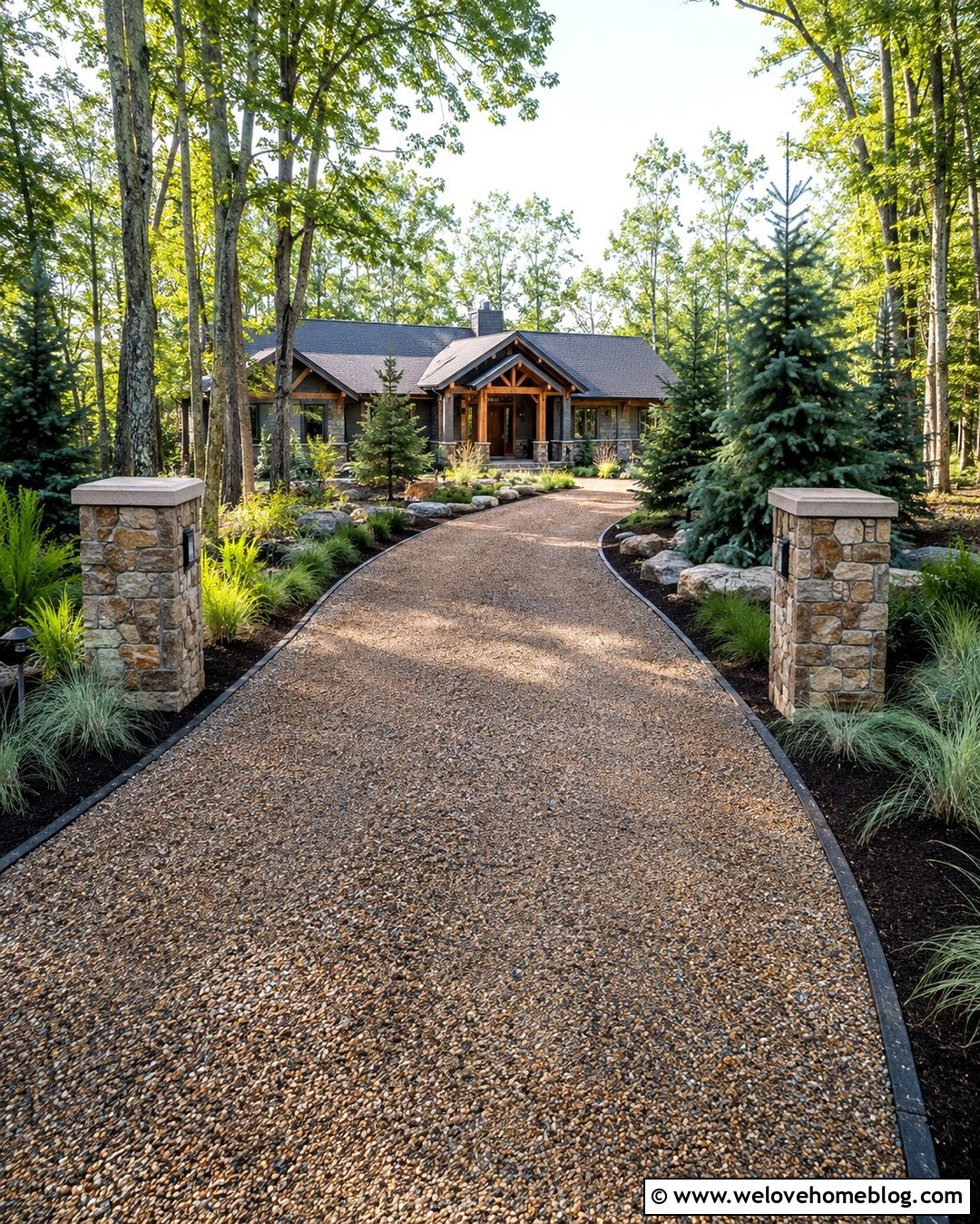
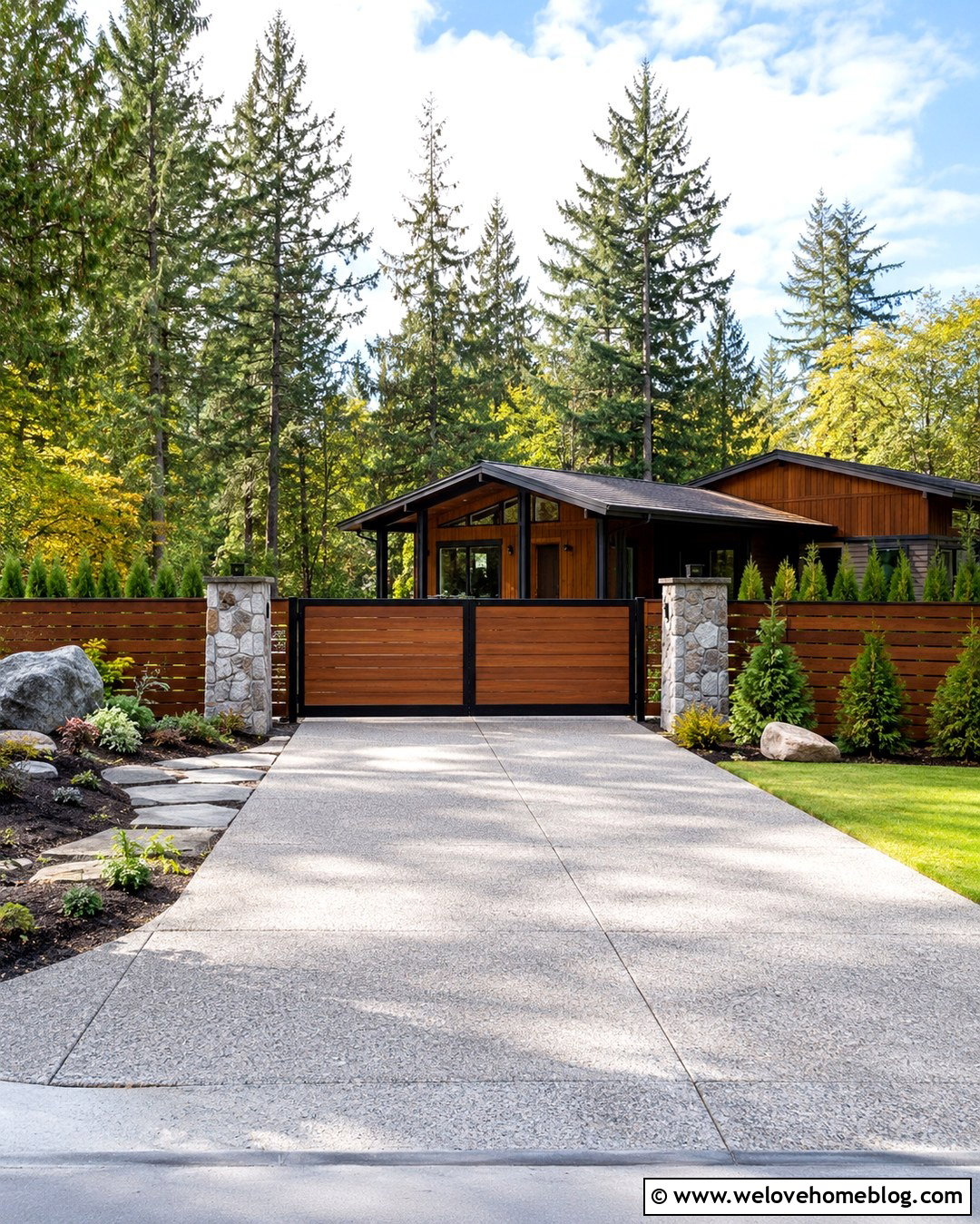
Brown gravel feels at home beside rustic ranch houses, woodland properties, cabins, and modern homes with cedar details. Look for crushed stone containing chestnut, muted rust, taupe, and charcoal rather than vivid orange gravel. These earthy tones connect naturally with tree trunks, mulch, stone walls, and warm roof colors. A long, gently winding driveway with dark steel edging can feel informal while remaining clearly shaped. Add native grasses, evergreen clusters, and shade-tolerant ground covers along the route. At the entrance, stone pillars or timber posts can repeat the same warm palette. Because gravel color may look darker when wet, examine samples in both dry and damp conditions. The finished driveway should support the wooded setting without disappearing into the surrounding brown landscape.
9. Salt And Pepper Aggregate Driveway
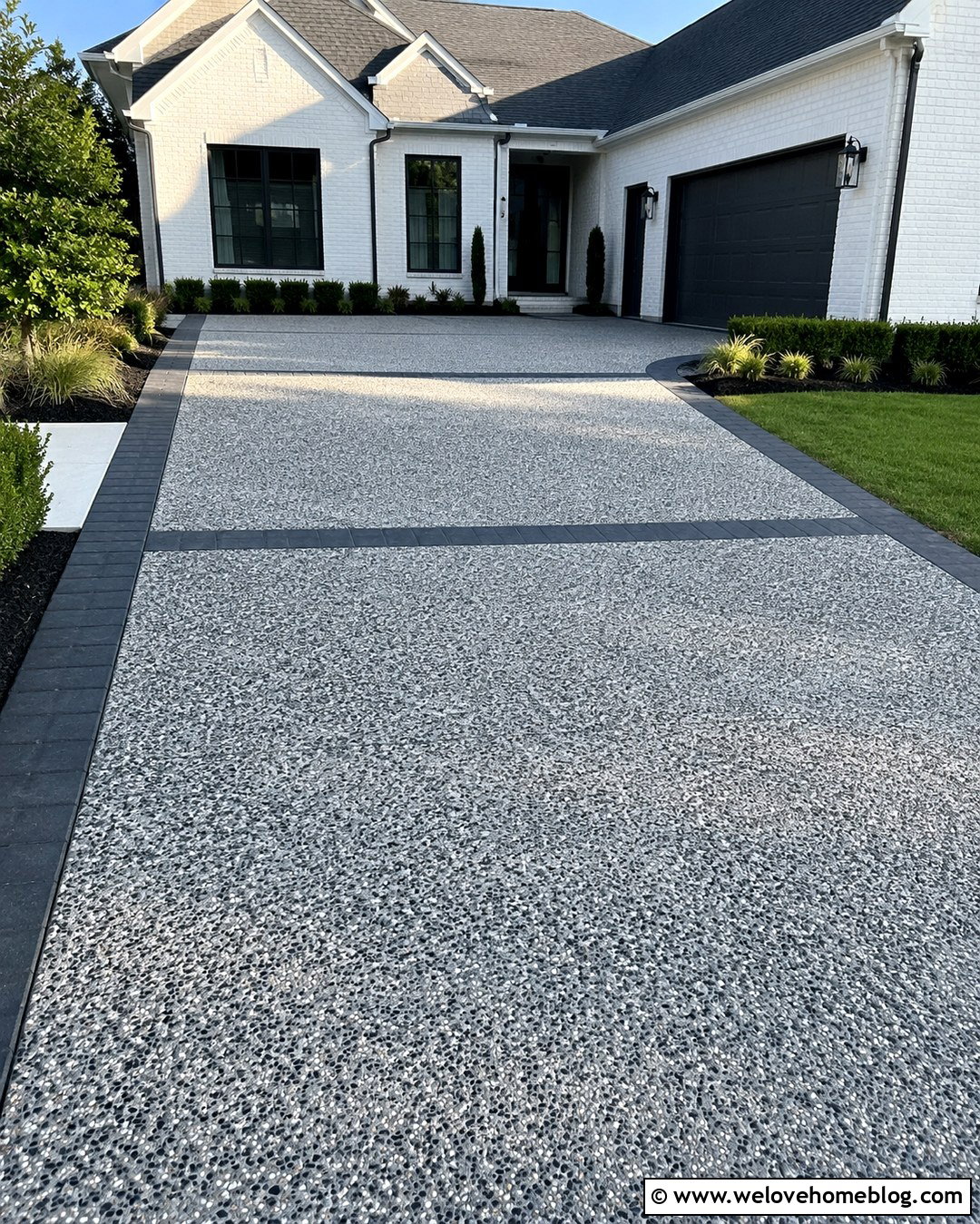
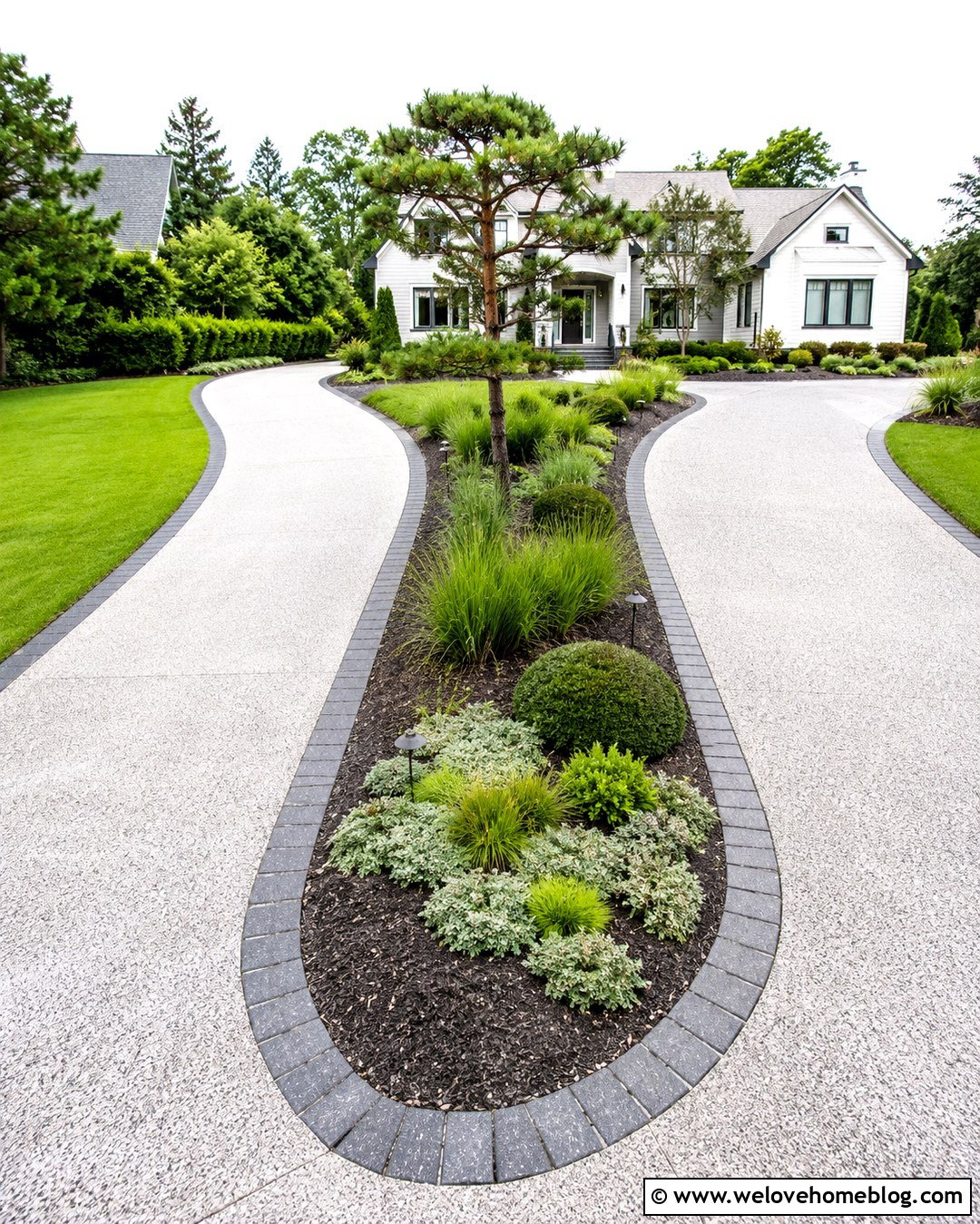
A salt and pepper exposed aggregate driveway combines black, white, and gray stones in a textured concrete surface. This balanced mix works with many exterior palettes, including white brick, gray siding, black trim, and contemporary natural stone. Choose a straight driveway with a widened parking area, then use solid charcoal concrete bands to outline the edges and divide large sections. The darker border creates structure, while the speckled center helps soften the scale of the paved area. Low evergreen shrubs, clipped grasses, and a pale concrete walkway complete the coordinated look. Aggregate samples should be viewed at driveway scale when possible because small chips can appear much busier across a broad surface. Keep nearby hardscaping simple so the exposed stone remains attractive rather than visually crowded.
10. Taupe Stamped Concrete Driveway
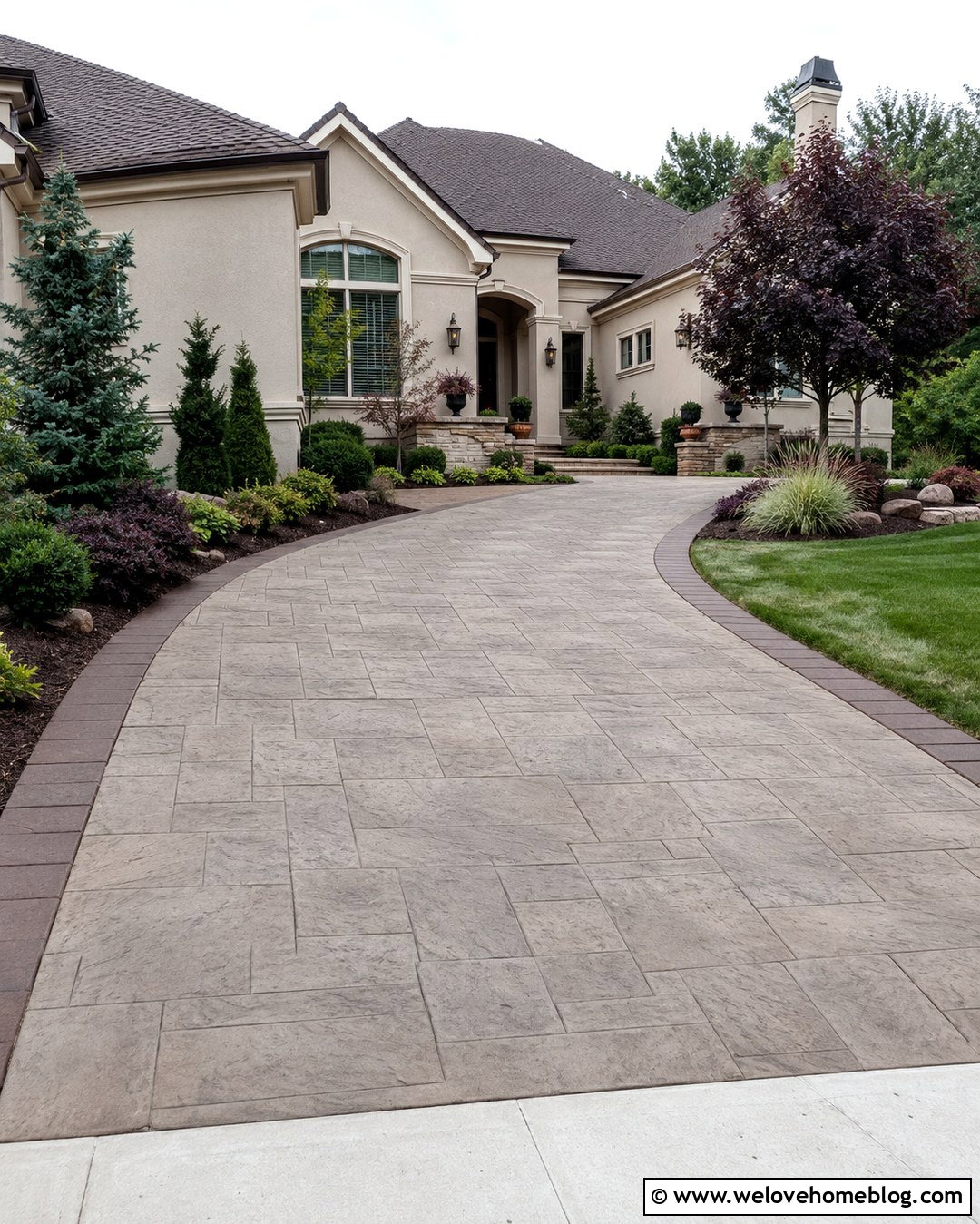
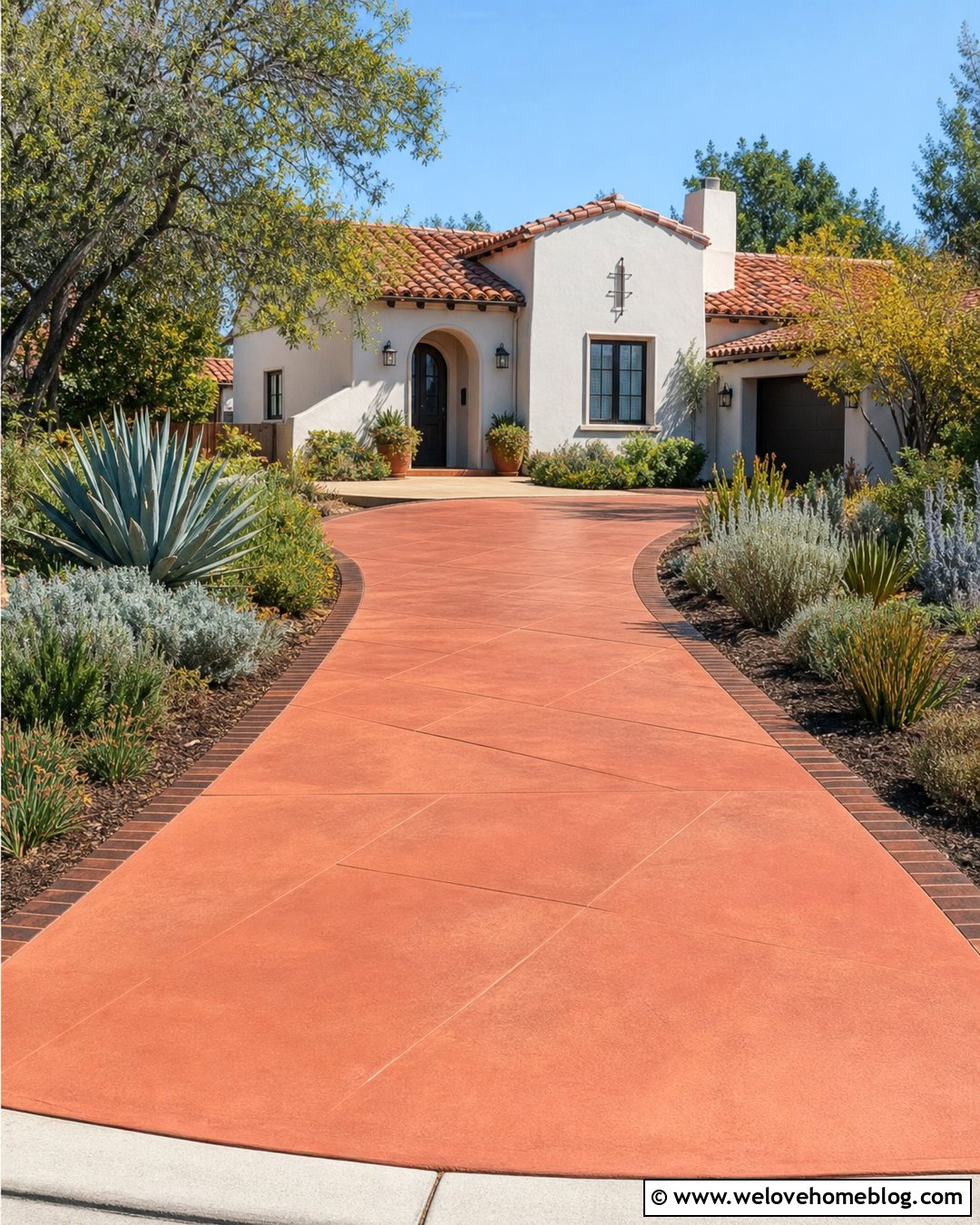
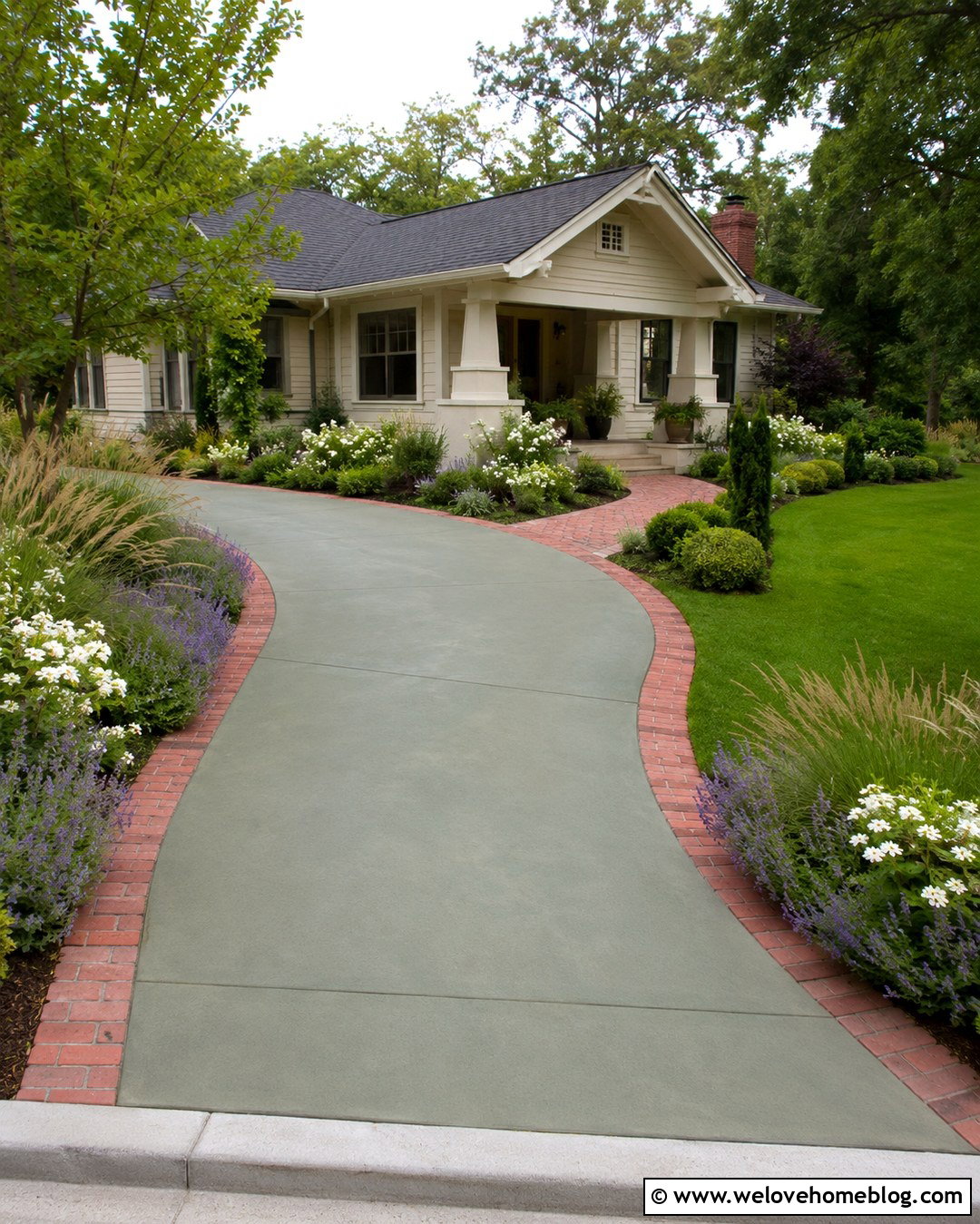
Taupe stamped concrete offers the warmth of beige with the softness of gray, making it useful for homes with mixed exterior materials. It can connect cream stucco, brown roofing, gray stone, and bronze fixtures without favoring one color too strongly. Select a medium taupe base with a restrained darker release color, then use a large ashlar stone pattern instead of many small, busy shapes. A curved driveway bordered by smooth brown pavers gives the stamped field a defined edge. Planting beds filled with evergreen shrubs, burgundy foliage, and ornamental grasses reinforce the neutral palette. Ask to see full-size samples of the color and stamp combination. Deep contrast in the stamped texture can look artificial, while subtle variation usually produces a calmer, more convincing stone effect.
11. Sandstone Paver Driveway
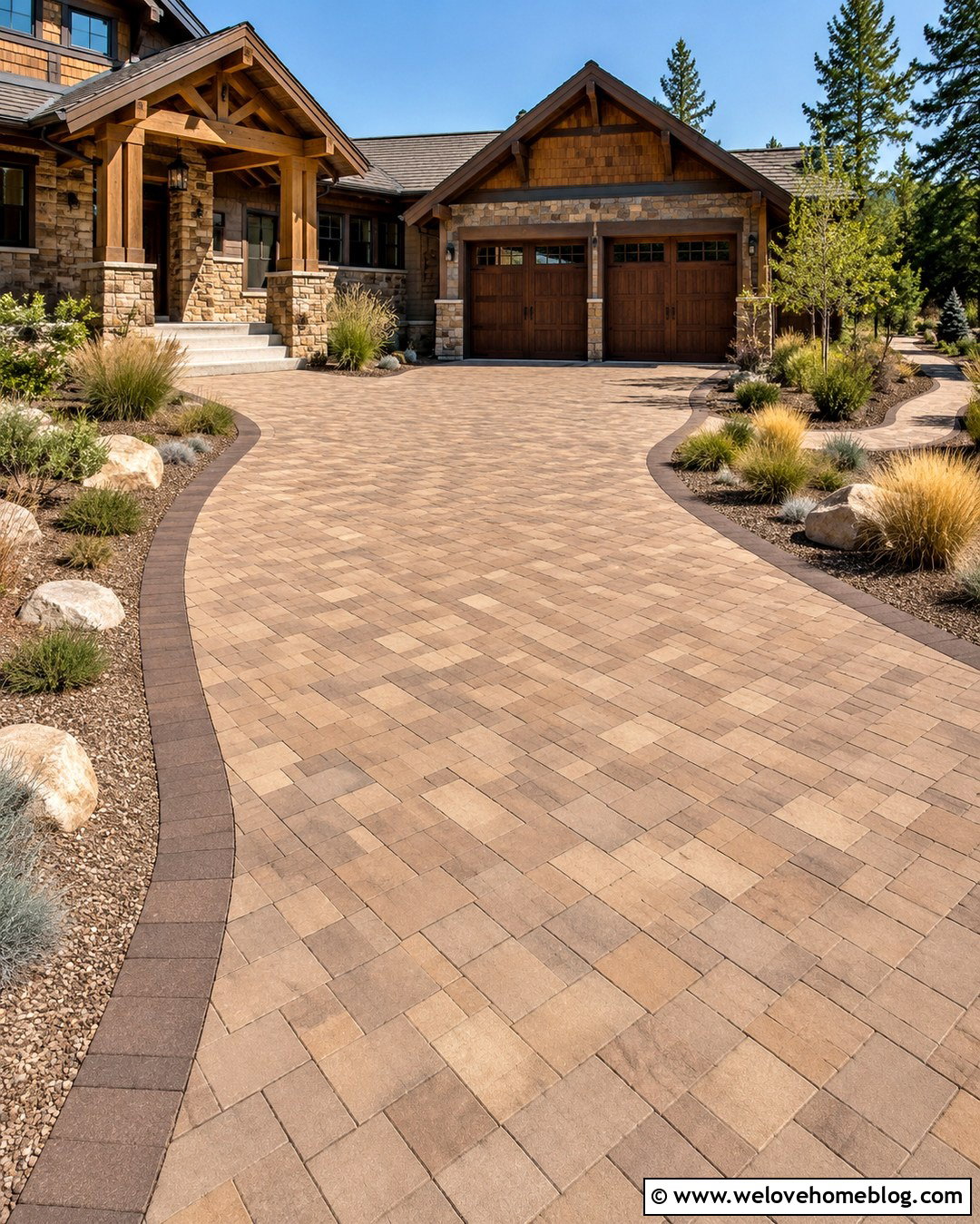
Sandstone-colored concrete pavers bring a sunny, natural tone to Craftsman homes, desert properties, and houses with warm stone facades. The best blends combine pale gold, beige, cream, and a small amount of muted brown. Use rectangular pavers in a modular pattern across a broad, slightly curved driveway. A chocolate-brown paver border will sharpen the outline and connect the surface to dark roof shingles or wood garage doors. Drought-tolerant grasses, sage-green shrubs, decorative boulders, and a matching front walk complete the landscape. In very bright locations, avoid extremely pale paving that creates glare or loses definition. A medium sandstone blend offers warmth while maintaining enough contrast with the house. It also provides a forgiving background for dust in dry regional landscapes.
12. Terracotta Paver Driveway
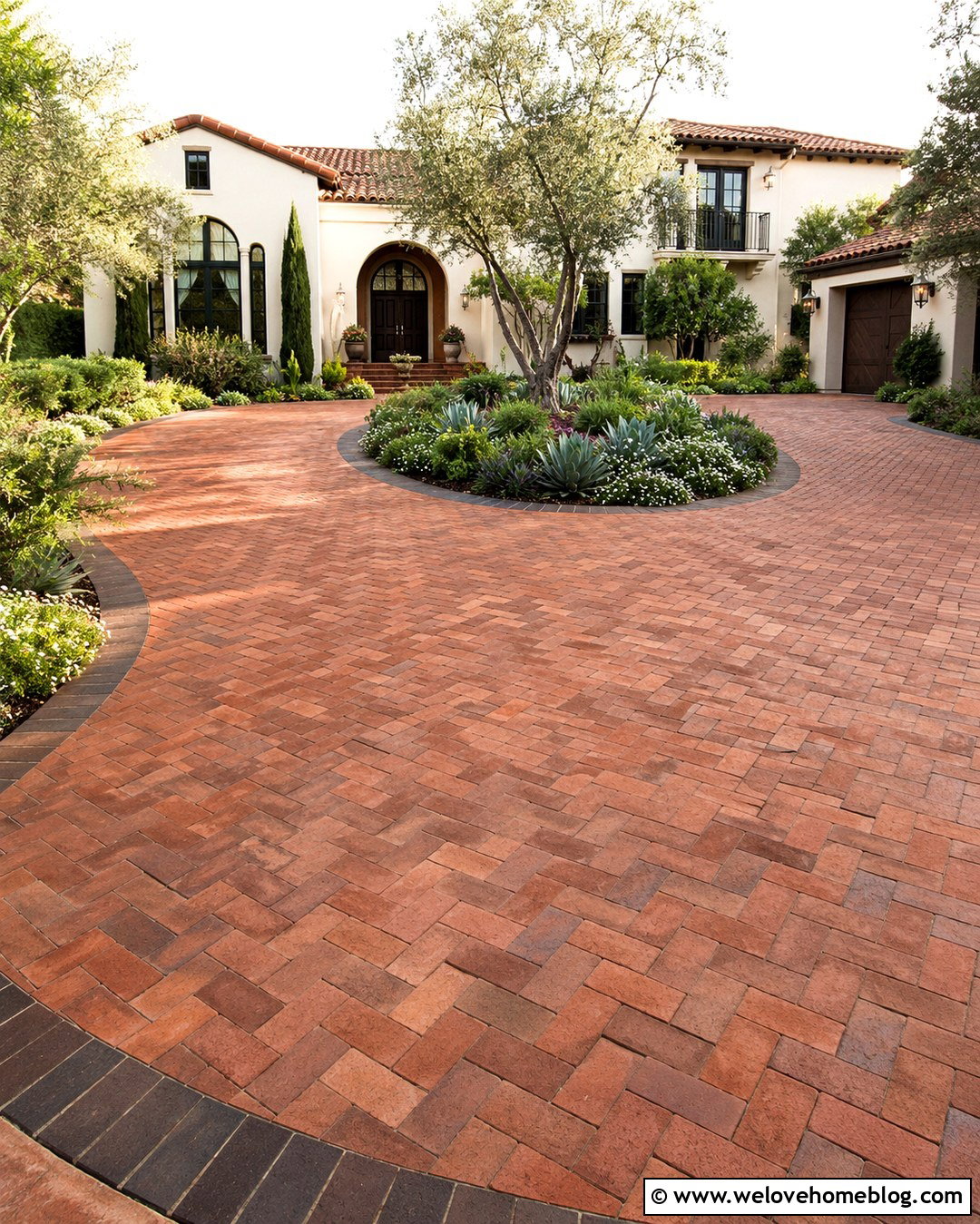
Terracotta pavers complement Spanish, Mediterranean, and Southwestern homes with stucco walls and tile roofs. Instead of using bright orange across the entire driveway, choose a softened blend of clay red, burnt sienna, and warm brown. A fan or herringbone pattern suits a curved or circular layout and highlights the handcrafted character of the color. Border the driveway with darker brown pavers to separate it from gravel beds and warm-toned walkways. Olive trees, agaves, rosemary, and low flowering plants can reinforce the regional palette without overwhelming the paving. If the roof is already strongly colored, keep the driveway several shades more muted. This creates a related look rather than an exact match. Cream stucco and dark metal accents will provide the necessary visual breathing room.
13. Blue Gray Paver Driveway
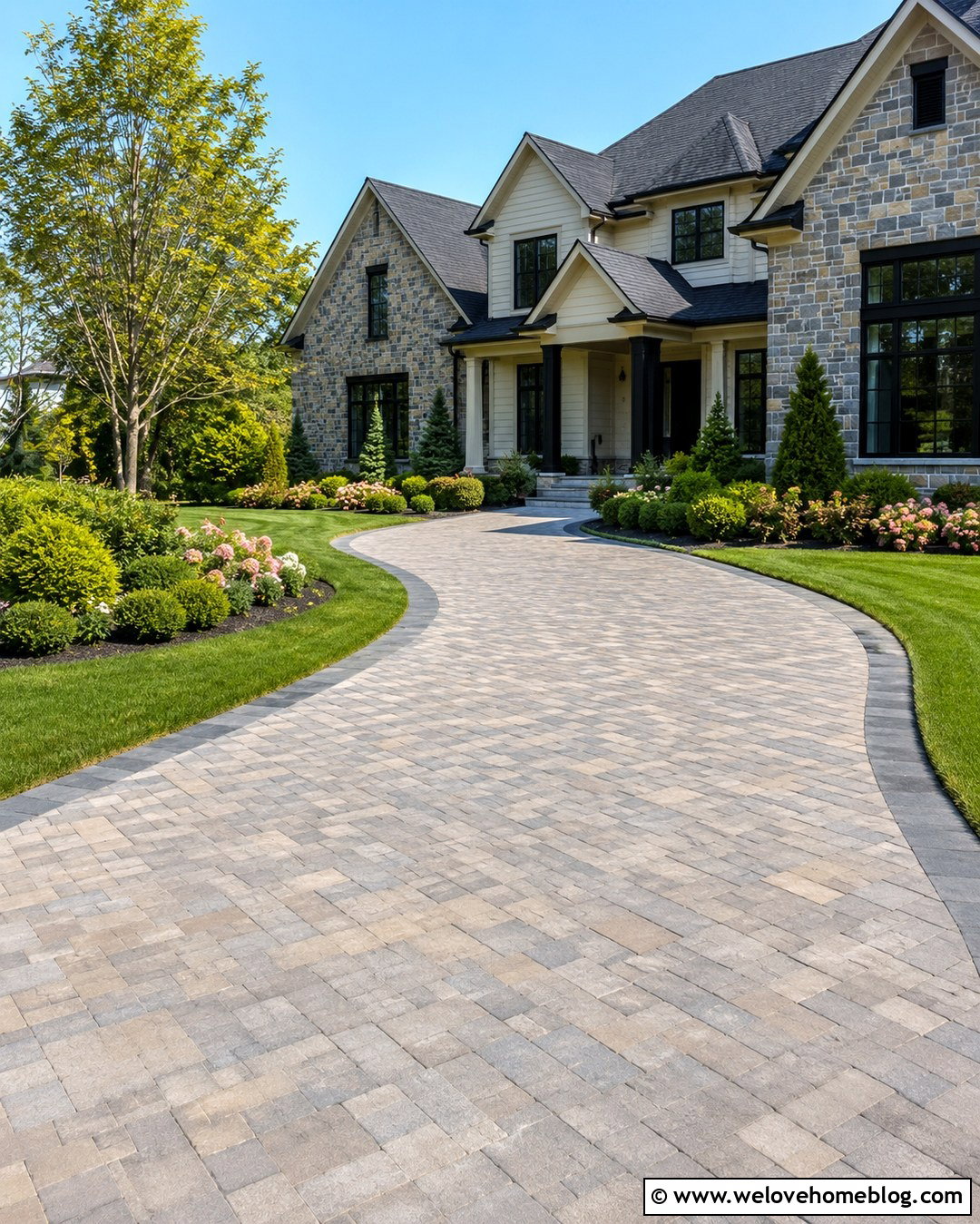
Blue-gray pavers provide a cool, refined surface for coastal houses, slate-roofed Colonials, and homes with blue or cool white siding. Choose a blended paver containing medium gray, slate, and subtle blue undertones rather than a noticeably blue product. A straight driveway in a running bond can be bordered with pale gray pavers for a crisp transition. Hydrangeas, silvery grasses, evergreen hedges, and a light stone walkway support the cool palette. Warm wood at the front door prevents the exterior from feeling overly cold. Check samples at different times of day because blue undertones often become more visible in shade or overcast light. If the home has warm brick or yellow-beige stone, a neutral gray may coordinate better than blue-gray. The surrounding materials should guide the final undertone.
14. Greige Concrete Driveway
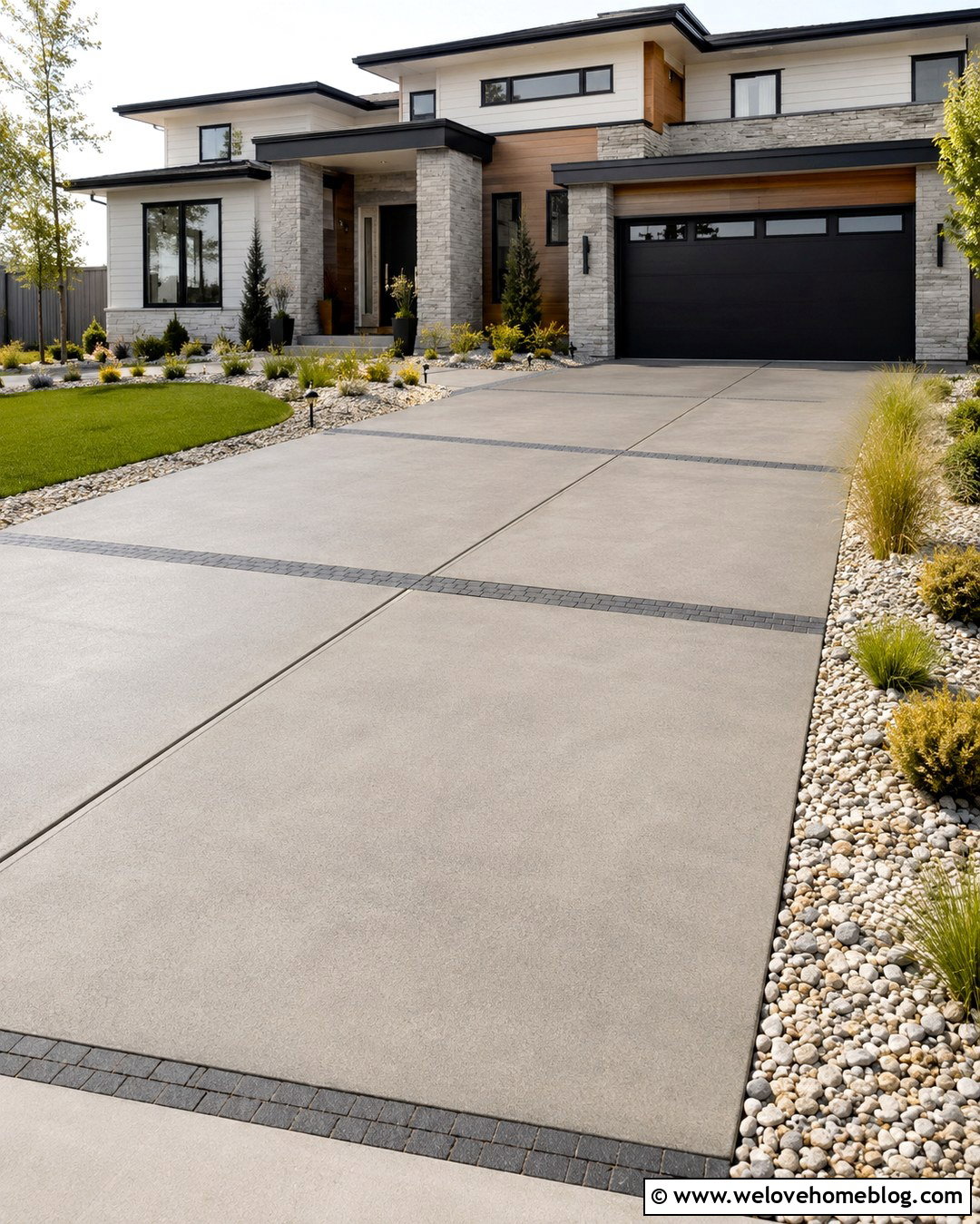
Greige concrete sits between gray and beige, making it one of the most flexible choices for a mixed neutral exterior. It can coordinate with cream siding, gray stone, tan brick, black windows, and warm wood without creating a sharp color conflict. Use smooth or lightly broom-finished concrete in wide rectangular panels for a contemporary driveway. Narrow charcoal paver bands can outline the perimeter and mark the walkway crossing. Surround the layout with pale river rock, sculptural shrubs, ornamental grasses, and an uncluttered lawn. A medium-light greige usually provides more definition than a very pale mix. Compare samples directly beside the garage door and exterior wall, not only near the street. The goal is to repeat the home’s undertones while keeping enough contrast to show the driveway’s shape.


15. Multicolor Cobblestone Driveway
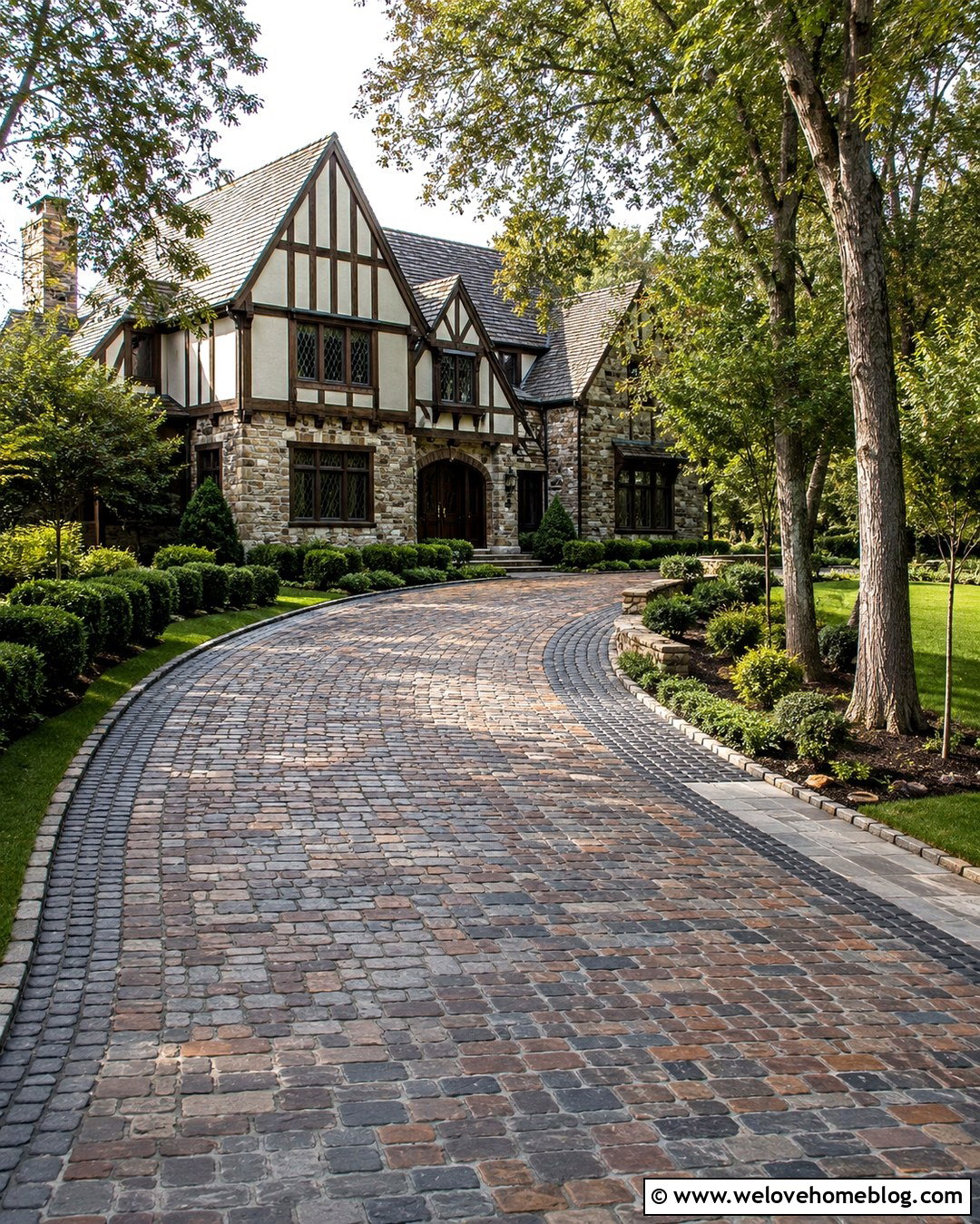
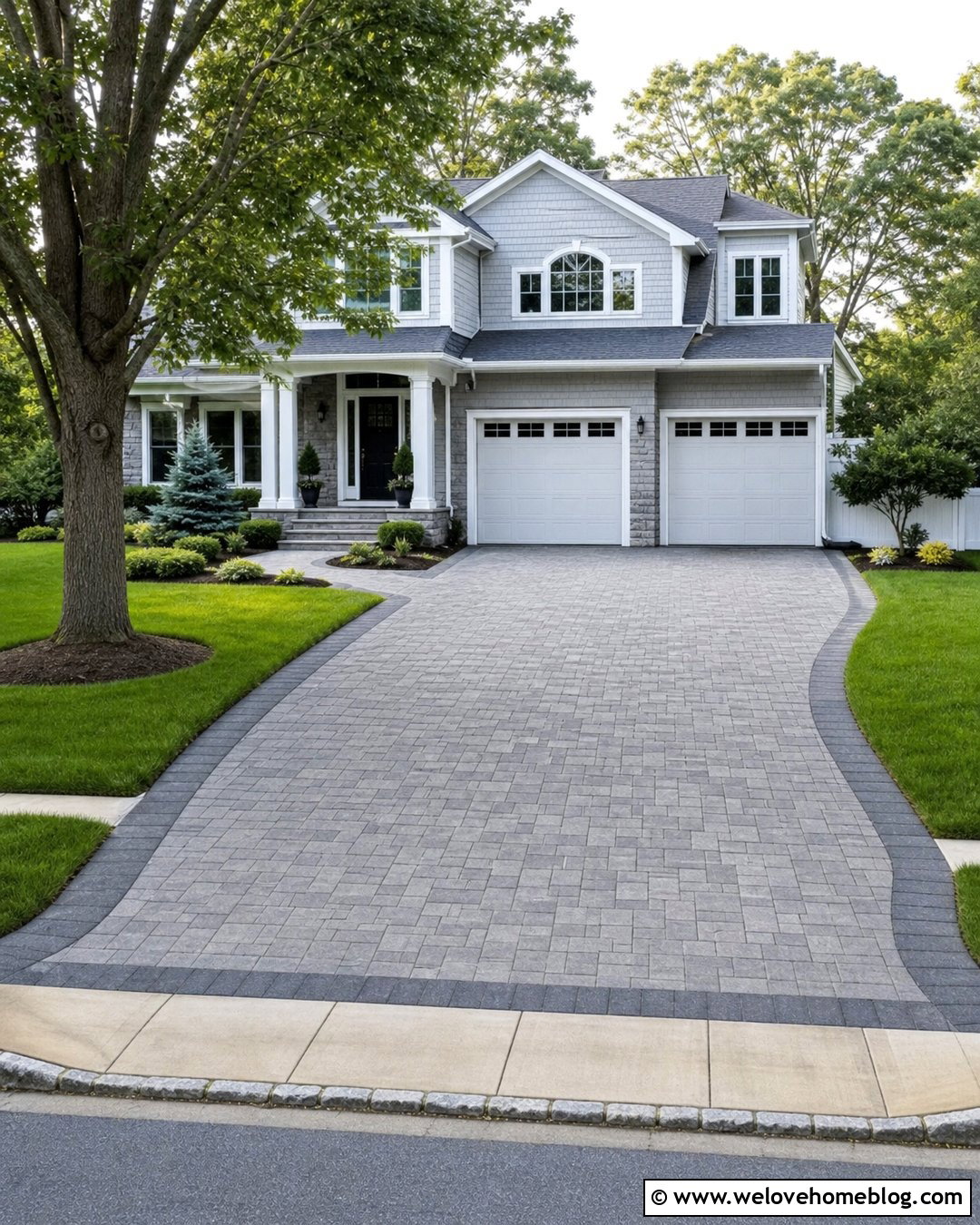
Multicolor cobblestone creates a richly textured approach for Tudor, European-inspired, and historic-style homes. A carefully controlled mix of gray, brown, charcoal, and muted rust provides character without turning the surface into a random patchwork. Use the stones across a curved driveway or compact motor court, with darker cobbles forming a continuous outer border. Repeat the warm brown tones in the house’s timber details and the gray tones in its stonework or roofing. Deep green hedges, mature trees, and simple planting beds will balance the visual activity of the pavement. Before choosing a blend, review a large installed area because individual stones may look different when combined. Limit nearby walkway colors so the cobblestone remains the main patterned surface and the complete entrance still feels orderly.
16. Two Tone Paver Driveway
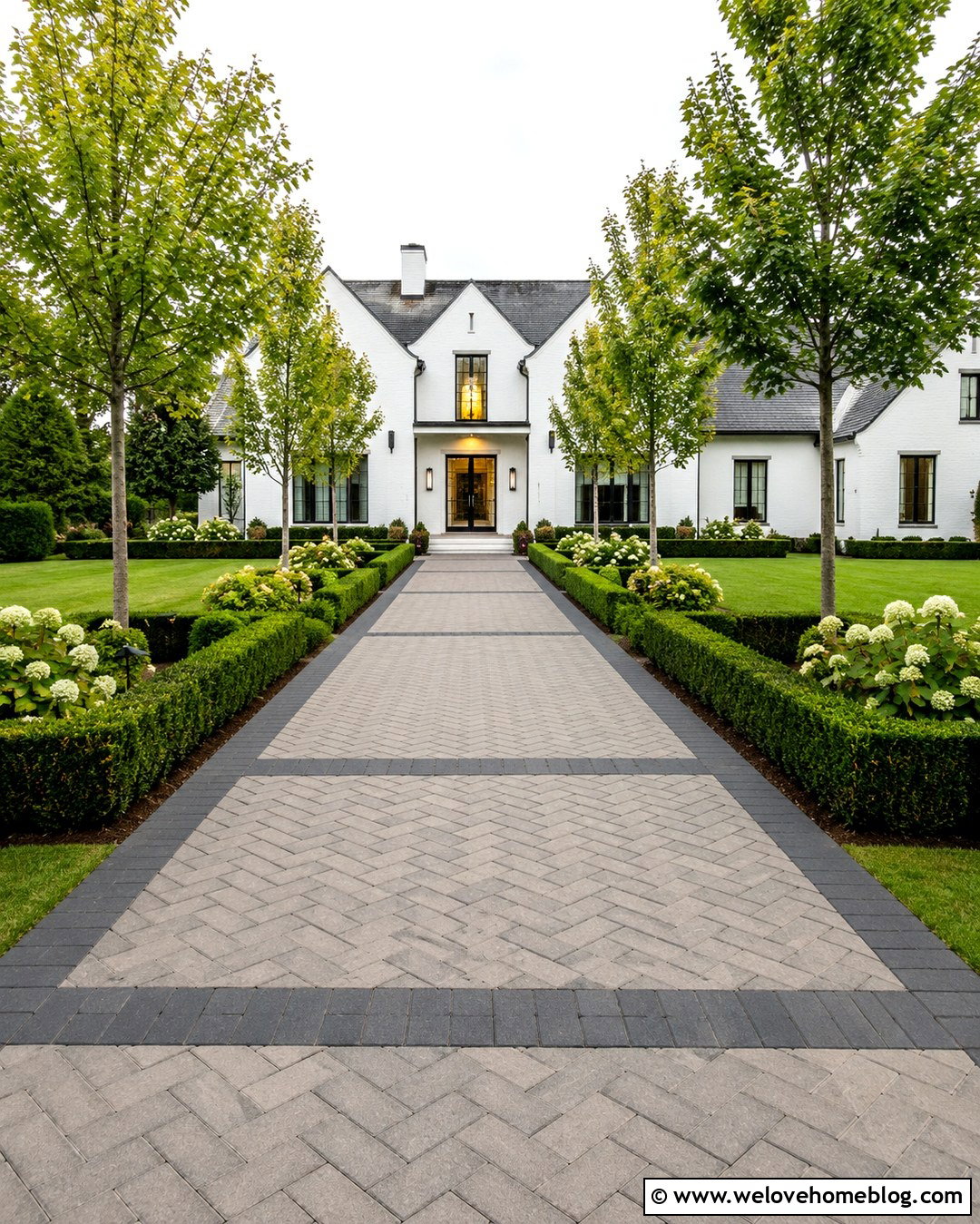
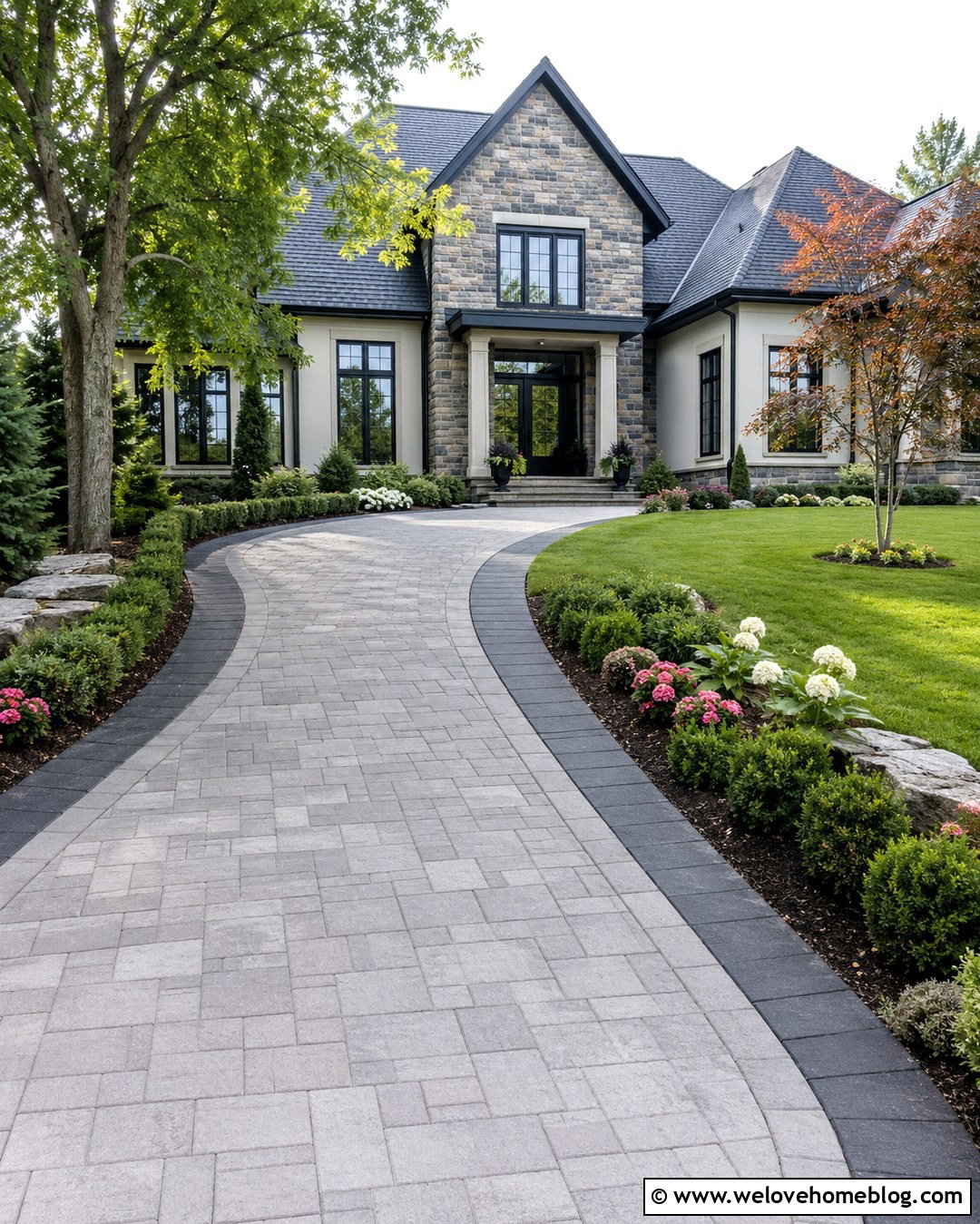
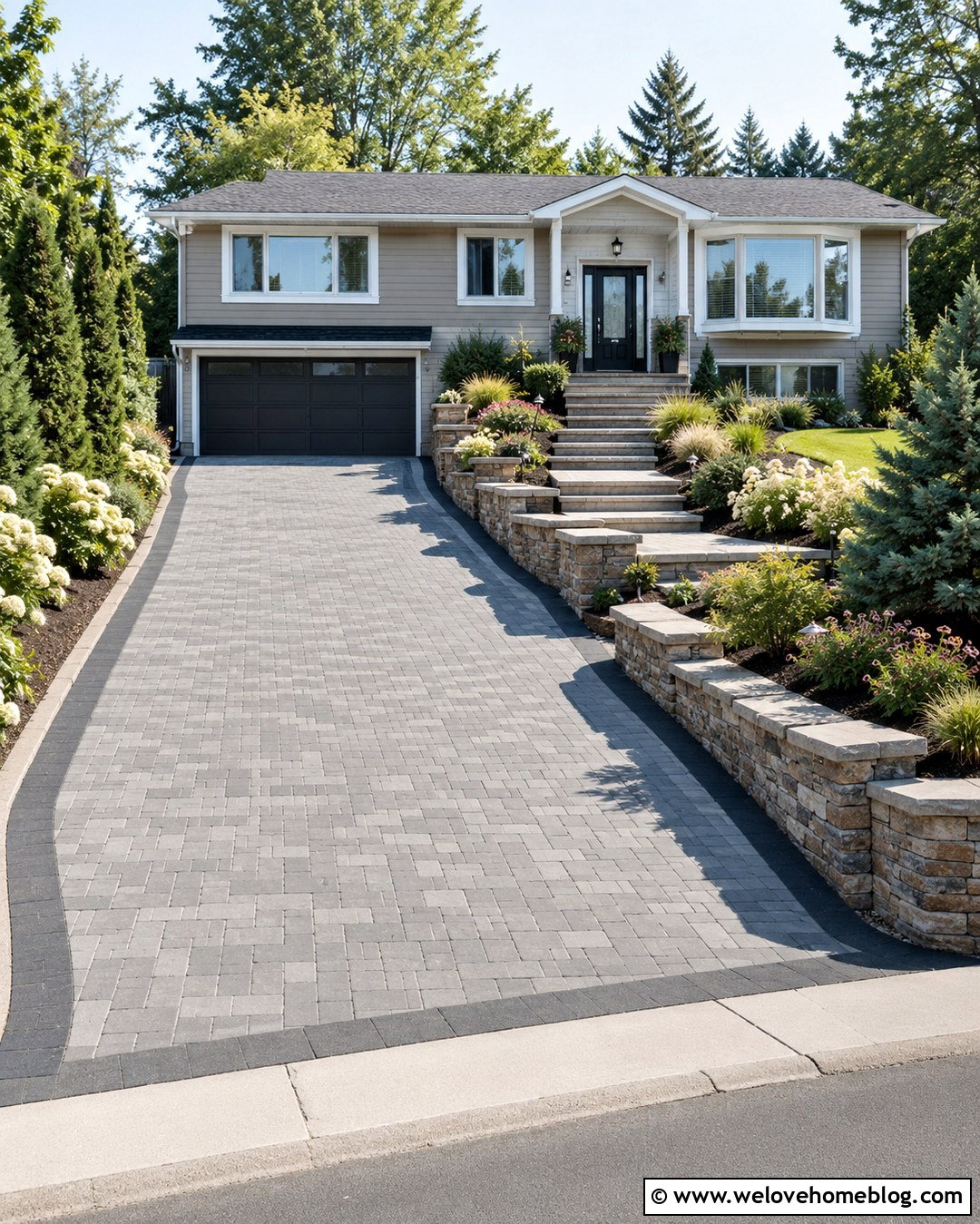
A two-tone paver driveway adds definition without requiring a highly decorative pattern. Select one medium neutral for the main field and a second, darker color for the border, apron, or center bands. For example, warm gray concrete pavers with a charcoal frame suit a modern transitional home with white siding and black windows. Lay the main pavers in herringbone and use a straight soldier course around the perimeter. Continue the darker tone into the front walkway to connect the driveway with the entrance. Low hedges, flowering shrubs, and evenly spaced trees can frame the clean geometry. Keep both paver colors within the same warm or cool family. Combining a yellow-beige center with a blue-gray border often creates unnecessary tension, even when each color looks appealing on its own.
17. Dark Driveway With Light Border
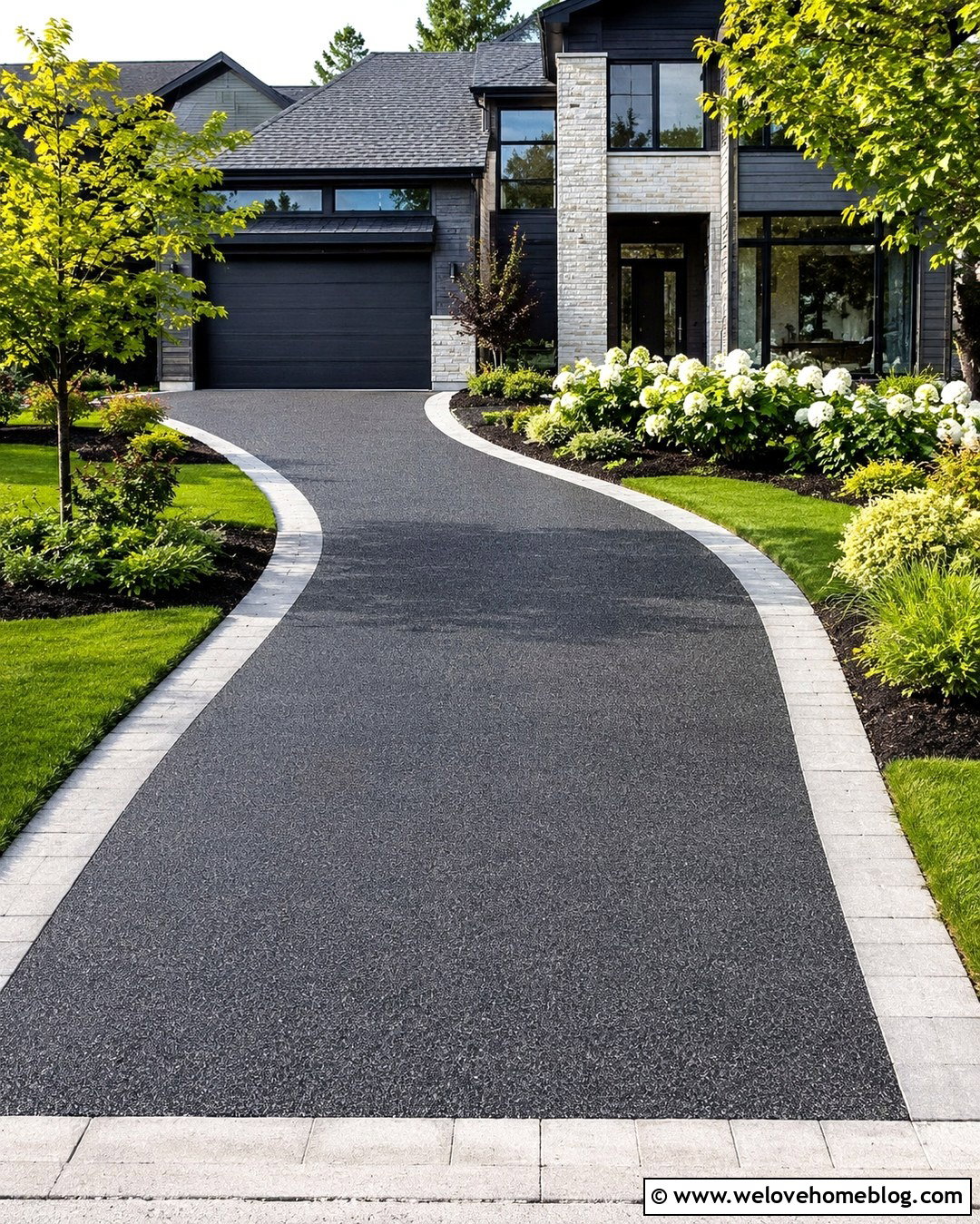
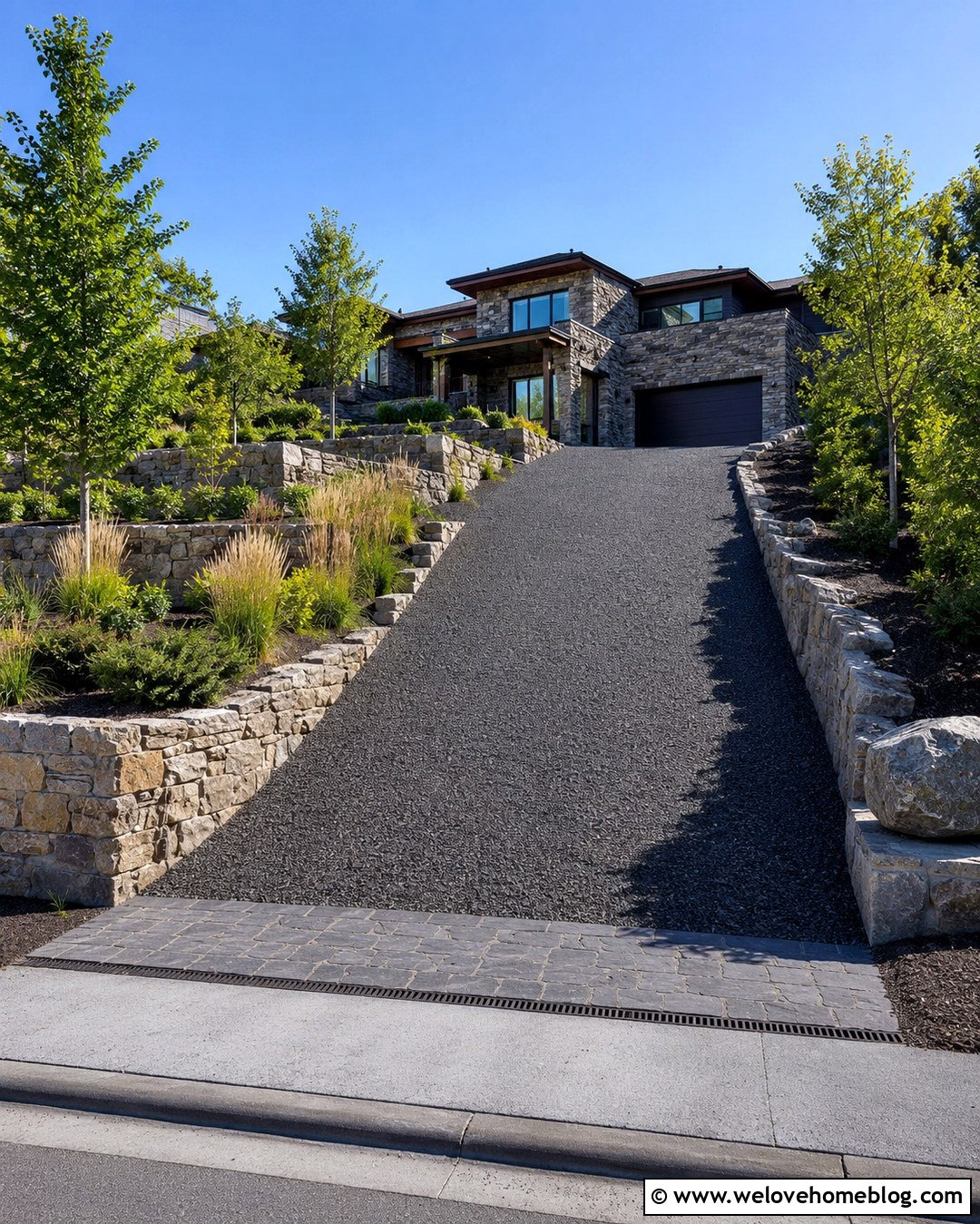
A dark driveway with a light border can make a wide paved area feel tailored and clearly organized. Start with charcoal concrete pavers, dark exposed aggregate, or weathered asphalt as the central surface. Add a broad border of pale gray pavers that follows the entire driveway, including the curb apron and garage entry. This high-contrast treatment works well with a modern house featuring light stone, dark siding, and large windows. Keep the layout straight or gently curved so the border remains easy to read. White flowering plants, fresh lawn, and layered green shrubs soften the bold pavement. Before finalizing the design, consider local dust and leaf litter. A slightly mottled dark field will usually hide everyday debris better than a perfectly uniform black surface.
18. Light Driveway With Charcoal Border
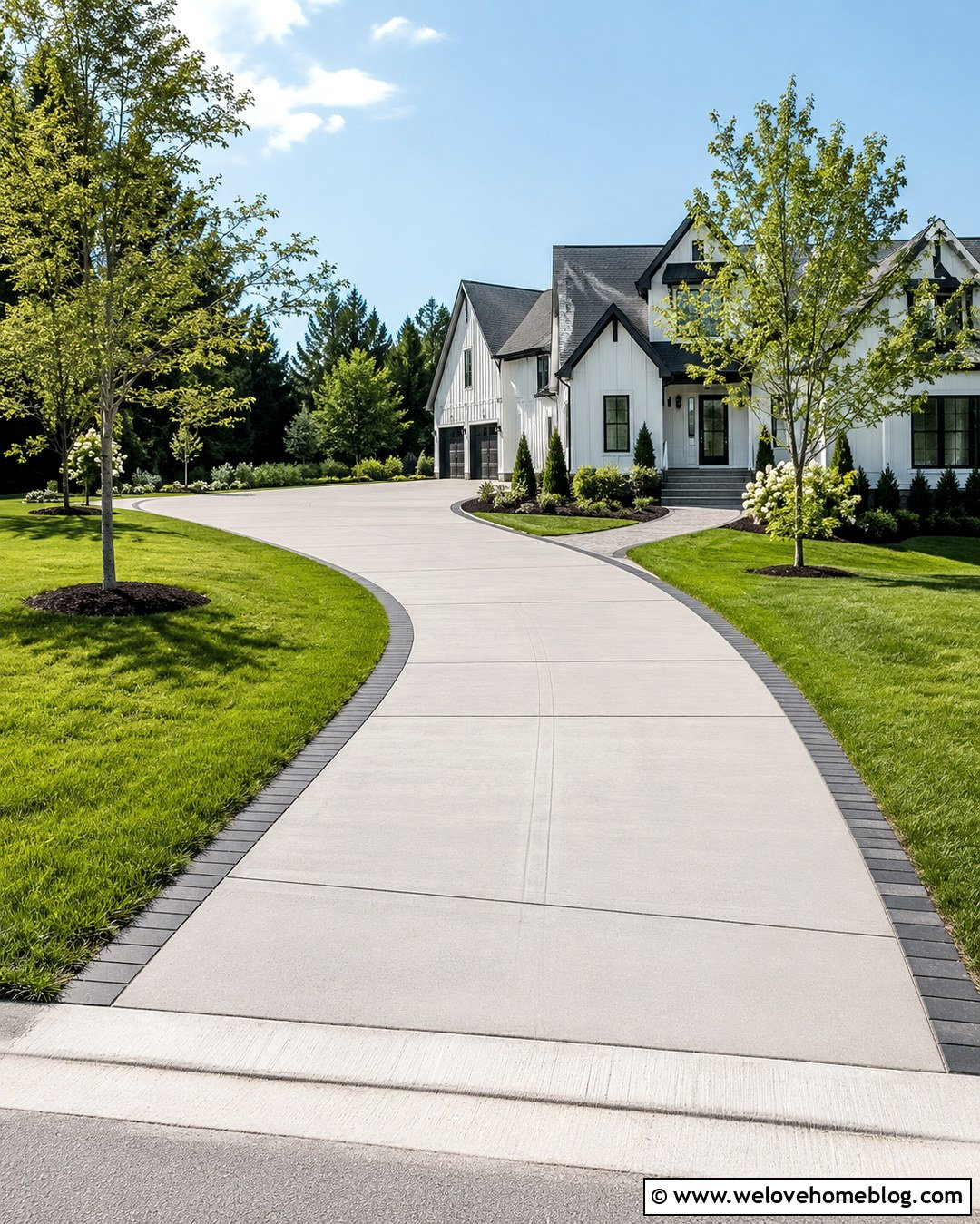
A light driveway framed by charcoal pavers creates an attractive balance between brightness and structure. Use light gray poured concrete, pale exposed aggregate, or cream concrete pavers for the main surface. A dark border outlines curves, protects vulnerable edges, and connects visually with black roofing, windows, lighting, or garage hardware. This combination is especially effective for a Craftsman or modern farmhouse with a medium-to-dark roof. Add a curved walkway using the same charcoal pavers, then frame the approach with green lawn, hydrangeas, and ornamental trees. Avoid making the border excessively wide on a small driveway, since it can reduce the visual size of the light center. A narrow, consistent band gives the overall design a finished appearance without dominating the home’s front elevation.
19. Green Grass Paver Driveway
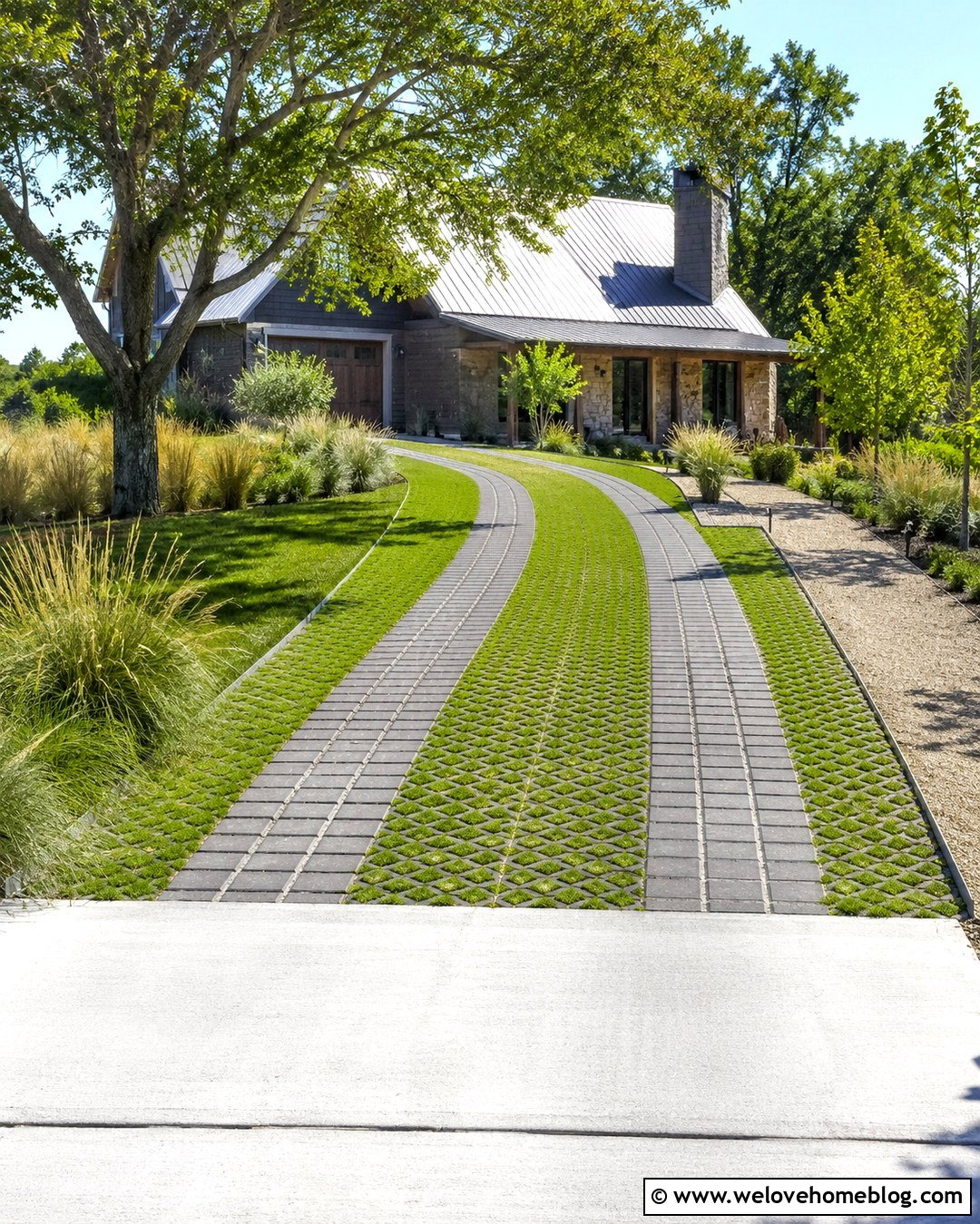
Grass pavers provide a green-toned driveway that visually extends the lawn while maintaining a defined driving area. Choose reinforced concrete grid pavers filled with healthy turf for a straight or gently curved approach to a contemporary, cottage, or environmentally focused home. Solid gray paver tracks or a stable apron can mark high-use areas and create a smooth transition at the garage. Edge the driveway with steel, concrete curbing, or matching pavers to prevent the surrounding soil from blurring its shape. Planting beds with native grasses and drought-conscious shrubs support the natural appearance. This surface requires suitable drainage, proper base construction, and grass that fits the local sunlight and climate. It works best where regular irrigation, mowing, and seasonal care can be provided without creating maintenance difficulties.
20. Driveway Color Matching House Exterior
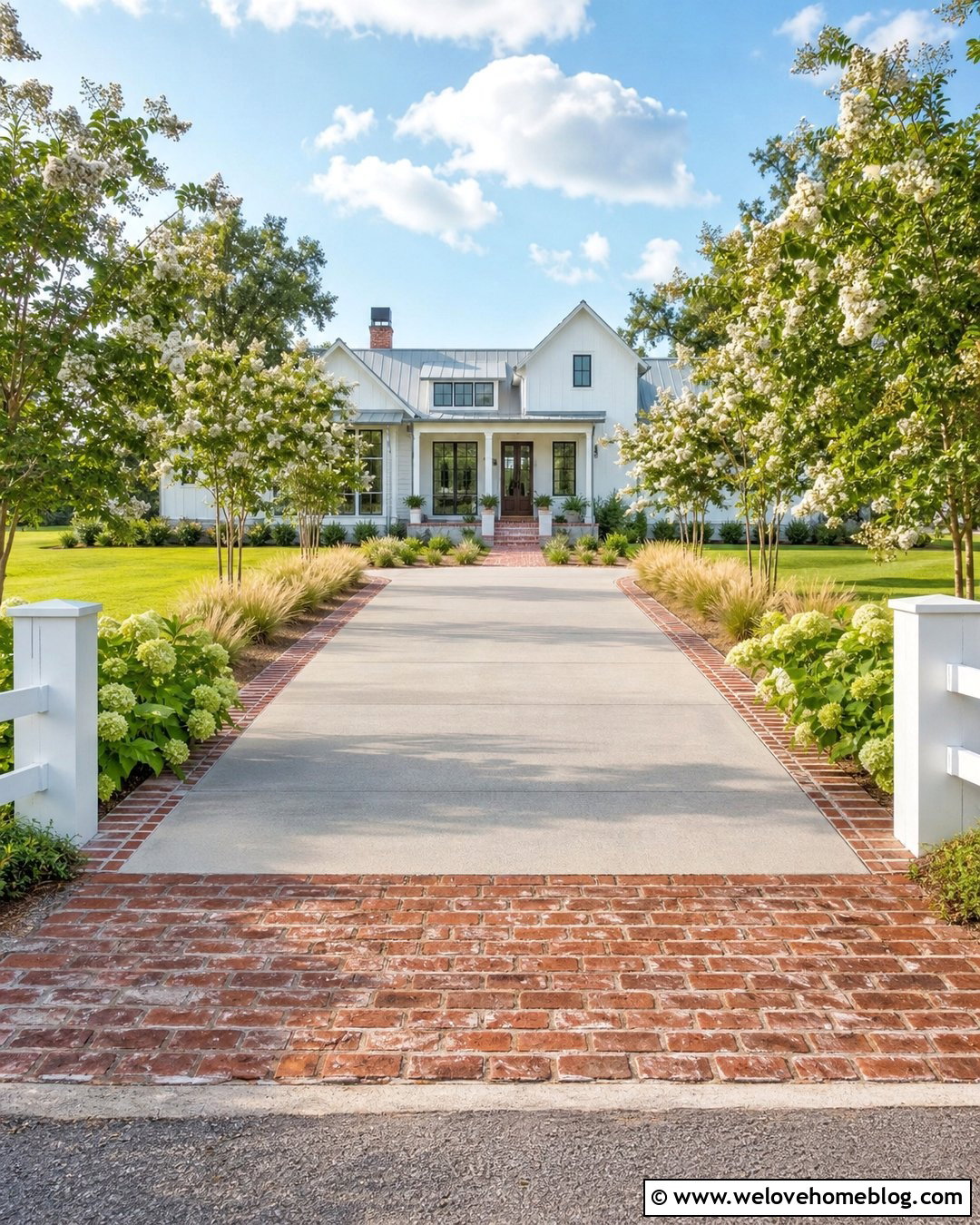
The safest driveway color often comes from a secondary tone already present on the house. Look at the roof, masonry, mortar, trim, shutters, garage door, and permanent landscape stone. Choose one of those colors, then move slightly lighter or darker so the driveway complements the facade instead of blending into it. A gray stone house might suit warm gray pavers with a charcoal border, while a cream stucco home could pair with taupe concrete and brown edging. Keep the complete driveway shape, walkway, and planting plan in mind when comparing samples. View several large samples outdoors in sun and shade, and check them when wet. This practical process produces a cohesive entrance while leaving room for the home’s architecture and landscaping to stand out.
Conclusion:
The most successful driveway palette connects the paved surface with the house while preserving enough contrast to define the entrance. Start with permanent exterior features, including brick, stone, roofing, siding, and garage doors. Then compare warm, cool, light, and dark samples in real outdoor conditions. Consider how each material will weather and how easily its color disguises dust, leaves, and everyday marks. Borders and landscaping can help balance a driveway that feels too pale, dark, or visually broad. Above all, choose a complete look rather than an isolated color sample. Use these 20 Choosing Driveway Colors Ideas to build a practical, attractive approach that strengthens curb appeal and suits your home.

Related posts:


Leave a Reply