
Artificial turf can turn a practical driveway into a greener, more polished part of the front yard. Instead of covering the entire surface, most successful designs place durable synthetic grass between concrete slabs, pavers, stone tracks, or reinforced grids. These green joints soften large areas of hardscape, create strong geometric patterns, and connect the driveway with nearby landscaping. Permeable turf backing and properly prepared gaps may also help water move into the aggregate base rather than collecting on the surface. () The key is choosing vehicle-rated materials, stable foundations, and a layout suited to daily traffic. From simple ribbons to detailed paving patterns, the following 20 Artificial Turf Driveway Ideas offer inspiration for different homes, lot sizes, and budgets.

1. Concrete Slab Artificial Turf Driveway
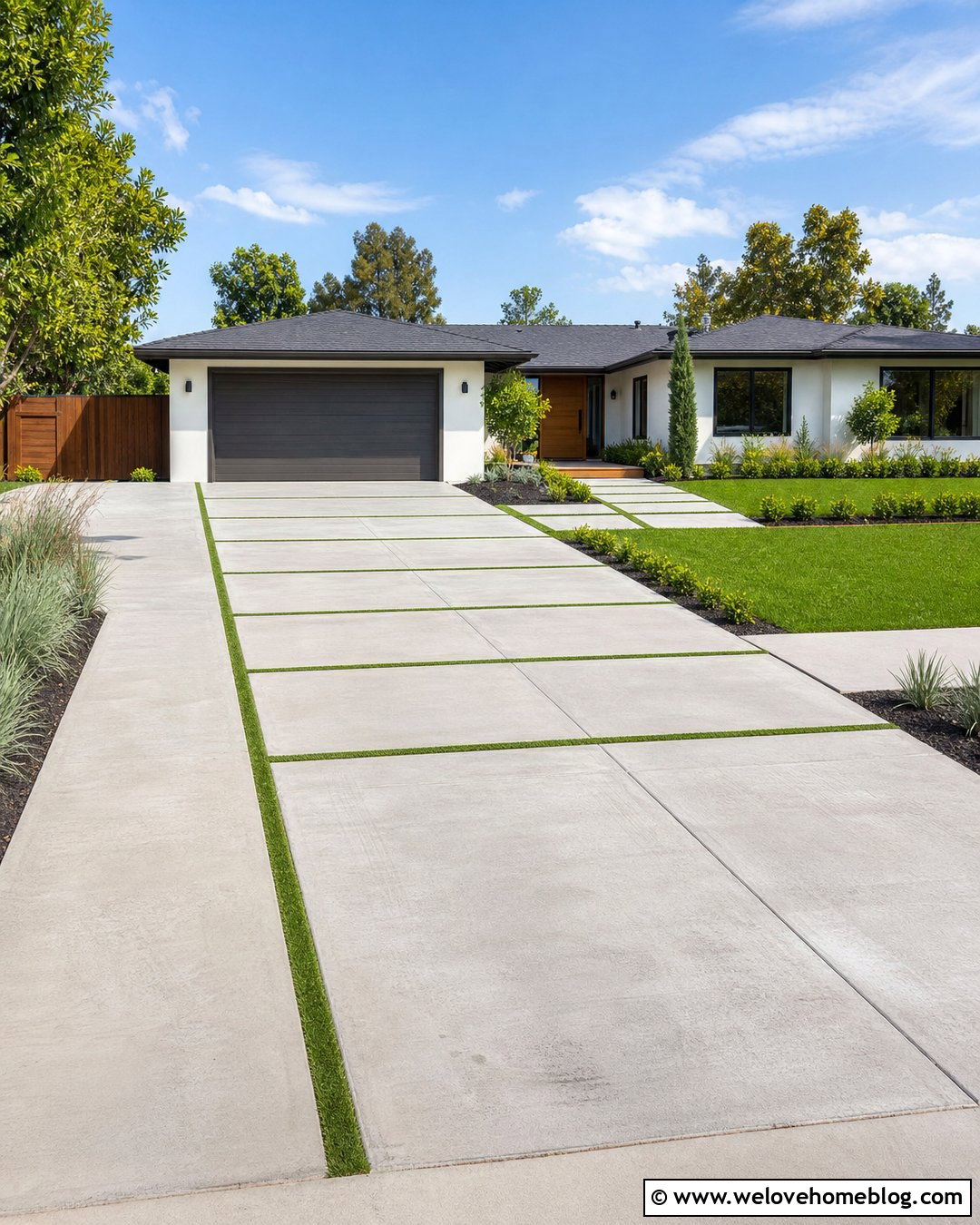
Large poured-concrete slabs separated by narrow artificial turf strips create a clean, modern driveway without looking overly industrial. Choose pale gray concrete with a lightly brushed finish to provide traction and hide minor surface marks. Straight green joints can follow the width of the driveway, dividing the concrete into generous rectangular sections. Continue the turf along both sides so the driveway appears connected to the lawn. A matching concrete walkway and simple foundation planting complete the unified design. This layout works especially well with contemporary ranch homes, modern farmhouses, and boxy two-story houses. Keep the turf joints narrow enough for easy cleaning but wide enough to form a noticeable green pattern from the street.
2. Square Paver Artificial Turf Driveway
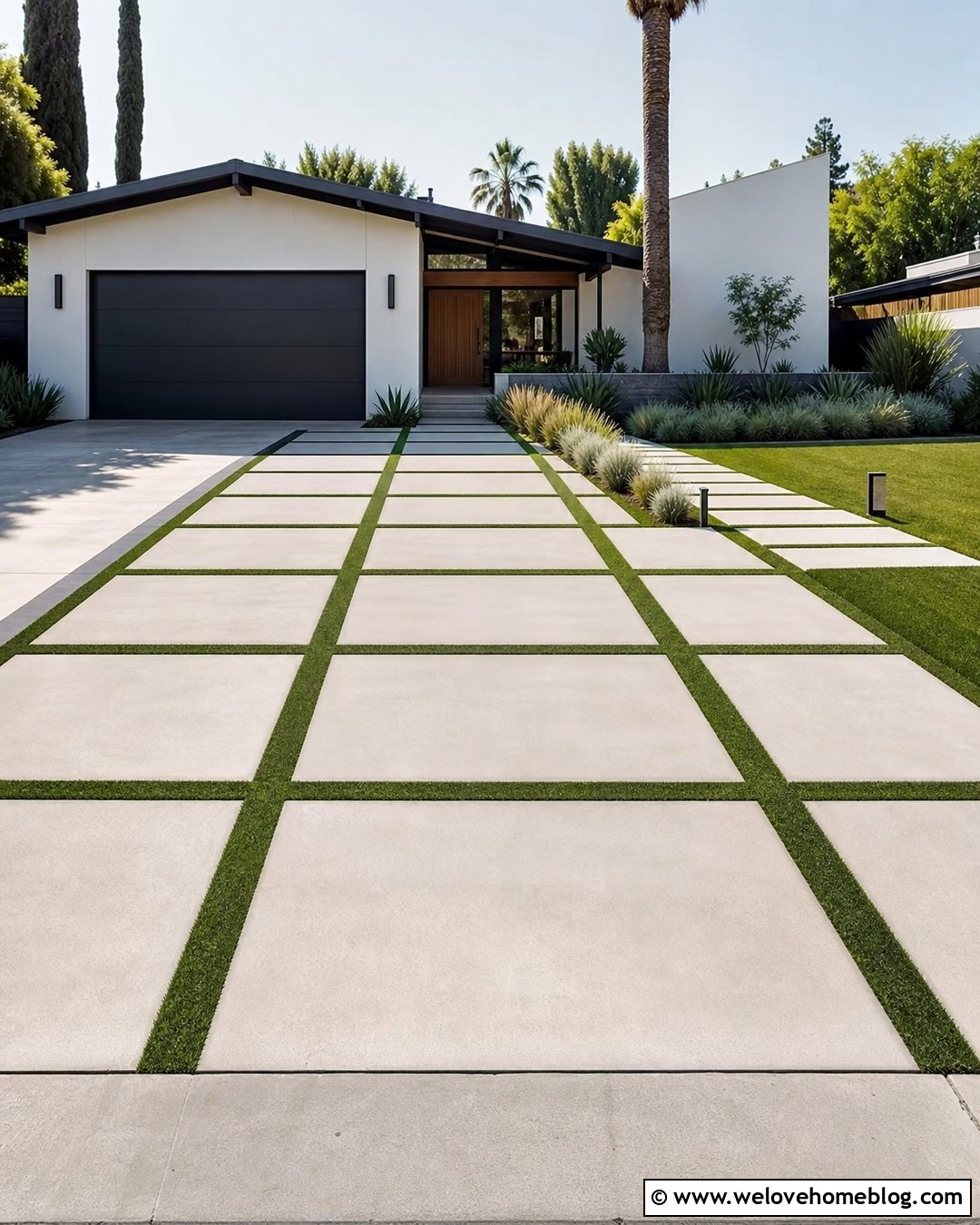
Square concrete pavers surrounded by artificial turf create an orderly grid that immediately draws attention from the curb. Oversized pavers usually produce a calmer and more sophisticated appearance than many small blocks. Warm white, sand, or light gray pavers provide an attractive contrast against rich green turf. Use a straight layout for a formal home or angle the grid slightly for a more contemporary effect. A solid paver apron at the sidewalk gives the entrance a durable, finished transition. Along the sides, repeat the square shapes in planting beds or a walkway. This complete look is ideal for a midcentury modern or stucco home with clipped shrubs, ornamental grasses, and a simple garage facade.
3. Rectangular Paver Artificial Turf Driveway
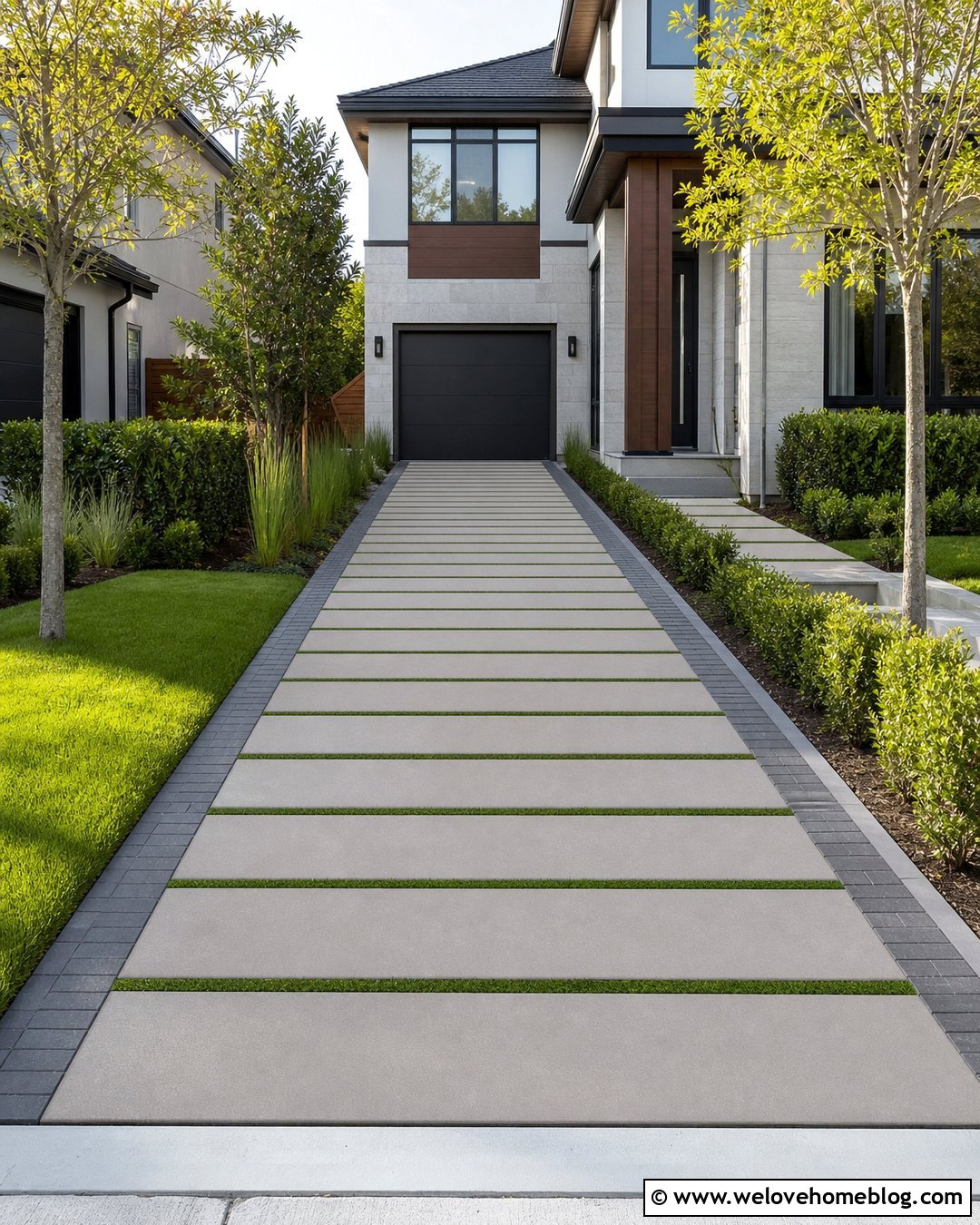
Long rectangular pavers and slim artificial turf joints can make a short driveway appear deeper. Install the pavers lengthwise to direct the eye toward the garage, or arrange them across the driveway to visually widen a narrow property. Charcoal pavers feel bold and contemporary, while cream or taupe pavers produce a softer look. Maintain consistent turf spacing so the finished pattern remains balanced from every viewing angle. A dark soldier-course border can frame the surface and prevent the design from blending into adjacent planting beds. Pair the driveway with a linear walkway, low hedges, and upright ornamental grasses. This structured combination complements modern townhomes, updated ranch houses, and compact suburban properties where every front-yard detail needs to feel intentional.
4. Ribbon Artificial Turf Driveway
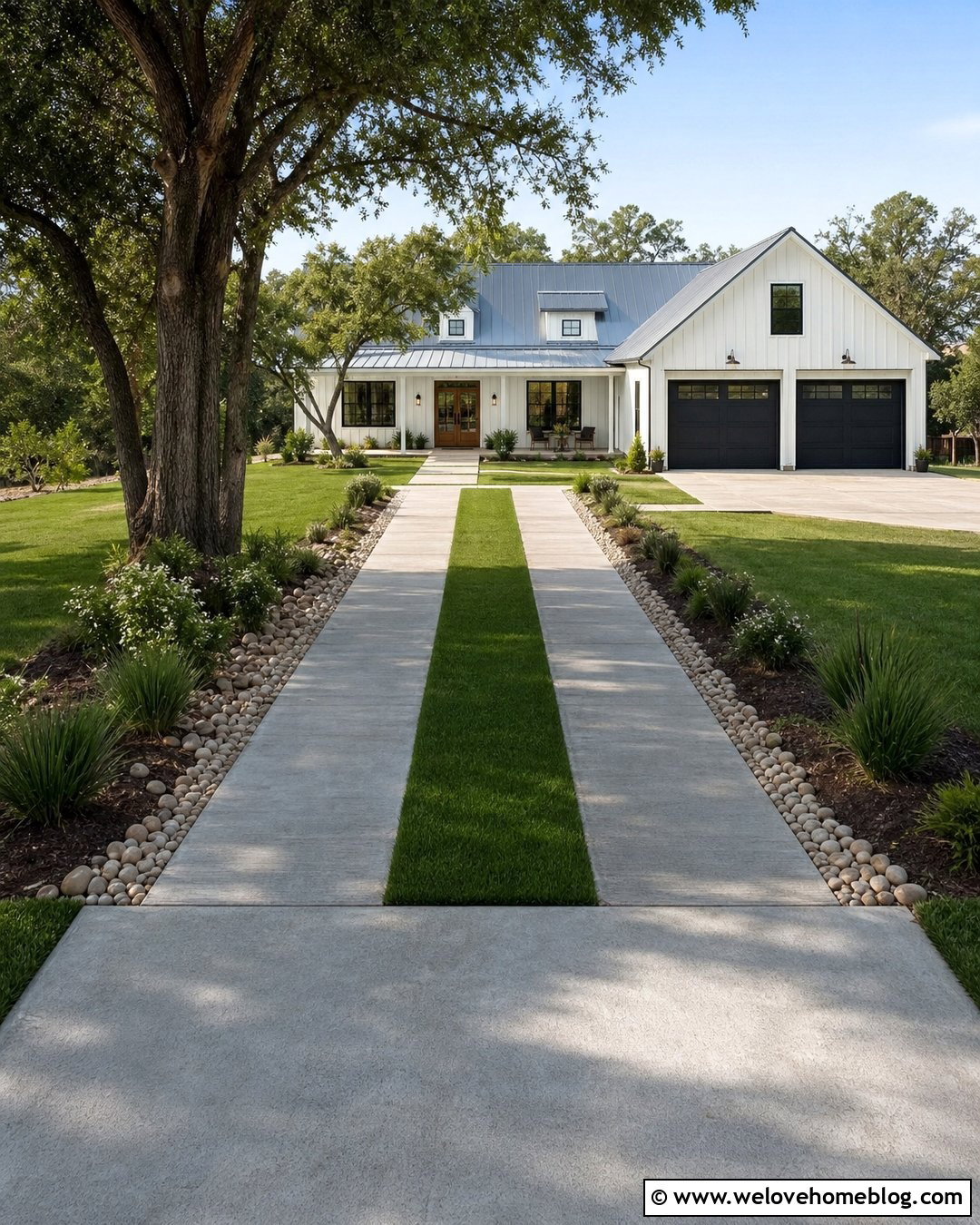
A ribbon driveway uses two paved wheel tracks with a continuous artificial turf strip running between them. It offers a simple way to introduce greenery while reducing the visual weight of a fully paved surface. The tracks can be poured concrete, precast slabs, brick, or natural stone, depending on the home’s architecture. Extend the center turf ribbon toward the garage, but use a solid paved landing where vehicles turn or regularly sit. Concrete wheel tracks with a brushed finish provide a practical choice for an understated suburban home. Frame the outer edges with matching turf, river rock, or low planting beds. For safe performance, the track width, grade, drainage, and foundation should be planned around the vehicles using the driveway.
5. Checkerboard Artificial Turf Driveway
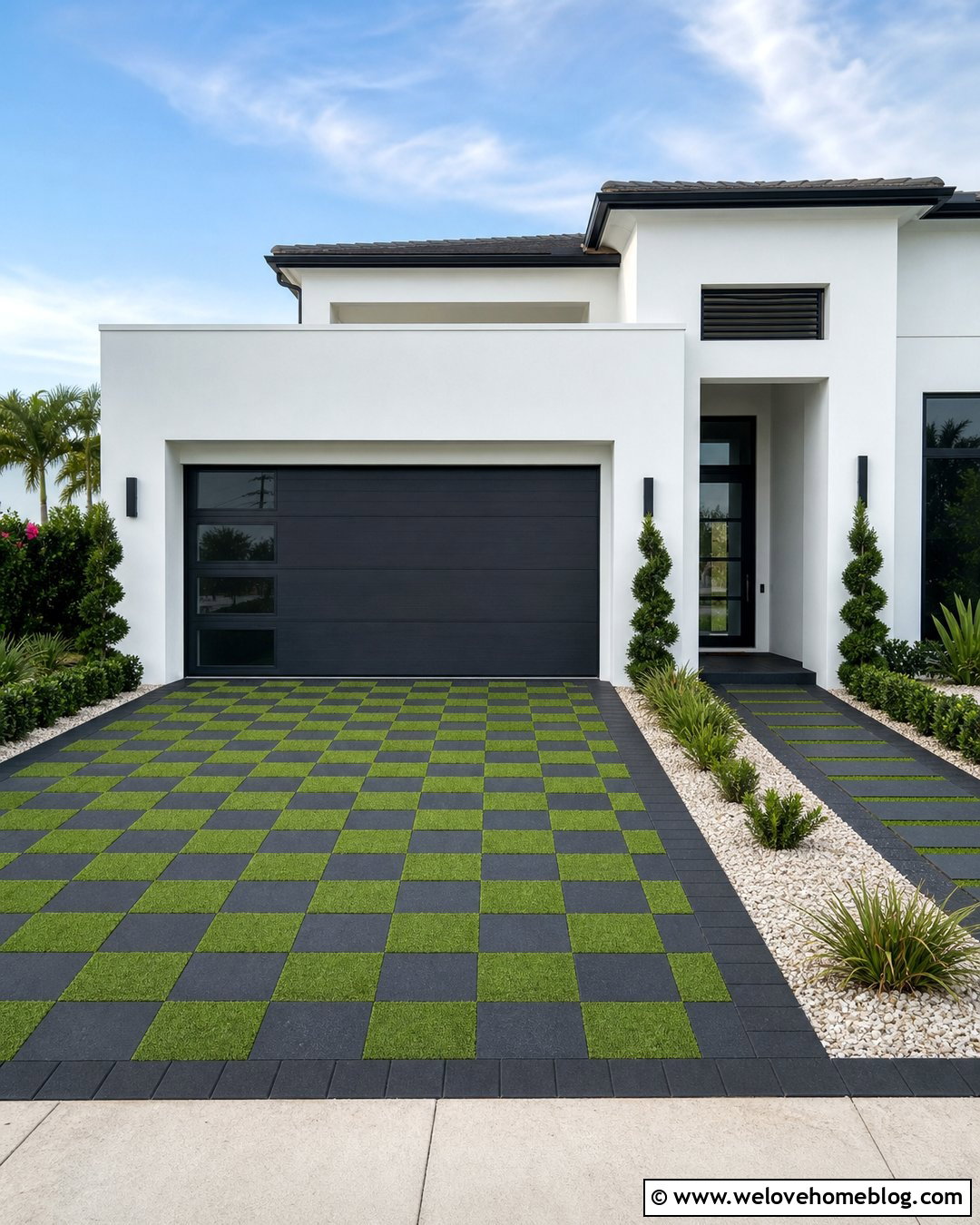
A checkerboard driveway combines square hardscape units with alternating artificial turf sections for a graphic, high-impact pattern. Because this layout has more turf than a simple jointed driveway, the paved squares must be positioned carefully to support vehicle tires. Large concrete or porcelain-look pavers can create the pattern, while a solid border keeps the edges stable. Select shorter, dense artificial grass that will not overwhelm the clean geometry. Black, charcoal, or medium-gray pavers create dramatic contrast, especially beside a white modern house. Balance the bold surface with restrained landscaping, such as sculpted evergreens, gravel beds, and a few architectural plants. A simple garage door and wide curb view allow the checkerboard design to remain the main visual feature.
6. Diamond Pattern Artificial Turf Driveway
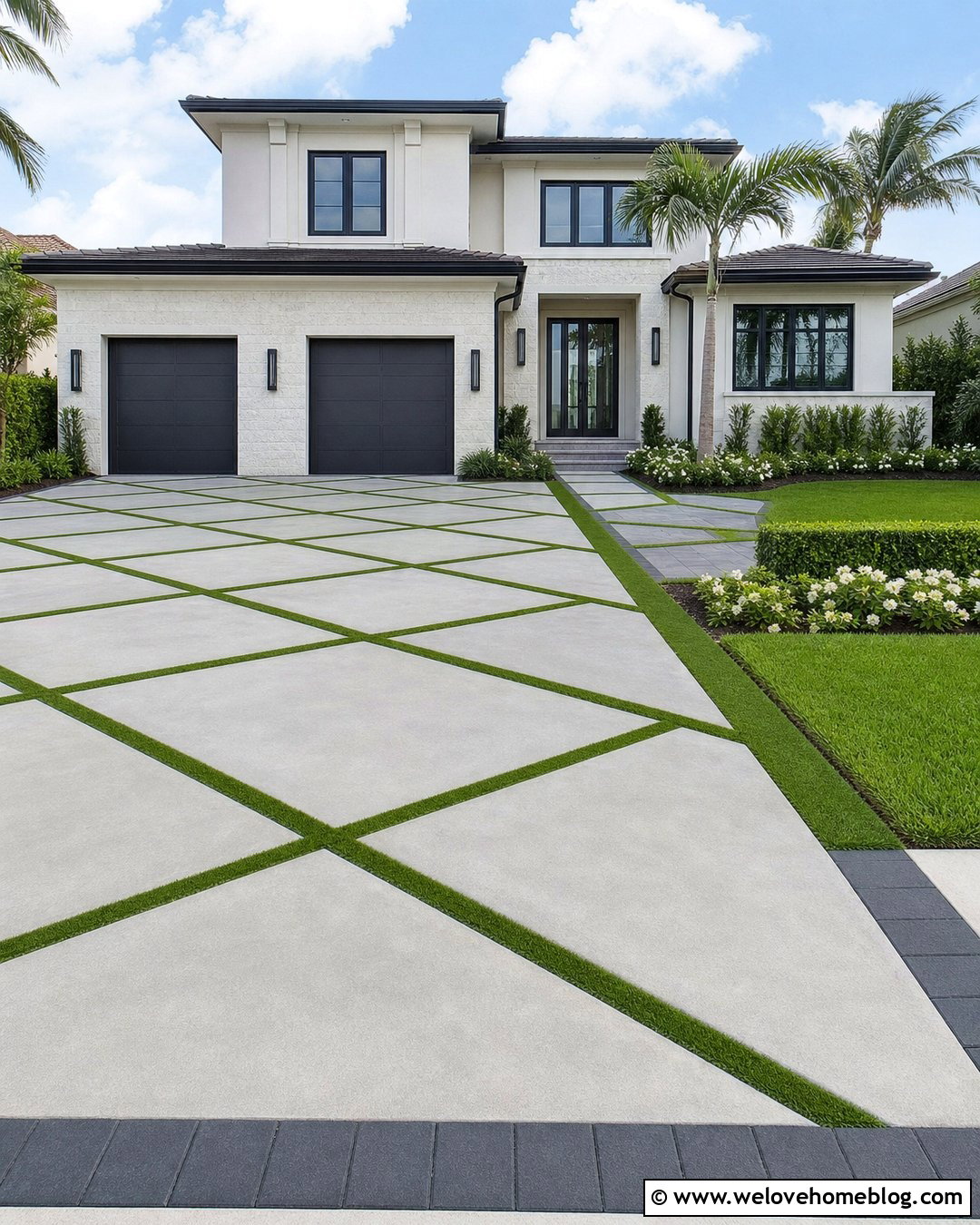
Concrete pavers installed on a diagonal form a diamond-pattern artificial turf driveway with more movement than a standard square grid. The angled joints make a broad driveway feel less flat and can visually connect a diagonal walkway or side entrance. Use large, light-gray concrete diamonds separated by narrow, evenly cut turf strips. A straight charcoal paver border will contain the angled pattern and create a crisp transition at the street. This driveway looks particularly attractive in front of a contemporary two-story house with symmetrical garage doors. Keep nearby landscaping simple with green hedges, white flowers, and a clean lawn. Accurate measurements are essential because uneven diamonds or inconsistent turf joints become especially noticeable in a large geometric layout.
7. Herringbone Paver Artificial Turf Driveway
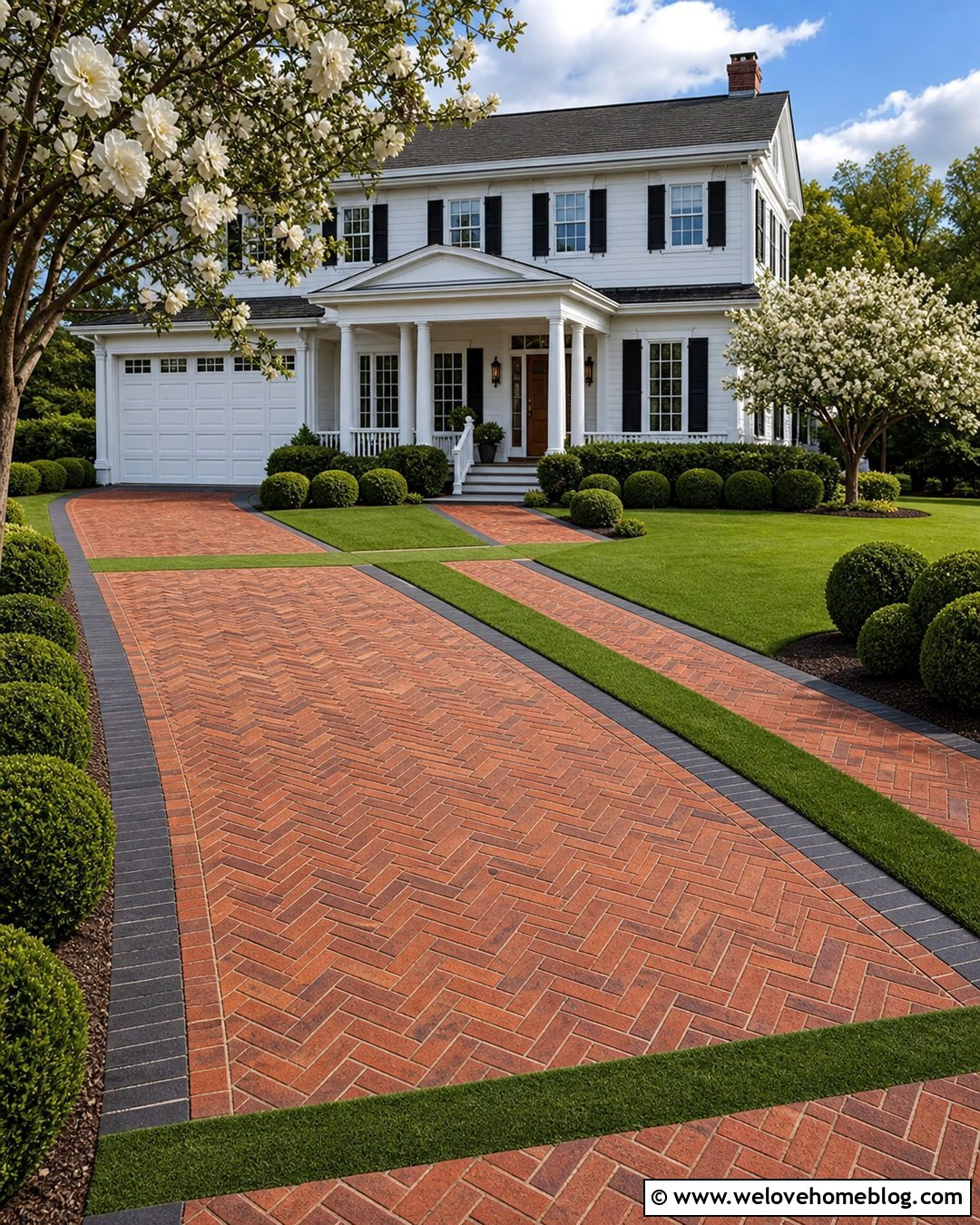
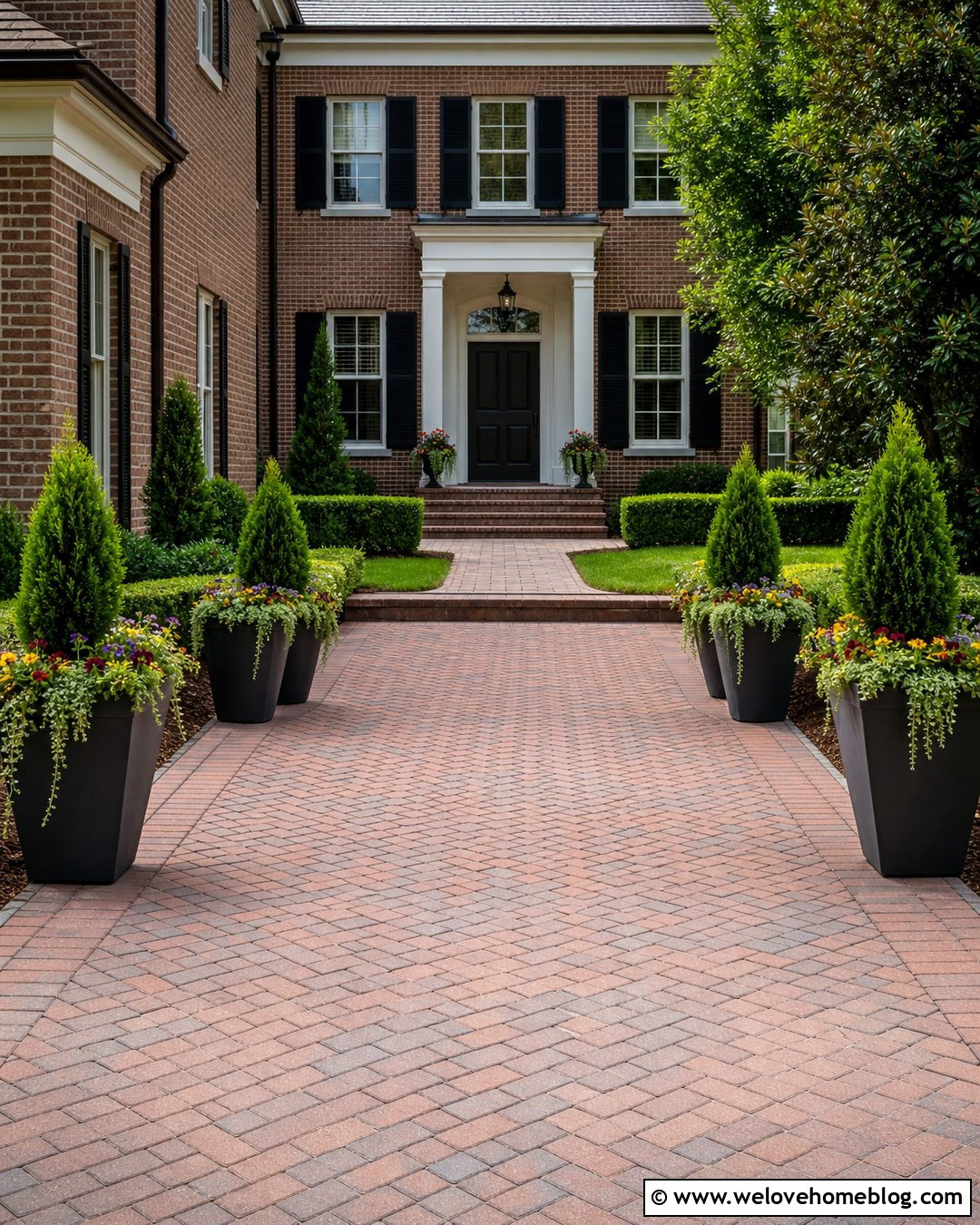
Herringbone pavers bring traditional character to an artificial turf driveway while offering a surface pattern associated with busy vehicle areas. Clay brick or concrete pavers can form the main driving lanes, with artificial turf inserted as wider divider bands rather than between every small unit. This approach keeps the herringbone pattern readable and avoids excessive cutting. Use deep red brick for a colonial home or charcoal concrete pavers for a modern facade. A contrasting border around the perimeter adds definition and contains the field pattern. Carry one turf band into the walkway or front planting area to connect the driveway with the landscape. Rounded shrubs, small flowering trees, and classic porch details create a welcoming, coordinated entrance.
8. Flagstone Artificial Turf Driveway
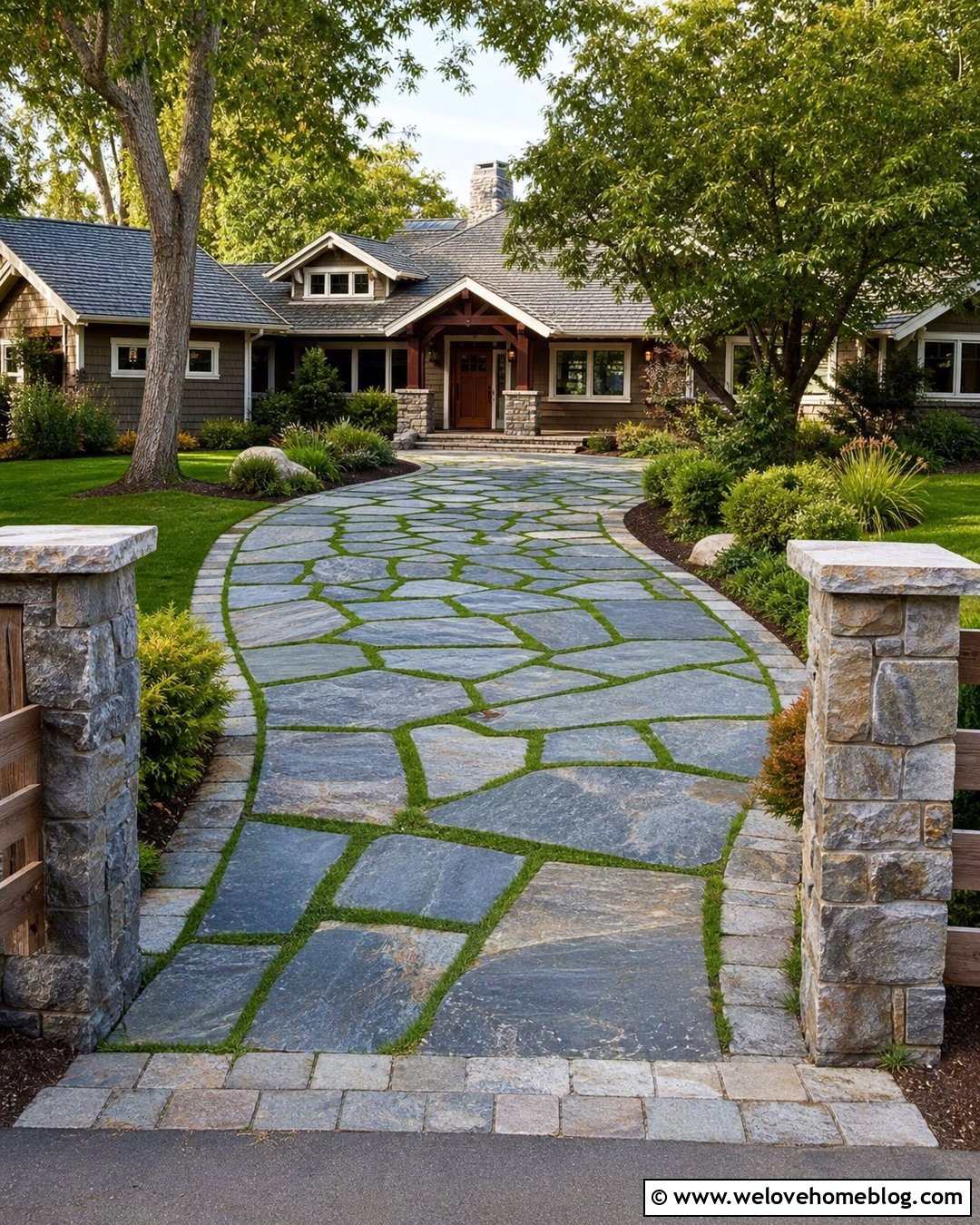
Irregular flagstone surrounded by artificial turf creates a softer and more natural driveway than rigid concrete grids. Select thick, vehicle-suitable stone in coordinated gray, tan, or blue-gray tones. Fit the pieces closely enough to provide stable driving areas while leaving consistent green joints that reveal the organic stone shapes. A reinforced base and professionally planned installation are especially important because natural slabs vary in thickness. Use cut-stone borders at the sidewalk and garage to give the irregular field a neat finish. This driveway suits Craftsman, cottage, Mediterranean, and rustic contemporary houses. Layered shrubs, native grasses, and a curved stone walkway can repeat the relaxed character while keeping the full entrance polished rather than overgrown.
9. Artificial Turf Driveway With Concrete Wheel Tracks
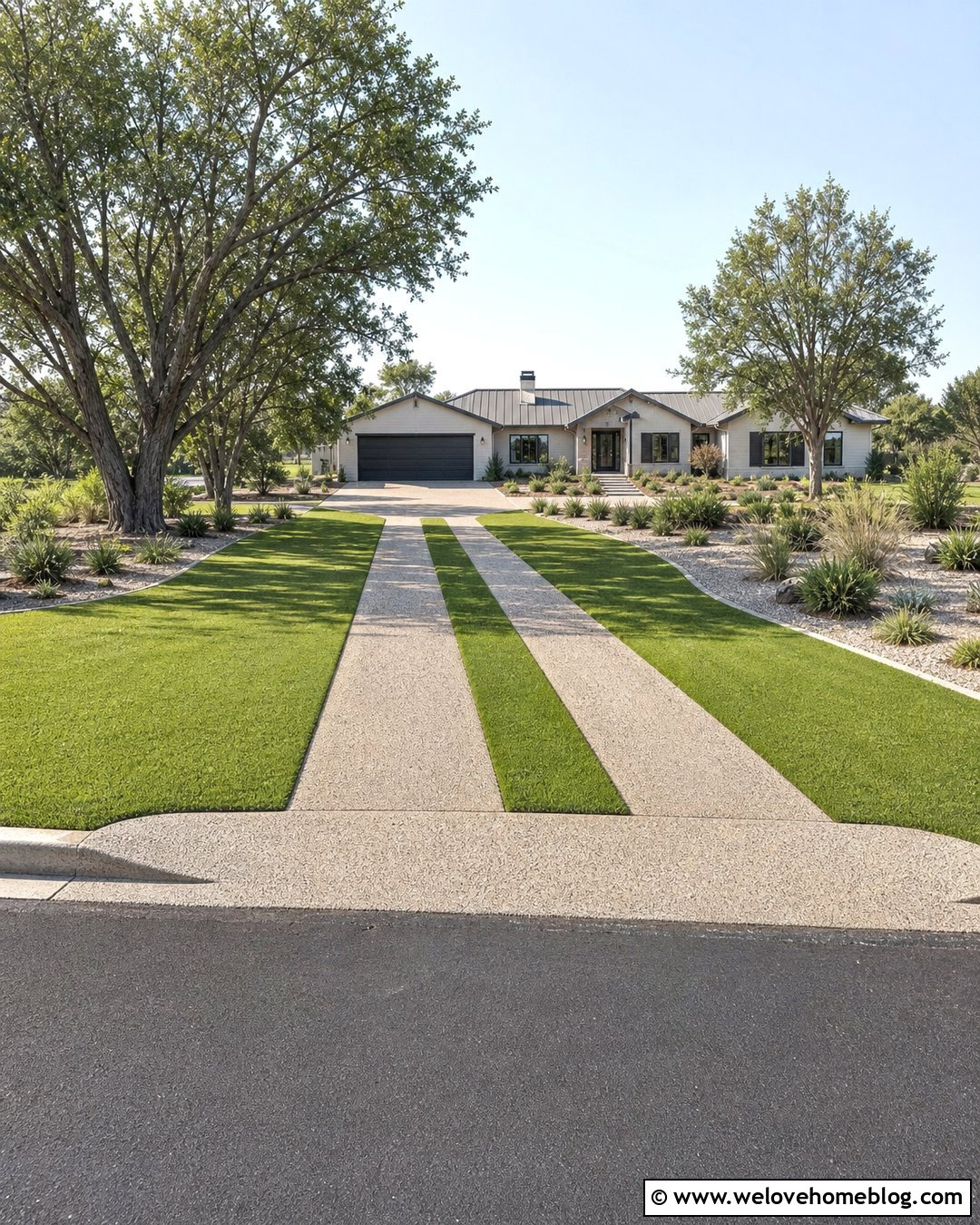
For a long or narrow property, continuous concrete wheel tracks surrounded by artificial turf create a streamlined entrance. Unlike segmented ribbon designs, each track can run as one visually uninterrupted line toward the garage. A lightly exposed aggregate finish adds texture and helps the tracks feel more decorative than plain concrete. Keep the artificial grass level slightly below the driving surface so tires stay on the hardscape and debris is easier to remove. Add a solid concrete apron near the street and another wider pad in front of the garage. Along the edges, use drought-tolerant shrubs and gravel mulch to limit upkeep. This efficient design feels appropriate for ranch houses, detached garages, and modern country homes with long front setbacks.
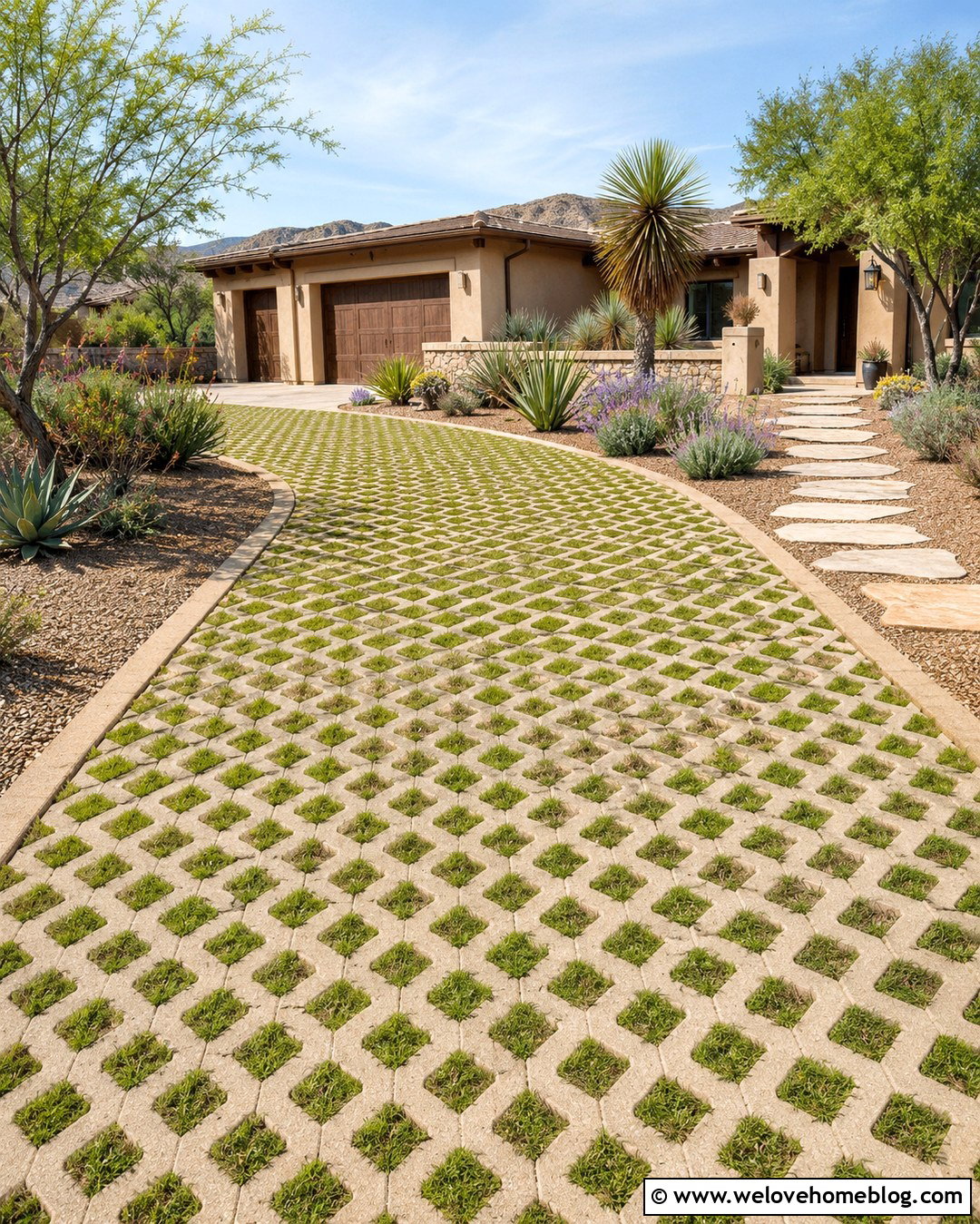
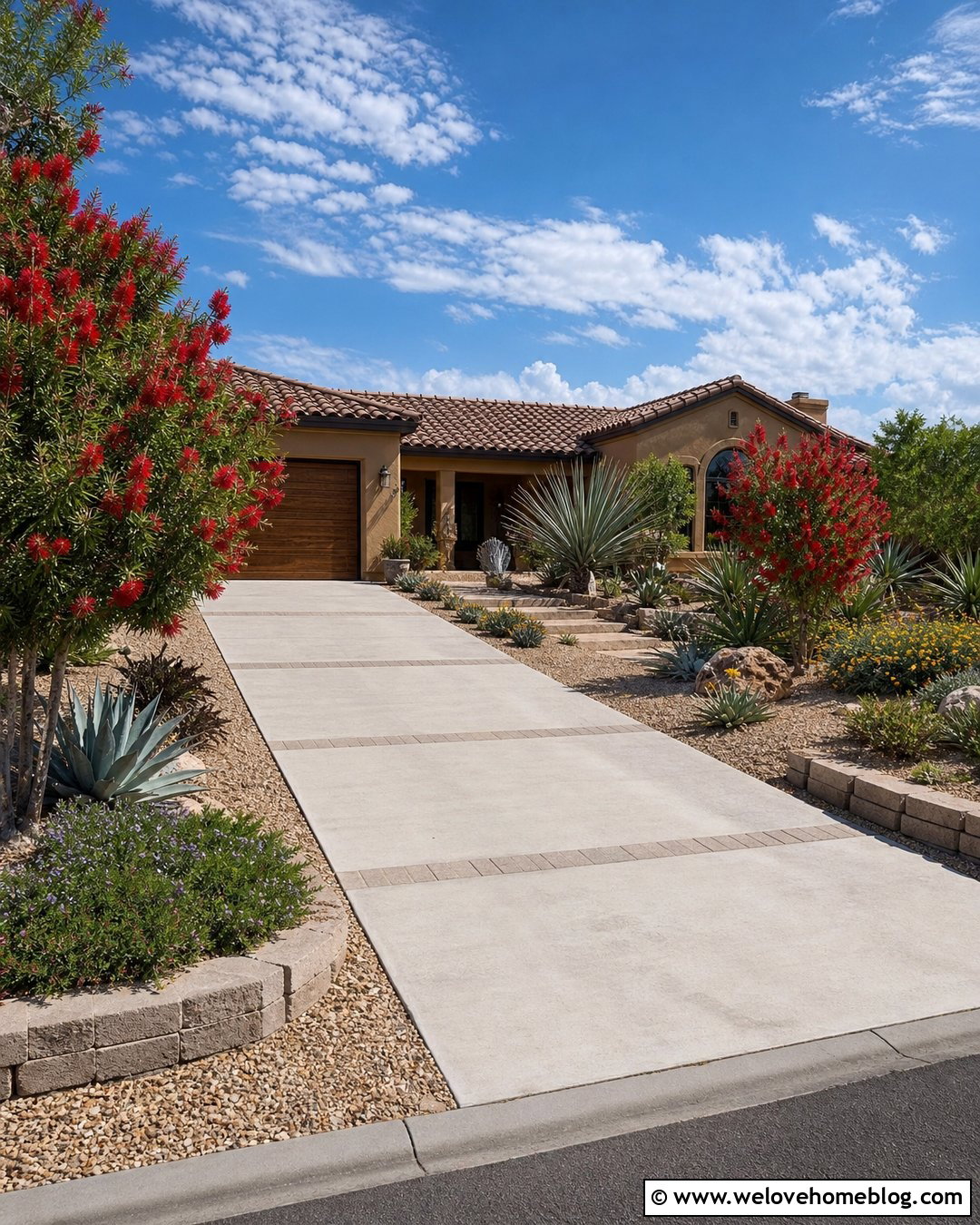
10. Artificial Turf Driveway With Concrete Bands
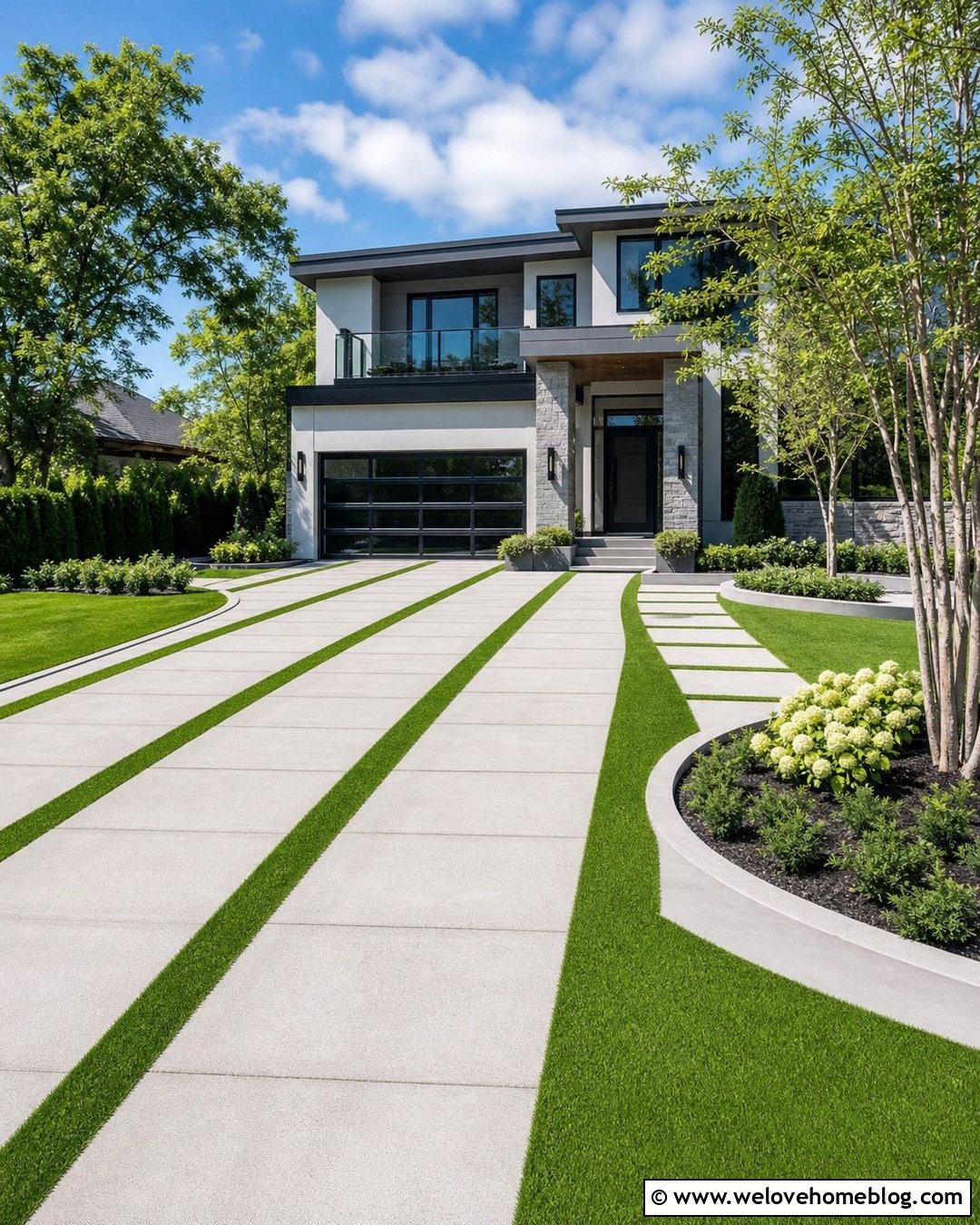
Wide concrete bands crossing a field of artificial turf create a layered driveway that feels both green and architectural. The bands should be positioned around expected tire paths and supported by a properly compacted base. Choose evenly spaced rectangular slabs for a quiet modern pattern, then add continuous paved tracks where heavier or frequent traffic requires greater support. Light concrete keeps the driveway bright, while the turf prevents the broad front yard from becoming a solid expanse of paving. Repeat the bands in a connecting walkway for visual consistency. A low concrete curb, rounded planting beds, and small multi-stem trees can frame the entrance. This approach works best on wide contemporary properties where the entire layout is visible from the street.
11. Artificial Turf Driveway With Black Pavers
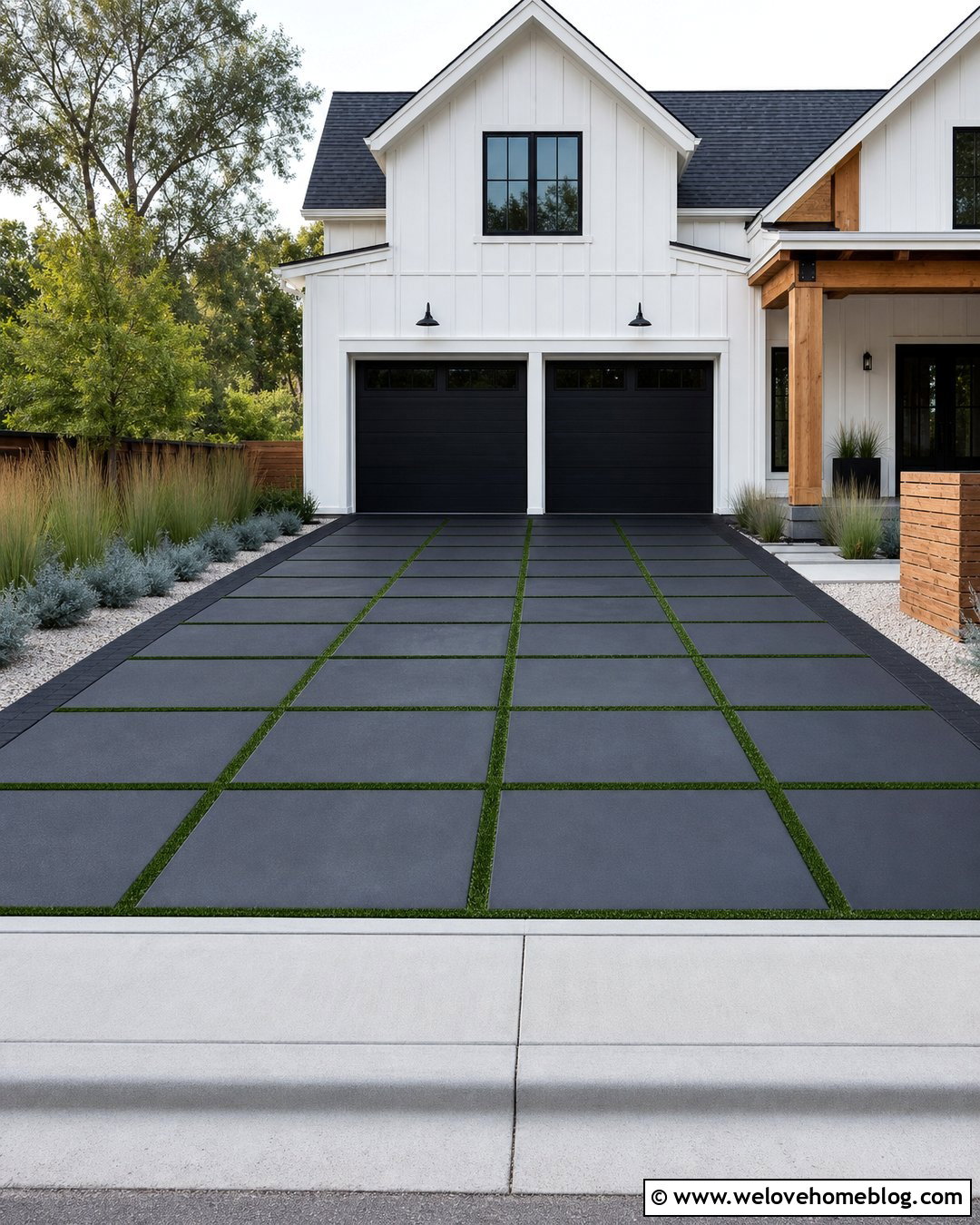
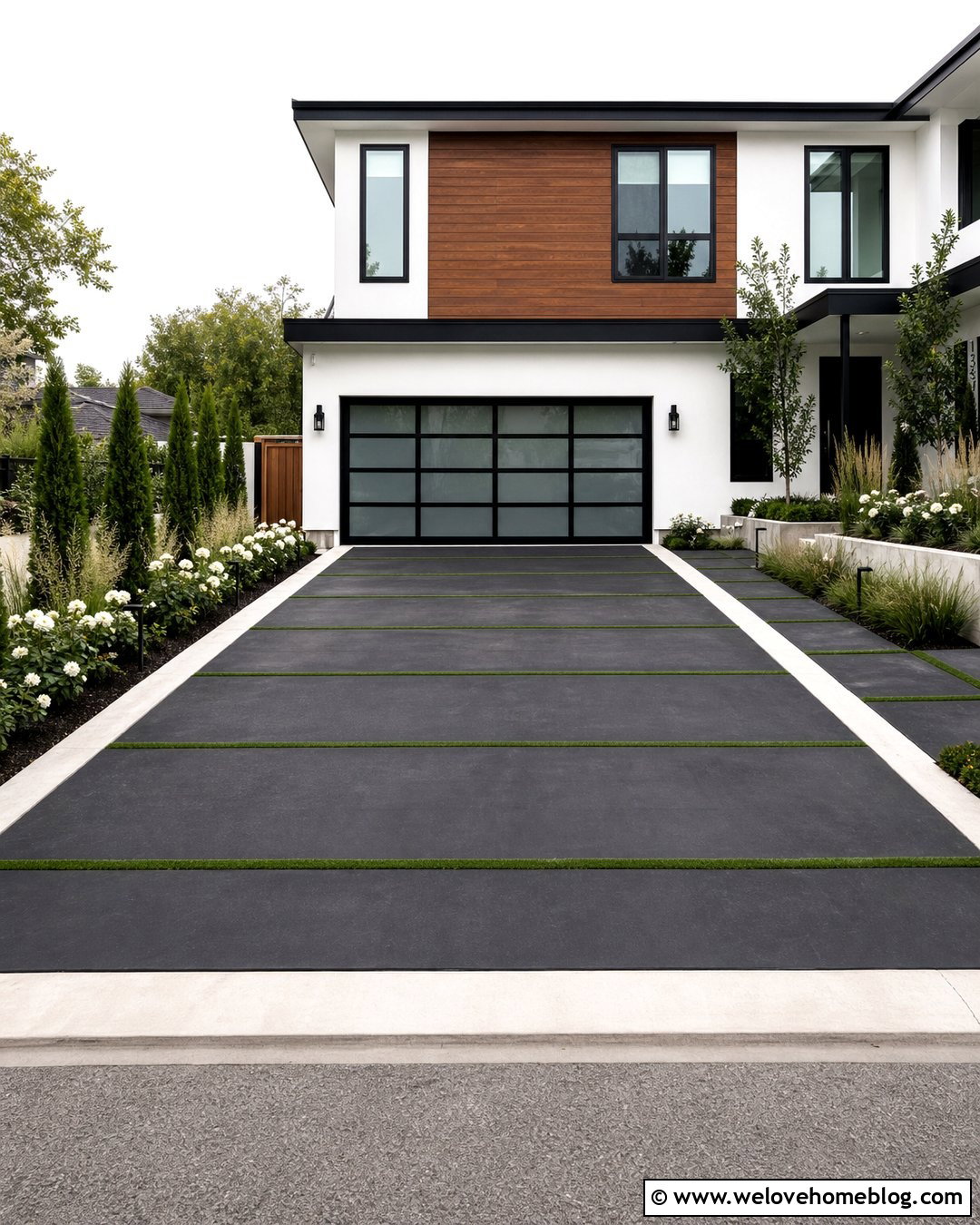
Black or deep charcoal pavers create a striking background for bright green artificial turf. Use large-format pavers in a straight grid to prevent the dark color from making the driveway appear busy. Narrow turf joints provide enough contrast without dividing the surface into too many small sections. A matching charcoal border can connect the driveway to black window frames, garage doors, or metal landscape edging. Soften the strong color scheme with pale gravel beds, silvery foliage, and warm wood accents near the entrance. This complete look is especially effective with white stucco, modern farmhouse siding, or minimalist architecture. In sunny climates, ask the installer about material temperatures and select pavers and turf products suited to local heat exposure.
12. Artificial Turf Driveway With White Pavers
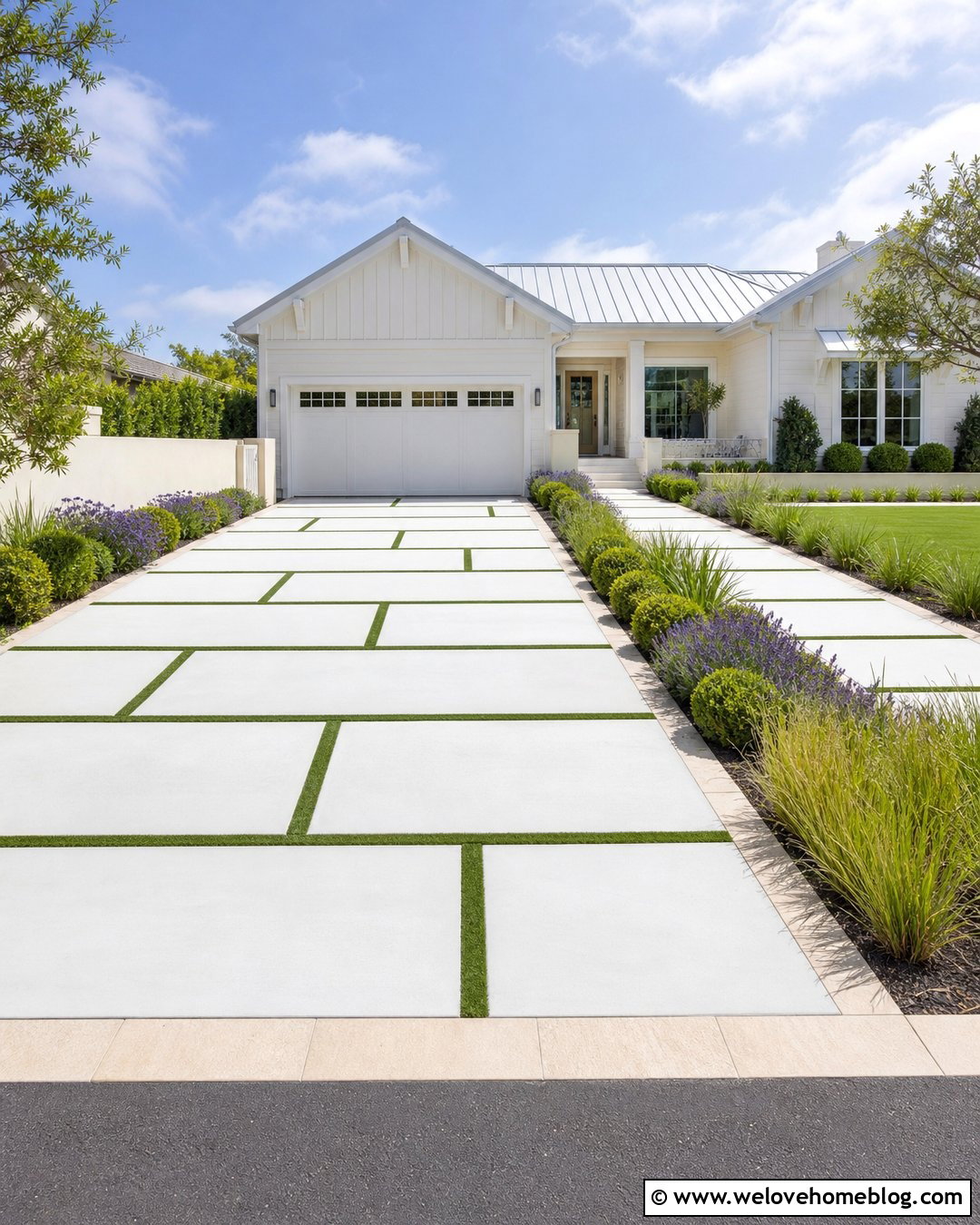
White or creamy pavers combined with artificial turf create a fresh driveway that brightens the entire front of the house. Warm-toned pavers are often easier to coordinate than stark white because they complement stone, brick, and painted siding. Arrange oversized rectangles in a staggered grid, using crisp turf ribbons to outline each piece. A beige or light-gray border can reduce visible staining near the street and garage threshold. Continue the artificial grass into side lawn panels, then frame those areas with lavender, ornamental grasses, or rounded evergreen shrubs. This airy combination suits coastal homes, stucco houses, and updated bungalows. Regular rinsing and prompt stain removal will help light paving preserve its clean appearance in high-use areas.
13. Curved Artificial Turf Driveway
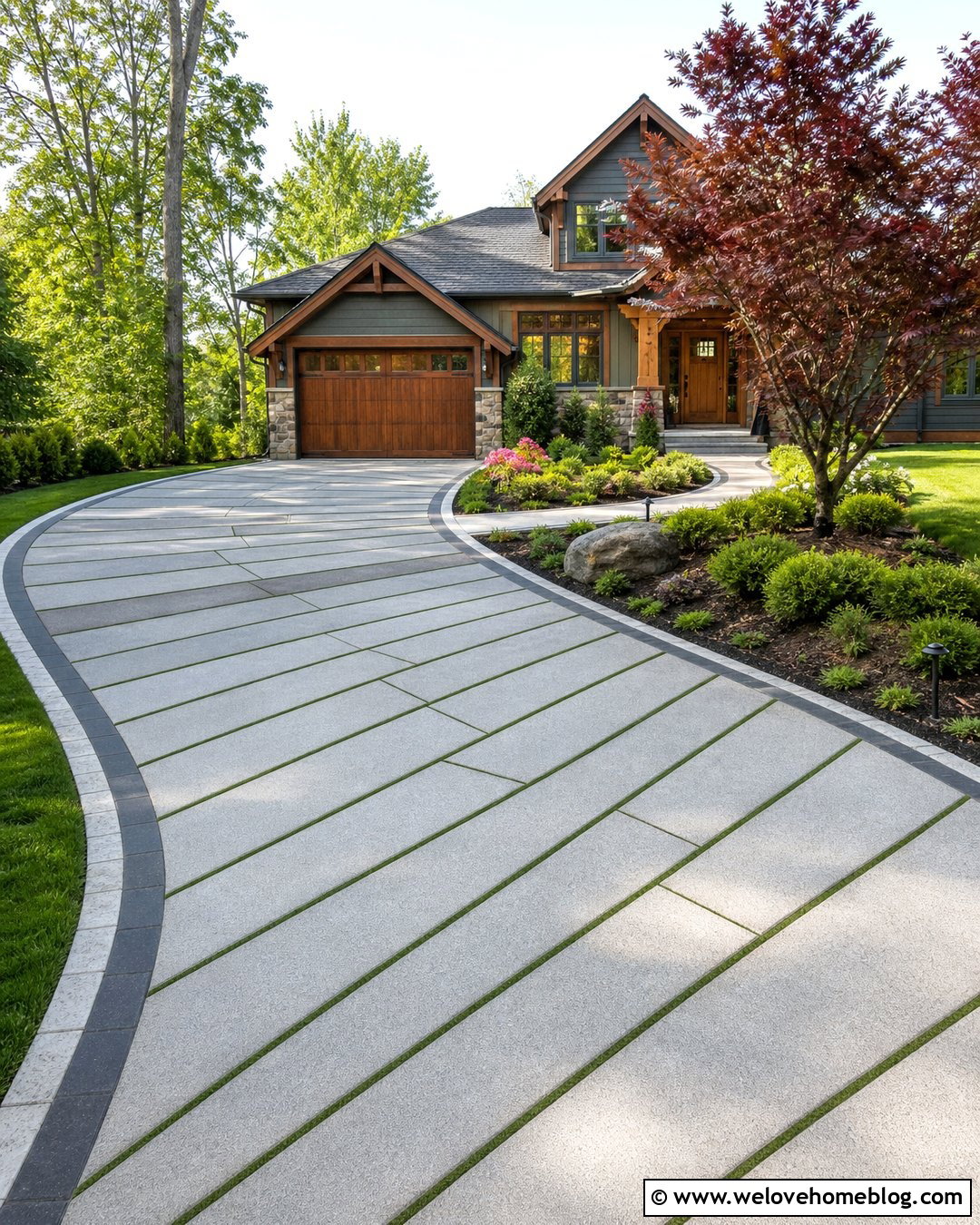
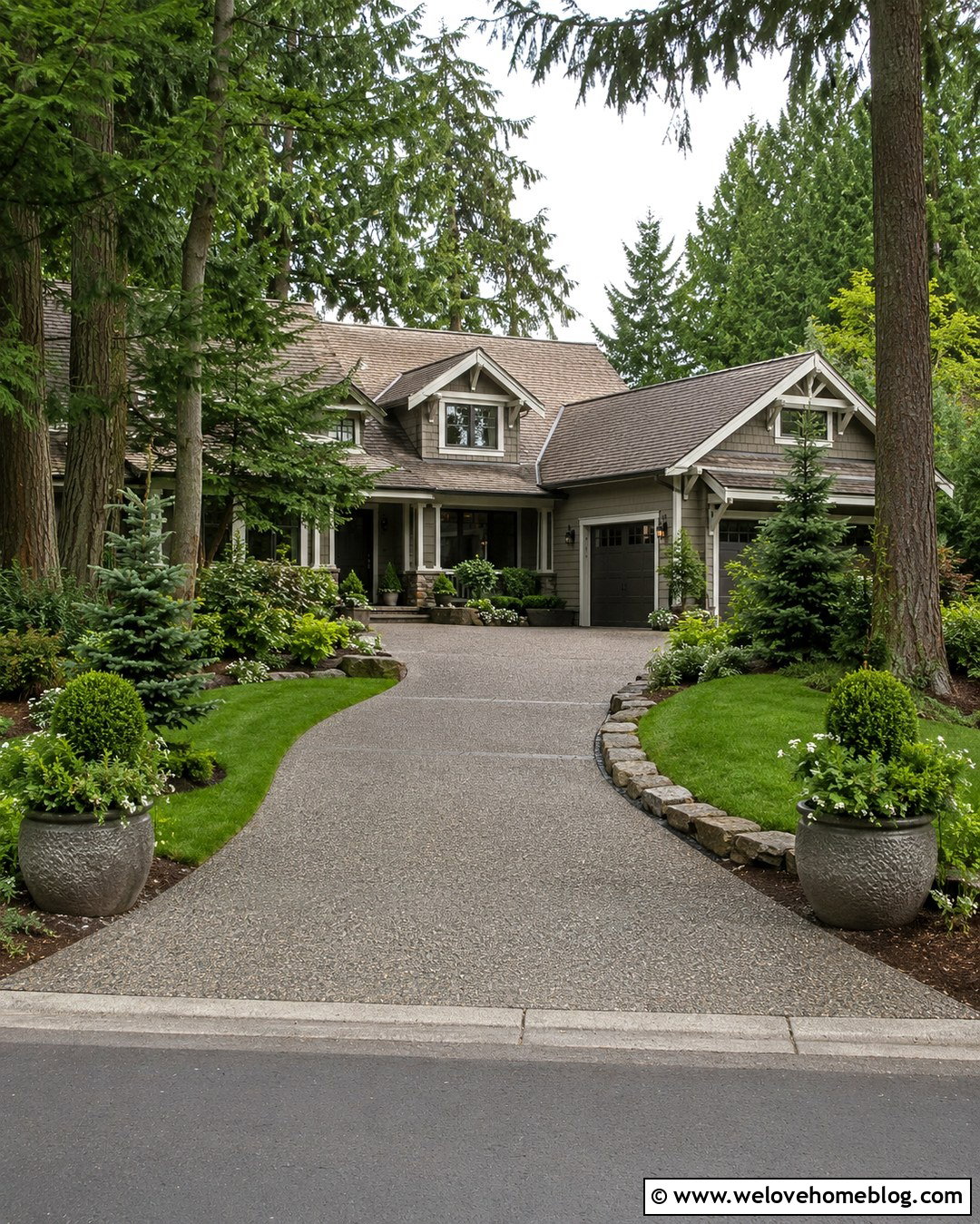
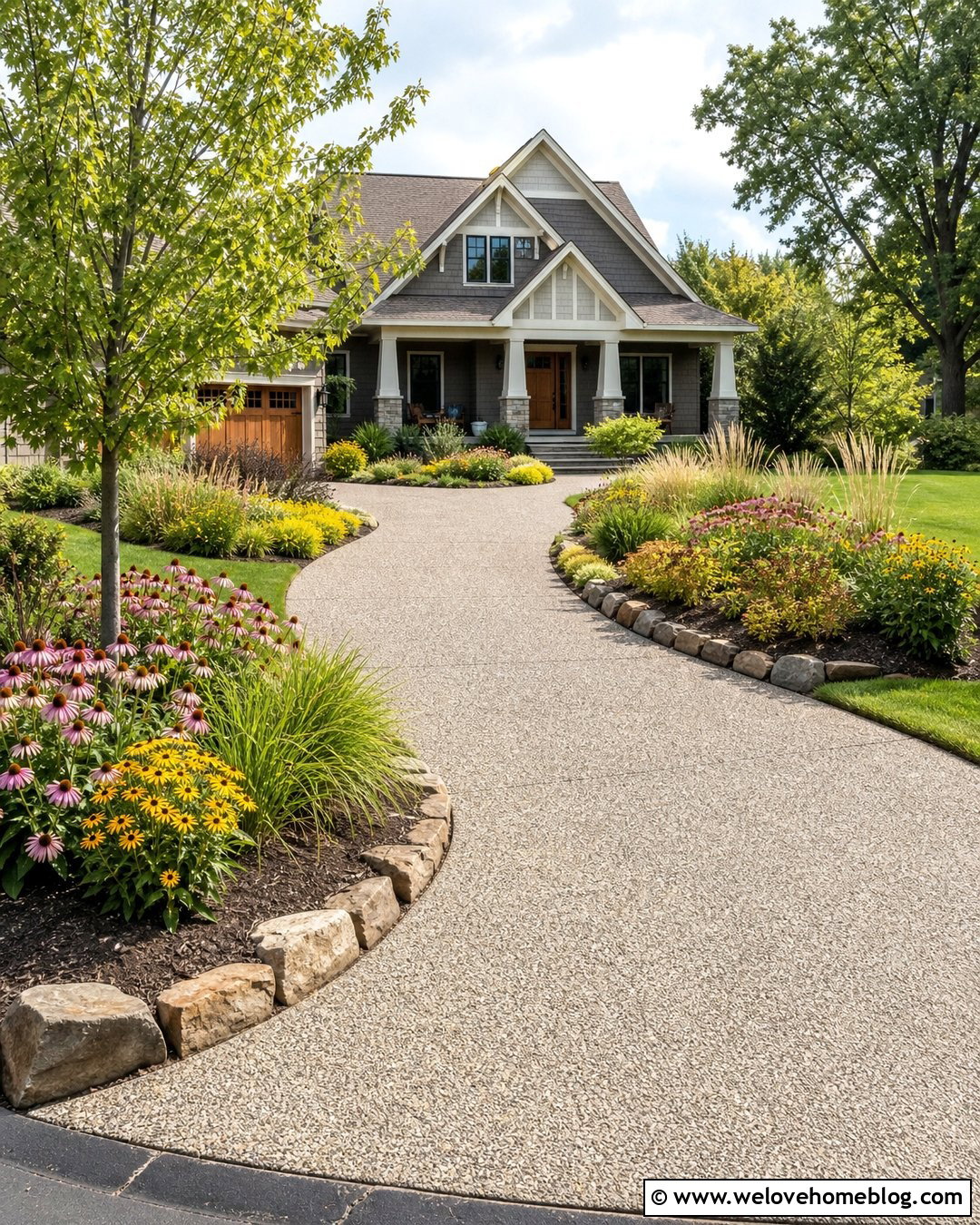
A curved driveway can incorporate artificial turf without losing the smooth flow of its layout. Use wedge-shaped concrete pavers, custom-cut slabs, or gently radiating bands that follow the bend instead of forcing a square grid into the curve. Narrow turf joints should remain consistent as they move around the arc. Define the outside edge with a dark paver border and use a softer stone border along the inner planting island. Place low plants near the curve so drivers have clear sightlines, then add taller shrubs or a feature tree farther back. The result feels welcoming rather than rigid. This complete driveway design is well suited to Craftsman homes, wooded suburban lots, and properties with garages positioned away from the street.
14. Circular Artificial Turf Driveway
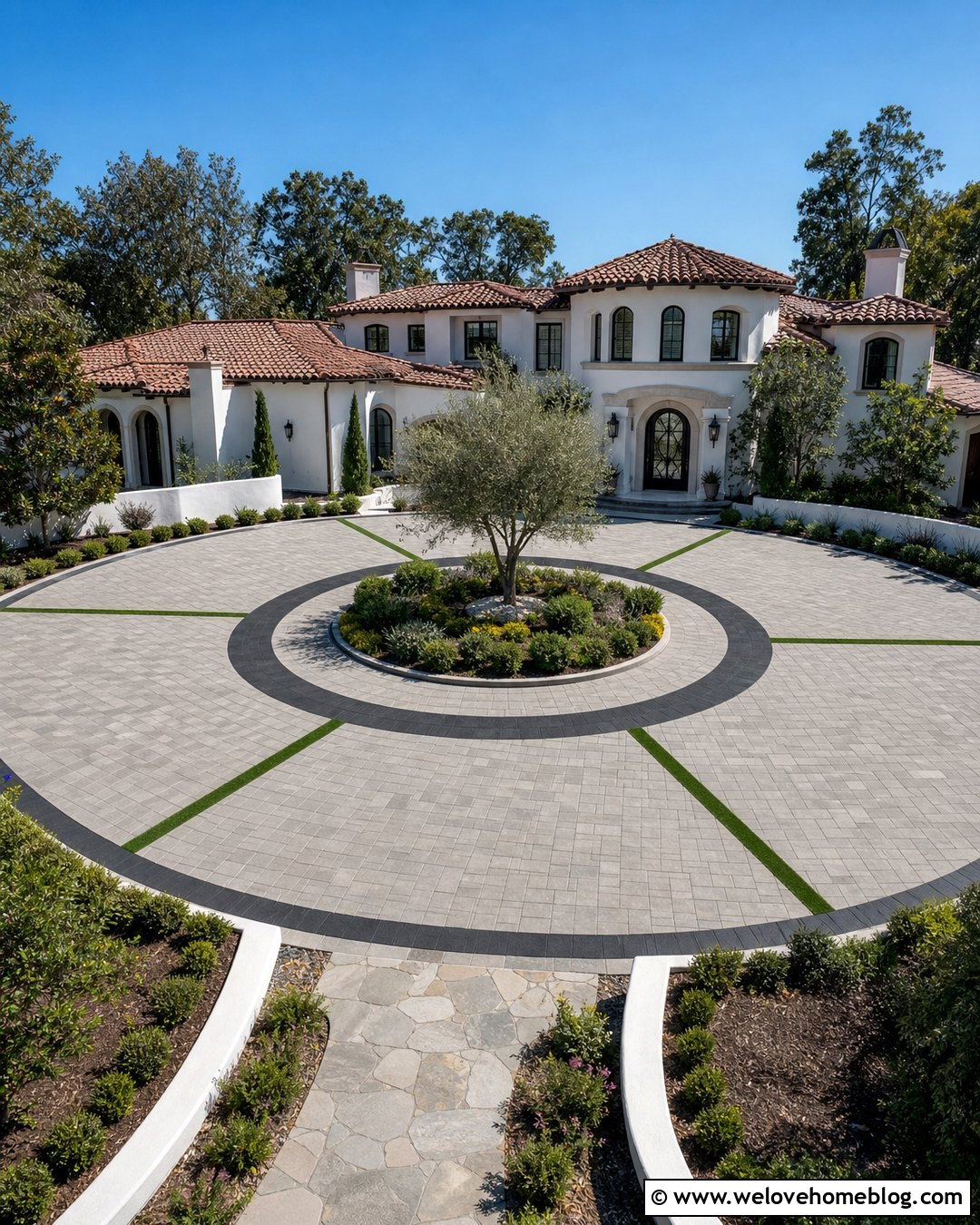
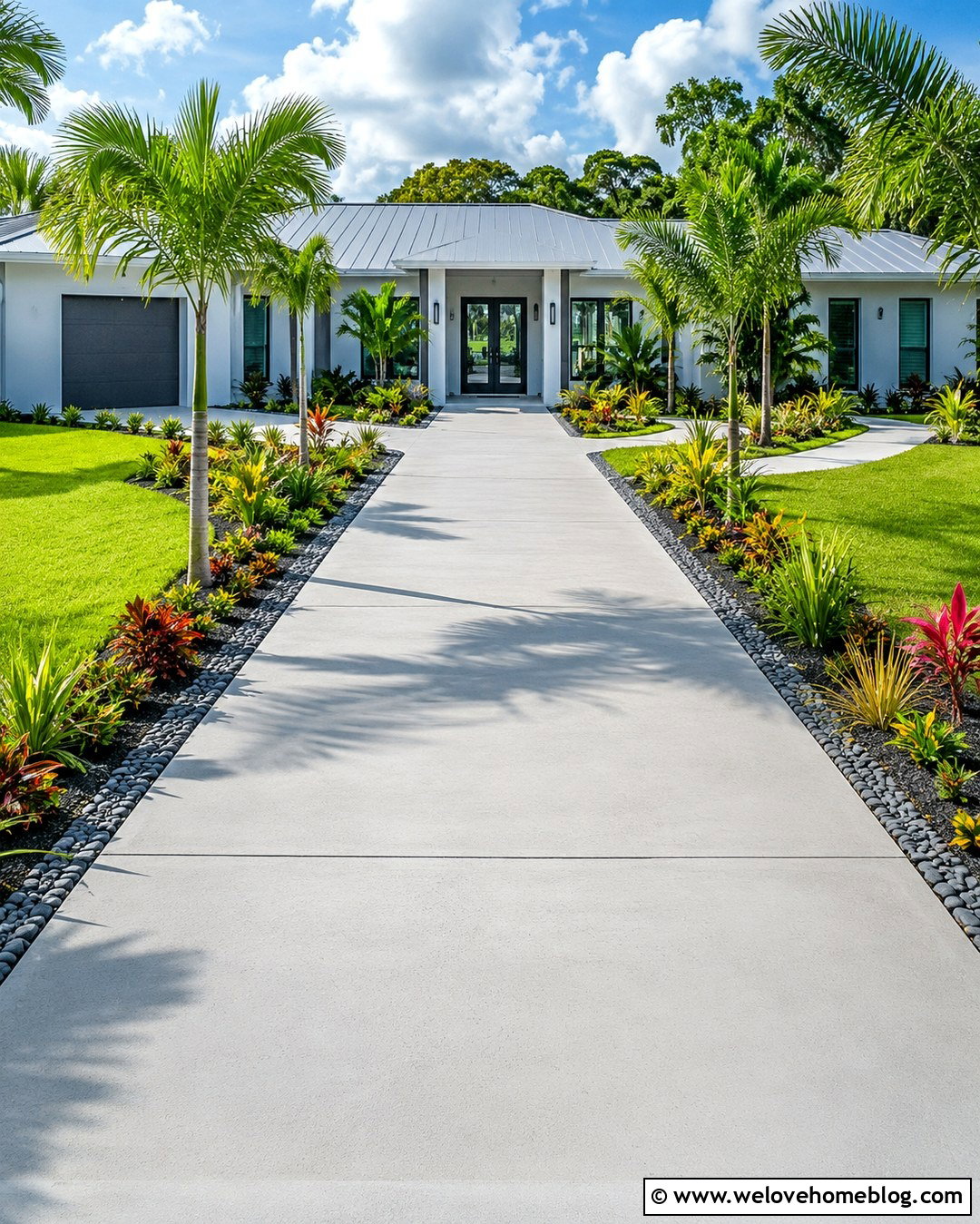
A circular artificial turf driveway can create an impressive arrival area while softening the amount of hardscape in a large front yard. Build the driving loop with vehicle-rated concrete pavers and place artificial turf in radial joints or organized rectangular bands. A fully paved turning lane is generally more practical than expecting vehicles to travel directly over broad turf sections. In the center island, repeat the synthetic grass around a small tree, fountain, or layered planting bed. Use a contrasting paver ring to define the circle and tie it to the entrance apron. This layout complements large colonial, Mediterranean, and modern estate homes. Low planting near the roadway preserves visibility, while taller landscaping closer to the house provides privacy and depth.
15. Artificial Turf Driveway With Brick Borders
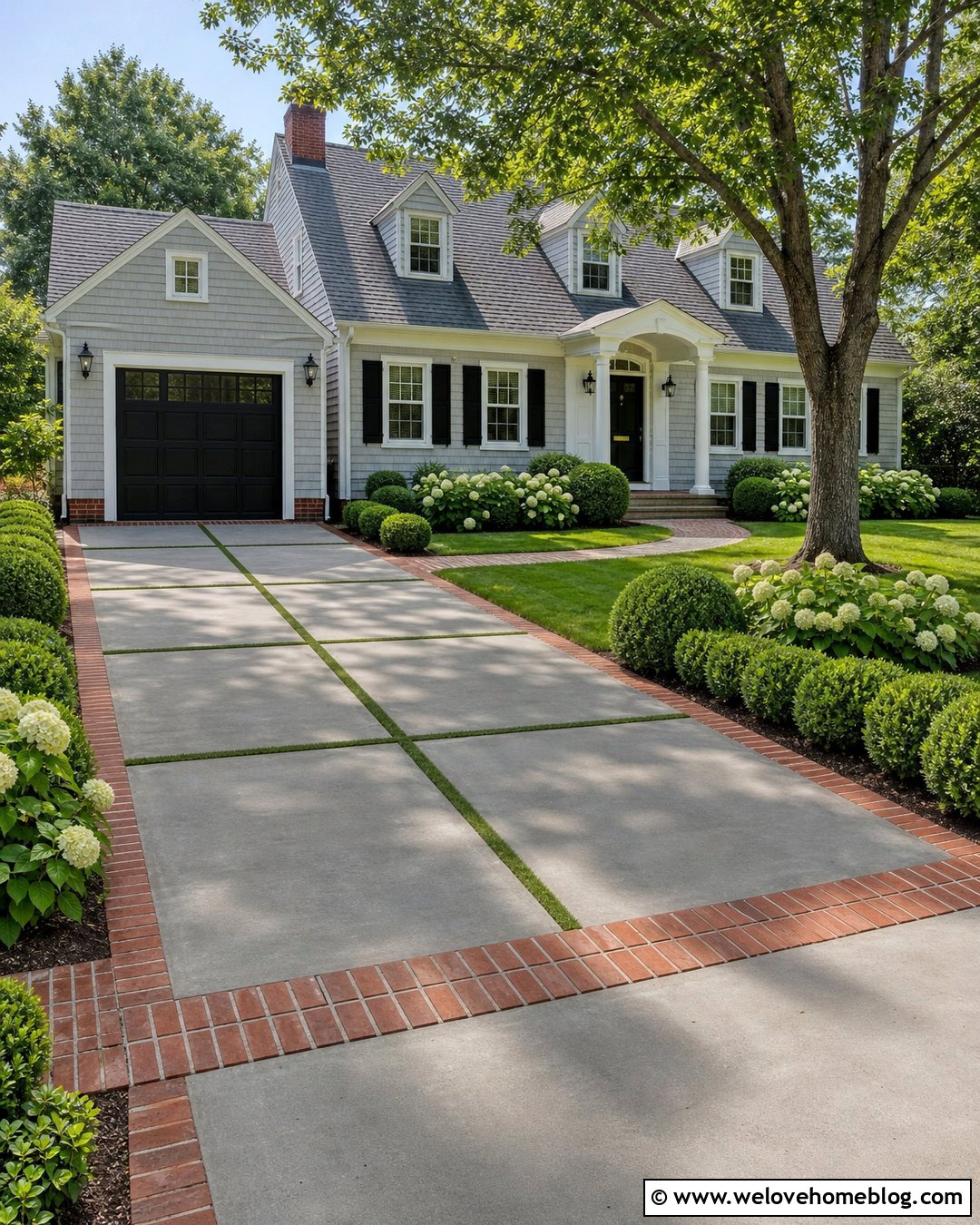
A brick border gives an artificial turf driveway a warmer and more traditional finish. Start with large gray concrete slabs separated by narrow green turf strips, then frame the entire surface with red or brown clay brick. The brick can also form a ribbon across the entrance and garage threshold, creating clear transitions between paving areas. Choose brick colors that repeat tones found in the house, chimney, porch, or front steps. Curved planting beds filled with boxwood, hydrangeas, and seasonal flowers soften the rectangular driveway pattern. This combination works particularly well for colonial, Cape Cod, and traditional suburban homes. A compact grid keeps the appearance current, while the brick edging provides familiar character and a strong visual boundary.
16. Artificial Turf Driveway With Cobblestone Edging
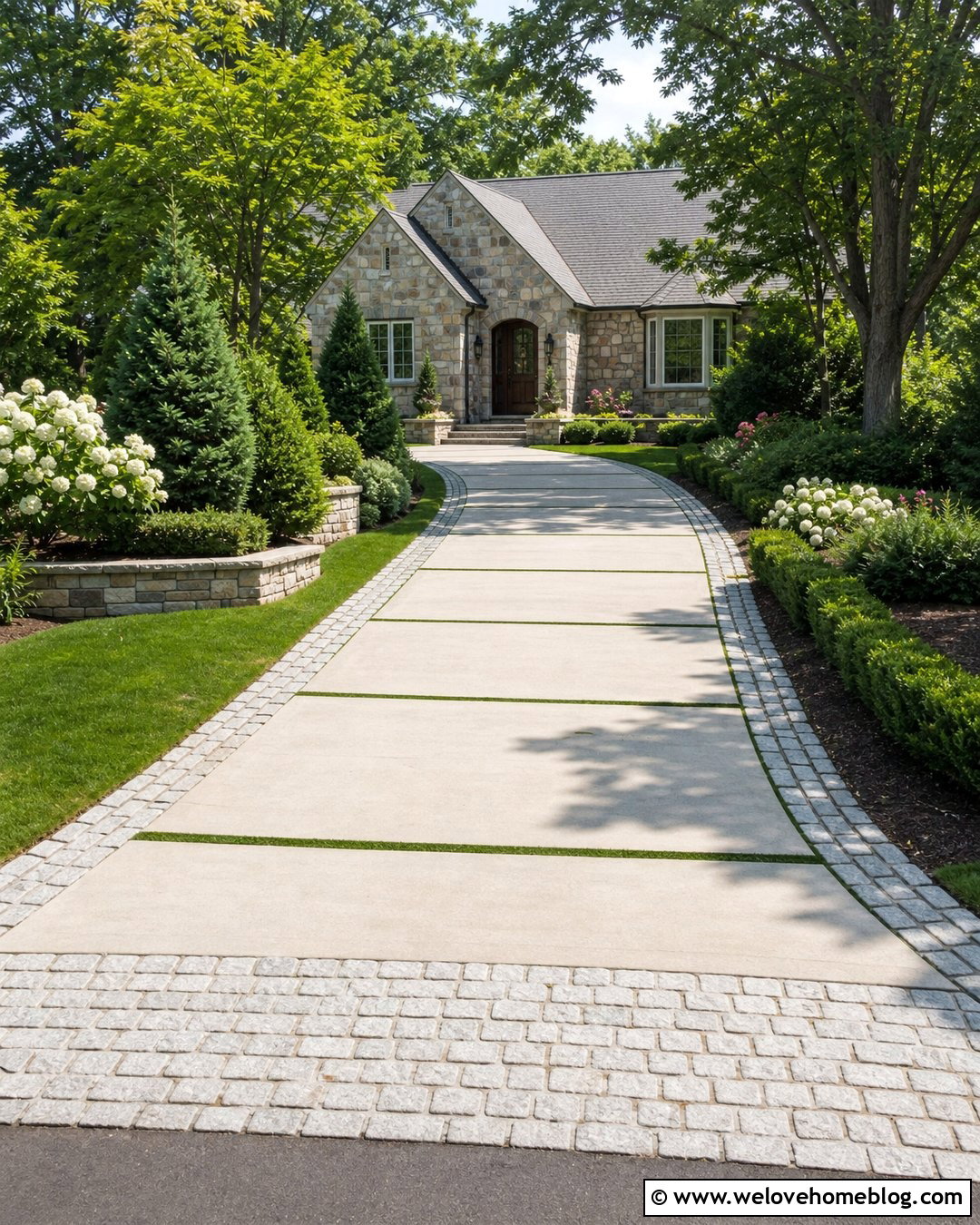
Cobblestone edging adds texture and weight to a smooth concrete-and-turf driveway. Use pale poured-concrete slabs with straight artificial turf joints, then install gray granite cobbles around the perimeter and entrance apron. The rough stone edge creates a noticeable contrast with the clean concrete surface without competing with the green lines. A double row of cobbles can make a wide driveway feel more substantial, while one narrow row suits a smaller property. Repeat the stone around planting beds or along the walkway for a cohesive front yard. This design pairs well with European-inspired homes, stone cottages, and upscale traditional houses. Keep the artificial turf pattern simple so the natural variation of the cobblestone remains visible and balanced.
17. Artificial Turf Driveway With Gravel Borders
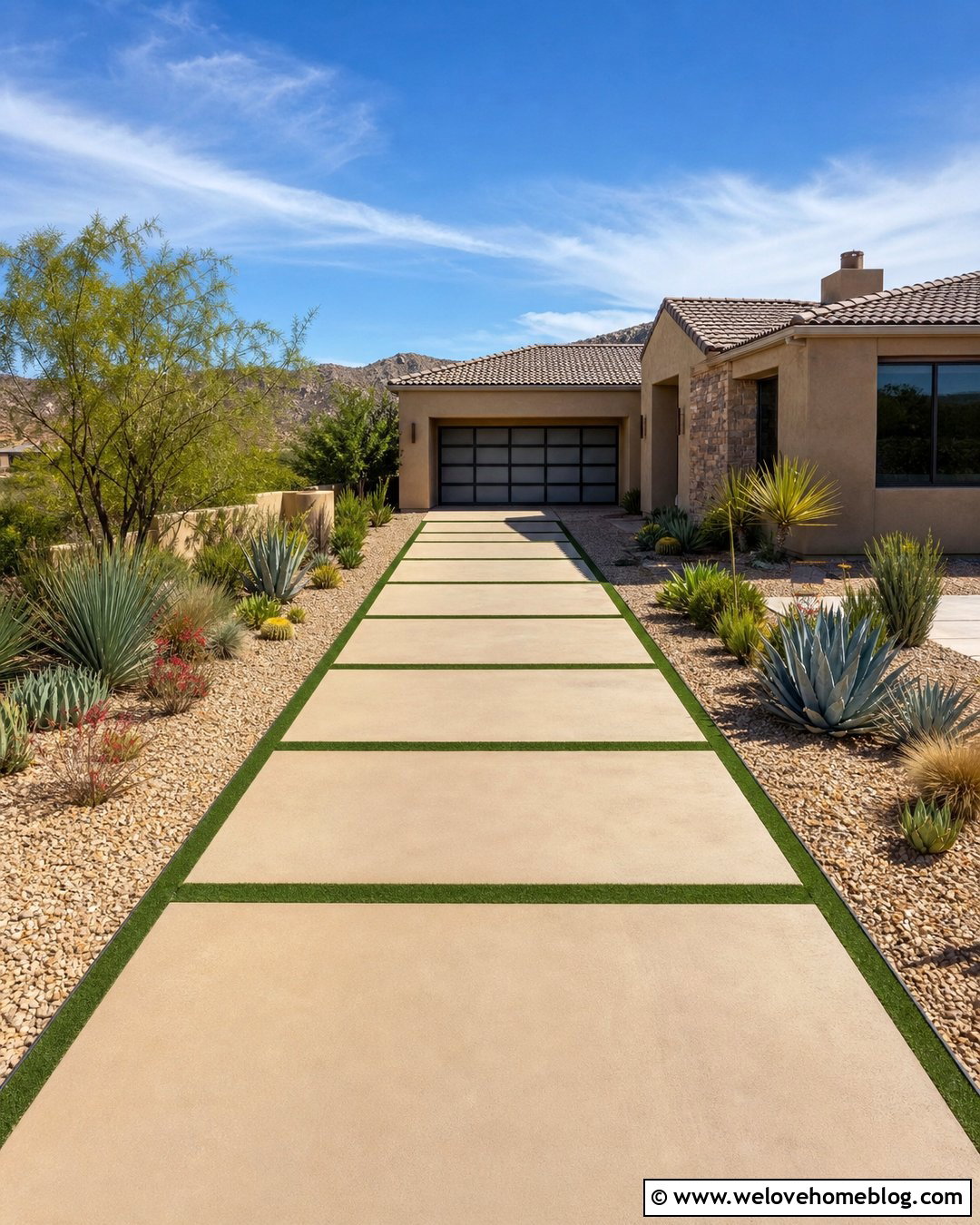
Gravel borders can make an artificial turf driveway feel relaxed while improving the transition into drought-tolerant landscaping. Build the main surface with rectangular concrete pads and narrow synthetic turf strips, then place washed river gravel or angular decorative stone along both sides. Metal edging should separate the gravel from the turf and planting beds to prevent materials from migrating. Choose tan gravel for a warm desert palette or dark gray stone for a more contemporary look. Add agave, yucca, ornamental grasses, and compact evergreen shrubs in spacious groupings. A paved walkway should provide a clean route to the front door. This low-water appearance suits modern ranch homes, Southwestern architecture, and sunny suburban yards where a large lawn would require considerable upkeep.
18. Artificial Turf Driveway With Stepping Pavers
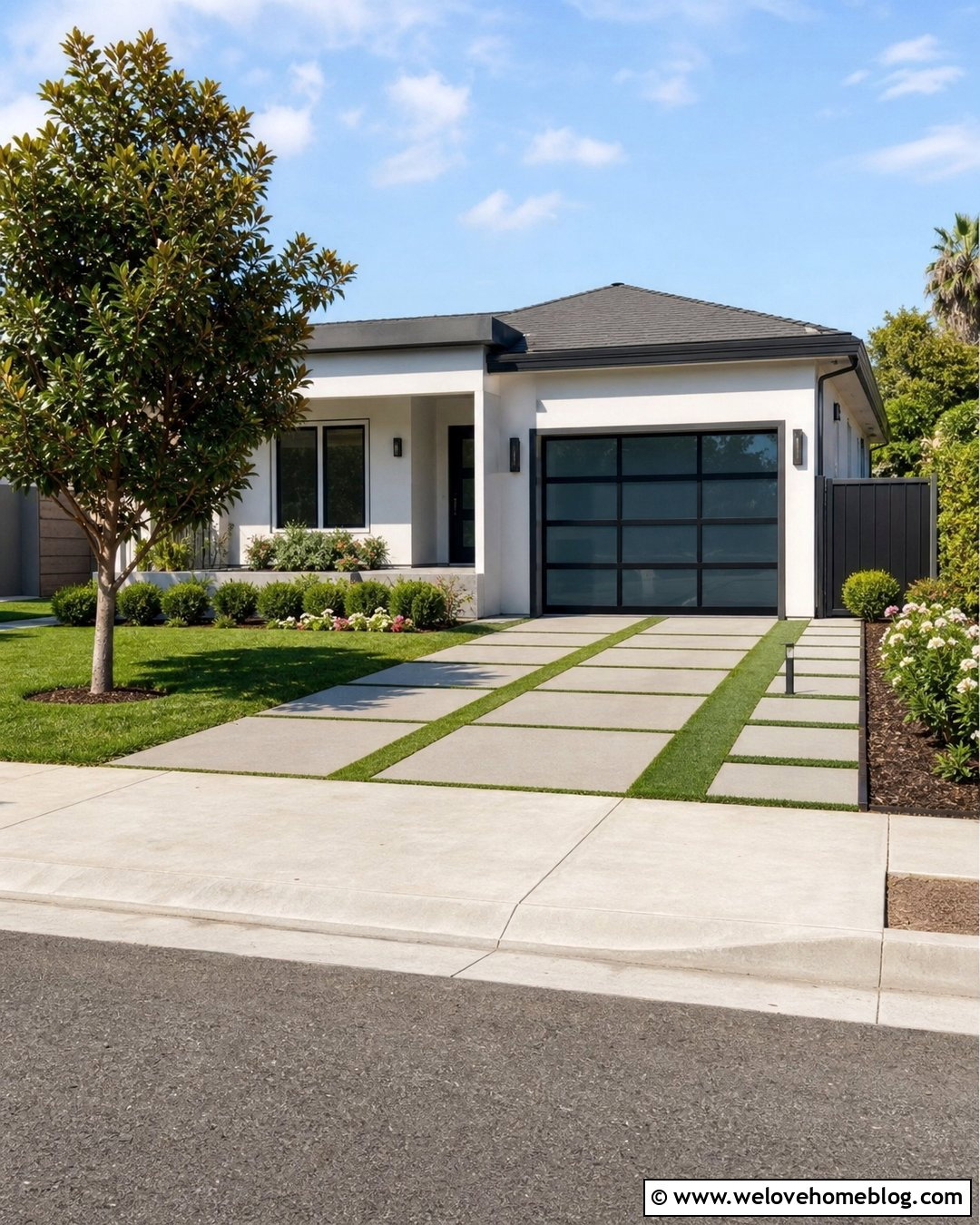
A sequence of oversized stepping pavers can create a lighter-looking driveway for a compact home. The pavers should form reliable wheel paths, while artificial turf fills the measured spaces around them. Use thick rectangular concrete slabs in a staggered arrangement, but avoid offsets that leave tires repeatedly crossing unsupported turf. A solid apron near the curb makes entering the driveway easier and protects the first row of pavers. Carry smaller versions of the same slabs toward the front door to establish a coordinated walkway. Simple lawn panels, flowering shrubs, and one small ornamental tree complete the setting. This design feels especially suitable for bungalows, modern cottages, and accessory dwelling units with short driveways and limited front-yard space.
19. Artificial Turf Driveway With Stone Pillars
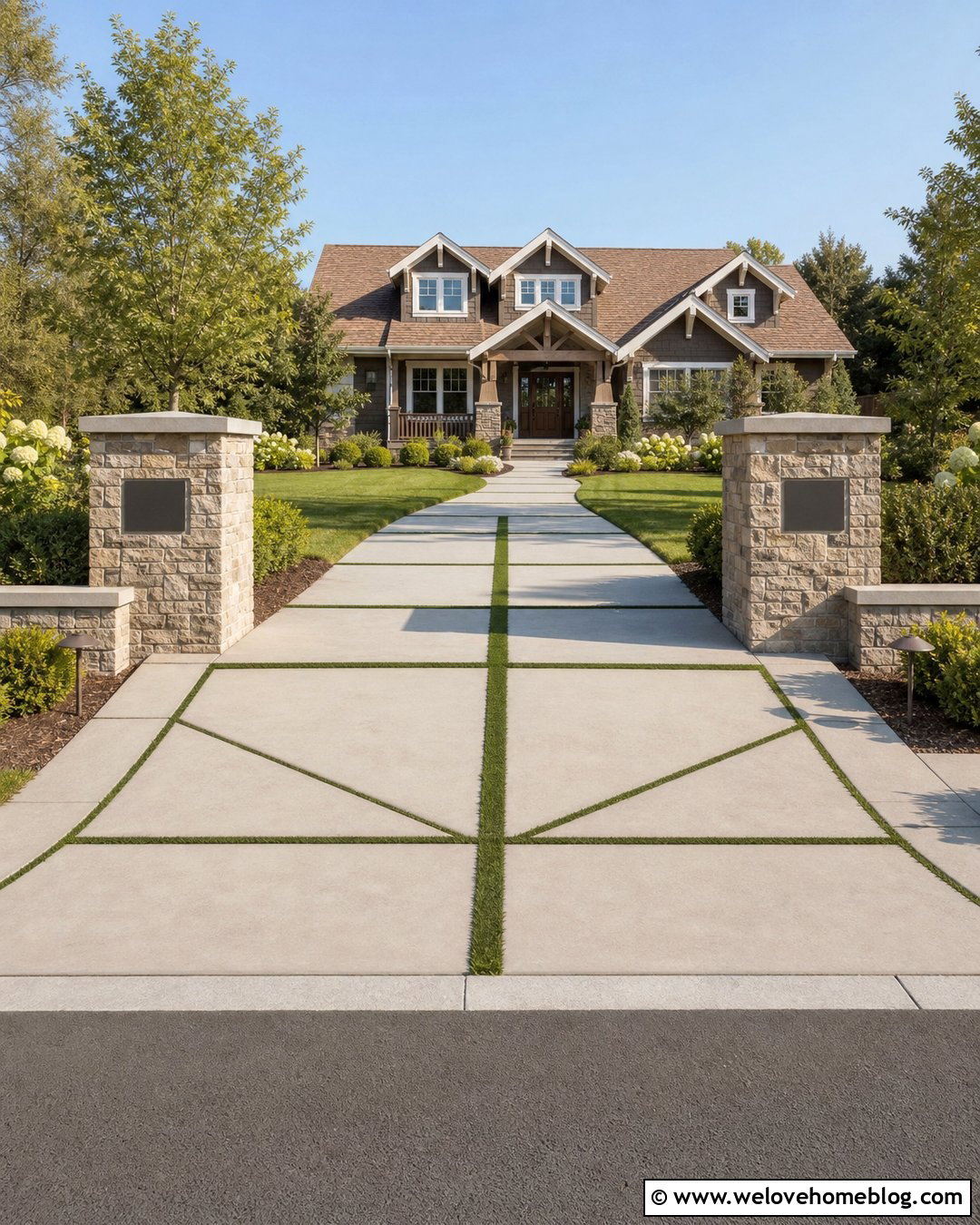
Stone pillars can give a turf-accented driveway a defined entrance without requiring a full gate. Use large beige concrete pavers with straight artificial grass joints leading from the curb to the garage. At the entrance, position low stone pillars outside the vehicle clearance area and connect them to short planting walls. Match the pillar stone to the home’s facade, porch columns, or foundation veneer. A paved entrance apron and subtle outward flare make the driveway easier to identify from the street. Add low lighting, an address plaque, and symmetrical shrubs for a balanced appearance. This complete design works with Craftsman, modern farmhouse, and rustic suburban homes, offering a substantial entrance while preserving an open view of the house and front yard.
20. Artificial Turf Driveway With Modern Lighting
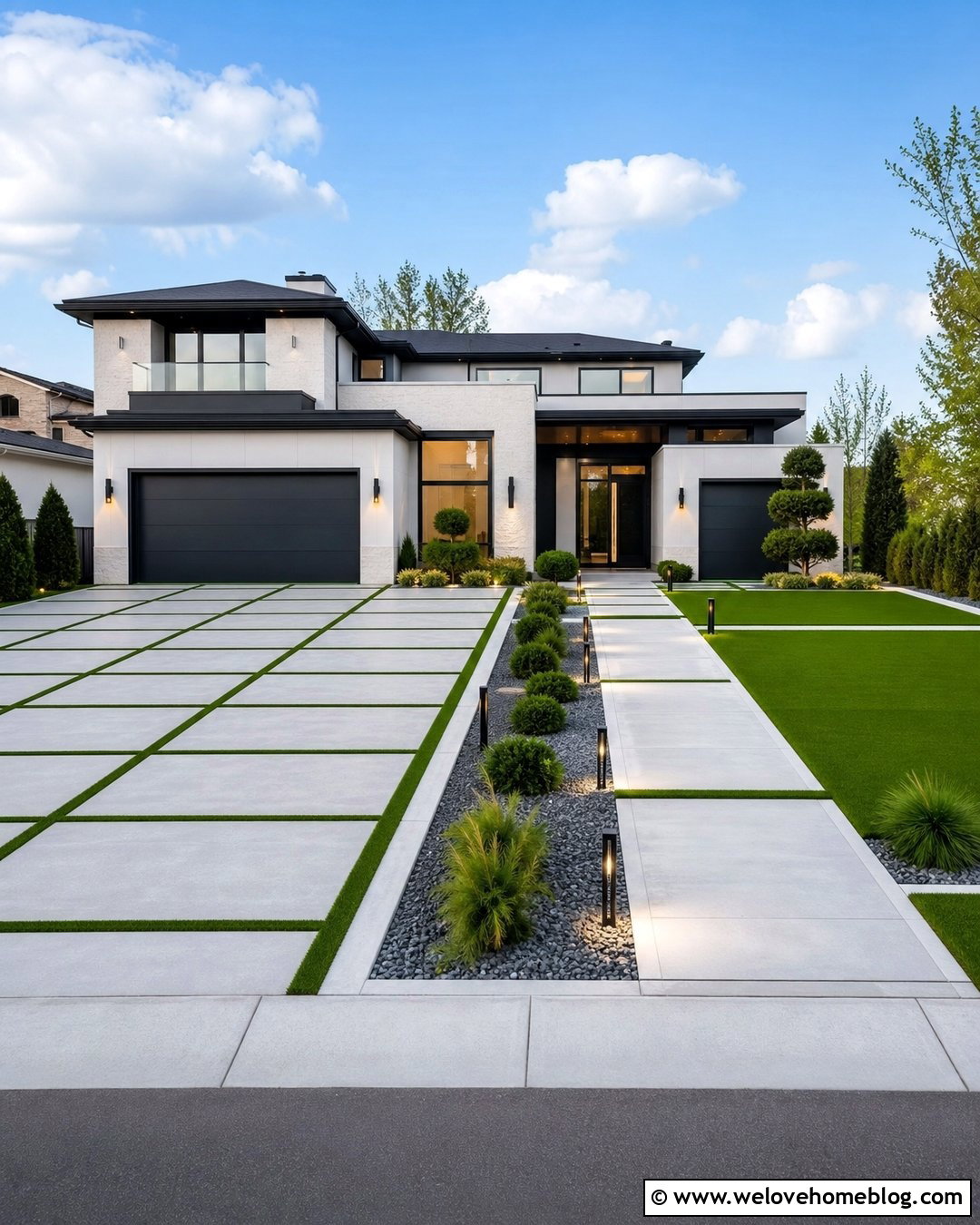
Integrated lighting helps a geometric artificial turf driveway remain visually organized after sunset, even though the primary curb view should still feel bright and attractive during the day. Choose large-format gray porcelain-look concrete pavers separated by straight turf ribbons. Install low-profile fixtures along the outer border rather than inside tire paths or narrow grass joints. Slim bollards can mark the entrance, while recessed wall lights illuminate nearby planting beds and the walkway. During daylight, black fixture housings add a sharp accent that coordinates with modern windows and garage doors. Use sculptural shrubs, ornamental grasses, and clean gravel mulch to complete the design. Careful fixture placement prevents clutter and preserves the driveway’s strong lines, open approach, and contemporary character.
Conclusion:
The best artificial turf driveway is more than a few green strips placed between random slabs. Its paving material, joint pattern, borders, landscaping, drainage, and vehicle paths should function as one coordinated design. Large concrete pads offer modern simplicity, while brick, flagstone, and cobblestone can bring warmer character. Curved, circular, ribbon, and grid layouts also make it possible to adapt the look to different properties. Before installation, confirm local rules and have the base, slope, drainage, and load requirements evaluated by an experienced contractor. Artificial grass should be paired with stable, vehicle-rated hardscape rather than treated like ordinary driveway paving. Use these 20 Artificial Turf Driveway Ideas to plan a greener entrance with practical curb appeal.

Related posts:

Leave a Reply