
A planted driveway can soften hard paving, guide the eye toward the house, and make the entire front yard feel more welcoming. These 20 lining driveway with plants ideas combine attractive planting with practical driveway surfaces, borders, layouts, and home styles. The best approach considers sunlight, mature plant size, drainage, visibility, and the space needed for open car doors. Low perennials suit narrow edges, while layered shrubs and trees can give a long driveway more structure. Repeating plants also creates a cleaner look than using too many unrelated varieties. From formal evergreen borders to drought-tolerant grasses and colorful cottage beds, each complete design below offers a different way to improve curb appeal with 20 lining driveway with plants ideas. ()

1. Lavender-Lined Gravel Driveway
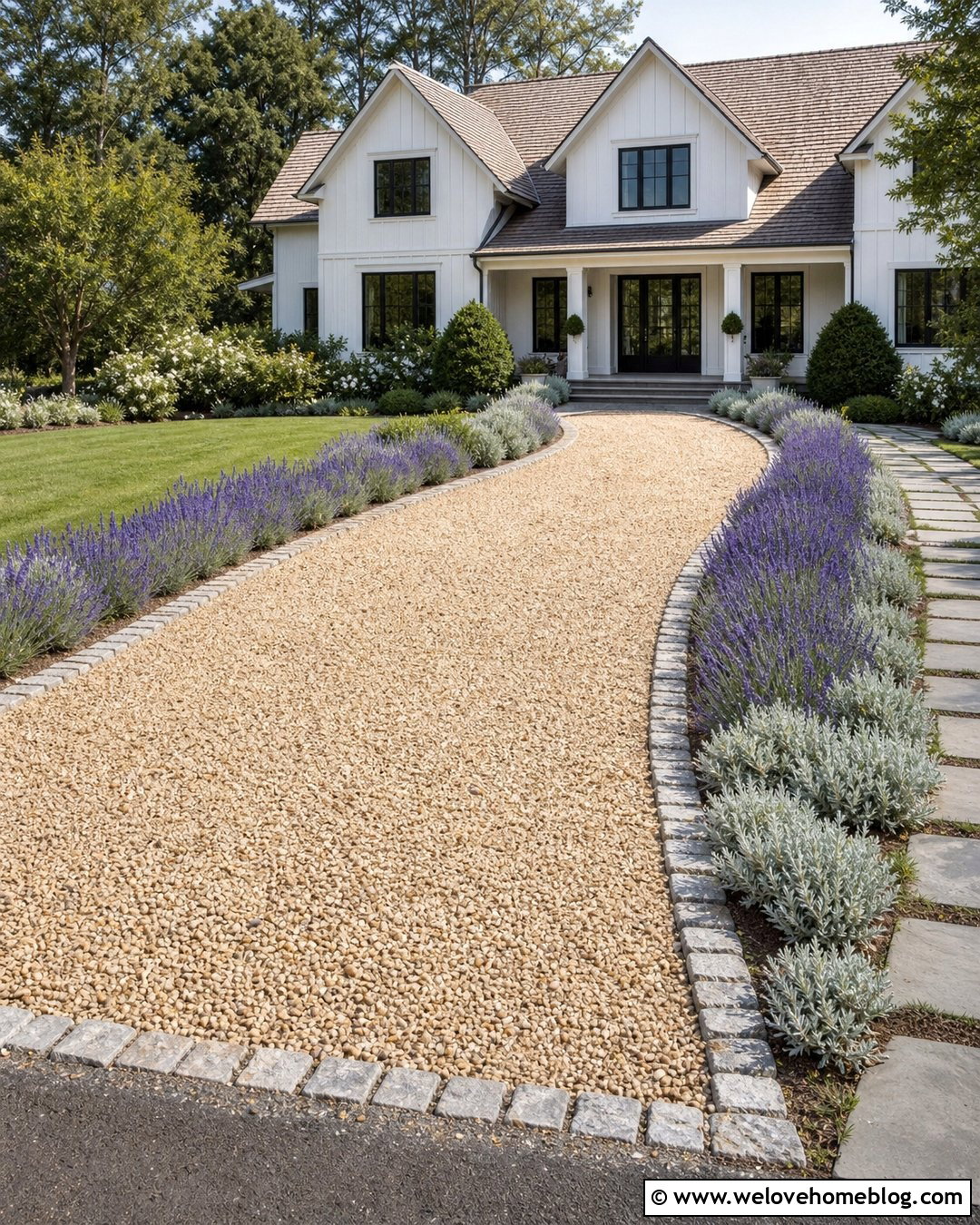
A pale gravel driveway bordered with lavender creates a relaxed entrance that feels neat without looking overly formal. Use compact lavender varieties in sunny, well-drained beds along both sides of a straight or gently curved drive. A cobblestone edge keeps loose gravel away from the plants and protects the crowns from vehicle tires. Repeat the lavender at even intervals for rhythm, then add a few upright evergreens near the house to give the design winter structure. Silver foliage works especially well with cream, gray, or buff gravel. This complete look suits cottages, ranch homes, and modern farmhouses. Leave enough space between the pavement and mature plants so branches do not brush vehicles or block sightlines near the street.
2. Boxwood-Lined Concrete Driveway
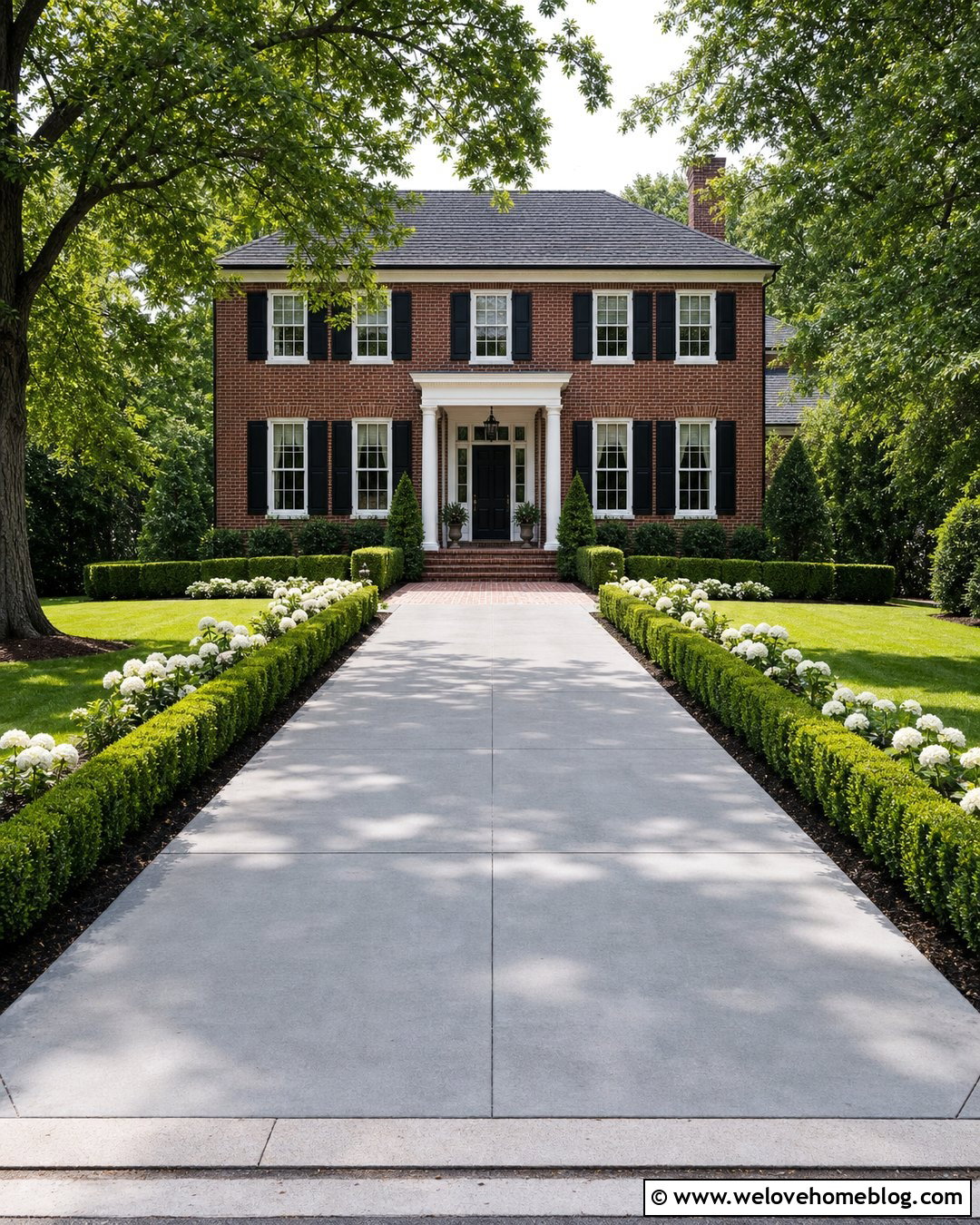
Crisp boxwood hedges can make a plain poured-concrete driveway feel more connected to a traditional home. Keep the hedges low enough to preserve visibility and trim them into a simple rectangular shape. Narrow mulch beds between the concrete and boxwood provide room for roots while preventing soil from washing onto the driveway. Add white flowering annuals or compact perennials near the entrance for controlled seasonal color. A straight driveway reinforces the formal arrangement, especially when the planting aligns with porch columns, garage doors, or front windows. For a less rigid result, allow the hedge corners to remain softly rounded. This complete driveway design works beautifully with colonial, Georgian, Cape Cod, and symmetrical brick houses.
3. Ornamental Grass Paver Driveway
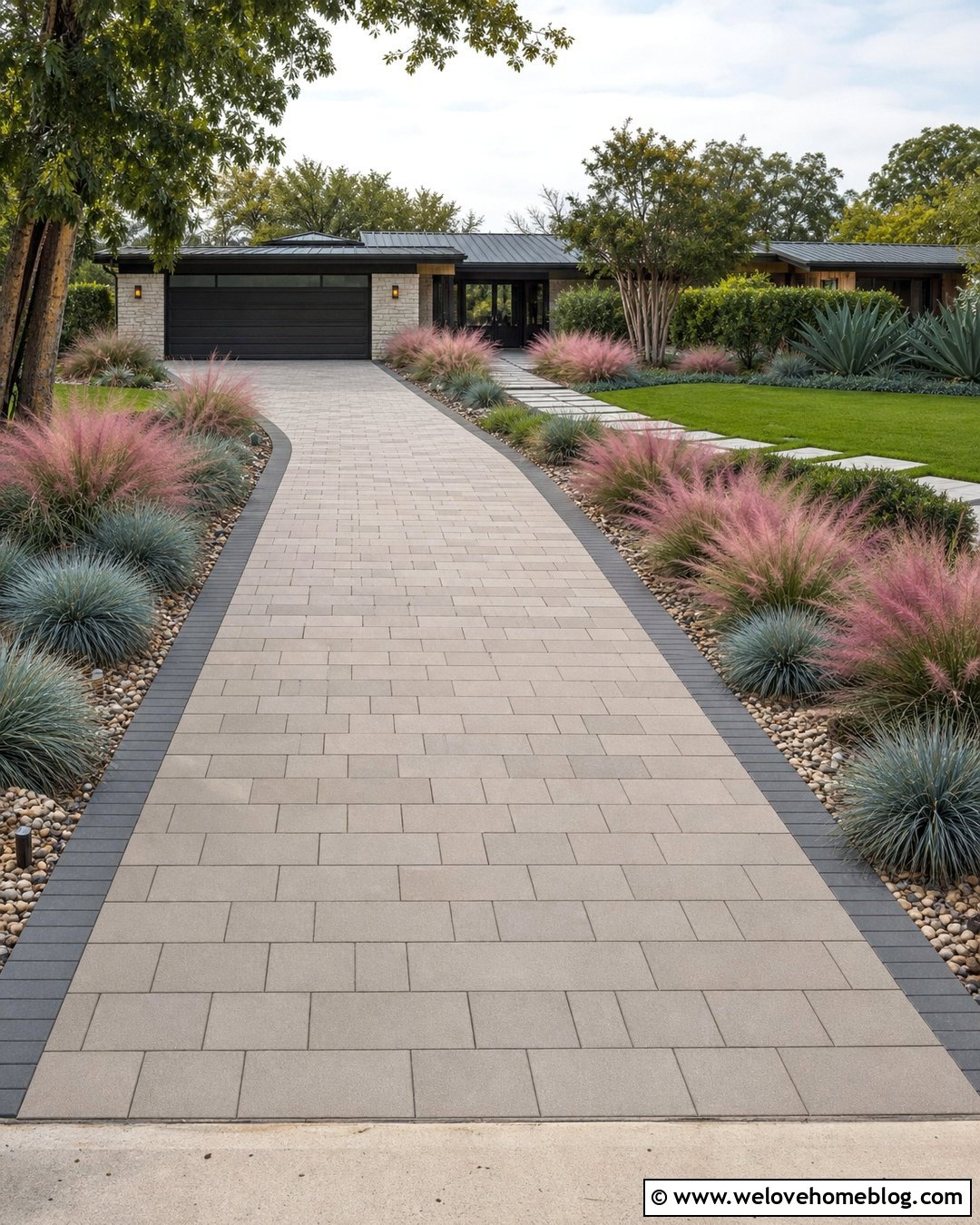
Do you want movement without maintaining a flower-heavy border? Line a warm gray paver driveway with repeated clumps of ornamental grass. Compact fountain grass, switchgrass, muhly grass, or locally suitable sedges can create texture while preserving a clean, modern appearance. Use a dark paver soldier course between the driveway and planting beds to create a durable mowing and maintenance edge. Place the grasses in broad groups rather than isolated single plants, leaving clear openings beside walkways and parking areas. River rock or fine gravel mulch can reinforce the streamlined look. The waving foliage softens a straight driveway and looks especially attractive beside contemporary, midcentury, or modern ranch architecture. Select noninvasive varieties suited to local conditions.
4. Hydrangea-Lined Brick Driveway
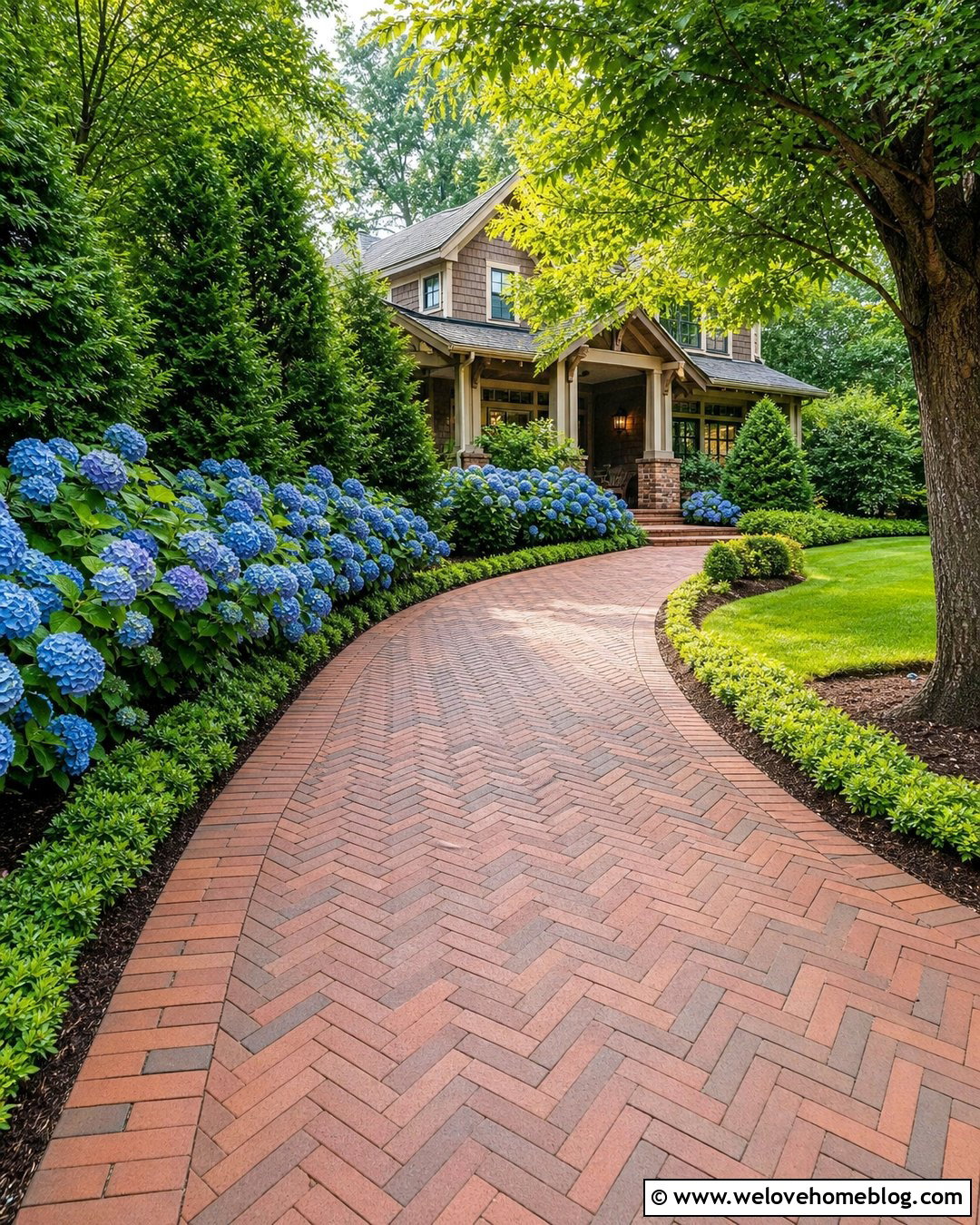
Large hydrangea flowers can turn a brick driveway into a lush, garden-focused approach. This arrangement works best where the border receives morning sun, afternoon shade, or filtered light, depending on the selected hydrangea. Set the shrubs behind a low row of evergreen groundcover so bare lower stems remain less noticeable. A clay brick driveway laid in herringbone adds warmth, while a matching running-bond border gives the beds a finished edge. Keep hydrangeas farther from parking zones because mature flower heads may extend into the drive. Repeat one variety for visual unity, then connect the border to foundation beds near the porch. This generous planting style complements craftsman houses, brick colonials, and cottage-inspired homes.
5. Native Wildflower Asphalt Driveway
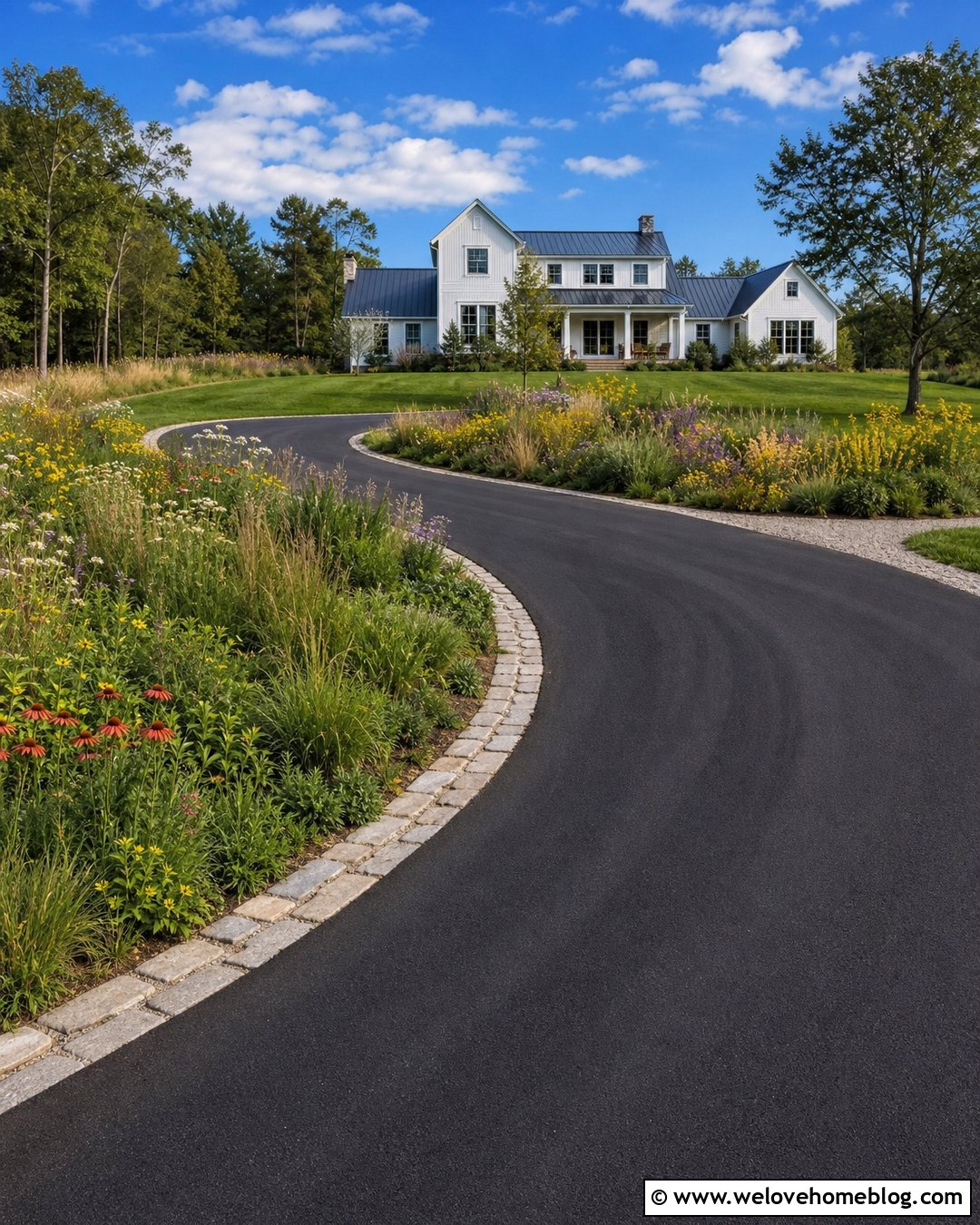
A black asphalt driveway can feel much softer when bordered by wide beds of native wildflowers and grasses. Instead of placing every plant in a straight row, arrange repeating drifts that follow a curved driveway. Keep the plants shorter near the road and driveway entrance, where drivers need clear views. Taller flowers and grasses can appear farther back or closer to the house. A steel or flush stone edge creates a clean separation between the asphalt and garden without making the design look formal. Include species with different bloom periods to extend seasonal interest. Locally adapted plants can also support regional wildlife when matched carefully to the site. This natural look is well suited to country homes and wooded suburban lots.
6. Evergreen Shrub Circular Driveway
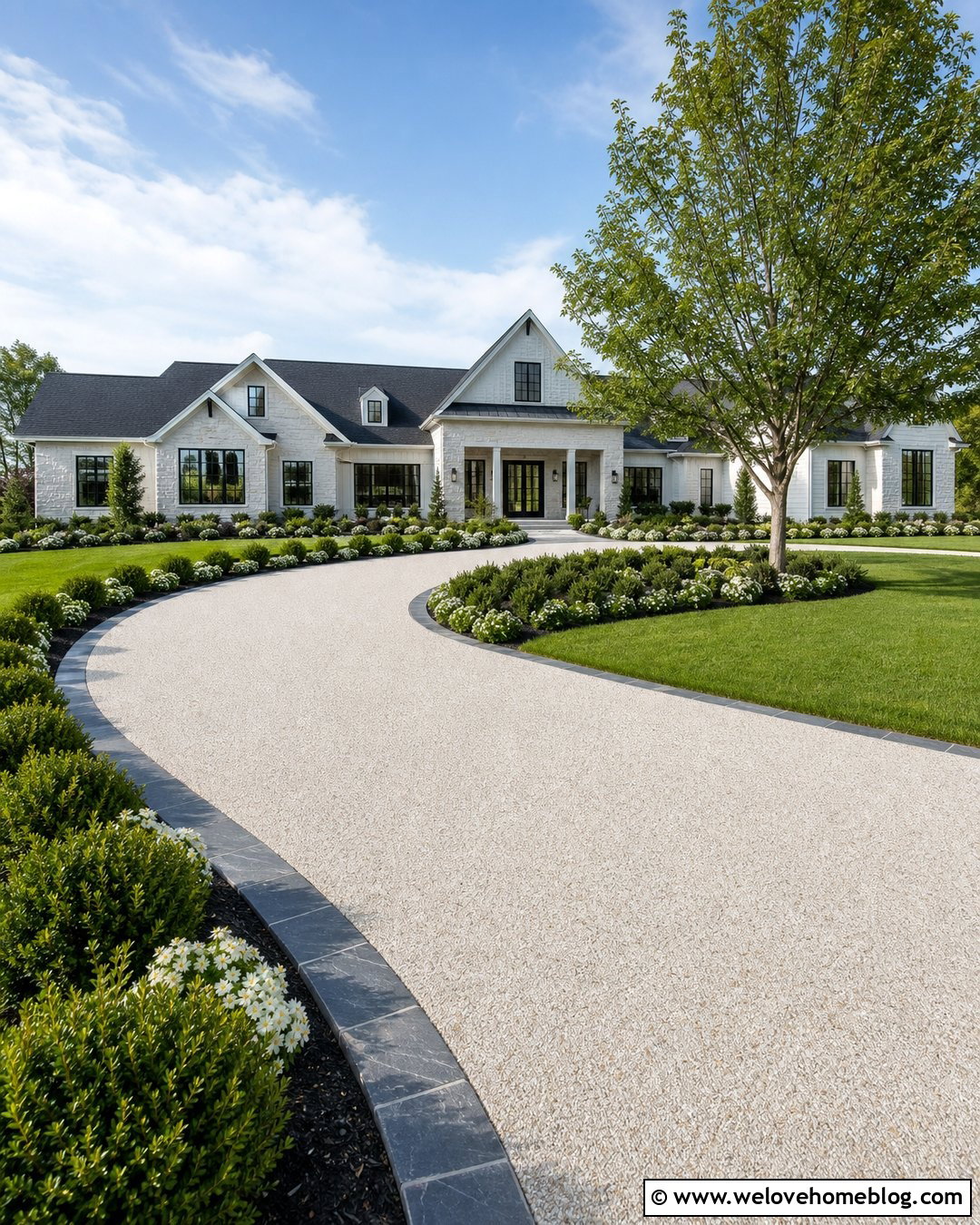
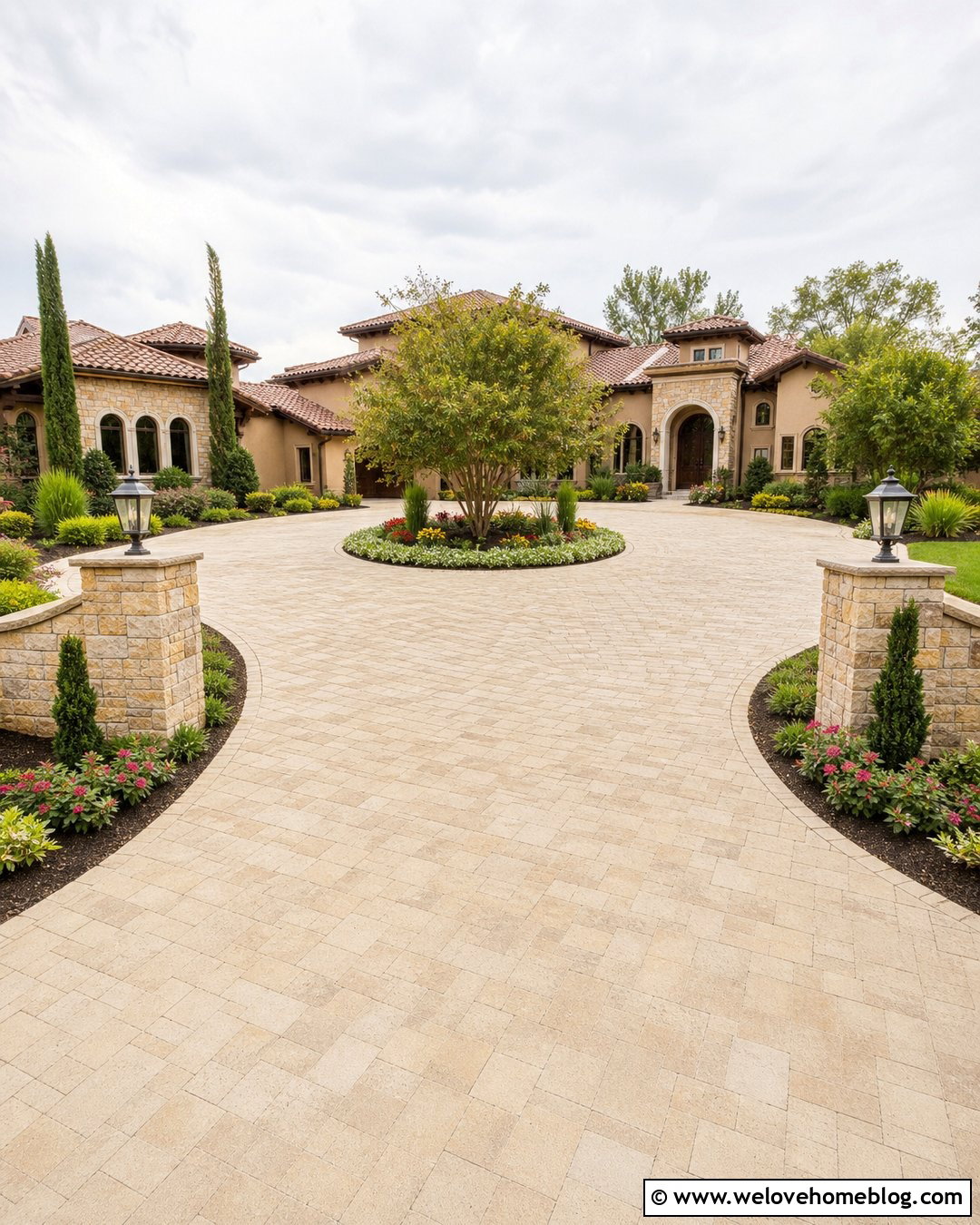
A circular driveway needs planting that defines its shape without making the center island feel crowded. Border the outer curve with low evergreen shrubs, then repeat the same plants around part of the central island for continuity. Dwarf hollies, compact junipers, inkberry, or other regionally appropriate evergreens can provide dependable structure. Use contrasting seasonal flowers near the front door rather than distributing bright colors everywhere. A light exposed-aggregate surface and dark stone edging make the green foliage stand out clearly. Preserve an open lawn or a single specimen tree within the island so the entrance remains spacious. This balanced arrangement works with large ranch, traditional, and transitional homes while keeping the circular driving route easy to understand.
7. Creeping Thyme Paver Driveway
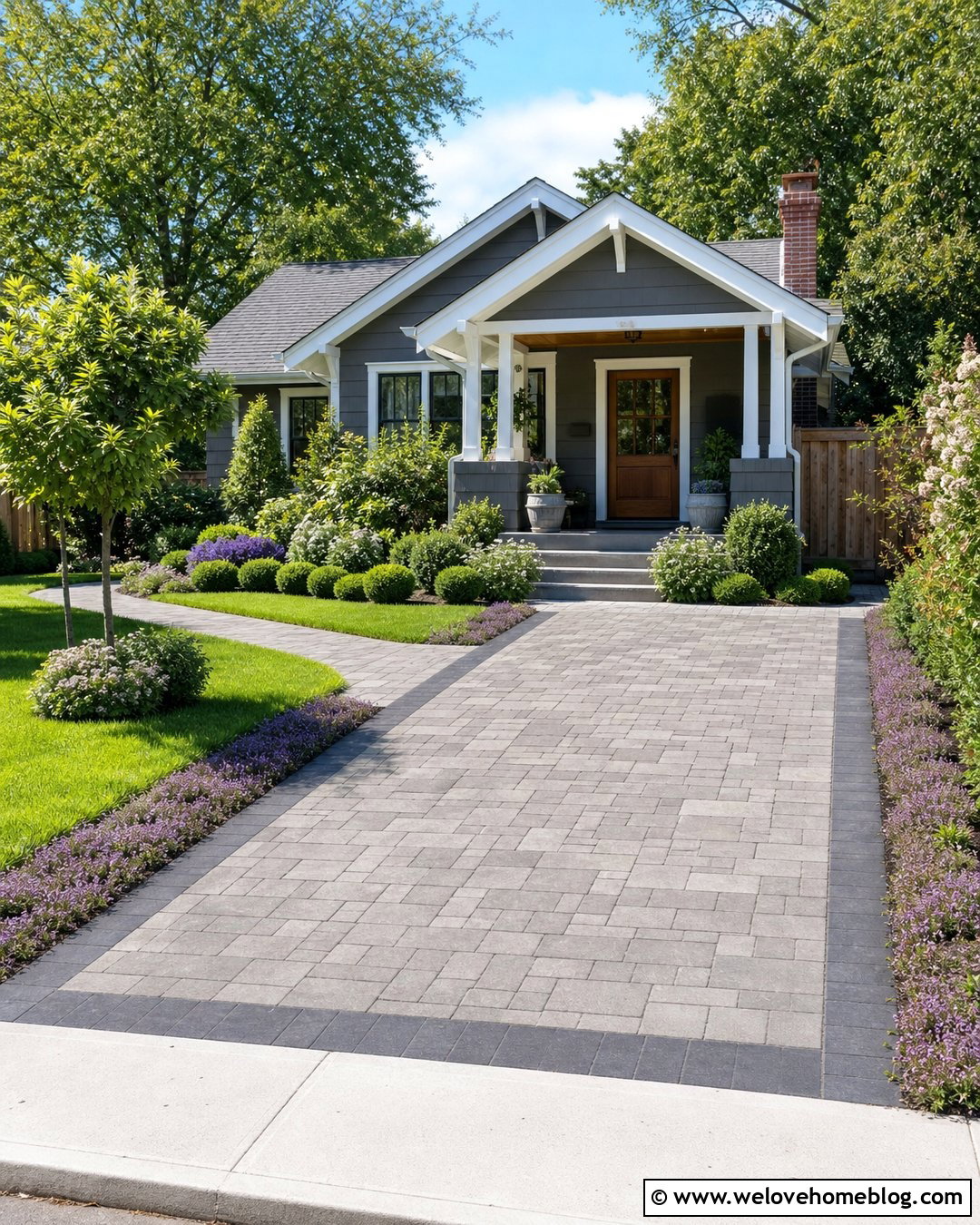
Creeping thyme can soften the edges of a small paver driveway without creating a tall barrier beside parked vehicles. Plant it along a sunny outer border or within selected joints that are not exposed to constant tire pressure. The low foliage gently spreads toward the paving, creating a natural transition between the driveway and planting beds. Choose concrete pavers in a warm gray tone and add a charcoal border to contain the layout. Behind the thyme, use compact flowering perennials or rounded shrubs to build height gradually toward the house. This approach works especially well for bungalow, cottage, and small suburban properties. Good drainage is important, and the plants need room to spread without covering essential walking or driving areas. ()
8. Rose-Lined Cobblestone Driveway
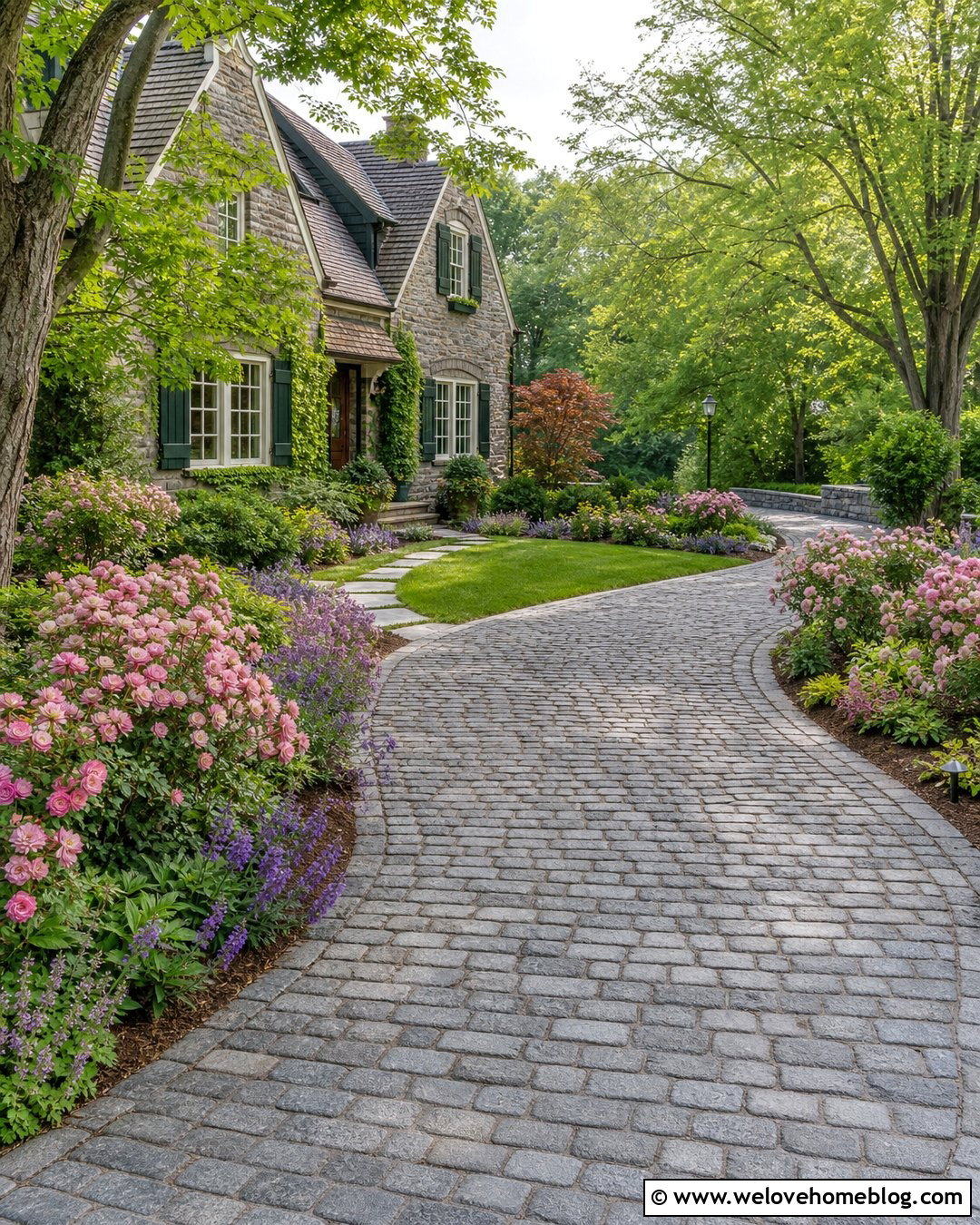
A cobblestone driveway bordered by roses creates a classic garden entrance with abundant seasonal color. Choose compact shrub roses rather than thorny, sprawling varieties that could catch clothing or scratch vehicles. Position the roses in generous beds set back from the cobblestone edge, and place low catmint or hardy geraniums along the front. The lower plants conceal bare stems and provide a layered transition to the drive. A gently curved layout makes the border feel more natural while revealing the house gradually. Repeat the same rose color to prevent the design from becoming visually busy. This romantic combination suits Tudor, cottage, European-inspired, and traditional homes. Include mulch and accessible stepping areas so pruning, feeding, and cleanup remain manageable.
9. Succulent-Lined Concrete Driveway
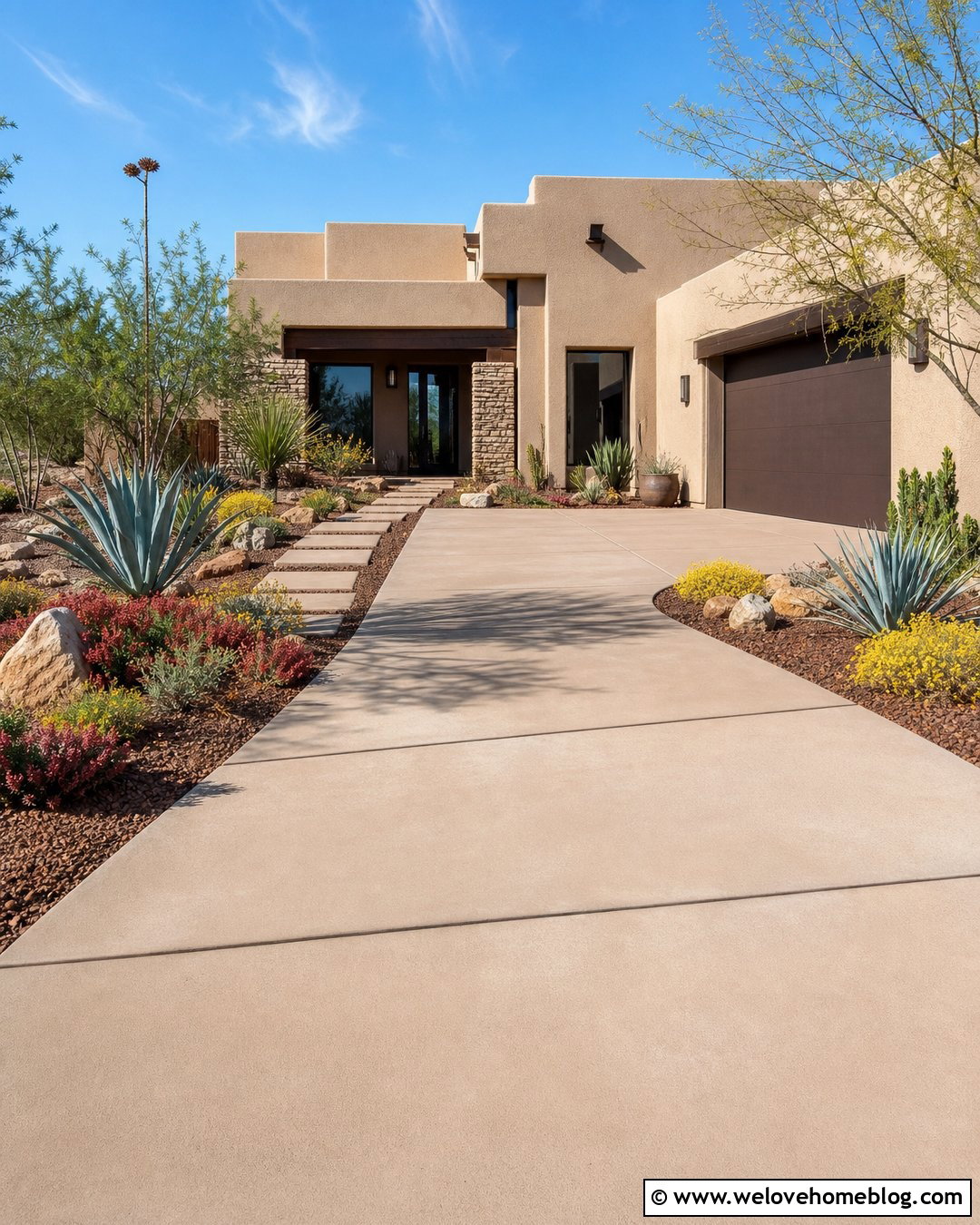
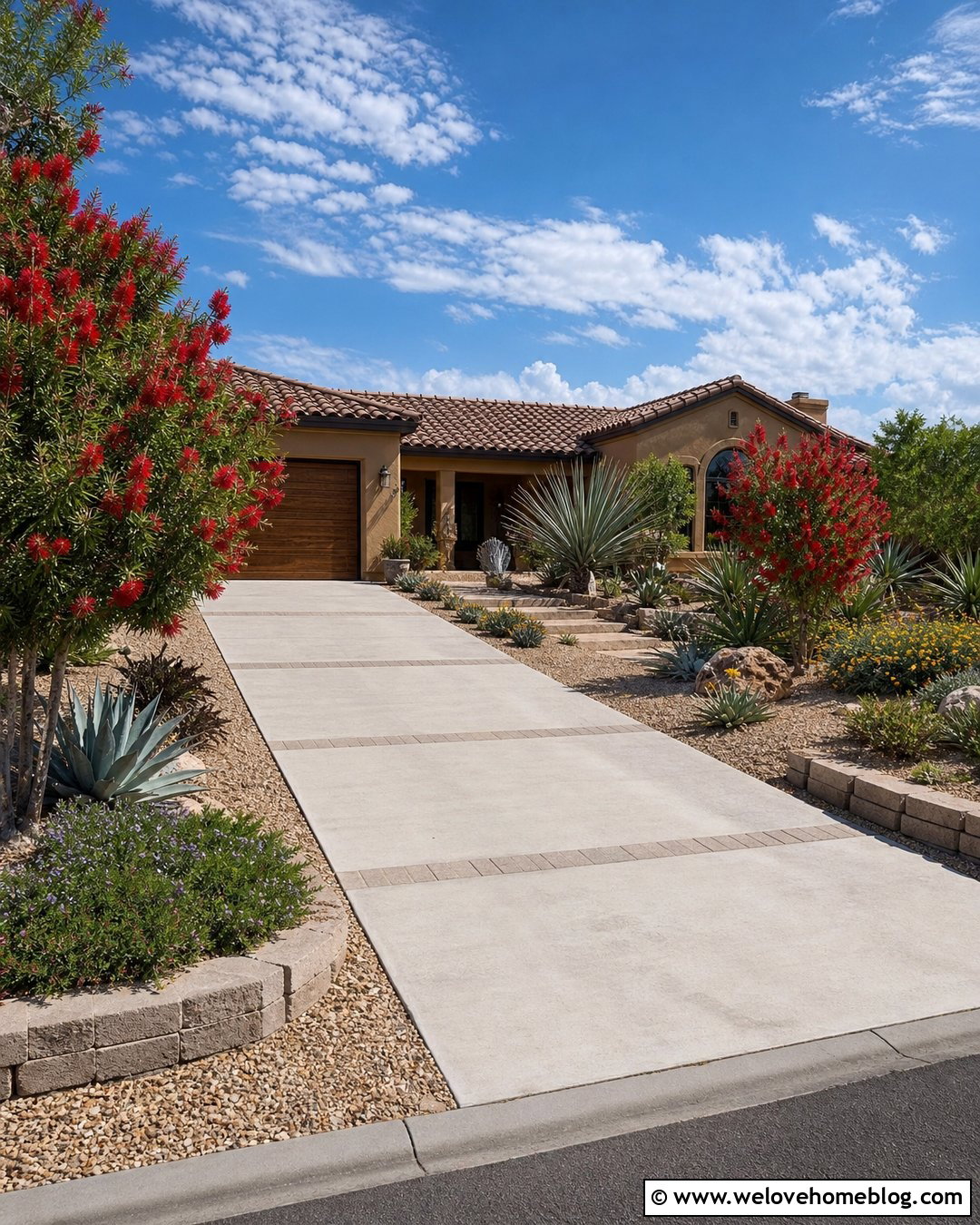
In a hot, dry front yard, sculptural succulents can create a bold border without requiring a conventional lawn. Pair light sand-colored poured concrete with wide gravel beds containing agave, aloe, yucca, sedum, or other plants appropriate for the local climate. Place sharp or spiny specimens well away from doors, walkways, and areas where passengers exit vehicles. Smaller rosette plants can form repeating groups closer to the driveway edge. Add weathered boulders and rust-colored gravel for contrast, but keep enough open ground to make individual plant shapes visible. A straight driveway with large control joints strengthens the modern geometry. This complete xeriscape design is an excellent match for desert contemporary, adobe, Southwestern, and low-profile modern houses.
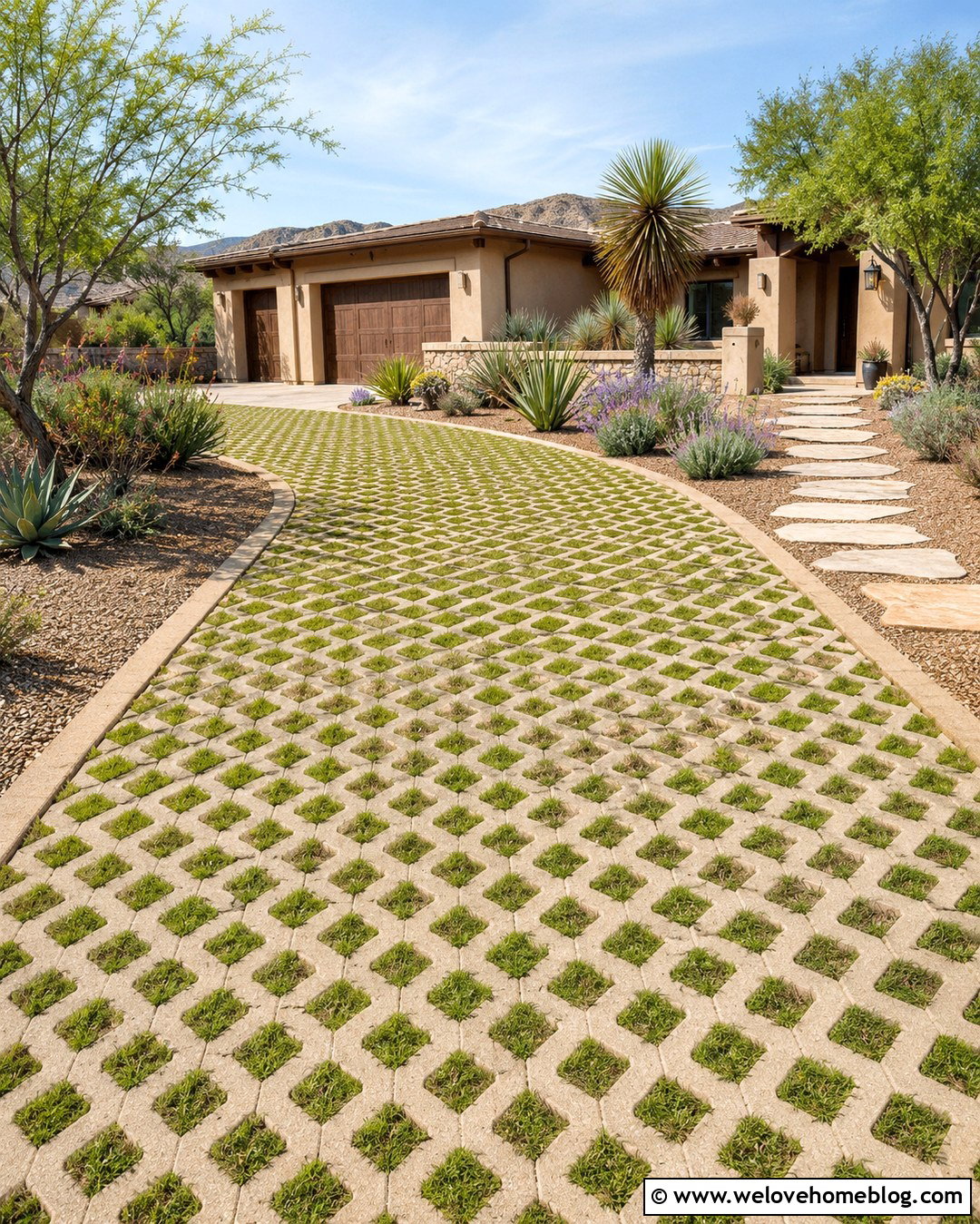
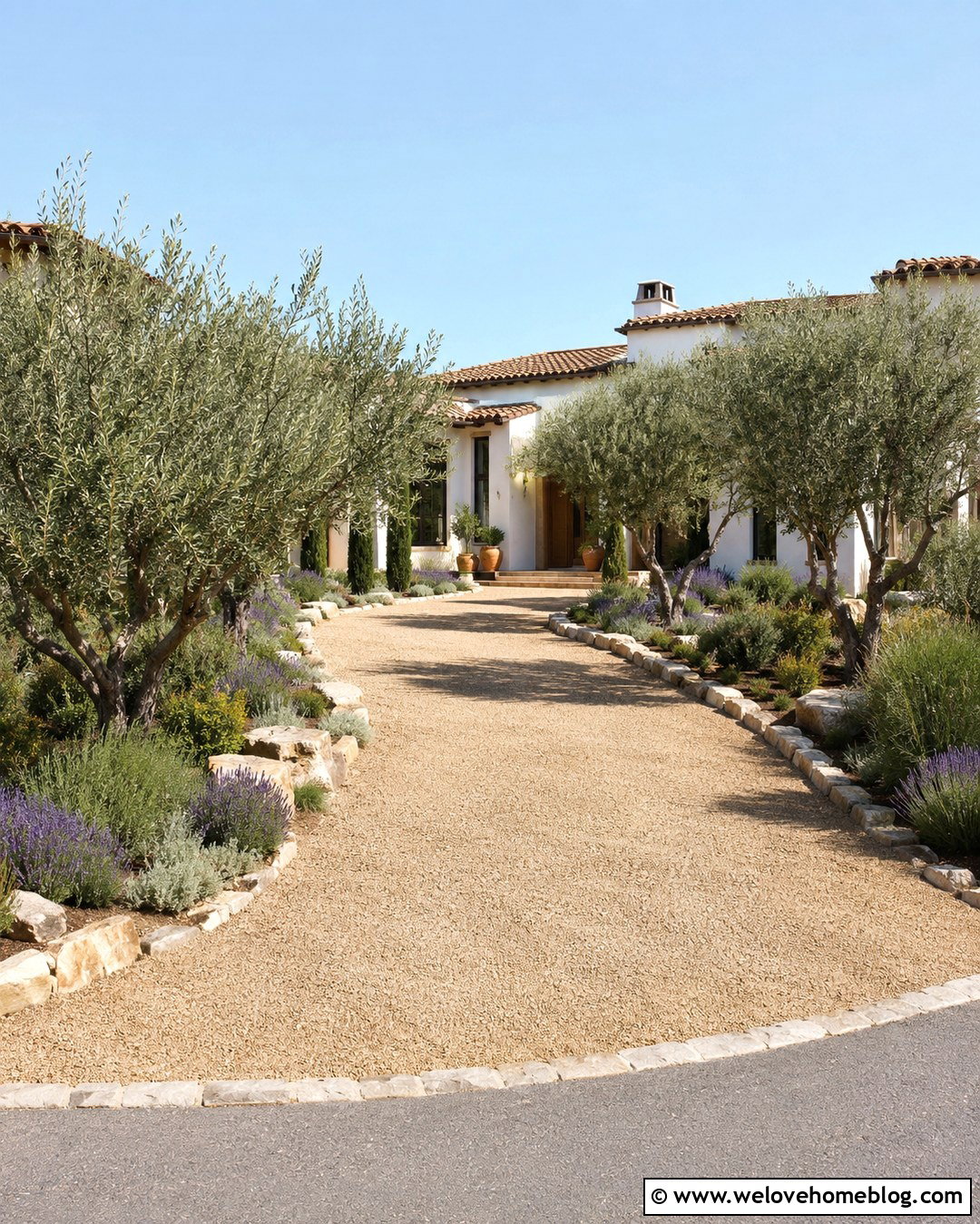
10. Hosta-Lined Shaded Driveway
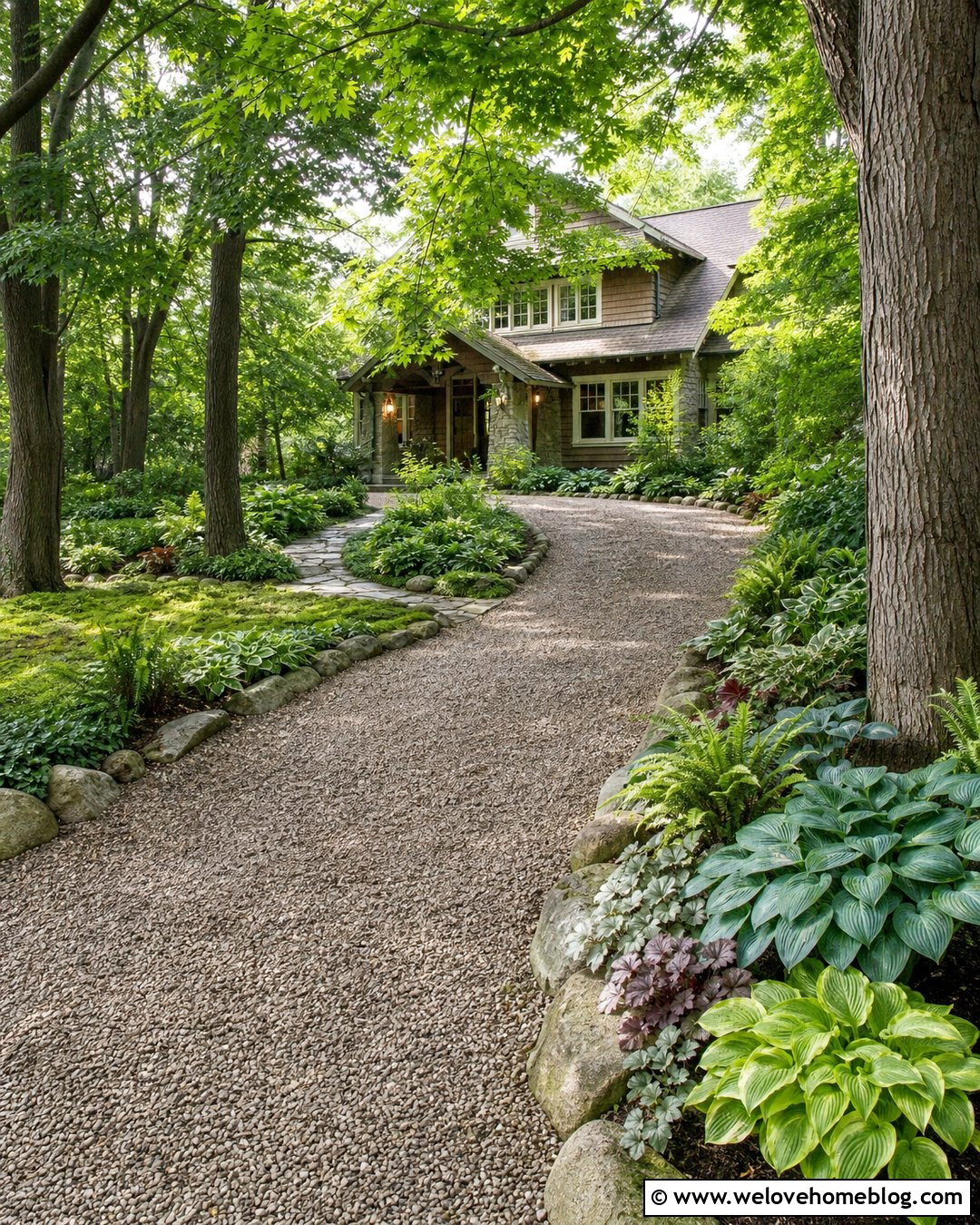
Shade beside a driveway does not have to become an empty strip of mulch. A gravel driveway beneath mature trees can be lined with broad groups of hostas, ferns, heuchera, and shade-tolerant groundcover. Use hosta varieties with different leaf sizes but a controlled green, blue, and cream color palette. A natural fieldstone edge holds the gravel while complementing the woodland setting. Arrange larger hostas toward the back and smaller plants near the drive so the border remains layered and visible. Curved beds help the planting flow around tree roots and existing slopes. This cool, leafy design works naturally with craftsman, cabin-inspired, and traditional homes. Confirm local pest pressure and choose alternatives where hostas require more protection than desired.
11. Flowering Tree-Lined Asphalt Driveway
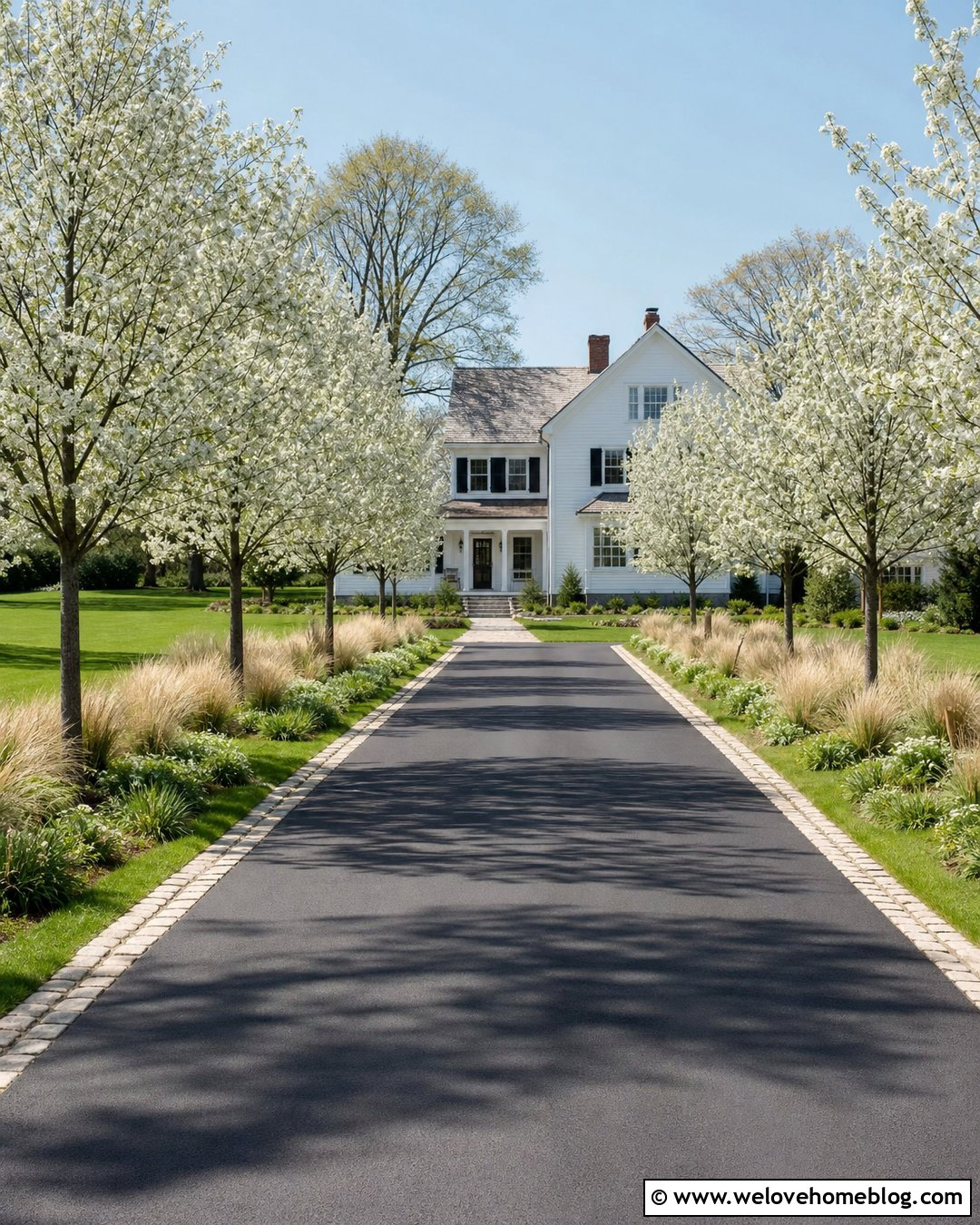
A long driveway gains impressive scale when small flowering trees repeat along both sides. Serviceberry, redbud, crabapple, fringe tree, or another locally suitable species can create a memorable approach without forming an overly heavy canopy. Space the trees according to their mature width, not their nursery size, and locate them far enough from the asphalt to limit branch conflicts. Underplant each tree with broad sweeps of low grasses or groundcover for a connected appearance. A narrow cobblestone border can sharpen the edge of the black asphalt. Keep the first trees back from the street so the entrance remains visible. This design is ideal for farmhouse, country, and estate-style properties with enough room for balanced long-term growth.
12. Columnar Evergreen Paver Driveway
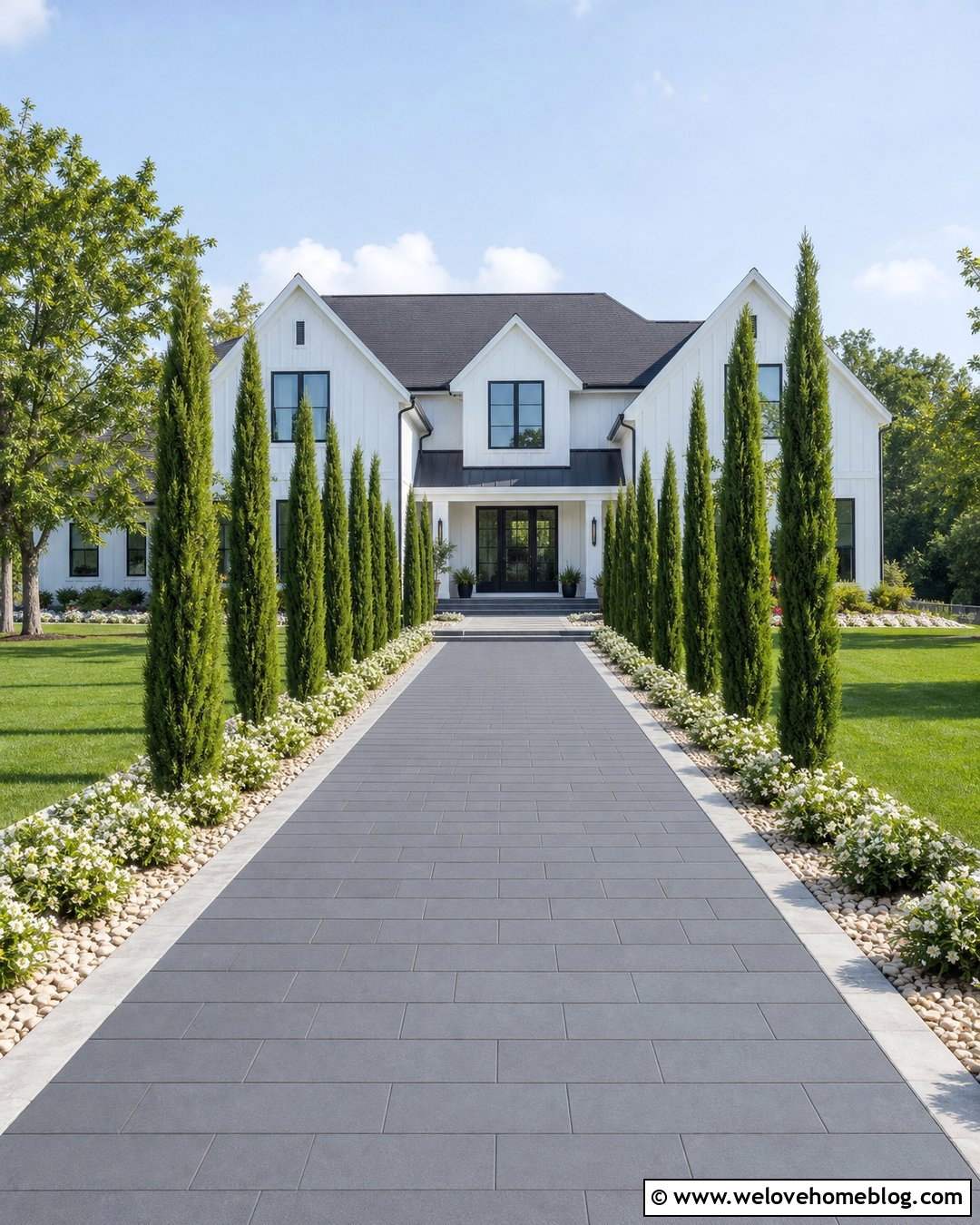
Tall, narrow evergreens can frame a driveway where horizontal planting space is limited. Line a straight charcoal paver driveway with evenly spaced columnar junipers, arborvitae, or another climate-appropriate upright evergreen. Set each plant in a continuous bed rather than cutting separate holes in lawn, which produces a more intentional design. Low white flowering groundcover between the trees adds brightness without competing with their vertical shape. Use light stone mulch and a pale paver ribbon to create contrast. Near the garage, stop the planting before branches interfere with mirrors, doors, or snow storage. The repeated vertical forms lead attention toward the house and complement modern farmhouse, contemporary, Mediterranean, and formal architectural designs.
13. Mixed Perennial Concrete Driveway
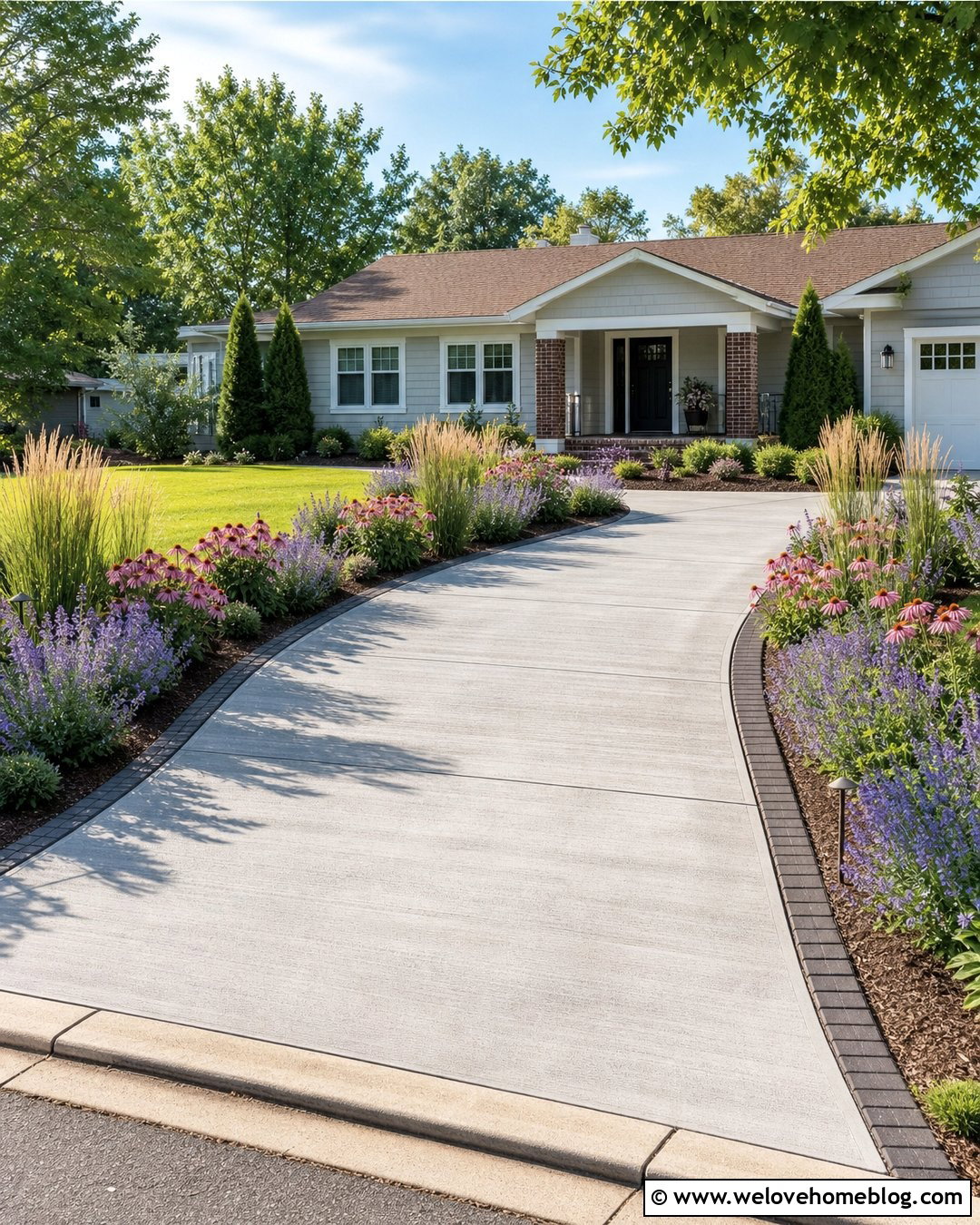
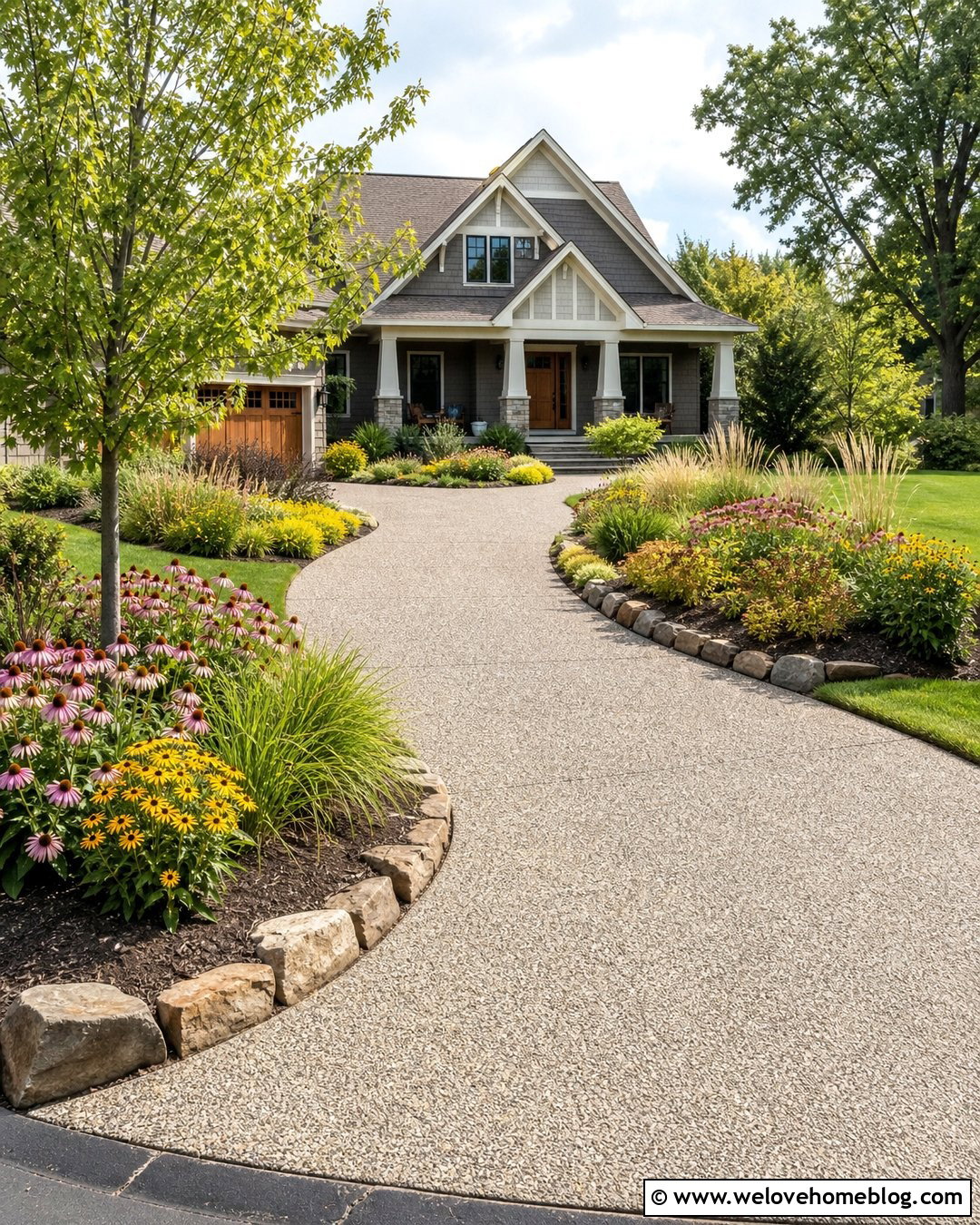
Color can line a driveway without looking chaotic when the planting follows a repeated pattern. Begin with a straight broom-finished concrete driveway bordered by dark brick or concrete pavers. In the beds, combine three or four dependable perennials with different heights and bloom seasons. For example, place low catmint at the front, coneflowers through the middle, and ornamental grasses toward the back. Repeat the same grouping several times along the driveway rather than introducing a new plant in every space. Evergreen shrubs near the house provide structure when perennial stems are cut back. This approachable design fits ranch, split-level, craftsman, and suburban homes. Choose plants for the site’s sun, soil, moisture, winter temperatures, and local maintenance requirements.
14. Low Hedge And White Flower Driveway
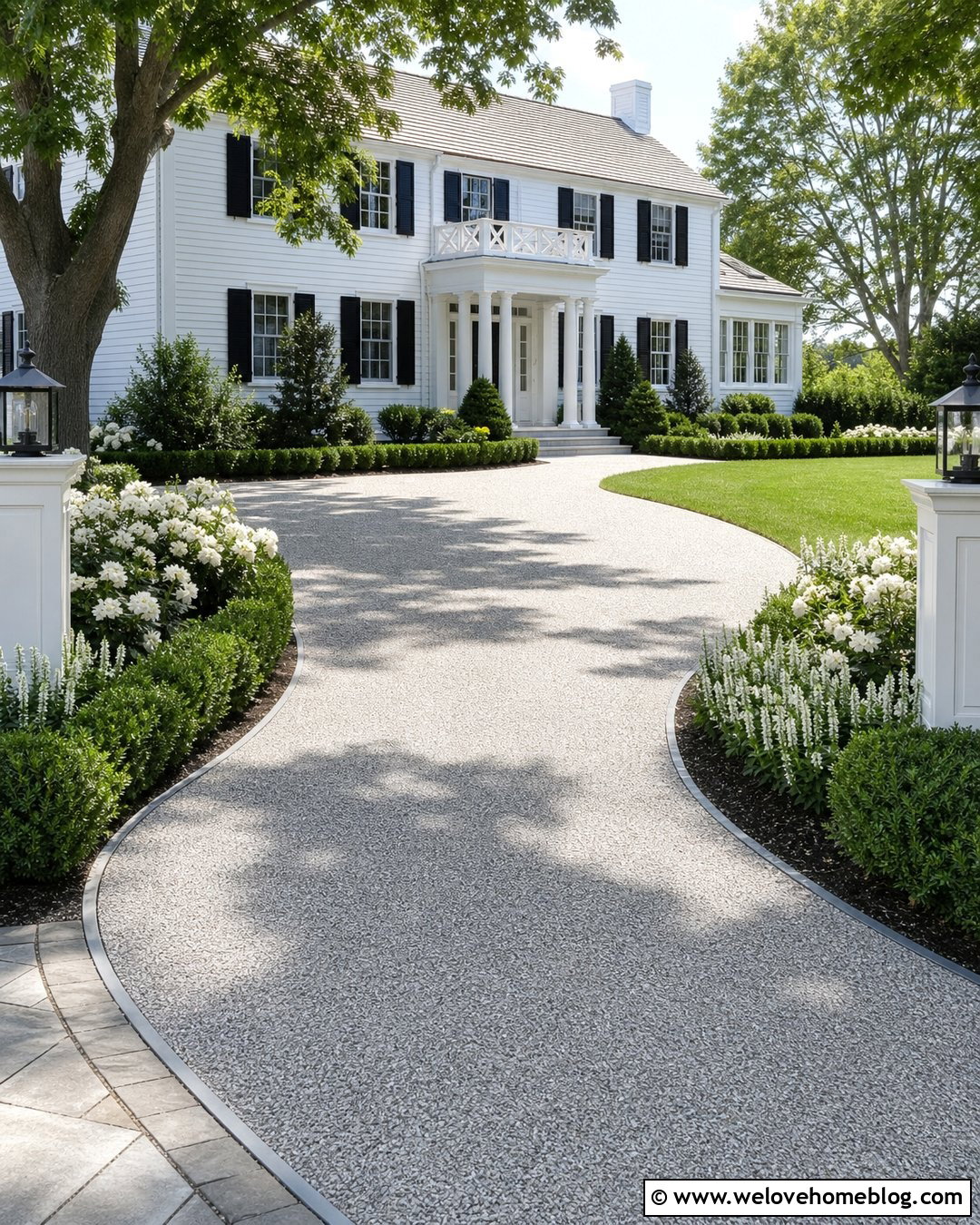
A low green hedge paired with white flowers creates a polished driveway border that still feels friendly. Use a light gray resin-bound gravel surface with smooth curves leading toward a white or pale brick house. Install a narrow steel edge, then plant a compact hedge set slightly behind it. White salvia, roses, hydrangeas, or seasonal flowers can appear in repeated pockets along the hedge rather than forming one continuous line. This breaks up the greenery while maintaining a limited, elegant color palette. At the entrance, widen the beds and add matching shrubs around an address marker. Keep flowers low near the street and taller near the house. The complete arrangement suits transitional, coastal, colonial, and upscale suburban architecture.
15. Fern-Lined Woodland Driveway
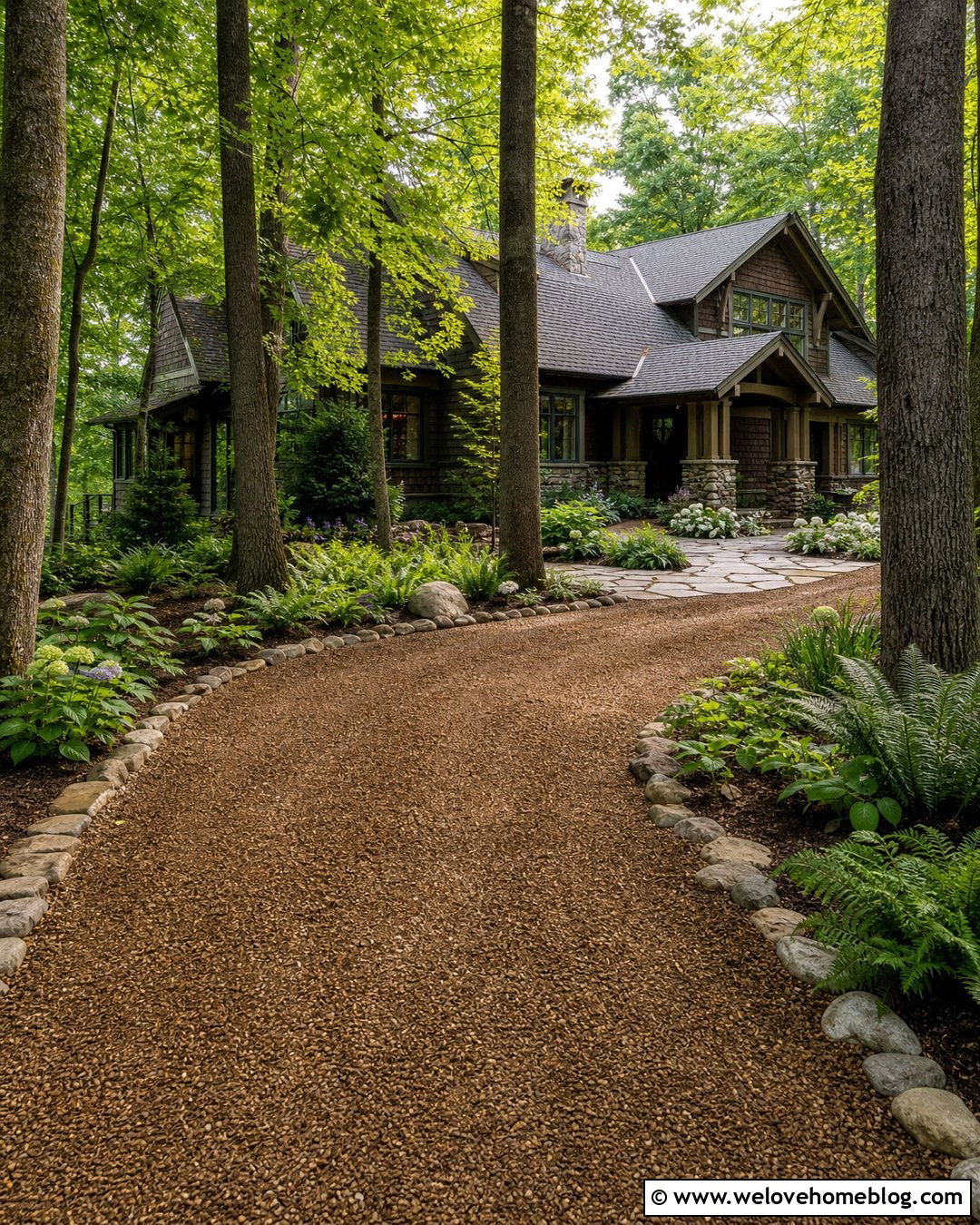
Imagine arriving through a quiet corridor of layered green foliage beneath mature trees. A curved brown gravel driveway can blend naturally into that setting when lined with ferns, sedges, woodland groundcover, and scattered shade-tolerant shrubs. Use irregular fieldstone as a restrained edge, allowing some plants to soften the border without spilling into the vehicle path. Repeat fern groups around existing tree trunks, but avoid adding soil over established roots. Small pockets of foamflower, woodland phlox, or other regionally suitable blooms provide gentle color. Keep the entrance and interior curves open for clear visibility. This organic driveway look works well for cabins, craftsman houses, rustic contemporary homes, and wooded properties where formal hedges would feel out of place.
16. Rain Garden Driveway Plants
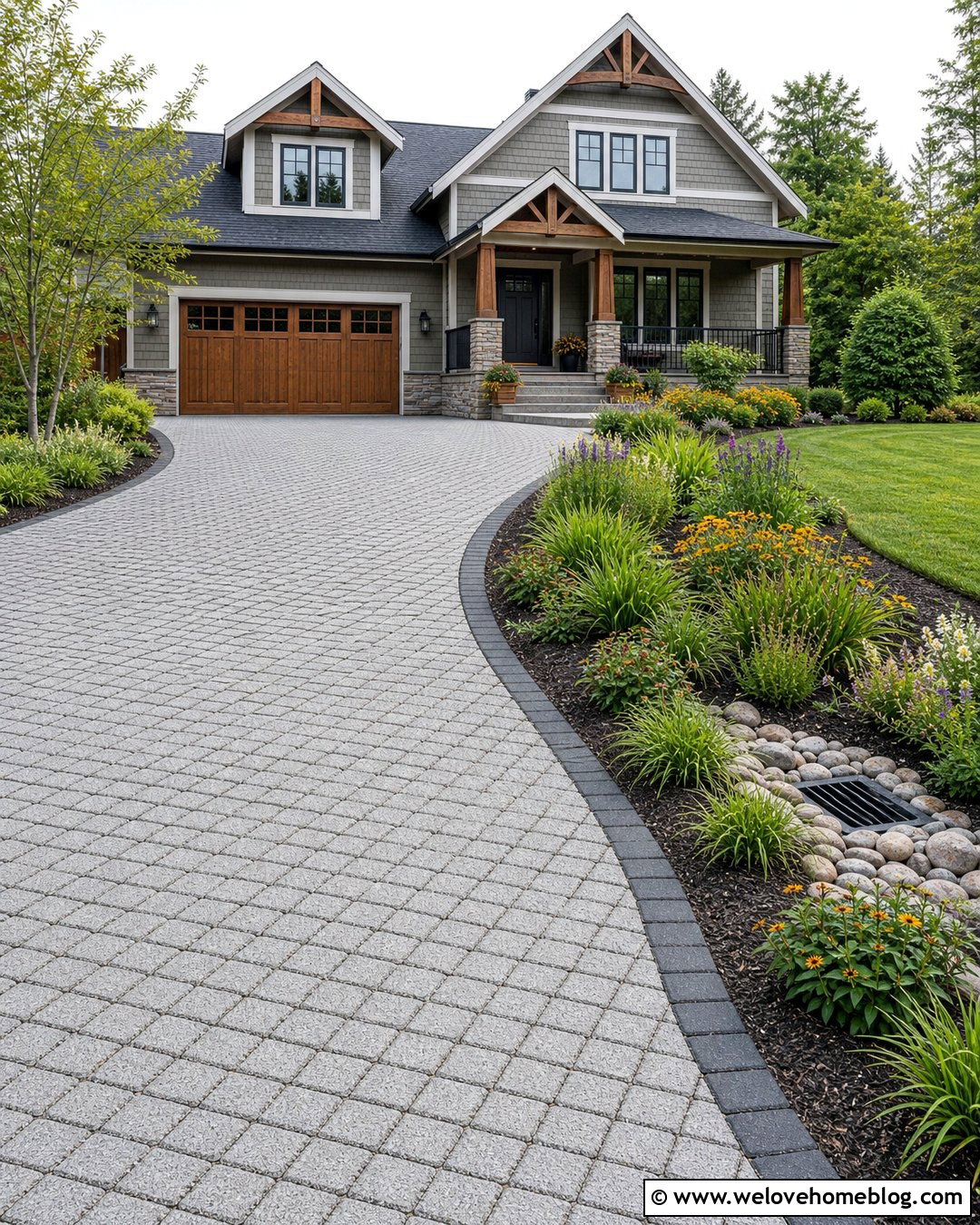
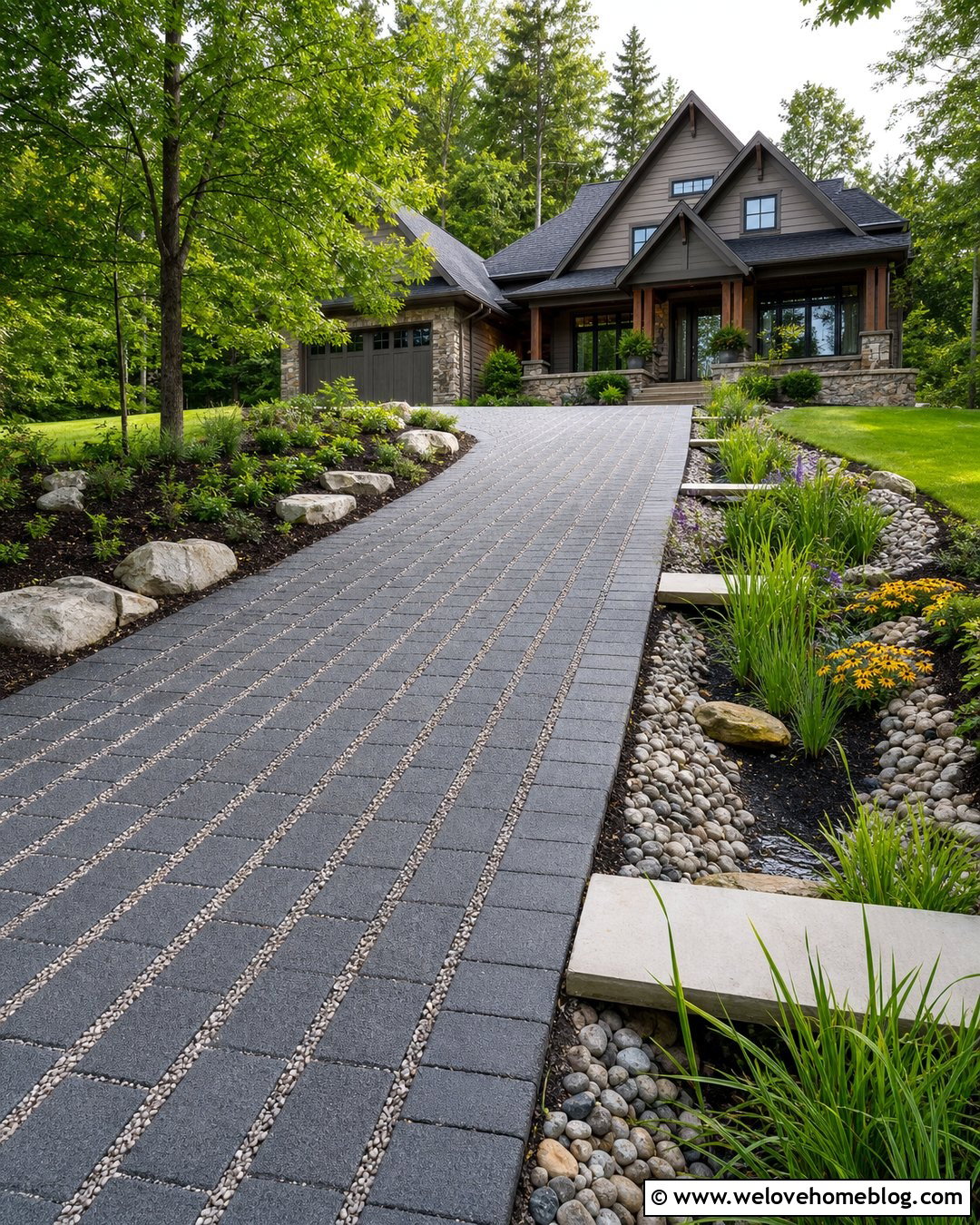
A driveway border can become part of a thoughtful drainage plan when runoff is directed into a properly designed rain garden. Pair permeable concrete pavers with a shallow planted basin positioned beside, rather than underneath, the driving surface. Use moisture-tolerant native grasses, sedges, flowering perennials, and compact shrubs selected for local soil and rainfall. A stone-lined inlet can slow water and reduce erosion as it enters the bed. Shape the garden as a broad curve that follows the driveway instead of a narrow trench. Plants nearer the upper edge should tolerate drier periods, while suitable moisture-loving selections belong lower in the basin. This functional landscape complements contemporary, craftsman, and eco-conscious homes while making the planted border visually purposeful. ()
17. Potted Plant-Lined Driveway
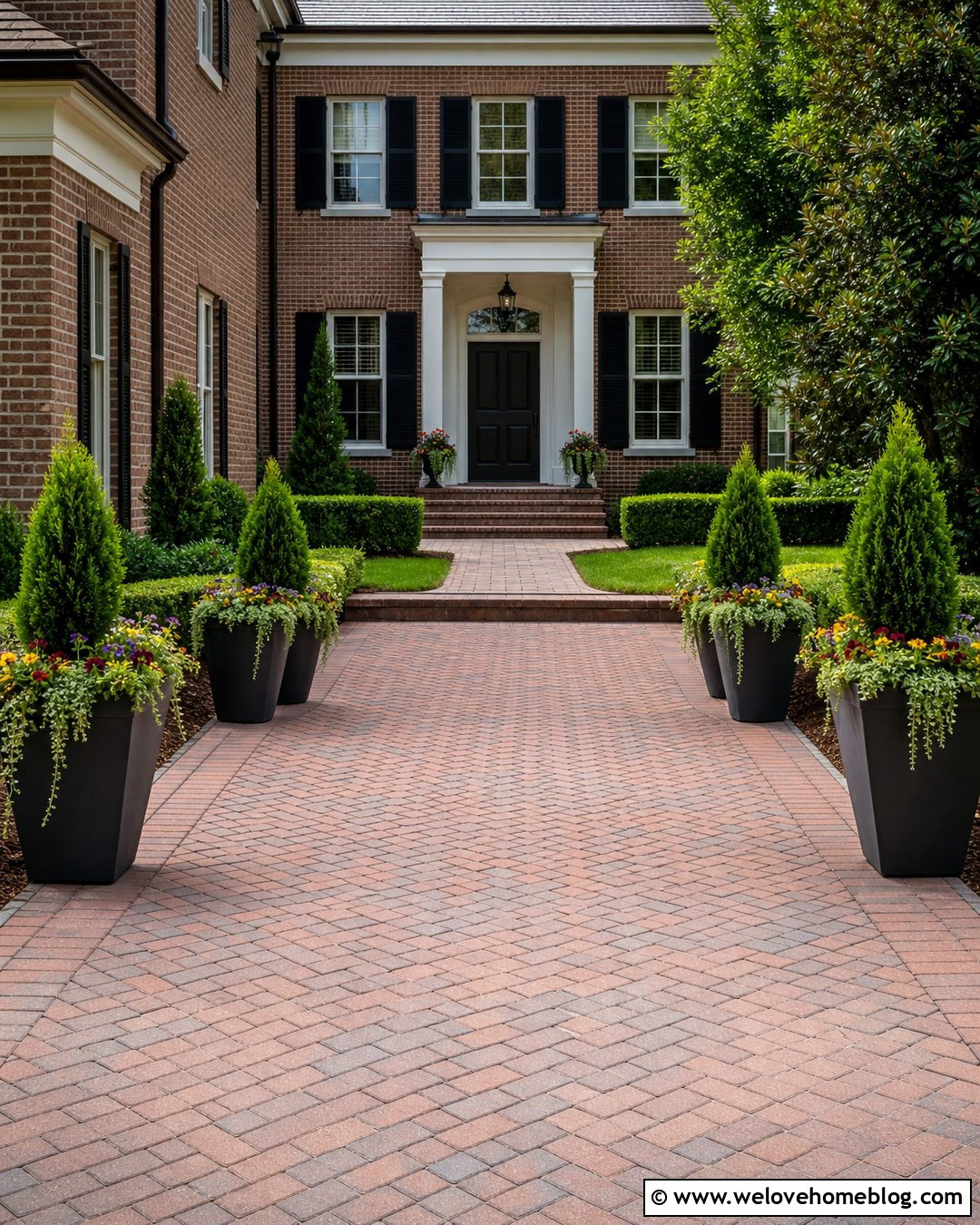
Matching planters offer a flexible way to line a driveway when digging permanent beds is not practical. Place large frost-resistant containers at measured intervals along a wide brick or concrete paver driveway. Fill them with compact evergreens as anchors, then add trailing foliage and seasonal flowers around the edges. Keep every planter beyond the vehicle clearance zone and leave uninterrupted space near garage doors and turnaround areas. Repeating one container shape creates rhythm, while varying the plants slightly can provide seasonal interest. Coordinate the pot color with the house trim, entry columns, or paver border. This complete design is useful for urban homes, narrow lots, courtyards, and properties with difficult soil. Proper drainage holes and reliable watering are essential.
18. Groundcover And Boulder Driveway
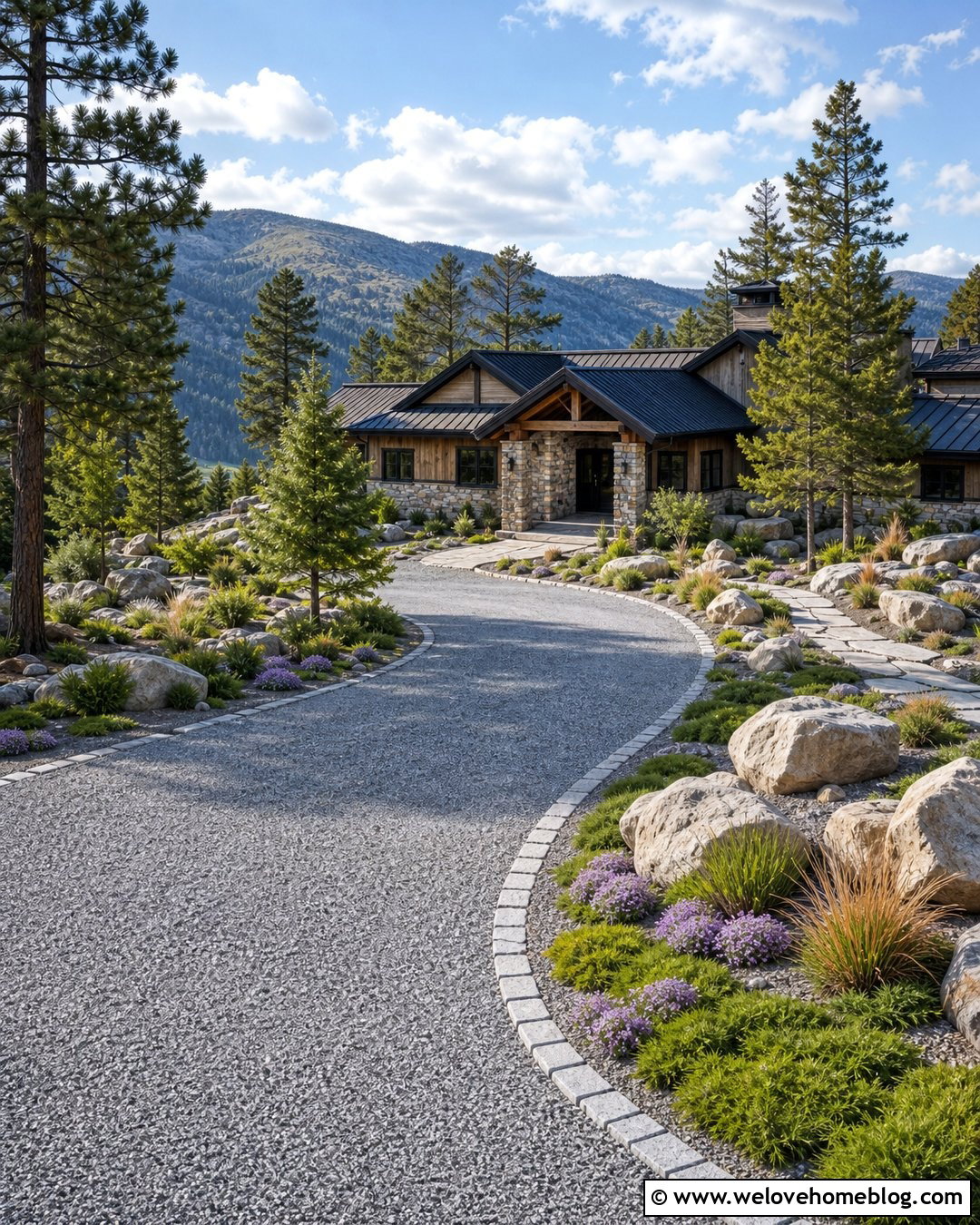
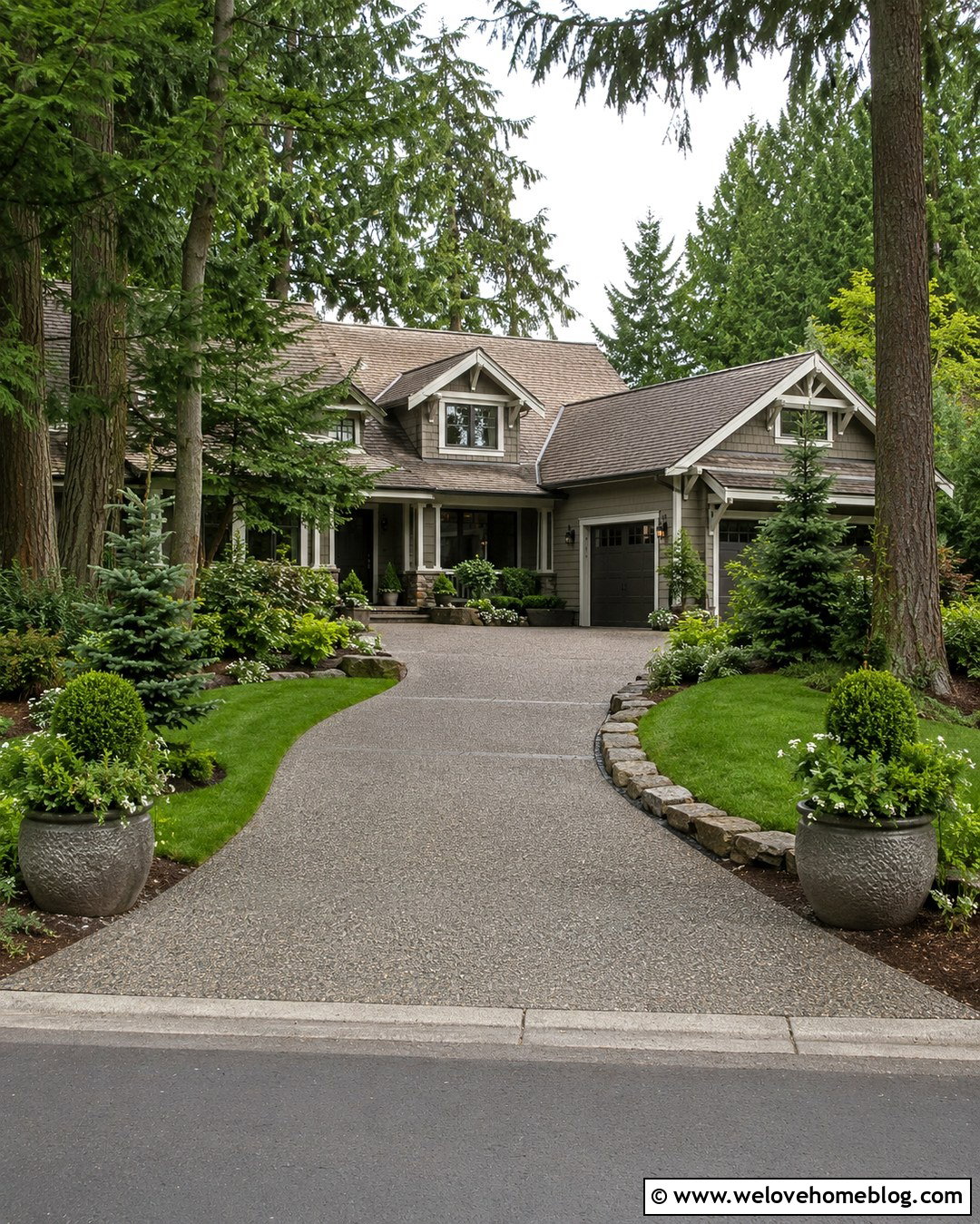
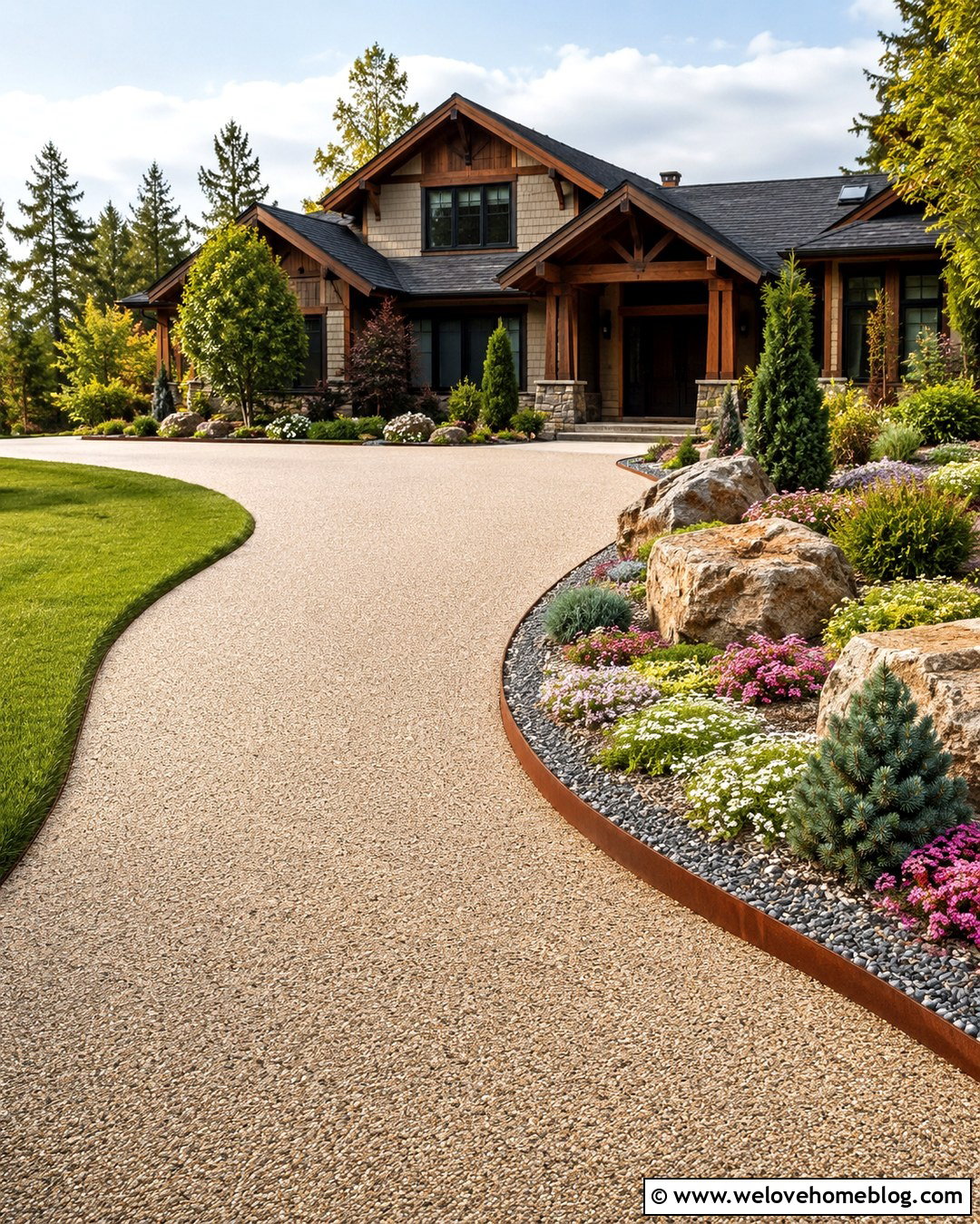
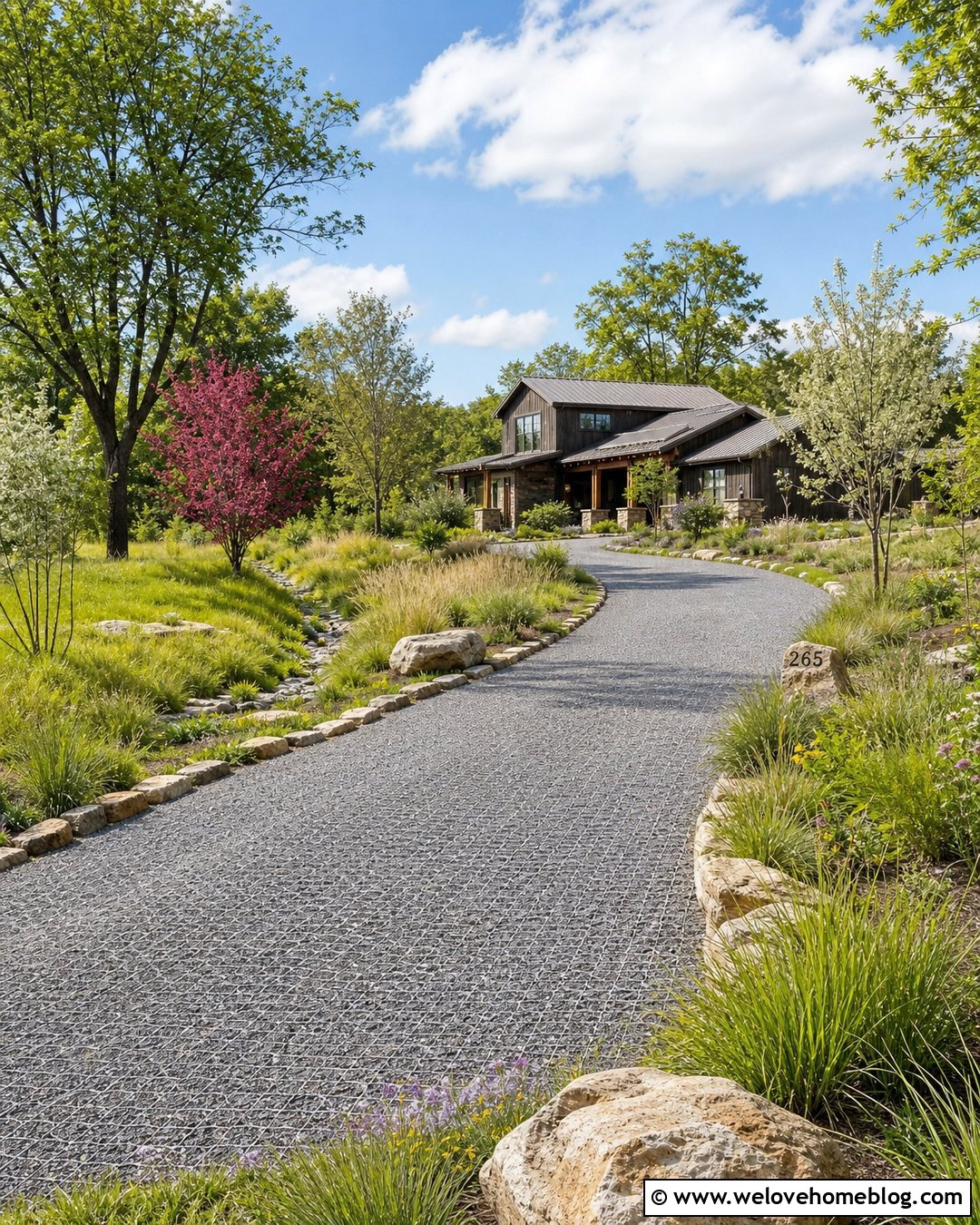
A rugged gravel driveway can look intentionally landscaped when low groundcover flows around carefully placed boulders. Start with compacted gray crushed stone and a strong metal or granite edge. Along the sides, arrange broad patches of creeping juniper, sedum, bearberry, phlox, or other groundcover suited to the climate and exposure. Set a few large boulders deeper within the beds so they discourage accidental driving without creating hazards at the pavement edge. Add upright grasses behind them for height and movement. The combination is especially useful on broad curves or slight slopes, where plants help visually connect the driveway to the surrounding yard. This low-profile look complements mountain, rustic modern, ranch, and natural stone homes.
19. Coastal Grass-Lined Driveway
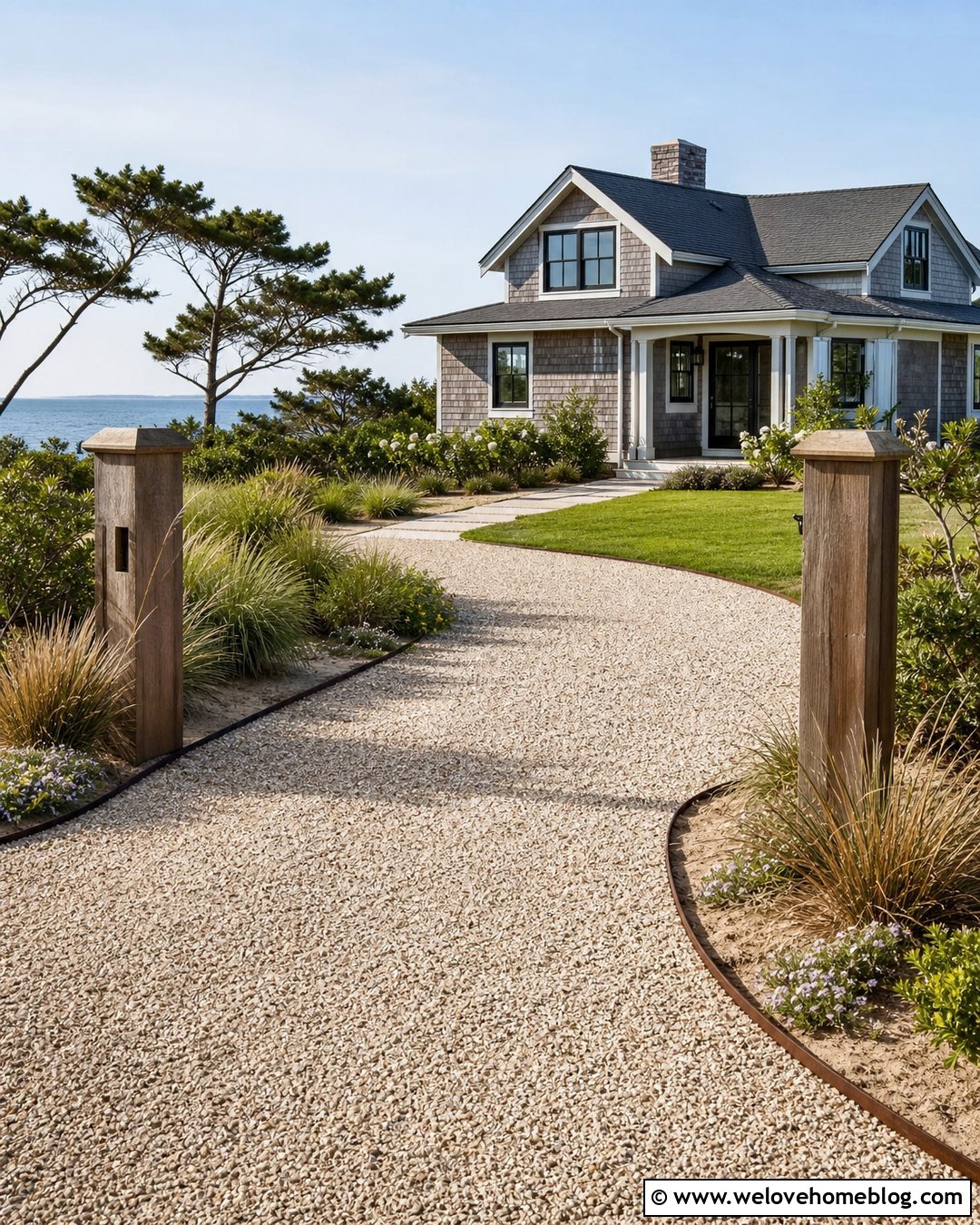
Salt exposure, wind, sandy soil, and intense sunlight require a resilient planting plan in coastal areas. A pale shell gravel or light resin-bound gravel driveway can be lined with beach grass, dwarf ornamental grasses, wax myrtle, groundcover, and other plants suited to the specific shoreline climate. Arrange them in informal drifts behind a clean steel or stone edge. Leave visible gravel between groups to prevent the border from becoming dense and unmanageable. A curved driveway fits the relaxed composition, while timber entrance posts can add subtle coastal character. Avoid plants that need constant shelter or rich, moisture-retentive soil. This breezy complete look pairs naturally with coastal cottages, shingle-style houses, pale stucco homes, and simple contemporary facades.
20. Four-Season Driveway Planting
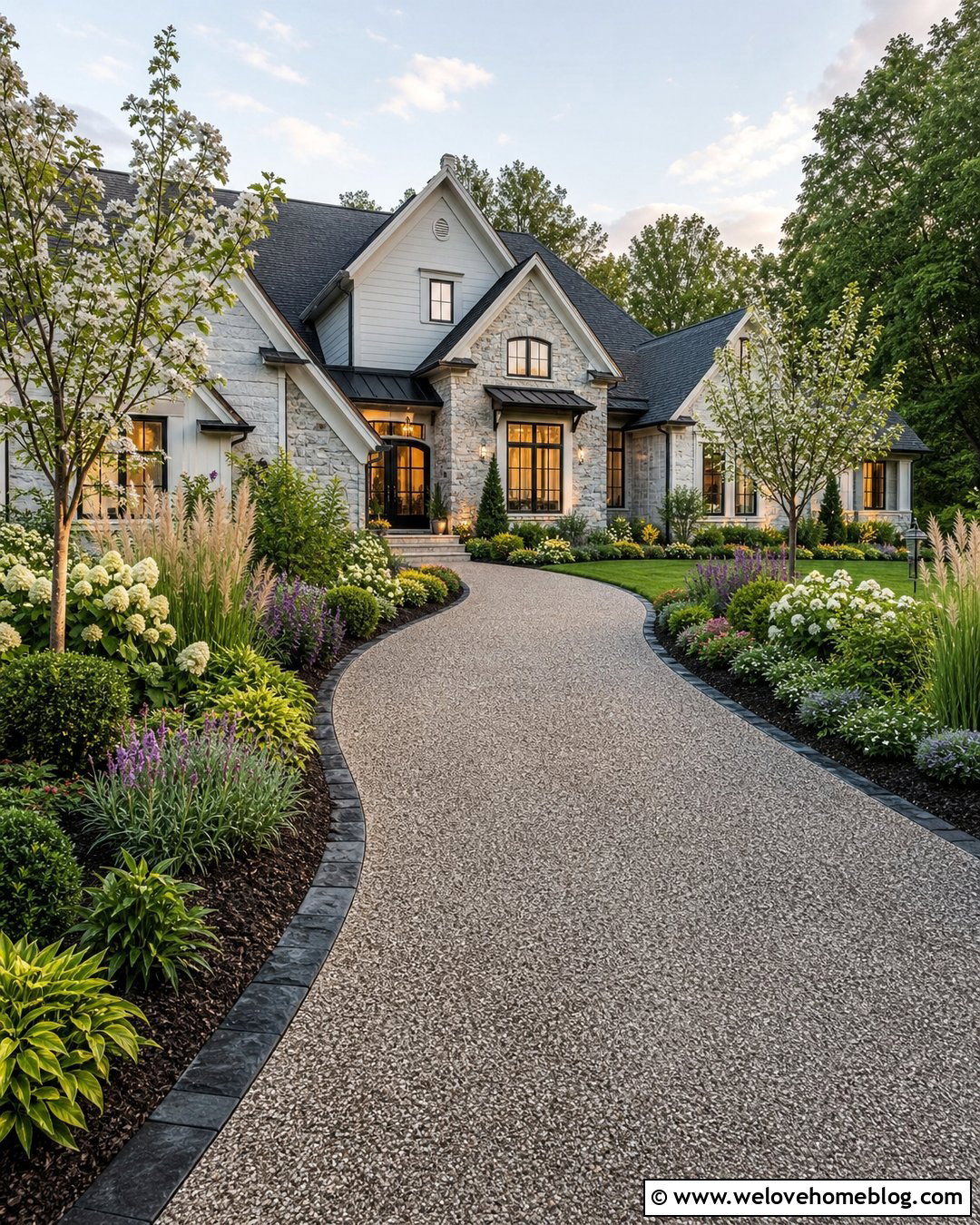
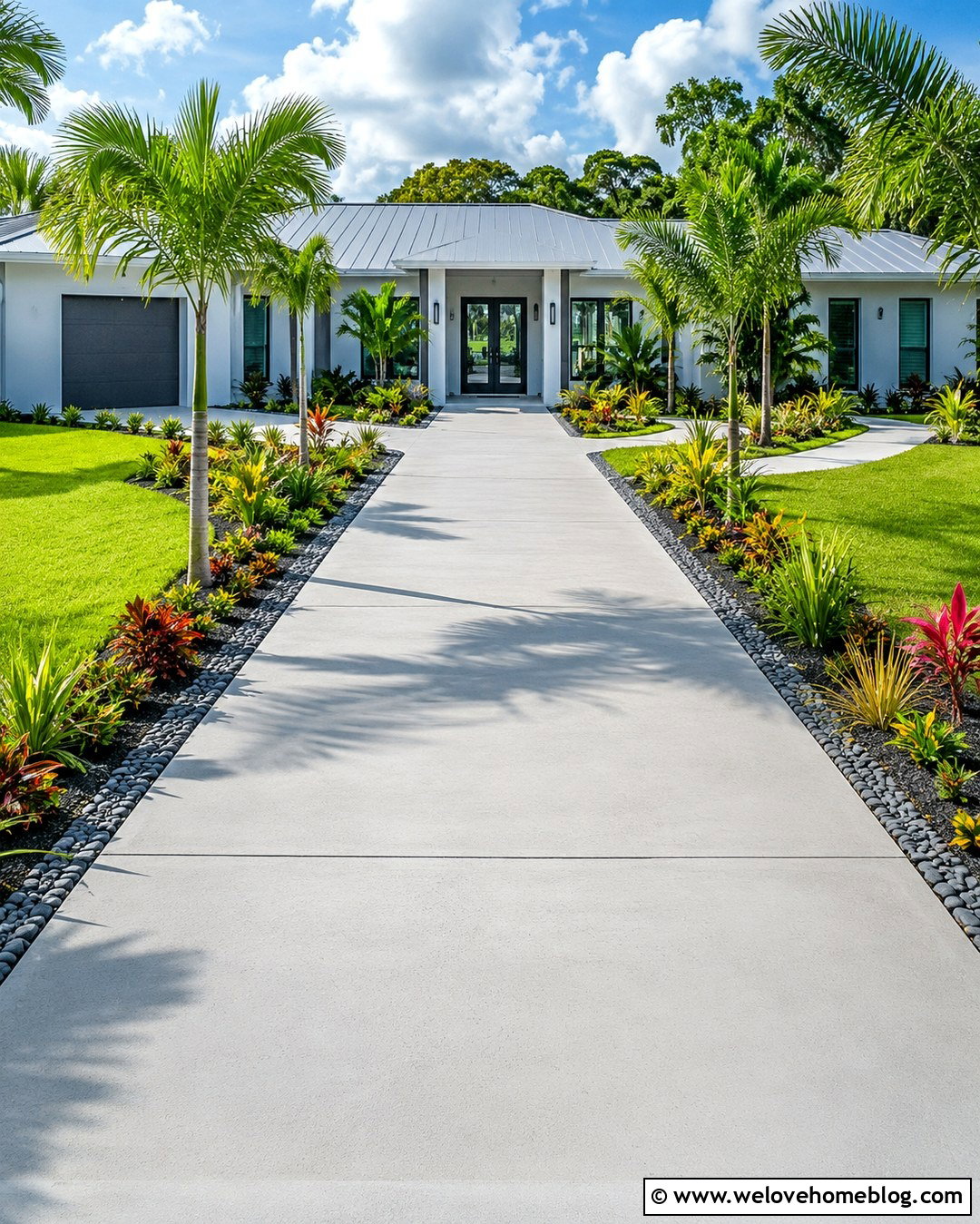
A four-season border keeps the driveway attractive even when flowers are not blooming. Begin with a curved exposed-aggregate driveway and dark natural-stone edging. Build the planting around compact evergreens, then add spring bulbs, summer perennials, ornamental grasses for fall, and shrubs with colorful winter stems or berries. Repeat these layers in several large groups so the driveway feels unified from the curb to the garage. Small flowering trees can anchor wider areas near the house, while low groundcover fills narrow sections. Choose a limited color palette that coordinates with the facade and front walkway. This adaptable approach suits almost any home because plant selections can be adjusted for local climate, sunlight, soil, available width, and desired maintenance level.
Conclusion:
The strongest driveway planting combines beauty with safe spacing, simple maintenance, and plants suited to the site. These 20 lining driveway with plants ideas show how gravel, concrete, asphalt, brick, pavers, and other surfaces can work with flowers, shrubs, trees, grasses, and groundcover as one complete landscape. Before planting, measure the border, check sunlight and drainage, and research the mature size of every selection. Keep entrances, curves, walkways, and parking areas clear. Repeating a limited plant palette will usually produce a calmer and more polished result. Whether you prefer formal hedges, native flowers, woodland foliage, or drought-tolerant greenery, a thoughtfully planted driveway can create lasting curb appeal.

Related posts:
Leave a Reply