
A live oak canopy can turn an ordinary entrance into one of the most memorable features on a property. These 20 live oak tree lined driveway ideas combine the trees’ broad, sculptural branches with practical surfaces, defined borders, layered landscaping, and welcoming entrances. Some looks feel relaxed and rural, while others complement formal estates, coastal homes, ranch houses, and modern farmhouses. The best layout gives mature trunks and spreading roots generous breathing room while keeping vehicles safely beneath the canopy. Permeable materials, wide planting beds, and carefully positioned lighting can also help the driveway feel integrated with its surroundings rather than imposed upon them. Explore these complete, coordinated 20 live oak tree lined driveway ideas.

1. Gravel Live Oak Tree Lined Driveway With Brick Edging
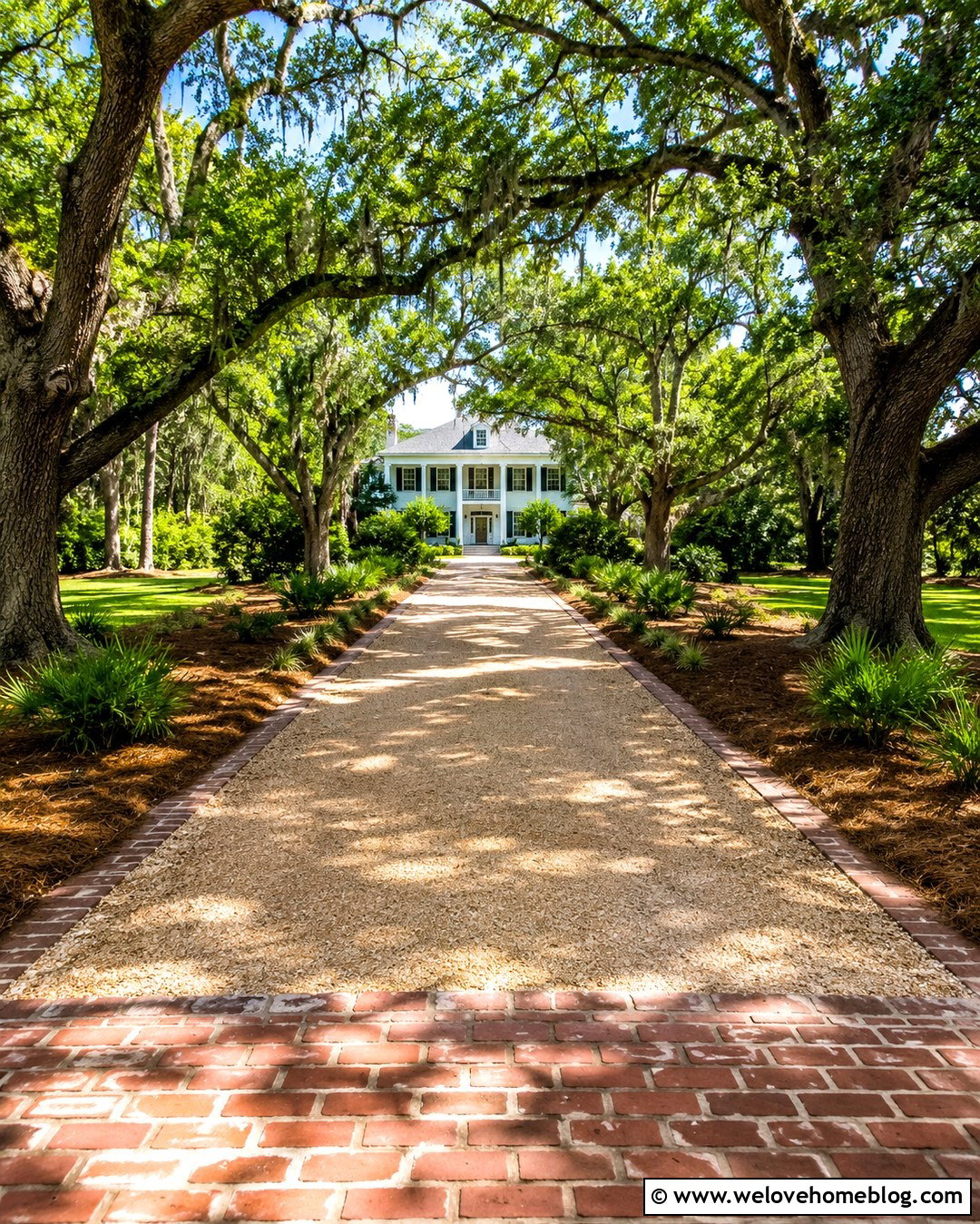
A warm gravel driveway looks naturally at home beneath a tunnel of mature live oaks. Choose compacted tan or buff gravel to brighten the shaded approach, then contain it with reclaimed red brick edging. A straight layout creates a strong sightline toward a Southern colonial, farmhouse, or traditional brick home. Allow broad mulched beds around the trees rather than pushing the driveway against their trunks. Native sedges, dwarf palmettos, and shade-tolerant ferns can fill these beds without making the route feel crowded. At the entrance, repeat the brick in short pillars or a simple apron. The combination of loose gravel, aged brick, and arching branches creates a relaxed driveway that still feels orderly and intentional.
2. Crushed Limestone Live Oak Driveway With Native Grass
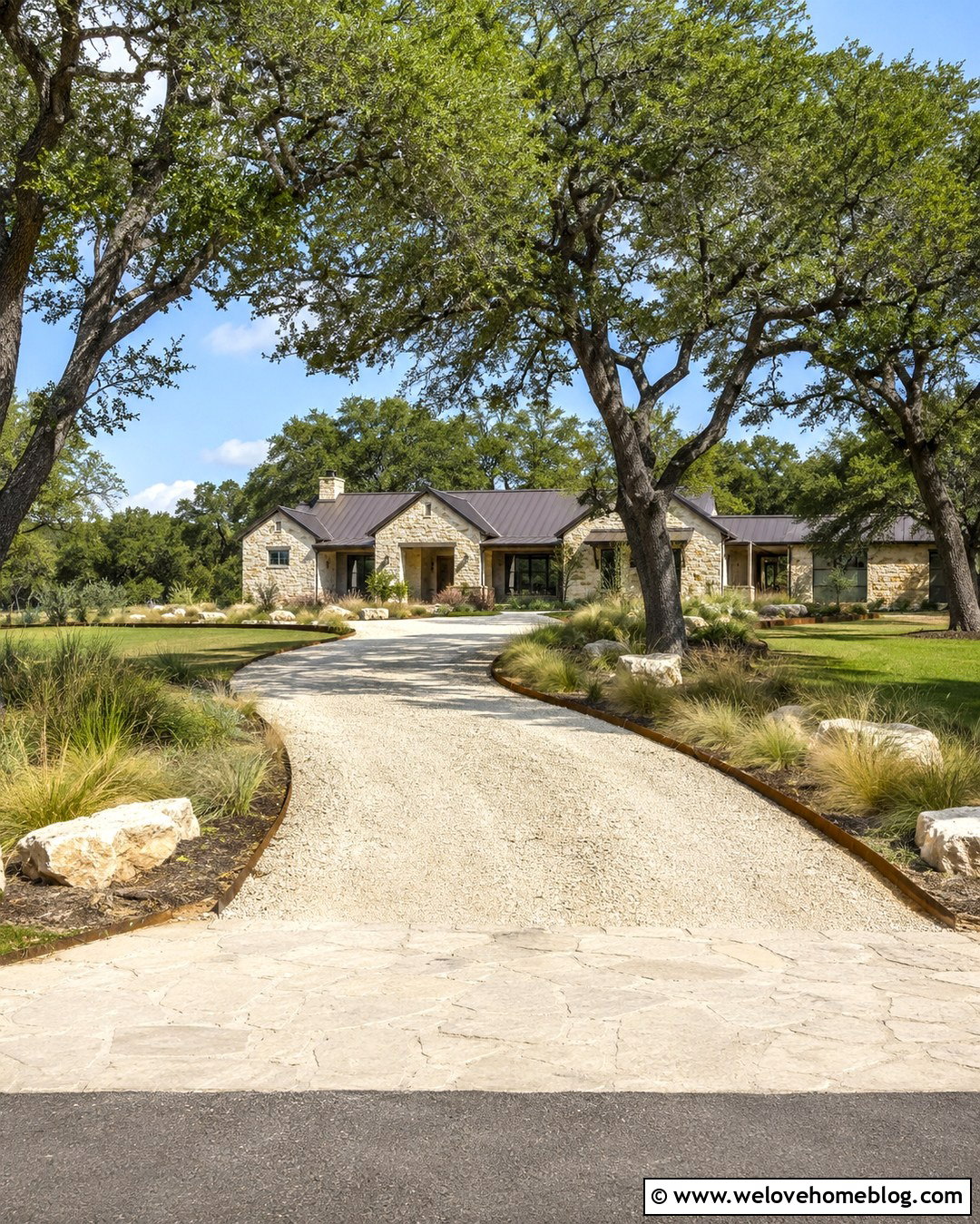
Pale crushed limestone can make a long, shaded driveway feel lighter and more open. Its soft cream color contrasts beautifully with dark live oak trunks and deep green foliage. Use a gently curved layout that follows the existing trees instead of forcing perfect symmetry. Wide borders planted with native grasses create movement while helping the driveway blend into a larger rural property. Keep plants lower near curves and the street entrance so sightlines remain clear. Weathered steel edging can hold the limestone in place without adding a bulky border. Near the house, transition to a limestone paver apron that provides a more finished parking area. This complete look works especially well with Texas ranch homes, stone cottages, and light stucco exteriors.
3. Brick Live Oak Tree Lined Driveway With Boxwood Borders
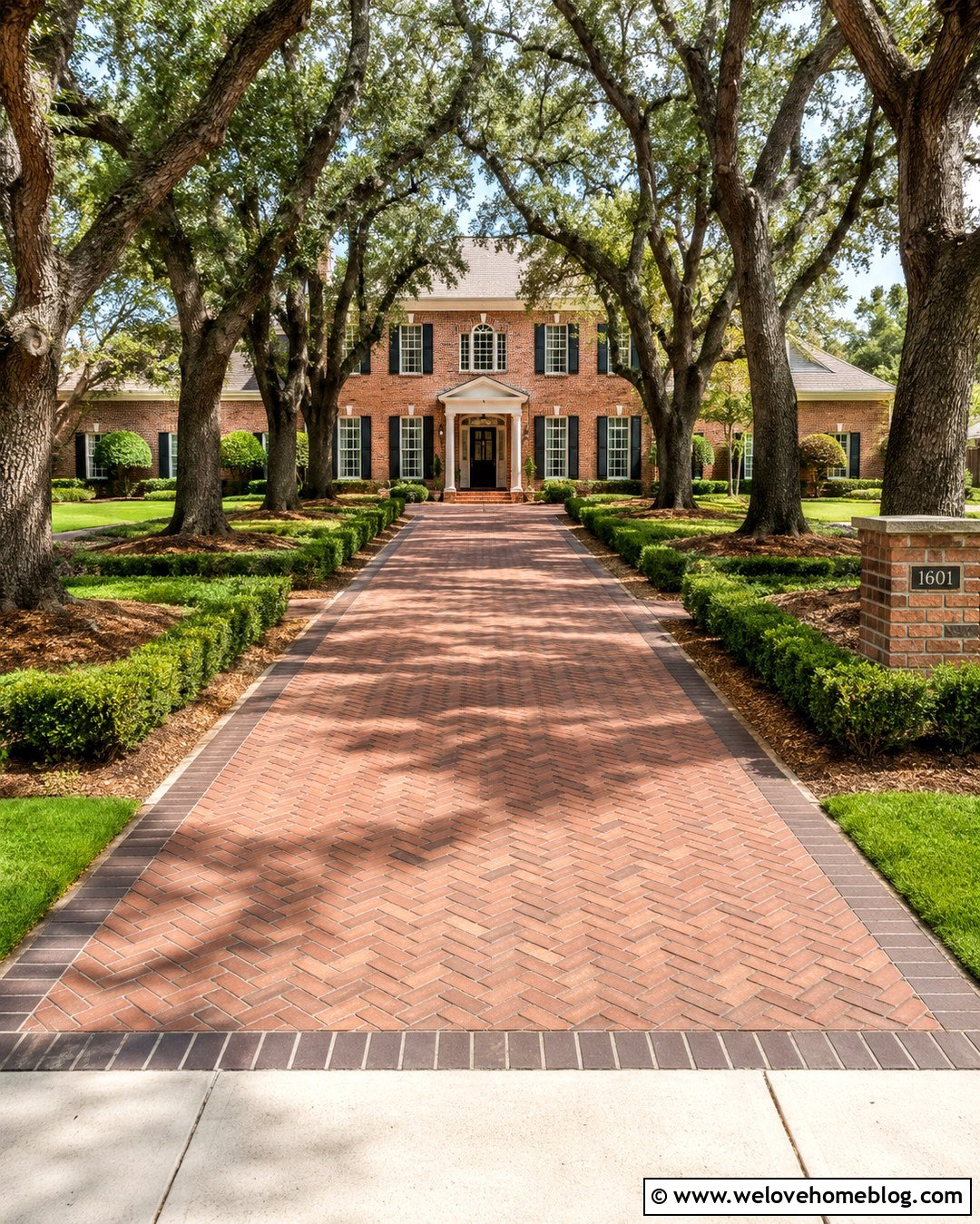
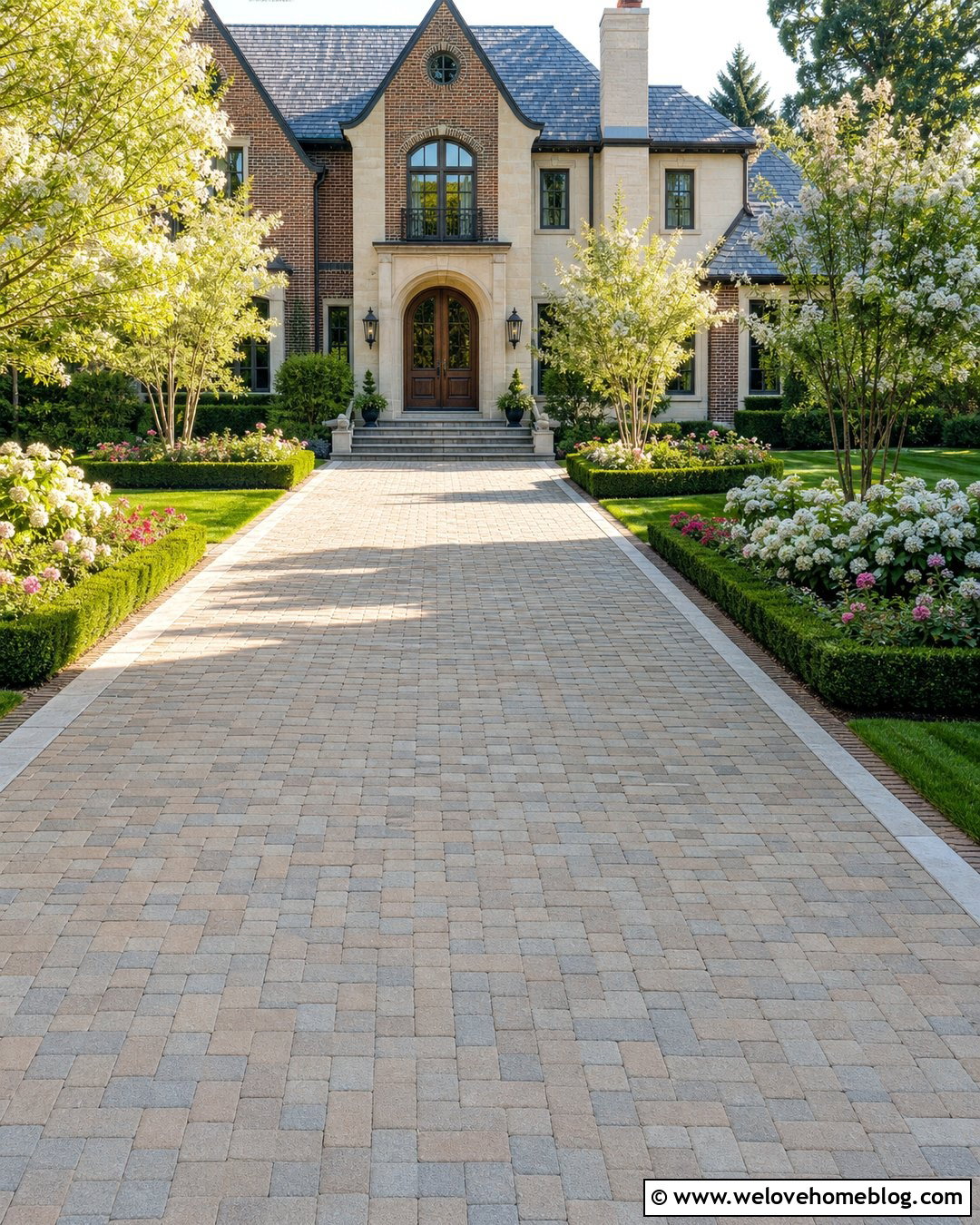
For a formal approach, pair rows of established live oaks with clay brick pavers laid in a herringbone pattern. The rich red and brown tones echo the trees’ rugged bark while creating a polished surface under the canopy. A straight driveway works best when the house sits on a strong central axis. Frame the brick with darker soldier-course borders and broad mulched tree beds. Low boxwood hedges can define the route, but place them outside the main root areas and keep them clipped below the lower branches. A matching brick walkway can branch toward the front porch near the parking court. This balanced design gives a Georgian, colonial, or traditional Southern home a distinguished entrance without distracting from the live oaks.
4. Black Asphalt Live Oak Driveway With Stone Borders
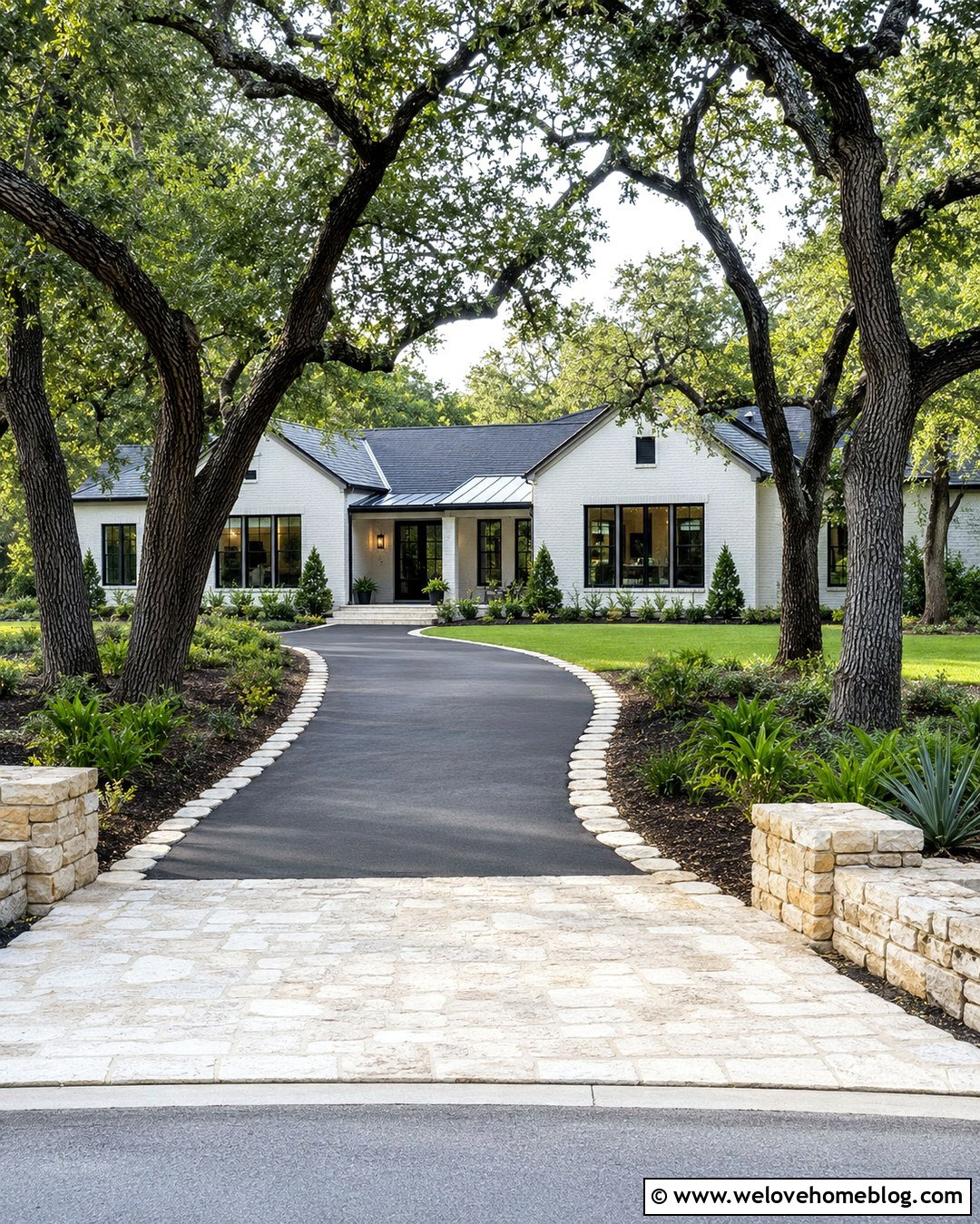
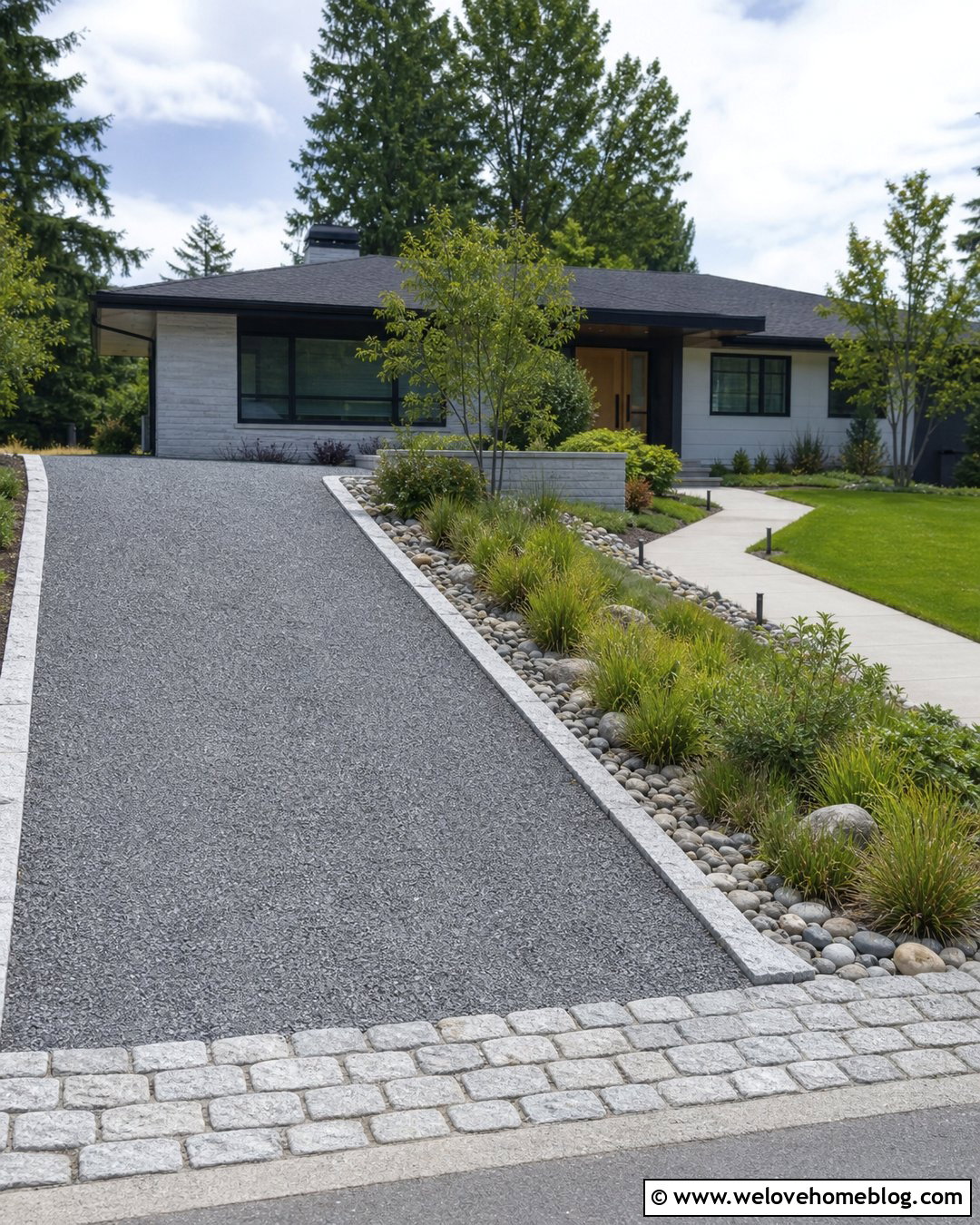
Smooth black asphalt creates a bold ribbon beneath the silver-gray limbs of mature live oaks. To soften its modern appearance, edge both sides with irregular limestone or pale granite cobbles. A sweeping curved layout is more graceful than a rigid straight drive, especially when the trees already grow in uneven positions. Beyond the stone border, use pine straw or hardwood mulch with large groups of cast iron plants, native sedges, and evergreen ferns. These restrained plantings tolerate the visual weight of the trees without creating clutter. A stone apron at the road can make the entrance feel more substantial. This durable, high-contrast combination is particularly attractive beside a contemporary ranch house, painted brick residence, or updated Southern cottage.
5. Oyster Shell Live Oak Driveway With Coastal Landscaping
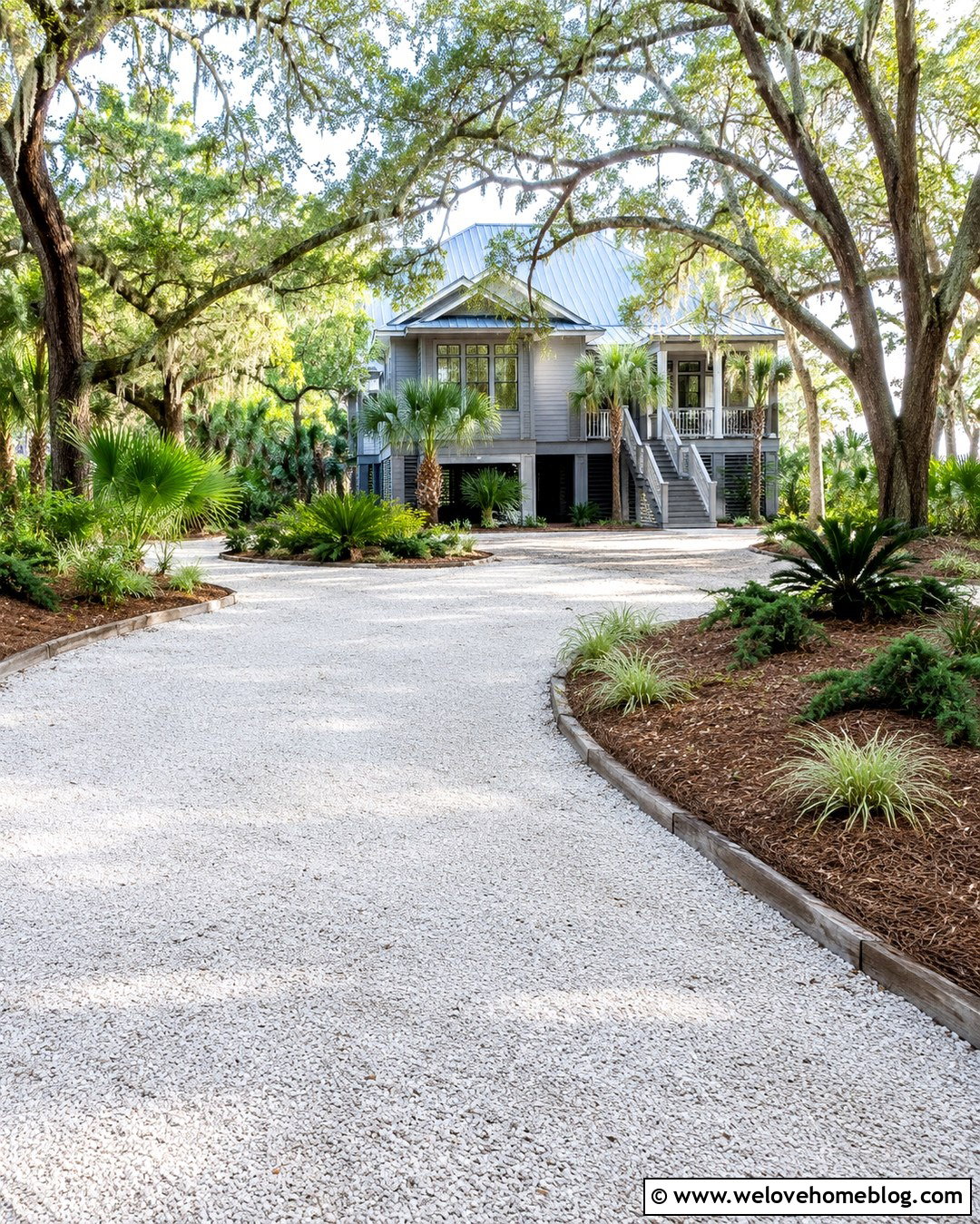
The soft white surface of a crushed oyster shell driveway reflects light through a dense live oak canopy. It is especially fitting for a coastal or Lowcountry property where relaxed materials feel more natural than polished paving. Shape the driveway with a subtle bend that reveals the house gradually. Weathered timber or slim steel edging can keep the shell contained while preserving the casual character. Surround the trees with broad pine-straw beds, dwarf palmettos, coontie, ornamental grasses, and clusters of evergreen ground cover. Near the home, add a brick or tabby concrete parking court for a stable transition. The pale driveway, sculptural branches, and salt-tolerant planting palette create a bright, regionally inspired arrival that feels established rather than overly designed.
6. Exposed Aggregate Live Oak Driveway With Grass Joints
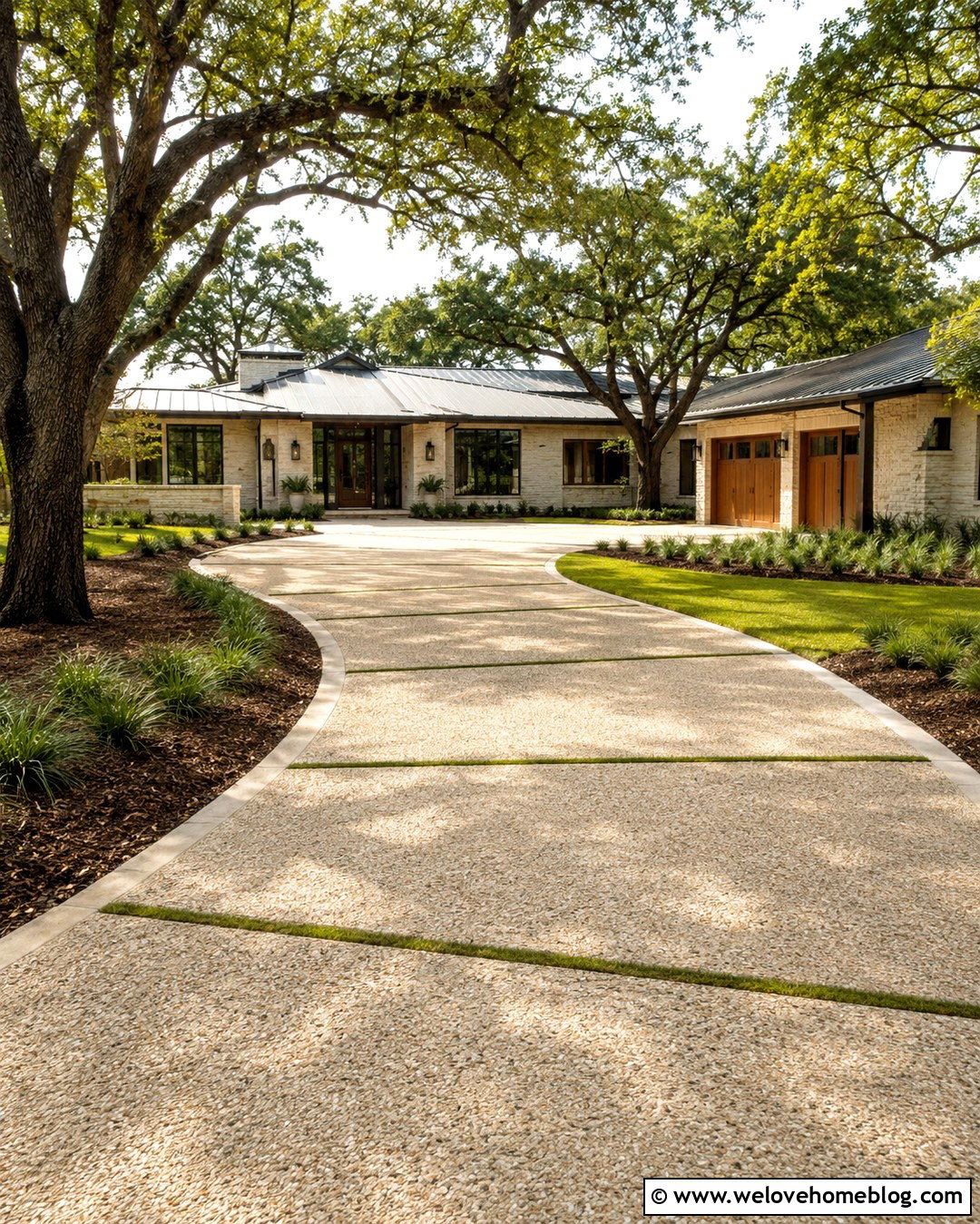
Exposed aggregate concrete offers more texture and warmth than a plain gray slab. Select a mix containing tan, brown, and cream stones to complement live oak bark and surrounding lawns. Divide the driveway into large rectangular sections with narrow grass or ground-cover joints, giving the surface a lighter visual rhythm. A straight or softly curved layout can lead toward a low-slung ranch house or modern Southern home. Keep the joints away from tight turning areas where tires may damage plants. Along both sides, create generous mulched beds around the live oaks and connect them with simple sweeps of native sedge. A smooth concrete apron near the garage provides an easy transition while preserving the decorative aggregate along the main approach.
7. Permeable Paver Live Oak Driveway With Mulched Tree Beds
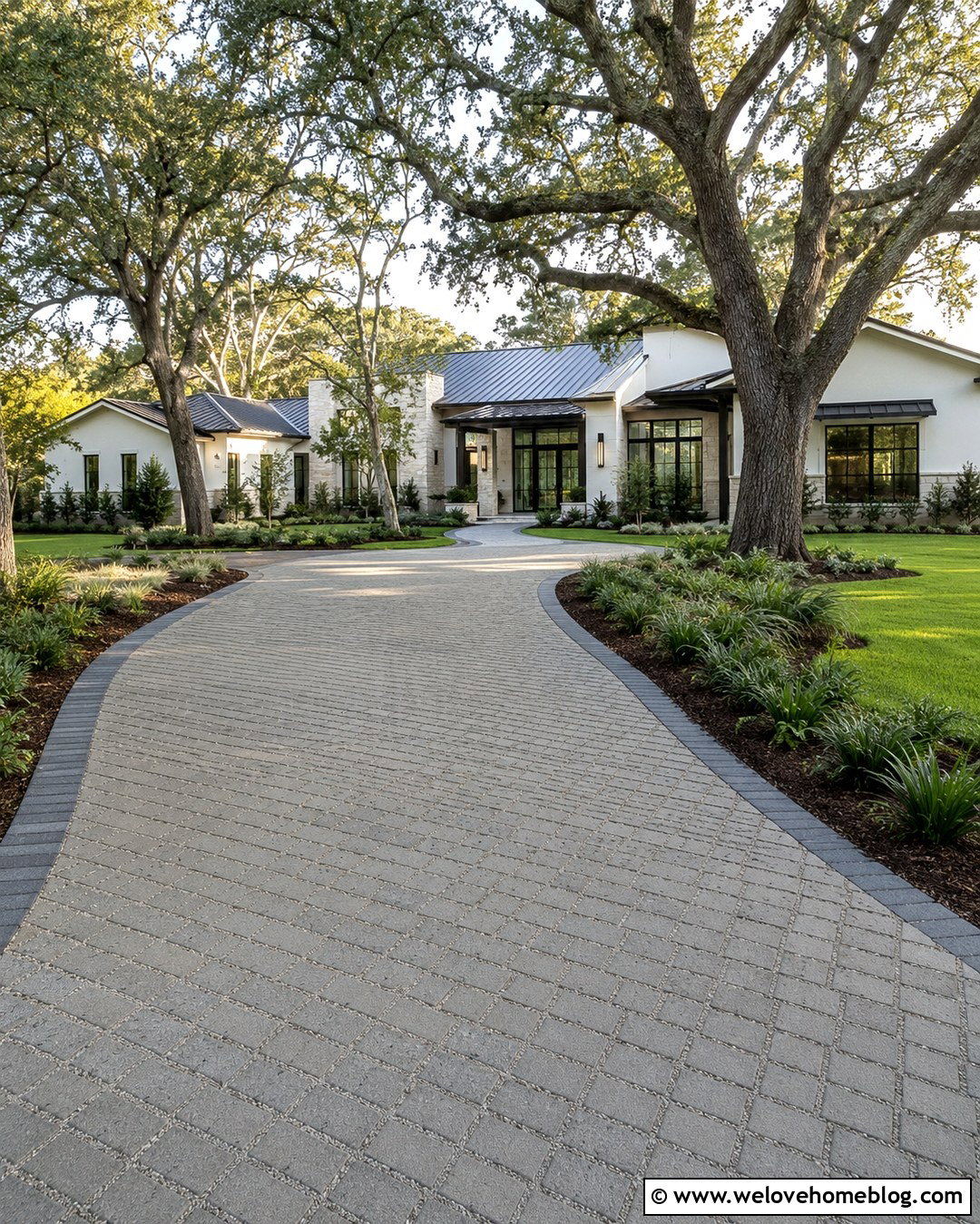
Permeable concrete pavers are a practical choice when you want a structured driveway without making the landscape feel completely paved. Choose warm gray or sand-colored pavers with narrow aggregate-filled joints. Arrange the driveway in a gentle curve around existing live oaks, leaving broad, continuous mulched beds beneath their canopies. Avoid raised rings around individual trunks, which can make the landscape feel chopped into small pieces. Instead, connect several trees in flowing beds planted with native sedges, ferns, and low evergreen ground covers. Dark charcoal edging can provide a clean boundary between the pavers and mulch. This design suits contemporary homes, updated ranches, and modern farmhouses because it combines crisp geometry with the informal shapes of the mature trees.
8. Cobblestone Live Oak Driveway With Mossy Borders
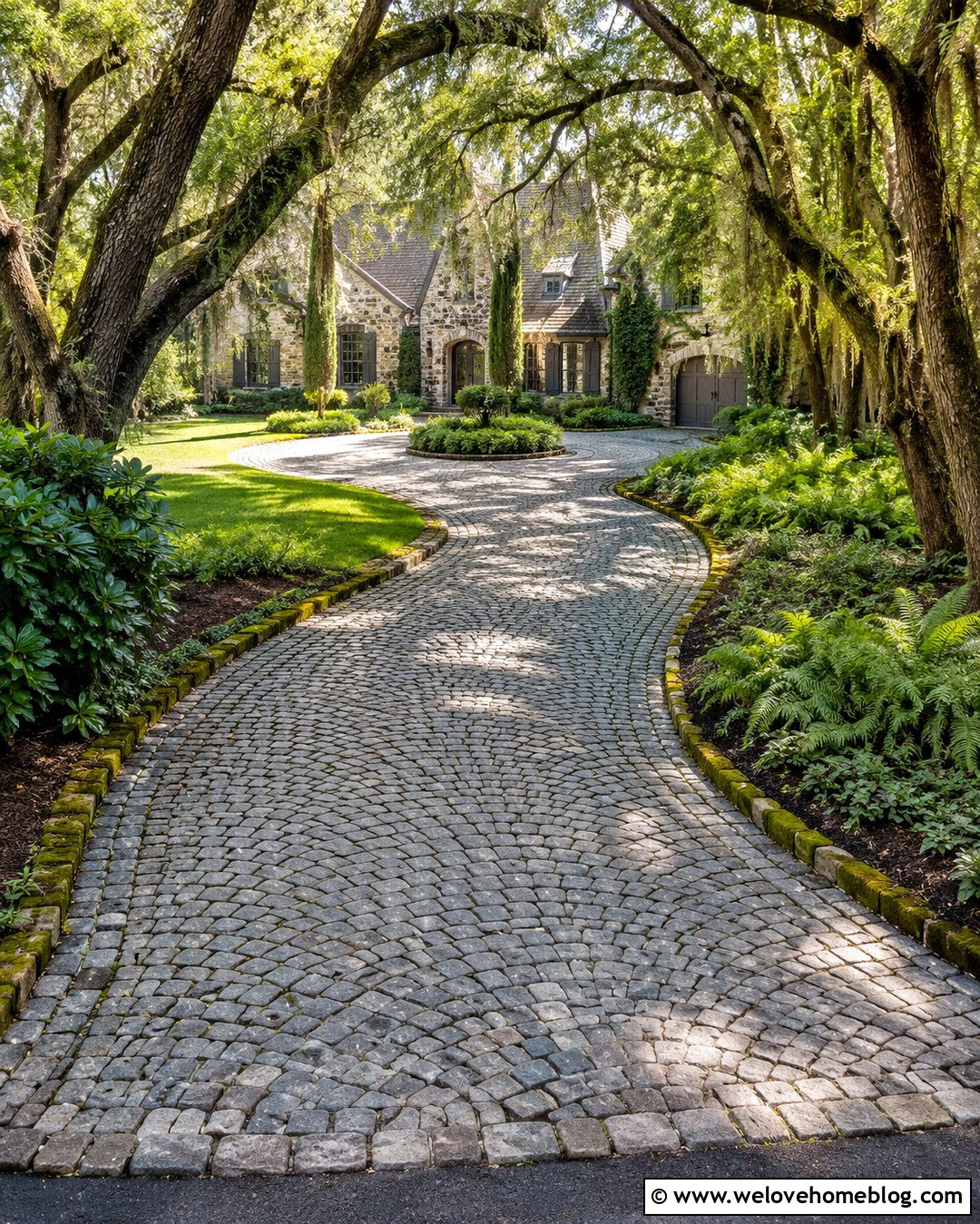
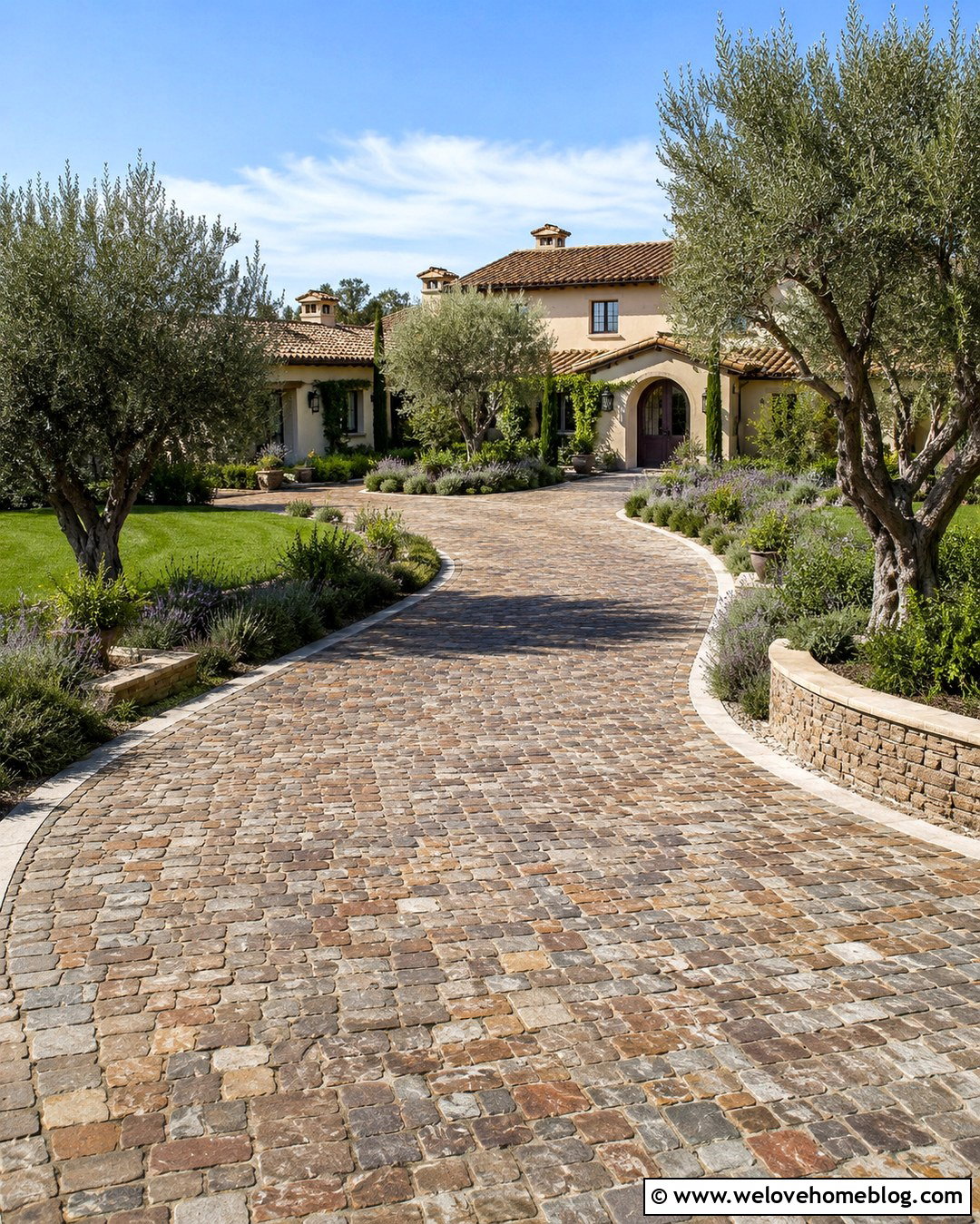
A cobblestone driveway gives an old property a sense of permanence and history. Use weathered gray and brown granite cobbles in a fan or running pattern, then let broad live oak branches form a natural ceiling above the route. A narrow, gently winding layout enhances the old-world effect and reduces the amount of hardscape around the trees. Along the edges, use mossy stone curbing with pockets of shade-tolerant ground cover, ferns, and native woodland plants. Keep dense planting set back from the driving surface so fallen leaves are easier to clear. At the house, widen the cobblestones into a small circular arrival court. This richly textured look complements historic cottages, French country homes, and traditional stone residences.
9. Decomposed Granite Live Oak Driveway With Steel Edging
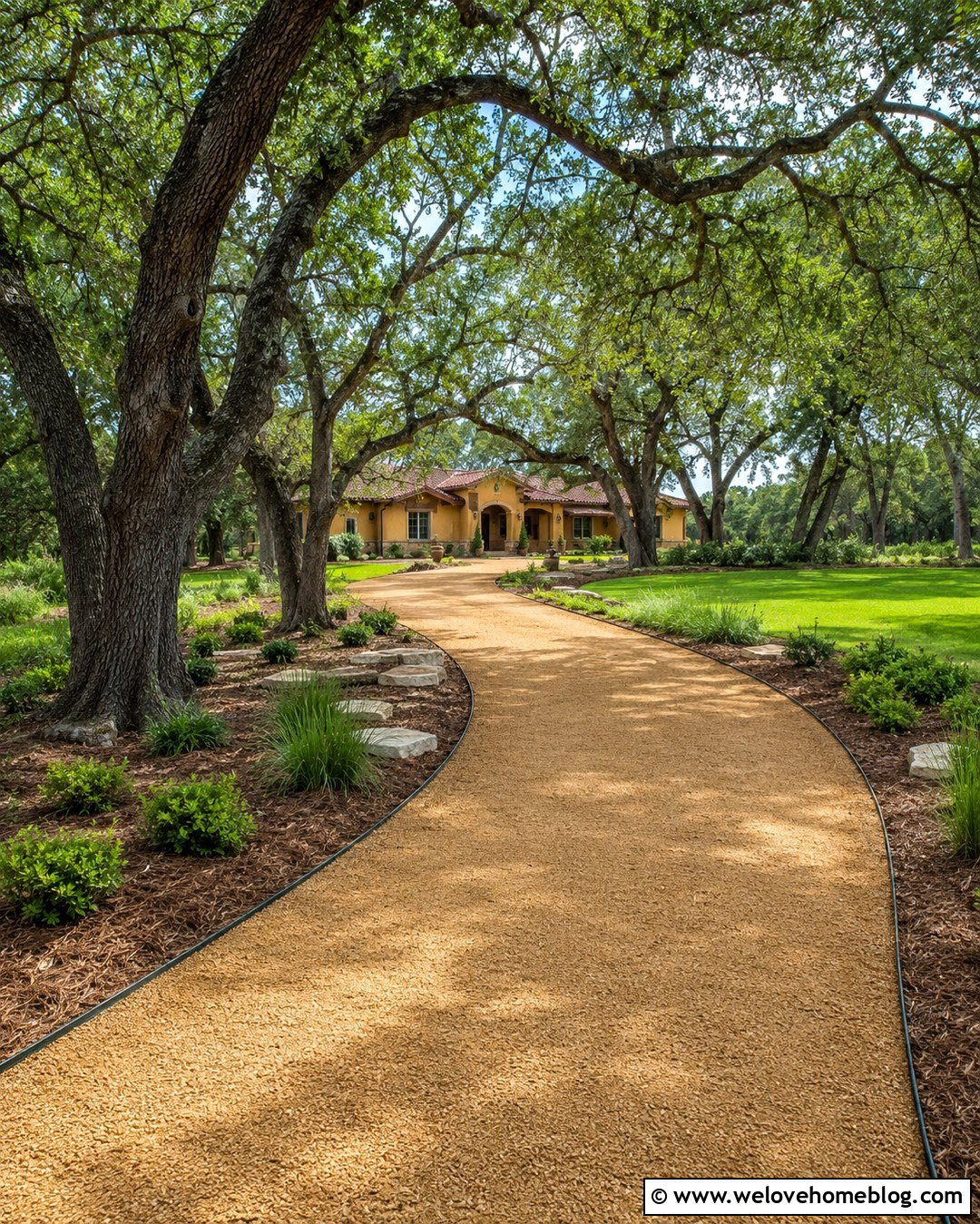
Golden decomposed granite creates a smooth, understated surface that allows the live oaks to remain the main attraction. Its earthy color works particularly well with warm stucco, natural stone, and wood siding. Use a long curved driveway that slips between the trees instead of cutting through their primary growing areas. Slim weathered steel edging produces a neat boundary without introducing a heavy decorative line. Outside the edging, combine pine-straw mulch with native grasses, yaupon holly, and low woodland ground covers. Occasional limestone stepping stones can connect the driveway to a side garden or front walkway. The finished design feels casual but controlled, making it suitable for ranch properties and homes where the landscape should look natural, open, and easy to navigate.
10. Concrete Ribbon Live Oak Driveway With a Grass Center
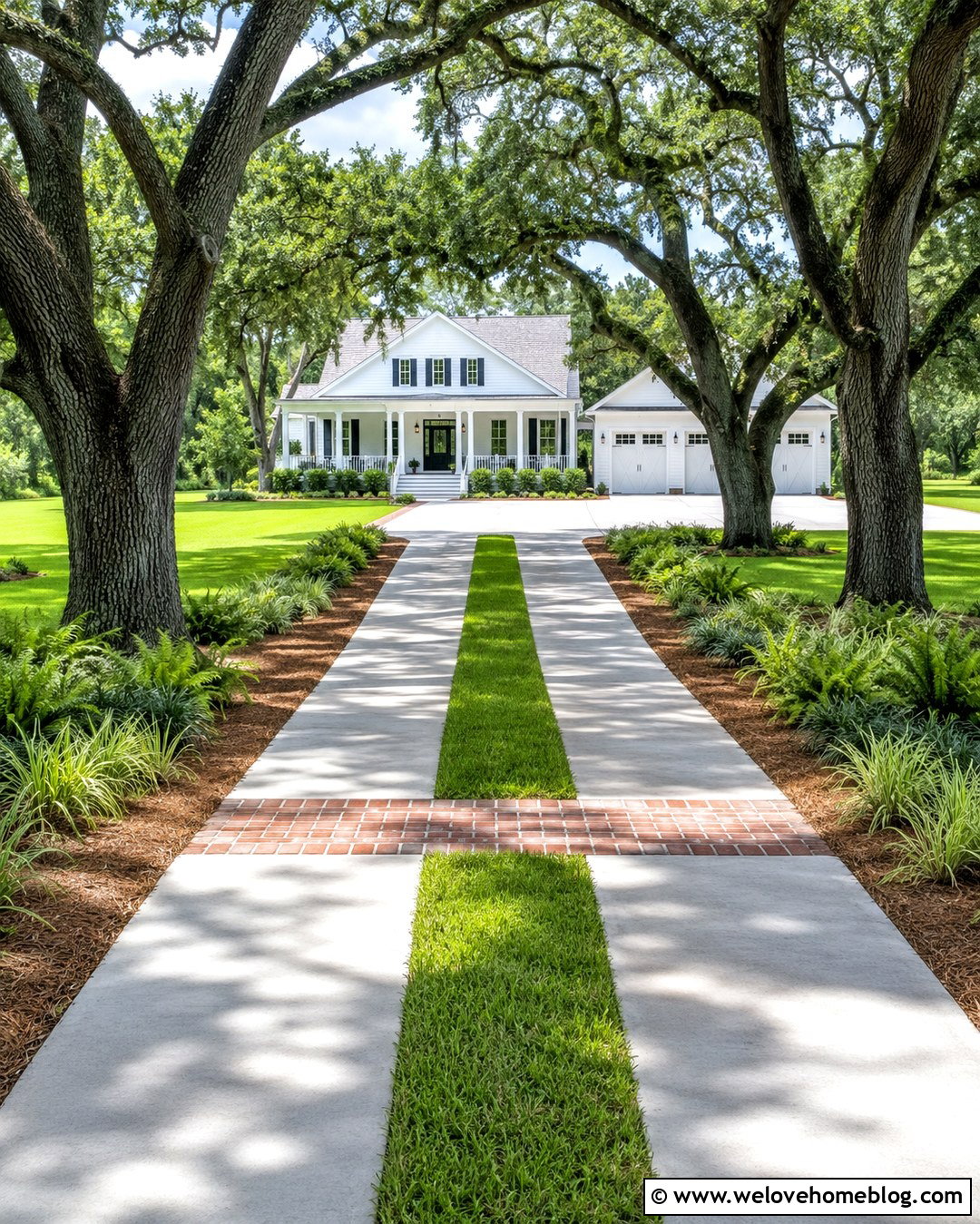
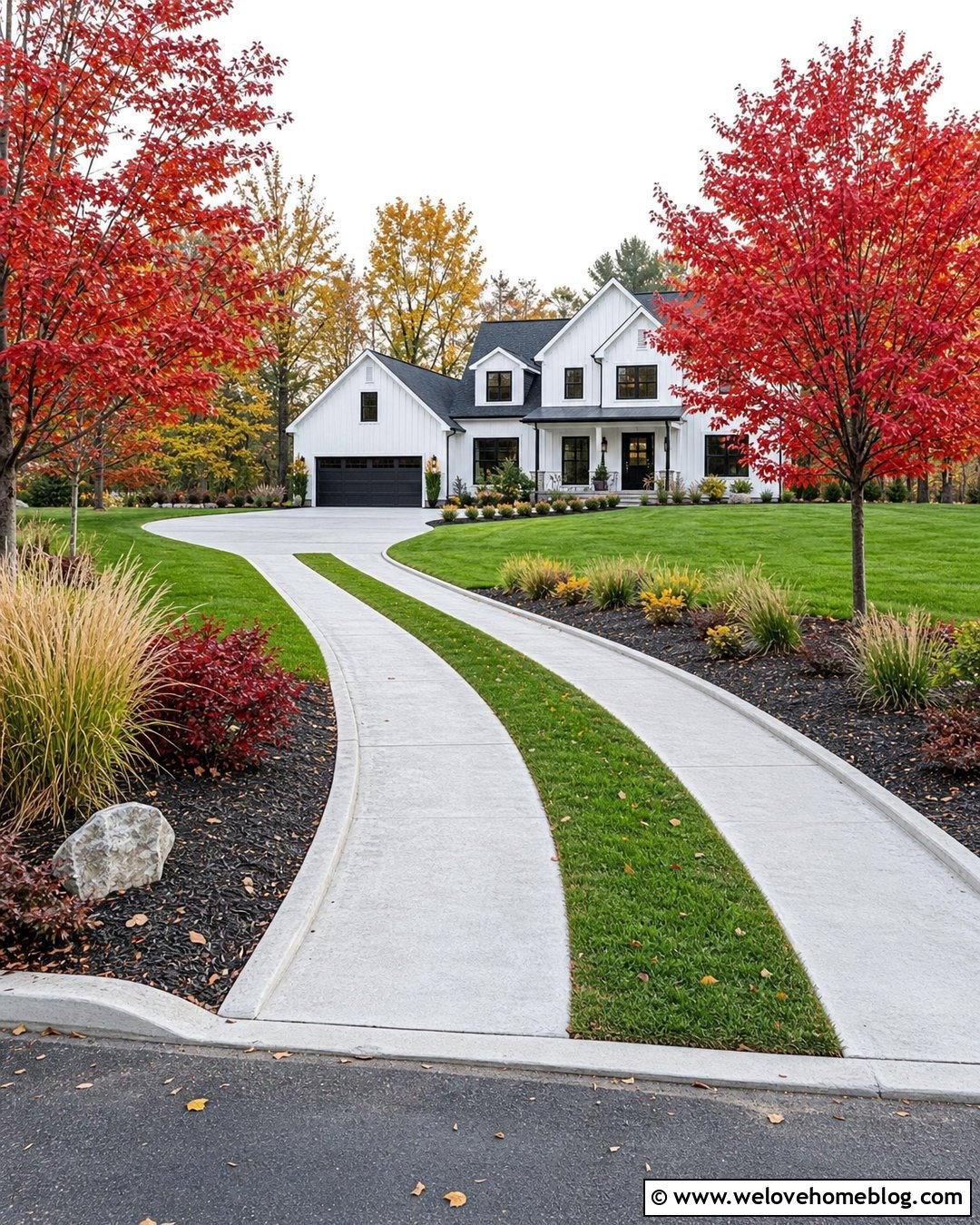
A concrete ribbon driveway reduces the visual width of the hardscape and preserves a greener approach beneath the live oaks. Two smooth, light-gray concrete tracks guide vehicle tires while a broad strip of grass or durable ground cover runs through the center. Keep the route straight for a classic farmhouse look, or introduce a slight curve around established trunks. Brick or stone bands can mark the entrance and provide a finished transition from the road. Along the outer edges, use continuous mulched beds with ferns, liriope, and native sedges suited to filtered shade. Near the garage, merge the ribbons into a full concrete parking pad. This design feels especially appropriate for cottages, farmhouses, and modest country homes with long front yards.
11. Circular Live Oak Driveway With a Planted Center Island
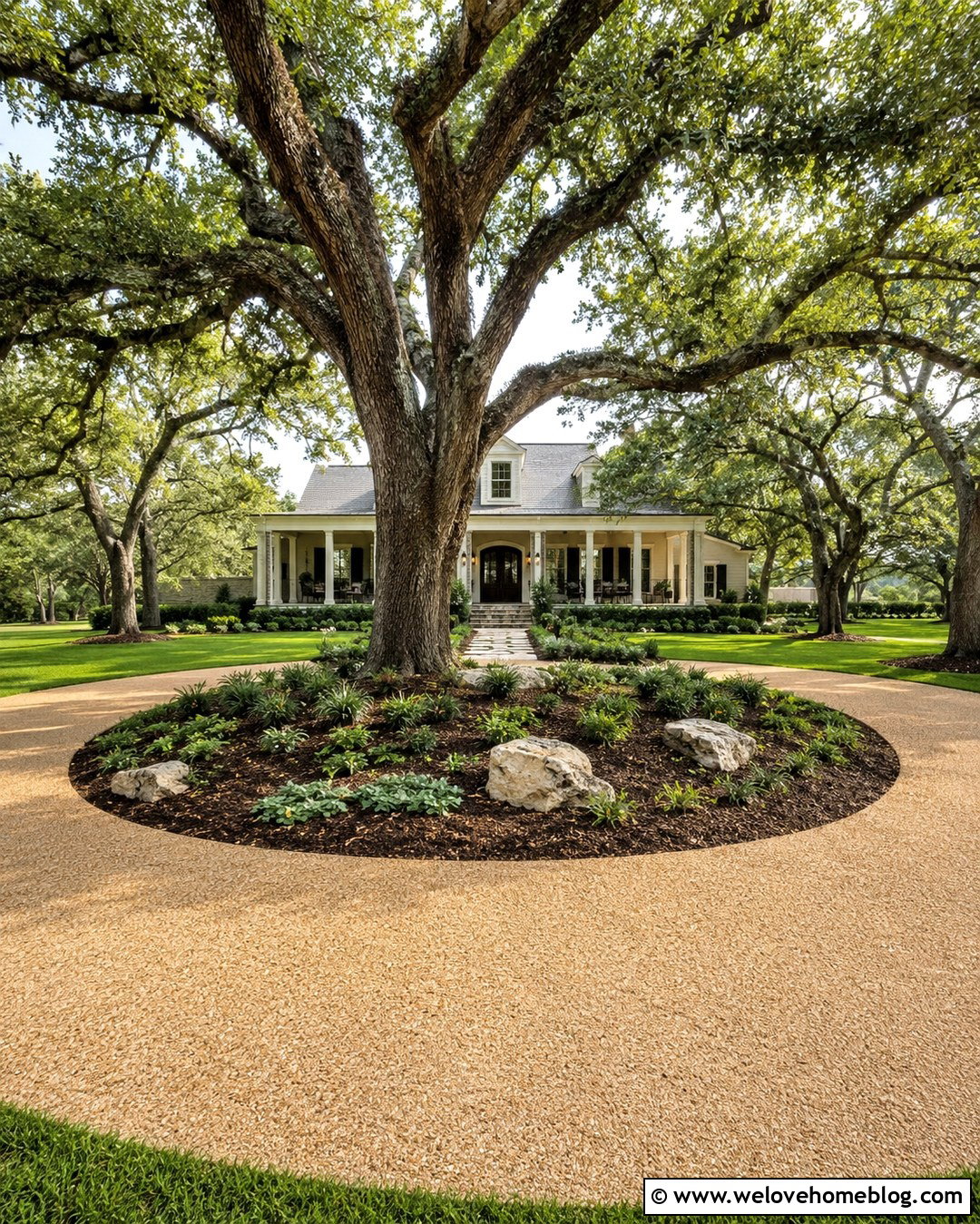
A circular driveway can preserve a prominent live oak by turning it into the centerpiece rather than treating it as an obstacle. Use warm brick pavers, exposed aggregate, or compacted gravel to form a wide loop around a generous central island. The tree should sit within an expansive mulched bed rather than a tight ring. Add low native ground covers and a few limestone boulders while keeping the trunk clearly visible. The outer side of the circle can be lined with additional live oaks to create a layered canopy. A direct walkway from the island or drop-off point should connect naturally to the front entrance. This arrangement gives a large Southern home an impressive arrival while supporting convenient vehicle movement and balanced landscaping.
12. Curved Live Oak Tree Lined Driveway With Stone Edging
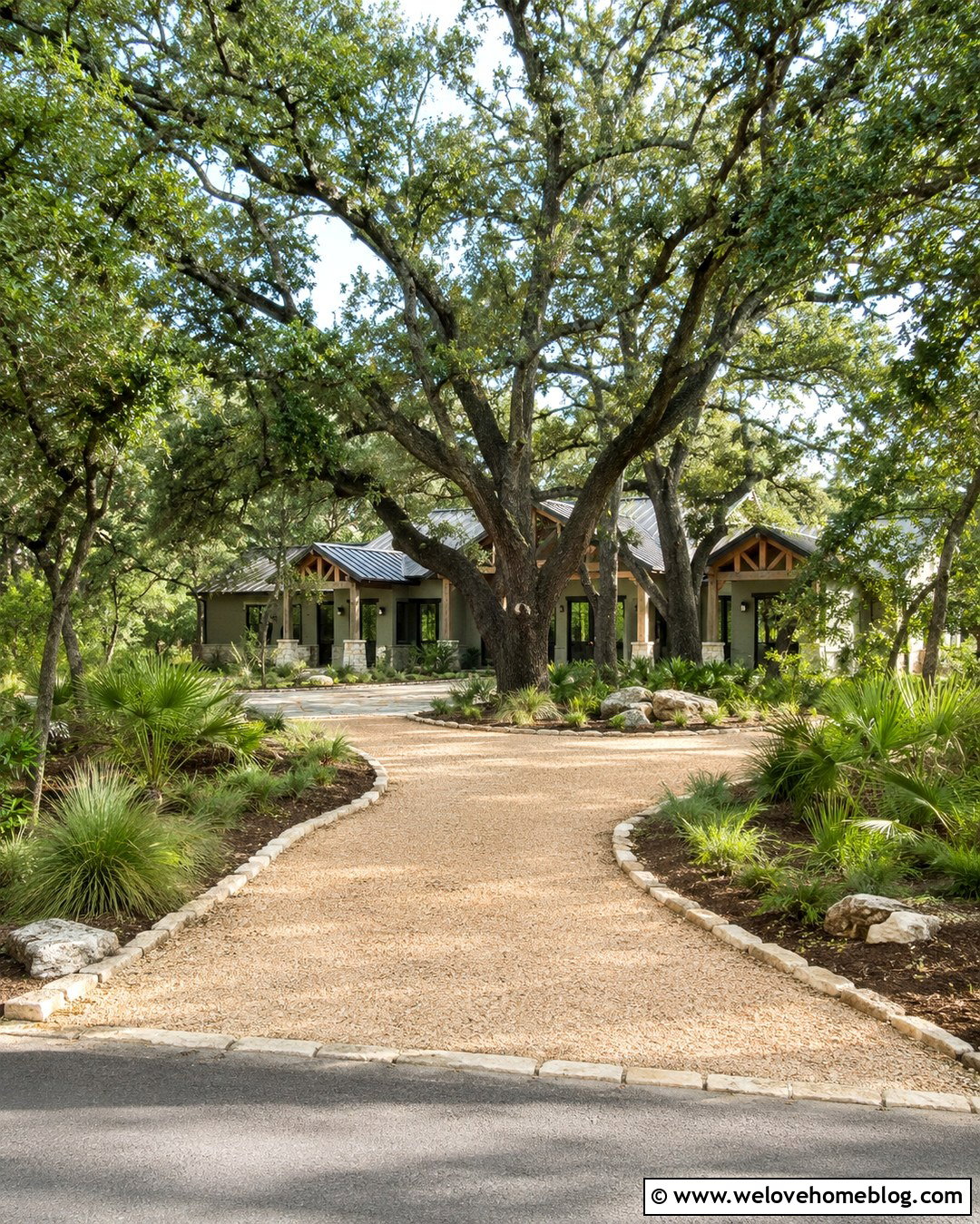
There is something inviting about a driveway that disappears beneath the trees before revealing the house. Build this effect with a curved surface of tan gravel or light exposed aggregate. Use low limestone edging to clarify the route and protect planting beds from wandering tires. Position live oaks along both sides at varied intervals so the canopy feels natural rather than rigidly formal. Beneath them, repeat broad groups of native sedges, dwarf palmettos, and evergreen ferns. Keep the inside of each curve open and low for visibility. A wider stone-paved apron near the garage can provide room for turning and parking. This layout works beautifully on irregular lots where the existing trees and terrain should guide the driveway’s direction.
13. Gated Live Oak Driveway With Wrought Iron Fencing
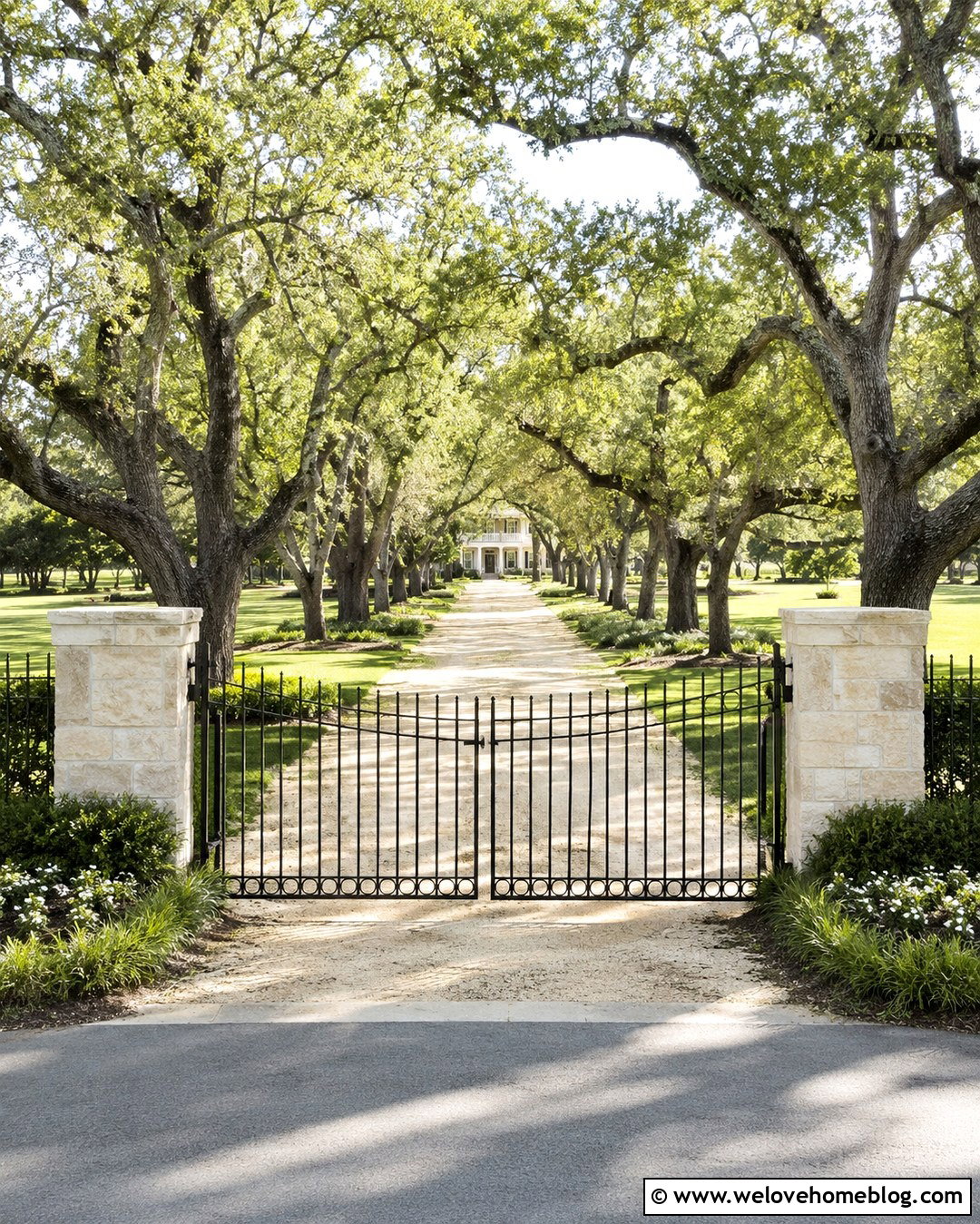
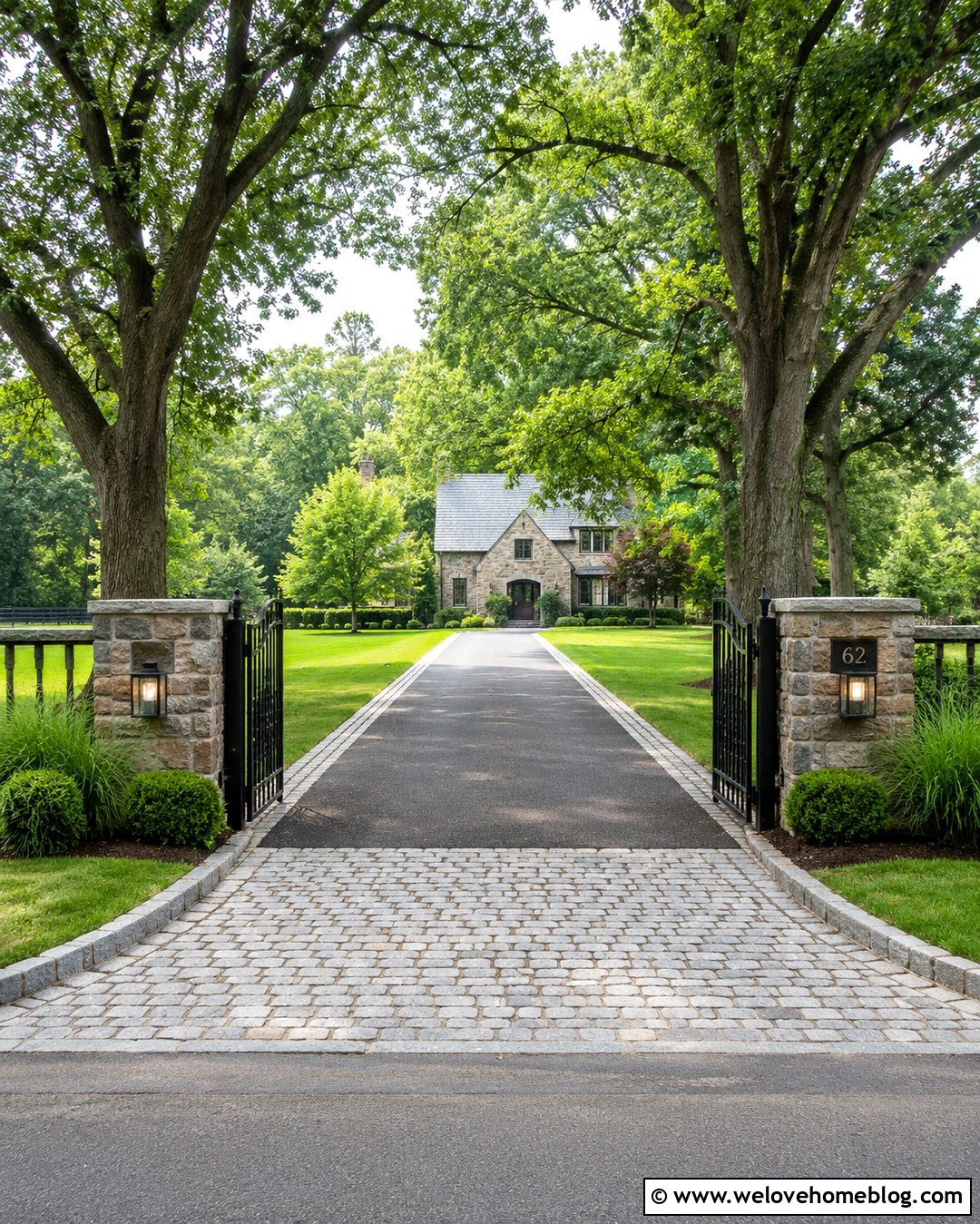
A restrained wrought iron gate adds definition without blocking the view into a live oak tree lined driveway. Set the gate between low brick or limestone pillars, then continue with open fencing that visually disappears into the surrounding landscape. Beyond it, a straight crushed limestone or brick-paver driveway creates a clear axis toward the house. The live oaks should begin slightly behind the gate so their spreading limbs frame the entrance without crowding the equipment or pillars. Add low planting beds with dwarf yaupon holly, native grasses, and seasonal white flowers. Avoid oversized crests or excessive ornamentation. Simple black metal, natural masonry, and a shaded tree canopy provide enough character for an estate, ranch, or traditional Southern residence.
14. Live Oak Driveway With Brick Pillars and White Fencing
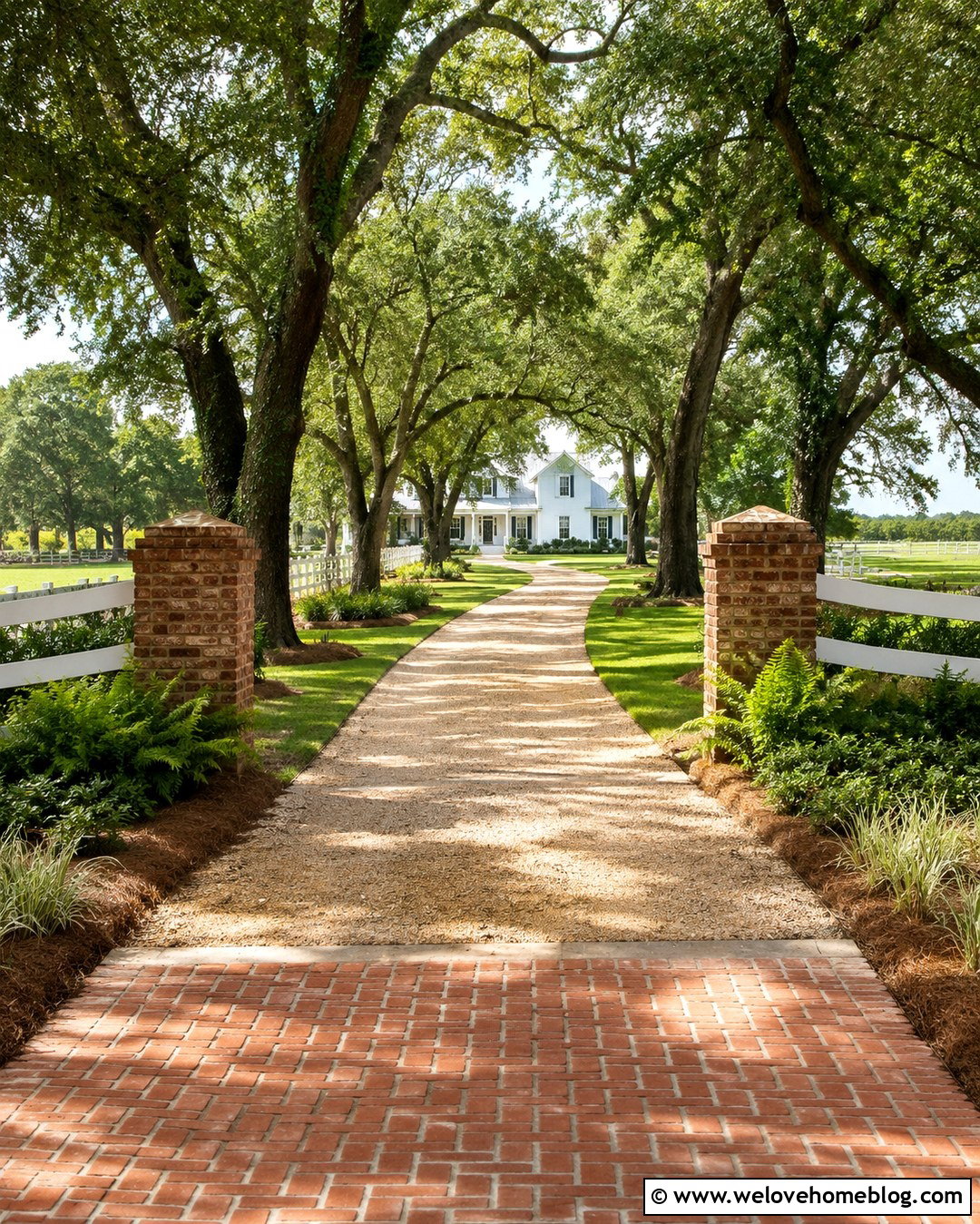
Red brick pillars and white board fencing create a welcoming country entrance beneath rows of live oaks. Pair these features with a compacted beige gravel driveway that runs straight toward a farmhouse or bends gently toward a side-facing garage. The brick pillars should be substantial enough to mark the entrance without competing with the trees. Continue the white fence along both sides, leaving wide grass verges between the fence and driveway. Mulched planting beds around each live oak can contain ferns, sedges, and simple evergreen ground covers. Repeat brick at the house with a porch walkway or parking apron. The limited material palette gives the property a coordinated appearance, while the white fencing remains visible even under a deep green canopy.
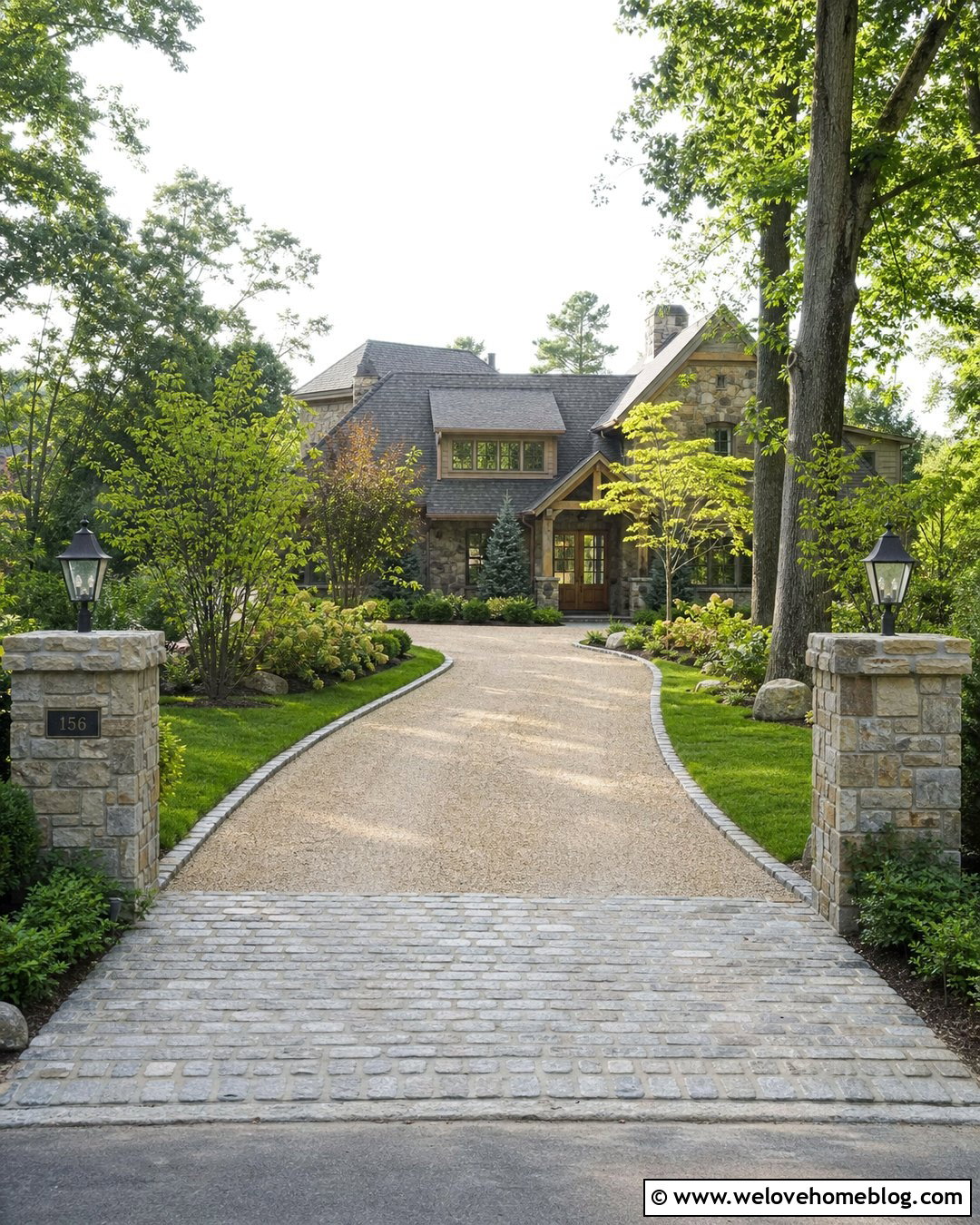
15. Live Oak Tree Lined Driveway With Low-Voltage Lighting
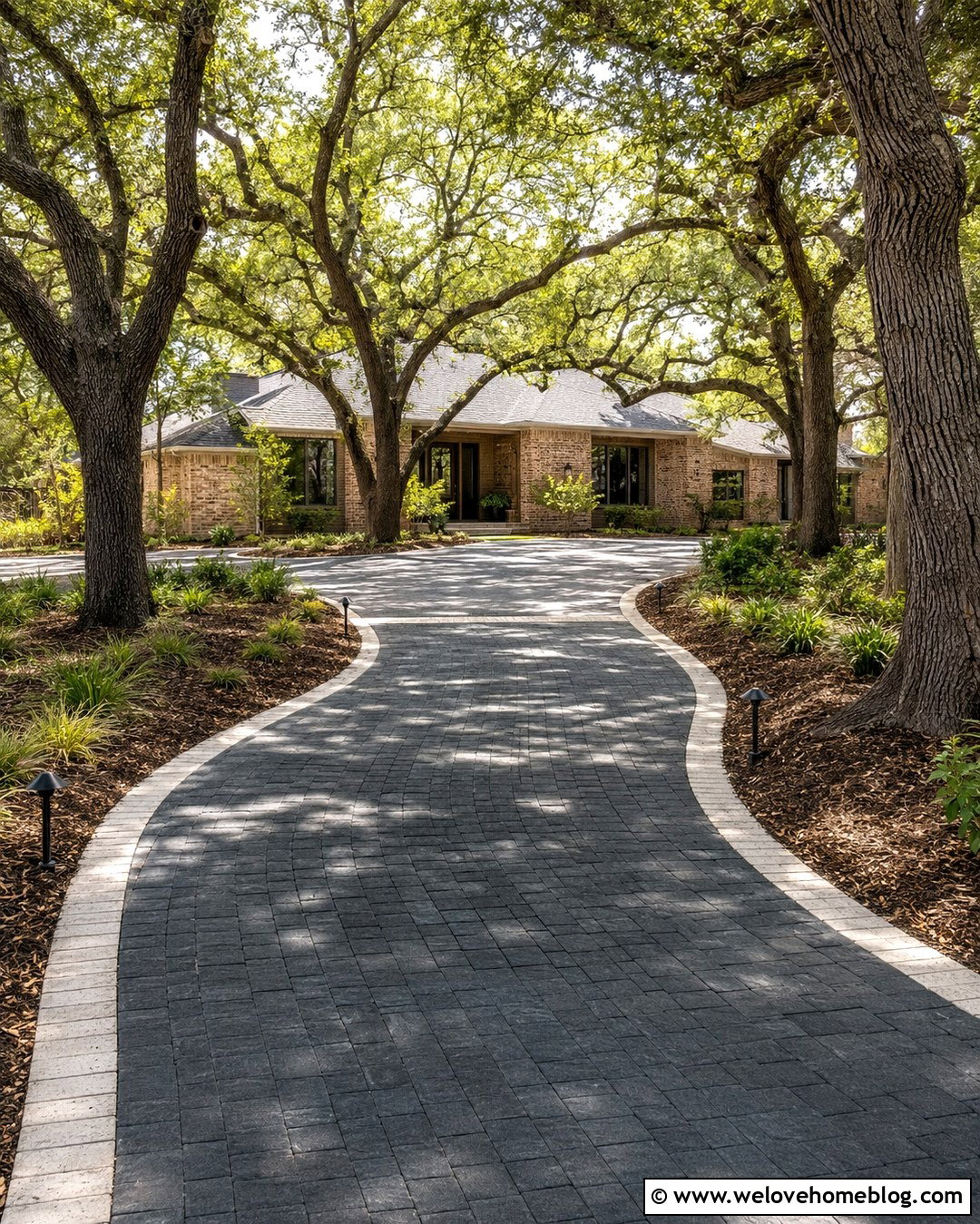
Thoughtful lighting can reveal the structure of live oaks without making the driveway resemble a runway. Start with a dark asphalt or charcoal paver surface edged in pale limestone, which remains easy to read during the day. Place a limited number of low-voltage fixtures along curves, intersections, and the entrance rather than spacing identical lights down every few feet. Shielded uplights can highlight selected trunks and major branches, while downward-facing fixtures improve visibility around the parking court. Conceal wiring beneath mulched beds whenever possible. Keep fixtures outside areas where roots could be disturbed during installation. By combining practical route lighting with selective tree illumination, the complete driveway remains attractive, navigable, and visually calm after sunset.
16. Spanish Moss Live Oak Driveway With Shell Gravel
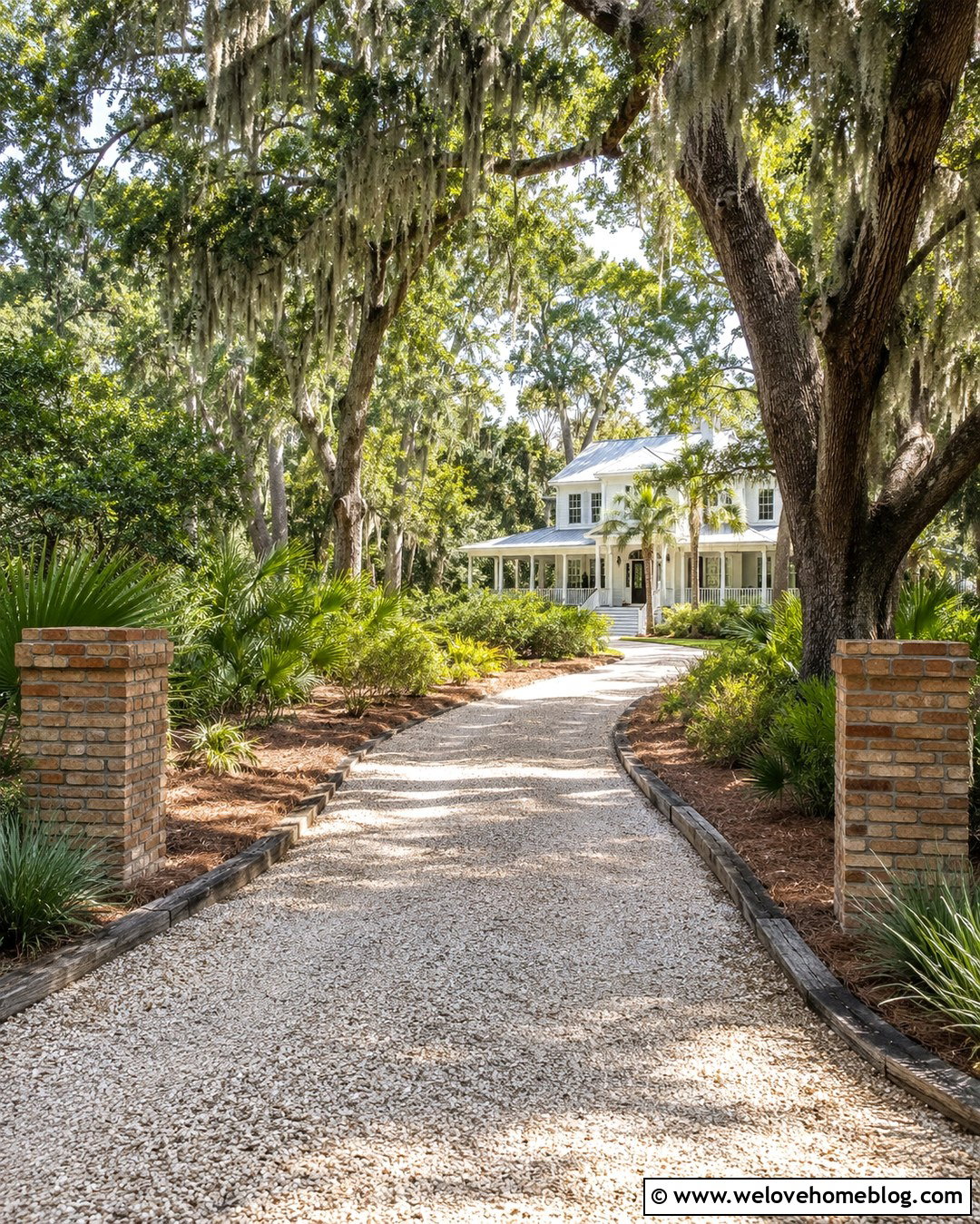
Live oaks draped with Spanish moss create an unmistakable Lowcountry atmosphere. Reinforce that regional character with a pale crushed shell driveway shaped into a long, gentle curve. The light surface reflects through the canopy and contrasts with dark trunks and hanging moss. Use simple weathered timber edging or leave the sides softly defined where the shell meets broad pine-straw beds. Dwarf palmettos, native ferns, wax myrtle, and clumping grasses can fill the outer landscape while preserving open views beneath the trees. Add brick entrance columns and a modest lantern-style gate for a traditional finishing touch. A white clapboard, tabby, or raised coastal house completes this relaxed design, which should feel natural and established rather than heavily manicured.
17. Live Oak Driveway With Native Shade Gardens
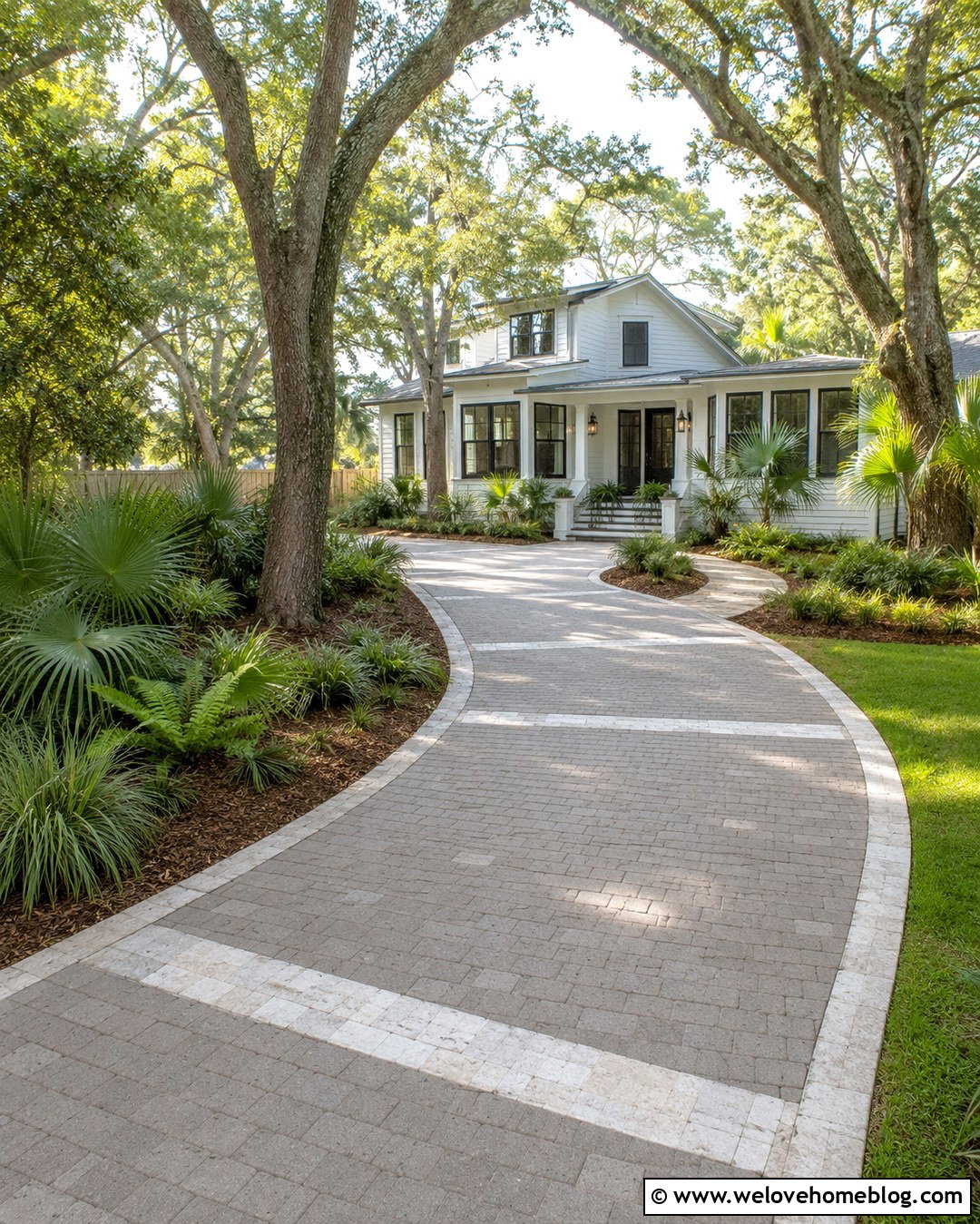
Deep shade beneath mature live oaks can make conventional lawn difficult to maintain, so turn the margins into connected native-style gardens. Use warm gray permeable pavers for the driveway and define the route with narrow limestone bands. On both sides, create broad beds of native sedges, woodland grasses, coontie, dwarf palmettos, and shade-adapted ferns. Repeat plants in large sweeps rather than scattering individual specimens. This gives the long driveway a calm, continuous rhythm. Leave open mulch around the trunks and avoid building raised beds over major roots. A curving walkway can branch from the driveway toward the porch without crossing the most sensitive tree areas. The result feels lush and intentional while reducing dependence on patchy grass beneath the canopy.
18. Live Oak Driveway With White Fence and Gravel Shoulders
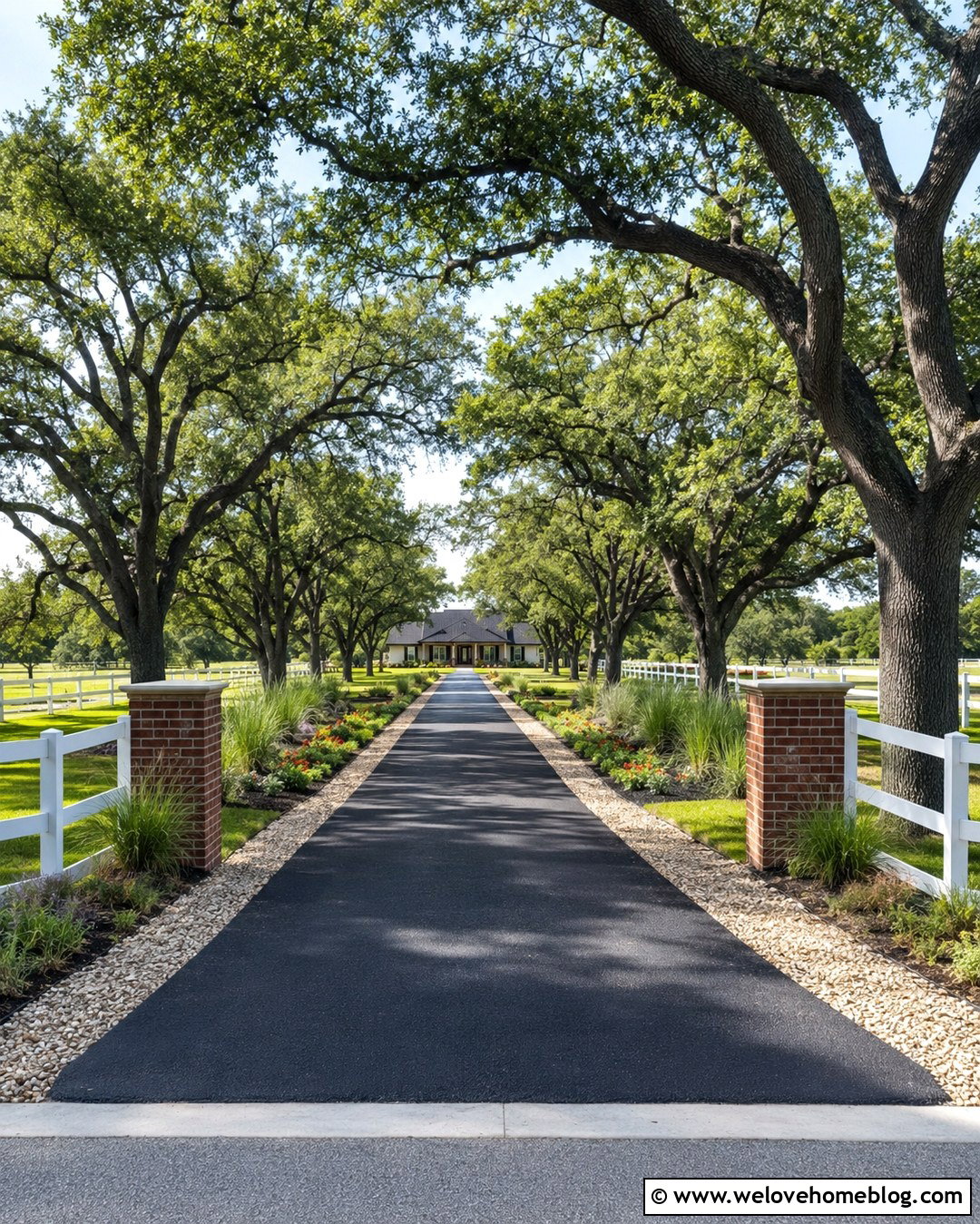
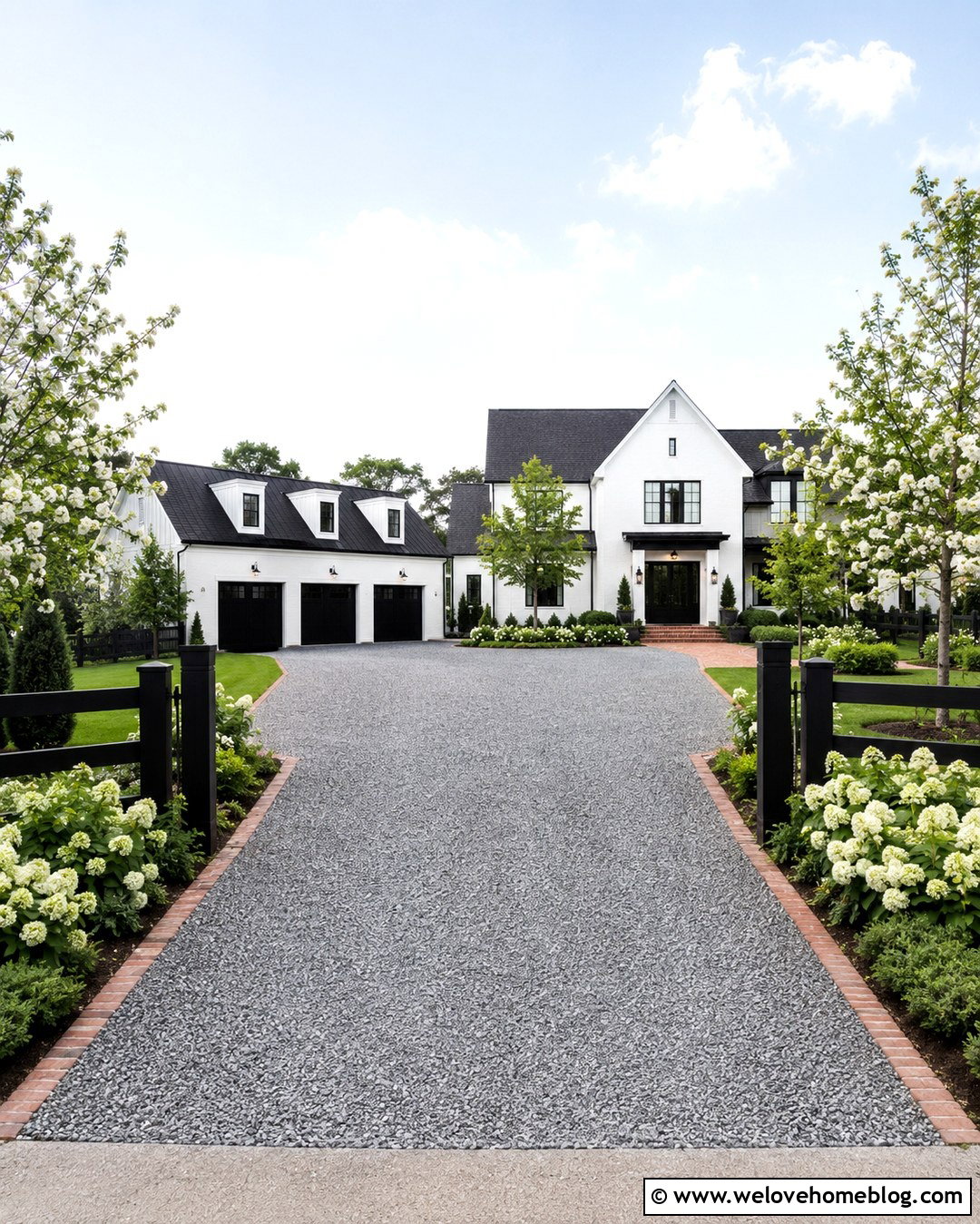
A white fence can visually organize a long live oak driveway without making the landscape feel formal. Choose a smooth black asphalt center lane and soften it with narrow tan gravel shoulders on both sides. The contrasting materials make the driveway appear slimmer while providing a useful transition to the grass. Place the fence beyond the gravel, allowing generous space around each live oak trunk. Native grasses and low flowering plants can fill occasional pockets between the trees, but most of the verge should remain simple. At the entrance, angle the fence toward understated brick pillars to create a wider welcome. This balanced look suits horse properties, ranch homes, and modern farmhouses with large lawns and an open rural setting.
19. Modern Farmhouse Live Oak Driveway With Concrete Pavers
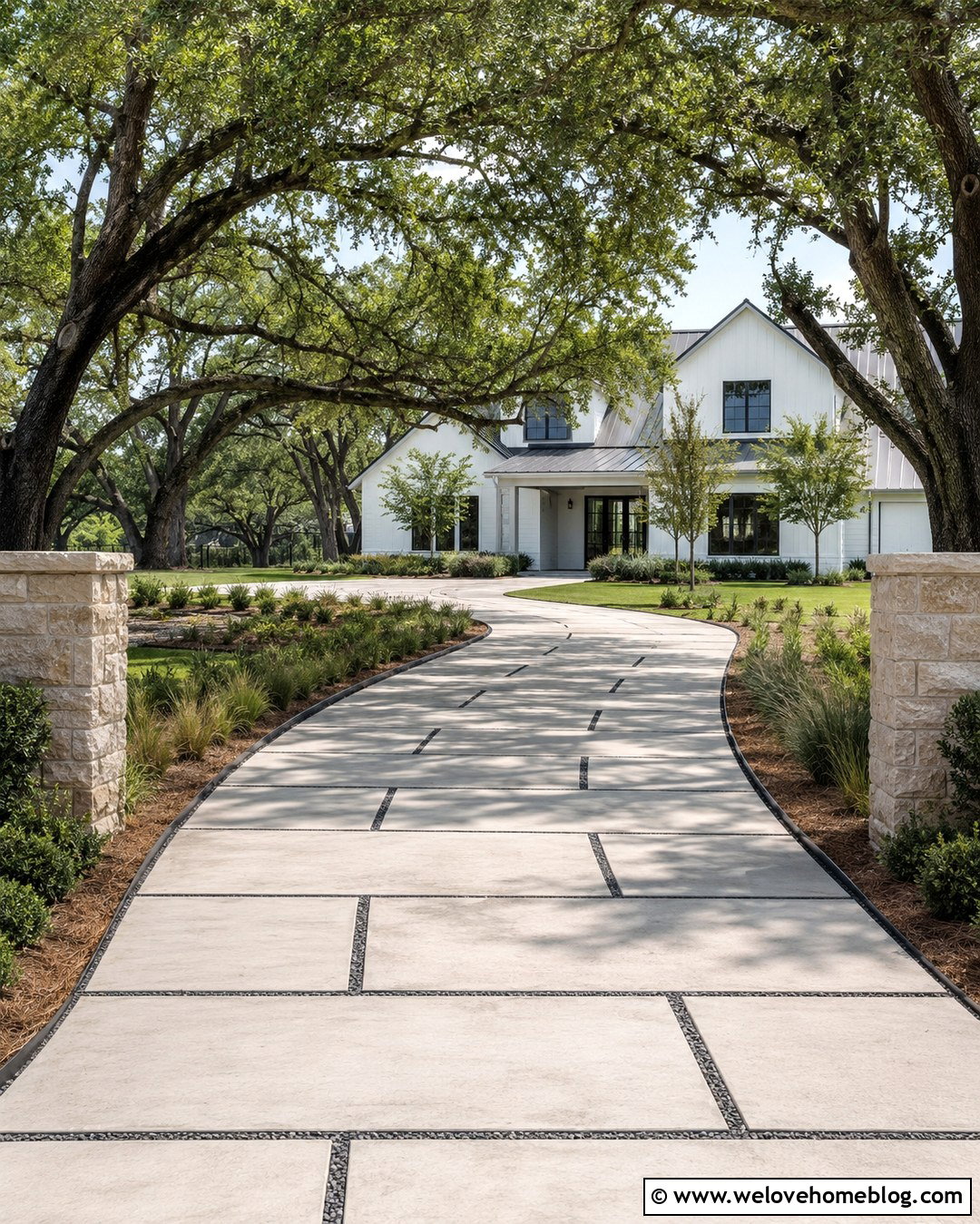
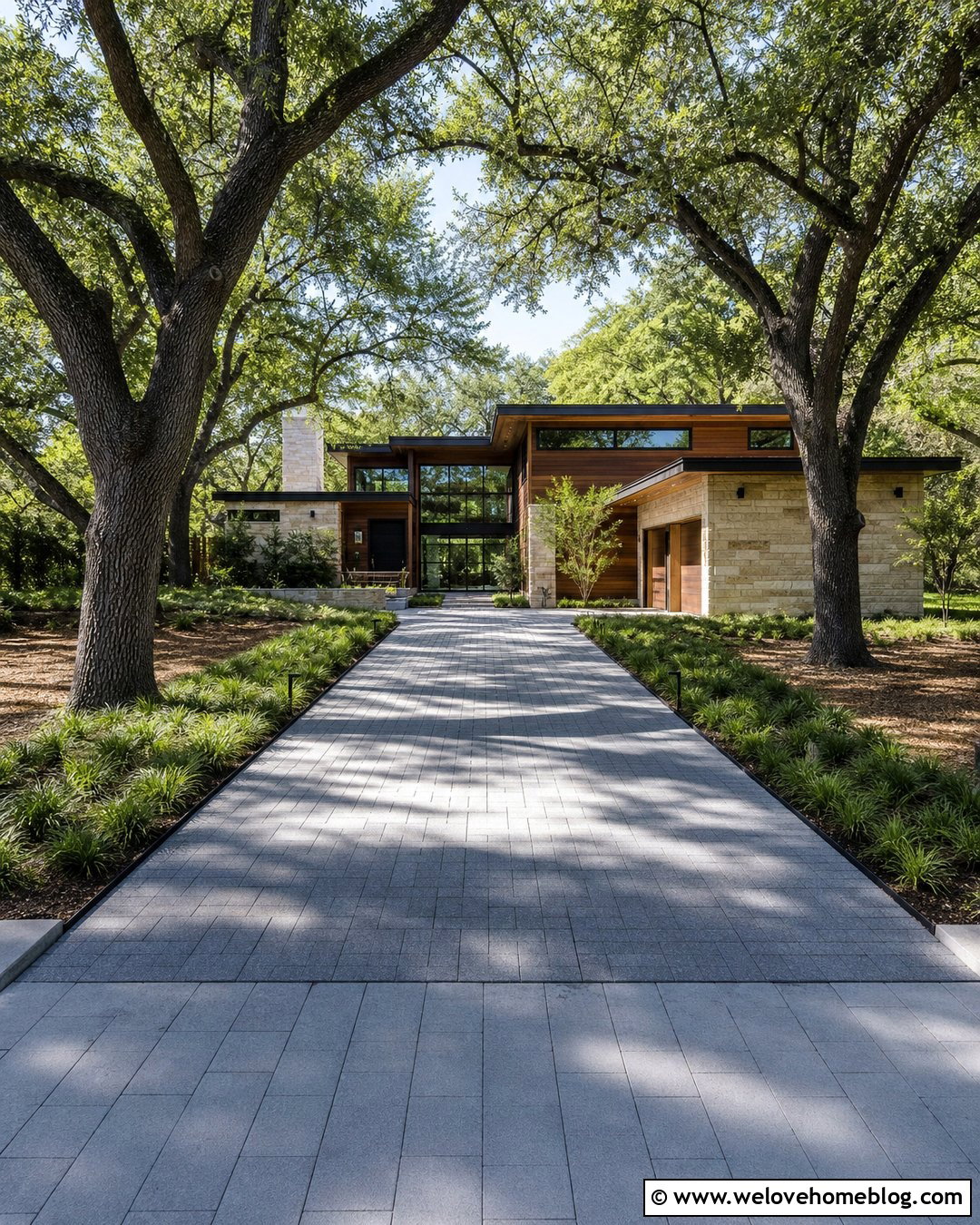
Large-format concrete pavers bring modern structure to a driveway shaded by irregular live oak branches. Select warm light-gray pavers and arrange them in a clean running pattern with narrow dark gravel joints. A broad, gently curved layout can lead toward a white modern farmhouse with black windows and a side-facing garage. Use black steel edging to sharpen the driveway boundaries. Beyond it, keep the landscaping soft with pine-straw mulch, ornamental grasses, dwarf yaupon holly, and shade-tolerant sedges. Simple stone entrance walls can repeat the home’s foundation material. The strong contrast between geometric paving and organic tree forms gives the property a current appearance without removing its Southern character. Keep decorative features minimal so the live oak canopy remains visually dominant.
20. Coastal Live Oak Driveway With Tabby Concrete
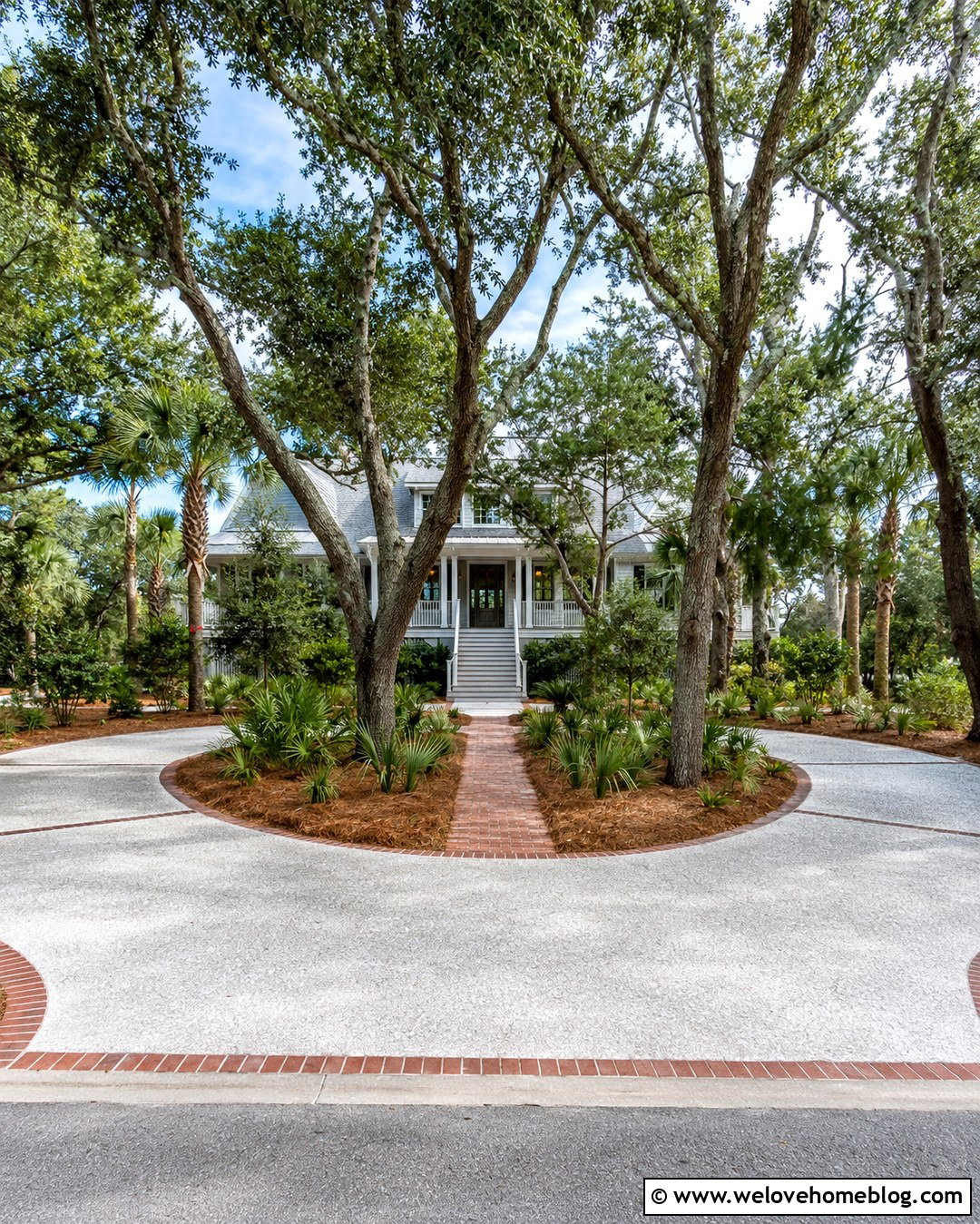
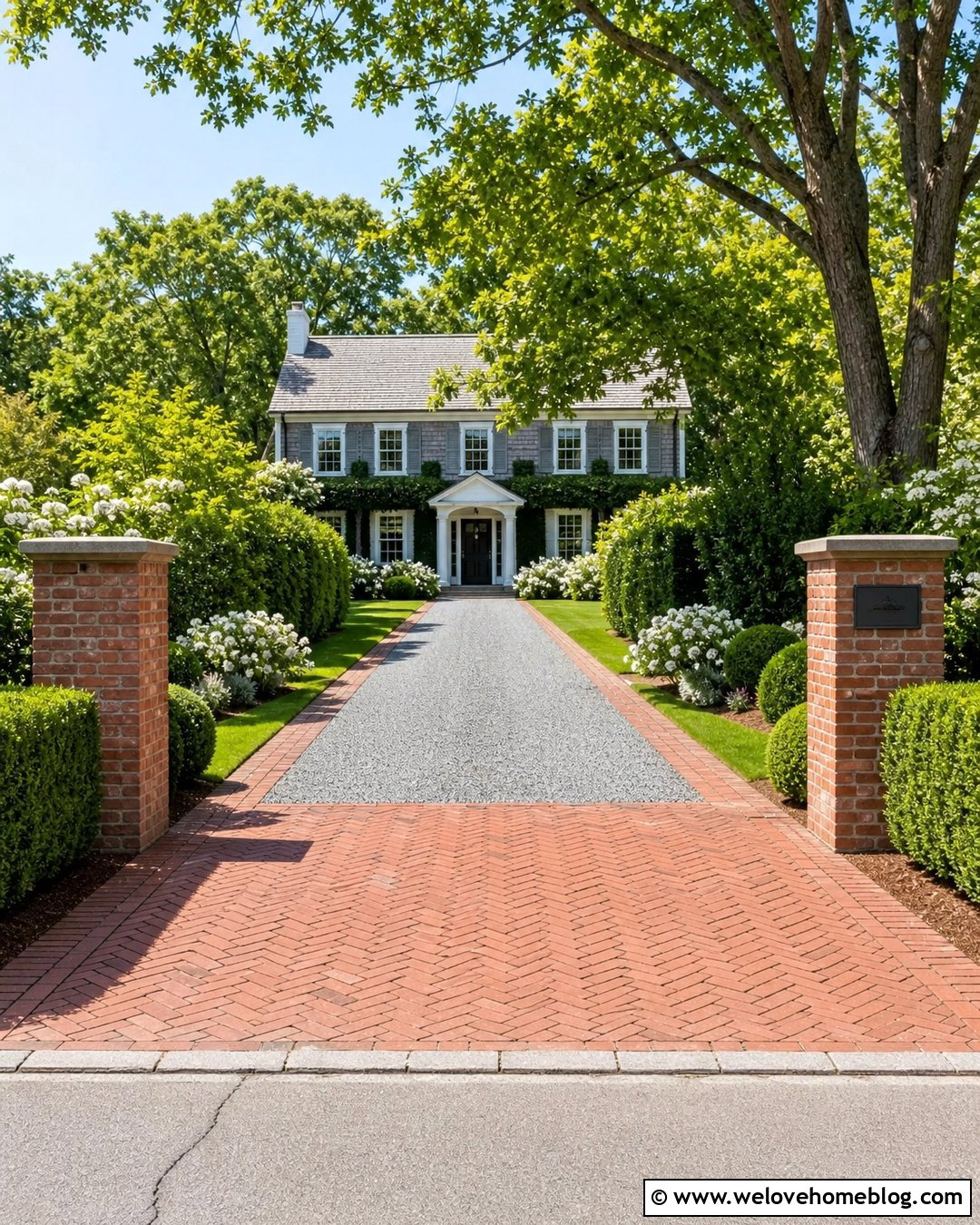
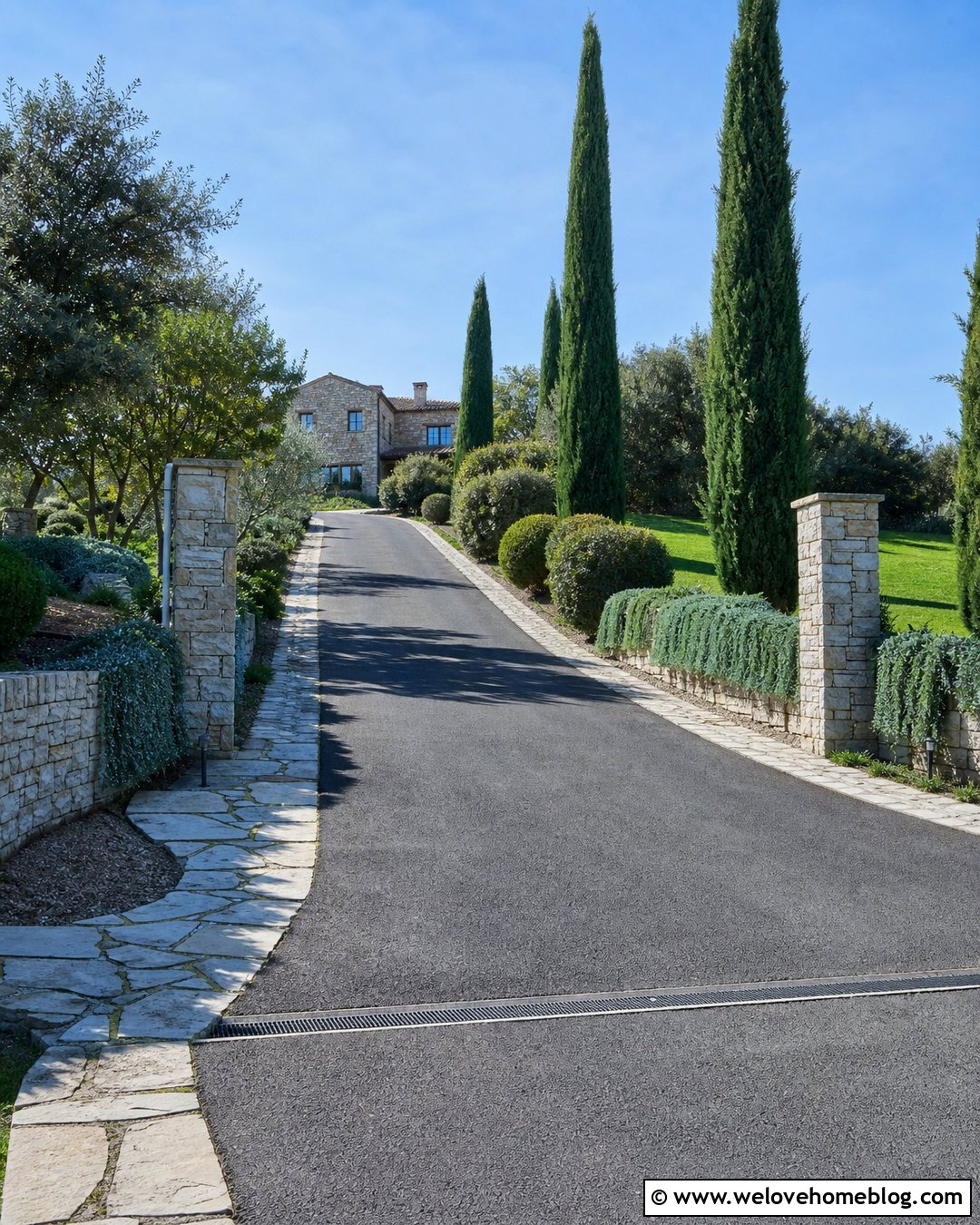
Tabby-style concrete, with its pale color and shell-rich texture, makes a distinctive surface for a coastal live oak driveway. Use it for a straight drive with softly rounded edges or a horseshoe layout in front of a raised coastal home. Define the perimeter with thin brick bands that echo porch steps, columns, or garden walls. Large live oaks can frame the outer curve, while pine-straw beds protect the shaded ground beneath their branches. Add dwarf palmettos, wax myrtle, coontie, and feathery native grasses farther from the driving area. A brick walkway should connect the drop-off point to the porch. Together, the textured concrete, weathered trees, regional plants, and traditional architecture create a bright, durable entrance with authentic coastal character.
Conclusion:
The most successful 20 live oak tree lined driveway ideas treat the driveway, trees, borders, entrance, and surrounding landscape as one connected composition. Gravel and shell create relaxed Southern character, while brick, cobblestone, permeable pavers, and exposed aggregate offer a more structured finish. Curves can protect existing trees and create anticipation, while straight layouts emphasize symmetry and a clear view of the house. Whichever look you prefer, leave generous planting areas around mature trunks and avoid unnecessary disturbance near major roots. Use repeated materials and simple plant groupings to keep the entrance cohesive. With thoughtful planning, a live oak driveway can feel practical, shaded, welcoming, and naturally suited to the property.

Related posts:
Leave a Reply