
Crushed oyster shells give a driveway a bright, coastal character that feels relaxed yet polished. As the shells compact, they create a textured surface with soft ivory, cream, and pale gray tones. The material works especially well with traditional coastal homes, cottages, farmhouses, and Lowcountry architecture. However, the overall design matters as much as the surface. A strong base, defined edging, thoughtful drainage, and compatible landscaping help the driveway remain attractive and practical. Shell driveways can be straight, curved, circular, narrow, or expansive, making them adaptable to many properties. Crushed shells also pair naturally with cobblestone, brick, bluestone, metal edging, ornamental grasses, and flowering shrubs. () Explore these complete and distinctive 20 Oyster Shell Driveway Ideas.

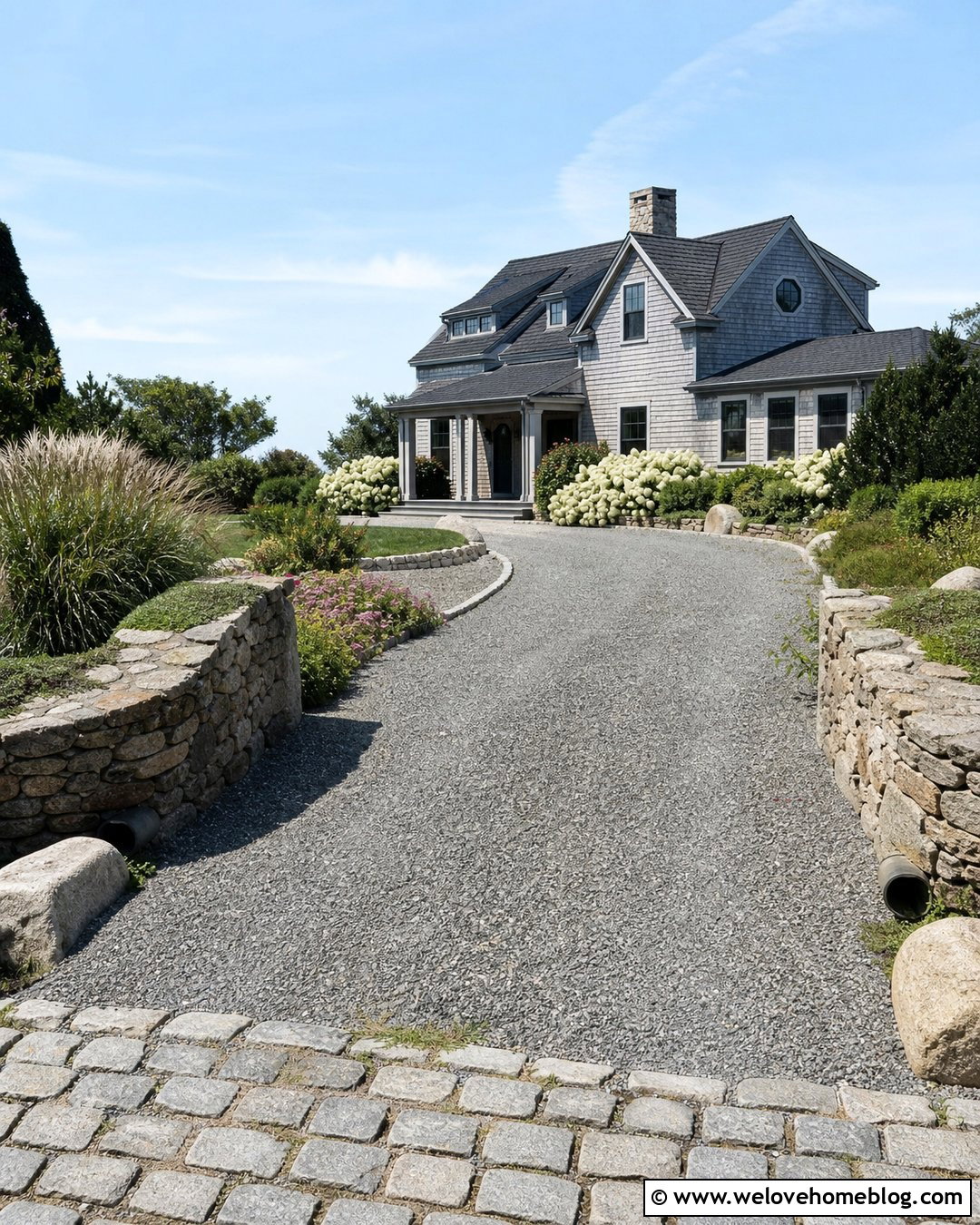
1. Oyster Shell Driveway With Cobblestone Border
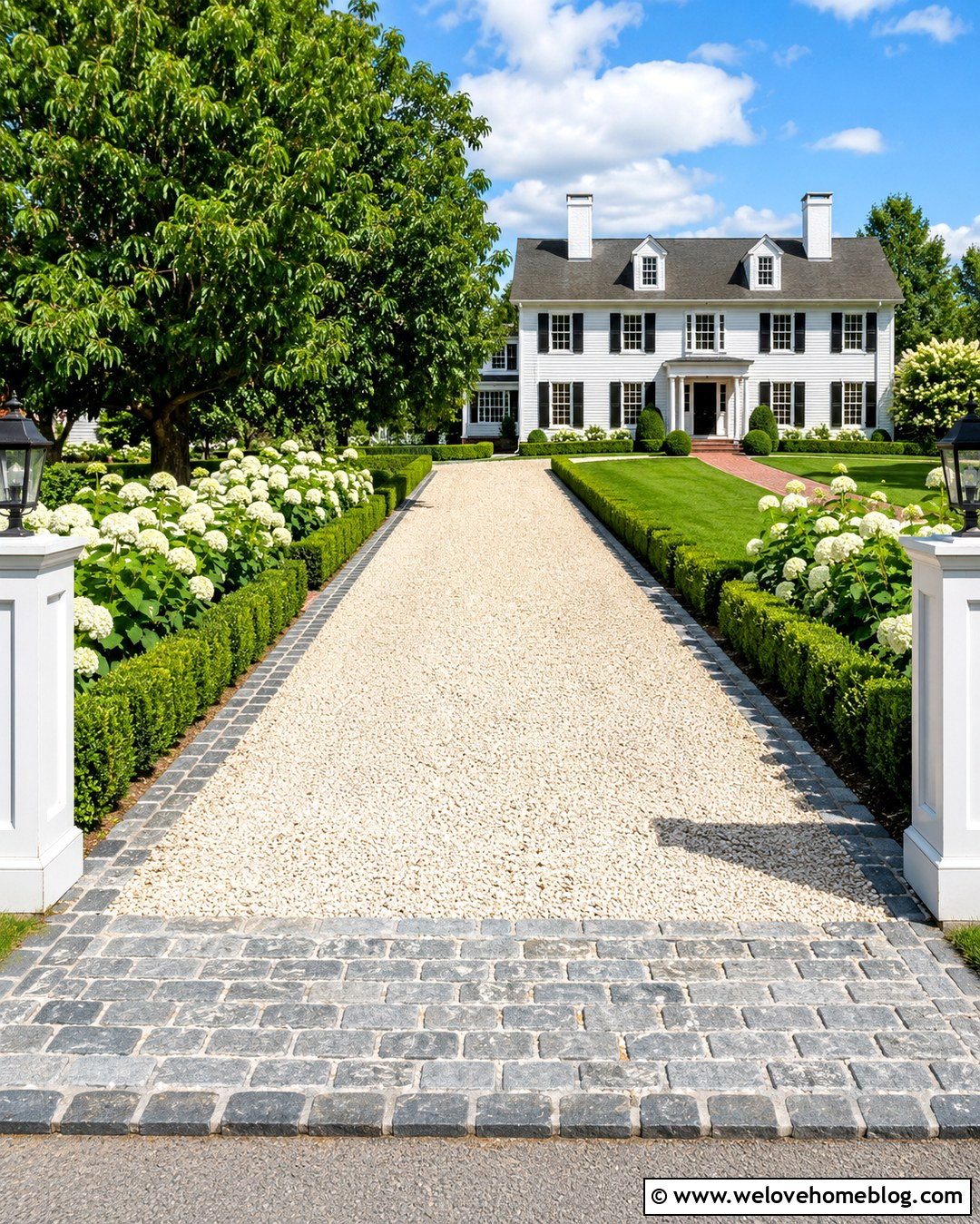
A cobblestone border gives a crushed oyster shell driveway a durable and traditional frame. The dark, uneven stones create strong contrast against the pale shell surface. Use a straight layout for a formal colonial home or a gentle curve for a more relaxed coastal property. Set the cobblestones close together along both sides so the shells stay contained when vehicles turn or heavy rain arrives. A matching cobblestone apron at the street can make the entrance feel more substantial. Finish the design with clipped boxwoods, hydrangeas, and a simple brick walkway leading toward the front door. This combination looks established without appearing overly formal. Properly installed edging also reduces shell migration and produces a cleaner, sharper finished surface. ()
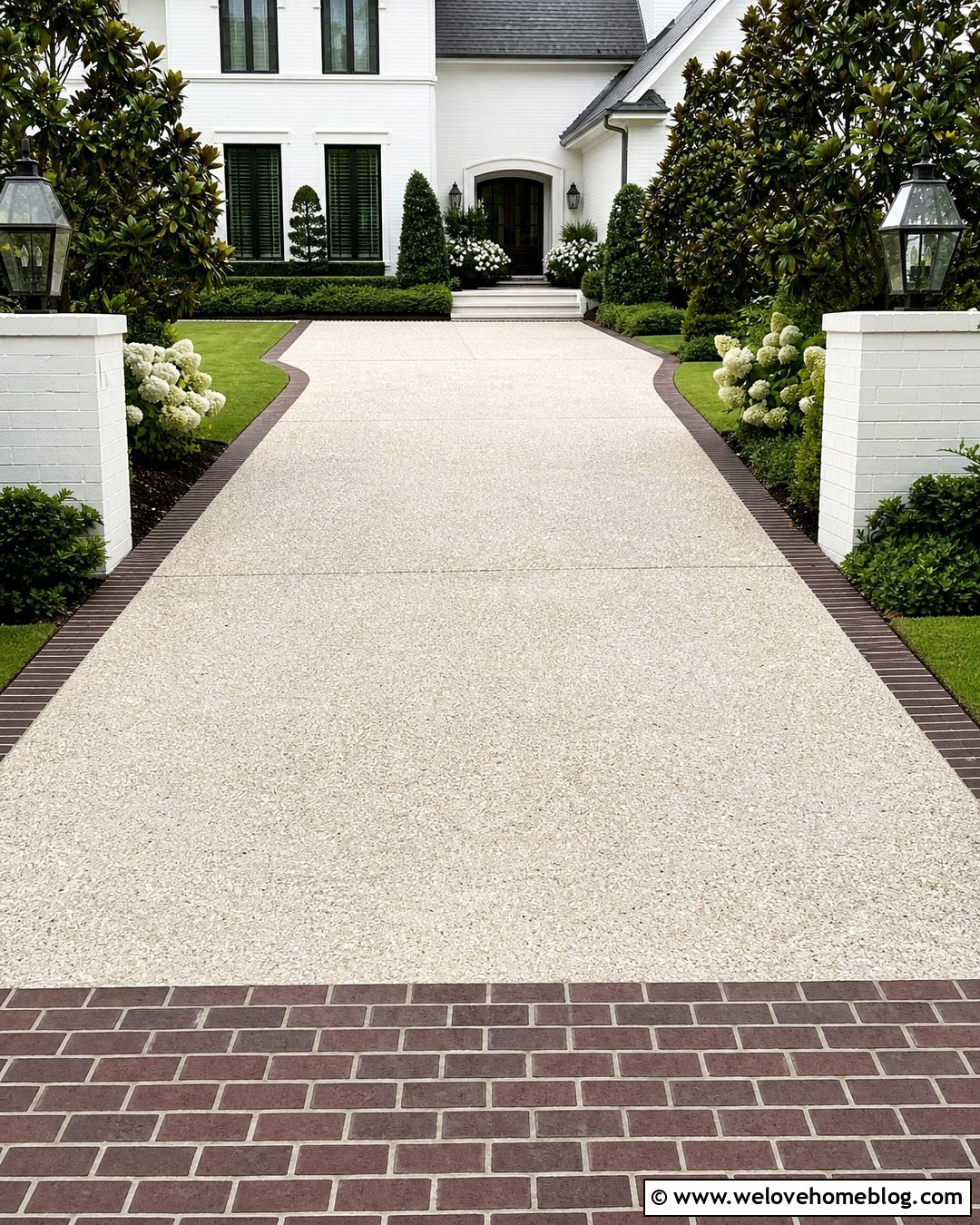
2. Oyster Shell Driveway With Brick Edging
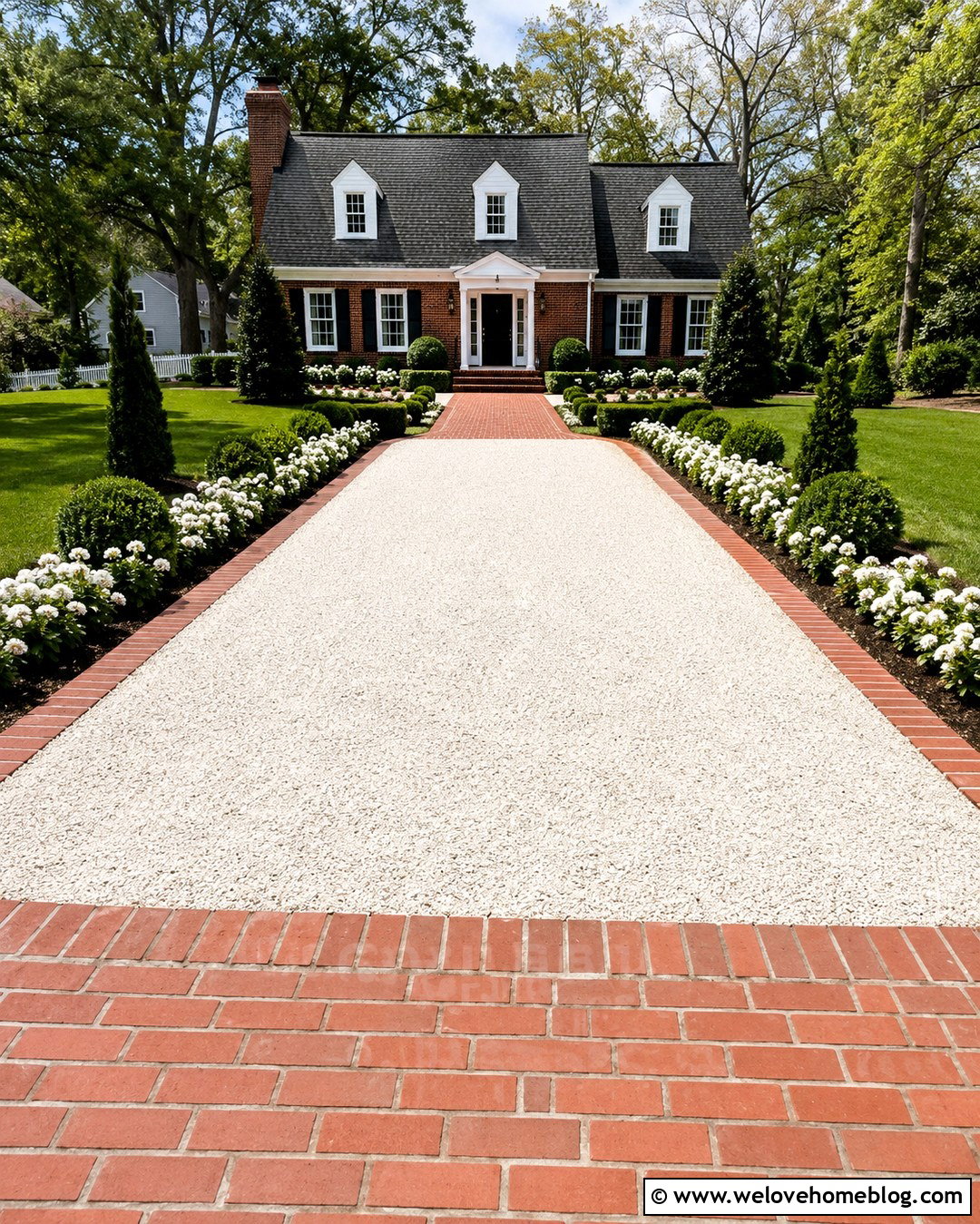
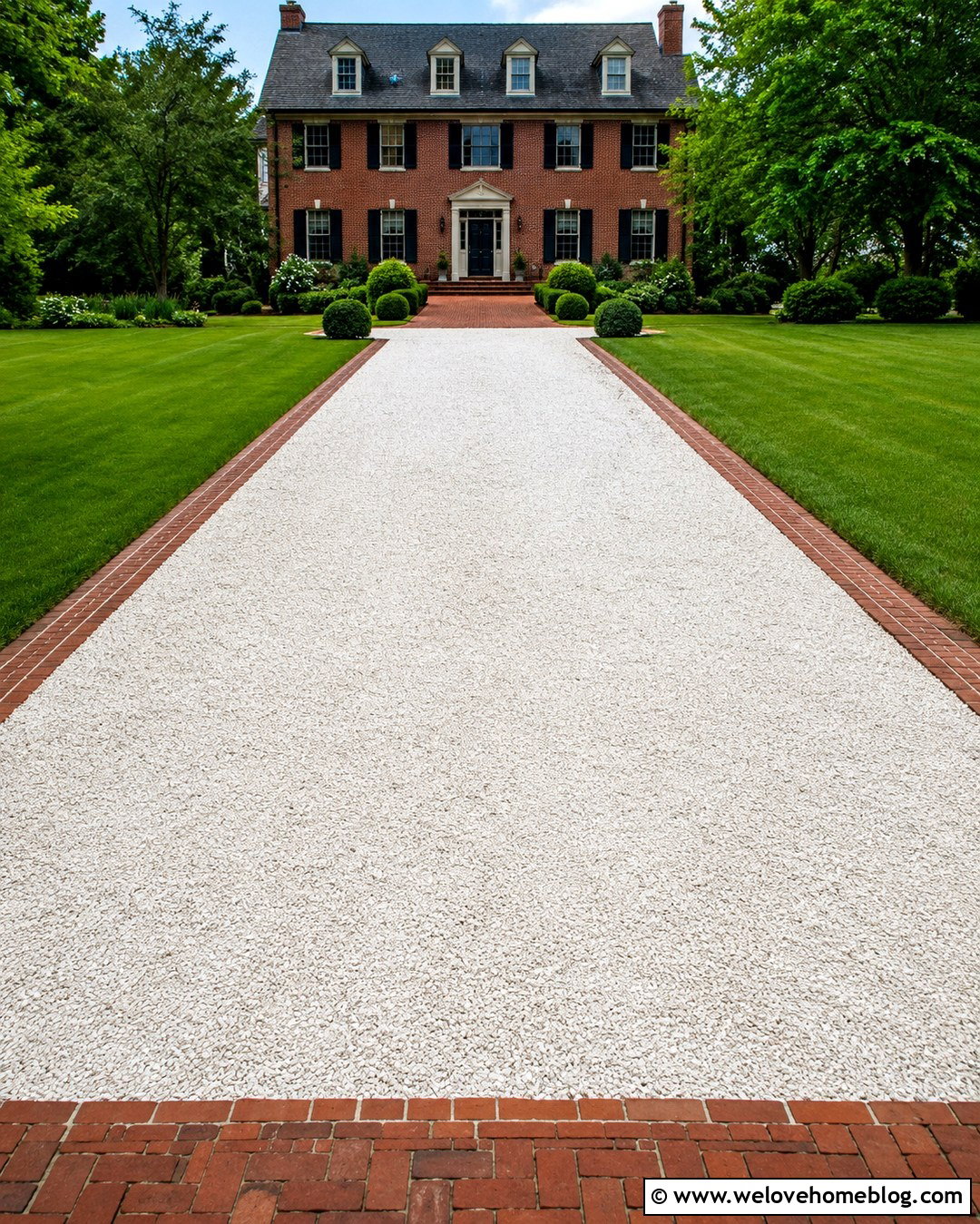
Warm red brick can soften the cool ivory color of an oyster shell driveway. It is an especially natural pairing for brick colonials, Cape Cod homes, and traditional Southern houses. Install the bricks in a soldier-course border to create a clear line along the driveway. A running-bond brick apron can connect the drive to the street and protect the shell surface where tires regularly enter. Keep the driveway mostly straight, with a slight widening near the garage for easier parking. Low evergreen shrubs, white flowering perennials, and neatly cut lawn edges complete the tailored appearance. Repeating the same brick around planting beds or along the front walkway helps the driveway feel connected to the house rather than added as a separate feature.
3. Curved Oyster Shell Driveway
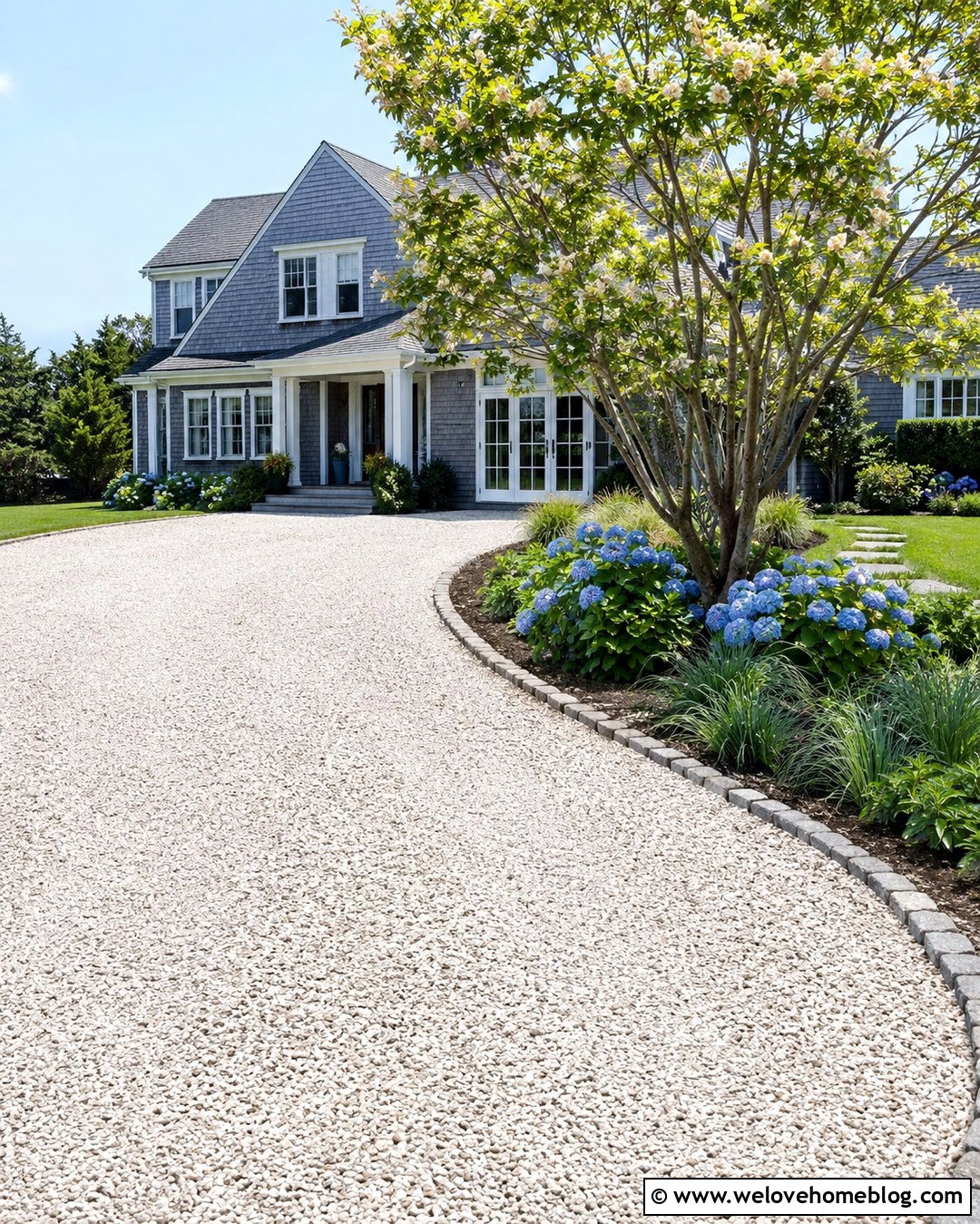
A curved oyster shell driveway creates a softer approach and can make the front yard feel larger. Rather than running directly toward the garage, the driveway can sweep past a landscaped bed before gradually turning toward the house. Flexible steel edging or a narrow cobblestone border will preserve the smooth curve and prevent shells from spreading into the lawn. Place one ornamental tree inside the bend, then surround it with hydrangeas, native grasses, or shade-tolerant ground cover. The pale shell surface naturally highlights the driveway’s flowing shape. This layout is ideal for coastal cottages, shingle-style homes, and properties where the garage sits slightly to one side. Keep plantings low near the street so drivers retain clear views when entering or leaving.
4. Straight Oyster Shell Farmhouse Driveway
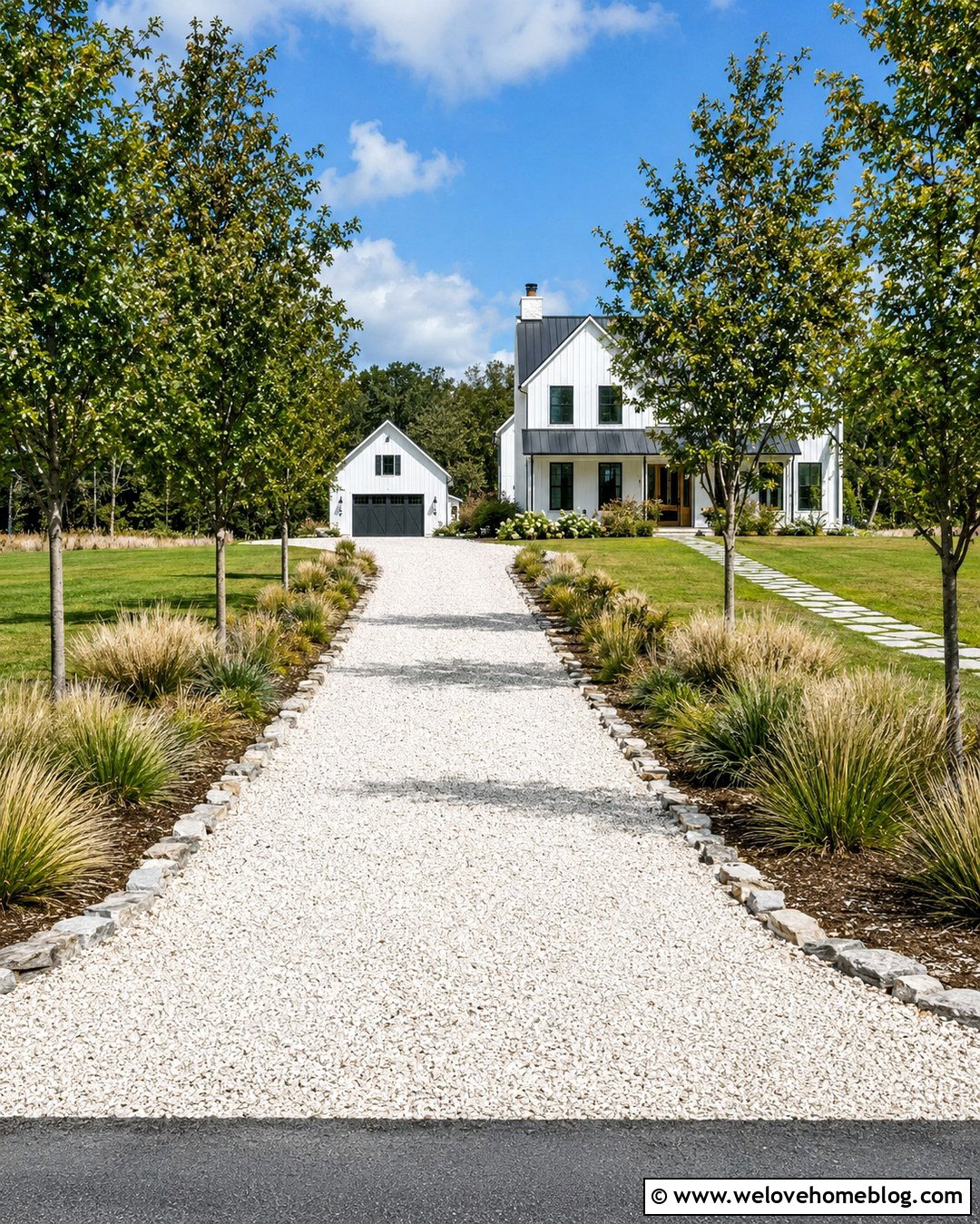
Long sightlines make a straight oyster shell driveway a strong match for a modern or traditional farmhouse. The bright shell surface can begin at a simple road entrance and lead directly toward a white house, detached garage, or barn-inspired outbuilding. Use natural fieldstone or weathered timber edging to give the driveway a relaxed rural frame. Rows of native grasses, flowering shrubs, or evenly spaced trees can emphasize the straight layout without making it feel overly formal. Near the house, widen the surface into a practical parking area with enough turning space. A simple stone walkway can branch from the driveway toward the porch. The overall look should feel open, useful, and connected to the surrounding landscape rather than heavily decorated.
5. Circular Oyster Shell Driveway
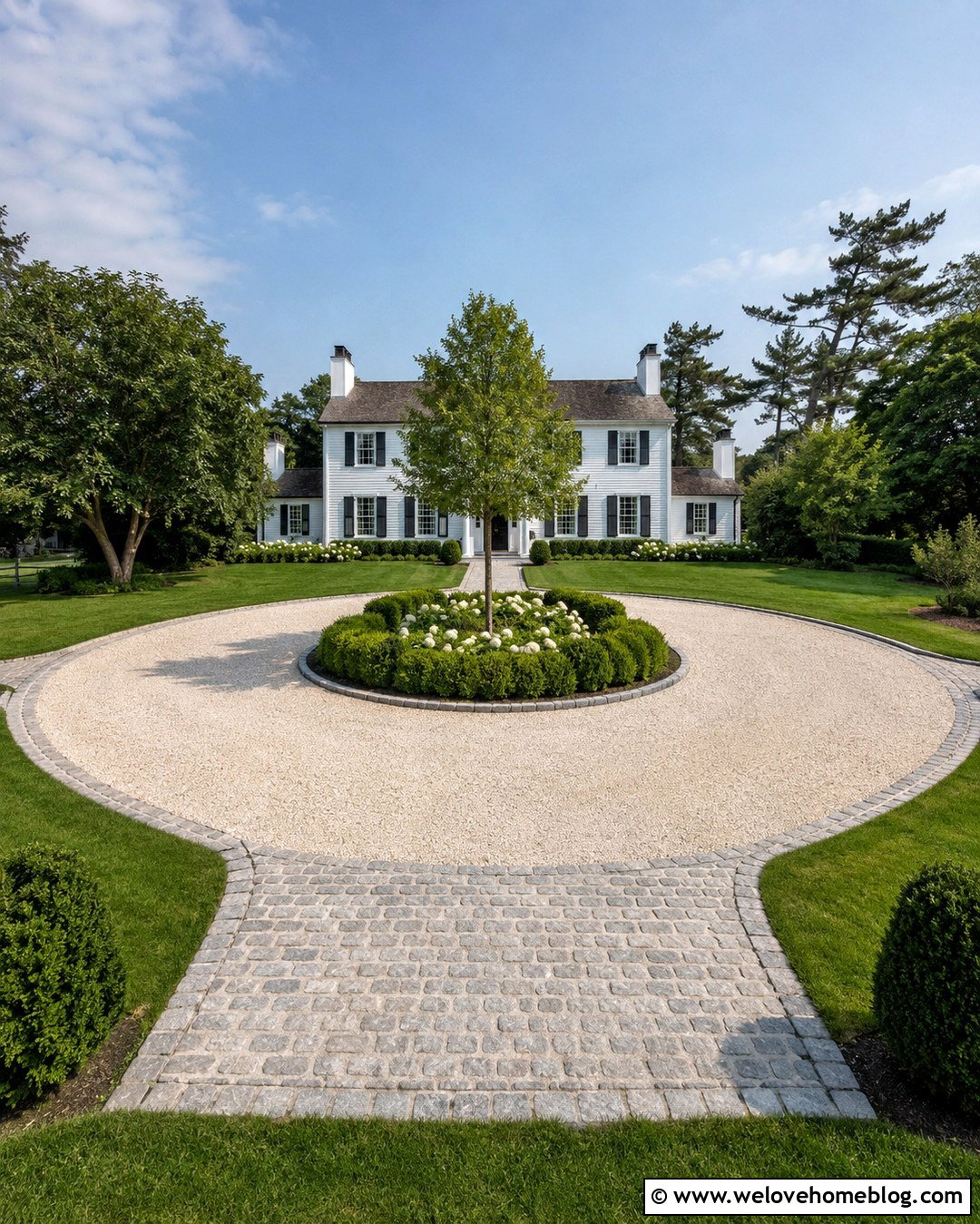
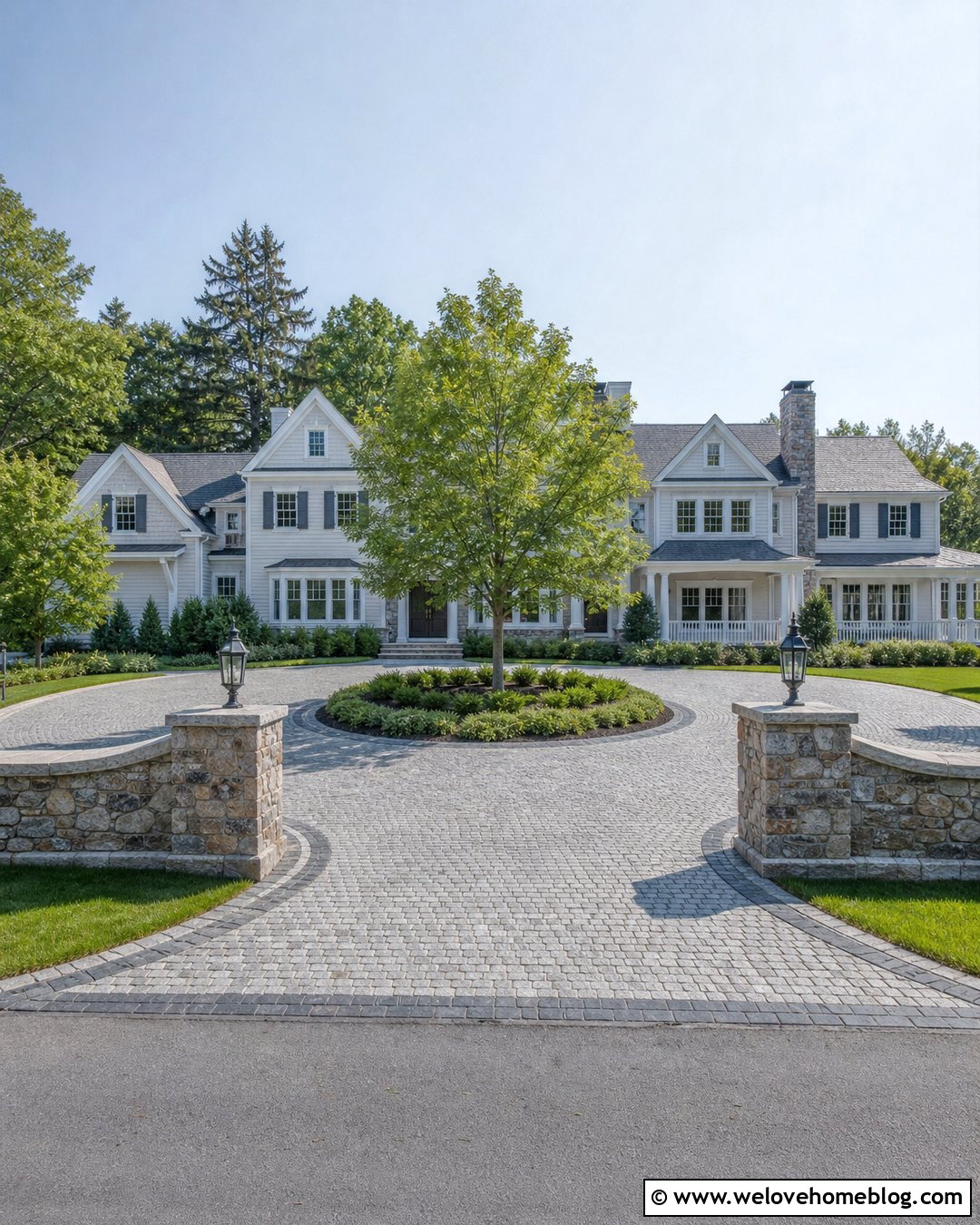
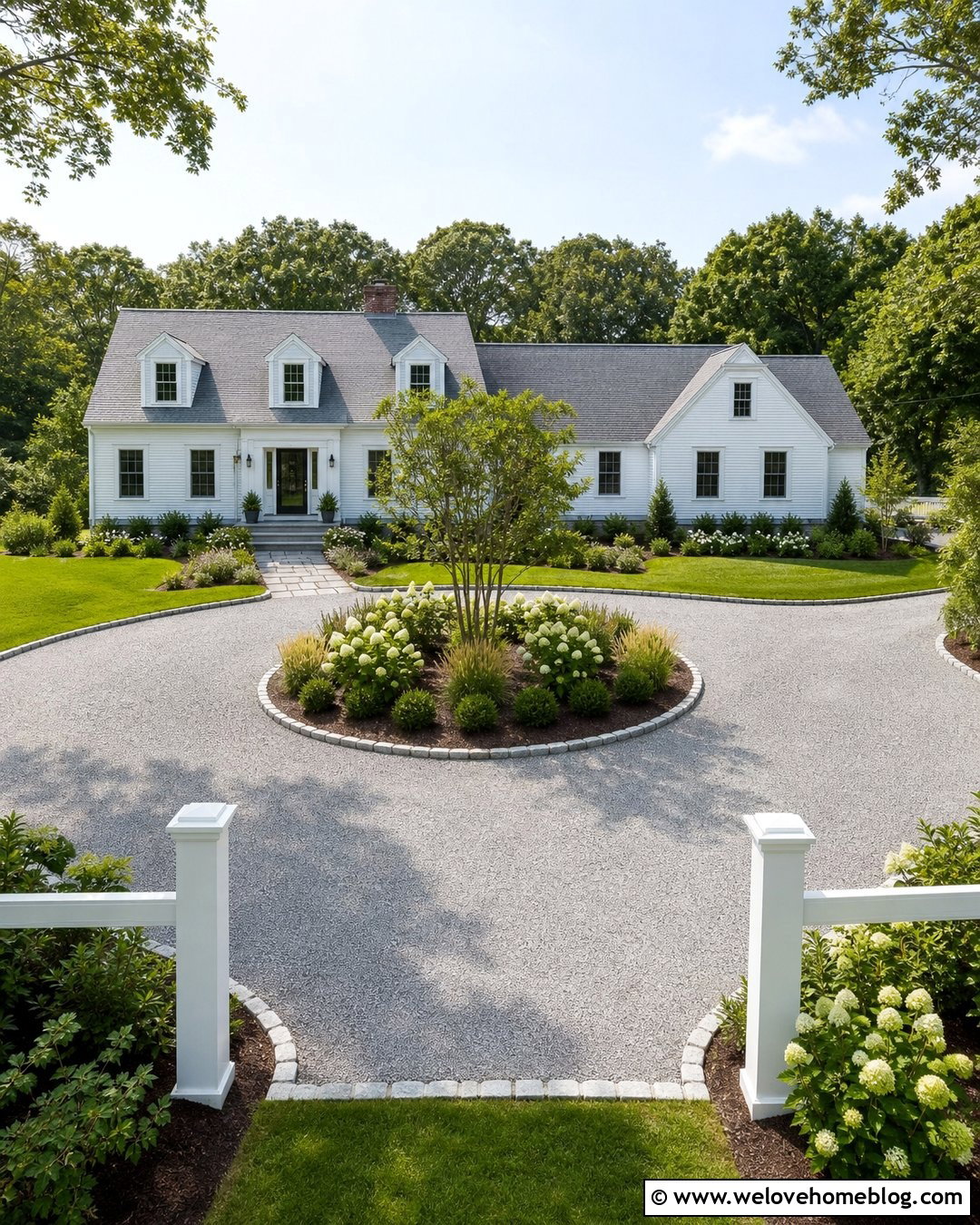
A circular oyster shell driveway creates a convenient arrival area while making the front landscape a focal point. Shape the drive around a generous central island rather than forming a tight circle that is difficult to navigate. Edge the shell surface with brick, cobblestone, or granite setts to preserve the curve. In the center, use a specimen tree, clipped evergreen shrubs, and low flowers that will not block views toward the house. A brick or stone apron at each entrance can reinforce areas that receive frequent turning traffic. This layout works beautifully with symmetrical colonials, coastal estates, and wide ranch homes. Coordinate the central planting bed with the home’s facade so the circular driveway feels like part of one complete front-yard design.
6. Oyster Shell Driveway With Grass Center Strip
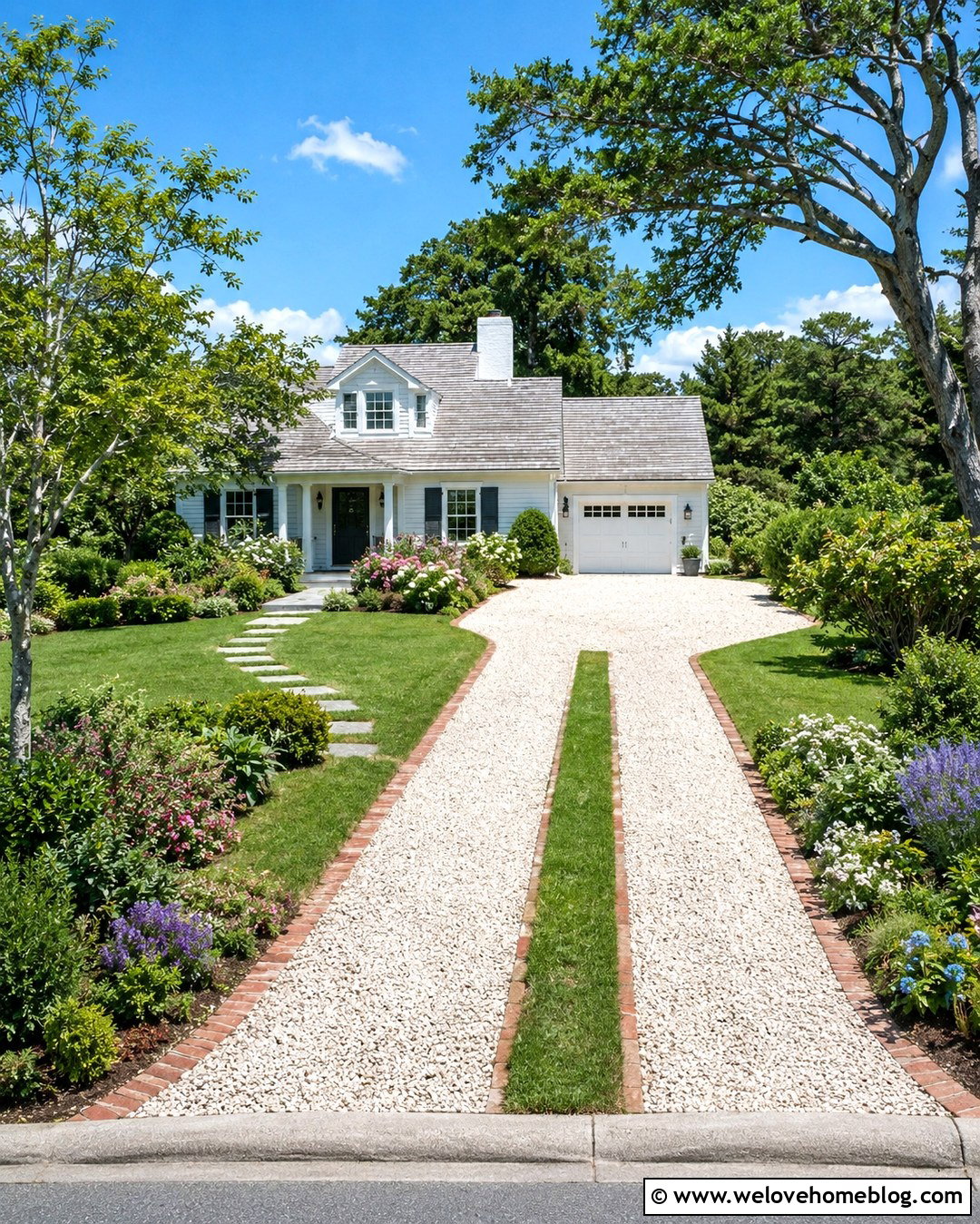
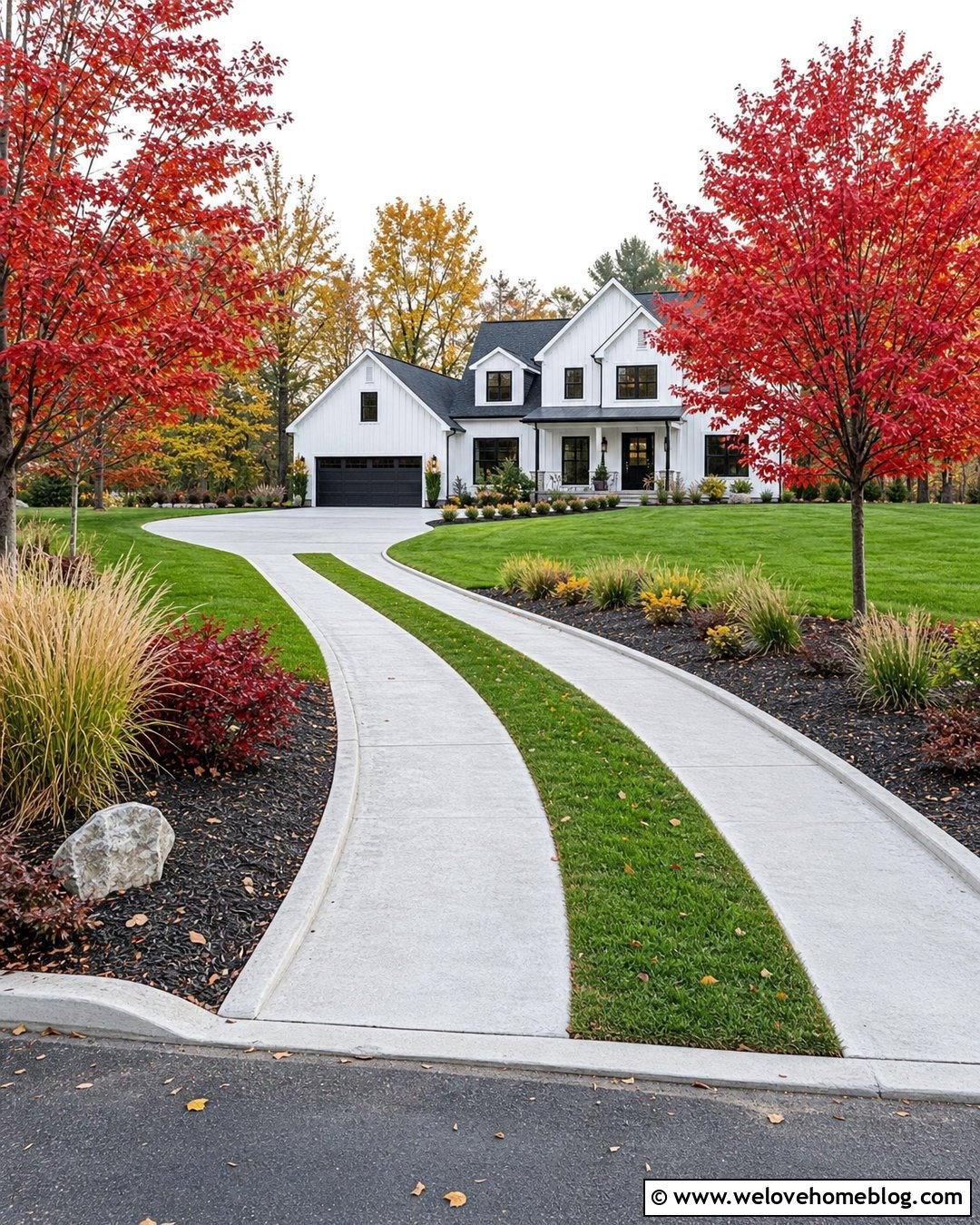
Two oyster shell driving tracks separated by a grass strip create a lighter, garden-focused look. This design suits cottages and small country homes where a full-width driveway could overwhelm the front yard. Keep each shell track wide enough for vehicle tires while making the center strip narrow enough to mow easily. Brick, steel, or low stone edging can define the inside and outside edges. At the garage or parking pad, join the tracks into one compacted oyster shell surface for easier maneuvering. Surround the driveway with informal flower beds, native shrubs, and a stepping-stone walkway. The green center breaks up the pale material, improves visual connection with the lawn, and gives the entrance a charming coastal-country character without sacrificing a clearly defined route.
7. Oyster Shell Driveway With Bluestone Apron
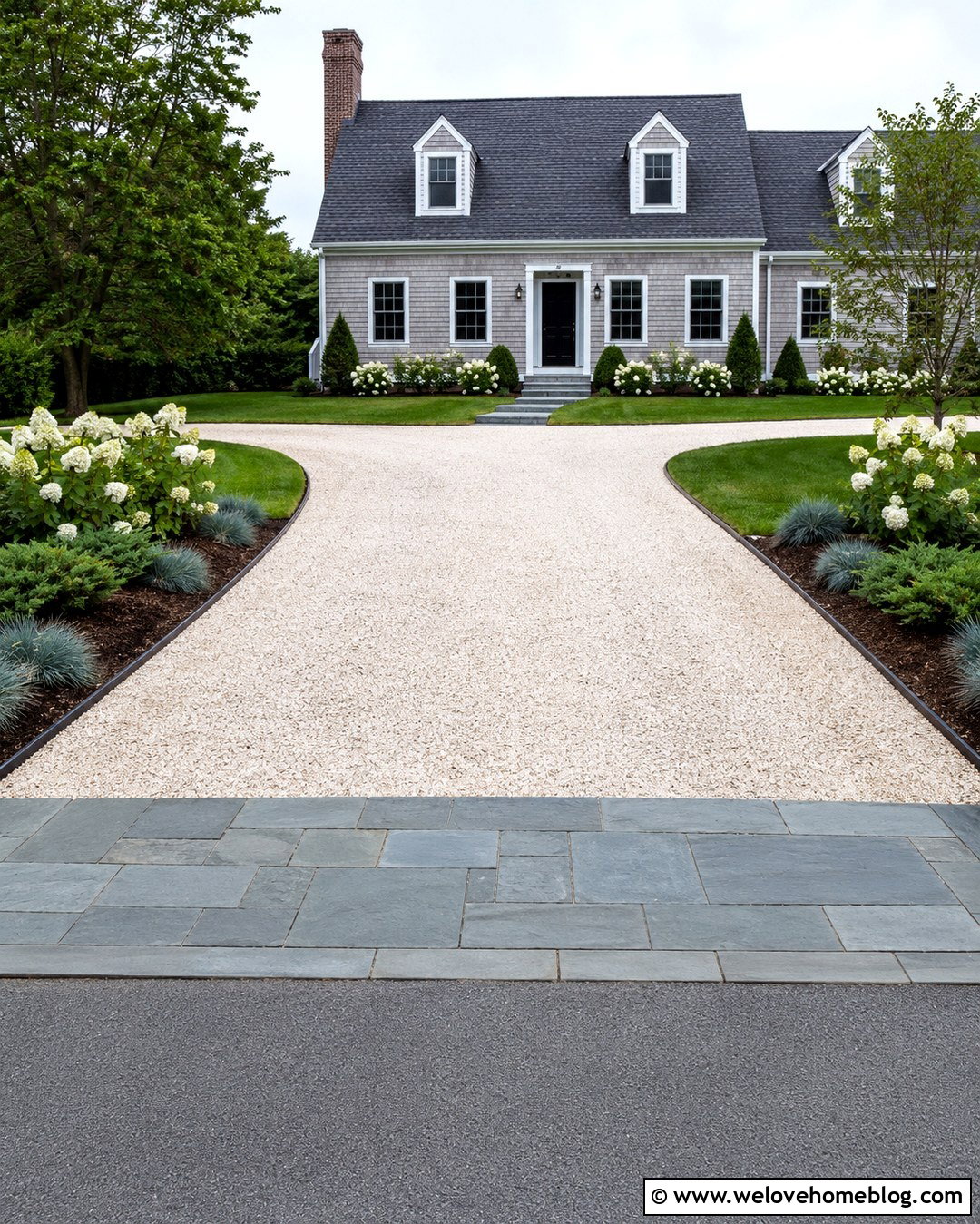
A bluestone apron adds a refined transition between the street and a crushed oyster shell driveway. The blue-gray stone provides rich contrast while protecting the entrance from repeated braking and turning. Choose large rectangular slabs for a clean appearance or irregular bluestone for a more natural coastal look. Continue a narrow bluestone border along the driveway, or switch to discreet metal edging after the apron to control costs. A straight or slightly curved layout works well with gray-shingled homes, Cape Cod facades, and classic white cottages. Repeat the bluestone in the front walkway or porch steps for consistency. Soft plantings such as white hydrangeas, blue fescue, and low junipers can bridge the color difference between the dark stone and light shell surface.
8. Oyster Shell Driveway With Granite Apron
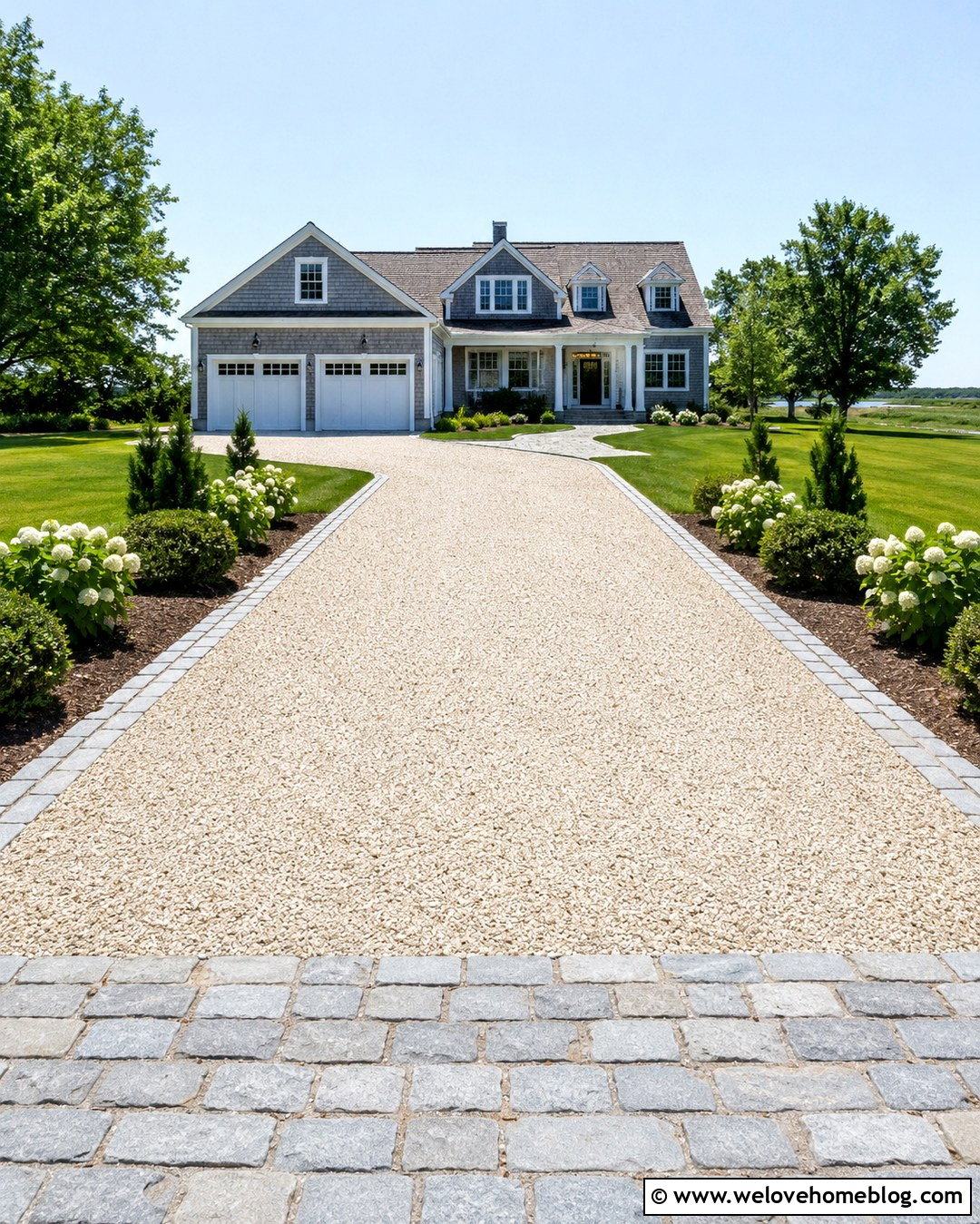
Granite setts can give an oyster shell driveway a substantial entrance without making the entire drive feel heavy. Create a broad granite apron where the driveway meets the road, using gray, charcoal, and muted brown stones in a running-bond or fan pattern. Continue one or two rows of granite along both sides as edging. The structured border holds the pale shells in place and visually guides visitors toward the house. This combination complements traditional homes, coastal farmhouses, and properties with stone foundations. Use simple lawn panels and restrained evergreen planting so the materials remain the main feature. At the garage, repeat the granite as a narrow threshold. The repeated stone transitions make the complete driveway look deliberate, balanced, and professionally planned.
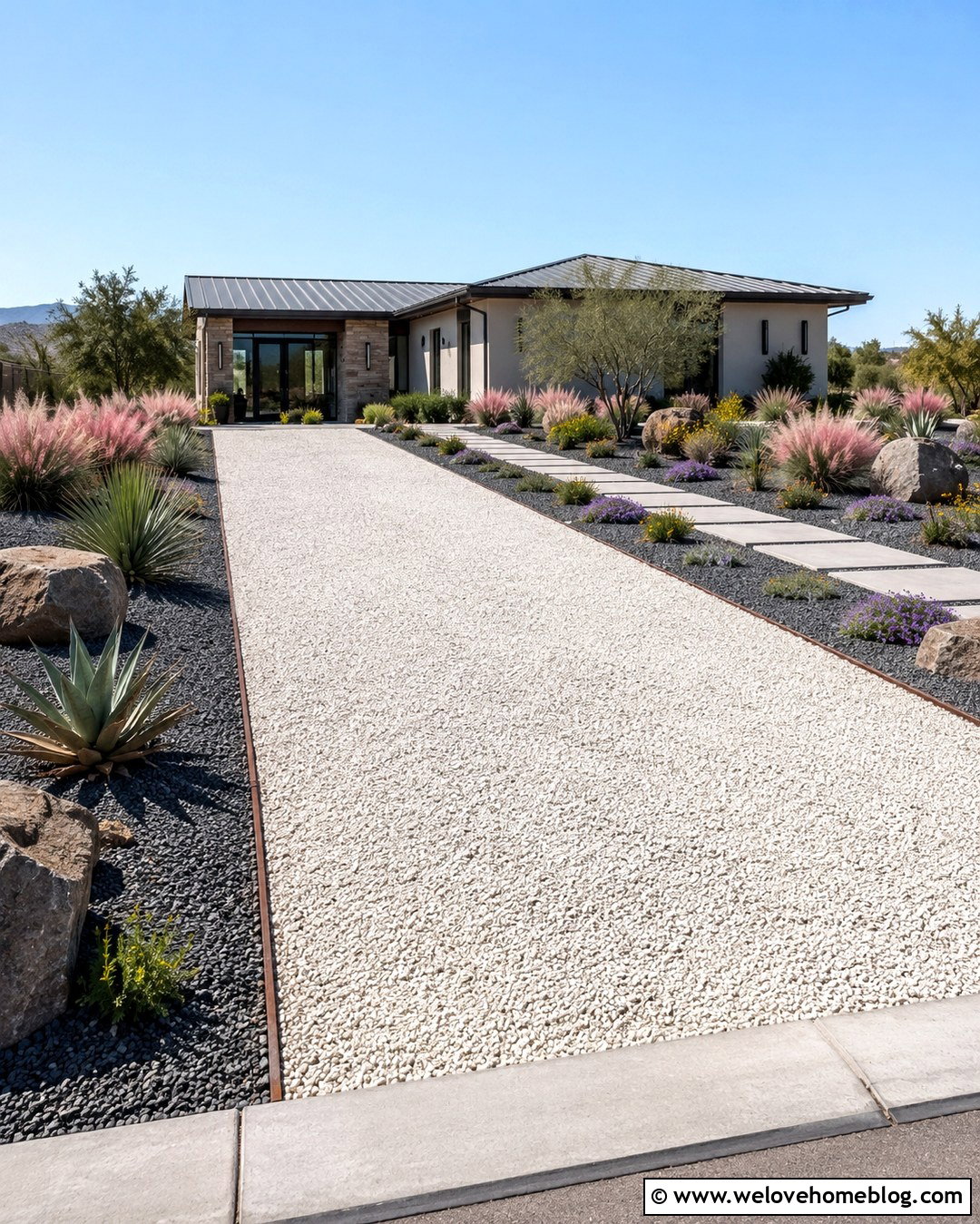
9. Oyster Shell Driveway With Metal Edging
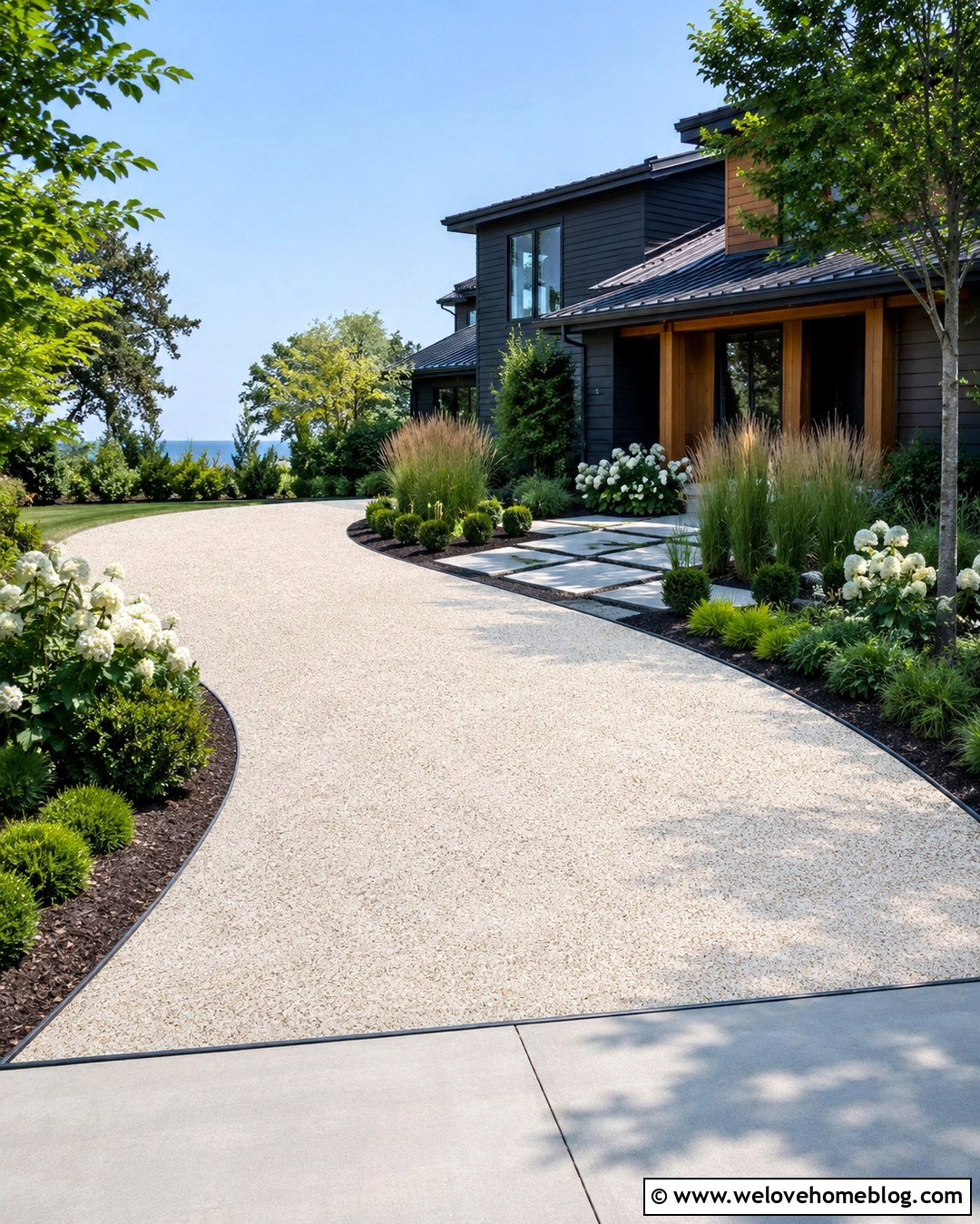
Slim steel edging creates a crisp boundary while allowing the oyster shells to remain the visual focus. It is an effective choice for modern coastal homes, compact front yards, and driveways with clean geometric lines. Use a straight layout or a broad curve with the metal installed nearly flush with the compacted shell surface. Dark edging will subtly outline the bright driveway without adding another prominent color. Pair it with rectangular planting beds containing ornamental grasses, rounded evergreen shrubs, and a limited palette of white flowers. A poured concrete apron can create a smooth transition at the sidewalk or street. Because loose shell materials can shift beyond their intended edges, a stable base, compaction, and firmly anchored border are important parts of the design. ()
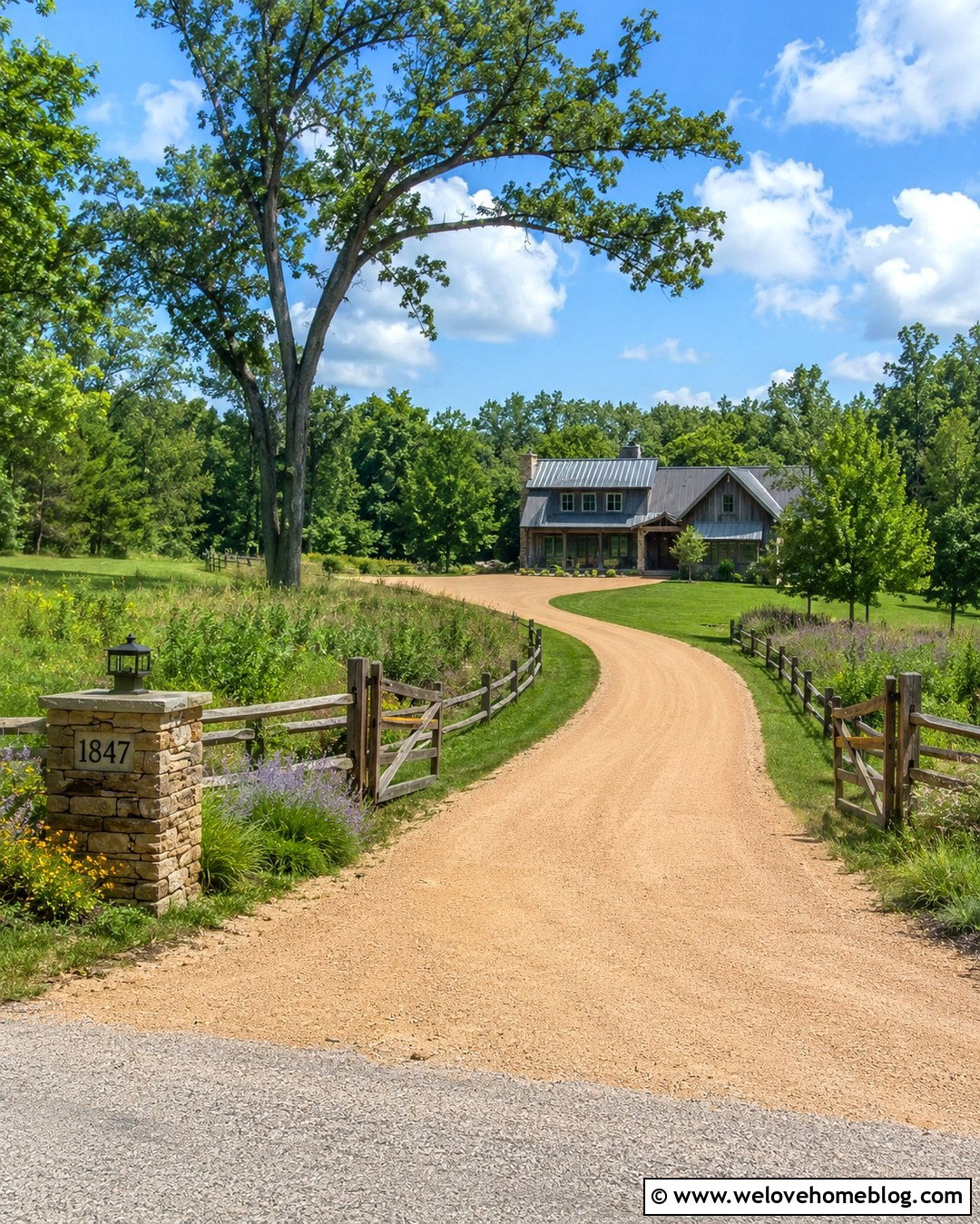
10. Modern Oyster Shell Driveway
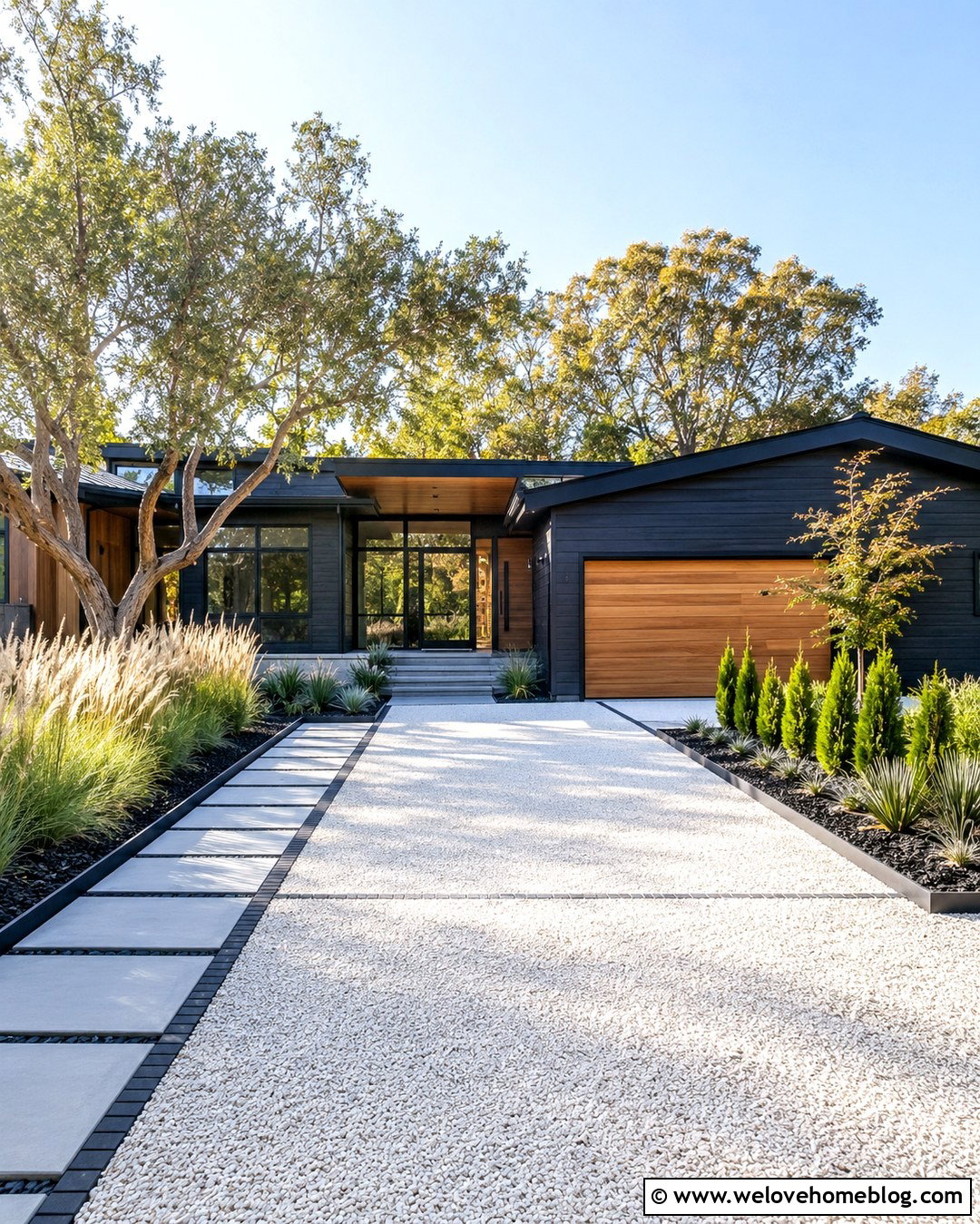
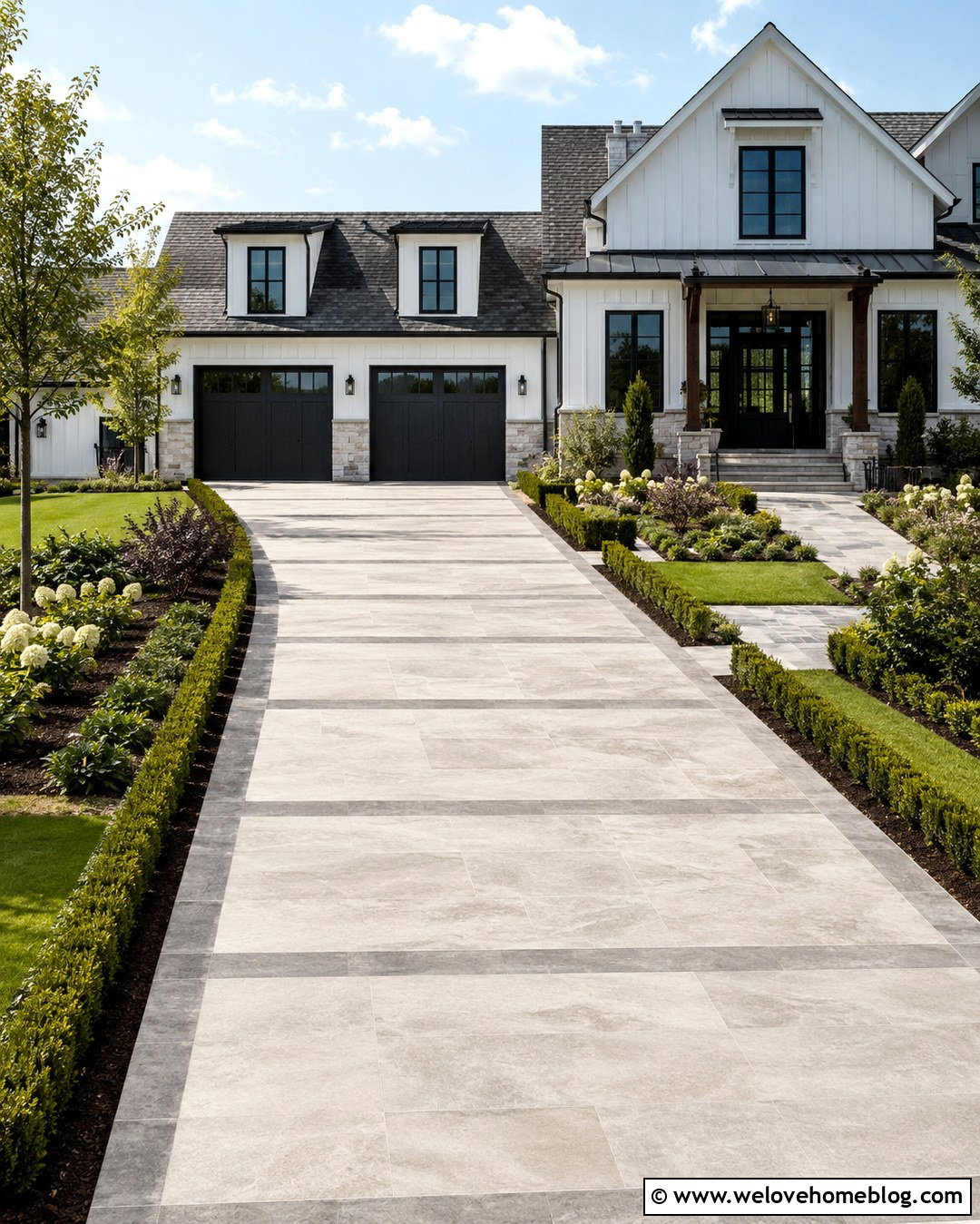
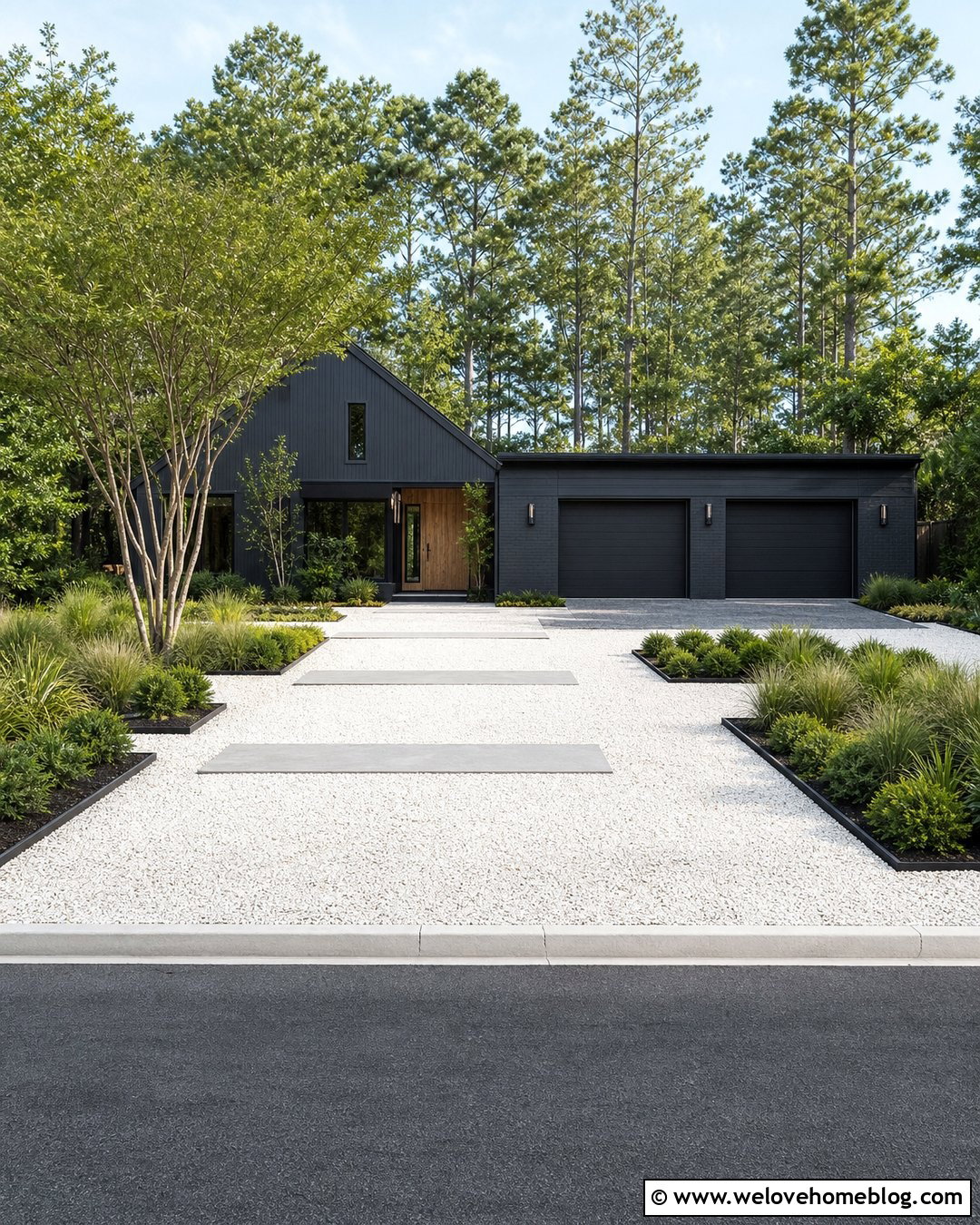
Can oyster shells work with modern architecture? A simple layout and restrained materials make the combination surprisingly effective. Use finely crushed oyster shells across a broad, straight driveway leading toward a low-profile contemporary house. Frame the surface with black steel edging and narrow charcoal paver ribbons. Large concrete stepping slabs can form a walkway across one side without interrupting the driveway’s clean appearance. Keep landscaping architectural, using upright grasses, compact evergreens, and one sculptural tree. Avoid overly decorative borders or complicated patterns. The pale shell surface reflects light and creates a fresh contrast with dark siding, natural wood, or black-framed windows. Generous spacing between plants will reinforce the uncluttered design while allowing each form and material to remain clearly visible.
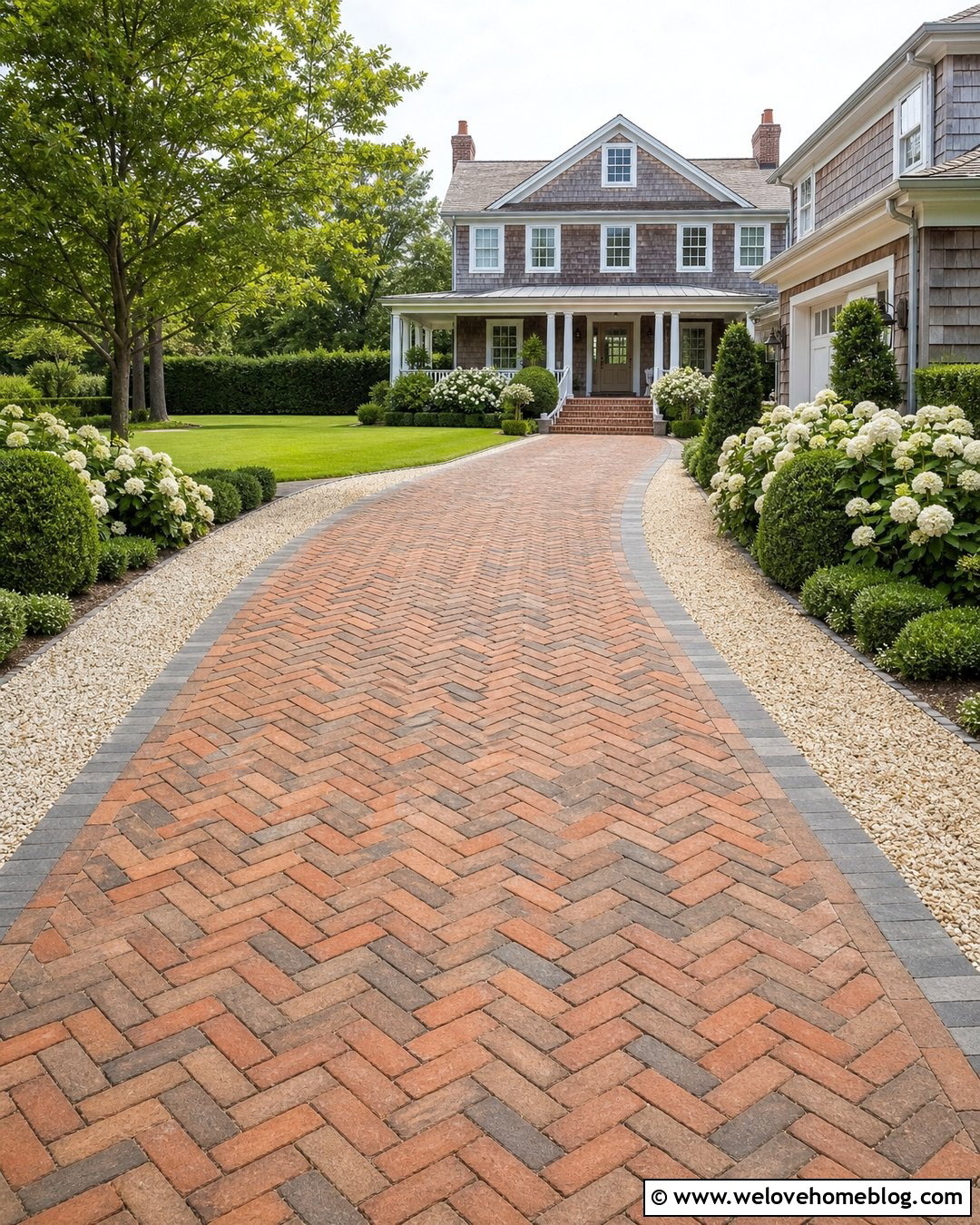
11. Oyster Shell Driveway With Hydrangeas
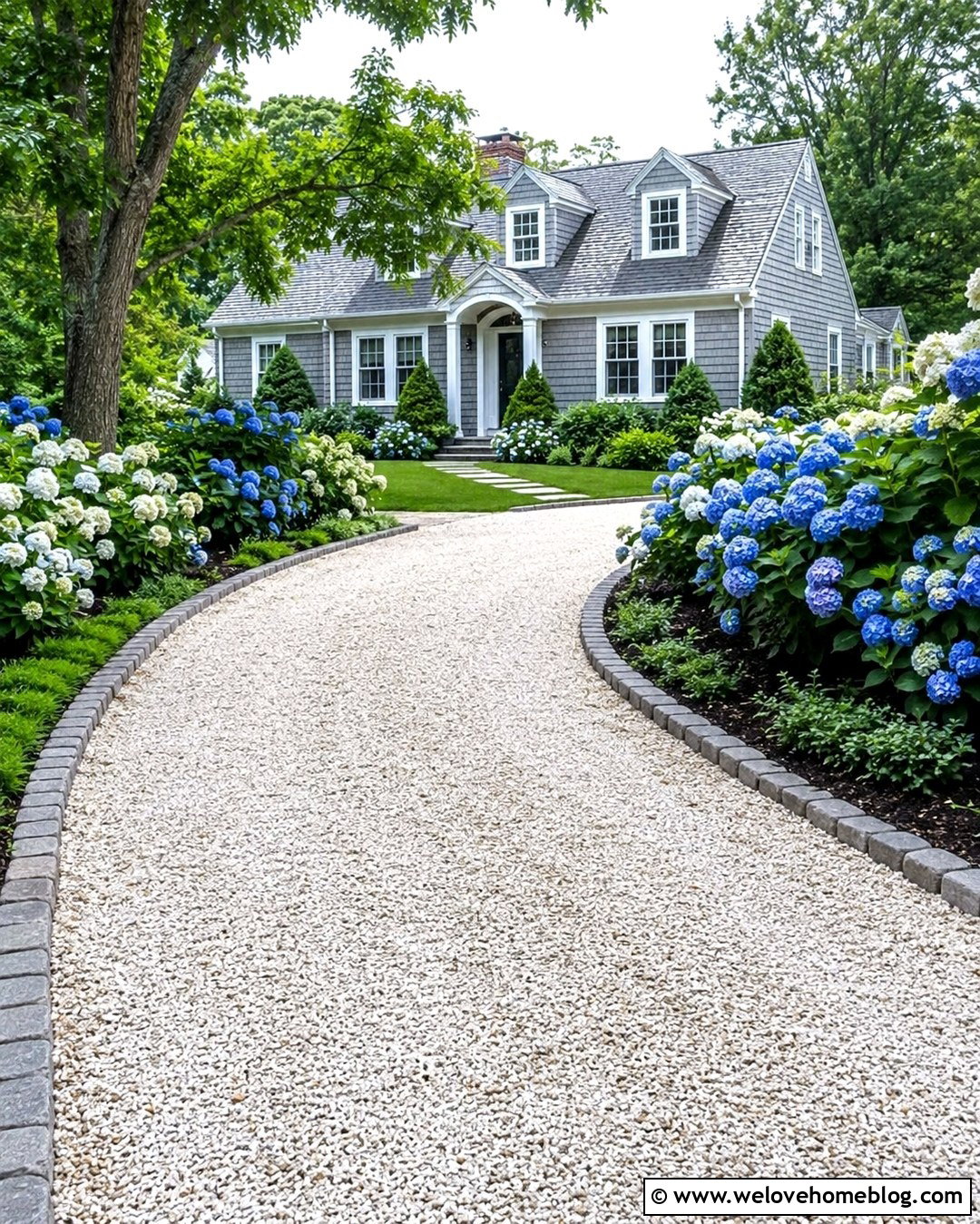
Clouds of hydrangea blooms can turn an oyster shell driveway into a classic coastal approach. Use a gently curved or straight shell surface bordered by cobblestones, brick, or discreet metal edging. Create deep planting beds along one or both sides, leaving enough distance between mature shrubs and passing vehicles. White hydrangeas produce a calm, coordinated palette, while blue blooms add cool color against the creamy shells. Mix in evergreen foundation shrubs so the border keeps structure outside the flowering season. A stepping-stone path can run through the planting bed toward the porch. This complete look works particularly well with Cape Cod, shingle-style, and traditional cottage homes. Keep the driveway entrance more open, then increase the planting density closer to the house for a welcoming layered effect.
12. Oyster Shell Driveway With Native Grasses
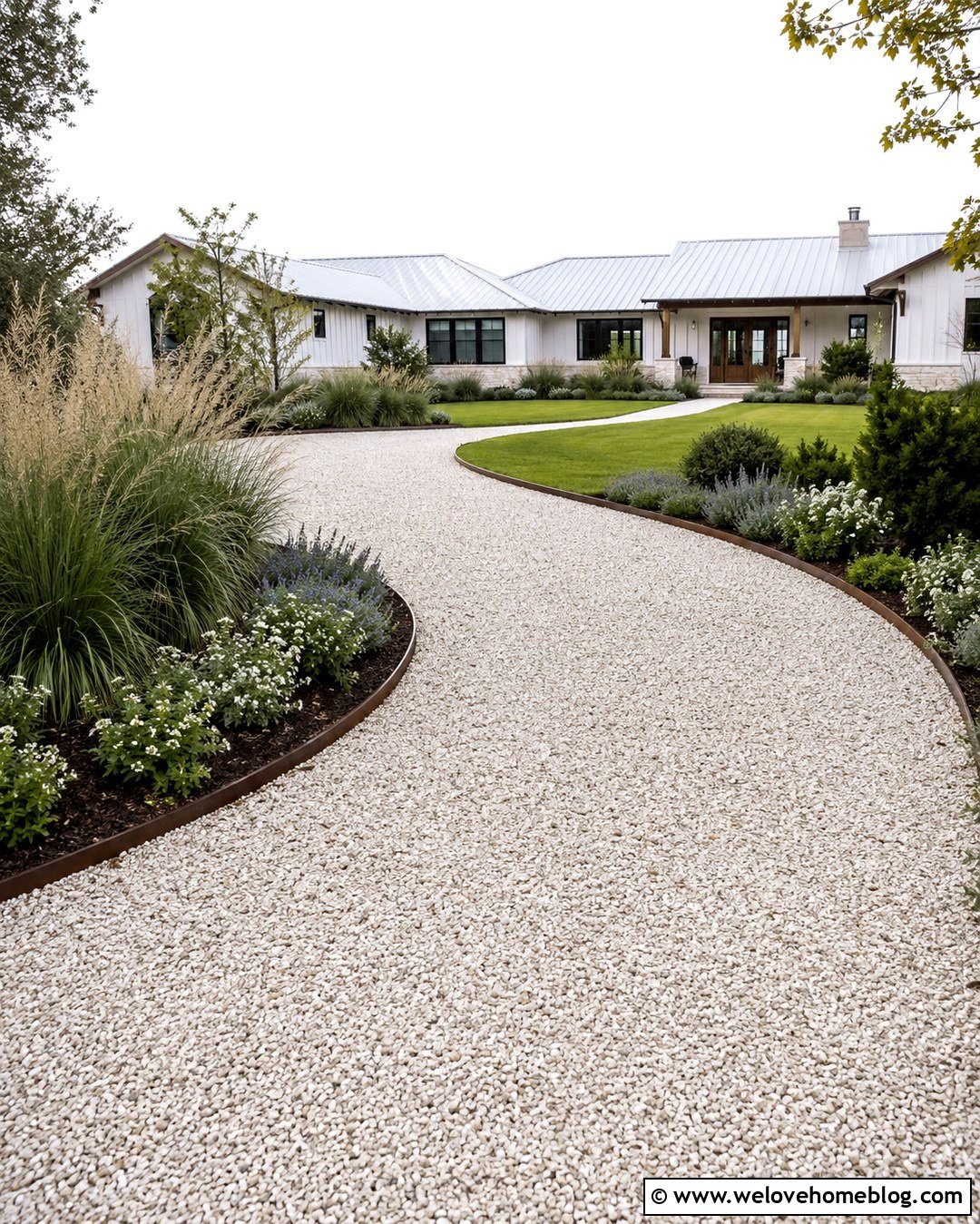
Native grasses bring movement and softness to the hard edges of an oyster shell driveway. Design the driveway with a broad curve and use weathered steel or dark stone edging to keep the shells separate from the planting beds. Arrange grasses in repeated groups rather than scattering individual plants. Add low flowering perennials and a few evergreen shrubs for seasonal variety. This landscape treatment suits contemporary coastal homes, casual ranch houses, and properties exposed to wind or salty conditions. Select plants suited to the property’s climate, soil, sunlight, and moisture levels rather than relying on appearance alone. The tawny, green, and silvery foliage will complement the natural variation in the shells. Keep plants low near curves and entrances so the driveway remains easy to navigate.
13. Oyster Shell Driveway With Palm Landscaping
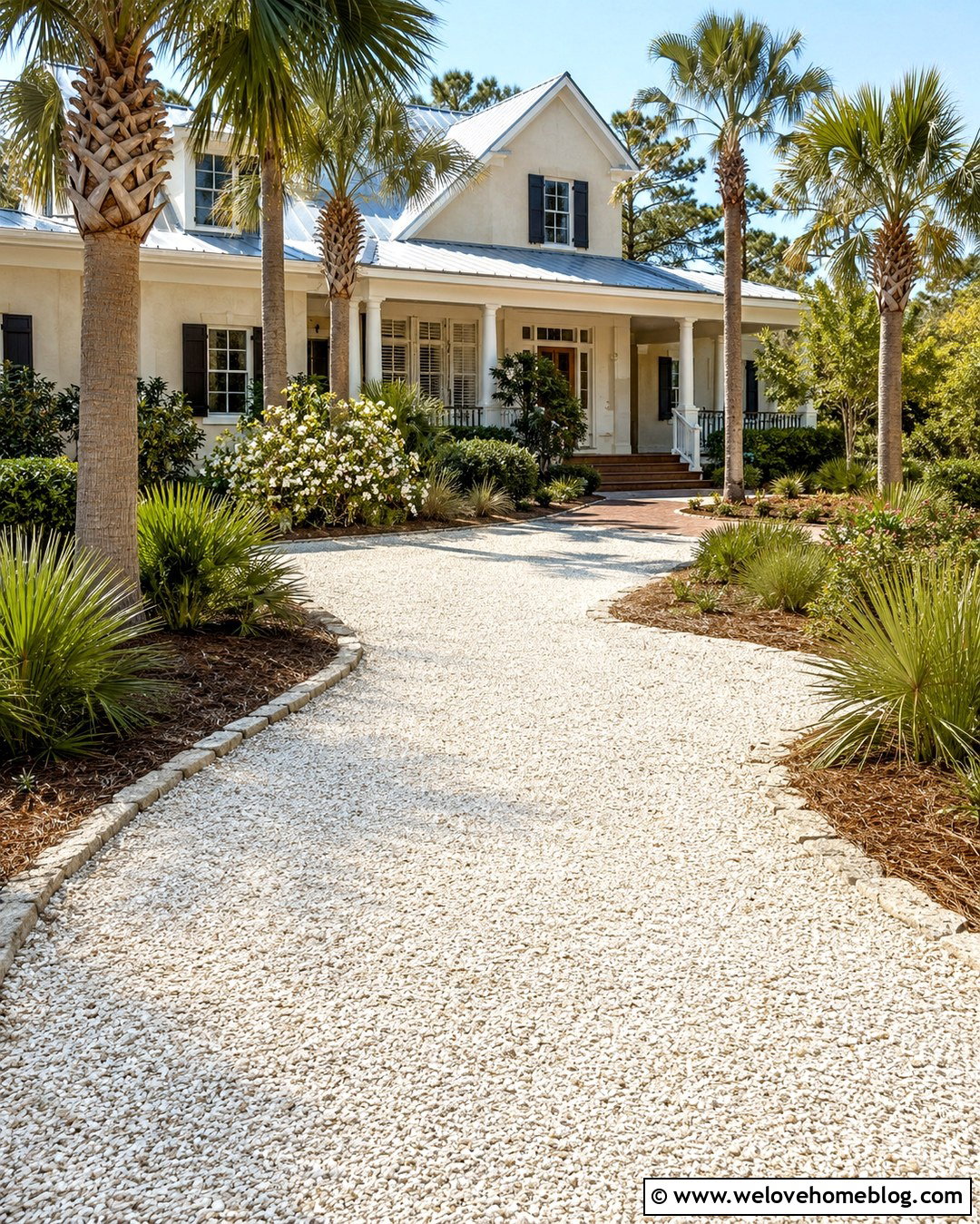
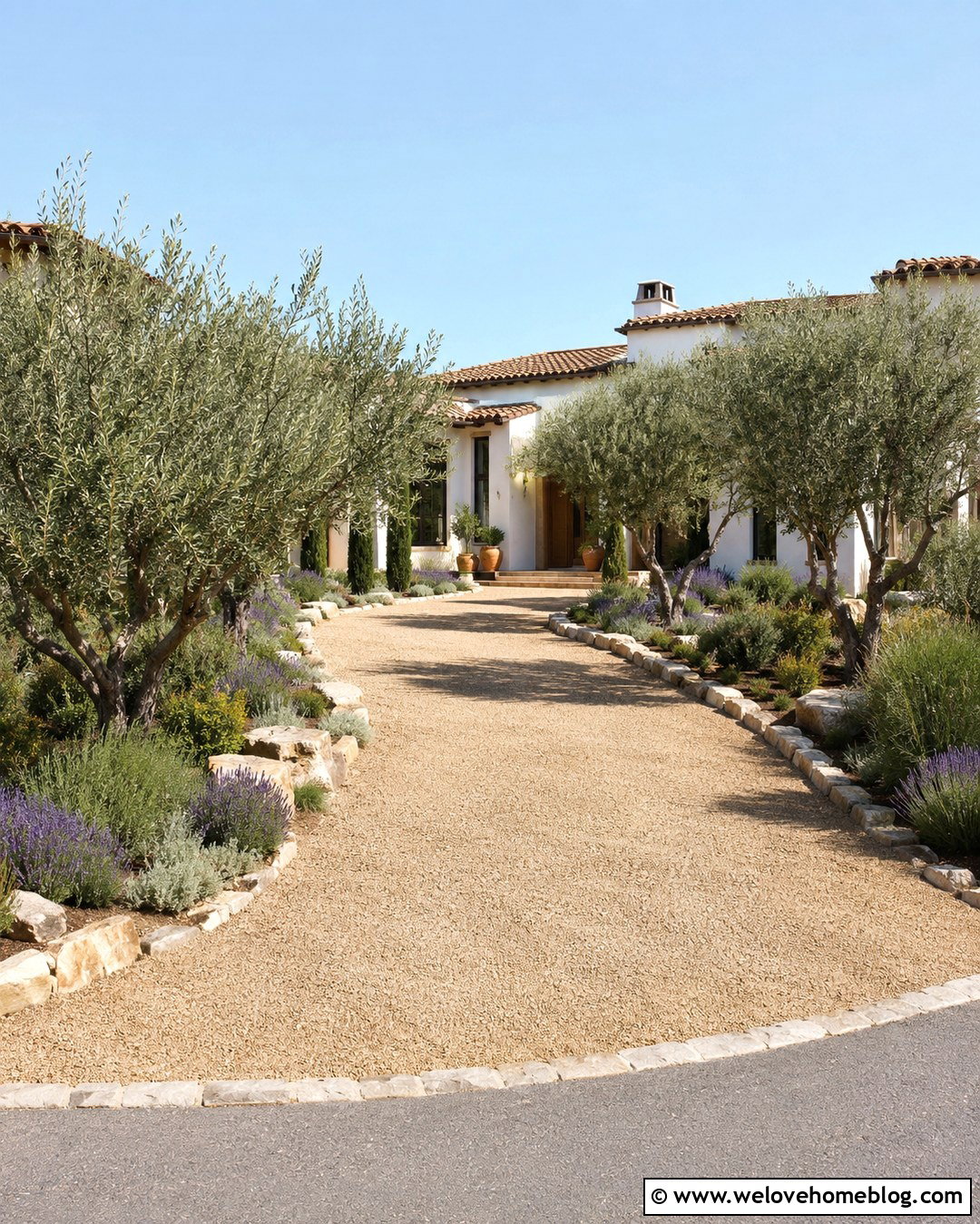
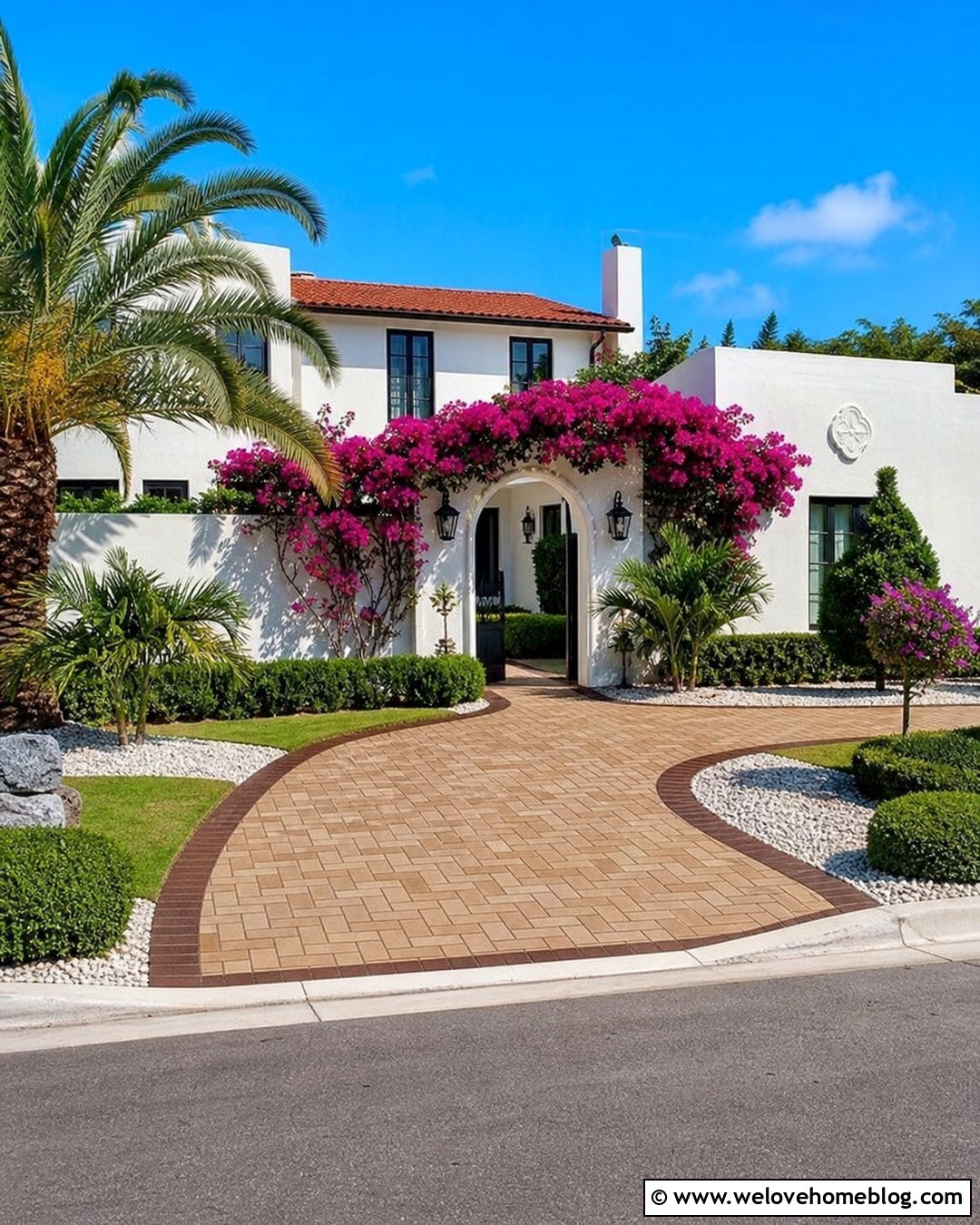
A pale oyster shell driveway framed by palms creates a relaxed Southern coastal entrance. Use a wide, gently curved layout leading to a stucco, Lowcountry, or coastal contemporary home. Natural stone edging can hold the shells while blending with tropical planting beds. Place palms far enough from the driving surface to accommodate their mature trunks and canopies. Fill the lower layer with saw palmetto, dwarf grasses, flowering shrubs, or other regionally suitable plants. A shell-covered parking court near the house can provide turning room without introducing a different main material. Add a stone or brick walkway that crosses the landscape without competing with the driveway. The finished setting should feel airy and organized, with open views of the home and balanced planting on both sides.
14. Tree-Lined Oyster Shell Driveway
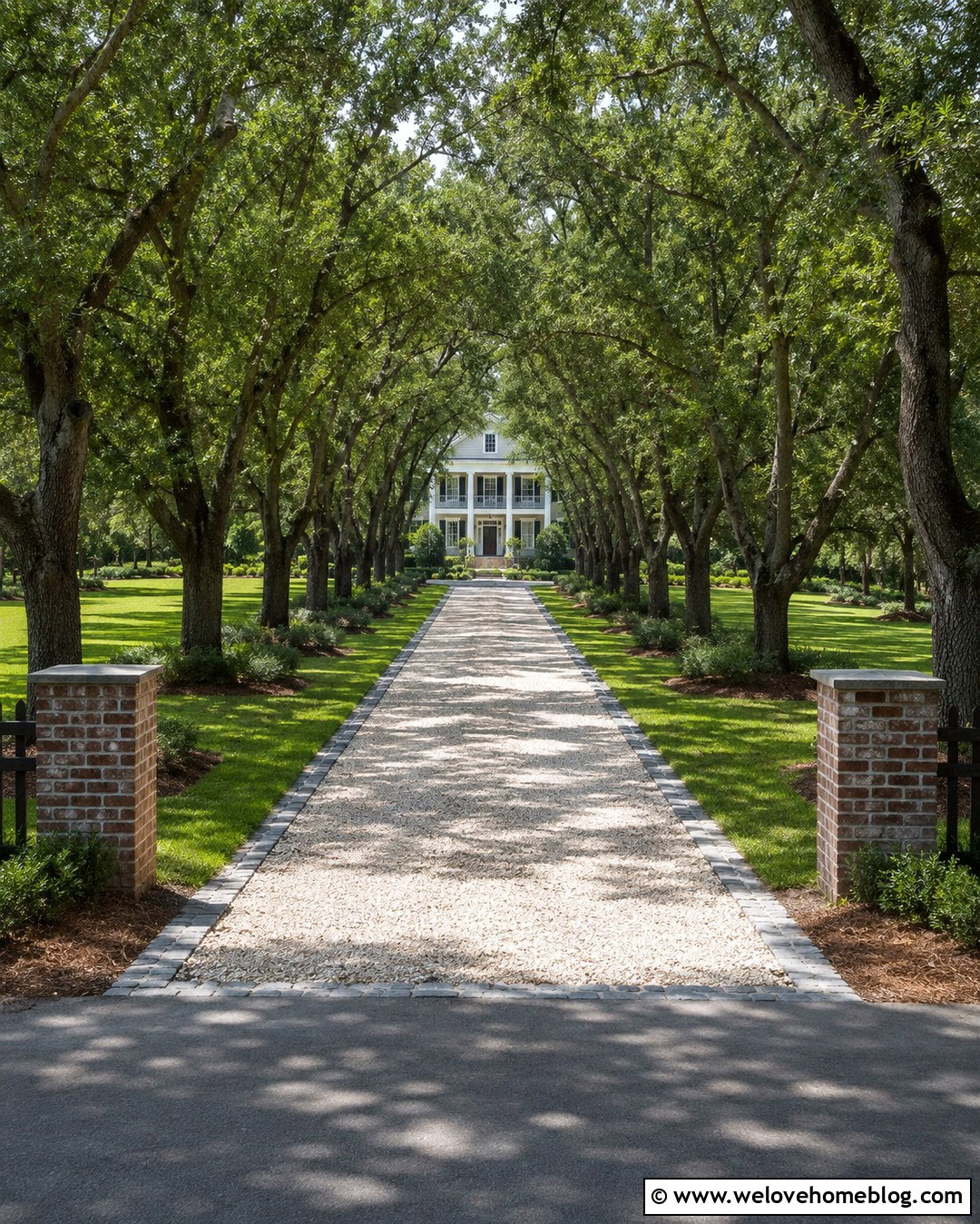
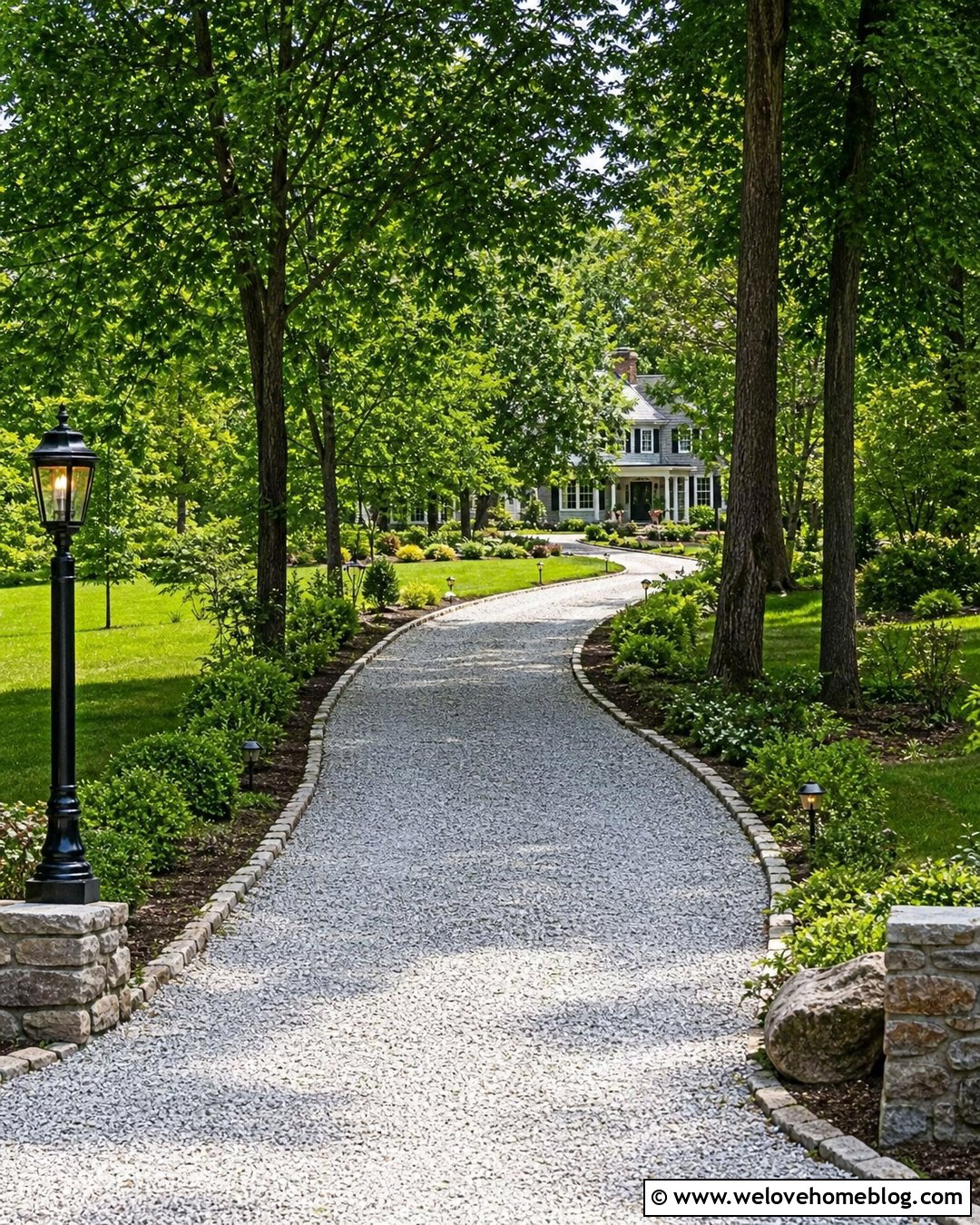
A tree-lined oyster shell driveway can create a memorable approach on a deep residential lot. Keep the route straight or give it one gradual bend, depending on the house location and existing trees. Line both sides with evenly spaced live oaks, red maples, or another species suited to local conditions. Set trunks well beyond the driveway edge to protect roots and provide space for future growth. Use granite cobbles or steel edging to define the pale shell surface. Beneath the trees, plant simple ground cover or maintain broad lawn strips for a clean appearance. Low entry pillars can mark the beginning without blocking the long view. This design works especially well for traditional Southern, farmhouse, and colonial homes set back from the road.
15. Small Oyster Shell Side Driveway
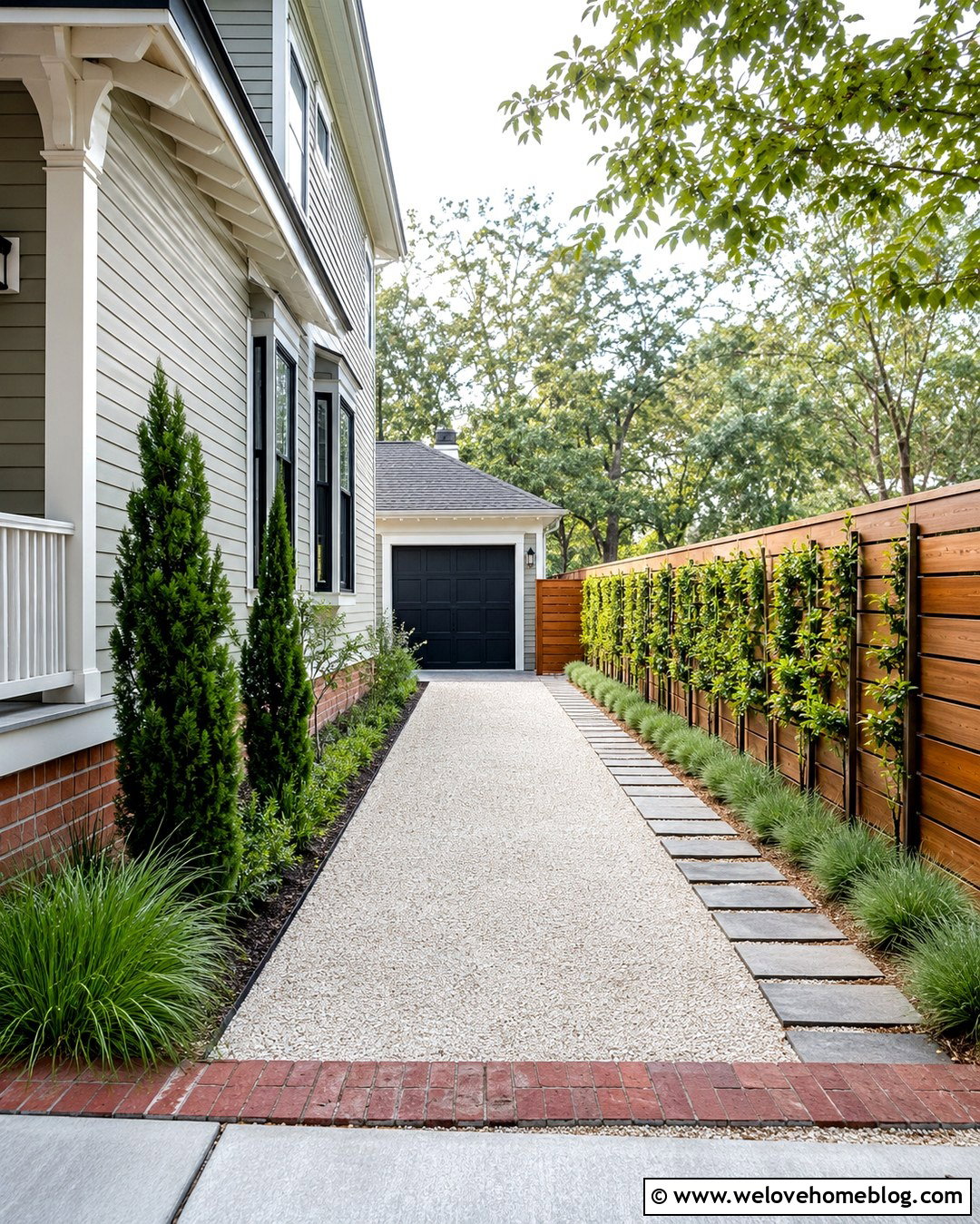
A narrow side yard can still accommodate a polished oyster shell driveway. Use a straight, single-car layout that runs beside the house toward a rear garage or compact parking space. Slim metal edging maximizes usable width, while a brick threshold at the sidewalk gives the entrance a finished appearance. On the house side, add a narrow stepping-stone walkway separated from the driveway by a low planting strip. Upright evergreens, compact grasses, or espaliered plants provide greenery without crowding the route. A simple horizontal fence can screen neighboring views while maintaining a clean background. Finely crushed and well-compacted shells will make the limited space look brighter and more intentional. Keep the design simple so every inch remains functional and easy to maintain.
16. Wide Oyster Shell Motor Court
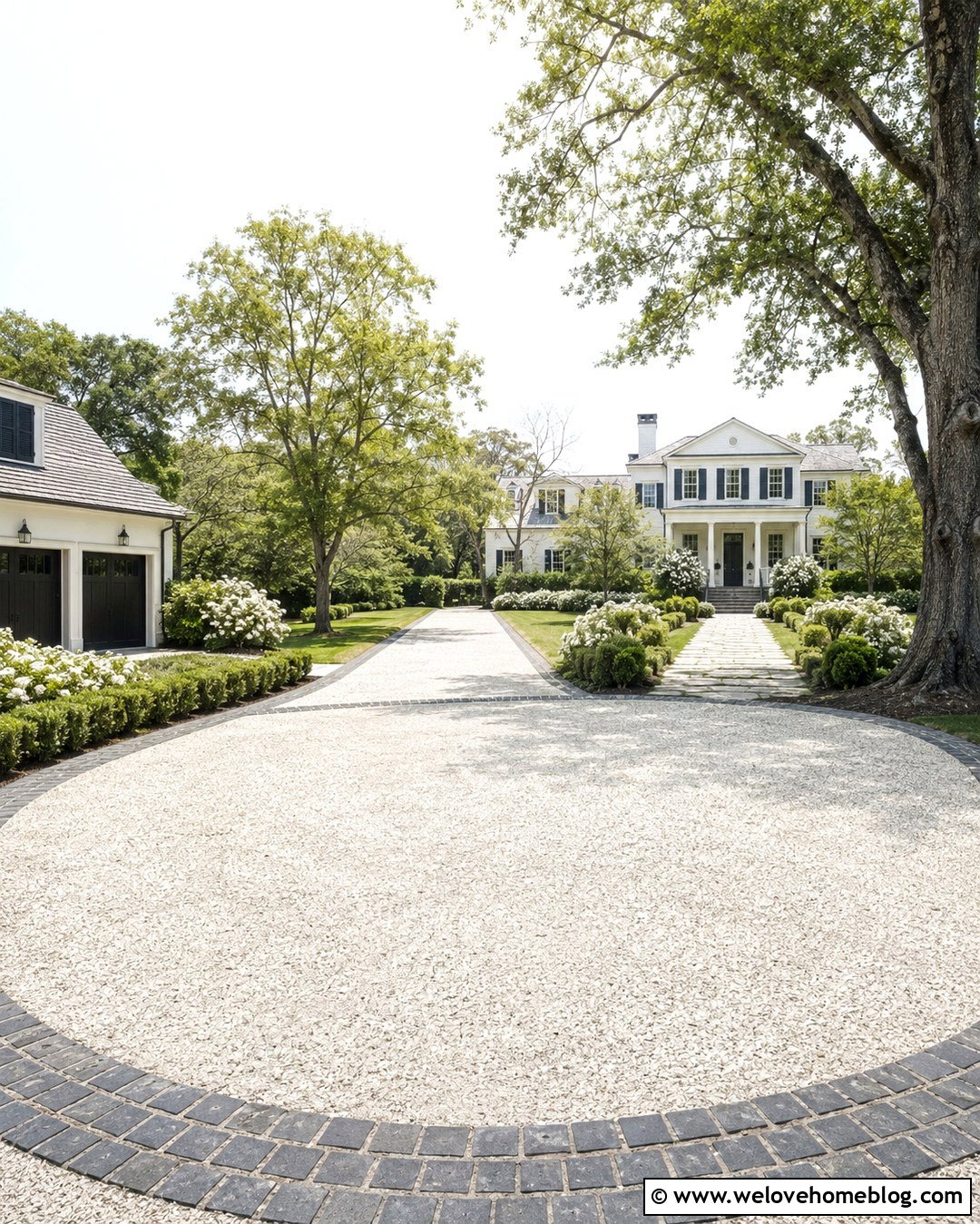
An oyster shell motor court offers generous parking while retaining a softer appearance than a fully paved expanse. Create a wide rectangular or oval shell area in front of the garage, then connect it to the street with a narrower approach. A cobblestone perimeter and brick or granite turning bands can organize the large surface. Place a central planting island only when there is enough room for comfortable circulation. Otherwise, use substantial landscape beds around the outer edges. Symmetrical evergreens, shade trees, and low flowering plants can visually reduce the scale of the court. This layout complements coastal estates, large colonials, and expansive Lowcountry homes. Clear boundaries and repeated hardscape details prevent the broad shell area from looking unfinished or blending into surrounding beds.
17. Oyster Shell Driveway With Wooden Gate
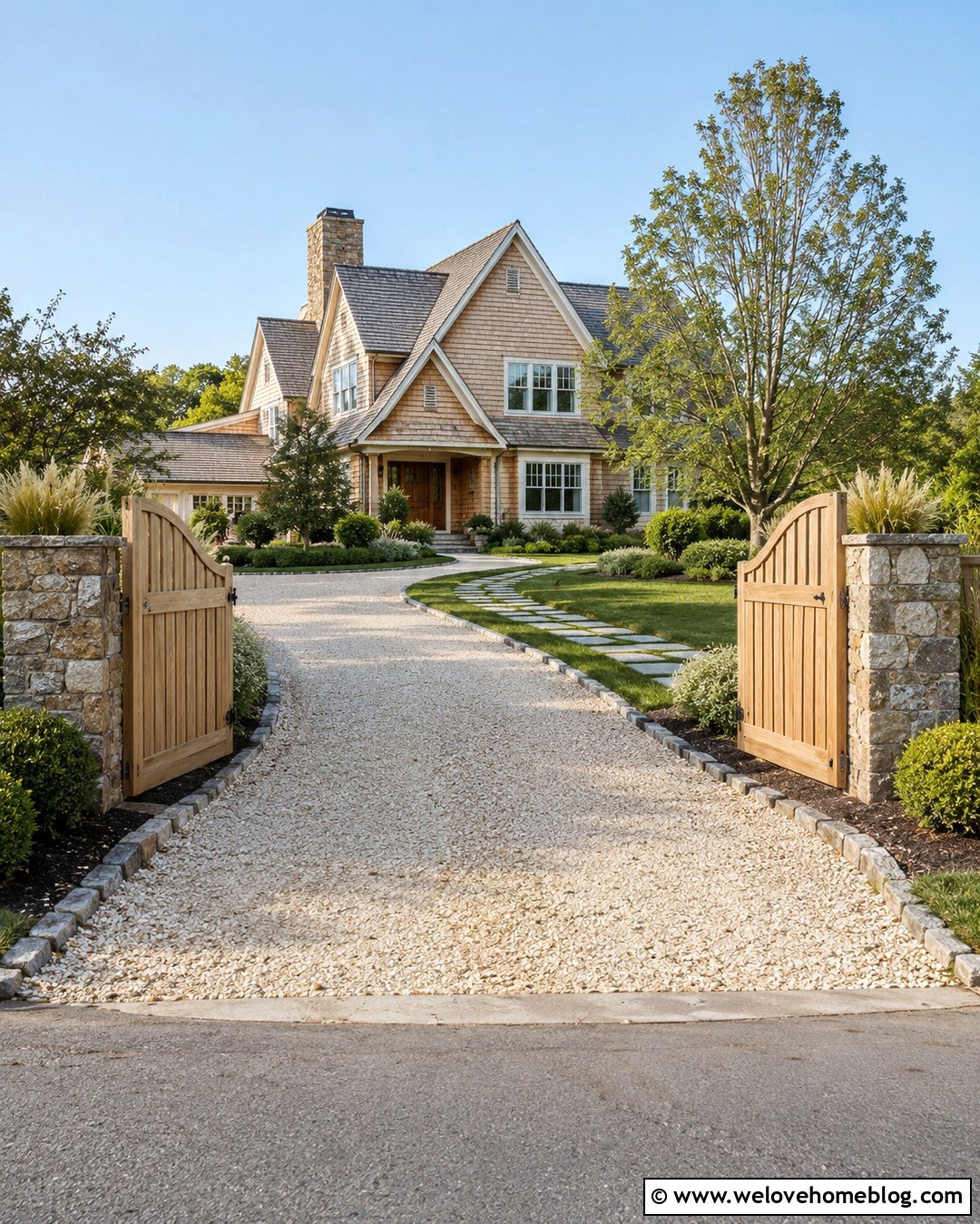
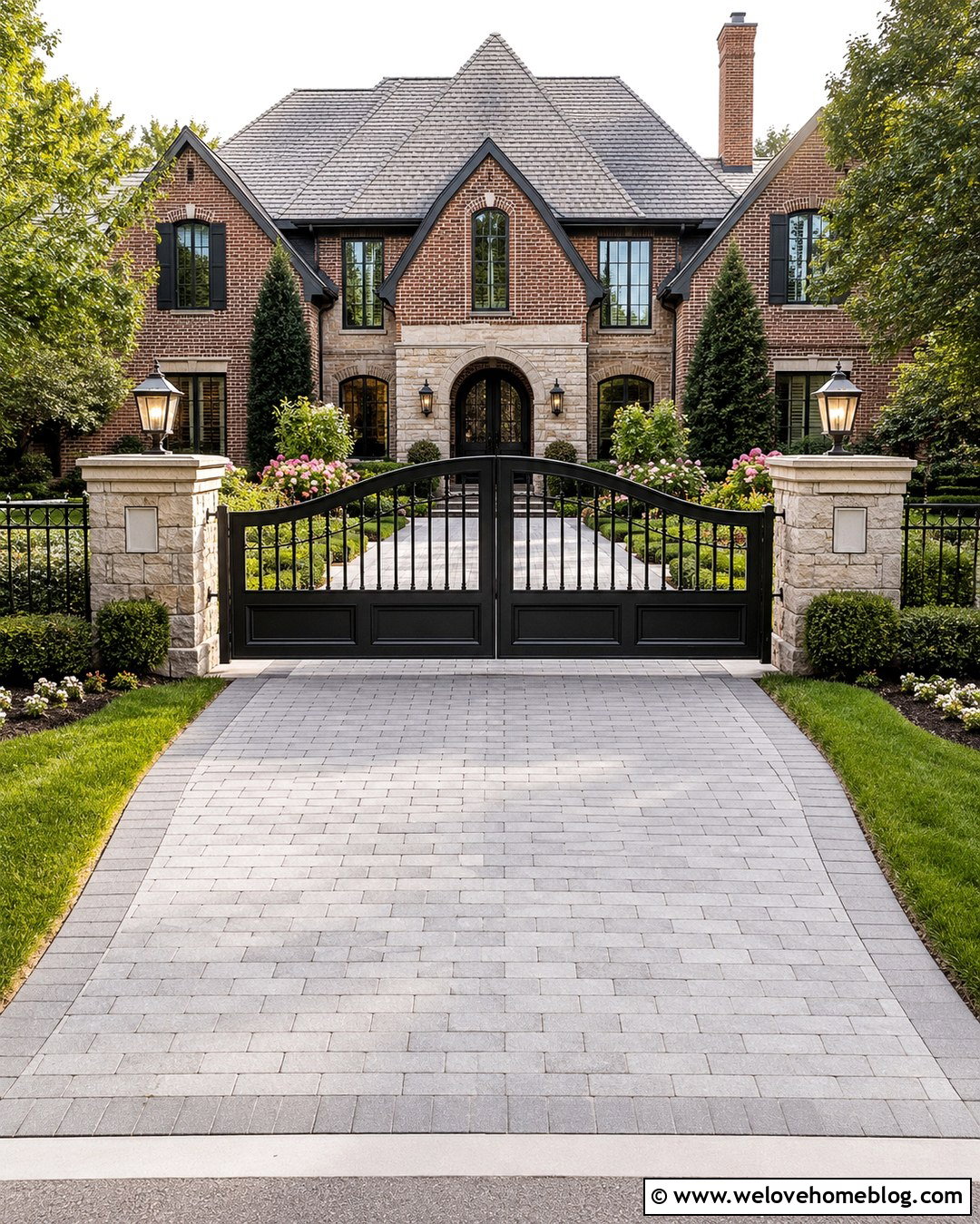
A wooden gate adds warmth and privacy to a crushed oyster shell driveway. Choose a straight or softly curved drive framed by stone edging, then position the gate far enough inside the property for a vehicle to wait safely. Natural cedar, painted white wood, or black-stained timber can coordinate with the house and fencing. Support the gate with masonry or heavy timber posts, and continue the oyster shell surface cleanly beneath the opening. Plant low shrubs around the posts so mechanical parts remain accessible. Beyond the gate, use a line of trees or grasses to guide the eye toward the house. The pale shell surface, natural wood, and green landscaping create a balanced entrance that feels secure without becoming harsh or overly imposing.
18. Oyster Shell Driveway With Brick Pillars
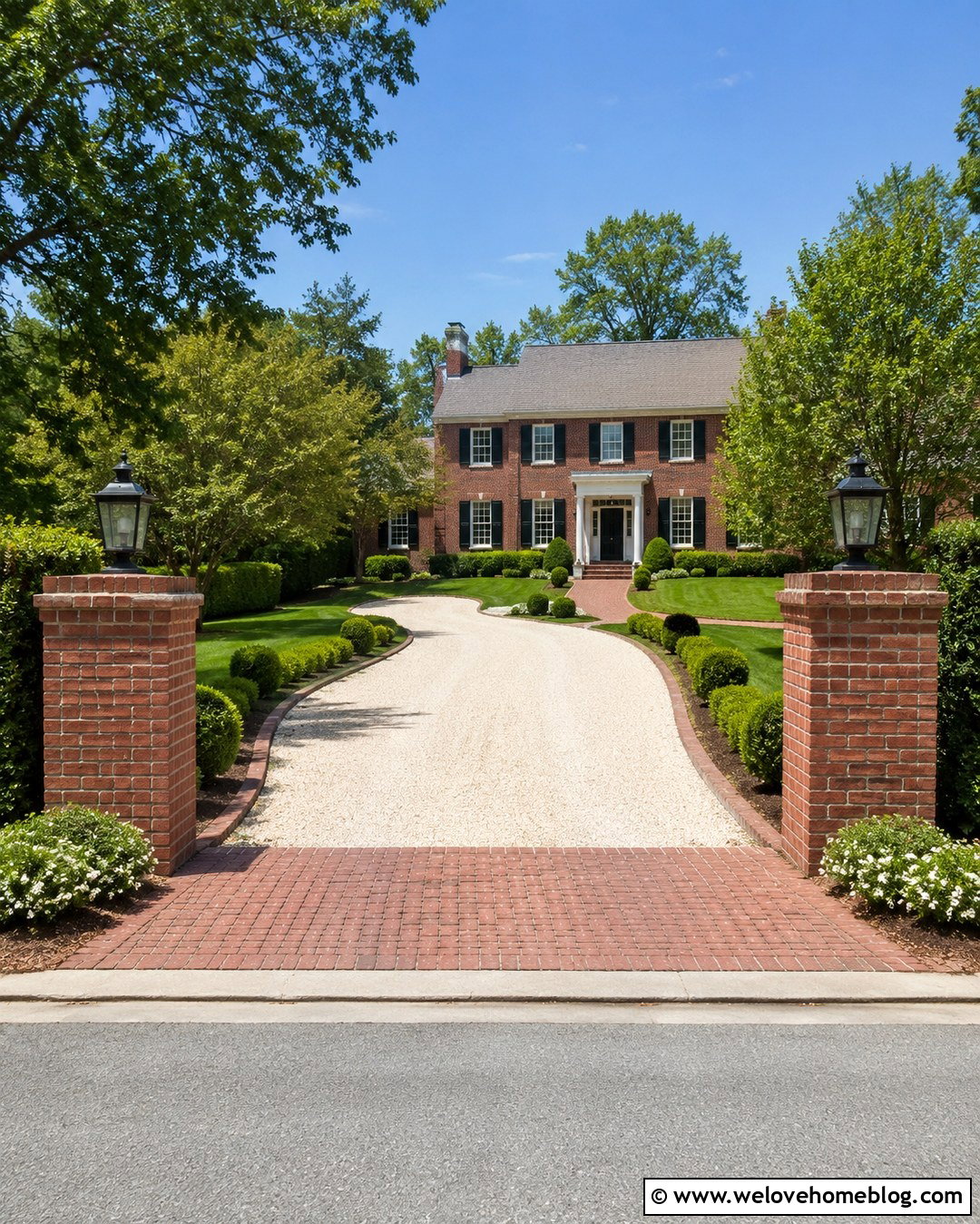
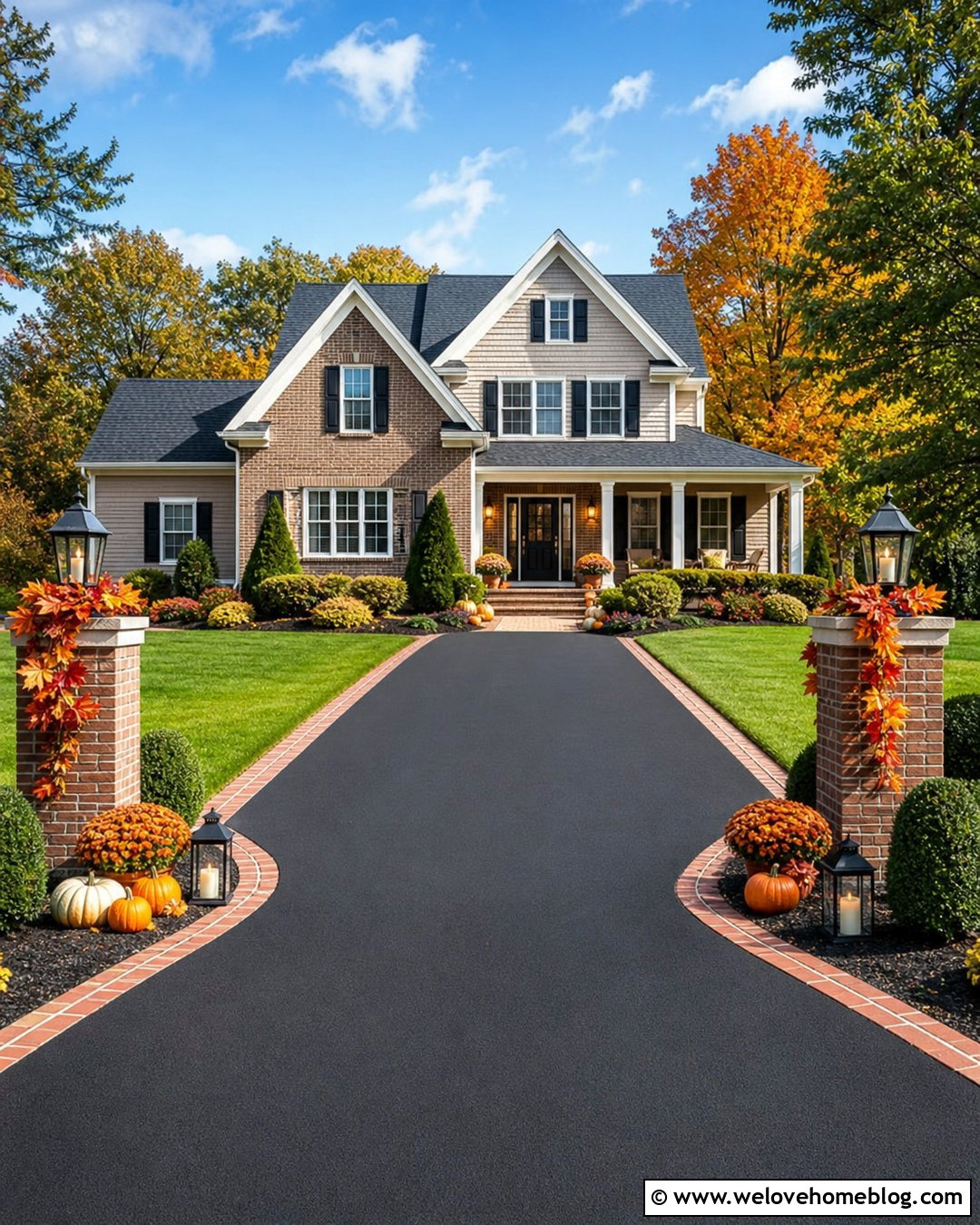
Brick pillars make a clear entrance statement and connect an oyster shell driveway to a brick house or traditional facade. Set the pillars on both sides of a broad shell entrance, leaving comfortable clearance for vehicles, service equipment, and deliveries. A matching brick apron can stretch between the pillars and transition into the compacted oyster shell surface. Continue a single brick border along the driveway for visual continuity. Simple lantern-style fixtures may be installed on top, while low evergreen shrubs soften the bases without hiding them. A curved layout can reveal the house gradually, while a straight layout creates a more formal view. Keep address details readable and landscaping controlled so the entrance remains attractive, practical, and easy for first-time visitors to understand.
19. Oyster Shell Driveway With Rain Garden
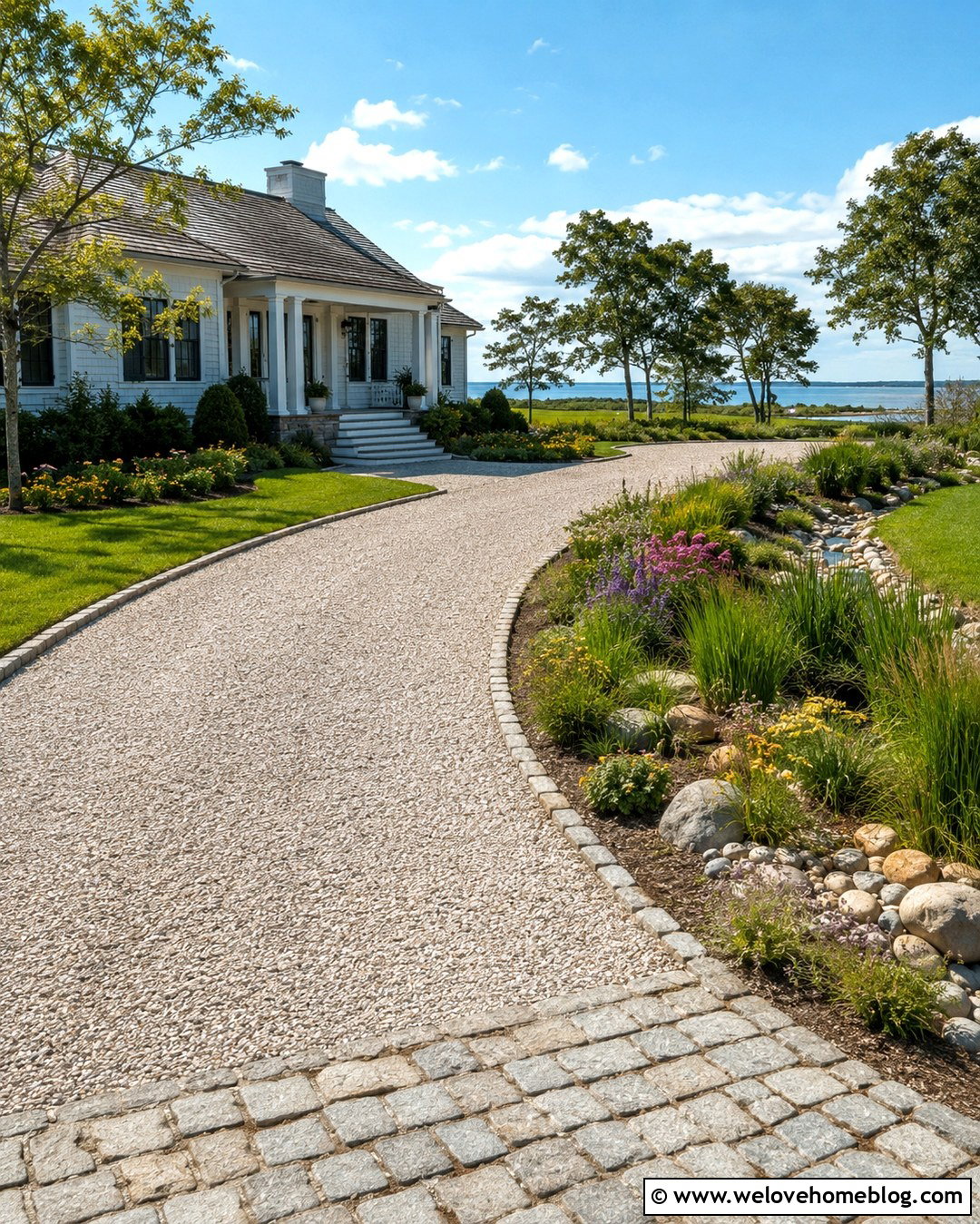
Water management can become part of the landscape rather than an afterthought. Shape the oyster shell driveway with a subtle crown or cross slope that directs runoff toward a planted rain garden instead of the garage or foundation. Use stone edging along the garden side and select moisture-tolerant native plants suited to local conditions. A shallow planted basin can sit beside the lower section of the drive, framed by grasses, flowering perennials, and small shrubs. Add a cobblestone apron where runoff and traffic are most concentrated. The rain garden should remain separate from the structural driveway base and must not create standing water in the driving area. Local drainage patterns, soil, regulations, and professional grading advice should guide the final plan.
20. Oyster Shell Driveway With Coastal Cottage Landscaping
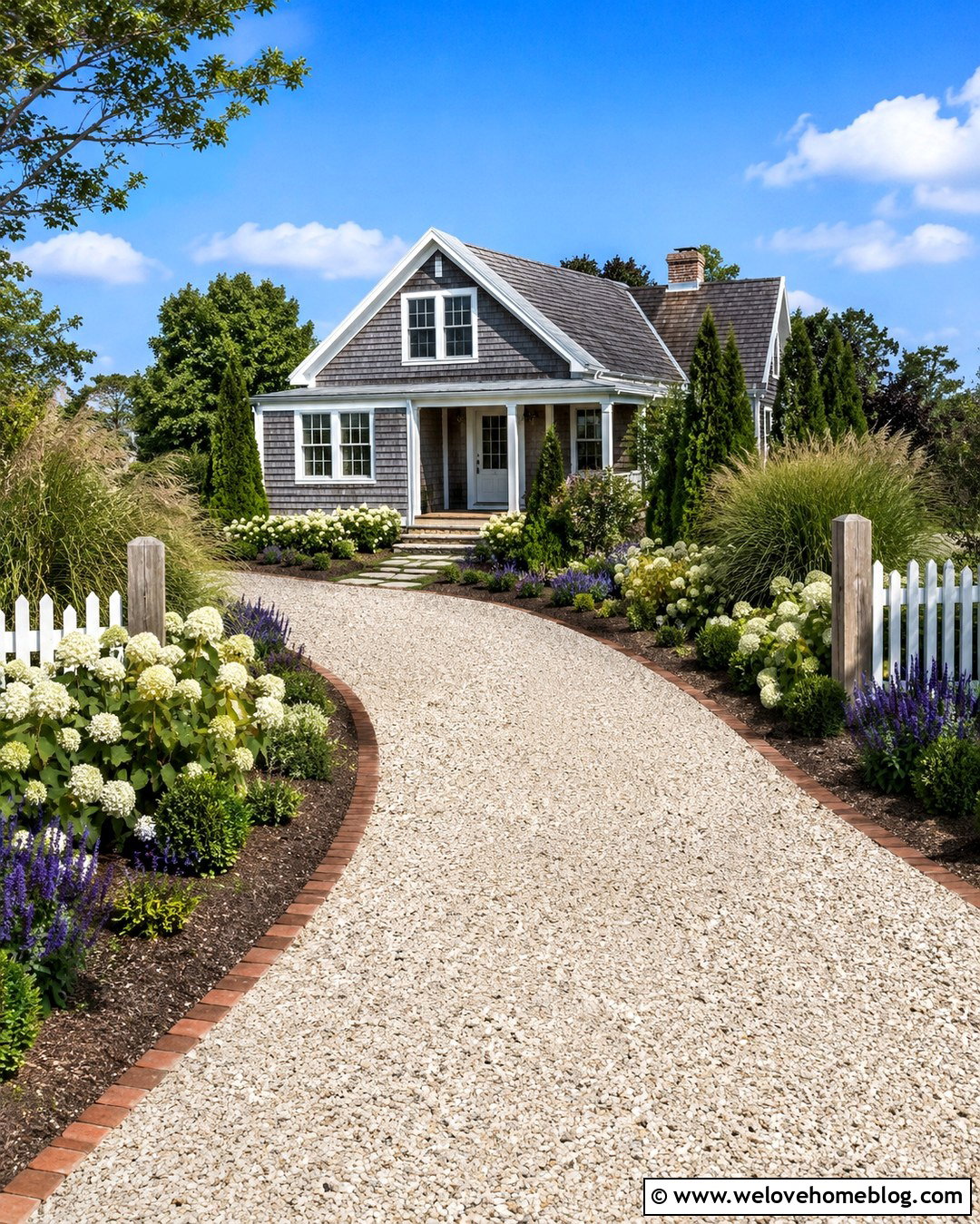
A coastal cottage landscape brings together many of the best features of an oyster shell driveway. Begin with a gently curved shell surface edged in weathered brick or natural cobblestone. Add informal beds filled with hydrangeas, ornamental grasses, compact evergreens, and regionally appropriate flowering plants. A white picket fence can run along one side, while a stepping-stone walkway leads from the driveway to the porch. Near the street, keep the planting low and use a simple wooden address post to define the entrance. The shell color will coordinate with white trim, gray shingles, soft blue siding, or natural cedar. Avoid excessive nautical decorations. Let the authentic materials, relaxed planting, and clear driveway shape establish the coastal character in a natural way.
Conclusion:
The best oyster shell driveway balances coastal beauty with a stable layout, dependable edging, suitable drainage, and landscaping that fits the house. Pale crushed shells can brighten a compact cottage entrance, soften a wide motor court, or create an elegant approach to a traditional home. Cobblestone and brick provide classic definition, while steel edging supports cleaner modern designs. Curves, planting islands, gates, aprons, and layered borders make each layout feel distinct. Before installation, evaluate shell availability, base preparation, grading, vehicle use, and local rules. The right combination should look attractive from the street and remain practical over time. Use these 20 Oyster Shell Driveway Ideas to plan a complete entrance with lasting curb appeal.

Related posts:
Leave a Reply