
A sand driveway can create a soft, natural approach that feels relaxed without looking unfinished. The best designs pair a compacted sand-based surface with a strong base, defined edging, thoughtful drainage, and landscaping that suits the home. Warm tan sand works beautifully beside rustic houses, while pale shell-and-sand blends complement coastal architecture. Stabilized granite sand can also provide a cleaner finish for modern and desert properties. Because loose sand may shift under tires or wash during heavy rain, proper grading, compaction, and edge restraint are essential considerations. () From curved entrances to space-saving wheel tracks, these complete 20 Sand Driveway Ideas offer practical inspiration for different homes, climates, and budgets.

1. Compacted Sand Driveway With Cobblestone Edging
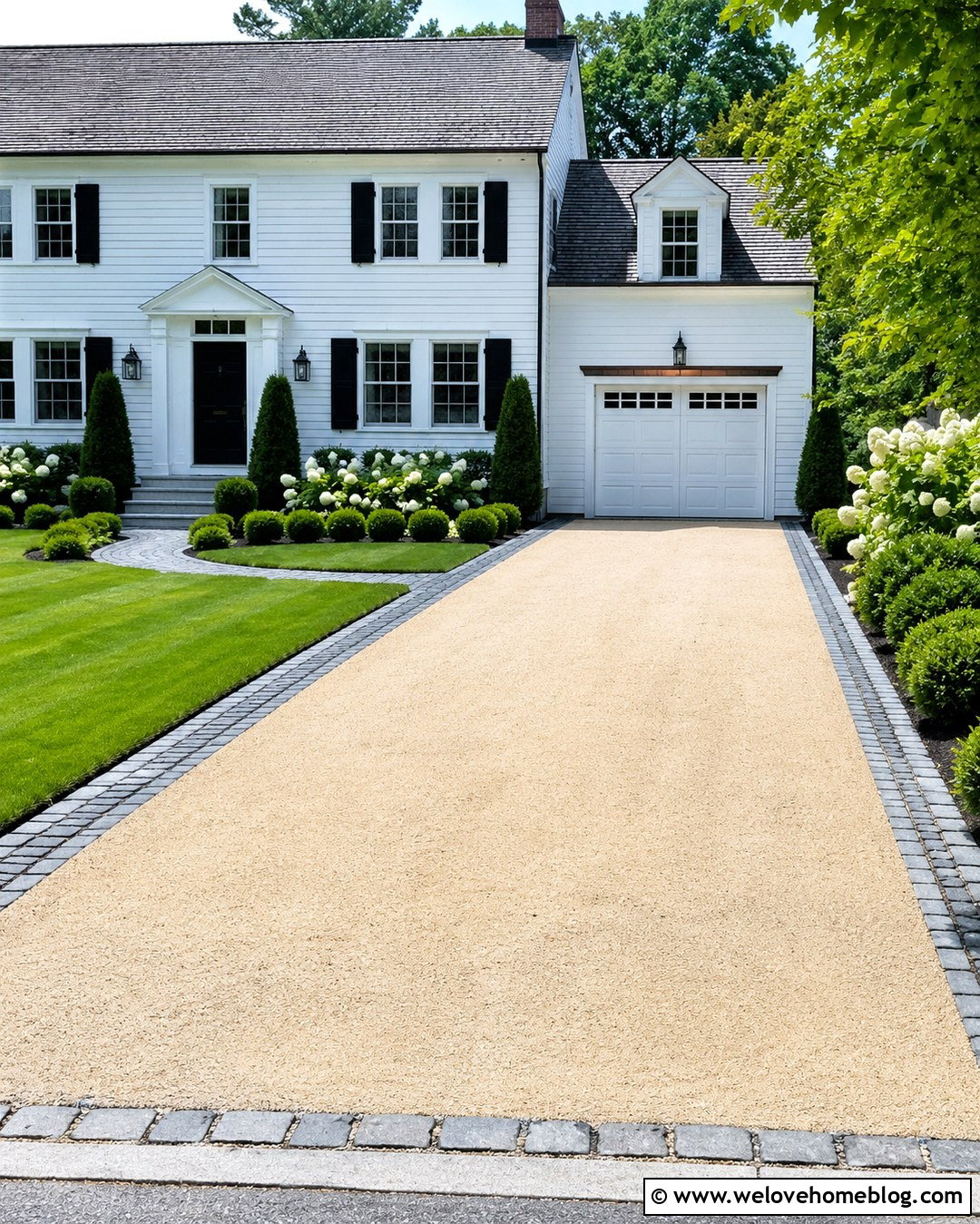
A compacted tan sand driveway framed with cobblestone creates a neat surface with traditional character. Use a straight layout for a formal colonial or Cape Cod home, then widen the driveway slightly near the garage for easier parking. Dark gray cobblestones provide strong visual contrast and help separate the sand from lawn and planting beds. Add low boxwoods, white hydrangeas, and a matching cobblestone walkway to create a coordinated entrance. The sand surface should be installed over a properly prepared aggregate base rather than directly over topsoil. Choose compactable sand containing angular particles and fines instead of soft play sand. Periodic raking and topping up low areas will keep the complete driveway looking level, intentional, and welcoming.
2. White Sand Driveway With Crushed Shell
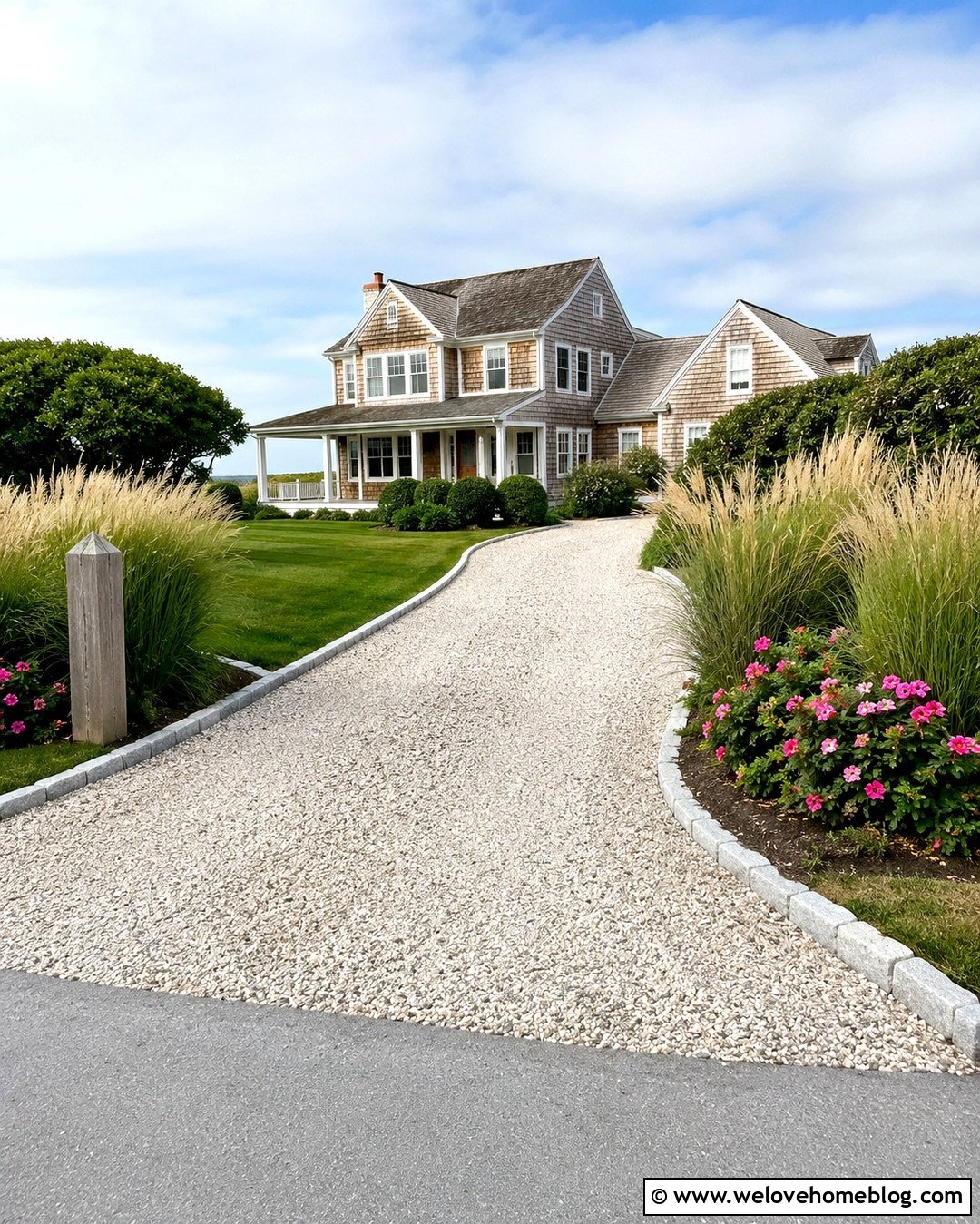
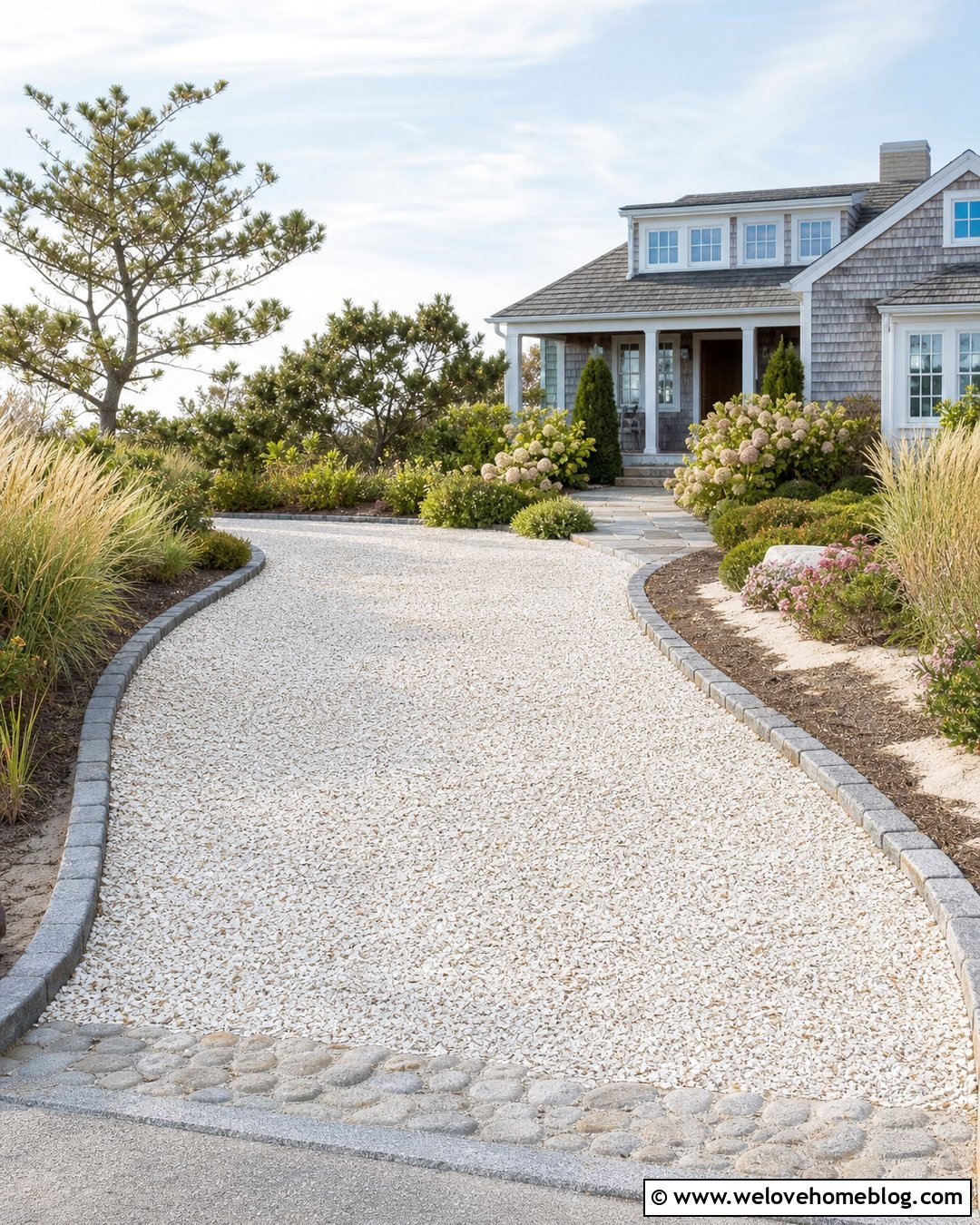
Bright crushed shells mixed with coarse sand give a driveway an unmistakable coastal appearance. This combination suits a shingle-style, beach cottage, or light-colored ranch house. Create a gently curved layout that follows the lawn instead of cutting through it in a rigid line. A border of pale granite blocks keeps the edges crisp, while ornamental grasses, beach roses, and rounded evergreen shrubs reinforce the coastal setting. Shell material gradually breaks into smaller pieces under vehicle traffic, helping the surface settle together, although occasional replenishment may be necessary in low spots. A compacted crushed-stone foundation makes the driveway more dependable than shells placed directly over soil. () Finish the entrance with simple timber posts and a discreet address sign.
3. Granite Sand Driveway With Desert Landscaping
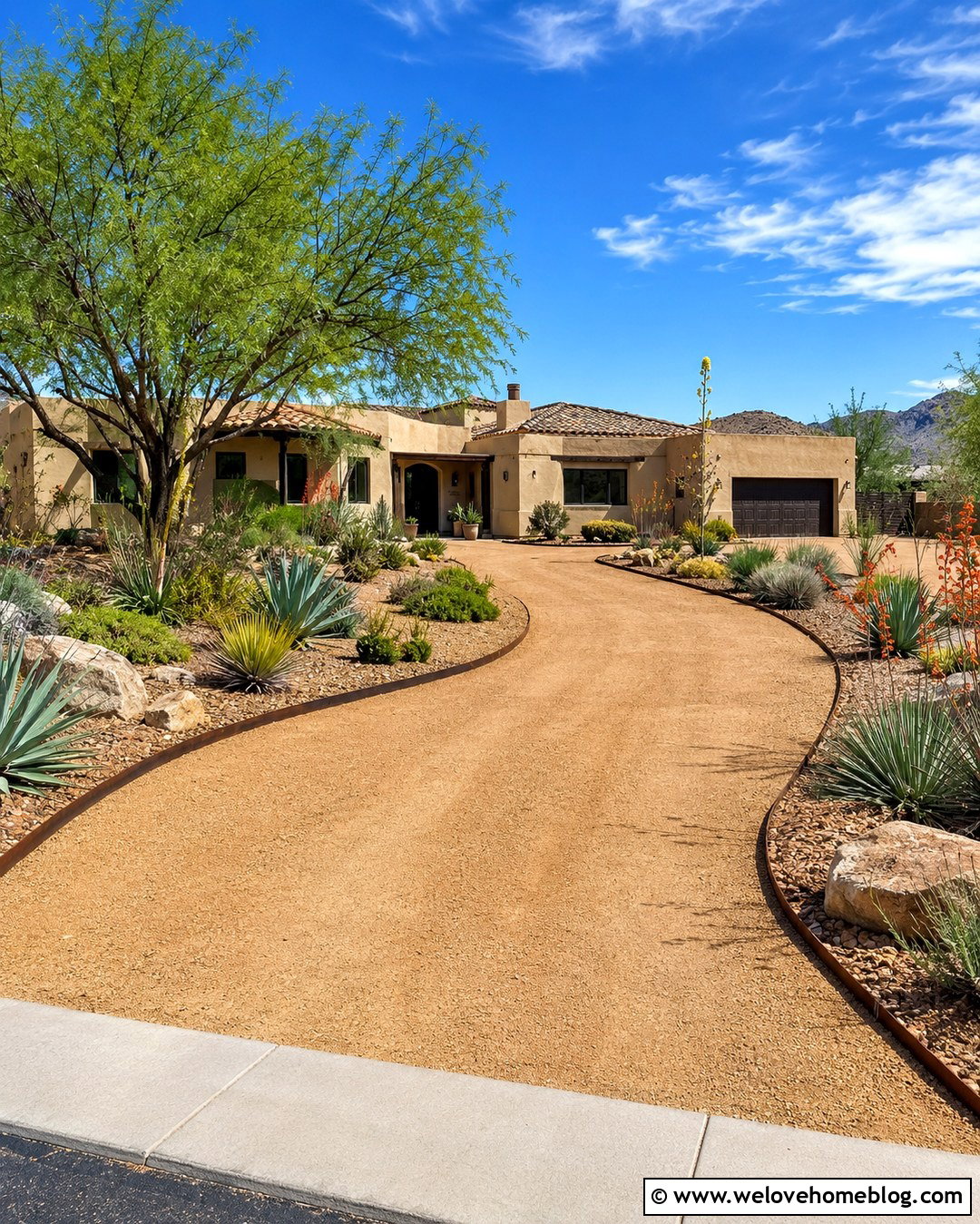
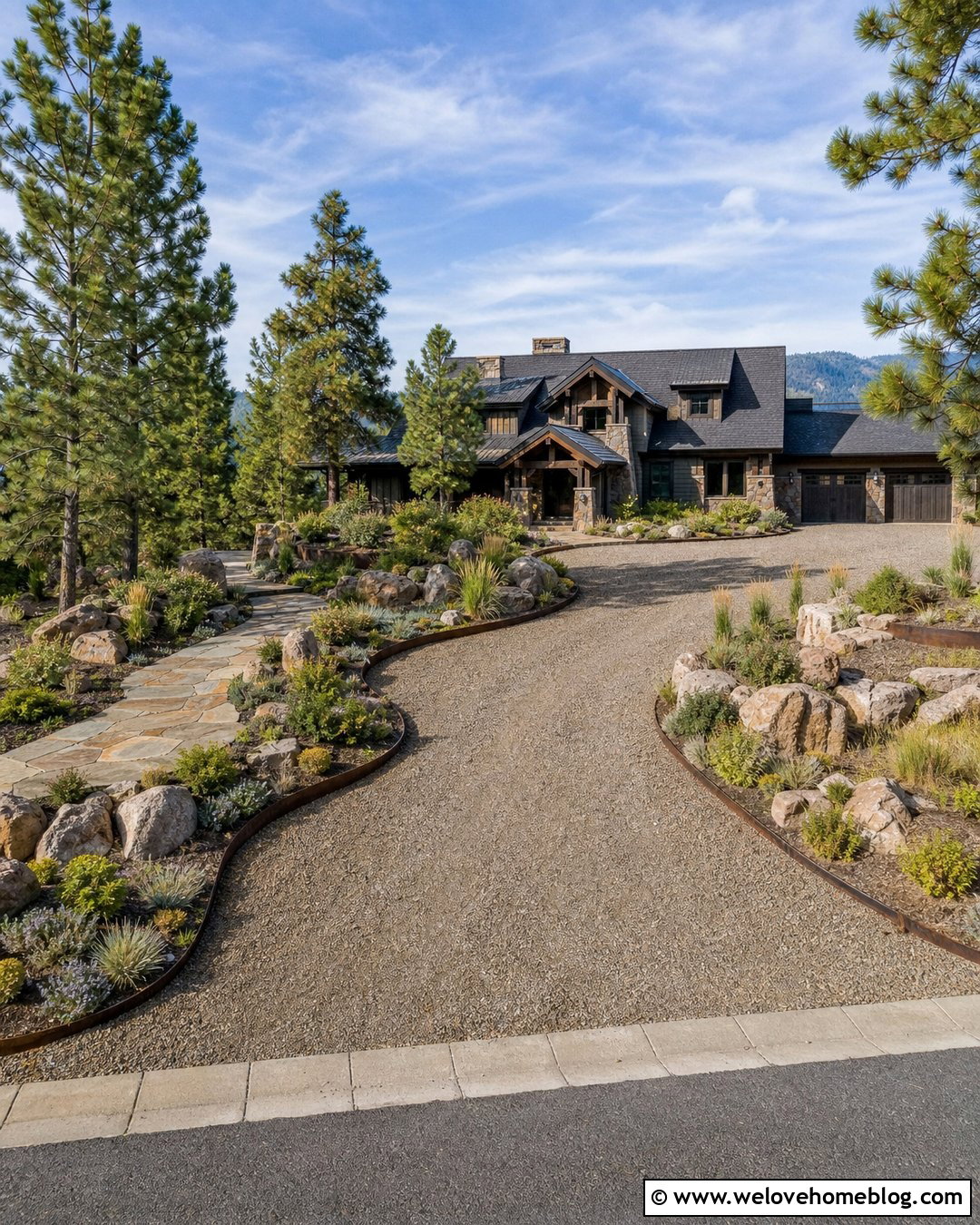
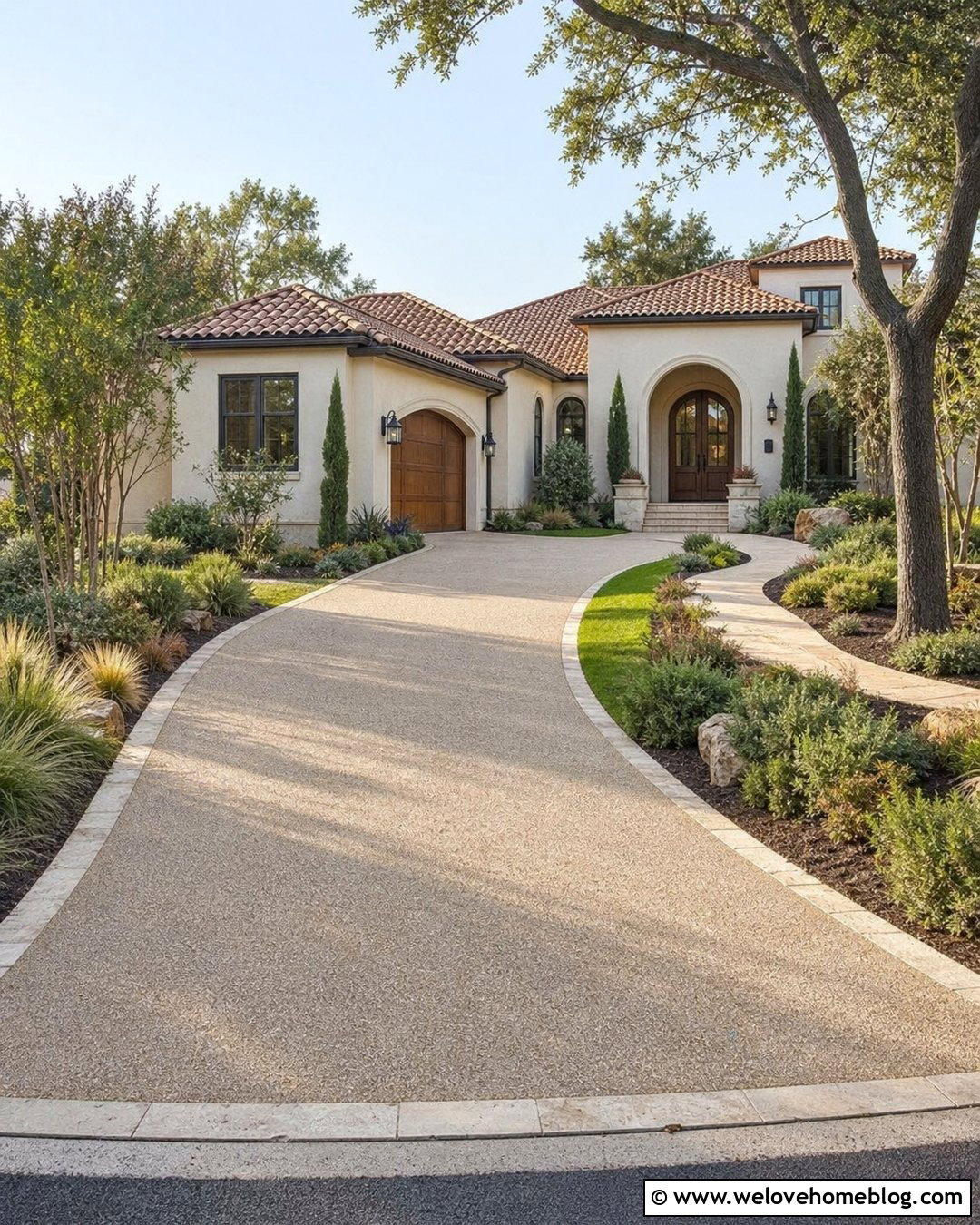
Golden granite sand brings warm color and a clean, compacted appearance to a Southwestern driveway. Choose decomposed granite fines that range from small particles to sand-sized material, allowing the surface to settle into a firmer layer. A broad, slightly curved driveway looks especially attractive beside a stucco ranch or adobe-inspired home. Edge it with weathered steel or dark brown concrete curbing to contain the material. Surrounding beds can feature agave, yucca, desert spoon, ornamental grasses, and carefully placed boulders. Leave open space between plants so the landscape feels deliberate rather than crowded. Stabilized decomposed granite offers a more controlled finish where loose material would otherwise migrate. The earthy driveway, sculptural planting, and simple edging create a cohesive, water-conscious front yard.
4. Sand Driveway With Brick Ribbon Border
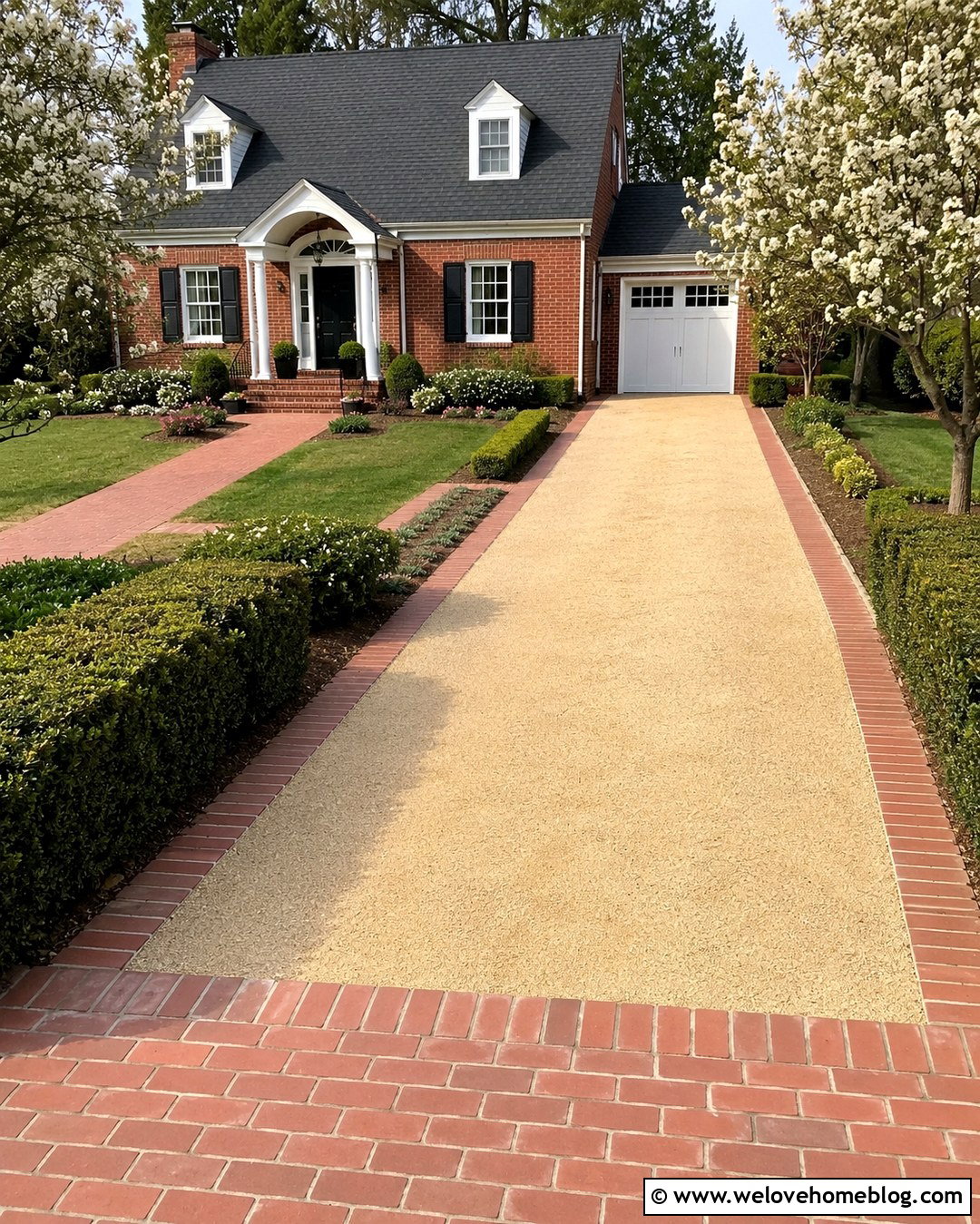
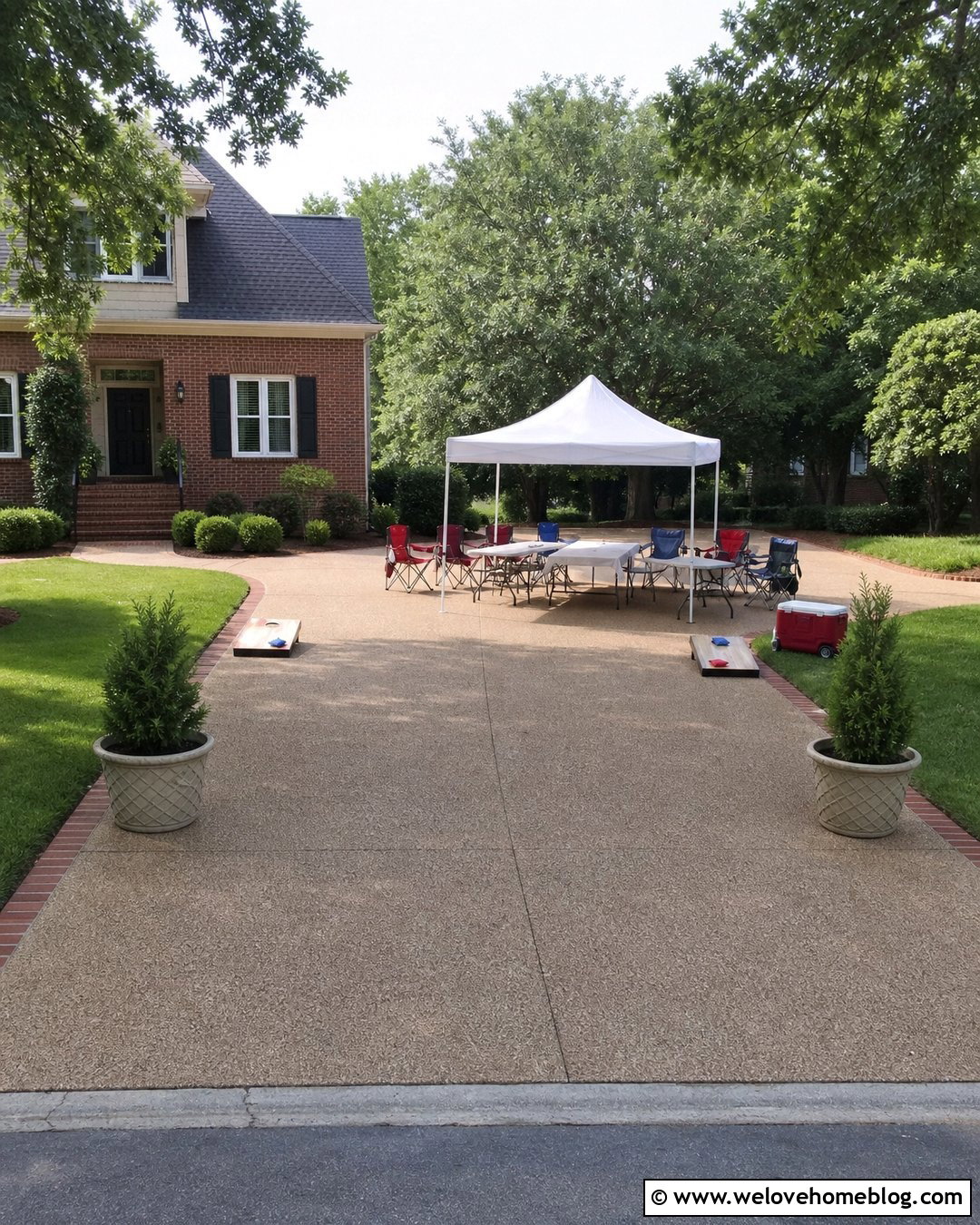
A red brick ribbon can turn a simple sand driveway into a polished approach for a traditional home. Use warm beige compacted sand for the main surface, then install clay bricks along both edges in a soldier-course pattern. Continue the brick across the street entrance to form a clear apron. This detail visually connects the driveway to a brick walkway, porch steps, or chimney. A straight layout works well with symmetrical architecture, especially when balanced by clipped hedges and matching planting beds. Choose deep red or weathered burgundy brick for contrast without making the border feel too bright. The edging should sit firmly against the sand surface and follow an even grade. Small flowering trees near the entrance can soften the structured design.
5. Gray Sand Driveway With Modern Concrete Borders
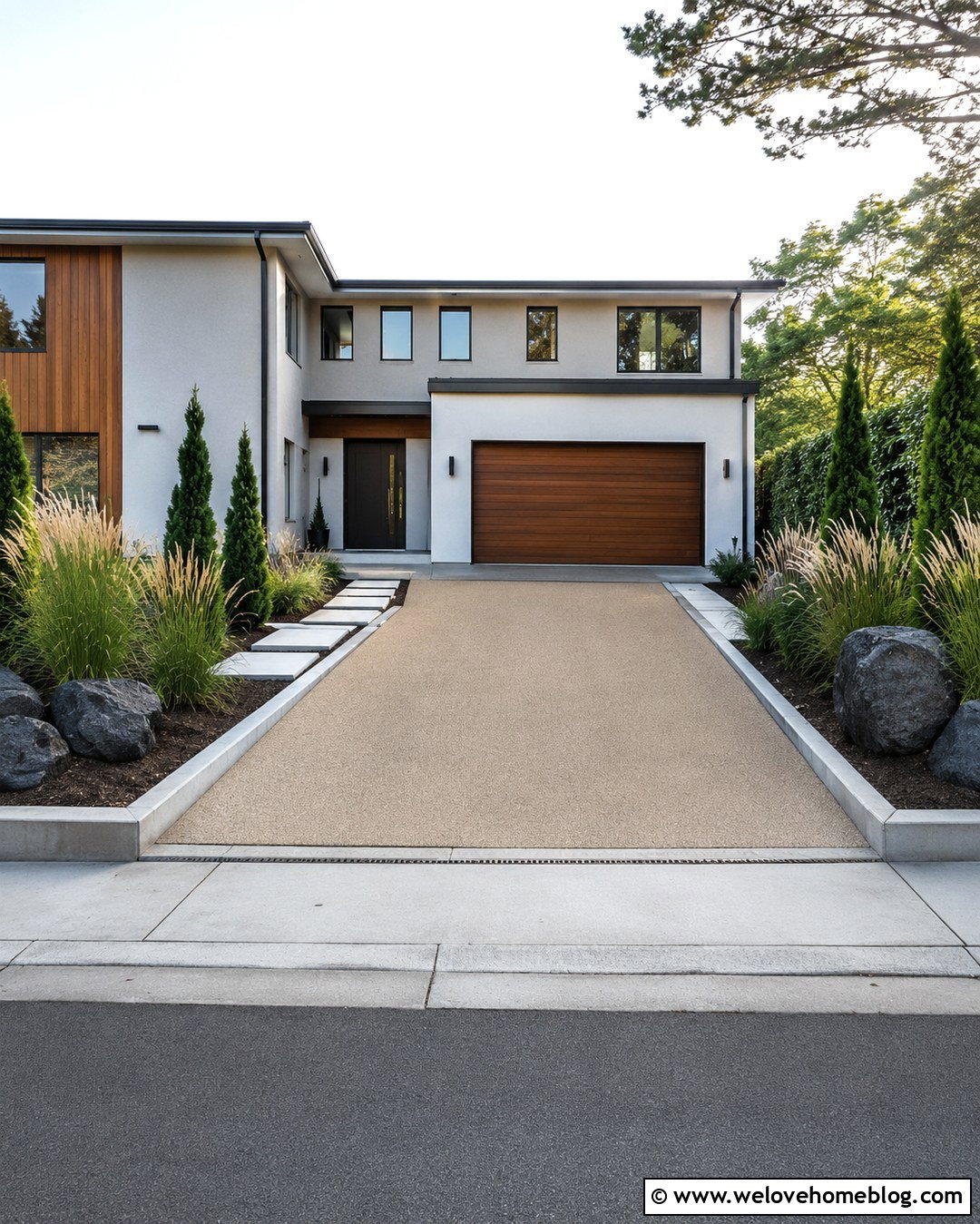
Cool gray stabilized sand creates a minimalist driveway that feels more natural than a solid concrete slab. Pair it with wide poured-concrete borders for a contemporary home with white stucco, dark siding, or mixed wood cladding. A straight rectangular layout keeps the design simple, while narrow planting beds prevent the driveway from dominating the front yard. Use architectural grasses, compact evergreens, and dark landscape rocks rather than busy flower combinations. Square concrete stepping pads can form a separate path to the front door. Keep the sand color consistent and the edges sharply defined to support the modern appearance. Recessed drainage channels near the garage provide a tidy transition. The restrained materials allow the house, driveway, and landscaping to read as one organized composition.
6. Sand Driveway With Flagstone Entrance Apron
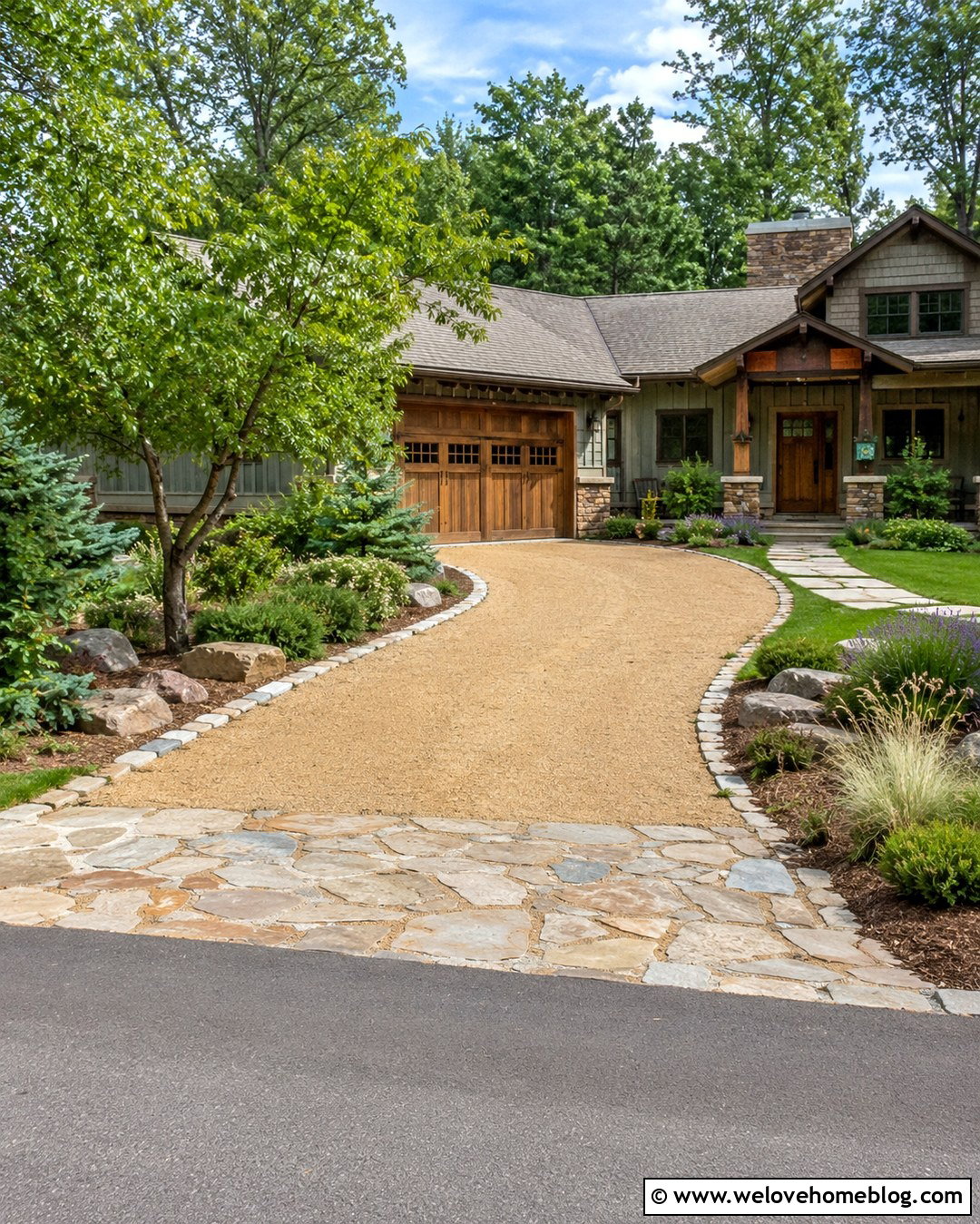
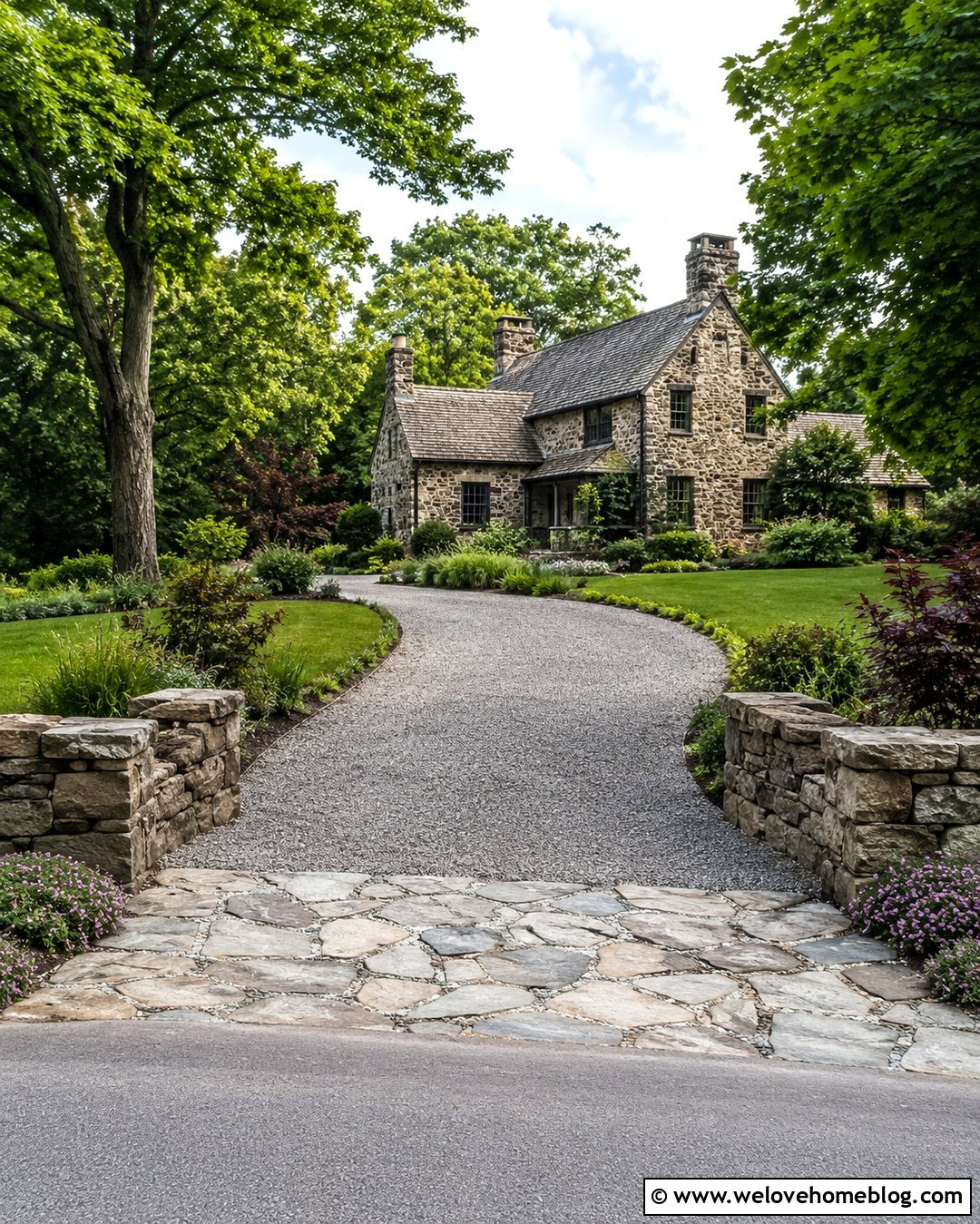
Natural flagstone at the curb gives a sand driveway a stronger, more noticeable entrance. Select irregular stones in gray, tan, and muted brown, then transition into a compacted buff-colored sand surface. The apron can span several feet into the property, creating a practical visual break between the road and driveway. Repeat the same flagstone around planting beds or along the front walkway to unify the landscape. This combination works well with craftsman, cottage, and rustic ranch homes. Frame the driveway with low-growing junipers, salvia, and ornamental grasses that tolerate reflected heat. Keep stones relatively level and joints narrow near vehicle paths. The contrasting textures make the entrance feel substantial while preserving the relaxed, natural quality of the sand driveway farther inside the property.
7. Red Sand Driveway With Adobe-Style Walls
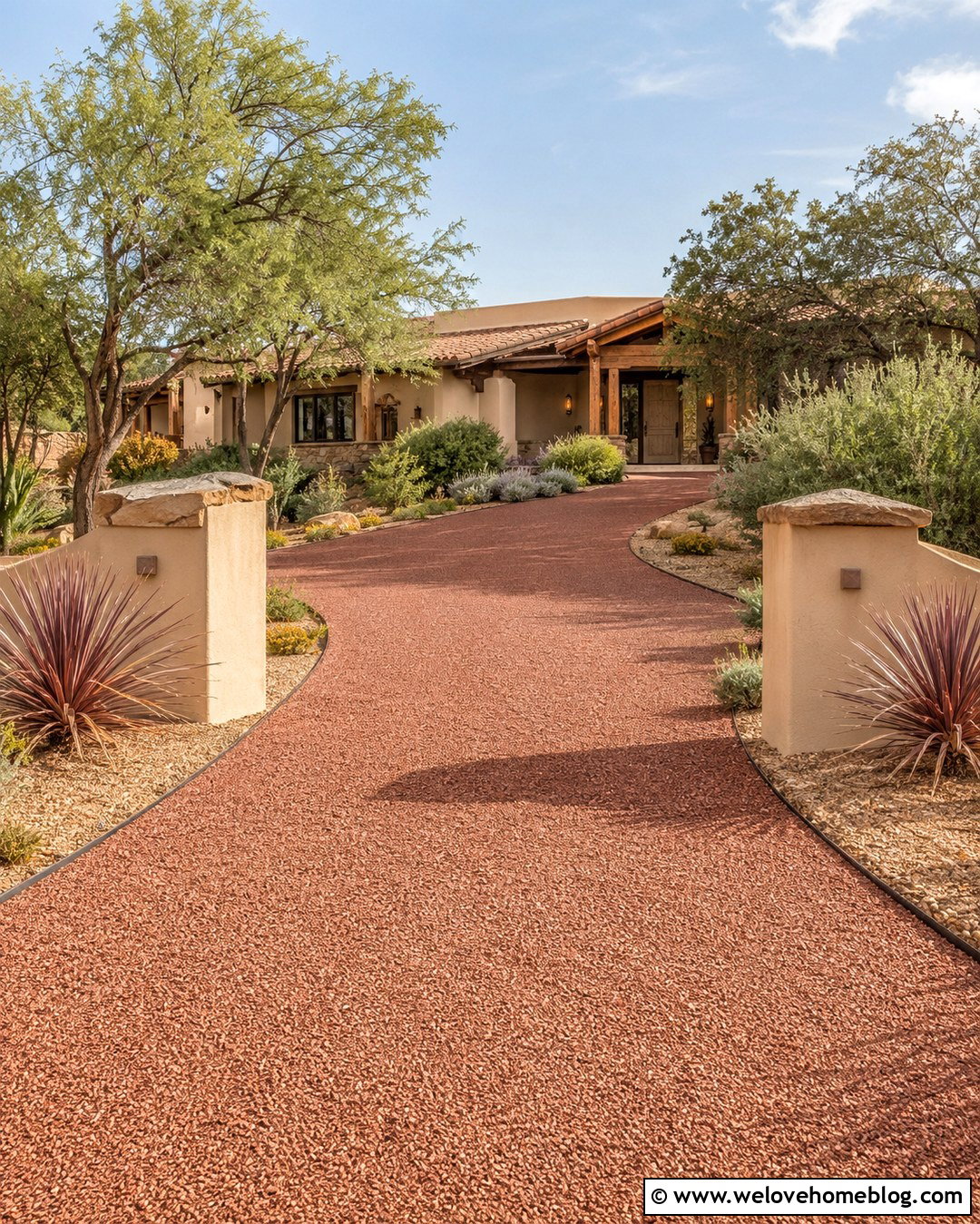
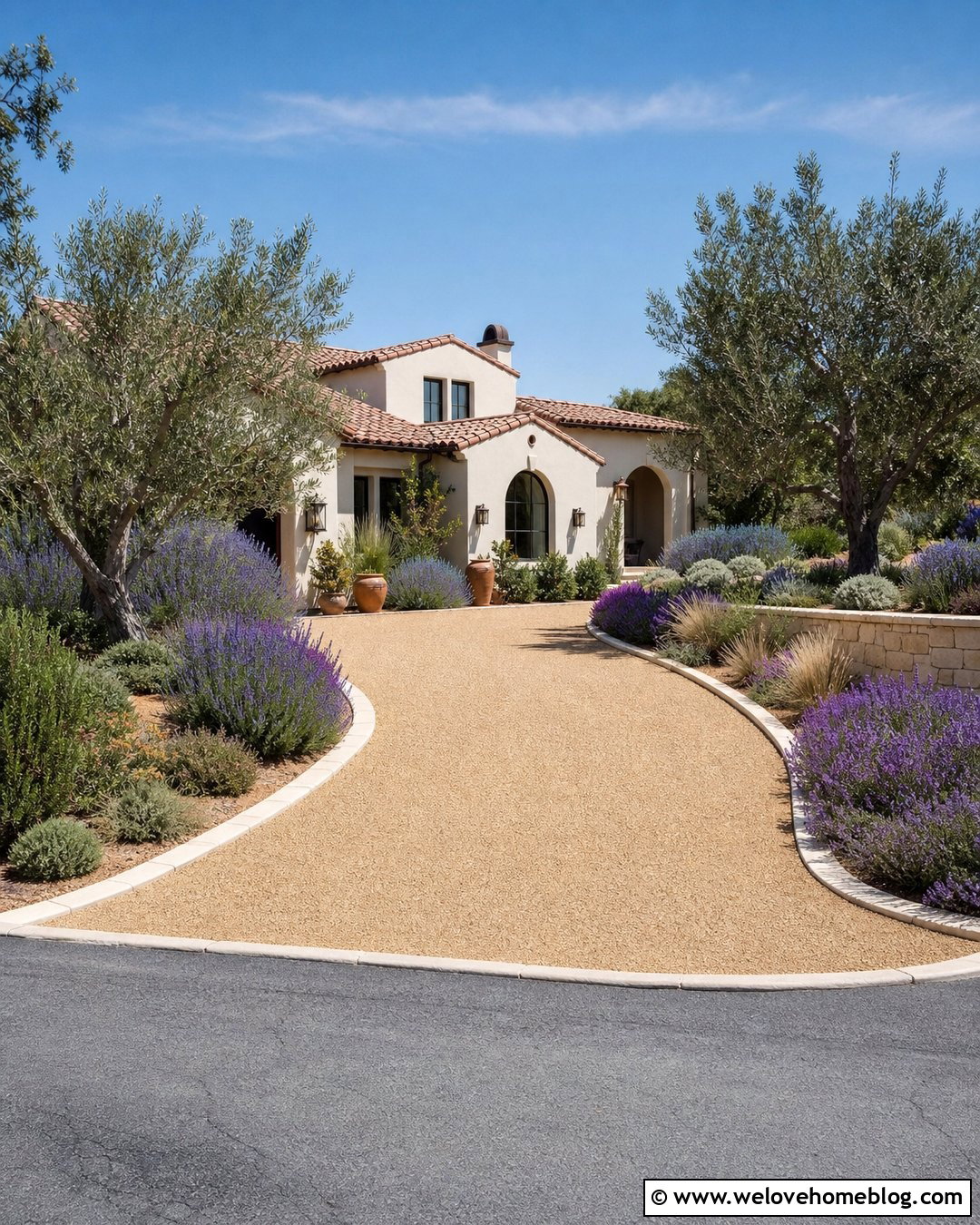
Rich red sand can echo the earthy colors of an adobe-inspired or Southwestern home. Choose compactable red granite sand instead of fine loose sand, then shape the driveway into a smooth curve leading toward the garage or side parking area. Low stucco walls in warm cream or muted terracotta can define the entrance without blocking views. Cap the walls with natural stone and add simple lantern-style fixtures for balance. Desert marigold, red yucca, sage, and small native trees bring texture to the surrounding beds. Dark metal edging can contain the sand where it meets decorative rock mulch. Limiting the palette to a few warm colors keeps the complete design calm. The result is distinctive, regionally appropriate, and visually connected to the architecture.
8. Sand And Gravel Driveway With Timber Edging
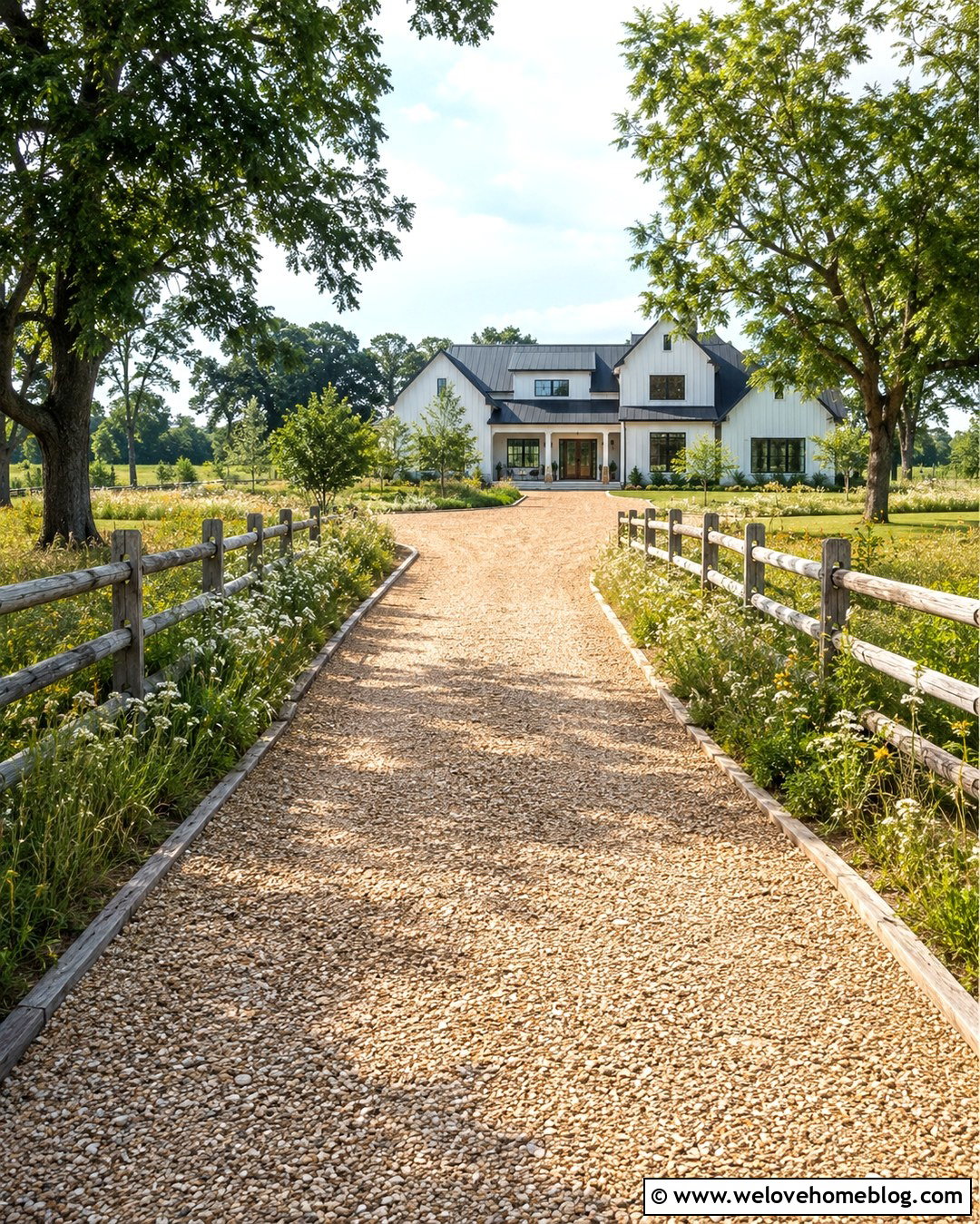
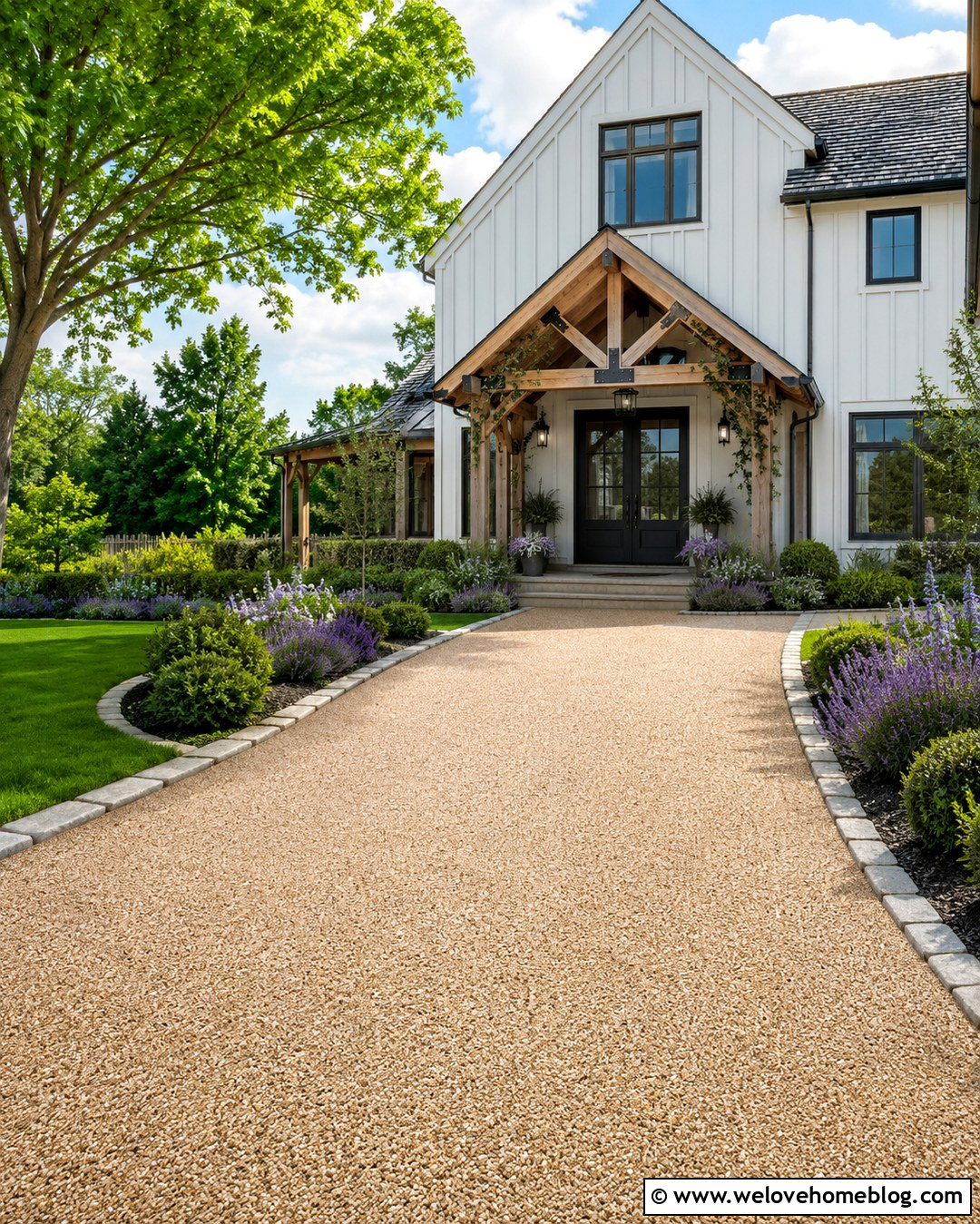
A blend of coarse sand and small angular gravel creates a casual driveway for a farmhouse, cabin, or country home. The gravel gives the surface visible texture, while the sand-sized fines help fill spaces between larger particles. Use pressure-treated landscape timbers or naturally durable wood beams to create substantial borders. A straight driveway looks especially inviting when flanked by meadow grasses, split-rail fencing, and clusters of native flowers. Add a wider gravel-and-sand parking pad near the house so vehicles can turn without damaging the lawn. Timber edging should be securely anchored and installed slightly above the finished surface. This relaxed combination feels at home in rural surroundings, yet the defined boundaries keep it from looking like an unfinished farm track or temporary access road.
9. Cream Sand Driveway With Limestone Borders
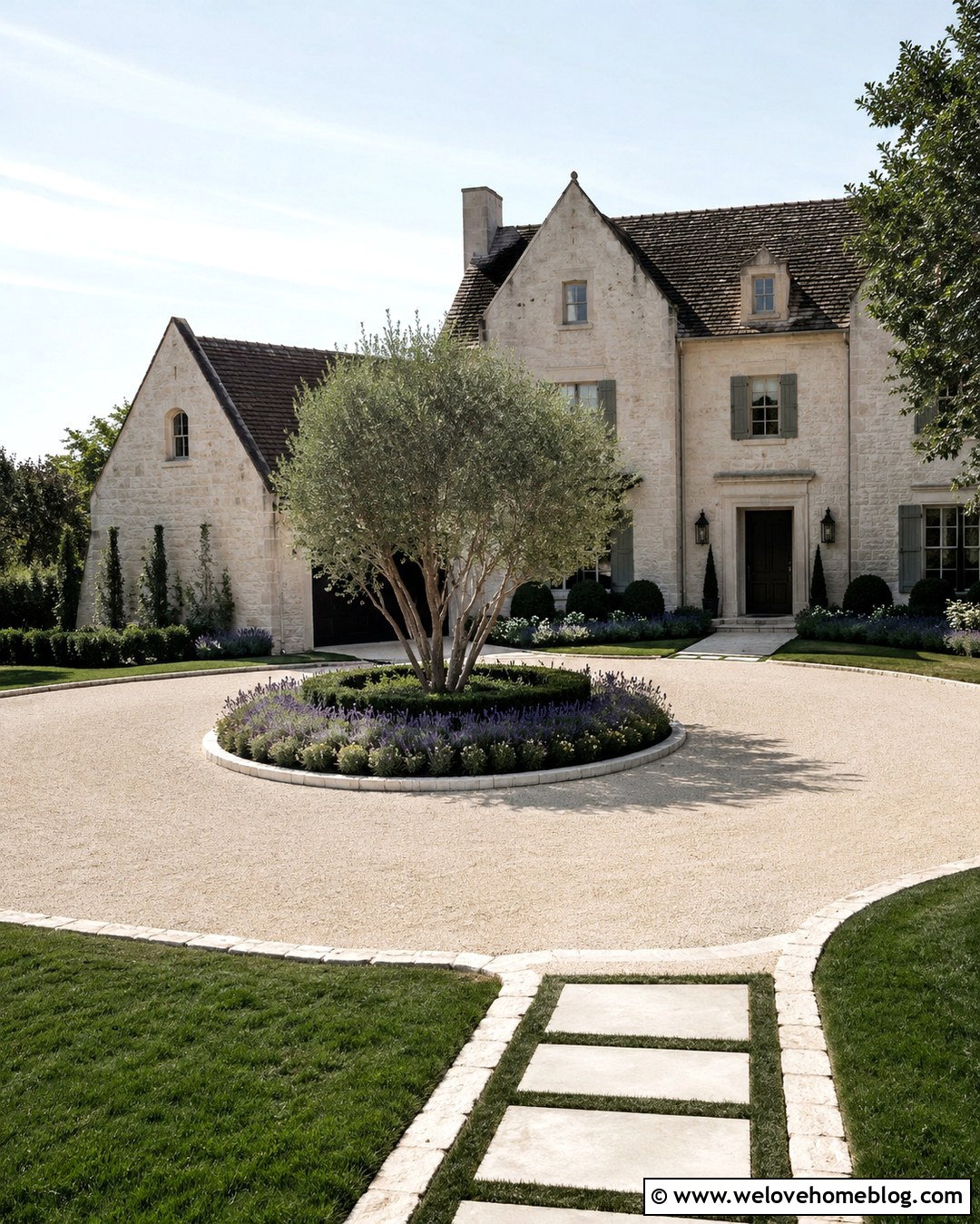
Cream-colored sand and pale limestone create a bright, elegant approach without the formality of a fully paved driveway. Use compacted limestone sand or screenings for the main surface and larger rectangular limestone blocks around the perimeter. A shallow circular layout can wrap around a central planting island filled with boxwood, lavender, and a multi-stem ornamental tree. This palette complements light brick, painted masonry, and French country architecture. Continue the limestone into the walkway or front steps to make the driveway feel connected to the house. Because similar colors can blend together, vary the scale and texture of the materials. Smooth blocks will remain visually distinct from the fine surface. Dark green planting provides contrast and stops the pale hardscape from appearing washed out.
10. Country Sand Driveway With Split-Rail Fencing
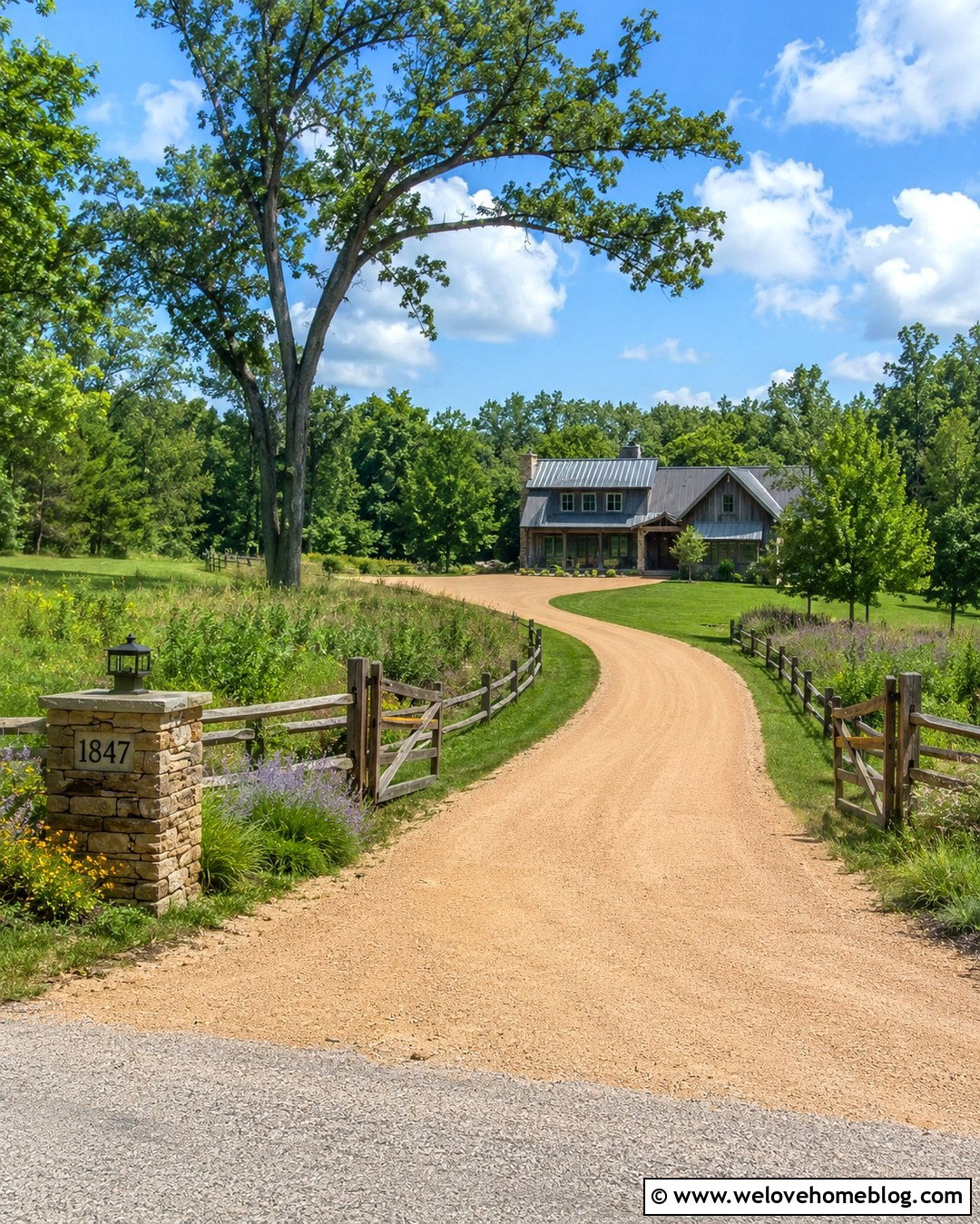
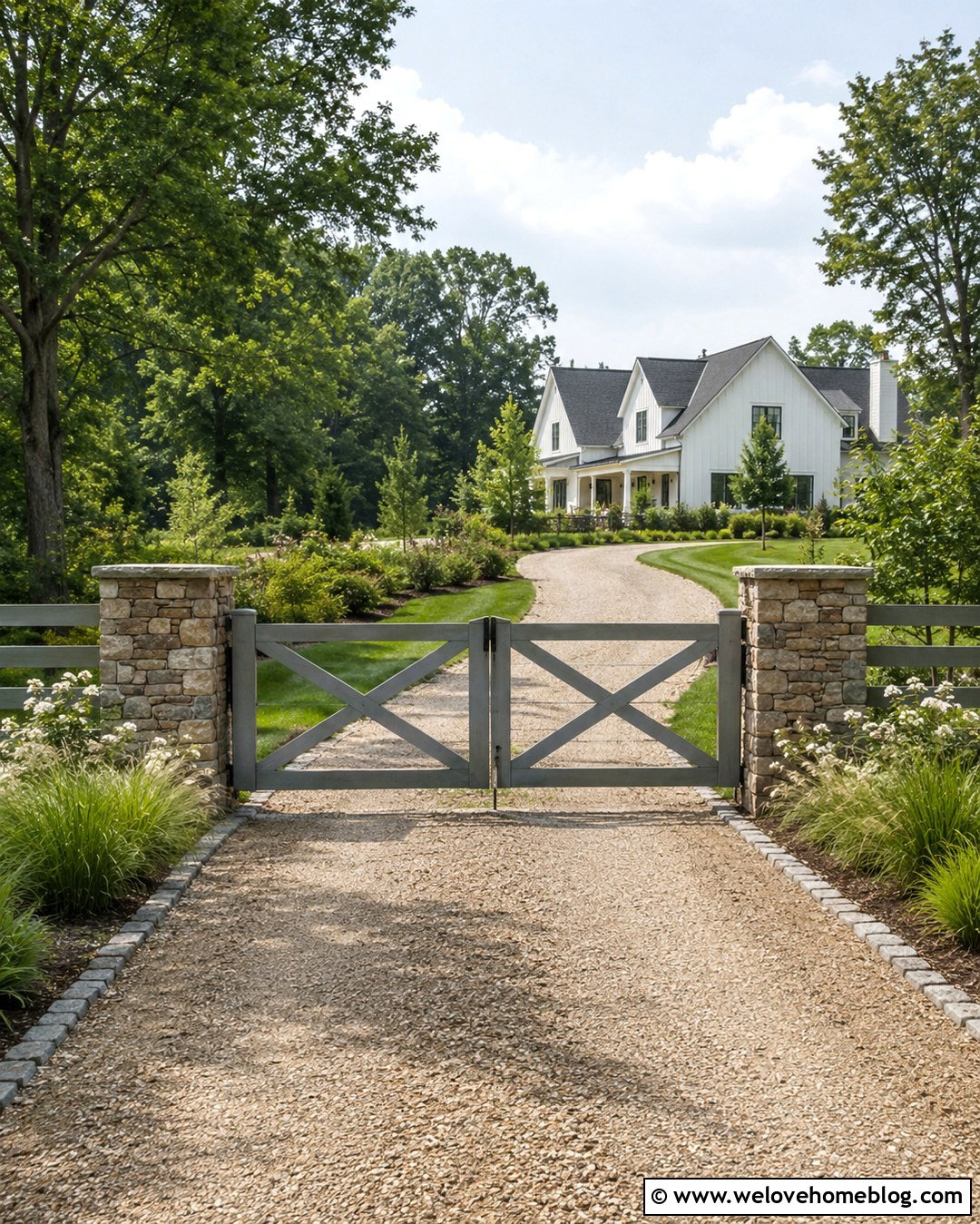
Imagine a long sandy approach bordered by open lawn, mature trees, and simple split-rail fencing. This design suits a farmhouse, barn-style house, or rural ranch where a highly polished driveway might feel out of place. Choose buff compacted sand blended with fine crushed aggregate for a softly textured surface. Follow the natural contours of the property with a gentle curve rather than forcing a perfectly straight path. Plant native grasses and informal wildflower groups outside the fence, leaving the driveway edges relatively clear. A timber gate and stone address marker can define the entrance. Near the house, transition into a wider parking court with the same material and sturdy stone edging. The consistent surface keeps the sprawling country layout visually connected from road to porch.
11. Circular Sand Driveway With Center Garden
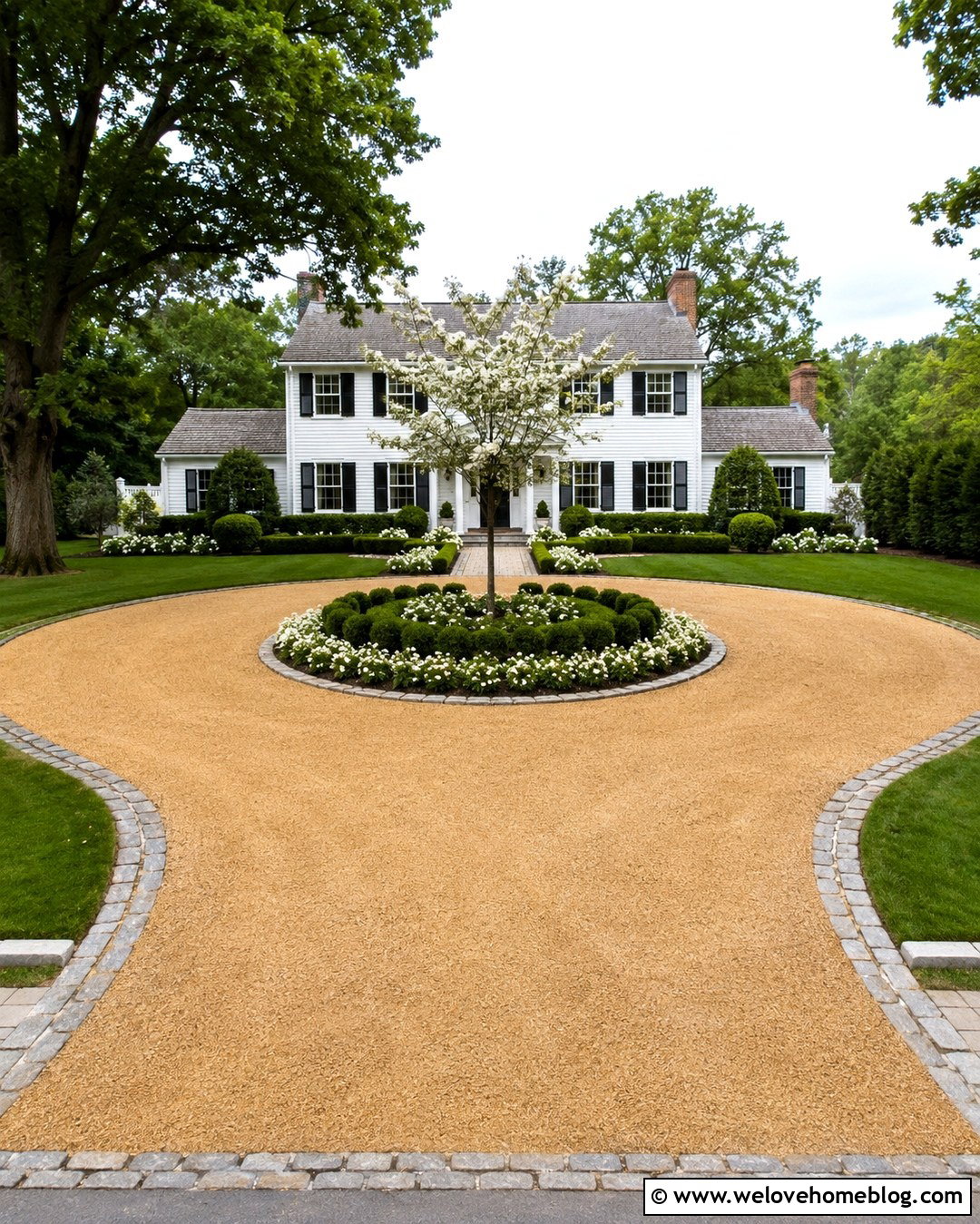
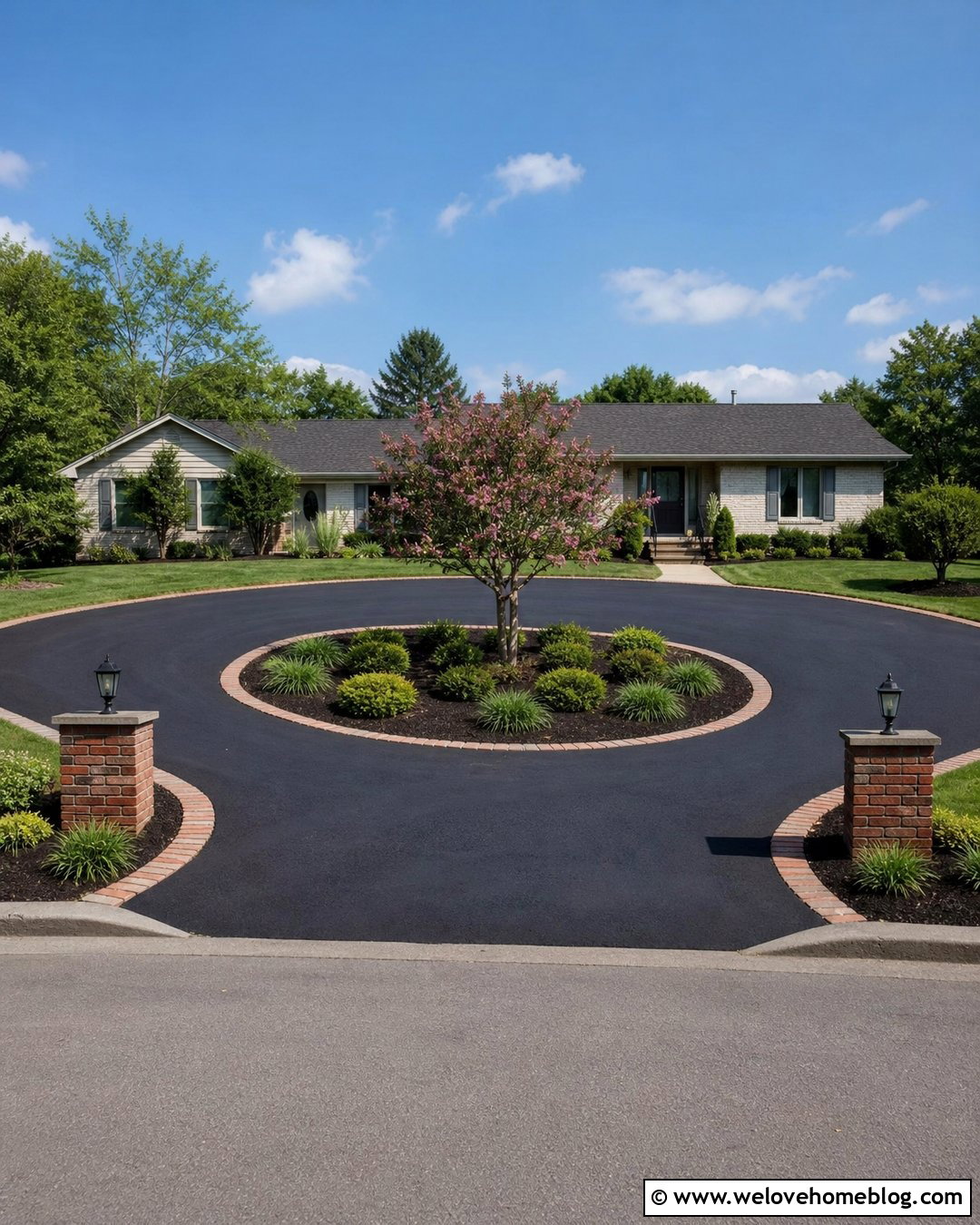
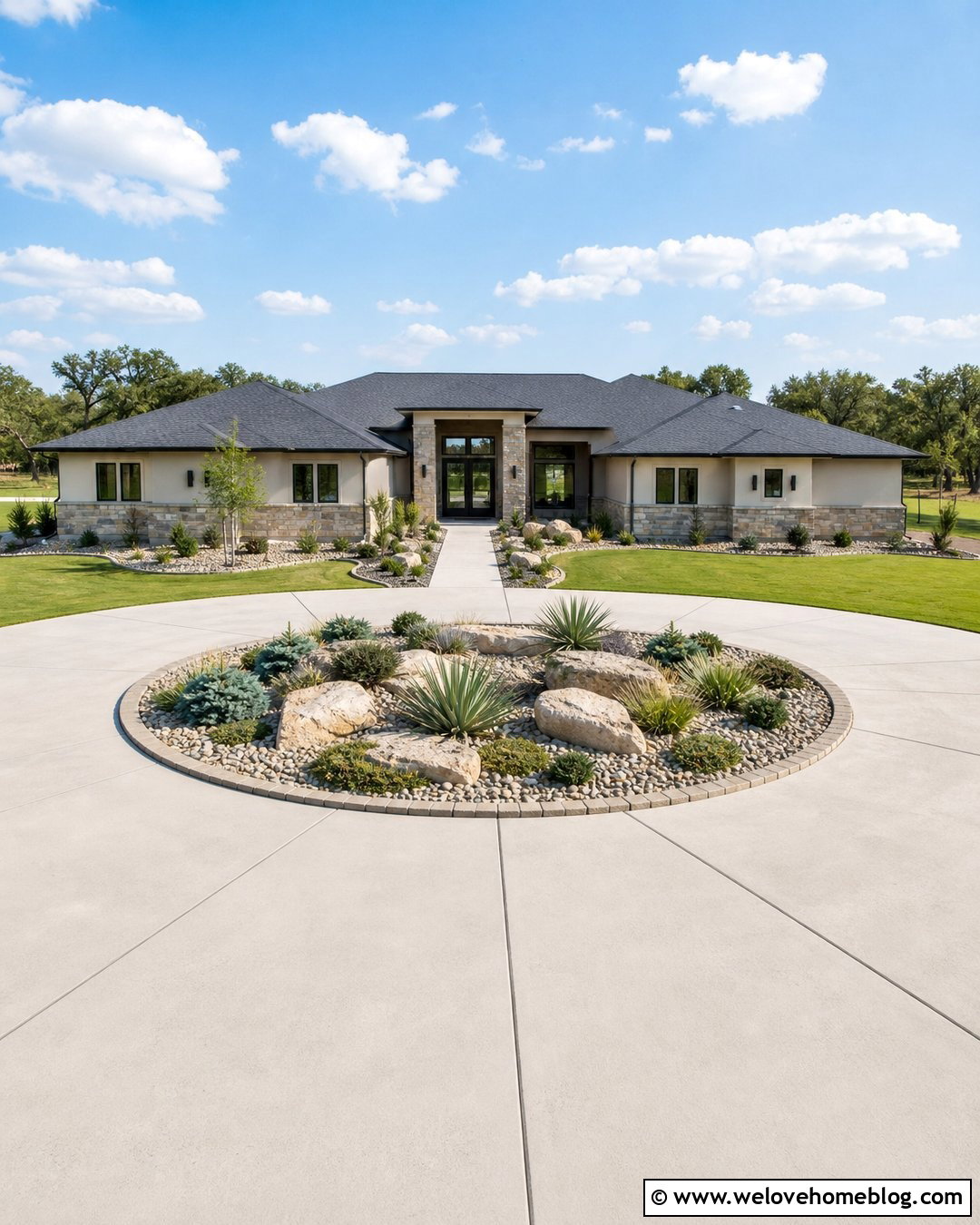
A circular sand driveway offers an attractive solution when you want an easy arrival and exit route. Use honey-colored stabilized sand for the driving surface and shape it around a generous central island. A cobblestone border on both sides of the loop provides definition and helps the curves remain visually crisp. In the center, plant a small flowering tree surrounded by evergreen shrubs and low ground cover. Keep taller plants away from the entrance so drivers can clearly see approaching traffic. This complete layout works beautifully with colonial, Mediterranean, and large ranch homes. Match the driveway border to the front walkway or porch masonry for continuity. A circular driveway requires sufficient front-yard space, but its flowing shape can make a broad property feel more organized and welcoming.
12. Curved Sand Driveway With Native Plants
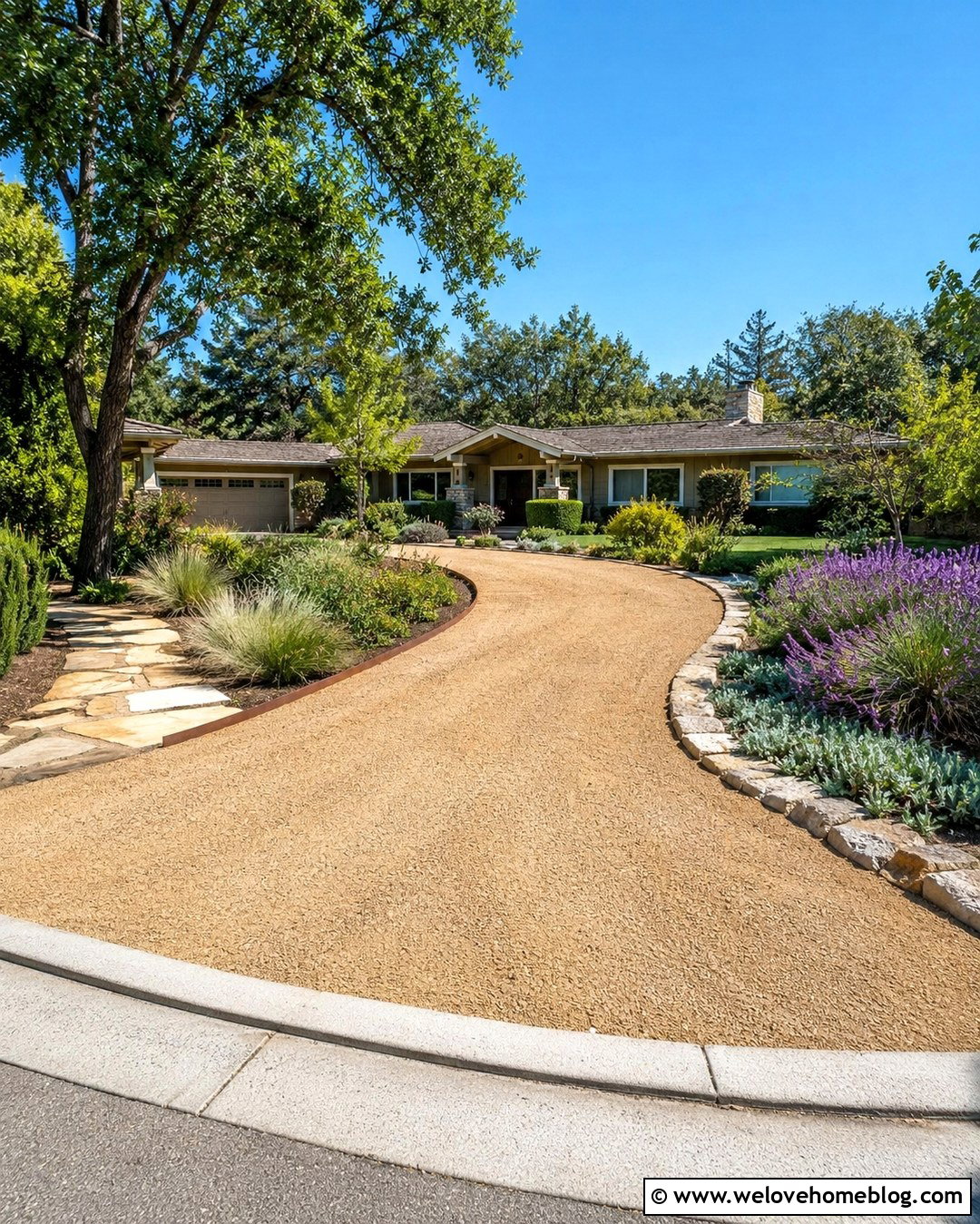
A curved sand driveway can make the approach feel longer while revealing the house gradually. Select warm ochre granite sand and follow an existing tree line or gentle slope through the front yard. Use low steel edging along the inside curve and a wider natural-stone border on the outside where tires are more likely to approach the edge. Mass native grasses, flowering perennials, and drought-tolerant shrubs in broad groups rather than scattering individual plants. The landscaping should frame the route without narrowing it or hiding important sightlines. A modern ranch or low-profile craftsman home fits this relaxed layout particularly well. Repeating the sand color in stone mulch or walkway joints creates unity. The finished driveway should feel shaped by the landscape instead of imposed upon it.
13. Horseshoe Sand Driveway With Stone Pillars
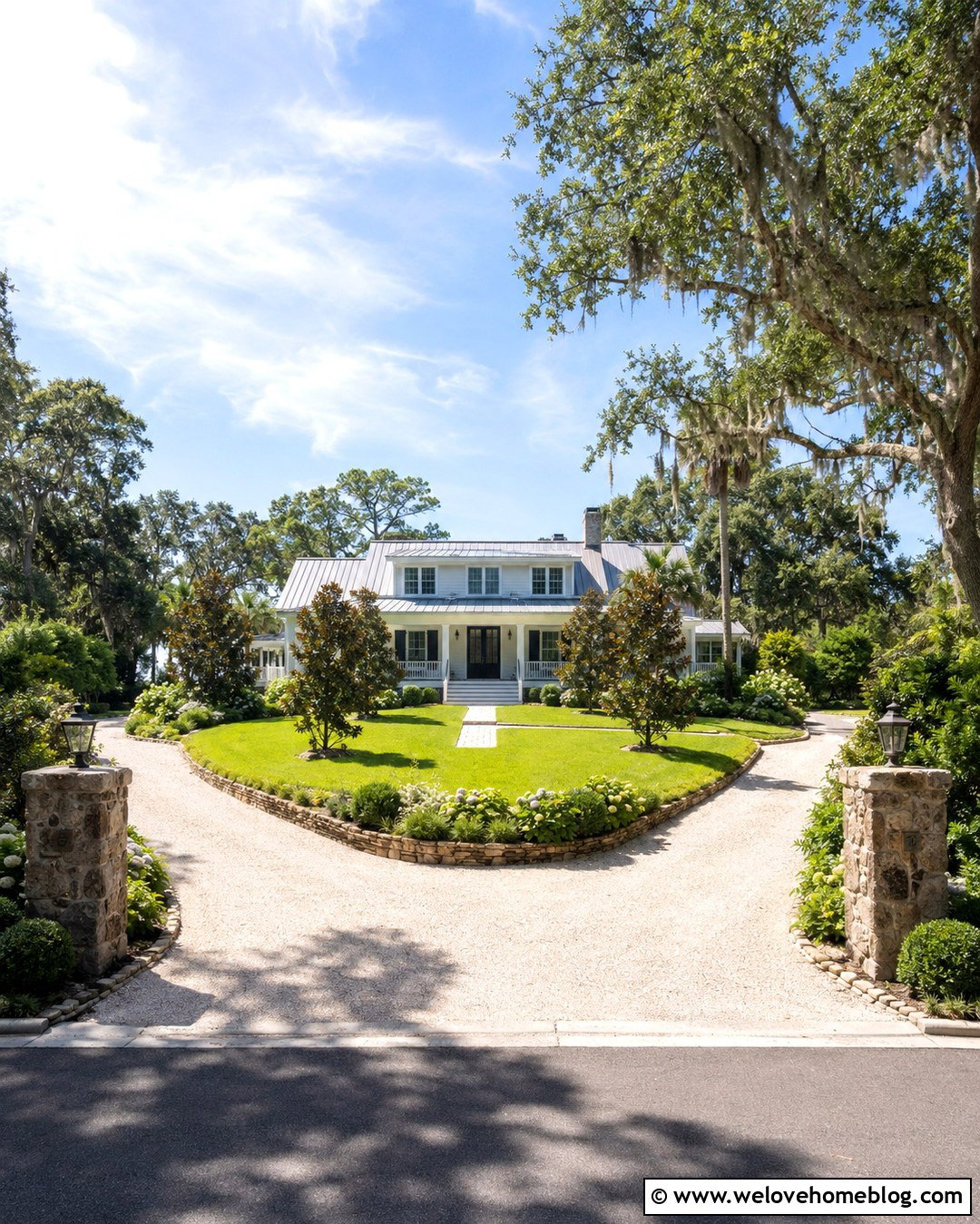
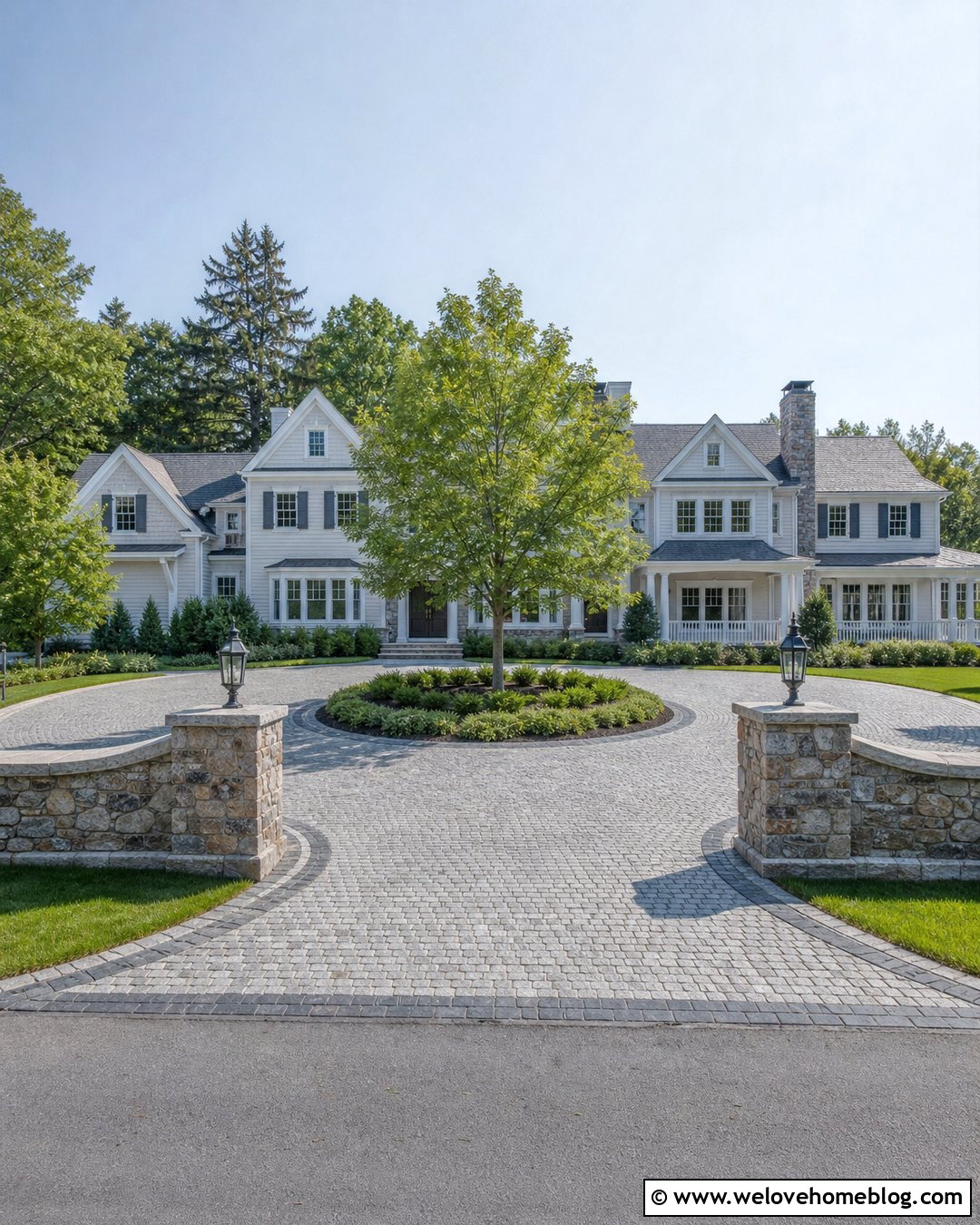
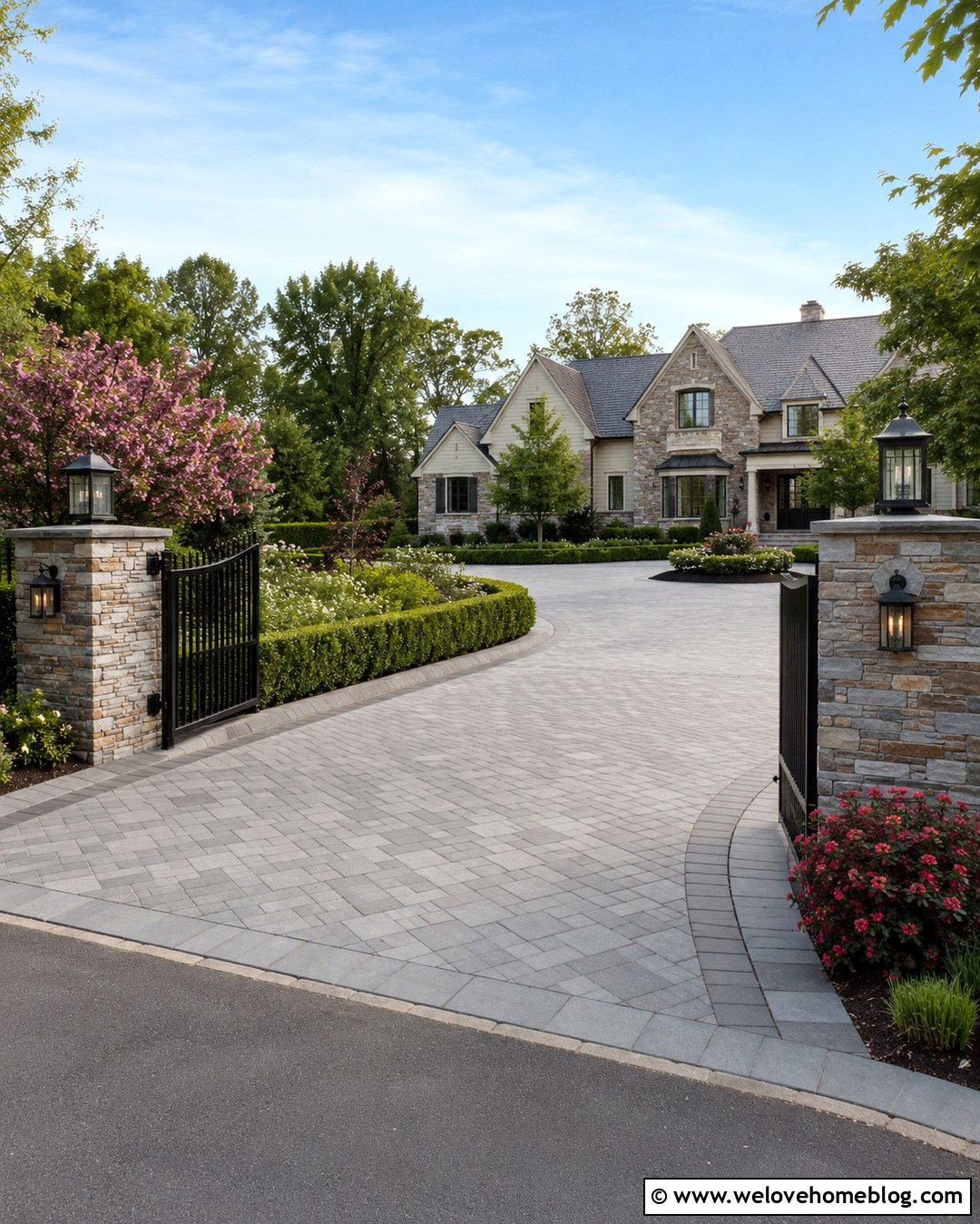
A horseshoe layout gives a sand driveway two defined entrances and creates a graceful sweep across the front yard. Choose pale shell-and-sand material for a coastal or Southern home, then mark both openings with matching stone pillars. Low fieldstone borders can follow the outer curves while a broad lawn or landscaped island fills the center. Keep the pillar design proportional to the house and wide enough to frame the driveway without creating a tight turn. Hydrangeas, dwarf magnolias, and evergreen foundation shrubs provide lush surroundings. Add a separate walkway from the center of the horseshoe to the porch. The repeated entrance materials make the broad driveway feel intentional, while the light sand surface keeps the large driving area from appearing overly heavy or visually dominant.
14. Sand Wheel Track Driveway With Grass Center
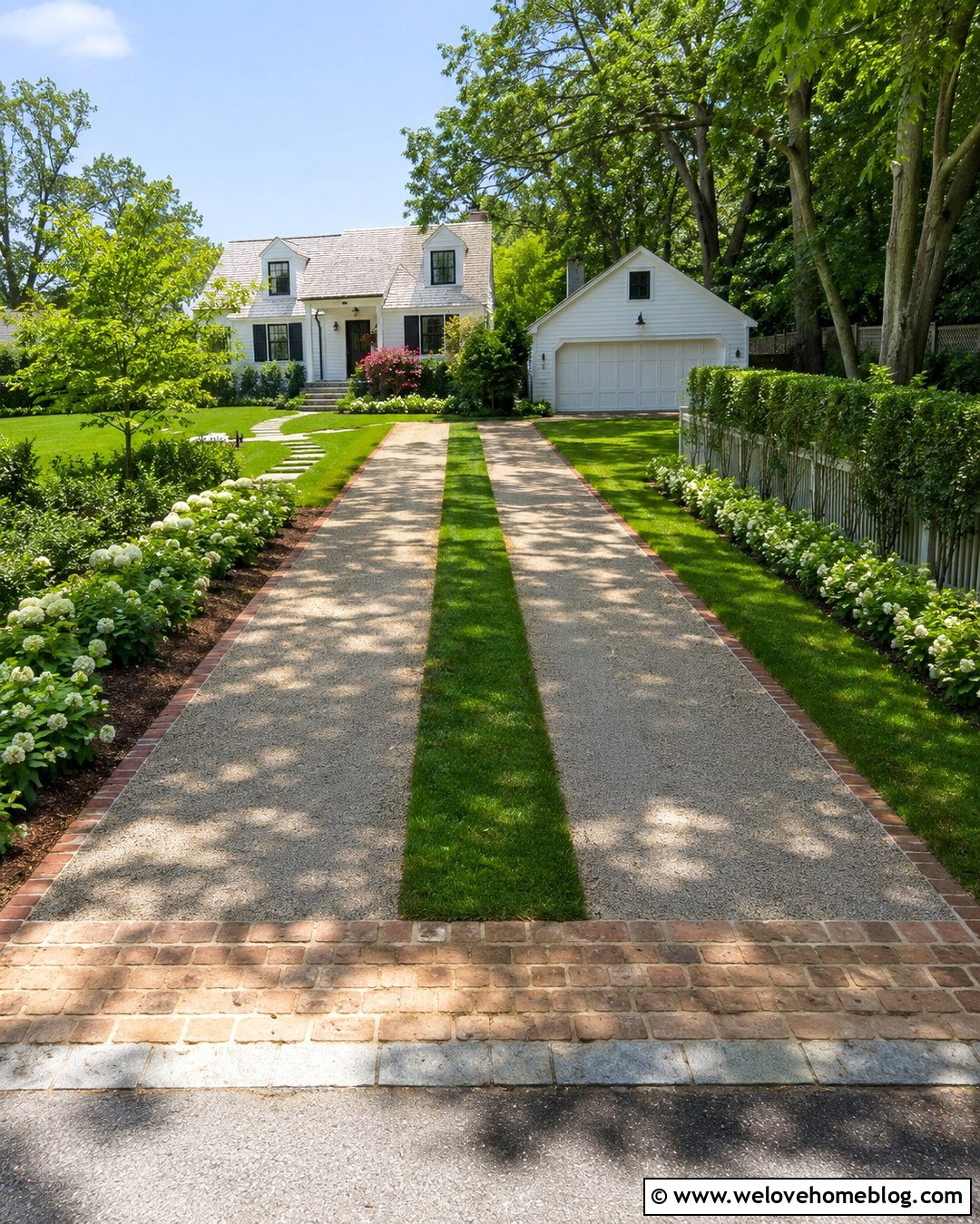
Two compacted sand wheel tracks separated by a strip of grass provide a charming option for a secondary or lightly used driveway. Use stabilized tan granite sand within each track and define the edges with steel restraints or narrow brick bands. The green center softens the hardscape and reduces the amount of visible driveway surface. This arrangement looks especially appealing beside a cottage, detached garage, or backyard studio. Keep both tracks consistent in width and use a durable, regionally appropriate grass in the center. At the road and garage, connect the tracks with full-width sand-and-gravel aprons for smoother transitions. Frame the driveway with flowering shrubs and a simple stepping-stone path. The overall look feels informal, organized, and closely integrated with the surrounding lawn.
15. Sand Driveway With Concrete Paver Bands
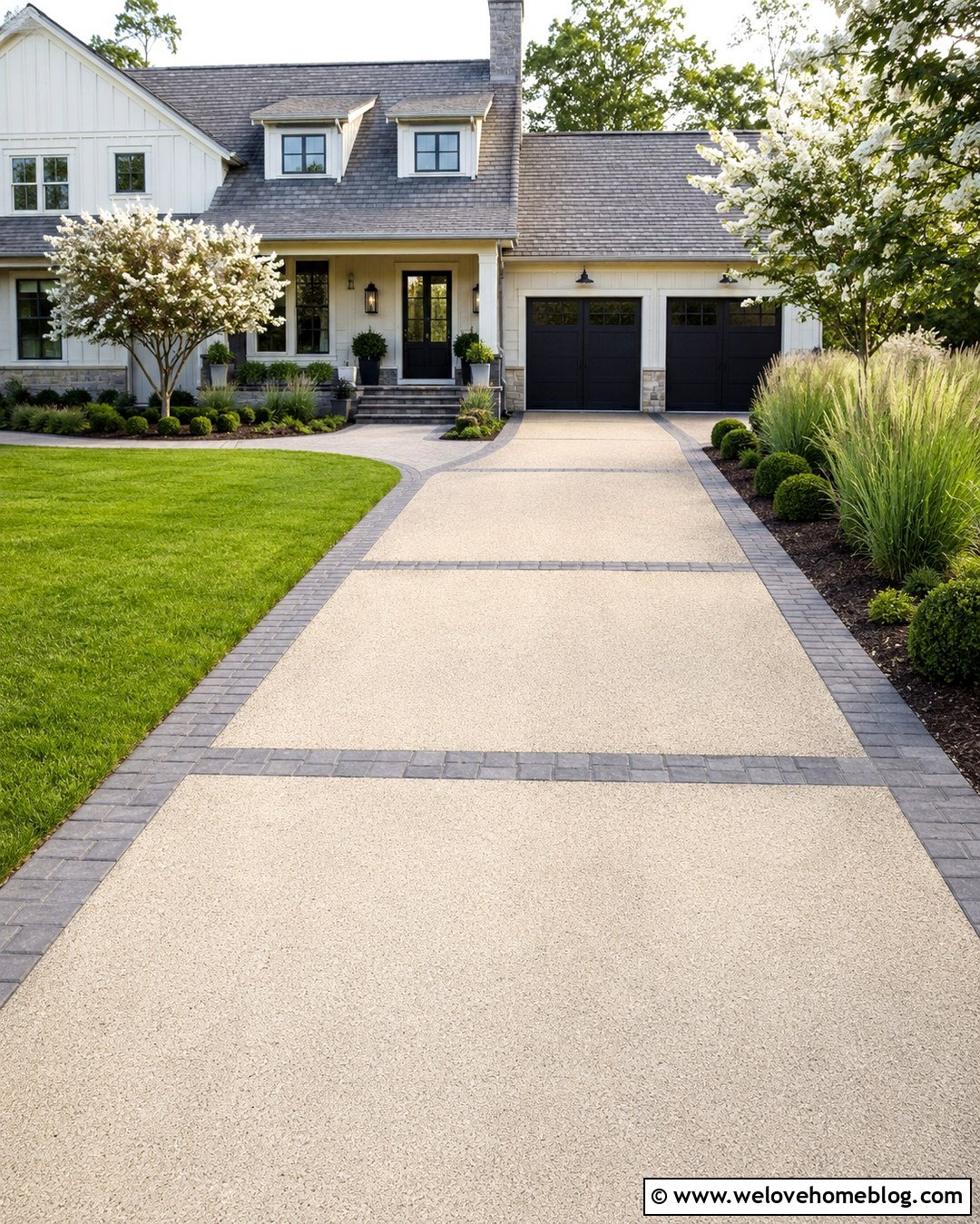
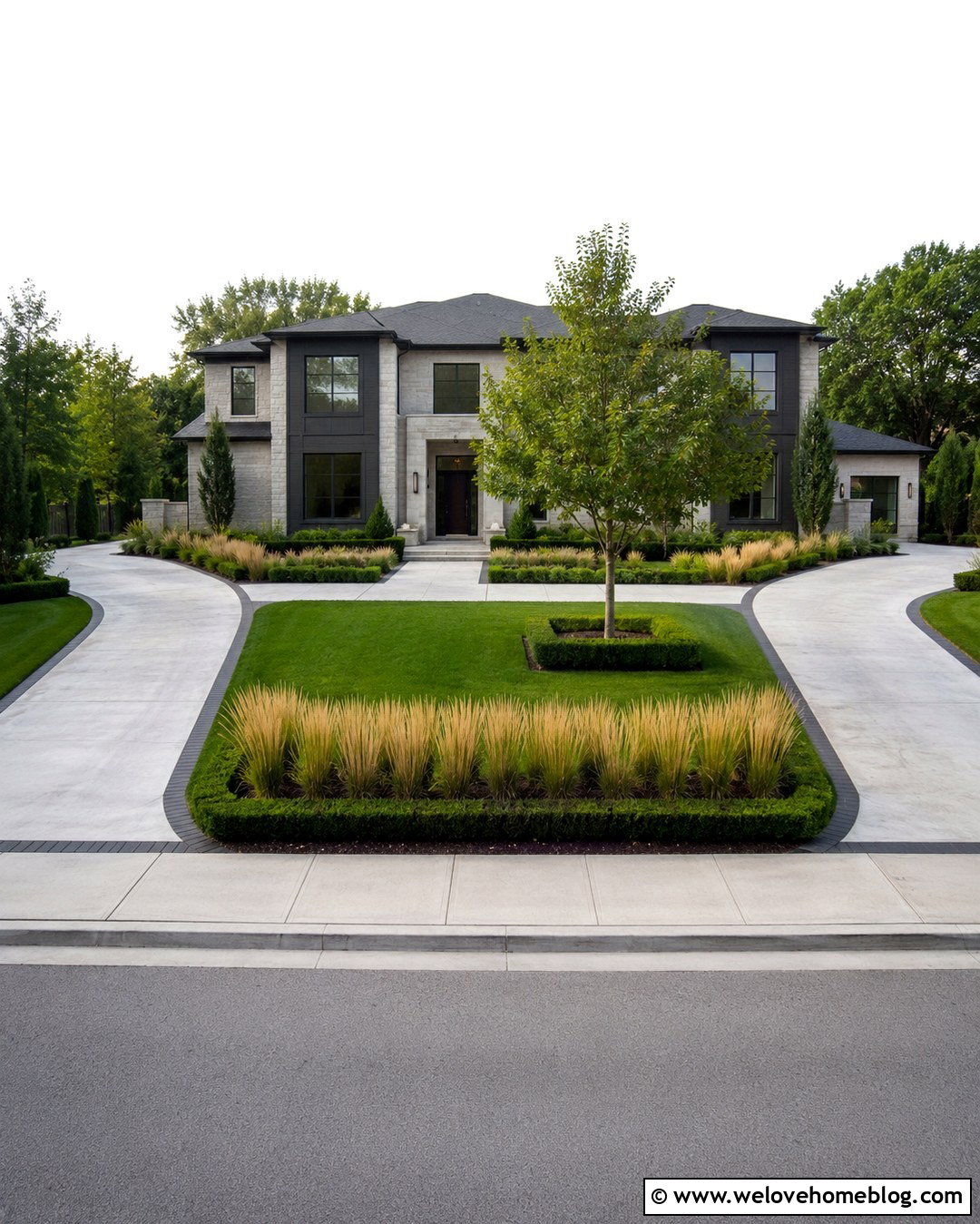
Concrete paver bands can add structure to a broad sand driveway without covering the entire surface. Start with compacted beige sand, then install charcoal or taupe pavers across the driveway at regular intervals. These bands create a subtle rhythm and can visually divide the entrance, parking area, and garage approach. Add matching pavers along the outer edges for a fully framed appearance. This combination works well with transitional homes that mix traditional rooflines with modern materials. Keep landscaping streamlined with rounded shrubs, ornamental grasses, and one or two small trees. A paver walkway leading to the front door can repeat the same colors. Properly built borders and transitions help the loose-looking central material feel finished, giving the driveway a more customized appearance without losing its natural texture.
16. Sand Driveway With Planted Drainage Swales
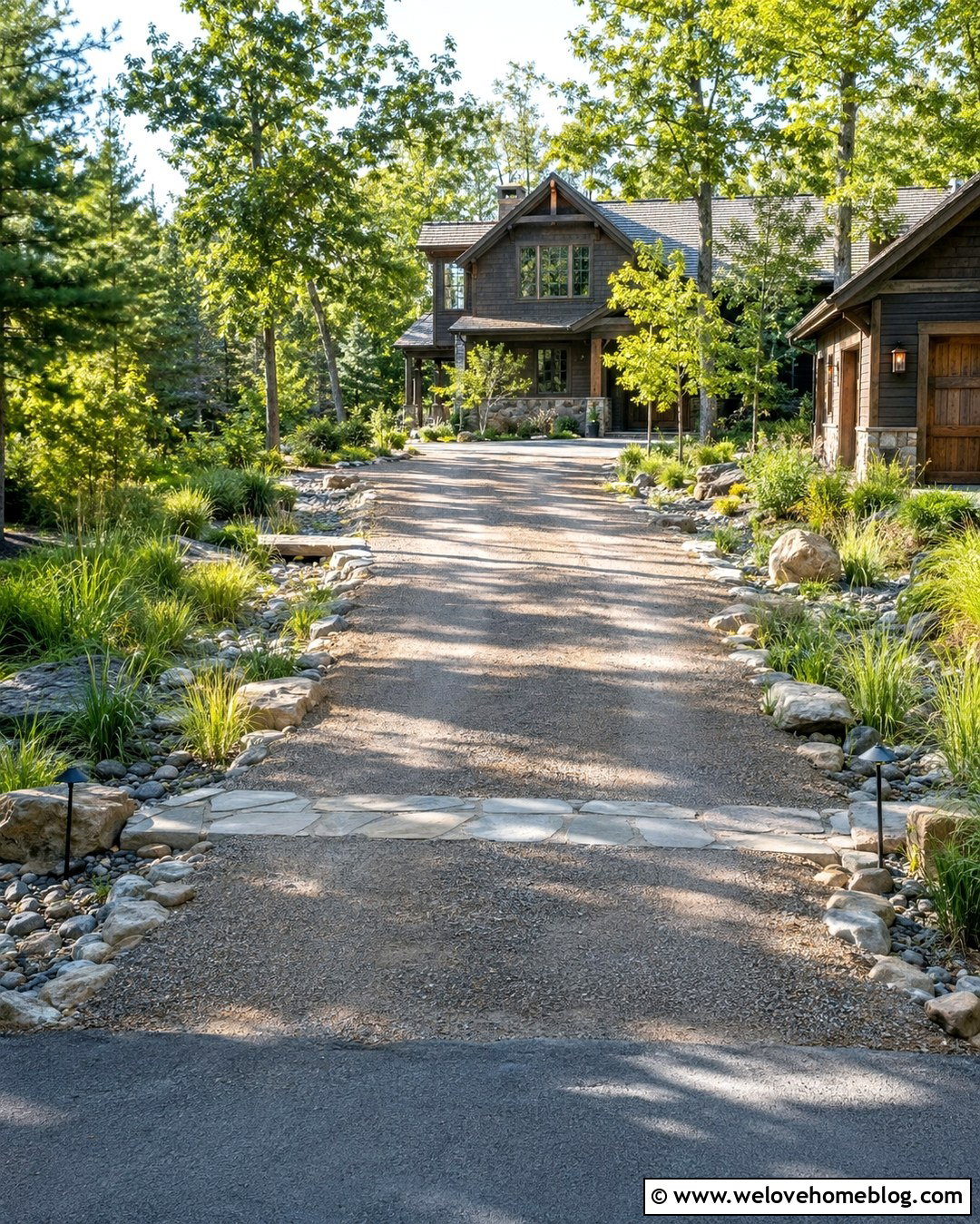
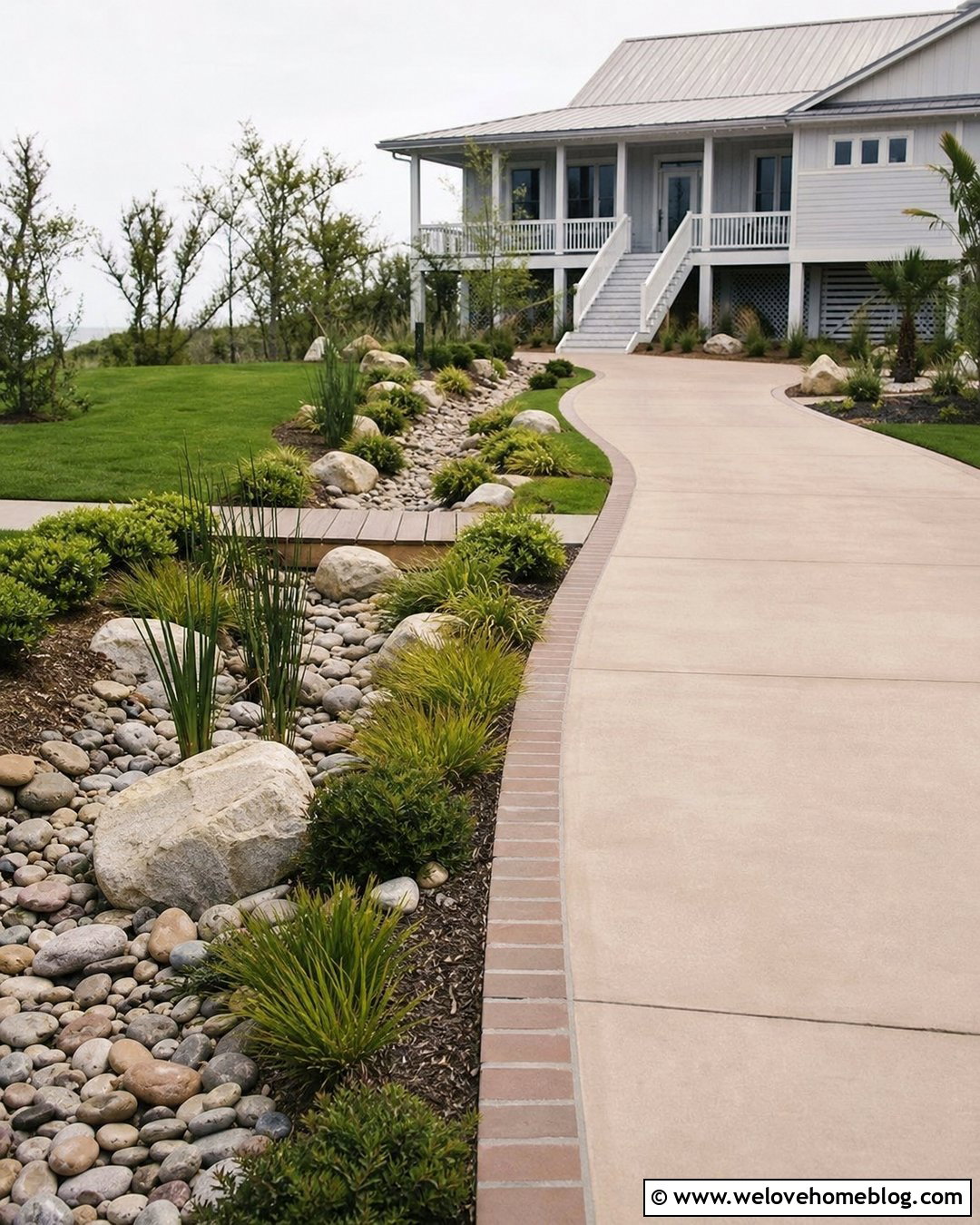
Where rainfall needs a clear route away from the driveway, shallow planted swales can become part of the design. Use compacted sandy gravel for a gently crowned driveway, allowing water to move toward landscaped channels on either side. Line the swales with river stones, moisture-tolerant grasses, sedges, and low native perennials. Flat stone bridges can carry the front walkway across the drainage area without interrupting its function. This complete look suits craftsman, contemporary, and woodland homes. Avoid creating steep driveway edges that are difficult to cross or maintain. Instead, use gradual transitions and low stone borders where the sand meets planting. A landscape or drainage professional can help determine suitable grading for the property. The finished design makes practical water management look like intentional front-yard landscaping.
17. Narrow Sand Driveway For A Small Front Yard
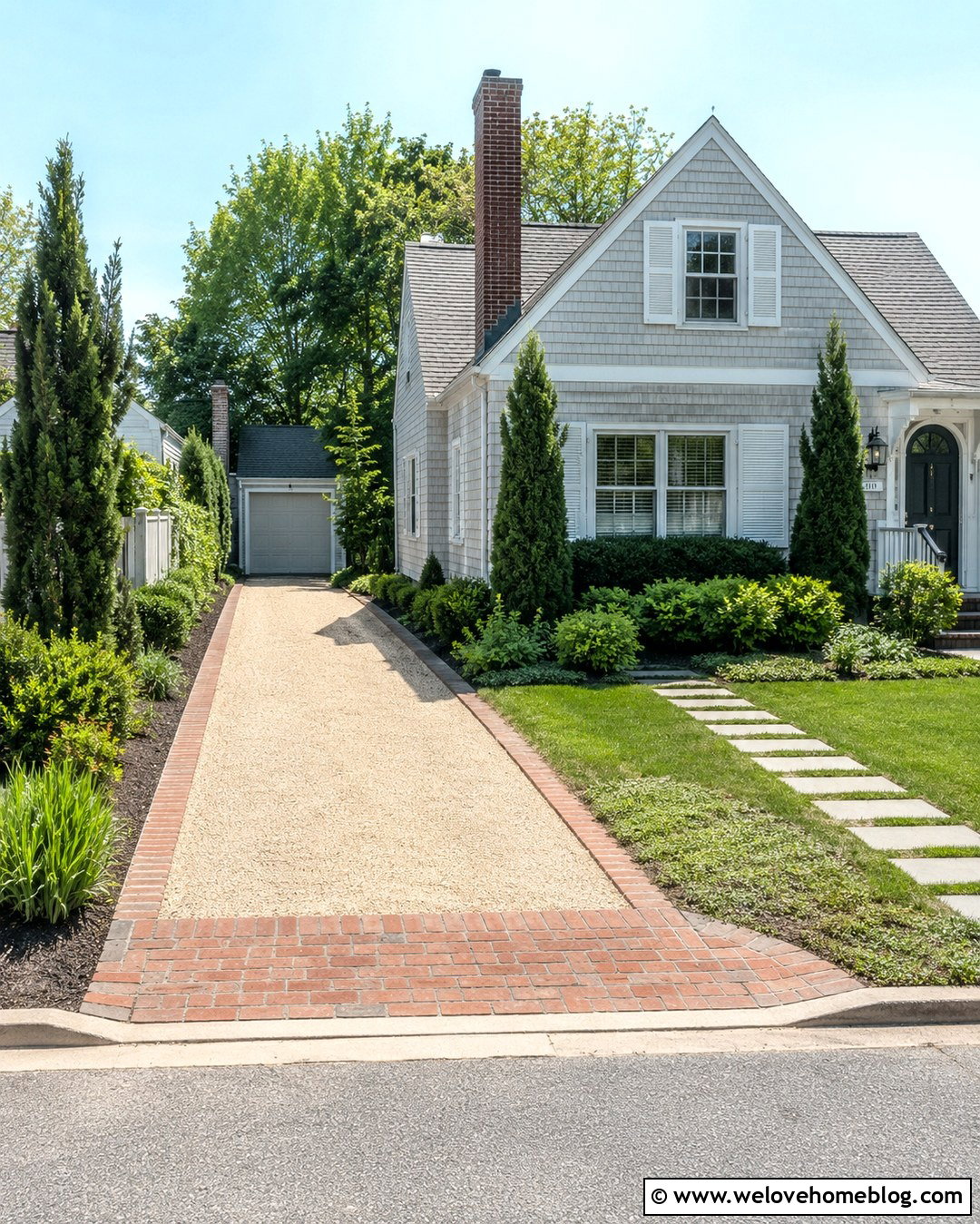
A narrow lot can still support an attractive sand driveway when every border is carefully planned. Choose light tan stabilized sand and use a straight, single-width layout leading to a side garage. Slim brick edging provides definition without consuming valuable space. On one side, install a narrow stepping-stone walkway separated from the driveway by low ground cover. On the other, use columnar evergreens, compact shrubs, or a clipped hedge that will not spread into the driving area. A small brick apron at the curb can strengthen the entrance and coordinate with the house. Keep the color palette light to prevent the tight space from feeling crowded. The consistent lines and restrained landscaping create a complete driveway design that appears orderly, comfortable, and appropriately scaled to the property.
18. Long Sand Driveway With Tree-Lined Entrance
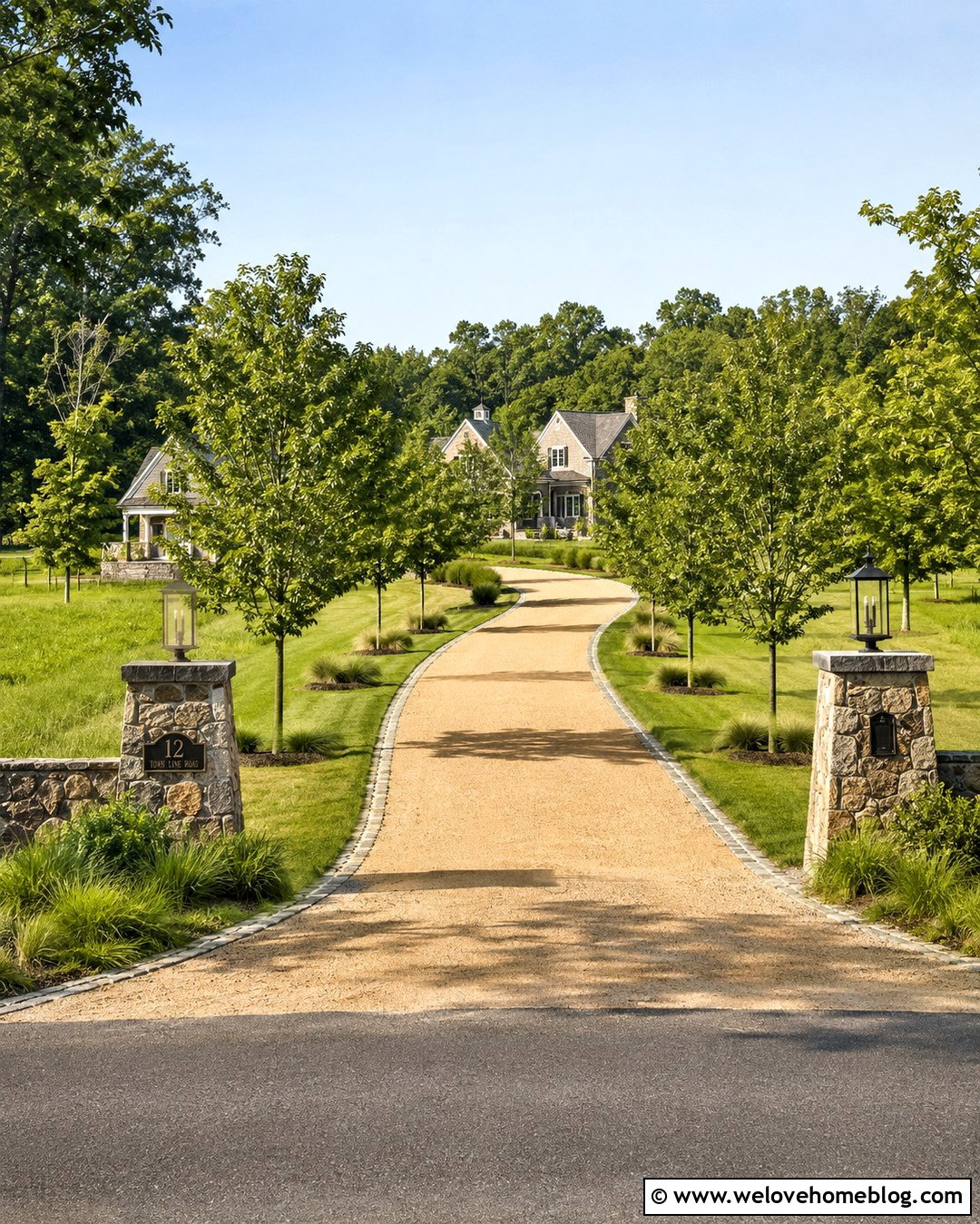
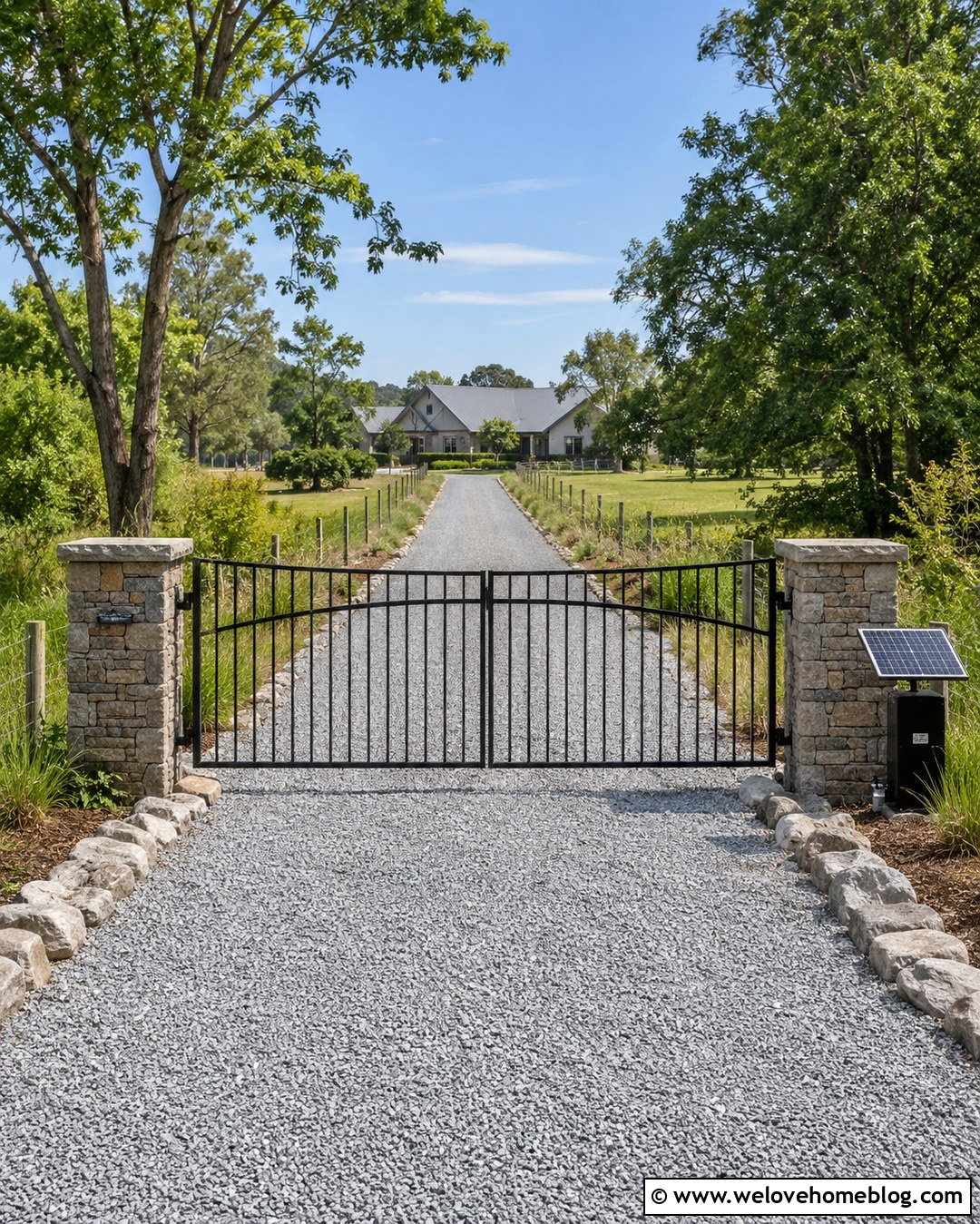
A long driveway becomes more memorable when trees establish a strong, repeating frame. Use golden-brown compacted granite sand for the surface and natural fieldstone for both borders. Plant evenly spaced deciduous trees outside the edging, leaving enough room for their mature trunks, roots, and canopies. Low grasses or ground cover beneath the trees can maintain an open, uncluttered appearance. A gentle curve near the house adds interest and reveals the final parking area gradually. This arrangement complements large farmhouses, country estates, and traditional ranch homes. Simple stone pillars at the road can mark the entrance without competing with the tree-lined view. At the far end, widen the driveway into a sand parking court surrounded by matching stone borders and layered foundation planting.
19. Sloped Sand Driveway With Stone Drainage Bands
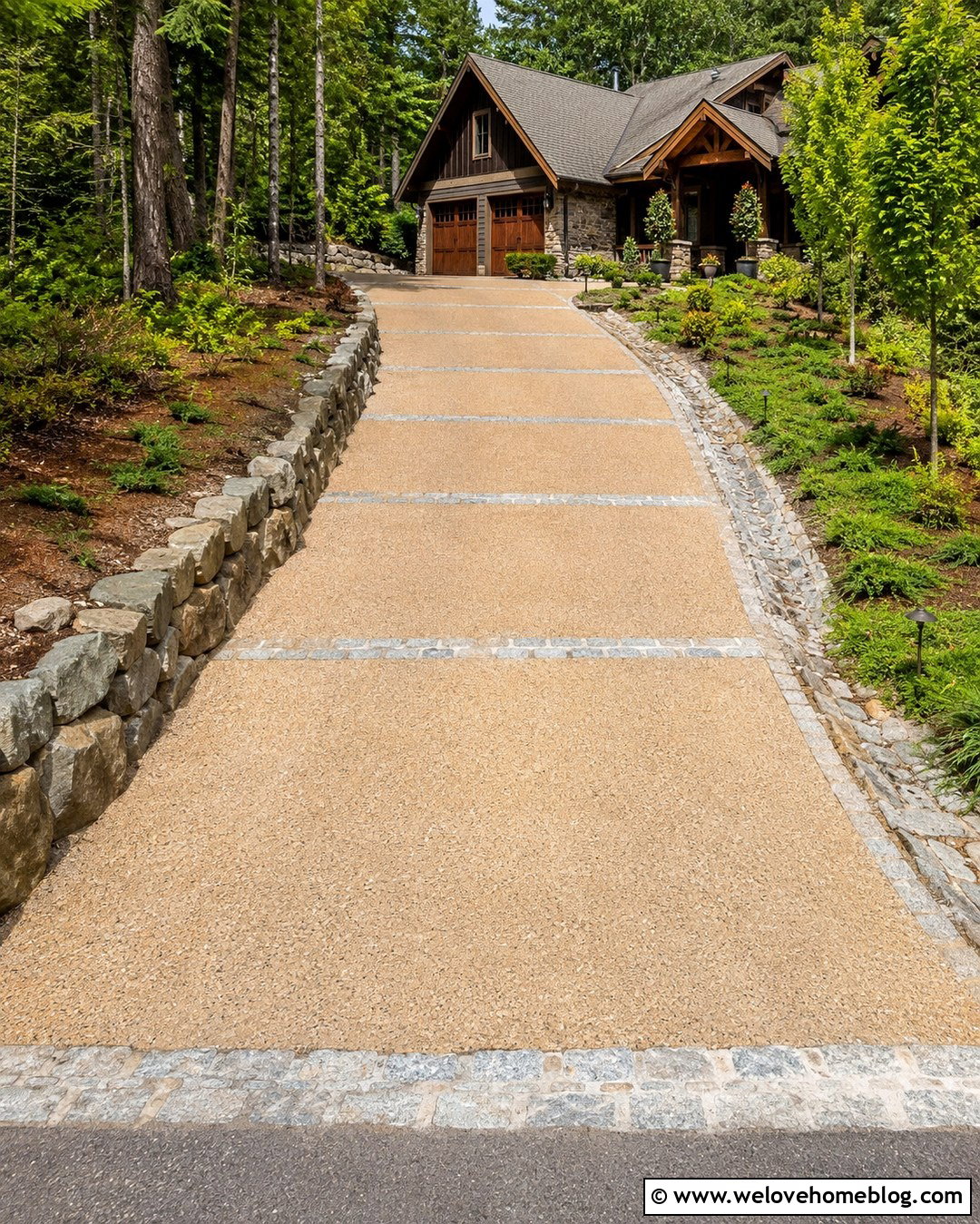
A sloping sand driveway needs more reinforcement than a flat decorative surface. Use stabilized coarse sand or compacted granite fines over an appropriately prepared base, then add stone bands across the driveway at selected intervals. These bands can provide visible breaks in the slope while connecting to side drainage channels. Choose rough-textured granite setts or concrete pavers that complement the house. Strong borders along both edges help define the route and reduce outward migration. Place deep-rooted ground covers and low shrubs on adjacent banks to create a finished landscape. Avoid loose, fine sand on a steep grade because runoff and tire movement can quickly disturb it. A local driveway contractor should evaluate the slope, soil, base depth, and drainage plan before installation.
20. Budget Sand Driveway With Recycled Brick Edging
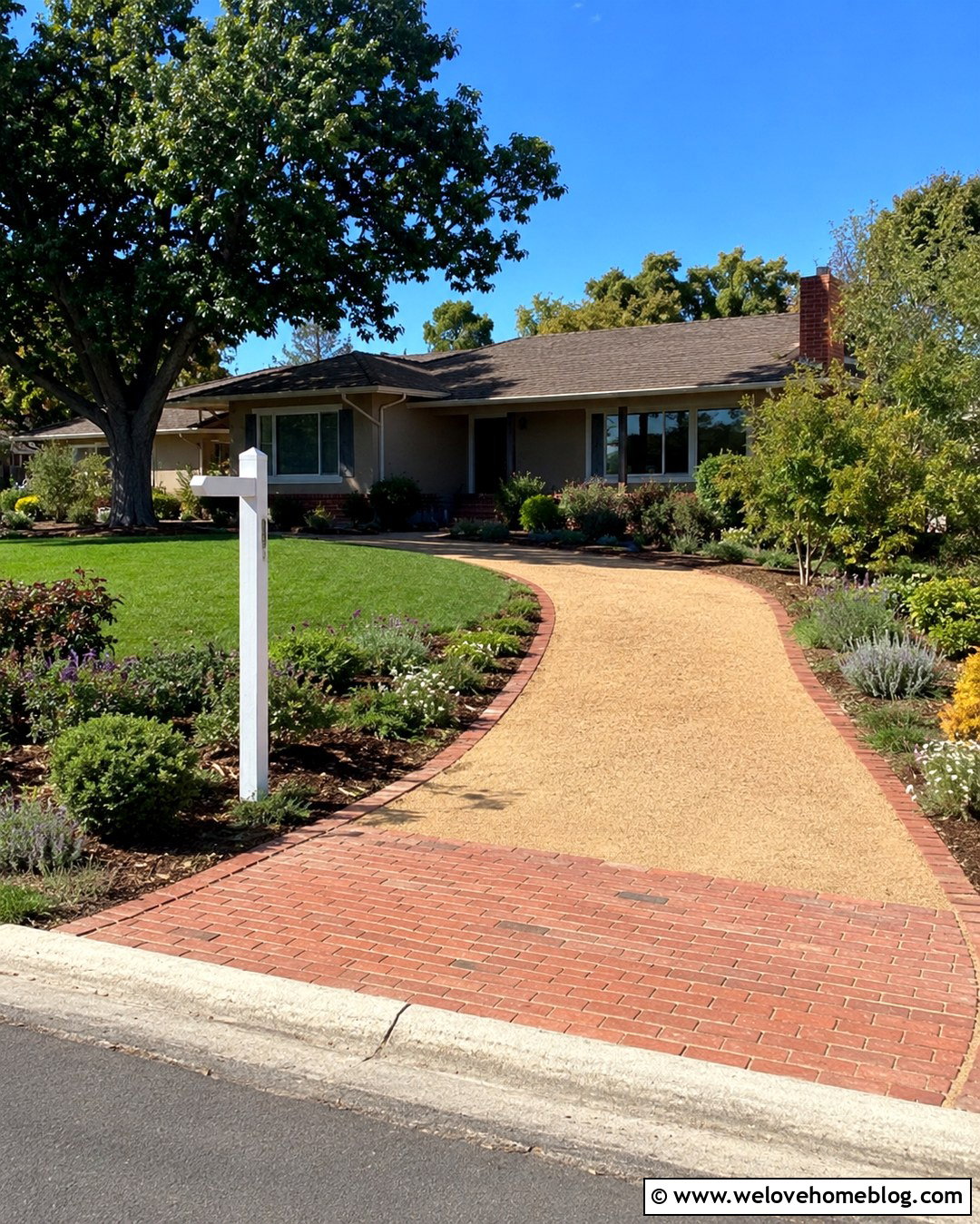
A budget-friendly sand driveway can still look thoughtful when affordable materials are arranged carefully. Use a locally available compactable sand-and-crushed-aggregate blend for the main surface. Reclaimed clay bricks can form slightly weathered borders along a straight or gently curved layout. Install the bricks in a simple soldier course and use extras to create a small entrance apron. Surround the driveway with easy-care lawn, native shrubs, and divided perennials from existing garden beds. A painted wood address post can provide an inexpensive focal point near the curb. Spend available funds on excavation, grading, and base preparation before adding decorative details. The straightforward material palette keeps costs controlled, while consistent edging and coordinated landscaping give the finished driveway a deliberate, established appearance.
Conclusion:
The most successful sand driveway combines natural color with practical construction and clearly defined edges. Cobblestone, brick, timber, concrete pavers, and stone bands can all help a sandy surface look polished rather than temporary. Shape matters too. Straight layouts complement smaller lots, while curved, circular, and horseshoe driveways create a more spacious approach. Match the sand tone to the home, repeat border materials in nearby walkways, and use landscaping to frame the complete route. Before installation, consider drainage, soil conditions, vehicle traffic, and ongoing maintenance. Whether you prefer a coastal shell blend or warm granite fines, these 20 Sand Driveway Ideas can inspire a functional entrance with lasting curb appeal.

Related posts:

Leave a Reply