
A hidden driveway entrance can give your property more privacy while creating a memorable sense of arrival. The best designs do not simply cover the opening with thick plants. They coordinate the driveway surface, route, gate, boundary, lighting, and surrounding landscape so the entrance blends naturally into its setting. Safety still matters, especially near curves or busy roads. Preserve clear sightlines for drivers, display a visible address, and use reflective markers or lighting where needed. () Whether your home sits behind woodland, hedges, stone walls, or a compact suburban yard, the following complete designs offer practical inspiration. Explore these **20 Hidden Driveway Entrance Ideas** to find a private entrance that complements your home and landscape.
1. Hidden Gravel Driveway Entrance With Tall Hedges
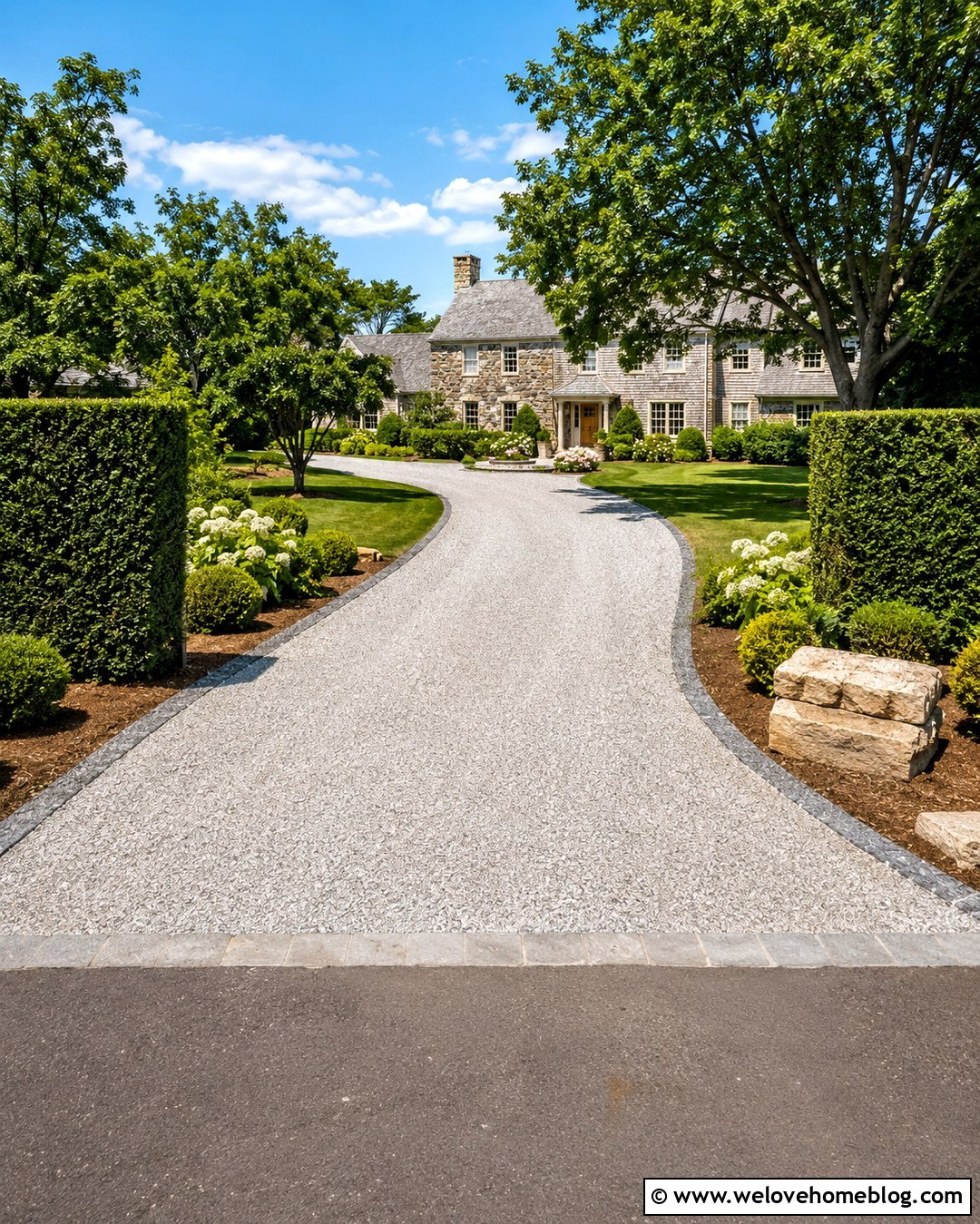
A pale gravel driveway disappearing between tall evergreen hedges creates privacy without requiring a solid gate. Use a gently curved layout so the house cannot be seen directly from the street. Steel or stone edging keeps the gravel contained, while a slightly wider apron makes turning into the entrance easier. Plant clipped yew, arborvitae, or another locally appropriate evergreen along both sides, but keep mature growth away from the roadside sight triangle. A low stone address marker can sit just outside the hedge line where visitors can find it. Continue the same hedge deeper into the property to make the entrance feel intentional. This complete look works beautifully with traditional homes, country properties, and large suburban lots.
2. Hidden Driveway Entrance With A Cedar Sliding Gate
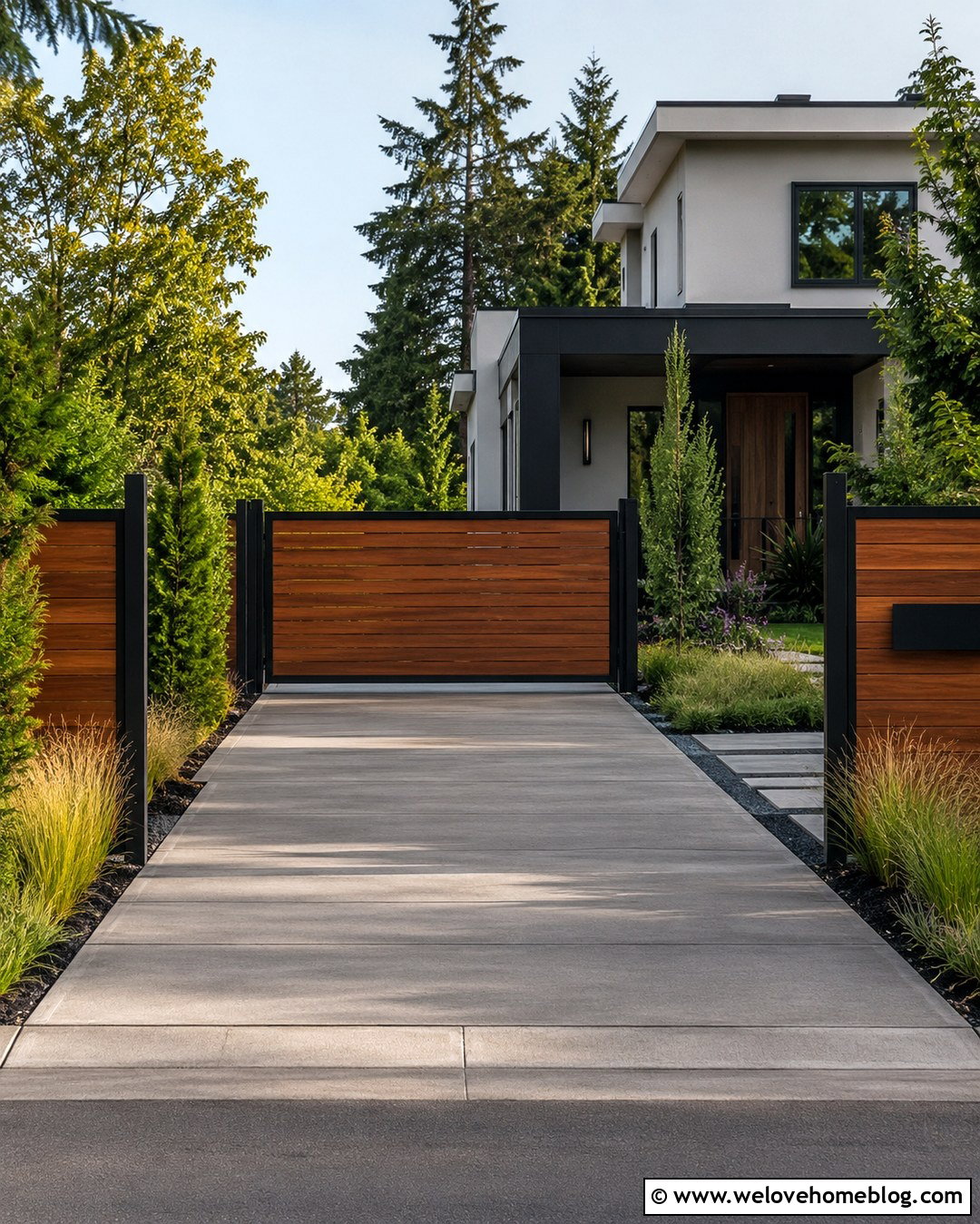
Warm cedar boards can turn a functional driveway gate into a natural extension of the landscape. Pair a horizontal slat sliding gate with a straight charcoal concrete driveway and matching cedar fence panels. The sliding format is especially useful where the driveway slopes or lacks room for swinging gate leaves. () Set the gate several feet back from the road when space allows, creating a safe pull-in area. Ornamental grasses and layered evergreen shrubs can soften the fence without blocking its path. Black steel framing, concealed hardware, and a slim illuminated address plaque complete the modern appearance. This entrance suits contemporary homes because every component shares clean lines, restrained colors, and a simple material palette.
3. Hidden Woodland Driveway Entrance With Stone Walls
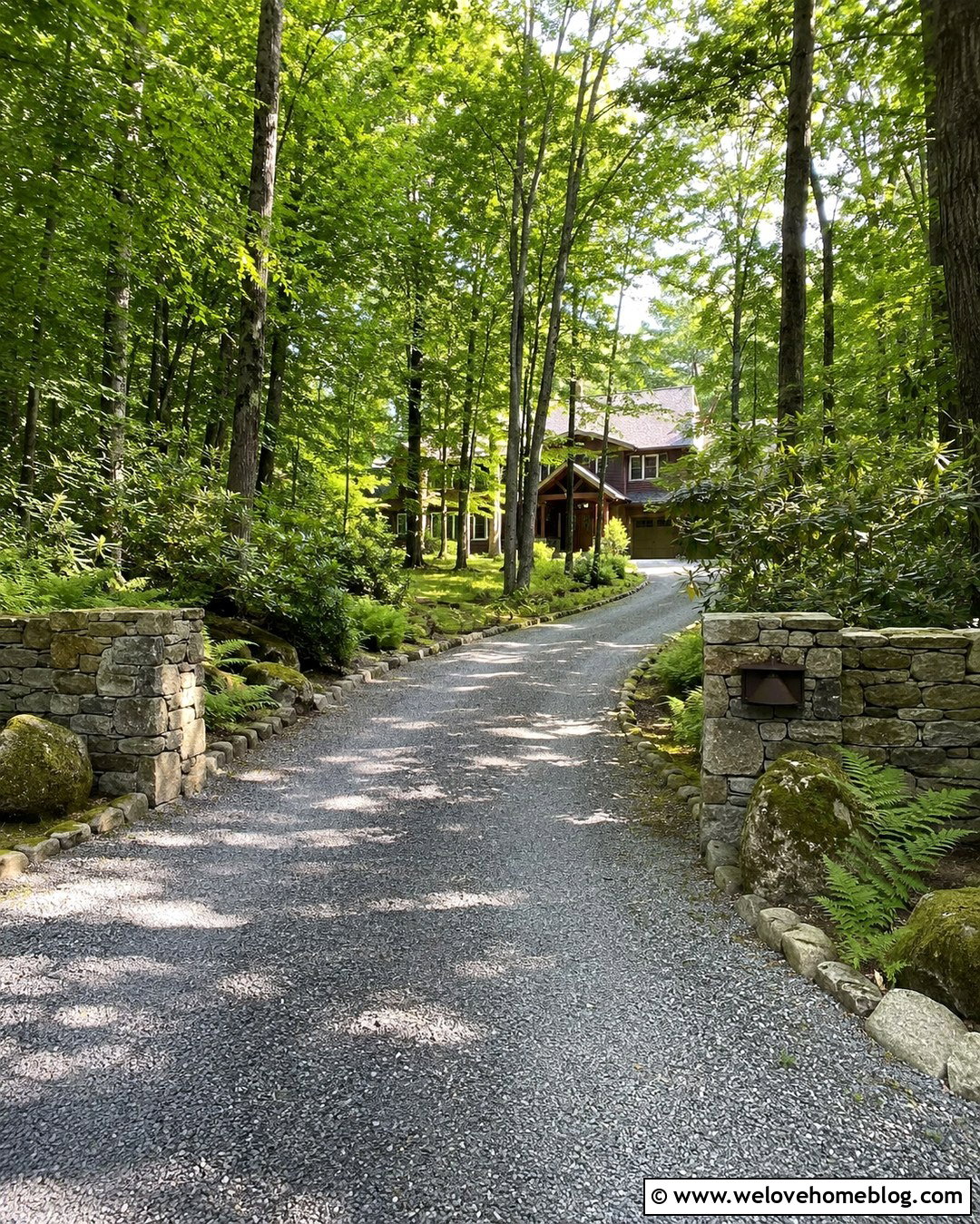
Imagine a crushed-stone driveway curving quietly between mature trees and low fieldstone walls. Instead of using a tall barrier, make the entrance feel hidden through its angle and woodland planting. Mossy boulders, ferns, woodland sedges, and shade-tolerant shrubs help the constructed features blend into the setting. Widen the stone walls slightly at the roadside to frame the opening, then taper them toward the driveway. Choose warm gray crushed stone that relates to the wall color and surrounding tree bark. A small address marker mounted on one wall provides guidance without making the entrance overly prominent. This understated design works especially well for cabins, Craftsman houses, mountain homes, and properties surrounded by established woodland.
4. Hidden Brick Driveway Entrance With A Vine Arbor
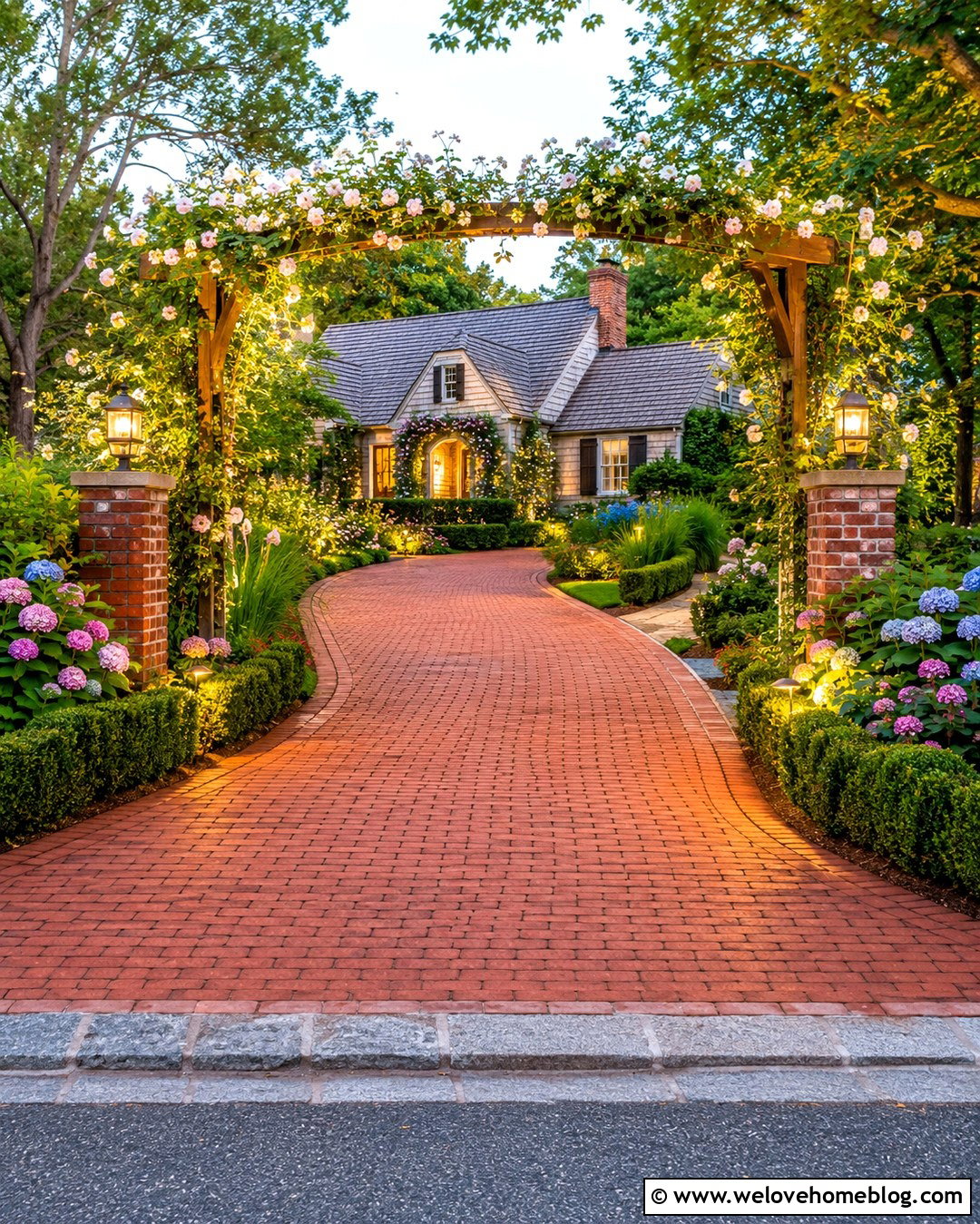
For a romantic cottage approach, combine a red brick driveway with an open timber arbor covered in flowering vines. Position the arbor behind a layered planting bed so the structure feels partially concealed rather than exposed at the curb. A curved brick path can branch toward a pedestrian gate, while the main driveway bends gently toward the house. Low boxwood, hydrangeas, ornamental grasses, and climbing roses create depth around the entrance. Choose vines that suit the local climate and will not overwhelm the structure. Lantern-style lights mounted on short brick piers make the opening easier to locate after dark. The brick surface, timber arbor, and informal planting should share warm colors, creating one welcoming cottage driveway composition.
5. Hidden Farmhouse Driveway Entrance With A Split Rail Fence
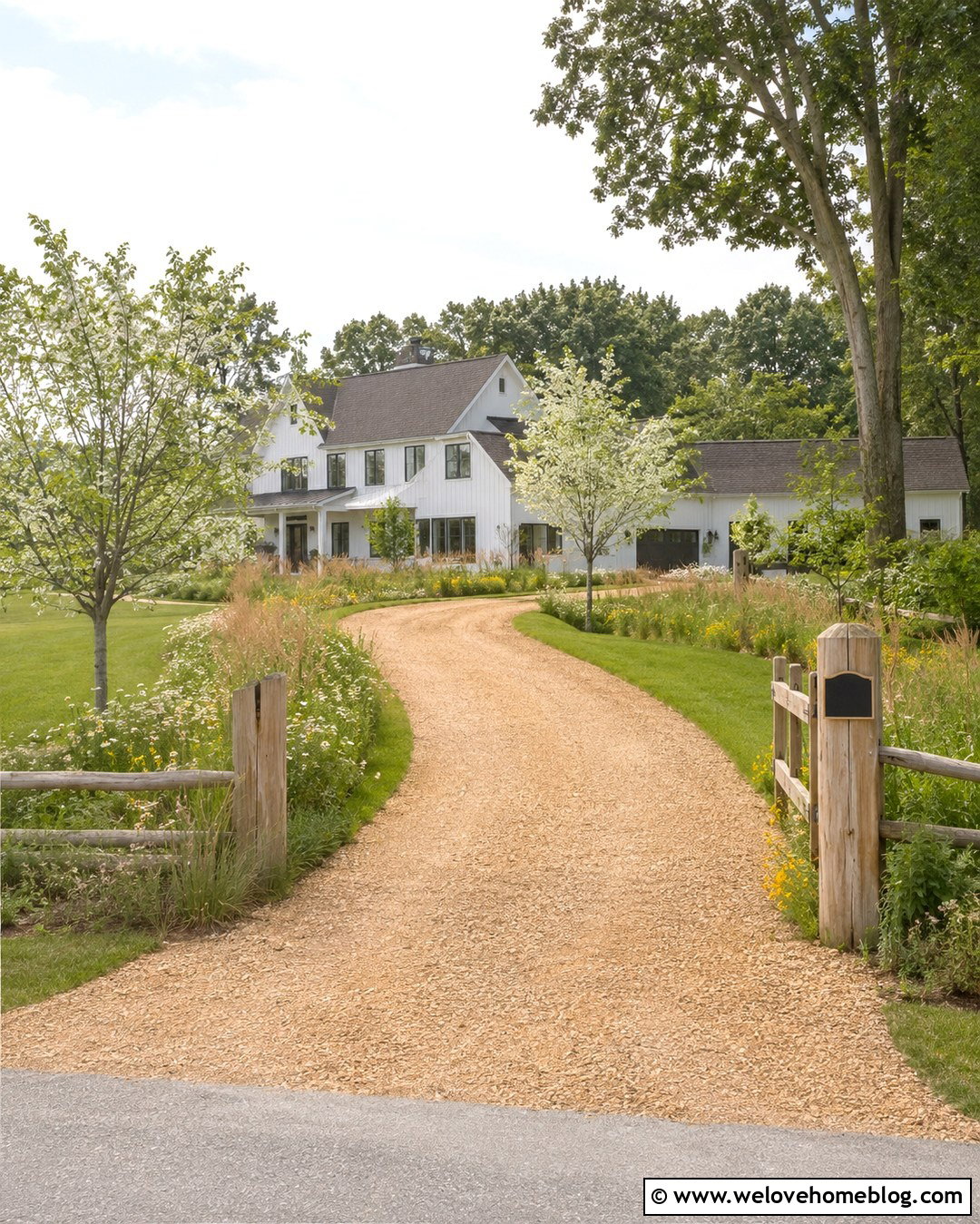
A split rail fence can define a rural entrance without making it appear formal or imposing. Use compacted tan gravel for the driveway and create a broad curve through a meadow-style front yard. Continue the fence along the road, opening it at a simple timber gate placed between sturdy posts. Groups of native grasses, coneflowers, black-eyed Susans, and small flowering trees can soften the transition from roadside to driveway. Keep the planting low near the entrance before allowing it to become taller farther inside the property. A weather-resistant address plaque on one post adds practical visibility. This relaxed combination feels appropriate beside a modern farmhouse, converted barn, ranch house, or traditional country home.
6. Hidden Asphalt Driveway Entrance With Evergreen Layers
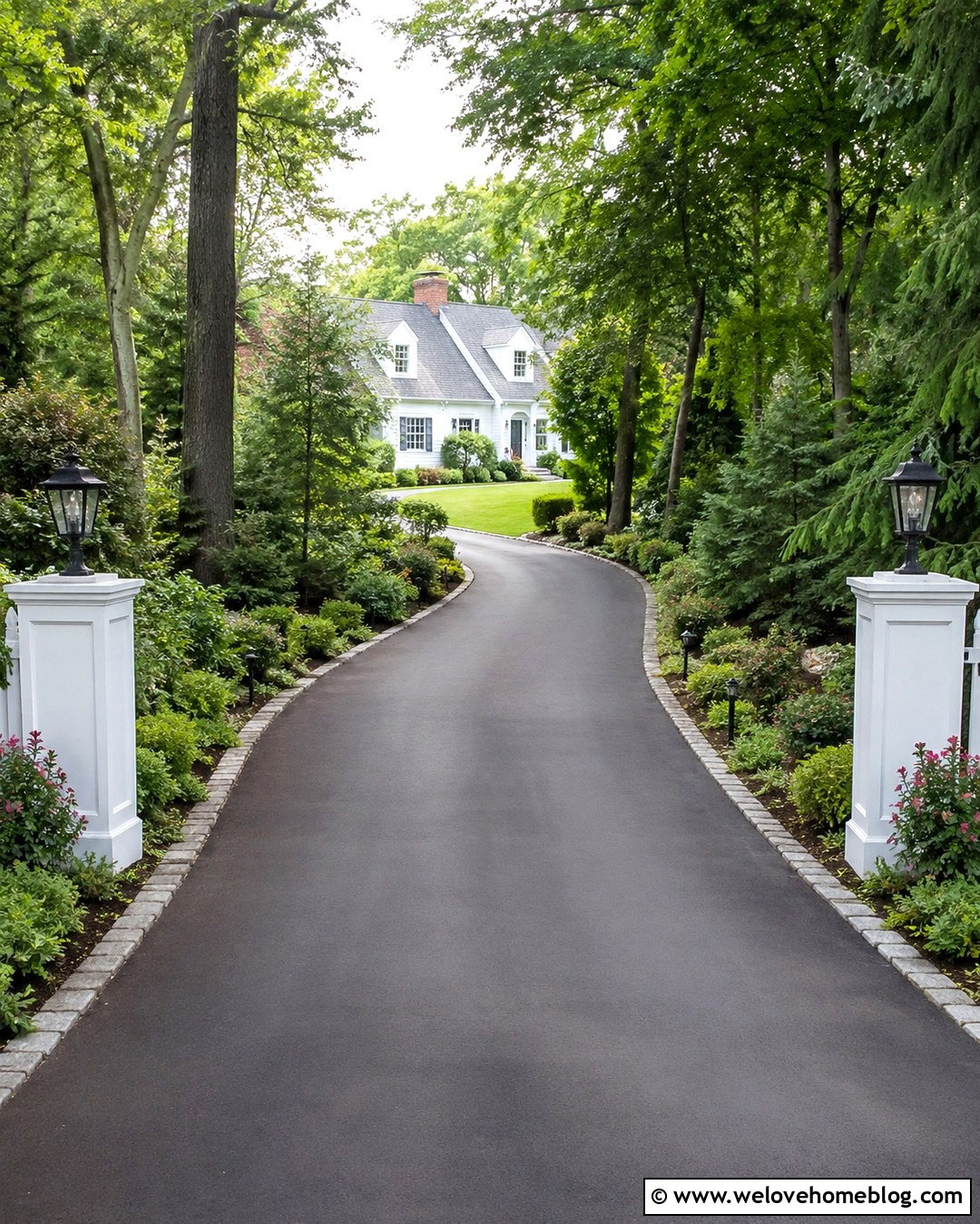
Black asphalt becomes much less noticeable when its entrance is surrounded by layered evergreen planting. Rather than running the driveway straight toward the house, use a shallow curve behind groups of spruce, holly, juniper, and deciduous understory trees. Add a narrow cobblestone border to strengthen the asphalt edges and give the entrance a finished appearance. The roadside layer should remain low enough to protect driver visibility, while taller screening begins farther from traffic. Two understated black bollard lights can mark the opening without drawing excessive attention. Repeat the same cobblestone near the garage or front walk for visual continuity. This practical design offers year-round privacy and suits wooded ranch homes, Cape Cod houses, and traditional suburban properties.
7. Hidden Driveway Entrance With Natural Boulders
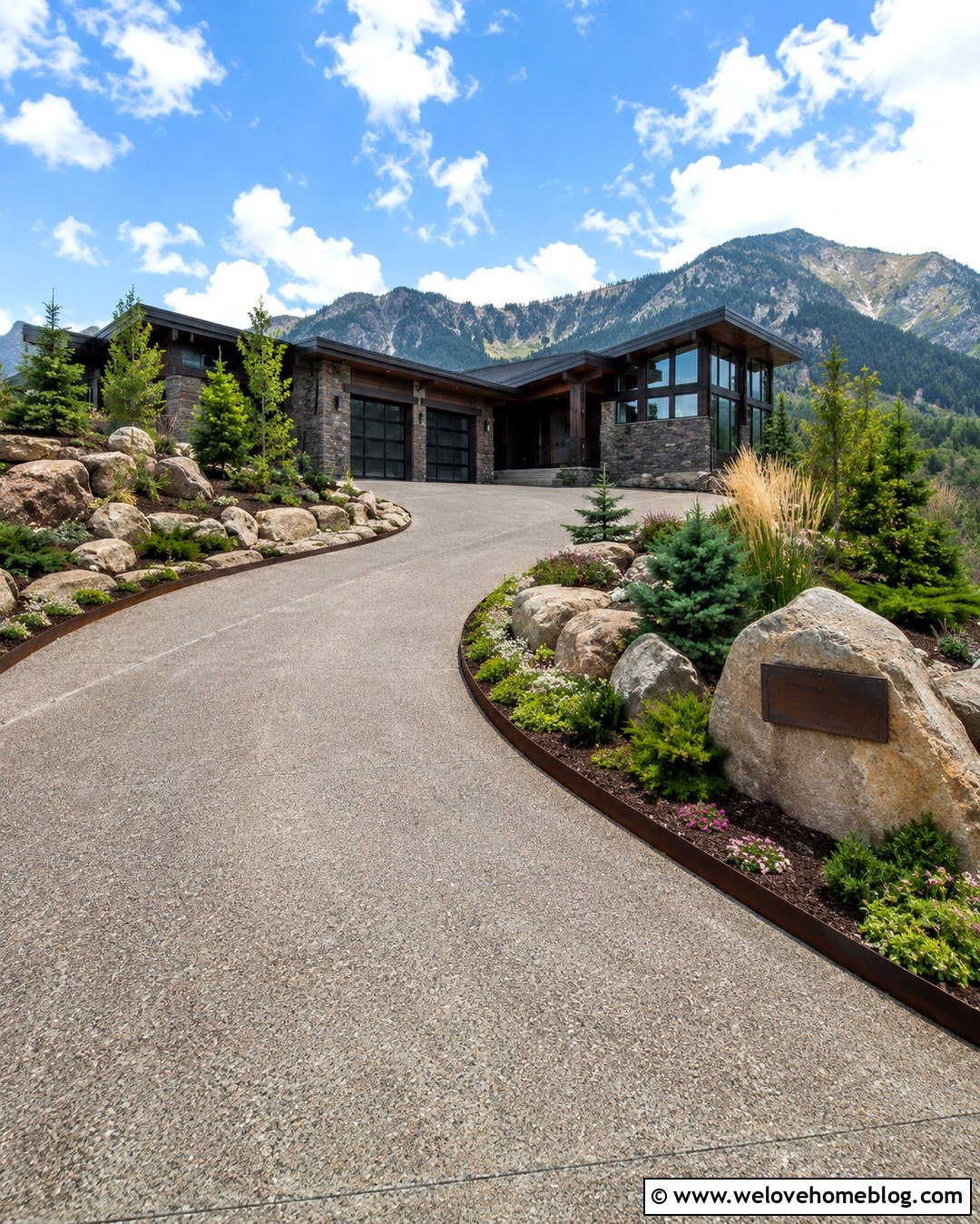
Large boulders can make a driveway entrance feel like part of the terrain rather than a separate architectural feature. Pair irregular granite boulders with an exposed aggregate driveway that curves behind a planted berm. Arrange the rocks in uneven groups instead of creating identical columns. Fill the spaces with dwarf conifers, creeping ground covers, native grasses, and flowering shrubs suited to the site. The driveway color should echo the stone so the entire approach feels calm and cohesive. Install a simple metal address plate on the largest roadside boulder, where it remains readable without dominating the design. This rugged entrance works well for mountain homes, lake houses, contemporary cabins, and properties with naturally rocky landscapes.
8. Hidden Country Driveway Entrance With A Wooden Gate
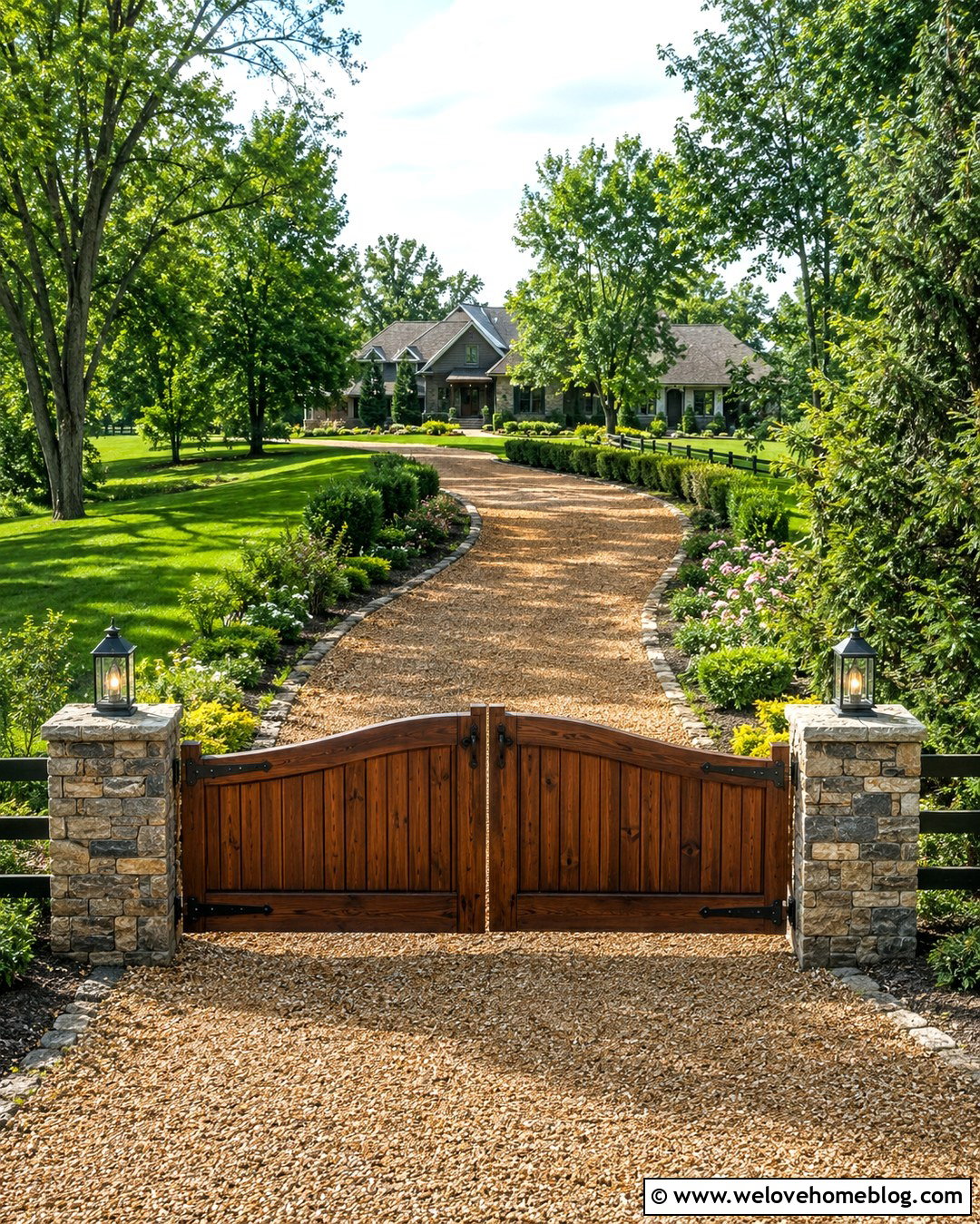
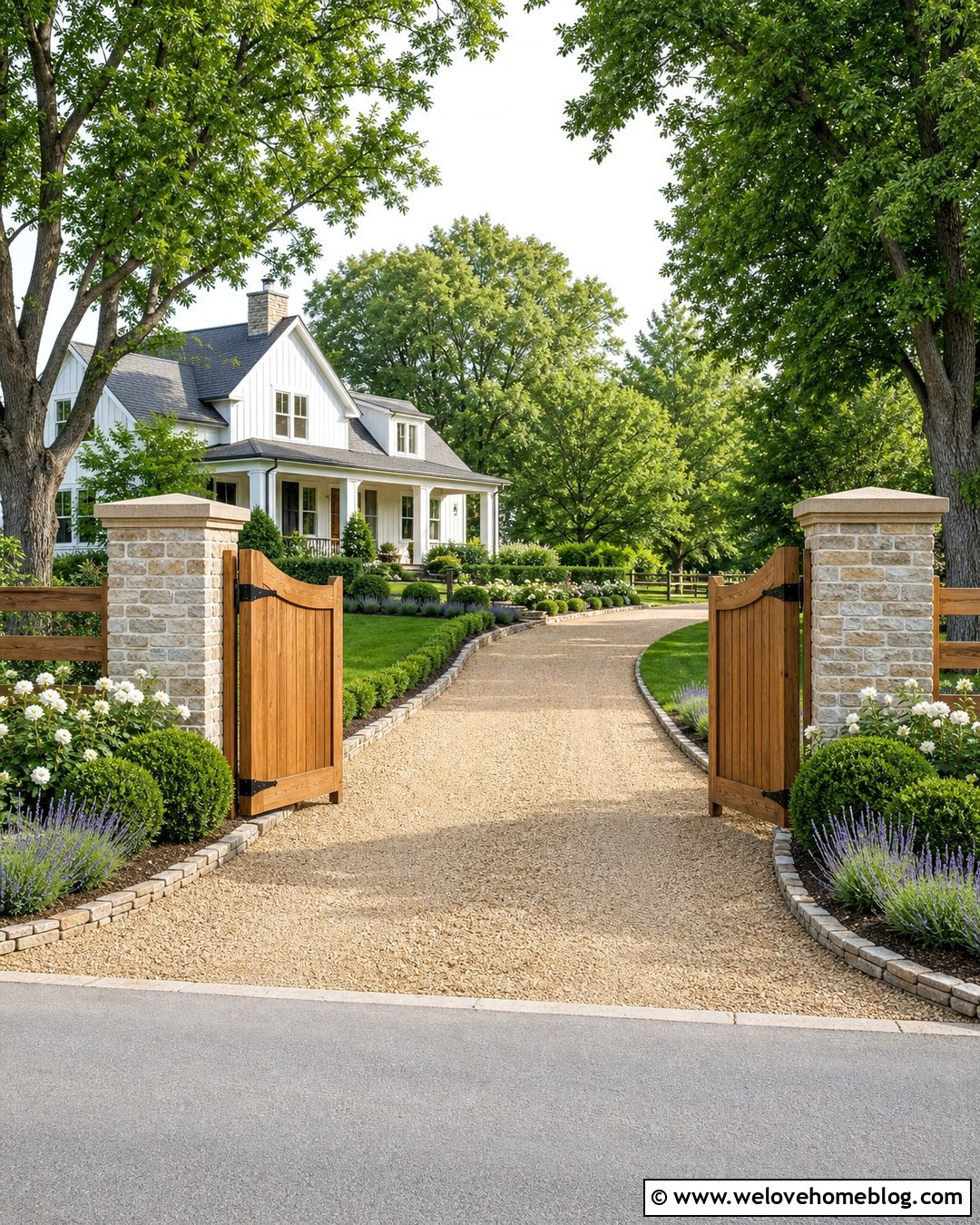
A solid wooden gate can provide privacy while maintaining a welcoming country appearance. Set a double-leaf oak or cedar gate between fieldstone pillars, then connect it to dark timber fencing hidden among mixed hedges. Use warm brown pea gravel for the driveway and give the route a gentle S-curve beyond the entrance. This prevents a direct view of the house when the gate is open. Position traditional lanterns on the stone pillars and place the address where it can be read from both directions. Allow enough clear space for the gate to operate without contacting plants or vehicles. Matching wood, natural stone, and informal landscaping give the entrance a balanced look suited to country houses and farmhouse properties.
9. Hidden Driveway Entrance Set Back From The Road
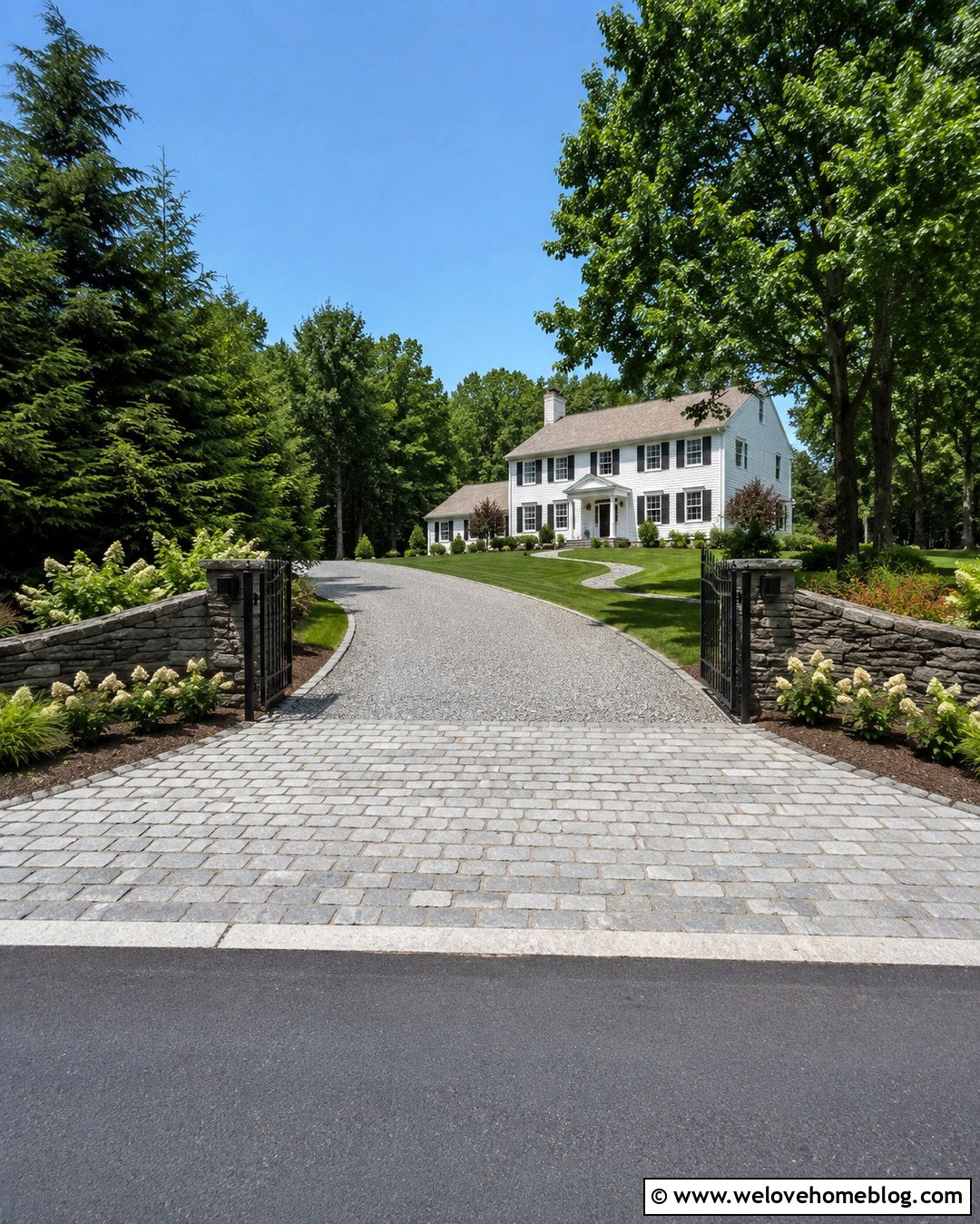
Sometimes the most effective solution is to place the main entrance feature farther inside the property. Begin with an open cobblestone apron at the road, followed by a short gravel approach leading to a recessed gate. Low hedges and stone walls can guide vehicles toward the gate while maintaining clear roadside visibility. Behind the gate, curve the driveway through taller trees and privacy shrubs before it reaches the house. The setback creates a convenient waiting area for guests and can prevent vehicles from stopping in the road while the gate opens. () Use matching stone on the apron, gate pillars, and nearby walkway. This layout is particularly practical for larger residential lots, rural homes, and entrances along frequently traveled roads.
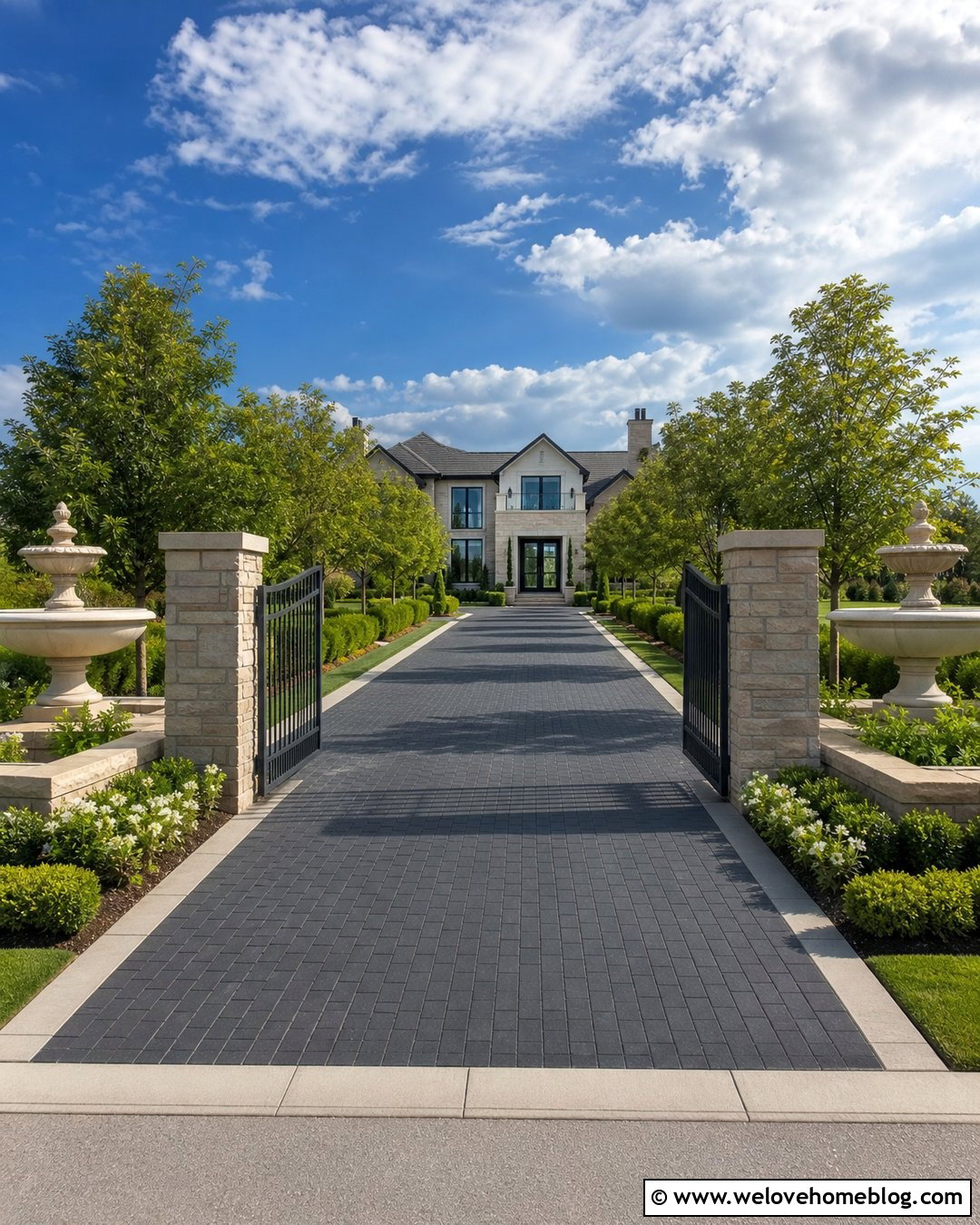
10. Hidden Driveway Entrance Behind A Planted Berm
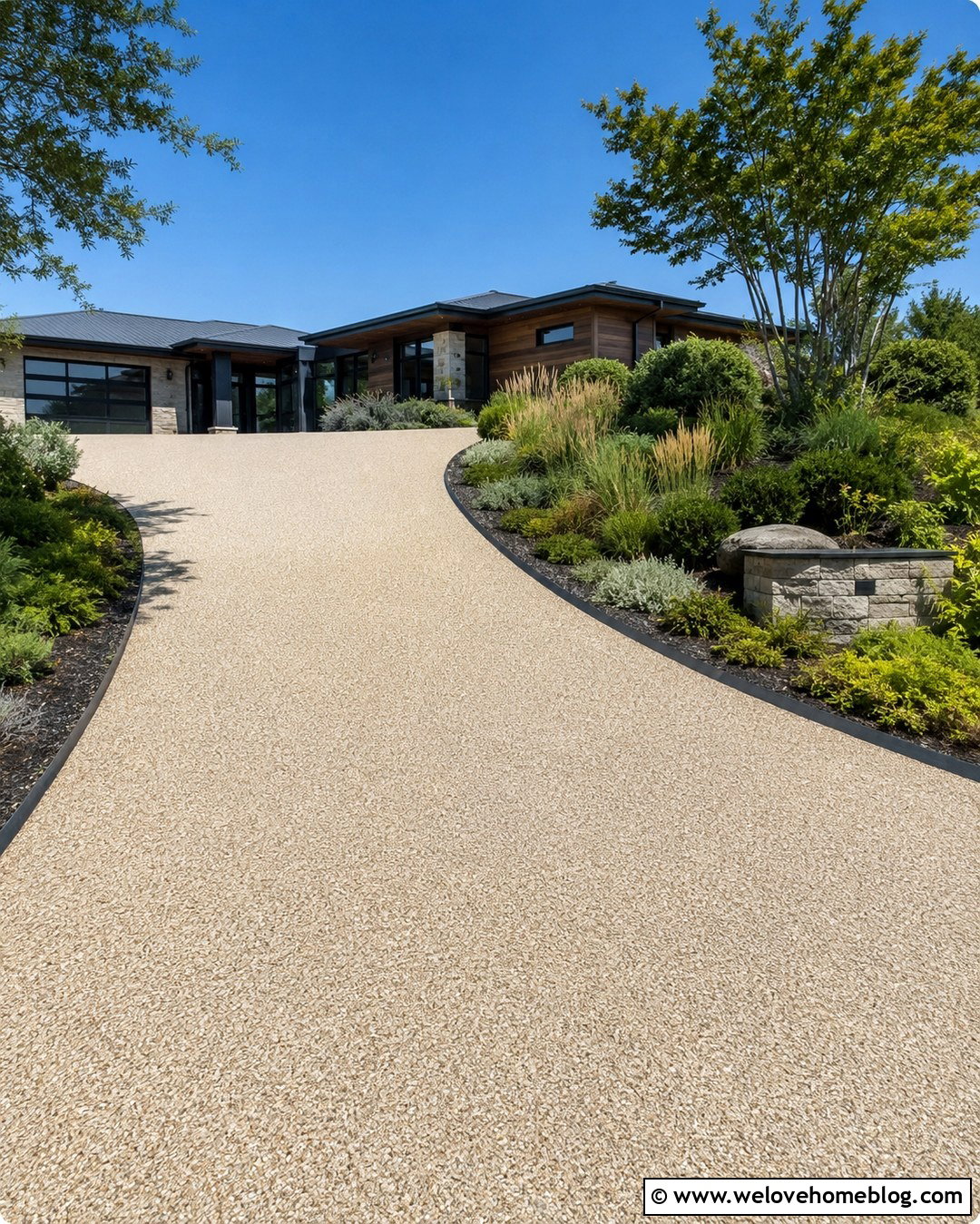
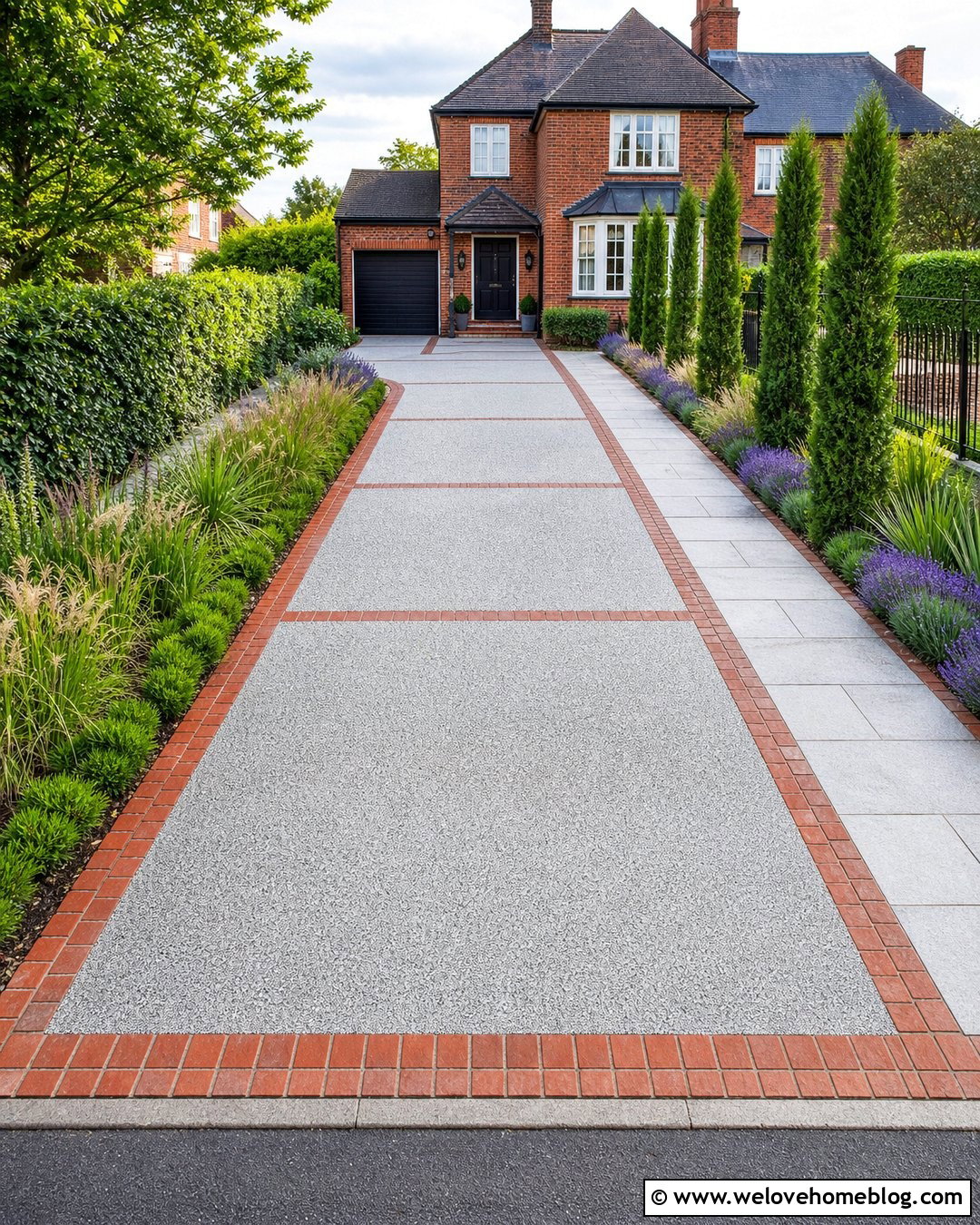
A low landscaped berm can screen a driveway without the hard appearance of a tall fence. Shape the berm beside a curved resin-bound gravel driveway, placing it far enough from the pavement to preserve drainage and usable width. Plant the slope with layered ornamental grasses, evergreen shrubs, ground covers, and several small multi-stem trees. The entrance should remain open at the curb before disappearing naturally behind the raised planting. Use metal edging to create a clean transition between the smooth resin-bound surface and planting beds. A low address monument can be integrated into the front of the berm. This design works especially well with contemporary ranch houses because its sweeping shape echoes the home’s long, horizontal architecture.
11. Hidden Desert Driveway Entrance With Stucco Walls
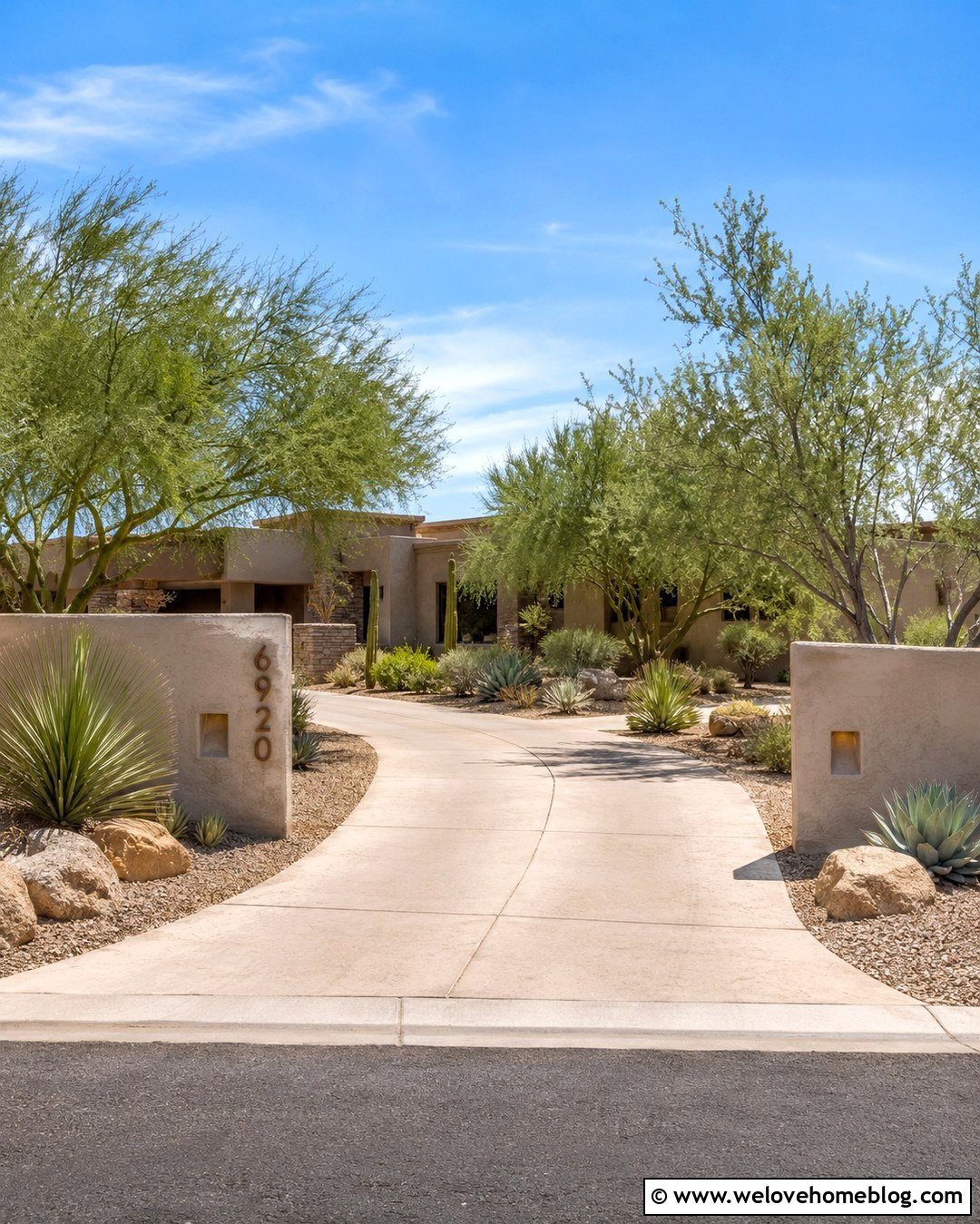
In a dry climate, curved stucco walls can provide privacy while matching the surrounding architecture. Combine a warm sand-colored concrete driveway with low adobe-style entrance walls that overlap slightly when viewed from the street. The driveway passes between them and bends toward the house, limiting direct views into the property. Rusted steel address numbers, desert boulders, agave, yucca, and drought-tolerant grasses add definition without creating a lush or out-of-place look. Use gravel mulch that contrasts gently with the driveway rather than matching it exactly. Recessed wall lighting can clarify the opening at night. This hidden entrance feels natural beside Southwestern, Spanish Colonial, desert modern, and Pueblo-inspired homes.
12. Hidden Coastal Driveway Entrance With A White Gate
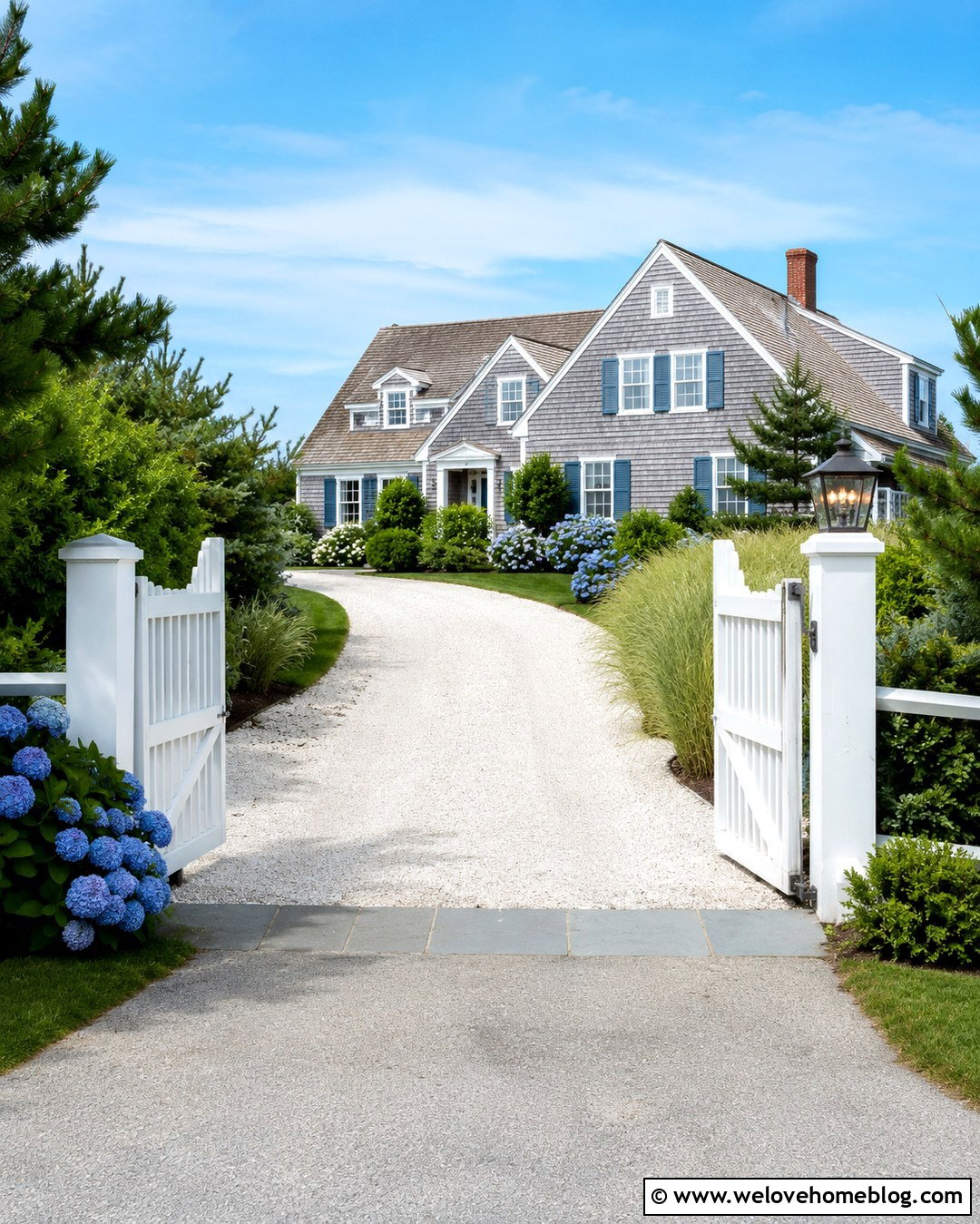
A white slatted gate surrounded by salt-tolerant planting creates a private entrance with a light coastal character. Pair it with a pale shell gravel driveway that curves between dune grasses and clipped evergreen shrubs. Short white fence sections can extend from both sides of the gate before disappearing into the landscaping. This helps define the boundary without enclosing the entire front yard. Use weather-resistant hardware and a simple nautical-style lantern rather than overly decorative accessories. A bluestone threshold beneath the gate prevents loose gravel from interfering with its movement. Finish the composition with hydrangeas, bayberry, beach grass, and a clearly visible address post. The result suits shingle-style, Cape Cod, and relaxed coastal homes.
13. Hidden Modern Driveway Entrance With Concrete Walls
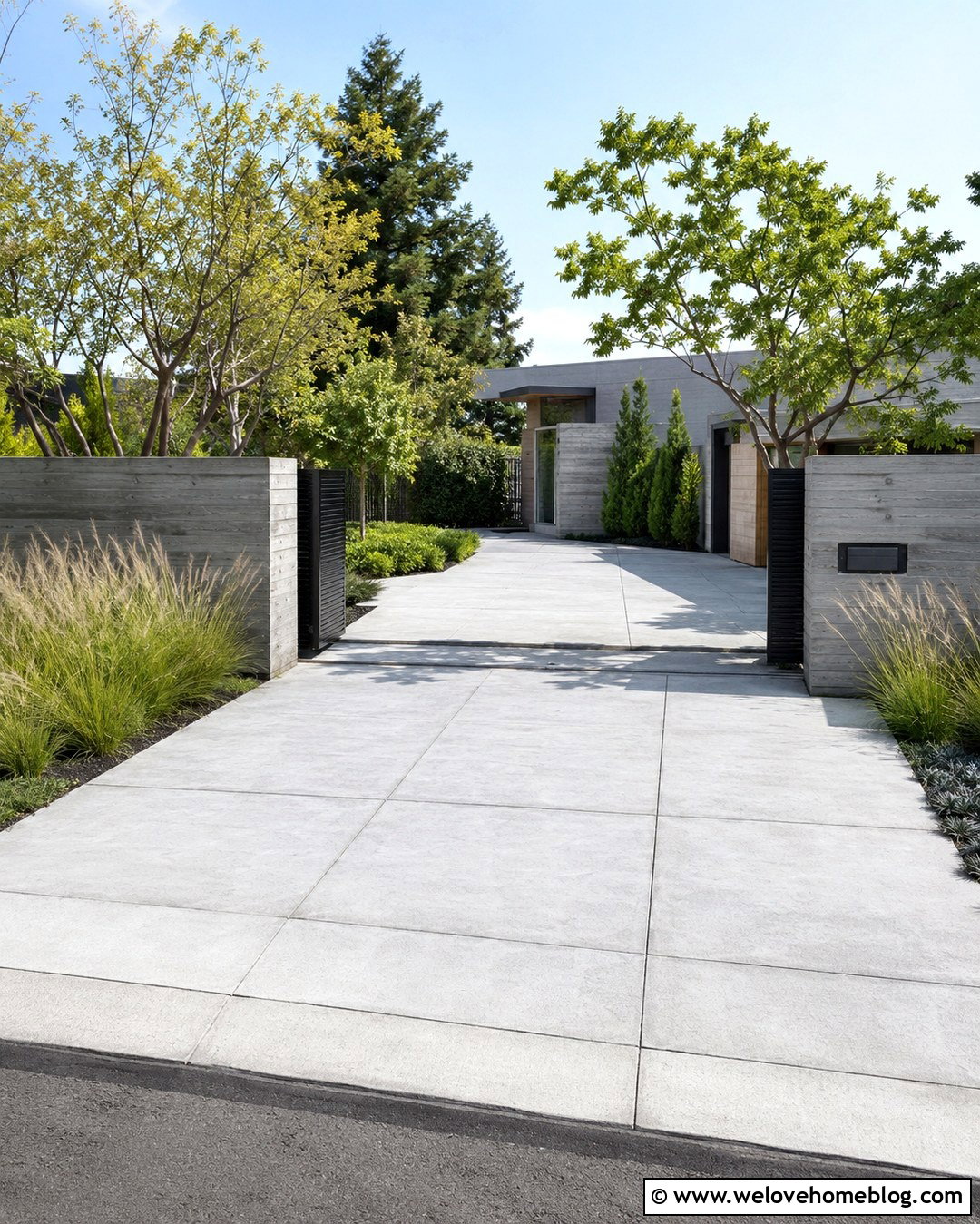
For a contemporary home, conceal the driveway behind overlapping concrete walls and disciplined planting. A straight driveway made from large-format gray concrete slabs can pass through a narrow opening before turning toward the garage. Use board-formed concrete walls in a tone that relates to the driveway but retains enough contrast to remain visible. Rows of feather reed grass, compact evergreens, and sculptural multi-stem trees soften the architecture. A slim black metal gate can slide behind one wall when opened, keeping the mechanical system visually discreet. Integrate the house number and gate controls into a clean freestanding panel. This complete design creates privacy through alignment, layering, and controlled views rather than dense, overgrown landscaping.
14. Hidden Cobblestone Driveway Entrance Through Trees
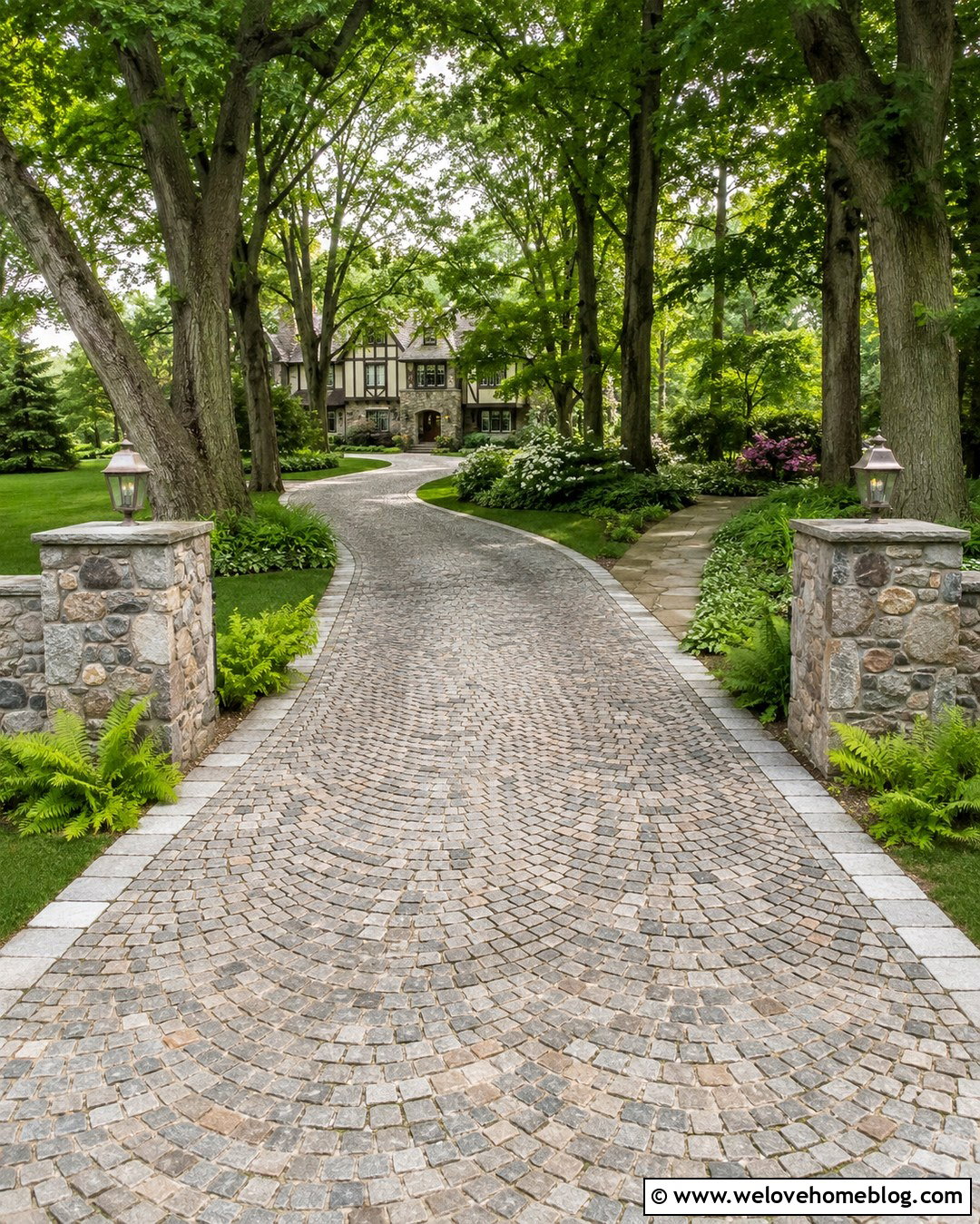
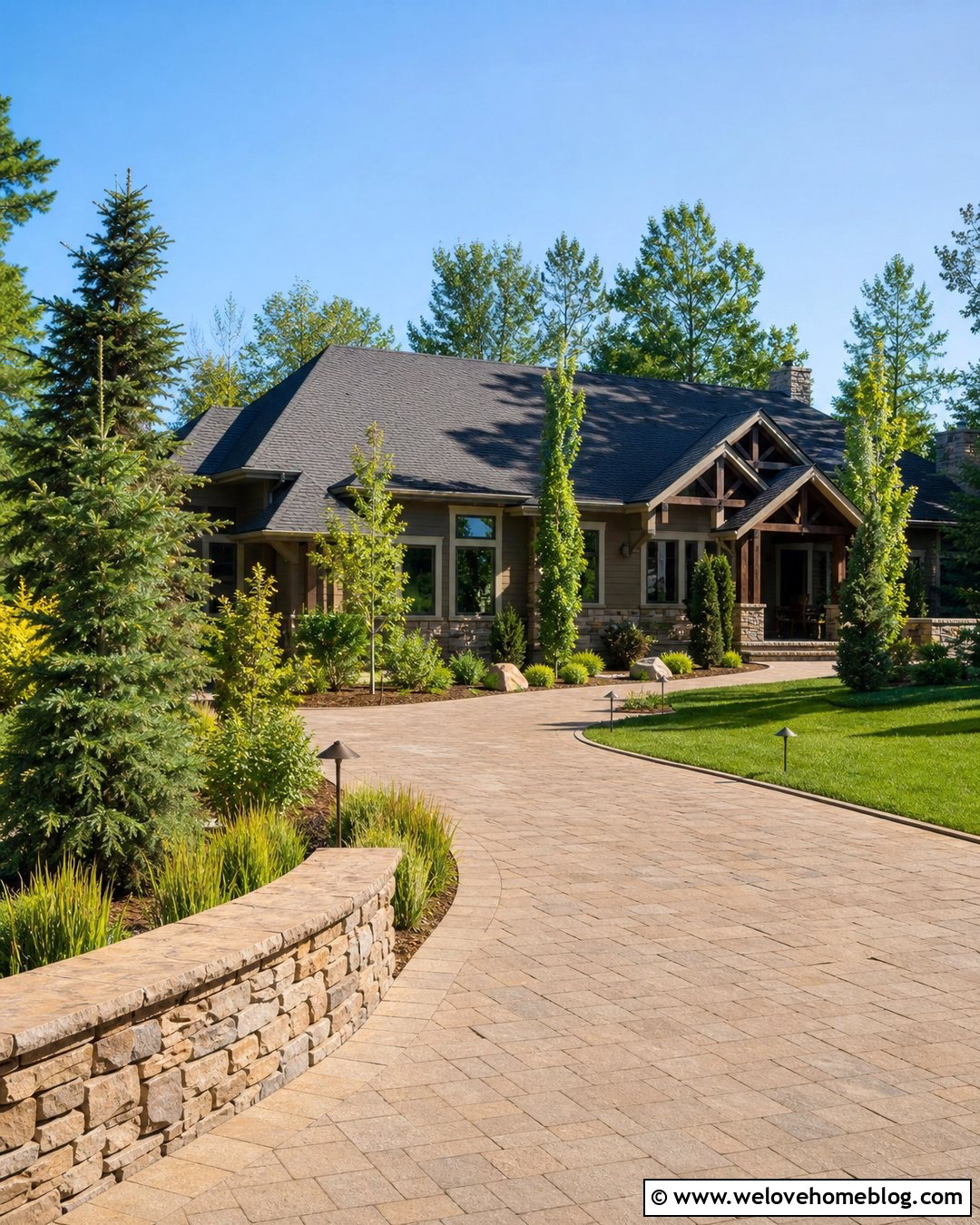
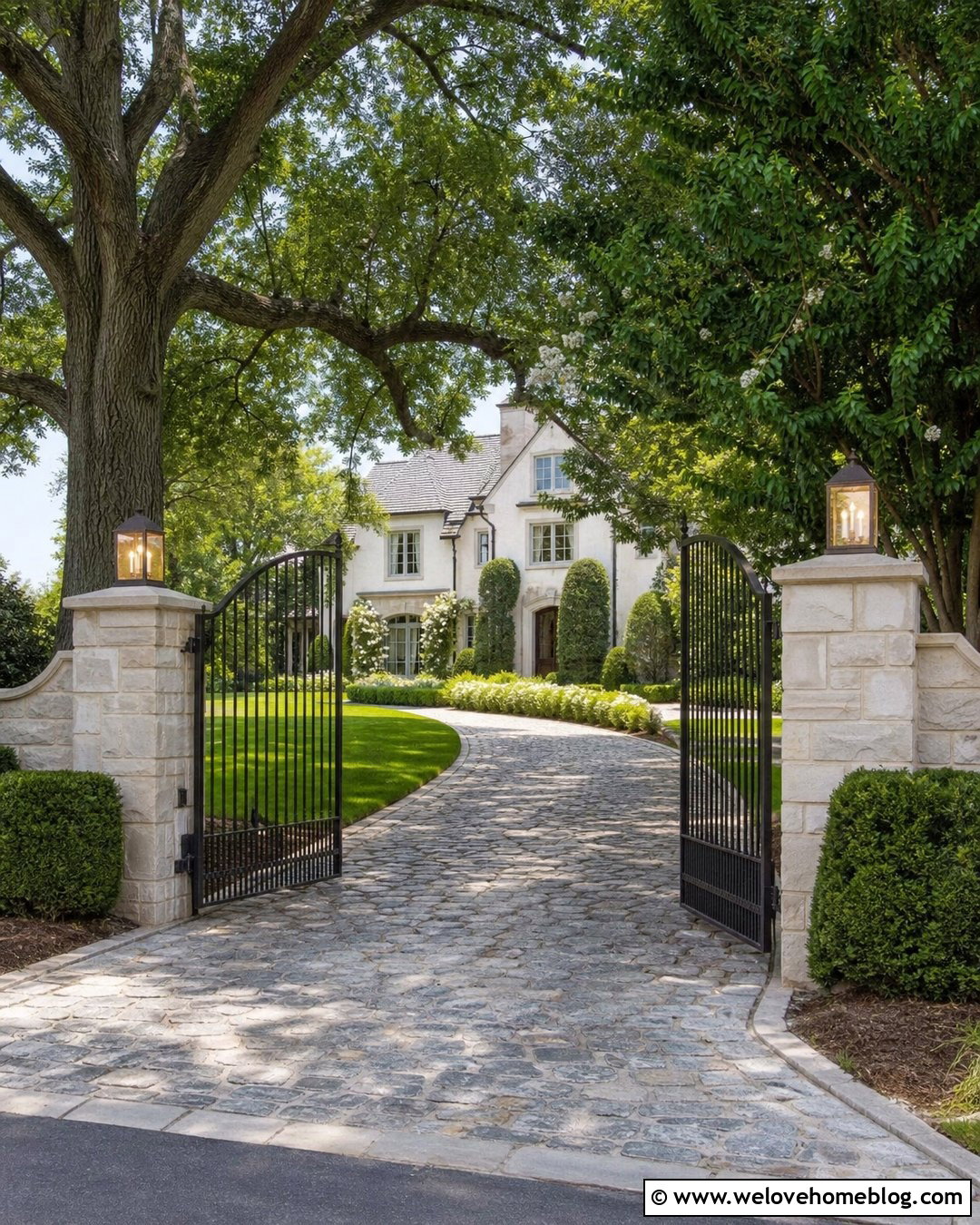
A cobblestone driveway can feel as though it has always belonged in a mature landscape. Begin with a broad but understated entrance beneath a canopy of deciduous trees, then curve the driveway away from the street. Use reclaimed-looking gray and brown cobblestones in a subtle fan pattern, bordered by larger stone setts. Shade-tolerant ground covers, ferns, and flowering woodland shrubs can soften both edges. Two low stone piers may mark the opening without revealing the house beyond. Keep tree trunks and dense shrubs sufficiently far from the road and driveway edge to maintain visibility and maneuvering space. This traditional entrance complements Tudor, Colonial, European-inspired, and older stone homes surrounded by established gardens.
15. Hidden Driveway Entrance With A Rustic Timber Portal
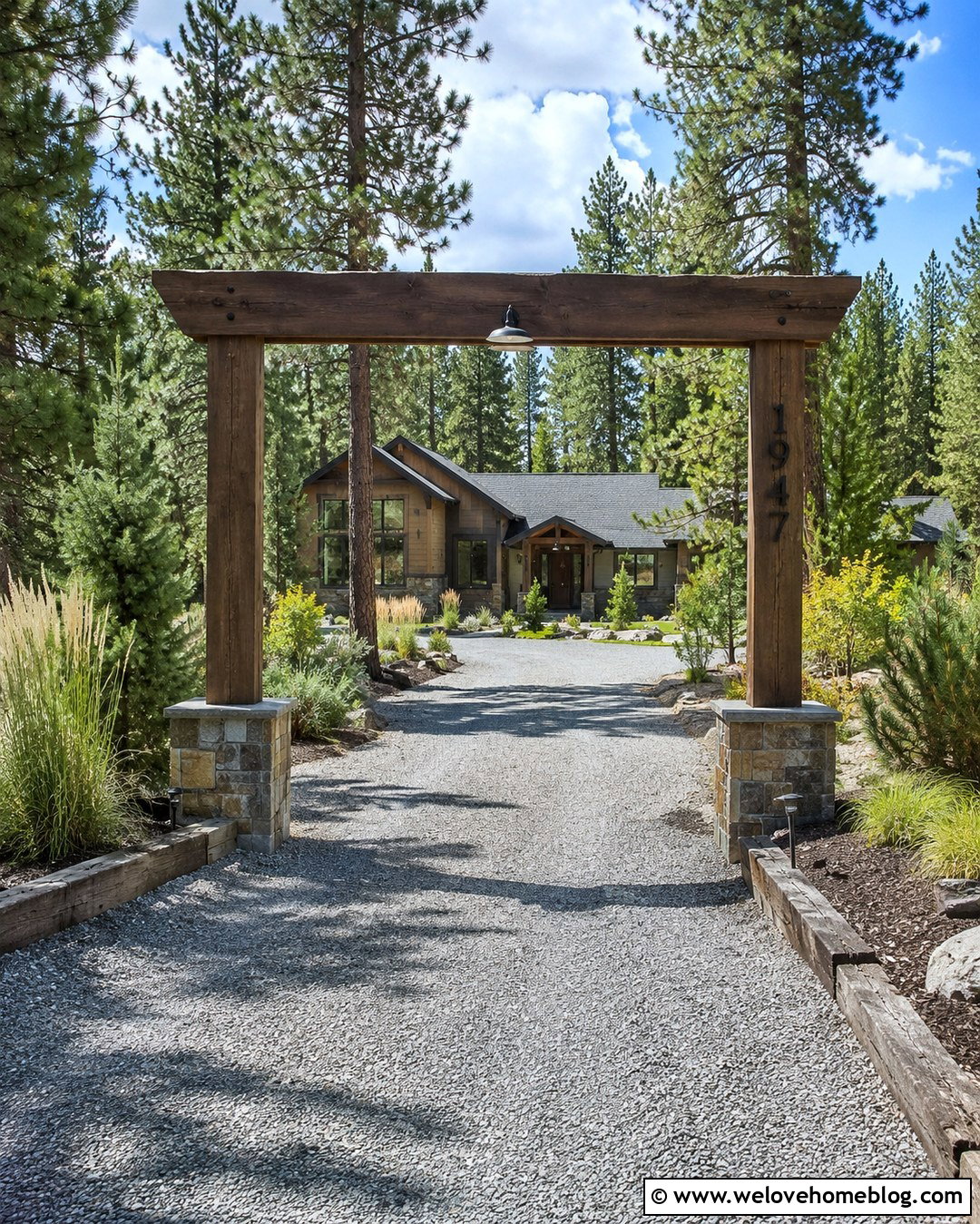
A simple timber portal can signal the entrance while preserving a secluded rural feeling. Build the structure from heavy stained wood posts and a horizontal beam, leaving the opening wide and uncluttered. Beneath it, use a gray crushed-gravel driveway bordered by weathered timber and native grass planting. Continue the route into a gentle curve lined with pines so the house remains out of sight from the road. A small pendant fixture or shielded downlight can illuminate the gate area without producing glare. Mount the address on one post using high-contrast metal numbers. This entrance looks at home on wooded acreage, ranch properties, mountain retreats, and rustic contemporary homes with timber siding.
16. Hidden Brick Driveway Entrance With Hedge Columns
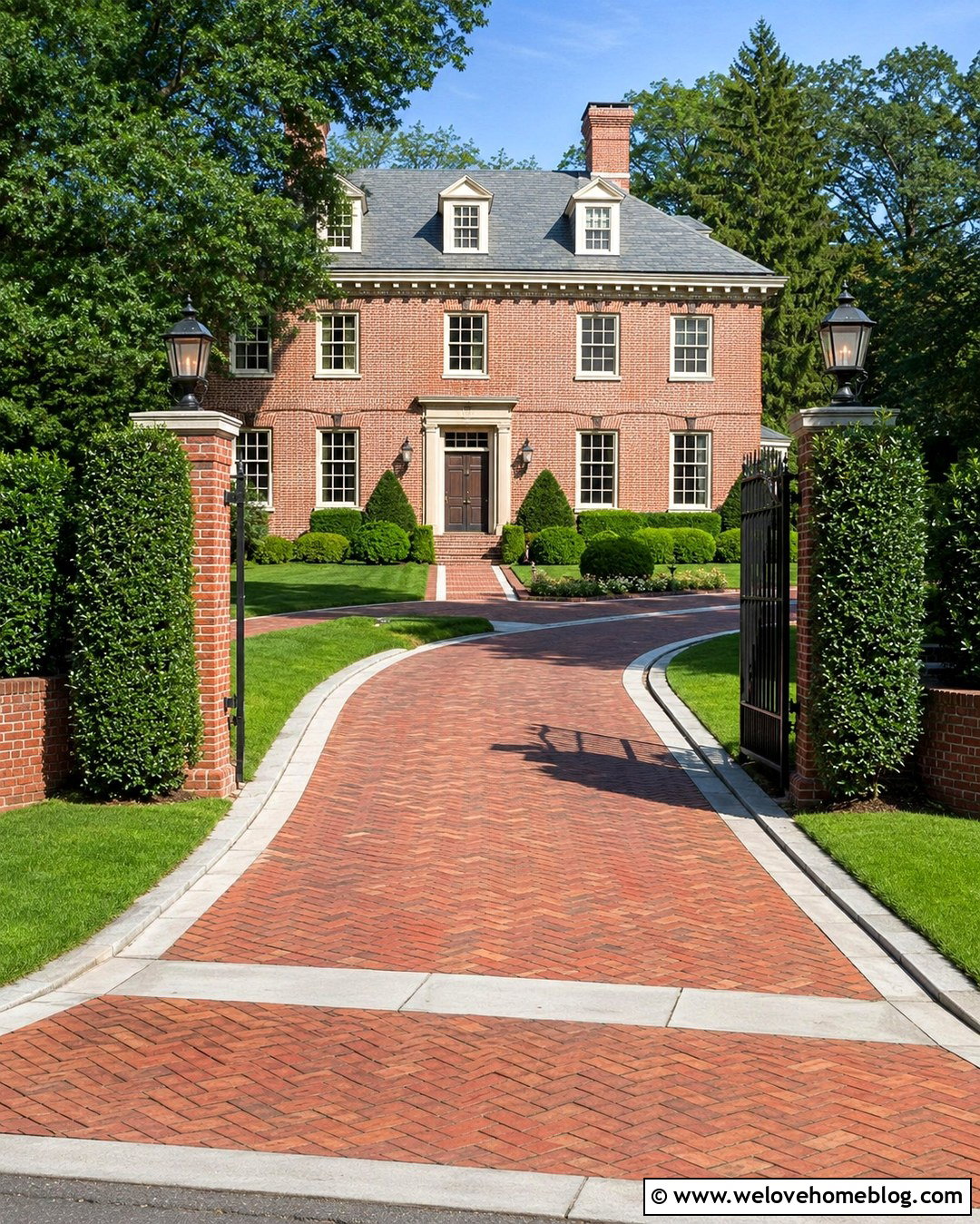
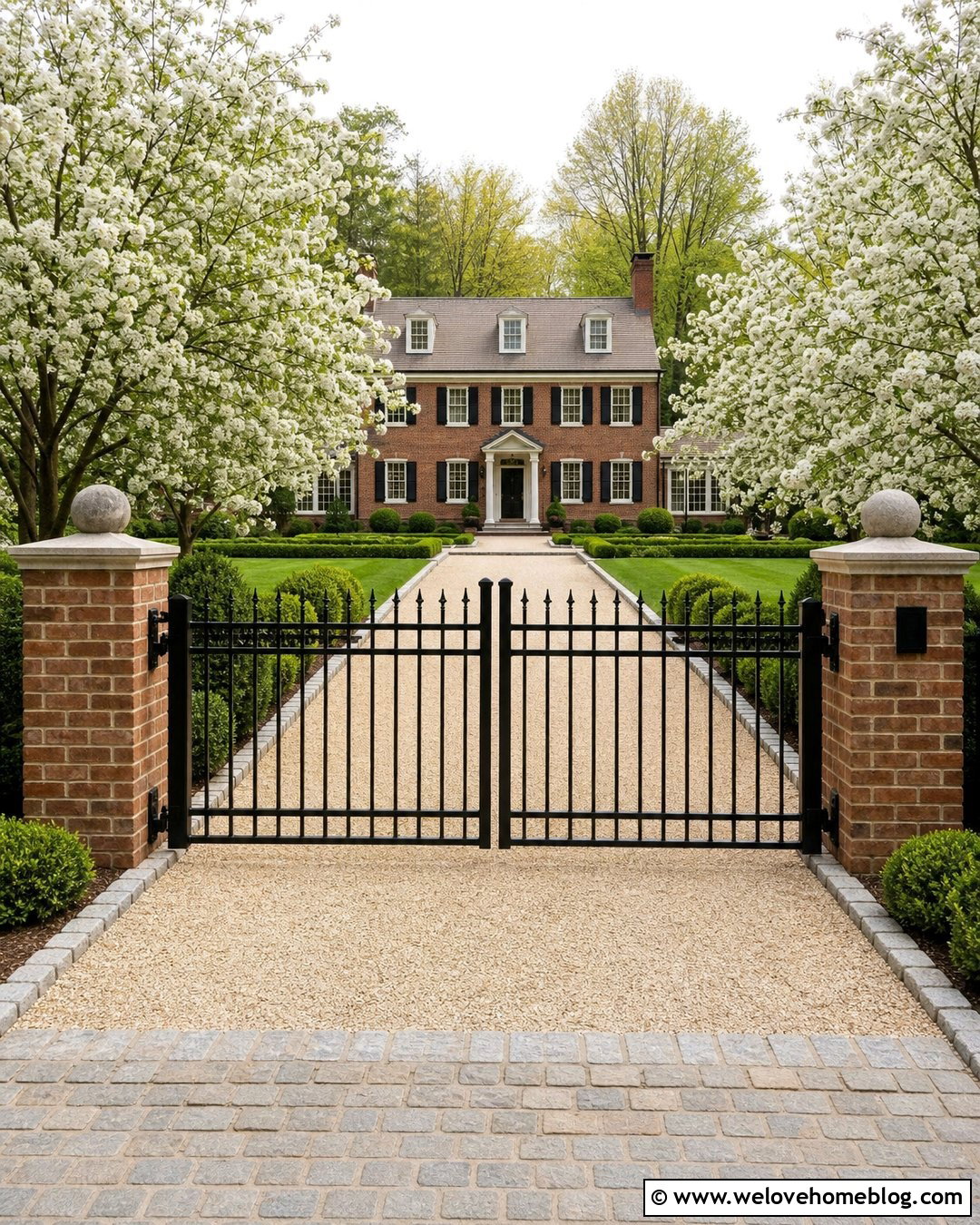
Brick pillars do not need to stand exposed beside the road. Surround them with deep evergreen hedges so only the inner faces, lanterns, and gate hardware remain visible. Use clay brick pavers in a herringbone pattern for the driveway, tying the surface directly to the pillars. A sweeping curve behind the hedges can conceal the house and reduce the visual length of the drive. Add narrow limestone bands across the brick at the entrance and near the garage to organize the large paved area. Keep the gate simple, using black metal pickets that allow filtered views into the landscape. This polished look complements Georgian, Federal, Colonial Revival, and traditional brick houses with symmetrical facades.
17. Hidden Narrow Driveway Entrance With A Privacy Screen
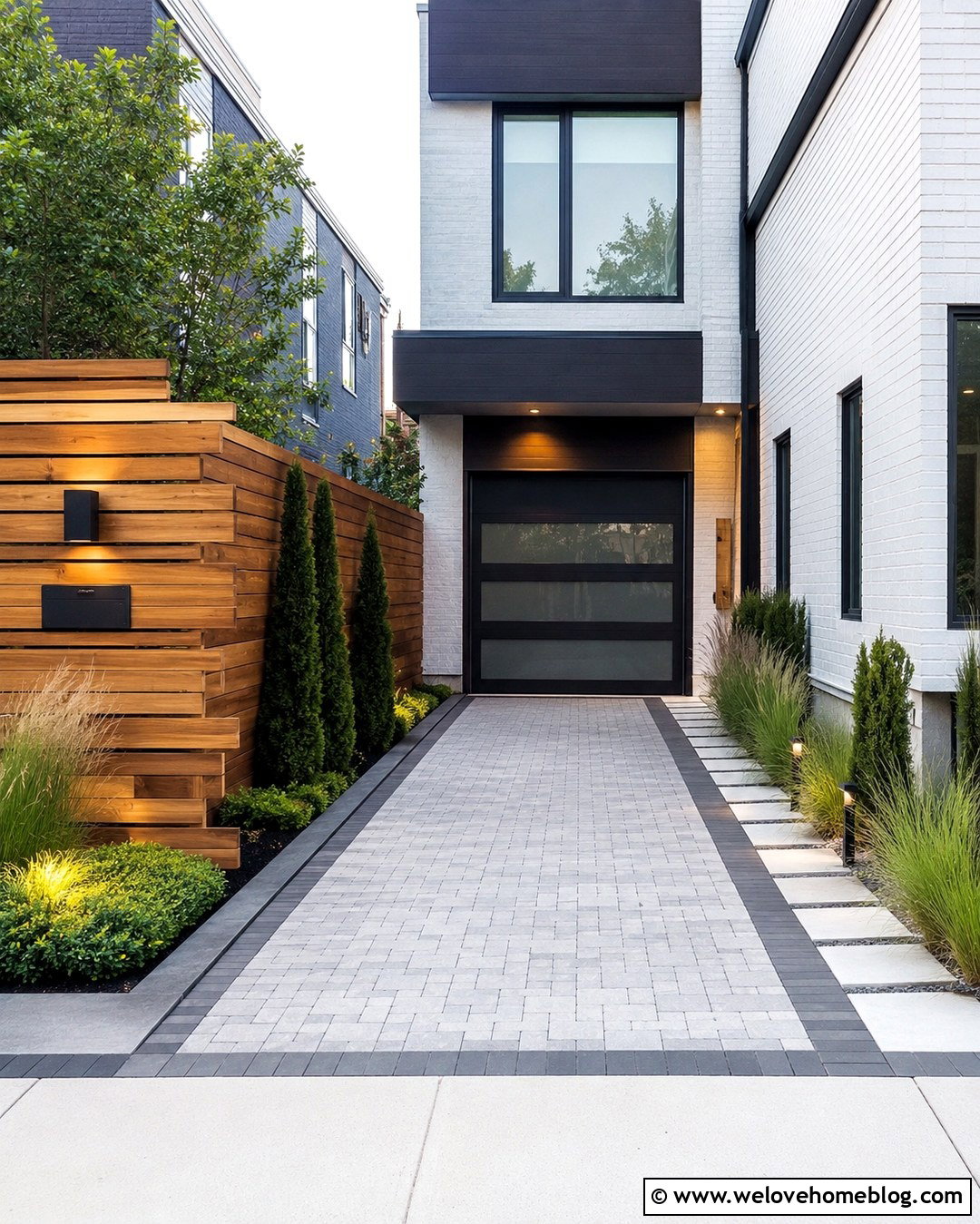
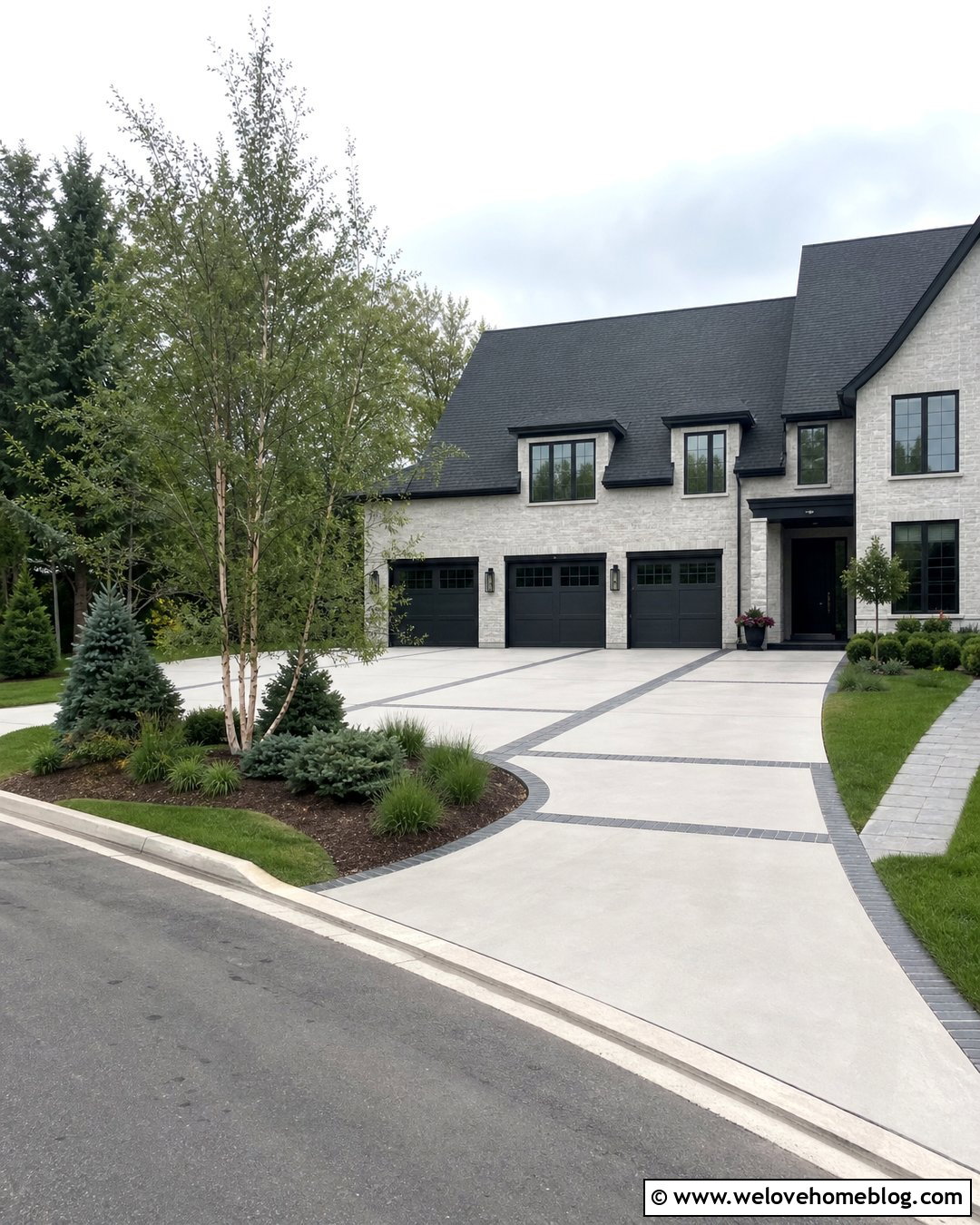
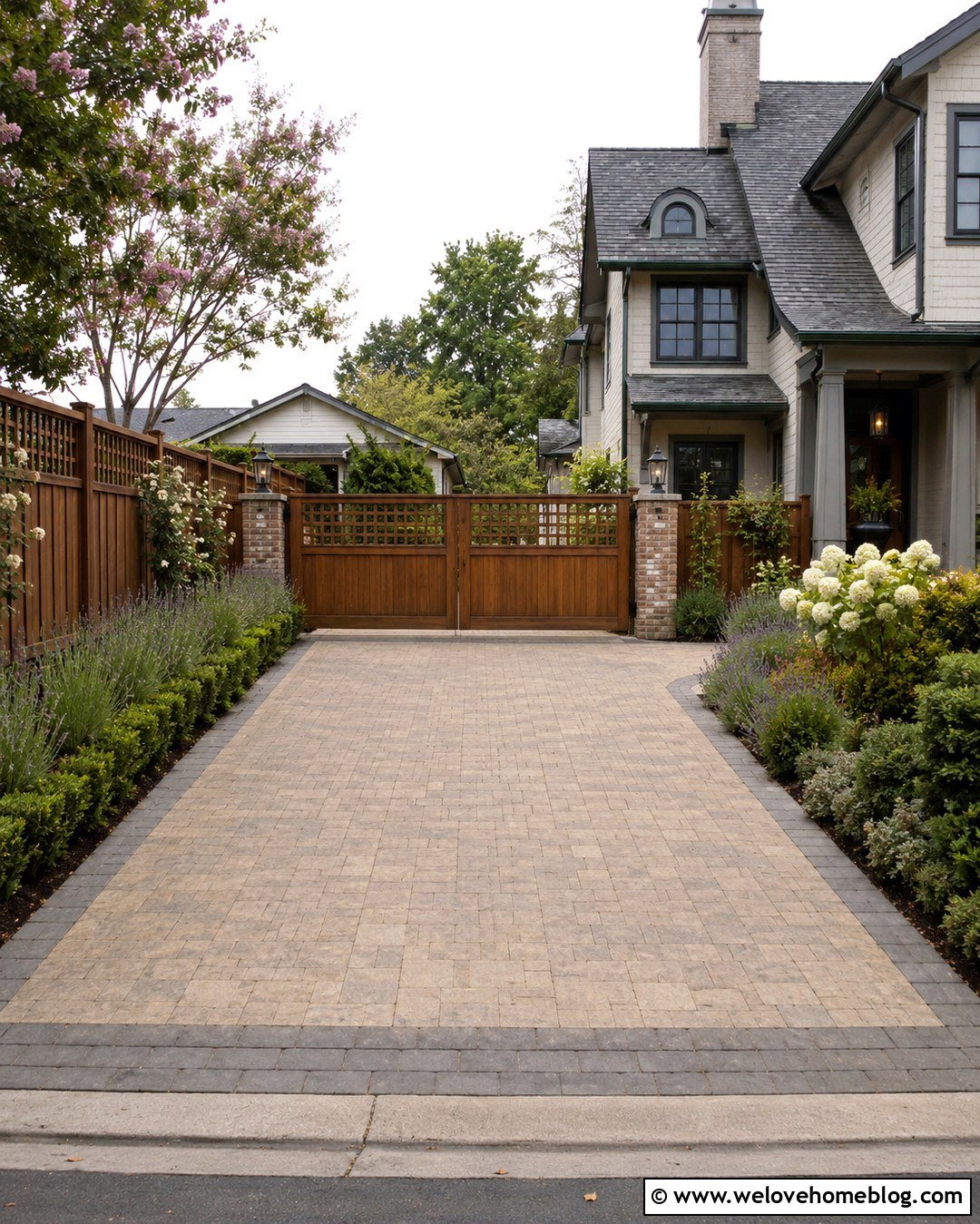
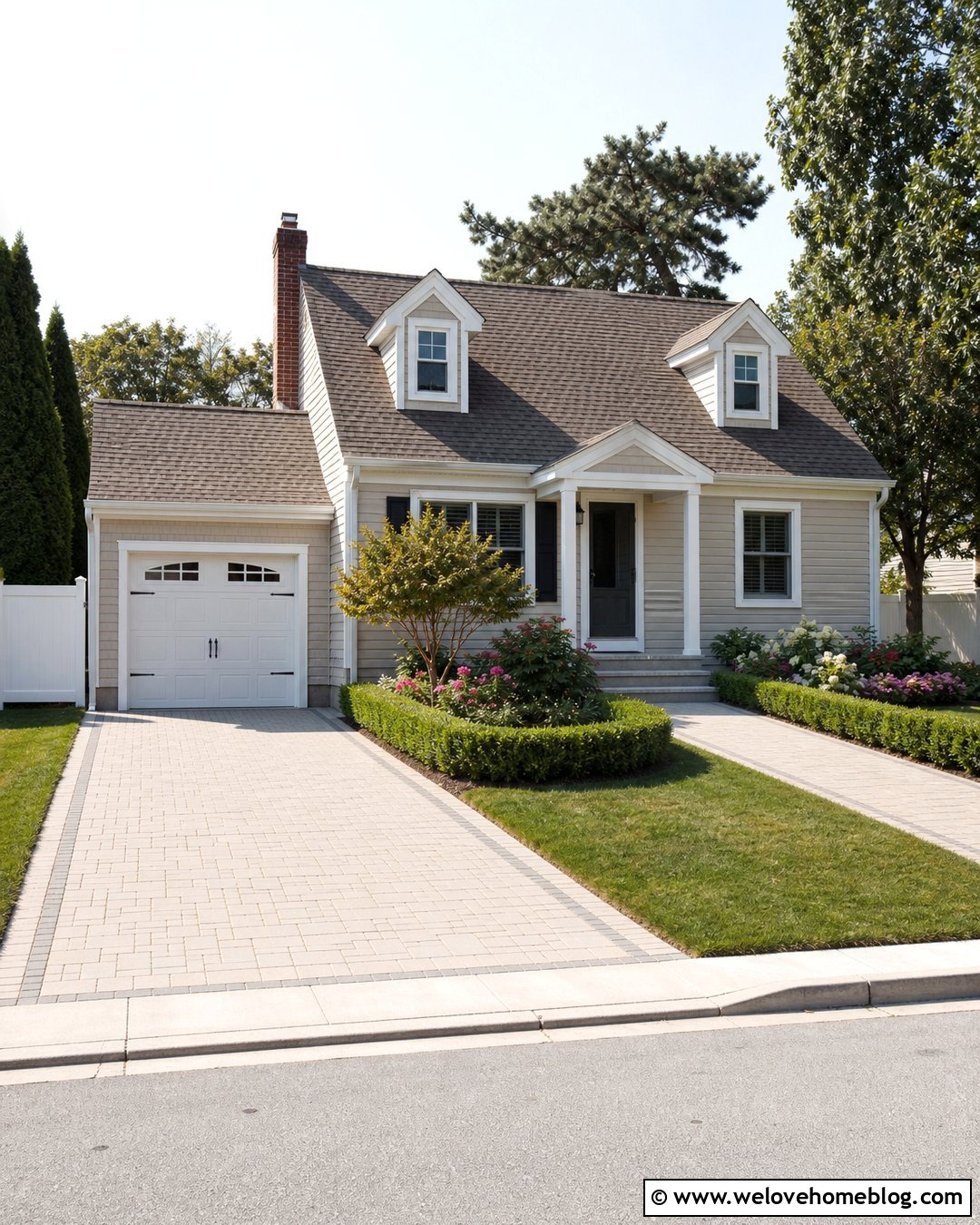
A compact suburban entrance can feel private without becoming cramped. Pair a narrow permeable paver driveway with a horizontal wood privacy screen placed along one side rather than directly across the opening. Offset the screen so vehicles turn slightly before reaching the house. On the opposite side, use a slim planting bed with columnar evergreens, ornamental grasses, and low ground cover. A contrasting paver border makes the driveway edges easier to recognize and protects the planting from tires. Add an address plaque and downward-facing light to the front of the screen. This asymmetrical layout offers screening while preserving usable width, making it suitable for modern infill homes, side-entry garages, and small urban lots.
18. Hidden Circular Driveway Entrance With A Garden Island
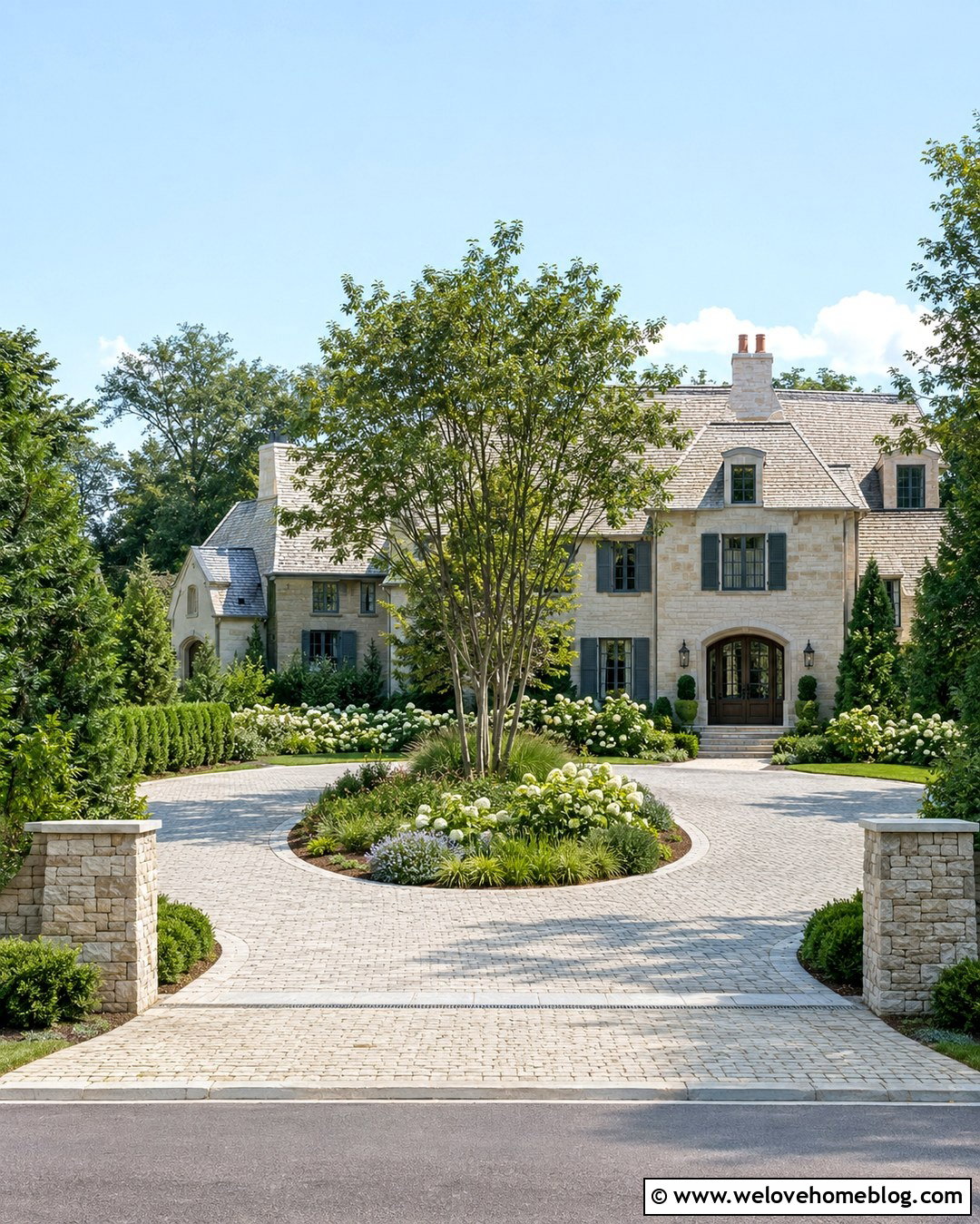
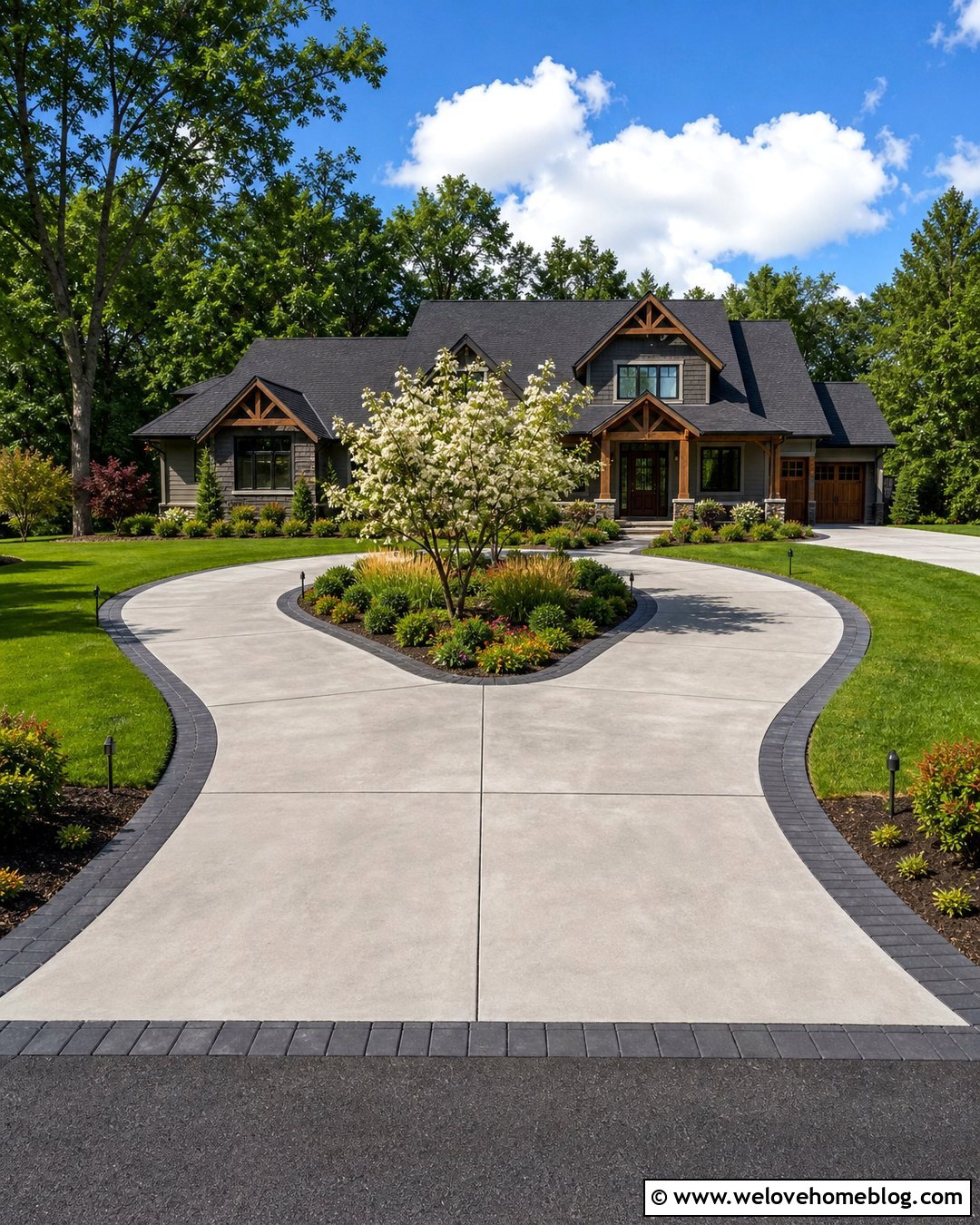
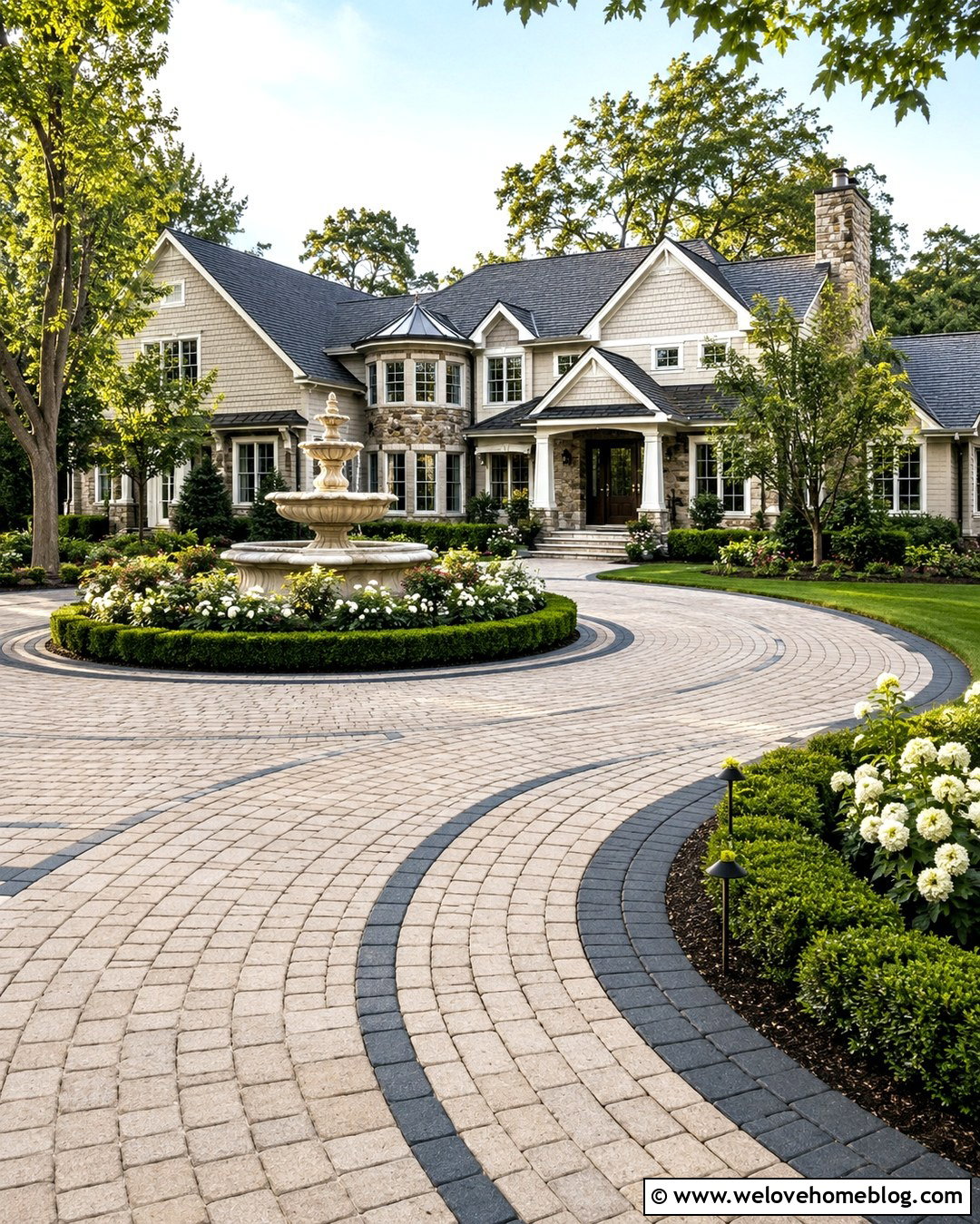
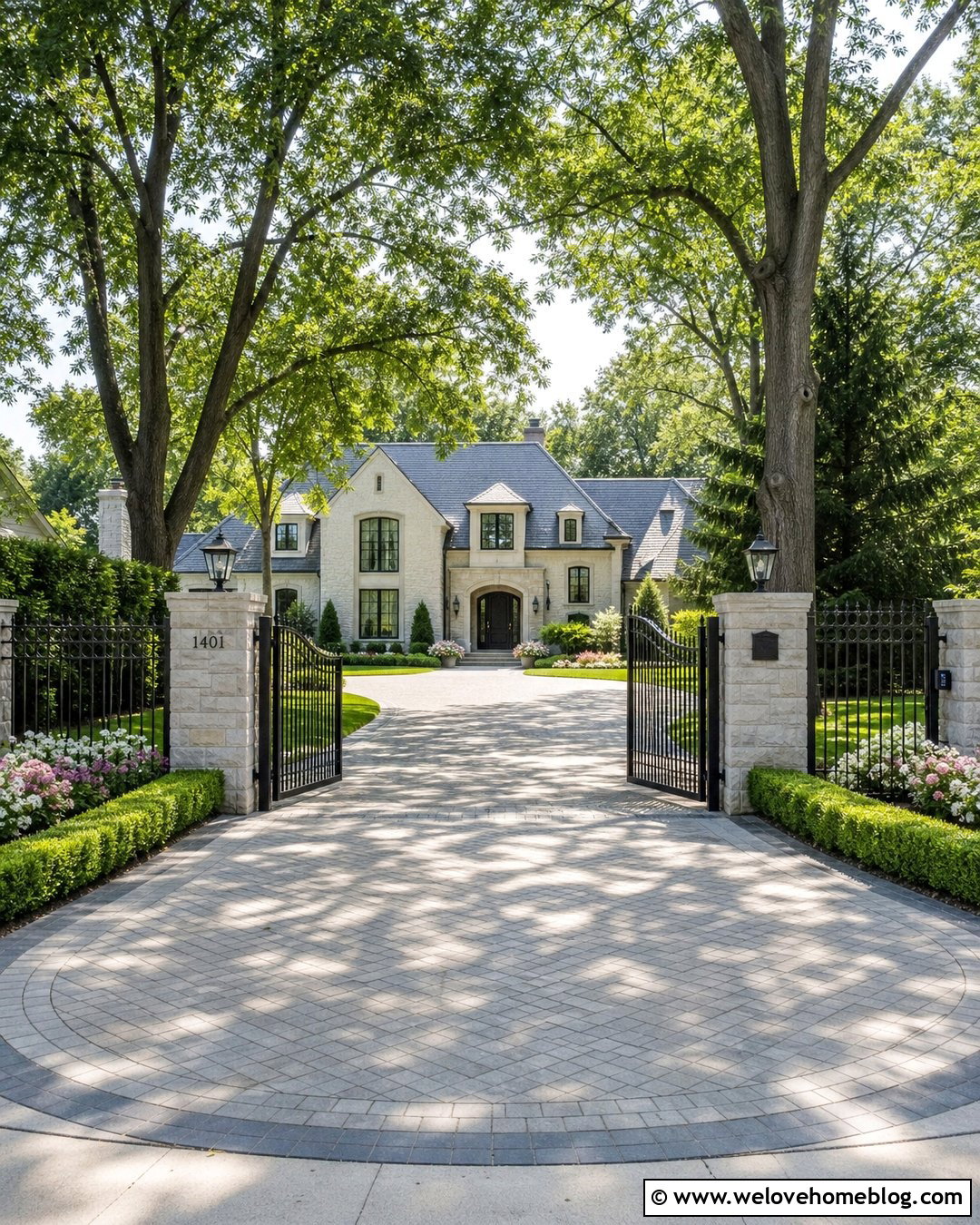
A circular driveway can be screened from the road by making the central garden the dominant feature. Use light gray permeable pavers for the horseshoe-shaped drive, with each entrance curving behind layered evergreen beds. In the center, plant a multi-stem tree surrounded by flowering shrubs, grasses, and low ground cover. Low stone walls at both openings provide structure, while taller hedges farther inside conceal the house and parked vehicles. Repeat the same pavers in a walkway leading from the circular drive to the front door. Clearly mark the entry and exit if their intended directions differ. This refined arrangement suits broad Colonial, French country, Mediterranean, and estate-style homes with generous front yards.
19. Hidden Driveway Entrance With A Discreet Address Marker
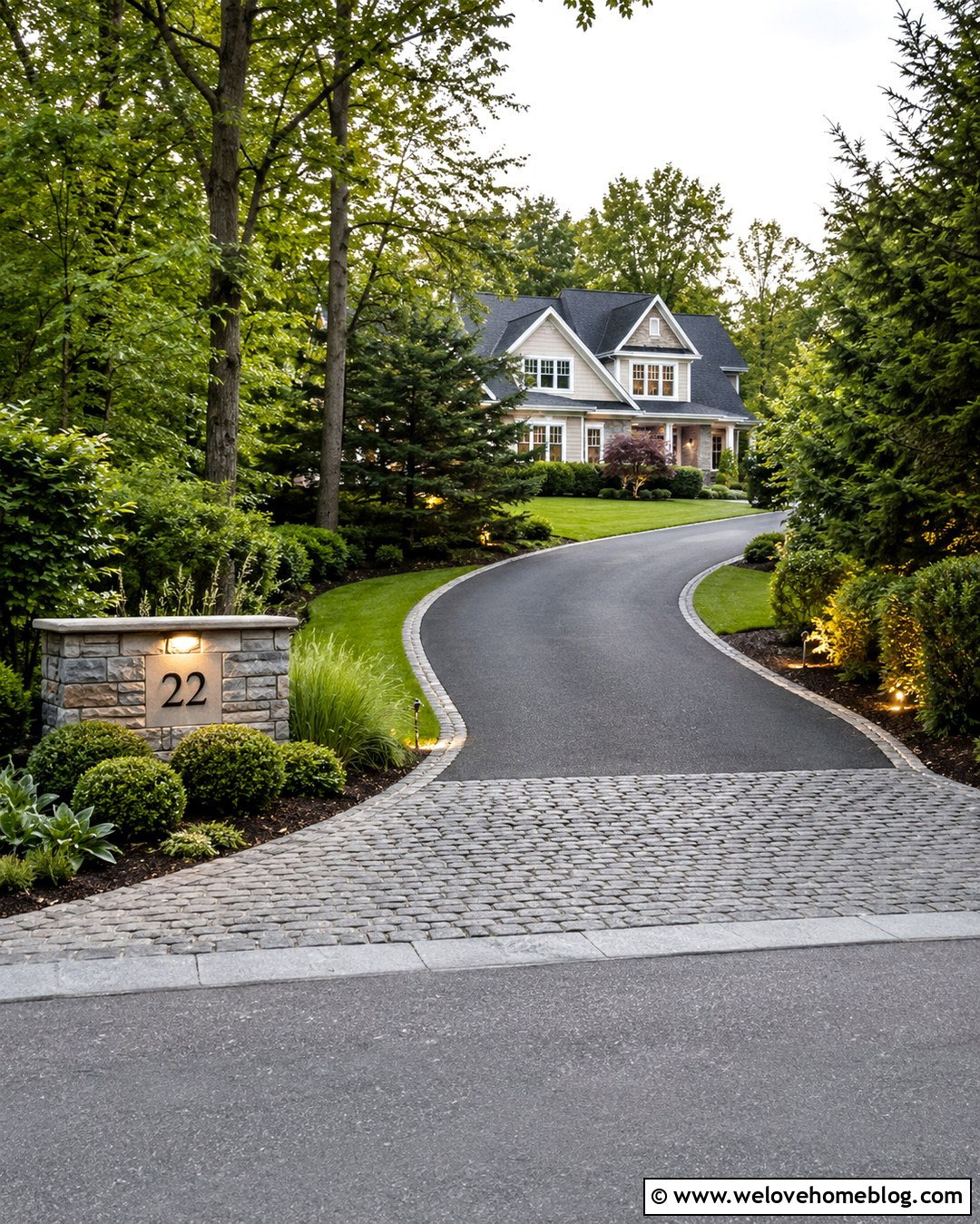
Privacy should not make a home impossible to locate. Build the complete entrance around a discreet but readable address monument placed beside a curved black asphalt driveway. A low ledgestone wall can hold large contrasting metal numbers, while ornamental grasses and compact shrubs blend the marker into the landscape. Continue the wall for several feet before allowing it to disappear into a mixed evergreen border. Add a cobblestone apron and edge ribbon to distinguish the driveway from the road. Shielded lighting can illuminate the numbers without turning the entrance into a bright focal point. This balanced approach helps guests and service providers identify the property while keeping the house and most of the driveway visually concealed.

20. Hidden Rural Driveway Entrance With Clear Sightlines
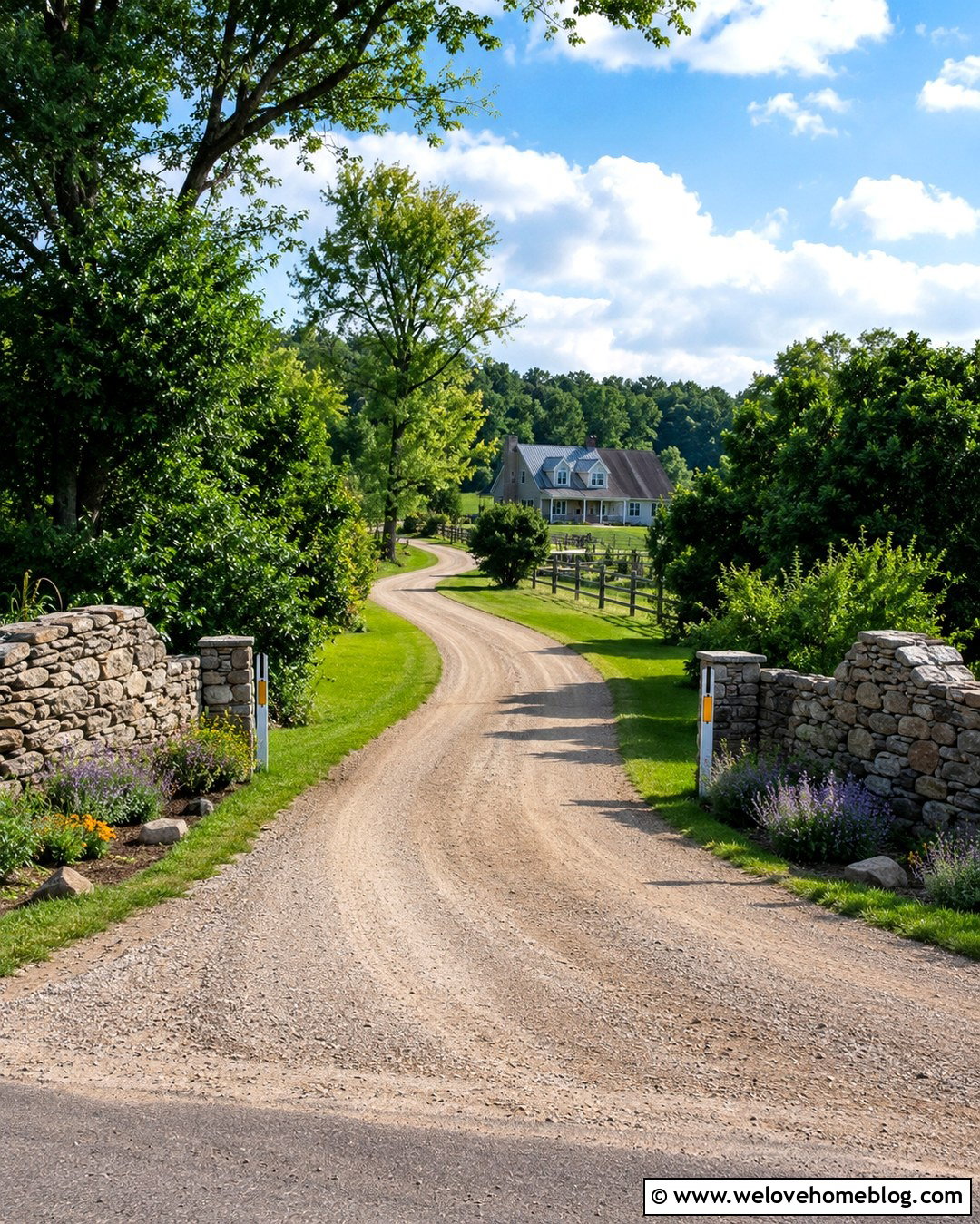
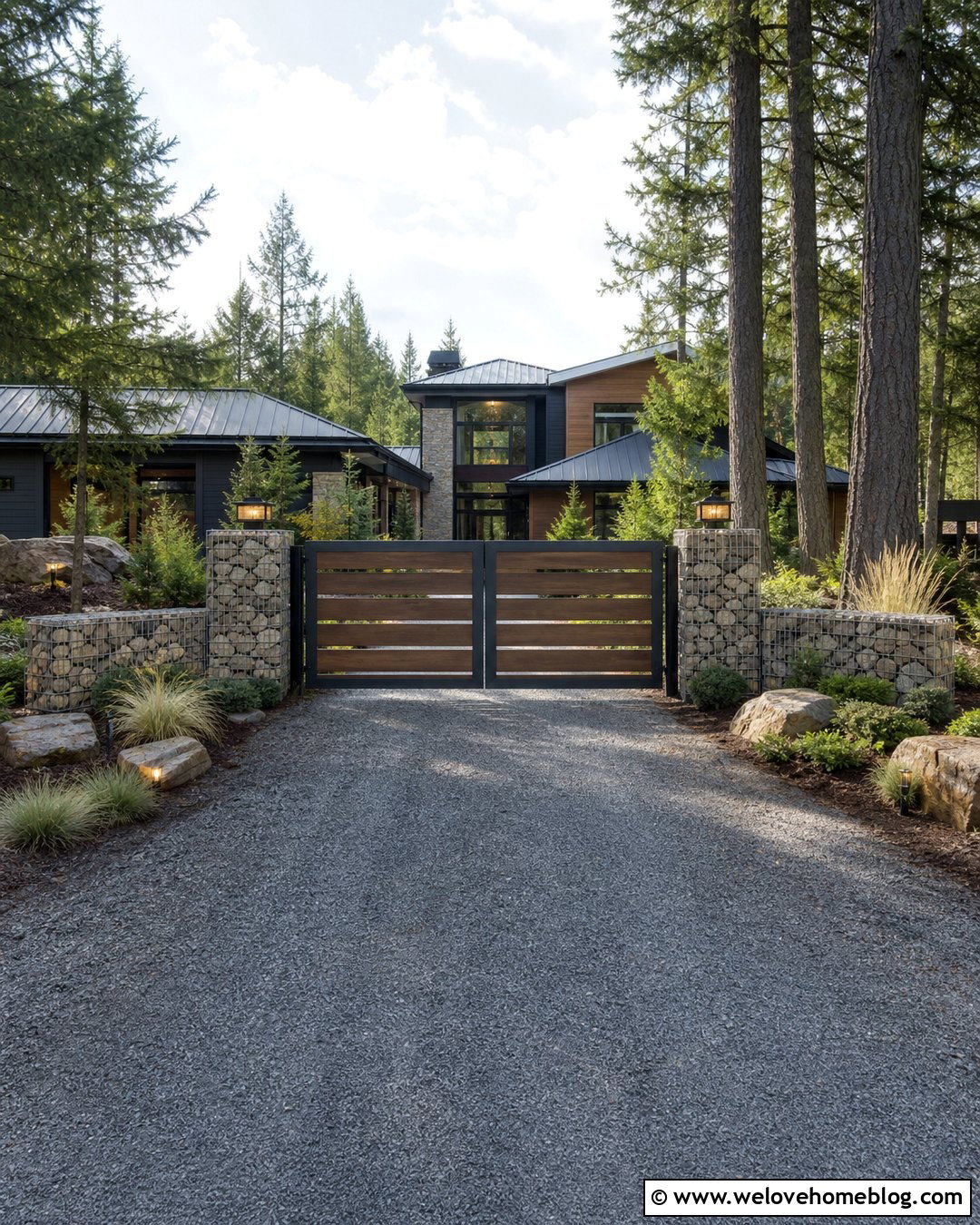
A hidden entrance should feel private from casual view without surprising approaching drivers. Start with a wide tan gravel apron framed by low fieldstone walls and short native planting. Keep the immediate roadside area open, then begin taller hedges, trees, and fencing farther along the driveway. Curve the route only after vehicles have cleared the entrance, allowing drivers to see traffic before pulling out. Reflective markers, a visible address sign, and properly positioned lighting can improve recognition while preserving the secluded character. Transportation guidance generally prioritizes clearing obstructions and improving driveway visibility before relying on warning signs. () This practical country layout offers privacy deeper inside the property while maintaining a clear, comfortable connection to the public road.
Conclusion:
The strongest **20 Hidden Driveway Entrance Ideas** combine privacy with a clear and functional arrival route. Curves, recessed gates, hedges, walls, berms, and layered planting can conceal the house without making the driveway unsafe or confusing. Choose a surface and entrance material that relate to your home, then repeat those colors around the gate, edging, address marker, and walkway. Keep roadside plants controlled, provide room for vehicles to turn or wait, and make the address easy to locate. Before installing walls, gates, lighting, or landscaping near the road, check local requirements and underground utilities. With thoughtful planning, a hidden driveway entrance can feel secluded, polished, and naturally connected to its surroundings.

Related posts:
Leave a Reply