
A sloped property can create a striking entrance, but it also brings practical challenges. The best **hill driveway ideas** balance safe vehicle access, strong traction, controlled drainage, slope stability, and attractive curb appeal. Materials must suit the climate and grade, while curves, landings, retaining walls, and planted banks can make a steep approach feel more manageable. Abrupt grade changes should also be softened to reduce vehicle scraping. Because local driveway limits and permit requirements vary, steep sites often need input from a civil engineer, landscape architect, or experienced driveway contractor. () From textured concrete climbs to winding asphalt approaches, the complete designs below offer practical and beautiful **20 Hill Driveway Ideas**.

1. Curved Concrete Hill Driveway
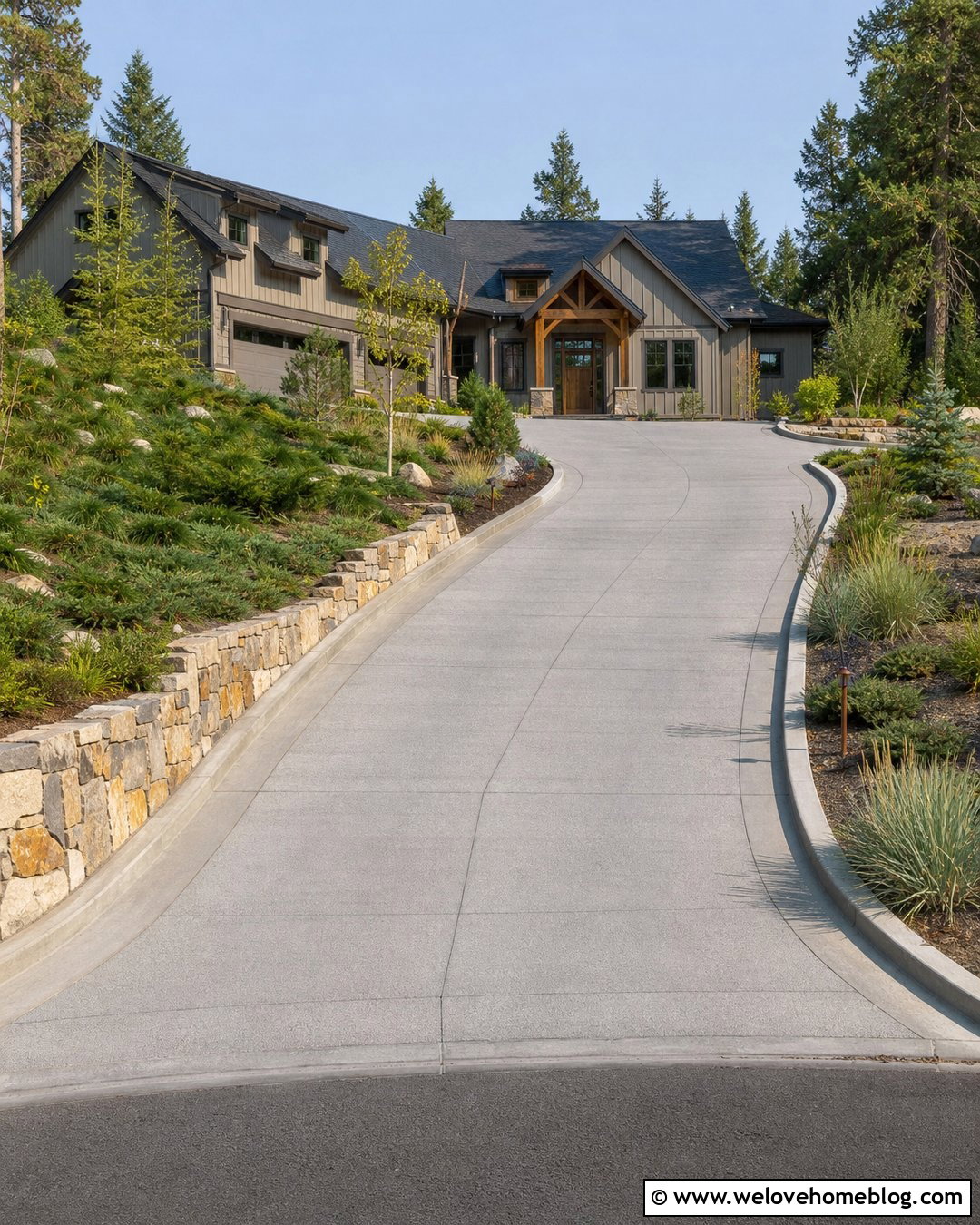
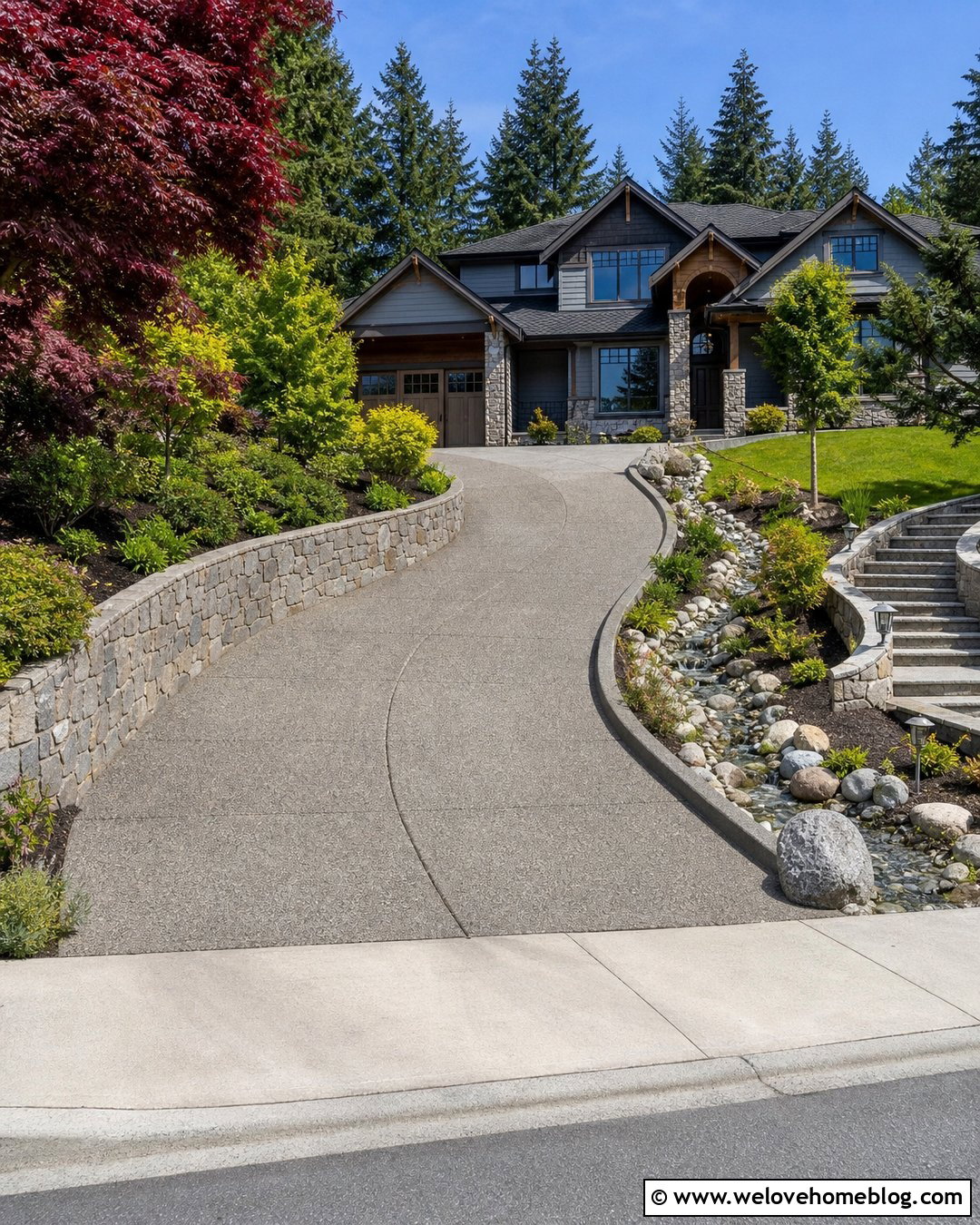
A curved concrete driveway can make a difficult climb feel smoother while creating an elegant approach to the house. Use broom-finished concrete rather than a polished surface so tires have better traction in wet weather. A broad S-curve may help spread elevation changes across a longer route when the property has enough width. On the uphill side, add a natural stone retaining wall with proper drainage behind it. The lower edge can feature a raised concrete curb that guides runoff toward designated collection points. Plant the surrounding banks with low-growing juniper, ornamental grasses, and erosion-resistant native groundcovers. At the top, include a gently transitioned parking apron instead of ending the slope abruptly at the garage.
2. Asphalt Switchback Hill Driveway
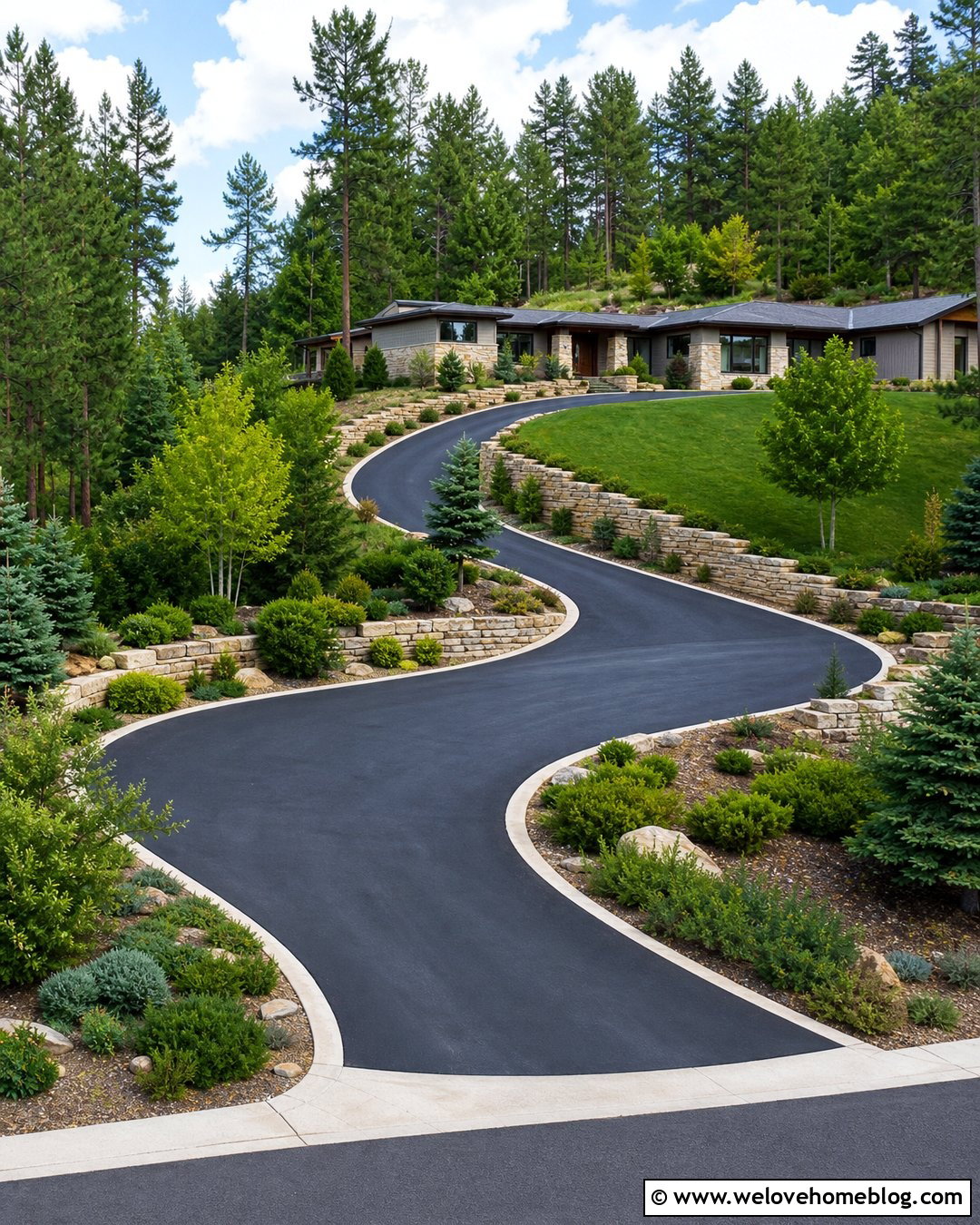
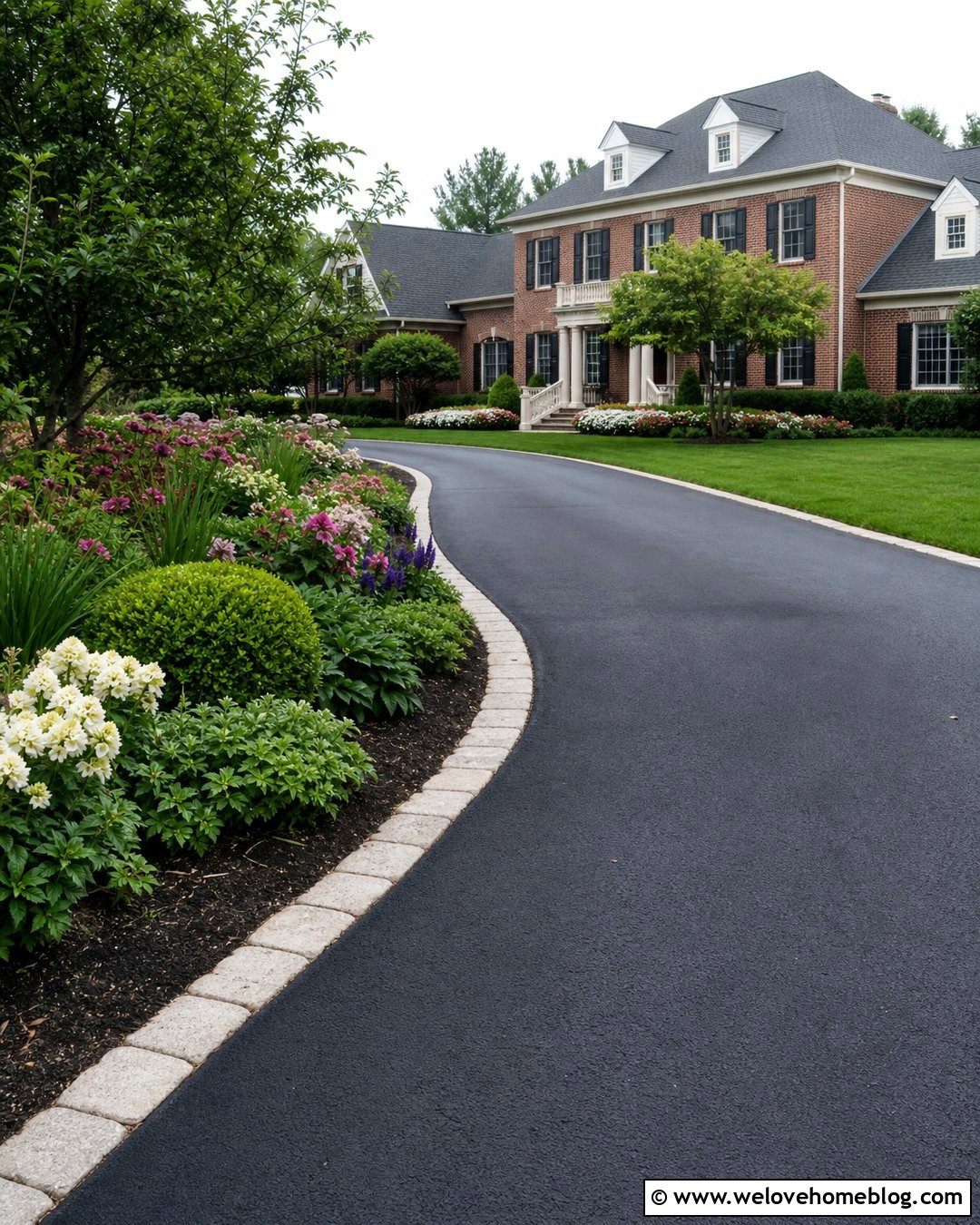
When a property has a wide, steep hillside, a switchback asphalt driveway can reduce the feeling of a direct climb. The driveway travels across the slope before turning through a generous paved bend and continuing toward the house. Smooth black asphalt provides a simple, affordable appearance, but the base preparation and drainage system are especially important on a hill. Reinforced concrete curbs can protect the downhill edges, while stone retaining walls support the cut banks above. Create a level or nearly level turning area at the main bend so drivers have additional room to maneuver. Dense evergreen shrubs and native grasses can soften the engineered structure without restricting visibility around the switchback or entrance.
3. Permeable Paver Hill Driveway
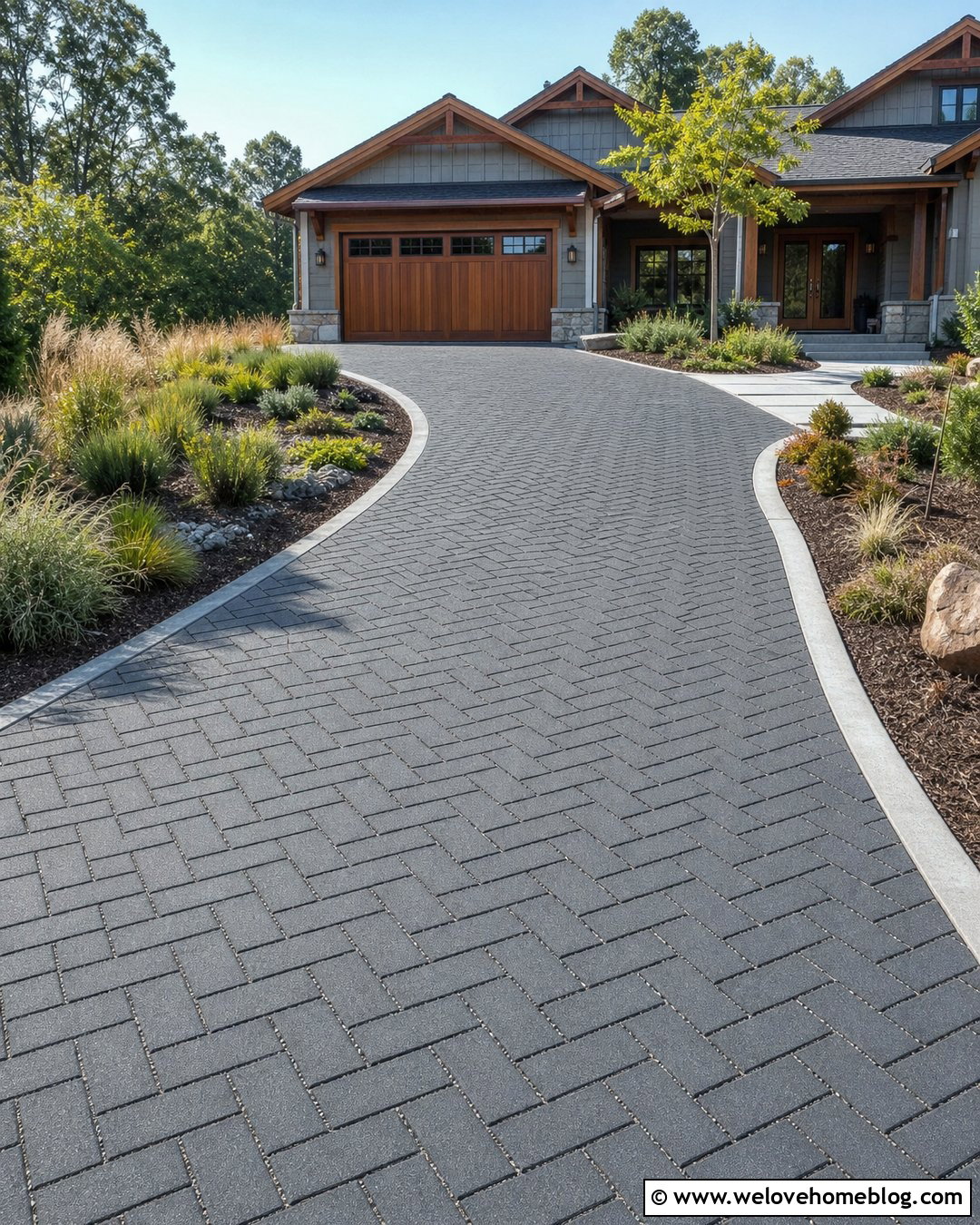
Permeable concrete pavers offer a polished solution for a moderately sloped driveway where runoff management is a priority. Choose textured charcoal or warm gray pavers with wide, aggregate-filled joints over a correctly engineered permeable base. Lay the pavers in a herringbone pattern to create a visually connected surface from the street to the garage. A gently curving layout can follow the natural contour of the land, reducing unnecessary excavation. Frame the driveway with low concrete curbs that prevent edge movement without making the entrance feel boxed in. Rain gardens near appropriate discharge areas can collect water while adding color. Because slope, soil, and stormwater conditions affect performance, have the entire permeable system professionally designed rather than treating pavers as a surface-only upgrade.
4. Exposed Aggregate Hill Driveway
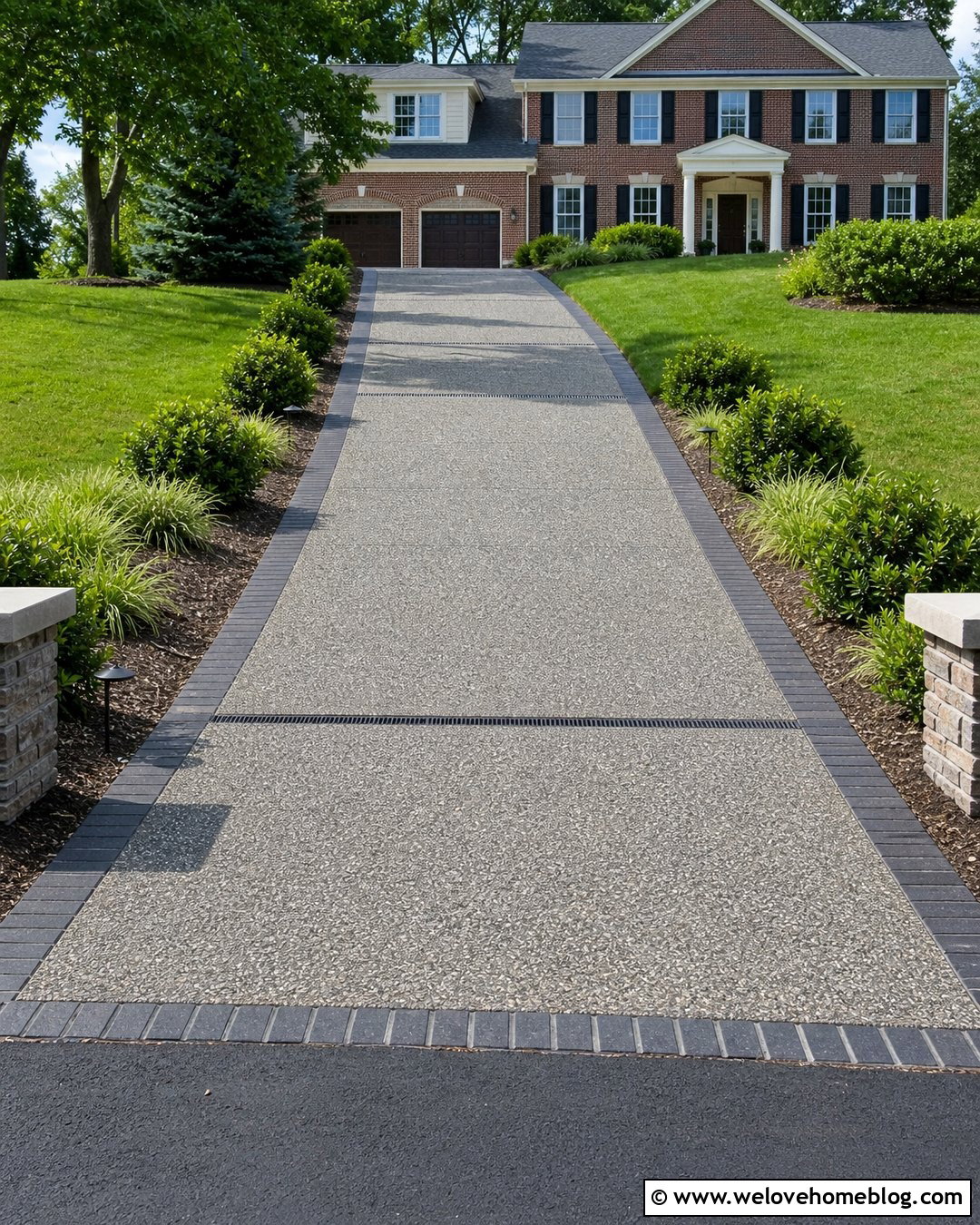
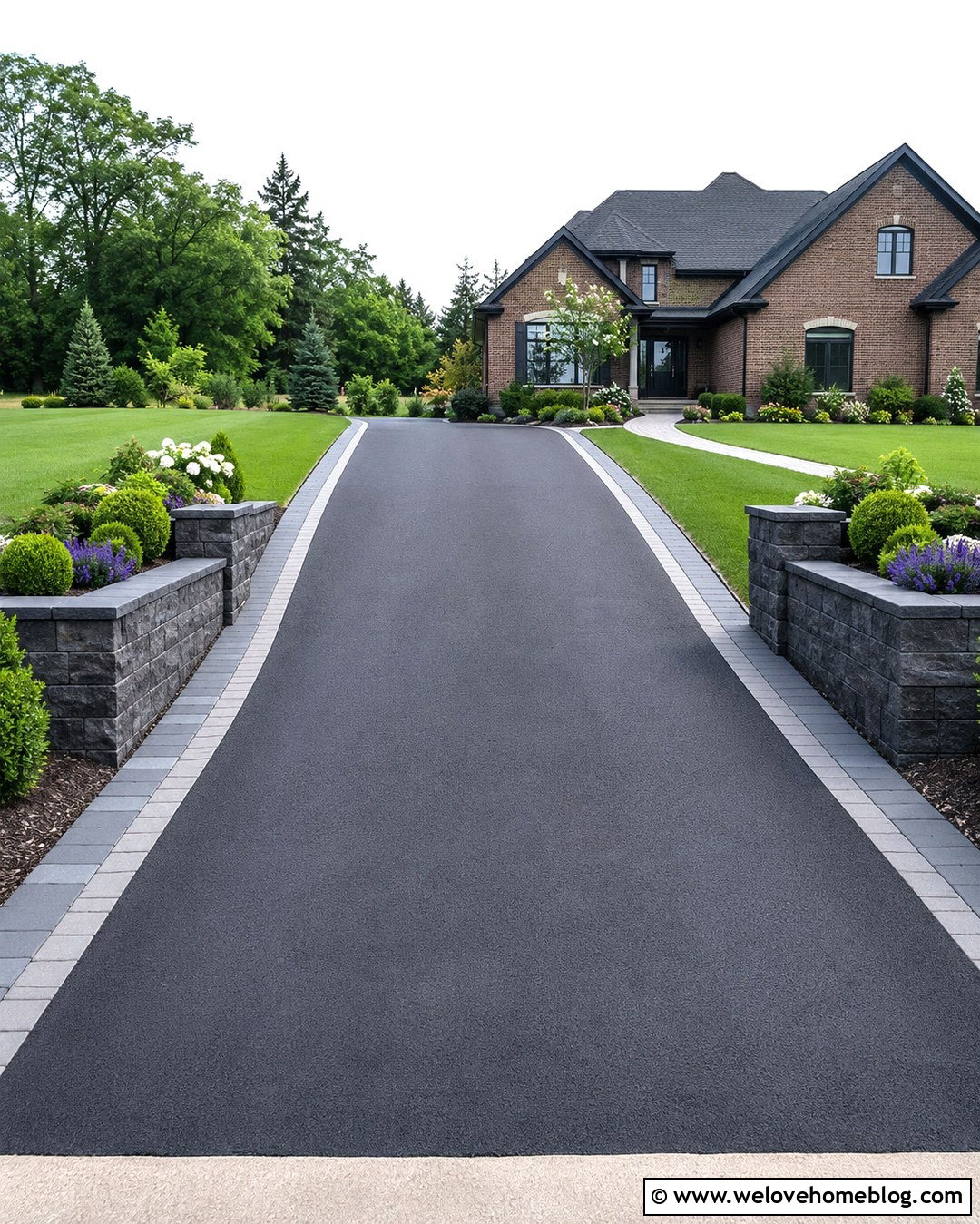
Exposed aggregate concrete combines a durable paved surface with a naturally textured appearance that suits sloped properties. A straight driveway can work well when the grade is moderate and there is enough space for smooth transitions at the street and garage. Select a medium-gray concrete mix with small tan and charcoal stones for visible texture. Dark brick ribbons along both edges create definition and coordinate with a traditional home. Install transverse channel drains where needed to intercept water before it gains speed down the driveway. Avoid directing runoff onto the street, neighboring property, or an unsupported slope. Wide planting beds filled with compact shrubs and ornamental grasses can visually reduce the length of the climb while leaving clear sightlines near the entrance.
5. Gravel Grid Hill Driveway
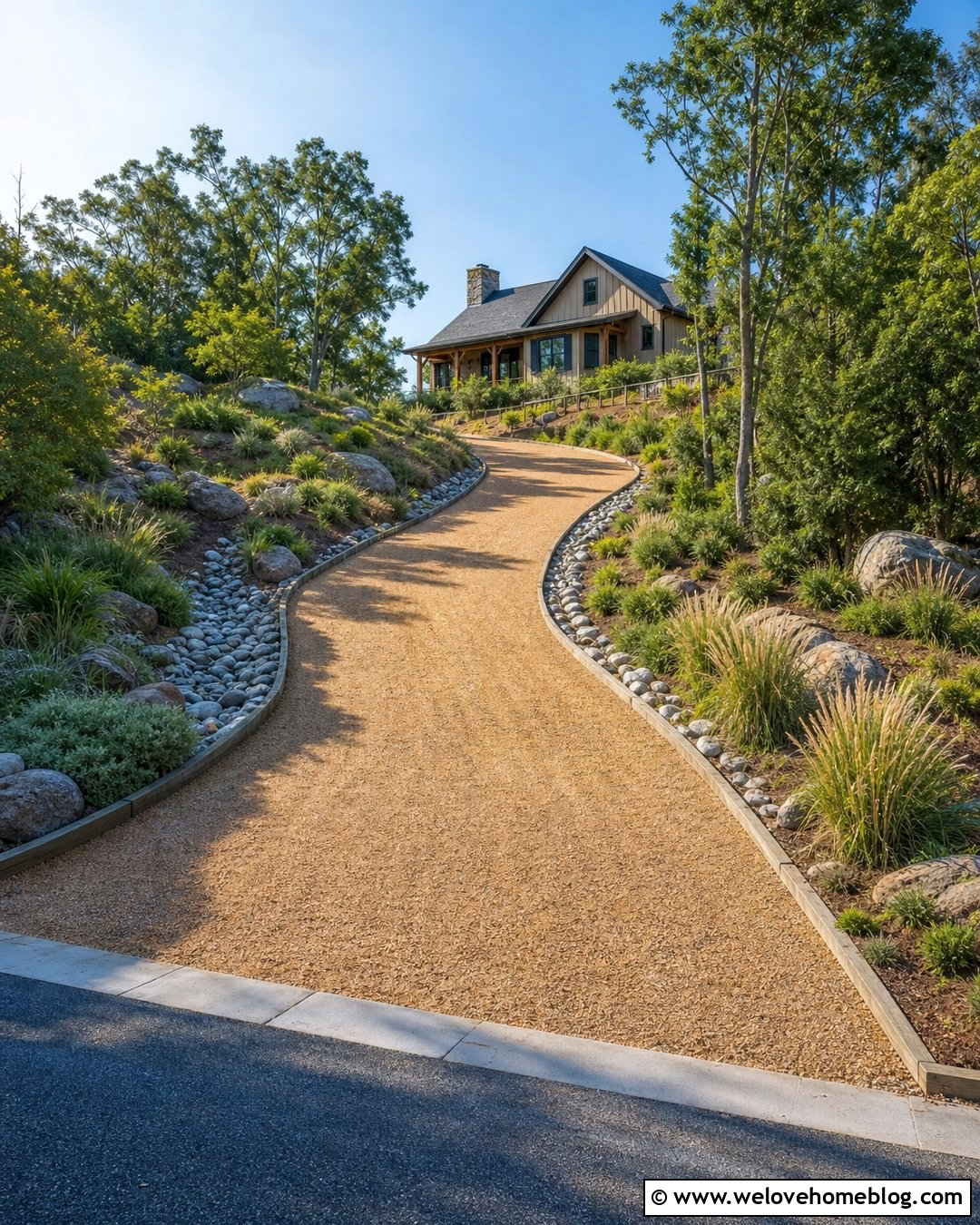
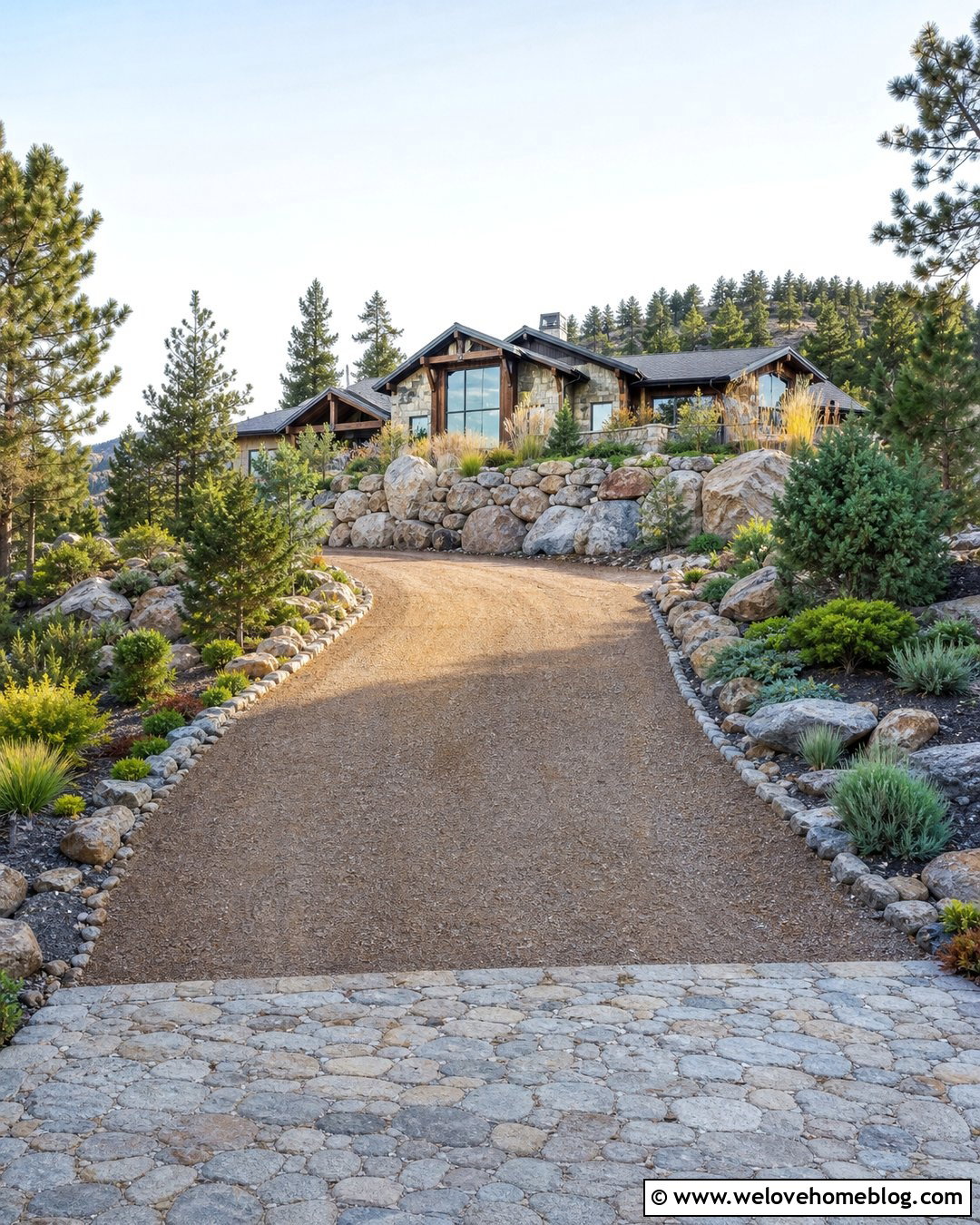
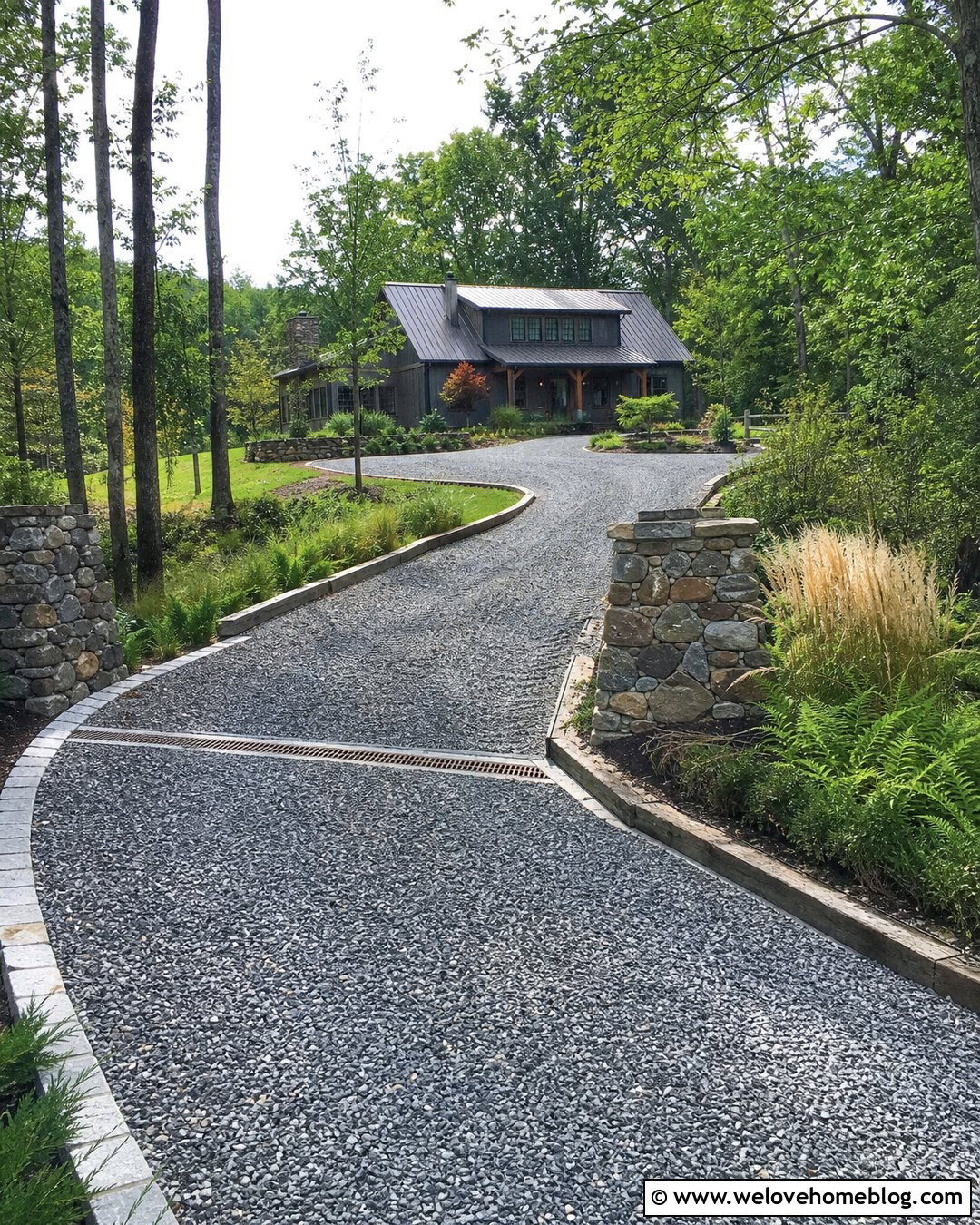
Loose gravel can wash downhill or develop ruts, so a hill driveway benefits from a cellular stabilization grid beneath the stone. Fill the grid with angular crushed gravel rather than smooth pea gravel, which is more likely to shift under tires. A wide, gently winding layout can follow the hillside and give the driveway a relaxed country appearance. Use pressure-treated timber or steel edging to contain the surface, and place drainage swales along the uphill side. At steeper points, consider paved transition strips or professionally designed water bars that direct runoff without creating harsh bumps. Native grasses, creeping groundcovers, and scattered boulders will stabilize the surrounding soil visually and physically. Regular grading and gravel replenishment may still be needed, especially after intense storms.
6. Resin-Bound Hill Driveway
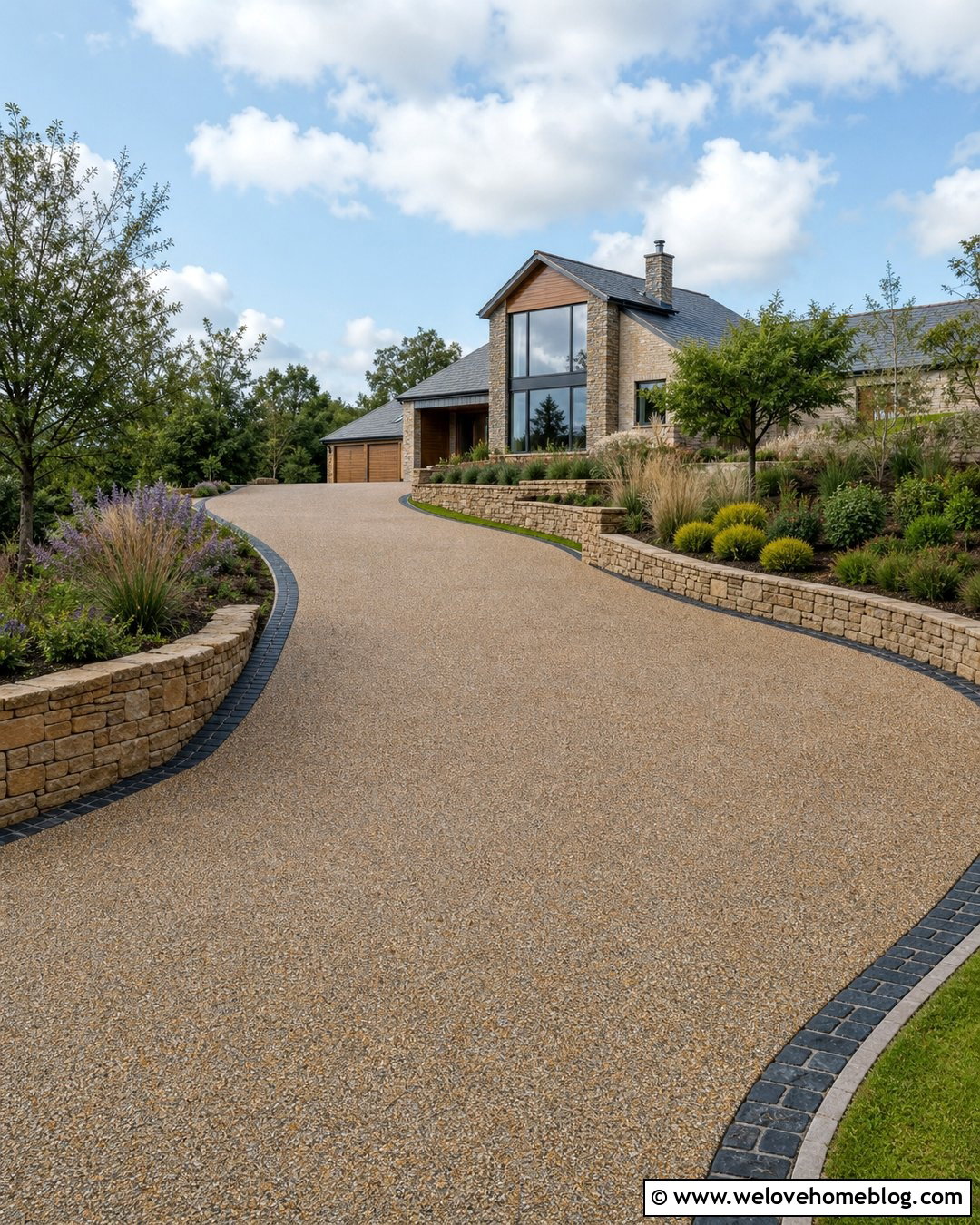
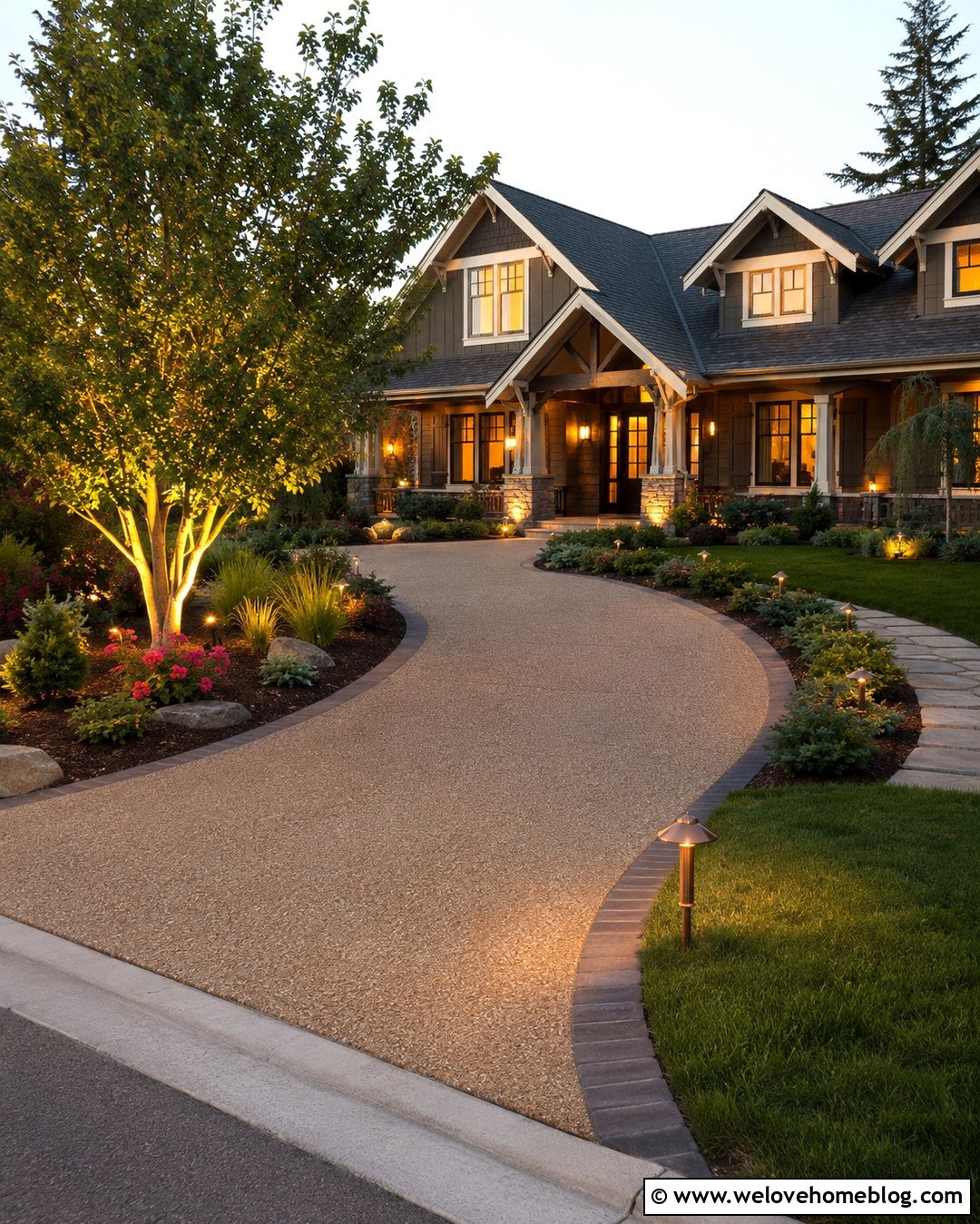
A resin-bound gravel driveway creates a clean, continuous finish without the loose stones associated with traditional gravel. For a moderately steep approach, choose a UV-stable blend of warm tan and gray aggregate that complements the home’s exterior. Shape the driveway with a gradual curve and include a wider arrival court near the garage. Dark granite setts can form sturdy side borders and decorative transition bands. Since permeability depends on the complete base construction, specify a compatible porous foundation when drainage through the surface is desired. Add planted terraces to the uphill bank, using low stone walls to reduce broad areas of exposed soil. The finished composition feels refined but natural, making it especially suitable for contemporary country houses, craftsman homes, and updated ranch properties.
7. Herringbone Brick Hill Driveway
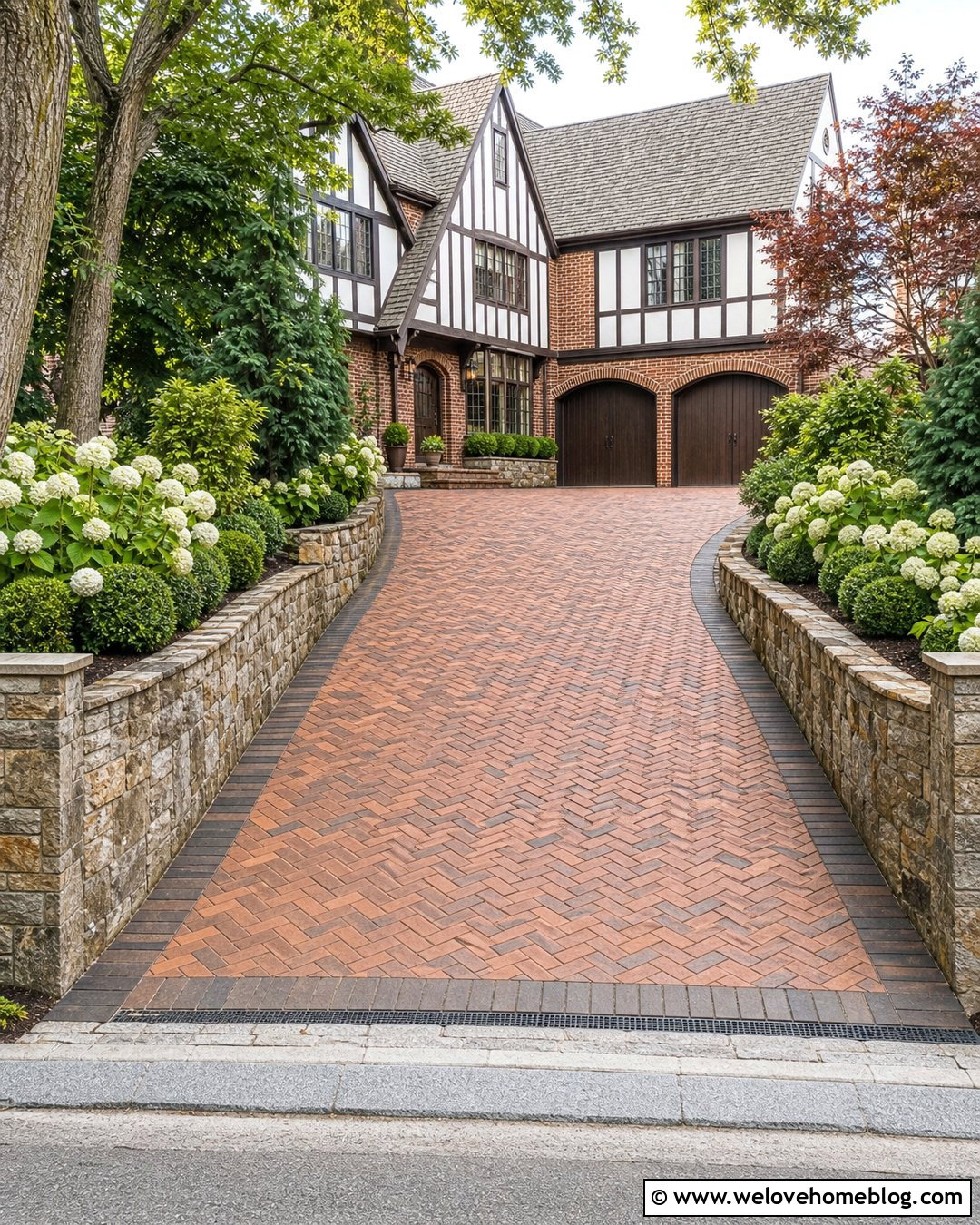
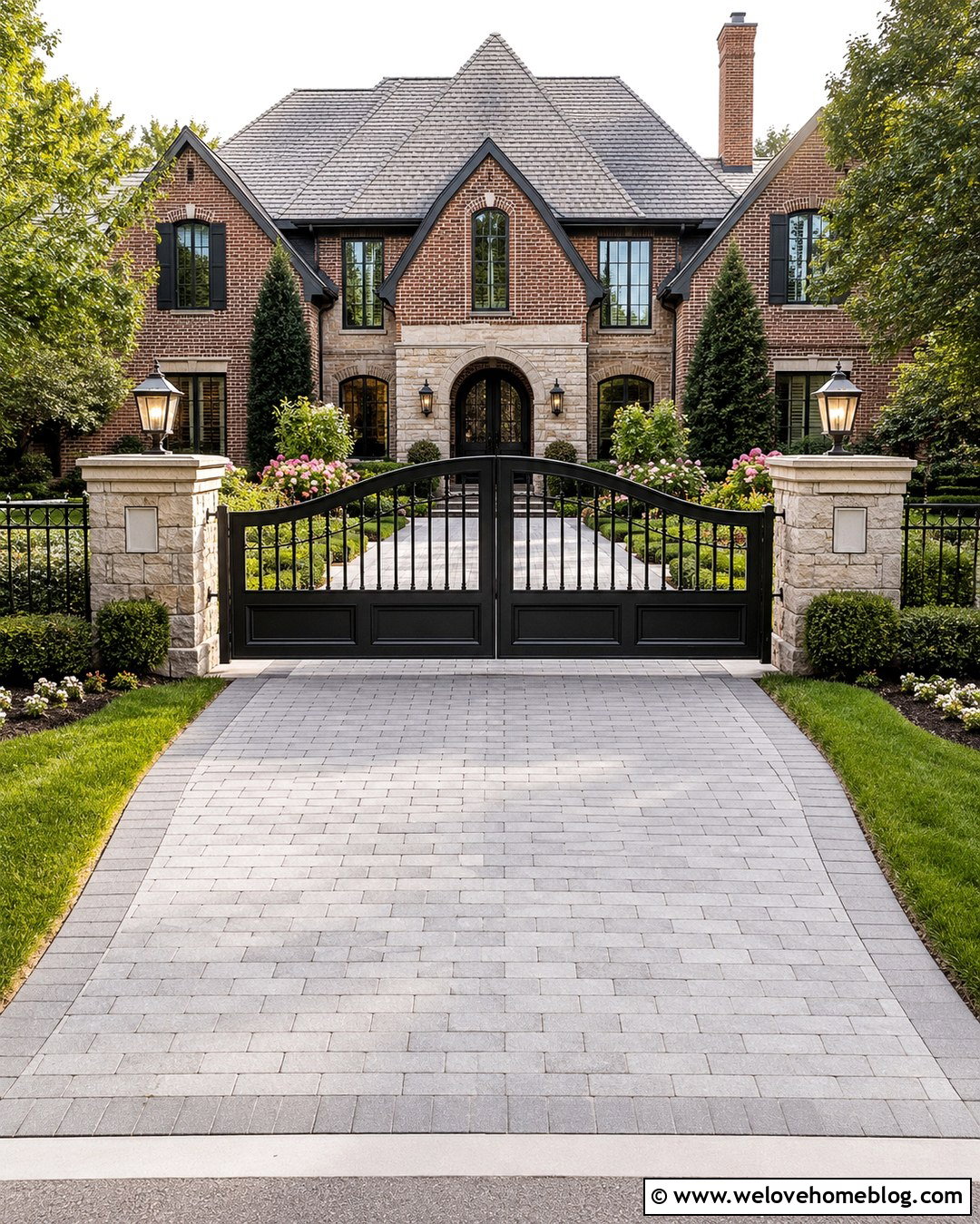
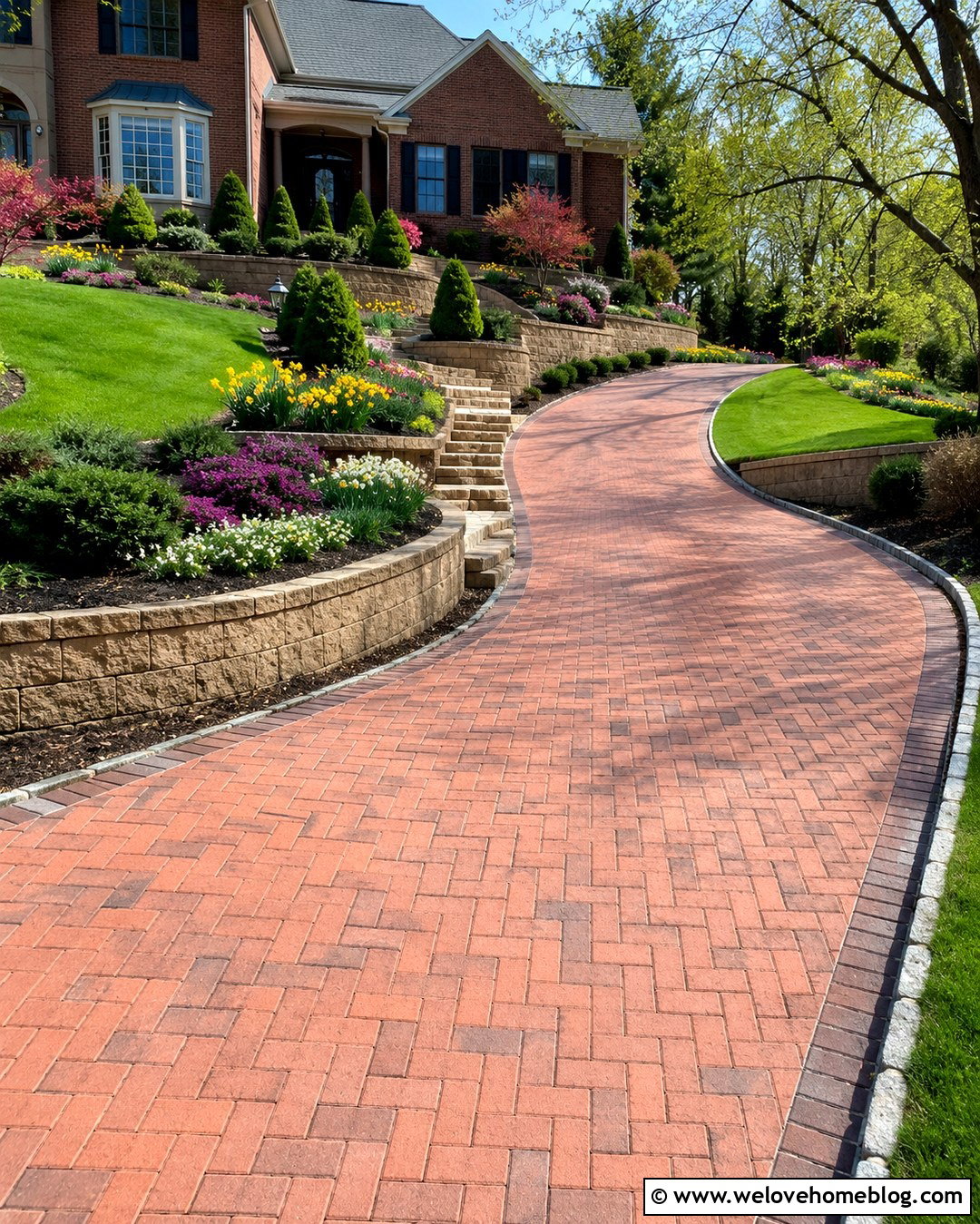
Clay brick pavers laid in a herringbone pattern bring strong visual character to a sloping driveway. The interlocking pattern is a practical choice for a properly constructed paved approach because it distributes movement across multiple units. Select darker red and brown bricks with a textured, weathered finish rather than glossy pavers. A straight driveway can be softened with broad planting beds and curved stone retaining walls on both sides. Install a restrained concrete edge beneath the visible brick border to help prevent spreading. Where runoff crosses the route, use discreet channel drains coordinated with the brick pattern. White hydrangeas, evergreen shrubs, and shade trees can frame the climb beautifully. This complete look works particularly well with colonial, Tudor, and traditional brick houses.
8. Cobblestone Hill Driveway
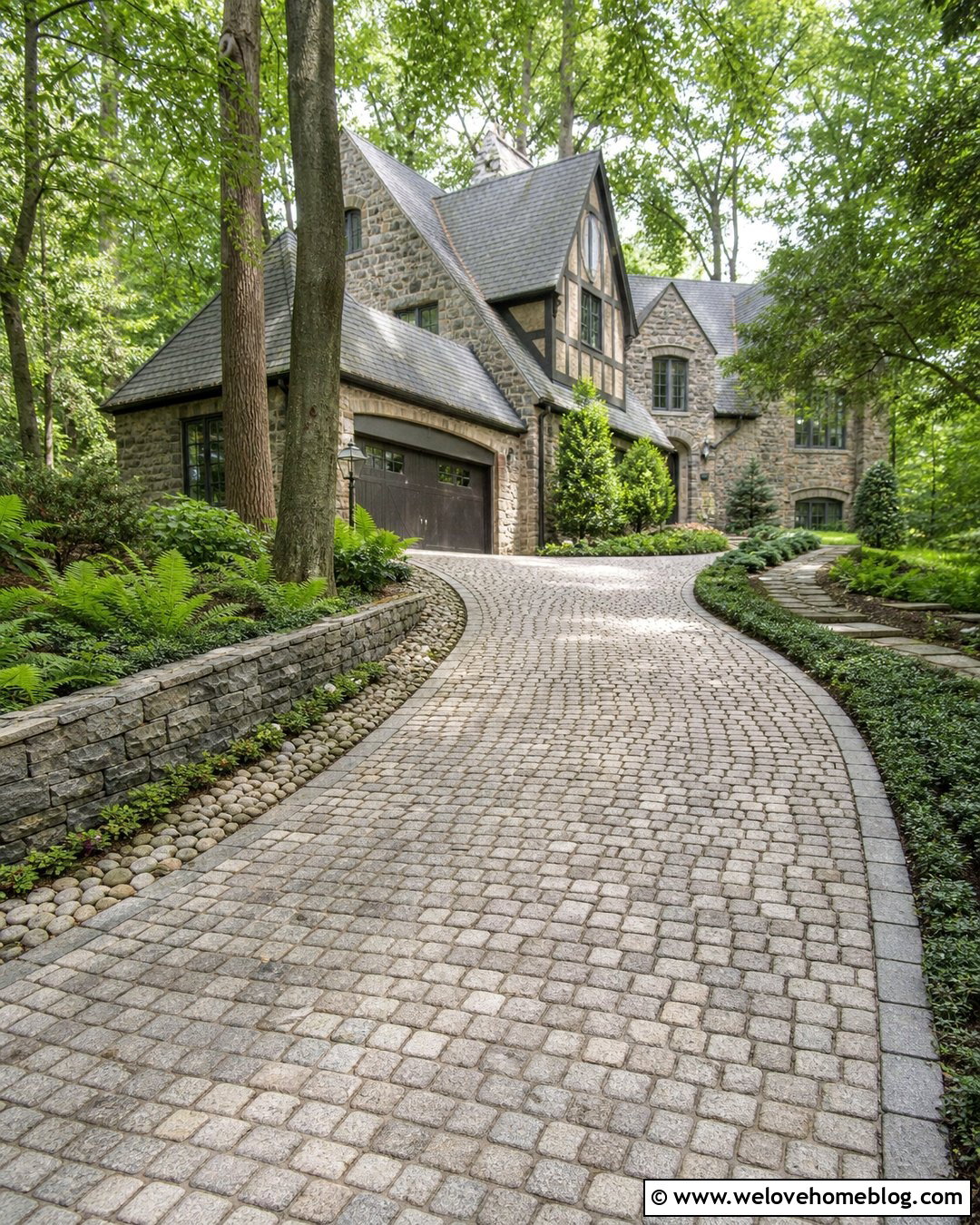
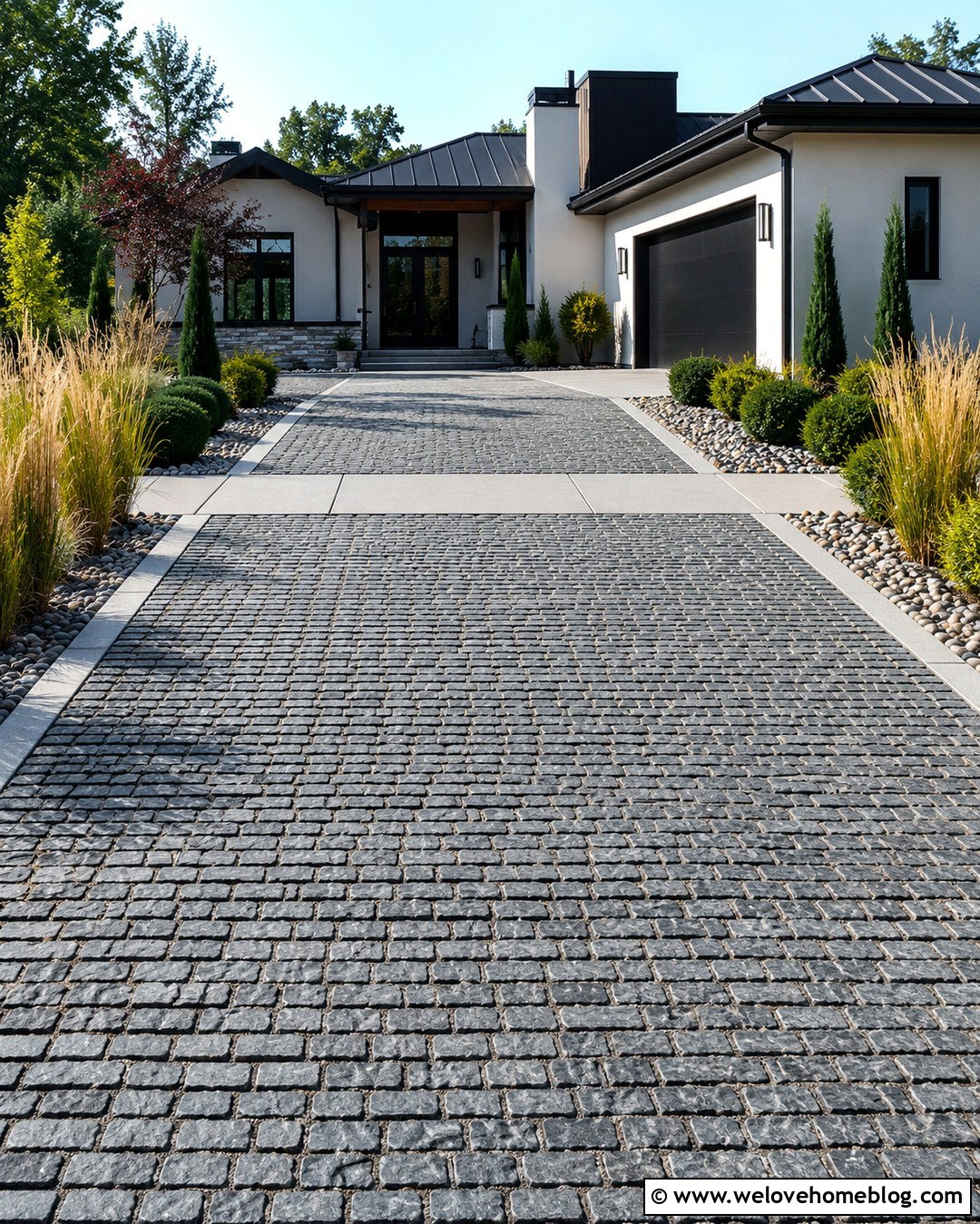
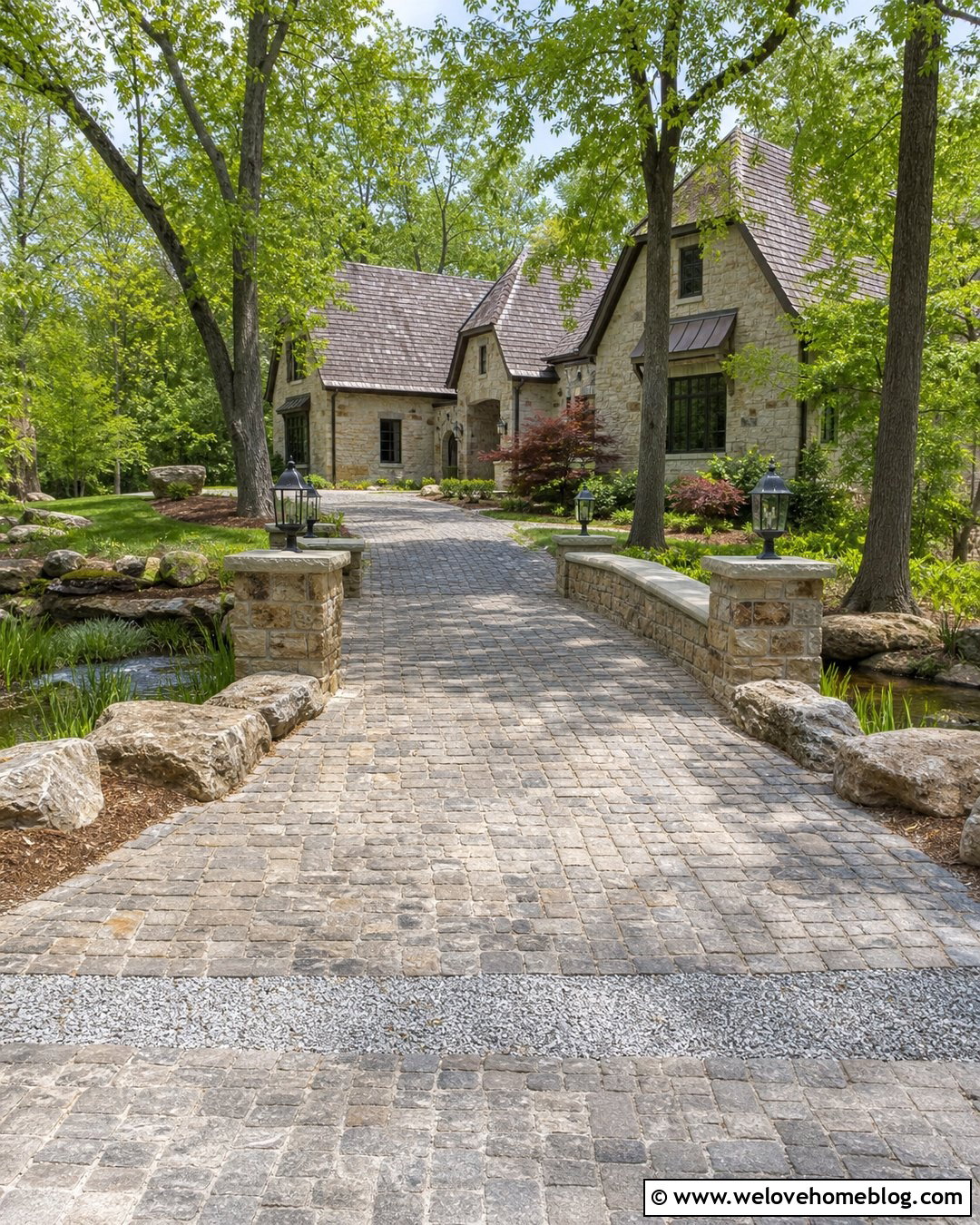
Cobblestone gives a hillside entrance an established, substantial appearance, especially when paired with stone architecture. Use flat-topped granite cobbles in mixed gray tones to create a surface that is easier to drive on than highly rounded stones. A gently curving route can follow the hill toward a cottage, Tudor, or European-inspired home. On the high side, build a dry-stack stone retaining wall that visually matches the driveway while incorporating professionally planned drainage behind it. A narrow planting strip can separate the wall from the pavement and collect small amounts of surface water. Add ferns, compact evergreens, and woodland groundcovers for a soft transition into the landscape. Keep joints tight and the base stable to limit settlement and an excessively uneven driving surface.
9. Concrete Strip Hill Driveway
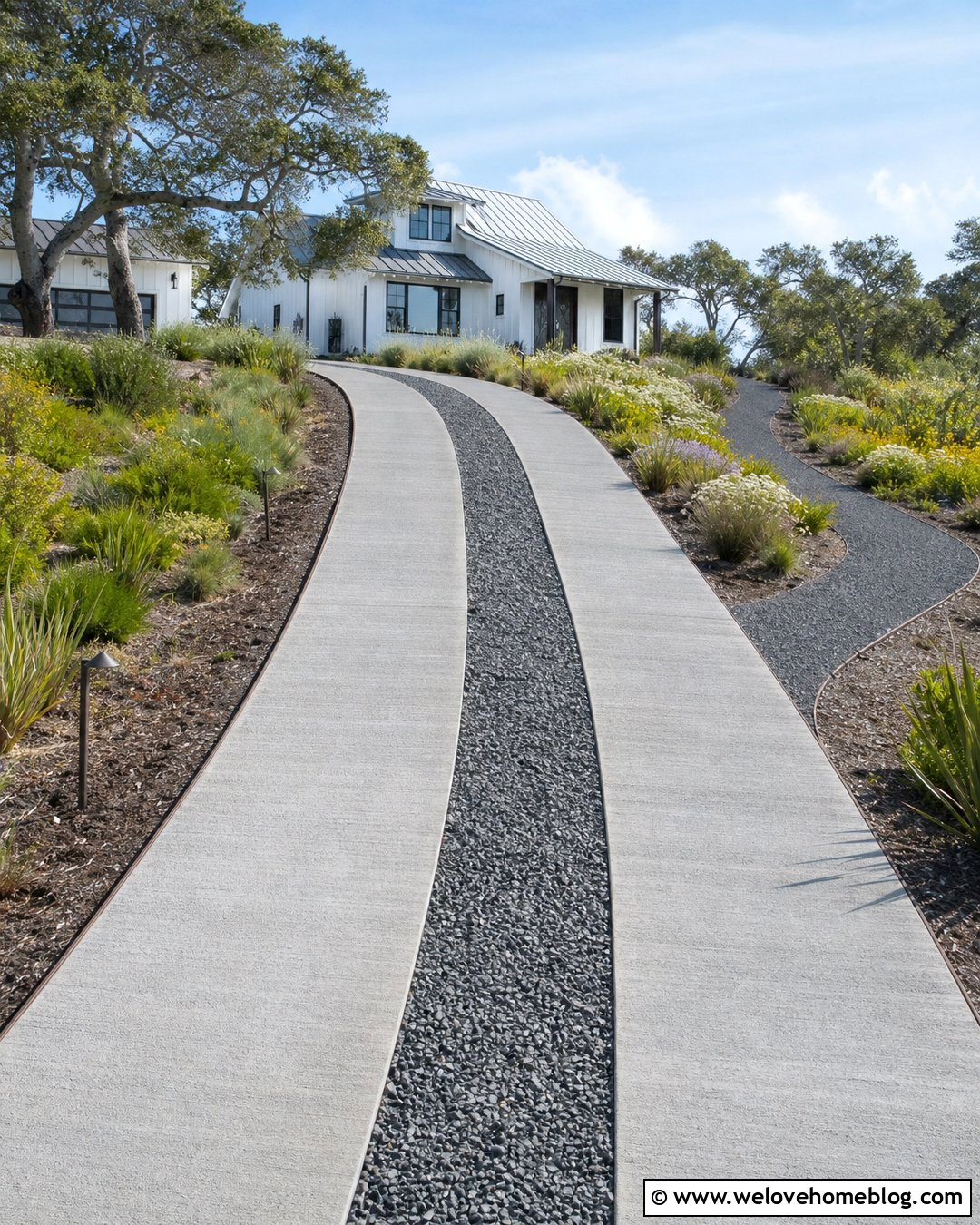
A concrete strip driveway uses two paved tire tracks with a planted or gravel-filled center, creating a lighter look on a gentle hill. Use broom-finished gray concrete strips wide enough for comfortable tire placement, and fill the center with stabilized crushed stone rather than tall grass on frequently used routes. A subtle curve can guide the eye toward a small modern farmhouse or cottage. Steel edging keeps the center material contained, while shallow planted swales manage runoff beside the driveway. Repeat the same crushed stone in the nearby walkway for visual continuity. This layout is best for moderate grades, predictable vehicle widths, and lower traffic levels. In cold or extremely wet climates, discuss maintenance, drainage, and snow-clearing limitations with a local contractor before installation.
10. Tiered Retaining Wall Hill Driveway
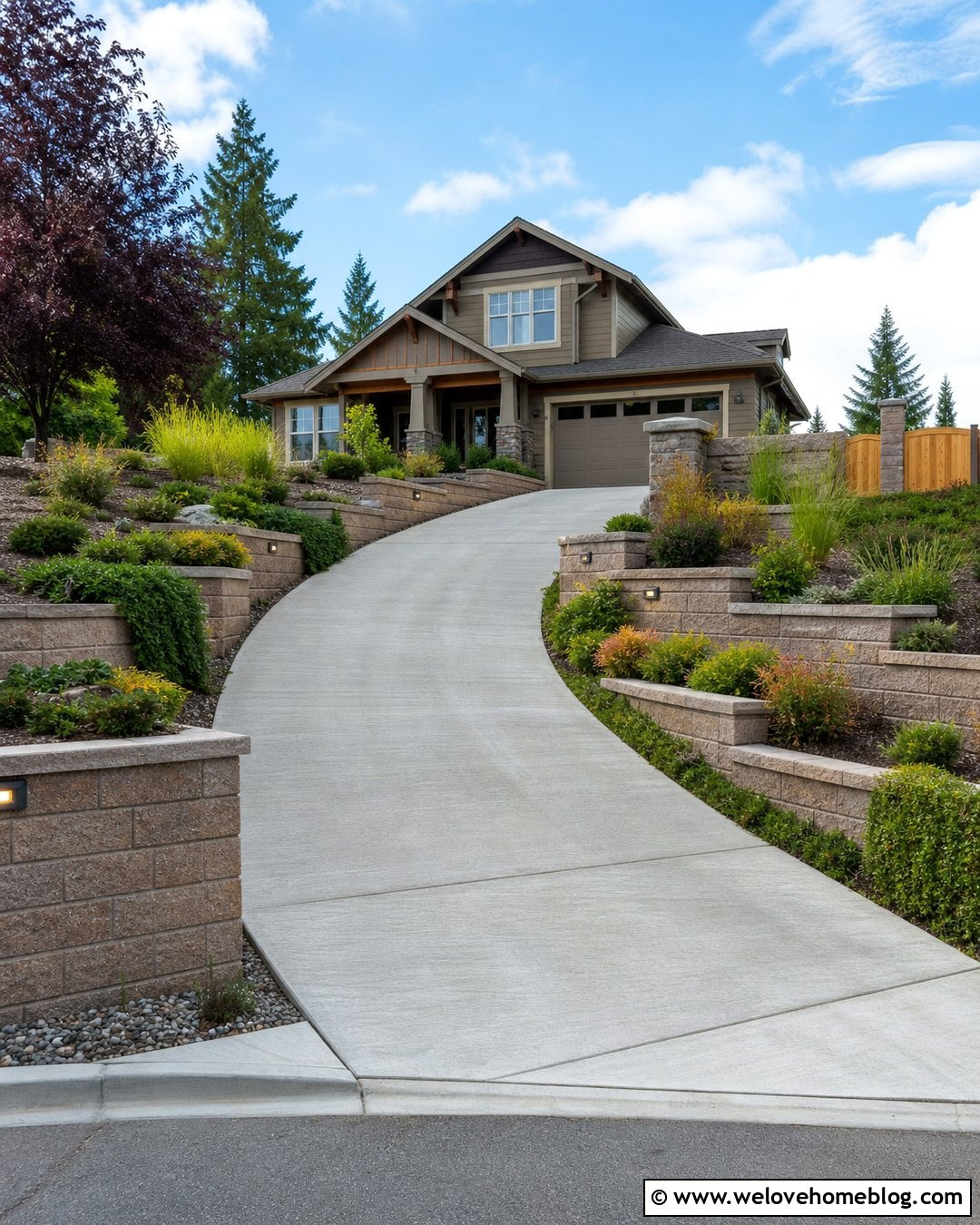
Tiered retaining walls can turn a severe roadside bank into a structured landscape surrounding the driveway. Pair a broom-finished concrete surface with two or three low segmental block walls rather than one visually overwhelming wall where engineering permits. The driveway can curve gently between the terraces, creating a more natural journey to the house. Fill each level with deep-rooted shrubs, spreading groundcovers, and ornamental grasses that soften the masonry and help protect exposed soil. Every wall needs a suitable foundation, backfill, drainage path, and safe outlet. Walls carrying driveway loads or holding significant soil should be designed professionally because trapped water and lateral pressure can cause serious failure. () Integrated step lights can improve visibility without cluttering the retaining-wall design.
11. Hill Driveway With Parking Landing
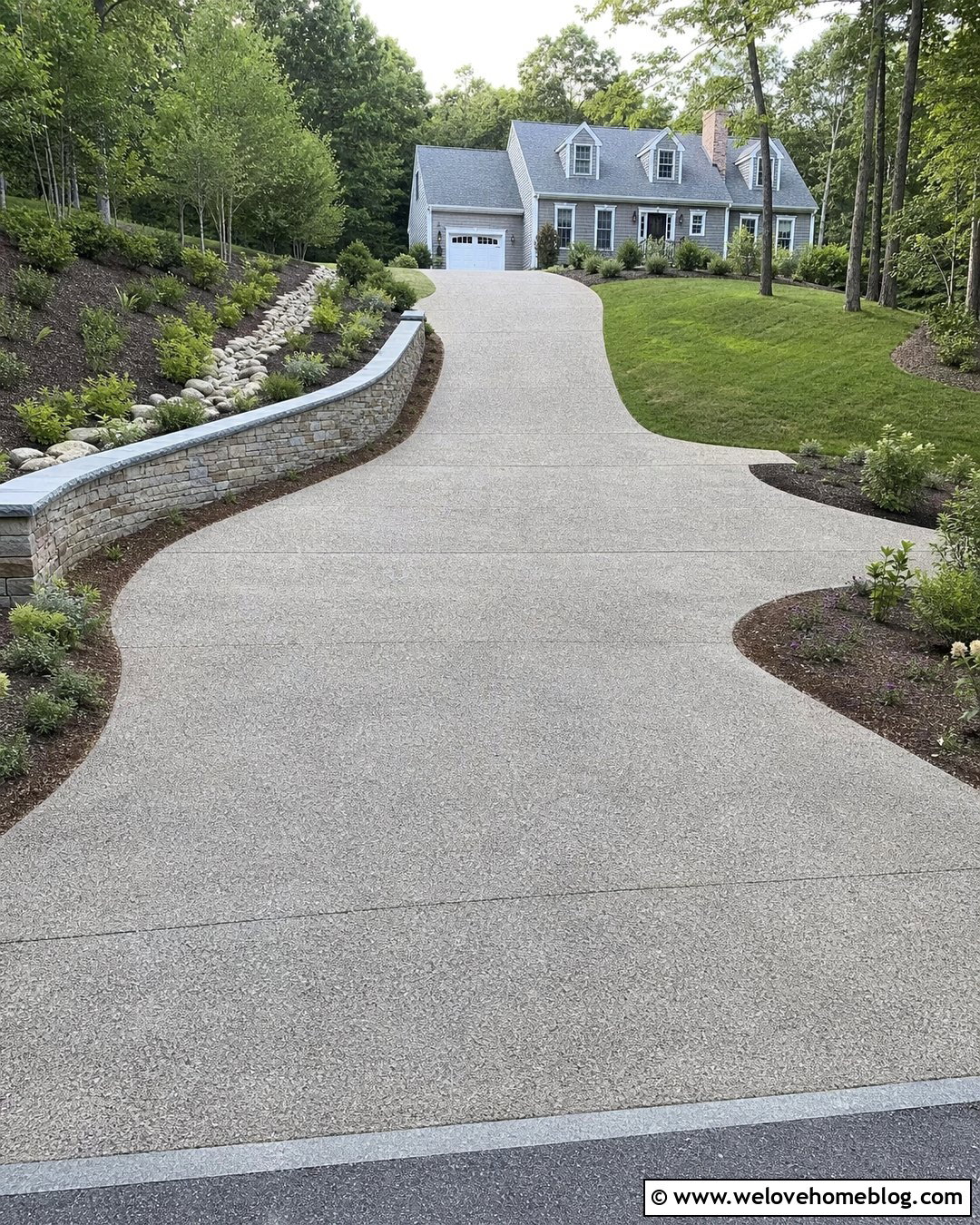
A parking landing adds useful level space to a hill driveway, giving drivers an easier place to turn, wait, or park away from the steepest section. Build the main route from textured gray poured concrete and widen it midway into a rectangular or softly curved parking bay. A reinforced retaining wall may be required on the downhill side to support the added platform. Cap the wall with natural stone that matches the home or nearby walkway. On the uphill side, use a planted drainage swale to redirect water before it reaches the landing. Low shrubs should frame the space without blocking visibility. The driveway can then continue uphill toward the garage with a gentle transition, producing a practical layout that feels intentional rather than oversized.
12. Hill Driveway With Channel Drains
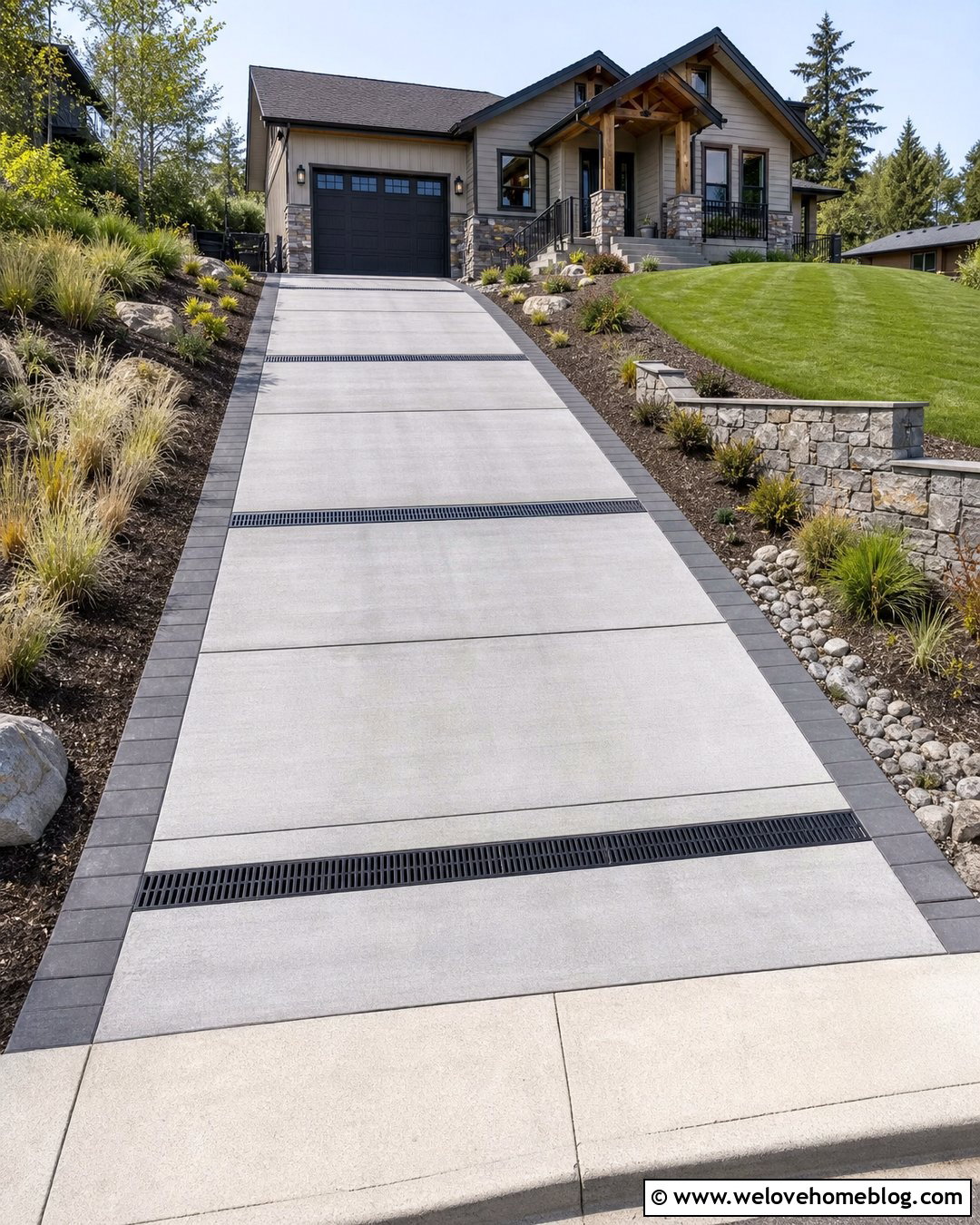
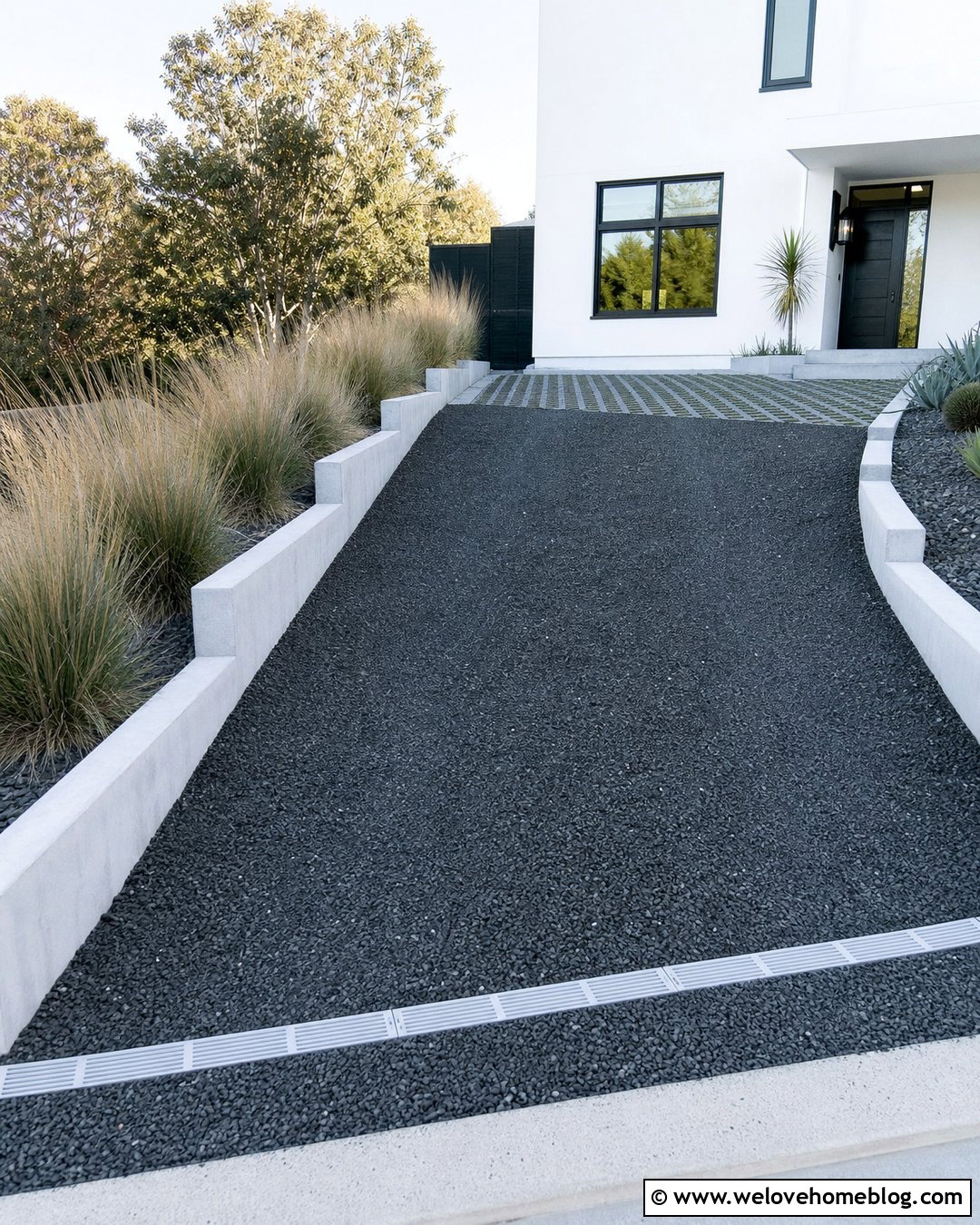
Heavy rain can move quickly down a paved hill driveway, so drainage should be integrated into the design from the beginning. Use textured light-gray concrete with several correctly placed channel drains crossing the driveway at engineered collection points. Dark cast-iron or galvanized grates can become clean visual lines rather than awkward additions. Pair the straight surface with charcoal paver borders and a low stone wall along the uphill bank. Water should enter a properly sized drainage system and discharge at an approved, stable location, not simply spill over the lower slope. Add moisture-tolerant grasses and shrubs around swales or collection areas. This complete approach protects the surface, reduces erosion risk, and creates an orderly entrance suitable for a modern craftsman or suburban home. ()
13. Hill Driveway With Stone Swales
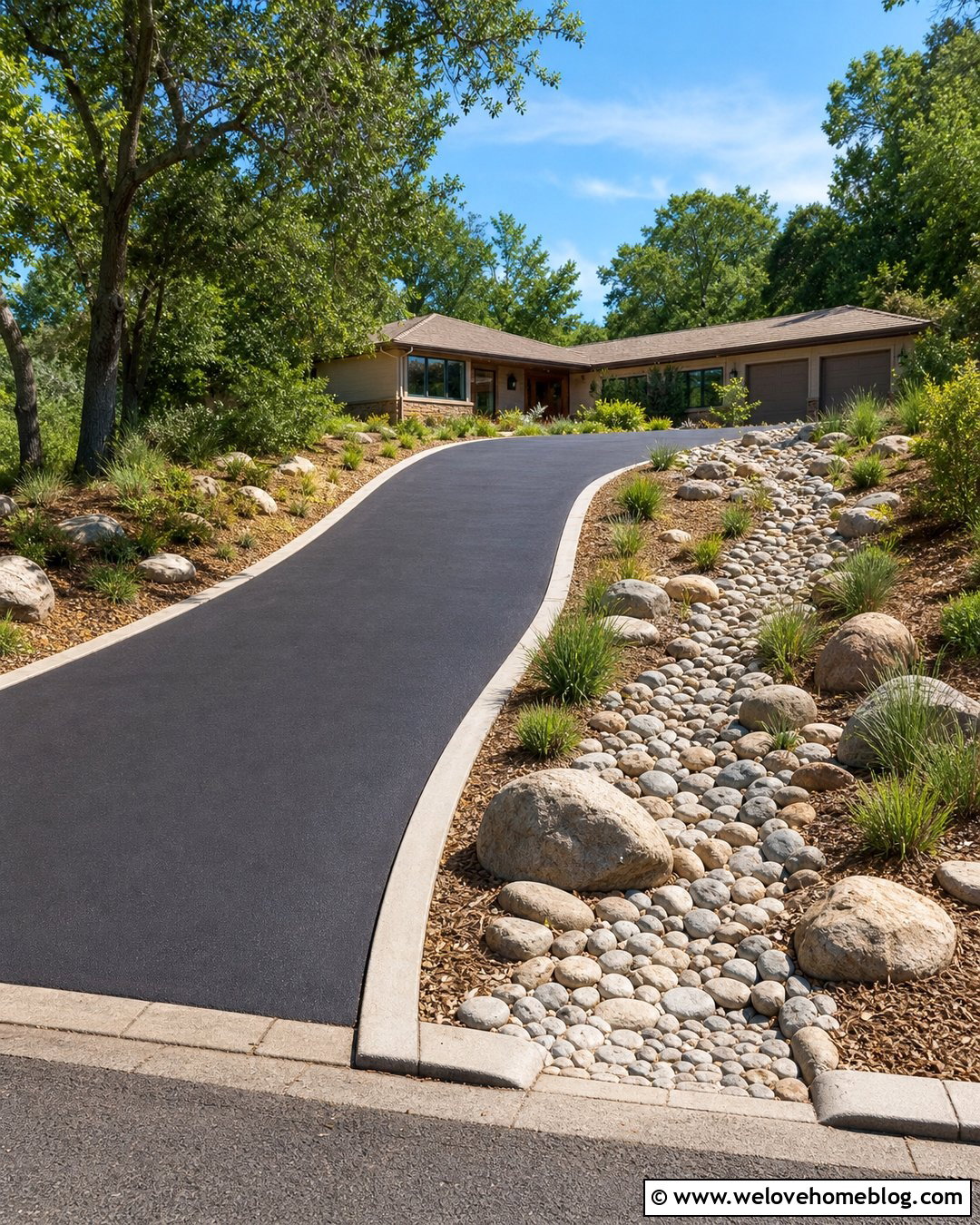
A stone-lined swale can turn necessary drainage into an attractive landscape feature. Combine a dark asphalt driveway with a broad, shallow channel running along the uphill side. Line the swale with rounded river rock over the appropriate drainage layers, then add larger boulders at bends to slow and guide the visual flow. The driveway itself can sweep gently toward a ranch house surrounded by native planting beds. Use a concrete curb between the asphalt and swale where runoff needs controlled entry points. Sedges, rushes, and low grasses planted beyond the stone channel soften its edges. A second stabilized outlet near the bottom can safely handle collected water. Proper sizing remains essential because a decorative rock bed alone may not manage runoff from a large hillside.
14. Woodland Hill Driveway
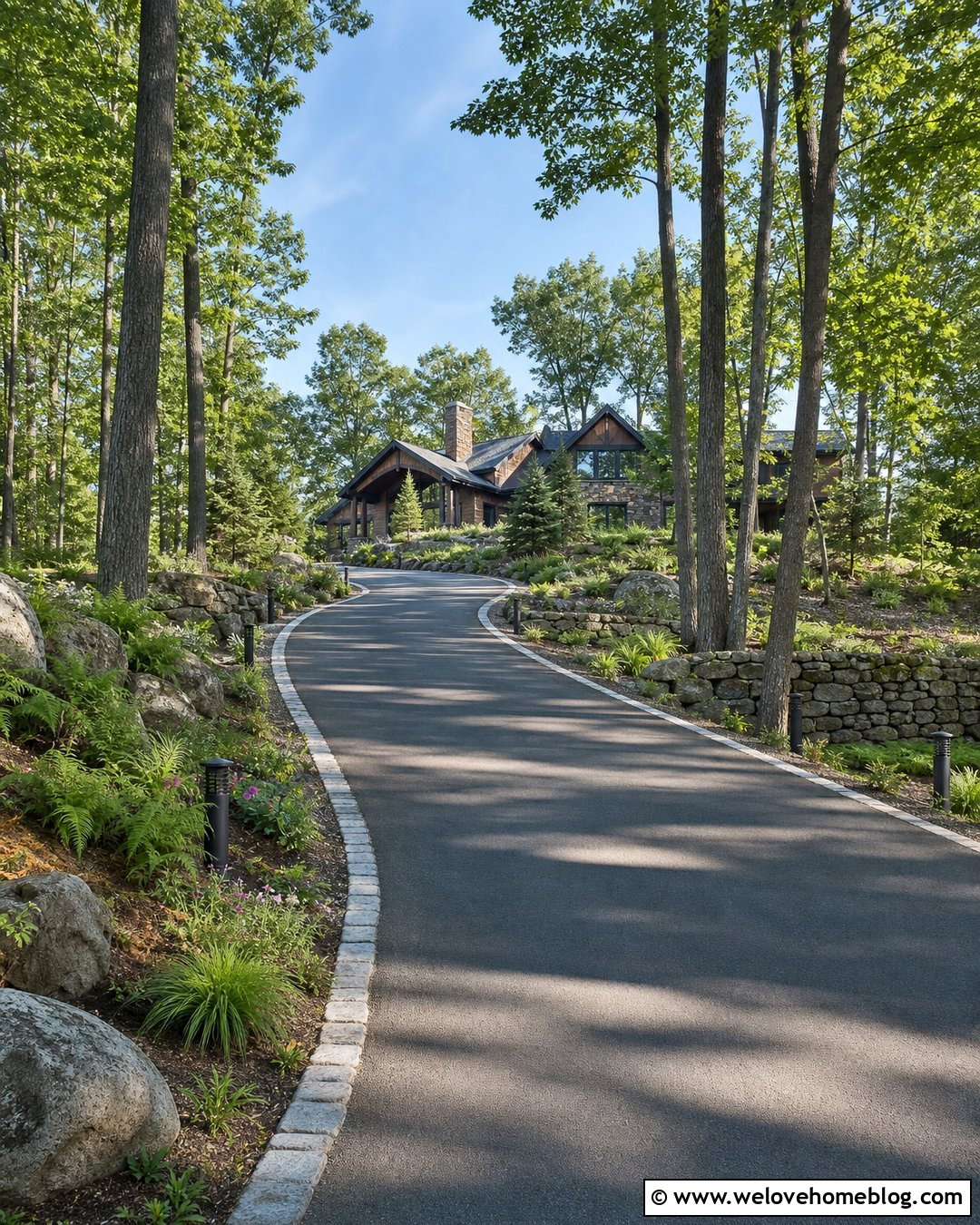
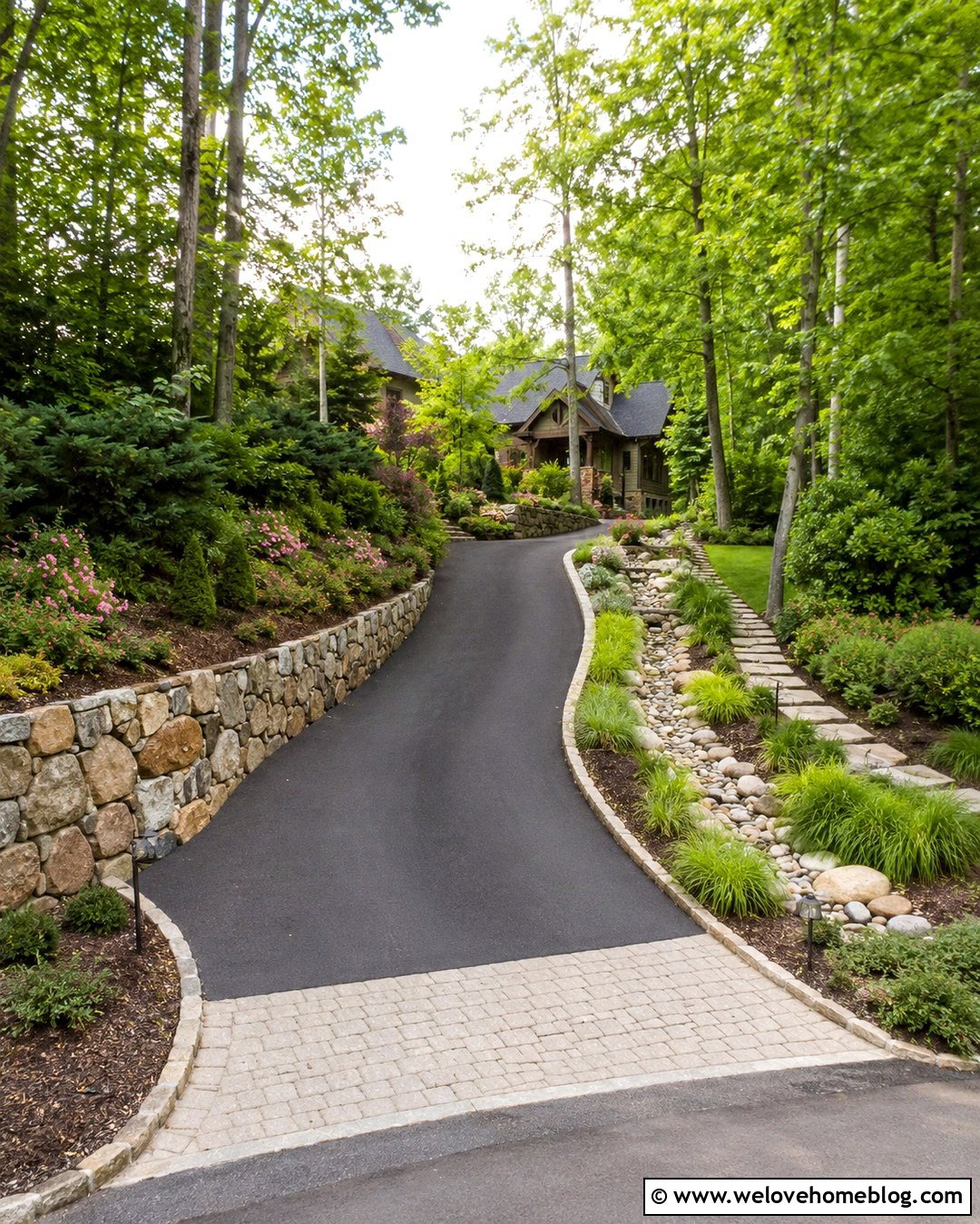
A woodland driveway should feel connected to the trees while remaining open, stable, and easy to navigate. Use warm-gray asphalt for the main surface and shape it into a long curve that follows the natural grade. Granite cobblestone edging can add definition without looking overly formal. Support cut banks with low fieldstone walls, then plant ferns, native sedges, woodland phlox, and compact evergreen shrubs above them. Carefully positioned drainage ditches can resemble natural streambeds when lined with stone and moisture-tolerant plants. Maintain clear sightlines around curves and keep large tree trunks safely away from the pavement edge. Low bollard lights placed along the inside curve can improve nighttime guidance, while the broad daytime view remains calm, green, and appropriate for a craftsman or mountain-style house.
15. Modern Concrete Hill Driveway
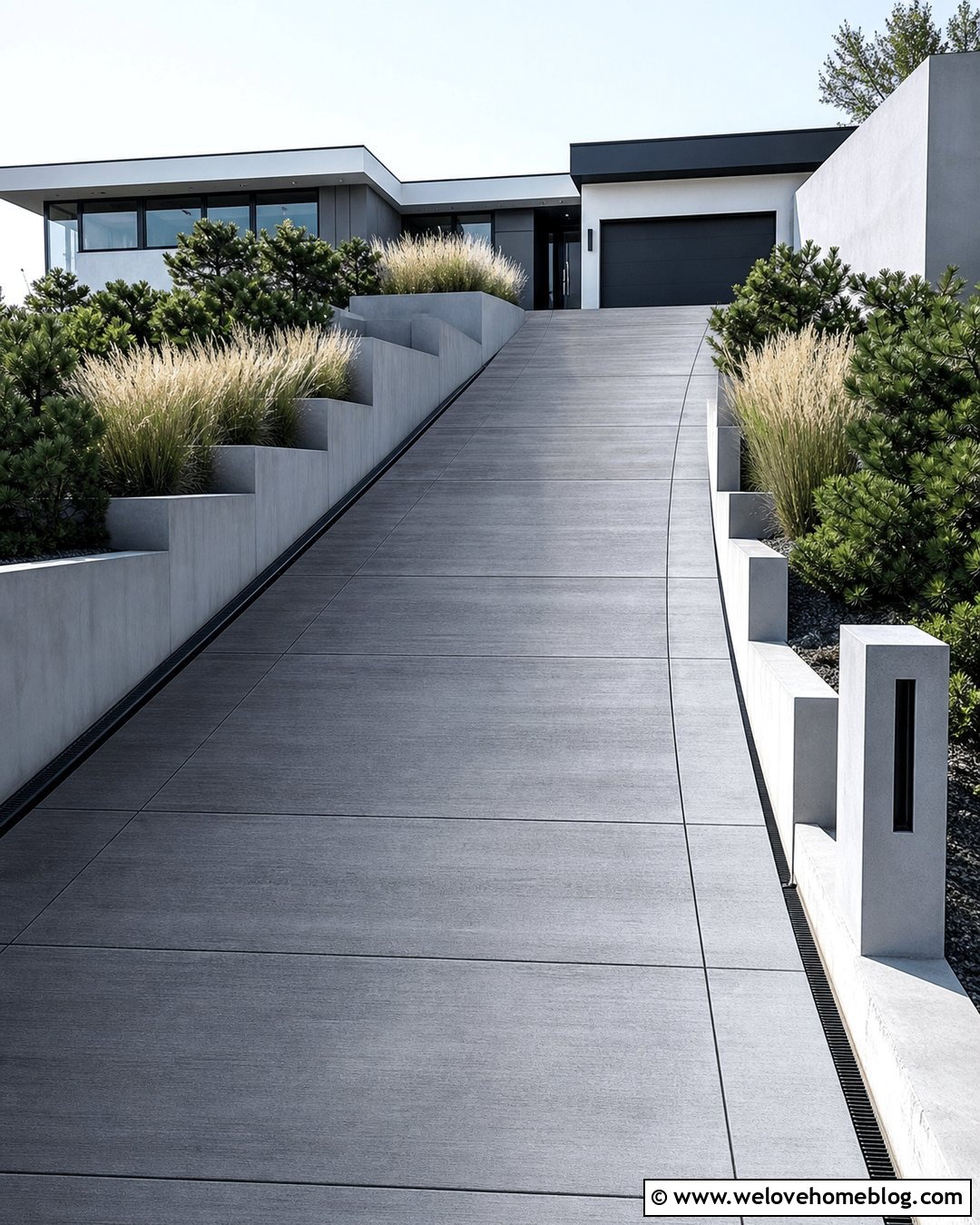
Clean geometry can make a steep modern driveway appear controlled and purposeful. Choose charcoal-gray concrete with a transverse broom finish and divide the surface into large rectangular panels using narrow expansion joints. A straight climb suits a contemporary home when softened by gradual transitions at both ends. Pair the pavement with smooth poured-concrete retaining walls that step down with the slope rather than forming one massive block. Linear planting beds filled with feather reed grass, dwarf pine, and low groundcovers provide movement without disrupting the architecture. Add a slim slot drain near the garage and another collection line farther downhill where calculations require it. Recessed wall lights and a minimalist address marker complete the entrance while keeping the full driveway visually uncluttered.
16. Farmhouse Hill Driveway
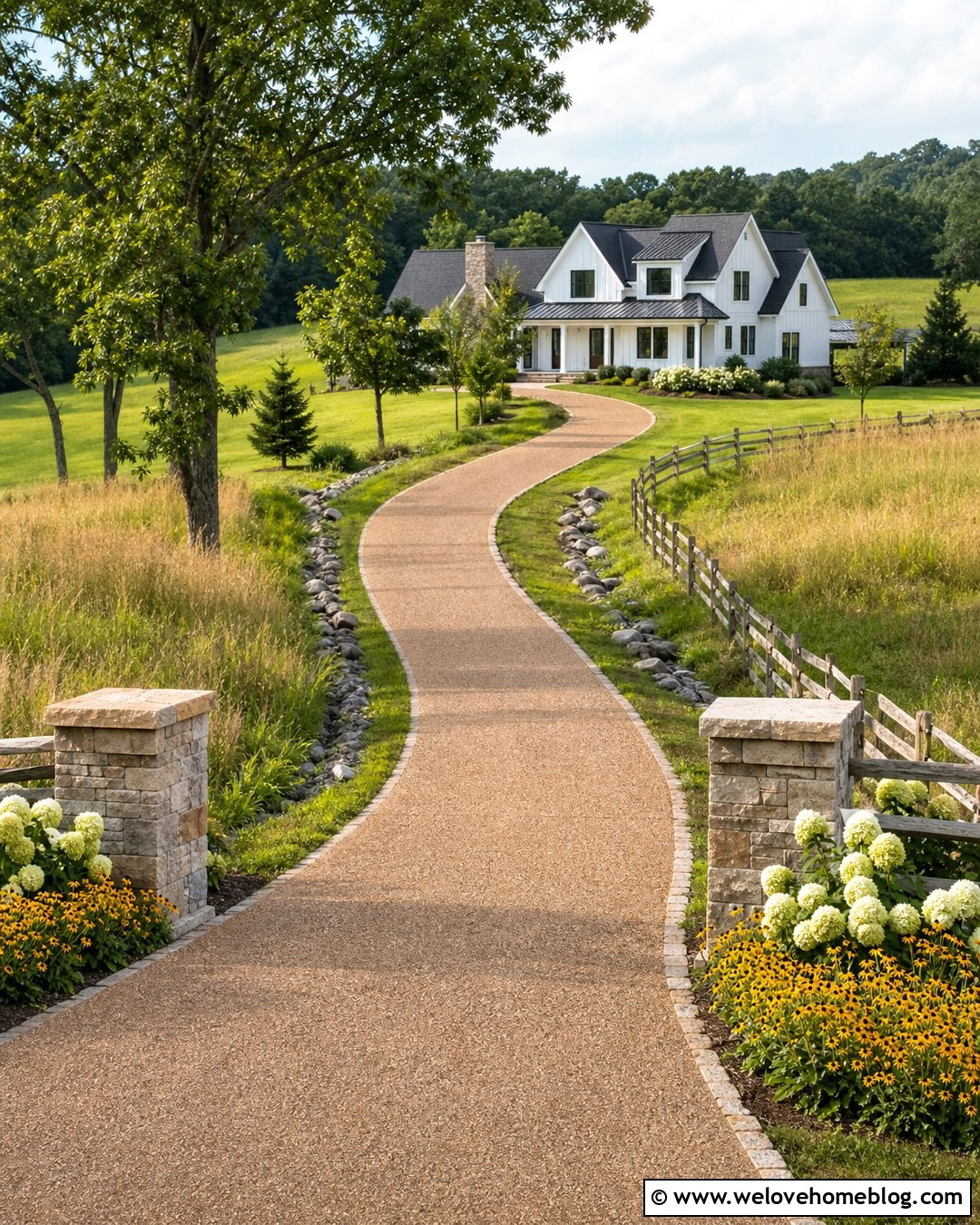
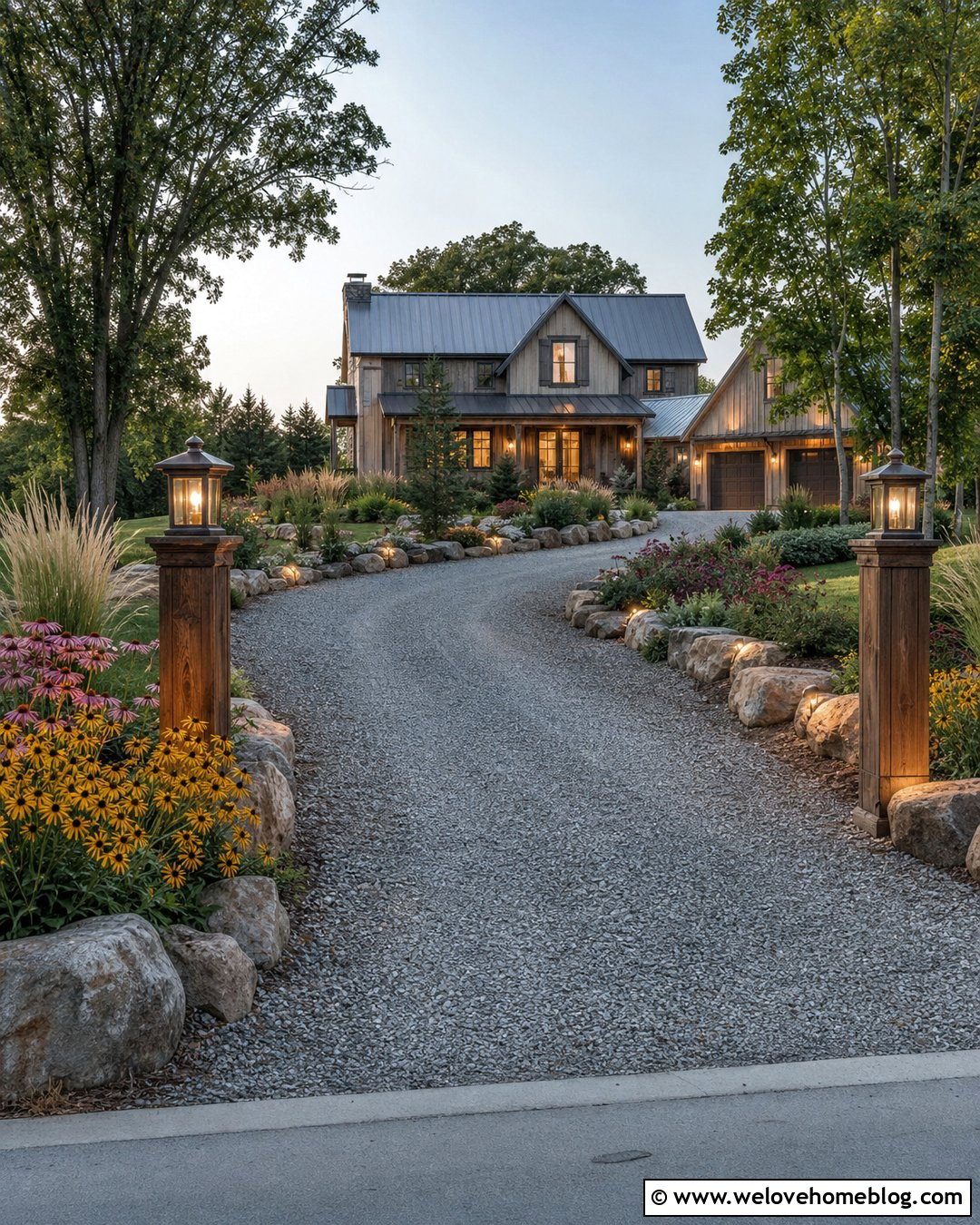
A farmhouse hill driveway can feel welcoming without relying on loose, hard-to-control stone across the entire slope. Use light-brown chip-seal or stabilized fine gravel over a professionally prepared base, then create generous curves leading toward a white modern farmhouse. Define the edges with weathered granite blocks that resist surface migration and complement the rural setting. A split-rail fence can follow the upper bank while leaving adequate clearance from the driving lane. Plant meadow grasses, black-eyed Susans, compact hydrangeas, and a few deciduous trees beyond the drainage swales. At the entrance, transition to a wider stone-edged apron with simple masonry pillars. The combination delivers a relaxed country appearance while still addressing containment, visibility, erosion, and everyday vehicle access.
17. Narrow Hill Driveway With Passing Bay
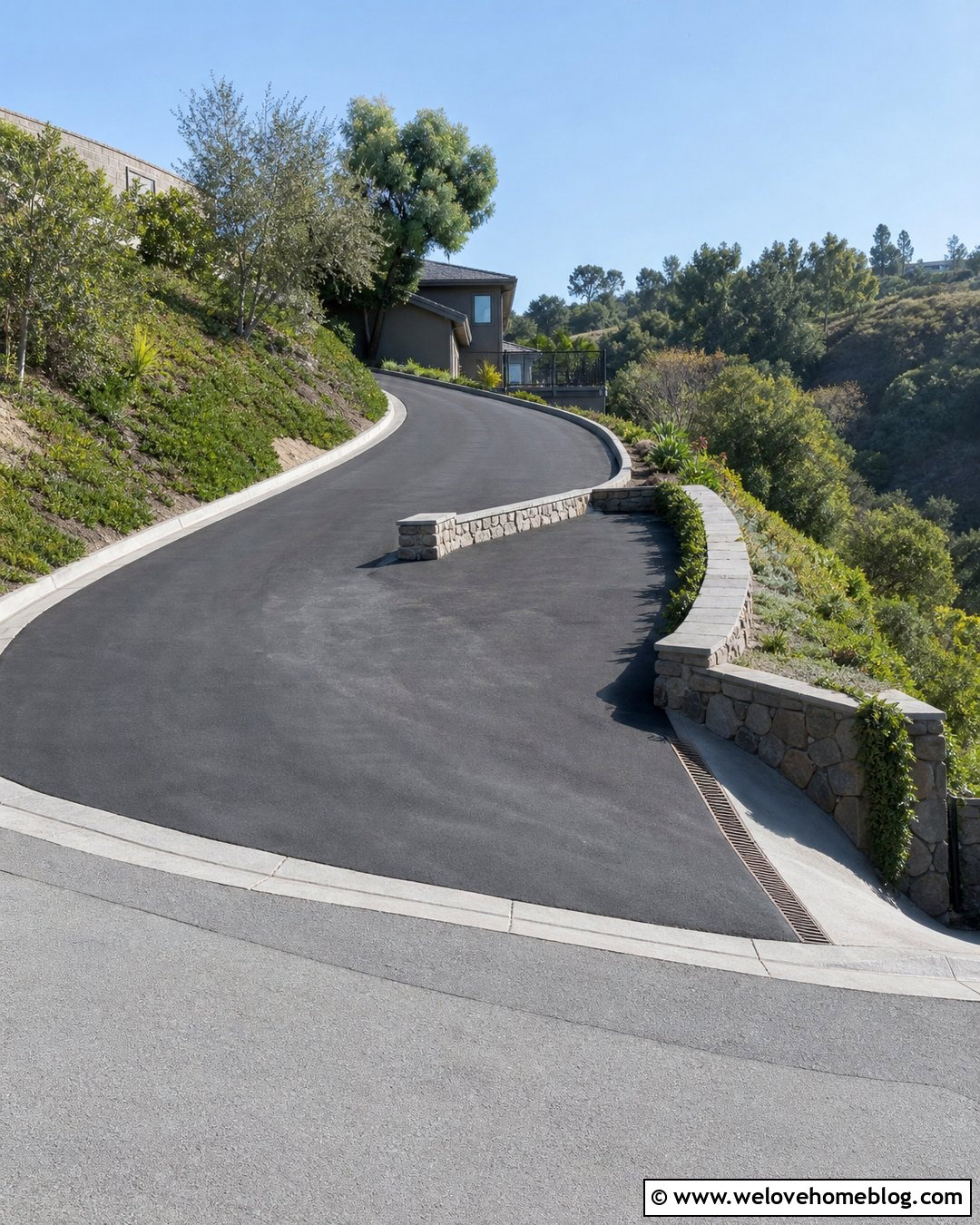
A narrow hillside lot may not have room for a wide driveway from the street to the house. In that situation, a single-lane asphalt drive with a strategically placed passing bay can improve usability. Curve the route gently across the slope, then widen one section into a stable pull-off with clear views in both directions. Use a reinforced concrete curb on the downhill edge and an engineered segmental retaining wall against the upper bank. The wall can include a stone cap and pockets of trailing groundcover for a softer appearance. Keep trees and tall shrubs away from the passing area so drivers can judge available space. A coordinated drainage channel along the wall prevents hillside runoff from flowing uncontrolled across the narrow pavement.
18. Horseshoe Hill Driveway
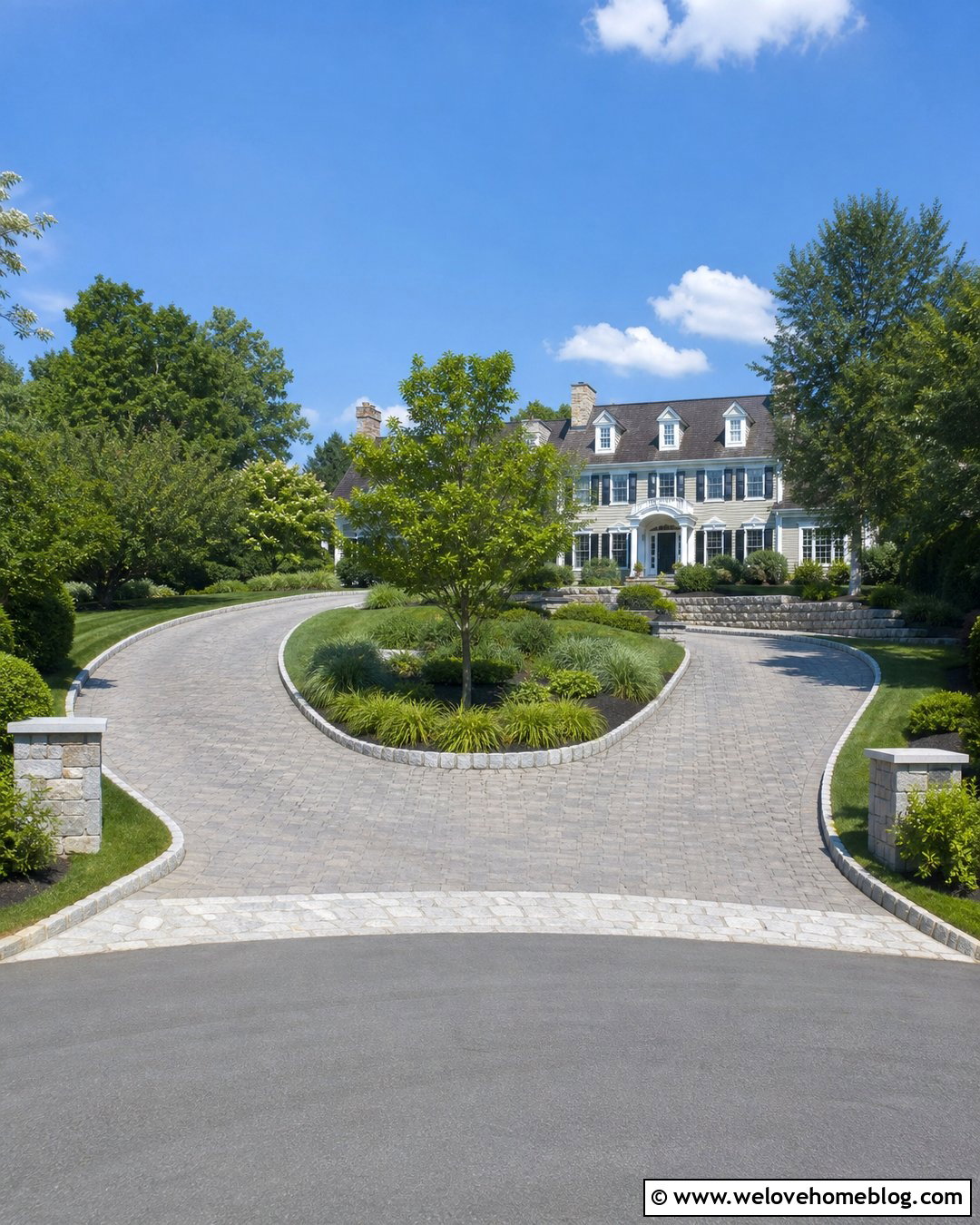
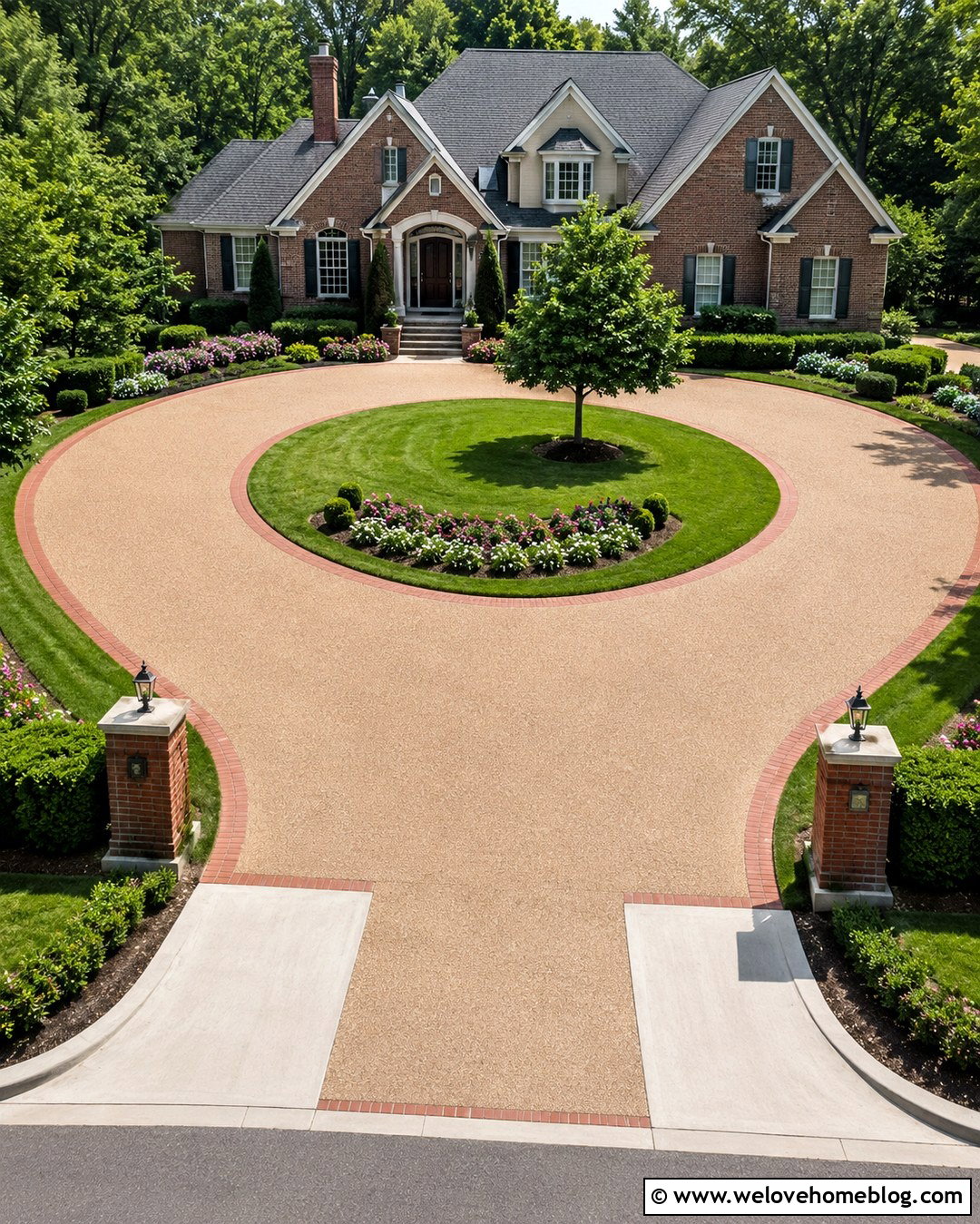
A horseshoe layout can work on a broad hillside by providing separate entrance and exit points and reducing difficult reversing. Use textured concrete pavers in blended gray tones for the full curved route, with a landscaped center island positioned below the house. The two arms should meet the street with smooth grade transitions and clear visibility. Surround the island with a low stone curb, layered shrubs, ornamental grasses, and a small shade tree that will not block sightlines as it matures. On the upper side, terraced retaining walls can support the slope and create additional planting space. Because the route involves multiple curves and elevation changes, careful grading is essential. The finished driveway should feel spacious, balanced, and naturally integrated into the hillside.
19. Heated Concrete Hill Driveway
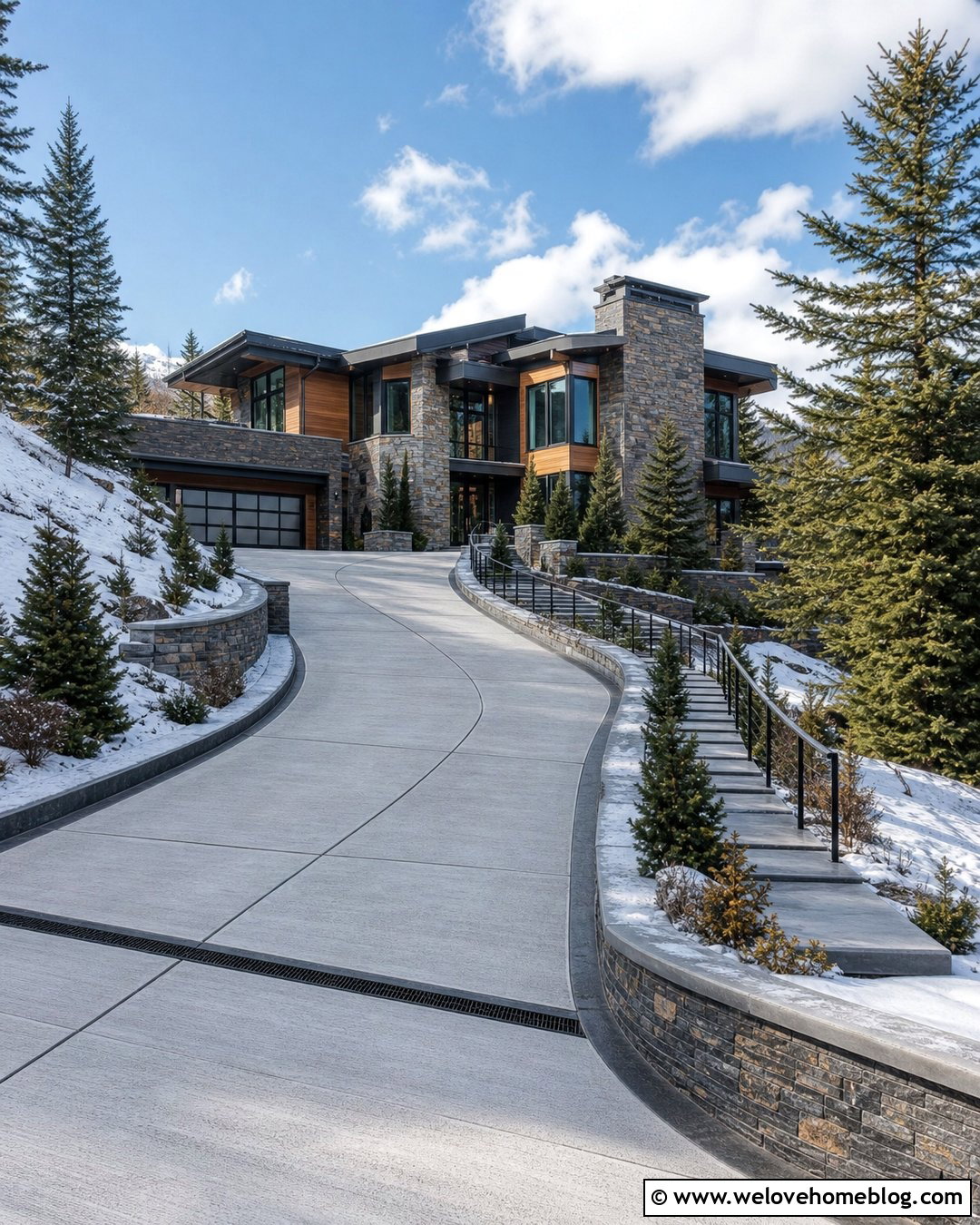
In snowy regions, a hydronic or electric snow-melting system can make a steep concrete driveway easier to maintain during winter. Install it beneath reinforced, broom-finished concrete divided into practical control-joint panels. A straight or gently curved route can lead toward a mountain modern home, bordered by dark granite curbs and evergreen planting beds. Drainage remains essential because melted snow must move away without refreezing in unsafe locations. Coordinate the heating zones, sensors, runoff outlets, pavement design, and operating capacity before construction begins. Low retaining walls can support the side banks, while integrated handrails improve the adjacent pedestrian route. This is a higher-cost solution, but it creates a clean year-round appearance and reduces dependence on difficult mechanical snow removal across the steepest section.


20. Stepped Asphalt Hill Driveway
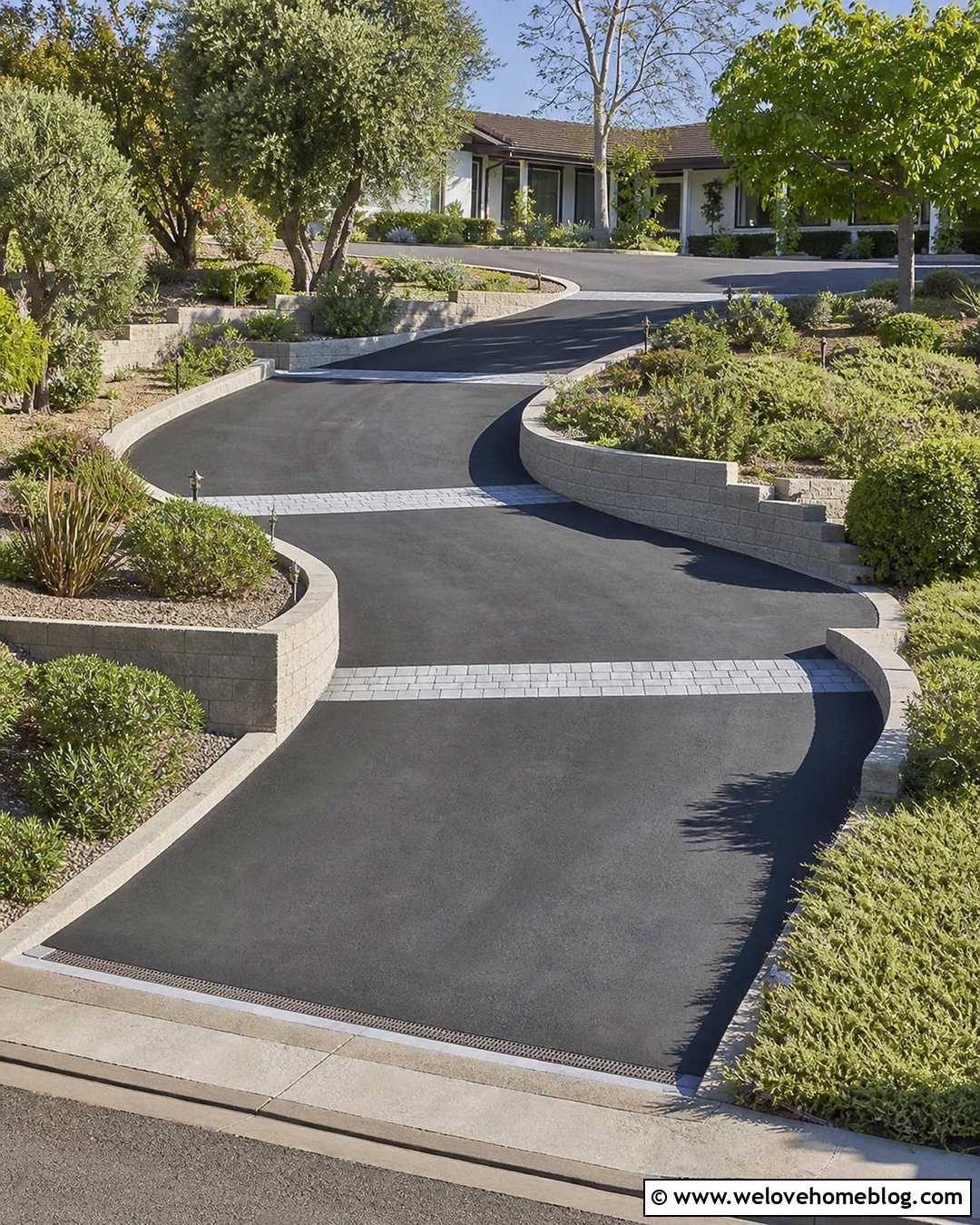
A long asphalt driveway can be organized into several gentler runs separated by wider transition areas. Instead of treating the hill as one uninterrupted climb, shape the route with broad bends and visually defined landings where the terrain allows. Edge the black asphalt with pale concrete curbs and support the uphill banks using low, terraced block walls. Each terrace can hold drought-tolerant shrubs, spreading groundcovers, and small ornamental trees. Install drainage channels at calculated points so water is intercepted before gathering speed along the pavement. Near the house, expand the final landing into a level parking court with a paver border. This layered approach creates a comfortable sense of progression and suits large ranch, contemporary, or hillside craftsman properties.
Conclusion:
Successful **20 Hill Driveway Ideas** should do more than create an attractive route to the house. The surface, grade, curves, drainage, retaining structures, landscaping, and parking space must work as one complete system. Textured concrete, asphalt, stabilized gravel, pavers, brick, cobblestone, and resin-bound aggregate can all be useful when matched to suitable slopes and foundations. Curves and intermediate landings may soften difficult elevation changes, while swales and channel drains manage fast-moving runoff. Retaining walls require particular care when they support driveway loads. Before construction, confirm local grade limits, permits, utility locations, soil conditions, and stormwater rules. Professional planning can transform a challenging hillside into a durable and inviting home entrance.

Related posts:
Leave a Reply