
These 30 Heated Driveway Ideas combine reliable snow-melting performance with attractive materials, practical layouts, and polished curb appeal. A radiant system can use electric heating cables or hydronic tubing beneath concrete, asphalt, brick, stone, or compatible pavers. Automatic controls can activate the system when moisture and freezing temperatures are detected, helping keep treated areas clear without constant manual operation. () The best design also considers drainage, driveway slope, electrical or boiler capacity, maintenance access, and where heating provides the most value. You can warm the entire surface or prioritize tire lanes, aprons, walkways, and steep sections. Use these complete driveway looks to explore materials, borders, landscaping, and layouts with these 30 Heated Driveway Ideas.

1. Heated Concrete Driveway With Broom Finish
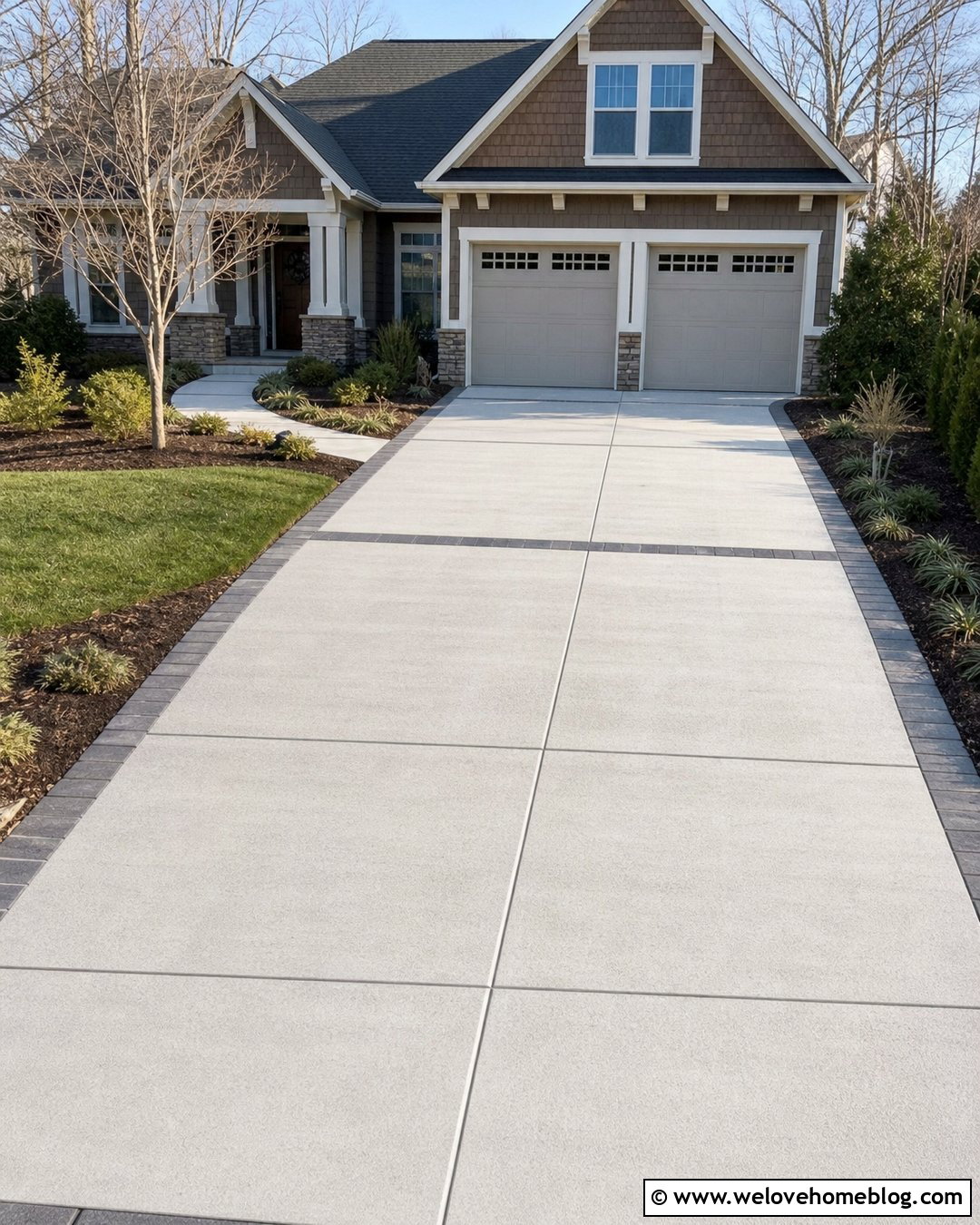
A broom-finished heated concrete driveway offers a clean appearance and a lightly textured surface. The texture provides a practical alternative to highly polished concrete, especially where winter moisture is common. Choose a straight layout with wide control joints and a dark brick ribbon along both sides. Low evergreen shrubs can frame the approach without dropping excessive leaves onto the pavement. Beneath the slab, electric cable or hydronic tubing should follow an engineered layout that accounts for joint locations and expected vehicle loads. Heating components must be secured and tested before, during, and after concrete placement. () Finish the look with a matching heated walkway leading from the driveway to a simple ranch or Craftsman-style home.
2. Modern Heated Concrete Driveway With Grid Lines
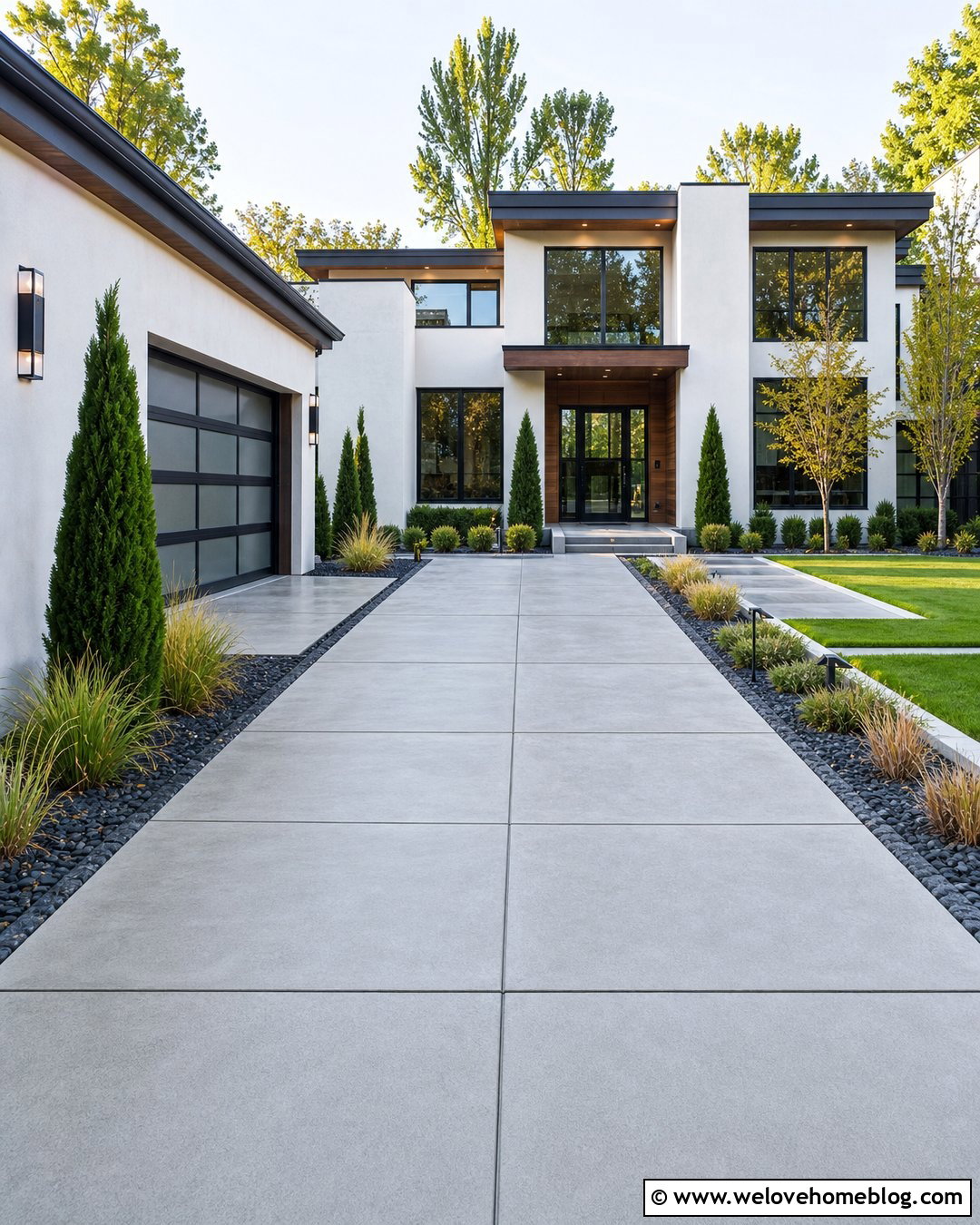
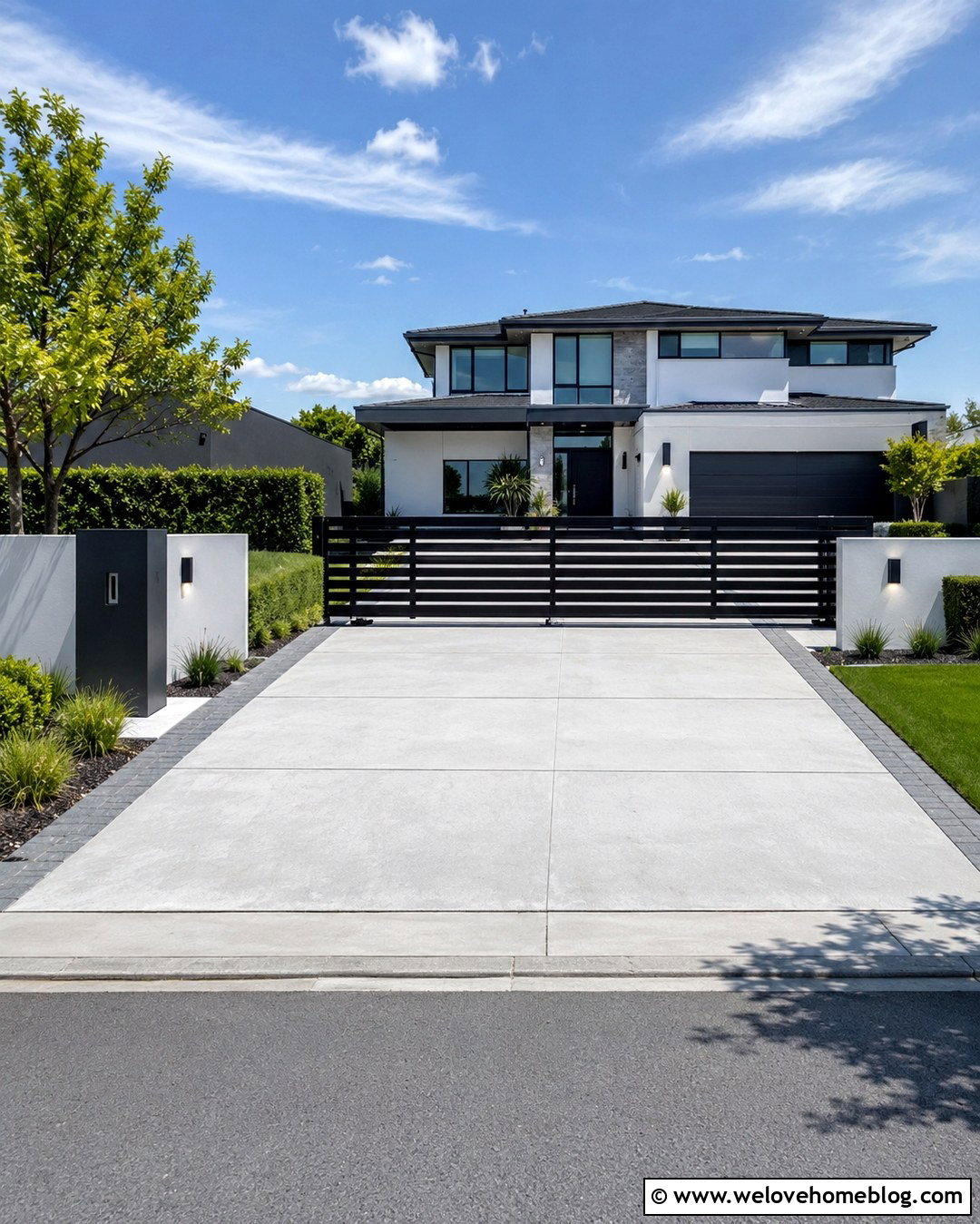
Crisp joint lines can turn a basic heated driveway into a strong modern feature. Use smooth gray poured concrete divided into large rectangular panels for a clean geometric pattern. Narrow strips of dark stone between the driveway and lawn create contrast while keeping soil away from the slab edges. A straight or slightly offset layout works particularly well with a modern house featuring white stucco, black windows, or natural wood siding. Keep planting simple with ornamental grasses, clipped evergreens, and one sculptural tree near the entrance. The heating plan should coordinate with control joints so cables or tubing remain protected. Extending the heated zone across the front entry path creates one continuous, practical approach from the street to the door.
3. Heated Exposed Aggregate Driveway
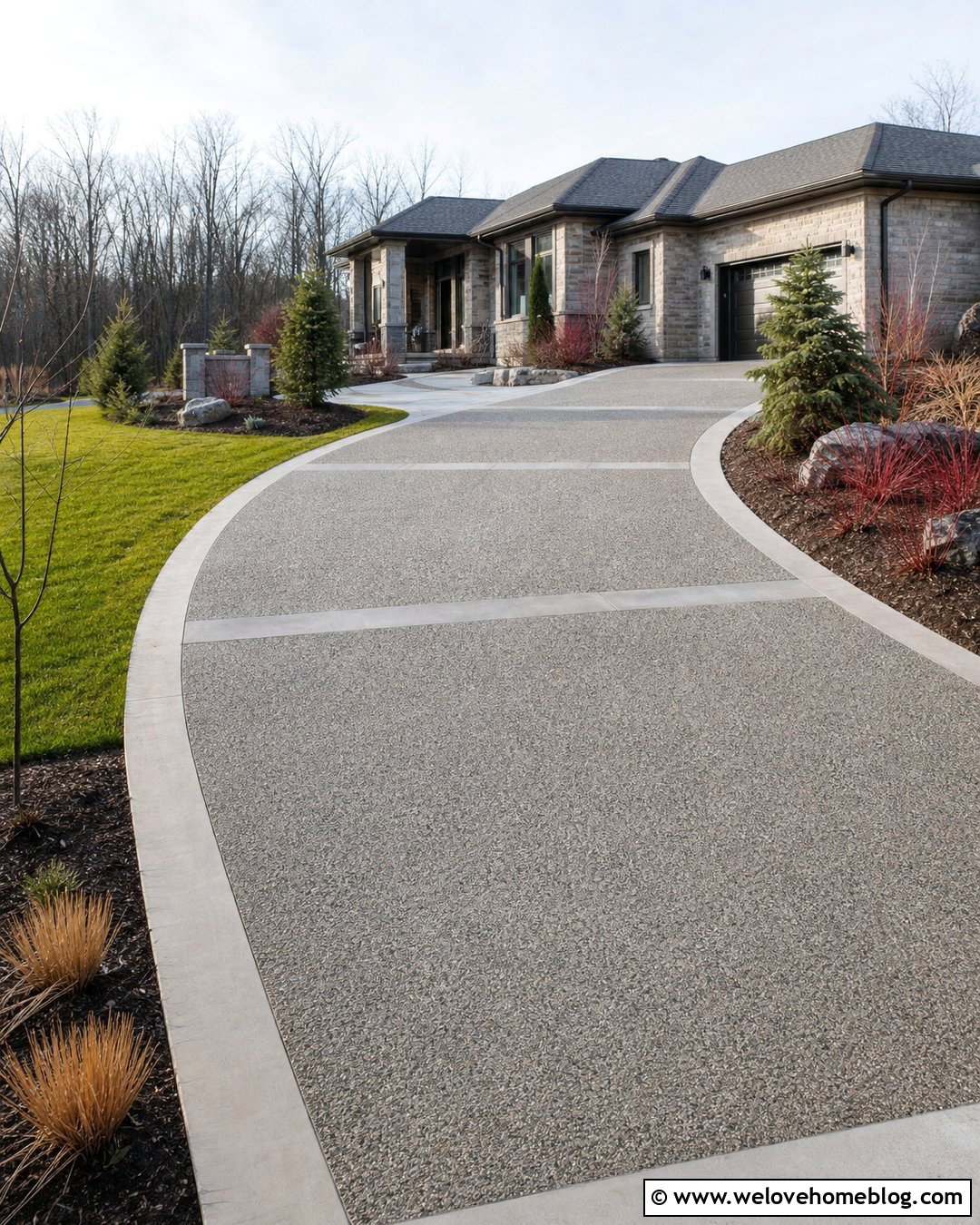
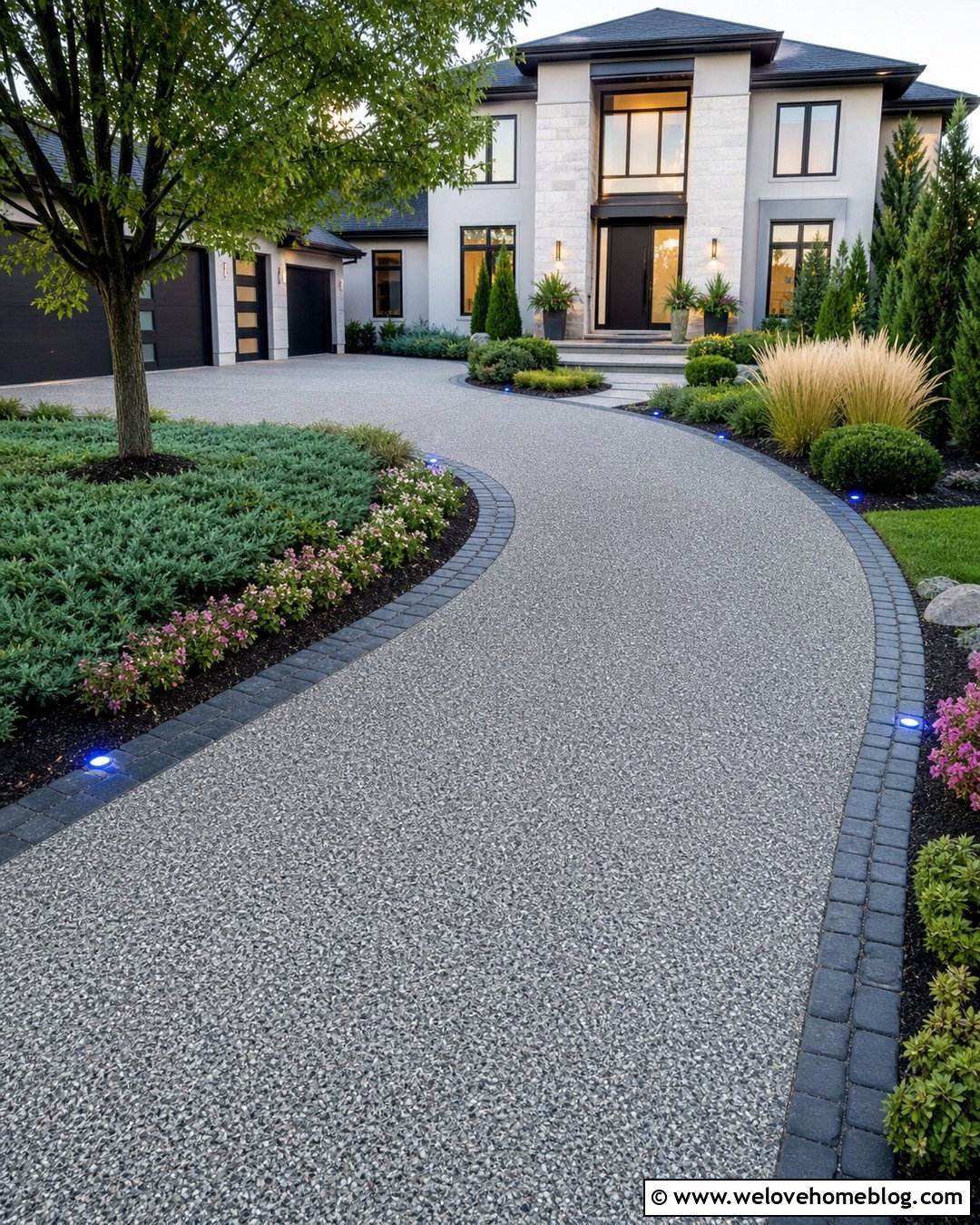
Exposed aggregate gives a heated driveway more color and texture than standard concrete. A blend of gray, tan, and charcoal stones can complement stone siding, warm brick, or natural wood details. Use the material on a gently curved driveway with smooth concrete bands defining the edges and separating larger pavement sections. Planting beds filled with compact conifers, winterberry, and low ornamental grasses can soften the textured surface. Because aggregate finishes visually hide light dirt and tire marks, they suit busy family entrances. The heating system remains concealed within the concrete while the surface delivers a decorative appearance. Add a heated walkway in the same finish and use broad drainage areas along the lower edge to manage runoff from melting snow.
4. Heated Stamped Concrete Driveway
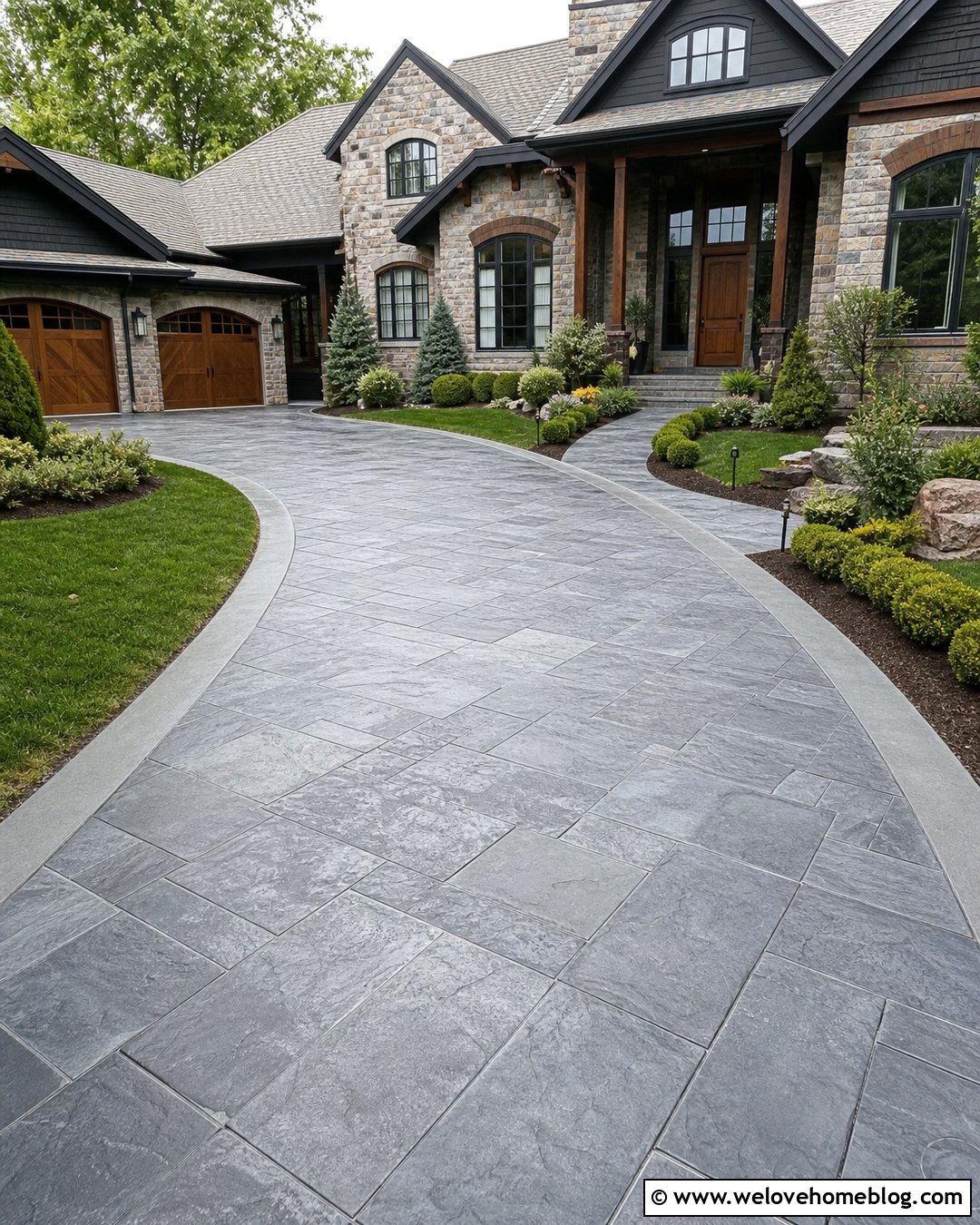
Want the appearance of natural stone with the continuity of concrete? A heated stamped concrete driveway can imitate large slate slabs while accommodating an embedded radiant system. Choose medium gray coloring with subtle charcoal variation rather than an overly busy multicolor finish. A curved layout bordered by smooth concrete bands keeps the pattern organized and gives snowmelt water a defined route toward drainage. Use restrained landscaping, such as boxwoods, dwarf spruce, and mulched planting beds, to avoid competing with the textured pavement. A stone-faced Craftsman house provides a suitable backdrop. Specify a slip-conscious exterior sealer and confirm that the stamping, reinforcement, joints, heating layout, and slab depth are coordinated before installation begins.
5. Heated Asphalt Driveway
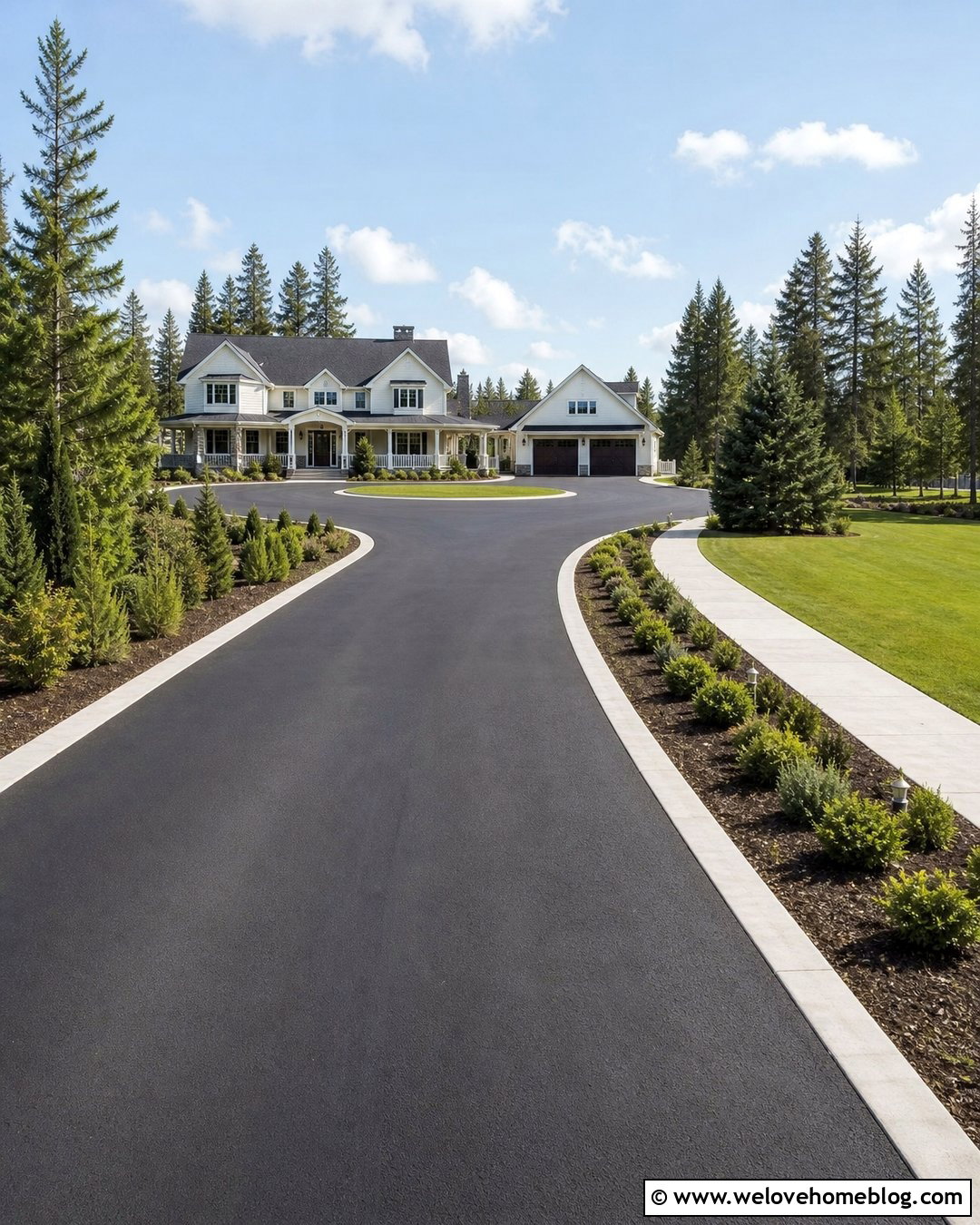
Black asphalt creates a simple, familiar surface that works well on long or wide residential approaches. A heated asphalt driveway can be especially attractive beside a traditional home where an elaborate paving pattern would feel unnecessary. Keep the layout straight and add a light-gray concrete curb along each side for clear visual definition. Evergreen trees and naturalistic planting beds can frame the entrance while leaving adequate space for plowed or drifting snow outside the heated zone. Electric heating systems designed for asphalt require carefully planned placement and paving procedures, often involving layered installation and repeated testing. () A matching asphalt turnaround near the garage makes maneuvering easier, while a heated concrete walkway creates a safe connection to the front entrance.
6. Heated Asphalt Driveway With Paver Border
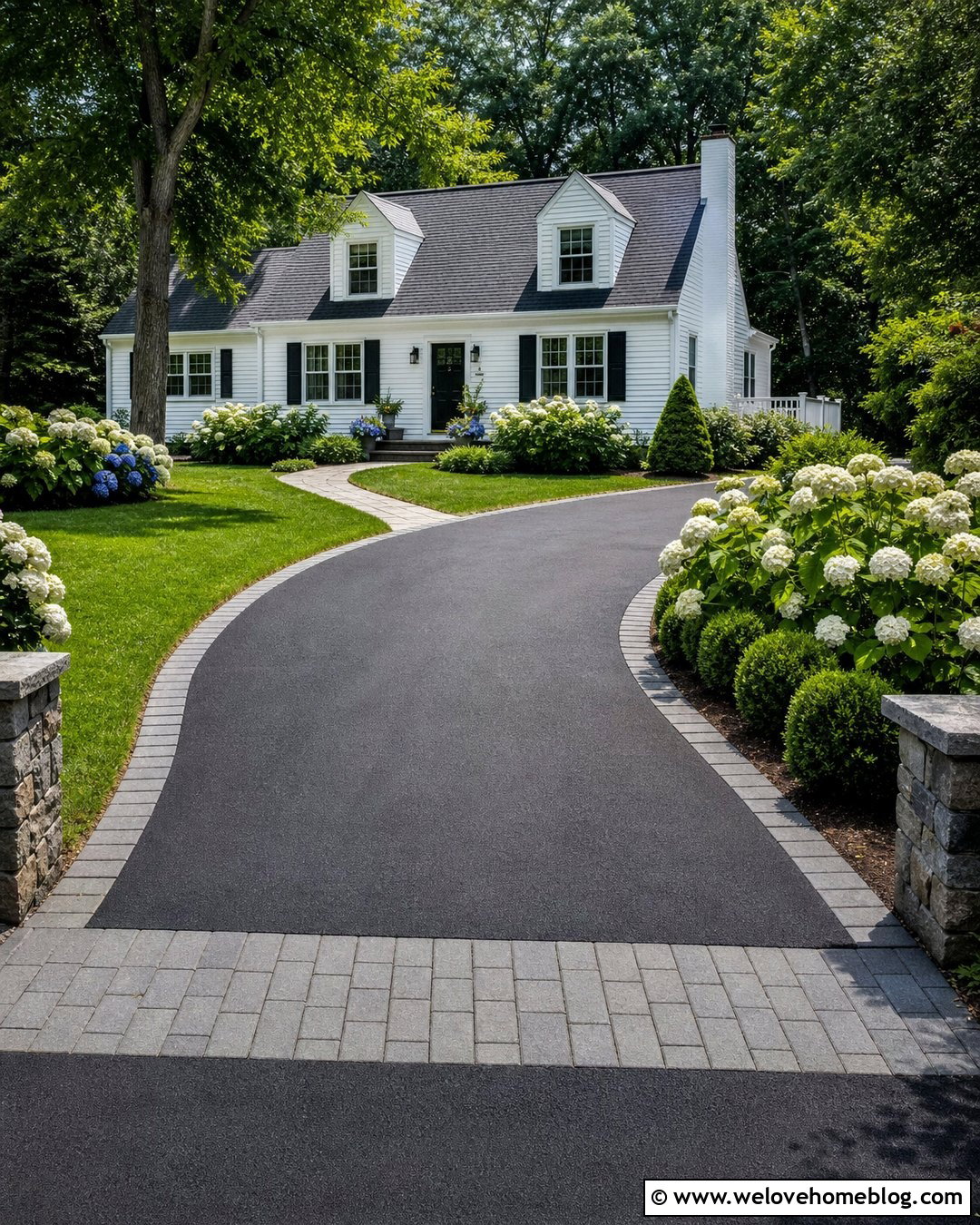
A contrasting border makes an asphalt driveway look more intentional without sacrificing its understated character. Start with smooth black asphalt and install a soldier-course border of charcoal concrete pavers along both edges. Carry the same pavers across the driveway near the street to form an attractive entrance band. A gently curved layout can guide the eye toward a Colonial or Cape Cod house surrounded by lawn and mature deciduous trees. Position heating elements throughout the asphalt or concentrate them within key vehicle and pedestrian zones. The border should be installed on a stable base so it remains aligned beside the pavement. Low hydrangeas, compact hollies, and groundcover can provide seasonal color while keeping the full driveway open and easy to navigate.
7. Heated Concrete Paver Driveway
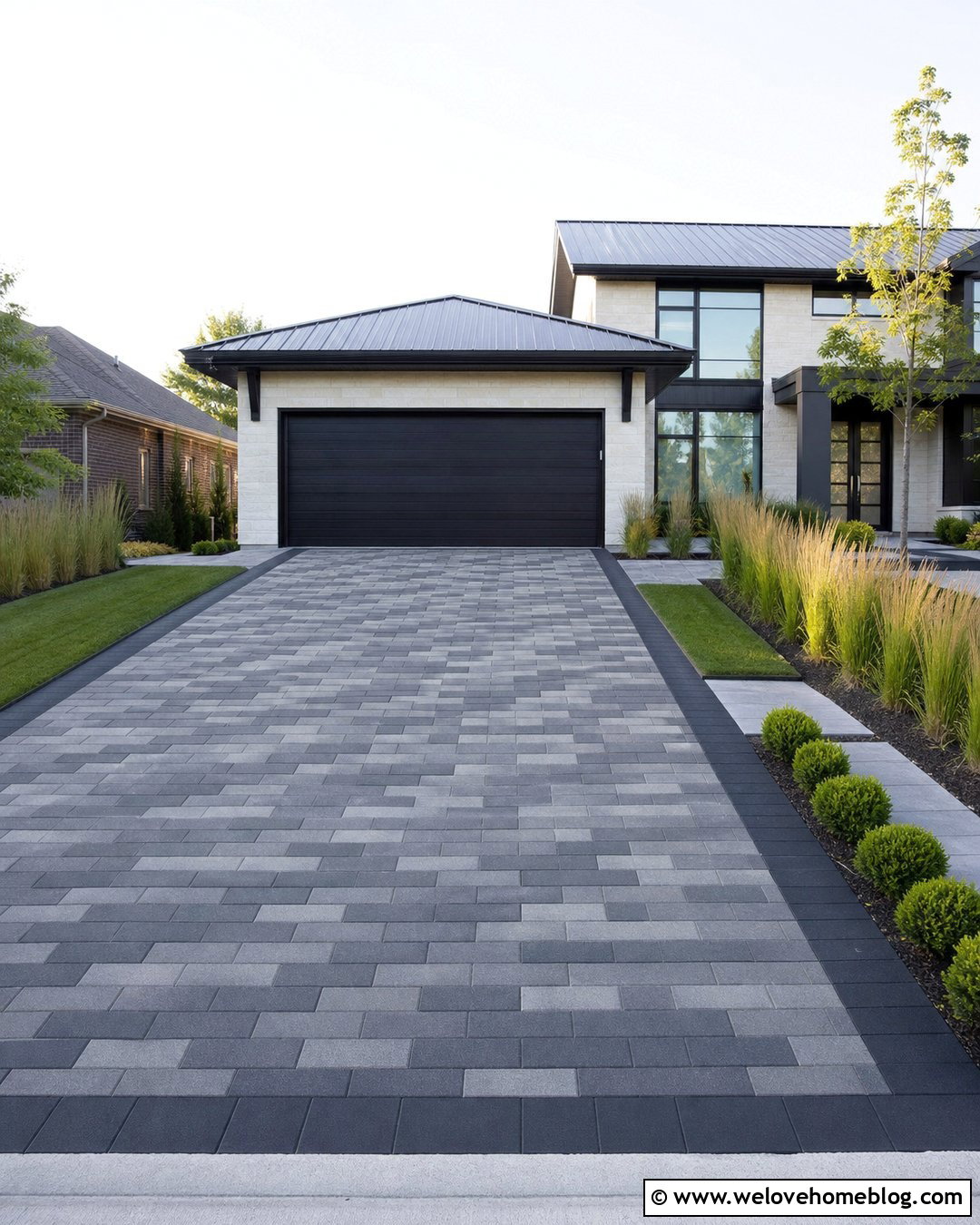
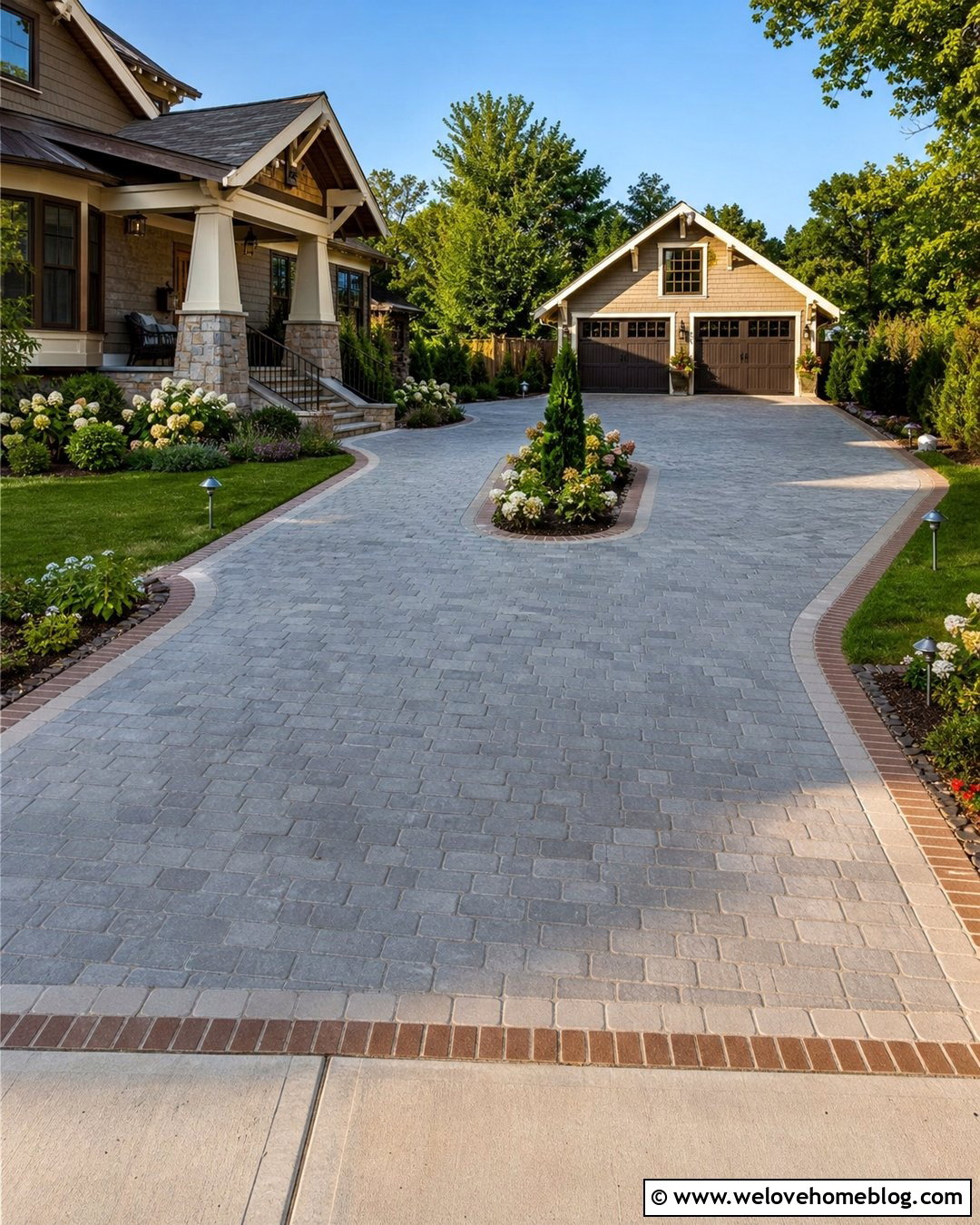
Concrete pavers provide flexibility in color, scale, and pattern, making them useful for a customized heated driveway. Select large-format charcoal and medium-gray pavers laid in a running bond on a straight driveway. A darker paver border can contain the pattern and connect visually with black garage doors or window frames. Under-paver heating must be planned with the bedding system, base preparation, cable protection, and final surface depth in mind. Heating cables can be installed beneath compatible brick and stone paver assemblies when manufacturer requirements are followed. () Surround the driveway with rectangular lawn panels, ornamental grasses, and a paved walkway. The result suits a contemporary suburban home while retaining a warmer, more detailed appearance than plain concrete.
8. Heated Brick Driveway In Herringbone Pattern
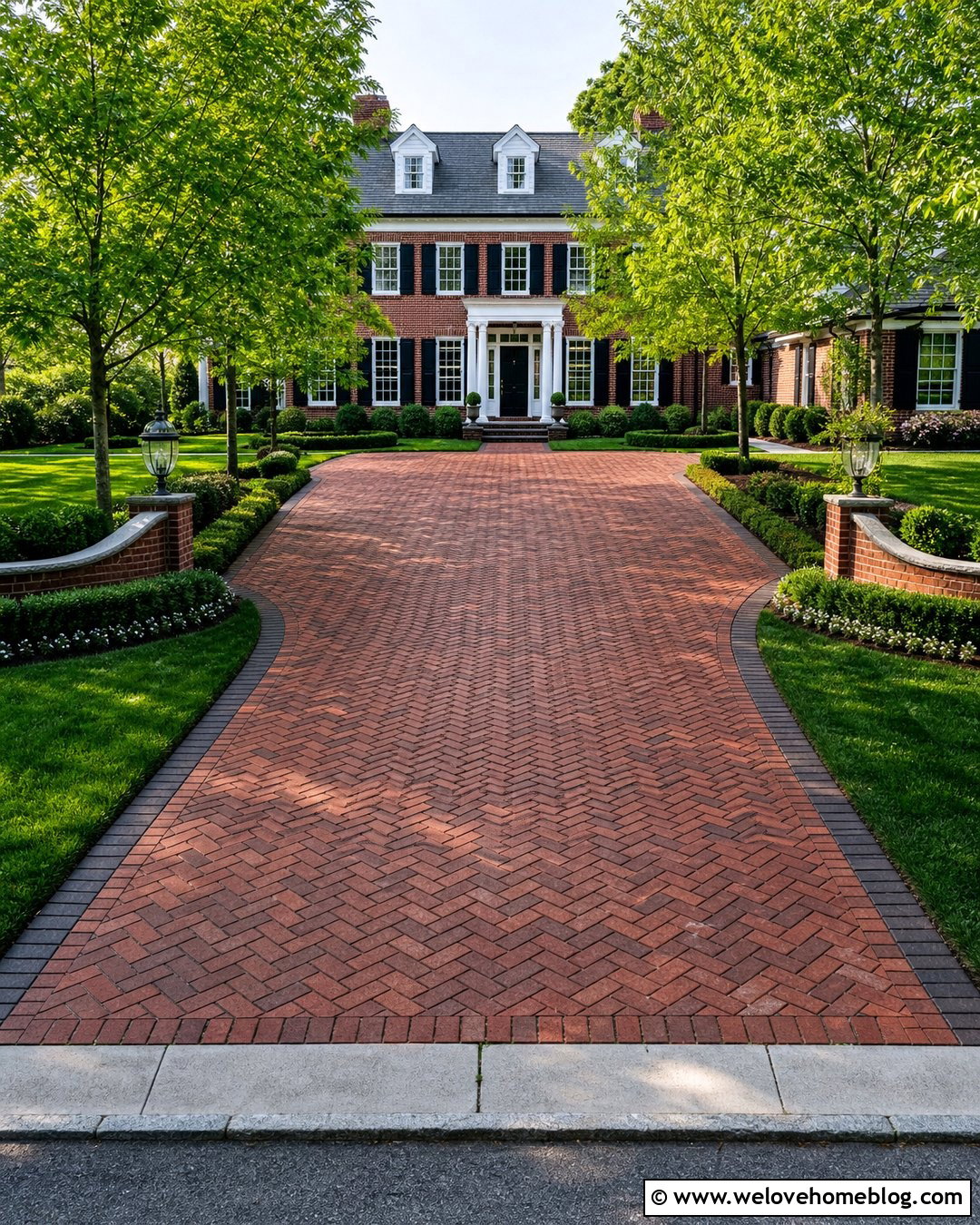
Warm clay brick brings traditional character to a radiant driveway system. Use red and brown clay brick pavers arranged in a herringbone pattern, then contain them with a darker running-bond border. This layout feels especially appropriate in front of a Colonial, Tudor, or classic brick house. A straight driveway with a widened parking area near the garage creates a balanced, formal approach. Add clipped boxwood hedges, small shade trees, and curved planting beds to soften the strong paving geometry. Heating should extend beneath the main driving surface and the walkway nearest the house. Because the brick pattern already provides abundant detail, keep gates, lighting, and landscaping restrained. Proper base construction and edge restraint help maintain a smooth, unified surface.
9. Heated Cobblestone Driveway
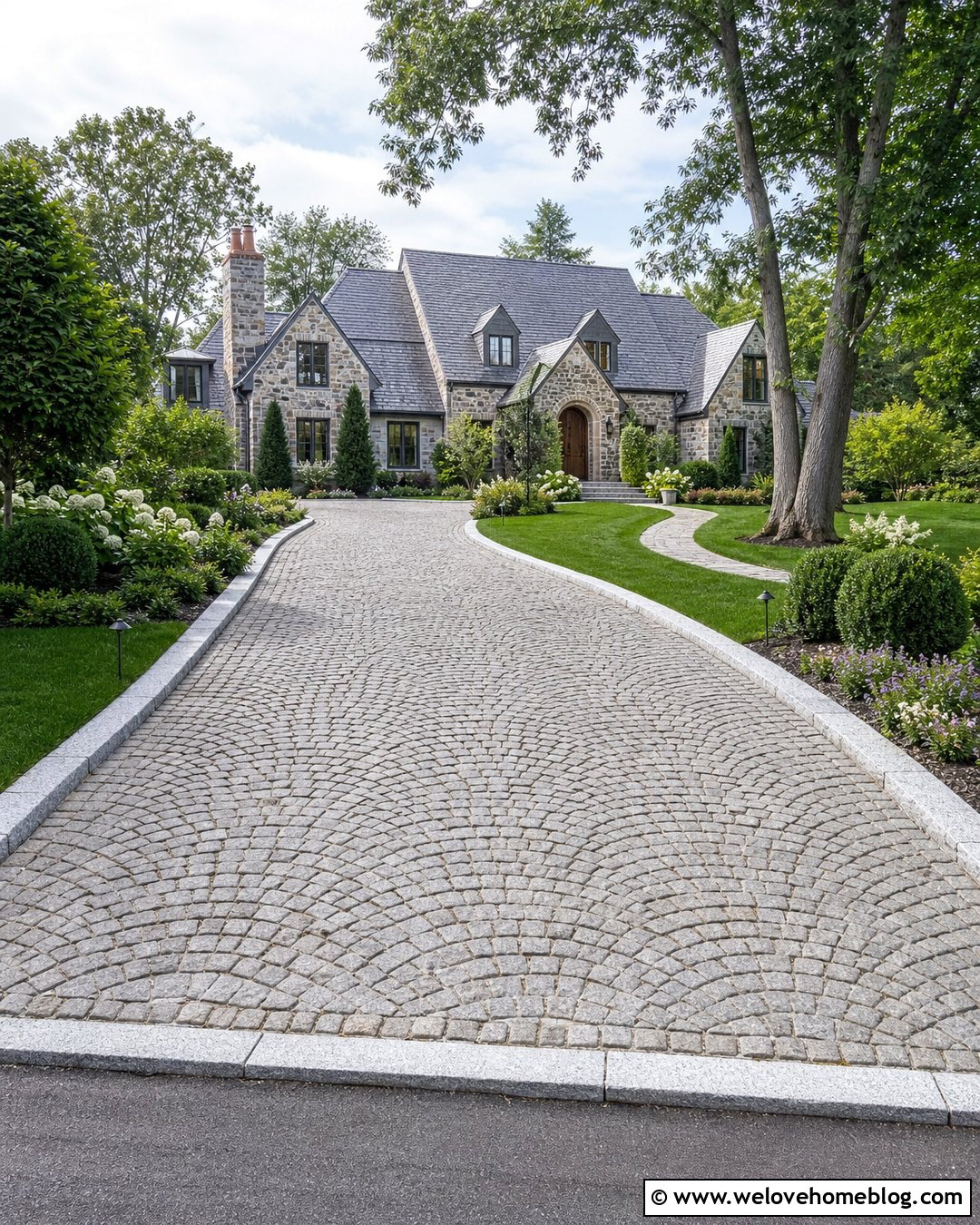
Cobblestone can give a heated driveway an established appearance while providing a highly distinctive surface. Choose medium-gray granite cobbles with subtle tonal variation and lay them in gentle fan patterns across a broad, curved approach. Larger granite curbs can form durable edges, while an integrated cobblestone walkway leads toward the front door. This complete look works with stone cottages, traditional country houses, and homes influenced by European architecture. Frame the pavement with lawn, clipped evergreens, and restrained perennial beds. Heating must be designed around the stone thickness and bedding assembly so warmth reaches the finished surface effectively. Keep the cobbles relatively even through primary walking areas, and direct meltwater toward a suitable drainage point away from the garage.
10. Heated Permeable Paver Driveway
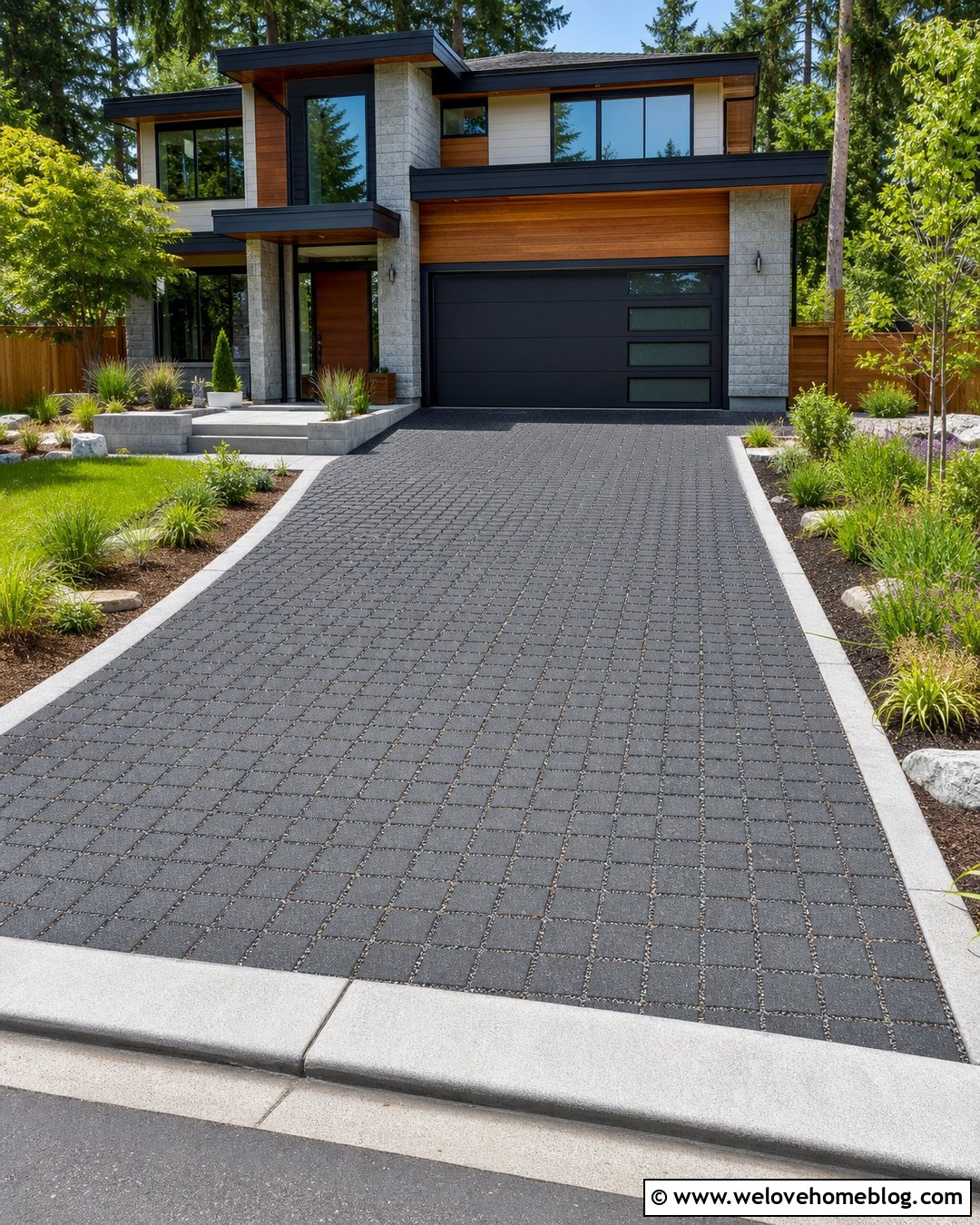
A permeable paver layout can create a textured, environmentally conscious driveway, but the heating and drainage assemblies must be designed together. Use charcoal permeable concrete pavers with wider aggregate-filled joints on a straight driveway leading to a contemporary home. Edge the pavement with solid concrete curbs to hold the field securely in place. Rain gardens planted with grasses and moisture-tolerant shrubs can receive water from nearby landscaped areas without interfering with the structural driveway base. Before selecting this combination, have the installer verify that the chosen snow-melting system, open-graded base, paver depth, drainage path, and local climate are compatible. The finished design should preserve the functional character of permeable paving while providing targeted winter heating in the most frequently used lanes.
11. Hydronic Heated Driveway For A Large Property
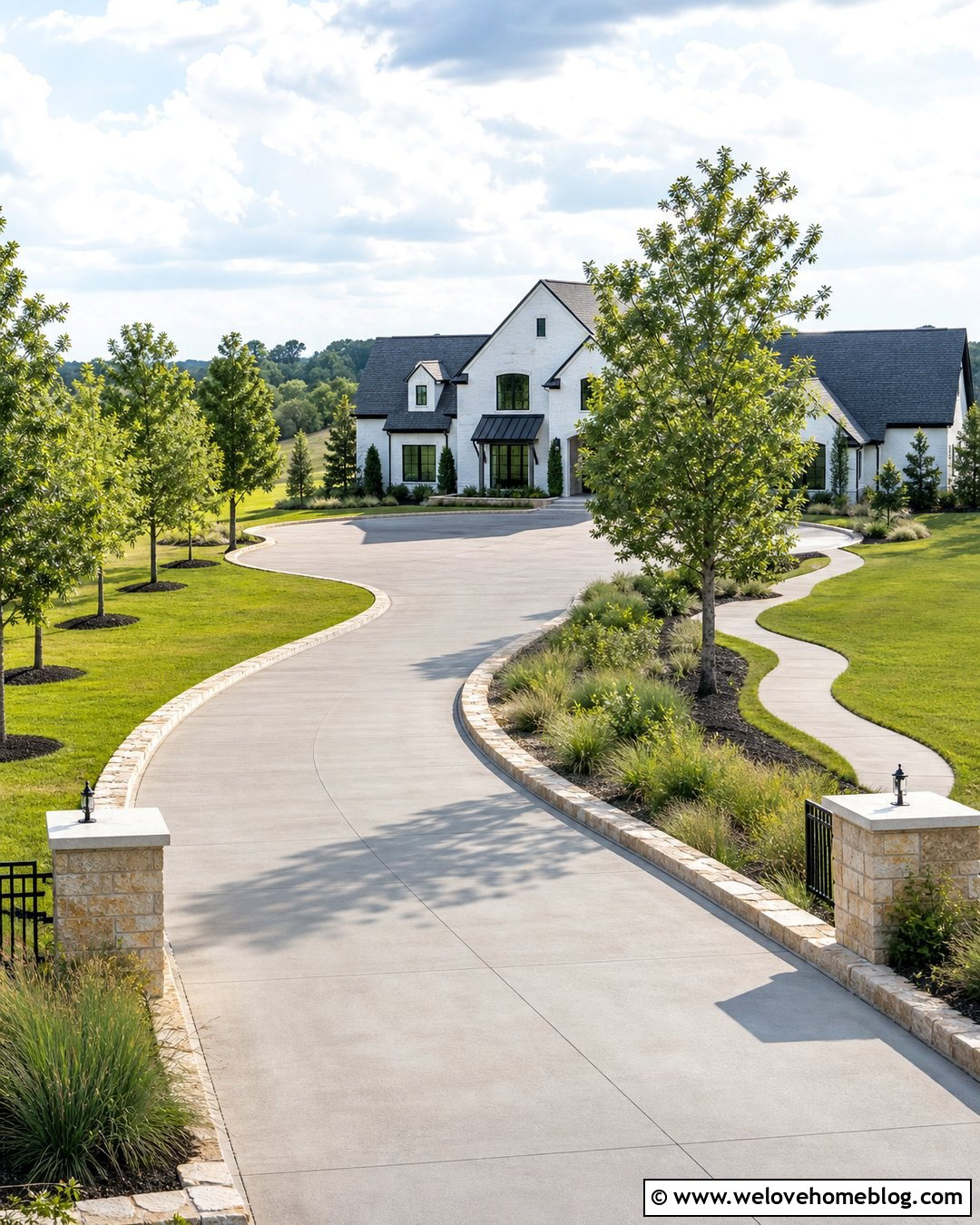
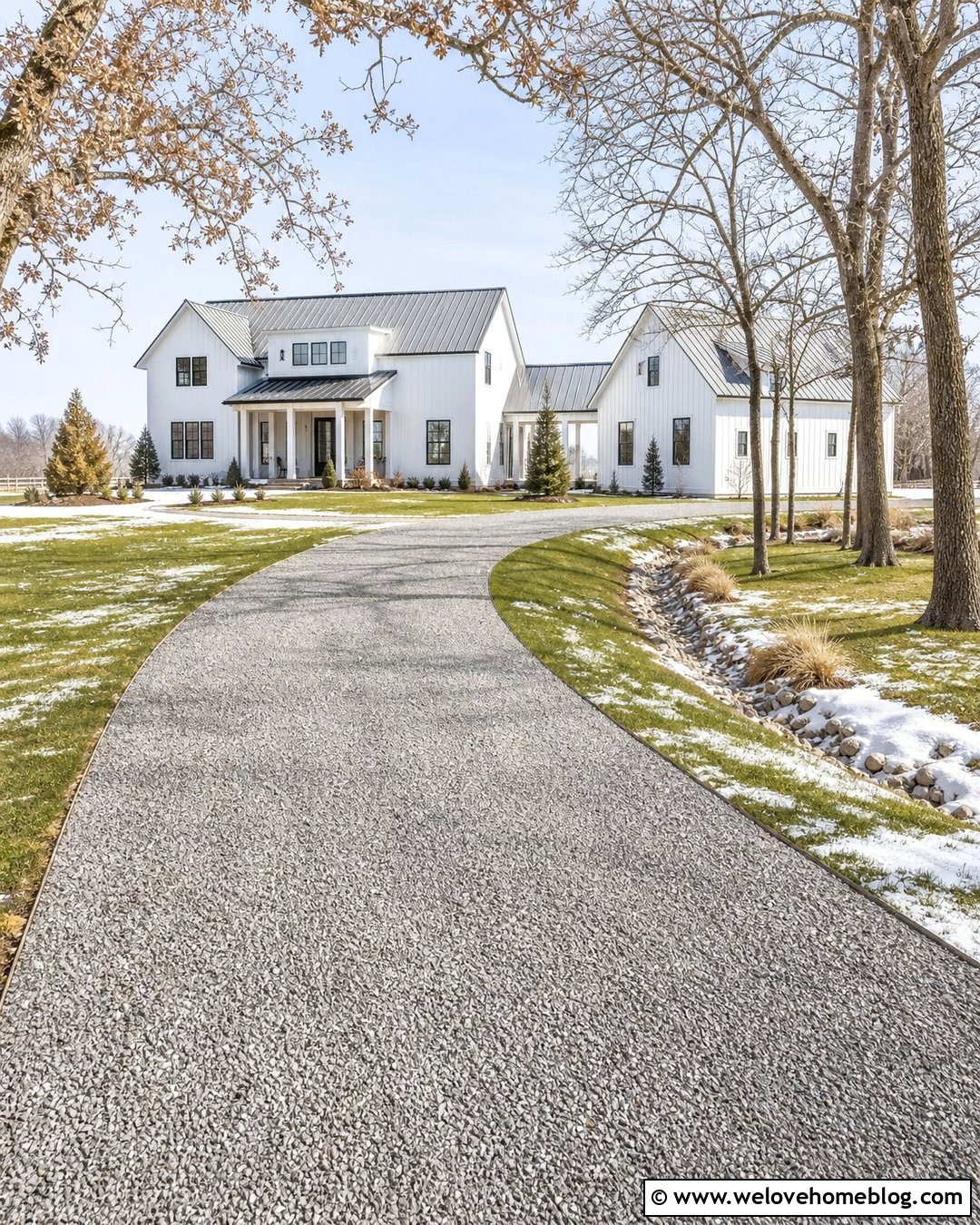
Long approaches and generous parking courts may benefit from a professionally designed hydronic heated driveway. This system circulates a heated water-and-glycol mixture through embedded tubing and includes equipment such as a heat source, manifold, controls, and pumps. () For a cohesive country property, use light-gray concrete with a broad curved layout leading to a modern farmhouse. Natural stone curbs can define the pavement, while rows of deciduous trees create an inviting entrance. Divide the driveway into operating zones so the main route, parking court, and walkway can respond to different needs. Leave accessible space for mechanical equipment and maintenance. Good grading and well-positioned drains are essential because a large heated surface can produce considerable meltwater during sustained snowfall.
12. Electric Heated Driveway For A Small Home
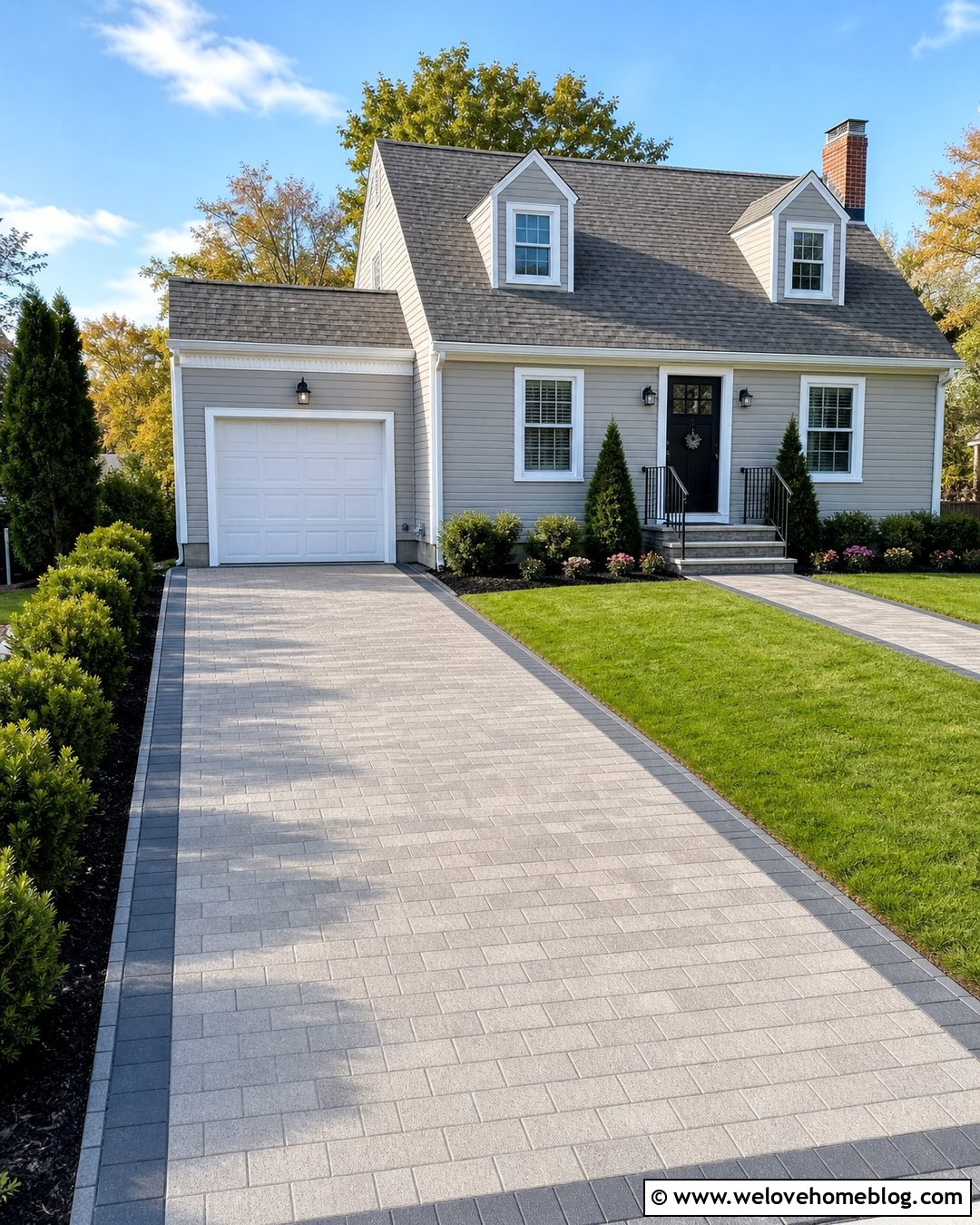
A compact driveway is a natural setting for an electric snow-melting system. Use warm-gray concrete pavers on a short, straight approach serving a one-car garage. A narrow charcoal border can make the driveway feel wider, while low evergreen planting keeps the small front yard visually open. Electric systems generally use resistance cable or prefabricated heating mats connected to controls and an activation device. () Heat the full parking surface and continue the system beneath the short walkway to the porch. This creates a practical arrival zone without introducing a separate mechanical room for hydronic equipment. Before construction, an electrician should evaluate service capacity, circuit requirements, controls, and equipment placement. A Cape Cod or compact Craftsman facade completes the approachable suburban look.
13. Heated Driveway Tire Tracks
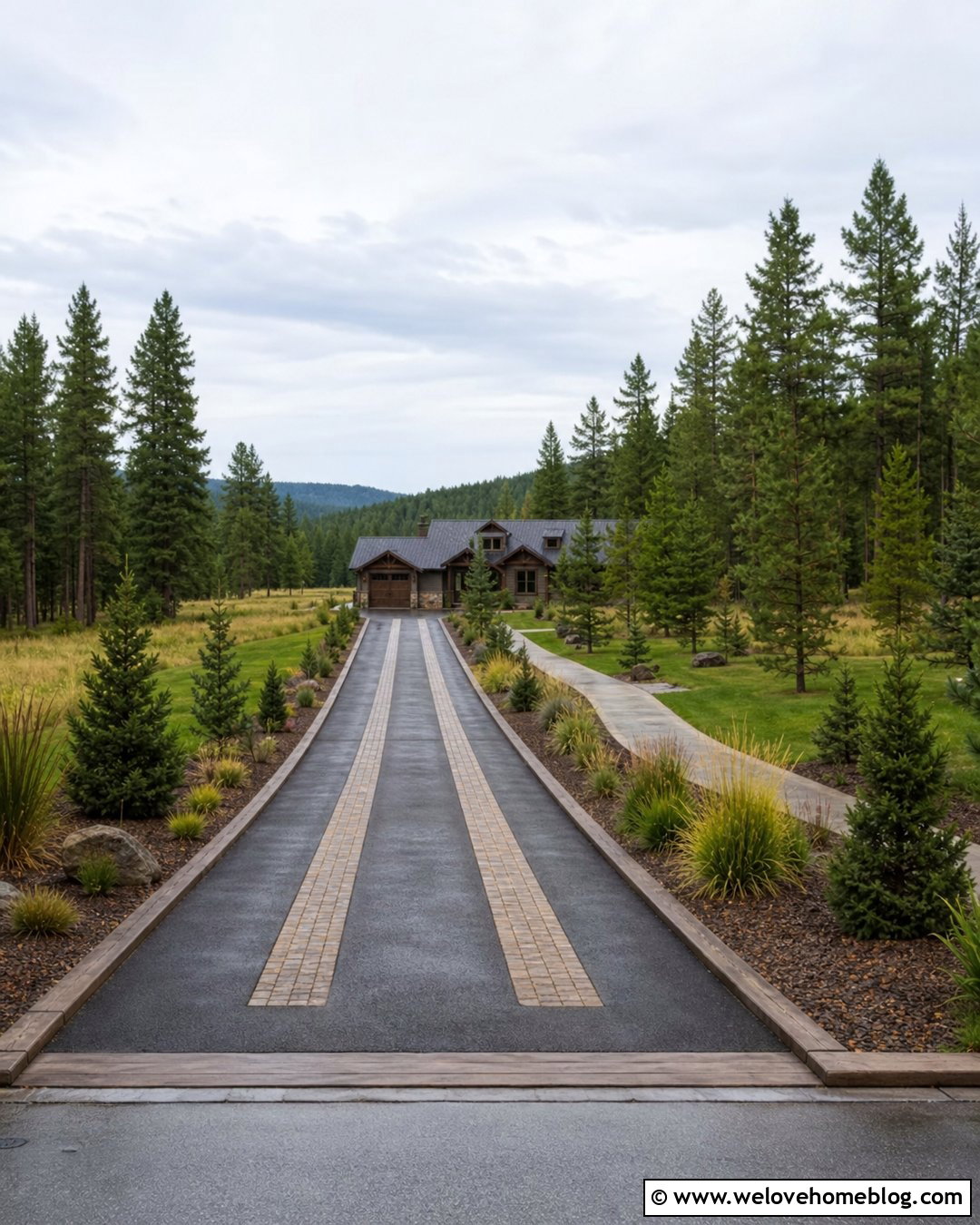
Full-surface heating is not the only possible layout. Two heated tire lanes can provide a more focused solution for a long private driveway. Start with dark-gray asphalt, then define the heated tracks with subtle boundaries that remain almost invisible after paving. Add a central gravel strip only where drainage and maintenance conditions allow, or keep the entire surface asphalt for easier upkeep. Timber-look concrete edging and natural evergreen borders can create a relaxed country setting. Tire-track systems reduce the heated area but do not clear the center, edges, or pedestrian route, so include a separate heated walkway where needed. This targeted approach should be professionally mapped to vehicle widths, turning movements, gate positions, and the garage entrance. ()
14. Heated Driveway Apron
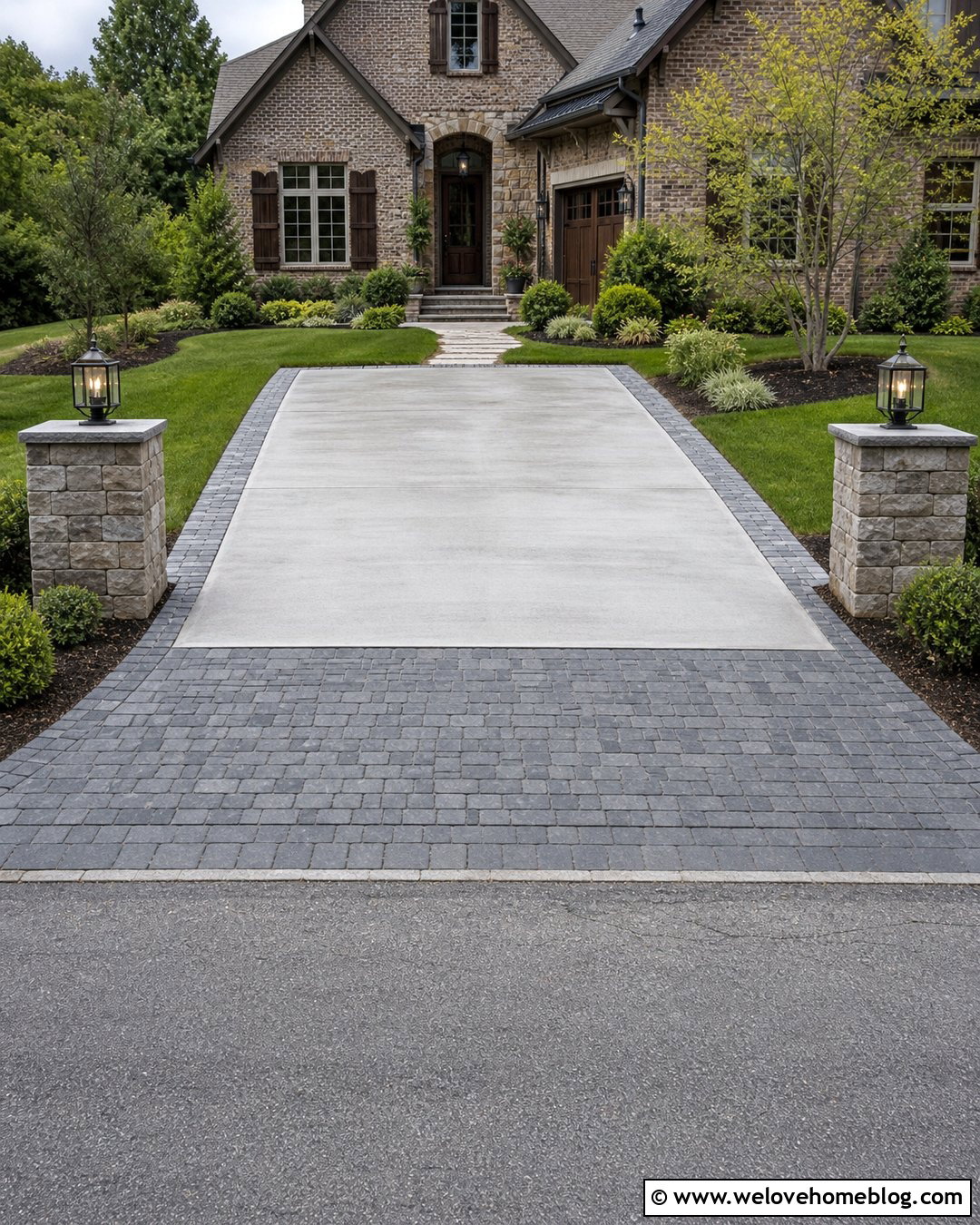
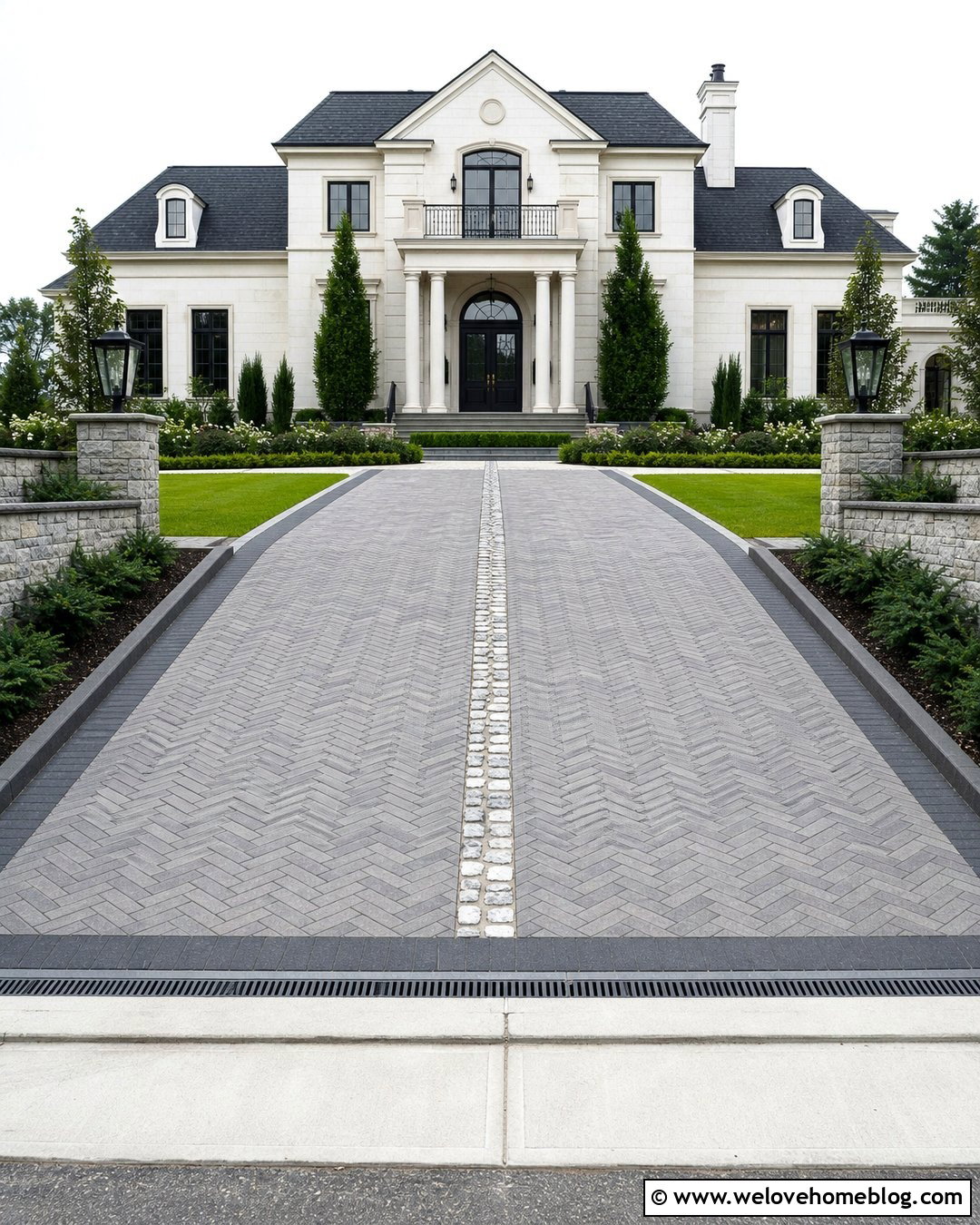
The driveway apron often collects compacted snow from street clearing and can become difficult to cross. Heating this focused area creates a practical transition between the road and the main driveway. Use a charcoal cobblestone apron across the entrance of a light-gray concrete driveway. Continue the stone along the sides as a narrow border for a coordinated appearance. Masonry pillars with simple lanterns can mark the property without narrowing the driving path. Plant salt-tolerant shrubs and ornamental grasses behind the pillars, leaving clear sightlines toward traffic and pedestrians. The heated zone should extend far enough inward to address common snow buildup, while drainage carries meltwater away from the public roadway. Check local rules before changing paving or drainage within a municipal right-of-way.
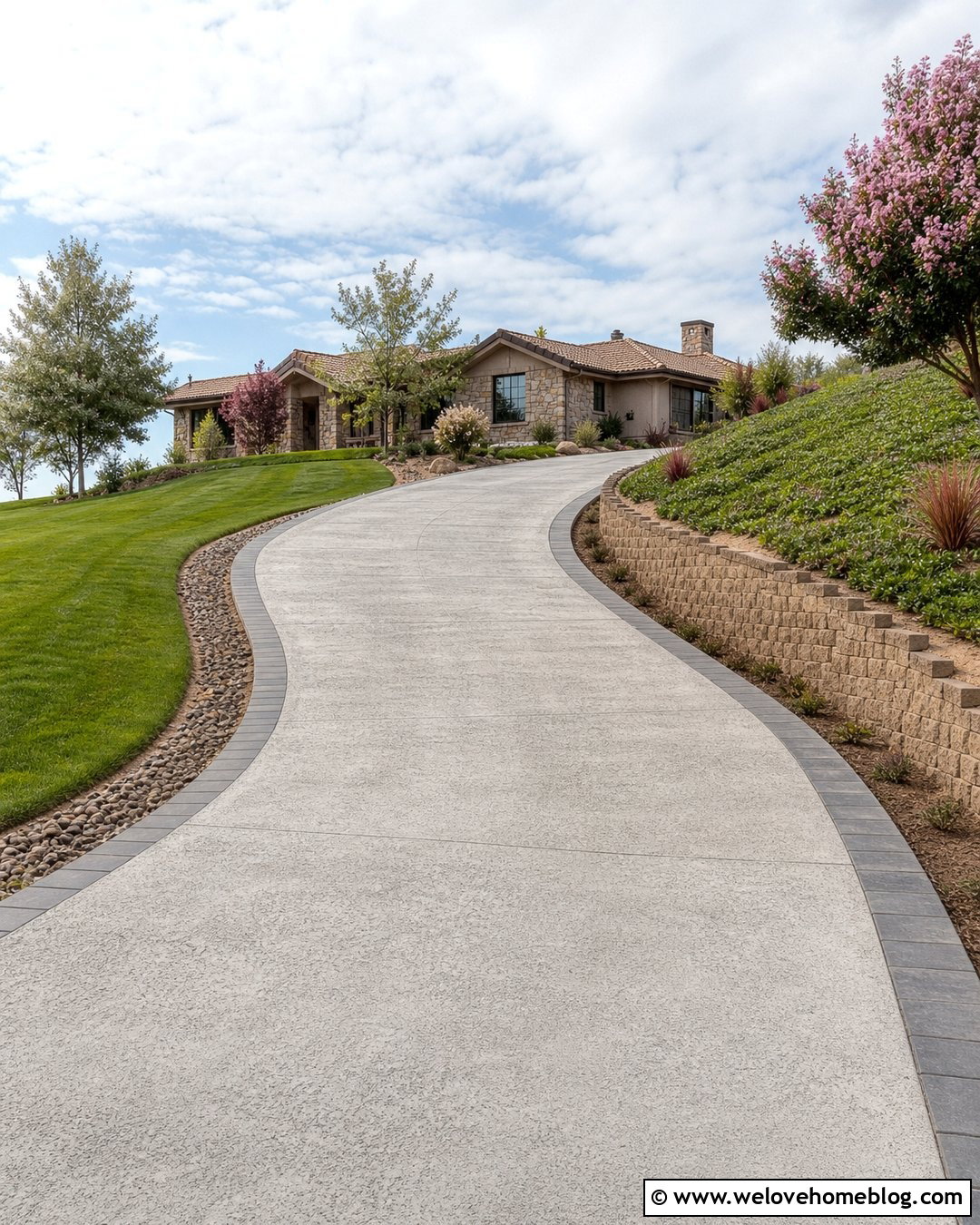
15. Heated Sloped Driveway
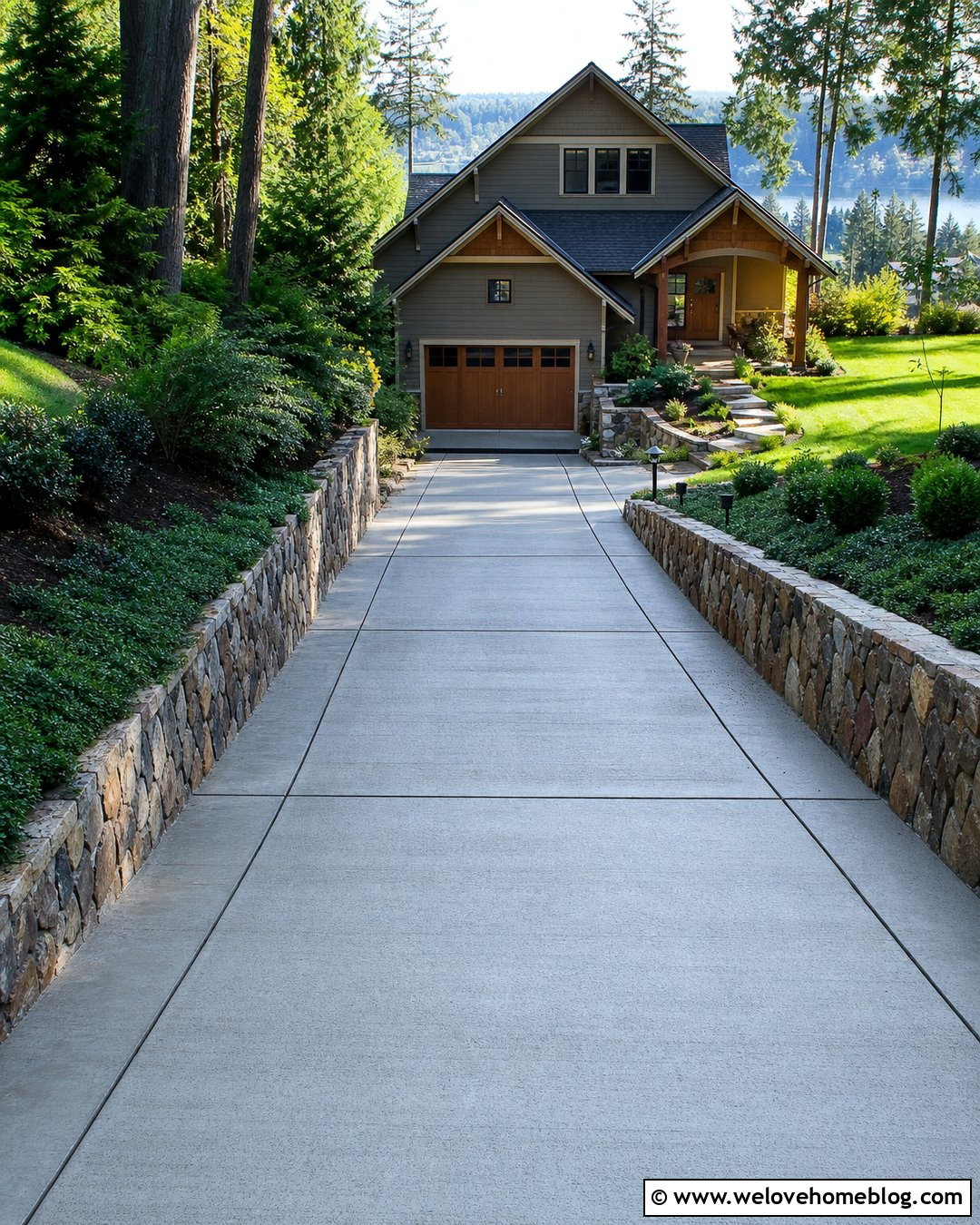
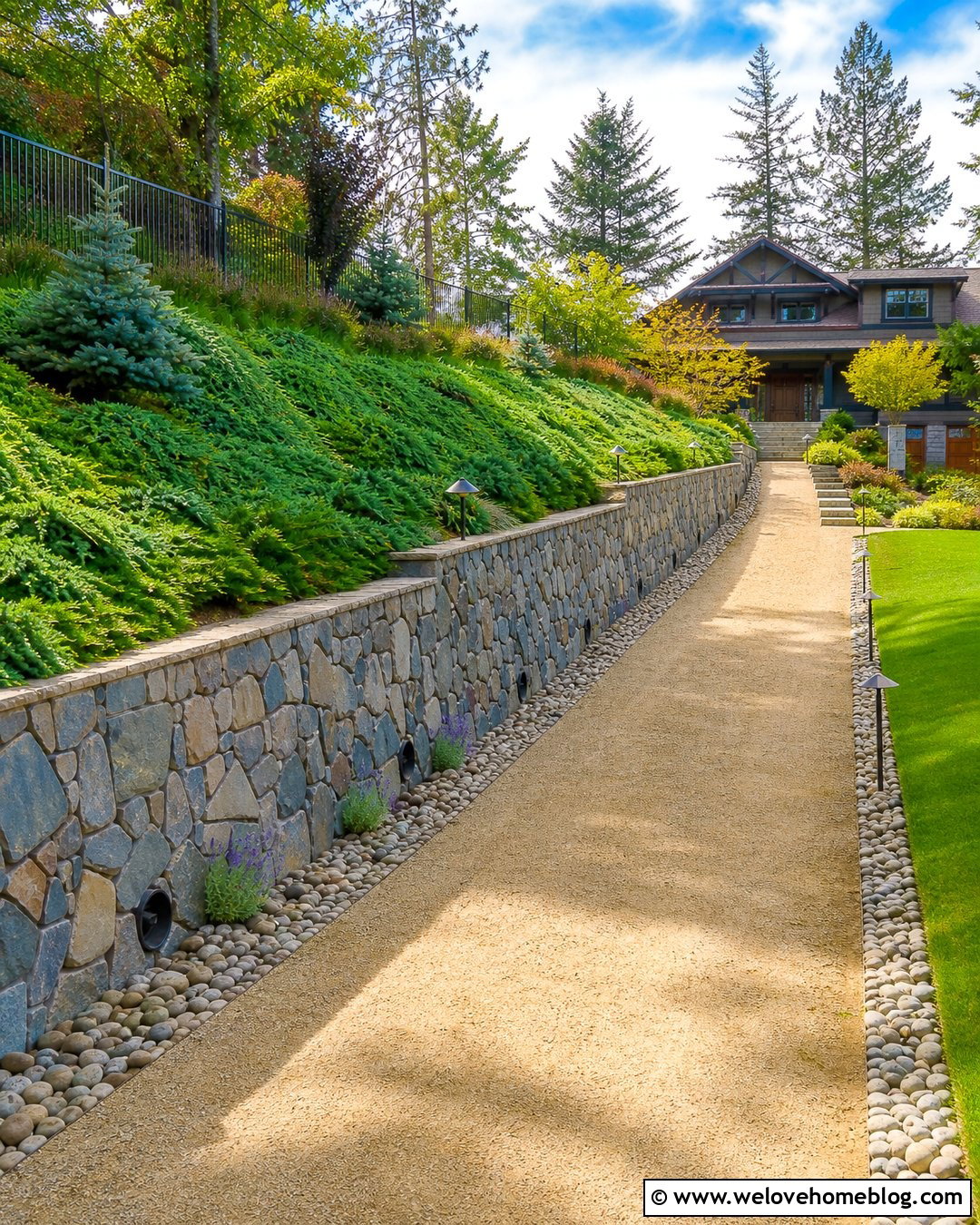
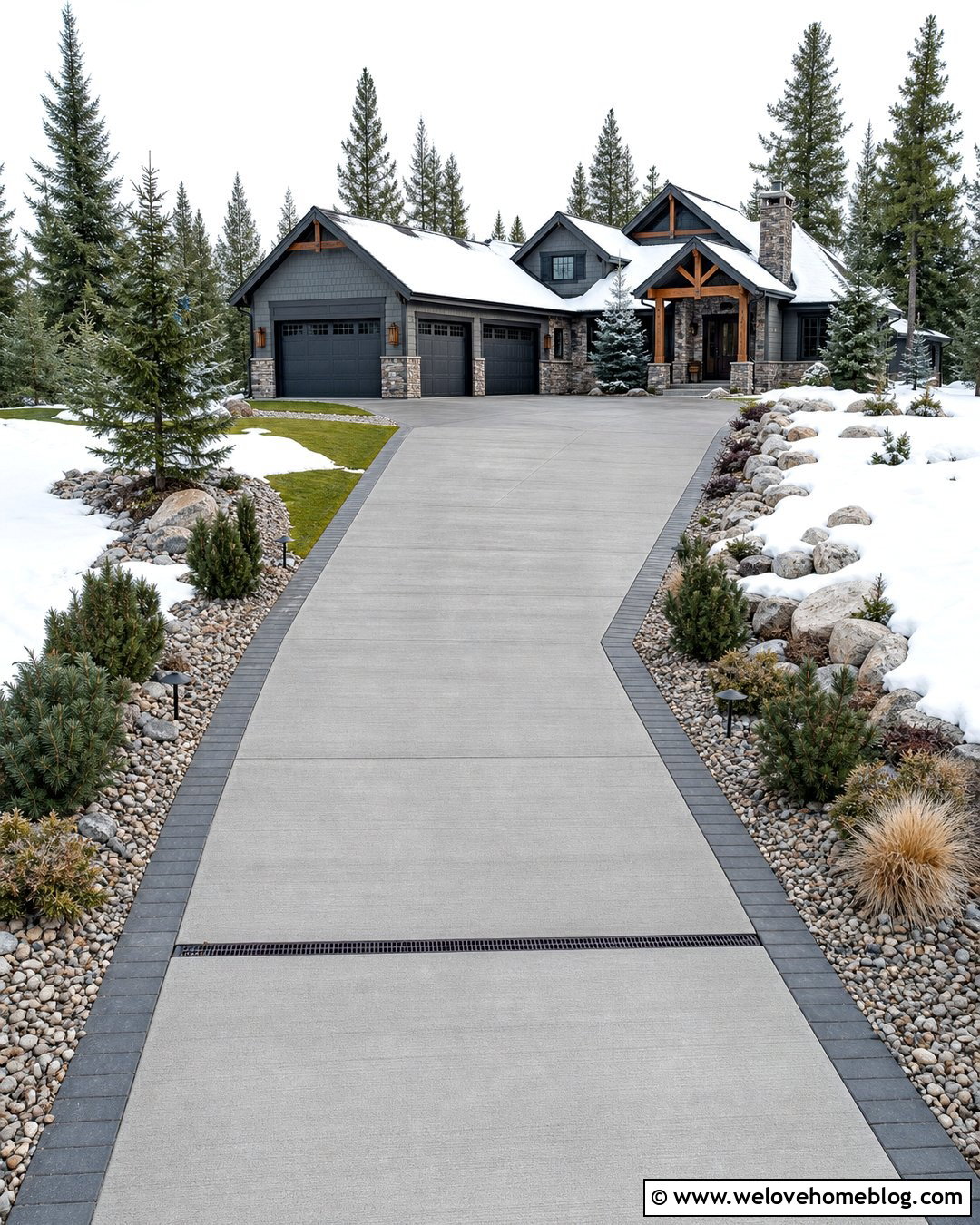
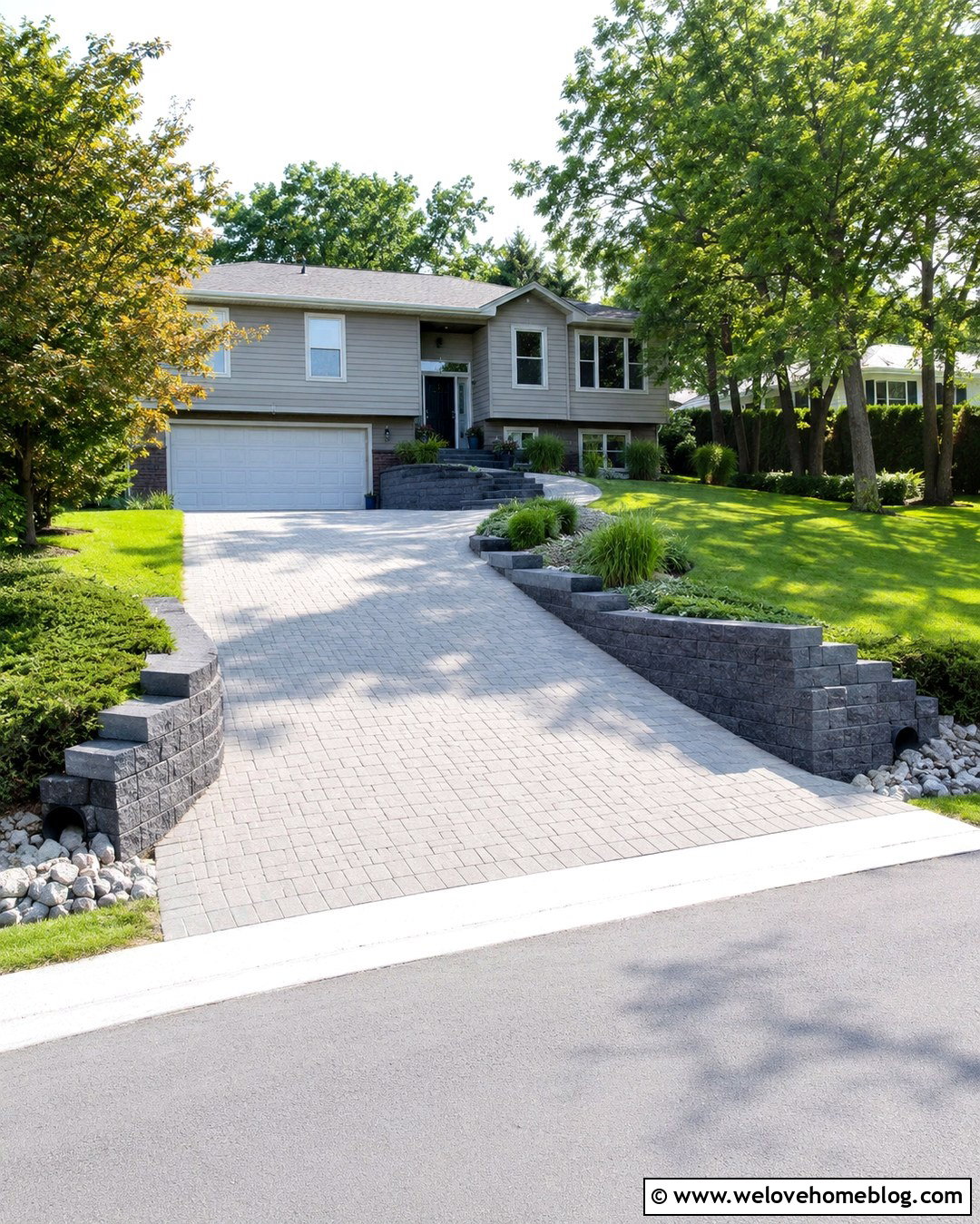
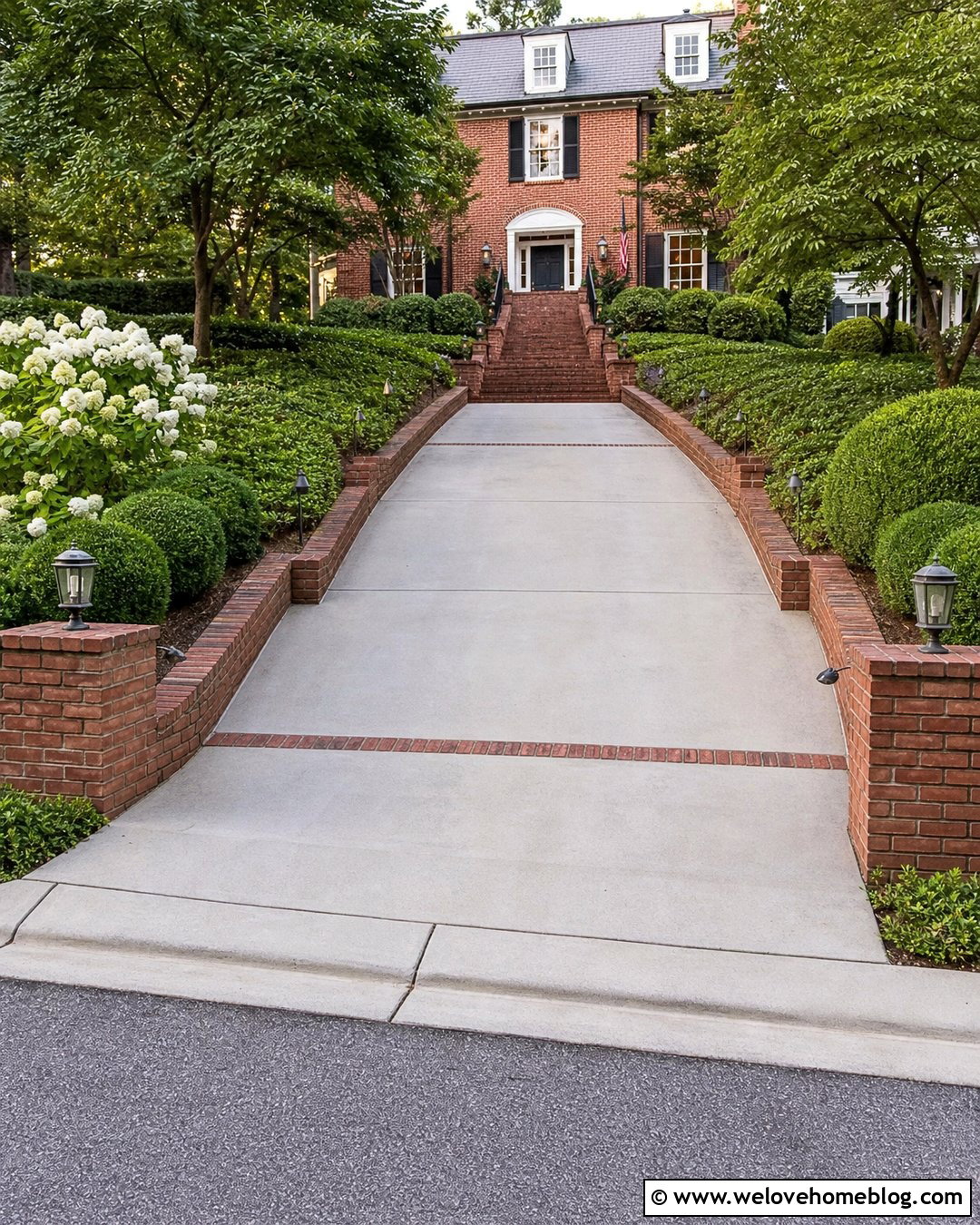
A sloped driveway requires careful attention to runoff, surface texture, and the point where heated pavement meets cold pavement. Use broom-finished concrete for traction and divide the incline into wide panels with understated control joints. Stone retaining walls can border the higher side, while a linear trench drain crosses the lower end before the garage. Heating the full incline helps prevent untreated strips from interrupting the vehicle route. However, melted snow must be directed to a safe outlet rather than allowed to refreeze at the bottom or flow toward the garage. Design manuals specifically treat slope as an important snow-melting consideration. () Add evergreen groundcover and sturdy shrubs above the retaining wall to create a polished mountain or hillside entrance.
16. Heated Curved Driveway
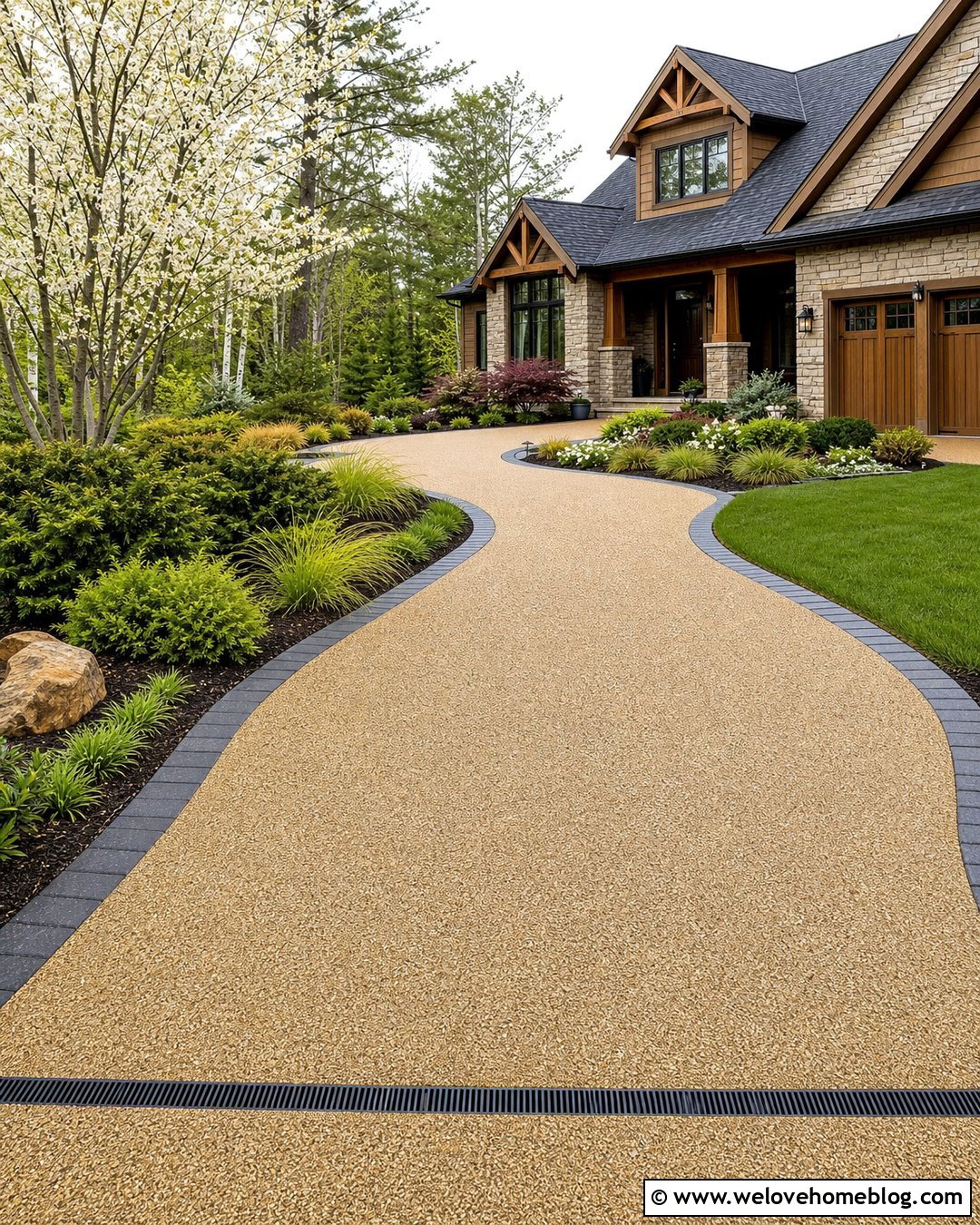
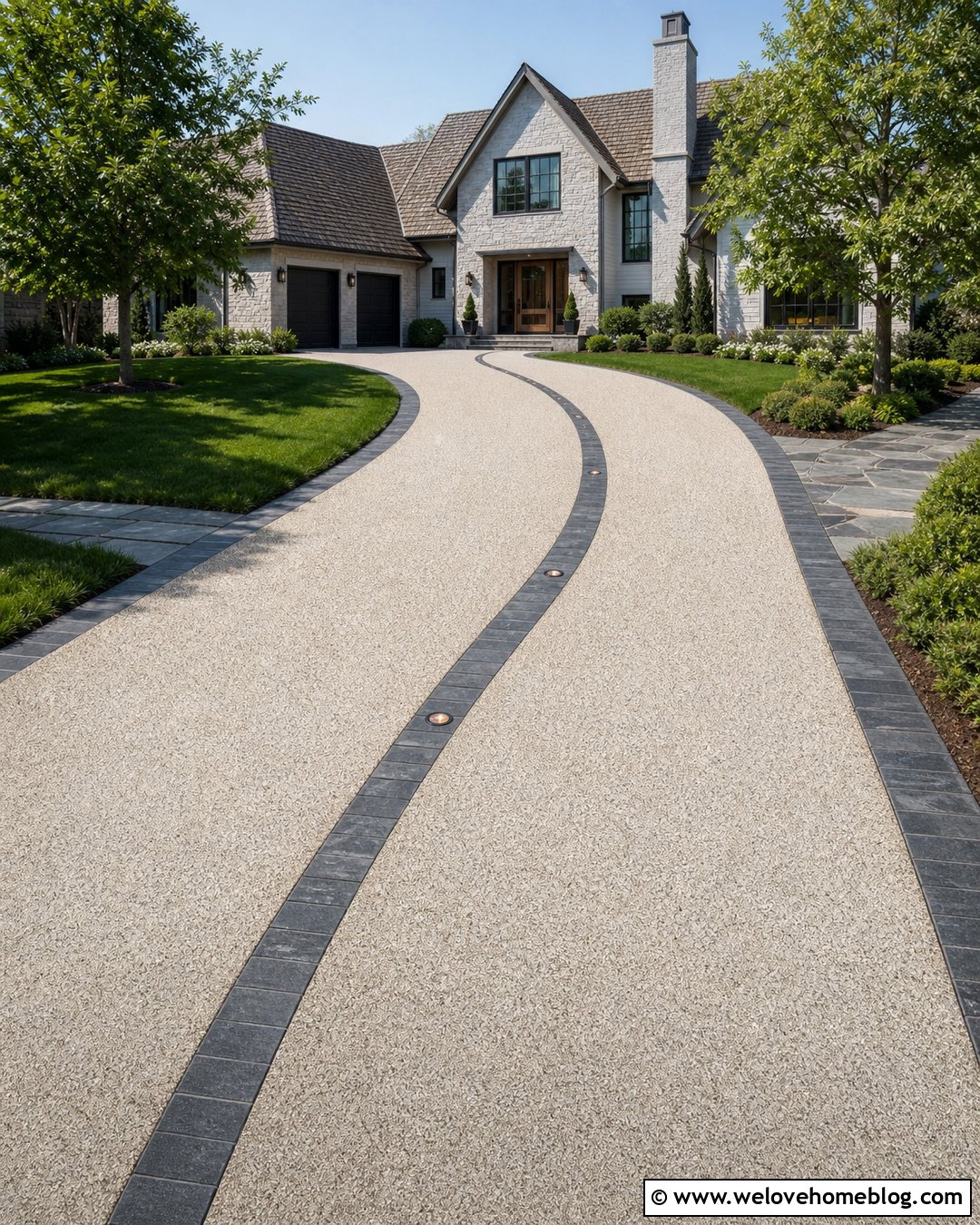
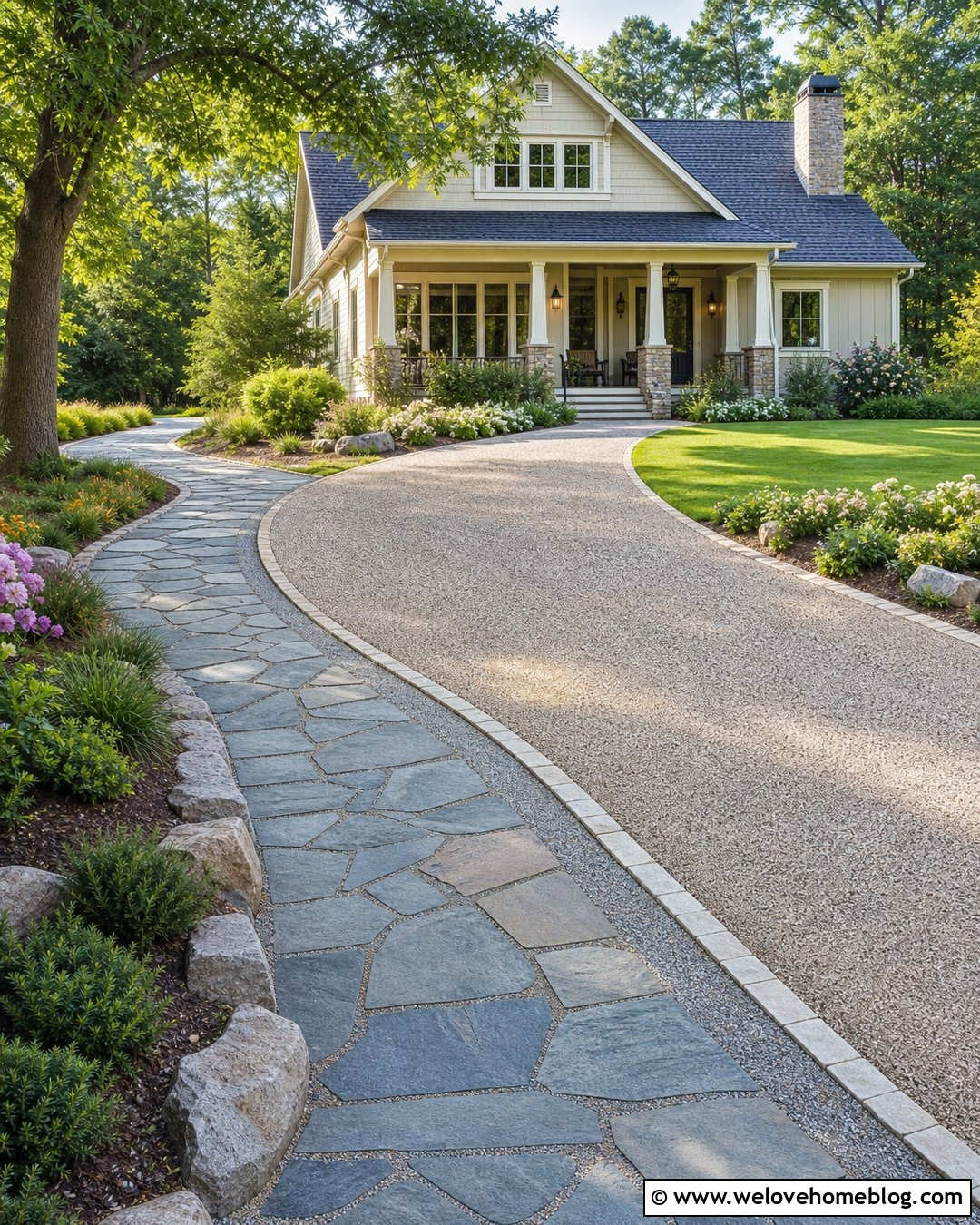
A curved heated driveway can make a modest front yard feel larger by revealing the house gradually. Choose tan resin-bound gravel for a smooth, visually consistent surface and frame it with dark granite setts. The heating system and resin assembly must be selected as a compatible package through experienced specialists. Follow the curve with layered planting beds containing compact evergreens, ornamental grasses, and small flowering trees. Avoid tall shrubs near the street so the entrance remains easy to see. A Craftsman house with stone columns and warm siding pairs naturally with the soft driveway color. Extend the heated surface into the garage approach and connect it to a matching walkway. A drainage channel along the inside curve can collect runoff without disrupting the flowing layout.
17. Heated Circular Driveway
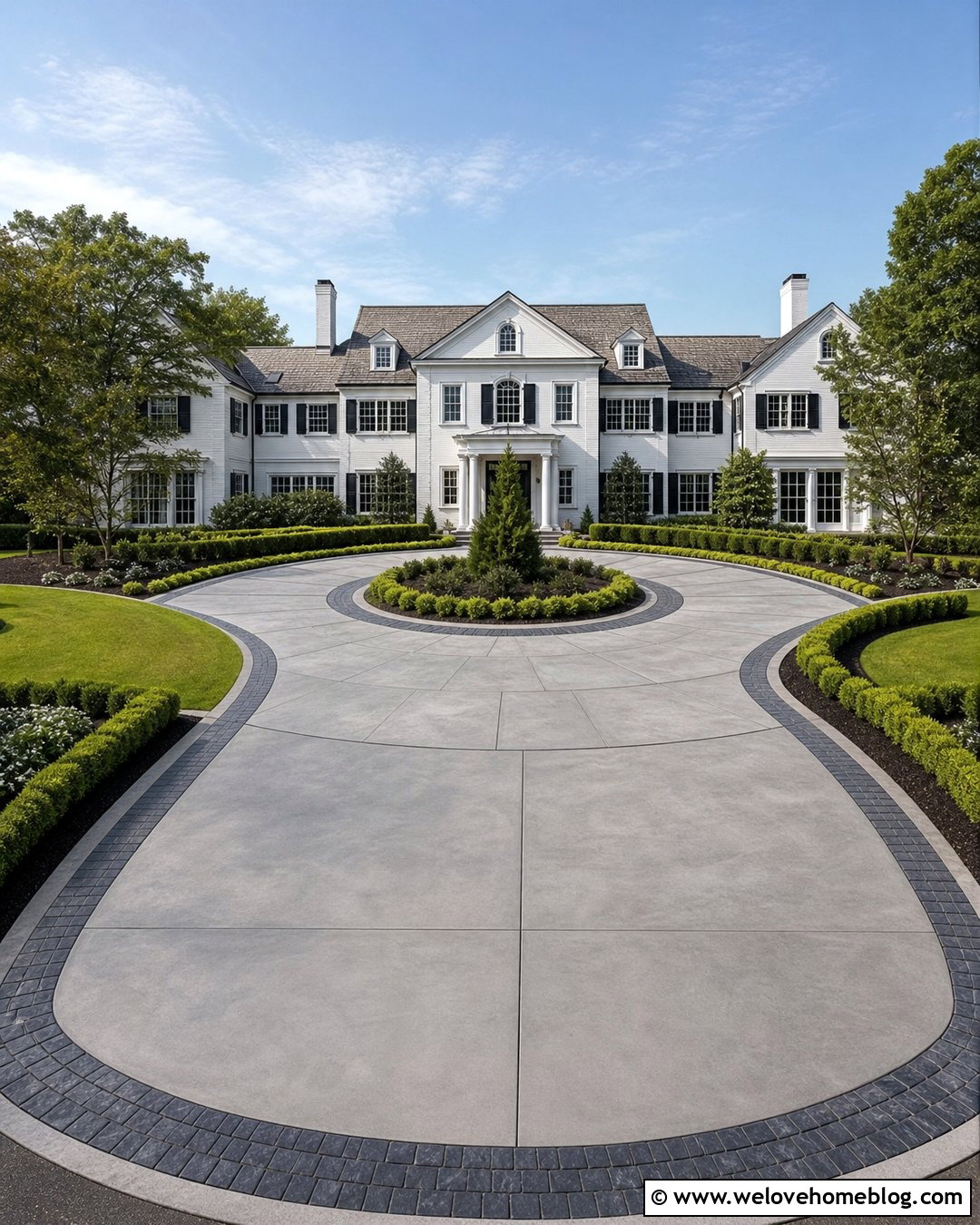
Circular driveways offer convenient movement and create room for a prominent landscaped centerpiece. Build the main surface with large-format gray concrete pavers in a radial layout. Use charcoal cobblestones around the inner island and outer edge to reinforce the circular shape. In the center, combine a specimen evergreen with low shrubs that will not block views across the driveway. The heating plan should follow both travel lanes and turning areas rather than using a simple rectangular grid. Separate zones may help manage the entrance, exit, front-door drop-off, and garage connection. A symmetrical Colonial or Georgian-style home gives the arrangement a formal backdrop. Finish with matching heated paths from the drop-off area to the porch, ensuring meltwater does not collect around the central island.
18. Heated Driveway And Walkway
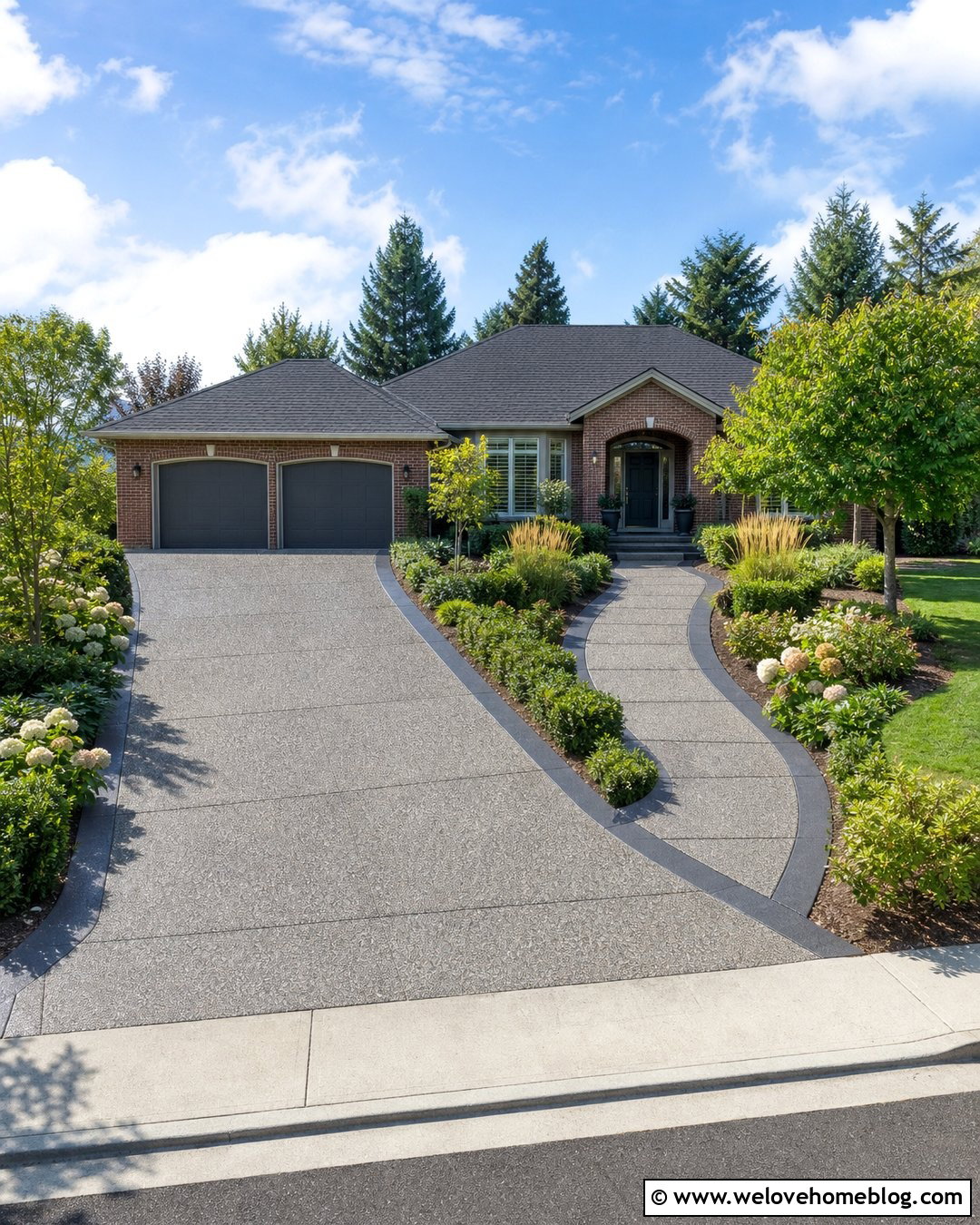
Connecting the driveway and walkway within one coordinated snow-melting plan creates a safer, more complete route to the house. Use medium-gray exposed aggregate concrete for a straight two-car driveway and a gently curving front path. Smooth charcoal concrete bands can define both surfaces and create visual continuity. Heat the full driveway or primary parking area, then continue the system along the walkway to the porch. Keep planting beds set slightly below the pavement so runoff moves toward approved drainage rather than across the walking route. Compact hollies, hydrangeas, and ornamental grasses add softness without overcrowding the path. This cohesive design works well with a brick ranch or updated traditional home and looks intentional throughout every season, not only during winter weather.
19. Heated Driveway And Front Steps
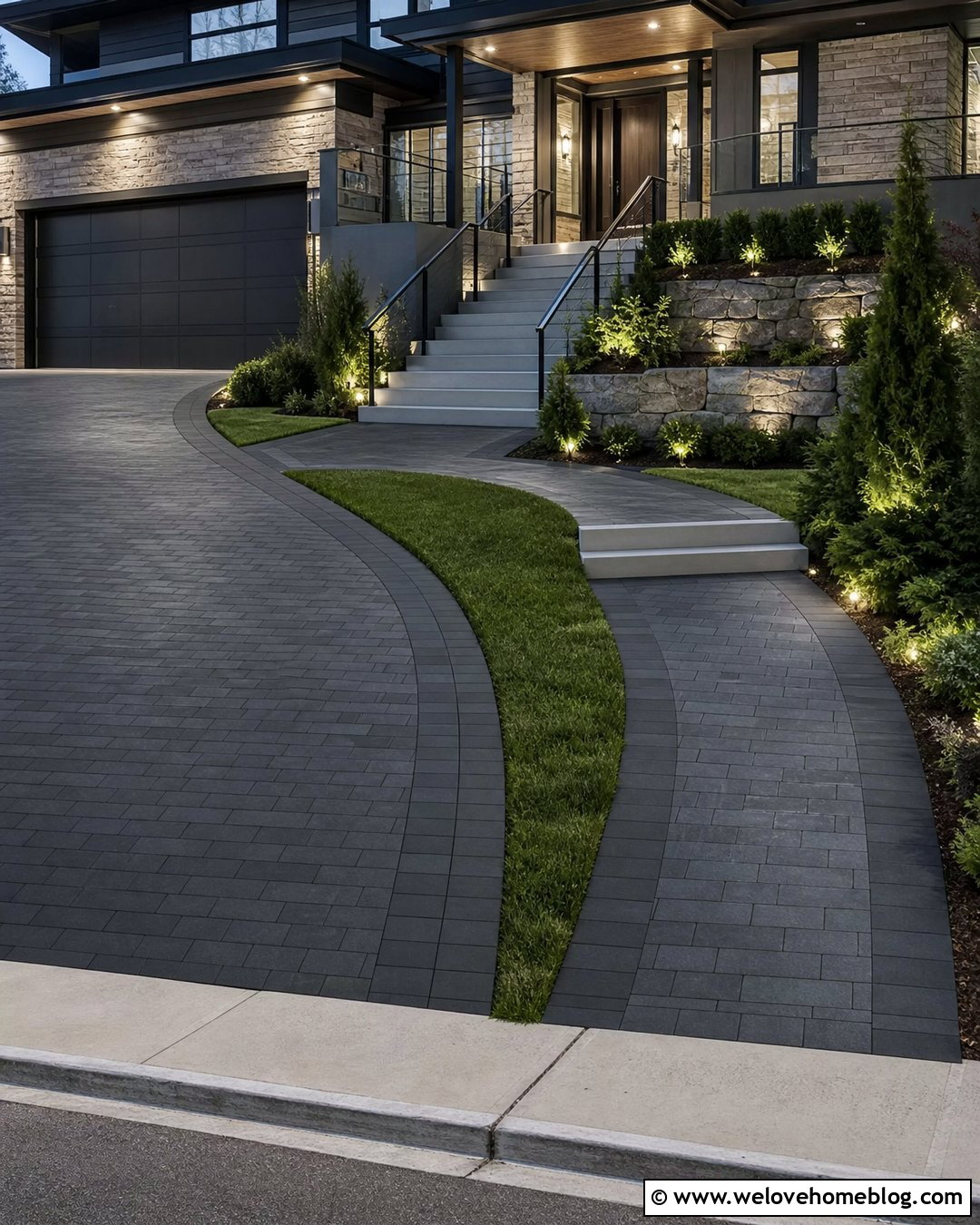
If the driveway is clear but the entrance steps remain icy, the arrival route is still incomplete. Pair a heated charcoal concrete paver driveway with wide precast concrete steps leading to a modern raised entry. Use compatible heating components beneath the driveway, walkway, landing, and stair treads as permitted by the system manufacturer. A low stone wall can connect the changes in elevation and serve as a border for evergreen planting beds. Include handrails where required, but choose a simple black finish that coordinates with exterior lighting and garage hardware. The driveway should curve gently toward the garage while a direct heated path branches toward the steps. This layered arrangement improves functionality and creates a strong architectural connection between the curb, parking area, and front door.
20. Heated Garage Approach
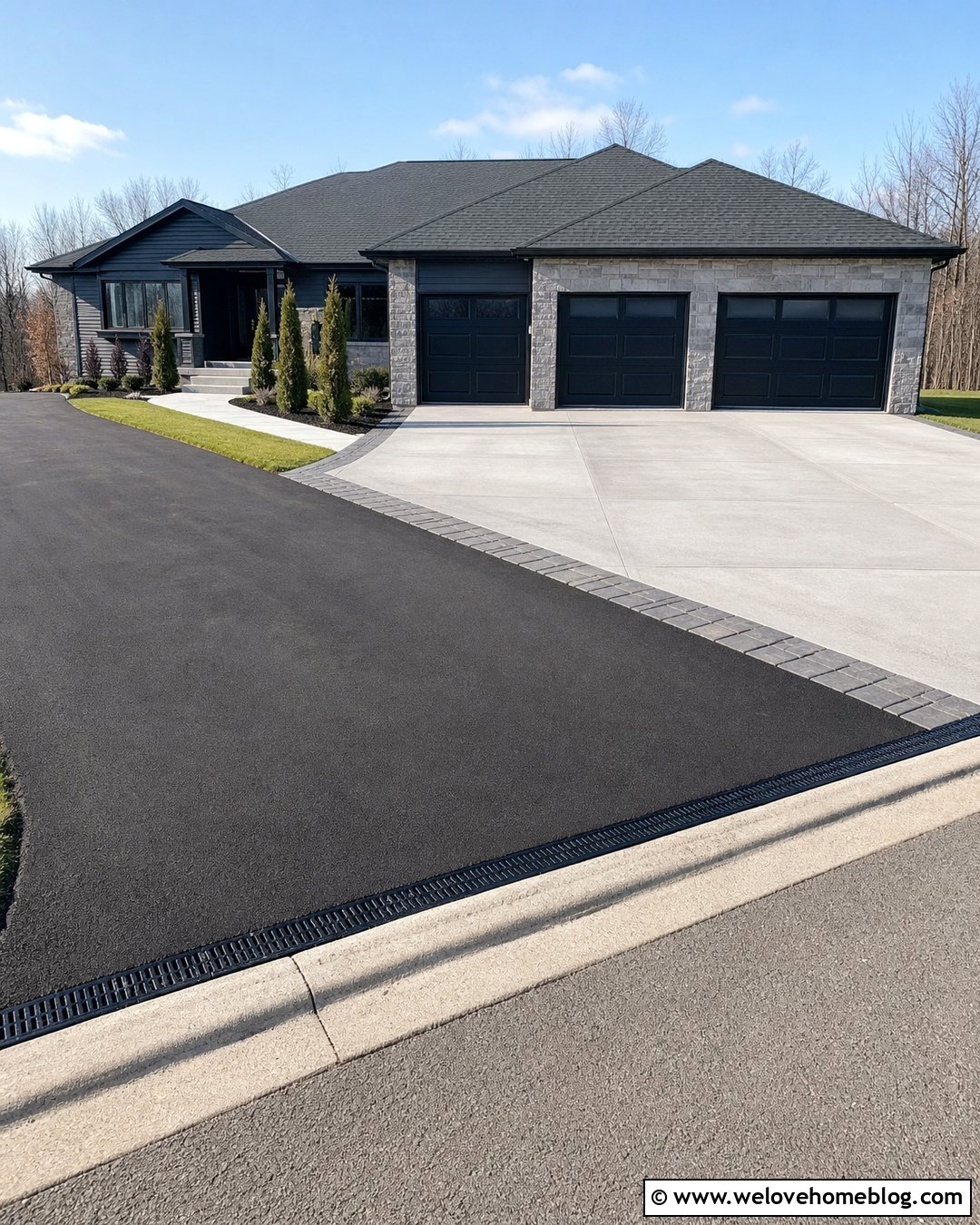
The final section outside a garage often stays shaded and receives runoff from parked vehicles. Concentrating radiant heat in this area can solve a specific winter trouble spot. Use black asphalt for the main driveway and create a twelve- to eighteen-foot-deep heated concrete apron directly in front of the garage. A row of charcoal pavers can mark the transition between the two materials. Slope the apron away from the garage and position a trench drain where local conditions require one. On both sides, use narrow planting beds with upright evergreens that frame the doors without reducing turning space. This practical two-material design suits a suburban ranch, split-level, or contemporary home and lets the most heavily used arrival area receive focused winter protection.
21. Zoned Heated Driveway
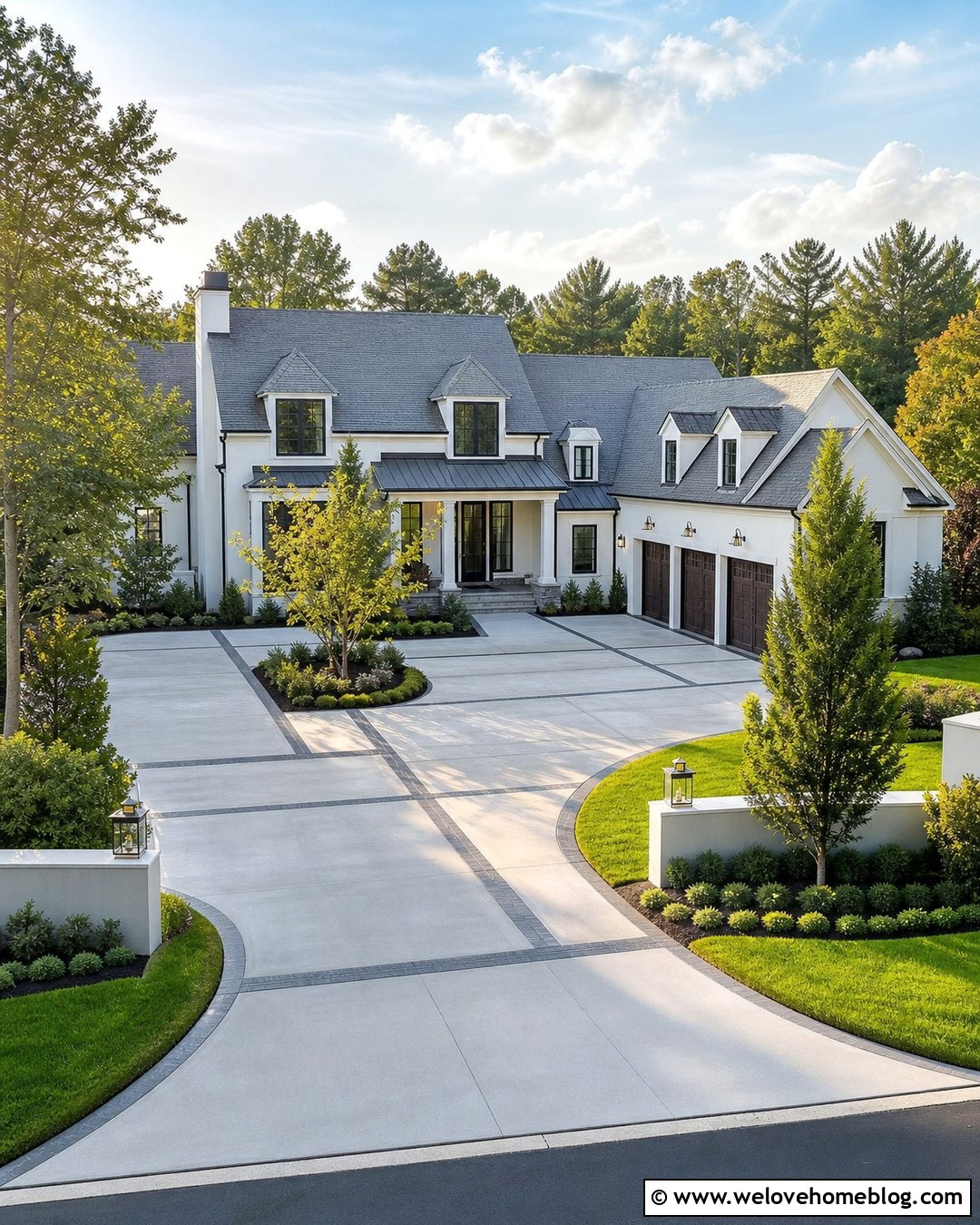
Multiple heating zones give a large driveway greater operating flexibility. Design a broad, light-gray concrete parking court with separate zones for the entrance lane, garage apron, guest parking area, and walkway. Dark granite bands can visually indicate the pavement divisions without revealing the technical system below. Sophisticated snow-melting installations can use multiple sensors to control different paved zones independently. () Surround the court with curved lawn panels and low evergreen beds so the extensive hardscape still feels residential. This arrangement is particularly useful for a large modern farmhouse or multigenerational home with several garage bays. Position control equipment where technicians can reach it, label every zone clearly, and preserve accurate installation drawings for future landscaping, utility work, or pavement repairs.
22. Heated Driveway With Automatic Snow Sensor
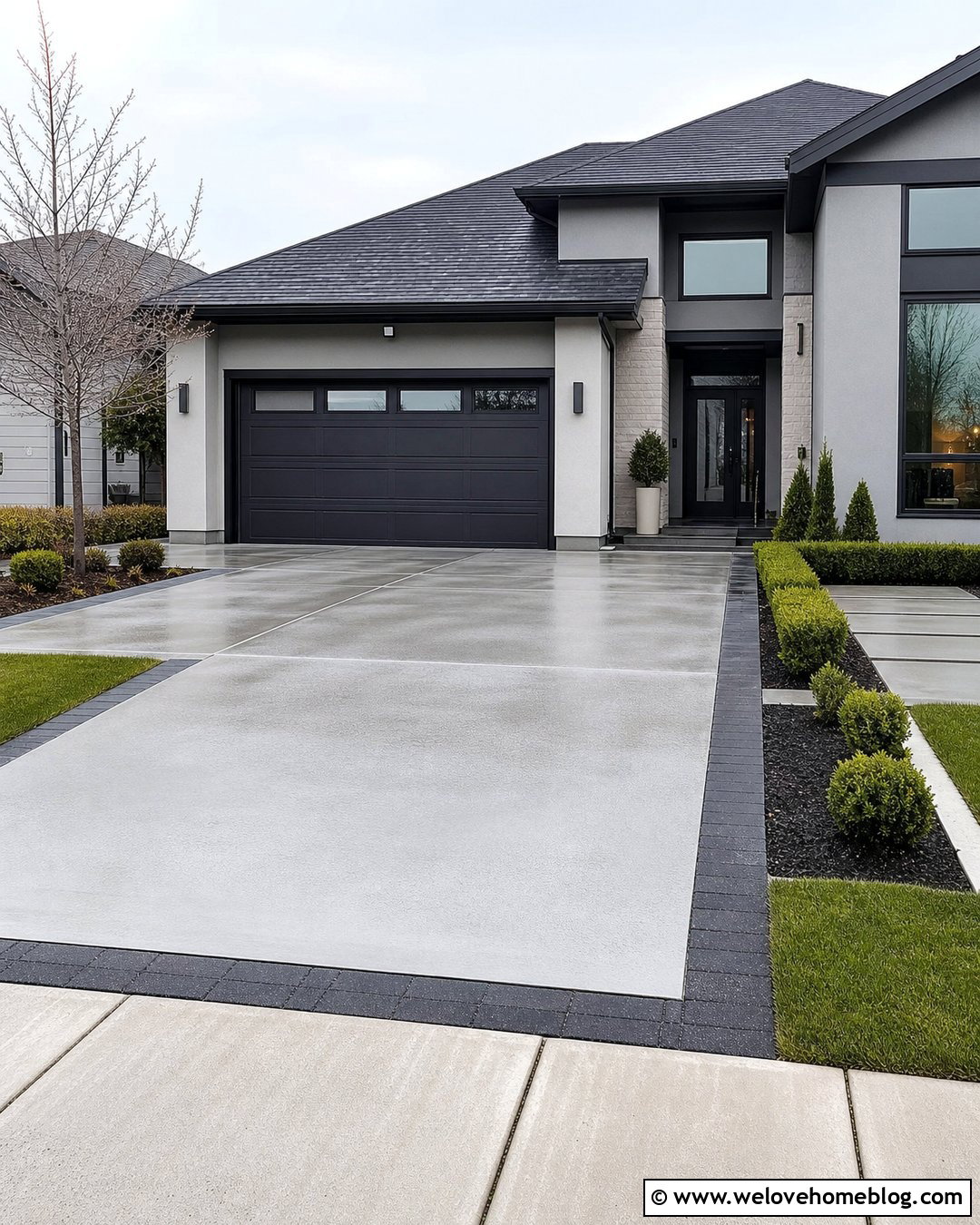
Automatic controls allow a heated driveway to respond when moisture arrives under freezing conditions. Create a clean two-car driveway with medium-gray poured concrete, a straight layout, and a charcoal paver border. Mount an aerial snow sensor where it has open exposure rather than beneath deep eaves or dense trees. In-ground sensors may also be used when the system design calls for them. Many controllers include adjustable activation settings, delay cycles, or manual override functions. () Keep the associated electrical panel or hydronic controls accessible inside the garage. Complete the modern suburban look with clipped shrubs, rectangular planting beds, and a direct front walkway. The automation should complement proper drainage and professional system sizing rather than compensate for poor pavement design.
23. Heated Driveway With Smart Controls
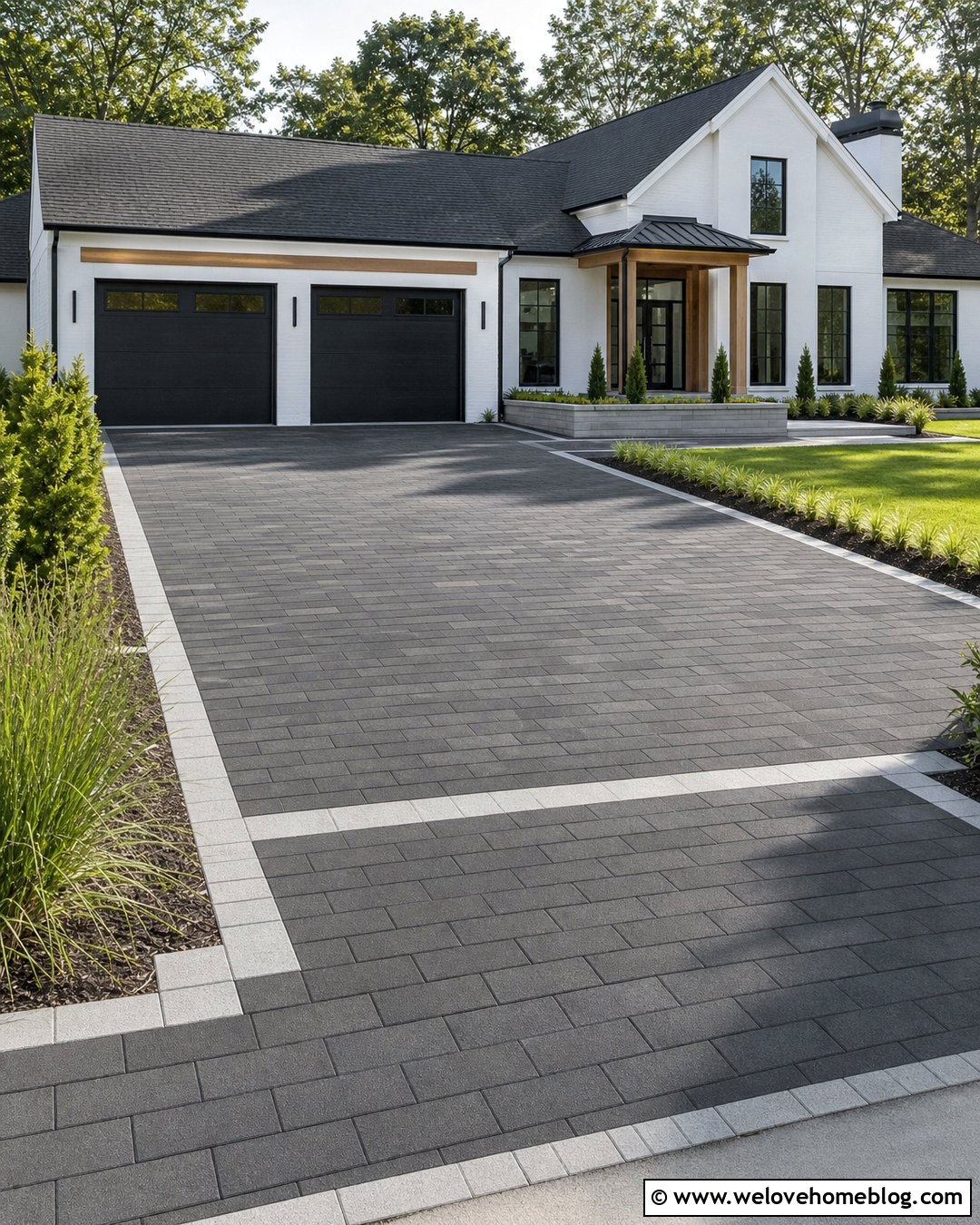
Smart controls can make it easier to monitor and manage a radiant driveway system. Pair the technology with a minimalist driveway made from charcoal concrete pavers laid in a running bond. Use a straight layout leading to a modern house with white siding, natural wood accents, and black garage doors. Divide the driveway, walkway, and front apron into clearly labeled operating zones. Depending on the selected equipment, controls may provide remote activation, system status information, or adjustable operating schedules. Manual override remains useful for drifting snow or advance preheating before a storm. Keep physical controls accessible even when remote features are available. Linear ornamental grasses, small evergreens, and a narrow concrete walkway reinforce the contemporary appearance while leaving the entire paved approach visible from the curb.
24. Heated Driveway With Trench Drain
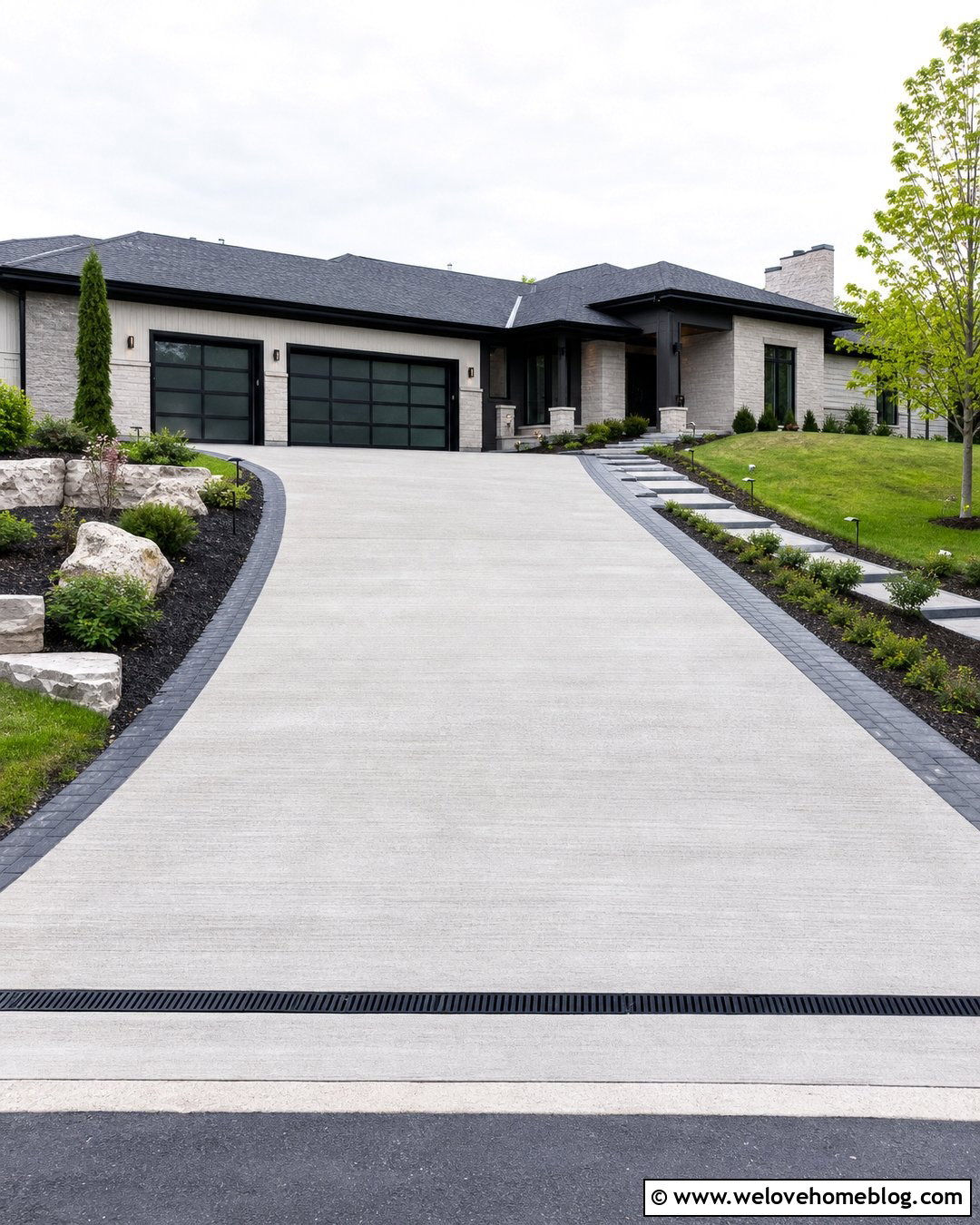
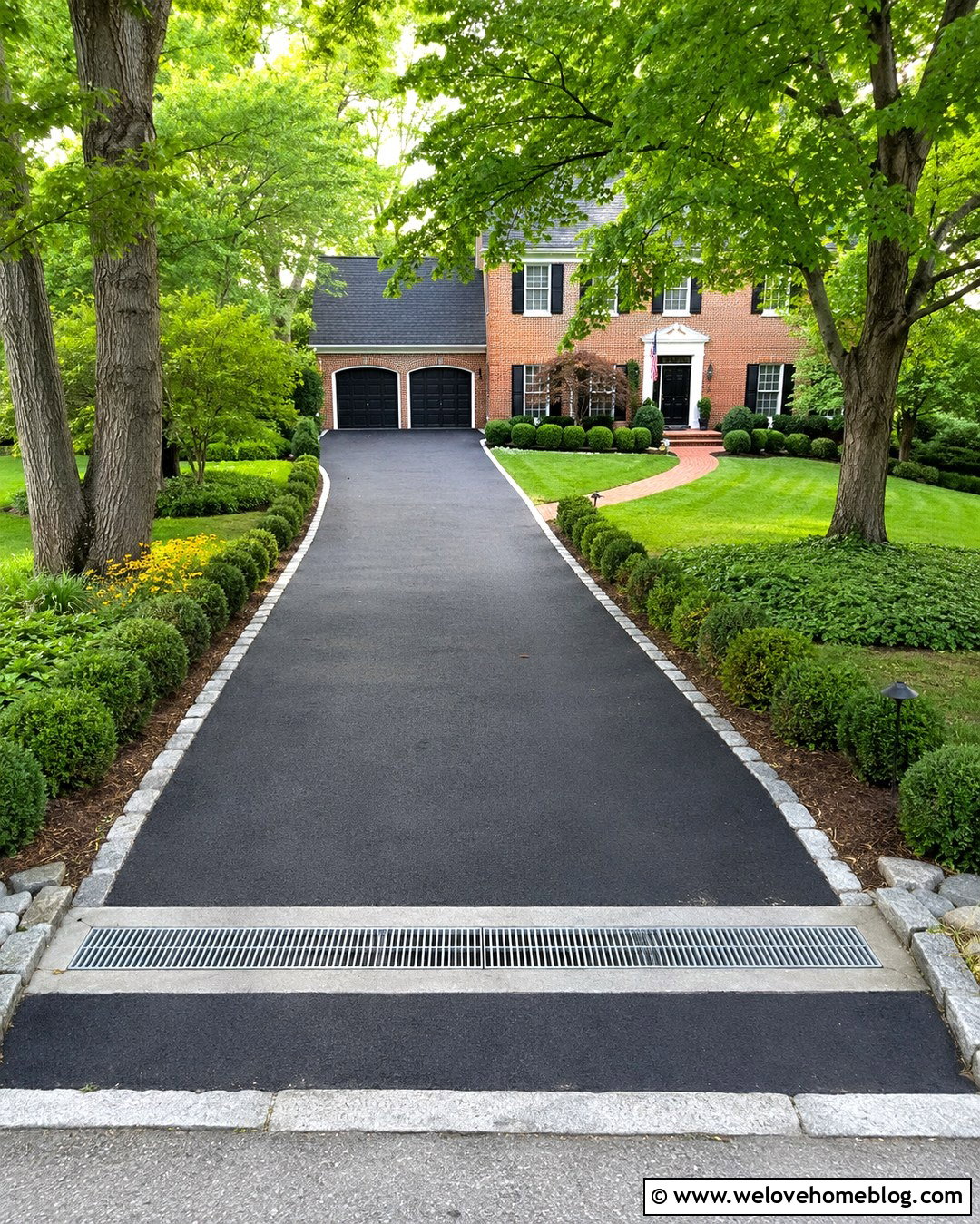
Bright winter sun can quickly turn melted snow into moving water, making drainage a central part of heated driveway design. Use light-gray broom-finished concrete on a gently sloped approach and install a dark linear trench drain across the lower edge. The drain should sit where it can intercept runoff without creating an uncomfortable bump for vehicles or pedestrians. Coordinate its outlet, frost protection, capacity, and maintenance access with local conditions. A black paver border can visually connect the drain grate to the garage doors and exterior fixtures. Frame the driveway with sloped lawn, hardy shrubs, and a separate heated walkway. This clean, practical look suits a contemporary ranch while reducing the chance that runoff will collect near the garage or refreeze beyond the heated area.
25. Heated Driveway With Retaining Walls
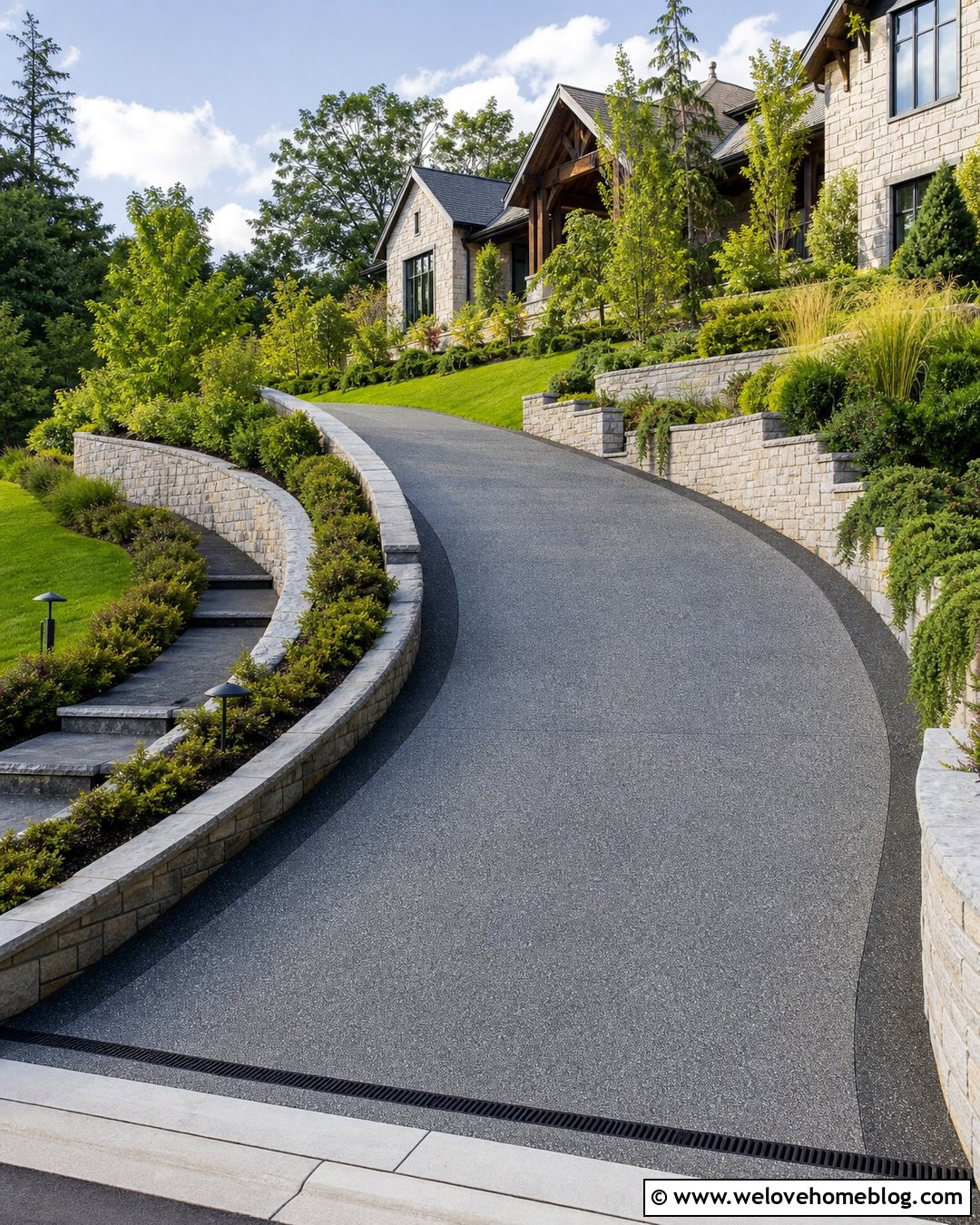
Retaining walls can make a steep or narrow heated driveway feel structured rather than confined. Choose dark exposed aggregate concrete for the pavement and use light-gray natural stone walls along both sides of the lower approach. Keep the walls low near the street for visibility, then gradually increase their height toward the house. Integrated drainage behind the walls protects the driveway base, while a channel at the bottom manages snowmelt. Add compact junipers, ornamental grasses, and cascading groundcover above the masonry. A curved layout softens the grade and guides vehicles toward a hillside Craftsman home. Wall footings, buried utilities, heating loops, driveway reinforcement, and drainage pipes should be coordinated before construction so these systems do not compete for the same limited underground space.
26. Heated Driveway With Landscape Borders
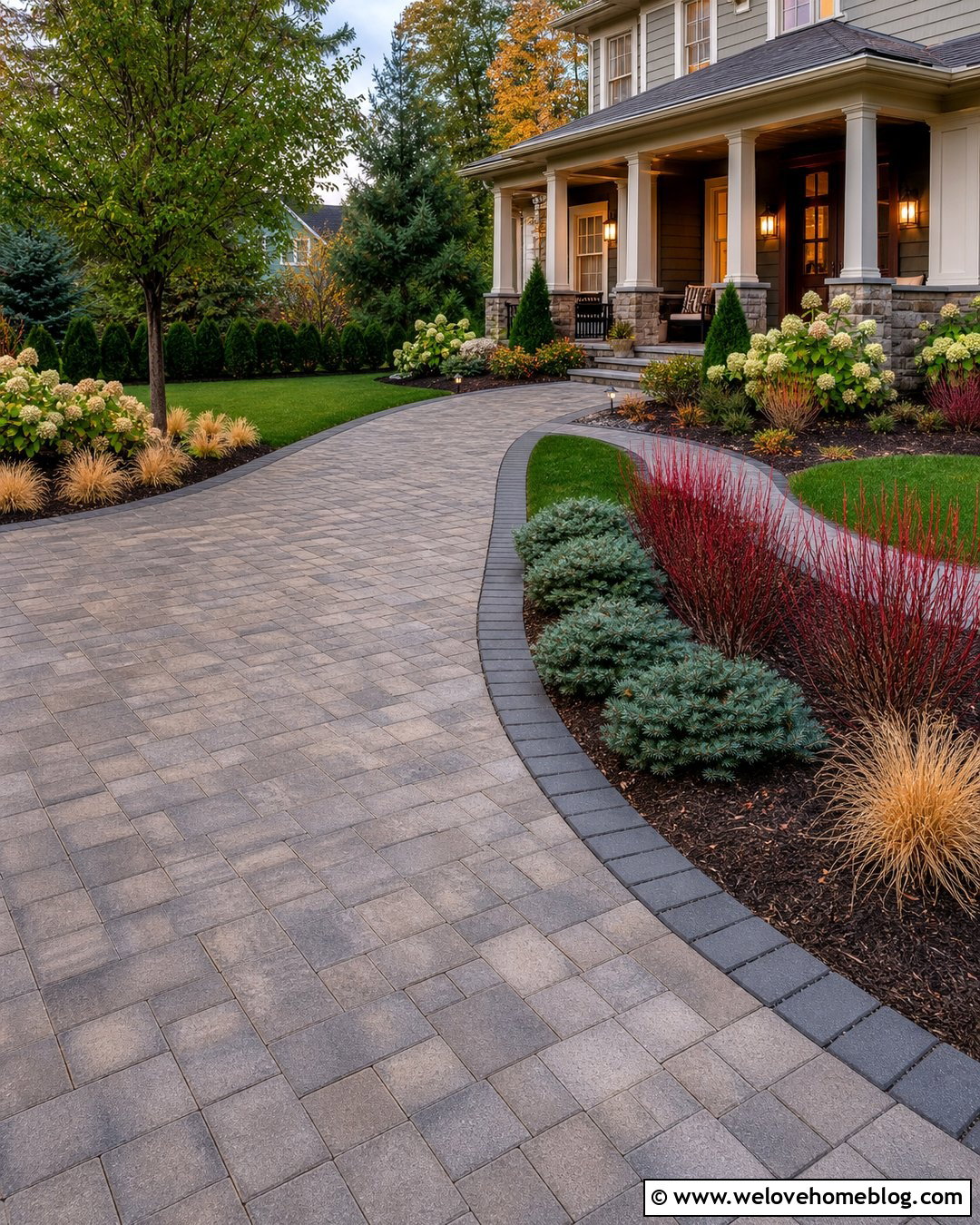
A radiant system can be almost invisible, so landscaping plays an important role in shaping the finished driveway. Use warm-gray interlocking concrete pavers on a gently curved approach with dark soldier-course edging. Build wide planting borders containing dwarf spruce, red-twig dogwood, compact hydrangeas, and low grasses selected for the local climate. Leave an open snow-storage strip beyond the heated paving and prevent woody roots from crowding the base. A narrow path of matching pavers can connect the driveway to a traditional front porch. The driveway remains the visual anchor, while layered planting provides color, structure, and winter interest. Low-voltage fixtures may illuminate the border, but the daytime design should still feel balanced, uncluttered, and easy to maintain throughout the year.
27. Modern Farmhouse Heated Driveway
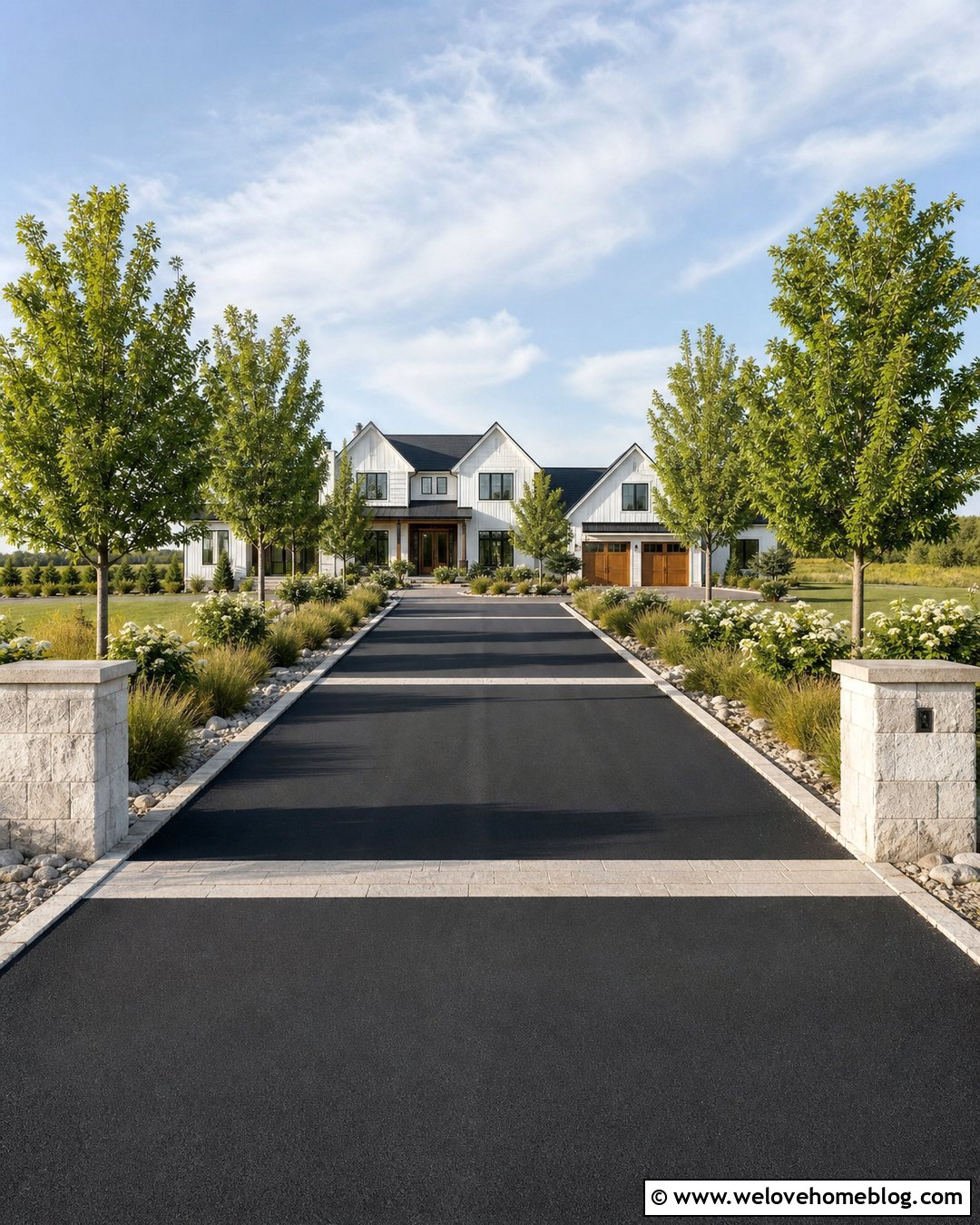
A modern farmhouse driveway should feel relaxed but carefully organized. Start with smooth black asphalt on a long, straight approach and add pale-gray concrete bands near the entrance and garage. Simple limestone curbs can define both sides without appearing overly formal. Frame the route with native grasses, white flowering shrubs, and evenly spaced deciduous trees. The heating system can cover the complete driveway or prioritize the primary lane, parking court, and front walkway. A white board-and-batten house with black windows and natural wood doors provides a strong backdrop. Keep gates and lighting simple, using black metal that repeats the exterior hardware. Wide drainage swales hidden within the landscape help handle meltwater while preserving the open, rural character associated with farmhouse properties.
28. Mountain Home Heated Driveway
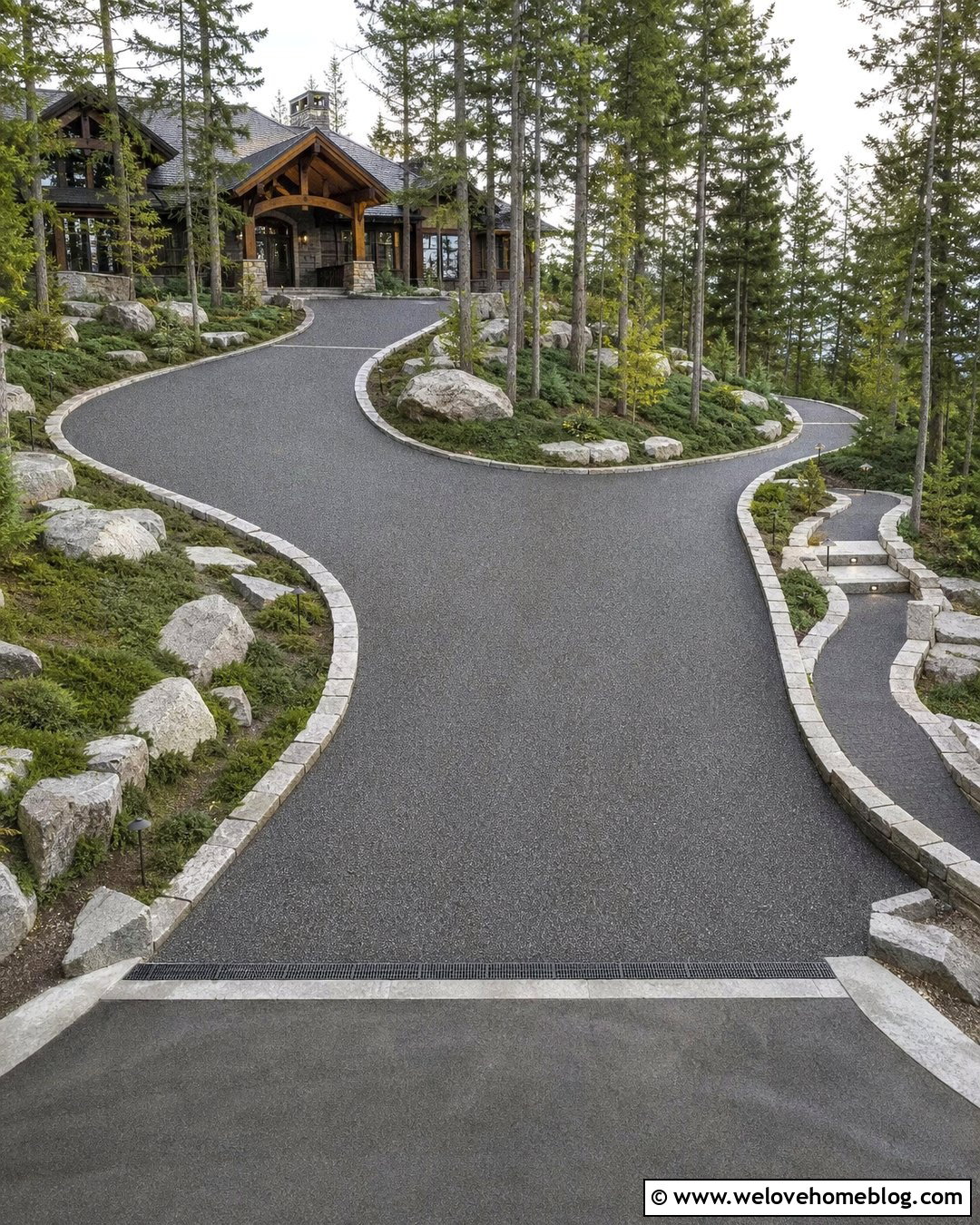
Heavy snowfall, shade, and steep terrain make mountain driveways strong candidates for carefully engineered snow-melting systems. Use charcoal-colored concrete with an exposed aggregate finish and a broad switchback curve leading to a timber-and-stone house. Rough-cut granite curbs can protect the driveway edges, while evergreen groundcover stabilizes surrounding slopes. Heat the steepest sections, garage apron, pedestrian path, and any tight turning area where traction is especially important. A hydronic system may suit a large installation when the property has suitable mechanical capacity, but system selection should follow a site-specific energy and engineering review. Add trench drainage at low points and keep outlets protected from blockage. The complete look should feel rugged and natural while remaining organized, visible, and practical during winter.
29. Colonial Heated Brick Driveway
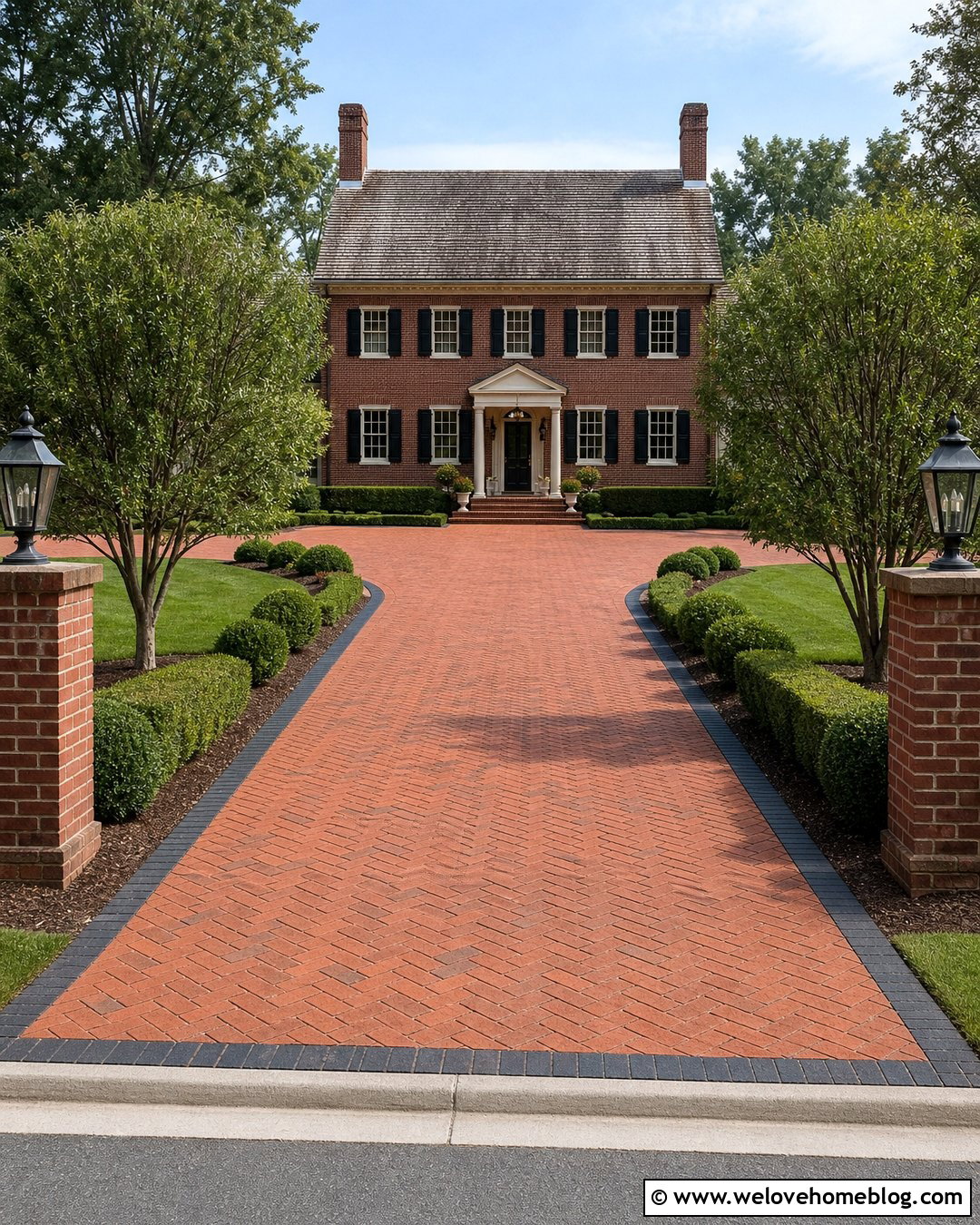
Symmetry helps a heated driveway complement a traditional Colonial facade. Use red clay brick pavers in a herringbone field with charcoal brick borders. Run the driveway straight from the street before widening it into a balanced parking court near the garage. Matching brick walkways can branch toward the centered front door and side entrance. Frame the approach with clipped boxwood, oval lawn panels, and evenly spaced ornamental trees. Heating zones beneath the driveway and walks should follow the formal geometry, keeping the most visible paved areas consistently clear. Avoid overly decorative gates or planting that hides the house. Black lanterns on simple brick pillars provide a suitable entrance detail, while concealed channel drainage protects the crisp paving pattern from uncontrolled winter runoff.
30. Retrofit Heated Driveway
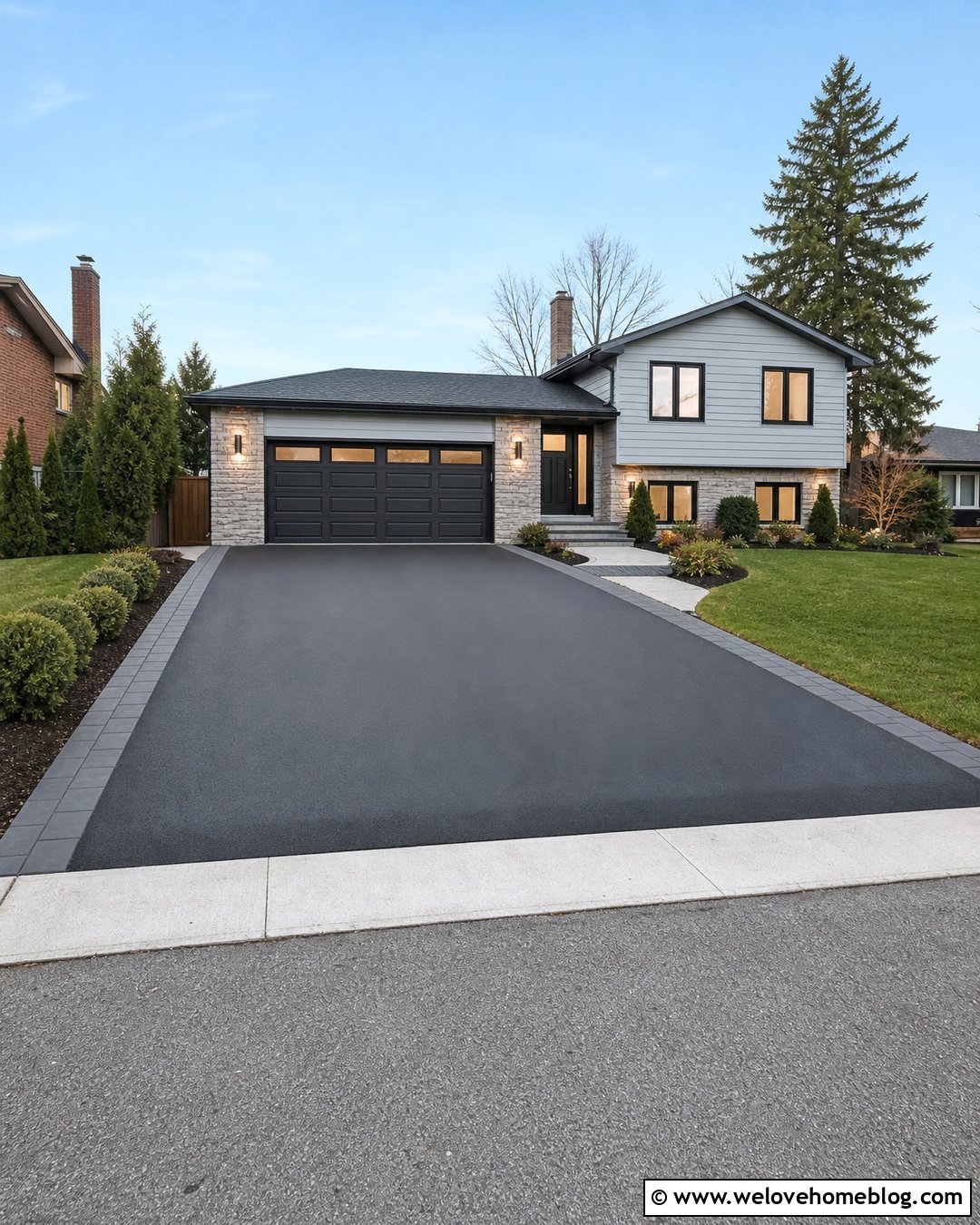
Replacing an entire driveway is not always the only path to radiant snow melting. Some electric systems can be added through approved retrofit methods or installed beneath a compatible new overlay, depending on the existing pavement and manufacturer specifications. () Create a refreshed suburban look by resurfacing an older asphalt driveway with black asphalt and adding new charcoal paver borders. Focus heating on the tire lanes, garage apron, and connecting walkway to control the project scope. Before choosing this approach, assess the current base, cracks, drainage, surface height, electrical capacity, and transitions at the sidewalk and garage. A retrofit should not conceal major structural failure. Finish with renewed planting beds, compact evergreens, and a clean concrete entrance band that makes the entire property feel updated.
Conclusion:
These 30 Heated Driveway Ideas show that snow-melting performance does not require sacrificing curb appeal. Concrete, asphalt, brick, cobblestone, aggregate, and compatible pavers can all support distinctive complete driveway designs when the radiant system is properly engineered. The most successful plan considers the whole property, including slope, drainage, electrical or boiler capacity, heated coverage, controls, walkways, landscaping, and future maintenance. Full-surface heating offers broad coverage, while zoned layouts and heated tire tracks can focus energy on essential areas. Before construction, work with experienced heating, electrical, plumbing, paving, and drainage professionals. Careful coordination beneath the surface is what makes the finished driveway attractive, dependable, and practical through demanding winter weather.

Related posts:
Leave a Reply