
Snowy driveways can be practical and beautiful when the surface, layout, borders, and winter landscaping work together. The best **snowy driveway ideas** make snow removal easier while giving the home a welcoming, season-ready entrance. Smooth paving supports shoveling and snow blowing, while defined edges help you see the driveway after fresh snowfall. Heated zones, drainage channels, marker posts, and well-placed lighting can improve everyday use. Evergreen shrubs, stone walls, ornamental grasses, and bare-branched trees also add structure when summer plants disappear beneath the snow. Whether you prefer asphalt, concrete, pavers, gravel, or cobblestone, these complete designs balance safety with curb appeal. Explore the following **20 Snowy Driveway Ideas** for layouts that look inviting throughout winter.
1. Heated Concrete Snowy Driveway
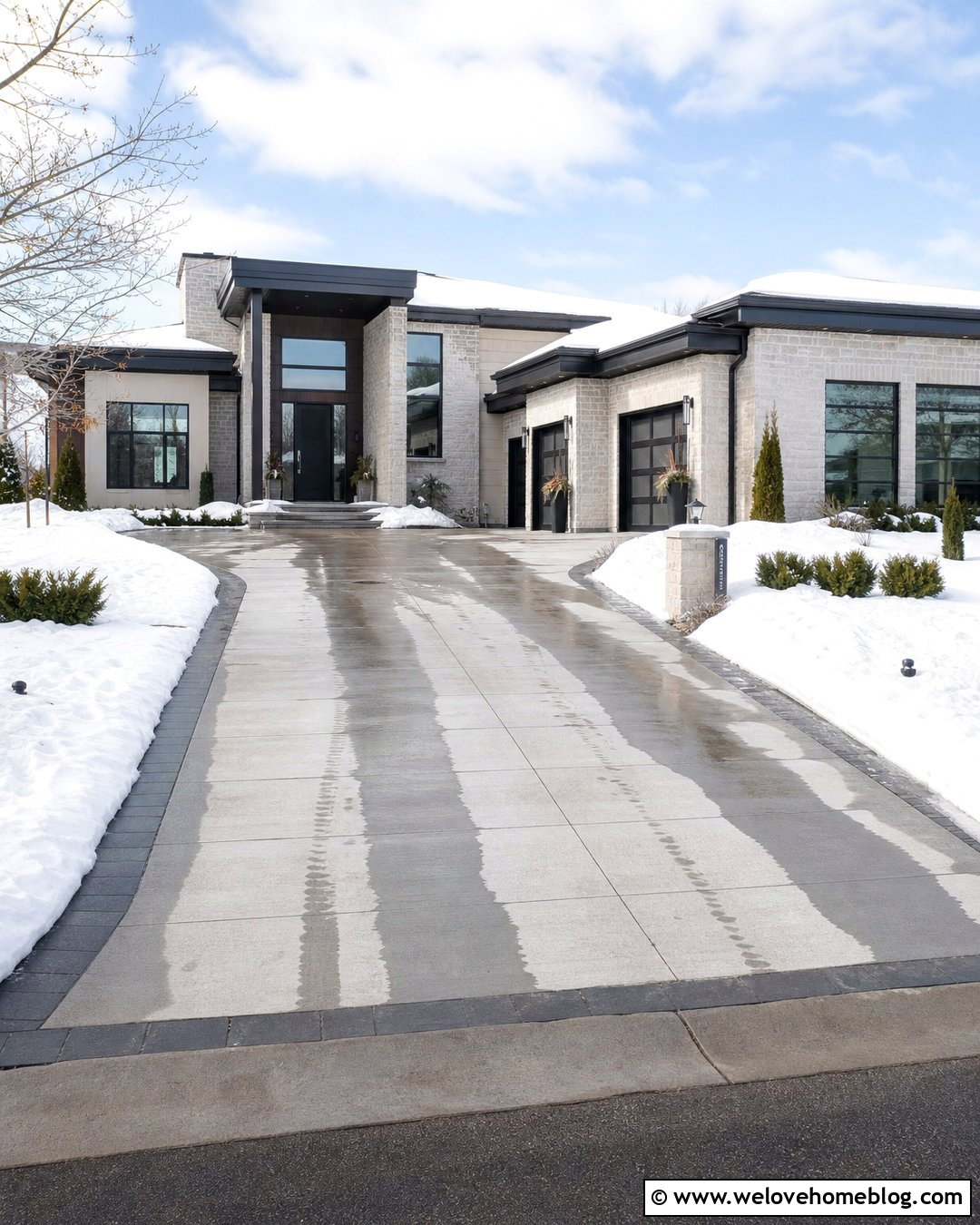
A heated concrete driveway creates a clean, dependable entrance for a home in a snowy climate. Choose light gray poured concrete with a subtle broom finish, which adds understated texture without making the surface difficult to clear. Radiant heating can cover the entire driveway or focus on two tire tracks and the walkway to reduce the heated area. A straight layout works especially well for a modern or contemporary house. Frame it with dark granite curbing, low evergreen shrubs, and neat snow-storage zones near the street. Include a gentle slope and proper drainage so melted snow moves away from the garage. The contrast between clear concrete, white snowbanks, and deep green planting creates crisp winter curb appeal.
2. Black Asphalt Snowy Driveway
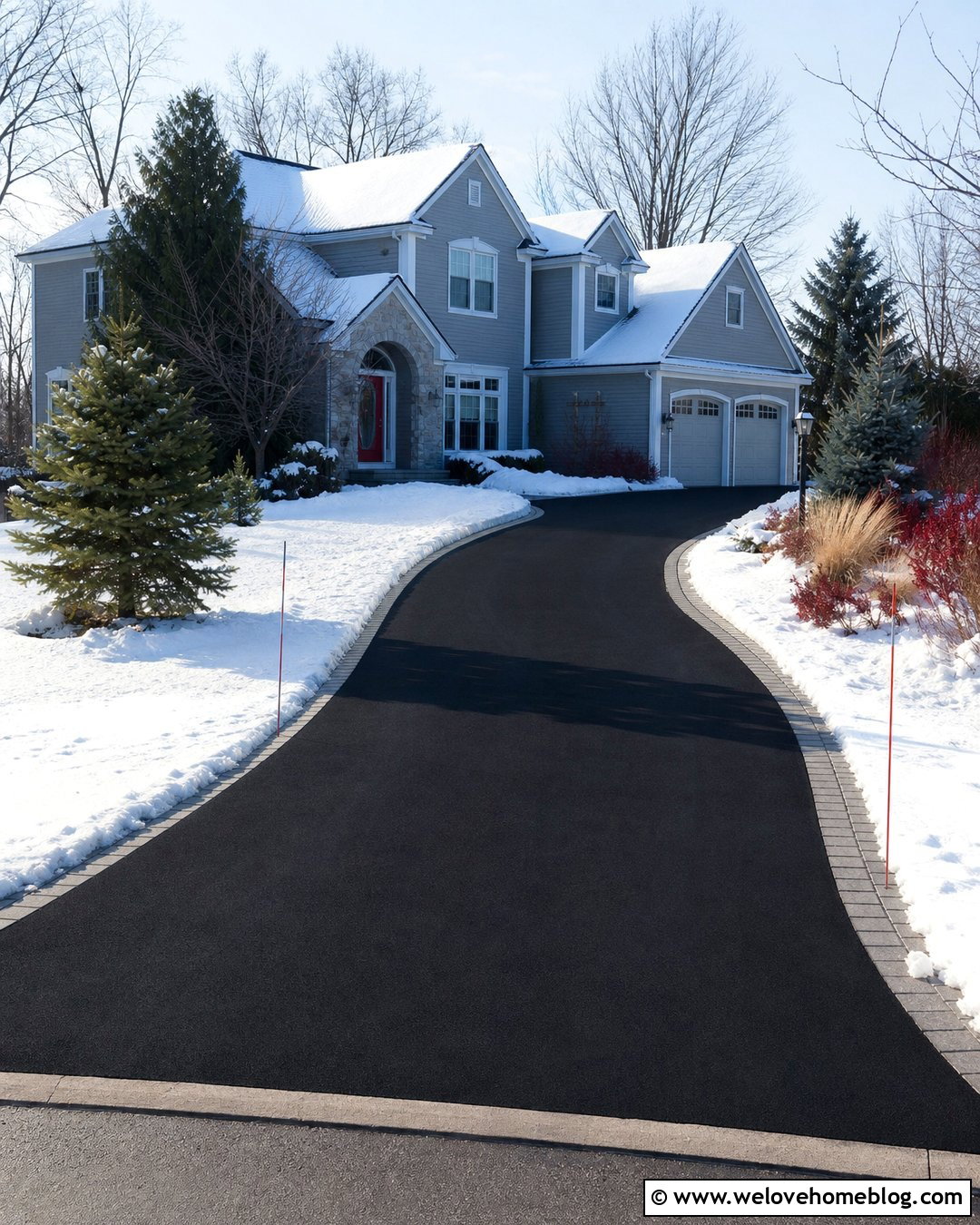
Black asphalt stands out clearly against fresh snow, helping define the driveway from the curb to the garage. Its smooth, continuous surface is also convenient for regular shoveling, sweeping, and snow-blower use. Give the driveway a gentle curve to soften its practical appearance and guide visitors toward a traditional two-story home. A border of light gray concrete pavers adds definition and makes the dark pavement feel more finished. Plant compact spruce, winterberry, and ornamental grasses along the outside curve, leaving open spaces where plowed snow can be placed. Reflective marker stakes can follow the paver edge without dominating the design. This complete look is affordable, uncluttered, and especially suitable for larger suburban properties.
3. Paver Snowy Driveway With Heated Tire Tracks
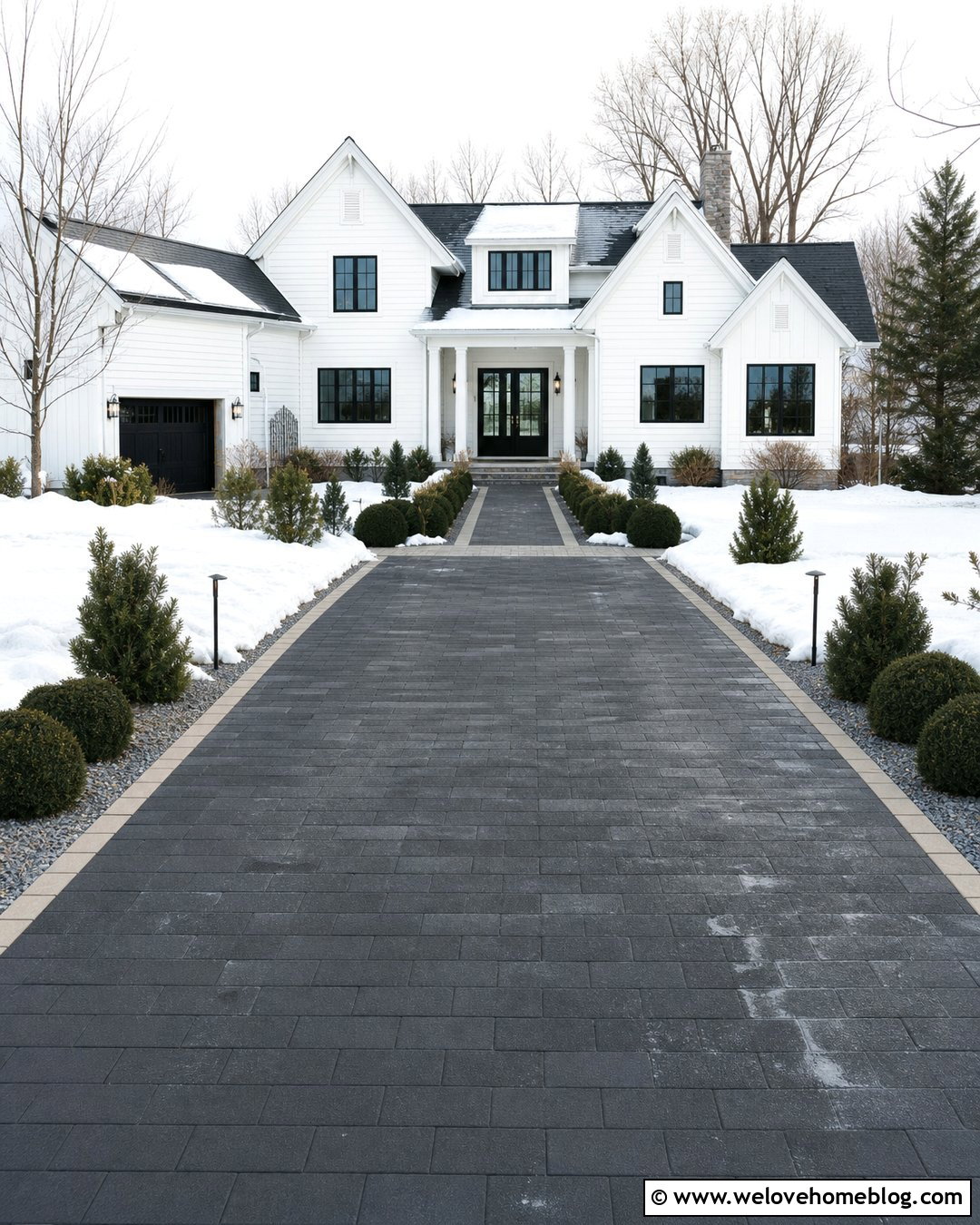
Concrete pavers give a snowy driveway more character while still supporting a practical winter layout. Use charcoal rectangular pavers in a running-bond pattern, bordered by a lighter soldier course. Heating only the tire tracks creates two clear travel lanes through falling snow while allowing a thin white layer to remain between them. Carry the same heating beneath the front walkway for a connected, safer route to the door. A straight driveway complements a modern farmhouse with white siding and black-framed windows. Add clipped boxwood, dwarf pine, and wide gravel planting beds that tolerate piled snow. Keep the paver pattern simple so repaired or replaced units blend easily. The dark surface, pale border, and snowy landscape create strong visual contrast.
4. Curved Snowy Driveway With Stone Edging
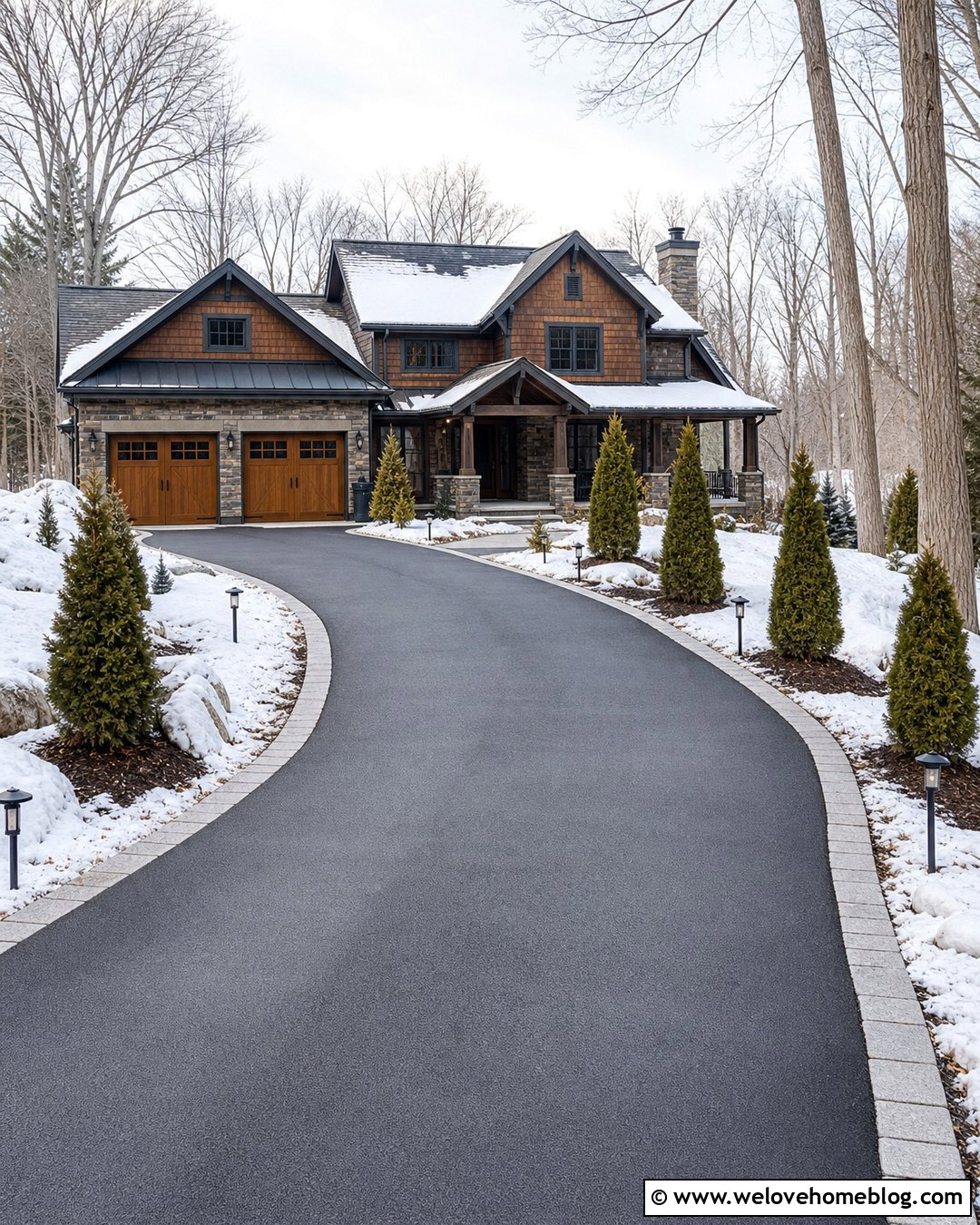
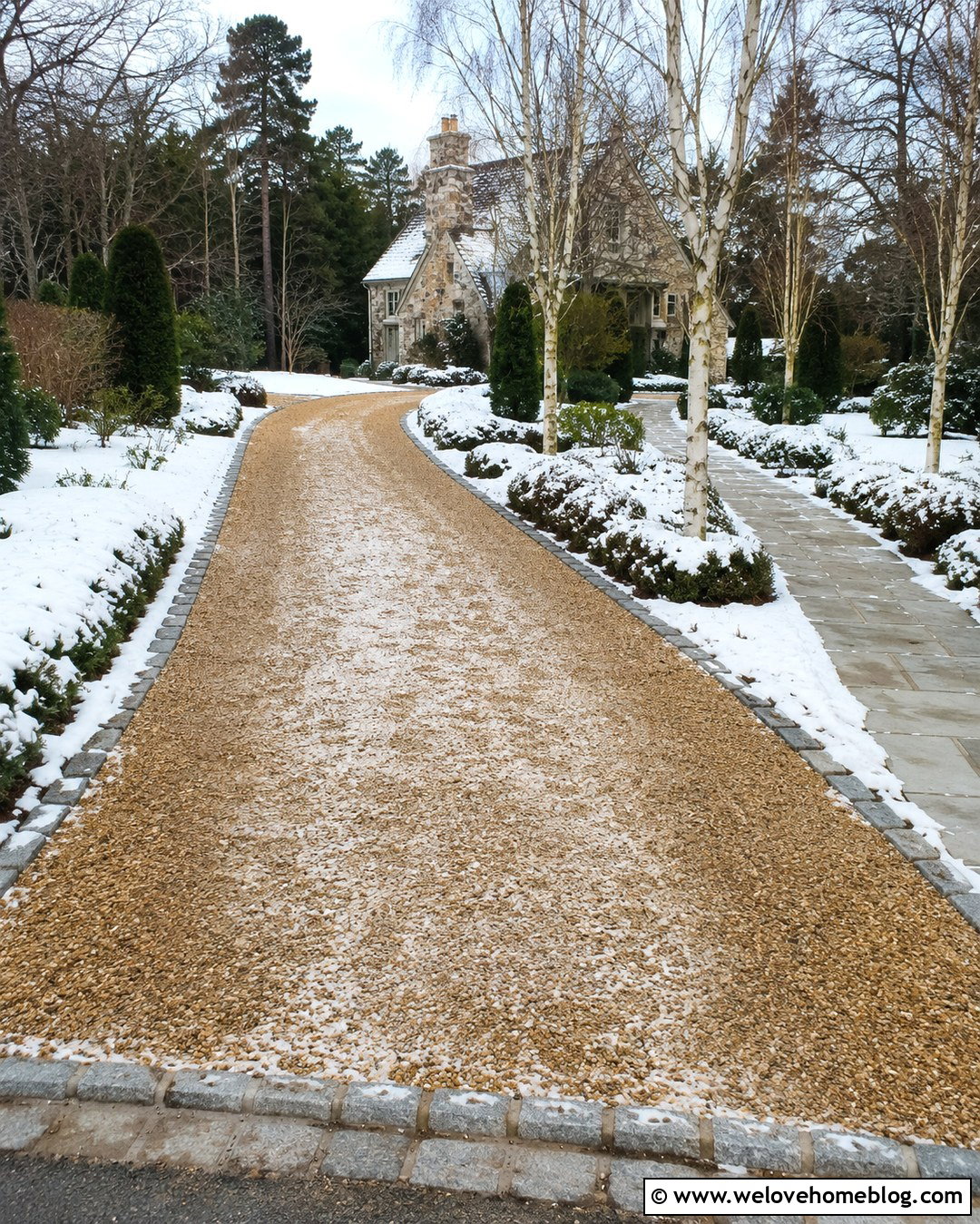
A curved driveway can feel calm and scenic after a snowfall, especially when its edges remain easy to recognize. Build the surface from medium-gray asphalt or smooth concrete, then install raised granite edging along both sides. The stone border helps contain the pavement visually and provides a sturdy guide for careful snow removal. Follow the curve with evenly spaced columnar evergreens, but place them far enough back to avoid heavy snow piles and plowing equipment. Low landscape lighting can sit behind the edging, where fixtures are less likely to be damaged. Near the house, widen the driveway into a comfortable parking and turning area. This design suits a craftsman or woodland home and creates a graceful winter approach without sacrificing function.
5. Circular Snowy Driveway With Evergreen Island
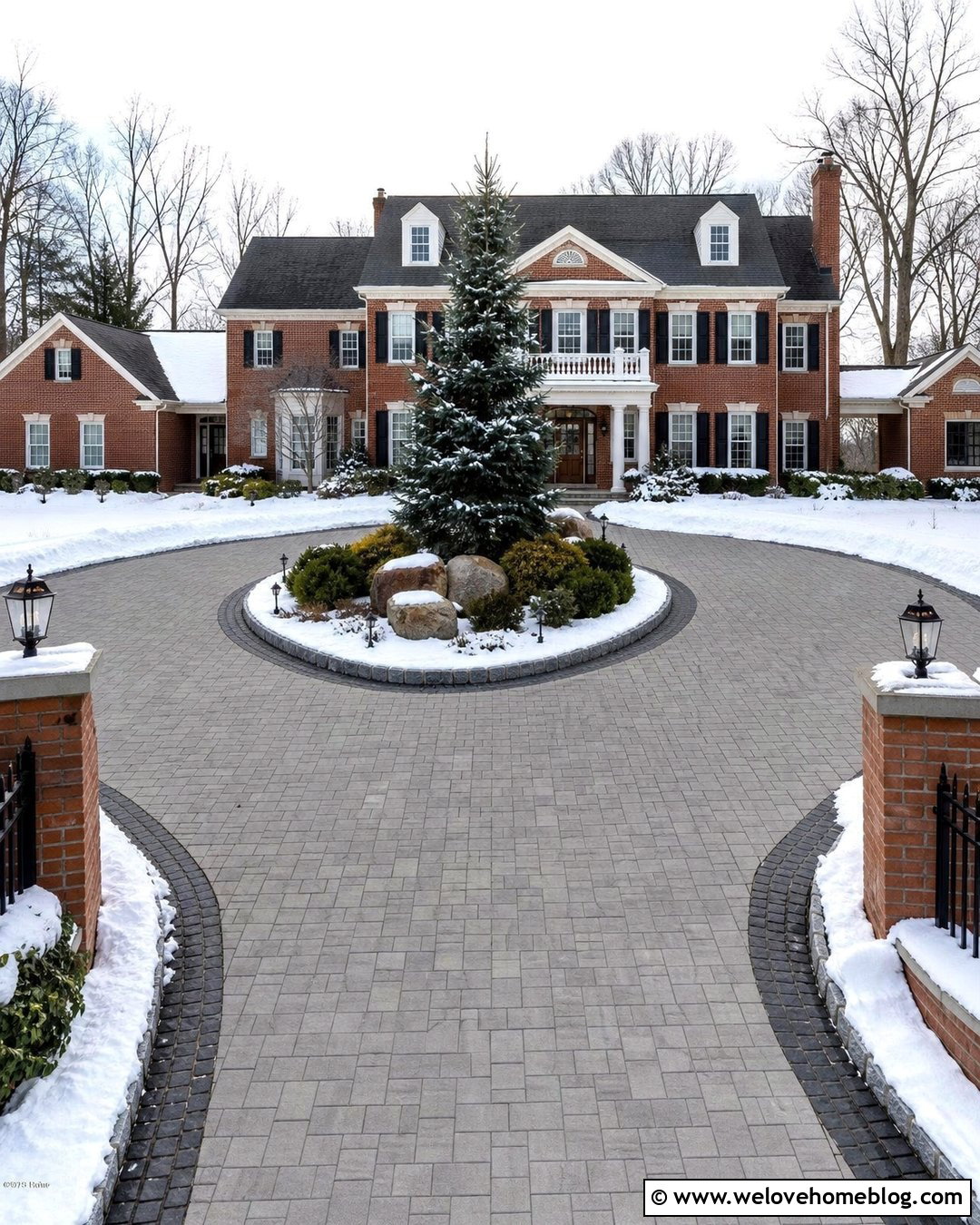
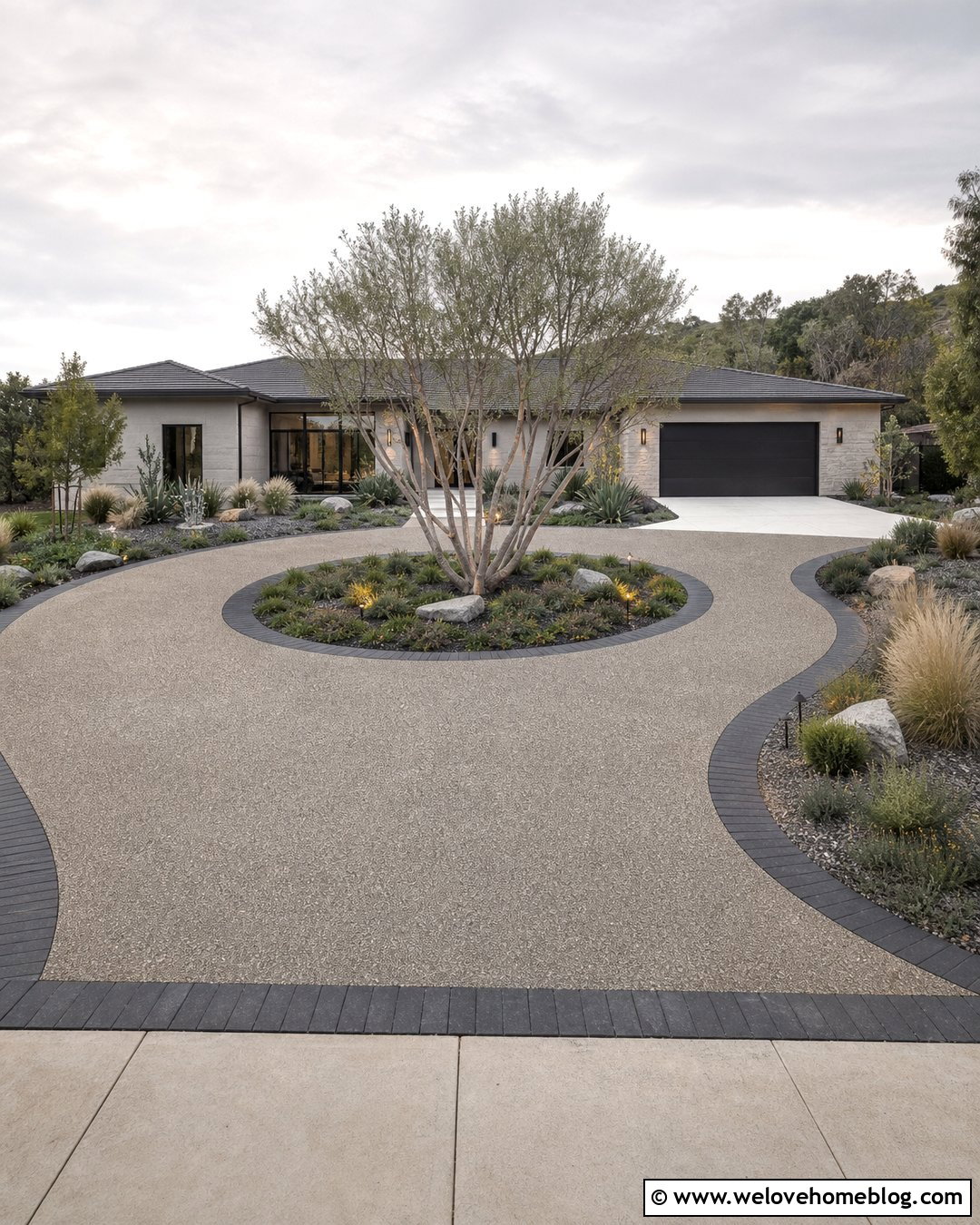
A circular driveway makes winter arrivals easier because vehicles can continue forward instead of backing toward a snowy street. Use smooth gray concrete pavers for the driving surface and dark cobblestone for the outer border. At the center, create a raised island with a specimen spruce, dwarf evergreen shrubs, and decorative boulders that remain visible after smaller plants are covered. The island should have a simple shape with enough clearance for snow-removal equipment. Install low curb lighting around its perimeter and provide designated snow-storage areas near the wider sides of the circle. This layout looks especially balanced in front of a colonial or Georgian-style home. White snow emphasizes the symmetrical architecture while greenery keeps the entrance from feeling bare.
6. Gravel Snowy Driveway With Timber Borders
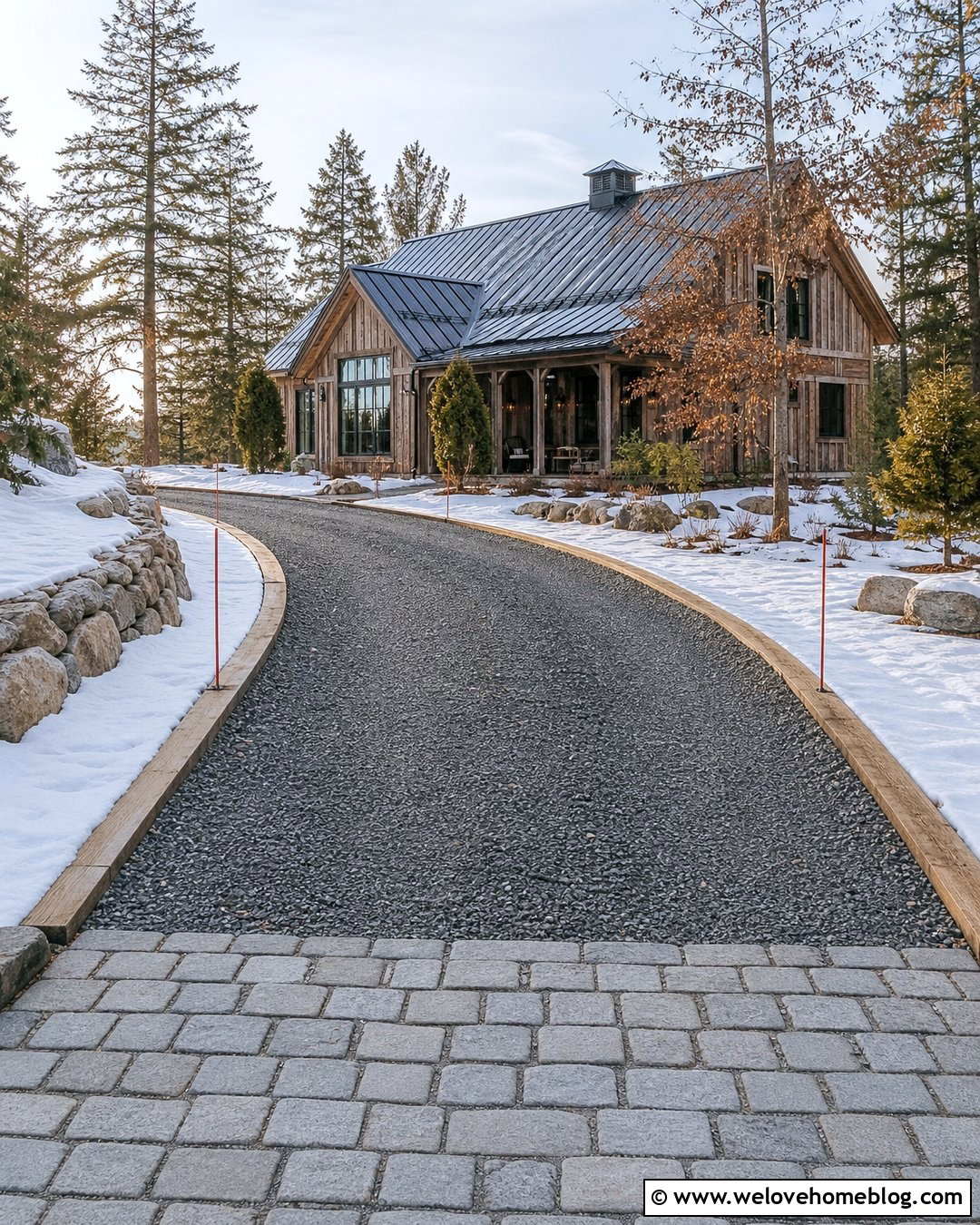
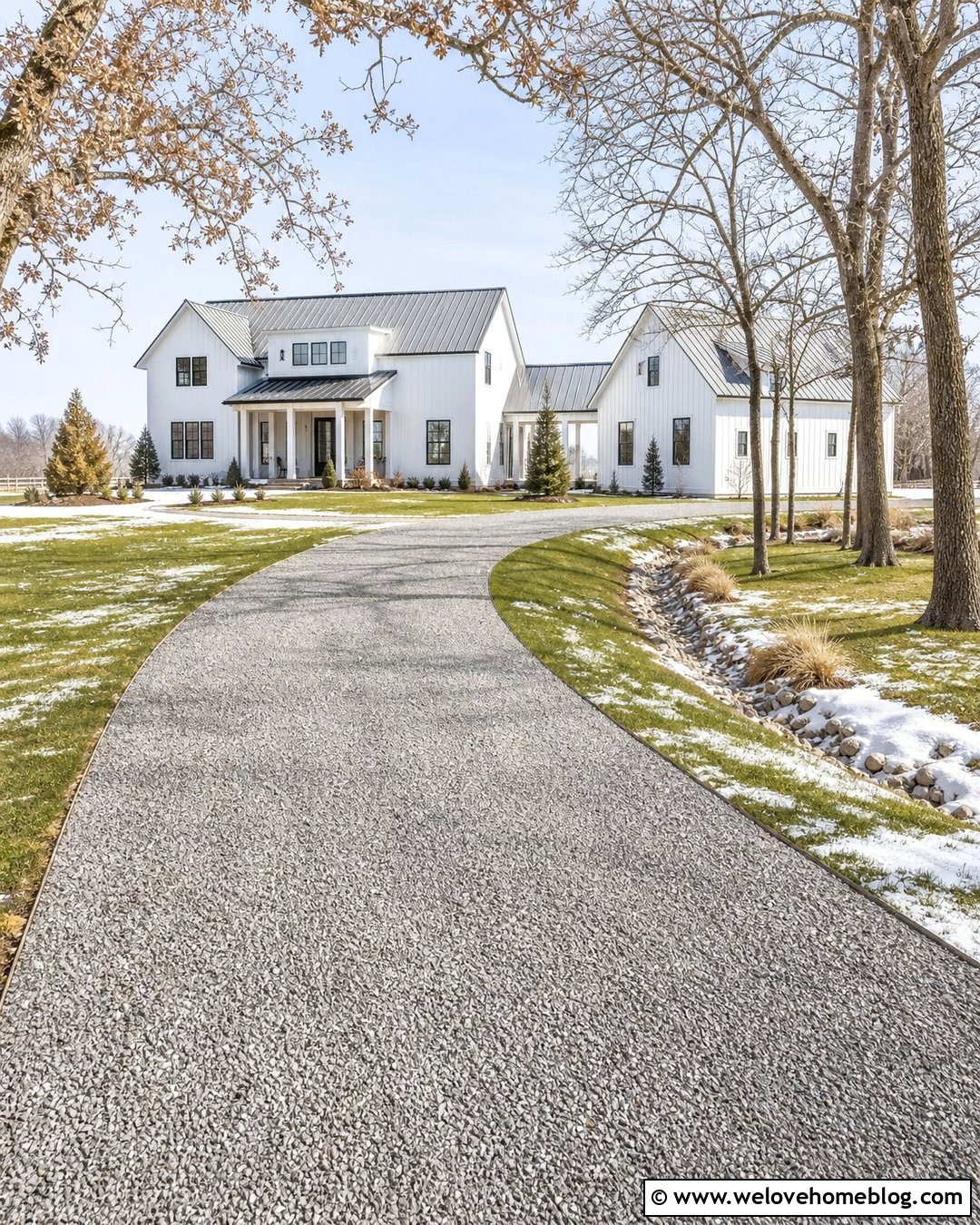
A gravel driveway can fit a rustic winter property when it has a strong base, compacted surface, and clearly defined sides. Choose dense gray crushed stone rather than loose, rounded decorative gravel for the main driving lanes. Heavy timber borders can follow a straight or gently curved layout, making the driveway easier to identify beneath shallow snow. Place tall snow stakes just inside the border before the ground freezes. Near the entrance, add a broad apron of granite cobbles to control scattered gravel and create a durable transition from the road. Pine trees, native shrubs, and natural stone walls complement a country cabin or modern barn-style house. The finished look feels relaxed, practical, and connected to the surrounding winter landscape.
7. Cobblestone Snowy Driveway With Snow-Melt System
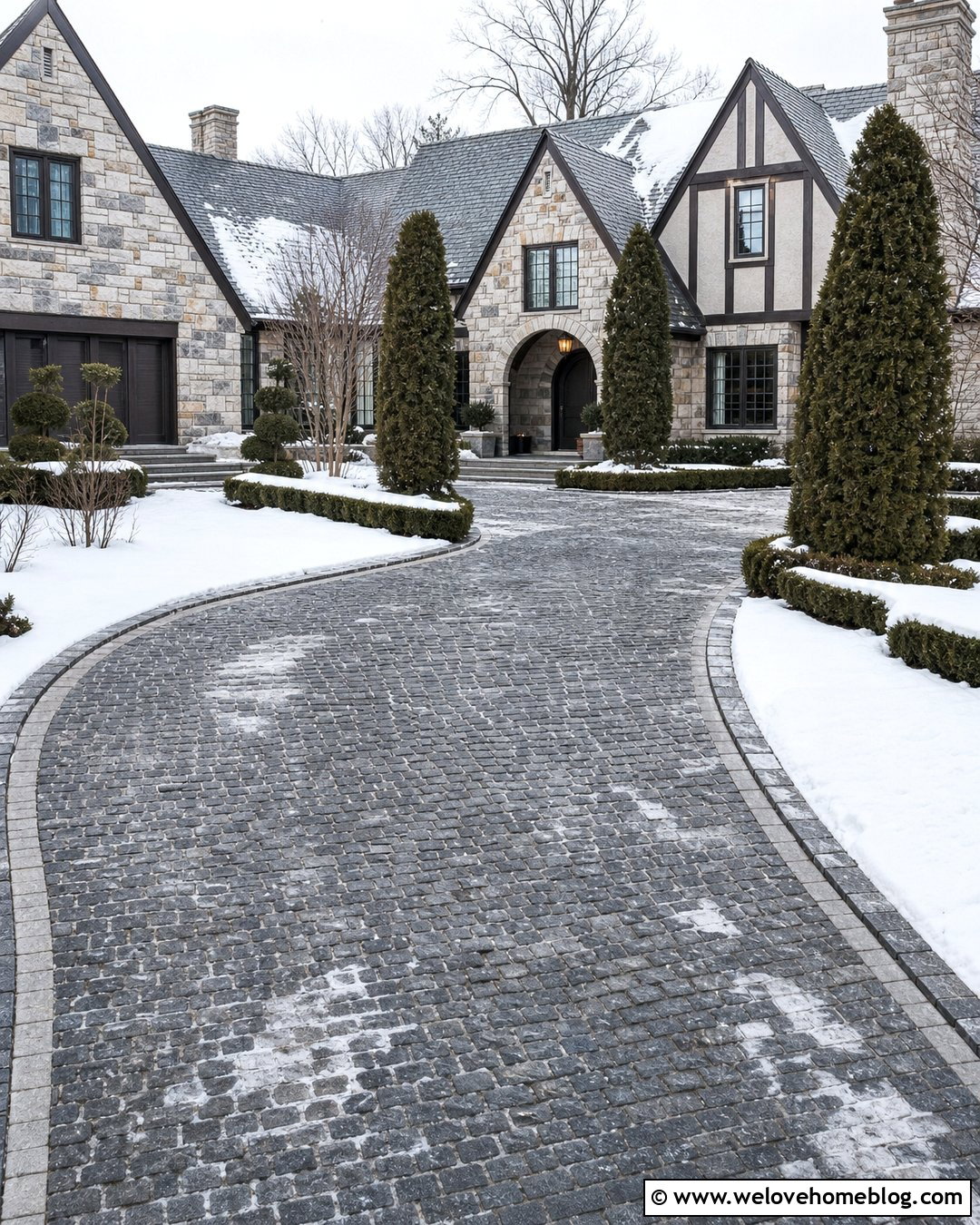
Cobblestone creates an old-world winter entrance with rich texture and natural color variation. To make the surface more manageable during snowy weather, use relatively flat-cut granite cobbles installed over a carefully prepared base. A radiant snow-melt system beneath the busiest section can keep the approach, parking area, and path to the front door clearer. Design the driveway as a wide horseshoe in front of a stone or Tudor-style home. Dark granite curbing should contain the cobbles, while clipped yew hedges and upright evergreens reinforce the formal shape. Include an open area for snow storage away from the central entrance. When surrounded by bright snow, the charcoal, silver, and brown stones produce a distinctive driveway that feels established and elegant.
8. Brick Snowy Driveway With Granite Apron
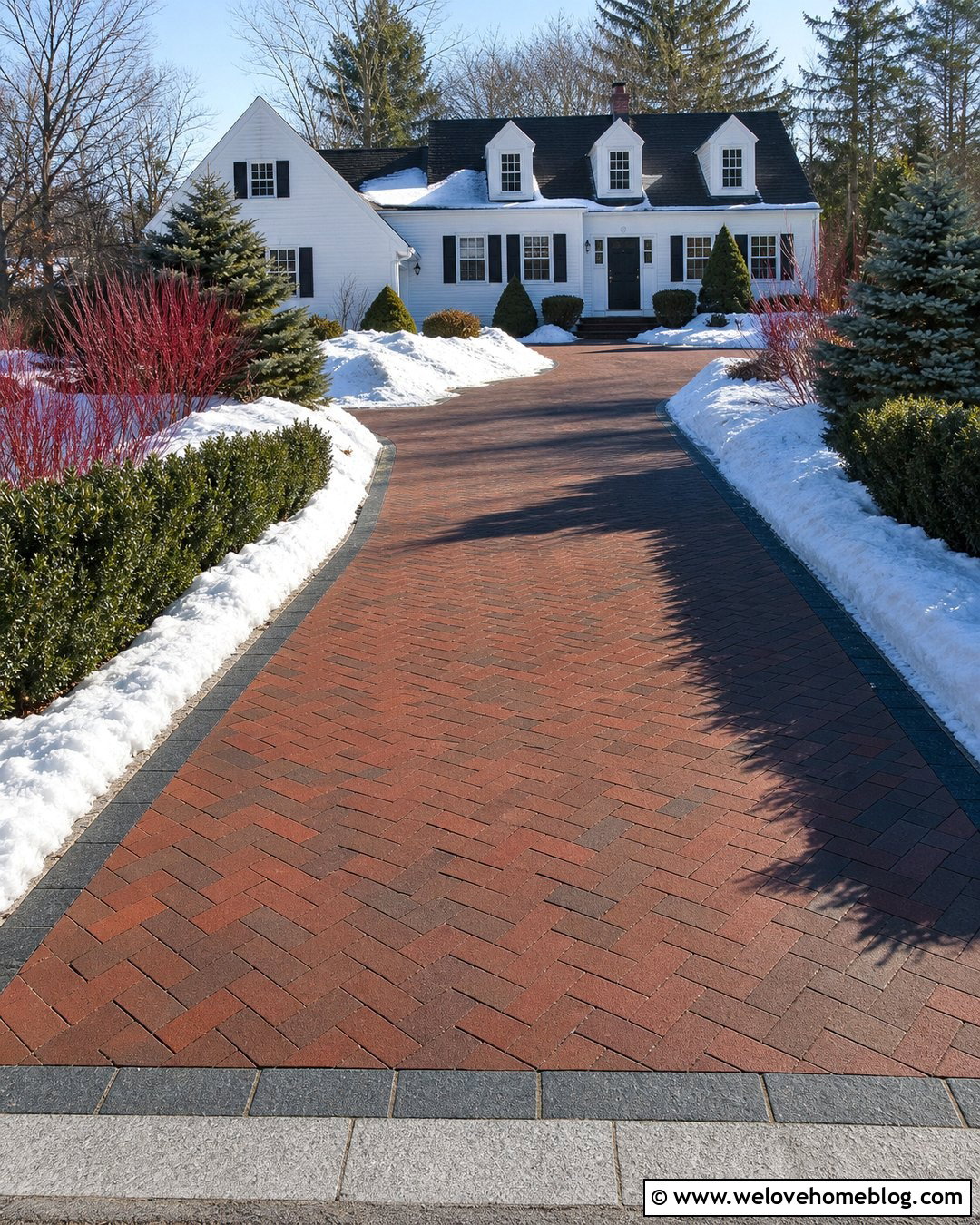
Red or brown clay brick pavers bring warmth to a landscape dominated by white snow and gray winter skies. Arrange the bricks in a herringbone pattern to create a strong visual surface, then frame the driveway with dark granite edging. A matching granite apron at the curb provides a durable-looking entrance and separates the brick from the street. This straight driveway works beautifully with a cape cod, colonial, or traditional brick house. Keep planting beds simple with inkberry holly, dwarf spruce, and red-twig dogwood for seasonal color. Install snow markers along the outer border rather than directly in the brick joints. A heated walkway can branch toward the front steps, connecting the driveway and entry as one coordinated, welcoming winter design.
9. Permeable Paver Snowy Driveway
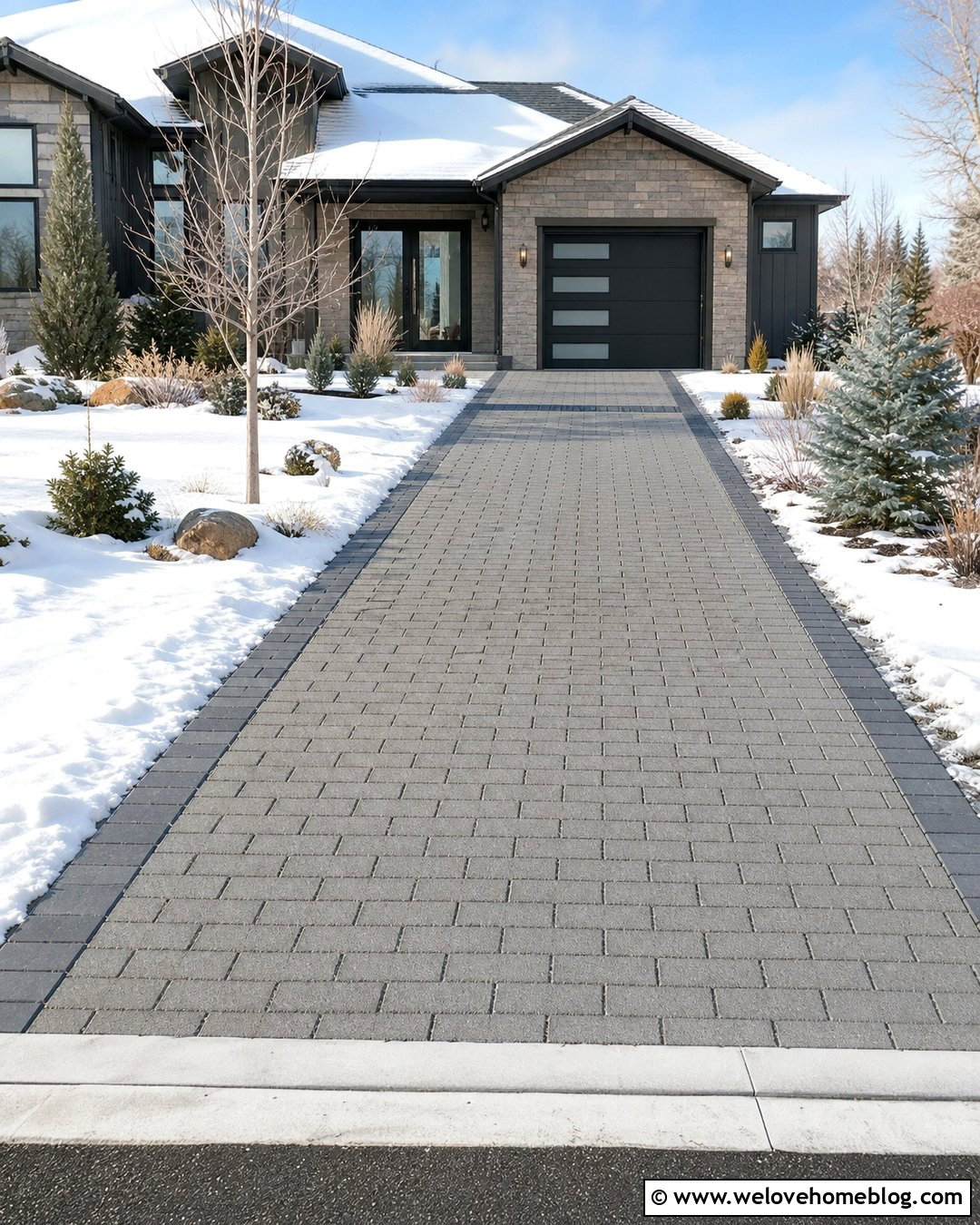
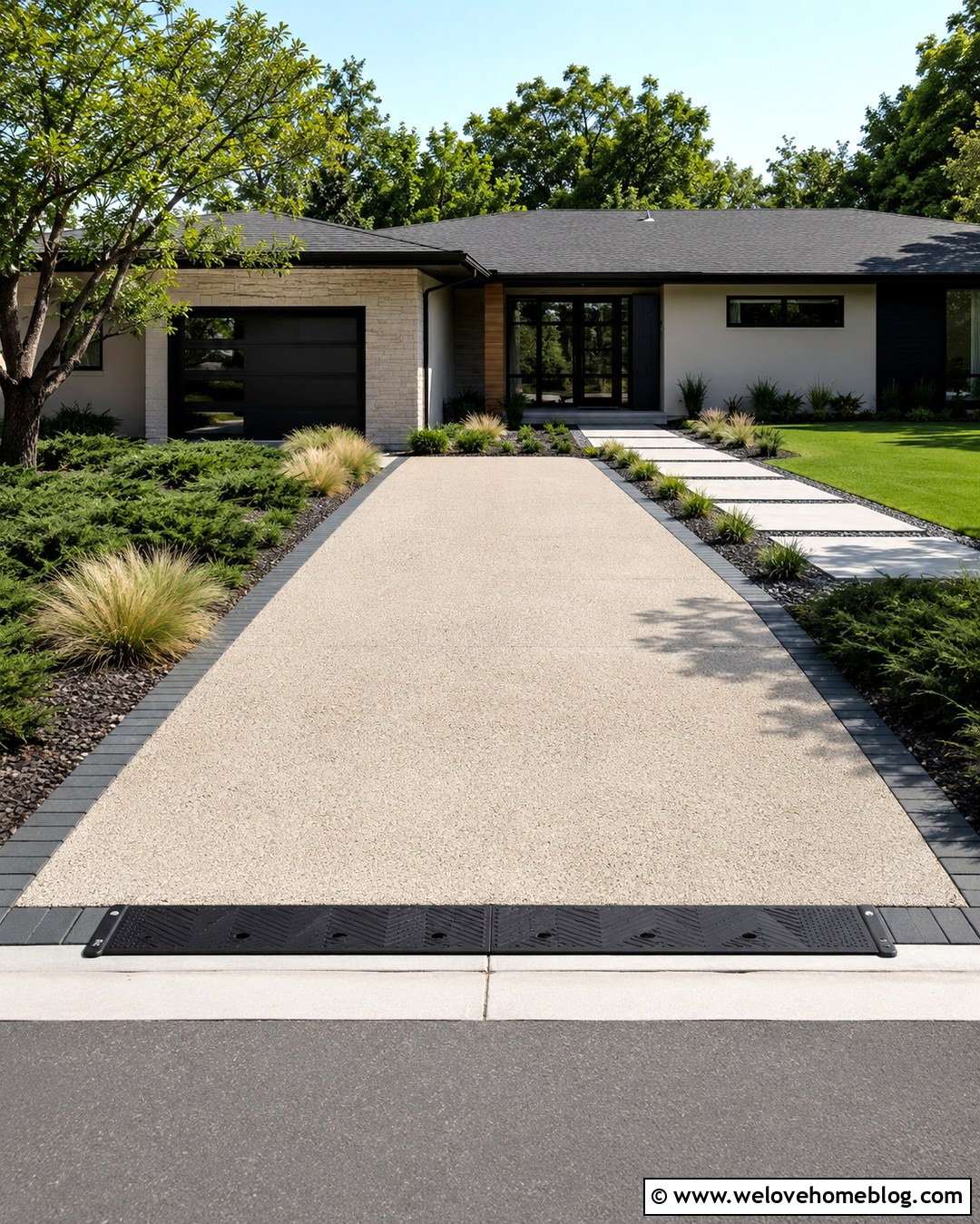
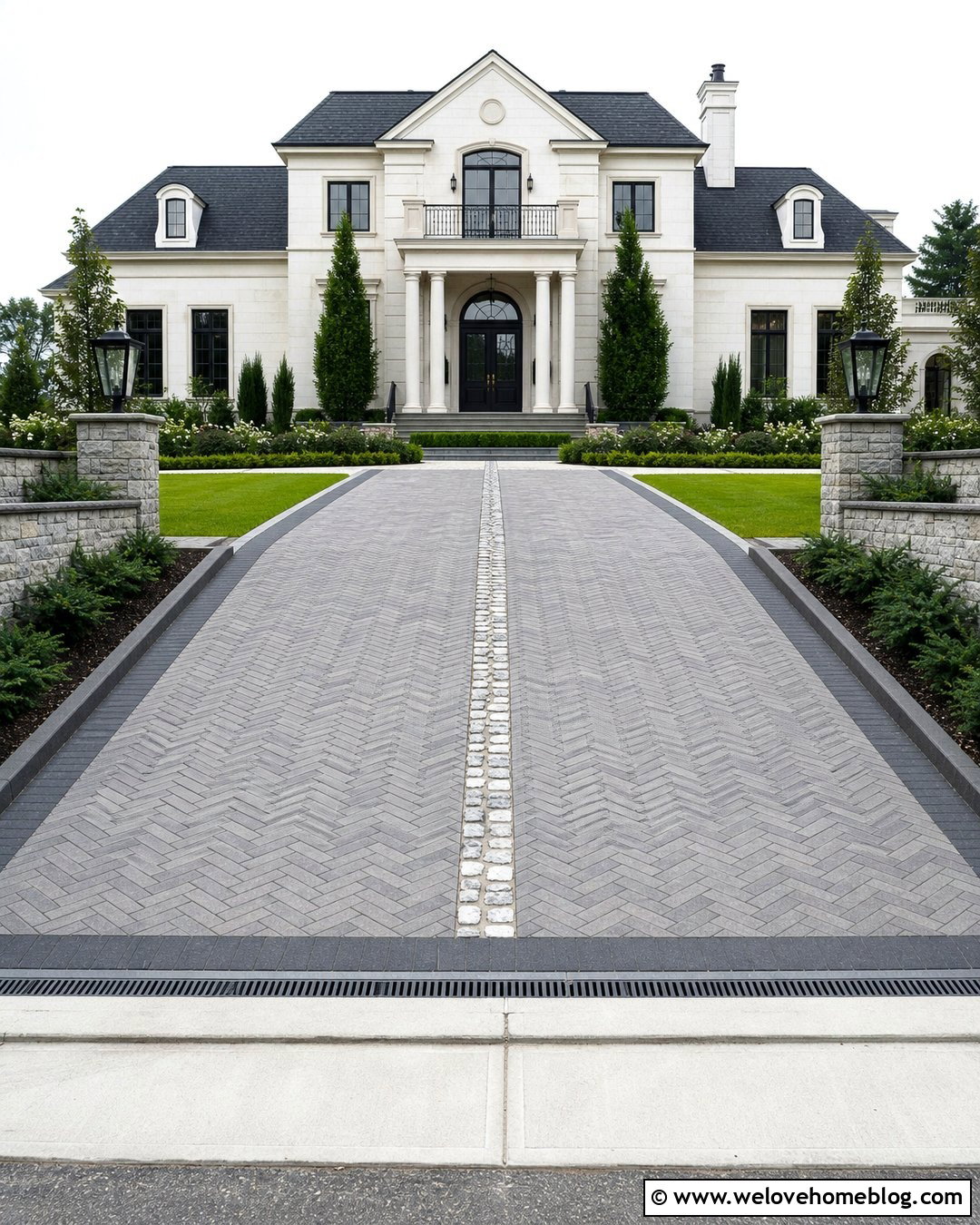
Permeable concrete pavers create a structured driveway with joints that contribute texture and drainage. Select medium-gray pavers with narrow stone-filled gaps, using a charcoal border to make the layout easy to read against snow. A gently sloped driveway can lead toward a contemporary ranch house, with a trench drain placed where needed near the garage. Combining permeable paving with an appropriately designed snow-melt system can help move meltwater into the prepared base instead of leaving it on the surface. Landscape the sides with upright juniper, bare-branched serviceberry, and ornamental grasses that hold their shape in winter. Keep planting beds set back from active snow-clearing areas. The result is modern, orderly, and suitable for a compact suburban front yard.
10. Exposed Aggregate Snowy Driveway
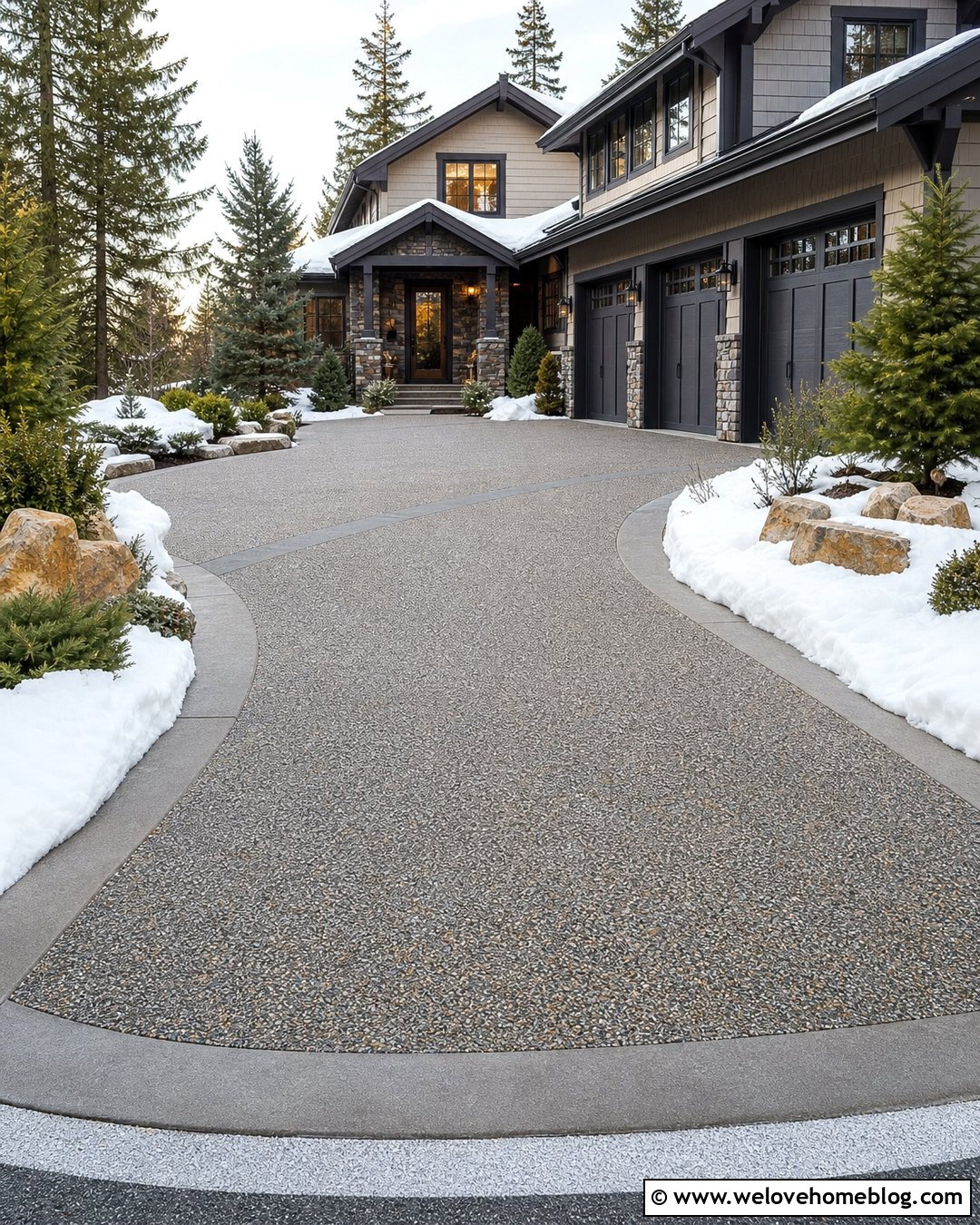
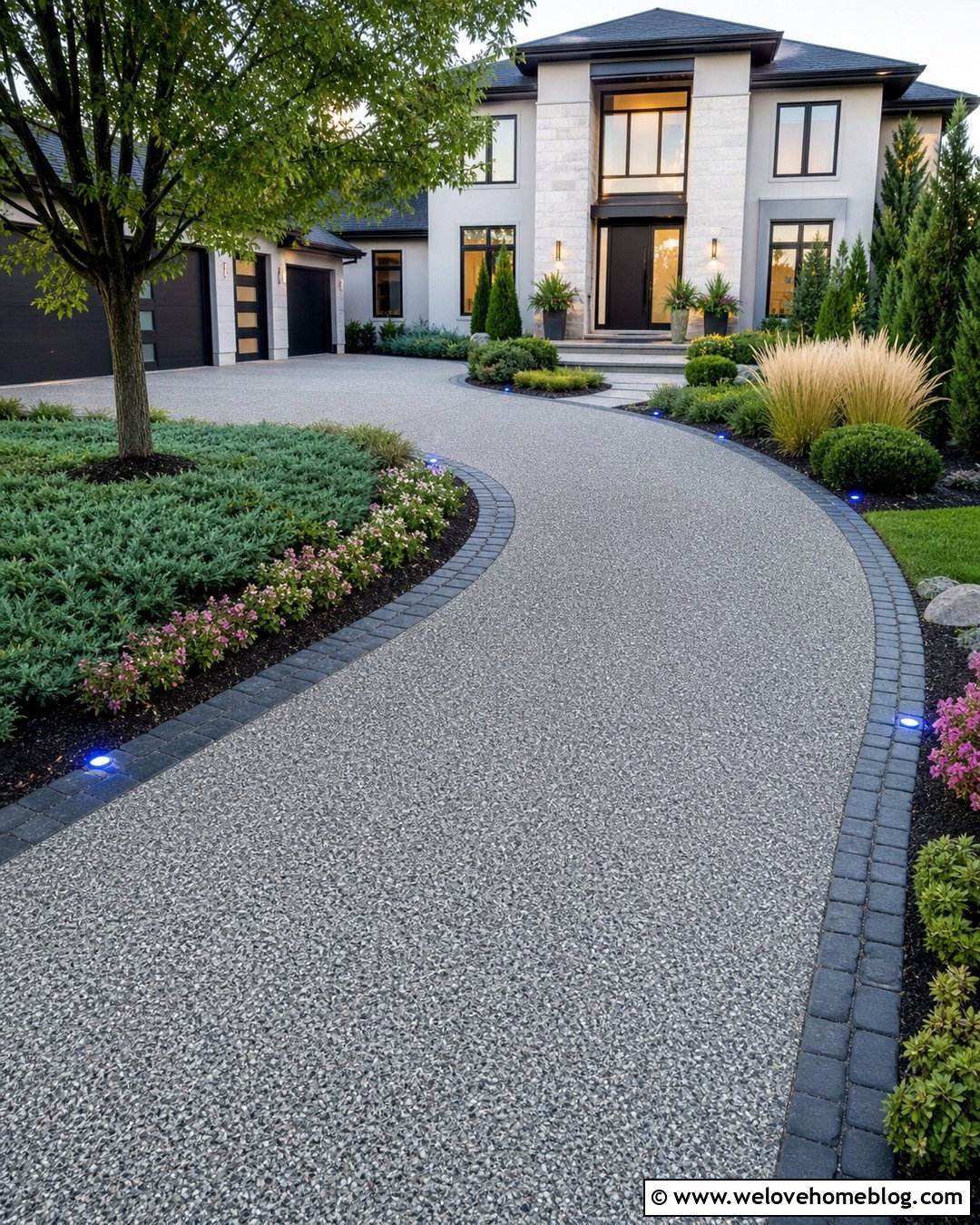
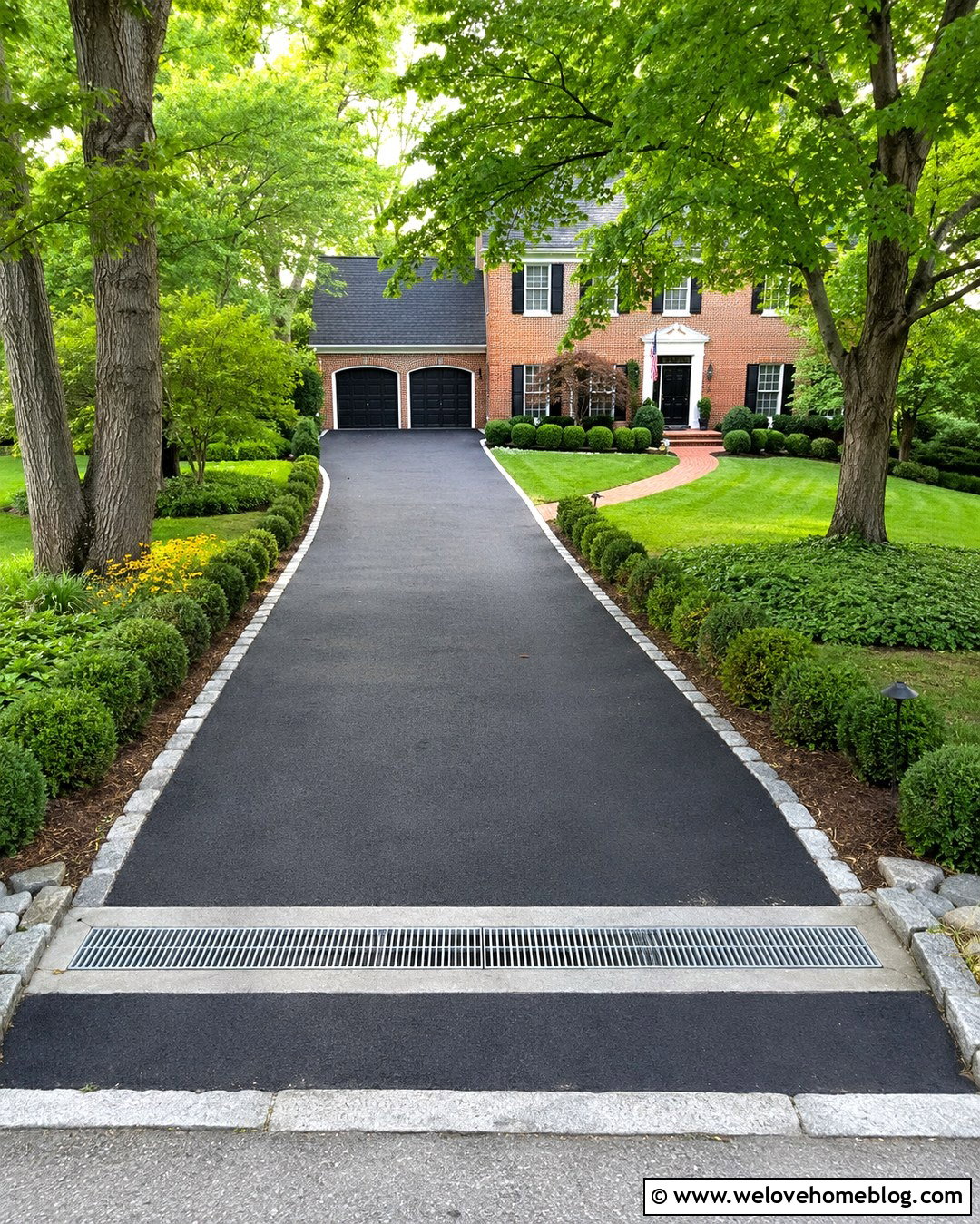
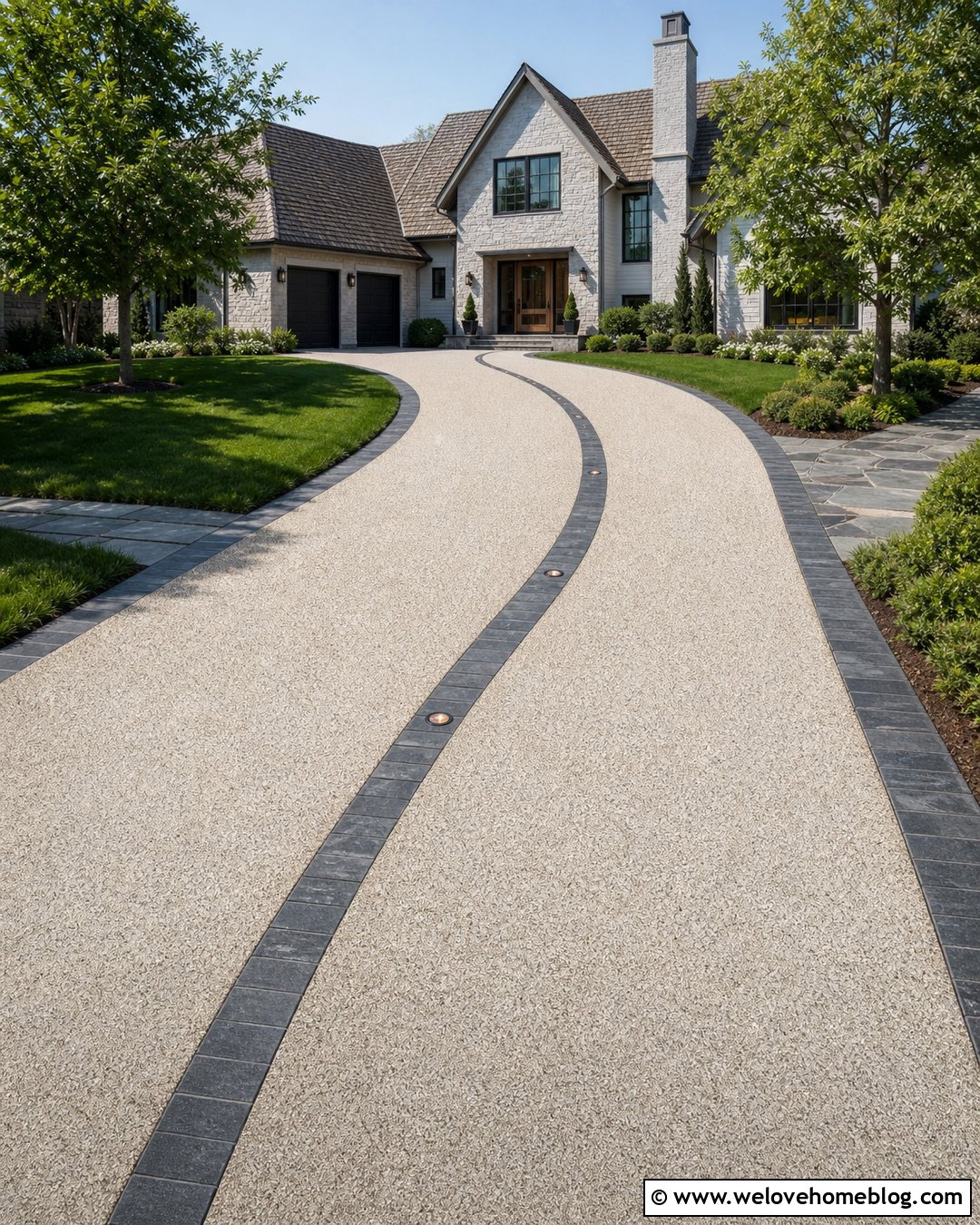
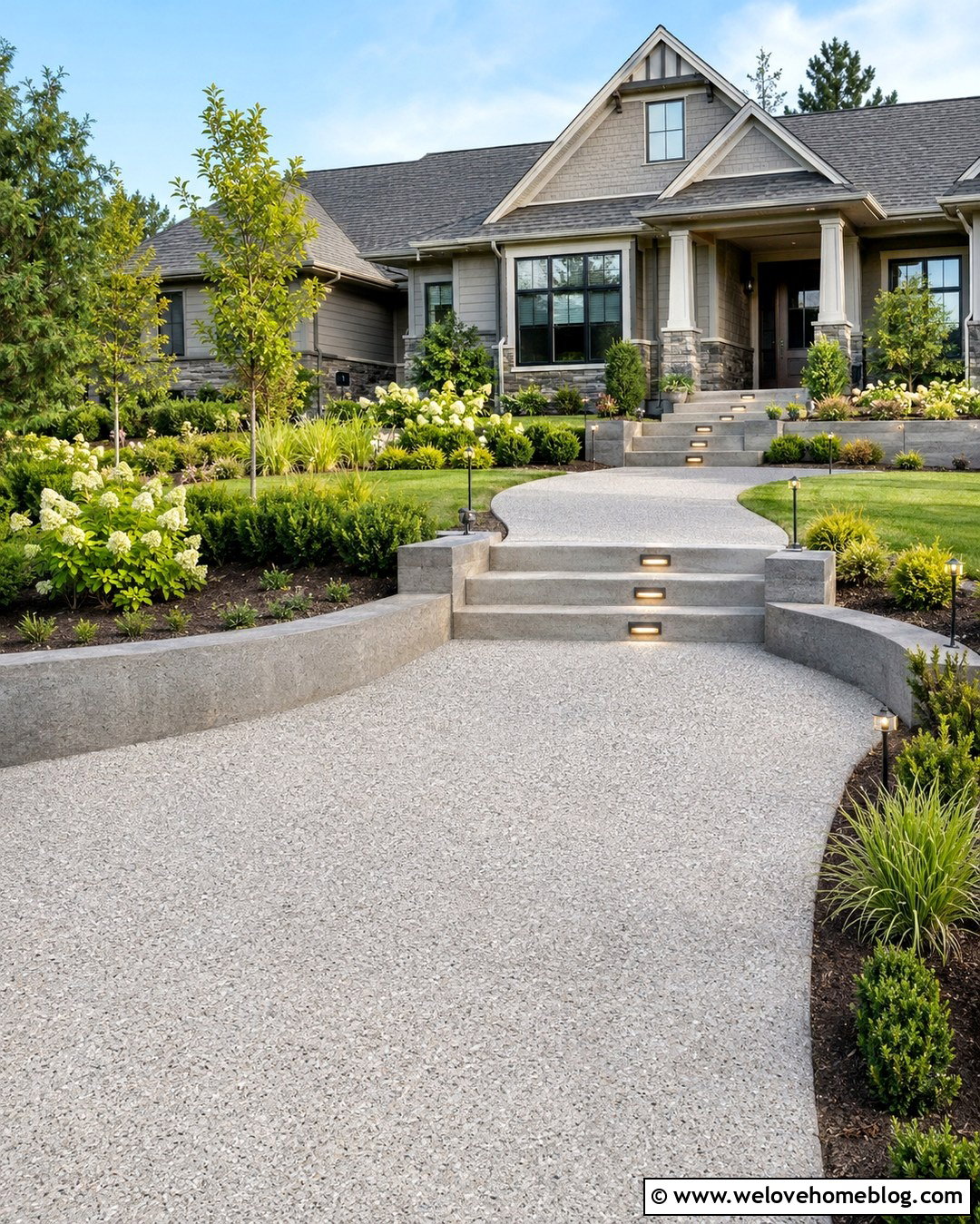
Exposed aggregate concrete offers subtle texture and a natural stone appearance that looks attractive beside snow-covered lawns. Choose a fine aggregate finish with a balanced mix of gray, tan, and charcoal stones rather than a deeply rough surface. Shape the driveway with a soft curve leading toward a craftsman home, then add smooth concrete bands along each side. These bands create a refined frame and provide clear edges for snow-removal equipment. Use low evergreen ground cover, dwarf conifers, and large boulders in the surrounding beds. A wide landing near the garage gives vehicles more room to turn when snowbanks narrow the approach. This driveway feels less plain than standard concrete while maintaining a cohesive, understated look throughout the winter season.
11. Long Snowy Driveway With Stone Walls
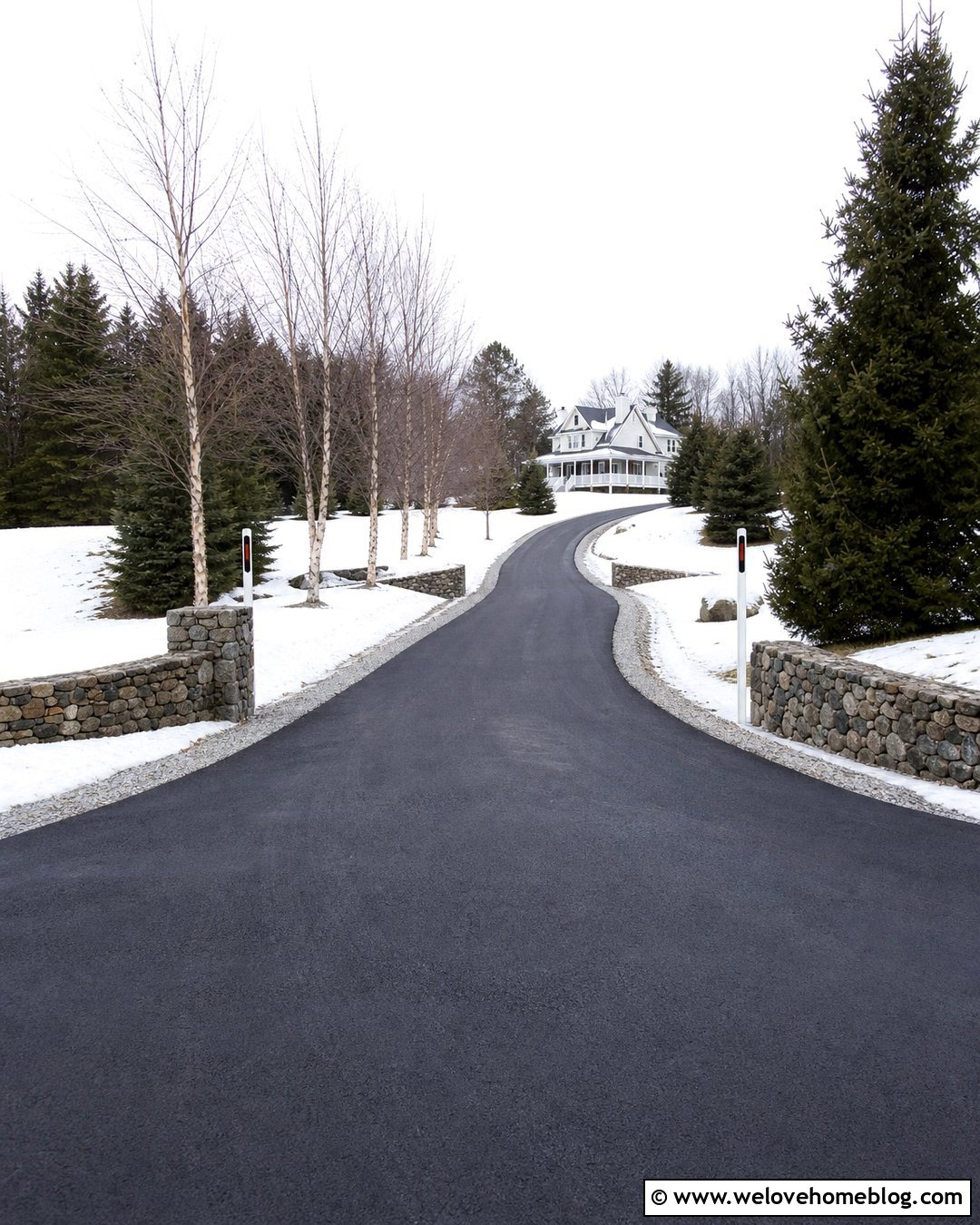
Long driveways need strong visual boundaries when snow covers nearby lawns and shoulders. A smooth asphalt surface works well for the main route, while low fieldstone walls mark the entrance and follow selected portions of the drive. Avoid enclosing the entire length if snow needs to be pushed aside. Instead, use walls near curves, gates, and the house, leaving broad openings for storage. Rows of deciduous trees can frame the approach without making it feel crowded, while clusters of spruce provide color closer to the residence. Add tall reflective posts at important turns and near drainage features. A gradual curved layout leading to a country house or farmhouse creates a memorable arrival, even when the landscape is almost completely covered in snow.
12. Sloped Snowy Driveway With Textured Concrete
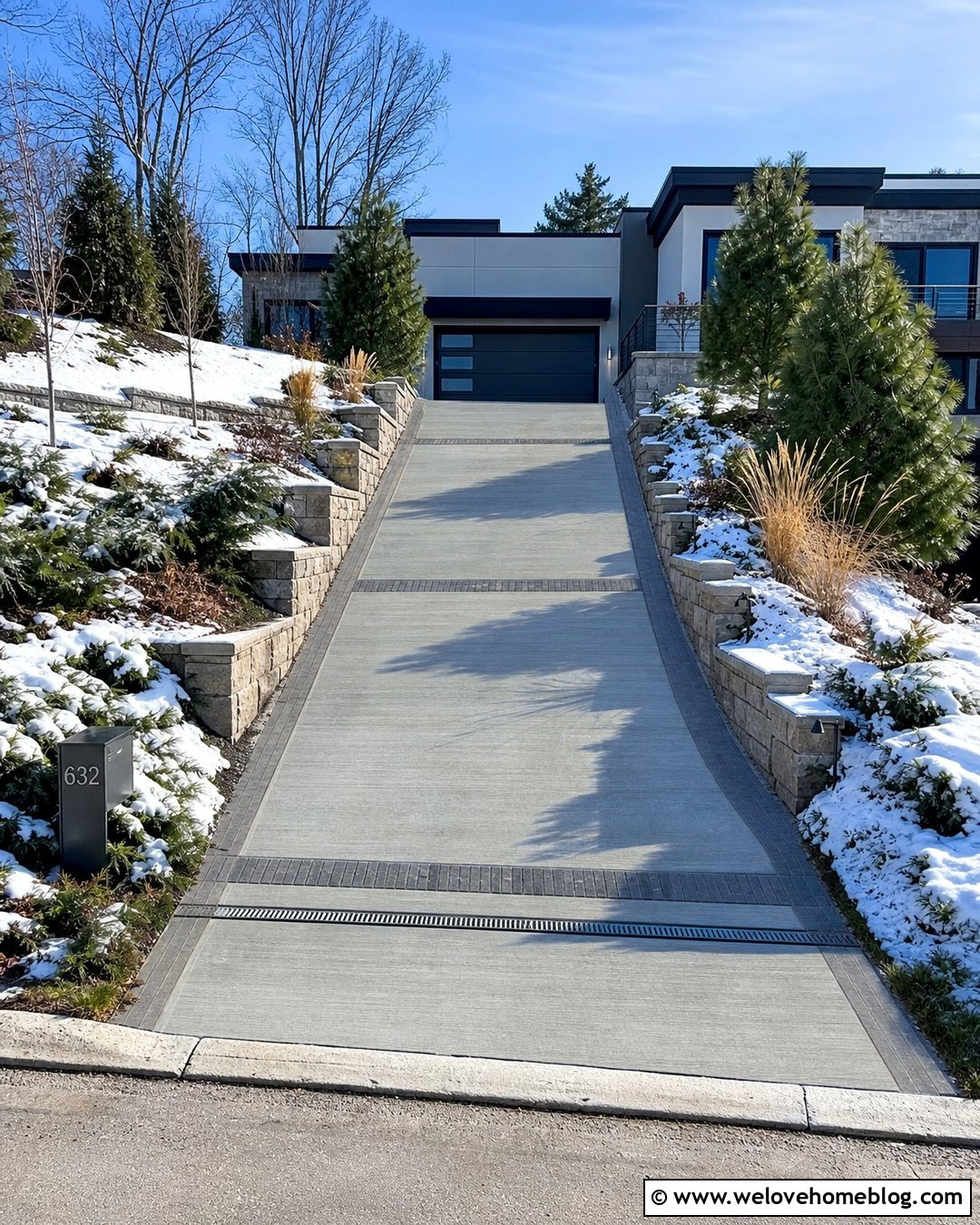
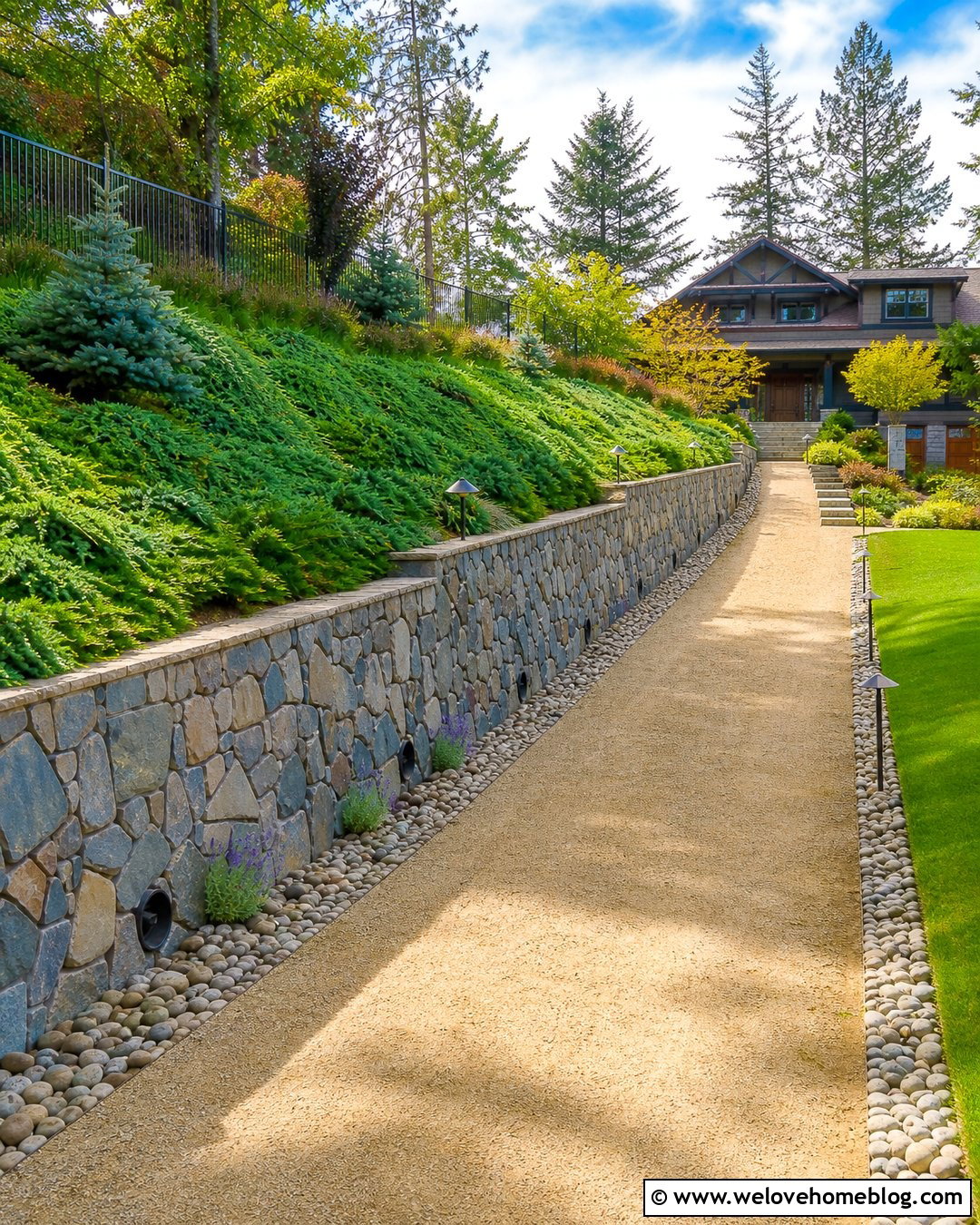
A sloped driveway requires a design that prioritizes traction, runoff control, and a clear route to the house. Use poured concrete with a consistent broom finish running across the direction of travel. Add radiant heating to the steepest portion or to full-width zones near the street and garage. Dark paver bands can define the driveway edges, while a channel drain at the lower end manages meltwater before it reaches another surface. Keep retaining walls low and position them away from areas where snow must be stored. Plant the upper banks with sturdy evergreens, creeping ground cover, and ornamental grasses for year-round structure. With careful grading and an uncluttered layout, the driveway can look integrated with a hillside home rather than overly engineered.
13. Snowy Driveway With Lighted Marker Posts
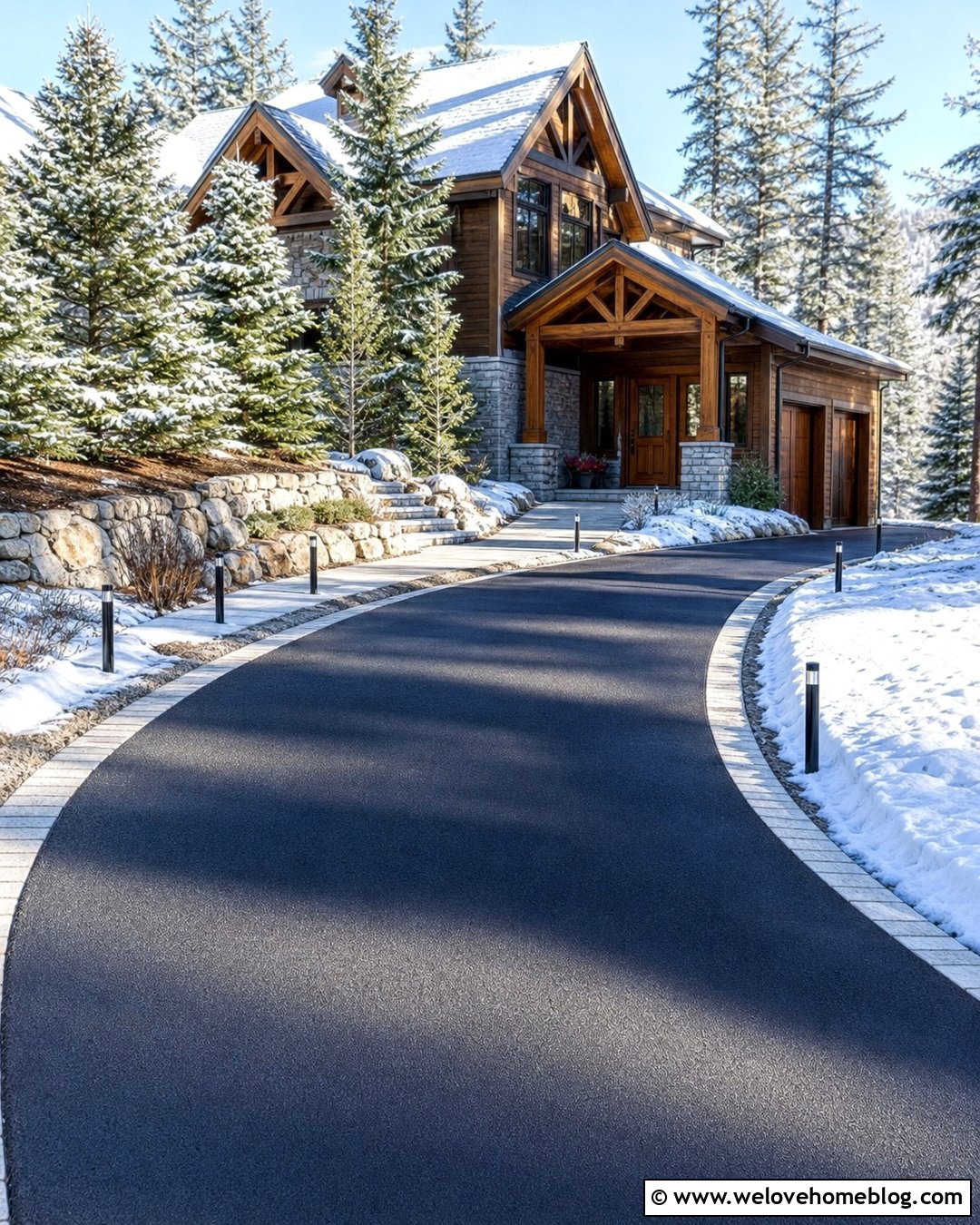
Lighting becomes part of the overall driveway design when winter snow hides borders and changes familiar proportions. Start with a curved black asphalt driveway edged in pale granite setts. Install simple black marker posts at regular intervals, each fitted with a downward-facing light and a reflective accent. The posts should be tall enough to remain visible above typical snowbanks without resembling commercial road markers. Continue the lighting toward a cedar-sided mountain home, using matching fixtures near the garage and walkway. Evergreen trees, low stone beds, and an open snow-storage strip complete the setting. During bright winter days, the posts create rhythm along the curve. After dark, they identify the driving path while giving the snowy entrance a polished, welcoming appearance.
14. Snowy Driveway With Stone Gate Pillars
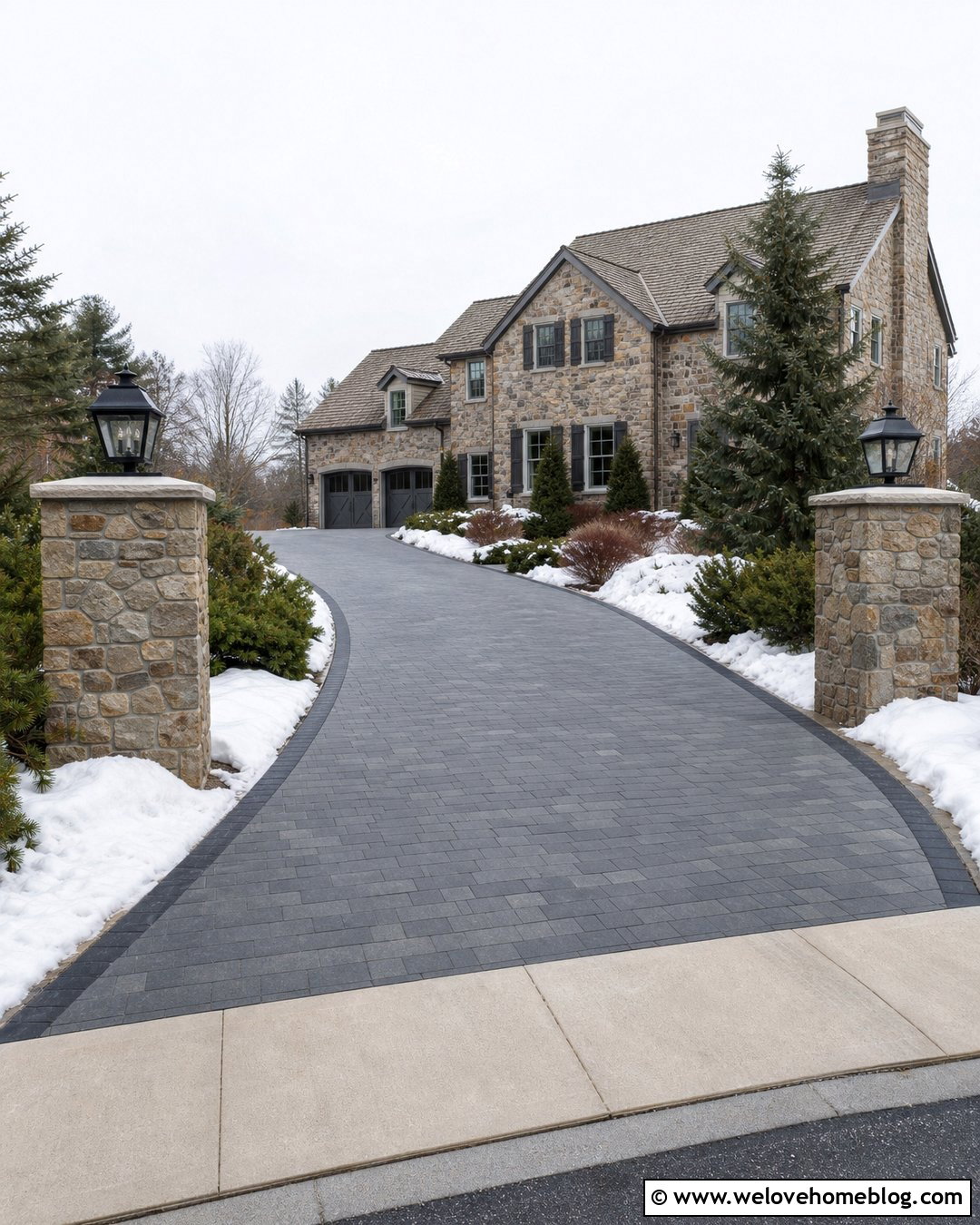
Stone gate pillars can anchor a snowy driveway entrance without requiring an elaborate gate. Choose a wide driveway surfaced with charcoal concrete pavers and edged with matching dark stone. Build substantial fieldstone pillars on both sides of the entrance, placing them beyond the turning clearance needed for vehicles and snow equipment. Simple lanterns or concealed downlights can make the pillars easier to see during winter storms. Continue the drive in a gentle curve toward a traditional farmhouse or lodge-style residence. Behind the pillars, plant spruce, juniper, and red-twig dogwood, leaving generous gaps for plowed snow. The stonework should coordinate with the house foundation or front steps. This creates an entrance that feels permanent, balanced, and naturally suited to a snow-covered property.
15. Modern Snowy Driveway With Concrete Strips
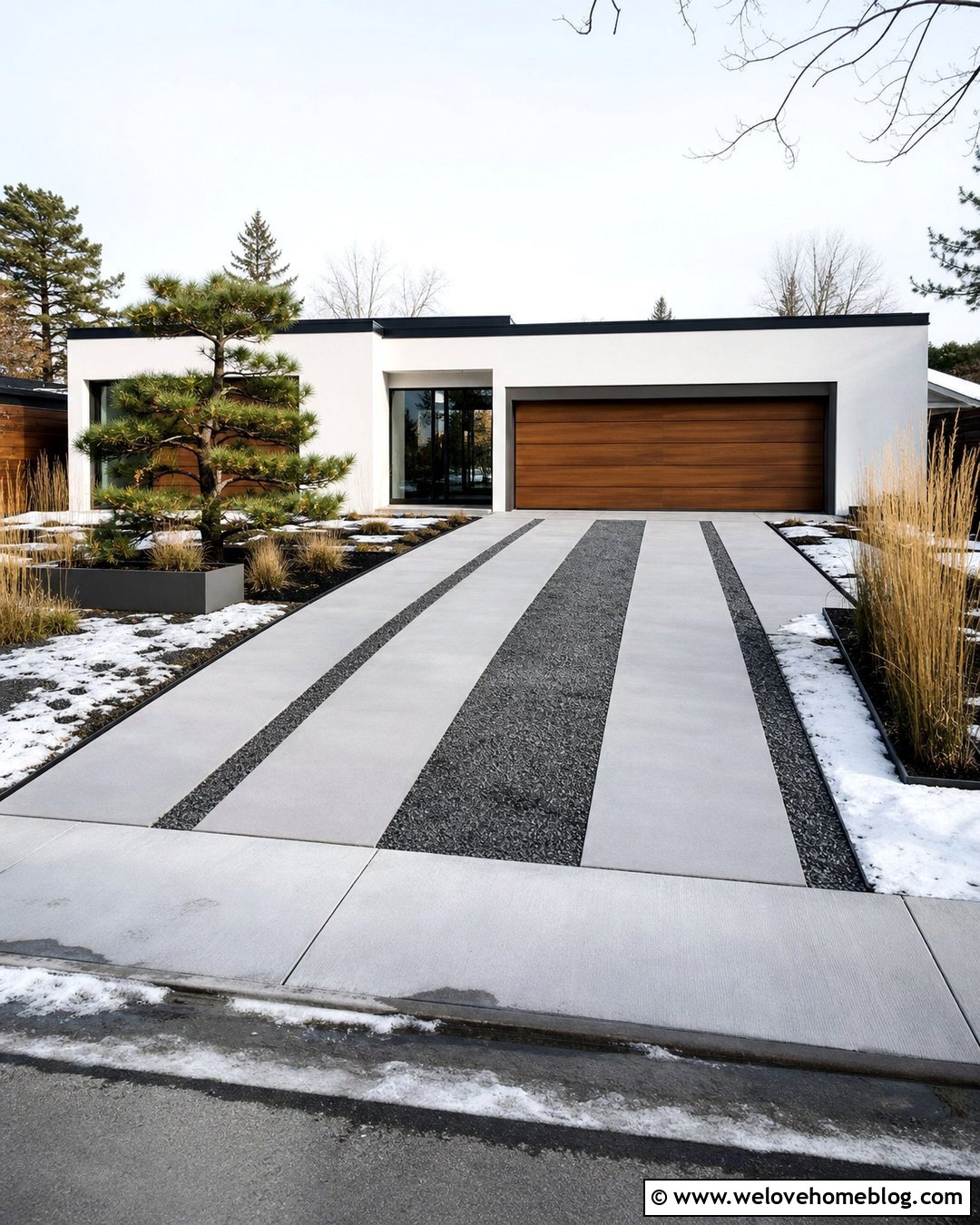
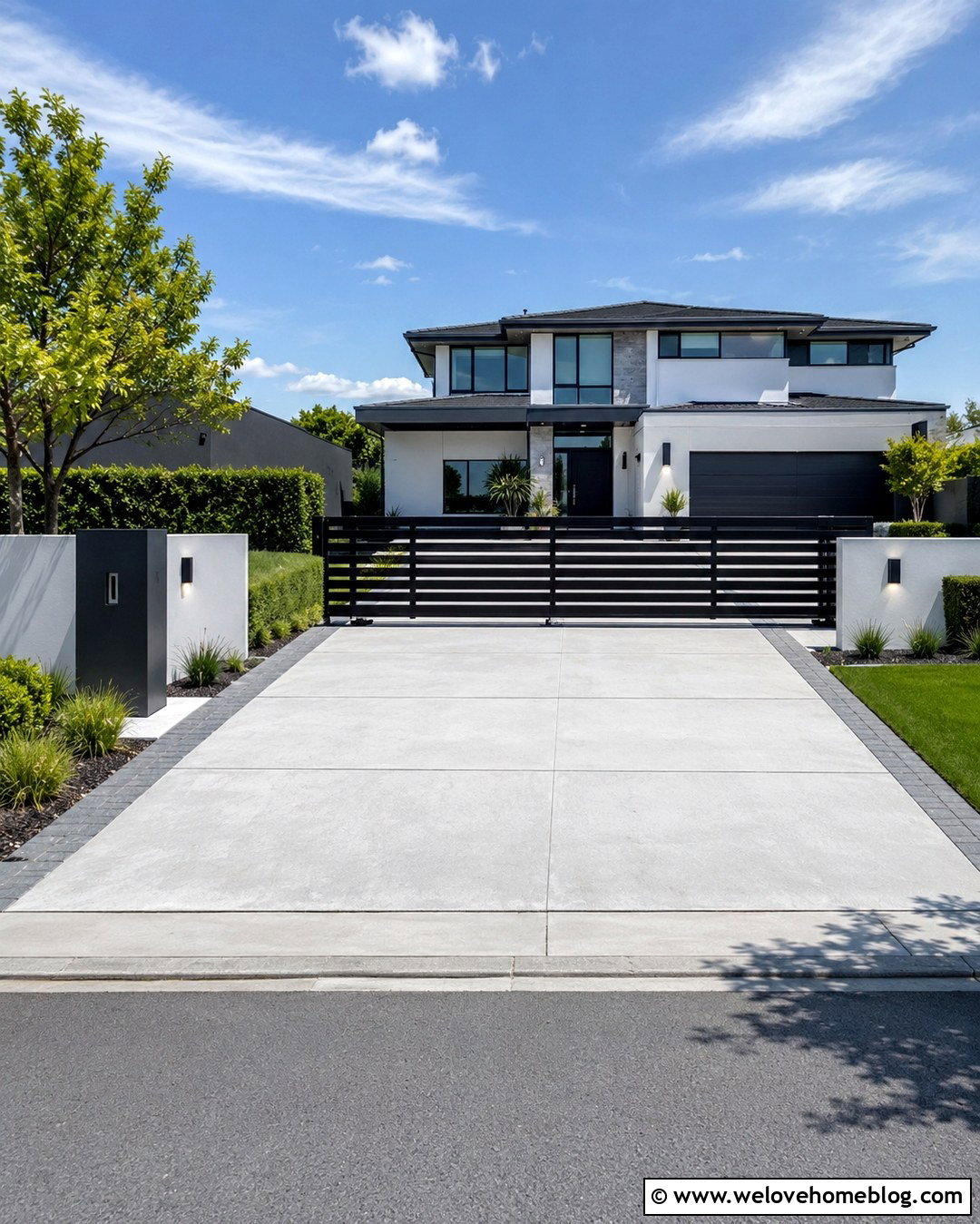
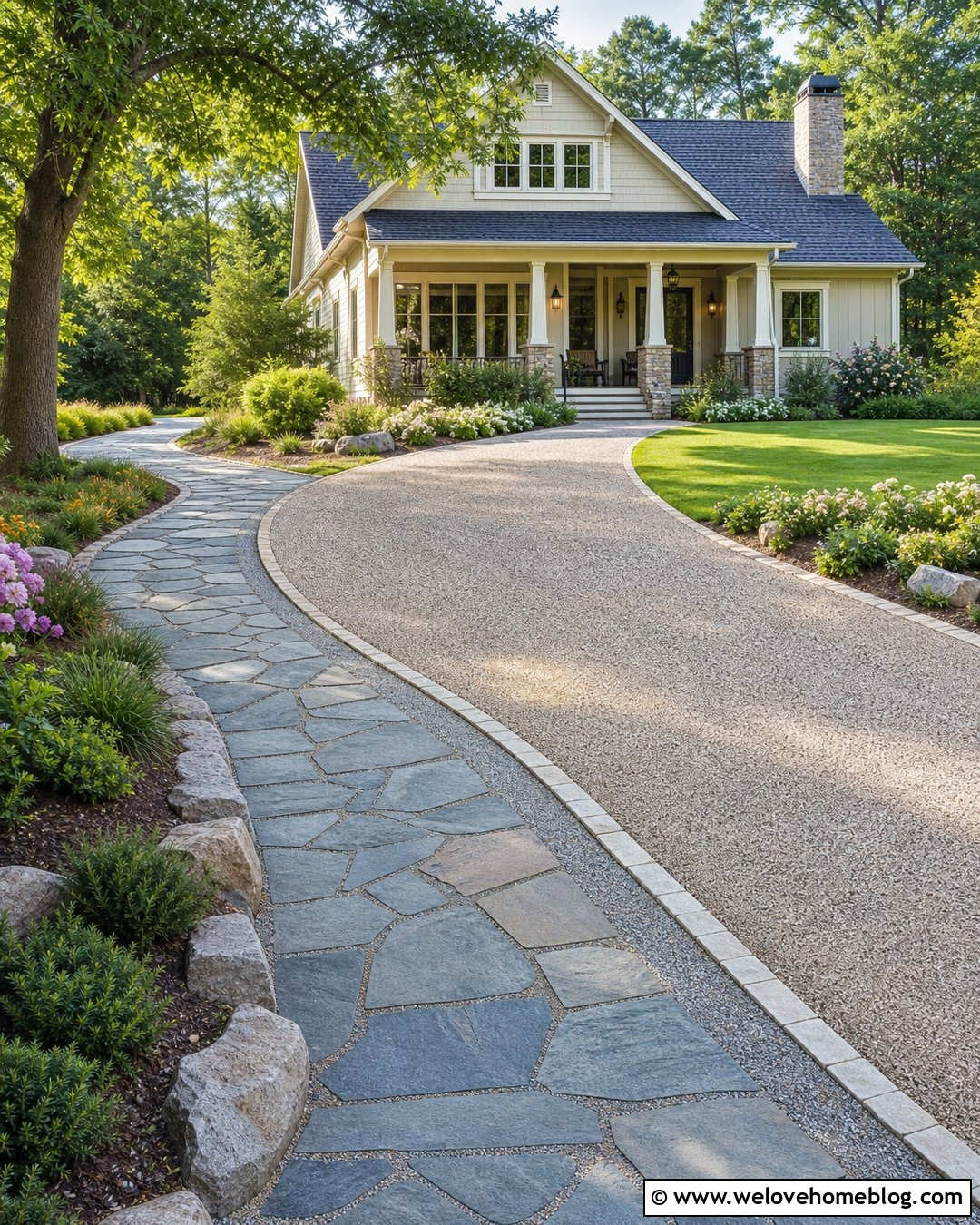
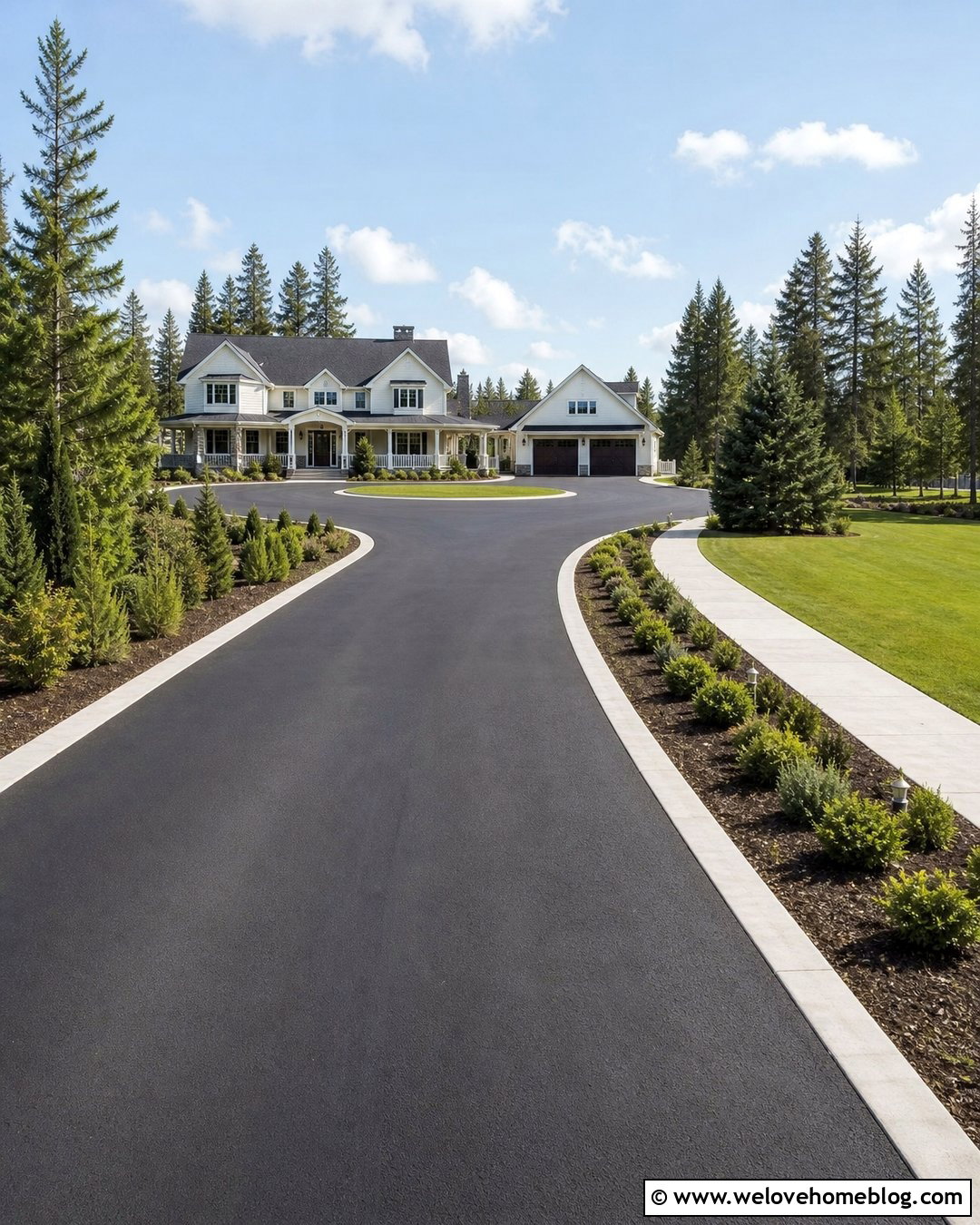
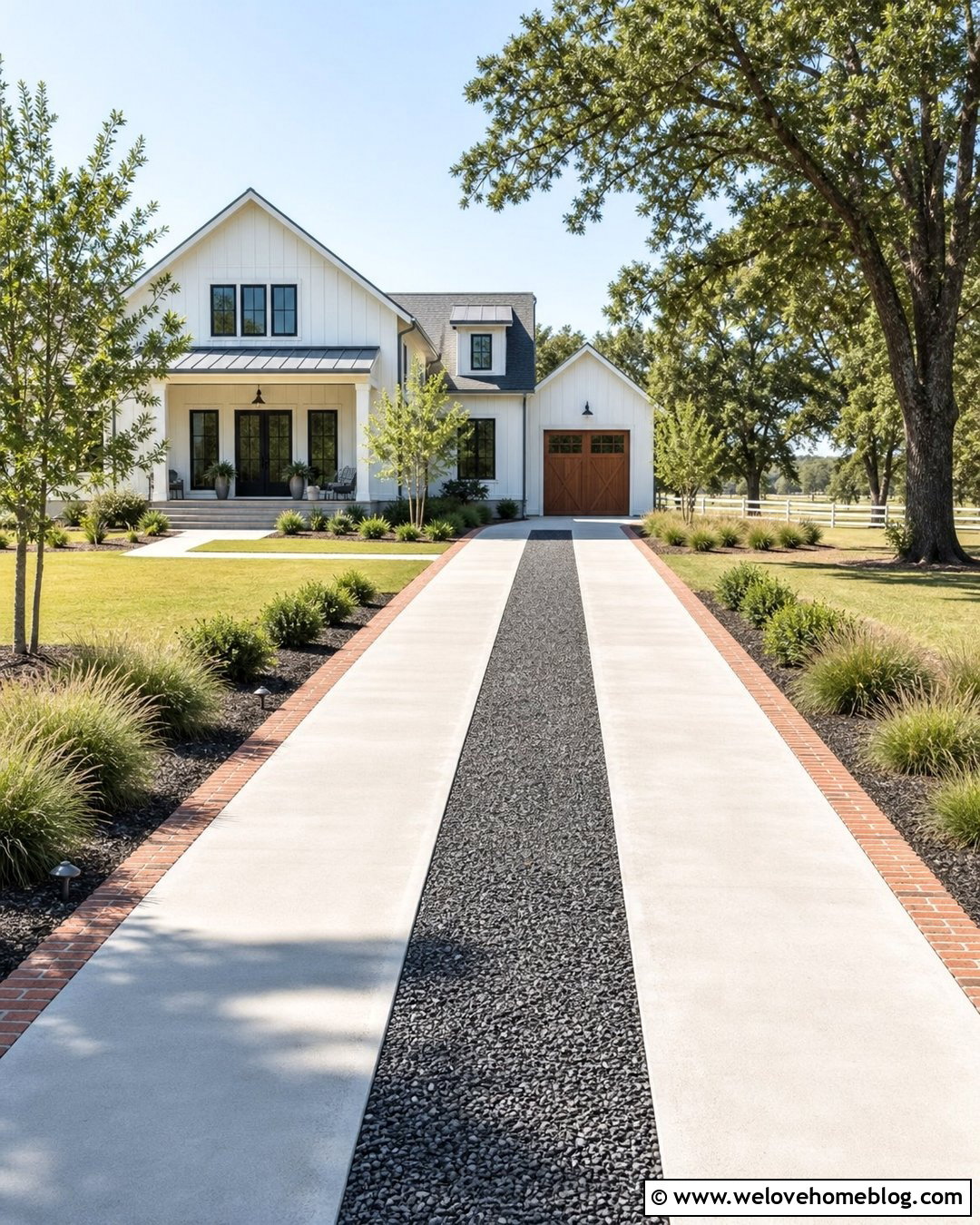
A modern driveway can maintain crisp geometry even when snow softens the rest of the landscape. Use large gray concrete strips for the tire lanes, but replace grass between them with dark permeable gravel that does not require winter mowing. Make the strips wide enough to simplify driving and mechanical snow clearing. Straight black metal edging keeps each material contained and emphasizes the linear layout. Lead the driveway toward a flat-roofed modern home with wood and white stucco siding. Frame the approach with sculptural pine, upright grasses, and rectangular planting beds. Integrated heating beneath the concrete strips can create two defined clear lanes. The combination of dark gravel, pale concrete, and white snow produces a sharp but approachable contemporary entrance.
16. Rustic Snowy Driveway With Boulder Borders
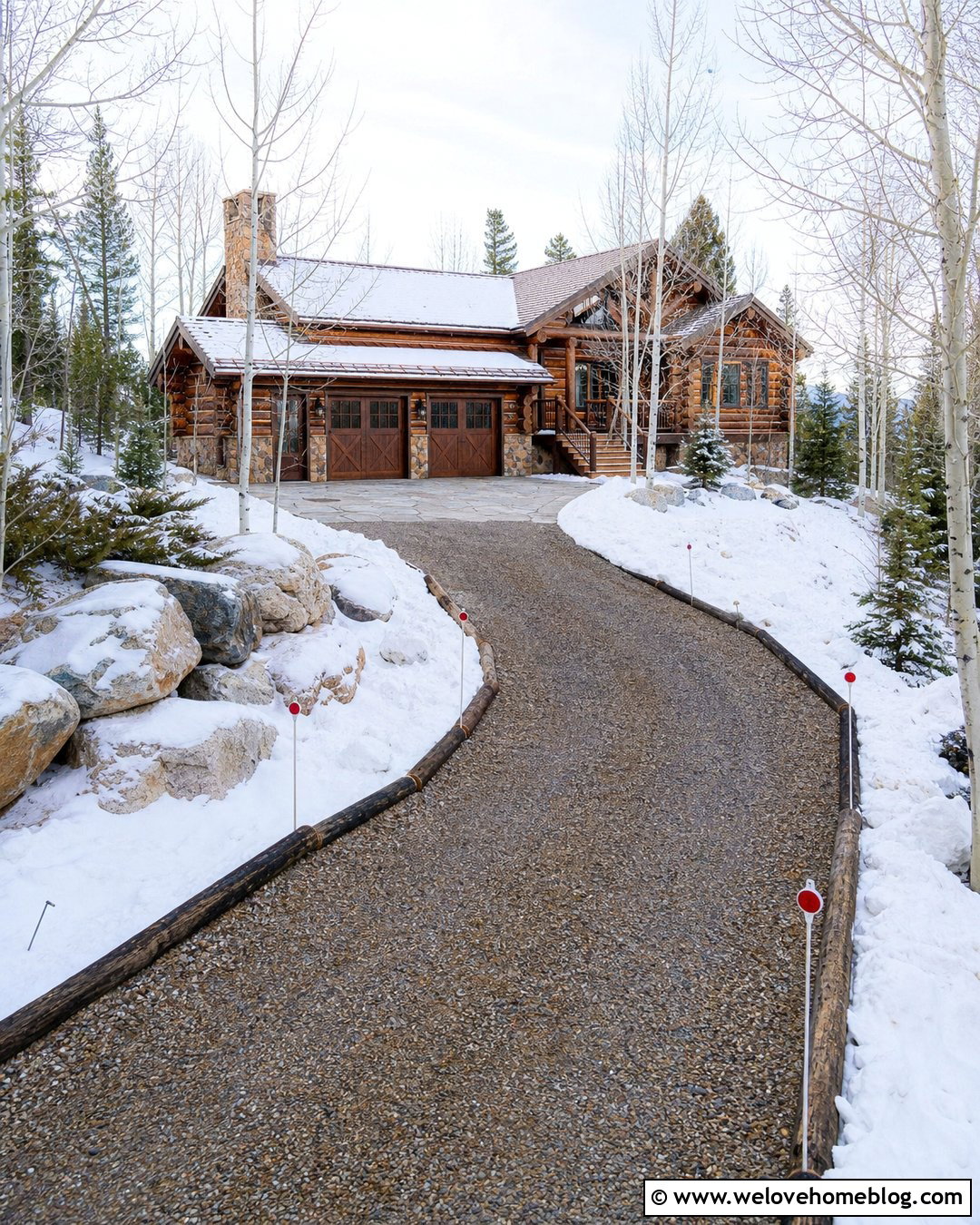
Large boulders can help a rustic driveway feel connected to its wooded surroundings, but they should sit well beyond the plowing zone. Use compacted brown-gray crushed gravel for a broad, gently winding driveway leading to a log cabin or mountain craftsman home. Mark the active edges with timber curbing and reflective snow stakes, then place boulder groupings several feet farther into the planting beds. Add native spruce, birch, juniper, and dried ornamental grasses around the rocks. A flat stone apron near the garage gives the gravel driveway a finished endpoint and creates a convenient transition. The snowy surface should remain simple and open, while the borders provide natural structure. This design feels informal without looking unfinished or difficult to navigate.
17. Snowy Driveway With Covered Drop-Off
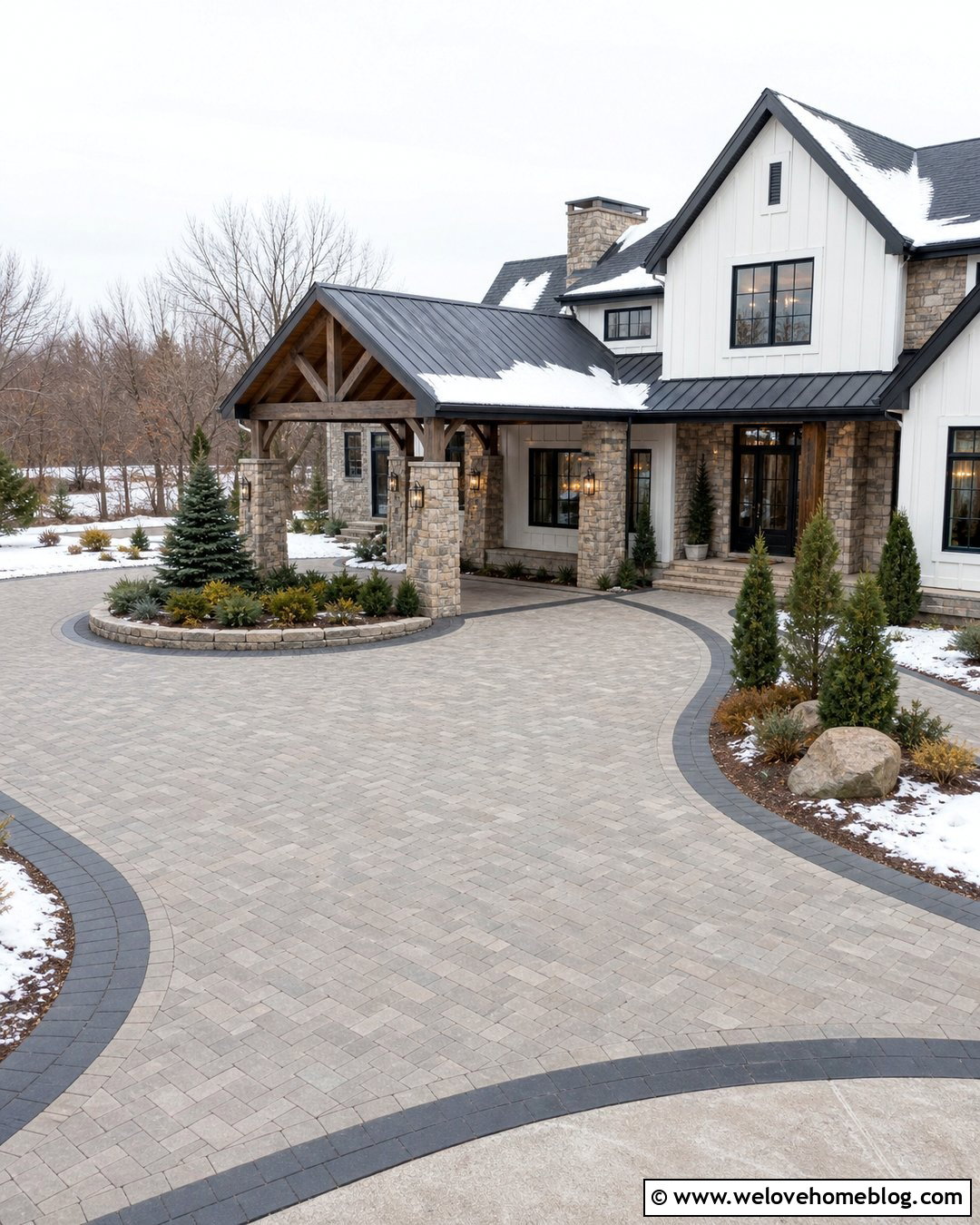
A covered drop-off makes a snowy driveway feel more comfortable and intentional, particularly for a large family home. Design a wide circular or teardrop-shaped driveway with smooth concrete pavers that continue beneath a porte-cochère. Use darker pavers around the perimeter to define the driving route and protect the visual shape when snow accumulates. A radiant system beneath the covered arrival area and connecting walkway can reduce tracked snow near the entrance. Landscape the central island with a compact evergreen tree, low junipers, and a stone retaining edge. Place additional snow-storage areas along the outer curve, away from doors and walkways. This arrangement suits a traditional estate, lodge, or large modern farmhouse while creating a sheltered and impressive winter welcome.
18. Narrow Snowy Driveway With Clear Borders
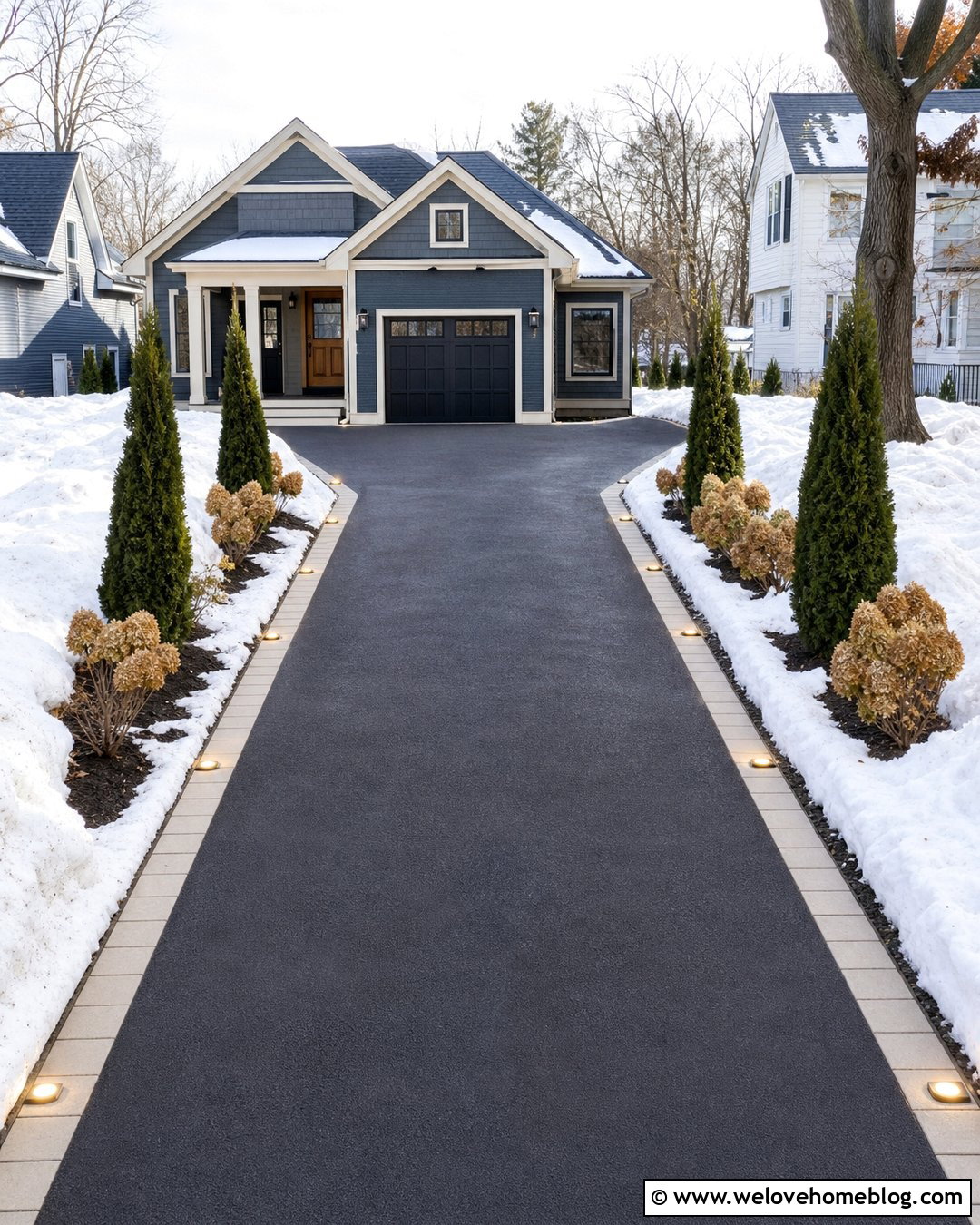
A narrow driveway benefits from simple materials and highly visible edges during winter. Choose smooth dark asphalt for maximum contrast with surrounding snow, then install a single row of light concrete pavers along both sides. Keep planting beds behind the border rather than allowing shrubs to lean into the driving space. Upright evergreens and compact hydrangeas can soften the route without reducing usable width. Near the garage, widen the driveway slightly to improve door access and create room for snowbanks. Low recessed lights along the paver border provide guidance without adding obstacles. This practical layout works well beside a bungalow, cape cod, or small craftsman house. The strong border makes the space appear organized and helps the narrow approach feel less confined.
19. Snowy Driveway With Heated Walkway Connection
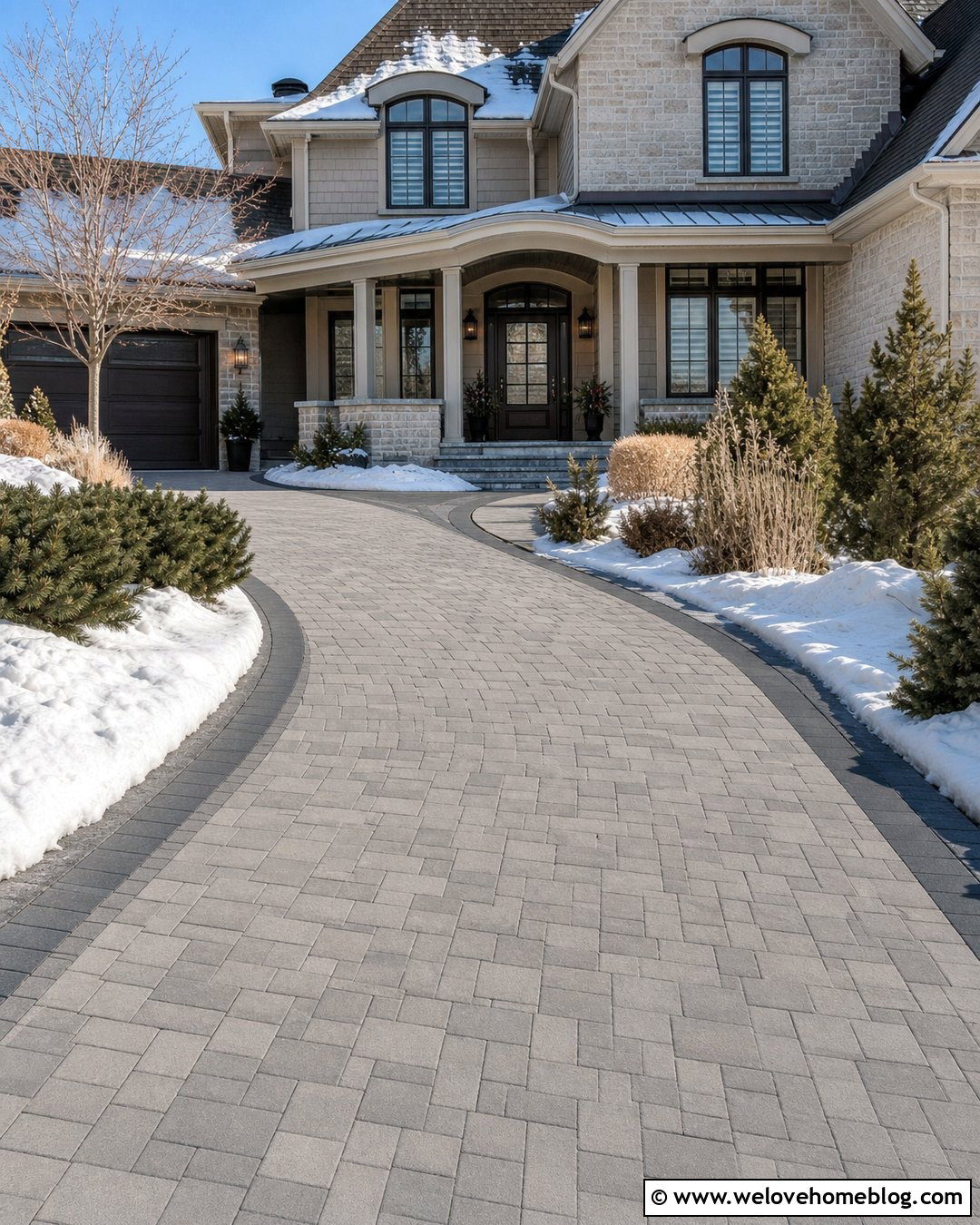
The safest-looking winter entrances create one continuous route from the street-facing driveway to the front door. Use warm gray interlocking concrete pavers for a gently curved driveway, with a matching walkway branching from the parking area. A coordinated snow-melt system can cover the walkway, front steps, and a designated unloading zone beside the driveway. Define both routes with charcoal paver borders so their shapes remain visible when nearby planting beds are covered. Add dwarf pine, holly, ornamental grasses, and a small deciduous tree for winter structure. The driveway should lead to a transitional-style home with a clearly visible porch. Repeating the same paving and edging across every surface produces a connected design rather than separate functional areas added at different times.
20. Snowy Driveway With Wood Entry Gate
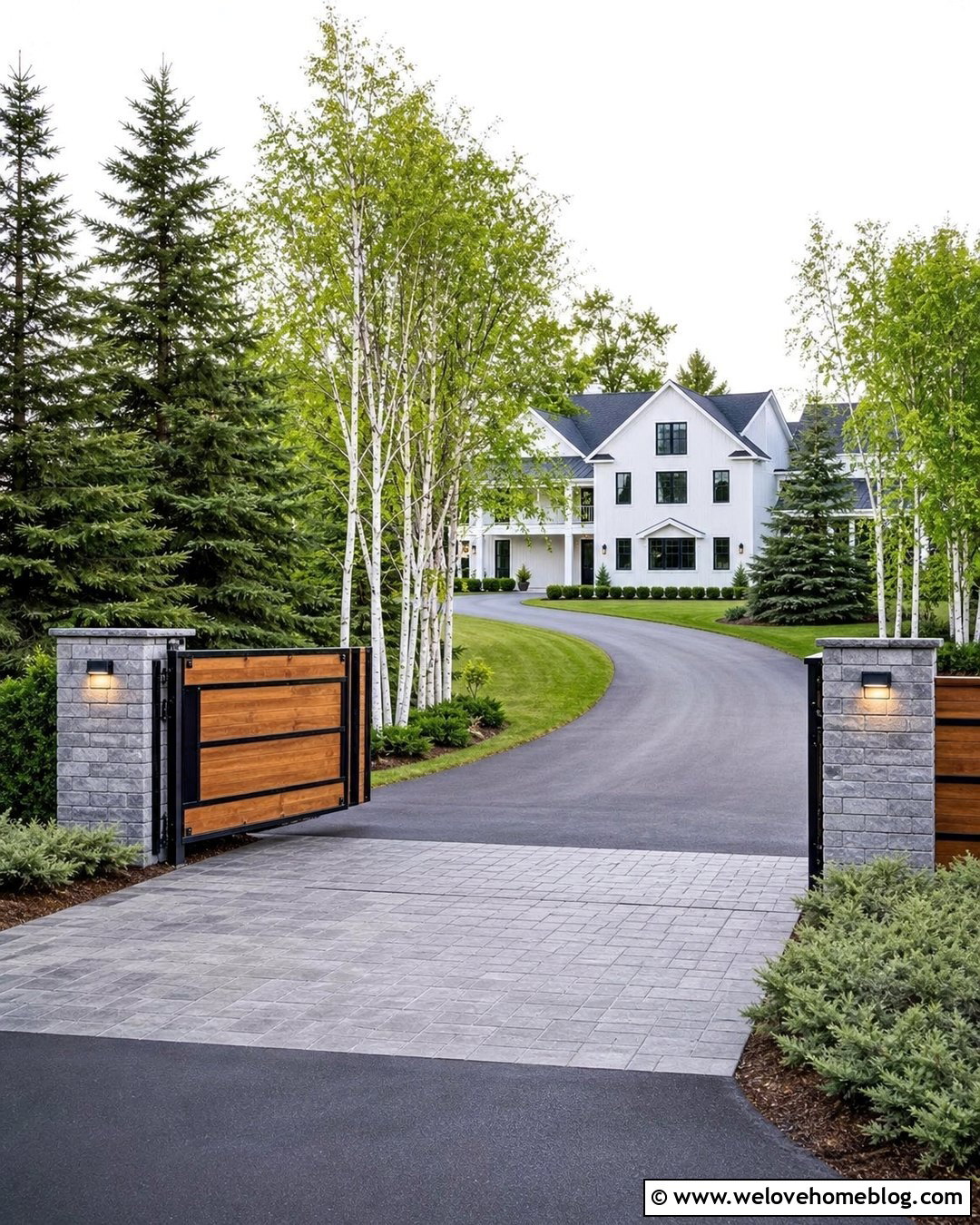
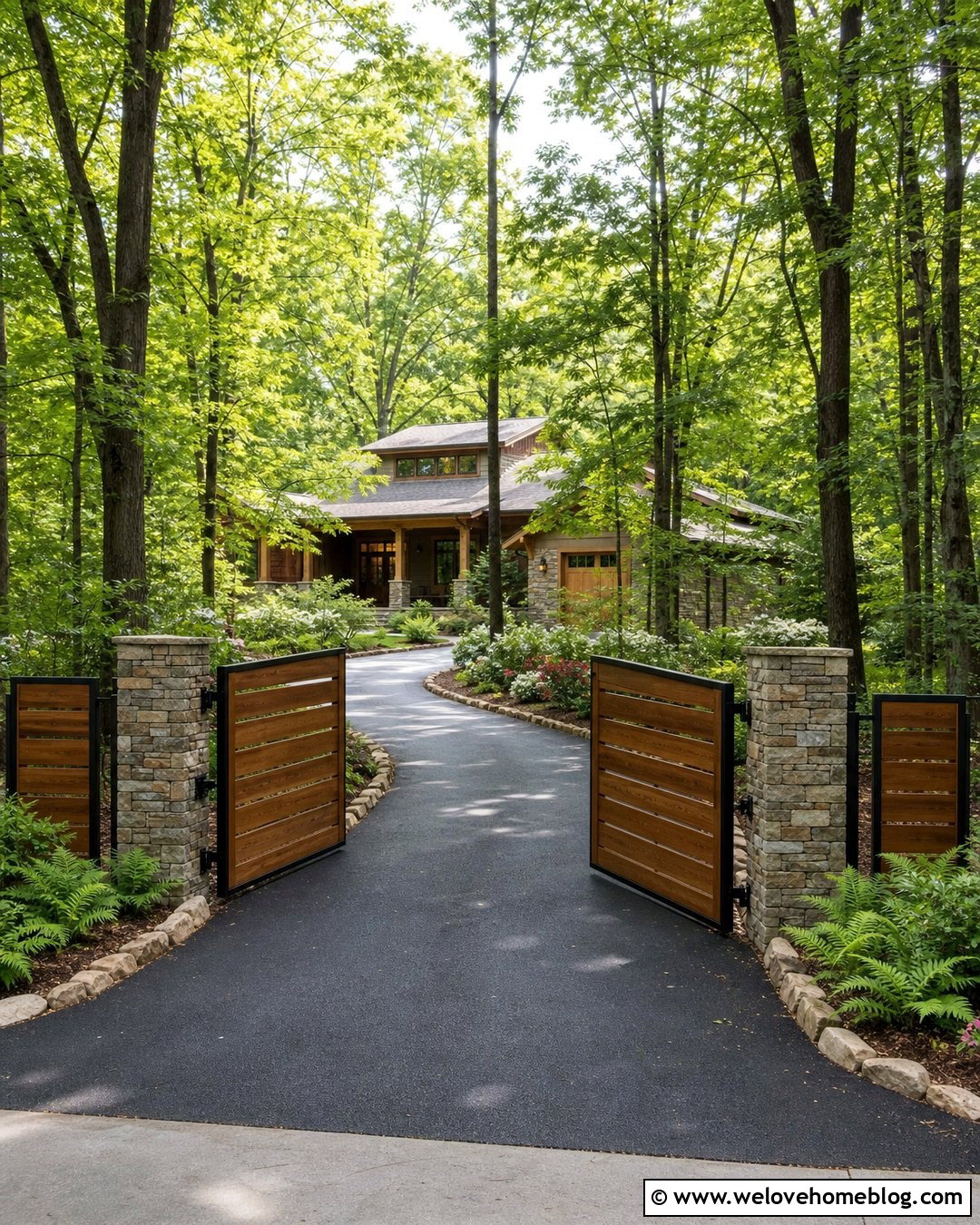
A wood gate brings warmth and character to a snowy entrance when it is paired with practical paving and enough operating clearance. Use a smooth black asphalt driveway with a wide stone-paver apron between two square masonry pillars. Install a simple horizontal cedar gate set back from the road so a vehicle can wait without blocking traffic. The gate can slide to the side, avoiding the space needed for swinging panels and reducing interference from snowbanks. Continue the driveway in a soft curve toward a modern farmhouse. Frame the entrance with spruce, white birch, and low juniper beds, leaving open areas beside the pillars for snow storage. Black metal hardware and understated lighting tie the gate to the dark driveway surface.
Conclusion:
The most effective **snowy driveway ideas** combine attractive materials with a layout that remains practical after every winter storm. Smooth asphalt, textured concrete, brick, cobblestone, gravel, and permeable pavers can all create appealing entrances when selected for the property and local conditions. Clearly defined borders, suitable drainage, visible markers, open snow-storage areas, and connected walkways make the overall design easier to use. Heating can cover an entire driveway or target important zones such as tire tracks, slopes, steps, and unloading areas. Complete the look with durable evergreens, structural grasses, stonework, and well-positioned lighting. A thoughtfully planned driveway will complement the house, organize the front yard, and maintain welcoming curb appeal throughout the snowiest months.

Related posts:
Leave a Reply