
A heated gravel driveway combines the relaxed, natural look of loose stone with a professionally designed snow-melting system below the driving surface. It can make winter access easier while preserving the drainage, texture, and curb appeal that make gravel so popular. The best designs consider much more than heating alone. Gravel depth, base stability, runoff control, heating coverage, edging, and the route to the garage must work together. Electric cables and hydronic tubing are the two primary heating options, although the final system should always be engineered for the chosen driveway construction and local climate. () From compact suburban entrances to sweeping country approaches, these **20 Heated Gravel Driveway Ideas** offer practical inspiration for creating a safer and more attractive winter-ready property.

1. Heated Pea Gravel Driveway With Cobblestone Edging
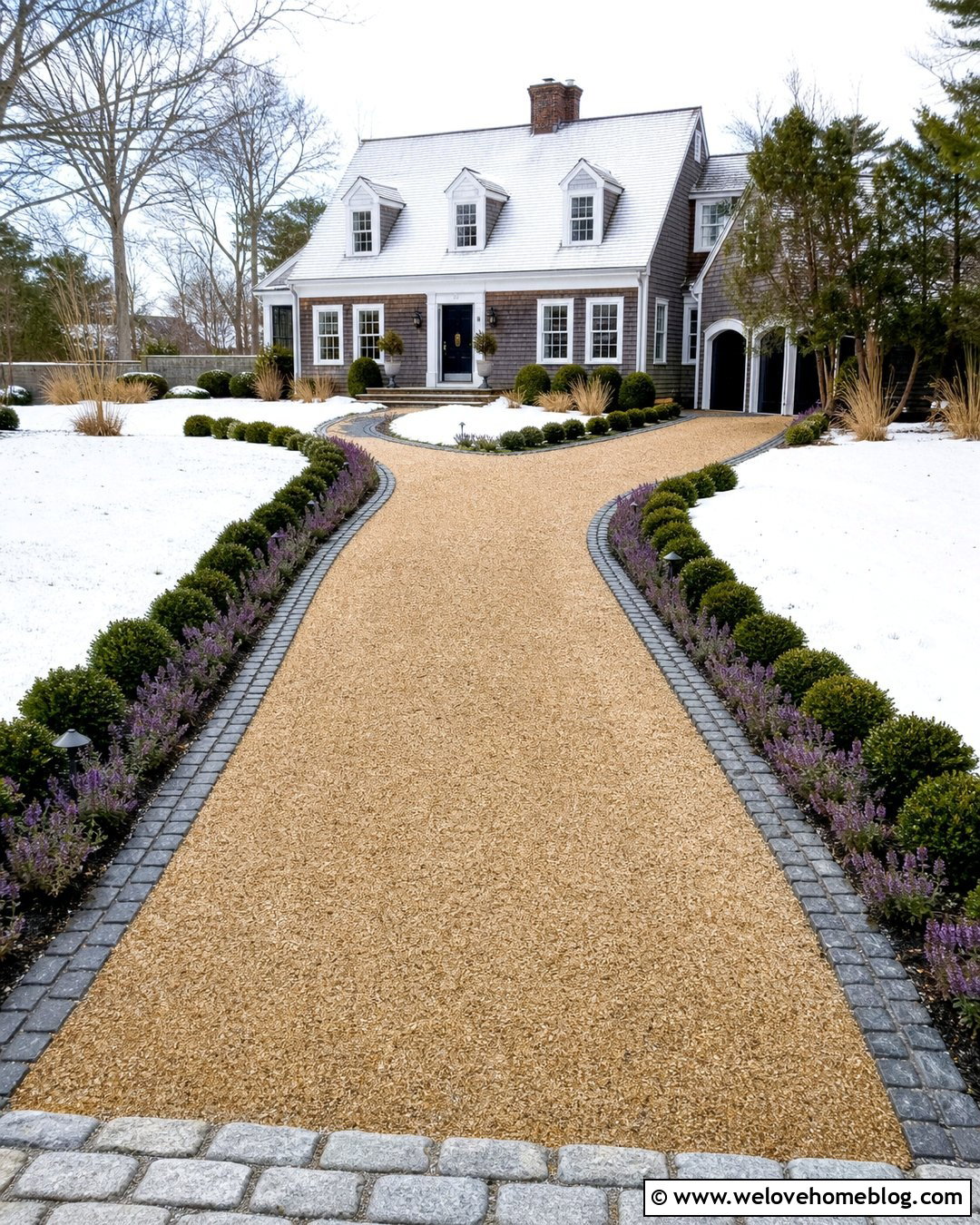
Smooth pea gravel creates a welcoming surface that suits cottages, Cape Cod homes, and traditional suburban properties. Choose a warm buff or mixed tan blend to soften the driveway’s appearance. A compacted structural base and gravel stabilization grid can help reduce movement above the professionally installed heating assembly. Frame the driveway with dark gray cobblestones so loose stones stay contained and the edges remain easy to follow when light snow covers the yard. Gently curve the driveway toward the garage, then add lavender, dwarf boxwood, and ornamental grasses beside the border. The contrasting cobblestone outline gives the entire approach a finished appearance. Extend the heating coverage to the garage threshold, where packed snow and refreezing water often create troublesome winter conditions.
2. Heated Gray Gravel Driveway With Paver Ribbons
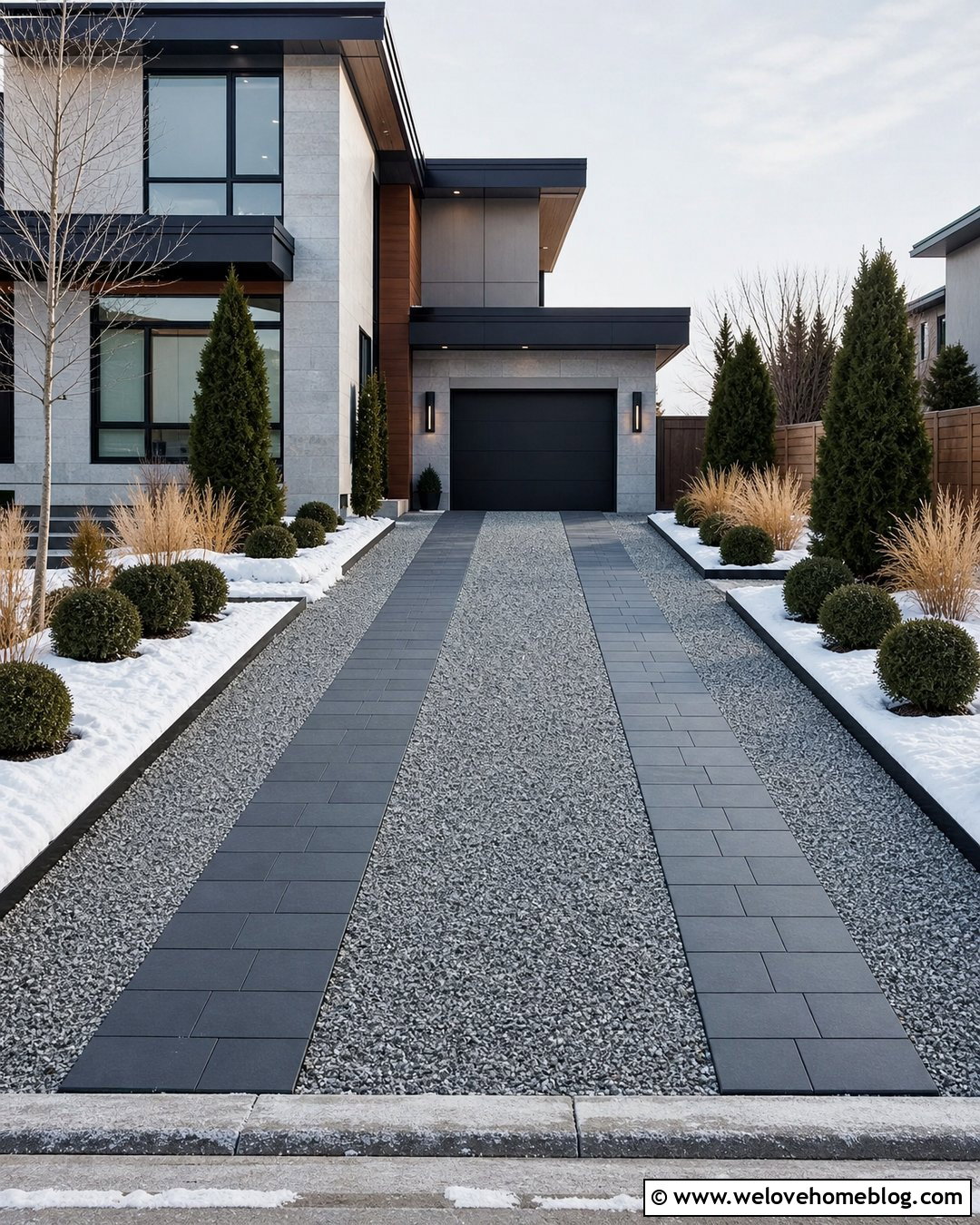
For a clean modern look, combine angular gray gravel with charcoal concrete paver ribbons. The pavers can form two broad tire tracks or narrow bands that divide the surface into organized sections. Heating the main driving lanes rather than every decorative edge may be worth discussing when planning system size and electrical or mechanical requirements. Snow-melting systems can be customized for unusual driveway layouts, available power, and different levels of coverage. () Keep the layout straight and symmetrical as it approaches a contemporary house. Low evergreen shrubs, clipped grasses, and rectangular planting beds reinforce the orderly design. Install strong metal edging along the outer boundaries to prevent gravel migration. The finished driveway feels refined without losing the drainage and visual texture associated with stone.
3. Heated Crushed Stone Driveway With Brick Border
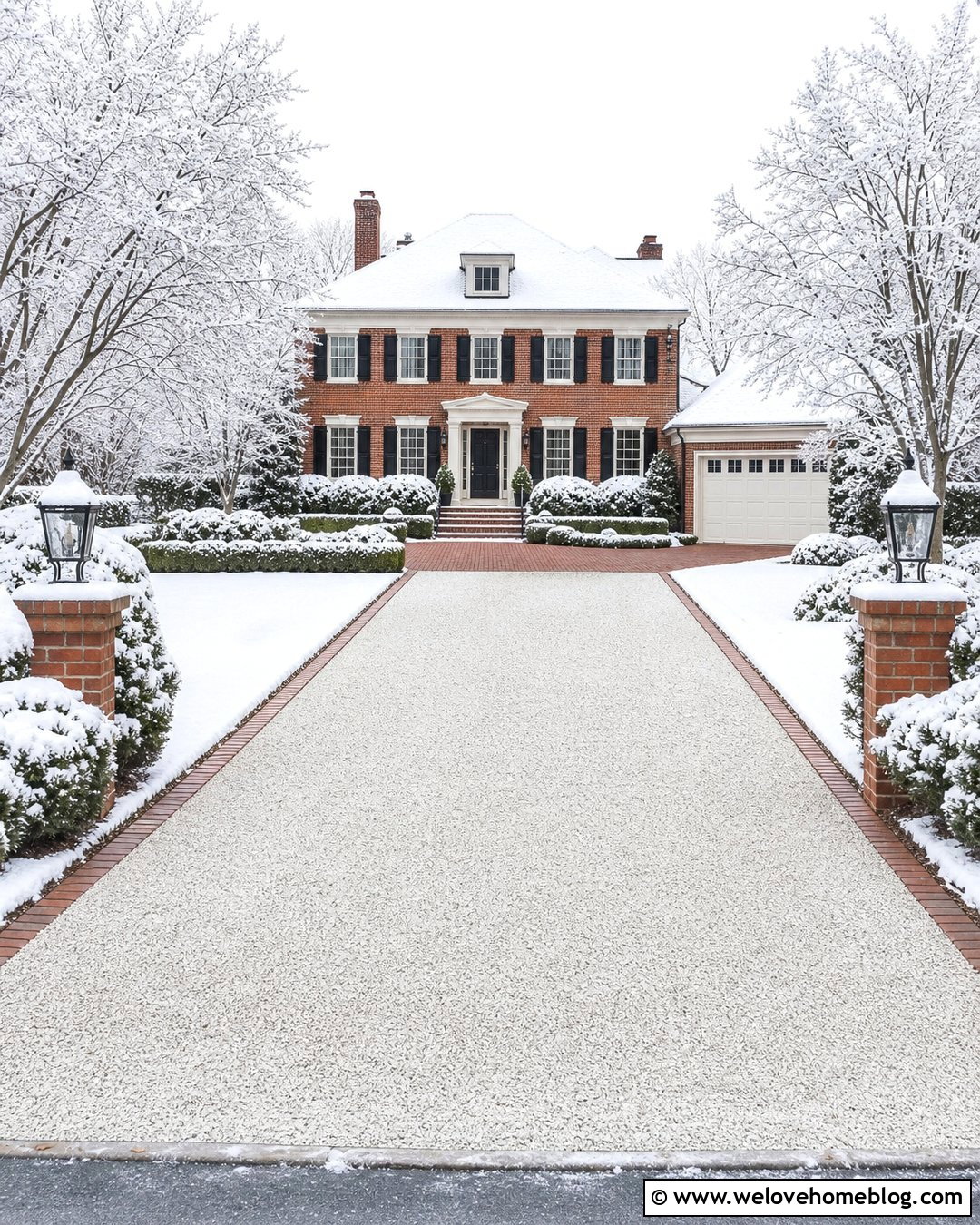
Brick brings warmth and definition to a pale crushed-stone driveway. Use cream or light gray limestone chips through the center, then install a red clay brick border in a running-bond pattern. A straight layout works especially well in front of a Colonial home because it supports the architecture’s balanced appearance. Place matching brick aprons at the street and garage entrance to create durable transitions between surfaces. Foundation plantings can include boxwood, hydrangeas, and small flowering trees arranged on both sides. Under the gravel system, careful grading should move meltwater toward an approved drainage area rather than allowing it to settle beside the heated zone. The combination of crisp brick, bright stone, and traditional landscaping creates an inviting driveway that remains visually appealing during every season.
4. Heated Gravel Driveway With Timber Edging
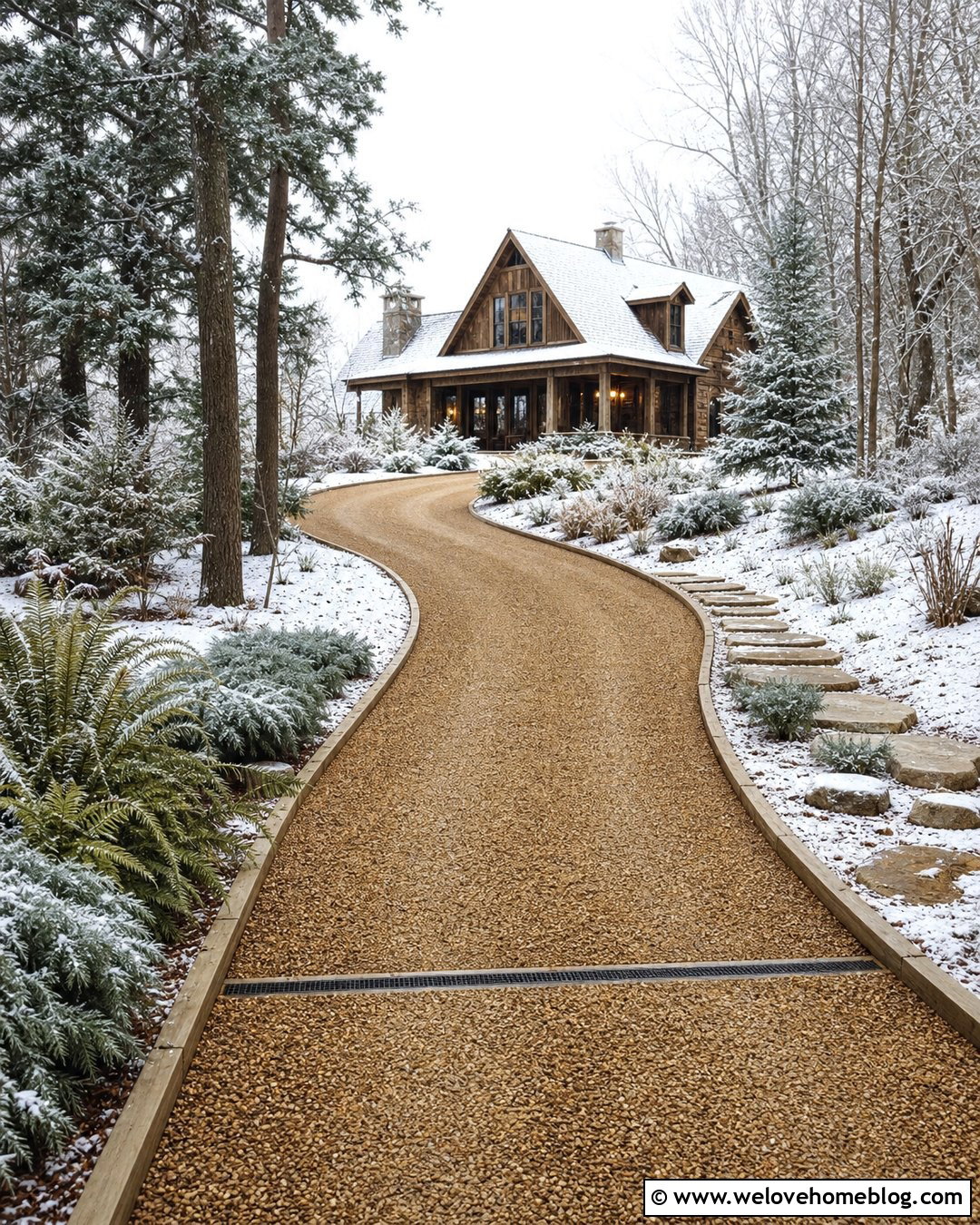
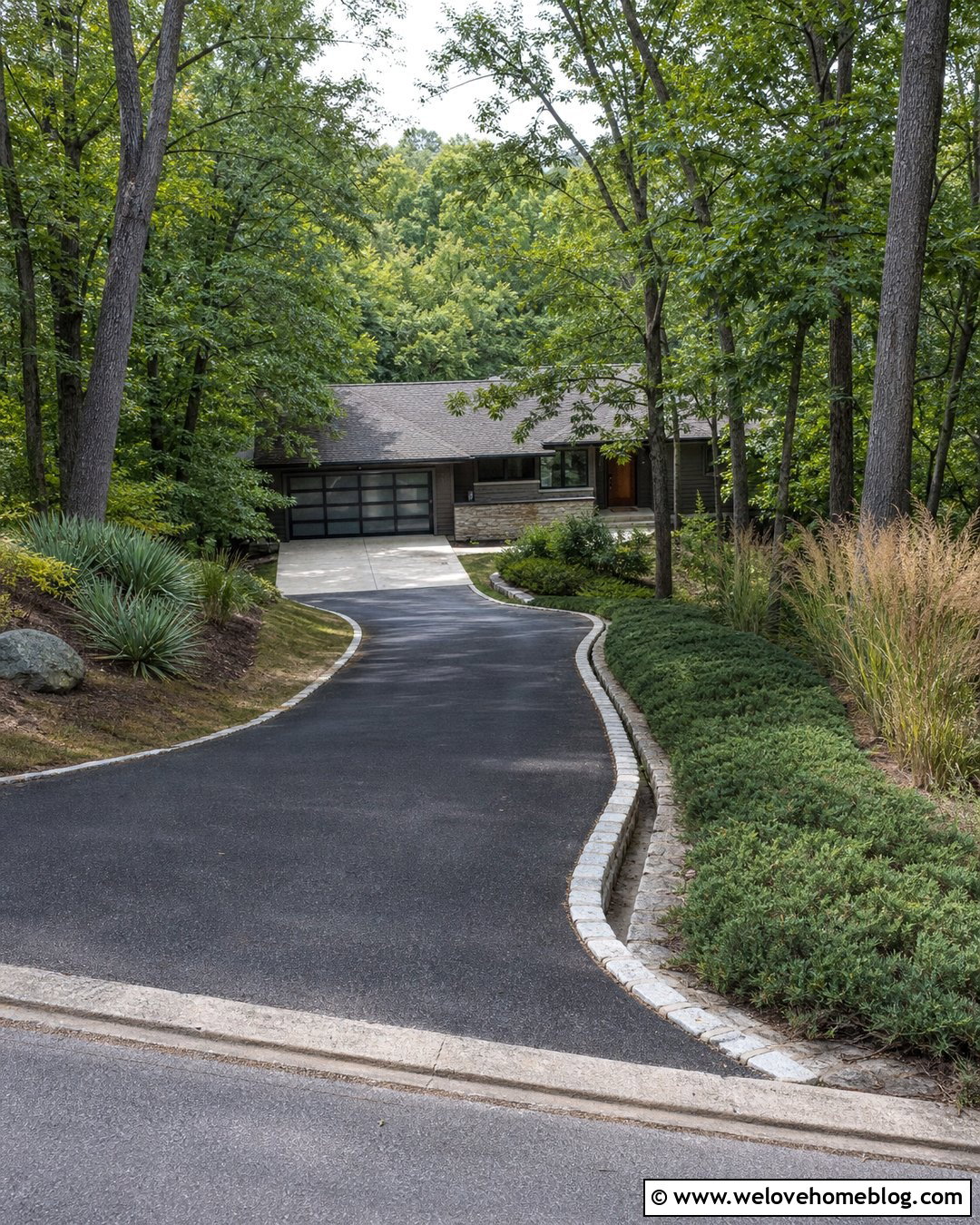
A timber-edged heated gravel driveway feels natural beside a cabin, rustic ranch, or wooded country home. Select compacted brown crushed gravel containing varied earthy tones rather than perfectly rounded stones. Pressure-treated landscape timbers or durable hardwood beams can hold the gravel in place along a gently winding route. Use generous curves instead of tight turns so vehicles can move comfortably without pushing material against the border. Ferns, native grasses, low junipers, and mature trees can frame the approach while maintaining open sightlines near the road. Since wood borders eventually weather, keep critical heating components independent of edging that may need replacement. A discreet drainage channel near the lower end can collect meltwater. This design feels relaxed and rural while still offering thoughtfully planned winter performance.
5. Heated White Gravel Driveway With Black Metal Edging
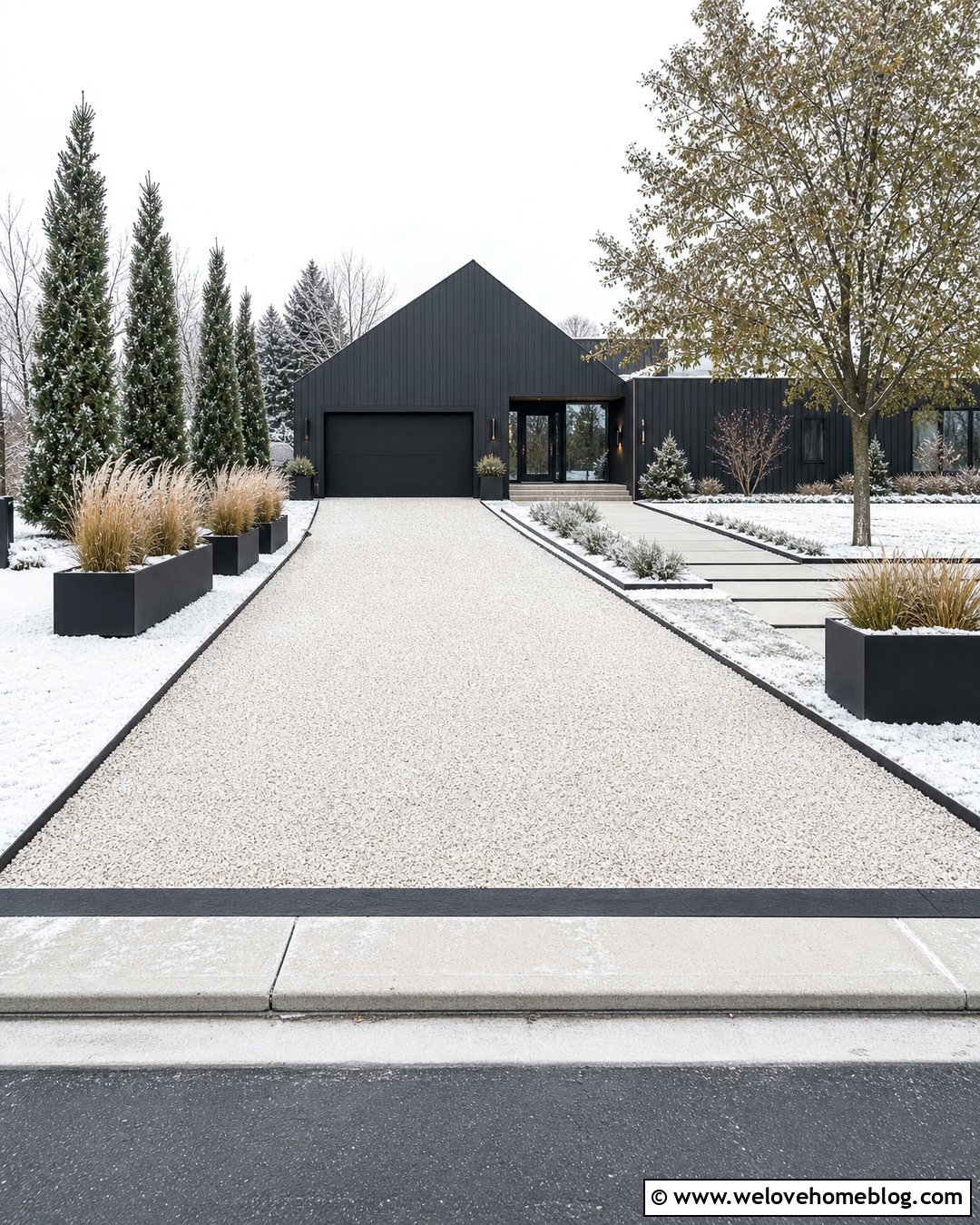
Bright white gravel and slim black edging create a striking driveway for a minimalist modern house. Use angular marble chips or pale limestone rather than rounded decorative pebbles, which may shift more easily beneath tires. Shape the driveway as a wide, straight approach with a rectangular parking area near the garage. Black steel or aluminum edging produces a sharp boundary between the white surface and surrounding green lawn. Repeat the dark color through planters, exterior lights, and the front walkway. Sparse landscaping works best, such as sculptural evergreens, feather reed grass, and one carefully positioned shade tree. Because pale gravel highlights scattered soil and leaves, provide an easy maintenance route around planting beds. The result is graphic, uncluttered, and especially effective against dark siding.
6. Heated Gravel Driveway With Stone Pillars
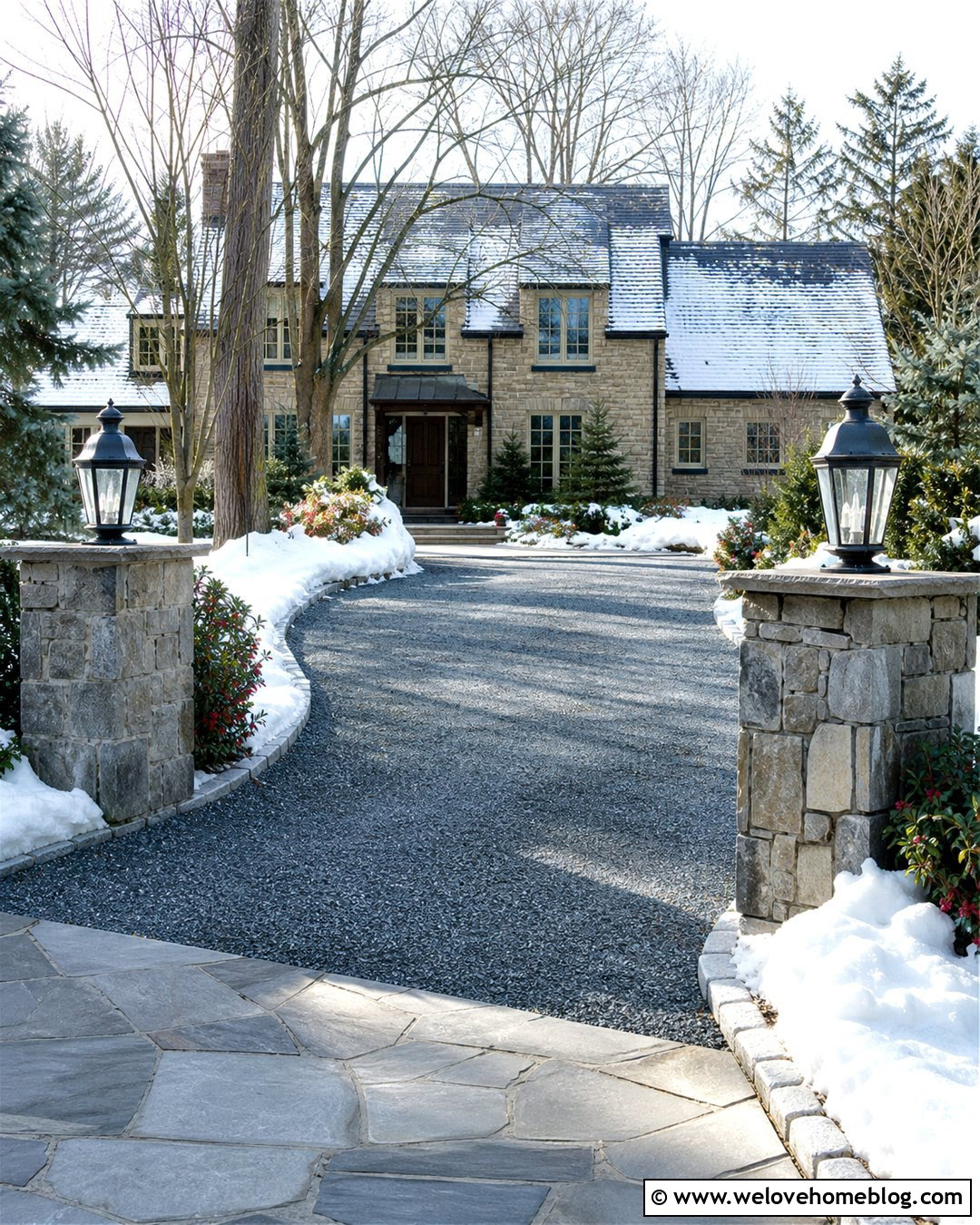
Stone entrance pillars can transform a practical heated gravel driveway into a defined arrival point. Build the pillars from local fieldstone or manufactured stone that complements the home’s foundation and chimney. Between them, use medium-gray crushed granite for a stable-looking surface with subtle color variation. A slightly curved driveway creates anticipation as the house comes into view, while broad stone curbing keeps gravel from spreading into the lawn. Install simple lantern-style fixtures on the pillars, but keep the entrance open enough for delivery trucks and snow-management equipment. Layer evergreen shrubs, deciduous flowering plants, and ground covers around each pillar without blocking visibility. Continue the heated zone through the narrow gateway and up the primary vehicle route so the entrance does not become an untreated interruption in the driveway.
7. Heated Gravel Driveway With Automatic Gate
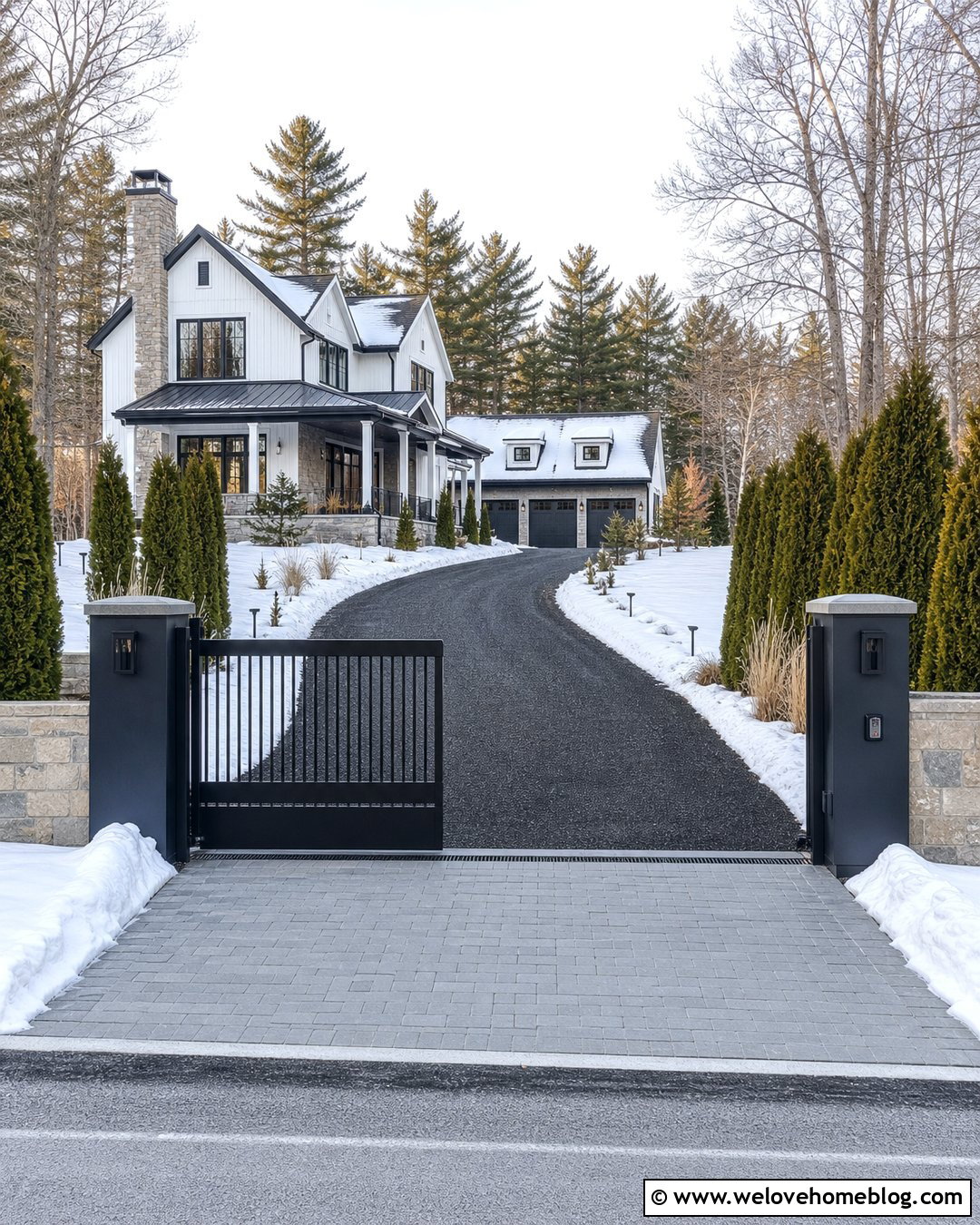
An automatic gate works best when the entire entrance is planned as one coordinated driveway design. Choose compacted charcoal gravel for the driving surface and pair it with a simple black steel sliding gate. A straight section near the road gives vehicles space to stop safely while the gate opens. The driveway can then curve toward a modern farmhouse or updated ranch home. Low stone walls on both sides contain the gravel and visually anchor the gate posts. Use upright evergreens and restrained ornamental grasses to soften the structure without interfering with sensors or moving parts. Consider heating the waiting area, gate threshold, and main tire paths because these zones must remain usable during winter weather. Keep controls, drainage outlets, conduits, and gate equipment accessible for professional inspection and maintenance.
8. Heated Circular Gravel Driveway With Center Island
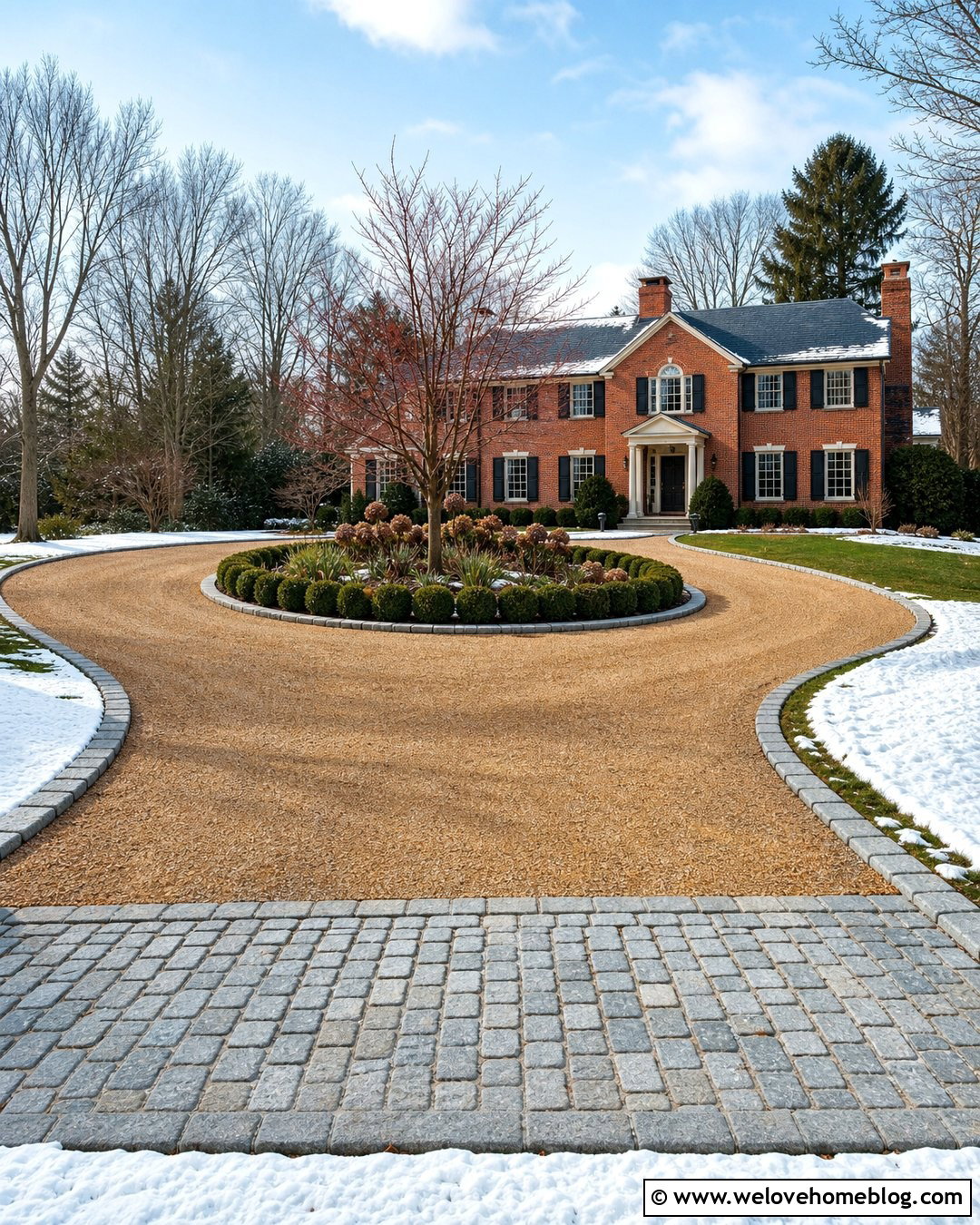
A circular heated gravel driveway offers easy vehicle movement while creating a prominent landscaping opportunity. Use golden crushed gravel across the loop and contain it with a contrasting gray granite curb. In the center island, plant a small ornamental tree surrounded by low boxwood, flowering perennials, and a neat ground-cover layer. Keep plants short near driveway intersections so drivers can see approaching vehicles. A traditional brick or stone house provides an ideal backdrop for this balanced arrangement. The heating design may cover the entire loop or focus on key driving bands, depending on professional calculations, snow exposure, and the intended operating budget. Add a paved or cobblestone apron at each road connection to reduce gravel loss. The sweeping shape feels formal while the textured surface keeps it approachable.
9. Heated Curved Gravel Driveway With Evergreen Landscaping
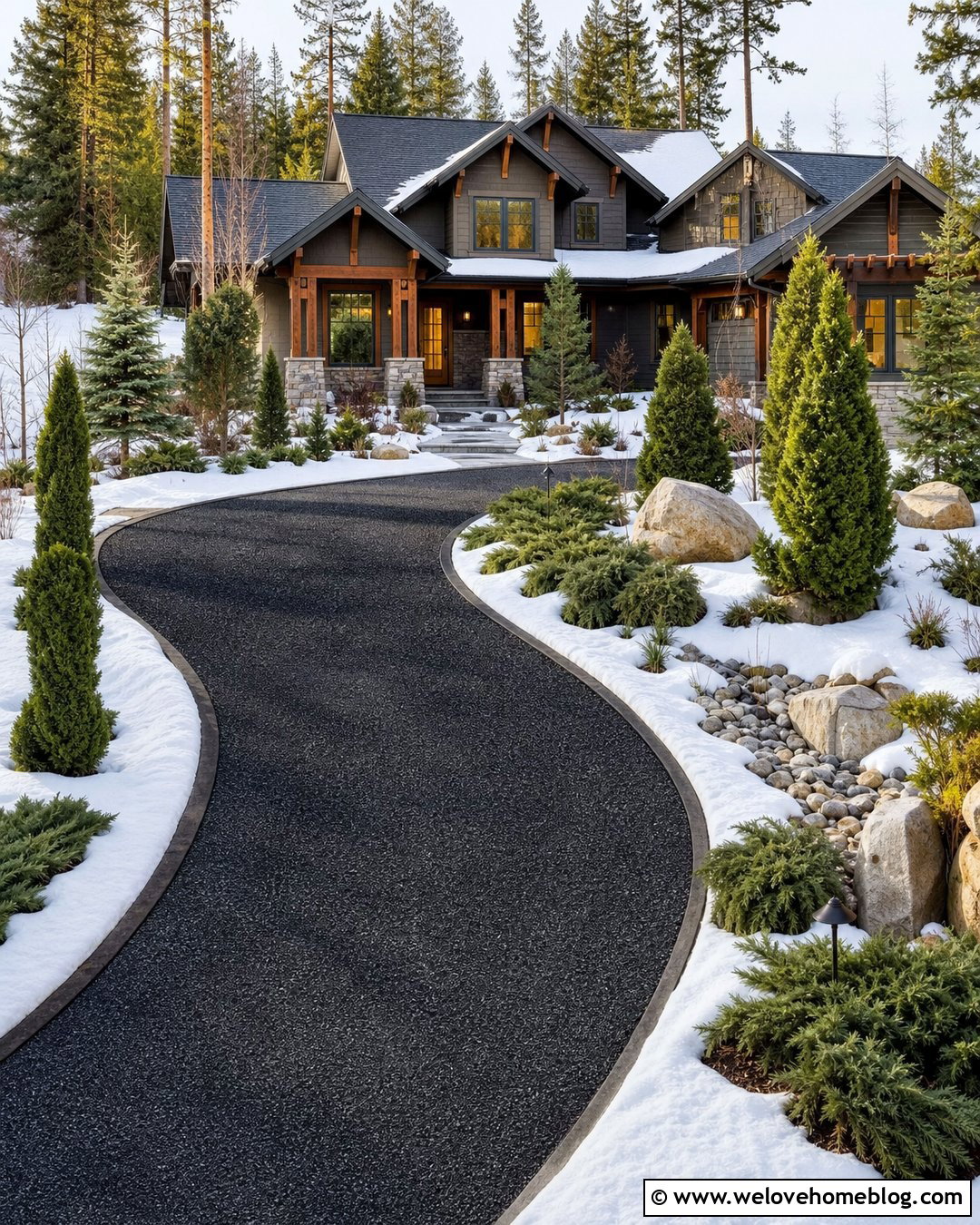
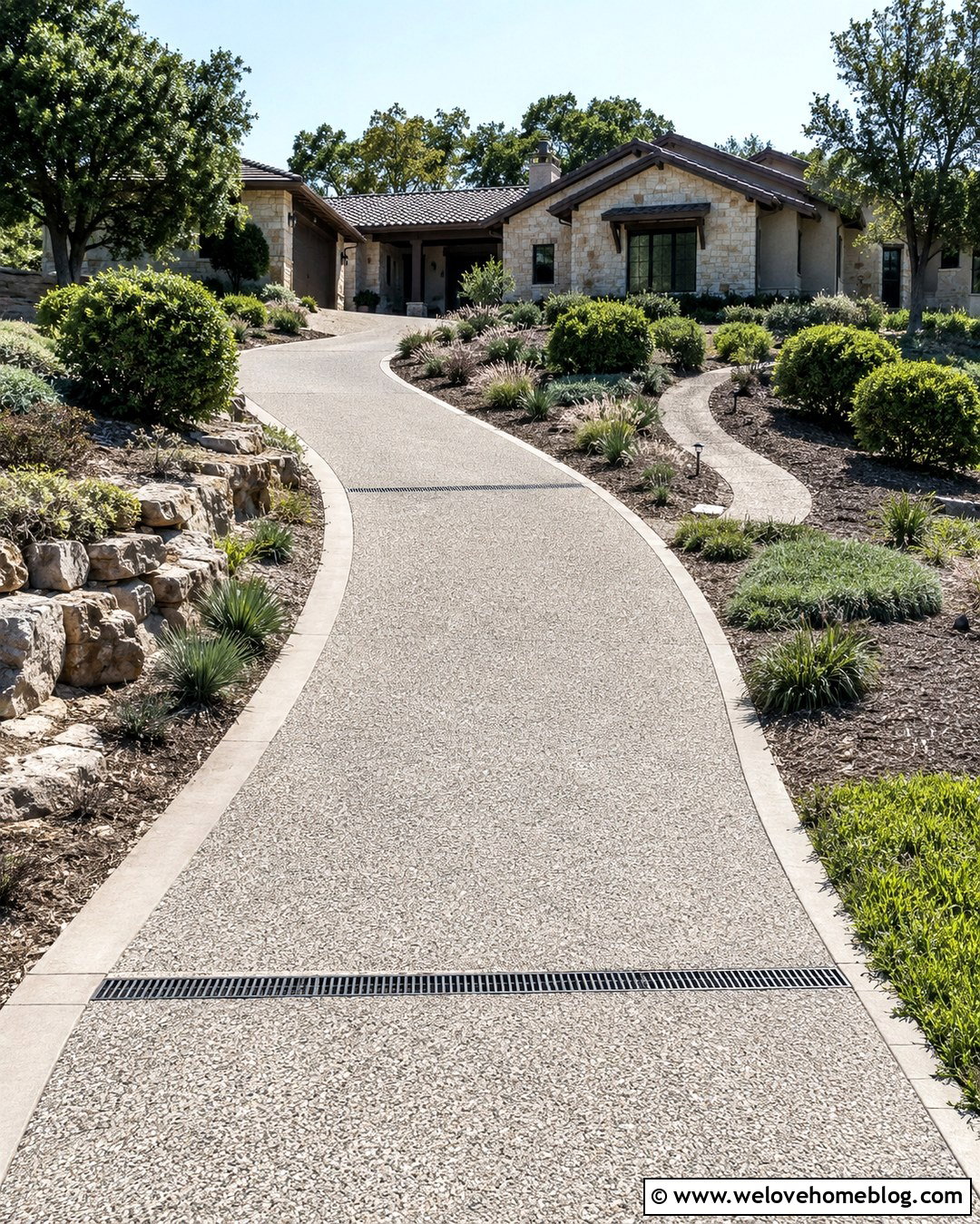
Imagine a dark gravel drive sweeping gently through layers of evergreen planting before reaching a craftsman home. The curve should follow the natural grade rather than forcing an overly sharp route across the yard. Use angular charcoal granite with a sturdy steel border for a crisp but understated finish. Group dwarf pine, juniper, arborvitae, and broadleaf evergreens along the outside of the curve, leaving adequate clearance for vehicles and maintenance. A few pale boulders can connect the driveway visually to the landscape. Direct meltwater toward a planted drainage area positioned beyond the heated driving surface. Avoid creating low pockets where runoff could collect and freeze. This complete look provides year-round color, privacy, and a natural transition between the street, wooded yard, and warmly detailed house.
10. Heated Gravel Driveway With Hydronic Snow Melting
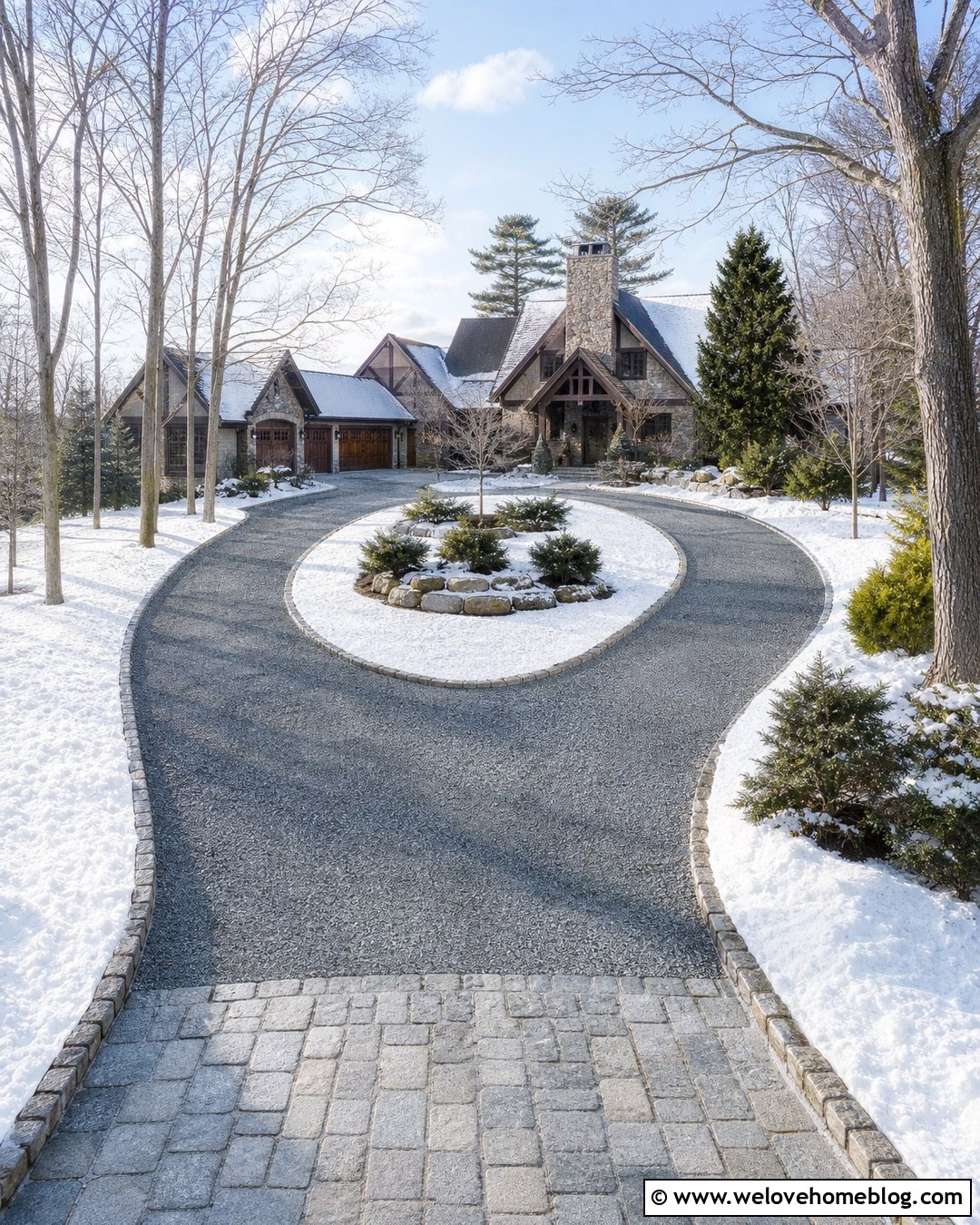
A large country driveway may be a good candidate for a professionally designed hydronic system. This technology circulates a heated water-and-glycol solution through closed loops of PEX tubing and requires mechanical components such as a boiler, pumps, and manifold. () For the visible surface, use compacted gray crushed stone stabilized within an engineered driveway system. Create a broad horseshoe layout around a lawn island, with stone edging along the curves and a reinforced apron at the road. Native shrubs and mature shade trees can soften the expansive design. Place the mechanical equipment in an accessible utility area, and plan each heating zone before the base is constructed. Consistent gravel depth, drainage, and system protection are especially important across a driveway of this scale.
11. Heated Gravel Driveway With Electric Tire Tracks
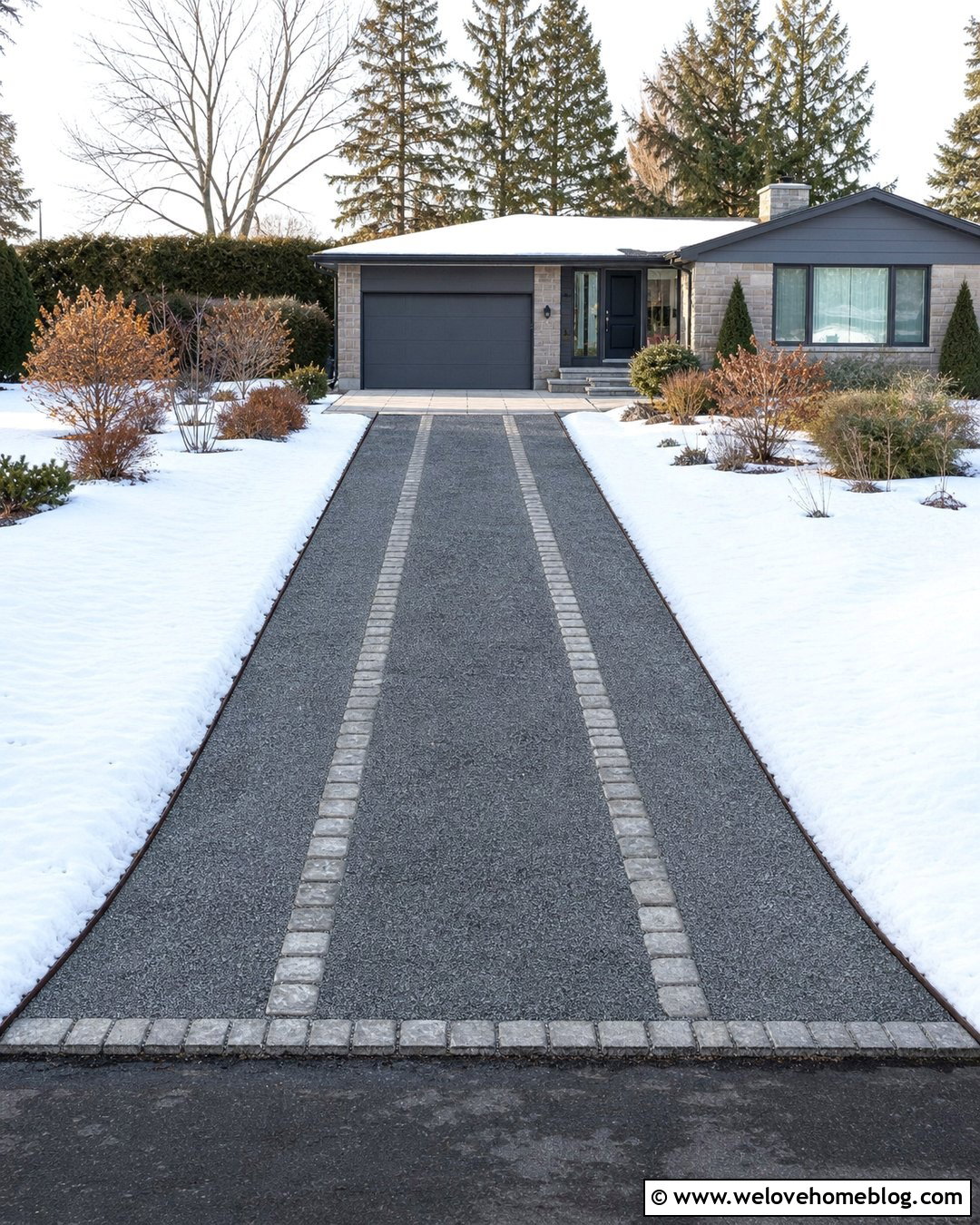
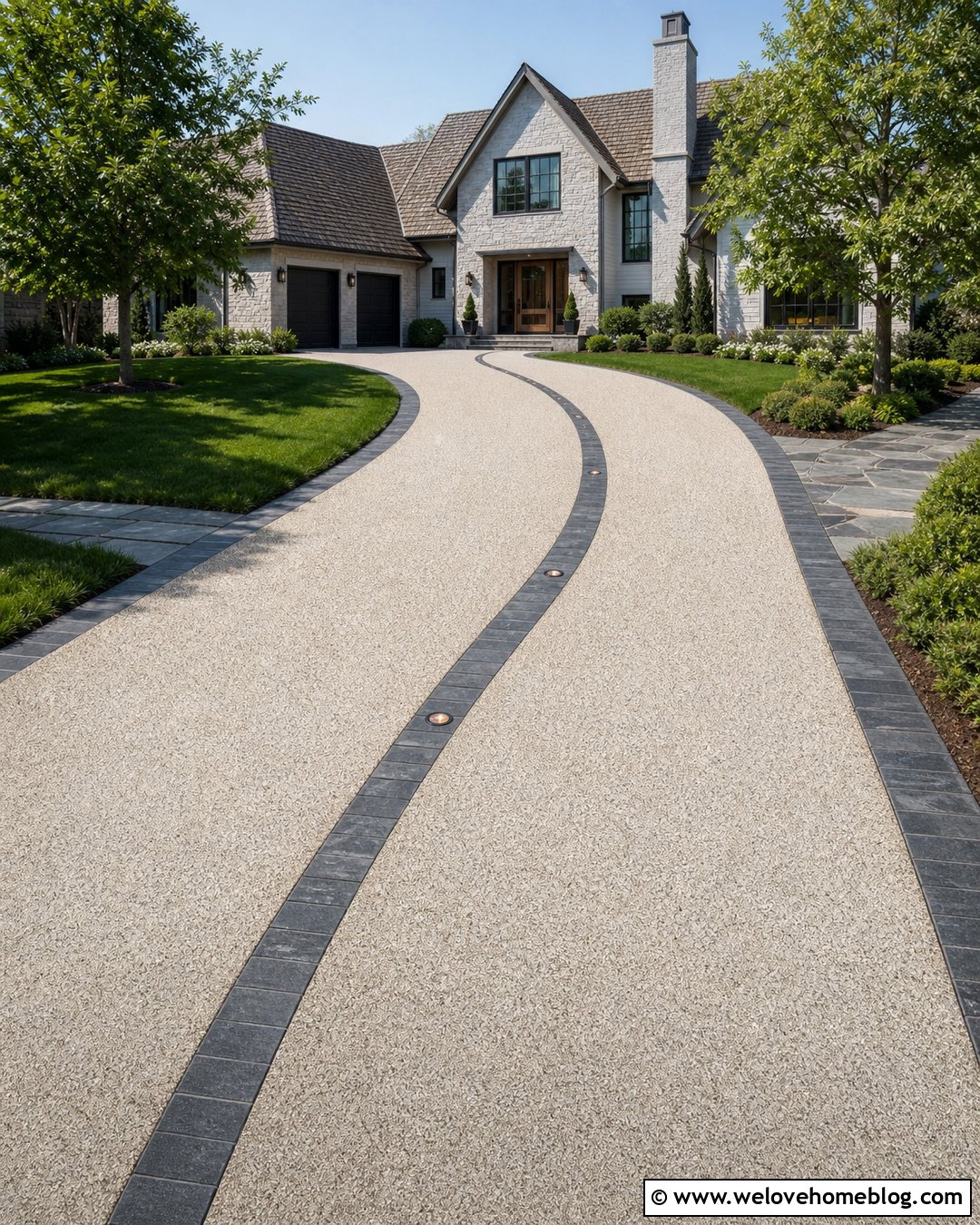
Electric tire-track heating can create a focused route along a compact residential driveway. Beneath the finished construction, professionally specified cables or mats follow two continuous vehicle paths from the street to the garage. Electric systems use resistance heating elements and may be paired with automatic moisture and temperature controls. () Finish the driveway with small angular gray gravel held by a stabilization grid. Mark the heated tracks visually with narrow cobblestone ribbons, ensuring all materials and installation depths suit the system design. Border the driveway with lawn on one side and a mixed planting bed on the other. A simple ranch house keeps the composition practical and approachable. Extend heating across the garage threshold and turning zone so vehicles can enter without crossing an untreated patch.
12. Heated Gravel Driveway With Grass Borders
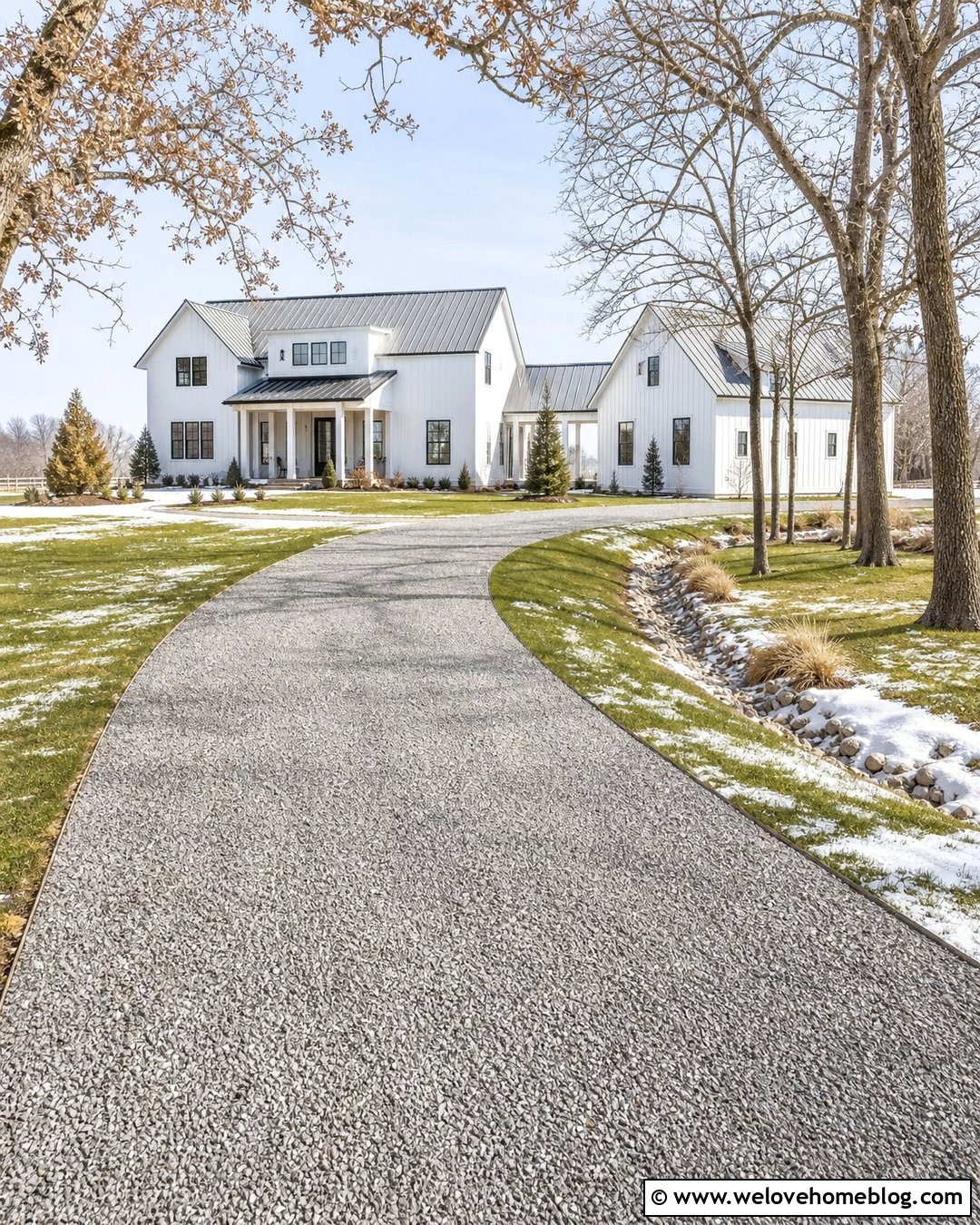
Soft grass borders make a heated gravel driveway blend naturally into a spacious front yard. Use warm gray crushed gravel on a broad, gently curved route leading to a white farmhouse. Install nearly invisible steel edging to maintain a clean line between gravel and turf. The simplicity of the border makes careful construction important because scattered stones will be easy to notice on the lawn. Add several large shade trees farther from the driving edge, then connect the driveway to the front entrance with a matching gravel walkway. Direct meltwater across a properly graded transition or into a discreet drainage swale rather than onto flat turf. This understated look is especially attractive when the driveway itself has an elegant shape. It creates open, uncluttered curb appeal without elaborate ornamental planting.
13. Heated Gravel Driveway With Native Plant Borders
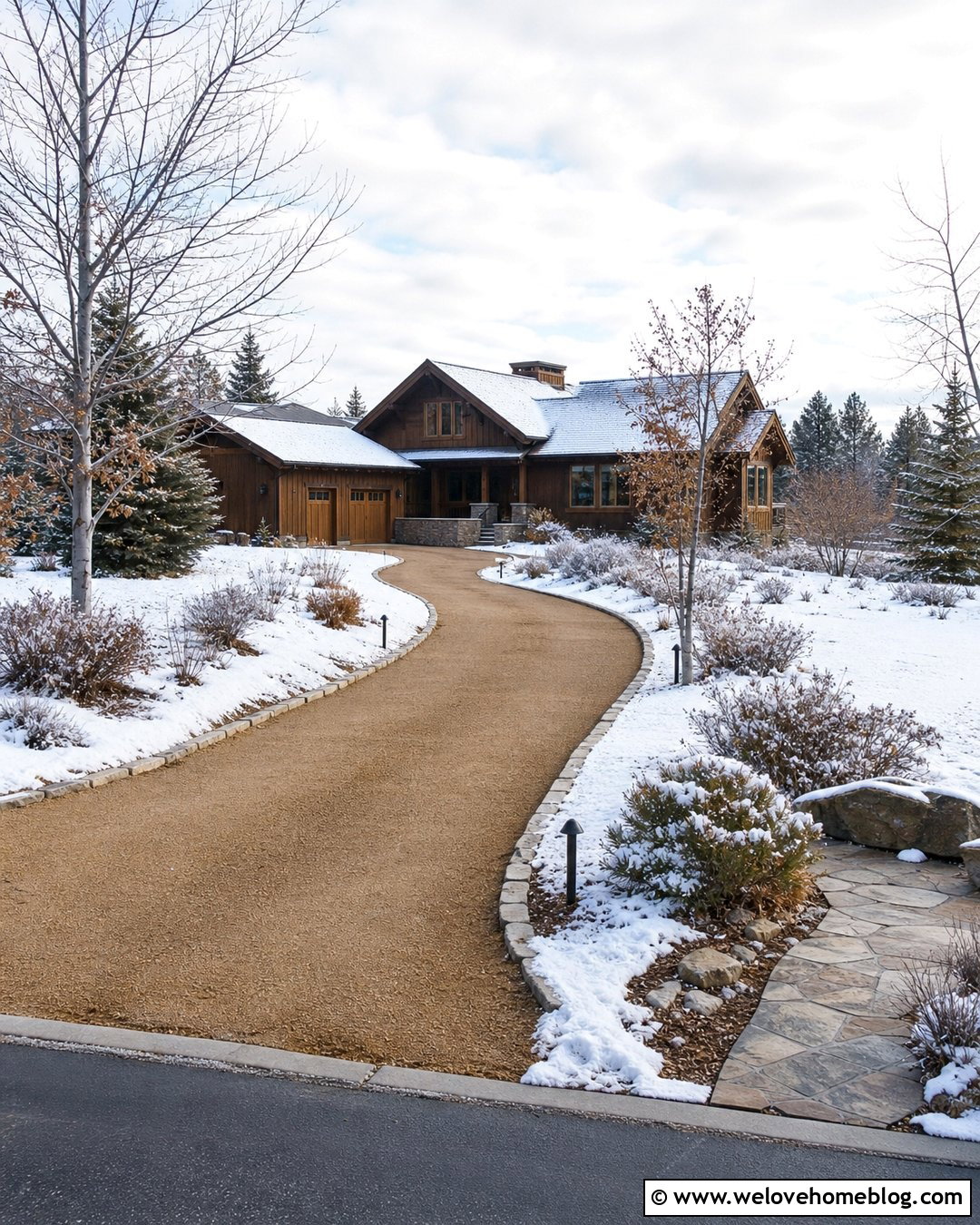
Native planting can give a heated gravel driveway a relaxed appearance while supporting a landscape adapted to local conditions. Start with tan decomposed granite or compacted fine gravel and shape the driveway into a loose curve. Use weathered stone edging to separate the driving area from deep planting beds. Select regionally appropriate grasses, flowering perennials, compact shrubs, and small trees, keeping mature size and visibility in mind. Arrange plants in broad drifts instead of isolated specimens for a unified roadside look. Leave a maintenance strip along the gravel edge so stems do not trap debris or hide displaced stones. A modern craftsman house with natural wood accents complements the informal palette. The driveway, border, and planting should appear connected rather than competing for attention.
14. Heated Gravel Driveway With Granite Apron
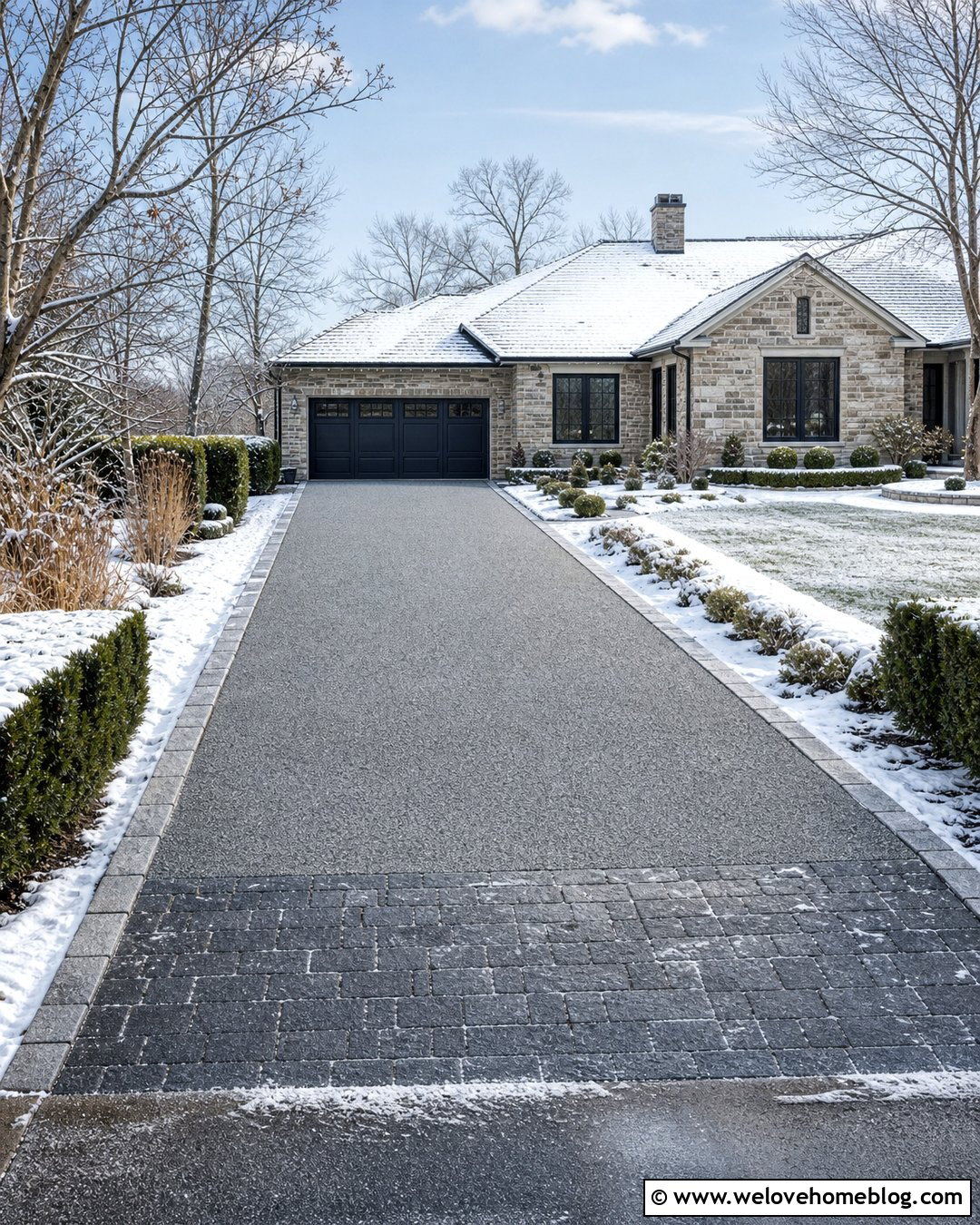
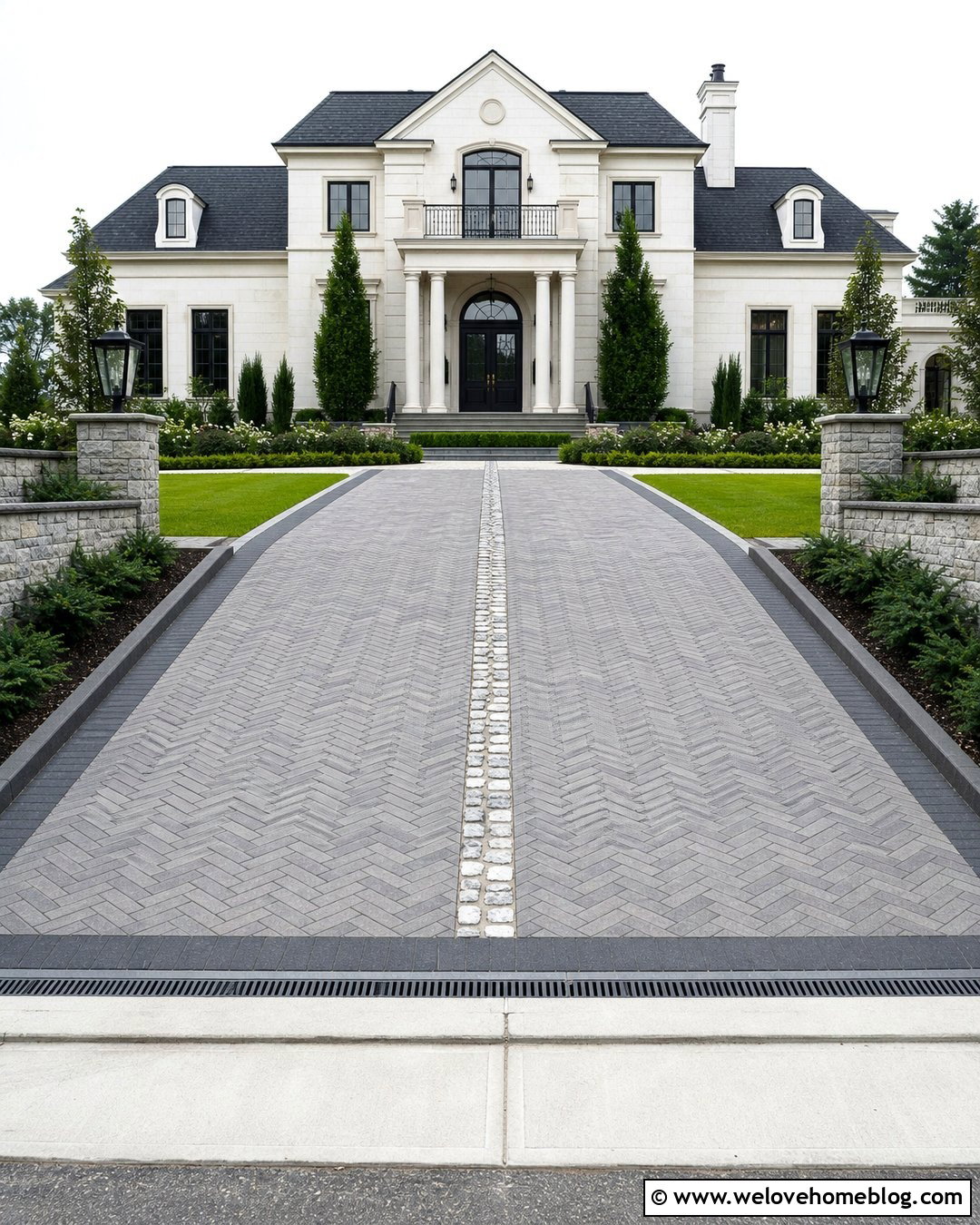
A granite apron creates a strong transition where a gravel driveway meets the street. Choose medium-gray crushed granite for the main surface and install darker granite setts across the full driveway width at the curb. Repeat the setts in a smaller band near the garage to visually frame the approach. The straight driveway can lead to a stone-front ranch or traditional suburban house, with trimmed hedges and lawn forming simple side borders. Include the apron area in the snow-melting plan when compatible with the selected construction because this entrance often receives compacted street snow. Ensure runoff has a clear destination and does not discharge into a location where it could refreeze. The contrasting textures provide an upscale finish while helping contain loose gravel at both ends of the driveway.
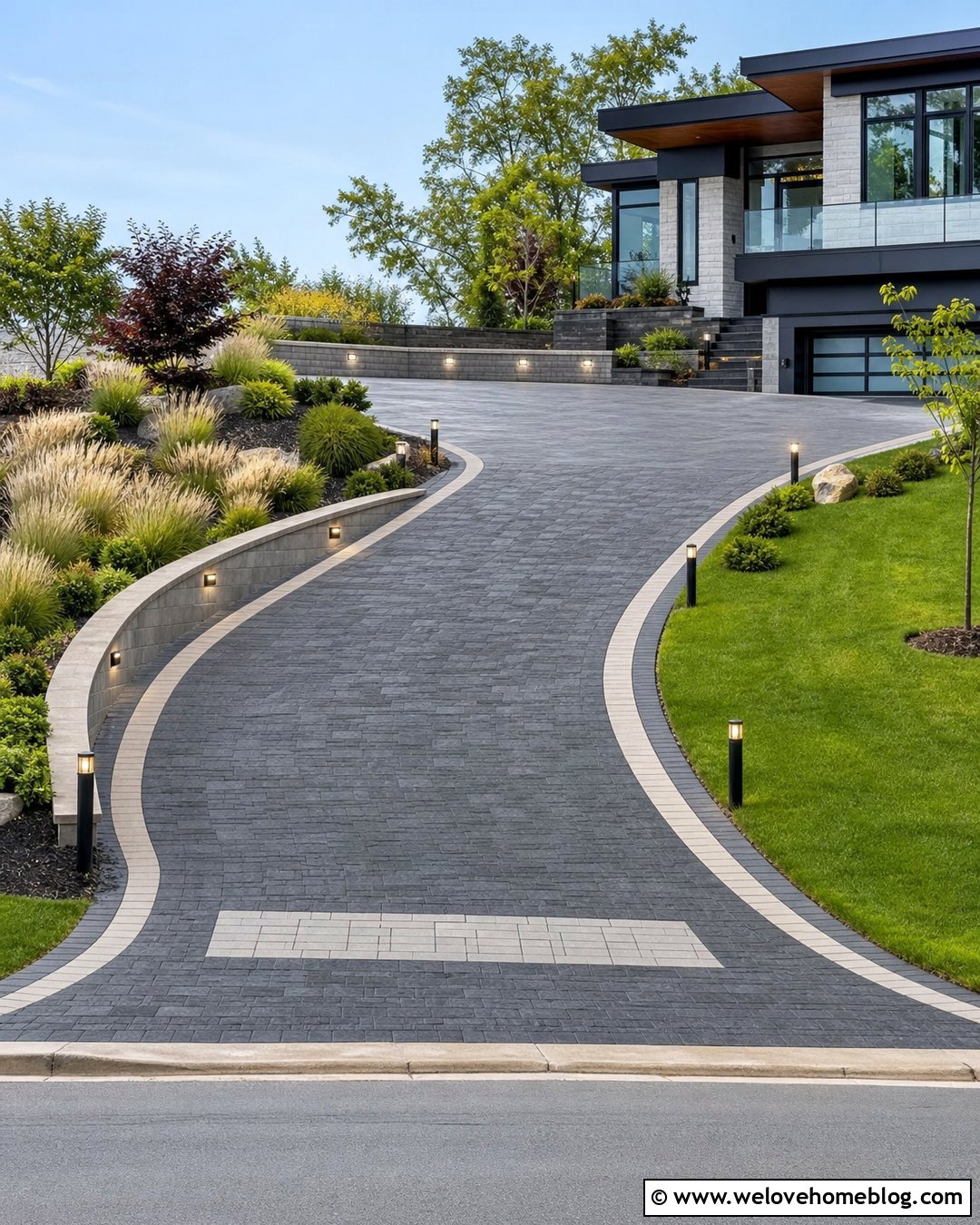
15. Heated Gravel Driveway With Retaining Wall
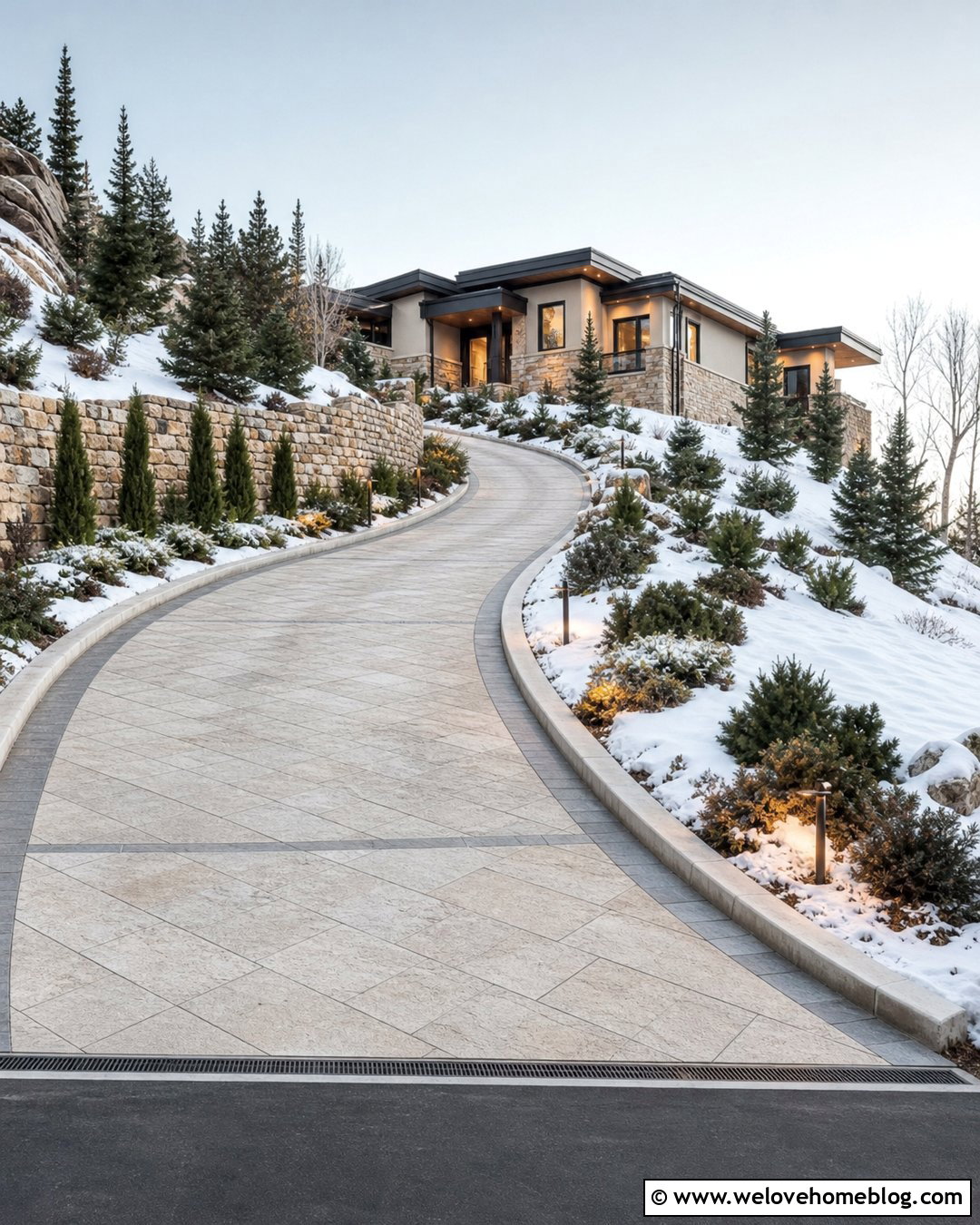
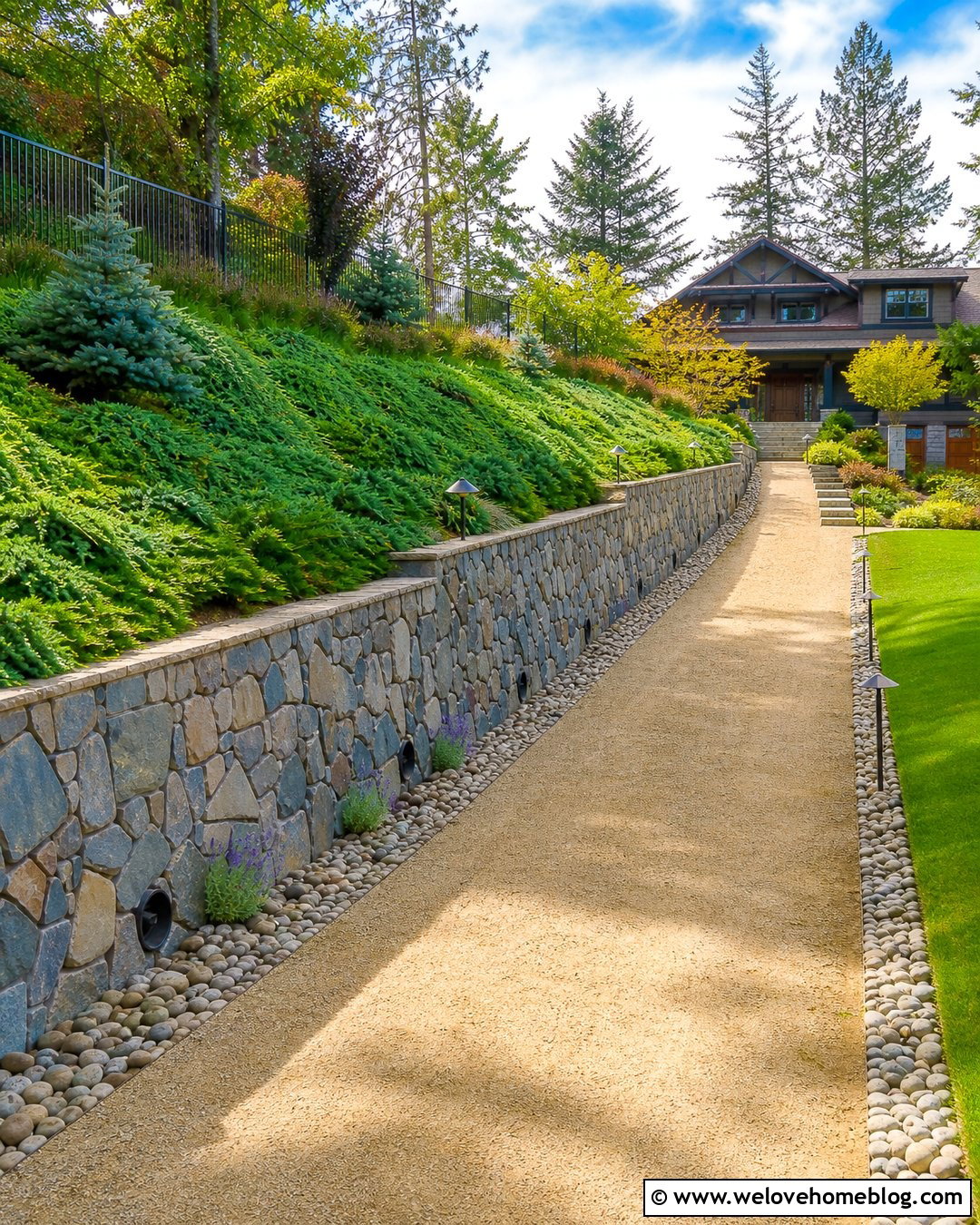
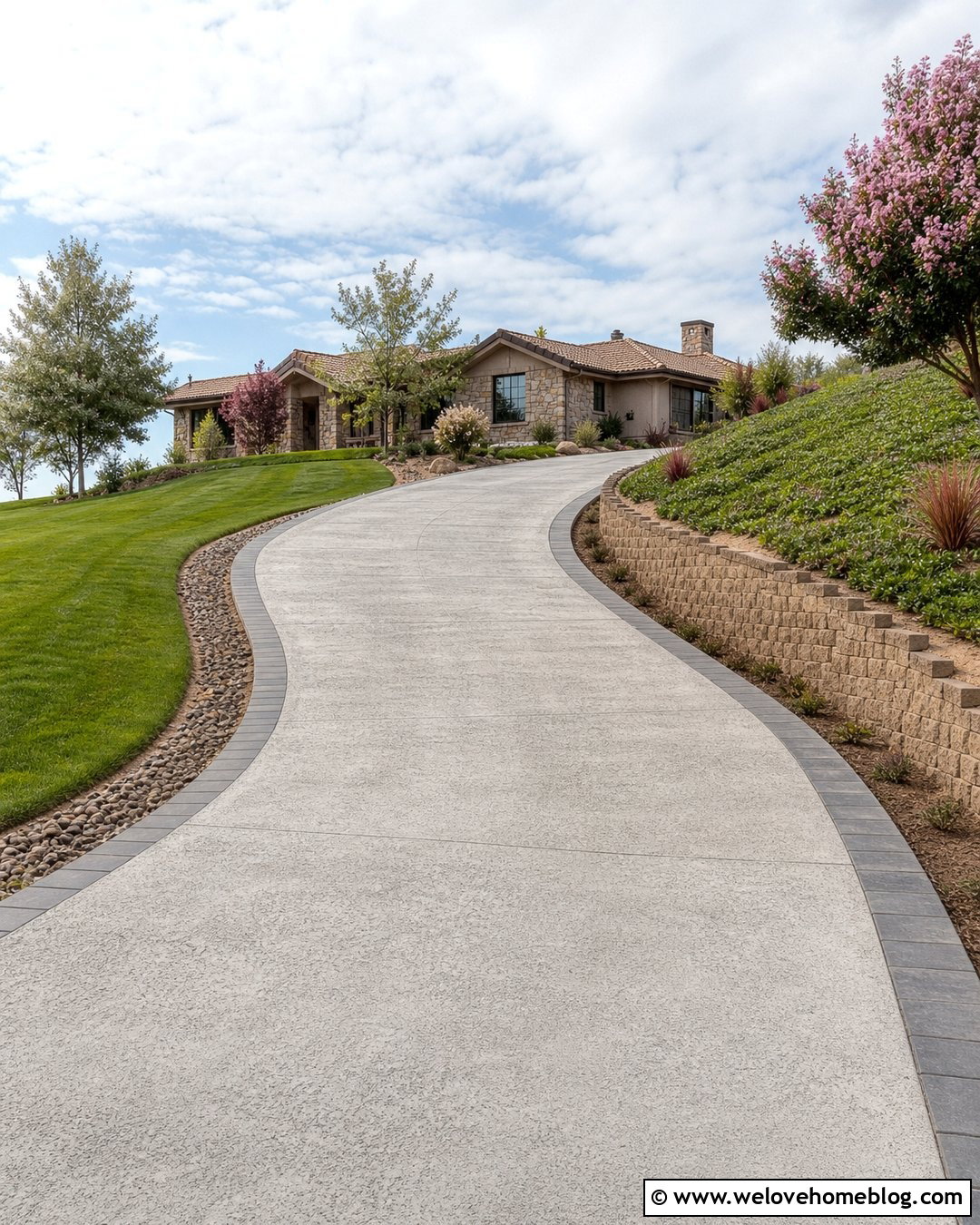
Sloped properties need a driveway design that handles elevation, gravel containment, and winter runoff together. Use compacted angular limestone on a gently climbing curved driveway rather than following the steepest possible line. Along the uphill side, build a natural stone retaining wall with integrated drainage behind it. A raised curb on the downhill edge helps define the driving surface and reduce gravel migration. Plant trailing ground covers, dwarf conifers, and low shrubs above the wall to soften the stonework. Position path lights along the outside curve without placing posts where they could obstruct vehicles. Meltwater should be intercepted before reaching untreated pavement or public sidewalks. With careful engineering, the wall, heating system, gravel surface, and grading can create a secure-looking approach to a hillside home.
16. Heated Gravel Driveway With Modern Concrete Bands
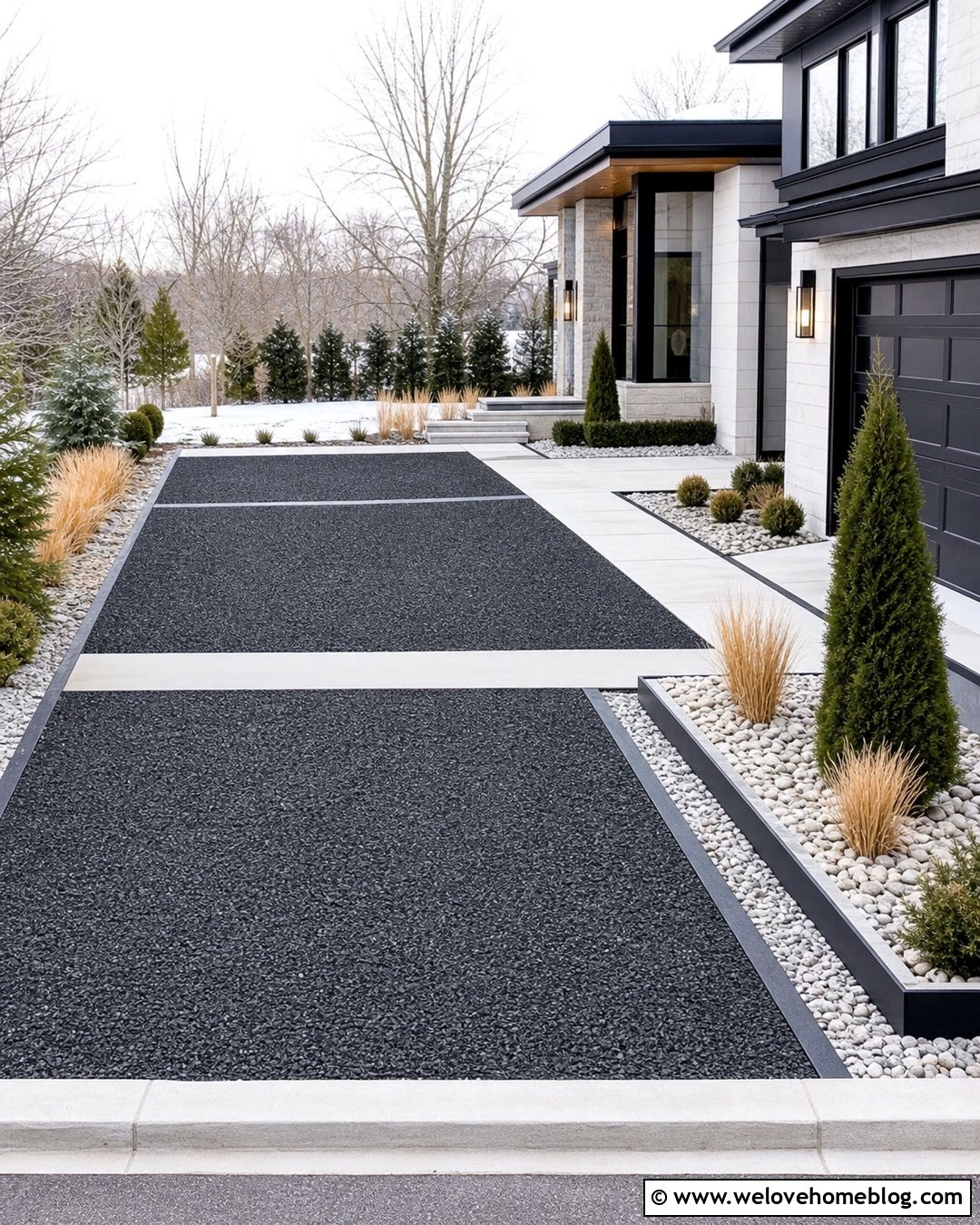
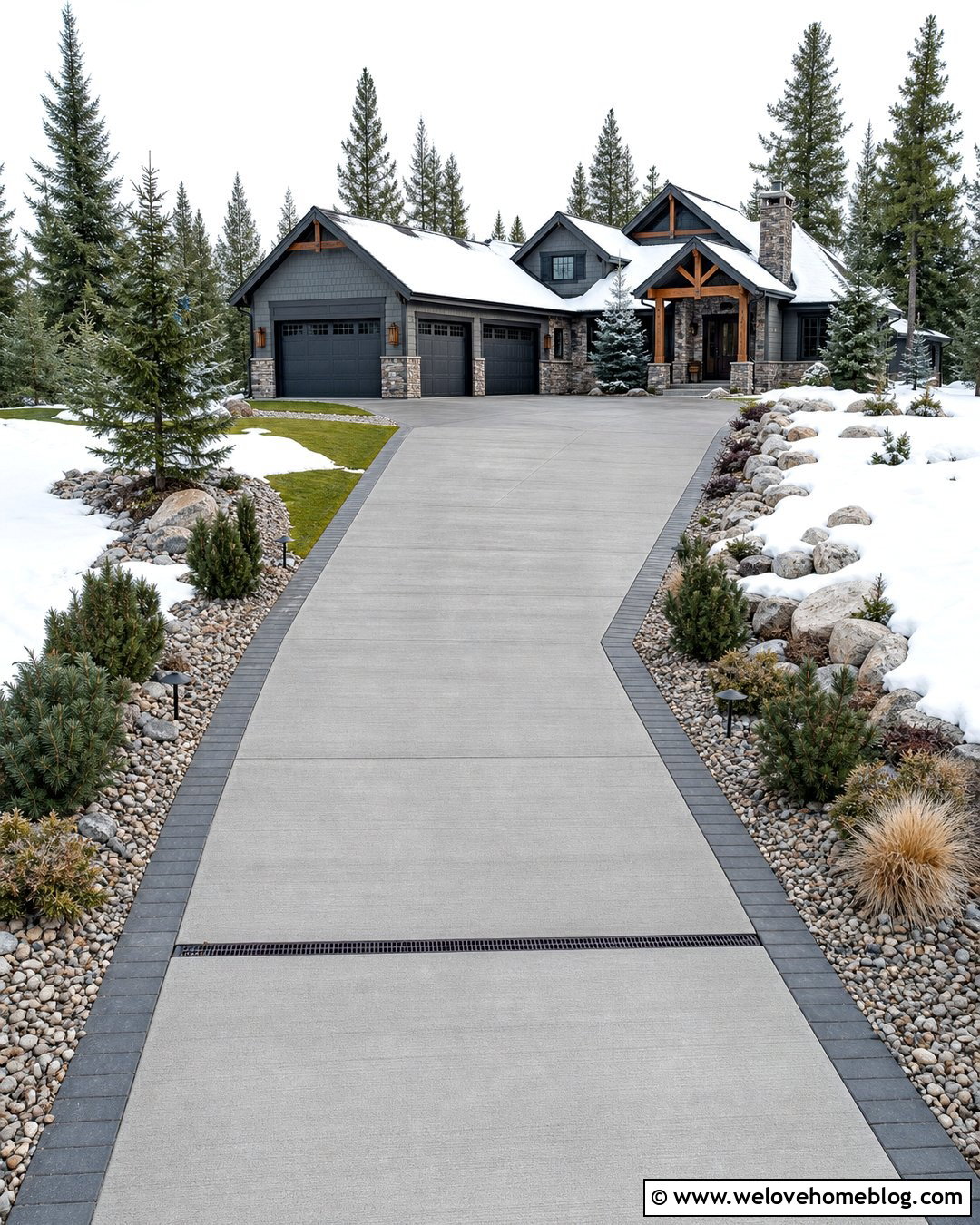
Concrete bands give loose gravel a more architectural appearance while providing clear visual structure. Lay large strips of smooth light-gray poured concrete across a charcoal gravel driveway at measured intervals. The driveway can remain straight near the street before widening into a geometric parking court beside a modern home. Use black metal edging and rectangular planting beds filled with grasses, compact evergreens, and pale decorative stone. The snow-melting layout should be coordinated with both the gravel zones and concrete transitions so incompatible materials or unsupported heating elements are avoided. Keep the surface palette limited to gray, black, and green for a cohesive finish. A wide curb view reveals how the horizontal bands break up the driveway’s length while the textured gravel prevents the design from appearing too stark.
17. Heated Gravel Driveway With Rustic Boulder Edging
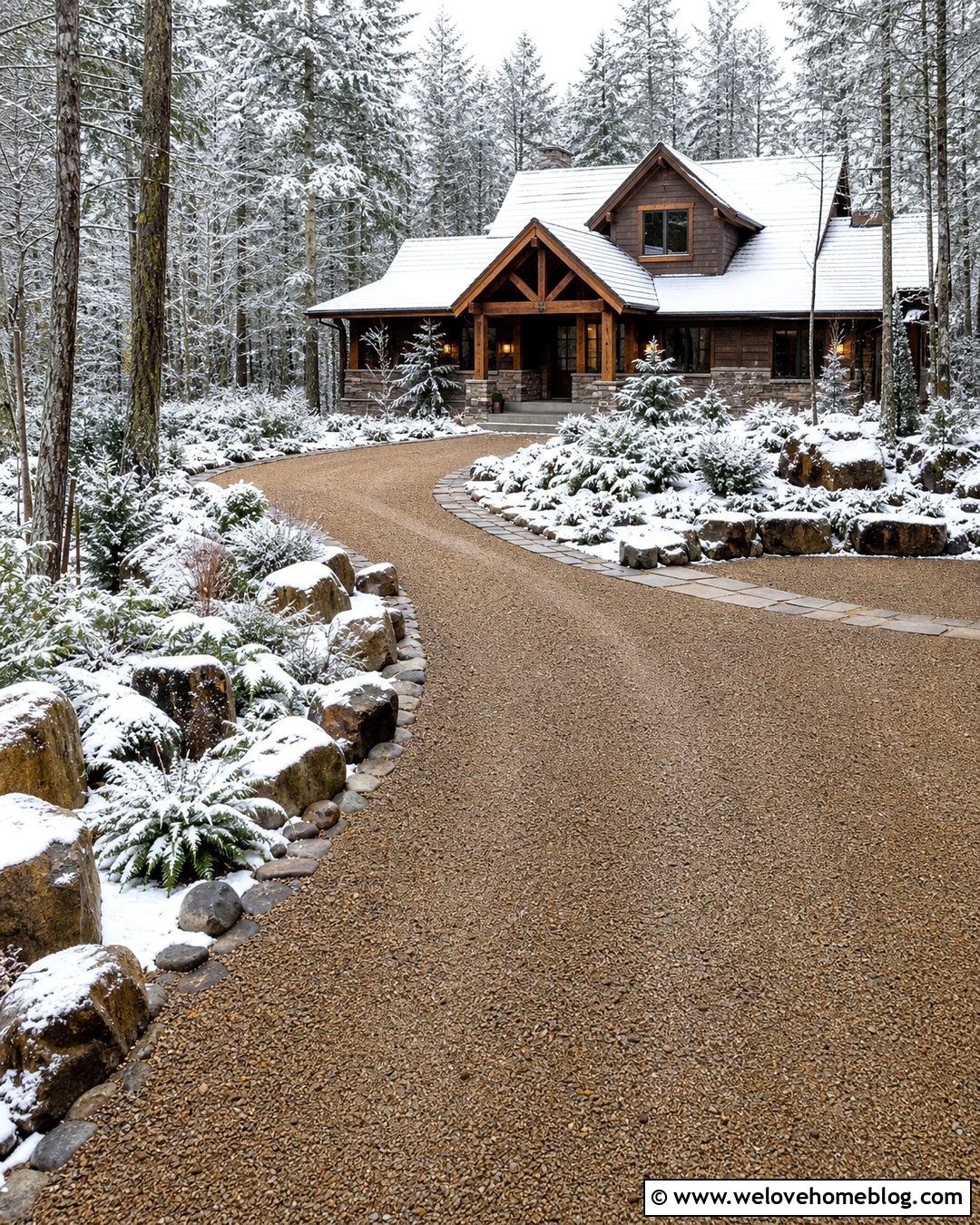
Large boulders can frame a heated gravel driveway without making a wooded property feel overly formal. Choose earthy brown crushed stone with flecks of gray and rust, then arrange irregular local boulders along the outer edge of a sweeping curve. Set the stones far enough from the travel lane to prevent doors, tires, and maintenance equipment from hitting them. Fill the spaces behind the boulders with ferns, low native shrubs, woodland grasses, and mulch. Near the house, transition to a flatter stone border that creates a cleaner parking area. A rustic craftsman or mountain-style home completes the setting. Maintain visible drainage routes between planting zones, especially at the bottom of slopes. The result feels established and rugged while still functioning as a deliberately organized residential entrance.
18. Heated Gravel Driveway With Covered Carport
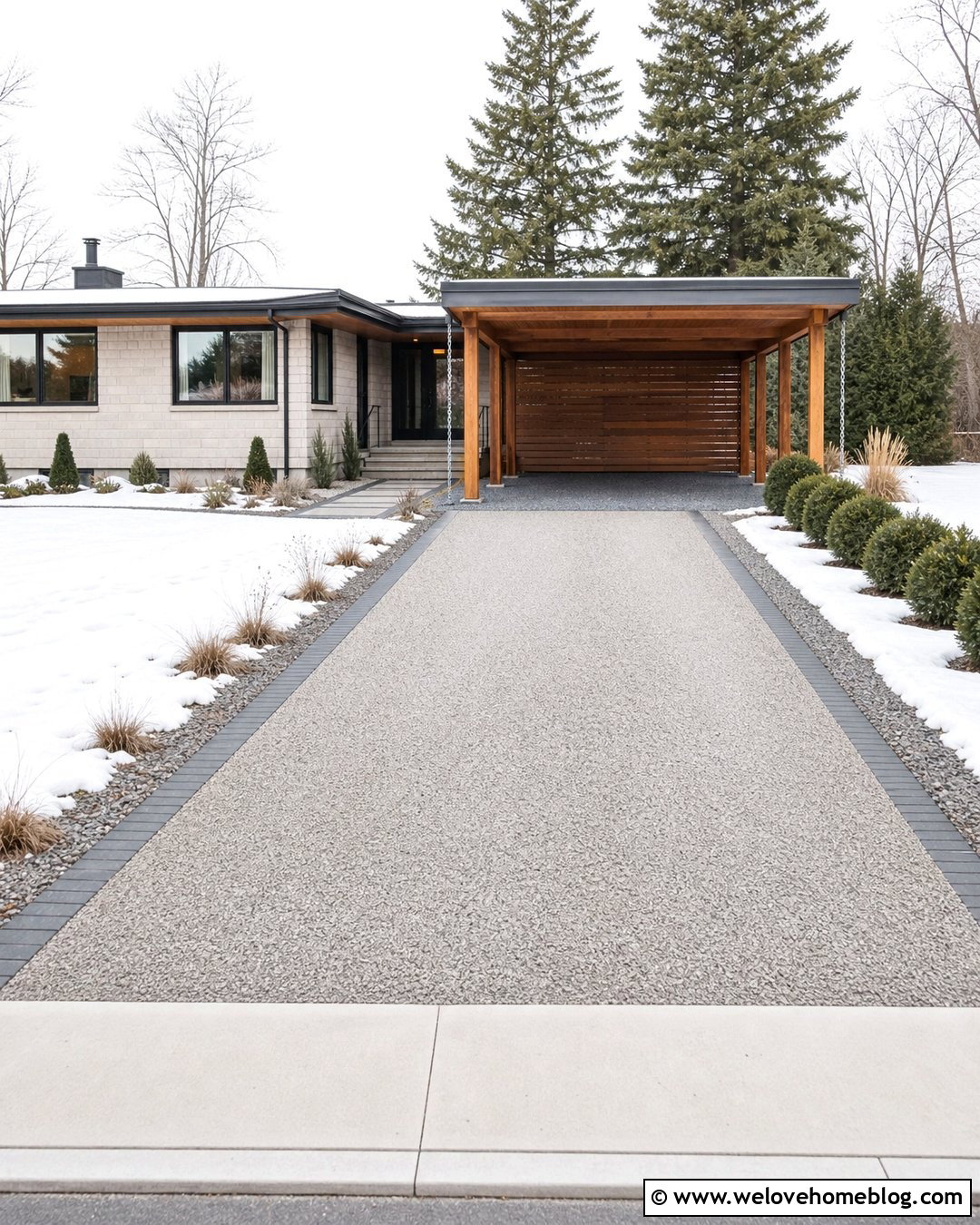
A heated gravel driveway can continue naturally into an open carport when material transitions are carefully planned. Use pale gray crushed limestone on a straight drive leading to a mid-century ranch house with a wood-framed carport. Edge the driveway with charcoal pavers and extend a matching walkway toward the front door. Near the covered area, use a stabilized gravel grid to create a neat, level parking surface that resists rutting and scattered stone. Heating coverage should address the exposed approach and the transition where windblown snow may accumulate near the roofline. Add rain chains, drainage channels, and planted gravel beds to manage roof runoff separately from snowmelt. Low ornamental grasses and clipped shrubs preserve the home’s horizontal lines while keeping the entry open, bright, and easy to navigate.
19. Heated Gravel Driveway With Snow Sensor
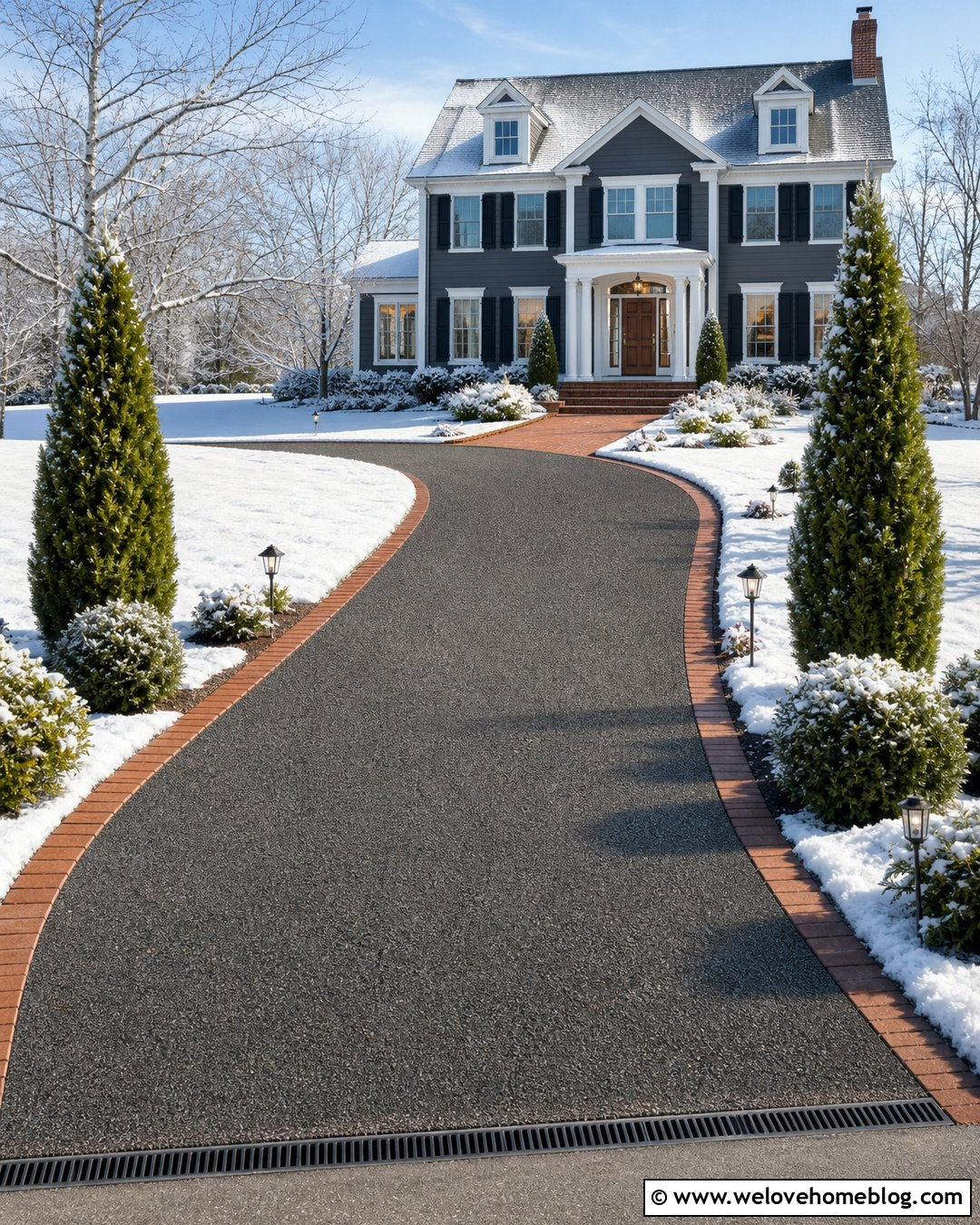
Automatic controls can make a winter-ready gravel driveway feel easier to operate. Snow-melting systems commonly use sensors that detect moisture and suitable temperature conditions, allowing the controls to activate heating and continue operating as needed. () Build the driveway with dark gray stabilized gravel in a clean, gently curved layout leading to a contemporary Colonial house. Position the sensor where it receives representative weather exposure rather than hiding it under dense vegetation or a roof overhang. Use brick edging, symmetrical evergreen beds, and simple walkway lighting to organize the approach. A discreet control panel can be located in the garage or mechanical area. Properly planned drainage remains essential because the system melts precipitation into water that must leave the heated surface safely.
20. Heated Gravel Driveway With Matching Walkway
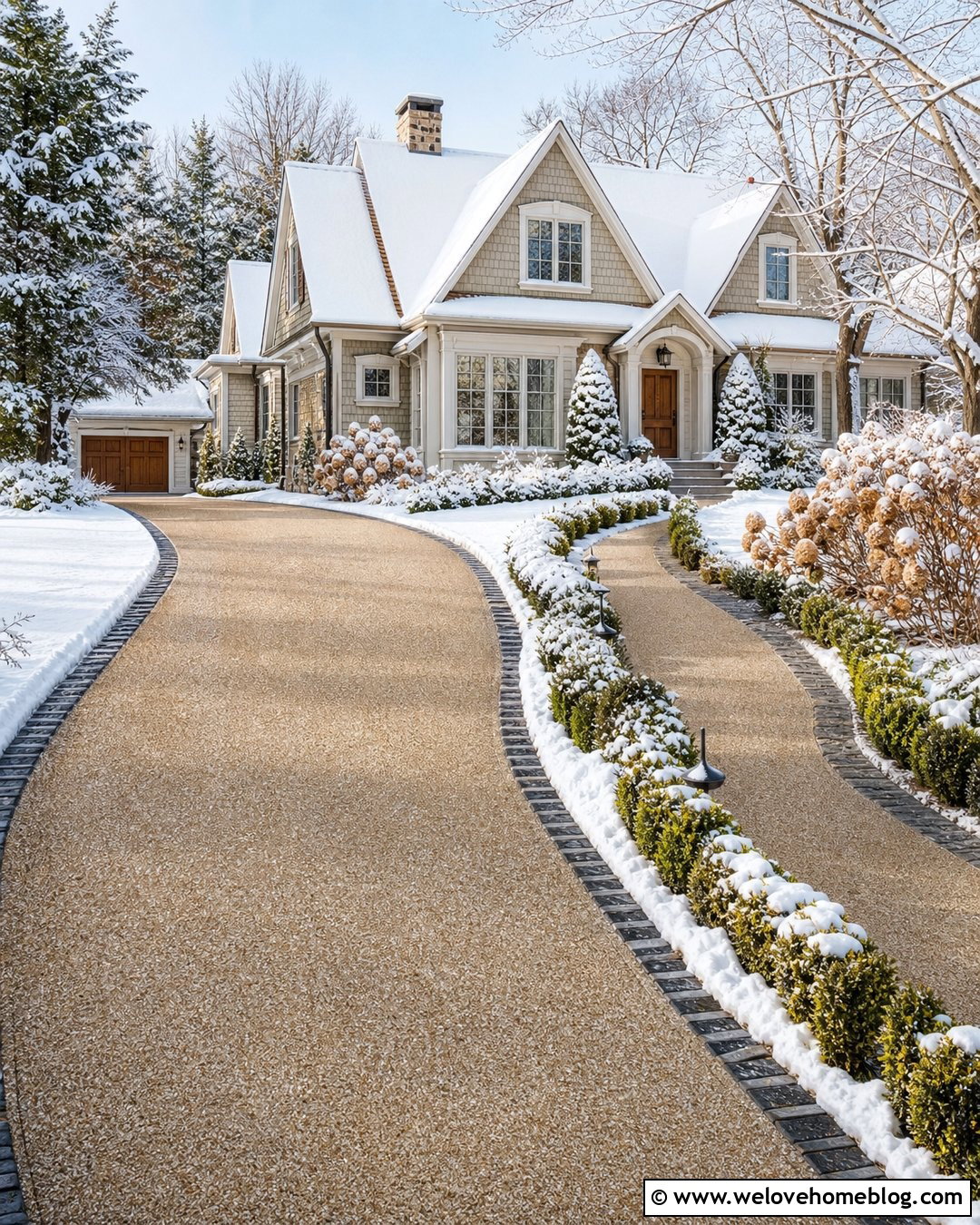
Connecting the driveway and front walk creates a complete snow-melting design rather than treating each surface separately. Use warm beige pea gravel for a wide driveway and matching stabilized gravel for the walkway. Define both routes with dark cobblestone edging so the front entrance remains visually connected to the garage. The driveway can curve gently toward a cottage-style home while the walkway branches through layered beds of hydrangeas, boxwood, and ornamental grasses. Discuss coordinated heating zones for the main tire paths, parking area, and pedestrian route, allowing each section to operate according to the professionally designed controls. Keep surface transitions level and direct runoff away from steps and untreated paths. Repeating the gravel, edging, and planting palette makes the entire front yard feel thoughtful, accessible, and cohesive throughout the year.
Conclusion:
The best heated gravel driveway balances winter convenience with strong construction and attractive curb appeal. Start with the complete layout rather than selecting gravel or heating equipment in isolation. Consider the driveway’s shape, vehicle routes, base, drainage, edging, landscaping, power availability, and snow exposure as one connected system. Loose or stabilized gravel also needs professional evaluation because every heating product has specific installation and covering requirements. Automatic sensors, targeted tire tracks, matching heated walkways, and durable entrance aprons can help tailor the design to the property. Whether you prefer rustic stone, modern metal edging, or formal brick borders, these **20 Heated Gravel Driveway Ideas** show how practical snow management can support a distinctive residential entrance.

Related posts:
Leave a Reply