
Light-colored gravel can make a front yard feel brighter, wider, and more welcoming without losing the relaxed character that makes gravel so appealing. These 20 Light Gravel Driveway Ideas explore complete looks using pale limestone, cream pea gravel, crushed granite, marble chips, and warm buff stone. Each design combines the surface with a practical layout, defined edging, coordinated landscaping, and a house style that supports the overall look. A compacted base, suitable grading, and sturdy borders are especially important because they help control movement and simplify long-term maintenance. () Whether you have a compact suburban lot or a long country entrance, you can adapt these 20 Light Gravel Driveway Ideas to create attractive, functional curb appeal.

1. White Limestone Driveway With Brick Edging
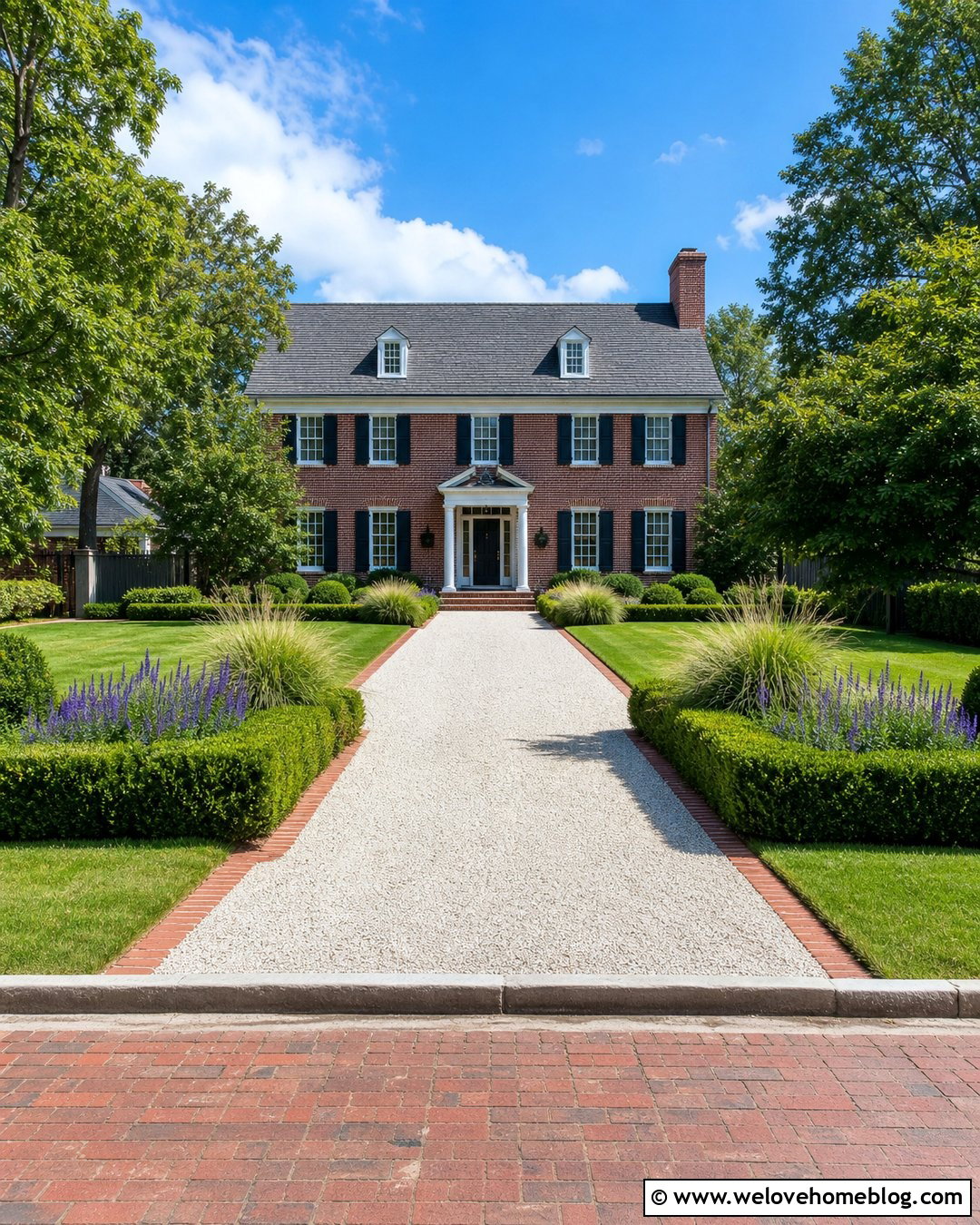
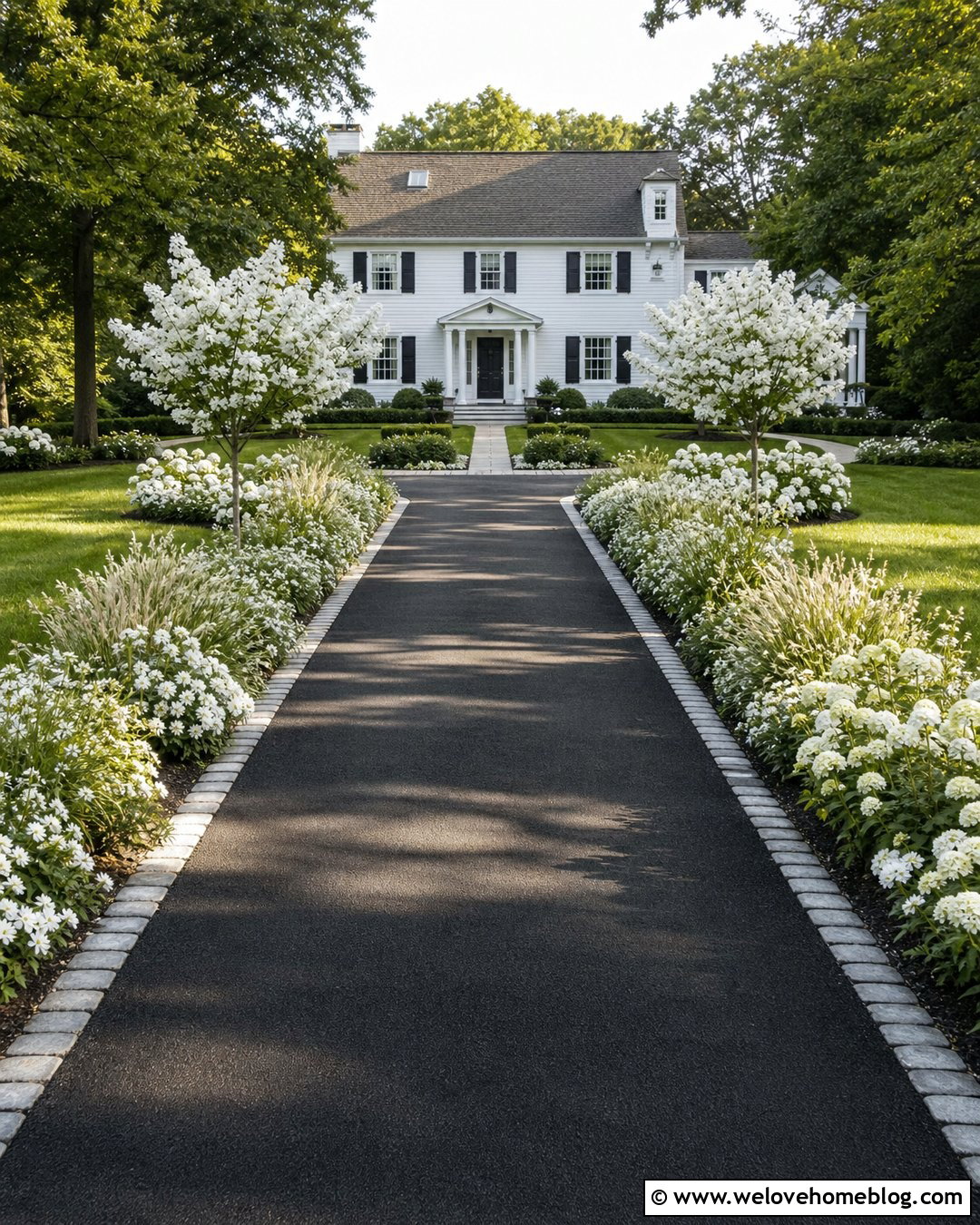
A white limestone driveway creates a crisp entrance that works especially well with red brick, white siding, and traditional architecture. Use compacted crushed limestone rather than loose decorative pebbles for the main driving surface. Its angular pieces settle together more firmly under regular traffic. Frame the straight driveway with clay brick edging in a running-bond pattern. The warm red border will soften the brightness of the stone while connecting the driveway to a brick house or walkway. Add narrow planting beds filled with boxwood, salvia, and low ornamental grasses. A brick apron near the street can create a stronger transition and reduce scattered gravel at the entrance. Keep the layout symmetrical for an orderly colonial or Georgian-inspired appearance.
2. Cream Gravel Driveway With Cobblestone Edging
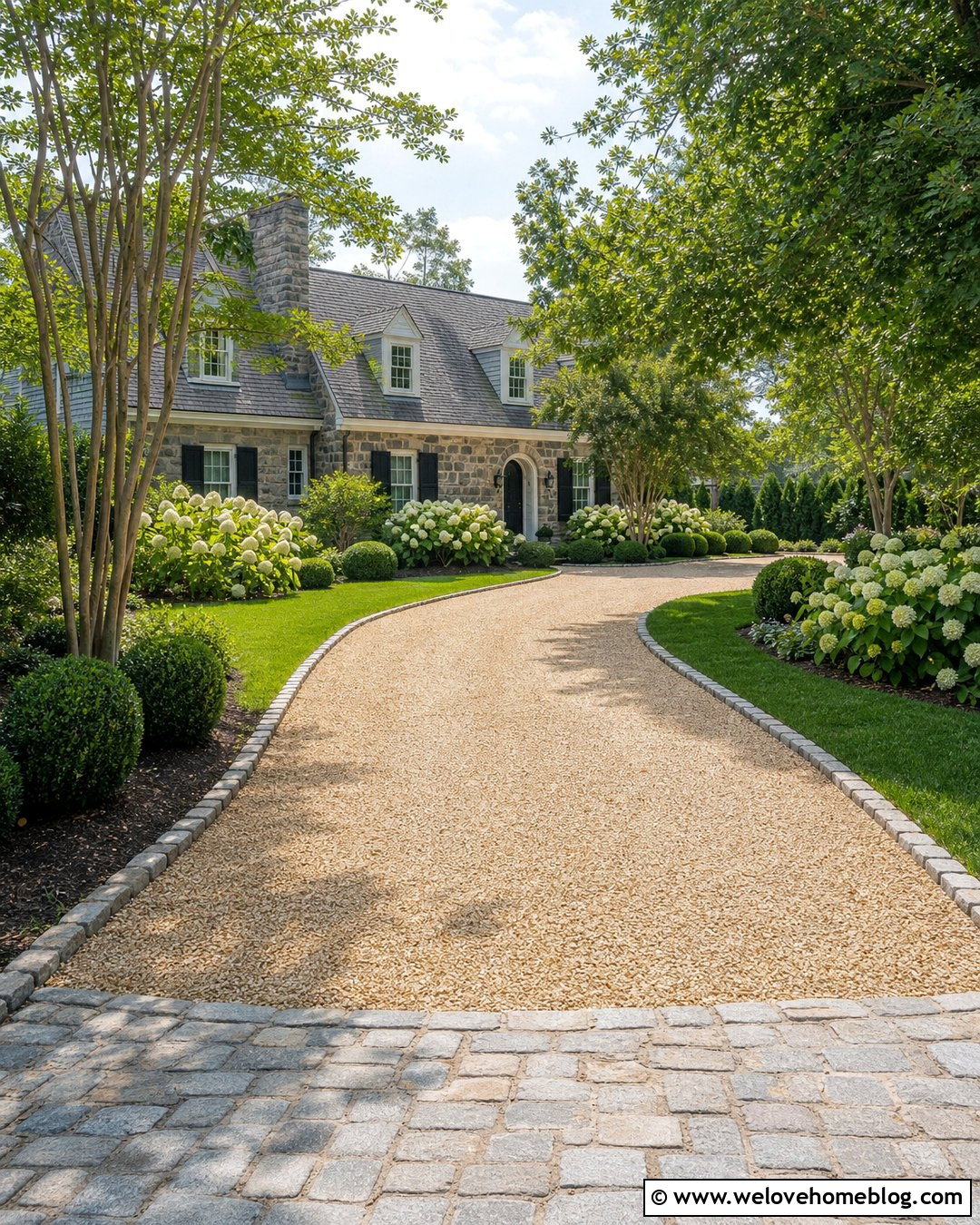
Cream gravel and weathered cobblestone produce a softer, more established look than bright white stone. Choose crushed beige limestone or cream-colored gravel with subtle tan variation. Lay it across a gently curved driveway that follows the shape of the front lawn. Use chunky gray cobblestones as slightly raised edging to keep the pale gravel contained and give the curves a clear outline. Repeating the cobblestone around nearby planting beds will make the entire yard feel connected. Frame the approach with hydrangeas, clipped evergreens, and a few multi-stem trees. This combination suits a Cape Cod, Tudor, or stone cottage because its colors feel natural rather than overly polished. Finish the entrance with a cobblestone apron for extra definition.
3. Light Pea Gravel Driveway With Steel Edging
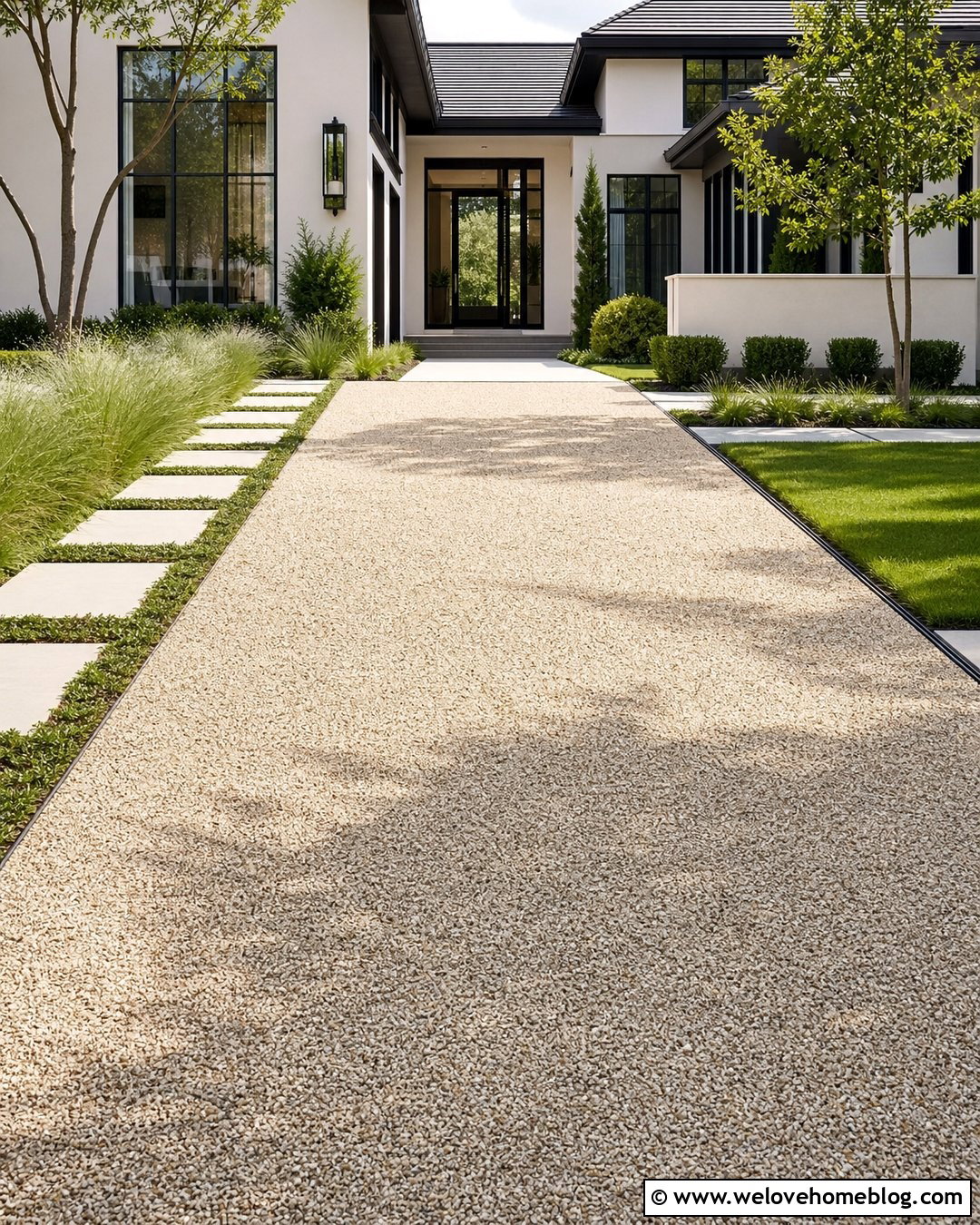
For a clean contemporary appearance, pair light beige pea gravel with slim black steel edging. The dark outline adds sharp contrast without taking attention away from the pale surface. A straight or slightly offset driveway complements a modern house with simple rooflines and large windows. Because rounded pea gravel moves more easily than angular crushed stone, it works best over a well-prepared base and may benefit from a stabilization grid in frequently driven areas. Use broad planting beds with feather reed grass, dwarf evergreens, and architectural shrubs. Large rectangular concrete stepping stones can form a separate route to the front door. Keep the plant palette limited and repeat each variety to create the calm, uncluttered character associated with modern landscaping.
4. Light Gray Gravel Driveway With Concrete Curbs
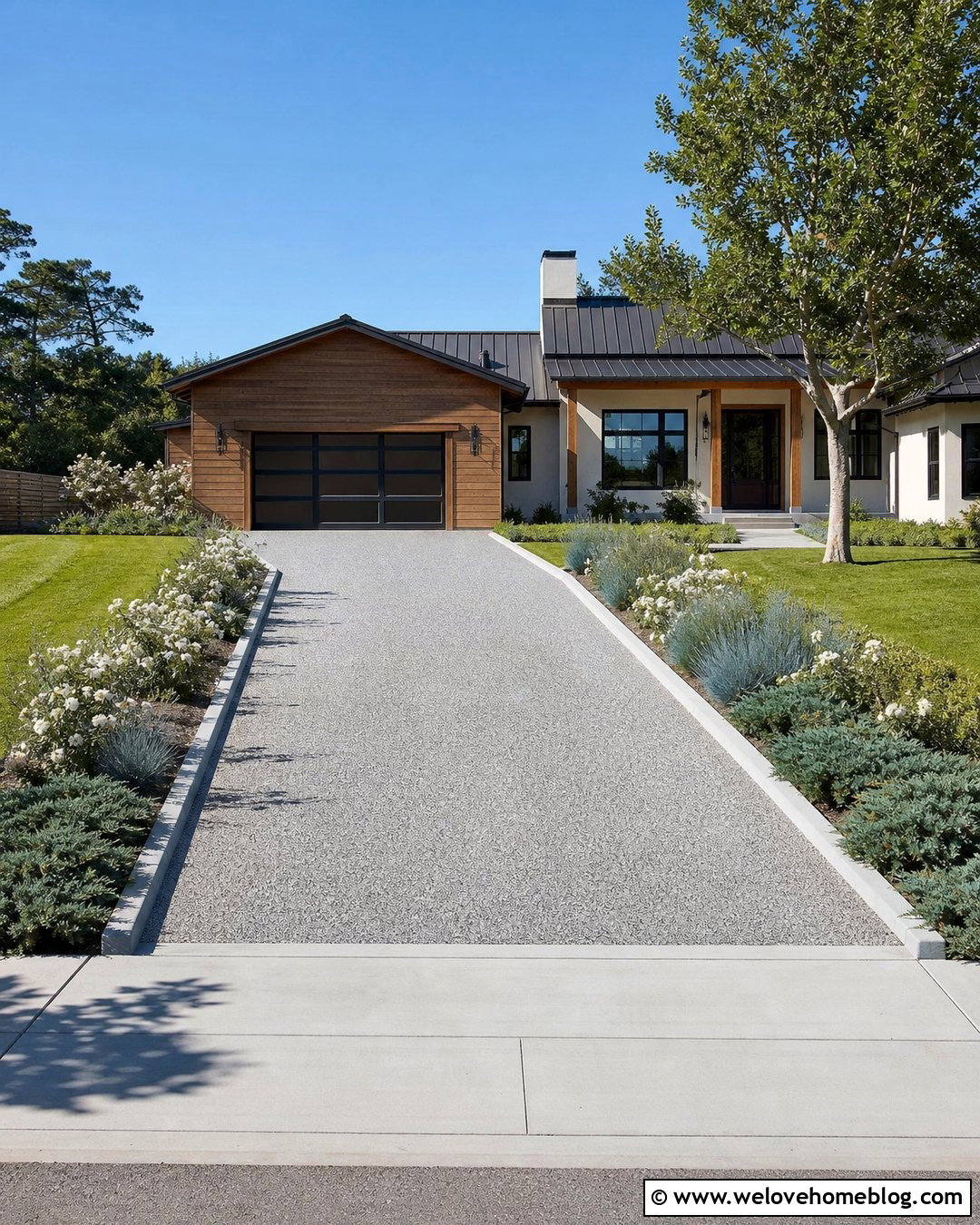
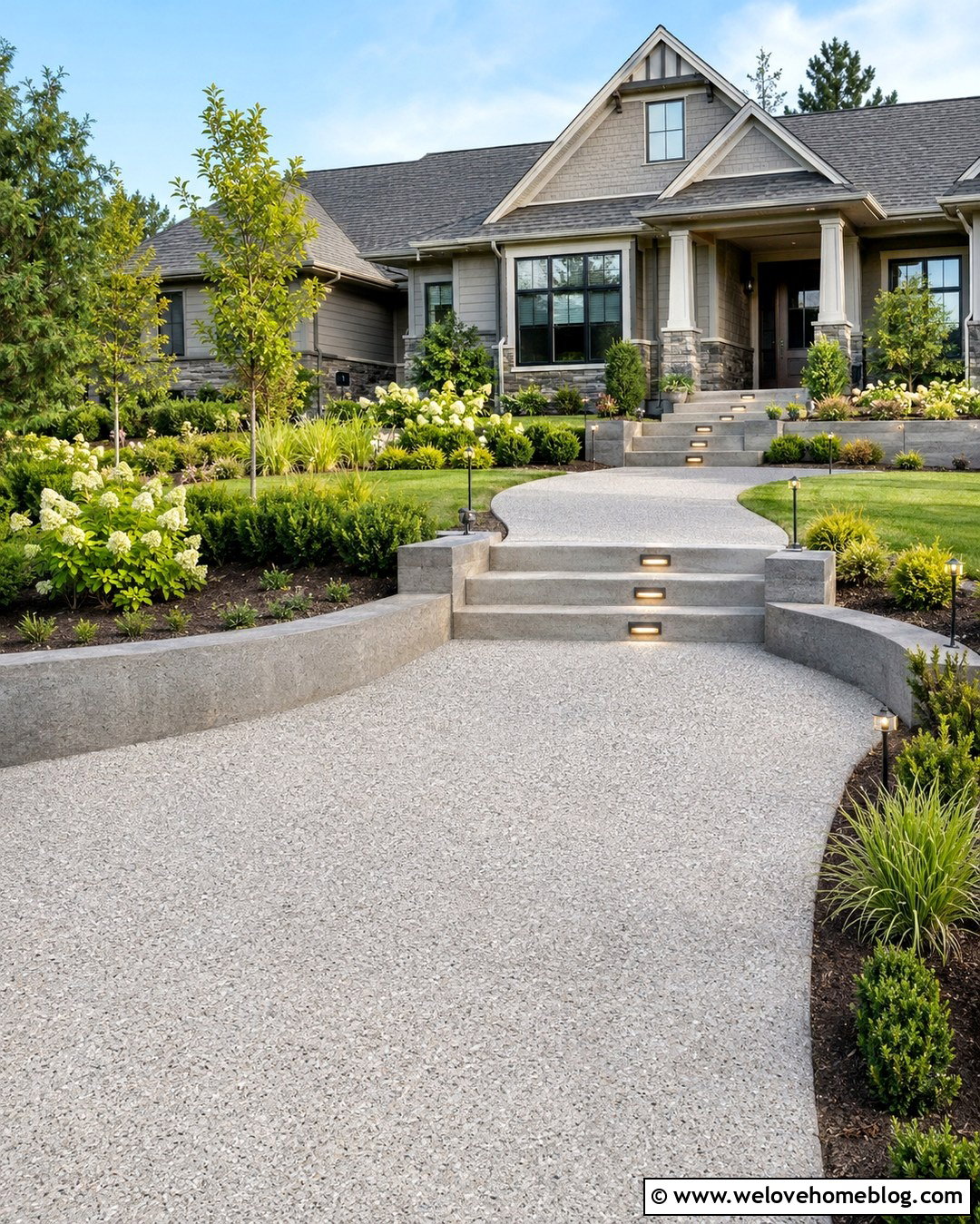
Light gray crushed granite creates a cool, neutral surface that complements many exterior colors. It looks particularly balanced beside charcoal roofing, pale stucco, or natural cedar accents. Install the gravel on a straight driveway and contain it with low poured-concrete curbs. The curbs provide a strong visual edge and help separate the driveway from lawns and planting beds. Gravel containment is important because unprotected edges can gradually spread into surrounding landscaping. () Add a wide concrete apron at the garage and street for smoother transitions. Simple beds of blue fescue, white flowering shrubs, and ground-cover juniper will echo the cool color scheme. This practical design feels contemporary without making the front yard appear cold or industrial.
5. White Marble Chip Driveway With Dark Paver Borders
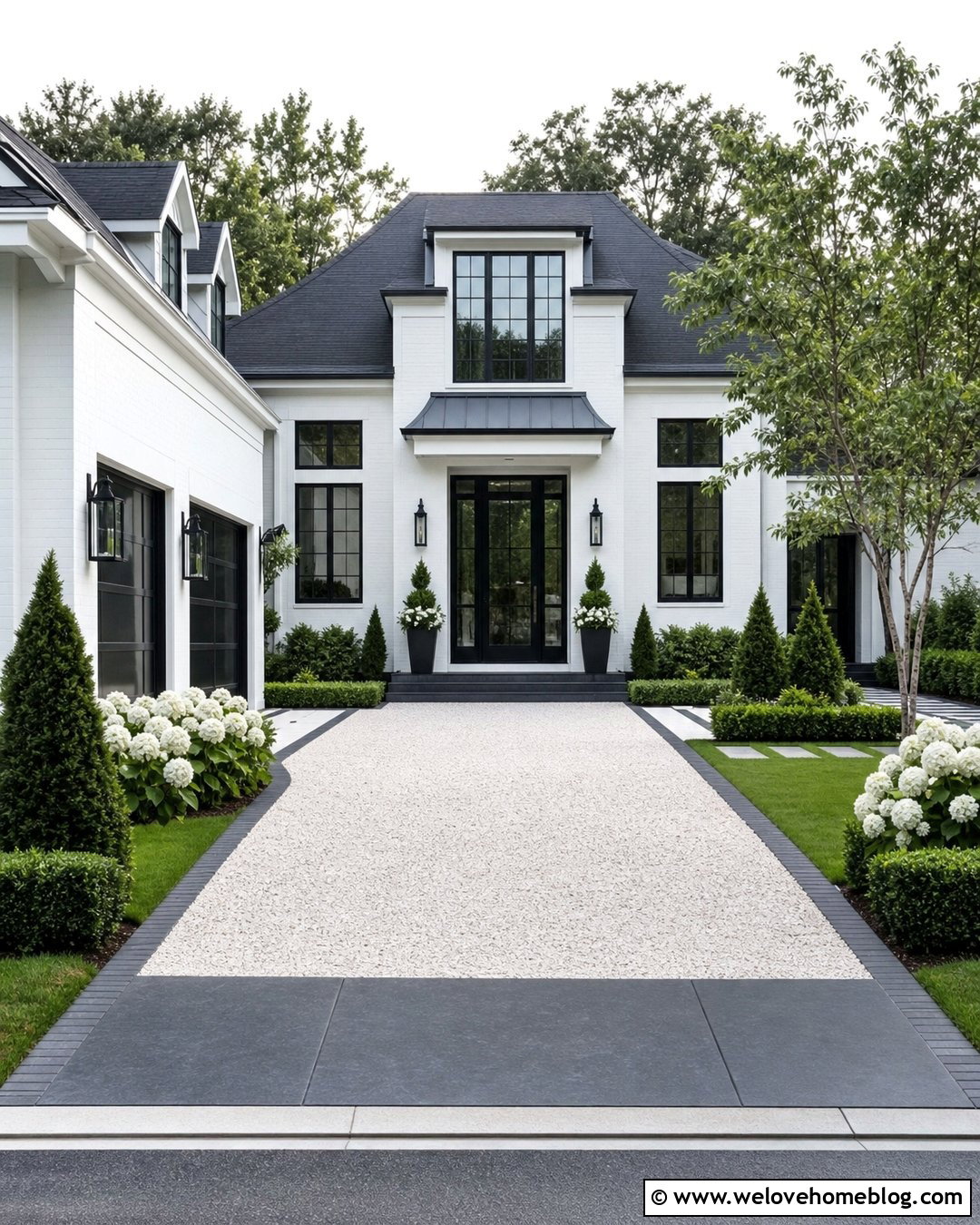
White marble chips create a bright, high-contrast driveway with a distinctly polished appearance. Pair them with charcoal concrete pavers installed as flat borders along both sides. The darker frame makes the driveway shape easier to read and helps the marble coordinate with black windows, roof shingles, or exterior lighting. A short, straight layout is usually the most manageable because white stone can show soil, leaves, and tire marks more readily than mixed gravel. Surround the driveway with structured evergreen beds, white hydrangeas, and deep green lawn. Avoid placing messy fruiting trees directly overhead. A matching charcoal paver apron near the sidewalk provides a finished entrance and catches some displaced stone. This combination suits a modern or transitional home with a restrained exterior palette.
6. Buff Gravel Driveway With Lavender Borders
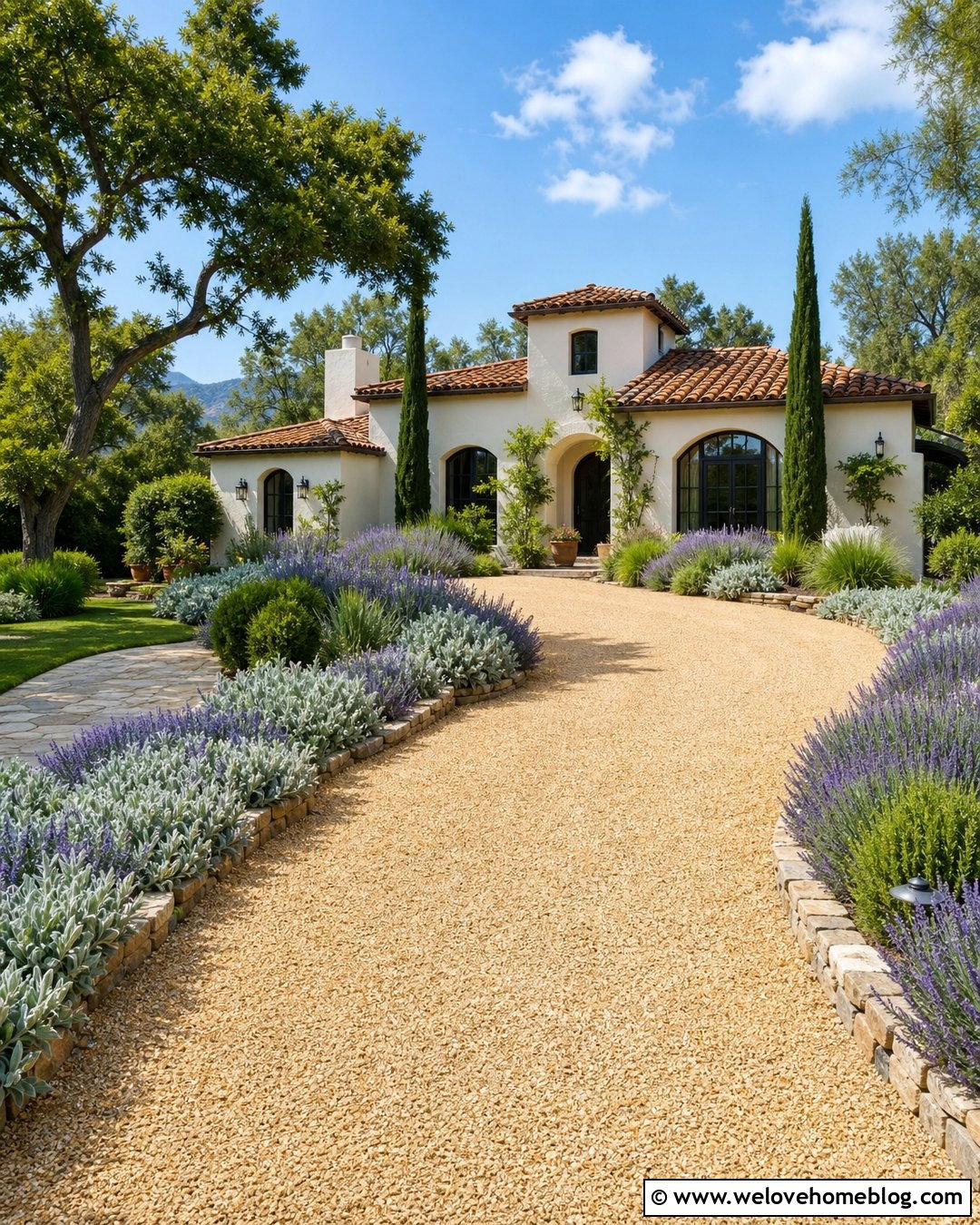
Imagine a gently curving buff gravel driveway bordered by soft purple flowers and silvery foliage. Warm beige crushed gravel provides a natural base, while lavender adds color, fragrance, and movement along the approach. Keep the plants behind low stone or metal edging so stems do not spill into vehicle space. Add compact rosemary, catmint, and ornamental grasses where the growing conditions are suitable. A warm fieldstone border can connect the driveway to a cream stucco, Mediterranean-inspired, or country house. Allow the curve to reveal the home gradually rather than aiming directly at the garage. The pale stone, muted planting palette, and relaxed layout create a welcoming entrance that feels landscaped but not formal. Wider beds near the house can complete the layered garden effect.
7. Circular Light Gravel Driveway With Center Garden
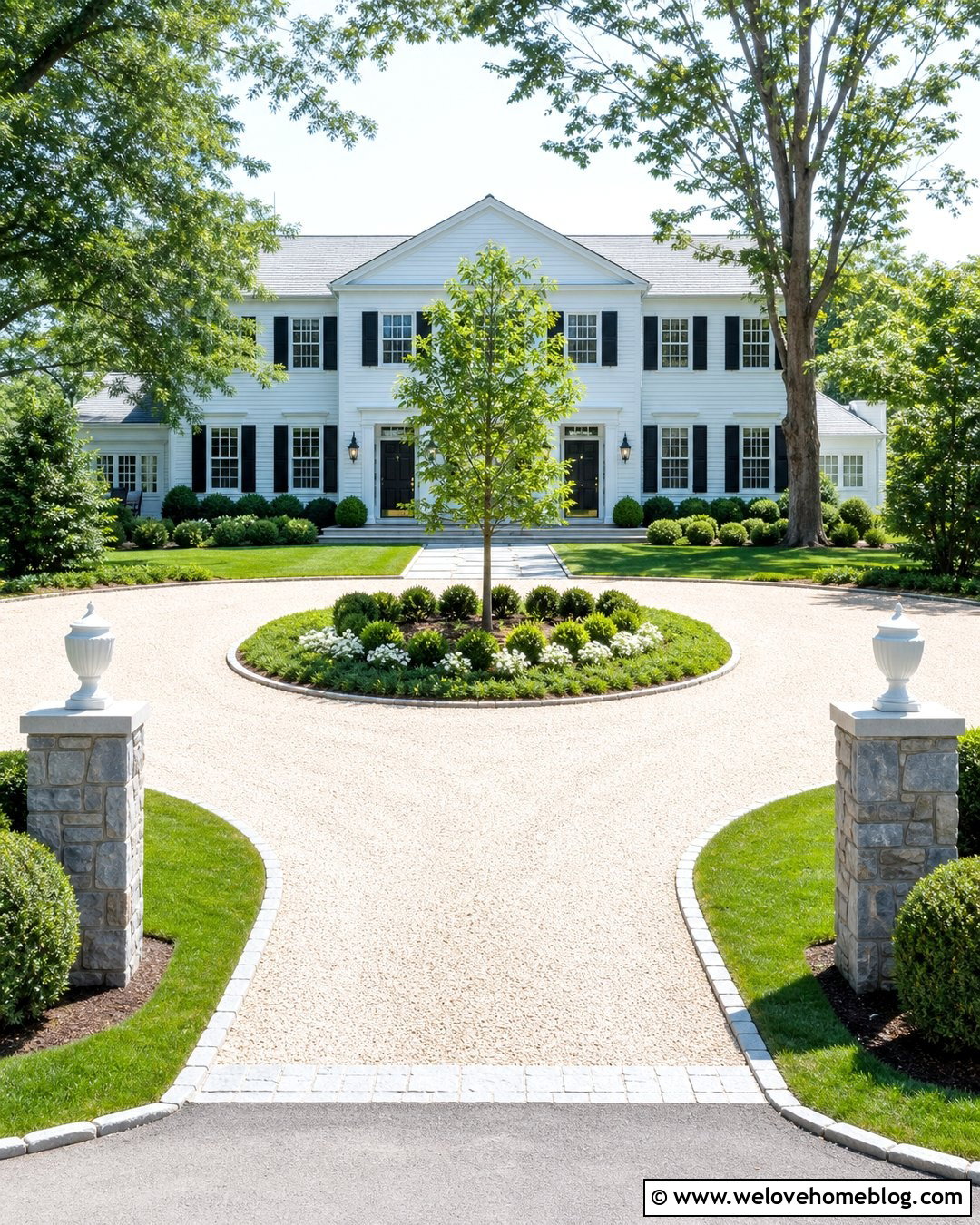
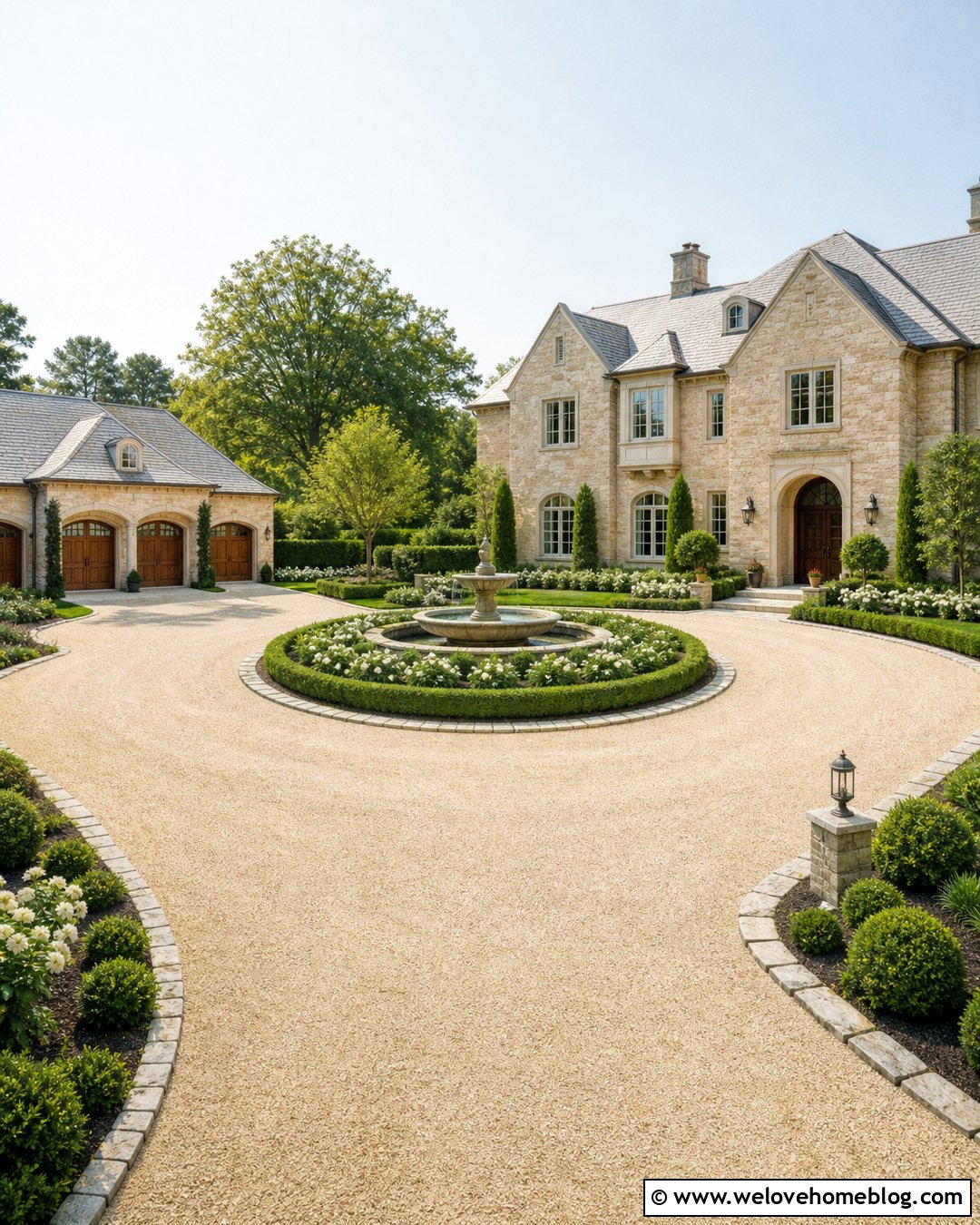
A circular driveway feels more purposeful when its center island is treated as a major part of the landscape. Cover the driving loop with pale crushed limestone or light gray granite, then define both edges with granite setts. In the center, plant a small ornamental tree surrounded by evergreen shrubs, white flowers, and low ground cover. Keep taller plants away from entrance and exit points so drivers retain clear views. A circular layout works particularly well in front of a broad colonial, Southern, or European-inspired house. Connect the loop to the front door with a straight stone walkway that visually anchors the composition. Matching pillars at the roadside entrance can reinforce the symmetry without requiring a gate. The finished design feels spacious, formal, and easy to navigate.
8. Long Light Gravel Driveway With Tree-Lined Edges
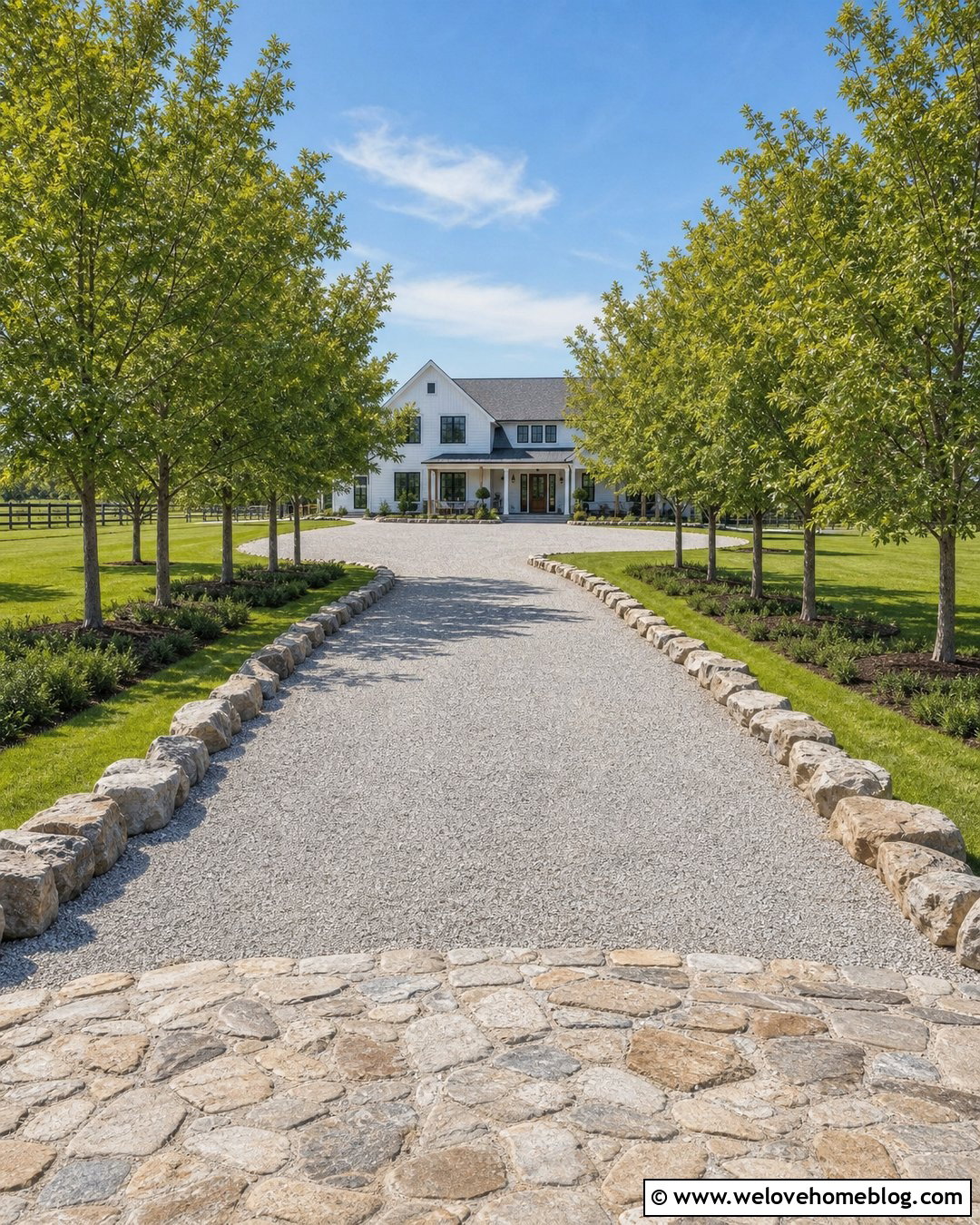
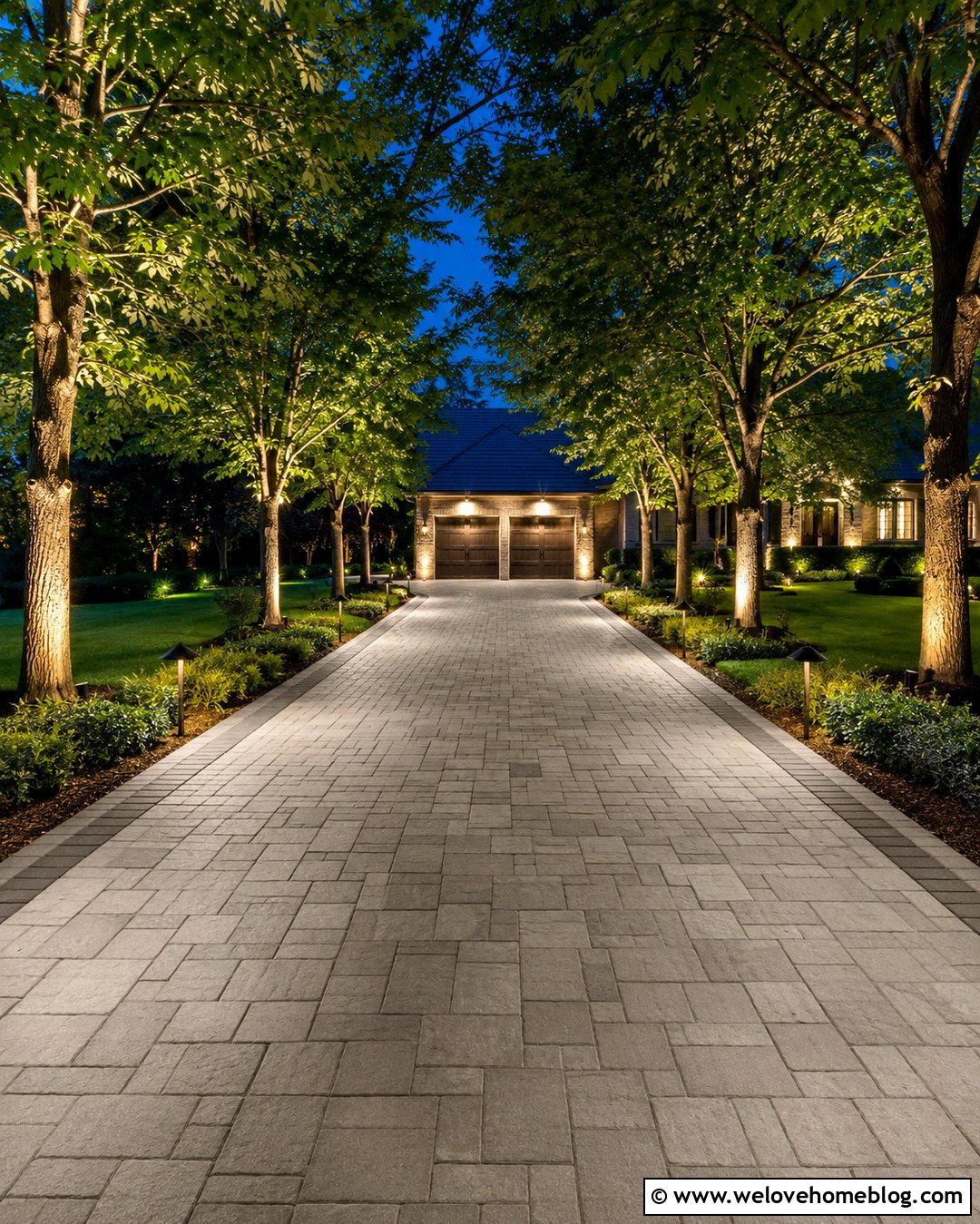
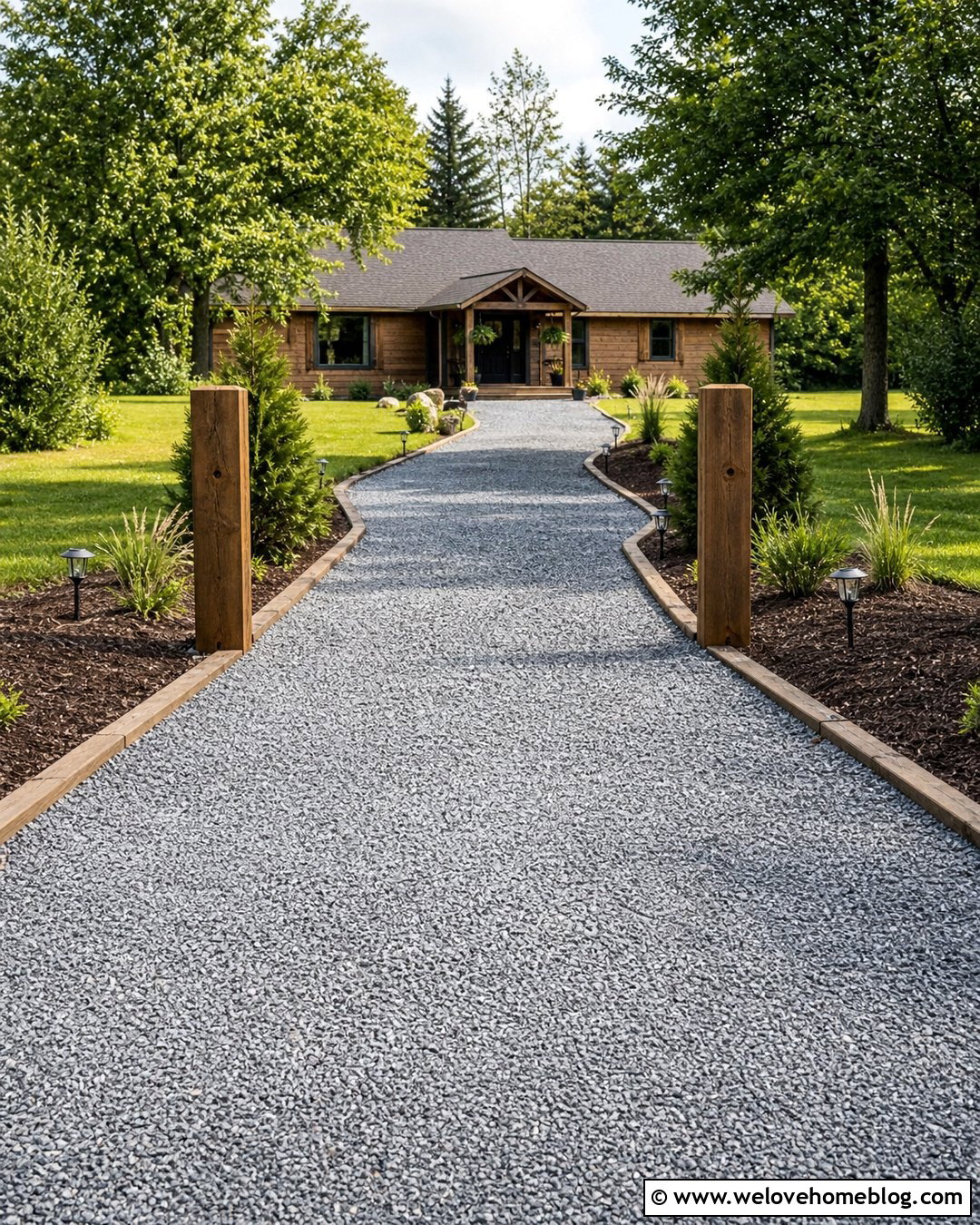
A long driveway can become an attractive landscape feature rather than an empty strip of stone. Use light gray crushed granite in a straight or subtly curved layout, bordered by heavy timber or natural stone. Plant evenly spaced deciduous trees along both sides, leaving enough room for mature trunks and branches. Beneath them, use broad lawn strips or simple ground cover instead of complicated flower beds. The repetition draws attention toward a farmhouse, ranch, or country home at the end of the approach. Add a durable stone apron at the road and a wider turnaround near the house. Proper surface grading should direct water away from the traveled area rather than allowing it to collect in wheel tracks. ()
9. Light Gravel Farmhouse Driveway With Stone Apron
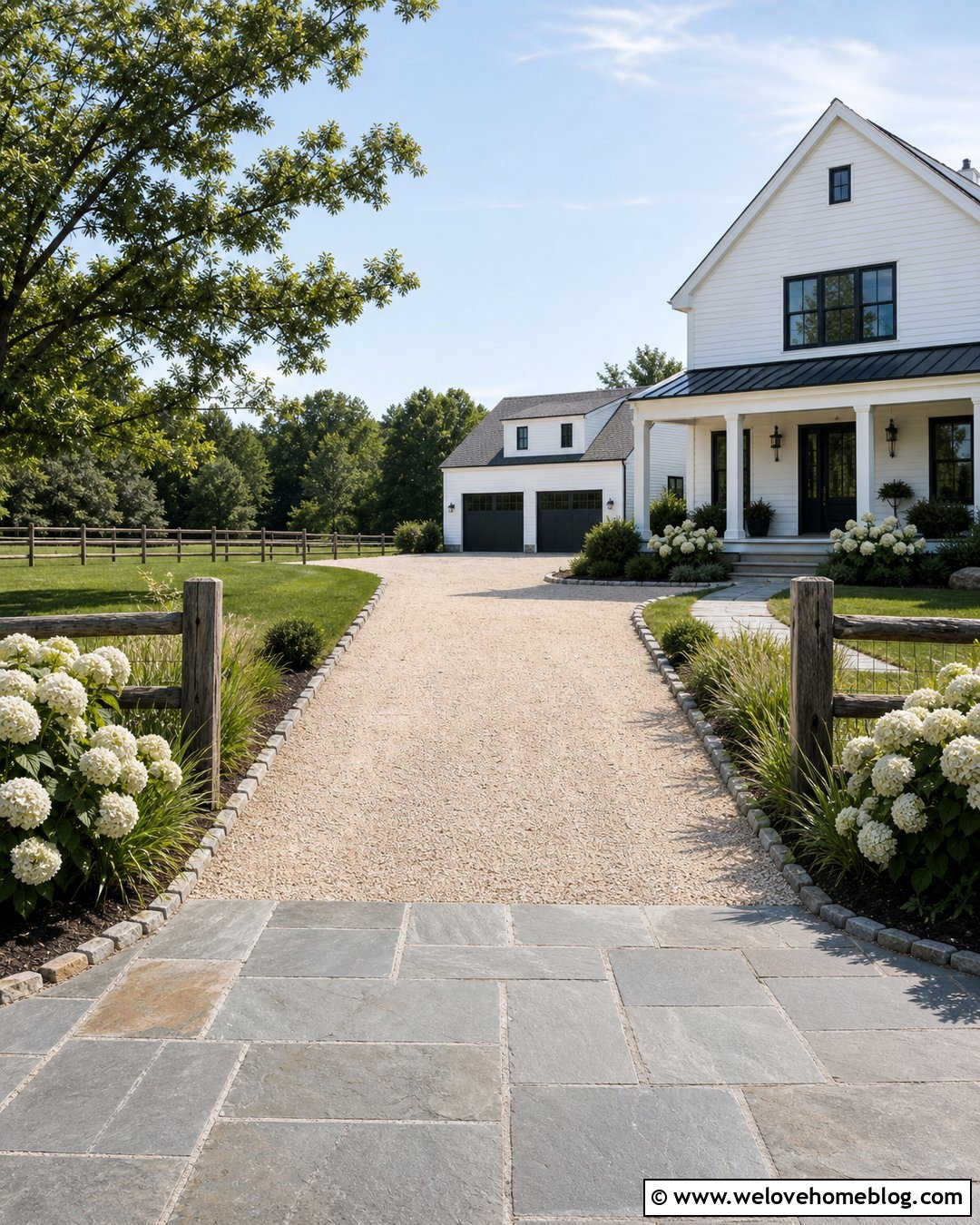
Warm cream gravel fits naturally with a modern farmhouse exterior featuring white siding, black windows, and timber details. Begin the driveway with a broad apron made from irregular gray flagstone or rectangular stone setts. Continue with compacted buff limestone leading toward the garage and a small parking court. Low fieldstone edging will contain the material while giving the driveway a relaxed rural finish. Frame the entrance with white oakleaf hydrangeas, panicle grasses, and clipped inkberry shrubs. A split-rail fence can define the property without making it feel closed off. Near the house, connect the driveway to the porch with a wide flagstone walkway. Repeating the apron stone around the beds makes the gravel, landscaping, and farmhouse facade read as one carefully planned entrance.

10. Light Gravel Colonial Driveway With Brick Ribbons
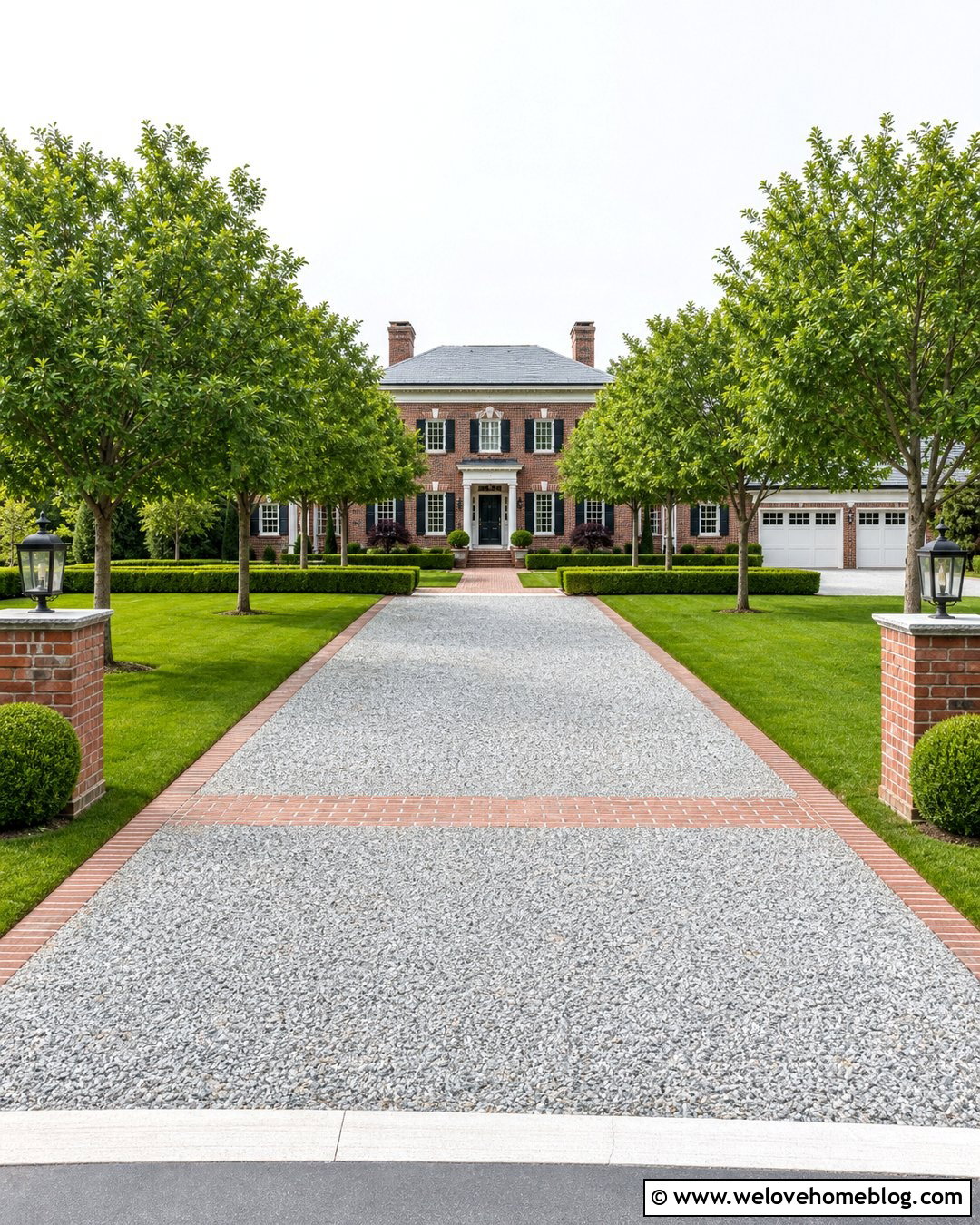
A formal colonial home benefits from a driveway with strong lines and balanced materials. Spread pale gray crushed stone across a straight drive and install narrow red brick ribbons along both edges. Add another brick band across the driveway near the street and garage to create clear transitions. These repeated details connect the light gravel to a traditional brick facade without turning the entire surface into costly masonry. Keep the surrounding landscape symmetrical with clipped boxwood, matching shade trees, and simple lawn panels. Black lanterns mounted on low brick pillars can mark the entrance while echoing the home’s shutters and hardware. A central brick walkway leading to the front door completes the arrangement. The result feels historic, organized, and practical for an established suburban property.
11. Light Gravel Ranch Driveway With Drought-Tolerant Landscaping
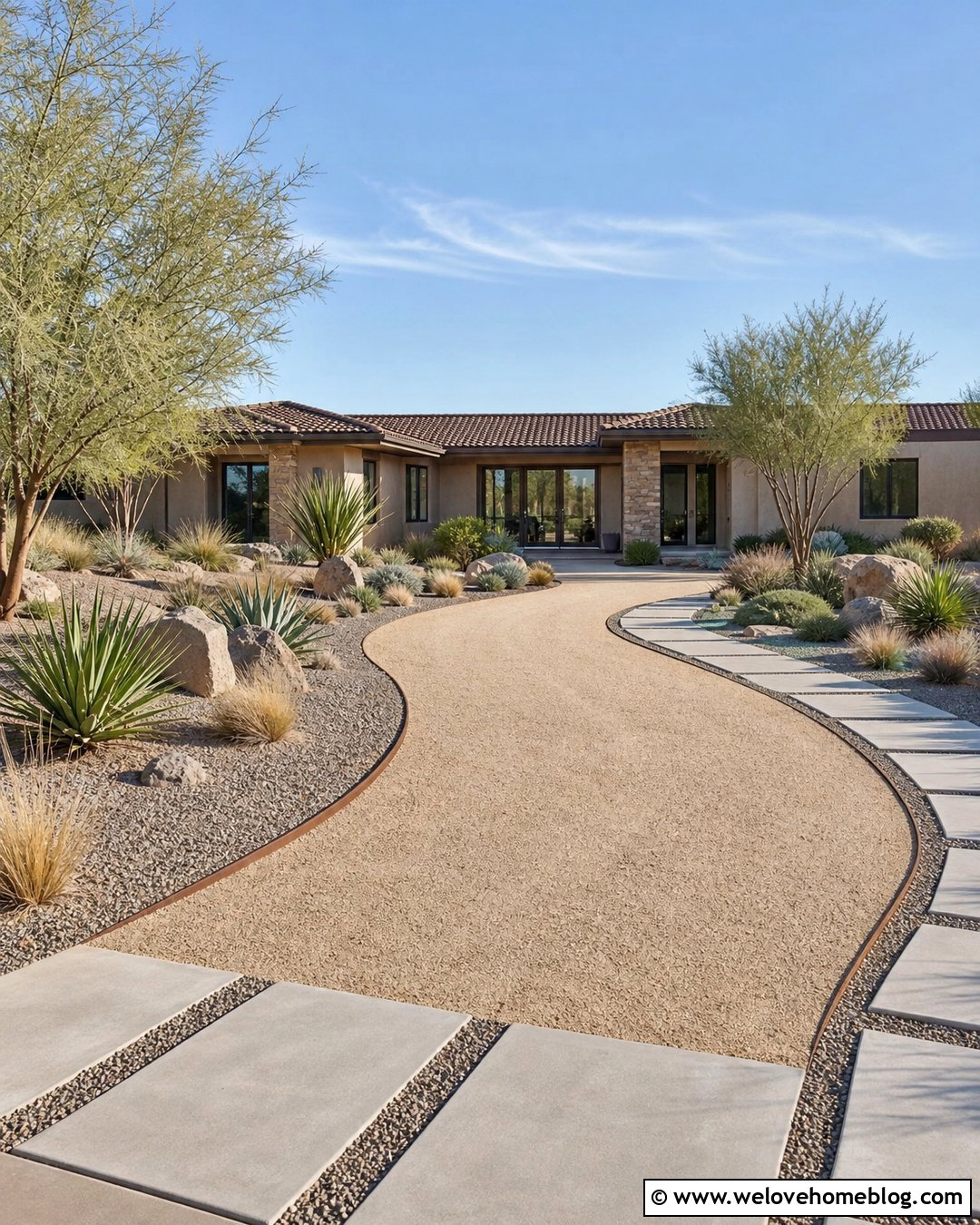
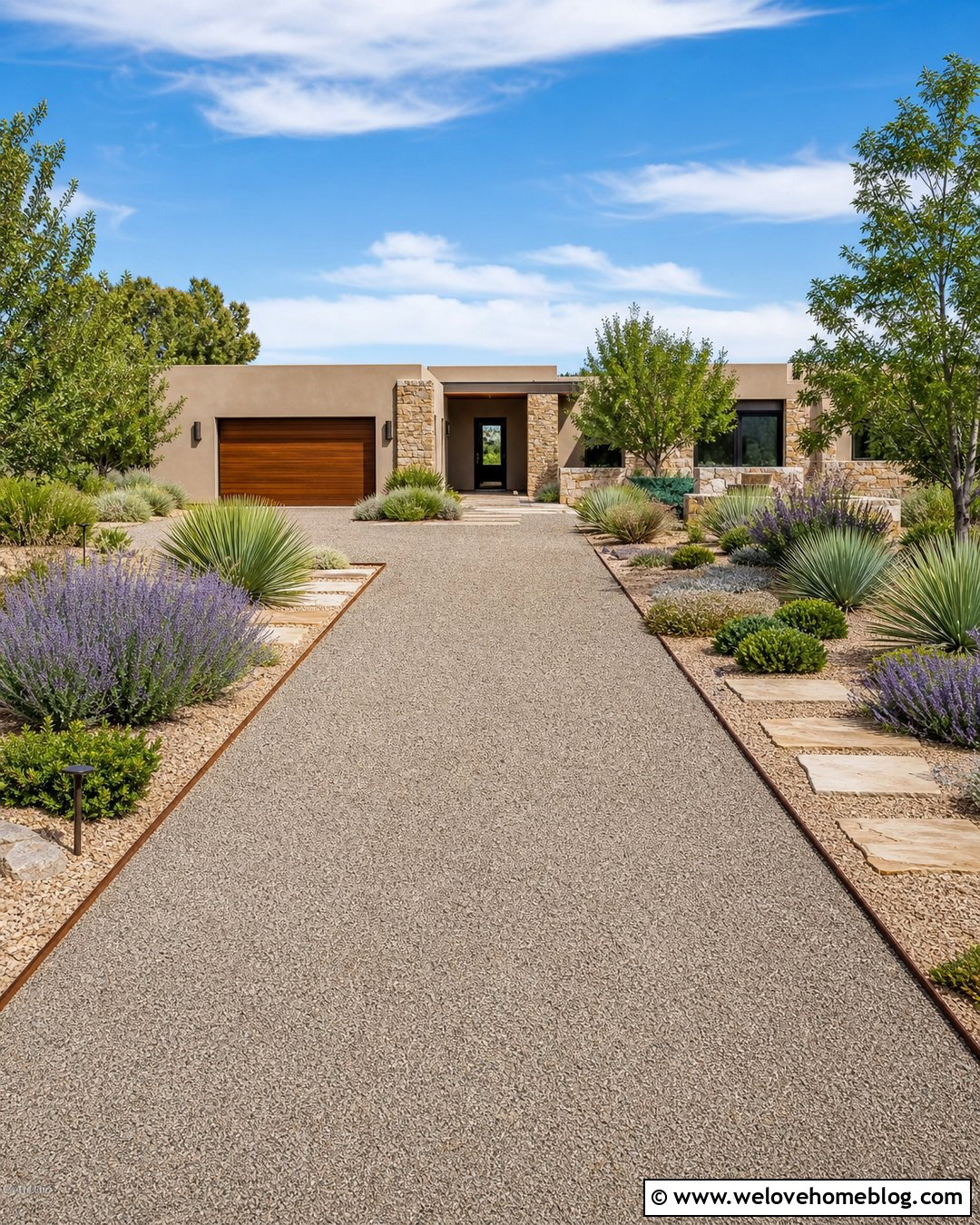
A low ranch house pairs well with a broad light gravel driveway and horizontal planting design. Choose sandy beige crushed granite, then shape the driveway into a shallow curve that leads naturally toward the garage. Use weathered steel edging to create a clean division between the driving surface and drought-tolerant beds. Fill those beds with yucca, agave, deer grass, sage, and decorative boulders suited to the local climate. Leave generous open spaces between plants so the landscape does not overwhelm the single-story facade. A concrete walkway with wide rectangular slabs can cross the gravel near the house. Repeat the gravel as mulch in selected beds, but use larger accent rock there so the driveway boundary remains visible. This look is practical, sunny, and distinctly Southwestern.
12. Light Gravel Cottage Driveway With Flower Borders
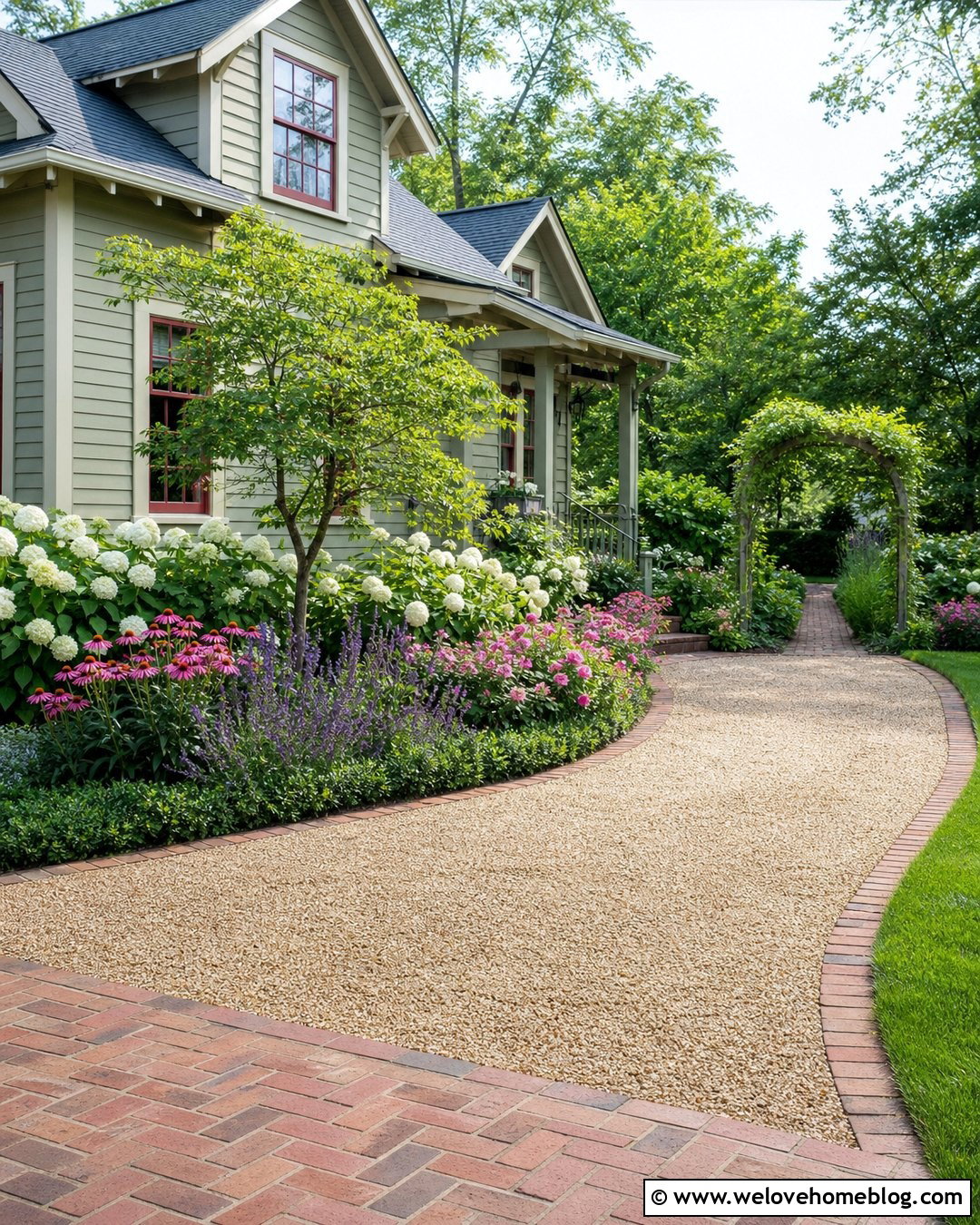
Soft planting can turn a small light gravel driveway into an inviting cottage entrance. Use cream pea gravel or fine buff gravel for a narrow curved layout leading beside the house. Edge it with reclaimed-looking clay bricks set slightly above the surface to prevent stone from moving into the beds. Plant generous borders of hydrangeas, coneflowers, catmint, salvia, and compact roses, choosing varieties suited to your region. Let the planting feel abundant, but maintain a clear setback from the driving area. A matching brick path can branch toward the front porch beneath a simple arbor. Add one small ornamental tree for height and shade. The warm gravel, aged brick, and layered flowers work beautifully with a cottage, Craftsman bungalow, or painted clapboard home.
13. Light Gravel Modern Driveway With Concrete Pavers

Combining pale gravel with large concrete pavers creates a modern driveway that still feels permeable and garden-friendly. Use light gray angular gravel as the dominant surface, then place broad charcoal or medium-gray concrete slabs in two aligned driving tracks. Continue the gravel between and around the slabs so the entire driveway reads as one integrated design. Slim steel edging will keep the outline precise. Add linear planting beds with dwarf grasses, sculptural evergreens, and low white flowers. A flat-roofed modern house provides an ideal backdrop, especially when the paver color repeats exterior concrete or window frames. Make sure the slabs are designed and installed for vehicle loads rather than used as ordinary patio pavers. A wide curb view will emphasize the bold geometry and clean proportions.
14. Light Gravel Driveway With Grass Center Strip
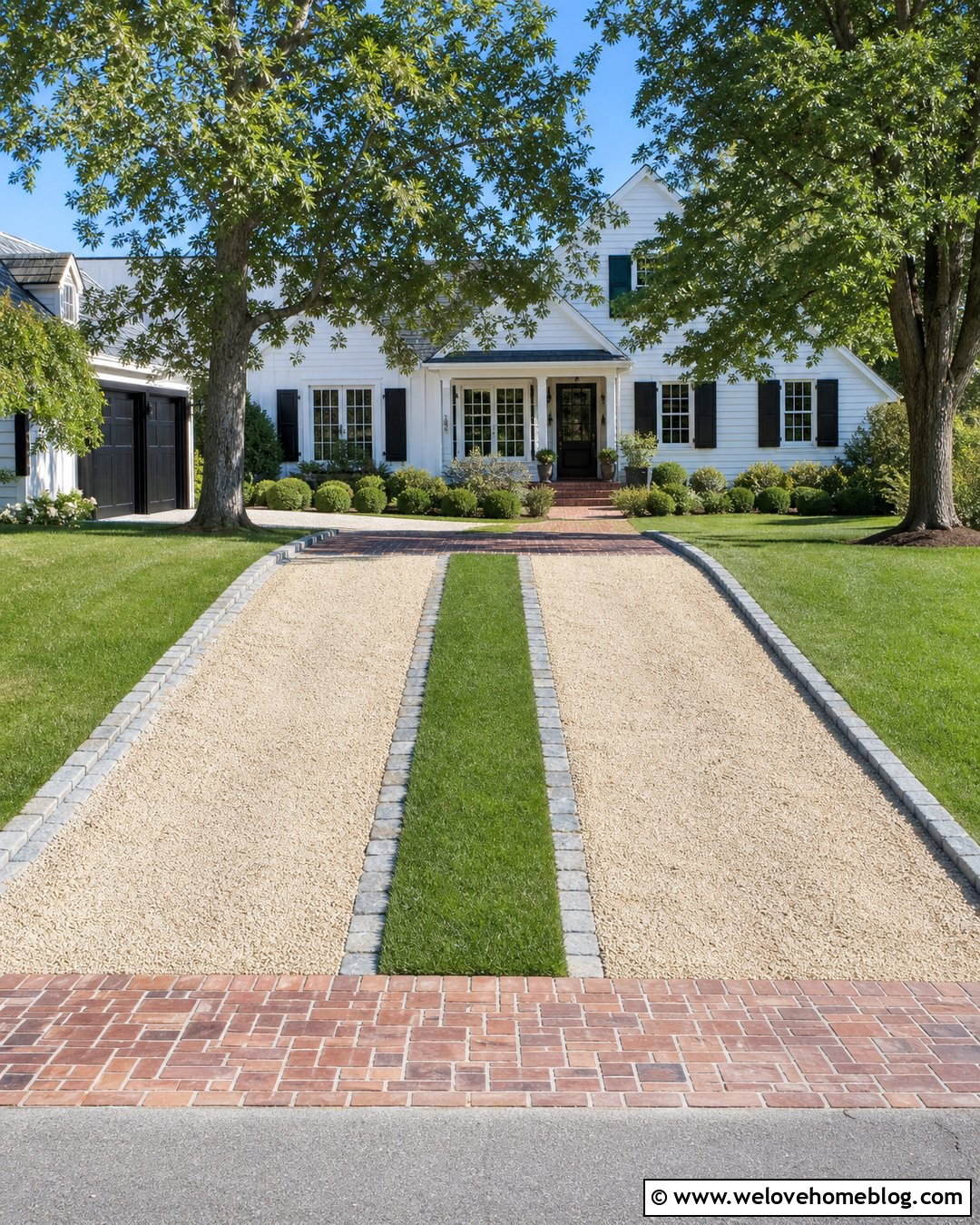
A grass center strip can reduce the visual width of a driveway and soften the approach to a traditional home. Lay cream crushed limestone in two broad wheel paths with a raised or level turf strip between them. Strong stone edging along each side of the grass helps preserve the shape and keeps gravel from migrating into the center. This arrangement is best suited to a straight, lightly used residential driveway where vehicles can follow a predictable path. Frame the outer edges with lawn, shade trees, and uncomplicated foundation planting. At the street and garage, replace the grass strip with a full-width brick or concrete apron for easier turning. The combination looks especially attractive in front of a white farmhouse, cottage, or modest country property with a deep front yard.

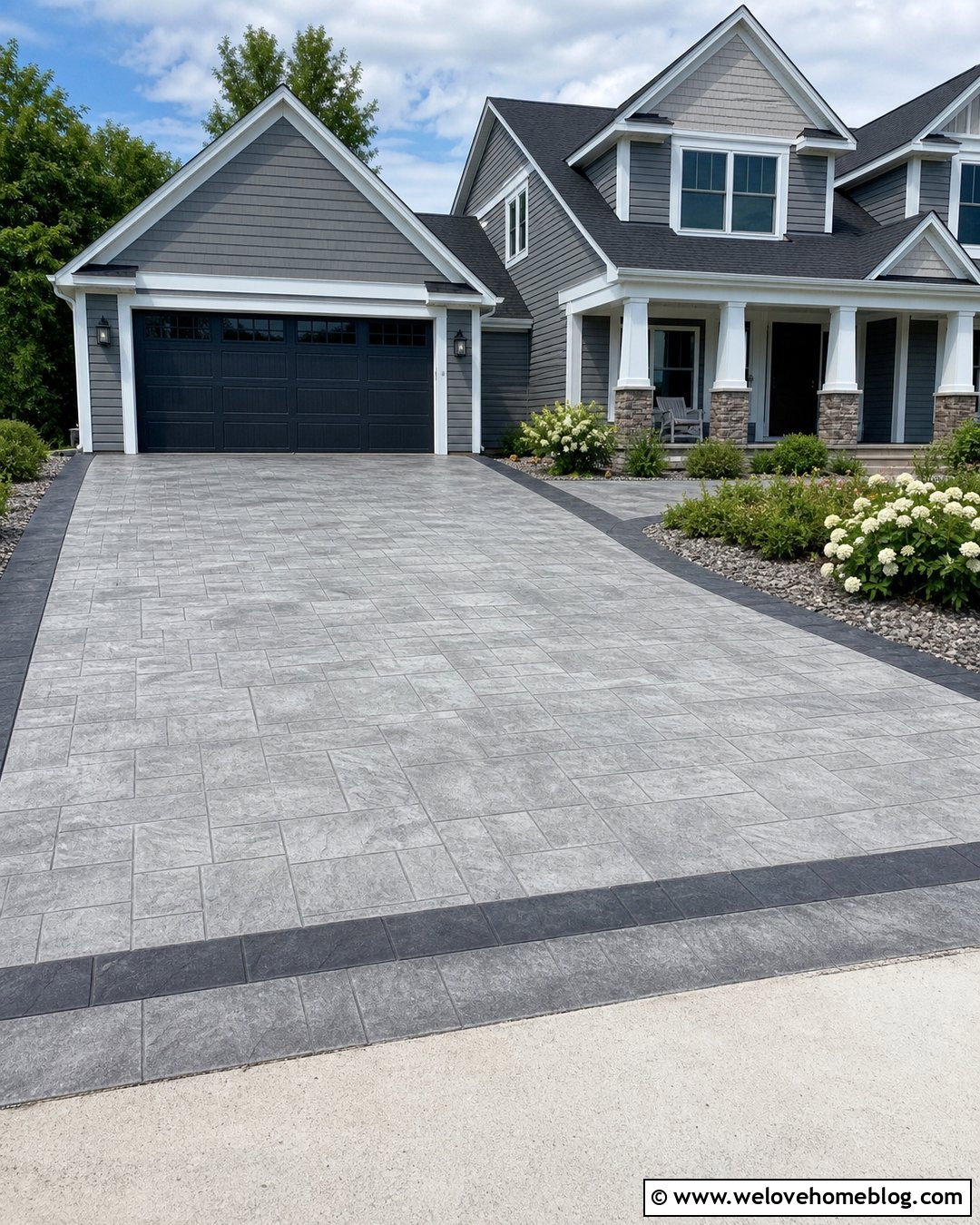
15. Light Gravel Driveway With Stabilization Grid
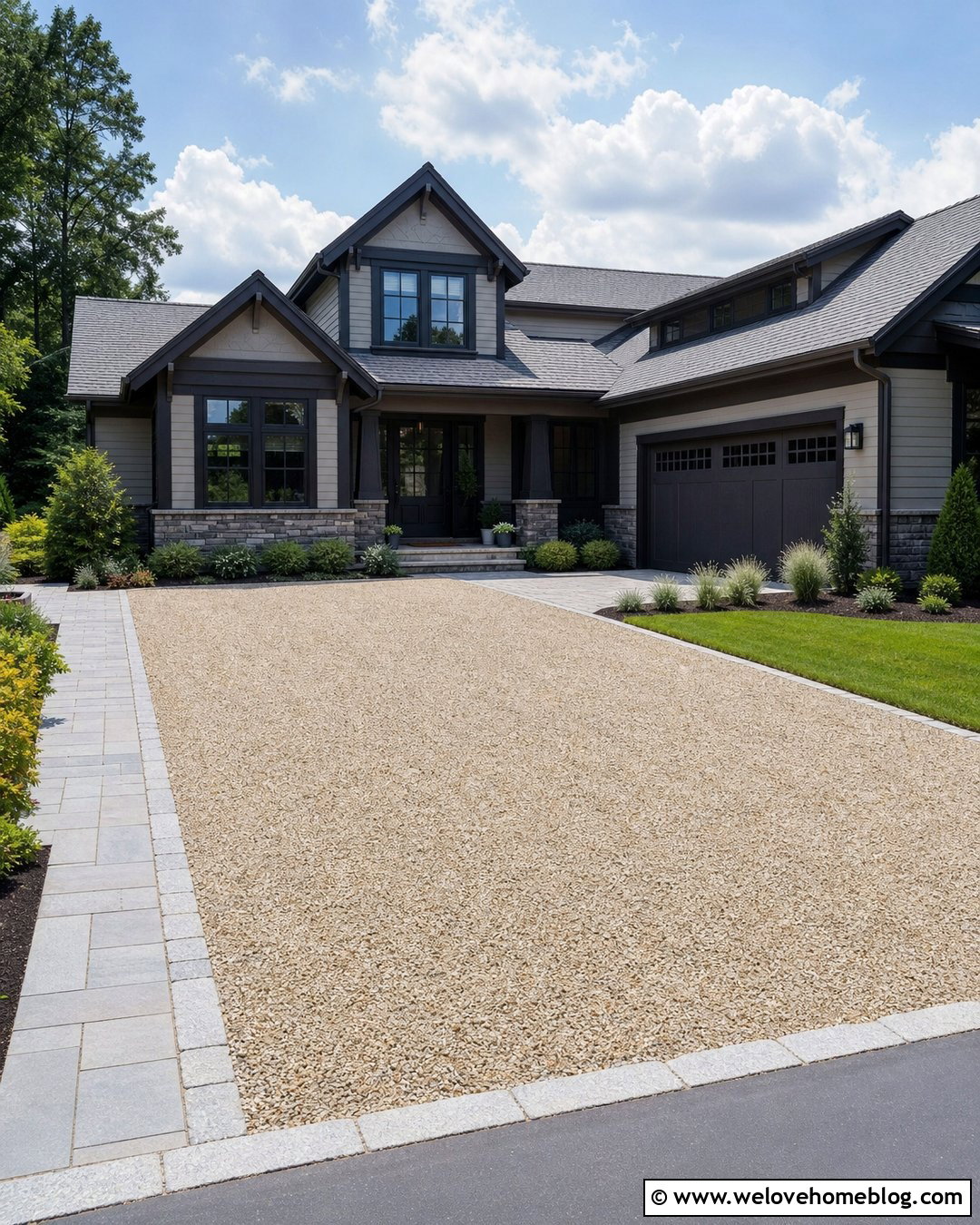
Do you want the appearance of loose gravel with a firmer, more orderly surface? A stabilization grid beneath pale pea gravel or small cream aggregate can reduce rutting and help keep the finished layer evenly distributed. Use this system across a straight driveway and small parking pad, then border the area with flush concrete or granite setts. A grid is especially useful where a neat surface is important, although the base preparation and product specifications must still suit local soil and vehicle loads. Pair the structured driveway with a contemporary Craftsman home, broad lawn panels, and beds of evergreen shrubs. Install a contrasting paver walkway beside the drive rather than expecting visitors to walk through loose stone. The completed entrance appears light, tidy, and comfortably residential.
16. Light Gravel Driveway With Drainage Swale
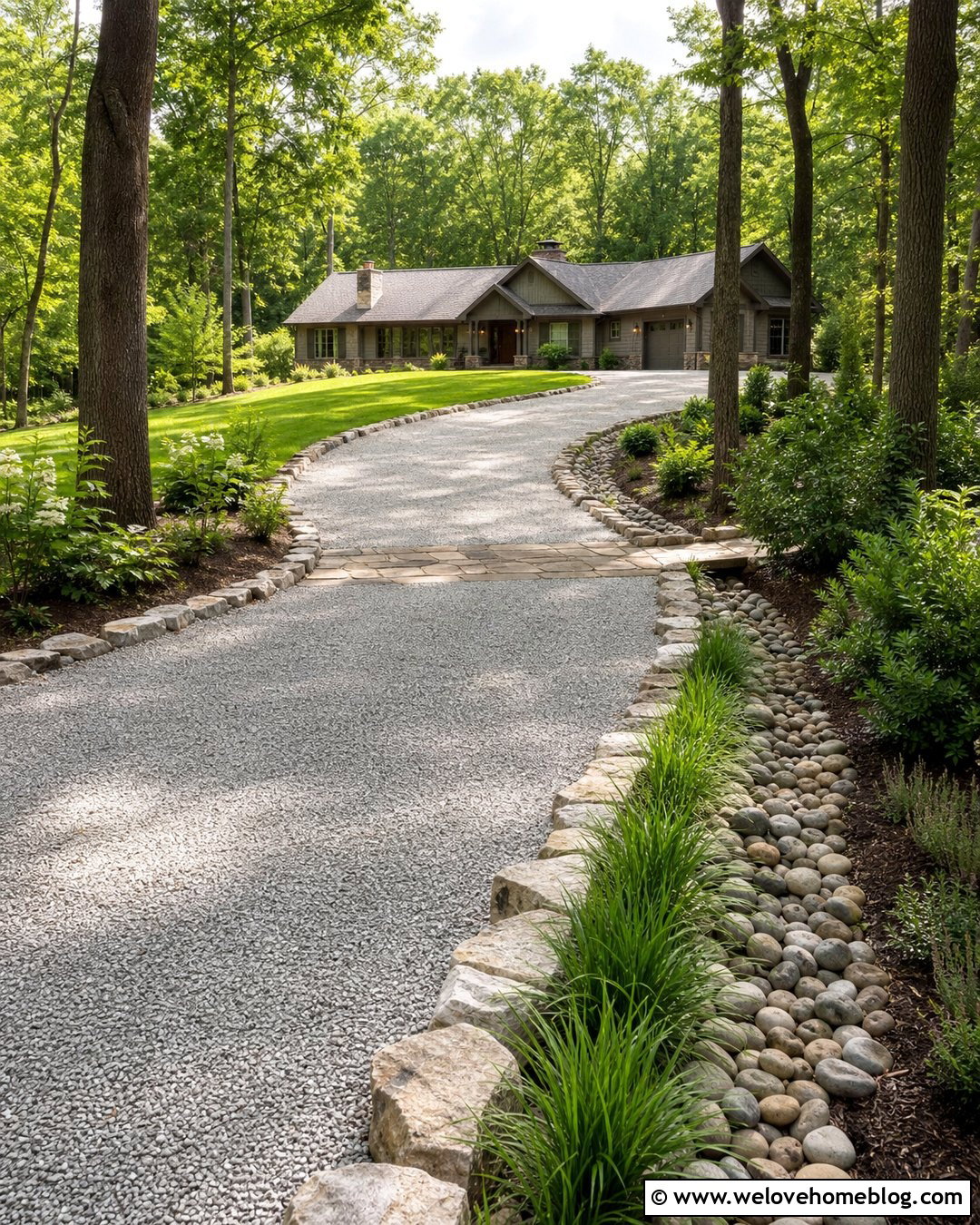
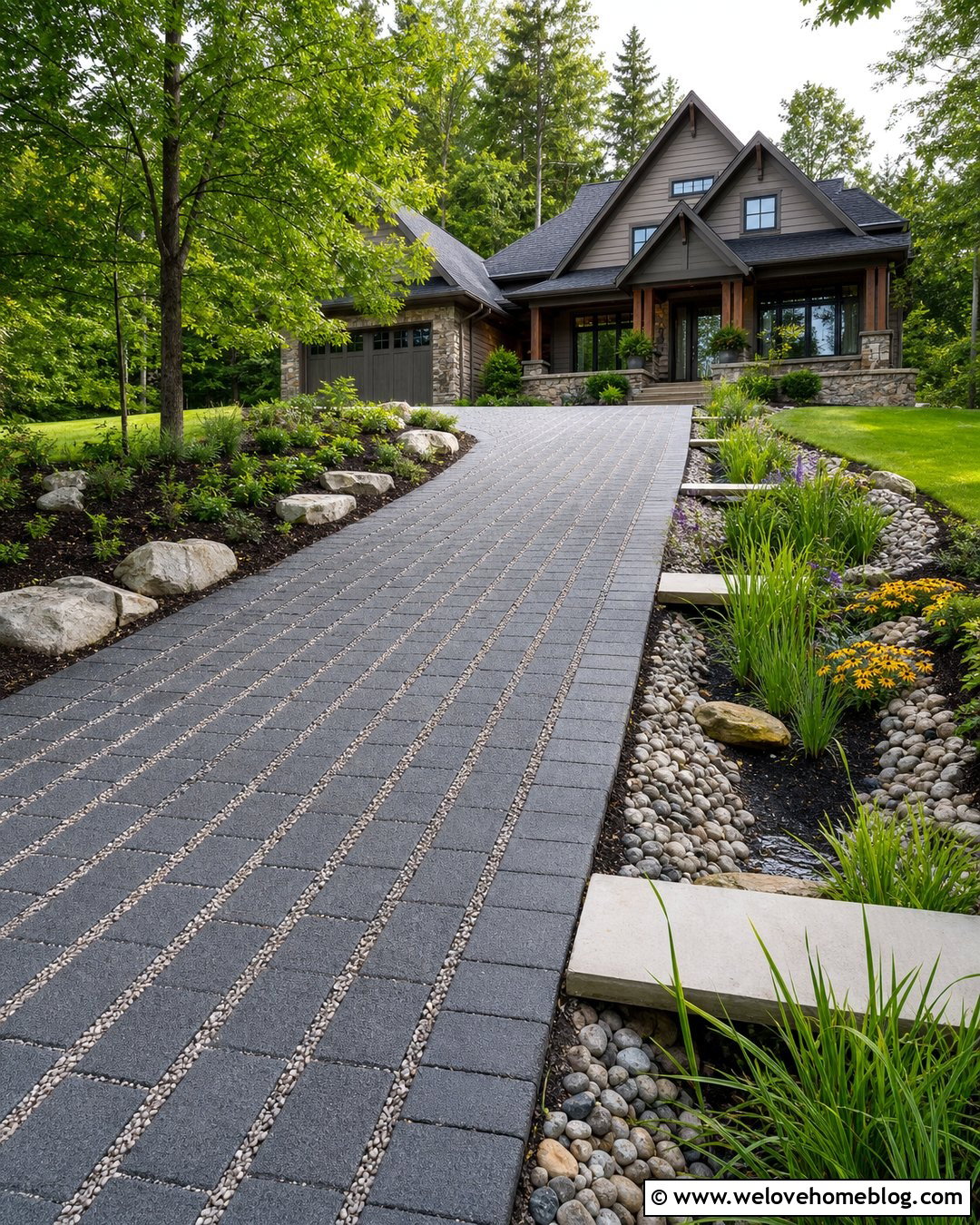
A sloped front yard needs a driveway design that treats drainage as part of the landscape. Cover a gently crowned or properly graded driveway with light gray crushed granite and install sturdy stone edging along the planted side. Beside the lower edge, create a shallow landscaped swale filled with river rock, moisture-tolerant grasses, and regionally appropriate shrubs. A small stone-lined crossing can carry the front walkway over the swale. This feature should look like an intentional garden bed rather than a narrow ditch. Keep loose decorative river stones outside the main driving surface, where angular gravel will usually remain more stable. A contemporary ranch or woodland home suits this natural arrangement. Local drainage conditions vary, so significant runoff problems should be evaluated before finalizing levels and materials.
17. Light Gravel Driveway With Gate And Stone Pillars
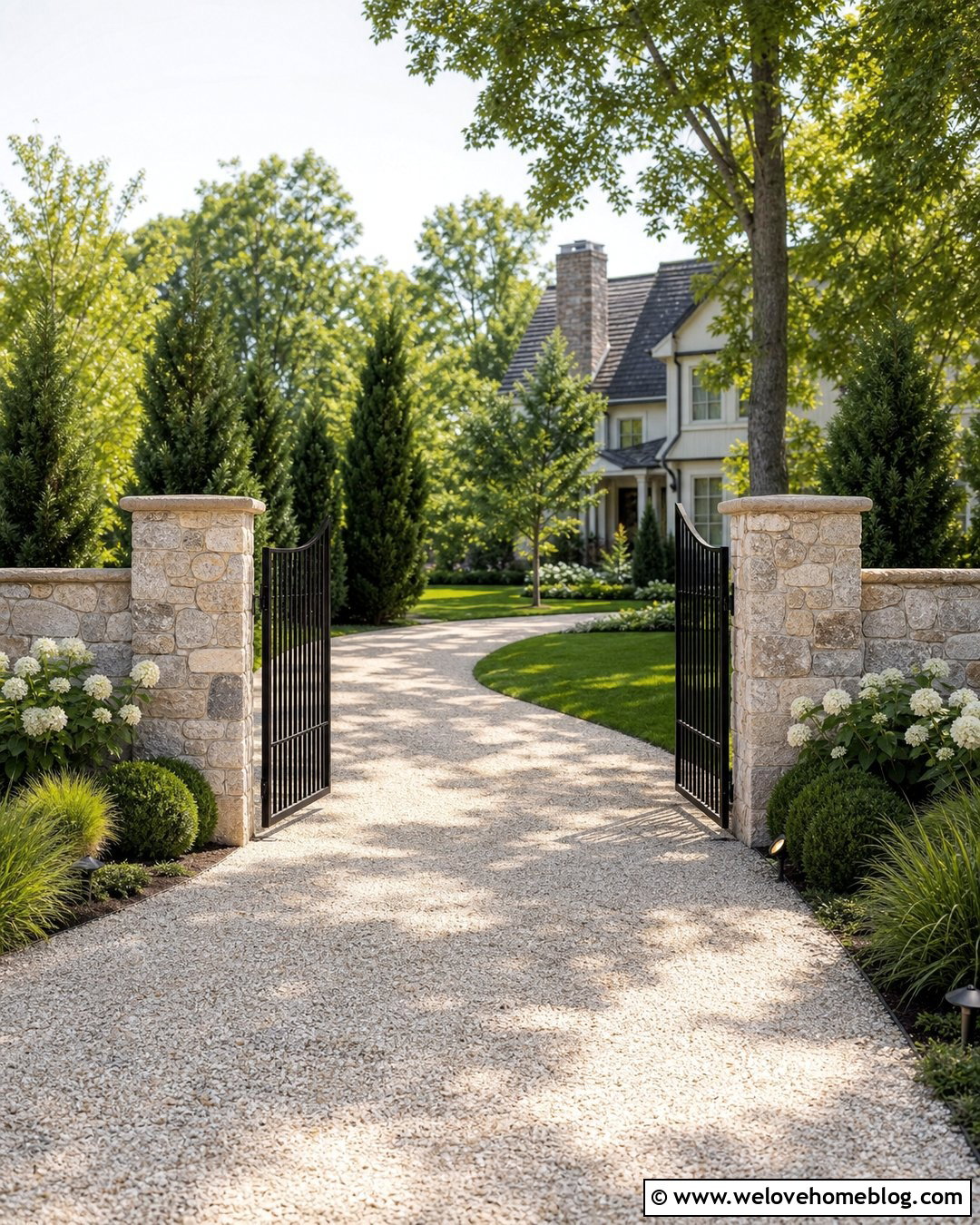
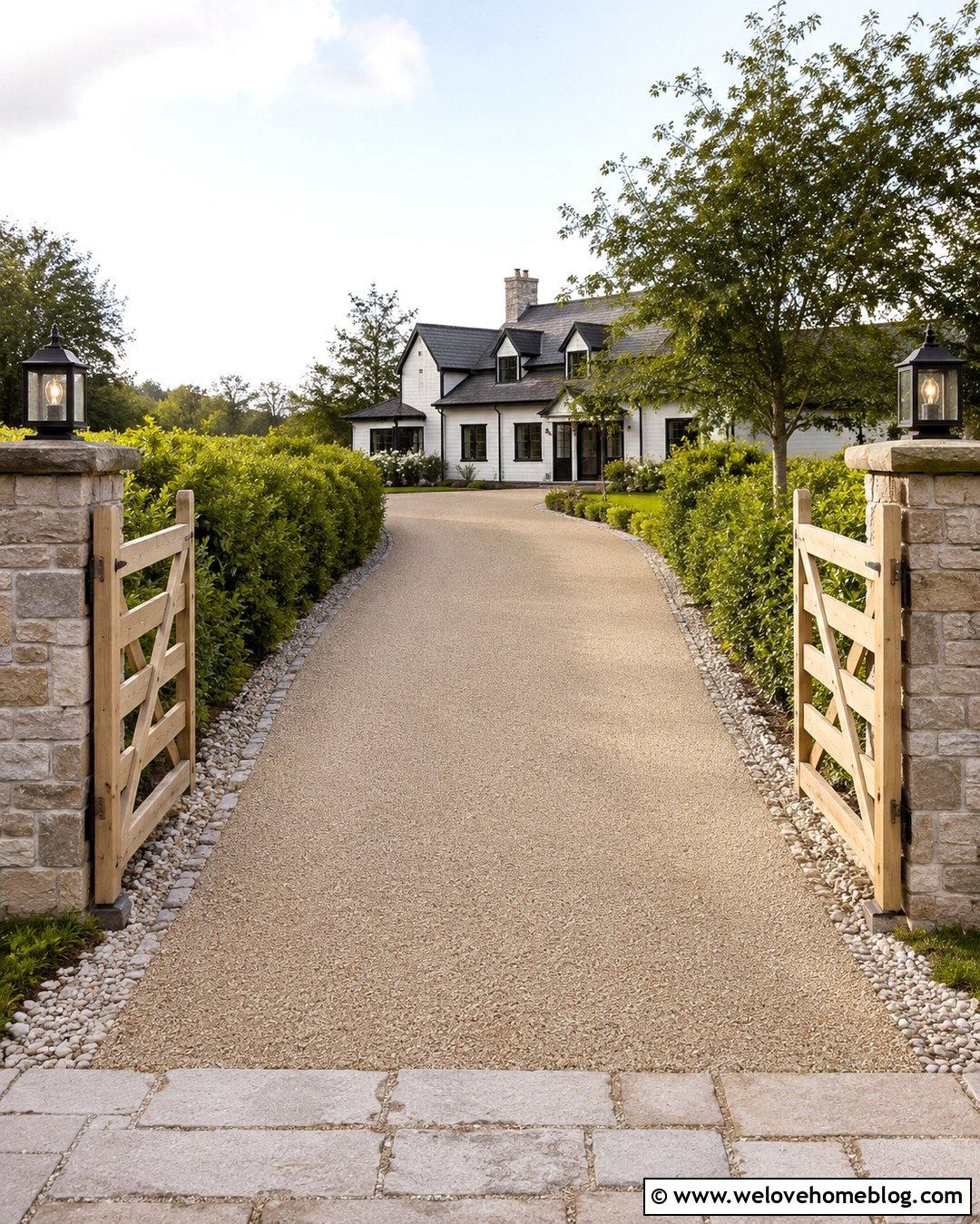
A gated driveway can feel welcoming when the entrance materials are light and well proportioned. Use warm ivory crushed limestone for a gently curved drive leading to a traditional or country home. At the road, install two natural stone pillars with a simple black metal gate between them. Set the gate far enough inside the property to provide a safe stopping area where local requirements allow. Continue the pillar stone as low edging or short walls on both sides of the entrance. Plant compact evergreens, white flowering shrubs, and ornamental grasses around the masonry without hiding it. Low ground lights can highlight the approach while keeping the daytime design uncluttered. The pale gravel balances the visual weight of the stonework and prevents the entrance from appearing too dark or imposing.
18. Light Gravel Driveway With Split Parking Court
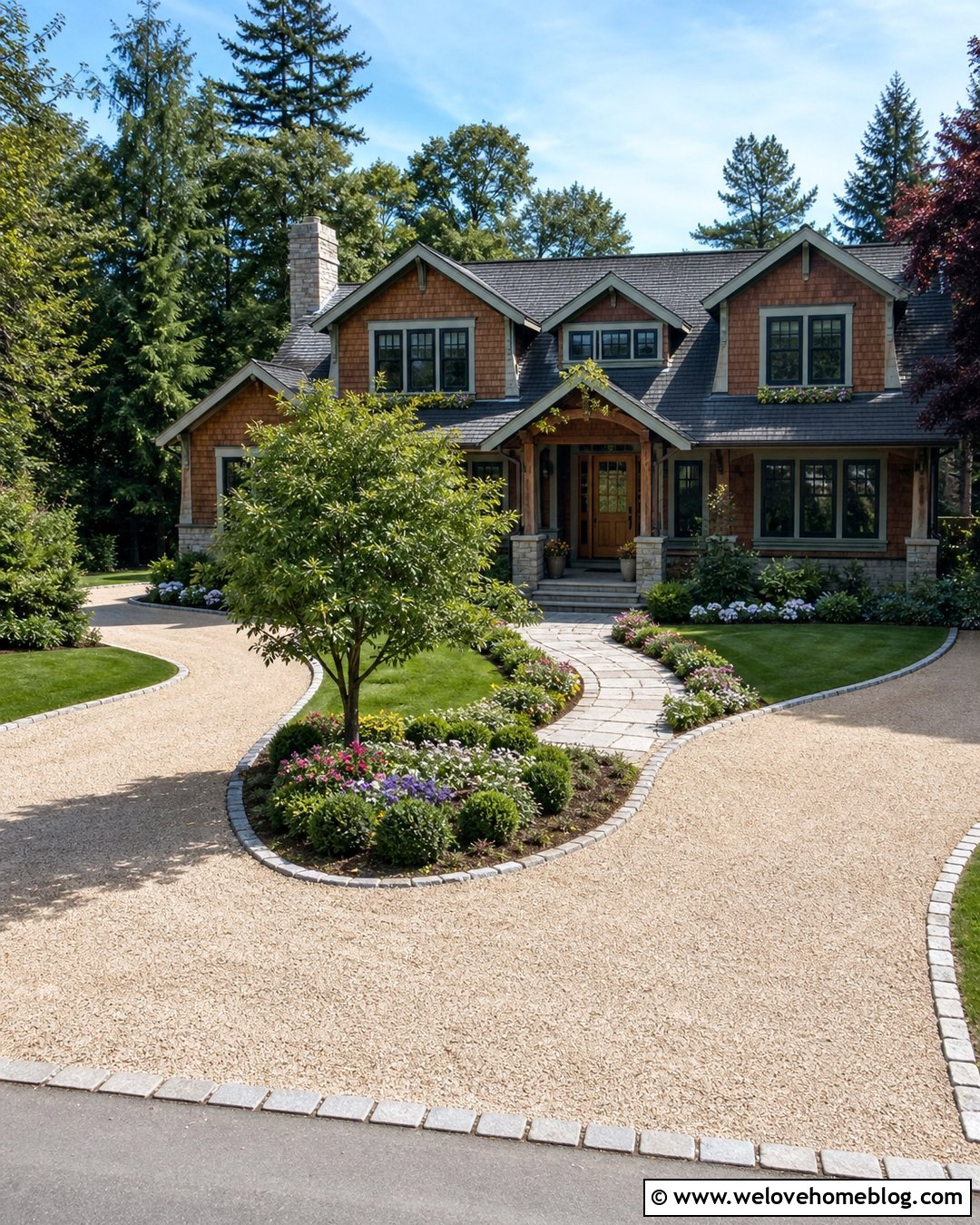
A split driveway can organize parking without covering the entire front yard in one wide surface. Use pale beige crushed gravel for a central approach that divides into two compact parking bays near the house. Define the fork with a teardrop-shaped planting island containing a small tree, low shrubs, and seasonal flowers. Granite sett edging will reinforce the curved lines and keep stone out of the beds. One branch can lead to the garage while the other provides guest parking or a turnaround area. Use the same gravel across both sections so the layout remains visually unified. This configuration complements a large Craftsman, ranch, or transitional home. Keep the central island low near turning points and use a clear walkway to guide guests from the parking bay to the entrance.
19. Small Light Gravel Driveway With Narrow Borders
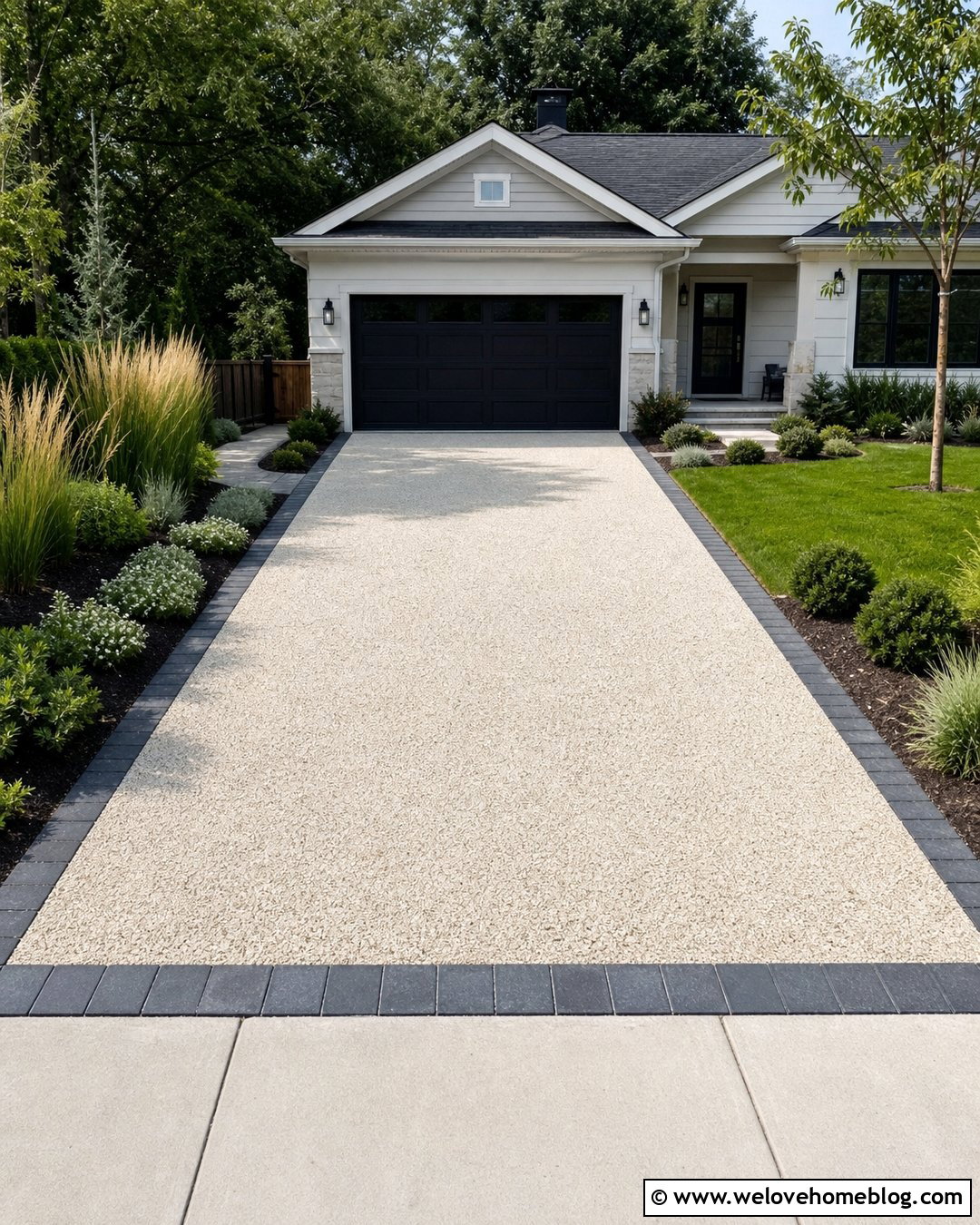
Limited front-yard space calls for a simple driveway with carefully controlled edges. Cover a short, straight drive with compacted cream limestone and use narrow charcoal paver borders rather than bulky walls. The contrasting strips define the parking area without taking valuable width away from vehicles. Along one side, install a slim walkway in matching pavers. On the other, use a narrow bed of upright grasses, compact shrubs, and low ground cover. A small ornamental tree near the sidewalk can add height without blocking the house. Continue the pavers across the driveway as a threshold at the curb and garage. This streamlined arrangement suits a townhouse, bungalow, or compact suburban home. The light surface also keeps the small frontage from feeling crowded by too many dark materials.

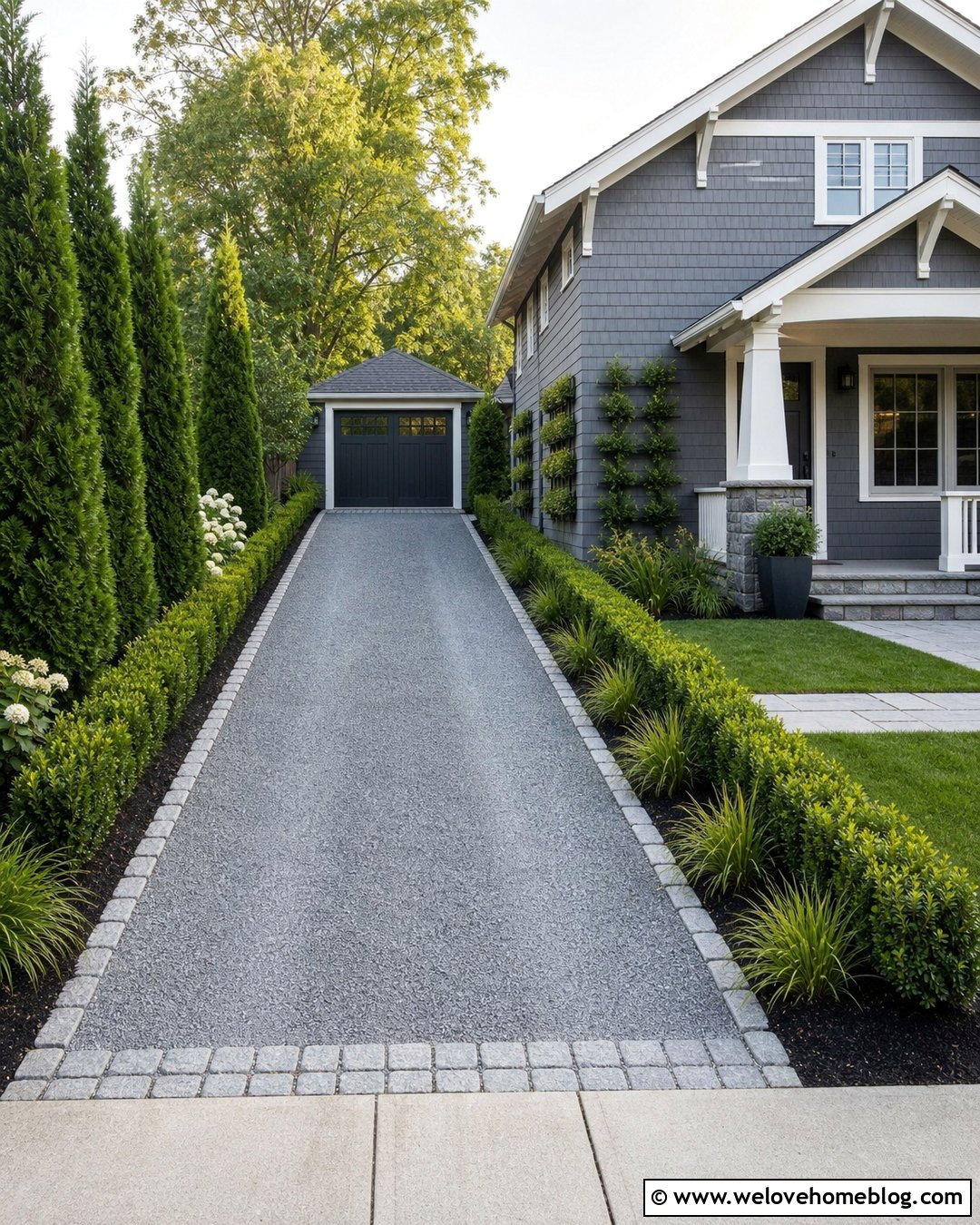
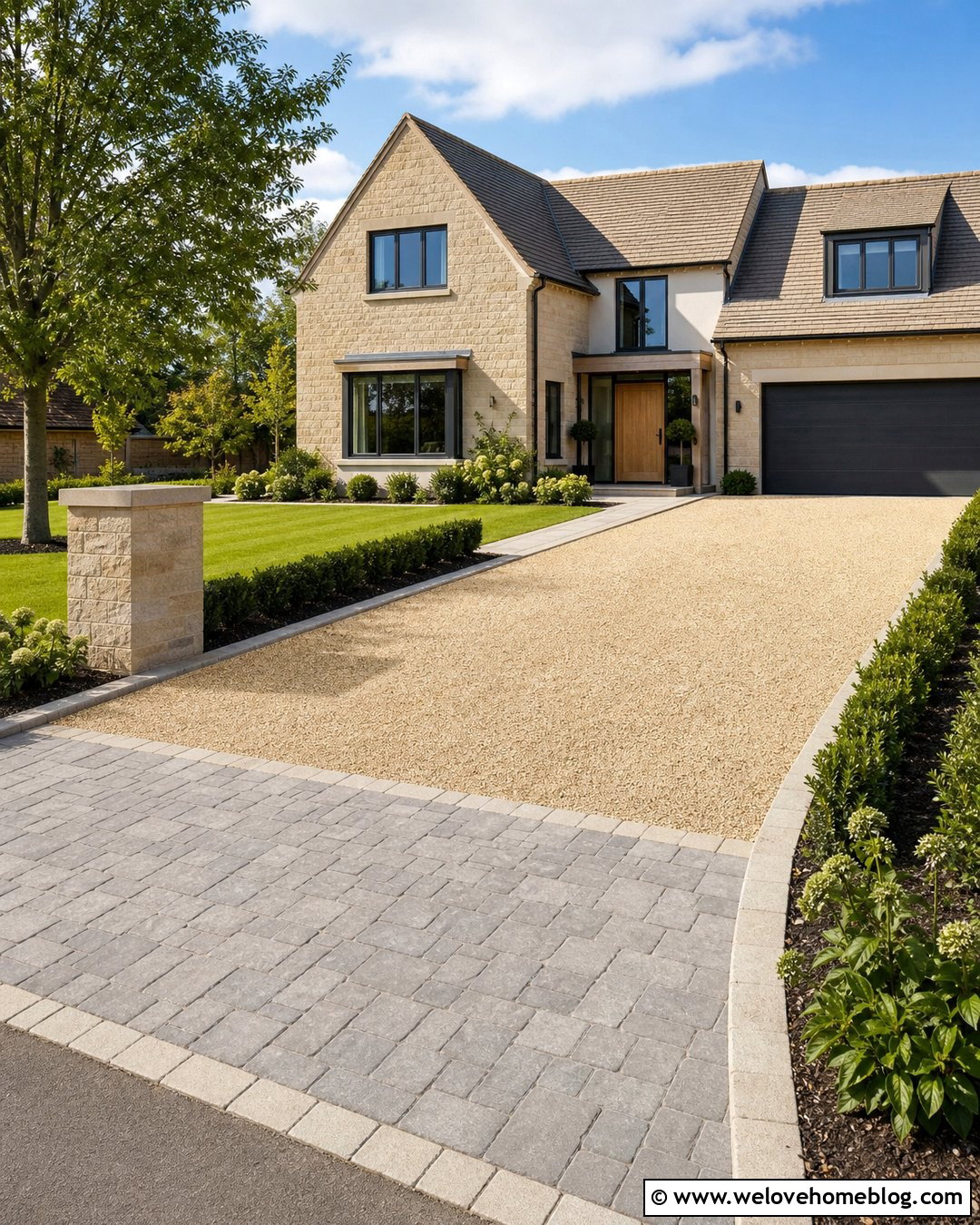
20. Coastal Light Gravel Driveway With Shell Tones
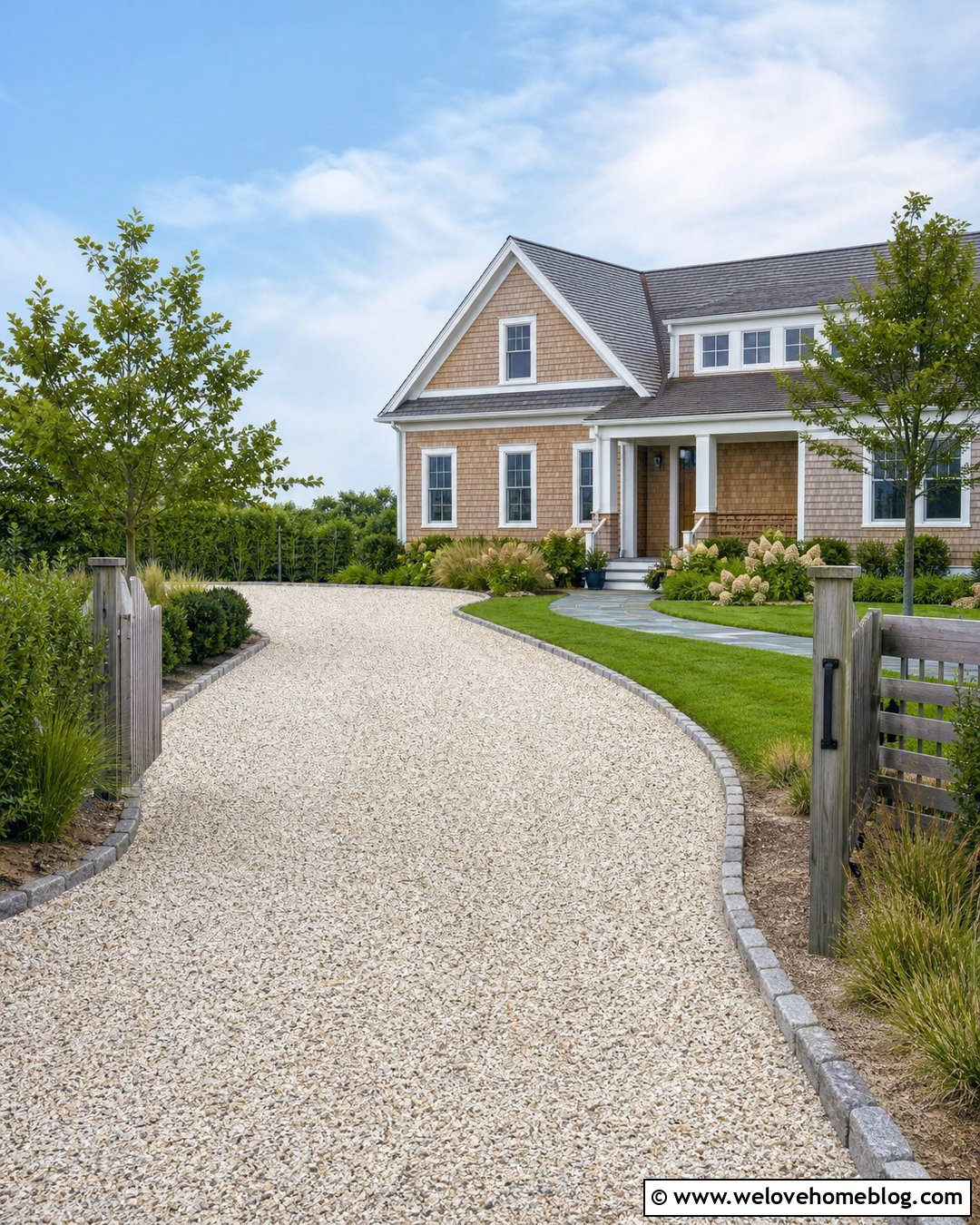
Shell-toned gravel creates a breezy coastal look without requiring an entirely white surface. Choose a durable crushed aggregate blend containing cream, beige, and pale gray tones, rather than fragile decorative shells where local conditions or regulations make them unsuitable. Shape the driveway into a relaxed curve and edge it with weathered granite blocks. Surround it with beach grass, inkberry, hydrangeas, and other plants selected for the site’s salt, wind, and soil conditions. A natural cedar fence and simple timber gate can frame the entrance. Near the house, add a bluestone walkway leading to a shingle-style or coastal cottage facade. The varied pale aggregate will hide minor debris better than pure white stone while maintaining the bright, sun-washed appearance associated with a seaside landscape.
Conclusion:
The best light gravel driveway brings the surface, layout, borders, house, and surrounding landscape together as one complete design. Pale limestone can support a traditional brick entrance, while light granite suits modern concrete edging and drought-tolerant planting. Cream gravel works equally well on curved cottage drives, formal circular layouts, and long farmhouse approaches. Whatever look you prefer, start with proper excavation, a compacted base, suitable drainage, and edging strong enough for driveway conditions. Then choose plants and accent materials that repeat colors already found on your home. These 20 Light Gravel Driveway Ideas offer flexible starting points, but the most successful result will always respond to your property’s size, architecture, climate, and everyday parking needs.

Related posts:
Leave a Reply