
A stable driveway can still feel welcoming, polished, and connected to the landscape. These **20 Geogrid Driveway Ideas** combine vehicle-rated grid systems with gravel, grass, crushed stone, and decorative aggregate to create practical surfaces with strong curb appeal. Geogrid helps reinforce the driveway base or confine surface material, depending on the system used. This can reduce shifting, rutting, and muddy wheel tracks when the driveway is installed over a properly prepared and compacted foundation. Grid-supported surfaces can also support permeable layouts that allow water to move through open joints and aggregate layers. From modern entrances to relaxed country approaches, every design below treats the surface, shape, edging, and planting as one coordinated look. Explore these complete **20 Geogrid Driveway Ideas** for inspiration. ()

1. Pea Gravel Geogrid Driveway With Cobblestone Edging
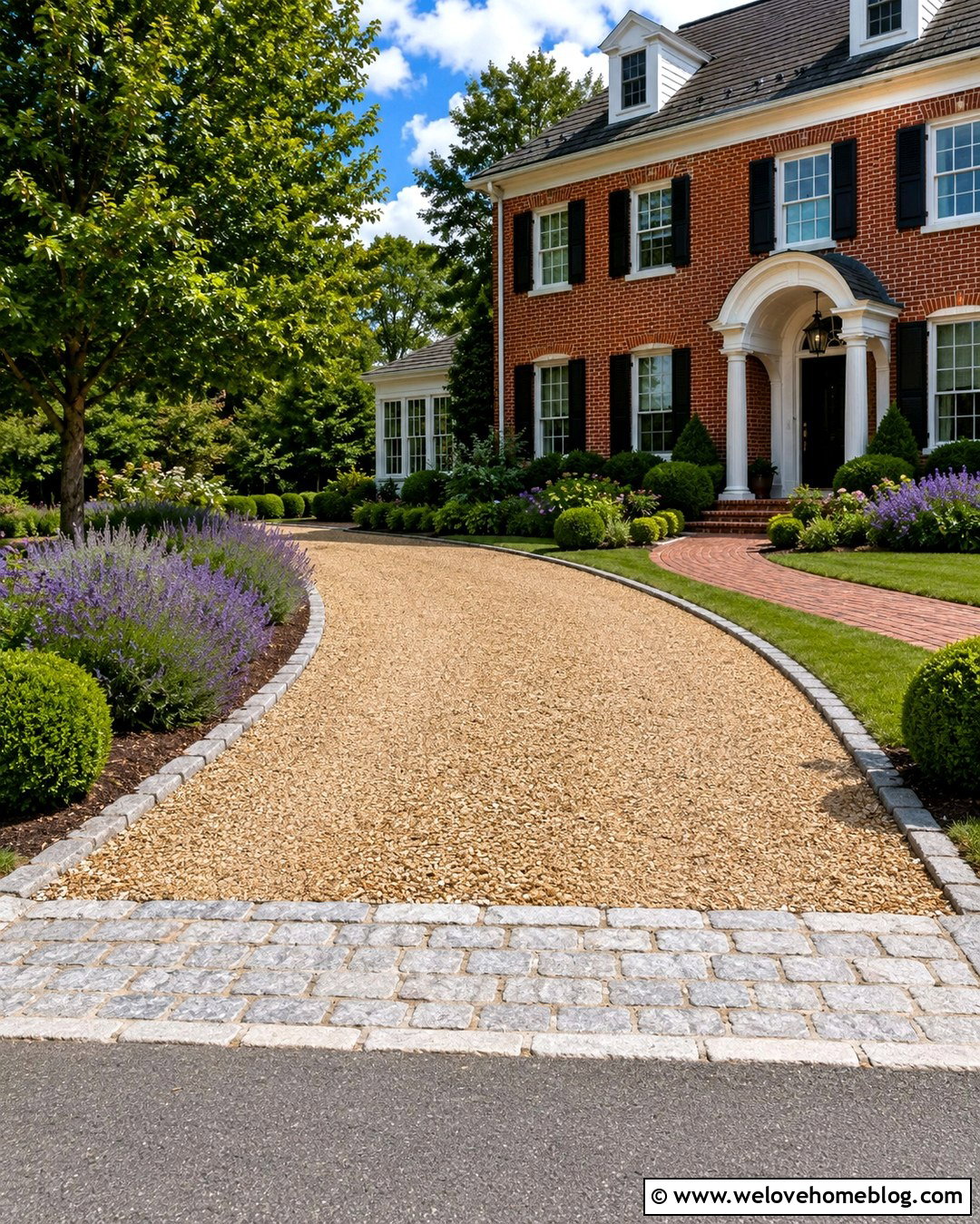
Warm pea gravel creates a soft, welcoming approach when it is contained within a vehicle-rated cellular geogrid. Use a gently curved layout leading toward a traditional brick or Colonial home. A single row of gray cobblestones can define both edges and stop loose aggregate from spilling into the lawn. Since rounded pea gravel moves more easily than angular stone, choose a grid designed specifically to confine the selected aggregate and follow its fill specifications. Add lavender, catmint, and clipped boxwood along the outside borders for layered color. A matching cobblestone apron at the street gives the entrance a finished transition. Keep the gravel slightly above the grid cells so the underlying structure is visually concealed. ()
2. Gray Gravel Geogrid Driveway With Brick Borders
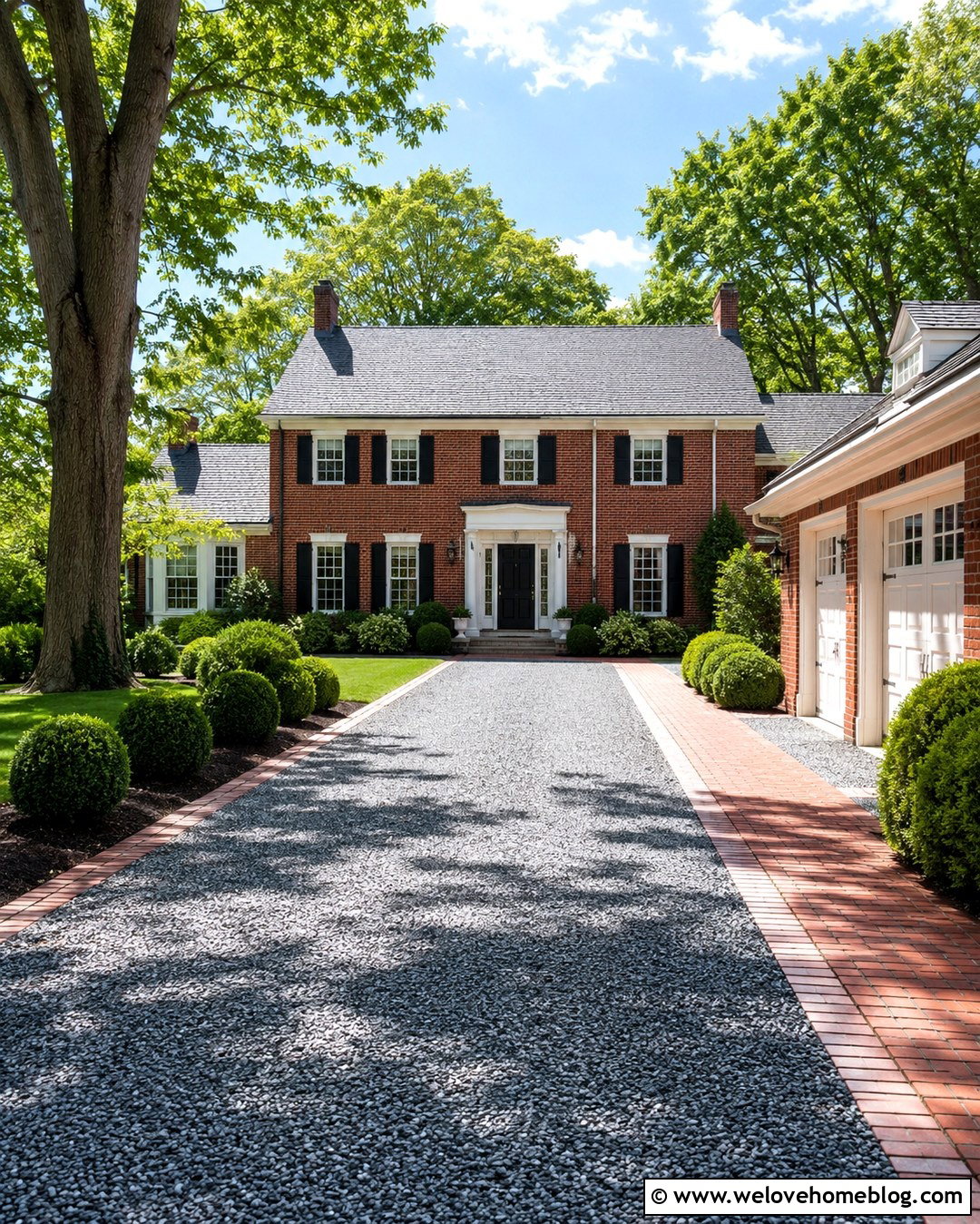
Cool gray gravel looks especially crisp beside a red brick house. Install it inside a cellular geogrid over a compacted aggregate foundation, then frame the full driveway with clay brick pavers. A straight layout emphasizes symmetry and works well for Colonial, Georgian, and traditional suburban homes. Turn the border into a wider brick ribbon near the garage doors to create a deliberate transition between the permeable driveway and the building. Low evergreen shrubs can repeat the formal lines without hiding the surface. For better stability, use clean, appropriately sized aggregate recommended for the grid rather than selecting stone based on color alone. The completed driveway should feel structured, but the gravel keeps it less formal than solid brick paving. ()
3. Grass Geogrid Driveway With Concrete Wheel Strips
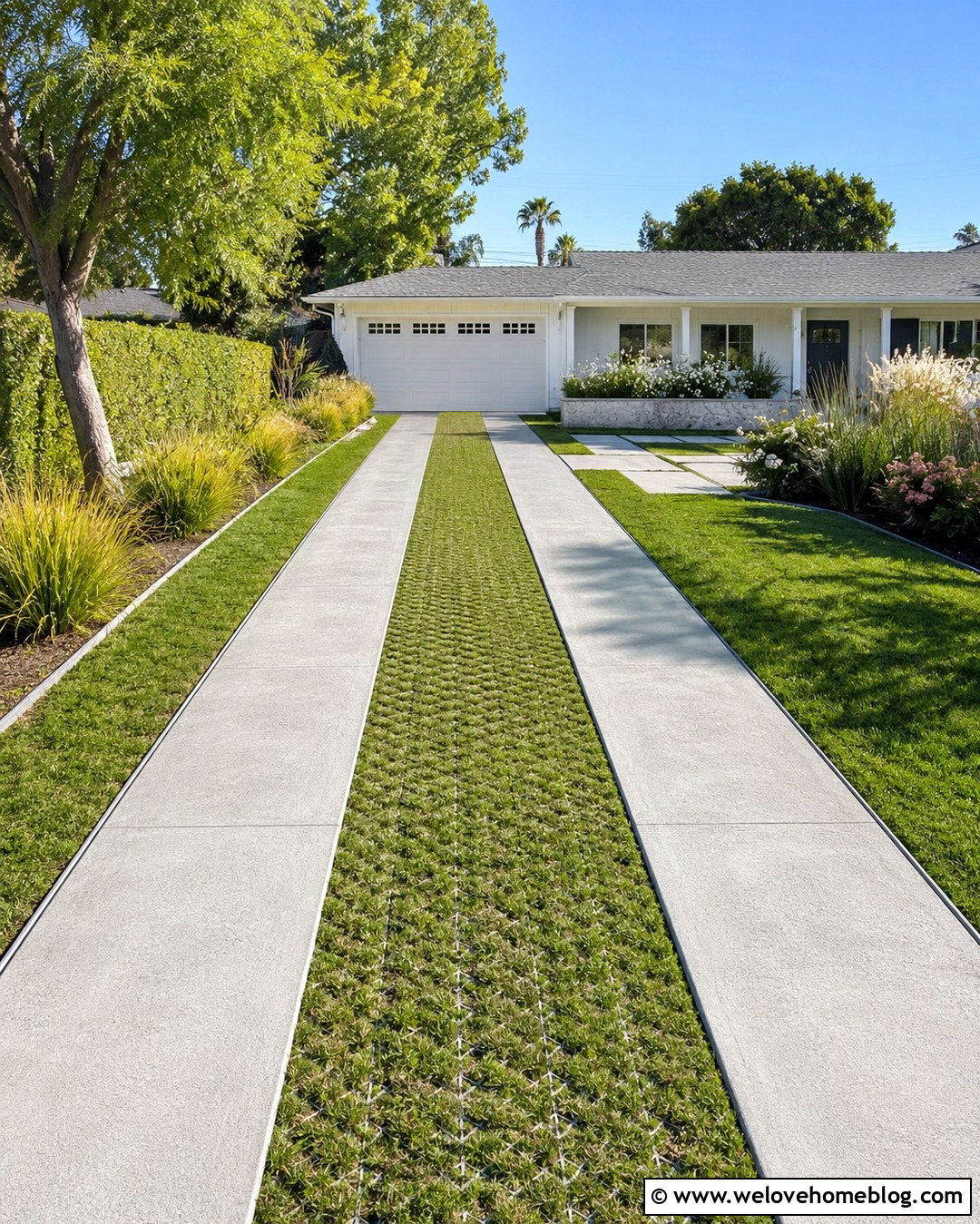
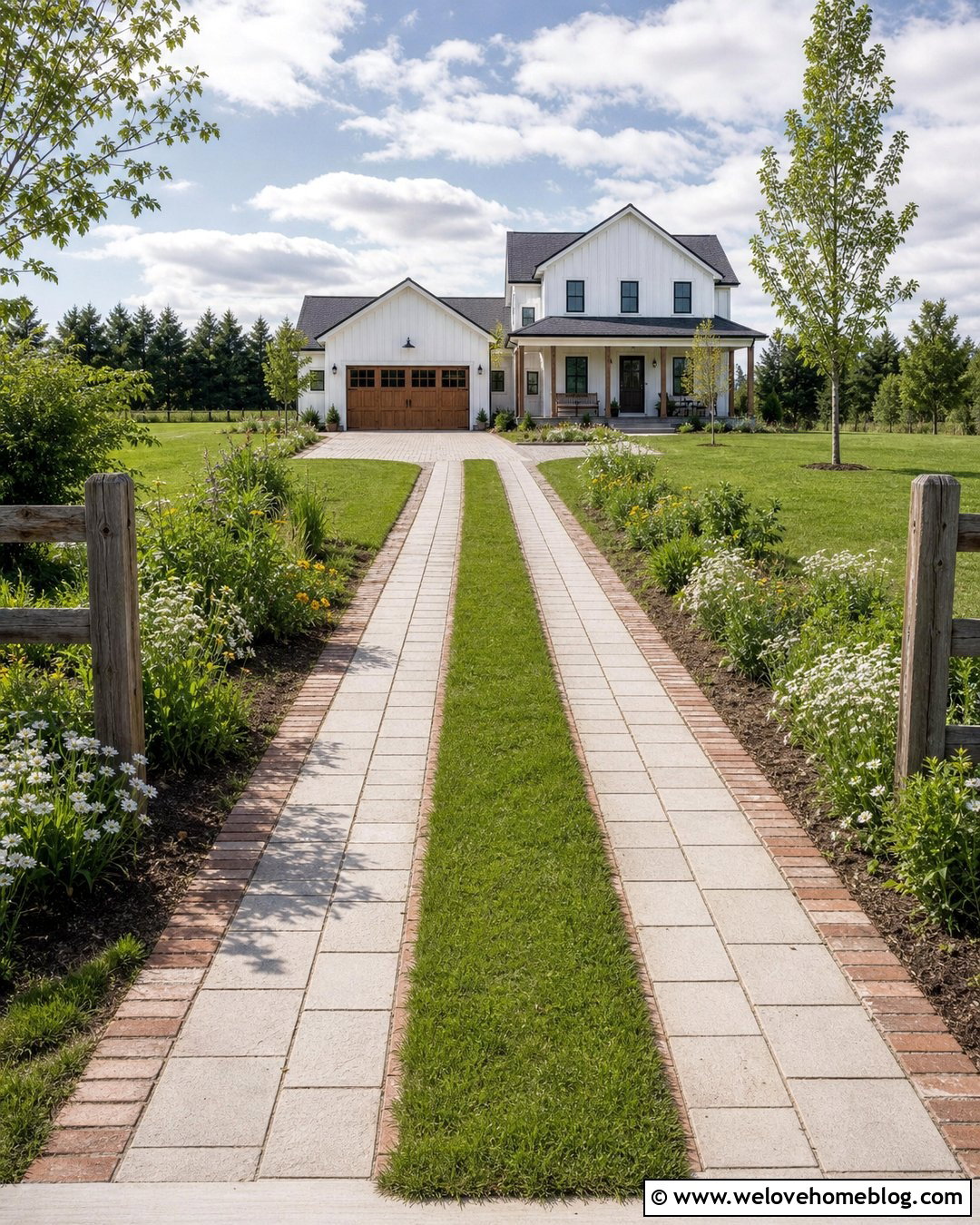
Want a green driveway without making the route difficult to recognize? Combine reinforced grass grid panels with two light-gray concrete wheel strips. The grass-filled center and shoulders blend into the lawn, while the concrete strips provide a clear path toward the garage. This layout complements ranch homes, cottages, and houses on narrow lots. Install the grass grid and supporting base according to the expected vehicle loads, soil conditions, and manufacturer instructions. Use durable turf suited to local sun exposure and traffic. A simple steel edge can separate the reinforced area from garden beds without adding visual weight. Continue the planting with ornamental grasses and compact flowering shrubs, creating a driveway that feels more like part of the yard than a large paved surface. ()
4. White Gravel Geogrid Driveway With Black Metal Edging
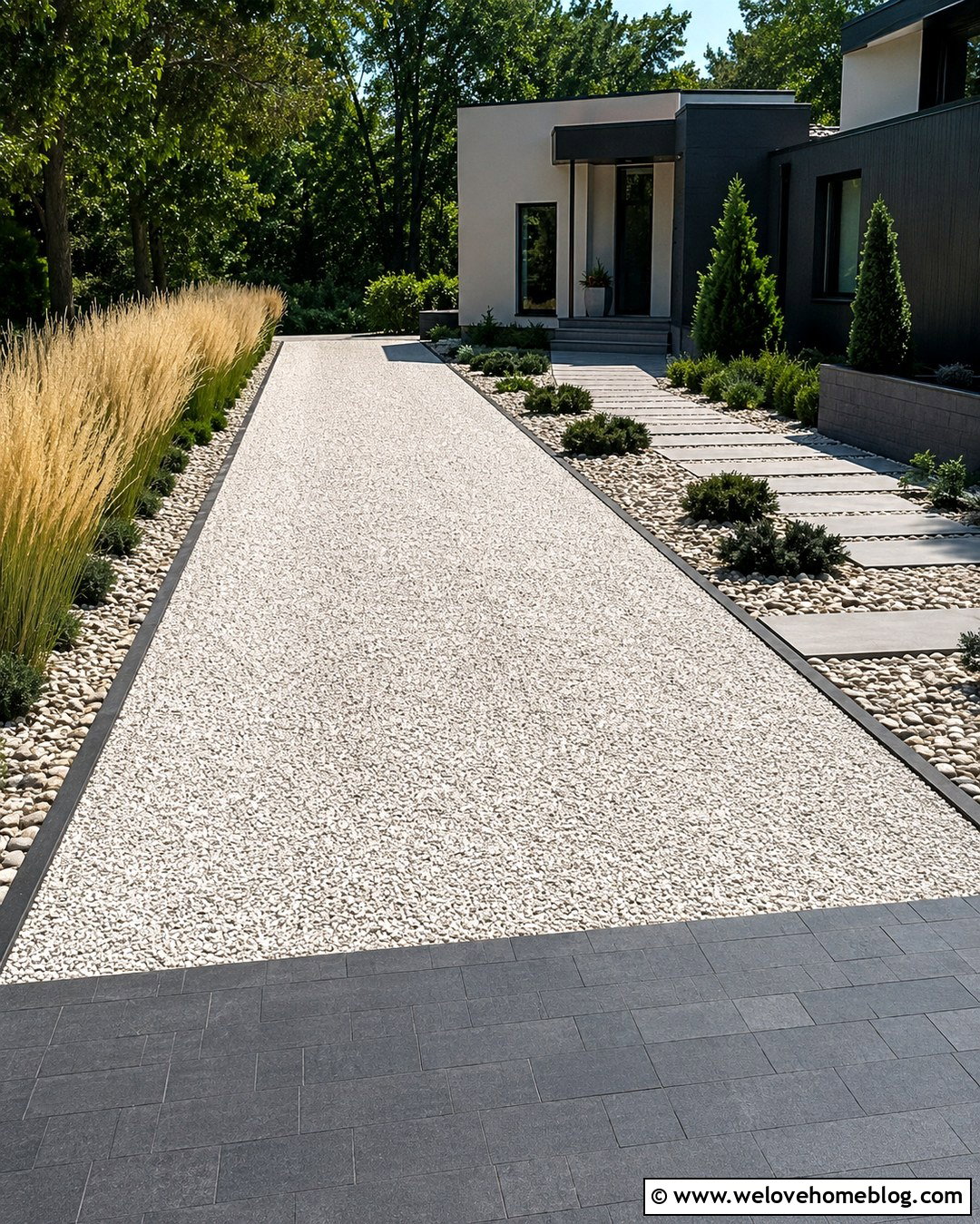
Bright white gravel can give a geogrid driveway a clean modern appearance, especially when paired with slim black steel edging. Use a wide, straight layout in front of a contemporary house with white stucco, charcoal siding, or natural wood accents. Fill a vehicle-rated cellular grid with pale angular gravel that fits the manufacturer’s recommended size range. Add a dark paver apron near the sidewalk to create contrast and protect the busiest transition. Linear beds filled with feather reed grass, dwarf evergreens, and smooth river stones can reinforce the modern geometry. Because pale aggregate can show leaves and soil, keep nearby planting simple and provide defined walking paths. The restrained palette lets the texture of the gravel become an important part of the overall design.
5. Crushed Granite Geogrid Driveway With Timber Edging
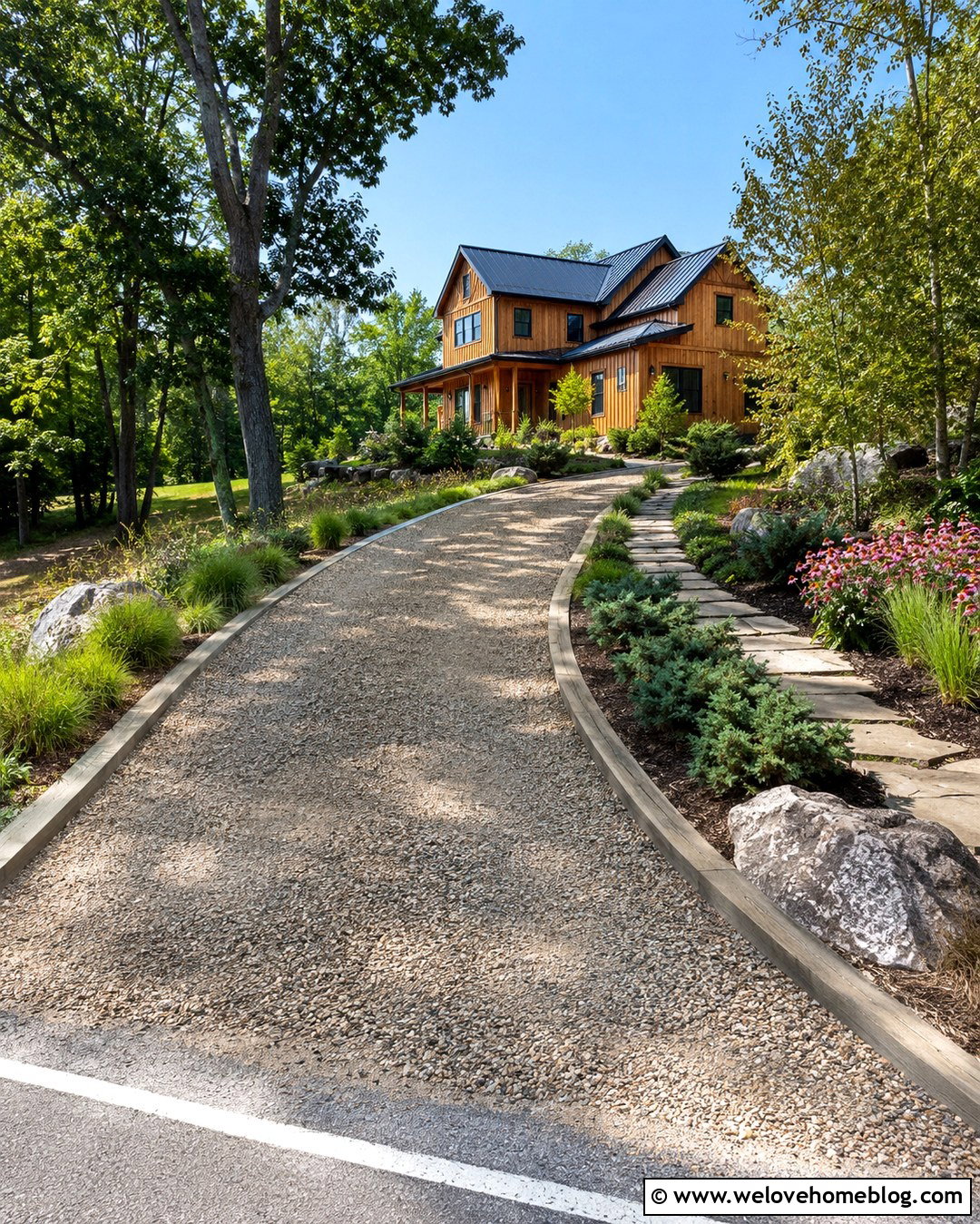
Crushed granite brings natural color to a rural or wooded property. Shades of tan, rust, gray, and brown pair beautifully with a farmhouse, log home, or cedar-sided cottage. Create a long, slightly curved driveway using geogrid stabilization and compacted aggregate layers suited to the site. Pressure-treated landscape timbers can provide an affordable edge, but they should be securely anchored and positioned where they will not interfere with drainage. Plant native grasses, coneflowers, and low junipers outside the timber border. At the entrance, use larger natural boulders instead of formal masonry pillars. Angular crushed stone generally locks together more effectively than smooth decorative rock, making it a practical surface choice for a frequently used country driveway. ()
6. Limestone Geogrid Driveway With Stone Pillars
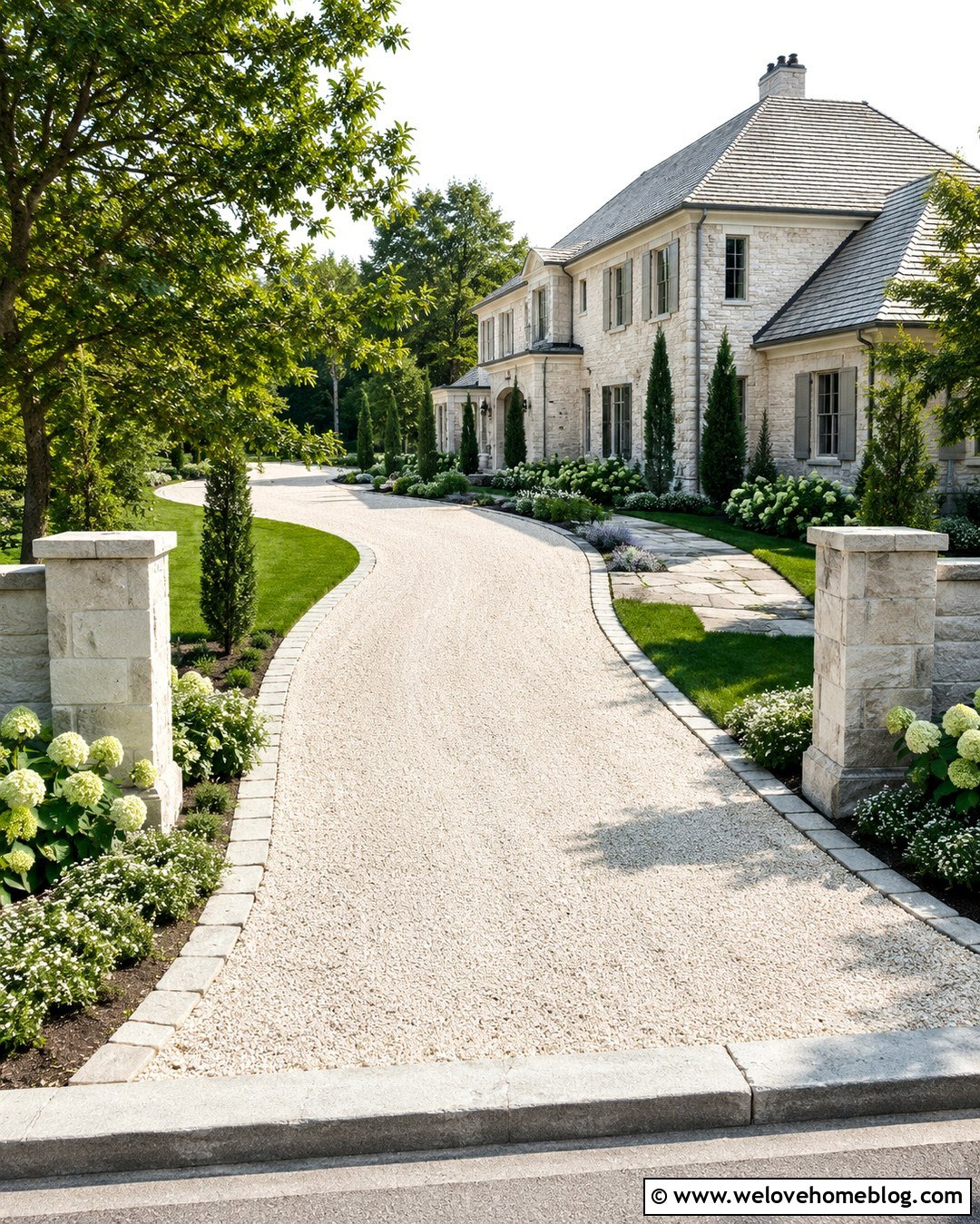
Cream-colored crushed limestone creates a bright driveway that complements natural stone architecture. Shape the approach with a gentle curve and install matching limestone pillars at the street. The pillars can frame the entrance without requiring a gate, making the driveway feel established while remaining open. Use a cellular confinement grid filled with suitably sized crushed limestone to maintain a more uniform surface. Edge the driveway with rectangular limestone blocks or a narrow band of darker gravel for definition. Around the pillars, add compact hydrangeas, upright junipers, and low ground cover that will not block sightlines. The pale aggregate, masonry entrance, and layered landscaping work especially well with French country, European-inspired, and modern farmhouse homes. Include drainage planning before placing pillars or planting beds.
7. Black Gravel Geogrid Driveway With Concrete Paver Bands
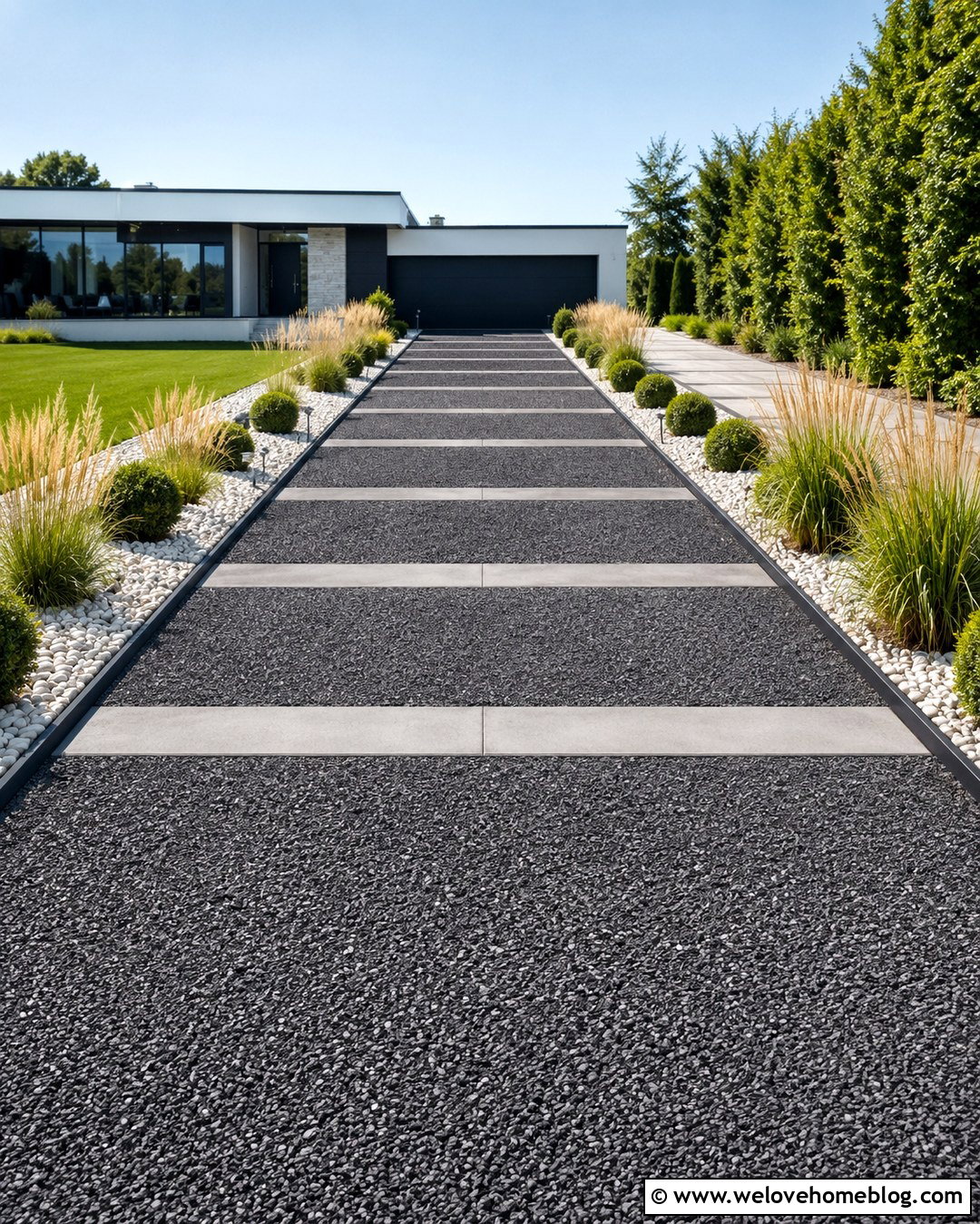
Dark gravel gives a grid-supported driveway the visual weight of asphalt while retaining a more textured finish. Choose charcoal basalt, dark granite chips, or another angular aggregate compatible with the cellular grid. Install wide light-gray concrete paver bands across the driveway at regular intervals. These bands break up a long surface and can visually connect the driveway to a matching front walkway. Use a straight or subtly curved layout beside a modern home with large windows and simple rooflines. Add structured beds containing globe shrubs, ornamental grasses, and pale decorative stones. Strong edge restraints are important where loose aggregate meets pavers or lawn. The result is graphic and contemporary, but the gravel texture keeps the entrance from feeling overly hard or commercial.
8. Circular Geogrid Driveway With a Planted Center Island
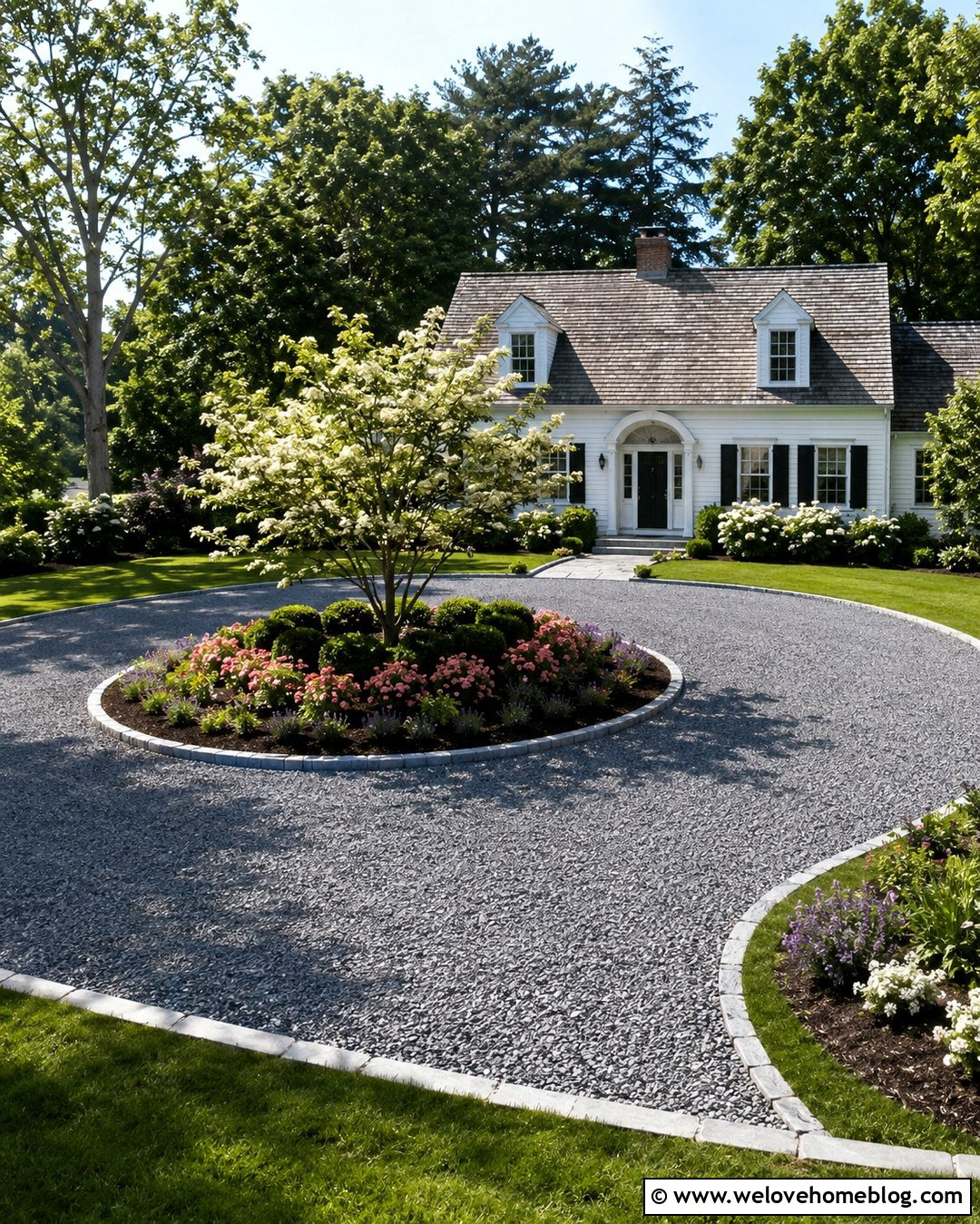
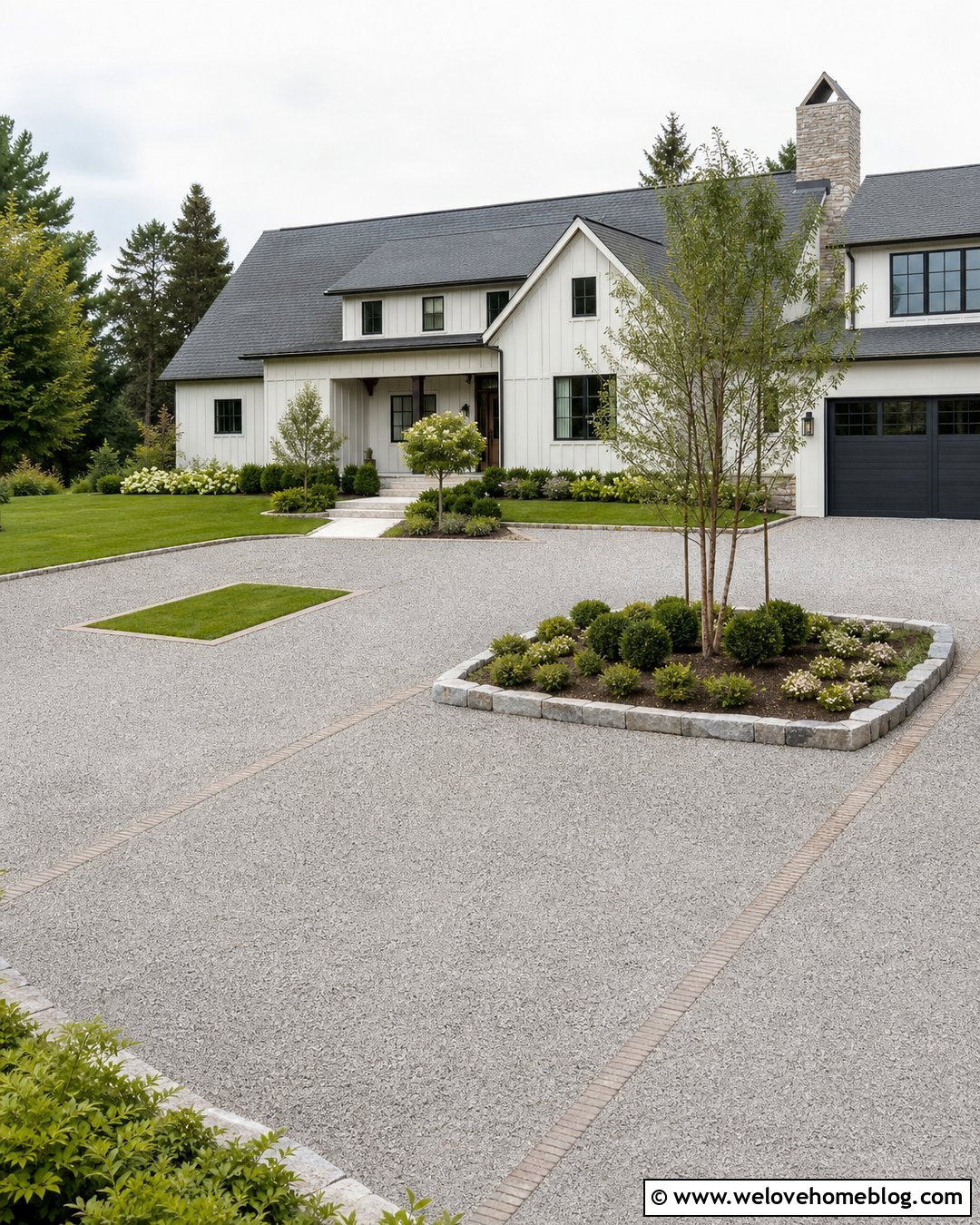
A circular geogrid driveway makes arriving and leaving easier while creating a large focal point in the front yard. Fill the vehicle-rated cellular system with medium-gray angular gravel, then surround the center island with a durable granite or concrete curb. Inside the island, plant one small ornamental tree with a ring of low shrubs and seasonal perennials. Avoid tall, dense planting near the entrance where it could restrict visibility. Repeat the curb material along the outside edge to unite the design. This layout suits Colonial, Cape Cod, and larger ranch homes with broad front yards. Base depth, grid type, turning loads, drainage, and local soil conditions should be evaluated during planning, particularly where vehicles repeatedly follow the same circular path. ()
9. Farmhouse Geogrid Driveway With Grass Borders
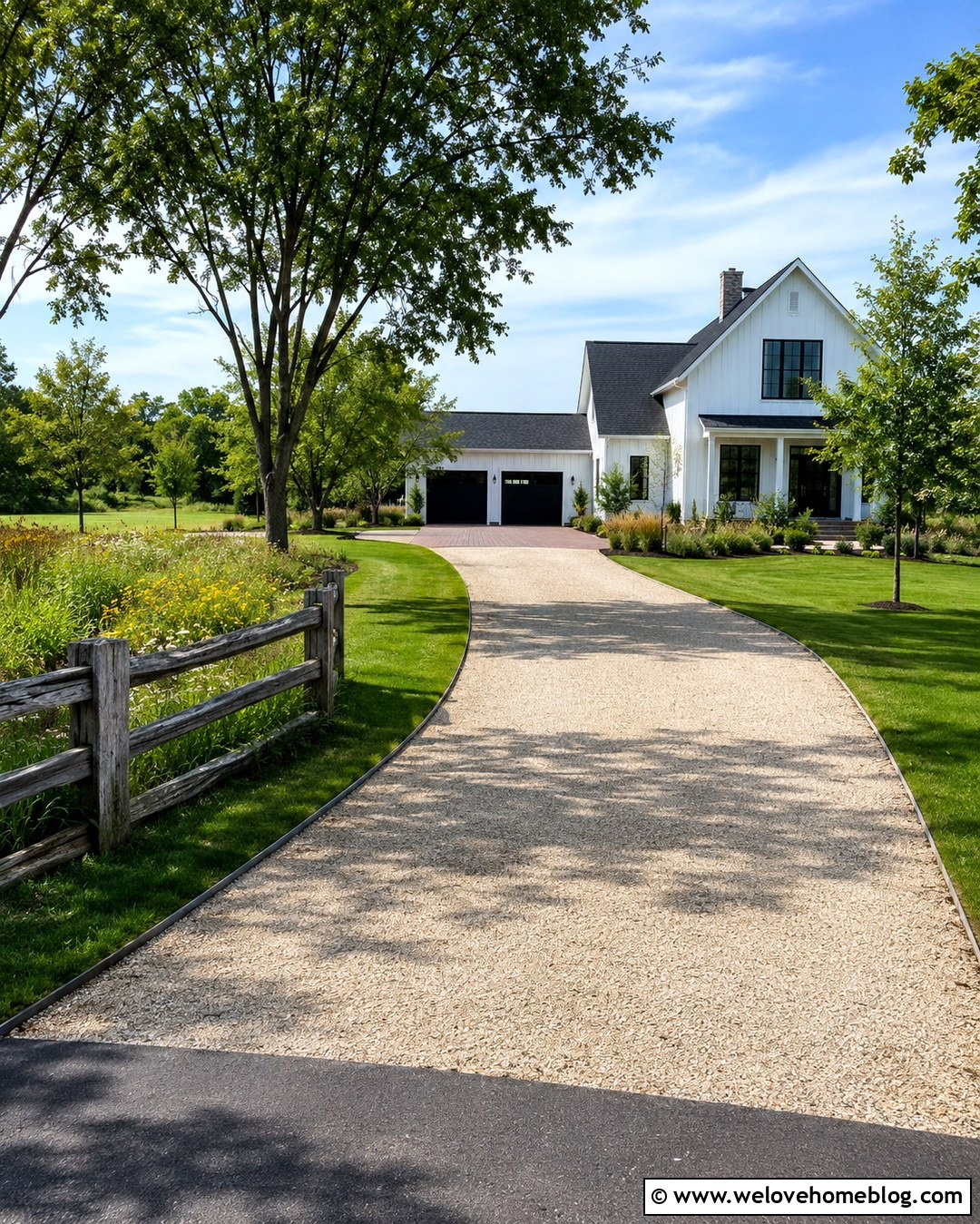
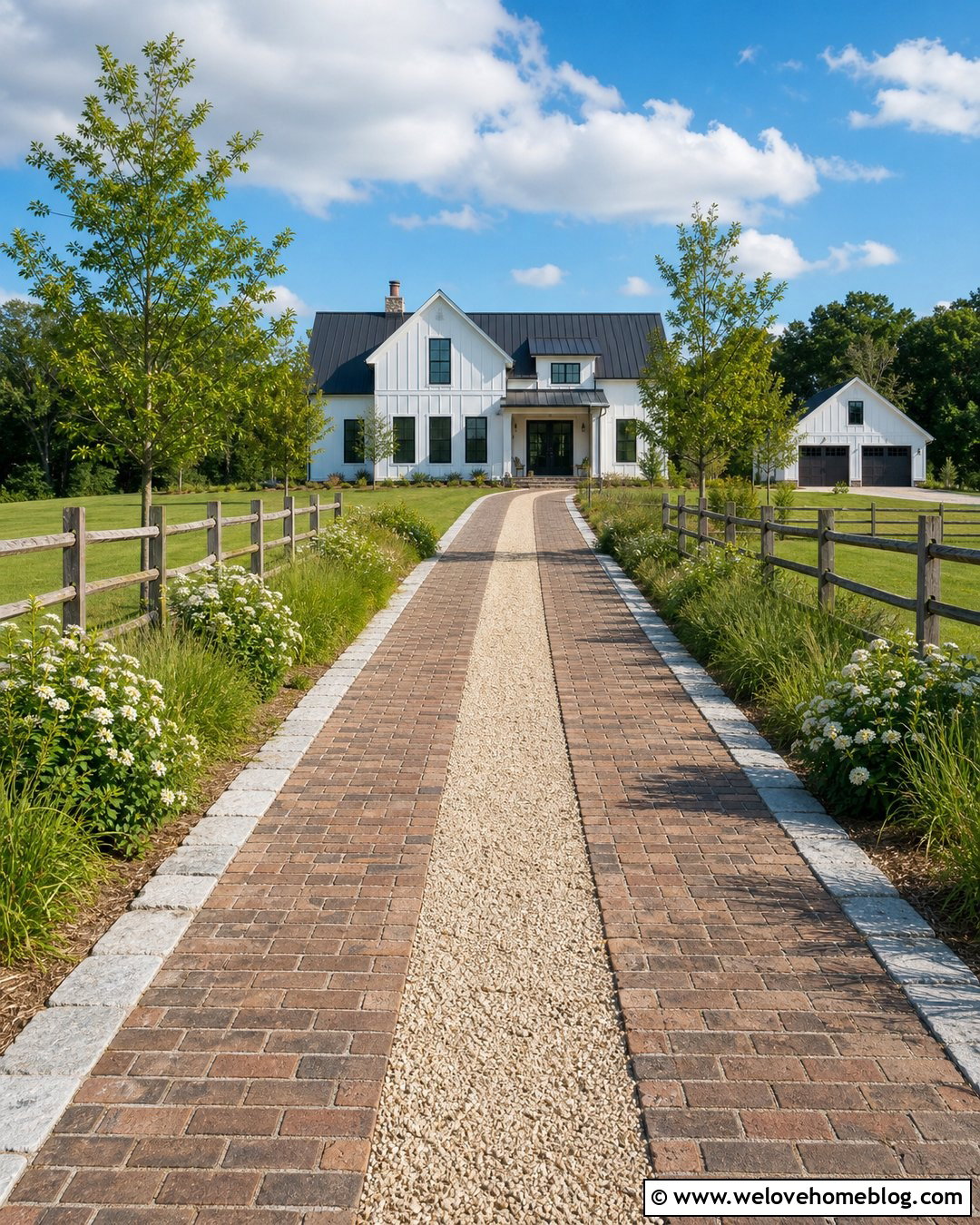
A farmhouse driveway should feel simple and established rather than overly decorated. Use beige crushed gravel held within a cellular geogrid and shape the driveway into a relaxed curve through an open lawn. Wide grass borders can soften the edges, while flush steel restraints keep the gravel contained without creating an obvious frame. Near the house, widen the driveway into a practical parking and turning area. Plant a few canopy trees far enough from the driving surface to protect visibility and reduce root conflicts. A split-rail fence at the entrance can reinforce the rural setting without closing it off. Finish the garage transition with a band of weathered brick or concrete cobbles that complements the farmhouse facade and catches displaced gravel before it reaches the garage floor.
10. Modern Geogrid Driveway With Large Concrete Pavers
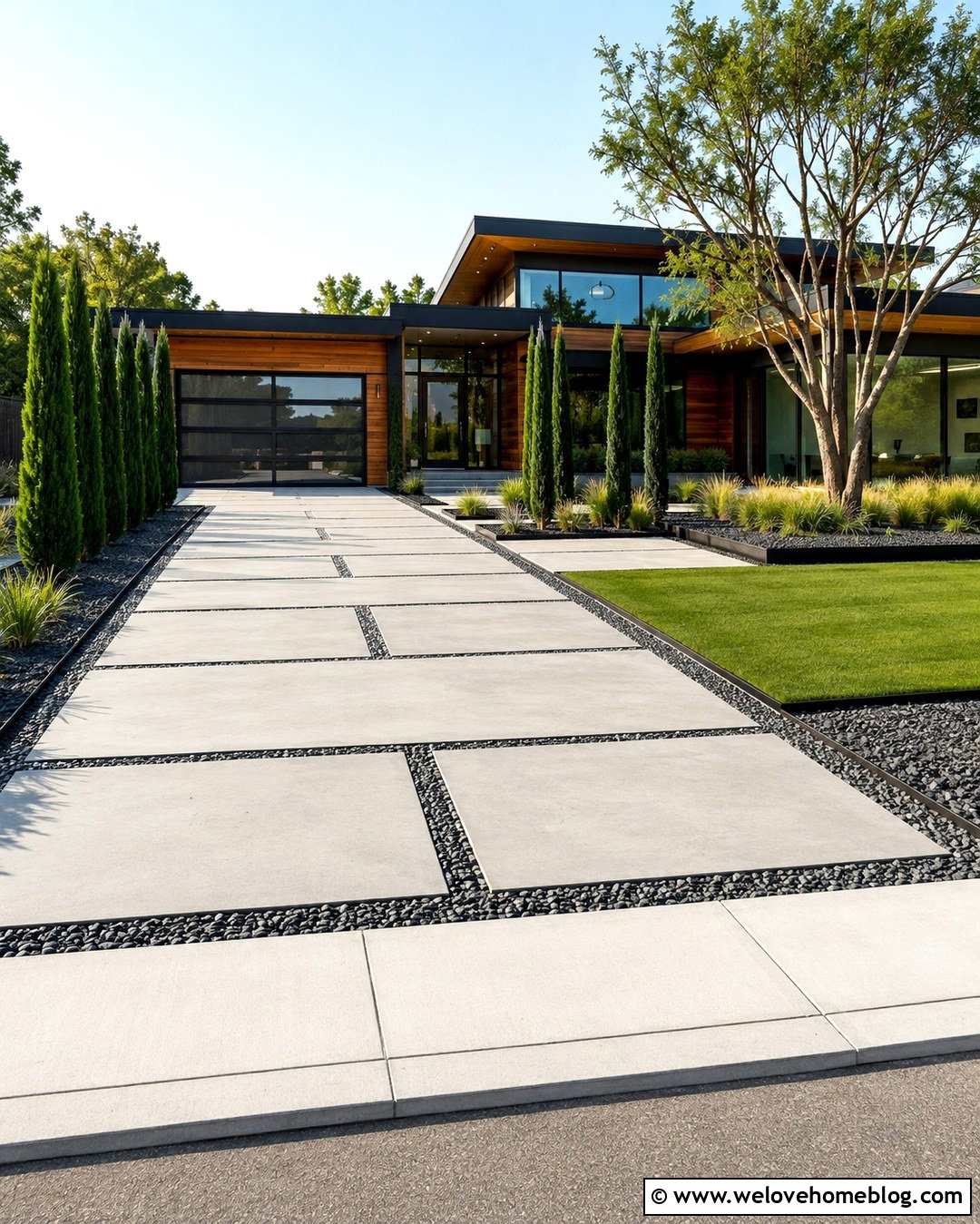
Mixing large concrete pavers with grid-confined gravel creates a high-end modern entrance. Arrange oversized rectangular pavers as wide bands or parking pads, then fill the surrounding geogrid with dark gray crushed aggregate. Keep the layout straight and geometric so every line relates to the garage, front walkway, and architecture. Black metal edging can form a precise boundary beside the lawn. Use restrained planting, such as columnar evergreens, low ornamental grasses, and one sculptural tree. The pavers should be installed over a driveway-rated foundation rather than placed loosely on top of gravel. A qualified installer can coordinate the different base requirements and transitions. This combination provides strong visual contrast while reducing the amount of continuous solid paving in the front yard. ()
11. Sloped Geogrid Driveway With Angular Gravel
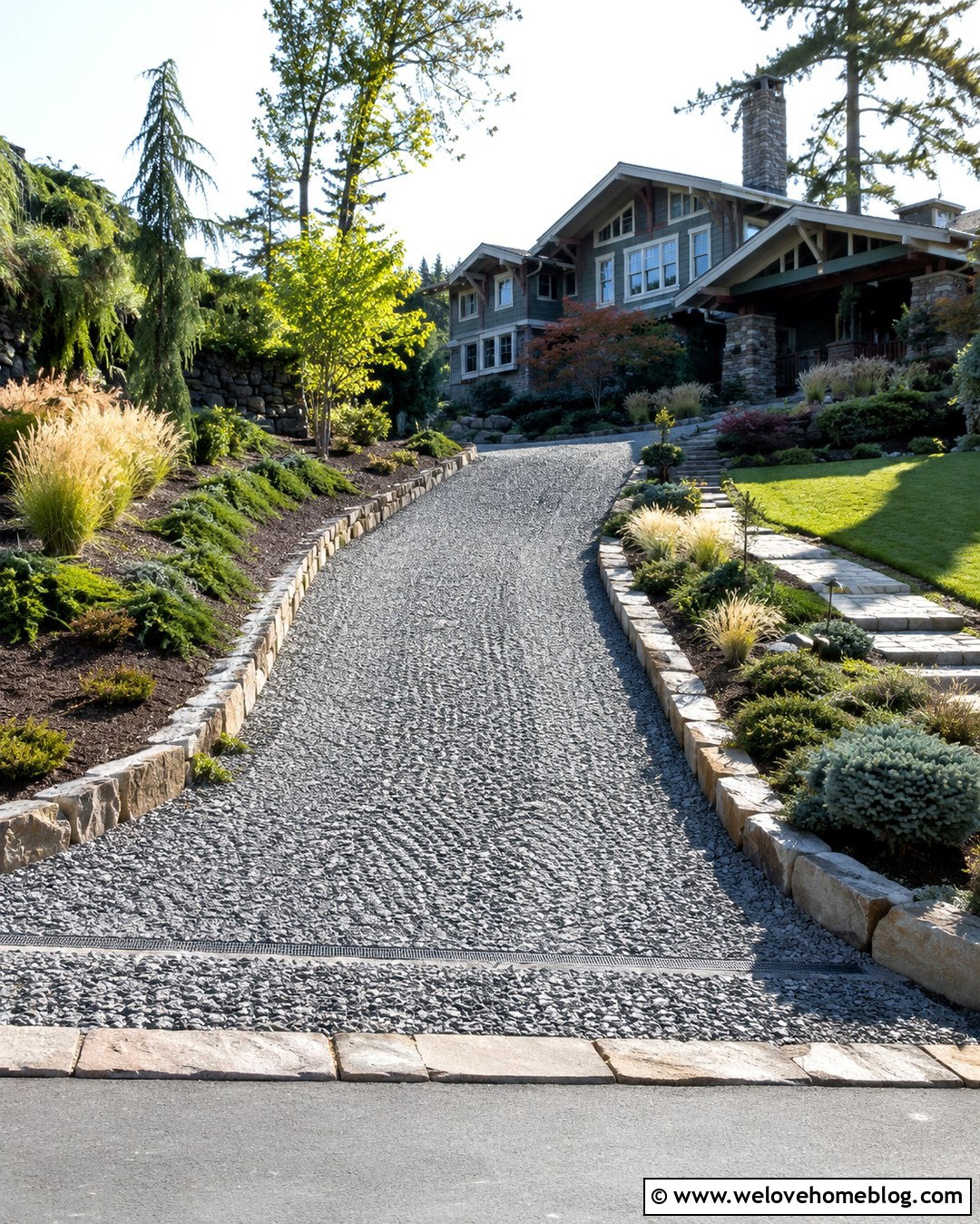
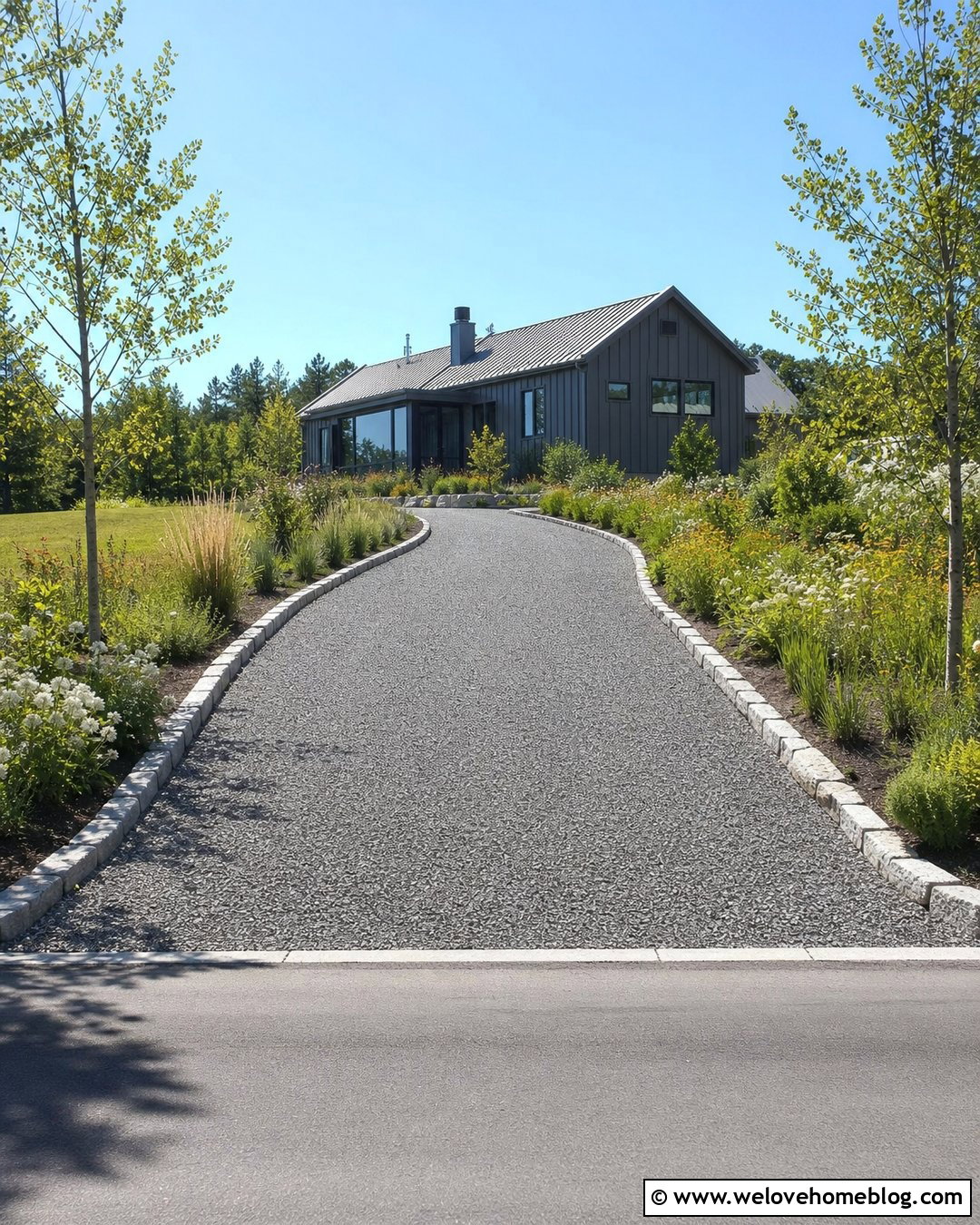
Sloped driveways need more than an attractive top layer. Use an angular crushed aggregate that can interlock within a slope-rated cellular grid instead of smooth river stones that readily roll downhill. The driveway can curve gradually to reduce its visual steepness, with stone curbs controlling the edges. Add a drainage channel or permeable transition at the lower end when required by the site plan. Drought-tolerant grasses and spreading shrubs can stabilize the surrounding banks while keeping the driving route open. Product slope limits, anchoring requirements, base construction, and stormwater conditions vary, so the chosen system must match the actual grade and expected traffic. A properly designed sloped geogrid driveway can look natural while reducing the loose gravel that typically collects near the bottom. ()
12. Geogrid Driveway Extension With a Grass Finish
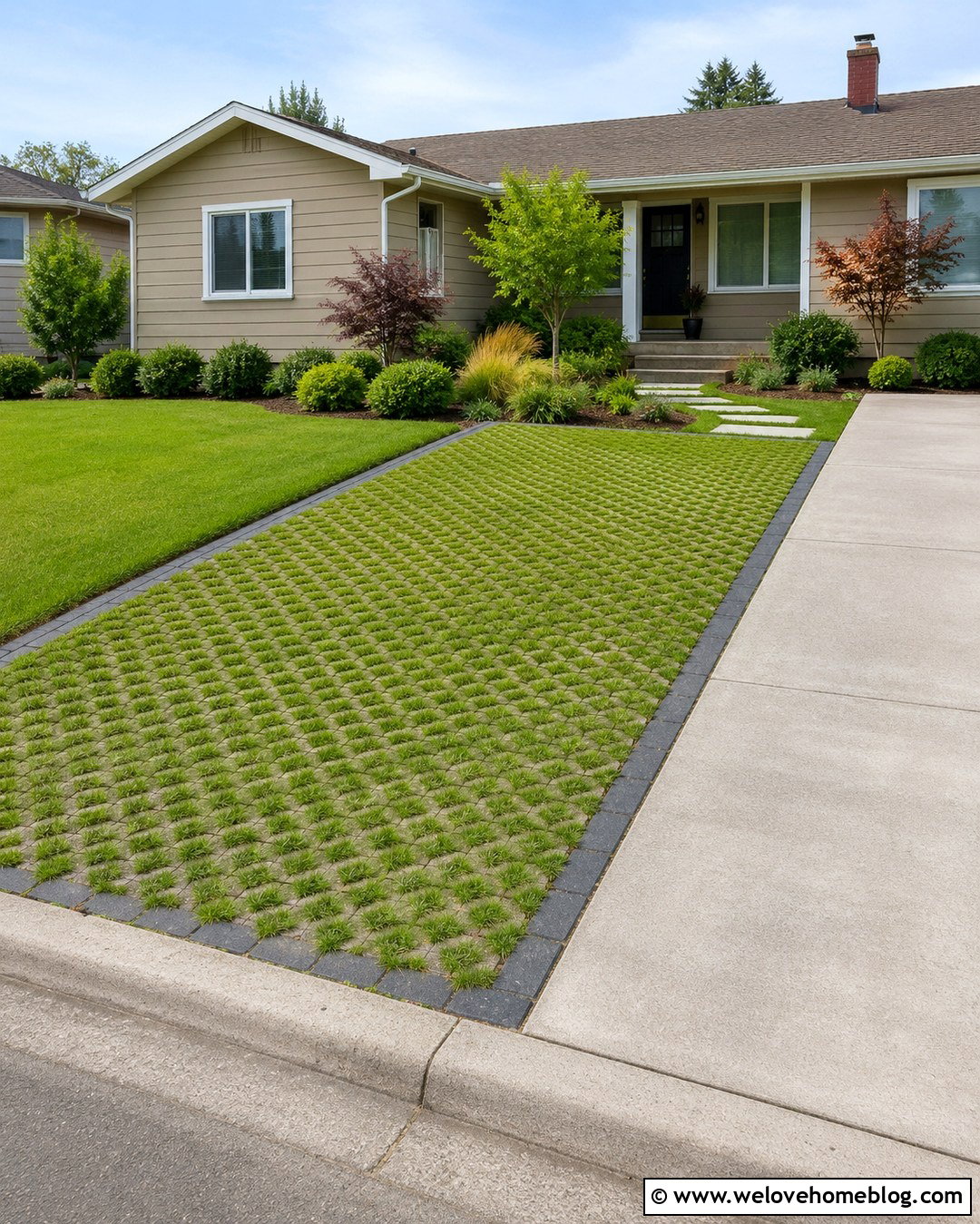
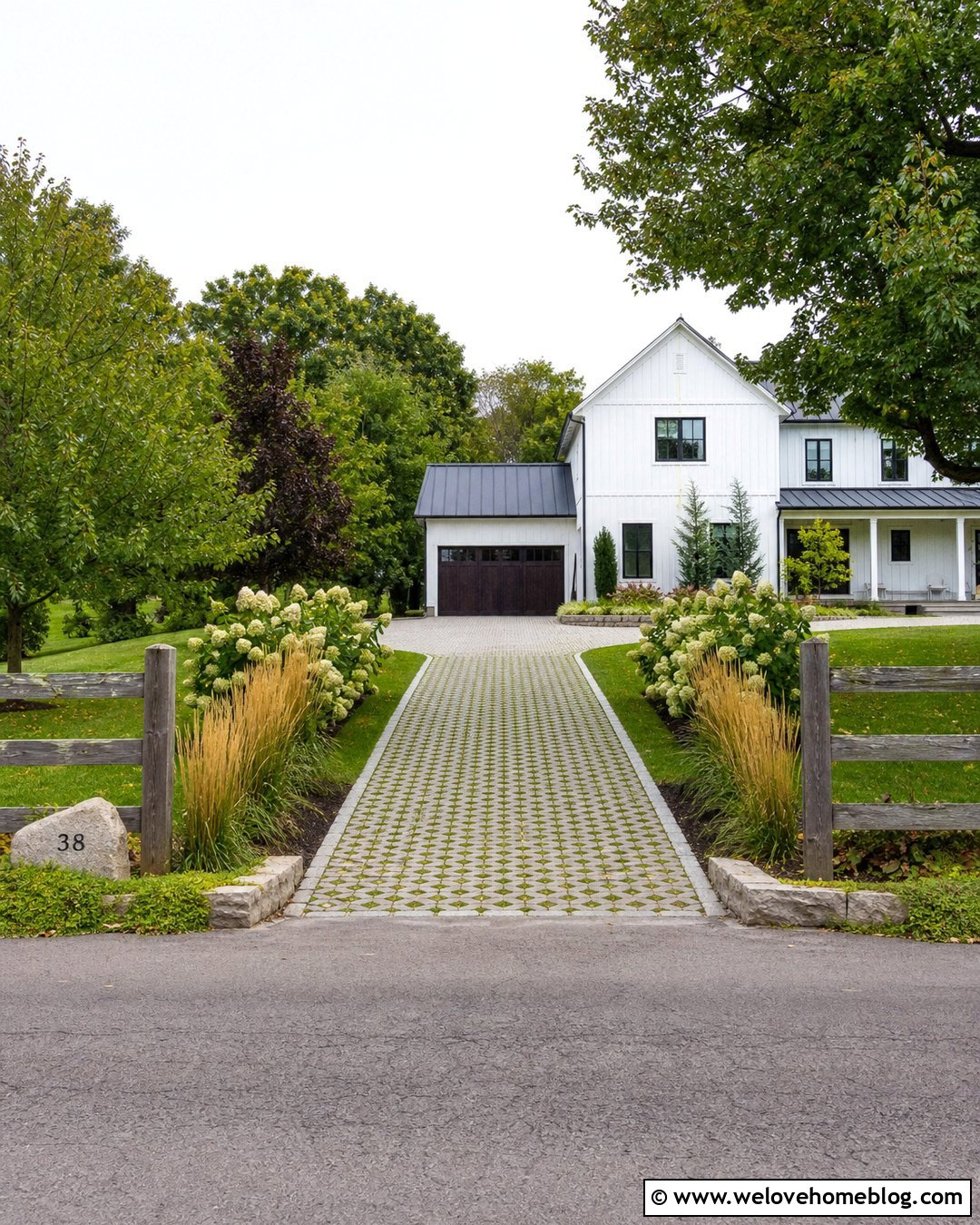
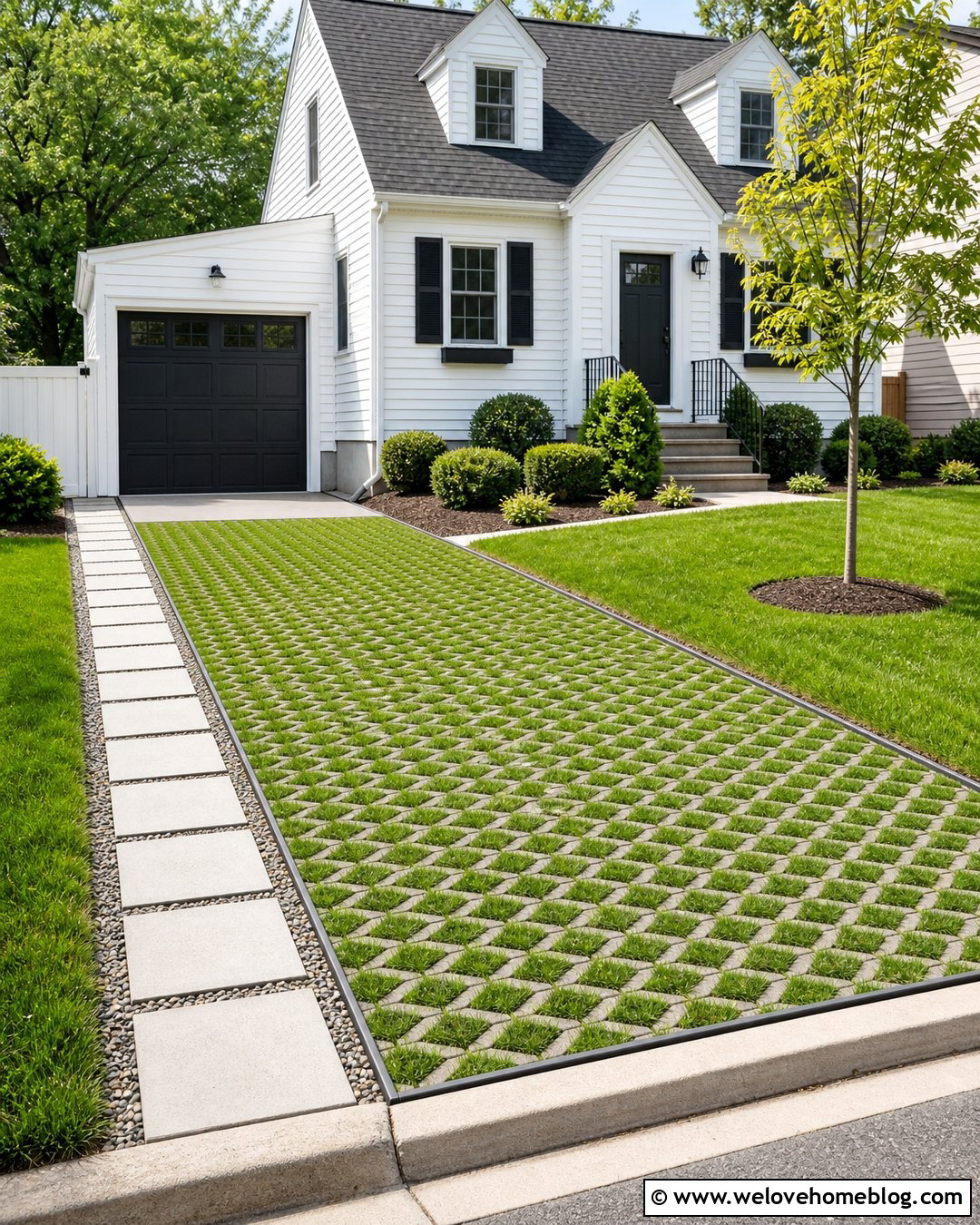
When occasional guest parking is needed, a grass-filled grid extension can prevent the front yard from becoming a muddy turnout. Place the reinforced section beside an existing concrete, asphalt, or paver driveway, aligning it with the primary parking area. A subtle flush border can mark the transition while allowing the grass surface to blend naturally with the lawn. Select a vehicle-rated grid and turf mix appropriate for the amount of traffic, sunlight, and irrigation available. The extension can remain visually green when it is not being used. Add a stepping-stone walkway nearby so visitors do not need to cross wet grass. This design works best for overflow parking rather than automatically assuming every grass surface will tolerate constant daily turning and braking. ()
13. Geogrid Driveway With a Brick Entrance Apron
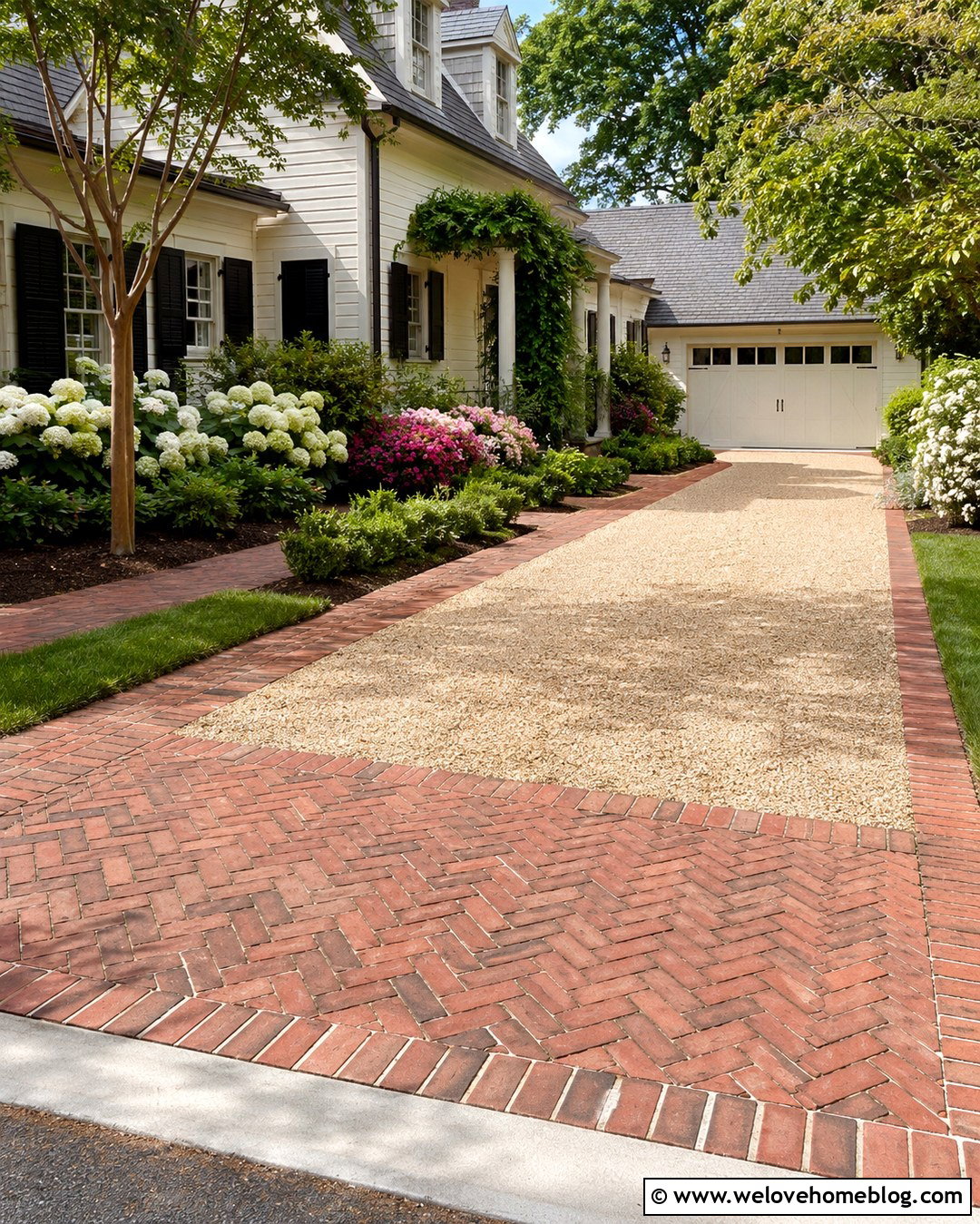
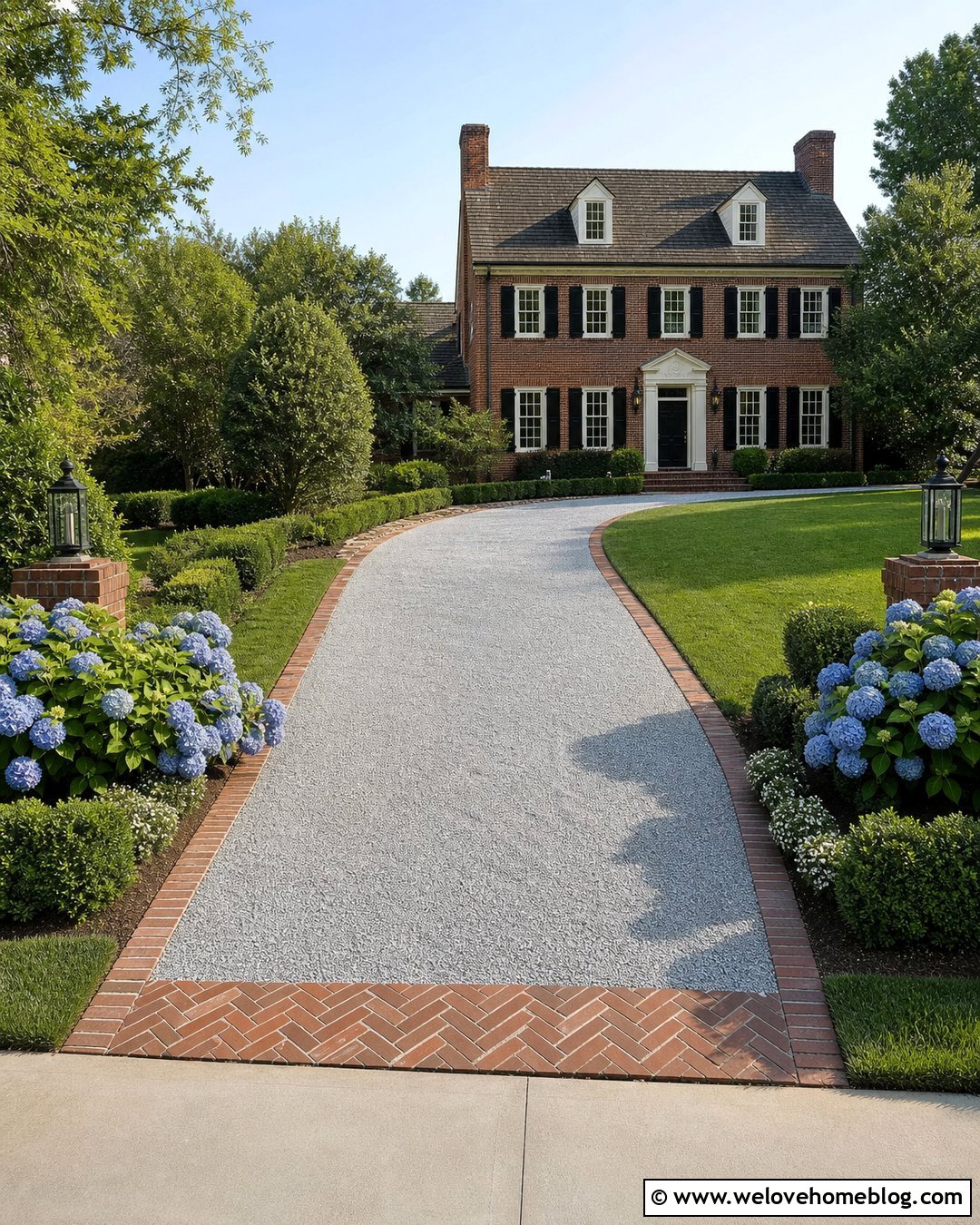
A brick apron gives an informal gravel driveway a polished connection to the street. Fill the main cellular geogrid with tan or gray crushed stone, then install clay brick pavers across the first several feet of the entrance. A herringbone pattern can handle the visual weight of a broad opening, while soldier-course bricks define the sides. Continue a narrow brick border along the driveway to connect the apron with the house. Flowering shrubs and compact ornamental trees can frame the entrance without crowding it. Make sure the gravel, grid, brick paving, and public roadway meet at coordinated elevations. Proper edge support is essential because turning tires apply extra pressure where materials change. The brick should look integrated into the driveway rather than applied as a decorative patch. ()
14. Geogrid Driveway With Native Plant Borders
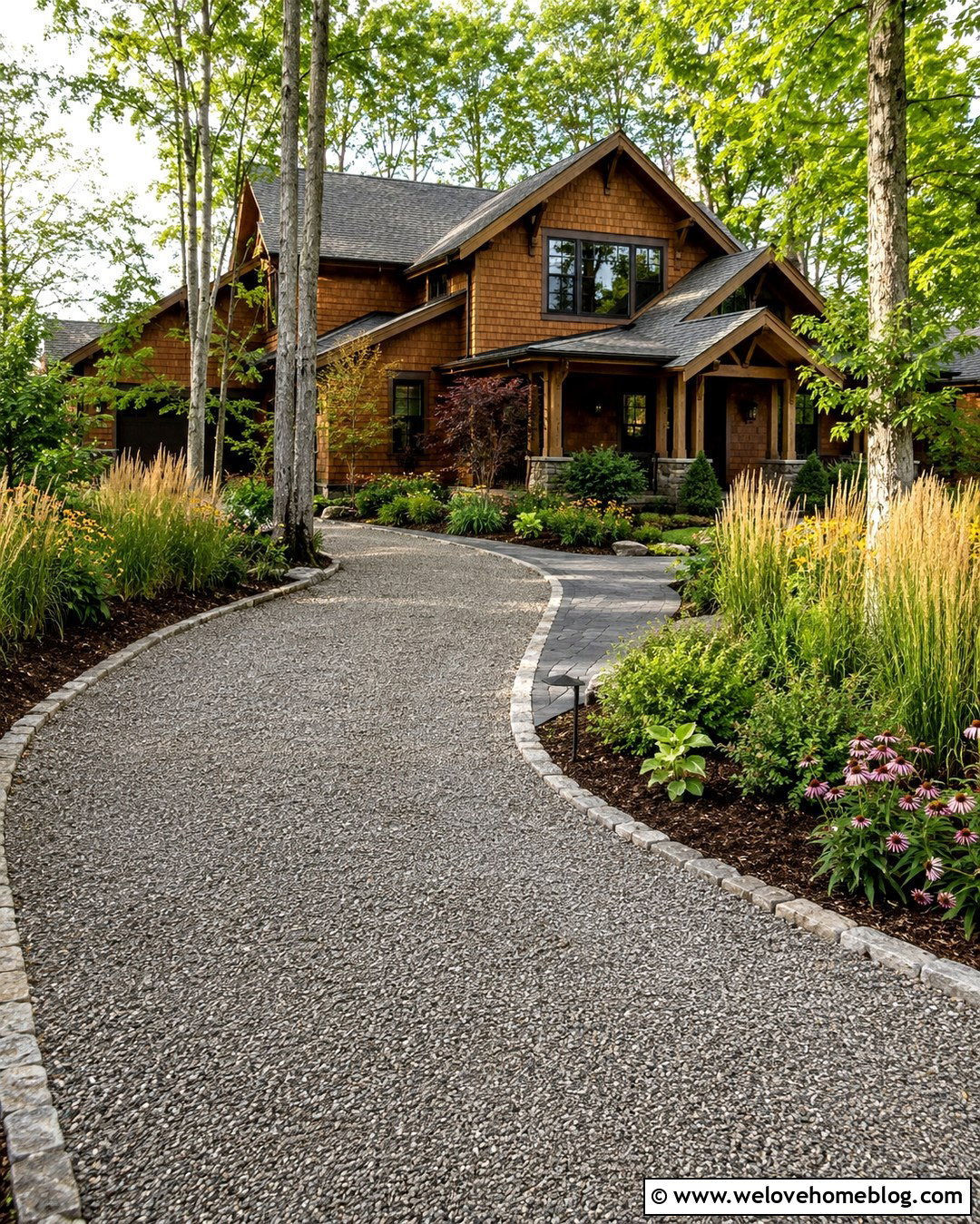
Native planting can make a geogrid driveway feel settled into its surroundings. Use warm gray crushed gravel on a gently winding route, edged with flat natural stones or dark metal strips. Build broad planting beds containing locally appropriate grasses, flowering perennials, and compact shrubs rather than relying on a single plant variety. Group plants in repeated drifts to create order and keep mature growth clear of vehicle doors and sightlines. A low-maintenance mulch layer can separate foliage from loose driveway aggregate. Near the home, connect the gravel to a permeable paver walkway in a complementary color. This complete look suits Craftsman houses, woodland homes, and contemporary residences. Choose plants based on local soil, rainfall, sunlight, and winter maintenance requirements for a practical border.
15. Geogrid Driveway With Permeable Paver Parking Pads
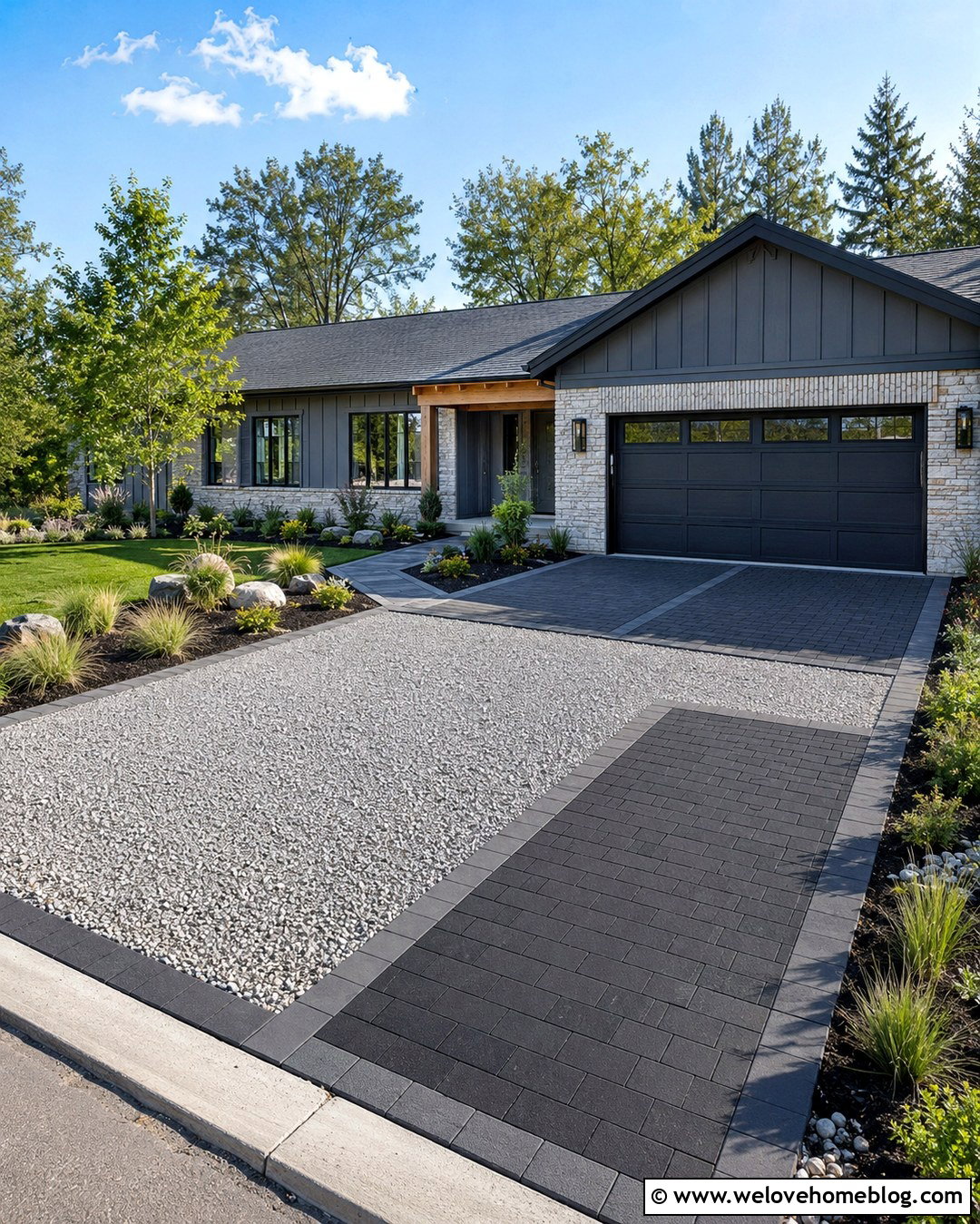
A hybrid driveway can combine grid-confined gravel travel lanes with permeable paver parking pads near the garage. Use light-gray angular gravel for the approach and darker concrete permeable pavers to define the places where vehicles stop. A charcoal paver border can connect both surfaces and provide a clean edge beside the lawn. The open-jointed paver system and gravel section require carefully designed aggregate foundations that support traffic while managing water. Underground drainage may still be necessary when native soil drains slowly or the site collects runoff. Add rain-garden planting beside the lowest edge if it fits the approved drainage plan. With a modern ranch or contemporary home in the background, the mixed materials create clear parking organization without making the entire front yard one uninterrupted surface. ()
16. Narrow Geogrid Driveway With Paver Edging
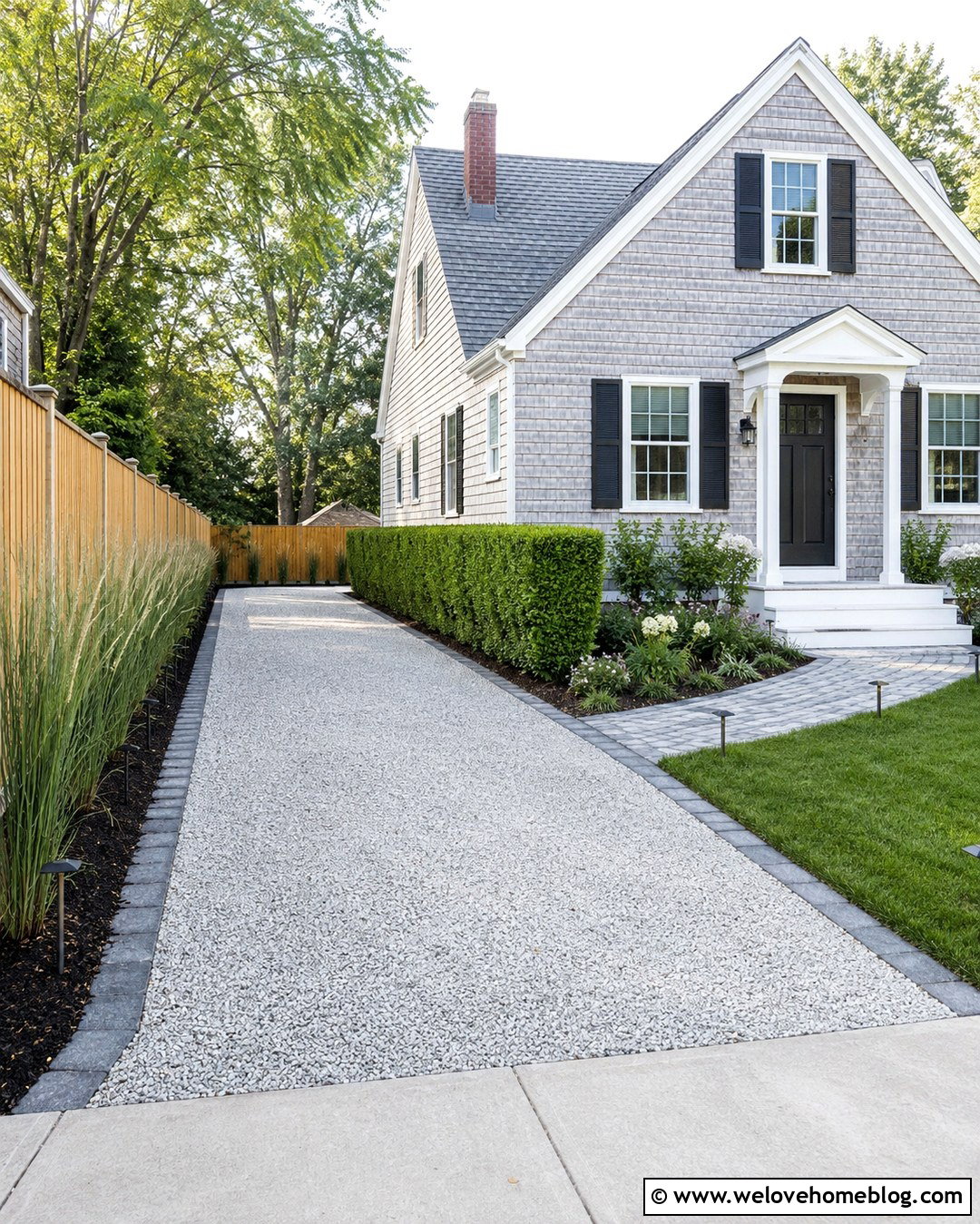
A narrow side-yard driveway can feel wider when its boundaries are clean and consistent. Fill a cellular geogrid with pale gray crushed stone, then add slim charcoal paver edging on each side. Keep the route straight to make maneuvering simple and avoid placing large shrubs near doors or mirrors. A narrow planting strip with upright grasses can soften a fence or blank wall without taking over the driving area. Where space allows, merge the paver border with a matching walkway to the side entrance. Consider a slightly flared opening near the street to improve the turning approach without widening the entire driveway. Accurate grading, strong edge control, and a properly compacted base are especially important because tires repeatedly travel close to the borders on narrow lots. ()
17. Geogrid Driveway With Solar Bollard Lighting
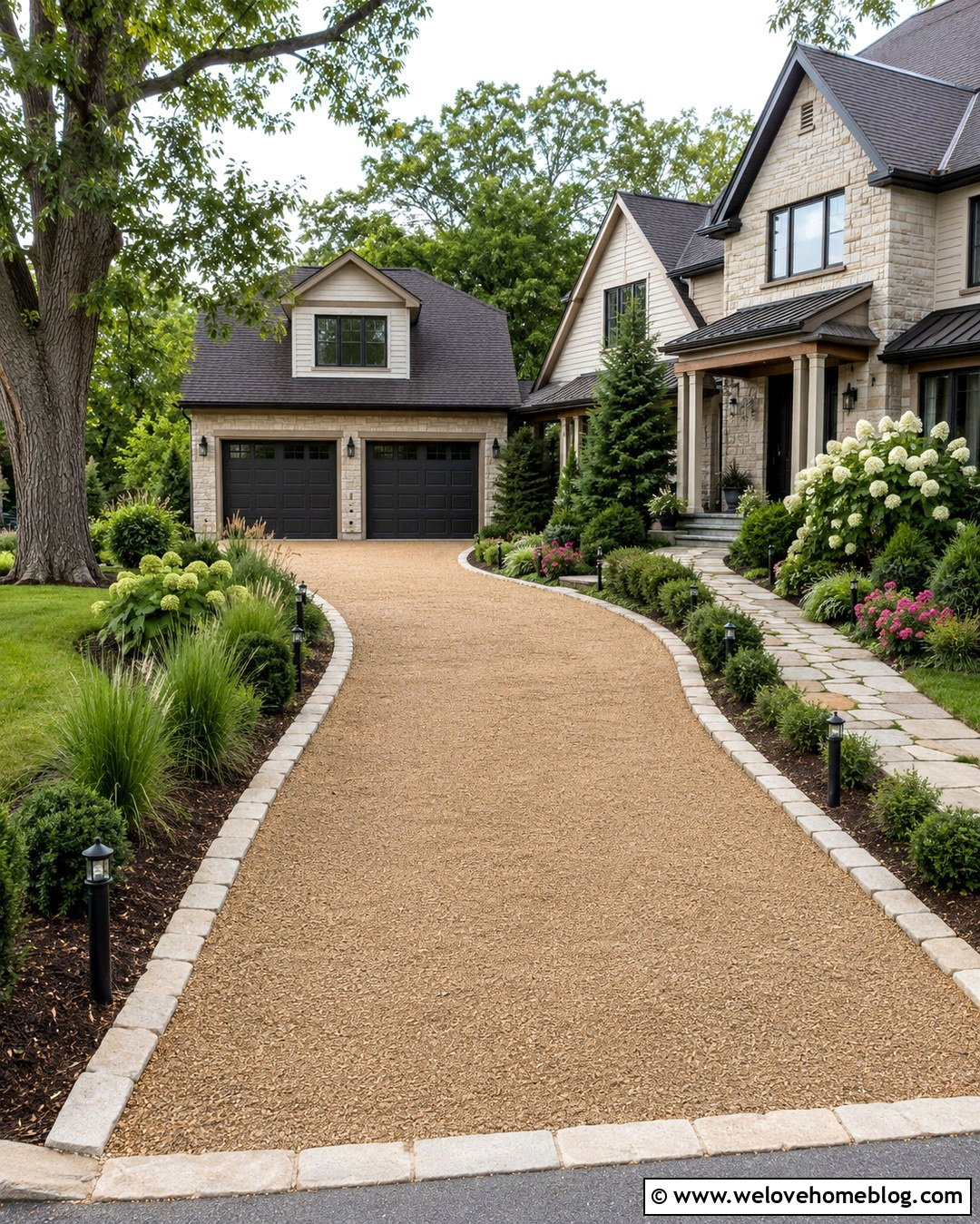
Daytime curb appeal matters, but a driveway should also be easy to follow after sunset. Use honey-toned crushed gravel inside a cellular geogrid and install low-profile black solar bollards outside the edge restraints. Space fixtures consistently along a curved driveway, concentrating illumination at the entrance, walkway crossing, and parking area. Keep the lights out of the vehicle clearance zone and away from places where snowplows or mowers may strike them. Limestone curbing can provide a bright boundary against the gravel. Surround the approach with low shrubs and ornamental grasses so foliage does not cover the fixtures as it matures. In daylight, the coordinated stone, black lighting, and layered planting create a complete design even when the lights are not operating.
18. Geogrid Driveway With a Gated Entrance
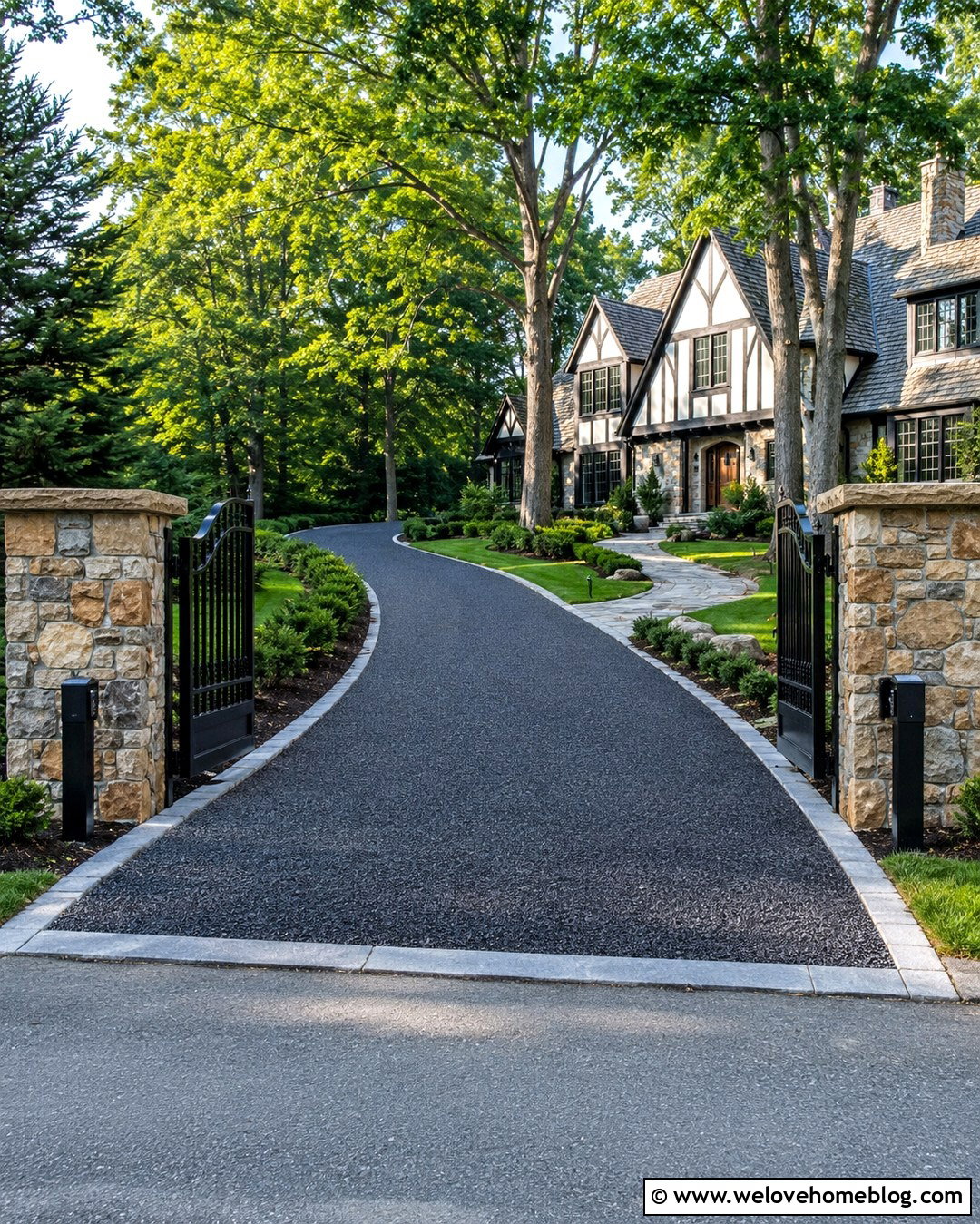
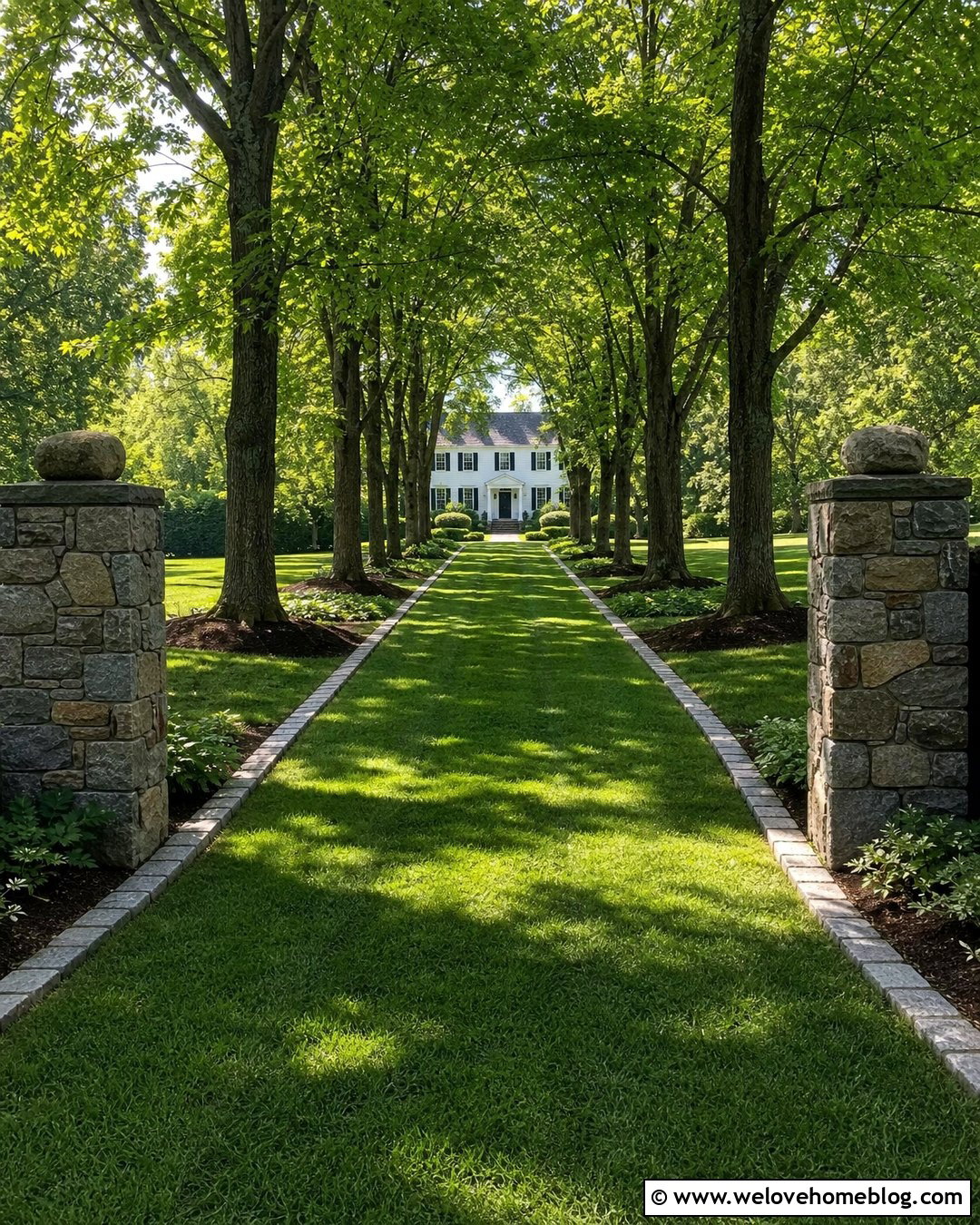
A gated geogrid driveway needs a stable, well-planned stopping and turning area. Use dark gray crushed granite in a vehicle-rated cellular system and create a wider level apron in front of the gate. Stone pillars can support a simple black metal gate, while matching granite curbs keep gravel away from the moving hardware. Continue the driveway in a gentle curve toward a country, Tudor, or traditional home. Low evergreen planting around the pillars provides year-round structure without blocking the address sign or visibility. Coordinate gate drainage, electrical conduits, access controls, and the driveway foundation before installation begins. The finished entrance should provide enough room for vehicles to wait safely without stopping on the roadway, subject to local setback, access, and permitting requirements.
19. Two-Tone Gravel Geogrid Driveway With a Center Strip
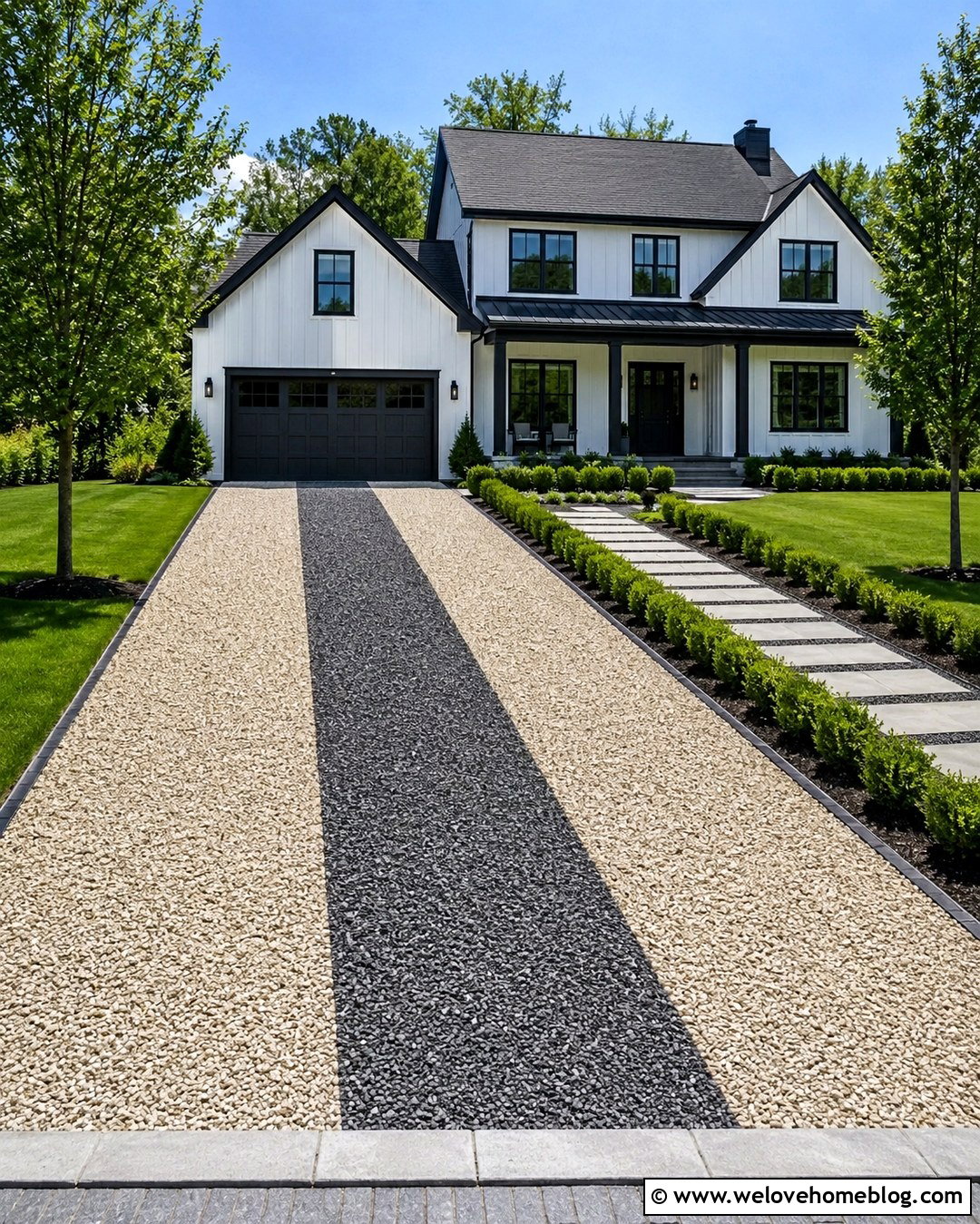
Two gravel colors can make a wide driveway feel more carefully designed. Fill the main cellular grid with light beige crushed stone, then create a broad center strip using charcoal angular gravel in a separately contained section. Slim steel edging between the colors keeps the pattern sharp and limits mixing. Carry the charcoal material into a border near the garage for visual continuity. A straight layout works best because it emphasizes the long central line and simplifies installation. Frame the driveway with lawn, low hedges, and evenly spaced ornamental trees. This look complements contemporary farmhouses and transitional homes with black-and-white exteriors. Both aggregates should have compatible sizes and performance characteristics for the selected grid, not merely contrasting colors that look attractive in a sample.
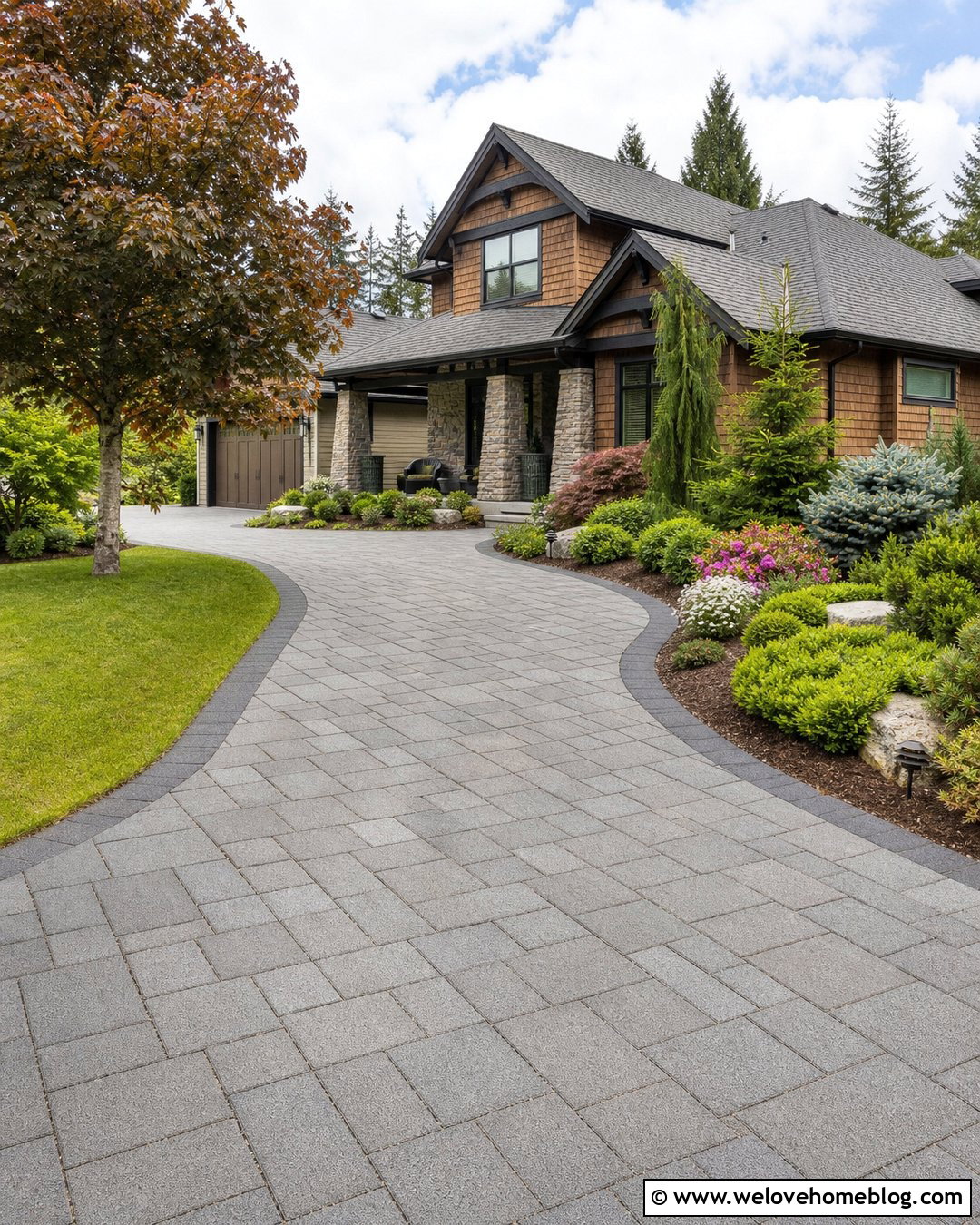
20. Horseshoe Geogrid Driveway With a Tree-Lined Entrance
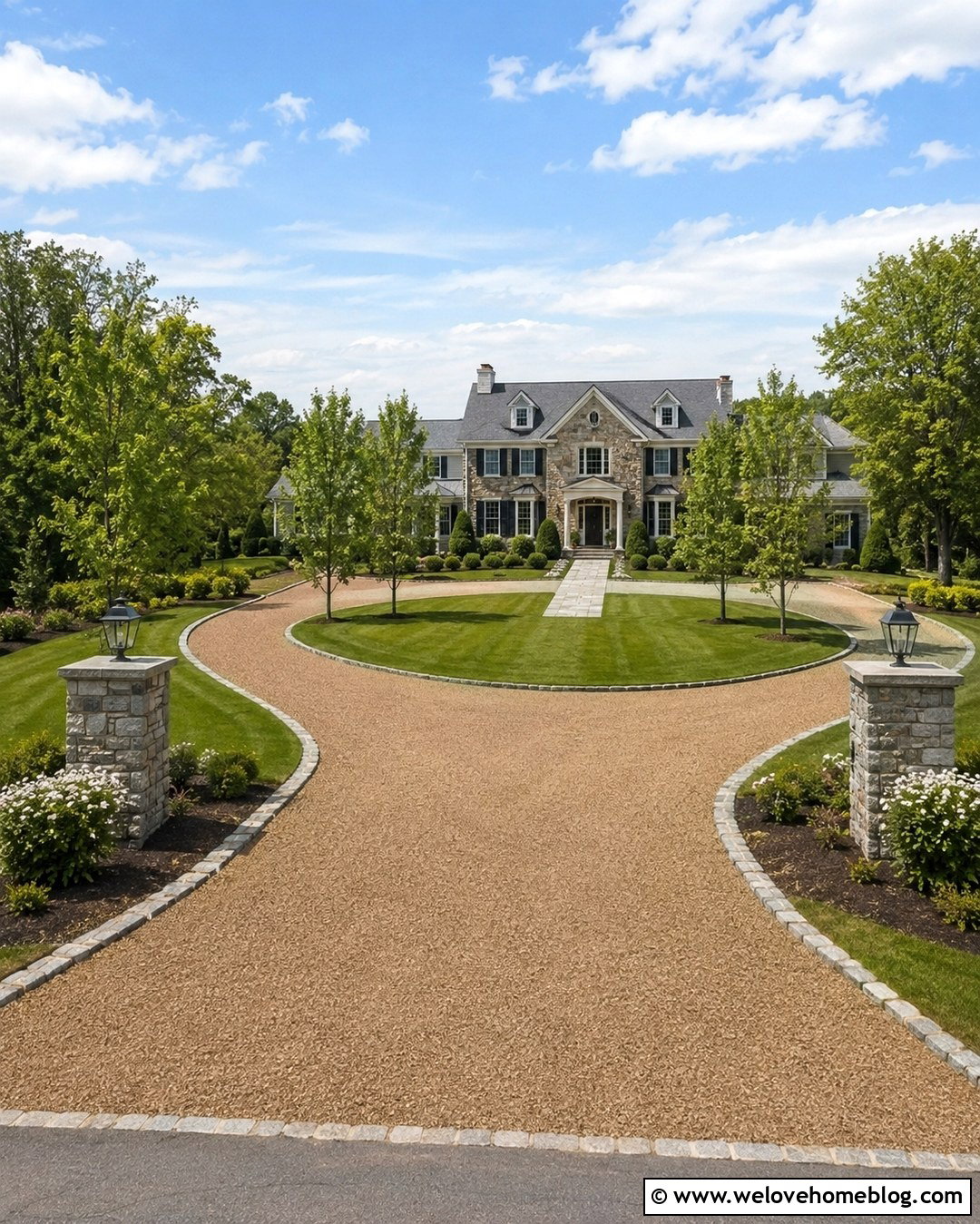
A horseshoe driveway creates two street connections and a graceful arrival sequence for a wide property. Use medium-brown crushed granite held within a cellular geogrid, with natural stone edging following both curves. Plant evenly spaced deciduous trees outside the borders to form a long-term canopy, leaving enough setback for mature trunks, roots, visibility, and vehicle clearance. The center lawn can feature a simple walkway leading directly to the front door. Add matching stone pillars at both entrances so drivers immediately understand the one-way route. Near the house, widen the driveway slightly for convenient passenger drop-off. Because horseshoe layouts involve multiple curves and repeated turning forces, base preparation, edge restraints, drainage, and grid selection should reflect the soil and expected vehicle use.
Conclusion:
The best **20 Geogrid Driveway Ideas** balance appearance with practical site planning. Gravel color may shape the first impression, but the grid rating, compacted foundation, drainage, edging, and aggregate choice determine how well the completed driveway functions. Consider how vehicles enter, turn, park, and meet the garage before choosing a straight, curved, circular, or horseshoe layout. Then use borders, planting, pillars, lighting, and paver transitions to connect the surface with the home. Geogrid and cellular confinement products are not interchangeable, so specifications should match the intended application. For difficult slopes, weak soils, drainage concerns, or heavy traffic, consult an experienced local installer or qualified design professional before construction. ()

Related posts:
Leave a Reply