
Landscape timber edging brings warmth, structure, and a natural finish to residential driveways. It can contain loose gravel, separate pavement from planting beds, define curves, or create a low retaining edge on a sloped yard. The best results come from treating the edging as part of the complete landscape rather than an isolated wood border. Match the timber size and stain to the driveway surface, home exterior, and surrounding plants. For lasting performance, choose lumber rated for ground contact, support it on a well-drained base, and secure it with suitable outdoor fasteners or spikes. () The following complete driveway looks offer practical and attractive inspiration through these **20 Landscape Timber Driveway Edging Ideas**.
1. Gravel Driveway With Landscape Timber Edging
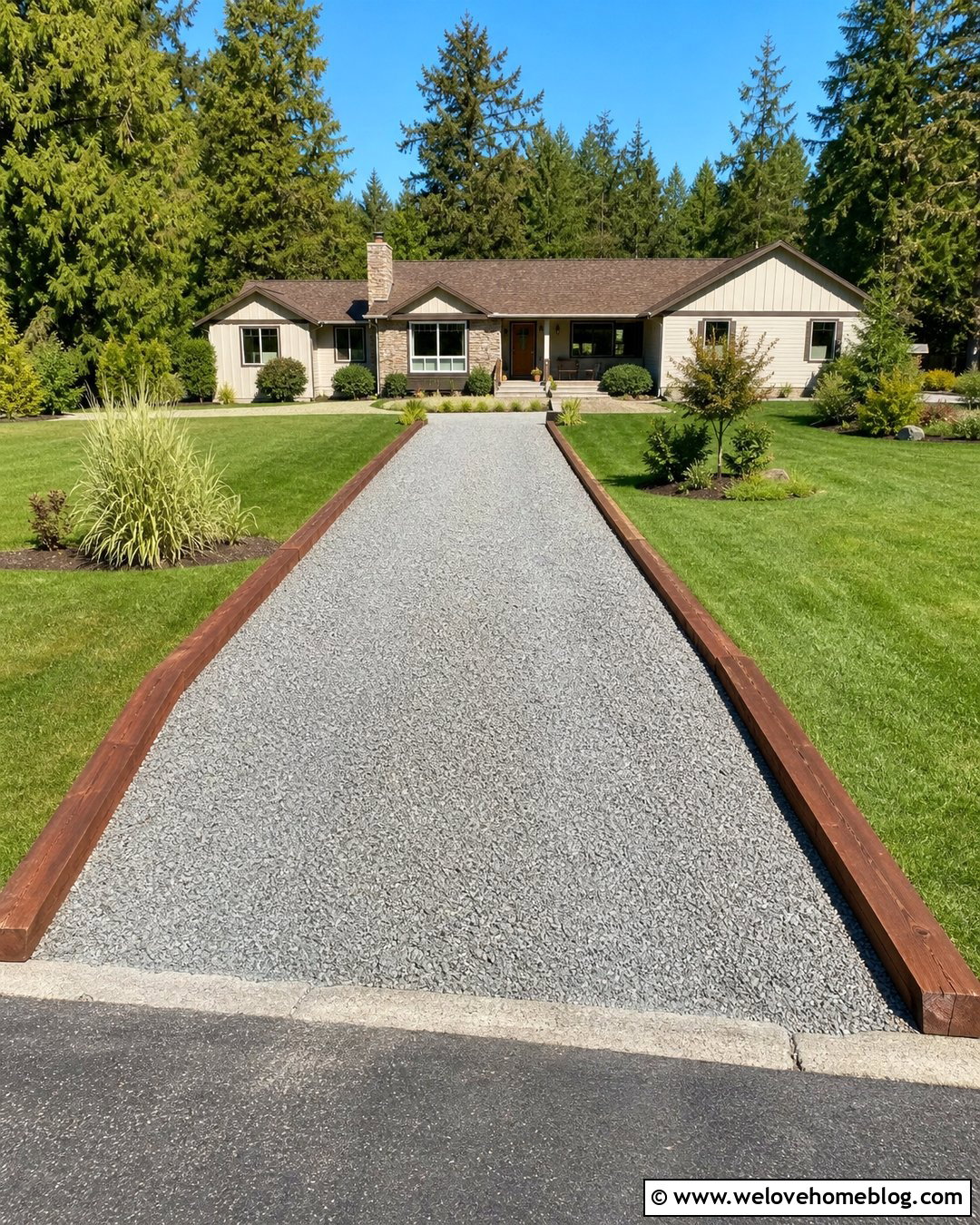
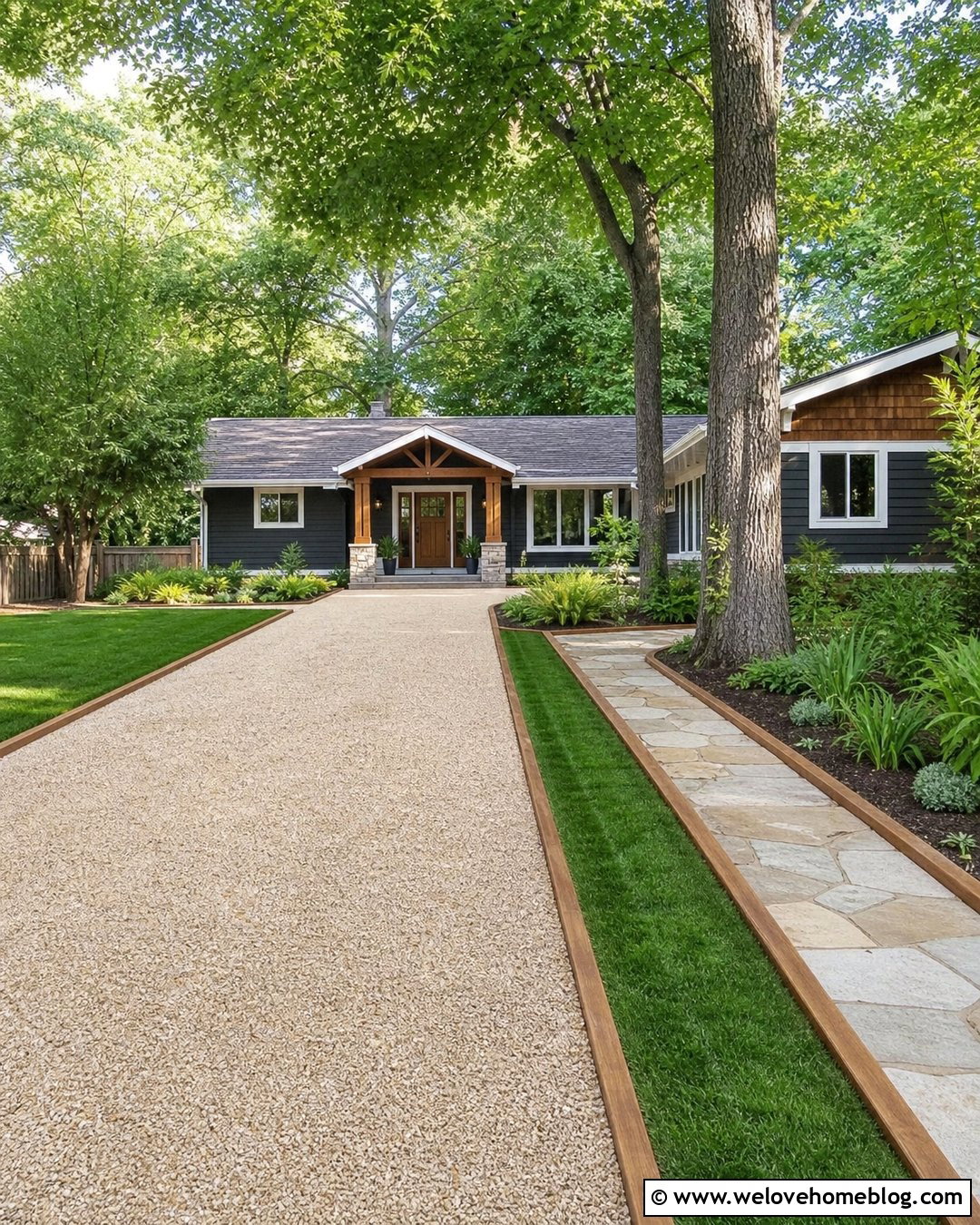
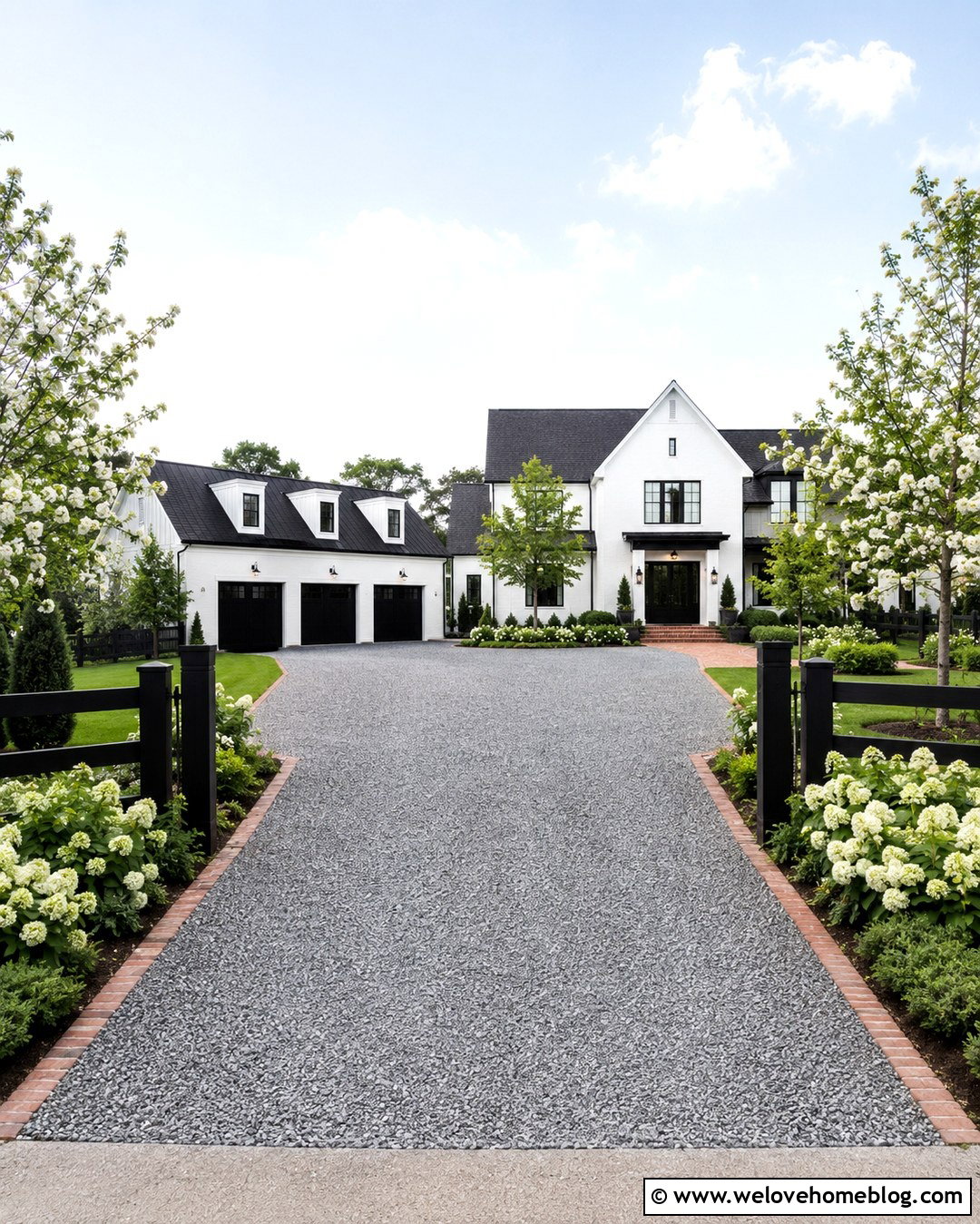
A straight gravel driveway gains a cleaner, more finished appearance when sturdy landscape timbers define both sides. Use warm brown 4-by-4 or 6-by-6 timbers beside compacted gray crushed stone for a balanced rustic look. Set the wood slightly above the finished gravel level so it helps contain loose material without creating an oversized barrier. A narrow strip of lawn can run along one side, while simple planting beds with ornamental grasses and evergreen shrubs soften the other. Near the street, angle the timbers outward to create a welcoming entrance. Because gravel naturally shifts under tires and runoff, a firmly anchored edge can reduce migration into nearby grass and beds. () This design suits ranch homes, cabins, and casual country properties.
2. Pea Gravel Driveway With Stained Timber Edging
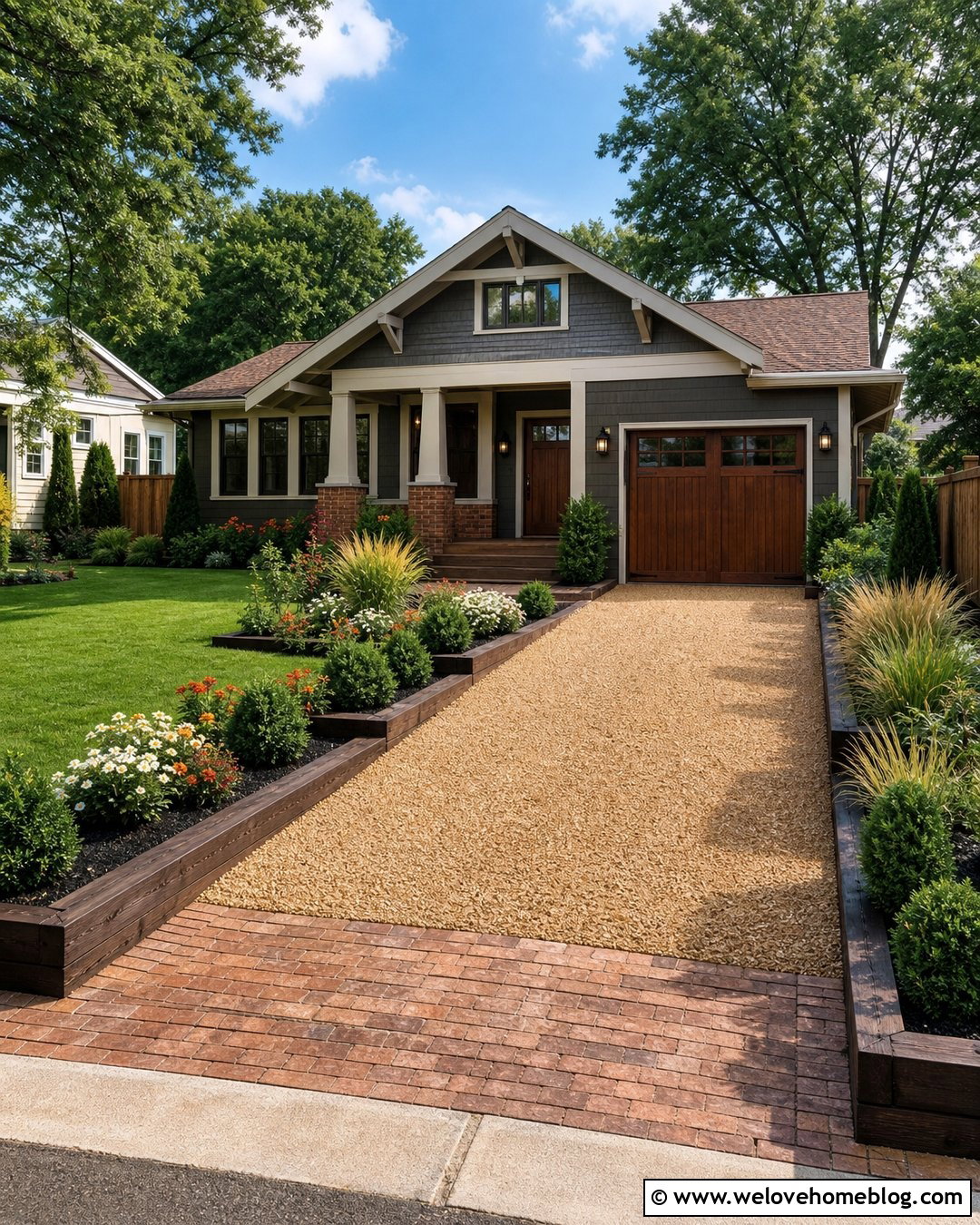
Golden pea gravel and dark walnut-stained landscape timbers create a rich contrast that feels relaxed yet intentional. This combination works especially well on a short, straight driveway leading to a Craftsman bungalow. Use substantial square timbers rather than thin boards so the border looks proportional to the wide driving surface. Add matching timber-framed planting beds near the garage, then fill them with dwarf evergreens, fountain grass, and seasonal flowers. A concrete or brick apron at the street can stop loose stones from spilling toward the road. Pea gravel rolls more easily than angular crushed stone, so keep the finished surface slightly below the top of the edging. Place the timbers on a level, free-draining foundation and anchor each section securely to maintain a crisp line.
3. Curved Gravel Driveway With Timber Edging
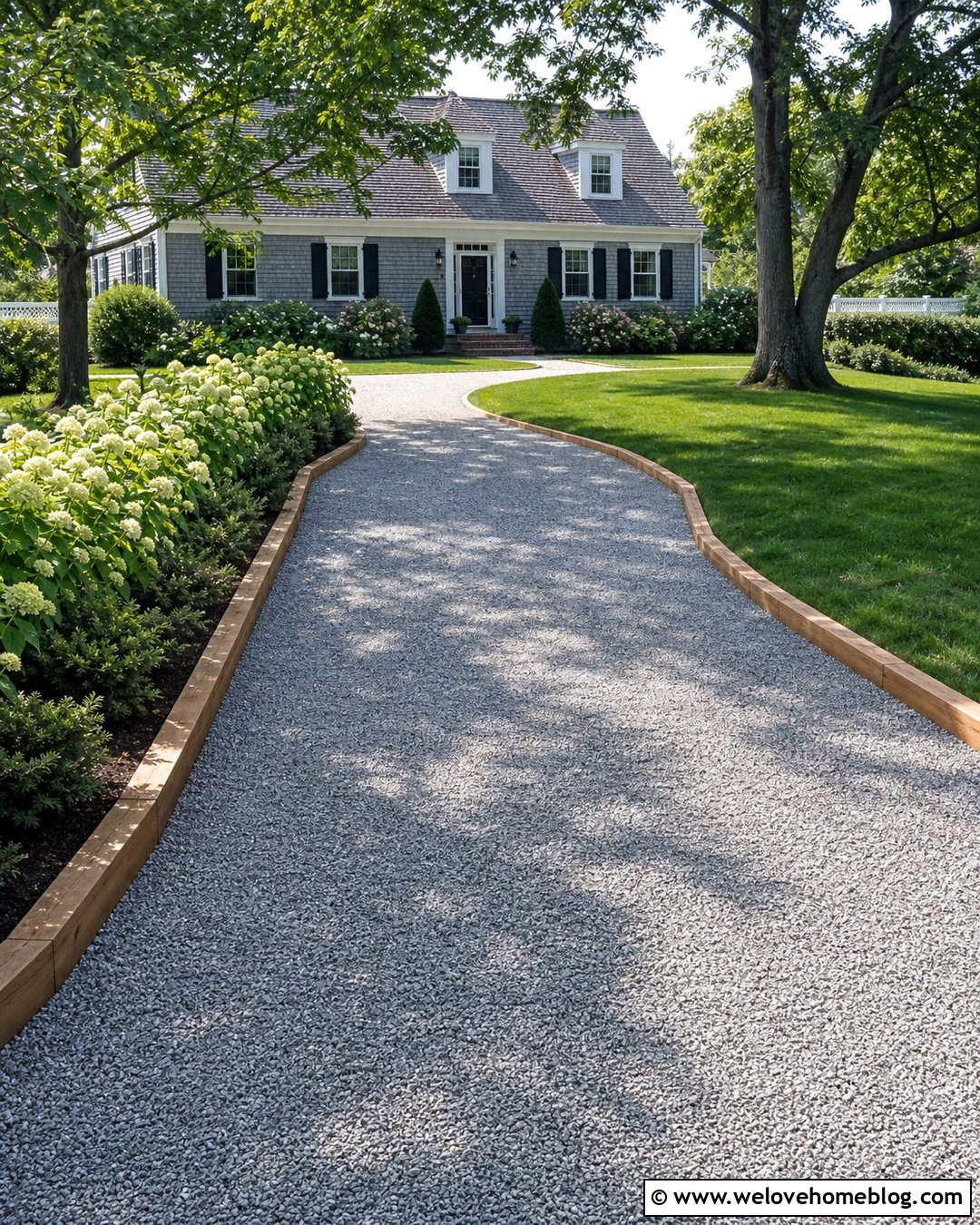
Can landscape timbers work beside a curved driveway? Yes, especially when shorter straight sections are joined in gentle angles that follow a broad, gradual bend. Choose fine gray gravel for the driving surface and medium-brown timbers for a natural border. On the outside of the curve, create a deep planting bed filled with hydrangeas, compact junipers, and low ornamental grasses. Keep the inside edge more open with lawn and one carefully positioned shade tree, preserving visibility for drivers. Staggered timber joints help the border follow the curve without looking overly segmented. This complete layout suits Cape Cod, cottage, and traditional homes. Before building, mark the turning path and allow enough driveway width so tires do not repeatedly strike the timber along the inside curve.
4. Asphalt Driveway With Flush Timber Edging

Black asphalt looks less severe when flush landscape timber edging separates it from green lawn and informal garden beds. Select smooth, pressure-treated timbers with a muted cedar-brown stain. Install them close to the pavement height to create a mower-friendly transition and avoid a raised obstacle beside parked vehicles. The timber line can continue from the street to the garage, visually lengthening a narrow driveway. Add small planting pockets near the entrance with upright grasses, flowering perennials, and low evergreen shrubs. A matching wood mailbox post helps connect the border to the overall front yard. Since asphalt and wood respond differently to moisture and temperature changes, leave a tidy, properly prepared transition rather than fastening the timbers directly to the pavement. The result feels practical, simple, and well integrated.
5. Concrete Driveway With Timber Garden Borders
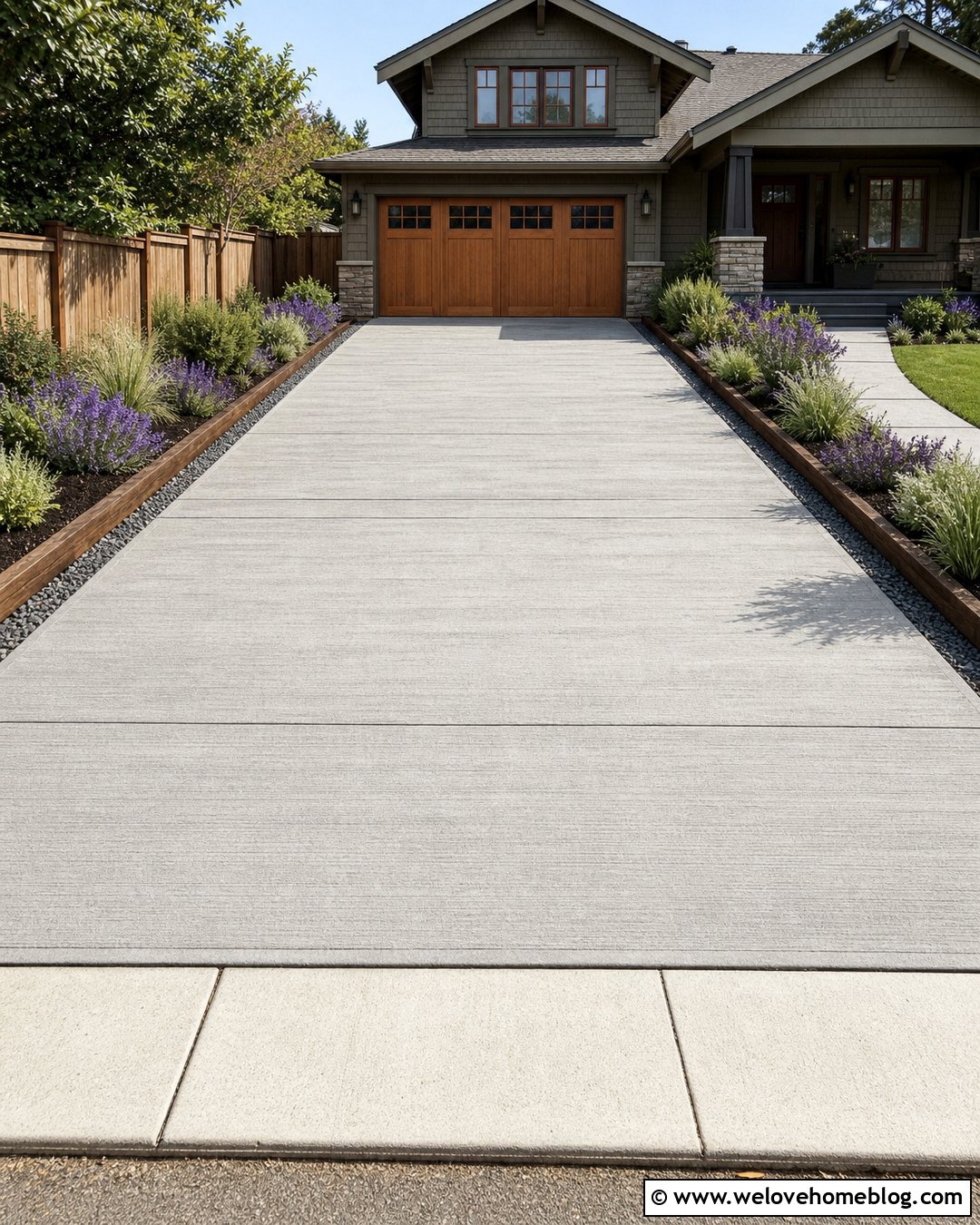
Cool gray concrete becomes more inviting when warm landscape timbers frame planting beds along its edges. Instead of placing wood tightly against the entire slab, use long timber borders to define narrow gardens set just beyond a small drainage strip. Fill the beds with lavender, catmint, salvia, and compact ornamental grasses for color without excessive overhang. A straight poured-concrete driveway works well with clean rectangular timbers and evenly spaced plant groupings. Match the wood stain to a Craftsman door, porch columns, or cedar garage details. Keep the border low near the street and garage so vehicles can enter easily. This design creates a softer transition from concrete to landscape while maintaining strong, orderly lines. It also leaves room for maintenance around the slab’s exposed edges and control joints.
6. White Gravel Driveway With Cedar Timber Edging
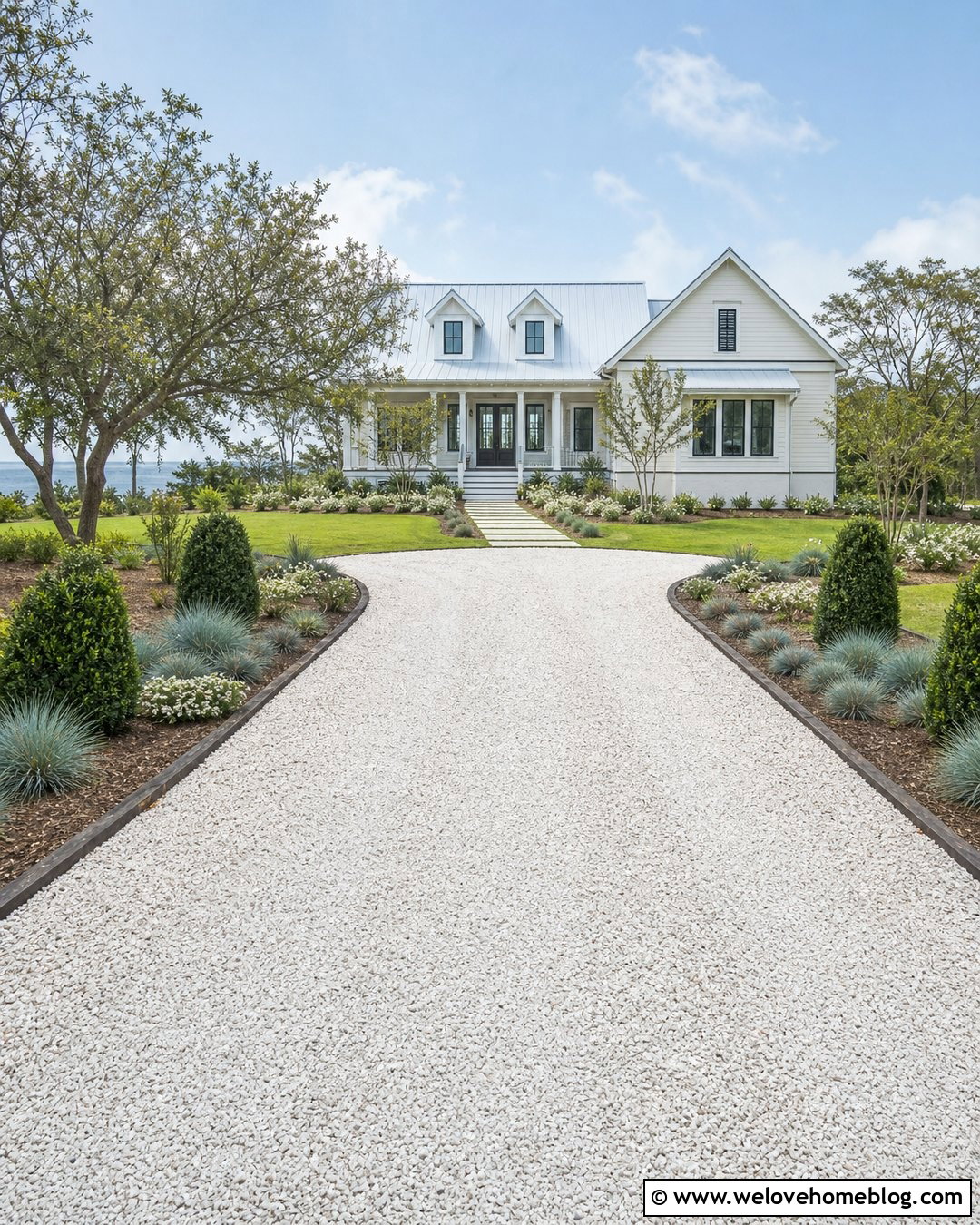
Bright white gravel paired with cedar-toned landscape timbers creates an airy driveway that complements a coastal or light-colored farmhouse exterior. Use a wide, straight layout with a subtle flare at the road. The warm edging prevents the pale gravel from visually disappearing into surrounding concrete walkways or dry garden beds. Plant blue fescue, dwarf yaupon holly, and clusters of white flowering perennials beyond the timber border. A stepping-stone walkway can cross one side of the driveway and continue toward the porch. Choose gravel that is suitable for vehicle traffic rather than soft decorative stone, and build it over a properly prepared base. The timber should sit level and remain clearly visible above the loose surface. This restrained palette feels bright, clean, and naturally connected to the house.
7. Sloped Driveway With Stacked Landscape Timbers
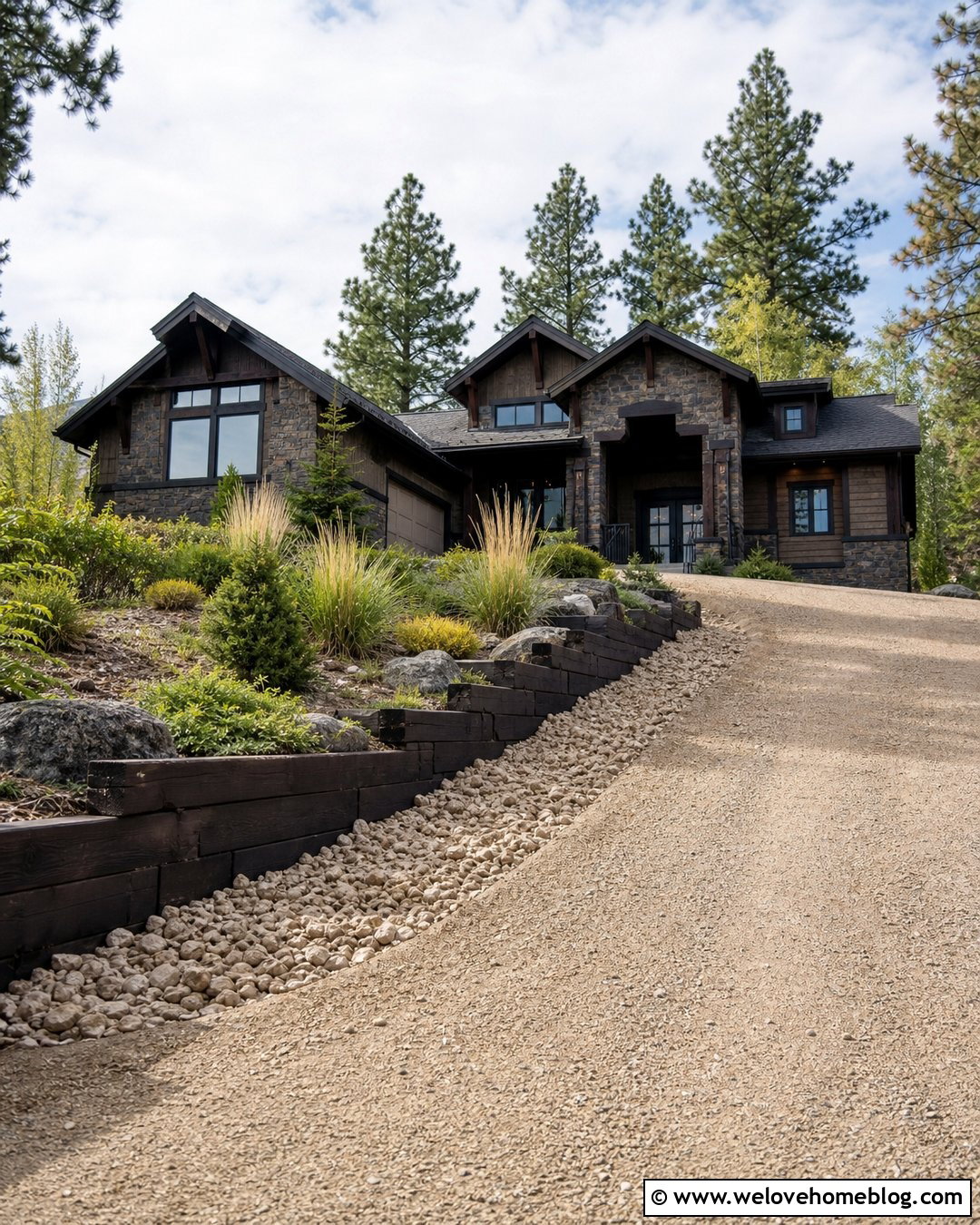
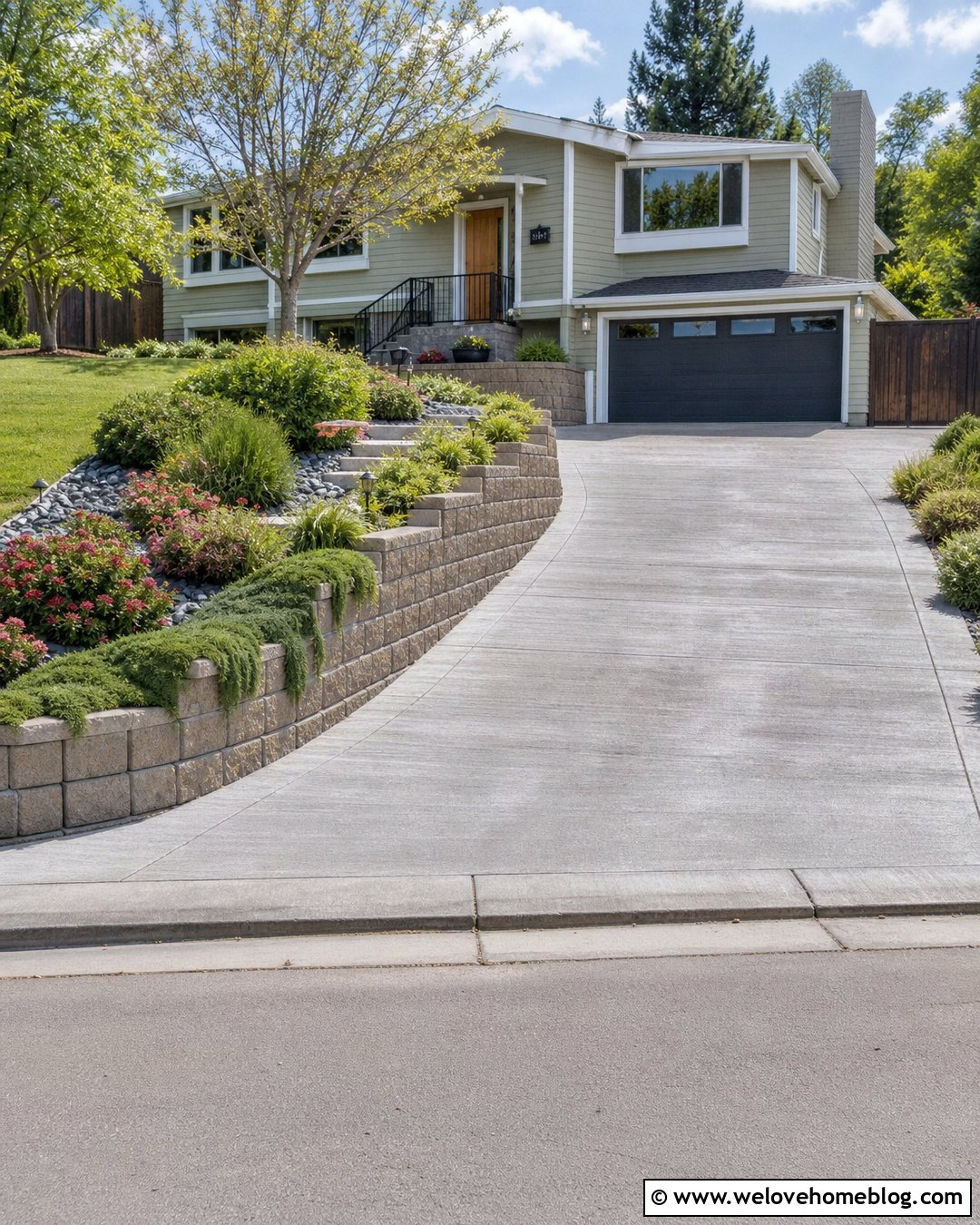
A sloped driveway often needs more than a decorative strip along the ground. Stacked landscape timbers can form a low retaining border that supports the uphill planting bed while defining the pavement below. Pair two courses of dark-stained timbers with compacted tan gravel or black asphalt. Step the timber courses gradually with the slope rather than forcing one long piece to sit at an awkward angle. On the uphill side, use erosion-resistant ground covers, ornamental grasses, and deeply rooted shrubs. Keep the downhill edge lower and more open to avoid trapping runoff across the driving surface. A gravel drainage zone behind the wood helps manage moisture around the structure. Higher or load-bearing retaining edges may require professional design, especially where soil pressure, buried utilities, or significant elevation changes are involved.
8. Circular Driveway With Landscape Timber Edging
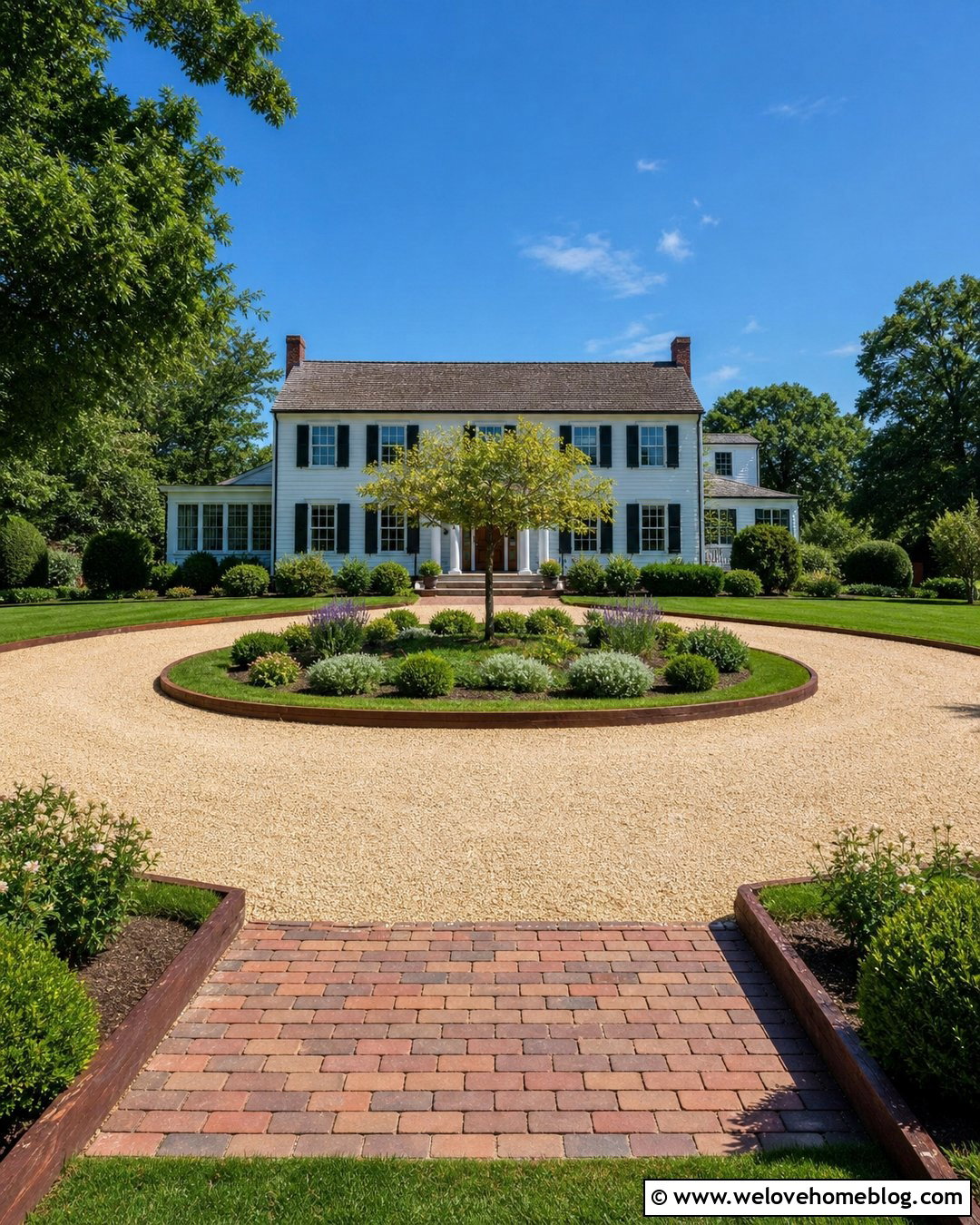
A circular gravel driveway feels organized when landscape timbers clearly outline both the outer perimeter and central island. Choose reddish-brown wood edging with warm buff crushed gravel for a welcoming traditional entrance. Inside the island, repeat the circular shape with one small ornamental tree surrounded by low shrubs, flowering perennials, and mulch. Keep plants low near the entry and exit points to protect sightlines. The outer timber edge can separate the gravel from broad lawn, while a brick apron at the road creates a durable transition. Shorter timber lengths make it easier to approximate the curves without awkward gaps. Use consistent joints and stain throughout so the segmented border reads as one continuous feature. This layout pairs beautifully with colonial, Georgian, and larger farmhouse homes.
9. Modern Driveway With Black Timber Edging
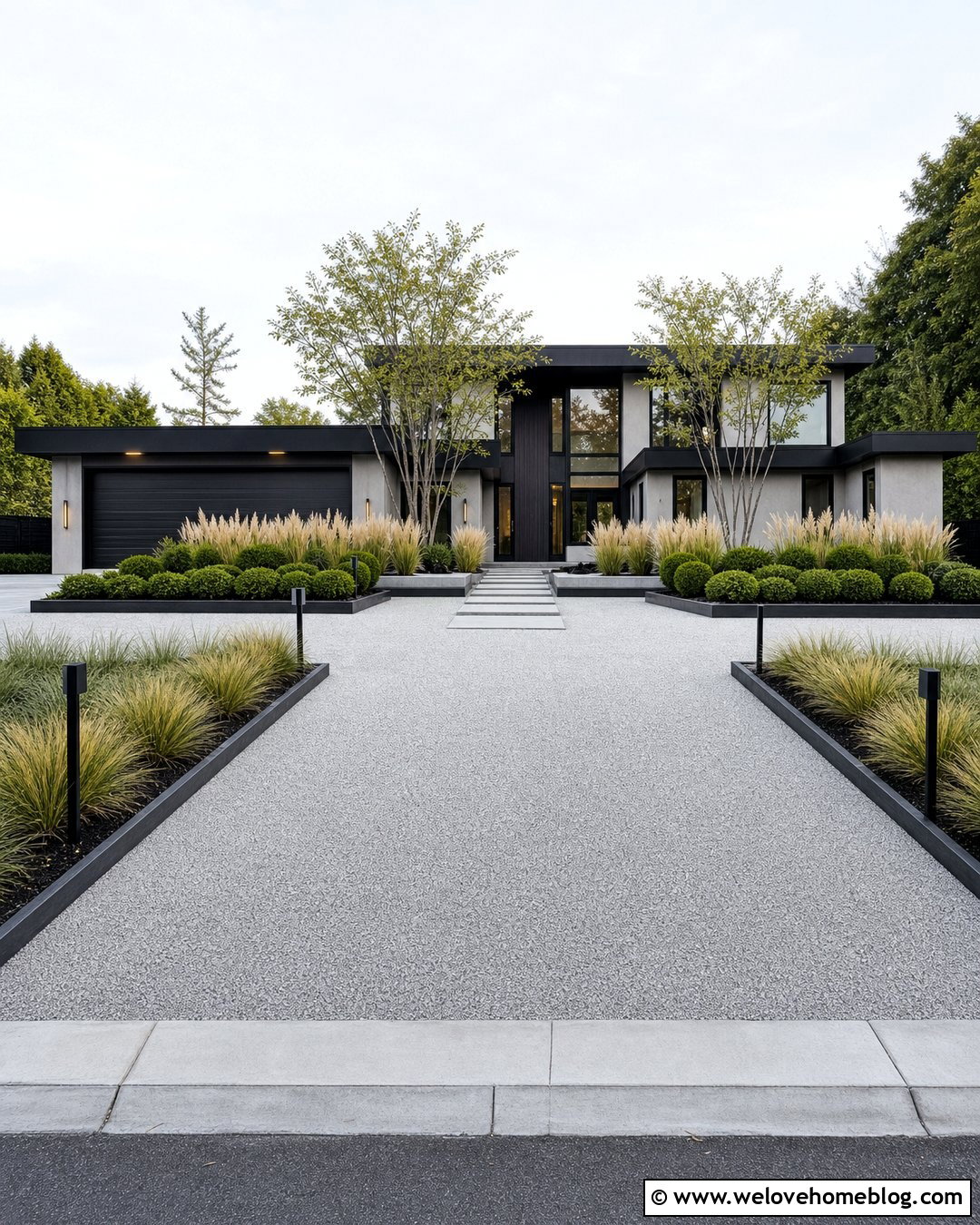
For a sharper contemporary look, finish landscape timbers in an exterior-grade black or charcoal stain. Place them beside light gray resin-bound gravel or pale concrete pavers to create a defined graphic border. A straight driveway with large rectangular planting beds reinforces the modern geometry. Fill those beds with repeated groups of feather reed grass, compact boxwood, and multi-stem ornamental trees. Black metal address numbers and simple bollard lights can repeat the dark edging color near the entrance. Keep the timber profile low and the joints precisely aligned, since uneven cuts will be more noticeable in a minimal design. The restrained combination of pale pavement, dark wood, and structured greenery gives the entire frontage a coordinated appearance without relying on elaborate decoration or a large planting palette.
10. Farmhouse Driveway With Rustic Timber Edging
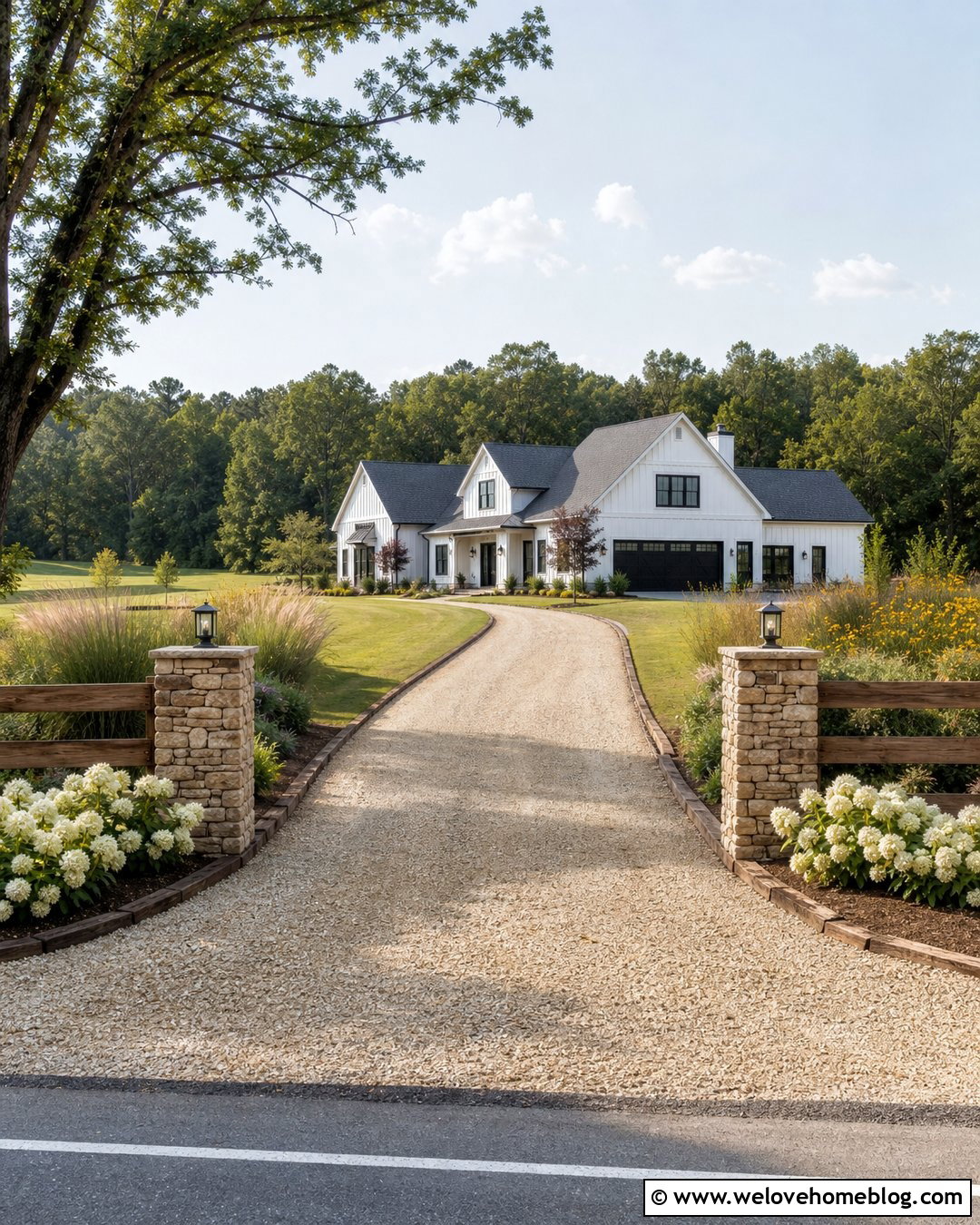
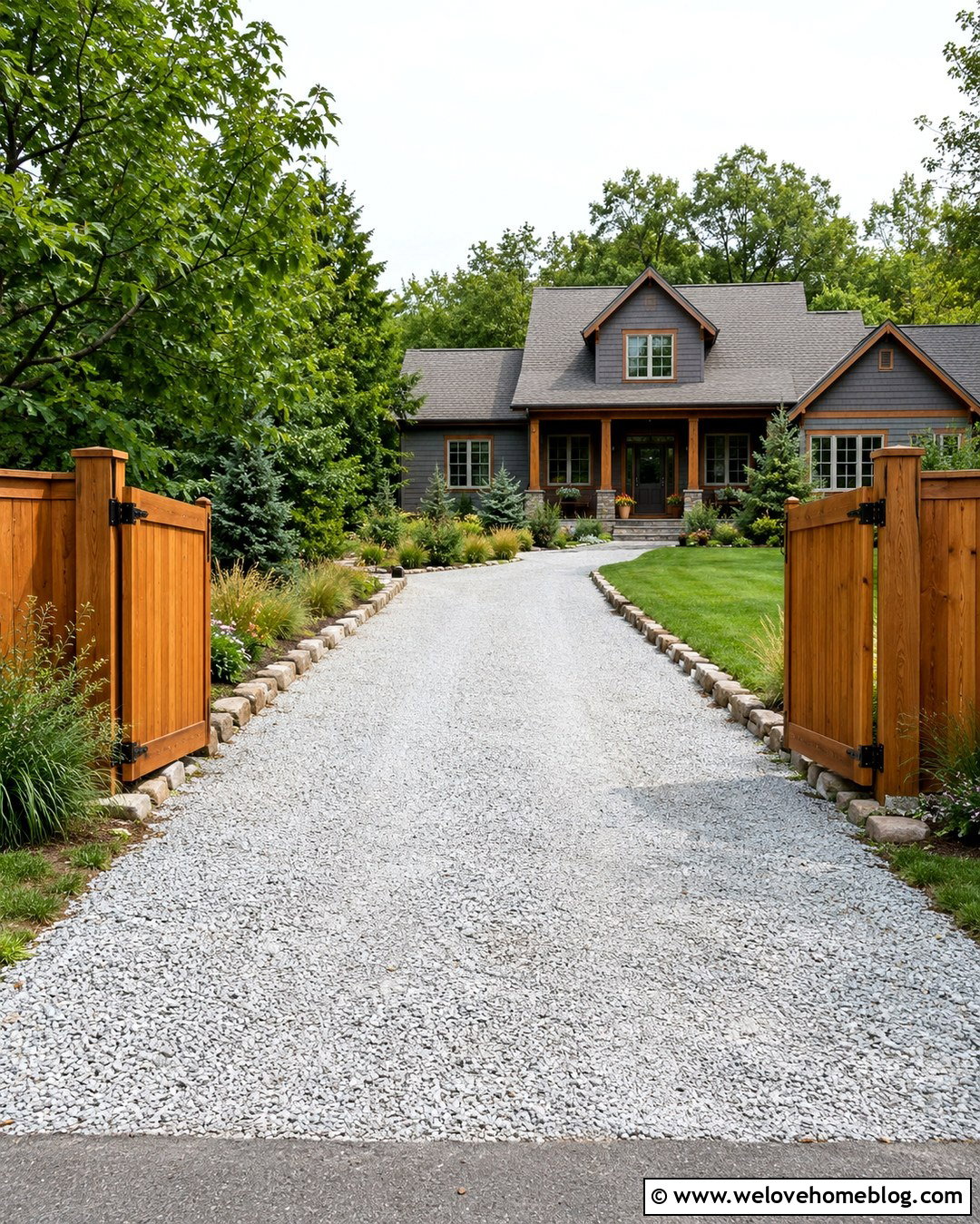
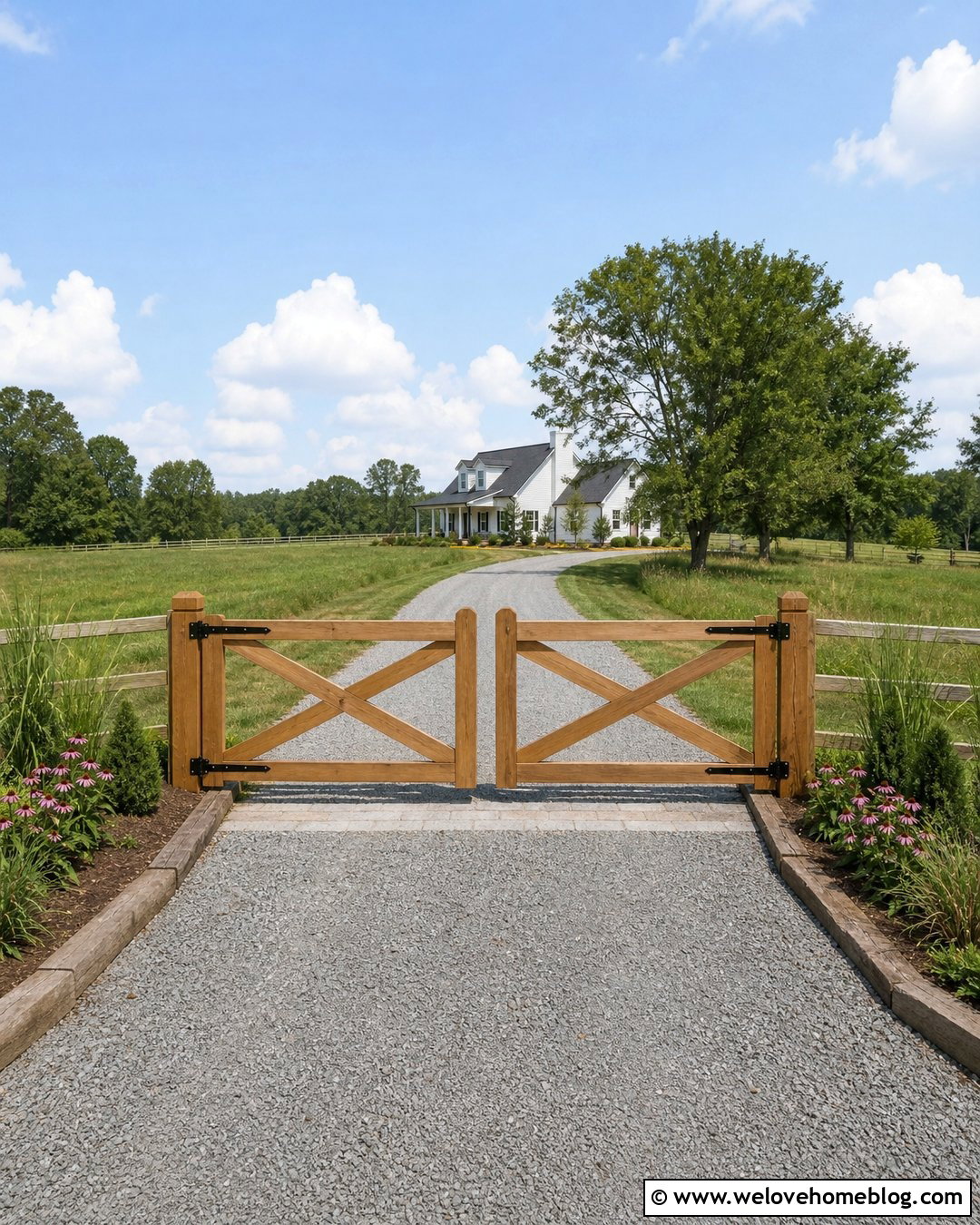
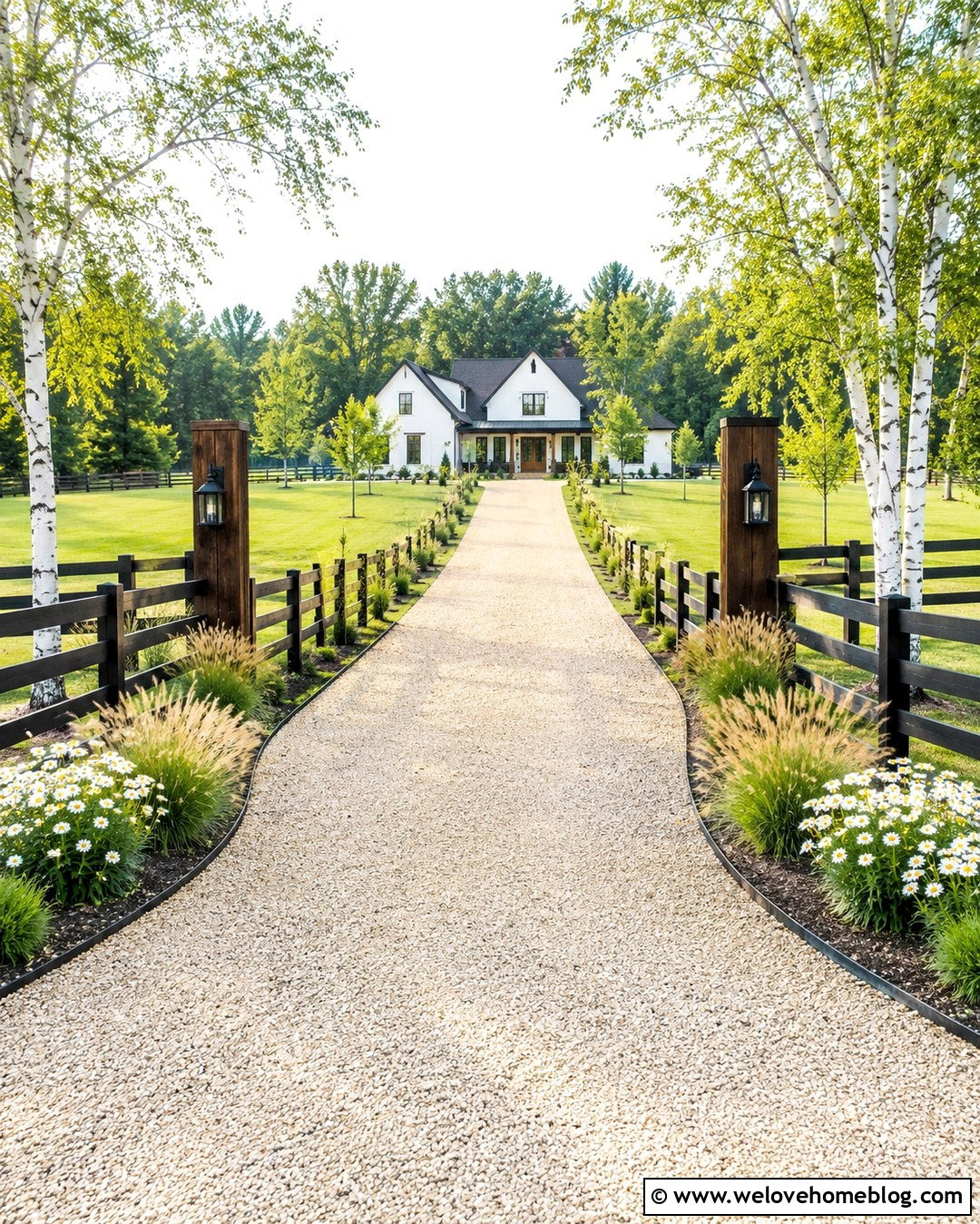
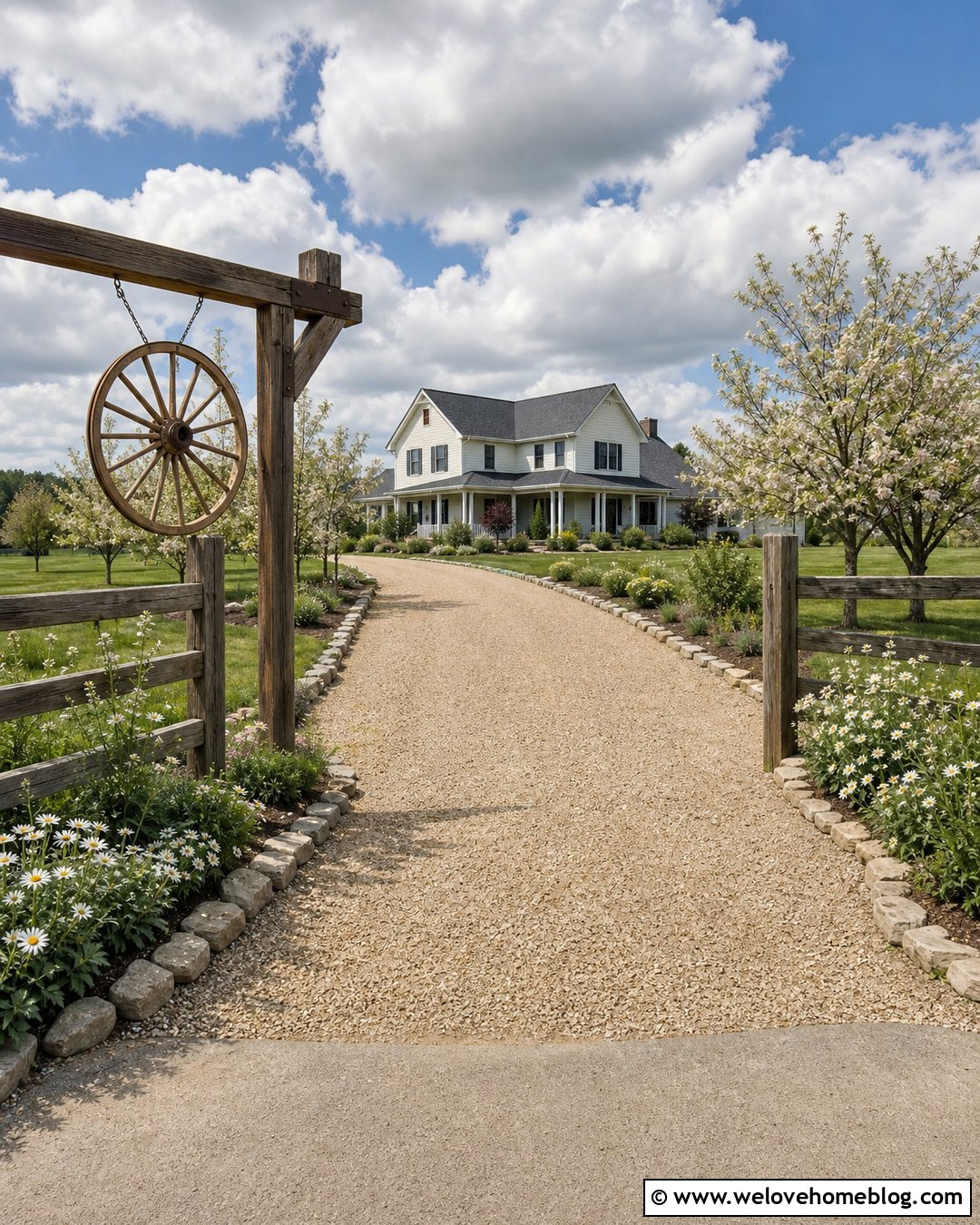
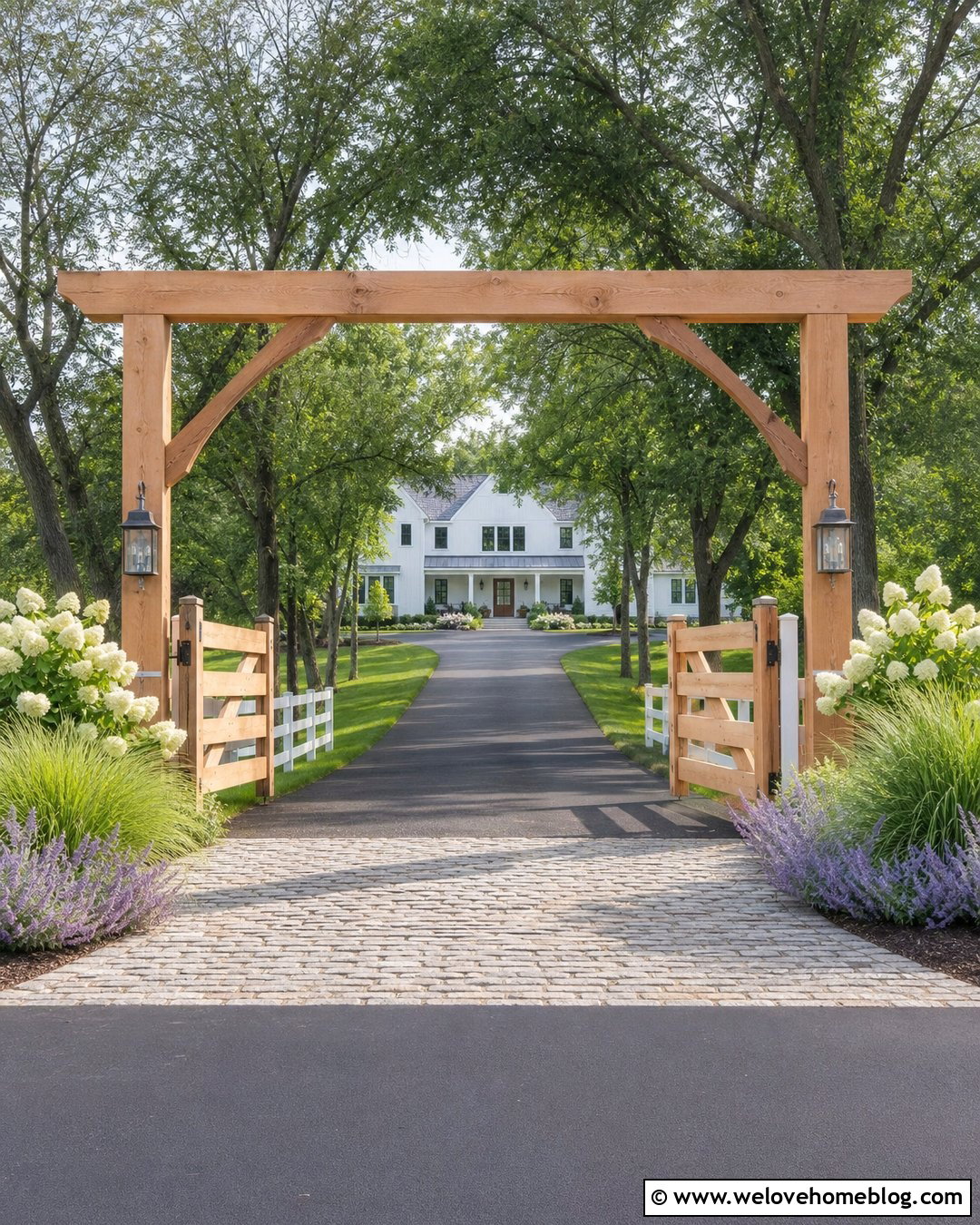
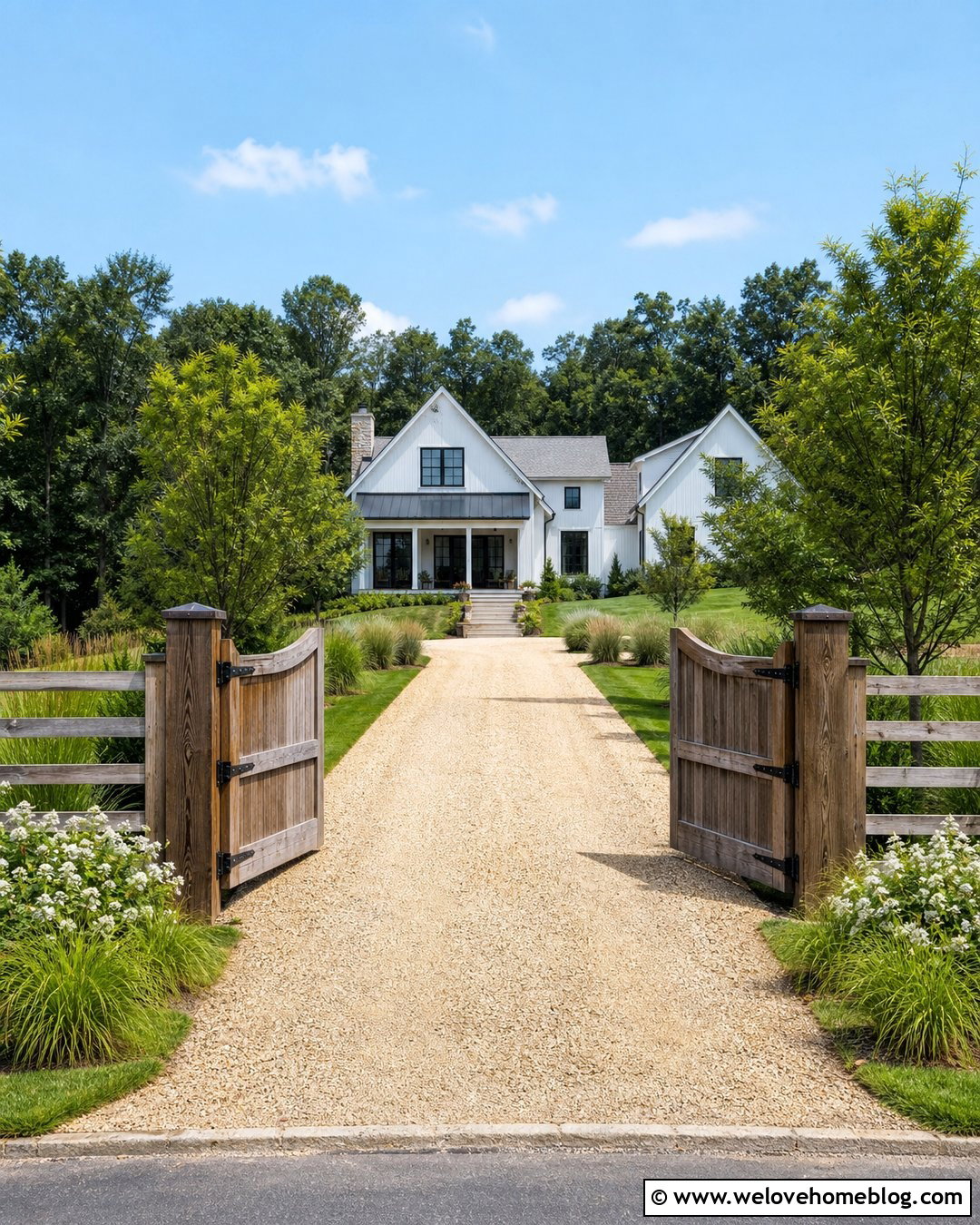
A farmhouse driveway benefits from edging that looks sturdy rather than overly polished. Use rough-sawn, ground-contact-rated landscape timbers beside compacted limestone gravel. Let the driveway follow a gentle curve through an open lawn toward a white modern farmhouse or renovated country home. Frame the entrance with matching timber fences, simple stone columns, and generous planting beds containing panicle hydrangeas, switchgrass, and native flowering plants. A grass strip between the timber and deeper beds can make mowing and maintenance easier. Choose consistent lumber dimensions even when the surface texture is rustic, and align the top edges carefully. Avoid untreated salvaged wood of uncertain origin where it will remain in wet soil. Properly selected outdoor timber provides the natural appearance while offering more predictable performance beside the driveway.
11. Narrow Driveway With Vertical Timber Edging
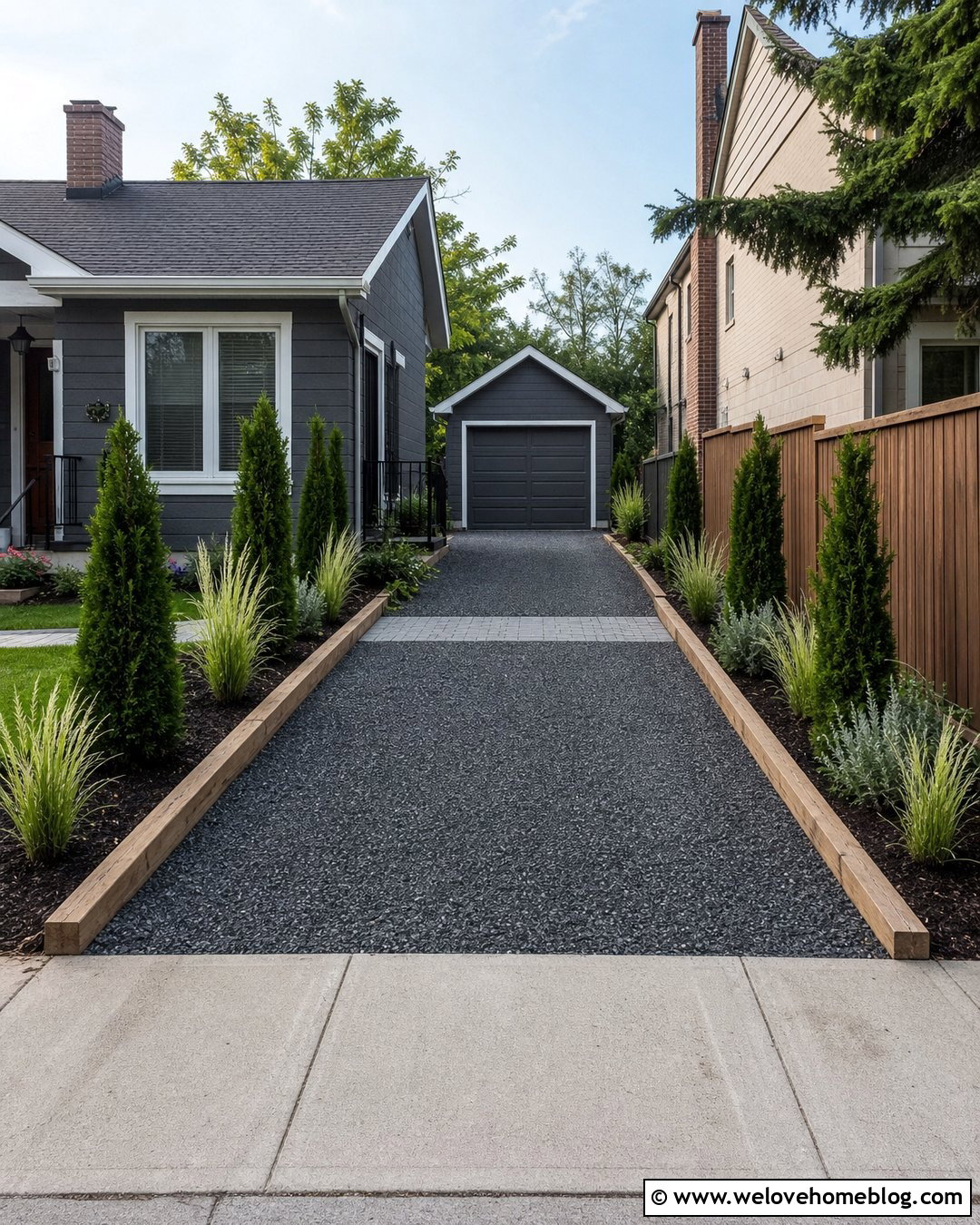
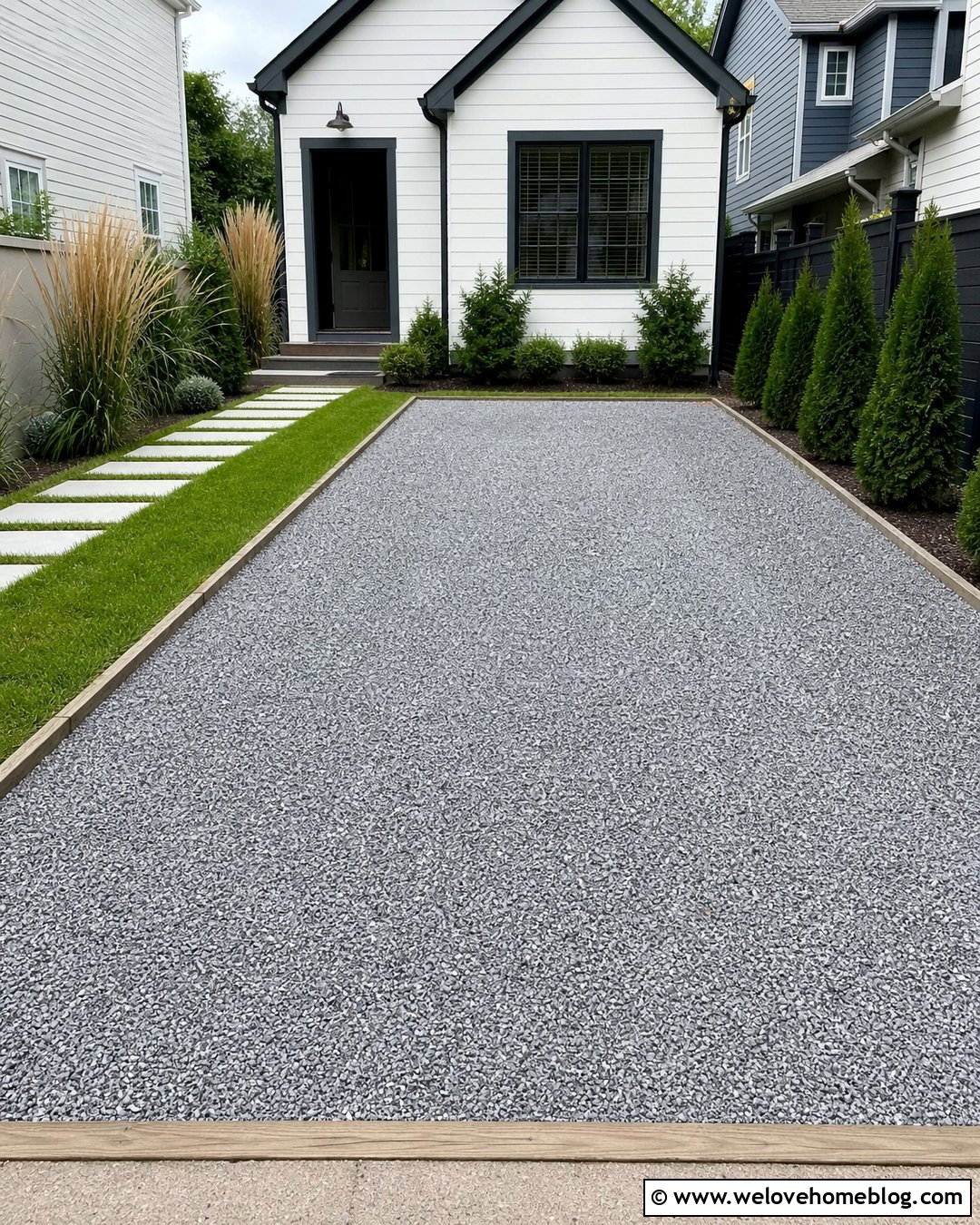
When space is limited, setting rectangular landscape timbers on their narrow edge can create a slim border that preserves driving width. This treatment works well beside a compact gravel driveway leading to a detached garage or small urban bungalow. Use dark gray crushed stone, warm brown timbers, and narrow planting beds filled with upright grasses or columnar shrubs. Keep branches and mature plant growth away from vehicle mirrors. Near the house, connect the timber edge to a small paver walkway for a purposeful transition. Carefully anchored boards or timbers are important because narrow vertical edging can shift if the base is soft or tires repeatedly contact it. Rebar or suitable galvanized hardware is commonly used to secure landscape timbers, with fastening details adjusted to the lumber size and site conditions. ()
12. Wide Driveway With Double Timber Borders
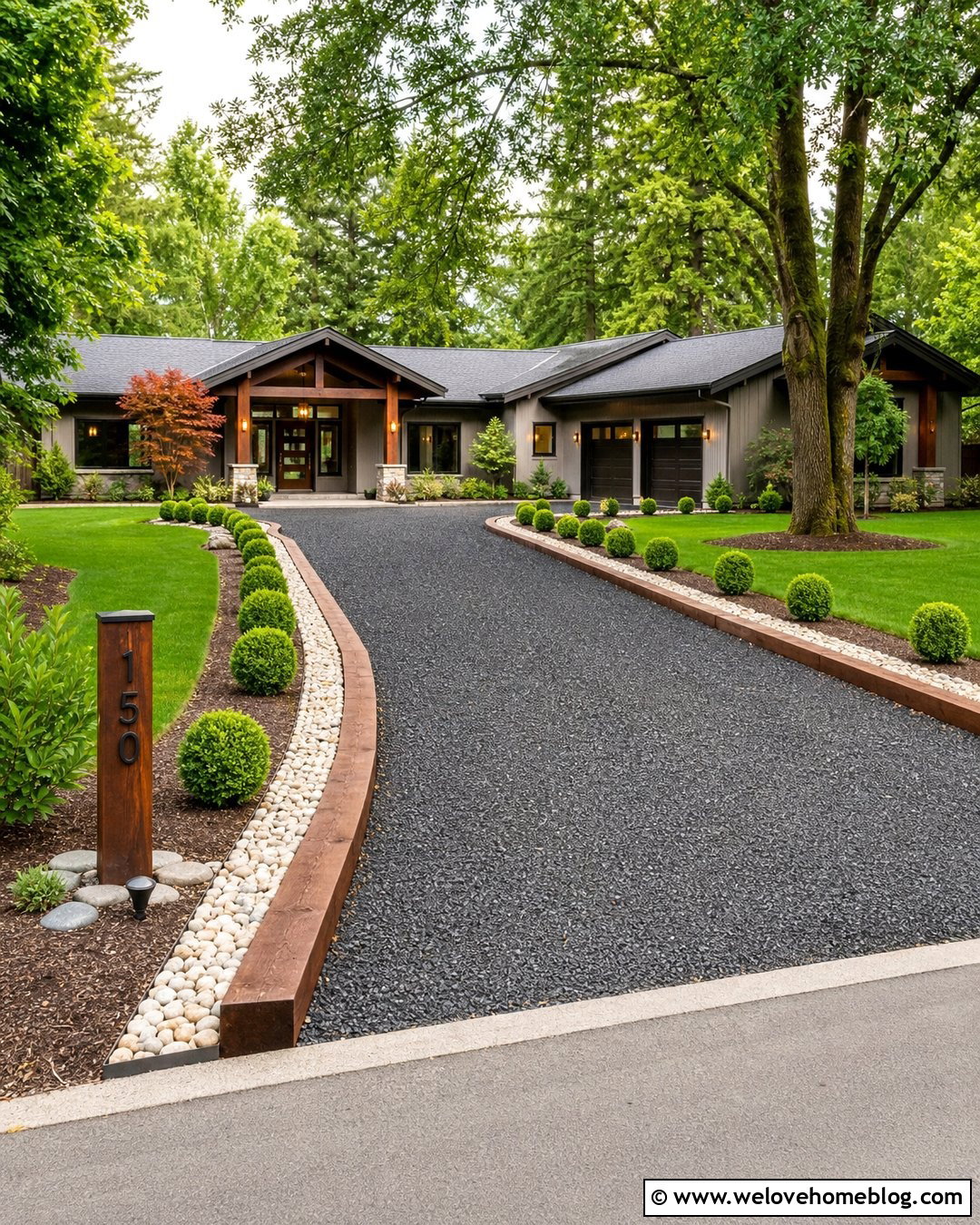
A broad gravel driveway can look visually unfinished when one thin edging line is its only border. A double-timber treatment adds substance and creates space for a narrow decorative gravel channel between the wood pieces. Use charcoal crushed stone for the driveway, warm cedar-stained timbers, and pale river rock in the border channel. Beyond it, introduce lawn, rounded shrubs, and several canopy trees. The contrasting strip makes the driveway edges easy to read while providing a more deliberate transition into the landscape. At the entrance, widen the channel around an address marker or low planting bed. Maintain openings or suitable grading wherever runoff needs to leave the driveway. The timbers should guide the design without forming an accidental dam. This layered look suits large ranch, contemporary farmhouse, and wooded suburban properties.
13. Wooded Driveway With Natural Timber Edging
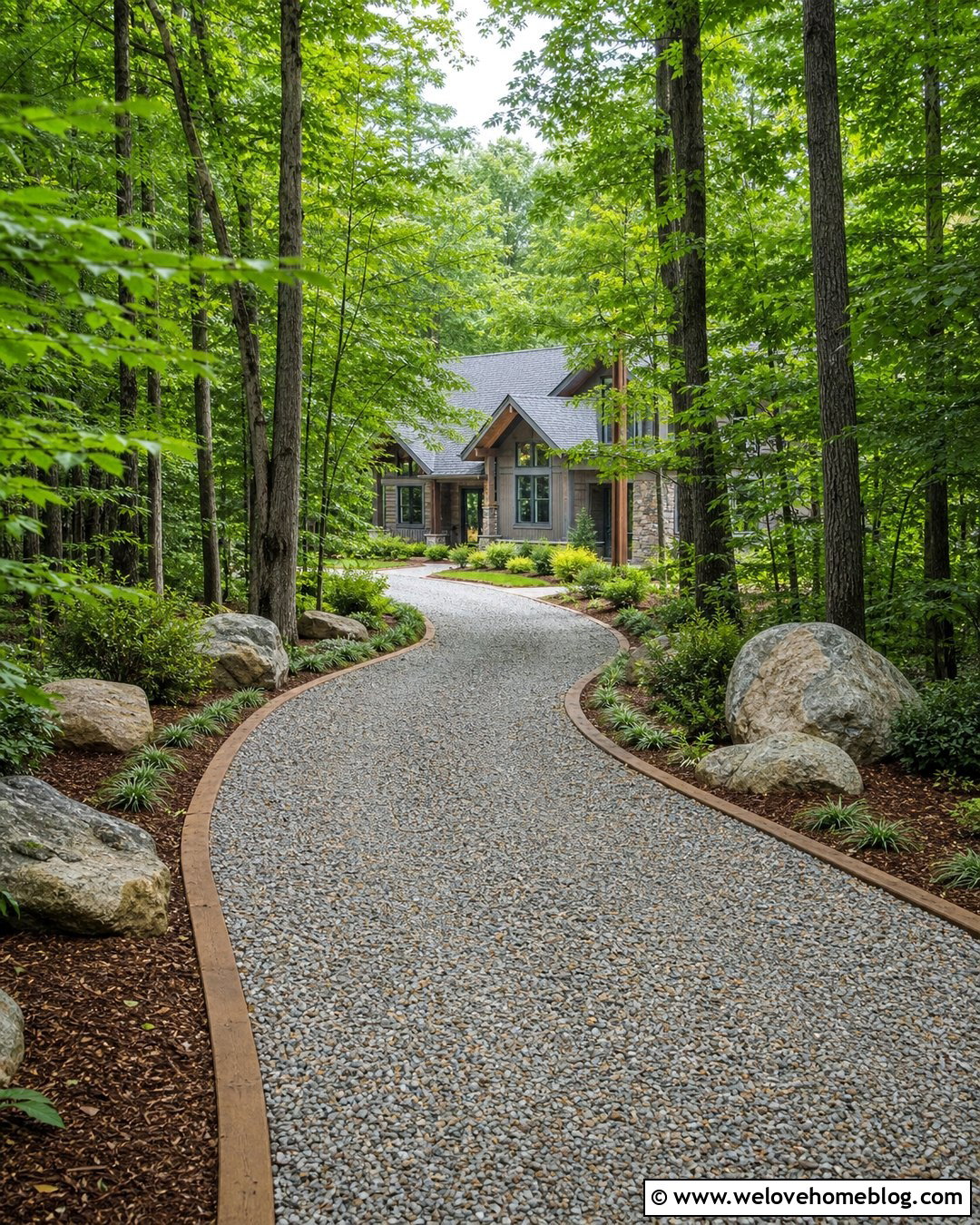
Soft morning light, mature trees, and a winding gravel drive call for understated edging. Choose brown pressure-treated landscape timbers that closely resemble the colors of surrounding trunks and woodland mulch. Run them along a curved driveway surfaced with mixed gray and tan crushed stone. Plant woodland sedges, ferns, inkberry, and shade-tolerant ground covers outside the border, leaving clear space around existing tree roots. Avoid raising soil deeply against trunks or cutting major roots to force a perfectly straight timber line. A few natural boulders near the entrance can mark the curve without overwhelming the setting. The driveway should feel shaped by the woodland rather than imposed on it. Low-profile timbers keep gravel from blending into leaf litter while preserving the quiet, informal character of the property.
14. Driveway Entrance With Timber Edging And Pillars
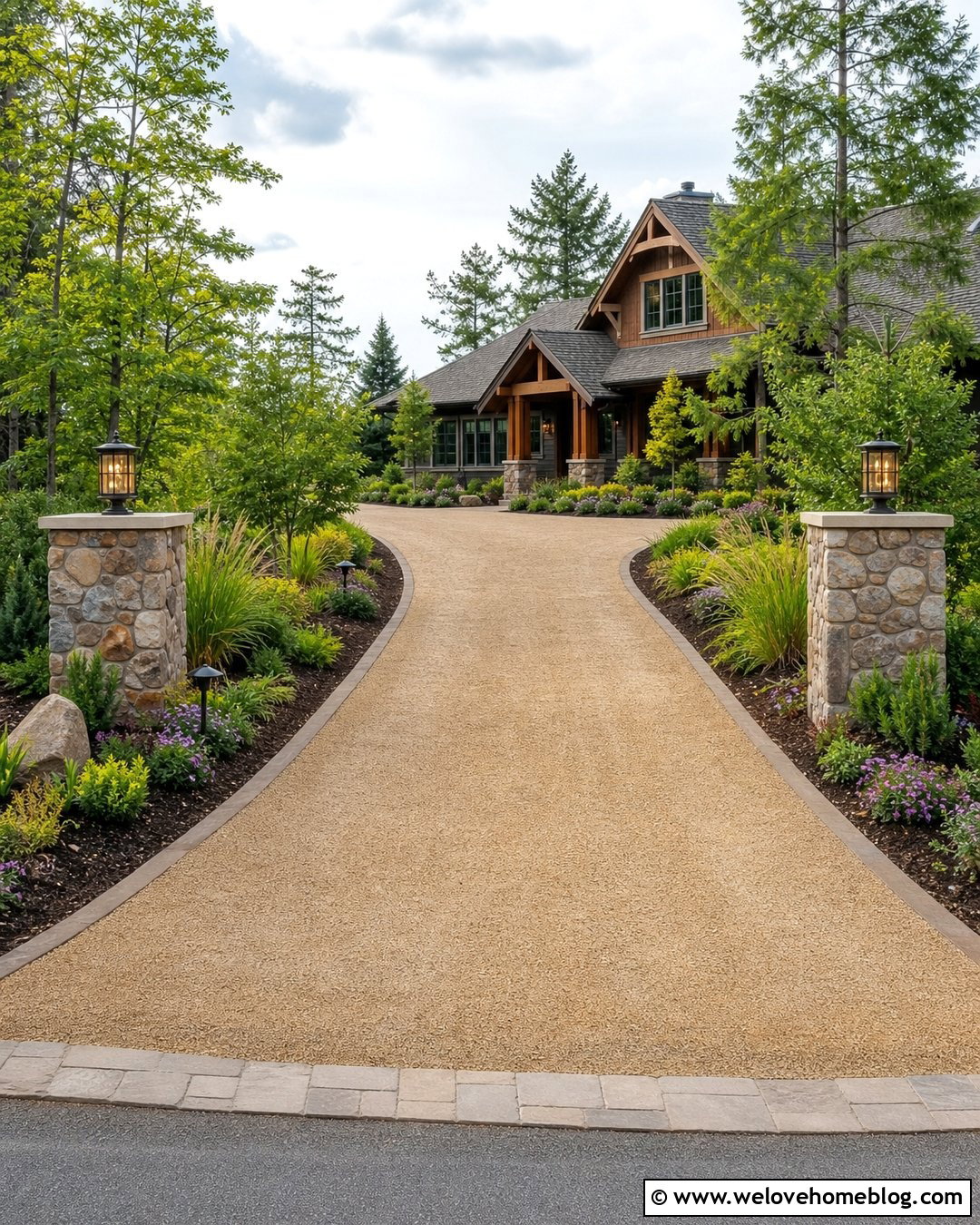
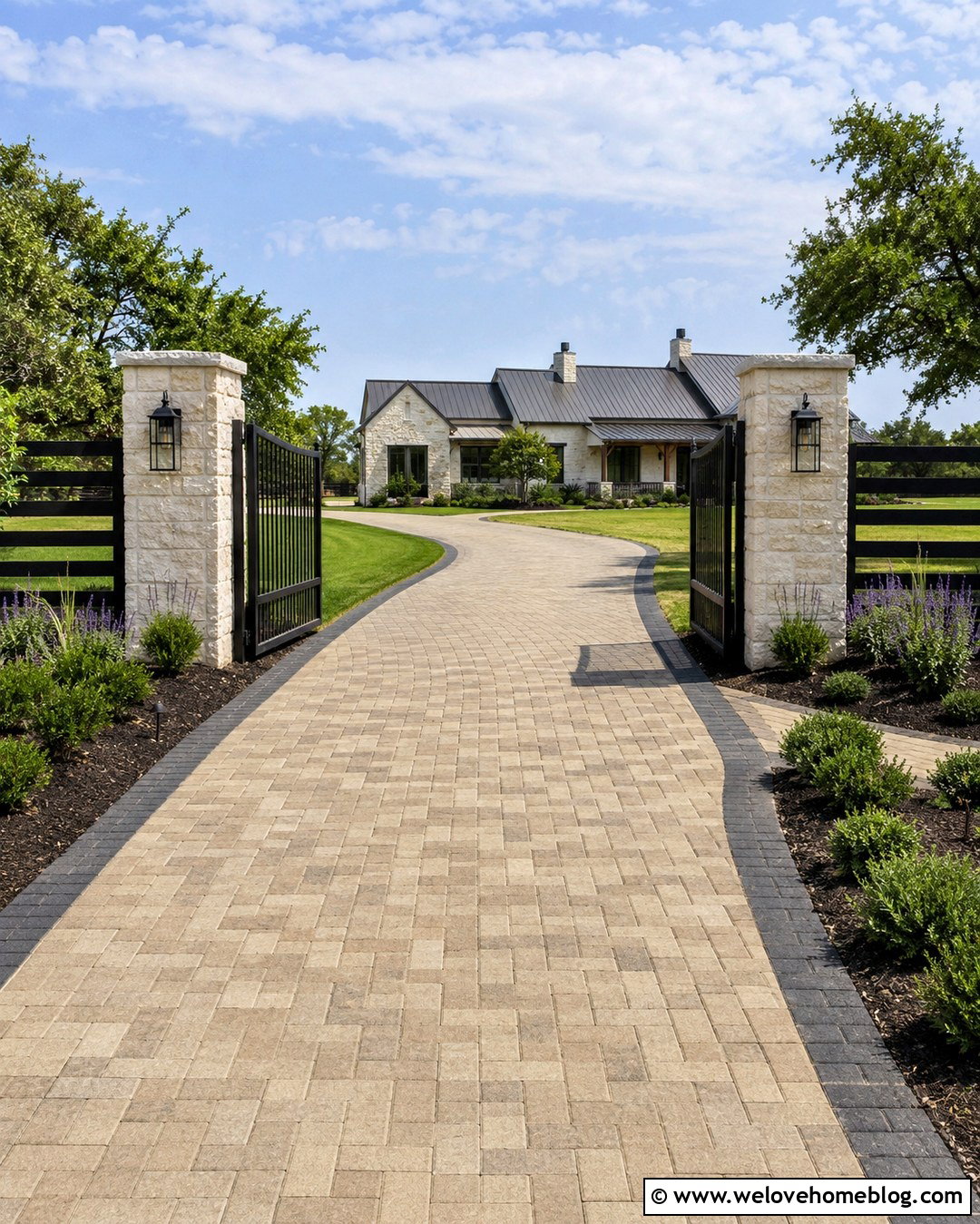
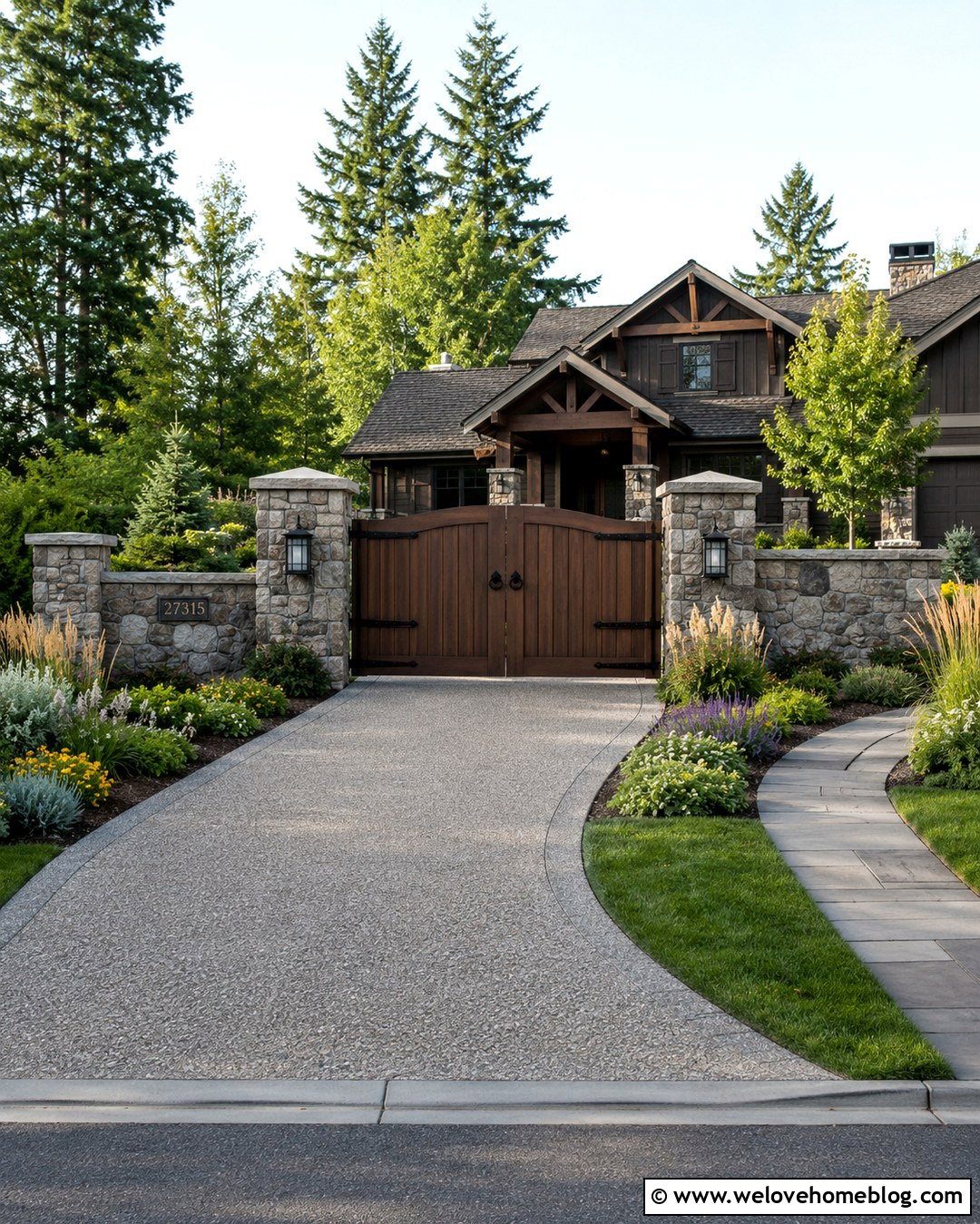
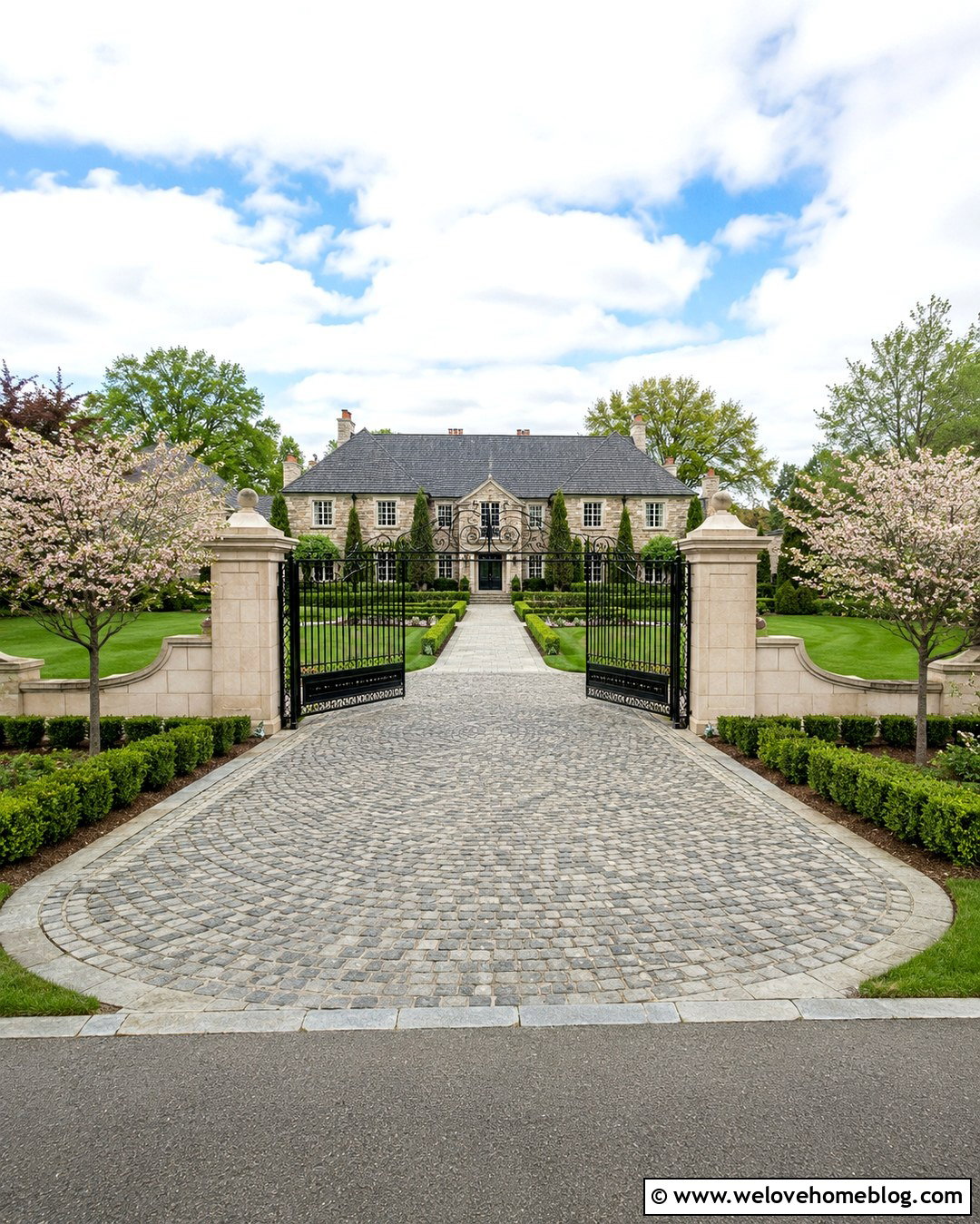
A strong driveway entrance can combine low landscape timber edging with substantial stone or brick pillars. Start the wood border several feet behind each pillar so the materials meet without appearing crowded. A tan gravel driveway with dark brown timbers works beautifully with fieldstone columns and a craftsman-style home. Create curved planting beds around the pillars using the same timber, then add compact evergreens, ornamental grasses, and flowering ground covers. Keep plants low enough to protect visibility when entering the road. Low-voltage lights can illuminate the pillars without placing fixtures where tires may hit them. Repeating the timber on both sides draws the eye toward the house and connects the formal entrance to the softer landscape. The pillars provide emphasis, while the wood continues the boundary in a more affordable, natural way.
15. Driveway With Timber Edging And River Rock
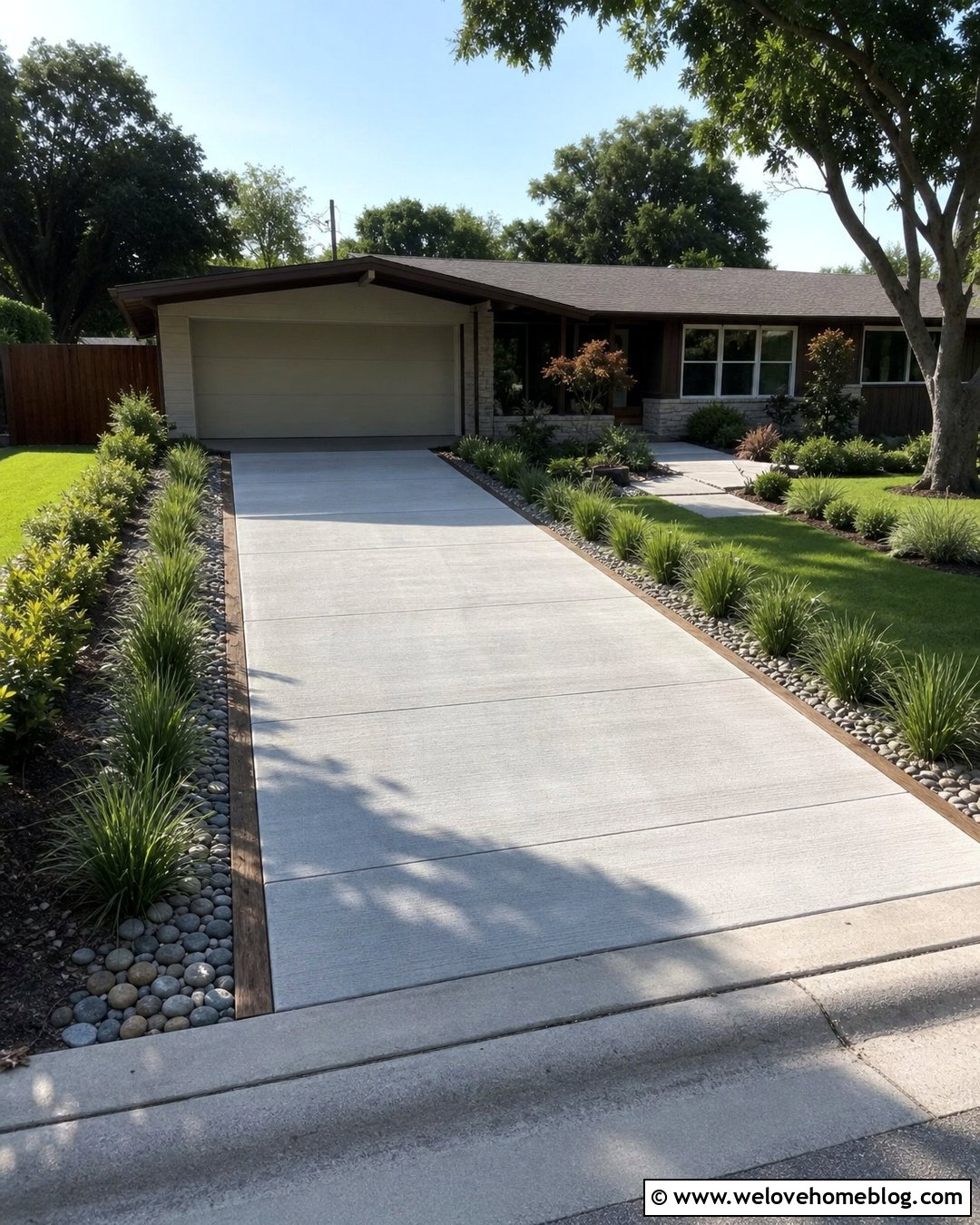
Landscape timbers and river rock can form a useful transitional border between a hard driveway and planted yard. Pair a light gray poured-concrete driveway with medium-brown timbers positioned several inches beyond the slab. Fill the space between them with smooth mixed river stones, creating a narrow drainage-inspired channel. Beyond the wood, plant moisture-tolerant grasses and shrubs where site conditions support them. The river rock should not be treated as a complete drainage solution unless the grading and outlet are properly planned. However, it can reduce muddy-looking edges and add visual texture. Continue the stone strip around a walkway intersection for a connected design. This combination works with ranch, midcentury, and contemporary homes, particularly when the facade includes natural stone, wood siding, or warm neutral colors.
16. Driveway With Timber Edging And Flower Beds
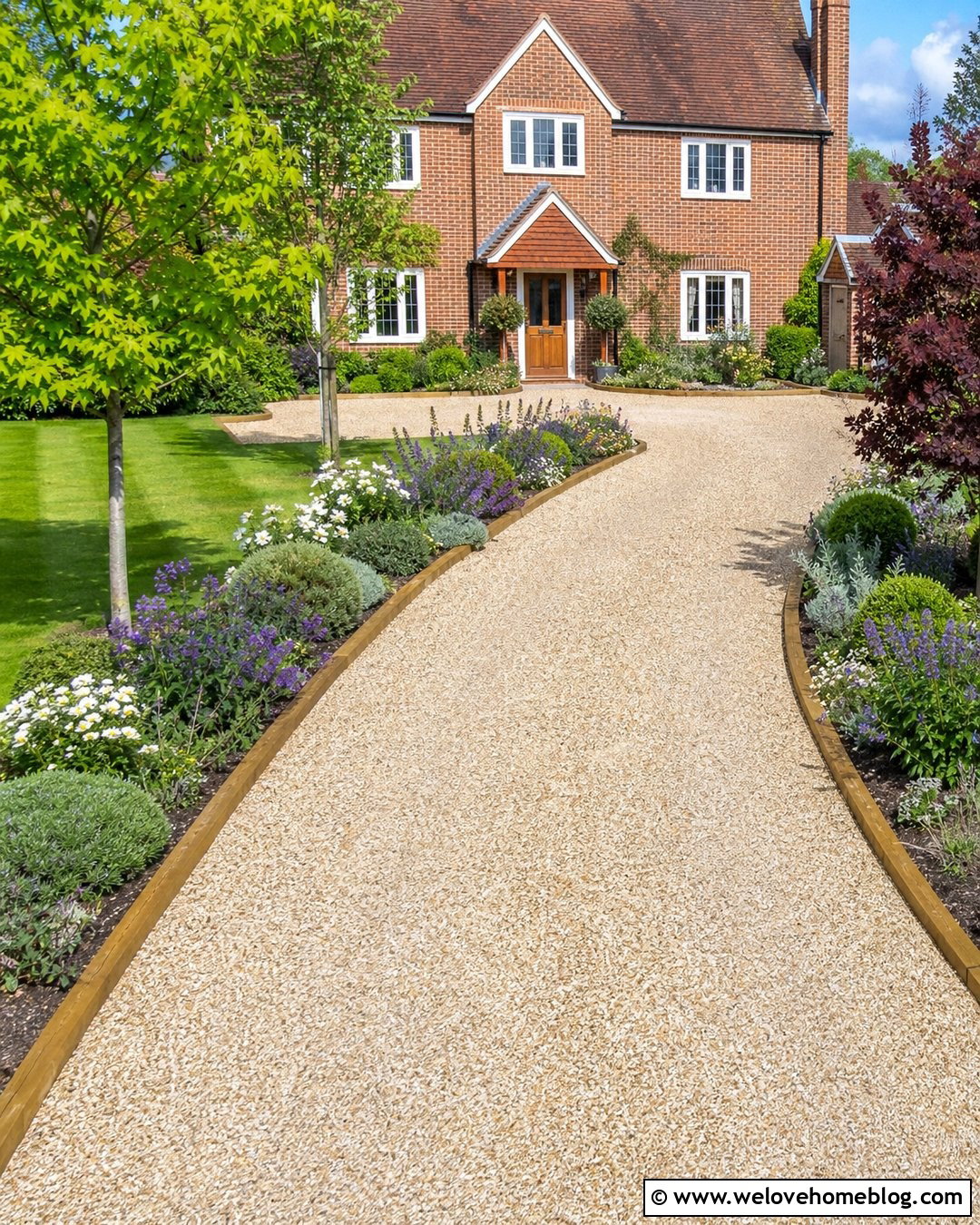
Colorful planting beds can transform plain timber edging into a complete front-yard feature. Use honey-brown landscape timbers beside a compacted beige gravel driveway, then build gently curved beds on the lawn side. Layer low ground covers near the wood, flowering perennials in the middle, and dwarf shrubs toward the back. This arrangement keeps taller plants away from tires while still creating depth. Choose a limited color palette that complements the house, such as purple, white, and soft pink beside a traditional brick home. Leave clear gravel shoulders near the garage and street where frequent turning occurs. A matching timber border around the front walkway can visually connect both routes. The finished driveway feels garden-focused, but the durable surface, defined edges, and unobstructed driving area remain easy to understand and maintain.
17. Driveway With Timber Edging And Ornamental Grass
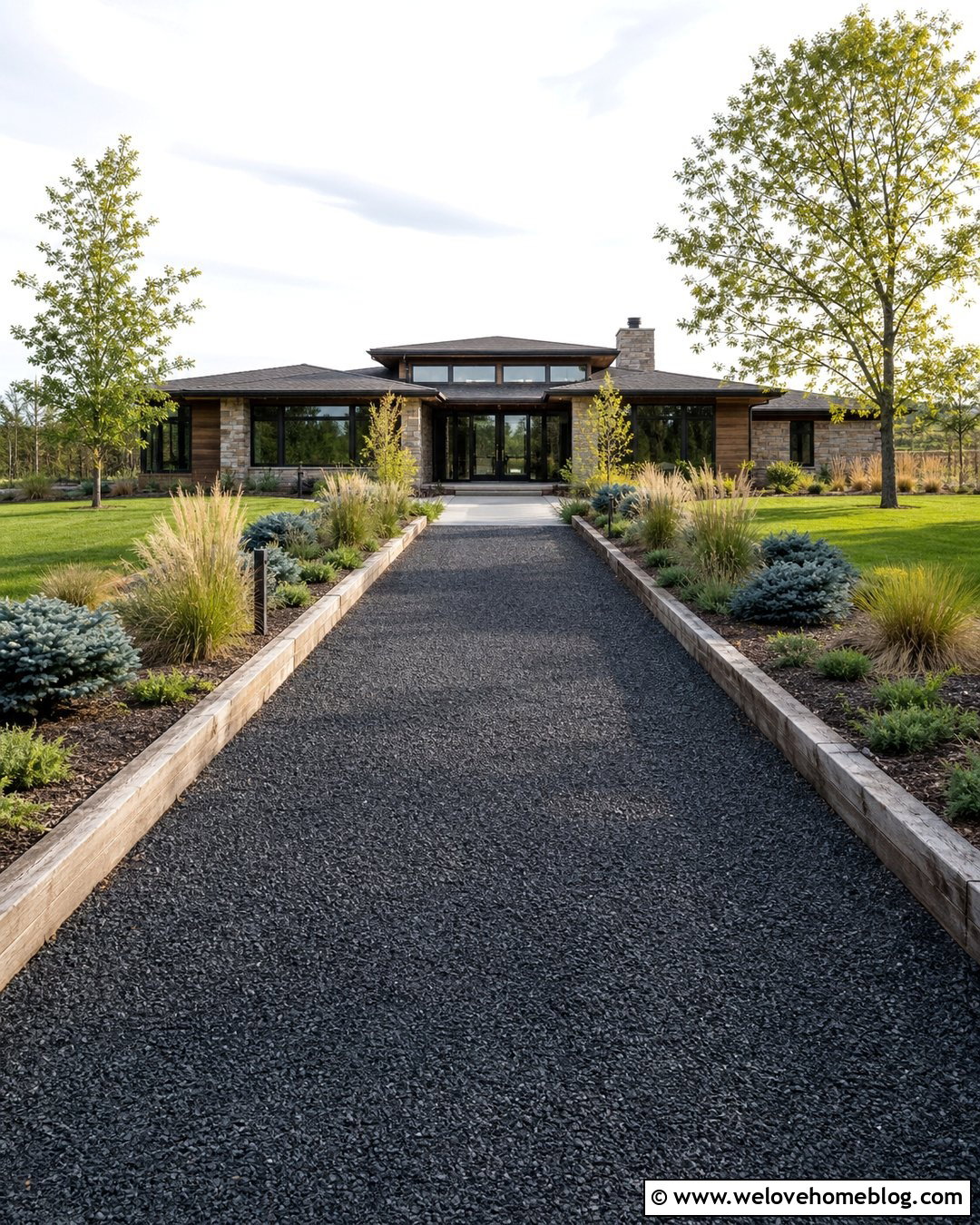
Ornamental grasses bring movement and softness to the straight lines of a timber-edged driveway. Begin with a dark gray gravel surface and low, natural-brown landscape timbers. Outside the edging, plant repeated groups of compact switchgrass, little bluestem, or fountain grass suited to local conditions. Space them according to mature width so they do not lean into the driving area. Add a few low evergreen shrubs near the house to provide structure after seasonal grasses are cut back. This complete look works well with modern ranch and prairie-influenced homes. Keep the planting simple along a long driveway; repeated masses appear more organized than many isolated varieties. The warm wood forms a visual bridge between the mineral driveway surface and the soft foliage, making the approach feel designed without becoming formal.
18. Driveway With Timber Edging And Solar Lights
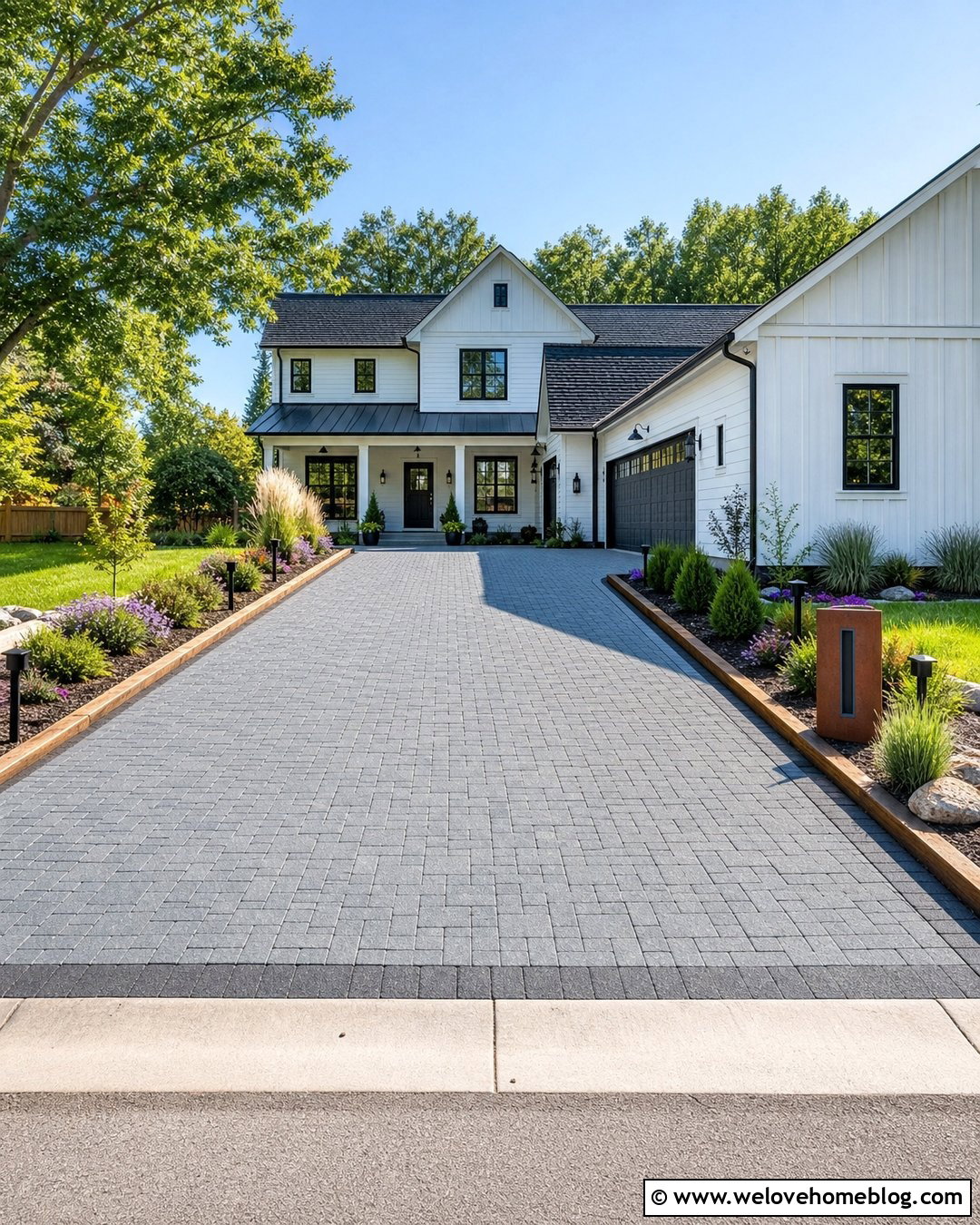
Lighting makes a timber border easier to recognize, but fixtures should never clutter the driving path. Use a medium-gray permeable paver driveway with low cedar-stained timbers along both sides. Position simple solar or low-voltage lights in the planting beds beyond the wood rather than directly inside the tire clearance zone. Space them evenly along a straight approach, concentrating extra illumination near the walkway, address marker, and garage. During the day, the dark fixtures should blend with compact shrubs, flowering ground covers, and ornamental grasses. Choose a modern farmhouse or Craftsman facade with warm wood details that repeat the edging tone. Before installation, consider snow removal, mowing, drainage, and mature plant growth. The result should provide a clear visual rhythm while keeping the driveway broad, uncluttered, and practical.
19. Budget Gravel Driveway With Landscape Timbers
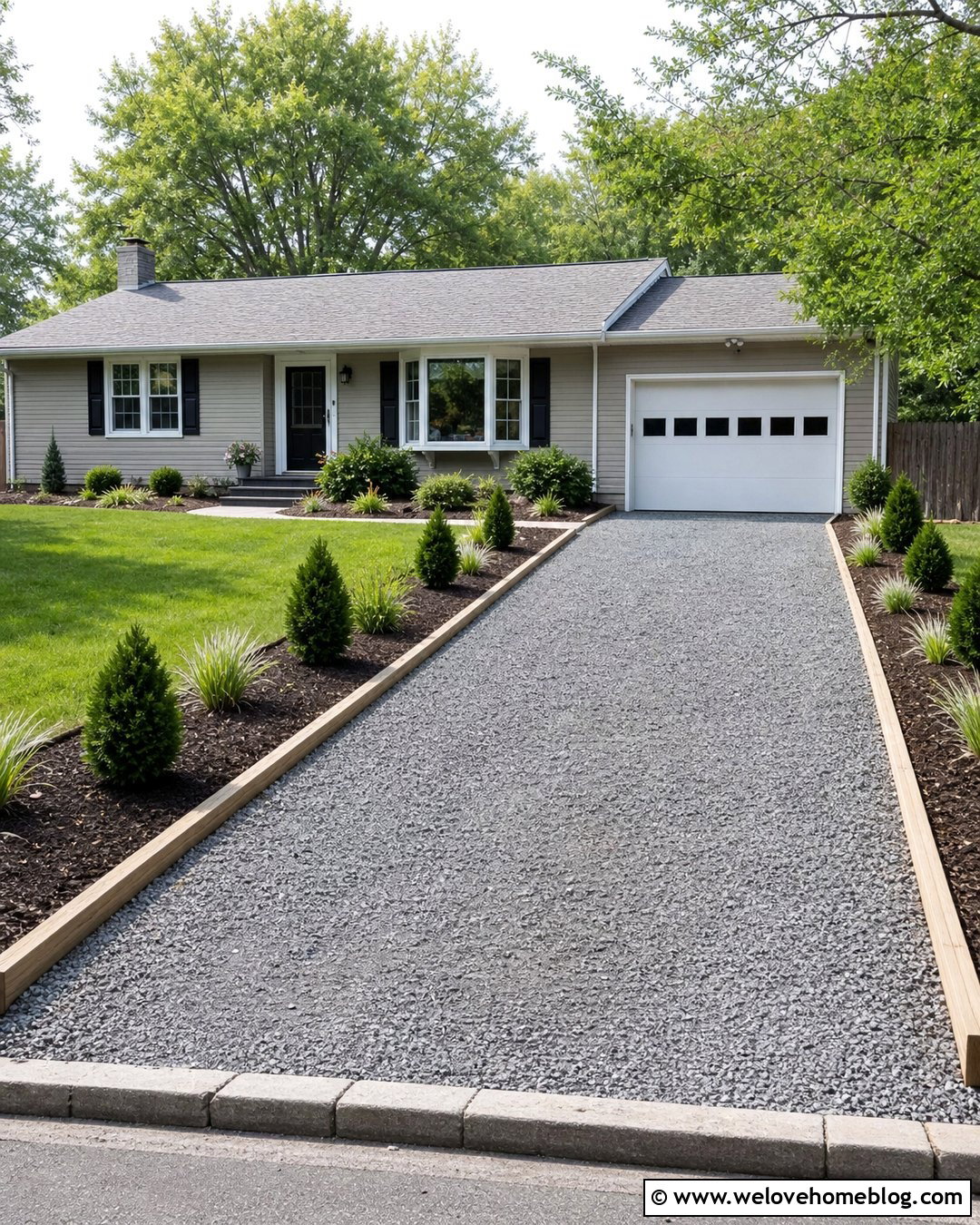
A simple budget-conscious driveway can still look planned when the materials are limited and repeated consistently. Use locally available gray crushed gravel, standard ground-contact-rated landscape timbers, and uncomplicated rectangular planting beds. Keep the driveway straight to reduce complicated cuts and join the timber lengths with neat end-to-end connections. Secure the pieces over a leveled base instead of laying them loosely on grass. A modest ranch home can be framed with affordable evergreen shrubs, ornamental grasses, and mulch placed outside the wood border. Add one wider bed at the entrance rather than many small decorative areas. Pressure-treated timber is commonly chosen because it provides a defined border at a comparatively accessible cost, but proper drainage and anchoring still matter. () Prioritizing preparation creates a better result than spending heavily on extra decoration.
20. Driveway Turnaround With Landscape Timber Edging
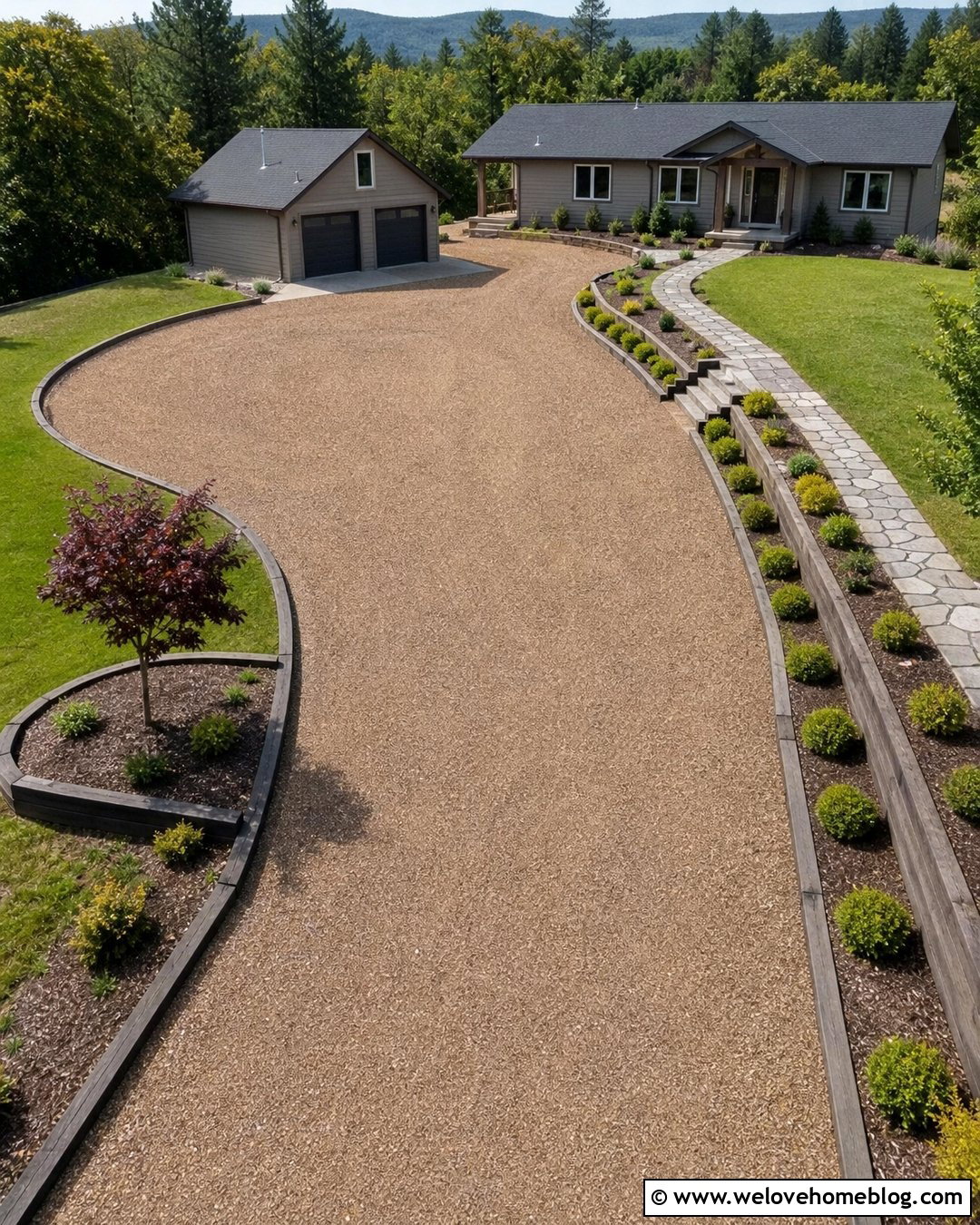
A gravel turnaround becomes easier to read when landscape timbers outline its outer edge and separate it from nearby lawn. Use angular brown gravel for traction and thick, dark-stained timbers for a visible boundary. Shape the turnaround as a broad rectangle, teardrop, or rounded parking court based on available space and vehicle movement. Add a central planting island only if it leaves sufficient turning room. Otherwise, place shrubs and a small ornamental tree beyond the outer timber border. Reinforce sections near common tire paths and keep the wood low enough to reduce the chance of vehicle contact. Drainage should move away from the house without being trapped behind the edging. This complete arrangement works well beside detached garages, country homes, and long driveways where drivers need to turn around safely.
Conclusion:
The best timber border does more than outline a driveway. It connects the driving surface to the lawn, garden, entrance, and architecture while helping loose materials remain where they belong. Choose ground-contact-rated wood, establish a stable and well-drained base, and use suitable corrosion-resistant spikes or fasteners. Replace damaged sections before they affect neighboring pieces, and keep soil, mulch, and irrigation from holding unnecessary moisture against the wood. Whether the driveway is gravel, asphalt, concrete, resin-bound aggregate, or pavers, match the timber profile to the scale and character of the property. These **20 Landscape Timber Driveway Edging Ideas** provide complete looks that can be adapted to different home styles, yard sizes, slopes, and budgets.

Related posts:
Leave a Reply