
Timber edging brings warmth, structure, and a finished appearance to driveways without making the landscape feel overly formal. The best timber driveway edging ideas combine practical gravel control with thoughtful driveway shapes, attractive planting, and materials that complement the home. Pressure-treated landscape timbers, cedar boards, hardwood sleepers, and natural logs can all create distinctive results. Timber works especially well beside gravel, asphalt, concrete, and resin-bound surfaces. It can sit nearly flush for a subtle boundary or rise above the surface to support planting beds. Proper anchoring and a compacted gravel base also help keep the border stable. From affordable straight edges to landscaped circular layouts, these complete designs offer plenty of useful inspiration. Explore the following **20 timber driveway edging ideas** for every home style and yard size.
1. Gravel Driveway With Landscape Timber Edging
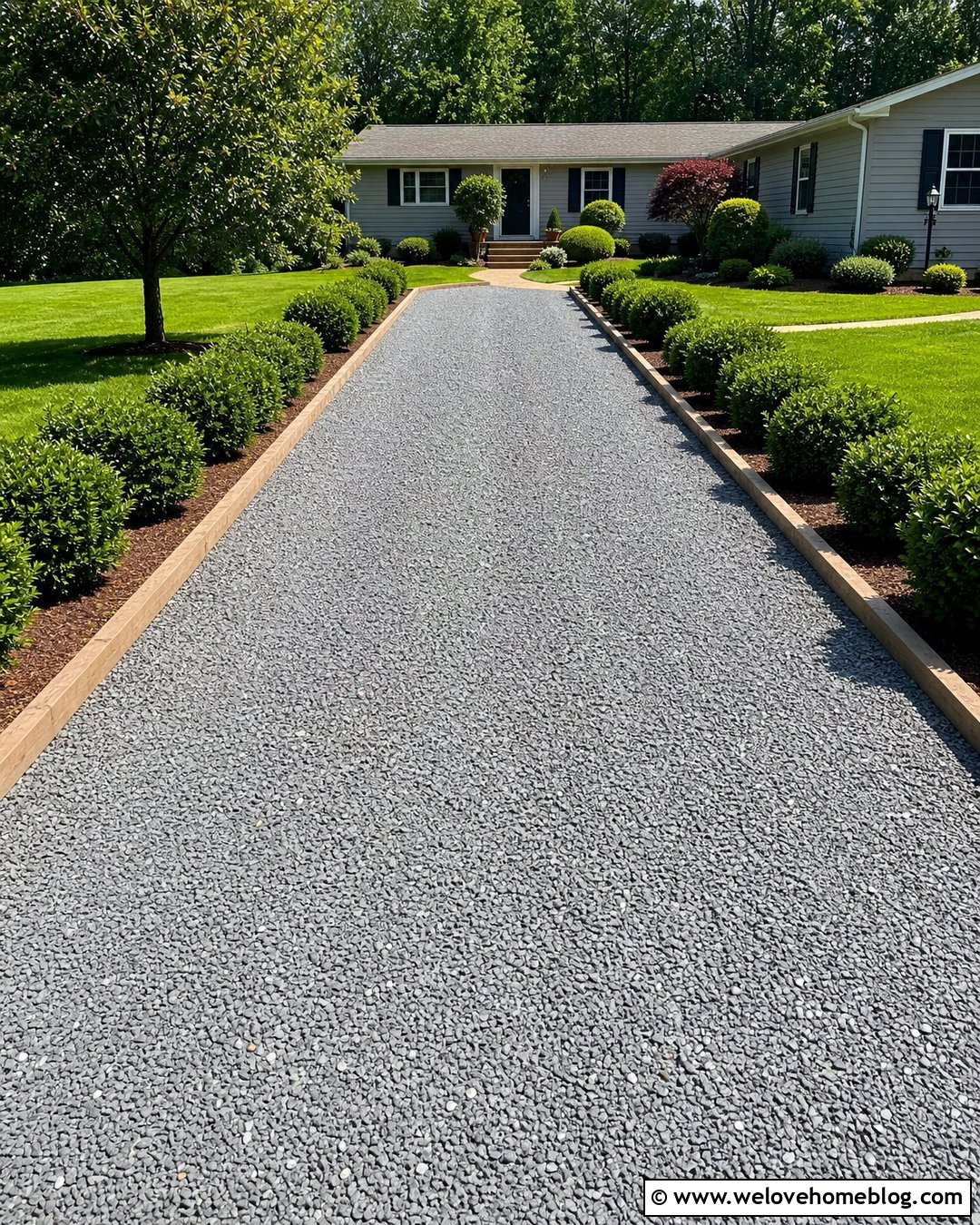
A straight gravel driveway framed by pressure-treated landscape timbers creates a clean, practical entrance that suits many suburban homes. Choose medium-gray crushed gravel to contrast with the warm brown wood. Set the timbers along both sides at a consistent height, leaving enough of the upper edge exposed to contain loose stones. Rebar or heavy landscape spikes can hold each length securely in place, while a compacted gravel bed underneath improves stability and drainage. Finish the design with simple lawn borders, rounded evergreen shrubs, and a paved walkway near the house. This complete look is affordable, approachable, and relatively easy to maintain. It works especially well beside ranch homes, traditional cottages, and properties with long, uncomplicated driveway layouts. ()
2. Pea Gravel Driveway With Cedar Board Edging
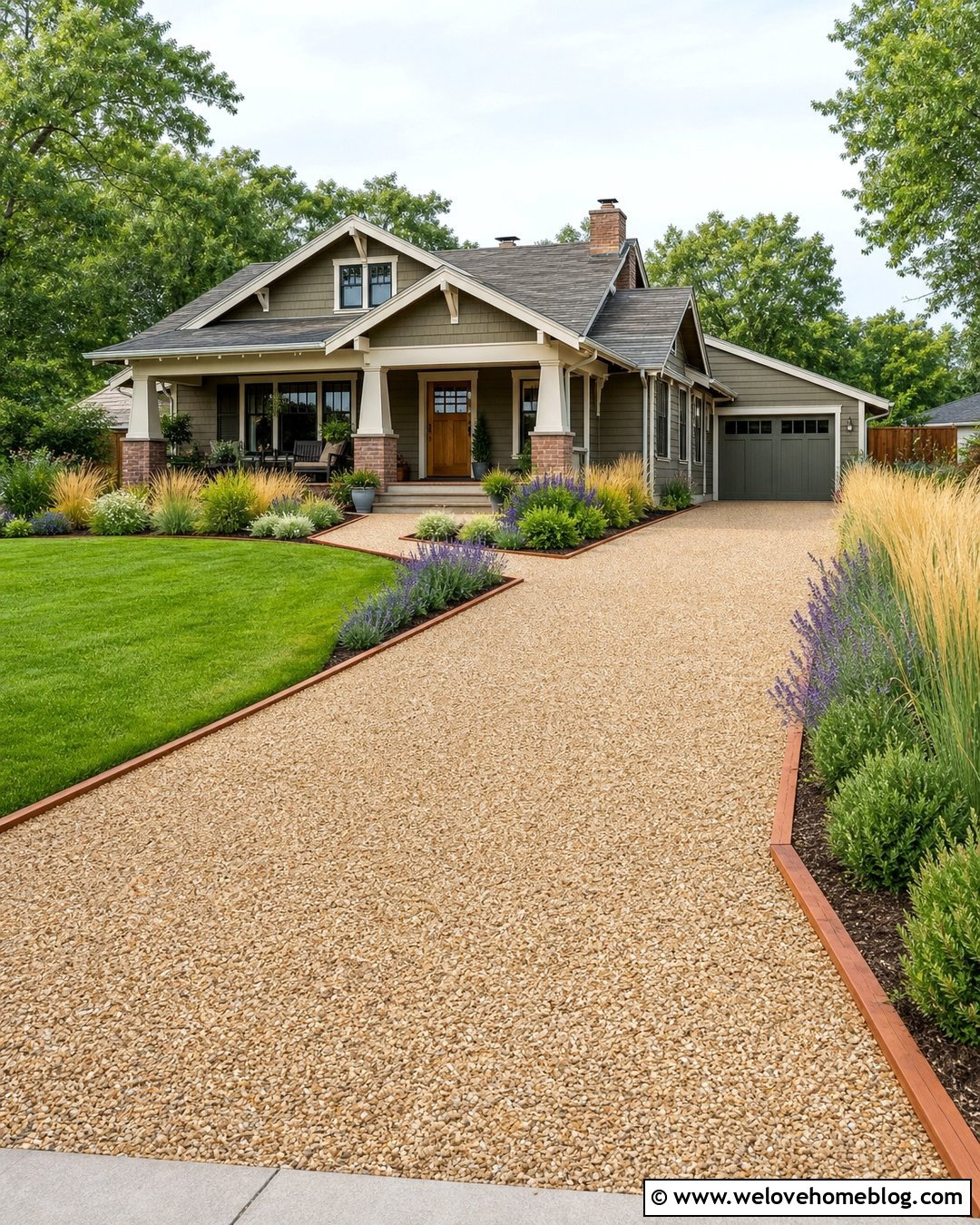
Soft golden pea gravel and red cedar boards create a warm driveway that feels relaxed but carefully planned. Use straight cedar edging along the main parking area, then gently angle the boards toward the front walkway. Cedar’s natural color pairs beautifully with cream siding, red brick, or stained wood details. Low planting beds filled with ornamental grasses, catmint, and compact shrubs can soften the border without hiding it. Because thin boards may shift under pressure, support them with closely spaced stakes and place them on a firm, well-drained base. Keep the gravel slightly below the top edge to reduce scattering onto the lawn. This timber driveway edging design feels especially welcoming beside Craftsman homes, Cape Cod houses, and small cottage-style front yards.
3. Crushed Stone Driveway With 6x6 Timber Edging
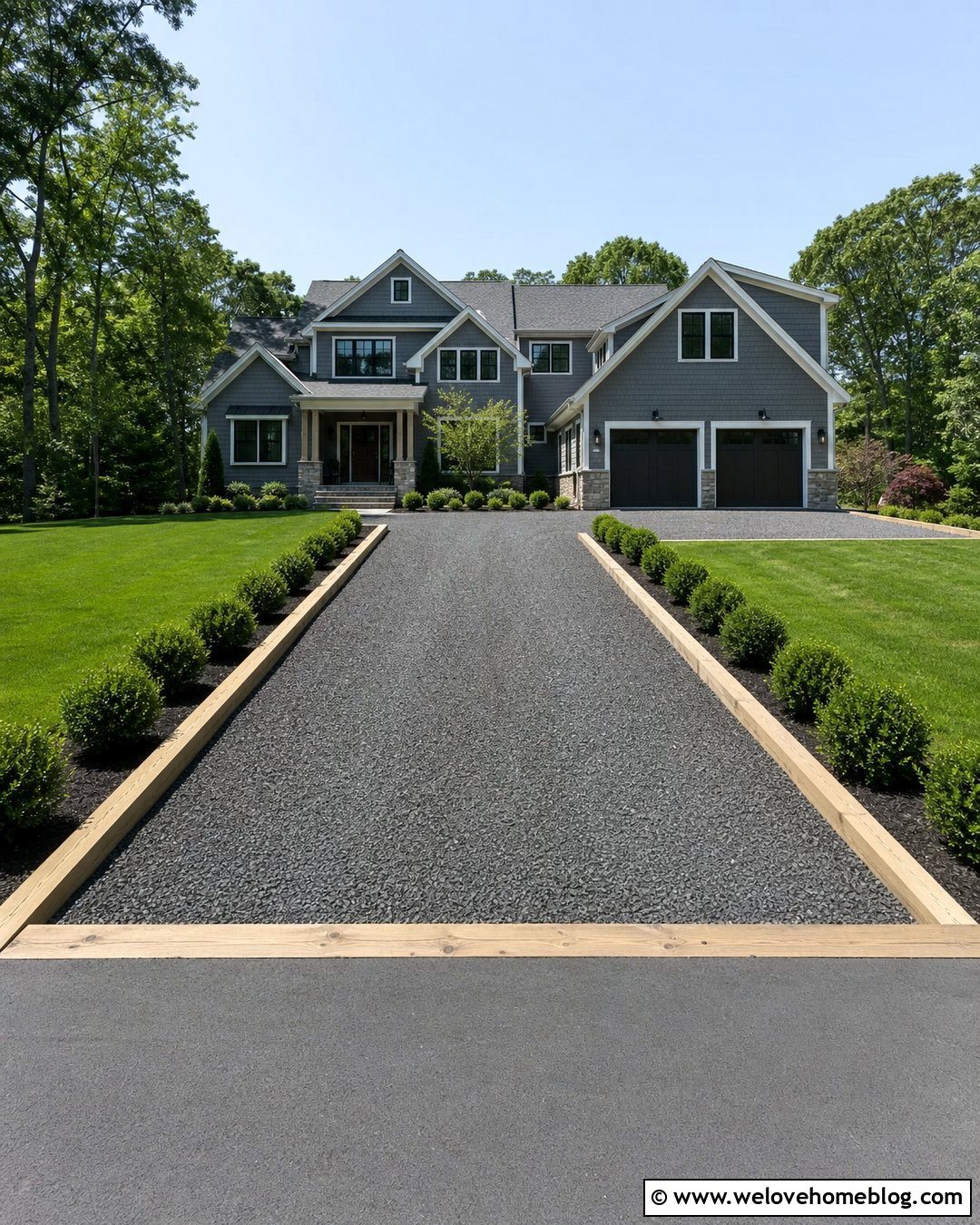
Chunky 6x6 timber beams give a crushed stone driveway a strong, substantial boundary. Their visual weight works best with a wide driveway, large front yard, or home with bold architectural features. Pair the beams with angular charcoal or blue-gray crushed stone for a balanced mix of rustic and structured materials. Keep the layout straight and symmetrical, with the timber running from the curb to a generous parking pad. A row of clipped boxwoods or inkberry shrubs can follow one side, while an open lawn keeps the opposite edge from feeling crowded. Ground-contact-rated timber is the practical choice for this application. Deep anchoring and well-connected joints are also important, particularly where tires may occasionally press against the border. ()
4. Asphalt Driveway With Flush Timber Edging
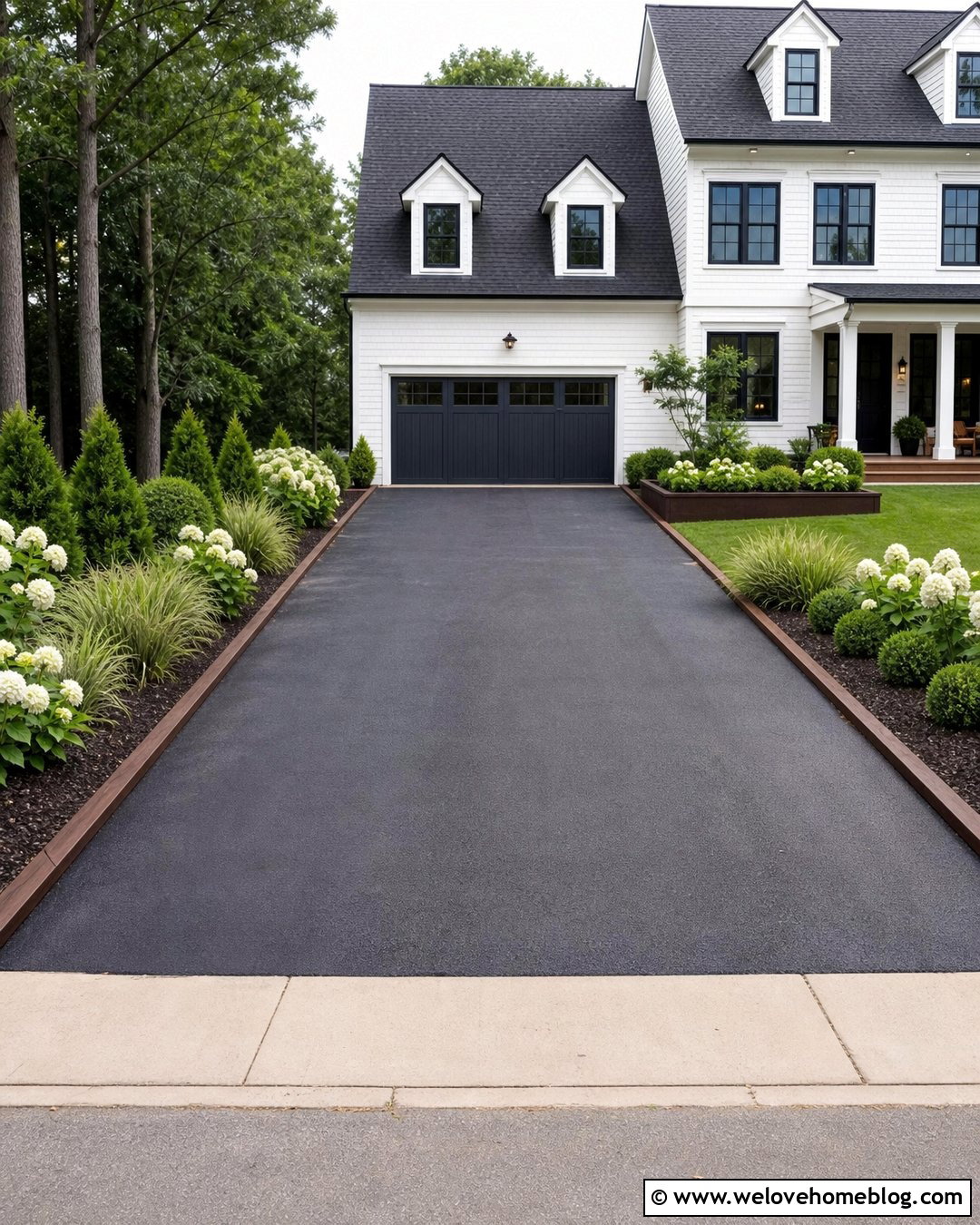
Can timber make an asphalt driveway feel softer and more connected to the yard? A flush wood border offers an effective solution. Install dark-stained landscape timbers nearly level with the black asphalt, creating a narrow transition between the hard surface and surrounding grass. The low profile keeps the driveway easy to use while adding a warm, visible outline. Continue the timber around a matching planting bed near the garage to make the design feel intentional. White hydrangeas, dwarf evergreens, and ornamental grasses provide bright contrast against the dark pavement. This combination works particularly well with updated colonial, split-level, and contemporary ranch homes. Choose simple, straight timber runs and clean corners so the edging complements the asphalt instead of competing with it.
5. Concrete Driveway With Timber Planting Borders
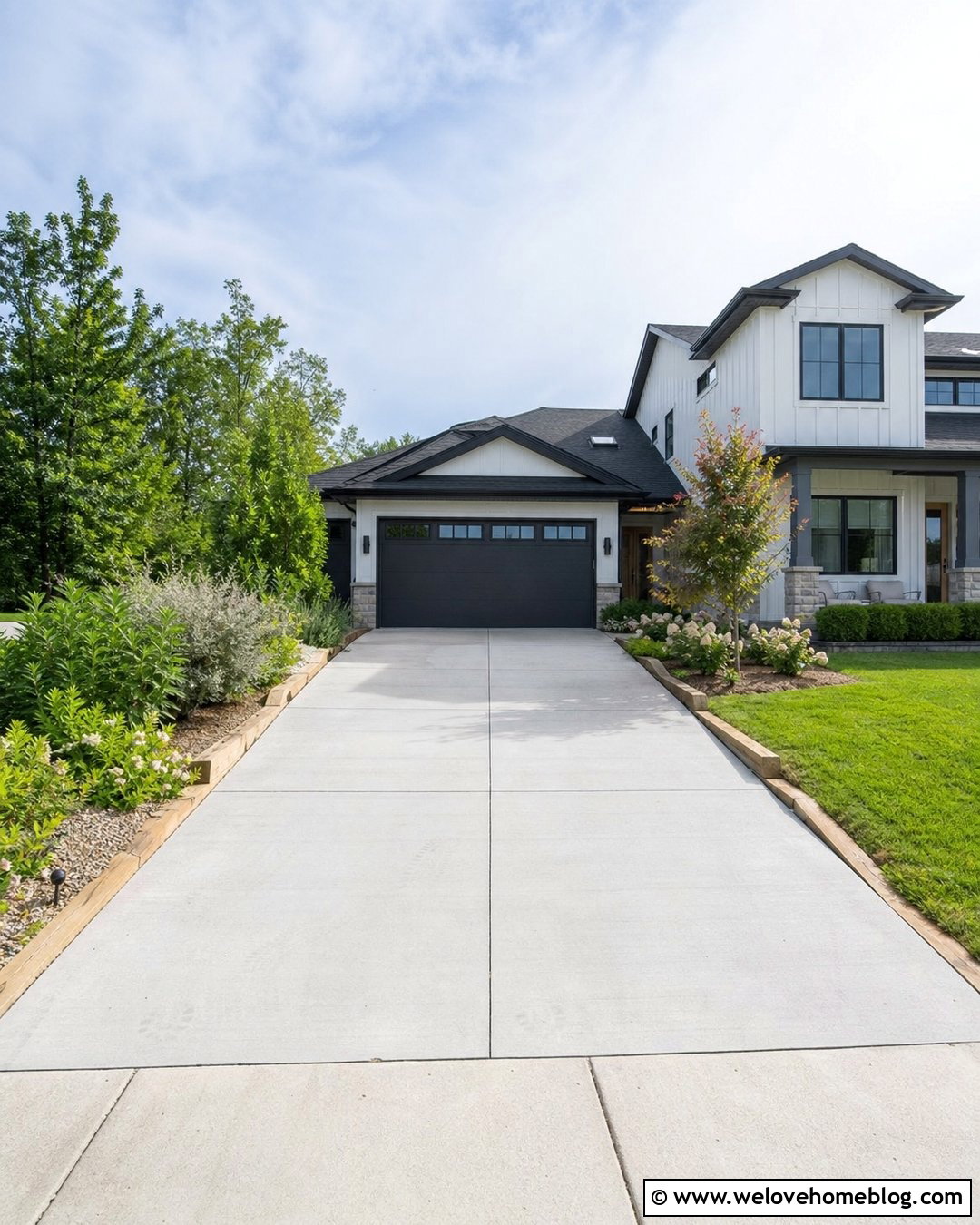
Cool gray concrete becomes more inviting when bordered by warm timber and layered greenery. Frame a straight poured-concrete driveway with low timber retaining edges that also define narrow planting beds. The wood should sit beyond a small drainage gap rather than pressing directly against the concrete. Fill the beds with tidy shrubs, flowering perennials, and decorative gravel mulch for a polished appearance. Near the garage, connect the timber border to a wider garden containing a small ornamental tree. Repeating the same wood around the front walkway helps unify the property. This driveway look is ideal for homes that already feature timber siding, wood porch posts, or natural-toned garage doors. It combines concrete’s clean surface with the softer character of a landscaped garden entrance.
6. Resin-Bound Driveway With Dark Timber Edging
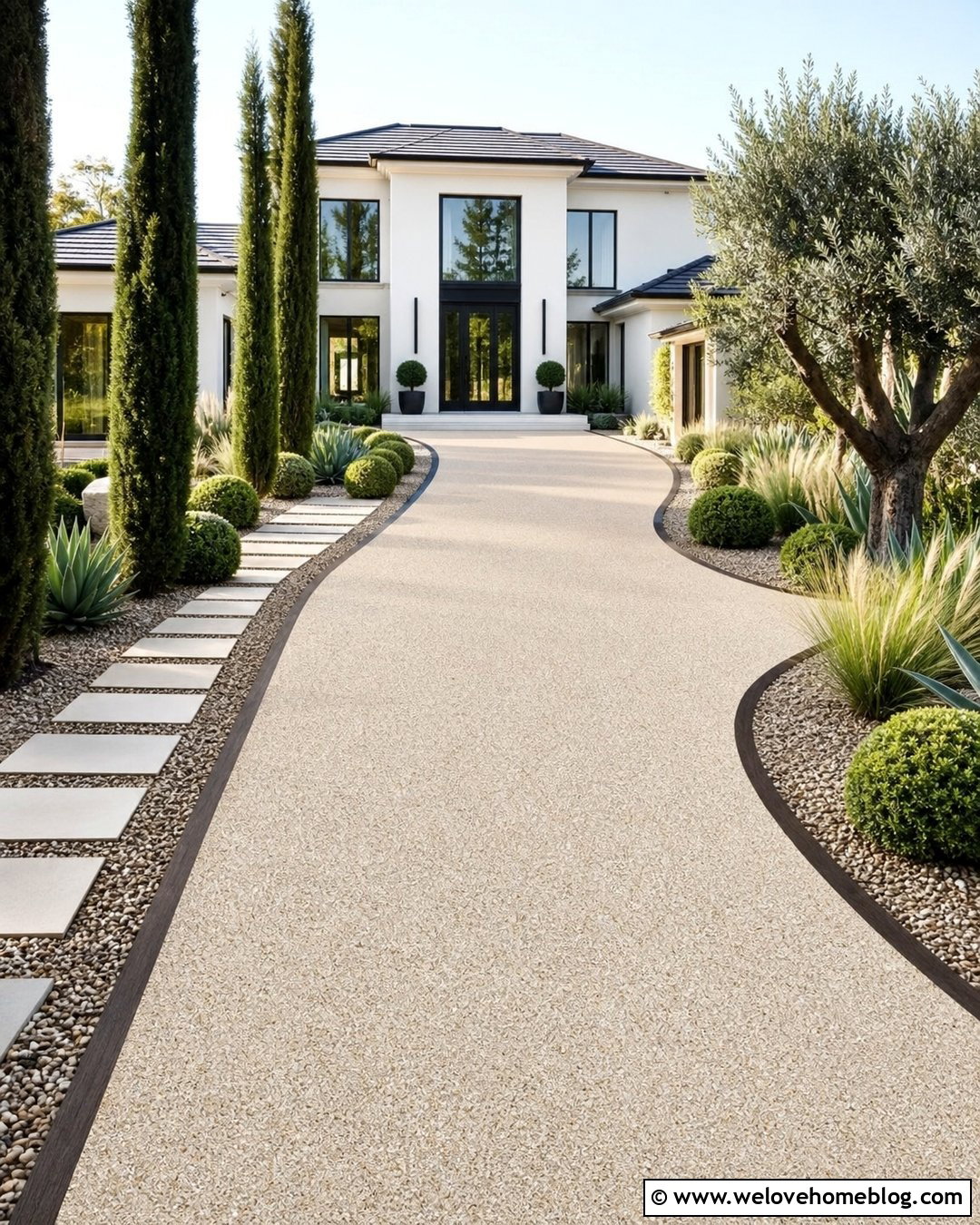
A light resin-bound gravel driveway gains definition from slim, dark-stained timber edging. Choose a warm beige or pale gray aggregate finish, then use espresso-colored hardwood boards to create crisp lines along the driveway. A gentle curve toward the garage can make the entrance feel wider and more graceful. Behind the timber, add gravel-mulched beds containing sculptural grasses, globe-shaped shrubs, and a few upright evergreens. Keep the planting restrained so the smooth driveway and contrasting border remain the main features. This combination has a clean appearance that suits modern and transitional homes without feeling cold. Extend the timber around an adjoining stepping-stone walkway or address sign bed. Repeating the material in several locations creates a coordinated front-yard design.
7. Curved Gravel Driveway With Segmented Timber Edging
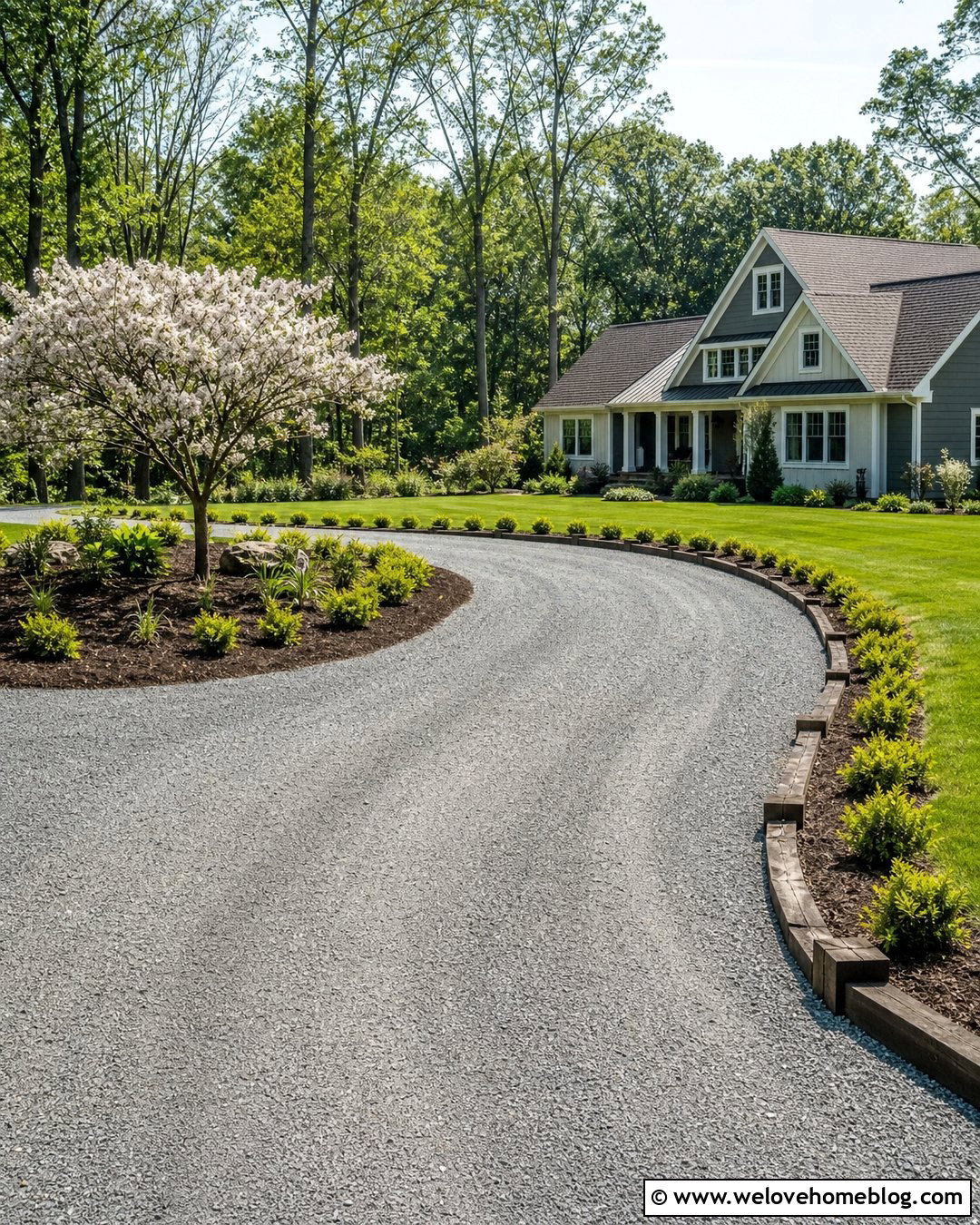
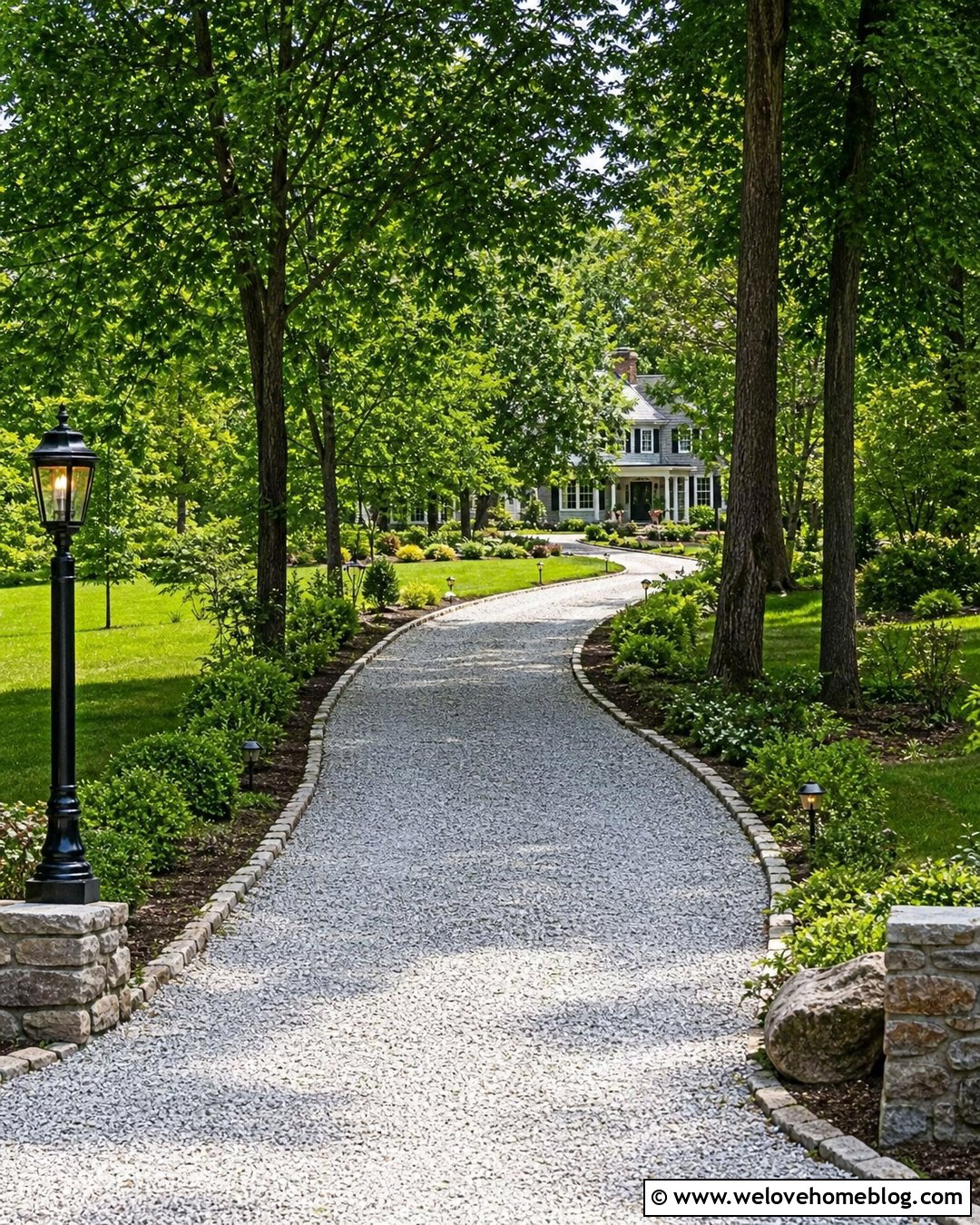
Curves can be challenging with long, rigid beams, but shorter timber sections make the layout easier to shape. Use compacted gray gravel for the driveway and install evenly cut timber segments along the sweeping outside edge. Slightly angle each section to follow the curve without creating large gaps. The inner border can remain simpler, with a broad lawn or an island bed containing a small flowering tree. Repeating shrubs along the outer edge will emphasize the flowing shape and lead the eye toward the house. Secure every timber section independently because curved borders experience pressure in several directions. This design is a natural fit for wooded suburban lots, country homes, and properties where a perfectly straight driveway would look too severe or disrupt existing trees.
8. Circular Gravel Driveway With Timber Sleeper Edging
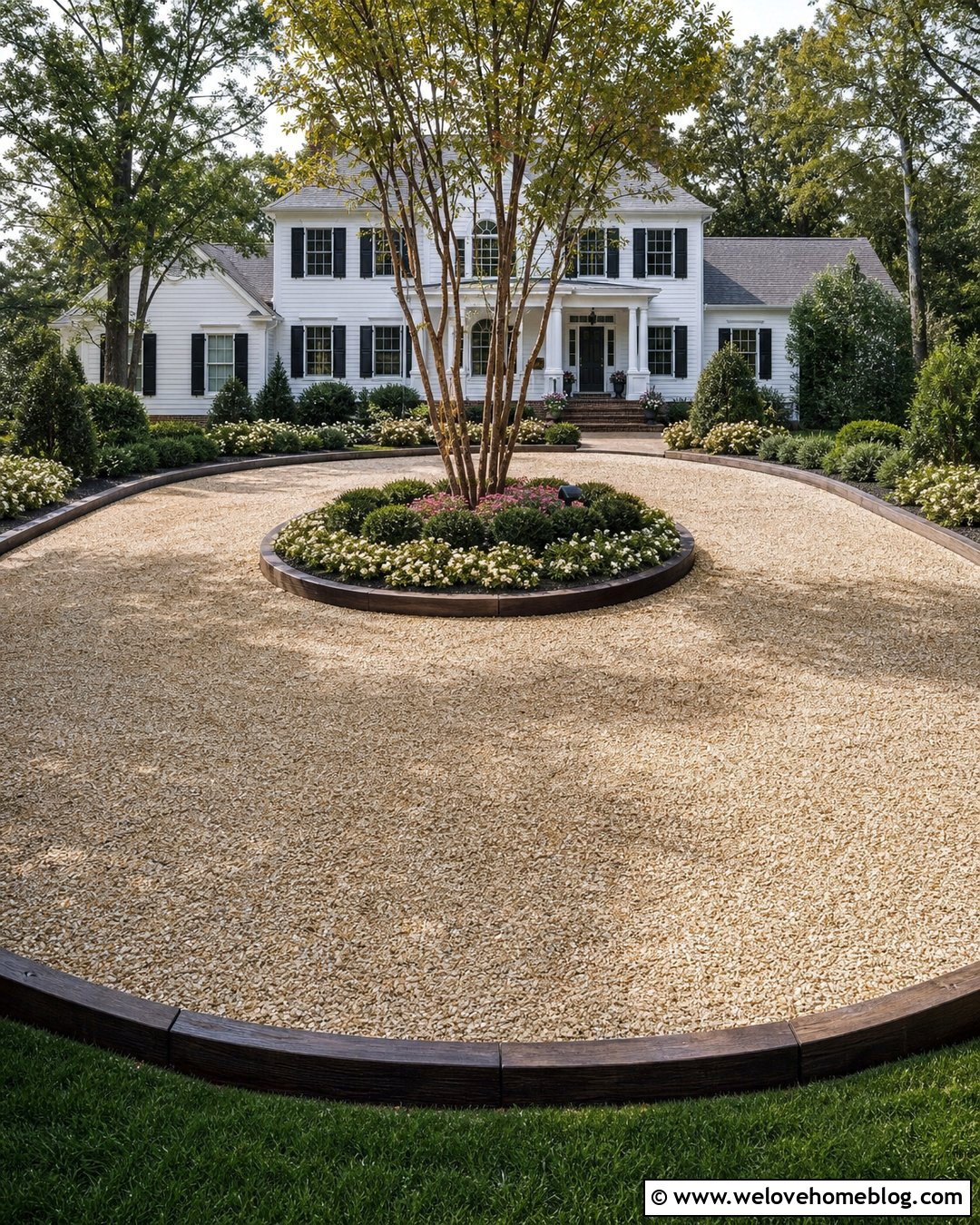
A circular gravel driveway looks organized and welcoming when sturdy timber sleepers define both its outer border and central island. Use warm buff gravel to brighten the approach, then place thick sleepers in short connected runs around the curves. The central island can feature a multi-stem tree, low evergreen shrubs, and seasonal flowers arranged in broad groups. Keep the outer landscaping simpler so drivers can clearly understand the layout. Near the entrance, widen the timber border around two planted beds to visually frame the arrival point. A circular design requires accurate spacing and enough turning room, so plan the entire route before installing the edging. The finished look complements large colonial homes, modern farmhouses, and country properties with generous front yards.
9. Farmhouse Driveway With Weathered Timber Edging
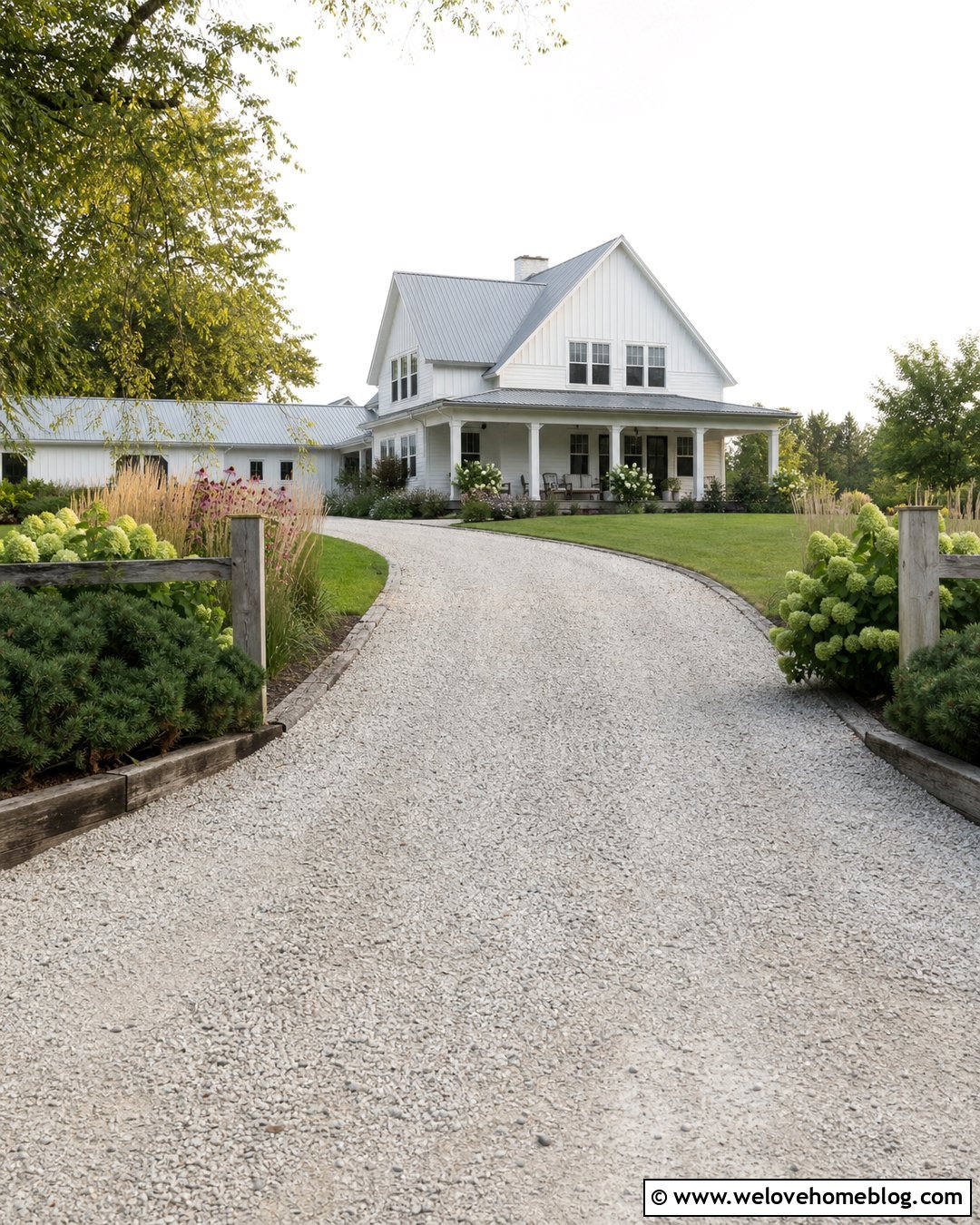
Weathered timber and pale crushed gravel create a relaxed farmhouse driveway that looks established rather than newly constructed. Run chunky gray-brown timbers along a straight or gently curved driveway leading to a white home with a covered porch. Allow meadow-style planting to soften the outer edges, but maintain a clear strip beside the wood for easier trimming. Hydrangeas, switchgrass, coneflowers, and compact junipers can provide structure without appearing too formal. At the road, pair the edging with simple timber posts and a gravel apron. Avoid making the border perfectly decorative; natural grain, knots, and subtle color variation support the rural character. The result is practical enough for daily use yet attractive enough to strengthen the property’s overall farmhouse curb appeal.
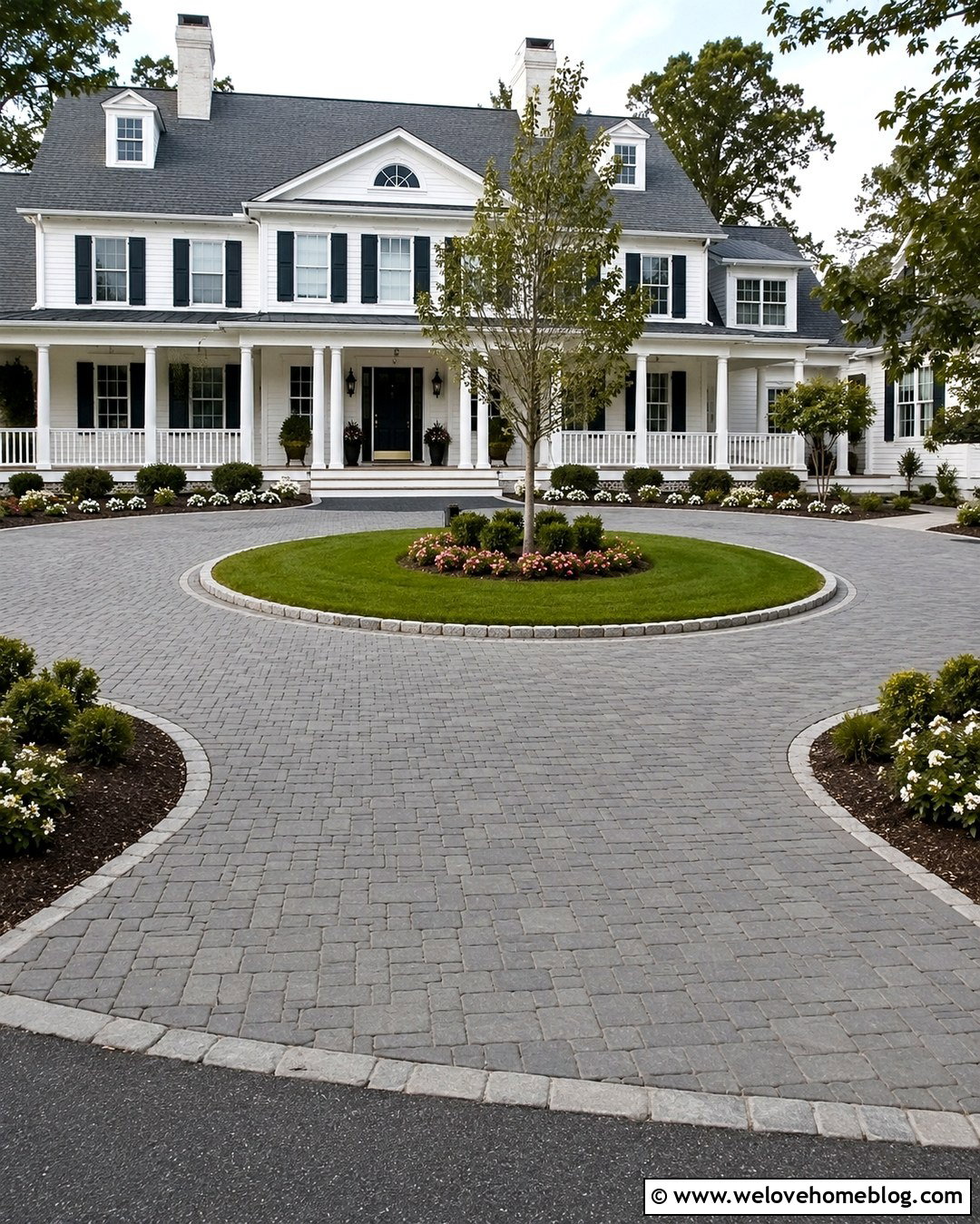
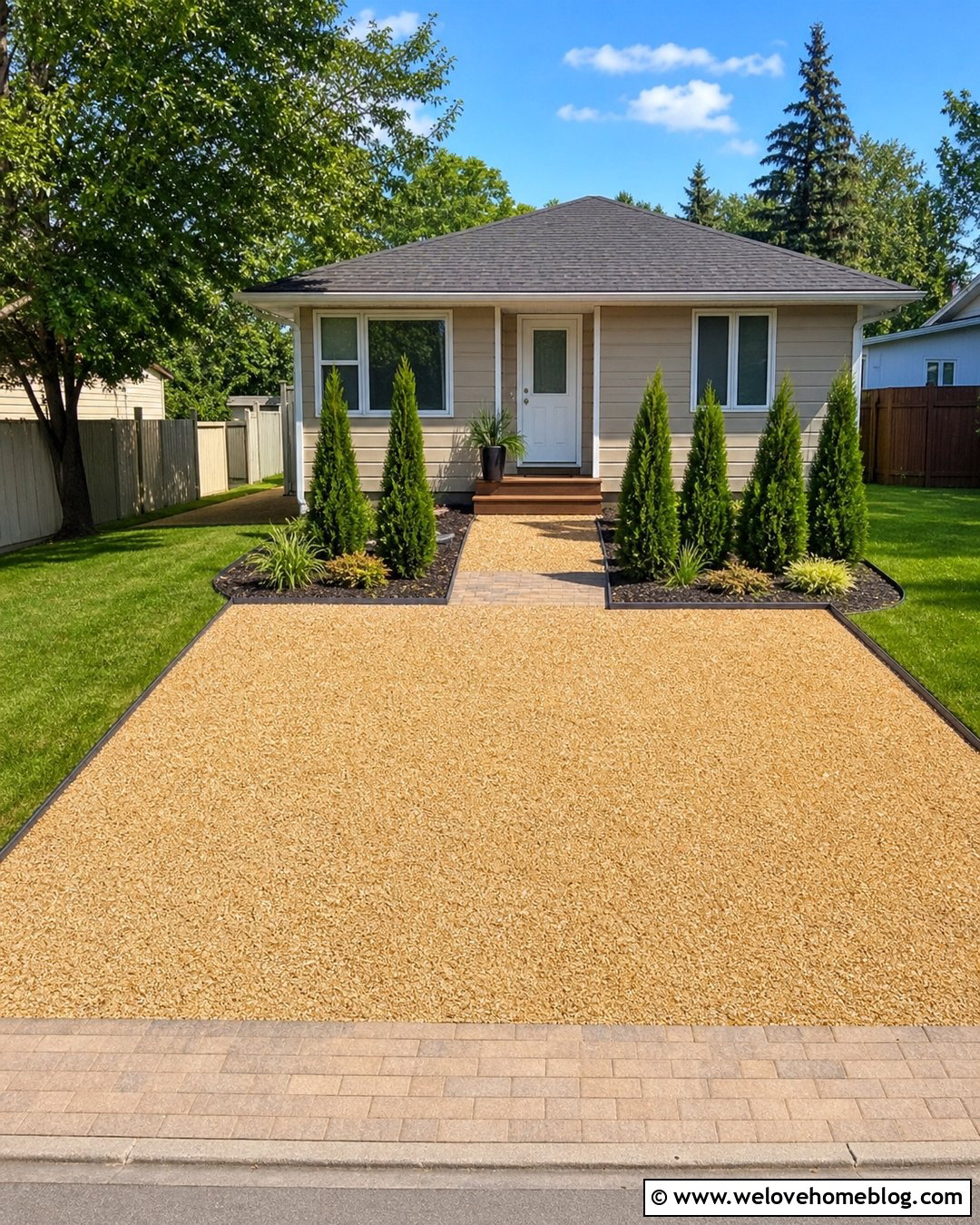
10. Black Gravel Driveway With Charred Timber Edging
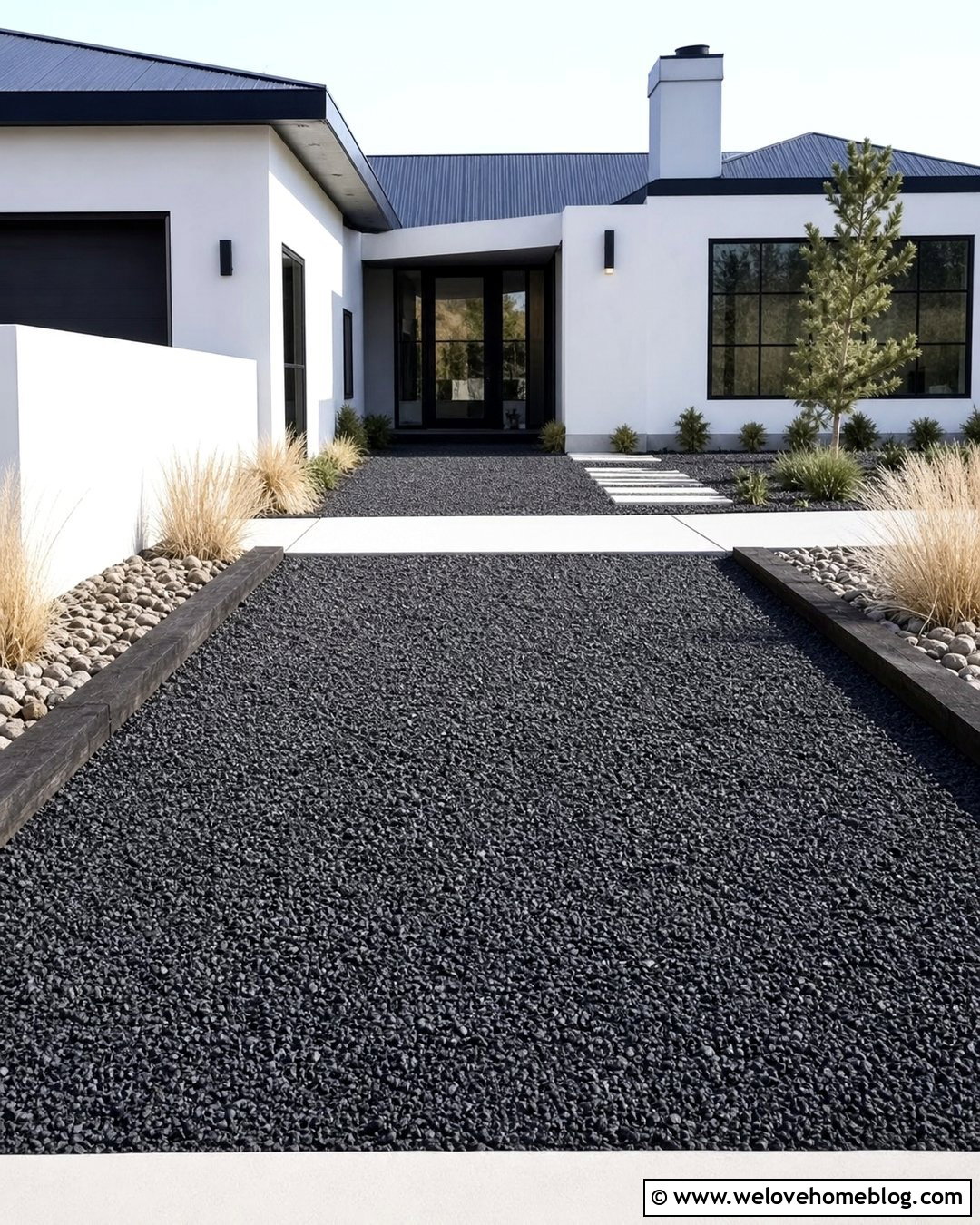
Deep black gravel and charred timber produce a dramatic driveway with strong modern lines. Use angular basalt or dark crushed stone across a broad, straight surface. Frame it with thick blackened timber beams secured at a consistent height. The similar colors create a unified base, while the different textures keep the design visually interesting. Surround the driveway with pale ornamental grasses, gray river stones, and restrained evergreen planting. A light concrete walkway can cross the dark surface near the house, adding a clean transition to the entrance. This bold timber driveway edging design works best with modern homes featuring white stucco, vertical wood siding, or charcoal metal details. Bright, open landscaping prevents the dark materials from making the front yard feel heavy.
11. Cottage Driveway With Timber And Lavender Borders
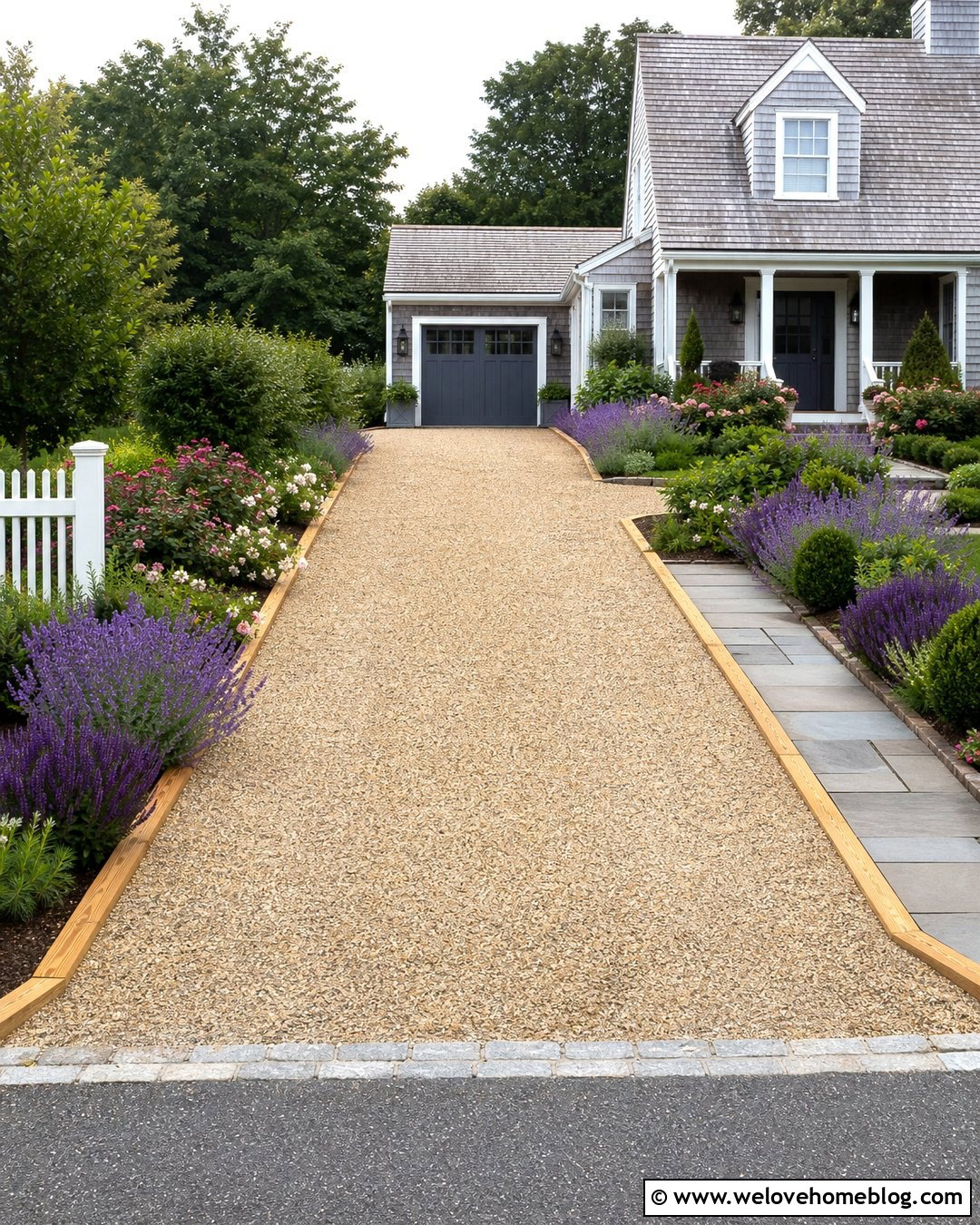
Picture a softly colored pea gravel driveway bordered by timber beams and fragrant waves of lavender. This complete cottage look combines pale gravel, warm wood, and loose flowering plants without sacrificing a clearly defined driving surface. Use low pressure-treated timbers along a straight driveway that widens slightly near the garage. Plant lavender behind the sunniest edge, adding compact roses, catmint, and evergreen shrubs where more variety is needed. Leave a narrow gravel maintenance strip between the timber and plants to improve airflow and simplify trimming. Near the house, connect the driveway border to a curved garden bed and flagstone walkway. The design suits Cape Cod homes, brick cottages, and Craftsman bungalows, especially when the timber color echoes porch posts, shutters, or the front door.
12. Woodland Driveway With Natural Log Edging
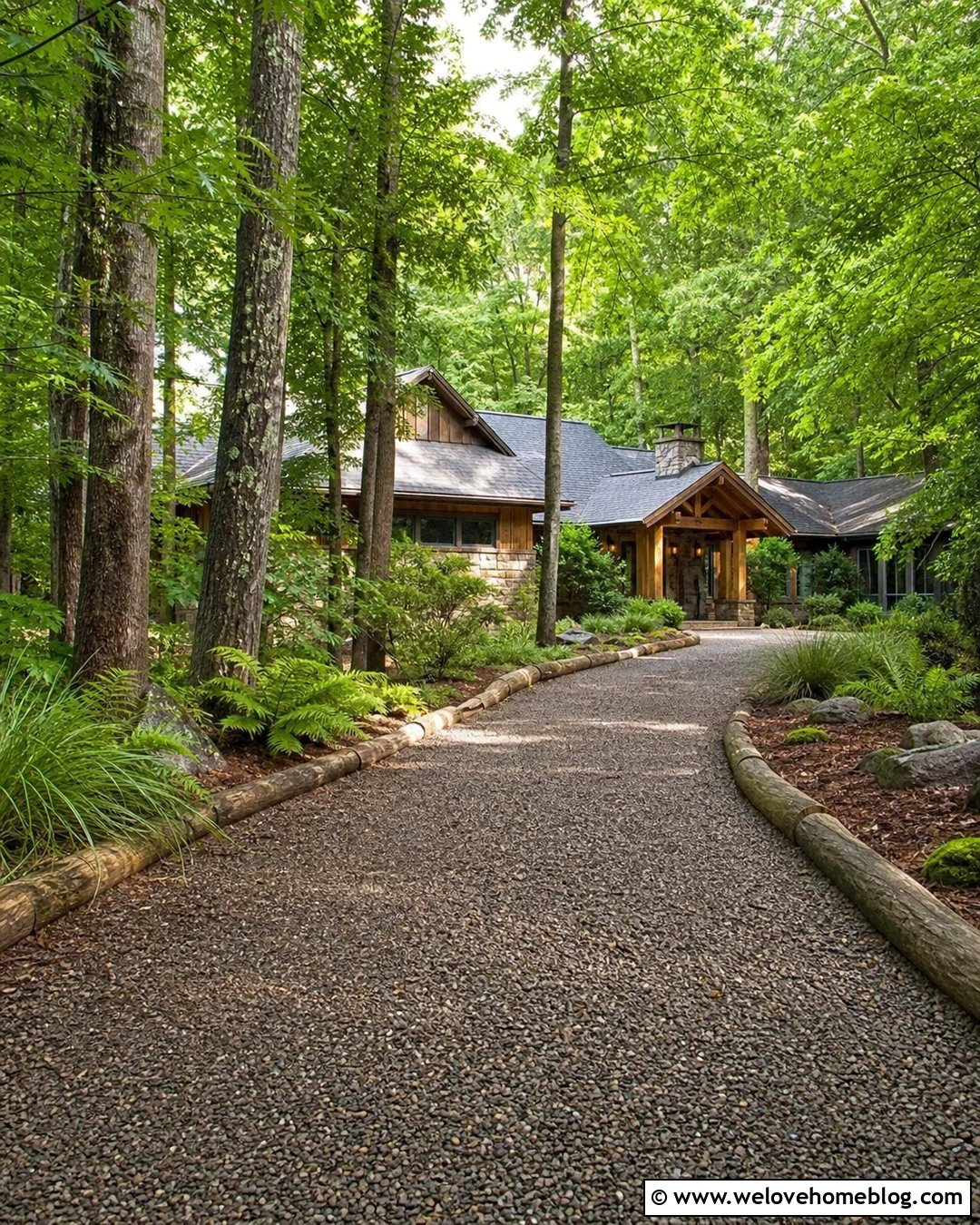
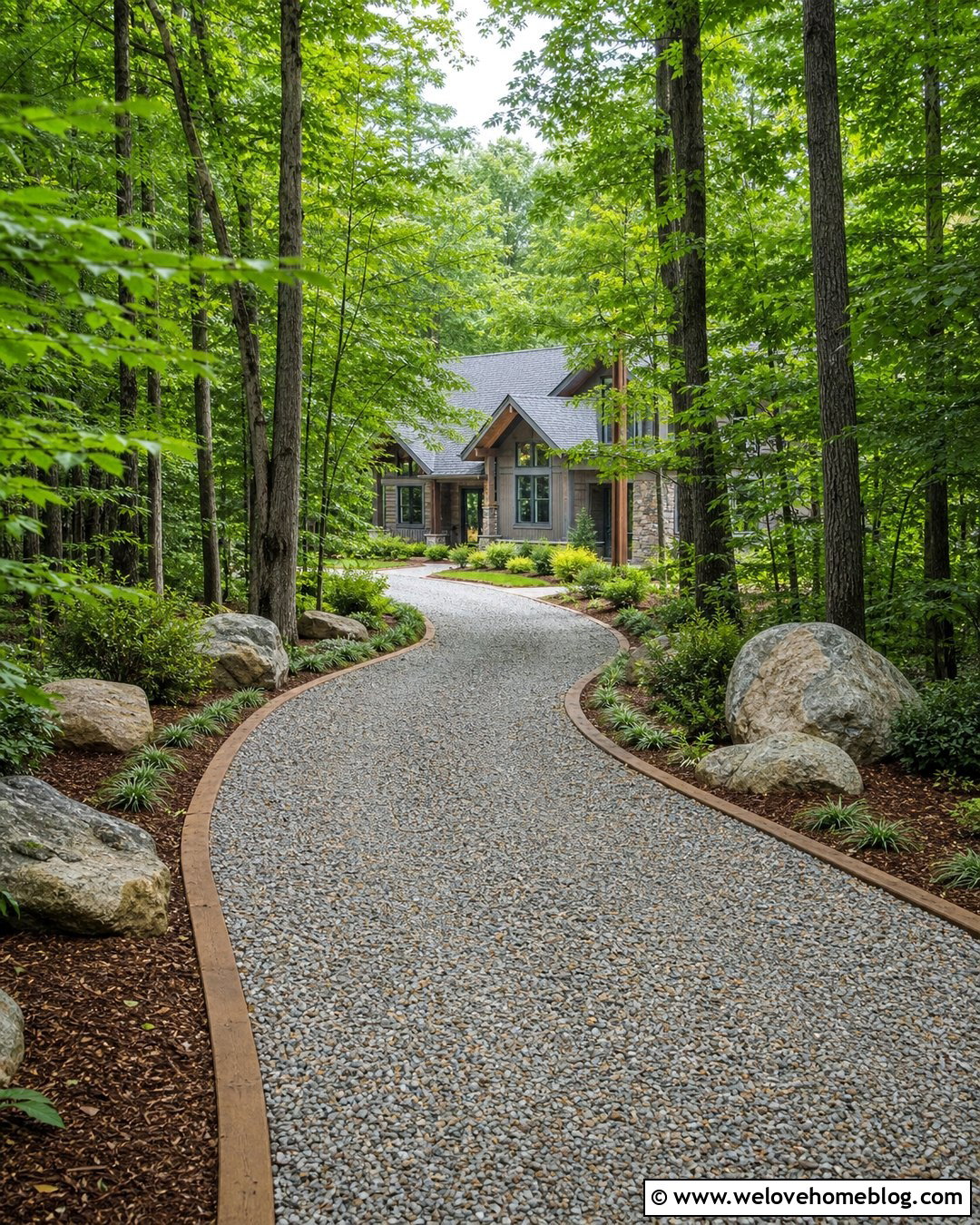
Natural logs can transform a gravel driveway into a quiet extension of a wooded landscape. Choose fairly straight, durable logs with similar diameters and place them beside a brown or gray crushed-stone surface. A gently curving layout will feel more organic than a rigid line. Ferns, woodland grasses, native shrubs, and leaf mulch can fill the beds behind the logs. Preserve mature trees where possible, but maintain open sightlines near the road and driveway entrance. Logs are best suited to low, decorative borders rather than areas exposed to repeated tire impacts. Anchor them carefully so they cannot roll or shift. This informal treatment complements cabins, rustic ranch homes, and country houses surrounded by established trees, natural slopes, and lightly managed planting.
13. Sloped Gravel Driveway With Stepped Timber Edging
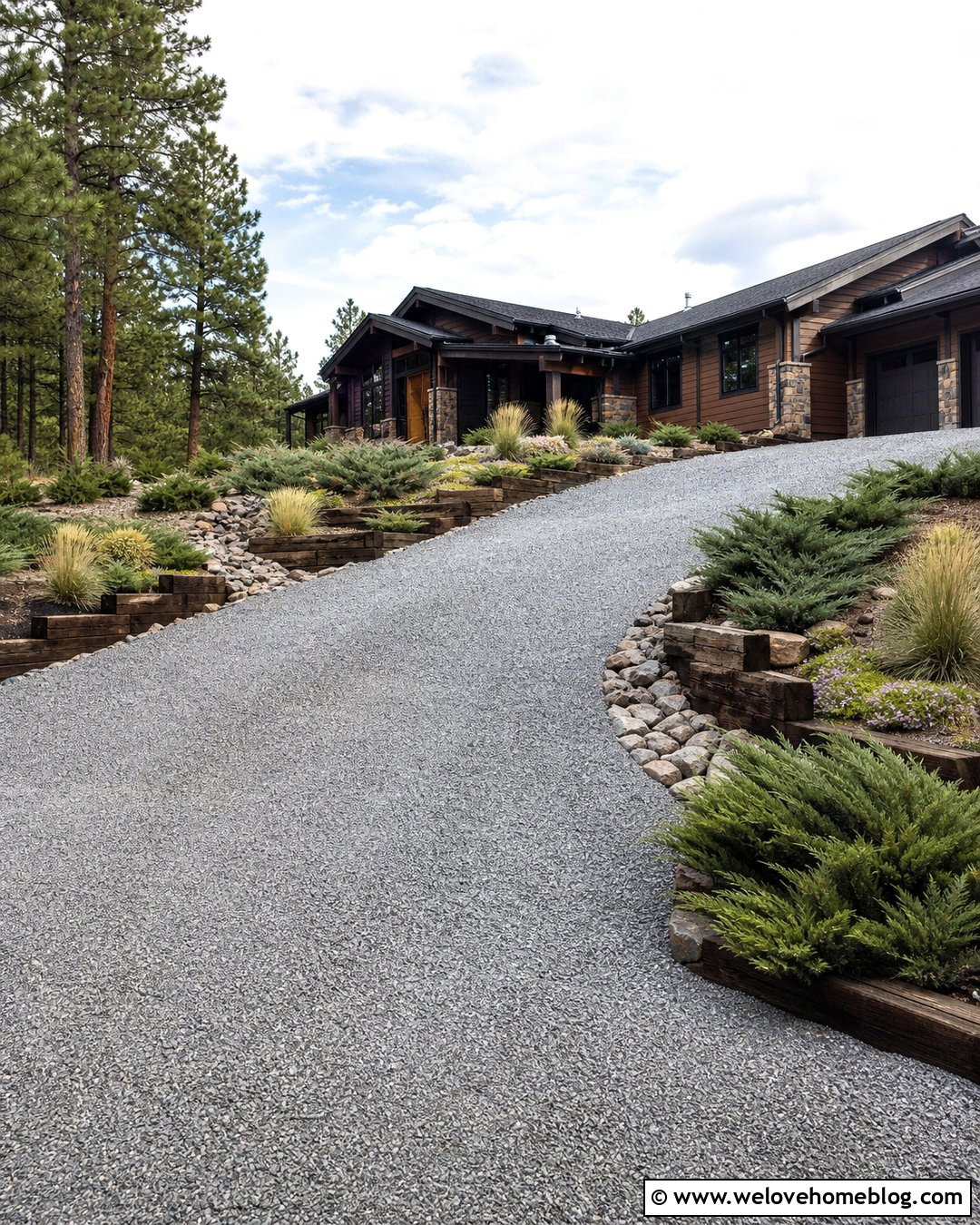
On a sloped property, timber edging can help organize the transition between the driveway and raised planting areas. Border an angular crushed-gravel surface with heavy beams installed in short, level steps rather than one continuous slant. Each section can retain a shallow bed filled with spreading junipers, ornamental grasses, and erosion-resistant ground covers. Use larger timbers near the lowest point, where runoff and displaced gravel often collect. A stone-lined drainage channel along the opposite side can direct water without overwhelming the wood border. Keep driveway gravel just below the timber tops and compact the base thoroughly. This structured design works well with hillside ranch homes, mountain-inspired houses, and suburban lots where the garage sits above or below street level.
14. Narrow Driveway With Slim Timber Edging
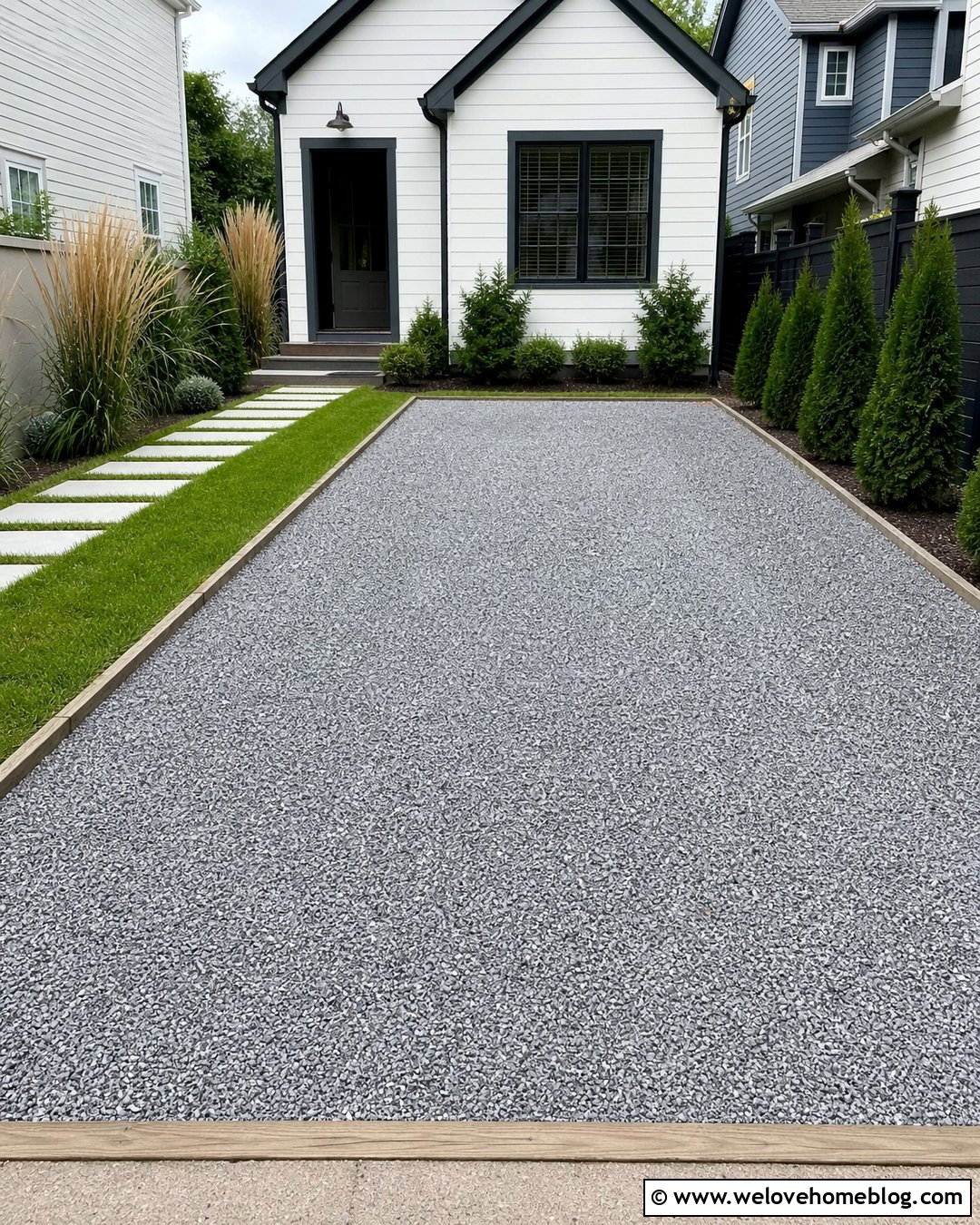
A small front yard needs boundaries that look neat without consuming valuable width. Slim pressure-treated boards can edge a narrow gravel or compacted-stone driveway while preserving room for vehicles and planting. Choose fine gray gravel and a straight layout leading to a single garage. Install the timber close to the surface and anchor it frequently so the boards remain aligned. On one side, add a narrow grass strip and stepping-stone walkway. On the other, use a simple bed of upright grasses and compact shrubs. Keeping the planting low makes the driveway appear more open and improves visibility. This efficient layout is suitable for urban cottages, small ranch homes, and closely spaced suburban properties. Repeating the timber beside the walkway gives the limited space a coordinated finish.
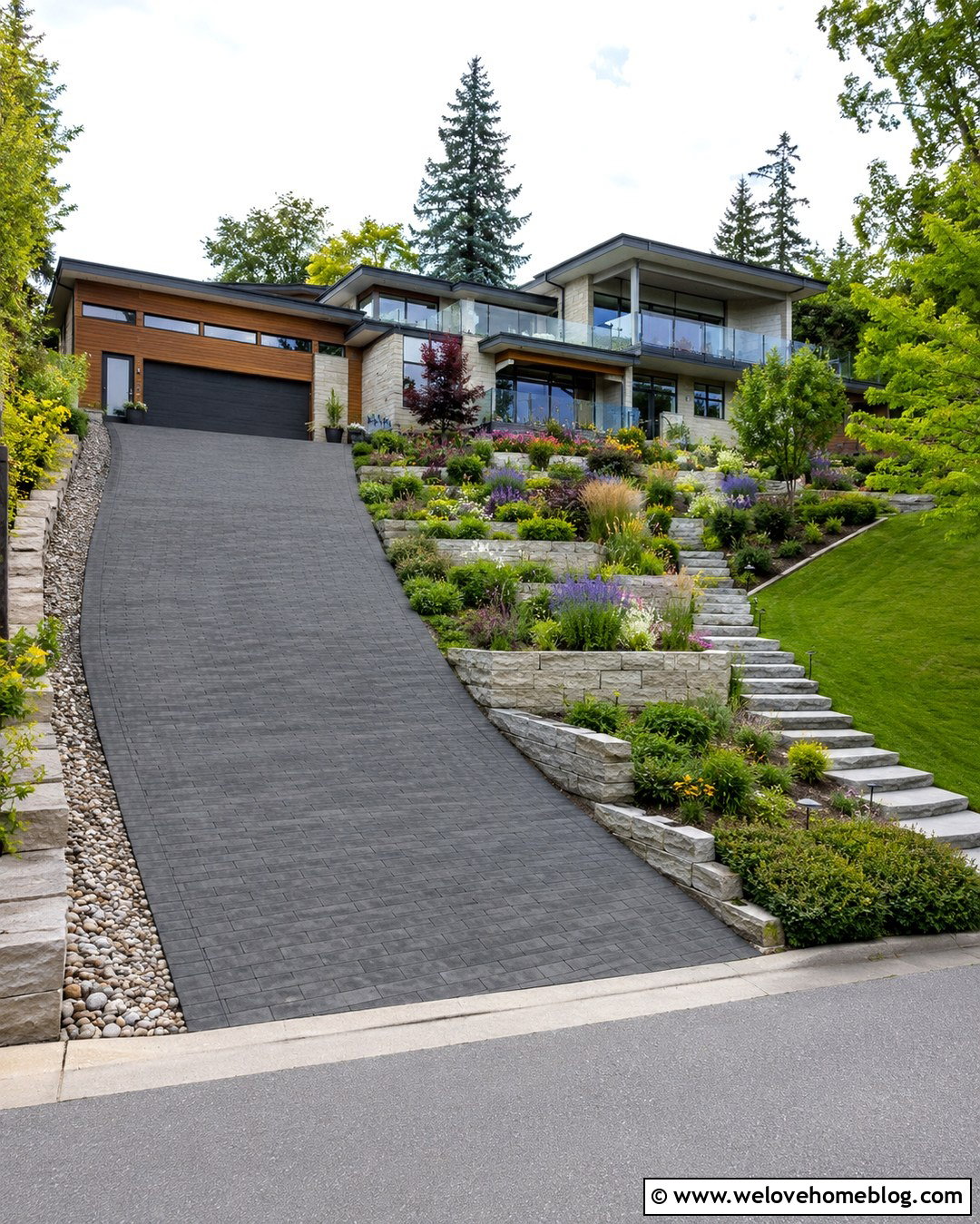
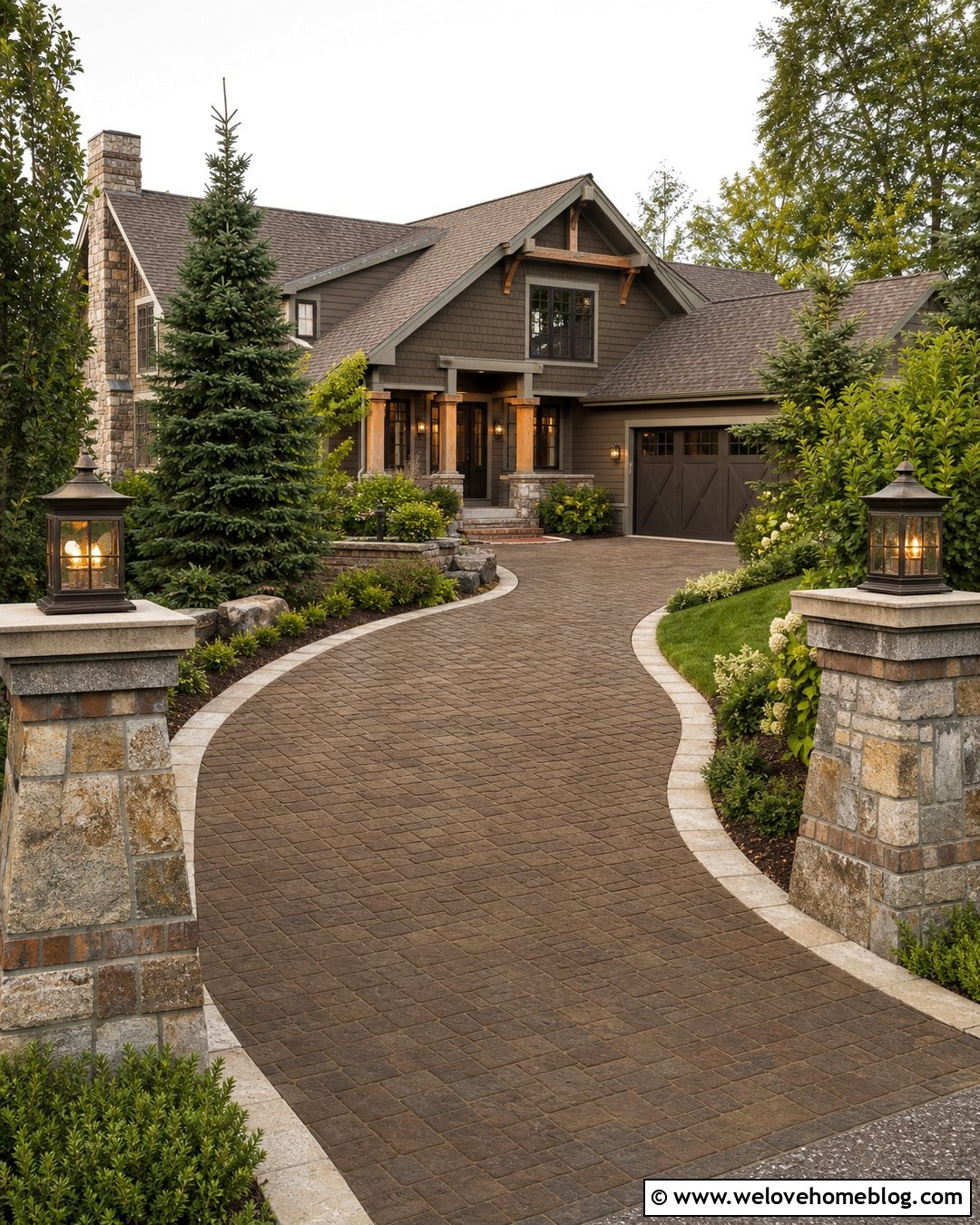
15. Wide Gravel Driveway With Double Timber Edging
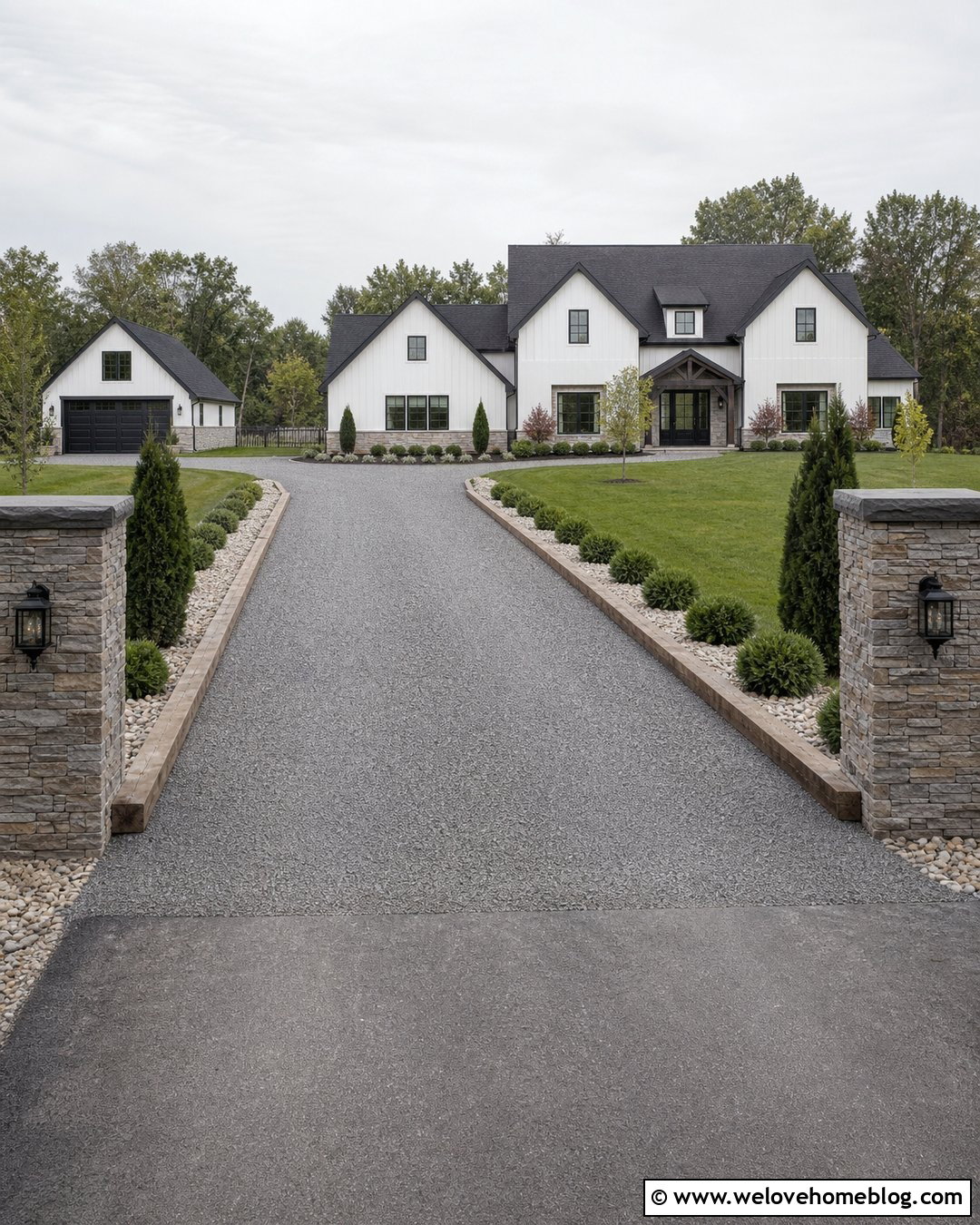
Double timber borders add depth to a wide driveway and create room for a decorative gravel or planting strip. Place the first beam against a broad gray gravel surface, then install a second parallel timber several inches behind it. Fill the channel with light river stones, dark gravel, or low ground cover. The layered border makes a large parking area feel more designed and less like an uninterrupted field of stone. At the entrance, widen the strip around address pillars or matching timber posts. Keep the lines straight and use substantial beams that match the scale of the driveway. This look works especially well with large Craftsman homes, contemporary farmhouses, and detached garages. It combines reliable gravel containment with a distinctive landscape detail visible from the curb.
16. Gravel Driveway With Timber Drainage Strip
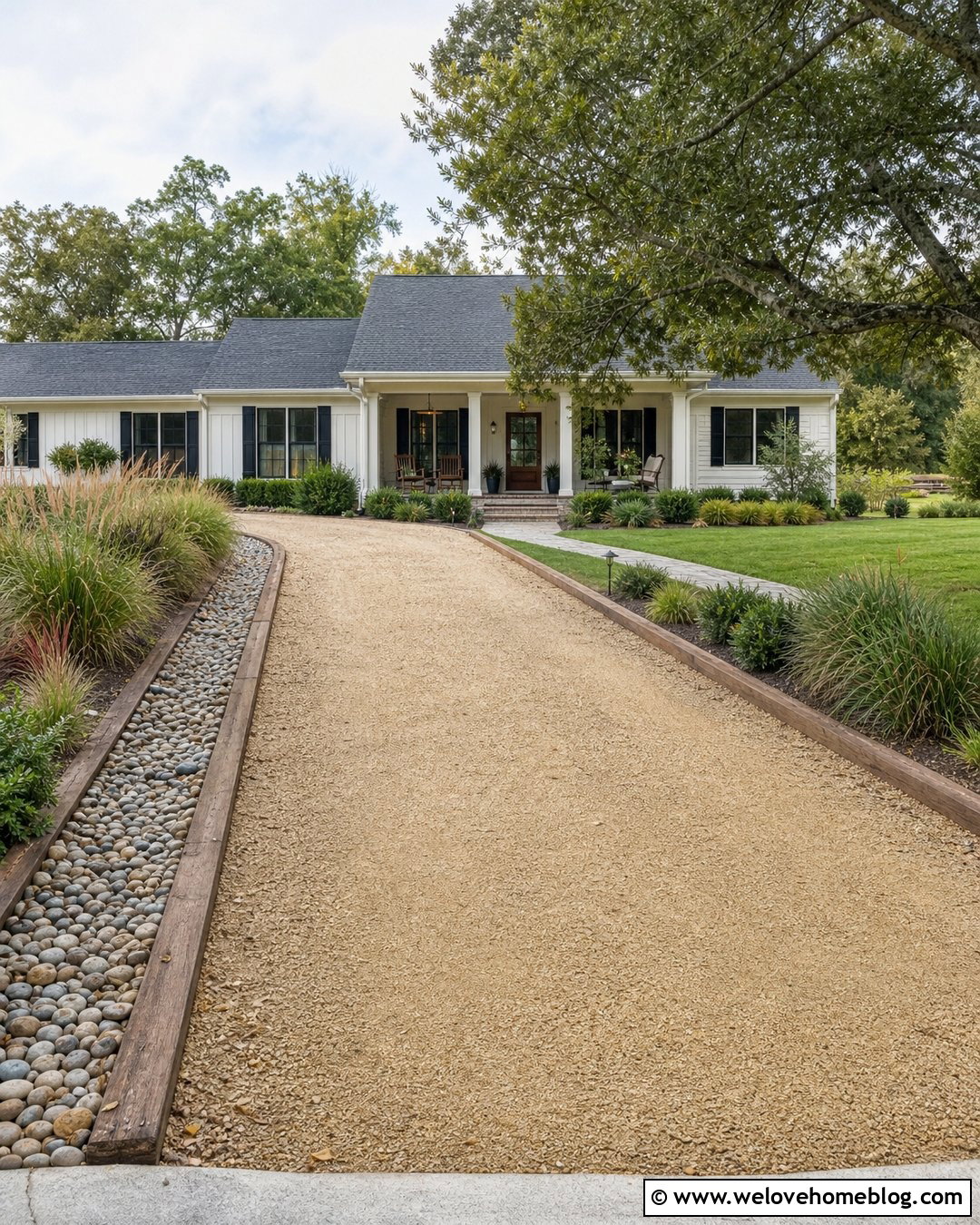
A timber edge can be paired with a drainage strip to create a cleaner and more durable gravel driveway. Install a sturdy beam beside the driving surface, then place a narrow band of washed river rock behind it. The contrasting stone provides a visual transition while giving surface water somewhere to collect and move. Add lawn or moisture-tolerant plants beyond the rock strip, depending on the property’s grading. A gently sloped driveway can use the same detail on both sides, leading water toward an appropriate outlet. Landscape fabric and a compacted gravel base beneath the timber can reduce soil contact and improve long-term stability. This practical design looks attractive beside ranch, farmhouse, and cottage homes while addressing runoff as part of the overall landscape. ()
17. Timber Driveway Edging With Entrance Posts
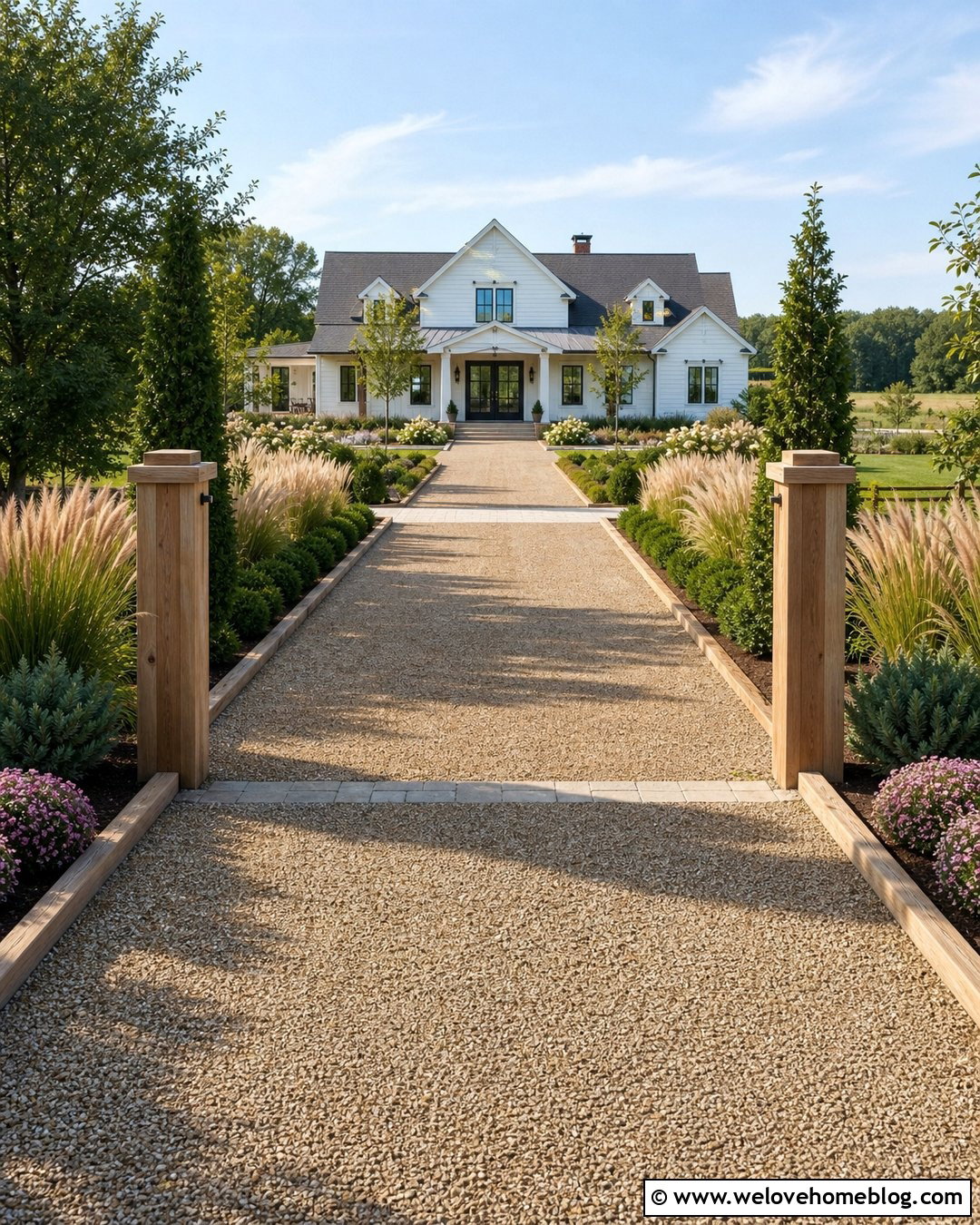
Matching timber entrance posts make the driveway border feel complete from the road to the house. Start with a warm tan gravel driveway and low rectangular beams along both edges. At the curb, transition the horizontal timbers into two substantial vertical posts with simple caps. Surround each post with a small planting bed containing grasses, dwarf evergreens, and seasonal flowers. An address plaque or downlight can be incorporated without making the entrance overly elaborate. Keep the driveway opening wide and maintain clear views of approaching traffic. Farther toward the house, continue the same timber around a walkway bed or mailbox area. This coordinated design works with modern farmhouses, rustic Craftsman homes, and country properties where a strong but approachable entrance improves curb appeal.
18. Reclaimed Hardwood Sleeper Driveway Edging
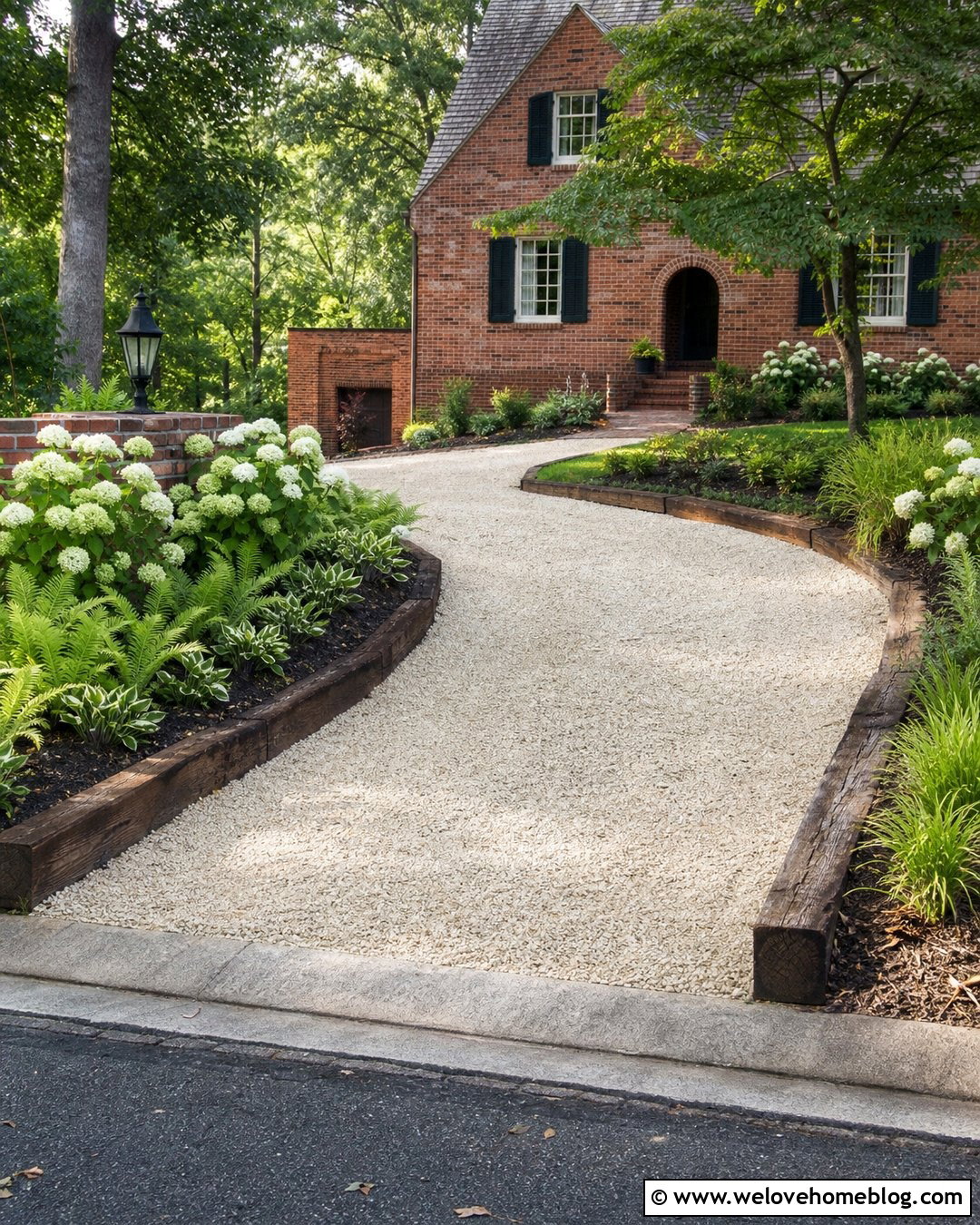
Reclaimed hardwood sleepers bring rich color, visible grain, and substantial character to a light gravel driveway. Their aged appearance pairs especially well with older brick homes, converted barns, and traditional cottages. Use the sleepers to border a gently curved driveway, placing the most attractive faces upward and keeping the top heights consistent. Behind them, create informal beds with hydrangeas, ferns, ornamental grasses, and dark mulch. A brick walkway near the house can connect the driveway material to the architecture. Inspect reclaimed pieces carefully and choose sound timber suitable for landscape use. Avoid random spacing or uneven joints that could make the driveway look unfinished. The goal is a tidy, stable border that preserves the wood’s weathered personality while supporting a refined overall layout.
19. Budget Gravel Driveway With Pine Board Edging
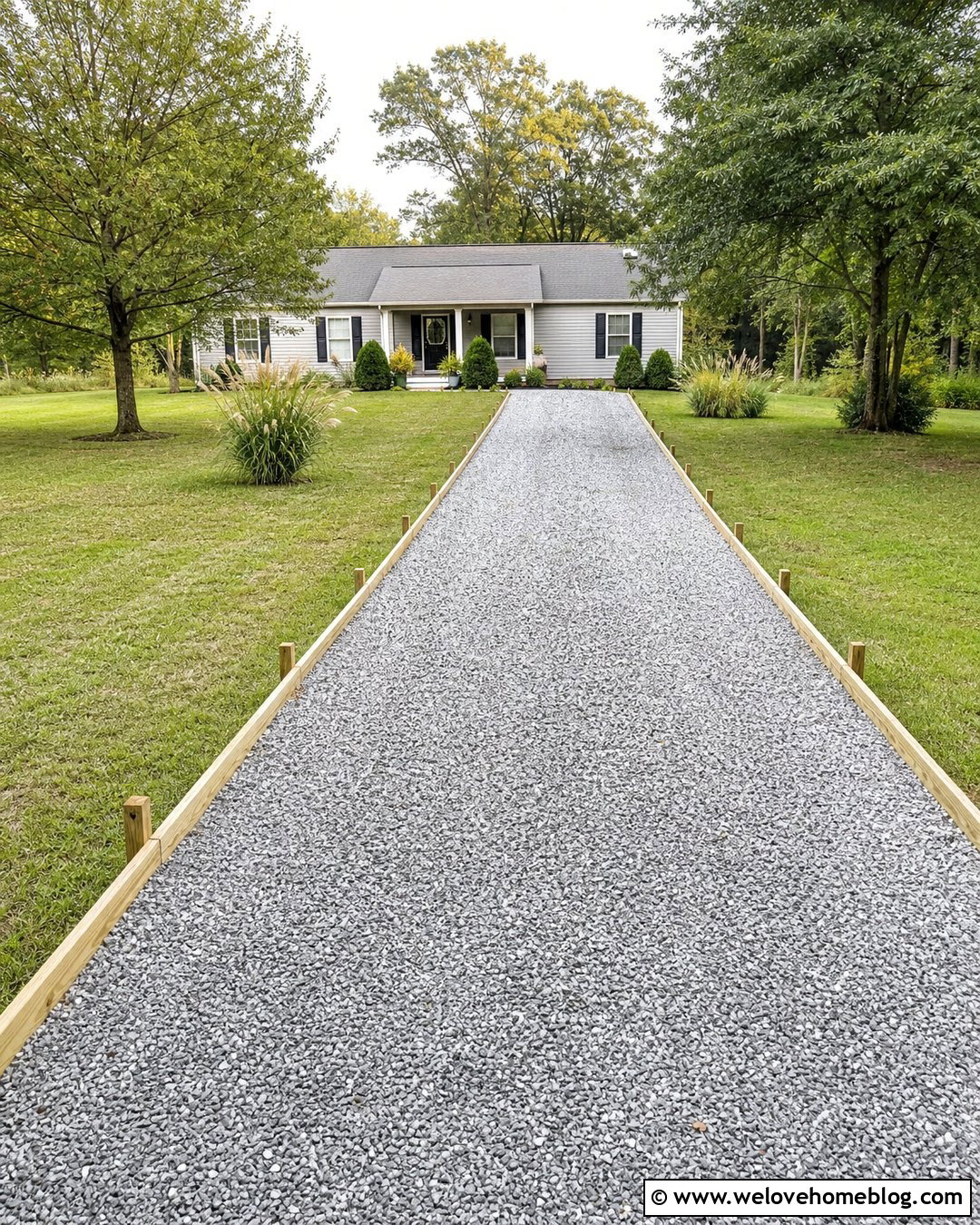
Simple pine boards can create an economical driveway border when installed with realistic expectations and strong support. Pair treated boards with compacted limestone or basic gray gravel to keep the entire project affordable. A straight layout is easiest because it requires fewer cuts and reduces pressure on the joints. Use closely spaced wooden or metal stakes along the outside of each board, and position the gravel slightly below the top. Instead of expensive planting, frame the driveway with lawn, native grasses, and a few repeated shrubs near the entrance. Apply an exterior wood finish if a darker or more uniform color is preferred. This no-frills design suits starter homes, small ranch houses, workshops, and rural properties where function, simplicity, and easy future replacement matter most.
20. Timber Driveway Edging With Solar Lighting
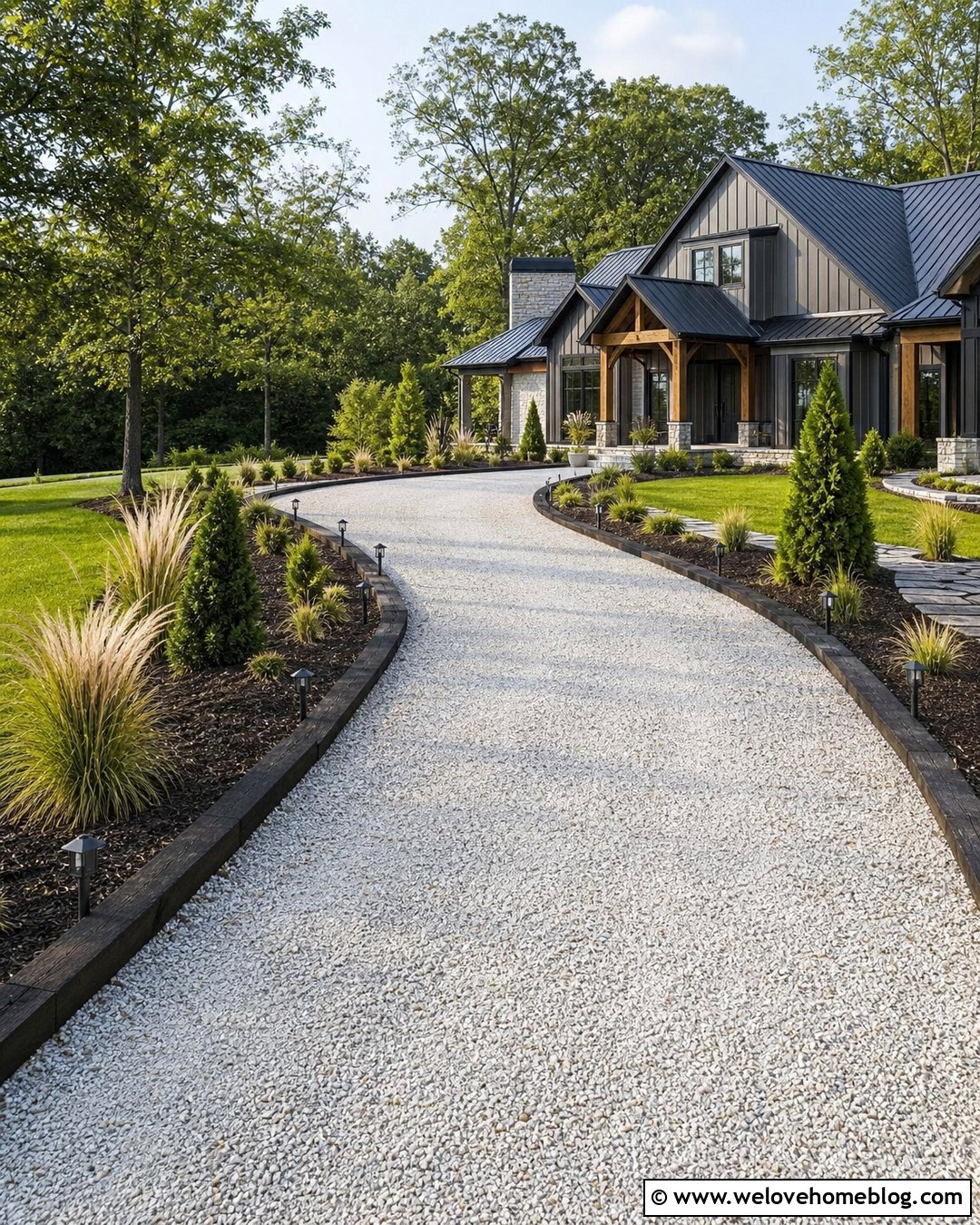
Timber edging becomes more useful after sunset when small solar fixtures are incorporated into the complete driveway design. Frame a pale crushed-gravel driveway with dark-stained beams, then position low-profile lights at regular intervals along the outer edges. Keep fixtures below the eye line and direct illumination toward the driveway rather than neighboring properties. Beds of ornamental grasses and compact evergreen shrubs can sit behind the timber, allowing the lights to define both the driving surface and landscaping. During daylight, the warm wood and pale gravel provide attractive contrast. At night, the repeated fixtures help reveal the driveway’s shape. This design is ideal for curved approaches, long rural driveways, and suburban homes where the garage sits back from the street.
Conclusion:
The most effective **20 timber driveway edging ideas** treat the border as part of a complete front-yard design. Timber should complement the driveway surface, follow its shape, and connect naturally with nearby planting, walkways, and architecture. Thick beams can contain gravel and define large spaces, while slim boards provide a subtle finish for narrow driveways. Cedar, treated pine, hardwood sleepers, and natural logs each create a different mood. Whatever material you choose, use a stable base, dependable anchors, and thoughtful drainage. Select ground-contact-rated wood where appropriate, inspect the edging regularly, and replace damaged sections promptly. With careful planning, timber can create a warm, organized driveway that improves everyday function and curb appeal.

Related posts:
Leave a Reply