

1. Black Driveway Lamps With Brick Pavers
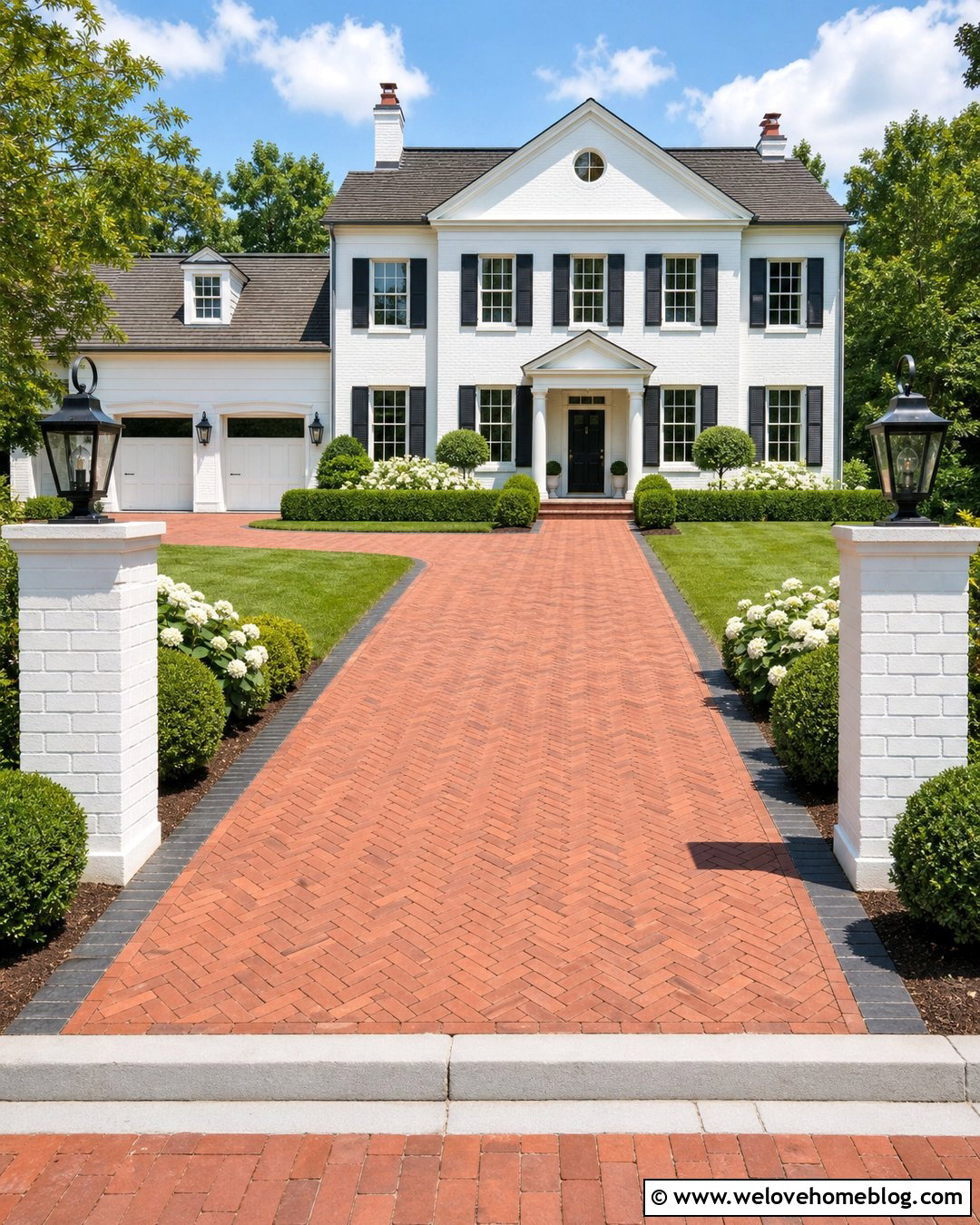
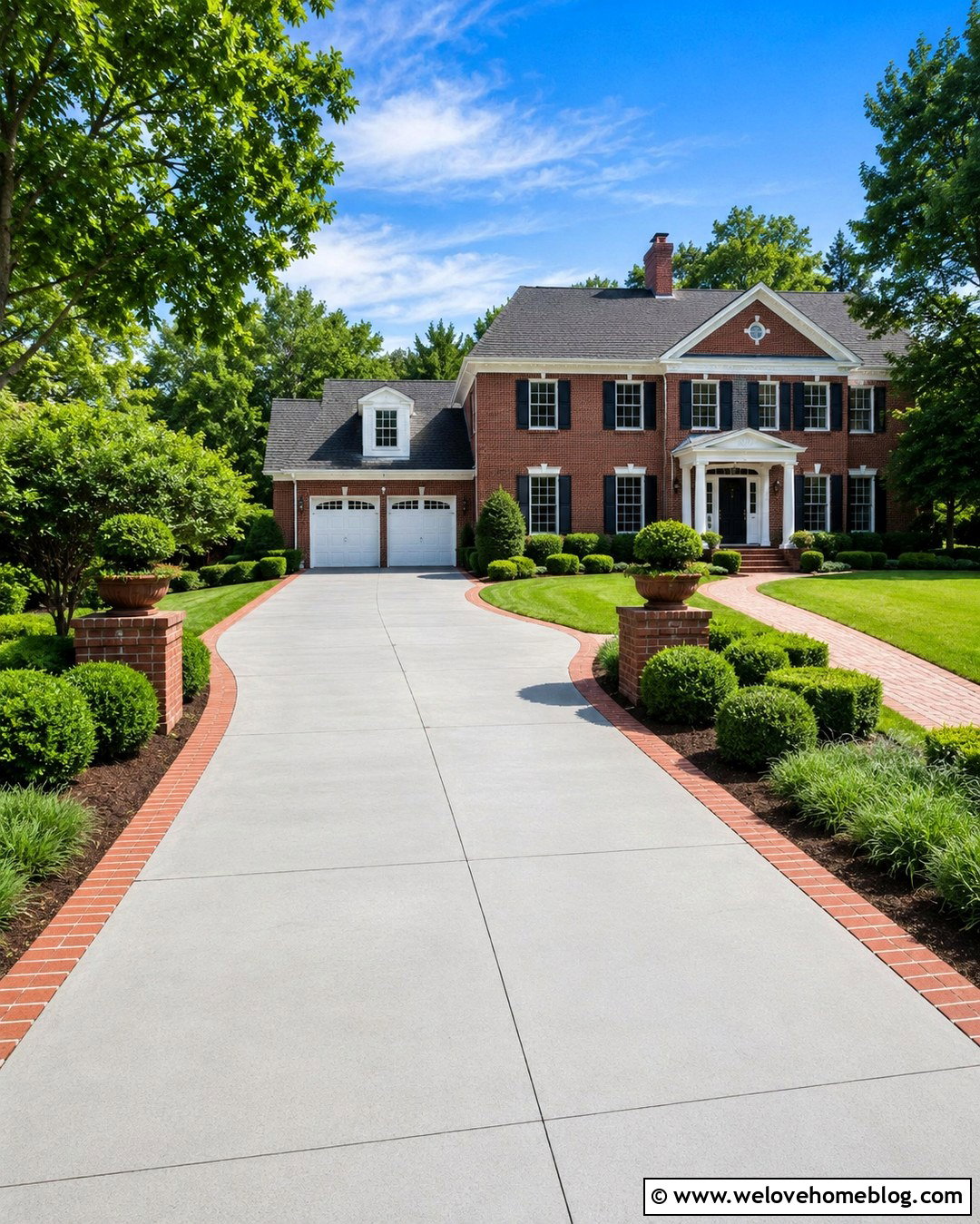
Black lantern-style lamps create a strong outline around a red clay brick driveway without competing with its rich color. For a balanced traditional look, position matching lamp posts at the curb entrance and repeat smaller fixtures near the garage. A straight herringbone layout makes the approach feel orderly, while charcoal paver borders connect visually with the black metal lamps. Low boxwoods and white flowering shrubs soften the hard surfaces. Choose fixtures with clear glass and shielded LED bulbs so the light falls mainly toward the driveway. This complete design works especially well with colonial and Georgian homes. Keeping the posts evenly aligned with the brick border also prevents them from appearing randomly placed within the landscape.
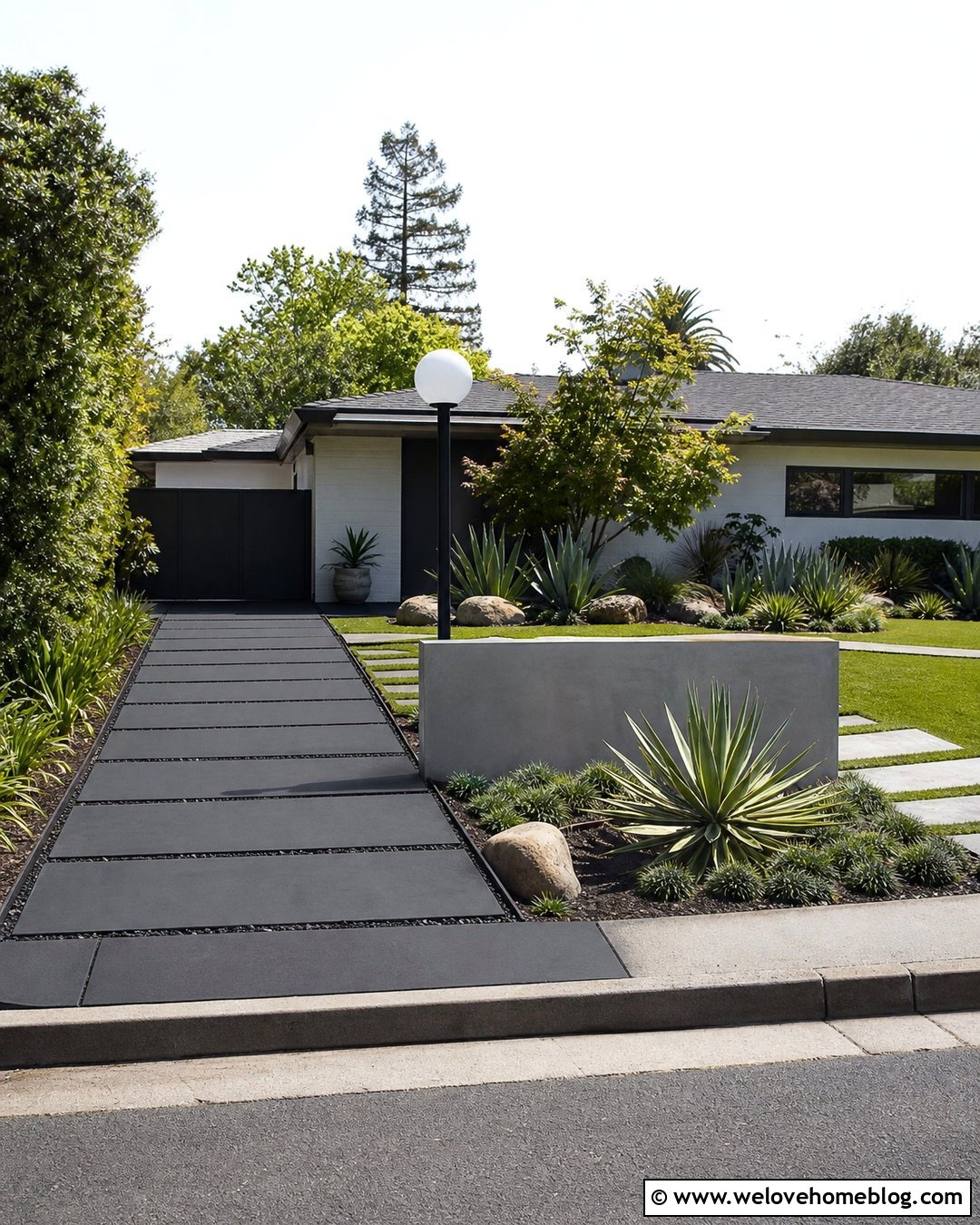
2. Modern Driveway Lamps With Concrete Slabs
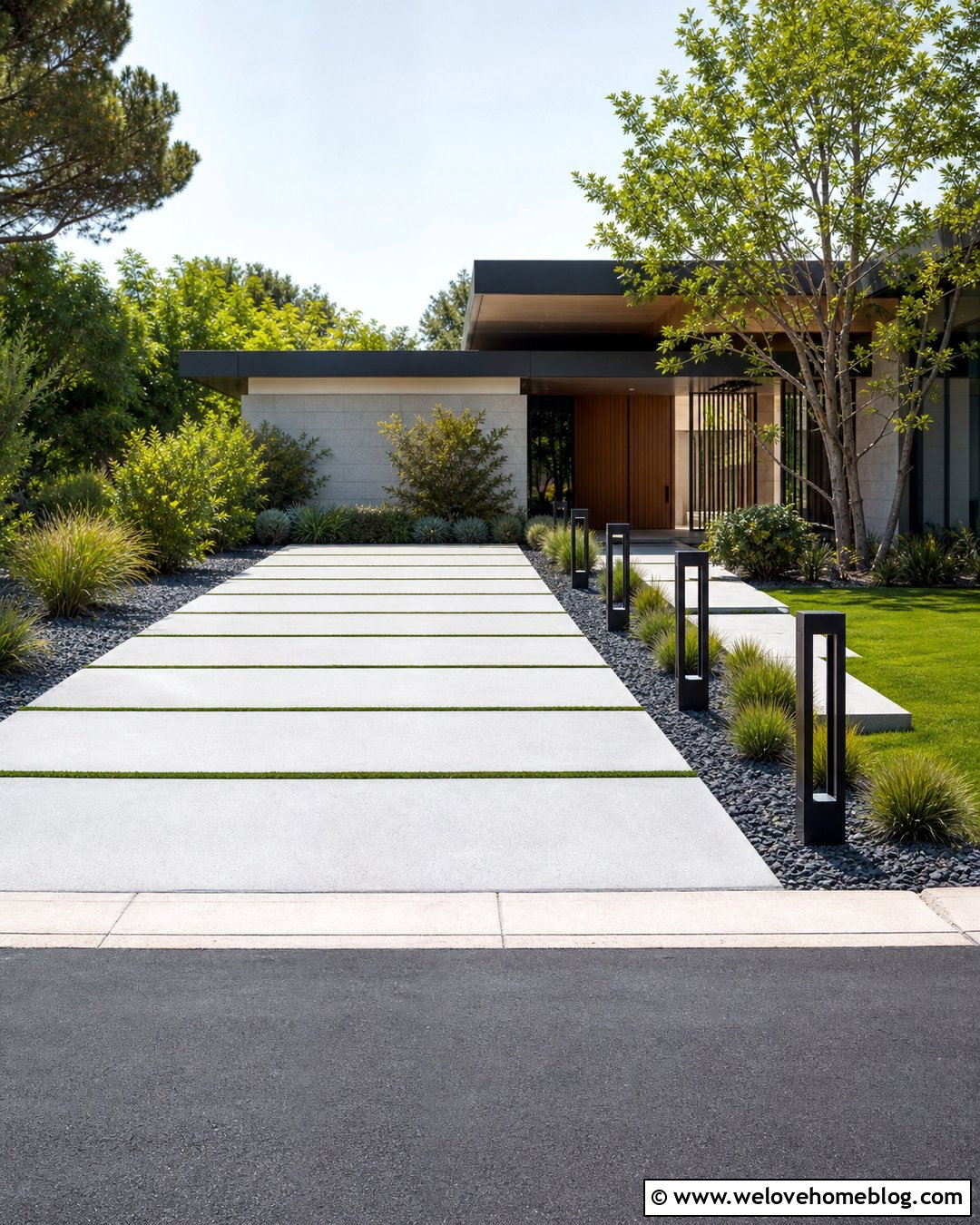
Clean rectangular lamps complement a modern driveway made from large poured-concrete slabs. Place slim black bollards along one side rather than creating two identical rows. This gives the layout a less formal appearance and avoids the runway effect. Narrow grass strips between the slabs introduce color and help define each section. Near the entrance, one taller lamp can mark the address area without disrupting the minimalist design. Ornamental grasses, clipped shrubs, and a simple concrete walkway complete the setting. Select downward-facing fixtures that illuminate the pavement instead of shining toward windows or neighboring properties. The combination of gray concrete, black metal, and restrained planting creates a crisp approach that feels connected to a modern home’s strong horizontal lines.
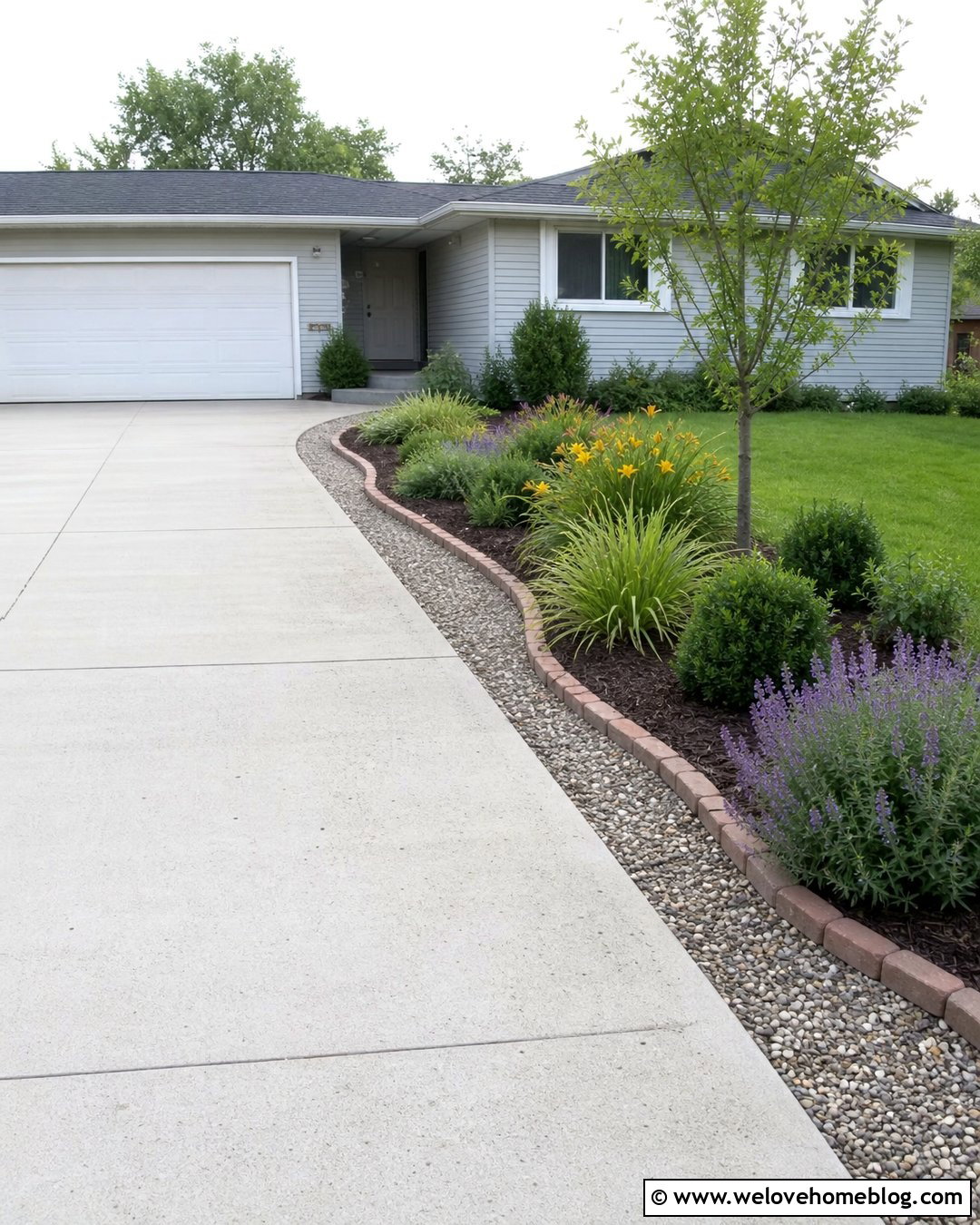
3. Solar Driveway Lamps With Pea Gravel
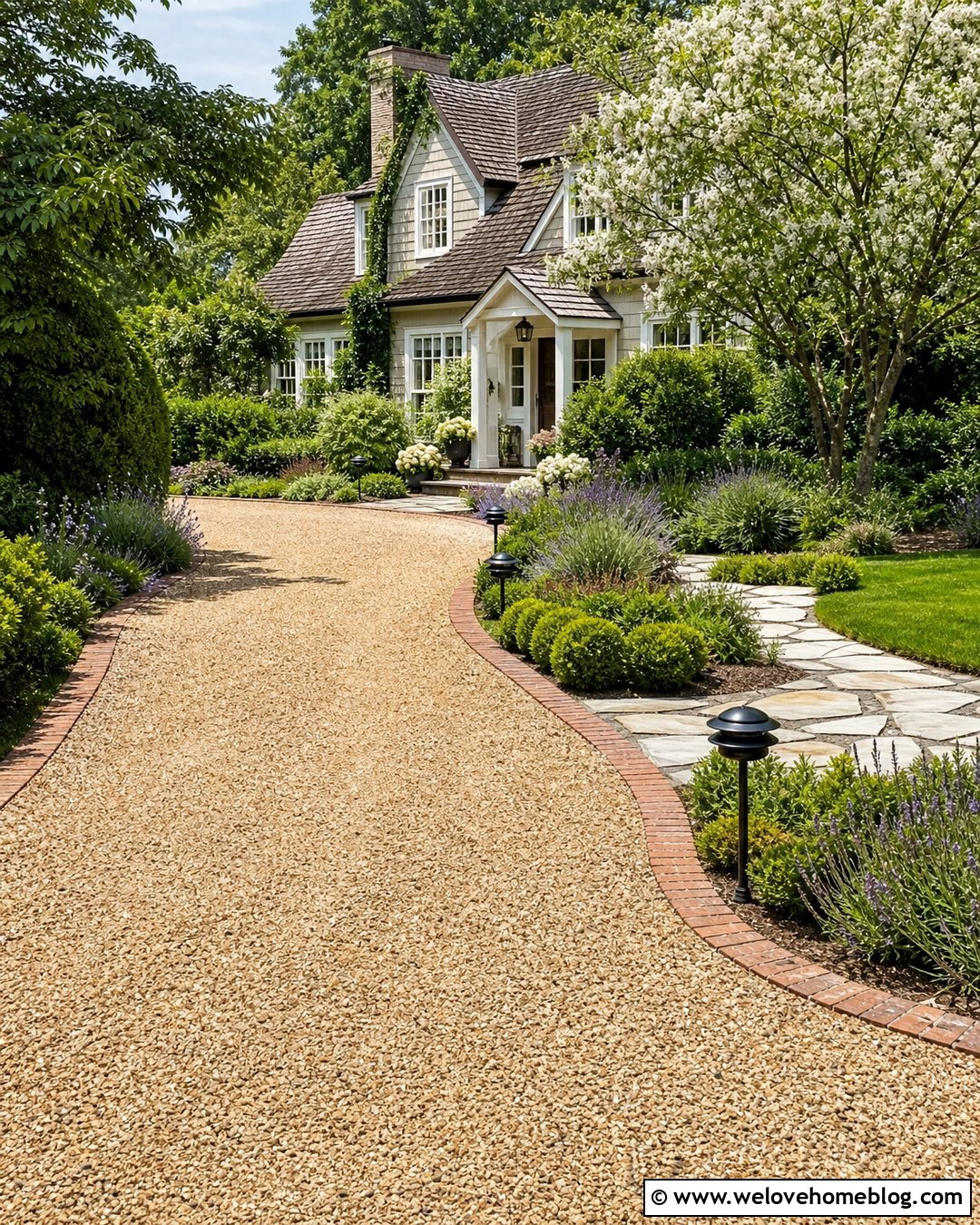
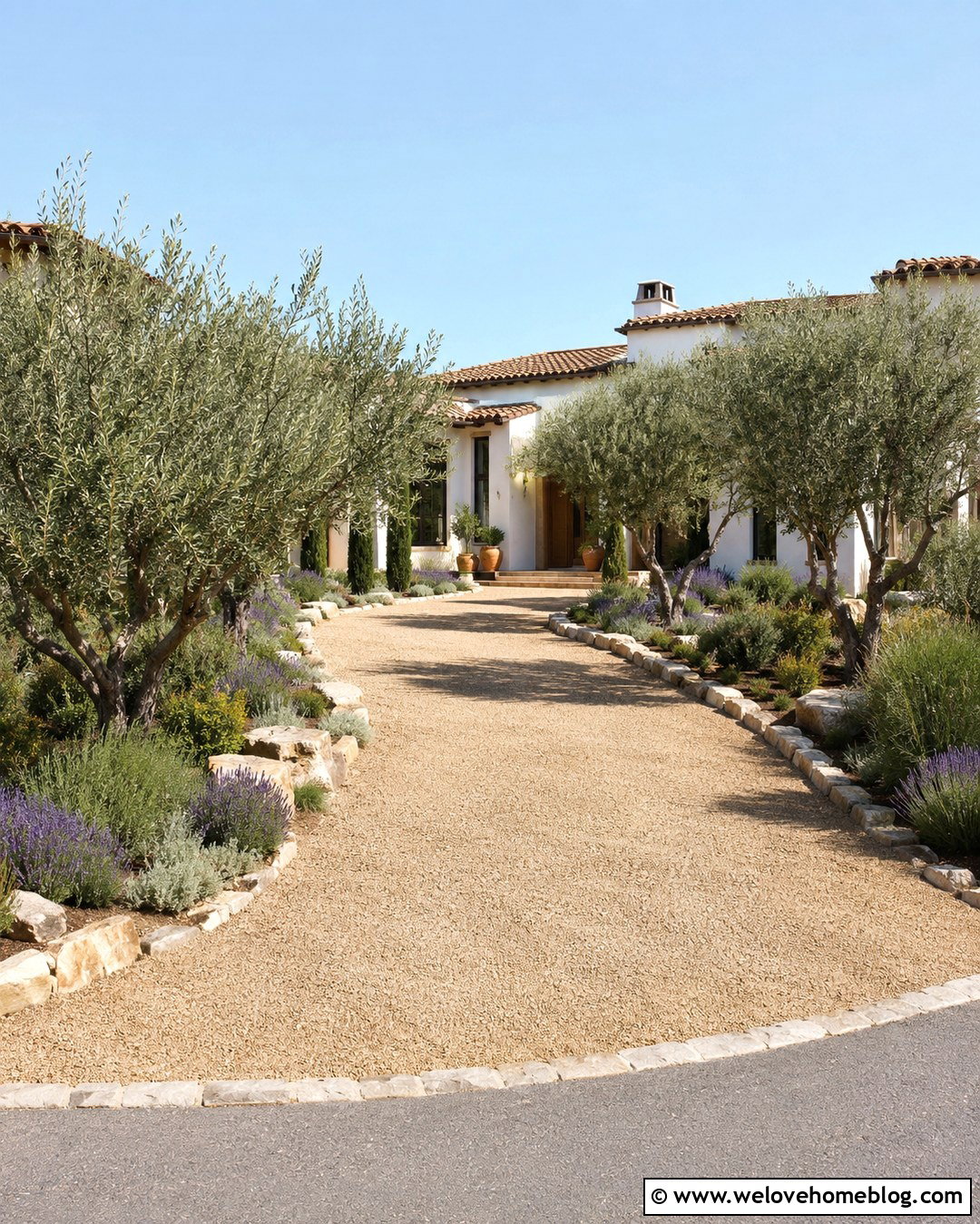
Solar driveway lamps are useful when installing underground electrical wiring would be difficult or expensive. Pair traditional black solar posts with a warm beige pea gravel driveway for an approachable country look. A gently curved layout feels natural, particularly when the lamps follow the outside edge rather than forming rigid lines. Use reclaimed brick or weathered cobblestone edging to contain loose gravel and provide stable bases around each fixture. Lavender, catmint, and compact evergreen shrubs can fill the surrounding beds without hiding the solar panels. Place the lamps where they receive dependable daytime sunlight and avoid dense tree canopies. This design suits cottages, ranch houses, and casual farmhouses while providing visible guidance from the road to the parking area.
4. Driveway Pillar Lamps With Cobblestone
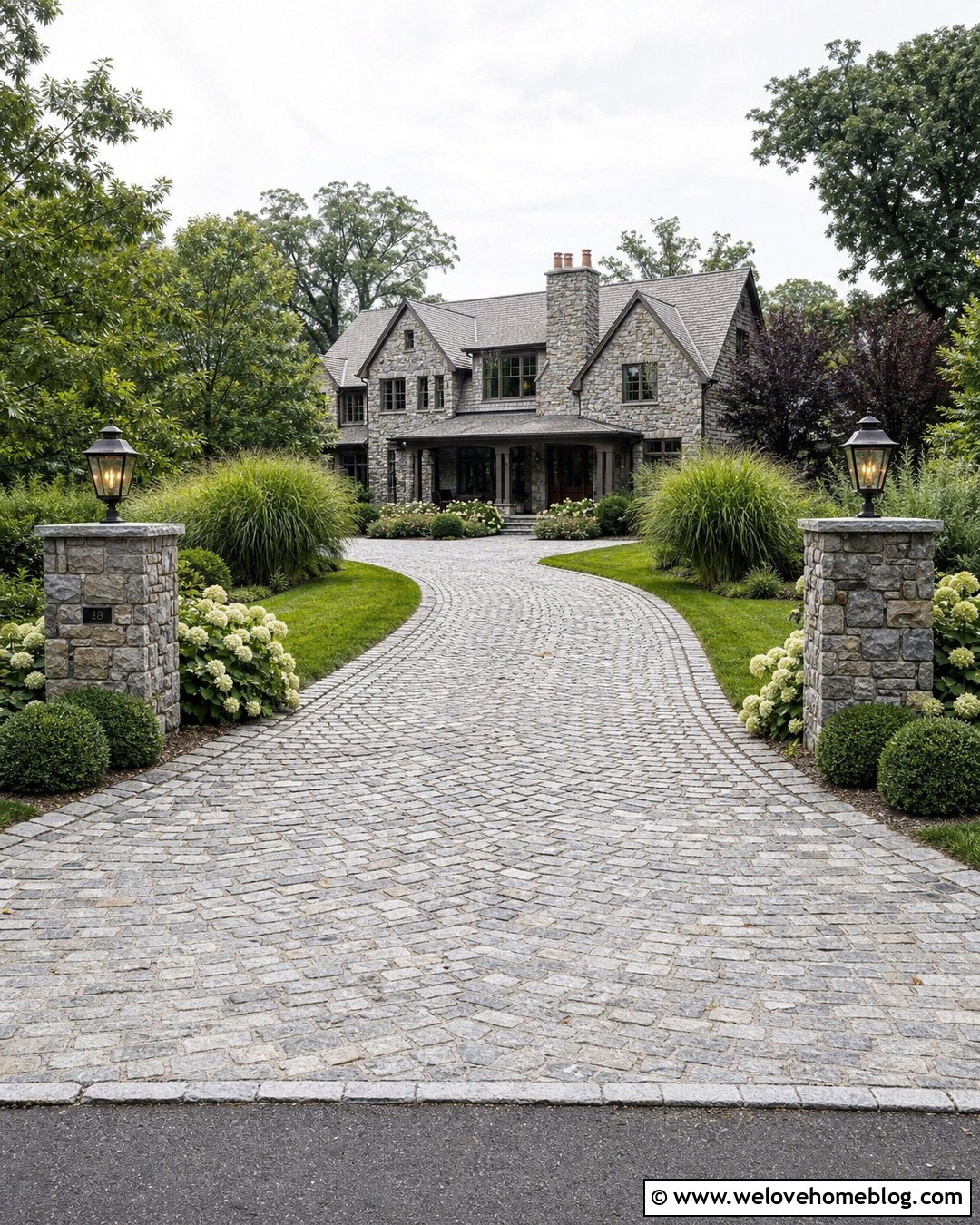
Stone pillars topped with lanterns can give a cobblestone driveway a defined and substantial entrance. Build the pillars from stone that echoes the home’s facade, then select dark bronze or black lamps with simple proportions. The pillars should frame the opening without making it feel too narrow for vehicles. A curved cobblestone approach adds movement, while a matching stone border connects the entrance to the rest of the driveway. Plant low hydrangeas, evergreen mounds, or ornamental grasses outside the pillars so foliage does not reduce visibility. The lamps can be coordinated with smaller fixtures near the front walkway. This complete arrangement works beautifully with Craftsman, Tudor, and stone-front homes because every material appears intentional and visually connected.
5. Farmhouse Driveway Lamps With Gravel
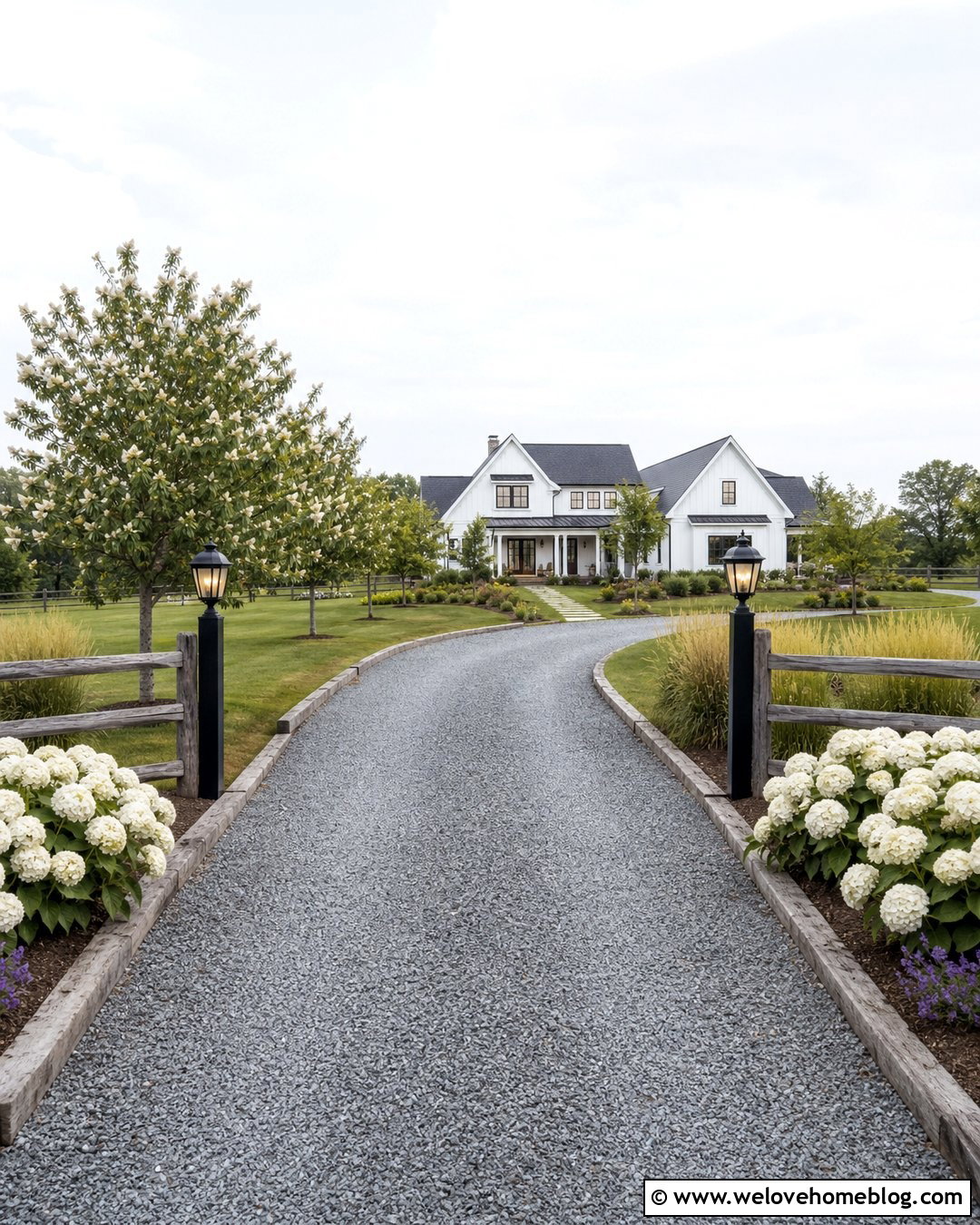
A farmhouse entrance feels more welcoming when classic lamps are combined with practical, understated materials. Start with a gray crushed-stone driveway in a straight or gently bending layout. Install simple black lantern posts at the entrance and repeat one fixture where the driveway meets the front walkway. Timber edging can contain the gravel, while split-rail fencing strengthens the rural character. Frame the approach with native grasses, white hydrangeas, and a few small flowering trees. Avoid overly ornate lamps, which may appear formal beside a relaxed farmhouse exterior. Fixtures with seeded glass and a matte finish provide texture without looking elaborate. Together, the gravel, timber, fencing, planting, and carefully spaced lamps create a complete country driveway that feels polished but not overdesigned.
6. Short Driveway Lamps With Asphalt
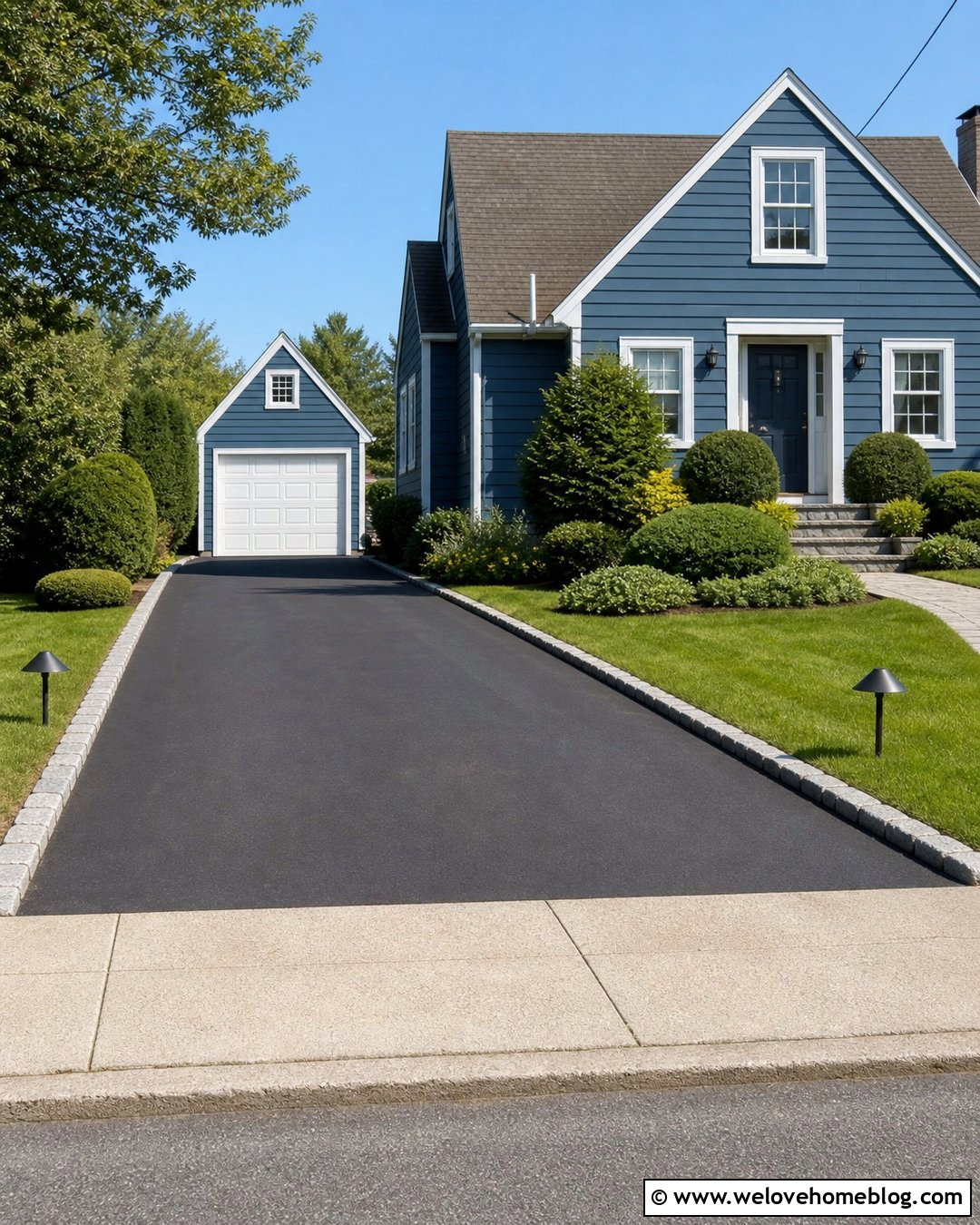
A compact asphalt driveway does not need tall posts or numerous fixtures to look finished. Short dome-topped lamps placed near the entrance can define the pavement while preserving open views of the house. Use a smooth black asphalt surface with a light gray concrete or granite border to keep the design crisp. Two or three fixtures are often enough for a short approach, especially when garage sconces provide additional illumination. Plant low ground cover and rounded shrubs behind the lamps so branches do not block their light. This simple arrangement works well for suburban ranch and Cape Cod homes. Matching the lamp finish to the garage hardware, mailbox, or front door creates consistency and makes an affordable driveway update look thoughtfully planned.
7. Tall Driveway Lamps With A Long Driveway
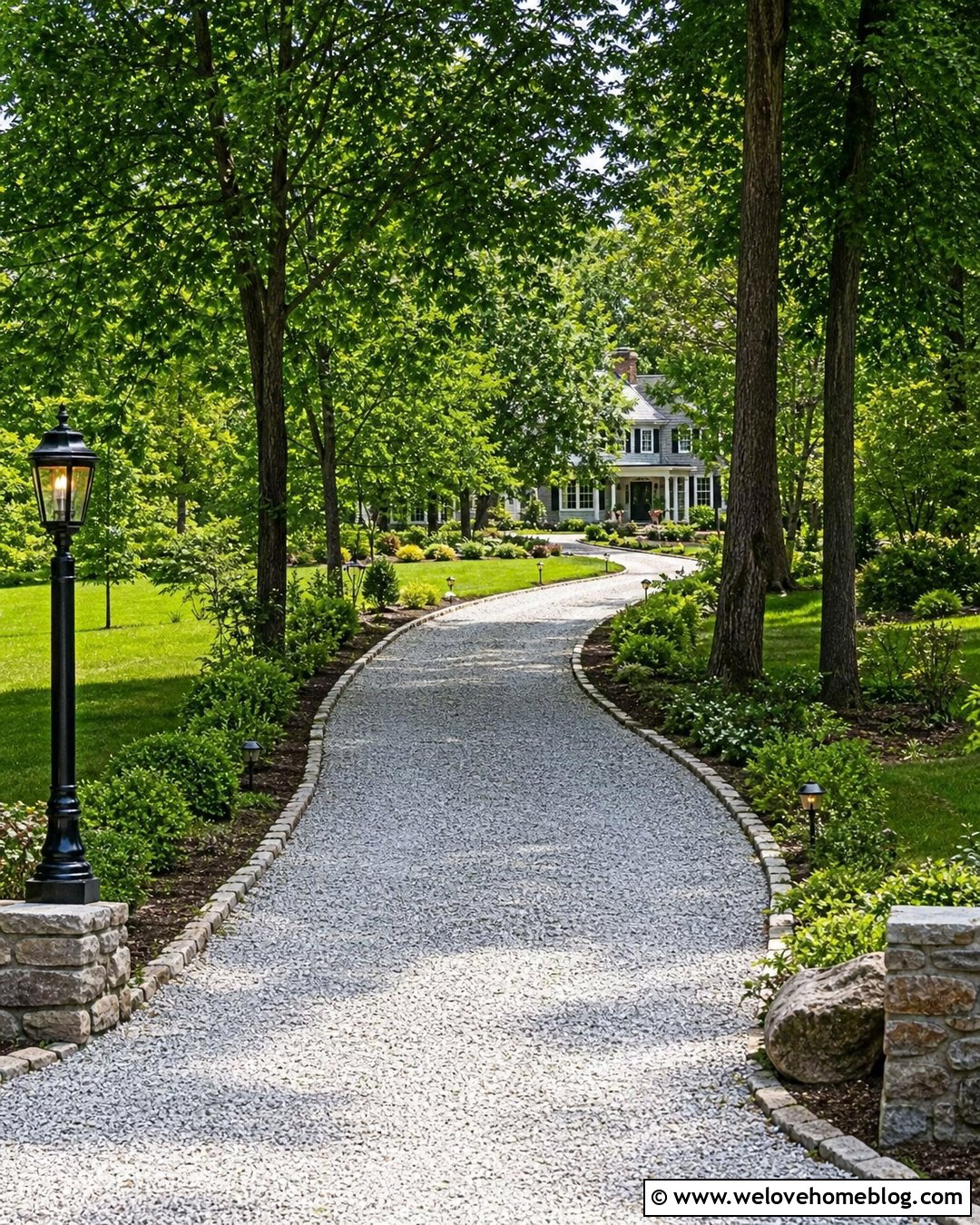
A long driveway benefits from lighting that clearly marks its entrance and important changes in direction. Tall post lanterns at the road act as visual landmarks, while lower shielded lamps can guide the remaining approach. Pair these fixtures with a light gray gravel driveway and natural fieldstone edging. Instead of spacing lamps in two continuous rows, position them near curves, intersections, gates, and walkways. This produces useful pools of light without overwhelming the landscape. Mature trees and broad planting beds can frame the drive, but branches should remain clear of the fixtures. The design is especially effective for country properties and homes set far back from the road. Repeating the same metal finish keeps the varied lamp heights visually unified.
8. Brass Driveway Lamps With Brick Borders
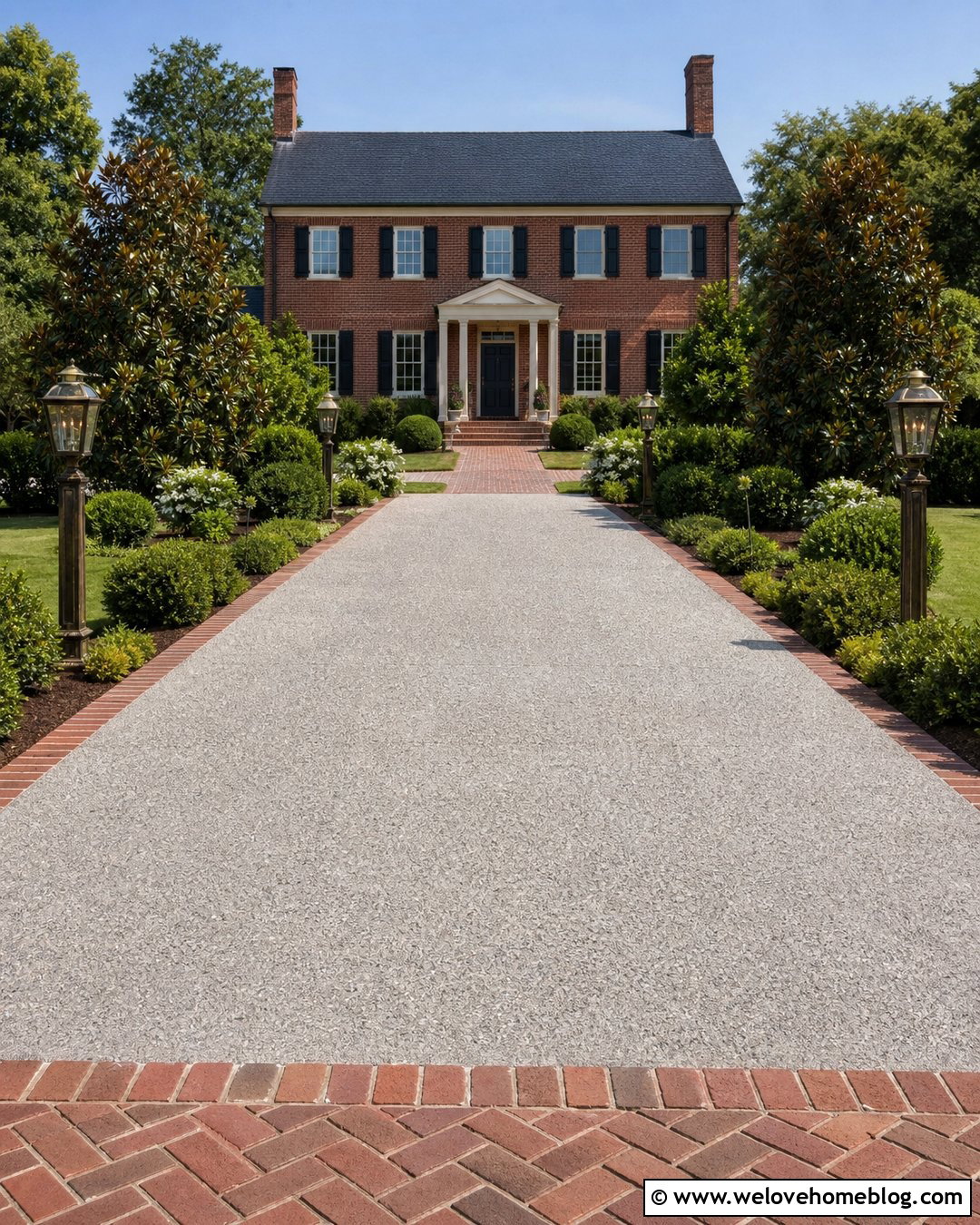
Warm brass driveway lamps can soften the appearance of cool gray paving while adding refined detail. Use aged or unlacquered brass fixtures beside an exposed aggregate driveway edged with red brick. The brick border introduces warmth and helps the lamps feel connected to the surface rather than added afterward. A pair of lantern posts at the entrance can be followed by matching brass wall lights near the garage. Deep green boxwoods, small magnolias, and white flowers create a restrained planting palette that lets the metal finish stand out. Brass develops character over time, making it especially suitable for traditional homes. Keep the fixture shapes simple and coordinate them with door hardware for a complete design that feels elegant without becoming excessively decorative.
9. Driveway Bollard Lamps With Pavers
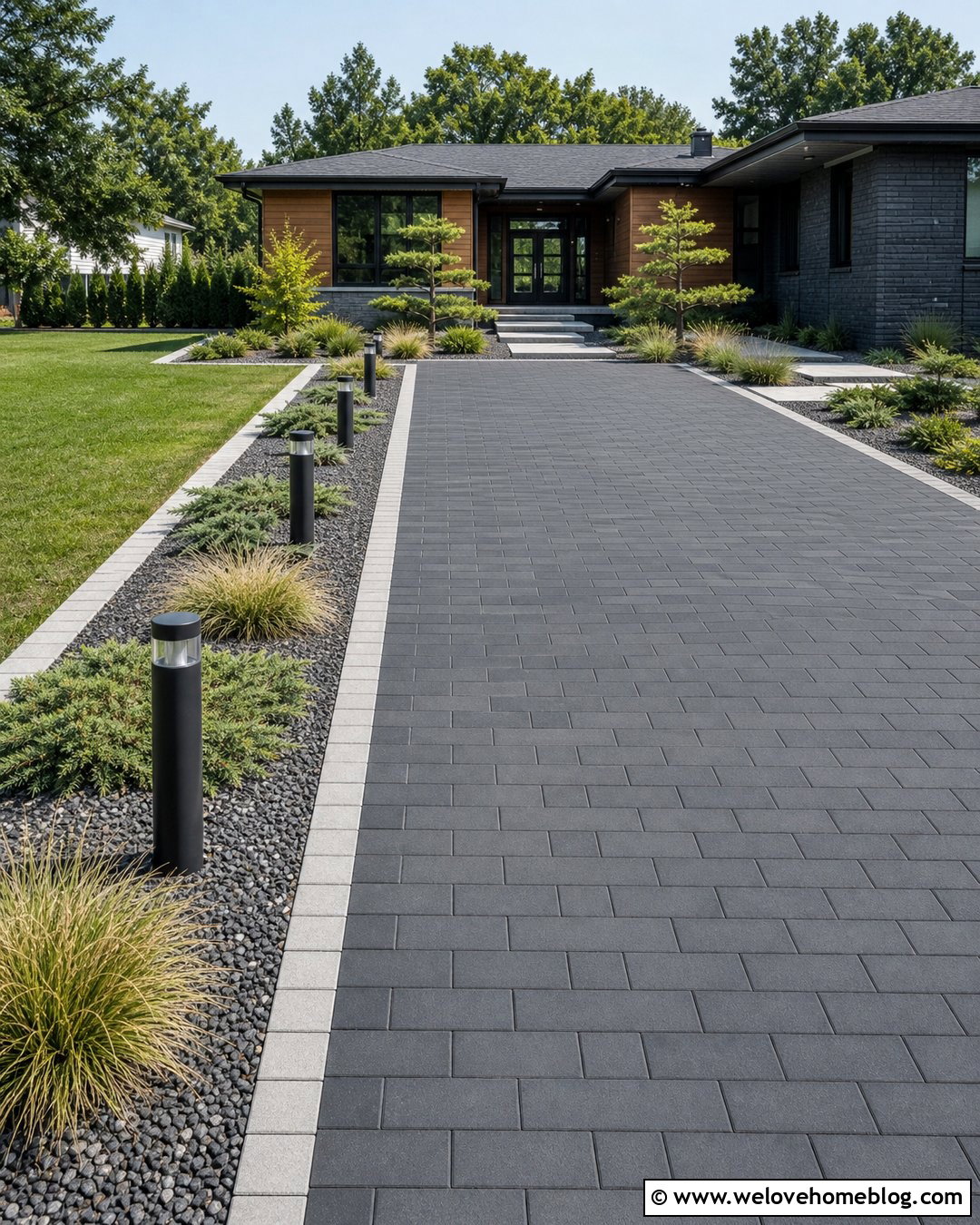
Bollard lamps provide gentle guidance while keeping the view across the front yard open. Combine cylindrical black bollards with charcoal concrete pavers laid in a running-bond pattern. A wide driveway can include a lighter paver ribbon around the perimeter to emphasize its shape. Stagger the lamps between planting pockets rather than placing them in perfectly matched rows. This creates natural rhythm and reduces the appearance of an airport runway. Compact grasses, spreading juniper, and stone mulch work well around the fixtures because they require limited trimming. Choose bollards that direct light downward across the paver edge. The overall look is well suited to contemporary and midcentury homes, where simple forms, restrained colors, and uncluttered landscaping support the architecture.
10. Double Lantern Driveway Lamps With A Gate
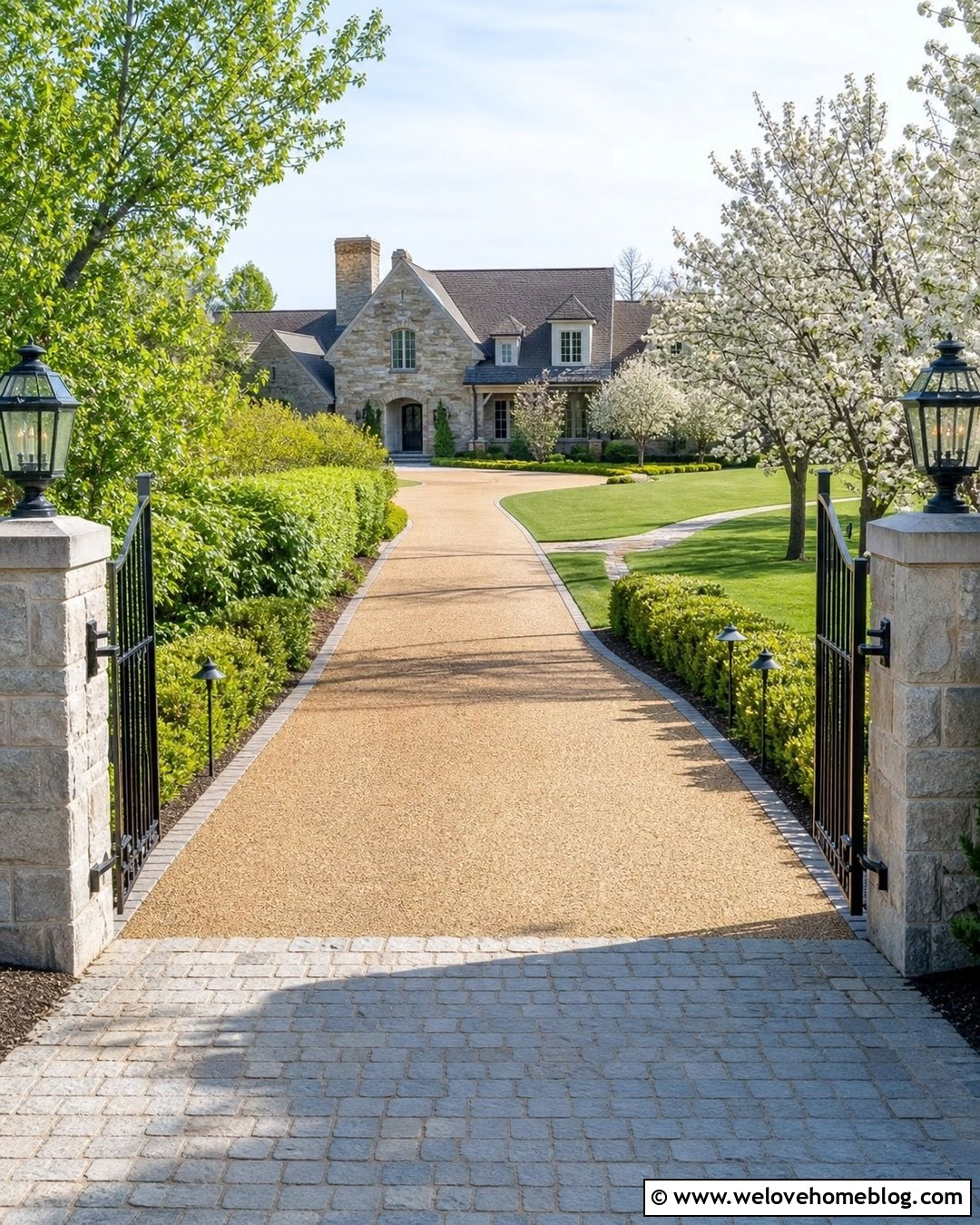
Double lantern posts make a wide gated entrance feel appropriately scaled and easy to recognize. Use them on the outside of a black metal swing gate, leaving enough clearance for moving panels and vehicles. A tan resin-bound gravel driveway provides a smooth, refined surface that contrasts with the dark fixtures. Stone gate pillars and a narrow cobblestone apron can make the transition from the road more durable and visually distinct. Continue with lower single-lantern lamps along the curved approach so the entrance fixtures remain the focal point. Layered hedges, flowering trees, and a broad lawn complete the setting. The gate, lamps, pillars, and driveway should share consistent proportions, creating an impressive entrance without blocking sightlines from the road.
11. White Driveway Lamps With A Coastal Home
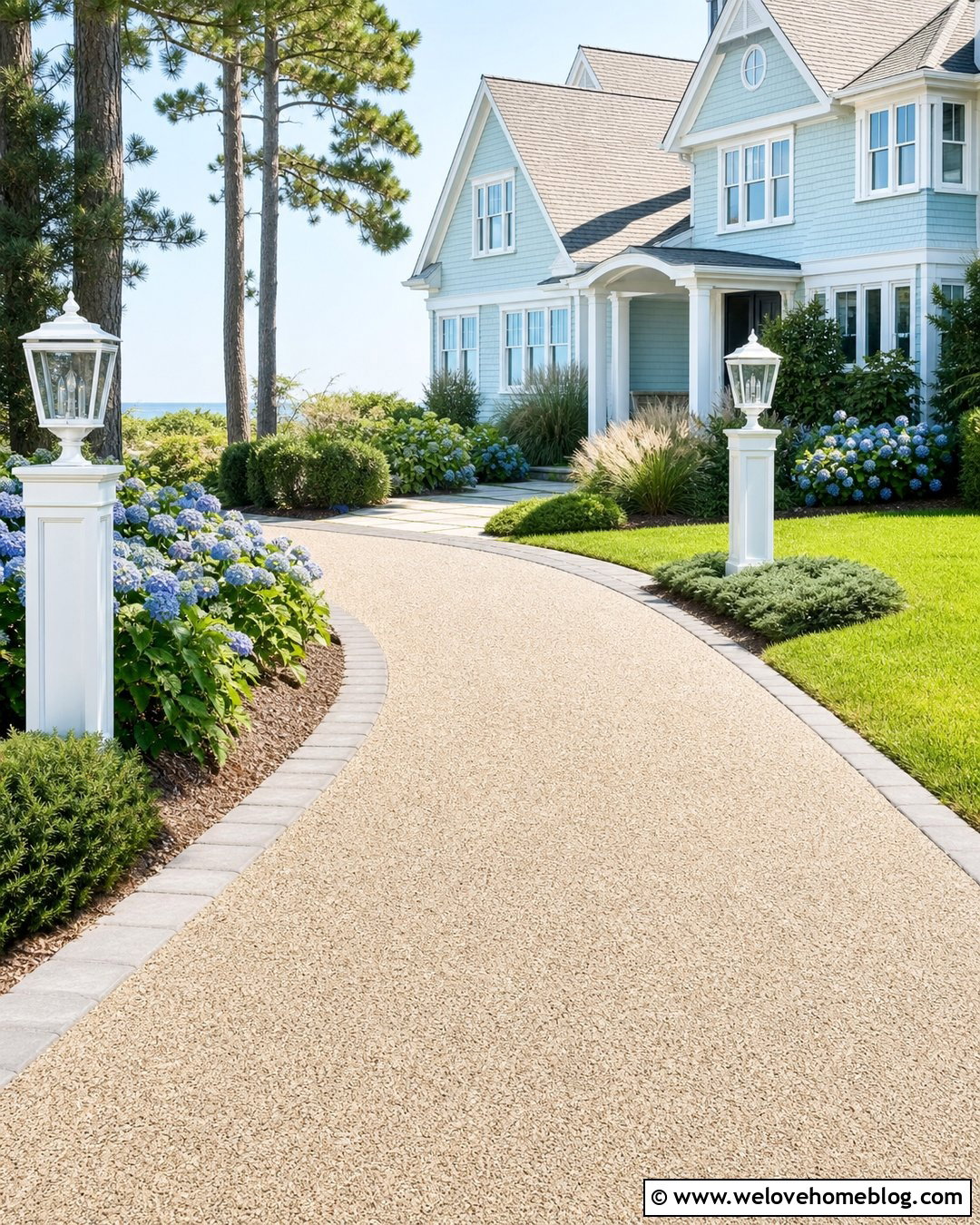
White driveway lamps feel light and relaxed beside a coastal-style home with pale siding. Pair lantern posts with a sandy beige resin-bound driveway that curves gently toward the garage. A light gray paver border can outline the surface without introducing a heavy contrast. Position one matching lamp on each side of the entrance, then add a third near the walkway junction. Blue hydrangeas, ornamental grasses, low junipers, and a clean lawn support the coastal palette. Select powder-coated fixtures made for outdoor exposure, and keep the glass design uncomplicated. White posts can disappear against snow or pale facades, so darker planting behind them helps preserve visibility. This complete layout feels fresh, bright, and welcoming while remaining practical for an everyday residential driveway.
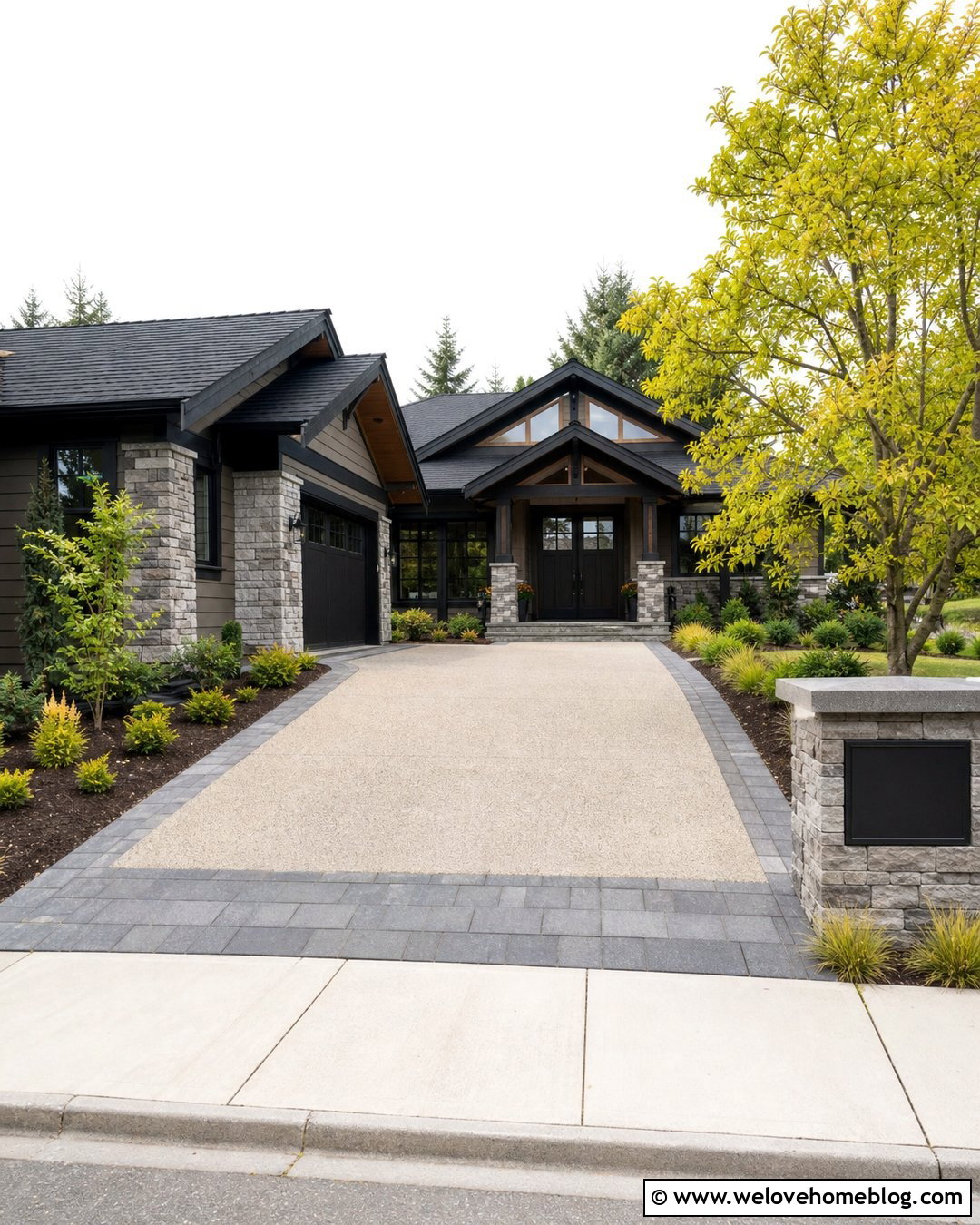
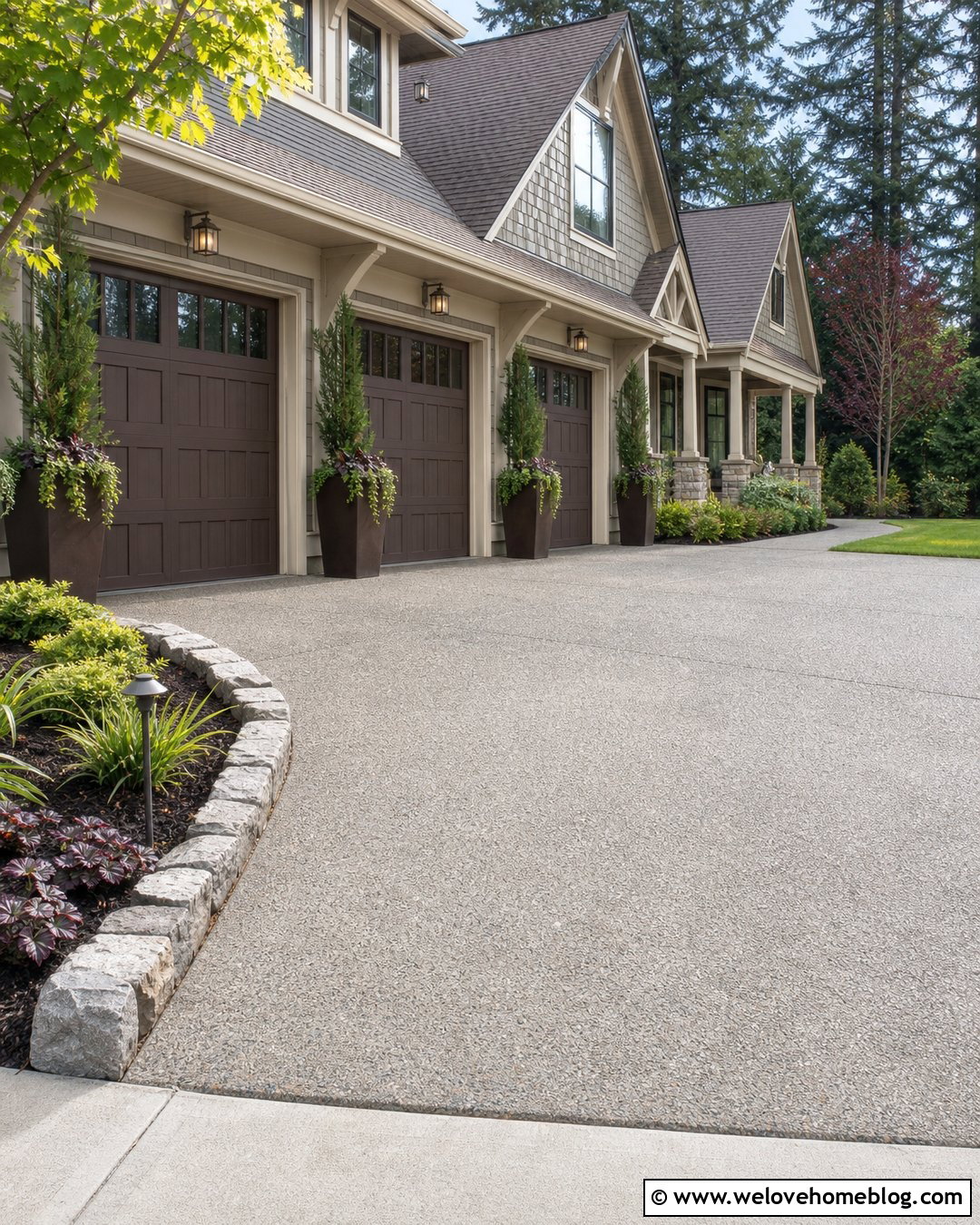
12. Craftsman Driveway Lamps With Stone Columns
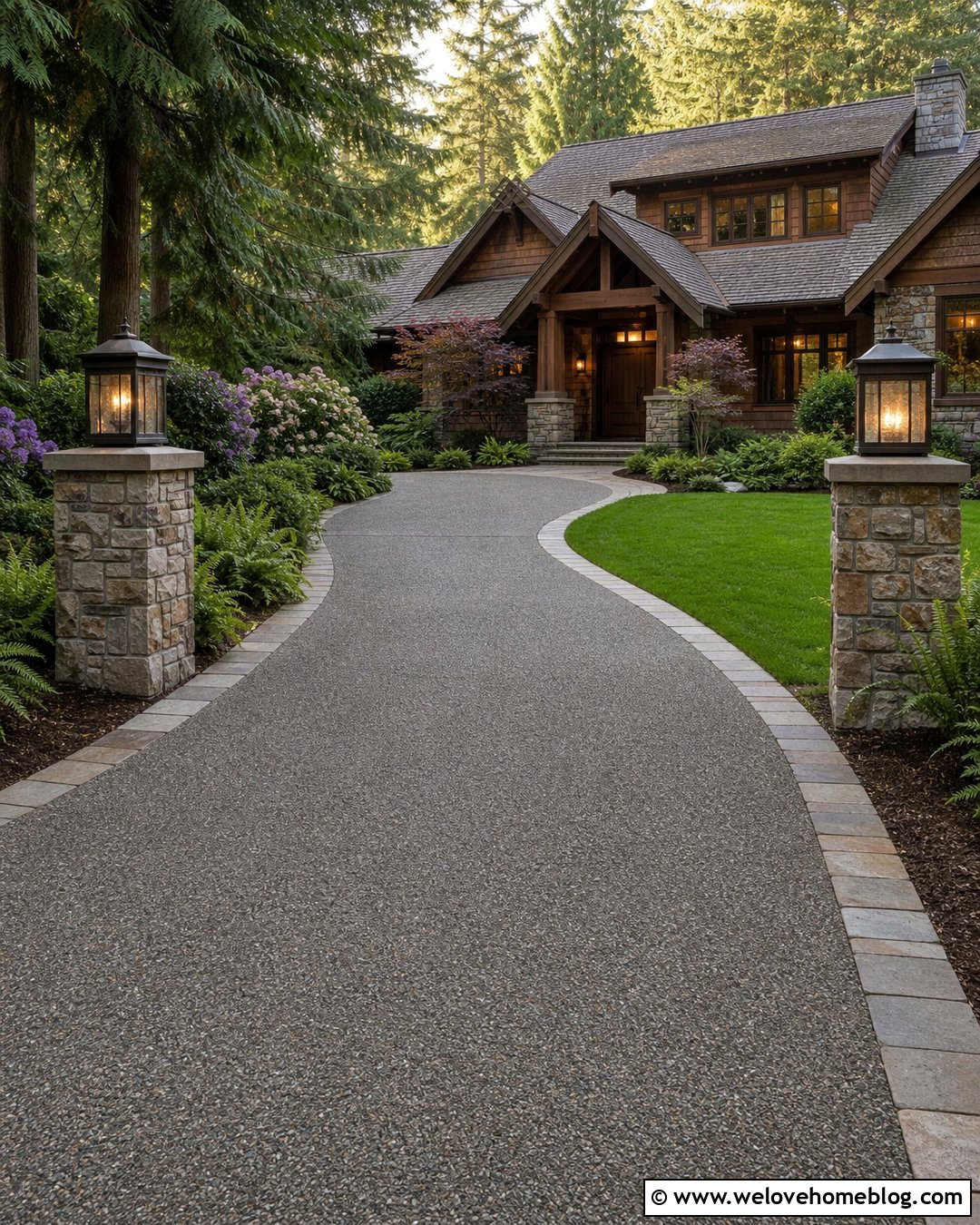
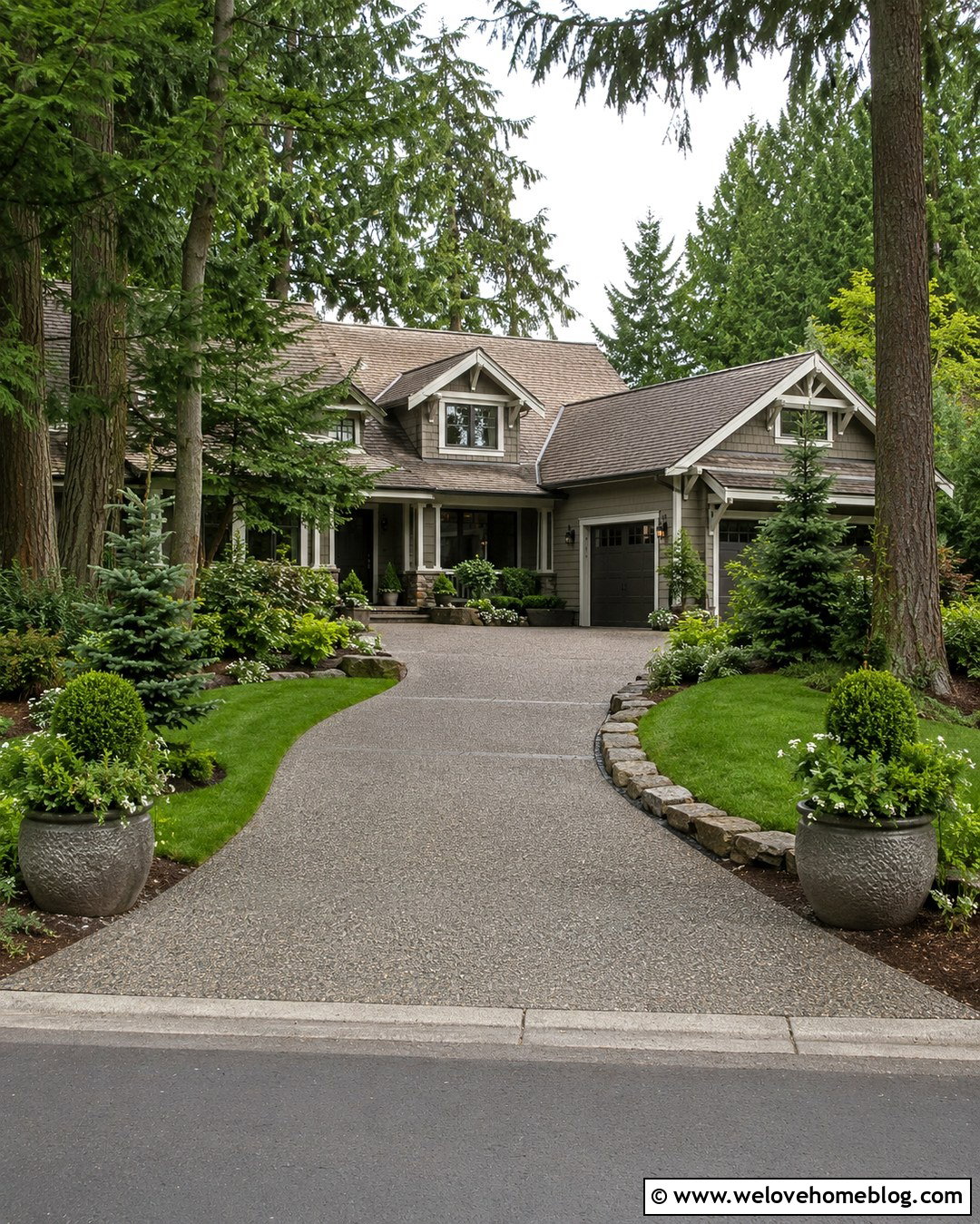
Craftsman homes look cohesive when driveway lamps repeat the strong materials and square shapes found on the house. Mount broad, low-profile lanterns on tapered stone columns at the entrance to a curved exposed aggregate driveway. Use dark brown metal frames and warm textured glass to complement wood garage doors and porch beams. A border of rectangular stone pavers can connect the columns to the driveway surface. Plant ferns, compact rhododendrons, and layered evergreen shrubs around the column bases, leaving the fixtures unobstructed. Additional lamps are rarely needed when garage and porch lighting support the entrance pair. The combination of natural stone, warm metal, aggregate, and woodland planting creates a grounded driveway design that feels fully integrated with Craftsman architecture.
13. Colonial Driveway Lamps With A Circular Driveway
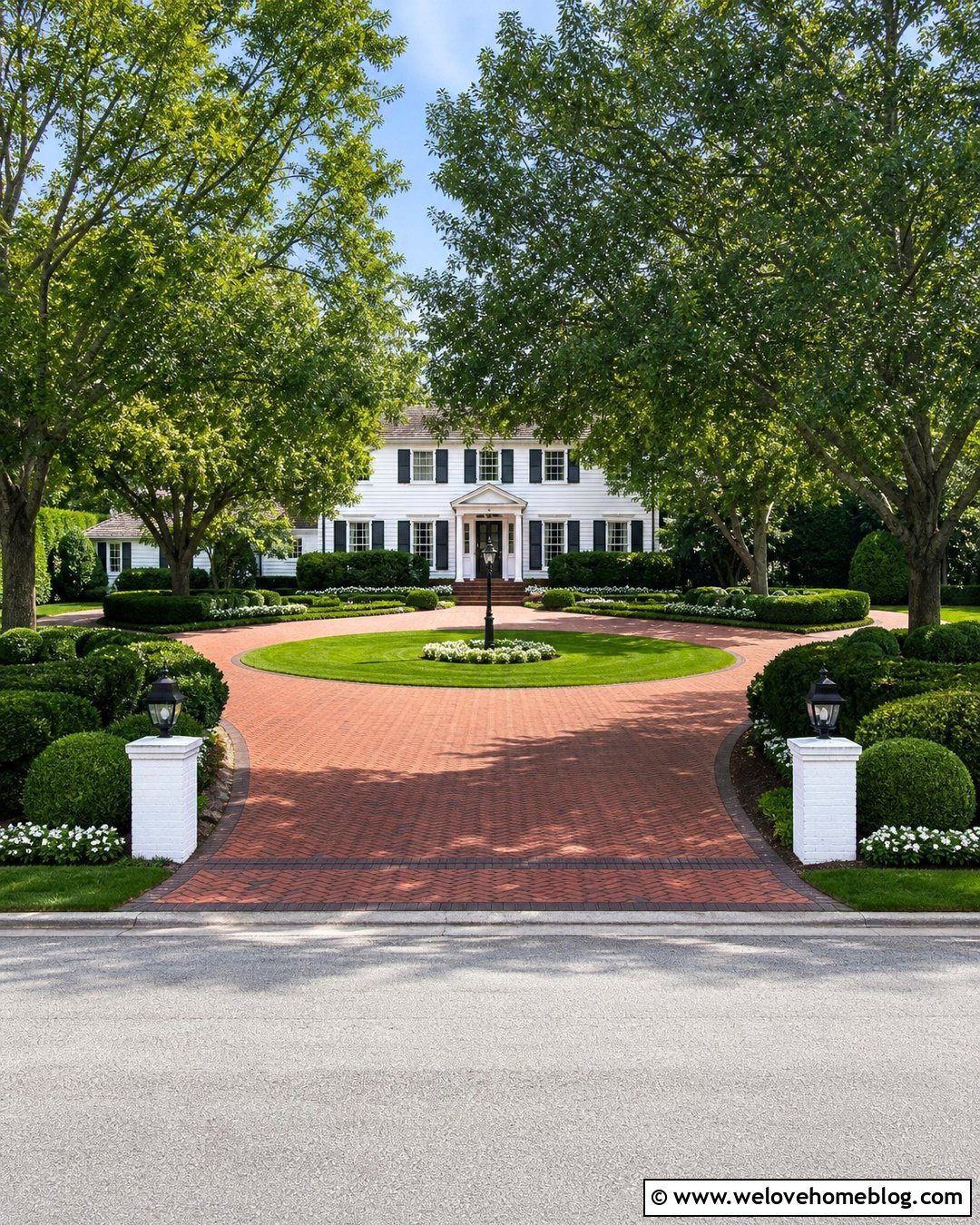
A circular driveway naturally suits the symmetry of a colonial home. Formal black lamp posts can mark both curb openings and the center walkway, creating a clear sequence from the street to the front door. Use red brick pavers in a herringbone pattern with a darker soldier-course border around the entire loop. In the center island, maintain a low lawn and symmetrical boxwood beds so the lamps and house remain visible. Matching lantern sconces on the facade reinforce the balanced arrangement. The entrance posts should be prominent, but excessive lamps around the full circle can make the property look crowded. A few well-positioned fixtures provide orientation while allowing the brick pattern, central landscaping, and traditional architecture to share attention.
14. Rustic Driveway Lamps With Timber Edging
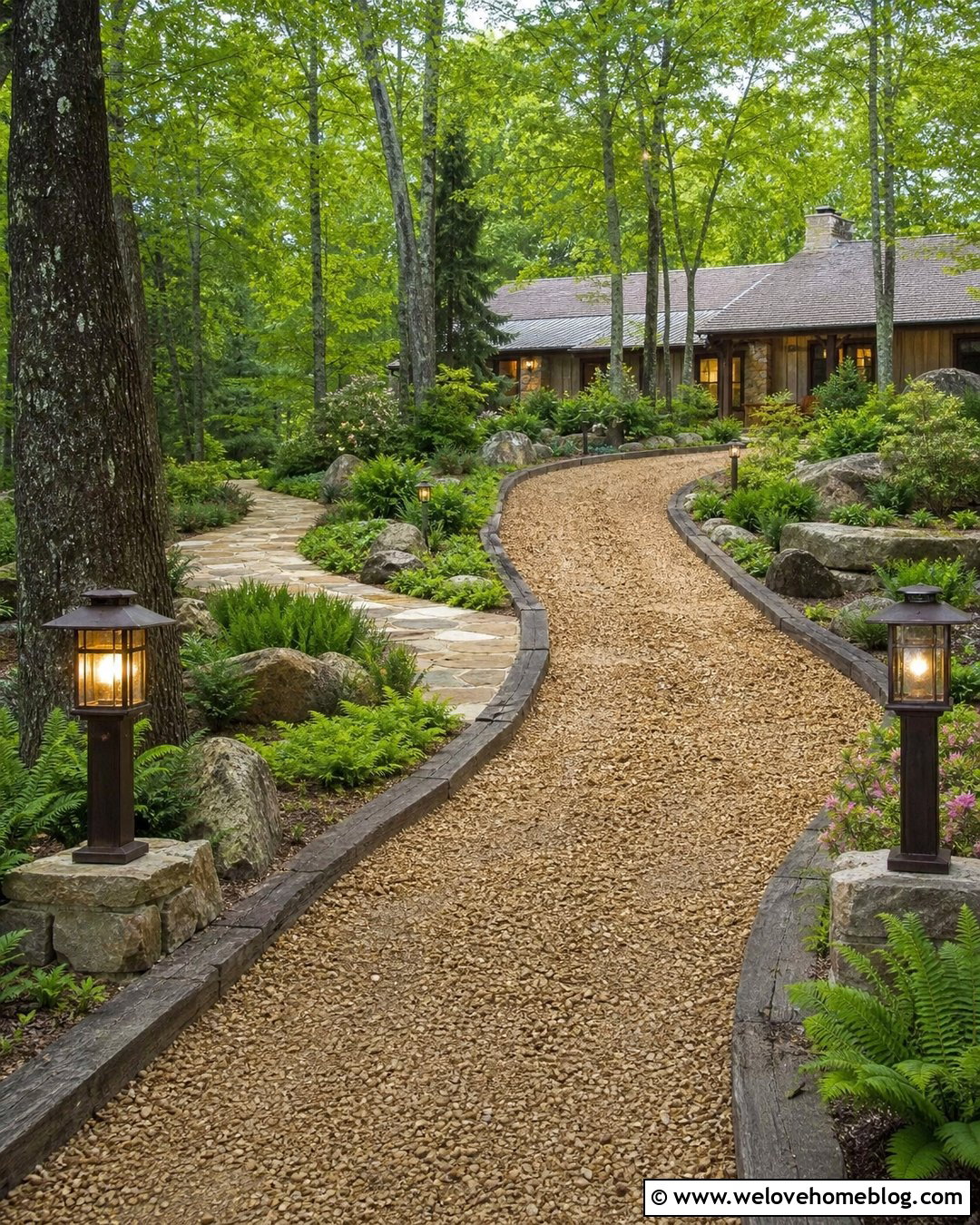
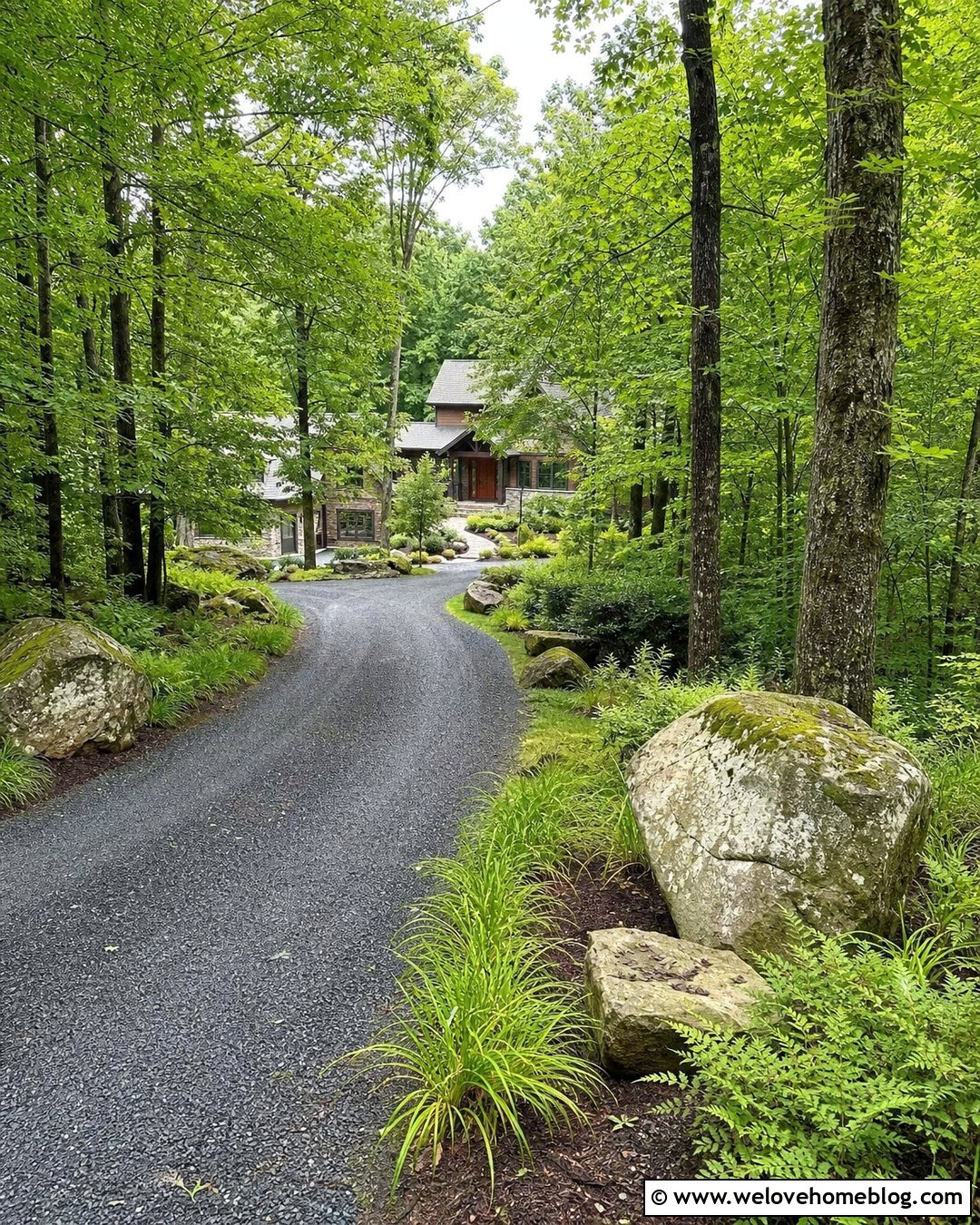
Rustic lamps can turn a simple gravel driveway into a warm, established entrance. Choose dark bronze posts with modest lantern tops rather than heavily ornamented fixtures. Set them beside a brown crushed-gravel driveway with a curved woodland layout and thick timber edging. Position the lamps near the entrance, a major bend, and the connection to the front walkway. Native ferns, woodland grasses, boulders, and flowering shrubs help the fixtures blend into the landscape. The timber border keeps gravel from spreading into the planting beds and visually supports the natural finish of the lamps. This design works particularly well for cabins, rustic ranch homes, and wooded properties. Consistent spacing is less important than placing each lamp where drivers need guidance.

15. Contemporary Driveway Lamps With Resin Gravel
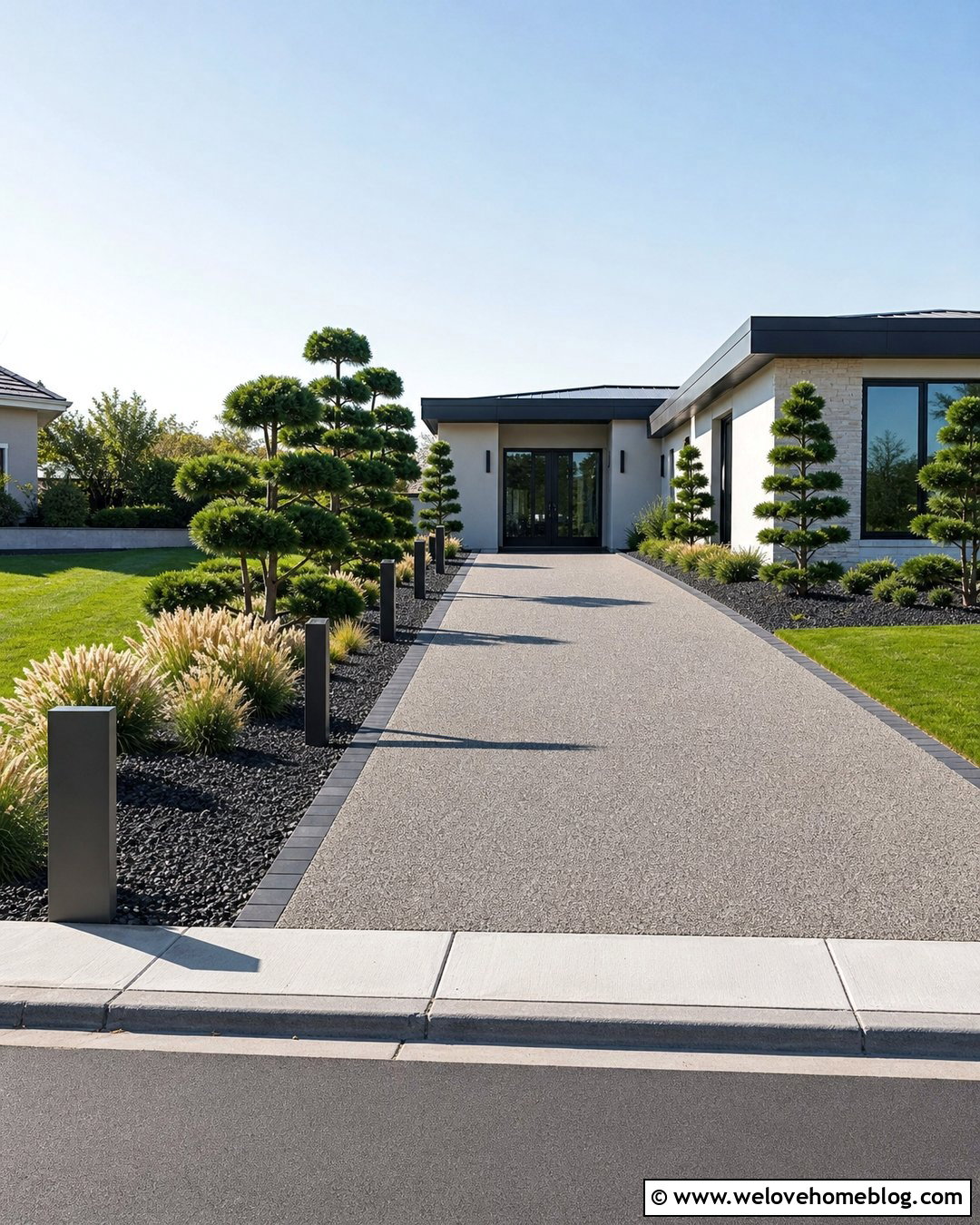
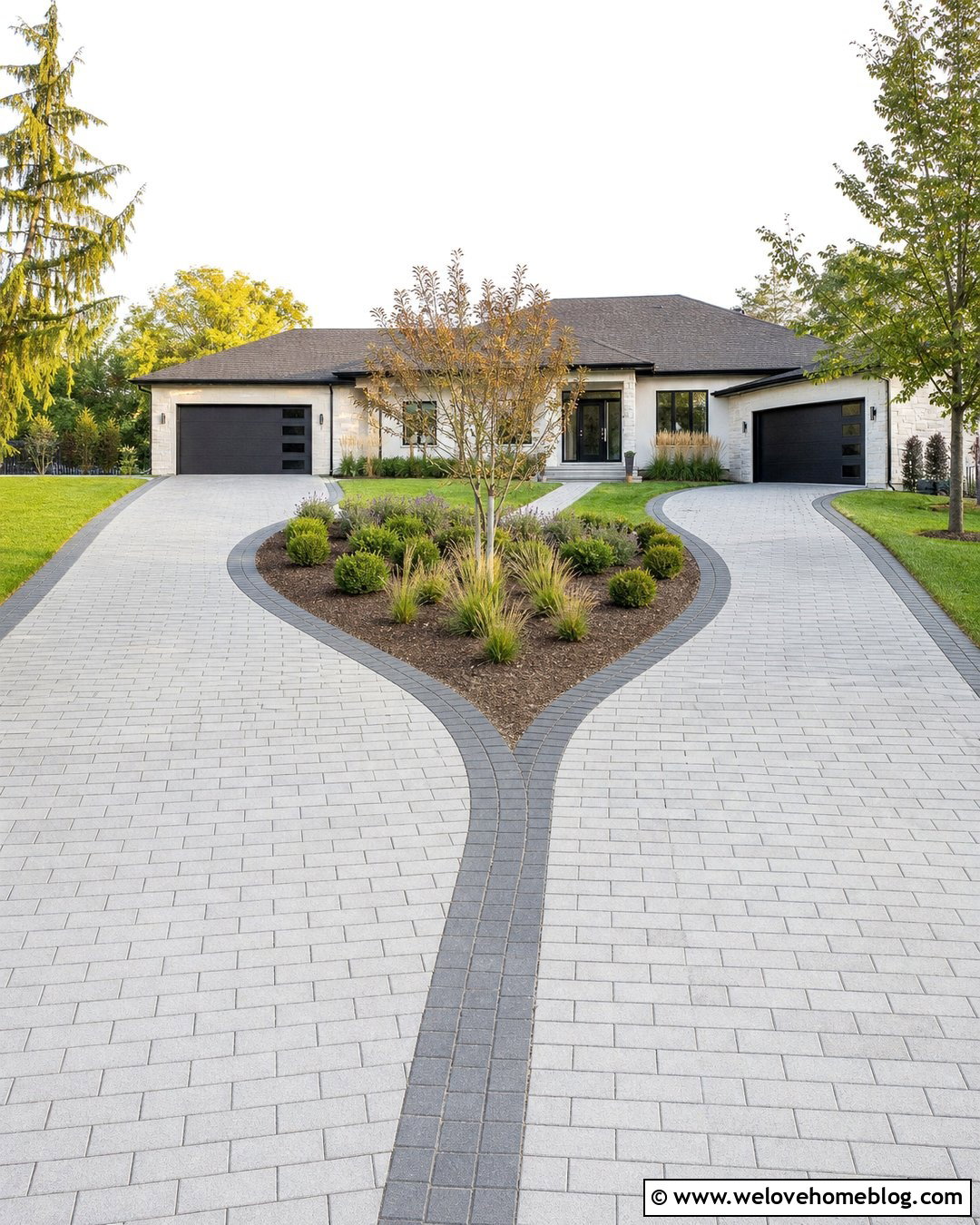
Resin-bound gravel creates a clean surface that pairs naturally with contemporary outdoor lamps. Select slim graphite fixtures with rectangular cutouts and downward-facing LEDs. A straight warm-gray resin driveway can be divided by a narrow black paver ribbon leading toward the garage. Place the lamps along alternating sides, aligning them with planting beds rather than the center of each paving section. Sculptural evergreens, feather reed grass, and dark landscape gravel continue the streamlined palette. Near the curb, a taller matching fixture can be incorporated beside a simple address marker. This complete look feels modern without relying on plain concrete. The subtle texture of the resin surface also adds visual depth while the dark lamps provide repetition, contrast, and practical edge definition.
16. Copper Driveway Lamps With Natural Stone
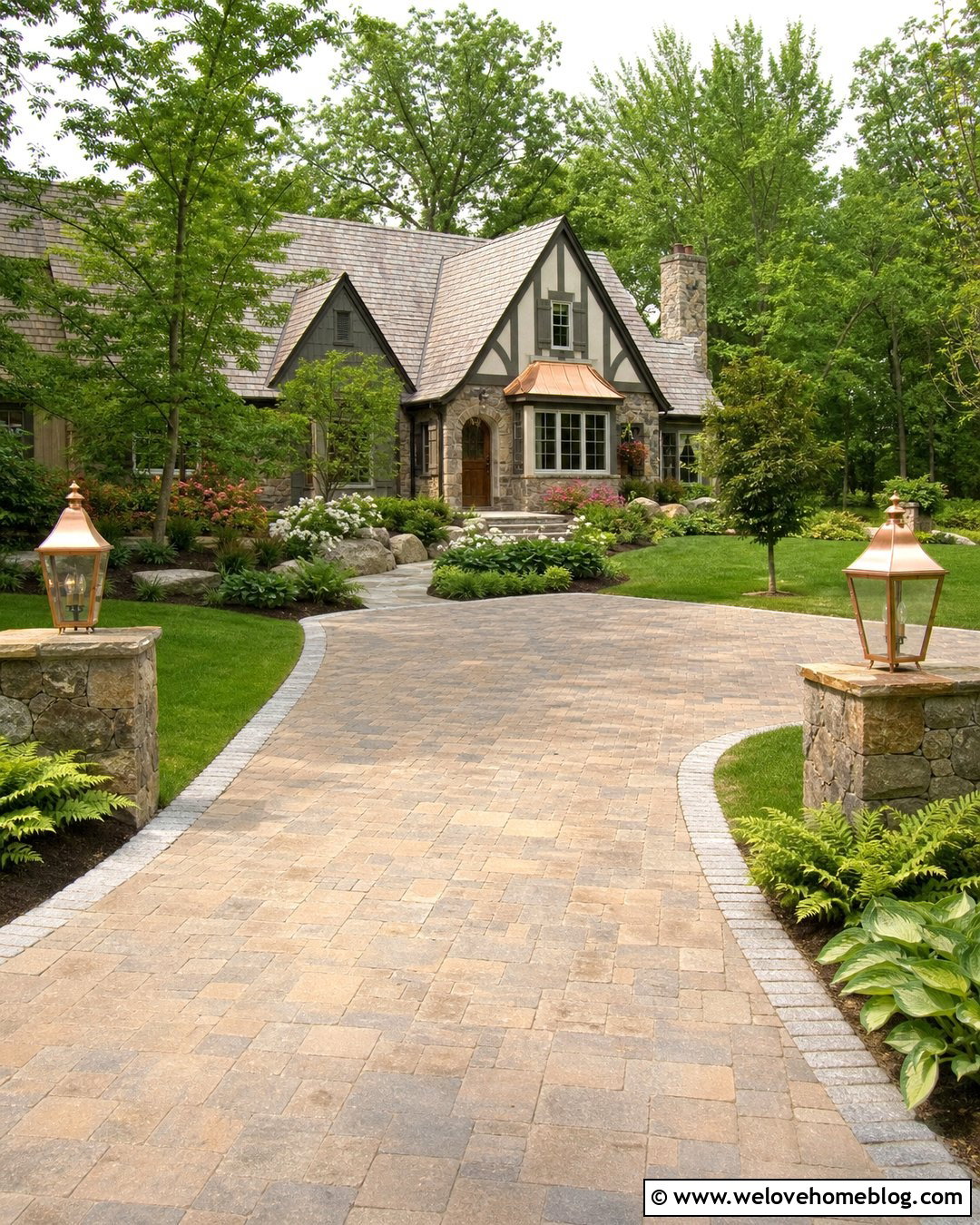
Copper lamps bring warmth to a driveway surrounded by stone and mature landscaping. Mount compact copper lanterns on low fieldstone pillars beside a curved driveway made from tan and gray natural stone pavers. As the metal develops a patina, it will blend more closely with green planting and weathered masonry. Use matching stone as an irregular border along the most visible sections of the driveway. Ferns, hostas, flowering shrubs, and small trees can create a layered garden, but leave open space around every lamp. This design feels especially appropriate for cottage, Tudor, and woodland homes. Combining a durable driveway surface with natural stone pillars makes the lamps look permanent, while the changing copper finish adds character throughout the seasons.
17. Motion Sensor Driveway Lamps With Concrete
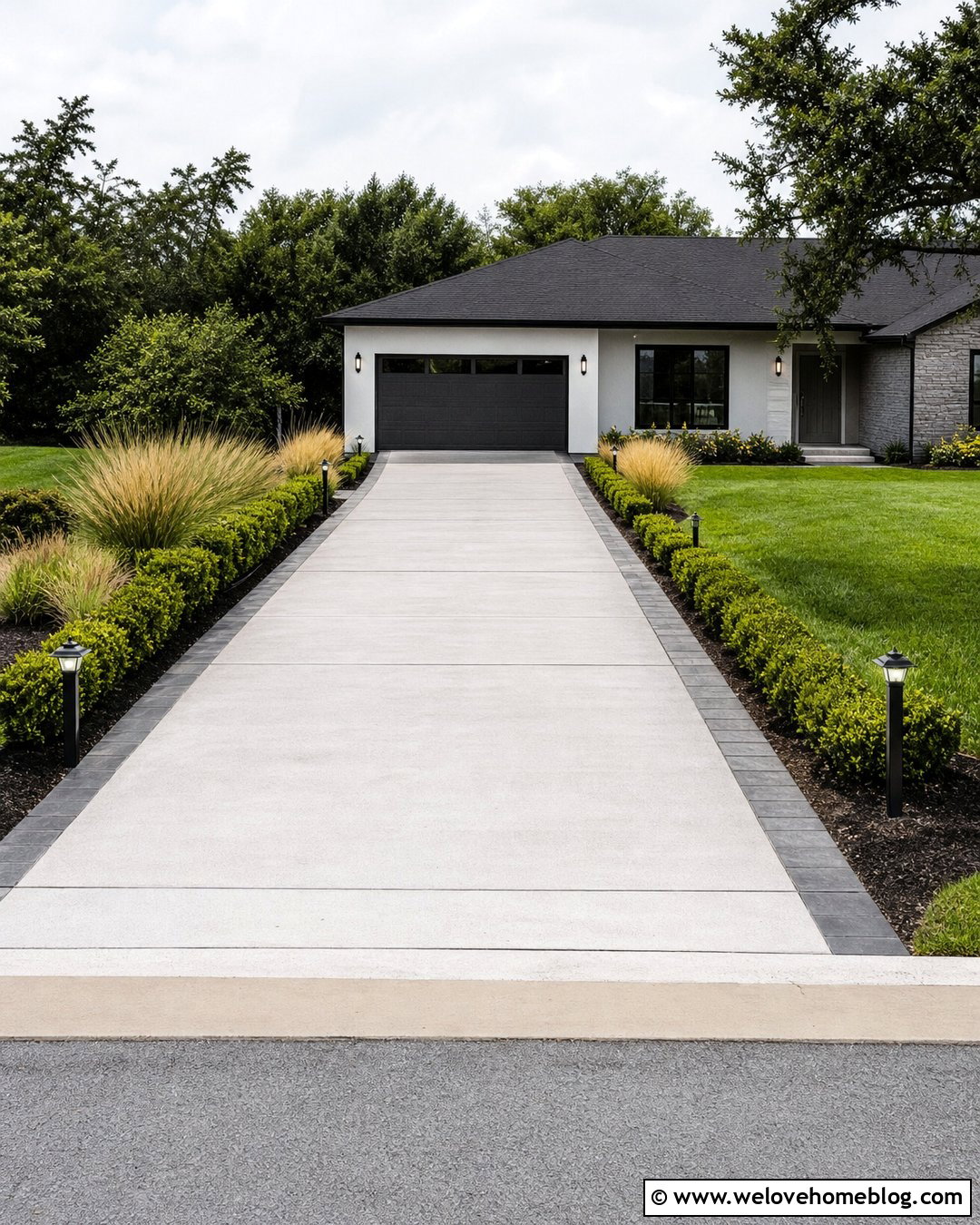
Motion-activated lamps can provide brighter light when someone enters while remaining subtle during quiet hours. Integrate modern sensor-equipped posts into a pale gray brushed-concrete driveway with a wide straight layout. Place one pair at the curb entrance and another near the garage, where movement and parking activity are most likely. Dark paver edging makes the concrete boundary easier to recognize and coordinates with black fixtures. Low evergreen hedges and broad grass beds keep the design clean without blocking the sensors. Adjust the detection zone so passing sidewalk traffic does not activate the lamps unnecessarily. When combined with softer continuous landscape lighting, motion lamps deliver useful visibility without leaving every fixture at full brightness throughout the night.
18. Driveway Lamps With Stone Retaining Walls
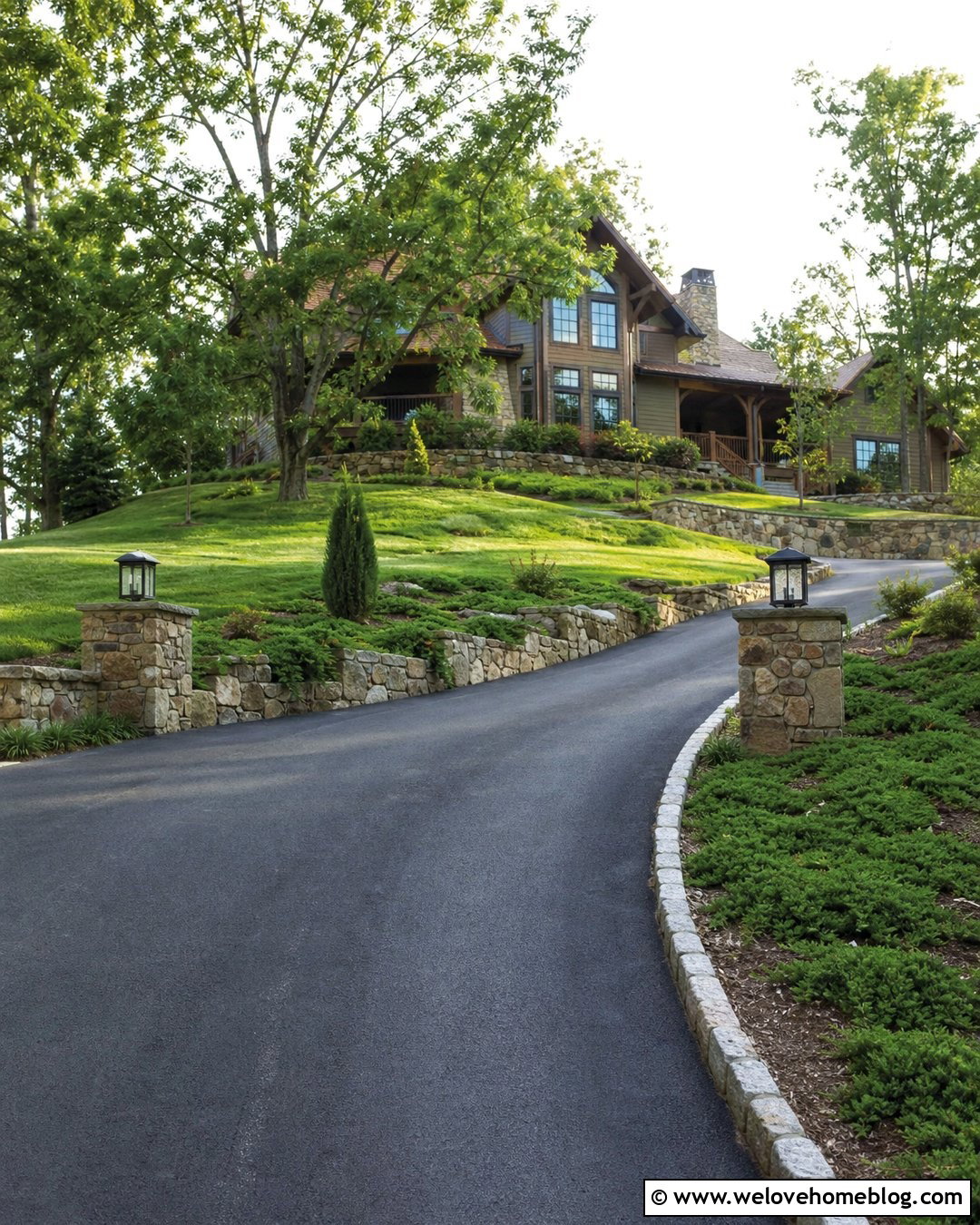
A sloped driveway offers a natural place to integrate lamps into retaining walls. Instead of adding tall freestanding posts, mount small lanterns on stone wall piers positioned at the entrance and major elevation changes. Use a dark gray asphalt driveway with a curved layout and a border of light granite blocks. The contrast makes the edges easier to follow and connects the paving to the stonework. Plant cascading ground cover above the walls, along with upright shrubs that will not spread over the fixtures. This layered design works well for hillside ranch, contemporary, and mountain-inspired homes. Coordinating the pier lamps with garage sconces creates a consistent lighting family, while the retaining walls provide secure, purposeful mounting locations throughout the approach.
19. Driveway Lamps With An Address Sign
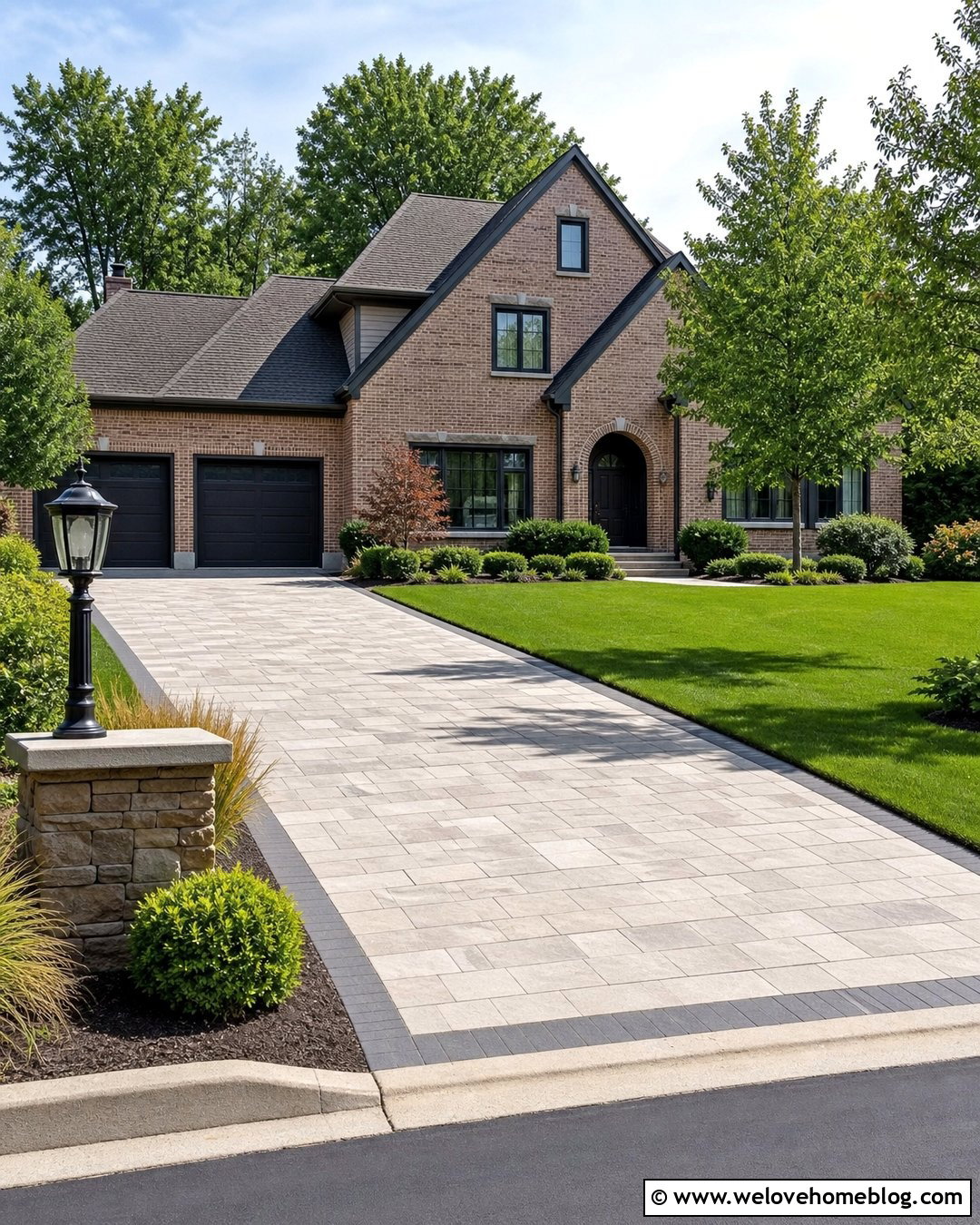
Combining a driveway lamp with an address feature creates a practical curbside focal point. Install a black lantern post beside a low stone monument rather than placing the address directly on a small fixture. A straight light-gray concrete paver driveway with charcoal edging provides a clean backdrop. Repeat one smaller lamp near the walkway so the entrance marker does not feel isolated. Surround the monument with low ornamental grasses and compact shrubs that preserve a clear view from the road. The lamp should illuminate the area without casting glare directly toward drivers. This arrangement suits many suburban homes because it brings the driveway, lighting, landscaping, and entrance information into one organized composition. Match the stone monument to facade or porch materials for added continuity.
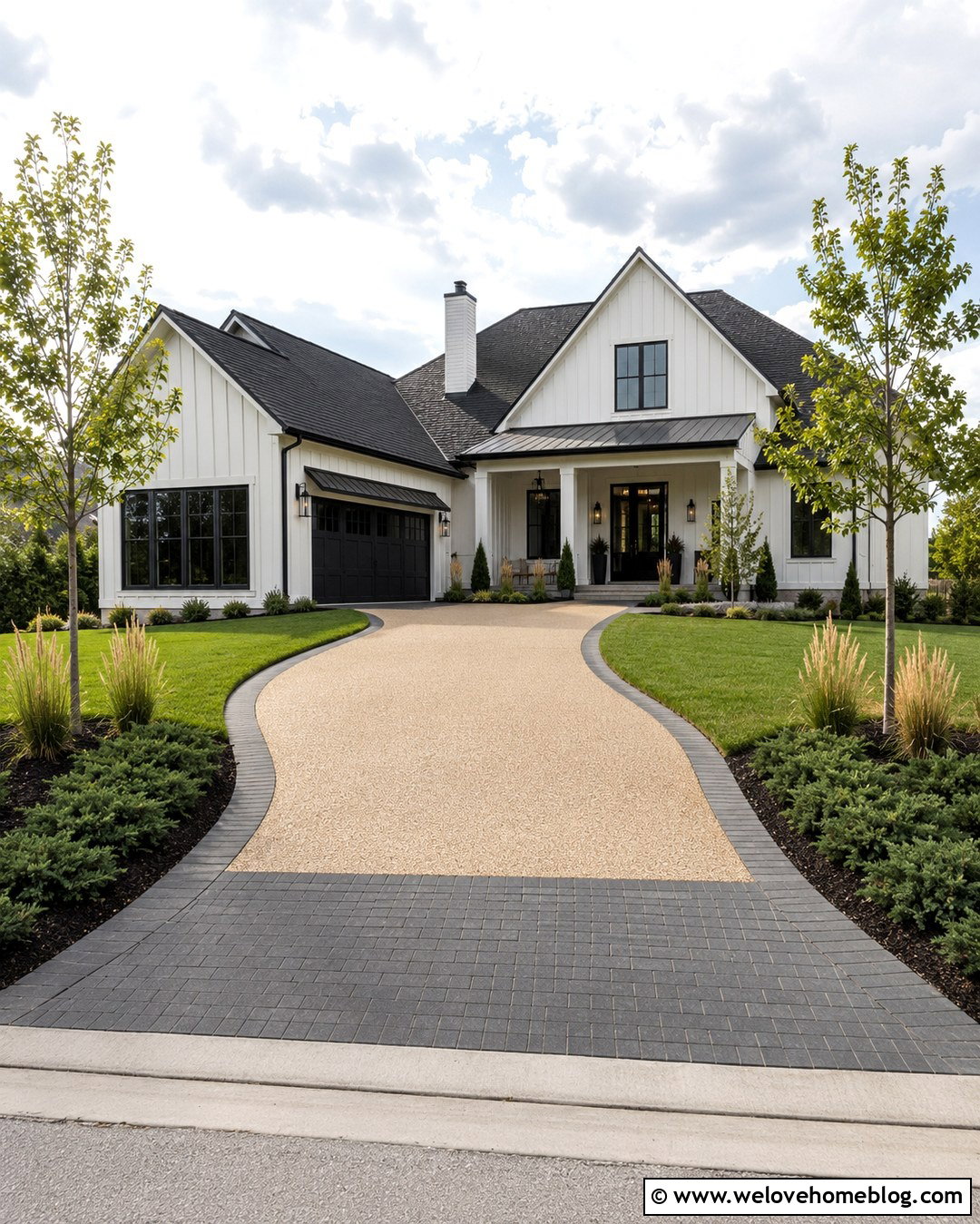
20. Driveway Lamps With Flowering Borders
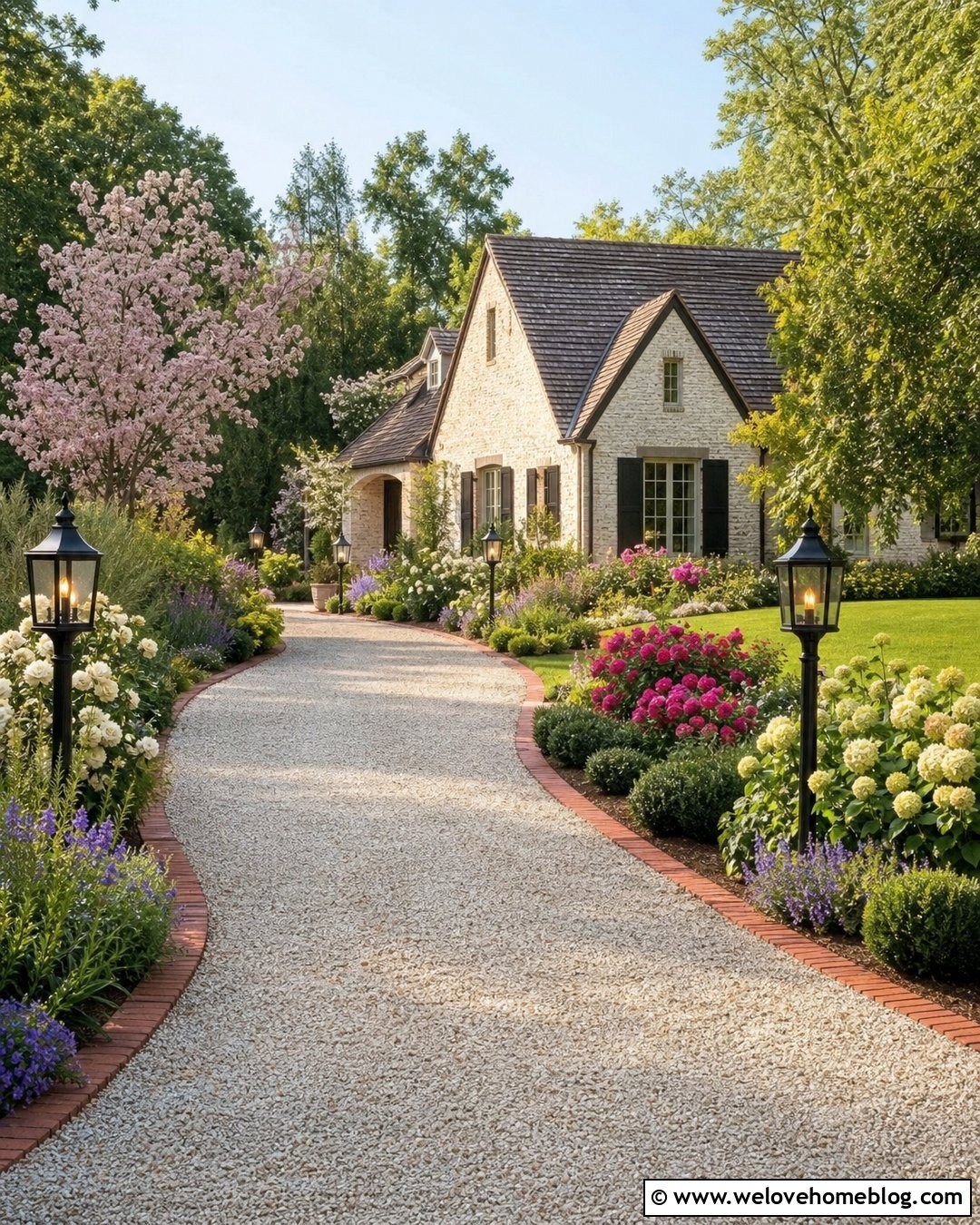
Driveway lamps can become part of the garden when their placement is coordinated with flowering borders. Use classic black posts along a gently curved cream-colored gravel driveway edged with warm red brick. Instead of surrounding each fixture with one isolated plant, build continuous beds containing roses, lavender, salvia, compact hydrangeas, and evergreen structure. Place lamps at wider intervals near turns and walkway connections, where they will be useful and visually balanced. Keep tall flowers behind the posts and shorter plants near the pavement to prevent blocked light. A cottage or traditional home provides a fitting background for this layered design. The combination of loose gravel, crisp brick edging, repeated lamps, and generous planting produces a complete driveway that feels colorful and welcoming.
Conclusion:
The most successful driveway lighting brings the surface, entrance, landscape, and home together rather than treating lamps as separate decorations. Choose fixture shapes and finishes that relate to the architecture, then place them where they can define entrances, curves, borders, and walkway connections. Tall posts make strong landmarks, while bollards, pillar lights, and wall-mounted lamps provide quieter alternatives. Avoid filling both sides with excessively bright fixtures. A smaller number of carefully directed lamps usually creates a more comfortable residential setting. Whether your driveway is gravel, concrete, asphalt, brick, pavers, or resin, these 20 Driveway Lamps Ideas can help you create an approach that looks organized, welcoming, and complete.

Related posts:
Leave a Reply