
Driveway planters can turn a plain vehicle entrance into a polished part of your front yard. The best 30 driveway planter ideas do more than add flowers. They connect the driveway material, home exterior, walkway, and surrounding landscape into one complete design. Large containers can mark an entrance, soften wide paving, frame garage doors, guide guests, or provide privacy where planting beds will not fit. Choose outdoor-rated pots sized for the space, then fill them with plants suited to the available sunlight and local growing conditions. Keep containers clear of turning paths, parking areas, and car doors. Whether your home is modern, traditional, rustic, or cottage-inspired, the following complete looks offer practical and attractive 30 driveway planter ideas.

1. Large Concrete Driveway Planters
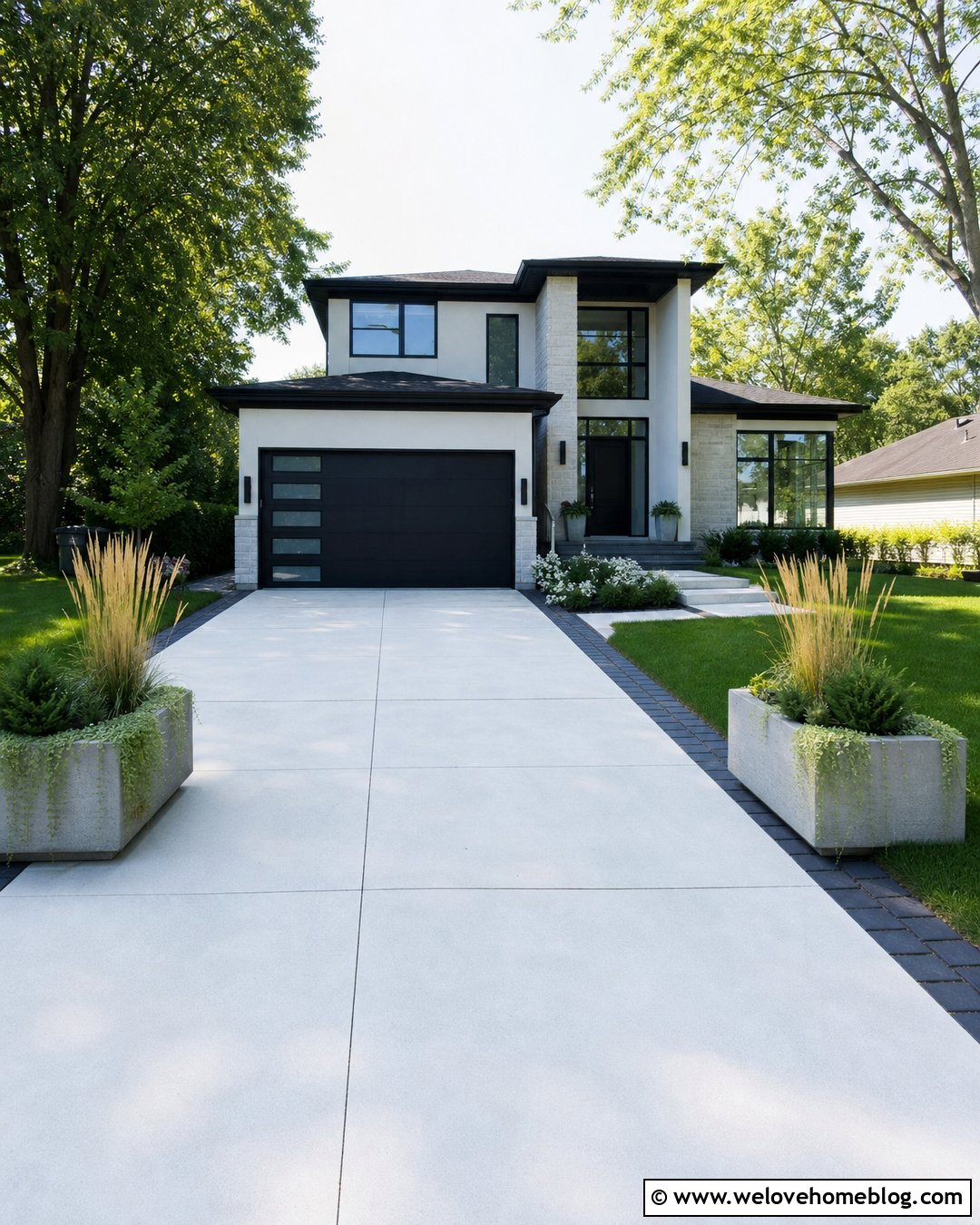
Oversized concrete planters bring structure to a wide driveway without making the entrance feel cluttered. Place a matching pair near the street or where the driveway meets the front walkway. A straight, light gray poured-concrete driveway creates a clean background, while broad rectangular pots add weight and definition. Fill them with compact ornamental grasses, evergreen shrubs, and trailing plants that soften the hard edges. Continue the look with low planting beds and a simple paver walkway leading toward a contemporary house. Concrete containers can be heavy, so they work especially well in exposed locations where lightweight pots might shift. Leave comfortable clearance around parked vehicles, turning zones, and pedestrian routes when planning the final placement.
2. Black Planters Along A Modern Driveway
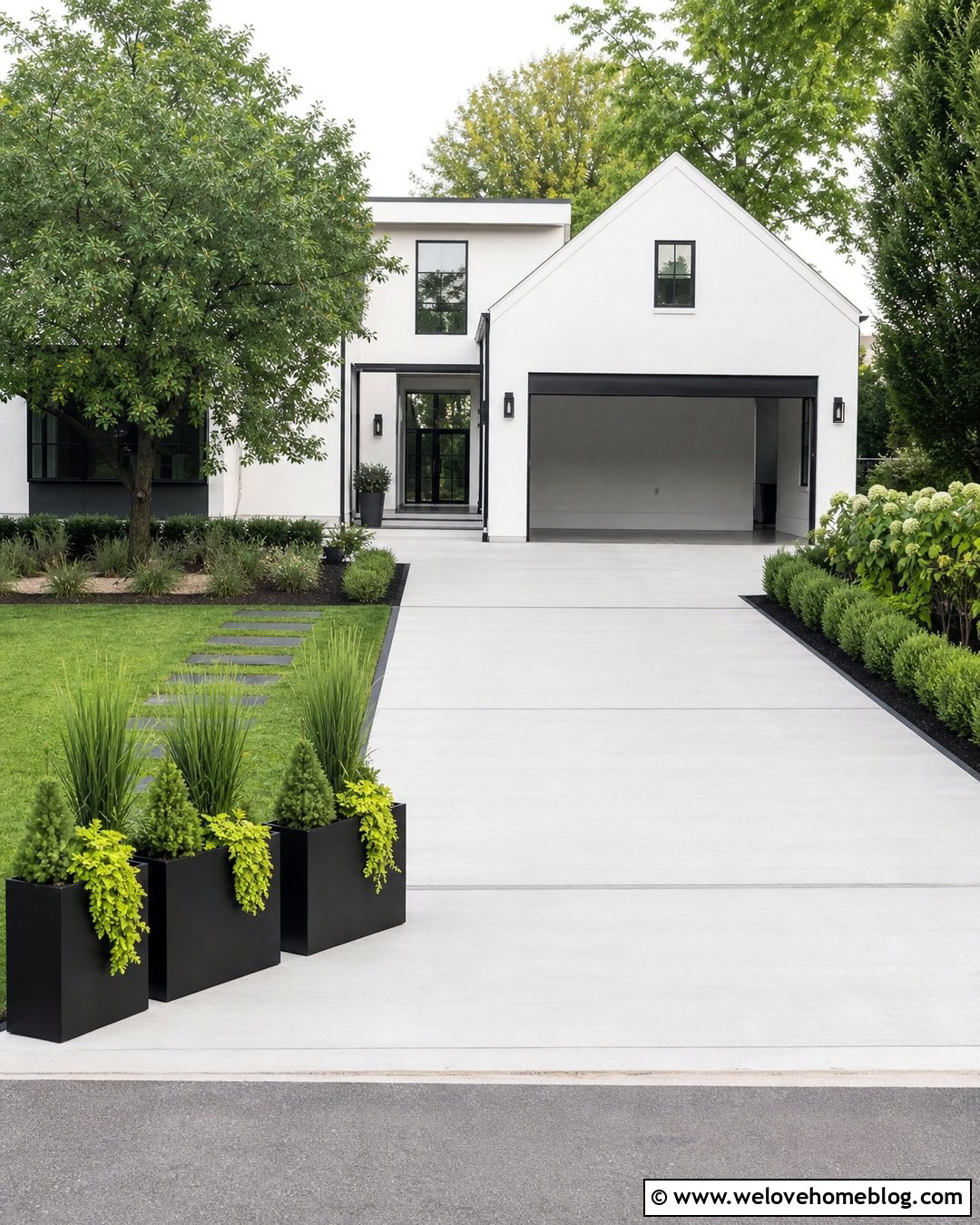
Matte black planters create sharp contrast beside pale concrete, white gravel, or light-colored pavers. For a balanced modern look, line one side of a straight driveway with three large rectangular containers rather than many small pots. Plant them with upright grasses, compact evergreens, and lime-green foliage. The repeated shapes establish a rhythm that draws attention toward the house. Black steel edging and charcoal stepping stones can connect the planters to nearby planting beds. Keep the arrangement slightly behind the driveway edge so mirrors and opening doors have room. Larger containers generally look more intentional in contemporary landscapes and can create useful screening without requiring a permanent hedge. ()
3. Brick Driveway With Terracotta Planters
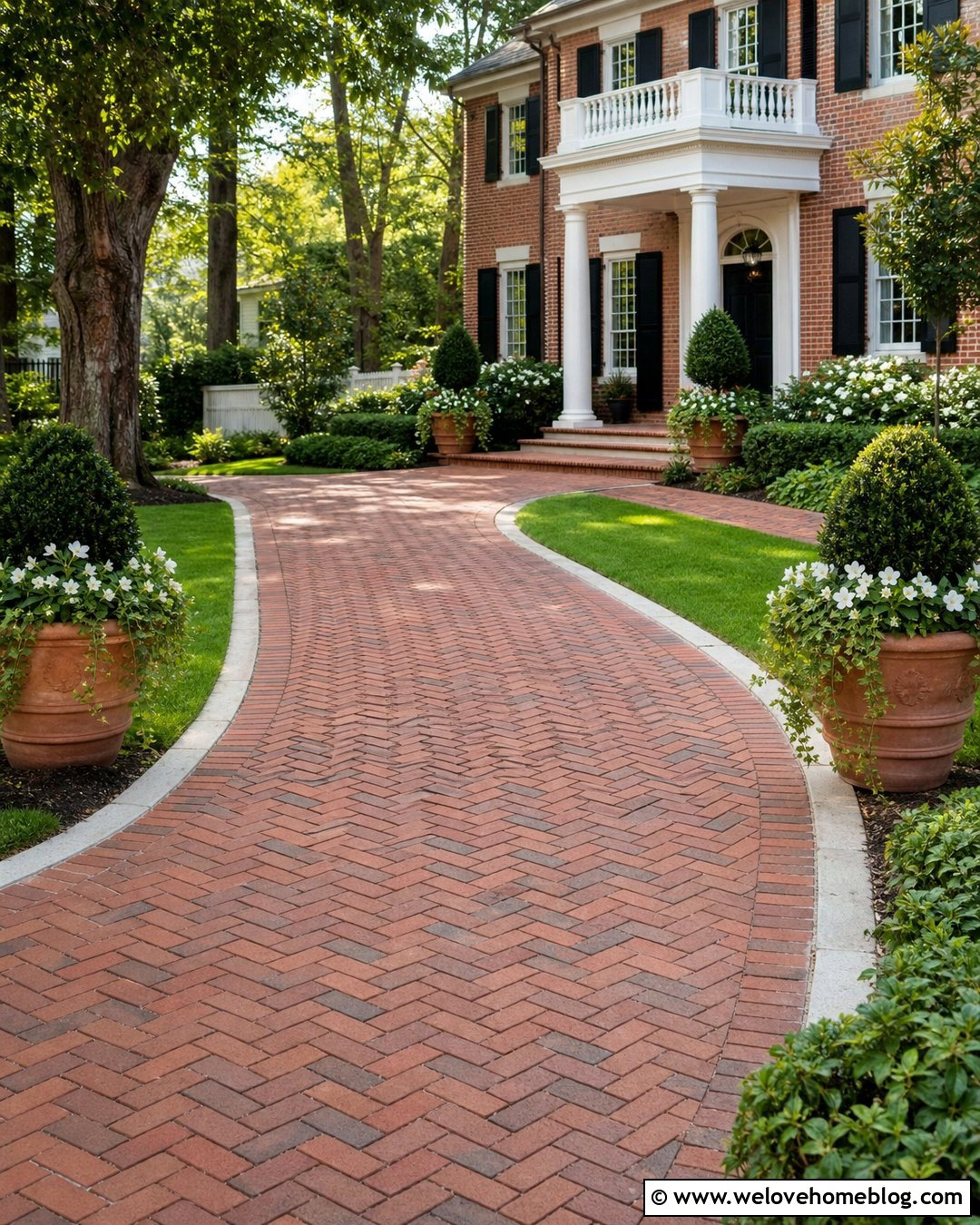
Warm terracotta pots feel naturally at home beside a red or brown brick driveway. Use two oversized round containers at the entrance, then repeat smaller versions near the garage or front walkway. A herringbone brick surface adds texture, while a curved layout keeps the overall scene relaxed and welcoming. Fill the pots with clipped evergreen shrubs, white flowers, and trailing greenery for a classic layered arrangement. Cream stone edging can separate the brick from lawns and cottage-style planting beds. Choose substantial frost-resistant terracotta rather than thin decorative pots if the containers will remain outdoors. This complete look works particularly well with Colonial, Cape Cod, and traditional brick homes because the warm materials create an easy visual connection.
4. Driveway Entrance Planters With Boxwood
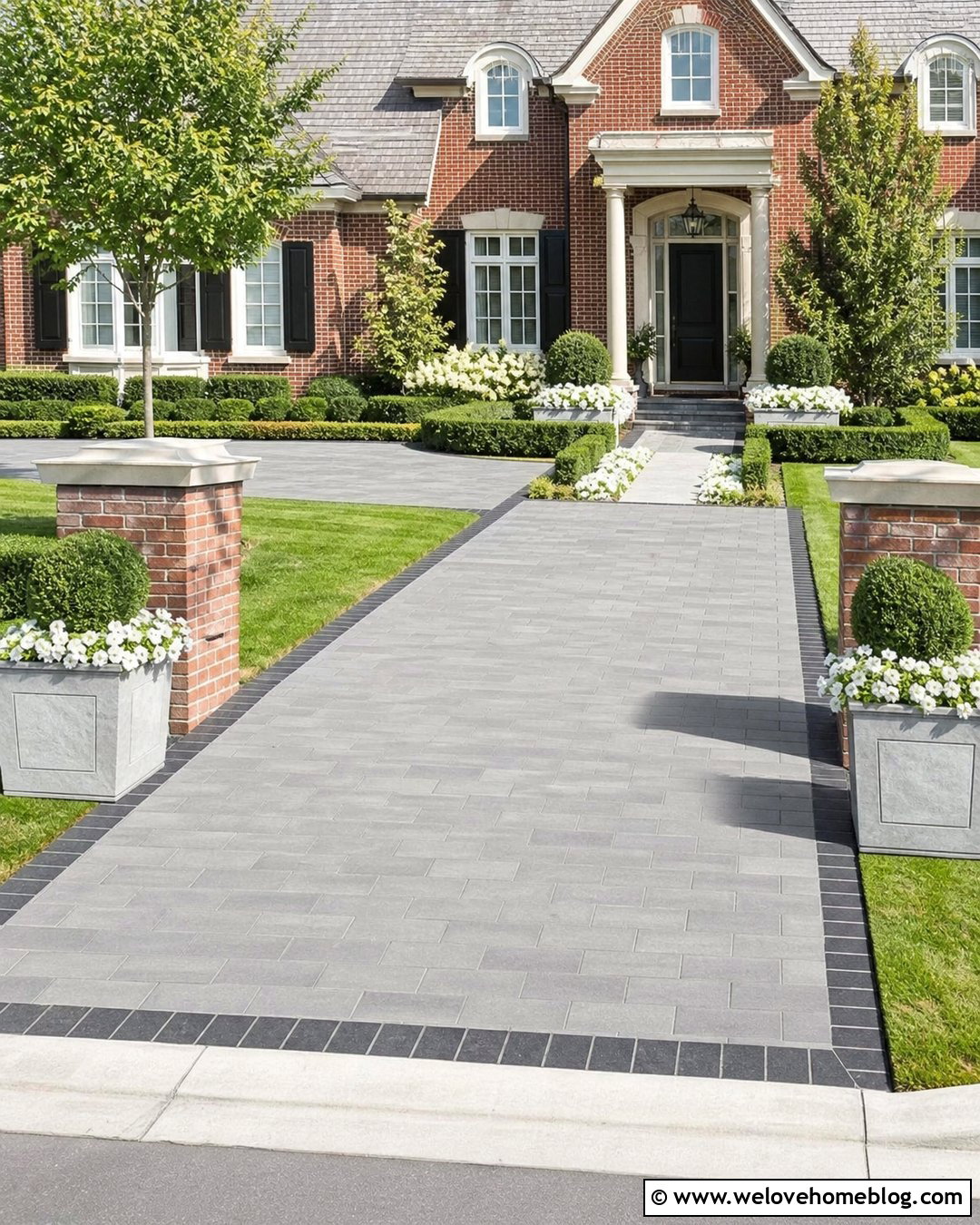
Matching boxwood planters can give a driveway entrance a neat, established appearance throughout the year. Place one large square container on each side of a straight paver driveway, keeping both pots aligned with the entrance posts or landscape beds. Clipped round boxwoods suit classic homes, while taller conical forms create more height. Add seasonal flowers around the base without overwhelming the evergreen centerpiece. A dark brick border, evenly cut lawn, and low hedges reinforce the symmetry. Match the mature size of each boxwood to its container so the arrangement remains balanced as it grows. Boxwood can suit both formal and relaxed entrances when its shape and scale complement the surrounding architecture. ()
5. Curved Gravel Driveway With Planter Groups
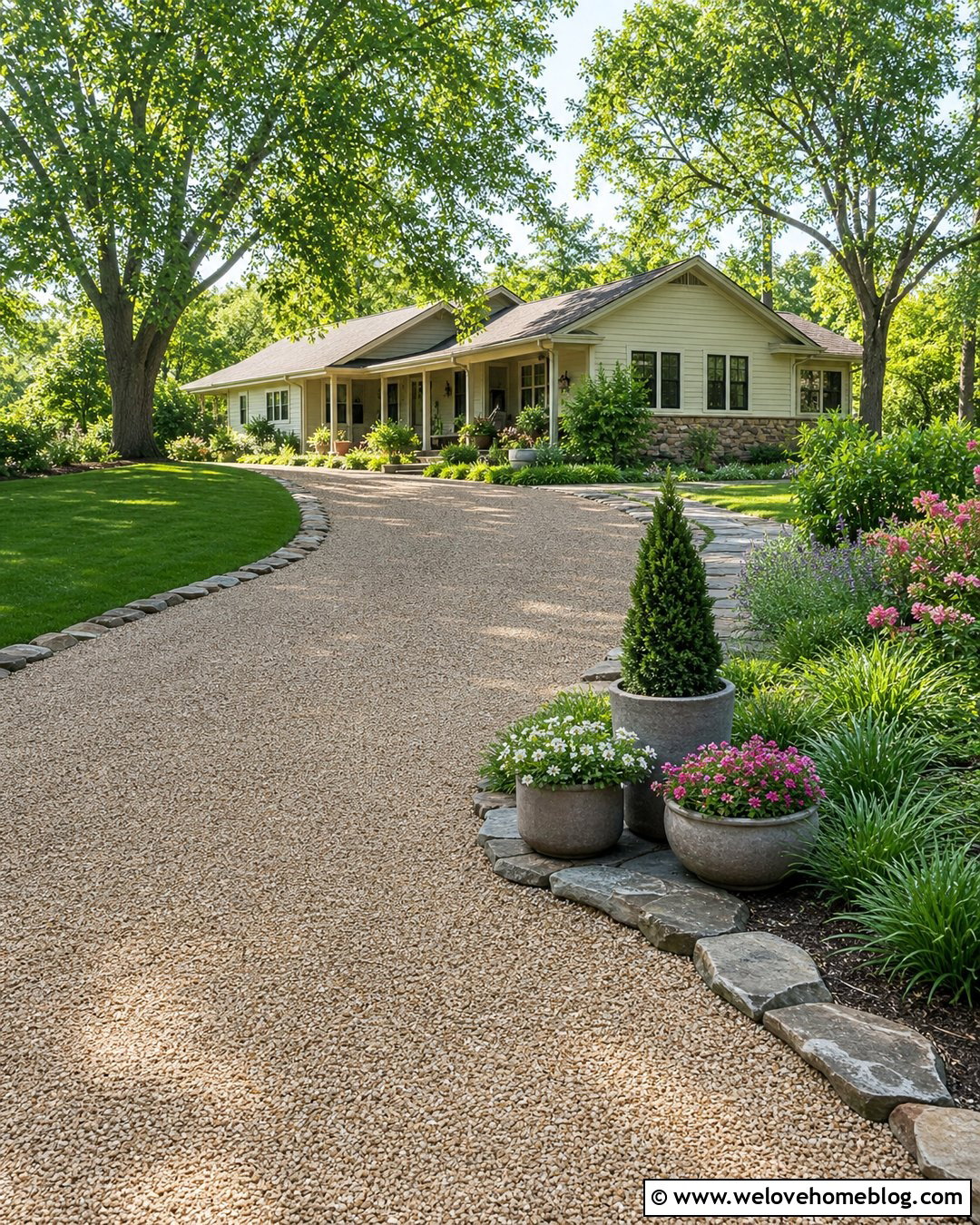
A curved gravel driveway benefits from planter groups that highlight the direction of travel. Position a cluster of three containers near the inside curve, where it can be seen from the street without narrowing the driving area. Combine one tall stone-look pot with two lower bowls for varied height. Fill the tallest planter with an upright evergreen, then use flowering perennials and trailing foliage in the smaller containers. Warm pea gravel, natural fieldstone edging, and relaxed planting beds support the informal composition. Repeat one flower color near the house to unify the landscape. This arrangement works beautifully with ranch, cottage, and country homes, especially when permanent planting is difficult because of compacted soil or underground utilities.
6. White Planters Beside An Asphalt Driveway
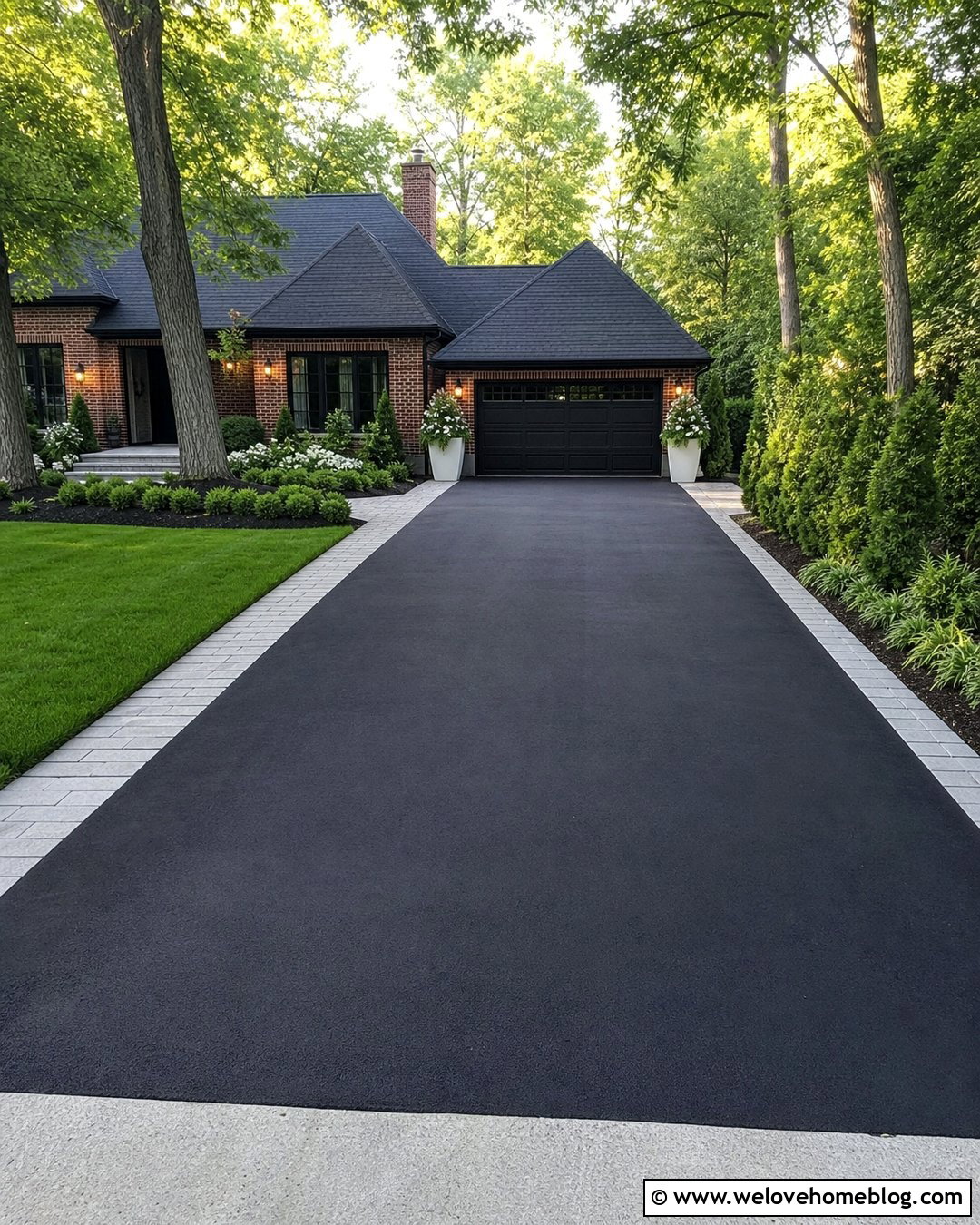
Crisp white planters can brighten a black asphalt driveway and make a simple entrance look more finished. Use broad tapered containers near the garage, where their pale color will also stand out against dark siding or red brick. A pair of planters filled with deep green shrubs and white flowering annuals creates a clean, coordinated palette. Add a narrow gray paver border along the asphalt and connect it to a matching walkway. Low evergreen beds can frame the containers without competing for attention. Because road dust and splash marks show easily on white finishes, choose washable outdoor pots and avoid placing them directly in drainage channels. The result feels fresh, practical, and well suited to an updated suburban home.
7. Tall Driveway Planters For Privacy
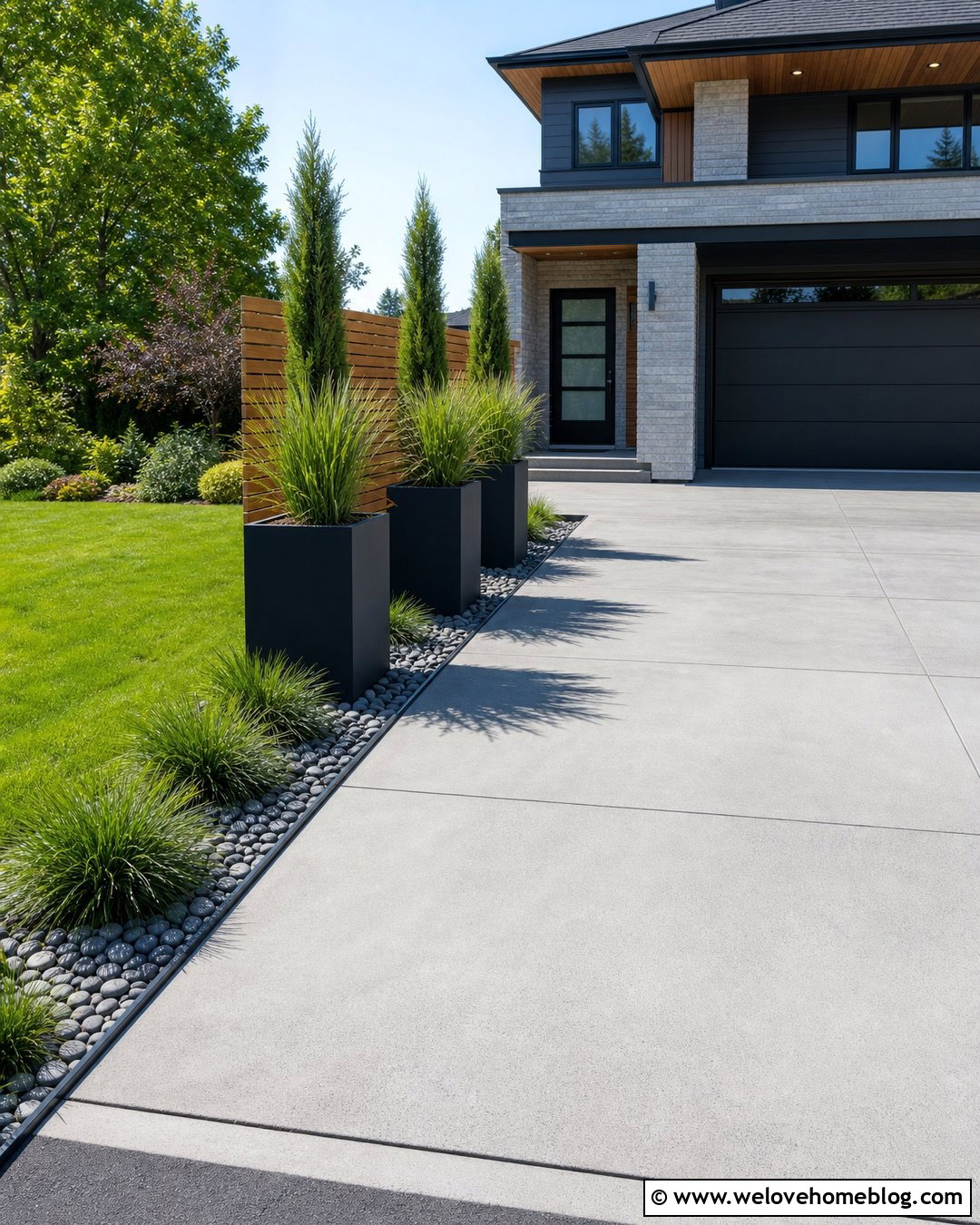
Tall rectangular planters can soften exposed views without enclosing the entire driveway. Arrange two or three containers along the side facing a neighboring property, leaving enough space for passengers, deliveries, and maintenance access. Plant them with upright ornamental grasses, narrow evergreens, or clumping bamboo varieties appropriate for containers and your climate. A smooth concrete driveway and horizontal wood privacy screen can create a cohesive modern backdrop. Use fewer, larger pots instead of a scattered row of small containers, and consider the combined height of both the planter and mature plant. The containers should be stable, well weighted, and positioned outside vehicle movement zones. This flexible screen provides immediate structure while maintaining an open, welcoming entrance. ()
8. Driveway Planters With Ornamental Grasses
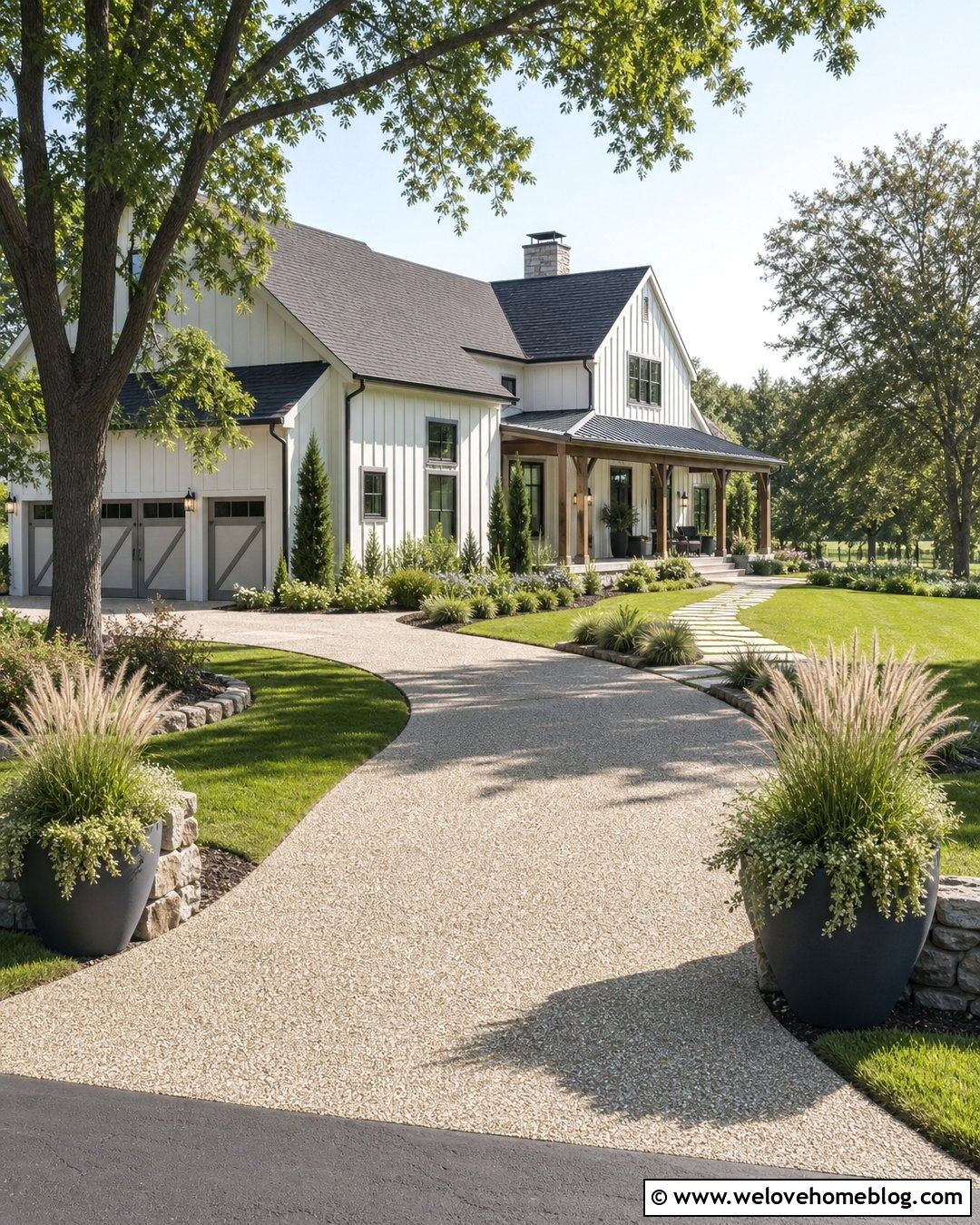
Ornamental grasses introduce movement and texture beside broad paved surfaces. Place a matching pair of large charcoal planters where a curved exposed-aggregate driveway meets the front walkway. Fountain grass, switchgrass, or compact feather reed grass can create an airy vertical accent without looking rigid. Add low trailing plants around the edges to soften the containers, then repeat similar grasses in nearby beds. A natural stone border and simple lawn keep the setting calm and uncluttered. Check the mature width of the selected grass so leaves do not extend into parking or walking areas. This complete design works especially well with prairie-inspired, contemporary, and modern farmhouse homes, where the grasses complement both natural materials and clean architectural lines.
9. Driveway Planters With Hydrangeas
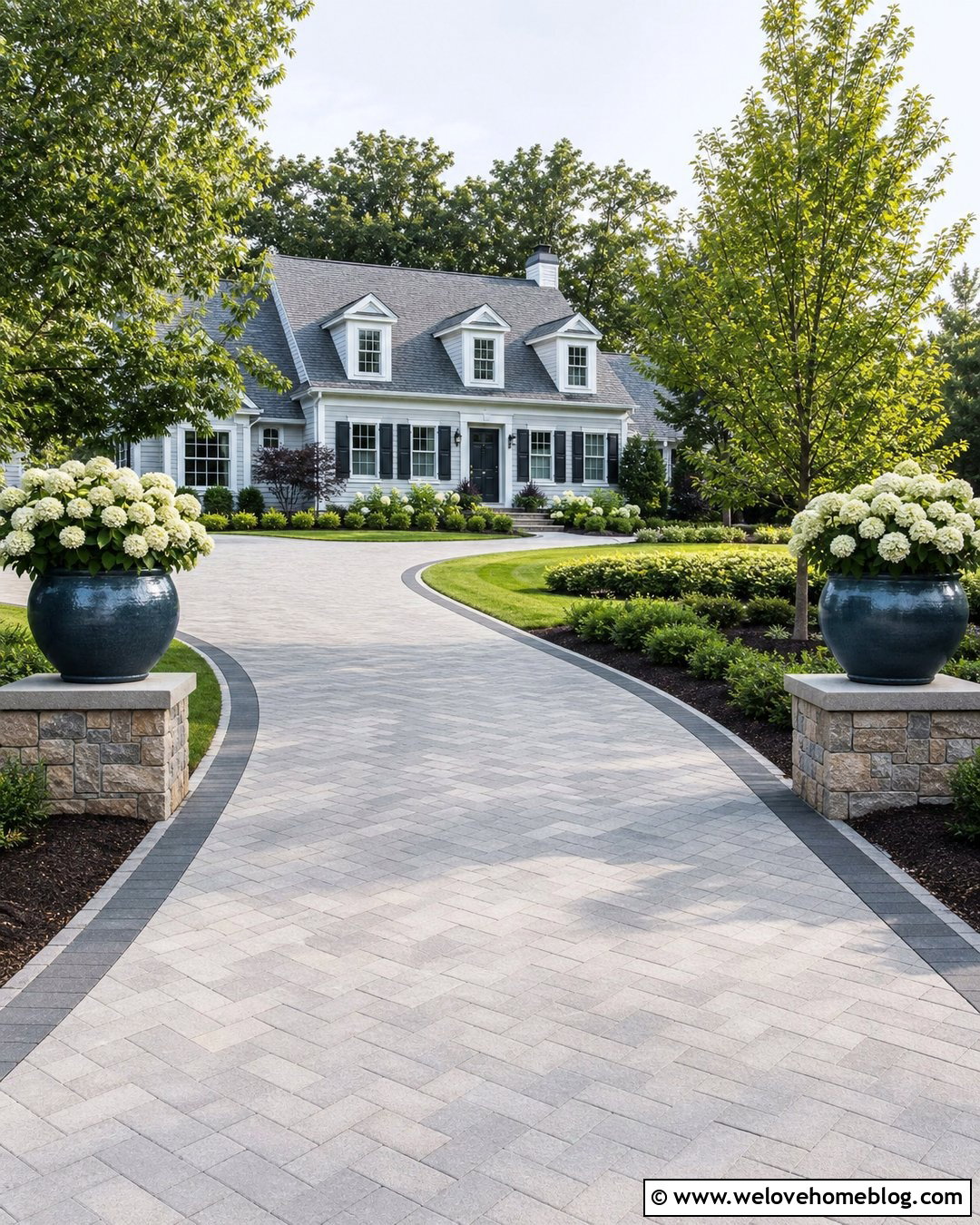
Hydrangeas can make a driveway entrance feel lush, colorful, and welcoming. Choose large glazed ceramic or lightweight composite planters that hold enough soil for consistent moisture. Position a symmetrical pair beside a light gray paver driveway, ideally where the plants receive the appropriate amount of sunlight for the selected variety. White or pale green blooms create an elegant look with a shingle-style or Cape Cod home. Continue the soft palette with curved planting beds, evergreen foundation shrubs, and a bluestone walkway. Hydrangeas become substantial plants, so avoid undersized containers that will look crowded. Their mature size should stay clear of sightlines and vehicle paths. Matching each plant to the driveway’s light conditions is essential for a successful container display. ()
10. Farmhouse Driveway Planters With Olive Trees
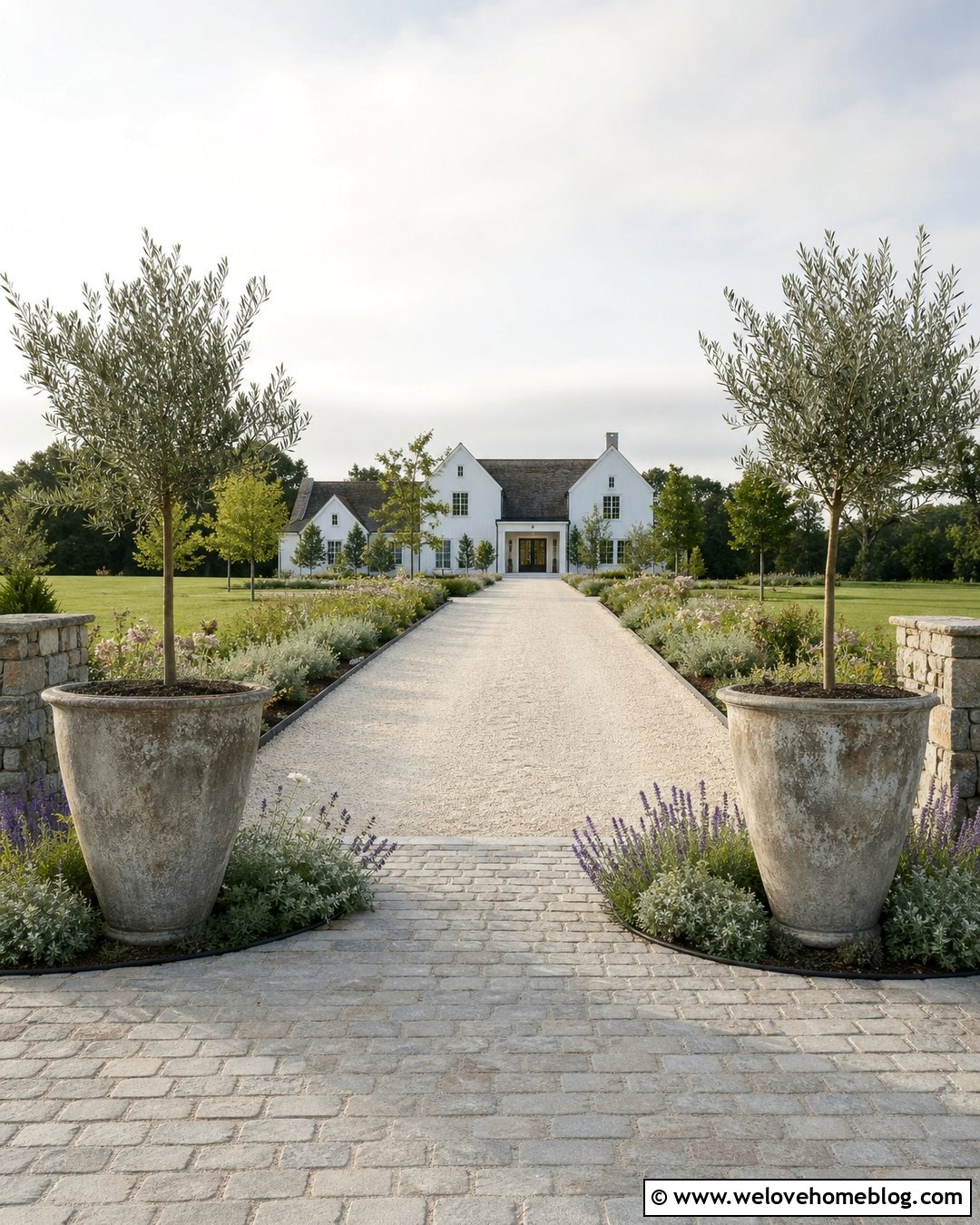
Olive trees in weathered stone planters can bring restrained farmhouse character to a long driveway. Use one tree on each side of a gravel or pale concrete entrance, allowing the silvery foliage to frame the approach. Large tapered containers in warm gray or aged beige complement white siding, black windows, and natural wood details. Surround the pots with lavender, catmint, or other plants suited to the site and climate. A cobblestone apron and low fieldstone walls can give the entrance additional definition. In cold regions, substitute a hardy tree with a similar open shape or plan for winter protection. Keep the overall planting simple so the sculptural trees remain the focal point rather than becoming lost among excessive decorations.
11. Driveway Planters Around Garage Doors
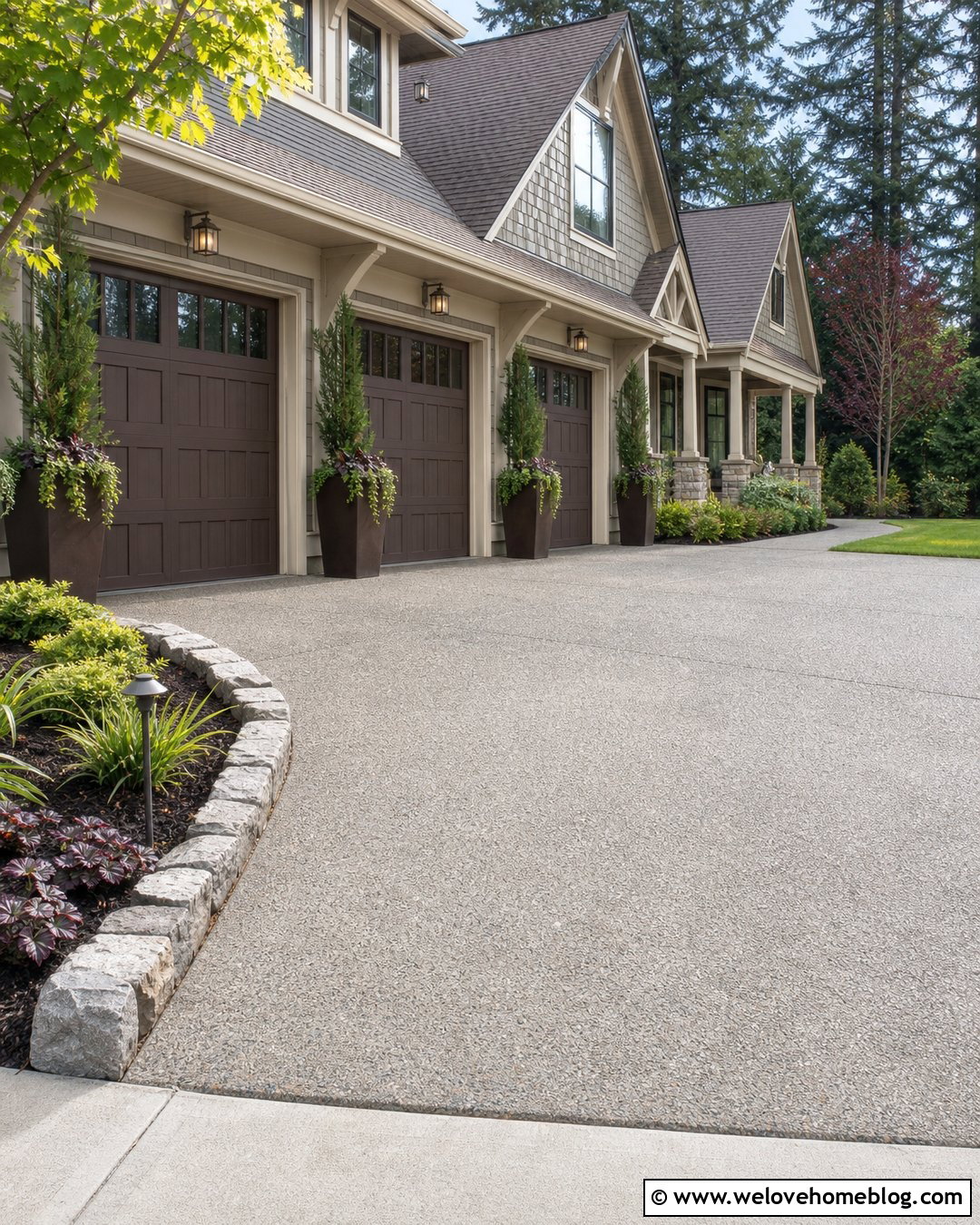
Garage doors often dominate the front elevation, but well-scaled planters can soften their appearance. Place substantial square containers between multiple doors or at both outer corners, provided they stay clear of vehicle paths. For a craftsman home, pair exposed-aggregate concrete with dark bronze pots filled with compact conifers, coral bells, and trailing greenery. Repeat the planter color in exterior lights or door hardware for a connected design. Narrow planting beds beside the garage can extend the greenery without reducing parking space. Avoid tiny pots, which may look out of scale against wide doors. Matching groups of planters can help create a smoother visual transition between the driveway, garage, walkway, and entrance rather than leaving one large uninterrupted paved area. ()
12. Circular Driveway Planter Island
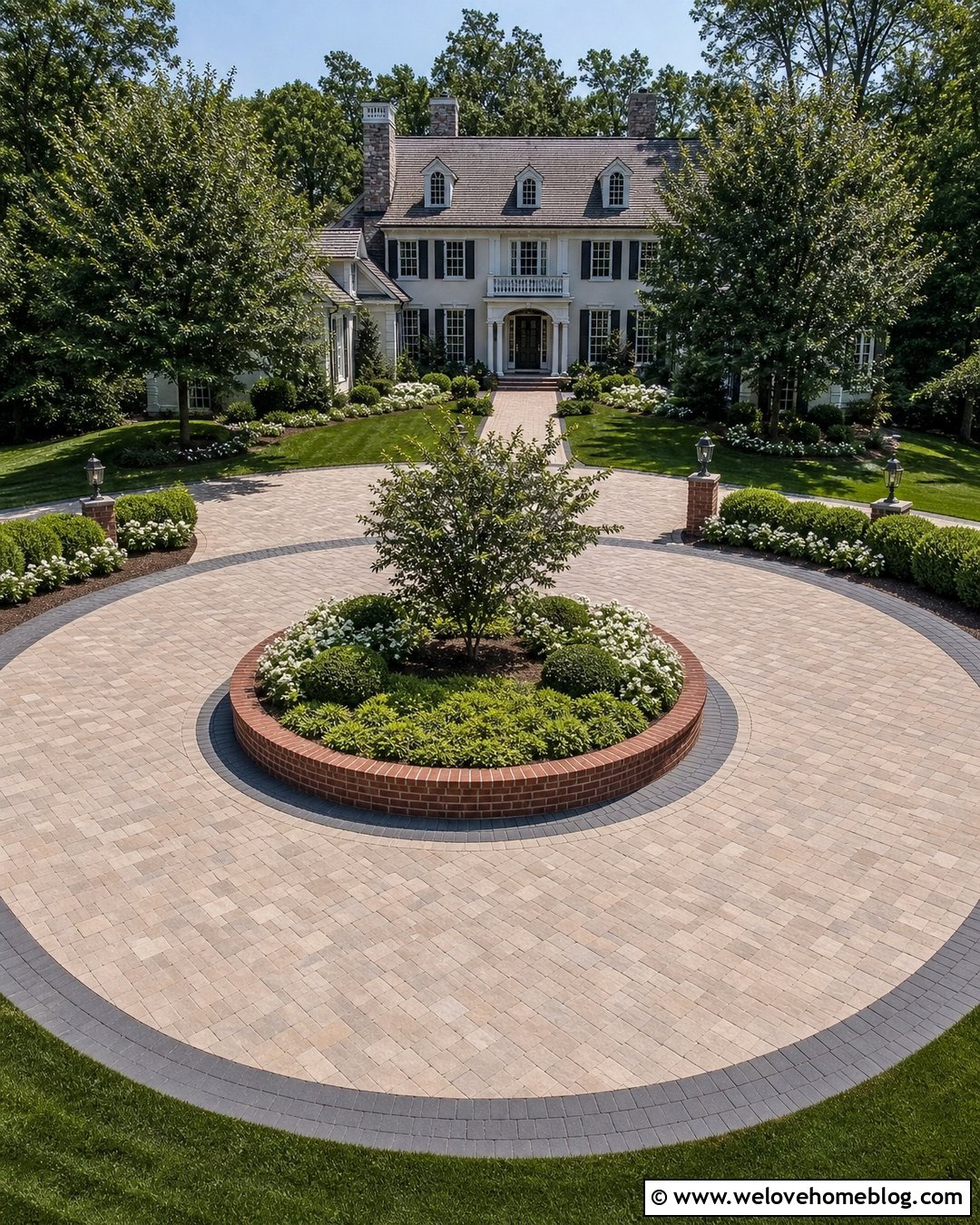
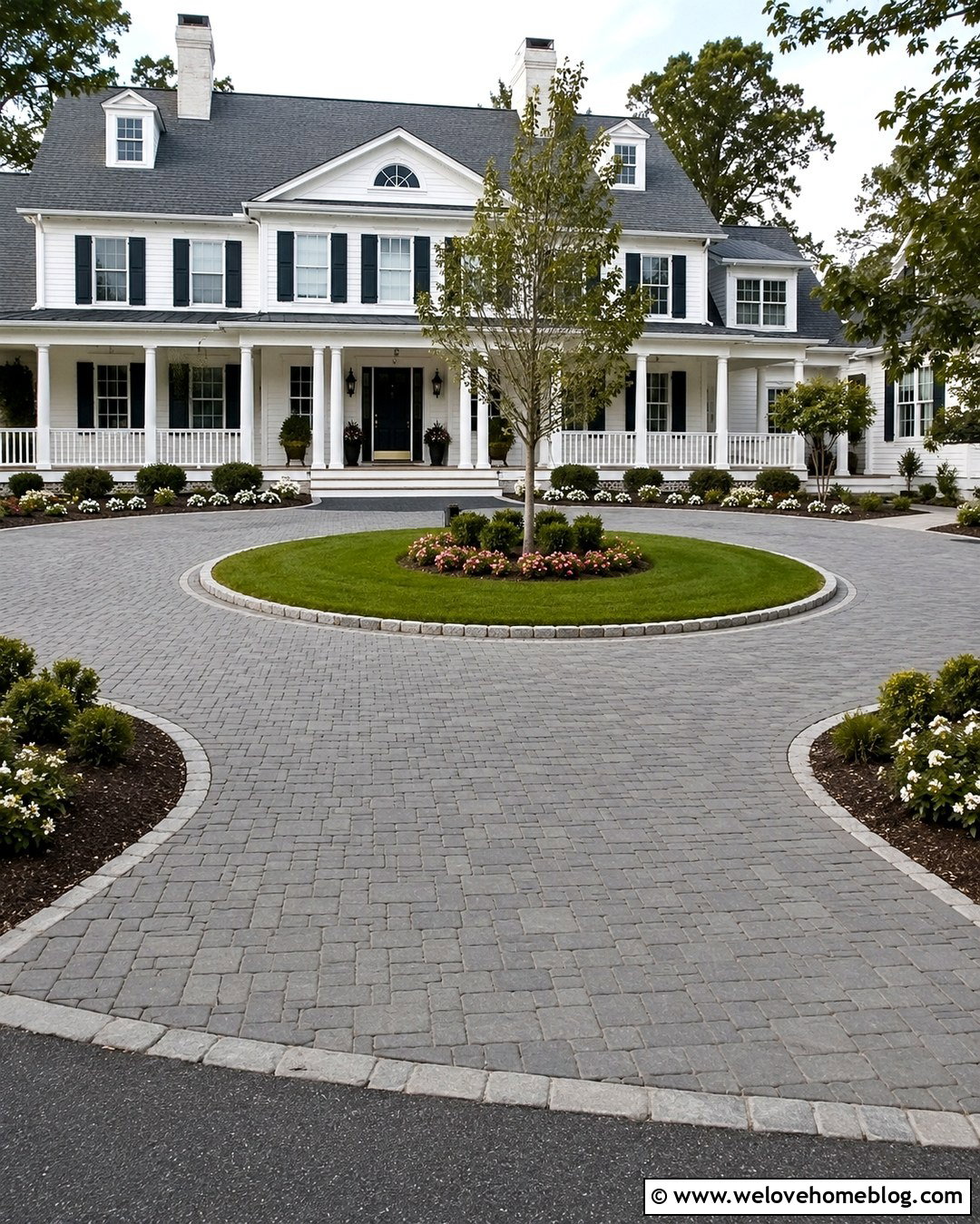
A central planter island gives a circular driveway a clear focal point and prevents the middle lawn from feeling empty. Build a wide raised planter from stone, brick, or smooth stucco that coordinates with the house facade. Anchor the composition with a small ornamental tree, then layer compact shrubs, flowering perennials, and ground cover beneath it. A light-colored gravel or paver driveway will emphasize the island’s shape, especially when a contrasting border follows the curve. Keep plants low near critical sightlines and avoid branches that could interfere with vehicles. Subtle landscape lighting can highlight the island after dark without placing fixtures in driving areas. This design works best when the planting feels proportional to the complete circular layout.
13. Driveway Pillars With Built-In Planters
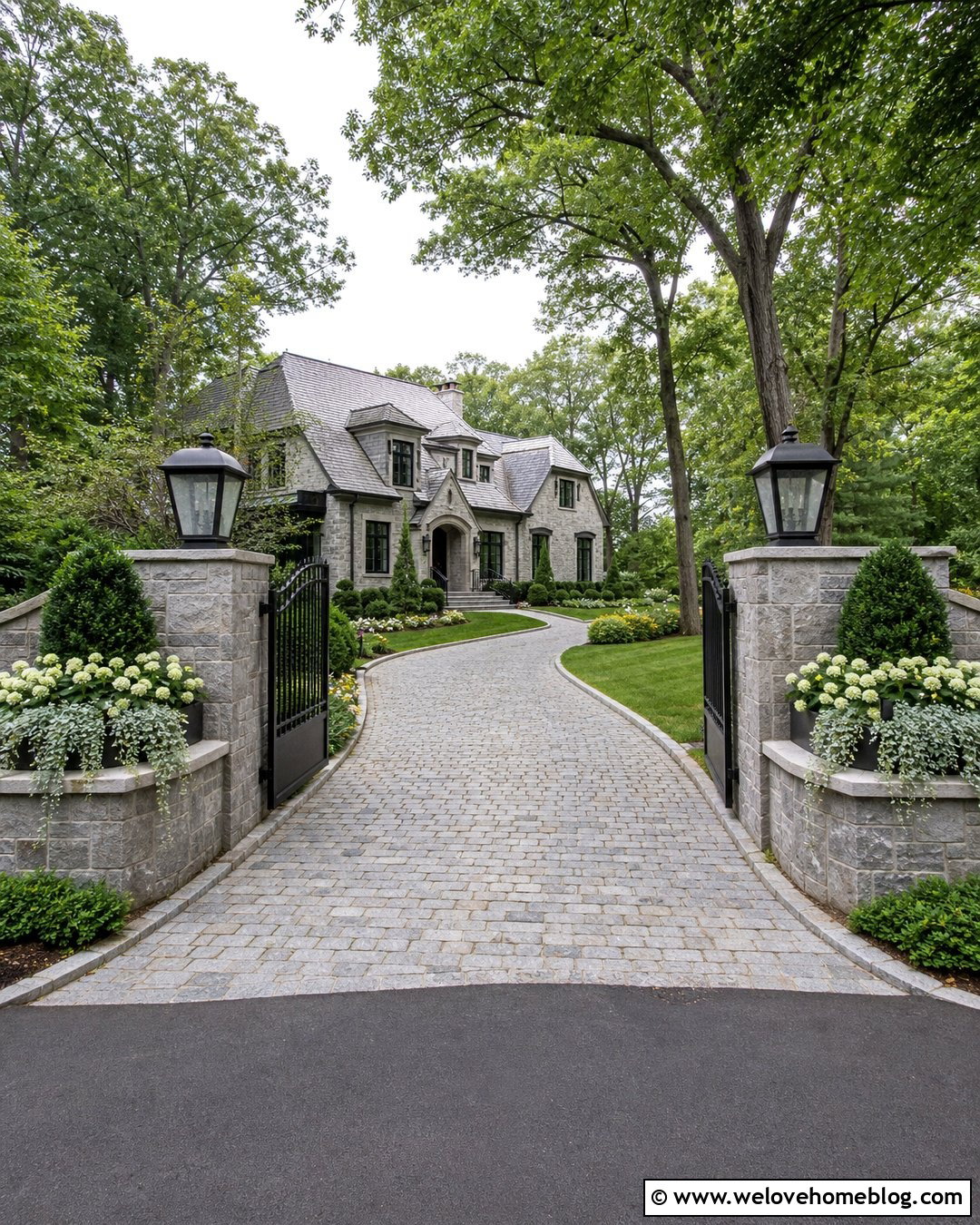
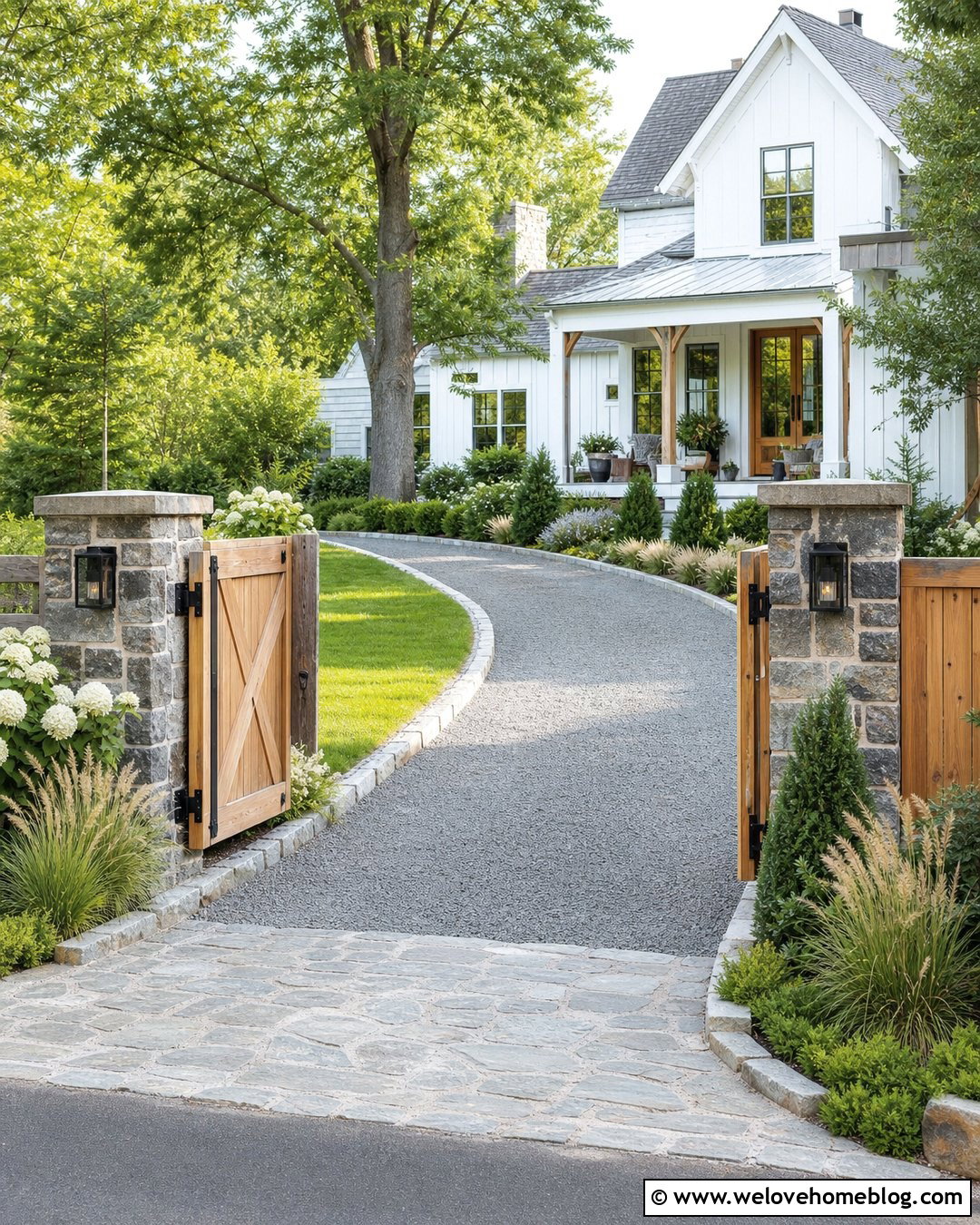
Entrance pillars become more inviting when built-in planters are incorporated into their design. Low stone or brick planting boxes can extend from each pillar, creating a broad base that visually anchors the gateway. Pair them with a curved cobblestone driveway and a traditional home set farther back from the street. Use compact evergreen shrubs in the center, surrounded by seasonal flowers and trailing foliage. Repeat the masonry in the driveway border or front walkway for continuity. Proper drainage is especially important because built-in containers cannot be moved during heavy rain or freezing weather. Keep mature plants below address numbers, lights, and driver sightlines. The finished entrance should feel substantial and welcoming without creating a narrow or visually crowded opening.
14. Driveway Planters With Address Signs
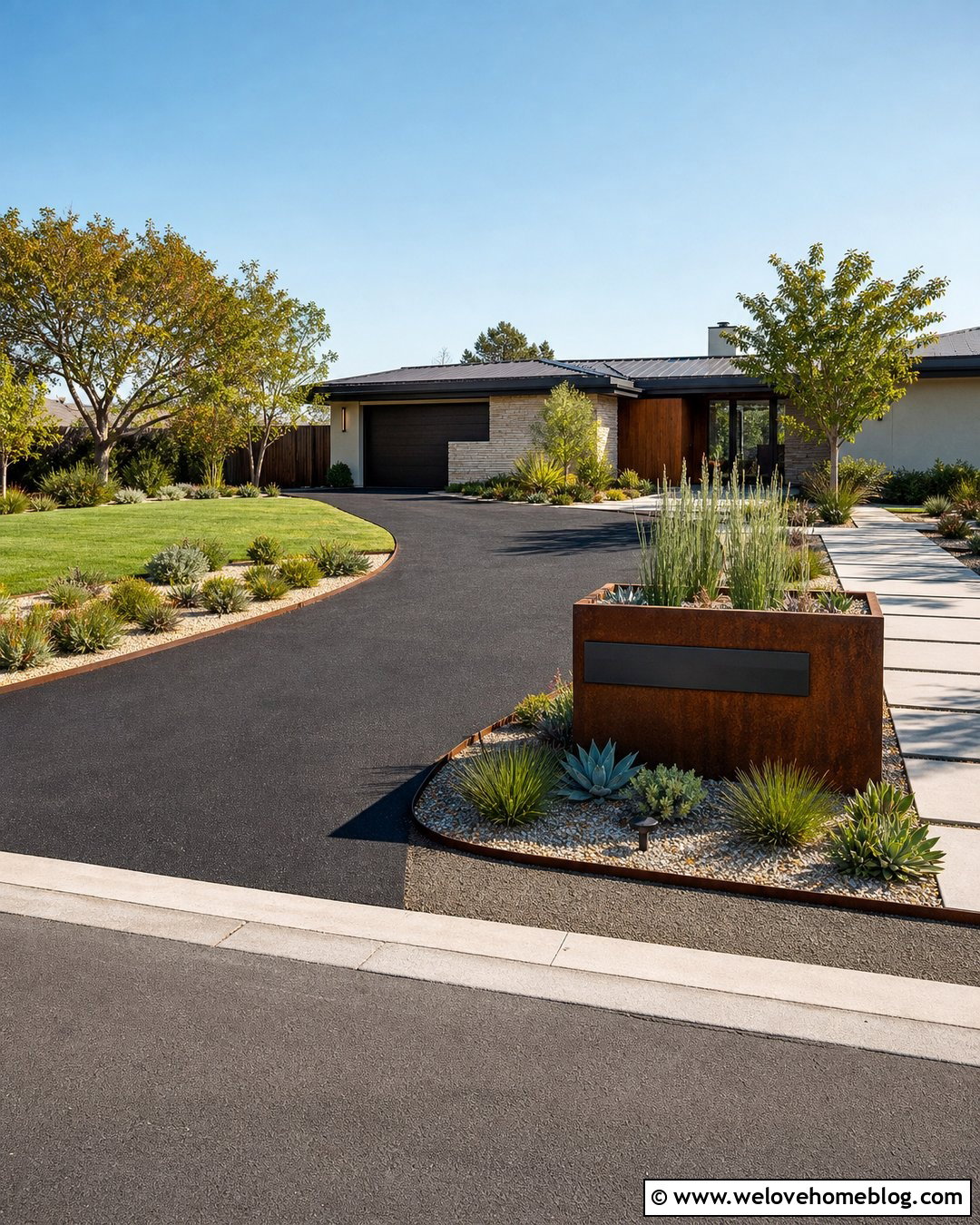
A planter and address sign can work together as one practical entrance feature. Choose a broad rectangular container with a freestanding sign mounted behind it rather than pushing several unrelated decorations into a small area. Along a black asphalt driveway, a weathered steel planter can hold upright grasses, low succulents, or drought-tolerant perennials. Pale gravel mulch helps the numbers remain visually distinct and ties the feature to nearby landscape beds. Position the display where it can be seen from the road without blocking visibility when drivers leave the property. Repeat the sign material in mailbox details, edging, or exterior lighting. This complete arrangement marks the driveway clearly while adding texture and greenery to an otherwise plain roadside entrance.
15. Driveway Planters With Seasonal Flowers
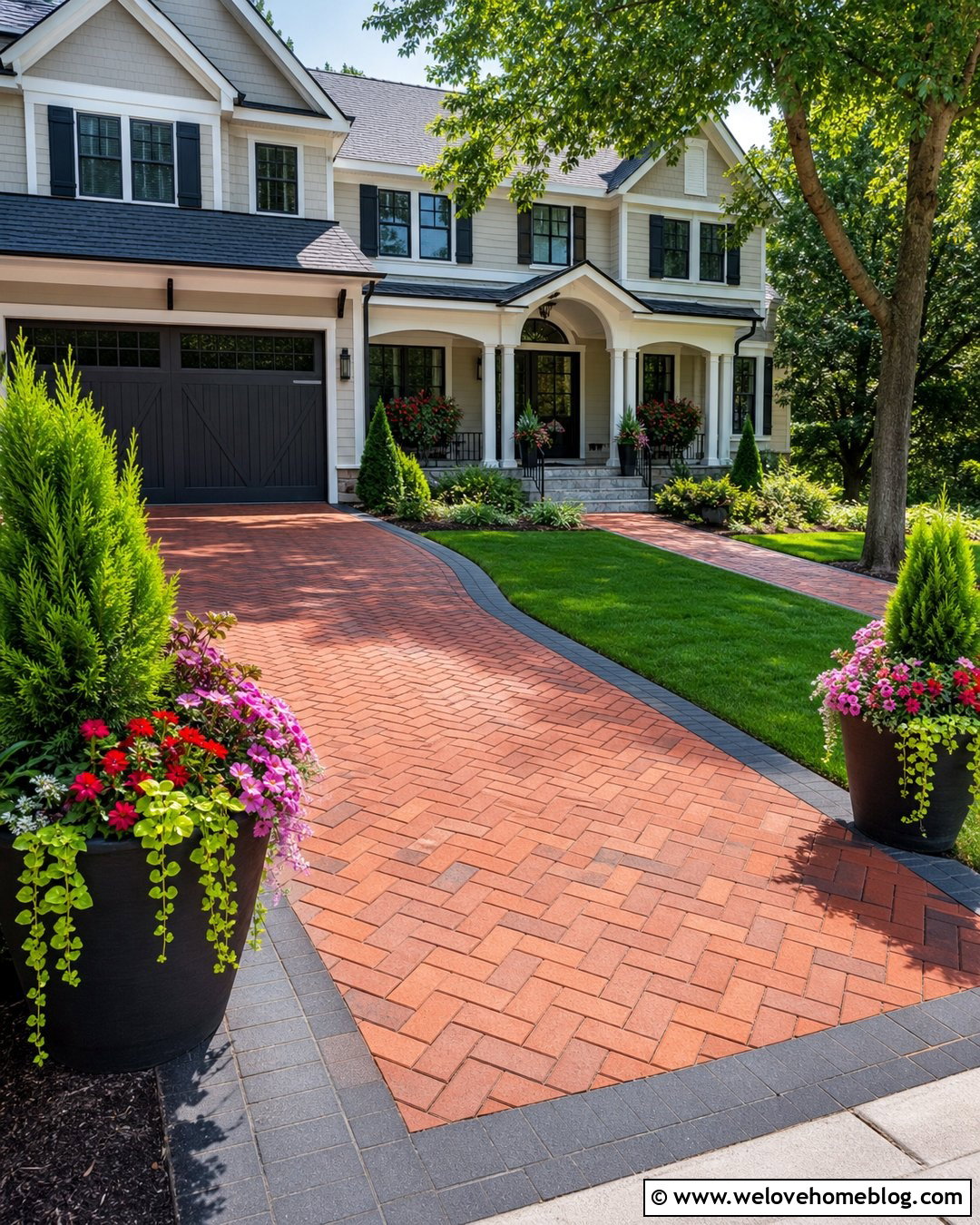
Seasonal flowers allow the driveway to change throughout the year without rebuilding the landscape. Begin with two durable neutral planters that complement the driveway and house in every season. Along a red brick driveway, deep charcoal pots create enough contrast for colorful combinations. Use a tall centerpiece, medium-height flowering plants, and trailing foliage to produce a full arrangement. Spring bulbs and cool-weather flowers can transition into heat-tolerant summer plants, followed by autumn foliage and evergreen accents. Keep the surrounding beds simpler so the containers do not compete with too many colors. Large planters retain a stronger visual presence from the street, while repeating one flower color near the front door helps connect the driveway display with the home.
16. Driveway Planters With Drought-Tolerant Plants

Hot, sunny driveways need containers that can cope with reflected heat and occasional missed watering. Place wide, light-colored planters beside a tan resin-bound gravel driveway, where their pale finish will absorb less visual heat than black containers. Combine sculptural agave or yucca with blue fescue, sedum, and trailing ice plant where those choices suit the local climate. Use mineral mulch to create a clean surface and reduce soil splash. Decomposed granite beds, boulders, and sparse ornamental grasses can extend the drought-tolerant theme through the yard. Ensure every container has open drainage and use a potting mix suited to the selected plants. This low-water composition works especially well with Southwestern, desert-modern, and midcentury homes.
17. Narrow Driveway Planter Boxes
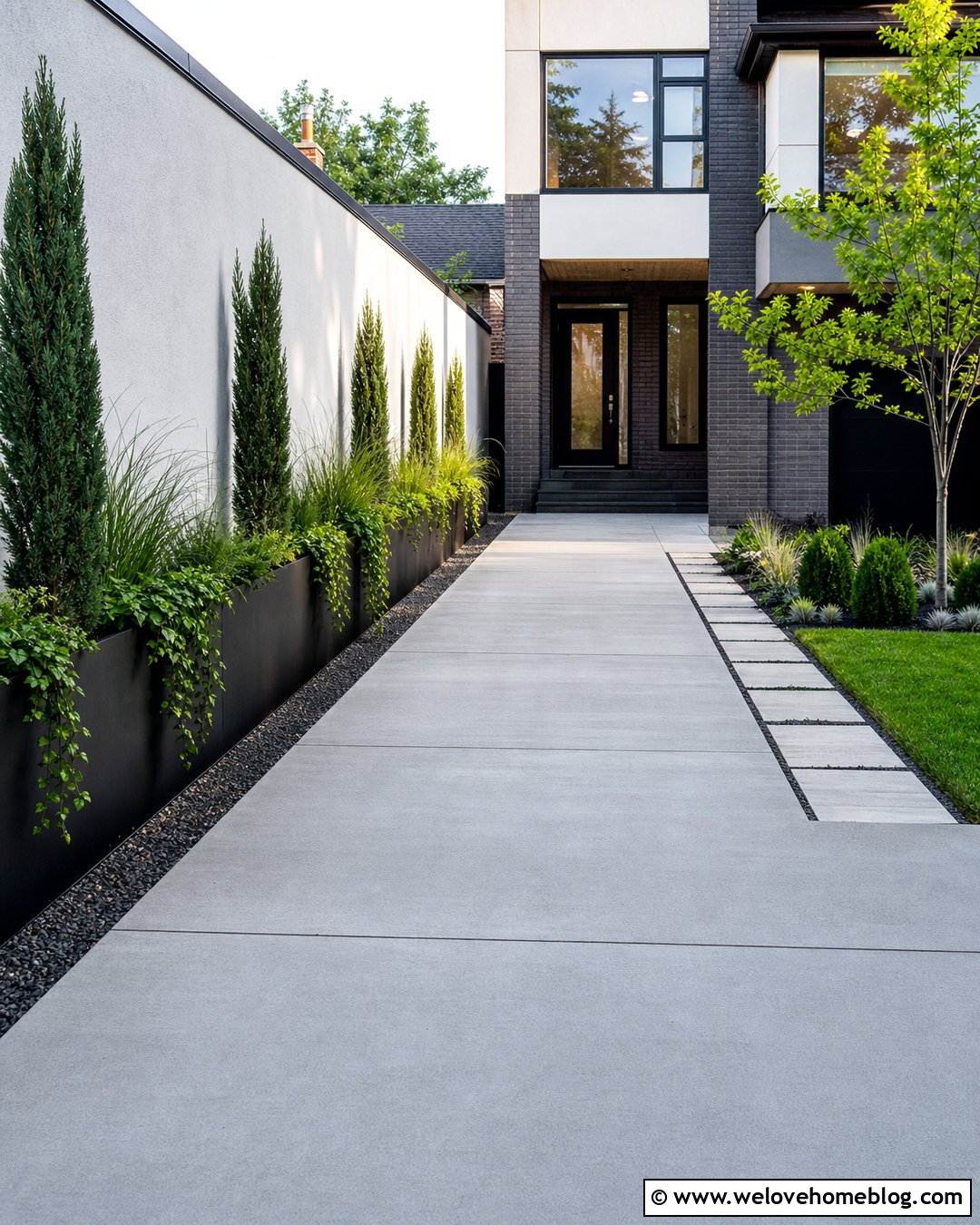
A narrow driveway can still include greenery when the containers have a slim footprint. Place long rectangular planter boxes along a wall, fence, or unused edge rather than beside areas where car doors open. Dark metal or fiberstone containers look streamlined next to a straight poured-concrete driveway. Fill them with upright plants such as compact grasses, narrow evergreens, and controlled trailing greenery. Avoid thorny or sprawling plants that could scratch vehicles or obstruct the walkway. A matching strip of decorative gravel beneath the boxes catches soil and water while creating a deliberate border. Continue the linear design with a direct walkway and simple foundation planting. The result adds softness and structure while preserving the maximum usable driveway width.
18. Driveway Planters With Small Trees
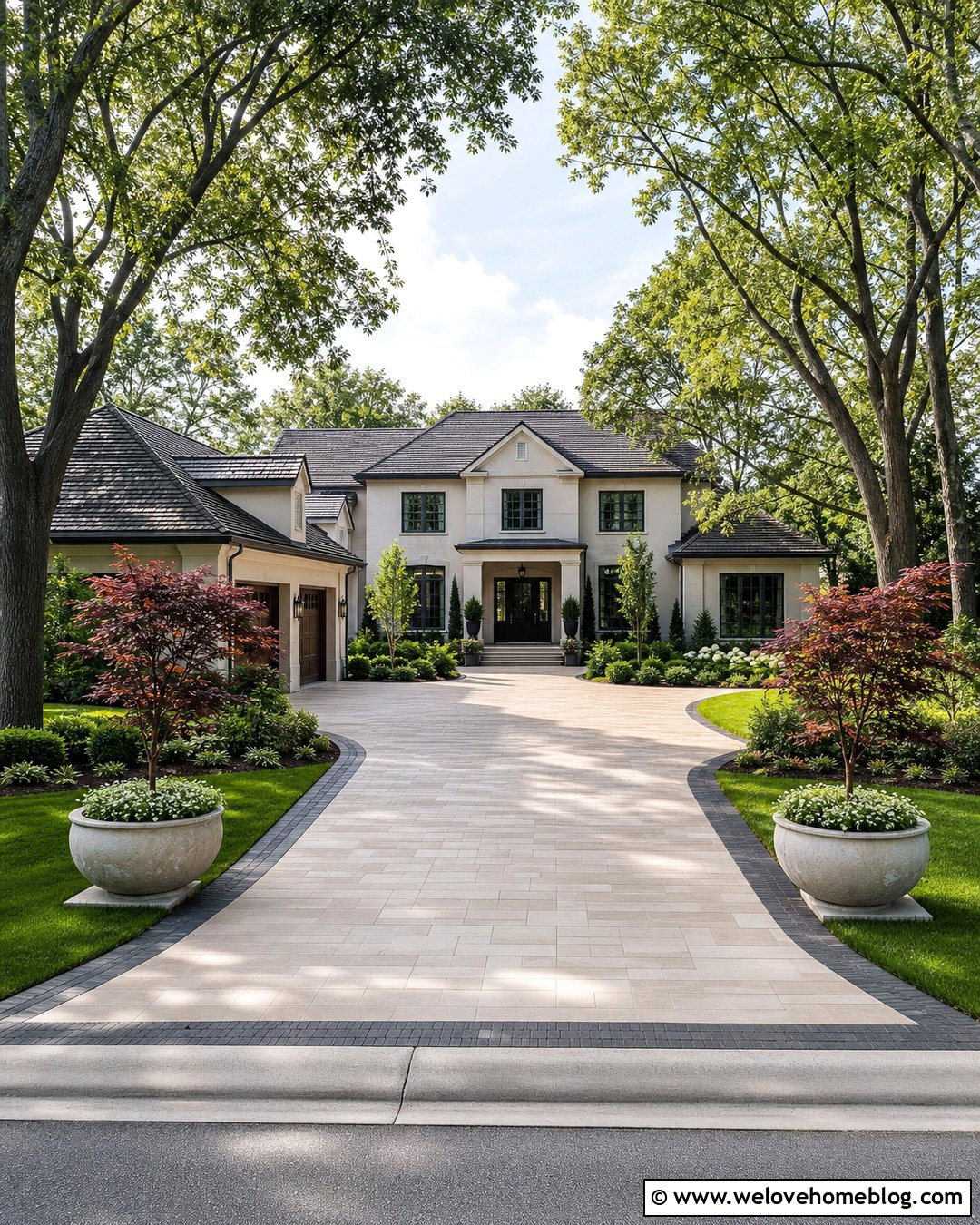
A small tree in a large container can add height where there is no room for an in-ground planting bed. Use substantial round planters near the entrance of a wide paver driveway, keeping the tree canopy away from traffic and utility lines. Japanese maple, compact magnolia, bay, citrus, or a hardy local alternative may work, depending on climate and exposure. Add low ground-cover plants around the trunk to protect the soil surface and complete the arrangement. A pair of trees creates formality, while one carefully placed specimen gives an asymmetrical landscape a strong focal point. Select containers with enough soil volume, drainage, and stability for long-term growth. Coordinate the pot finish with the home’s masonry, trim, or roof color.
19. Driveway Planters With Evergreen Shrubs
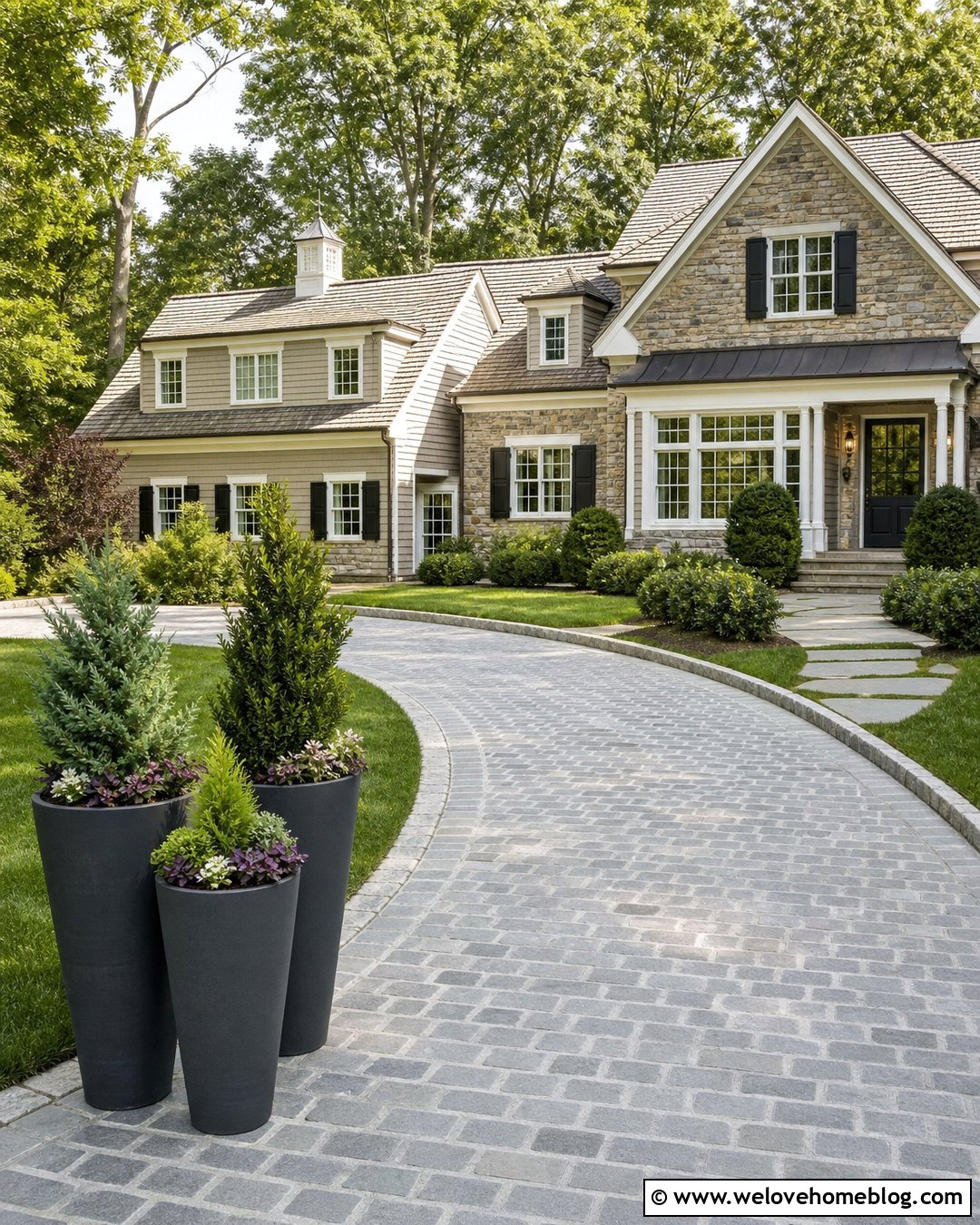
Evergreen-filled containers keep a driveway looking structured when flowering plants are out of season. Arrange three tapered planters near the junction of the driveway and front path. Use different container heights but maintain one consistent material, such as charcoal composite or aged stone. Compact juniper, holly, arborvitae, or another regionally suitable evergreen can provide the main form. Add restrained seasonal accents around the base rather than replacing the entire planting. A gray cobblestone driveway, clipped lawn, and low foundation shrubs support the polished appearance. Check mature plant size and cold hardiness before buying, since roots in containers experience different conditions from roots in the ground. This practical design suits traditional, transitional, and contemporary homes.
20. Driveway Planters With Lavender Borders
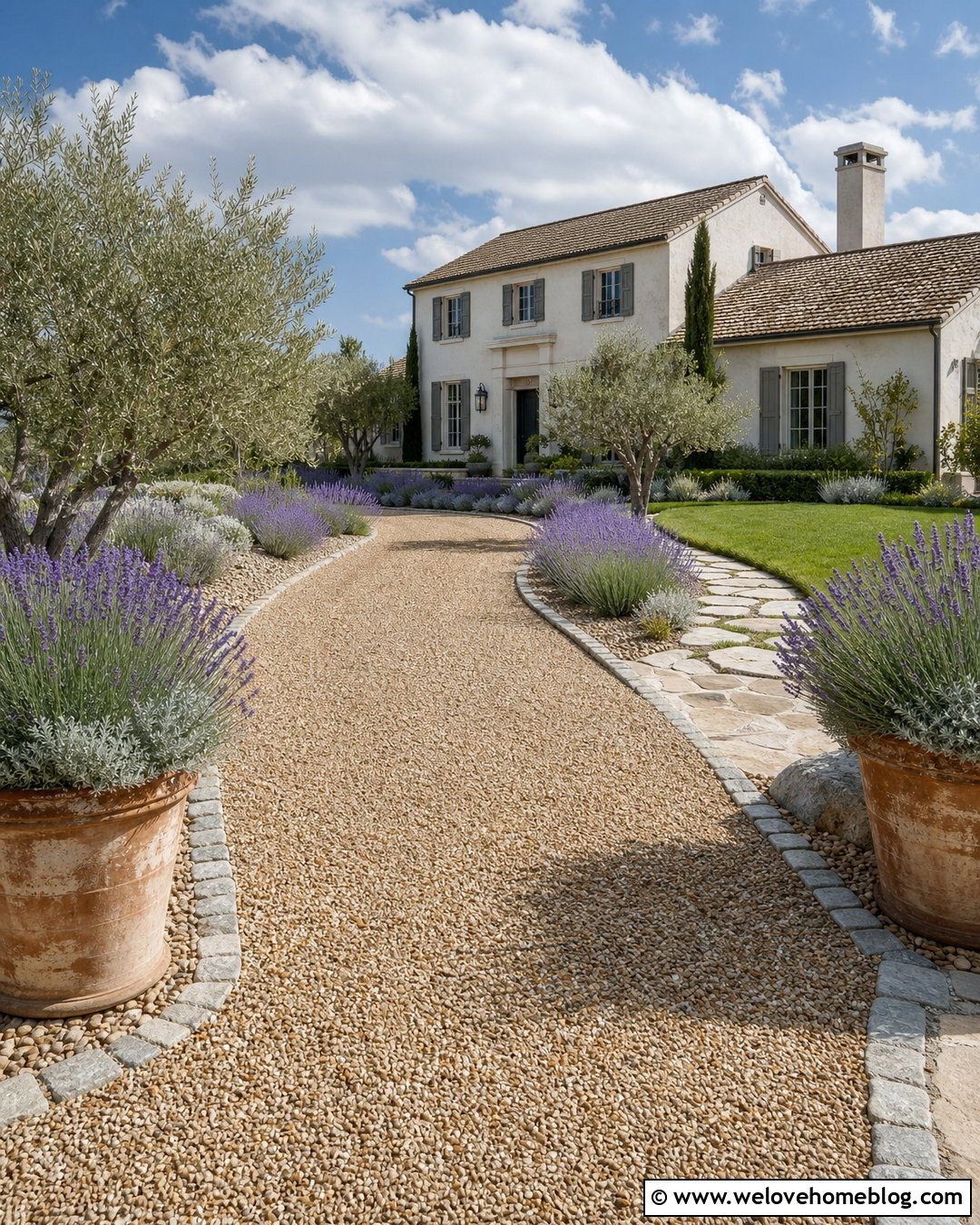
Lavender-filled planters can echo a low flowering border without requiring plants to grow directly beside the paving. Place large terracotta or pale stone containers at the entrance to a curved pea gravel driveway. Fill each pot with lavender where the climate and sunlight are suitable, then continue the color through nearby beds using similar drought-tolerant plants. Cobblestone edging keeps loose gravel contained and gives the purple flowers a textured backdrop. A light stucco, cottage, or French country home completes the relaxed composition. Avoid positioning lavender where runoff will keep the soil wet. Good container drainage and an open, sunny setting are important. The combination of silvery foliage, soft flowers, warm pottery, and natural gravel creates cohesive curb appeal.
21. Driveway Planters With Succulents
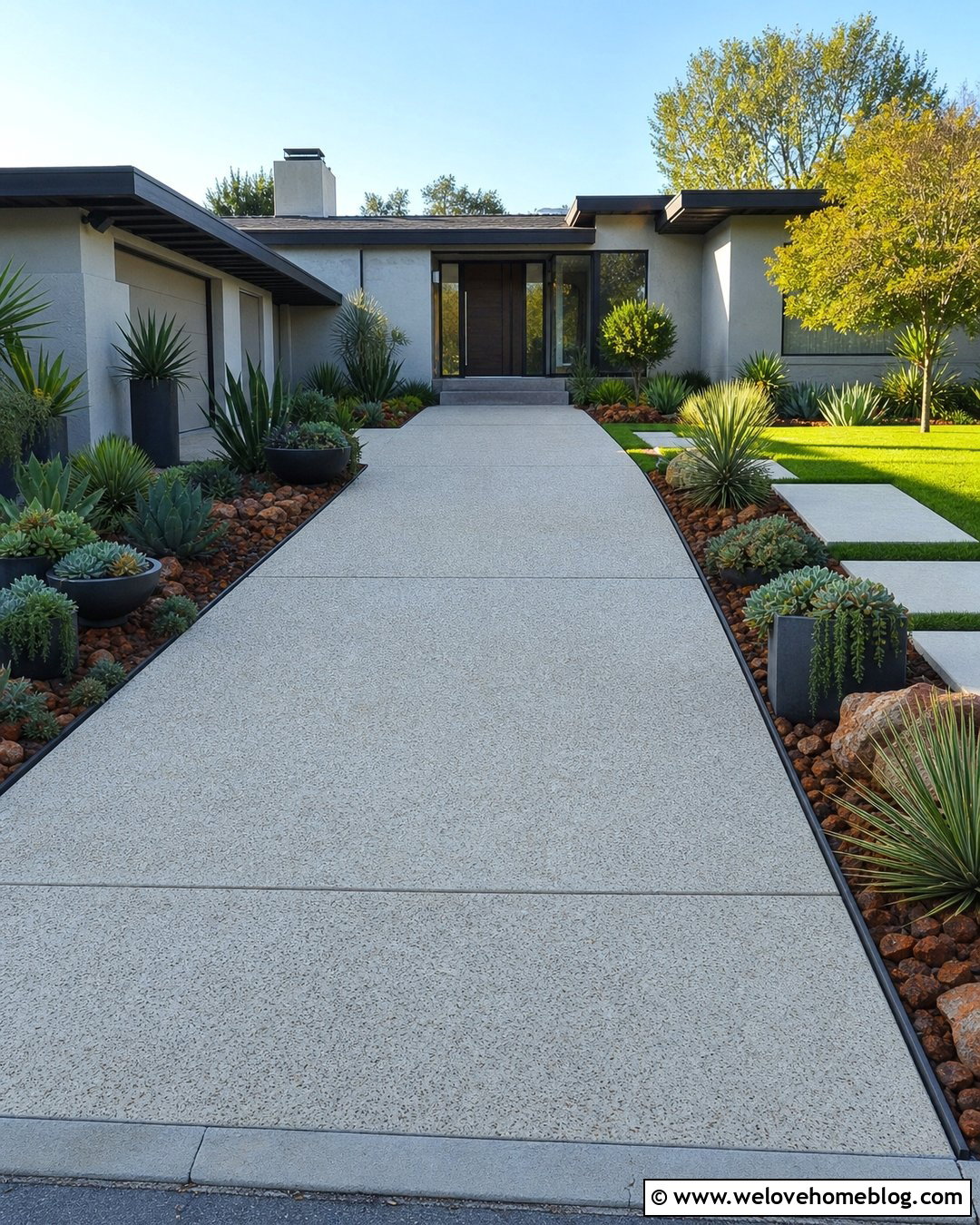
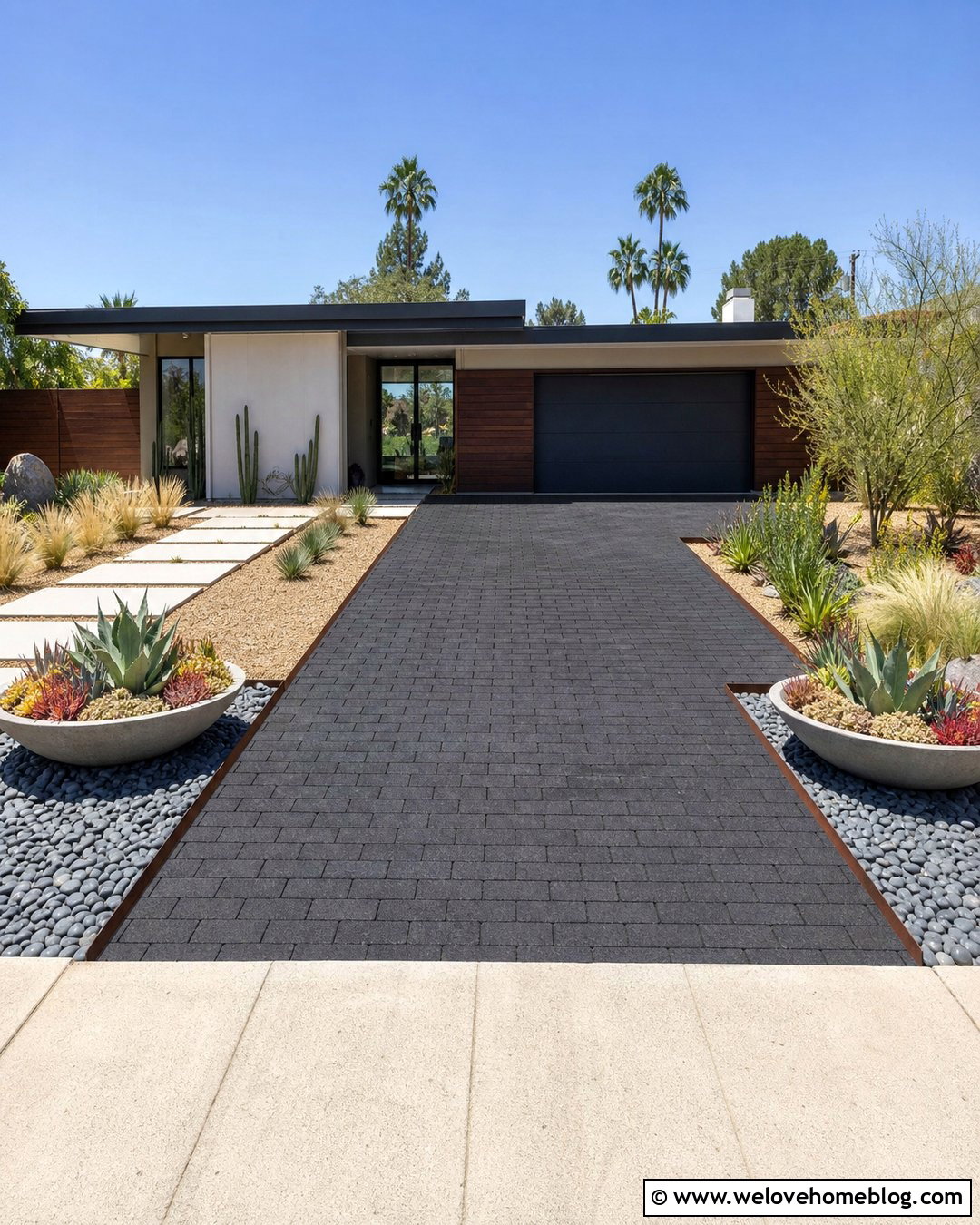
Succulent planters give a driveway strong shape and color without creating a dense, traditional garden. Use low, wide bowls and taller square pots together near the entrance of an exposed-aggregate driveway. Combine rosette-form succulents, upright architectural plants, and small trailing varieties while matching every selection to the local climate. Charcoal containers, rust-toned decorative rock, and steel edging create a modern Southwestern palette. Repeat a few similar plants in the adjacent landscape so the pots feel integrated instead of randomly placed. Protect pedestrians and vehicles by keeping sharply pointed plants away from narrow paths and door zones. A flat-roofed modern or midcentury home provides an ideal backdrop for this clean, sculptural arrangement.
22. Driveway Planters With Corten Steel
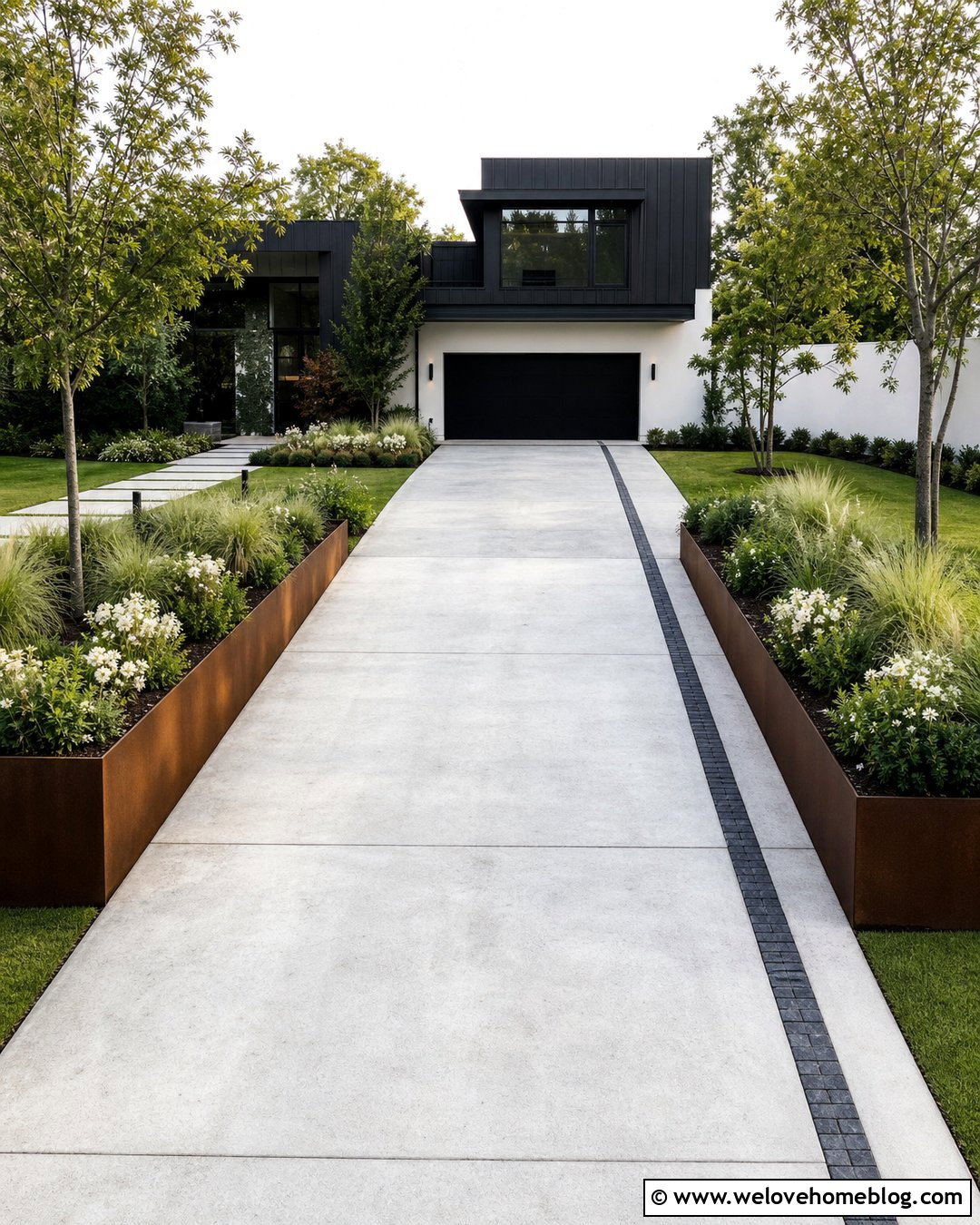
Corten steel planters introduce a warm rust color that stands out against concrete, gravel, and green foliage. Place two long rectangular containers along the outer edge of a pale poured-concrete driveway. Fill them with soft ornamental grasses, compact shrubs, and white flowering perennials to balance the strong metal finish. A narrow black paver ribbon can outline the driveway and relate the planters to dark window frames. Continue the steel accents through simple edging around nearby beds. Keep runoff in mind because weathering steel may leave marks on some surfaces, particularly during its initial aging period. The finished design works well with modern and industrial-inspired homes, bringing warmth and texture to an otherwise restrained front yard.
23. Driveway Planters With Natural Stone
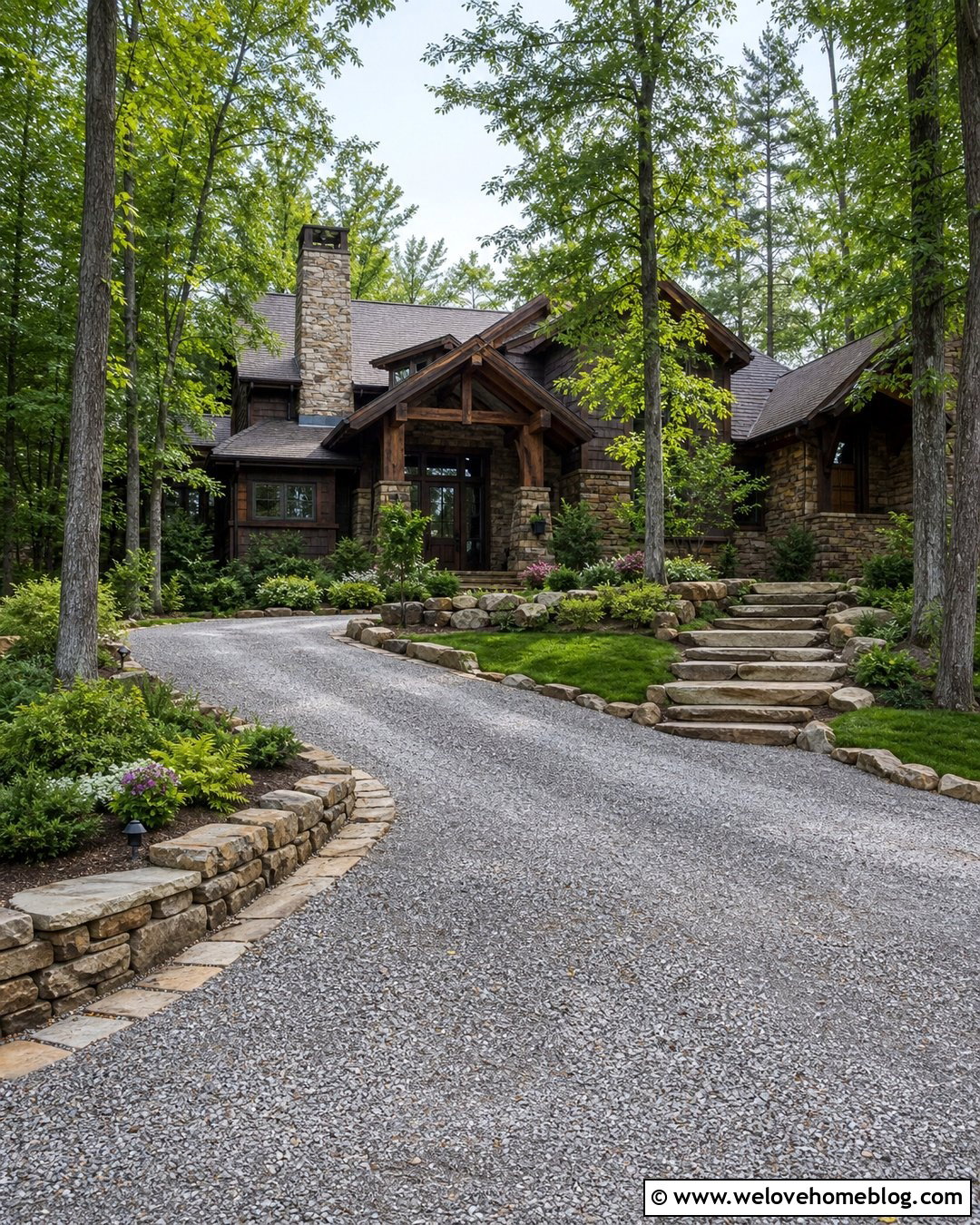
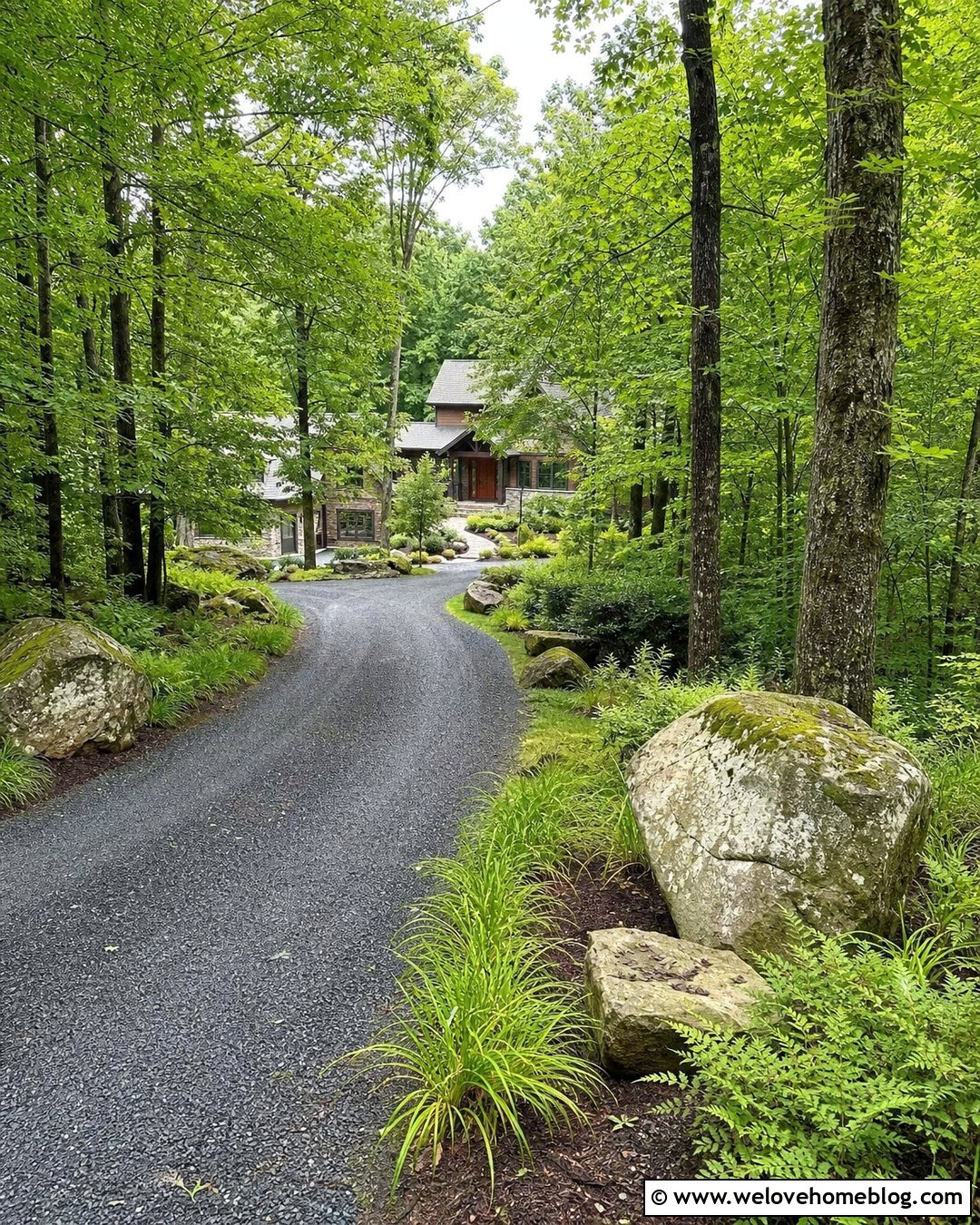
Natural stone planters can make a driveway feel closely connected to the surrounding landscape. Choose broad, low containers made from matching or complementary stone and place them near a curved driveway entrance. A gray gravel surface with irregular fieldstone edging creates a relaxed base for evergreen shrubs, ferns, and seasonal flowers. Continue the same stone into low walls or walkway steps so the containers feel built into the property. Because stone planters have strong visual weight, one matching pair is usually enough. Select plants with foliage that contrasts against the stone rather than disappearing into it. This complete look is especially effective beside craftsman, mountain, lodge, and country homes surrounded by mature trees and informal planting beds.
24. Driveway Planters With Wood Screens
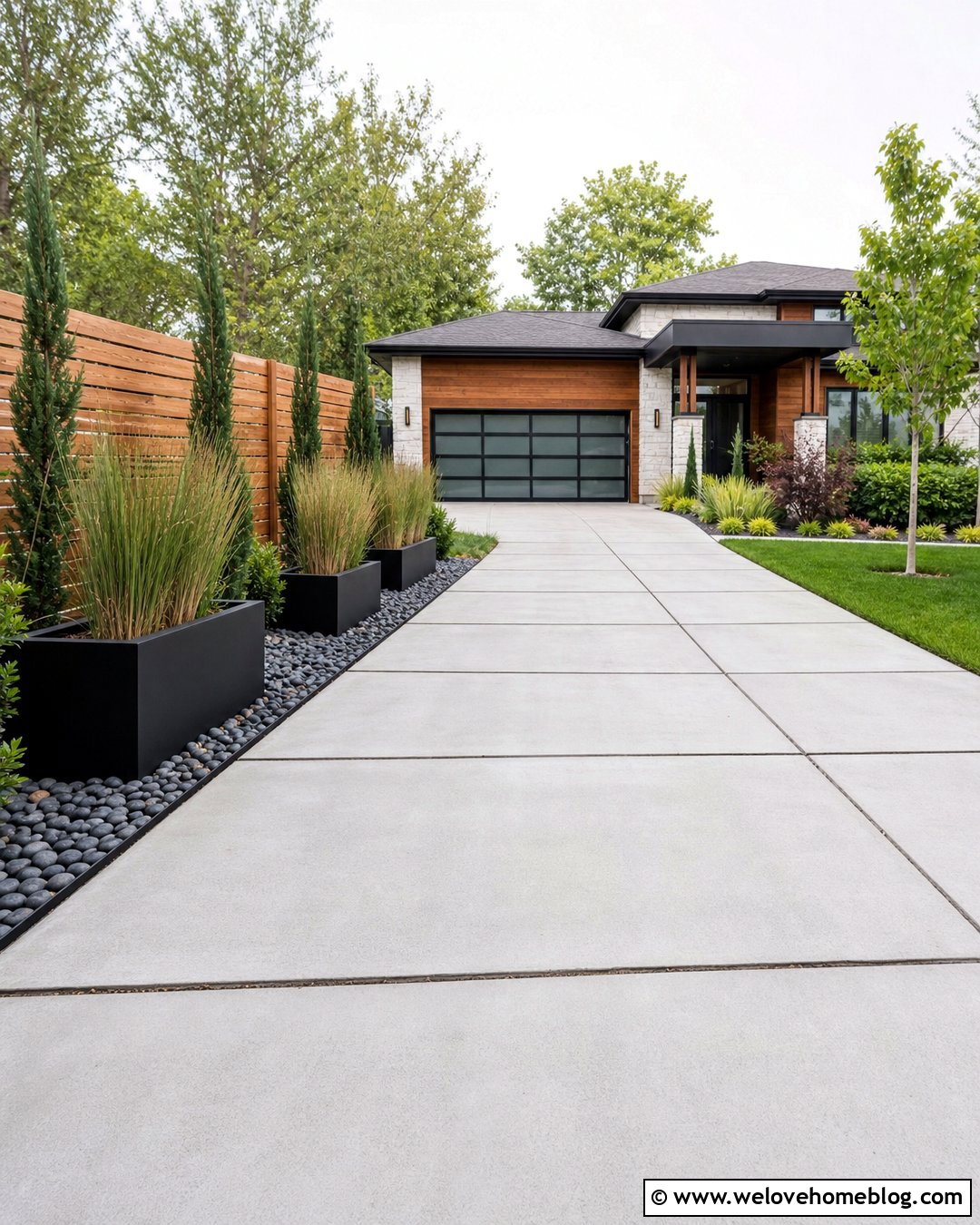
Planter boxes attached to a wood screen can create privacy and define the driveway edge at the same time. Install a horizontal cedar screen behind one or two long black planters beside a smooth concrete driveway. Fill the containers with upright grasses, flowering vines, or narrow evergreen shrubs, depending on available sunlight. Keep the screen low or open enough near the street to maintain safe visibility. A strip of river rock beneath the planters creates a clean transition and helps separate them from the lawn. Repeat cedar on the garage door, gate, or porch to connect the feature with the house. This design gives modern suburban properties a warmer, greener boundary without relying on a tall solid fence.
25. Driveway Planters With Landscape Lighting
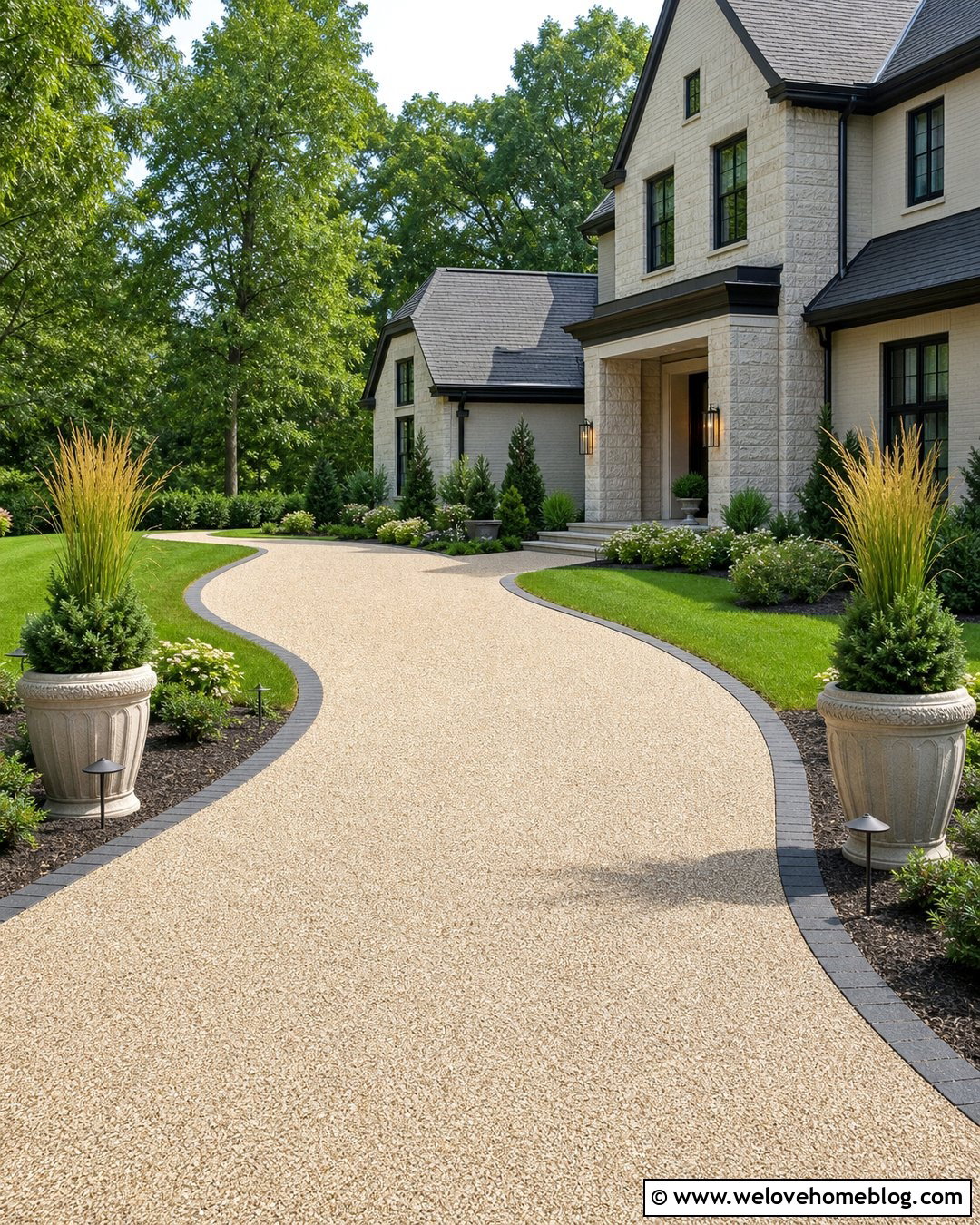
Lighting can make large planters useful visual markers while keeping the driveway entrance refined. Place matching stone-look containers beside a curved resin-bound gravel driveway, then illuminate them with small shielded fixtures aimed at the foliage. Choose upright plants that create attractive shapes without blocking the address sign or entrance gate. Low path lights can continue toward the house, but space them carefully so the driveway does not resemble a runway. During daylight, pale planters, dark edging, and layered planting beds should still form a complete composition. Fixtures need to remain protected from tires, maintenance equipment, and irrigation. Use lighting as a subtle accent to the planter arrangement rather than allowing visible hardware to dominate the landscape.
26. Driveway Planters With A Mailbox
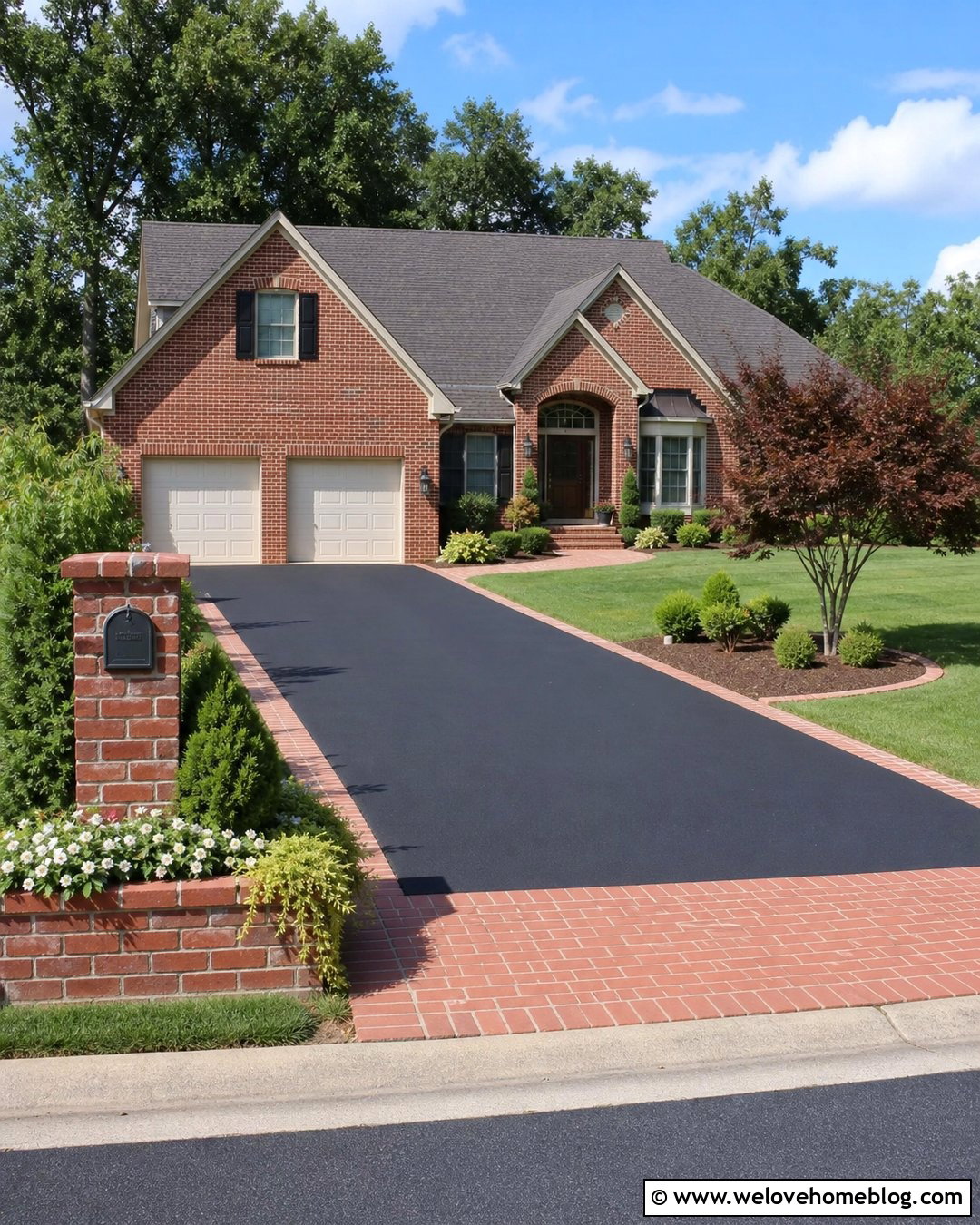
Combining a mailbox with a coordinated planter creates a tidy roadside feature. Place the mailbox post behind a low rectangular container so flowers and foliage frame it without covering the address or door. Along a black asphalt driveway, use a red brick planter that matches the house and nearby driveway apron. Fill it with a compact evergreen, low flowering plants, and trailing greenery that will not obstruct mail access. A curved mulch bed can connect the planter to a small ornamental tree or street-side planting. Keep the arrangement away from tires, snow-clearing routes, and drainage swales. Before construction, confirm local mailbox placement requirements. The result should be attractive from the street while remaining convenient for everyday service.
27. Sloped Driveway With Tiered Planters
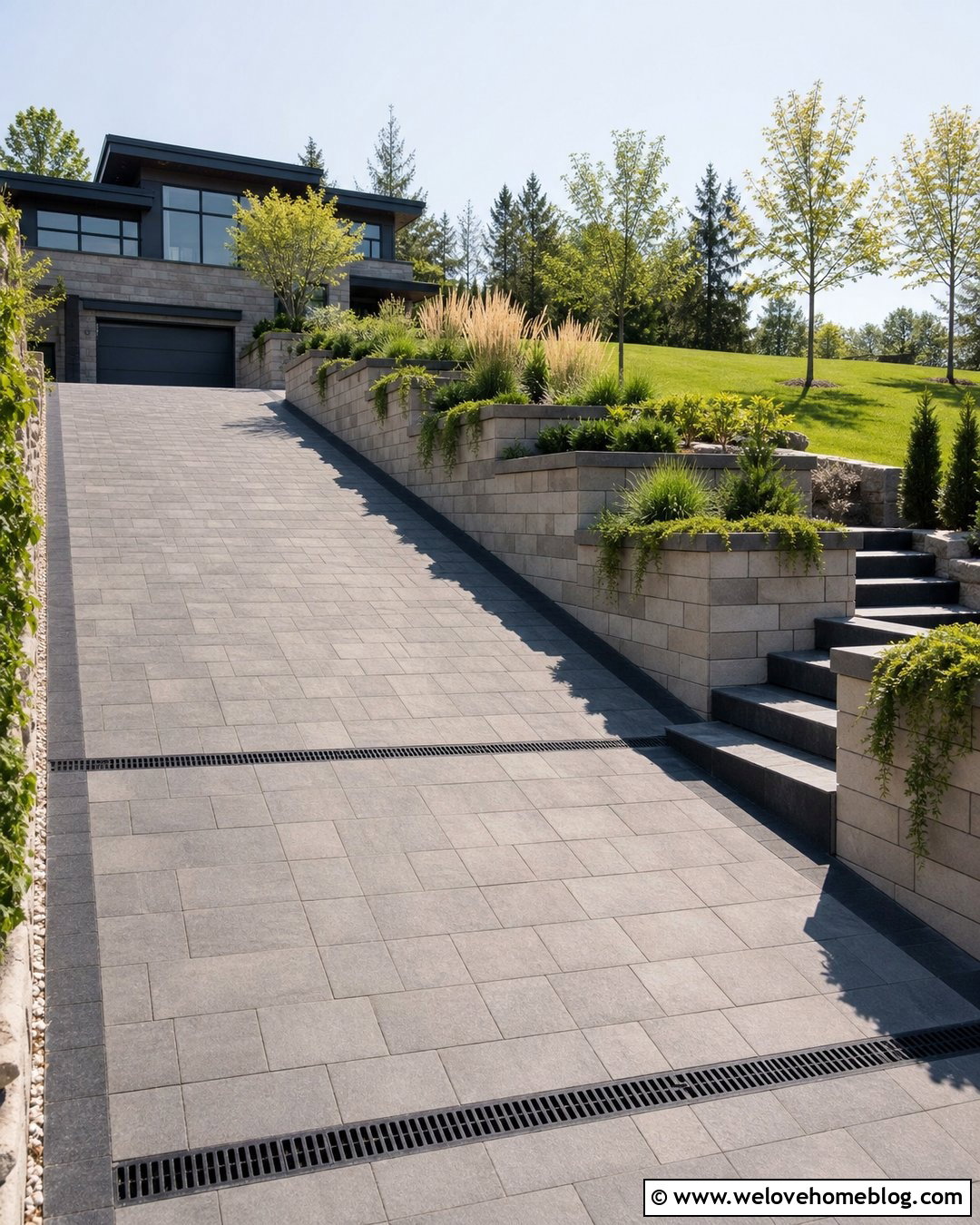
Tiered planters can visually organize a sloped driveway and reduce the feeling of one long, steep paved surface. Build two or three staggered masonry containers into the uphill landscape rather than placing loose pots where they could become unstable. Pair warm concrete-block planters with a textured gray paver driveway and stone steps leading toward the house. Use low shrubs, ornamental grasses, and trailing plants that soften each retaining edge. Keep plant heights modest near curves and driveway exits. Drainage should direct water away from the planters and paving without washing soil across the driving surface. Repeating the masonry in retaining walls and walkway risers creates a unified look that feels planned for the slope instead of added afterward.
28. Rustic Driveway Planters With Galvanized Metal
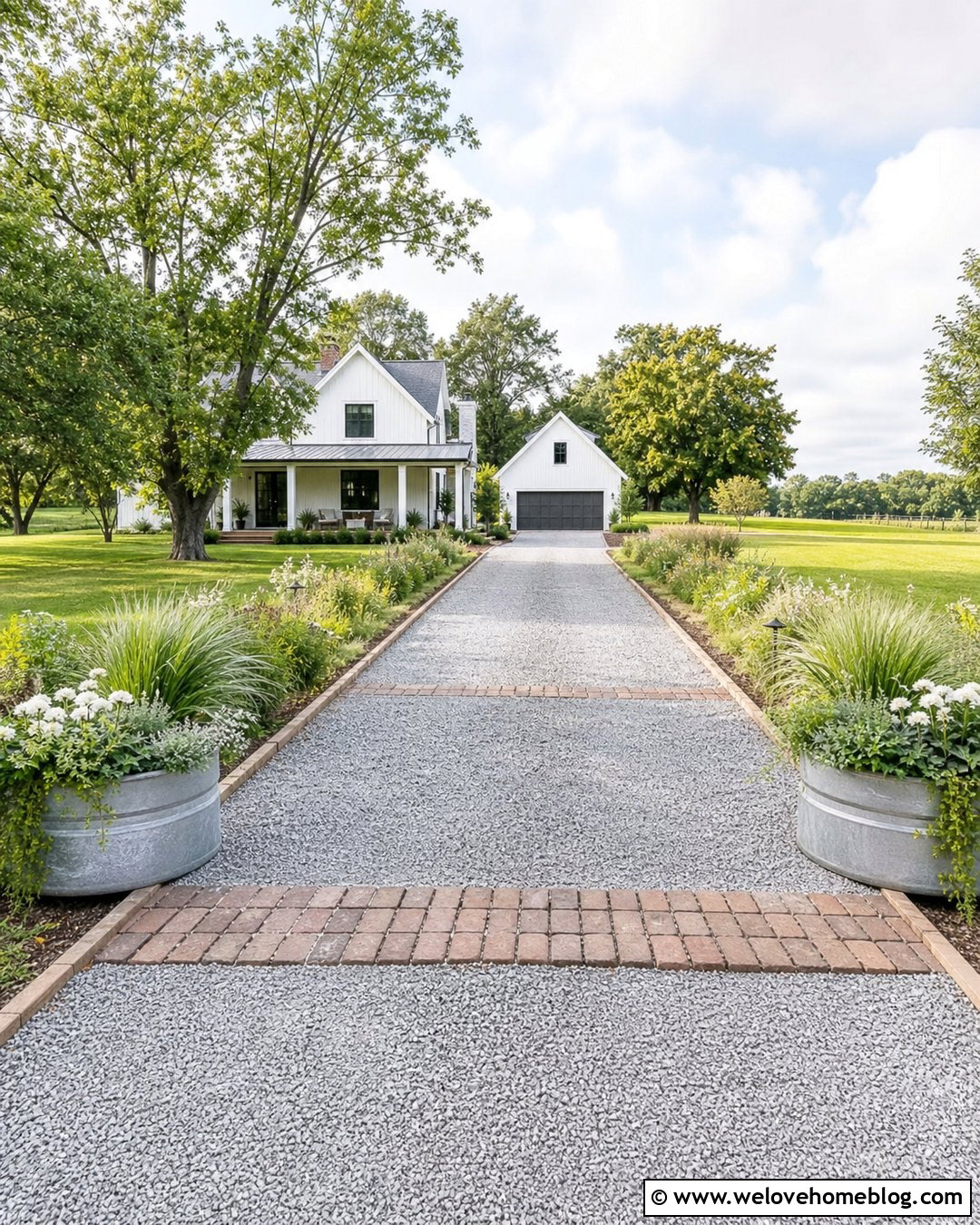
Galvanized metal planters add casual farmhouse character beside gravel and reclaimed brick. Use oversized trough-shaped containers at the entrance to a straight crushed-stone driveway. Fill them with compact grasses, white flowers, herbs, or relaxed mixed plantings suited to the local conditions. Timber edging and a brick threshold can keep the gravel contained while supporting the rustic material palette. Set the planters on level stone pads so they remain stable and drain cleanly. Avoid using many small buckets, which can make the entrance appear temporary or cluttered. Two substantial troughs provide a stronger composition. A barn-inspired garage, modern farmhouse, or simple country home completes this approachable driveway look without relying on excessive decorative accessories.
29. Cottage Driveway Planters With Mixed Flowers
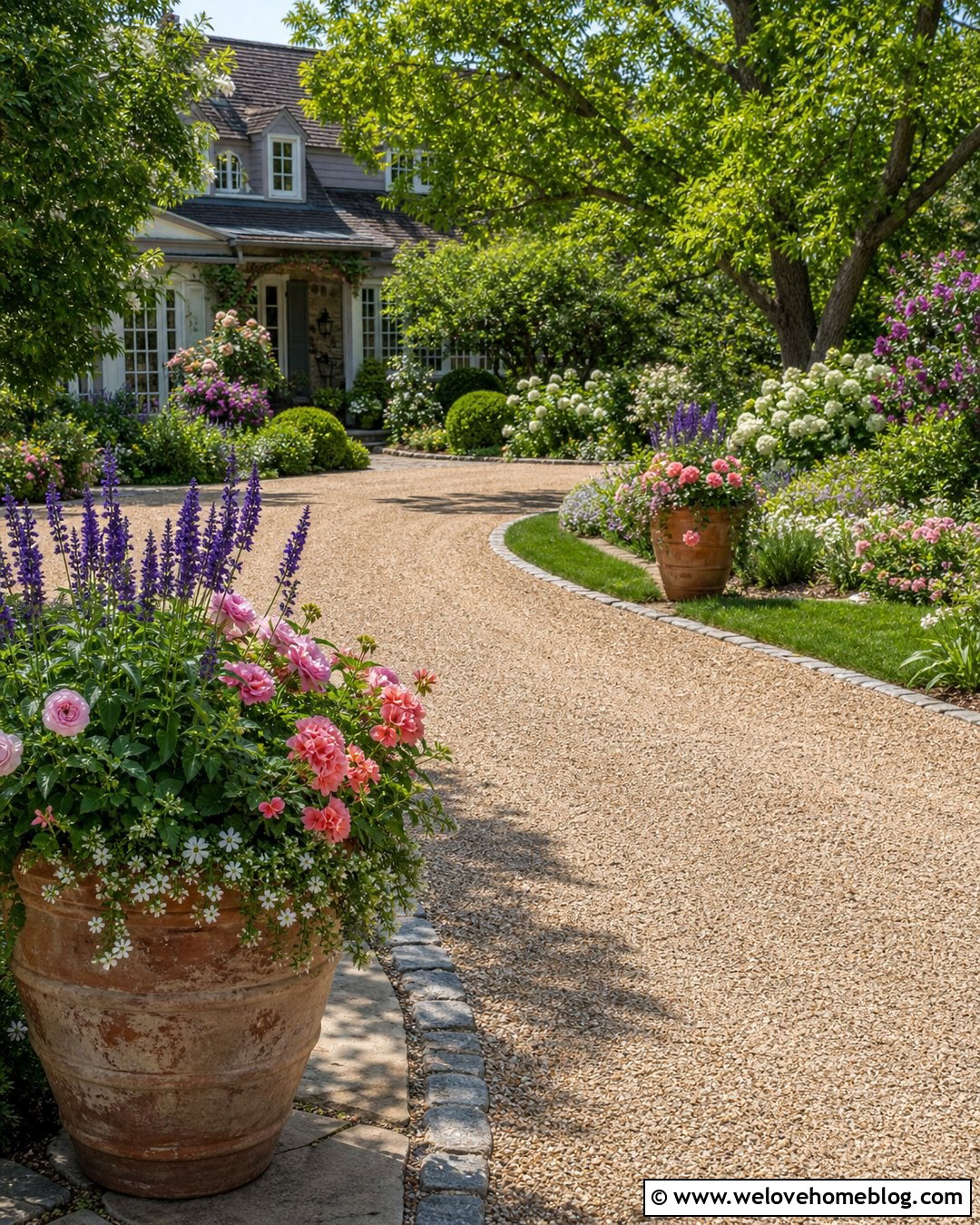
A cottage driveway can support abundant color while still looking organized. Begin with a curved brick or pea gravel driveway edged in natural cobblestone. Position large weathered terracotta pots near the entrance and at the front walkway, then fill them with layered combinations of upright flowers, rounded foliage, and trailing plants. Repeat only a few key colors in the surrounding beds to prevent the landscape from becoming chaotic. Roses, salvia, geraniums, herbs, and regionally appropriate perennials can create a relaxed garden feeling. Keep mature growth away from the driveway surface and maintain clear sightlines at the street. The containers should appear woven into the full garden rather than standing alone as isolated decorations beside the pavement.
30. Minimal Driveway Planters With Green Foliage
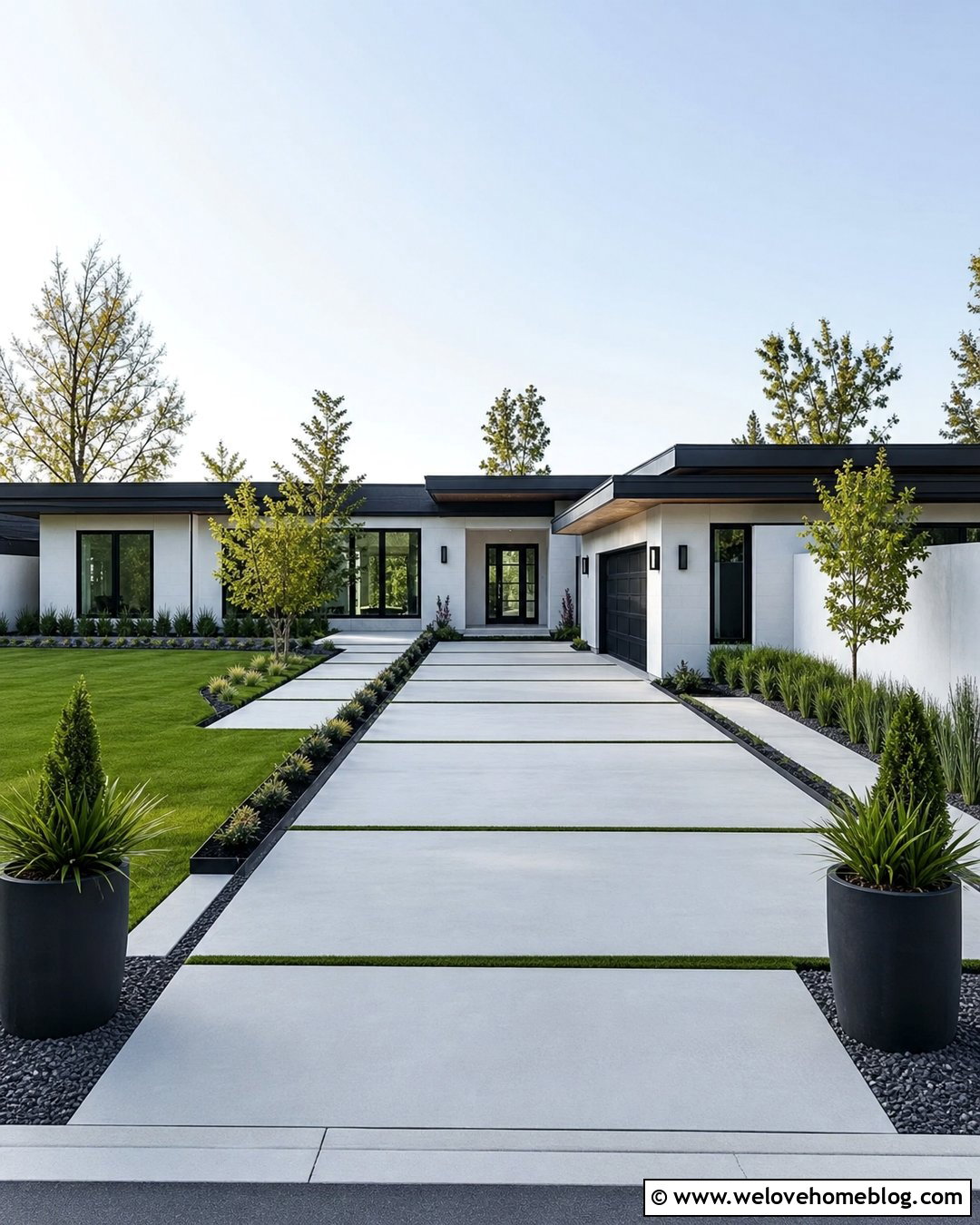
A restrained planter arrangement can make a stronger statement than a crowded collection. Place one matching pair of smooth cylindrical planters at the point where a broad concrete driveway meets a linear walkway. Use simple green foliage, such as compact evergreens, architectural grasses, or upright tropical plants suited to the climate. Avoid multiple flower colors and decorative accessories. Instead, repeat the container shape through rounded landscape beds or exterior light fixtures. Grass strips between concrete slabs can soften the paved area, while black steel edging keeps the planting crisp. This minimalist approach works with modern, Scandinavian-inspired, and updated ranch homes. Careful spacing, generous scale, and a limited material palette allow the complete driveway design to feel calm and intentional.
Conclusion:
The most effective 30 driveway planter ideas treat containers as part of the entire front-yard design. Start with the driveway material, available space, home architecture, sunlight, and everyday vehicle movement. Then choose planters with enough scale to look intentional from the street. Matching pairs create formality, while grouped containers make curved and informal entrances feel more natural. Plants should suit your climate, exposure, watering routine, and container size. Always preserve clear sightlines, drainage paths, walking routes, and room for car doors. Whether you prefer concrete, terracotta, stone, steel, or wood, coordinated driveway planters can add color, structure, privacy, and welcoming curb appeal without requiring a complete landscape renovation.

Related posts:
Leave a Reply