
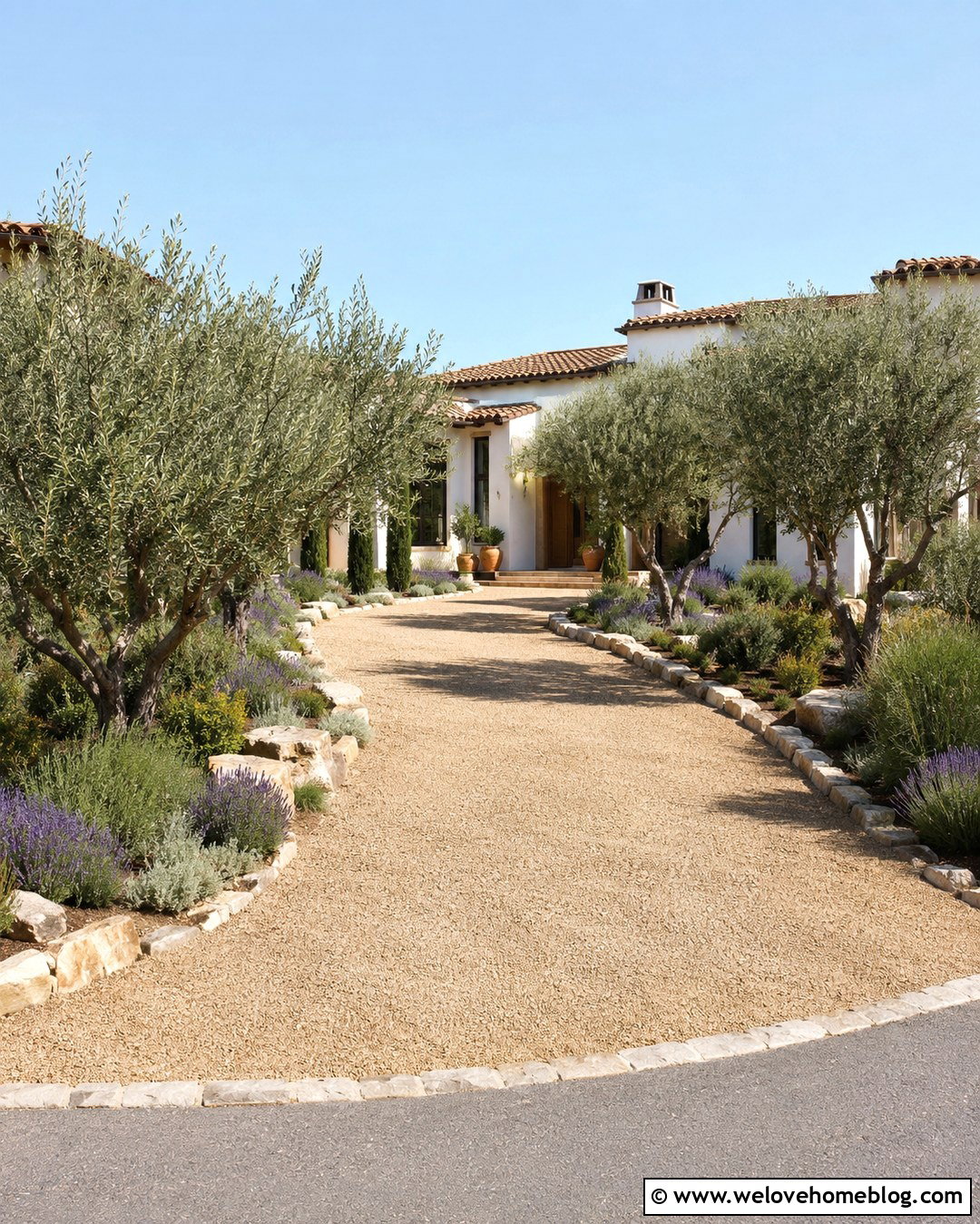
Wood gates can turn an ordinary driveway into a welcoming, private, and well-defined entrance. They also work with almost every architectural direction, from modern homes with horizontal slats to country properties with open ranch gates. The most successful design connects the gate with the driveway surface, pillars, fencing, landscaping, and house facade rather than treating it as a separate feature. It should also suit the available opening space, desired privacy level, local climate, and daily access needs. Swing, sliding, solid, open, painted, and natural-wood designs each create a different effect. Matching the gate to the home’s architecture helps the entire entrance feel intentional and balanced. () Explore these **35 Wood Gates Driveway Ideas** to find a complete entrance look for your property.
1. Modern Horizontal Wood Driveway Gate
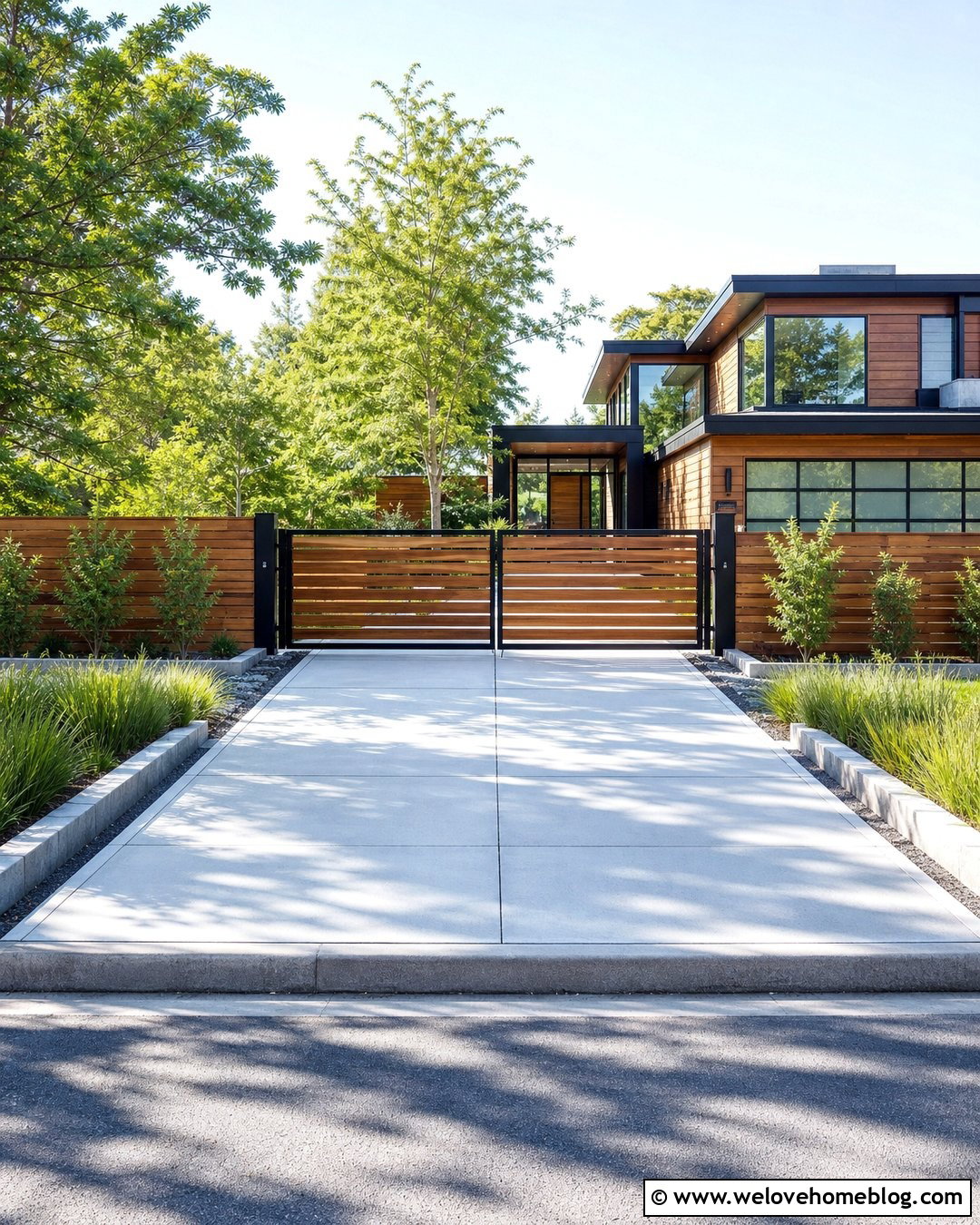
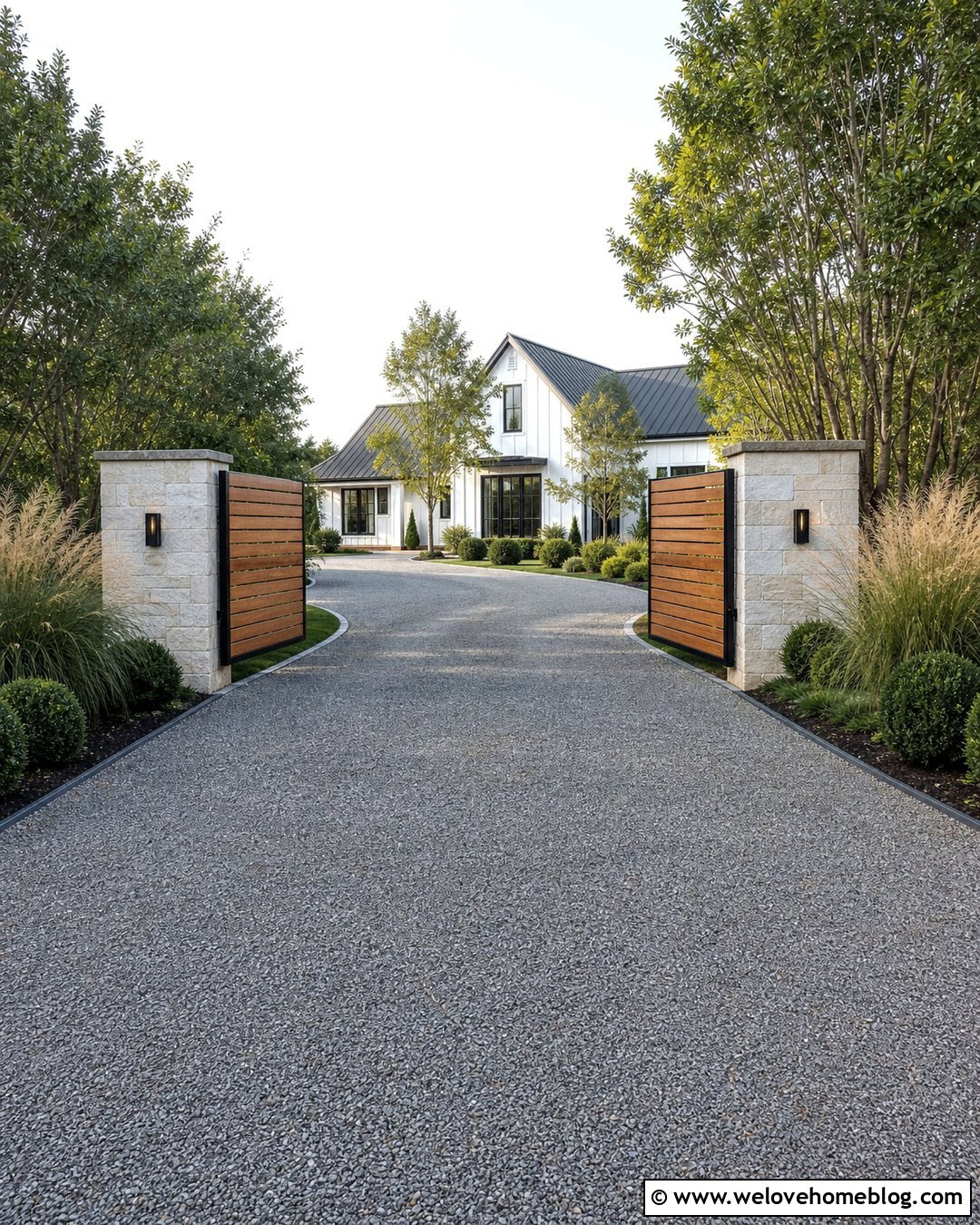
A horizontal wood gate creates clean lines that complement contemporary architecture. Choose narrow cedar slats with small, consistent gaps and mount them inside a matte-black steel frame. The concealed metal structure helps support the wood while giving the gate a crisp outline. Pair it with a straight, light-gray poured concrete driveway divided by subtle expansion joints. Black metal posts, ornamental grasses, and rectangular planting beds complete the modern entrance. Continue the same wood slats along short sections of fencing so the gate does not look isolated. A sliding mechanism is especially useful where the driveway slopes or has limited room for swinging panels. Keep the stain warm and natural to soften the concrete, glass, and dark exterior finishes.
2. Vertical Cedar Wood Driveway Gate
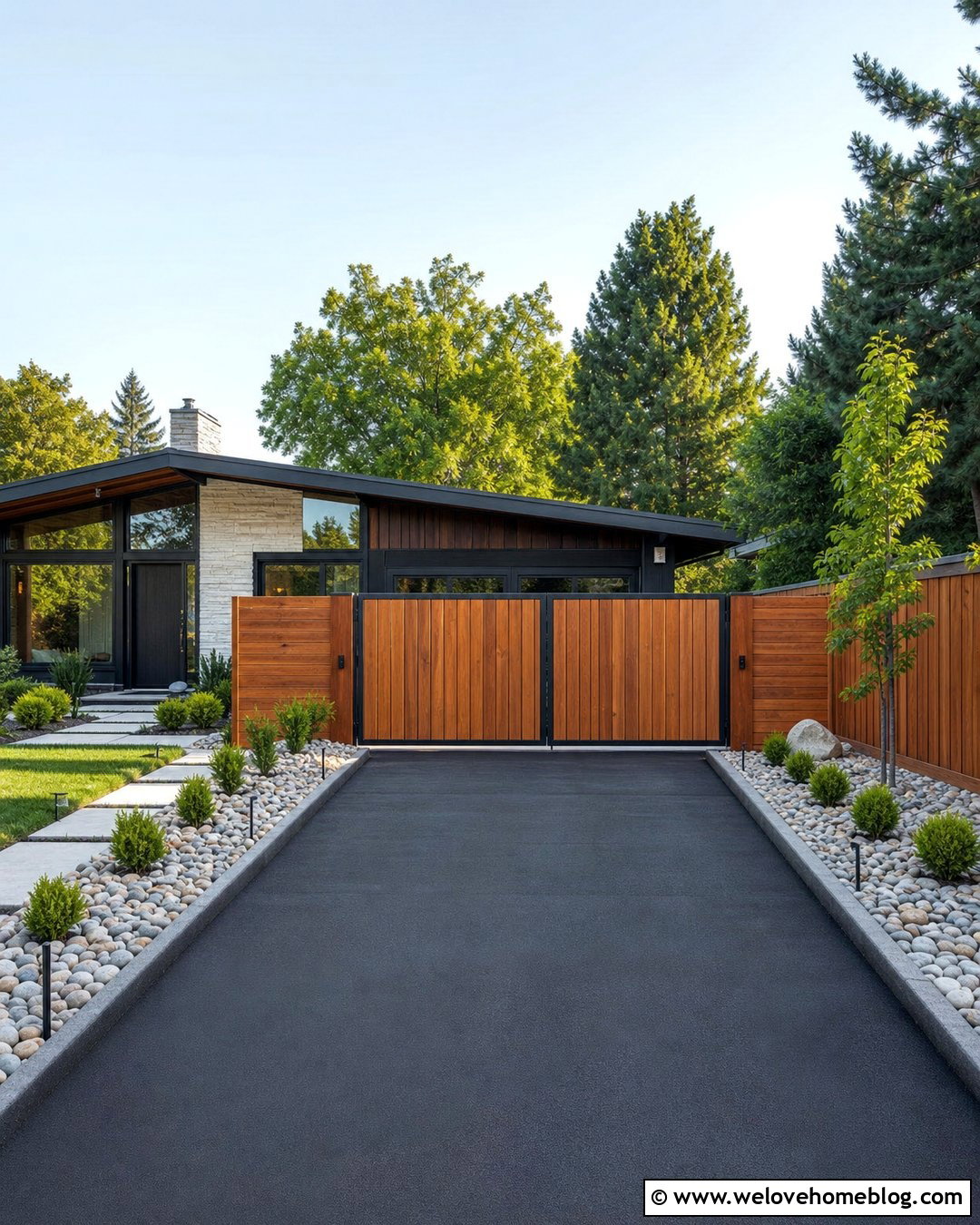
Vertical cedar boards make an entrance appear taller while providing dependable privacy. This look works particularly well with a mid-century modern house or a remodeled ranch home. Install evenly spaced boards inside a slim, dark steel frame and use a clear exterior finish that preserves cedar’s warm color. A straight black asphalt driveway provides strong contrast without competing with the wood grain. Add charcoal concrete curbs, low evergreen shrubs, and smooth river stones along both sides. Matching vertical cedar fencing can connect the entrance to the front yard. If the gate is automated, hide the operating equipment behind the fence or planting beds. The finished design feels private and contemporary, yet the natural wood prevents it from becoming cold or overly industrial.
3. Farmhouse Board And Batten Wood Driveway Gate
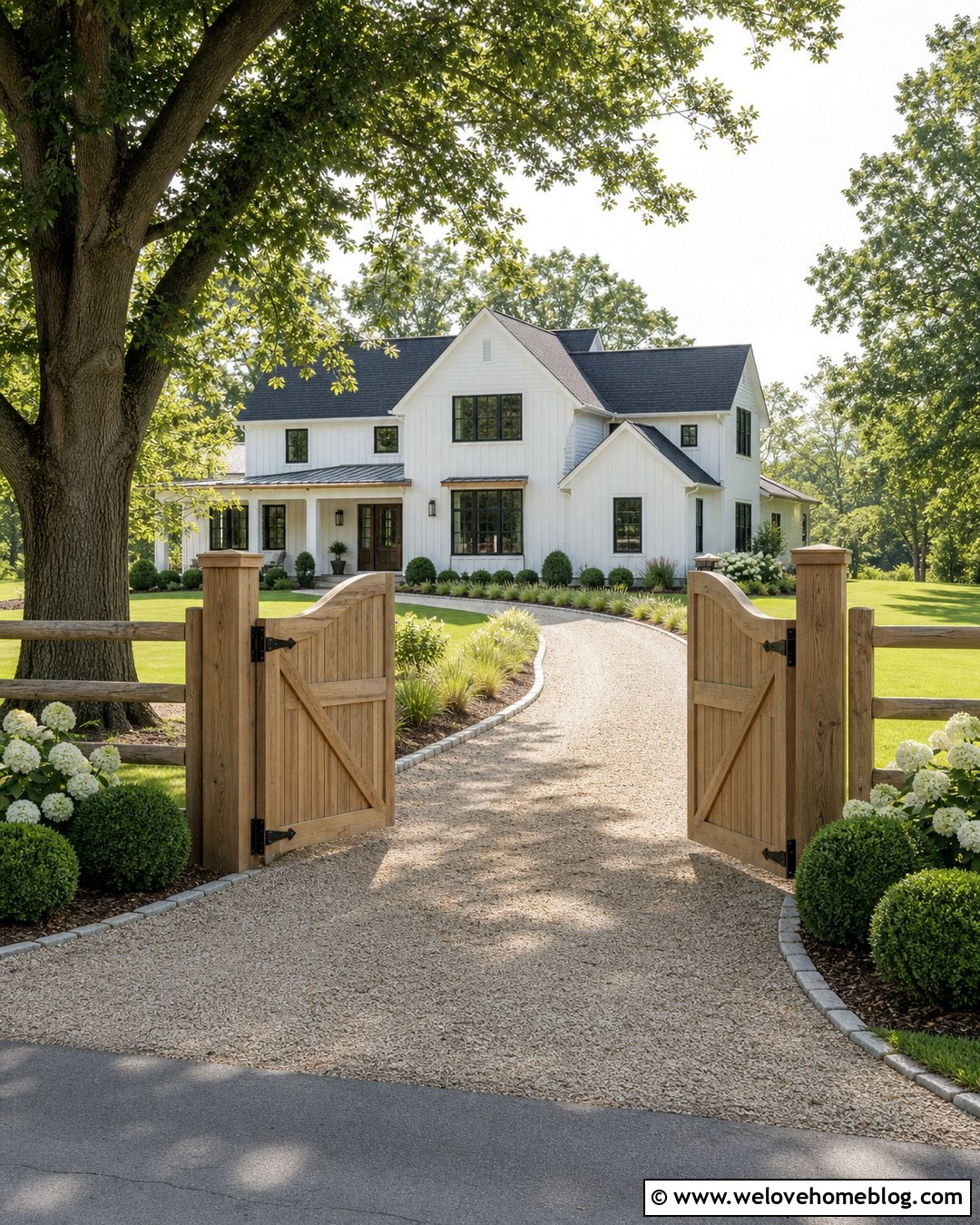
For a relaxed rural entrance, combine a board-and-batten wood gate with a pale gravel driveway and open front-yard landscaping. Wide vertical boards, sturdy horizontal rails, and simple black hardware give the gate a handcrafted farmhouse appearance. A double-swing layout divides the weight between two panels and creates a balanced center opening. Frame it with substantial square timber posts topped by simple caps. Beyond the gate, let the gravel driveway curve gently toward a white modern farmhouse. Hydrangeas, clipped boxwoods, native grasses, and a split-rail fence can soften the approach. Use a medium-brown stain rather than an overly orange finish. This allows the wood gate to blend naturally with the gravel, surrounding trees, and neutral house facade while still marking the property entrance.
4. Ranch Wood Driveway Gate With Gravel
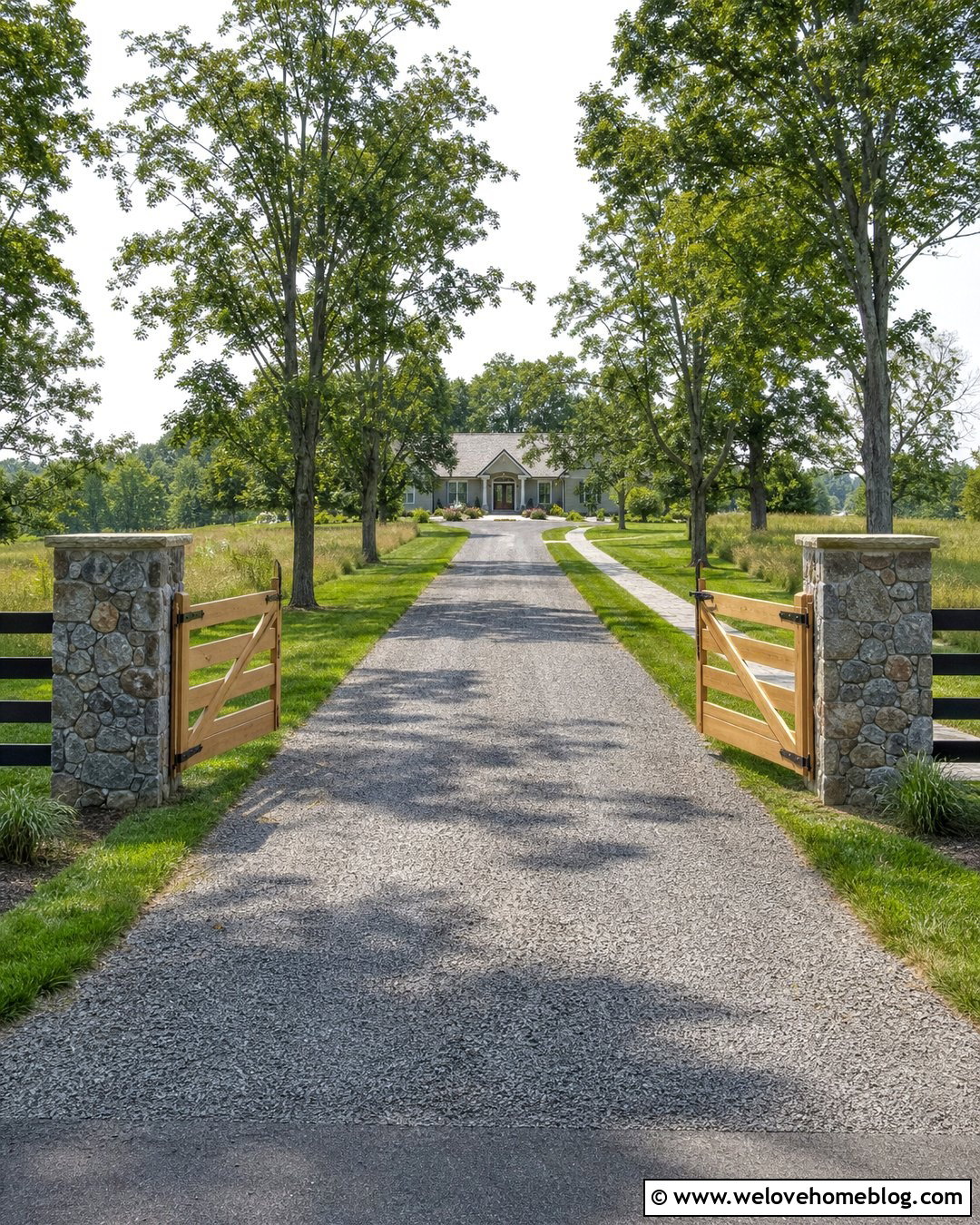
An open ranch gate is ideal when you want a visible boundary without blocking the view toward the house. Use a five-bar wood design built from substantial cedar or pressure-treated lumber, with diagonal bracing for a classic agricultural look. Pair it with a long gray crushed-stone driveway that passes through open lawn and mature shade trees. Low fieldstone pillars can anchor the gate while keeping the entrance informal. Continue post-and-rail fencing along the property line for a unified appearance. This design suits ranch houses, barns, equestrian properties, and country homes. Black strap hinges add definition against the natural wood. Because the gate remains visually open, attractive landscaping and a well-maintained driveway become part of the curb appeal rather than being hidden behind solid panels.
5. Solid Wood Privacy Driveway Gate
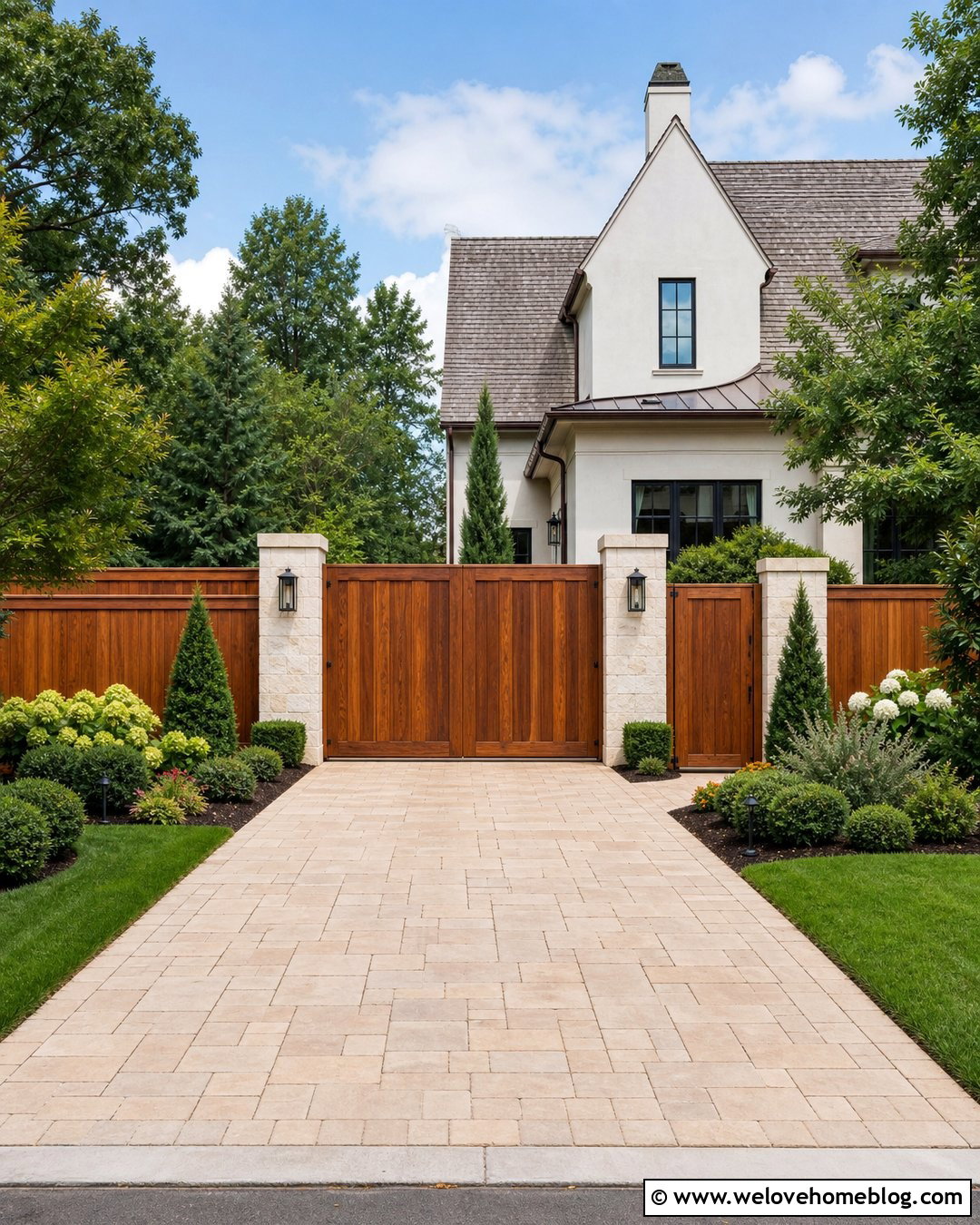
A solid wood gate creates a strong visual screen for homes positioned close to the street. Choose tightly fitted tongue-and-groove cedar boards arranged vertically within a reinforced frame. A flat top offers a modern appearance, while gently arched panels feel more traditional. Pair the gate with warm beige concrete pavers and matching wood fencing for a continuous privacy boundary. Limestone pillars can provide sturdy visual anchors and connect the entrance to a light stucco home. Add layered evergreen shrubs on the street side to soften the height of the gate. Solid wooden designs can provide significantly more privacy than open slats or ranch-style gates. () Include a separate pedestrian gate when possible so visitors do not need to use the main vehicle entrance.
6. Arched Double Wood Driveway Gate
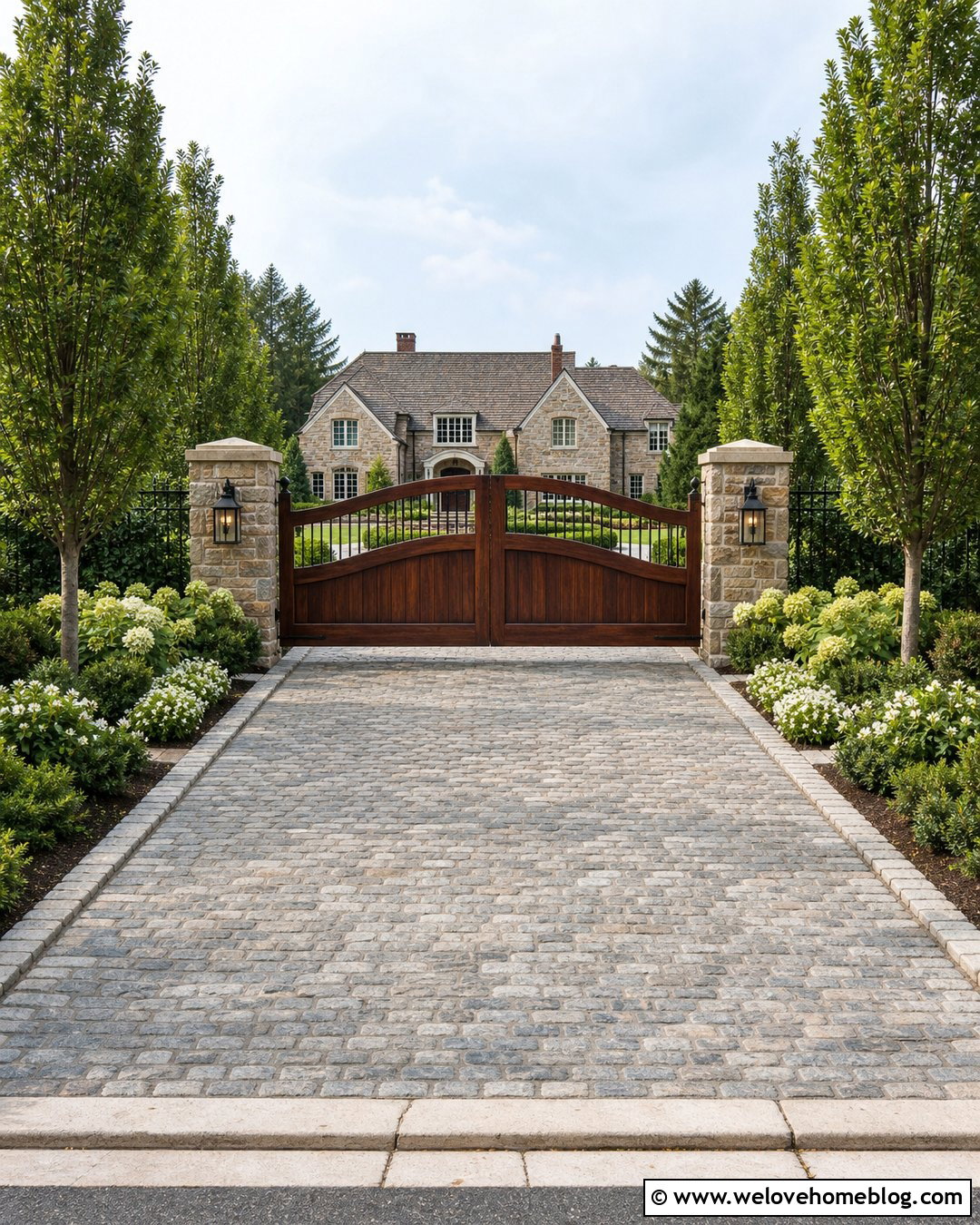
A double wood gate with a raised center arch gives a wide driveway a graceful and symmetrical entrance. Rich mahogany-toned boards work beautifully with stone pillars and traditional architecture. Add a narrow forged-metal grille near the top if you want a small amount of visibility without losing privacy. A cobblestone driveway reinforces the established, upscale character of the gate. Keep planting beds formal but not rigid, using clipped evergreens, flowering shrubs, and matching trees on both sides. Lantern-style fixtures mounted on the pillars can provide useful illumination while emphasizing the arch. The gate should mirror the proportions and curves found elsewhere on the house, such as arched windows or doors. That repeated shape makes the entrance feel connected to the property rather than added afterward.
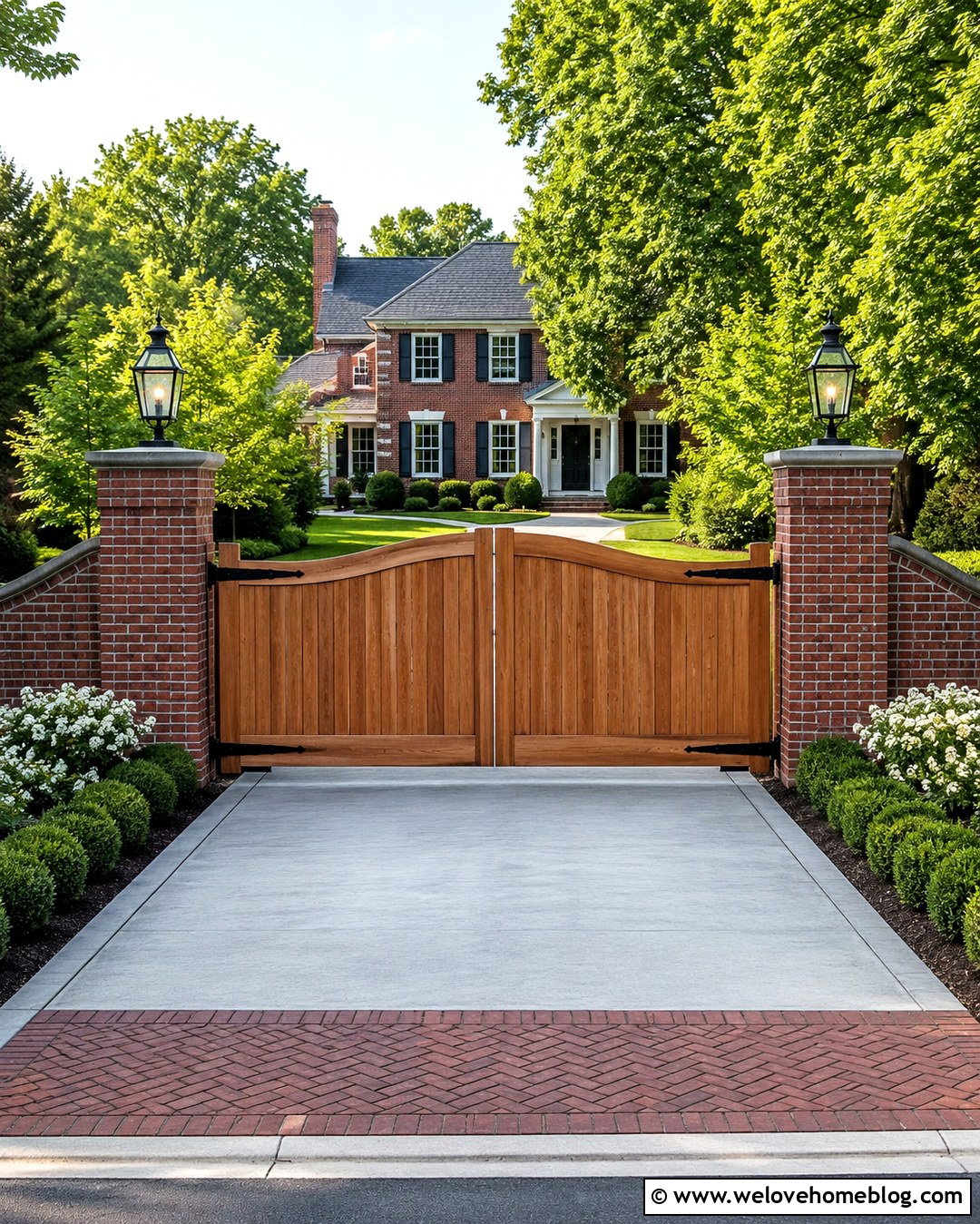
7. Scalloped Wood Driveway Gate With Brick
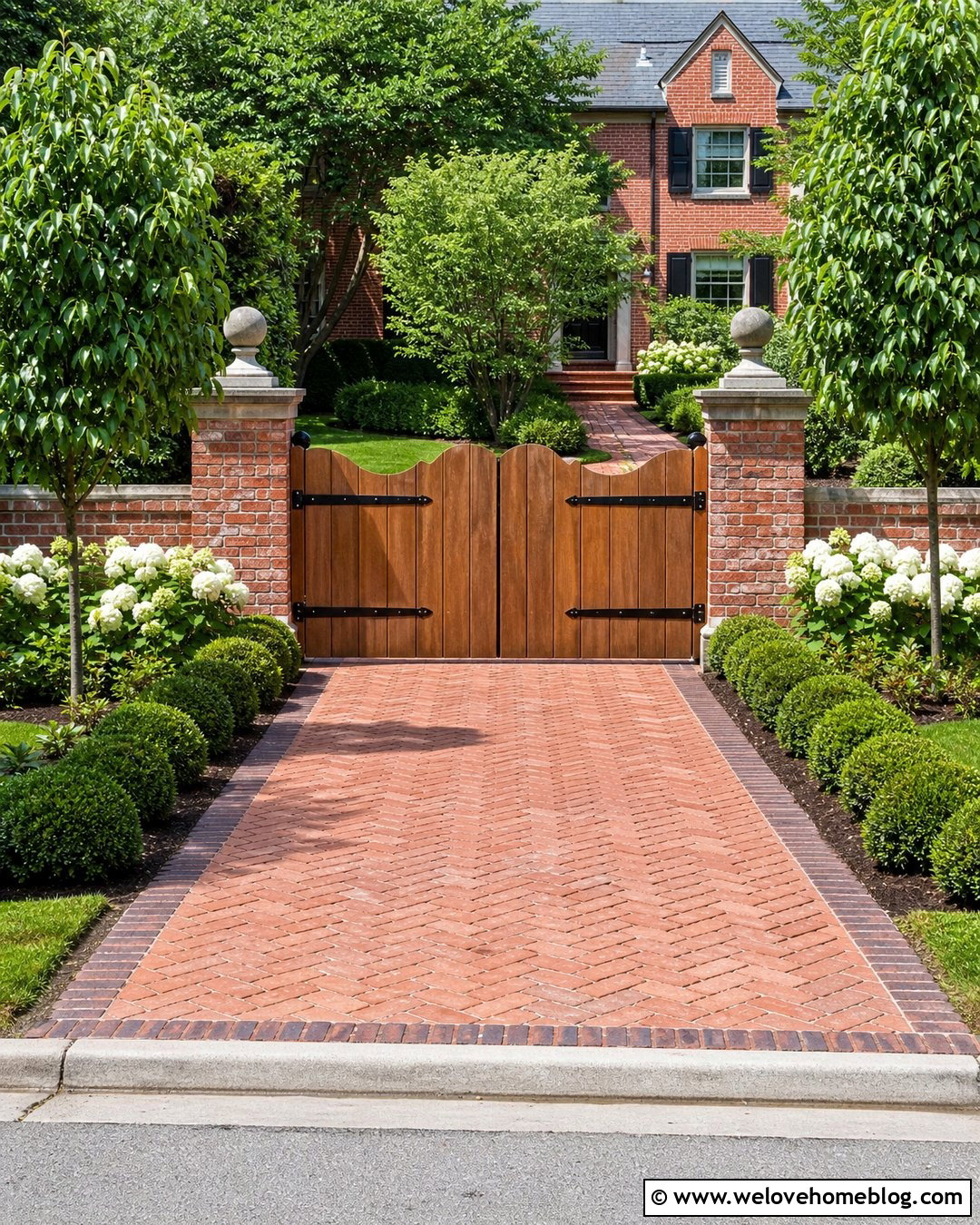
A scalloped wood gate has a lower center and higher outer edges, creating an open, welcoming profile. It works well for traditional brick homes because the curved outline softens straight walls and formal masonry. Use vertical red cedar boards framed by thick rails and finished with black strap hinges. Continue the warm palette with a clay brick driveway laid in herringbone, then add a darker brick soldier-course border. Brick pillars should match or closely coordinate with the house rather than introducing another unrelated color. Plant compact boxwoods, white flowering shrubs, and small ornamental trees around the entrance. The lower center allows better visibility when entering or leaving the property. It also makes the gate appear less imposing while still creating a clear and attractive boundary.
8. Sliding Wood Driveway Gate With Concrete
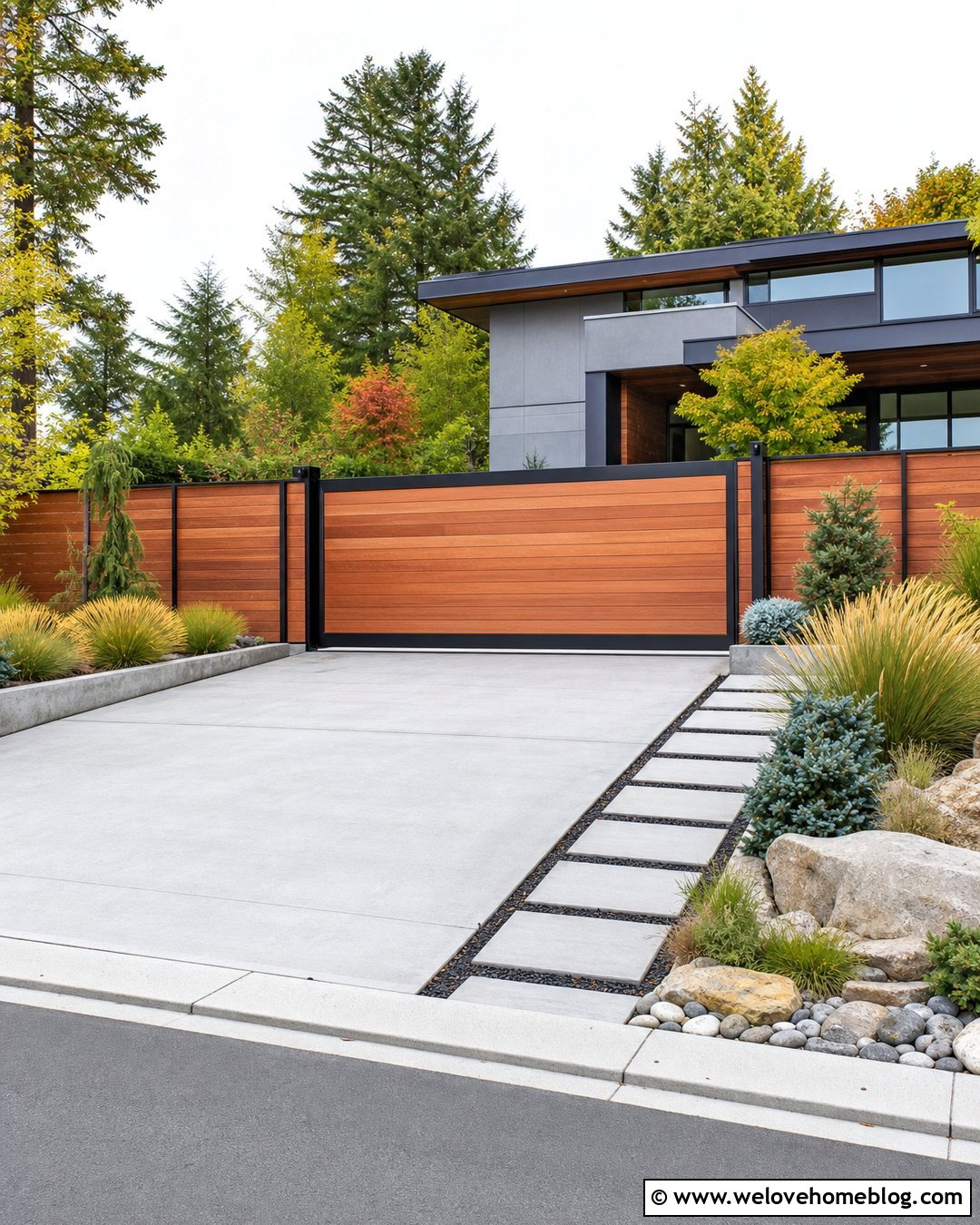
A sliding wood gate is a practical choice when there is not enough space for panels to swing inward. Build the gate with warm horizontal cedar boards and a black powder-coated metal frame. Pair it with a smooth, medium-gray concrete driveway leading toward a streamlined contemporary home. Leave adequate space beside the opening for the complete gate panel to travel when opened. A matching wood fence can conceal that storage area and make the mechanism less noticeable. Use low concrete retaining walls, drought-tolerant grasses, and sculptural evergreen plants to frame the entrance. Most automated driveway gates use either sliding or swinging operation, so the site layout should guide the decision. () The overall design feels clean, private, and highly organized without requiring an oversized front yard.
9. Cantilever Wood Driveway Gate With Asphalt
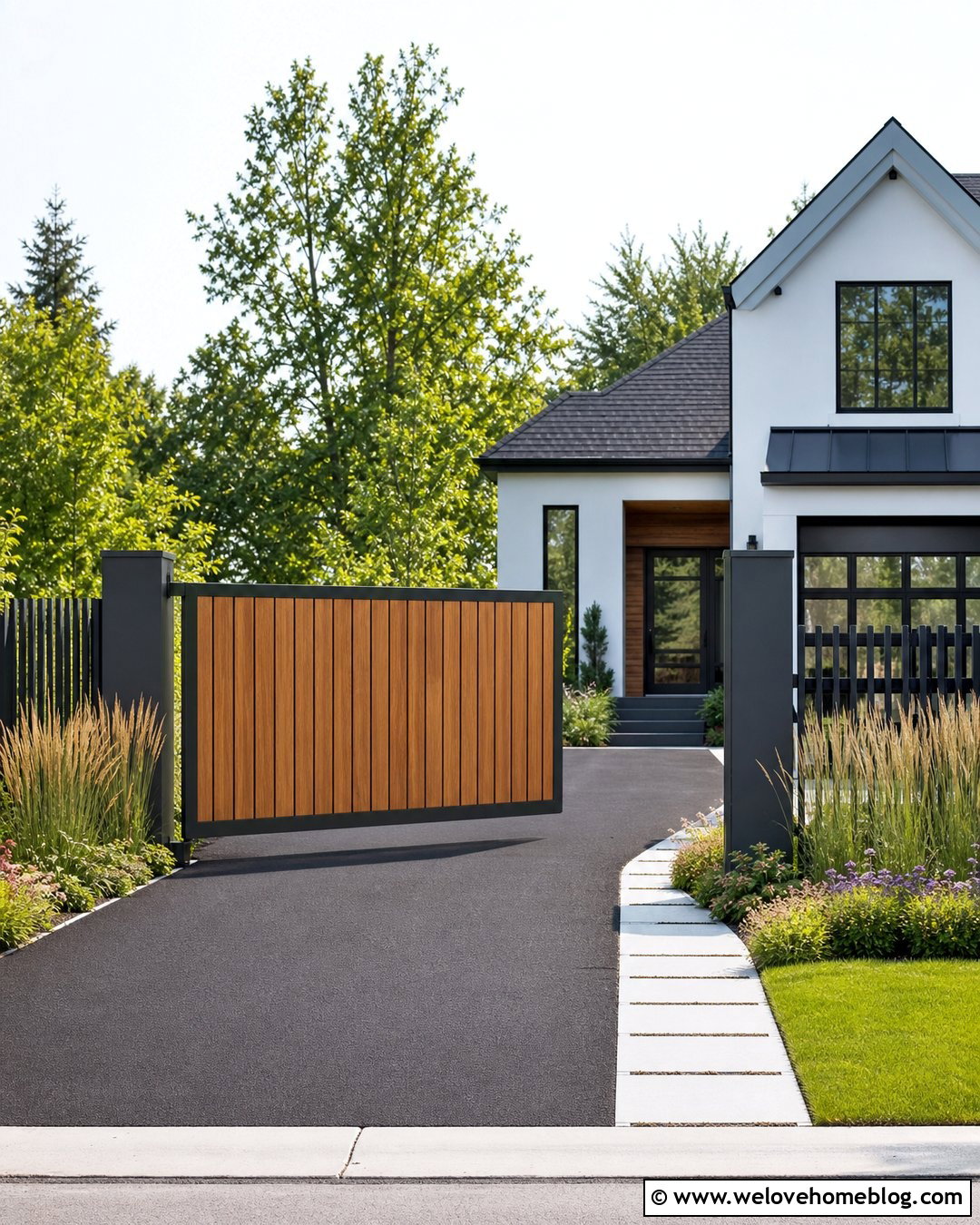
Cantilever gates slide above the driveway rather than relying on a track across the driving surface. This creates a neat entrance where leaves, gravel, snow, or drainage could interfere with a ground track. Use vertical hardwood boards inside a substantial dark steel framework for a refined residential appearance. A fresh black asphalt driveway makes the golden-brown wood stand out clearly. Match the frame with black aluminum fencing and simple square posts. On the yard side, plant broad drifts of ornamental grass and low flowering perennials to soften the mechanical structure. This gate suits a modern suburban house with a wide, level frontage. Because cantilever systems require additional side space and careful structural planning, work with an experienced installer who can properly size the frame, supports, hardware, and automated opening equipment.
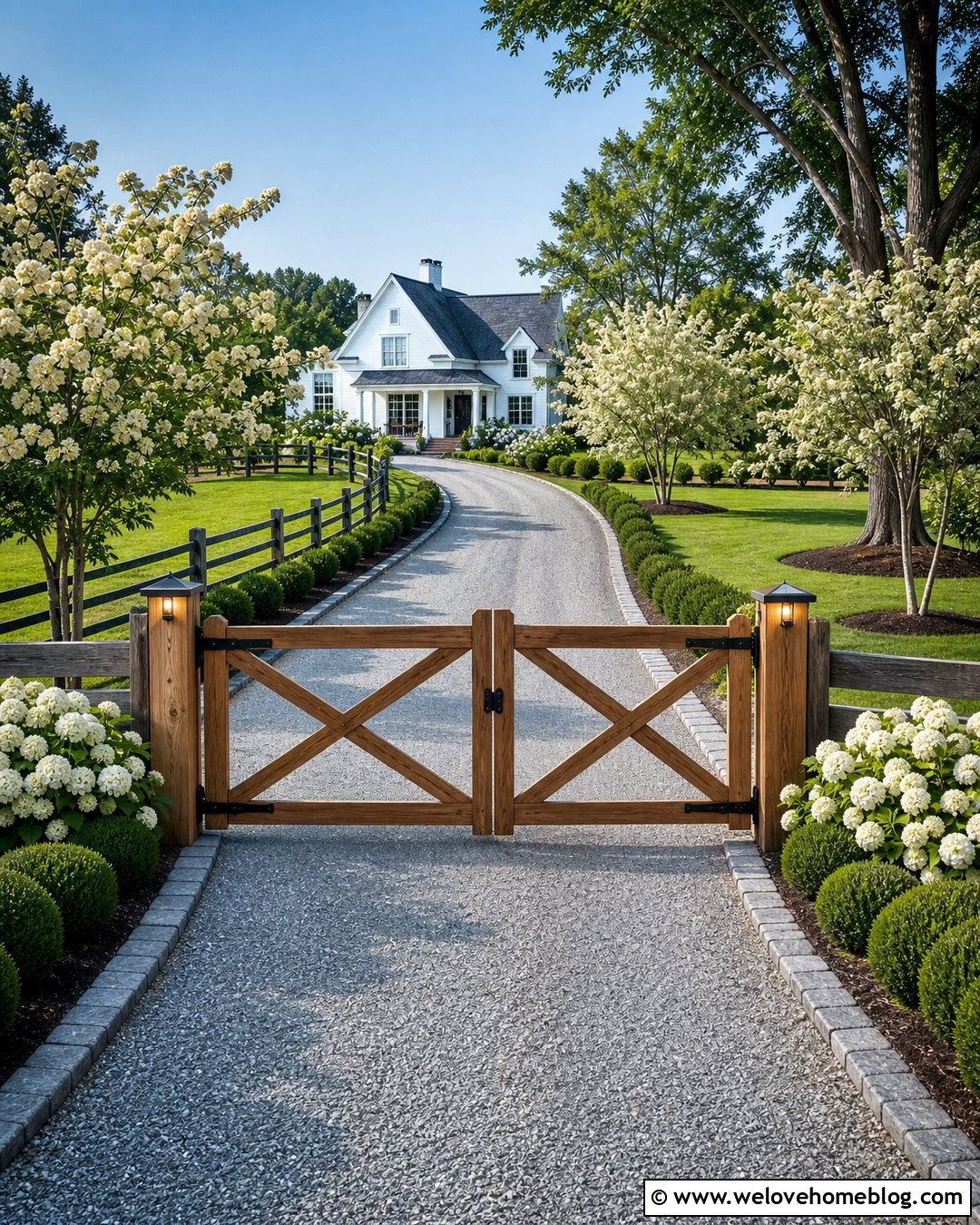
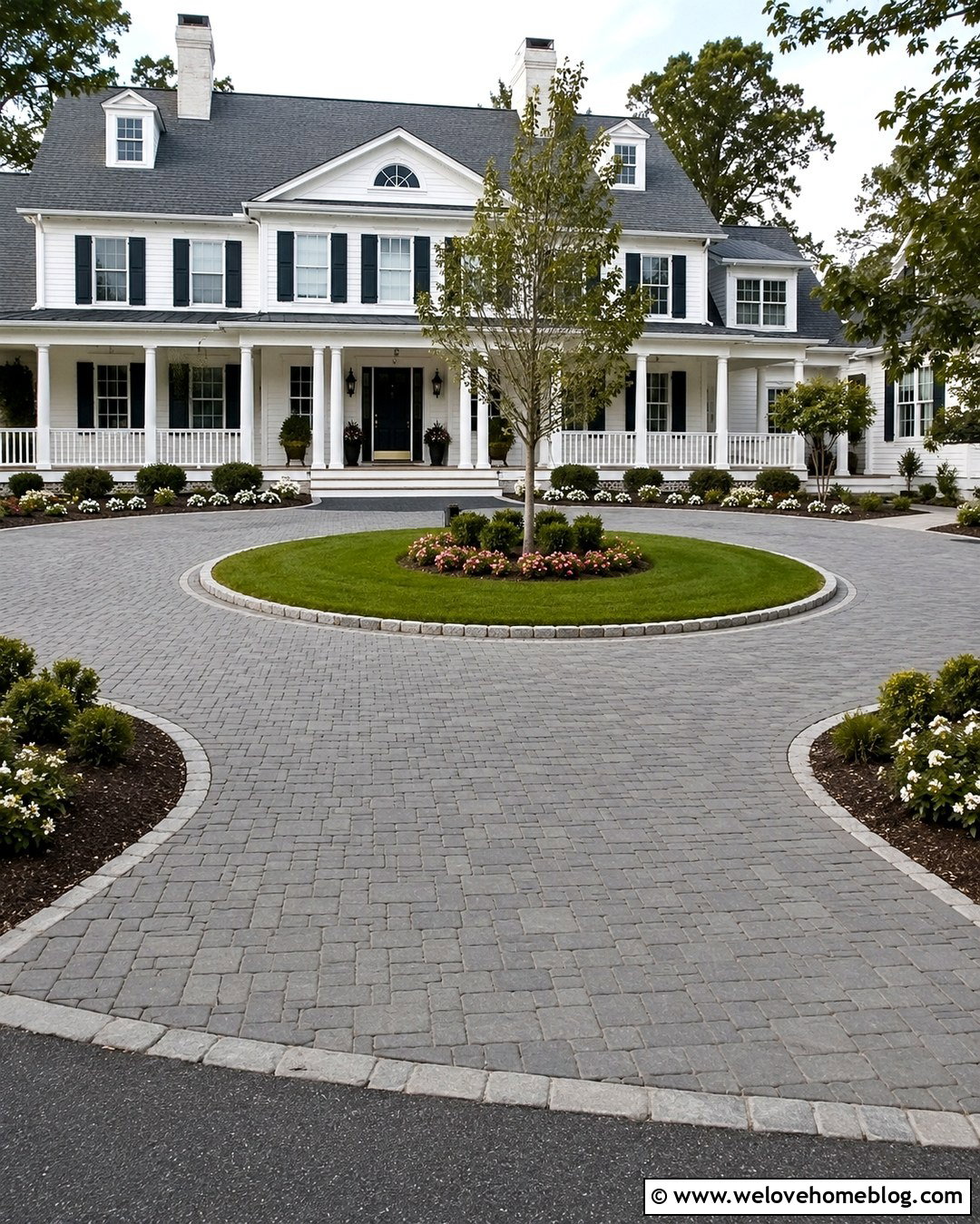
10. Automated Wood Swing Driveway Gate
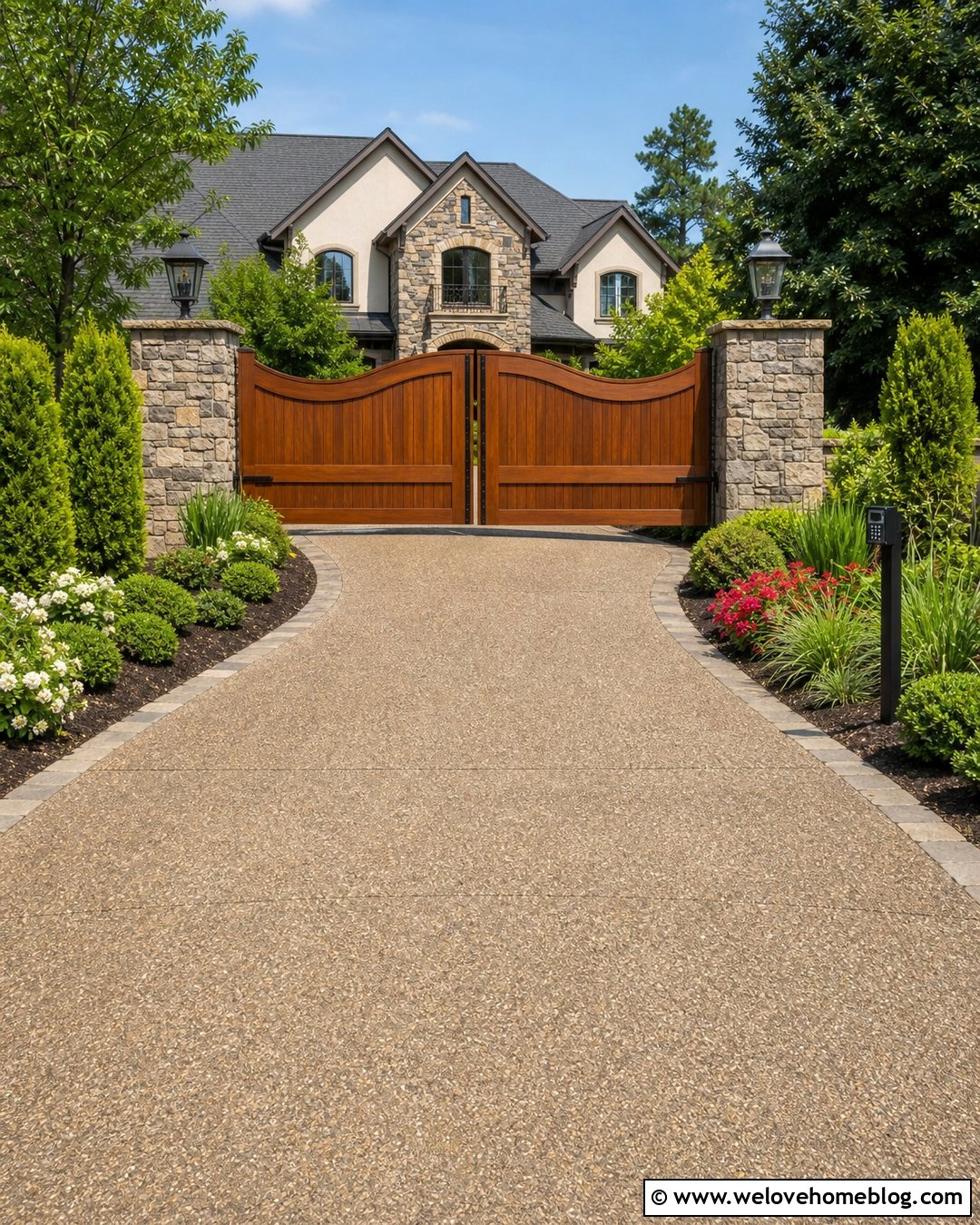
Automated swing gates combine the traditional appearance of double wood panels with convenient daily access. Select framed cedar boards with a gentle center arch and mount them between stone-clad pillars. A tan exposed-aggregate driveway adds texture while allowing the wood to remain the visual focus. Position control equipment discreetly behind the pillars or adjacent landscaping. Keep the swing path clear of steep grades, raised edging, and planting beds. Curved flower borders can guide the eye toward the gate without obstructing its movement. Add a separate keypad post where drivers can reach it safely from the driveway approach. Automation is especially useful on long driveways where manually opening two large panels would be inconvenient. Professional installation is important for dependable operation, suitable safety devices, and properly supported gates.
11. Wood Driveway Gate With Steel Frame
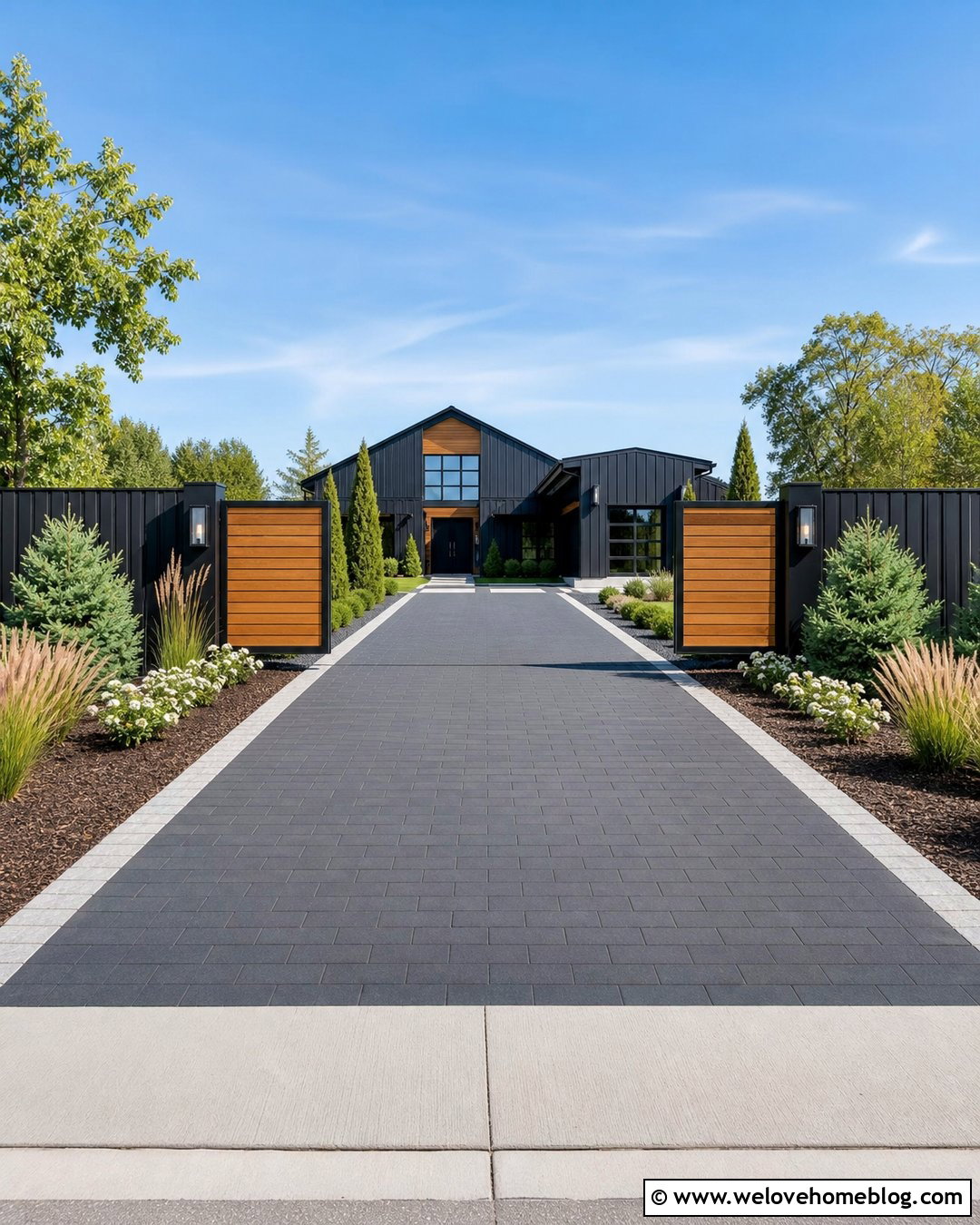
Wood infill inside a steel frame offers the warmth of natural lumber with a crisp, structured appearance. This combination suits modern, transitional, and industrial-inspired homes. Use medium-width cedar boards arranged horizontally inside matte-black rectangular frames. Pair the gate with charcoal interlocking concrete pavers laid in a running-bond pattern. A narrow light-gray paver border can define the driveway and prevent the dark surface from looking too heavy. Continue the black framing in the fence, address marker, and simple entrance lights. Low junipers, feather reed grass, and white flowering perennials will soften the hard materials. Steel-framed wood gates can also accommodate different patterns without relying entirely on the boards for visual structure. The complete entrance feels coordinated, durable, and contemporary while maintaining a welcoming residential character.
12. Wood And Iron Driveway Gate
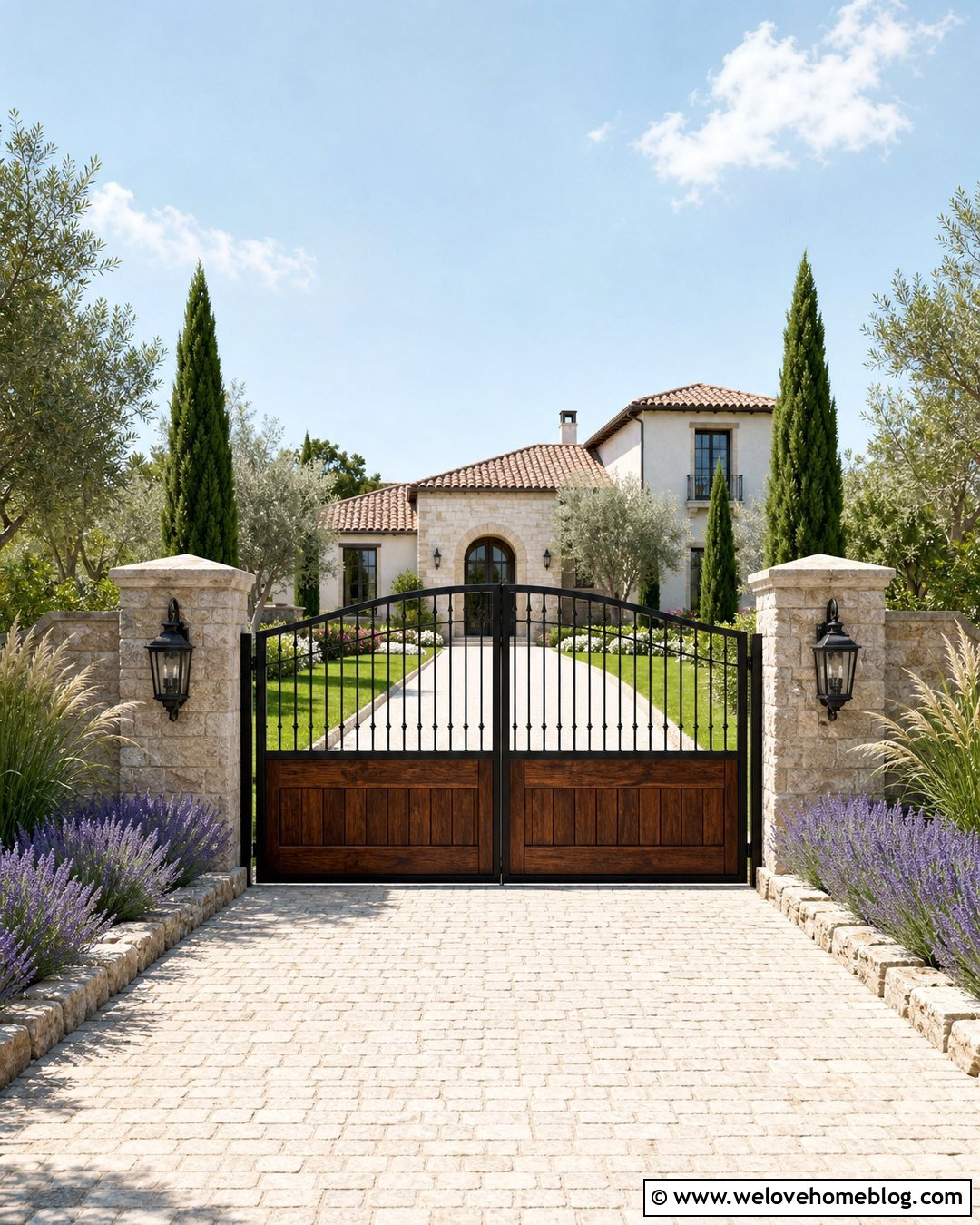
Combining wood panels with decorative iron inserts gives a gate both privacy and visual detail. Use warm-toned mahogany boards across the lower portion and introduce a simple iron grille along the arched upper section. Avoid excessive scrollwork if the house has a clean transitional exterior. Pair the gate with a light cobblestone driveway and natural limestone pillars capped with smooth stone slabs. Lavender, upright evergreens, and soft ornamental grasses can create a layered entrance without hiding the ironwork. The contrast between dark metal and rich wood makes the gate visible from the street while connecting it to iron lighting fixtures and window details. Mixed wood-and-iron designs are particularly compatible with Mediterranean, traditional, and transitional architecture. () Keep the decorative pattern balanced across both panels.
13. Black Stained Wood Driveway Gate
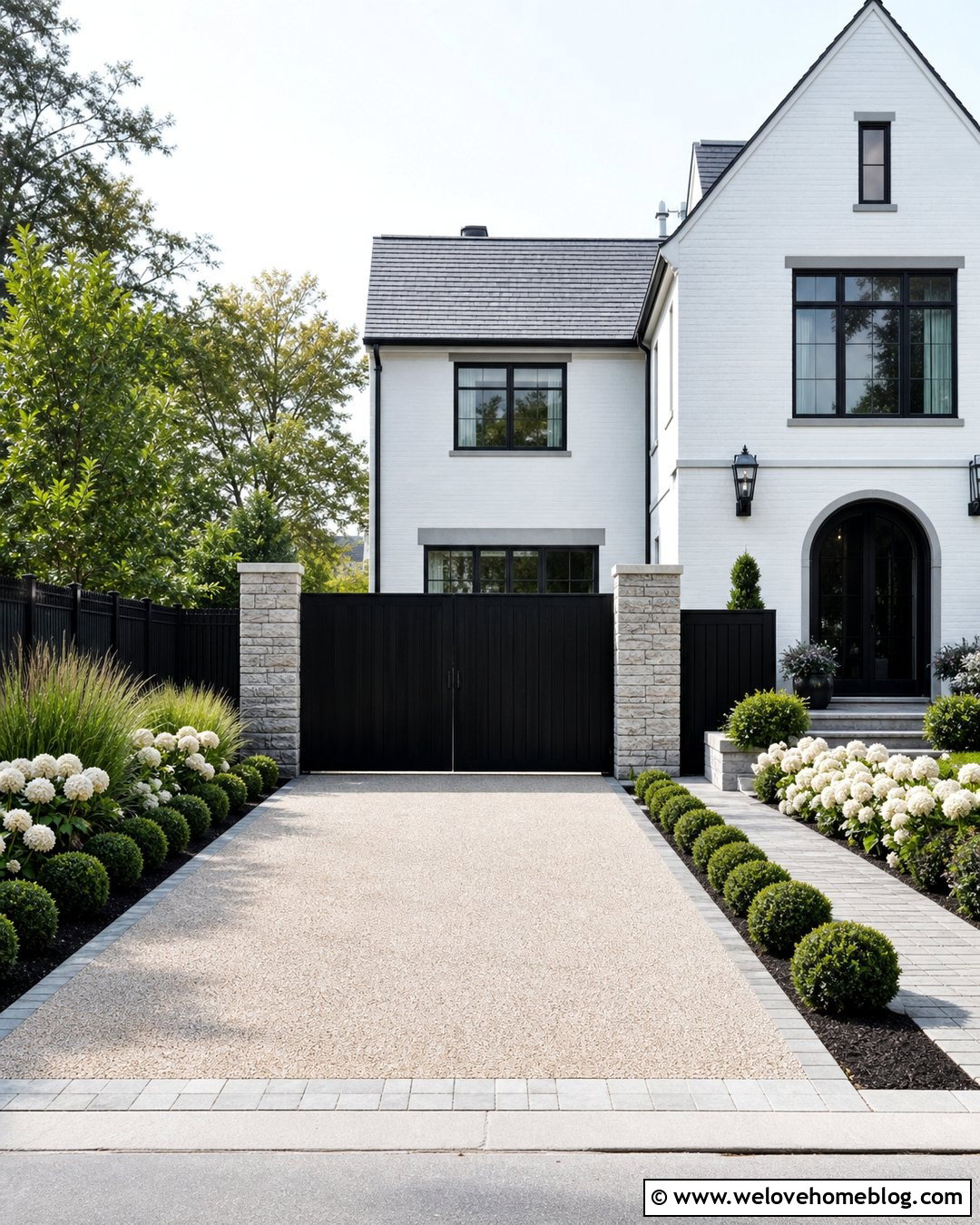
Black stain can give a wood gate a bold contemporary appearance while allowing some grain to remain visible. Choose wide vertical boards with a flat top and install them within a matching black frame. A pale resin-bound gravel driveway creates an attractive light-and-dark contrast and provides a smooth visual approach toward the house. Use warm gray stone pillars to separate the gate from the black fencing on either side. Plant green boxwoods, white hydrangeas, and airy grasses so the entrance does not become visually severe. This look works with white brick, light stucco, and natural stone facades. Repeat black on window frames and exterior lights for continuity. A satin finish usually looks softer and more residential than a highly reflective coating, especially across a large, solid gate.
14. White Painted Wood Driveway Gate
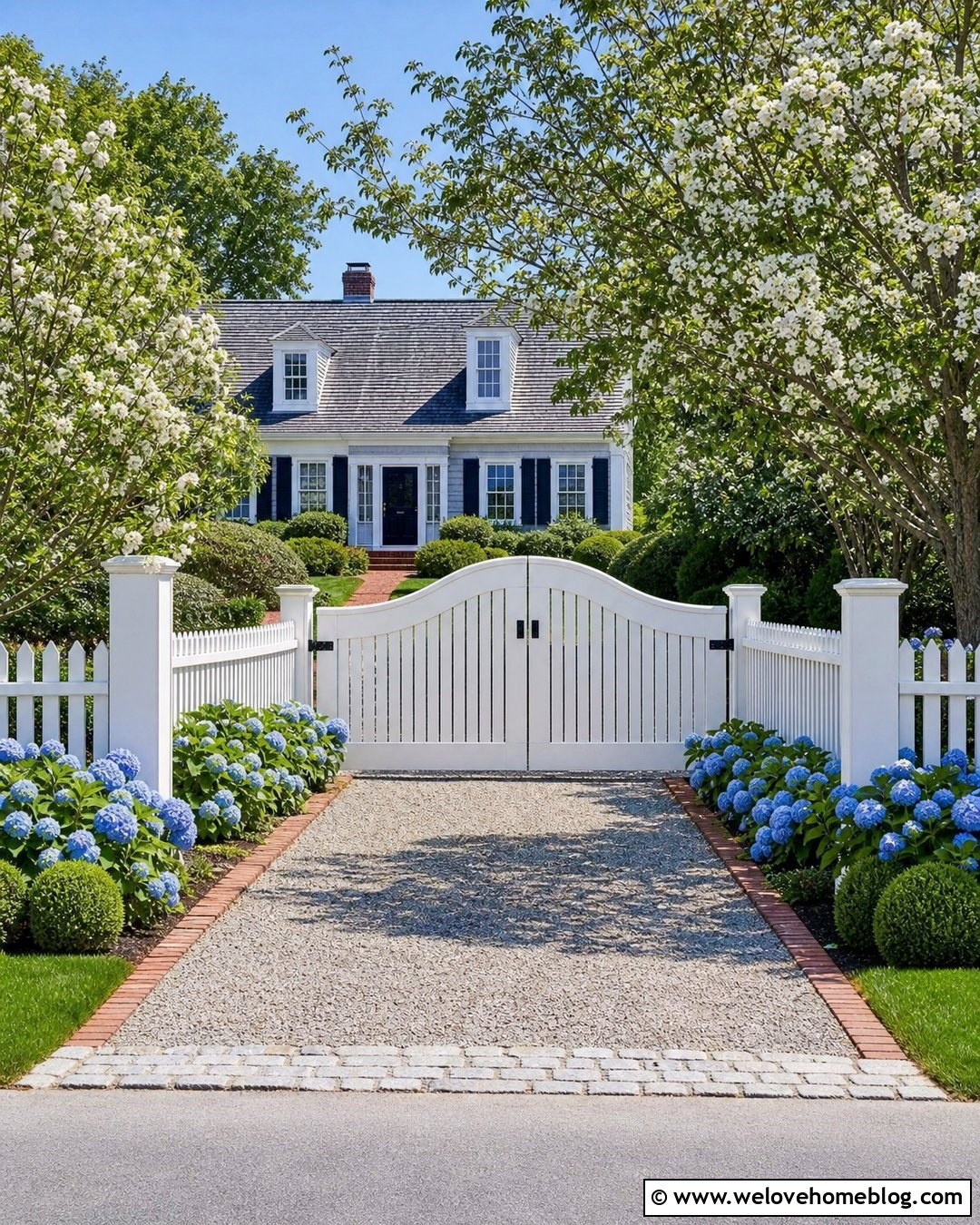
A white painted gate creates a bright, traditional entrance for Cape Cod, coastal, cottage, and colonial homes. Use a double-swing design with vertical boards, a subtle arch, and black or dark bronze hardware. Pair it with a light-gray gravel driveway edged in clay brick for warmth and definition. White square posts can connect the gate to matching picket or privacy fencing. Plant blue hydrangeas, clipped green shrubs, and a pair of small flowering trees to frame the opening. The surrounding materials should be simple because the light gate will already attract attention. Choose exterior-grade paint suited to the wood and local exposure, then maintain peeling or damaged areas before moisture reaches the boards. The completed driveway feels cheerful and established without becoming overly formal or elaborate.
15. Gray Weathered Wood Driveway Gate
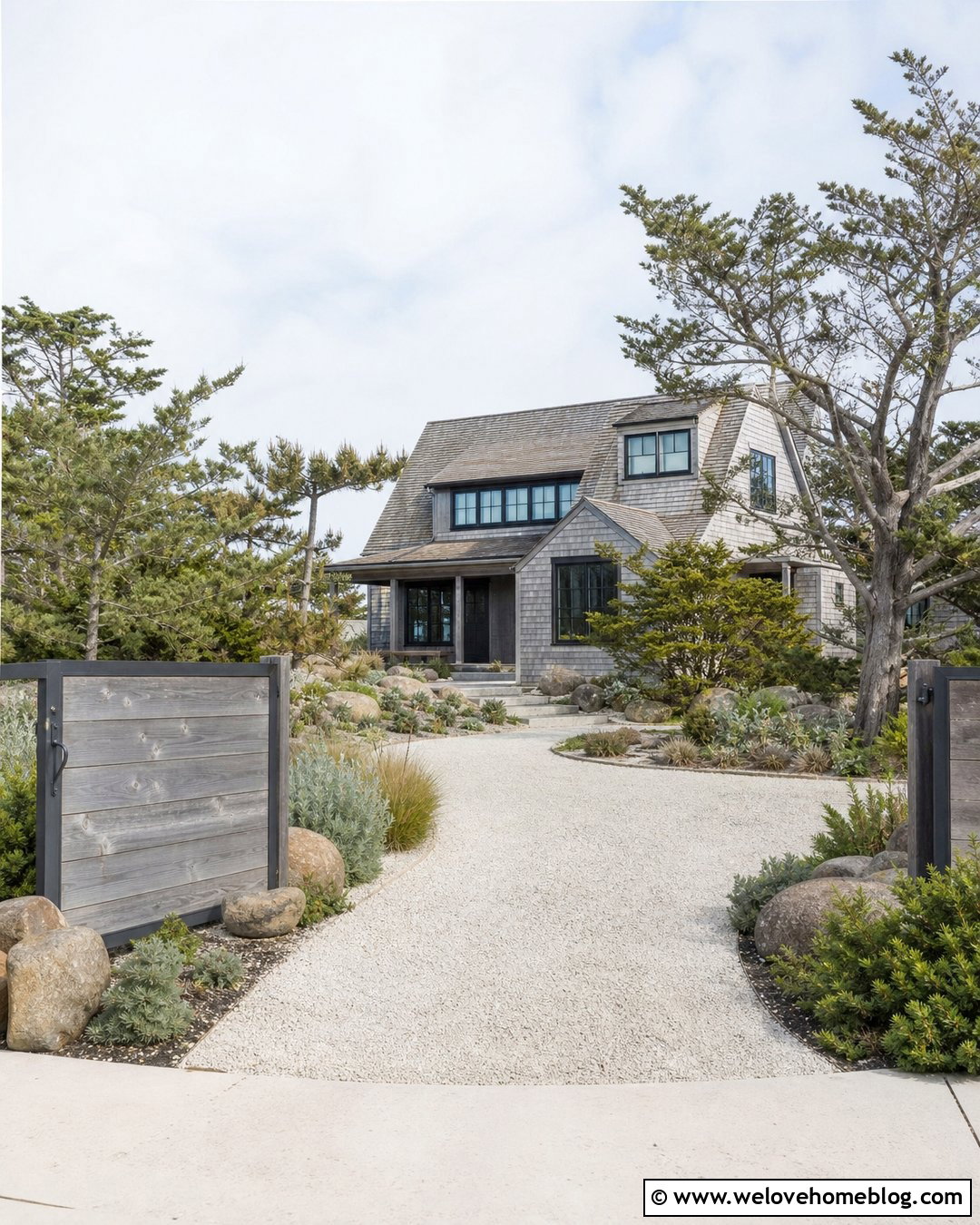
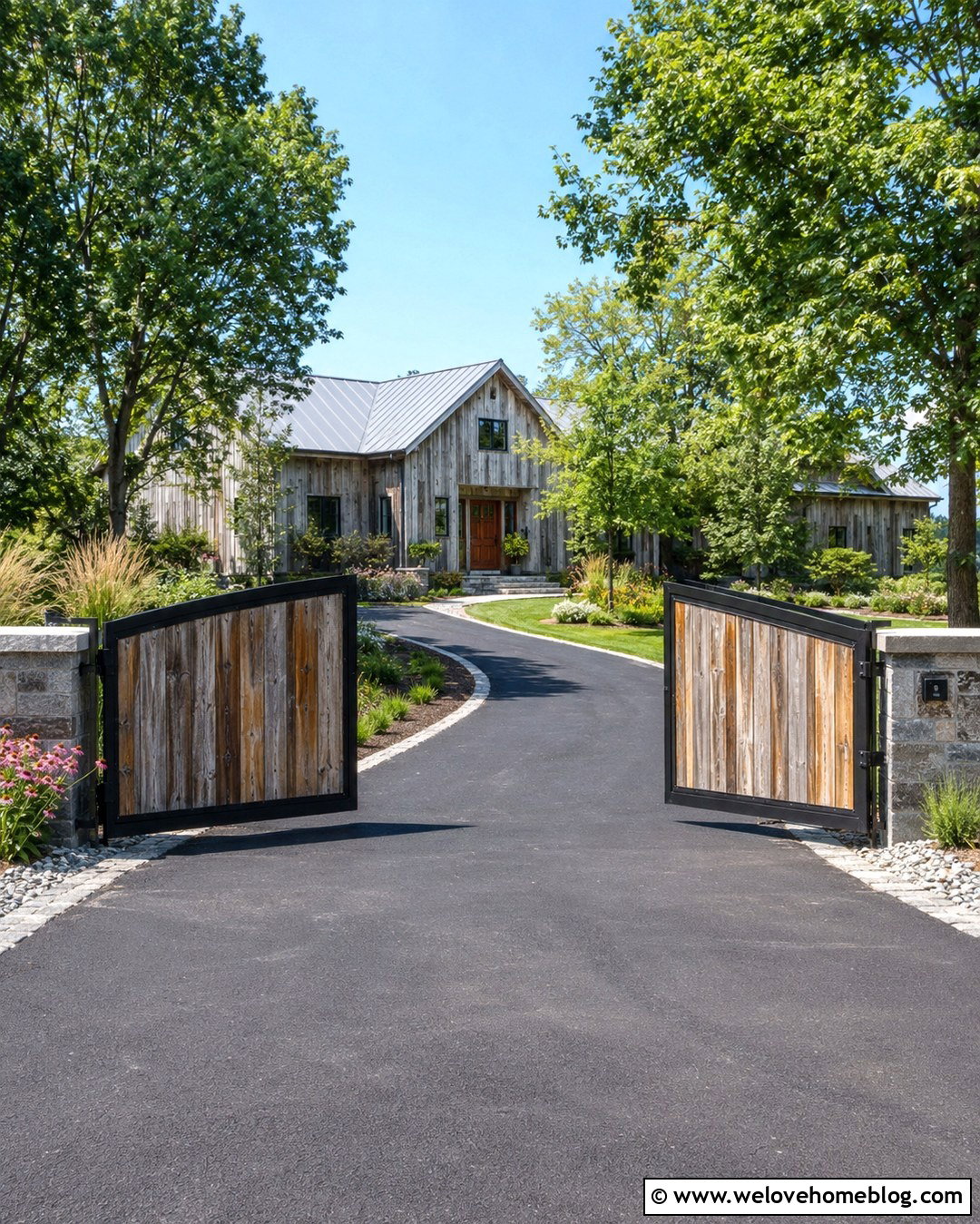
Weathered gray wood complements coastal landscapes, wooded properties, and homes with cool neutral exteriors. Build a horizontal slat gate using naturally aged boards or a controlled gray exterior finish. Frame the wood with charcoal metal to sharpen the edges and reinforce its contemporary shape. A pale gray crushed-granite driveway can curve gently through native grasses toward a shingle-style house. Add large natural boulders, silvery foliage, and low evergreen shrubs around the entrance. The muted colors help the gate blend into the landscape while its broad horizontal lines keep it visually intentional. Avoid mixing several unrelated gray stains, since slight undertone differences can look accidental. Instead, use one primary wood tone, one dark structural color, and varied greenery to give the overall driveway entrance depth.
16. Natural Oak Wood Driveway Gate
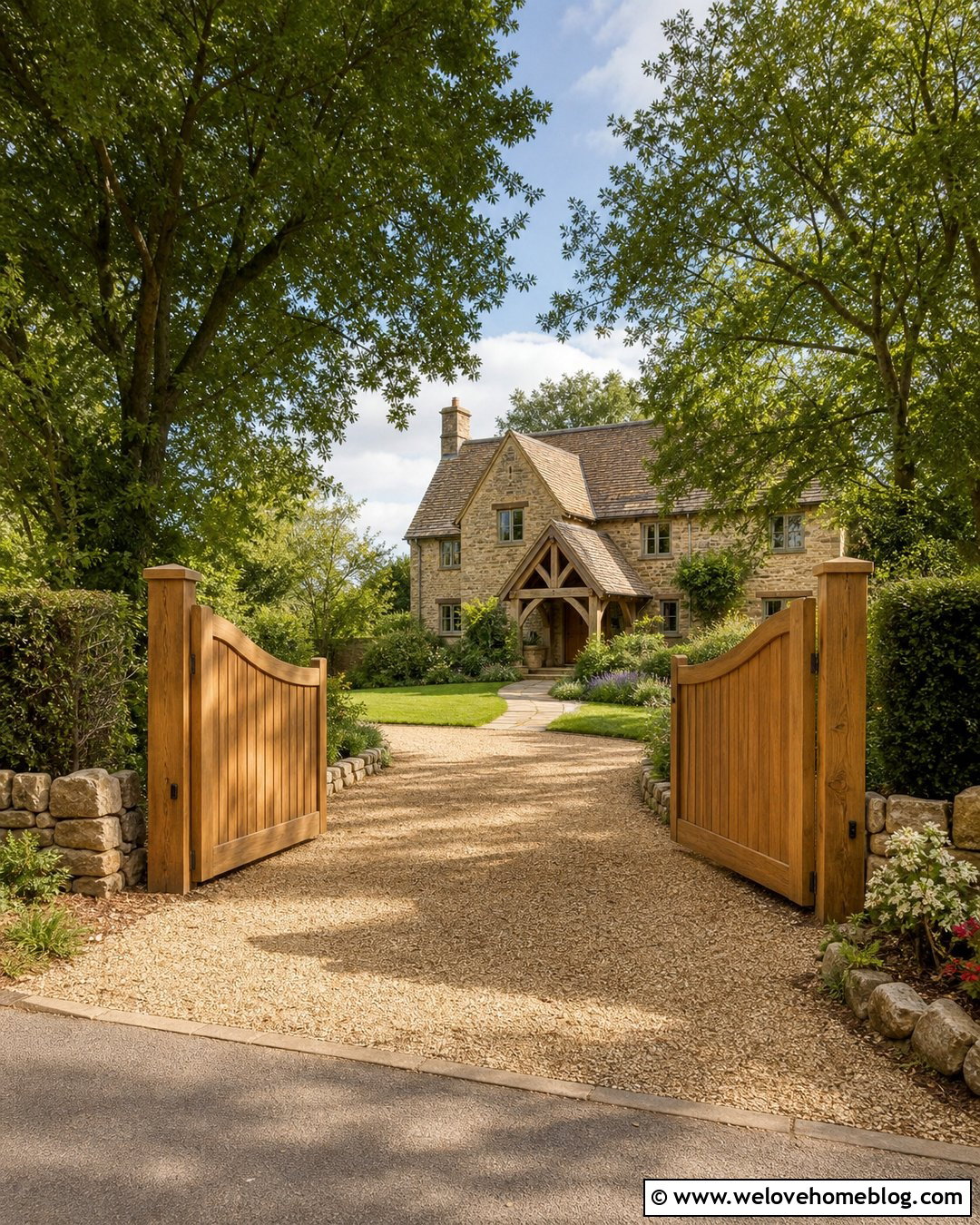
Natural oak gives a driveway entrance a solid, traditional appearance that works beautifully with stone, brick, and timber-framed homes. Choose a double gate with framed vertical boards and gently curved upper rails. A warm honey-toned finish can highlight the grain without making the wood look glossy. Pair it with a buff gravel driveway bordered by irregular fieldstone set flush with the surface. Substantial oak posts or stone pillars will give the wide opening suitable visual weight. Continue the natural theme with native hedges, deciduous trees, and informal flowering beds. Oak gates can be designed to coordinate with front doors, garage doors, and exposed architectural timbers. () Repeating these tones creates a connected view from the street to the house and makes the entrance feel original to the property.
17. Red Cedar Wood Driveway Gate
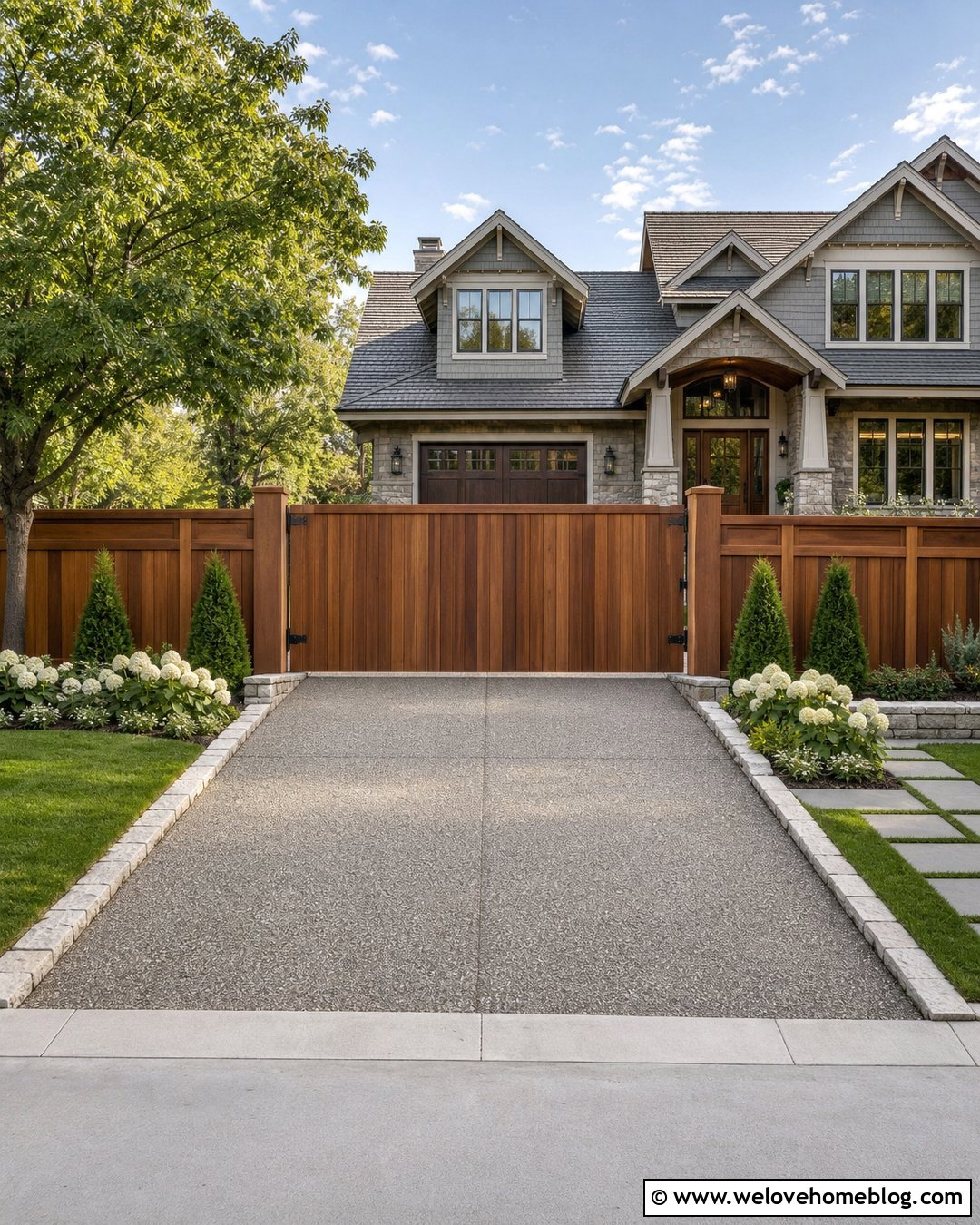
Red cedar brings warmth and visible grain to a suburban driveway without requiring complicated ornament. Use vertical boards with narrow spacing and a straight upper edge for a clean transitional look. Dark bronze hinges and a concealed steel frame can provide contrast while allowing the cedar to dominate visually. Pair the gate with an exposed-aggregate concrete driveway in a warm gray tone. Add matching cedar fence panels, limestone edging, and mixed beds of evergreen shrubs and soft white flowers. This combination suits craftsman homes, ranch houses, and contemporary facades with wood accents. A clear or lightly tinted exterior finish will help retain the fresh cedar color, although any finish needs routine inspection outdoors. Keep the entrance balanced by matching the height of the adjacent fencing to the gate’s outer edges.
18. Ipe Wood Driveway Gate
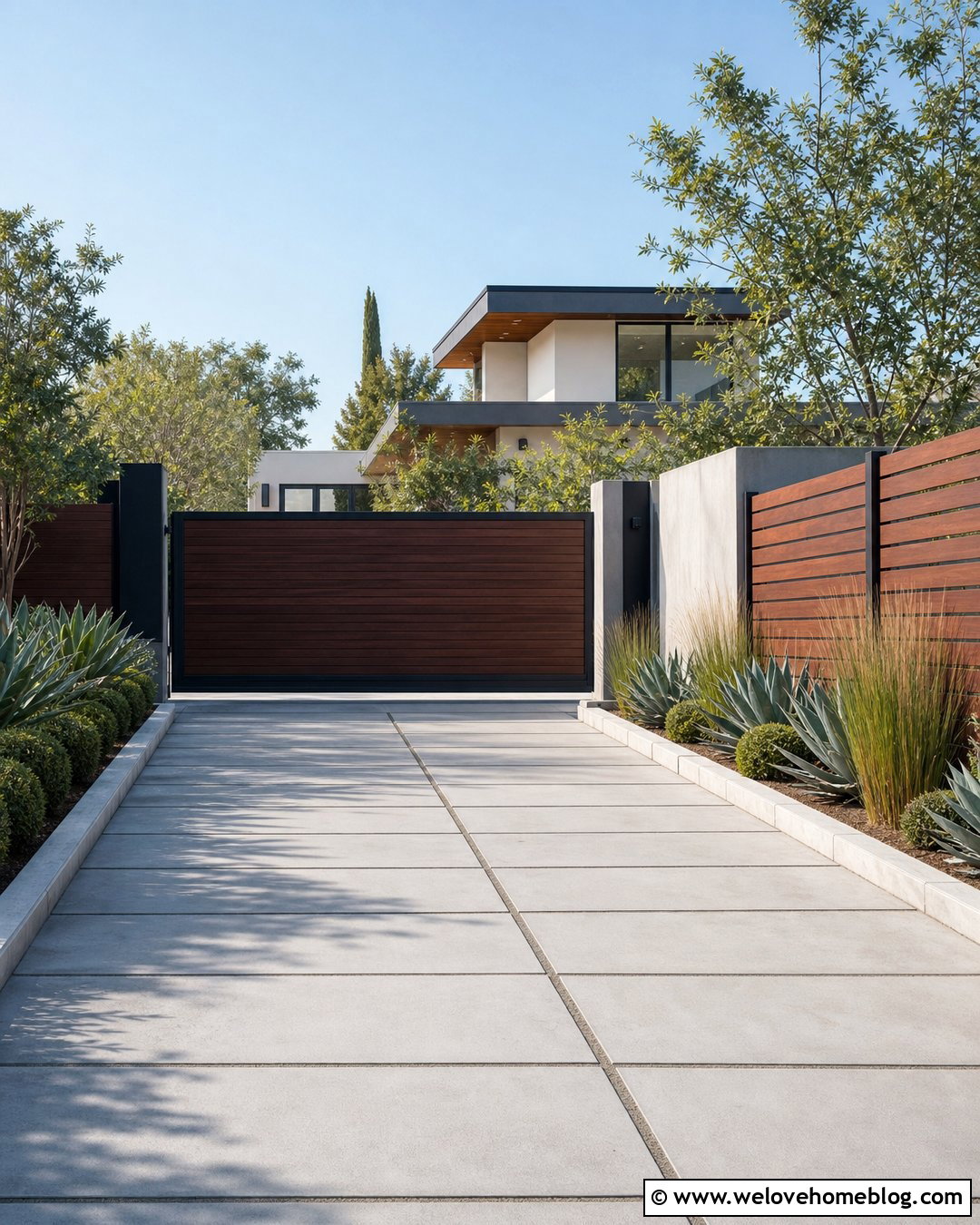
Ipe can create a rich, sophisticated gate for a modern home, especially when used as narrow horizontal boards. Its deep brown coloring works well with charcoal steel, pale concrete, and lush green planting. Design a sliding gate with evenly spaced boards and continue the same pattern across adjacent fence panels. Use large-format gray concrete pavers for the straight driveway, adding narrow grass joints only where maintenance conditions allow. Blackened steel posts and a low architectural address wall can organize the entrance. Plant sculptural agaves, clipped shrubs, or upright grasses according to the local climate. Ipe is among the hardwoods promoted for exterior driveway gates because of its density and outdoor durability. () Its weight makes strong framing, suitable hardware, and experienced installation especially important.
19. Teak Wood Driveway Gate With Pavers
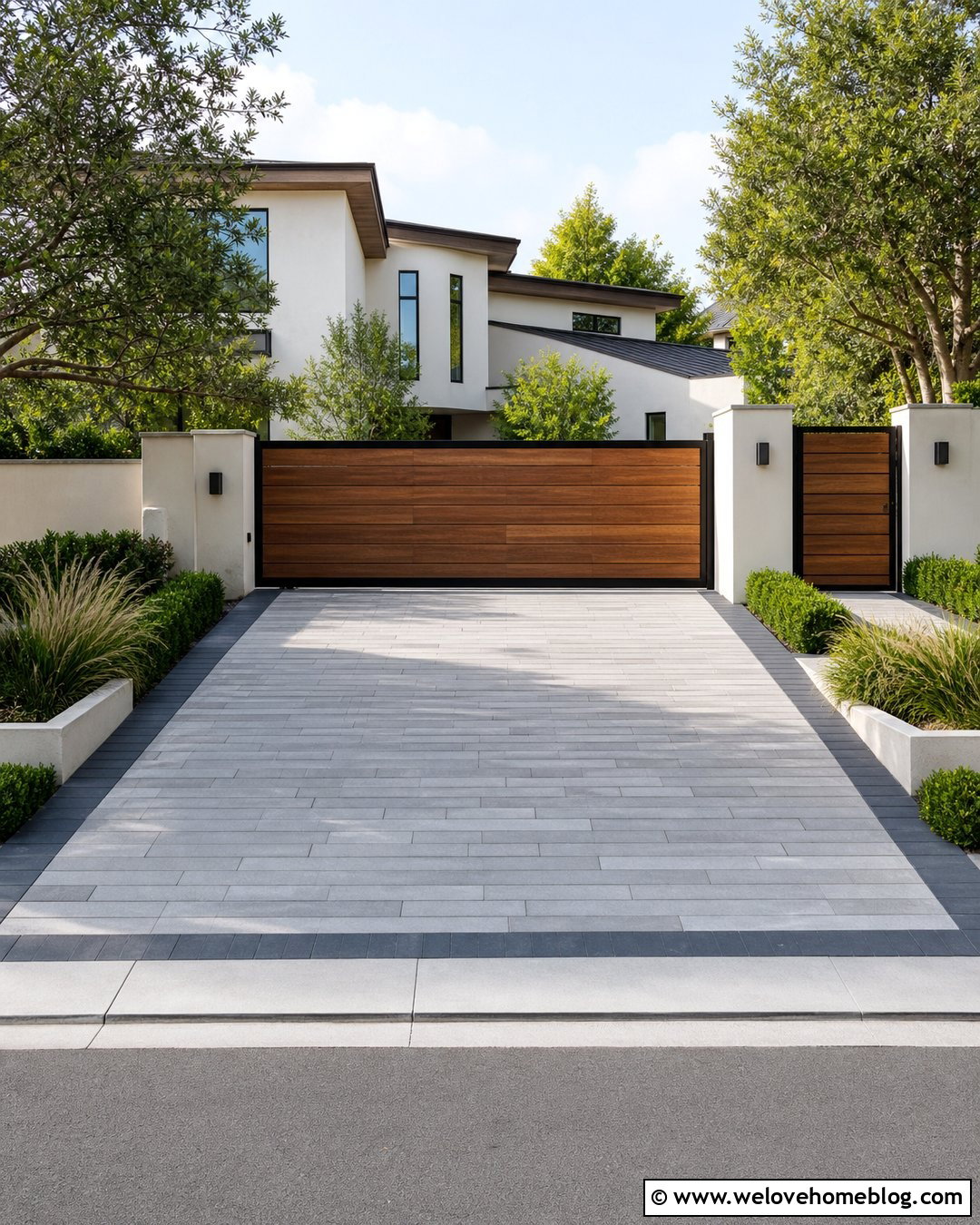
Golden-brown teak gives a driveway gate a polished but natural appearance. Use broad horizontal planks inside a slim black frame, with a small pedestrian panel incorporated beside the main sliding gate. Pair the wood with warm gray porcelain or concrete driveway pavers laid in a linear pattern. A modern stucco home with teak-colored doors or soffits will connect the entrance to the architecture. Add rectangular planting beds filled with evergreen shrubs and ornamental grasses. Keep the pillars simple, using smooth cream-colored stucco rather than heavily textured stone. Teak contains natural oils and is widely valued for outdoor applications, but its appearance will still change without ongoing care. () Decide whether you prefer a maintained golden finish or a softer weathered tone before selecting the treatment schedule.
20. Lattice Top Wood Driveway Gate
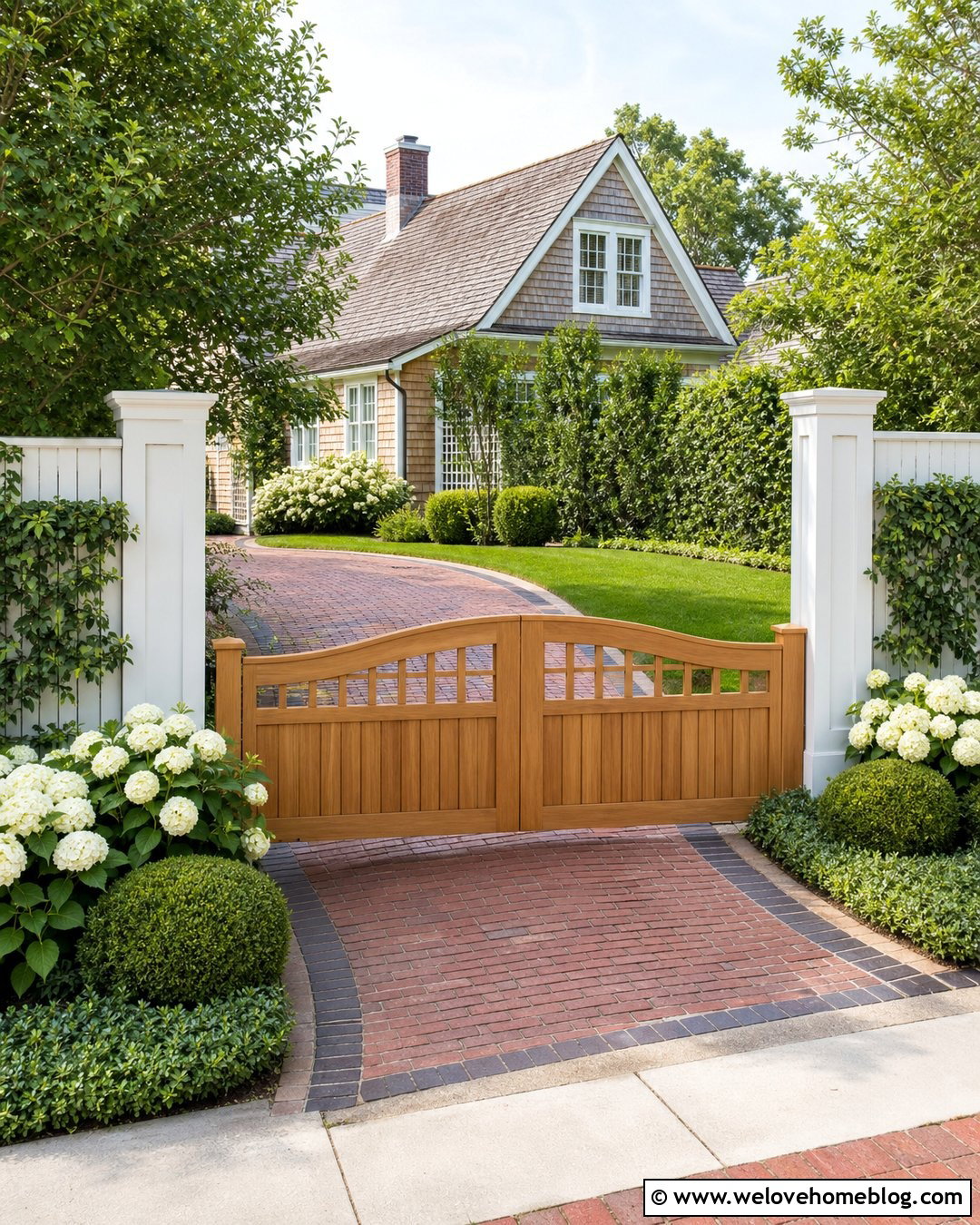
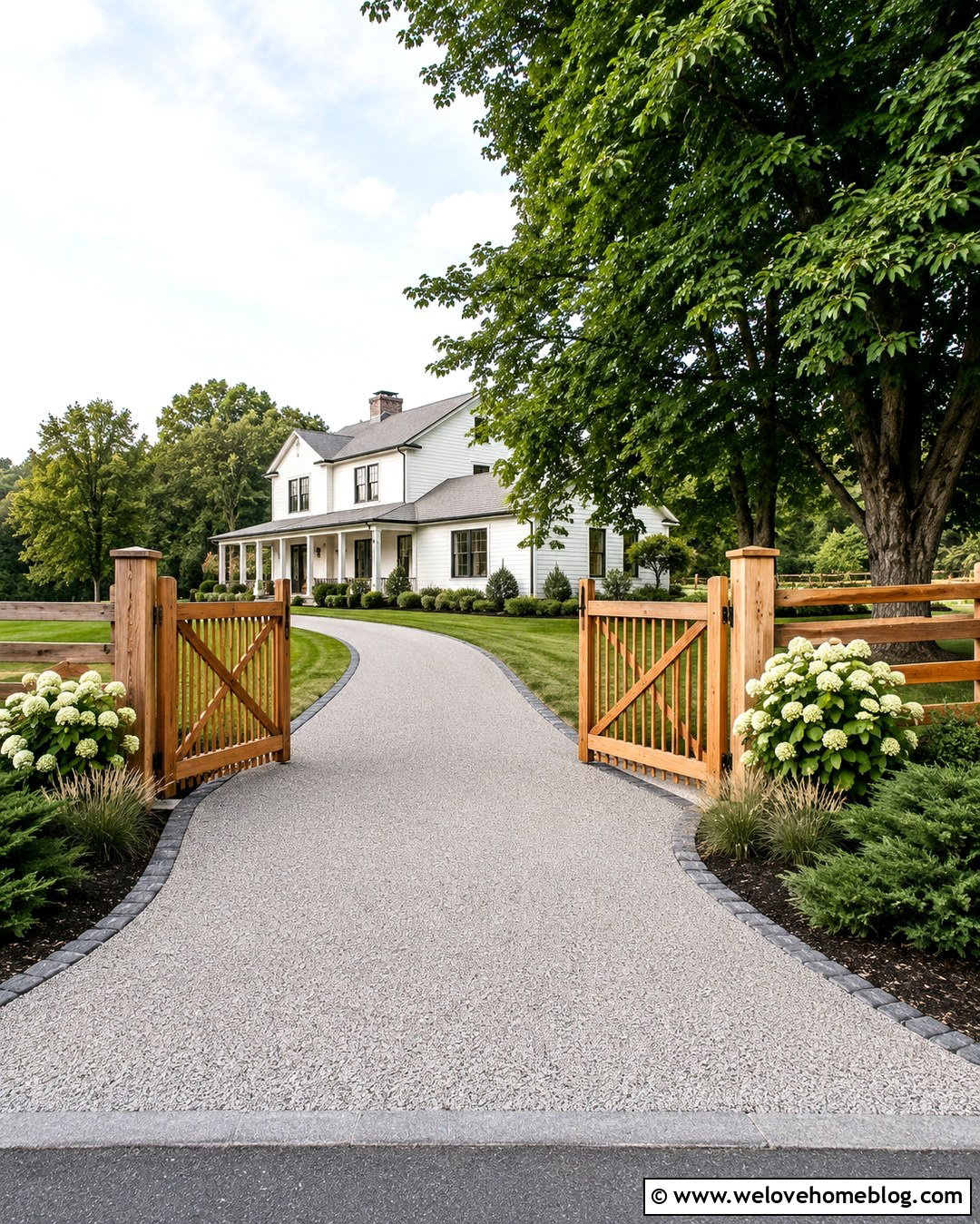
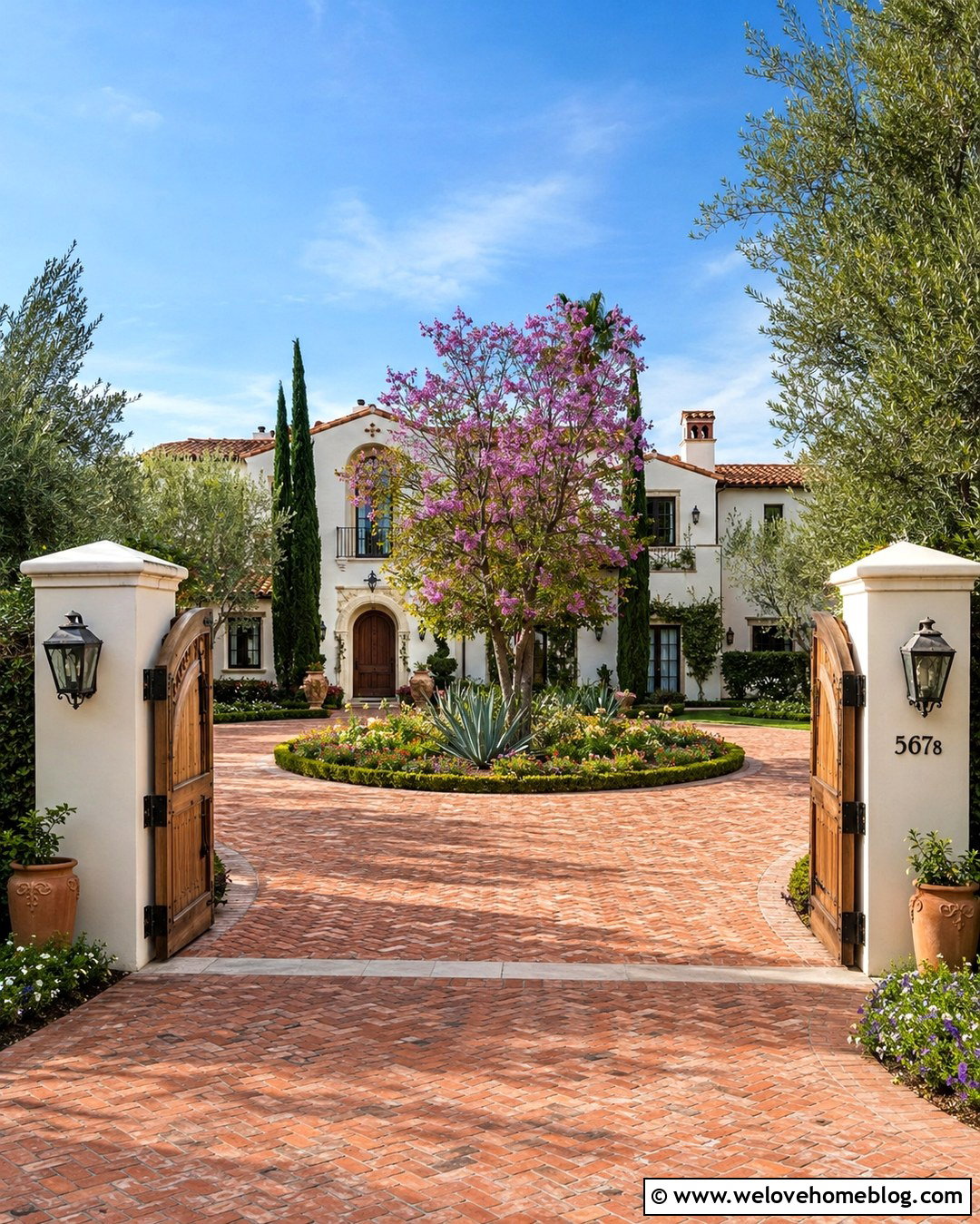
A lattice-top gate provides privacy at eye level while keeping the upper portion visually light. Use solid vertical cedar boards across the lower section and a simple square or diamond lattice above. A curved brick driveway creates a traditional setting, especially when edged with a darker brick ribbon. Anchor the gate between painted wood posts or understated brick pillars. Climbing greenery can grow along the neighboring fence, but avoid covering the moving gate itself. Layer hydrangeas, boxwoods, and ground cover around the entrance for a garden-focused appearance. This design is especially suitable for cottages, colonial homes, and older suburban properties. Keep the lattice openings large enough to read clearly from the street. Very small patterns can look busy and may collect more debris around vines and overhanging trees.
21. Chevron Wood Driveway Gate
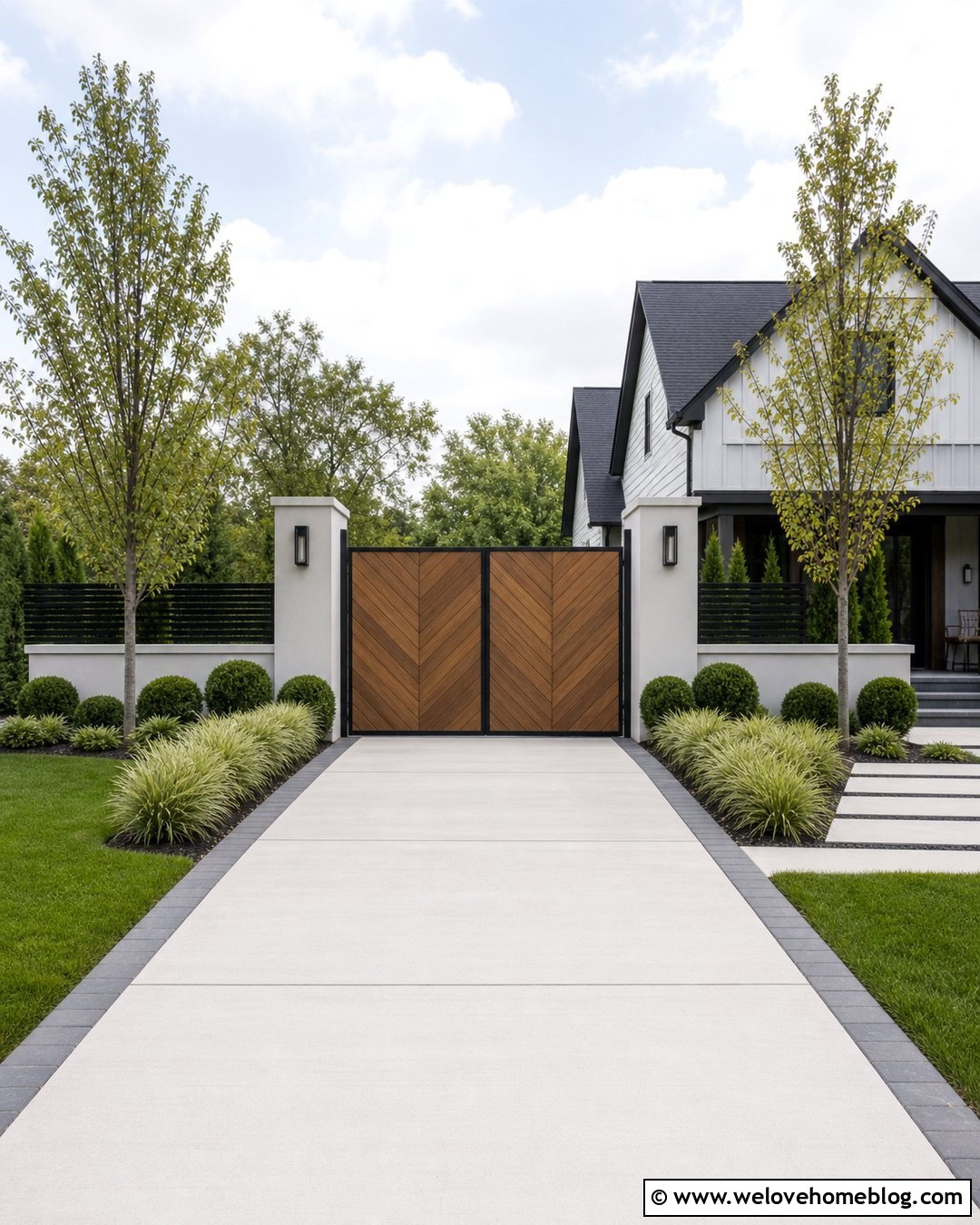
A chevron pattern turns natural wood boards into a strong geometric focal point. Arrange cedar or redwood planks diagonally so they meet at the center of each panel. A slim black steel outline will define the pattern and prevent the design from blending into neighboring fencing. Pair the gate with a straight light-gray concrete driveway featuring a narrow charcoal paver border. Simple rectangular pillars and clean landscaping keep attention on the angled wood grain. Use low grasses, evergreen spheres, and one small ornamental tree on each side for balance. This gate looks best with contemporary, transitional, or updated craftsman architecture. Keep the driveway surface pattern quiet because a heavily patterned gate and equally detailed pavement can compete. Repeating the chevron only on a pedestrian gate can create subtle continuity.
22. Herringbone Wood Driveway Gate
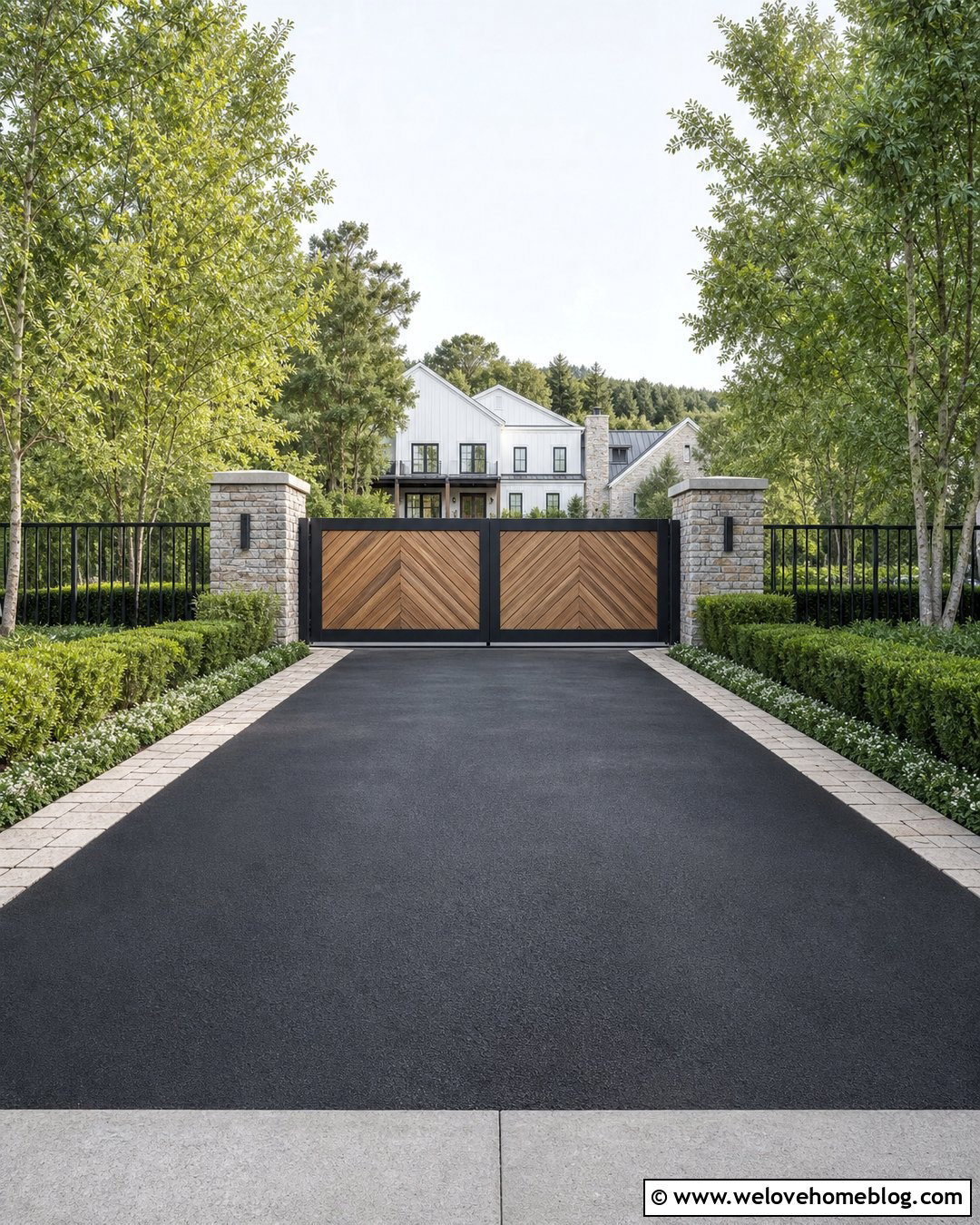
Herringbone wood panels create movement and texture without adding decorative metalwork. Use narrow stained cedar boards set in alternating diagonal directions within a reinforced rectangular frame. A dark asphalt driveway offers a simple background that allows the pattern to remain clear. Edge the asphalt with warm concrete pavers that coordinate with the wood rather than matching it exactly. Stone-clad pillars and black steel fencing can provide structure around the detailed gate. Keep landscaping restrained, using clipped hedges, ground cover, and two upright trees. A herringbone gate suits a modern farmhouse or transitional home with symmetrical architecture. Precise board spacing is essential because uneven lines become highly noticeable in geometric patterns. The finished driveway entrance should look tailored and crafted, not overly busy or rustic.
23. Cross Brace Wood Driveway Gate
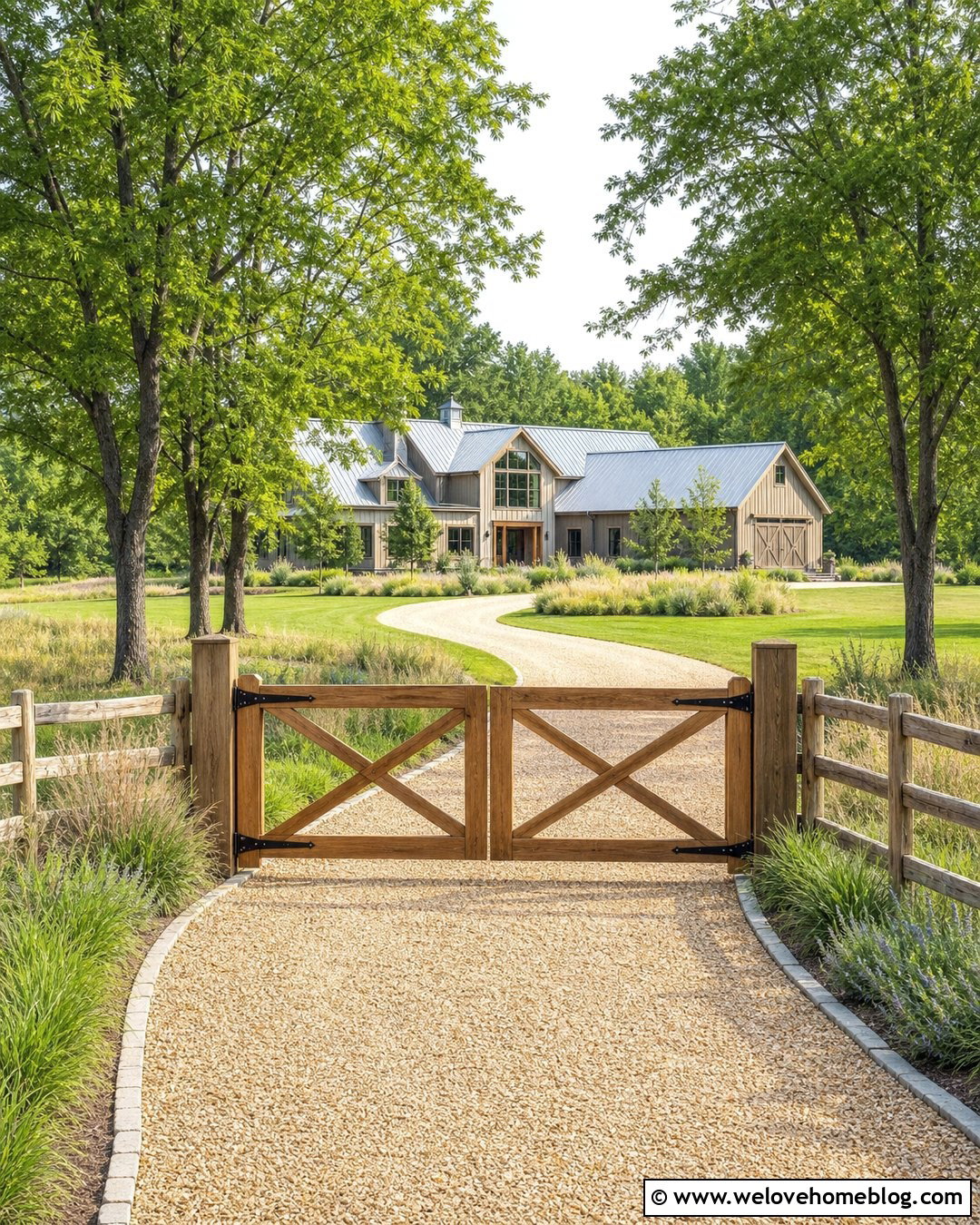
Cross-braced panels create a recognizable country look while adding visual structure to a wide entrance. Build two open wood gates with horizontal rails and a large X brace across each side. Natural cedar, oak, or pressure-treated lumber works with gravel, crushed stone, and rural landscaping. Set the gate between simple timber posts and pair it with a tan gravel driveway that curves toward a barn-inspired home. Post-and-rail fencing, native grasses, and mature deciduous trees can extend the agricultural character. Black hinges and latches provide a clear contrast against medium-brown stain. This open design maintains views into the property and feels less imposing than solid boards. Keep the proportions substantial enough for a vehicle entrance, since undersized rails can make a large gate appear more like garden fencing.
24. Picket Wood Driveway Gate
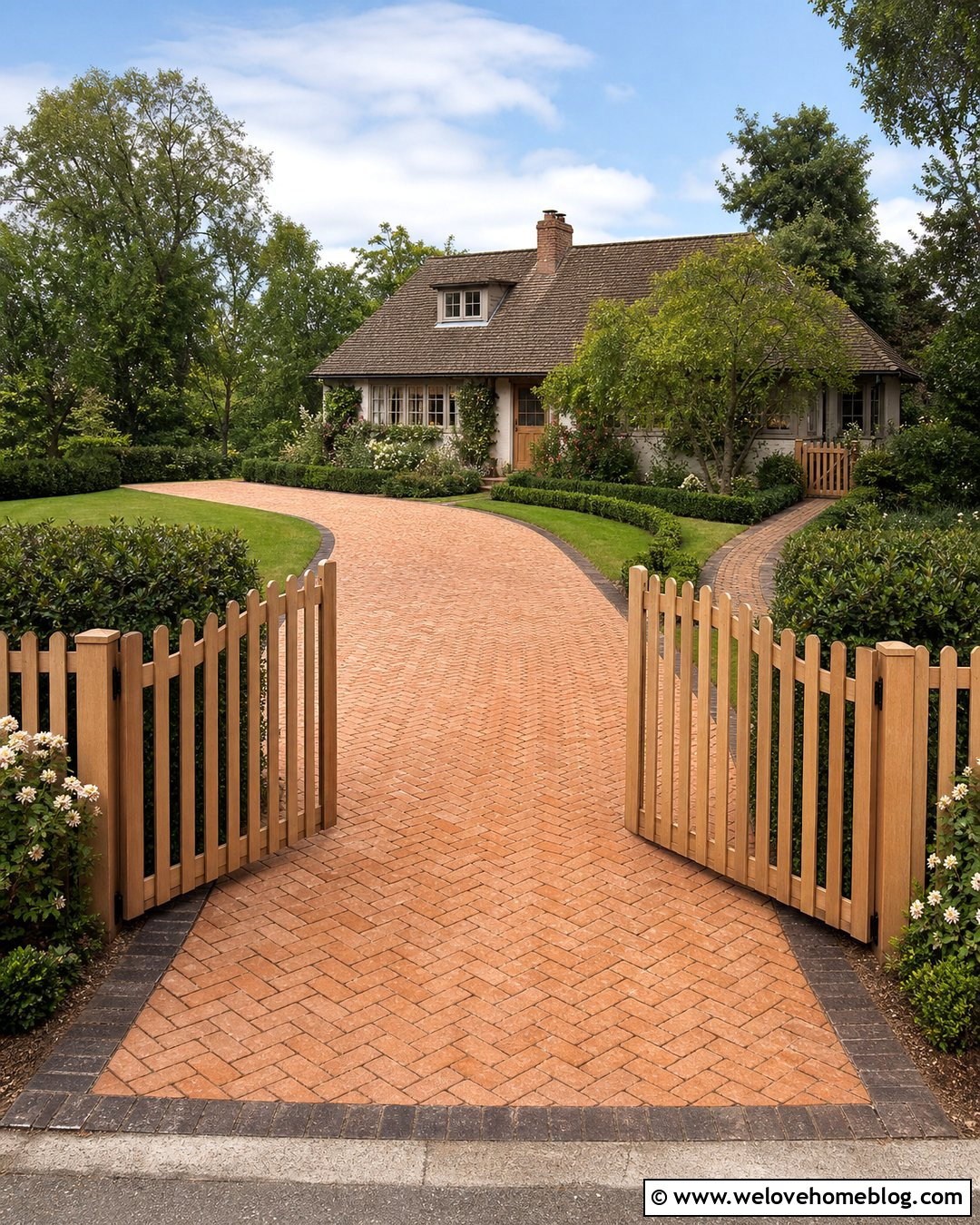
A wood picket gate creates a friendly boundary for cottages and traditional suburban homes. Use closely spaced vertical pickets with gently rounded or pointed tops, supported by a strong framed structure. A double-swing layout keeps the design symmetrical and visually connected to matching picket fencing. Pair it with a small curved driveway made from warm clay brick pavers in herringbone. White paint offers classic charm, while natural cedar produces a more relaxed garden appearance. Frame the entrance with flowering shrubs, low hedges, and a narrow walkway leading to a separate pedestrian opening. Because pickets leave clear sightlines, the driveway, lawn, and front facade should feel tidy and coordinated. Keep the gate slightly taller and more substantial than the adjacent fence so visitors can immediately recognize the vehicle entrance.
25. Wood Driveway Gate With Pedestrian Door
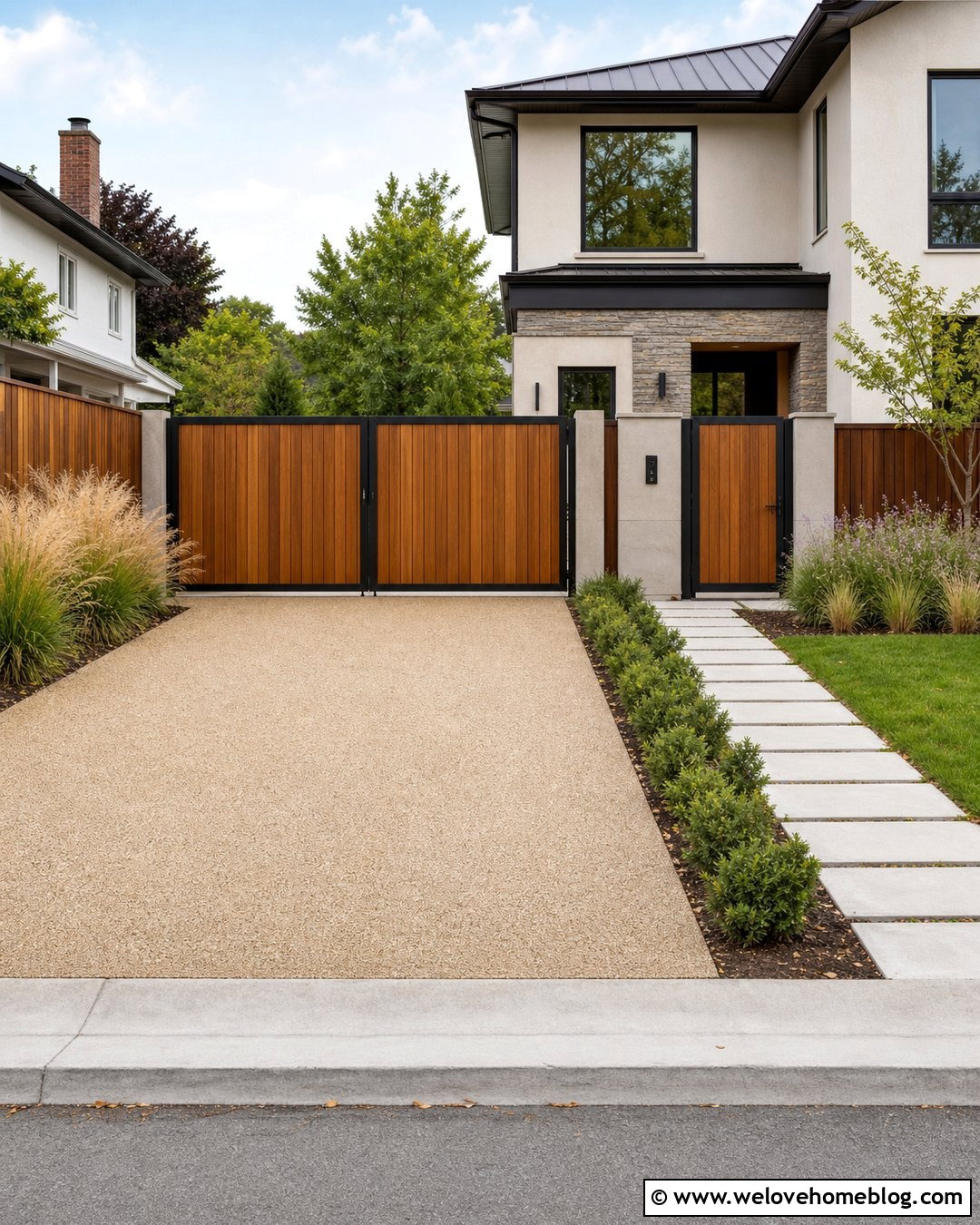
A separate pedestrian door makes a gated driveway more convenient for visitors, deliveries, and everyday foot traffic. Design the vehicle gate and walk-through gate with matching vertical cedar boards, equal top lines, and identical black framing. A smooth resin-bound gravel driveway can lead toward the garage, while a contrasting concrete paver walkway guides pedestrians safely toward the front door. Place the smaller gate beside a masonry pillar containing the intercom and address numbers. Low shrubs should define the two routes without blocking visibility. Split vehicle and pedestrian access is a practical feature found in traditional and contemporary gate designs. () Keep the pedestrian latch easy to reach and ensure the door opens toward a safe, unobstructed area rather than directly into vehicle movement.
26. Wood Driveway Gate With Stone Pillars
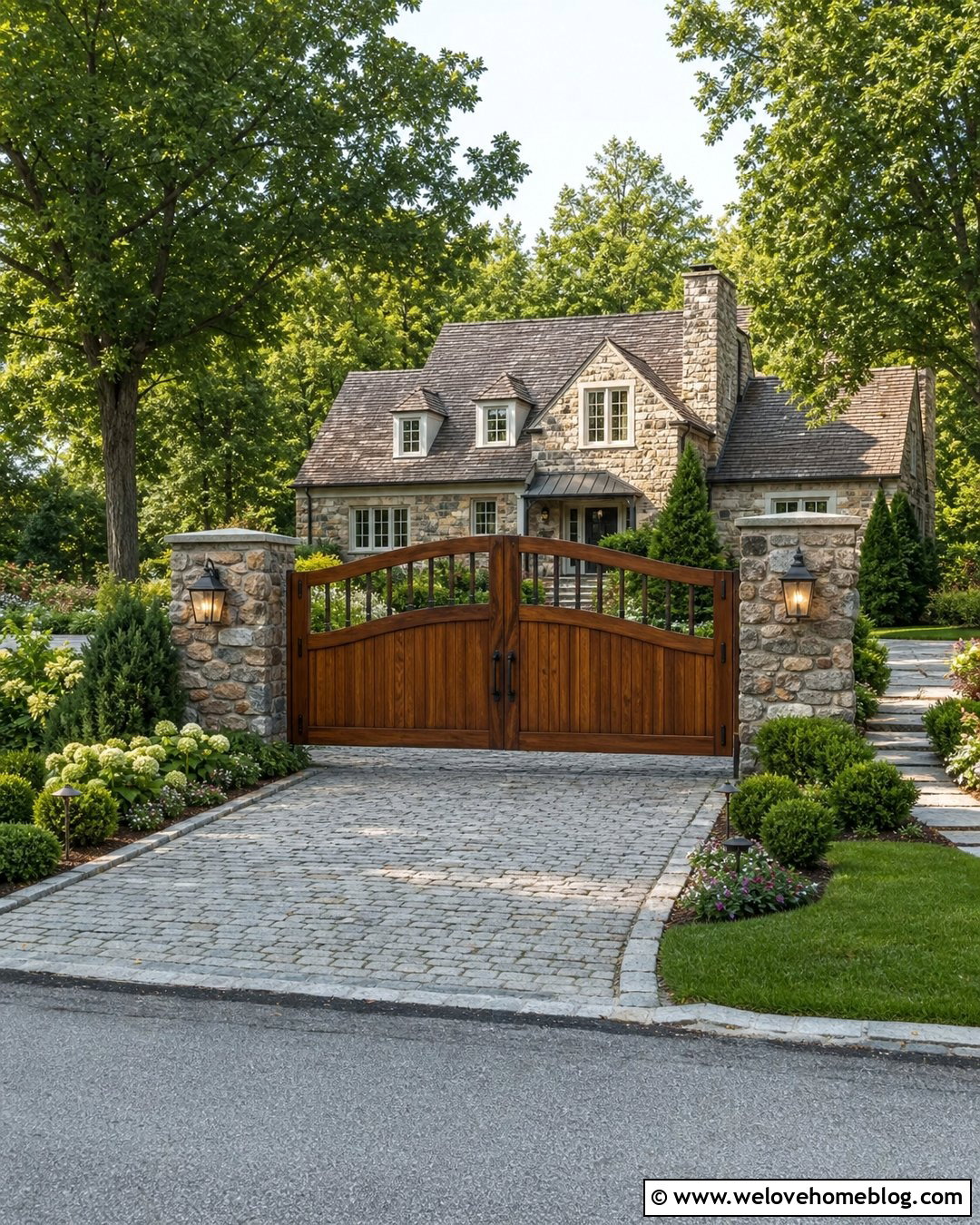
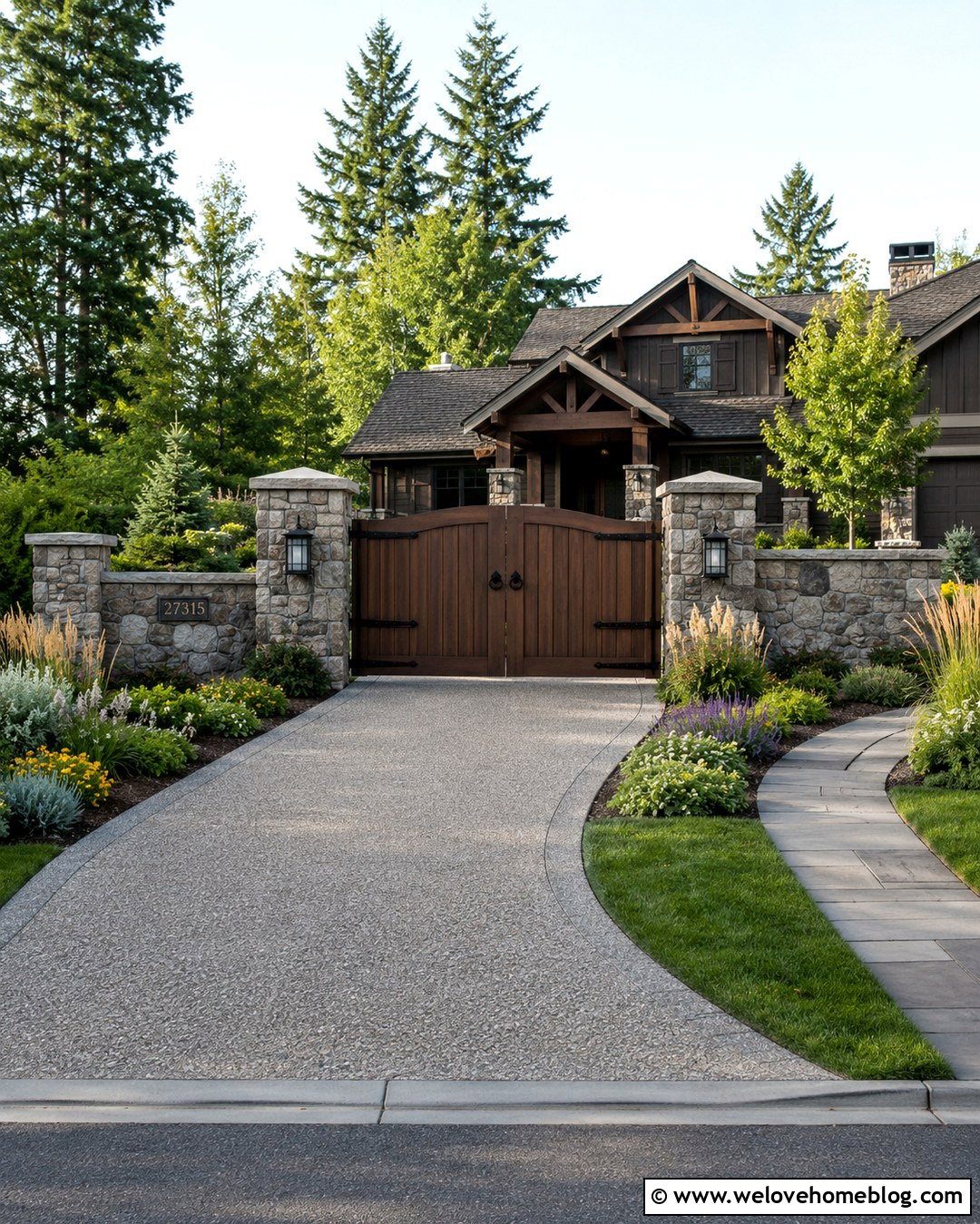
Stone pillars give a wood gate visual weight and connect it to homes with masonry foundations or natural stone facades. Choose a gently arched double gate made from warm vertical cedar boards. Build broad pillars using locally appropriate fieldstone or a coordinated stone veneer, then finish them with simple capstones. A gray cobblestone driveway can continue the traditional material palette without making the entrance feel overly formal. Plant low evergreens and softly spreading perennials around the bases so the masonry emerges naturally from the landscape. Mount lighting near the top of each pillar at matching heights. The gate color should contrast slightly with the stone while sharing its warm or cool undertones. This creates definition without making the wood and pillars look like unrelated features installed at different times.
27. Wood Driveway Gate With Brick Pillars
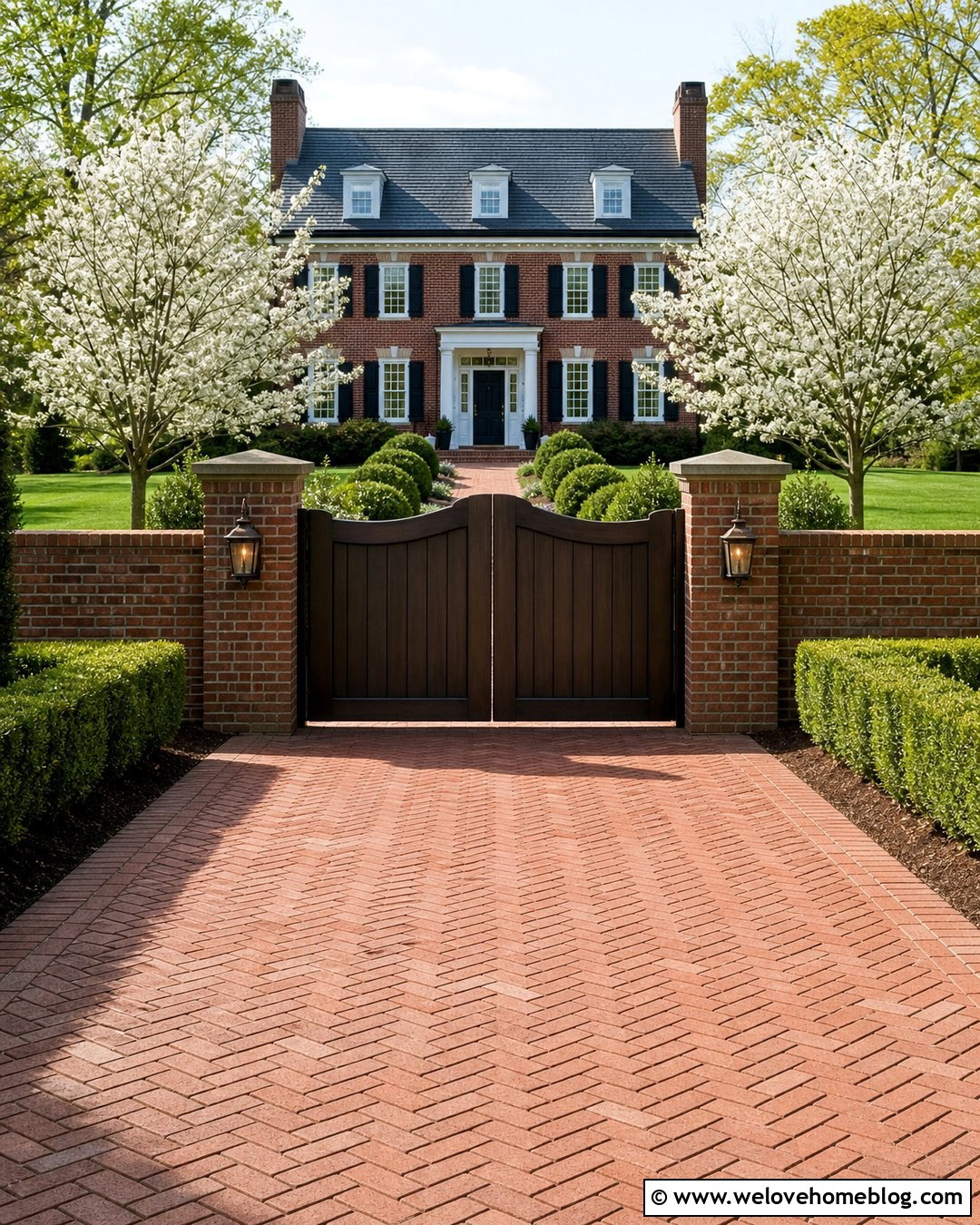
Brick pillars are a natural choice when the house facade, garden wall, or driveway edging already uses brick. Install a dark-stained wood gate with vertical boards and a subtle raised center. The deeper wood tone will stand out against red or brown masonry while coordinating with bronze exterior hardware. Continue clay brick pavers through the entrance, using a herringbone field and straight soldier-course border. Traditional lantern fixtures, clipped boxwoods, and symmetrical flowering trees can reinforce the formal arrangement. Match the pillar mortar and brick blend to the house as closely as practical. If an exact match is unavailable, select a clearly complementary brick instead of a near match that appears accidental. The completed entrance should create a continuous material story from the street, across the gate, and toward the front facade.
28. Wood Driveway Gate With Timber Posts
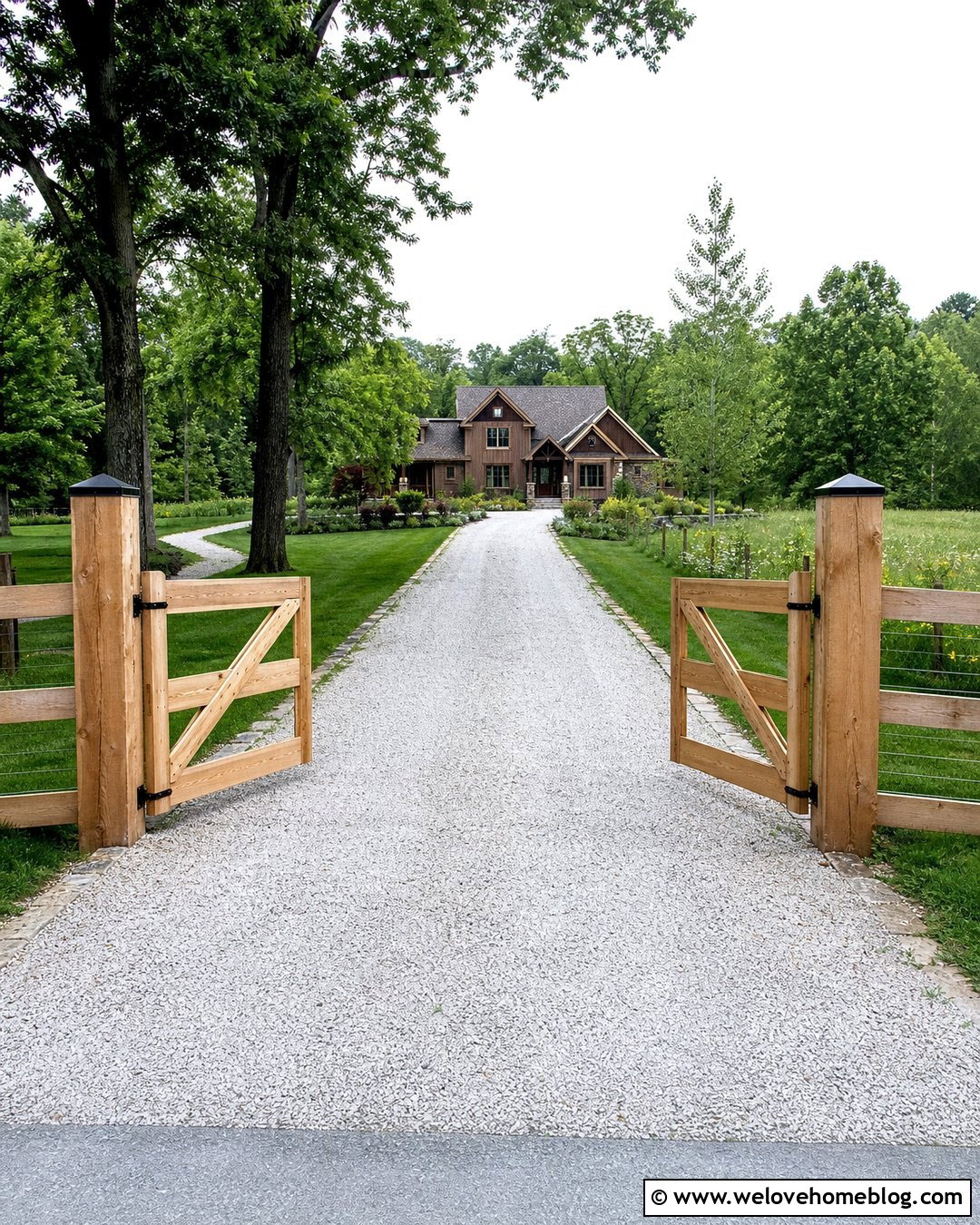
Heavy timber posts create a simple, grounded frame for a rustic or rural wood gate. Choose a double-swing gate with open horizontal rails, diagonal braces, and a warm natural stain. Set the posts slightly taller than the gate and add understated wood or metal caps to protect the exposed tops. A long crushed-limestone driveway works naturally with this entrance, especially when bordered by grass rather than formal curbing. Extend wood fencing into meadow planting, mature trees, or a large front lawn. A craftsman, ranch, cabin-inspired, or modern farmhouse home can sit comfortably behind this design. Black hardware provides definition but should remain simple. Because large gates place considerable loads on their supports, post placement, footings, hinges, and internal framing should be planned for the full weight and width.
29. Wood Driveway Gate With Pergola
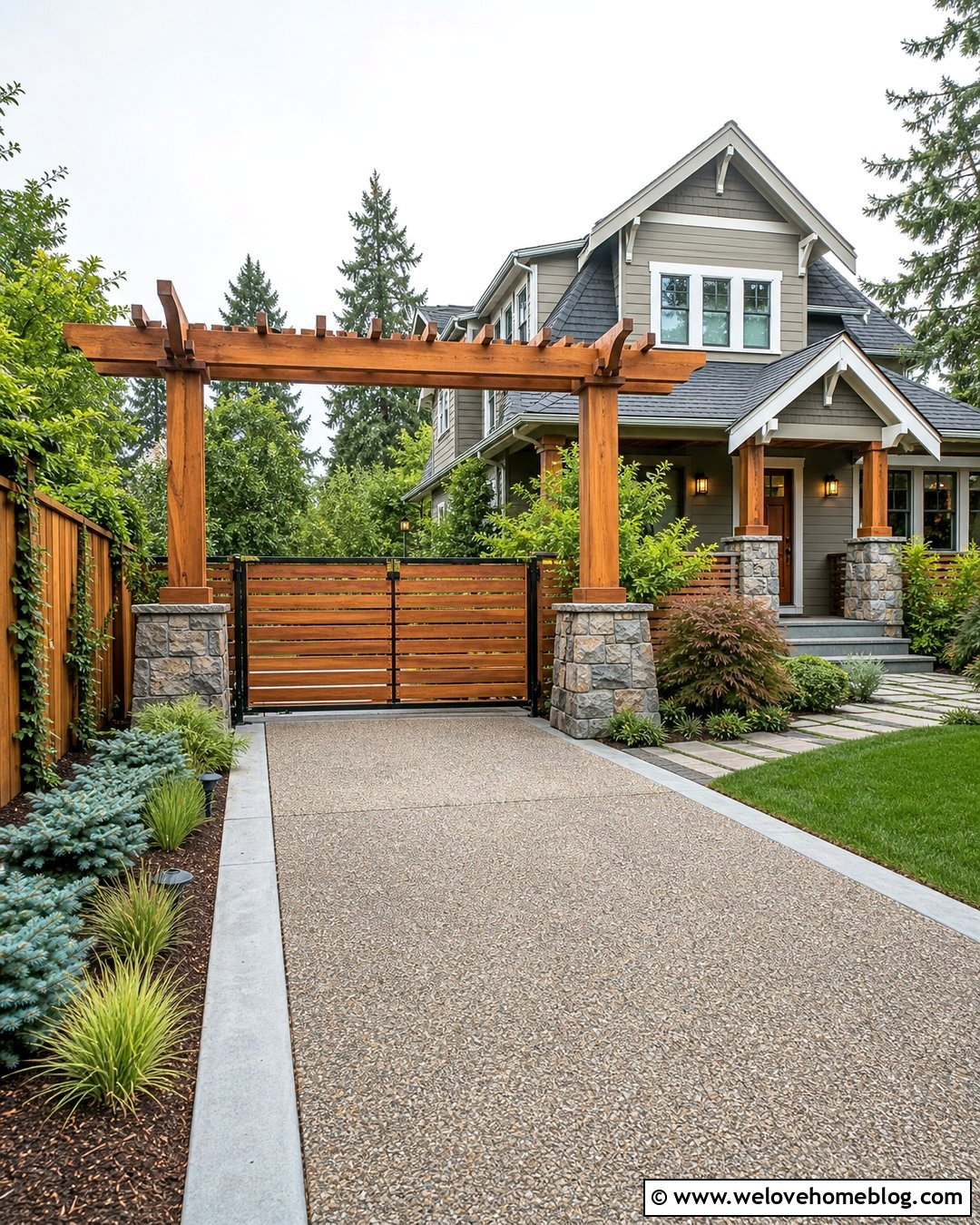
A pergola above a driveway gate creates a strong architectural entrance without requiring tall solid panels. Use a horizontal cedar gate between substantial wood posts, then connect the posts with simple overhead beams. Keep the structure high and open enough to preserve a spacious vehicle approach. Pair it with a warm exposed-aggregate driveway leading toward a craftsman home. Stone post bases can visually anchor the pergola, while evergreen vines remain on the side fencing rather than hanging into the driving clearance. Add layered shrubs, ornamental grasses, and a paver walkway beside the driveway. Repeat the gate’s timber color on porch columns or garage doors. The overhead structure should follow the home’s proportions and roof character so it feels like part of the architecture rather than a decorative garden arbor.
30. Wood Driveway Gate With Address Sign
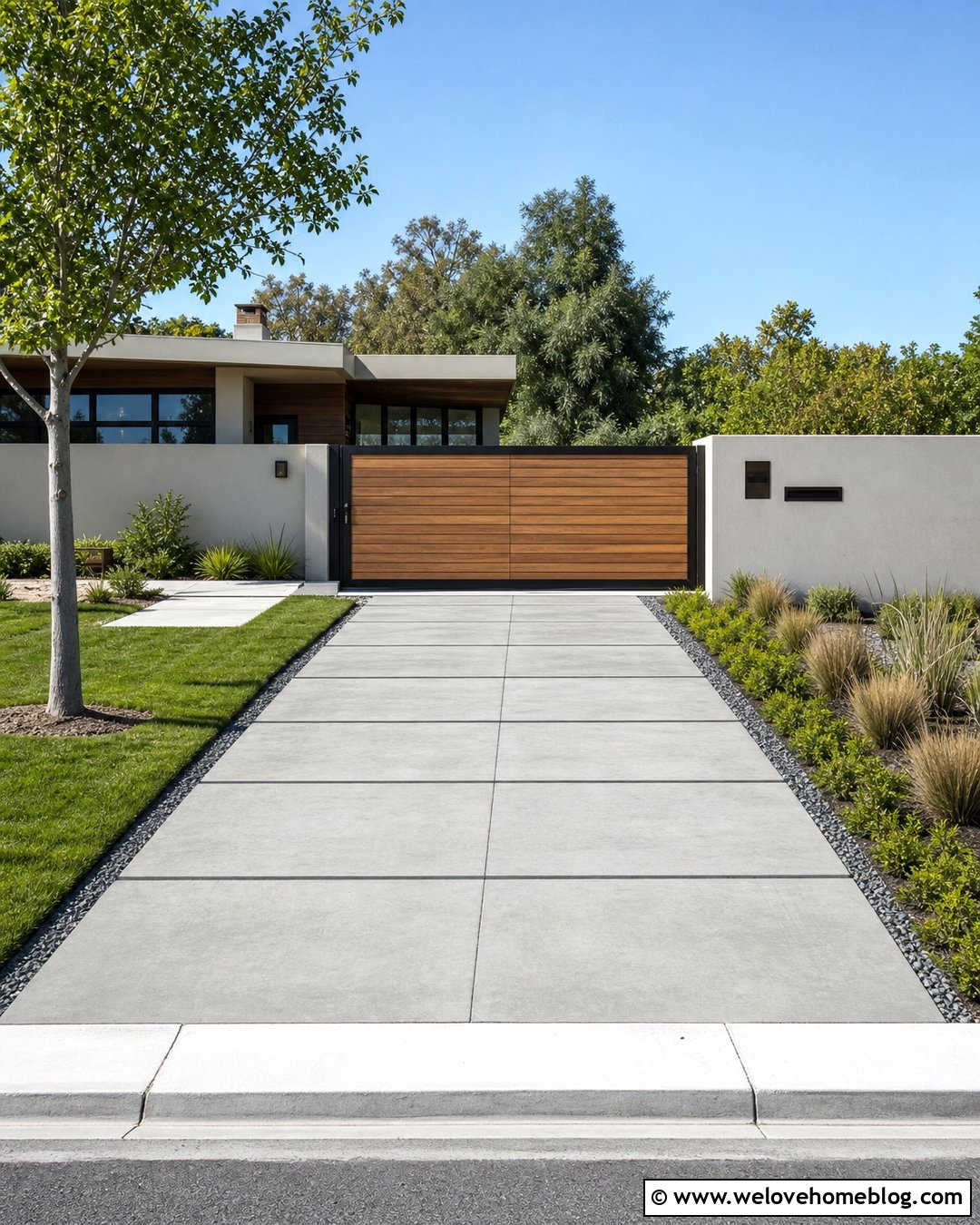
An integrated address sign makes a wood gate entrance easier to identify while reducing roadside clutter. Use a flat-top cedar sliding gate with narrow horizontal boards and install the address on a separate stone or stucco wall beside it. This keeps lettering off the moving panel and creates space for an intercom, mailbox, or delivery instructions where permitted. Pair the entrance with large-format gray concrete pavers and a modern ranch home. Black metal numbers can connect with the gate frame, lighting, and window trim. Plant low ground cover and compact grasses around the sign so it remains visible from the street. Keep the driveway approach clear and uncluttered. The gate, address wall, pavement, and planting should read as one carefully planned entrance rather than several separate functional objects.
31. Wood Driveway Gate With Pillar Lighting
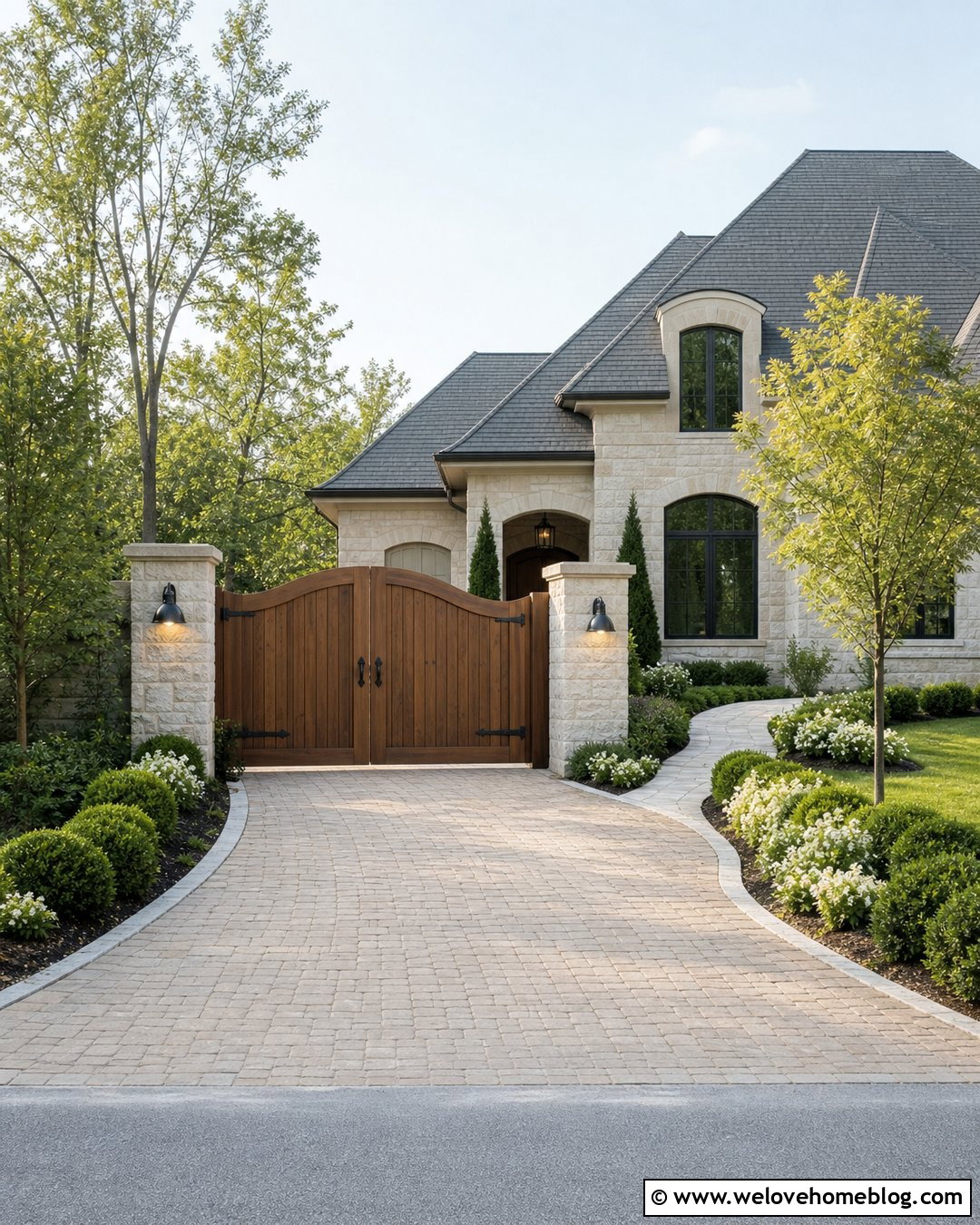
Well-positioned pillar lights can make a wood gate easier to see while strengthening its daytime design. Choose an arched cedar double gate mounted between pale stone pillars. Install matching downward-facing fixtures that illuminate the gate surface and driveway threshold without overpowering the entrance. During daylight, black or bronze fixtures add useful contrast against the masonry. Pair the gate with a curved beige paver driveway edged in natural stone. Boxwoods, white flowering plants, and small ornamental trees can frame the pillars without covering the lights. Repeat the fixture finish on the house and nearby walkway. Electrical components should be rated and installed for outdoor conditions. Avoid excessive decorative lighting around the gate; a limited, coordinated scheme keeps the wood grain, stone texture, and driveway layout visually clear.
32. Wood Gate With Curved Driveway
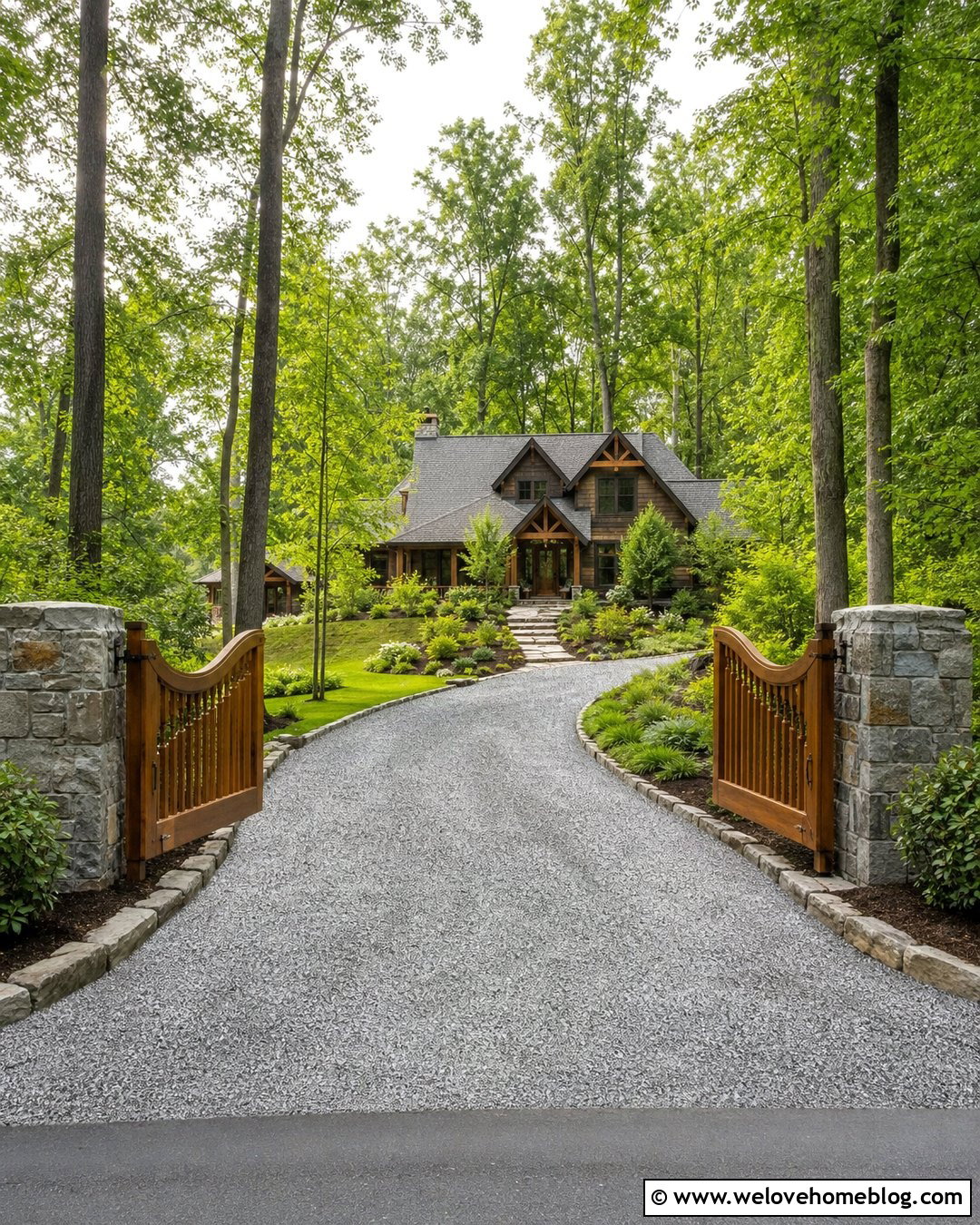
A curved driveway creates a gradual reveal, making the gate and landscaping important parts of the arrival experience. Use a warm cedar double gate with a shallow center arch at the beginning of a sweeping gray gravel drive. Fieldstone pillars and irregular stone edging can echo the relaxed curve. Plant taller trees on the outside of the bend and lower shrubs along the inside to preserve useful sightlines. As the driveway approaches the house, transition into a wider parking area without changing materials abruptly. This complete design suits country homes, craftsman houses, and wooded properties. The gate should align with the initial direction of travel rather than appearing angled awkwardly toward the street. Repeating cedar on the garage doors or porch details helps connect the distant house with the entrance.
33. Wood Gate With Circular Driveway
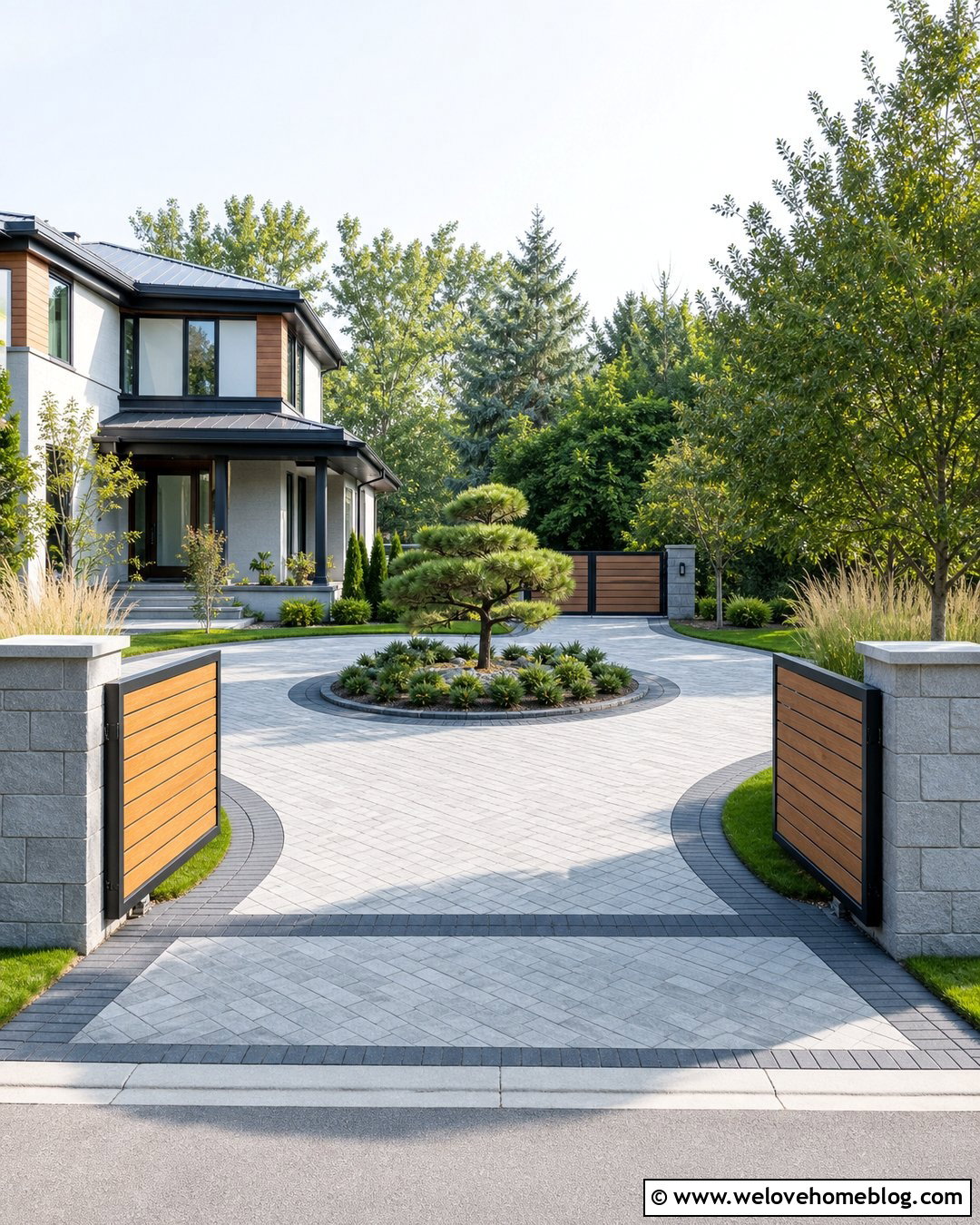
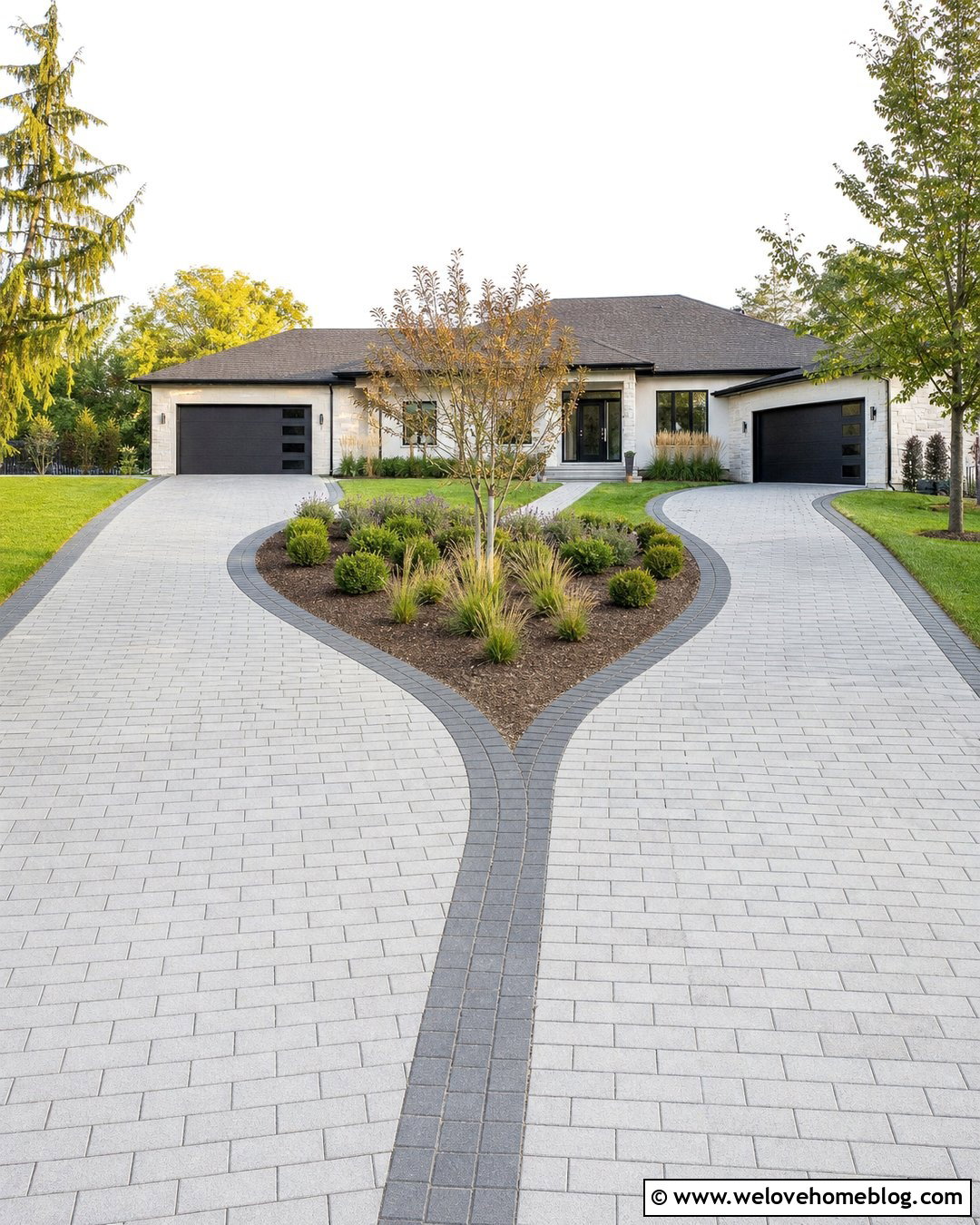
A circular driveway needs a gate layout that keeps entry and exit routes understandable. Use matching wood gates at both openings or place one prominent gate at the primary entrance and a simpler coordinated gate at the exit. Horizontal teak-toned boards inside black frames create a polished look for a contemporary home. Use light-gray concrete pavers across the circular drive, with a darker border defining the central planting island. Low evergreens and one sculptural tree can provide a focal point without hiding the house. Match pillars, address signs, and lights at both street openings. If the gates are automated, the access and operating plan should reflect the intended traffic direction. The repeated wood, pavement, and landscaping will make the entire circular layout feel cohesive rather than divided into separate entrances.
34. Wood Gate For Narrow Driveway
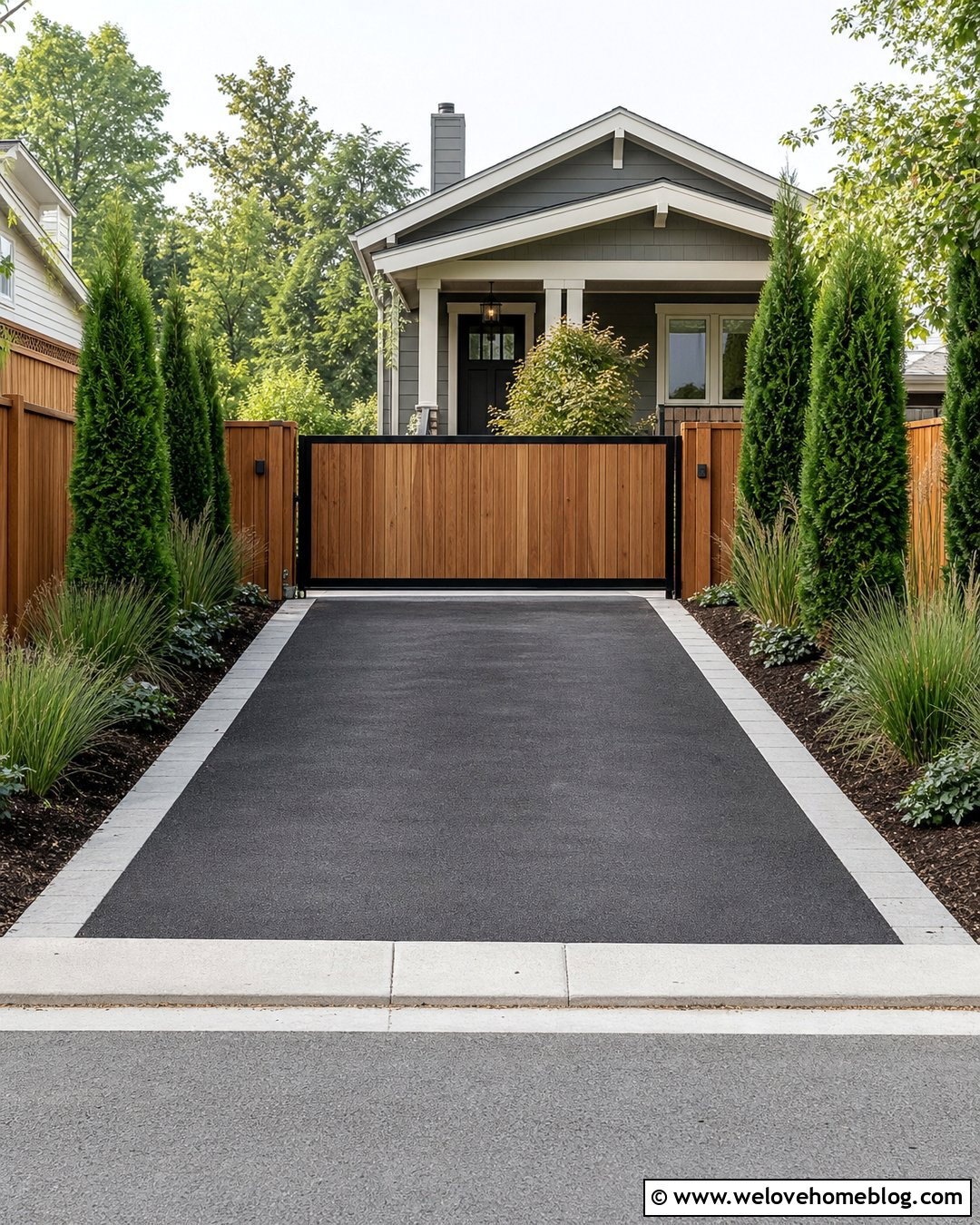
A narrow driveway can still have an attractive wood gate if the design avoids bulky pillars and wide swing paths. Use a single sliding panel with vertical cedar slats inside a slim steel frame. Let it travel behind a matching fence along the property line rather than opening into the limited parking area. Pair it with a straight charcoal asphalt driveway bordered by a narrow light-gray concrete strip. Upright grasses and columnar evergreens provide greenery without spreading into the driving space. A compact craftsman bungalow or urban cottage creates an appropriate background. Keep the gate top straight and the hardware discreet to prevent the entrance from feeling crowded. A separate pedestrian opening may fit on the opposite side if the lot width allows, but both routes should remain clearly defined.
35. Simple Budget Wood Driveway Gate
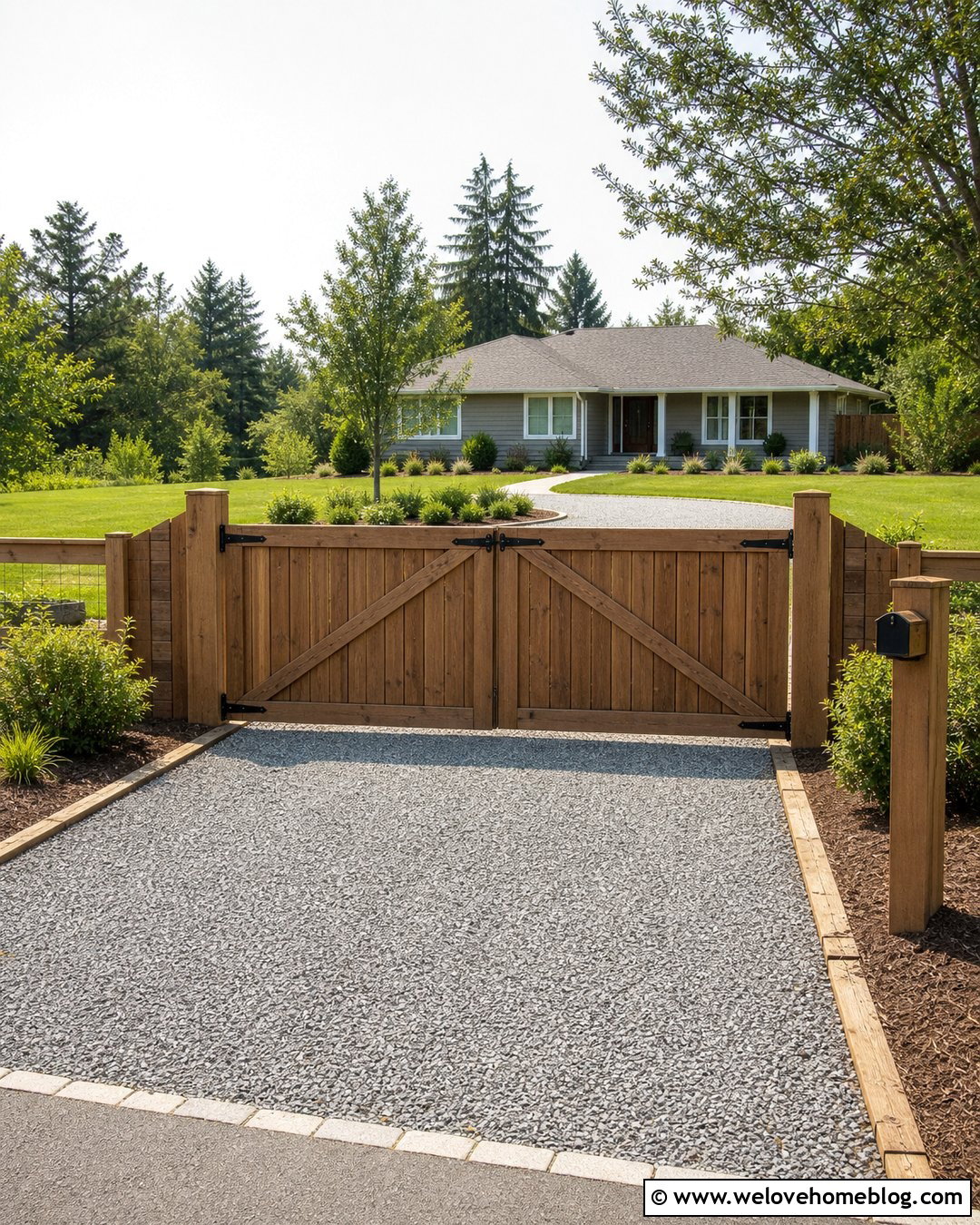
A straightforward gate can look polished without elaborate patterns, premium masonry, or complex ornament. Build two equal panels using pressure-treated lumber, framed vertical boards, and visible diagonal braces. Apply a medium-brown exterior stain for a finished appearance and use sturdy black hardware as a deliberate accent. Pair the gate with an affordable gray gravel driveway edged by treated timber or compacted stone. Simple square wood posts, low native shrubs, and a clean lawn keep installation and landscaping costs controlled. Repeat the same stain on a short fence section or mailbox post to make the entrance feel coordinated. Prioritize sound framing, suitable hinges, and stable supports before decorative extras. A basic design with balanced proportions will usually look better than an overcrowded gate filled with inexpensive embellishments.
Conclusion:
The best **35 Wood Gates Driveway Ideas** show how much the complete entrance matters. Wood type and gate pattern are only the starting points. The driveway surface, opening method, pillars, fencing, landscaping, lighting, and house architecture should all work together. Horizontal slats suit clean modern homes, while arched panels, lattice tops, and cross braces complement traditional or rural settings. Solid gates offer stronger privacy, whereas open designs preserve views and create a welcoming character. Before building, consider the available swing or sliding space, gate weight, drainage, vehicle access, and long-term wood maintenance. A thoughtfully planned wood gate will define the property, improve curb appeal, and make every arrival feel more intentional.

Related posts:
Leave a Reply